My photographic style centers on the use of natural light to visualize emotion and evoke memory. The evolution of my style began early in the year 2002, with an imperative to capture personal and fleeting memories.
My son and I traveled to New York City, to view the first Saint Patrick's Day parade after September 11, 2001. My work from that parade was so successful and satisfying (see "New York Fire Department, Saint Patrick's Day 2002") I just never stopped.
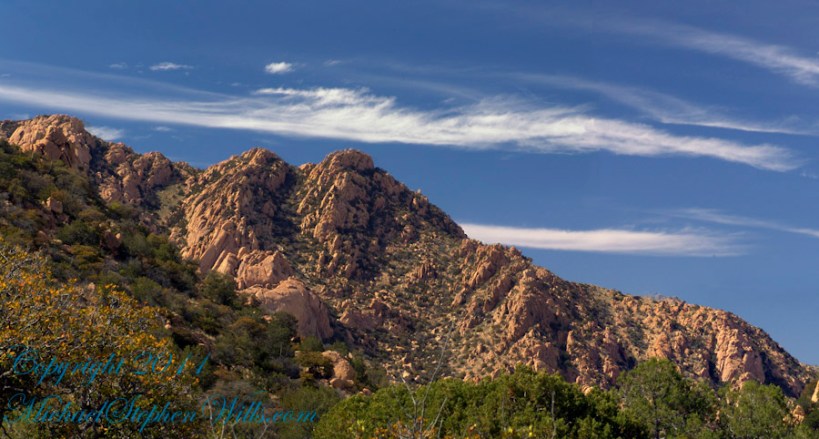
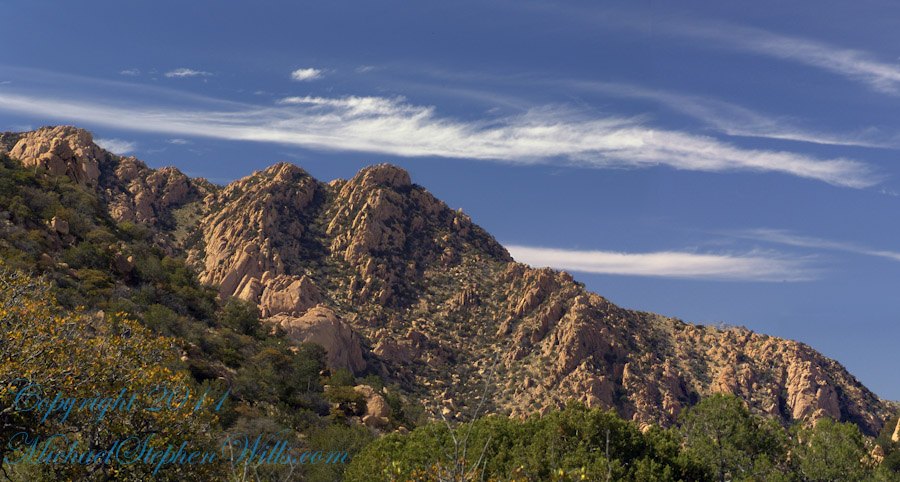
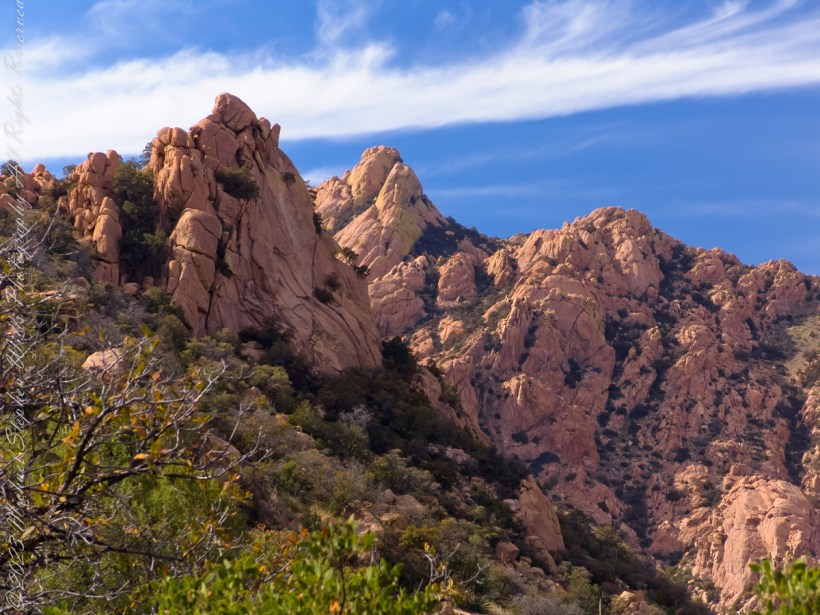
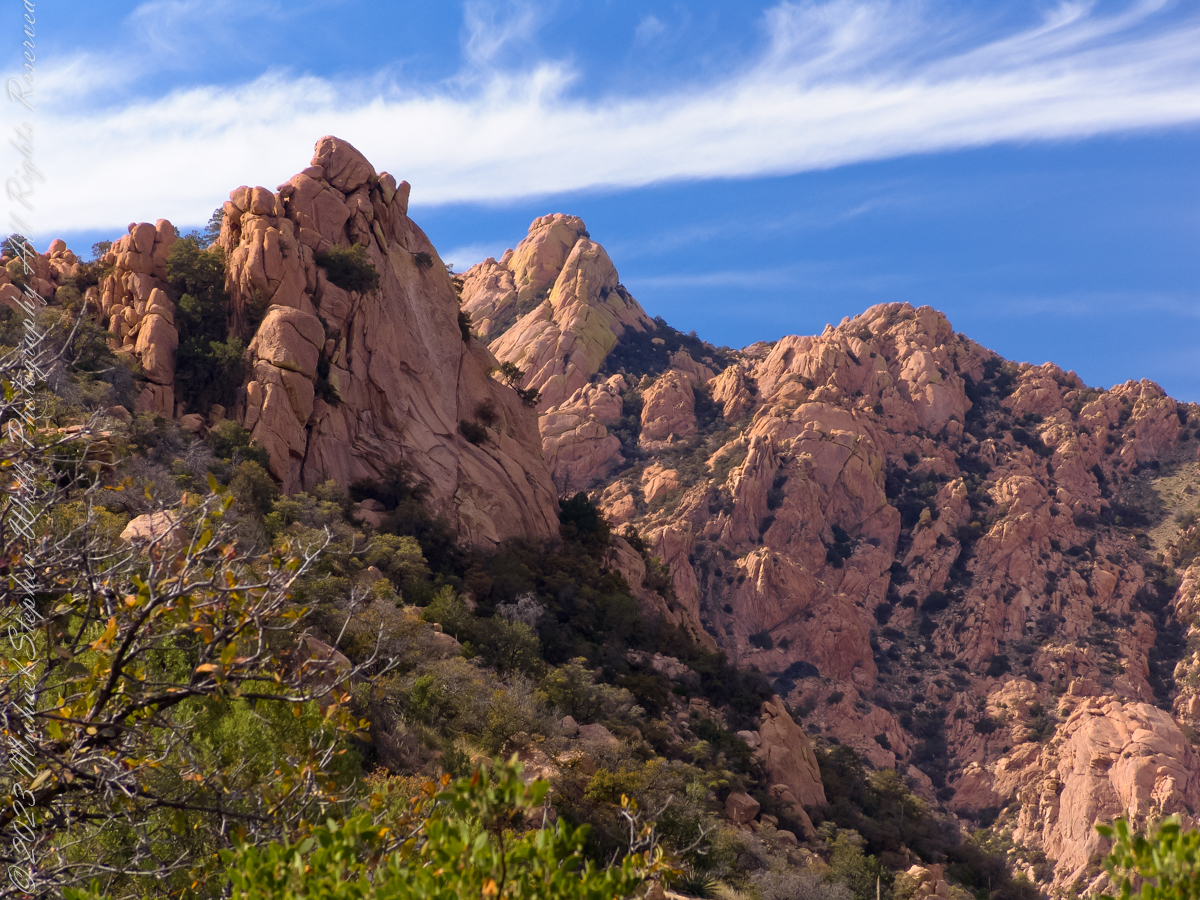
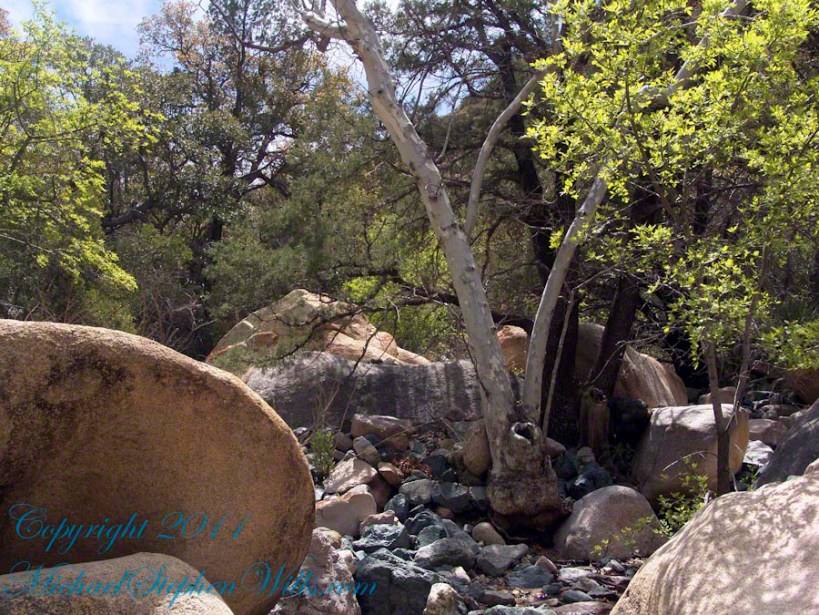
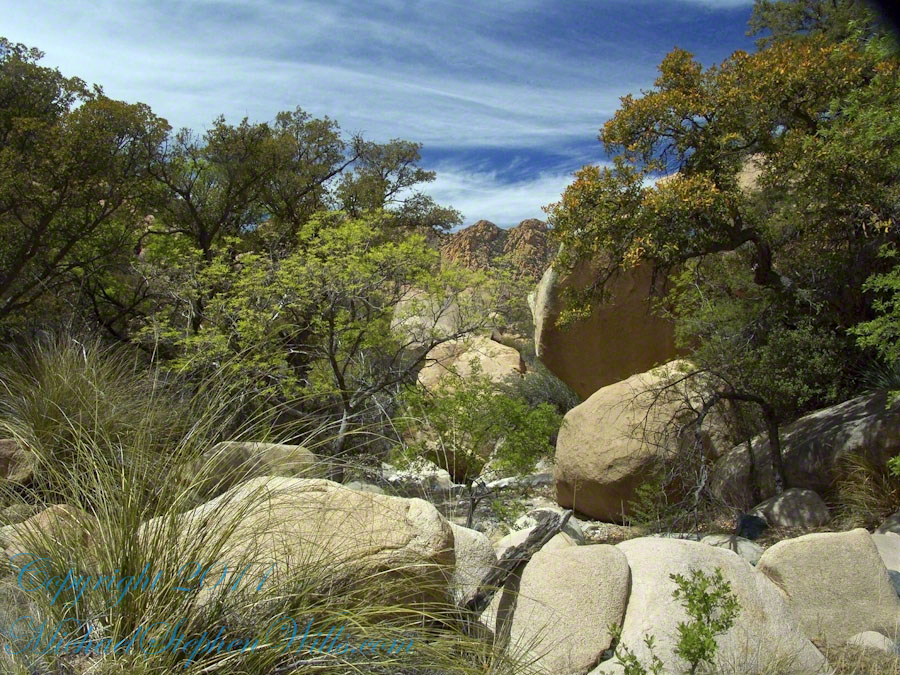
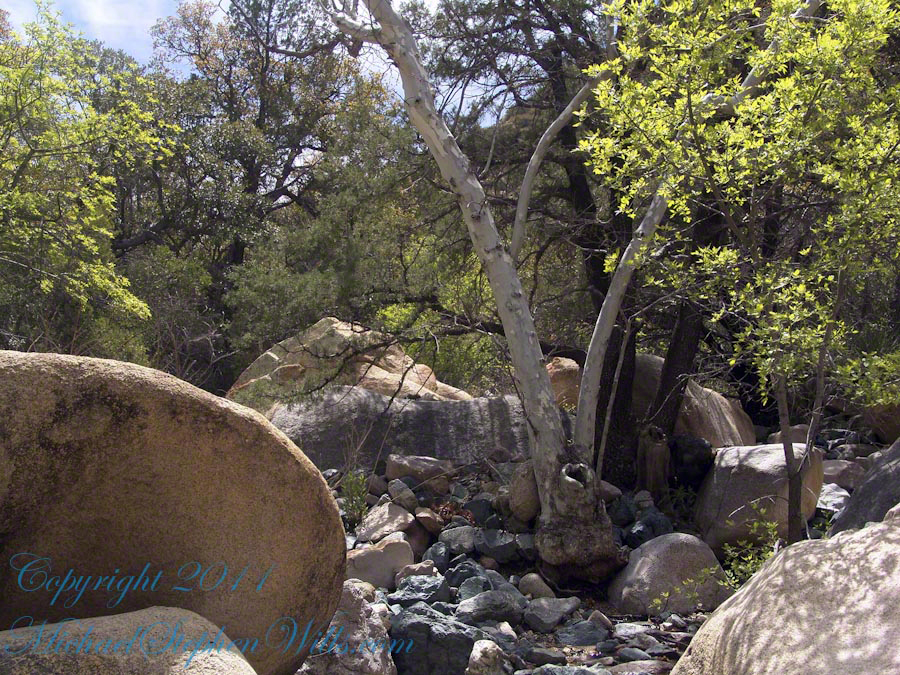
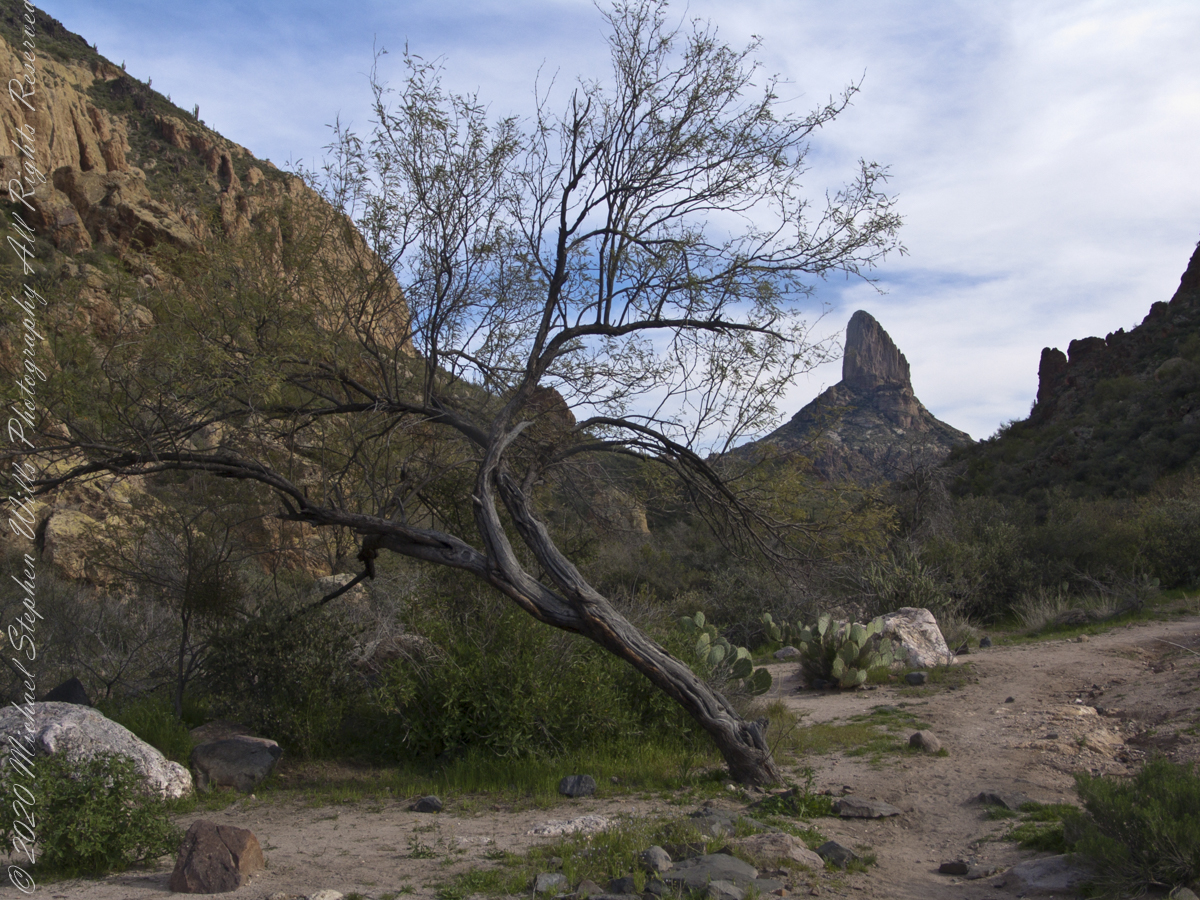
These photographs are from two days spent at Cochise Stronghold, a part of the U.S. Forest Service Coronado Forest managed by Arizona State Parks located off the Interstate 10 East of Tucson between Benson and Wilcox.
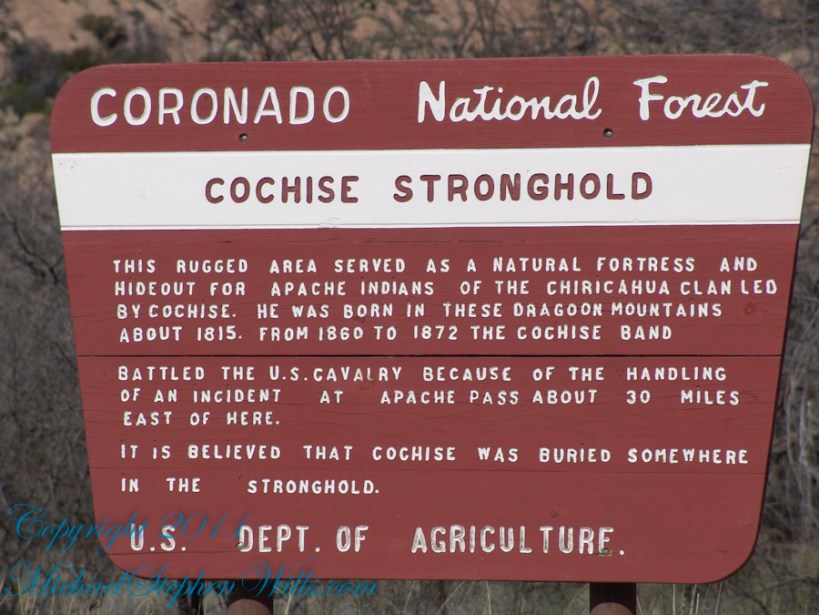
Here is the Cochise Stronghold information sign from the Douglas Ranger District of the Coronado National Forest.
The Dragoon Mountains are a low range that barely rises above the surrounding desert floor. Nevertheless, the granite boulders are spectacular and well worth visiting for the scenery alone. This mountain range is remote from cities or even any large towns, so visitation is light. Late fall, winter, and early spring are the best times to visit. Temperatures exceeding 100 degrees are common even in spring and fall. Cochise Stronghold Campground is closed in June, July, and August due to the often-extreme heat.
Safety First: Heat and low humidity are real hazards for people unfamiliar with desert climates. A person can loose up to 5 quarts of fluid a day and it is easy to become seriously dehydrated without realizing it, so drink plenty of fluids even if you do not feel very thirsty. Always carry extra water in your car. When going on a hike, even if a short one, take a day pack with water, snack foods, protective clothing, flashlight, first aid kit, compass, and map. To avoid sun in
Copyright 2023 Michael Stephen Wills All Rights Reserved
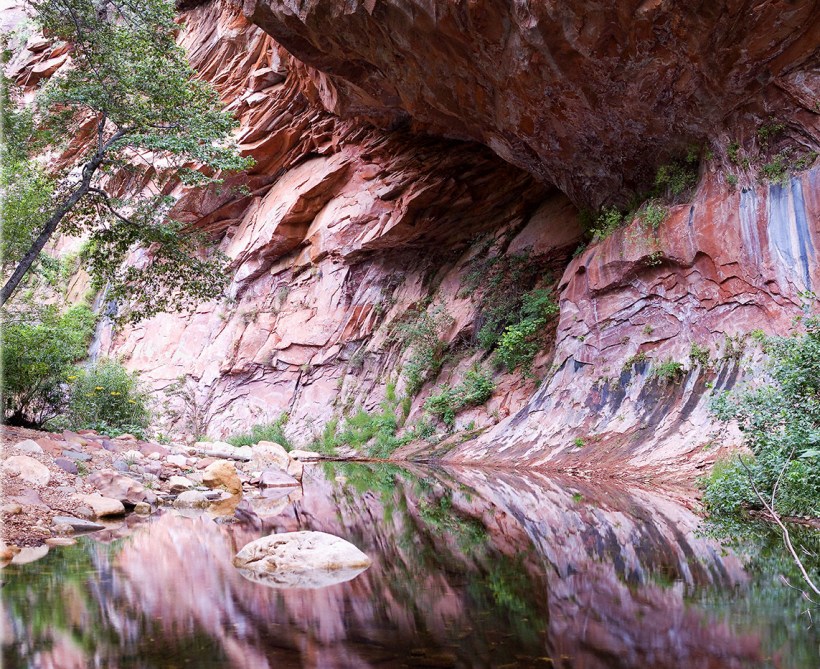
This quiet nook is hidden along the Oak Creek Canyon trail, though easy enough to find.
I visited there just at dawn when the air was still and the usually busy site deserted.
Oak Creek Canyon is named for the native, evergreen oak species unique to desert environments. The leaves conserve moisture: small, thick. I remember camping at the Chiricahua National Monument on November. All night the acorns fell onto the metal picnic tables, a loud metallic thunk.
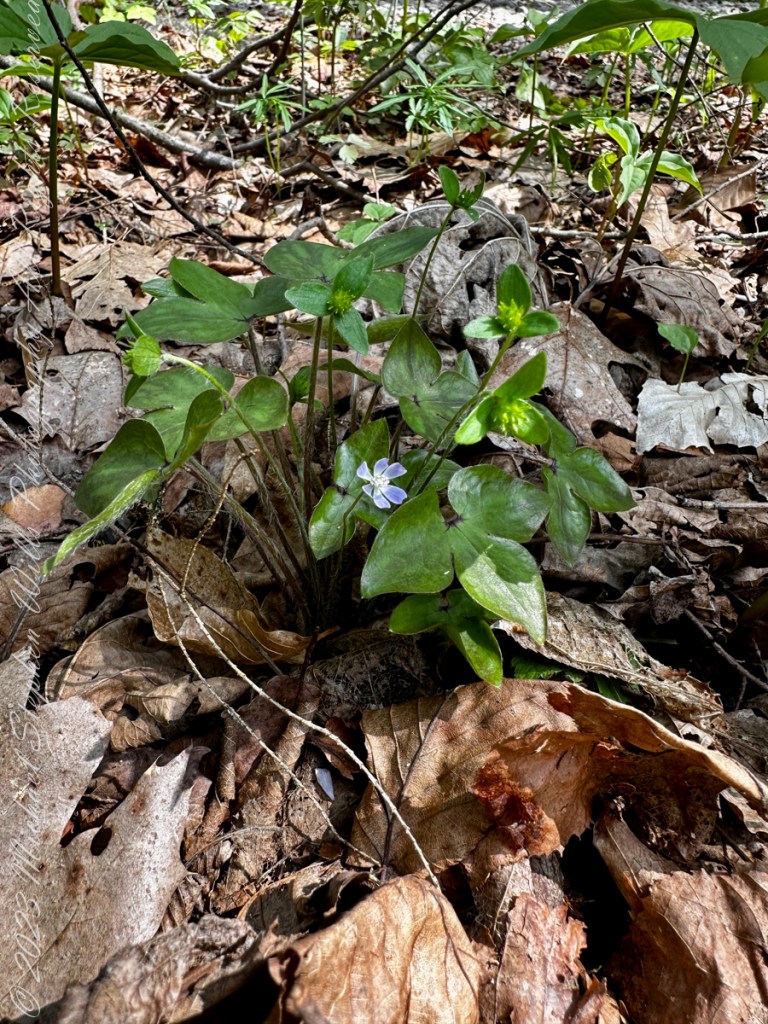
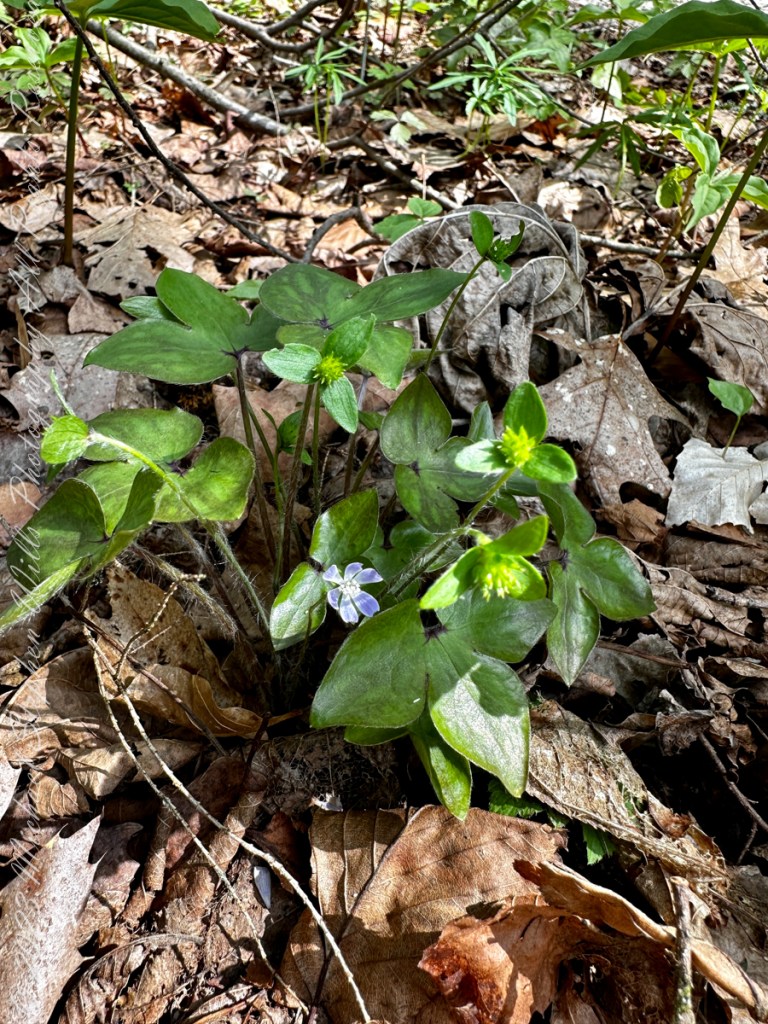
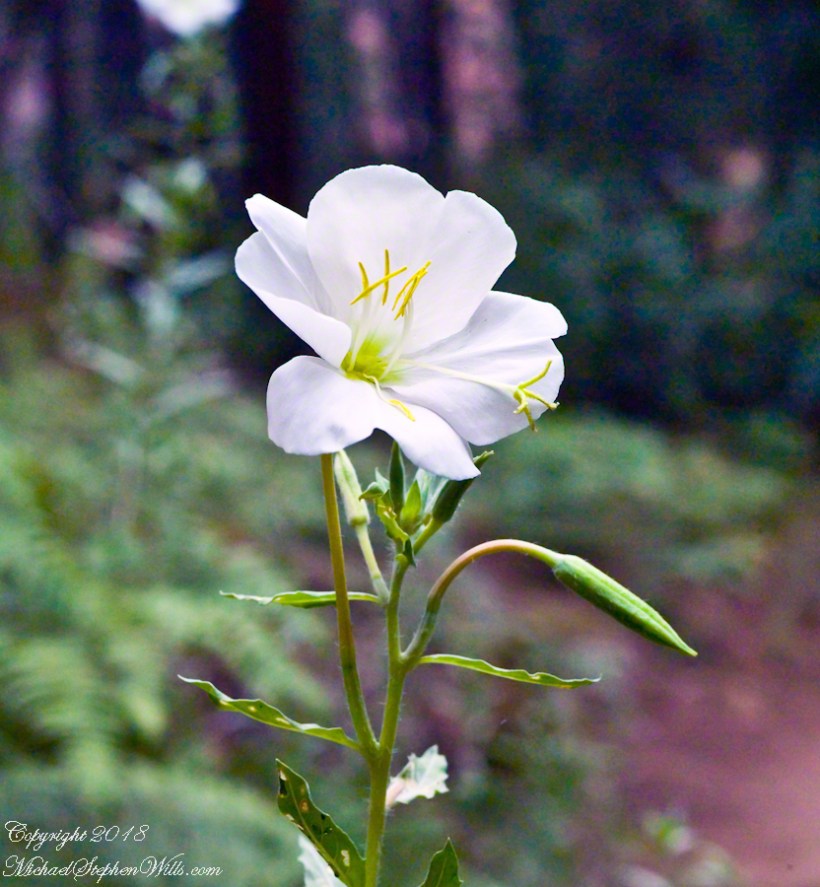
The post header is a primrose flower growing on the bank of Oak Creek.
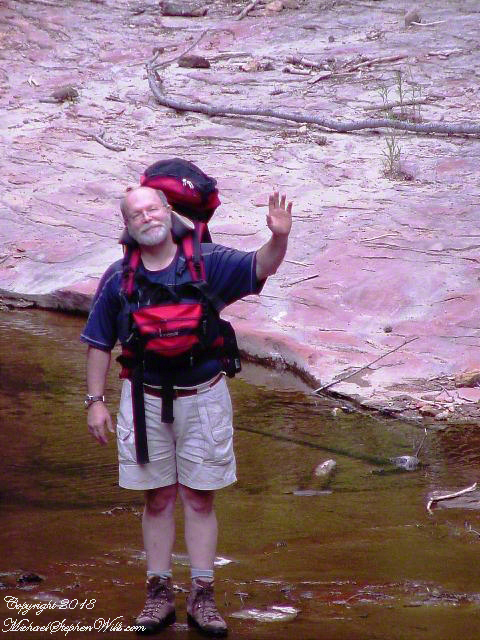
Recognize the rock from “Oak Creek Mandala”? This is farther up the Oak Creek Canyon trail, “photograph by Pam Wills.” I am in my warm weather photography kit of the time having passed the camera to Pam for the shot.
Interstate 10 between Benson and Wilcox ascends through a field of enormous, eroded granite boulders. Off to the west are the Dragoon Mountains, otherwise known as “Cochise Stronghold.”
Informative sign at campsite
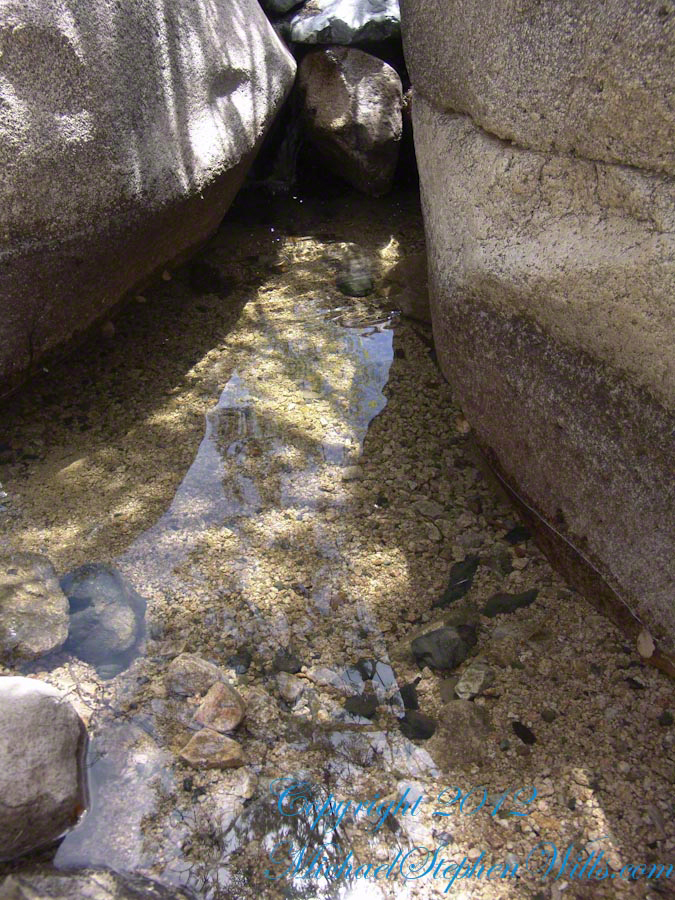
Starting from the campsite is the “Sky Islands Traverse” hiking trail, leading up into the mountains. I wandered from the trail to follow a dry streambed to this residual pool of water, the time being early spring, and this is what remained from the winter rains.
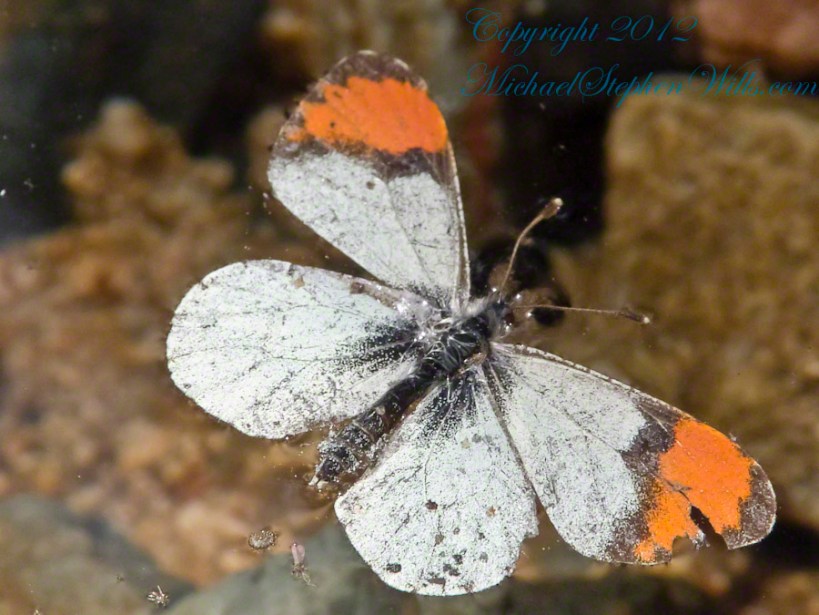
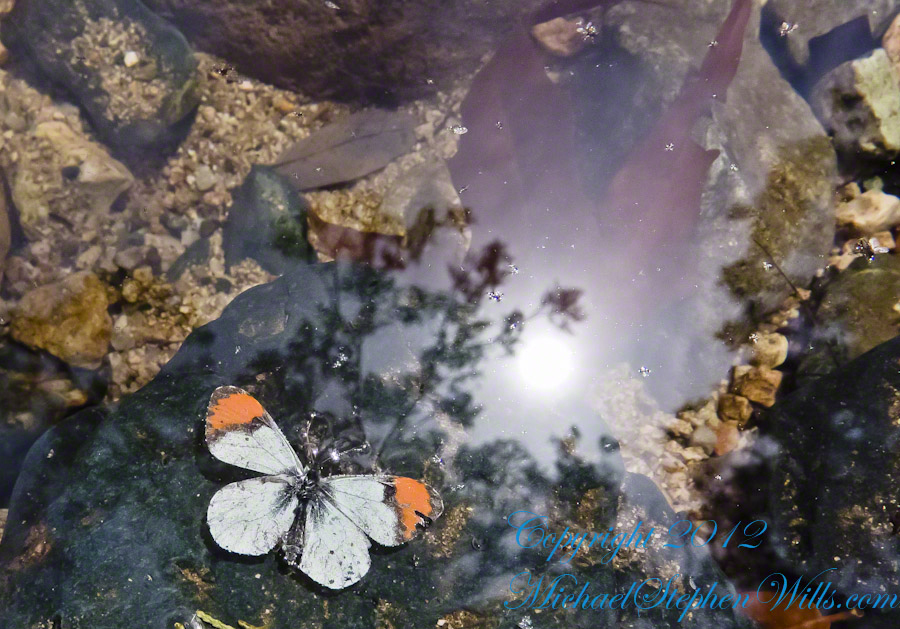
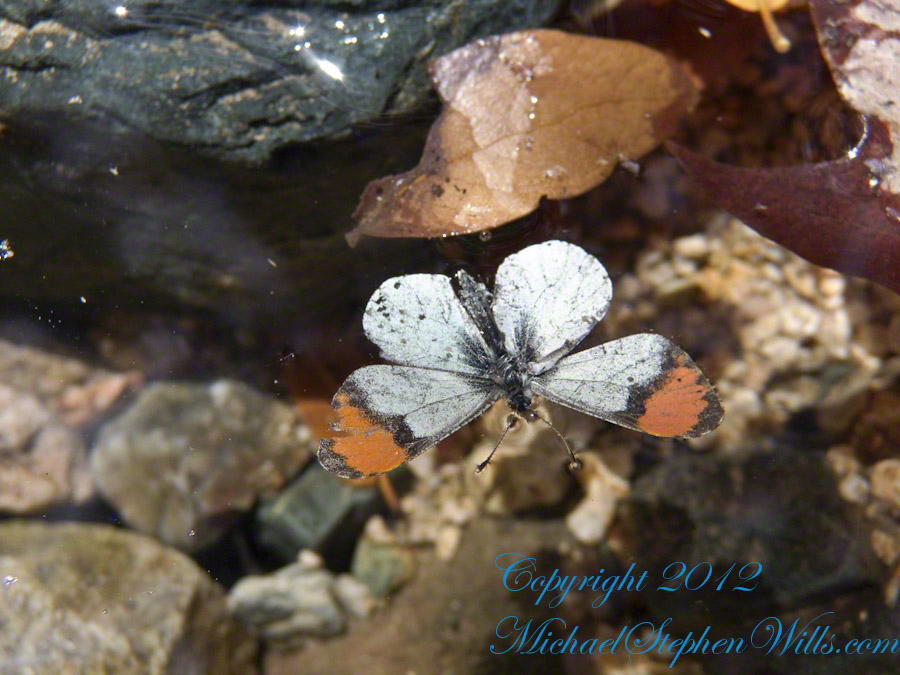
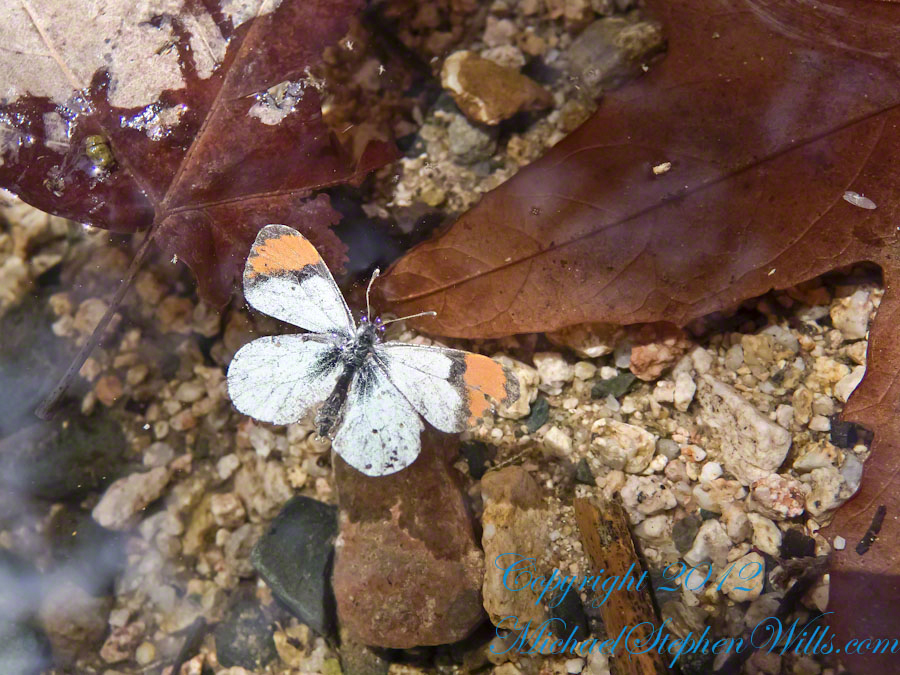
A single butterfly of the genus Anthocharis generally called “Orangetip” for the colorful upper wing tips. These exist throughout the world, here in Arizona they migrate across the desert, obtaining refuge and nourishment from “Sky Islands” such as the Dragoon Mountains
Copyright 2022 Michael Stephen Wills All Rights Reserved
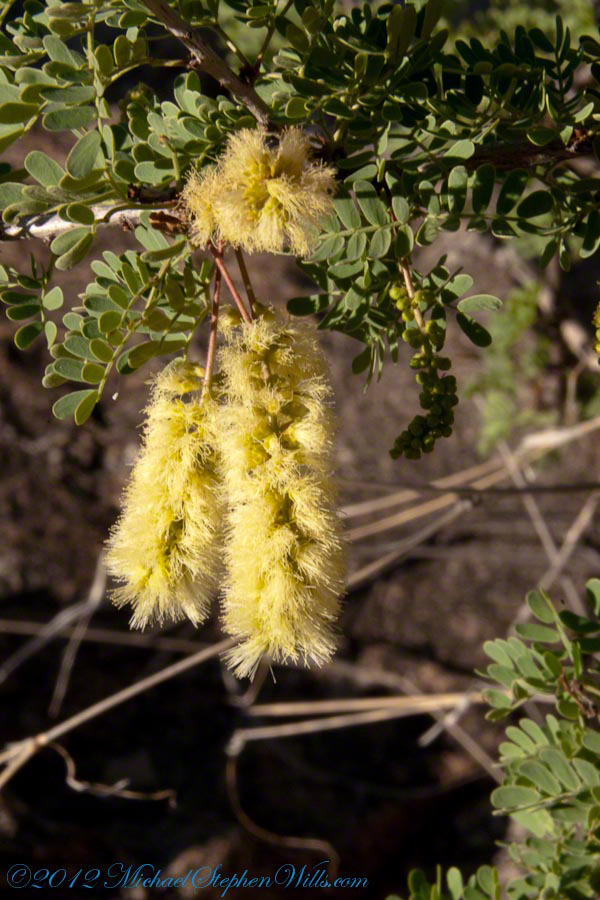
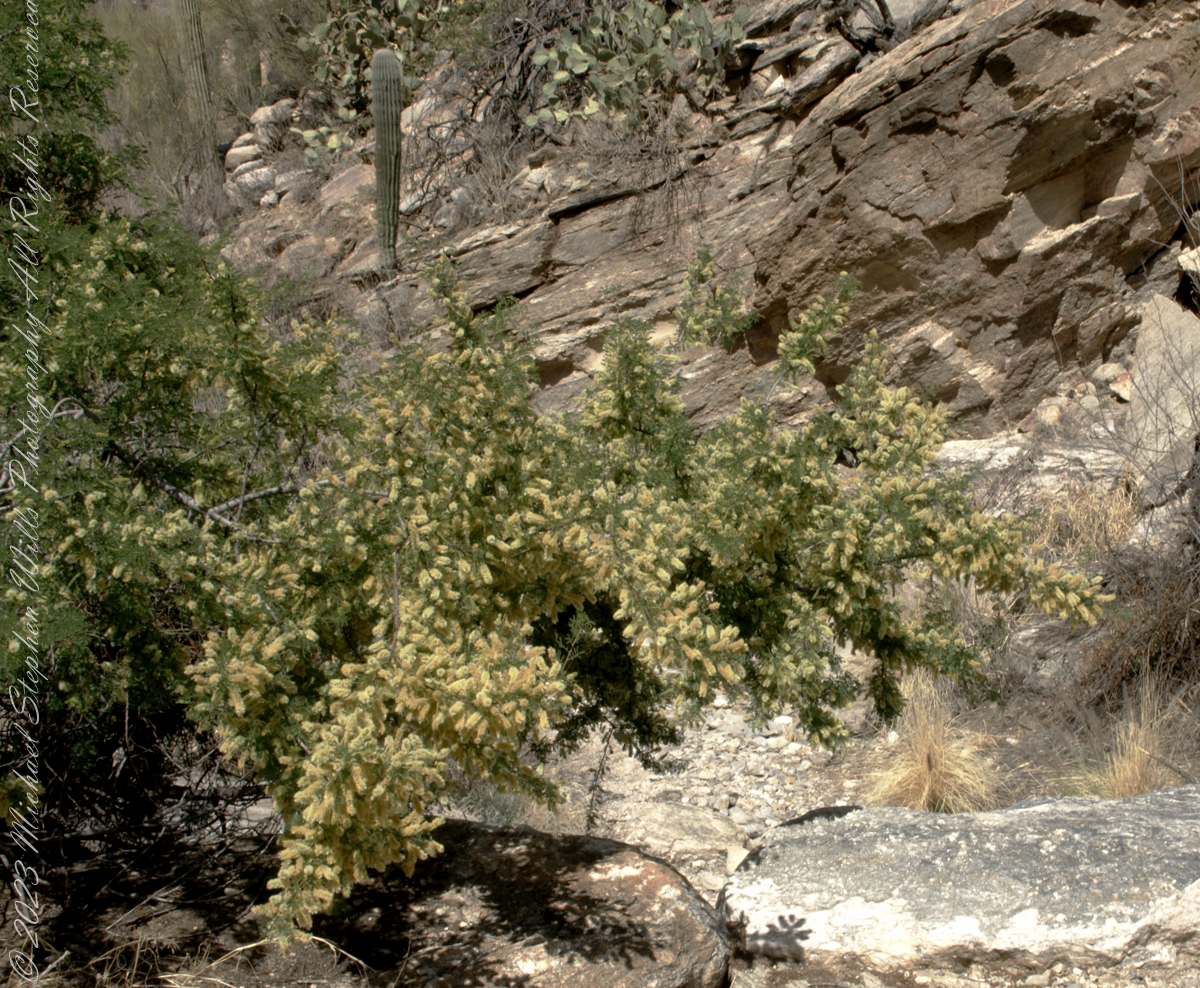
Mesquite is the Sonoran Desert smell carried by distant rain, omnipresent and humble, a survivor with tap root extending 190 feet down to draw on the water table.
Prosopis is the scientific name for about 40 species of leguminous trees. Present in North America since the Pliocene era, mesquite wood has been dated to 1300 BC.
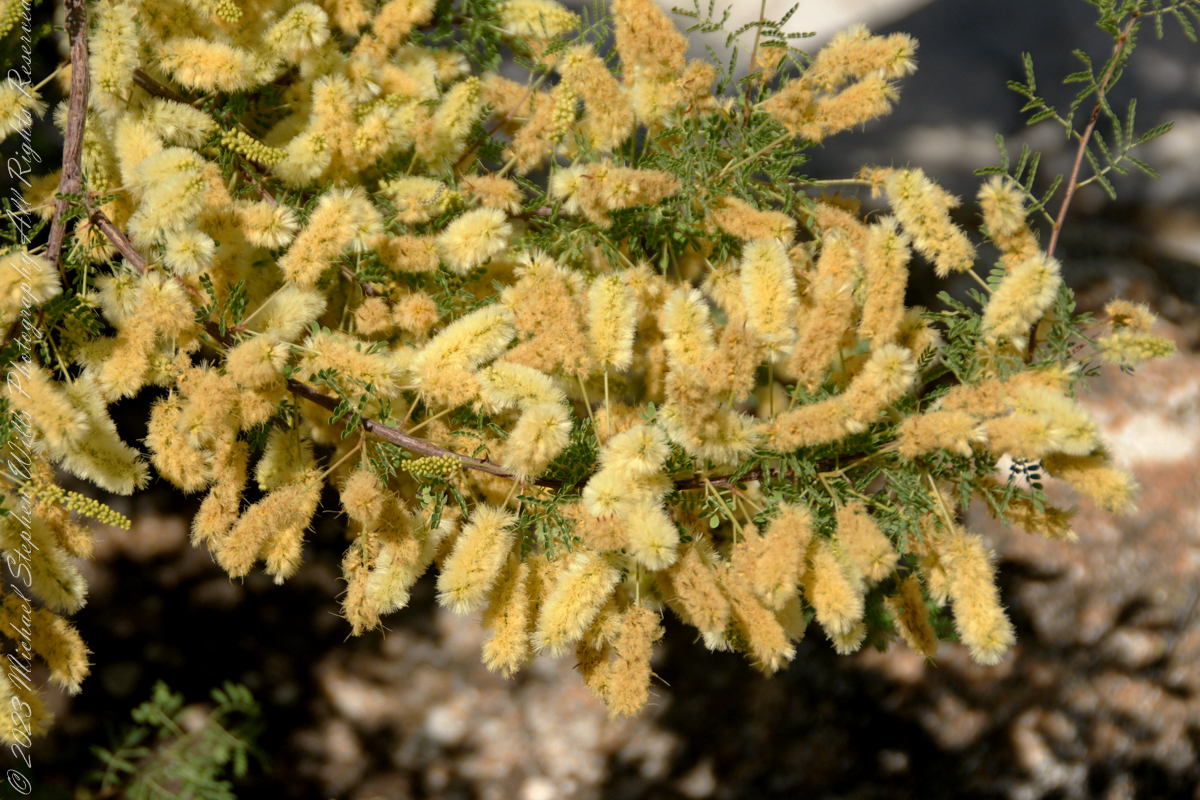
I found this flowering mesquite bush in Finger Rock Canyon of the Catalina Mountains outside Tucson, Arizona.
They are thought to have evolved with megafauna in the New World. The loss of North American megafauna at the end of the Pleistocene era gave way to one theory of how the Prosopis spp. were able to survive.
One theory is that the loss of the megafauna allowed Prosopis spp. to use their fruit pods to attract other organisms to spread their seeds; then, with the introduction of livestock, they were able to spread into grasslands.
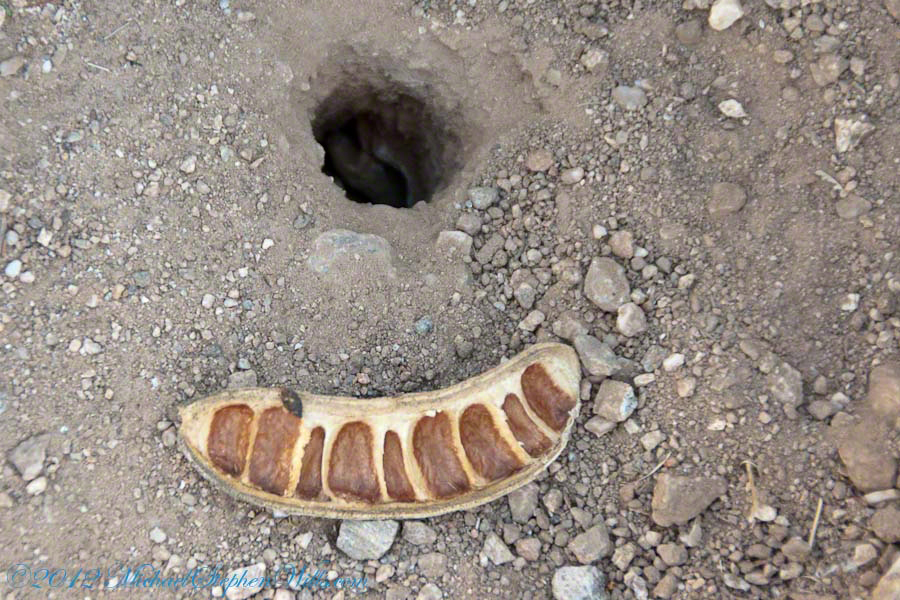
The plentiful legumes that develop from these flowers are edible when cooked. The shape and color of the seeds can be understood from this empty seed pod that happens to lie near a tarantula burrow.
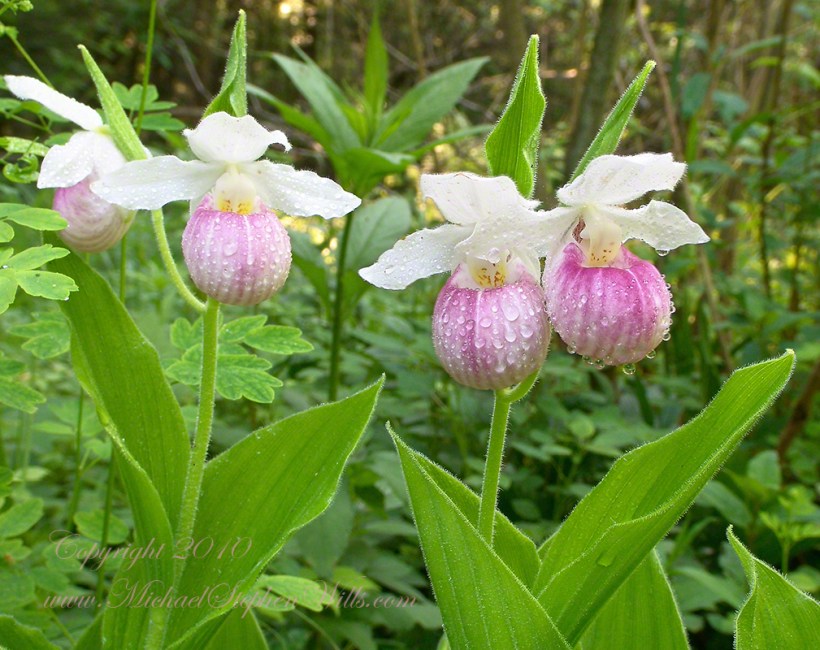
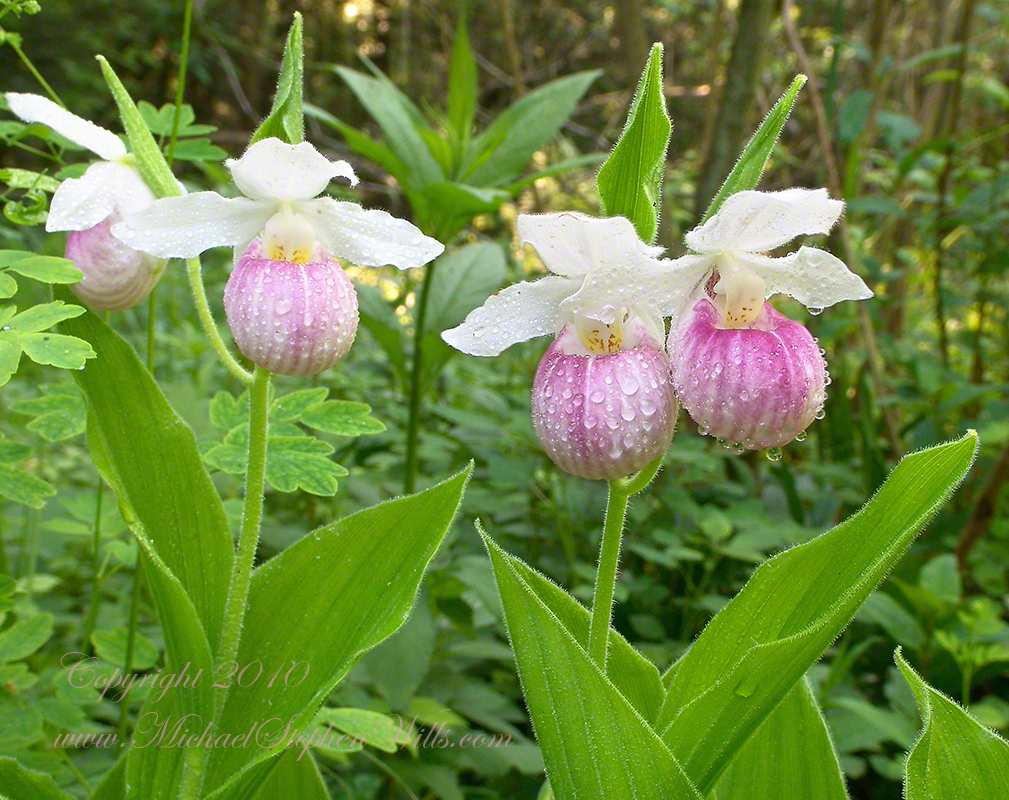
I was lucky enough to live near the site of these wild orchids back in the early 2000’s, close enough to enjoy serial visits, enough to find this perfect moment titled “After the Rain.” In recent visits there were no specimens to be found. The reasons for the disappearance are not clear.
Showy lady’s slipper, scientific name Cypripedium reginae, is also known as pink-and-white lady’s-slipper, and queen’s lady’s-slipper, is a rare lady’s-slipper orchid native to northern North America. Although never common, this plant has vanished from much of its historical range due to habitat loss. It is the state flower of Minnesota.
Cypripedium reginae grows in wetlands such as fens, wooded swamps, and riverbanks. Cypripedium reginae thrives in neutral to basic soils but can be found in slightly acidic conditions. The plants often form in clumps by branching of the underground rhizomes. Its roots are typically within a few inches of the top of the soil. It prefers very loose soil and when growing in fens it will most often be found in mossy hummocks.
It can tolerate full sun but prefers partial shade for some part of the day. When exposed to full sun, the flower lip is somewhat bleached and less deeply colored. It is occasionally eaten by white-tailed deer.
Cypripedium reginae can be found in Canada from Saskatchewan east to Atlantic Canada, and the United States from North Dakota east to the Atlantic and south to Arkansas and Tennessee.
Cypripedium reginae is quite rare. Its increasing rarity is attributable to destruction of a suitable alkaline habitat; it is sensitive to hydrologic disturbances, and is threatened by wetland draining, water contamination, habitat destruction and horticultural collectors. Browsing by an exploding deer population stunts or eliminates the plant’s growth.
Cypripedium reginae contains an irritant, cypripedin, a phenanthrenequinone. The plant is known to cause dermatitis on the hands and face. The first report of the allergy reaction was in 1875 by H. H. Babcock in the United States, 35 years before the term “allergy” was coined. The allergen was later isolated in West Germany by Bjorn M. Hausen and associates.
Reference: “Cypripedium reginae” wikipedia
Images and captions Copyright 2023 Michael Stephen Wills All Rights Reserved
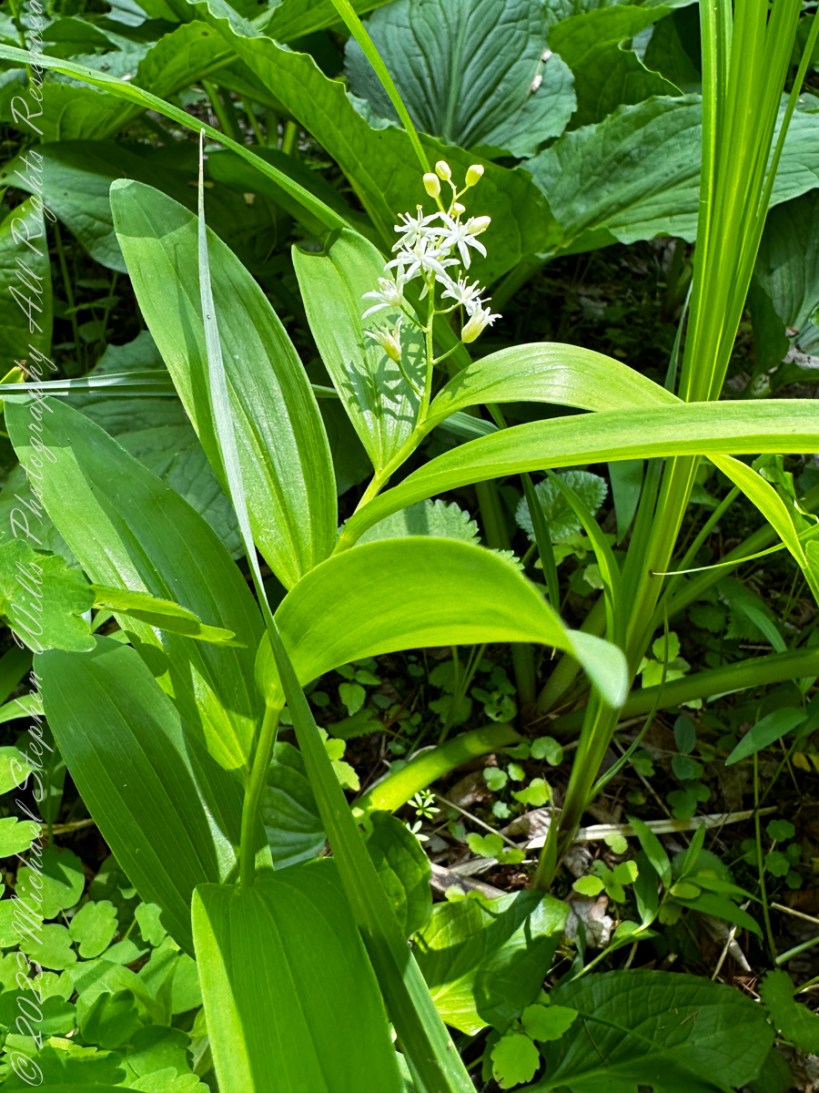
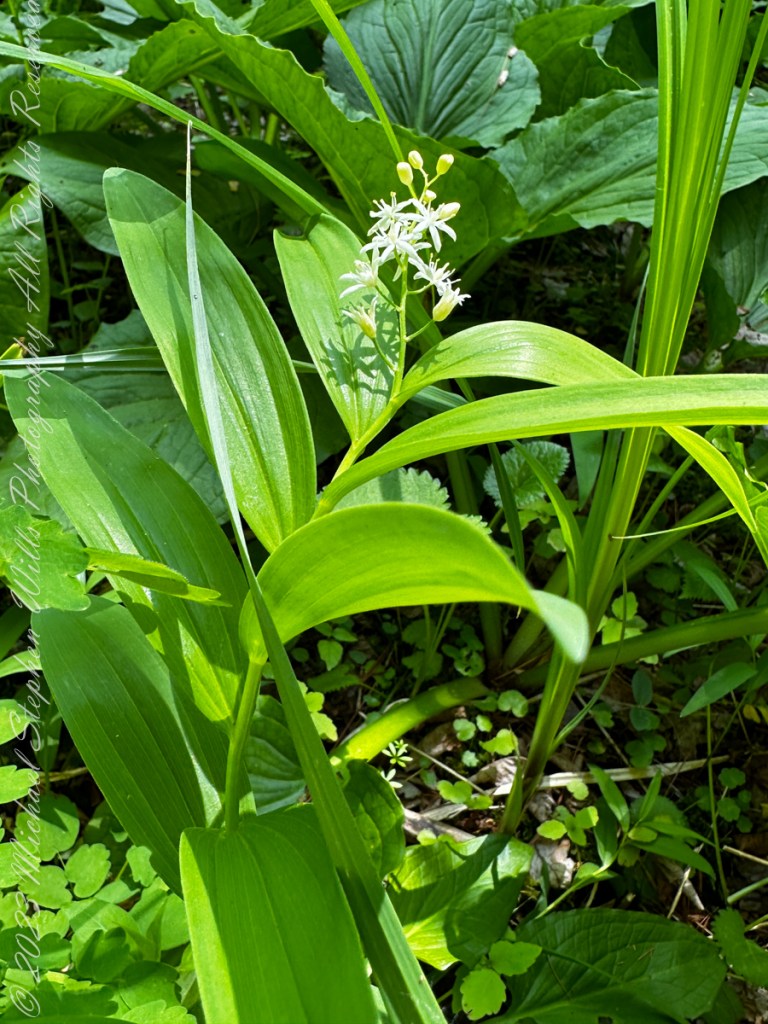
False Solomon’s Seal, scientific name Maianthemum racemosum, is common in the Finger Lakes Region. I found this specimen during a walk with the grandchildren in a local fen among the post-glacial terrain of the Finger Lakes Region.
False Solomon’s Seal is a common, widespread plant with numerous common names and synonyms, known from every US state except Hawaii, and from every Canadian province and territory (except Nunavut and the Yukon), as well as from Mexico. What name do YOU know it by?
Because it resembles plants of the highly toxic Veratrum genus, this species should not be consumed unless identification is positive. The plant becomes fibrous and bitter after it completes flowering and seed-setting, but the tender young shoots can be stripped of their leaves, simmered in water and eaten. Their delicate flavor is somewhat reminiscent of asparagus. The ripe fruits are edible raw or cooked but may be poor in taste. They can be laxative if consumed in large quantities.
Ojibwa harvested the roots of this plant and cooked them in lye water overnight to remove the bitterness and neutralize their strong laxative qualities. Native Americans boiled the roots to make tea for medicinal purposes, including to treat rheumatism, kidney issues, and wounds and back injuries.
Reference: “Maianthemum racemosum” wikipedia
Images and captions Copyright 2023 Michael Stephen Wills All Rights Reserved
Yellow Lady’s Slipper, scientific name Cypripedium parviflorum, is also known as “Moccasin Flower.” I found these on a walk with the grandchildren in a local fen among post-glacial terrain. “All this swamp cabbage, phew!!,” said the youngest.
This is a wild orchid that grows all over, though picky as to habitat.
–Newfoundland to British-Columbia, south to Georgia, Arizona, and Washington; Europe. –Newfoundland to Alaska and south to Oregon in the West. –In the East along the Atlantic Coast, it is in every state except Florida and extends across to Louisiana and eastern Texas. –New Mexico state: Catron, Colfax, Grant, Los Alamos, Otero, San Miguel, San Juan and Santa Fe Counties. –Arizona state: Apache, Graham, and Greenlee Counties.
Habitats and requirements: A more upland plant preferring subacidic to neutral soils. Primarily in mesic to dry-mesic upland forests, woodlands with deep humus or layers of leaf litter, shaded boggy habitats, but also in hill prairies and occasionally in wetlands with organic, well-drained, sandy soils. Moderate shade to nearly full sun in fir, pine, and aspen forest between 6000 and 9500 feet (1830 and 2900 meters). Mountain meadows and on timbered slopes. Dripping seeps on steep to moderately sloped canyon walls.
Reference: “Cypripedium parviflorum” wikipedia
Images and captions Copyright 2023 Michael Stephen Wills All Rights Reserved
Have you wondered, “What is ‘pileated’ about a Pileated Woodpecker? The Latin word Latin pileatus means capped, so the adjective refers to the red “cap” the bird wears. Pileated Woodpeckers mmainly eat insects, especially carpenter ants and wood-boring beetle larvae. They also eat fruits, nuts, and berries, including poison ivy berries. Pileated woodpeckers often chip out large and roughly rectangular holes in trees while searching out insects, especially ant colonies. They also lap up ants by reaching with their long tongues into crevices. They may forage around the sides of human homes or even cars and can be observed feeding at suet-type feeders, as you can see below.
Our Resident Pileated Woodpecker enjoying a suet meal one spring evening
Usually, pileated woodpeckers excavate their large nests in the cavities of dead trees. Woodpeckers make such large holes in dead trees that the holes can cause a small tree to break in half. The roost of a pileated woodpecker usually has multiple entrance holes. In April, the hole made by the male attracts a female for mating and raising their young. Once the brood is raised, the birds abandon the hole and do not use it the next year. When abandoned, these holes—made similarly by all woodpeckers—provide good homes in future years for many forest songbirds and a wide variety of other animals. Ecologically, the entire woodpecker family is important to the wellbeing of many other bird species. The pileated woodpecker also nests in boxes about 4.6 m (15 ft) off the ground. The large cavities made by pileated woodpeckers during their nesting process not only serve as a home for the birds but also play an essential role in the forest ecosystem by contributing to nutrient cycling. Woodpecker cavities can lead to increased soil nutrient levels and microbial activity, providing a nutrient-rich environment for other plants to grow.
A pileated woodpecker pair stays together on its territory all year round and is not migratory. They defend the territory in all seasons but tolerate floaters during the winter. Drumming is most common during courtship and to proclaim a territory. Hollow trees are often used to make the most resonant sound possible. The pattern is typically a fairly slow, deep rolling that lasts about three seconds.
Pileated woodpeckers have been observed to move to another site if any eggs have fallen out of the nest—a rare habit in birds. The cavity is unlined except for wood chips. Both parents incubate three to five eggs for 12 to 16 days. The average clutch size is four per nest. The young may take a month to fledge. The oldest known pileated woodpecker was 12 years and 11 months old. Predators at the nest can include American and Pacific martens, weasels, squirrels, rat snakes, and gray foxes. Free-flying adults have fewer predators but can be taken in some numbers by Cooper’s hawks, northern goshawks, red-shouldered hawks, red-tailed hawks, great horned owls, bald eagles, golden eagles and barred owls.
Reference: “Pileated Woodpecker” Wikipedia
Images and Video Copyright 2023 Michael Stephen Wills All Rights Reserved
Our home at Malloryville, New York has an orchard of three apple trees, seen here on early one spring morning in the year 2010. The varieties are Delicious, Cortland and McIntosh. Freeville, Tompkins County, New York State
The original wild ancestor of Malus domestica was Malus sieversii, found growing wild in the mountains of Central Asia in southern Kazakhstan, Kyrgyzstan, Tajikistan, and northwestern China. Cultivation of the species, most likely beginning on the forested flanks of the Tian Shan mountains, progressed over a long period of time and permitted secondary introgression of genes from other species into the open-pollinated seeds.
Chinese soft apples, such as M. asiatica and M. prunifolia, have been cultivated as dessert apples for more than 2000 years in China. These are thought to be hybrids between M. baccata and M. sieversii in Kazakhstan.
Among the traits selected for by human growers are size, fruit acidity, color, firmness, and soluble sugar. Unusually for domesticated fruits, the wild M. sieversii origin is only slightly smaller than the modern domesticated apple.
At the Sammardenchia-Cueis site near Udine in Northeastern Italy, seeds from some form of apples have been found in material carbon dated to around 4000 BCE.[20] Genetic analysis has not yet been successfully used to determine whether such ancient apples were wild Malus sylvestris or Malus domesticus containing Malus sieversii ancestry. It is generally also hard to distinguish in the archeological record between foraged wild apples and apple plantations.
There is indirect evidence of apple cultivation in the third millennium BCE in the Middle East. There was substantial apple production in the European classical antiquity, and grafting was certainly known then. Grafting is an essential part of modern domesticated apple production, to be able to propagate the best cultivars; it is unclear when apple tree grafting was invented.
The proverb, “An apple a day keeps the doctor away”, addressing the supposed health benefits of the fruit, has been traced to 19th-century Wales, where the original phrase was “Eat an apple on going to bed, and you’ll keep the doctor from earning his bread”. In the 19th century and early 20th, the phrase evolved to “an apple a day, no doctor to pay” and “an apple a day sends the doctor away”; the phrasing now commonly used was first recorded in 1922.
Reference: Wikipedia “Apple”
Copyright 2023 Michael Stephen Wills All Rights Reserved
An excerpt from an interview by Diane Frances Wills of our father Thomas Francis Wills for a seventh-grade assignment about 1971. I did some editing to correct the date based on historical records and my father’s military records (Michael Stephen Wills).
Thomas enlisted for
the navy one day after his 24th birthday, September 25, 1939 and
served 6 years and a few weeks until October 7, 1945 having experienced the
Battle of the Atlantic (American Defense Medal) and liberation of the Philippines
(WWII Victory Medal, American Campaign Medal, Asiatic Pacific Theater, Philippine
Liberation Ribbon). Here is his
description of an incident from that time:
Thomas Francis Wills, Ocean View Beach, Virginia, 1940
1 Year, 6 months after my enlistment in New York City, March 1941, on the USS Upshur two days out of Boston on its run to Reykjavik, Iceland delivering mail and supplies to the marines stationed to prevent the Germans from establishing a base. Steaming north we got word there was a gale blowing in our path. We all became apprehensive. I asked Bill Rogers, the radioman, about the approaching storm. “Say, Bill, I see by the weather report we’re heading info some rough weather. How long do you think it will last?”
“Yeah, according to the latest weather report it is a regular Northeaster and we can expect a couple days of rough winds and high waves, also very cold weather. We’ll have to secure everything topside so it won’t blow or be washed overboard. We can also expect very little in the way of normal meals except for maybe coffee and sandwiches.” On such a small ship the cooks can’t prepare meals in such weather.
USS Upshur, 1940, the ten-man crew, including Thomas Wills, is on the bow
As we approached the storm zone the sea got rough and the wind started blowing. Soon we were well into a horrible storm. The sky got dark and gloomy, full of dark bold clouds. The ocean rough, choppy and black. The rain started coming down sharp and harsh, cold and icy. The rain cut through your body like piercing arrows, it chilled your bones.
Sometimes I thought the ship was going to sink, the waves and the wind were so strong. The bow would go bluntly into the water. The ship listed sideways, seeming to almost rolling over. The waves carried our ship up, then go out from underneath sending us crashing down. This happened over and over, endlessly.
I was on duty in the radio shack and had to walk the whole length of the ship from my sleeping quarters. Many times, I almost went overboard, the wind was so strong. I could lay on my stomach but it did not help because I could still slide through the railings. I would freeze to death in five minutes in that water. I hope I never had to go through that again, seems like yesterday. All we had to wear was a sailor suit, not too warm. I’d just get all soaked.
My shipmates and I, a five-foot eight-inch boy of 25 with dark brown hair, had to be calm and keep doing our normal scheduled duties, because we learned you can’t get panicky or else you will put your whole ship out of order.
The storm went on until the end of night. I thought the storm would never end. It felt as if it lasted a week. At that time no other ships sailed with us, so there was no possibility of help. Nobody fell over the side or was drowned.
After that, a German U-Boat launched a torpedo at us and missed. We searched, tried to sink them without success.
Copyright 2023 All Rights Reserved Michael Stephen Wills