Two Laughing Gulls of Cocoa Beach: A Dance of Adaptation and Survival

Discover the captivating world of Laughing Gulls, the jesters of Cocoa Beach’s shores. Dive into their lives, exploring the dance of courtship, the adaptability in their diet, and their vital role in the coastal symphony.

The Coastal Sentinels

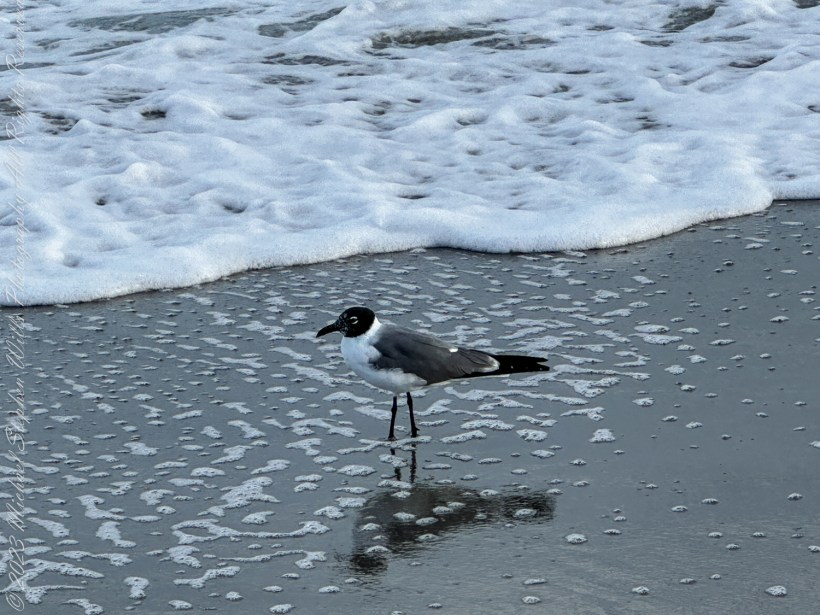
On the shores of Cocoa Beach, where the Atlantic’s waves gently knead the sands of Brevard County, Laughing Gulls (Leucophaeus atricilla) enact their daily ballet of survival and adaptation. In the span of mere minutes, the shifting light of Florida’s coastal theater presents two scenes, each with the same protagonist yet donned in starkly different costumes.

The Many Faces of Adaptation

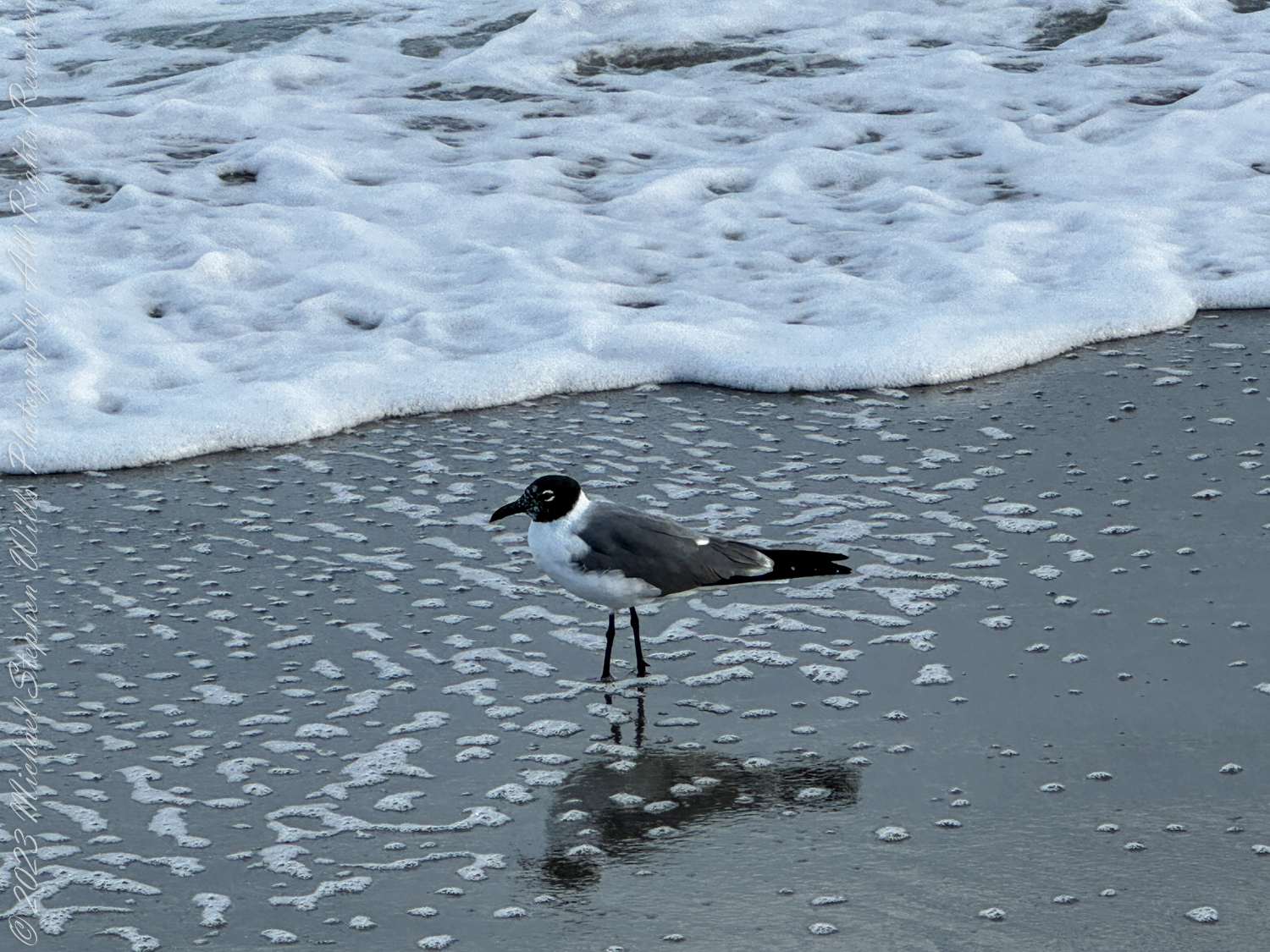
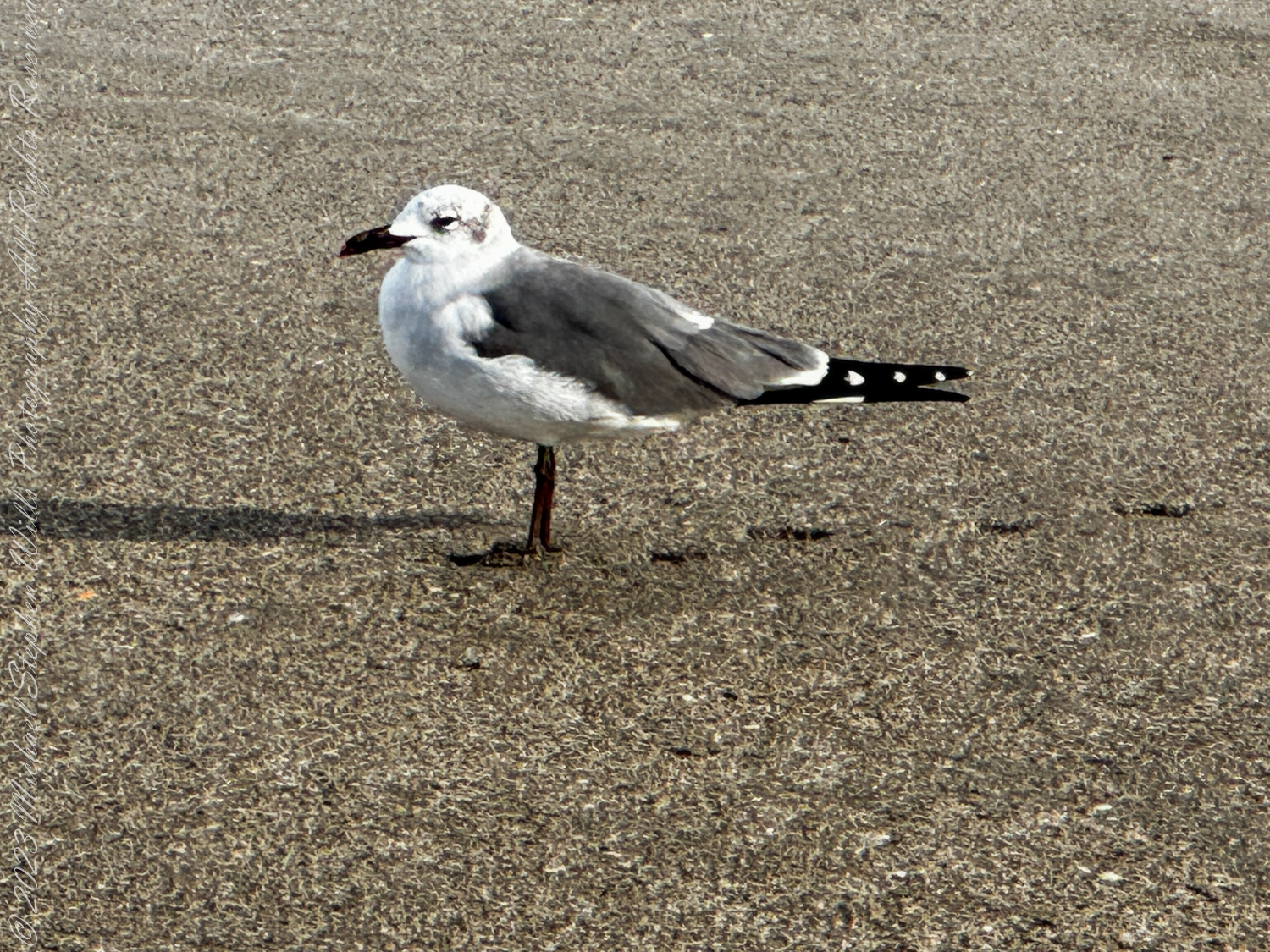
The first gull, captured against the frothy lace of the incoming tide, is the epitome of the breeding plumage: a sleek, black hood that starkly contrasts its pearl-grey wings. This attire is not merely for allure but speaks of its readiness to engage in the rituals of courtship and the responsibilities of rearing the next generation. This black hood, a seasonal crown, fades as the duties of breeding wane, revealing the less conspicuous garb of the non-breeding season—a mottled grey head atop the same sturdy body, ready to blend into the off-season’s landscape.

Laughing Gull with breeding plumage

Laughing Gull, nonbreeding plumage

Minutes Of Separation

The mere minutes that separate the two photographs are but a whisper in the grand dialogue of evolutionary time. Yet, they offer a glimpse into the ever-present duality of the Laughing Gull’s life. In one, the gull stands resolute, black-headed and bold against the soft chaos of the sea’s edge. In the other, its head appears dusted with the wisdom of age, a visual softening that speaks to the less confrontational time of year.

Here are some observations to make sense of this disparity:

Overlap of Molting Periods: Laughing Gulls do not all breed at the same time; some individuals may start molting into or out of breeding plumage earlier or later than others. This can result in birds with different plumage being seen together.

Varied Maturity: Younger gulls or those not yet of breeding age may not have developed the breeding plumage, while adults in the same flock may display full breeding colors.

Breeding Colonies: Gulls often nest in colonies where birds in different stages of the breeding cycle can be observed together, including those that may have lost mates or failed to breed and therefore did not develop breeding plumage.

Health or Nutritional Status: Sometimes a bird’s plumage can be affected by its health or nutritional status. A gull in poor health might not molt into breeding plumage as expected.

Geographic and Climatic Factors: Local environmental conditions can influence the timing of molting. Birds in the same location can experience different environmental cues that might affect their molt.

Non-breeding Visitors: During the breeding season, some non-breeding birds may still be present and intermingle with breeding birds, either because they are passing through the area or they are non-breeding residents.

Extended Breeding Season: In areas with a long breeding season, such as in subtropical and tropical regions, the breeding and non-breeding plumages can be seen at the same time due to the extended period over which breeding can occur.

Masters of the Coastal Realm

The Laughing Gulls are more than just residents of the coast; they are its caretakers and witnesses. Their laughing calls are synonymous with the ocean’s breath, a soundscape that harmonizes with the rhythmic crashing of waves. These birds thrive in the intertidal zone, a challenging environment where land and sea engage in a perpetual tussle. Here, they must be opportunistic, agile, and resourceful, for the beach offers both a cornucopia of food and the threat of unpredictability.

The Ebb and Flow of Existence

The life of a Laughing Gull is intimately tied to the ebb and flow of the tides. Their diet is a testament to their adaptability, comprising anything the sea yields—fish, crustaceans, and even the unfortunate insects that stray too close to the brine. They are pirates of the shore, unafraid to snatch a meal from another bird or scavenge the remains of human activity.

Reflections on Change and Constancy

Laughing Gulls are the embodiment of the sea’s narrative around us—a story of change and constancy. Their lives are a testament to the tumultuous history of the ocean, and their presence is a thread that connects us to the vast, blue mystery. They remind us that, while the sea’s moods are many and its faces ever-changing, it remains a central force in the narrative of life on Earth.

In the Face of Tomorrow

In the space between these two images, we find a profound lesson on the nature of time and the resilience of life. The Laughing Gulls of Cocoa Beach, with their shifting plumage and timeless cries, are messengers of the past, envoys of the present, and harbingers of the future. As we contemplate their existence, we are reminded of our own place within the natural world—a world that requires our understanding and protection, lest the laughter of these gulls fades into the silent archives of history.

The Laughing Gulls of Cocoa Beach continue their dance, unfazed by the human gaze, their lives a fluid adaptation to the sea’s caprices. And as the sun marches across the sky, casting the story of these gulls into relief against the shifting sands, we are privileged to observe, to learn, and to cherish the Atlantic Ocean’s enduring tale.

Copyright 2024 Michael Stephen Wills All Rights Reserved

A Raft of Coots on Merritt Island

Discover the elegance of the American Coot through our journey at Merritt Island, where these unsung avians dance across the water, crafting nature’s own symphony of survival and grace.

First Glimpse

There we were, Pam and I, standing before the serene waters of the Merritt Island National Wildlife Refuge, when a cluster of American Coots (Fulica americana) caught our eyes. Locally known as mud hens, marsh hens, or pond ducks, these coots were anything but mundane. Their dark plumage blended with the ripples, while their ivory bills gleamed like beacons, leading our gaze across the liquid expanse.

The Coot’s Constellation

As a throng, they moved with purposeful grace, a constellation of birds, each a star in their own right. With lobed toes spread like aquatic fans, they paddled through the water, their movements an embodiment of nature’s ingenuity. These “poule d’eau,” as the French settlers once called them, displayed a mastery over their domain, both in water and on land.

Social Weave

A Raft of American Coots

The coots assembled not as a random flock but as a deliberate collective, a raft in both name and function. They maneuvered with a collective intelligence, each bird’s action rippling through the group, exemplifying the coots’ penchant for community. Their group dynamics, a blend of cooperation and competition, painted a picture of the delicate balance within ecosystems.

An Ecological Perspective

In the tapestry of the refuge’s ecology, the American Coot stitched its niche with precision. Whether known as “baldpate” or “crow duck,” these birds were critical to the habitat they frequented, acting as both consumers and contributors. They pruned the vegetation, controlling its growth, and served as prey, connecting the food web in a cycle that spanned generations.


The Taxonomic Twist: Coots vs. Ducks

As the coots continued their ballet on the water, I turned to Pam, ready to demystify the common misconception that coots and ducks are close relatives. “Though they share the wetland stage,” I began, “these two are cast in different roles by nature’s hand.”

Orders Apart

Coots are members of the order Gruiformes, which includes rails and cranes, characterized by their elongated bodies and short wings. Ducks, on the other hand, belong to the order Anseriformes, which also encompasses swans and geese, known for their broad, flat bills and webbed feet.

Distinct Lineages

This taxonomic separation marks a deep evolutionary divide. The Gruiformes, with their lobed toes and distinctive calls, represent a lineage adapted for a life traversing the marshy edges of the world. Anseriformes, with their specialized bills for filtering and dabbling, reveal a lineage fine-tuned for exploiting the aquatic resources more extensively.

The Cultural Mosaic

Despite their commonality, coots have etched a place in cultural folklore, often overshadowed by more colorful avian neighbors. Yet, their ubiquity across North American wetlands has made them a familiar sight, a symbol of the wild’s persistent pulse. To us, they were the embodiment of the unsung wilderness, a chapter in the storybook of natural history.

Embracing the Ensemble

As the day waned, the water transformed into a canvas of orange and purple hues, with the coots as its subjects. “Behold the marsh’s musicians,” I mused to Pam, “each note they play is a beat in the heart of the wild.” Our encounter with the American Coot—a bird of many names but one singular, remarkable essence—was a harmonious reminder of nature’s interconnected ballet.

Copyright 2024 Michael Stephen Wills All Rights Reserved

A Beachcomber’s Musings on Floridian Dune Ecology

Discover the resilient beauty of Florida’s dune sunflowers through the eyes of a beachcomber. Uncover the secrets of Helianthus debilis, a symbol of hope thriving where sea meets sand. Join the coastal dance of life.

Encounter with Helianthus debilis


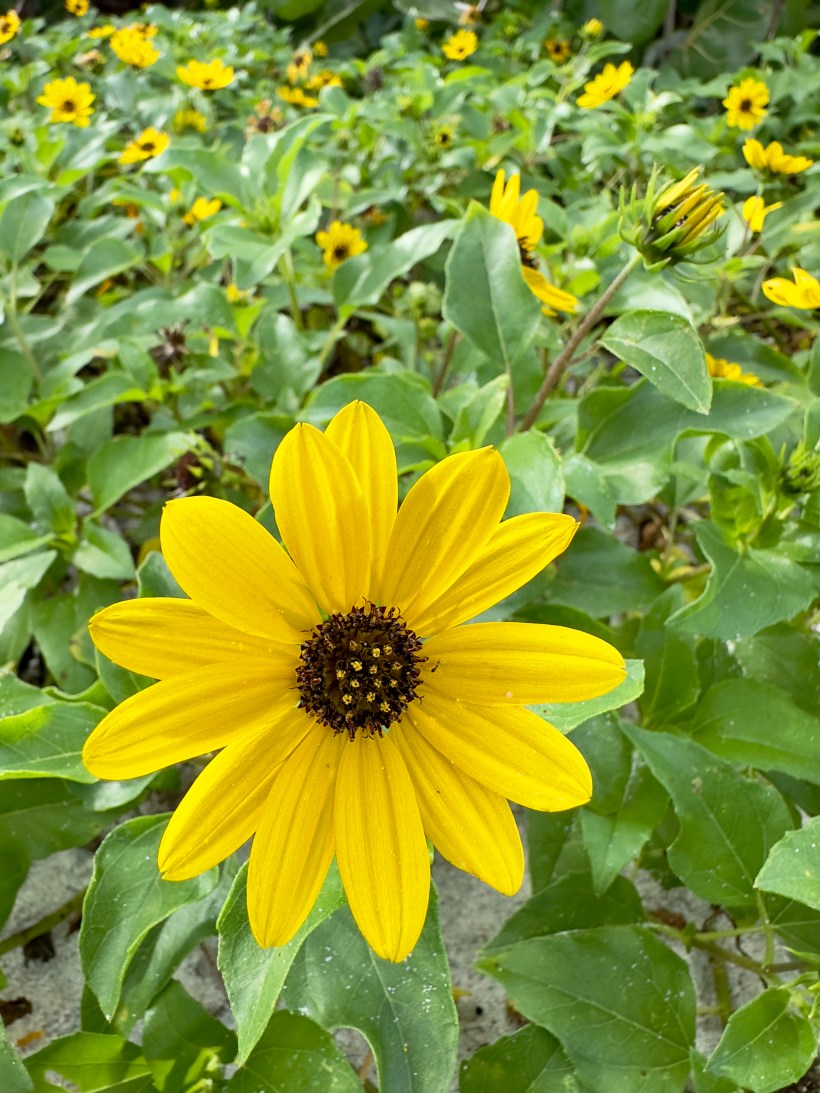
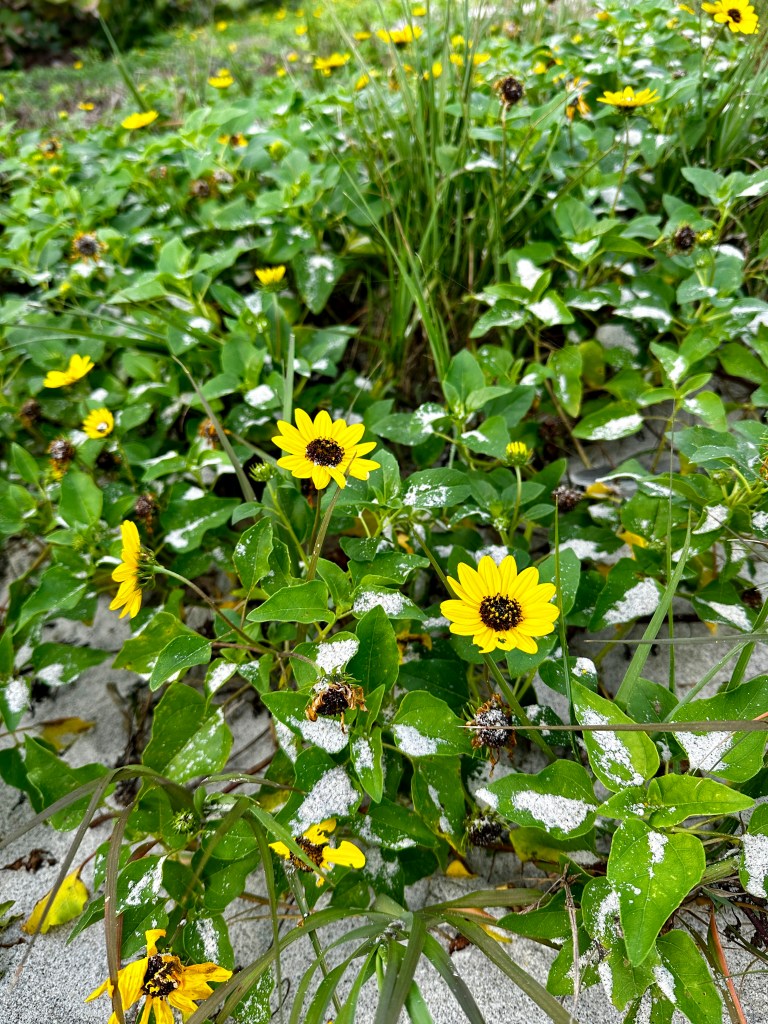
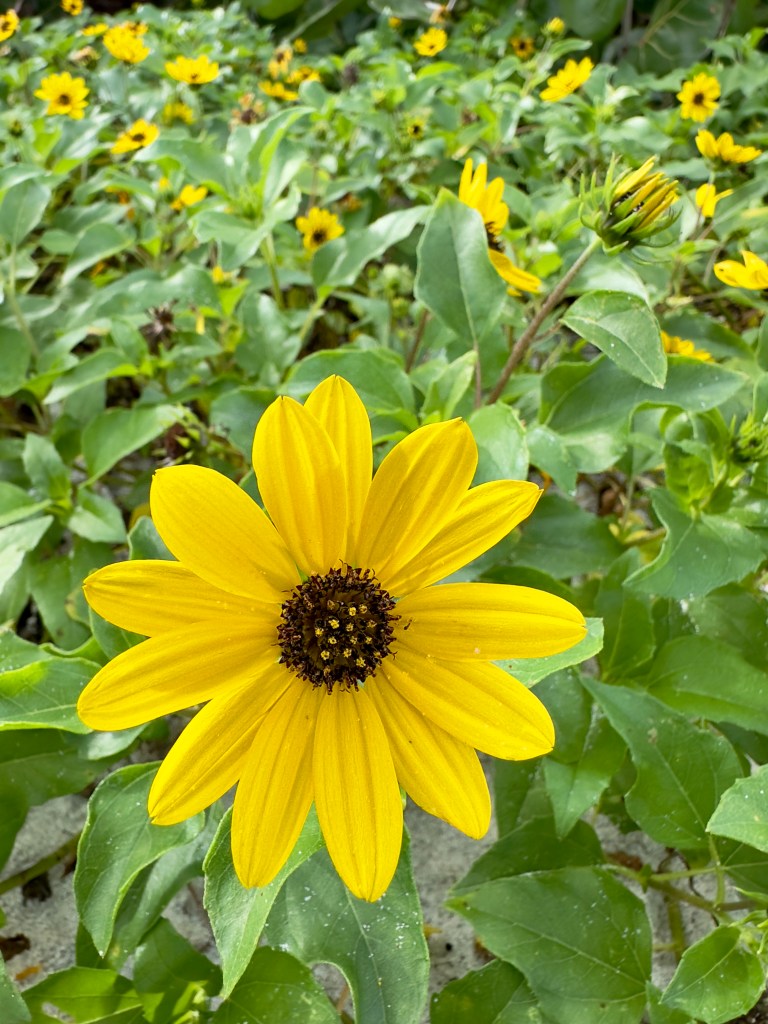
Strolling along the beachfront of Patrick Space Force Base, Florida, my gaze is captivated by a cluster of dune sunflowers, or Helianthus debilis. These hardy perennials are native to the coastal sand dunes of the southeastern United States and have made a home amidst the sandy grains where few dare to take root.

The Sunflower’s Domain


Helianthus debilis, distinguished by its large, yellow ray florets and dark center disks, thrives in this challenging environment. The dunes provide a unique ecosystem, where the sunflowers can withstand high salinity, shifting sands, and the full force of the sun’s rays. Their deep root systems anchor the sandy soil, helping to prevent erosion and maintain the integrity of the dune landscape.

Adaptation and Survival


The dune sunflower’s adaptation to its coastal environment is a marvel of nature. Its silvery-green leaves are covered with tiny hairs, reflecting sunlight and conserving moisture. The flowers bloom throughout the year, ensuring a constant presence of color along the dunes. Their hardiness is a testament to the sunflower’s evolutionary success in a habitat where freshwater is scarce and the soil is nutrient-poor.

A Native’s Role in the Ecosystem


As a native species, the dune sunflower plays a crucial role in the coastal ecosystem. It serves as a food source for local wildlife, including insects and birds, and its presence helps stabilize dune formations. The ecological value of Helianthus debilis extends beyond its beauty, as it contributes to the biodiversity and resilience of the coastal dunes.

The Dynamics of Dune Life


The life of a dune sunflower is inextricably linked to the ebb and flow of the coastal environment. Each plant is a microhabitat, supporting a range of organisms from the larvae of the dune butterfly to the burrowing beetles that find refuge in the sand. The interaction between the sunflowers and these creatures creates a dynamic web of life, each species depending on the others for survival.

Reflections on Resilience


The dune sunflower’s ability to flourish in such an austere environment is a profound reminder of the resilience of nature. As I observe the sunflowers, I am struck by their tenacity, their willingness to face the elements head-on. They are a beacon of life in a place where existence is a daily challenge, and their perseverance is a lesson in the art of endurance.

Conclusion: A Testament to Nature’s Ingenuity


As the sun begins to set, casting a warm glow over the dunes, I take a final look at the Helianthus debilis. Their scientific wonders and ecological im portance leave a lasting impression. They are not just flowers; they are a testament to nature’s ingenuity, an embodiment of the delicate balance between life and the environment. These dune sunflowers are a symbol of hope, a reminder that in the face of adversity, life finds a way to not just survive, but to thrive.

Copyright 2024 Michael Stephen Wills All Rights Reserved

Between Dunes and Discovery: Embracing History at Kennedy Space Center

Explore Cape Canaveral National Seashore and Kennedy Space Center with us, where pristine beaches meet the legacy of human space exploration, and feel the awe of standing where history was made.

A Journey Through Time and Space: Our Visit to Cape Canaveral National Seashore and Kennedy Space Center

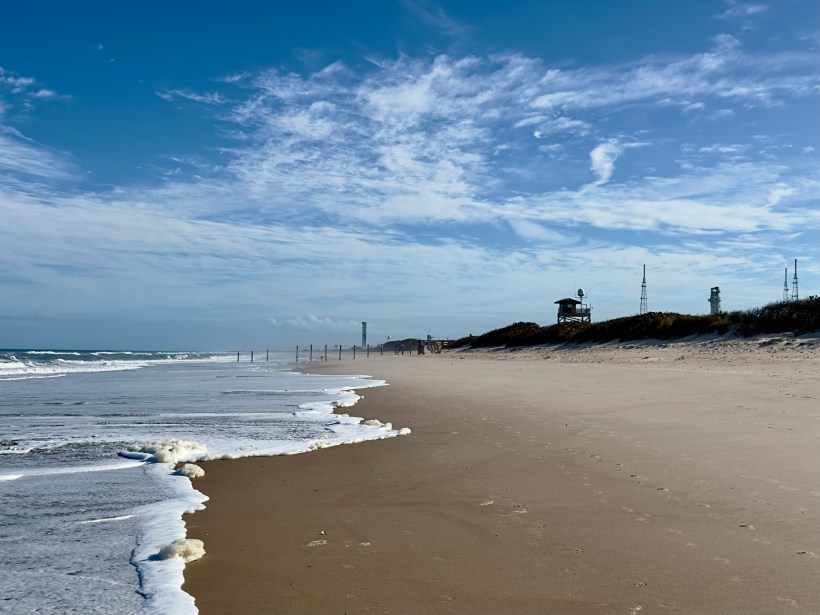
As we arrived at the pristine shores of Playalinda Beach within the Canaveral National Seashore, the gentle whisper of waves against the shoreline beckoned us. The sun kissed the horizon, casting a warm glow across the 24 miles of untouched, protected coastline that lay before us. Here, on the east coast of Florida, where crystal-blue waters embrace the shell-laden sands, we found ourselves at the intersection of natural beauty and human achievement.

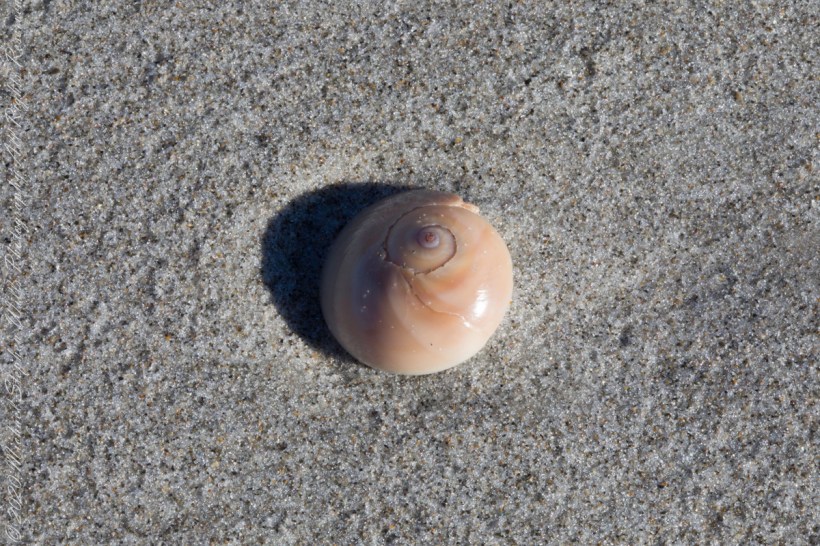
Shell of the Moon Snail (Naticidae) found in the surf wash.

The Serenity of Playalinda

We strode along the boardwalk, passing through dunes adorned with sea oats, to find our spot upon the soft sands of Playalinda. The beach, known for its tranquility and the chance to observe a vibrant array of wildlife, offered us a moment of peace. With no distractions—no concessions, no showers, just nature—we were able to disconnect from the world and reconnect with the earth. From our vantage point, the Merritt Island Wildlife Refuge across the water was a haven for migrating birds, dolphins, and, with some luck and the right season, sea turtles nest on the beach itself.

Witness to History: The Apollo 11 Legacy

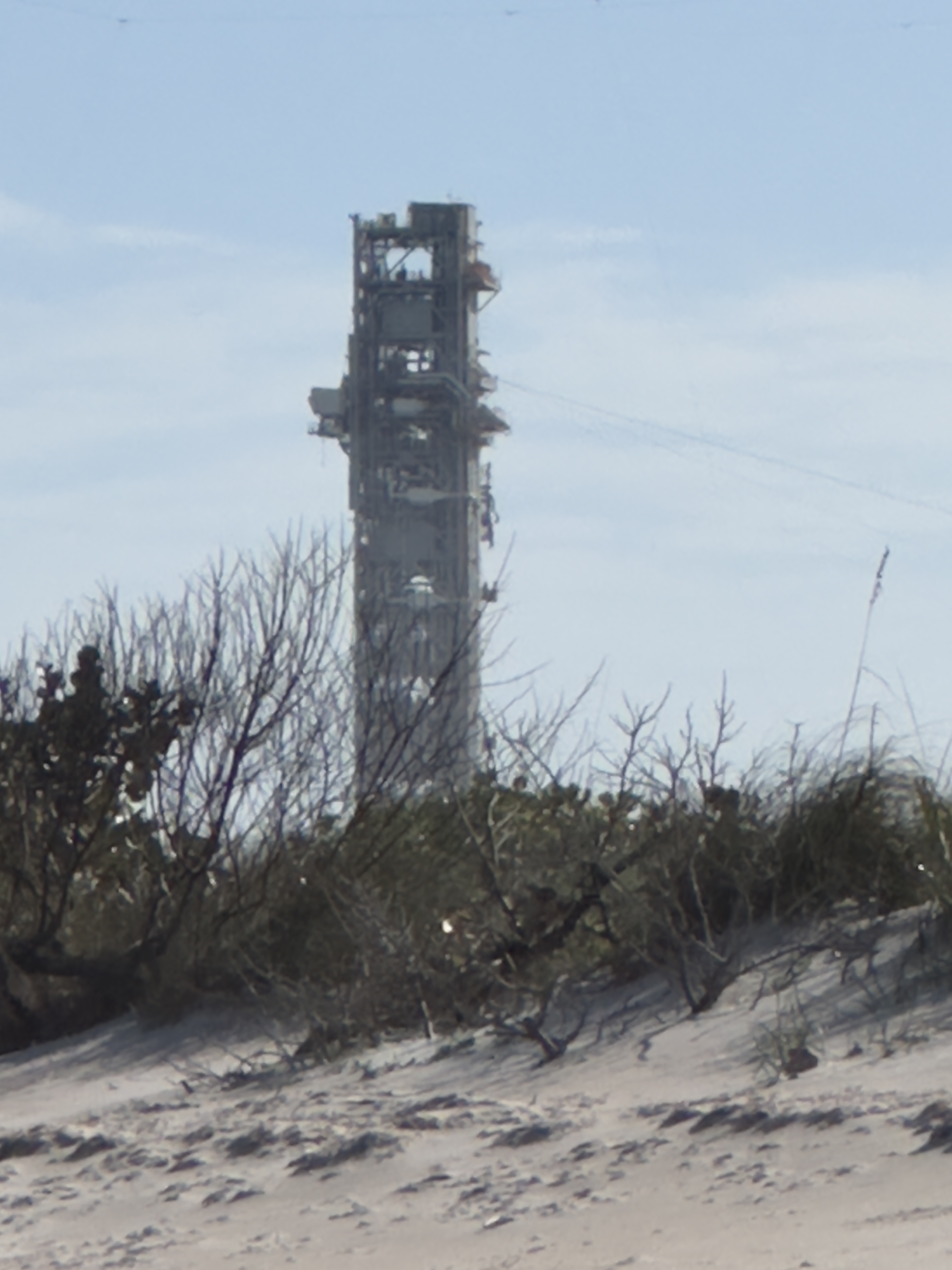
But it wasn’t just the natural allure that drew us here. Playalinda holds a unique position, offering an unobstructed view of the historic launch pads of Kennedy Space Center, where Apollo 11 began its monumental journey to the Moon. As we walked south towards the fence bordering the Space Center, the anticipation built within us. Here, we were tracing the footsteps of giants, those brave astronauts who dared to venture into the unknown.

The Vistas of Exploration

Each step brought us closer to the site where humanity took one of its most significant leaps. Gazing upon the launch complex from the fence, we were reminded of the powerful forces harnessed to break the bonds of gravity. Imagining the roar of the engines, the earth-shaking vibrations, and the fiery ascent of the Saturn V rocket, we felt a deep connection to the past and a sense of awe for the pioneering spirit that propelled us into a new era of exploration.

Reflections Amidst the Dunes

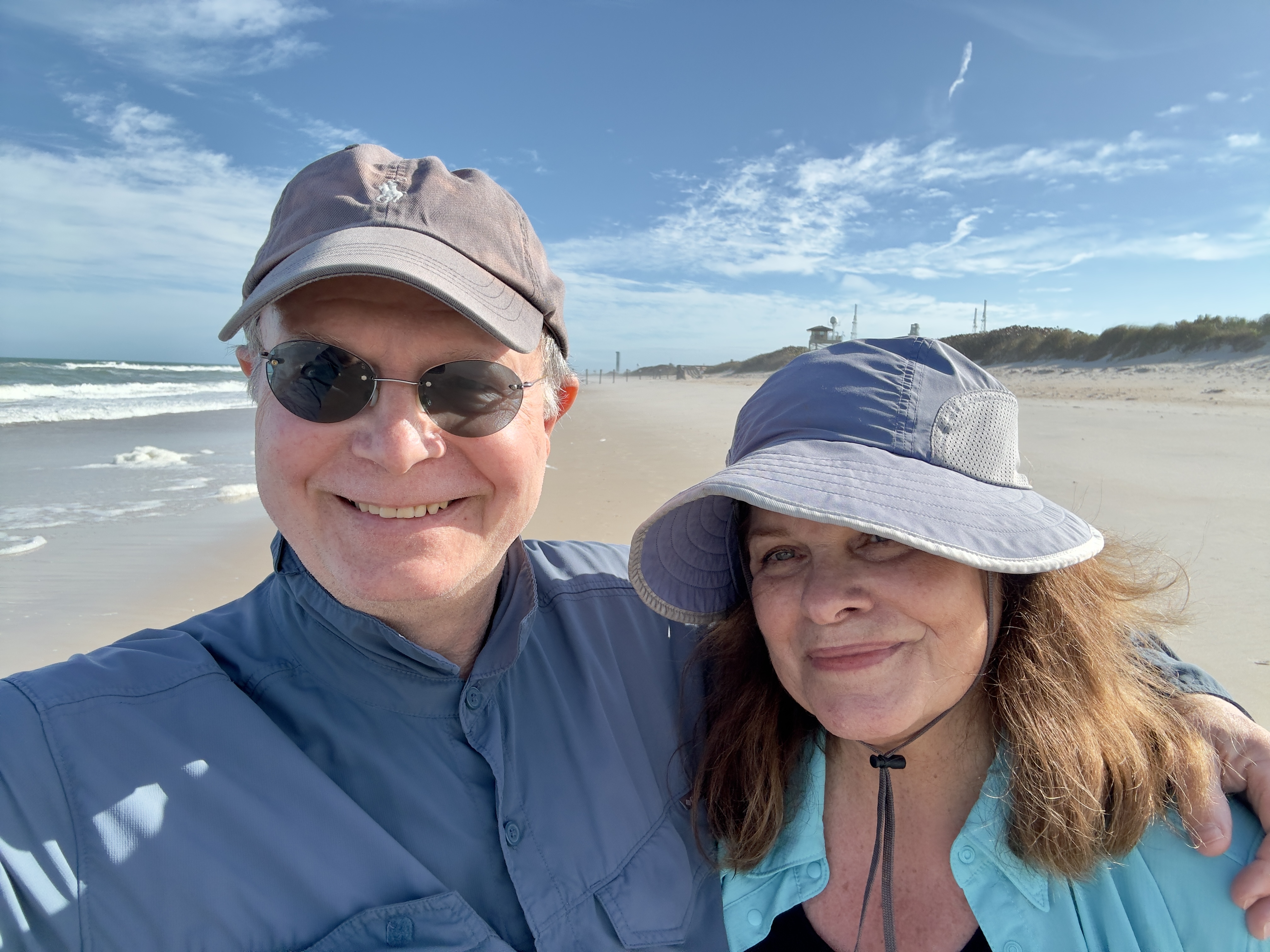
As we wandered back along the beach, the foam of the ocean’s edge lapping at our feet, we reflected on the duality of our surroundings. Here, in this place of quiet solitude, we also stood at the forefront of human innovation and ambition. The juxtaposition of the peaceful beach with the technological marvels just a stone’s throw away was not lost on us.

Our journey to the Cape Canaveral National Seashore and the Kennedy Space Center fence was more than just a visit to a beach or a historic site; it was a pilgrimage to a place where dreams materialize and reach for the stars. It was here that we came to understand the full spectrum of emotions that accompany great achievements—the hope, the fear, the triumph.

Conclusion

Our visit to the Cape Canaveral National Seashore and the Kennedy Space Center was an experience that will linger in our memories for years to come. It was a reminder of what we can achieve when we are united by a common goal, and it filled us with pride and optimism for the future. As we looked back one last time, the setting sun seemed to whisper a promise of the wonders yet to come, both here on the shores of Playalinda and in the vast expanse of space that awaits us.

Copyright 2024 Michael Stephen Wills All Rights Reserved

Rincon Flame: The Southwestern Paintbrush’s Desert Dance

Step into the Rincon Wilderness with me, where the Southwestern Paintbrush blooms amidst the ancient stones.

Discovery in the Rincon Wilderness

In the embrace of the Rincon Mountains, east of Tucson’s hum, lies the Rincon Wilderness, a tapestry of desert life and geological marvels. These mountains, one of the “Sky Island” ranges cradling the Tucson valley, are less rugged than their siblings, the Santa Catalinas and the Santa Ritas, offering a gentler invitation to explore their secrets.

Happy Valley Saddle’s Floral Jewel

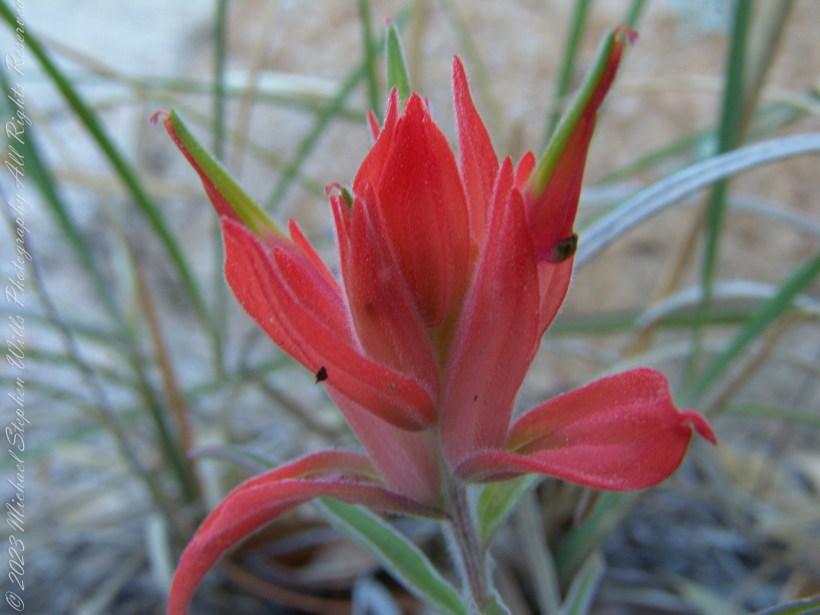
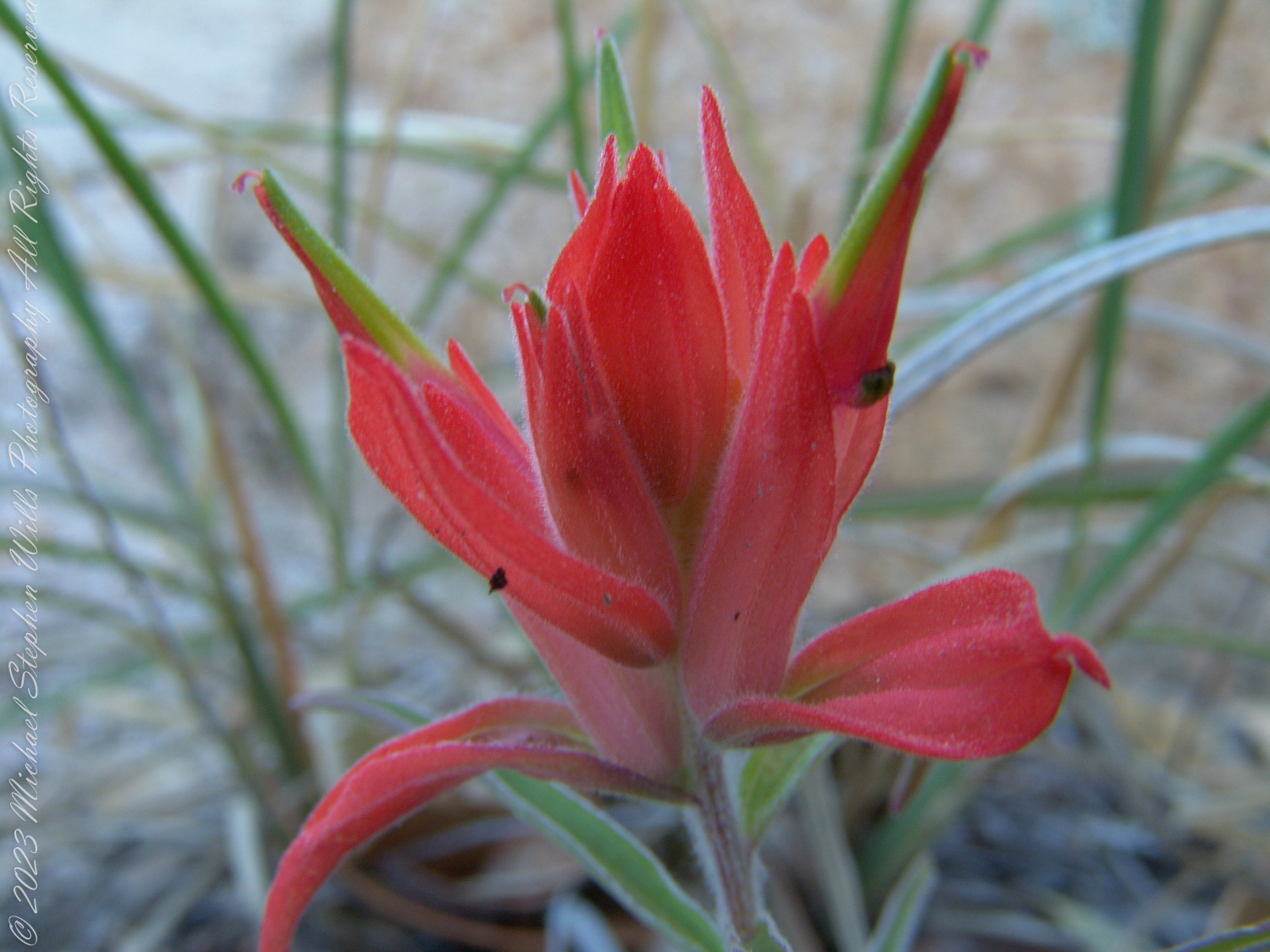
Amidst the rugged beauty of Happy Valley, a hidden corner in the quilt of the Rincon Wilderness, a singular red-orange glow caught my eye. There, among the lichen-encrusted boulders, stood the Southwestern Paintbrush, Castilleja integra, its flamboyant bracts a fiery contrast to the muted greens and grays of its surroundings.

Portrait of a Parasite

This herbaceous perennial, with its soft downy coat, is a paradox, both painting the desert with life and leeching it from others as a hemi-parasite. Its roots, entwined with those of other desert dwellers, tell a tale of survival that’s as old as the hills themselves.

The Brushstrokes of Evolution

Each leaf, narrow and dusted with hairs, speaks to the adaptive artistry of nature, designed to conserve precious moisture. The flowers, with their extended blooming season and generous nectar, court the hummingbirds who dance between the blooms, pollinators in this ancient symbiosis.

A Symbiotic Canvas

The Southwestern Paintbrush, with its colorful allure, draws more than just winged admirers. Its presence among the rocks is a reminder of the complex ecological web of the Rincon Wilderness, a part of Saguaro National Park’s rich mosaic

Click Me to visit the photographs of Michael Stephen Wills on Getty.

Copyright 2024 Michael Stephen Wills All Rights Reserved

Winterberry Warmth

Here we discover and learn to admire the winterberry shrub, or Ilex verticillata, during a frosty February morning. Its crimson berries, which symbolize hope, sustenance, and life’s enduring cycle, are a stark contrast to the pall of winter.

Continue reading “Winterberry Warmth”

Watching with the Willows

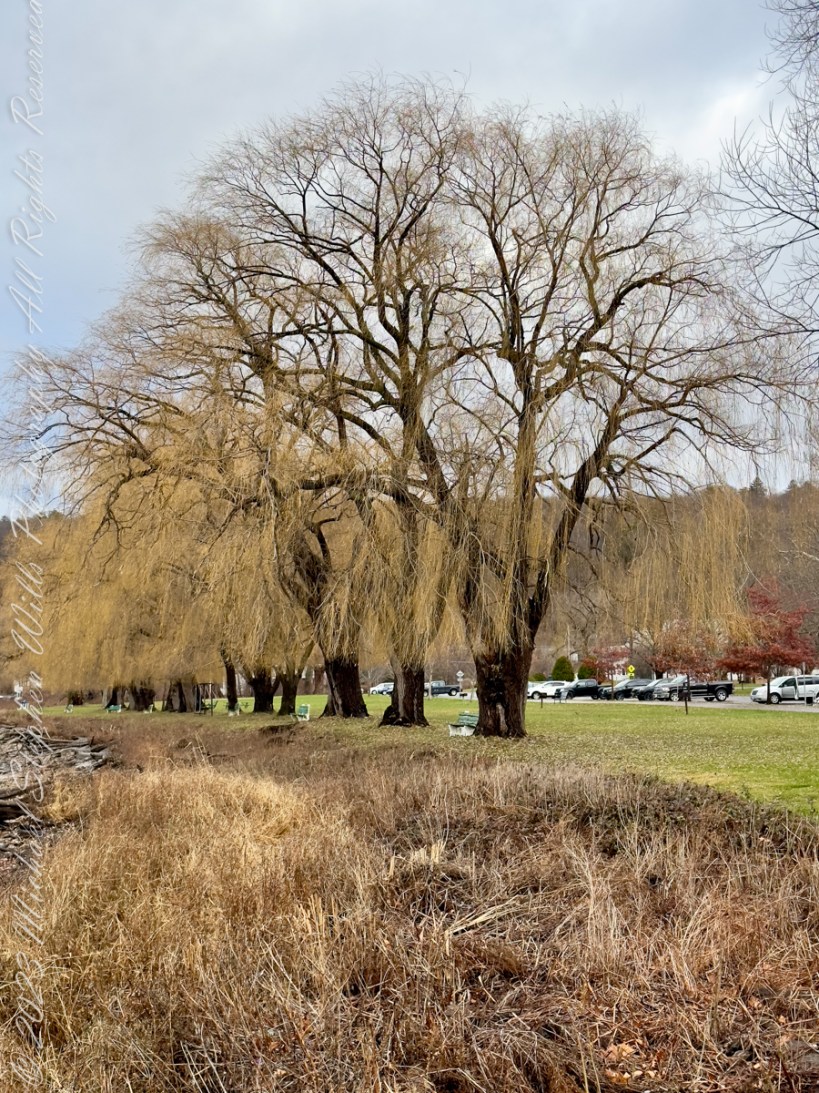
On a brisk day at Stewart Park, I stroll alongside Cayuga Lake, observing Canadian Geese and white willows. The tranquil, interconnected scene proves an enduring memory despite everyday worries.

Continue reading “Watching with the Willows”

Life of an Osprey: From Nest to Sky

Read about this osprey’s journey, from a hatchling to a fledgling soaring over Cayuga Lake.

Continue reading “Life of an Osprey: From Nest to Sky”

River Whispers: A Journey with Eagles on the Snake River

Step into our blog and immerse yourself in the untamed beauty of the Snake River, where majestic eagles soar and nature’s wonders await.

Continue reading “River Whispers: A Journey with Eagles on the Snake River”

The Majesty of the Saguaro: Sentinel of the Sonoran Desert

Step into the heart of the Sonoran Desert with me, where the saguaro cactus stands as a timeless giant, a symbol of resilience and beauty. This majestic sentinel of the Southwest is not just a plant; it’s a vibrant ecosystem and a cultural icon, embodying the spirit of endurance. Let’s explore its centuries-long journey, its role as a haven for desert wildlife, and its deep significance to the indigenous peoples. Join me in celebrating the saguaro’s enduring legacy, a narrative of survival and the profound beauty of life in the harshest conditions.

Continue reading “The Majesty of the Saguaro: Sentinel of the Sonoran Desert”