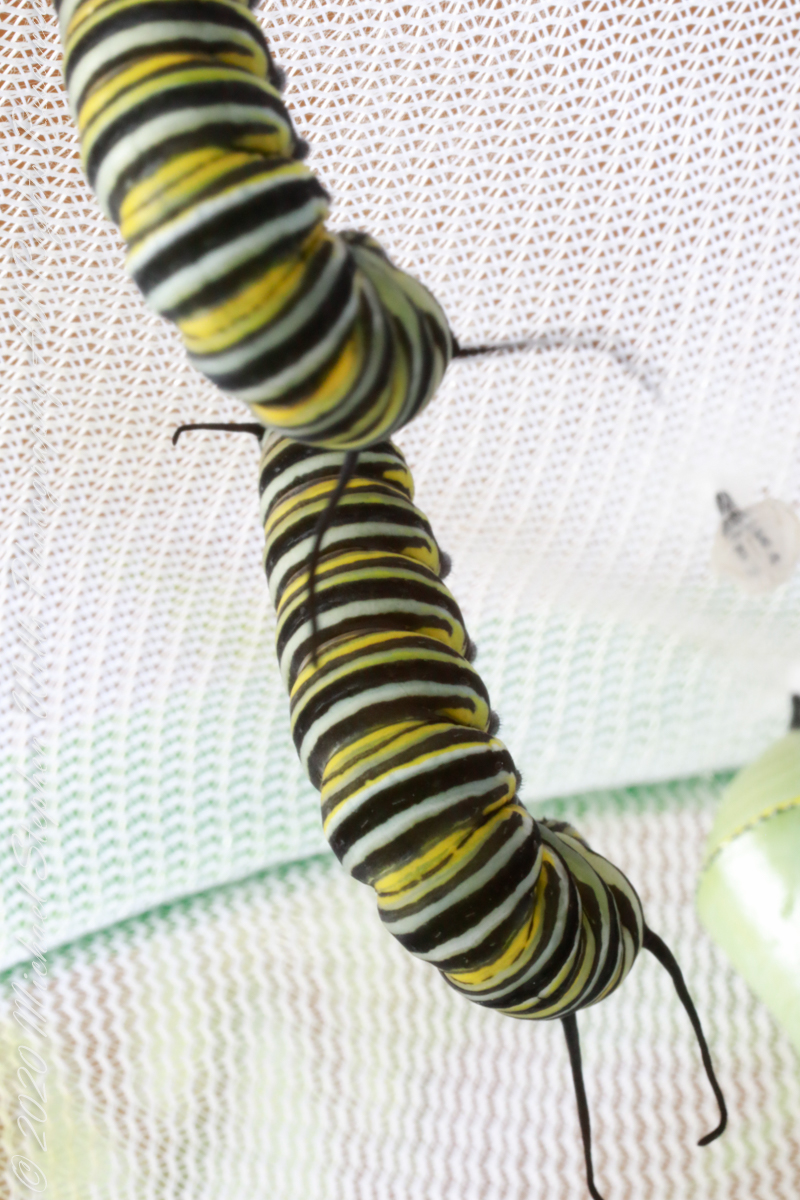
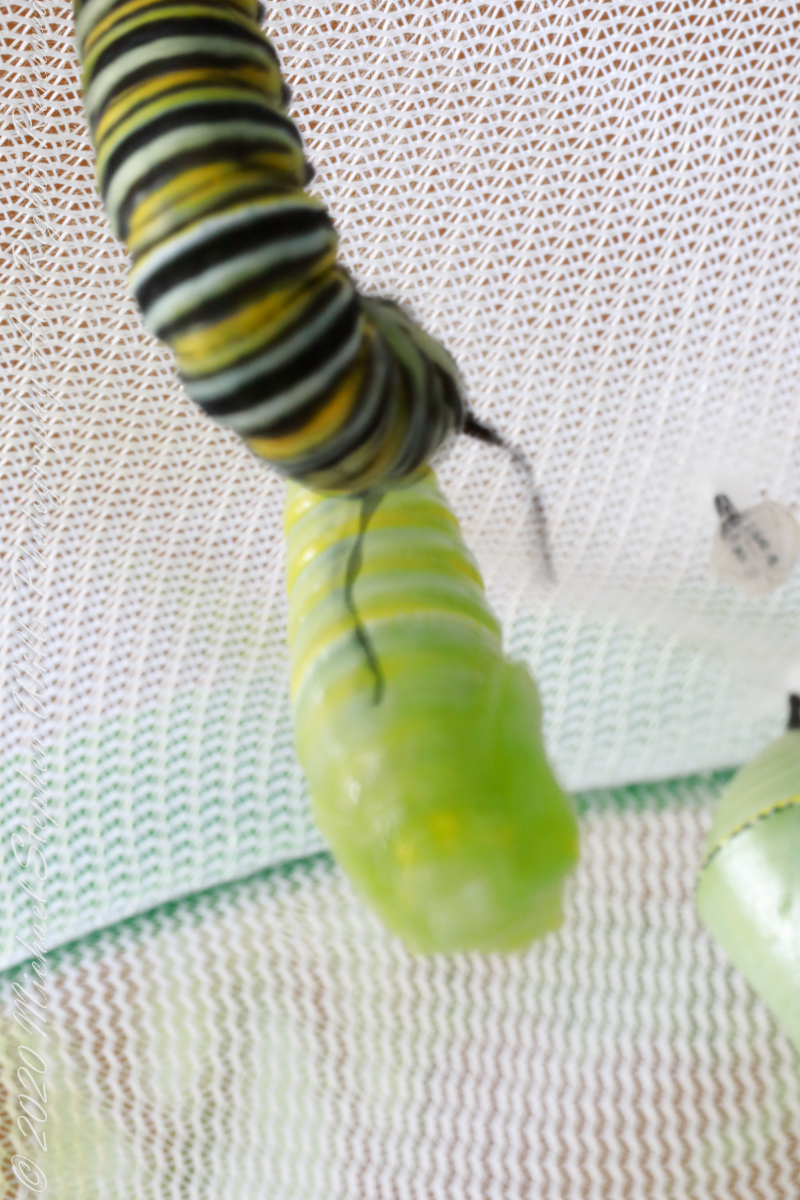
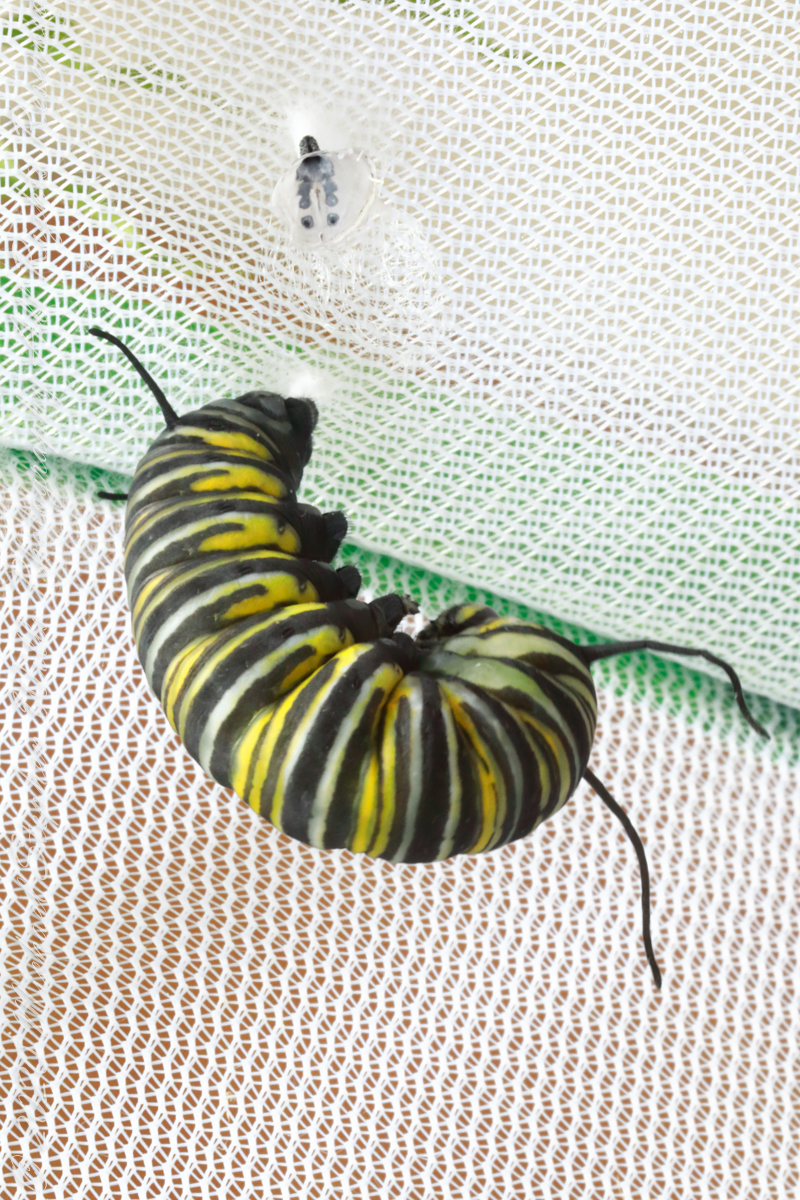
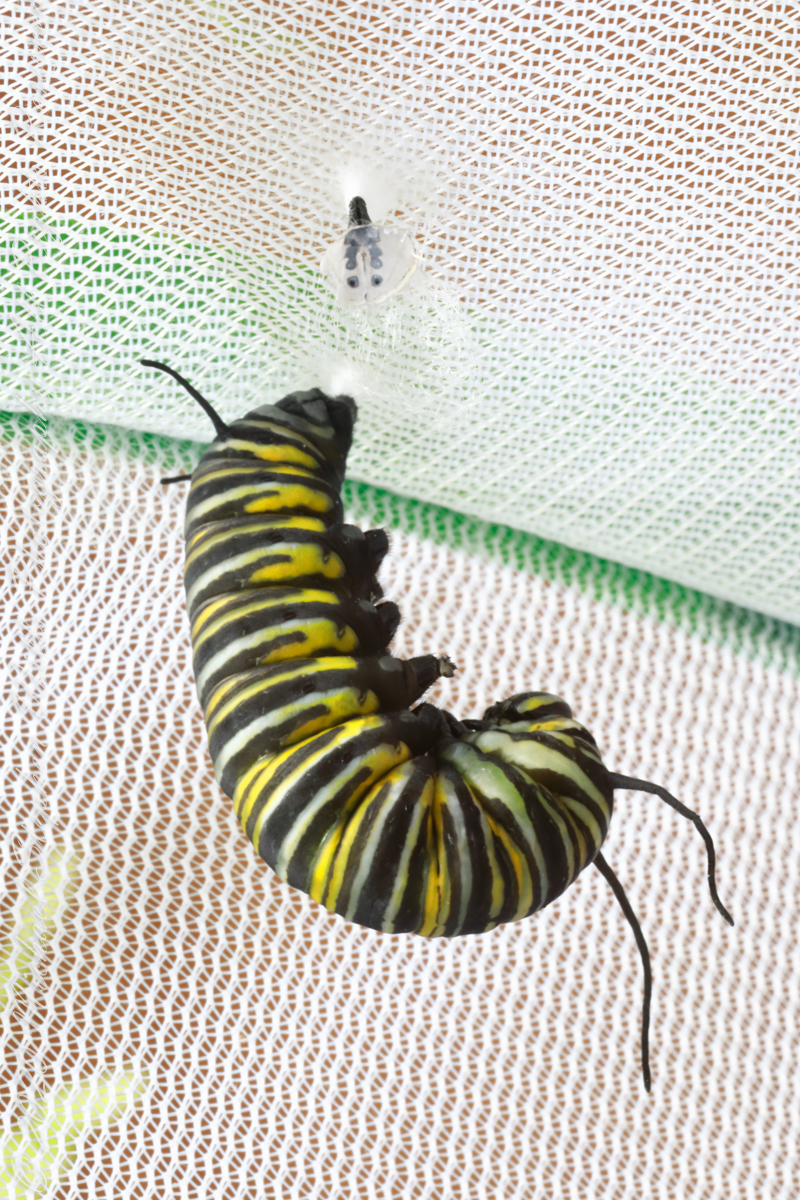
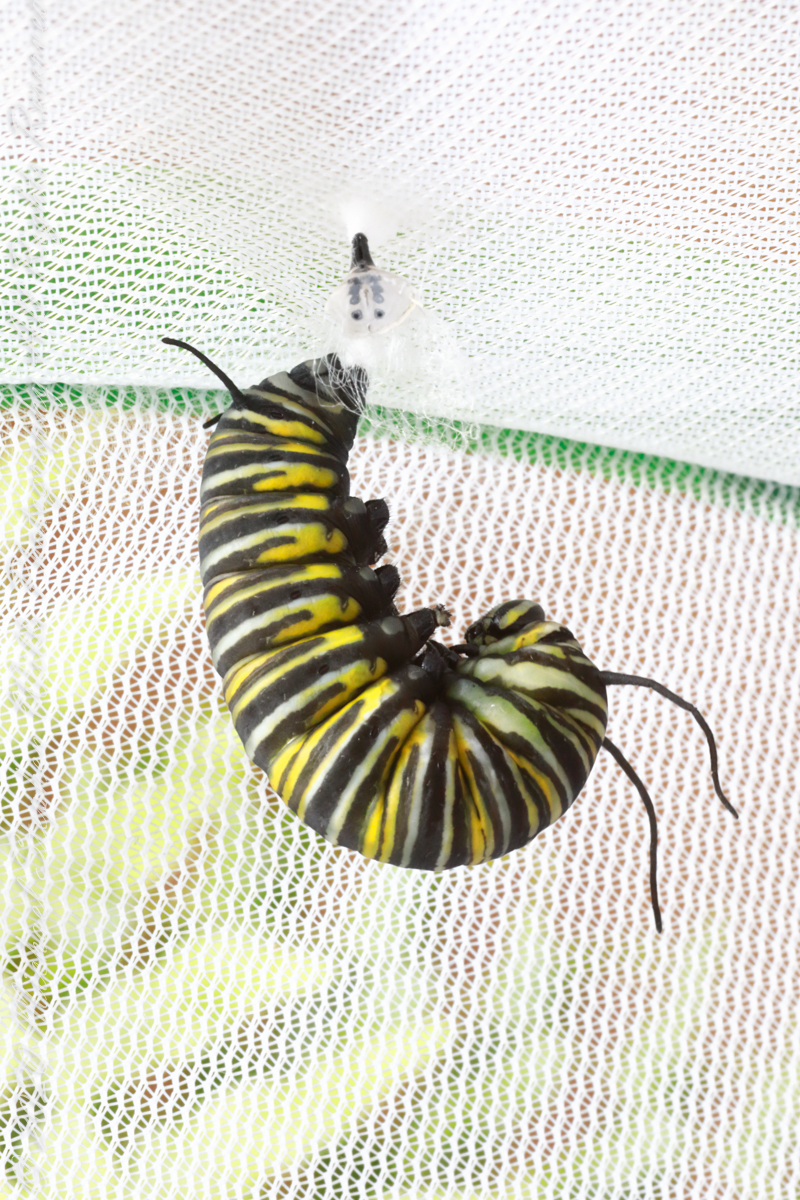
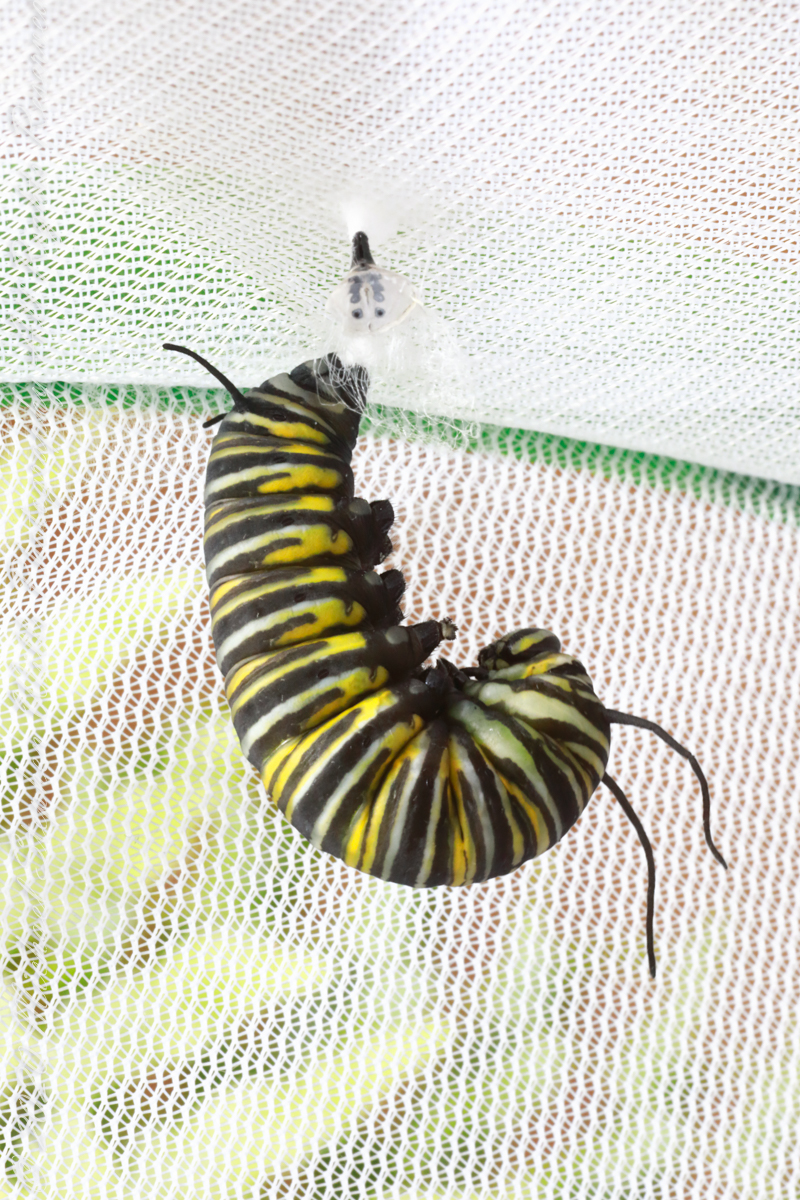
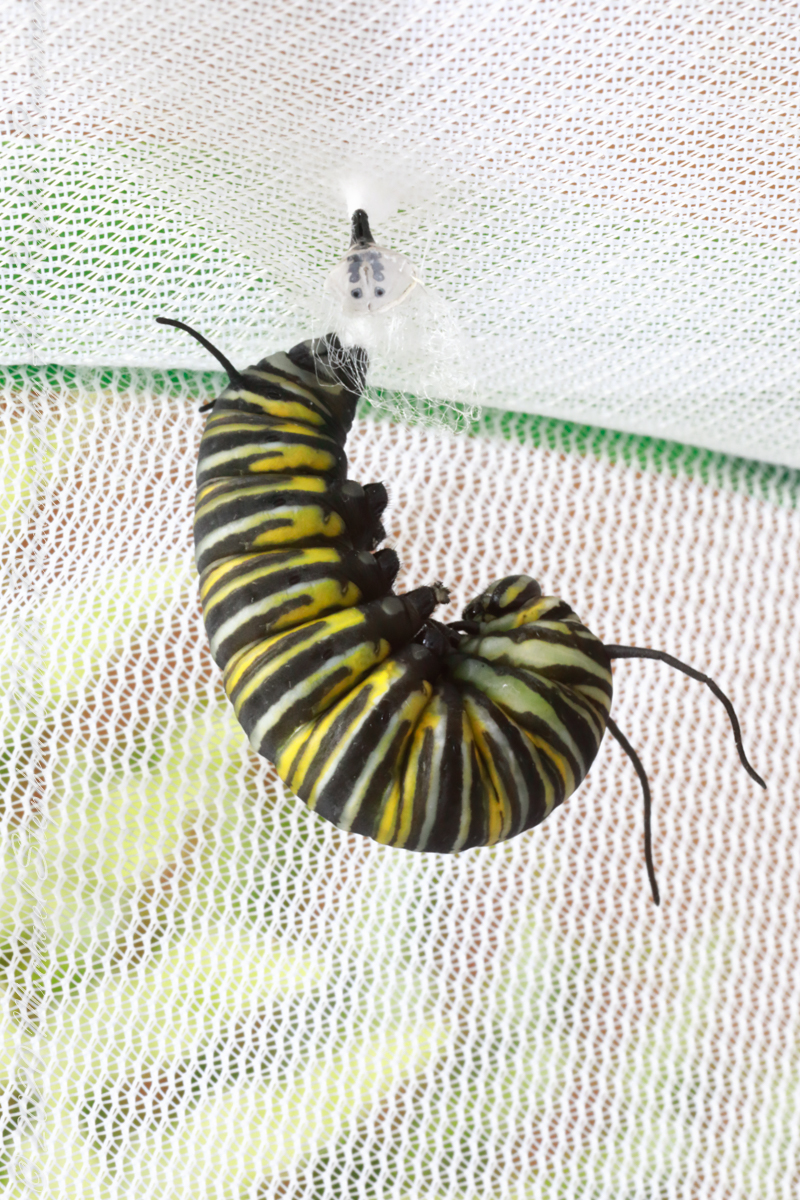
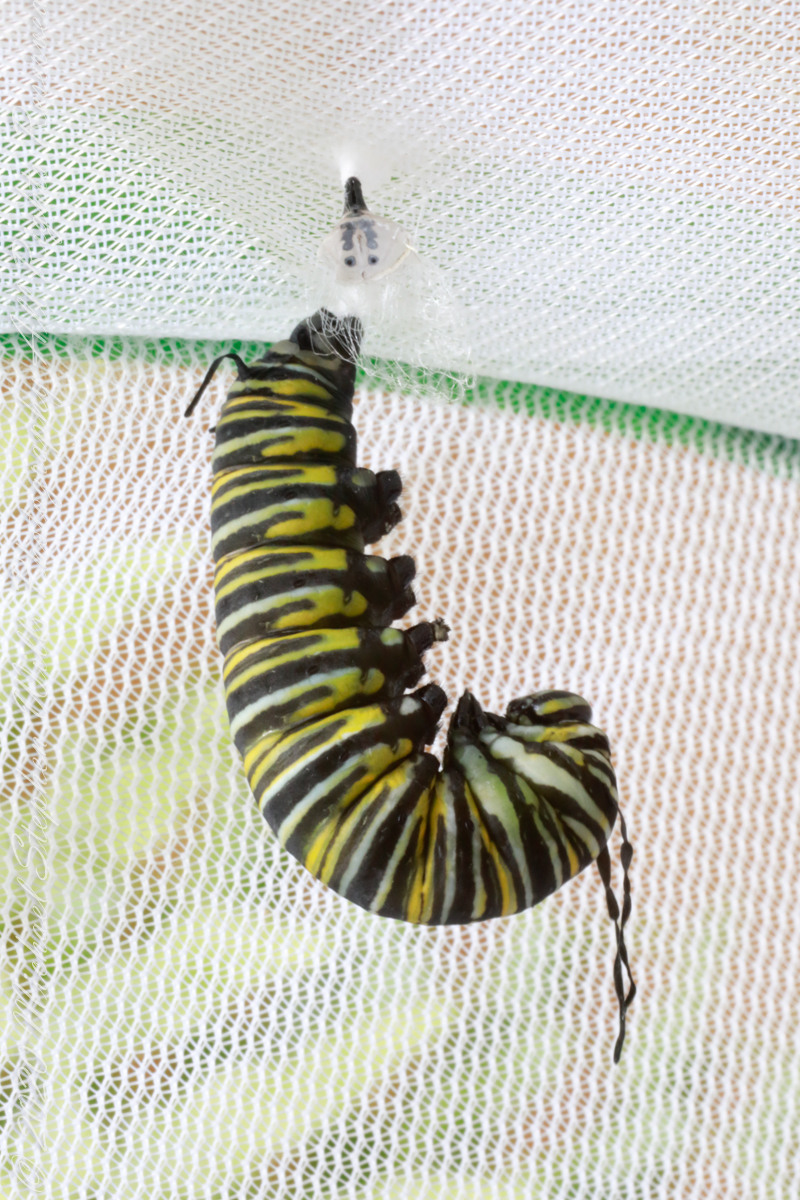
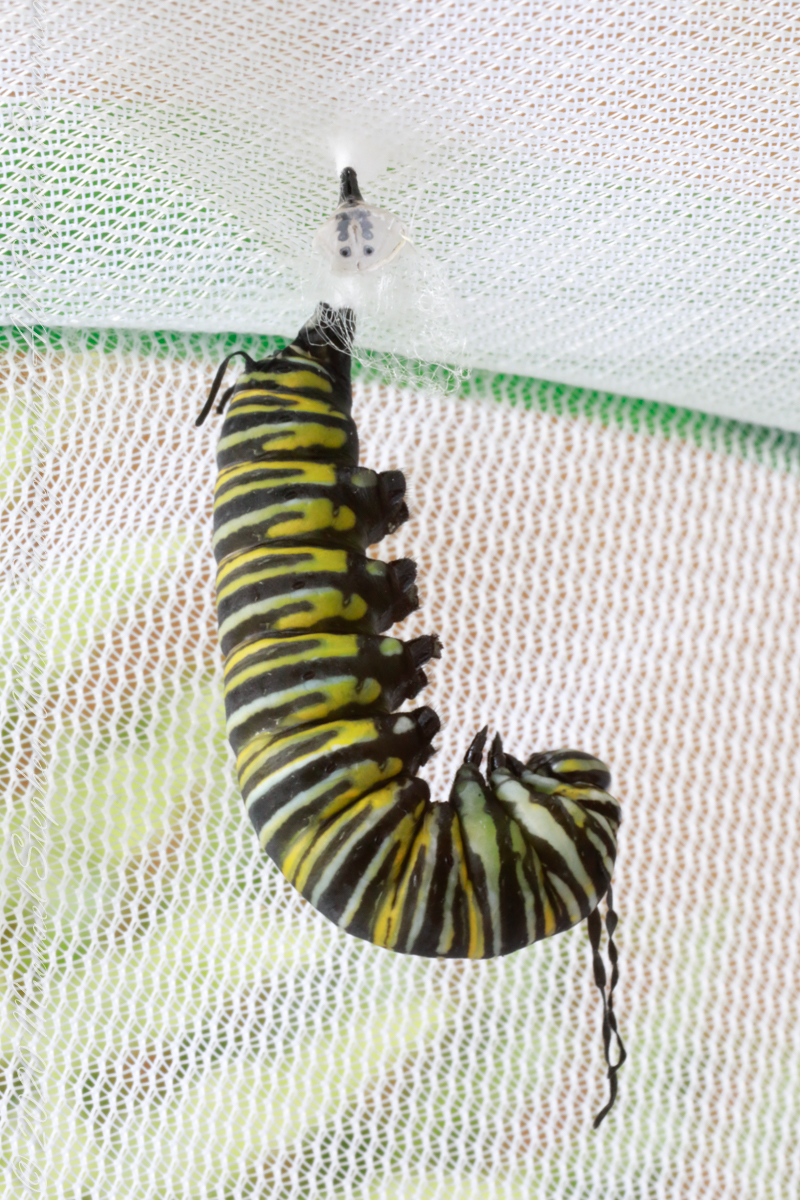
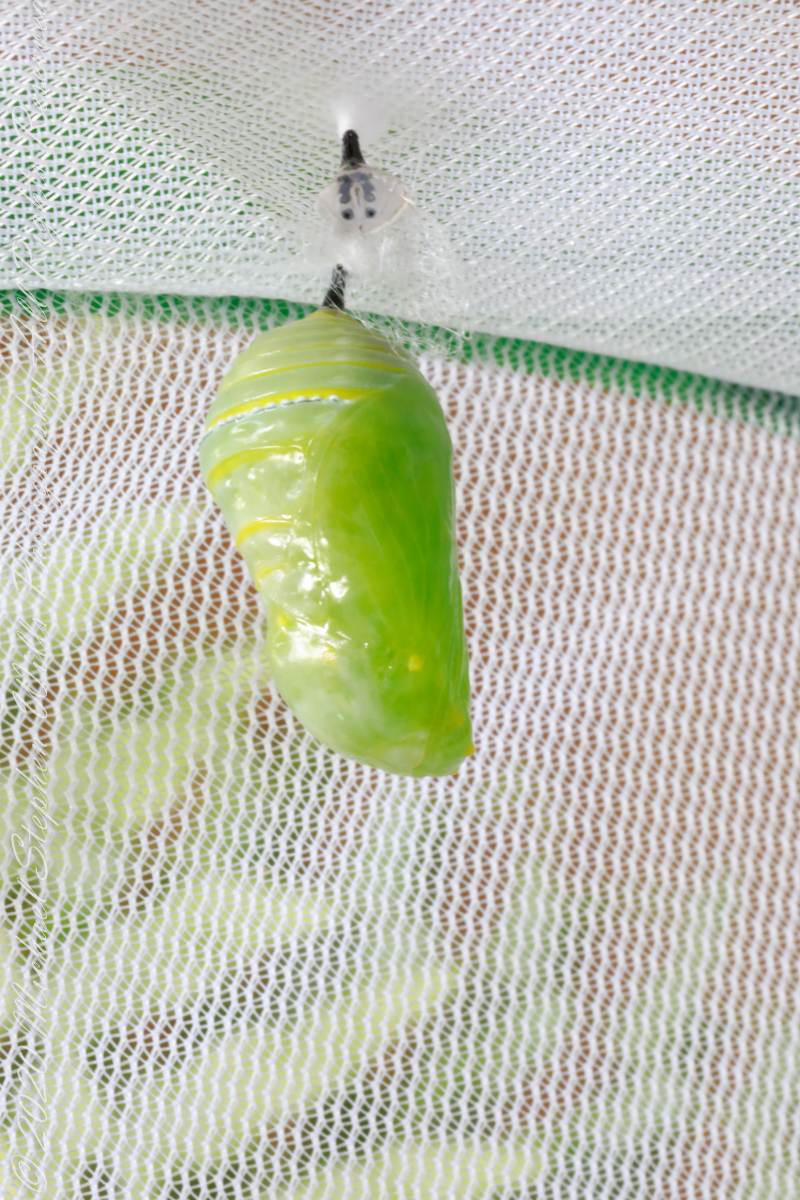
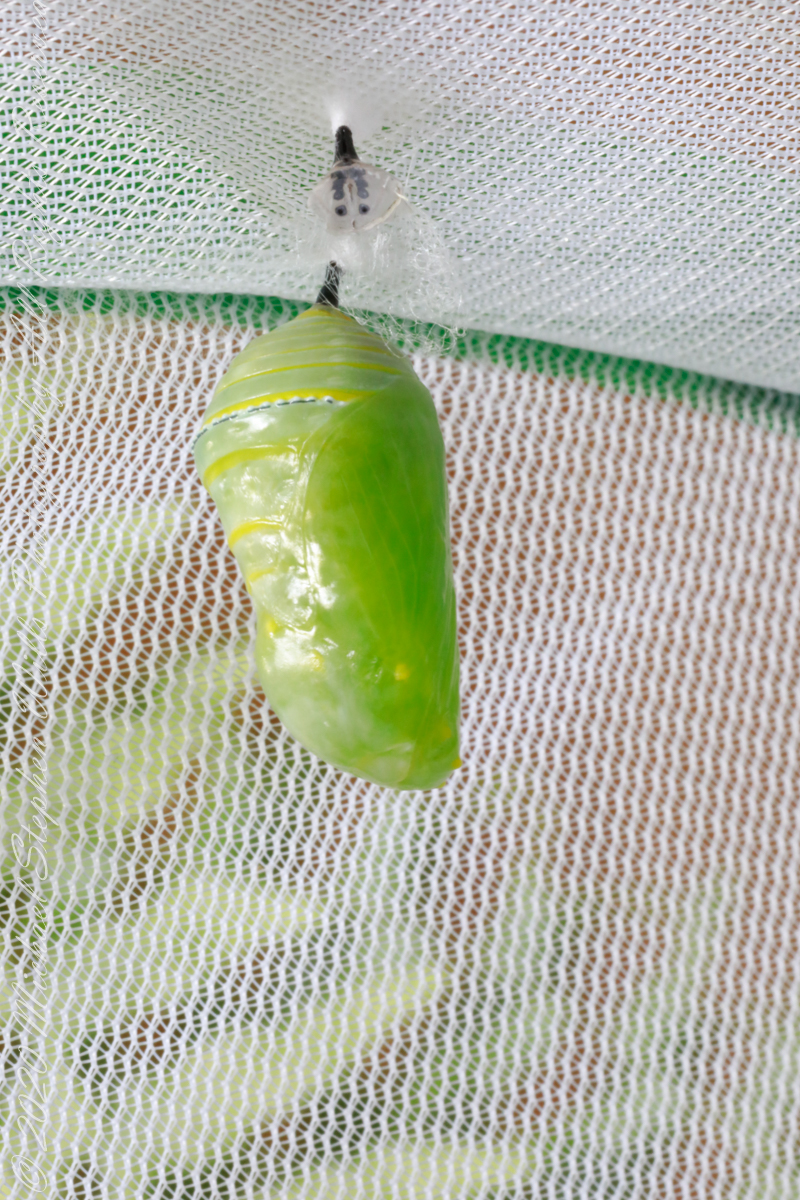
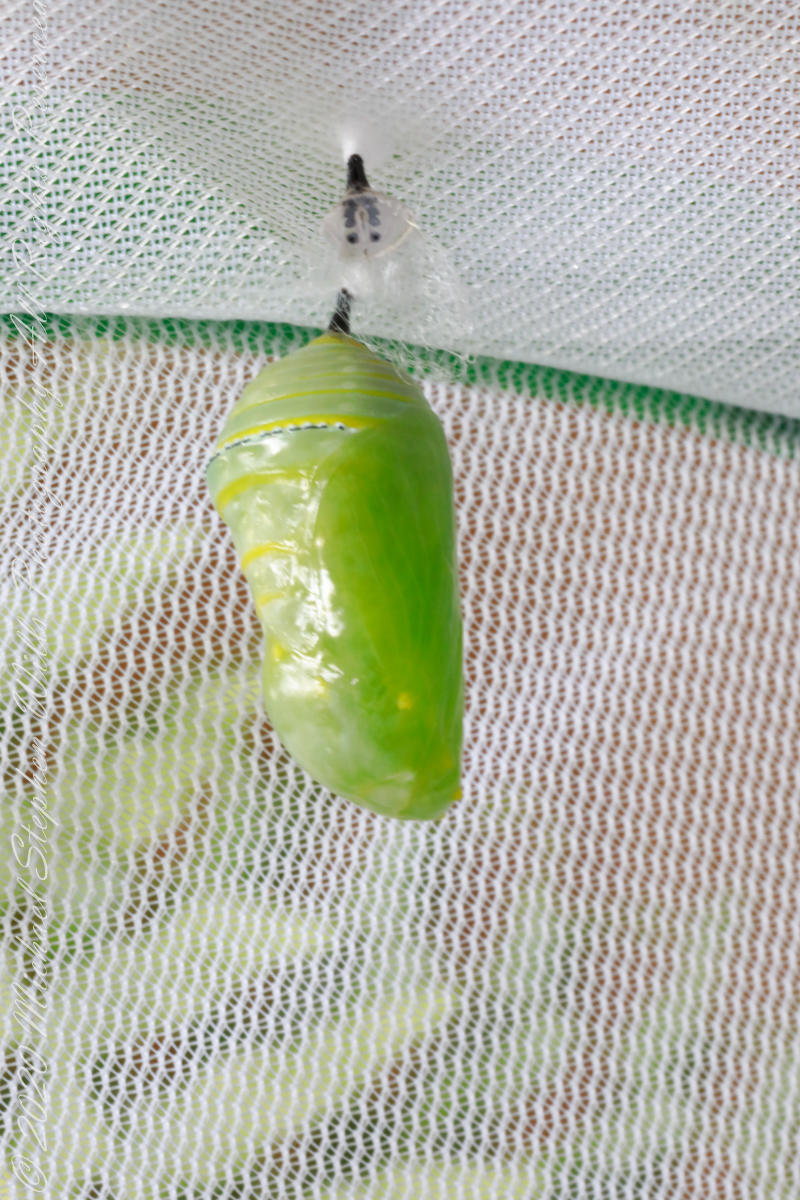
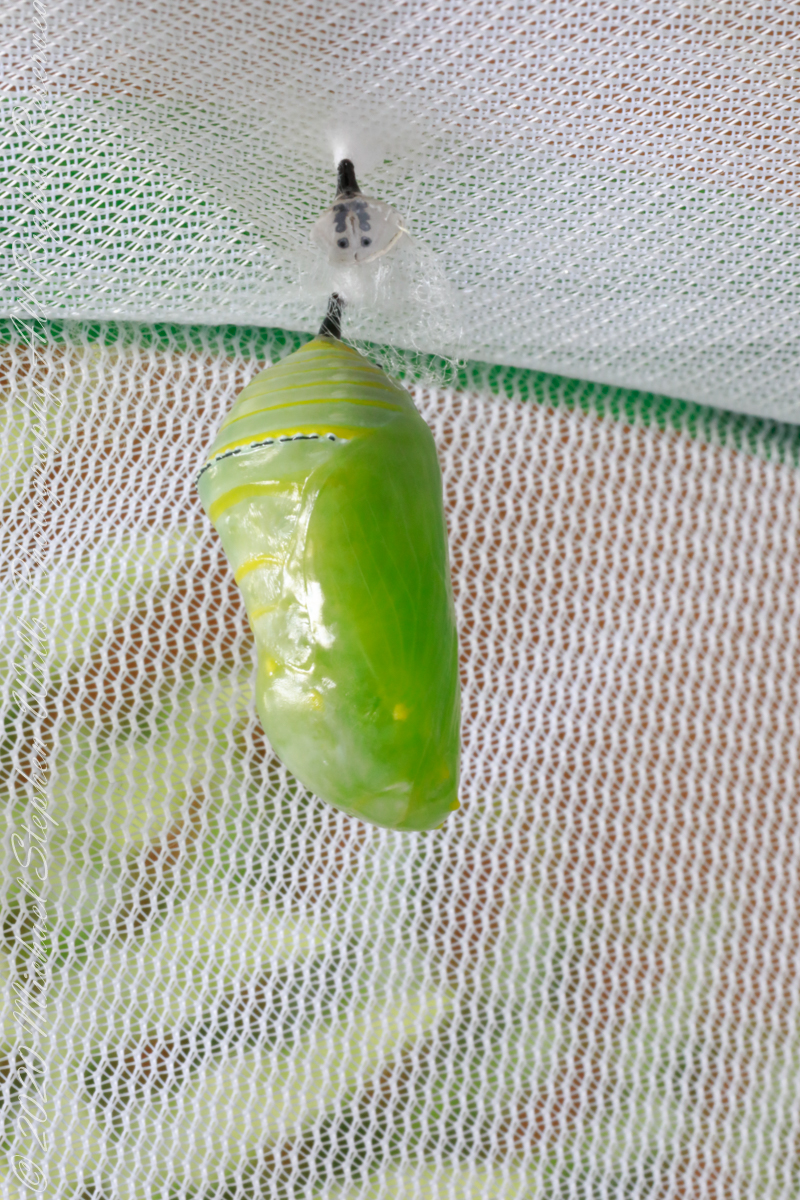
In my last series of “Monarch caterpillar transforming to chrysalis” time lapse photographs, the 30-minute time interval missed the moult. For this series, I set the Canon EOS 5D Mark IV to remote from a IPhone 7, tethering me to hanging around the house for an afternoon of waiting for the magic moment of “transformation” (more accurately called “the moult”), thinking through the nature of the moment.
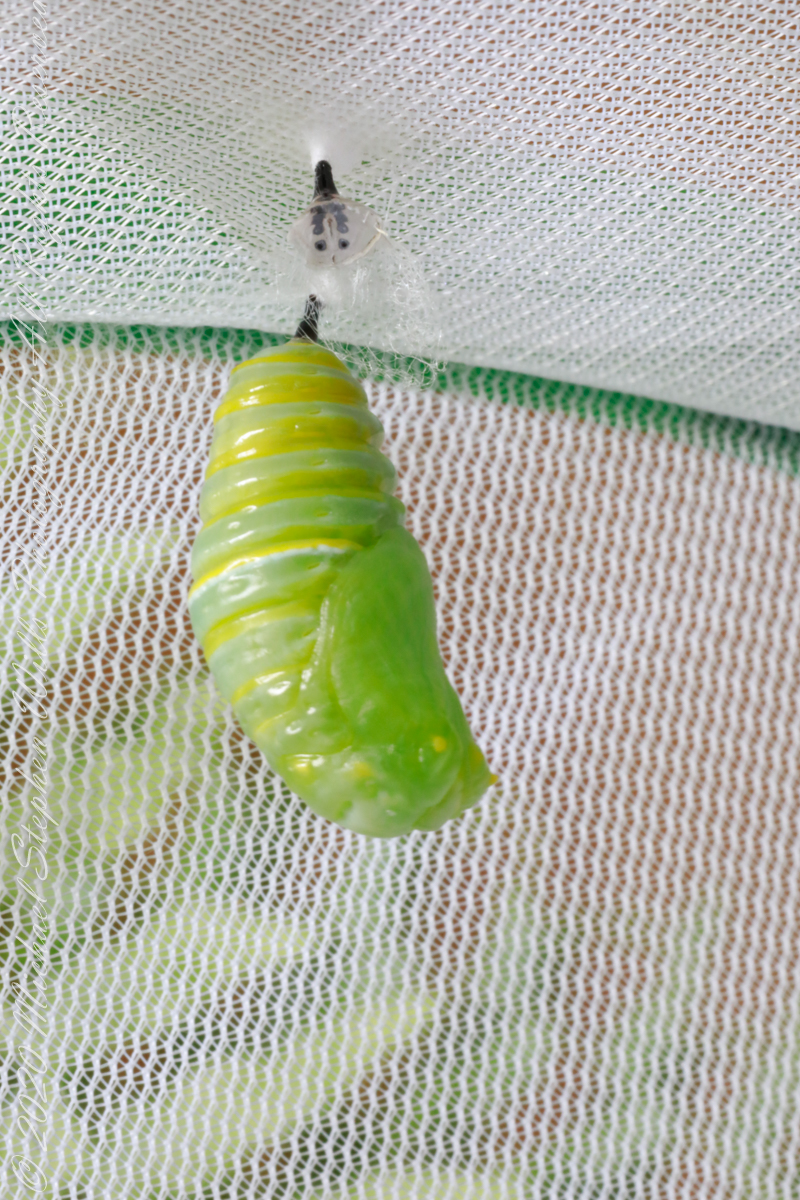
A monarch caterpillar accomplishes seven body transformations shielded from view. Six within its skin: the first five retaining a caterpillar body configuration, the sixth transforming to chrysalis. For all six, an enveloping skin conceals the change. The same holds true for the seventh transformation. The chrysalis remains opaque green with bright gold spots until turning transparent after the transfiguration to butterfly is complete.
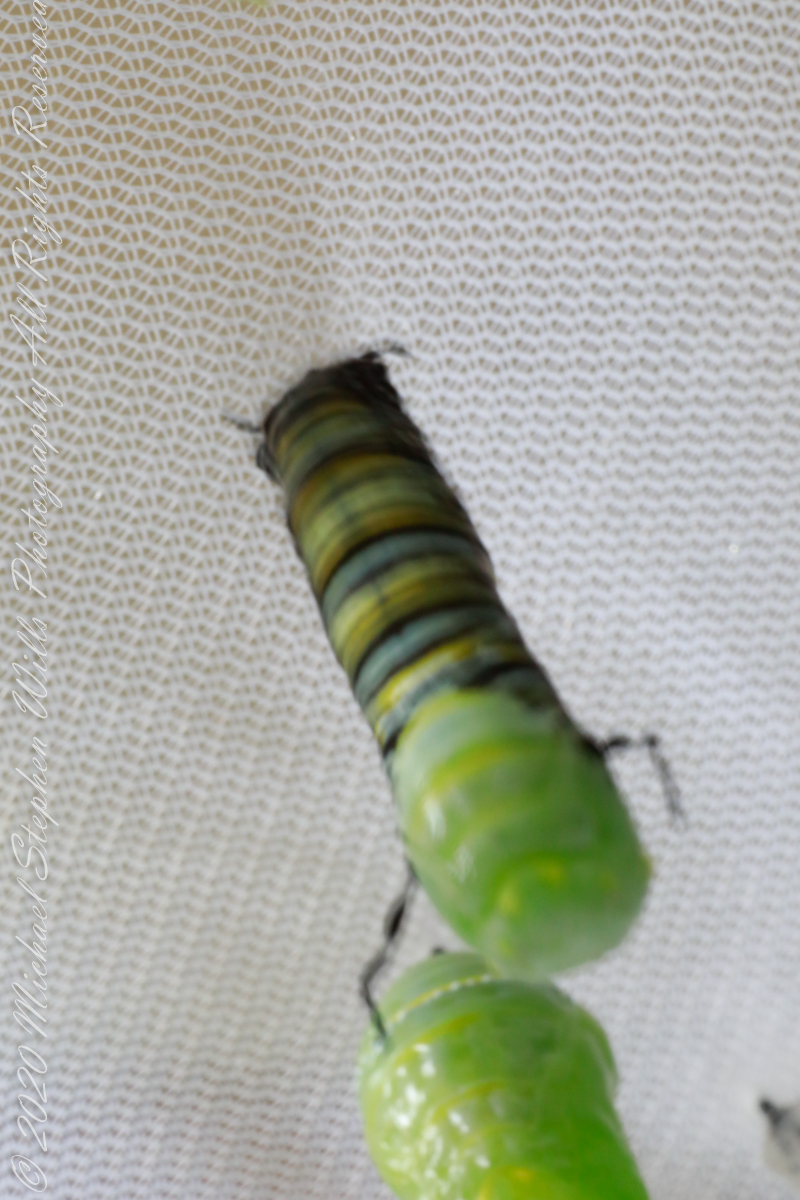
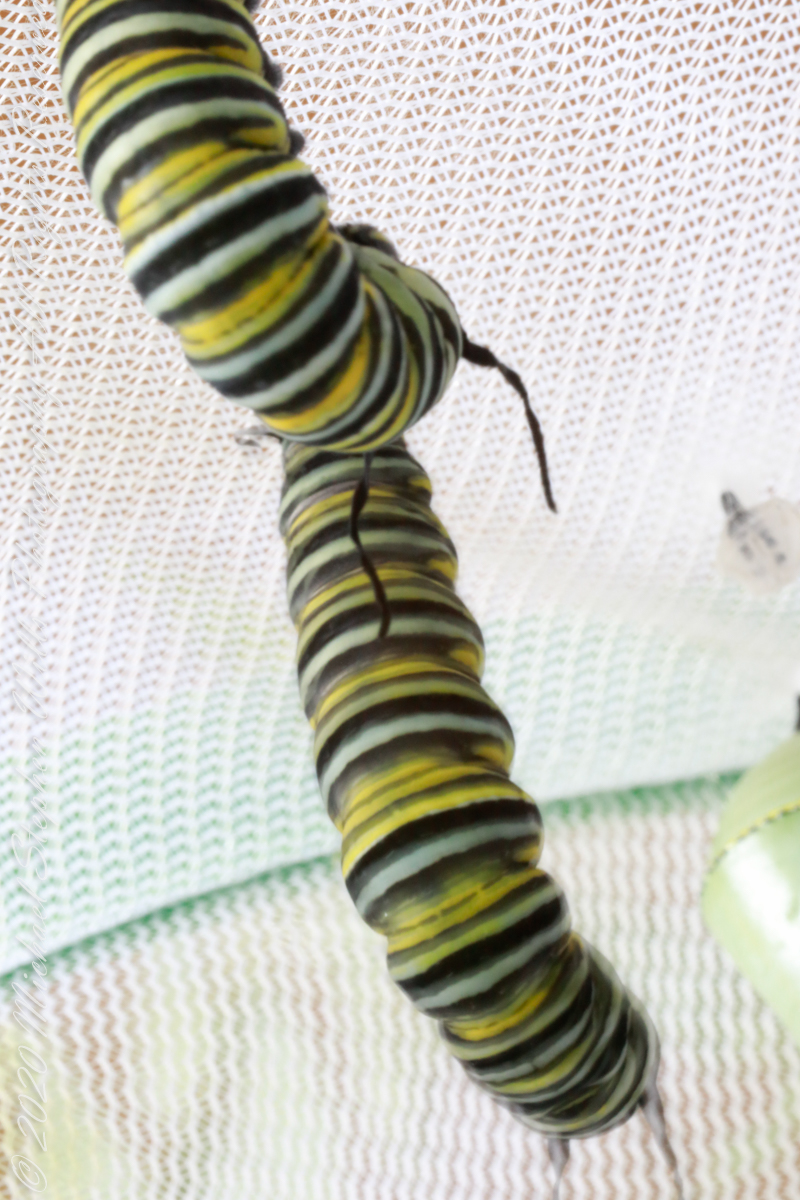
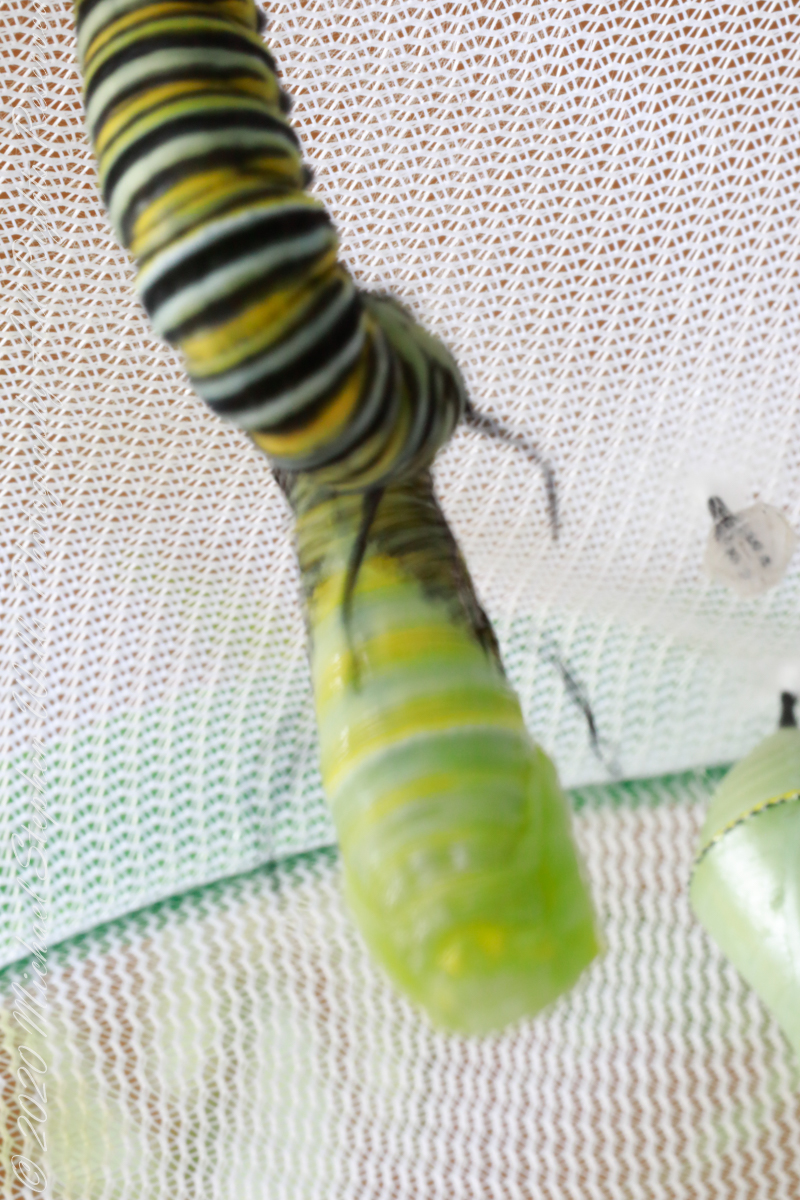
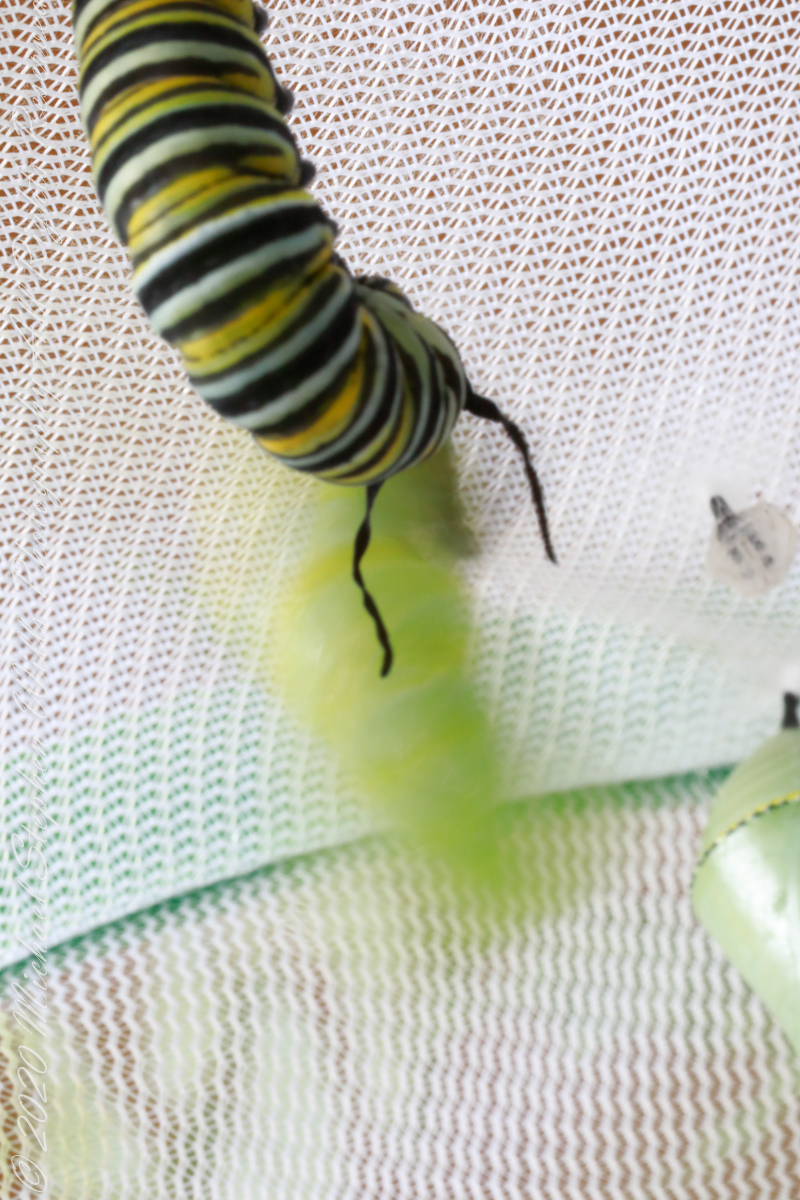
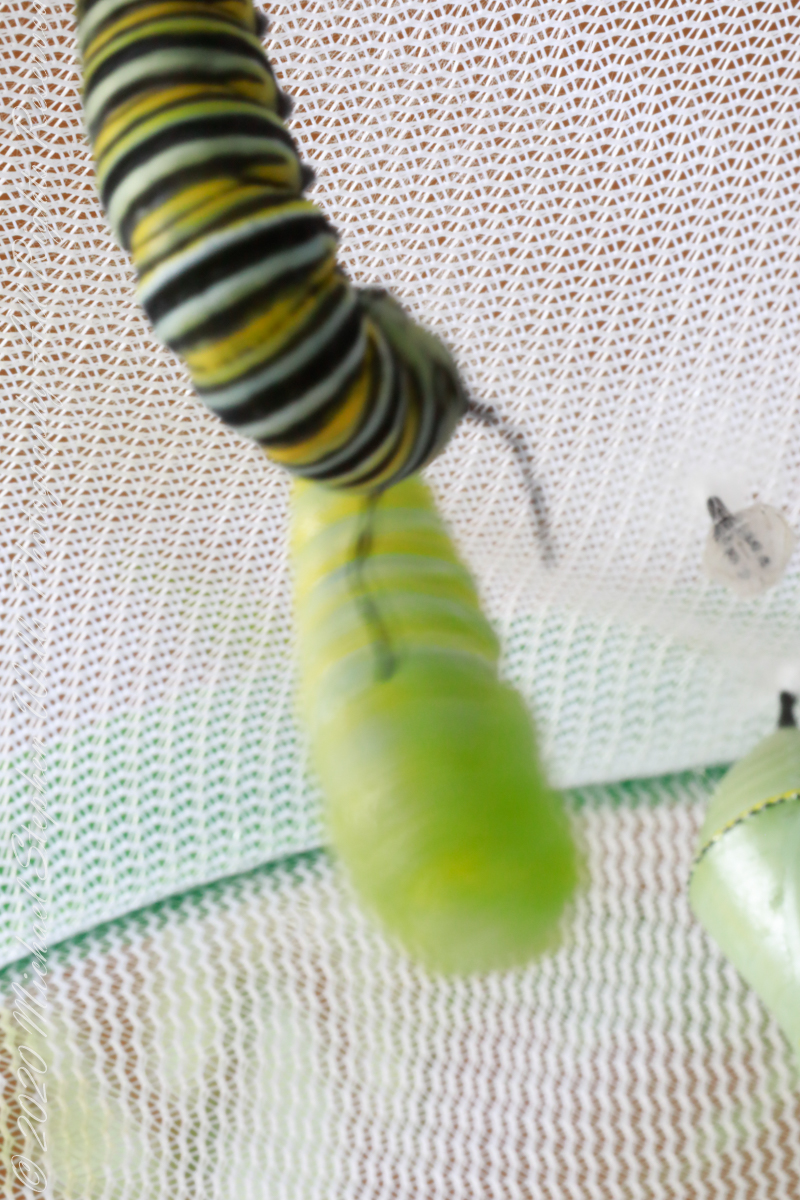
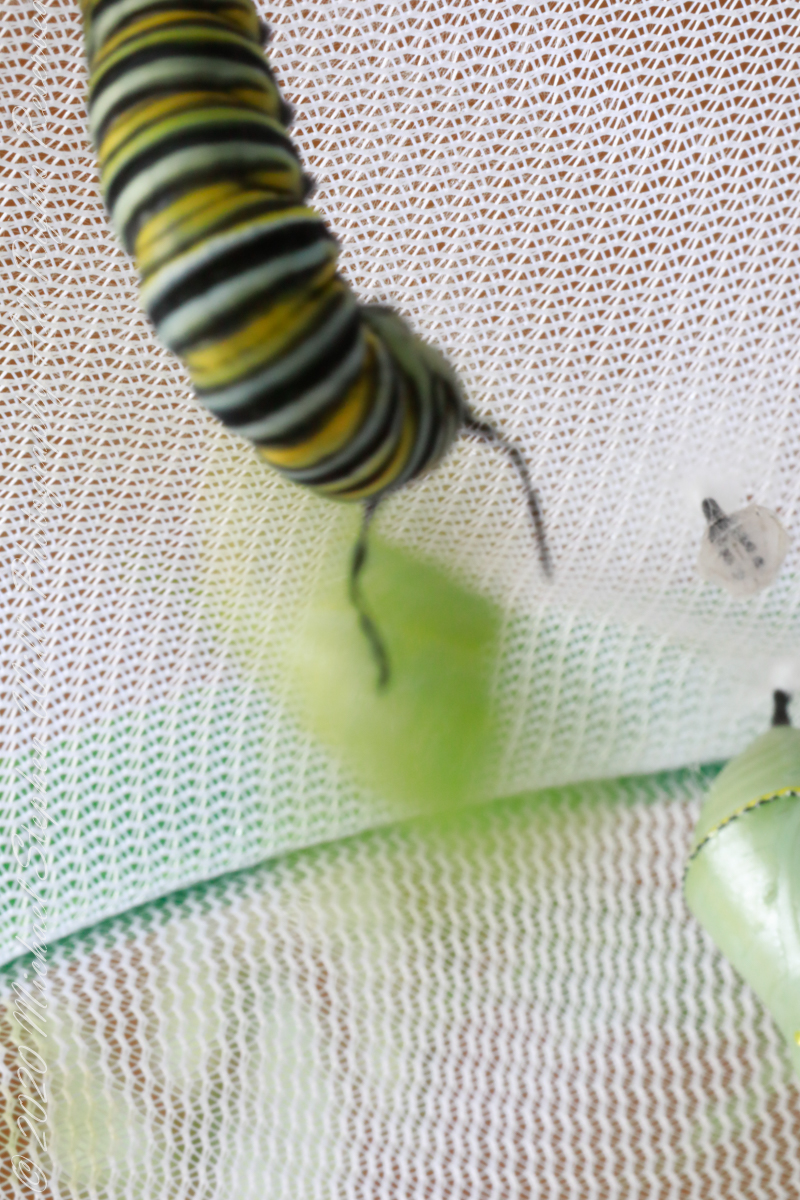
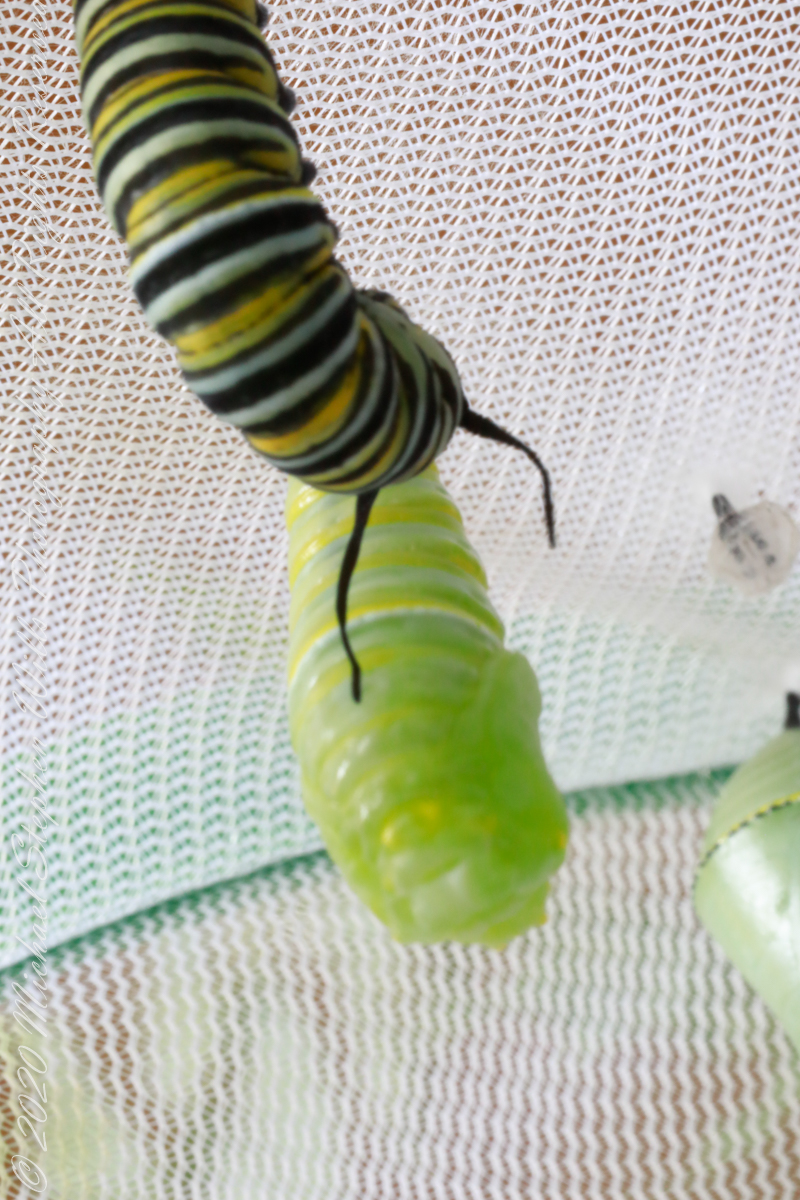
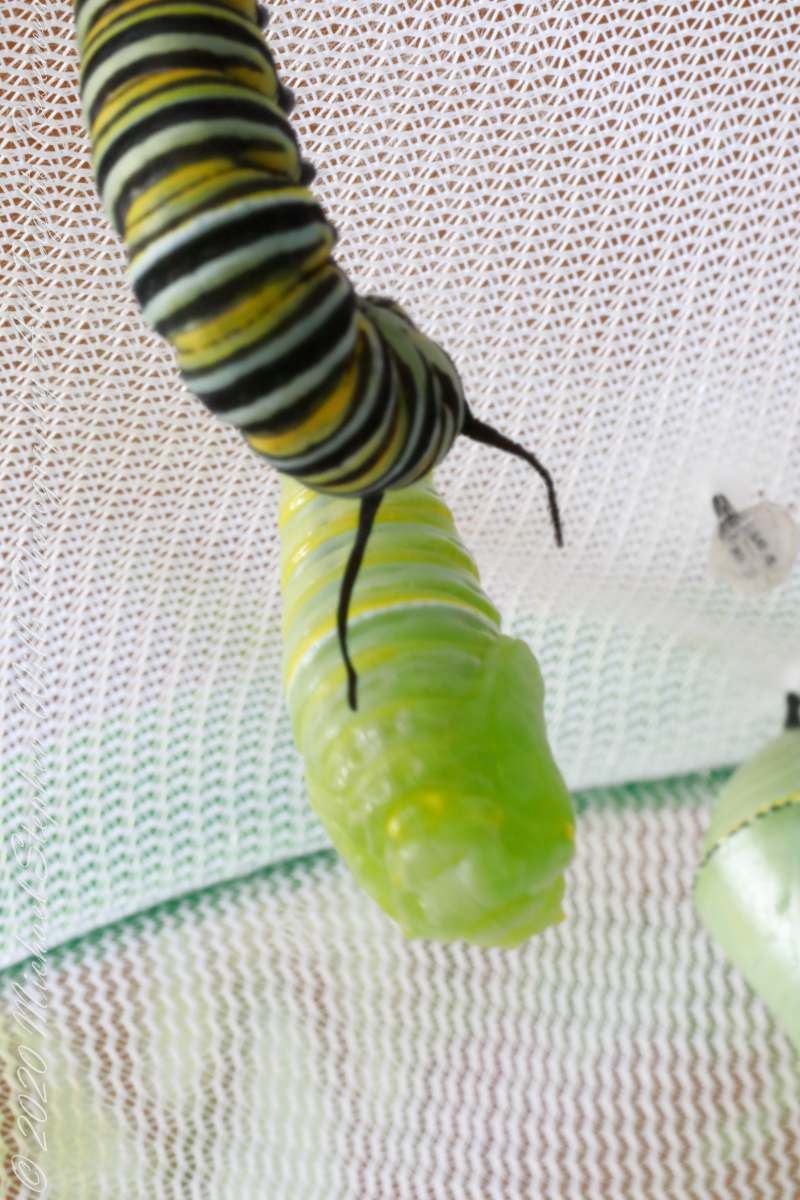
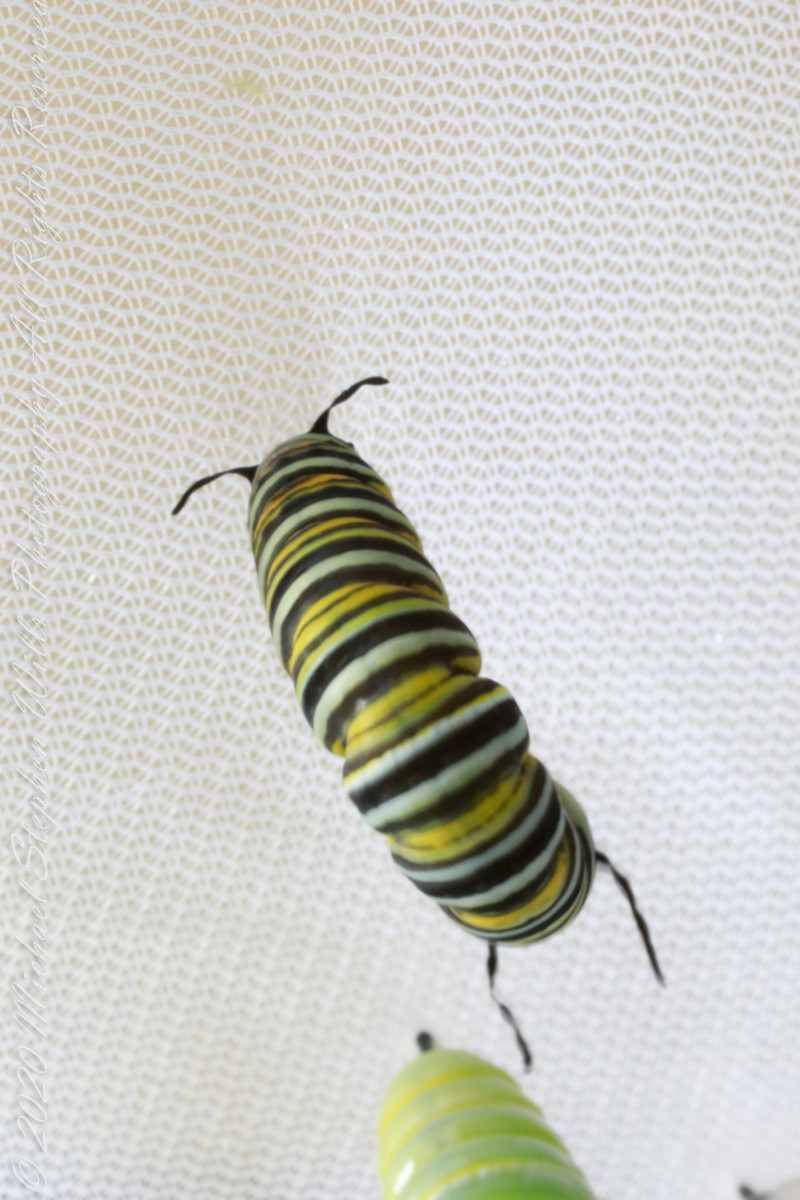
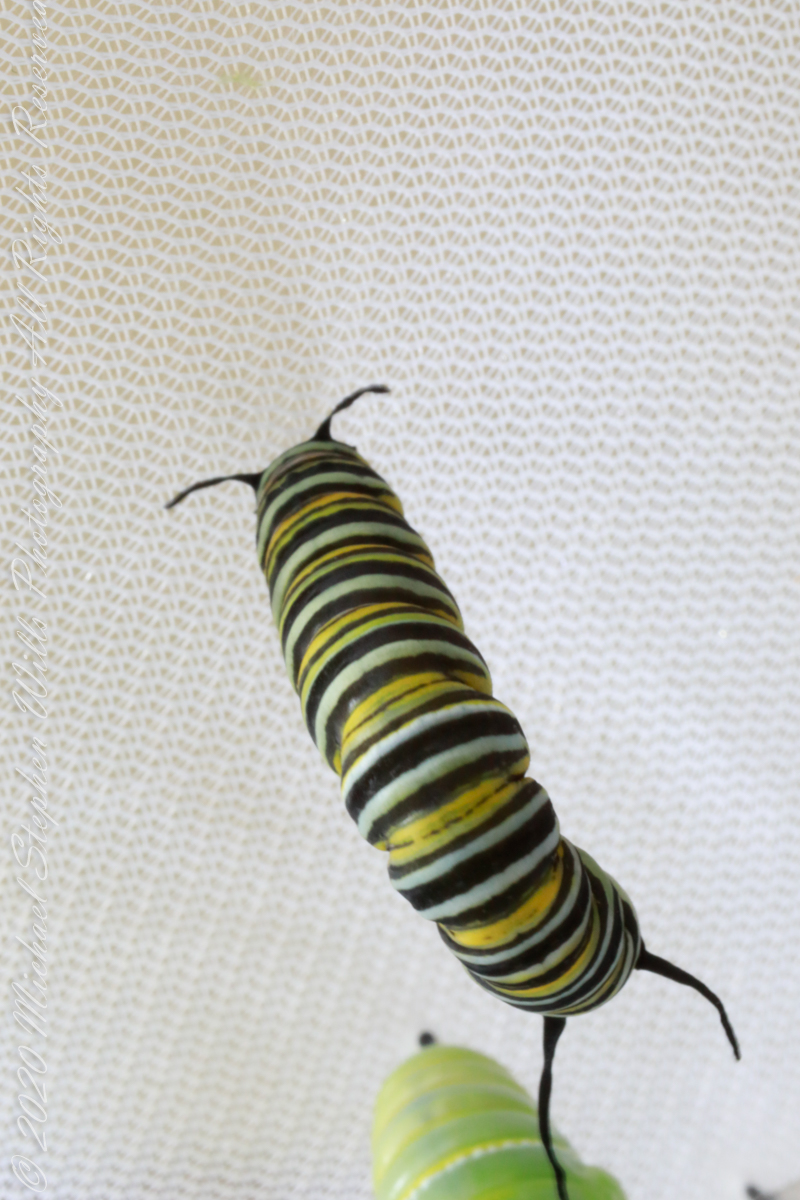
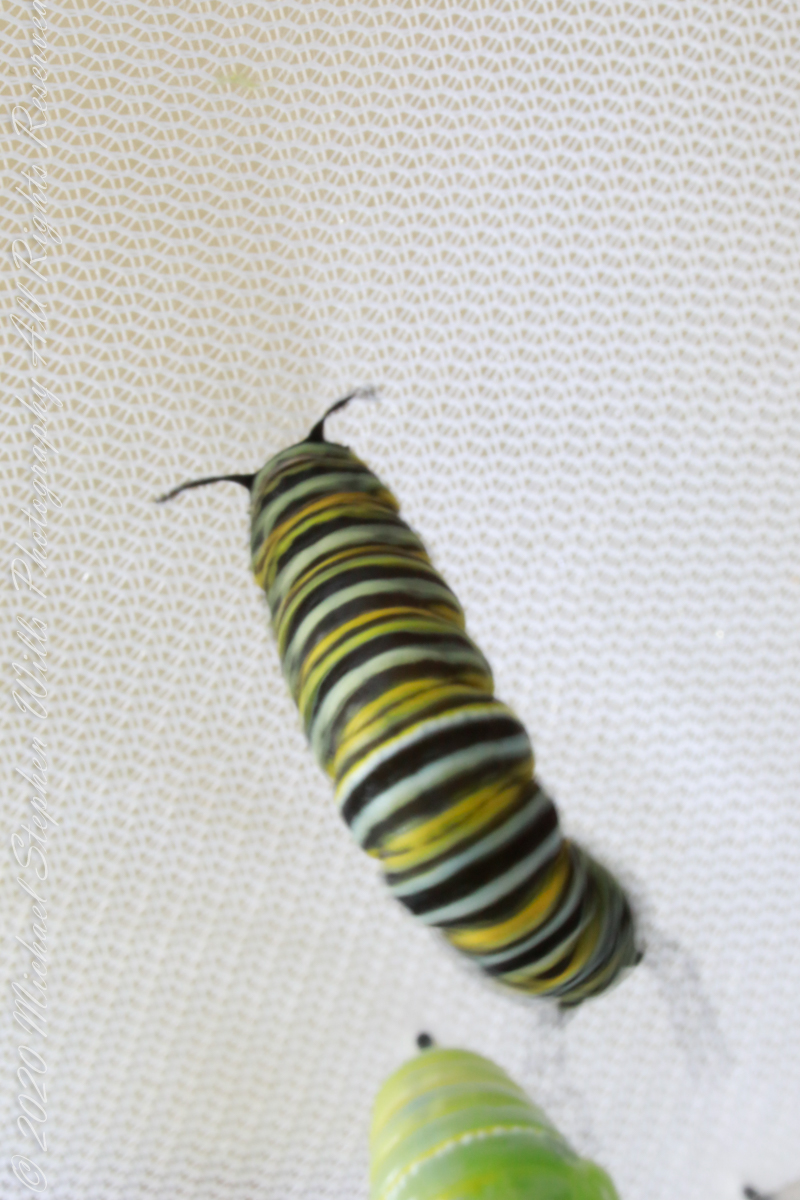
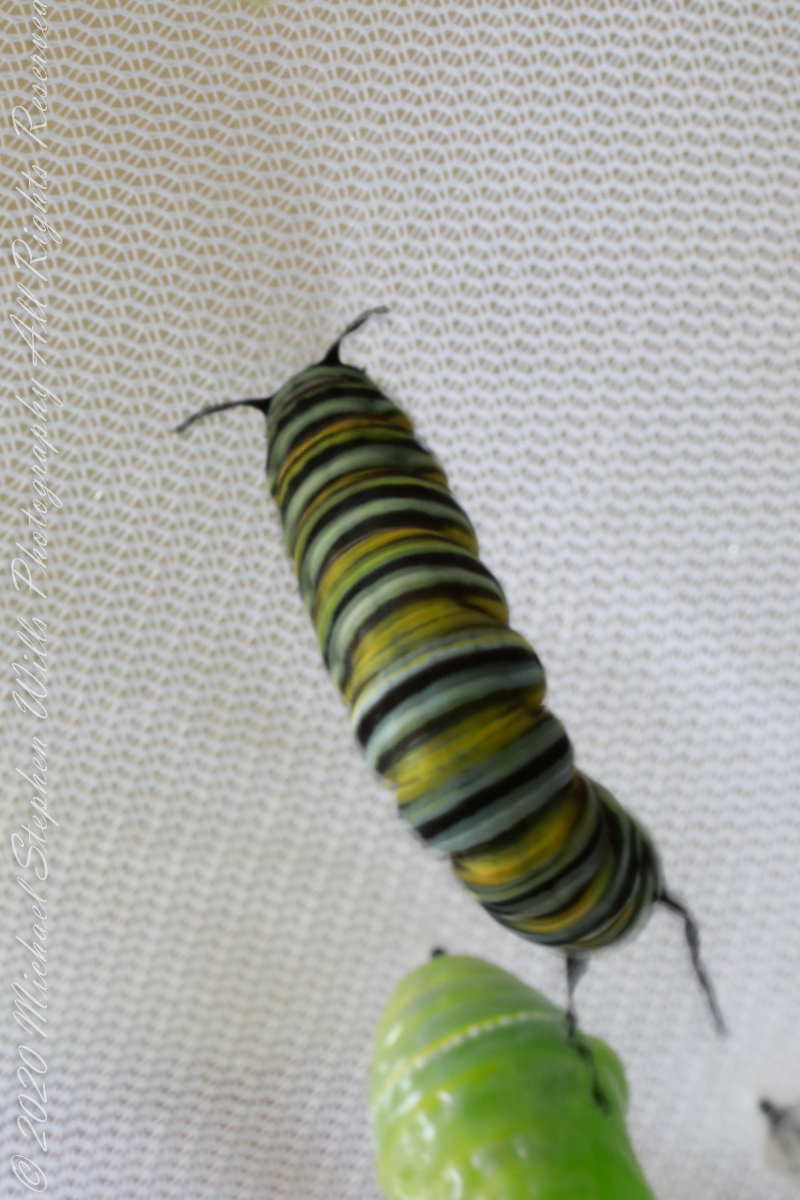
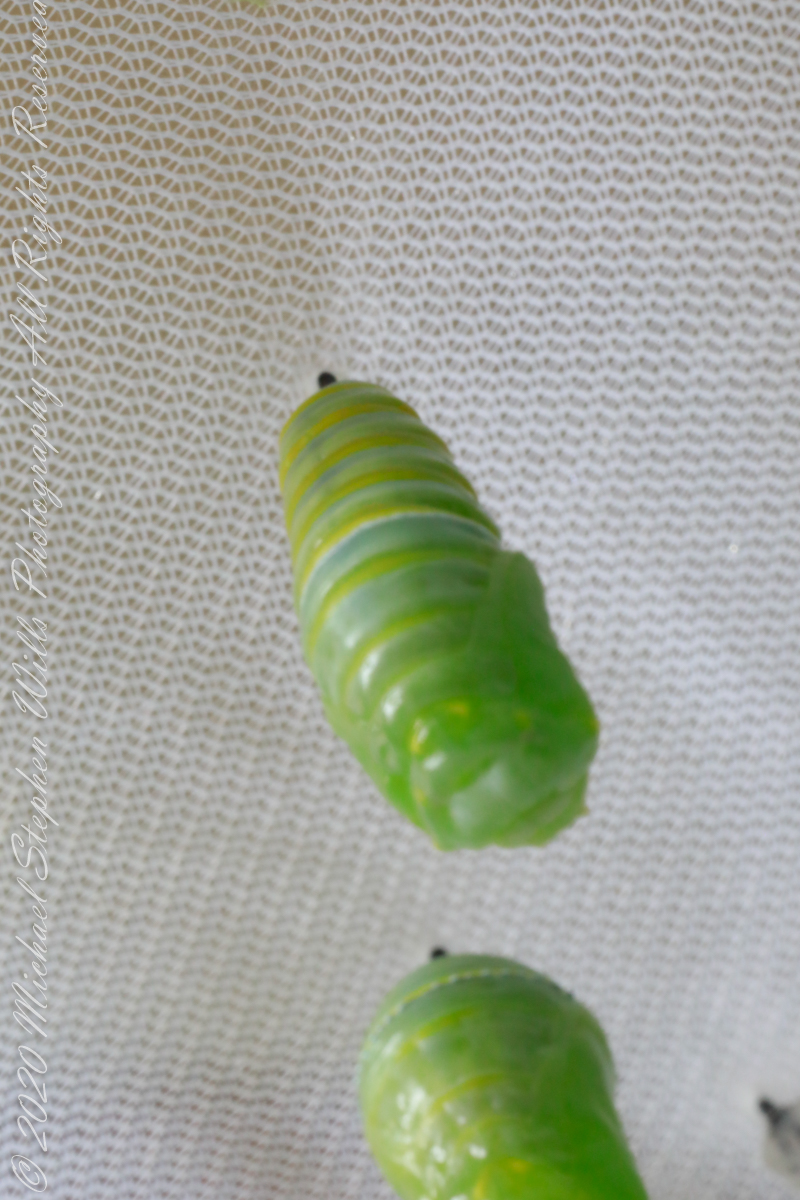
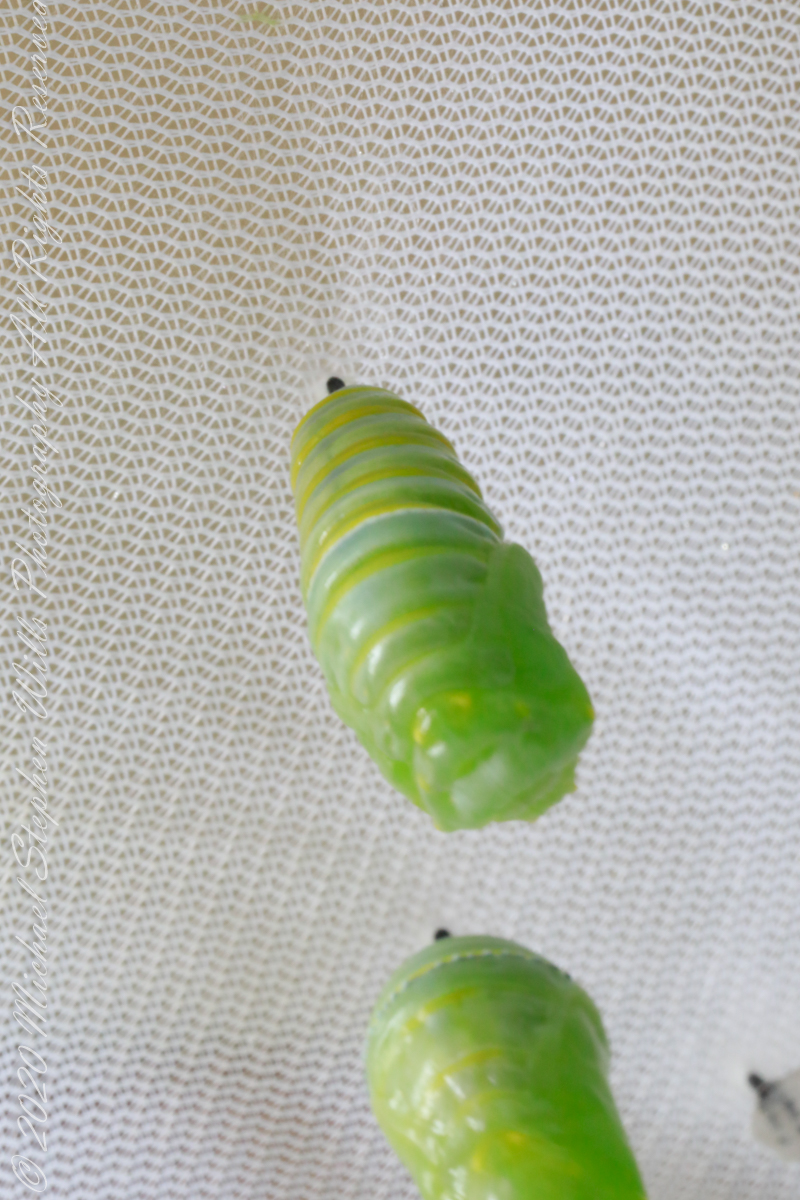
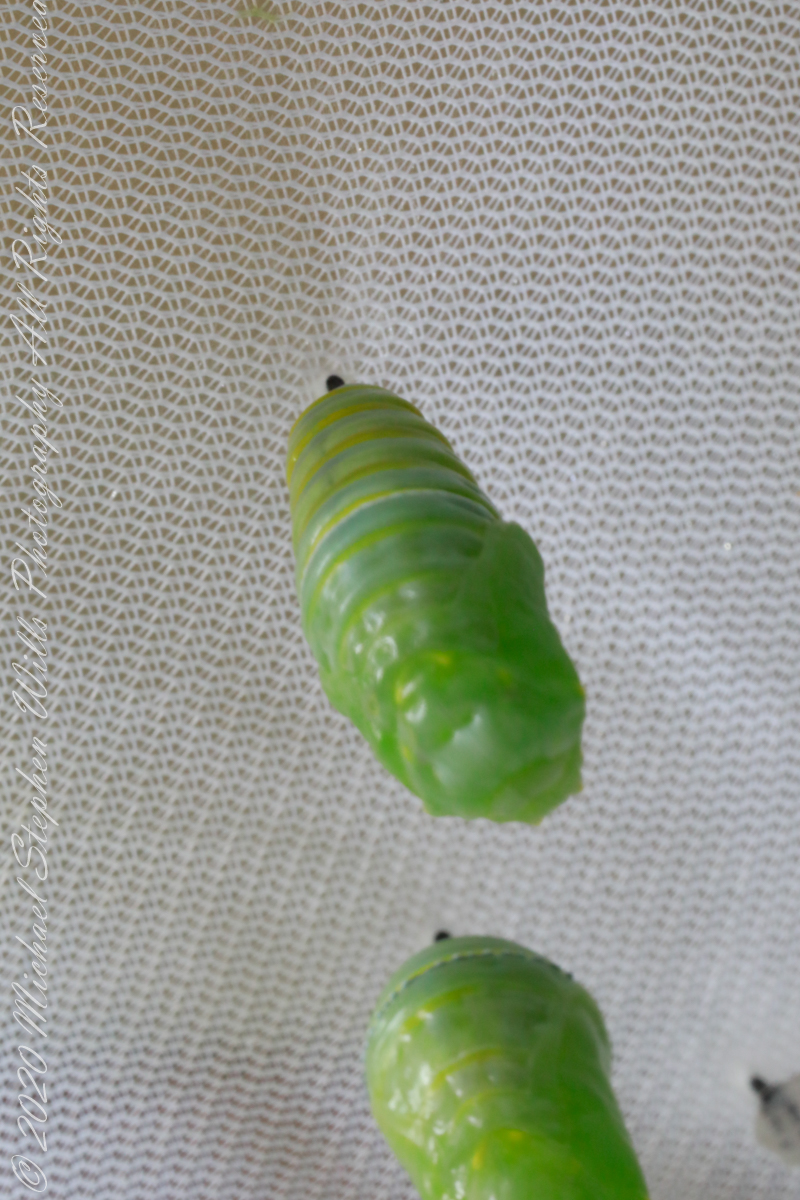
The sixth transformation happens when the fifth instar caterpillar, fully sated with milkweed, climbs to a perch, spins silk around a set of prolegs, affixing them from a horizontal surface from which to hang. For this set I captured the moult of two monarchs hanging side by side inside a mesh cage with an east facing window for light. Even though the day was sunny, with the f-stop set to the lens maximum (32) for the deepest field of view, ISO at 32,000 the energetic skin shedding movements of the chrysalis cause blurring.
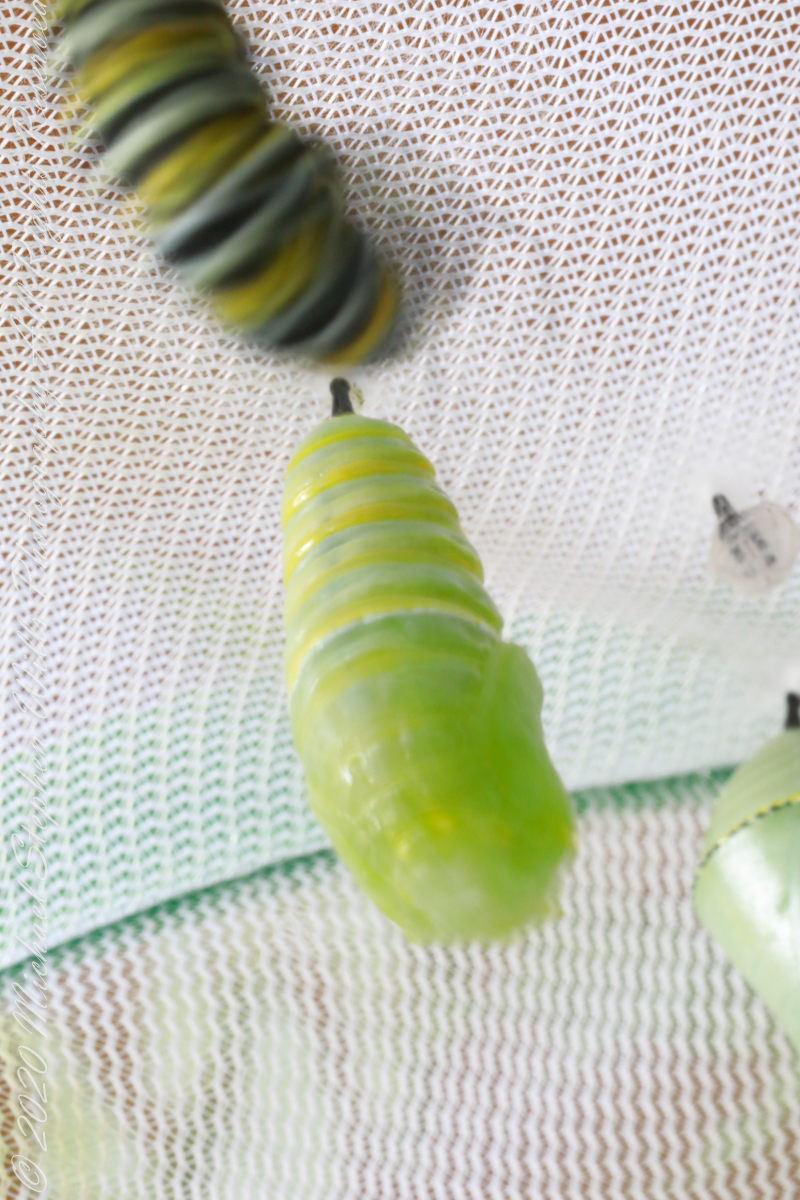
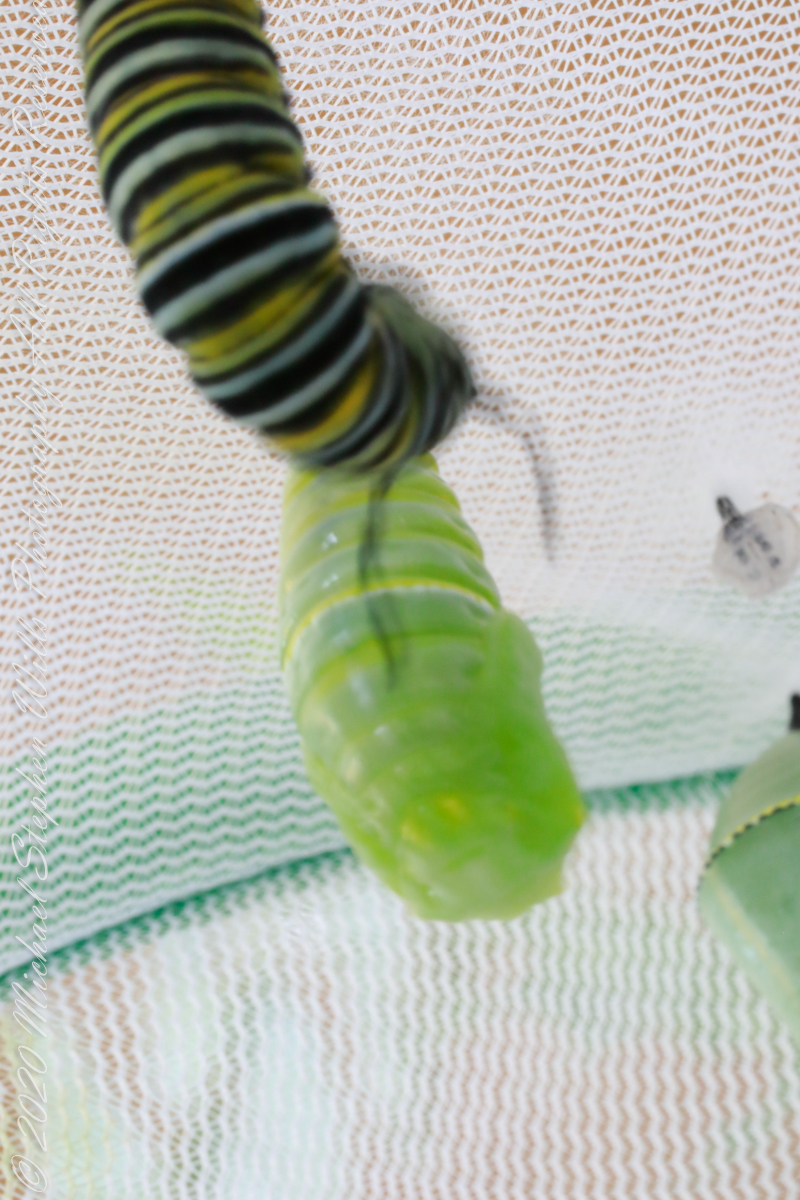
For 10-12 hours of profound bodily configuration changes the hanging caterpillar hangs without movement. In the last image of this first set, the next caterpillar is blurred by initial moult movement.
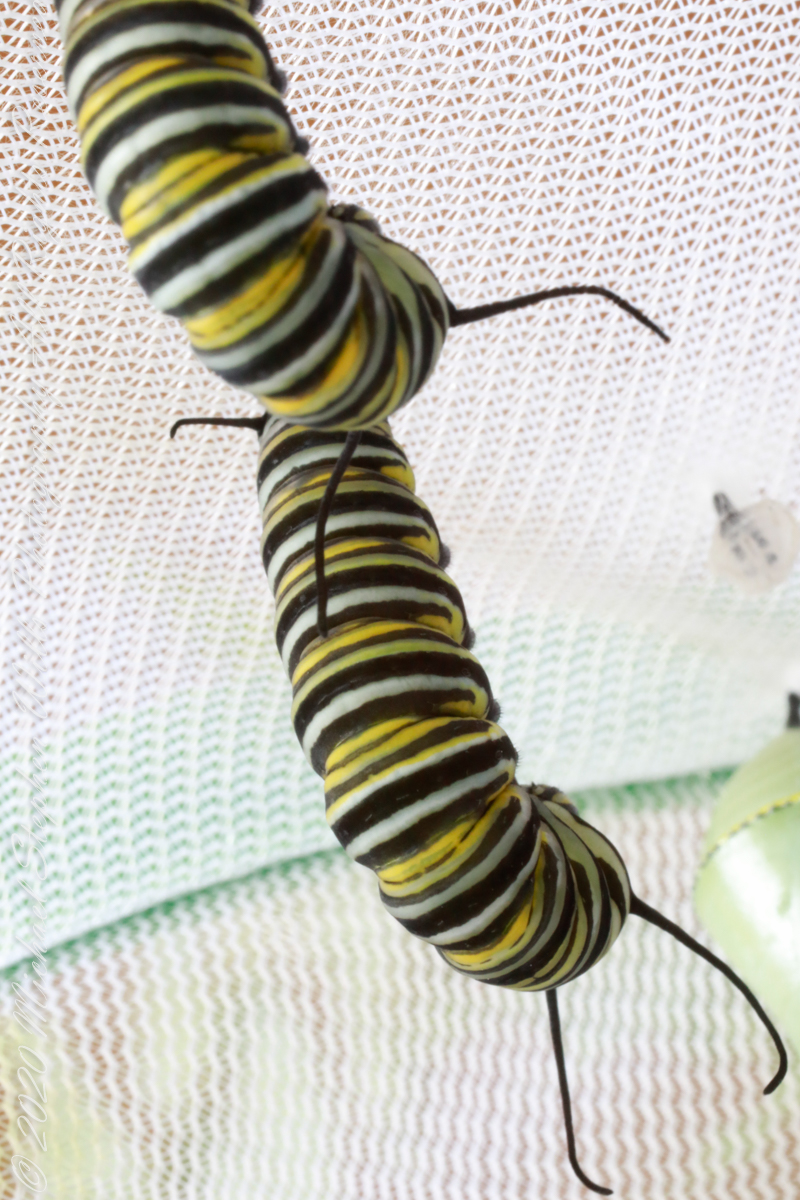
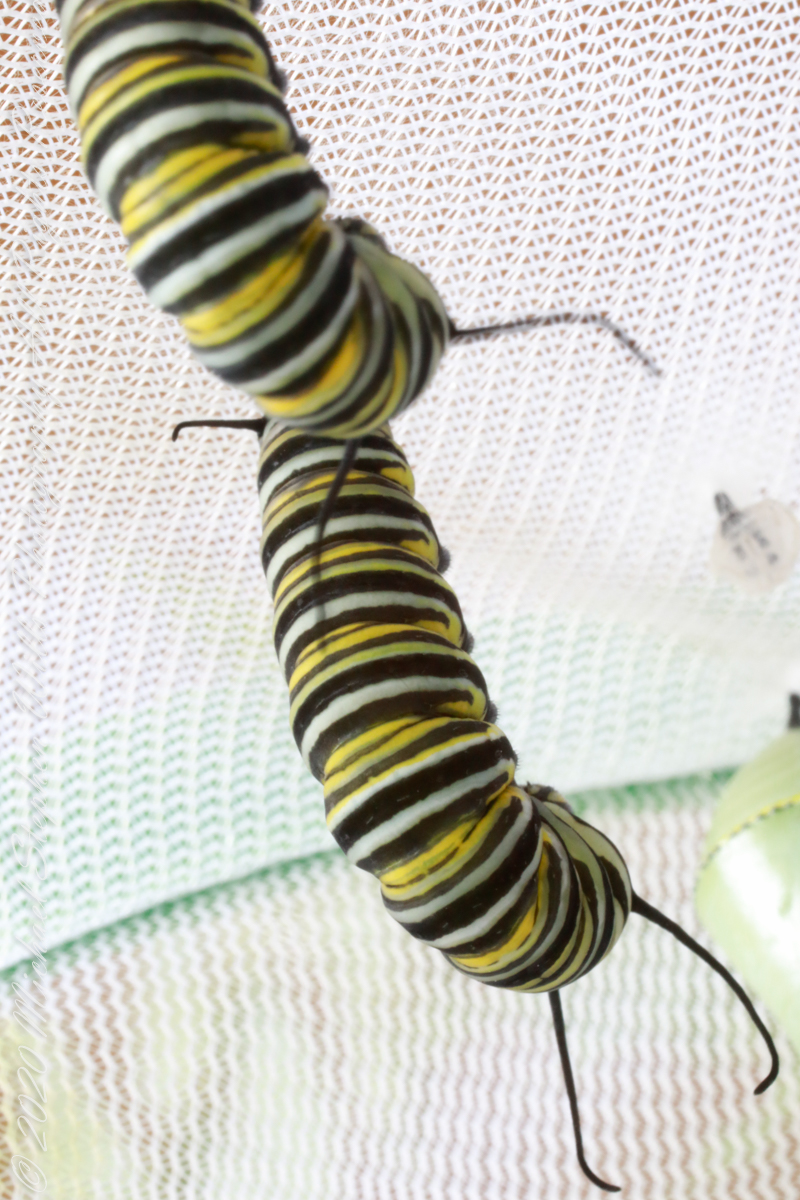
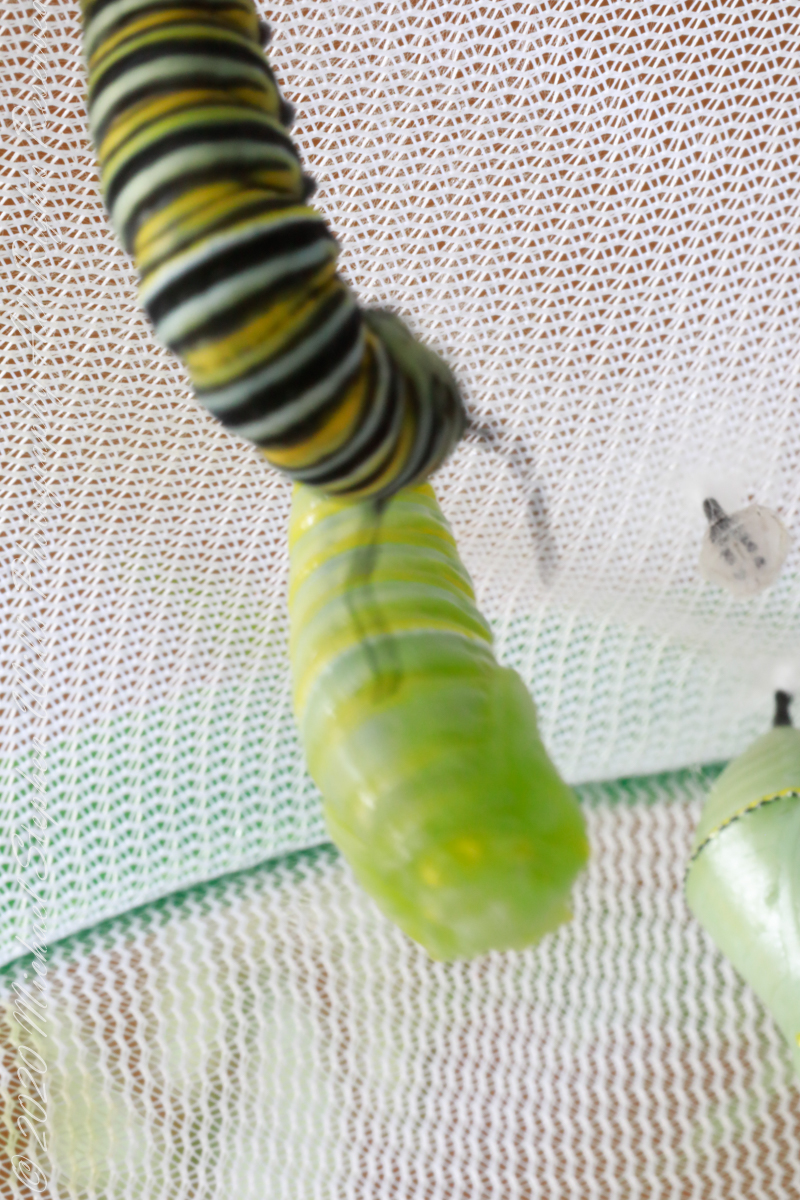
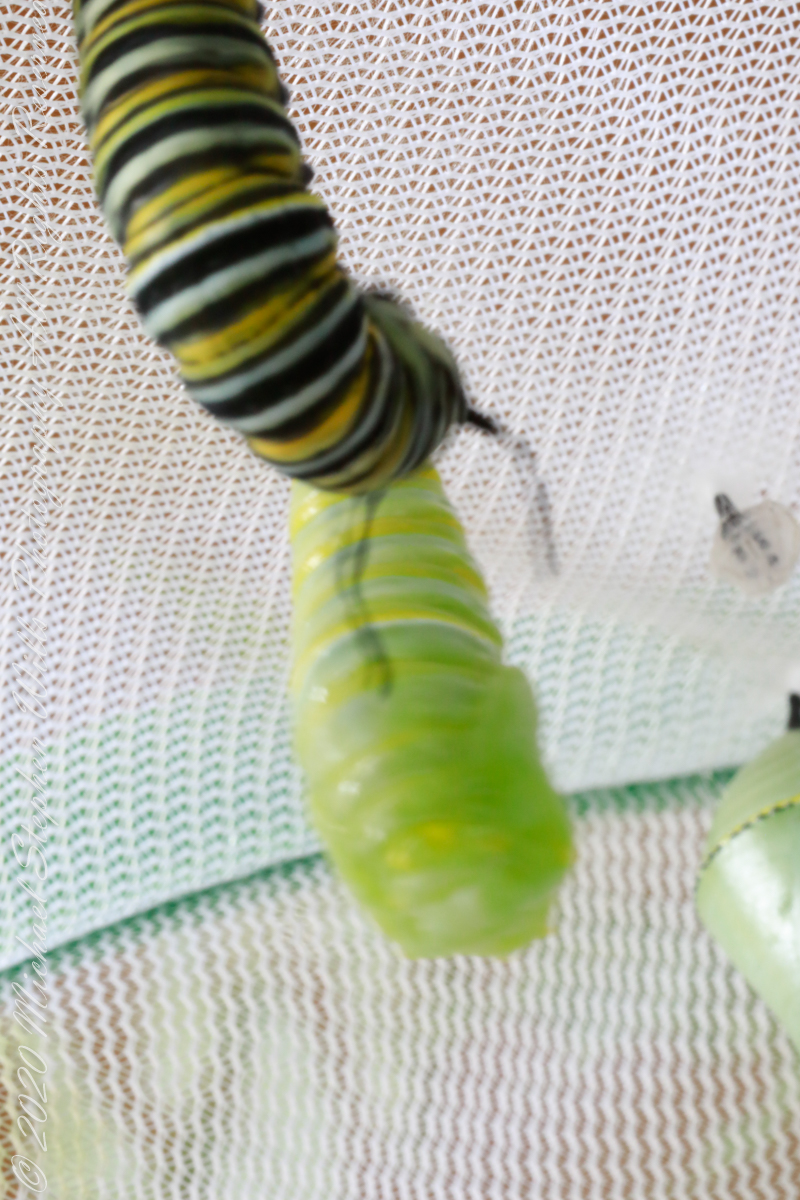
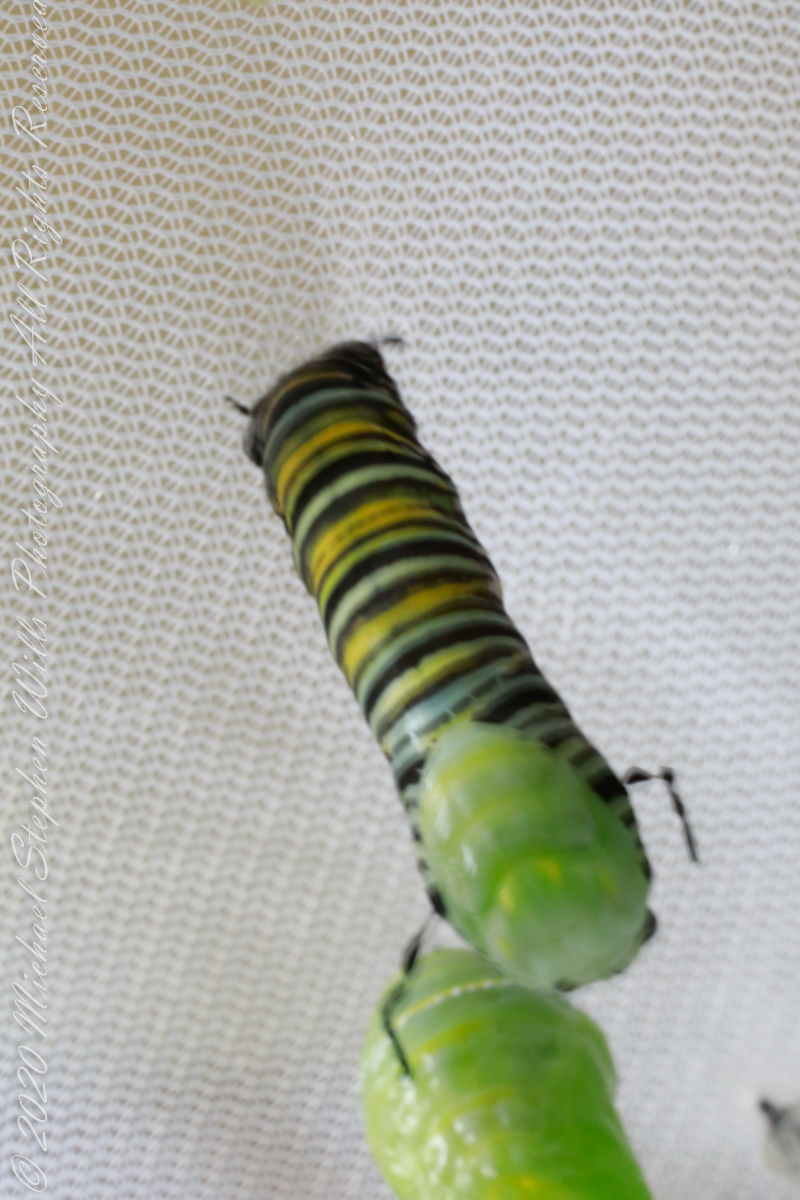
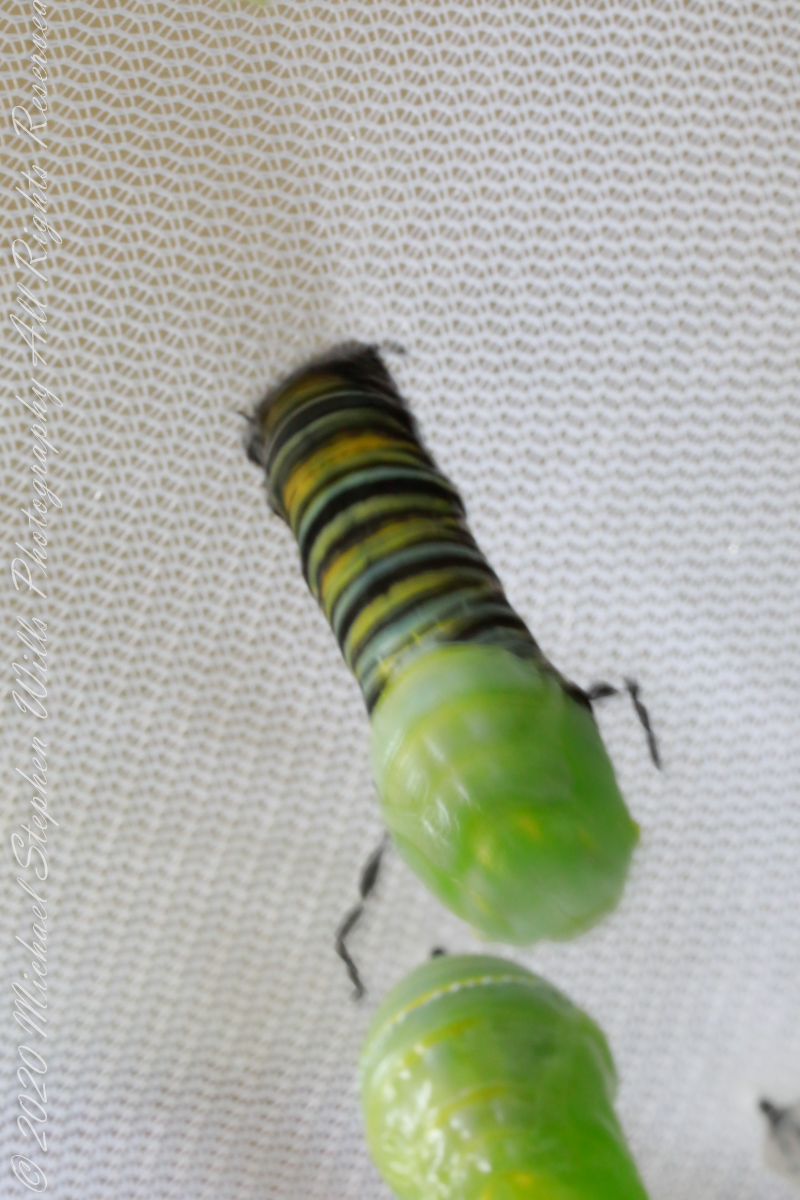
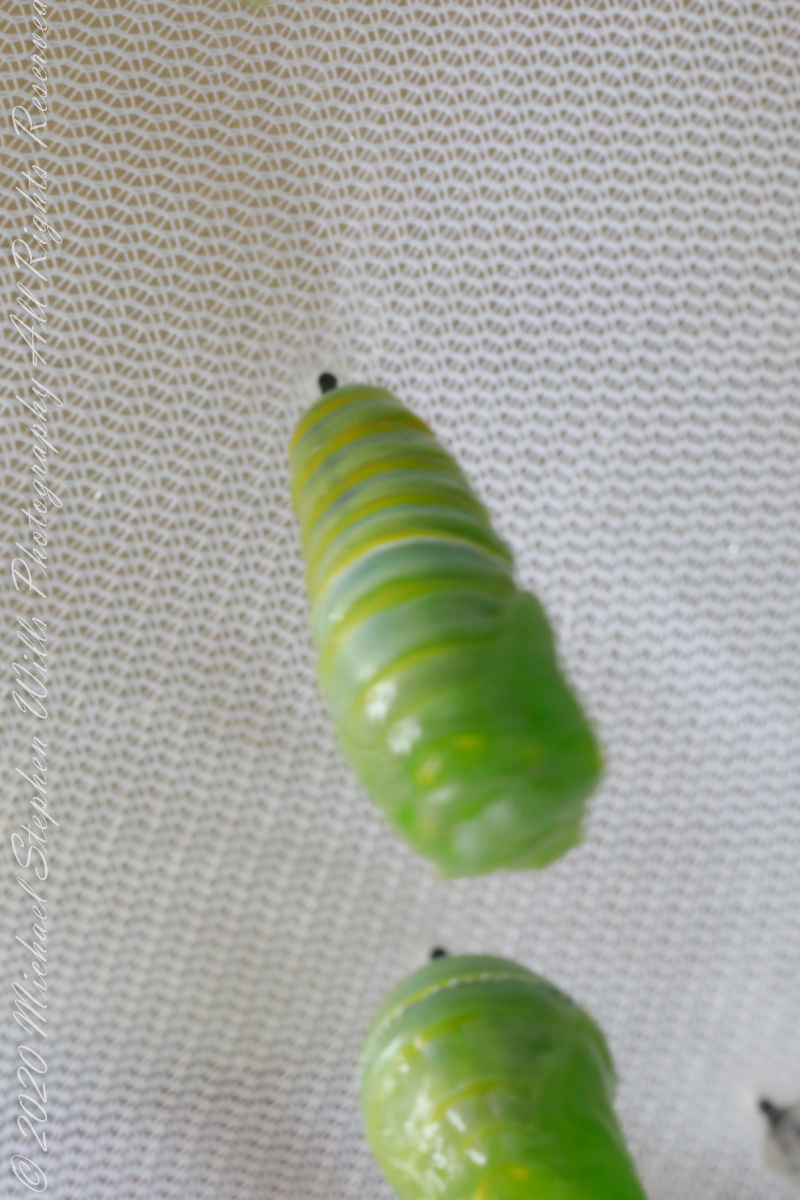
My attempt to capture a video of the moult was frustrated by inadequate lighting, the result was too dark to use. I must solve this technical challenge as the motions of the chrysalis as difficult to believe without visual proof. That said, here is the second moult with the first completed moult in background.
An interesting fact is the caterpillar uses silk to attach the skin to a substrate for the first five moults to hold the skin back while it crawls out of the discarded skin. The first meal of the hatched caterpillar (first instar) is the egg, the shed skin is the first meal for instars 2 – 4. The shed skin of instar 5 drops from the chrysalis. This is why you should never remove a Monarch caterpillar from the leaf, as in doing so may hinder a moult in progress.
Copyright 2022 Michael Stephen Wills All Rights Reserved
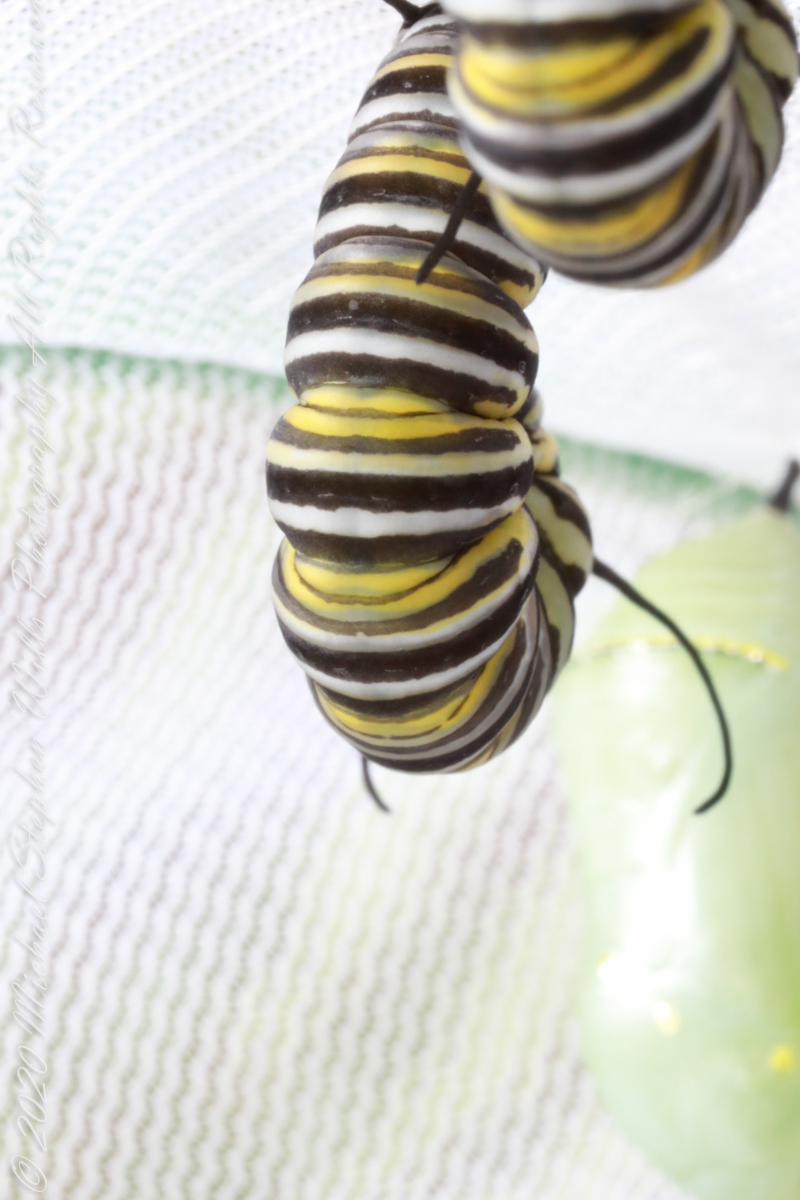
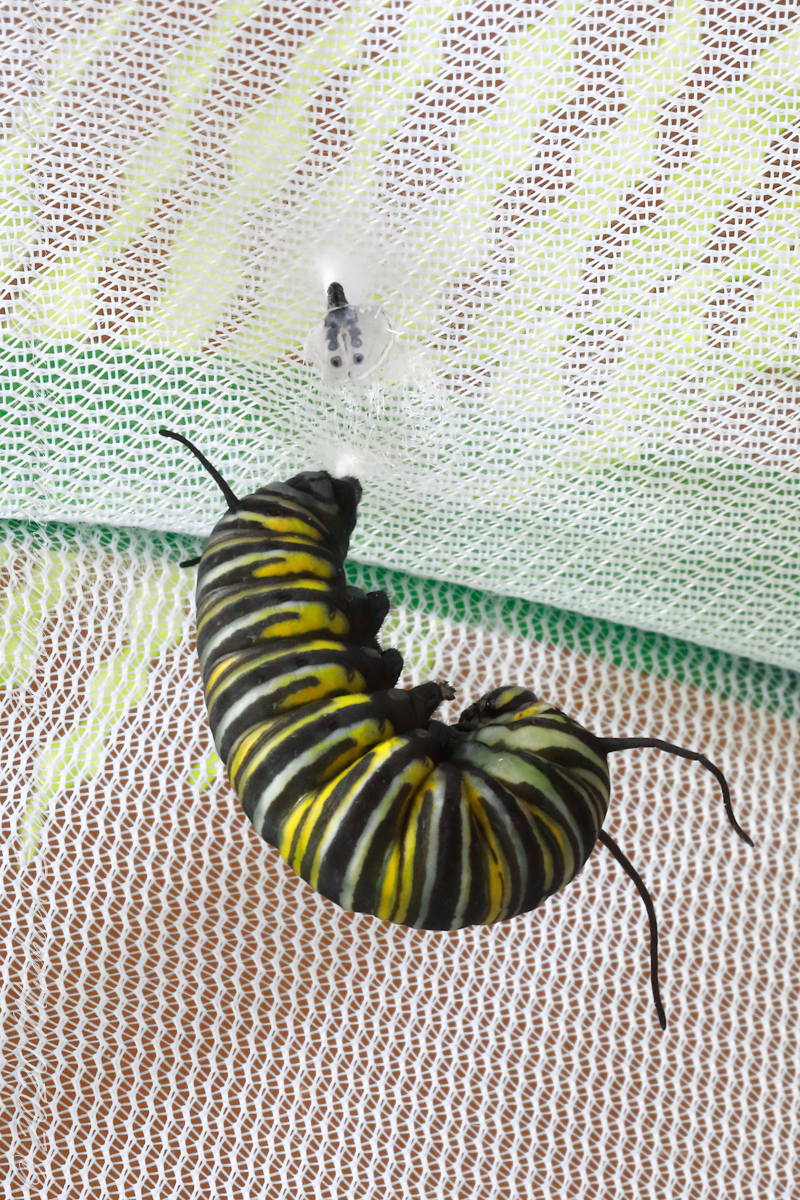
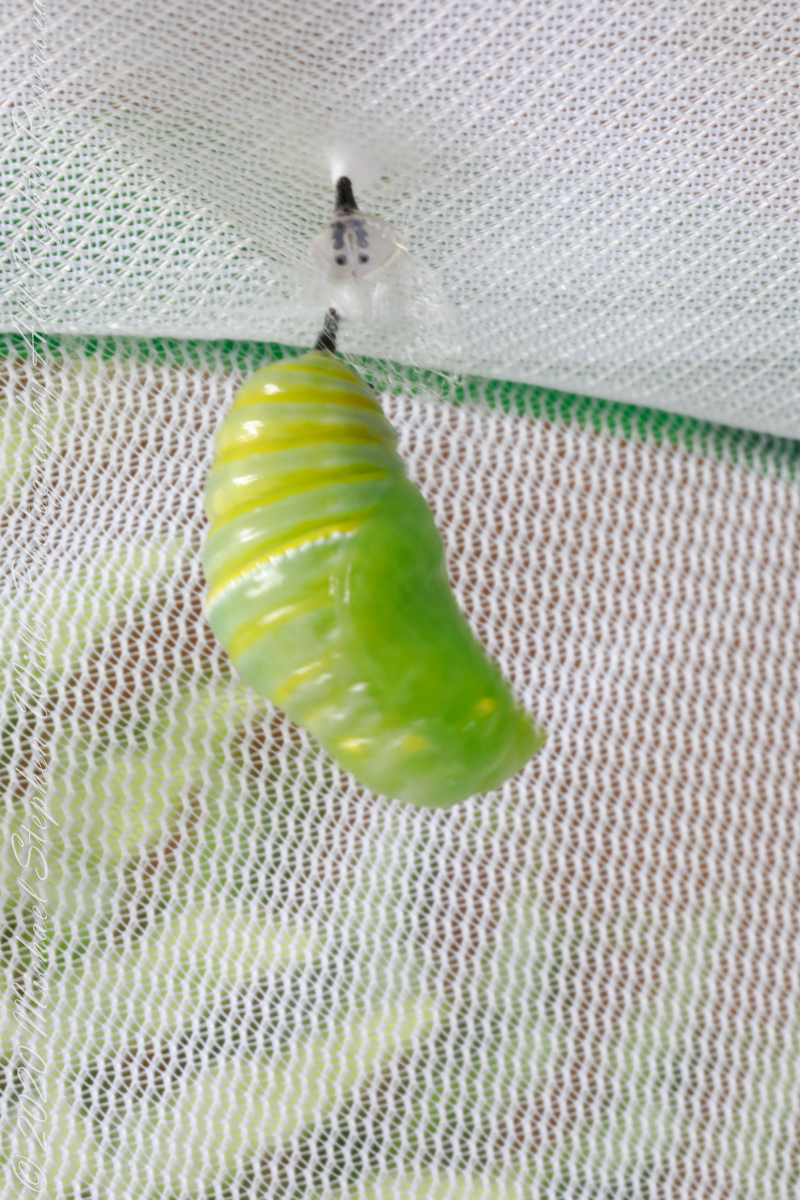
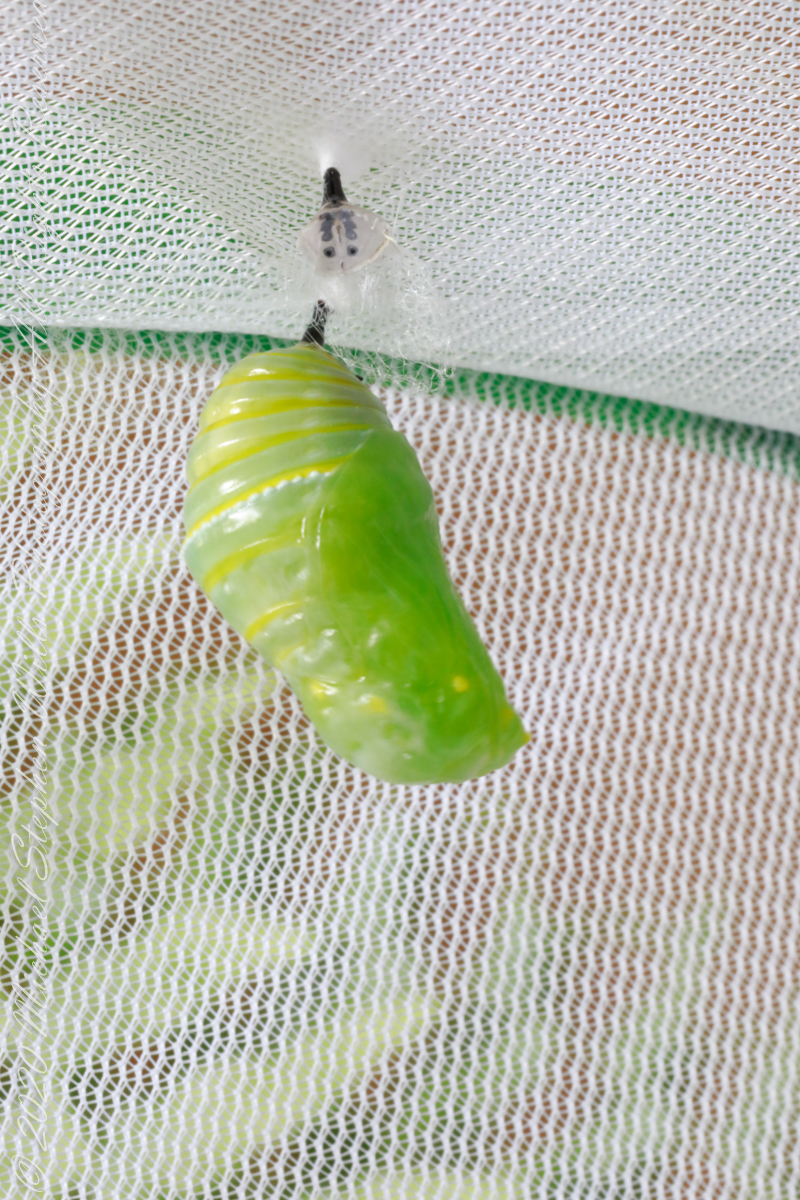
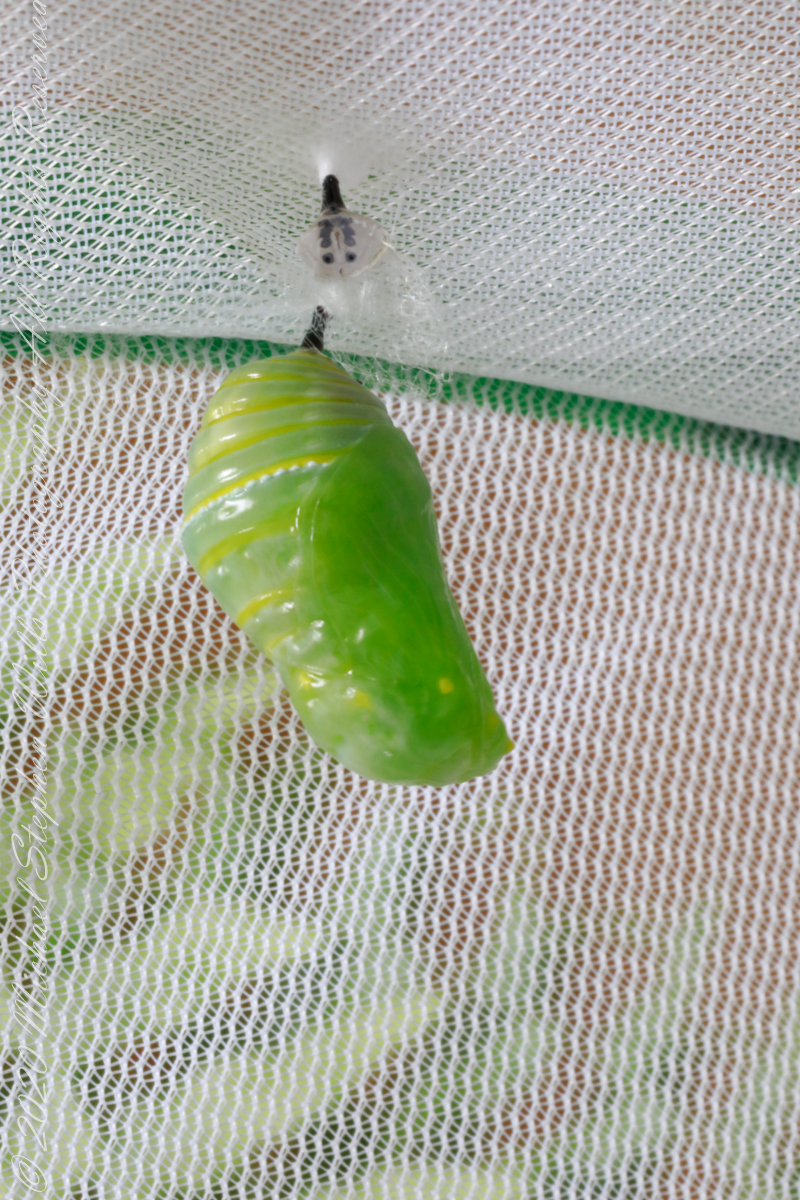
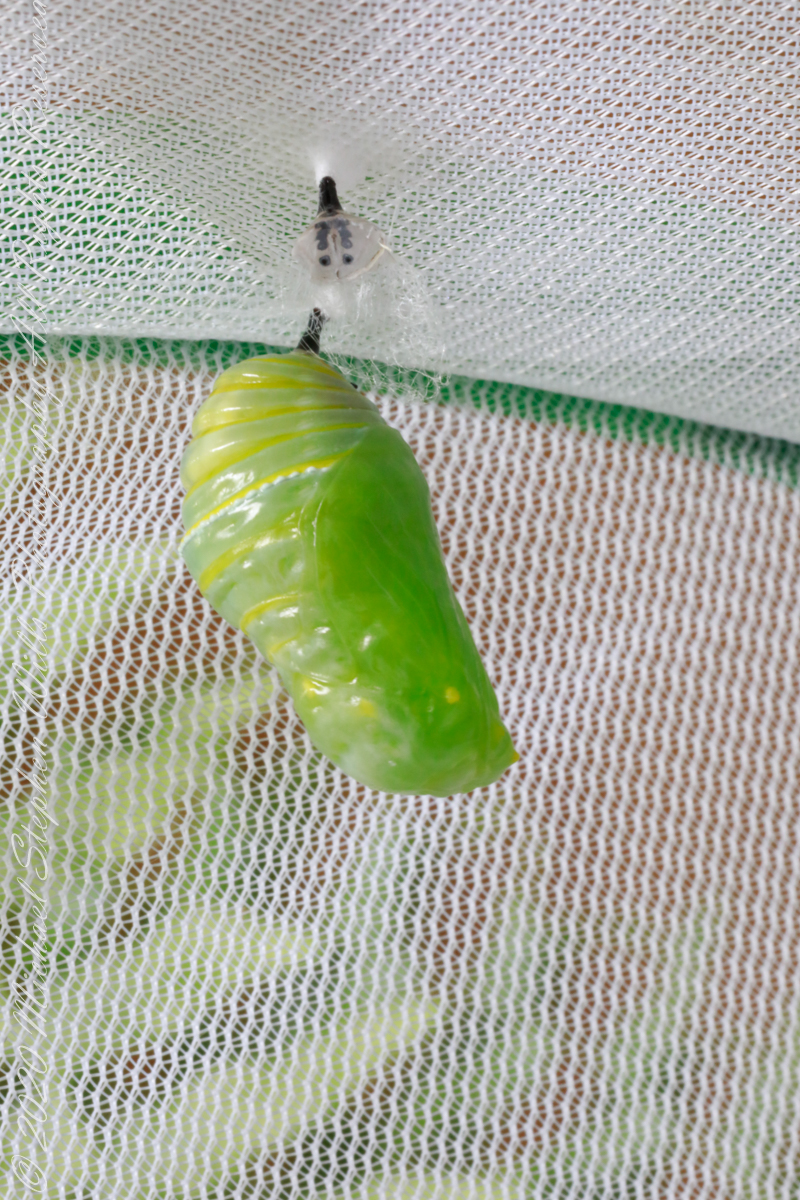
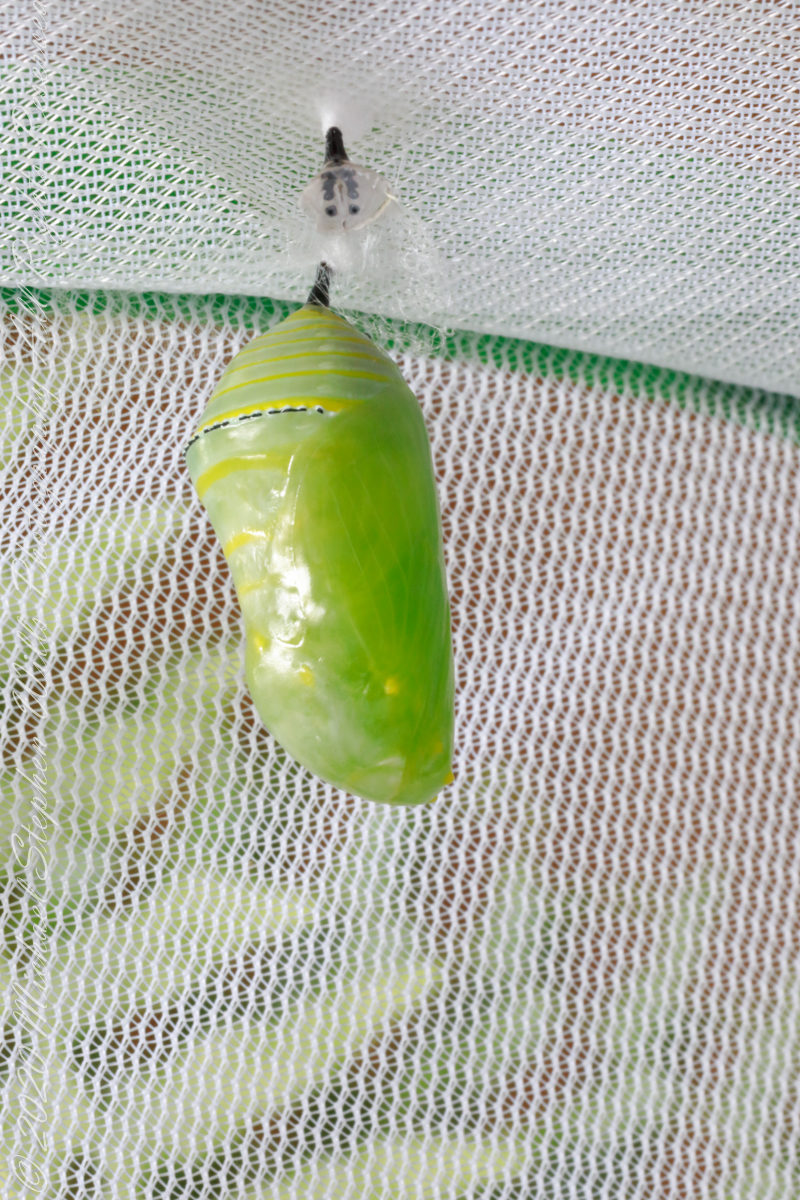
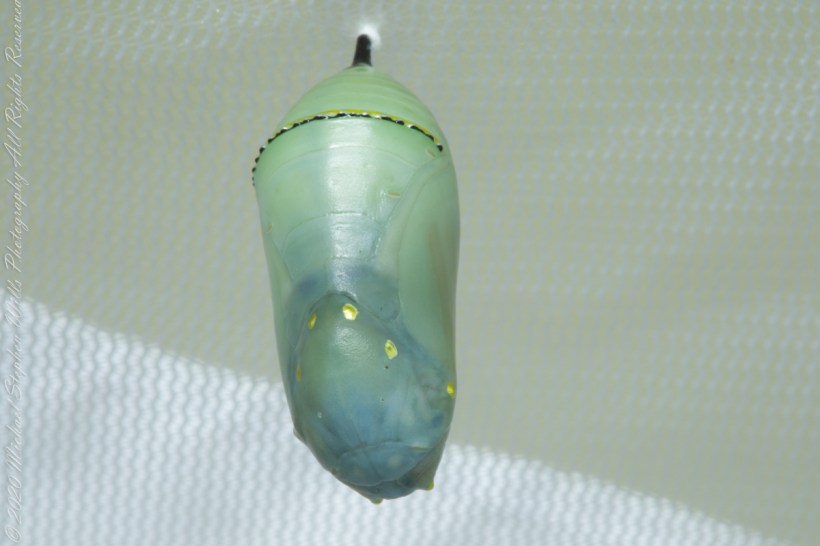
Here is a photographic Series of a Monarch caterpillar chrysalis transformation, a step in the life cycle of the Monarch butterfly. The caterpillar attaches to a silk pad from which it hangs. Underneath the skin, the caterpillar is transforming to the chrysalis. In these photographs the silk pad and chrysalis attachment from a previous transformation are in the foreground.
About 34 minutes transpired between the previous photograph of the caterpillar in “J” formation, attached and hanging upside down to the chrysalis. In this time the outer skin was shed, revealing the chrysalis.
Copyright 2022 Michael Stephen Wills All Rights Reserved
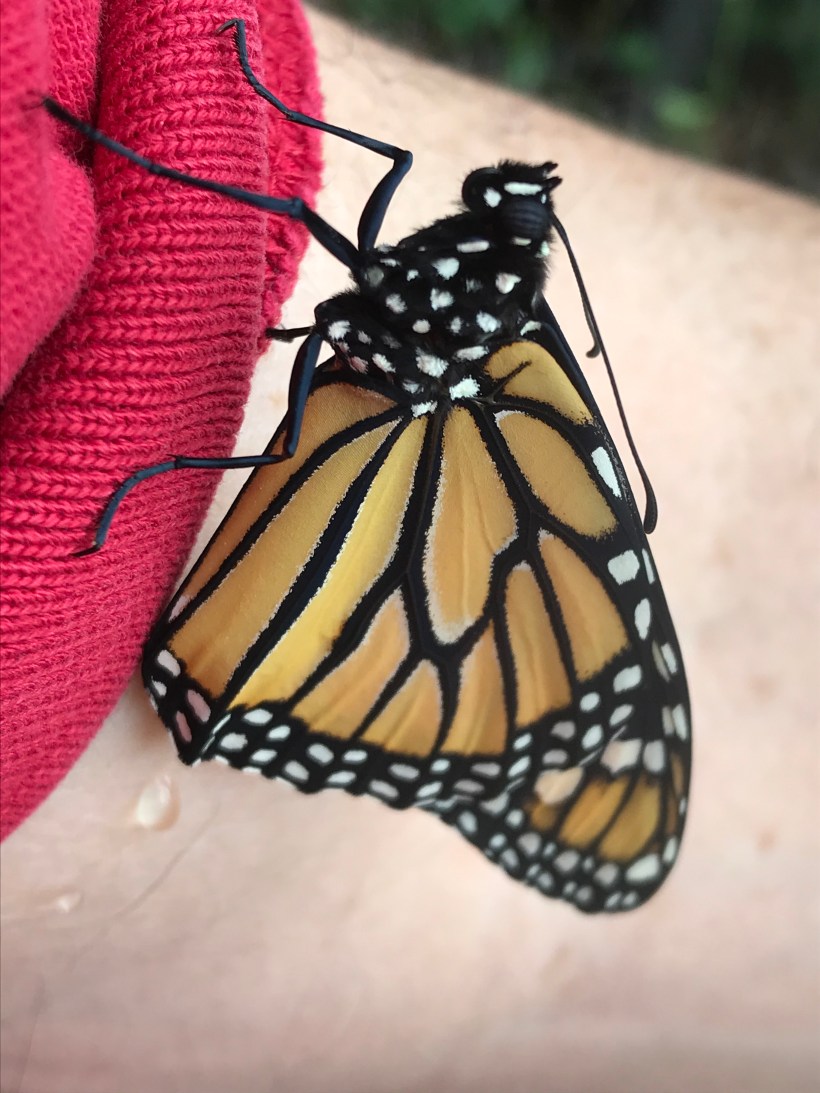
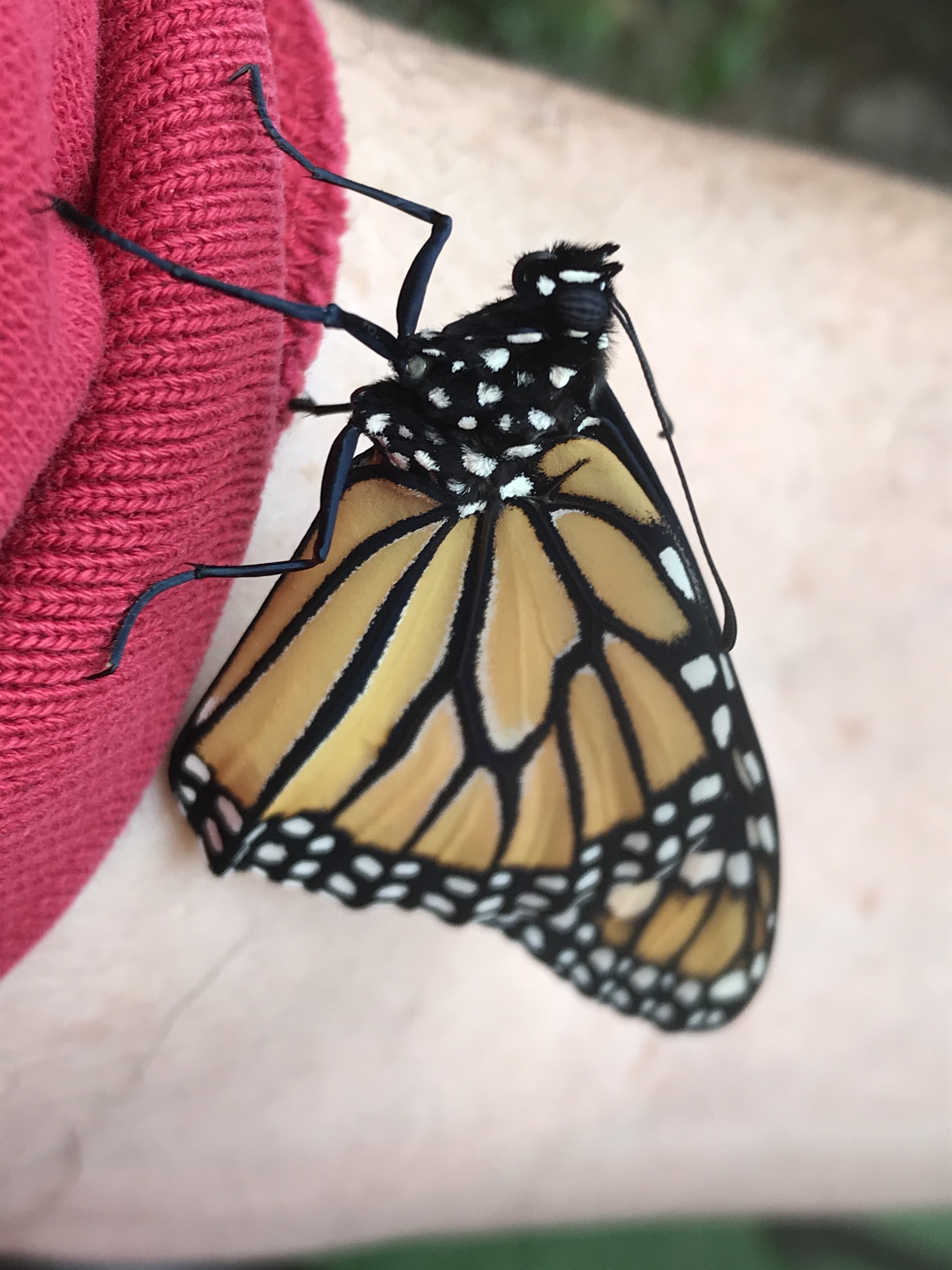
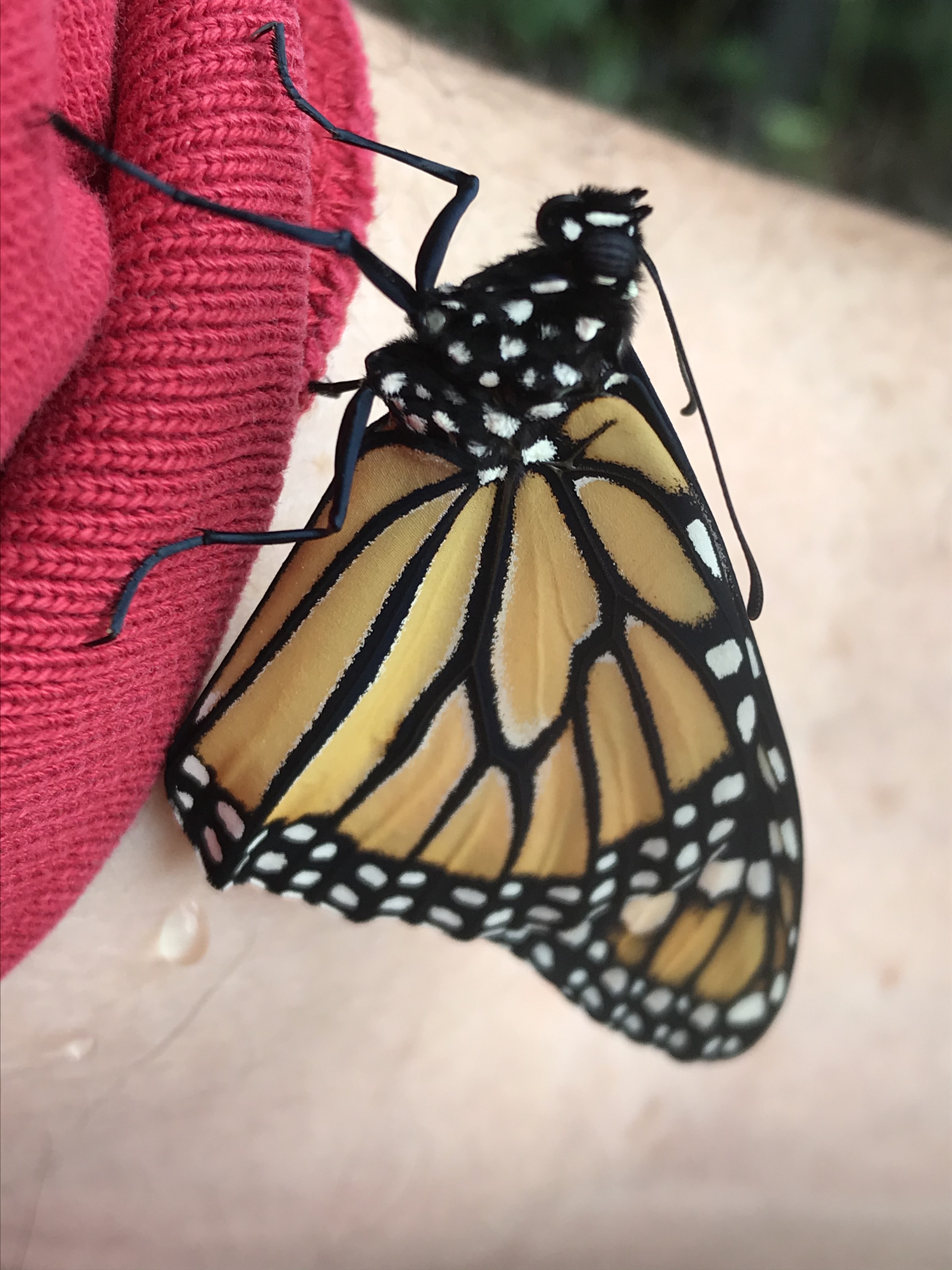
Misjudged by over an hour, I reached into the cage to allow the Monarch butterfly to crawl onto my hand for the first flight. Instead, it crawled up my arm and clung to my cotton shirt sleeve.
Click photograph for a larger view and use Ctrl-x to zoom in closer.
Clinging to my sleeve, this newly emerged Monarch wings dried. It is a process of excreting the fluids pumped into wings, crumpled from folding within the chrysalis, to expand them. The clear drips of water on my arm are this fluid.
Click photograph for a larger view and use Ctrl-x to zoom in closer.
Here is a video from this year, a Monarch emerging from the chrysalis, then expanding crumpled wings. Notice, this butterfly has a problem: once emerged the butterfly swings back and forth continually as it clings to the chrysalis. While interesting to us, the movement is caused from a missing front leg. Monarch butterflies have four legs, this butterfly is missing the right front leg, the imbalance causes the swinging movement. Freshly emerged, a large, distended with fluid abdomen is prominent between small, crumpled wings. With time, the abdomen pumps fluid, expanding the wings. Over several hours the fluid runs from the wings and is expelled from the abdomen, as seen in the above photograph.
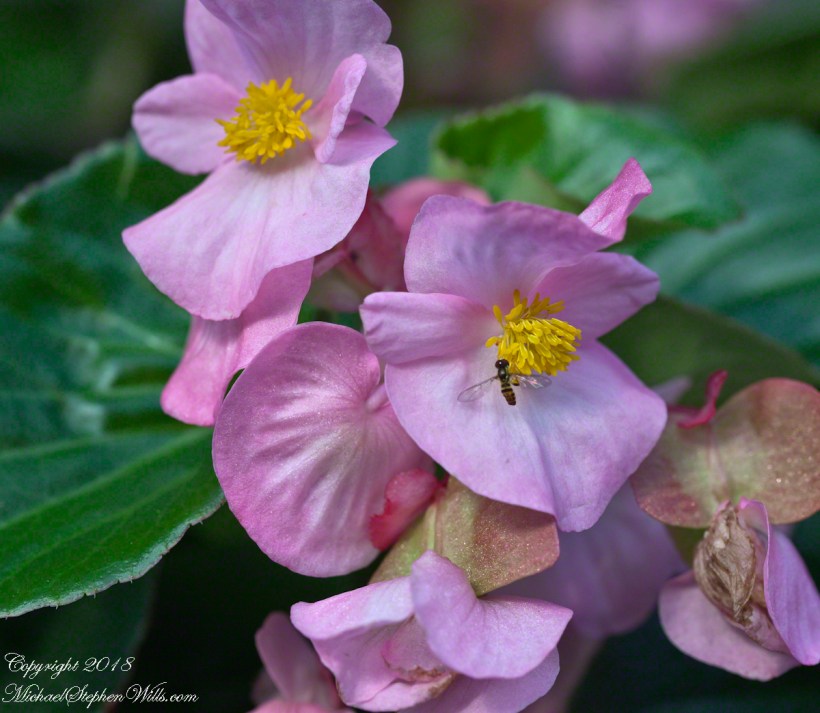
Once a year when Pam’s gardens are at a summer peak, I venture out to capture her work in early morning light. For this fourth image of the begonia series, I used the same handheld Canon EOS 1Ds Mark III SLR but with the Canon lens EF 100 mm f 2.8L IS USM variable lens.
Click photograph for a larger view.
Tiny Mirrors
Begonia flowers have no petals. The colorful structures surrounding the male and female parts are the structure in many flowers, such as roses, that lay beneath the flower petals and are green are called the sepal. These are the cover protecting the flower as a bud and, when open, can provide support. In begonias it is the entire flower and it glows.
The angle of morning light in today’s macro captures the reflections of thousands of tiny mirrors in the flowers, more noticeable in the darker undersides. Also present is a subtle iridescence, a shiny surface imparting, in this begonia, slight color changes. These are signals to the pollinators, “Here I am — this is delicious.” Also, in low light tropical environments iridescence can enhance light gathering of leaves.
Hoverfly
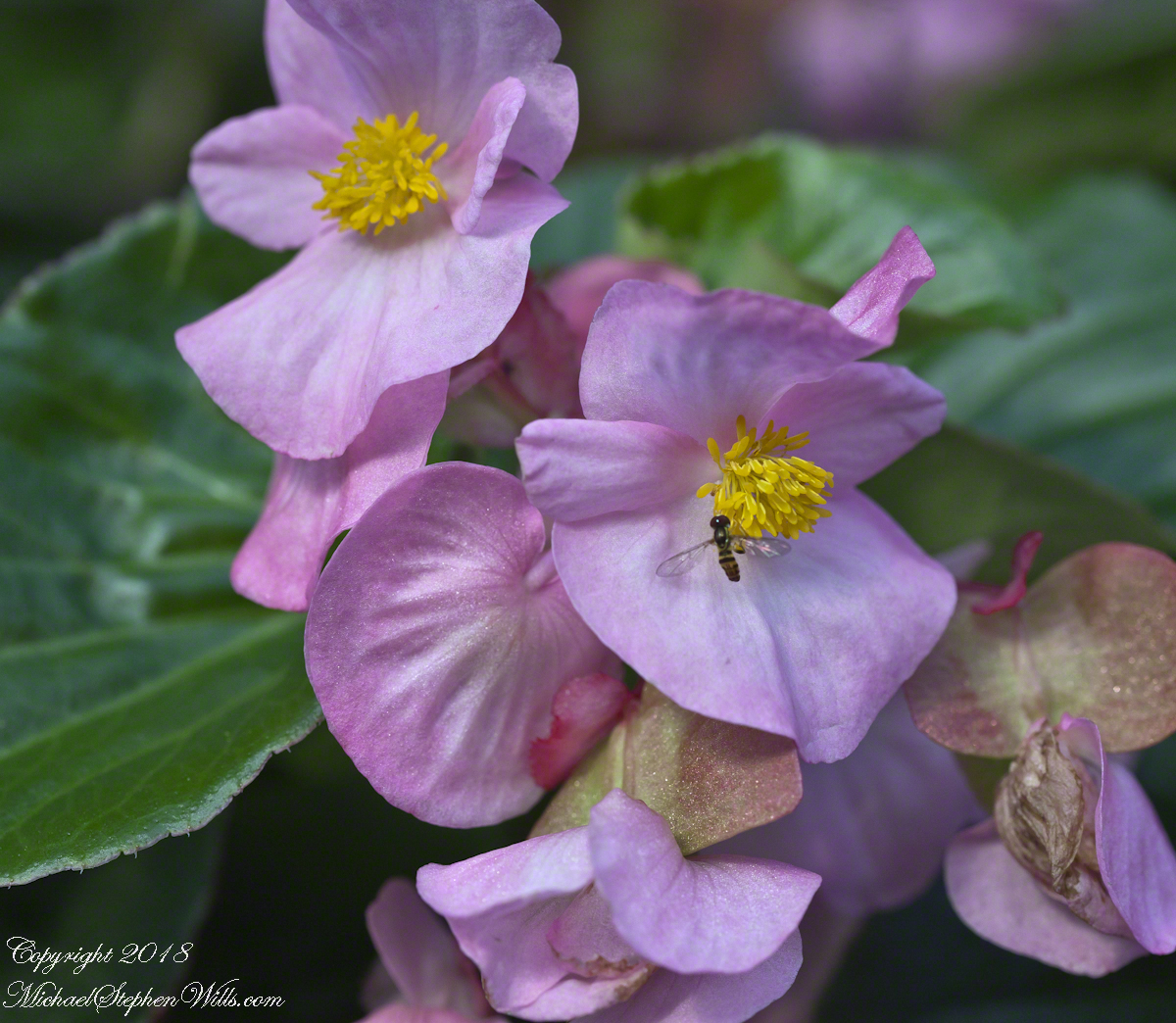
Woodland sunbeams are special places where I first noticed hoverflies, they have a behavior of staying motionless, beating wings a blur, in sunlight making its way to the forest floor. It was only after the fact, in the virtual darkroom of Lightroom, I noticed the tiny creature in today’s photograph.
On a quick look, it appears to be a yellow jacket, a type of wasp. Look closely and you will see the eyes are on the top of the head and touch in places. The wings stand perpendicular to the thorax, wasp wings fold along the thorax and abdomen and there are differences in the veining of the wings. The identify of this creature is a beneficial fly, a hoverfly, genus Episyrphus. The shiny black shield on the upper thorax suggests to me this is a Episyrphus viridaureus.
This fly is beneficial to humans in two ways. One we observe in the photograph, as flower pollination. It is one of the few flies with mandibles capable of crushing pollen grains and, in the course of feeding, some pollen clings to the fly to be transported flower to flower. The second benefit is less obvious. The larval form is a predator of aphids. After feeding, it transforms into a resting state, called diapause and survives the winter this way.
Human beings suppose the benefit of looking like a wasp is protection against predators who fear being stung, increasing survival of the individual.
The lens is designed for macro work and is a fixed focus, it can capture small details without needed to be close to the subject. I decided to crop the image down to emphasize the hoverfly. It was in writing this post I noticed the sepal iridescence.
Copyright 2022 Michael Stephen Wills All Rights Reserved
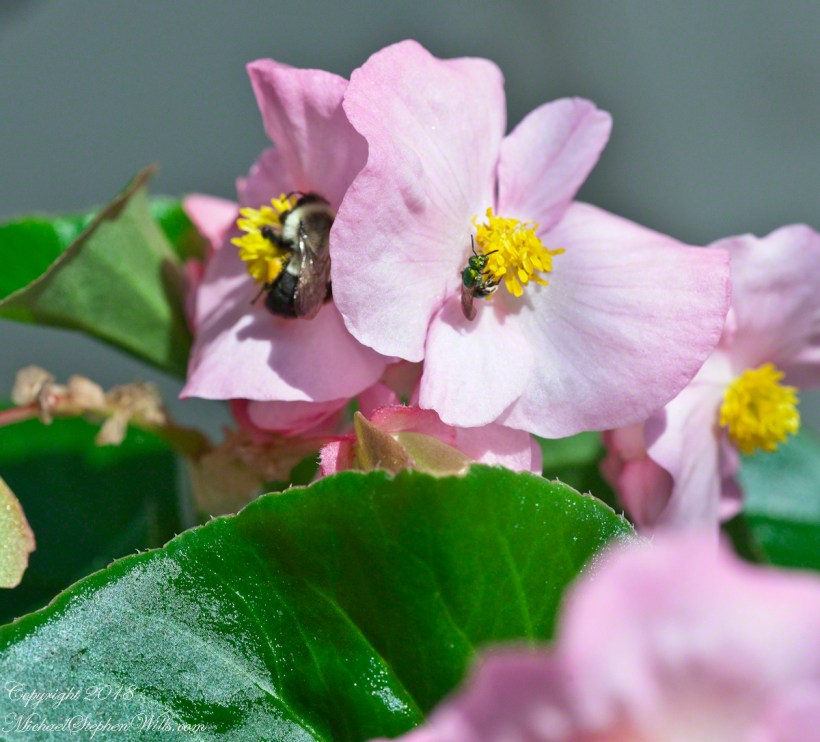
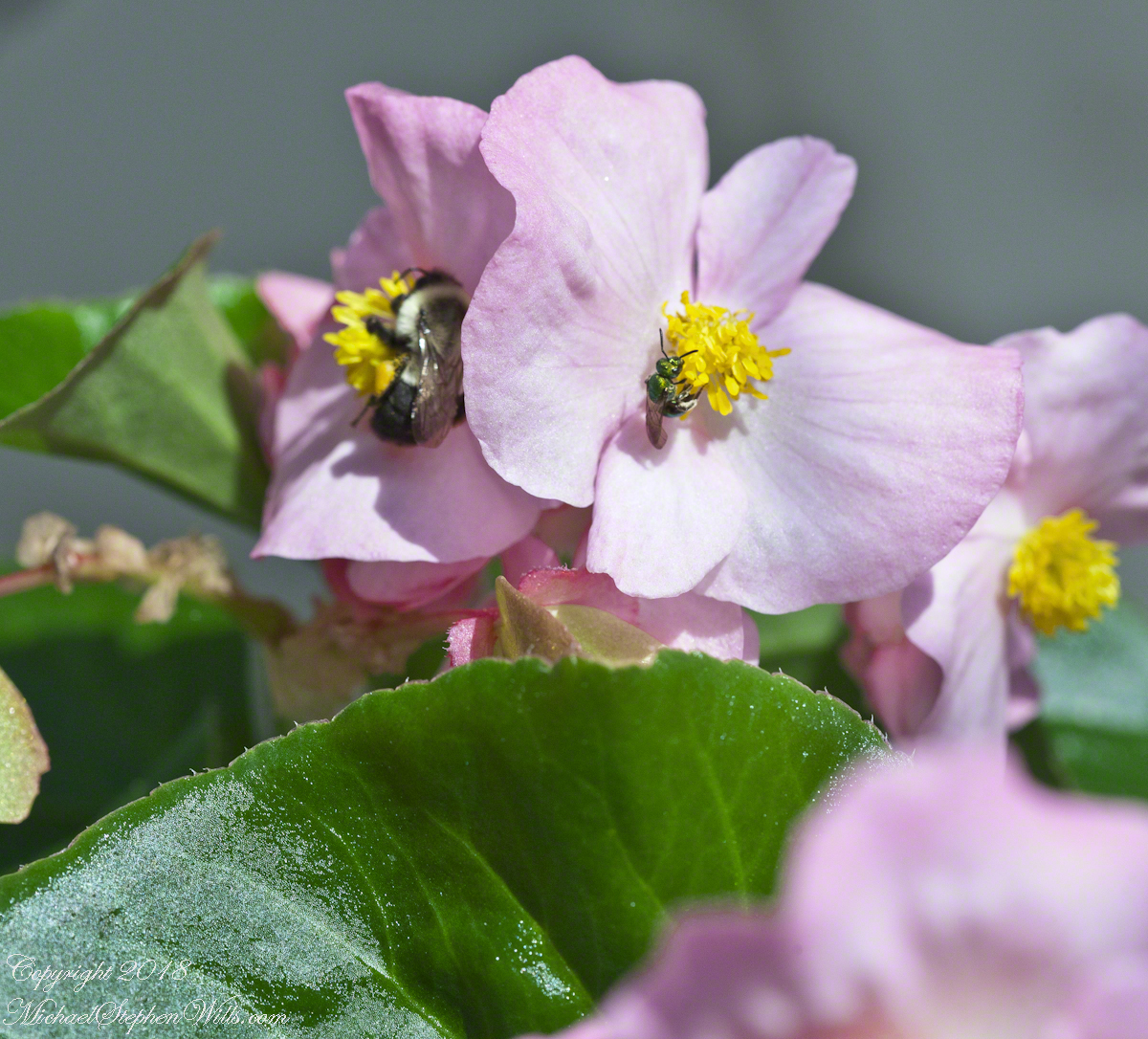
Once a year when Pam’s gardens are at a summer peak I venture out to capture her work in early morning light. For this third image of the begonia series I used the same handheld Canon EOS 1Ds Mark III SLR but with the Canon lens EF 100 mm f 2.8L IS USM variable lens. Click me for the first post, “Begonia Grandis.”
Click photograph for a larger view.
Sweat Bee!!
The bee on the right, in sharp focus, was a puzzle to me. I am familiar with it, they are very common around here, and striking with a bright green shiny thorax. For this post I decided to identify it.
After thirty minutes of poking around I found a list of New York Wild bees on the Cornell CALS (College of Agriculture and Life Sciences) site. It is in the form of an excel spreadsheet and very helpful. There are over 400 species listed. Using the “filter” feature I found the six families and, for each, did a web search. I am 98% sure this bee is in the family Halictidae, known as “sweat bees,” being attracted to the salt of perspiration they use for nutrition.
Next I looked as the first name in the species designation within the family Halictidae. Tjhis is the genus. There were not many, in a few minutes singling out Agapostemon, known as the “metallic green sweat bee.” I did not find it necessary to hone in on the exact species as members of the genus Agapostemon have defining characteristics.
There are four species listed on the Cornell CALS spreadsheet, all are ground nesting and solitary. Sweat bees are useful as crop pollinators. In Texas they can replace honeybees for pollination of cotton.
Agapostemon
sericeus
Agapostemon splendens
Agapostemon texanus
Agapostemon virescens
The lens is designed for macro work and is a fixed focus, it can capture small details without needed to be close to the subject. I decided to crop the image down to emphasize the bees. The sharper focus is on the sweat bee
Copyright 2022 Michael Stephen Wills All Rights Reserved
Nugget and Colorado had eaten their fill of the rich early spring grass of the apple orchard, The Searcher pulled together the pair for the return to Pine Creek. Perched on Colorado, the lead held by The Searcher, I listened as he shared survival facts remembered from Peter Bigfoot’s desert survival course. The Reavis Mountain School of Self Reliance, founded 1979, is along same Reavis Gap Trail (#117) we traversed. After descending to Pine Creek and up to Reavis Gap (where I first met The Searcher), it descends to meet Campaign Creek where the survival school is located.
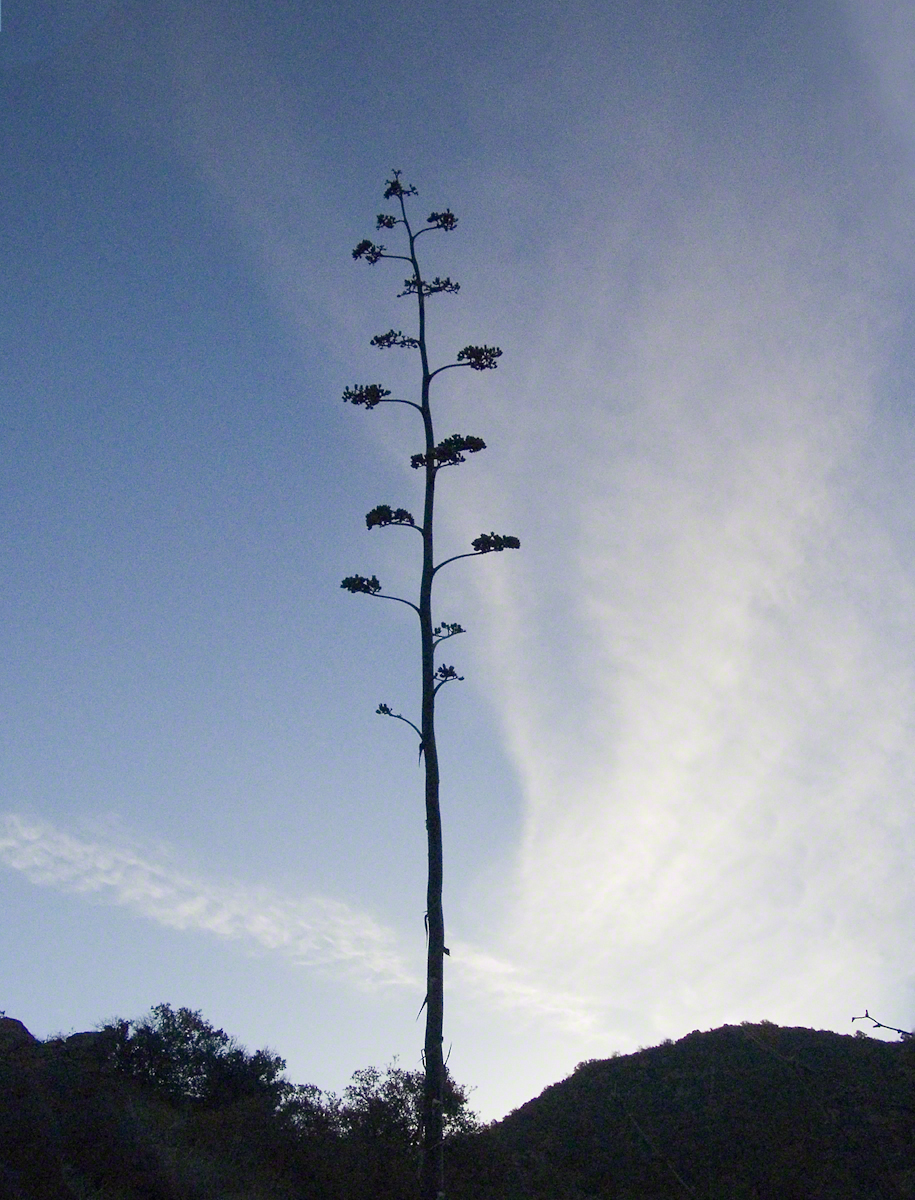
He pointed out on the many flowering Century Plant stalks along the trail. “These are great to roast when young, just as the stalk starts to bud from the center, before it starts to lengthen.” By the time the stalk flowers, as in the following photograph, it is quite tough.
Agave flower spike against the dawn in the nameless canyon west of Two Bar Mountain, Superstition Wilderness, Arizona.
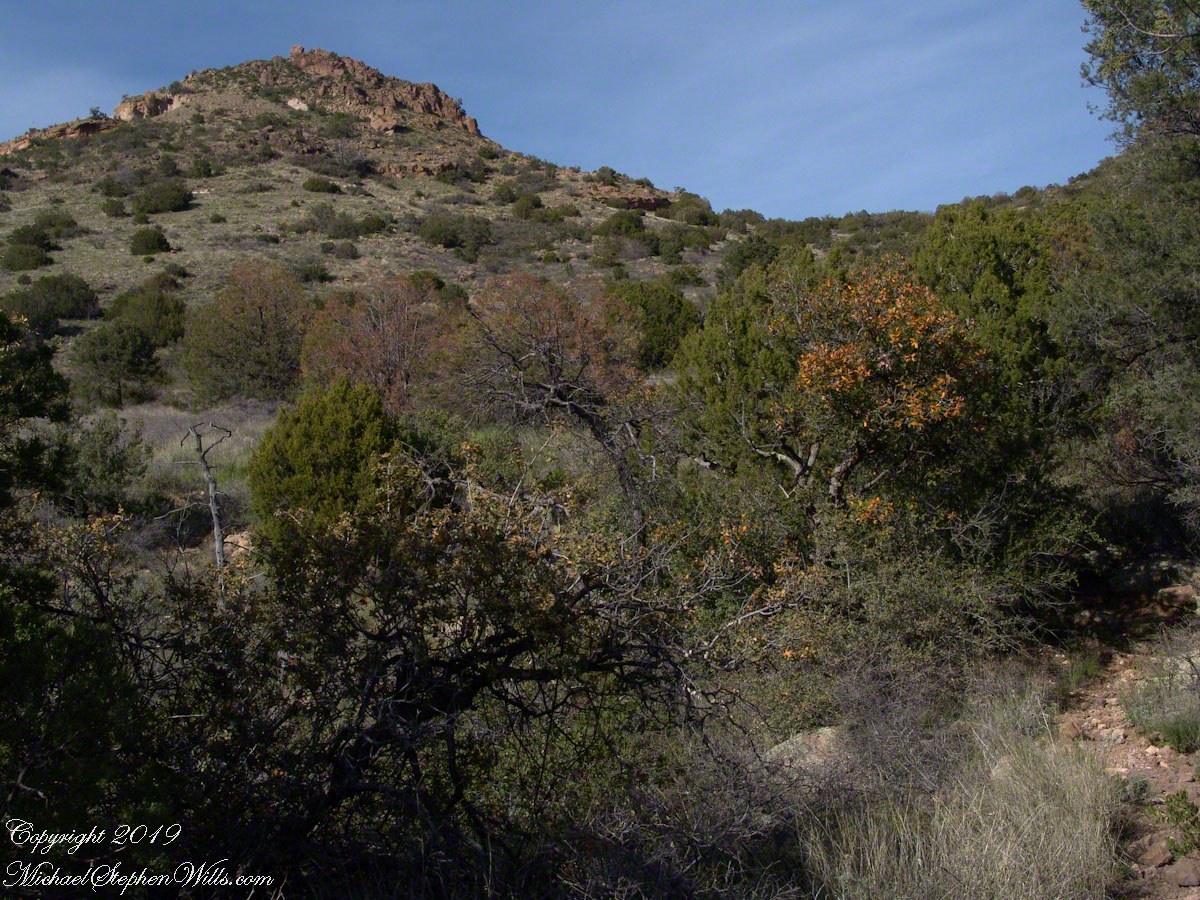
At the base of boulders, shaded from the sun, the ridgeline fern takes hold. Surviving on seasonal water seepage, it dries out during dry spells to later revive and reproduce via spores. As I recall, the dry or fresh form is useful as an analgesic.
An absolute necessity for bushwacking (walking off the path), a pair of rattlesnake proof boots were worn on every expedition. These rose to mid-calf with a layer of lexan, the same as used for bullet proof glass.
Swept from the Saddle
We passed the time in this way, me holding on to the saddle horn bouncing and shifting as Colorado negotiated the rough and steep path down to Pine Creek where the vegetation changed from very sparse to the thick growth you saw in my post “A Peaceful Day at Pine Creek”. On the east side of Pine Creek a trail, unmarked on the maps, follows the creek bed uphill north towards Mound Mountain. In 50 feet or so we passed the side trail to my campsite, our destination was The Searcher’s campsite. I was not paying near enough attention to the surroundings when I looked up to see an Arizona Oak limb headed to my chest. With no time or space to negotiate the obstacle I was left to grab hold and hang on to be swept from the saddle. The branch held my bulk for, at most, a second before giving way.
In bending flexibly before breaking the live Oak wood and centuries of soil underneath the trees softened my fall enough so I was badly shaken and unhurt. Falling a foot or so in any direction would have resulted in serious injury or instant death. Colorado stopped, looking briefly back as I slowly came to my feet. After taking account and letting the circumstance wash over me, I got up and proceeded slowly while we both contemplated my miraculous survival.
Bear Shelter
I now took up the rear as in a few hundred yards the valley wall rose on both sides of the Creek to form a short, narrow pass. The walls fell away just as quickly, the valley floor leveled out and we came to The Searcher’s camp. The bear shelter stood out right away. This was a ten foot high teepee of 4 – 6 inch diameter tree trunks tied with rope, within was a hammock . The three foot wide opening left only one unprotected side while he slept, offering some protection from the all too common roaming bears, most commonly from September to November when mazanita fruit ripens.
Well stocked in every respect, for a wilderness camp. In the following years of roaming the wilderness the camps of other horse people were similar in this way: stoves, comfortable cots, radios, pots and pans all fit into panniers. As a noun pannier is seldom used in the singular because there are always two, one on each side of the horse for balance. I sat on the wide top of one enjoying a cold beer pulled from a bed of ice.
We discussed the benefits and drawback of horses for exploration. I required a gallon and a half of water daily and in the desert wilderness provided for storage of three days, 4 and a half gallons. At 8 pounds each, that is 36 pounds!! Starting out, my pack weighted 90 pounds with a camera and tripod.
There are benefits to having a mode of transport that thinks for itself and drawbacks. Each individual has its own personality and horses do try to get away with what they can. It is wise to limit your dependence on a horse until you know each other well. In retrospect, I was “out on a limb” riding Colorado modified by being led by someone the horse knew well.
It was soon time for me to head back to camp. We set the agenda for the next day, an early start for the hike out. Colorado was to be fully loaded so my riding was not an option, just as well. It was possible to lighten my pack to almost nothing and I looked forward to that.
I took some time before dinner to set up the tripod for a self-portrait on my last full day in Pine Creek. The view is northeast from the Arizona Trail near my camp, the ridge overlooks Reavis Gap. I did a version of the view with and without me.
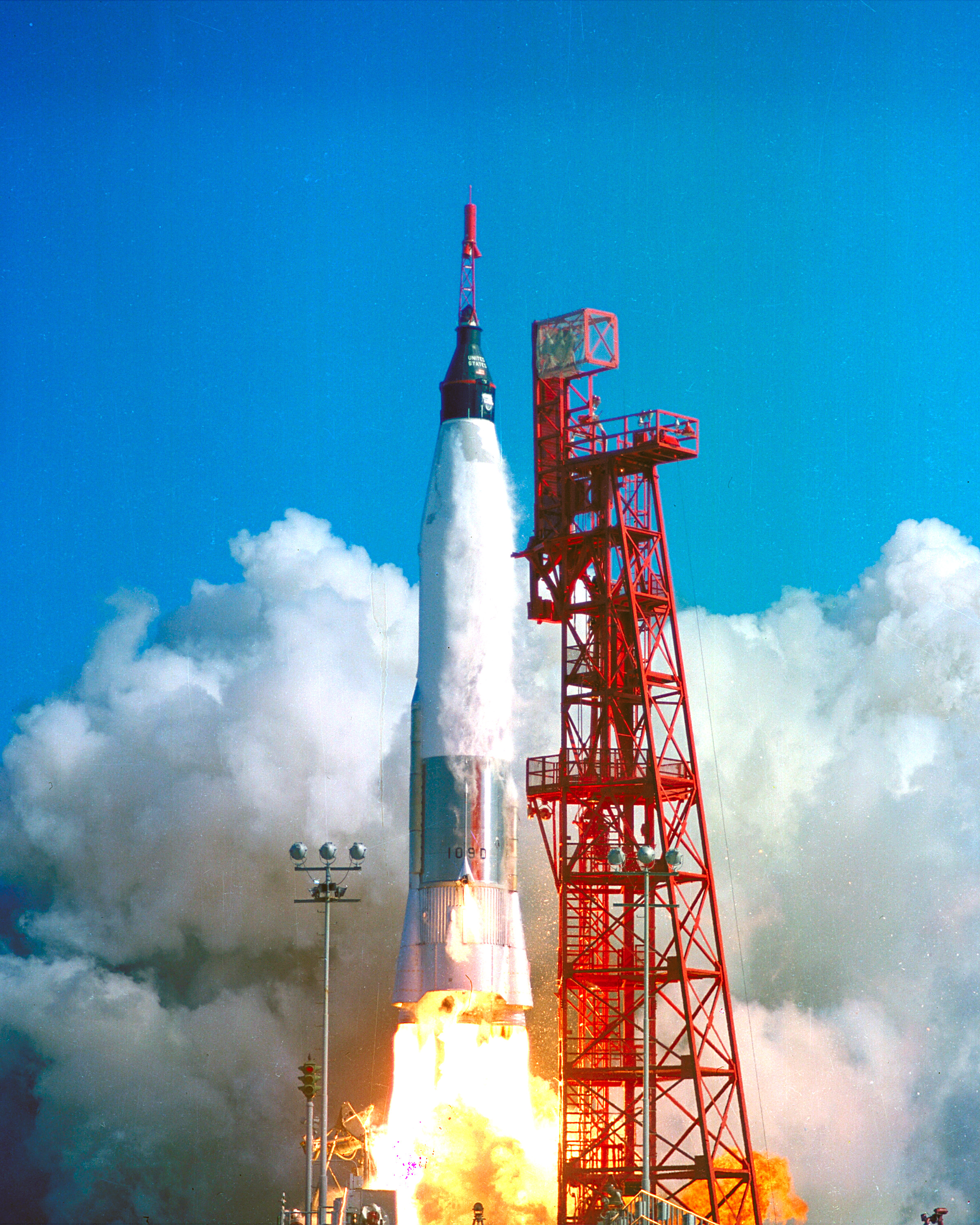
Here is the sixth in a series of photographs centered on the early history of space flight on Cape Canaveral mostly taken during a tour organized by the Cape Canaveral Lighthouse Foundation. “Google” the foundation for details of future tours. Here we explore pre-launch support for the Mercury program, including the first USA Orbital Launch of John Glenn from Launch Complexe 14 (LC 14).
Overview
Leaving LC 1 – 4 (see “Post WWII Launch Complexes”), our bus turned onto Central Control Road passing construction on Launch Complex 36 (LC36). In 2015 Blue Origin (Amazon money) leased LC36 where it planned to launch the “New Glenn” vehicle after 2020. I snapped the churned-up sand and construction equipment, not interesting at all IMHO.
Click Any Image for a larger viewe
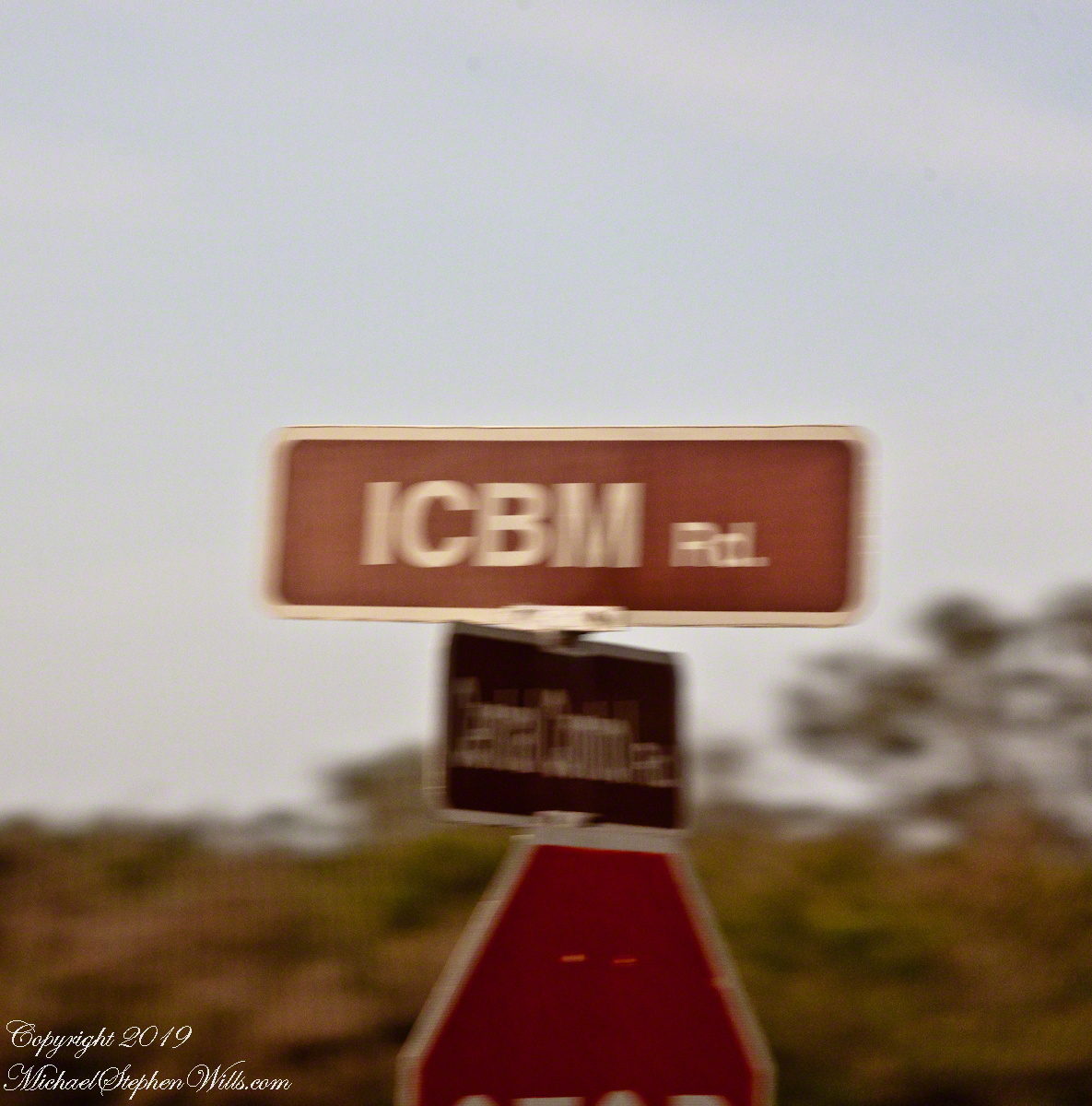
Corner of Central Control and ICBM Roads. Cape Canaveral Air Force Station.
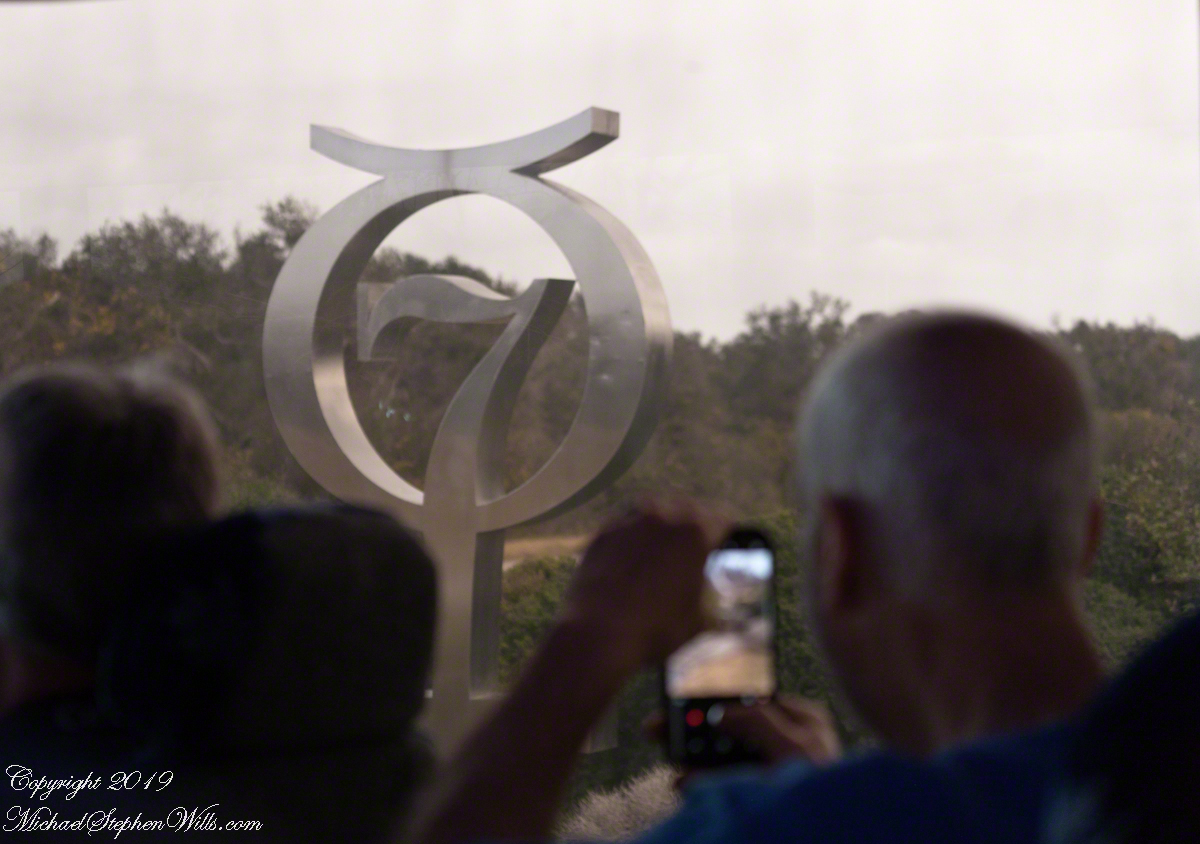
The “New Glenn” was named in homage to John Glenn, the first American to orbit the earth in 1962. We turned right onto to ICBM Road, headed generally north, following a string of launch complexes along the Altantic shore toward Launch Complex 14 (LC14). A dissapointment was not stopping to walk the Mercury 7 Memorial at the corner of ICBM Road and LC14. Our bus stopped briefly enough for the following snap. It is a memorial because John Glenn, the surviving member of Mercury 7, passed away December 8, 2016 at the age of 95.
Mercury 7 Memorial, just off ICBM Road
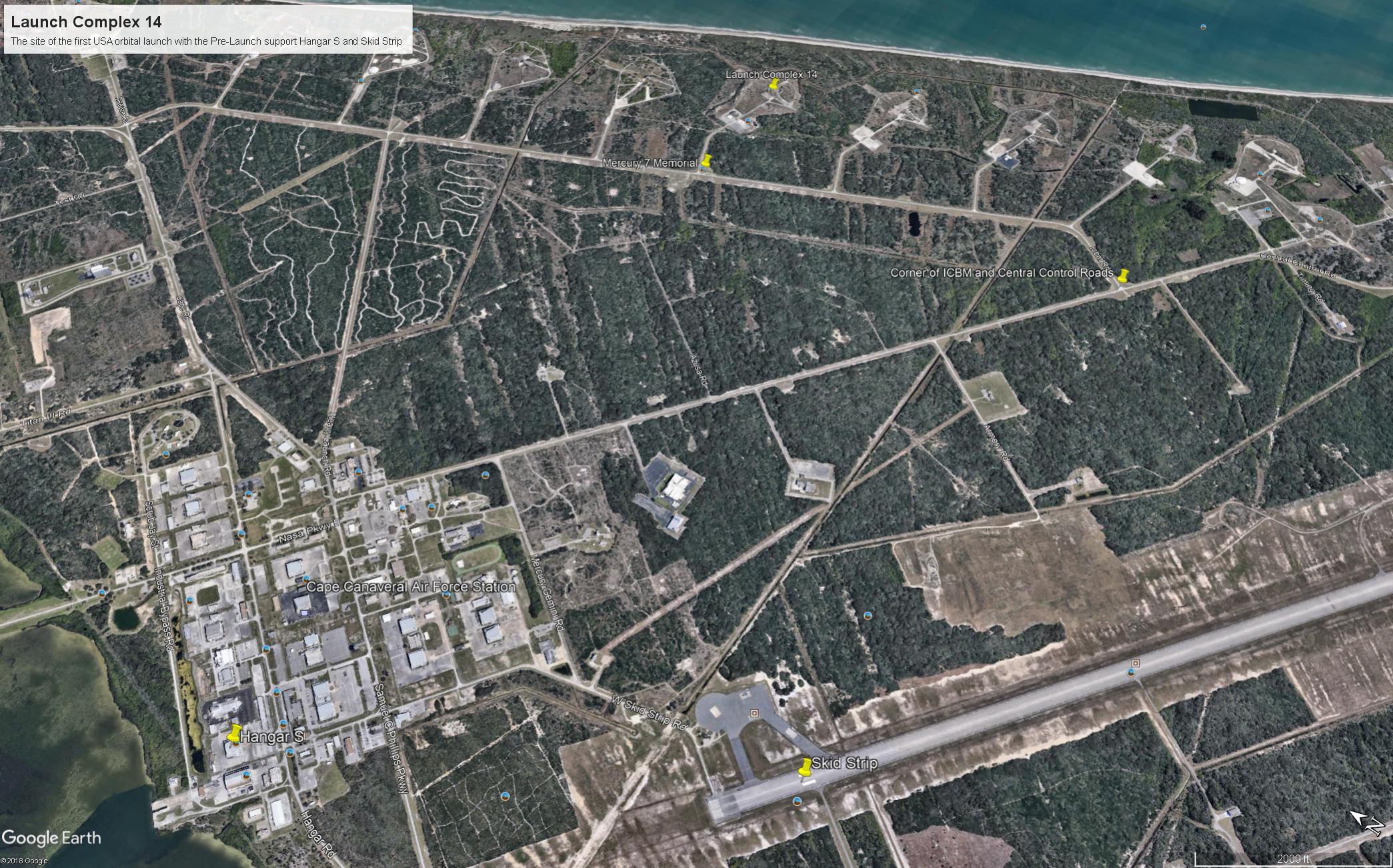
I will cover at length the Mercury-Atlas vehicle that powered John Glenn into orbit February 20, 1962. The tie-in between ICBM road and this series of launch complexes is the early space missions were on re-purposed Intercontinental Ballistic Missles (thus, ICBM). “Atlas” is the name of the ICBM used for Colonel Glenn’s 1962 flight. Click on the following image to find labled pushpins for the corner of Central Control and ICBM Roads (upper right), the road to LC14 and Mercury 7 Memorial.
You will also find a pushpin for the Skid Strip, bottom just to right of center. The earliest cruise missle tests (see “Cruise Missles” and “Post WWII Launch Complexes” ) included navigation to a landing on non-wheeled “skids.” The strip was maintained in support of the manned and later missions when cargo planes delivered the early space capsules, landing, not skidding hopefully, for transfer to a Pre-Launch facility, Hangar S.
Cape Canaveral Launch Complex 14 and Pre-Launch Support: Hangar S and the Skid Strip
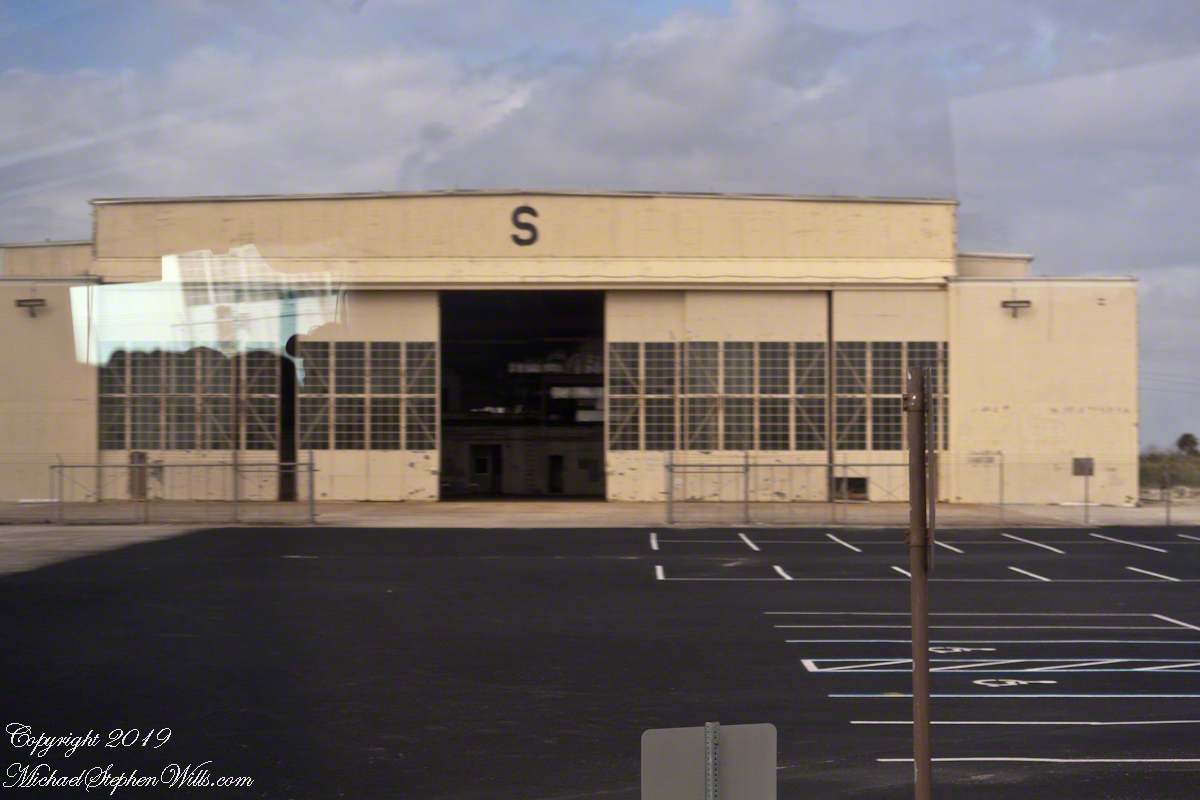
Hangar S is seen below as we passed later in the tour. Built 1957 by the military the 61,300 square feet were acquired by NASA in 1959. The early space capsules were tested here in an vacume chamber to ensure the vehicle supported an breathable atmosphere for the occupants.
The first American space voyager was Ham, a chimpanzee. Ham lived in a residential area on the second floor of Hangar S. For a period of time the Mercury 7 shared the spartan second floor quarters. “The Right Stuff” (a 1984 film from a Tom Wolfe book) included scenes from this episode of the program.
Constructed in 1957, Hangar S served for pre-flight processing from Mercury through the final flight of the Space Shuttle. This is where the Mercury 7 astronauts were first quartered on the second floor and later, is where they stayed prior to flight. The Lunar Orbiter was prepared here.
Comfortable Quarters
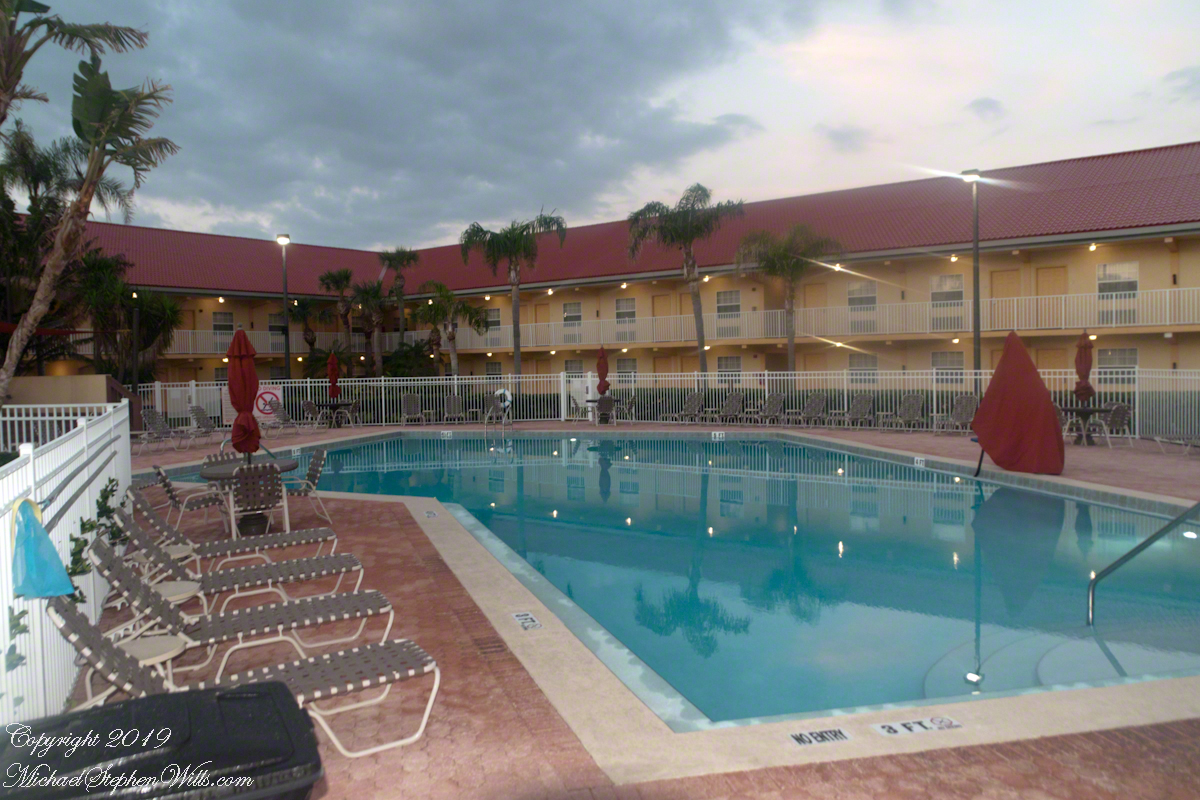
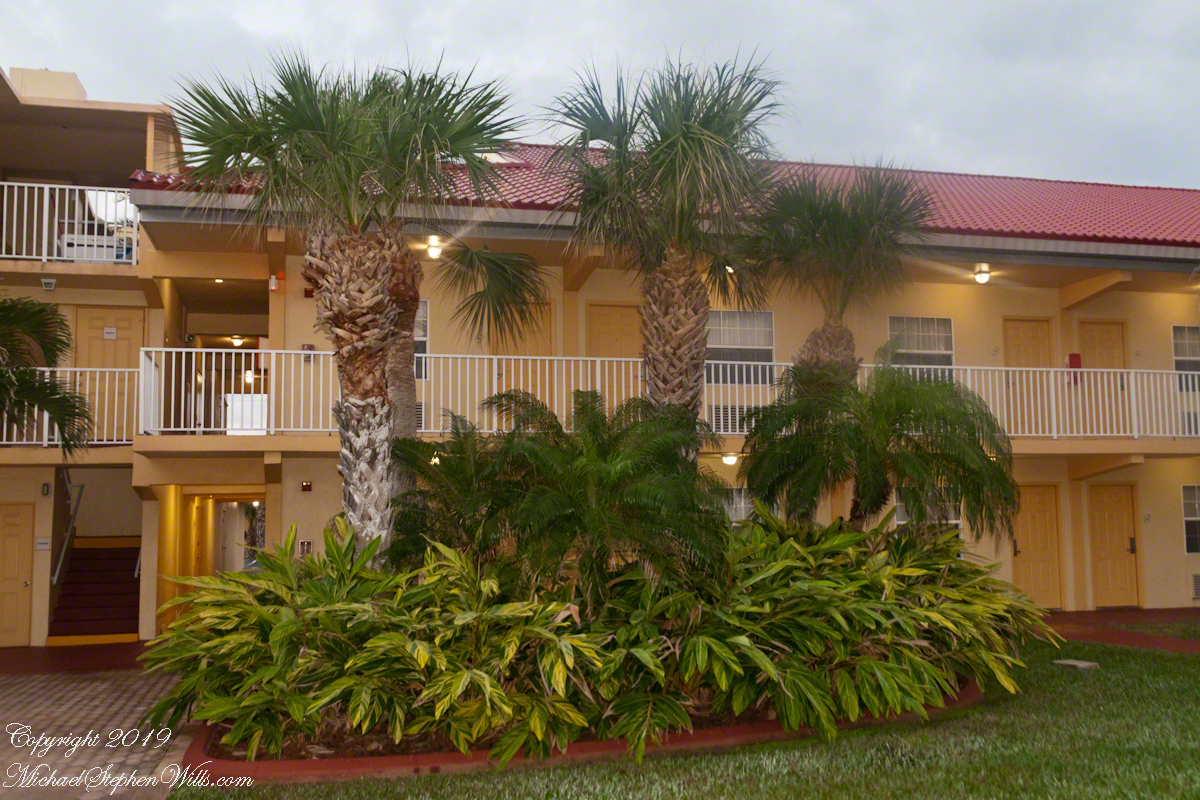
In short order arrangements were made for more comfortable quarters, just off the ocean in Cocoa Beach. It was a new hotel given over entirely to the Mercury 7. Pam and I stayed there in 2018 while taking this tour, it is the La Quinta across from the International Palms. We recommend it a clean, comfortable, reasonably price and a great story to share afterwards. The Atlantic Ocean is a five minute walk.
La Quinta Inn was the home of the Mercury 7 Astronauts, 1275 N Atlantic Avenue Cocoa Beach, Florida 32931
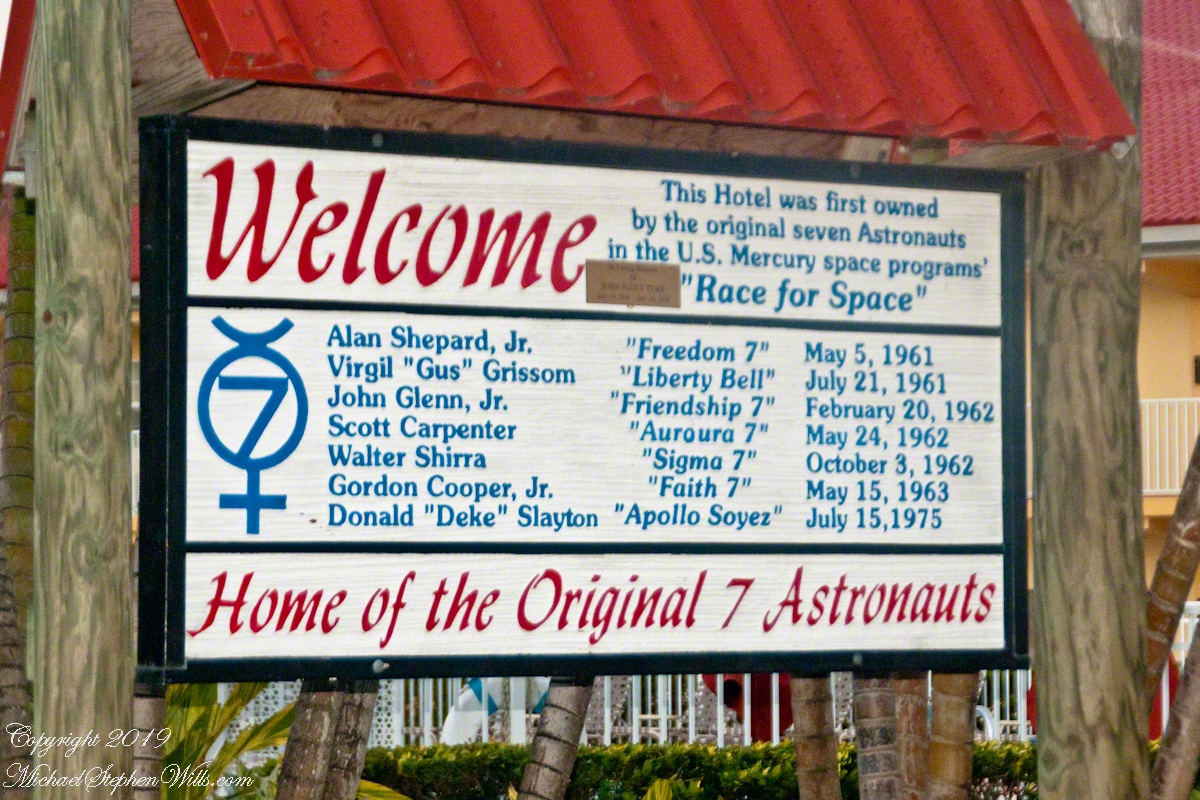
I learned from the tour how the hotel was donated to the Mercury 7 by a private individual. They owned the hotel. Here is a very informative sign just off the La Quinta lobby with their names. Each first mission, as named by the astronaut, is listed.
La Quinta Inn was the home of the Mercury 7 Astronauts, 1275 N Atlantic Avenue Cocoa Beach, Florida 32931View of the hotel built for and first owned by the Marcury 7 astronauts. They lived here in the early days of the USA space program.
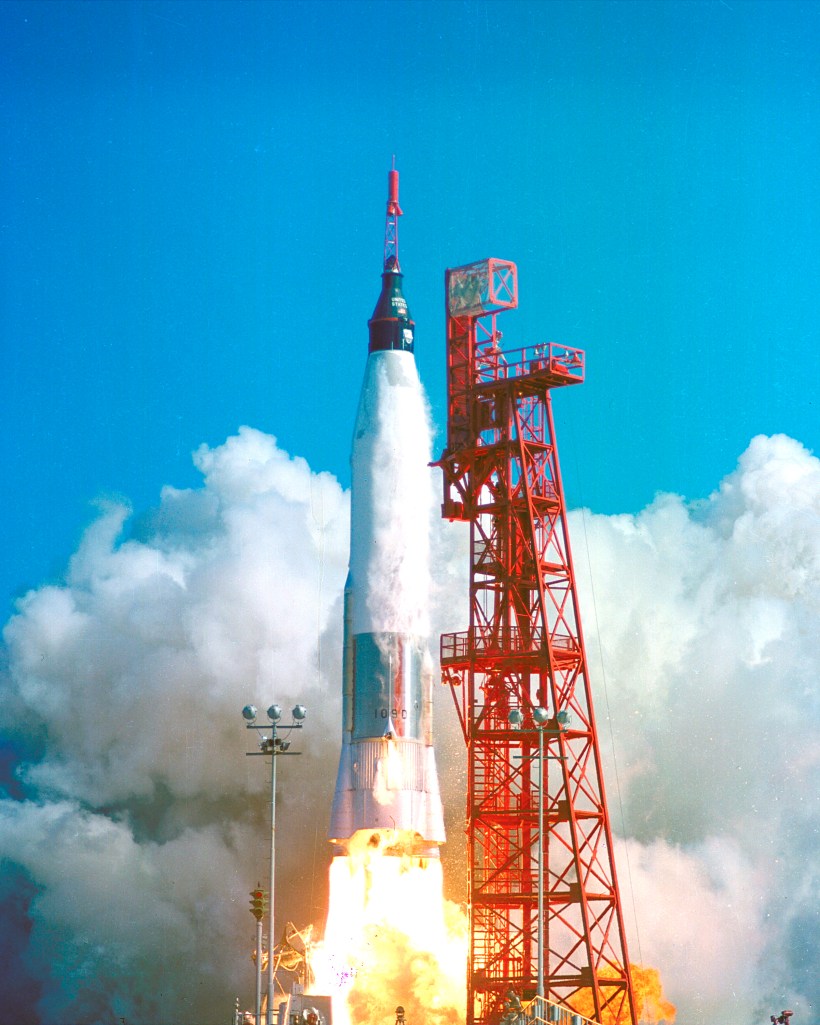
Blastoff!!
Next post will feature images of LC14 from 2018.
Launch of Friendship 7, the first American manned orbital space flight. Astronaut John Glenn aboard, the Mercury-Atlas rocket is launched from Pad 14. Public Domain Photograph by NASA.
Sources of information for this post: I used information from the Wikipedia site for the key words John Glenn, Launch Complex 14, Mercury-Atlas, Launch Complex 36. Plus a “google” on “Hangar S History” that found an excellent page hosted on the NASA site. Cover photo of Friendship 7 Launch my be found on Flickr in “NASA on the Commons” photostream.
Copyright 2022 Michael Stephen Wills All Rights Reserved.
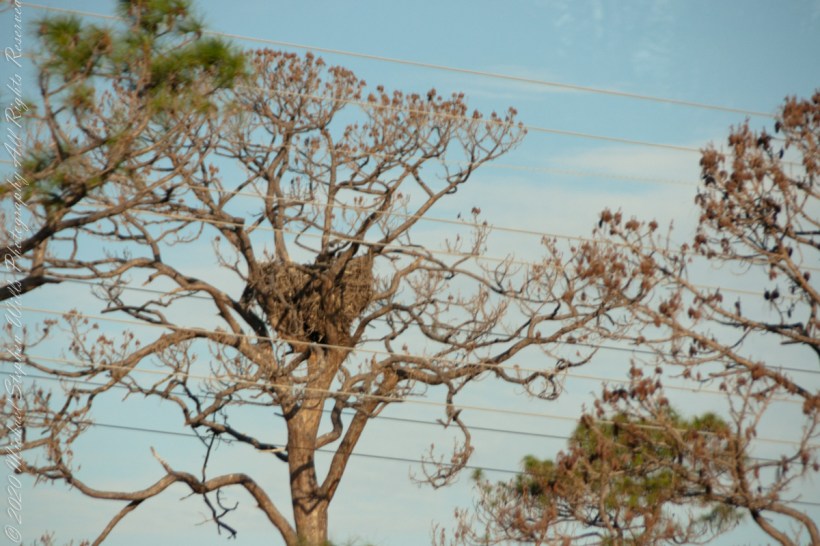
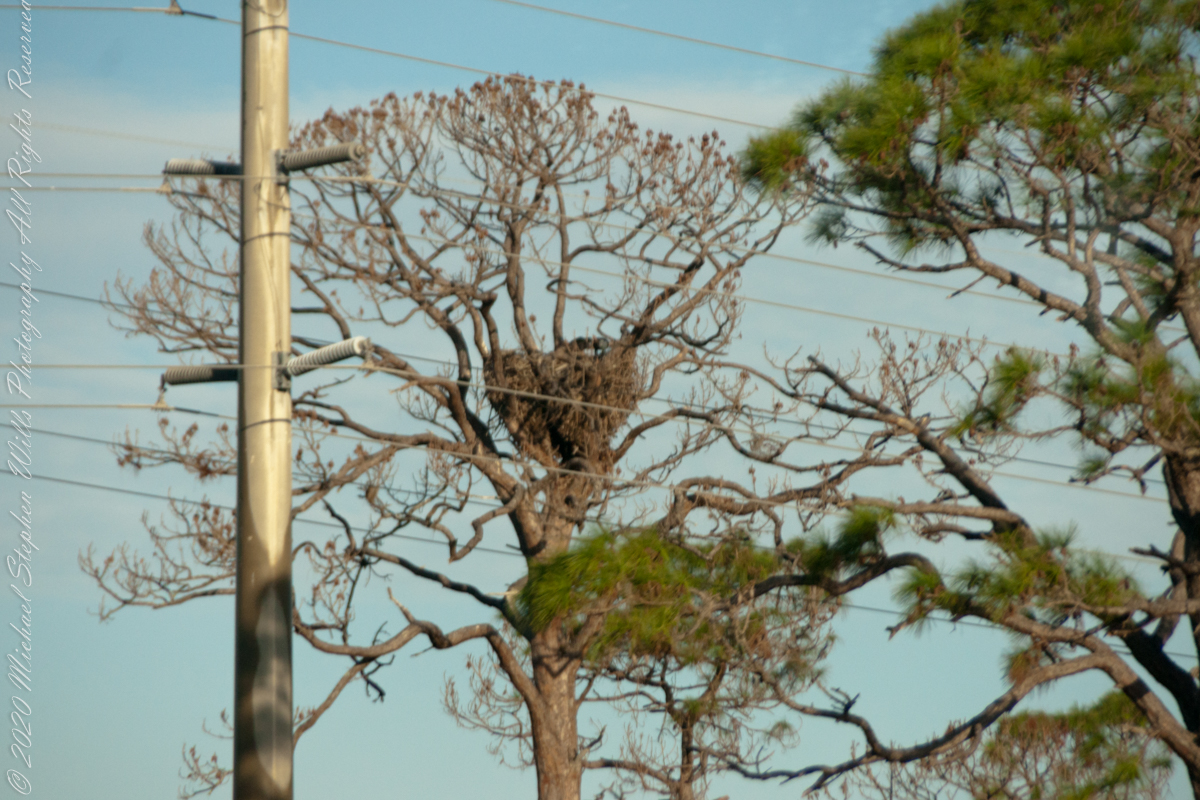
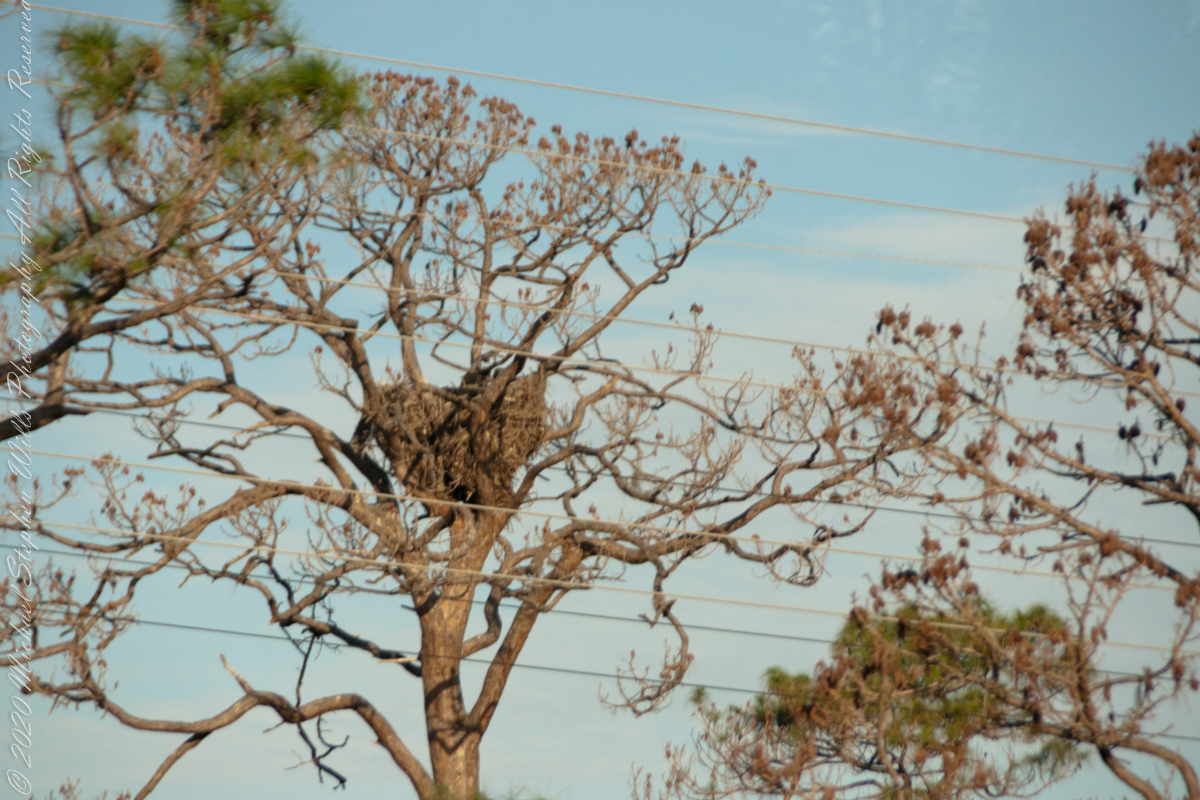
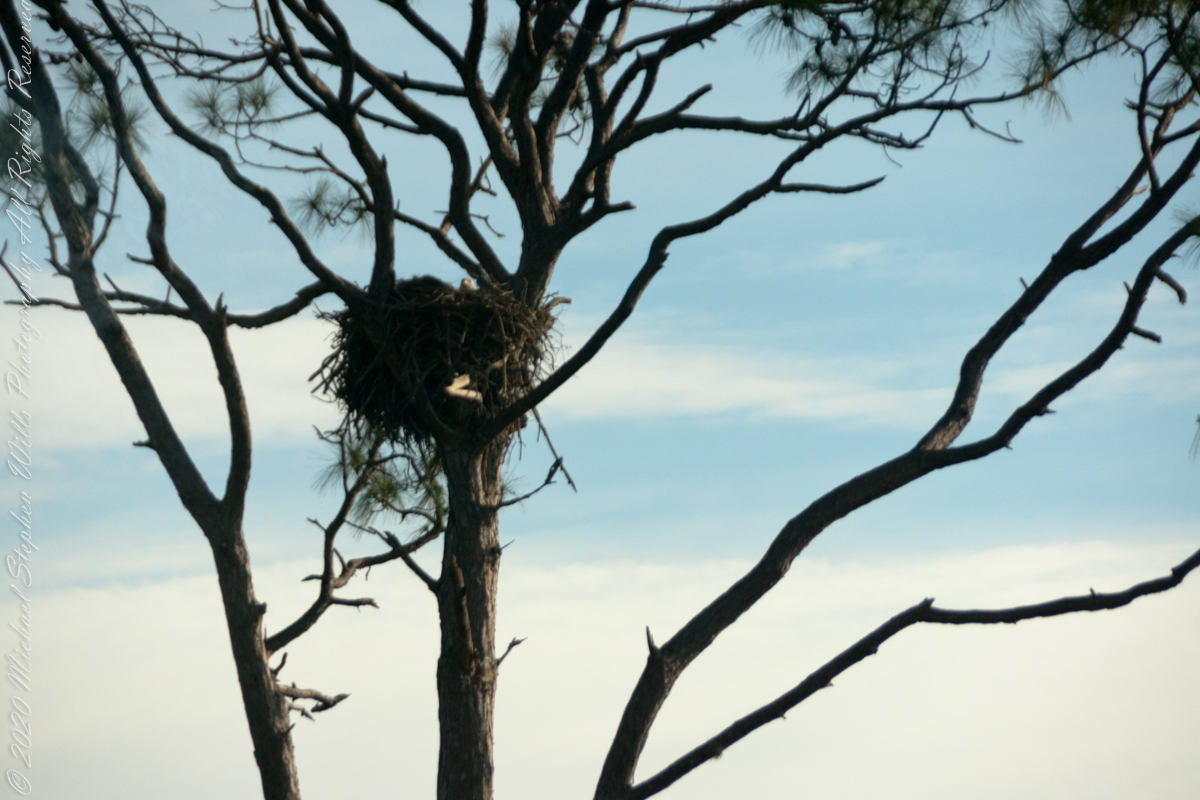
Our Shuttle Landing Facility side trip brought us twice by one of the five Bald Eagle nests around Kennedy Space Center. The entire Center land is part of the National Wildlife Refuge of Merrit Island. Rockets and wildlife coexist very well, in fact the Shuttle Landing Facility is also known as the Gator Tanning Facility. The reptiles crawl up from the canals surrounding the landing strip on all four sides to bask on the smooth concrete.
First Turn
The nest tree is on the median of a divided highway. Driving into the Landing Facility the nest tree was to the east, brightly lit by the morning sun.
Click Any Image for a larger viewe
Second Turn
On the return trip the nest was backlit. Look closely: the head of an eaglet (?) is just visible above the nest rim.
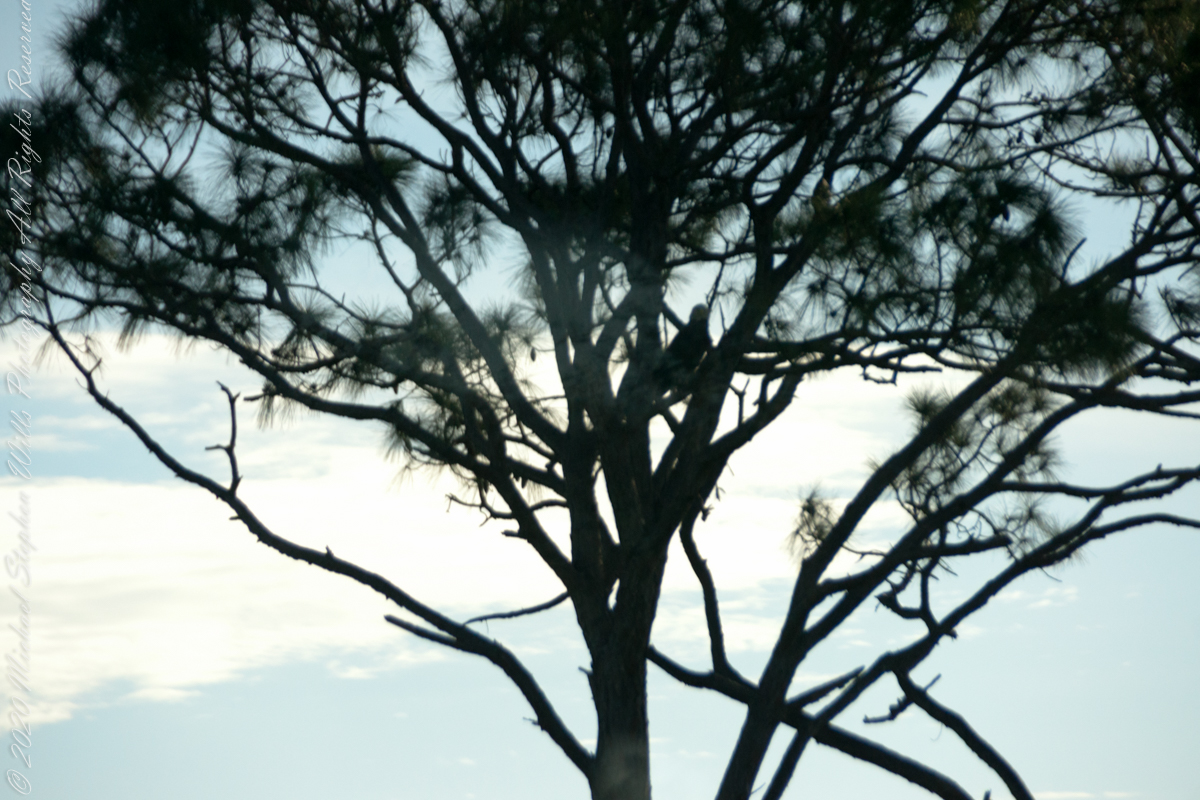
The parent eagle is silhouetted in the tree branches.
Sources of information for this post: I used information from the Wikipedia site for the key words “STS-107.”
Copyright 2022 Michael Stephen Wills All Rights Reserved.
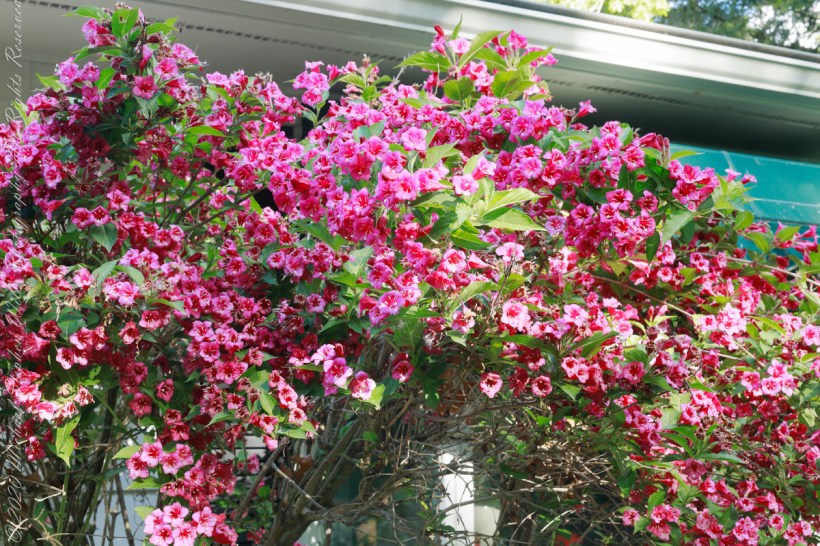
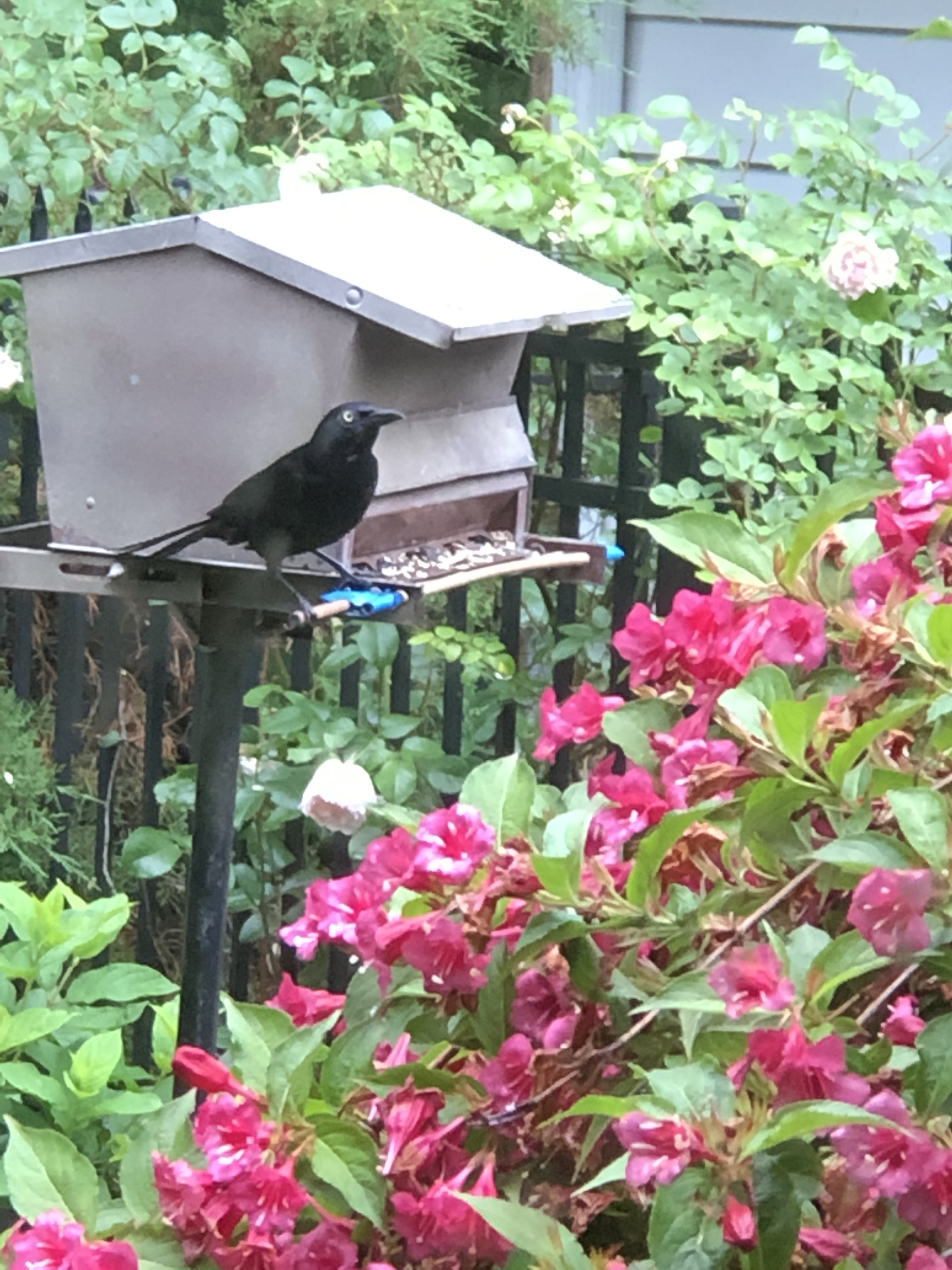
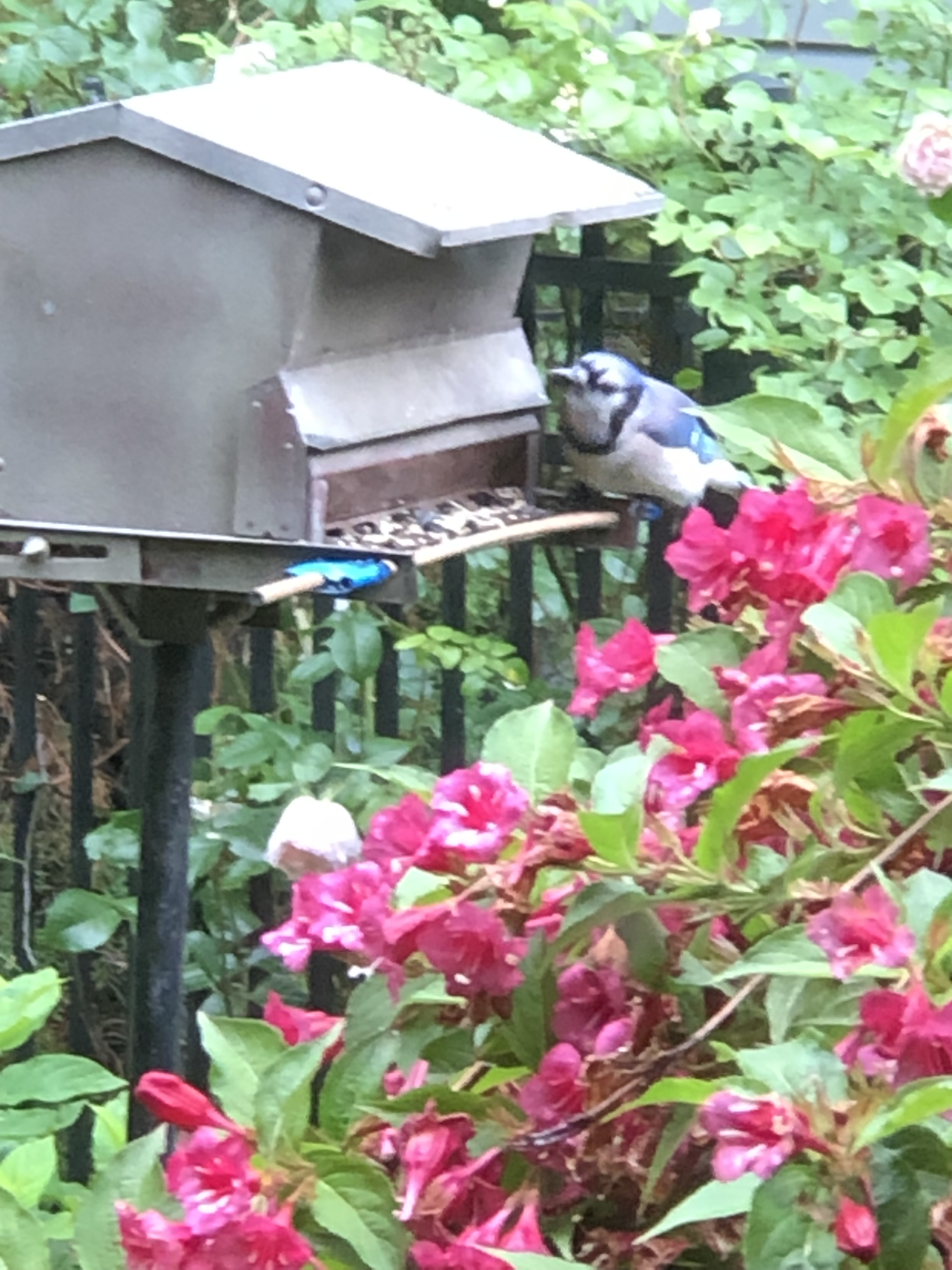
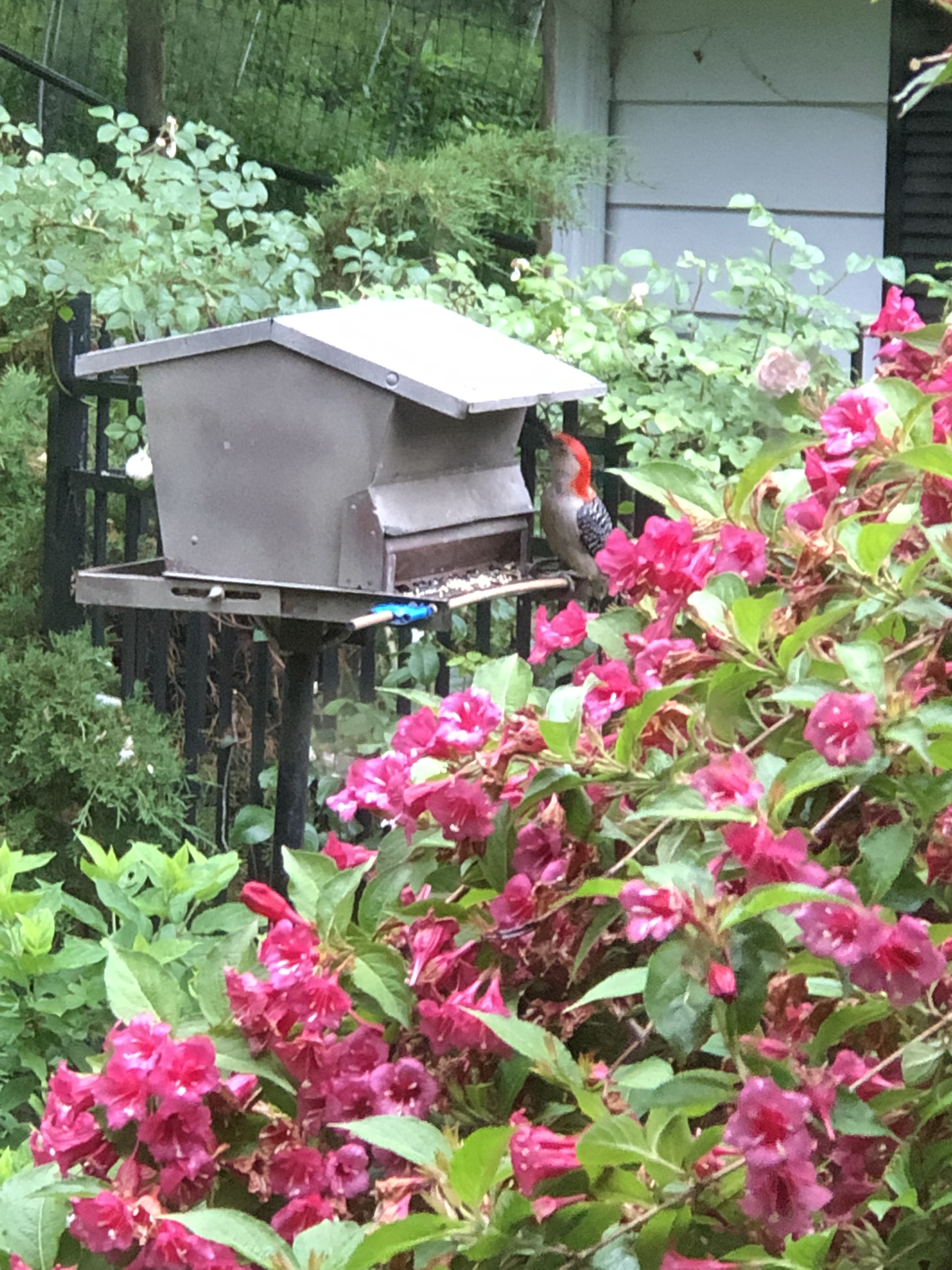
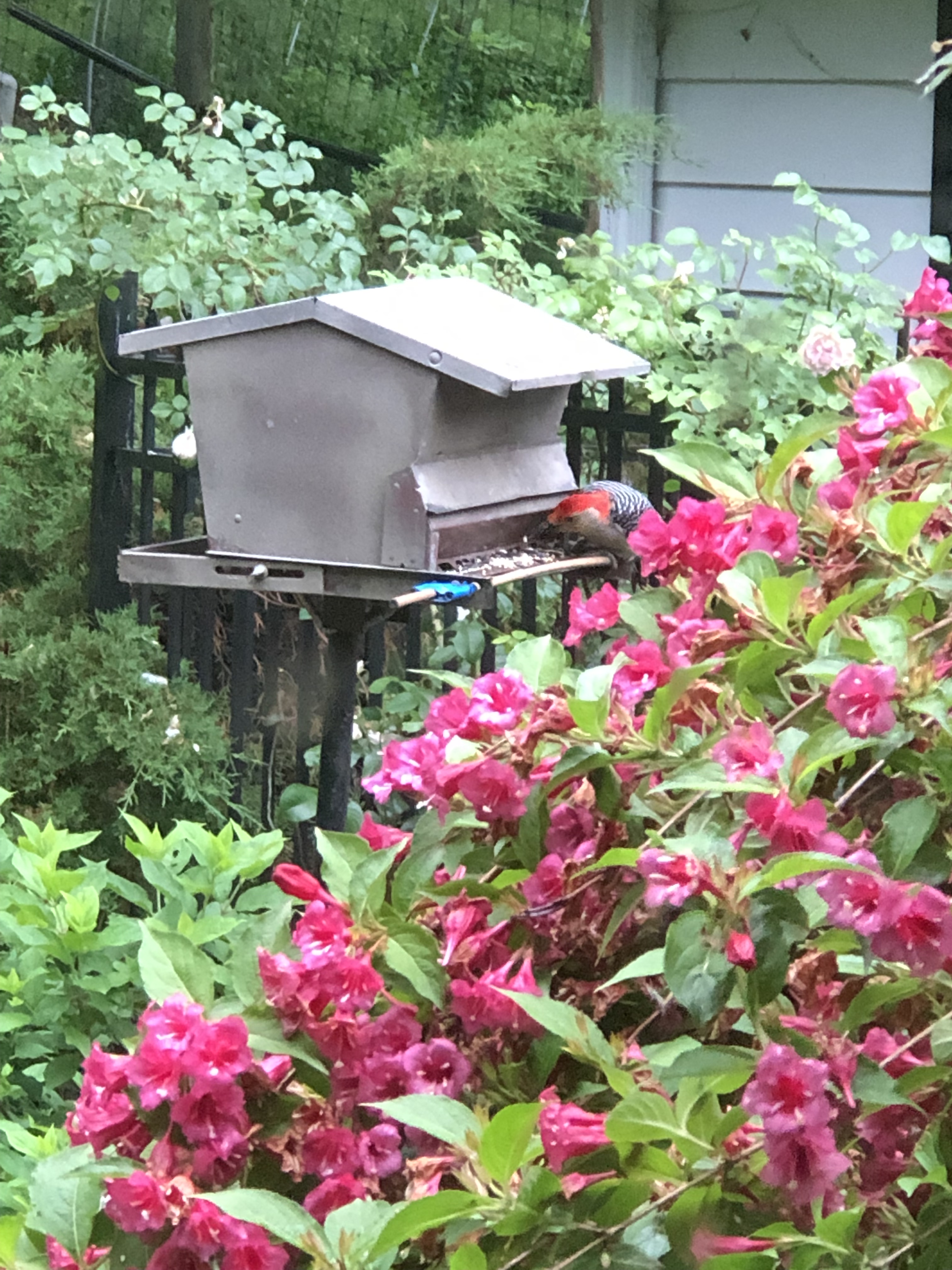
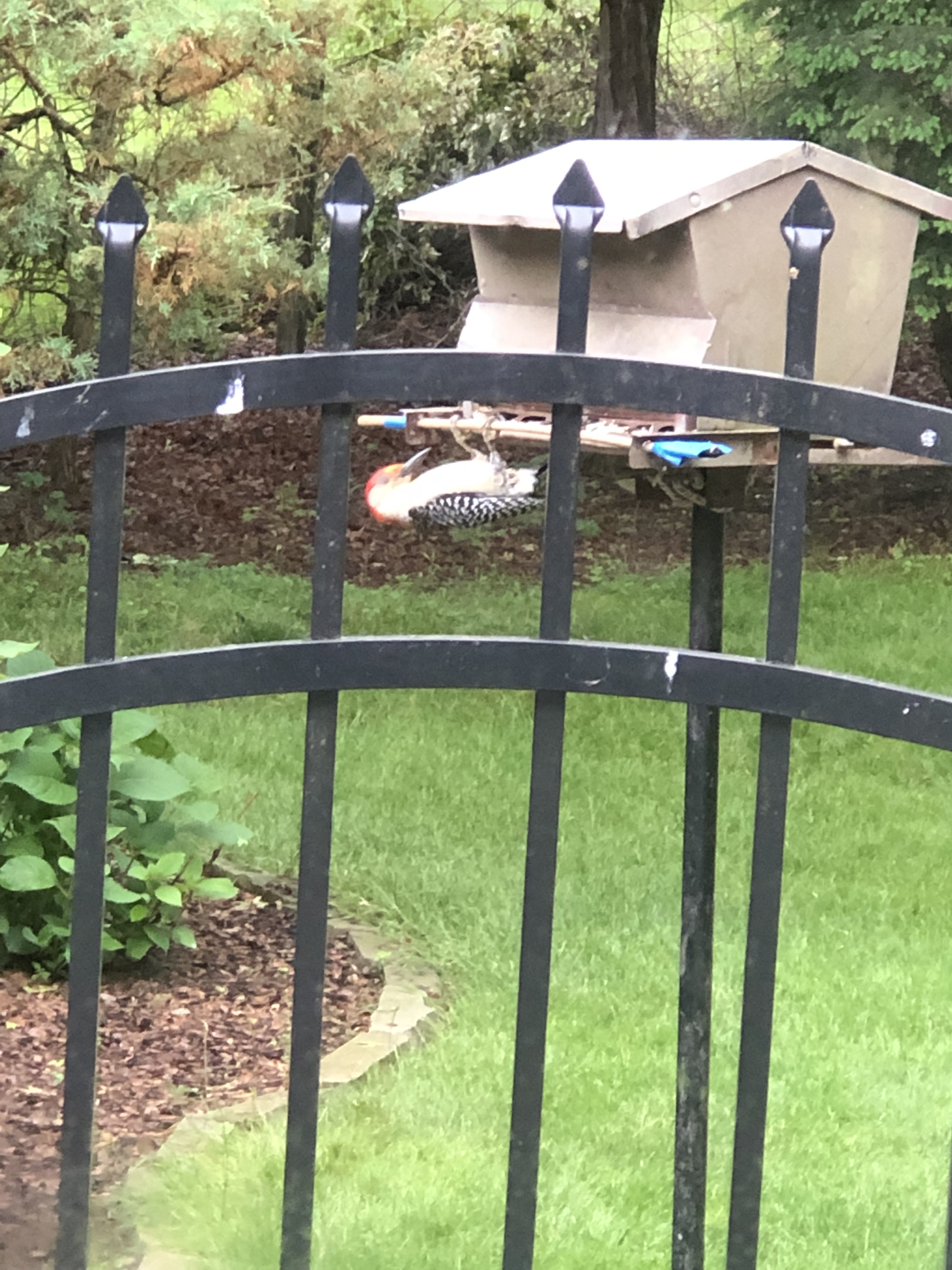
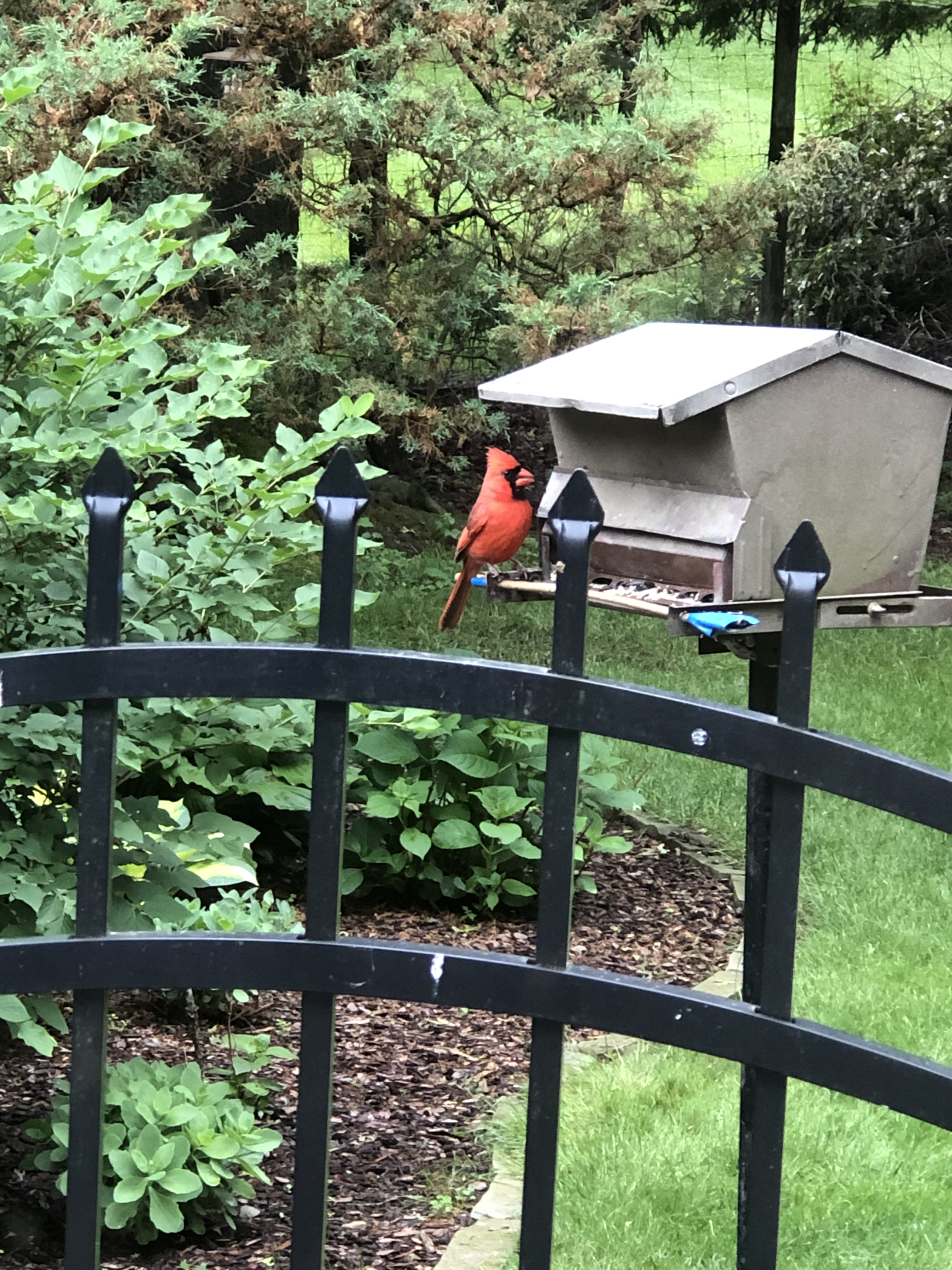
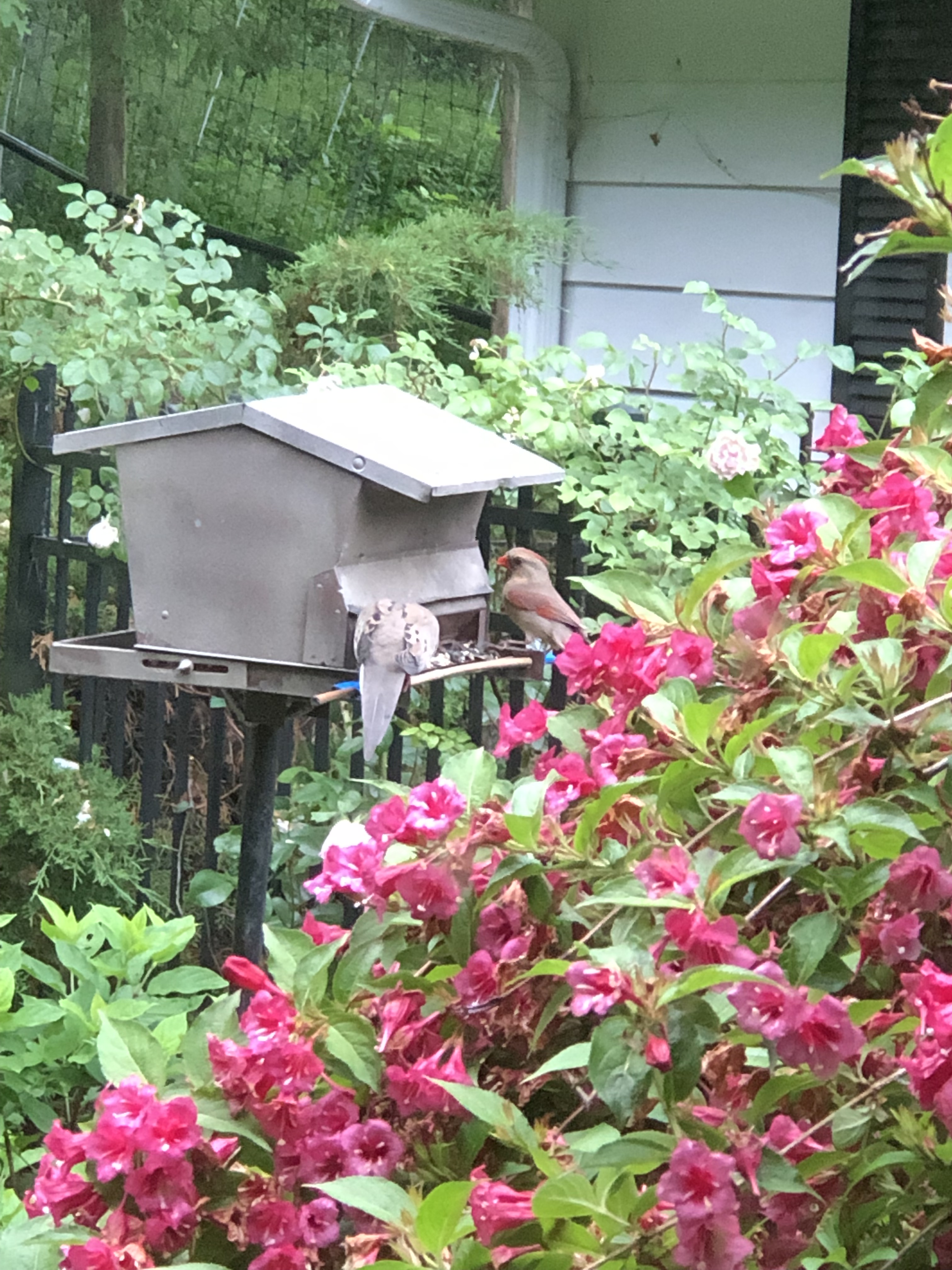
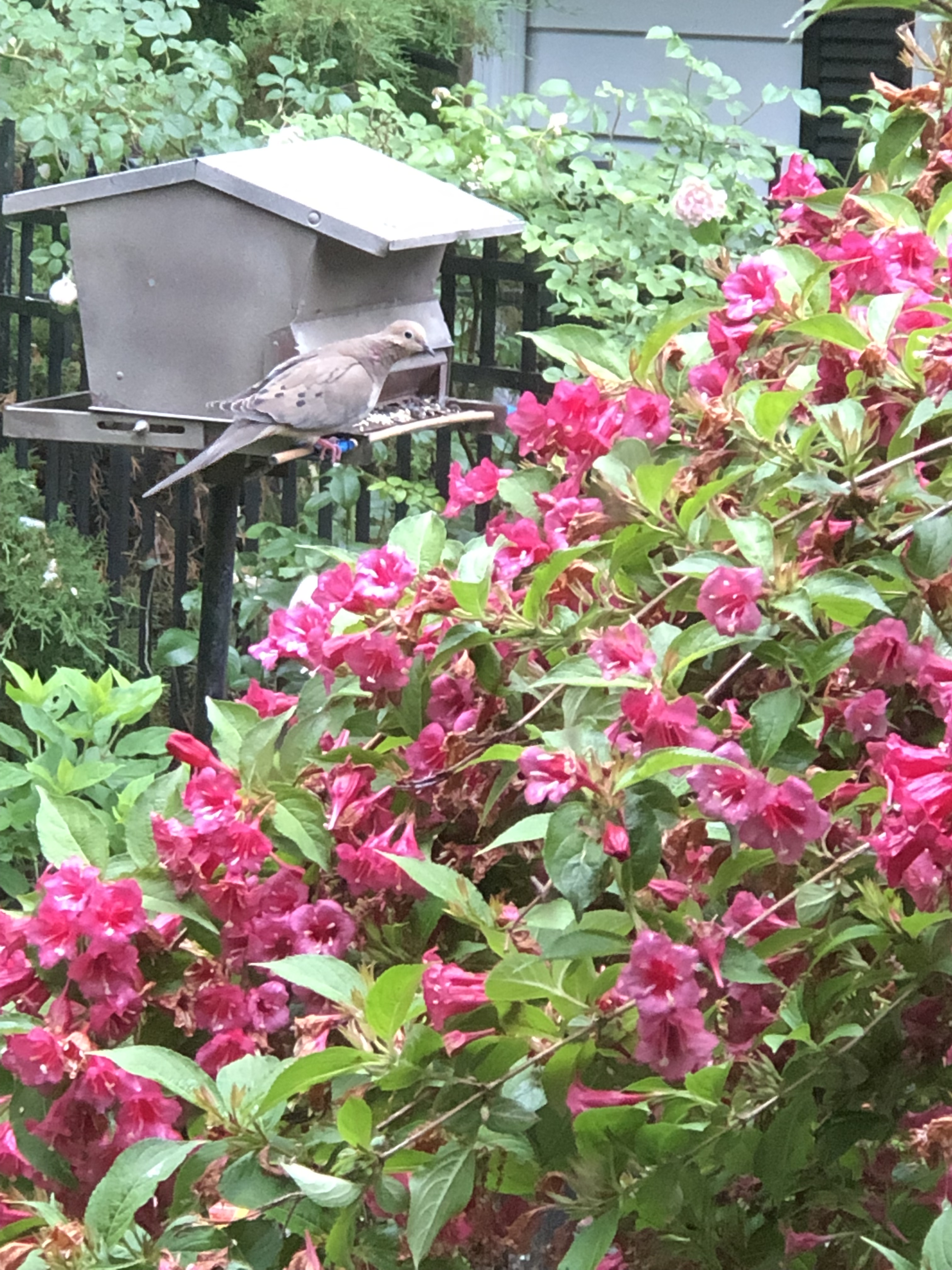
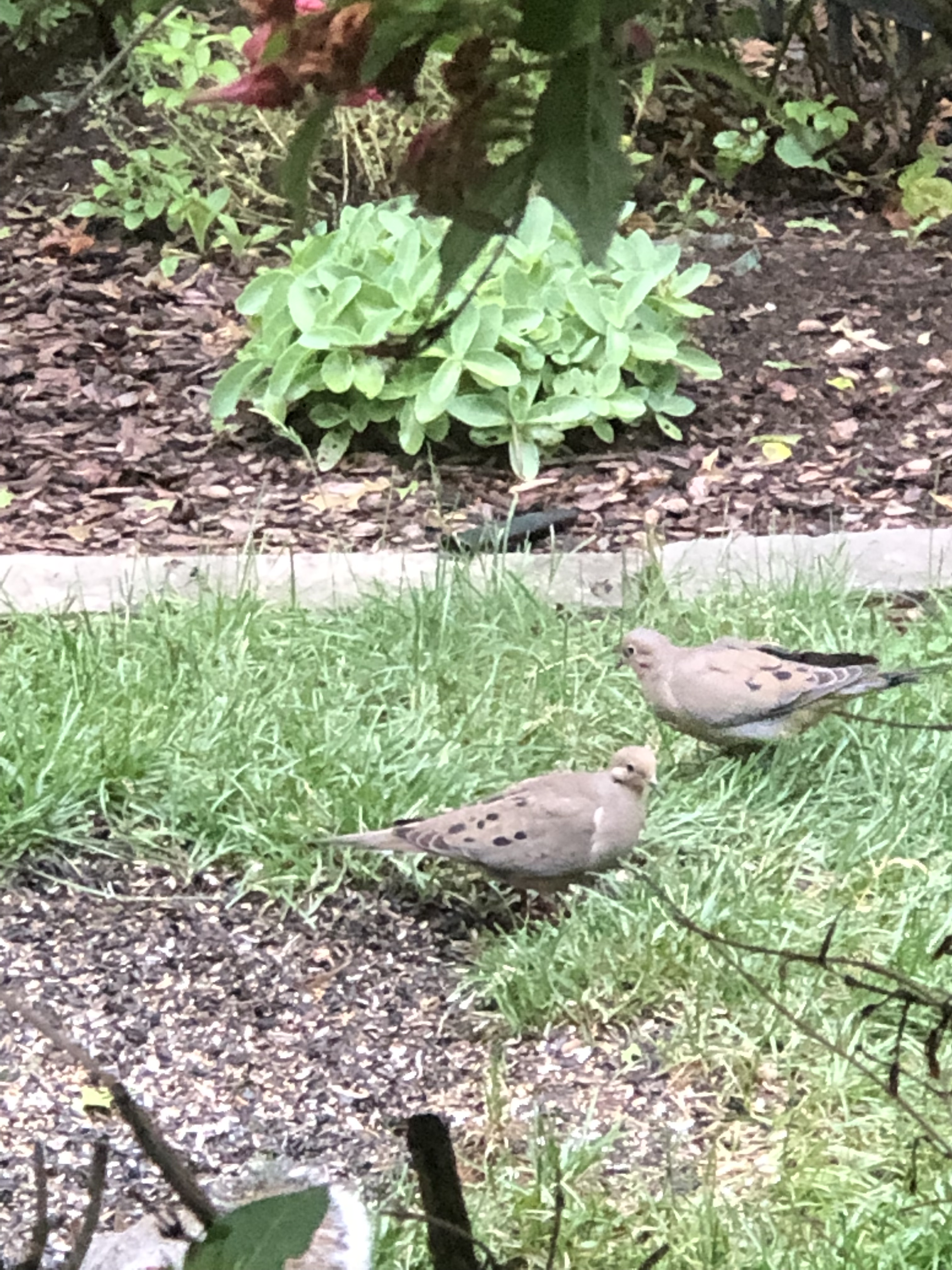
Sad to say, today, Sunday June 12th, the flowering bush is spent, the blooms withered and falling. Pam took time to document some visitors while the Weigela was in its glory. This is a sample of the species we enjoy while washing the dishes.
GrackleBlue JayRed Bellied WoodpeckerWe also have Downy, Hairy and Pileated WoodpeckersThe name “Red Bellied” is a mystery to me.Male CardinalDove and female CardinalMourning DoveWe have a huge dove population, supported by our feeder.
These photographs were taken by Pam through our windows with her Iphone 8 plus.
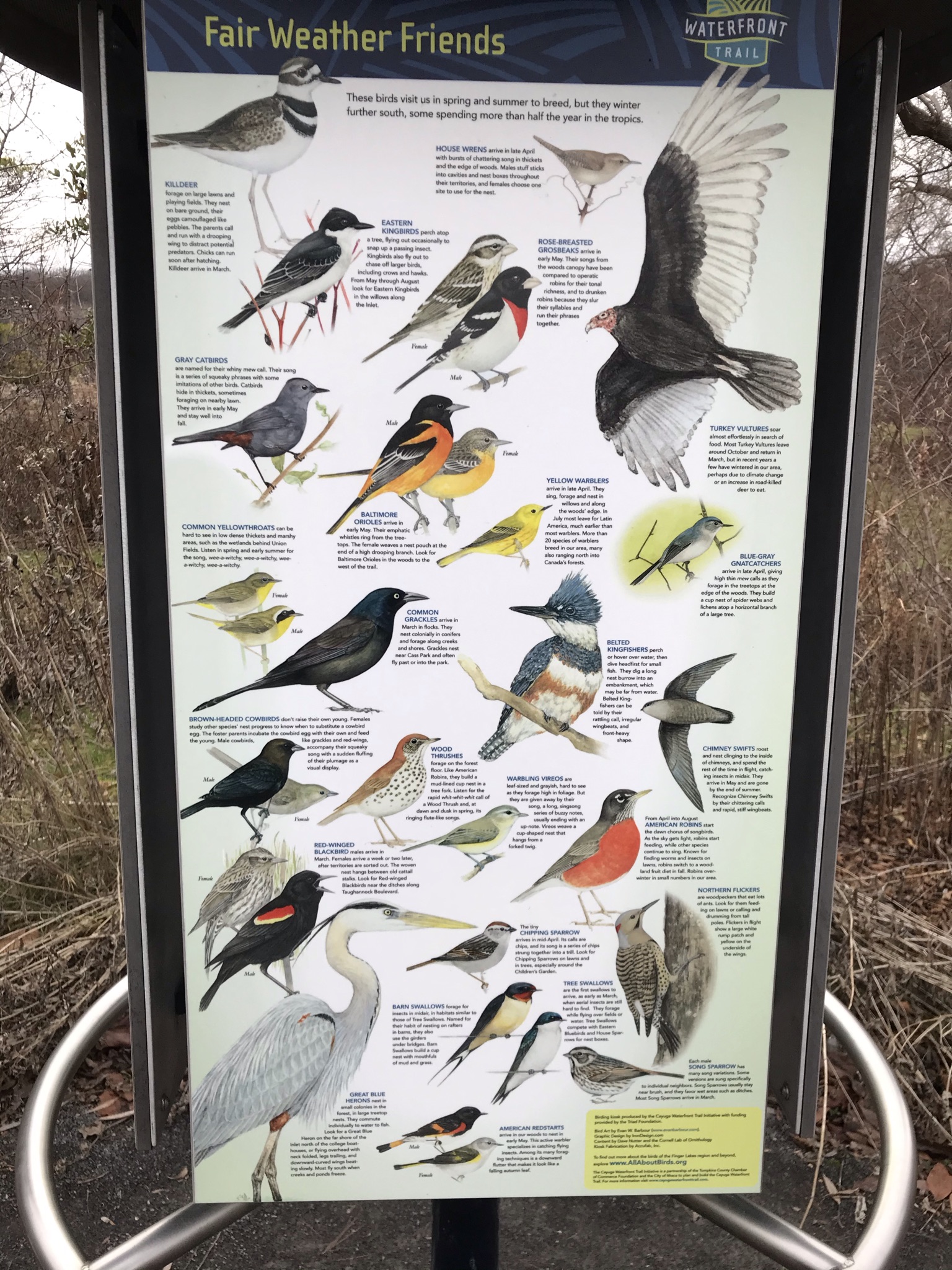
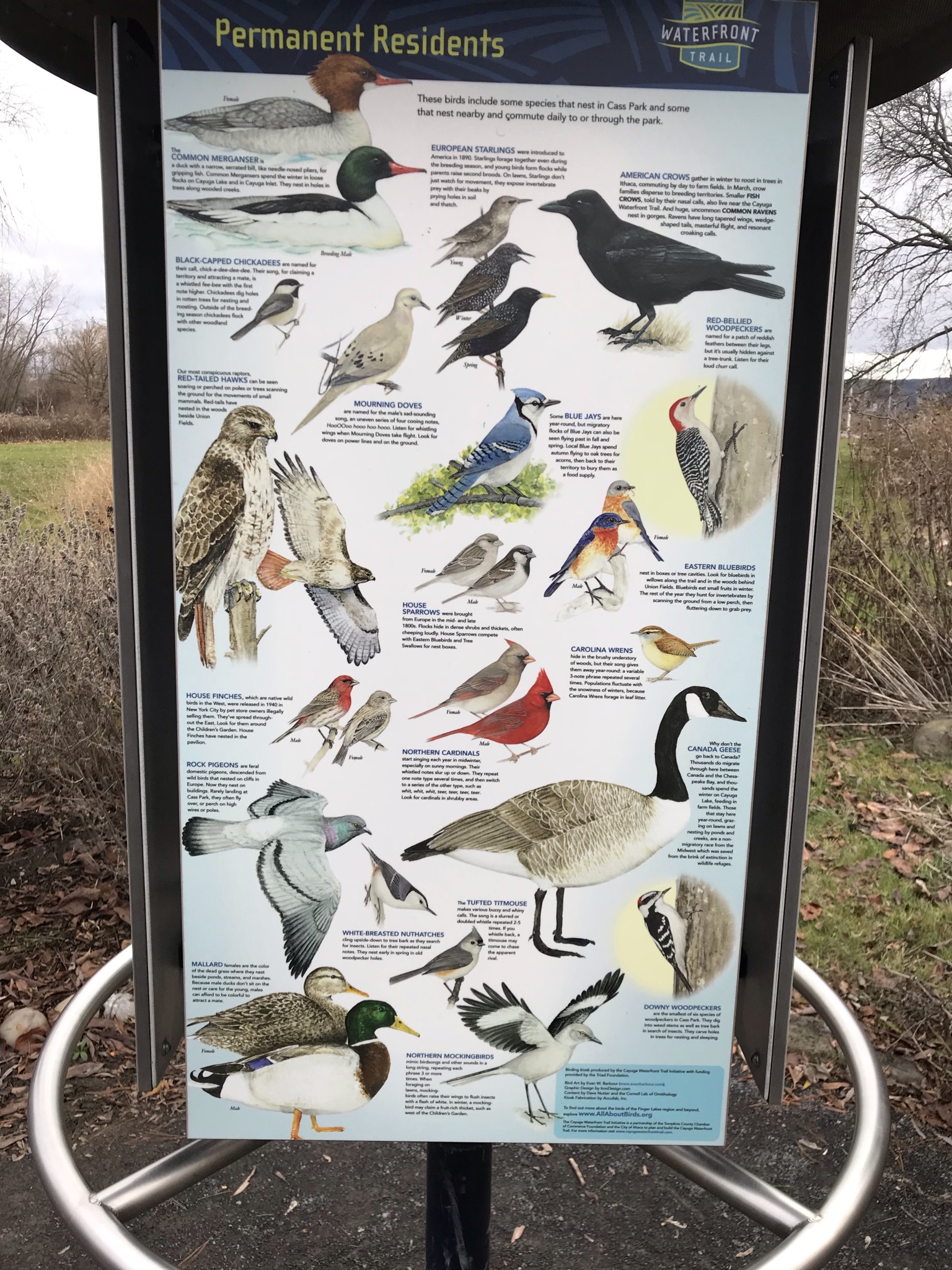
Here is a series of informative signs from Cass Park, just down the hill on the Cayuga Lake Inlet. Pictured are resident birds, most of them visited our backyard feeder.




 Michael Stephen Wills Photography