Winter Serenity at Cocoa Beach

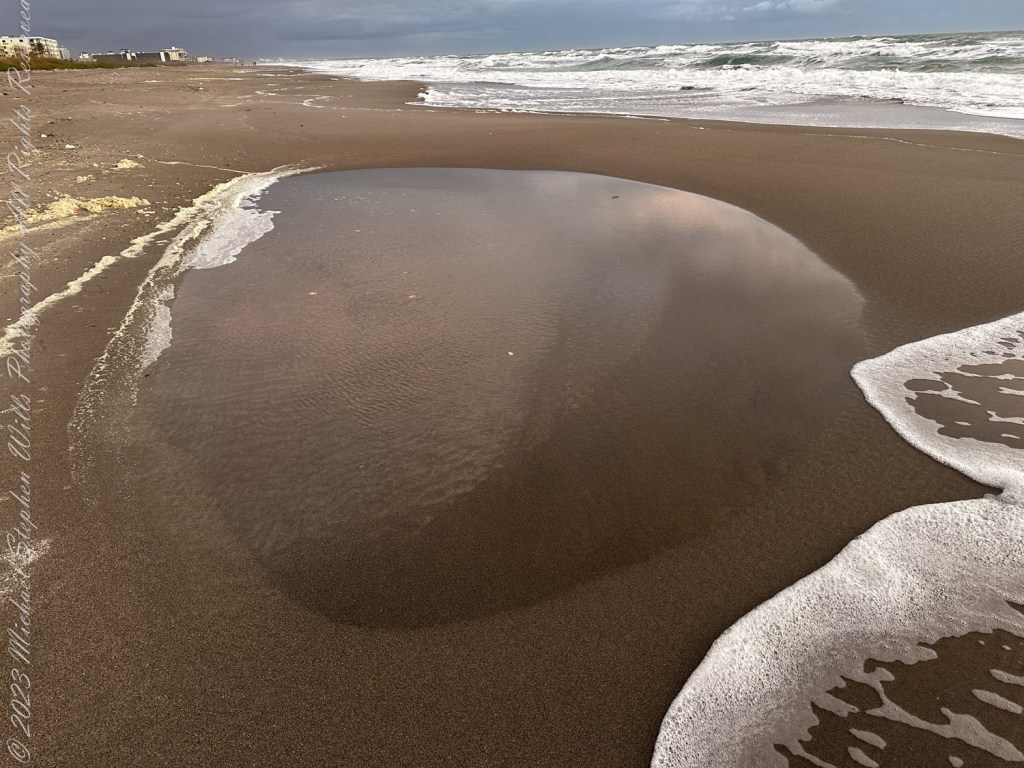
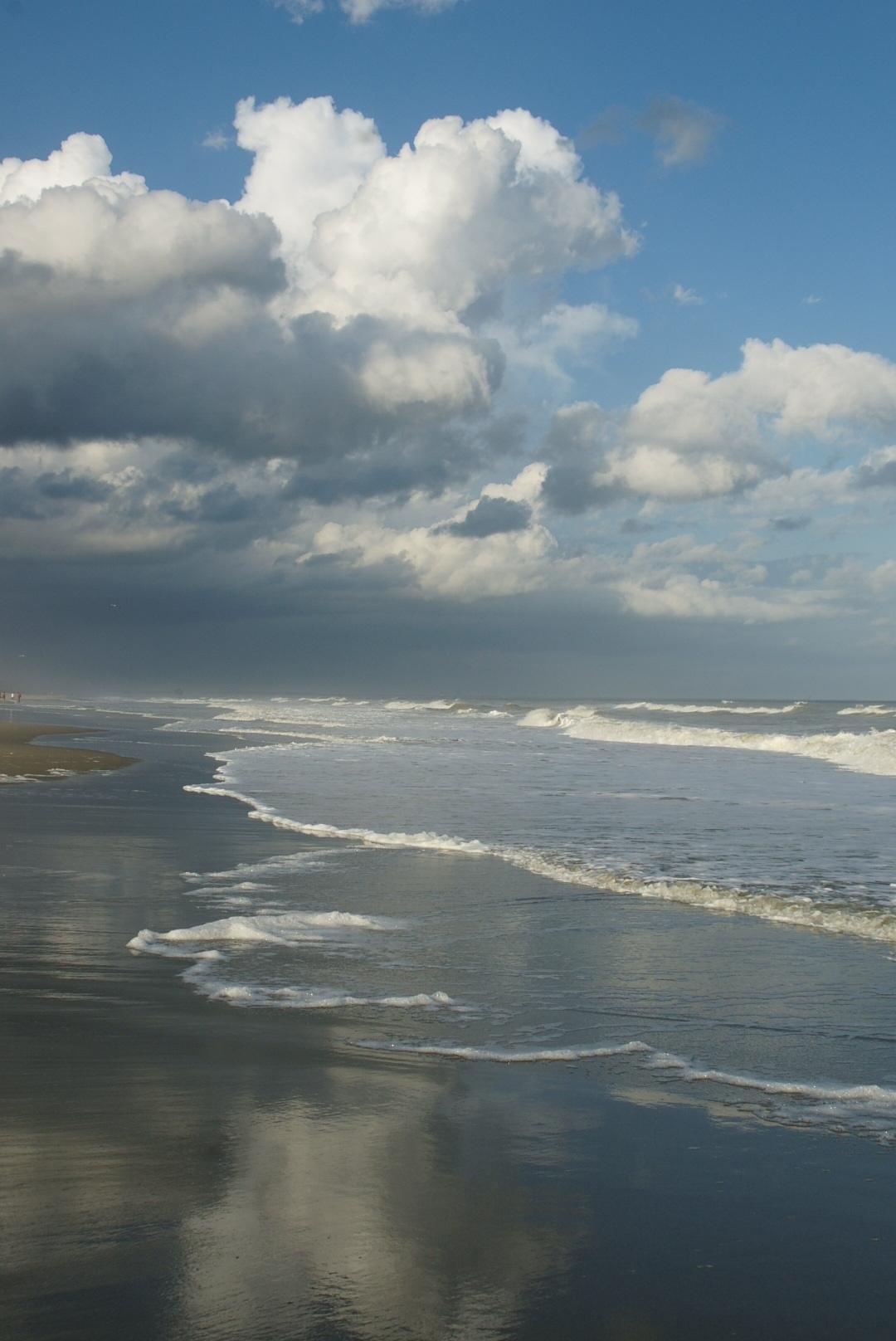
The wind carries the rhythm of the waves as clouds drift across the sky, their reflections shimmering on the sand. A lone feather lies half-buried, a quiet reminder of nature’s gentle yet untamed beauty. In the midst of winter’s rawness, there’s a peaceful stillness, inviting you to pause and take in the moment.


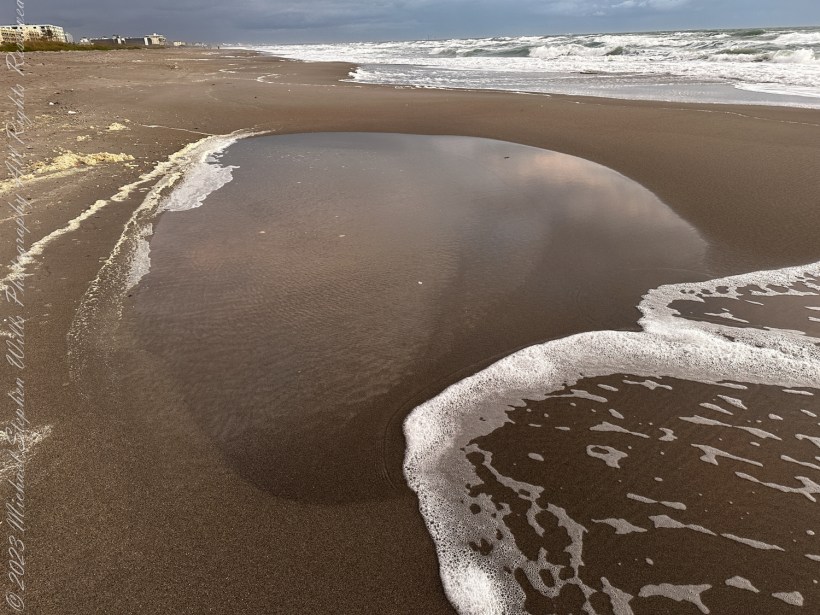
There’s a magic in the embrace of a winter afternoon at Cocoa Beach, where cold northern winds rush down, meeting the Atlantic’s gentle roar. A brush has stroked the heavens; a sky painted with clouds, each towering and shifting, soft yet mighty. With weight and grace, they hang in the sky; some laden with the promise of rain, others light and carefree, echoing the ever-changing rhythm of the sea below. As the sun dips, its rays break through, illuminating the clouds and casting reflections on the wet sand, where the ocean’s kisses linger before retreating back to the deep.
DSC05744Small

The wind tugs at my clothes, my hair, my thoughts. It whispers its secrets, telling stories of distant places, of journeys. With patterns chaotic yet somehow harmonized; waves, frothing and white, crash in sync with the wind’s song. They stretch their fingers onto the shore before retreating, playing an endless game of tag with the land. The sand, smooth and glistening, mirrors the clouds above, creating an ephemeral connection between earth and sky. Both are locked in a fleeting dance, destined to dissolve with the tide.

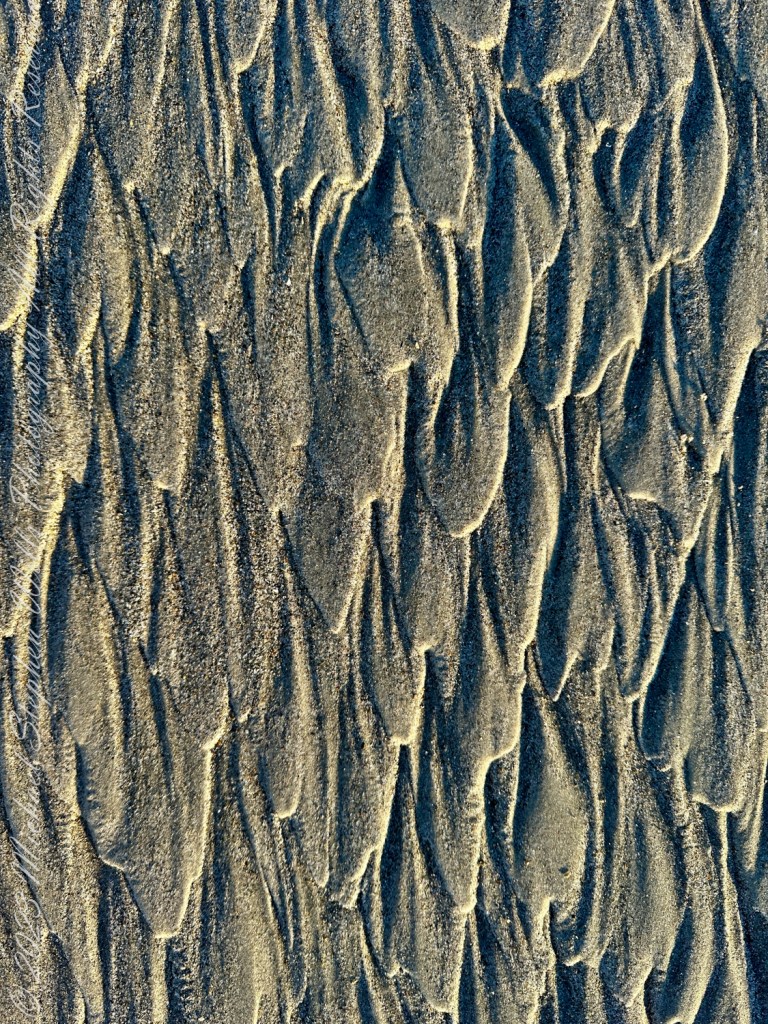
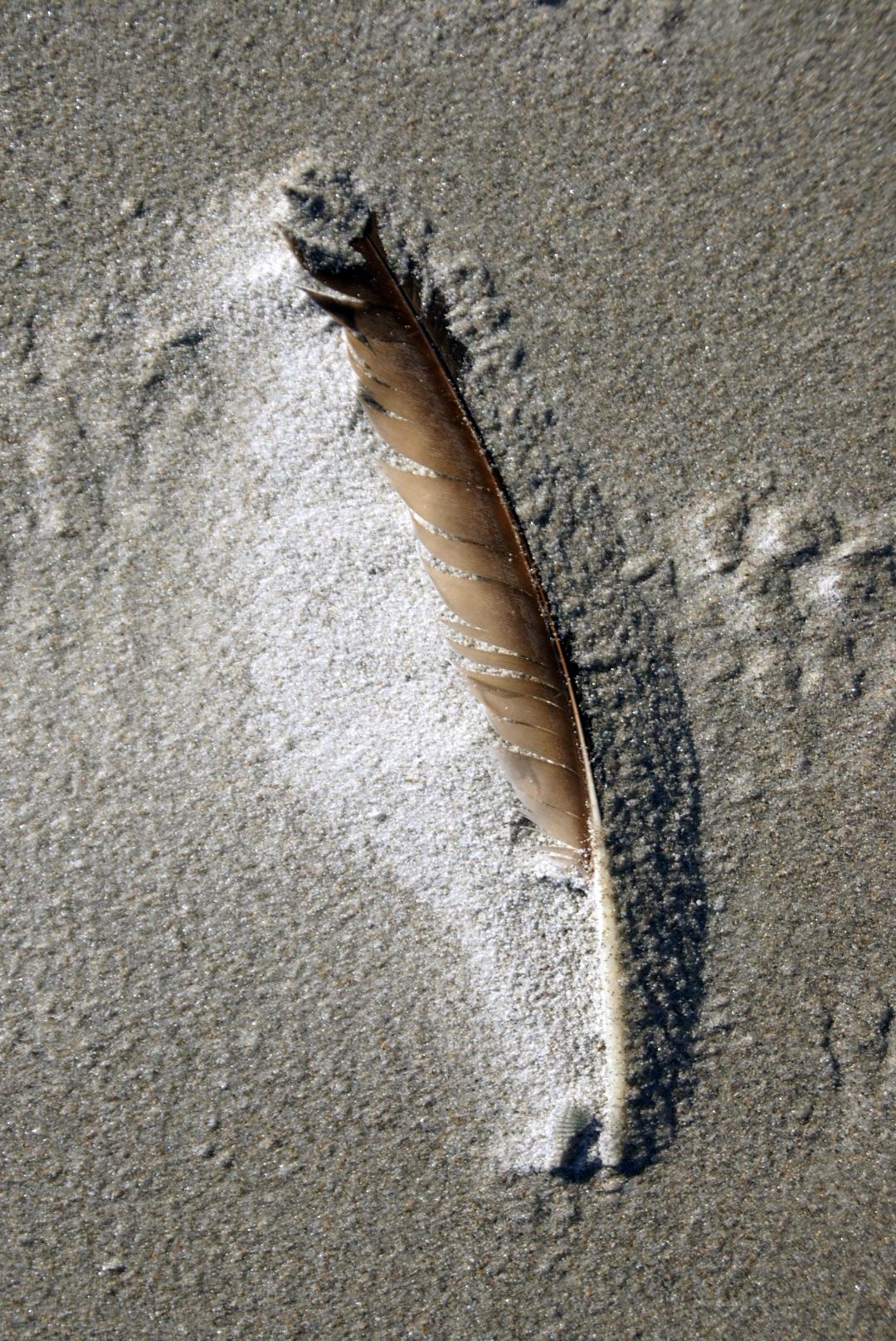
Amid the sound of wind and water, the sight of a lone feather caught my eye. Half-buried in the sand, its delicate barbs were still intact, though weathered by the elements. It was a remnant of life, a testament to the flight of some seabird now long gone. This feather, in its stillness, speaks volumes—of resilience, of the endless passage of time, of moments lost to the wind yet immortalized in the quiet present. Its grooves, like fine lines etched in sand, tell the story of its journey through the air, carried by forces unseen yet deeply felt.
DSC05792BeachFeathre

The feather, lying motionless yet deeply expressive, becomes a symbol of the paradoxes that fill this beach: the immensity of the ocean, infinite in its expanse, and the simplicity of a single object, caught and held for just a moment. The windswept beach feels vast, stretching endlessly before me, yet each step I take reveals intricate details, like the delicate curves and patterns of shells half-buried in the sand, or the ephemeral foam left behind by retreating waves. Each part of this landscape tells a story—the grand and the intimate, the eternal and the fleeting, all coexisting in perfect harmony.

Standing here, enveloped by the wind and the sea’s whispers, I am reminded of the power of nature to humble and uplift. It strips away the noise of everyday life, leaving only the raw, untamed elements that have been here long before us and will remain long after. There is something deeply spiritual about this place, this moment—where the only sounds are the natural rhythms of the world, unbroken by human intervention. The beach, with its vast openness, encourages introspection, a reflection not only on the external beauty but also on the inner landscapes of the mind.

The wind, relentless and free, stirs a sense of renewal in me. It is a force that clears the air, both literally and figuratively, sweeping away stagnant thoughts and opening space for new ones to emerge. The crispness of the cold air invigorates, reminding me that even in the depths of winter, life continues—whether in the ceaseless movement of the ocean or the endurance of the small feather resting in the sand. There is beauty in the starkness, in the way the beach in winter feels both desolate and alive, silent yet full of sound.

As I walk along the shore, I realize that this windy January afternoon on Cocoa Beach is an experience to feel deeply. The wind, the waves, the sky, the sand—all are part of a larger, connected whole, a living tapestry that, though ever-changing, remains constant in its presence. There is comfort in knowing that no matter how many times I return to this beach, it will always offer something new, yet familiar.

In the end, the beauty of this moment lies in its simplicity and grandeur, in the way it invites contemplation while remaining indifferent to whether or not we notice. The ocean will continue its dance with the shore, the wind will carry its stories, and the feather will eventually be swept away. But for now, in this moment, it is all here, waiting to be seen, felt, and cherished.

Click this link for my Fine Art Photography.
Copyright 2024 Michael Stephen Wills Photography All Rights Reserved.

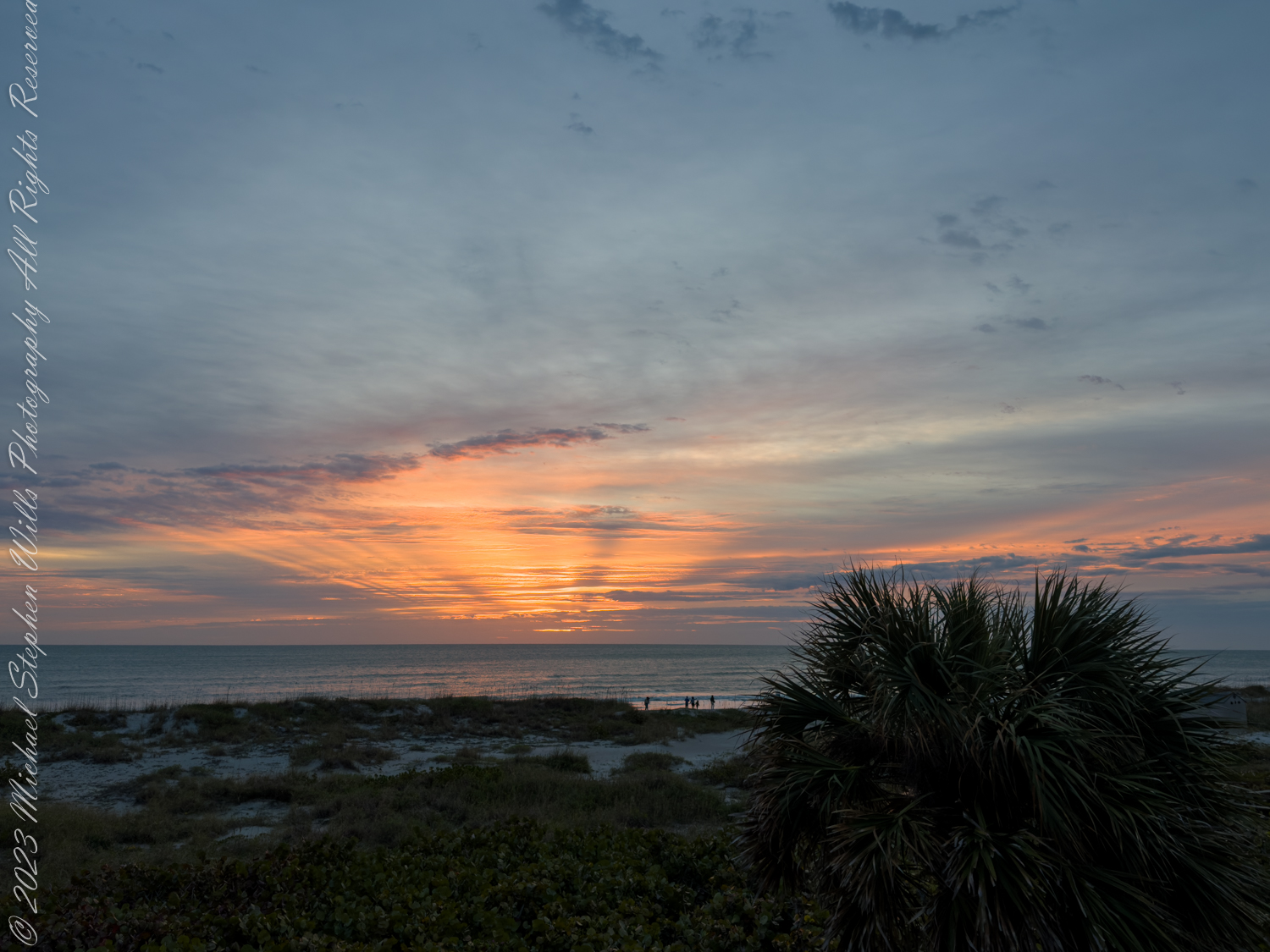
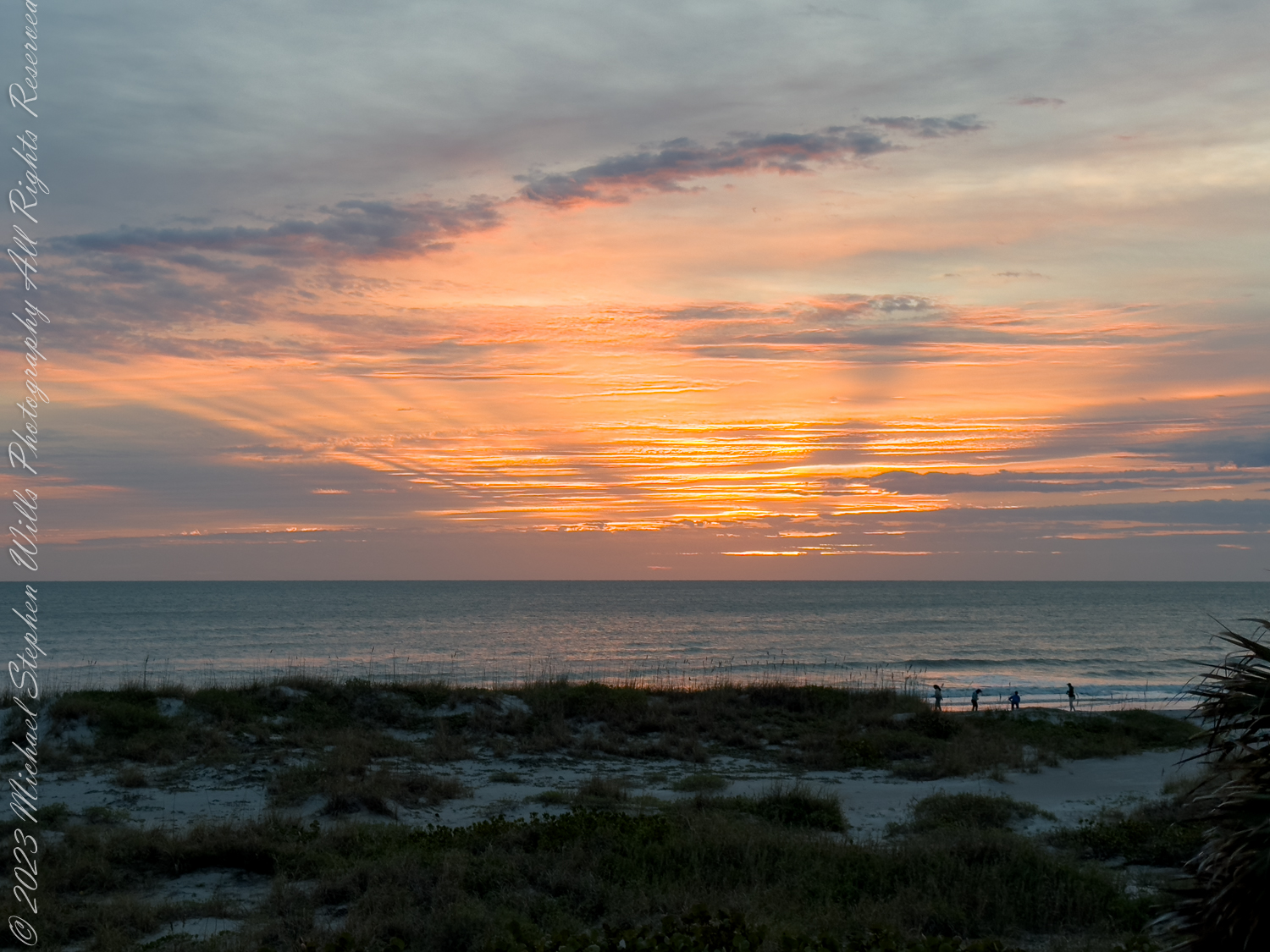
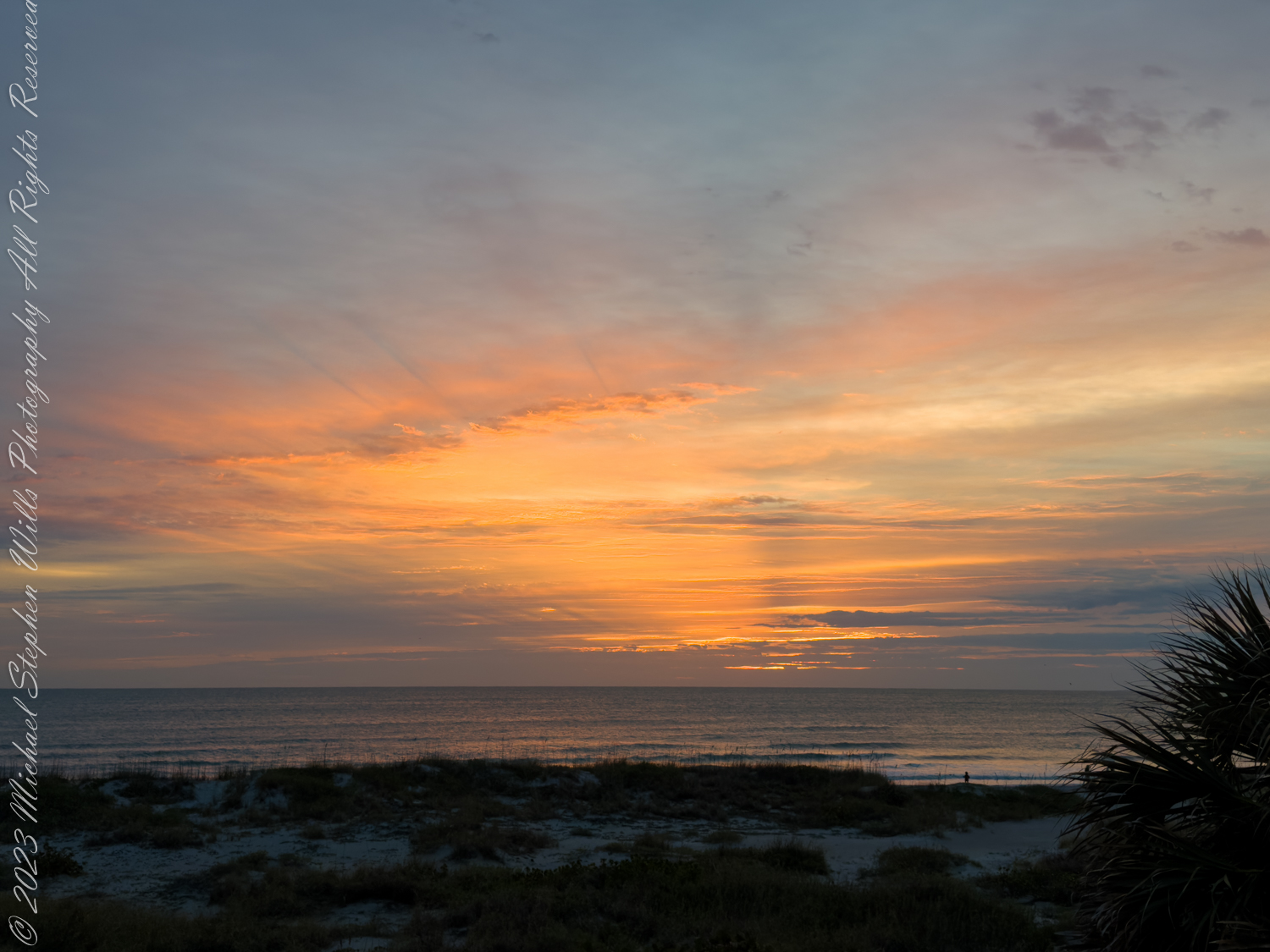
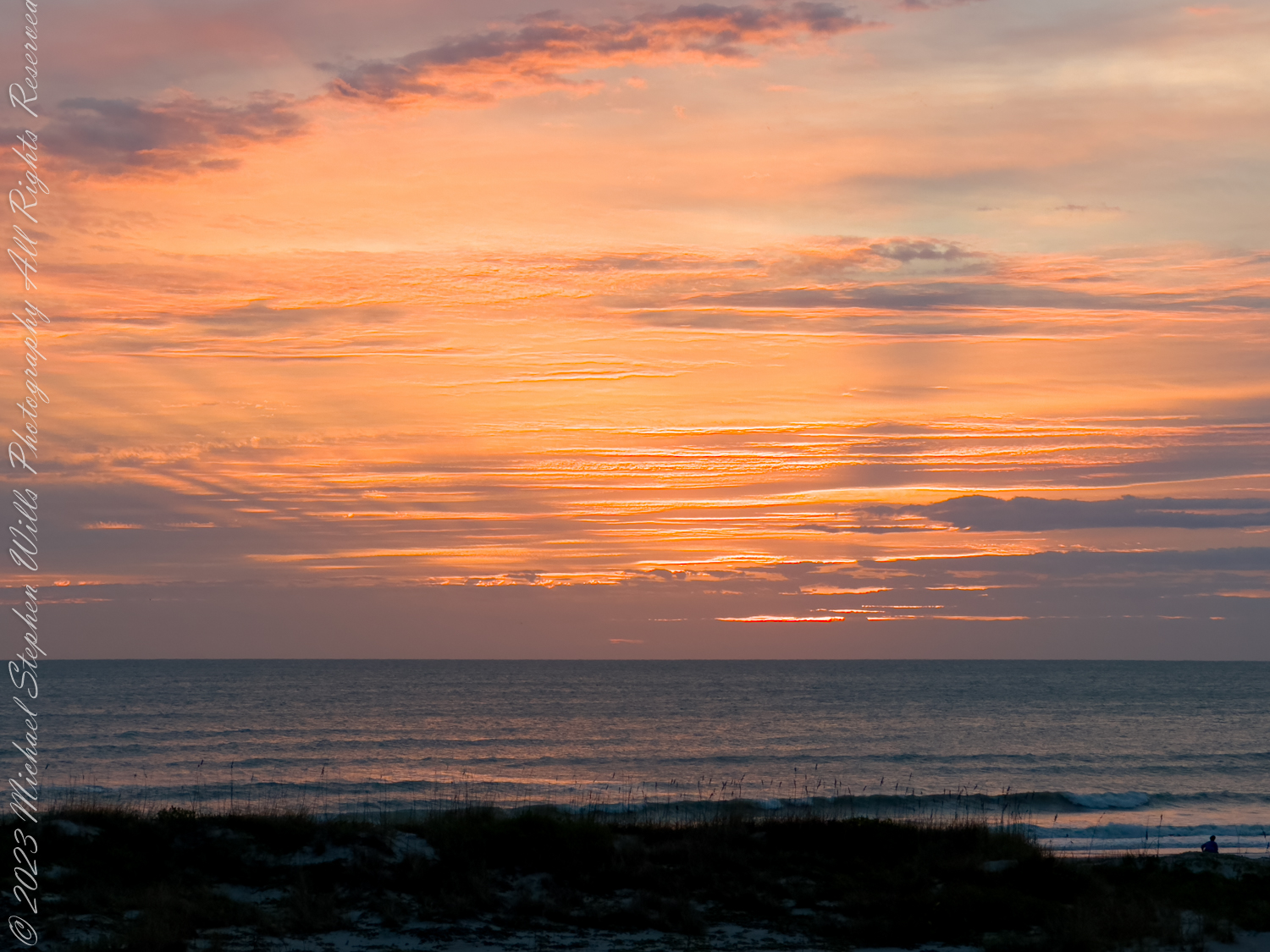
Ode to a January Sunrise at Cocoa Beach

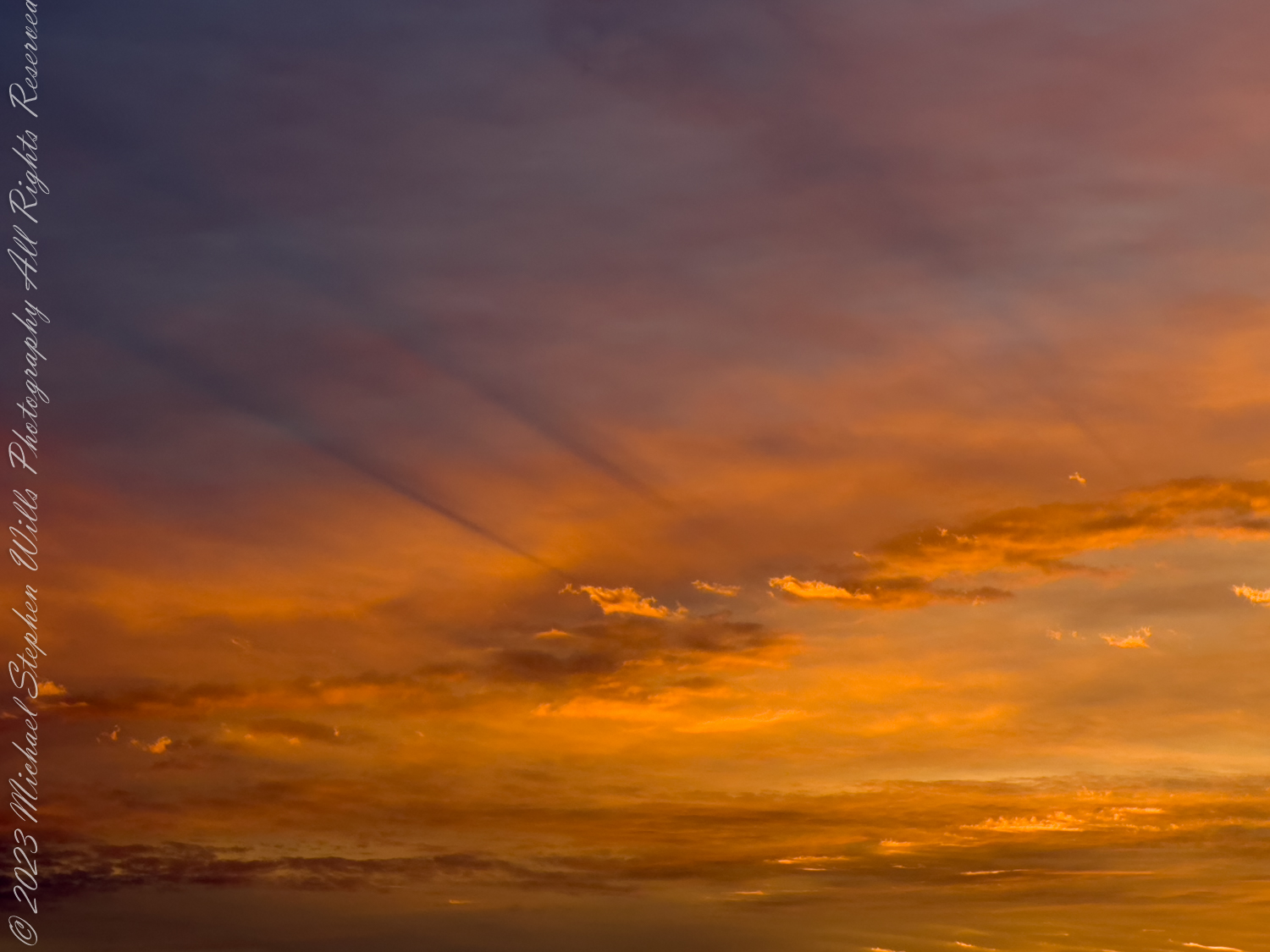
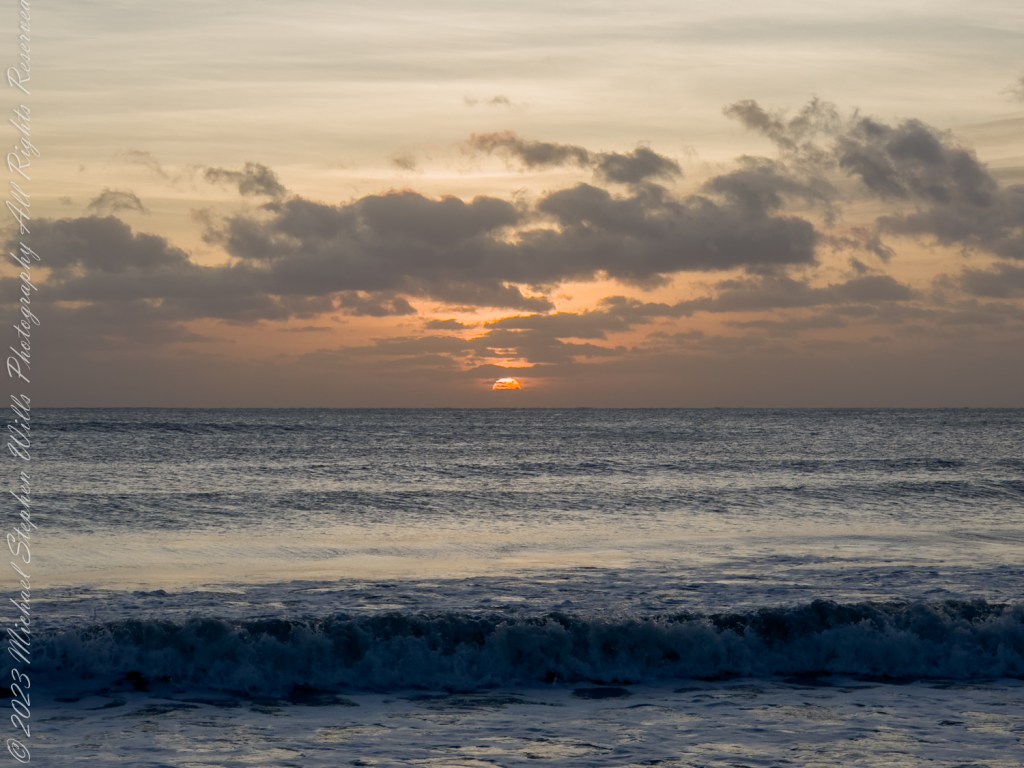
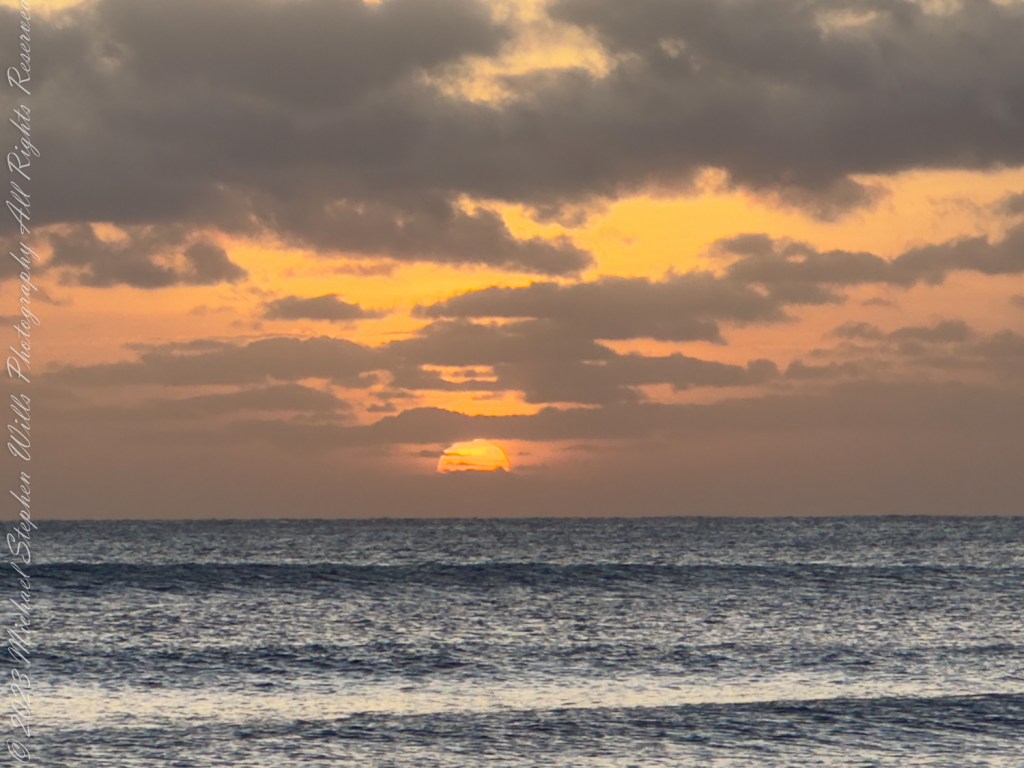
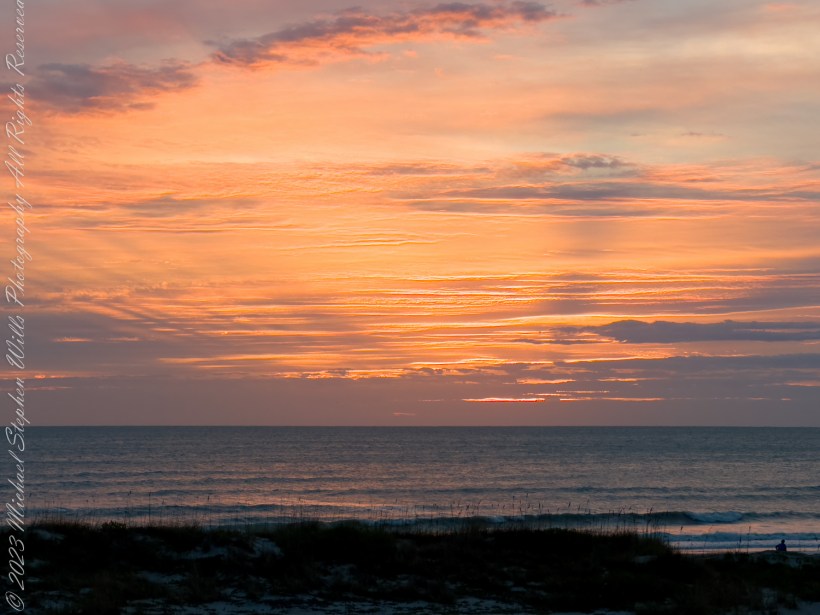
Awake to the radiant grace of dawn, where golden light adorns the sky and the ocean reflects its splendor. Witness the serene dance of nature in a peaceful, inspiring January sunrise at Cocoa Beach.

Awake, my soul, to morning’s radiant grace, as dawn’s first light adorns the sky’s embrace. Behold the scene where heaven meets the sea, a tapestry of hues, divinely free.

The eastern sky ignites with golden fire, each ray a herald of the sun’s desire. In softest pinks and boldest crimsons cast, the night retreats, and day arrives at last.

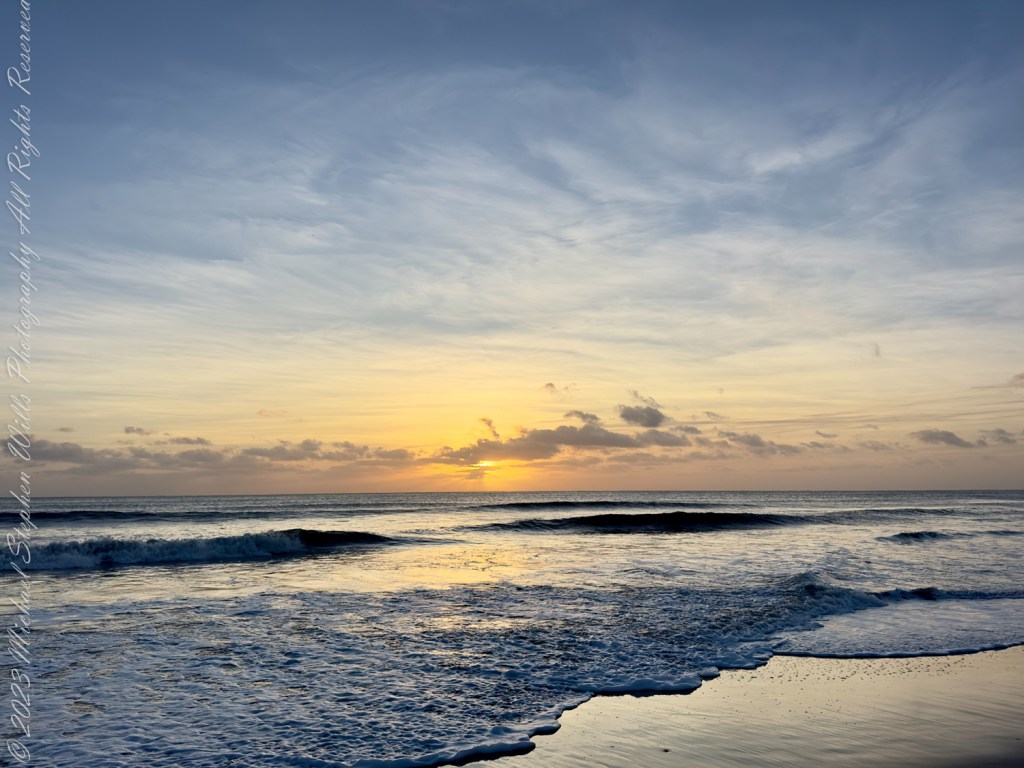
The ocean, kissed by dawn’s ethereal light, reflects the splendor of the coming sight. Waves gently lap upon the sandy shore; their whispered secrets speak of days of yore.

The palm trees sway in rhythmic, gentle dance, their silhouettes in morning’s light enhance. A peaceful stillness wraps the world in awe, as nature’s beauty strikes the heart with awe.

The scattered clouds, with edges tinged in gold, Frame the horizon as the day unfolds. They drift like dreams upon the waking breeze, in harmony with rustling leaves of trees.

And as the sun ascends its royal throne, Its warmth and light through every vein is known. A new day born, with promise in its wake, invites the heart to rise and dreams to take.

Imagine, seagulls soar on wings of pure delight, their cries a chorus to the morning’s light. They glide and dive with effortless grace, their freedom echoes in this sacred space.

On distant sands, the footprints of the few mark early risers greeting morning’s hue. Their presence, fleeting, soon to be erased, by tides that sweep the shore in gentle haste.

Oh, glorious dawn, thy beauty so profound, Inspire the soul where peace and love abound. Let hearts be lifted by thy gentle hand, to cherish all that’s wondrous in this land.

For in this moment, all the world is still, the chaos of the night’s dark dreams to kill. A symphony of light and life begins, as morning’s joy through every fiber sings.

So let us honor this celestial show, where sky and sea in radiant colors glow. In silent reverence, we stand and gaze, at dawn’s first light, and marvel at its blaze.

Awake, my soul, and bask in morning’s gleam, embrace the beauty of this waking dream. For in the sunrise, hope and peace reside, a timeless gift the heavens do provide.

Copyright 2024 Michael Stephen Wills All Rights Reserved

Experiencing the Cocoa Beach Kite & Beach Fest

Experience the magic of the Cocoa Beach Kite and Beach Fest! From giant dinosaur kites to whimsical octopuses, this vibrant event brings joy to all ages. Dive into the excitement and watch the kites soar!

The air was electric with excitement as I arrived at Cocoa Beach for the Kite and Beach Fest on January 21st, 2024. A stiff wind greeted me, carrying the scent of saltwater and the promise of a day filled with wonder. The beach was bustling with families, kite enthusiasts, and curious onlookers, all eager to witness the spectacle that awaited them.

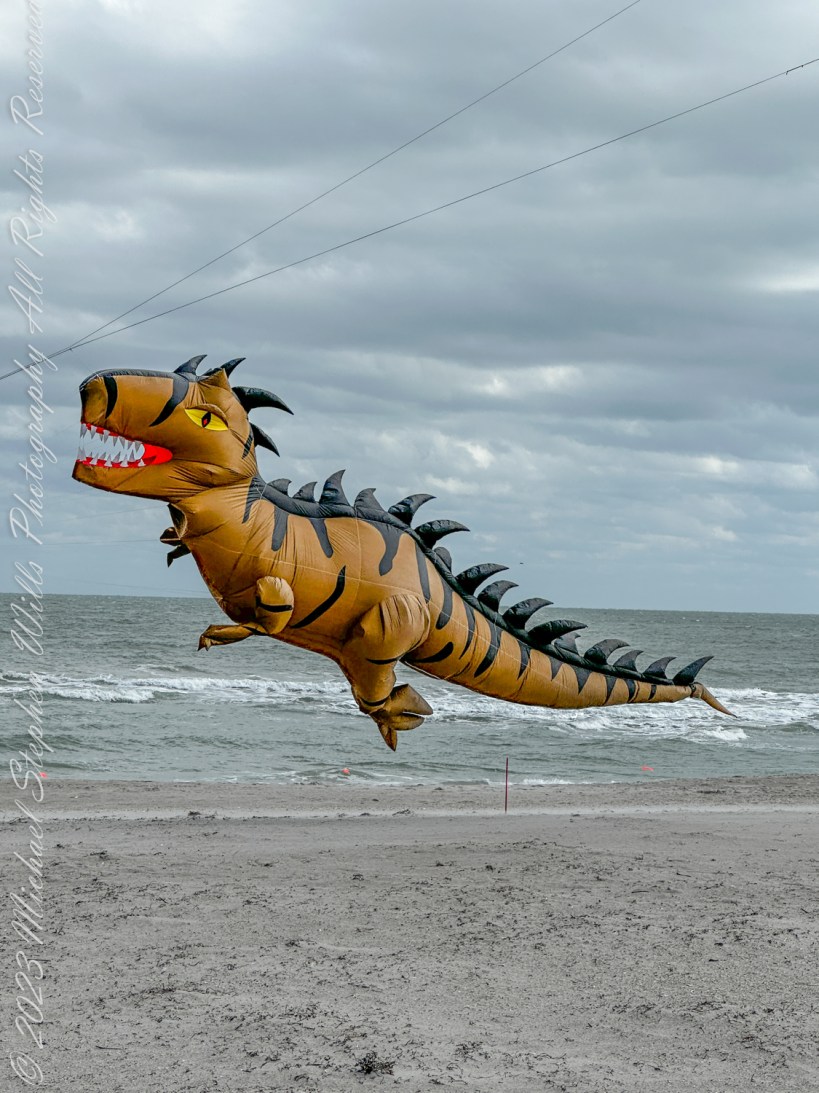
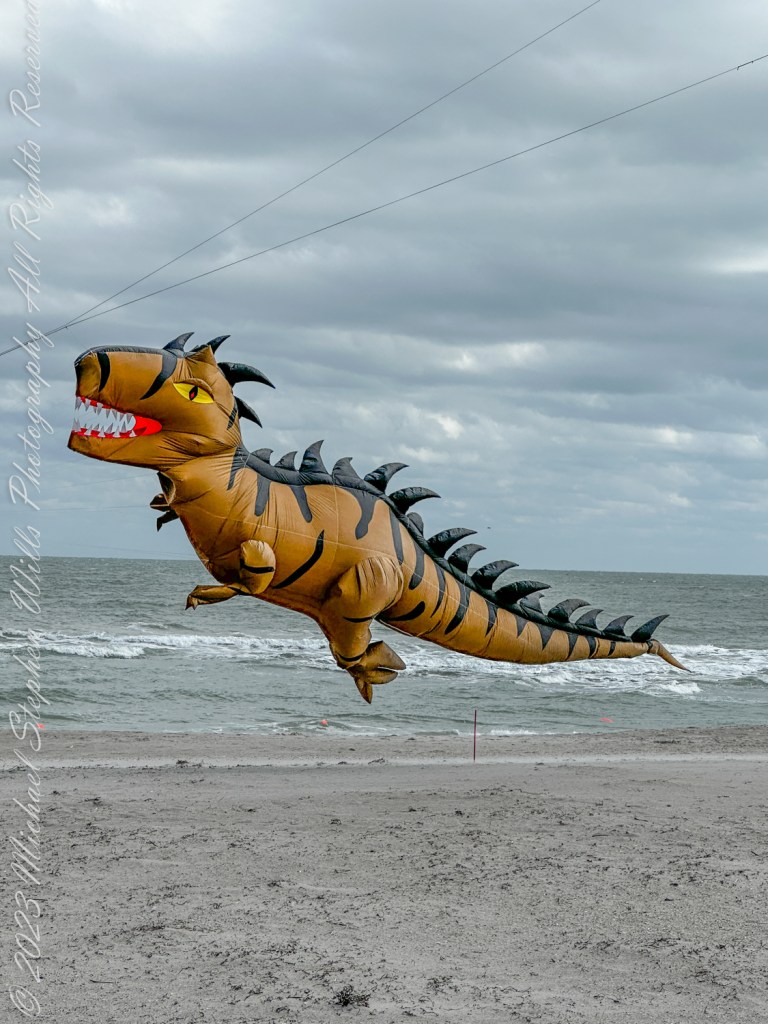
As I strolled towards the shoreline, I was immediately captivated by the sight of an apparently massive dinosaur kite soaring high, filled with the wind, against the backdrop of the overcast sky. Its fierce red eyes and sharp teeth contrasted sharply with the playful atmosphere below, yet it seemed to be enjoying its flight as much as the spectators enjoyed watching it. I couldn’t help but snap a photo, capturing the moment when the dragon seemed to float majestically above the waves.

Further down the beach, a cluster of giant octopus kites waved their tentacles gracefully in the wind. Their vibrant colors stood out against the gray sky, each one a mesmerizing dance of fabric and air. The way they undulated with the breeze was hypnotic, as if they were alive, drawing me closer to their whimsical beauty. I watched as children ran underneath, their laughter mingling with the sound of the surf, creating a symphony of joy that filled the air.

Among the kites, there were also enormous land crabs with their claws extended, bobbing and weaving in the breeze. They were a crowd favorite, with people gathering to marvel at their intricate designs and lifelike movements. It was as if the beach had been transformed into a surreal landscape where dragons, octopuses, and crabs coexisted in perfect harmony.

As I walked along the beach, I took in the lively atmosphere. I grabbed a cold drink and found a spot to sit, taking in the view of kites of all shapes and sizes dotting the sky like a colorful mosaic.

The festival wasn’t just about the kites, though. It was a celebration of community and creativity. I watched as seasoned kite flyers shared tips with newcomers, and children learned to fly their own kites for the first time. There was a sense of camaraderie in the air, a shared joy that transcended age and background.

As the afternoon wore on, I found myself reflecting on the magic of the day. The kites, with their bold colors and imaginative designs, reminded me of the limitless possibilities of creativity. The festival was a testament to the power of imagination, bringing people together to celebrate art, nature, and the simple pleasure of watching something soar.

As the sun began to set, casting a golden hue over the beach, I took one last look at the dinosaur, still bravely battling the wind. It seemed fitting, a symbol of resilience and wonder, and a reminder of the enchanting day I had spent at Cocoa Beach. With a heart full of joy and a camera full of memories, I headed home, already looking forward to next year’s festival.

Copyright 2024 Michael Stephen Wills All Rights Reserved

A Serendipitous Meeting: The Hermit Crab and the Moon Snail

Washed up together on a sunlit shore, a hermit crab and a Moon Snail tell an extraordinary tale of survival and resilience in the vast ocean. Discover how these unlikely companions reveal the intricate dance of life beneath the waves and the profound connections that bind marine ecosystems. Dive into their captivating story and uncover the secrets of their intertwined destinies.

The high tide left behind a myriad of treasures scattered along the shore. Among the shells and seaweed, two unlikely companions lay side by side—a Moon Snail and a hermit crab. This serendipitous meeting speaks volumes about the intricate dance of life in the ocean’s depths.

Life Beneath the Waves

Hermit crabs are fascinating creatures, exhibiting behaviors and adaptations that ensure their survival in the ever-changing marine environment. These crabs are not born with shells. Instead, they scavenge for empty shells discarded by snails, meticulously choosing the perfect fit. The shells provide essential protection against predators and environmental hazards.

In their early life stages, hermit crabs undergo a series of molts, shedding their exoskeletons to grow. Each molt presents a critical opportunity to upgrade their shell, moving to a larger one as they increase in size. This constant need for new housing drives a competitive dynamic among hermit crabs, with individuals often engaging in “shell exchanges” where one crab may forcibly evict another from its shell.

The Hermit and the Moon Snail

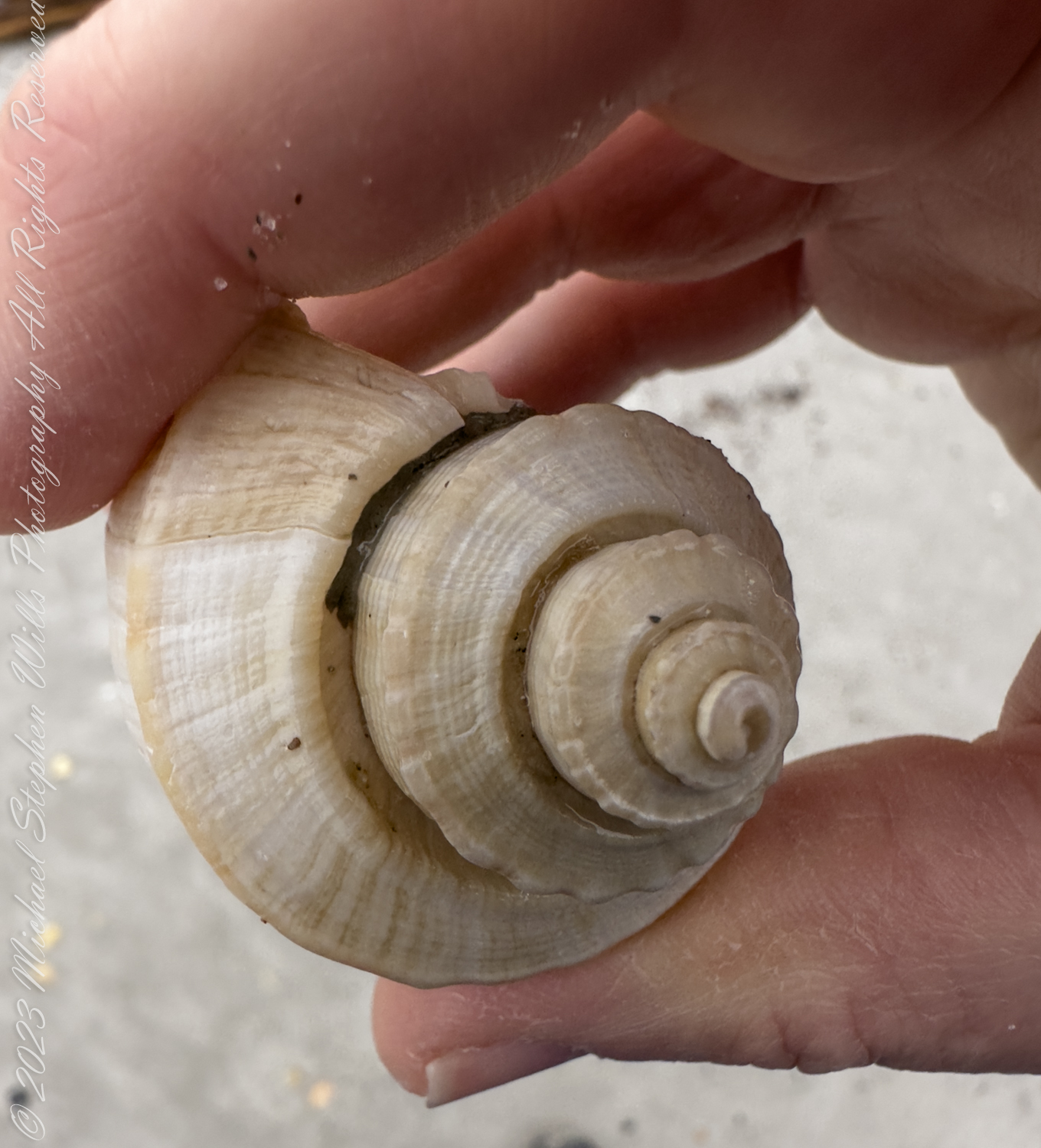
The Moon Snail, known scientifically as Neverita duplicata, is a predatory mollusk famous for its distinctive, moon-shaped shell. These snails are both feared and admired in the marine community for their voracious appetite and remarkable hunting tactics. They drill into the shells of their prey, typically other mollusks, using a specialized appendage called a radula, combined with acidic secretions to bore through the hard exterior. Click me for another post with more information about the Moon Snail.

The juxtaposition of the Moon Snail and the hermit crab washed up together is a tableau that invites deeper contemplation. How did these two distinct beings come to share the same stretch of sand?

A Dance of Survival

It’s likely that the hermit crab, in its search for a suitable home, found itself in the proximity of the Moon Snail. The Moon Snail, a relentless hunter, could have been following its own trail of prey when the tide caught them both off guard. The ocean’s currents, indifferent to their individual struggles, deposited them together on the beach, a fleeting moment of stillness in their otherwise tumultuous lives.

This meeting is a stark reminder of the interconnectedness of marine life. The hermit crab relies on the discarded shells of snails for survival, while the Moon Snail’s role as a predator keeps the balance in check, ensuring that no single species dominates the ecosystem.

Reflections on Resilience

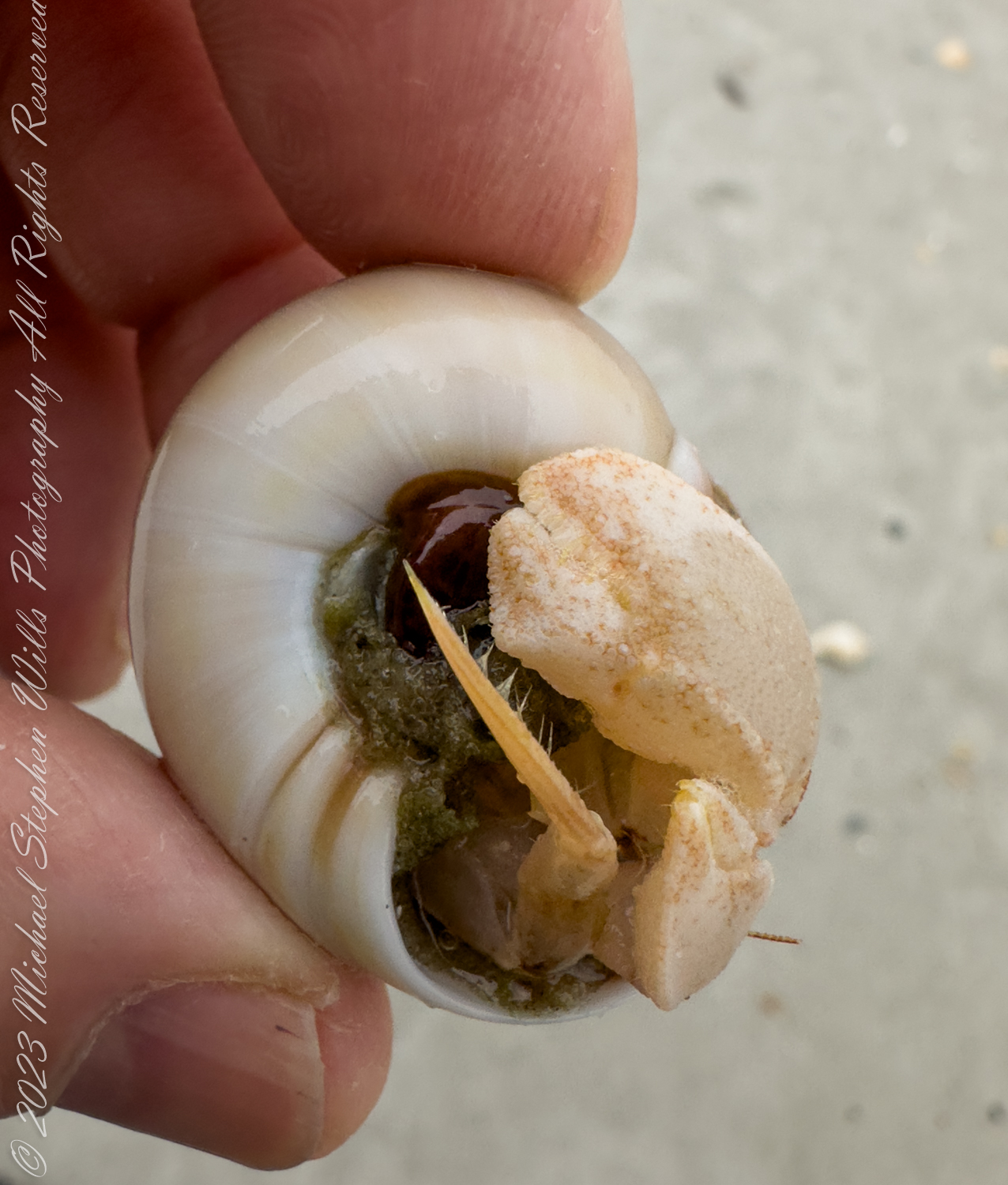
The image of the hermit crab within its borrowed shell speaks to the resilience and adaptability inherent in nature. These crabs are perpetual nomads, continually seeking, adapting, and thriving in environments that can be both generous and harsh. Their survival hinges on their ability to repurpose and reuse, a lesson in resourcefulness that resonates beyond the tidepools.

The Moon Snail, with its powerful drilling capabilities, exemplifies the raw force of nature. Its presence is a reminder of the predatory relationships that underpin marine ecosystems, driving evolution and diversity through a relentless cycle of life and death.

The Final Tide

As we ponder the scene before us, it’s worth considering the broader implications of these two creatures’ lives. The ocean, vast and unfathomable, is a realm where survival is an art form, honed by millennia of adaptation. The hermit crab and the Moon Snail, though vastly different in form and function, share a common thread—their existence is a testament to the delicate balance of nature.

The hermit crab’s journey, from shell to shell, mirrors our own quests for security and stability. The Moon Snail’s predatory prowess underscores the inevitable challenges we face. Together, they remind us that life, in all its forms, is a continuous interplay of seeking and surviving, of finding and losing, of moments of stillness and sudden change.

In the end, the hermit crab and the Moon Snail, brought together by the whims of the tide, offer a glimpse into the profound and often unseen connections that weave the tapestry of life beneath the waves. Their story is a poignant reflection on resilience, adaptability, and the ever-present dance of survival that defines the natural world.

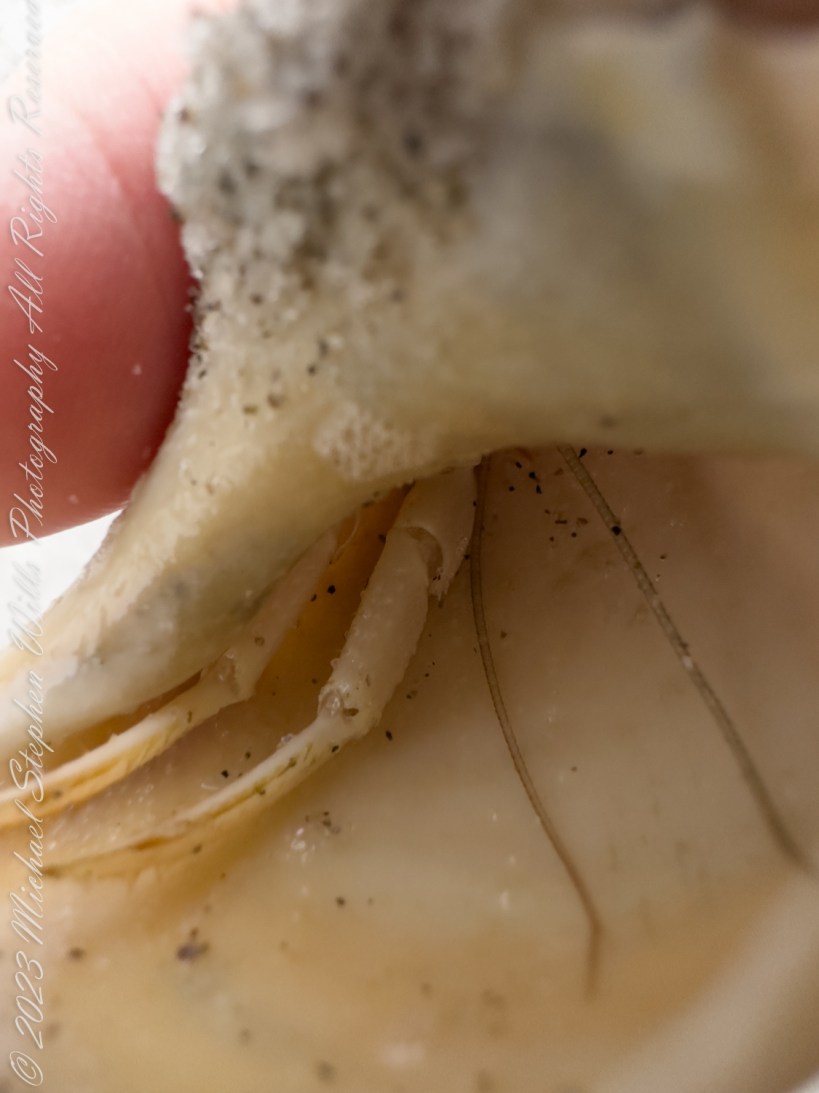
A top view of the shell occupied by a Hermit Crab found on Cocoa Beach, Brevard County, Florida. The Space Coast.

An Uncertain Identification

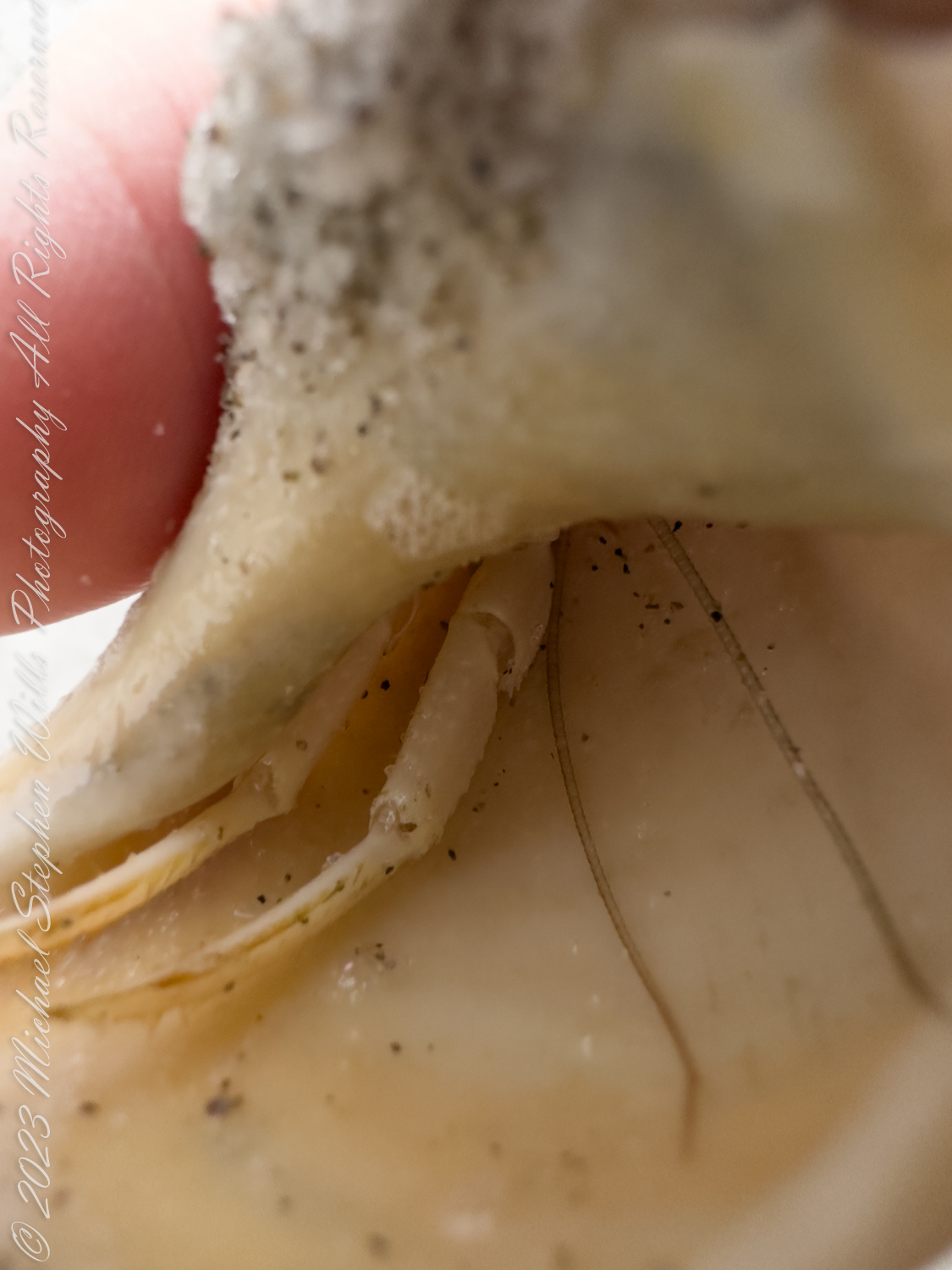
The identification of our hermit crab companion is made challenging by the absence of one of its claws, a vital characteristic for precise classification. This missing claw hints at the hardships faced by hermit crabs in their dynamic and sometimes perilous environments. Whether lost in a struggle with a predator or another hermit crab, this detail serves as a reminder of the tenacity and resilience required for survival in the marine world. While the exact species remains a mystery, the broader story of the hermit crab’s life and survival remains clear and compelling.

Copyright 2024 Michael Stephen Wills All Rights Reserved

Cocoa Beach Dawn

In January 2024, I captured the tranquil beauty of Cocoa Beach at dawn, embracing the fleeting moments of peace and natural wonders.

The first blush of morning caresses the horizon, the palette of colors unfurling across the sky like a softly whispered promise of the day ahead. The soft pinks and blues deepen, brushing the clouds with strokes of lavender and orange, as the sun peeks just above the watery edge of the world. Today, I find myself strolling along Cocoa Beach, capturing the tender moments of dawn breaking over this tranquil Florida beachscape in early January 2024.

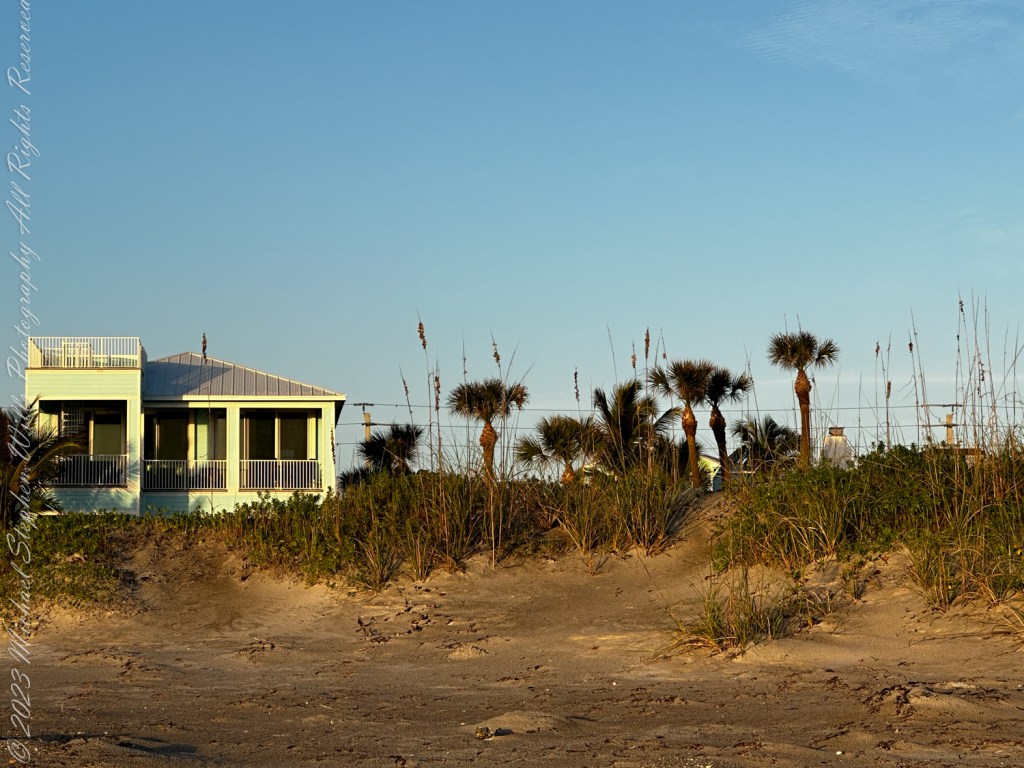
Each step I take along the sandy shores brings a new perspective, a new detail, revealed in the emerging light. To my right, a lone beach house sits nestled behind a veil of sea oats and palmettos, the sky behind it a canvas of warming hues. The house seems to slumber still, its windows reflecting the first golden rays of the sun. This dwelling, isolated and serene, hints at the countless summers of laughter and salty air, and the quiet winters of introspective solitude.

As the morning progresses, the sun asserts itself, climbing higher and burning off the last vestiges of night. I point my camera towards the ocean, capturing the waves as they roll in with rhythmic persistence. The sea is a creature of profound mystery in these early hours, its surface a moving mirror that catches the fire of the sunrise and dances with light. Each wave is a note in an aquatic symphony, played just for those who are awake to hear it.

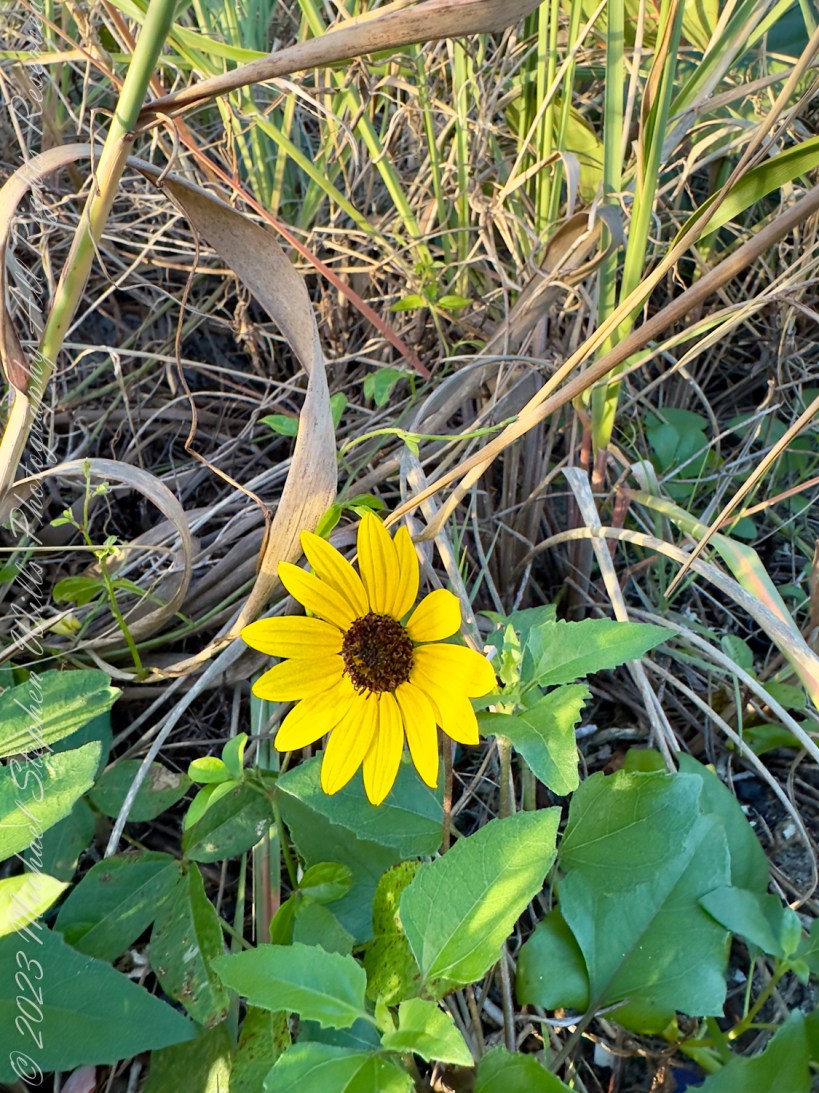
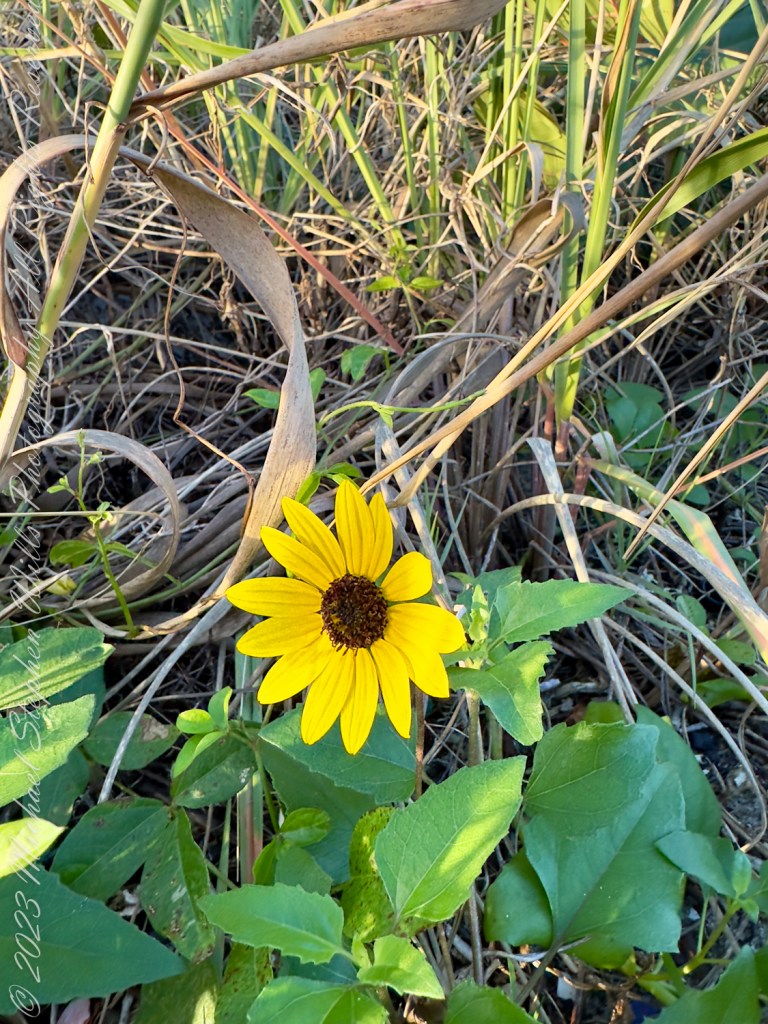
Turning my gaze down, I focus on the smaller, often overlooked inhabitants of the beach. A single flower, a stubborn and resilient dune sunflower, stands boldly above the sands. It’s an unexpected sight—this splash of vibrant yellow against the muted earth tones of the sandy beach. The flower turns its face towards the sun, basking in the glow, thriving in its own patch of the world. It’s a poignant reminder of the tenacity of life, of nature’s relentless pursuit of existence against the odds.

The beauty of Cocoa Beach at dawn is not just in its sweeping vistas or the dramatic play of light and shadow. It’s also in these small, intimate encounters: the texture of the sand, the whisper of the grass, the solitary bloom. Each element is a brushstroke in a larger picture, a note in a grander melody. As I walk, my feet leave temporary impressions on the wet sand, soon to be erased by the incoming tide. It feels symbolic, this transient mark-making, reflective of the fleeting nature of life and the enduring beauty of the world around us.

Cocoa Beach this morning is a place of peace and contemplation. As I capture these moments with my camera, I am also capturing them in my heart, storing them as a balm for busier, noisier days. The photographs will speak of quiet and calm, of the soft hush of dawn, and the gentle awakening of the earth. They will tell of a morning when the world seemed to pause, just for a moment, to revel in the simplicity and beauty of another beginning.

As the sun climbs higher, its light becomes too harsh for the soft magic of dawn photography. I pack up my camera, my heart full of the morning’s calm. The beach is waking up now, the first joggers and dog walkers appearing, their morning routines intersecting with the tail end of my photographic journey. I leave Cocoa Beach carrying the quiet joy of the morning, a joy found in the dance of light on water, in the solitude of a beach house, and in the vibrant defiance of a sunflower. Dawn here is not just a time, it’s an experience—a delicate, powerful reminder of the world’s wonders, witnessed at the edge of the day.
Copyright 2024 Michael Stephen Wills

Observations of Beach Erosion at Cocoa Beach, January 2024

Nature’s artistry unfolds on the shores of Cocoa Beach, where the ever-changing tides leave intricate patterns in the sand. This captivating display of erosion hints at a fragile coastline, urging us to act for its preservation.

Initial Observations

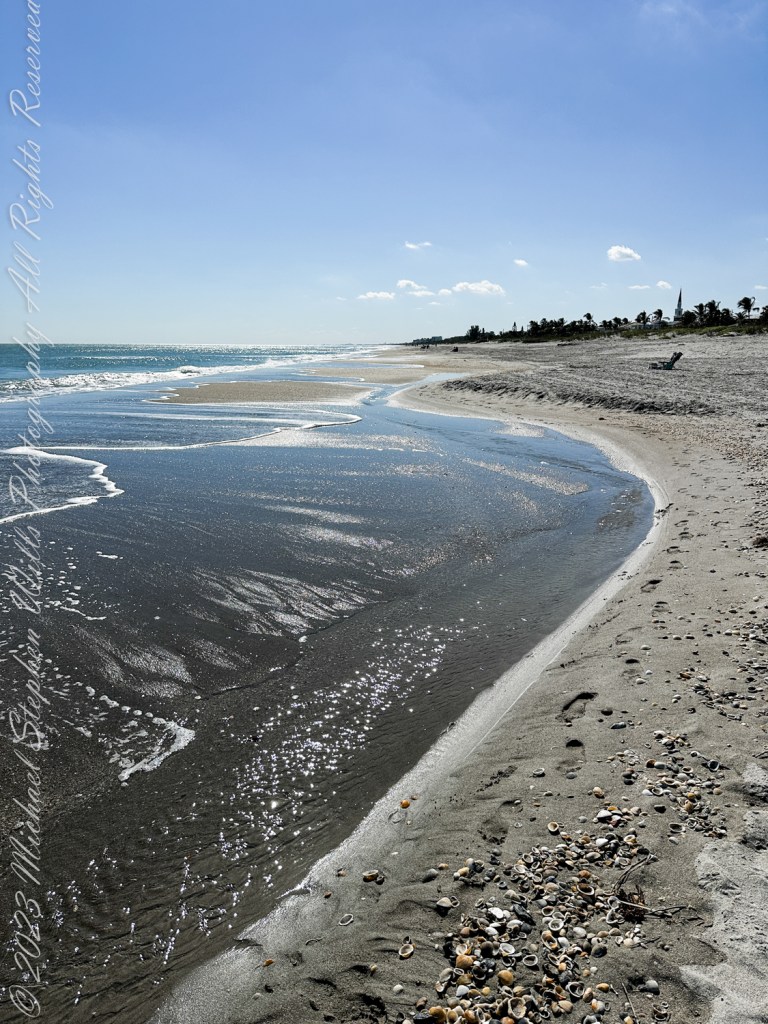
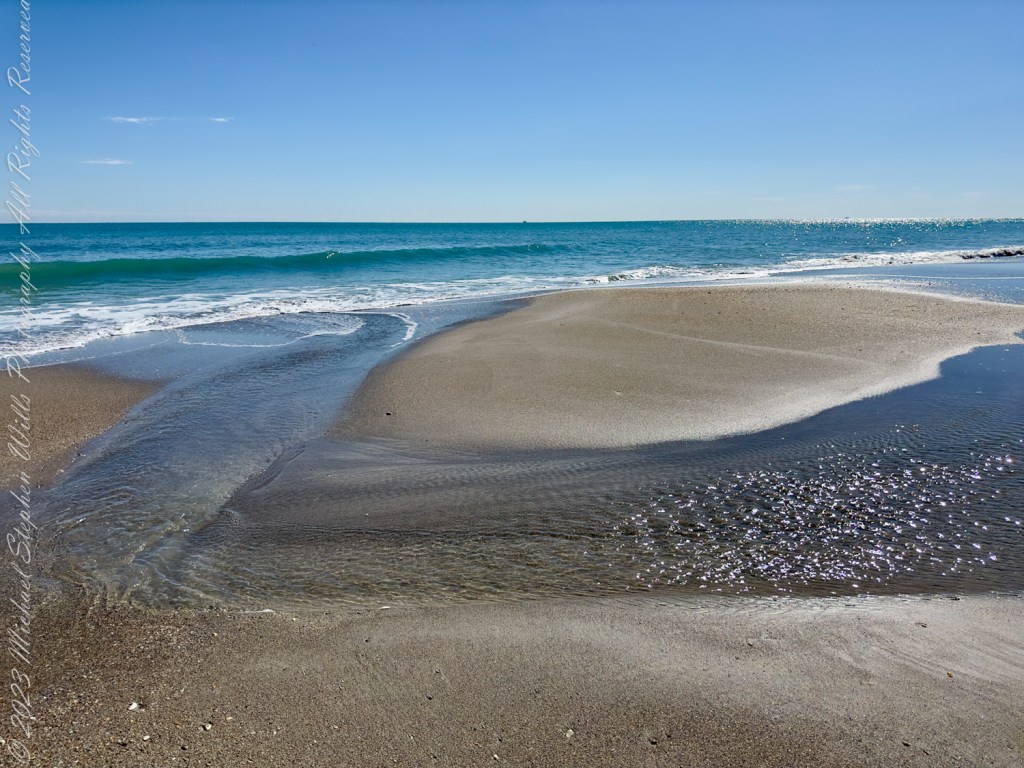
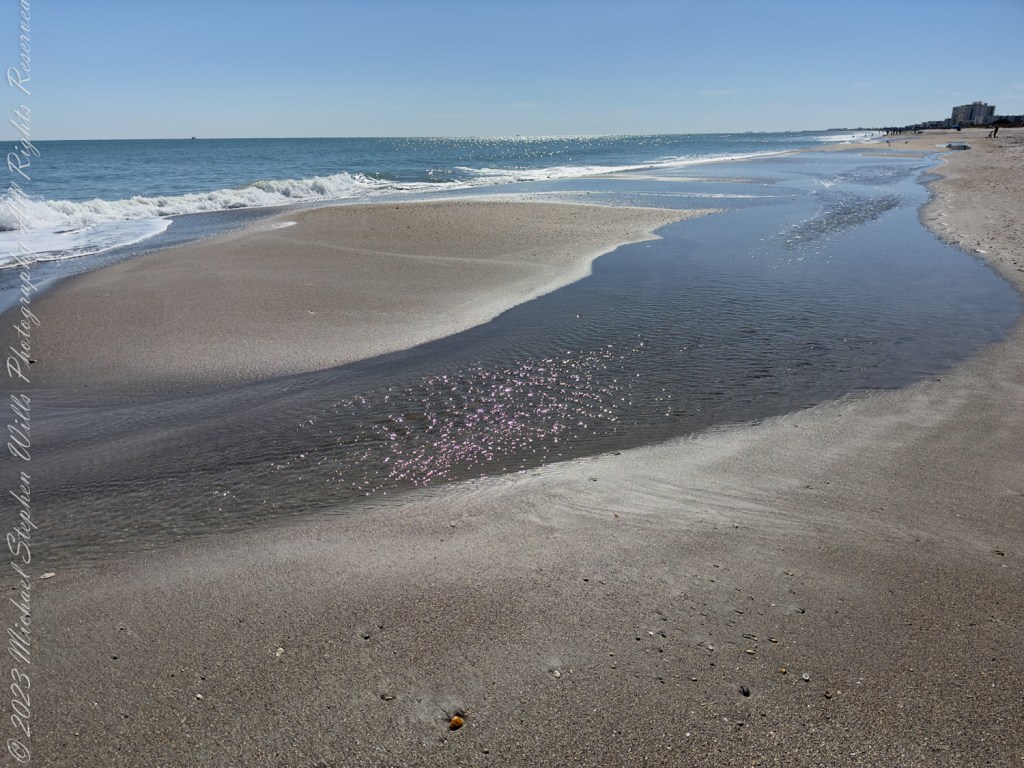
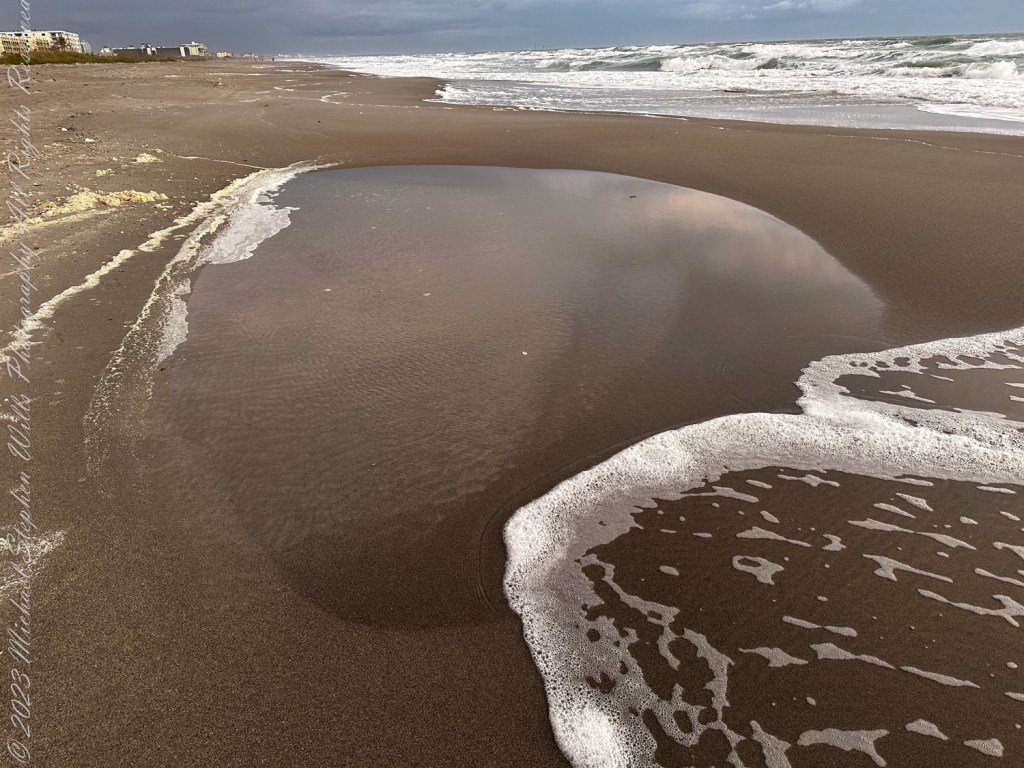
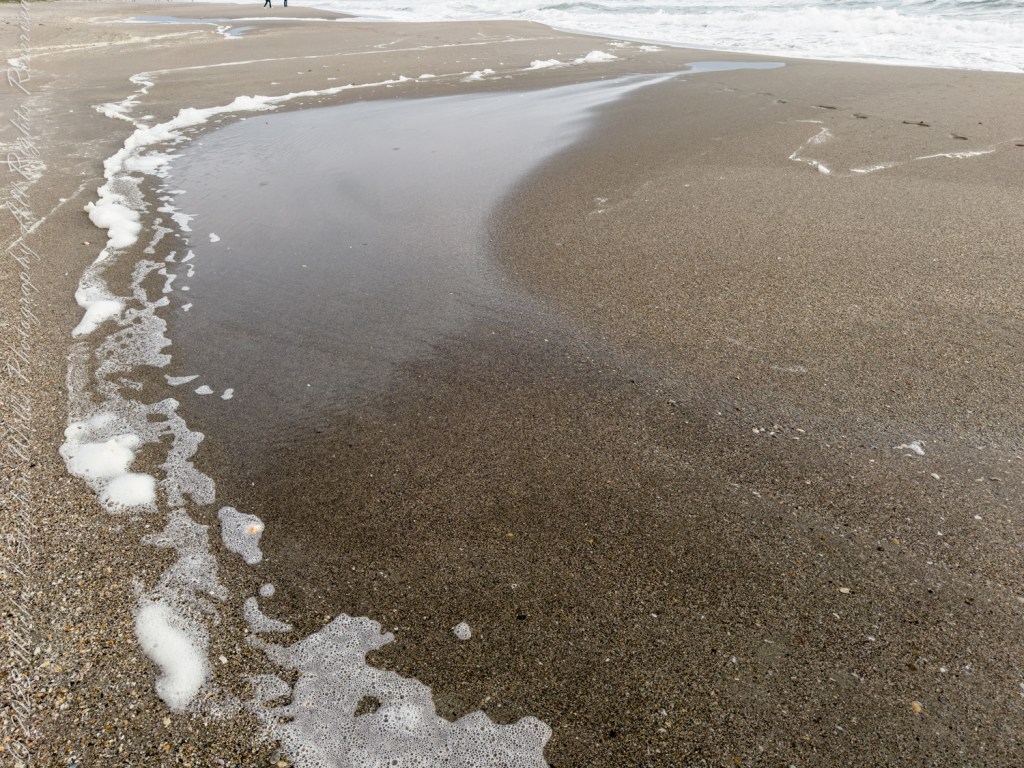
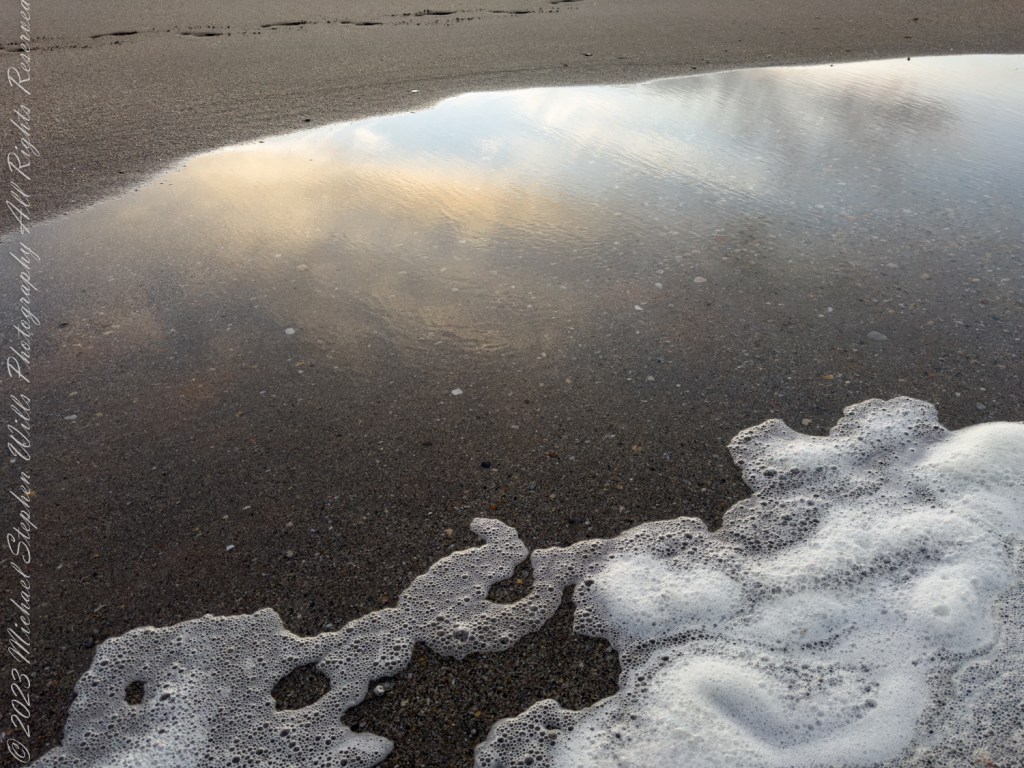
Standing on the sandy shore of Cocoa Beach in January 2024, I observe firsthand the effects of erosion along this stretch of Florida’s coastline. The scenes captured in my photographs show significant changes to the beach’s contours and composition. The shimmering foam, soft sand ripples, and exposed shells are testament to the relentless activity of the sea. Each wave carves away at the beach, leaving patterns in the sand that tell the story of erosion.

Erosion Patterns and Sea-Level Rise

The photographs vividly display the intricate, almost artistic designs formed by erosion. In one, the ripples in the sand reflect the movement of the water, indicating the direction and flow of the tides. The sea has steadily eaten away at the shoreline, pulling the sand away with each ebb and flow.

Studies show that Florida’s Atlantic coast is particularly susceptible to rising sea levels due to its low-lying nature. The Florida Climate Center notes that sea levels have been rising at an average rate of about 1 inch per decade, with projections estimating further acceleration. April 27, 2024 The Washington Post published, “Where Seas are Rising with Alarming Speed,” showing a map with Cape Canaveral / Cocoa Beach showing a 6 – 9 inch sea rise since 2010. This rise compounds the effects of erosion, causing beaches like Cocoa Beach to recede.

Impact on the Beach

I notice shelves of beach sand formerly above the tide now washed over by high tide. New channels forming, cutting across the sand with each tidal cycle. The erosion reveals underlying shell beds and deposits, hinting at the rapid loss of the finer, upper layers of sand. This accelerated erosion poses a significant risk to the stability of the coastal area.

The erosion is not just cosmetic. It impacts local ecosystems and property lines, potentially leading to habitat loss and increased vulnerability to storm surges. Coastal development also exacerbates the problem by interfering with natural sediment replenishment.

Reflections and Future Prospects

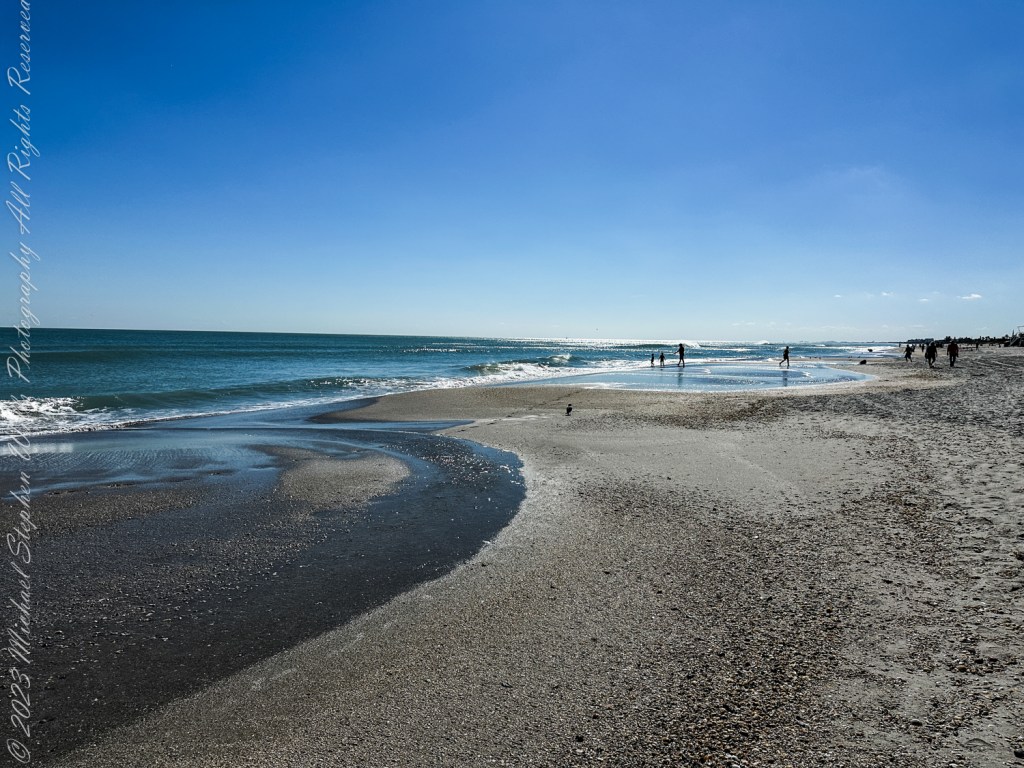
The view across the horizon, where the deep blue sea meets the sky, is a stark reminder of nature’s power and the urgent need for mitigation. As Florida’s beaches face the twin challenges of rising seas and intensifying storms, the communities here must find ways to adapt. Cocoa Beach is a vivid reminder of the coastal fragility and the importance of sustainable management practices.

From a personal perspective, seeing this change compels a deeper reflection on our relationship with nature. The beaches we walk on today may not be here for future generations unless we act decisively to combat climate change. Efforts to build resilience into coastal infrastructure and adopt environmentally friendly practices will play a critical role in preserving this natural beauty.

Conclusion

In summary, Cocoa Beach’s erosion is a direct consequence of rising sea levels and changing environmental conditions. The patterns etched in the sand speak of nature’s resilience and power, while also sounding an alarm about the future. As stewards of the coast, it is our responsibility to take meaningful actions that preserve these shores for generations to come.

References

“Florida’s Sea-Level Rise: The Science and the Solutions,” Florida Climate Center.

“Where seas are rising with alarming speed”, Washington Post, April 29, 2024.”

Copyright 2024 Michael Stephen Wills All Rights Reserved

Rough Surf

beyond belief

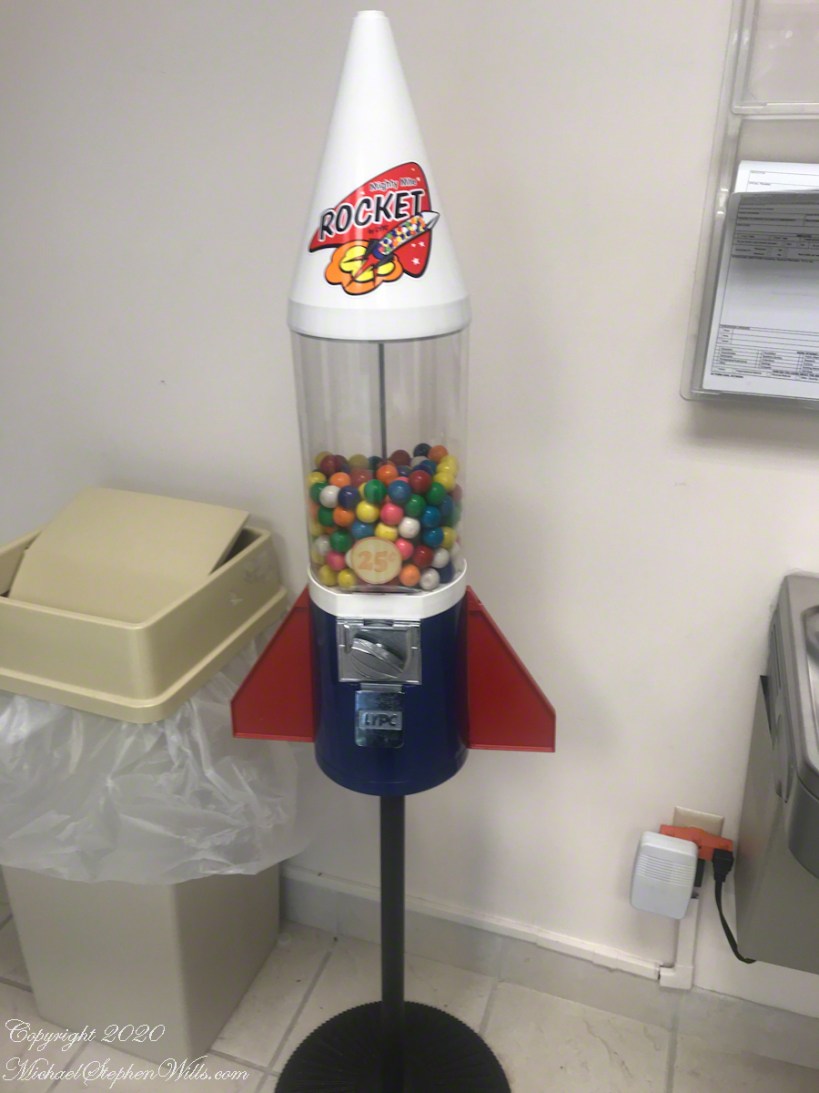
Waves built from onshore wind, fast, steady overnight, through the day from early morning until sunset. Pam and I adapted with a revisit to the Sands Space History Museum, Cape Canaveral just outside the Air Force Station. Click this link for a previous posting, “Cape Canaveral Lighthouse,” first of a series. This post header is a vintage gumball machine from the lobby.

By sunset the waves were roaring. Viewing from the safe distance of our condo porch we spied two surfers incredibly among the waves, taking rides. Waiting and attempting a ride. You can see for yourselves the two tiny dots of humanity, appearing and hidden among the waves. I spot them first and Pam does not believe me, I do not blame her. It is beyond my comprehension people are out there. I cannot recommend the quality of the video from my IPhone, our comments are humorous.

It is difficult, Pam is astounded when they come into view.

He rises briefly only to wipe out in this brief video.

One surfer emerges as his partner persists.

Click this link to visit “Cocoa Beach Kite Skating” on my blog.

Copyright 2024 All Right Reserved Michael Stephen Wills Photography

Pelicans Skimming Waves

Wave Play

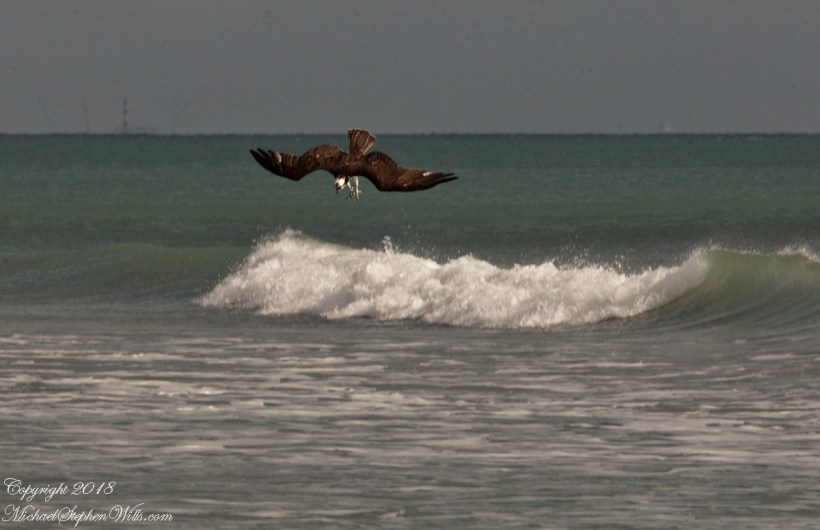
Brown Pelicans (Pelecanus occidentalis) fly as linear flocks of a few individuals, at altitude over the shore, and low over the surf line as seen here. Taken January 27, 2020 with the IPhone 8, there is a the insertion of the modern world as a cruise ship comes into view. The ship departs Cape Canaveral Cruise port for parts unknown.

Pelicans, when skimming the waves solo, fly even closer, and do wipe-out when a wingtip hits the water. This bird successfully negotiates a path through the surf.

Click this link to visit “Queen Victoria Arrival” on my blog.

Copyright 2024 All Right Reserved Michael Stephen Wills Photography

Post WWII Launch Complexes on Cape Canaveral

Ghosts from the future?

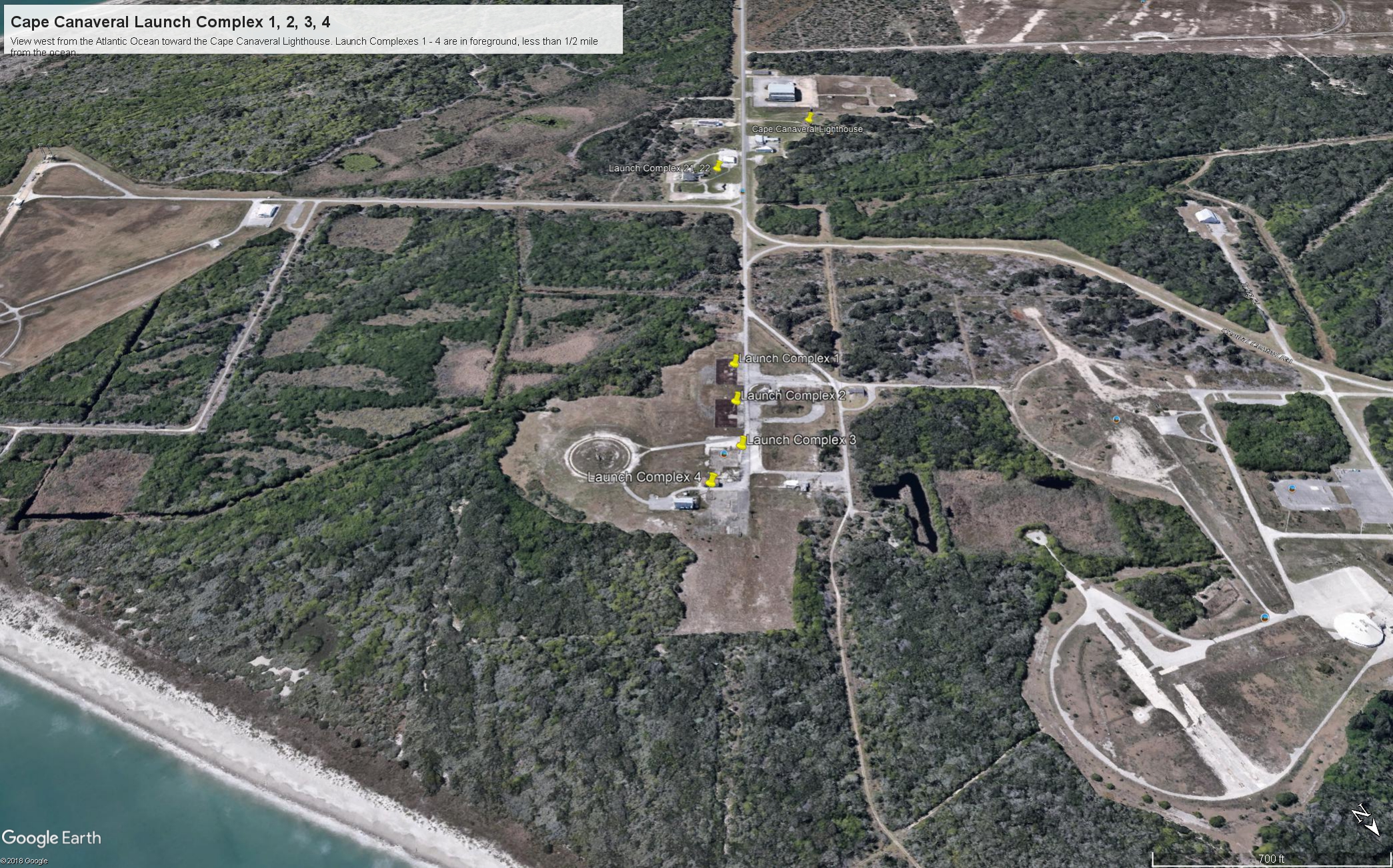
Here is the fifth in a series of photographs centered on the early history of space flight on Cape Canaveral mostly taken during a tour organized by the Cape Canaveral Lighthouse Foundation. “Google” the foundation for details of future tours. Here we explore the sites of the first launches on the Cape, Launch Complexes 1, 2, 3, 4. (LC 1 – 4).

From Vengeance To Space

Our bus proceeded east on Lighthouse Road past Launch Complexes 21 and 22 in less than half a mile we were within the first sites of the United States Space age, sites with the lowest numbers, LC 1 – 4.

Click Any Image for a larger viewe

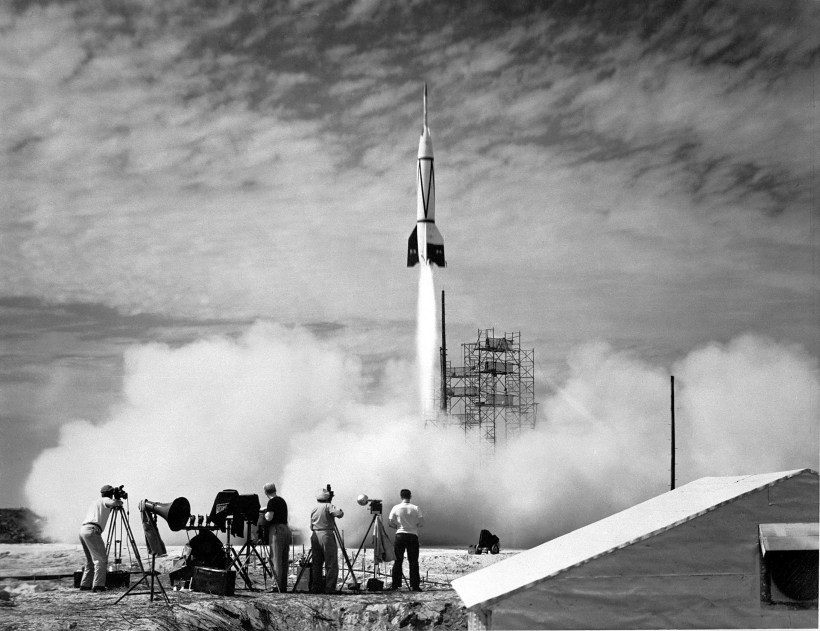
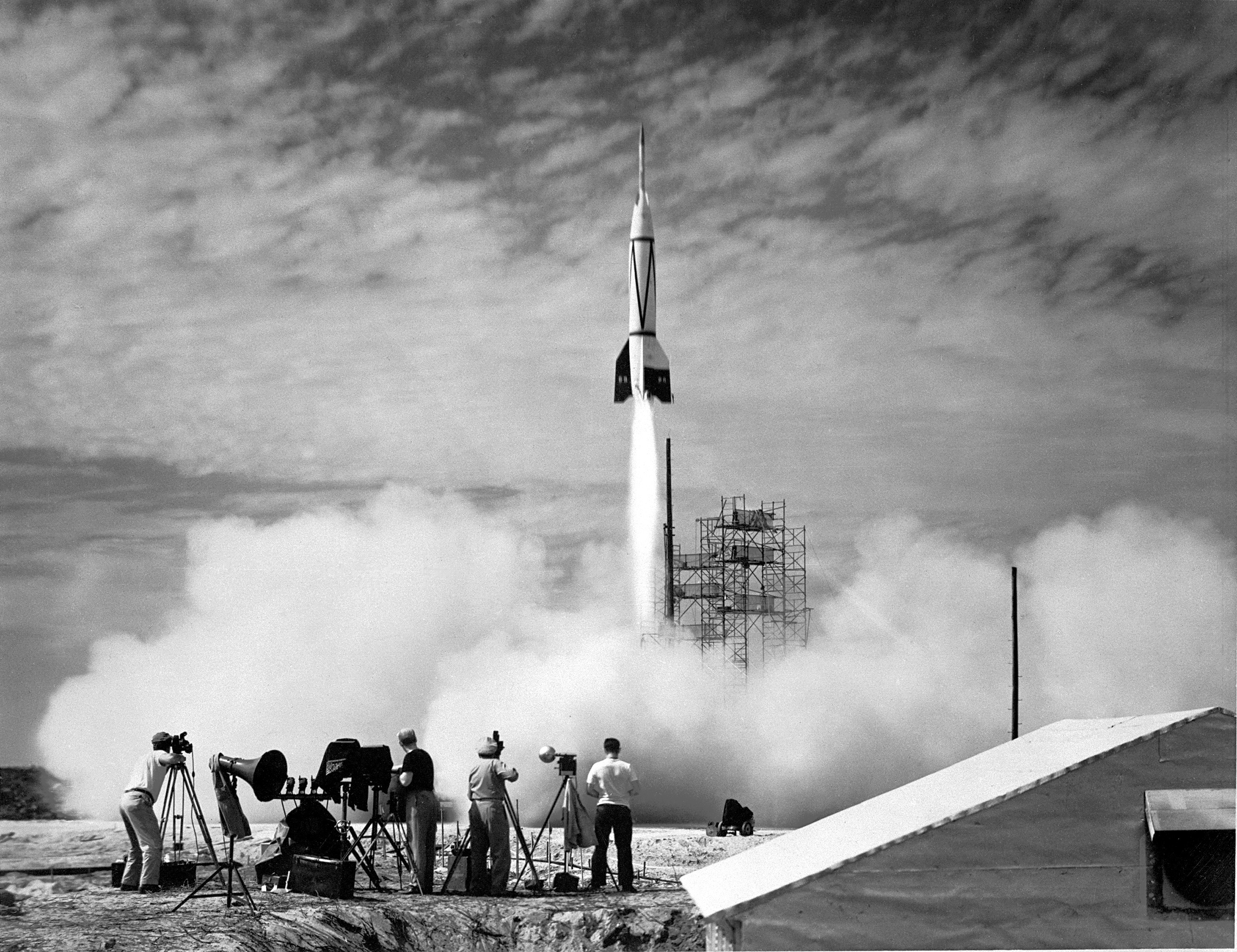
If, instead of distance, the bus traveled back in time 68 years to July, 1950 we would be witness to the first United States space launch of the two-stage “Bumper 8”, a former “V2” missile topped by a WAC Corporal that reached 248 miles above the earth, about where the International Space Station circles now.

July 1950 Bumper 8 Launch
By NASA/U.S. Army – NIX 66P-0631, GPN-2000-000613; http://solarsystem.nasa.gov/multimedia/display.cfm?IM_ID=385, Public Domain, https://commons.wikimedia.org/w/index.php?curid=2892820

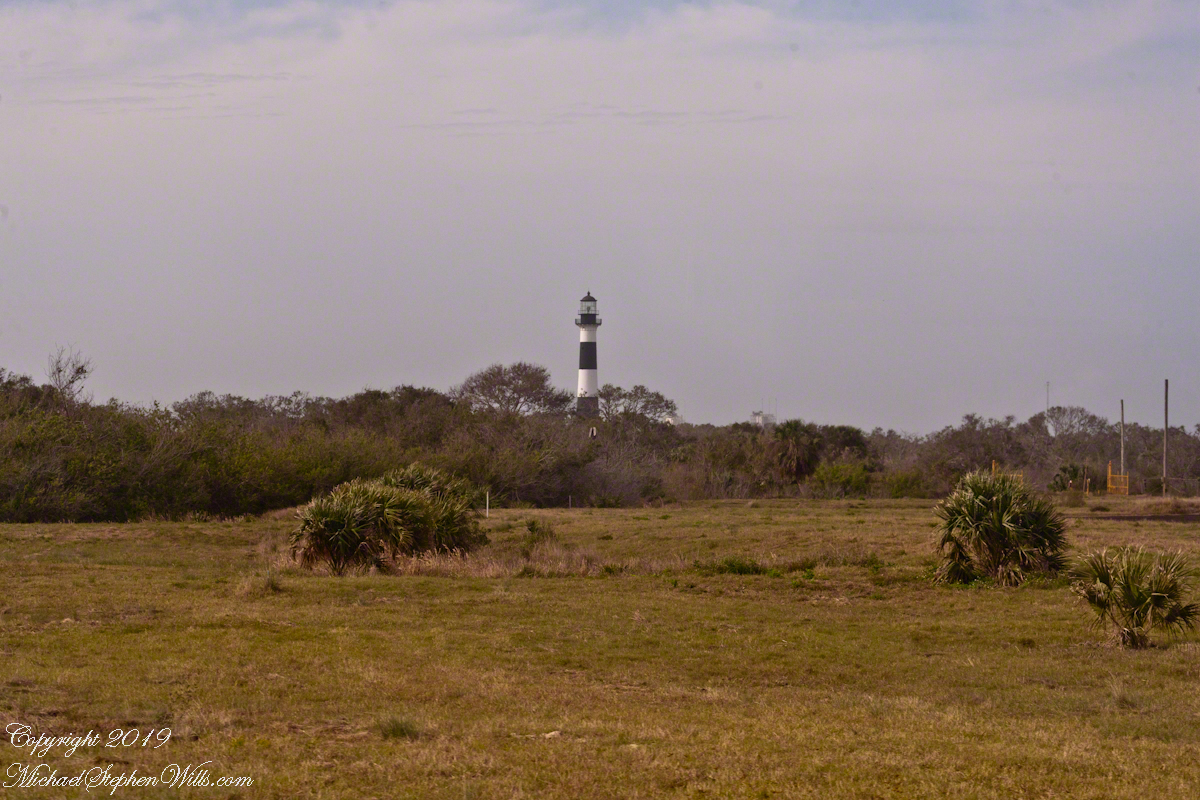
Almost certainly, the man who designed and directed the production of the Nazi V2, Werner vonBraun, was perched on the lighthouse a half-mile distant.

Cape Canaveral Lighthouse from Launch Complex 3

The Nazi “vengeance weapon 2”, the V2, a device so horrifying British authorities claimed the first V2 attacks to be “gas explosions” rather than admit a Nazi weapon descended without warning. Beginning September, 1944, over 3,000 V2’s landed on London, Antwerp and Liège resulting in an estimated 9,000 deaths, mostly civilians. 12,000 forced labor and concentration camp slaves died in the construction of the production facilities captured by the Soviet Union during the collapse of the Nazis. These victims, arms linked, will form a circle 15.9 miles in circumference around the Bumper 2 launch.

The 21,000 V2 victims, linked arm in arm, make a circle 15.9 miles in circumference.

von Braun and key V2 personnel surrendered to the Americans and, along with enough parts to construct 80 V2s, were taken to the United States. His direction of US missile development lead eventually to the enormous Saturn rocket that lifted three men to the moon, so good came from our bet on vonBraun and the V2.

Observation Bunker

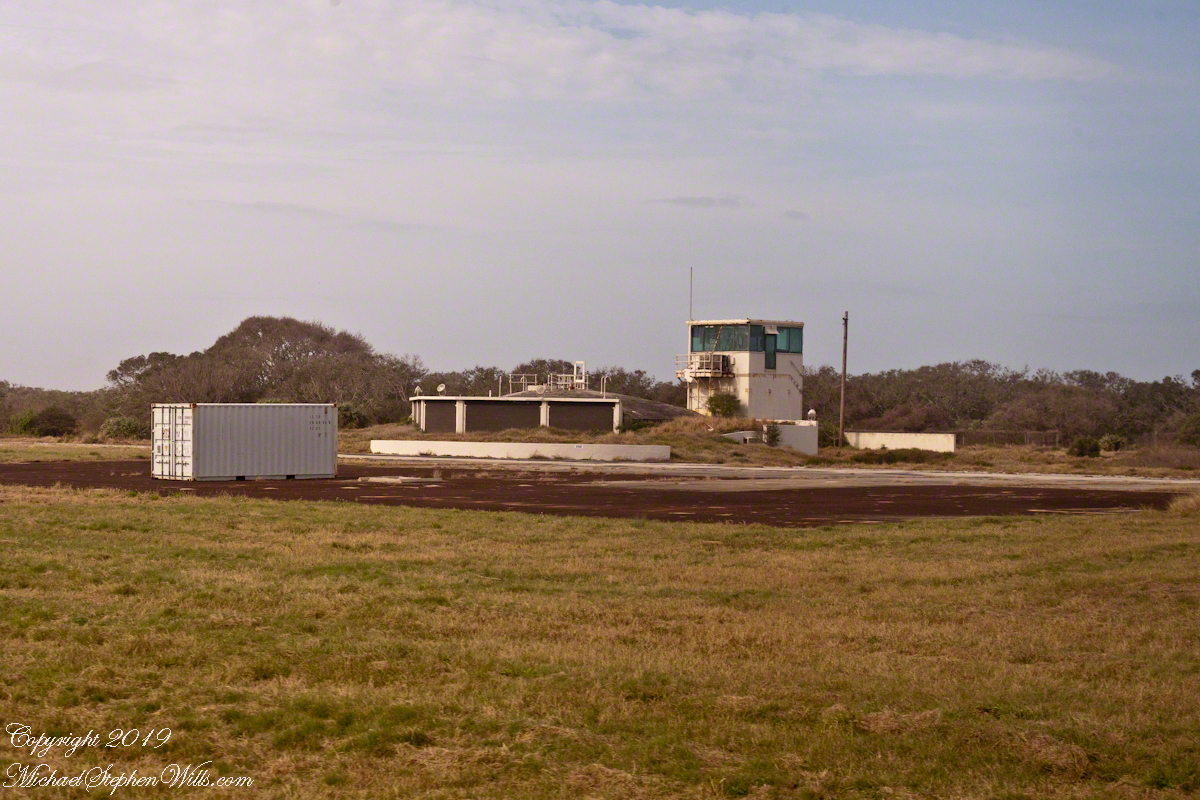
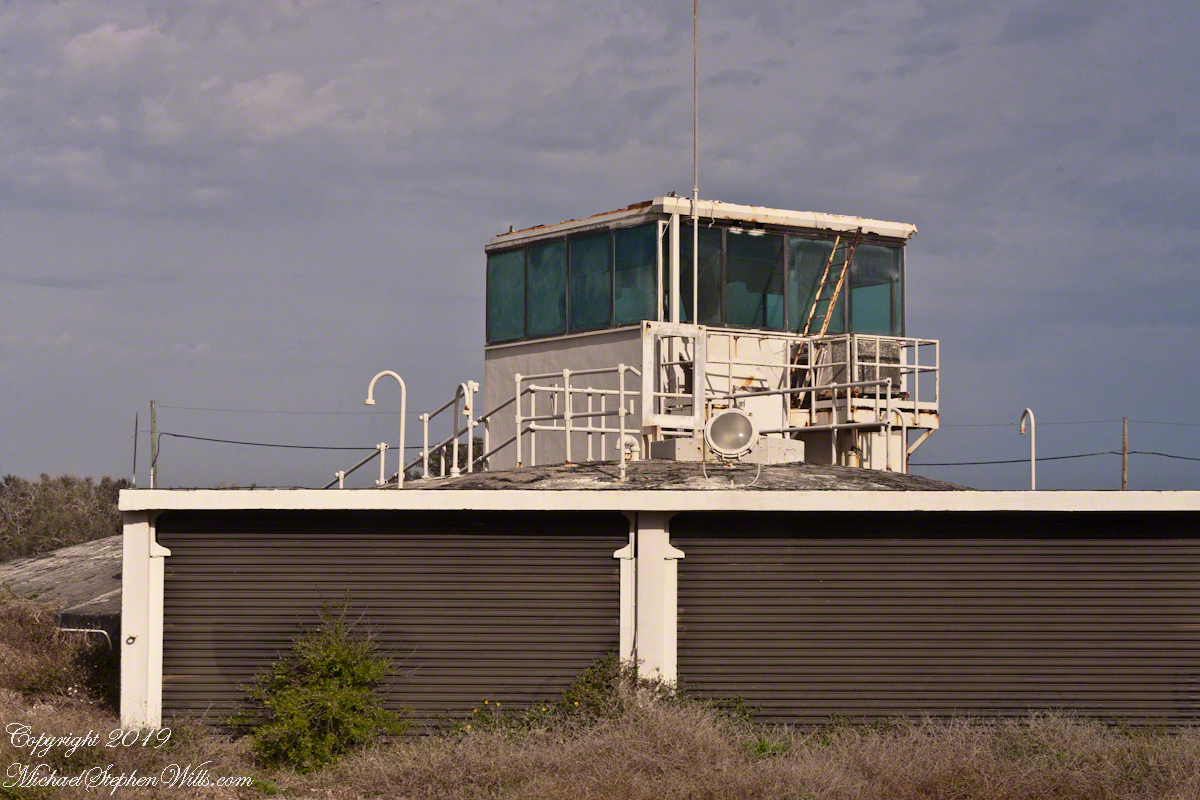
In January, 2018, firmly in the present, our bus approached these now “deactivated” sites driving down Lighthouse Road. Confined to the bus, I used my Canon EOS 1Ds Mark III and the EF 70-300mm f/4-5.6 IS USM lens to capture these scenes.

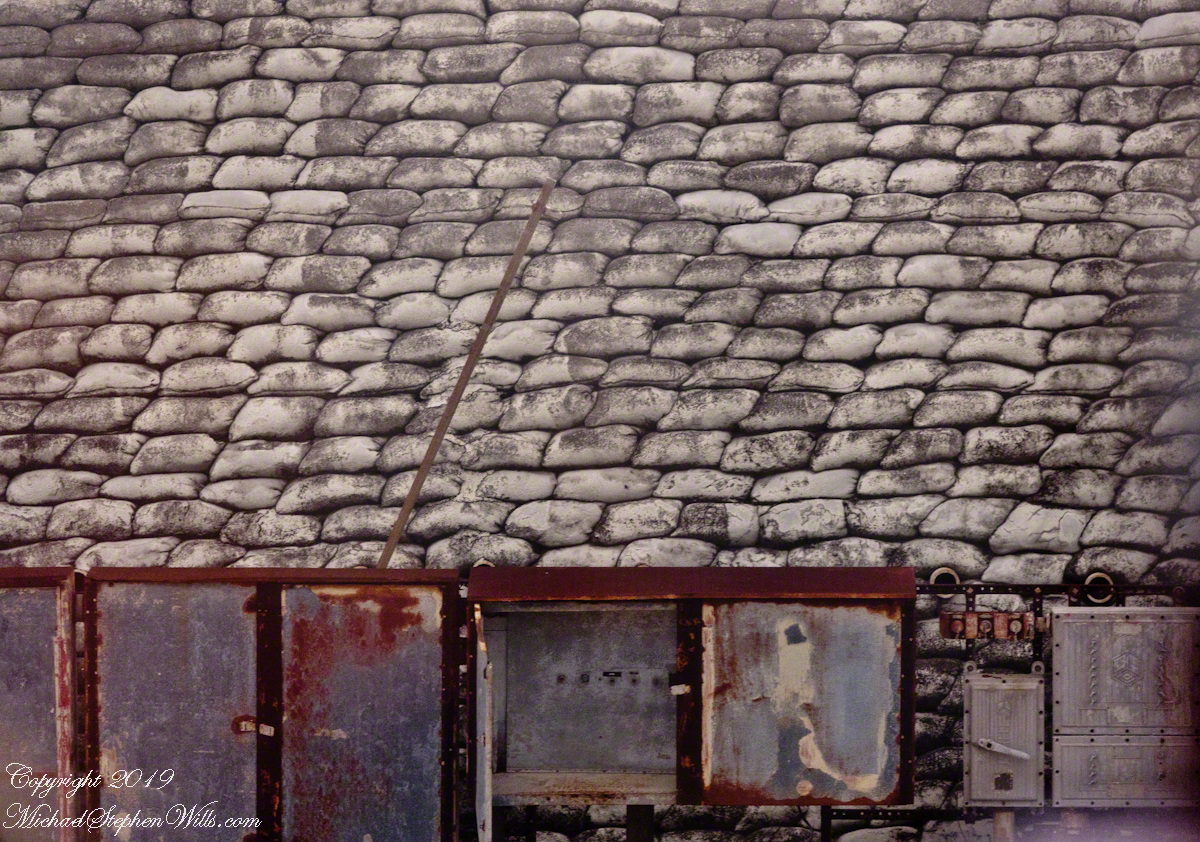
Looking across Launch Complexes 1 and 2 to Lighthouse Road and the tower. An observation bunker
Observation Bunker from Launch Complex 3, looking across Launch Complex 1.

I can almost see someone behind the glass, enjoying a blast of air-conditioned air, dry and cool.

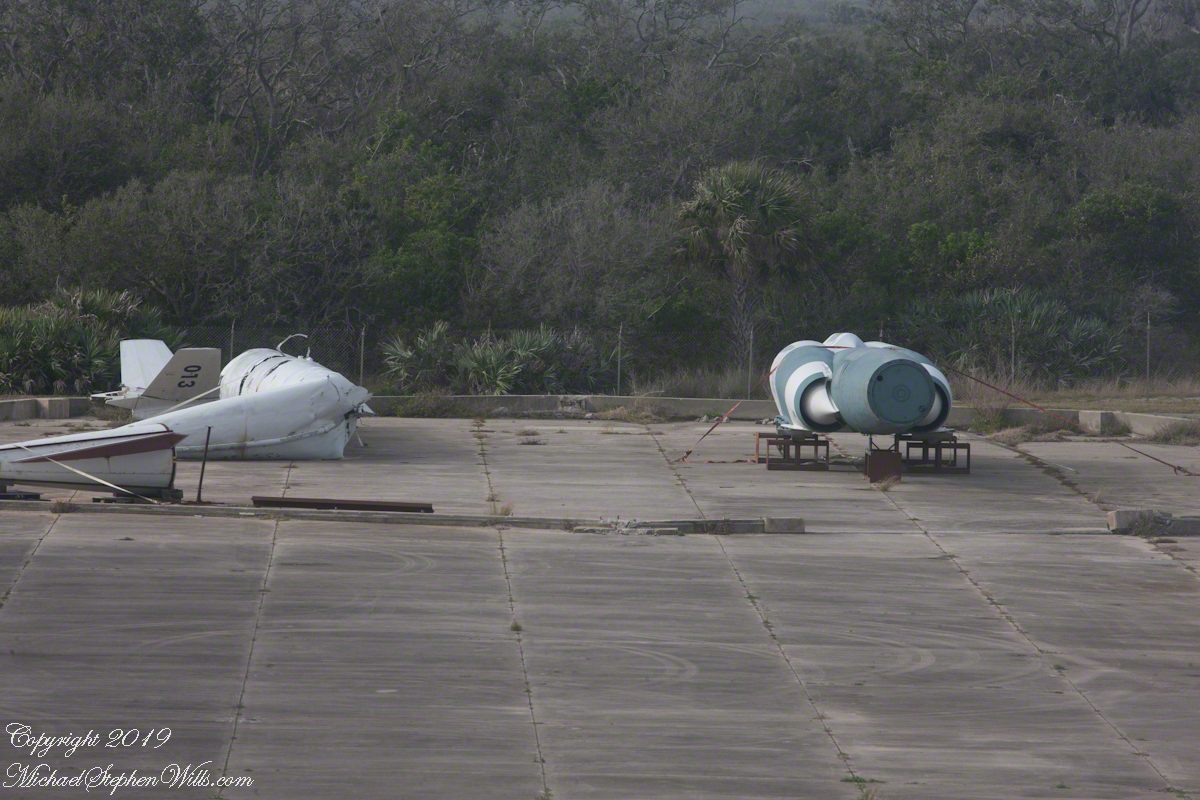
Litter on and around Launch Complex 4

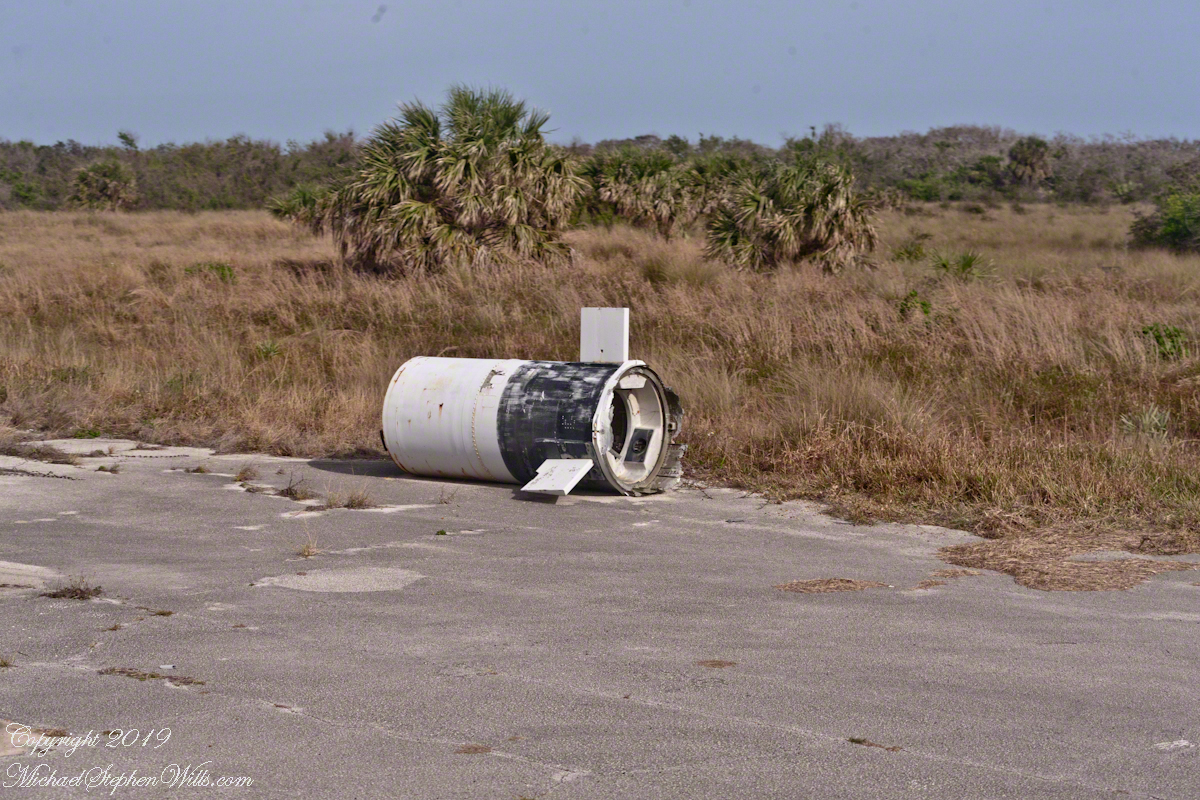
Missile Housing without Engine
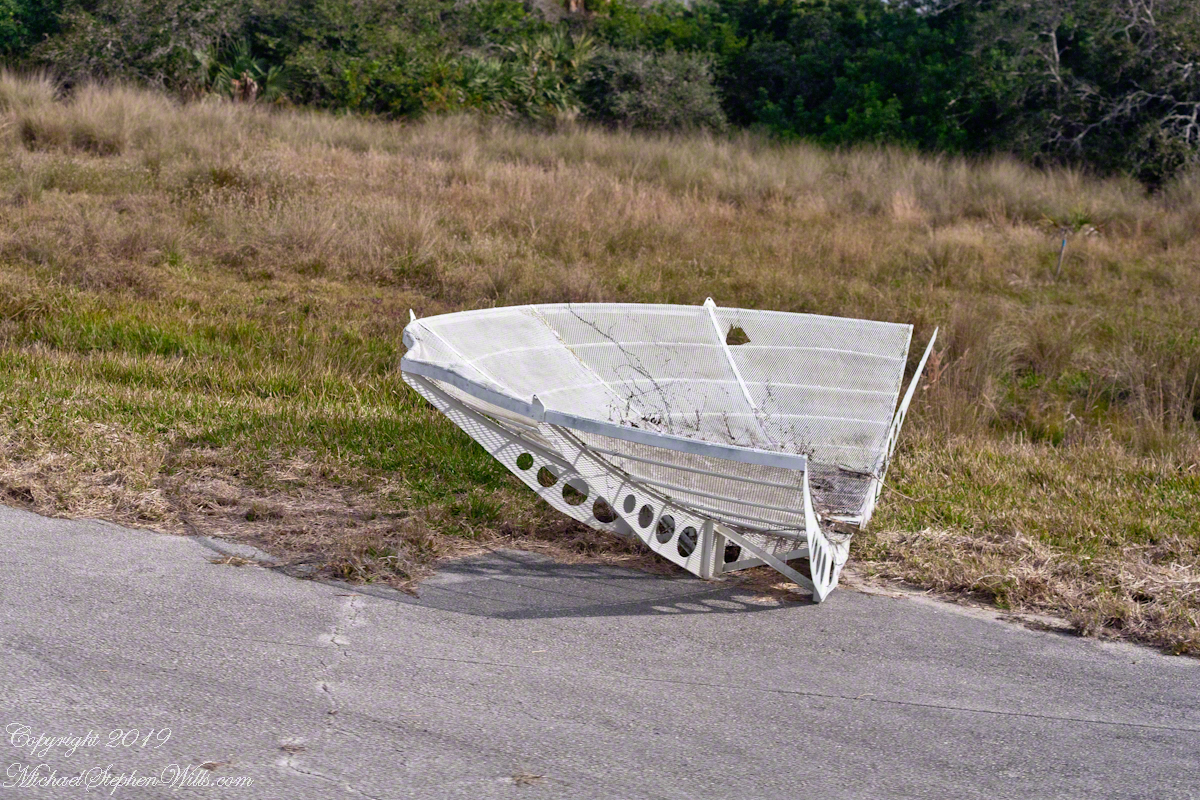
Radar Parabola Fragment
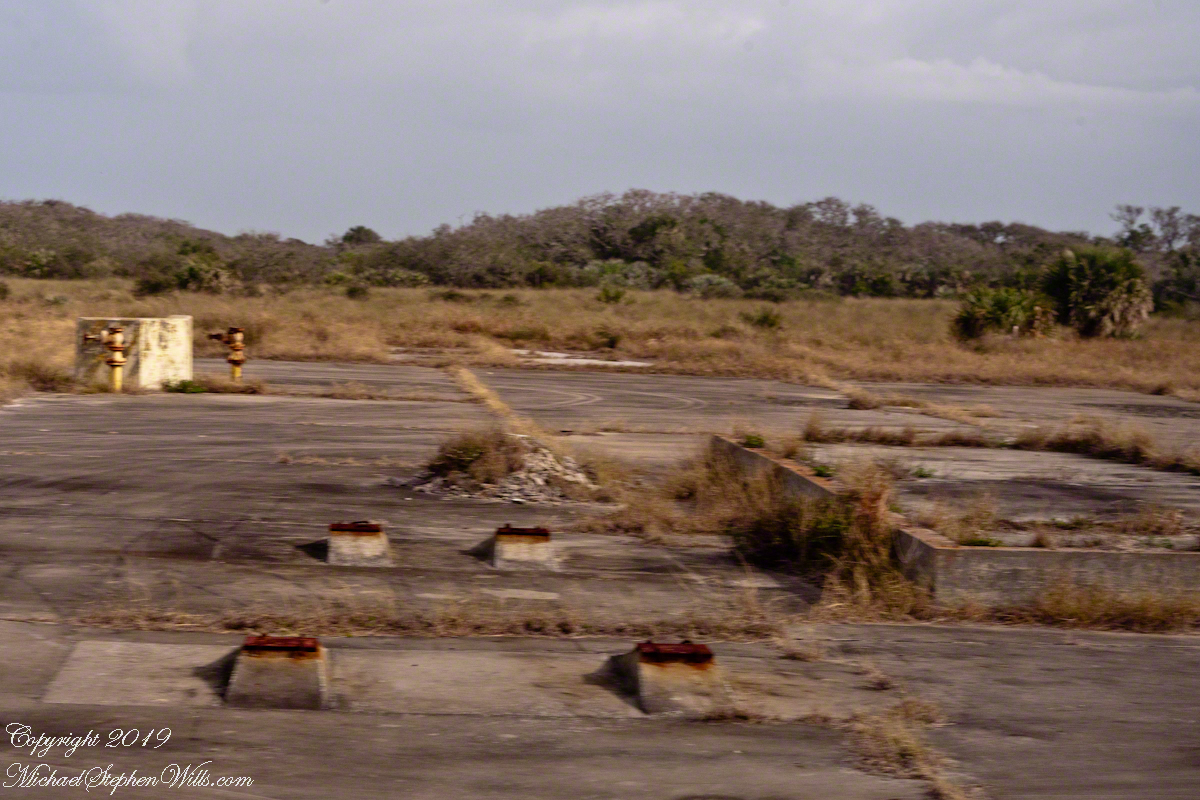
Cement Blacked by Rocket Launch Blasts

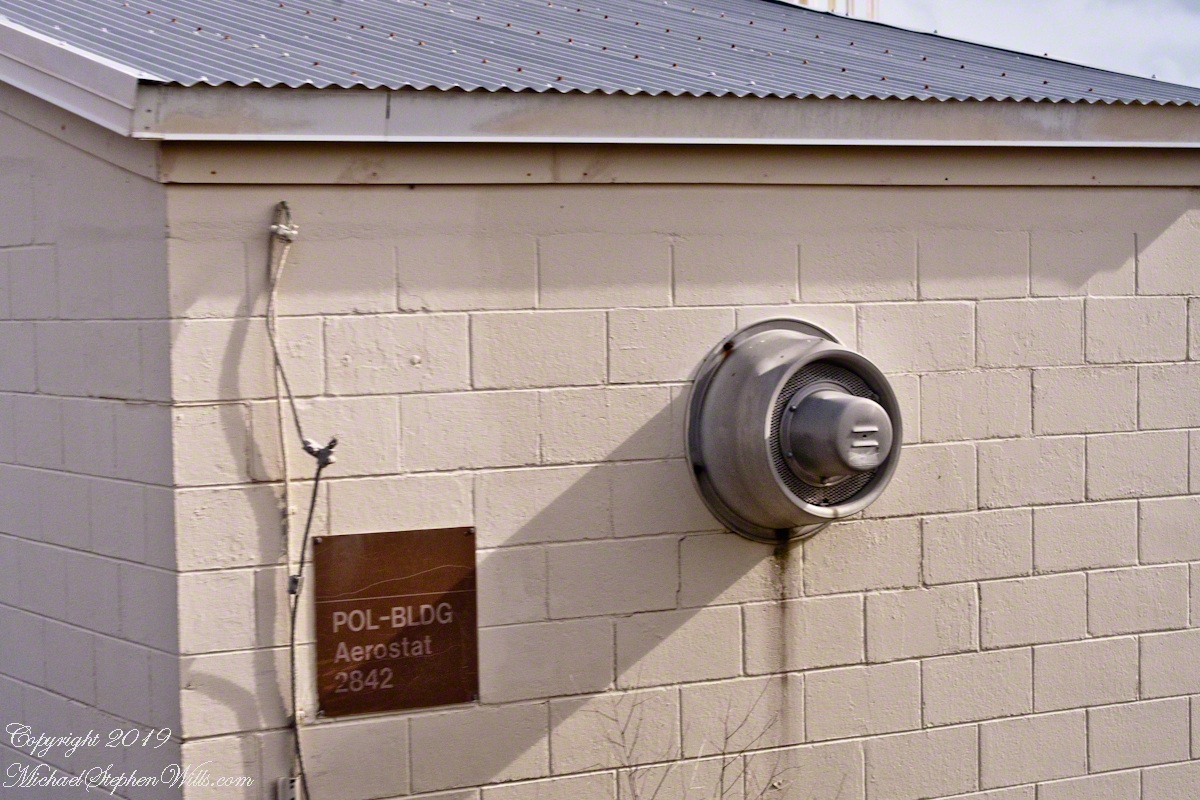
Aerostat

From 1950 into the 1960’s LC 1-4 saw launches of cruise missiles, some of which were able to maneuver and land on the “skid strip” you can pick out on the “21,000 V2 Victims” image, above. A positive discovery from my research on wikipedia the weapon systems tested here were not fired in anger. Continued development in other places lead to production of generations of cruise missiles launched by Presidents Clinton and Bush against Afghanistan, Iraq and (??) other targets. What victim ghosts, arms linked in ever growing circles, are lurking in our future?

A building on LC 4 has the designation “Aerostat”, one of the last projects supported. I saw an aerostat in action in the early 2000’s over Fort Huachuca, Arizona near the border with Mexico. An aerostat is a flying craft that does not rely on moving air to achieve lift, balloons for example.

The Goodyear blimp is a memory from my childhood on Long Island, the Fort Huachuca aerostat was a smaller version, outfitted with advanced technology for monitoring the surrounding environment. “Google” aerostat mexican border to learn more about the current deployment.

Another view of the abandoned aerostat building on LC 4

With the development of Intercontinental Ballistic Missiles (ICBMs) the facilities of LC 1 – 4 became obsolete. ICBMs are a theme of the next installment of this series.

ClickMe for another post in this series, “Mercury 7 Pre-Launch Facilities.”

ClickMe for the first post in this series, “Cape Canaveral Lighthouse.”

Sources of information for this post: I used information from the Wikipedia site for the key words V-2, Launch Complex 1, Launch Complex 2, Launch Complex 3, Launch Complex 4. The Bumper 8 launch photograph caption includes a source citation.

Copyright 2024 Michael Stephen Wills All Rights Reserved.

Cruise Missiles

Decoys and Cruise Control

Here is the fourth in a series of photographs centered on the early history of space flight on Cape Canaveral mostly taken during a tour organized by the Cape Canaveral Lighthouse Foundation. Google the foundation for details of future tours. Here we explore the sites closests to the Lighthouse: Launch Complex 21 and 22.

“Vengance Weapons” re-purposed

Vergeltungswaffe 1 (Vengance Weapon 1 AKA V-1), produced at Peenemünde on the Baltic Sea was first used against Great Britan by Germany one week after the D-day landings. 8,025 of these flying bombs, the first cruise missles, caused the death of 22,892 people, mostly civilians. The first cruise missles for the USA were developed less than 1,000 feet away from the lighthouse. After touring the lighthouse we boarded the bus to visit these sites, Launch Complex 21 and 22.

Click Any Image for a larger viewe
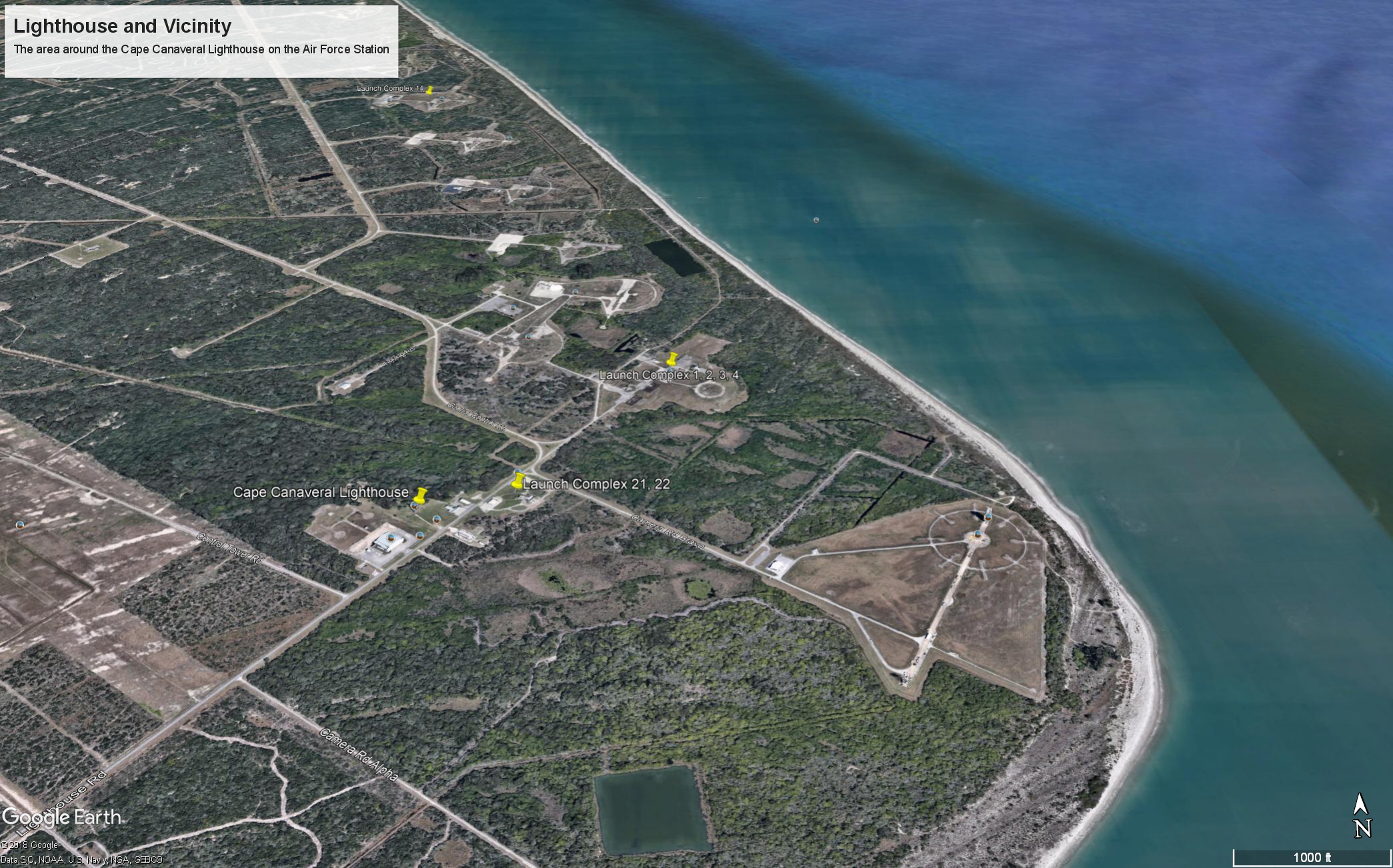
Launch Complex 21 and 22 are marked with a labled “pin” on this image from Google Earth.

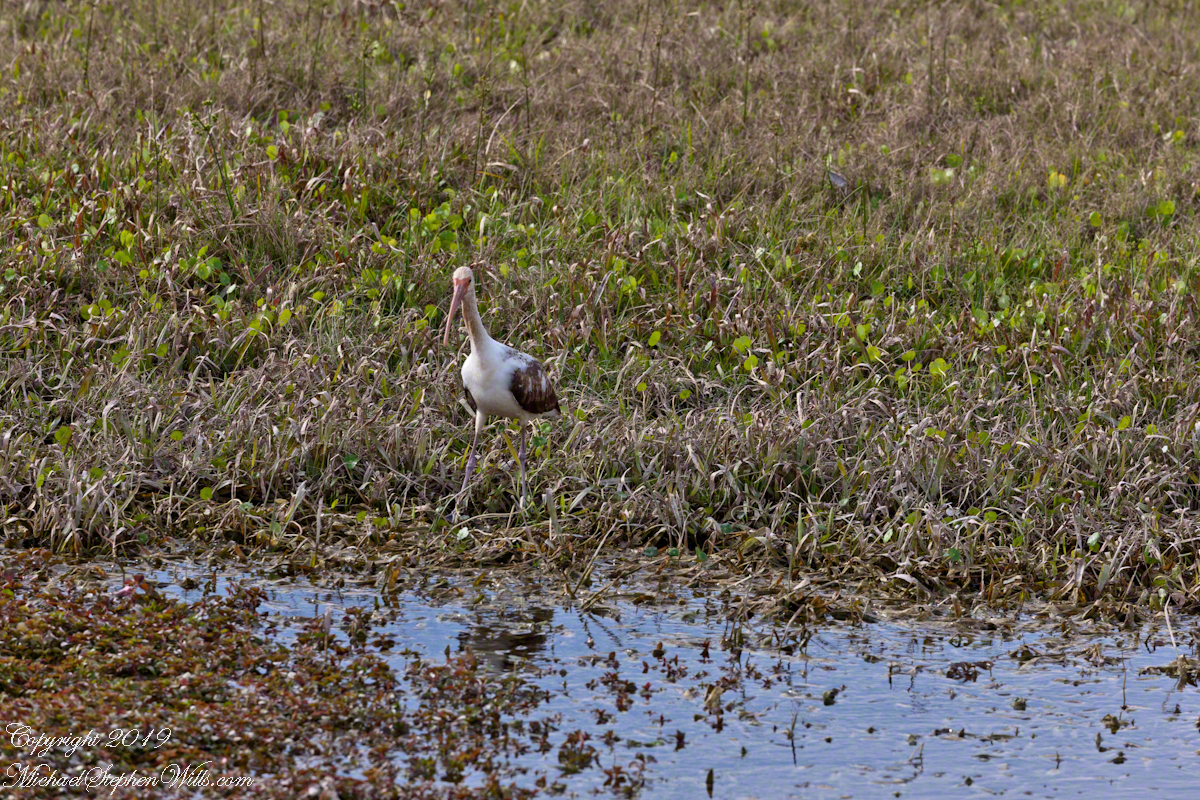
Nature abounds in Cape Canaveral Air Force Station. This ibis hunted near the lighthouse on our way to Launch Complexes 21,22.

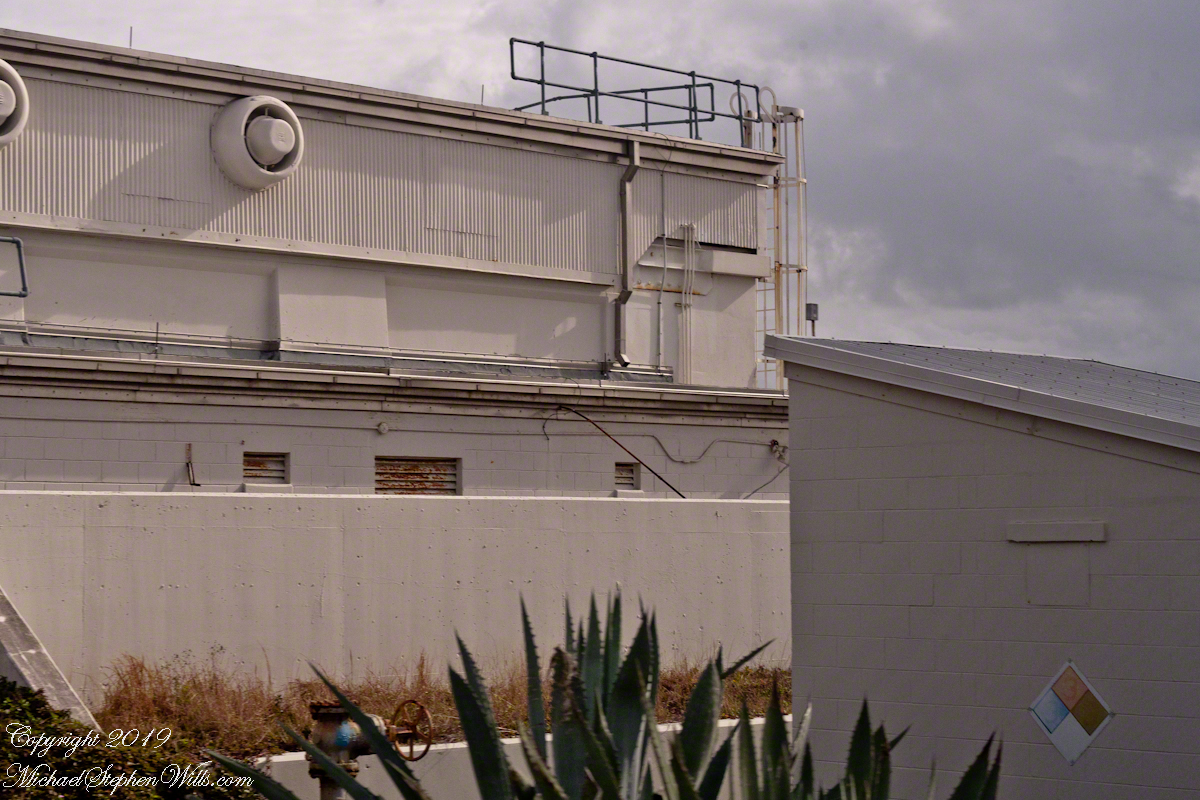
We passed close to the blockhouse first viewed in my post, “Lighthouse and Rockets,” and I captured this detail of the long abandoned structure. The last test launch of a Mace missle was June, 1960.

This wreckage photograph was part of my,“Lighthouse and Rockets” post. It was taken from a lighthouse portal. It is a type of cruise missle, although I cannot identify the exact type, comparing the engine, on the right, with available photographs of the “Bull Goose” and “Mace” missles developed here.

Bull Goose and Mace

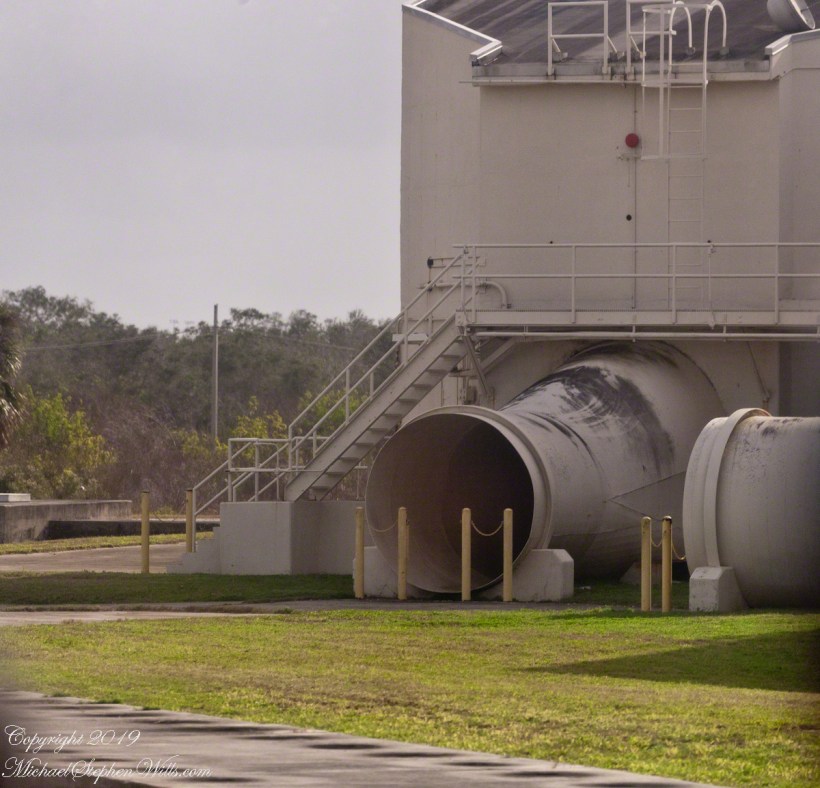
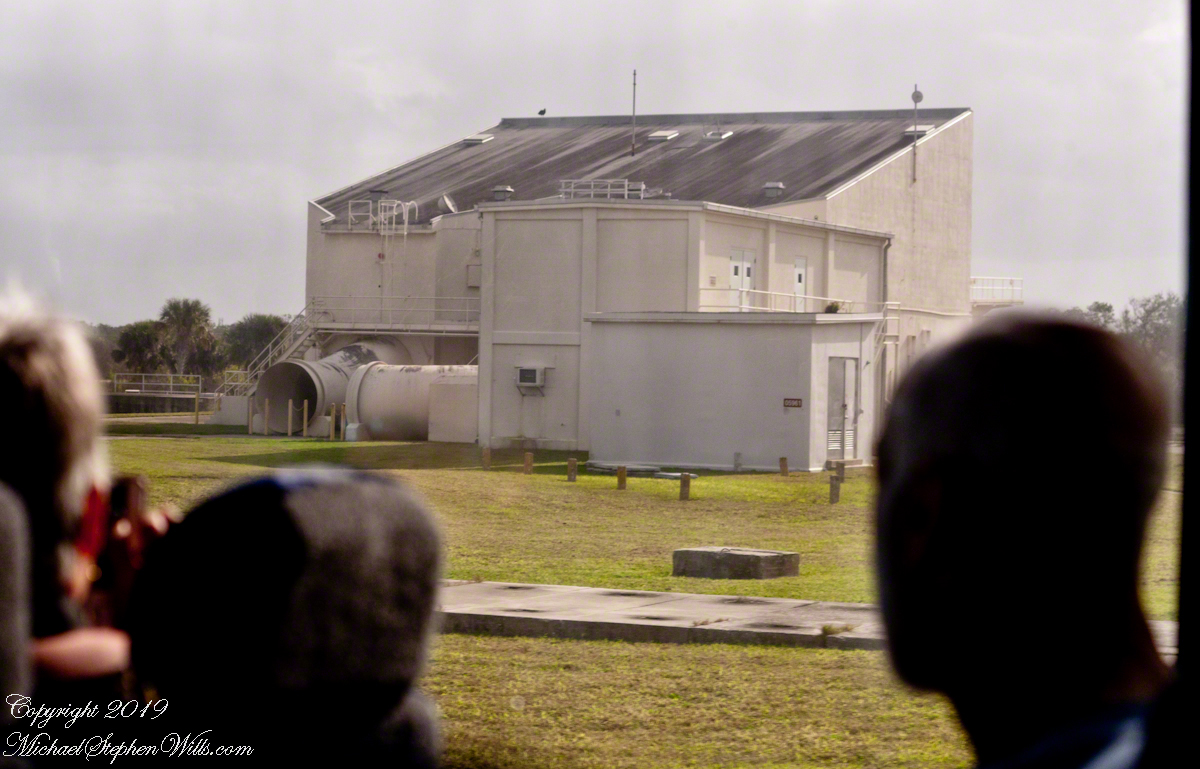
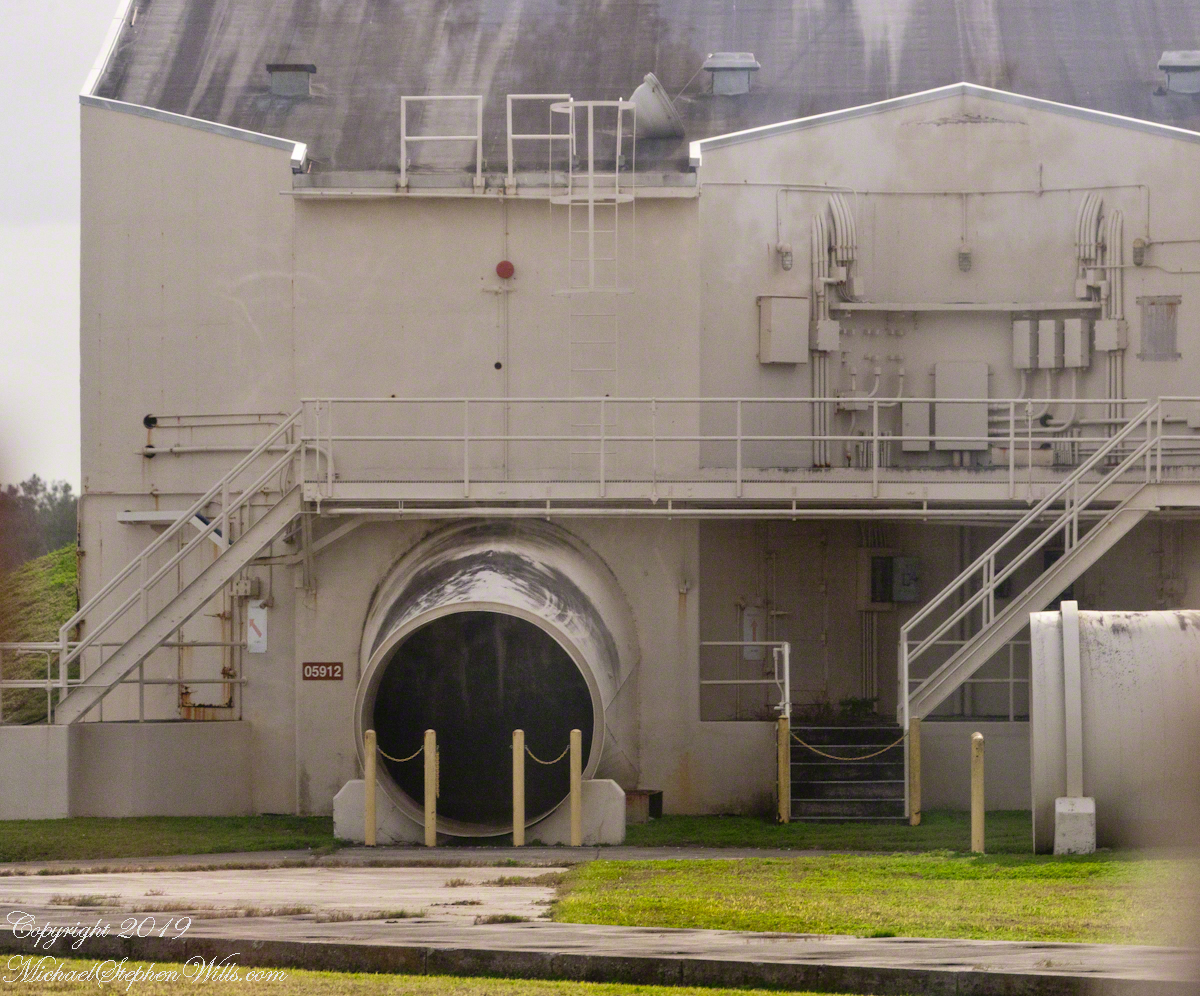
Rail launched, as was the German V-1, the missles developed here were called “Bull Goose” and “Mace.” Bull Goose was a delta winged craft intended as a decoy, to appear on radar as a strategic bomber during a nuclear attack. At that time, the rails were in the open. The building here was a revampment of the site for development of the Mace. The other side of this structure is open, the launch rail pointed up from the rear. There are two launch rails, numbered 1 and 2. The building placard is “05961,” the numeral “1” designates site 1. The use of numbers of designate a site is unusual. Letters are used elsewhere on Cape Canaveral and Kennedy Space Center.

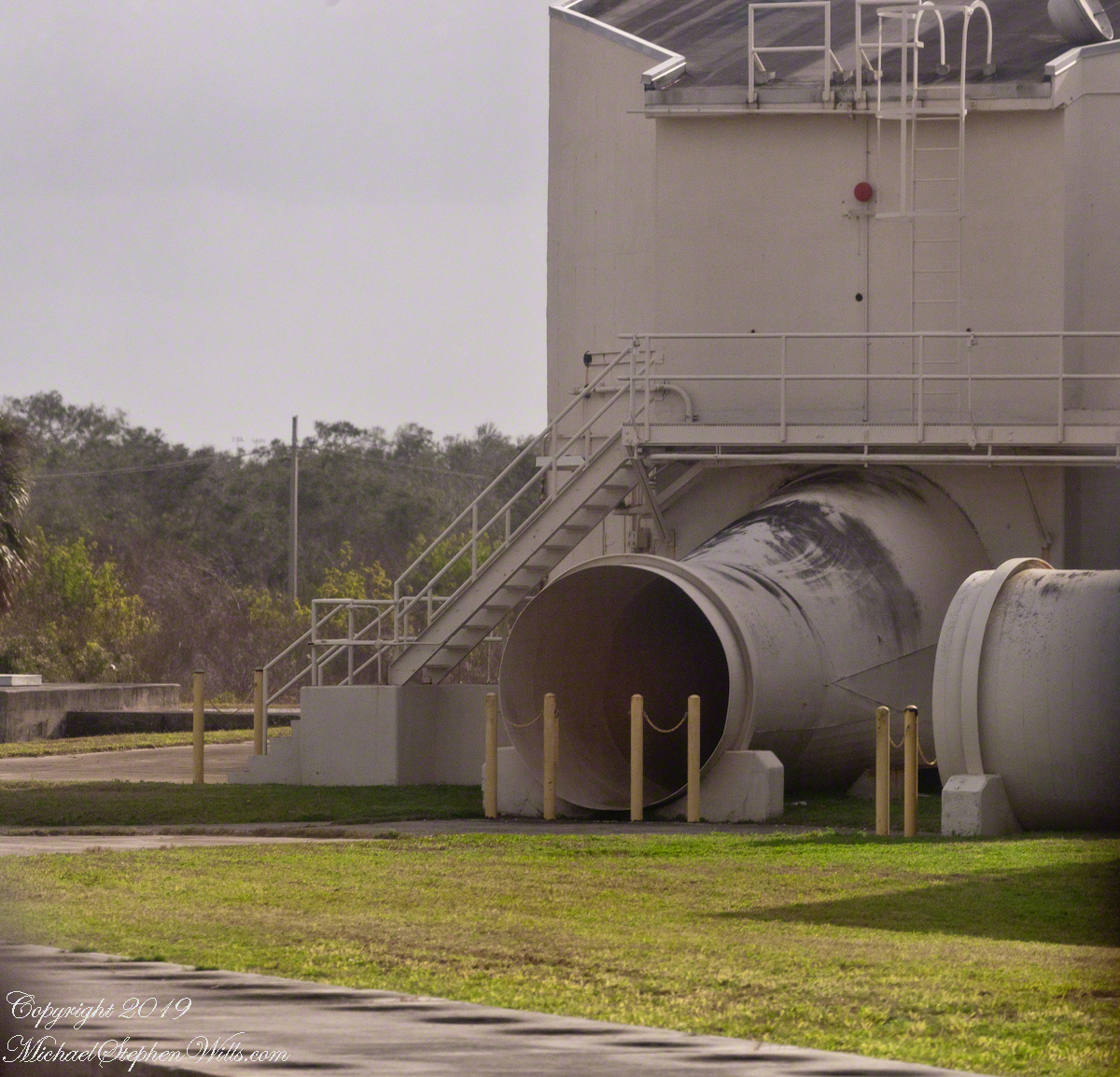
The powerful rocket exhause was directed though these pipes. Site 1 is on the right.

Guidance or “Cruise Control”

Navigation is a crucial requirement for cruise missles. The Bull Goose used a gyroscope with no reference to surroundings. The guidance system held the launch bearings, a successful flight was completed within 115 nautical miles of the target.

If deployed, the plan was for thousands of these missles to launch 1 hour before the attack craft set out and 1 hour after. The missles were not armed, but would descend in the thousands around the targets. Similar to what the Germans did to civilians in England.

After three years and 136.5 million dollars the Bull Goose was cancelled because it could not simulate either the B-47 Stratojet or B-52 Stratofortress nuclear bomb delivery aircraft. Not a single decoy was fired in anger.

The building sign “05912” identifies this exhaust tube as being launch site 2.

The Mace, for which this building was created, used a guidance ATRAN (Automatic Terrain Recognition And Navigation, a radar map-matching system). The map was produced on a 35 mm film strip carried on the missle, the live radar returns were “matched” against the film with course correction made for differences. The Mace was of limited usefulness due to the lack of radar maps for target areas within the Soviet Union. The Mace was deployed to Germany and South Korea until phase out in 1969.

ClickMe for the first post in this series, “Cape Canaveral Lighthouse.”

Sources of information for this post: I used information from the Wikipedia site for the key words V-1, Launch Complex 21, Launch Complex 22, Mace, Bull Goose.

Copyright 2024 Michael Stephen Wills All Rights Reserved.