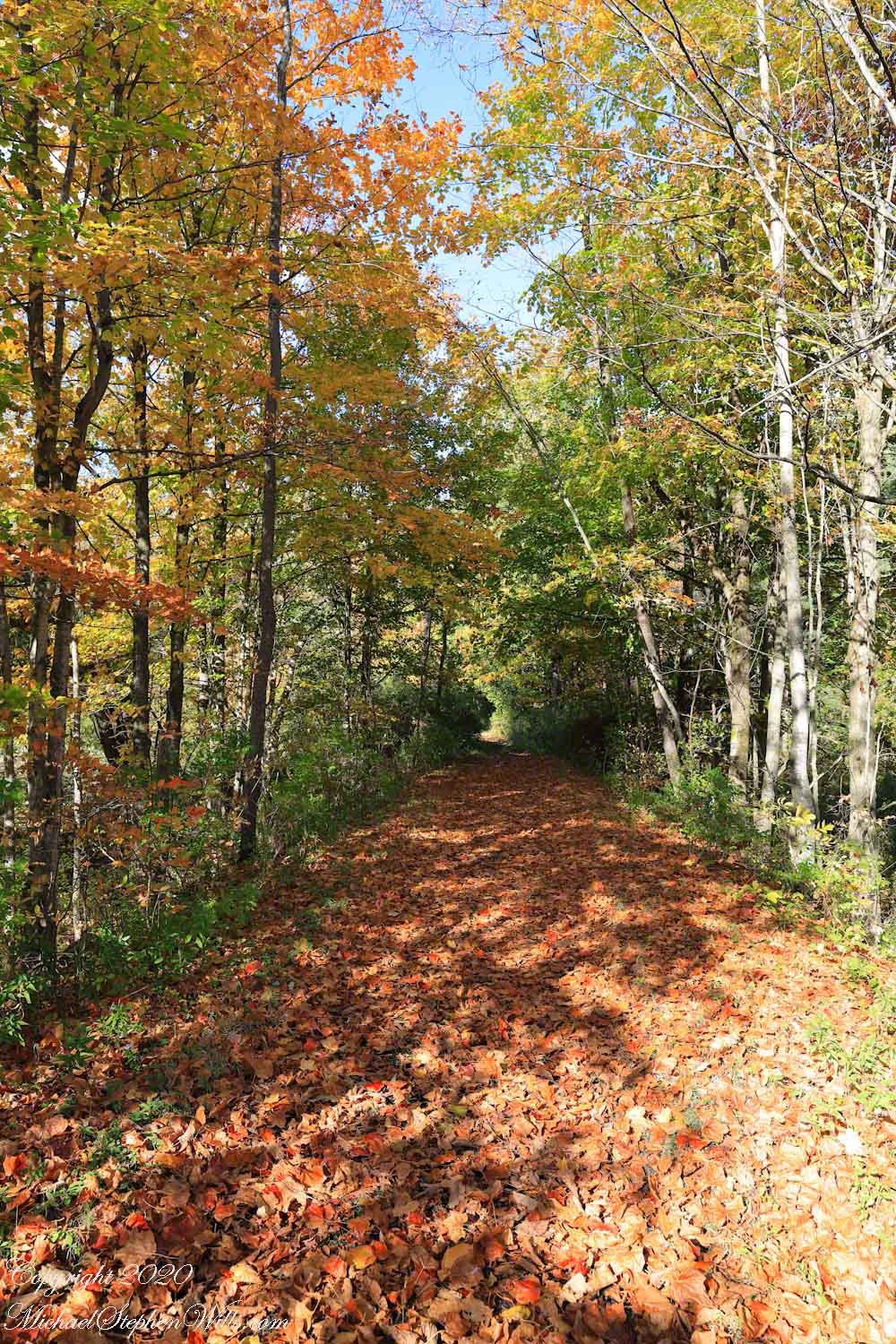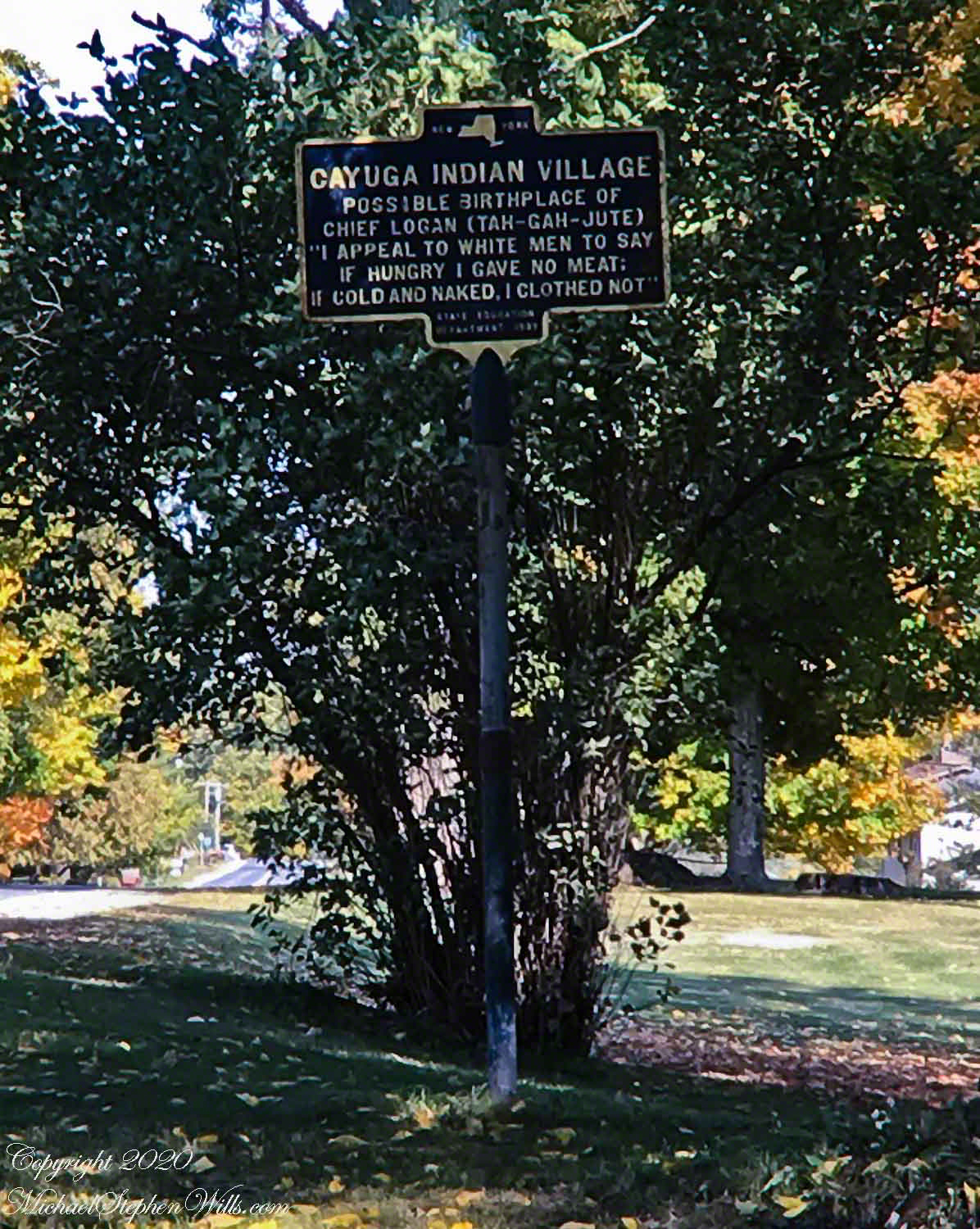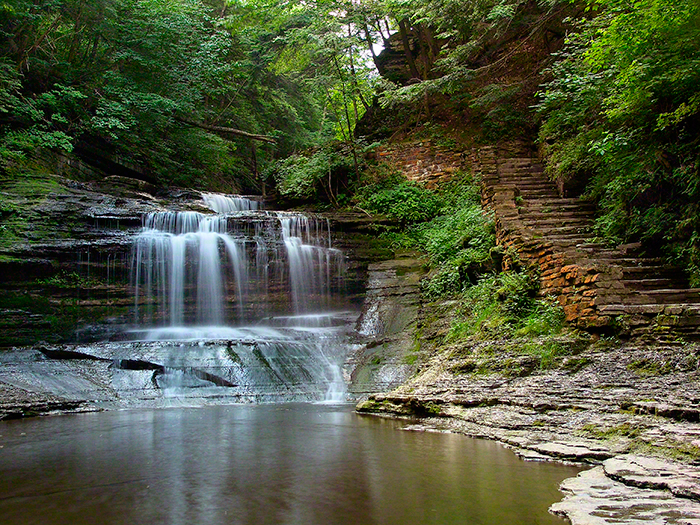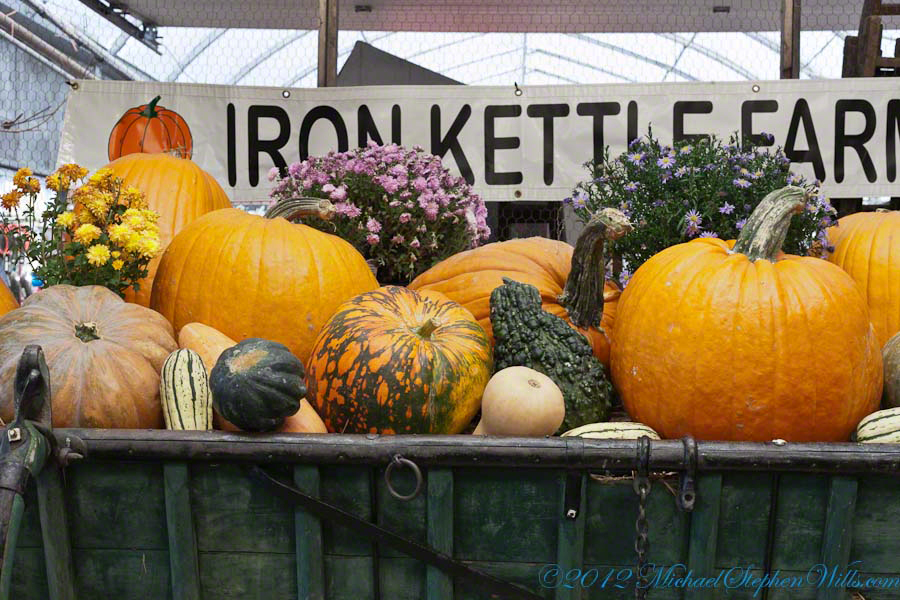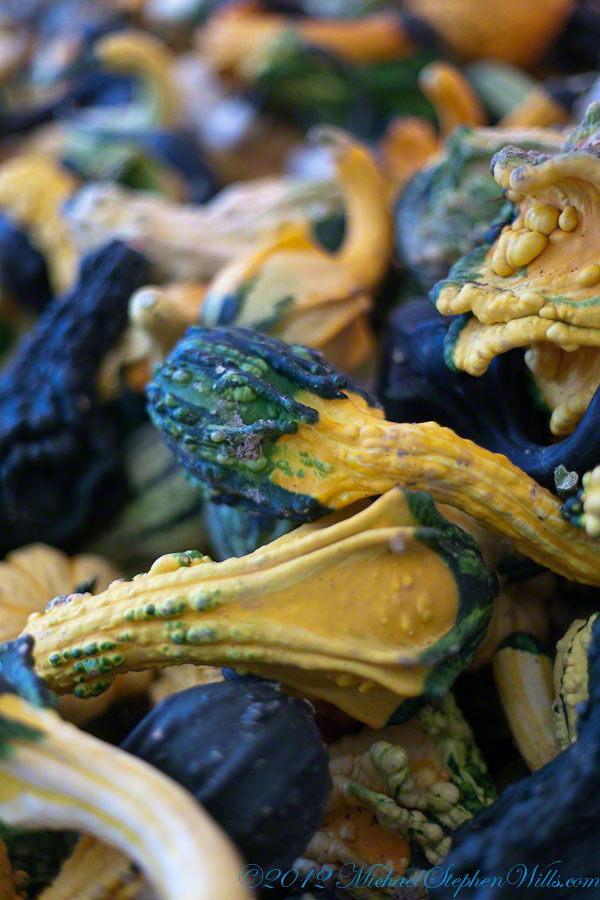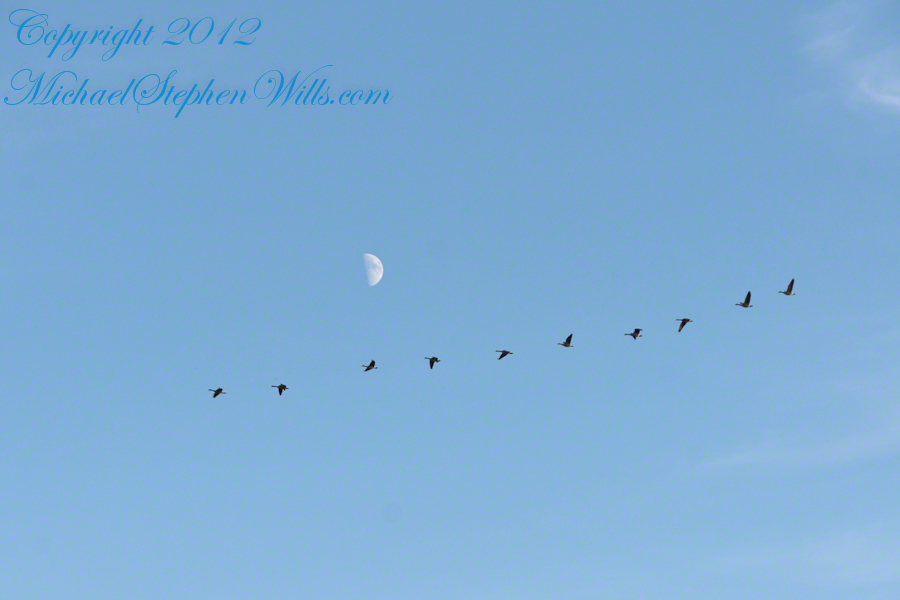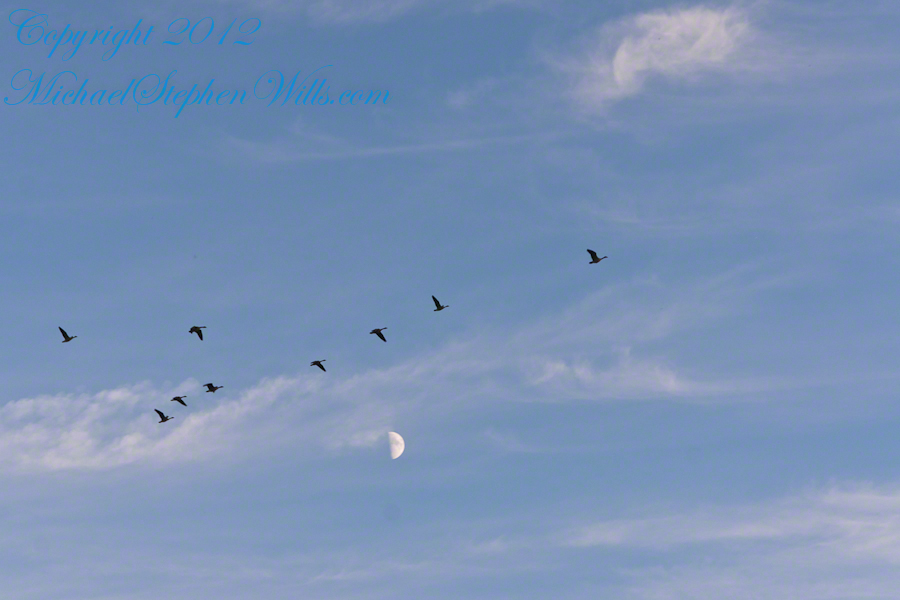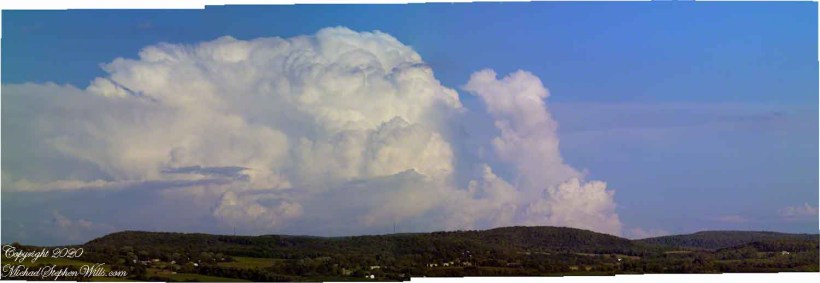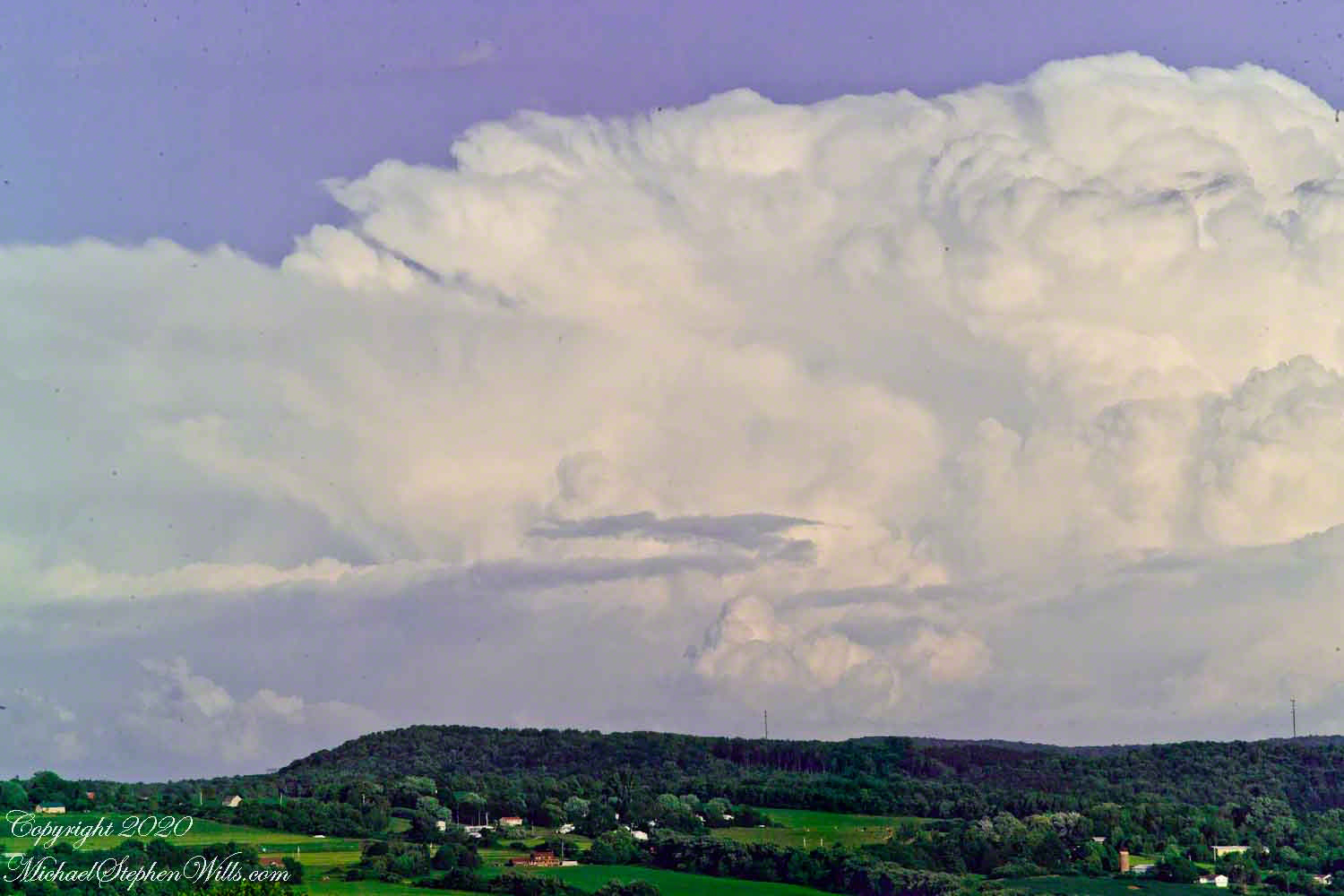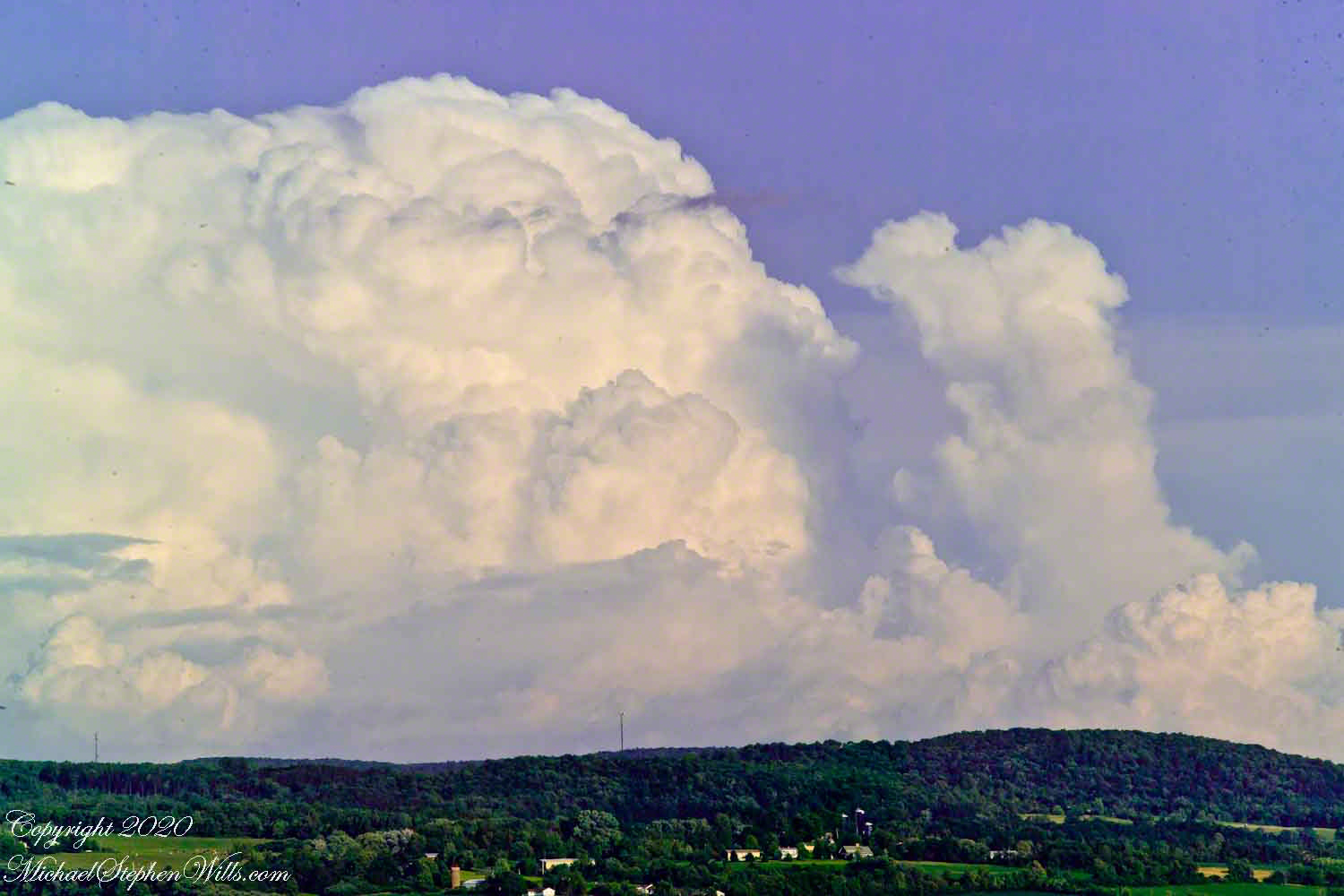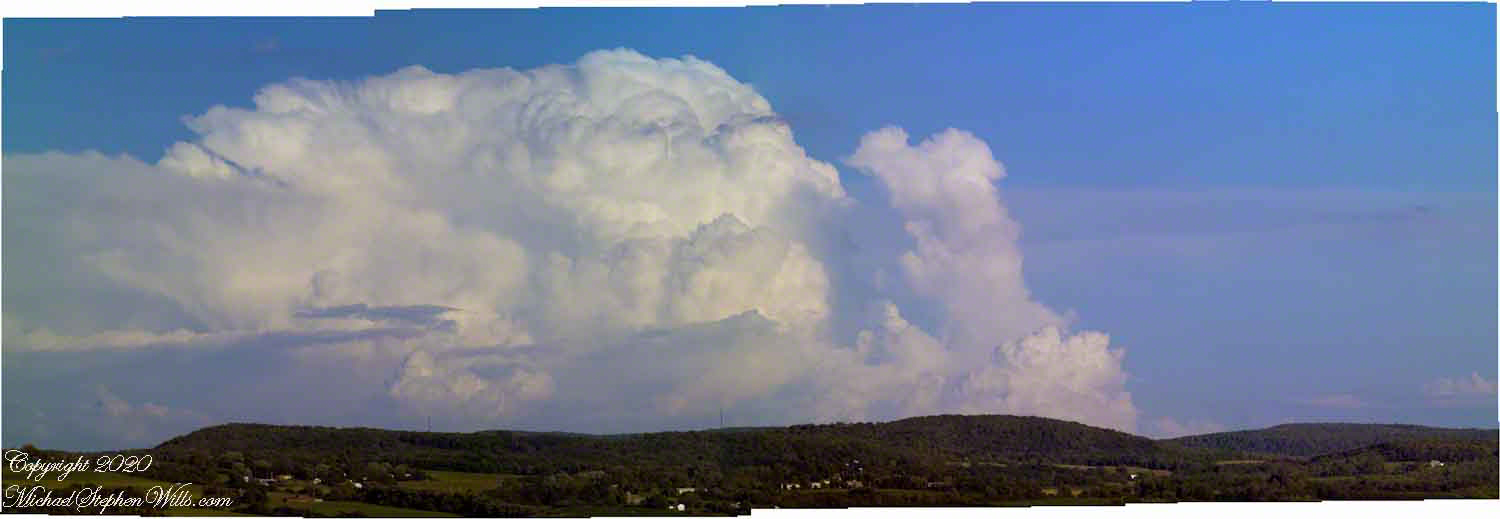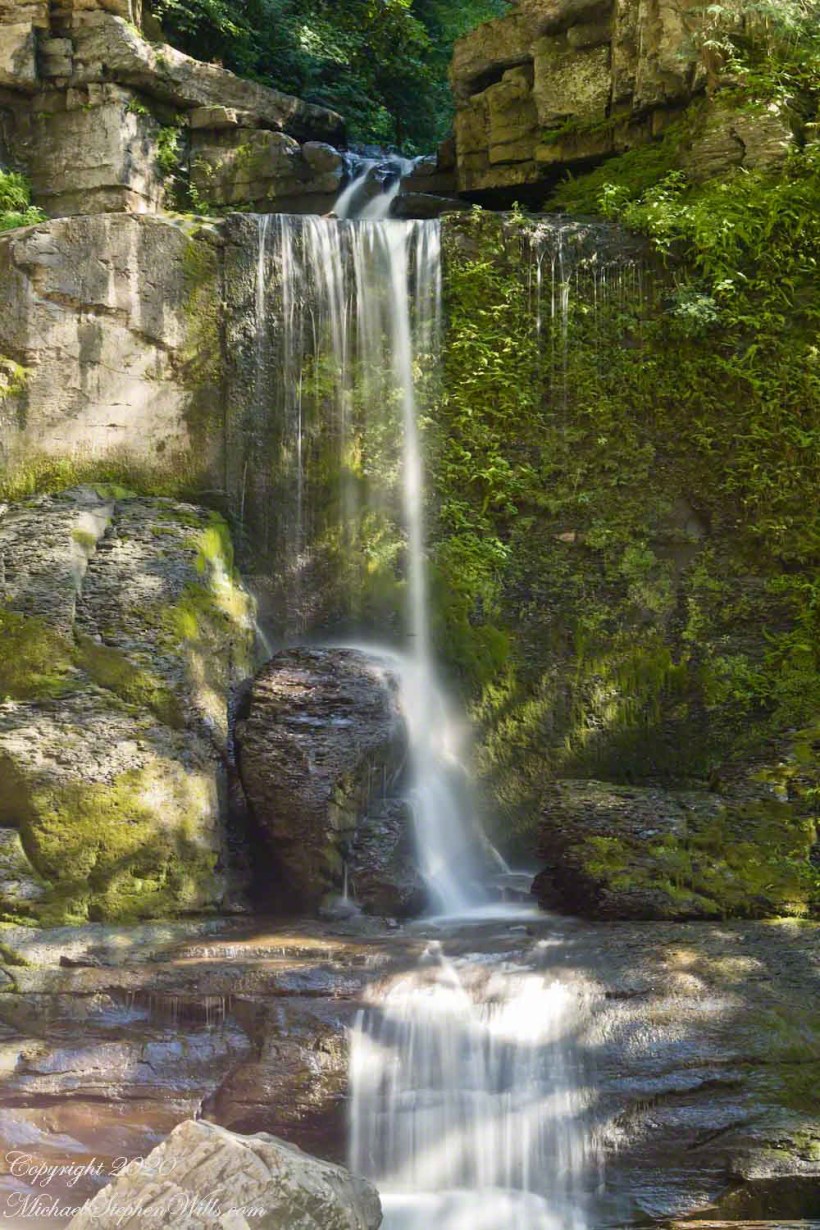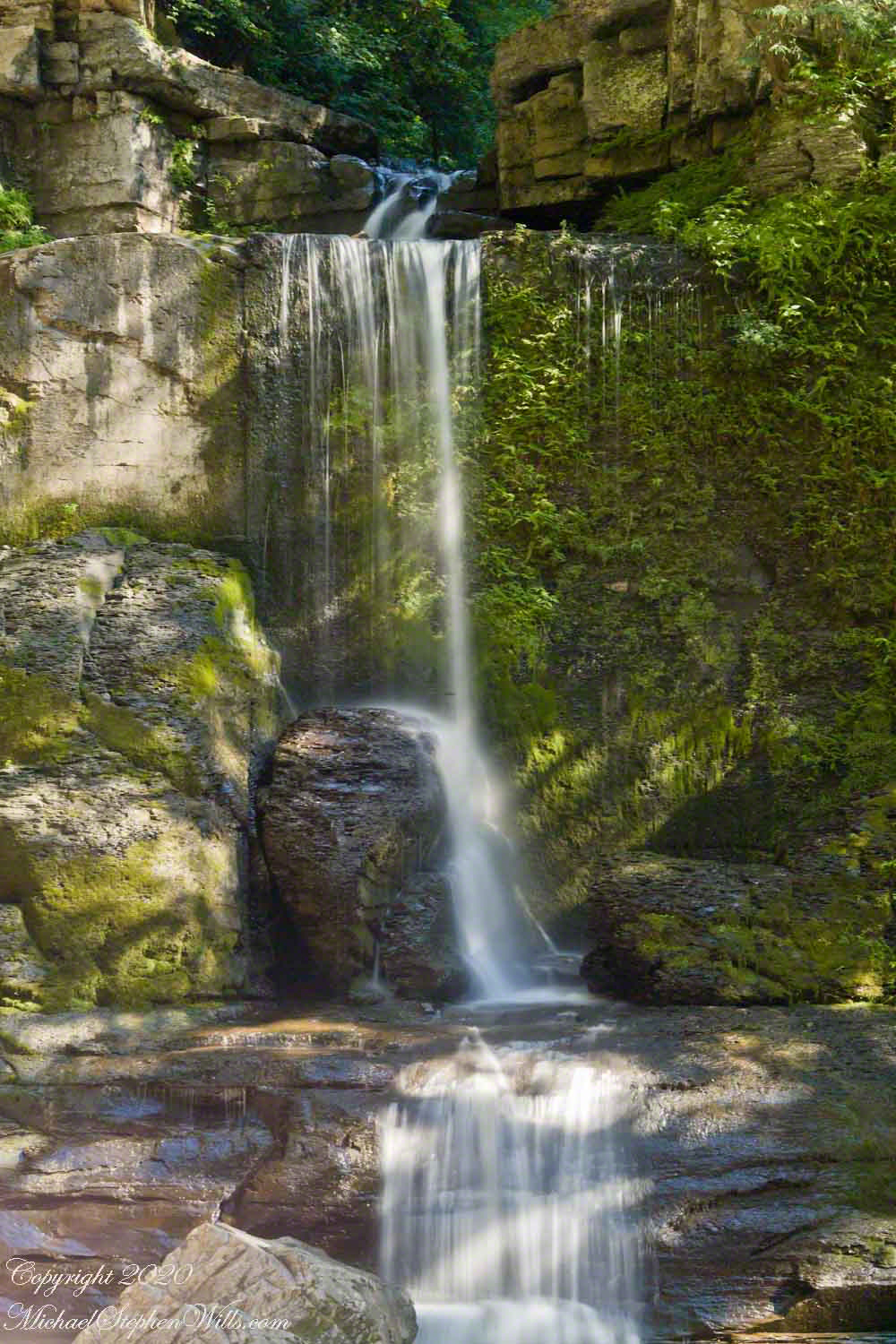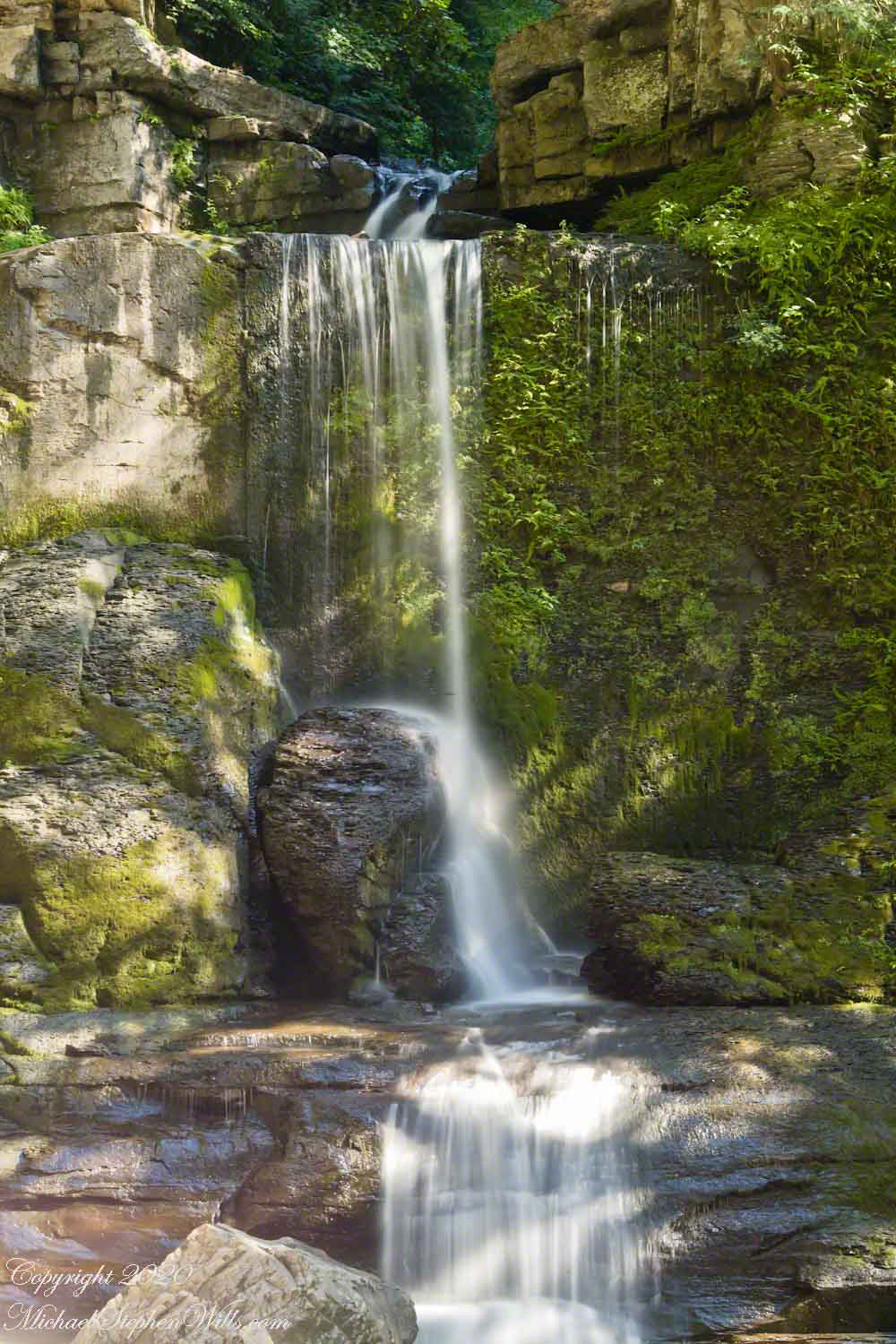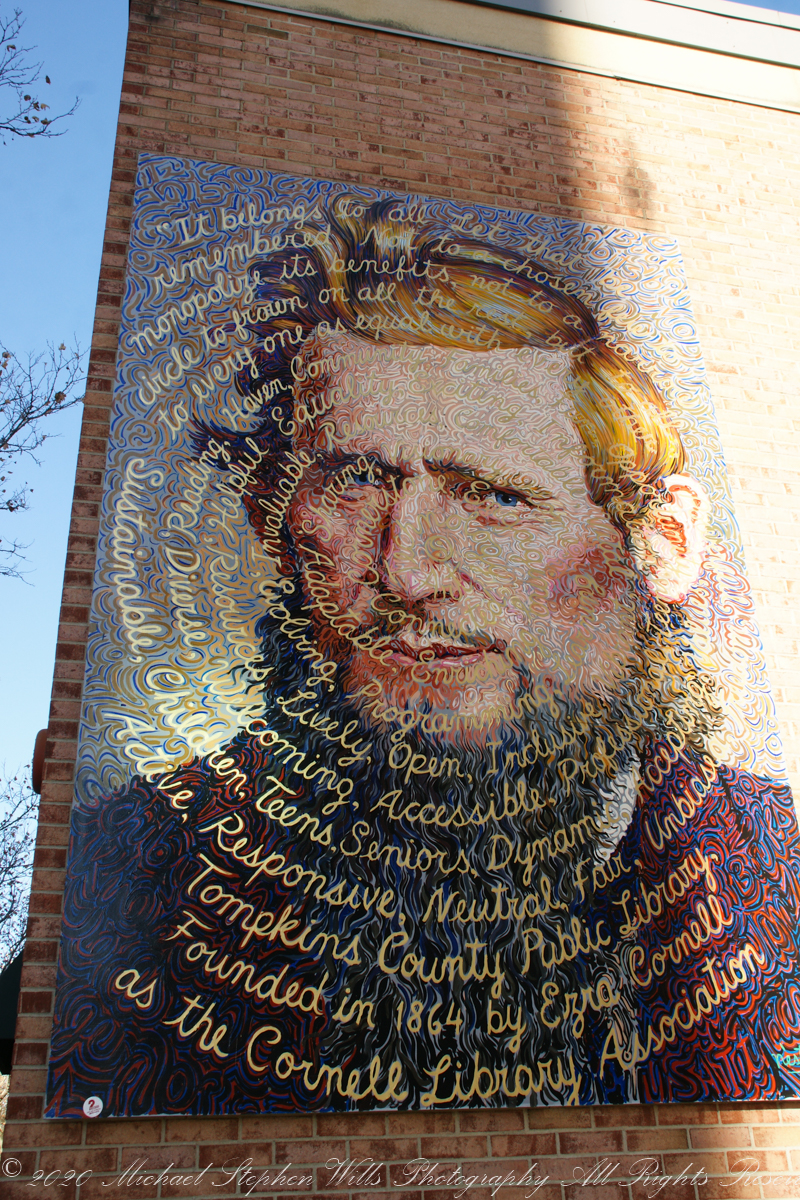
Travel to Fillmore Glen from our former home included a climb to an overlook of the Fall Creek valley, seen here on a summer afternoon in four parts.
Three exposures using a 50 mm Canon lens on a Kodak dslr. A tripod allowed me good orientation and, later, to use the Photoshop photoMerge feature to combine exposures into a panorama. At that time, I was limited to the 50 mm lens.
Copyright 2020 Michael Stephen Wills All Rights Reserved
Hard on the defunct gravel pit of the northwest side of the preserve is the deposit of glacial rocks washed to some extent by melting ice the former owners of the pit were turning over for profit with the averted result of destroying the water sources for the ecosystems of the future preserve.
The deposit is called a kame. Kames are the obverse of kettles, formed with an enormous remnant of glacial ice melts in place leaving a substantial depression. A kame is formed when earth gathers in a depression formed by meltwater running over a glacial surface. When the glacier melts (in this area the ice wash a mile high), the washed earth is left as a steeply sided pile we experience as a hill.
Water flowing beneath glaciers forms the long, ridged hills, eskers, we explored in yesterday’s post.
Well formed, sinuous, graded on both sides, eskers can be mistaken for man-made earthen structures, such as railroad embankments. Here is an example, nine-tenths (0.9) of a mile long substantial enough to direct the flow of Fall Creek. On entering the Malloryville esker bed the stream makes a right angle turn.
Here we are at the foot of the primary esker of Malloryville Preserve (it is marked as such on the information placard of this series first post). The slope to the right is the esker. A swamp lies to the right.
This video provides a better feeling for this esker.
Two kettles of the preserve represent a pond and, below, a bog. Here is a photograph from the observation platform using the IPhone 7. I brought along the Canon dslr and 100 mm “macro” lens for the stars of this show…..
….purple pitcher plants (scientific name: Sarracenia purpurea). In past years, the central observation deck cut-out, hosted healthy pitchers. Today, invading high bush blueberries from the bog margin, crowded out the pitchers and the only flowering plant were among the grasses 8 to 10 feet away. My goal was photographing the extraordinary flowers.
Each flower rises from the base on a strong stalk. Here are the pitchers, also called “turtle socks”, flooded with sunlight.
A flower unlike any I have experienced, like the carapace of an insect, the reproductive element underneath a hood.
The posterior, there are only bracts.
I have, somewhere, macro images of the pitcher, with the downward facing hairs. Brought the wrong lens to capture this at a distance.
Amazingly swamp, fen, bog, marsh can all be experienced during a thirty minute walk within this preserve. Here we are traversing a swamp …
…buoyed along on planking from recycled plastic.
The founders of this place, from a dairy farming family, strove for years to protect the water sources from encroachment by development, primary a duplicate of a gravel pit found on the other side of the Fall Creek valley.
This former acidic rainwater, percolating through glacial till, is buffered and chemically altered to create these multiform environments.
Water, flowing quietly, almost soundlessly, with powerful effect.
Let’s digress from our exploration of Iquique, Chile for this attraction local to the Finger Lakes Region of New York State, an environment diametrically opposed to the Atacama desert. The Preserve at Malloryville opened 1997, eleven years after we moved to our home our home on Fall Creek (see header photograph).
The correct name is the O.D. von Engeln Preserve at Malloryville. I knew this name from his Finger Lakes geology book obtained from the library and read closely in the early 1990’s. It helped me understand the landscape among which our home was set, in 5 minutes walking distance from the future location of the preserve.
The text from the above information placard at the preserve entrance says it all:“Wetland habitats are shaped by the water that supplies them: the amount, how it moves, and the minerals it carries. Malloryville’s eskers, kames and kettles control the rate of delivery of water to the surface and suffuse it with varied concentrations of minerals. As ground water bubbles to the surface at the base of these hills, distinctive wetland habitats form, each with its own unique community of plants. The preserve’s intense concentration of bog, fen, marsh and swamp habitats is the direct result of ground water moving through this unusually complex array of glacial features.
Before the preserve was opened I was familiar with the landforms described in the above placard. My son and I did his first camping on top of an esker outside our front door. We enjoyed hiking along Fall Creek.
To be continued…..
Copyright 2020 Michael Stephen Wills All Rights Reserved
Clinging to my sleeve, the newly emerged Monarch wings dried. It is a process of excreting the fluids pumped into wings, crumpled from folding within the chrysalis, to expand them. The clear drips of water on my arm are this fluid. I spent the hour sitting by our pool, savoring the summer morning. The butterfly signaled readiness, wings dried and hardened, opening and closing them slowly. Offered my finger it crawled to my hand, across to the thumb and, running out of space, took off.
Click photograph for a larger view and use Ctrl-x to zoom in closer.