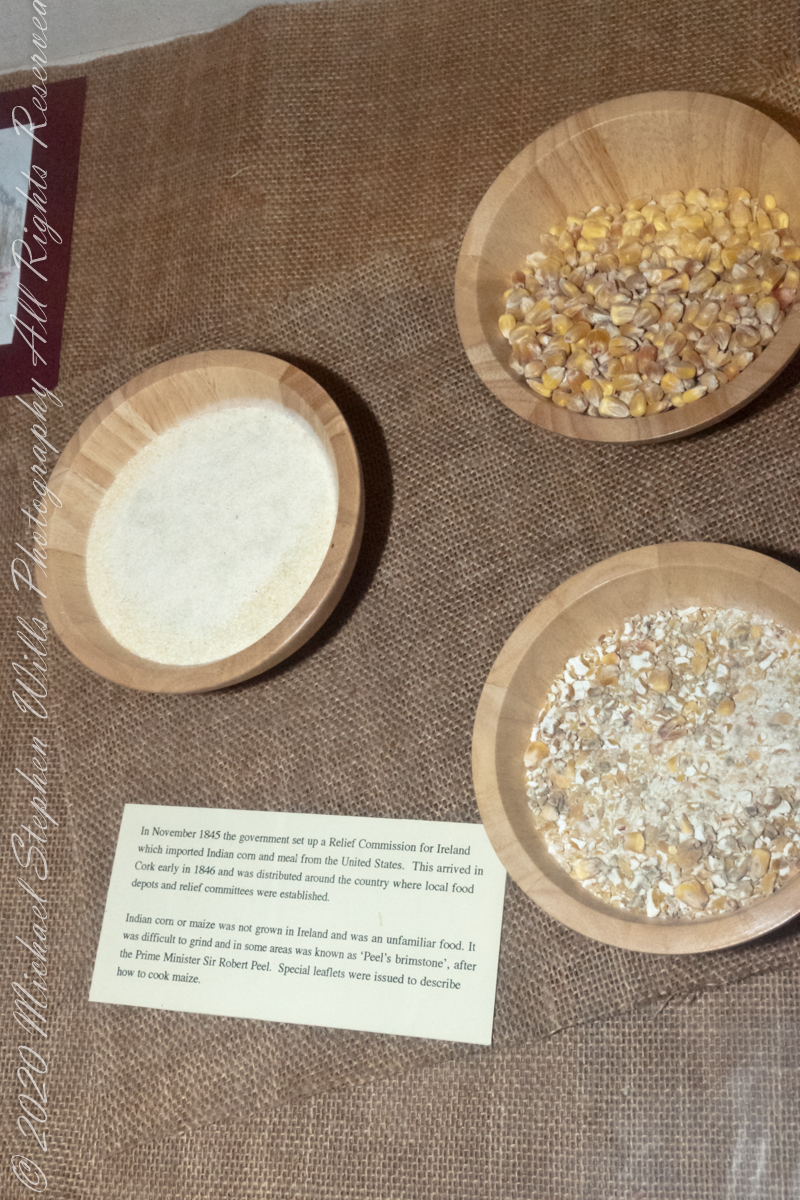
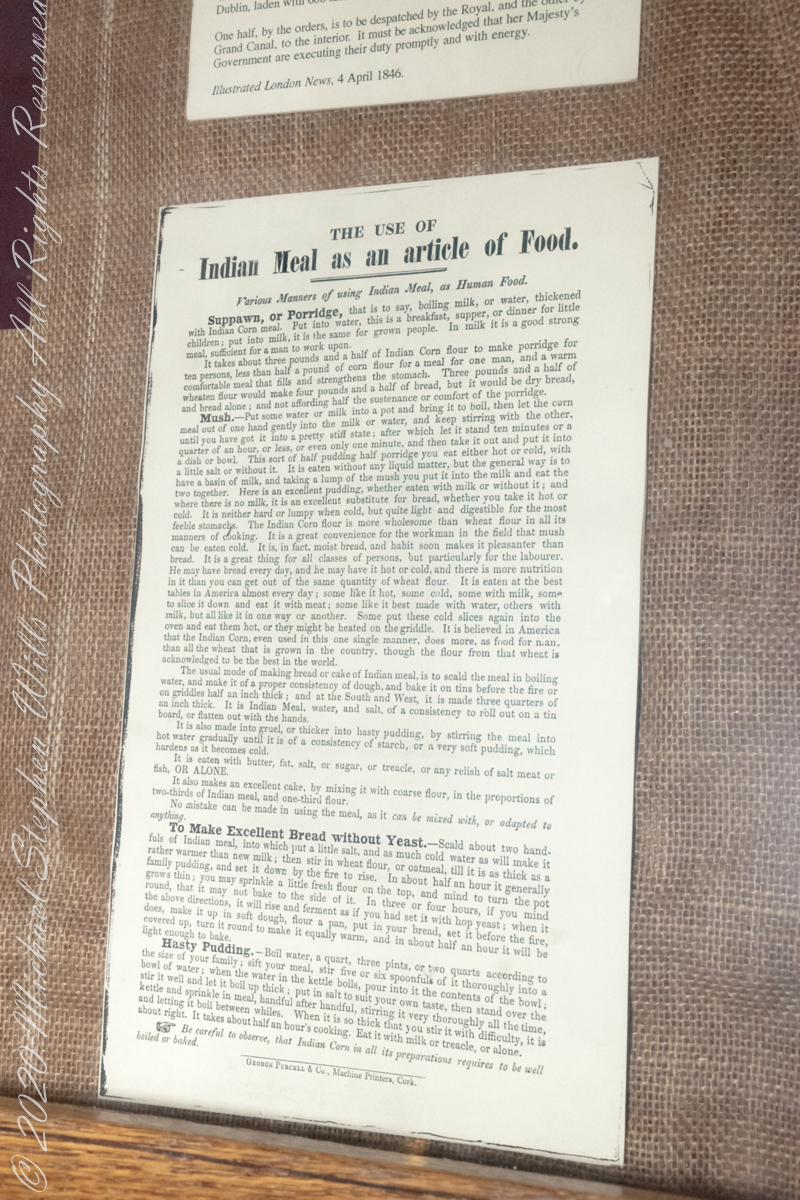
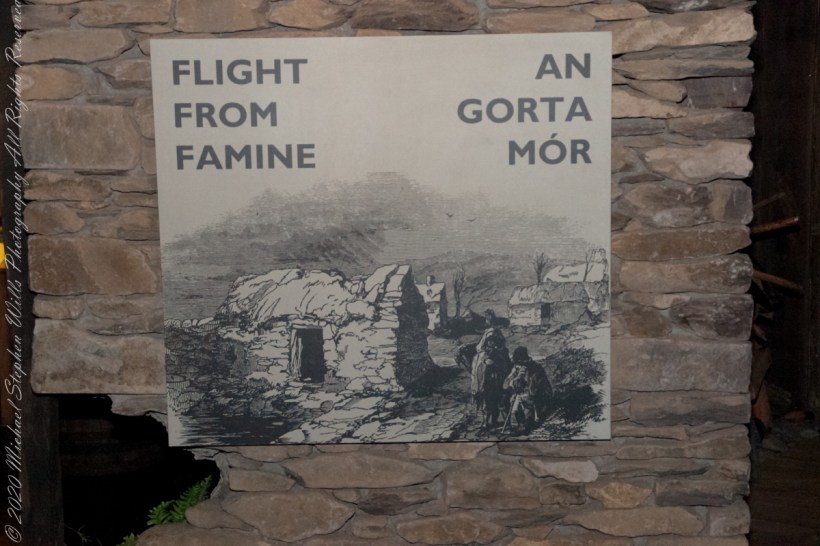
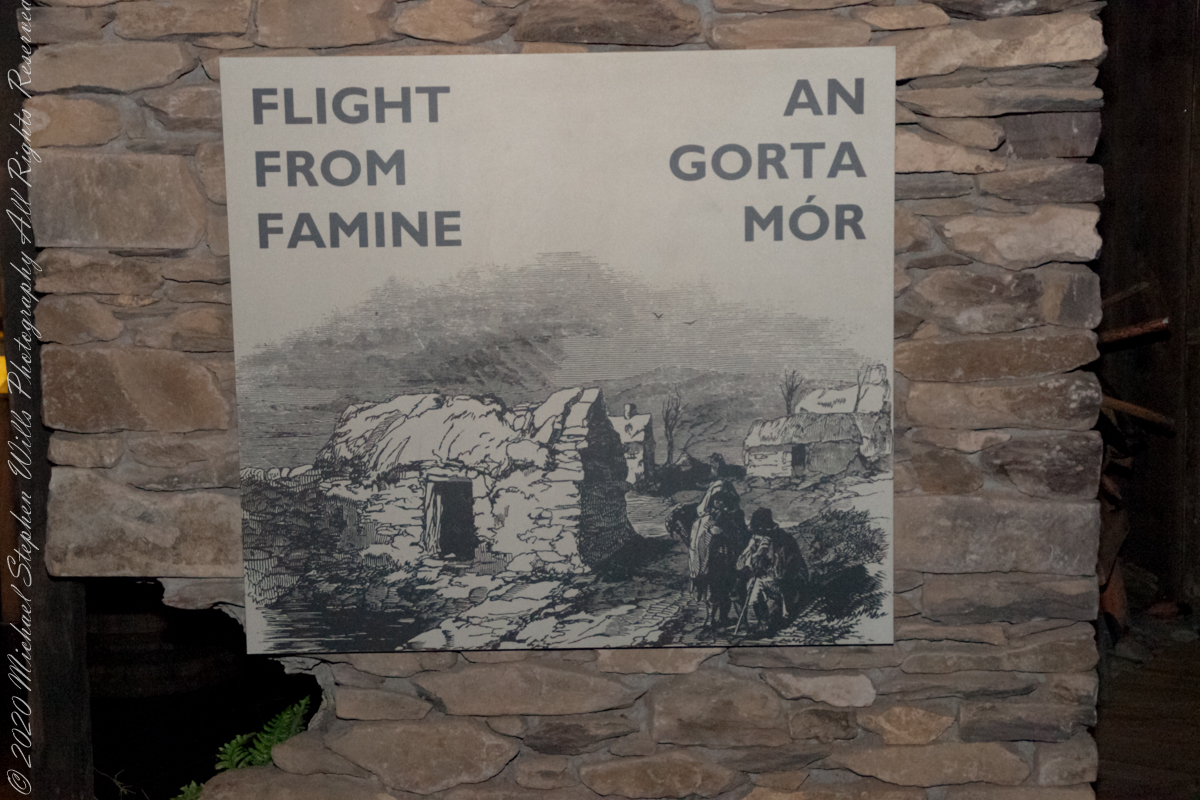
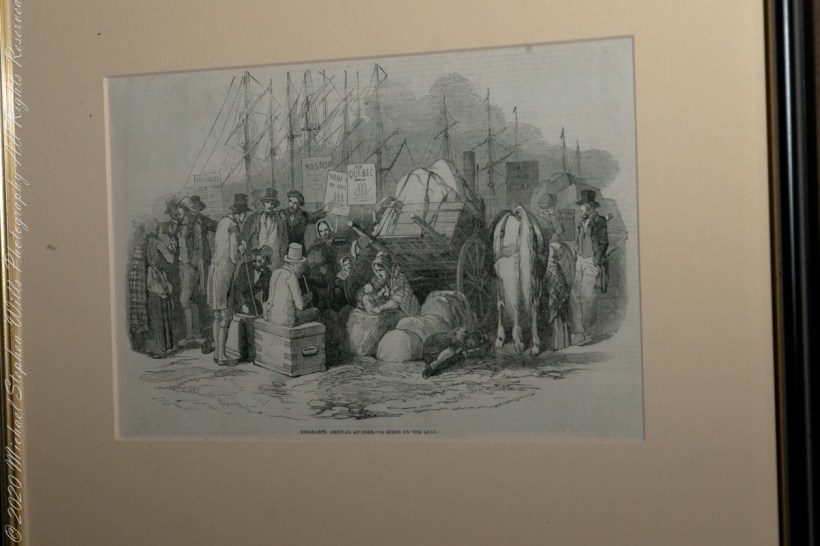
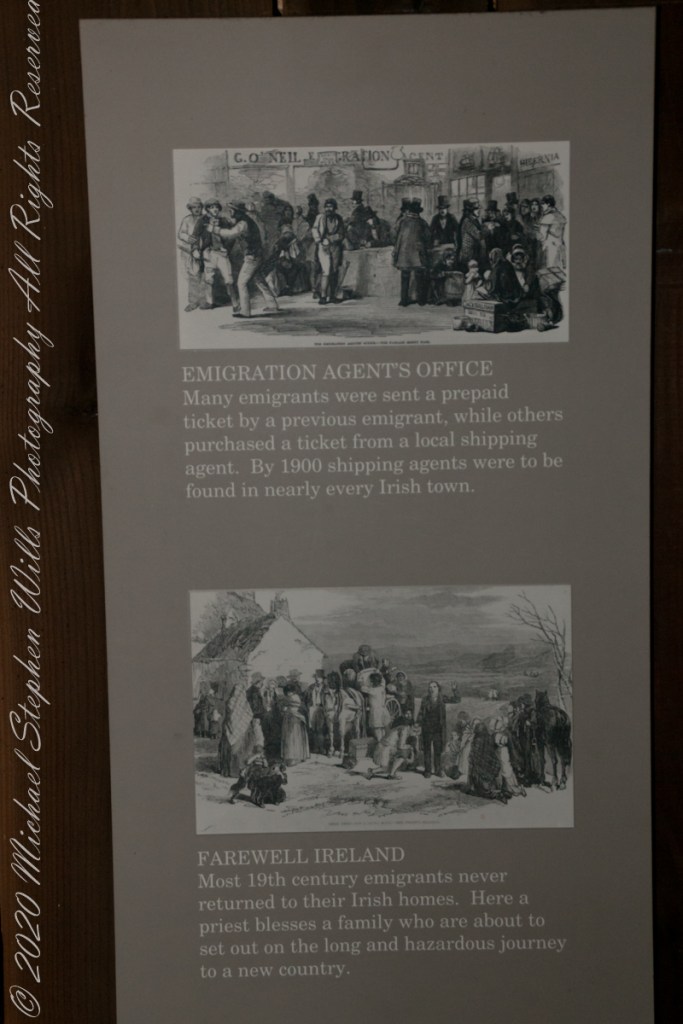
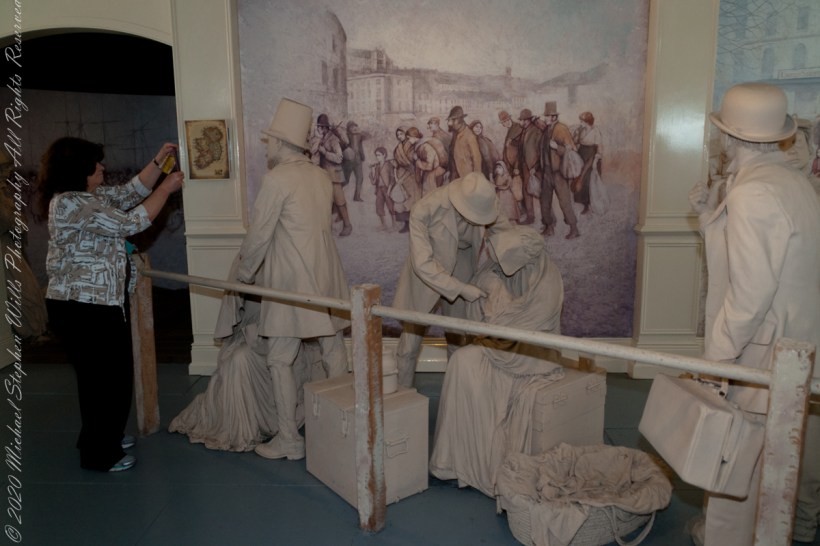
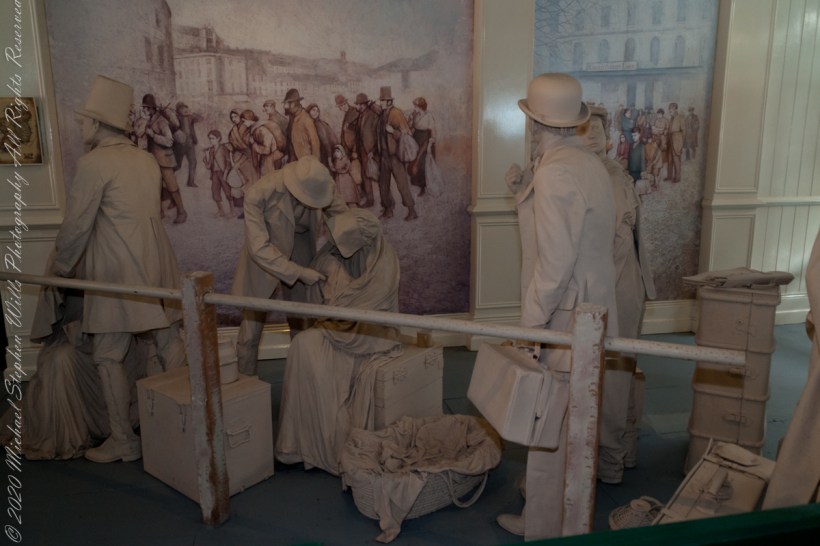
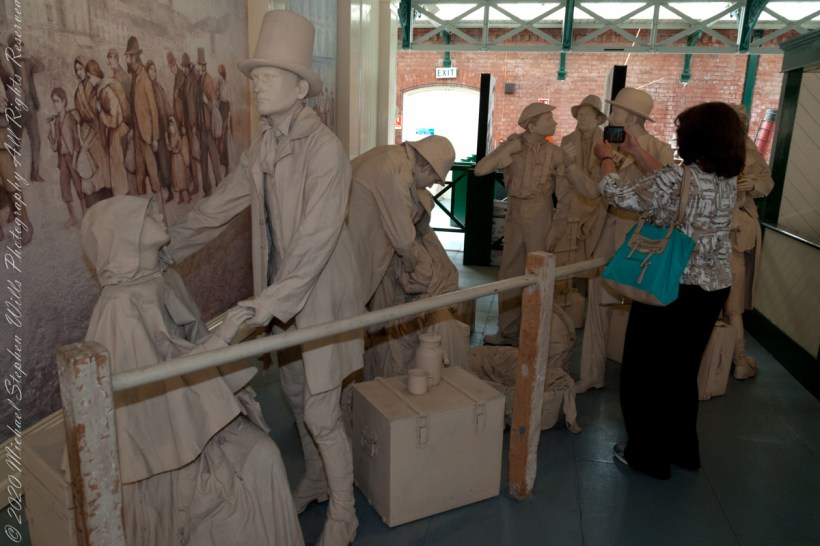
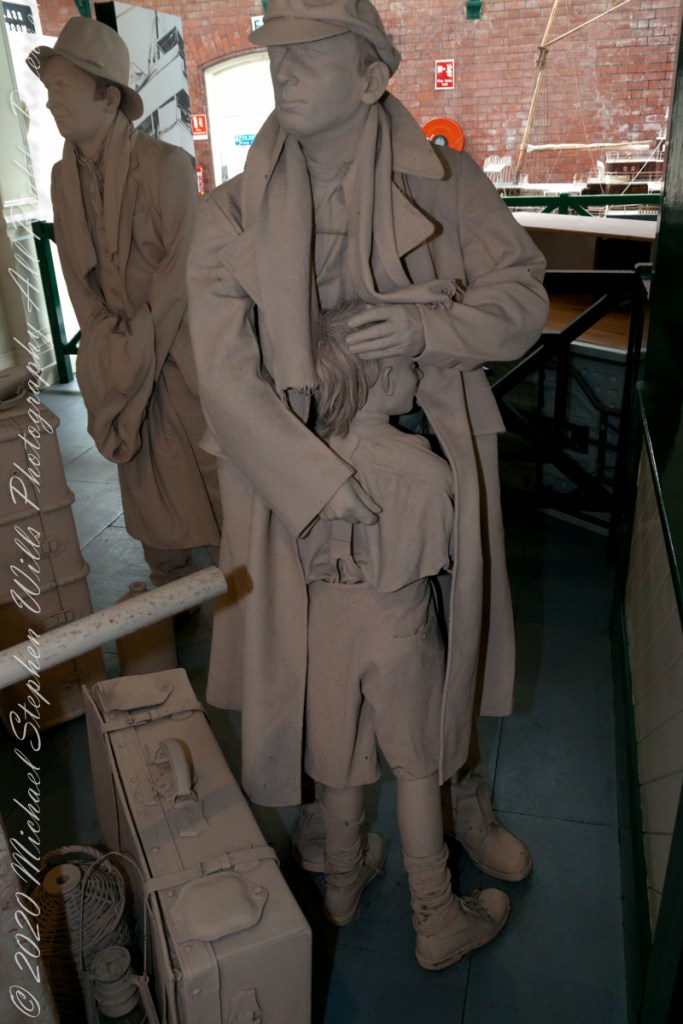
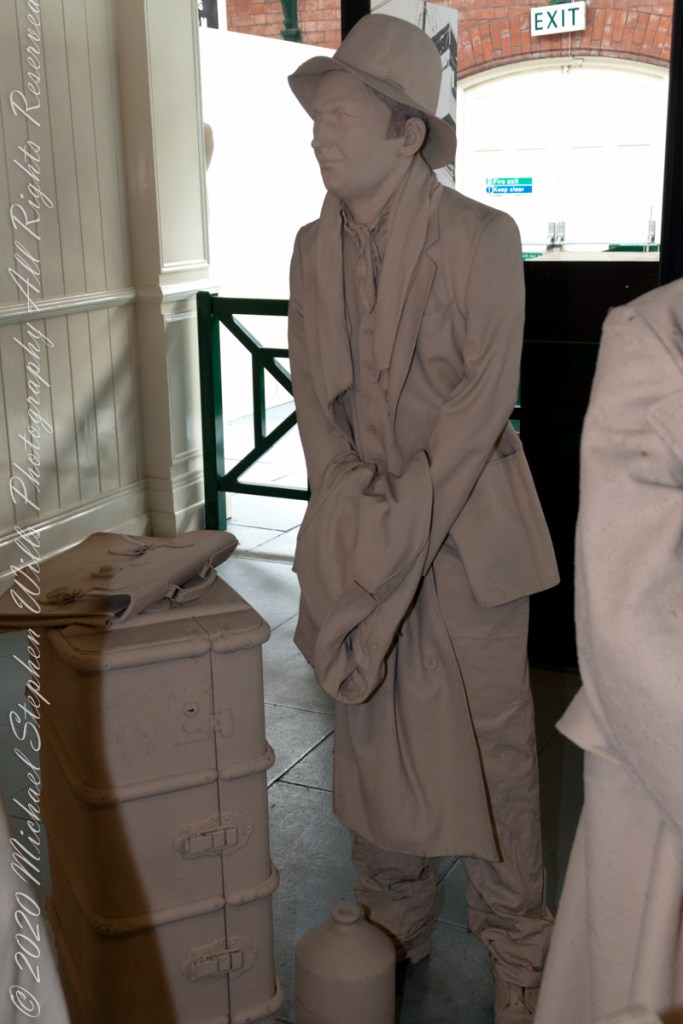
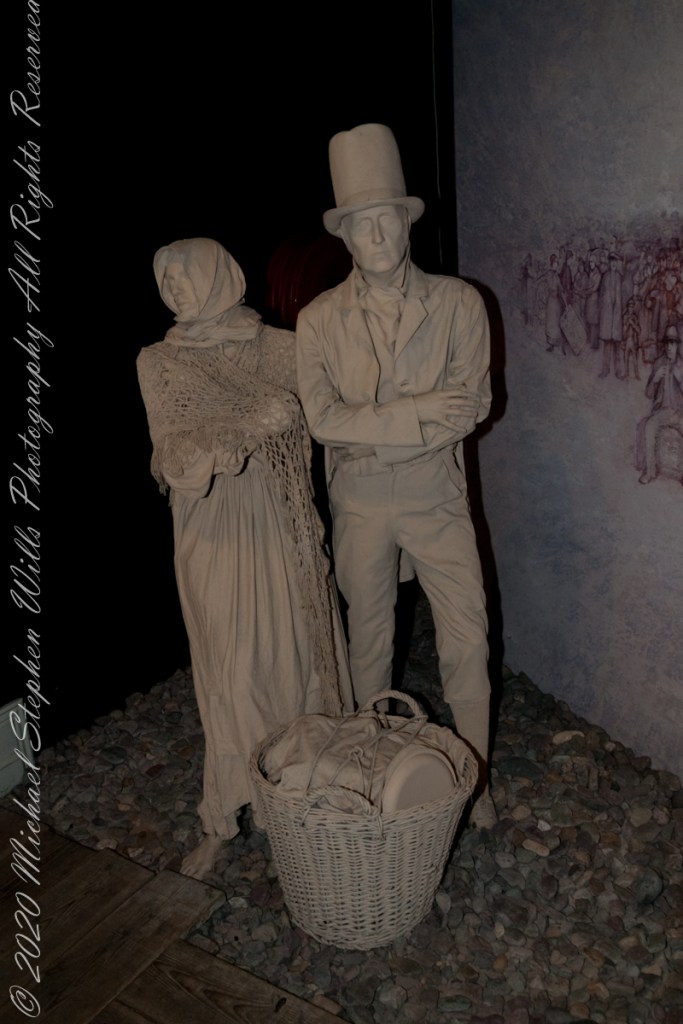
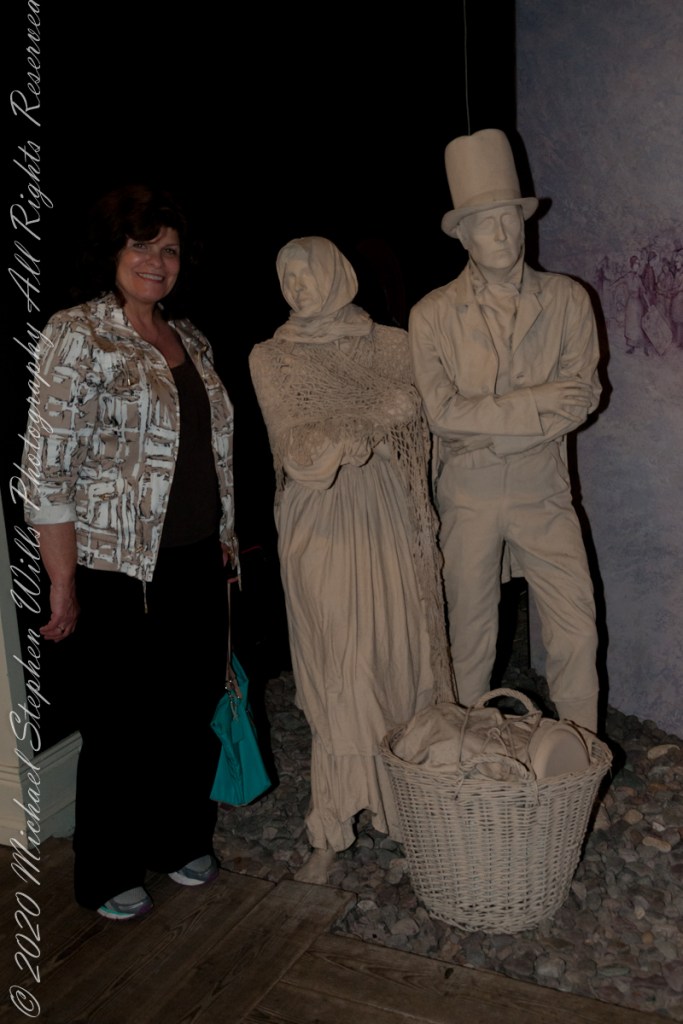
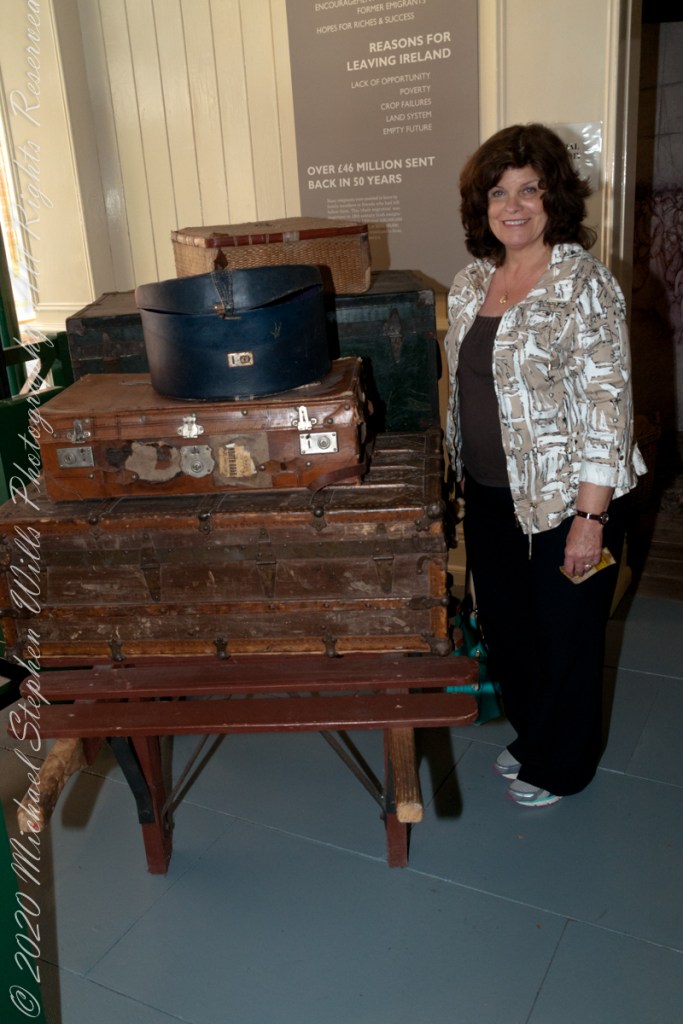
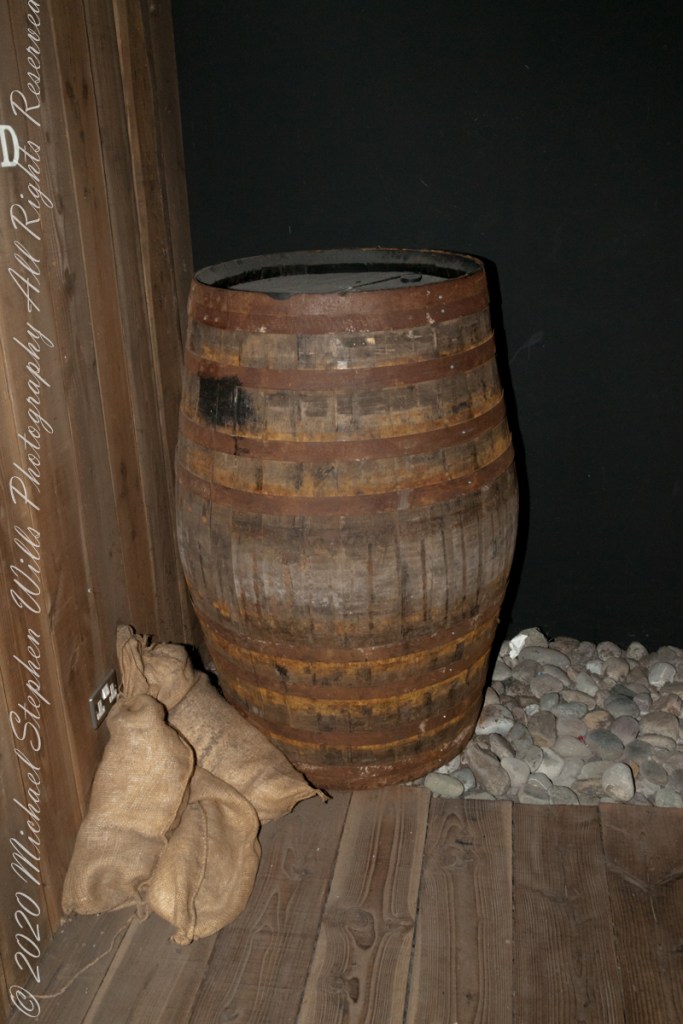
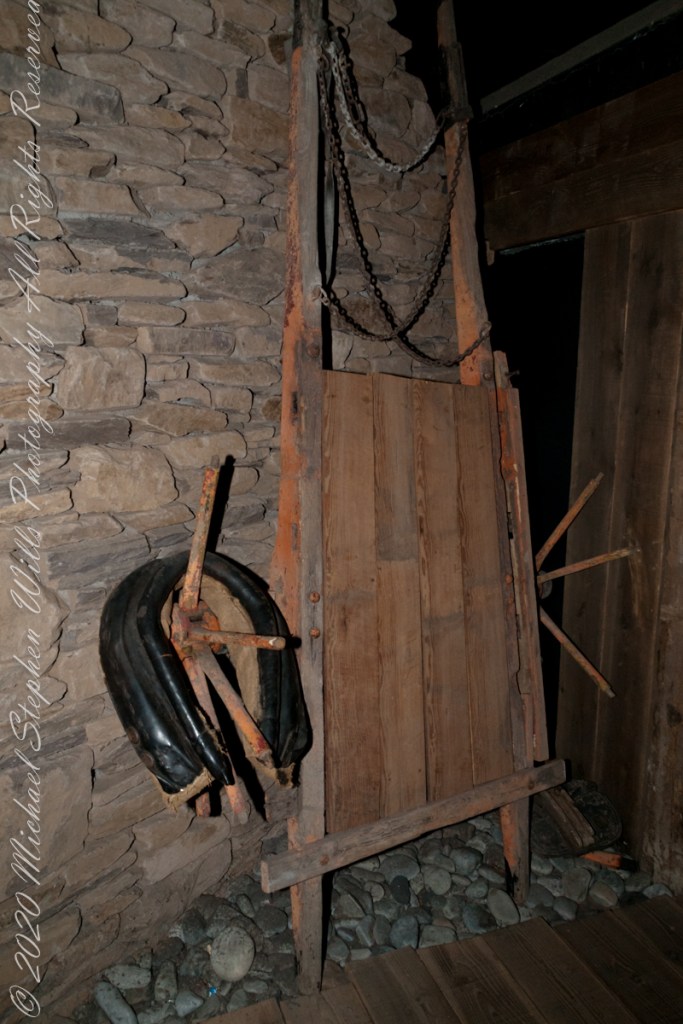
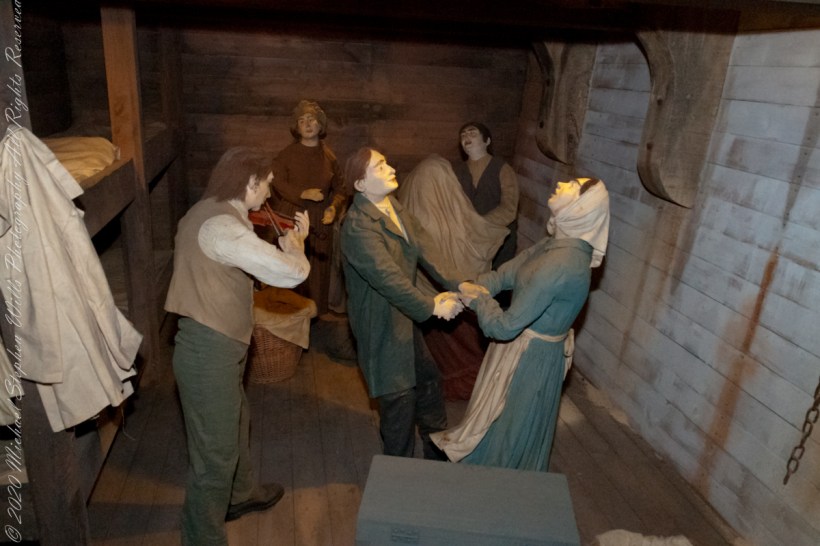
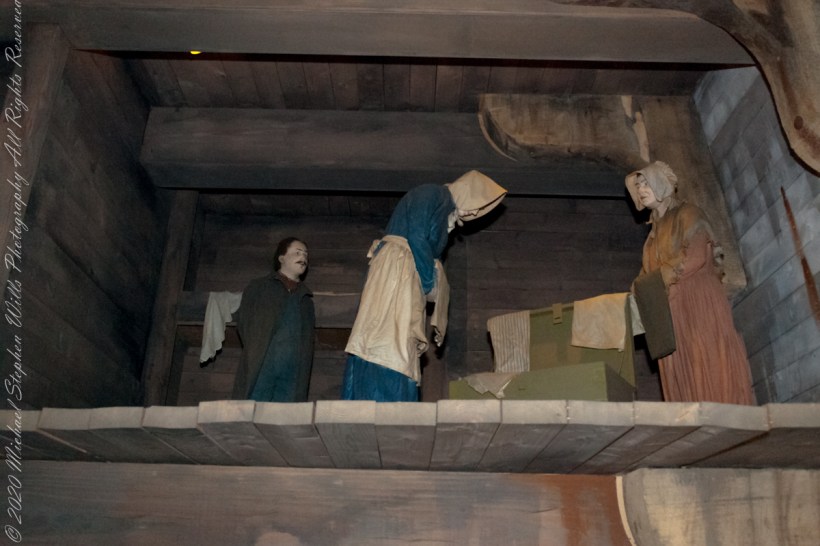
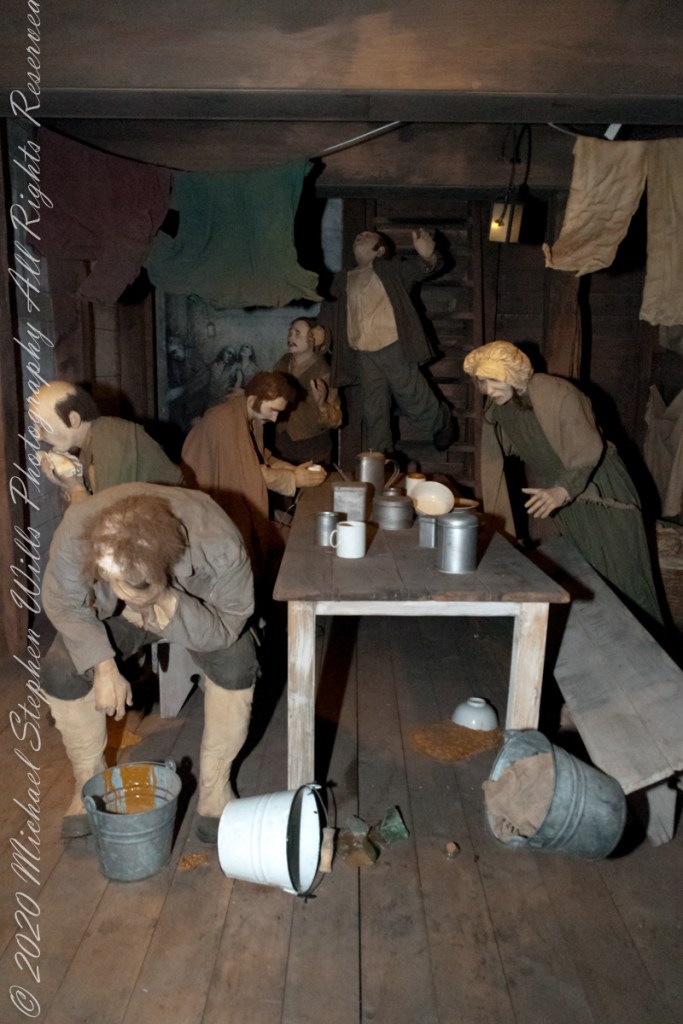
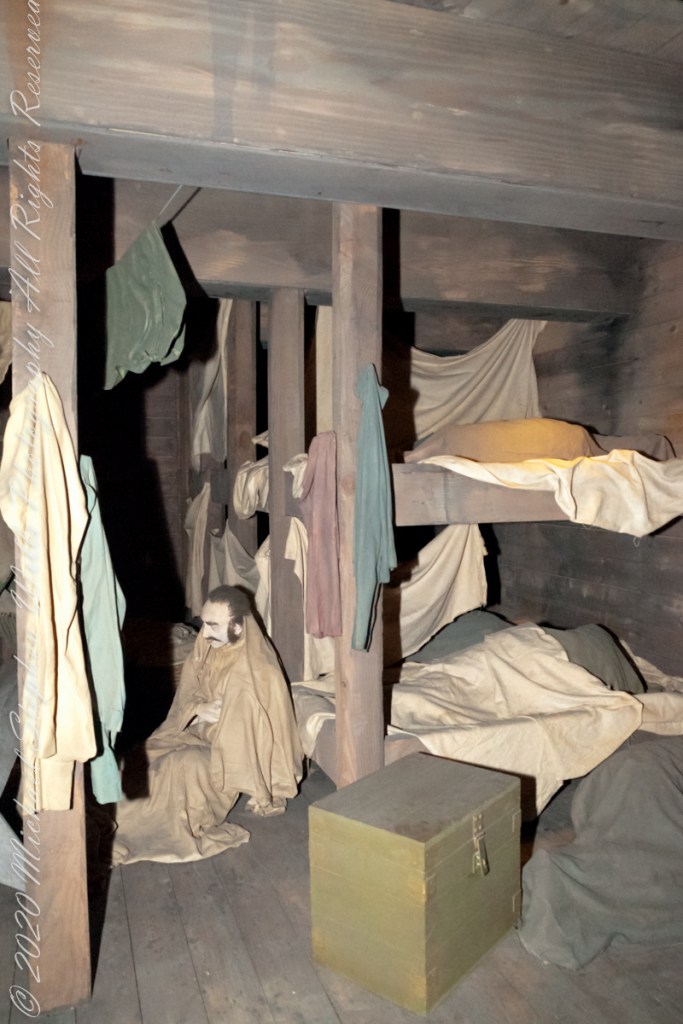
“In November 1845 the British government set up a Relief Commission for Ireland which imported Indian corn and meal from the United States. This arrived in Cork early in 1846 and was distributed around the country where local food depots and relief committees were established. Indian corn (maize) was not grown in Ireland and was an unfamiliar food. It was difficult to grind and in some areas was known as “Peel’s brimstone,” after the Prime Minister Sir Robert Peel. Special leaflets were issued to describe how to cook maize.” From the exhibit (below), Cobh Heritage Center.
Instructions for how to cook maize. In the west of Ireland many people spoke Irish.
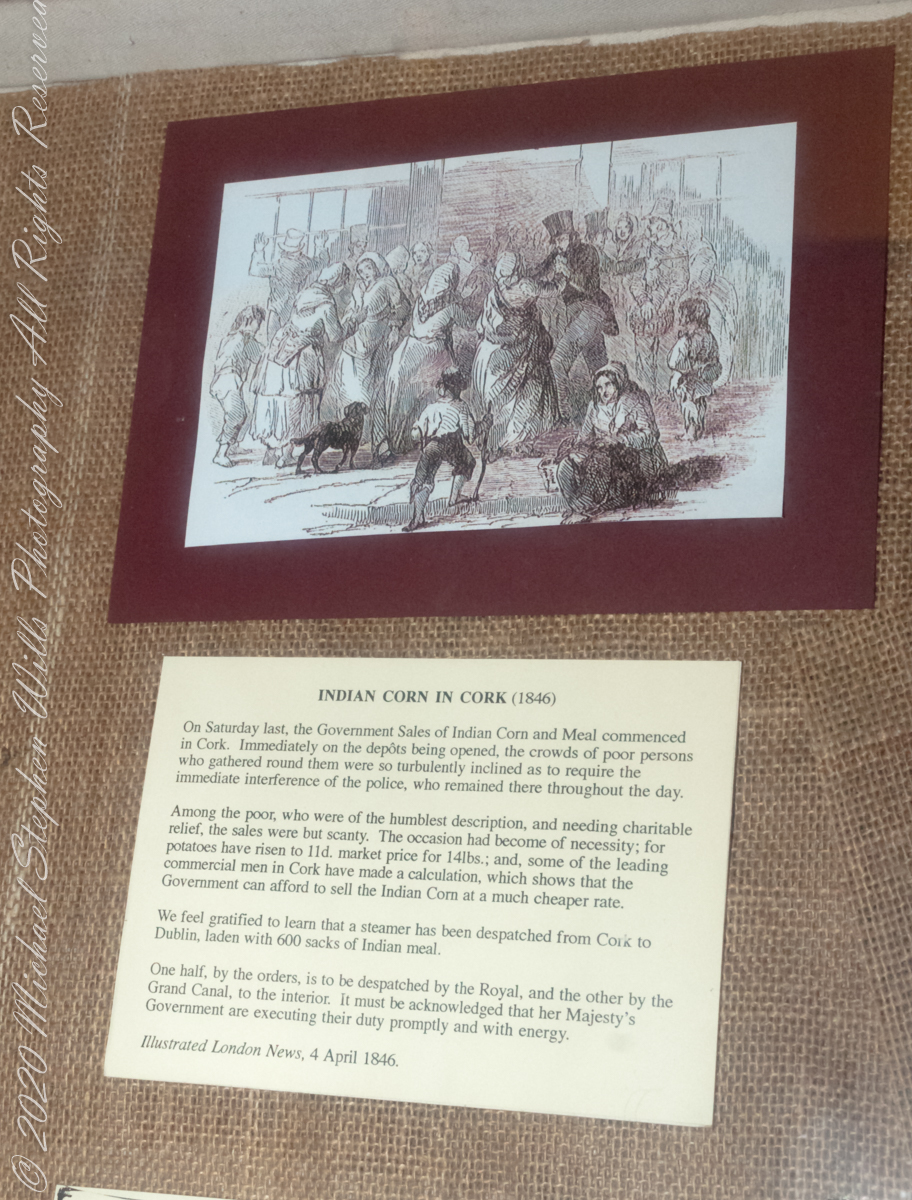
“On Saturday last, the Government Sales of Indian Corn commenced in Cork. Immediately on the depoys being opened, the crowds of poor persons who gathered round them were so turbulently inclined as to require the immediate interference of the police, who remained throughout the day.
Among the poor, who were of the humblest description, and needing charitable relief, the sales were but scanty. The occasion had become of necessity; for potatoes had risen to 11d. the market price for 14 pounds; and, some of the leading commercial men in Cork have made a calculation, which show that the Government can afford to sell the Indian Corn at a much cheaper rate.
We feel gratified to learn that a steamer has been dispatched from Cork to Dublin, laden with 600 sacks of Indian meal.
One half, by the orders, is to be dispatched by the Royal, and the other by the Grand Canal, to the interior. It must be acknowledged that her Majesty’s Government are executing their dury promptly and with energy. from the Illustrated London News, April 4, 1846″. ~ from the exhibit, Cobh Heritage Center.
Copyright 2021 Michael Stephen Wills All Rights Reserved
The Great Famine had profound social, cultural, and political impacts on Ireland and its relationship with Britain. It led to a significant decline in the Irish population due to death and mass emigration and is remembered as one of the darkest periods in Irish history. The event also left deep scars on the collective memory of the Irish people and played a role in the growth of Irish nationalism and the push for Irish independence in the following decades
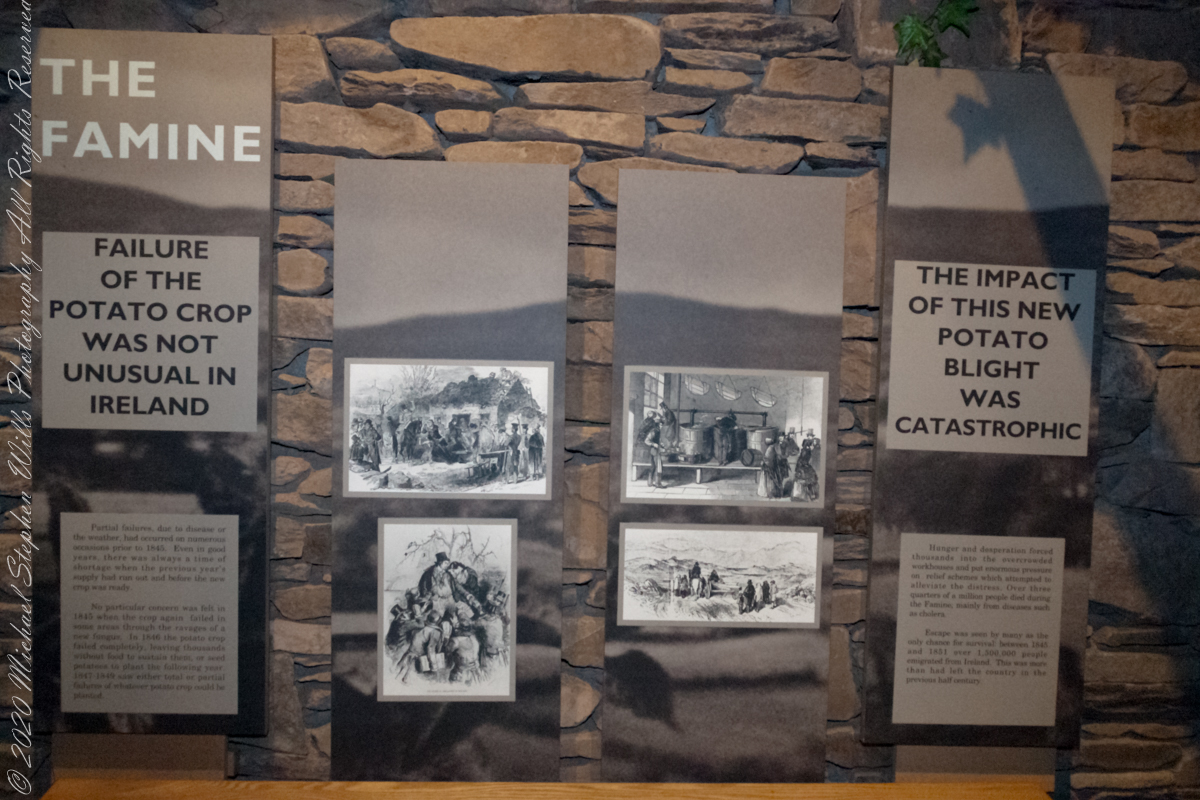
“Partial failures, due to disease or the weather, had occurred on numerous occasions prior to 1845. Even in good years, there was always a time of shortage when the previous year’s supply had run out and before the new crop was ready.”
Cobh Heritage Center
“No particular concern was felt in 1845 when the crop again failed in some areas through the ravages of a new fungus. In 1846 the potato crop failed completely, leaving thousands without food to sustain them, or seed potatoes to plant the following year. 1847 – 1849 saw either total or partial failures of whatever potato crop could be planted.”
“Hunger and desperation forced thousands into the overcrowded workhouses and put enormous pressure on relief schemes which attempted to alleviate the distress. Over three quarters of a million people died during the Famine, mainly from diseases such as cholera. Escape was seen by many as the only change for survival: between 1845 and 1851 over 1.5 million people emigrated from Ireland. This was more than had left the country in the previous half century.”
Cobh Heritage Center
The Great Famine of Ireland, often referred to as the “Irish Potato Famine,” occurred between 1845 and 1852, with the most acute suffering taking place between 1847 and 1849. The causes of this devastating period in Irish history are multifaceted and debated among historians, but the following are generally acknowledged as the primary factors:
Potato Blight (Phytophthora infestans): The immediate cause of the famine was a potato disease known as late blight. The potato was a staple crop in Ireland, and for many poor Irish, it was the primary source of nutrition. The blight destroyed the potato crop year after year, leading to widespread hunger.
Over-reliance on a Single Variety of Potato: The Irish mainly grew a type of potato called the “Lumper,” which was particularly susceptible to the blight. This lack of genetic diversity made the entire crop more vulnerable to disease.
Land Ownership and Tenancy: Most of the land in Ireland was owned by a small number of landlords, many of whom were absentee, living in England. The Irish Catholic majority often worked as tenant farmers, living on small plots of land and paying rent to these landlords. The land was subdivided among heirs, leading to plots becoming increasingly smaller and less productive over generations.
British Colonial Policies: The relationship between Ireland and Britain played a significant role in exacerbating the famine’s effects. Some British policies and economic theories at the time discouraged intervention. For instance:
Corn Laws: These tariffs protected British grain producers from cheaper foreign competition, making grain more expensive and less accessible for the starving Irish.
Economic Beliefs: The prevailing laissez-faire economic philosophy of the time held that markets should be allowed to self-regulate without government intervention.
Exports: Even as the famine raged, Ireland continued to export food (like grain, meat, and dairy) to Britain, which was a source of controversy. Many felt these exports should have been halted or reduced to feed the starving Irish population. Inadequate Relief Efforts: While the British government did undertake some relief measures, such as opening public works projects and distributing maize (known as “peel’s brimstone”), these efforts were often insufficient, mismanaged, or too late. The public works projects sometimes did not lead to meaningful infrastructure improvements and instead focused on tasks like building roads that led nowhere.
Social and Cultural Factors: Discrimination against the Irish Catholics by the Protestant English elite, language barriers (many Irish spoke only Gaelic), and distrust between the local population and English officials further complicated relief efforts.
The Great Famine had profound social, cultural, and political impacts on Ireland and its relationship with Britain. It led to a significant decline in the Irish population due to death and mass emigration and is remembered as one of the darkest periods in Irish history. The event also left deep scars on the collective memory of the Irish people and played a role in the growth of Irish nationalism and the push for Irish independence in the following decades.
Reference: text in quotes is from “The Famine” poster. Cobh Heritage Center, May 2014.
Copyright 2023 Michael Stephen Wills All Rights Reserved
The National Register of Historic Places, online, lists the Ithaca Pottery Site(# 79001635) as “address restricted”. There is no photograph published for the site either on the register or Wikipedia. Here is an opportunity and a mystery. Where is the suppressed location of this historic place? There is the opportunity of completing the record by capturing a photograph.
I researched the physical location of the site and found it to be in a historically industrial area of Ithaca, close to Ithaca Falls. The correspondence I found online named Ezra Cornell as the owner when the pottery concern was active. He donated the land for Cornell University and the location is consistent with his ownership. There is a large wooded lot behind the building.
Last week I visited the address and guess the best light was the morning, returned yesterday to acquire the photograph. There was a knoll across Lake Street that gave this view. There are conflicting elements in this photograph: the far hills are beautiful, the pole with wires very difficult to remove. Also, the address is not visible.
The street passing left to right is Lake Street. Crossing lake street I took several shots, negotiating the light traffic to eventually stand in Lake Street for this shot.
In preparation for shooting, I mounted the Canon EF 70-300mm f/4-5.6L IS USM lens on the Canon EOS-1Ds Mark II body. This shot was at 70mm, 1/200 second, ISO 1,000, f/7.1. I hated the power lines and could not avoid them from any acceptable angle.
The only solution was to spend hours in Photoshop to achieve the result in the header.
Copyright 2021 Michael Stephen Wills All Rights Reserved
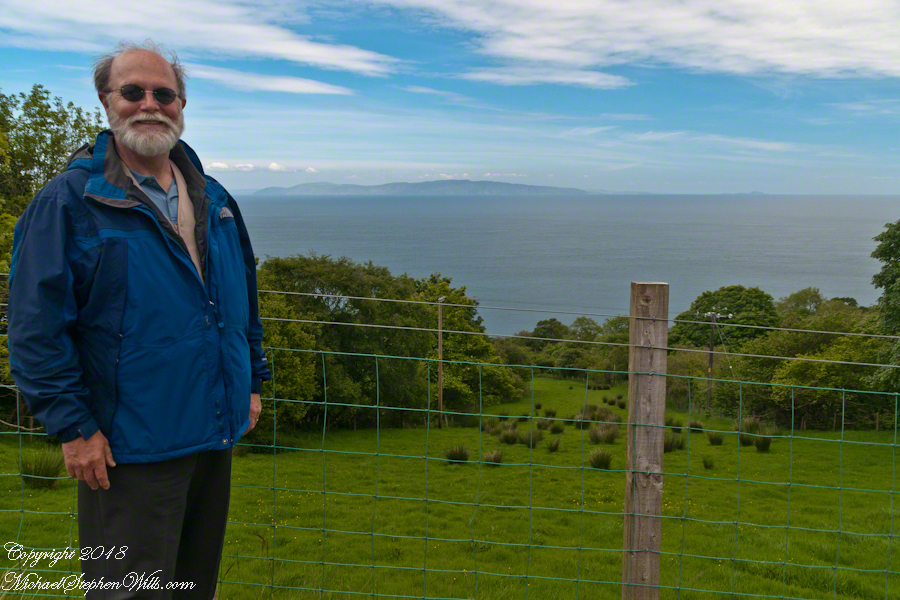
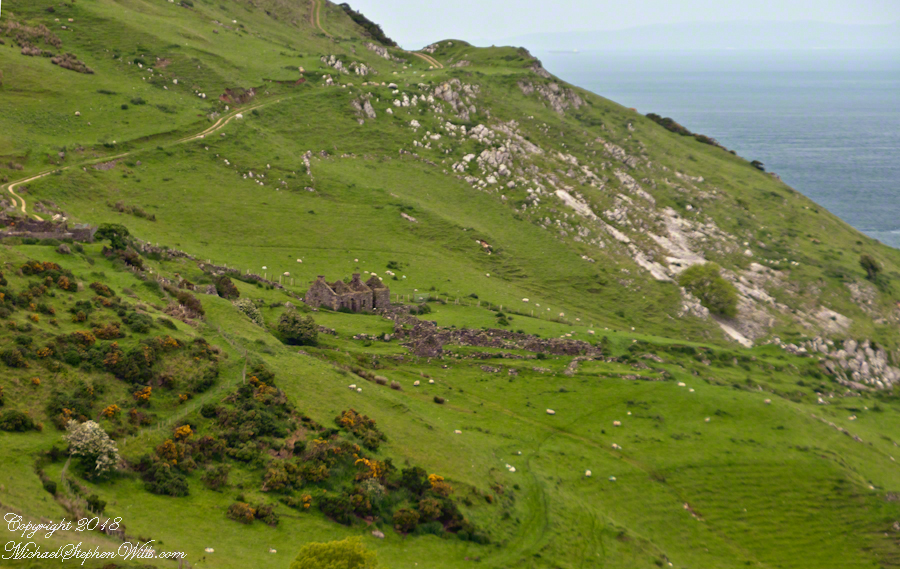
We pulled off the side of Torr Road for this fine view on the way to Torr Head to take in this view of the Irish Sea. The steeply rising distant headland is the Mull of Kintyre. Loughan an Lochan, County Antrim, Northern Ireland.
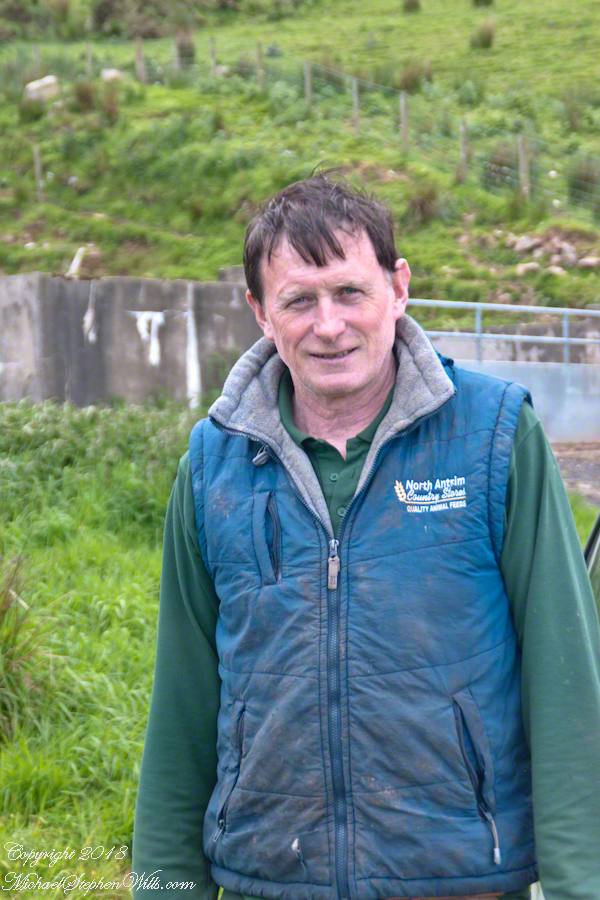
We parked on a turnout above the Loughan Cottages, near this farmer’s sheep pen. He drove up in a huge tractor and conversed with Pam while I was below shooting the cottages. He made a good impression.
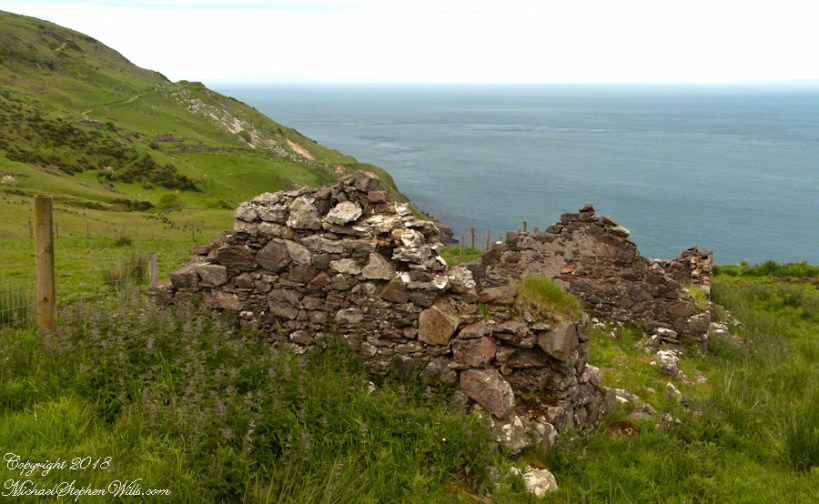
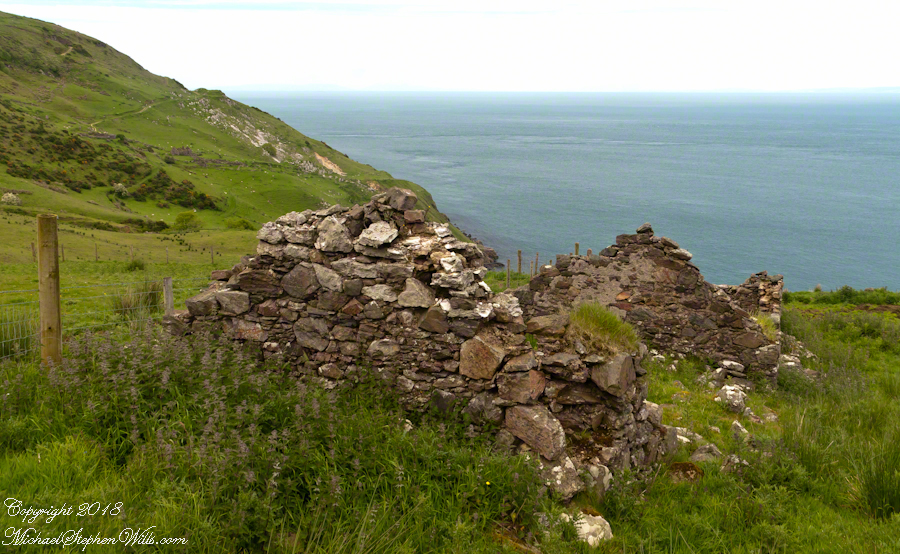
Roofless walls of a cottage more substantial than the other deserted ruins above Loughan Bay, with two fireplaces a walled porch with a view. A number of outbuilding foundations lay around. The integrity of the walls, chimneys and gables speaks to the quality of construction. A freighter in the North Channel of the Irish Sea is visible in the distance above the upper ridge. Beyond is the island of Islay, Scotland, about 30 miles distant. Loughan an Lochan, County Antrim, Northern Ireland.
I am happy to report a series of thirteen (13) photographs of these ruins were accepted for publication by Getty. You can click any of the photographs in this posting for my Getty portfolio.
The land slopes steeply to a rocky beach.
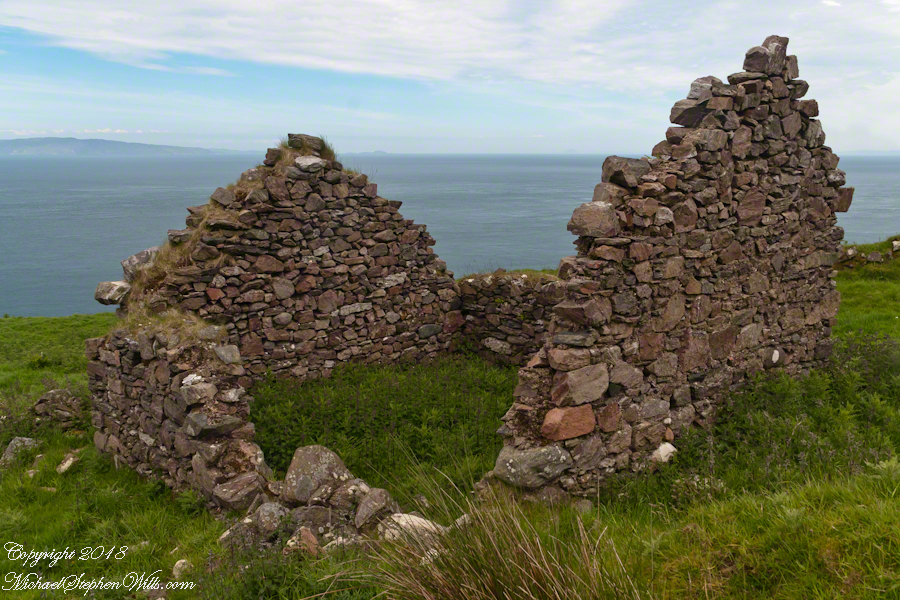
A thick growth of ferns, grass on the gable was once a home with a view of Scotland’s Mull of Kintyre 13 miles across the North Channel of the Irish Sea. The Isle of Sanda just visible on the right of the far gable. A landform named Alisa Crag is just visible in the distance, to the left of the nearest gable.
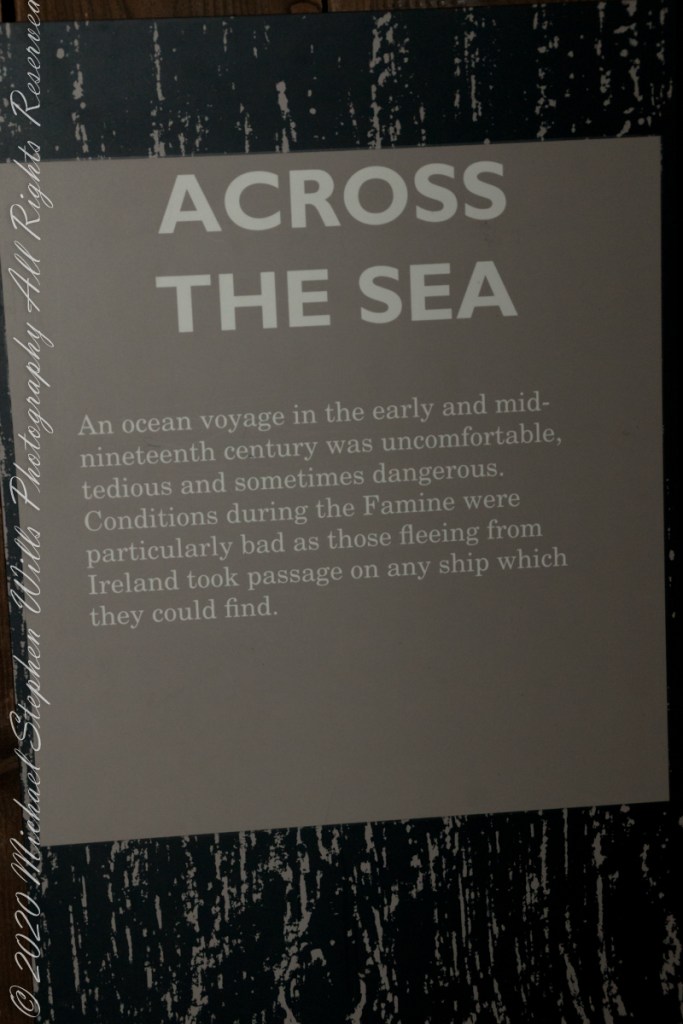
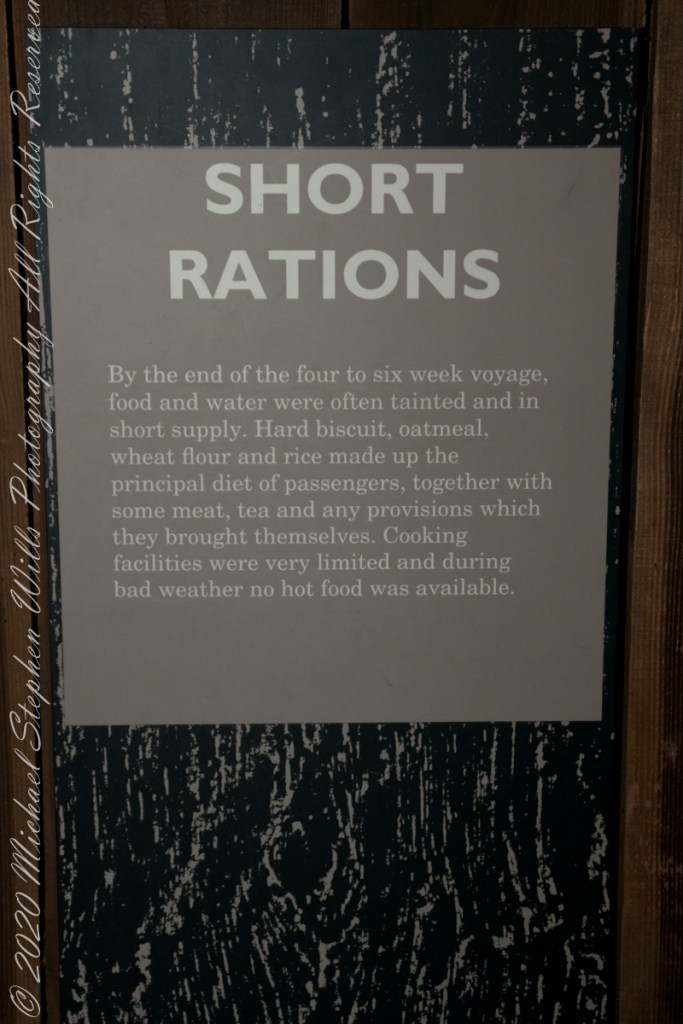
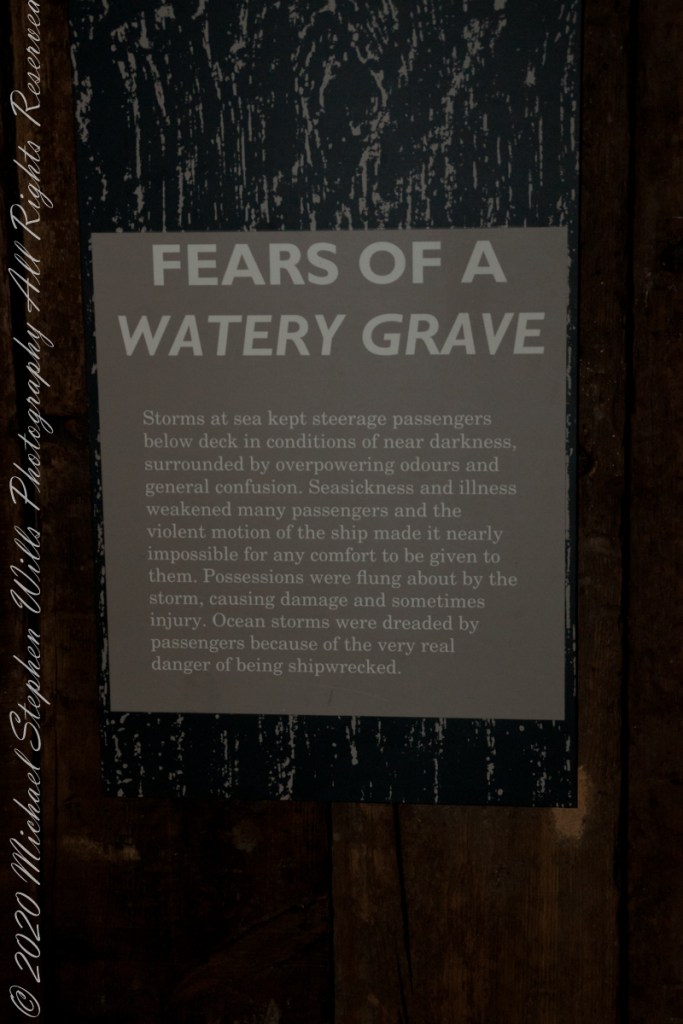
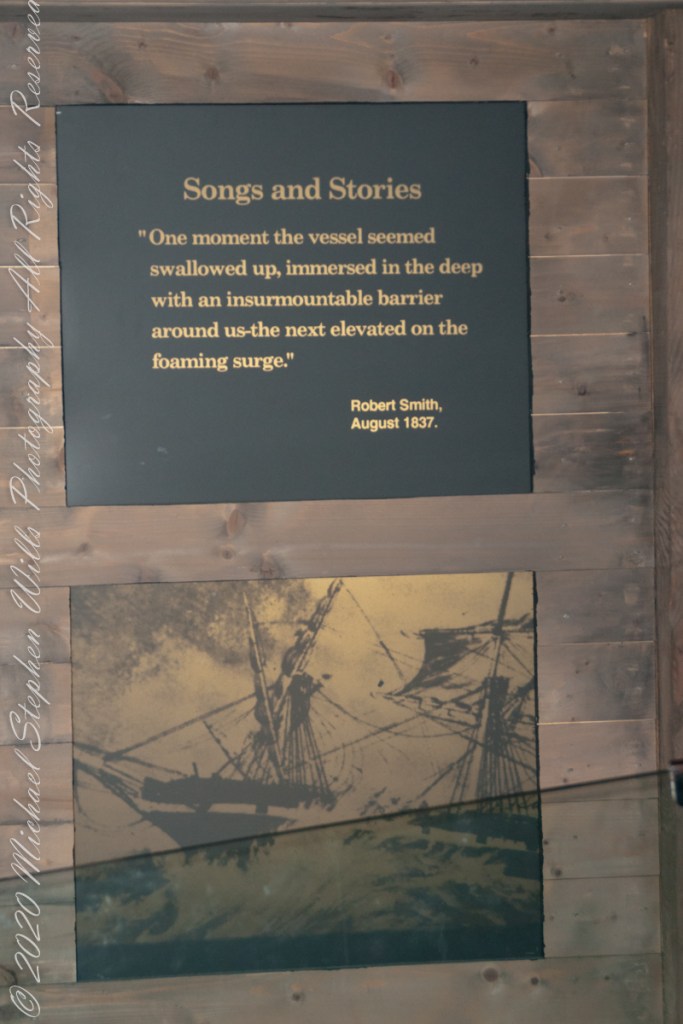
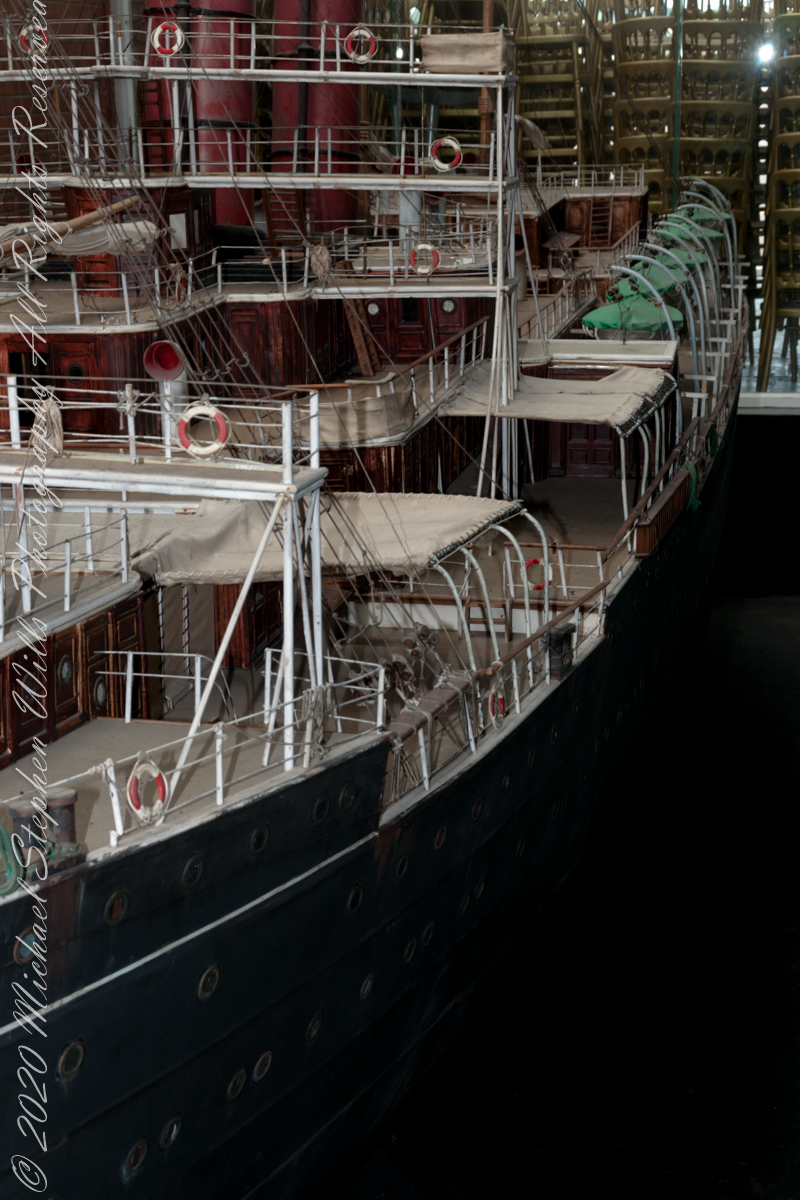
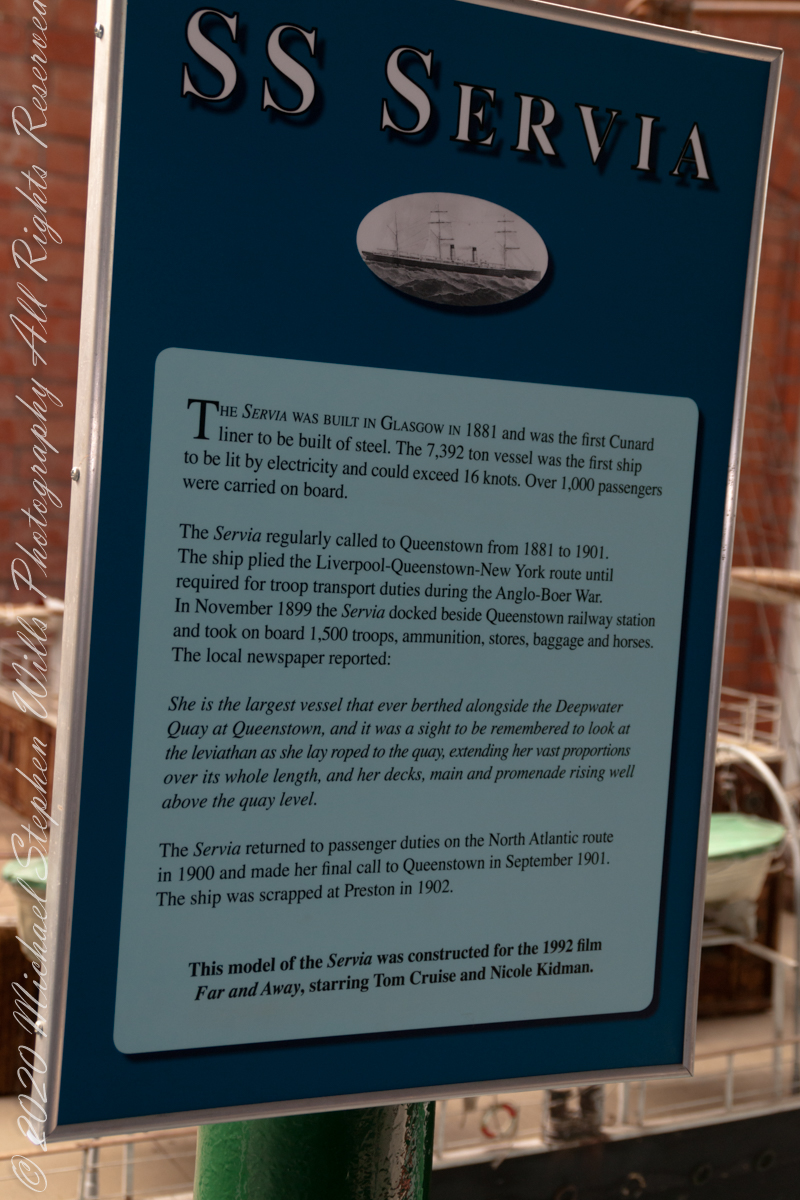
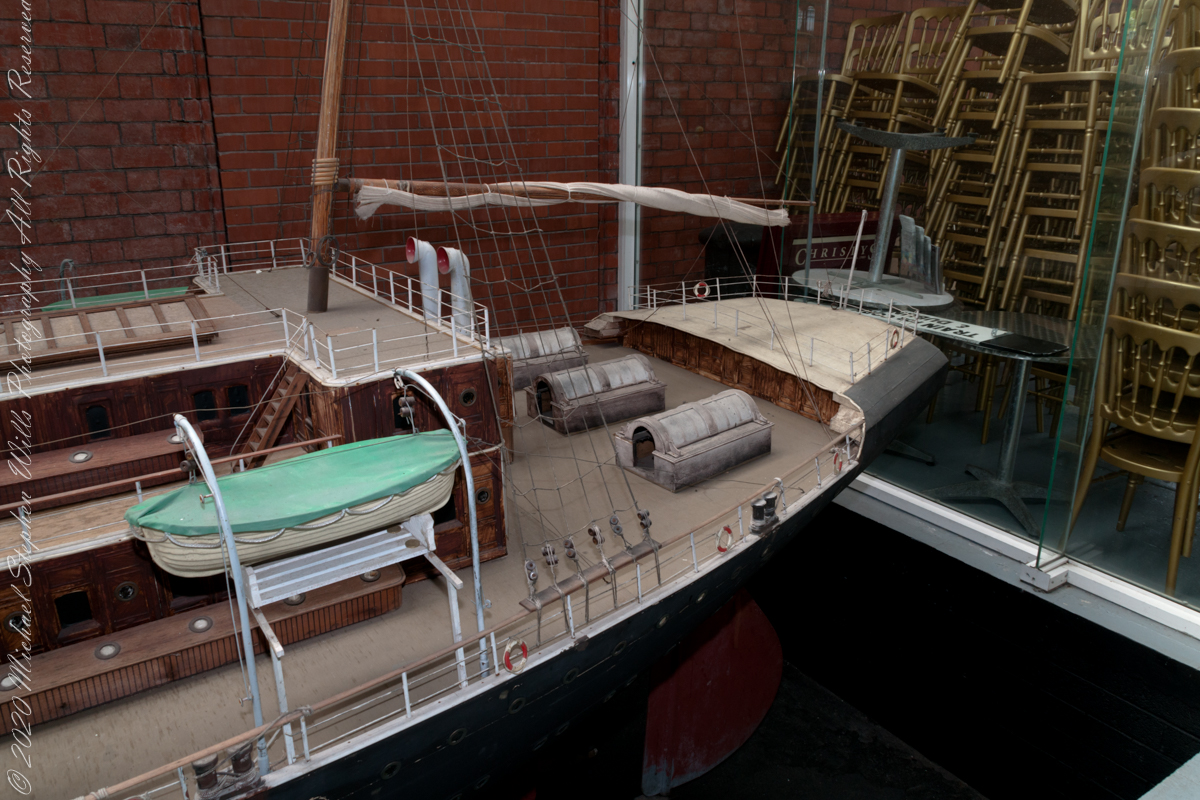
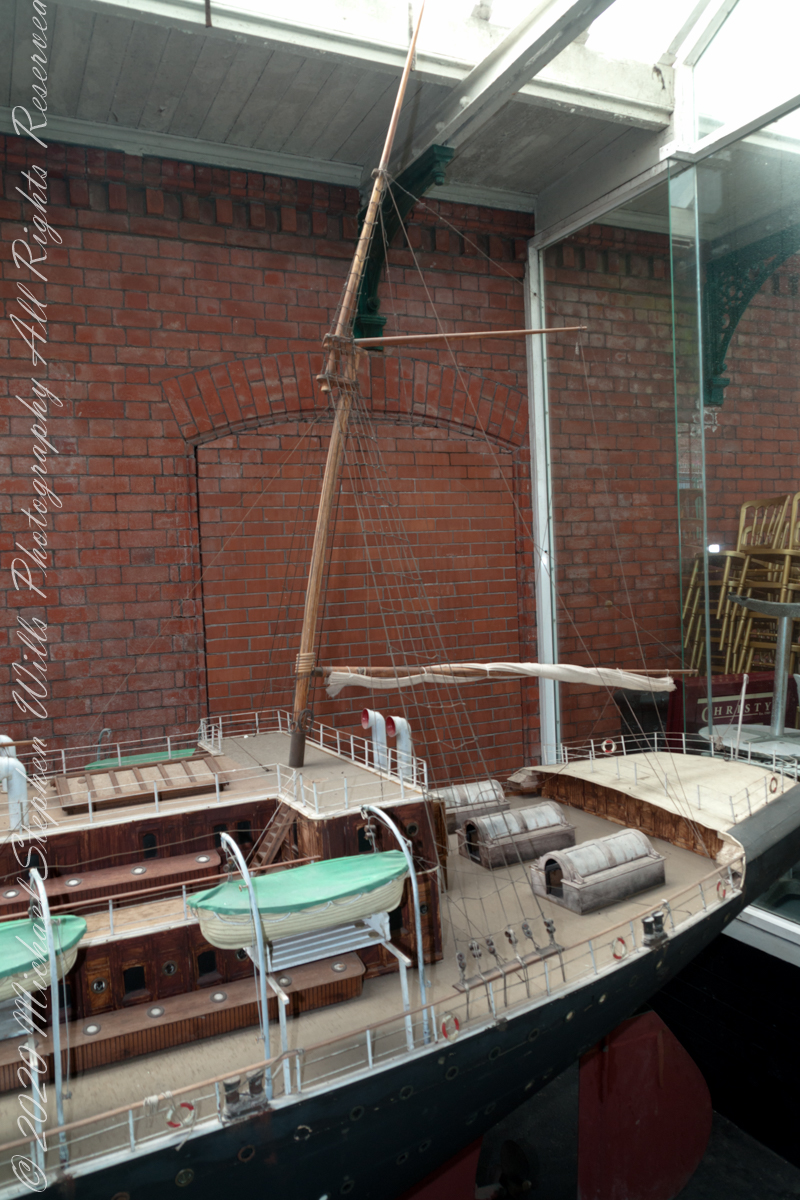
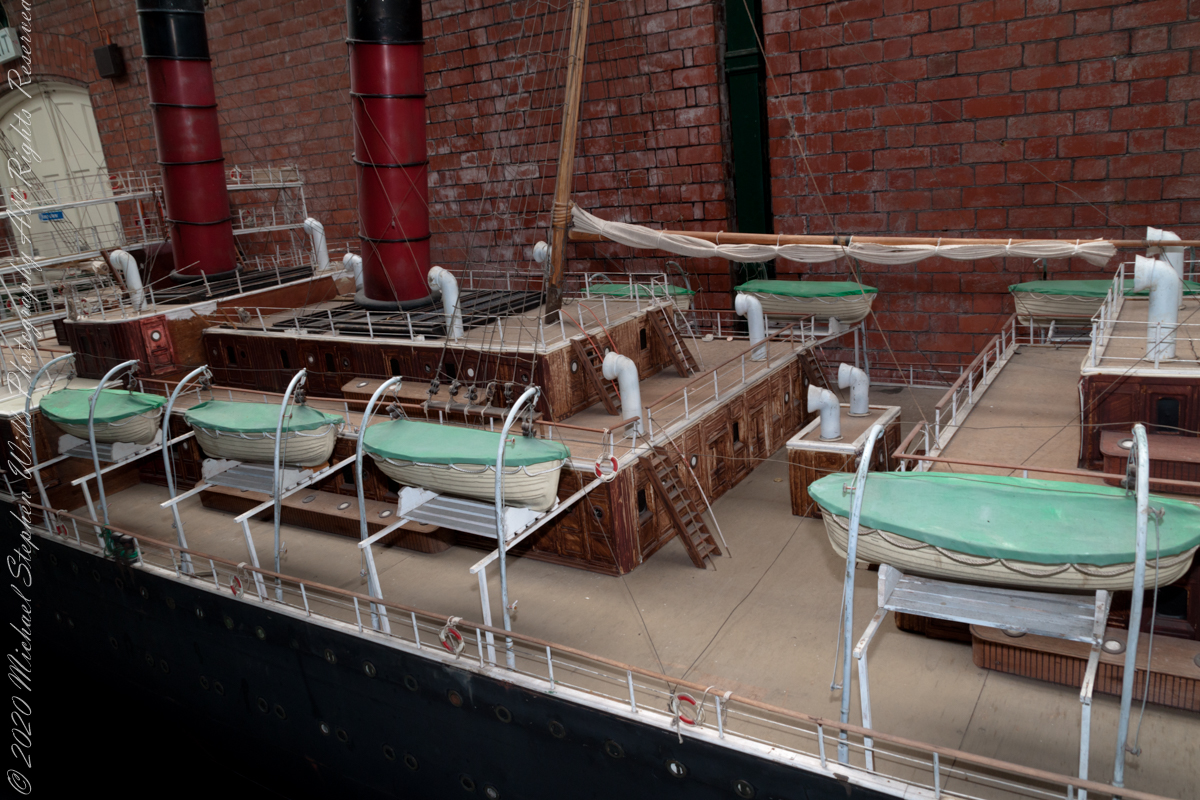
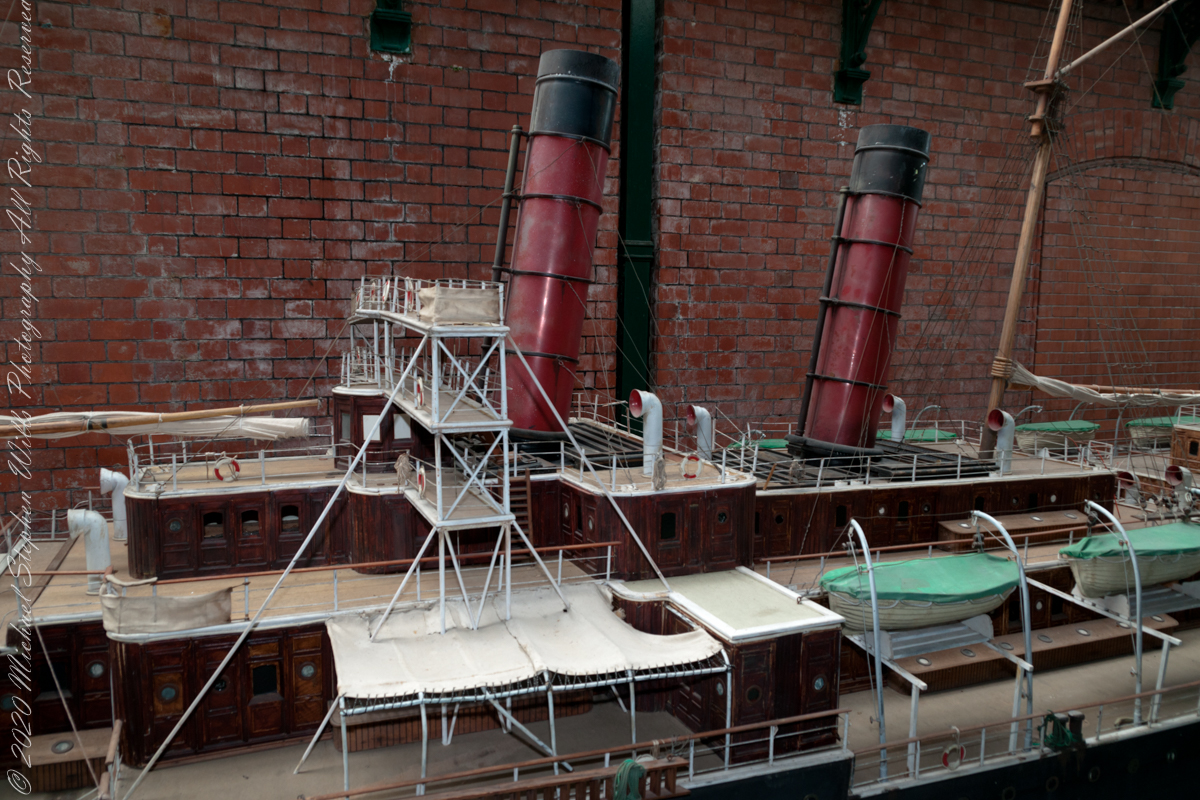
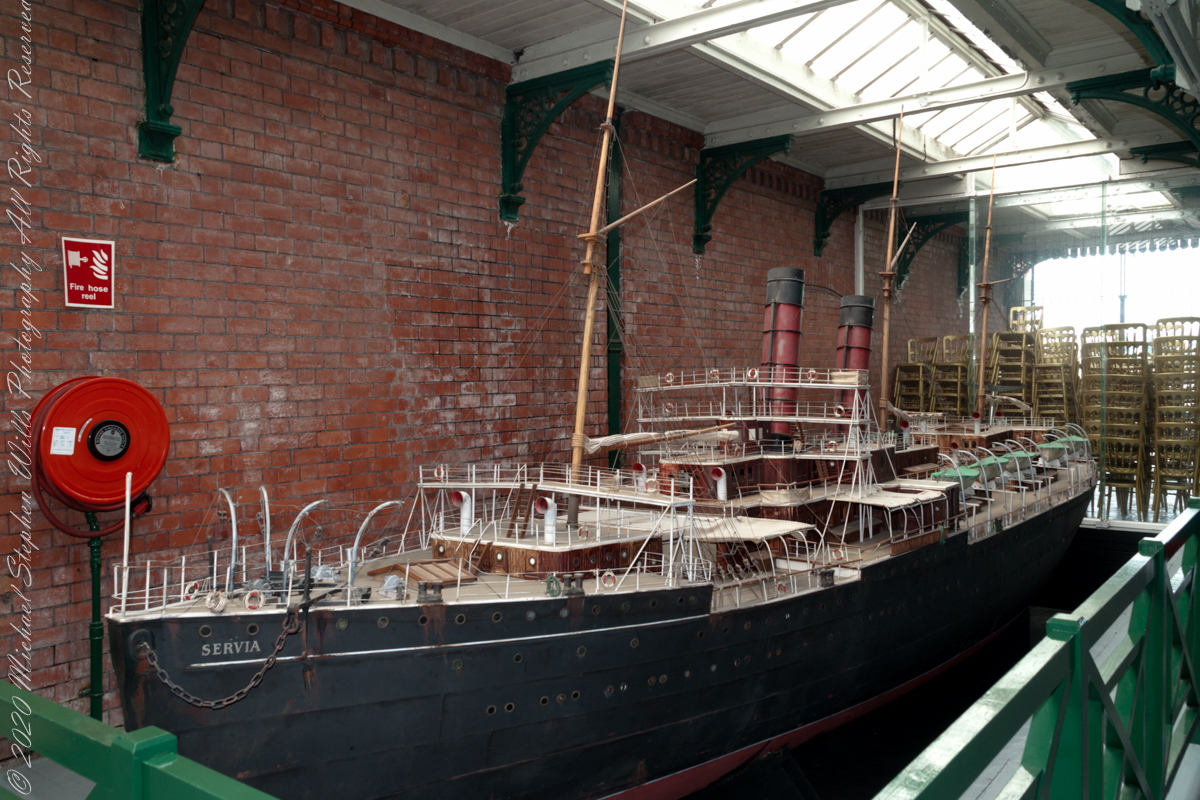
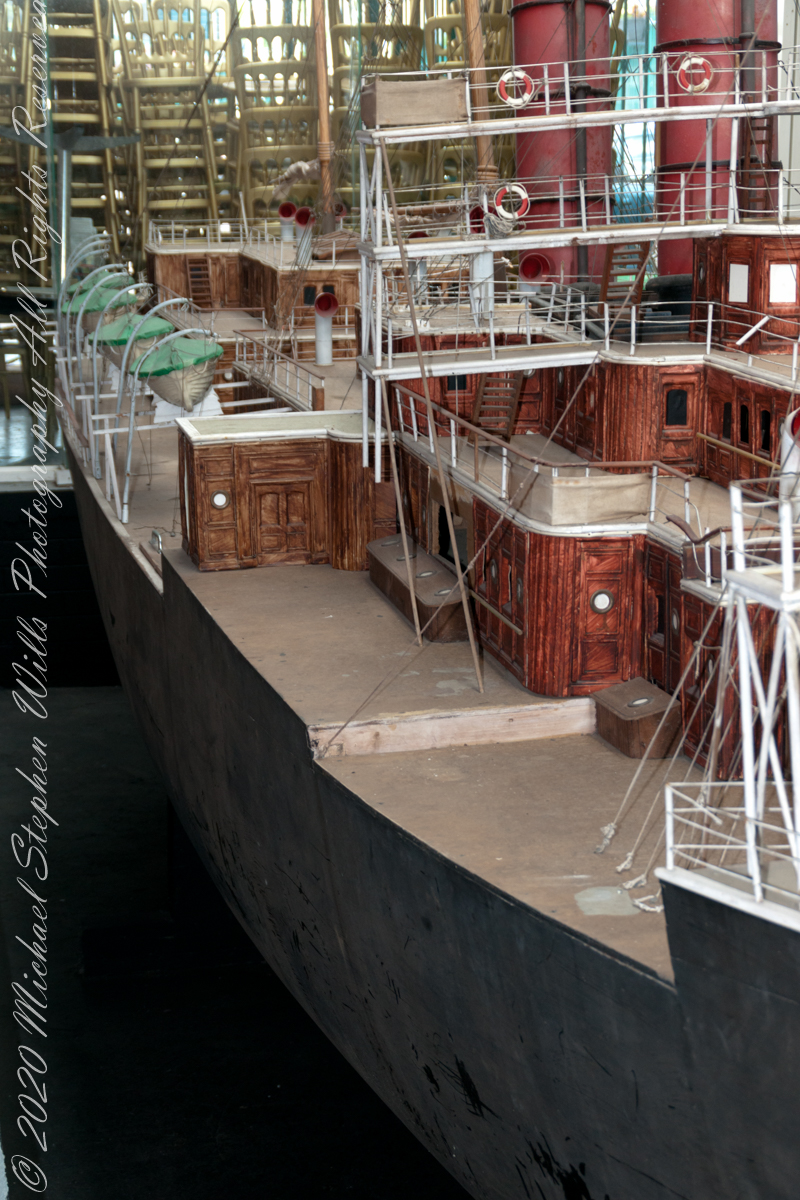
Nothing so grand as the SS (or HMS) Servia carried my ancestors from Ireland to America. This ship model, created for the 1992 film “Far and Away” is on display within Cobh Heritage Center. Said by some to be the first true transatlantic ocean liner. Launched in 1881 as luxury transportation by the Cunard Line of today’s Queen Mary. Last year, we enjoyed the arrival of Cunard’s Queen Victoria to Cape Canaveral. (Click the link for my blog of the event, one of the last cruise ships to sale during the pandemic of 2020).
It is notable the model played a small role in the film, yet is an incredible accomplishment. By the way, from 1849 to 1920 Cobh was known as “Queenstown” in honor of a visit by Queen Victoria. The Irish Free State returned the name to the original.
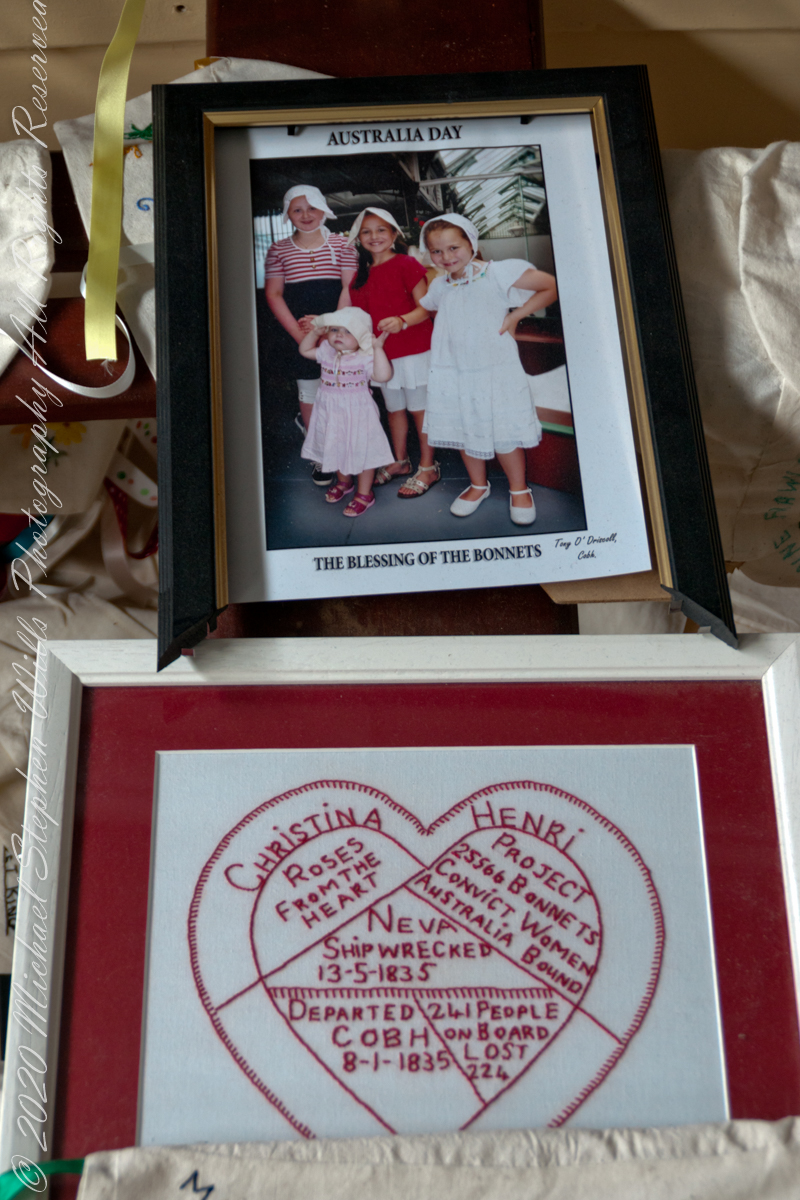
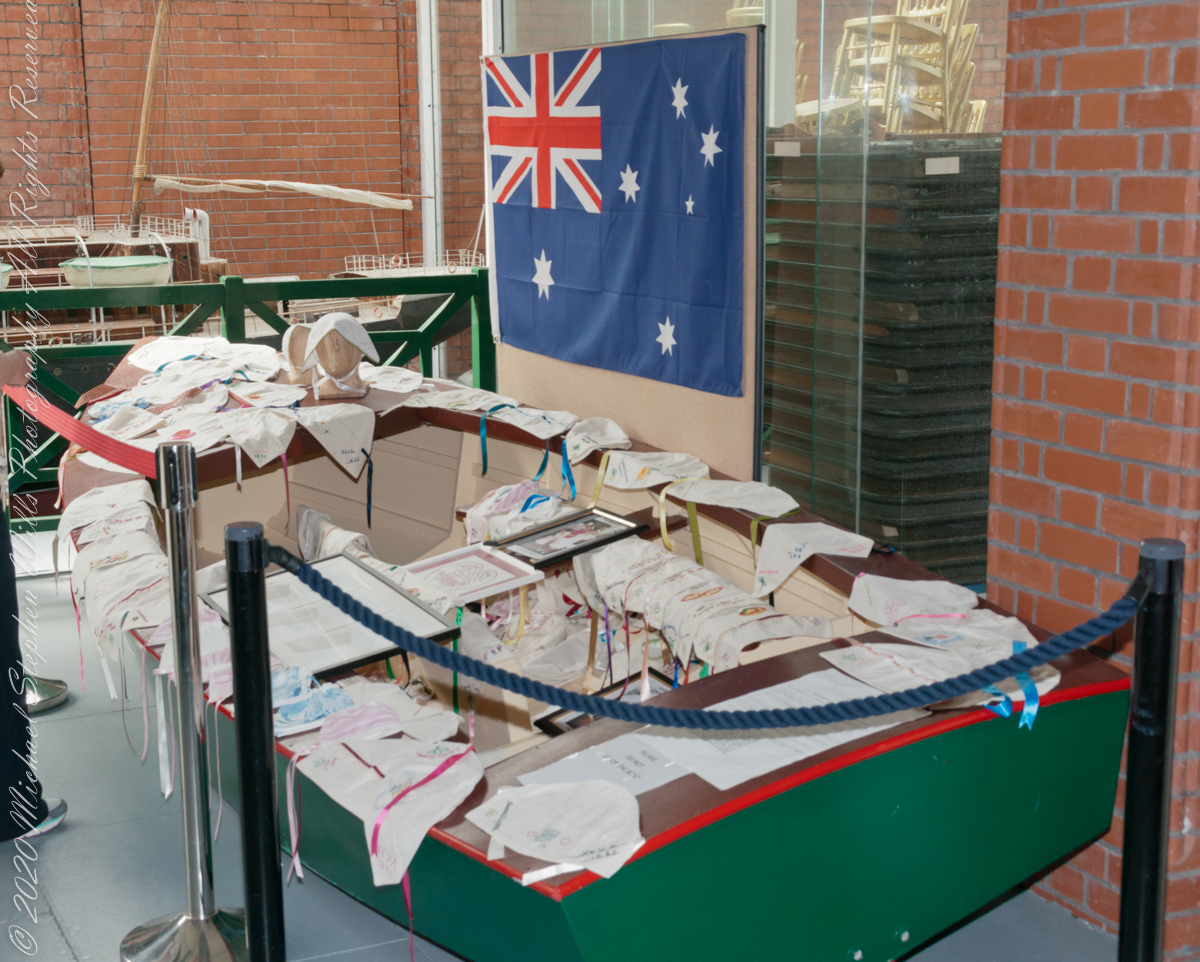
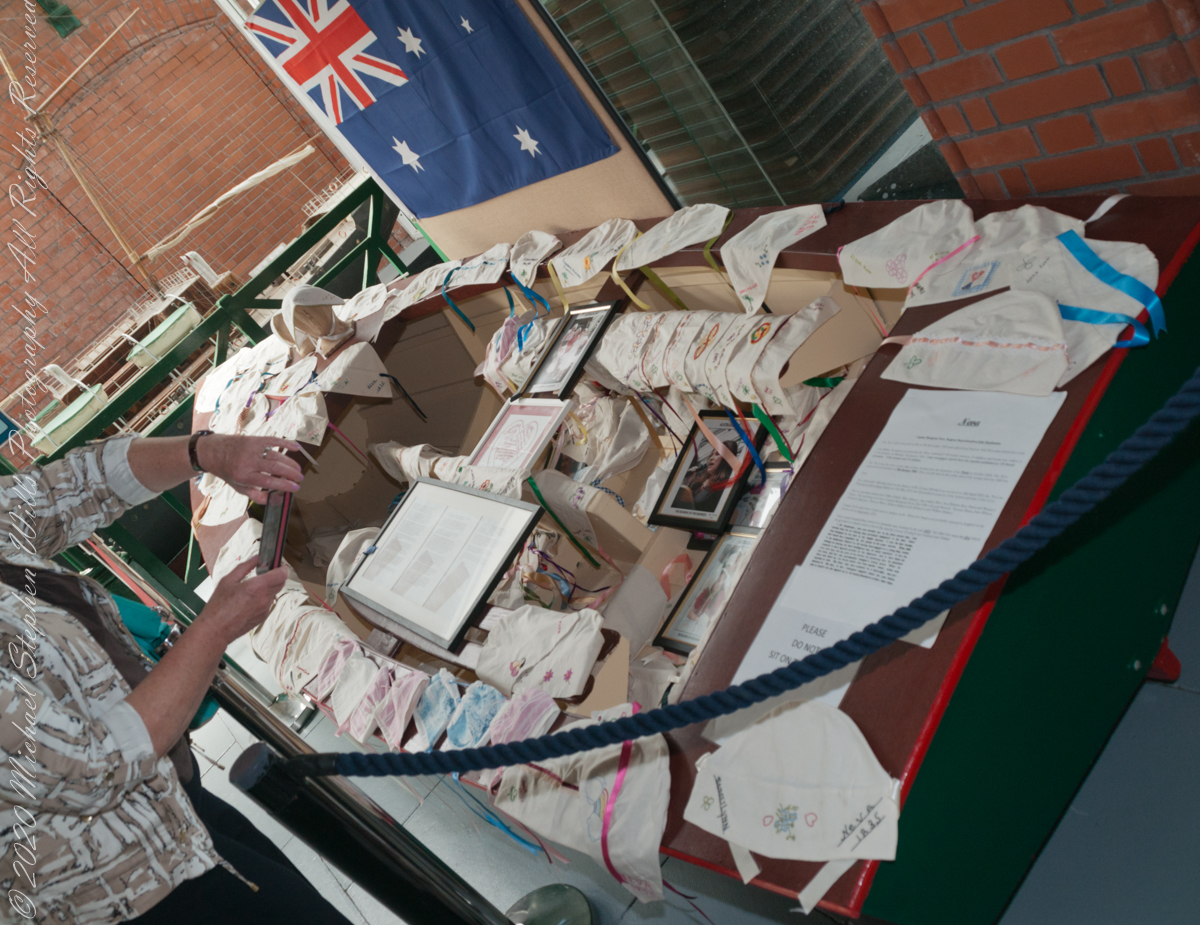
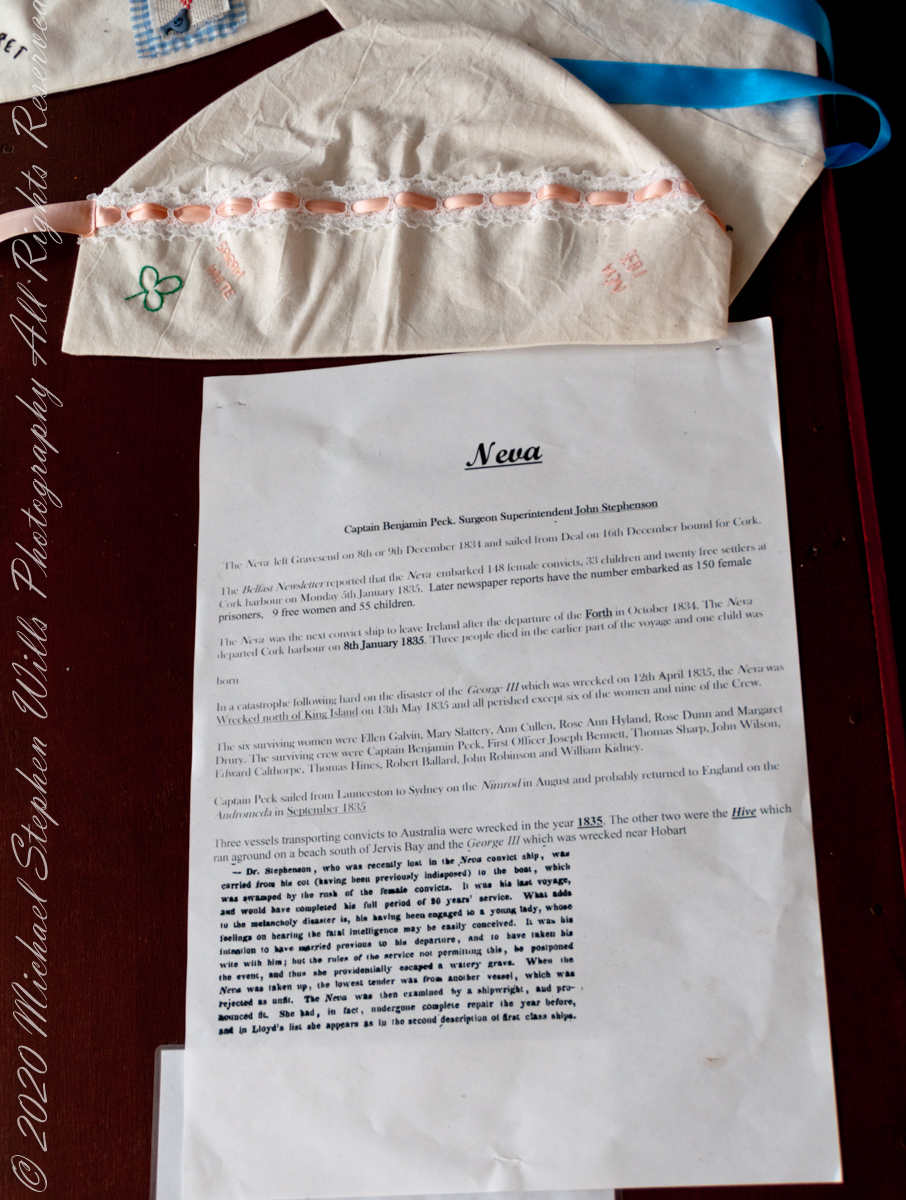
January 1, 1835 the “convict” ship “Neva” departed from Cobh harbor for Sydney, Australia. The 241 people on board included 150 female “convicts”, their 33 children, 9 “free” women (probably the wives of convicts) and their 22 children, 27 crew. During the passage three persons died, one child was born. About 5 a.m. on May 13, 1835 the Neva hit a reef northwest of King Island in Bass Strait and broke apart rapidly. Twenty two survivors drifted ashore on two rafts formed by the fore and aft decks of the wrecked ship. Seven women died of exposure the first night ashore. Fifteen, six women and nine crew, were later rescued. No children survived.
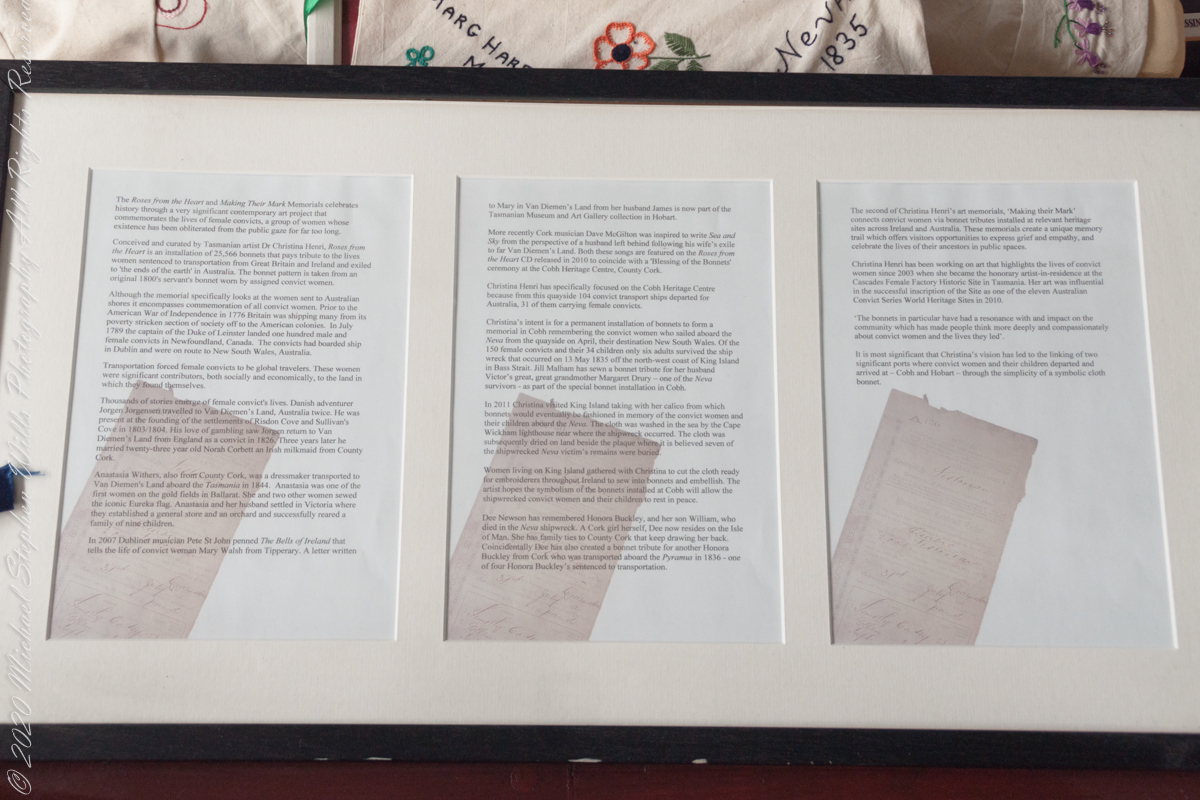
Between 1791 and 1853 approximately 26,500 Irish people were forcefully transported to New South Wales. The 25,566 bonnets crafted for this project represent lives of female “convicts”. The slide show are photographs of the exhibit, Cobh Heritage Center, County Cork, Republic of Ireland.
Descendants of Neva survivorStory of the NevaStory of Roses from the Heart
Copyright 2021 Michael Stephen Wills All Rights Reserved
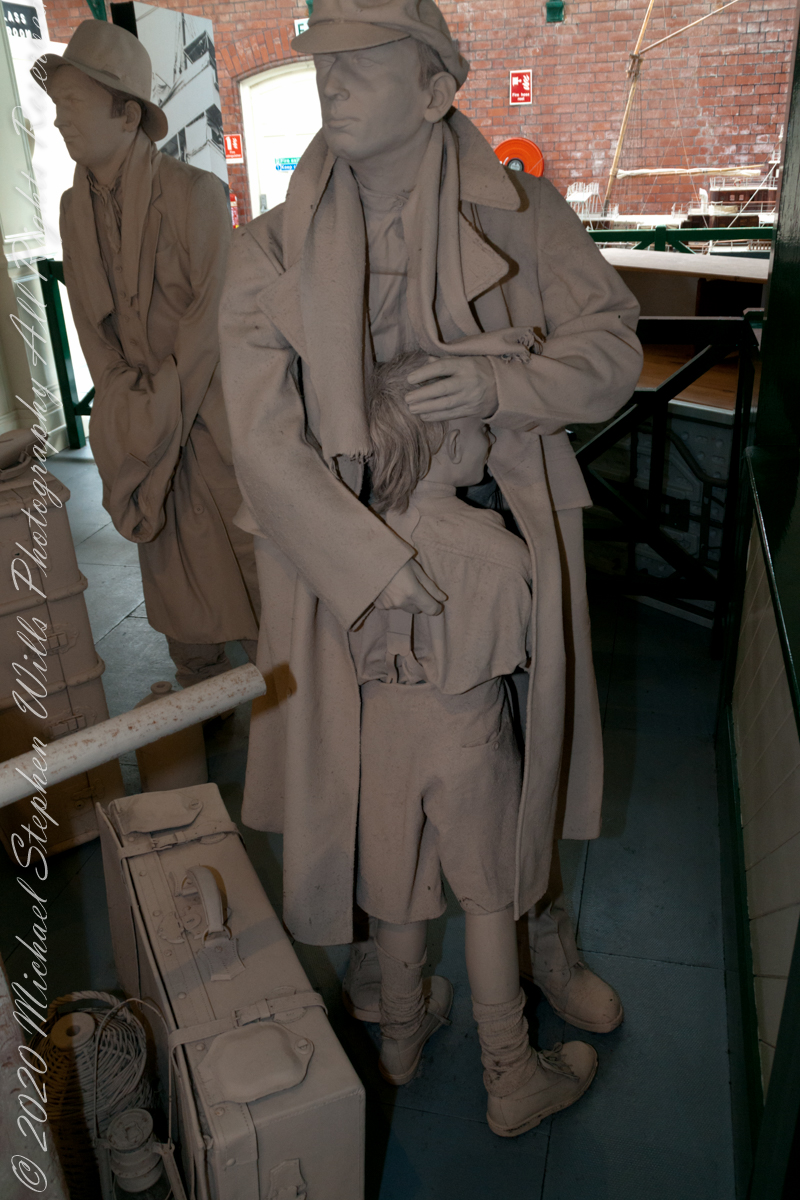
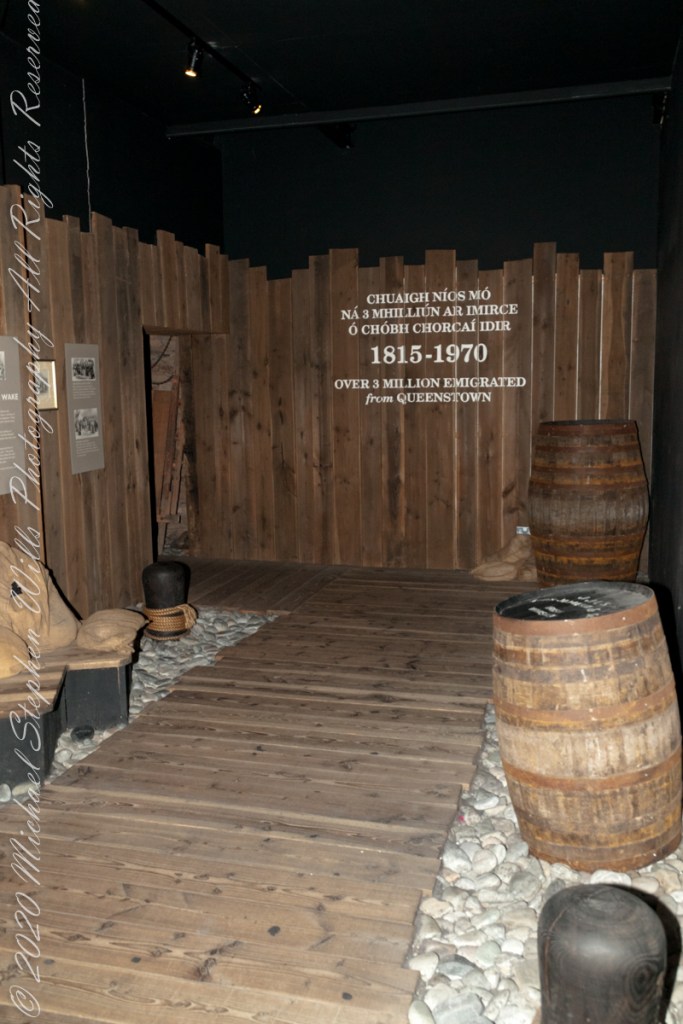
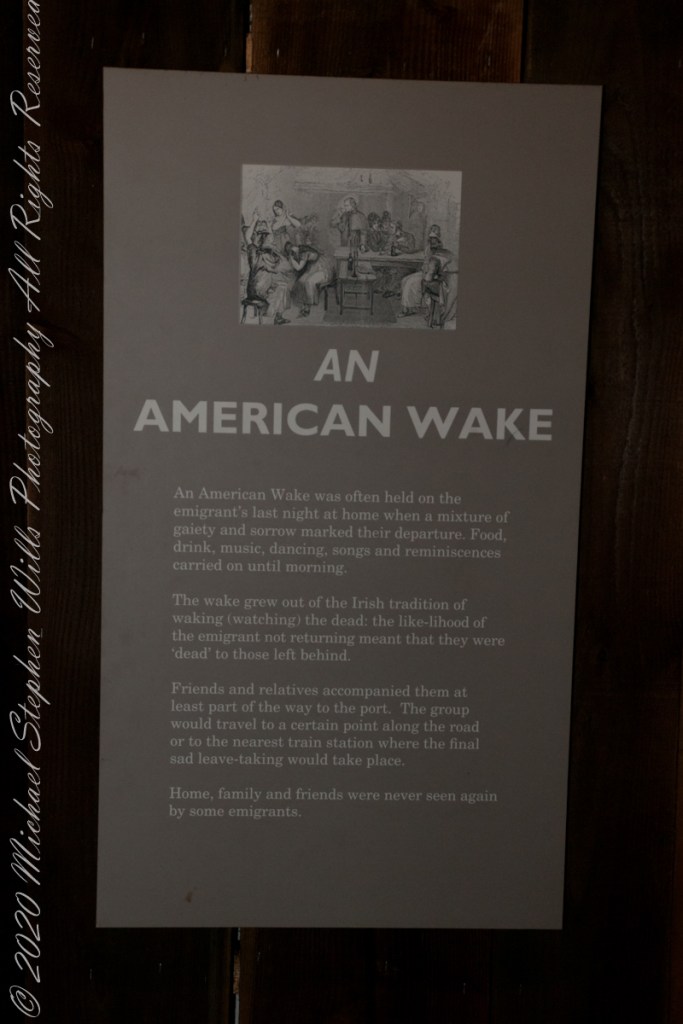
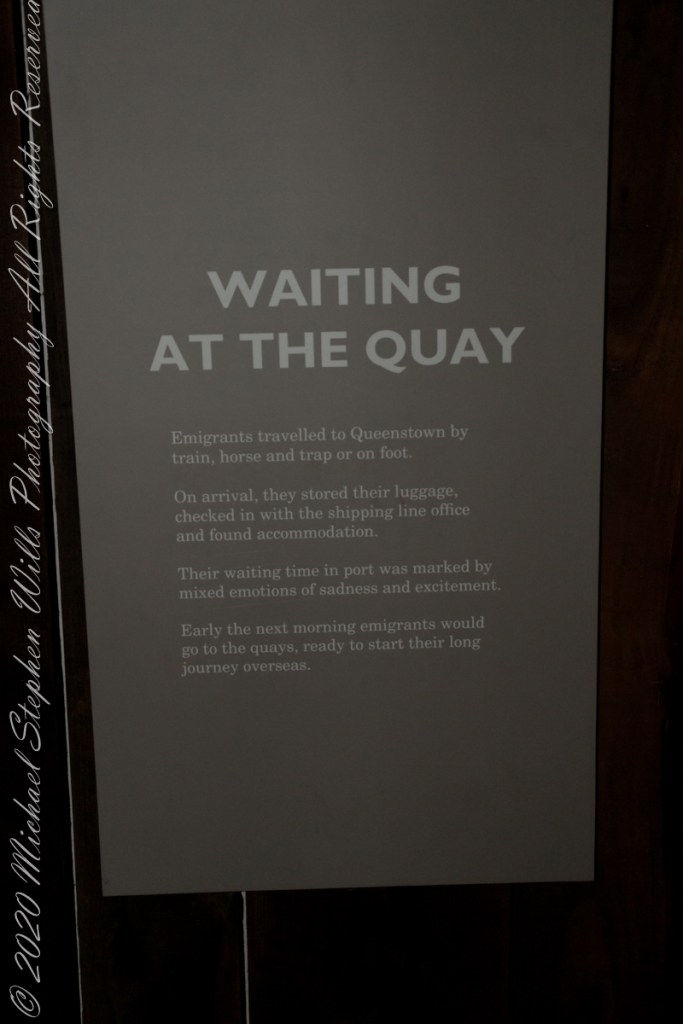
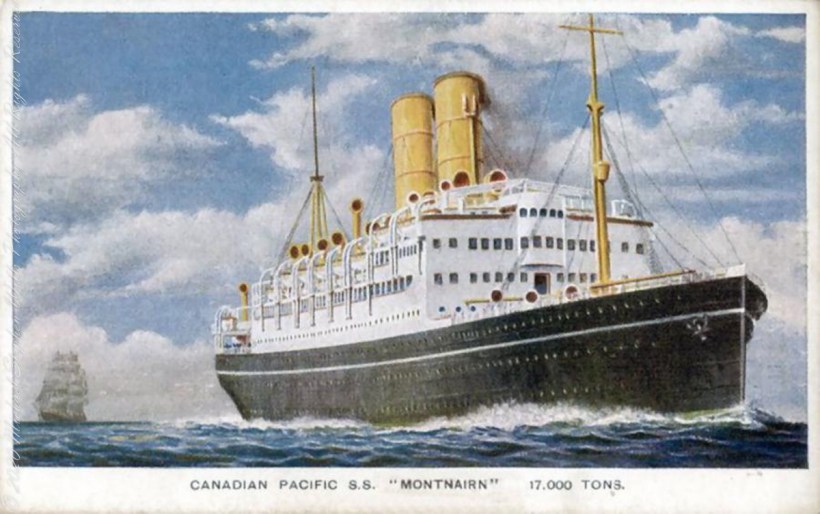
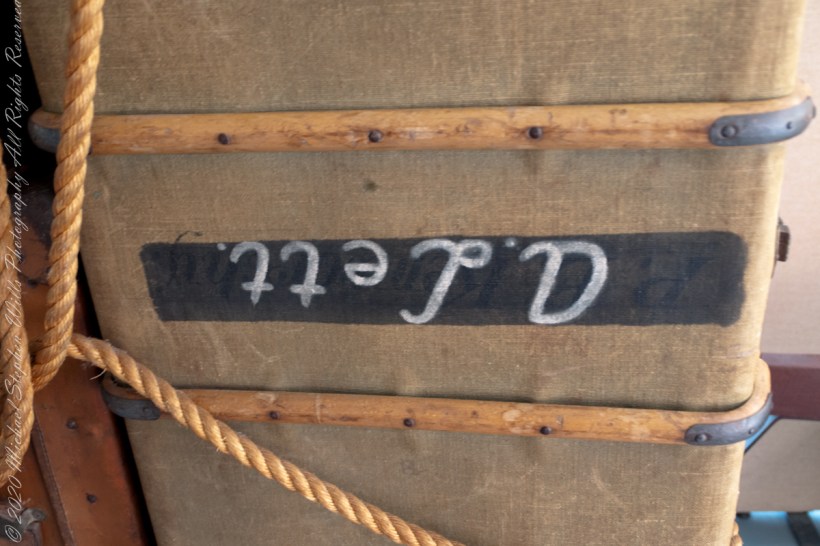
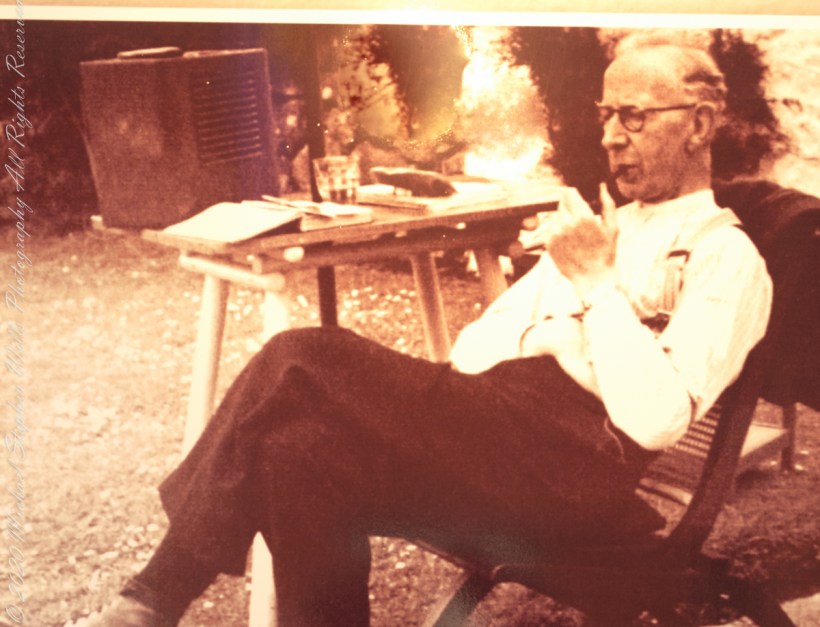
The Irish Free State was four months old when my then 35 year old Grandfather and Grandmother boarded the S.S. Montnairn out of Belfast. My mother, two months short of three years of age, accompanied them on this voyage to a new life as Canadian citizens. This slideshow is a mix of images from the Cobh Heritage center and my personal genealogy materials.
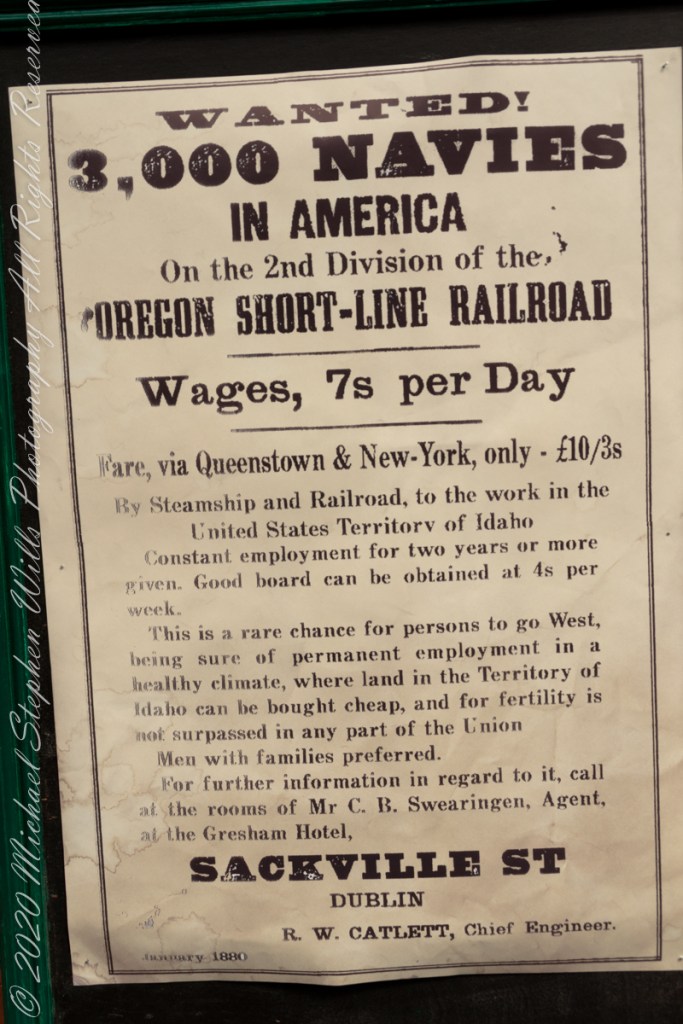
Call for Irish Emigration, this for Idaho. My grandfather answered a similar call, returning in 1926 for his wife and daughter.
Postcard of the Ship that carried my Mother and her parents from Belfast to Quebec. Less than 2 years after their voyage the S.S. Montnairn was sold for scrap.
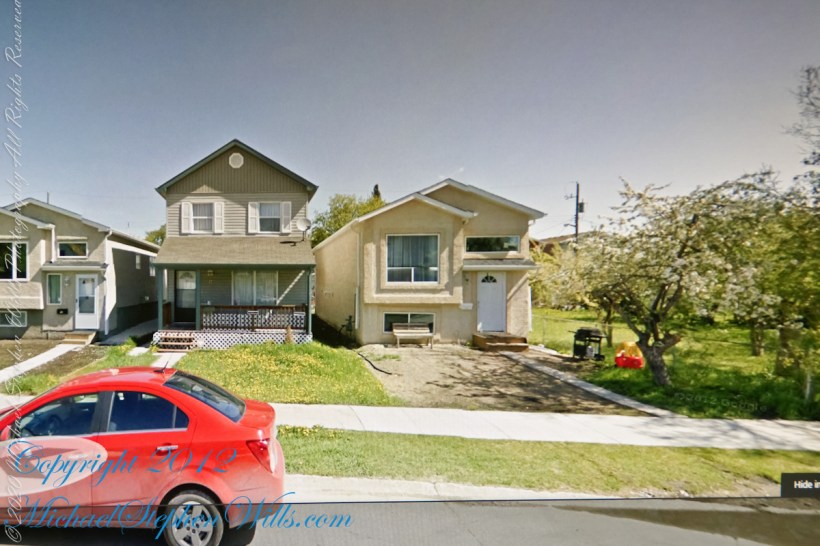
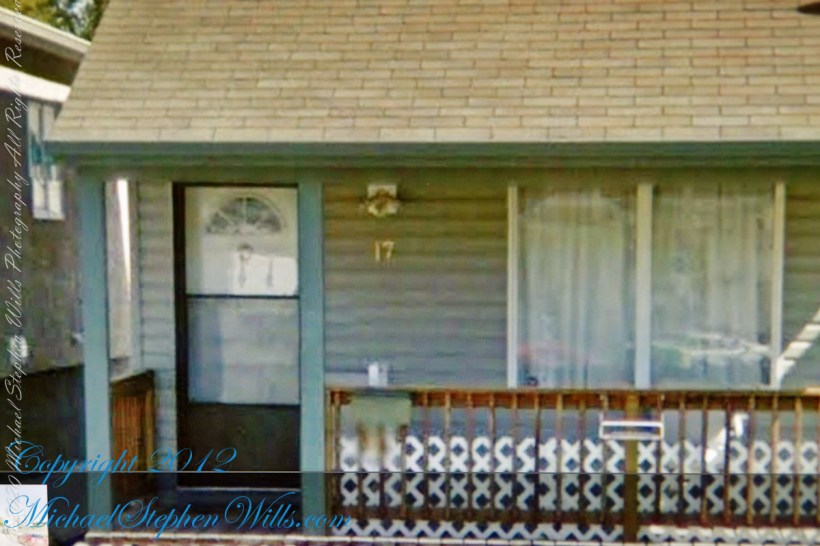
Using GoogleMaps I found the house my Grandparents first lived in after emigration from the Irish Free State
The address was on their immigration documentation. Winnipeg, Manitoba, Canada
Copyright 2021 Michael Stephen Wills All Rights Reserved
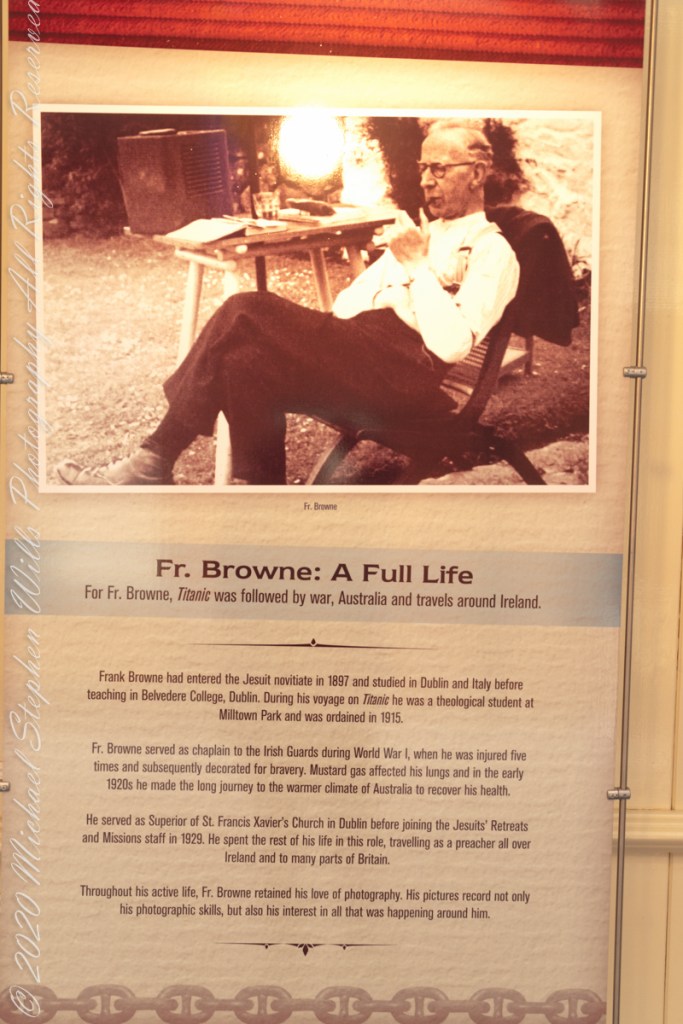
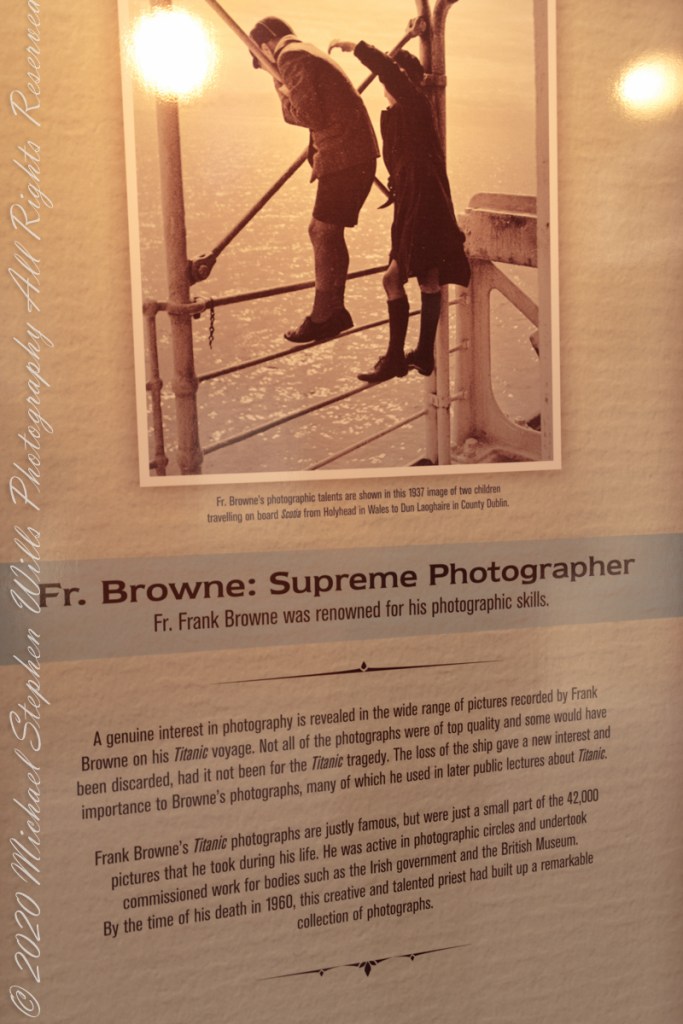
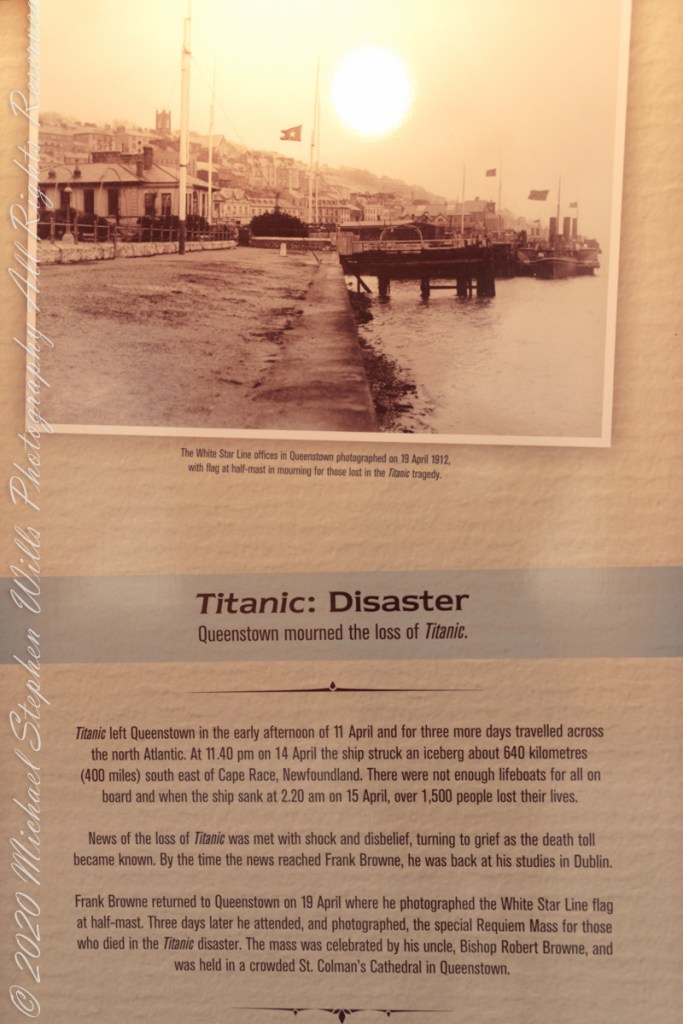
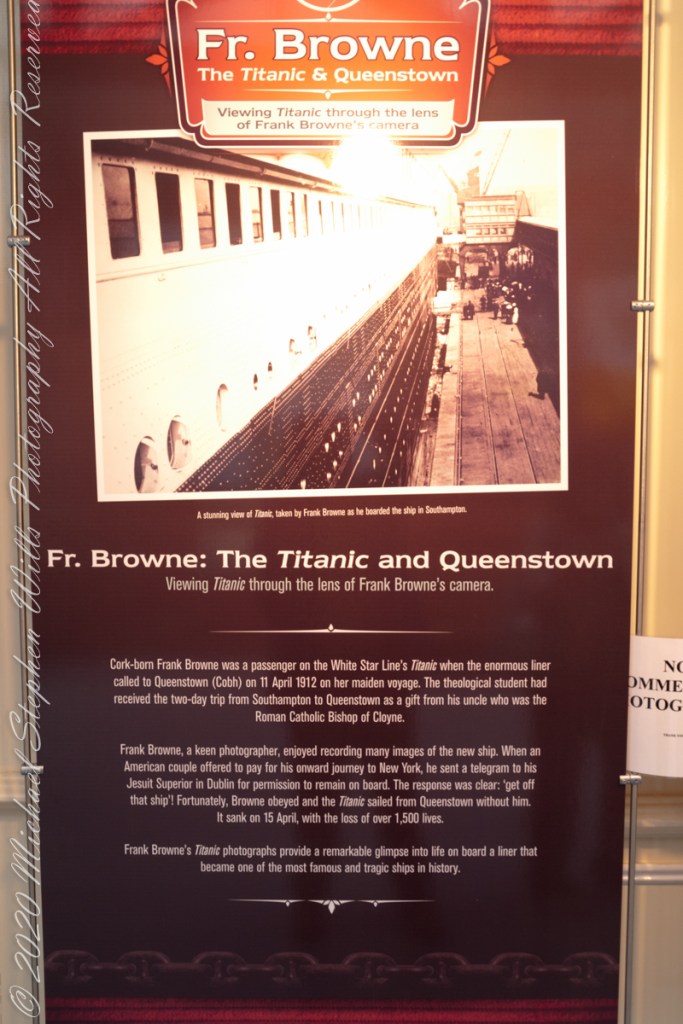
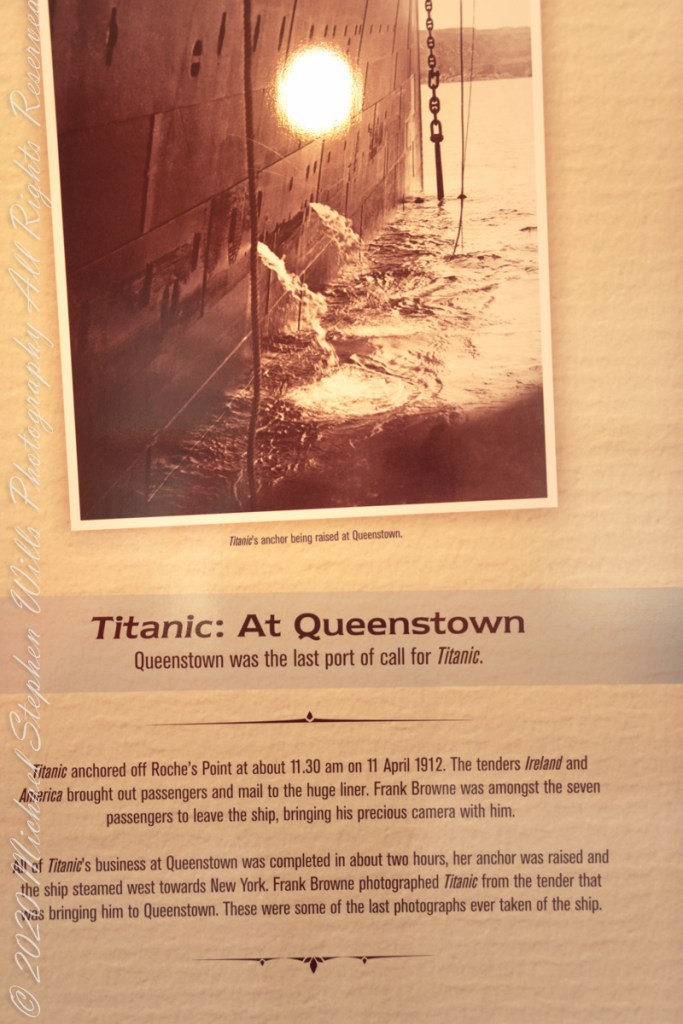
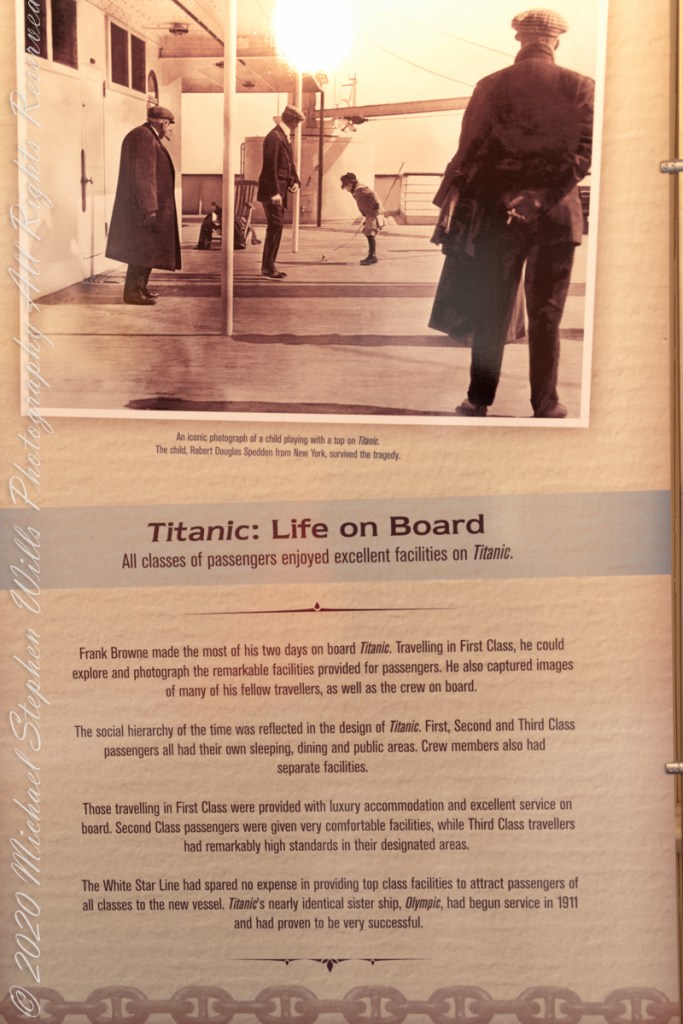
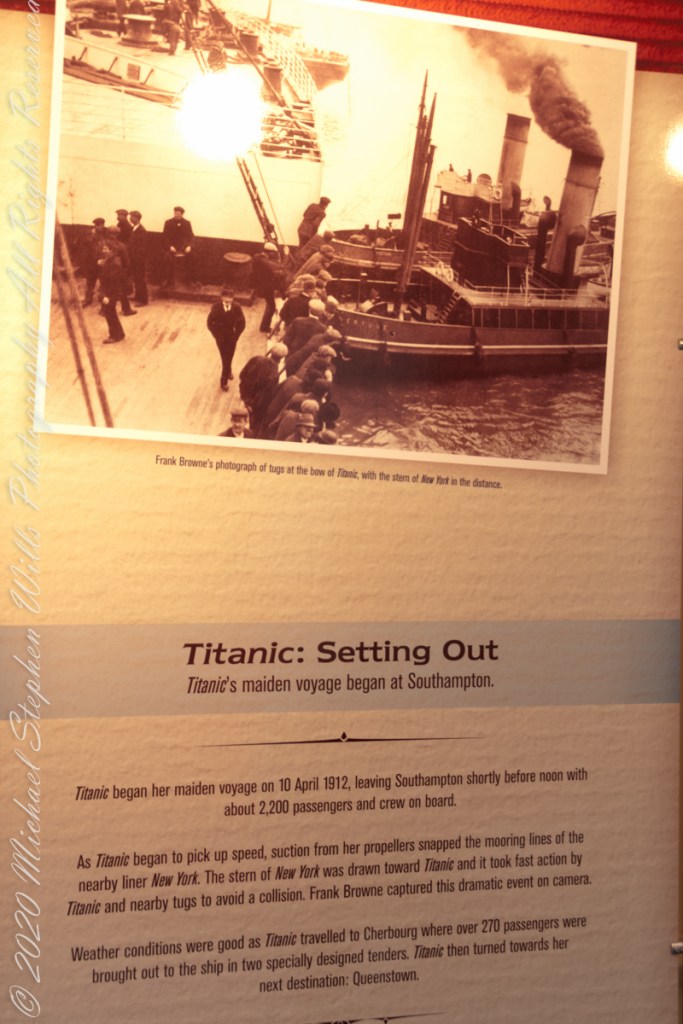
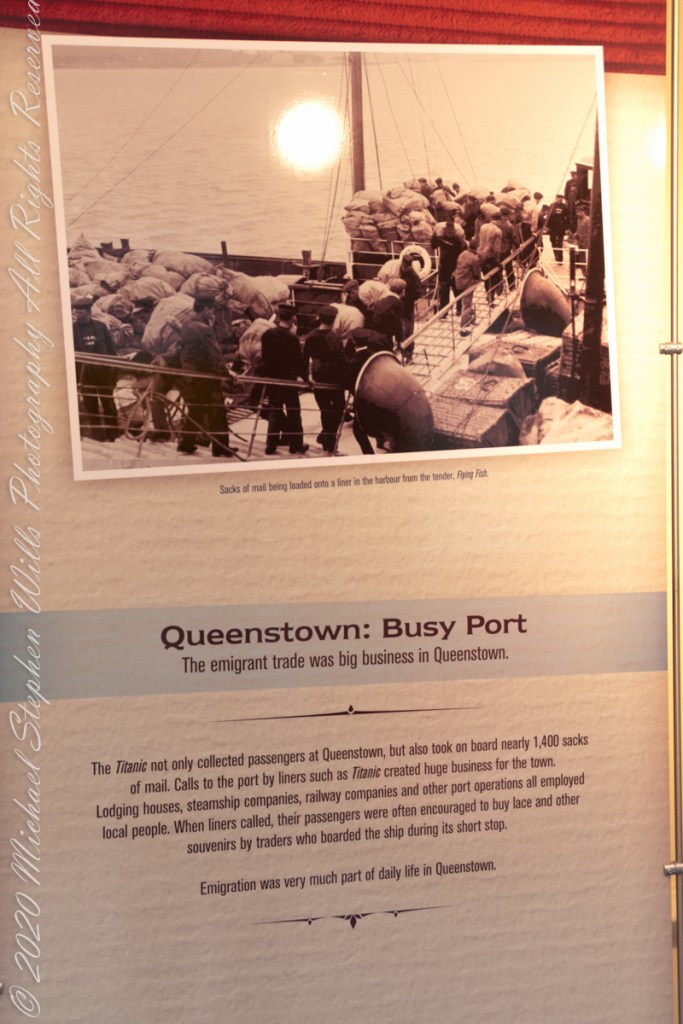
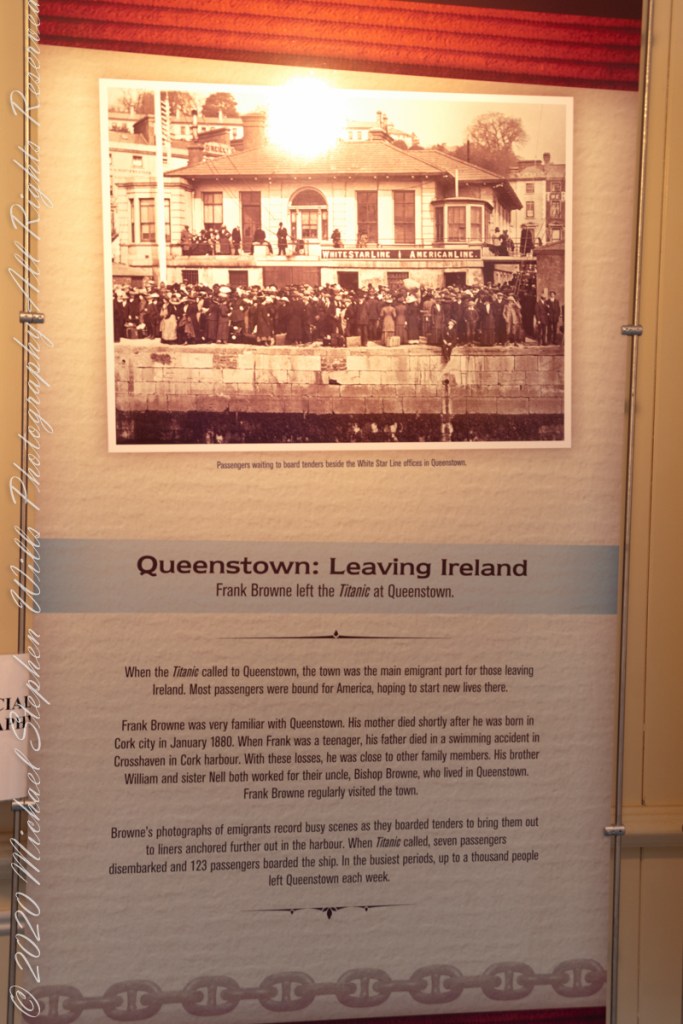
The Cobh Heritage Center documents the experiences of Irish emigration. Here I share information about the Titanic’s maiden voyage through the photographic work of Father Frank Brown. Cobh, pronounced “cove”, as in “The Cove of Cork.”
Here is an informative and entertaining 5 minute documentary of Father Brown, his trip on the Titanic and subsequent achievements as a photographer.
Copyright 2021 Michael Stephen Wills All Rights Reserved