A previous post, “Christmas Tableau”, provides some context. The photographs from that set were accepted by Getty for stock images. Click the link to take a look: “Cozy Snowmen” on Getty Stock.
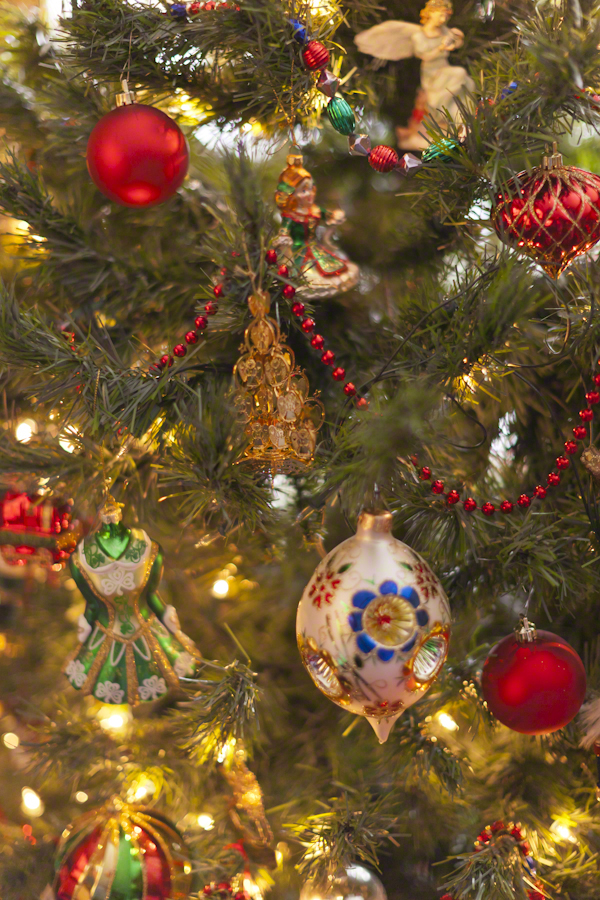
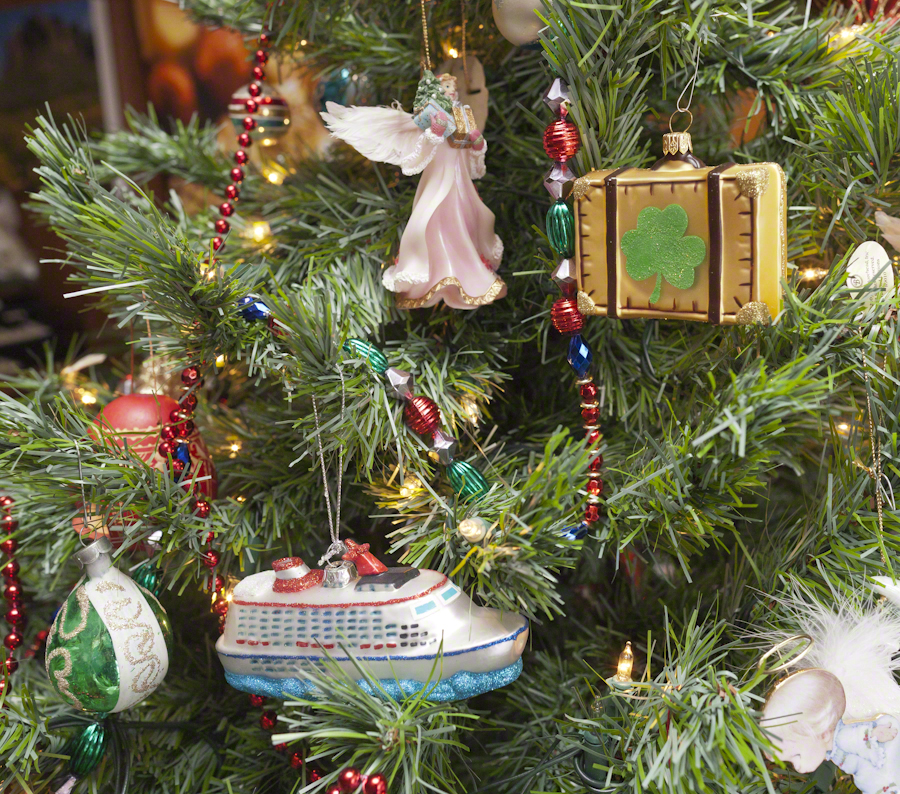
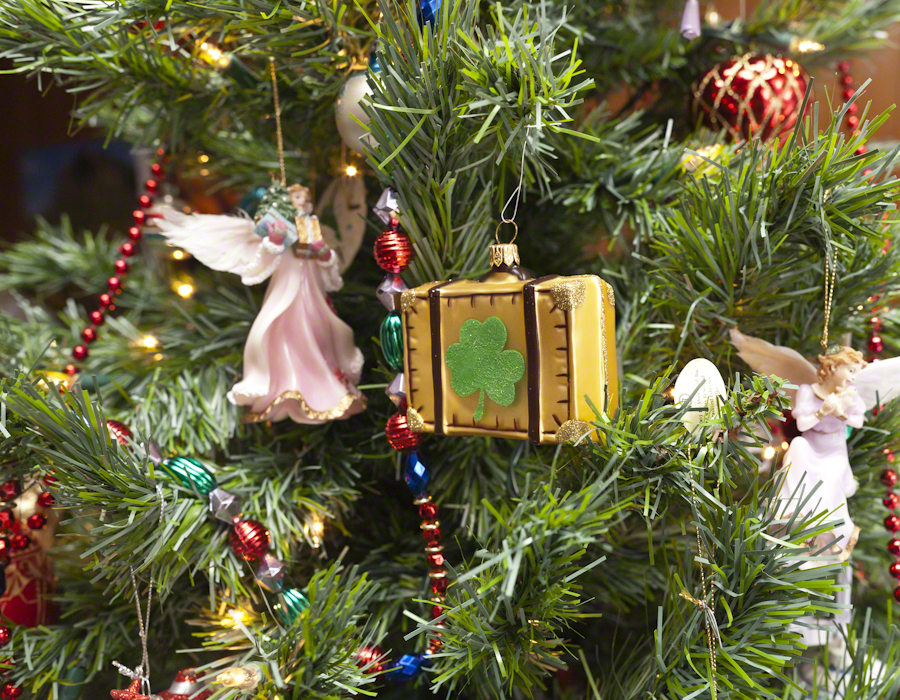
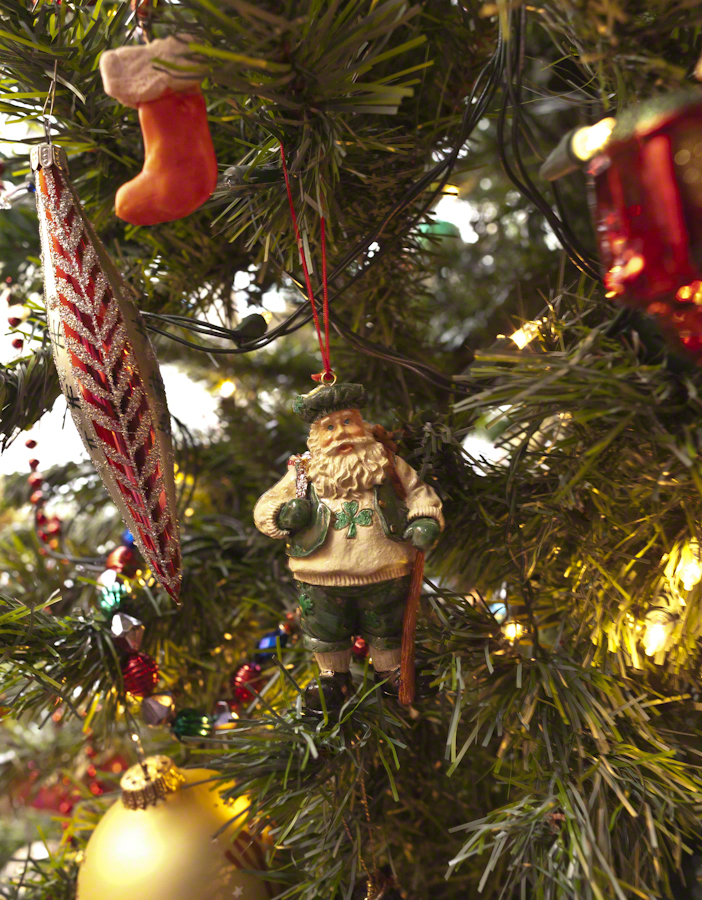
This is part of my project to document our Christmas memories through photography. Here we explore the Irish and Ireland themes of our decorated Christmas Tree.
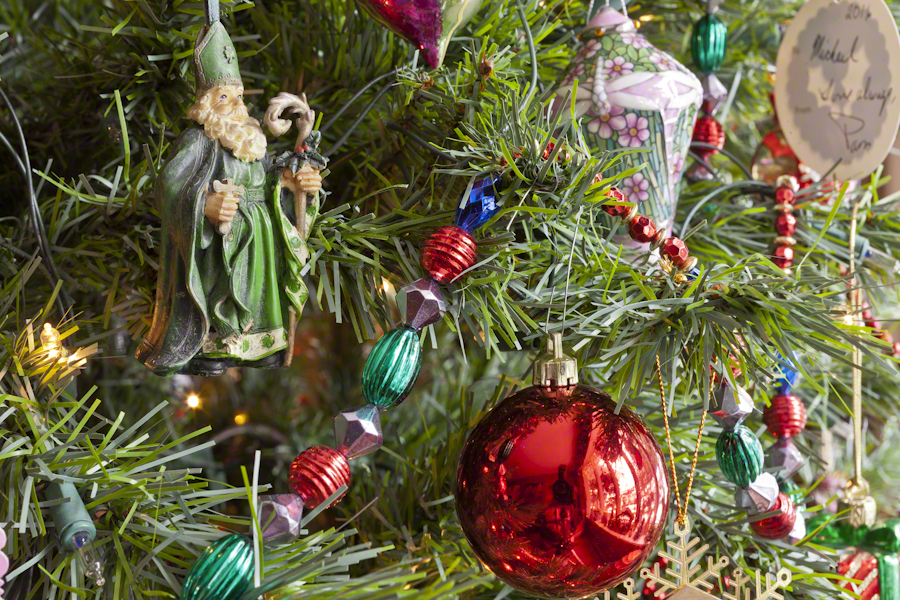
Where would we be without Saint Patrick? He was a force, to be sure. A favorite story, is the landing of his return to the island 432 AD. The tides on the eastern coast of the Irish Sea can be strong. His plan was to sail up to coast further north than what we call today Strangford Lough. On passing this inlet the boat was swept into the lough tidal narrows. Circumstances called for a landing, rather than wait for the tide. Patrick came ashore where the Slaney River enter the lough and “quickly converted” the local chieftan, Dichu, who provided a barn for holding services. The name of the town “Saul” in Irish is Sabhall Phádraig, translated as “Patrick’s Barn.”
In this posting I’ll go lighter on descriptions of technique. Leave it to say I held to the Canon fixed lens EF 50mm f1.2L USM throughout. Some, like the photograph of Saint Patrick, used a tripod. Others, like the latter two of the following Irish Themed Cross set were handheld. Generally a flash was used to supplement ambient sunlight from a large north-facing bay window.
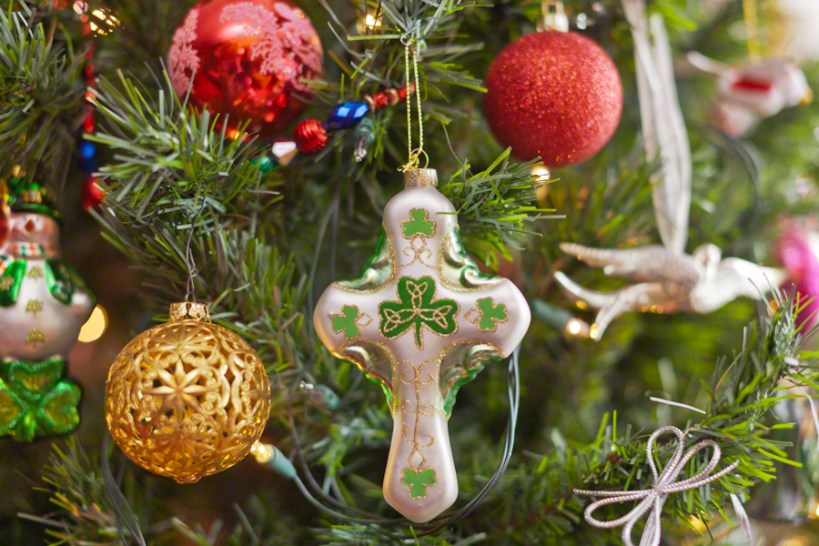
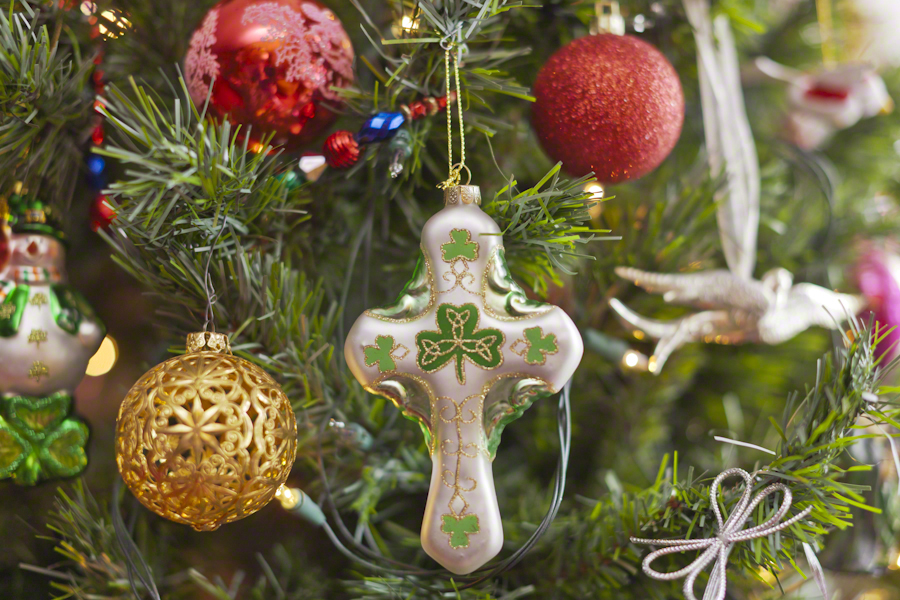
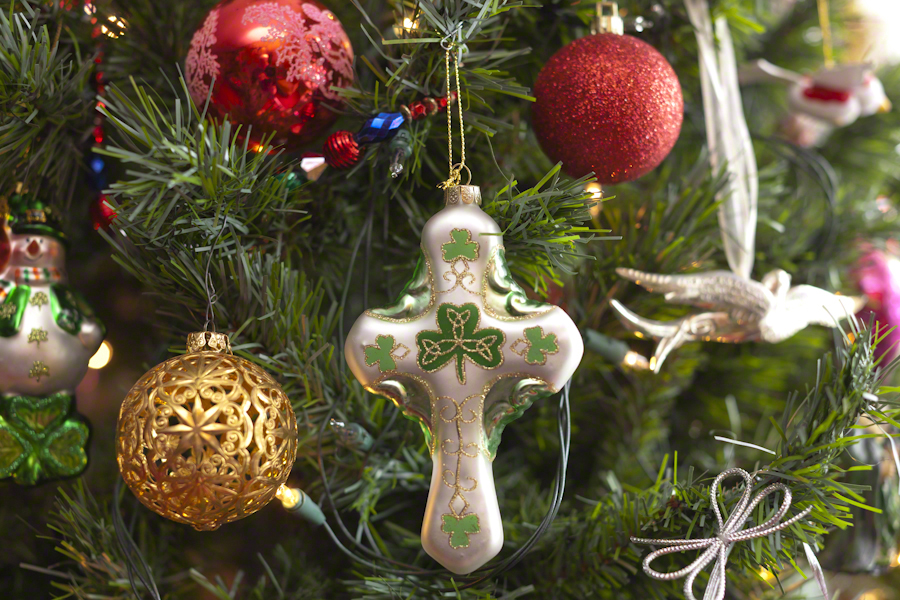
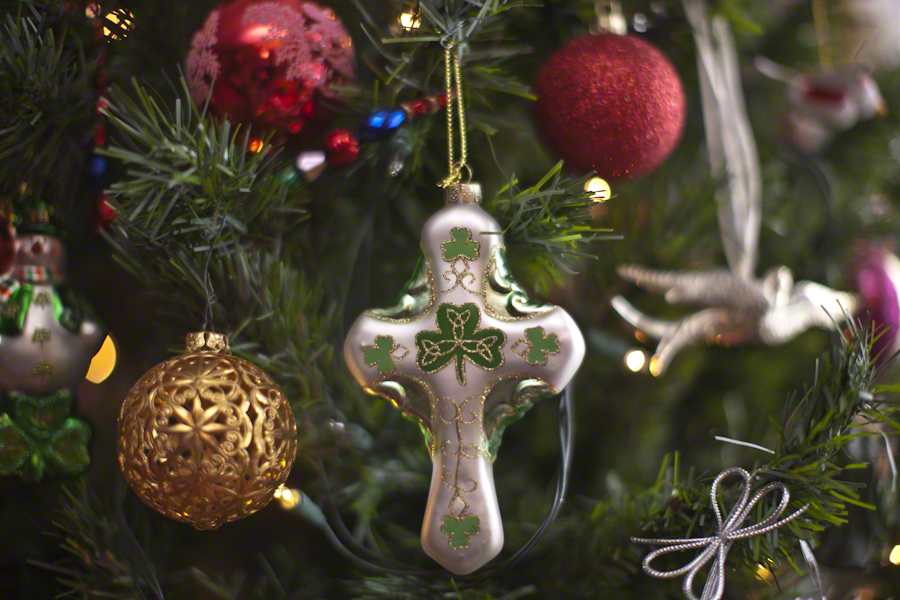
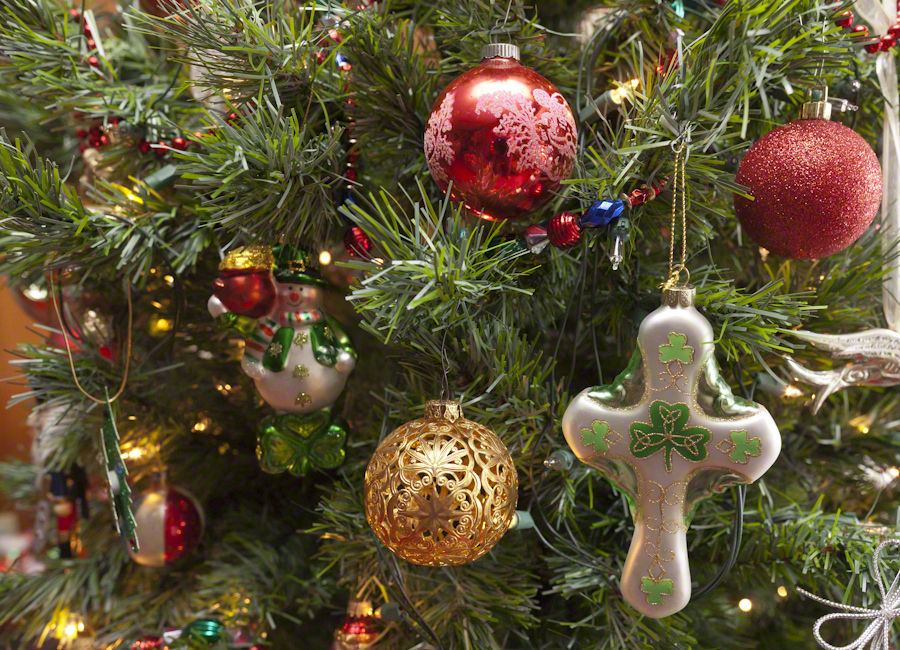
Here the “celtic” cross is converted to an Irish theme through a substitution of a shamrock with golden decoration inspired by pagan neolithic petroglyphs for the nimbus (circle) intersecting the central intersection of arms and stem.
For the first three I played with aperture, taking advantage of the stability of a tripod. The final two of the set are handheld.
Note the fanciful leprechaun snowman with pot o’ gold, on the left.
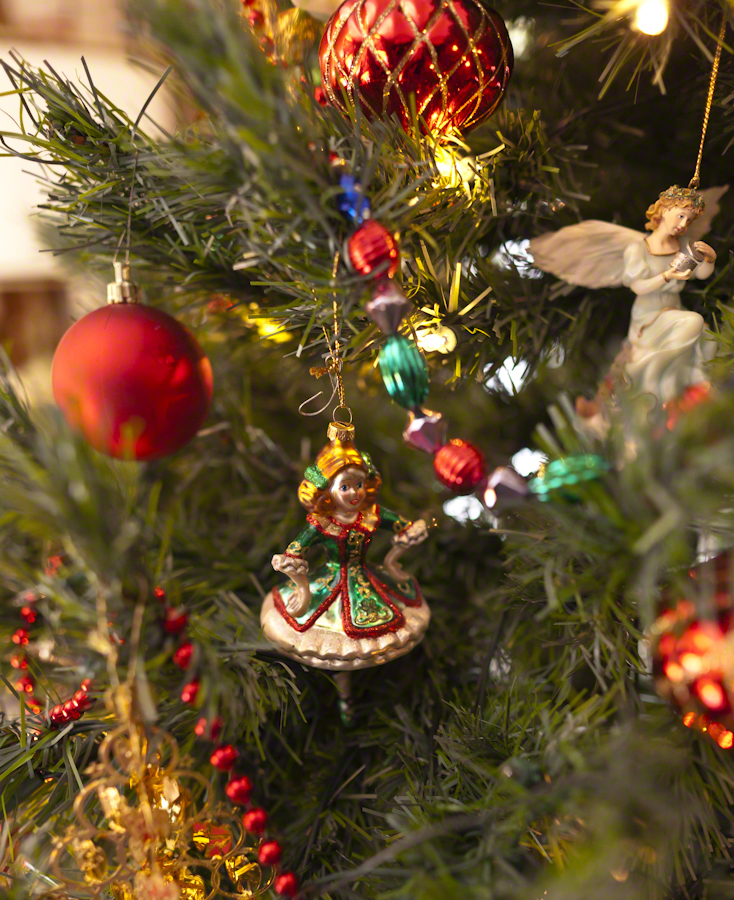
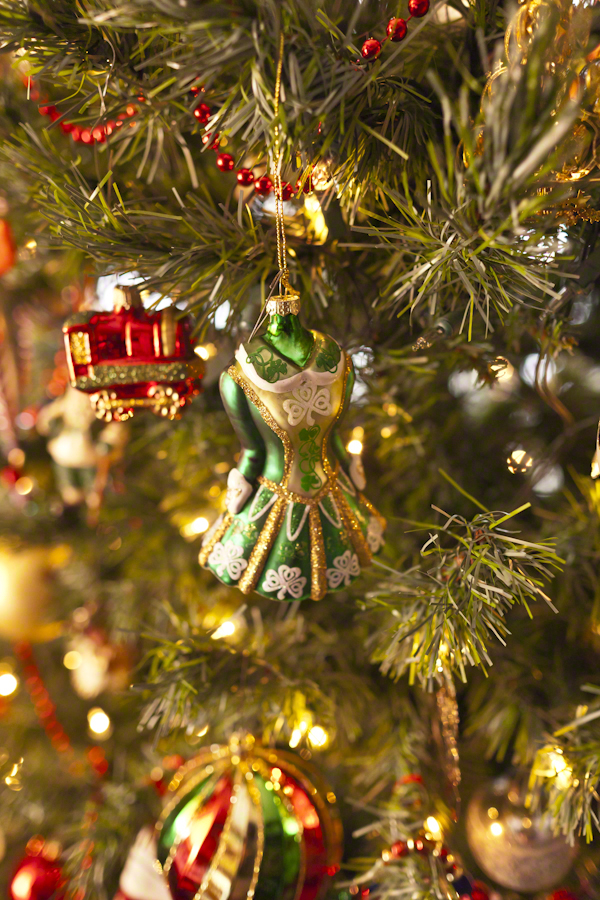
Blown glass Irish dancers.
“Travel memories”
the suitcase for our 2014 tour of the island and re-connection with family. Also a symbol of our ancestors travel across the Atlantic ocean to North America.
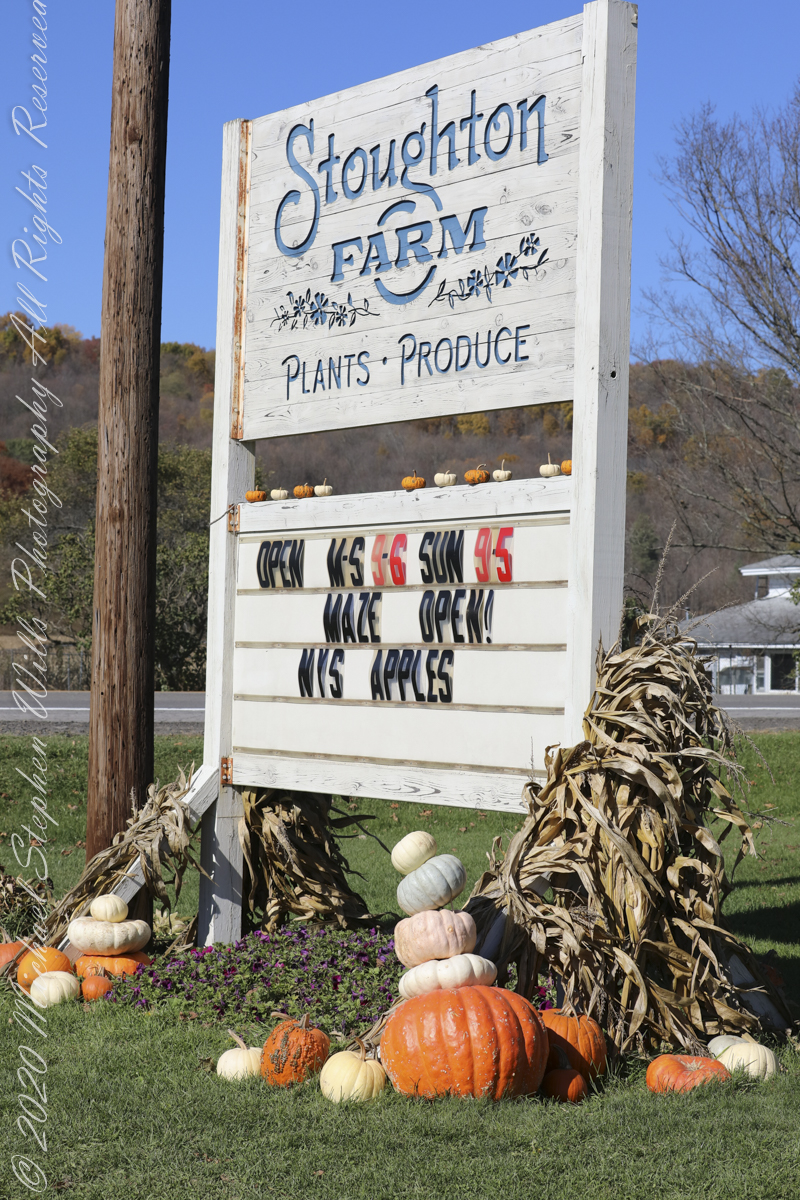
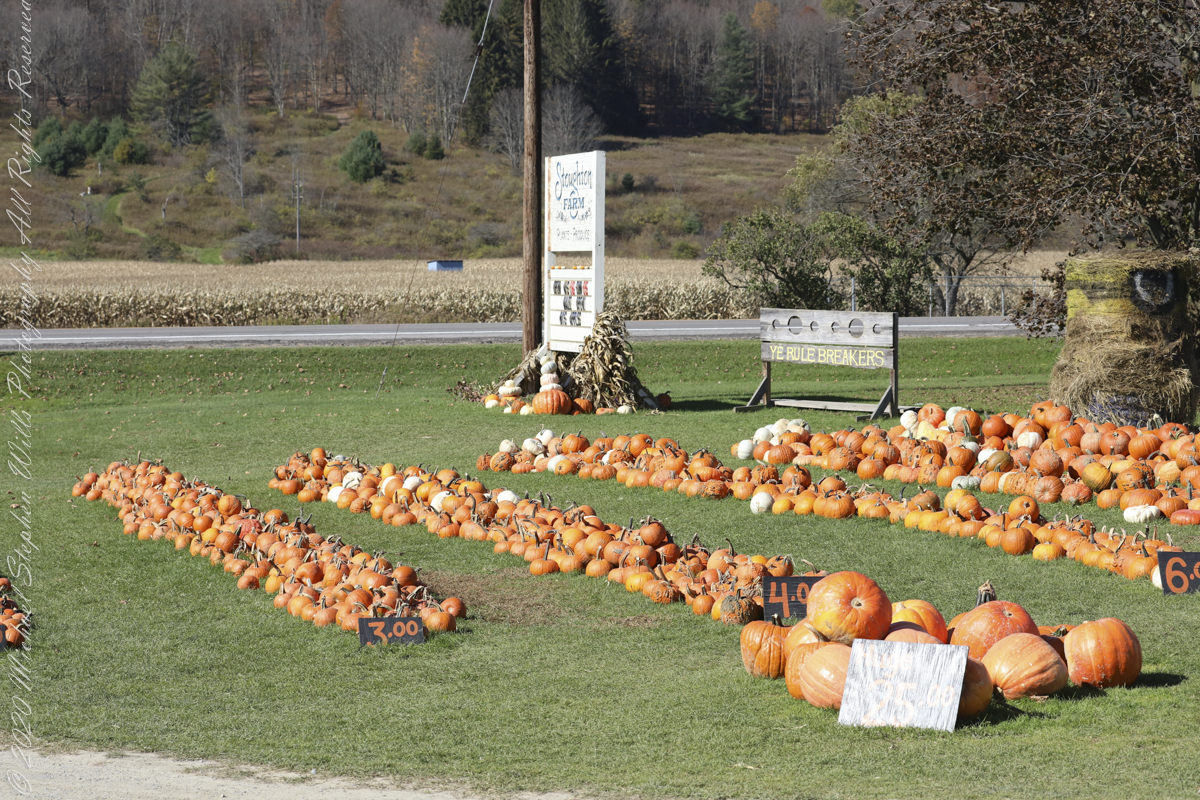
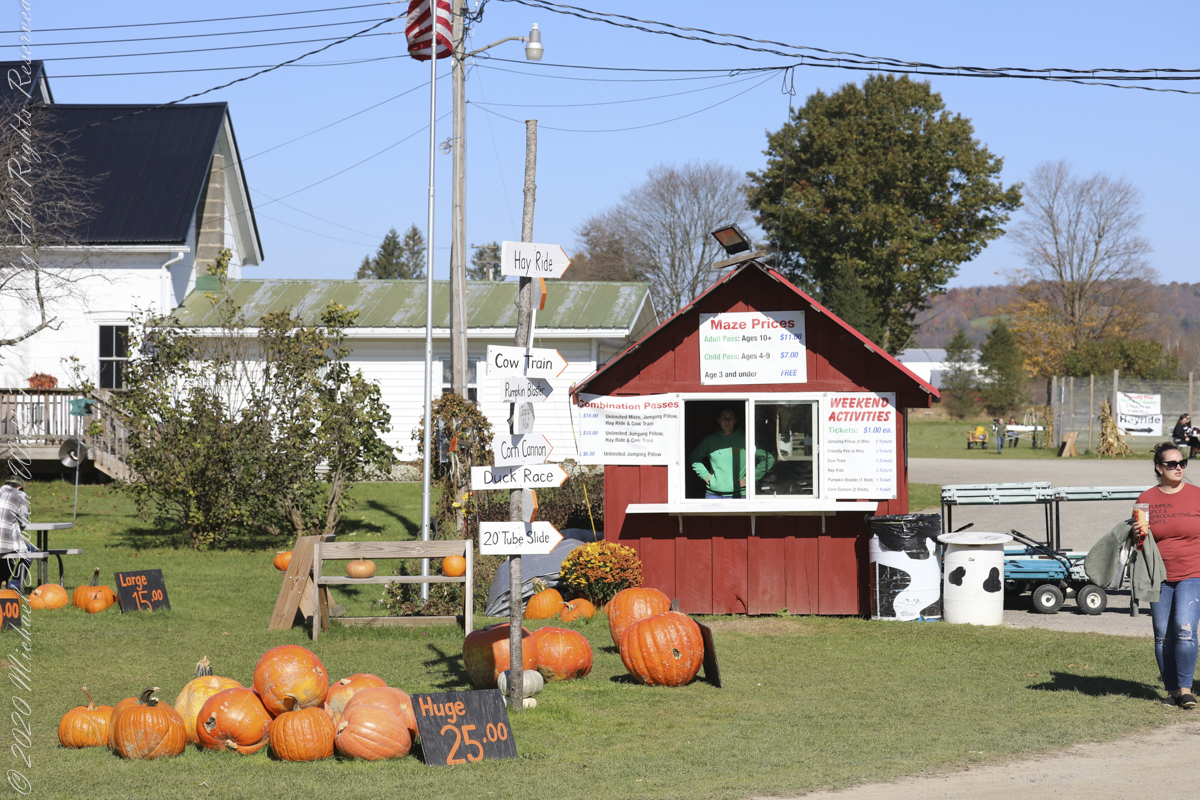
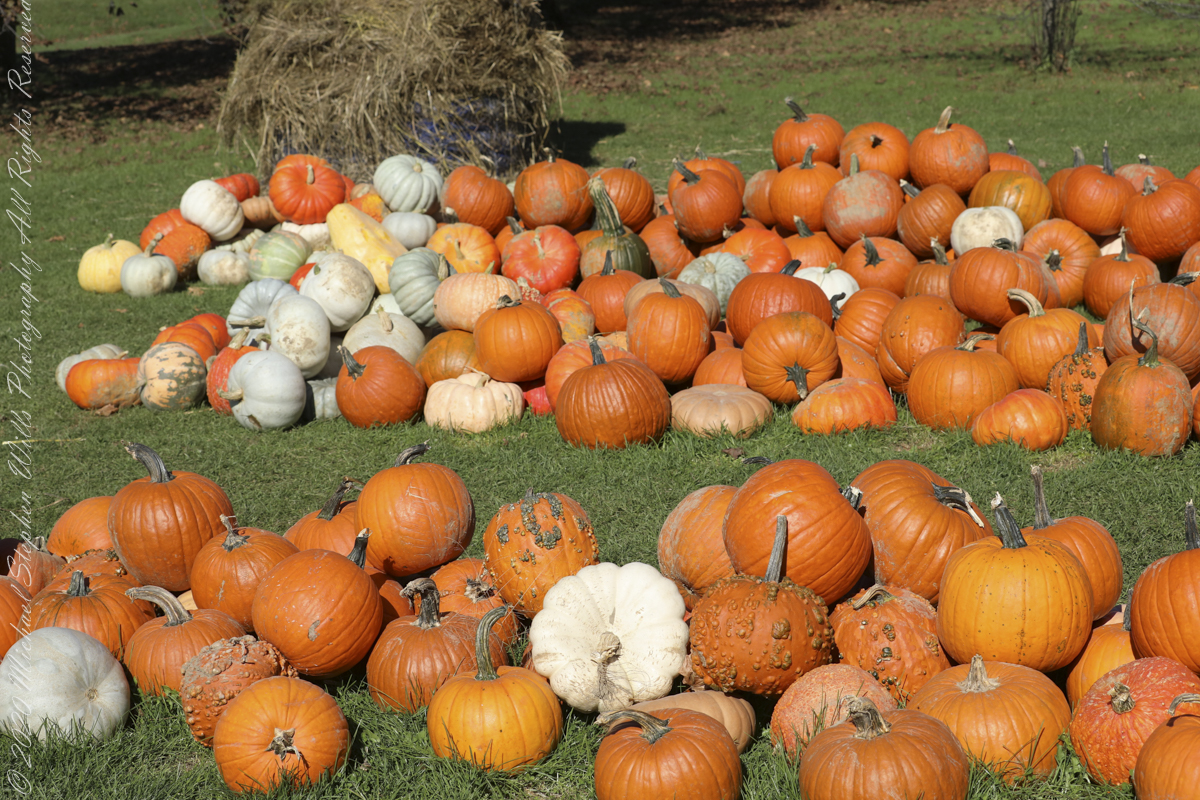
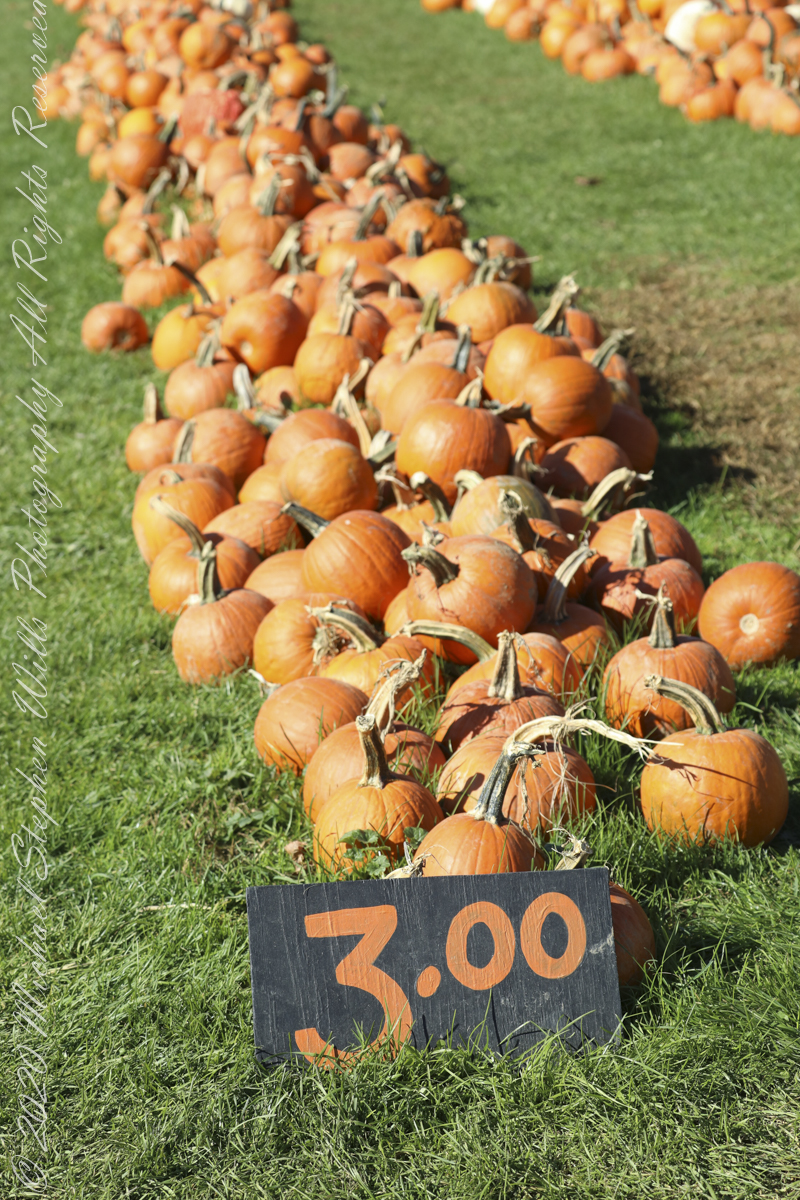
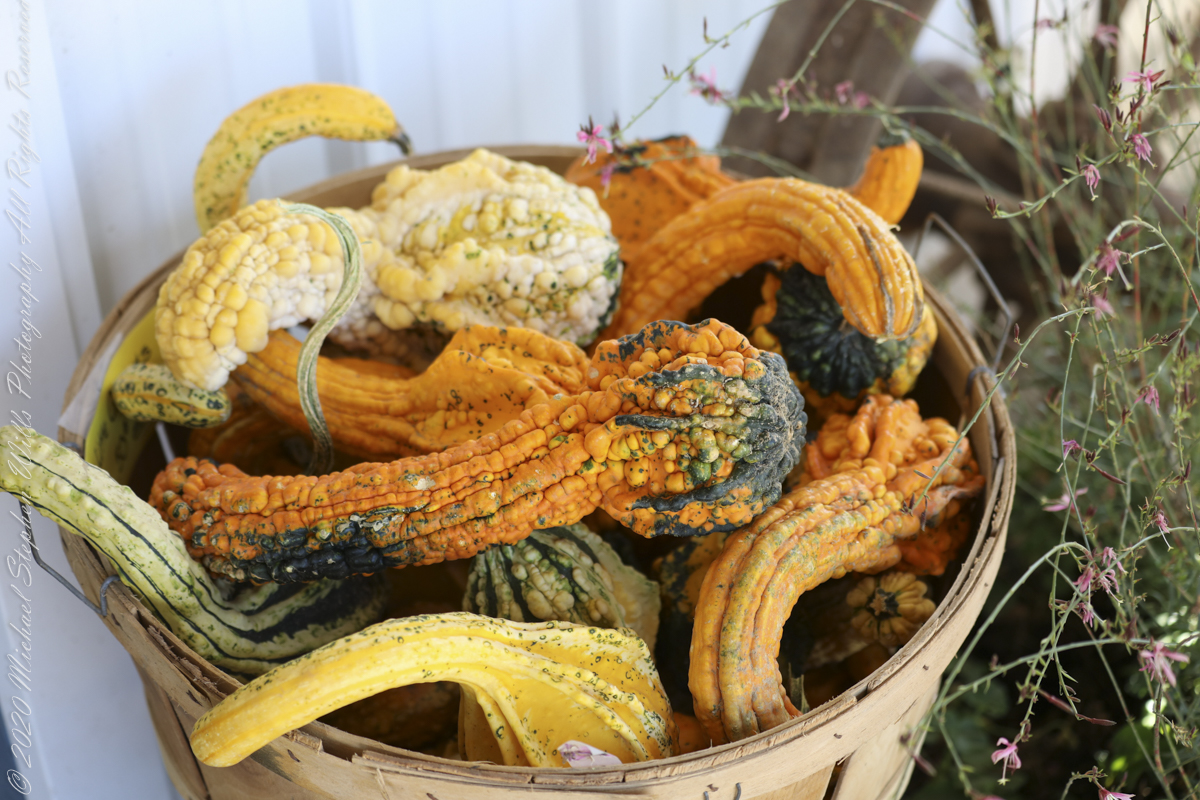
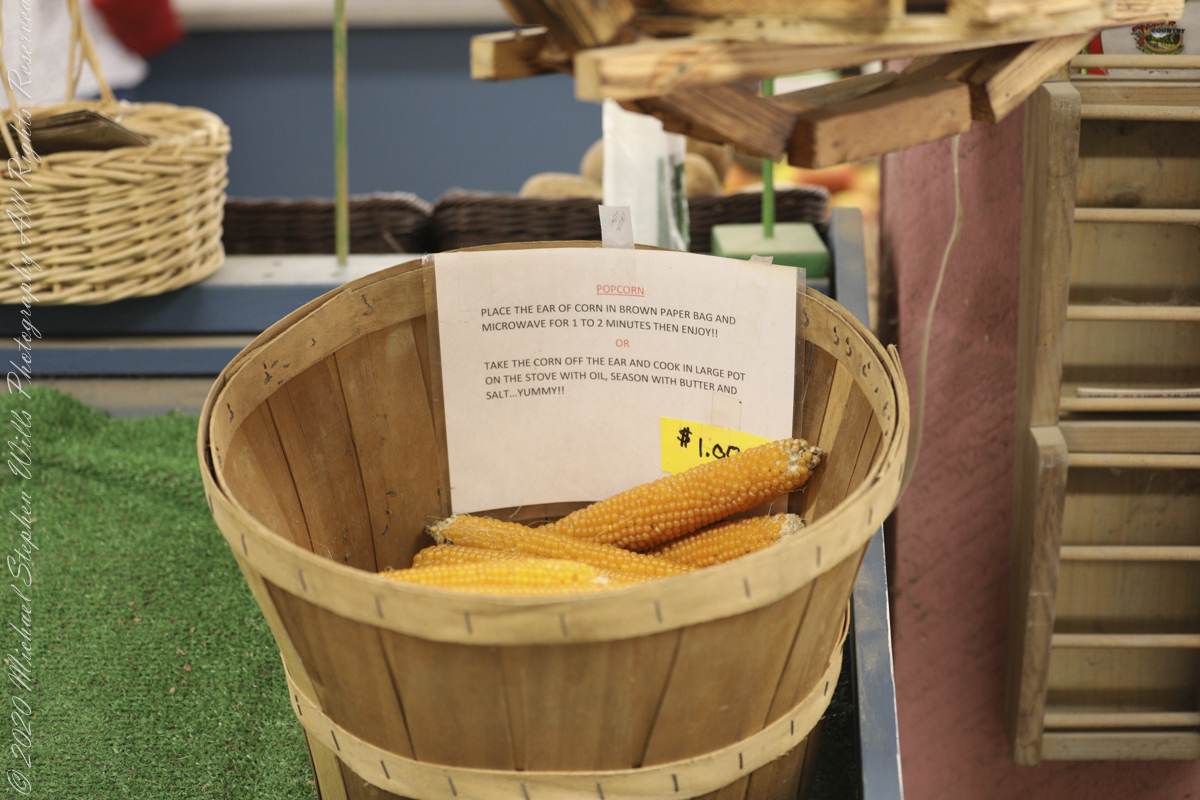
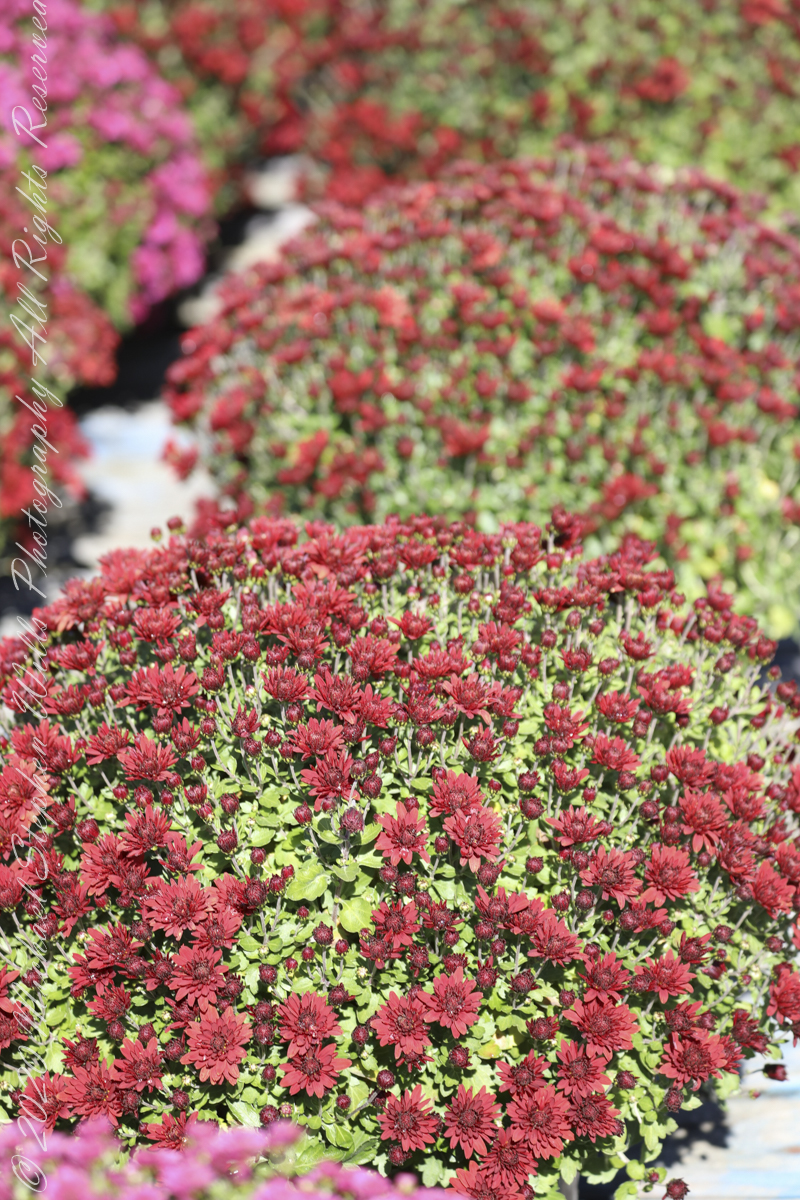
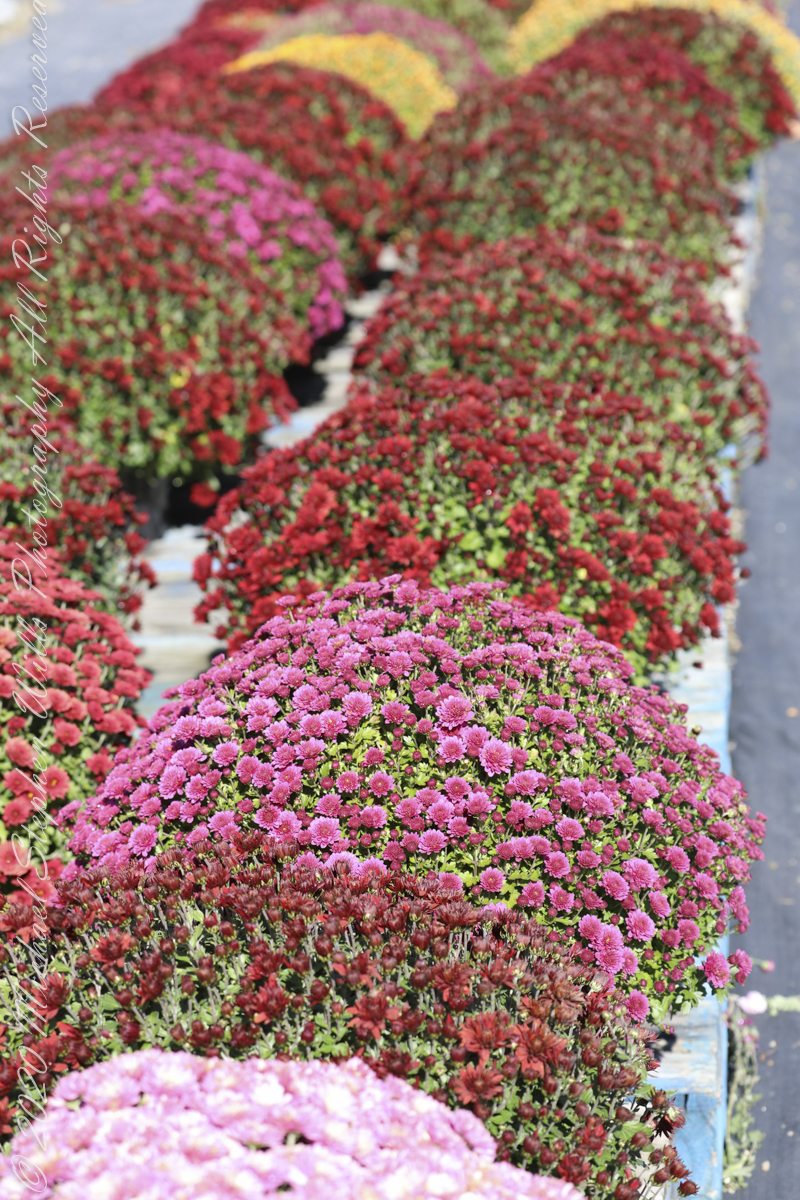
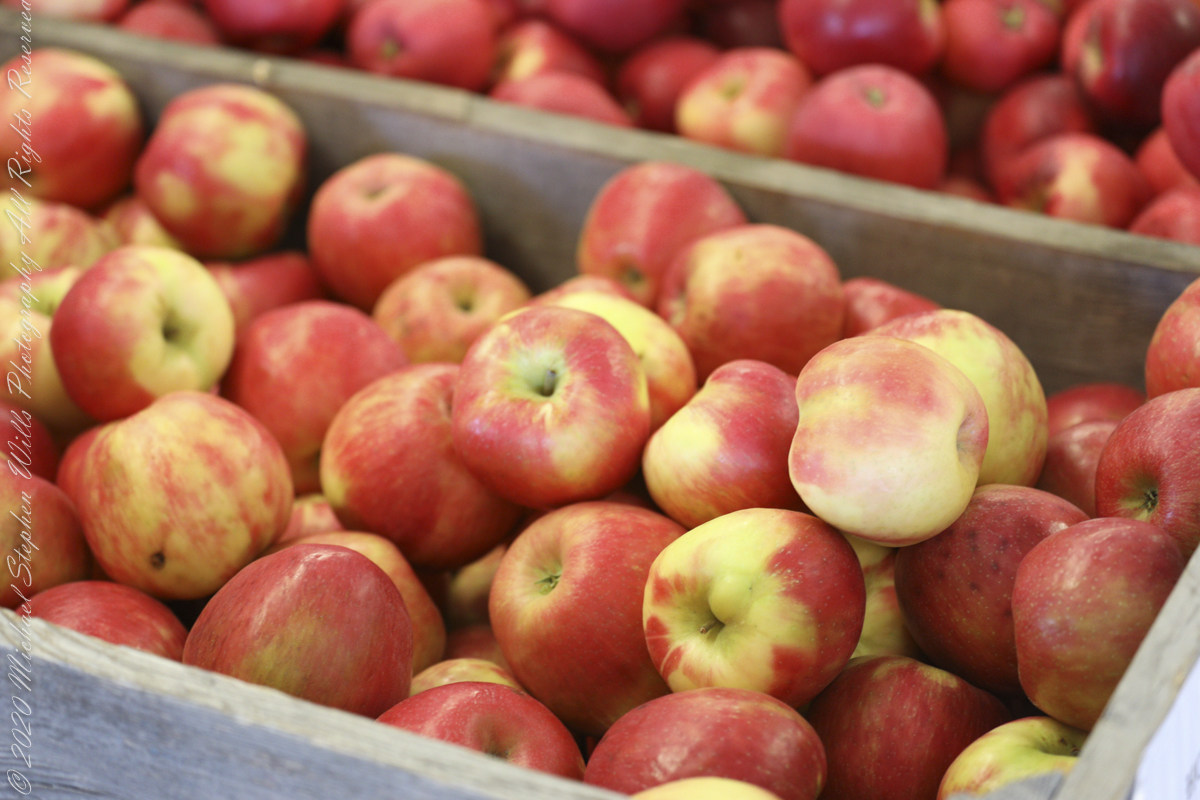
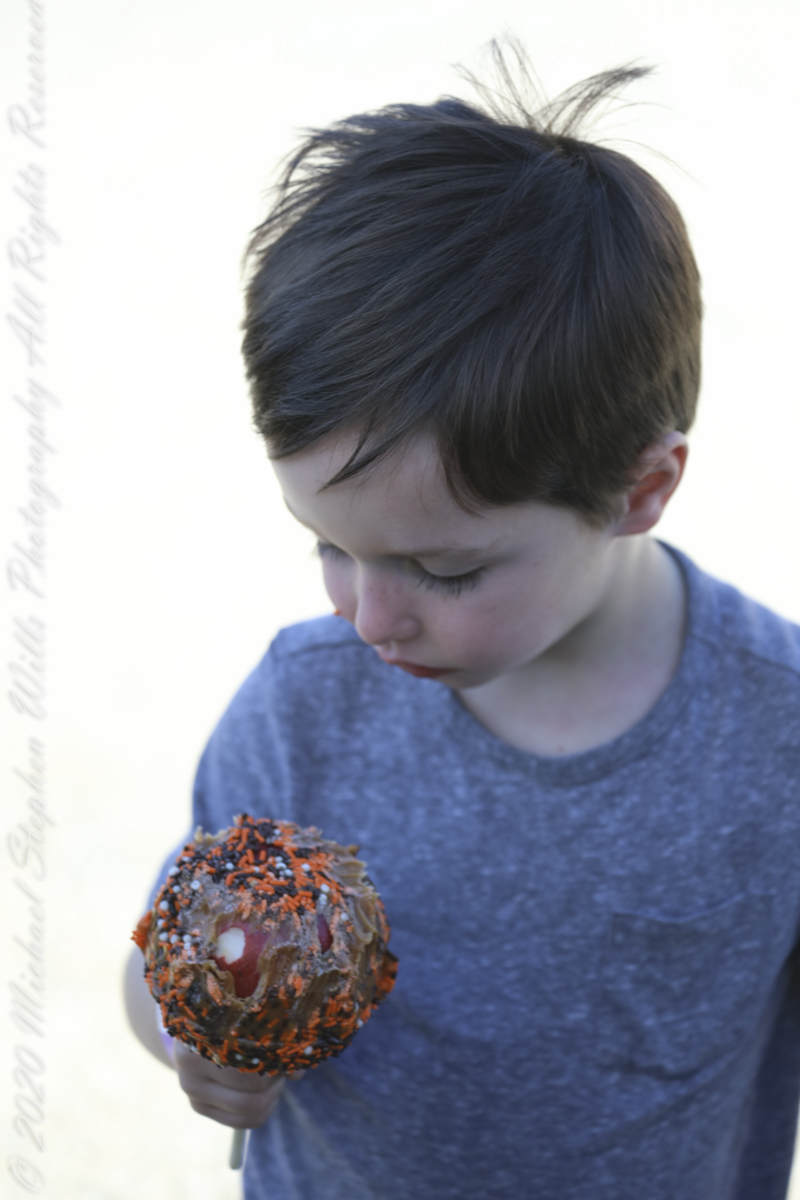
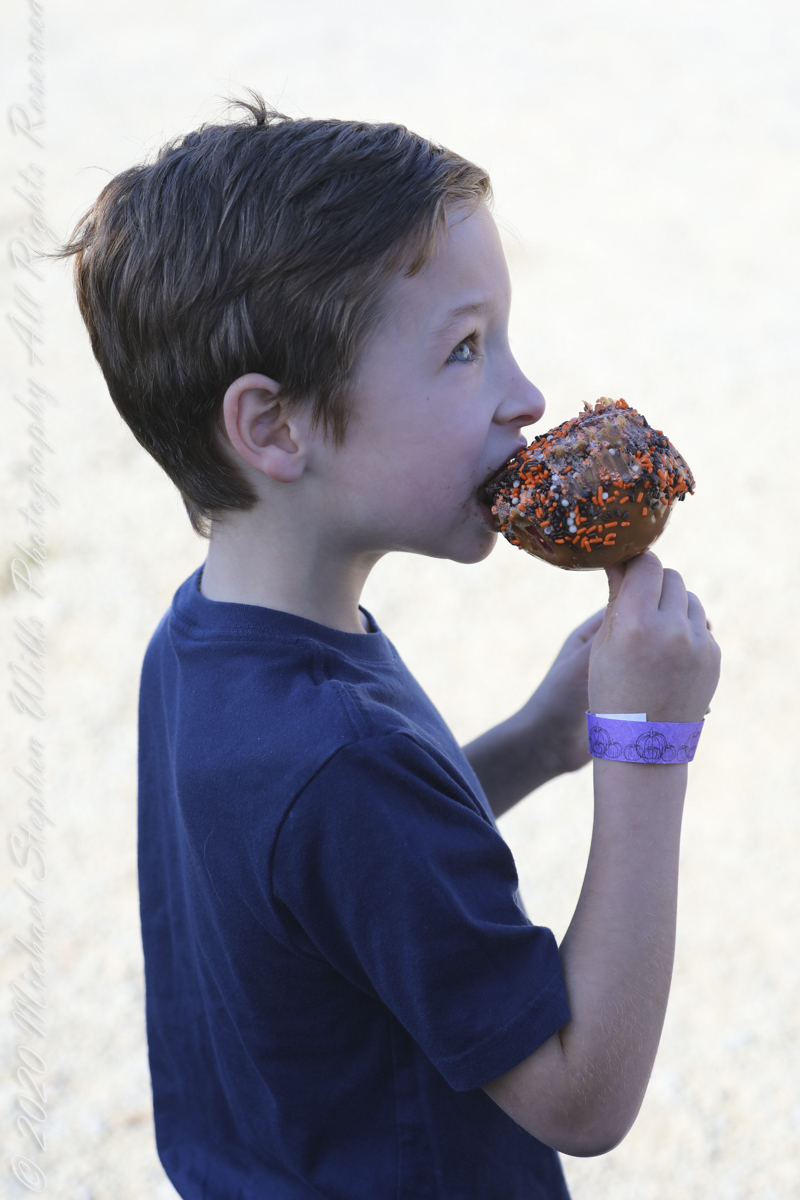
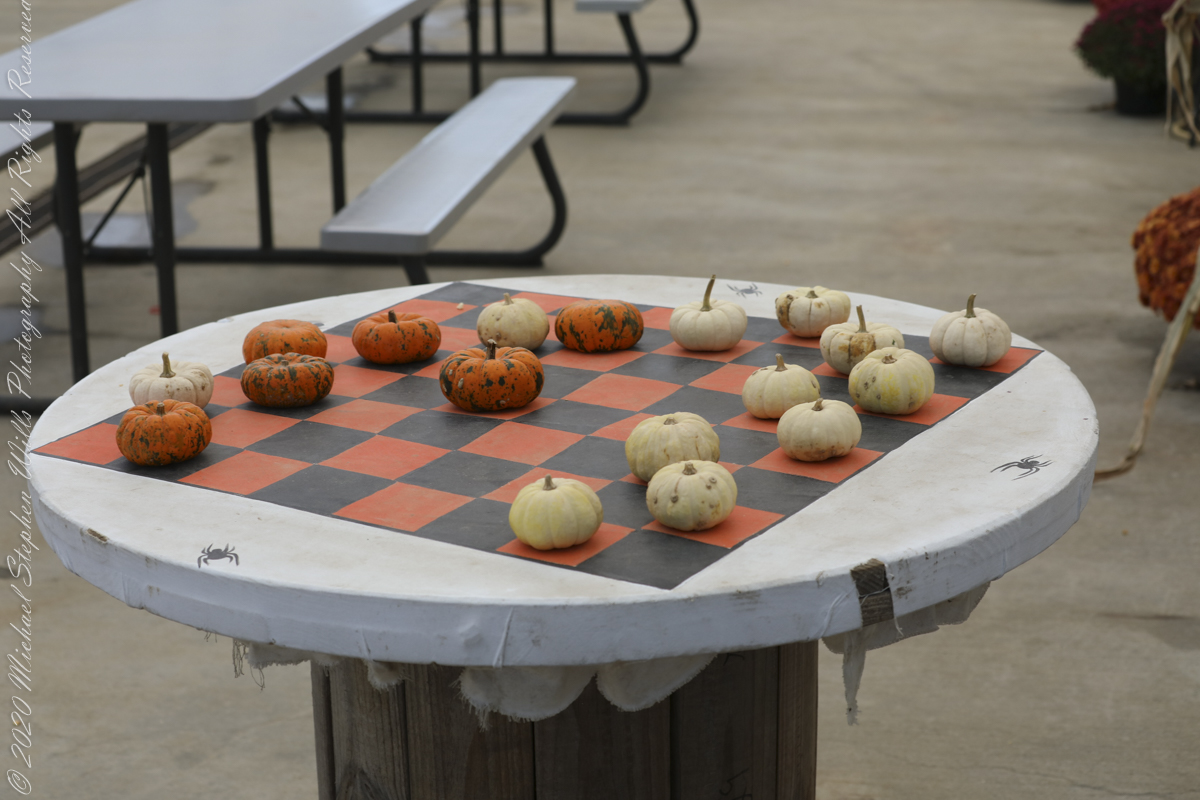
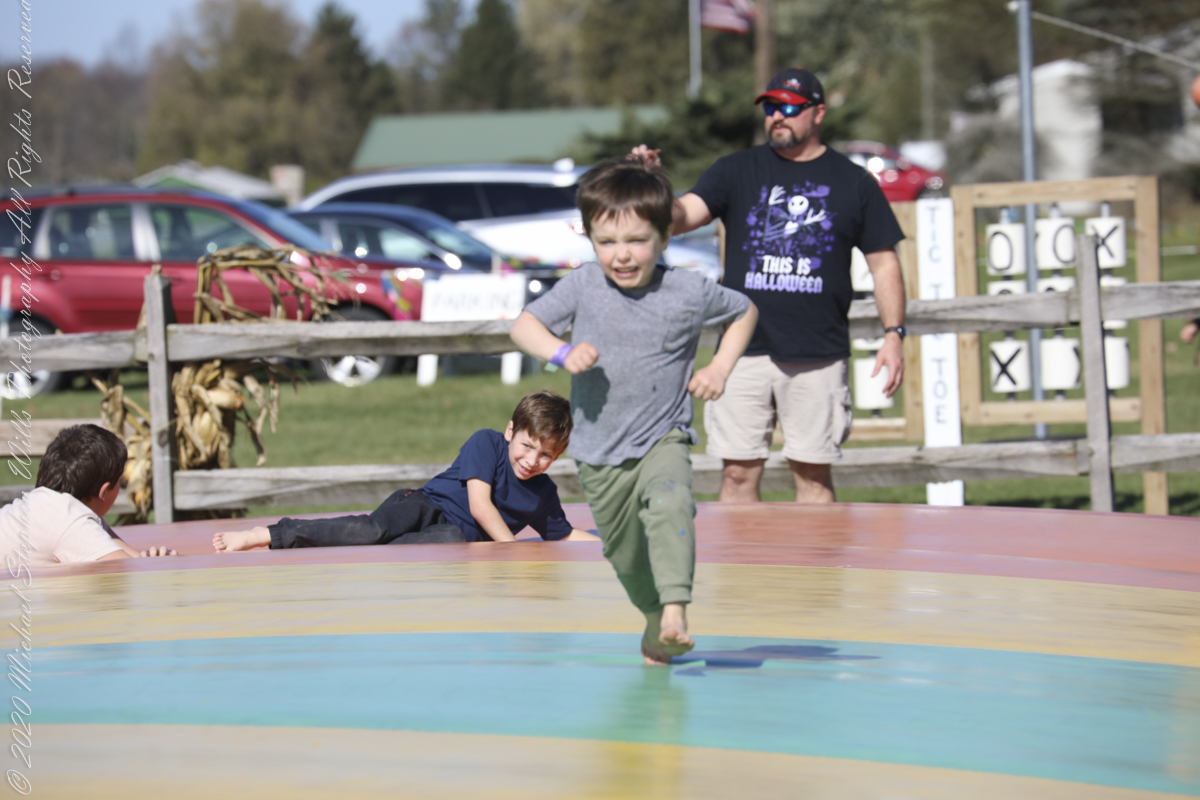
Gourds include the fruits of some flowering plant species in the family Cucurbitaceae, particularly Cucurbita and Lagenaria. The term refers to a number of species and subspecies, many with hard shells, and some without. One of the earliest domesticated types of plants, subspecies of the bottle gourd, Lagenaria siceraria, have been discovered in archaeological sites dating from as early as 13,000 BCE. Gourds have had numerous uses throughout history, including as tools, musical instruments, objects of art, film, and food. ~Wikipedia A wildly popular flower, Chrysanthemums are presented here during a “Pumpkin Farm” autumn festival. Honeycrisp (Malus pumila) is an apple cultivar (cultivated variety) developed at the Minnesota Agricultural Experiment Station’s Horticultural Research Center at the University of Minnesota, Twin Cities. Designated in 1974 with the MN 1711 test designation, patented in 1988, and released in 1991, the Honeycrisp, once slated to be discarded, has rapidly become a prized commercial commodity, as its sweetness, firmness, and tartness make it an ideal apple for eating raw. “…The apple wasn’t bred to grow, store or ship well. It was bred for taste: crisp, with balanced sweetness and acidity.” It has larger cells than most apple cultivars, a trait which is correlated with juiciness, as theoretically a higher number of cells rupture when bitten, releasing more juice in the mouth. The Honeycrisp also retains its pigment well and has a relatively long shelf life when stored in cool, dry conditions. Pepin Heights Orchards delivered the first Honeycrisp apples to grocery stores in 1997. The name Honeycrisp was trademarked by the University of Minnesota, but university officials were unsure of its protection status in 2007. It is now the official state fruit of Minnesota. A large-sized honeycrisp will contain about 113 calories. ~Wikipedia Stoughton Farm, Newark Valley, Tioga County, New York
Family
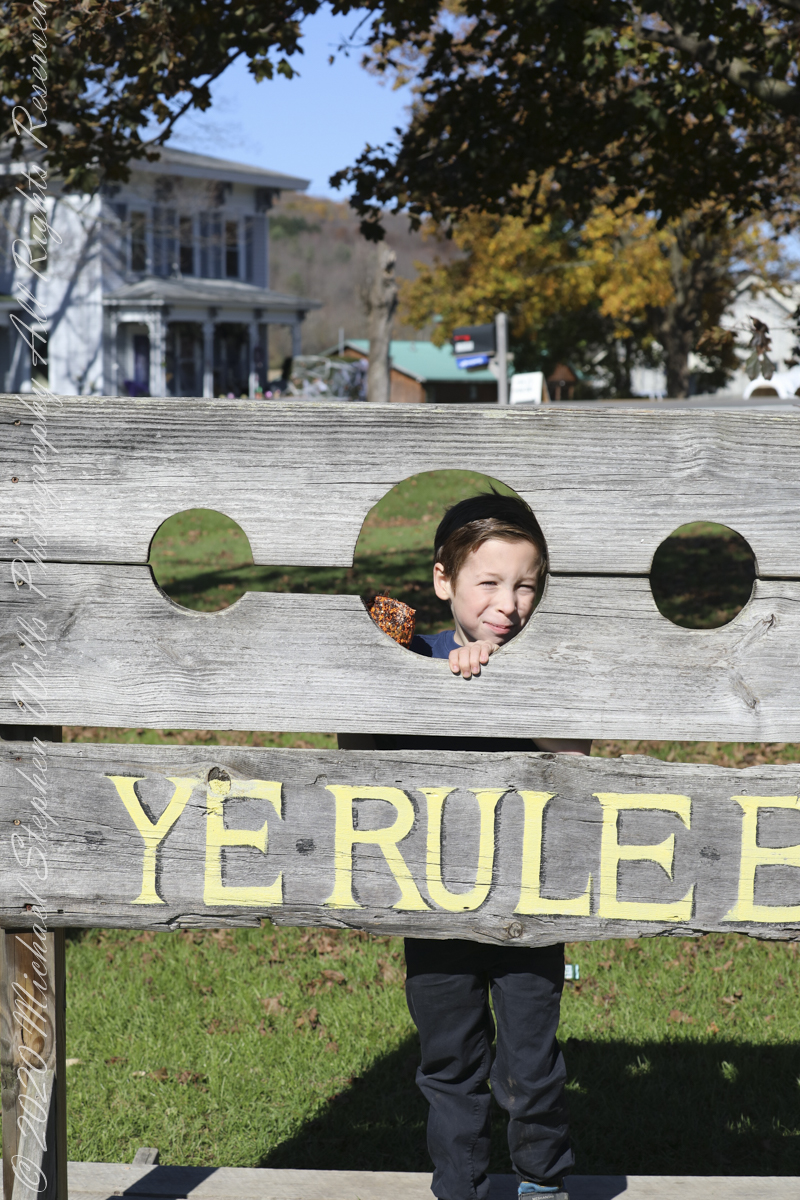
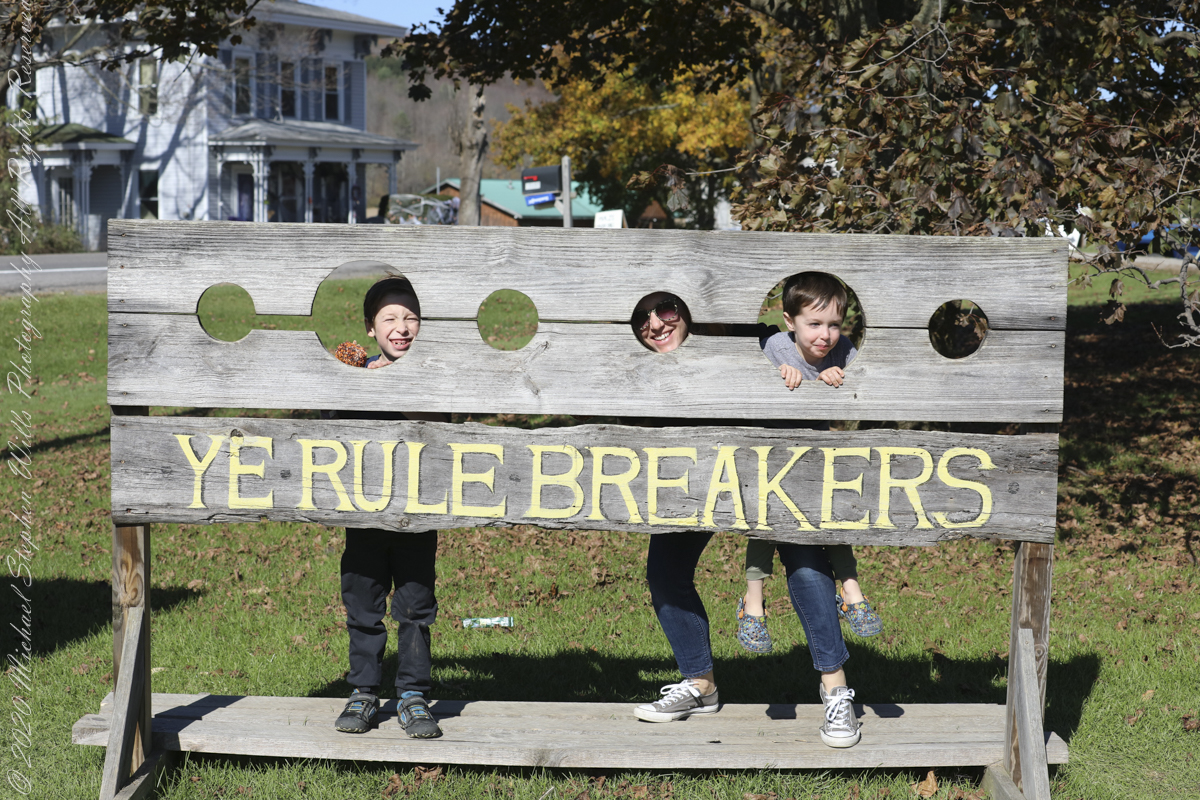
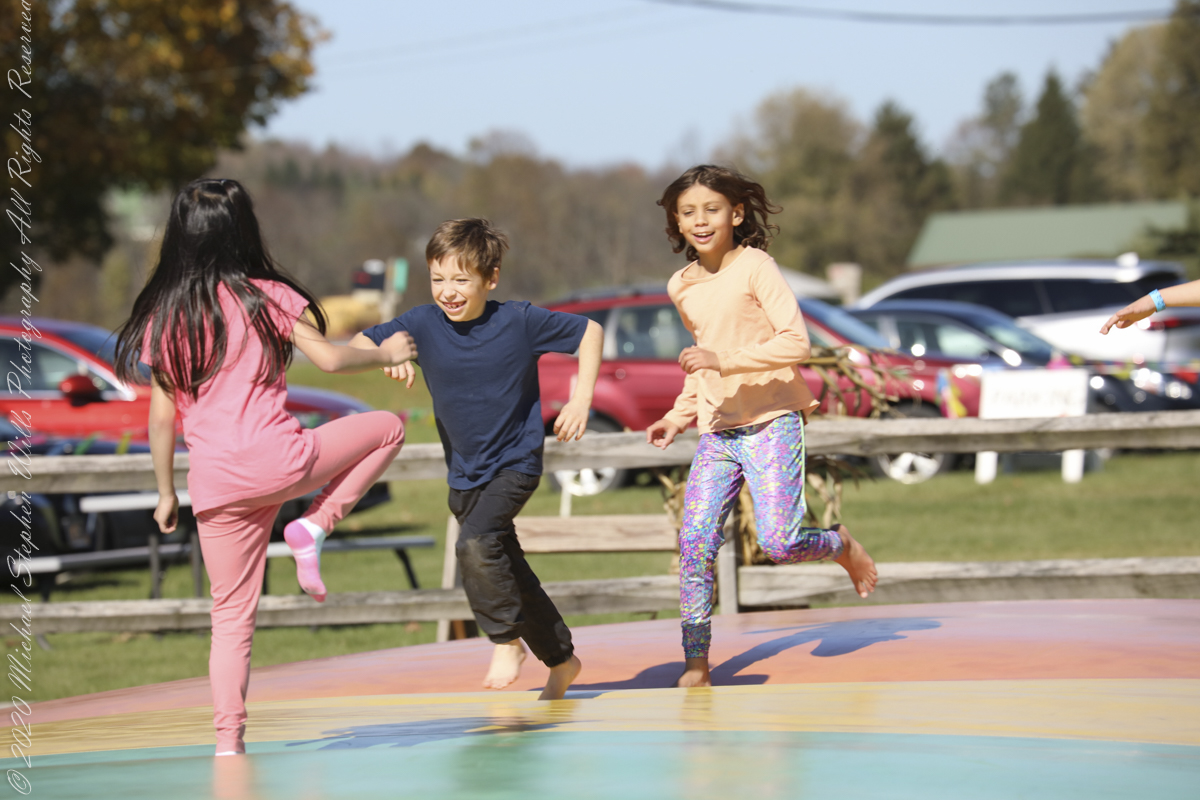
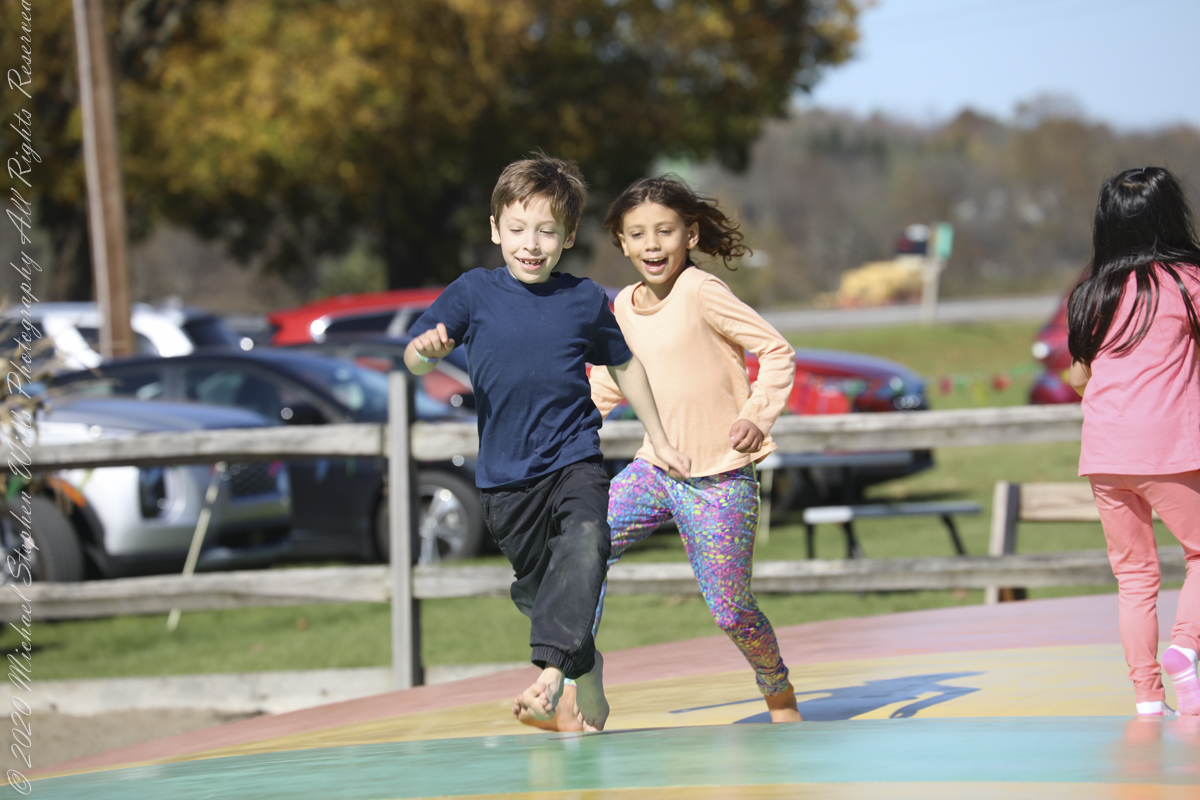
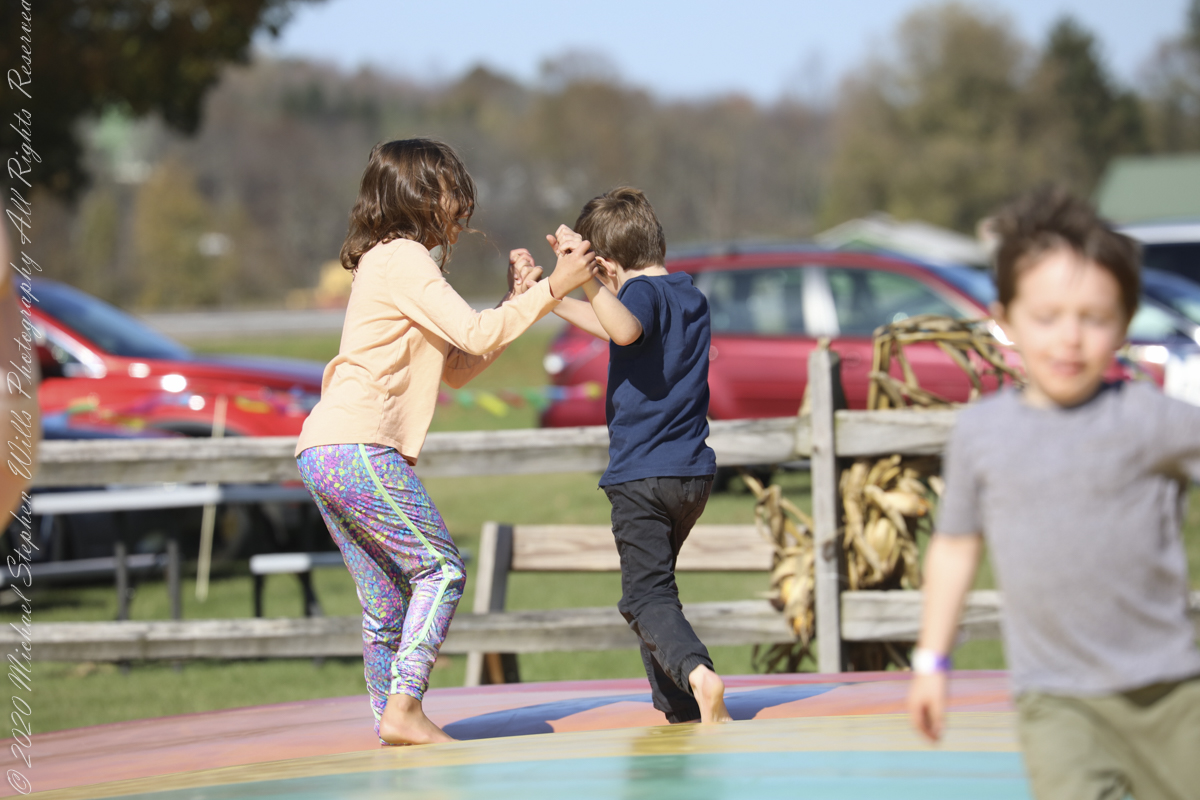
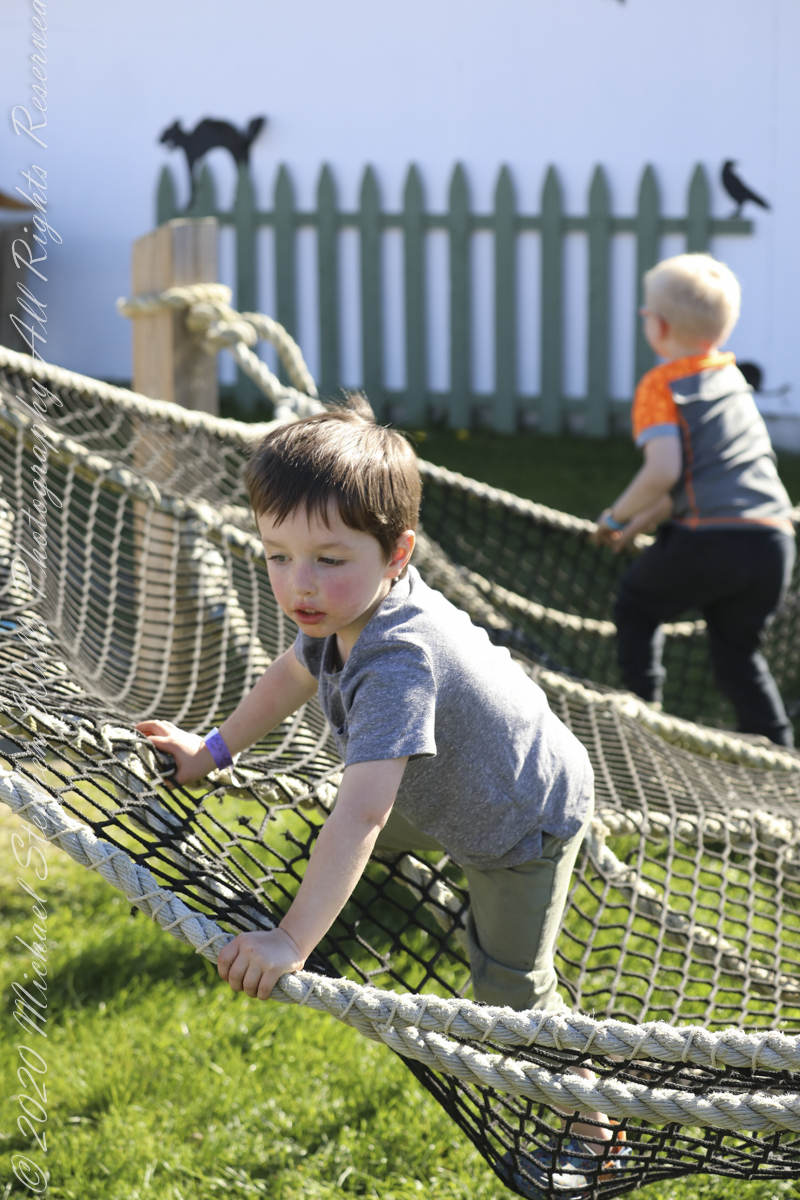
A family pulls together before the Pumpkin Farm Autumn Festival.
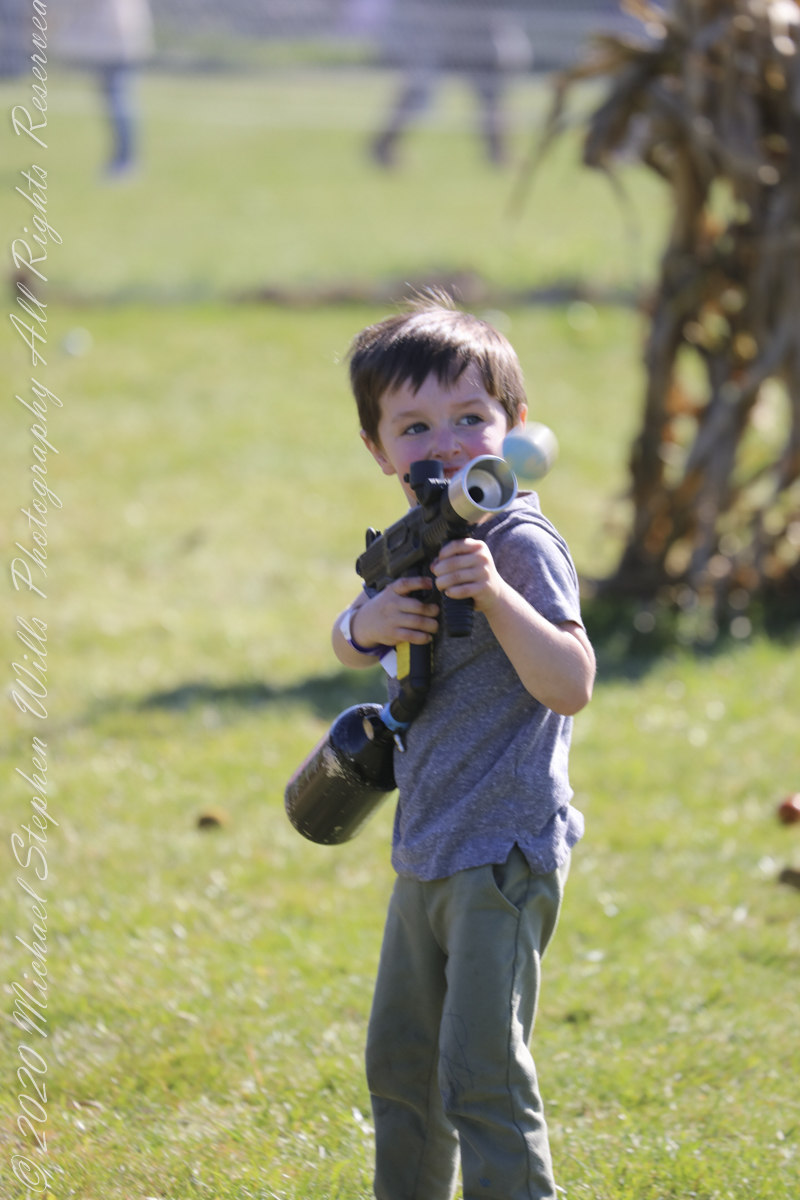
Fun
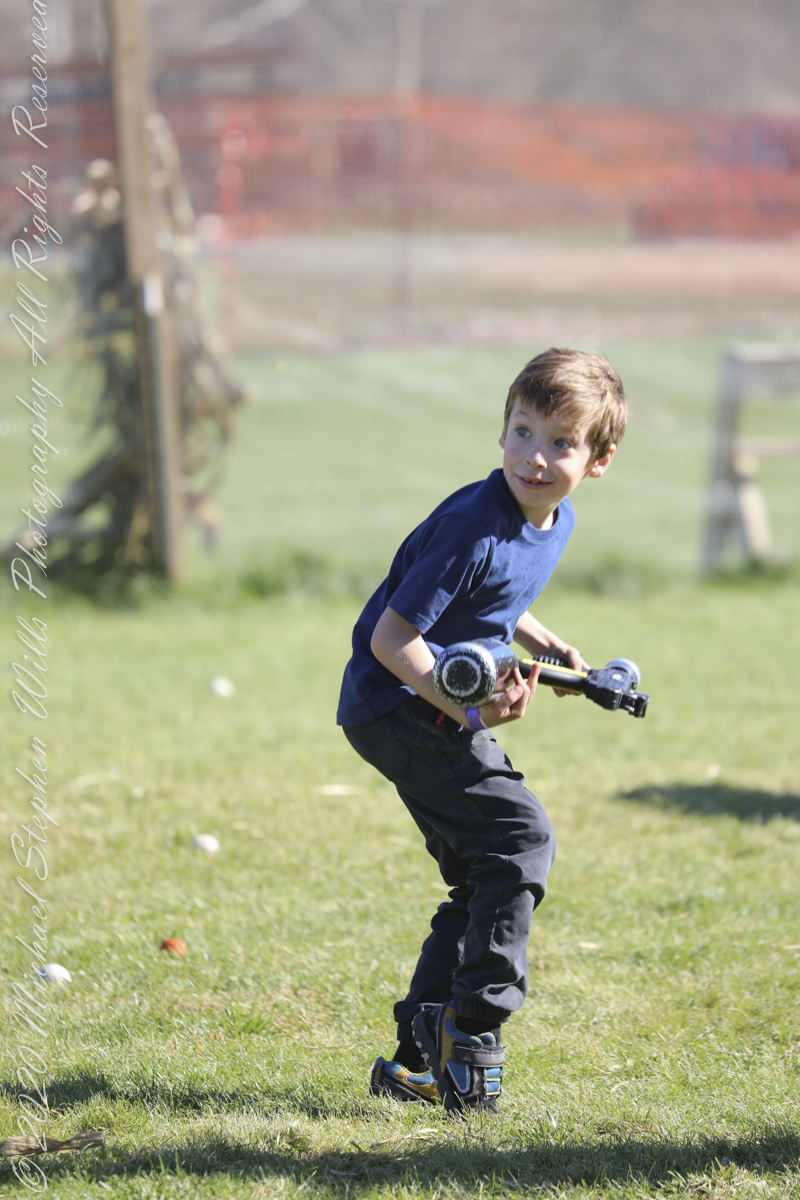
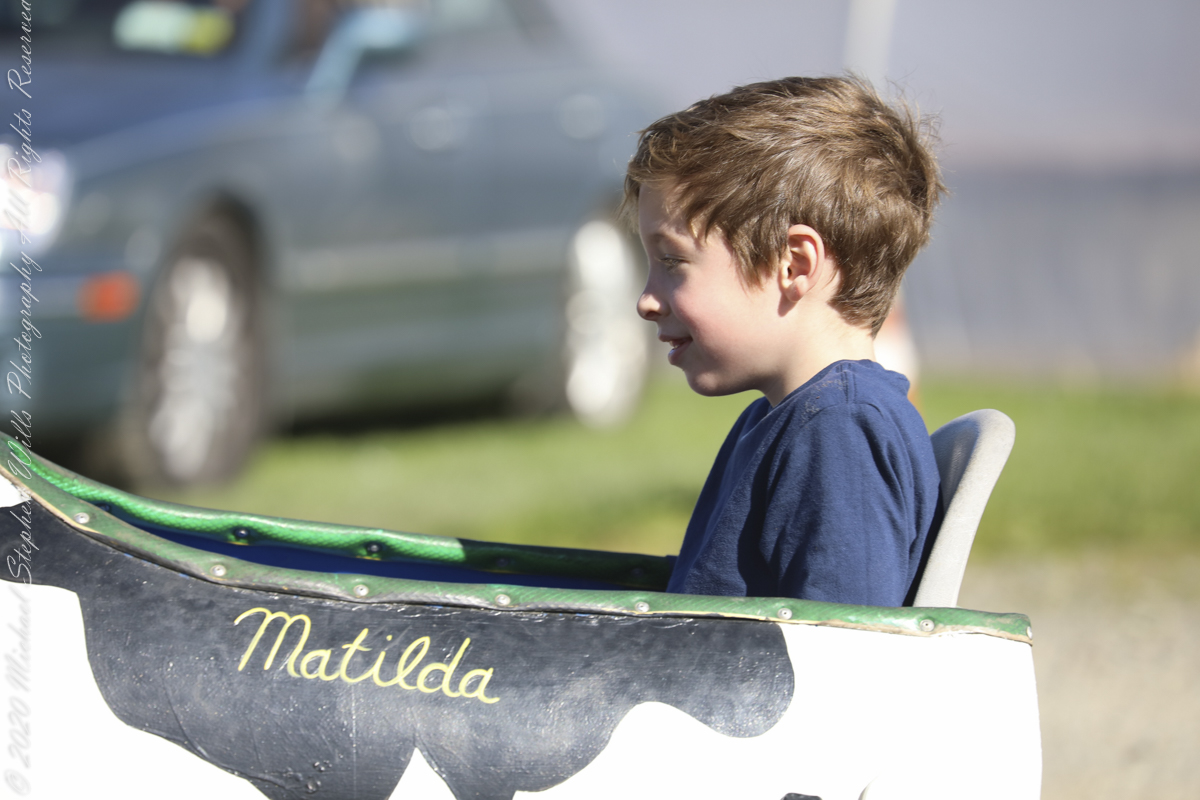
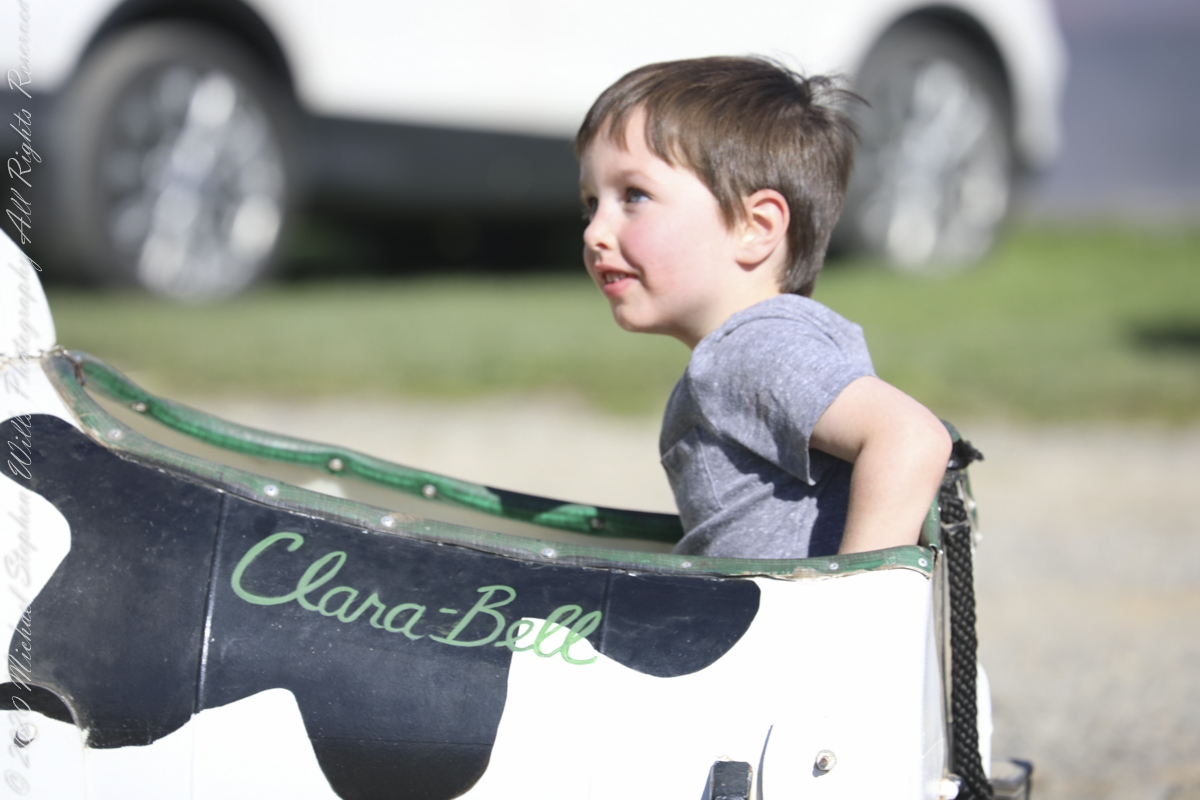
Nerf Gun BattleCow Wagon
Copyright 2022 Michael Stephen Wills All Rights Reserved
On Monday, June 9, 2014, cousin John Mills dropped his son, Sean Mills, myself and Pam Wills off at the foot of the western slopes of Slieve Foy on the Tain Way. Sean, Pam and I walked the way over the mountain and into Carlingford in the footsteps of epic Irish heroes.
Click the pic to visit my online gallery
Copyright 2022 Michael Stephen Wills All Rights Reserved
In follow-up to my last post my IStock photograph of Saint Patrick on the Hill of Tara was accepted and is available for viewing (click the link to go there).
Since July 2008 a sea generation tidal turban, “SeaGen”, produces electricity (1.2 MW) for between 18 and 20 hours a day while the tide is forced in and out of Strangeford Lough through the Narrows where the generator is installed. The first large scale commercial production of electricity from the tide, “SeaGen” is located between the Northern Ireland towns of Strangeford and Portaferry, the strength of the tides there were used by the earliest tidal mill known, the Nendrum Monastery mill dating 787 based on archeological excavation.
History records Patrick converted the island of Erin (Ireland) to Christianity in the Fifth Century AD as a return to his place of captivity and slavery.
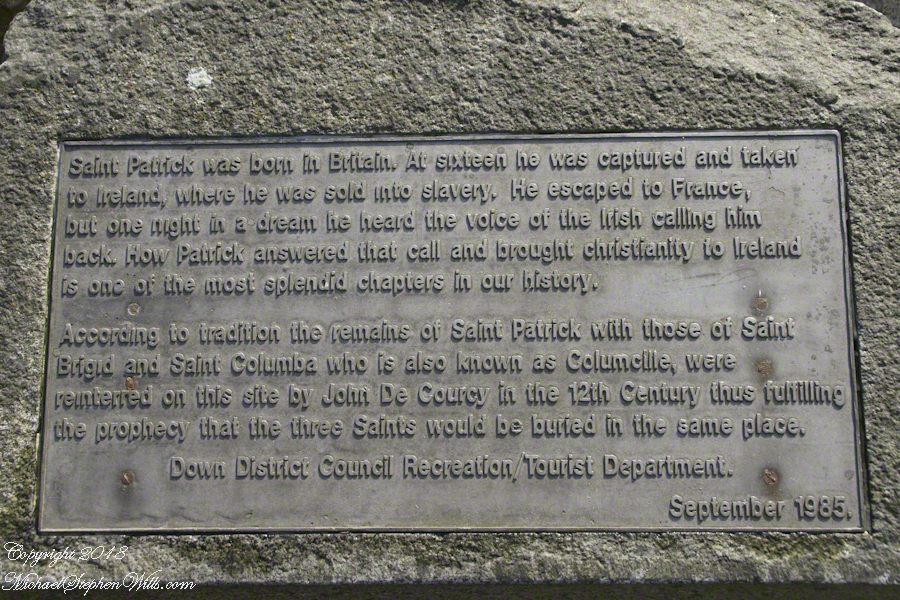
An informational plaque mounted on granite next to the grave of Saint Patrick.
There is a connection between “SeaGen” and the return of Patrick to Ireland. The first sanctuary dedicated by Patrick was at Saul, County Down not far from River Quoile that drains into Strangeford Lough. Historians identify Patrick’s first landing site, upon return, as Wicklow where he was forced to leave by the locals. Heading north in the boats of the time, the strong tide of Strangeford Narrows pulled them into the Lough and, from there, headed up the River Quoile to encounter the local chieftain, Díchu mac Trichim. Patrick’s first Irish convert to Christianity, the feast of Saint Dichu is April 29.
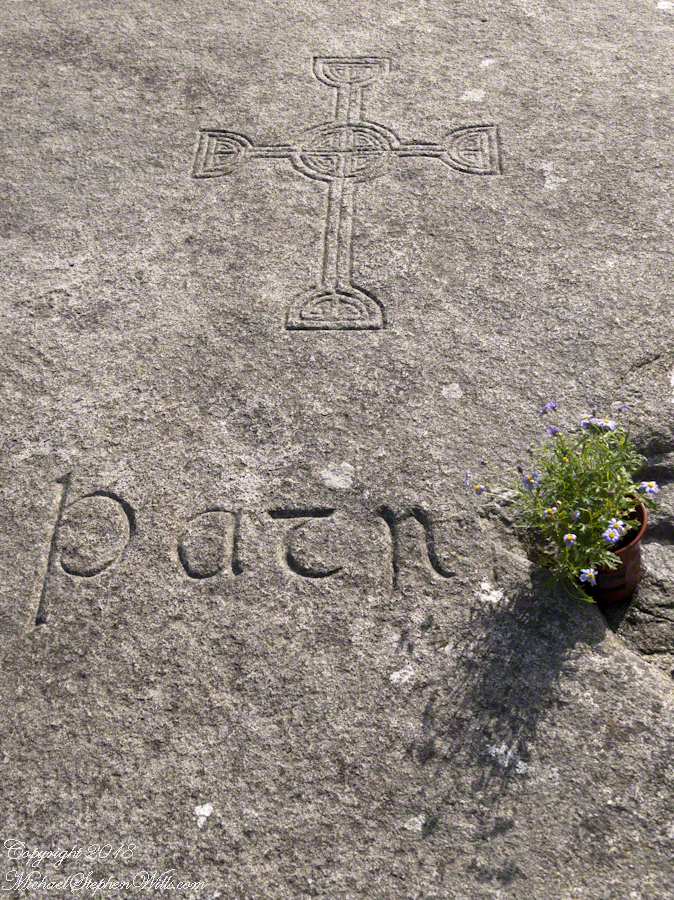
On June 7, 2014 Pam and I visited this area. Here are some photographs of the traditional burial place of Saint Patrick.
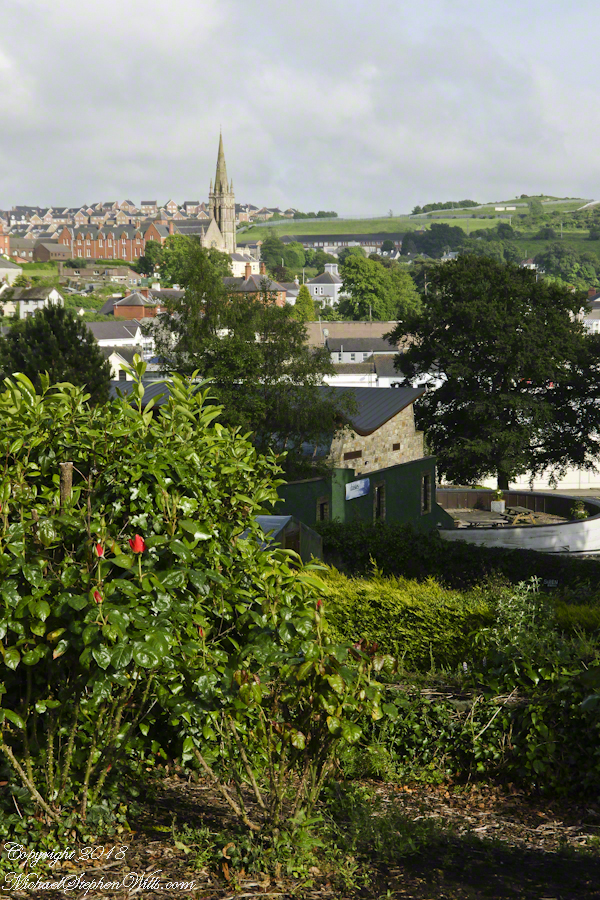
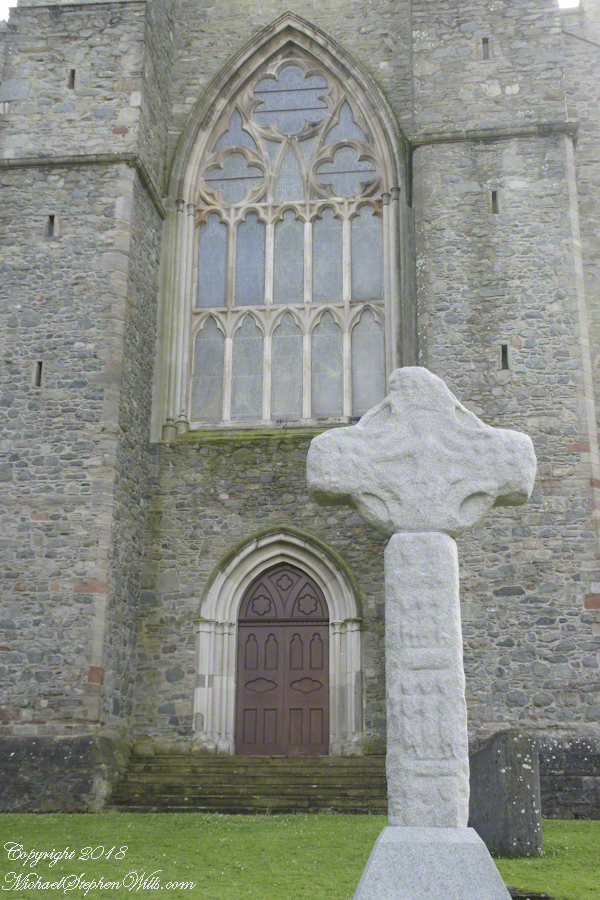
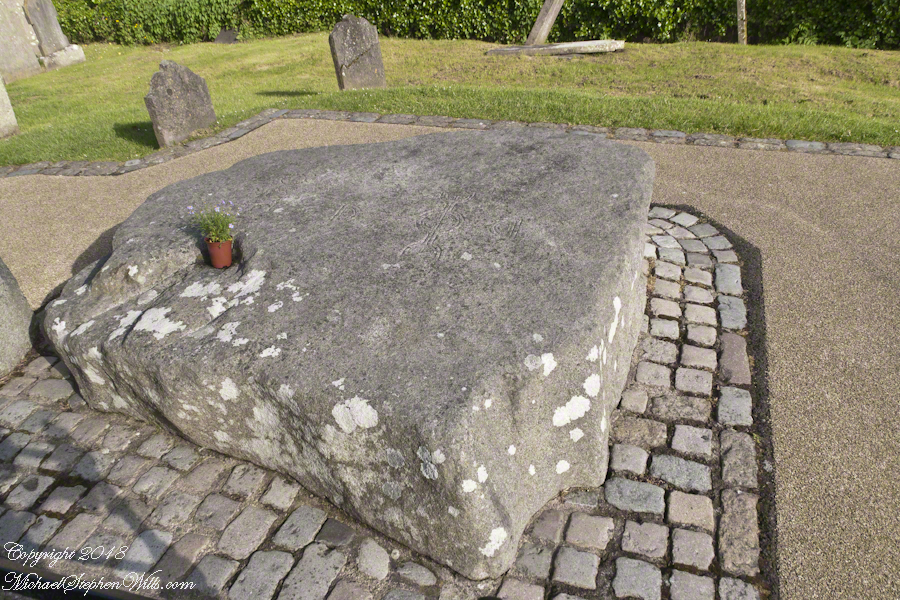
View of Downpatrick from the hill of the Cathedral Church of Holy Trinity (Down Cathedral)The High Cross of Downpatrick fronts Down Cathedral on a hill overlooking the town. The informational placard reads “The granite head and shaft date to about 900 AD and were once re-used as part of a Market Cross at the bottom of English Street. The pieces were found in various places in town, reassembled and presented to the Dean and Chapter of the Cathedral in 1897.”The placard text reads: “A large memorial stone of Mourne granite was place here in 1900 to mark the traditional burial-place of St. Patrick. The stone was quarried at Slieve-na-largie near Castlewellan, and it took 12 men 14 days to cut from the quarry.”Inscription on the upper surface of stone marking grave of Saint Patrick.
Explore the Hill of Tara with us! Discover the rich history of Saint Patrick’s statue, the legendary bonfire, and stunning panoramic views of County Meath. Join our journey through Ireland’s ancient and mystical landscapes in our blog post.
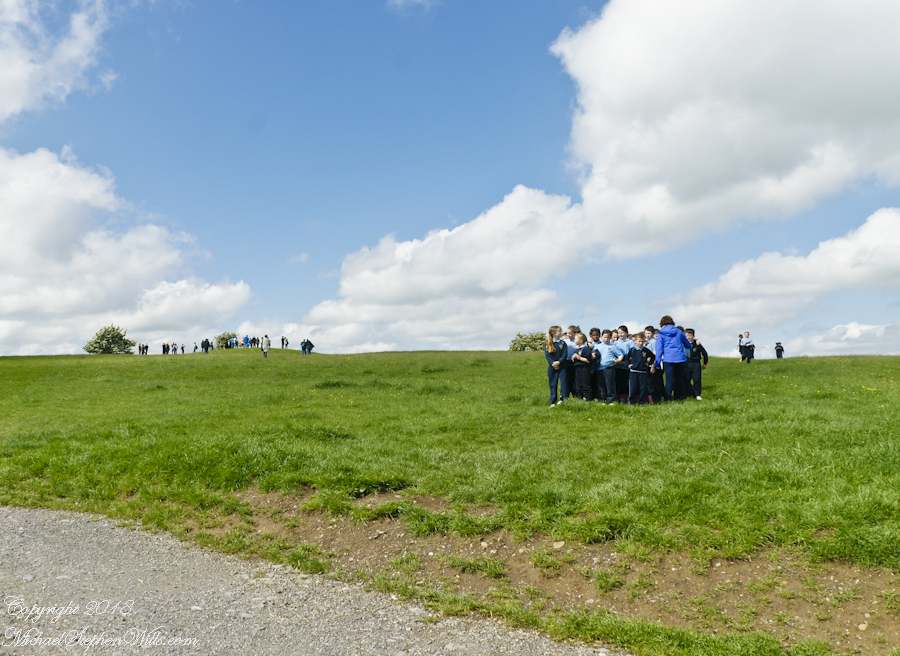
Arriving around noon on a Tuesday, Pam and I were greeted at the Hill of Tara by these children, headed to the school bus.
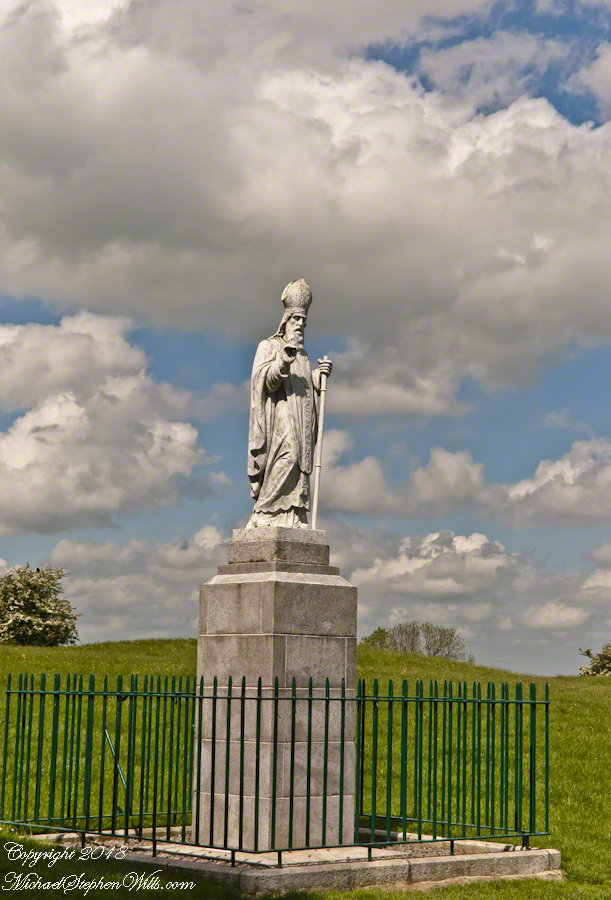
A statue of Saint Patrick fittingly welcomes visitors to the Hill of Tara, County Meath, Ireland. This statue of cast concrete was an existing statue donated by the Sisters of Charity, moved from an existing installation to the Hill of Tara in the year 2000 AD. The creator is anonymous, the is no plaque or other attribution on or around the statue. The original statue was erected on the summit of the Hill of Tara shortly after Catholic emancipation in 1829, commemorated the events of 433AD when St. Patrick lit a bonfire on the nearby hill of Slane on the eve of Easter Sunday. Slane was the second site we visited on our day of arrival, Saturday, May 24.
Lighting such a fire was contrary to the pagan laws of the time which dictated that the first fire lit that night be in Tara. Observing St. Patrick’s bonfire from afar, the chief druid of the ancient Gaelic capital predicted that if the flame were not extinguished that night, Christianity would never be extinguished in Ireland. The saint’s bonfire continued burning and the next morning, Easter Sunday, St. Patrick entered Tara to convert the king and his followers to Christianity.
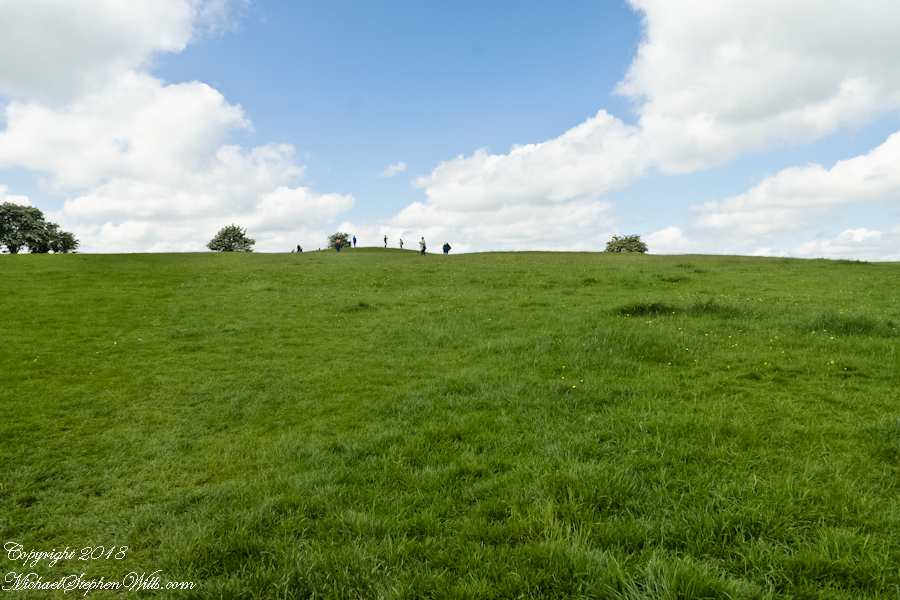
A series of mounds surmounts the hilltop, one is visible across the expanse of grass.
Climbing higher, the view opens.
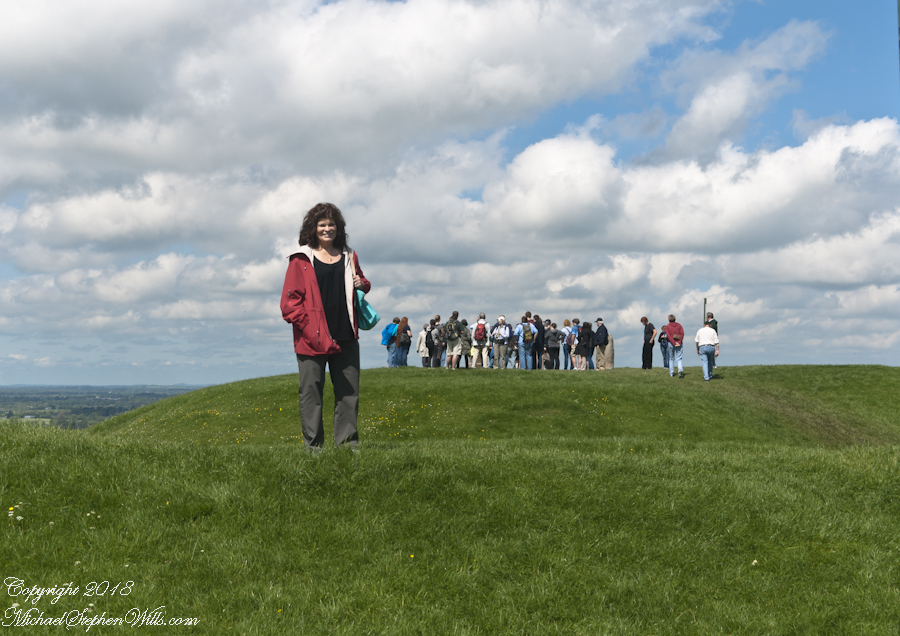
On the top, views from all cardinal directions, 360 degrees.
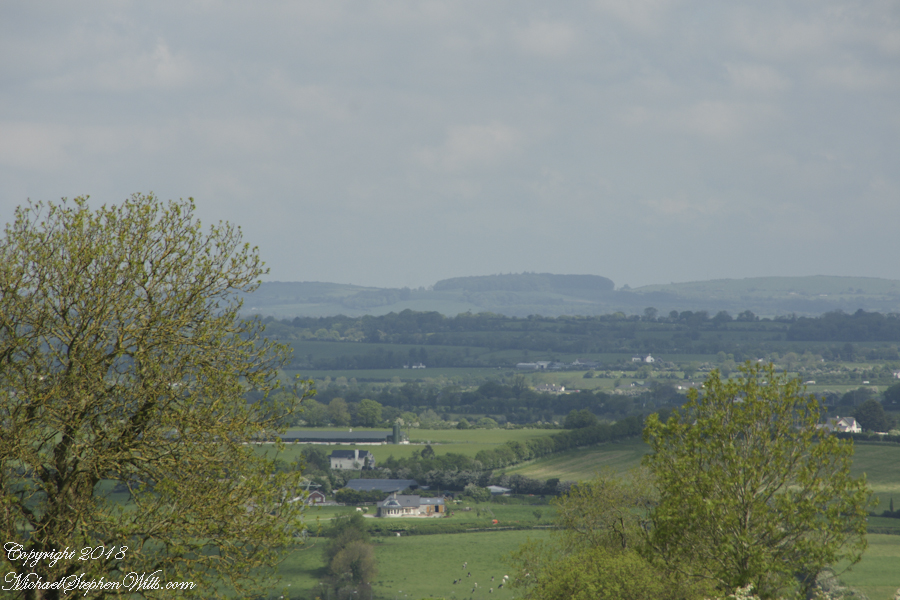
The Hill of Slane is visible in the east, the tall cathedral ruin though not visible in this view.
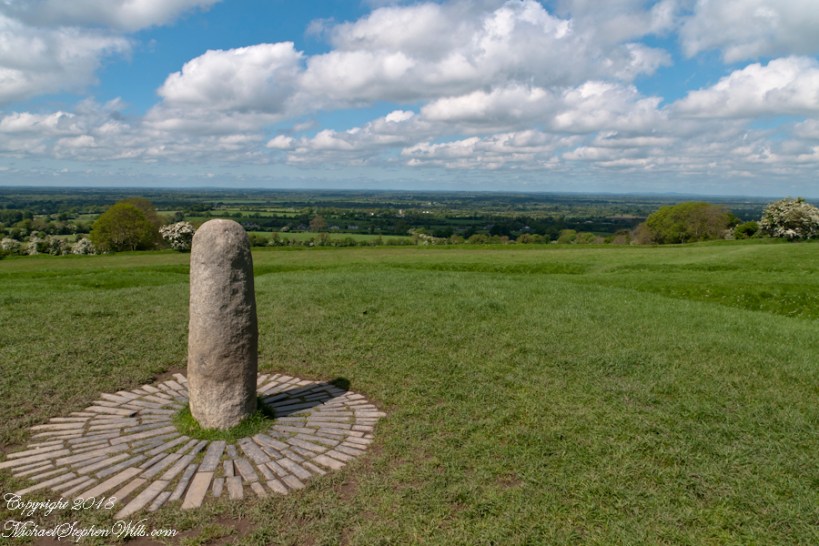
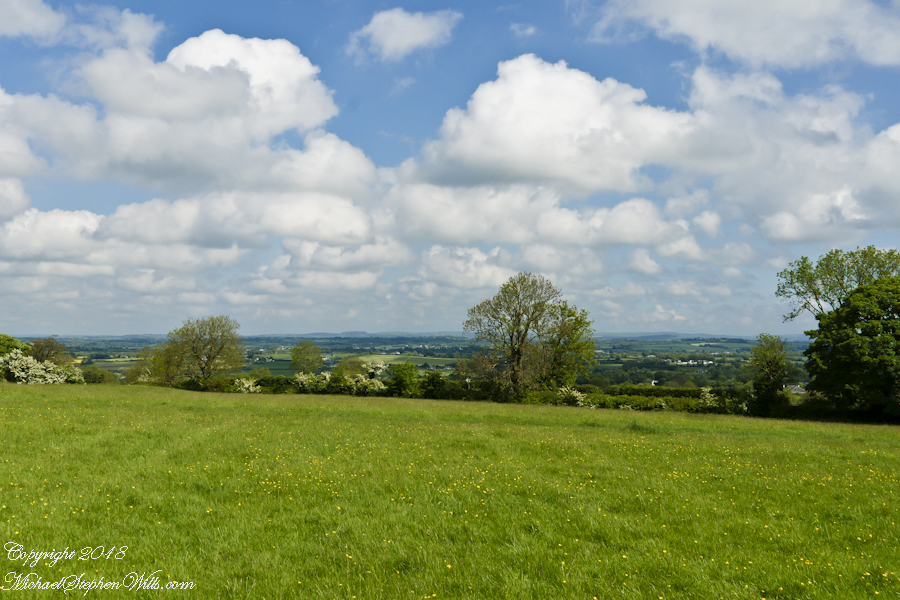
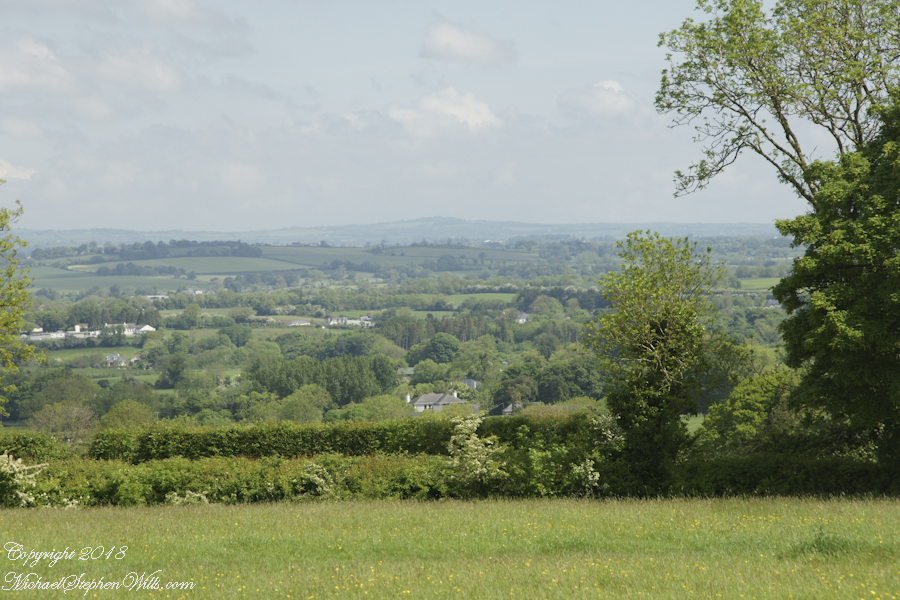
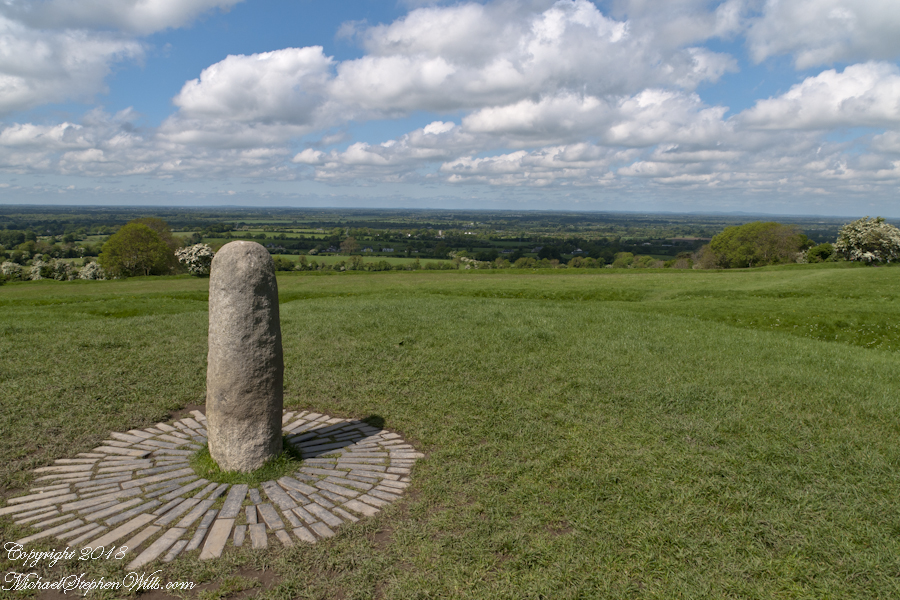
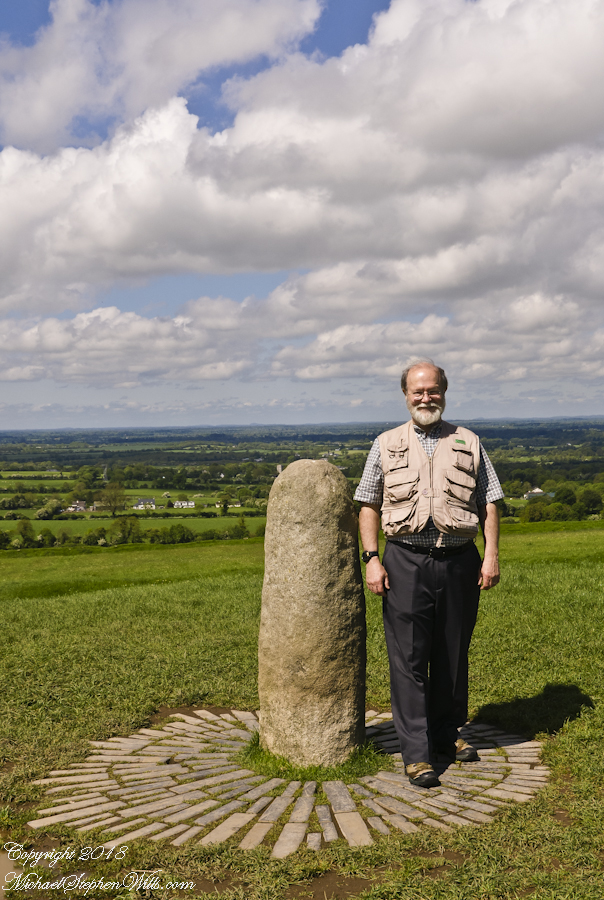
The first of the following panel is a view northwest from looking across County Meath with views of Counties Westmeath and Cavan. On the horizon, right, is Hag’s Mountain, (Irish: Sliabh na Caillí) , site of the Loughcrew Cairns. The standing stone is the “Stone of Destiny: (Irish: Lia Fáil), which served in coronation the coronation of the High Kings of Ireland. It stands on the Inauguration Mound (Irish: an Forrad) of Tara. This photograph was taken the morning of May 27, 2014 hours before the stone was vandalized, doused with green and red paint.
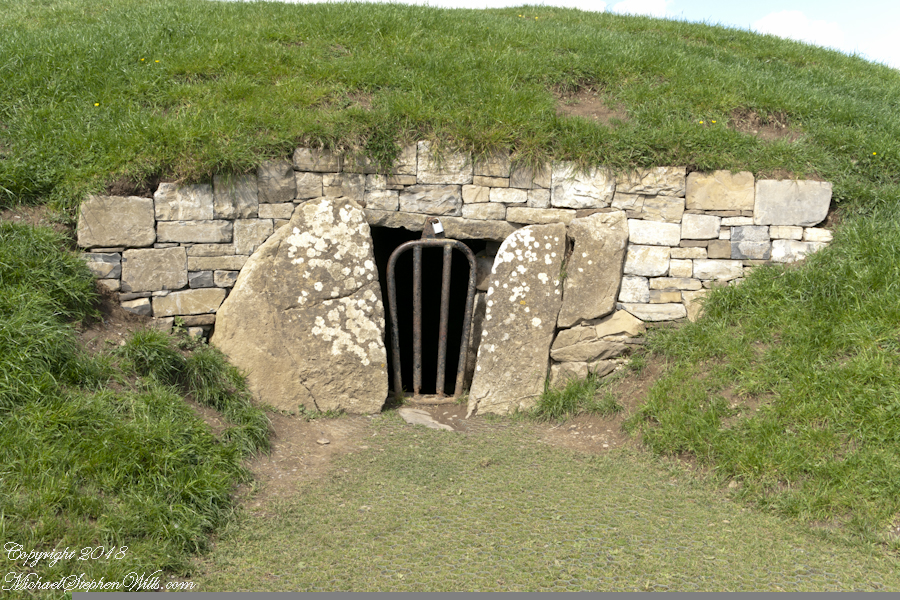
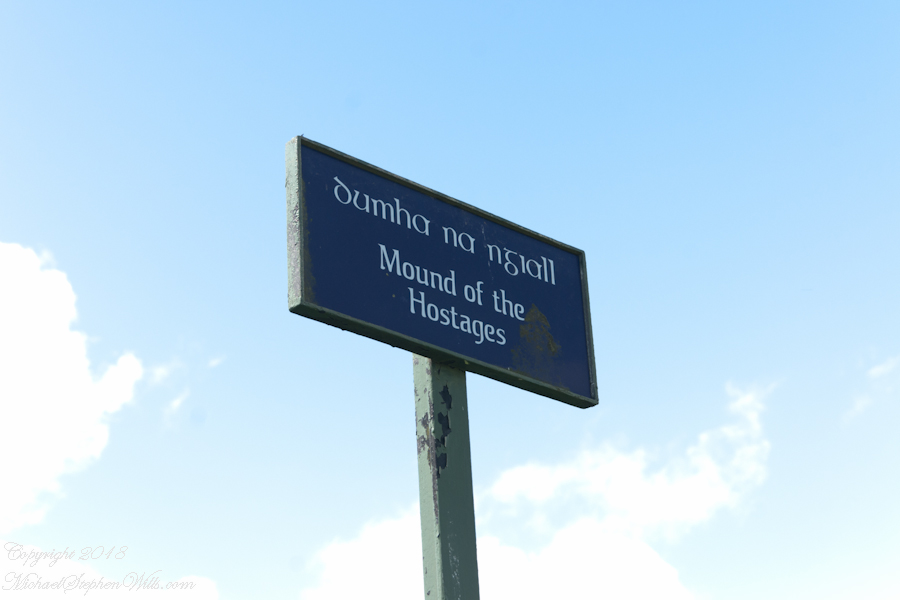
A bit to the east is the Mound of the Hostages, a passage tomb.
Walk into a glade, through the ancient graveyard to the visitors center in a deconsecrated church.
Browse my reasonably priced stock photography. This blog features three (3) photographs I published last week to Getty Istock and my Fine Art gallery.
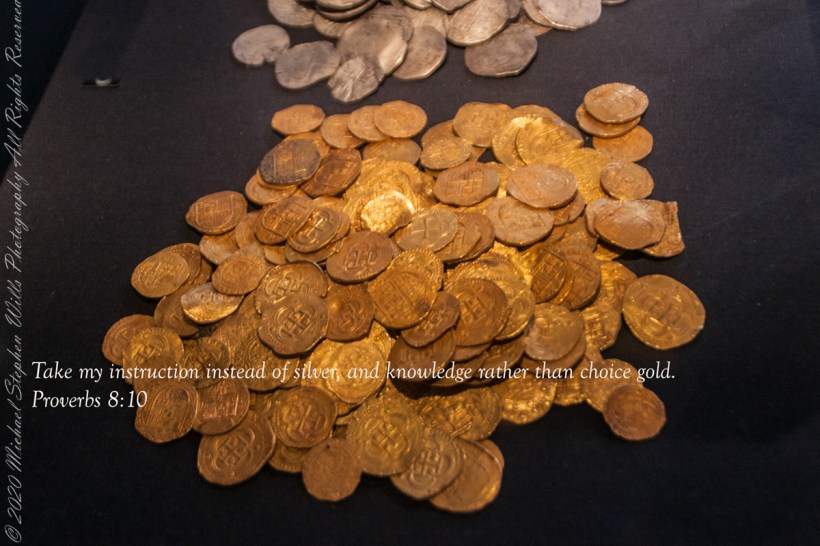
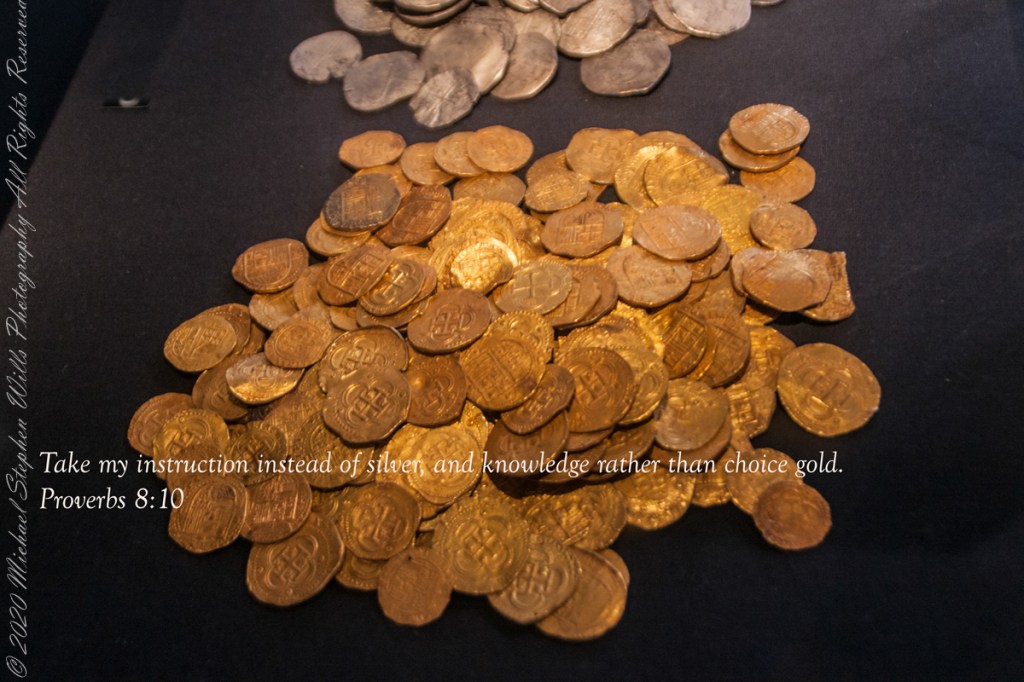
Gold on display for the permanent exhibit “Treasures of the Girona,” Ulster Museum, Belfast. It is not Leprechaun gold, certainly.
“Lay not up for yourselves treasures upon earth, where moth and rust doth corrupt, and where thieves break through and steal: But lay up for yourselves treasures in heaven, where neither moth nor rust doth corrupt, and where thieves do not break through nor steal: For where your treasure is, there will your heart be also.” Matthew 6:19-24“
Copyright 2022 Michael Stephen Wills All Rights Reserved
To begin with an epilogue to my last post, “Our Fifteen Minutes of Fame on Conception Hill” , our meeting with the El Mercurio reporter never appeared. Inquiries to the newspaper were promptly and courteously replied to, there was nothing. They suggested a search of the online archive and only a January 2014 fashion show, the article featured a photo from the same terrace. After our pleasant time we walked off some calories on Gervasoni Promenade, a showcase of city harbor and hillside views.
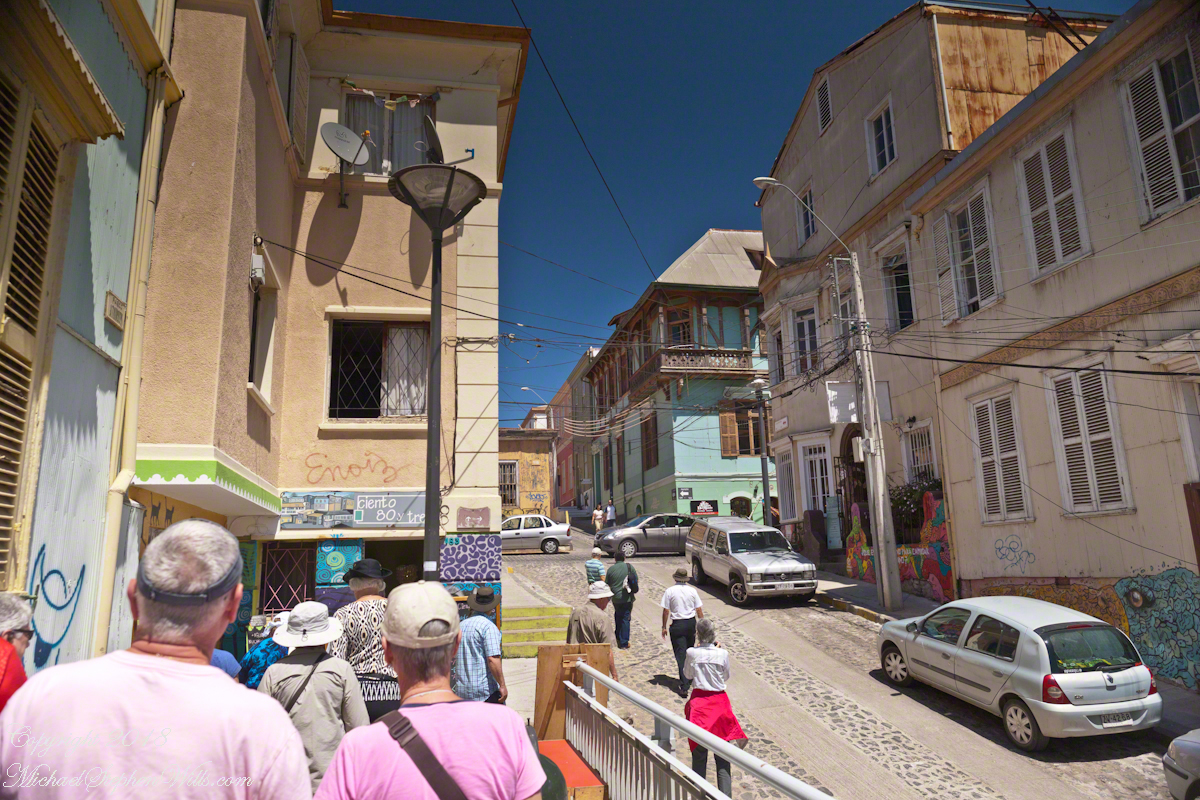
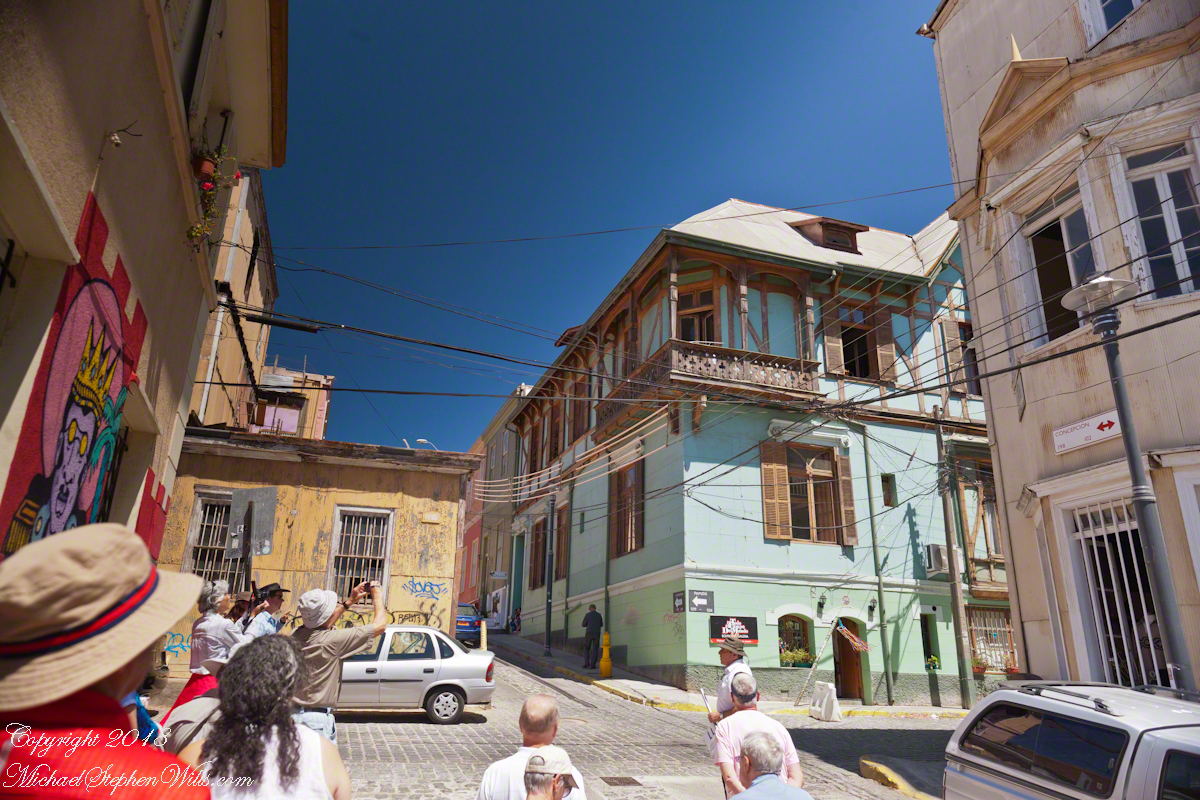
Most city visits on this cruise we traded independence and flexibility for the convenience of the guided tour. Ricardo, our guide, was a knowledgeable, good humored companion to our small group. After we left the promenade for Calle Conception Ricardo was most helpful.
It was here I entered a photographic fugue, losing touch with my surroundings through concentration on capturing the moment.
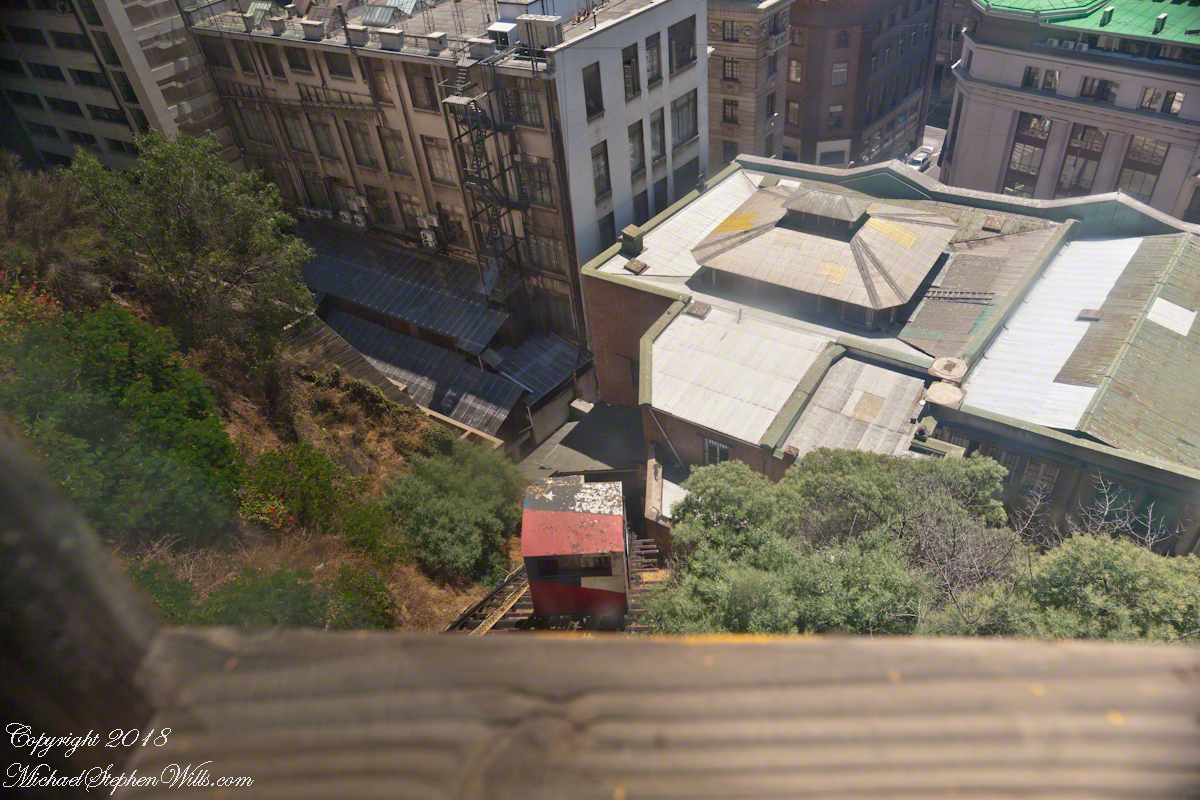
I walked ahead of Pam, expecting her to follow, and caught the view of the arriving care of the Conception funicular.
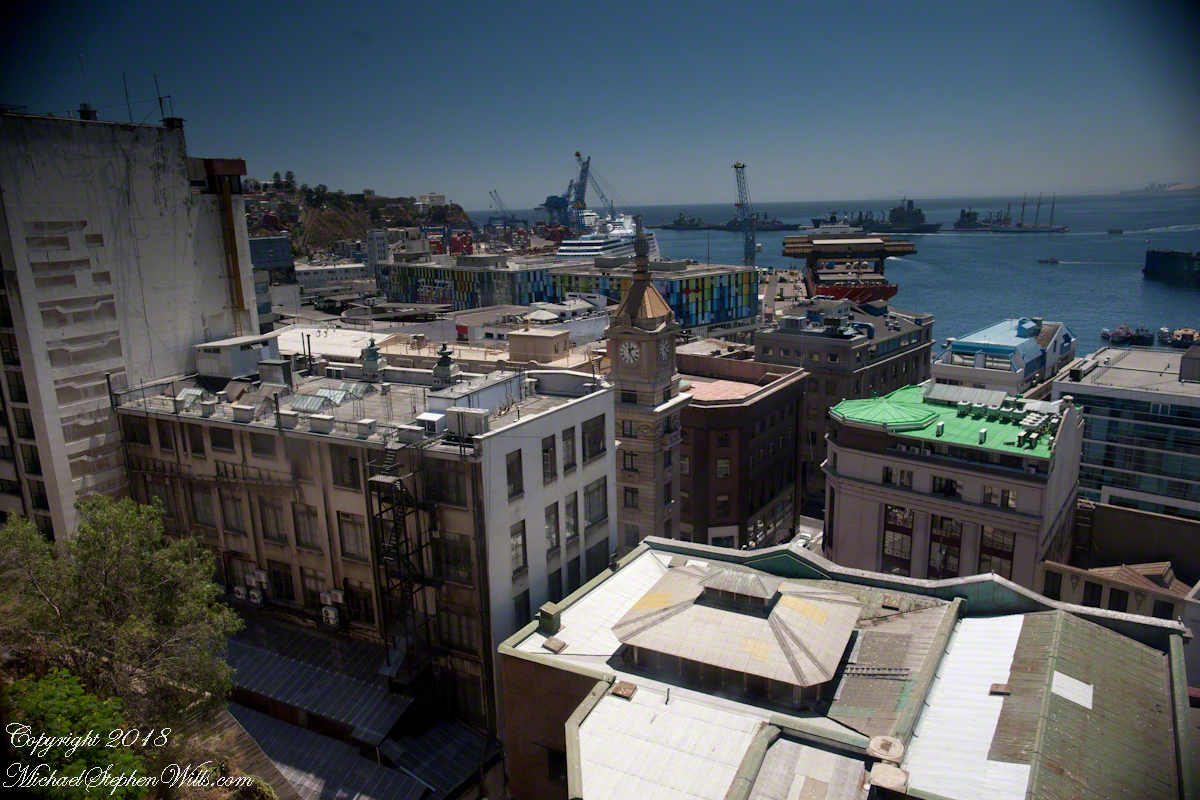
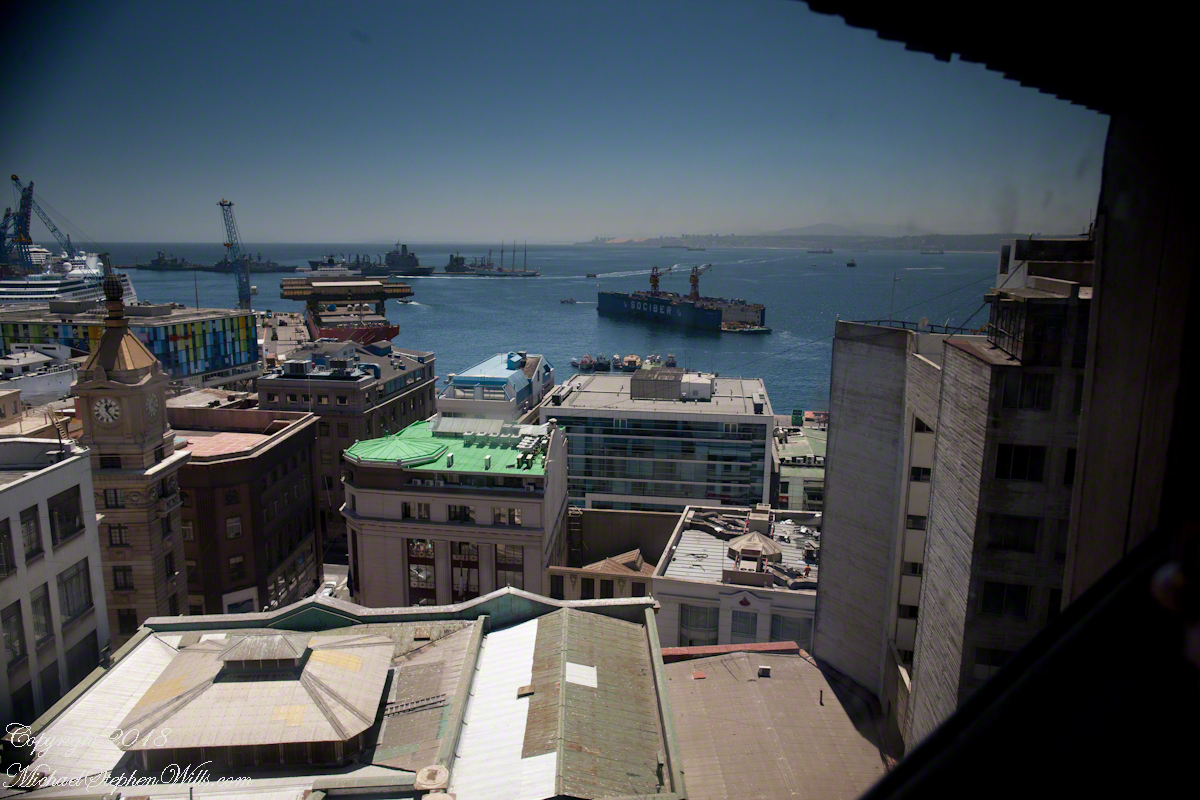
Wow, that’s the Regatta at dock. Other elements of this vista are the harbor, of course, then the famous Turri clock tower. Hmmm, almost 1:30 pm.
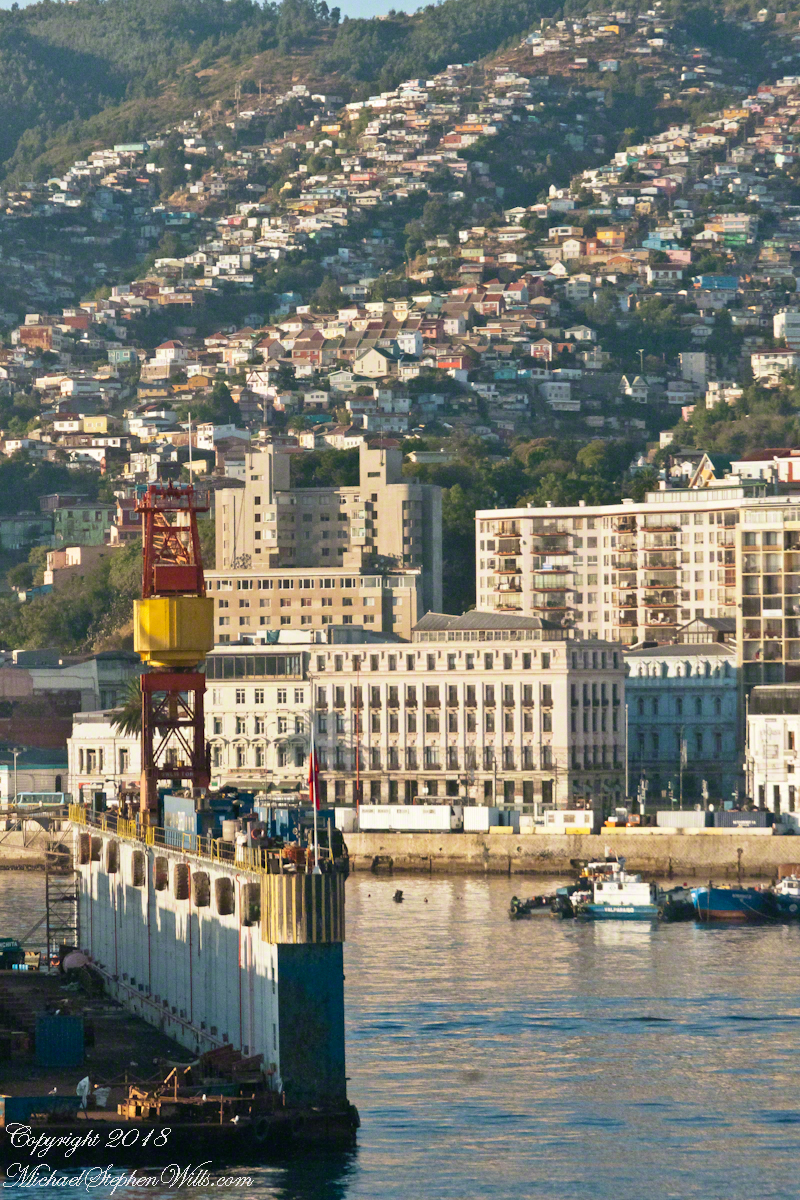
I was fascinated by the view of a drydock the Regatta passed while docking early that morning. It is the red structure with the letters “Sociber”, it even has a Facebook page!!!
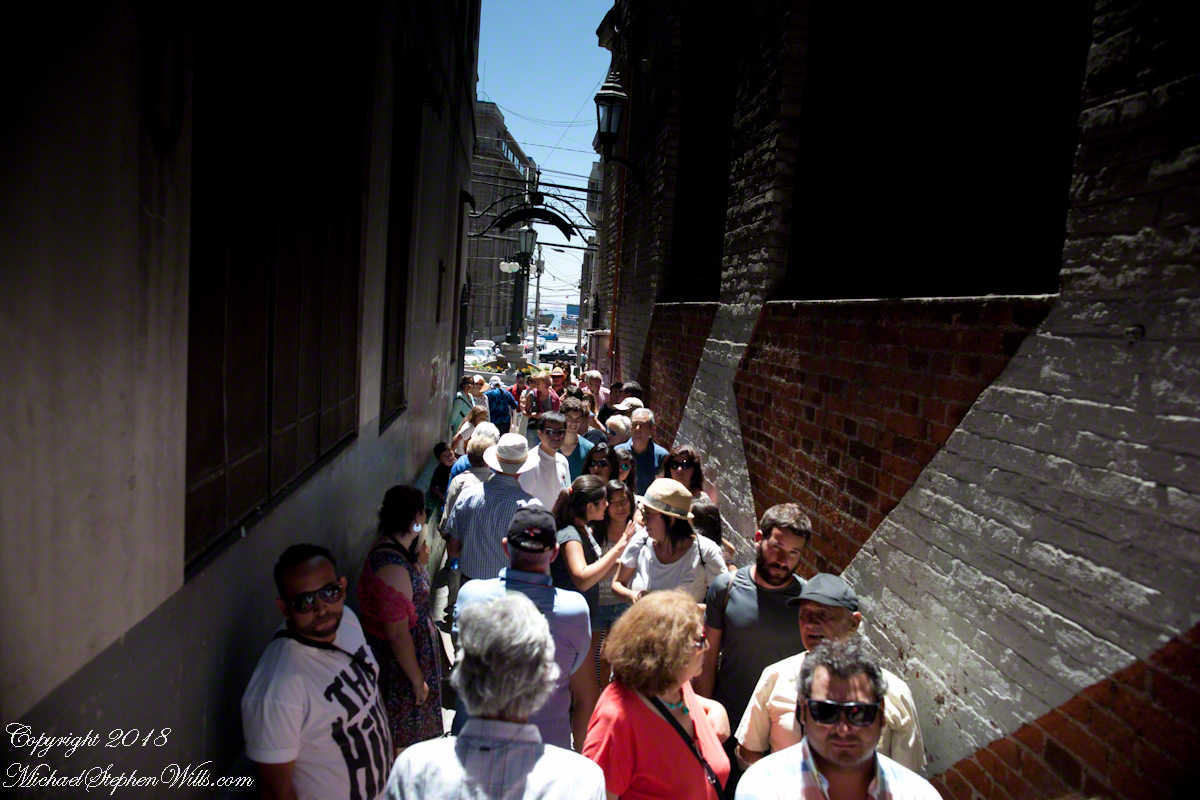
Once at street level the experience of the crowd on the alley opening onto Calle Prat, waiting for the ride up, brought back reality. “Where’s Pam?” I could not go back up because of the crowd, the views from the car fell from my mind.
I was on the street, disoriented and alone.
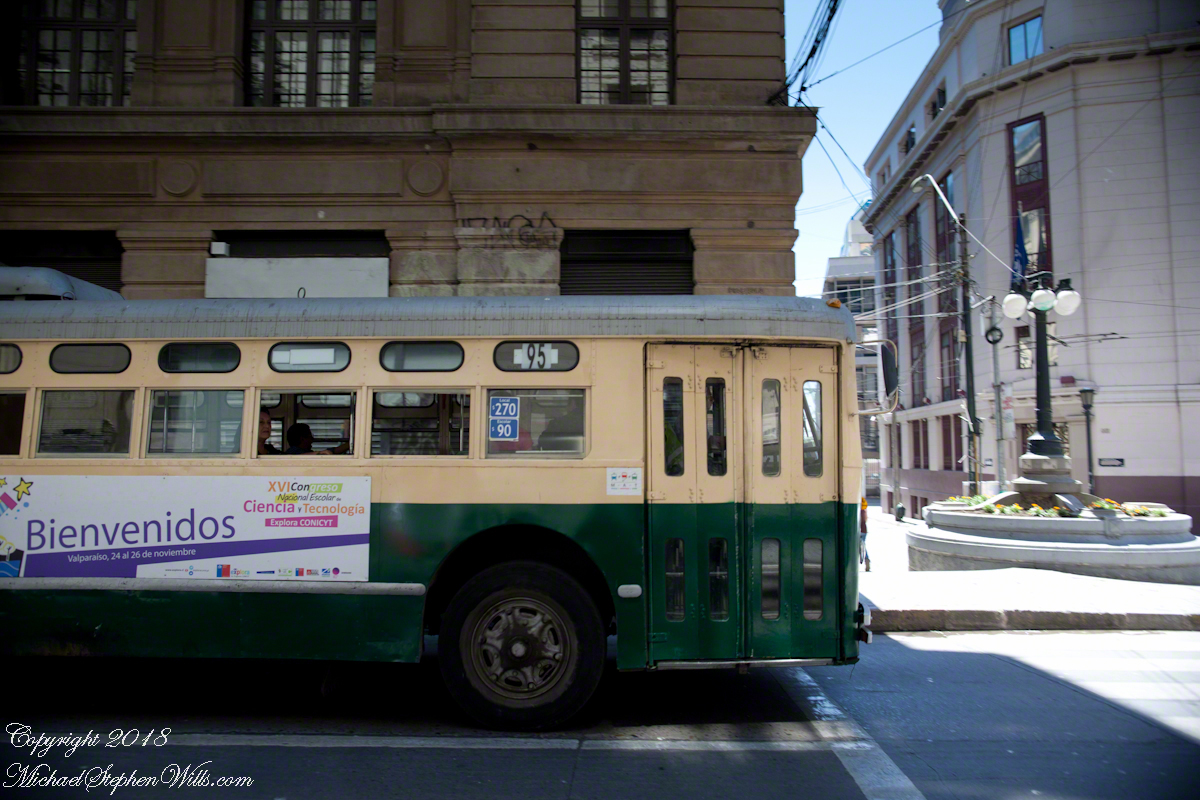
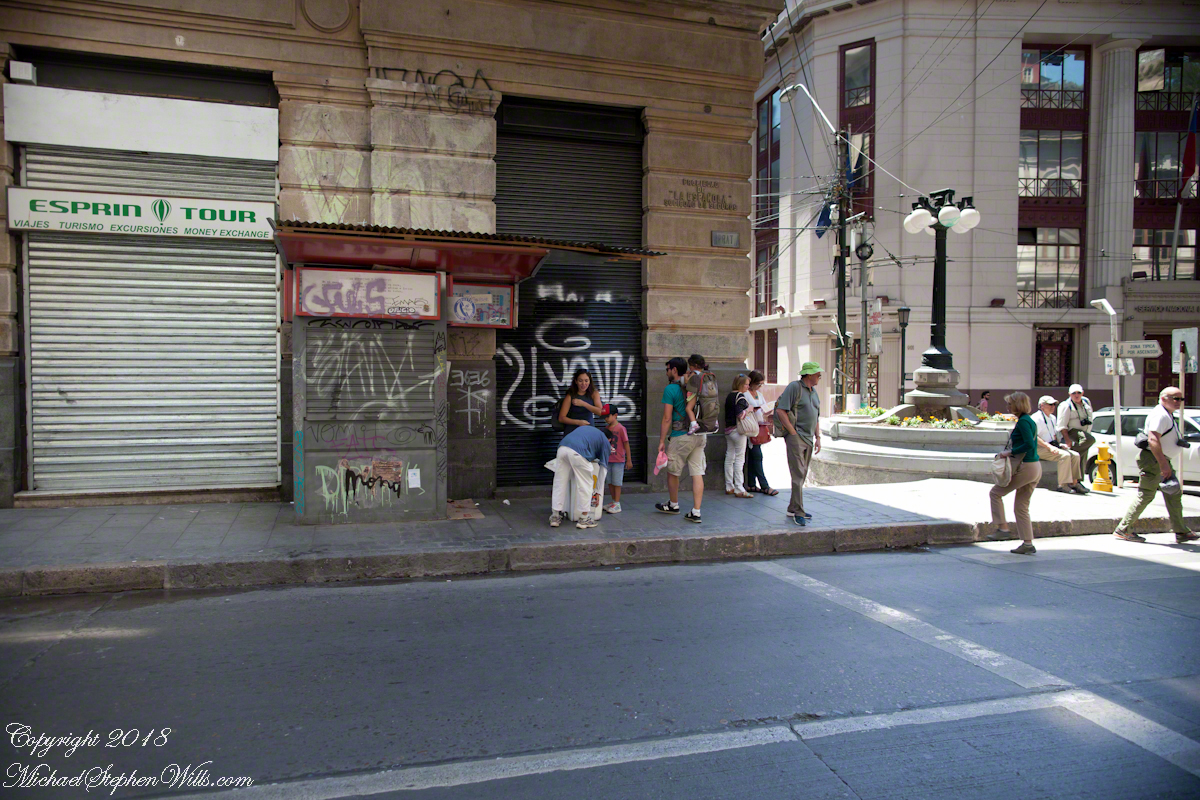
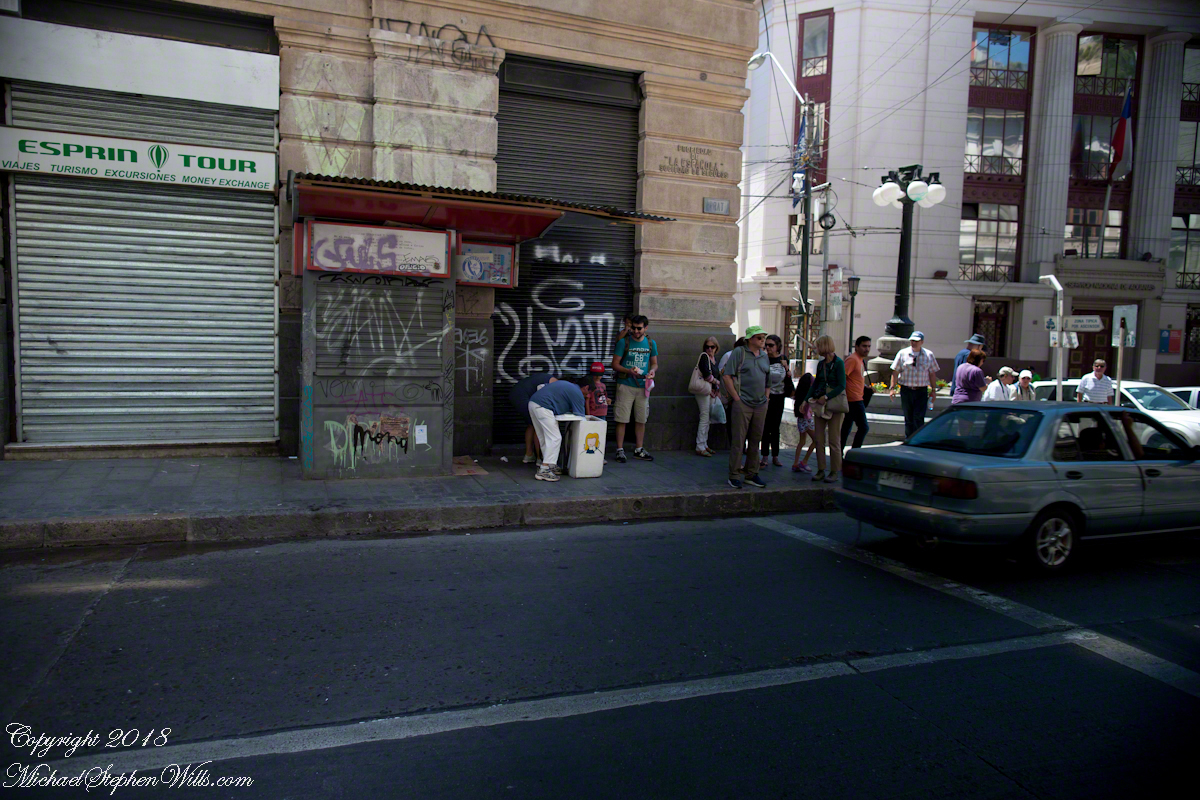
I fell back on photography to pass the time. Nowhere near the charm of Cerro Conception, typical downtown urban environment.
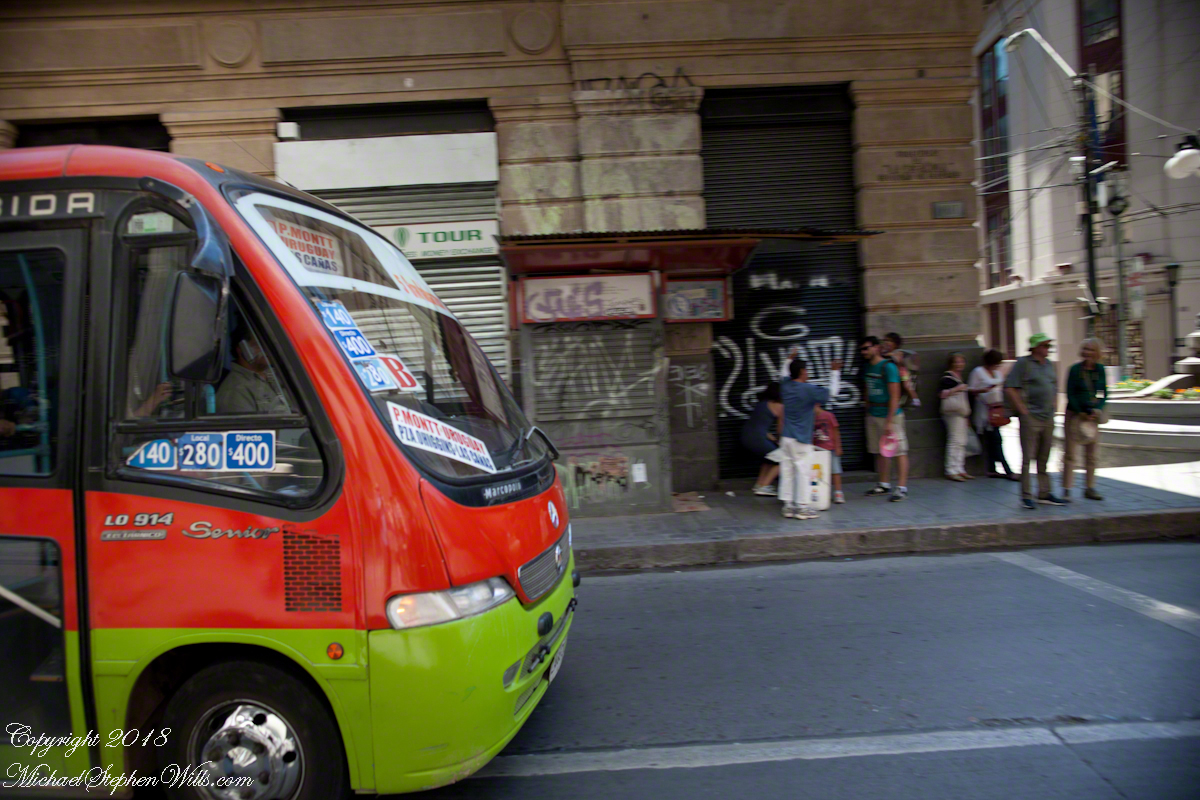
A man approached the family across Prat, “What is going on?” I wondered when the tour bus arrived. Still no Pam.
Oh, it is an ice cream vendor. Delicious. “Where’s Pam?” Ricardo not around, either. Back on the bus, waiting, a younger member of the tour was an Irish wag who declaimed on the benefits of freedom, even temporary.
Finally, Ricardo arrived followed by a few other tour members and Pam. Whew!! I’ll never live down “deserting” her. She was not able to find the entrance to the Conception funicular. Along with a few others they kept each other company until Ricardo rounded them up. That was a long 20 minutes (reading from the photograph metadata), I was worried. As I mentioned, at the time I was clueless about my whereabouts. Reviewing the numerous photographs, I found the “Servicio Nacional de Aduanas” (National Customs) building across the where Calle Esmeralda joins with Cochrane and pieced it together from there.
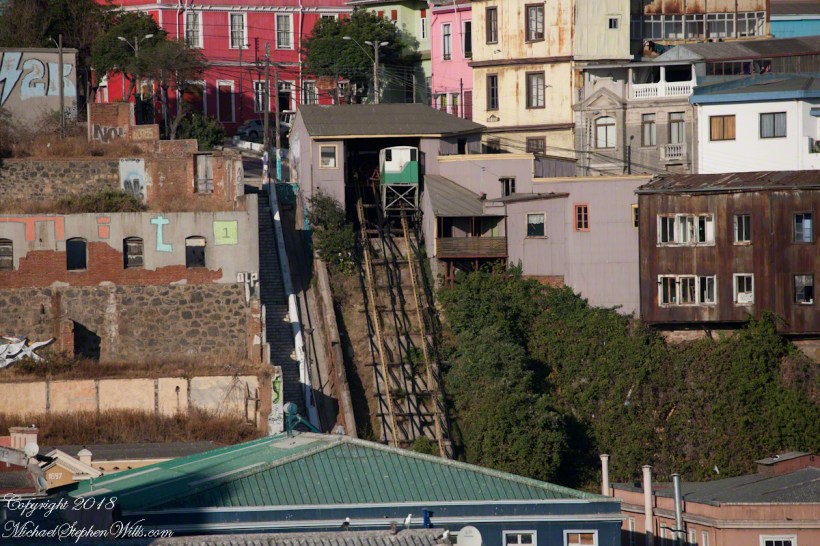
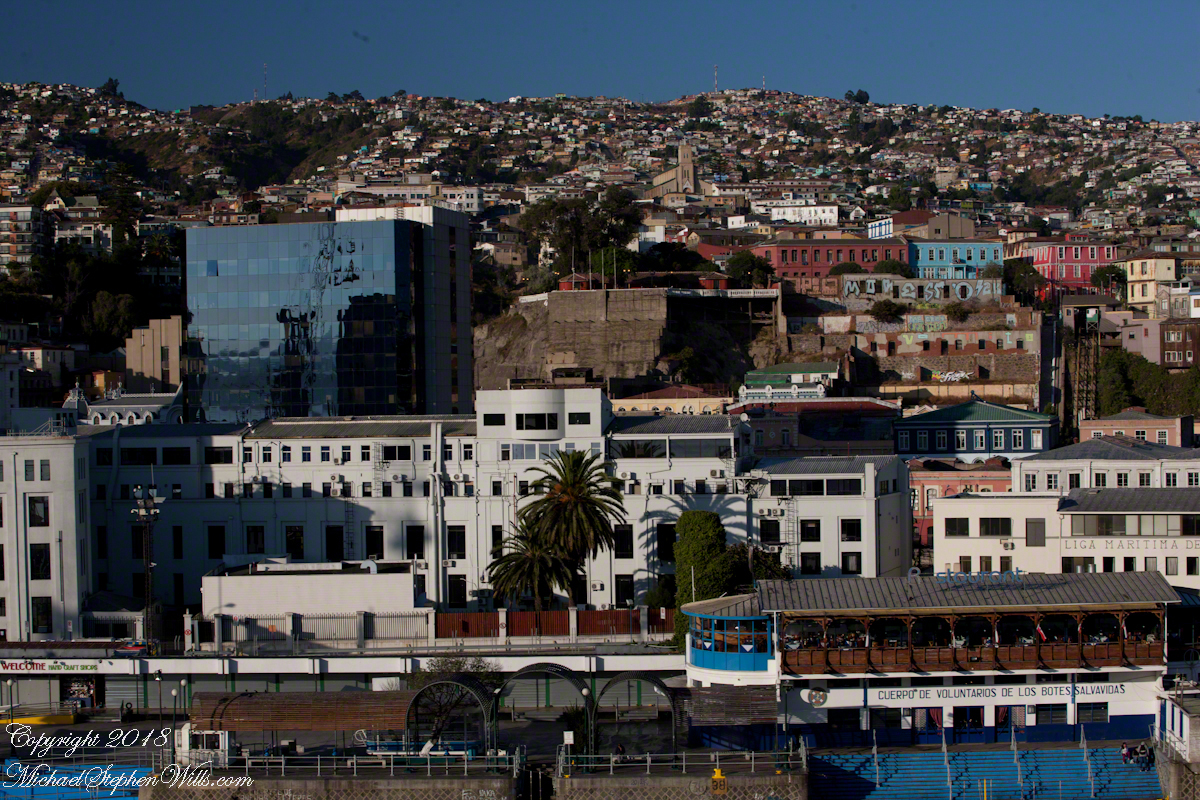
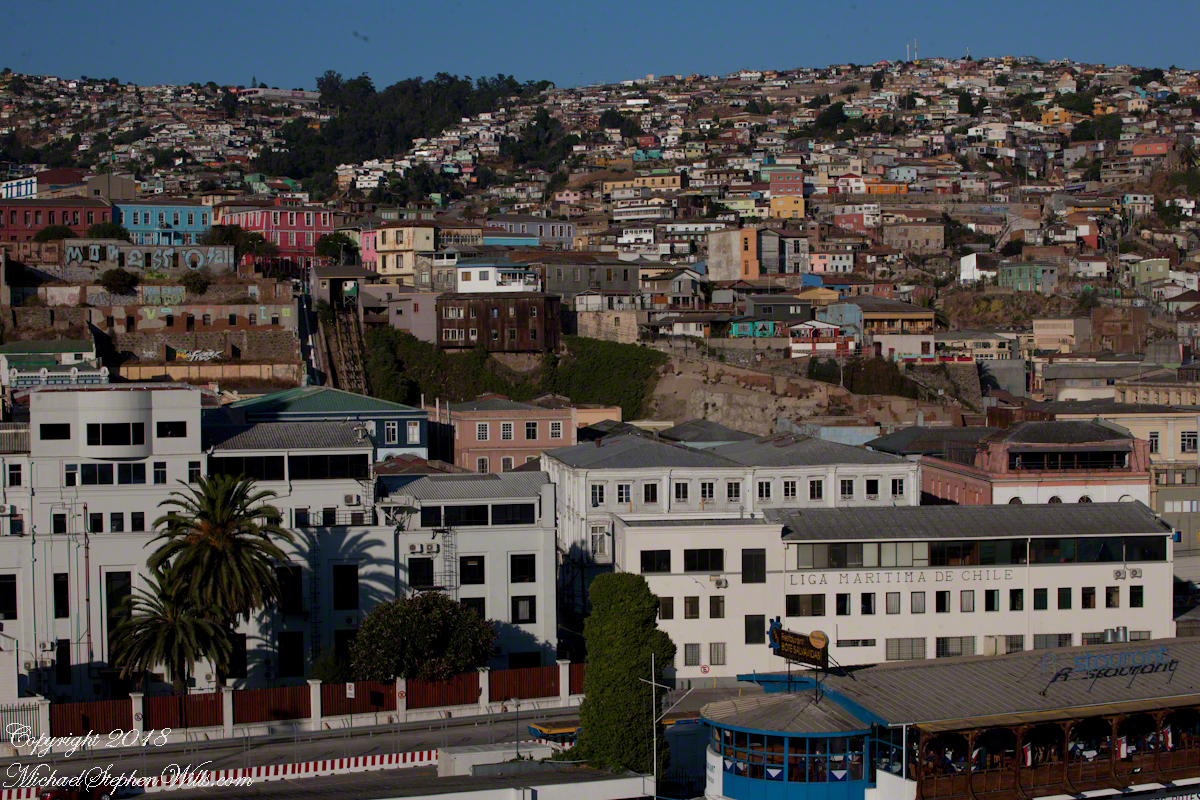
About the Conception funicular, that morning while the Regata docked I caught this view of Valparaiso hillside. It is a microcosm of the Andean topography, ravines cut through the heights. This is when I noted the Sociber drydock, it is on the lower left…look down into it — the business is to sell that dry space in the middle of the harbor for ship repair. The space and be flooded, opened to allow entry of a ship, then drained for work on the hull or whatever.
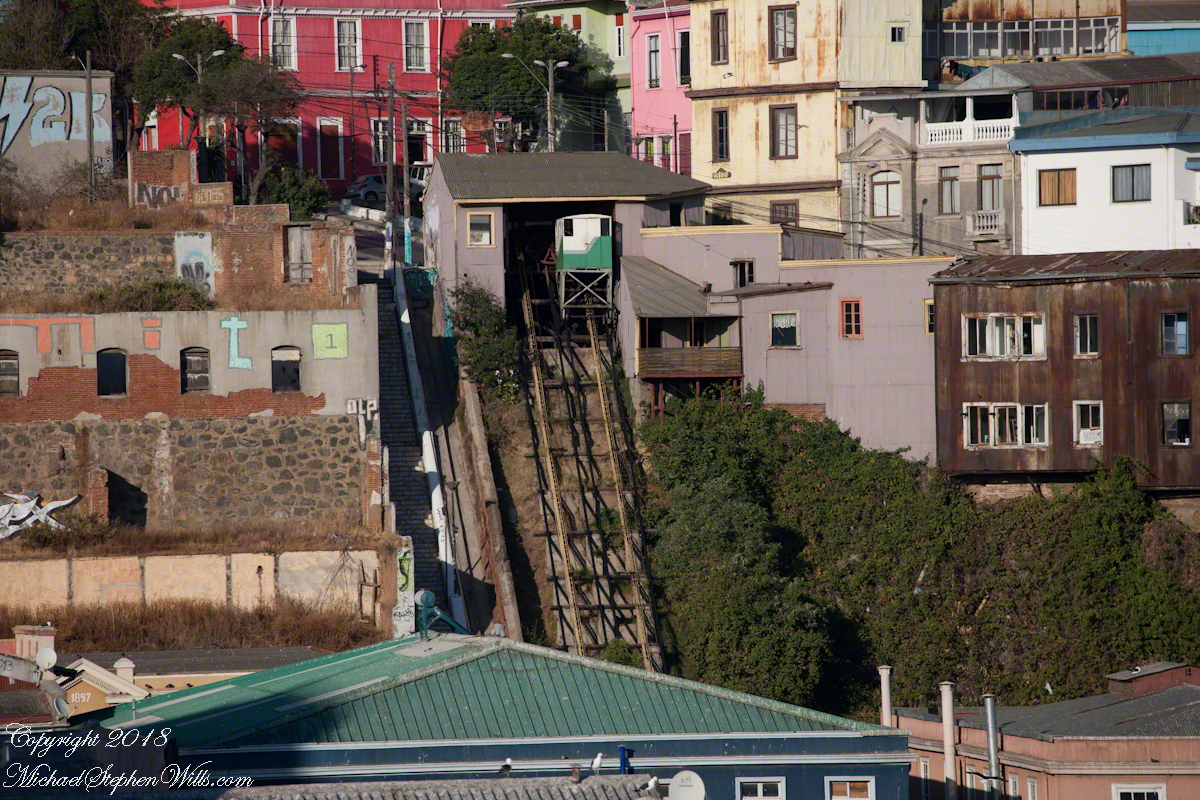
The city pioneers adapted to this terrain. As a entrepreneurial endeavor, in 1882 Mr. Liberio E. Brieba Pacheco founded the Mechanical Elevators Company of Valparaíso. Conception funicular opened the following year to facilitate the urbanization of Alegre and Concepción hills. Conception funicular is closed for repairs currently, from 1883 until recently this, the oldest and first funicular of Valparaiso lifted people from the downtown Plan (plain) to the hilltop for a small fee.
Funicular is derived from latin “funis” for rope. It is an elevator that runs two counter balanced cars on a rails on a steep, less than vertical, slope. As one car rises the other lowers.
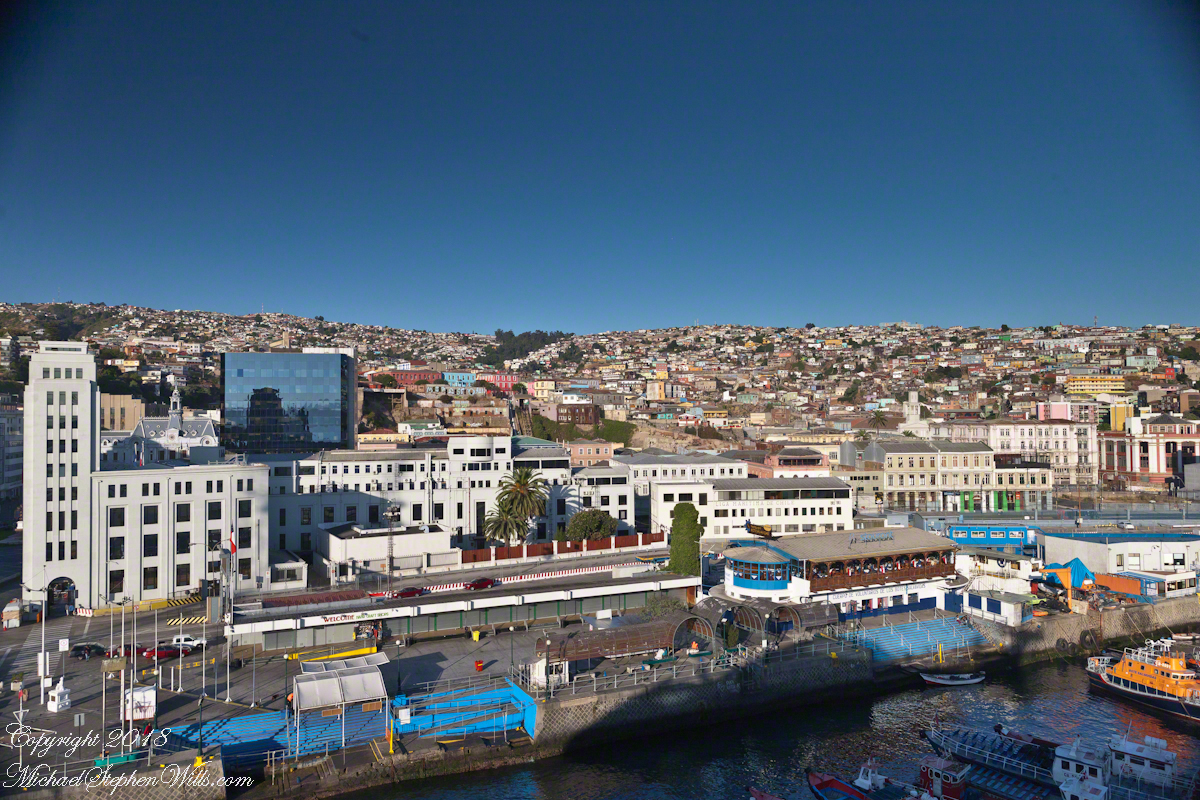
Here are some views of the Conception funicular and environs as seen from the upper Regatta deck. First, a 24 mm wide angle view. Look to the center for the rails and one car at the top. Above are the buildings of Cerro Conception (Conception Hill).
The funicular emerges from downtown on the right in the following view. The prominent church is Parroquia Perpetuo Socorro, just above the midpoint. It rises from Cerro Cordillera, above Cerro Conception. A Catholic church founded by the Redemptionist Fathers, the first stone was laid down 1905. Learning from the devastating earthquake of 1906, the engineer Juan Tonkin chose construction of Oregon pine and concrete to stand tall today. What a view (I’ve seen photographs).
A view a bit to the right, many of the colorful exteriors are zinc panels brought from early sailing ships, repurposed as siding.
After the wide angle shot I used the variable “zoom” lens for the rest. Here is a close view of the Conception funicular. The business of building and running these services thrived, over the years up to 29 funiculars and one elevator, served the city portenos (people of the port). In 2018 seven are in operation, nine are under a process of restoration and modernization, including Conception.
Copyright 2022 Michael Stephen Wills All Rights Reserved
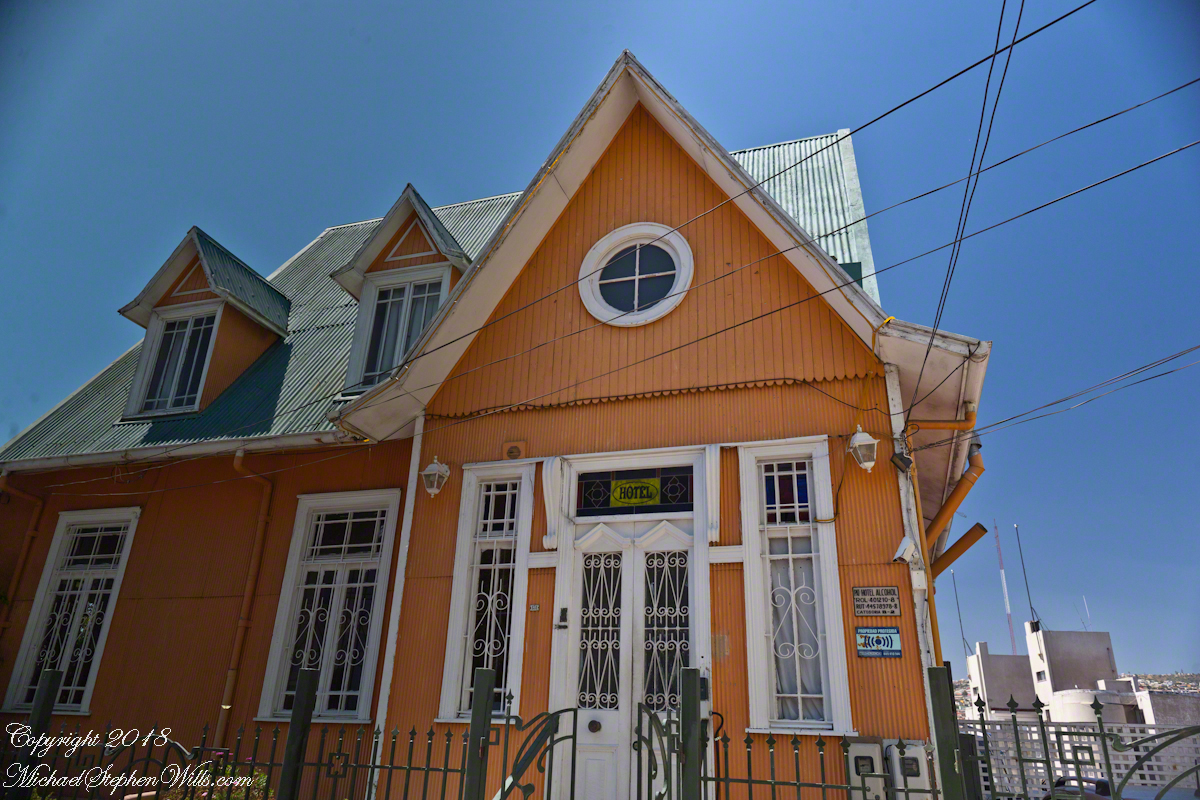
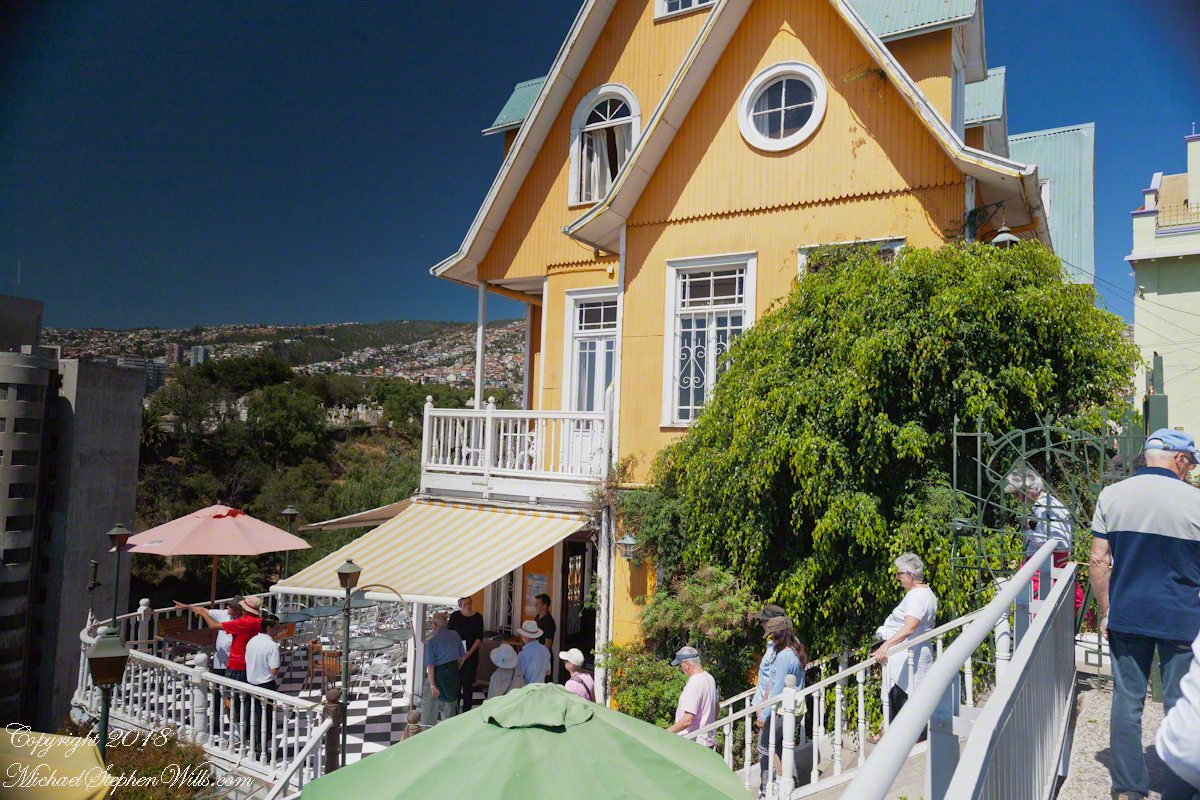
Posting about our departure from Valparaiso, Chile (see Valparaiso Departure III “The Sunset”) brings us to the time spent wandering this World Heritage Site, added to the UNESCO list in 2003. Within the amphitheater of hills is Cerro Conception (Conception Hill), historically settled by English and German immigrants. The façade of the Hotel Brighton, a building from the 19th century heyday of Valparaiso when it was a stopping point for shipping through the Straits of Magellan, reveals why so many of the buildings are alike: all are constructed from materials dropped off from sailing ships.
The theme of the Hotel Brighton evokes thoughts of immigrants remembering their origins, emigres claiming a spot of real estate to mold a sense of place for themselves. This goes both ways, Valparaiso, Indiana was formerly Porterville of Porter County. The motive force behind the renaming were the memories of the retired Captain David Porter, the sole survivor of an attack on his ship USS Essex by the British frigates Phoebe and Cherub in the War of 1812, within sight of Valparaiso. Fifty eight (58) United States Marines lost their lives in that sea battle. To point out the obvious, Captain Porter is the namesake of Porter County.
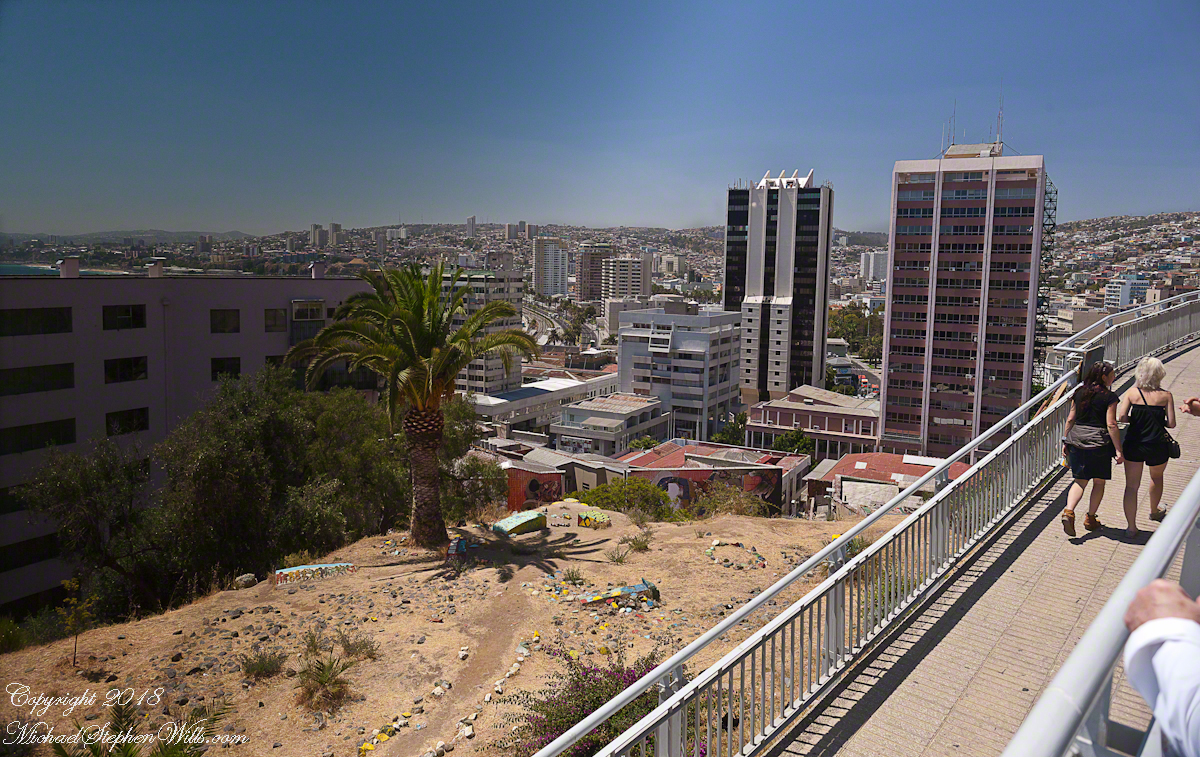
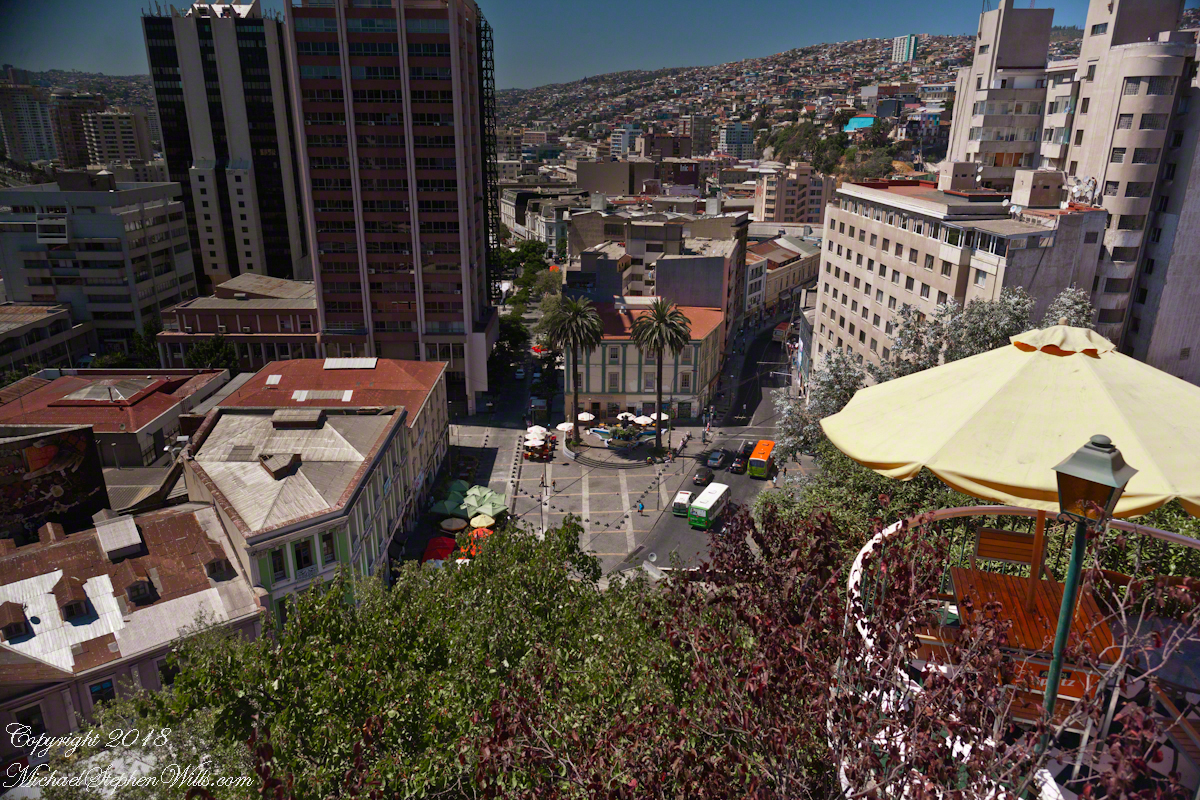
Pam corrects me when I say we “stopped for lunch” at the Hotel Brighton, pointing out we “only” had a glass of red wine and an empanada. Both were tasty, even more so with this marvelous view looking north into the other hills of the city. The yellow umbrella is on the hotel restaurant terrace.
I missed capturing the signature wrought iron gate forming the word “Brighton” among decorative scrolls. Built on the edge of Conception Hill it overlooks the coastal plain almost all of which is man-made.
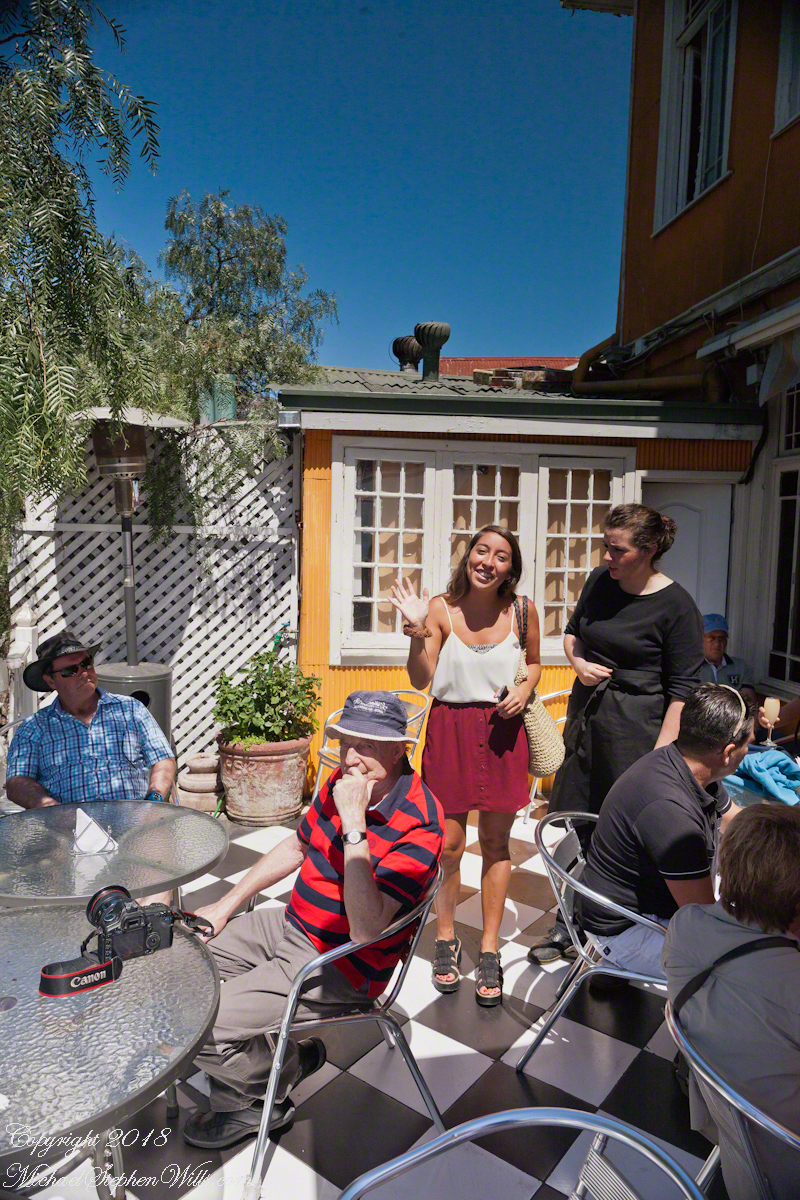
During our refreshment, this young lady (see photograph below) introduced herself as a reporter for El Mercurio. Accompanied by a photographer, she interviewed us and we had our photograph taken, I returned the favor with the following photograph saying the story might appear in the next edition. Standing next to her, with a puzzled look, is our waitress who was from the States.
El Mercurio de Valparaiso is the oldest continuously published Spanish language newspaper in the world. In my research for these photographs I discovered the newpaper officers were a short walk from the landing of the Ascensor Conception.
Copyright 2022 Michael Stephen Wills All Rights Reserved
This is part of my project to document our Christmas memories through photography. Here we explore the themes angels of the Christmas Story and in our lives.
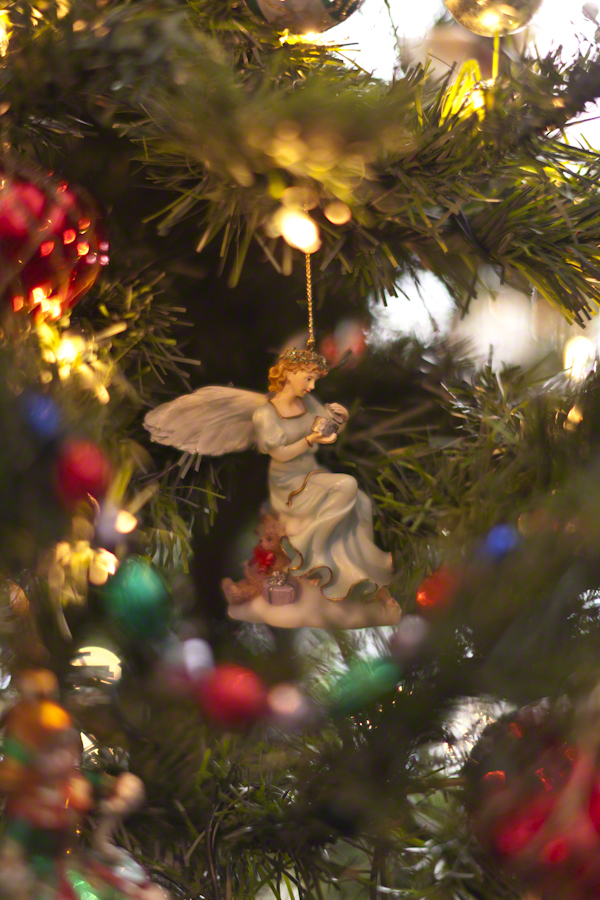
The angels of our Christmas tree and home remind us of the Jesus birth stories of scripture and the force of love in our own lives.
What comes to mind with the sudden appearance of Gabriel to Mary and that astounding message? Unlike the attempt of Jonah to avoid his calling, the subtext to Mary’s ready acceptance is the risks faced by an affianced woman who becomes pregnant. The book of Deuteronomy (Chapter 22 verses 13 – 21) calls for stoning a woman who presents herself for marriage as a virgin, when she is not.
When learning of Mary’s pregnancy, Joseph’s reaction, as a follower of Mosaic Law, was to divorce her quietly to avoid exposing her to shame. It was a visit from an angel, in a dream, that convinced Joseph to accept Mary (Matthew Chapter 2, verses 18 – 24).
An angel visited shepherds, announcing “today in the city of David a savior has been born for you who is the Messiah and Lord.” Suddenly there was a multitude of the heavenly host with the angel, praising God.” Luke Chapter 2, verses 8 – 13.
Was it an angel who warned the Magi, in a dream, not to return to King Herod with news of Jesus (Matthew Chapter 2 Verse 12)? Scriptures clearly state (Matthew Chapter 2 verse 13) “the angle of the Lord appeared to Joseph in a dream and said, ‘Rise, take the child and his mother, flee to Egypt.”
People can be angelic in expressing love for others through action. I am thinking of a movie Pam and I viewed last evening, “The Theory of Everything.” Jane Wilde, in her love for Stephen Hawking, stays with him when, shortly after their romance began, he was diagnosed with ALS. The prognosis was death in two years. In all likelihood, Jane gave Stephen his life and work through loving him. He is alive and working today at 75.
The love of our parents is more common, no less precious.
A note on the photographs, I used a Canon EOS-1Ds Mark III dslr with Canon lens EF 50 mm f/1.2L, Canon Speedlite 600Ex-Rt, Manfrotto studio tripod and hydrostatic ball head. Some of the photographs were hand held. When the flash was used, it supplemented ambient light from a large north facing bay window.
Copyright 2021 Michael Stephen Wills All Rights Reserved






 Michael Stephen Wills Photography