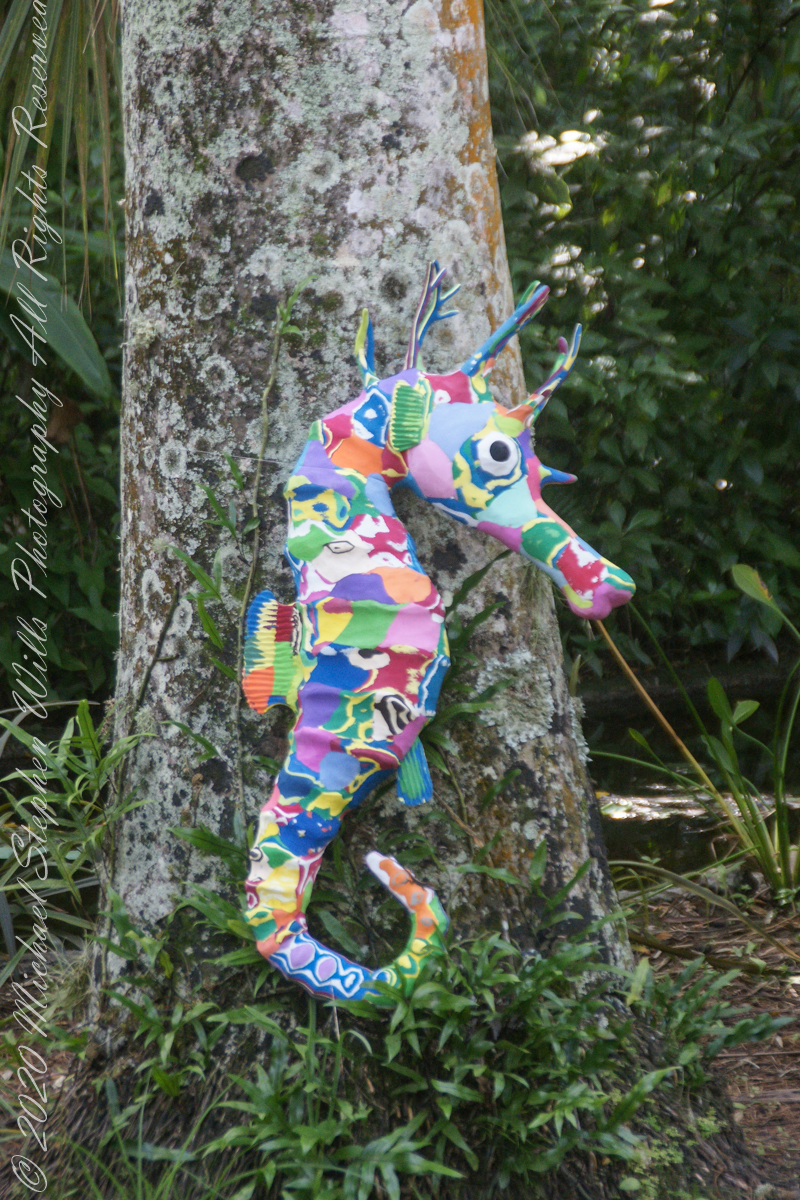
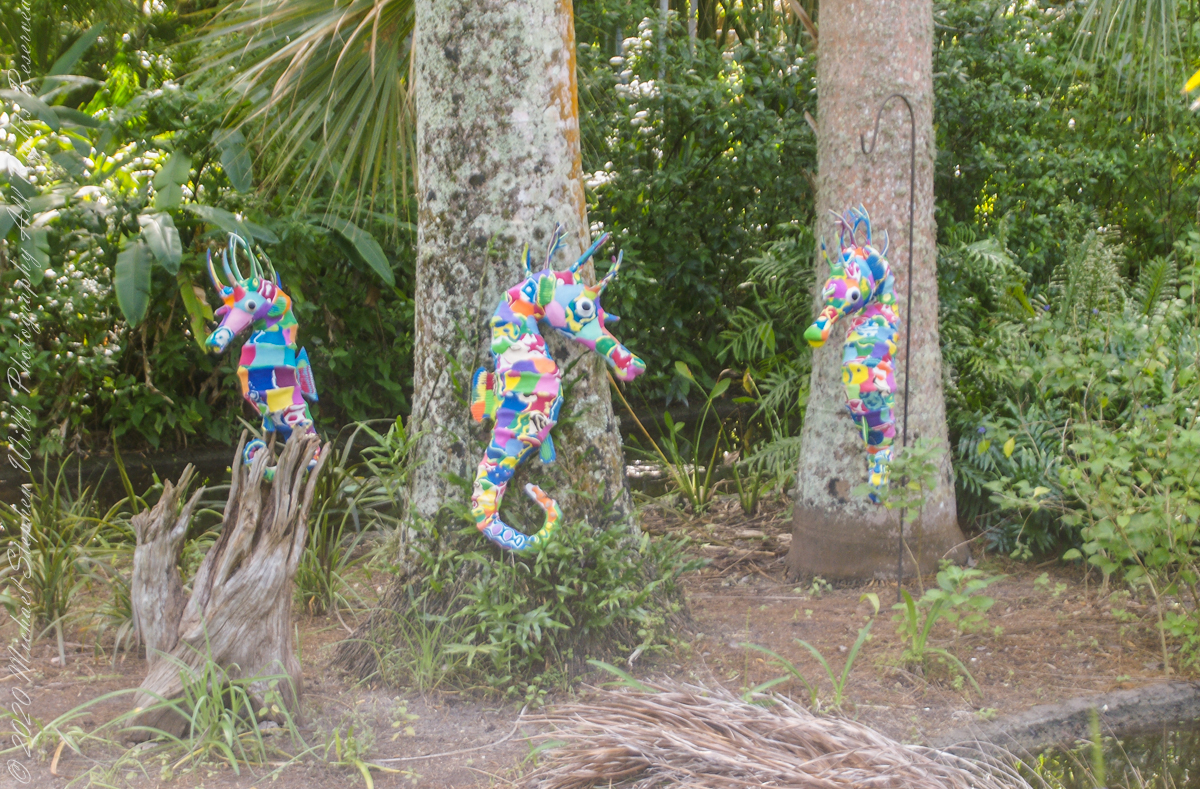
110 recycled flip flops were used by Ocean Sole Africa Project artists to create these seahorse sculptures from a 2020 exhibit hosted by McKee Botanical Gardens, Vero Beach, Indian River County, Florida.
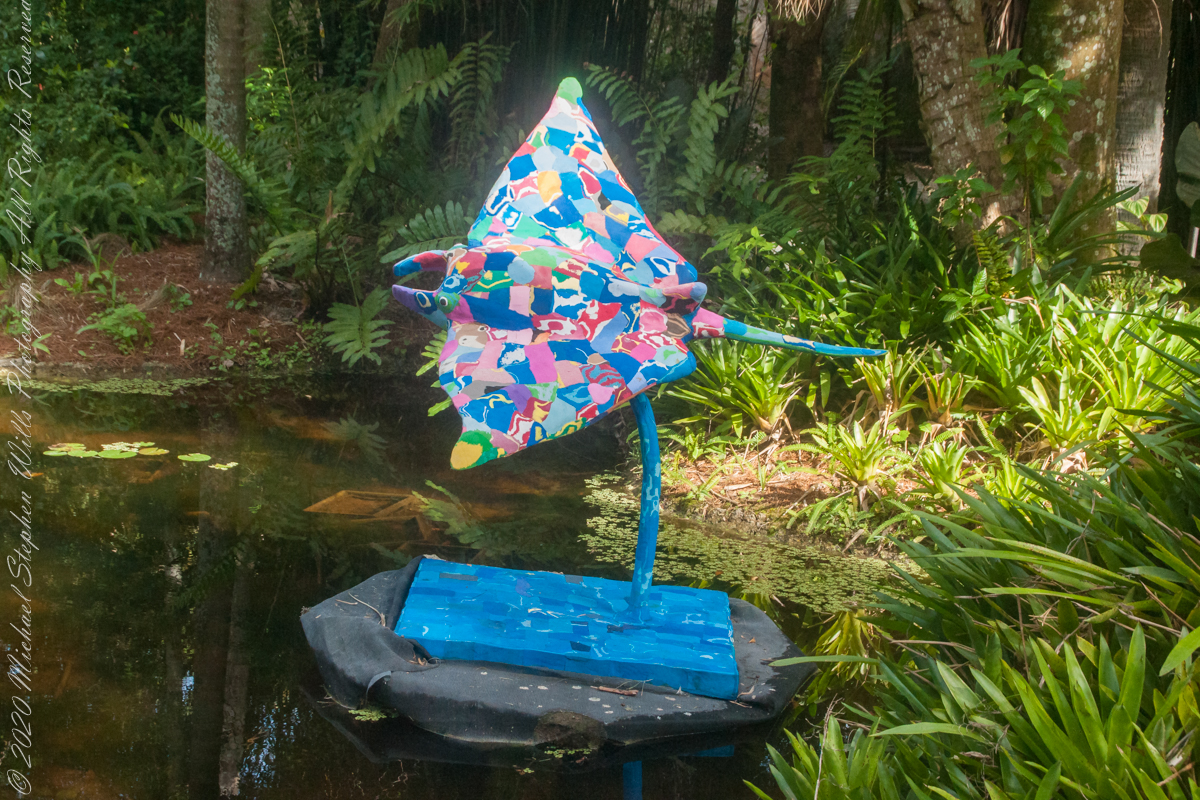
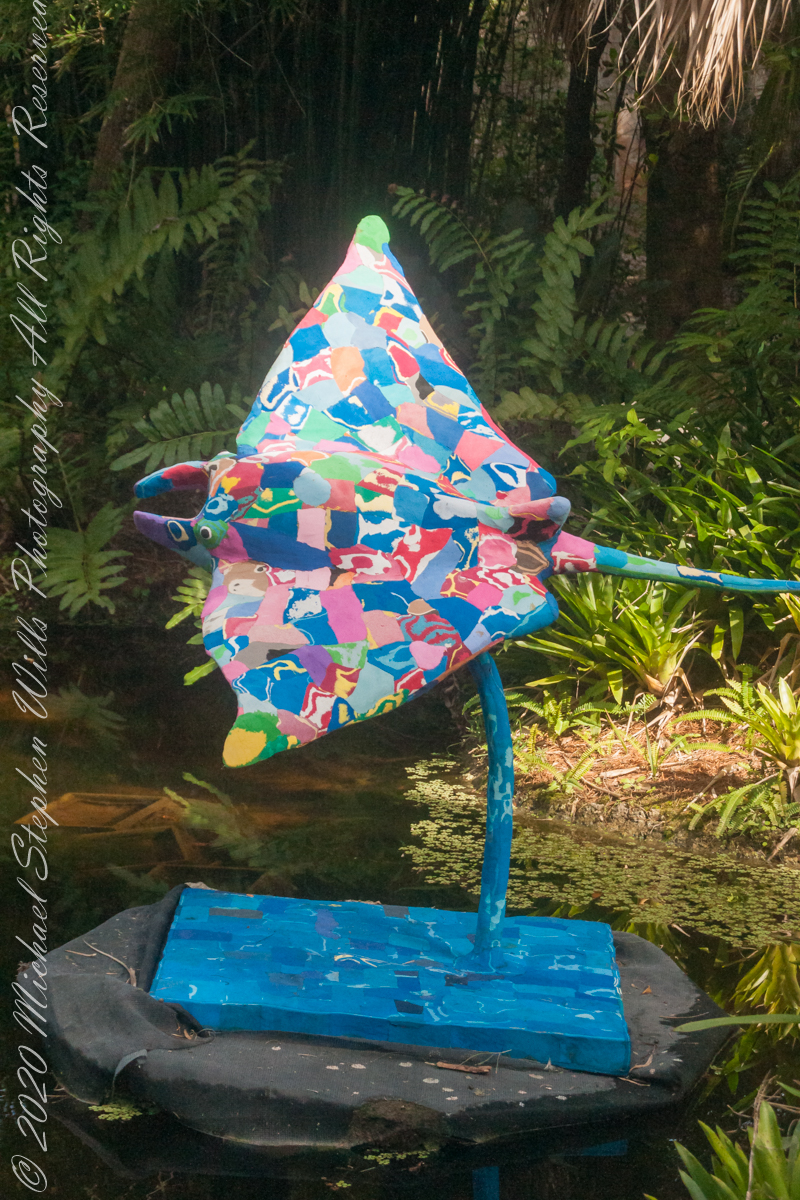
Manta Rays are large, flat-bodied fish having a width ranging from 18-23 feet (5-7 meters) wide. Mantas gracefully swoop during feeding, scooping up large quantities of plankton, 60 pounds (27 kilograms) per day, with the flat fins on either side of their head.
Here is the flowing movement of the manta
Mantas are known as “devilfish” because of their horn-shaped cephalic fins, which are imagined to give them an “evil” appearance. The movement of pectoral fins drive them through water, like birds flying through air.
All mantas are listed as vulnerable by the International Union for Conservation of Nature. Anthropogenic threats include pollution, entanglement in fishing nets, and direct harvesting of their gill rakers for use in Chinese medicine. Their slow reproductive rate exacerbates these threats. They are protected in international waters by the Convention on Migratory Species of Wild Animals, but are more vulnerable closer to shore. Areas where mantas congregate are popular with tourists. Only a few public aquariums are large enough to house Mantas.
Copyright 2022 Michael Stephen WillsAll Rights Reserved
Up to 150 recycled flip flops were used by Ocean Sole Africa Project artists to create these seahorse sculptures from a 2020 exhibit hosted by McKee Botanical Gardens, Vero Beach, Indian River County, Florida.
.
Seahorses are tiny fish with heads that look like…horses! Their curved flexible tail is used to grasp objects, mostly anchoring the seahorse to plants.
Their genus, Hippocampus, includes 46 species indicating evolutionary success for their body shape and adaptations. Just hatched seahorses cling together in groups, hook by their tails. Excellent at camouflage, a seahorse hides from predators while waiting to ambush dinner.
Copyright 2022 Michael Stephen WillsAll Rights Reserved
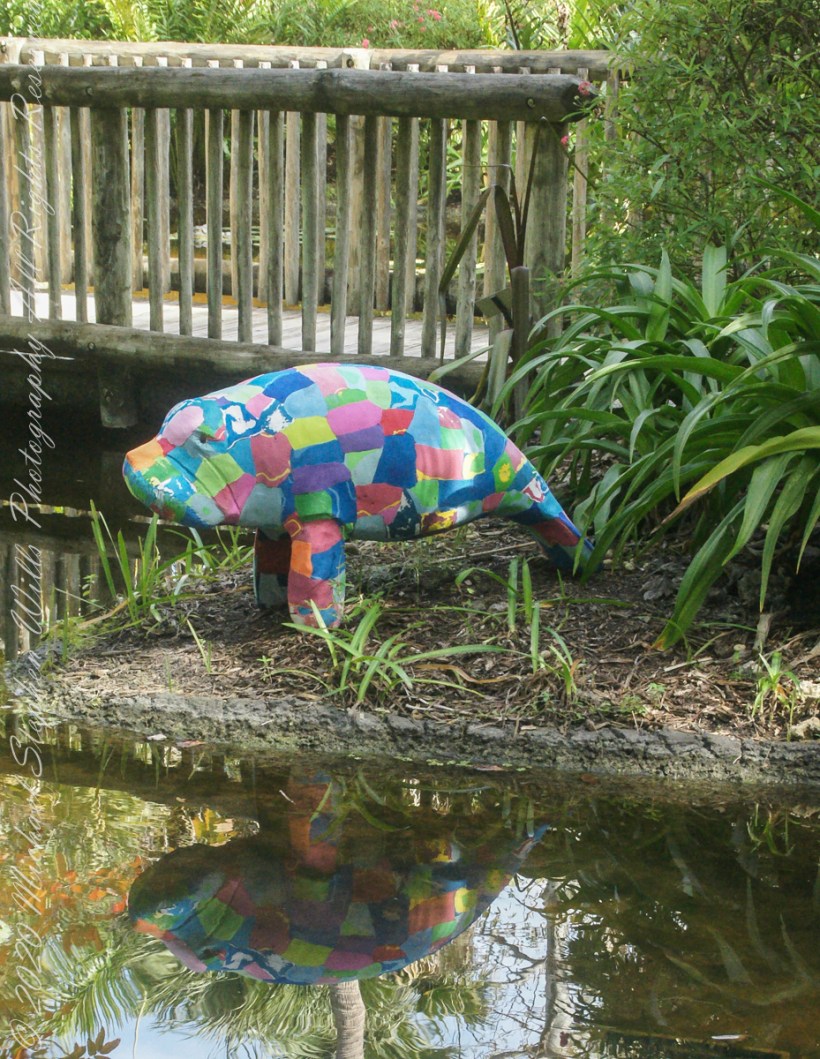
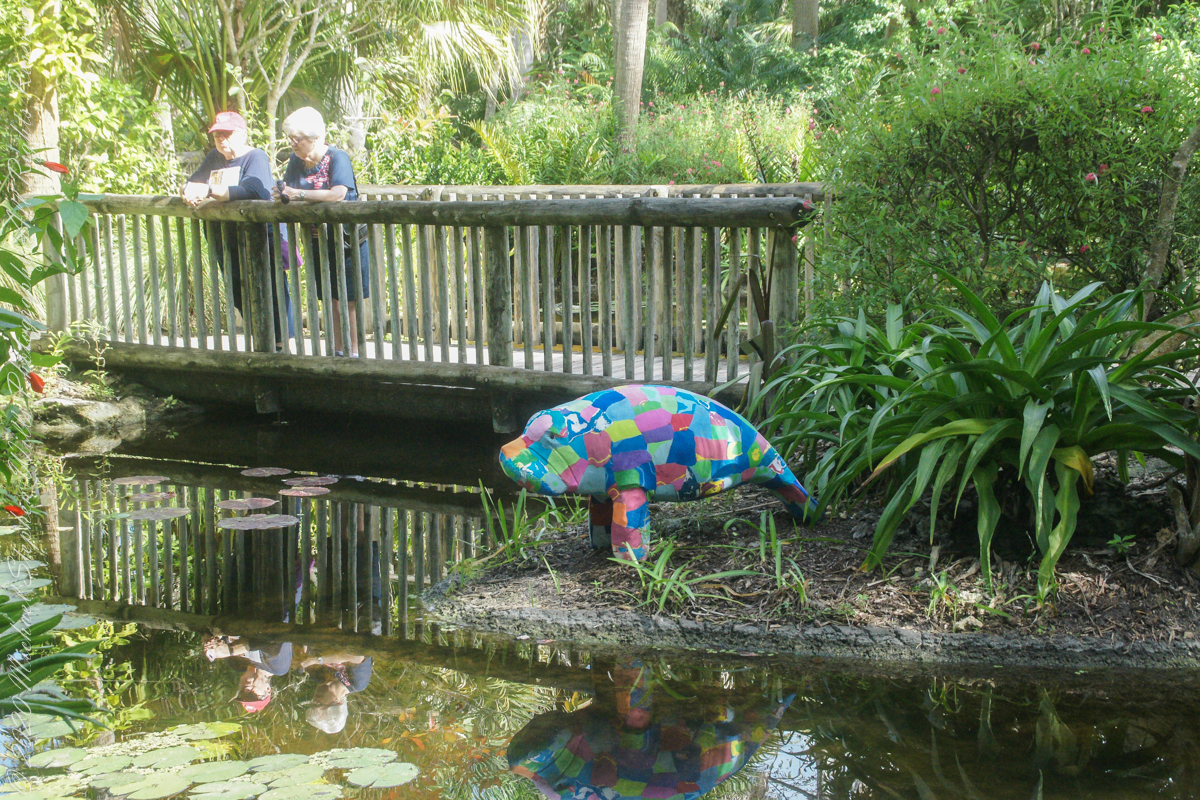
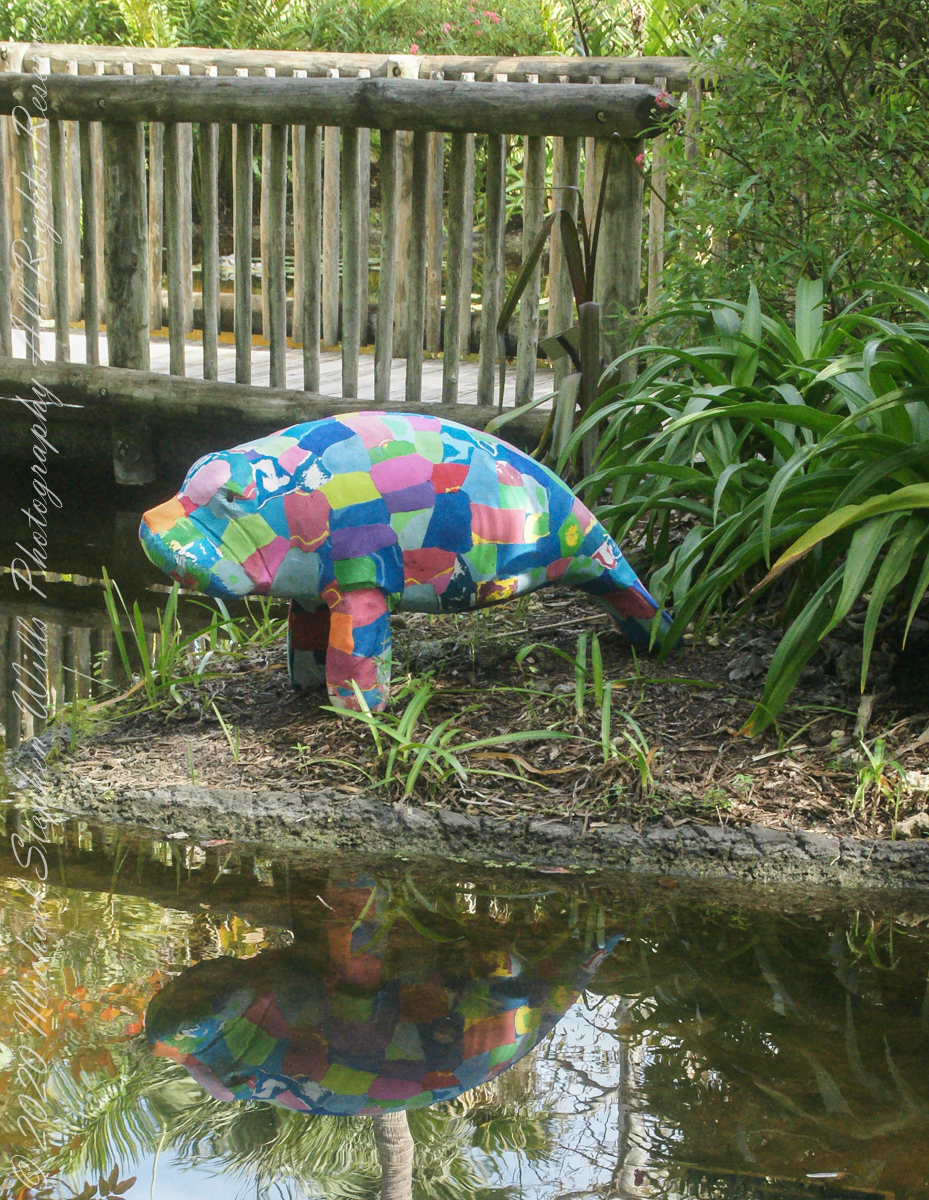
Up to 400 recycled flip flops were used by Ocean Sole Africa Project artists to create this Manatee sculpture from a 2020 exhibit hosted by McKee Botanical Gardens, Vero Beach, Indian River County, Florida.
Manatee with fans
Manatees are protected under the Endangered Species Act and under the Marine Mammal Protection Act. Today, the range-wide population is estimated to be at least 13,000 manatees, with more than 6,500 in the southeastern United States and Puerto Rico.
Florida has cherished the Sea Cow with the population increasing 25% from 1991, going from 1,267 to more than 6,300.
Copyright 2022 Michael Stephen WillsAll Rights Reserved
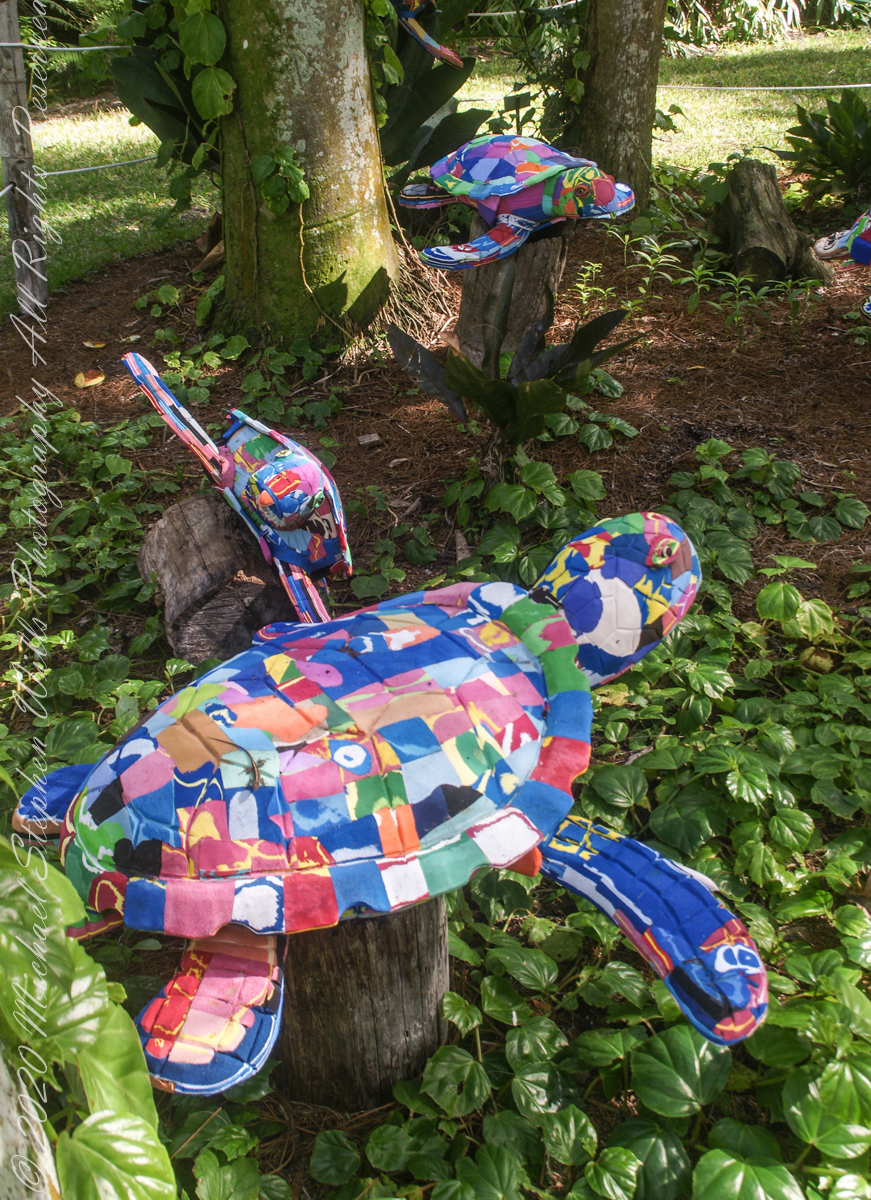
Up to 400 recycled flip flops were used by Ocean Sole Africa Project artists to create each sea turtle sculpture from a 2019 exhibit hosted by McKee Botanical Gardens, Vero Beach, Indian River County, Florida.
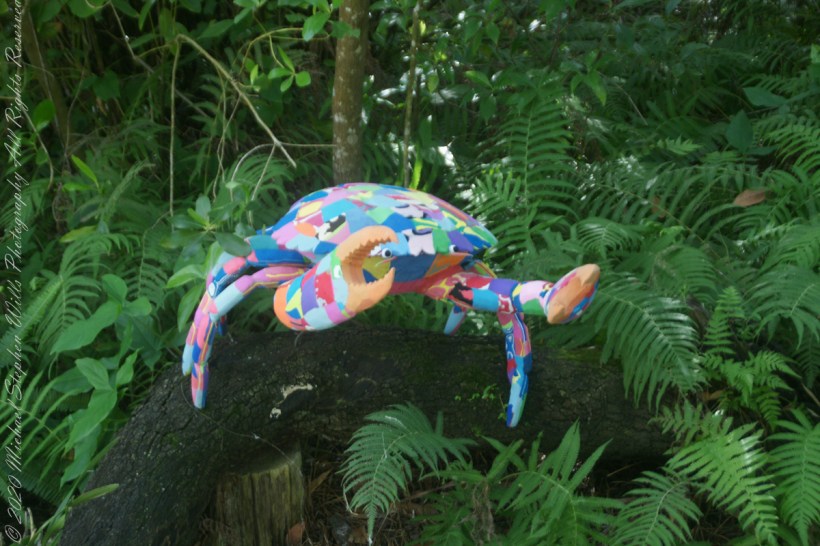
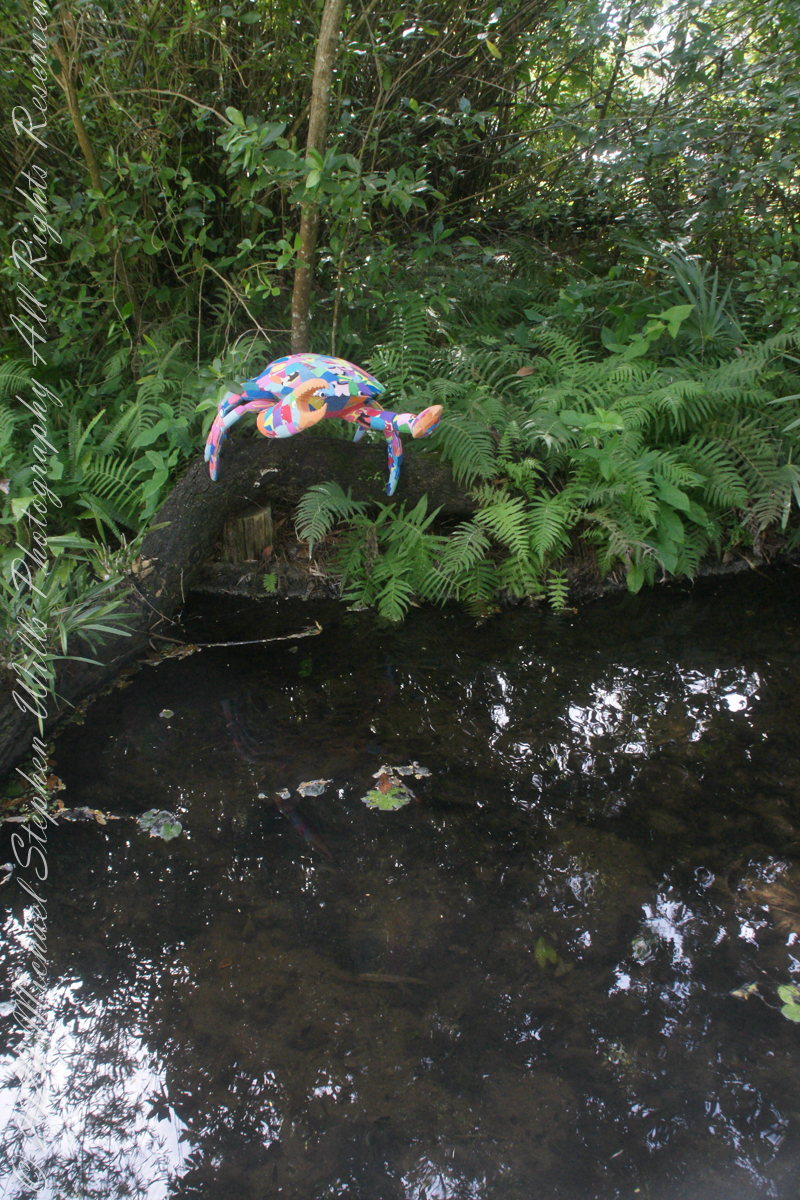
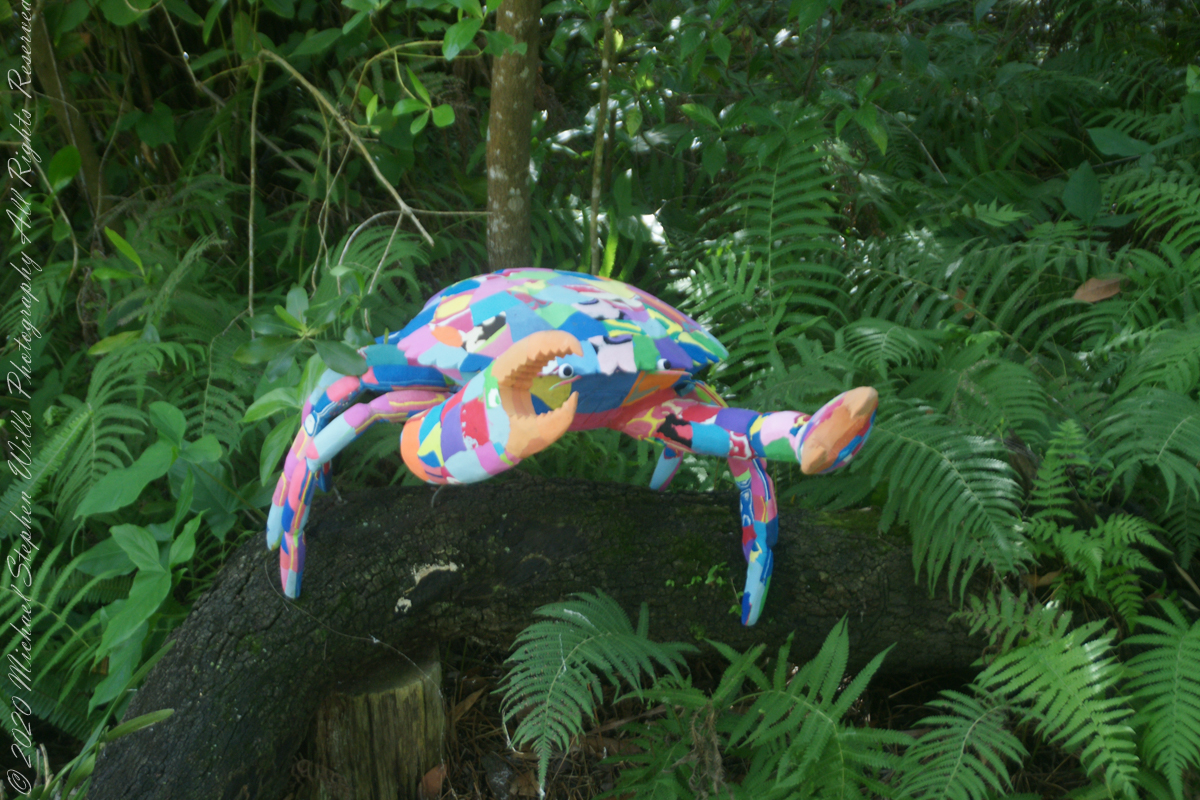
Blue land crabs inhabit McKee Gardens, only resembling these specimens, made from as many as 400 discarded flip flops, in having ten legs for which the Order Decapoda is named. The front two legs are specialized chelae (claws) for grabbing and eating whatever is in front of them (omnivorous). Two other characteristics are eyes on stalks and an exoskeleton composed of chitin. From an exhibit of creations by the Ocean Sole Africa project, McKee Botanical Gardens, Vero Beach, Indian River County, Florida.
Blue land crabs inhabit McKee Gardens, only resembling these specimens, made from as many as 400 discarded flip flops, in having ten legs for which the Order Decapoda is named.
The front two legs are specialized chelae (claws) for grabbing and eating whatever is in front of them (omnivorous). Two other characteristics are eyes on stalks and an exoskeleton composed of chitin.
Copyright 2022 Michael Stephen WillsAll Rights Reserved
Light pollution from beach development is a threat to baby sea turtles; the glow from city sources can cause them to head into traffic instead of the ocean.
450 recycled flip flops were used by Ocean Sole Africa Project artists to create each sea turtle sculpture from a 2019 exhibit hosted by McKee Botanical Gardens, Vero Beach, Indian River County, Florida.
Sea turtles (superfamily Chelonioidea), sometimes called marine turtles, are reptiles of the order Testudines and of the suborder Cryptodira. Sea turtles can be found in all oceans except for the polar regions. Sea turtles are generally found in the waters over continental shelves.
During the first three to five years of life, sea turtles spend most of their time in the pelagic zone floating in seaweed mats. Once the sea turtle has reached adulthood it moves closer to the shore. Females will come ashore to lay their eggs on sandy beaches during the nesting season. Sea turtles migrate to reach their spawning beaches, which are limited in numbers. Living in the ocean therefore means they usually migrate over large distances.
All sea turtles have large body sizes, which is helpful for moving large distances. Large body sizes also offer good protection against the large predators (notably sharks) found in the ocean. Light pollution from beach development is a threat to baby sea turtles; the glow from city sources can cause them to head into traffic instead of the ocean. There has been some movement to protect these areas. On the east coast of Florida, parts of the beach known to harbor sea turtle nests are protected by fences.
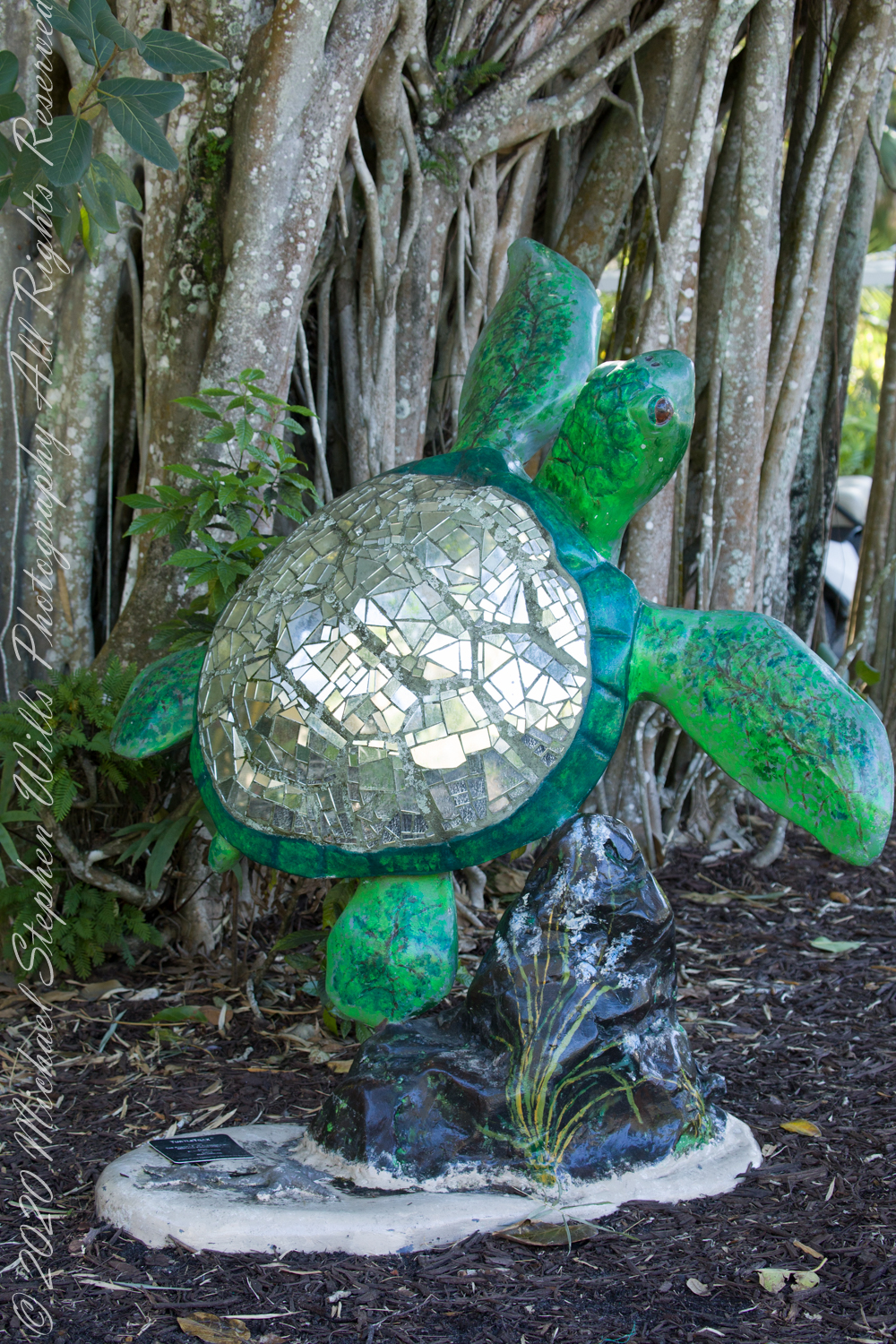
This Sea Turtle sculpture graces the entrance of McKee Gardens as a permanent exhibit.
Conservationists have monitored hatchings, relocating lost baby sea turtles to the beach. Hatchlings find their way to the ocean by crawling towards the brightest horizon and can become disoriented along the coastline. Lighting restrictions can prevent lights from shining on the beach and confusing hatchlings. Sea turtle-safe lighting uses red or amber LED light, invisible to sea turtles, in place of white light.
Copyright 2022 Michael Stephen WillsAll Rights Reserved
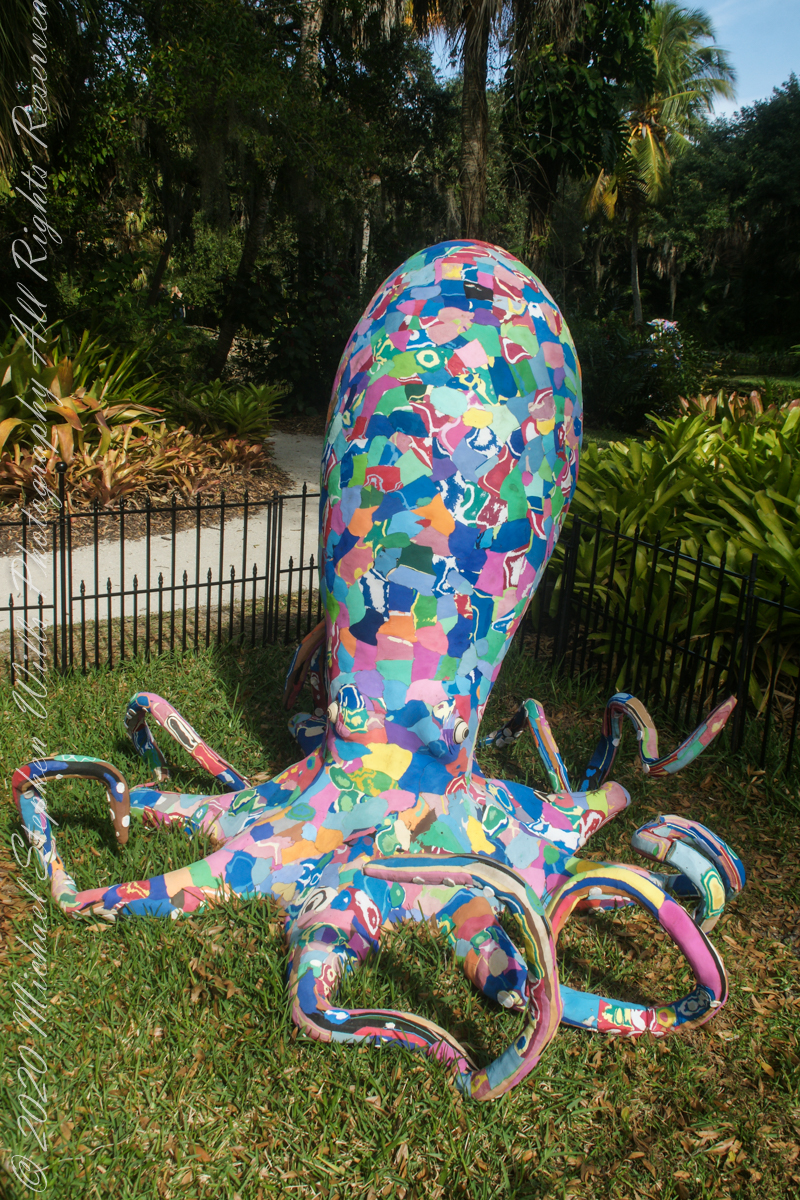
This common octopus (Octopus vulgaris) specimen was created by artists of Ocean Sole Africa. 890 recycled flip flops were used in this sculpture. from a 2019 exhibit hosted by McKee Botanical Gardens, Vero Beach, Indian River County, Florida.
Octopuses are adaptable and intelligent 8-limbed creatures known live in and around ocean reefs, deep ocean and intertidal zones. Invertebrate, without a skeleton an octopus can hide in tight spaces. Maneuvering and hunting, each tentacle is lined with suckers that grab rocks and prey. Existing solely on meat, these carnivores prey on crabs and shellfish, finding them with sharp binocular eyesight and devouring with a sharp parrot-like beak. Their defenses include camouflage, changing skin color to made surroundings, ejection of thick black ink to distract a predator and escape. A last line of defense is sacrificing an arm that can grow back over time. These blue-blooded aristocrats have three hearts!
Copyright 2022 Michael Stephen WillsAll Rights Reserved
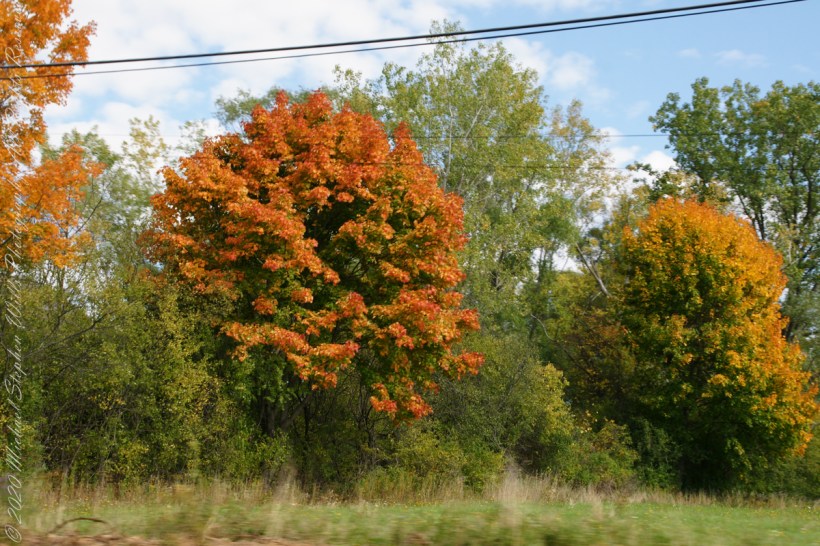
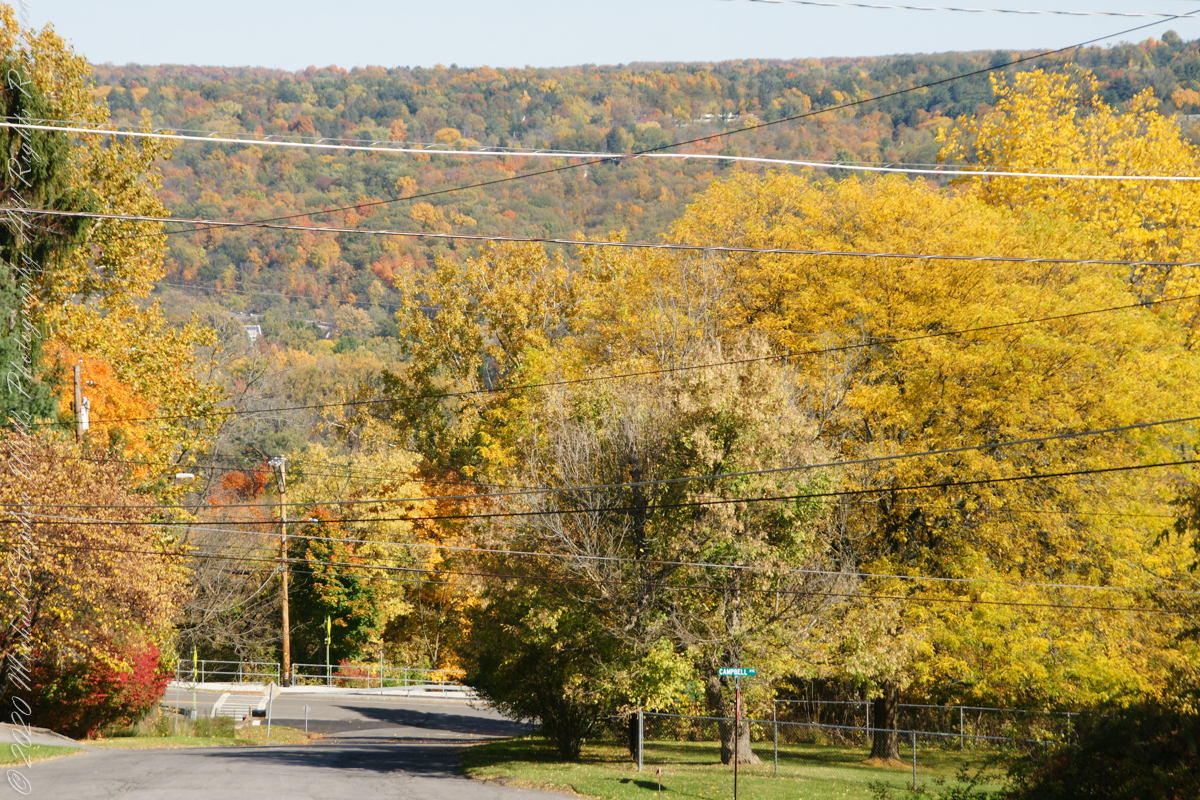
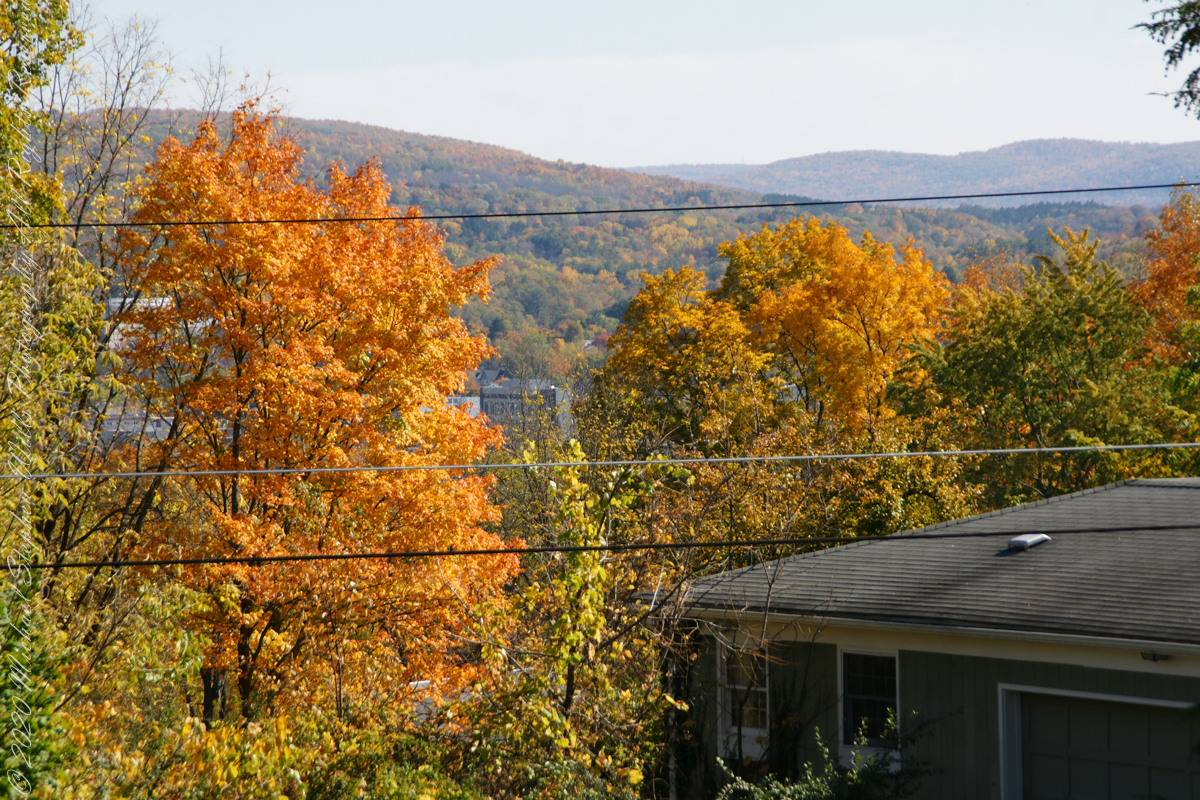
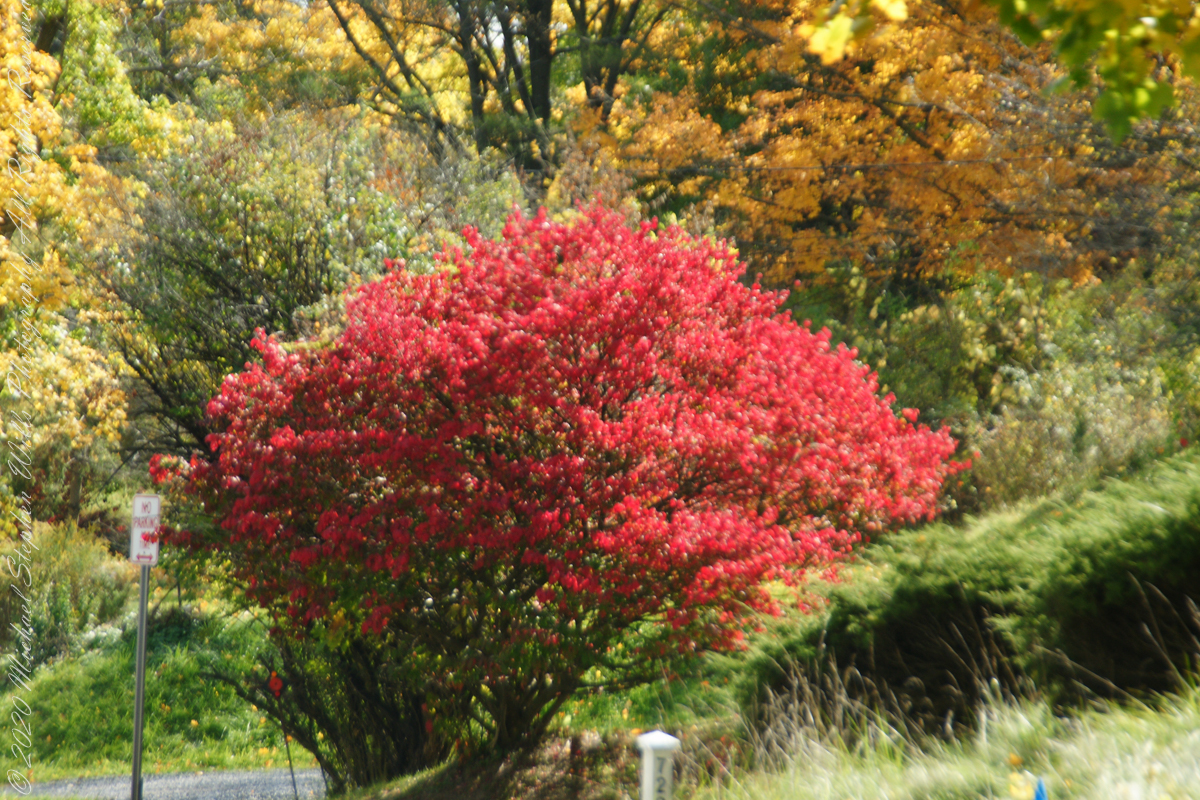
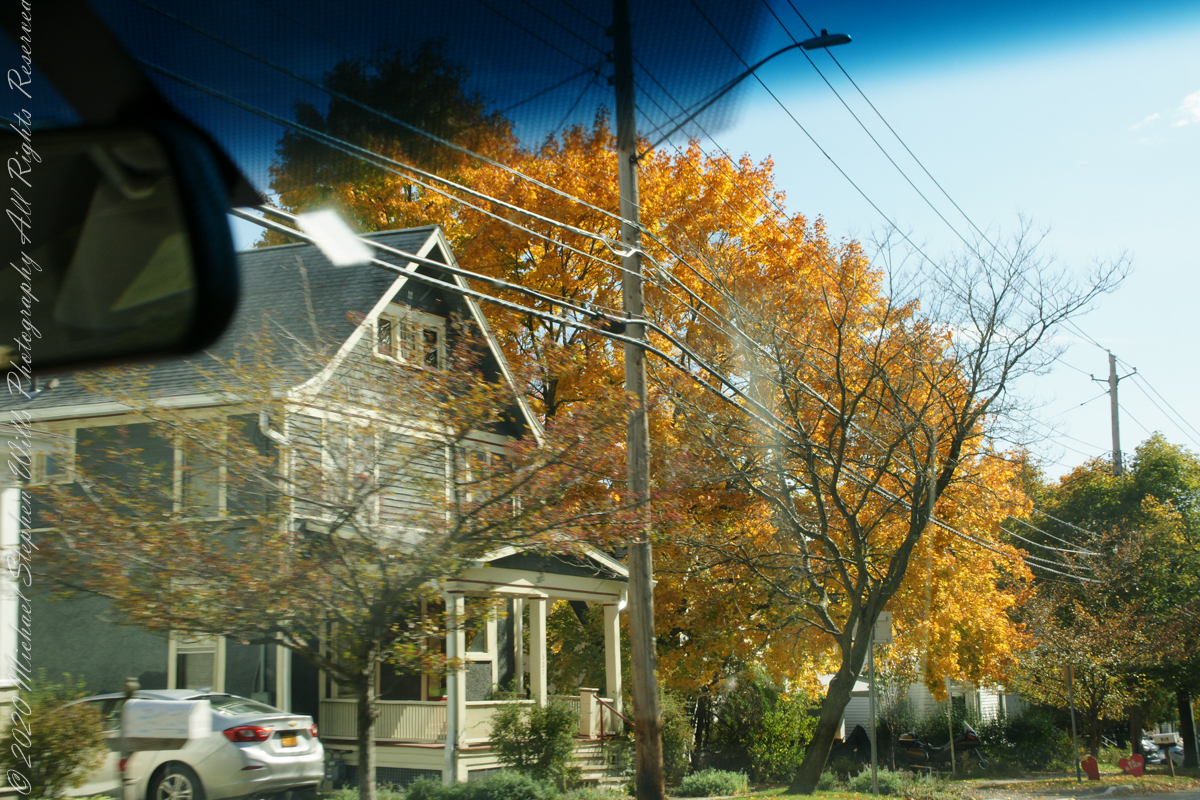
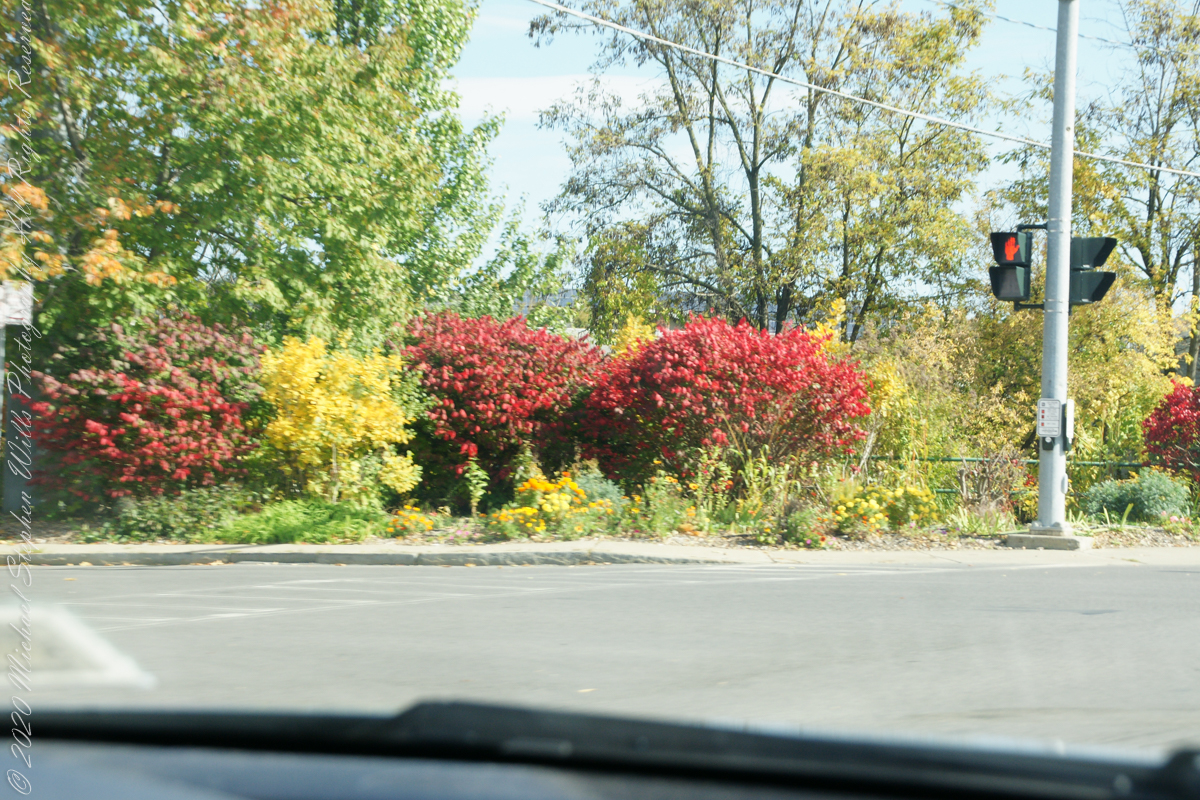
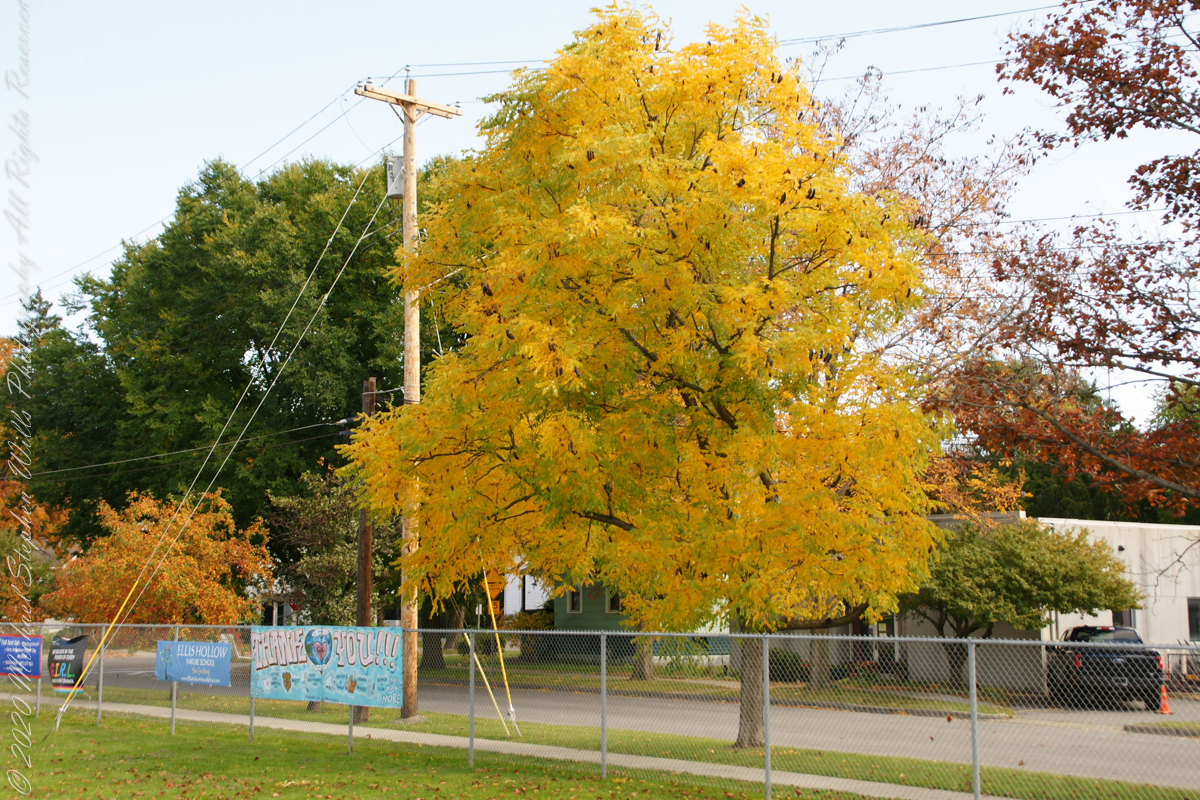
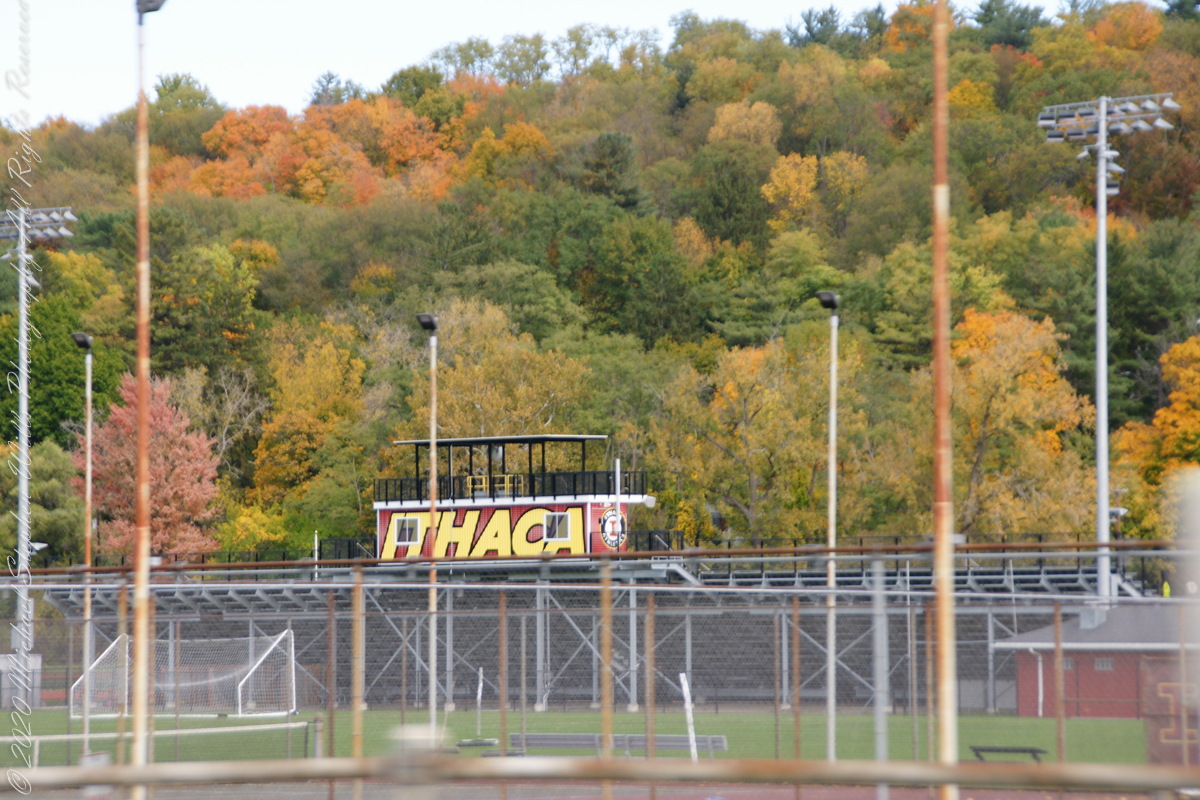
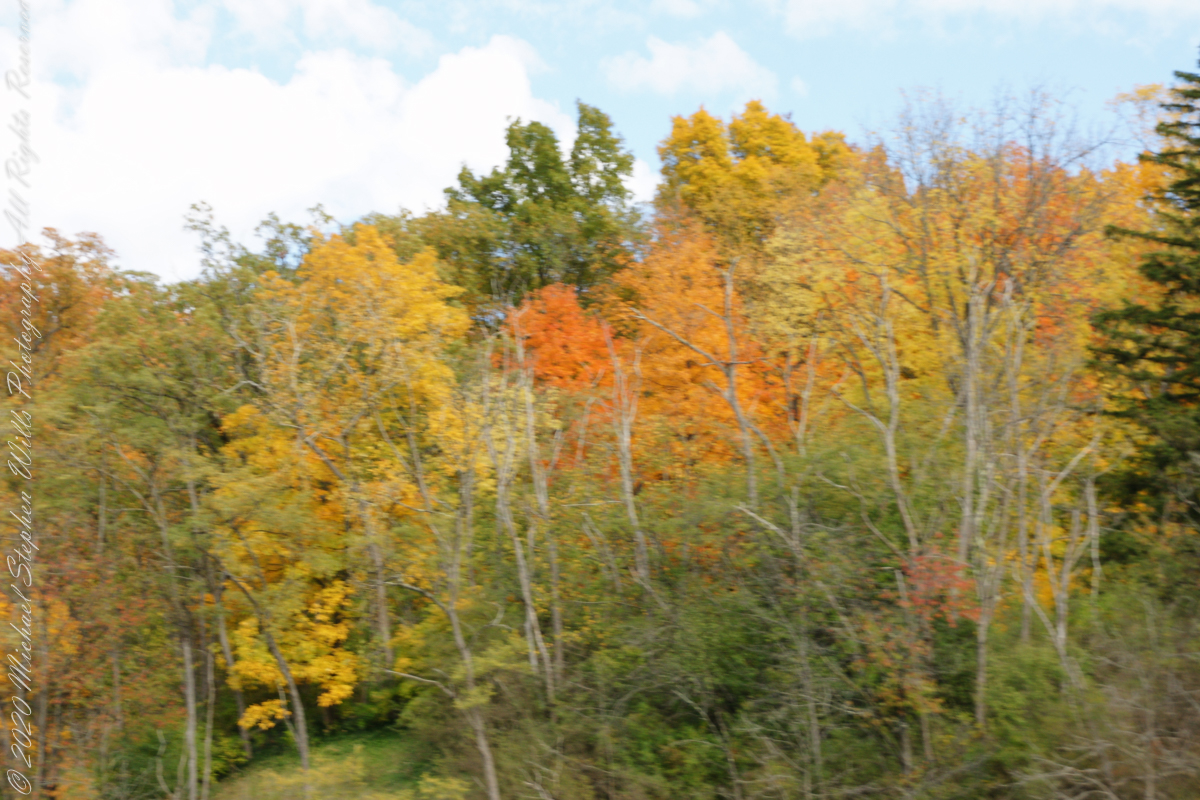
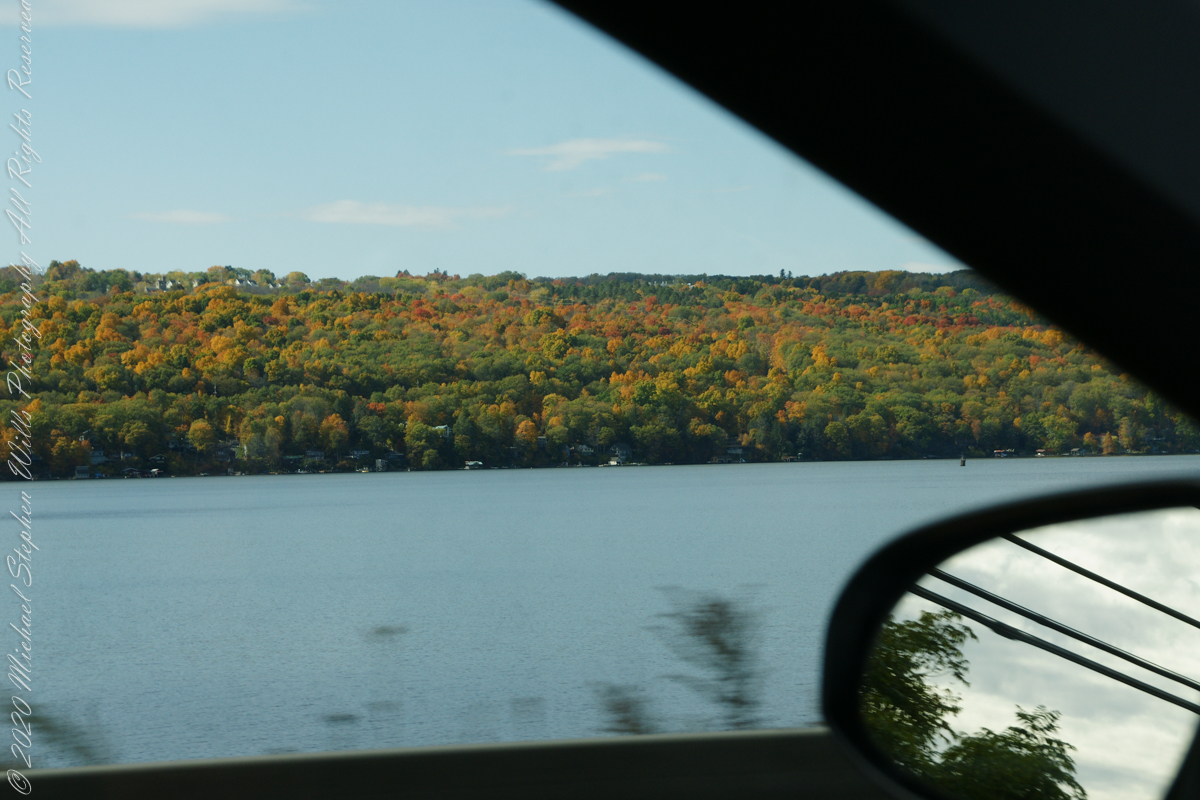
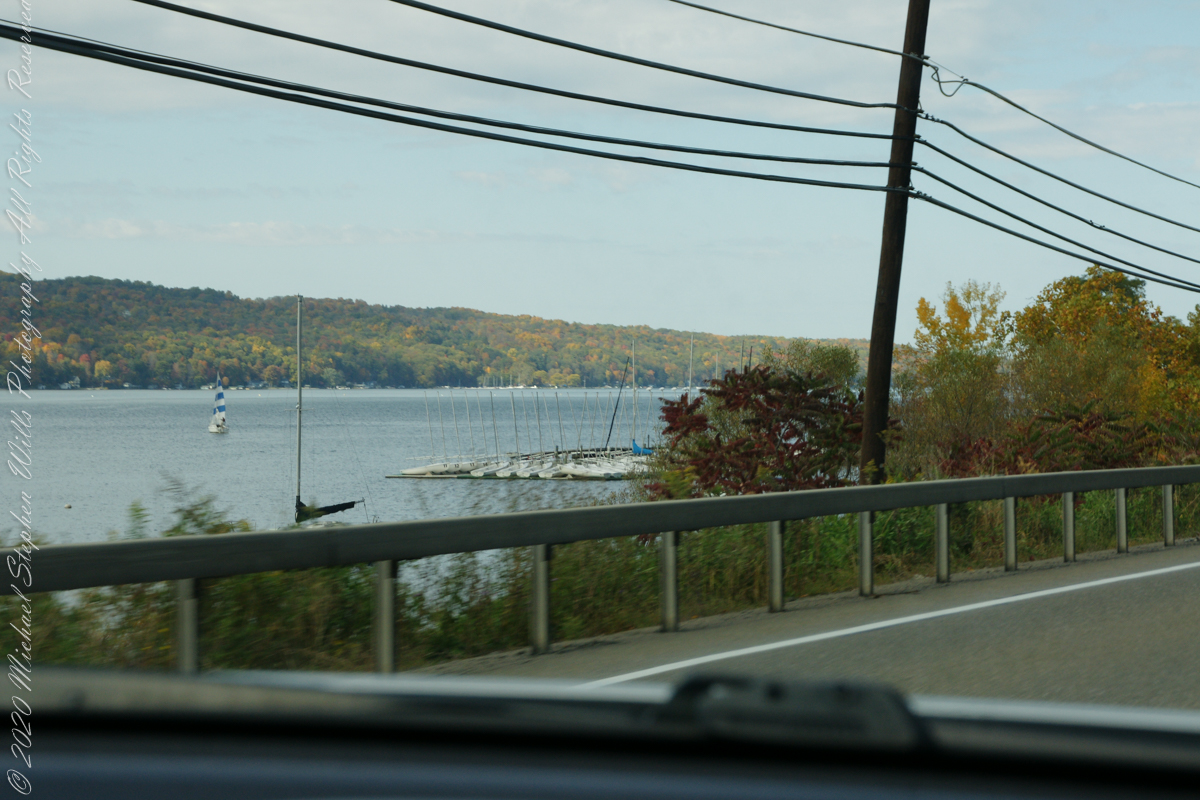
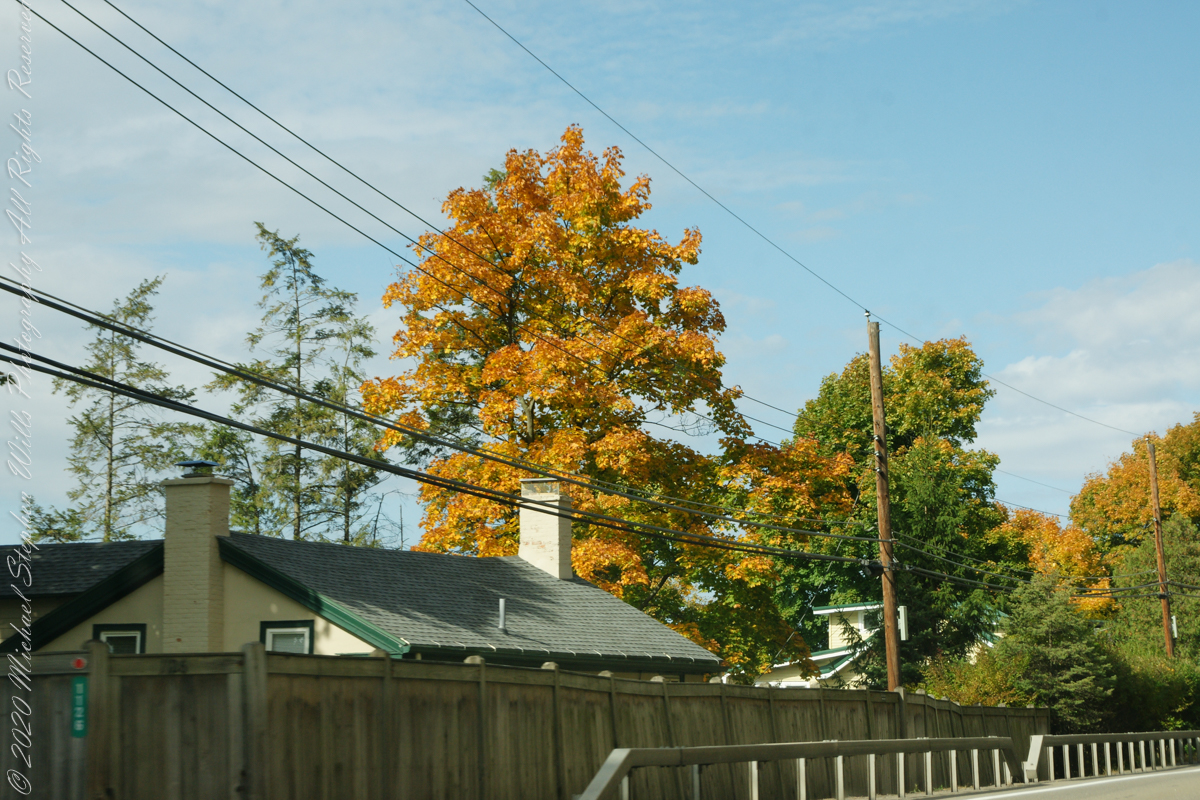
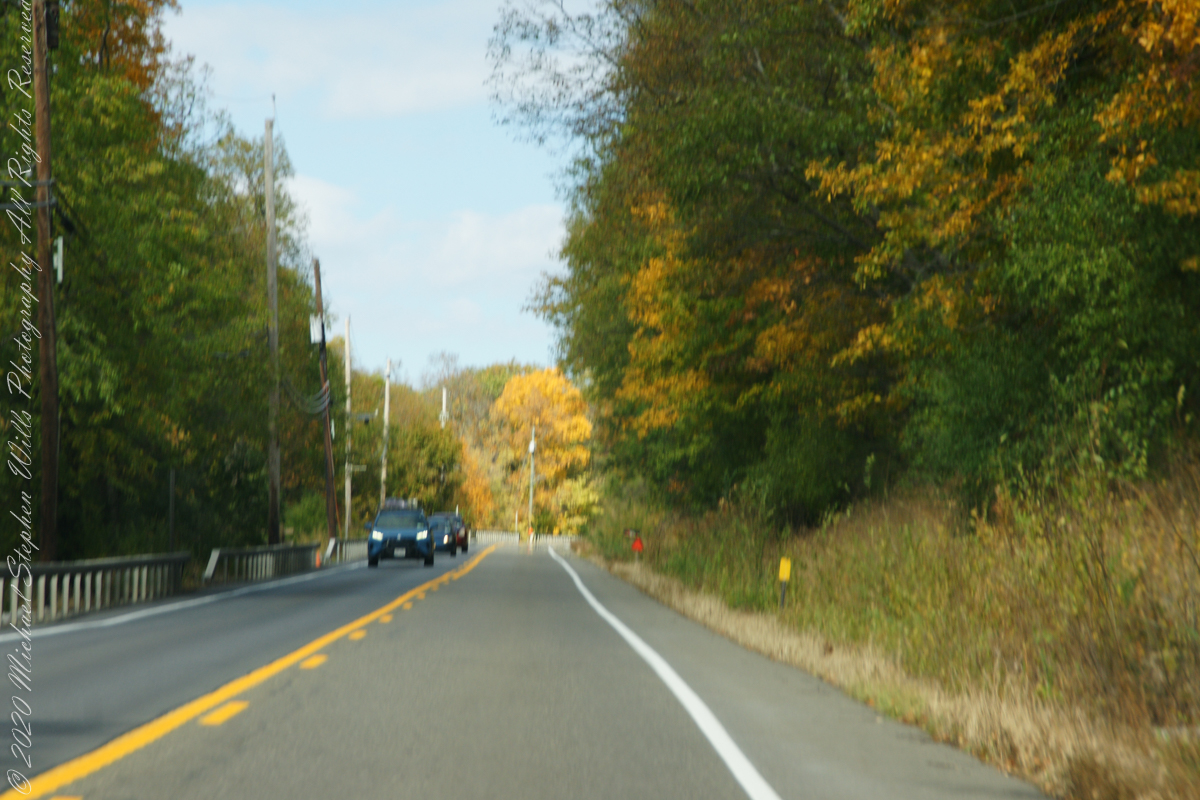
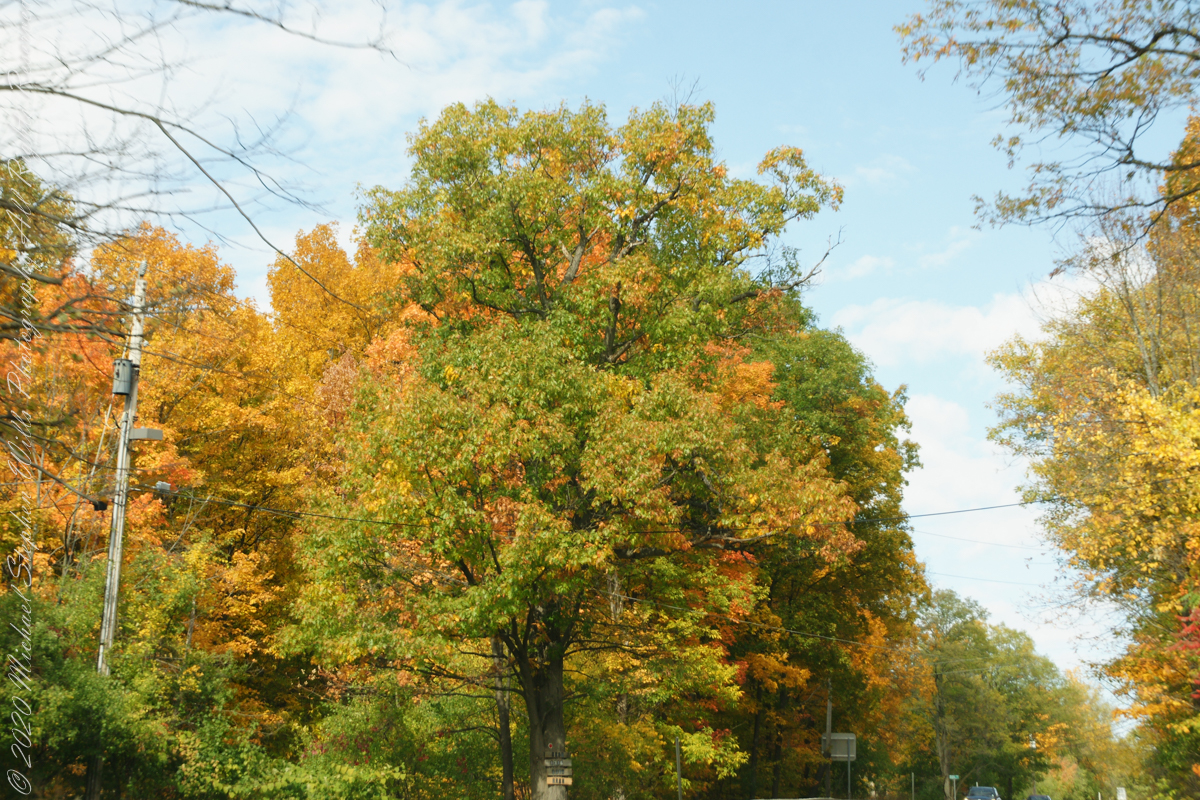
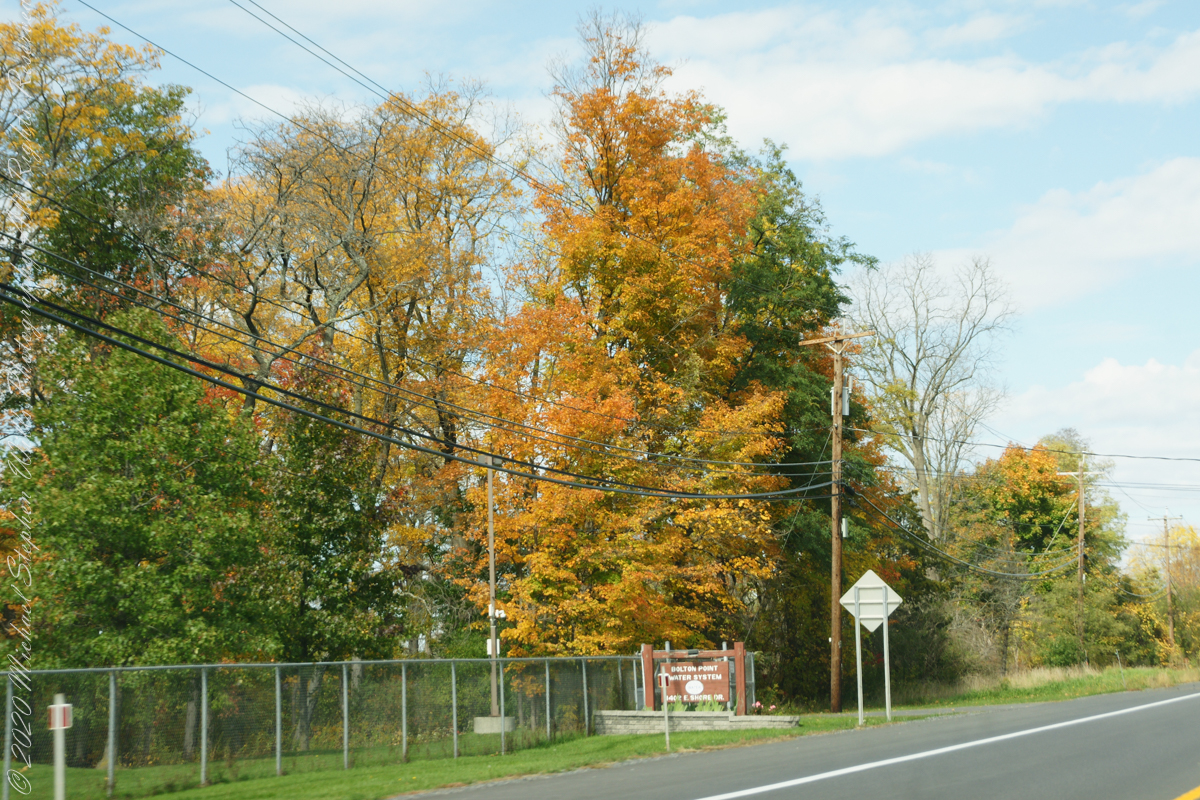
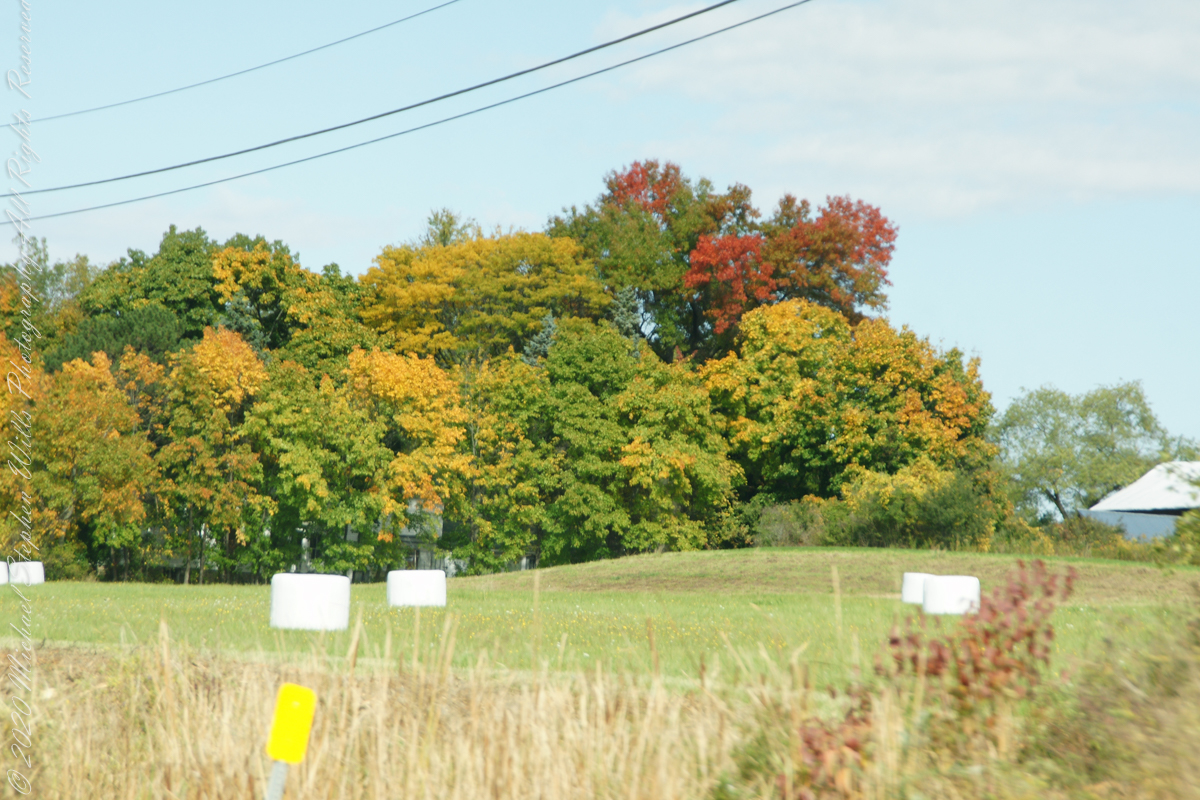
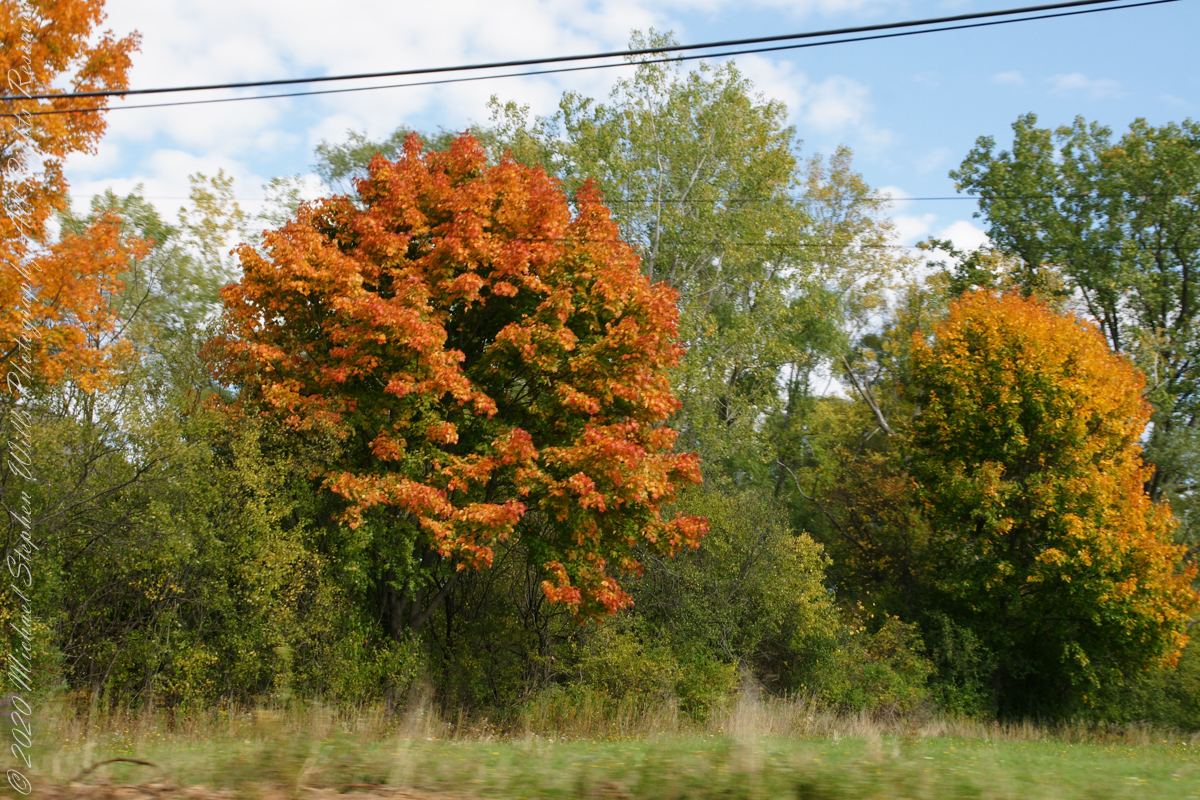
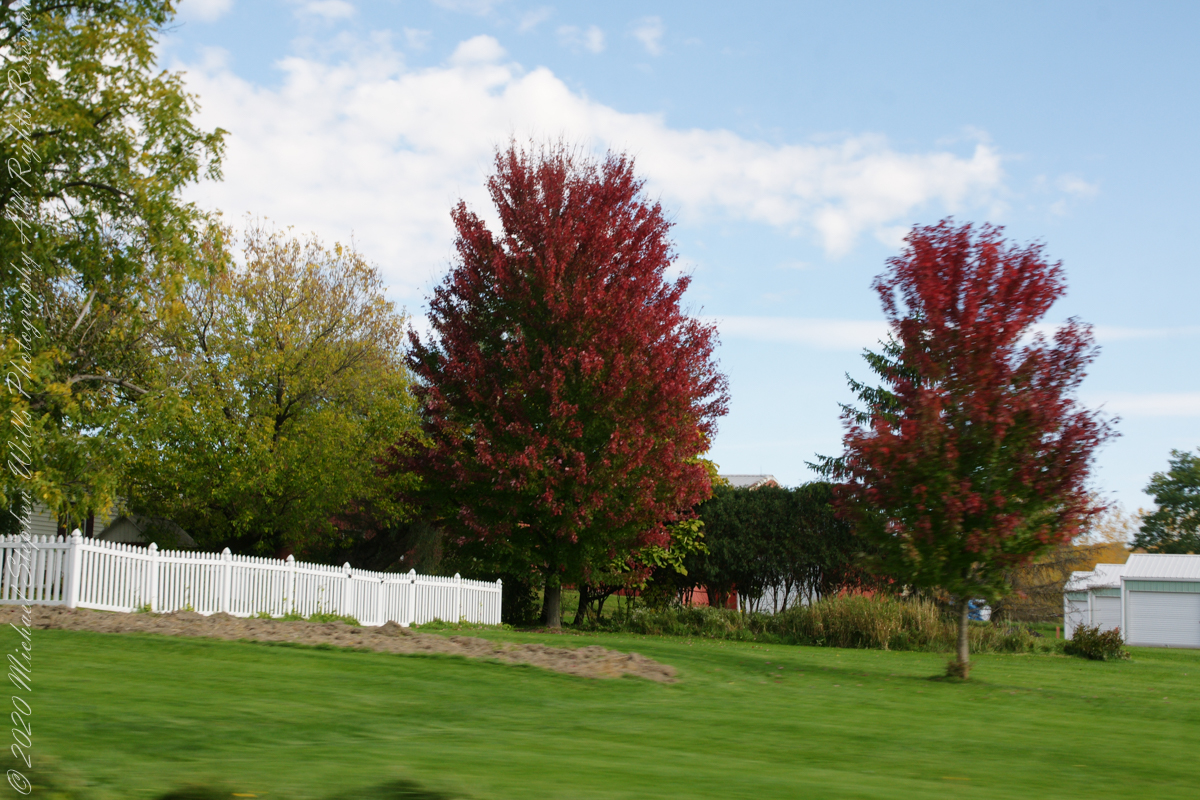
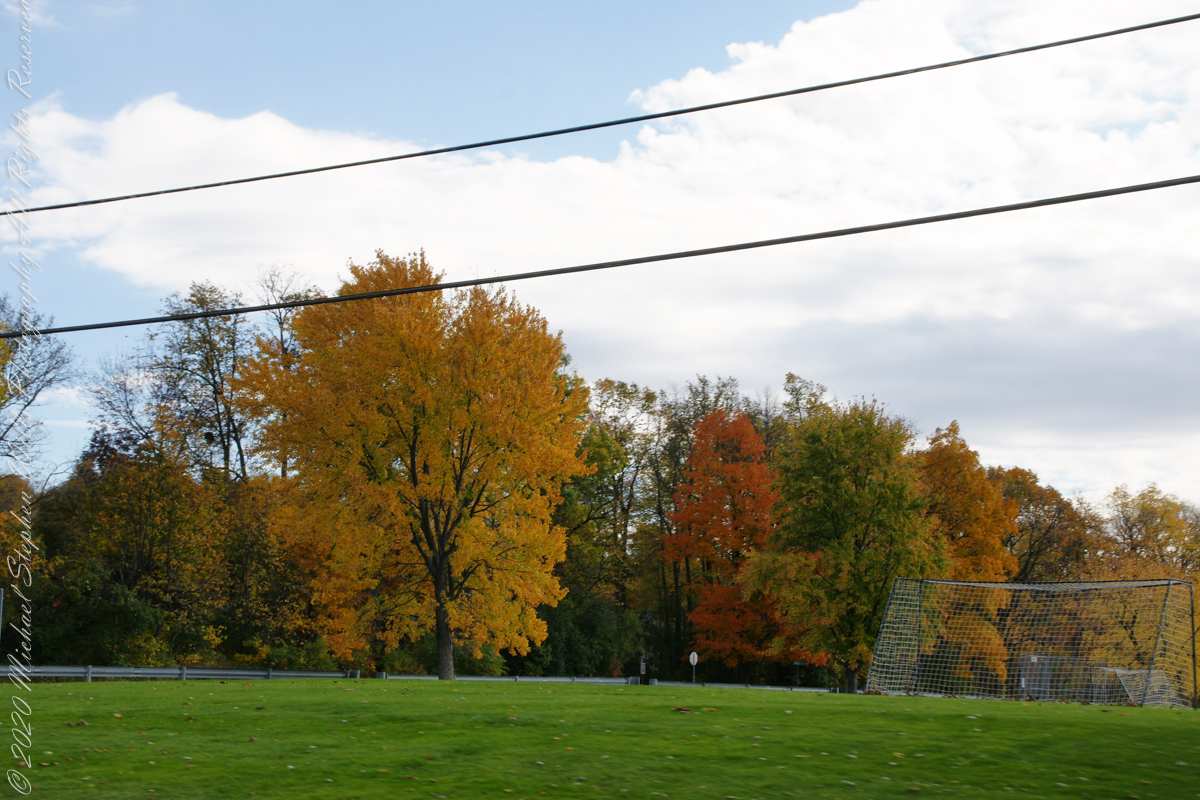
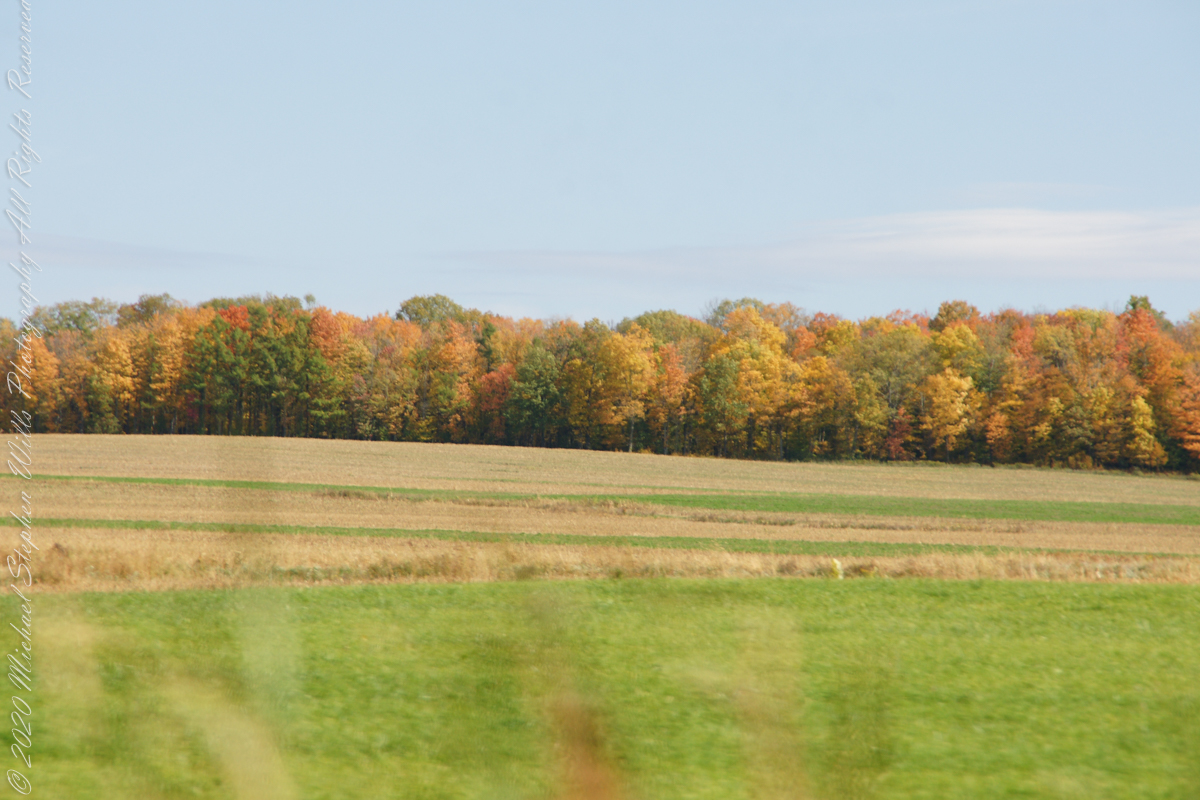
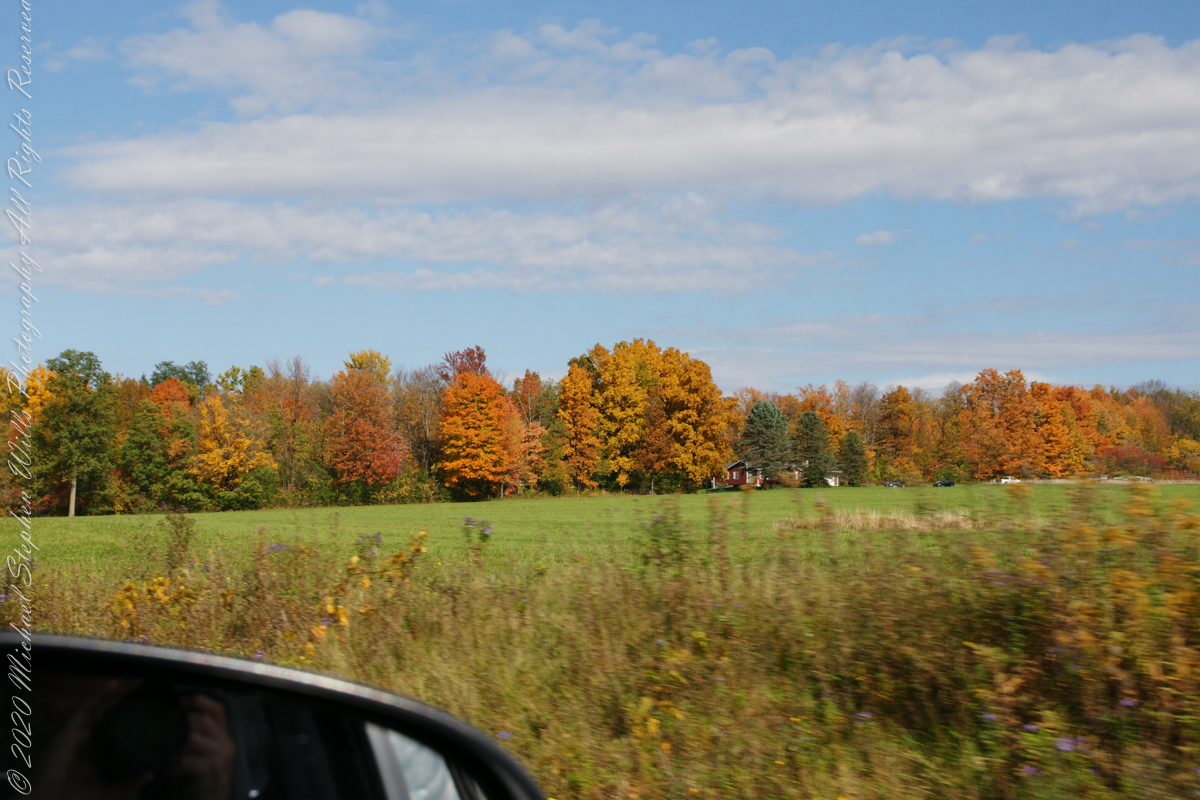
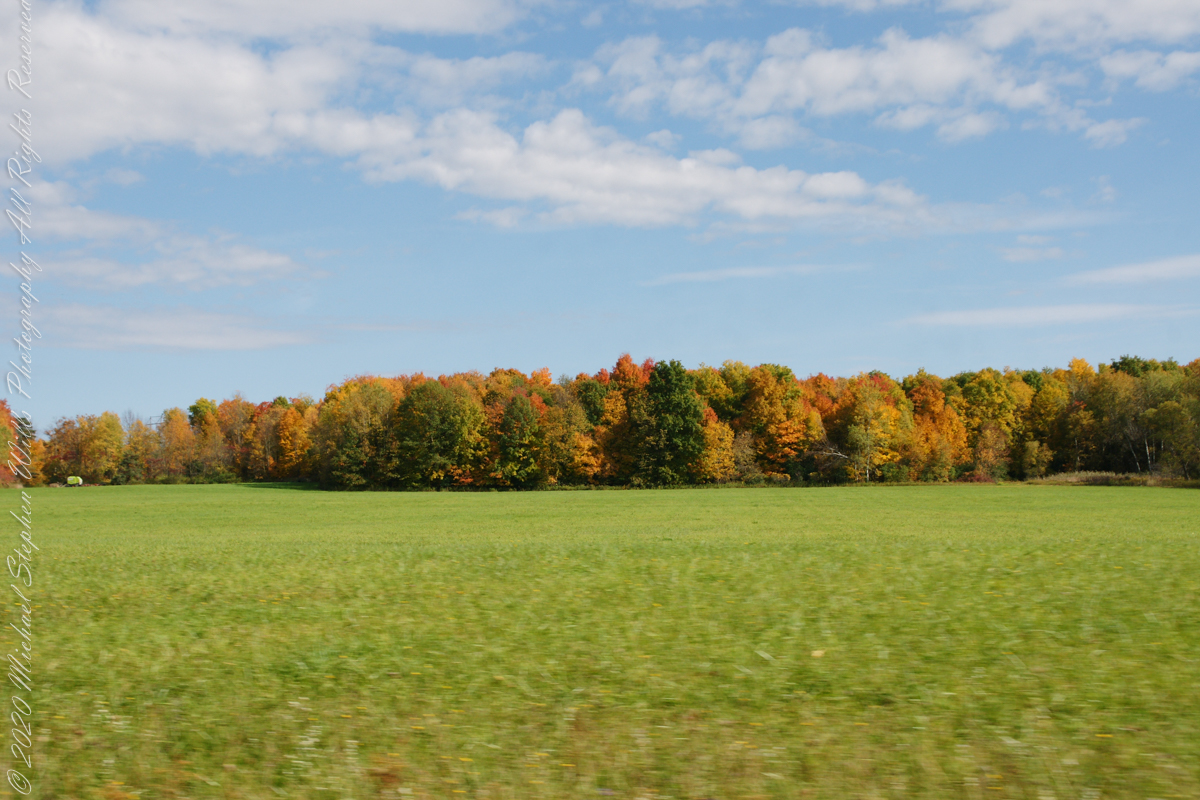
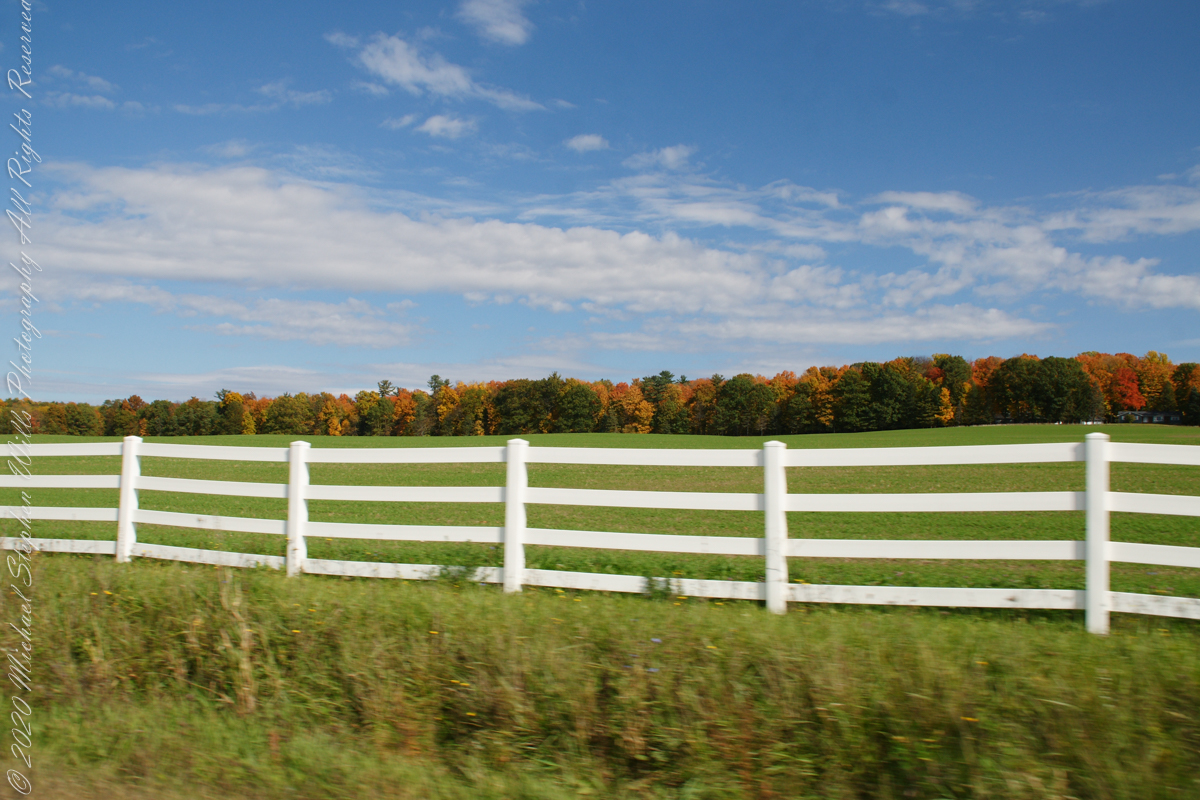
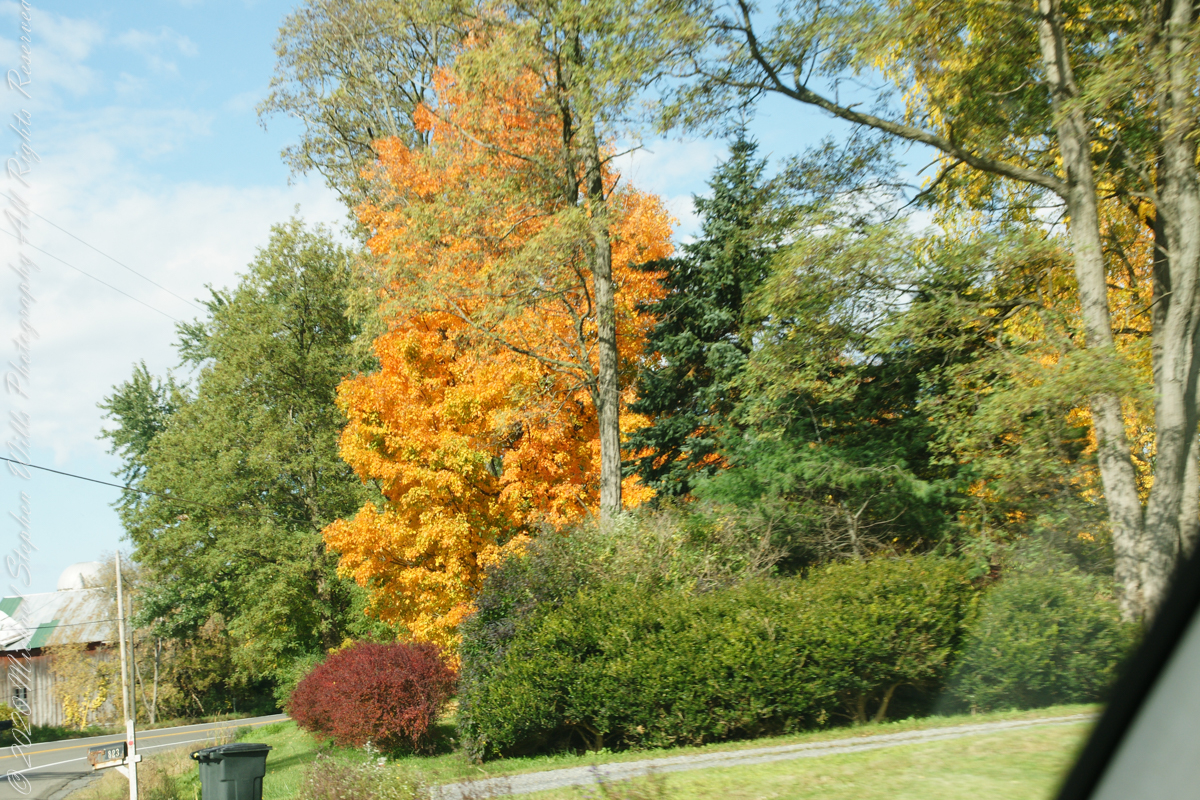
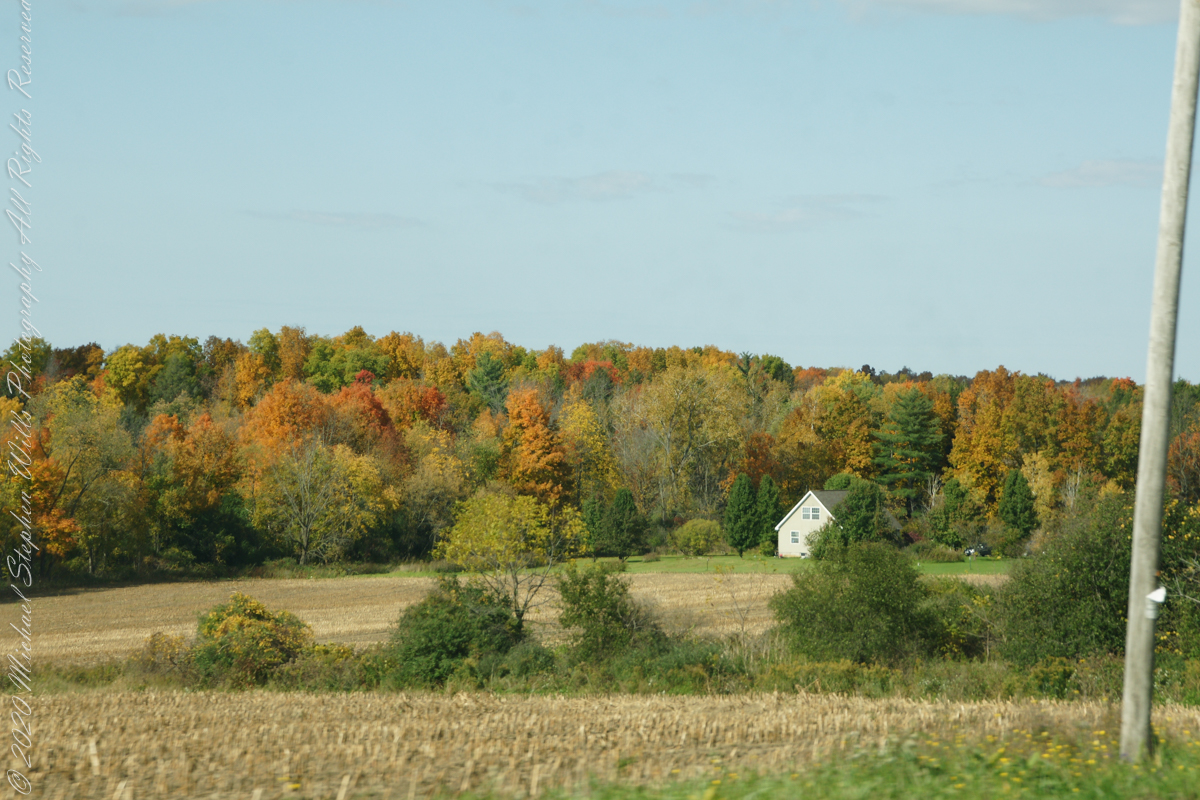
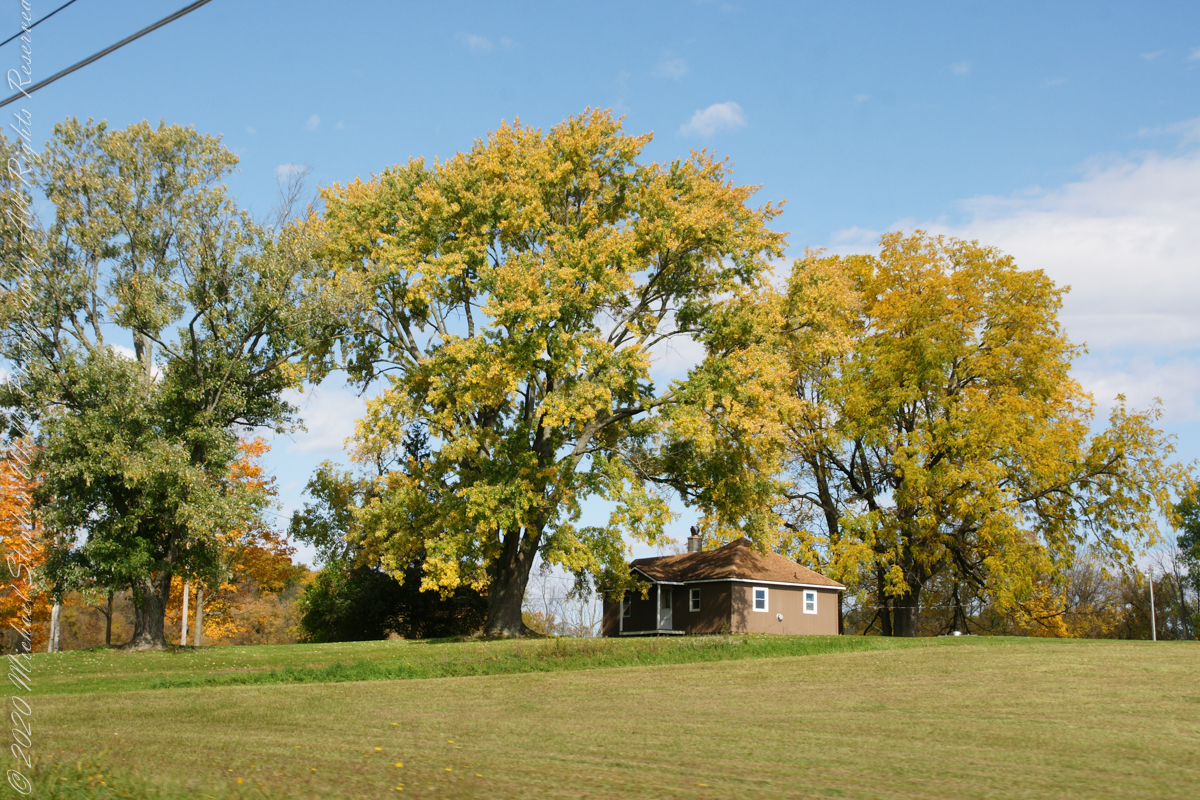
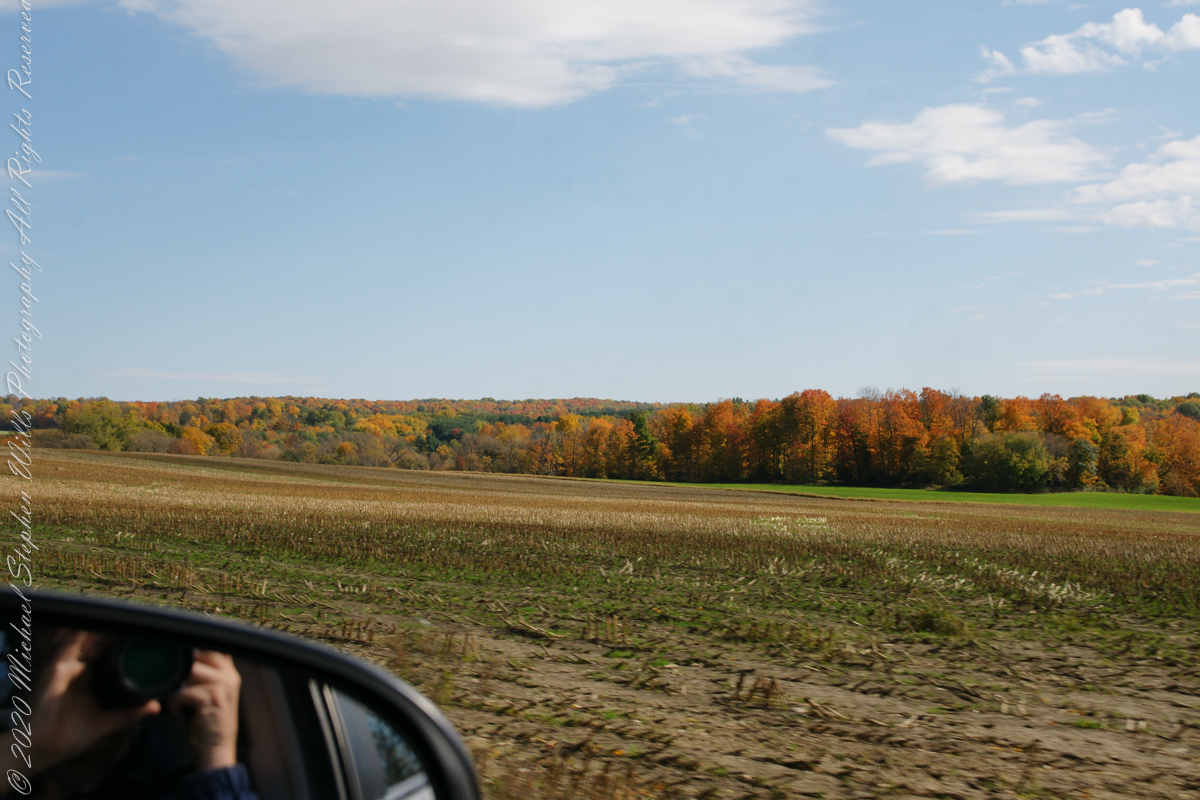
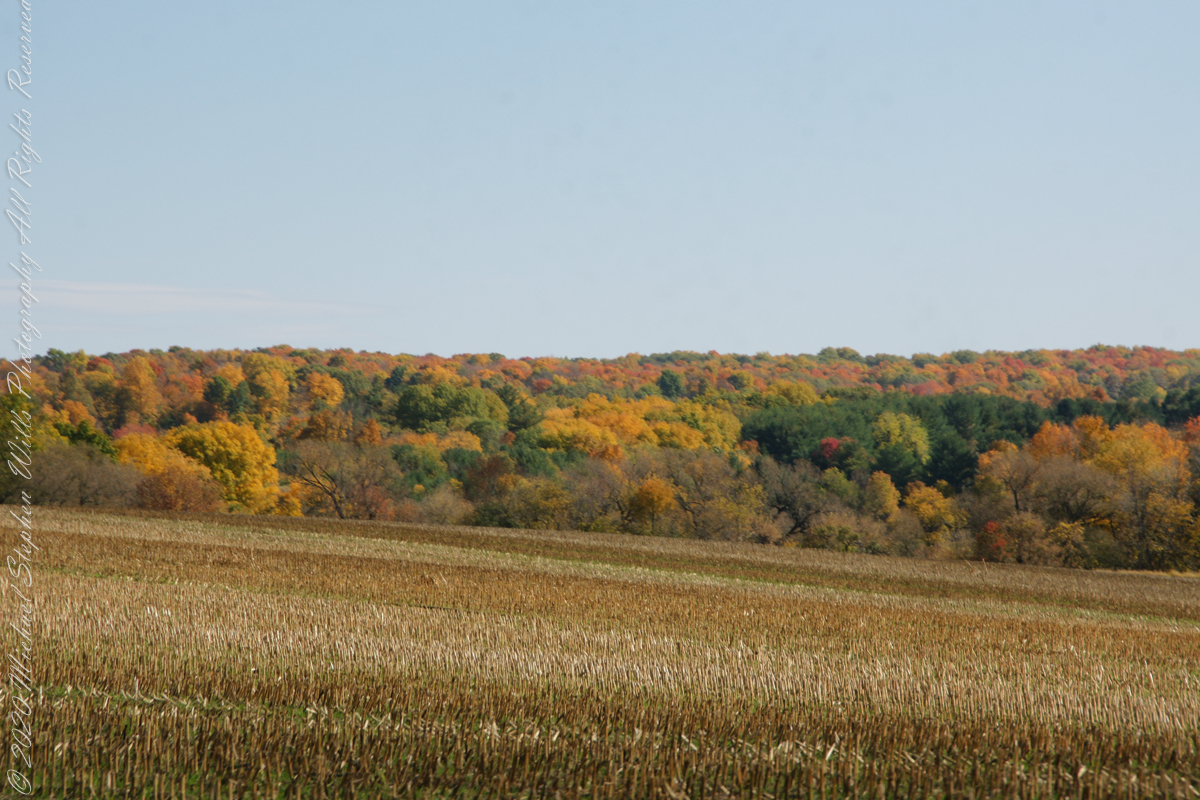
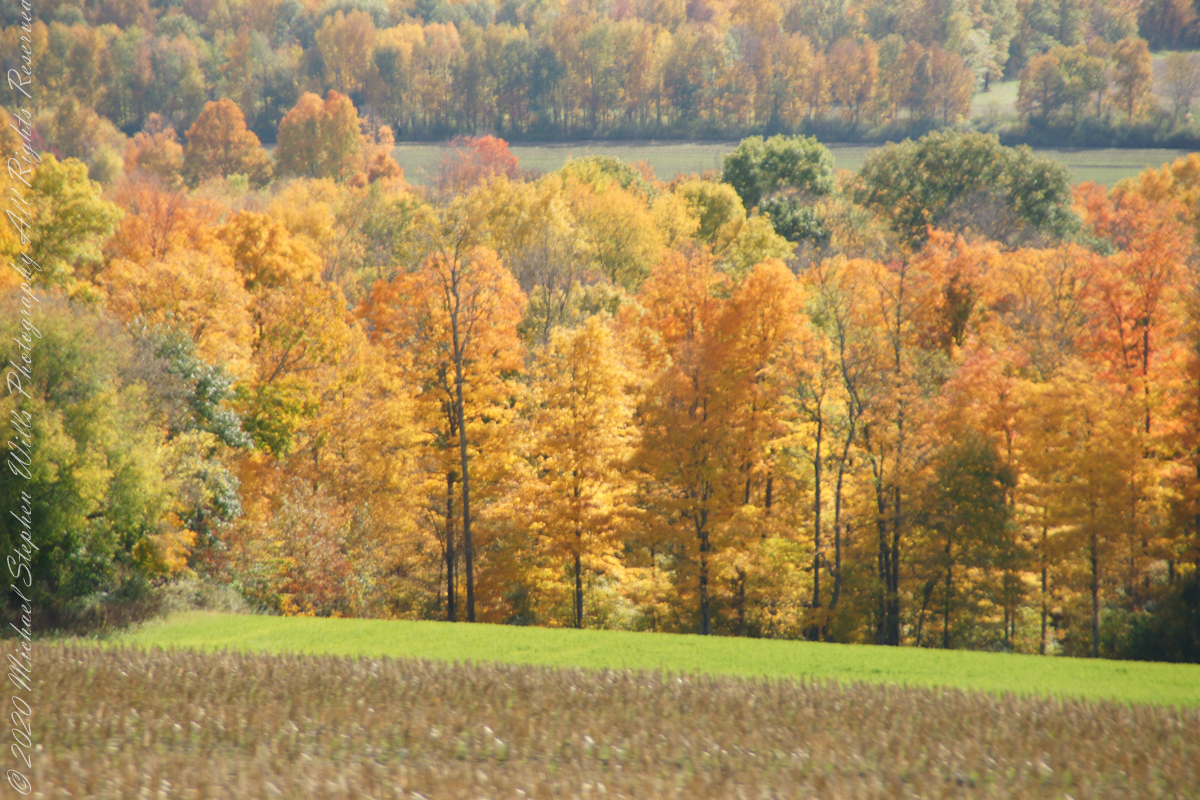
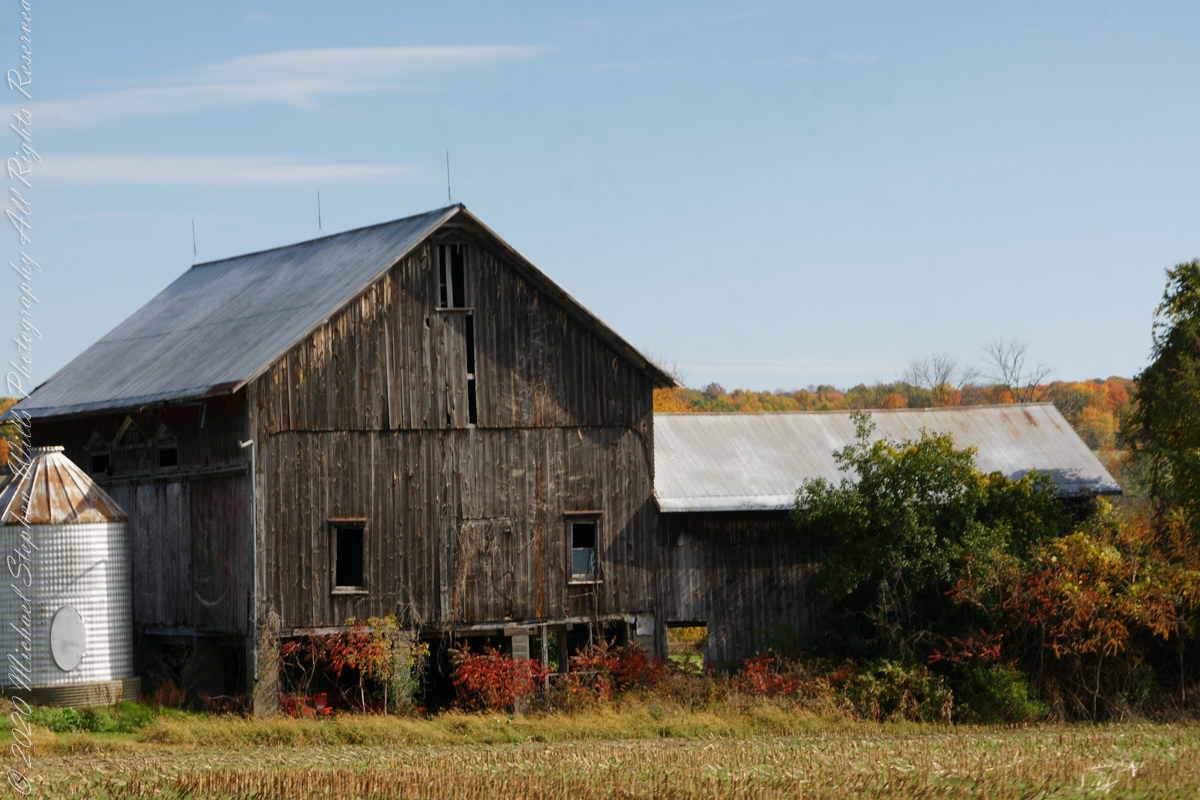
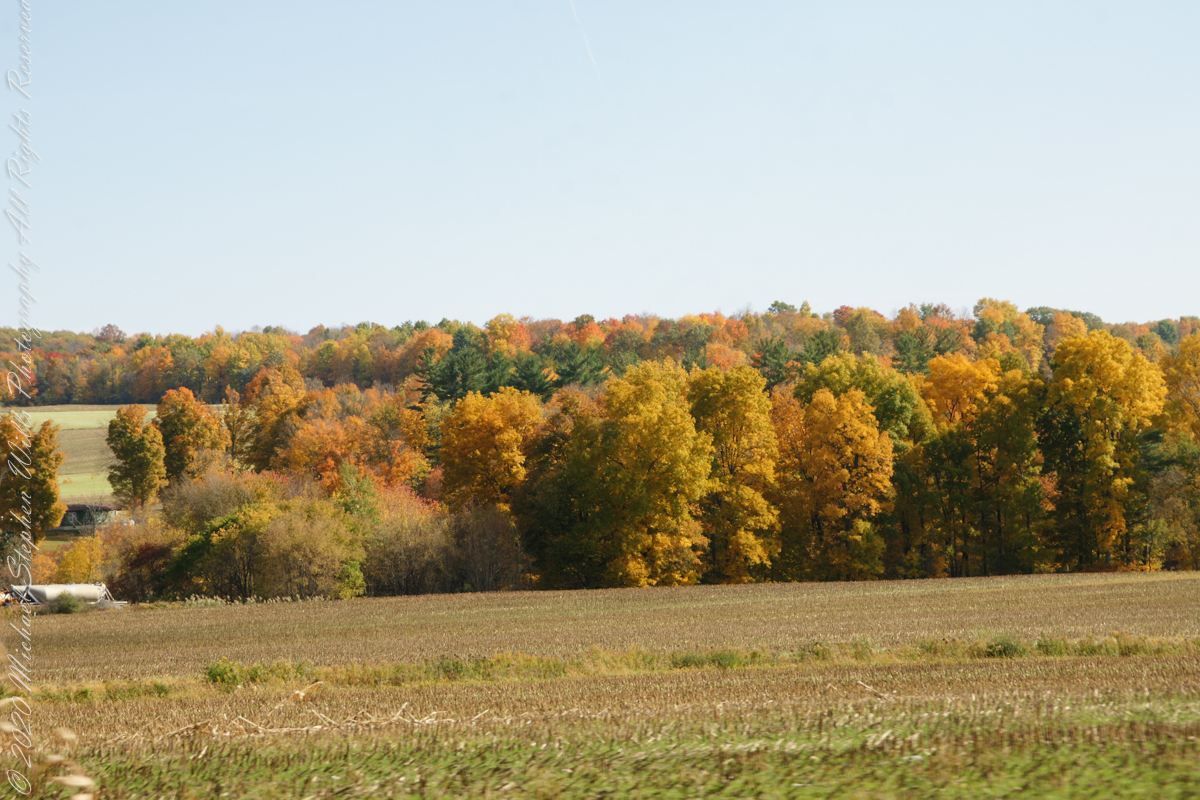
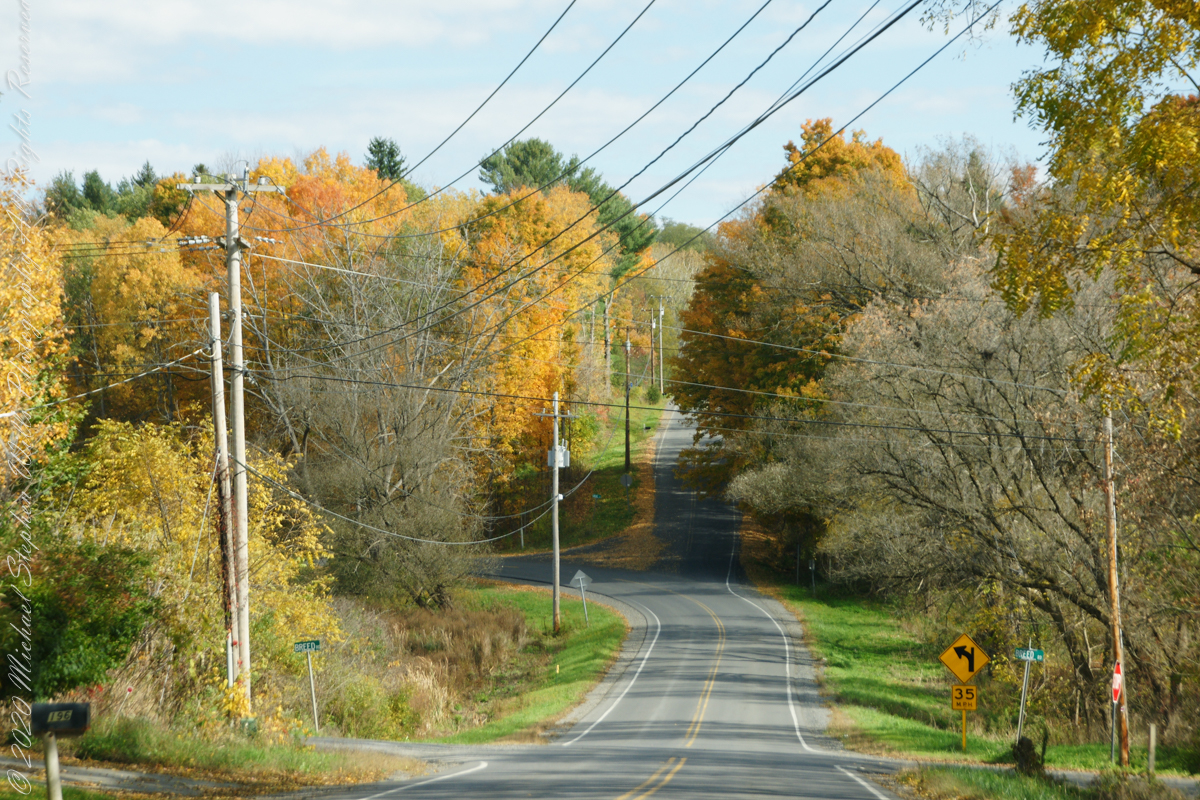
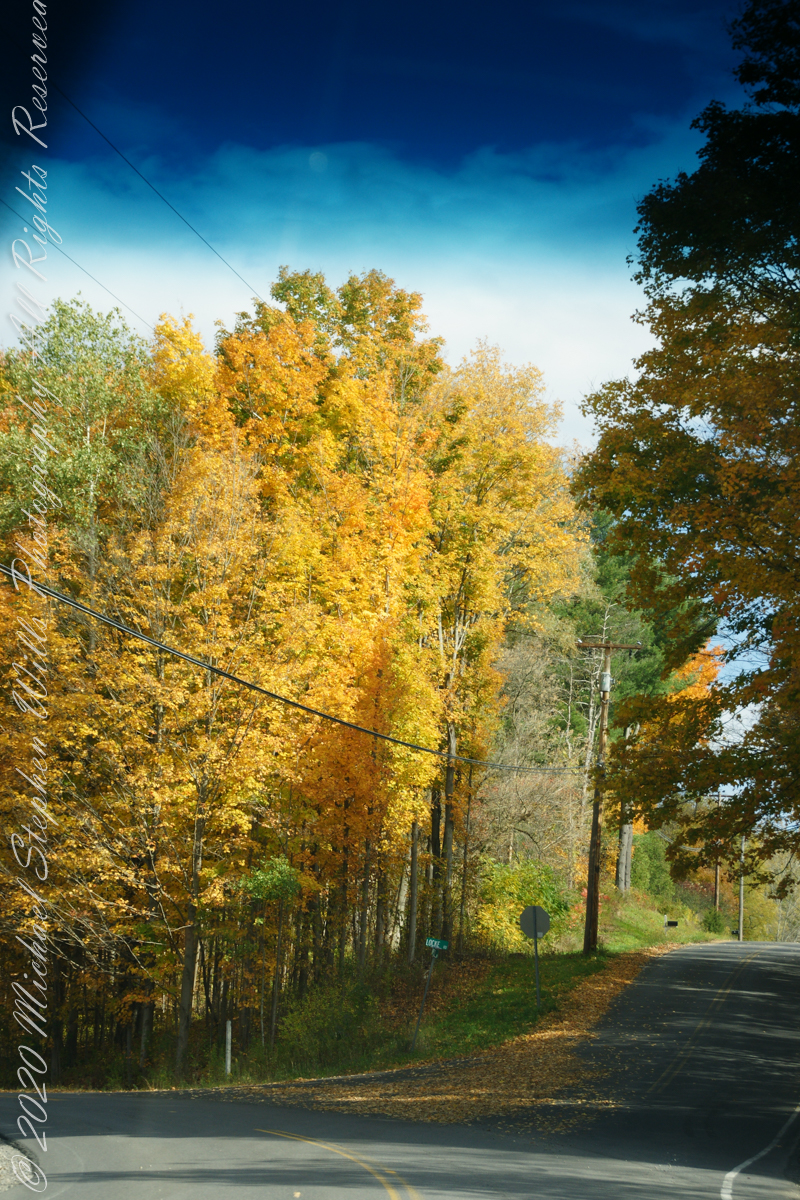
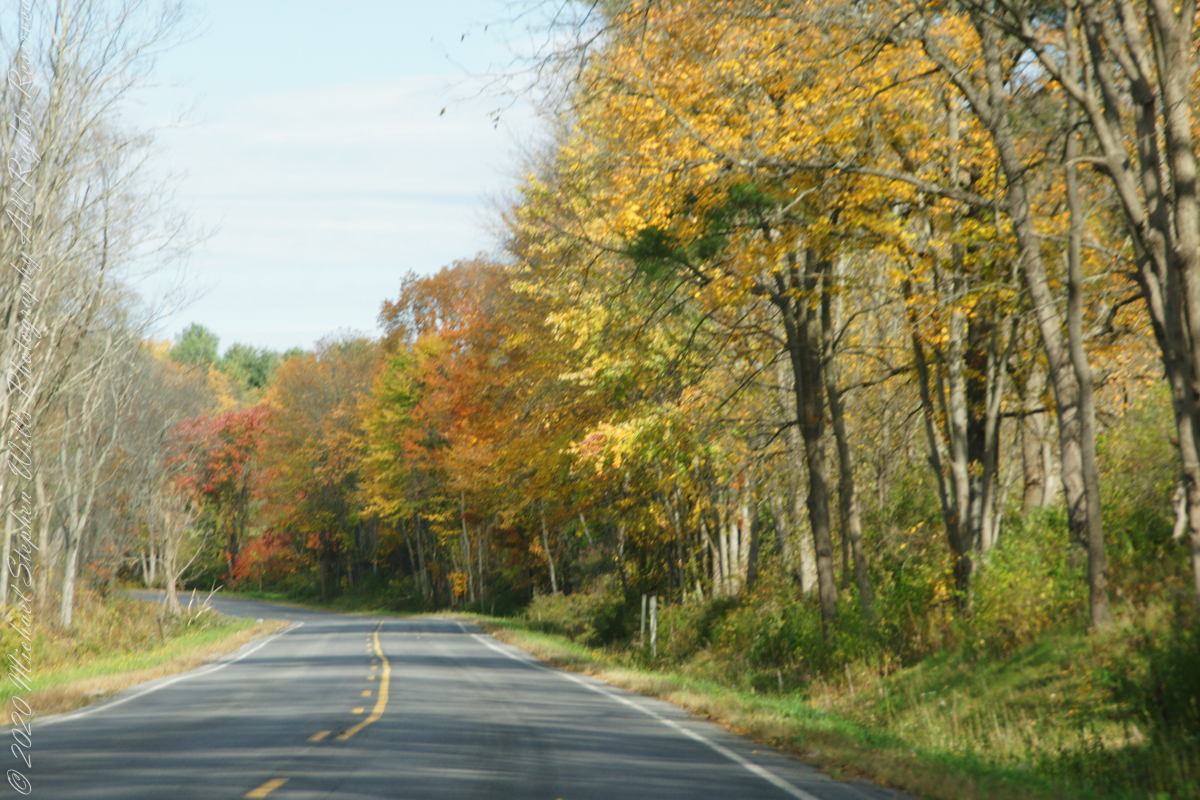
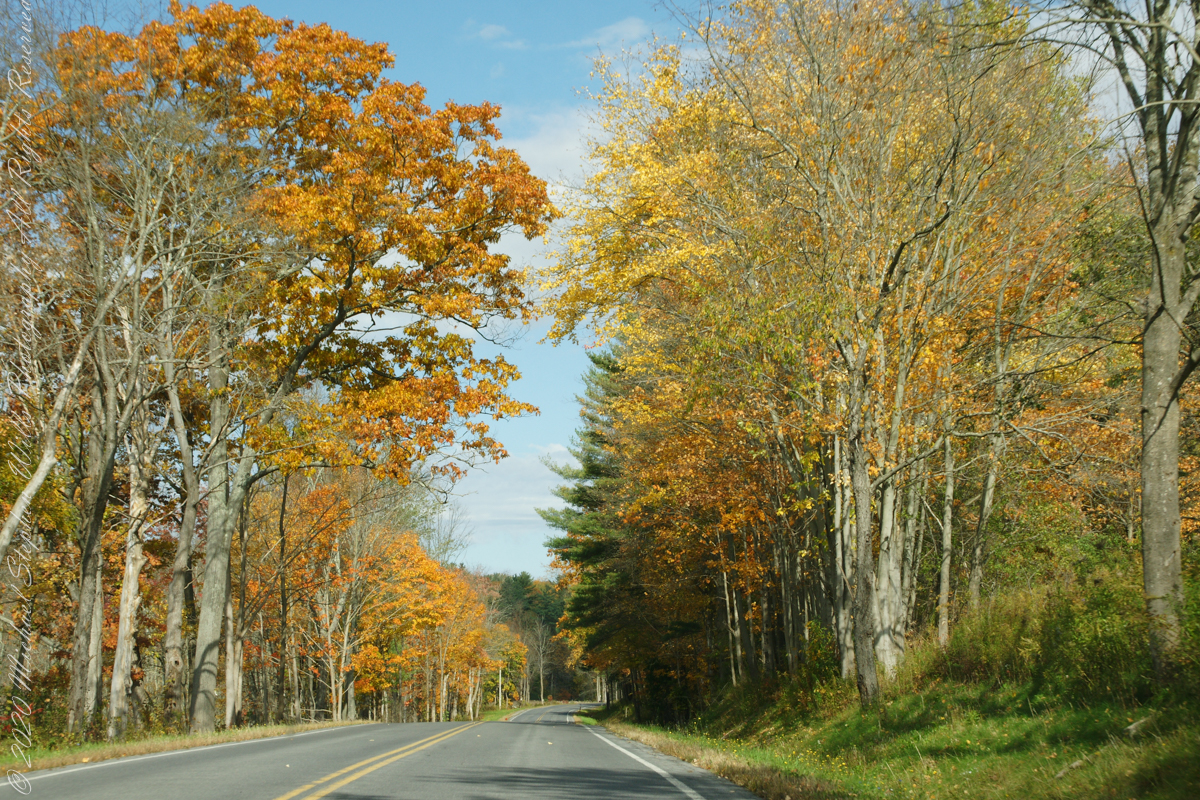
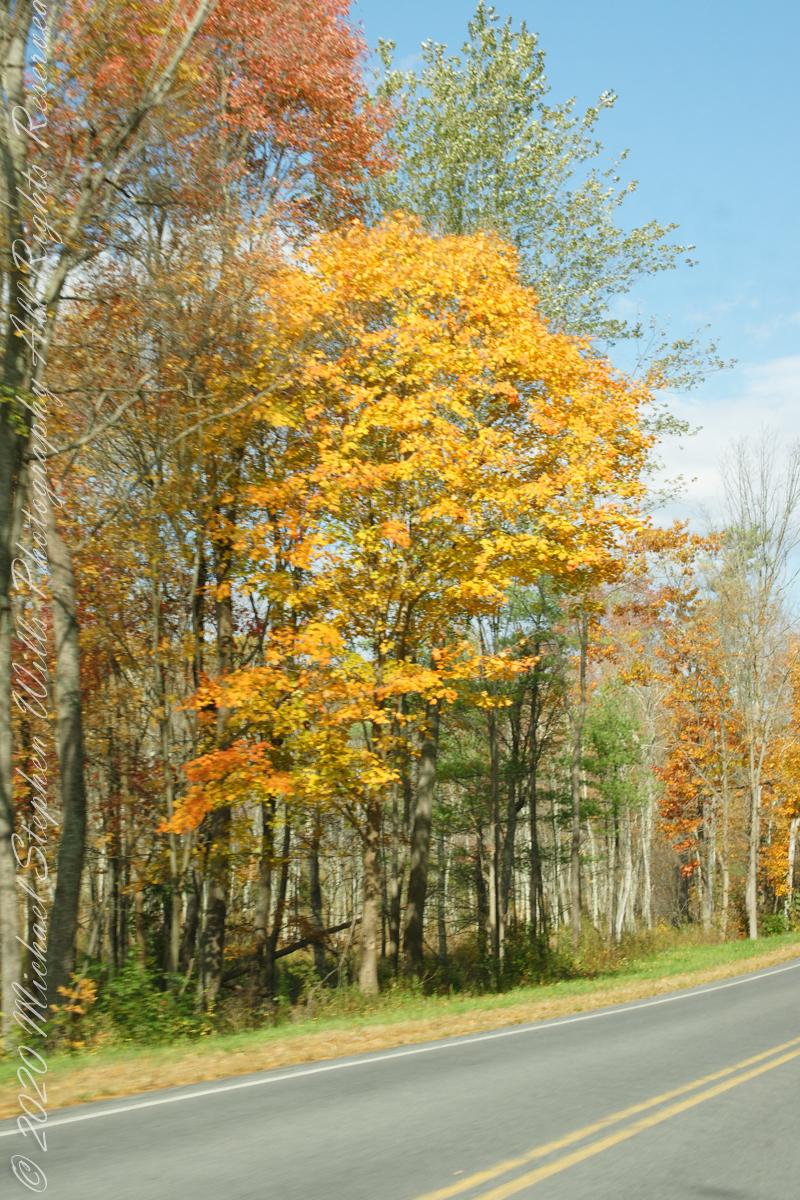
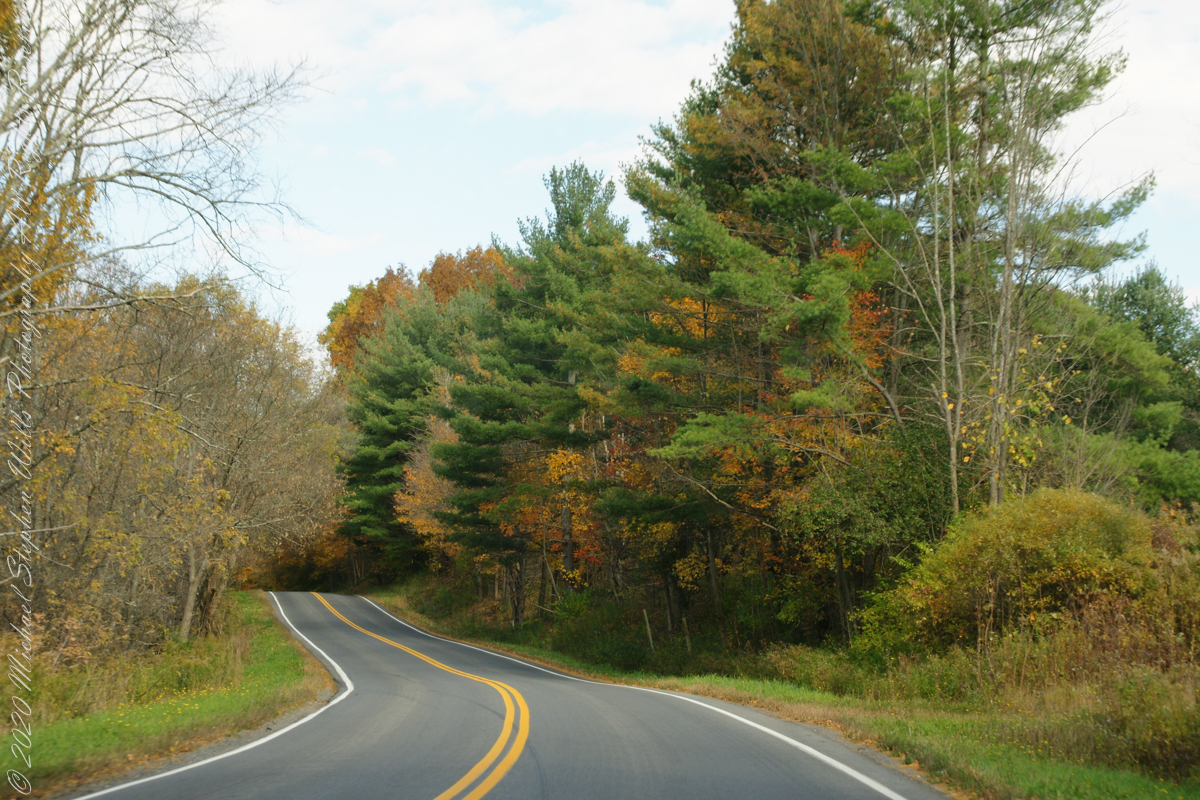
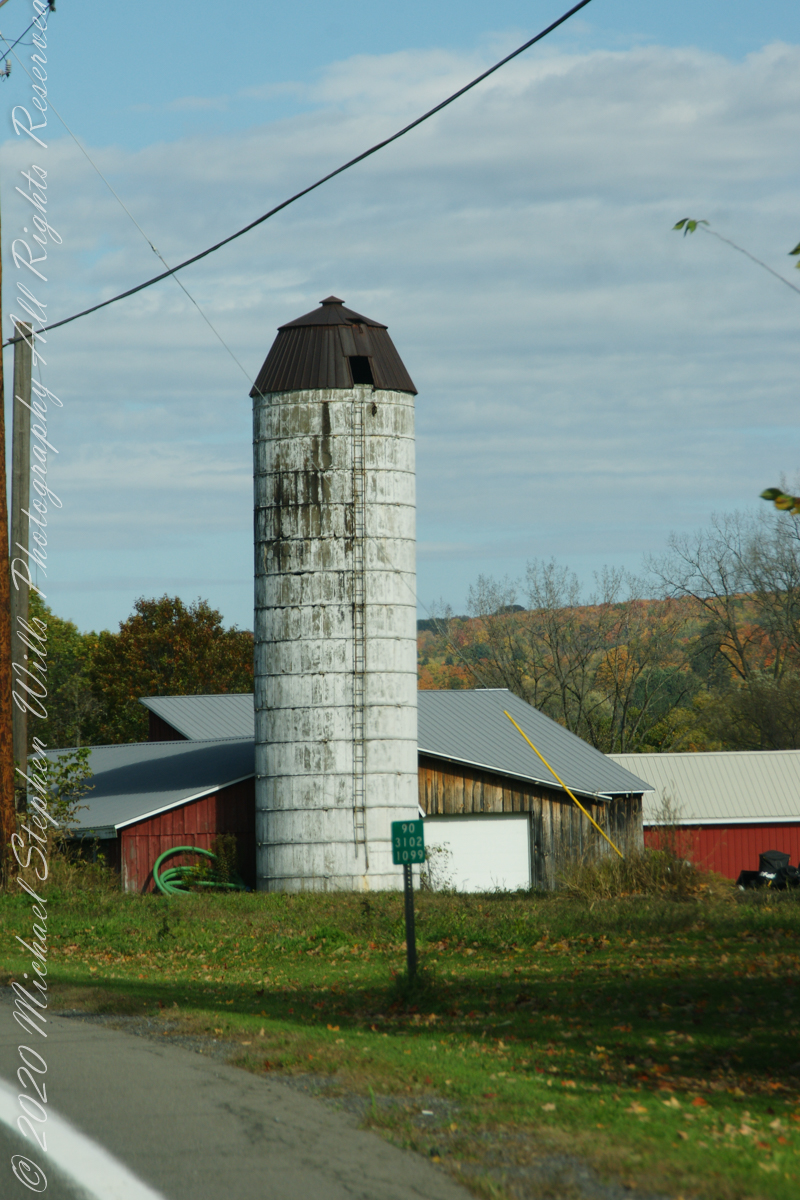
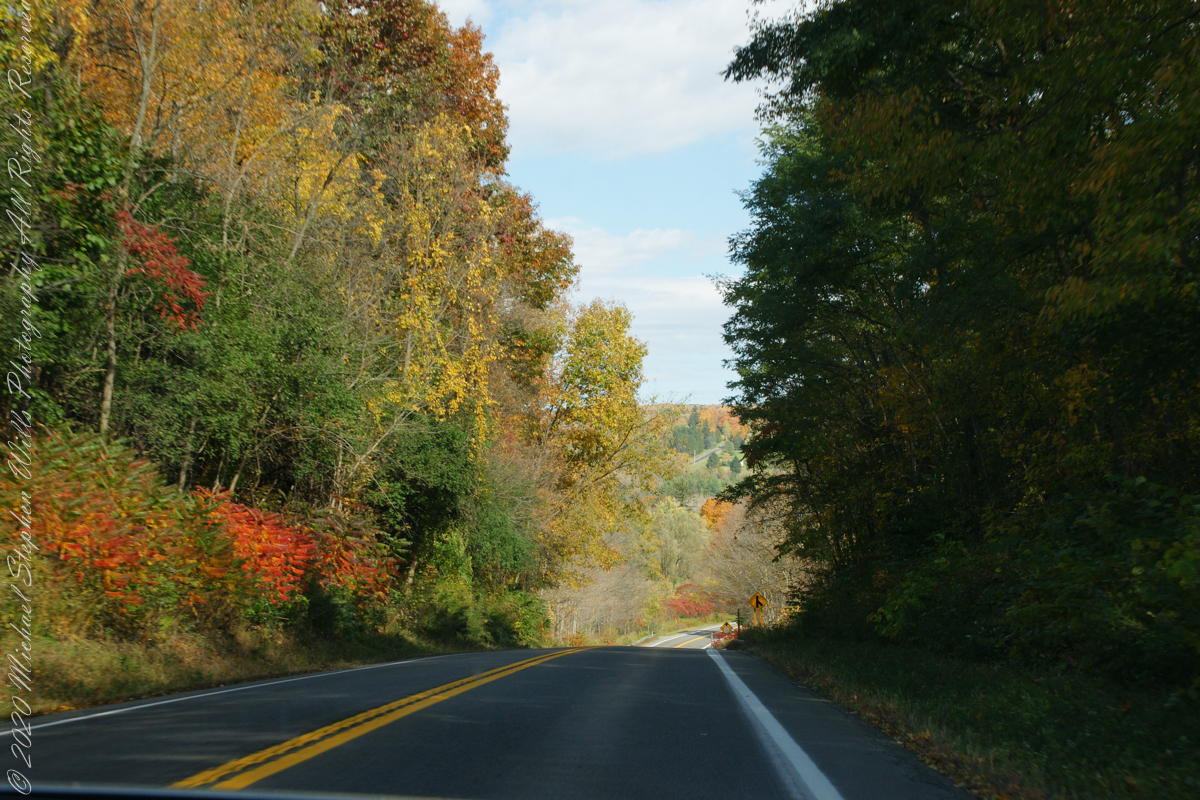
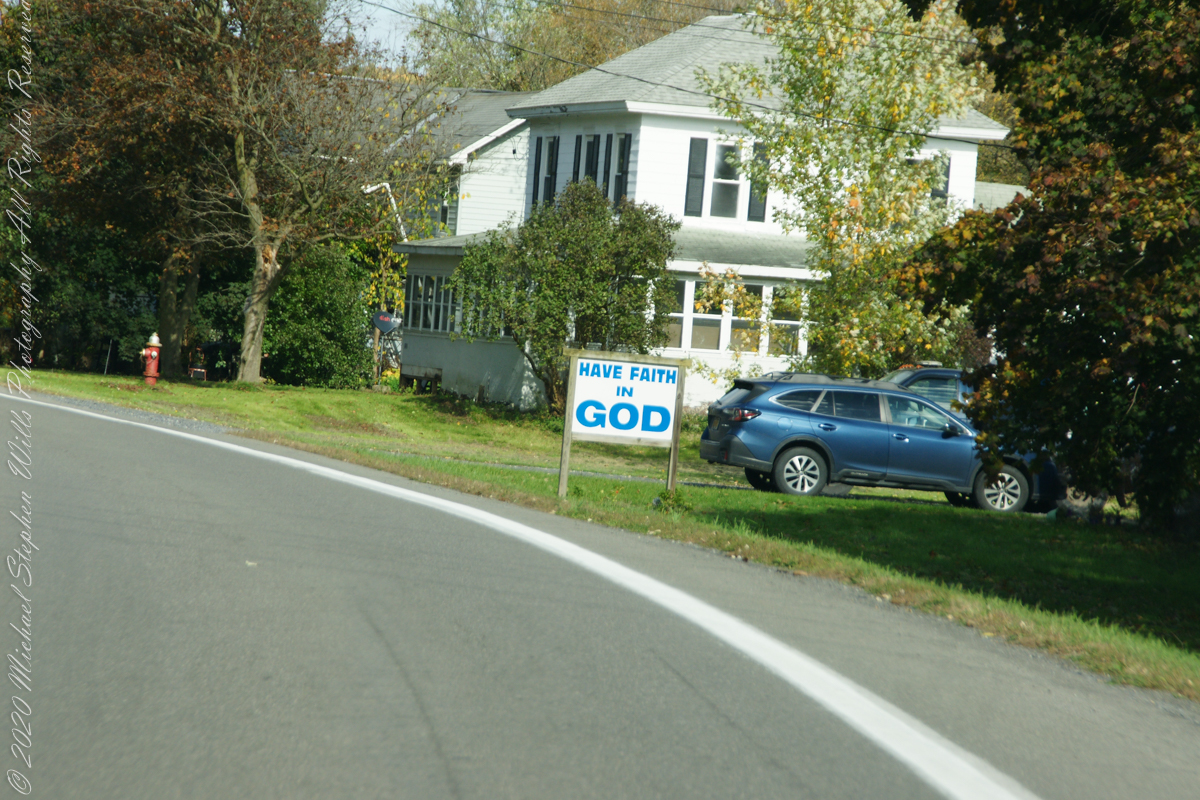
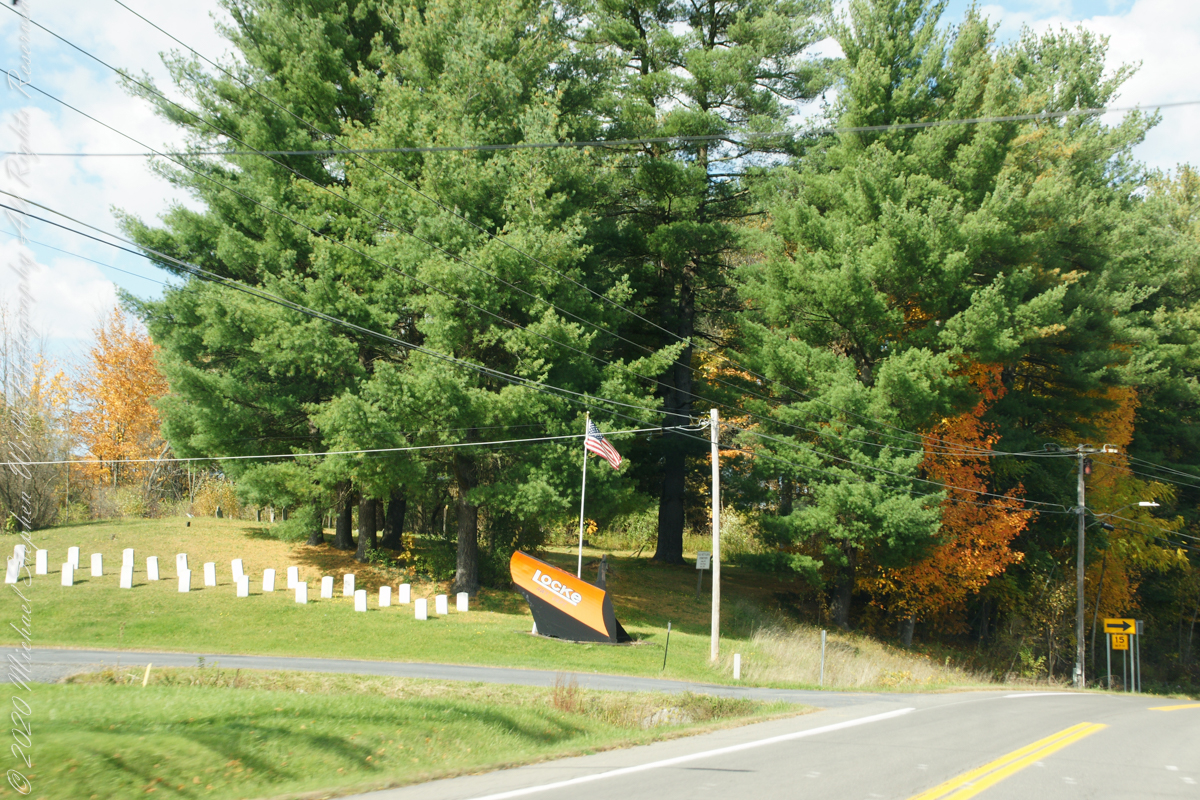
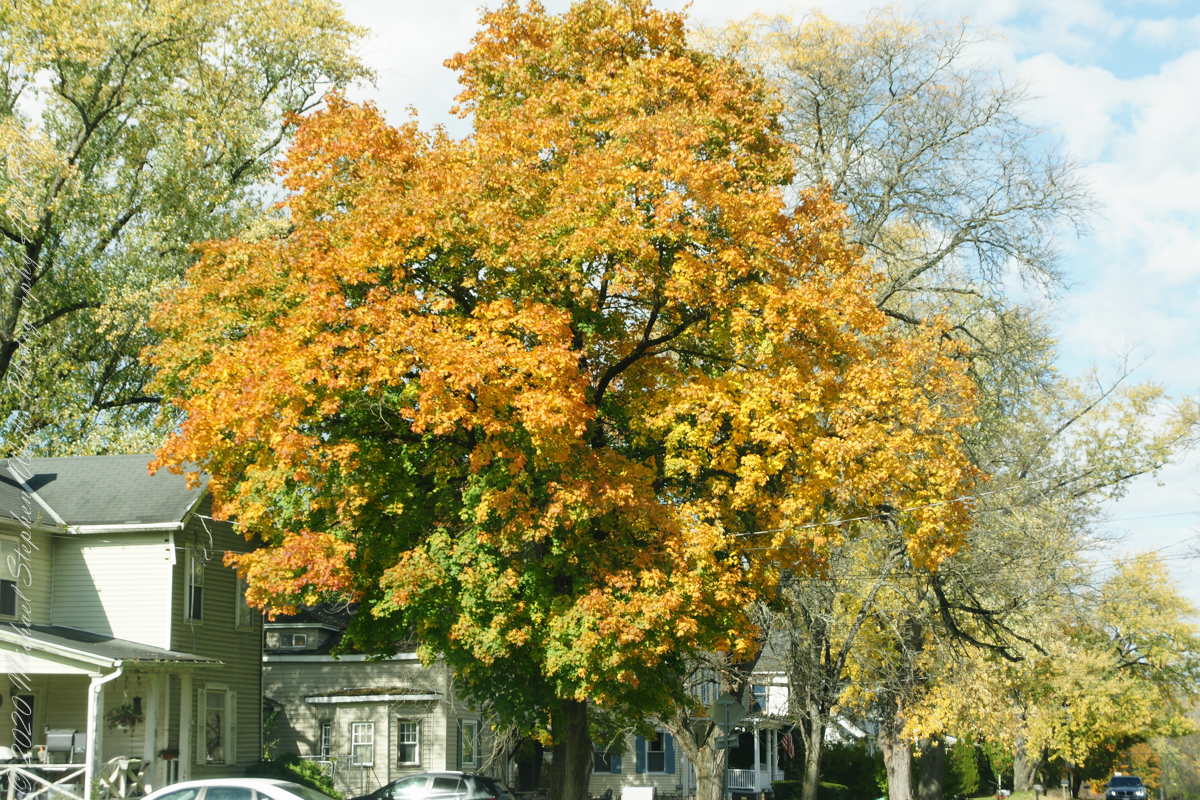
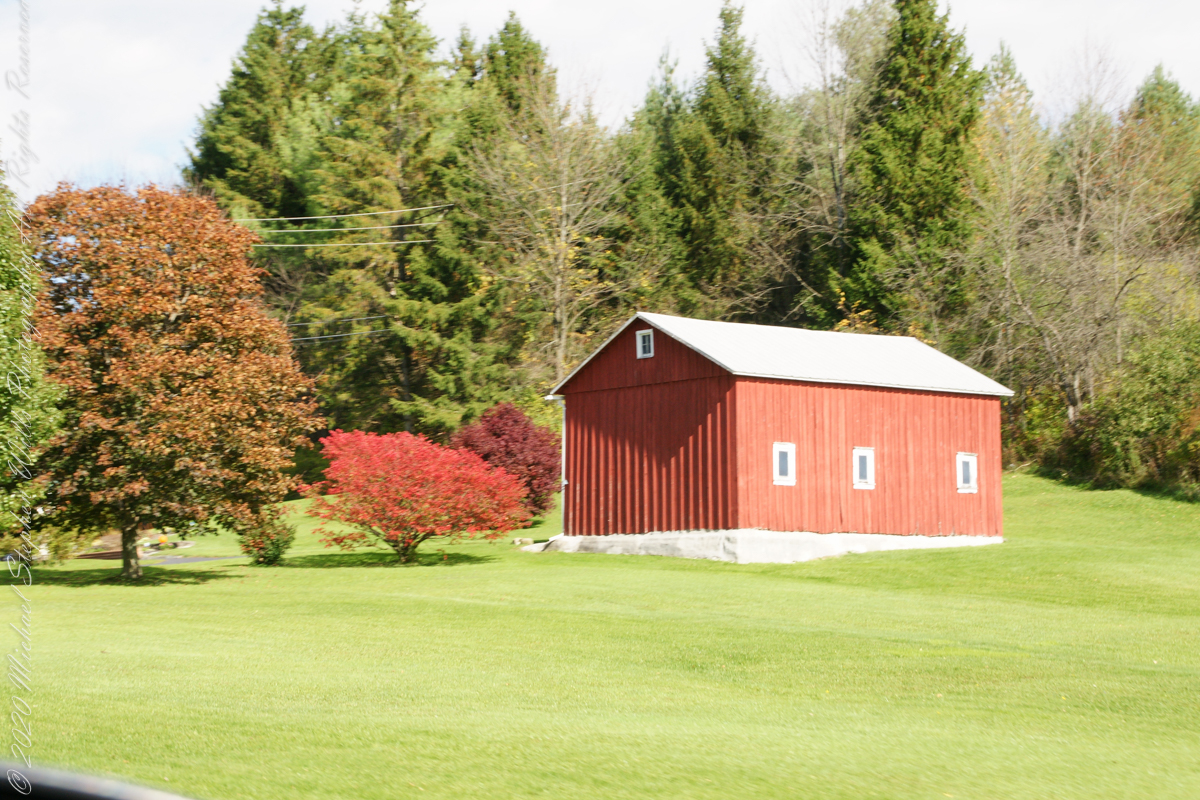
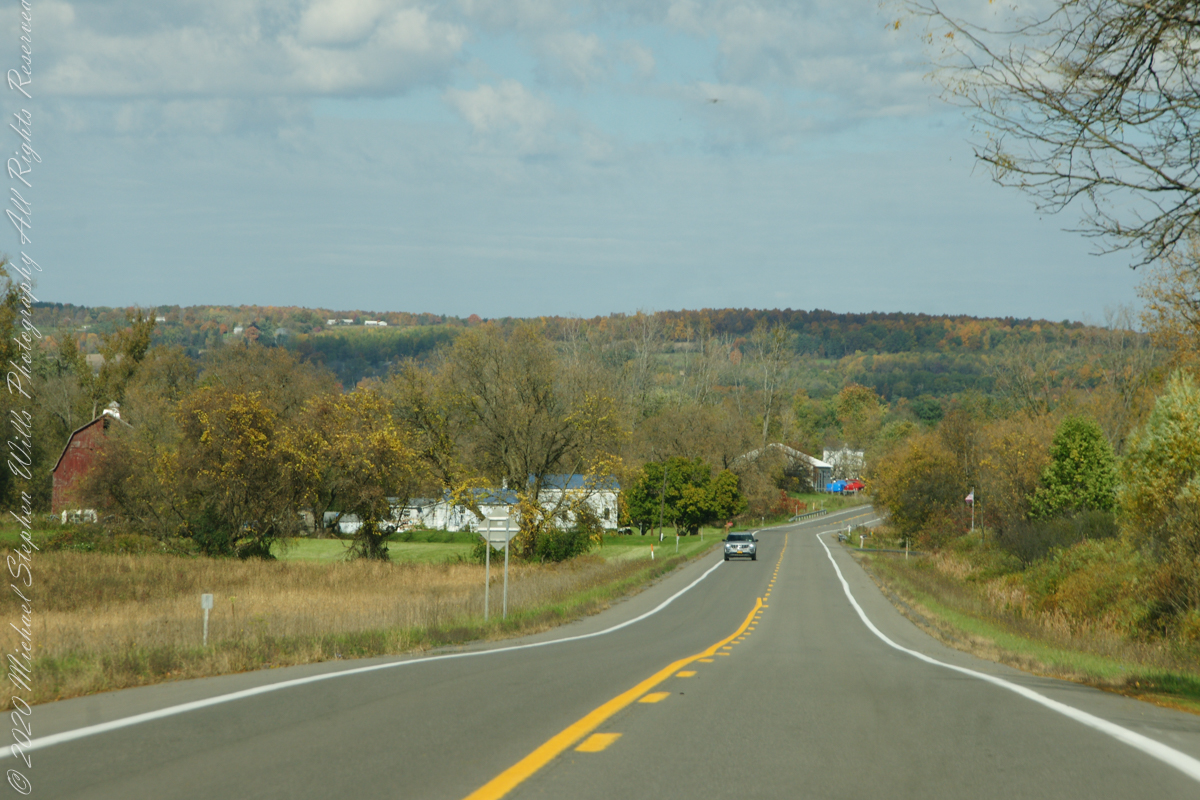
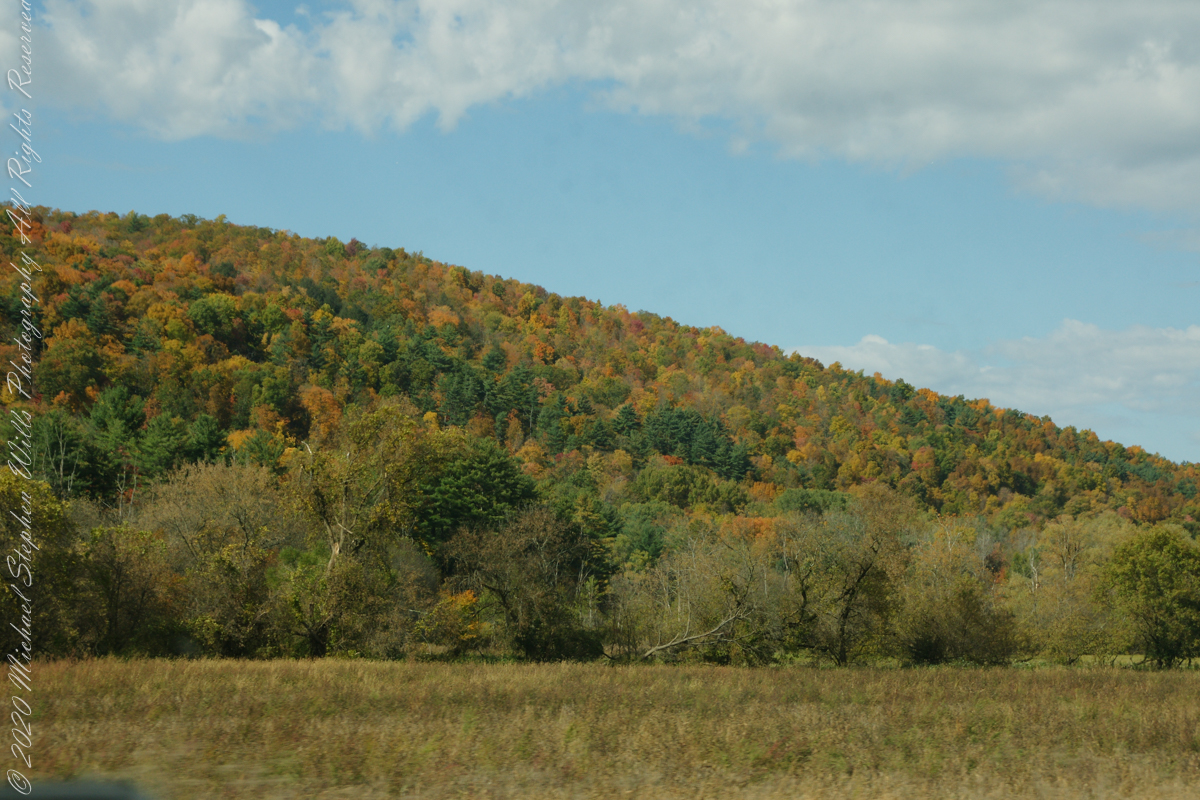
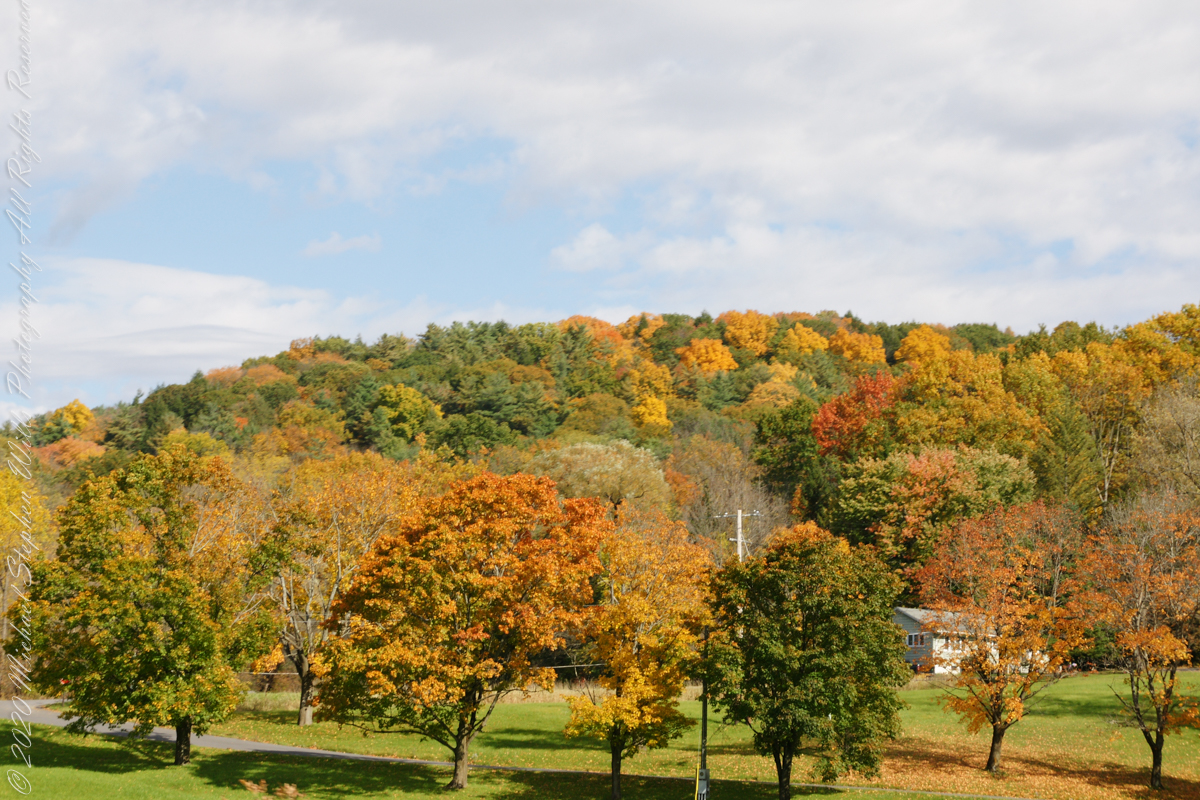
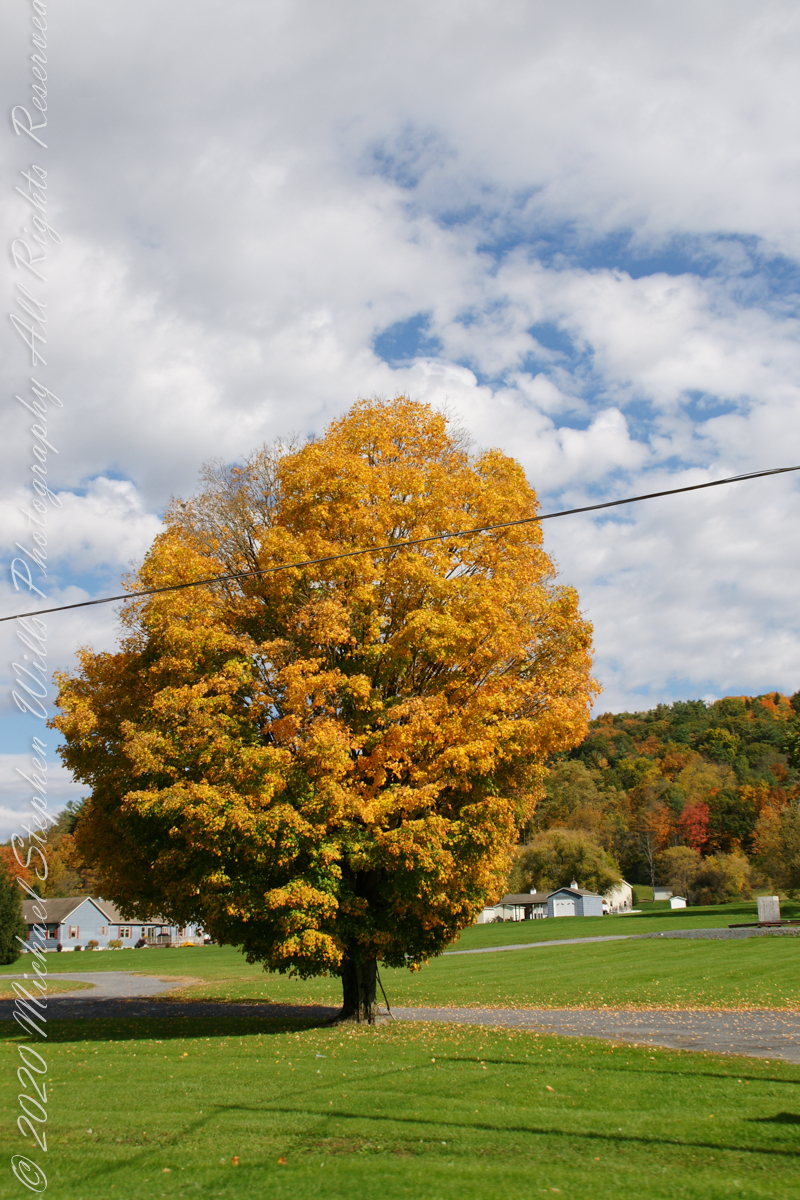
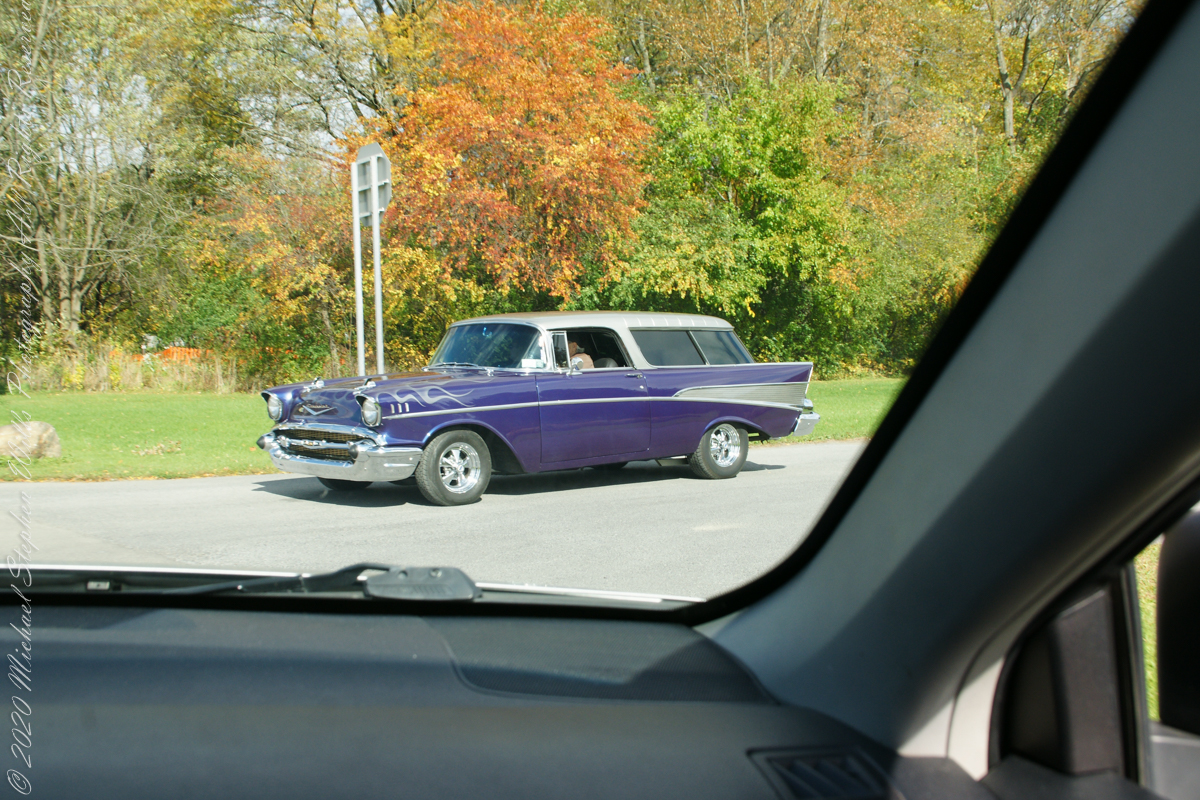
My Sony Alpha captured our October 16 drive to Fillmore Glen. As we traversed landscapes, the spectacle of Tompkins and Cayuga Counties autumn glory passed by the open passenger side window and, even, the front windshield. Thank You, Pam, for driving.
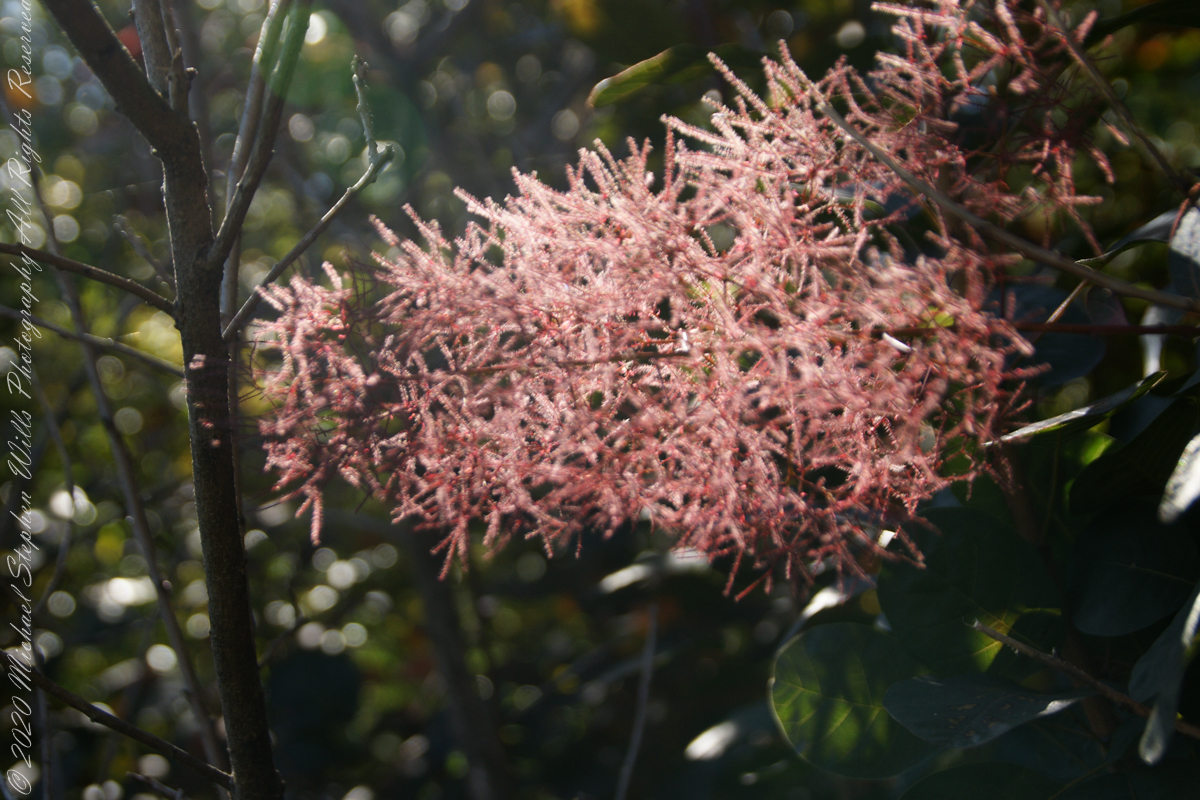
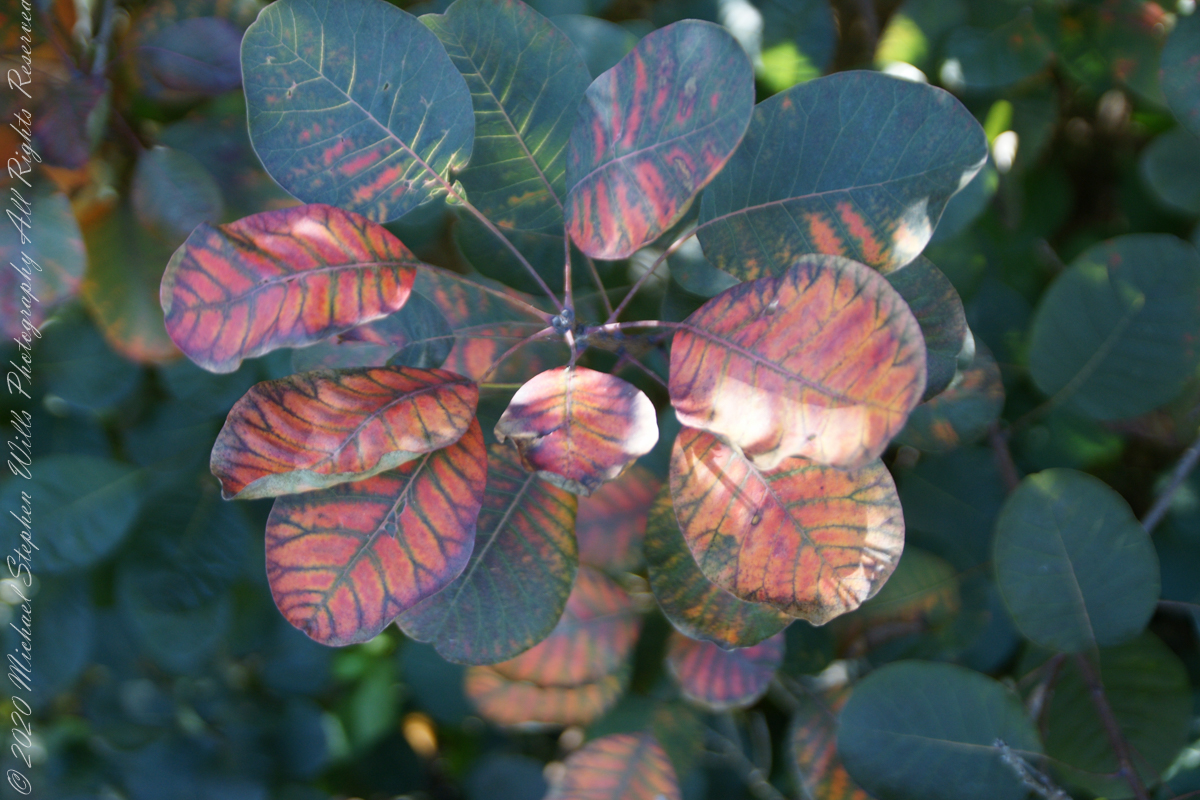
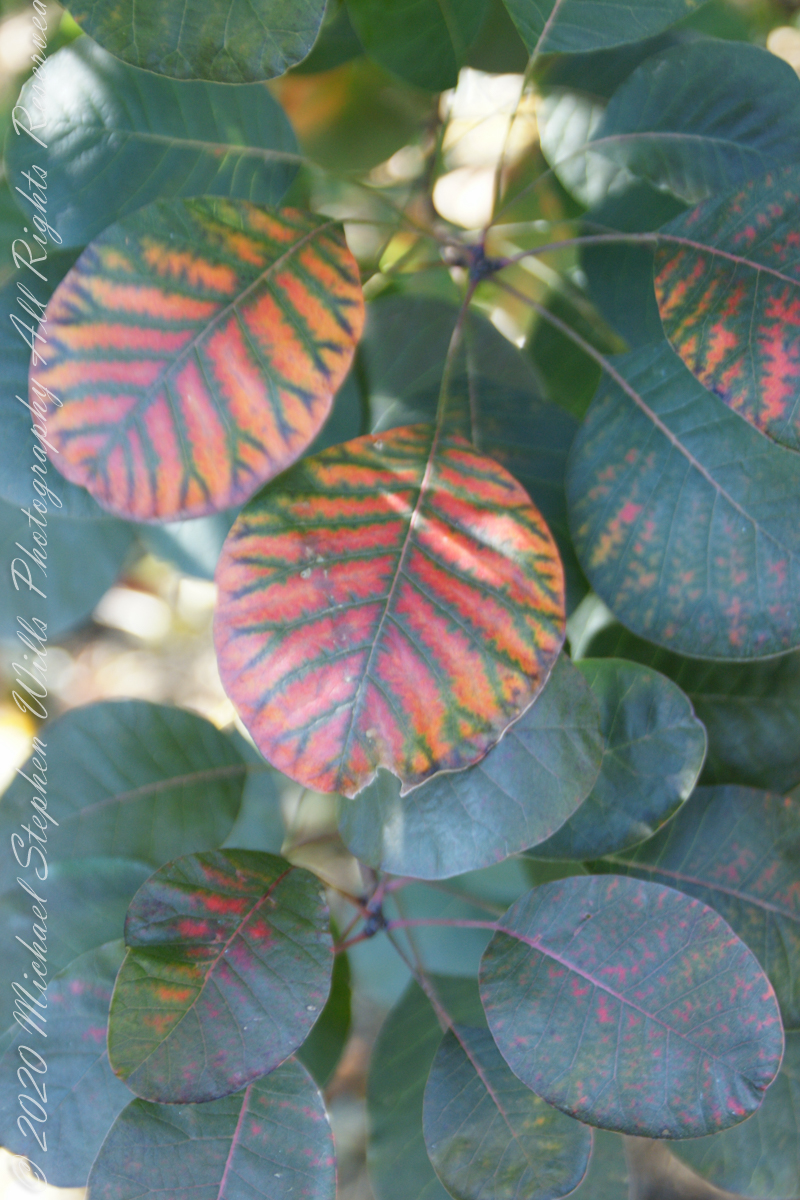
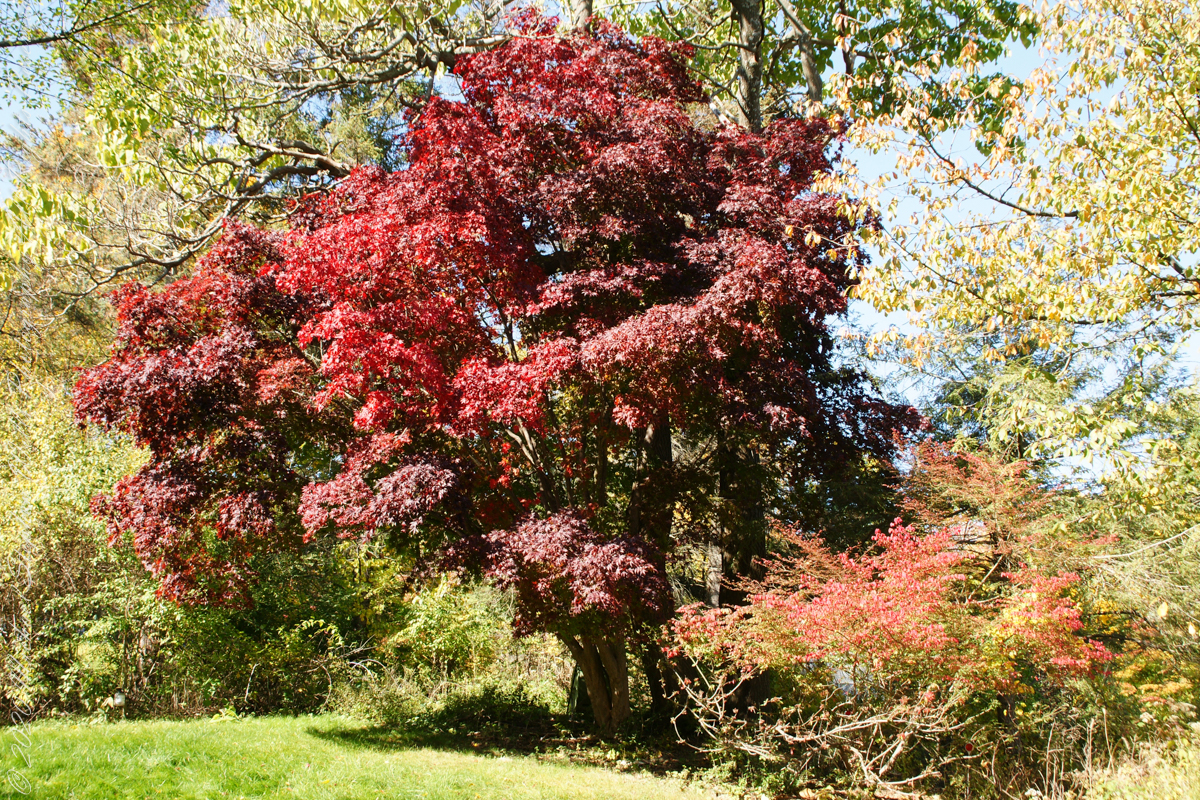
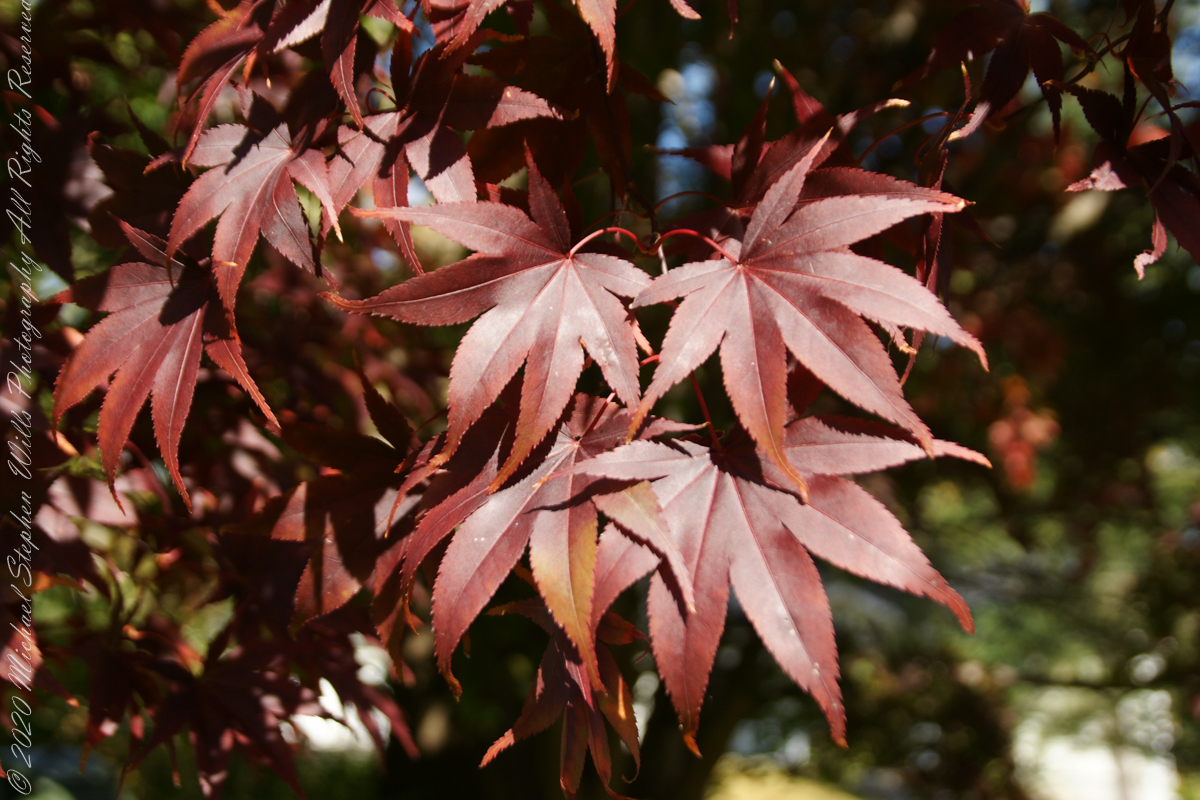
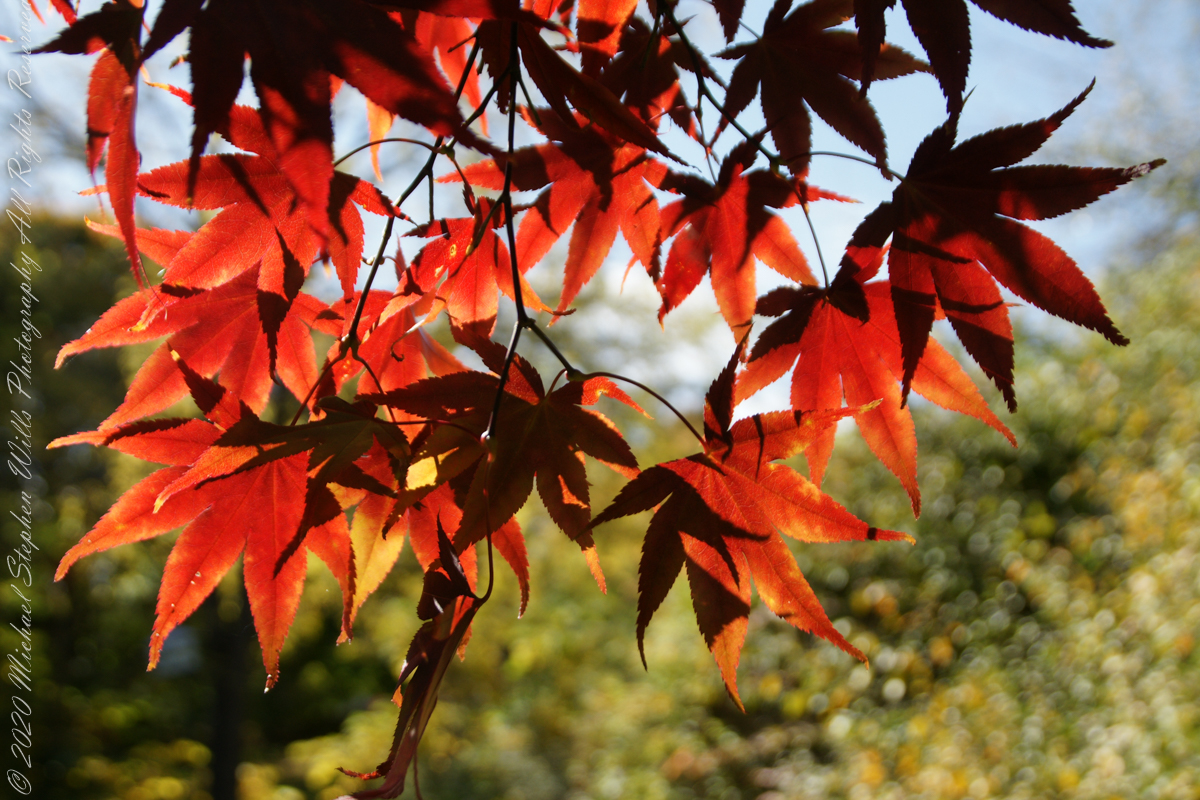
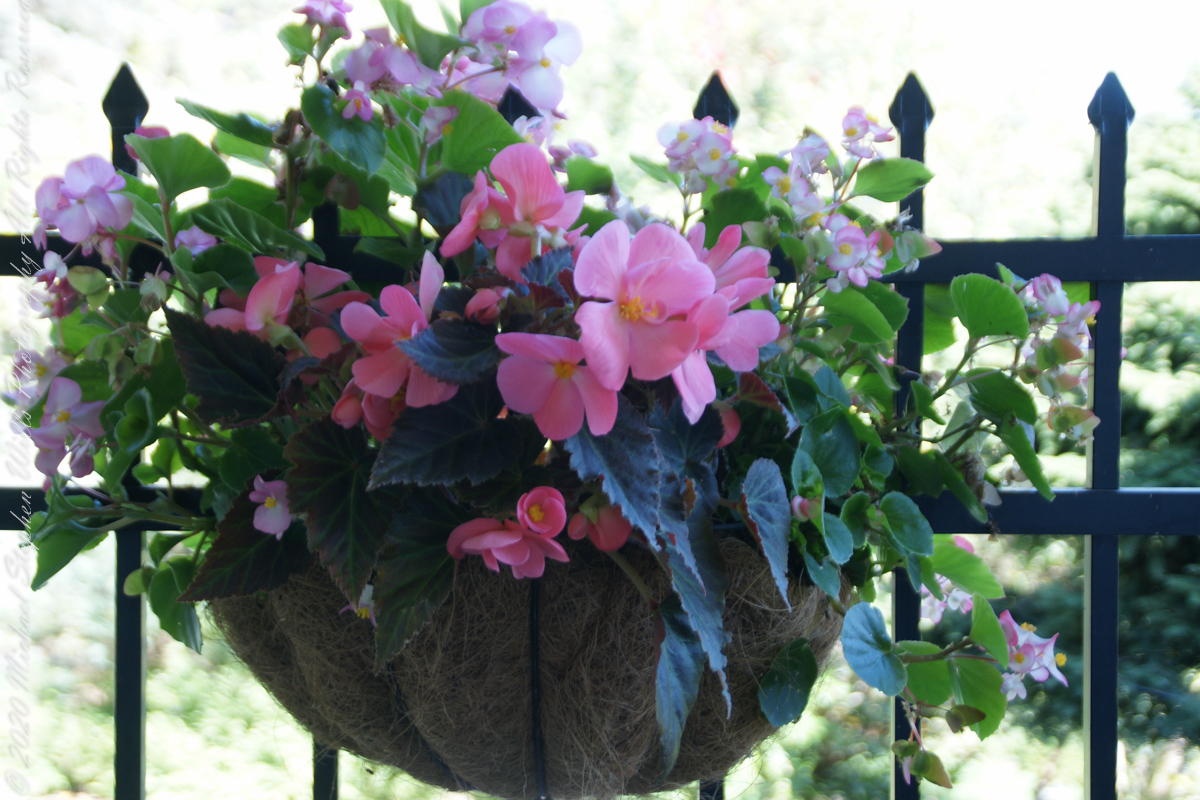
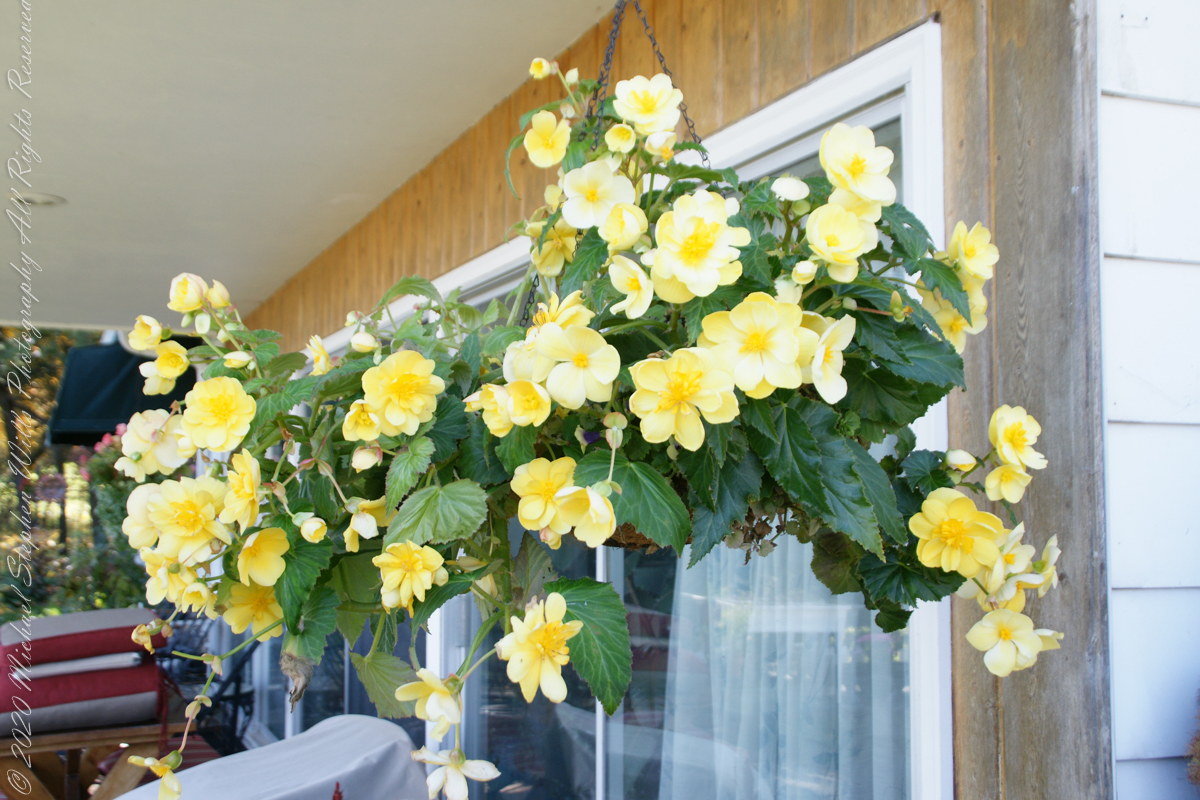
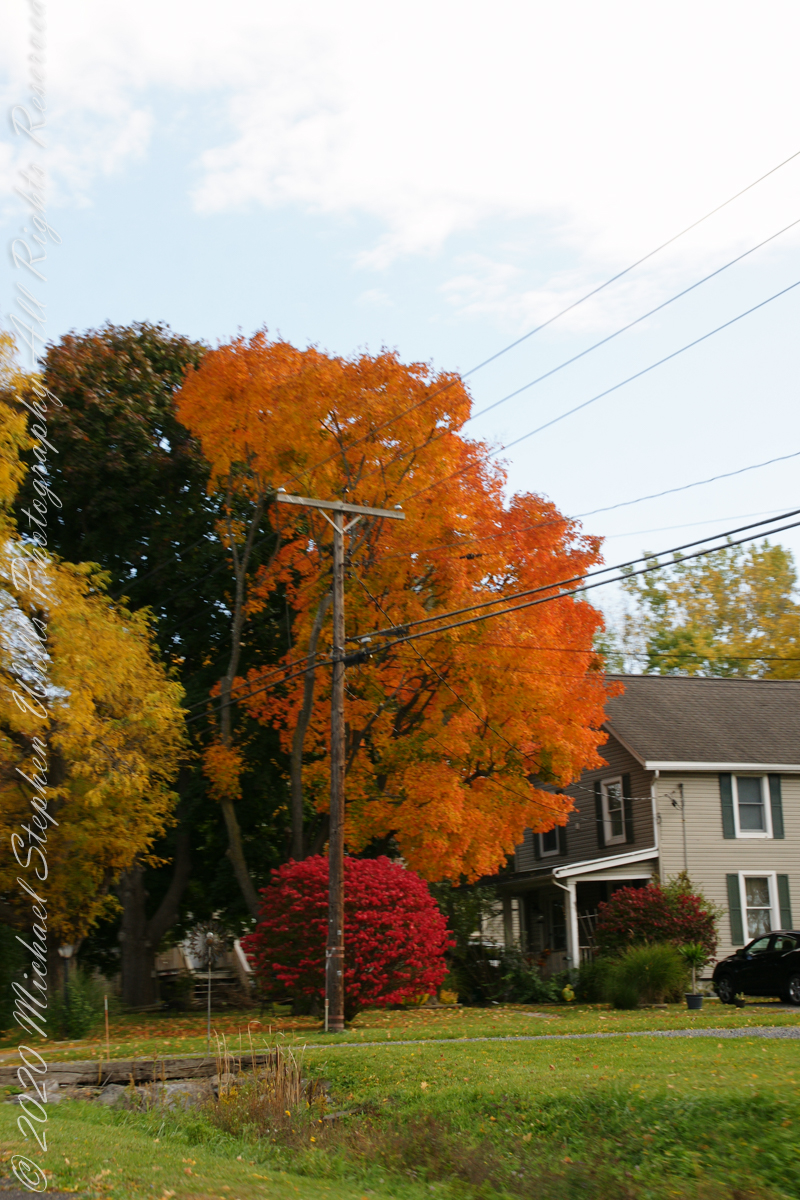
A turn around our home: Smoke tree, Japanese Maple, Pam’s flower baskets, fallen Oak leaves
.TT.
Panoramas from our front porch and on to Hector Street descending into and through Ithaca
Headed up Route 34 along Cayuga Lake, into “Farm Country”
Turning onto Locke Road and crossing from Tompkins to Cayuga County
Travelling through Cayuga County, the town of Locke, then Moravia and Fillmore Glen State Park
..
This is my farewell to “Fall” for now.
Copyright 2022 All Right Reserved Michael Stephen Wills
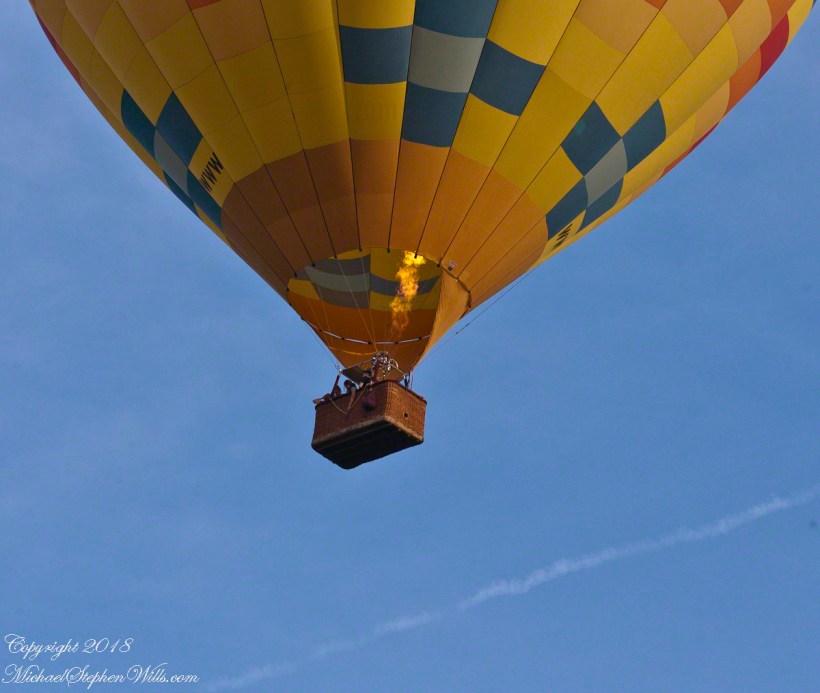
Whoosh….whoosh. Taking out the garbage Monday evening, July 15th, 2019 I heard the unmistakable sound of a liquid propane burner. As the propane is gasified and ignited, the flame and exhaust are directed into the balloon, all under control of the human operator. What a sound!!
These past years, hot air balloons started launching from West Hill and, when the breeze (balloons never launch in winds, as far as I know) is right the balloon and gondola full of passengers drift in the direction of our home. More than one time, directly overhead, I estimate 200 feet away. We could clearly see and converse with the passengers. What fun.
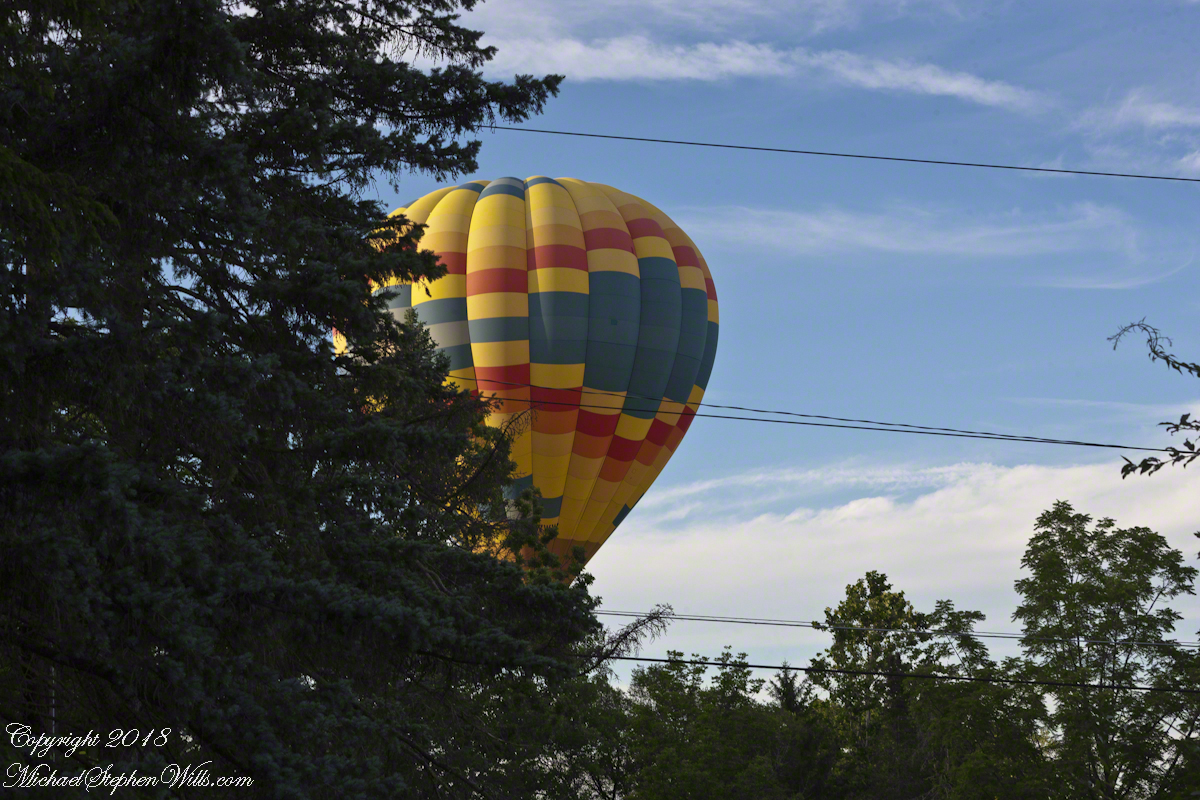
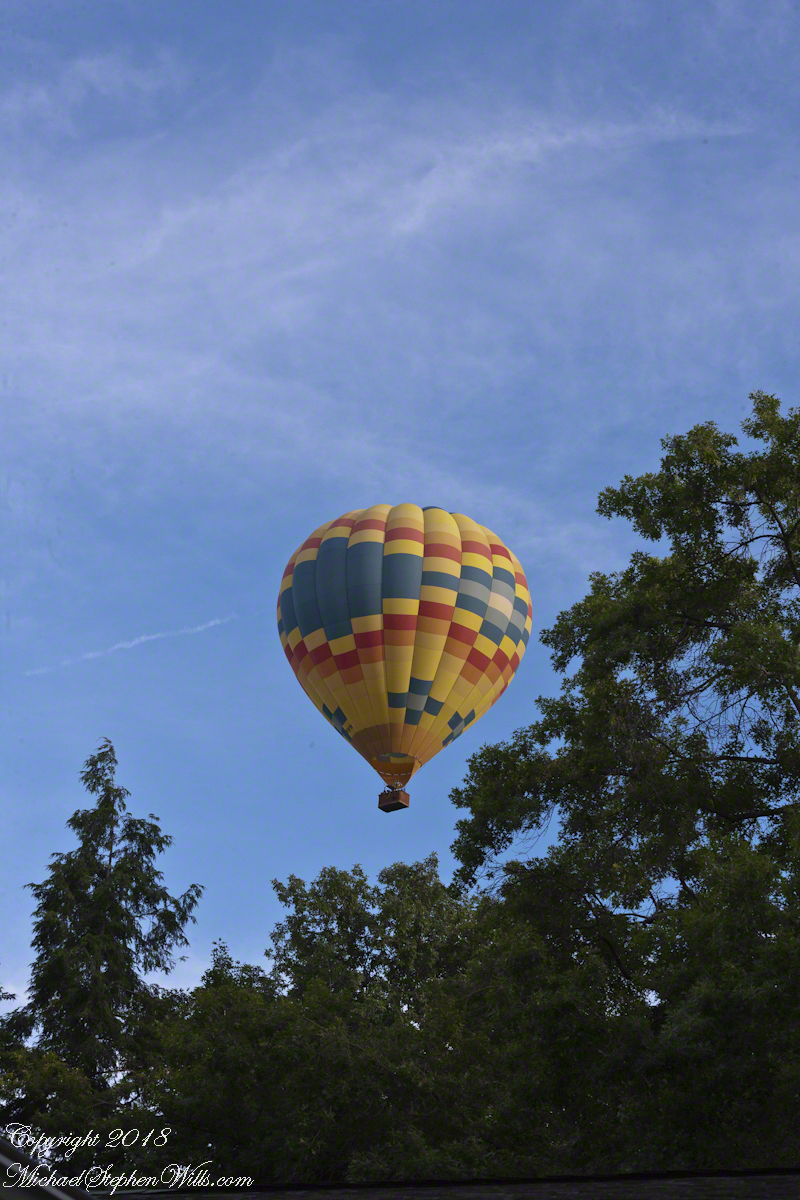
Each previous viewing I regretted not filming the balloon as the vision floated away. Last Monday, I dropped everything (not literally, I did leave the garbage in the bin), mounted the Canon lens EF 70-300mm f/4-5.6L IS USM on a EOS 1Ds Mark III body, returning to the north side of our property as the balloon emerged from the trees, only the envelope visible.
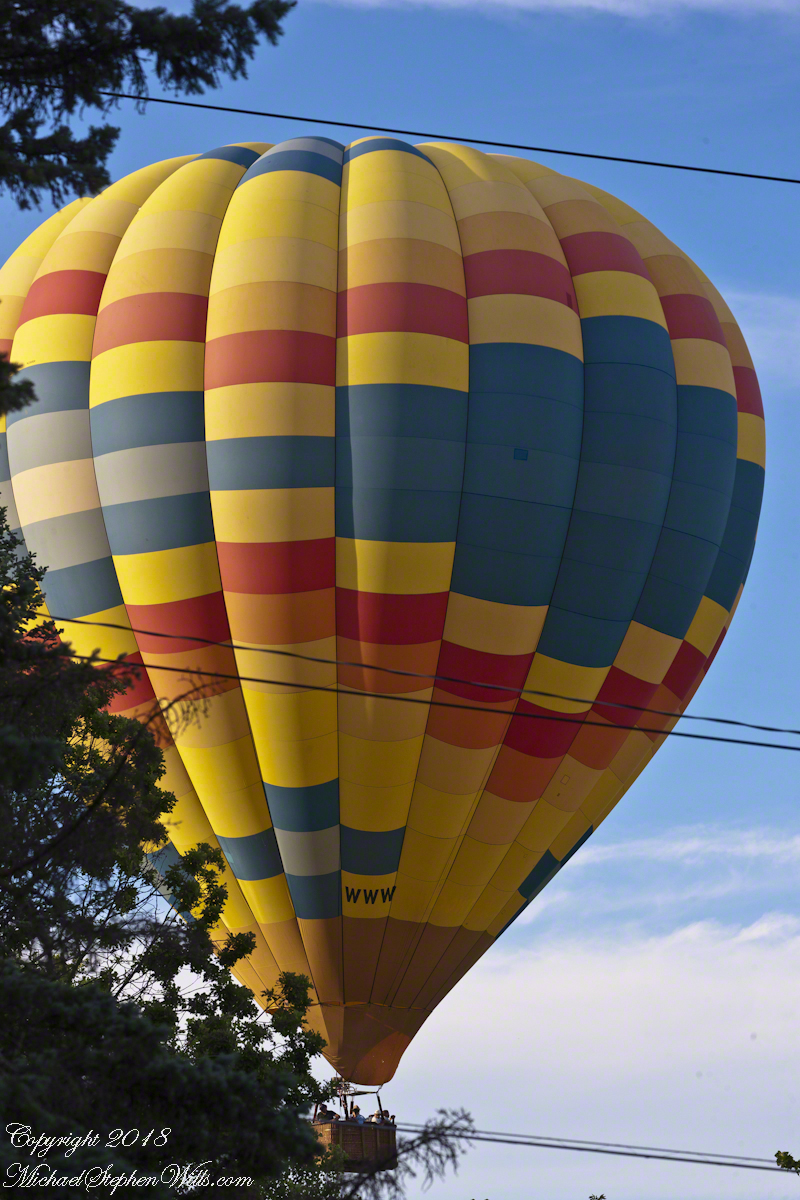
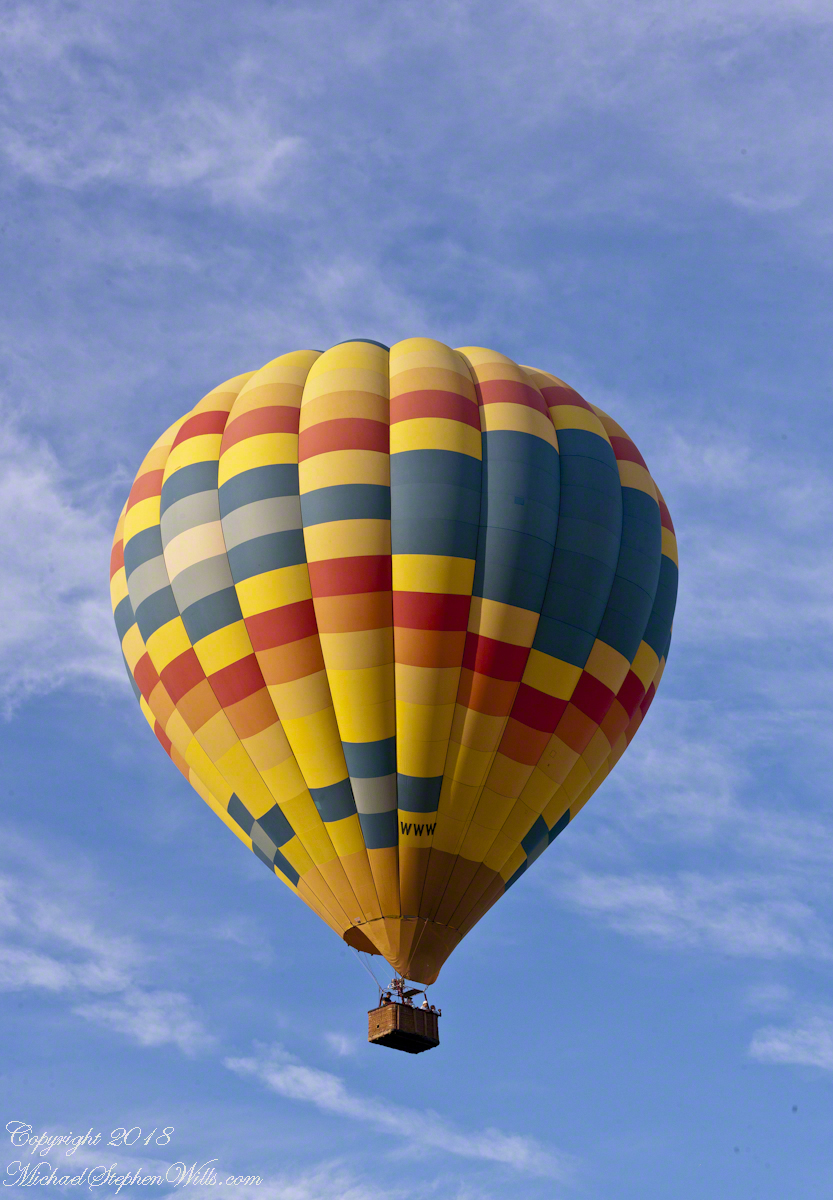
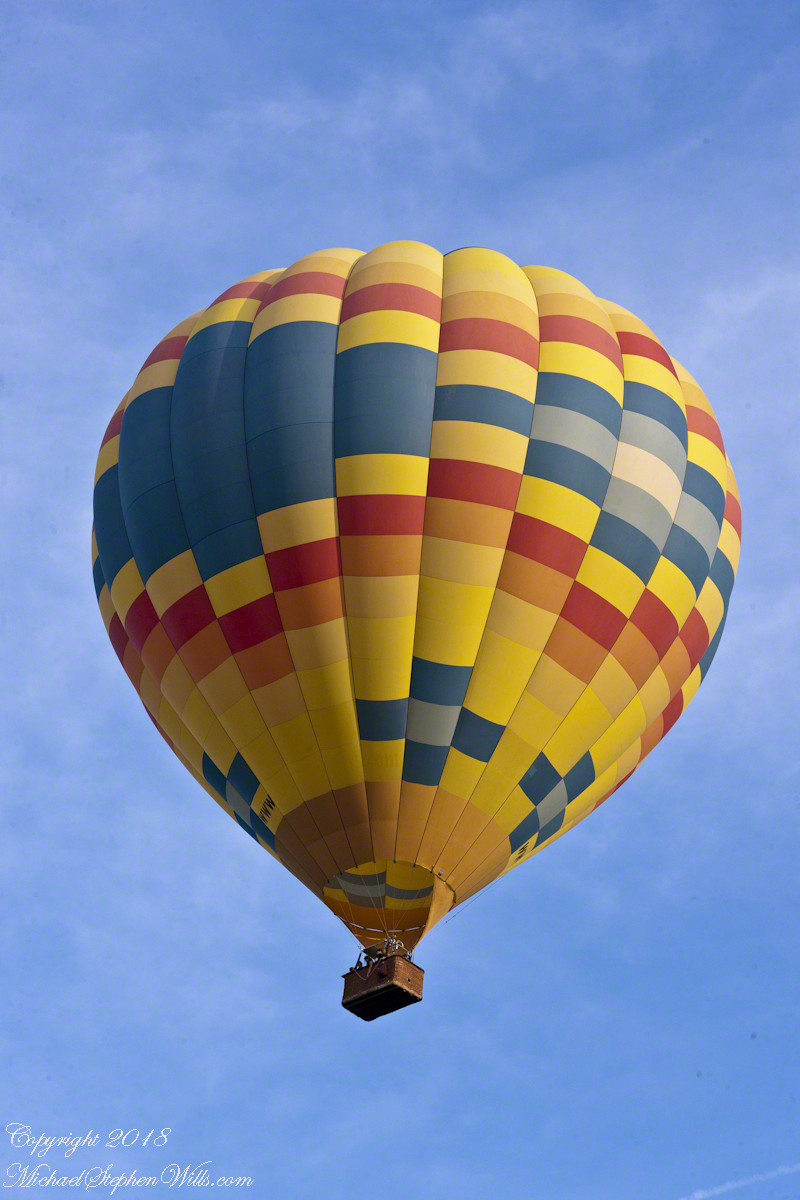
We have enjoyed this balloon before, the envelope pattern evokes a classic Navajo Rug, the colors really pop against the blue sky.
Why the Whooooosh?
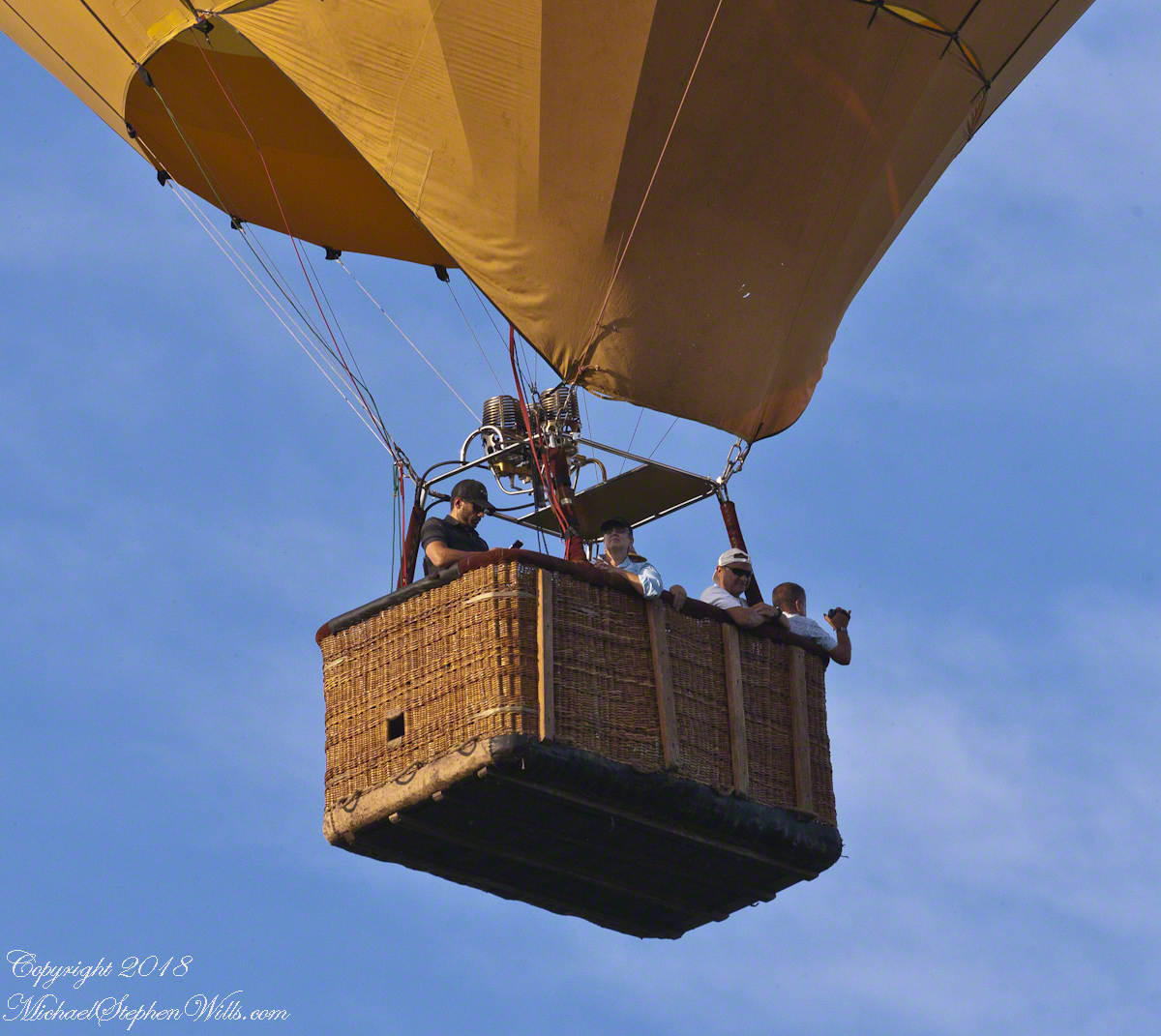
Tourists and local residents pay $230 per person for the experience of floating silently over Finger Lakes landscape with a launch from Trumansburg, ending up over Ithaca, in its valley surrounded by hills. Cayuga Lake is visible the entire flight, to the east, then northeast as the path reaches Ithaca. As they approached the balloon elevation was not so high relative to our home. You can see this clearly in the first photograph. With the zoom on 300 mm I was almost able to look into the basket, each of the four riders (the operation, looking at a cell phone, and three passengers) was recognizable.
There are three propane burners, two in front and the edge of a third just visible between the front pair.
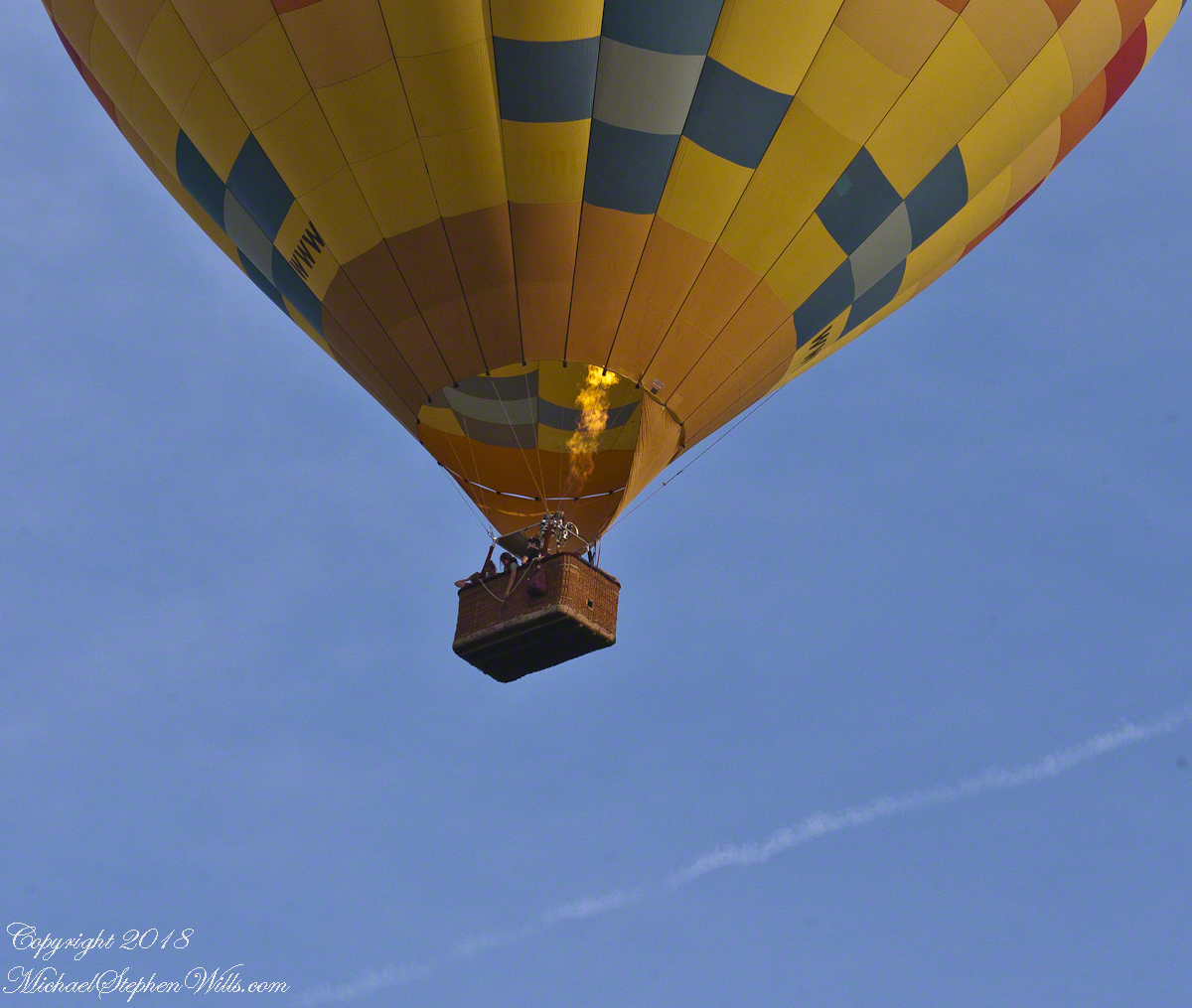
Ethereal silence and reveres are broken when the burner lights up. Here it appears only one burner is running, sending the craft high above us.
Seven of the forty images are shared here. The duration was three minutes. With a goal of capturing the action, I had the camera on burst mode, with the shutter pressed the exposures run serially, in close succession.
I perfected these seven photographs to represent the perfection of this colorful event as it passed from the northwest, disappearing in the tree line to the southeast.
I am listening for the next event, camera and lens ready.
Post script….it was my usual early morning blogging time when I heard the familiar Whooooosshh, whoooosssshhh, grabbed my IPhone for a video and captured the following. You will hear the gondola occupants chatting. The burner was turned on at 1:03 when the balloon was fairly distant. The Whoooosssshhhh is low, but audible.
Today, they were headed North/Northwest in the opposite direction from Monday and are backlit. Enjoy!!
Copyright 2022 Michael Stephen Wills All Rights Reserved
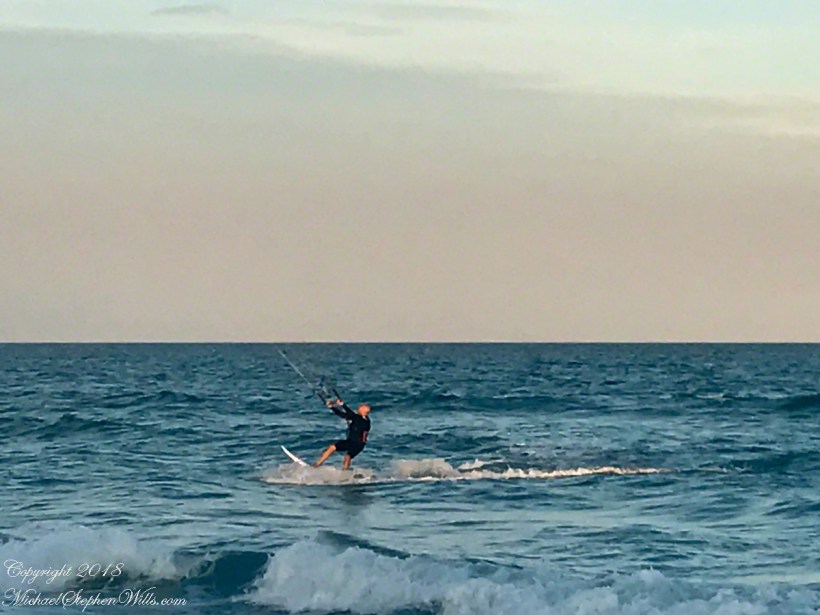
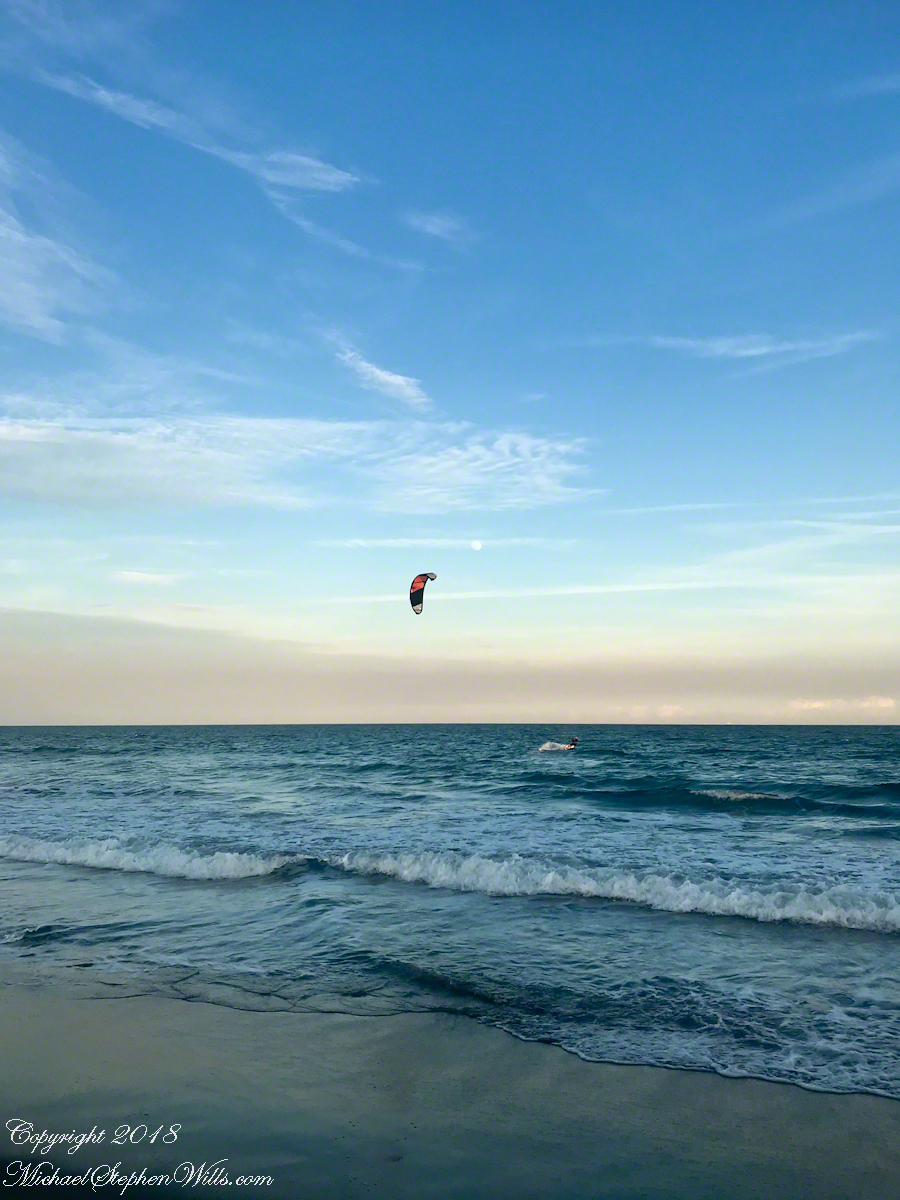
One day before the 2019 Total Lunar Eclipse a full moon rose 4:25 pm above the Atlantic Ocean off Cocoa Beach, the “Space Coast” of Florida. We saw a power kite to the south, with the southerly winds there was time before he was on us. I took the following photographs with what was at hand, an iPhone 8.
Click any photograph to visit my Online Fine Art Photography Gallery
At 50 minutes post moonrise, I included the orb in this frame as the rider tacked, rising a water crest.
Risen Full Moon and Surf Boarder at Sunset
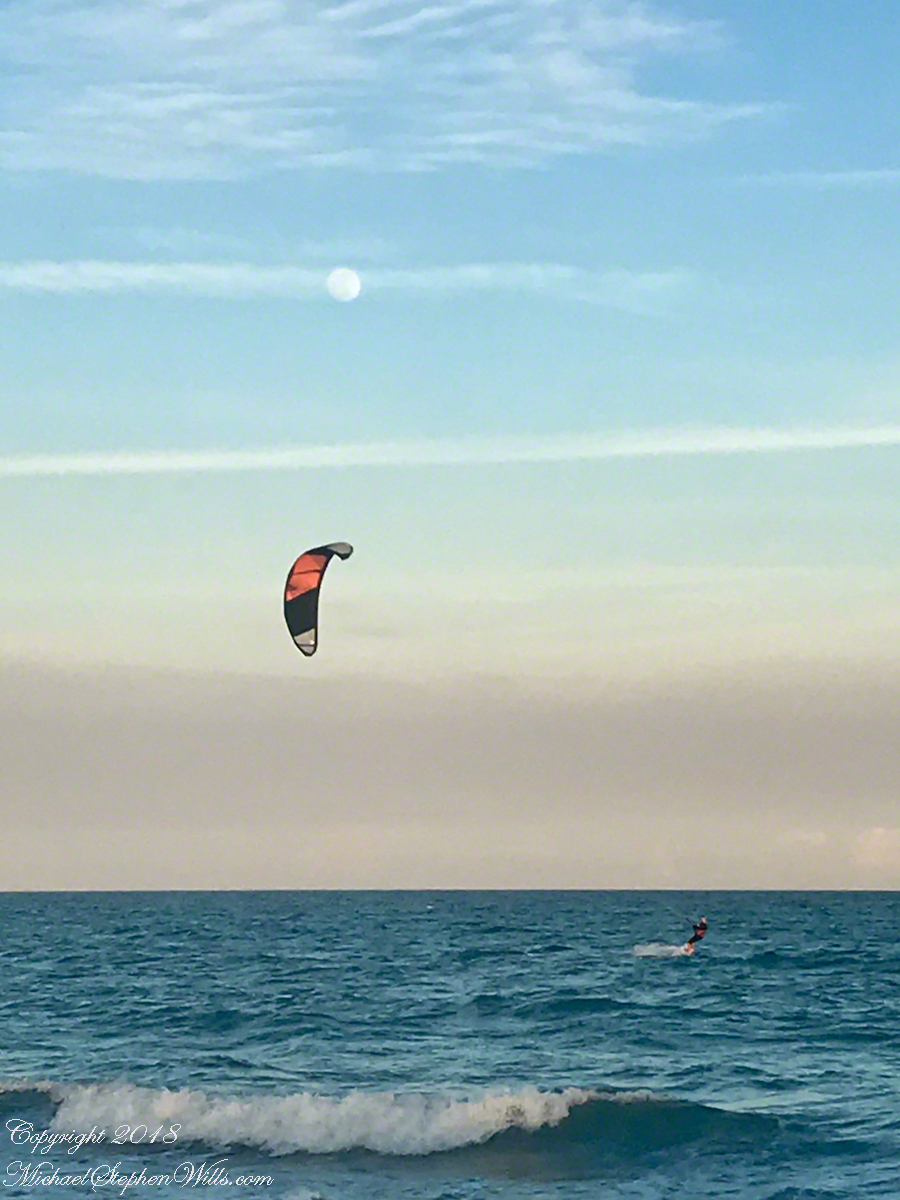
A flick of the fingers to zoom in, the moon and rider are together as he rides toward shore.
Risen Full Moon and Surf Boarder at Sunset with cruise ship
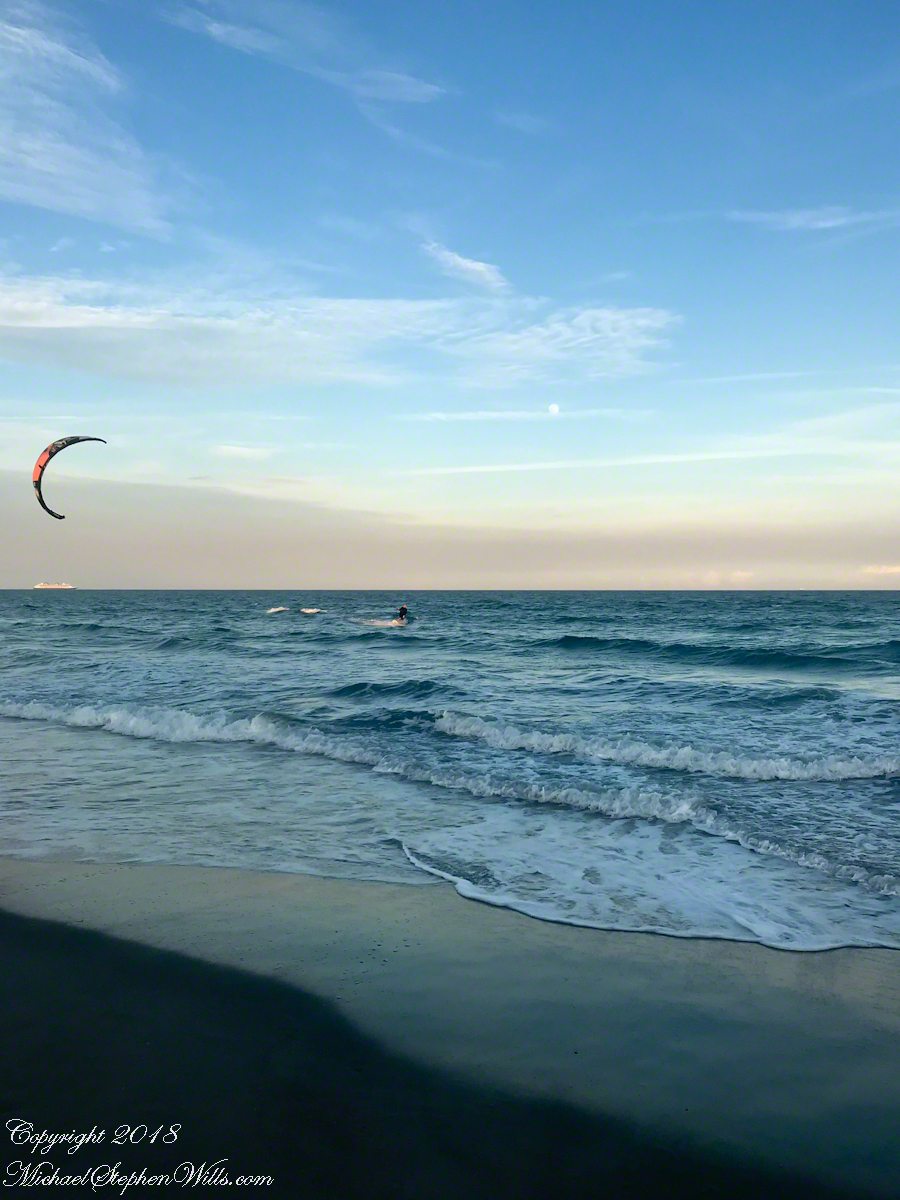
This time of, Saturdays, the cruise ships depart Cape Canaveral Port. The kite is above the distant ship. It is amazing the kite allows sailing into the wind, his heading is southwest. The shore limits his progress, forcing a tack towards a southeast heading.
Kite Surfer coming to shore at sunset.
Or not, it seems he plans to tack to the northeast, continuing progress north up the coast. I have to wonder how he will return to the starting point?
Copyright 2022 All Rights Reserved Michael Stephen Wills
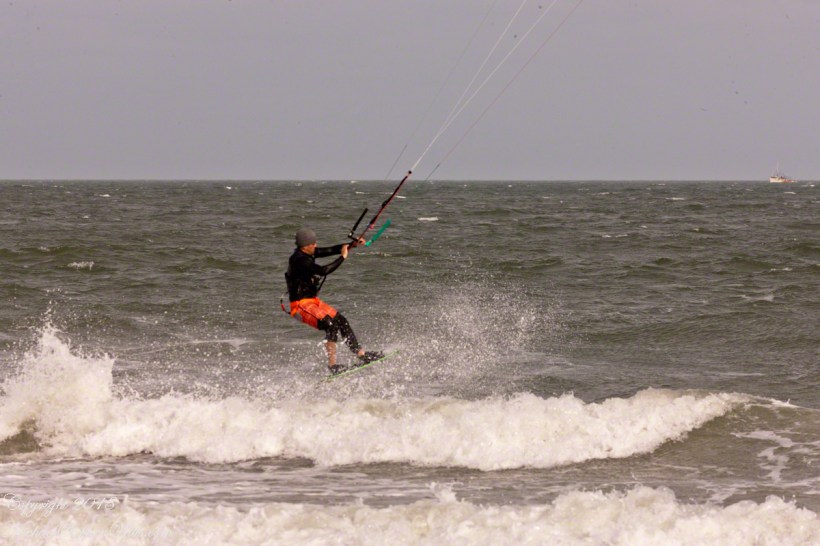
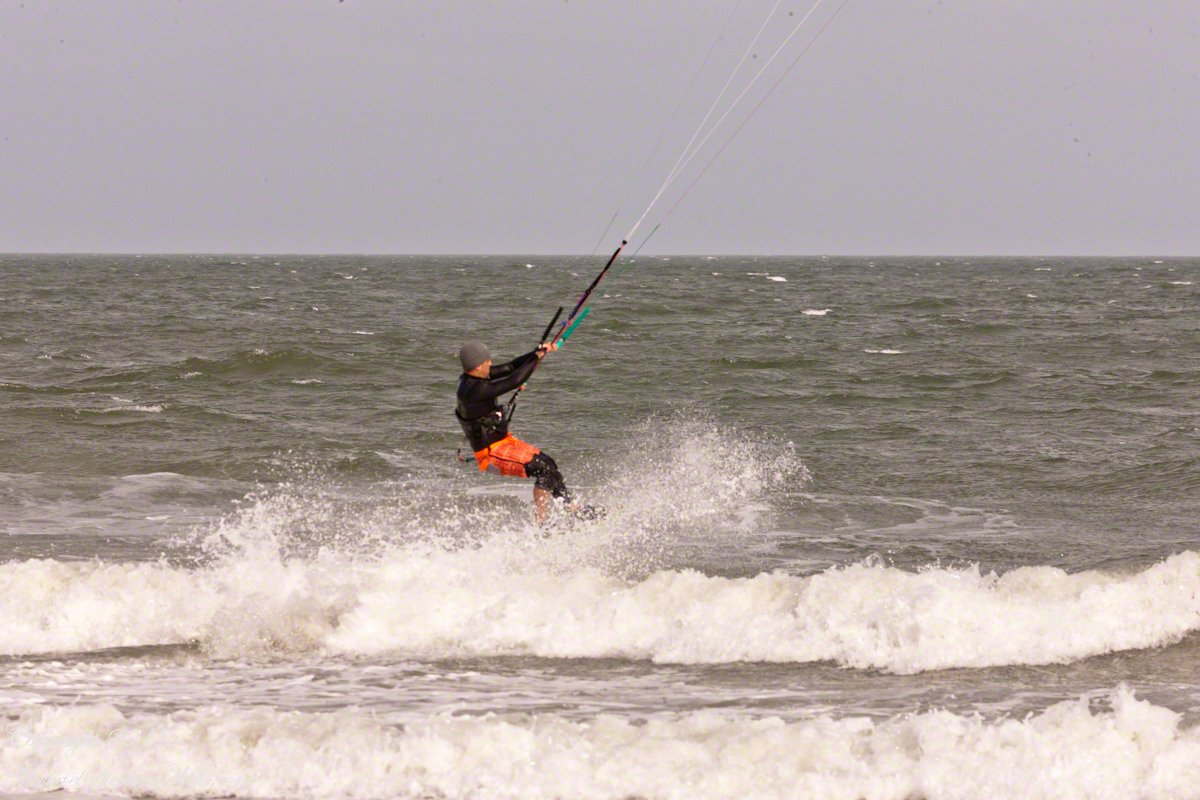
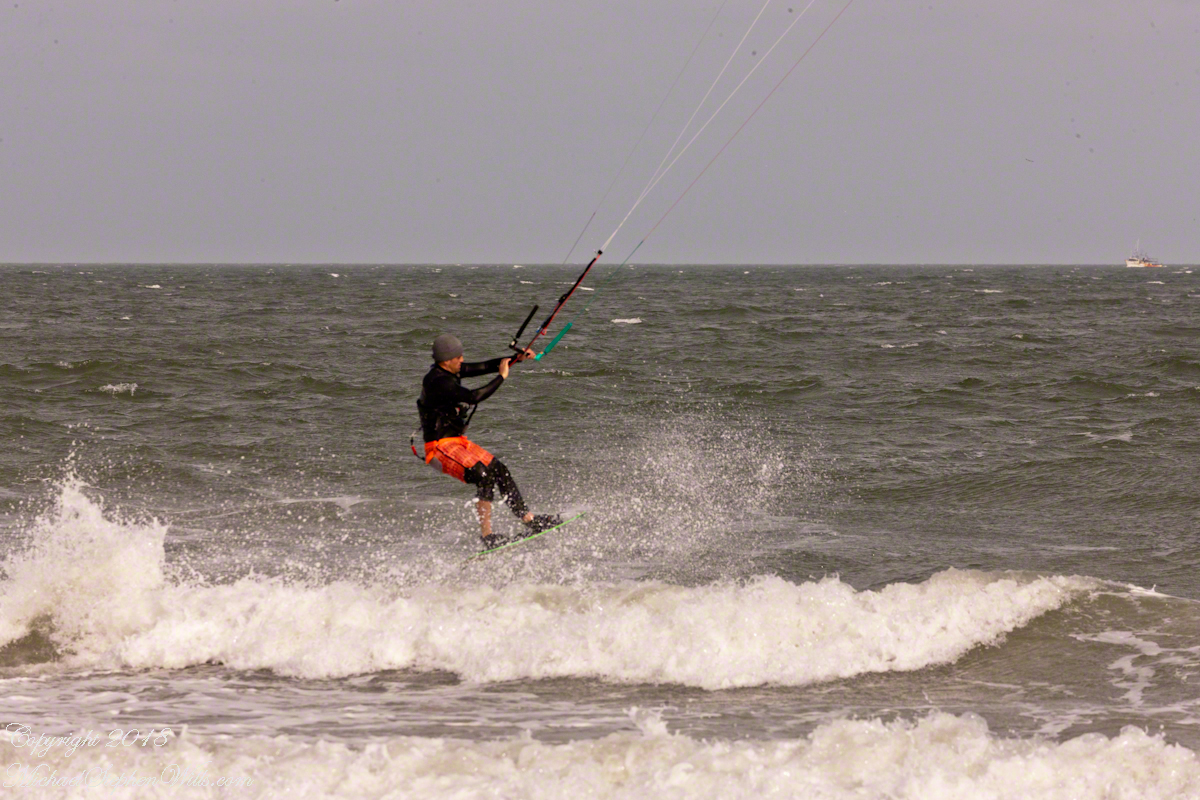
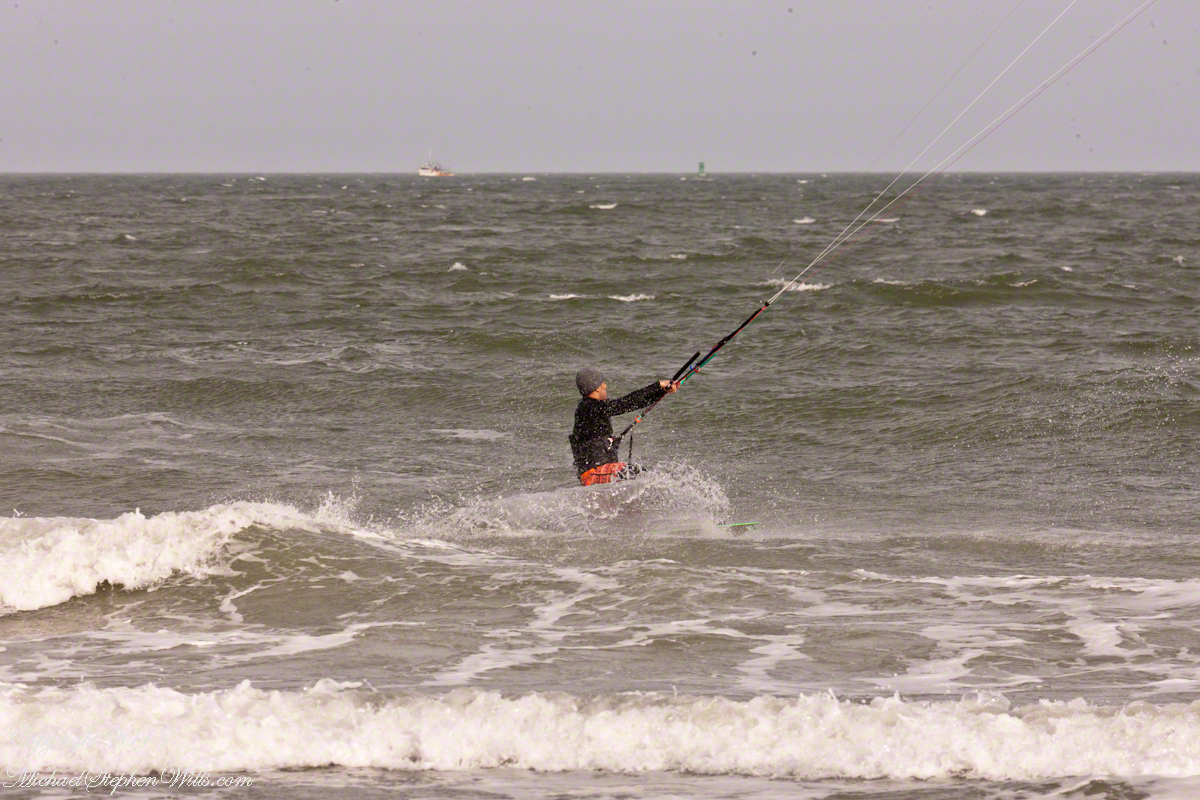
For a change of scene we visited Cape Canaveral, the beach at Cherie Down Park were an informal gathering of Kite Surfers was underway. Here is a series of action shots, one second elapsed from first to last.
Click any photograph for my Online Galleries
Conditions were excellent: good northerly wind, the sun overcast and, it being afternoon, in the west. Surfers stayed relatively close to shore, near their starting point. I had packed the “heavy gun” camera with a tripod.
Panning the scene (swiveling on the tripod), the camera in rapid exposure mode, I pressed the shutter release and held it down.
The surfer was captured mid-jump to landing.
Copyright 2022 All Rights Reserved Michael Stephen Wills


 Michael Stephen Wills Photography