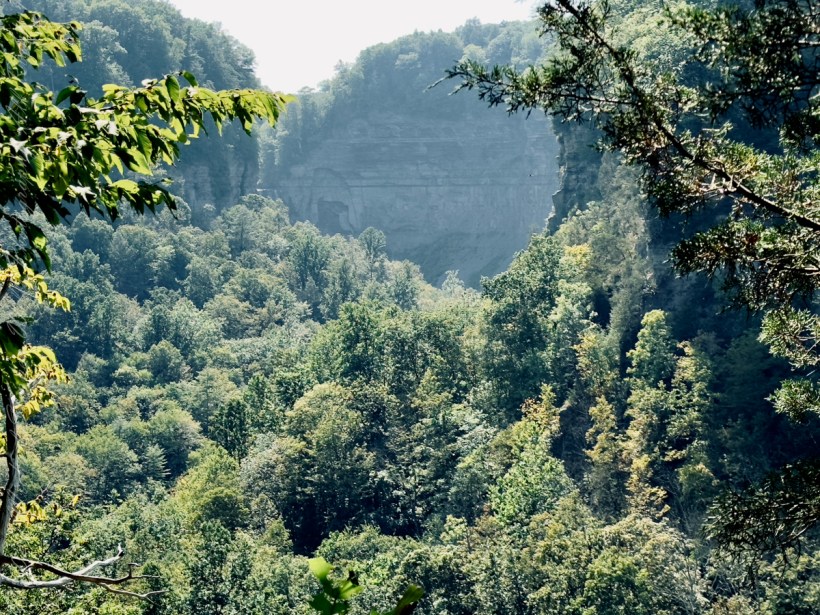
Click Me for this Finger Lakes Collection, a great place to visit.
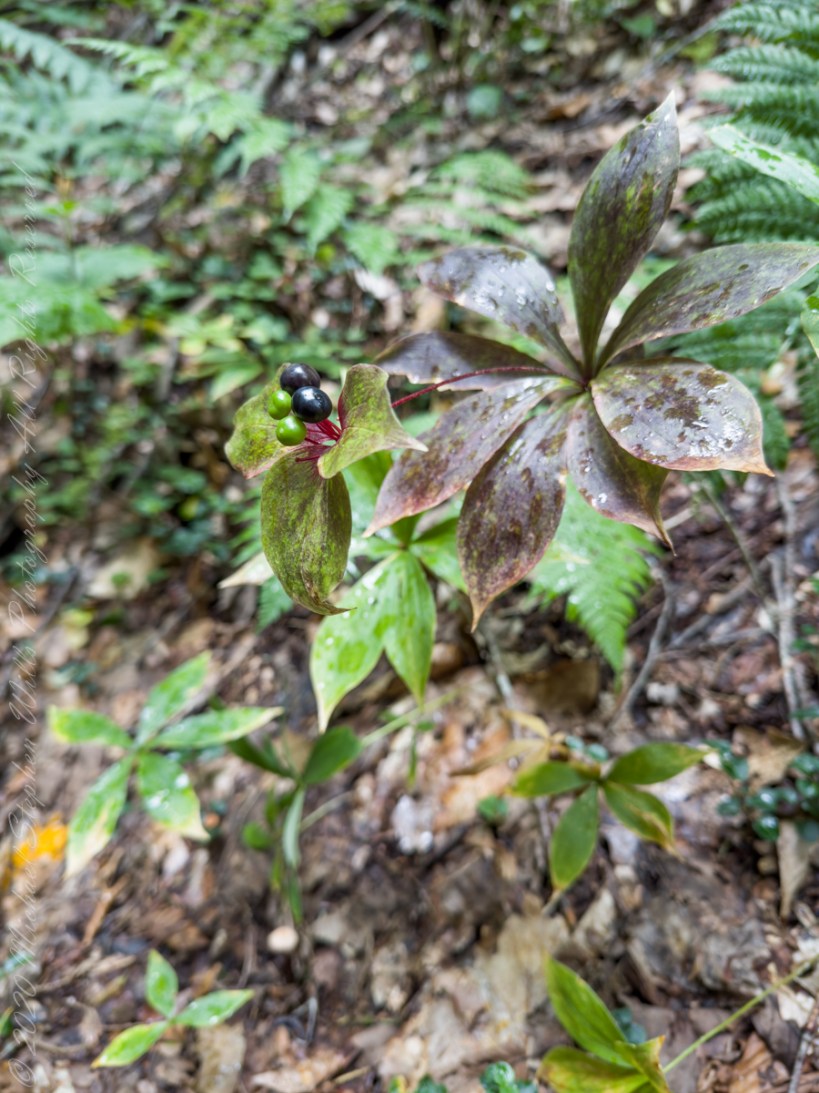
A member of the primrose family
These dark blue berries at the end of a slender naked stalk that arises from the leaf joint at the top of the plant were encountered on a late August day in Fillmore Glen, Moravia, Cayuga County, New York State. Lysimachia borealis is a perennial wildflower commonly known as Starflower. After blooming in the spring, as a member of the primrose family these are some of the first flowers to appear, the fertilized flowers develop into this round purple fruit. To confuse identification, the plant is also known as Trientalis borealis.
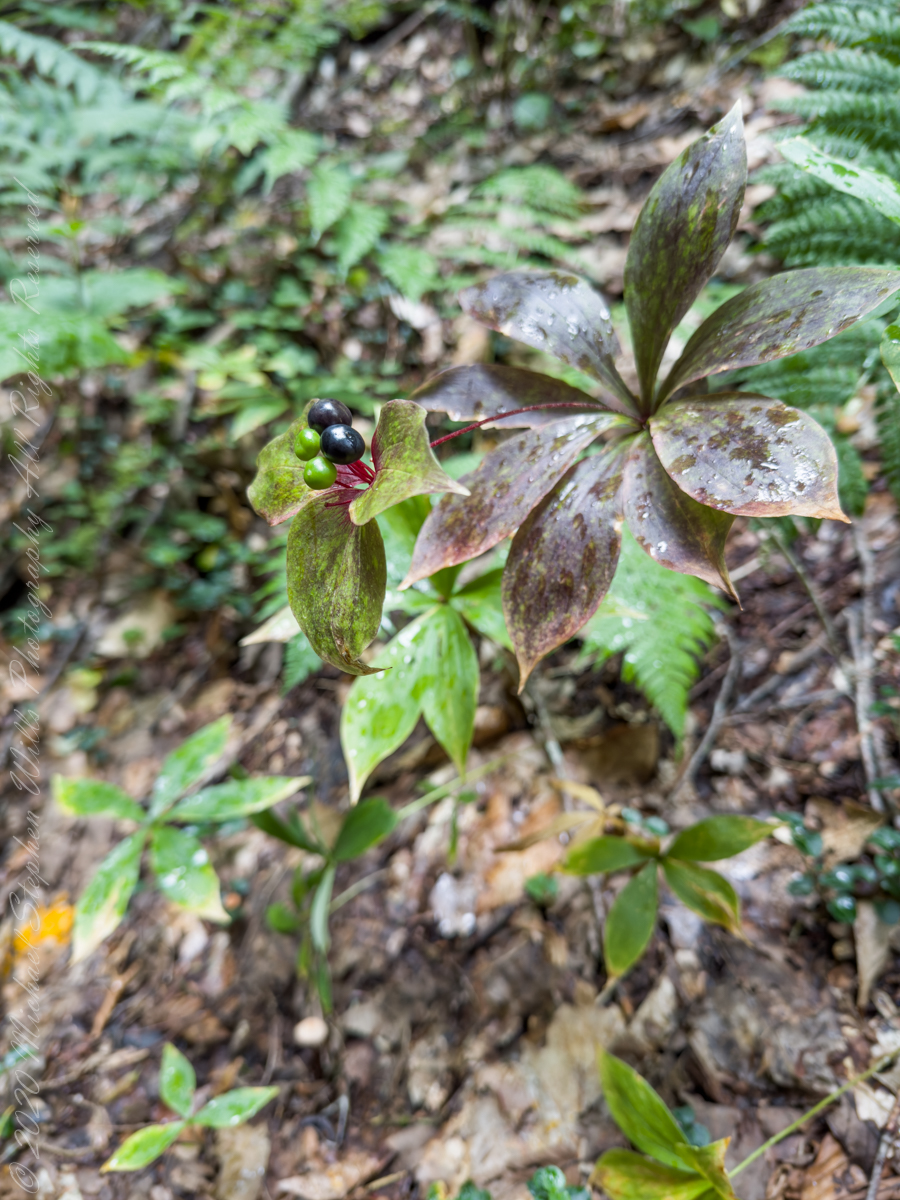
“Lysimachia species are used as food plants by the larvae of some butterflies and moths, including the dot moth, grey pug, lime-speck pug, small angle shades, and v-pug.” Chipmunks eat these fruits as a minor portion of their diet.
“Bees of the genus Macropis are specialized to pollinate oil-producing Lysimachia plants. These bees use exclusively Lysimachia floral oils for building their nests and provisioning cells. Lysimachia floral-specific chemicals are strong attractors for Macropis nuda and Macropis fulvipes bees that are seldom found in other plant genera.”
Do not confuse this with another “starflower,” Borago officinalis, from which an oil is produced commercially.

We learned so much from this new sign
This year, 2023, an informational sign was installed next to the Charles Atwood memorial at the foot of the stone stairs leading to the Gorge Trail.
Charles Atwood The Father of Fillmore Glen
“From Botanist to Physician and Pharmacist: born in Summerhill, Cayuga Coun ty, New York State, Charles Atwood graduated from Cornell University in 1878 with a degree in Botany. He then obtained a medical degree in 1881 from the University of Iowa. He moved to Moravia, Cayuga County, to set up practice. In addition to being a physician, he was one of the first pharmacists to be licensed in New York State. A Passion for Plants. Although Dr. Atwood worked full time as a pharmacist, he retained his passion for botany. Atwood was very interested in the parcel of land that became Fillmore Glen Park, due to the rich botanic life found there. Atwood worked long and hard to establish Fillmore Glen State Park to preserve not only its plant life, but also the cascading waterfalls and unique geological formations.”
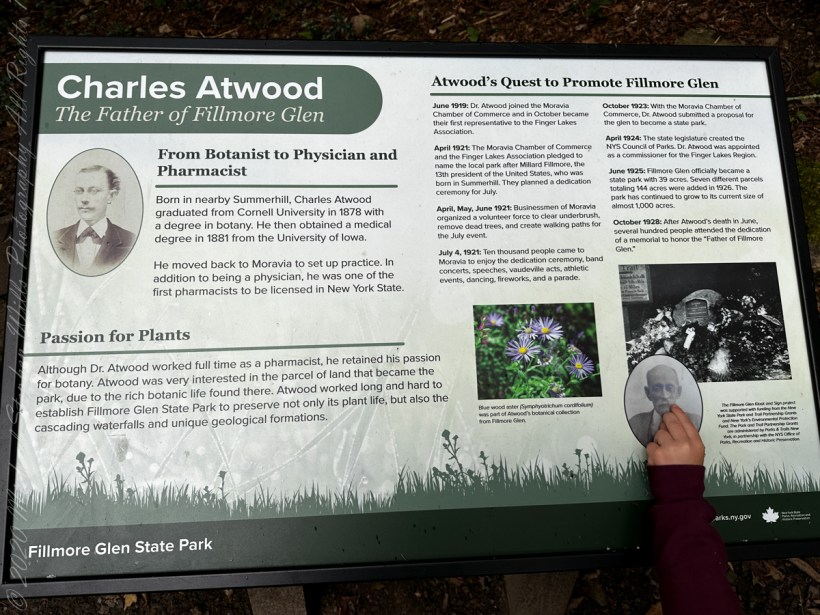
“Atwood’s Quest to Promote Fillmore Glen. June 1919: Dr. Atwood jointed the Moravia Chamber of Commerce and in October became the first representative to the Finger Lakes Association. April 1921: the Moravia Chanbmer of Commerce and the Finger Lakes Association pledged to name the local park after Millard Fillmore, the 13th president of the United States, who was born in Summerhill. They planned a dedication ceremony for July. April, May, June 1921: Businessmen of Moravia organized a volunteer force to clear underbrush, remove dead trees and create walking paths for the July event. July 4, 1921: Ten thousand people came to Moravia to enjoy the dedication ceremony, band concerts, speeches, vaudeville acts, athletic events, dancing, fireworks and a parade. October 1923: With the Moravia Chamber of Commerce, Dr. Atwood submitted a proposal for the glen to become a state park. April 1924: The state legislature created the New York State Council of Parks. Dr. Atwood was appointed a commissioner for the Finger Lakes Region. June 1925: Fillmore Glen officially became a state park with 39 acres. Seven different parcels totaling 144 acres were added in 1926. The park has continued to grow to its current size of almost 1,000 acres. October 1928: After Dr. Atwood’s death in June, several hundred people attended the dedication of a memorial to honor the ‘Father of Fillmore Glen.'”
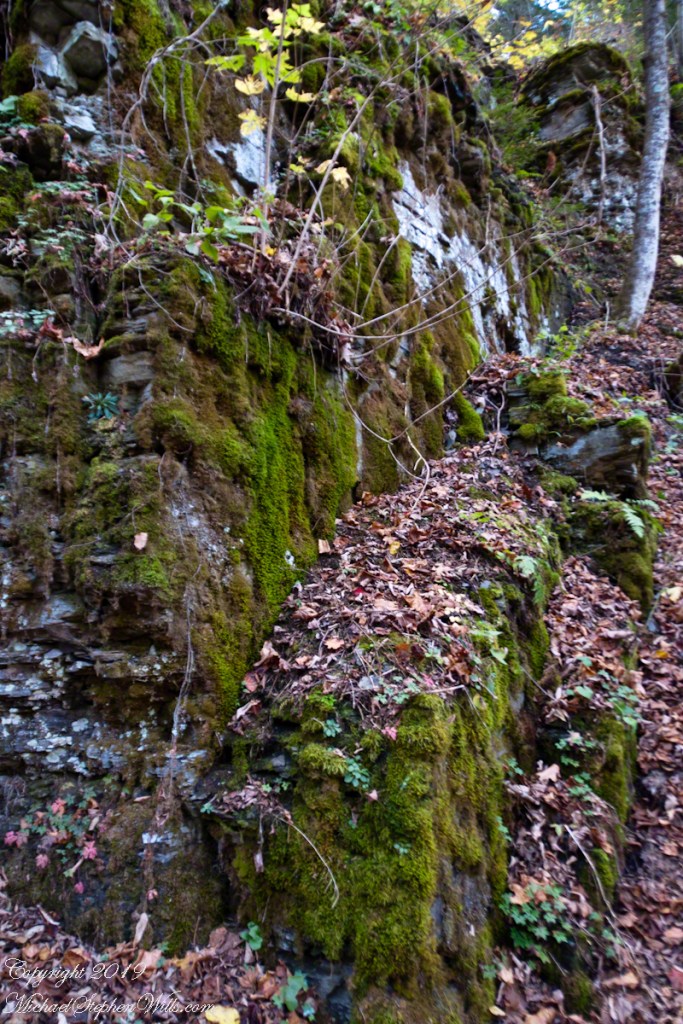
A Wall with Moss Padding
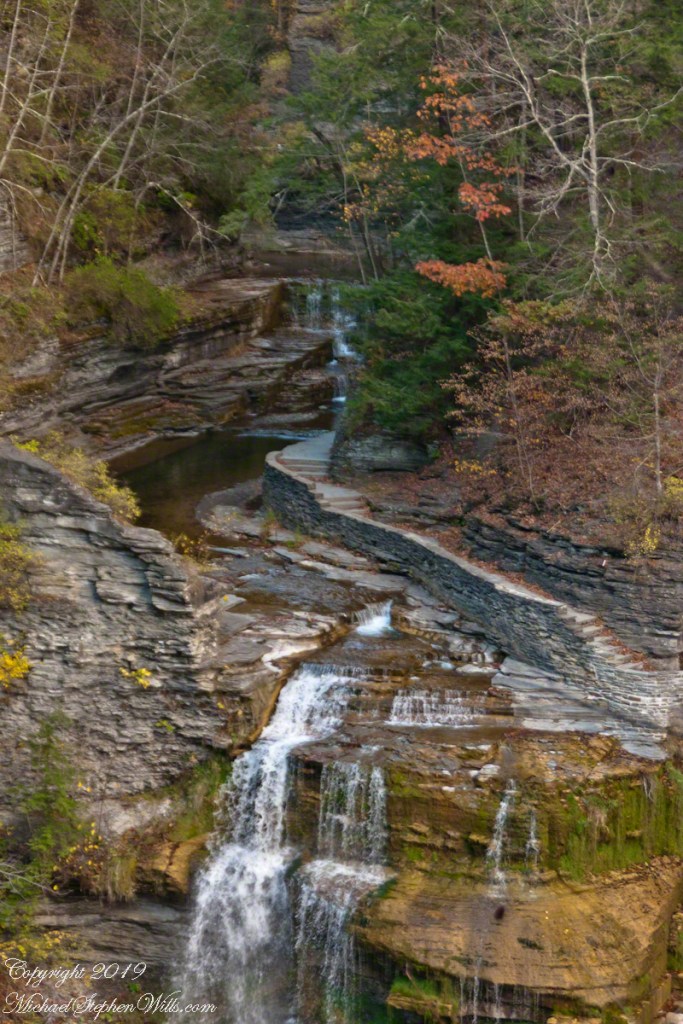
Pam examining thick moss growth on the sedimentary rock of Treman gorge. These layers of shale, sandstone, siltstone formed at the bottom of a broad, shallow sea over 380 million years ago.
Towards the bottom of the 223 Cliff Stair steps moss takes over the Devonian shale of the cliff wall surface. Here, the cliff shelters the wall from sunlight 365 days a year.
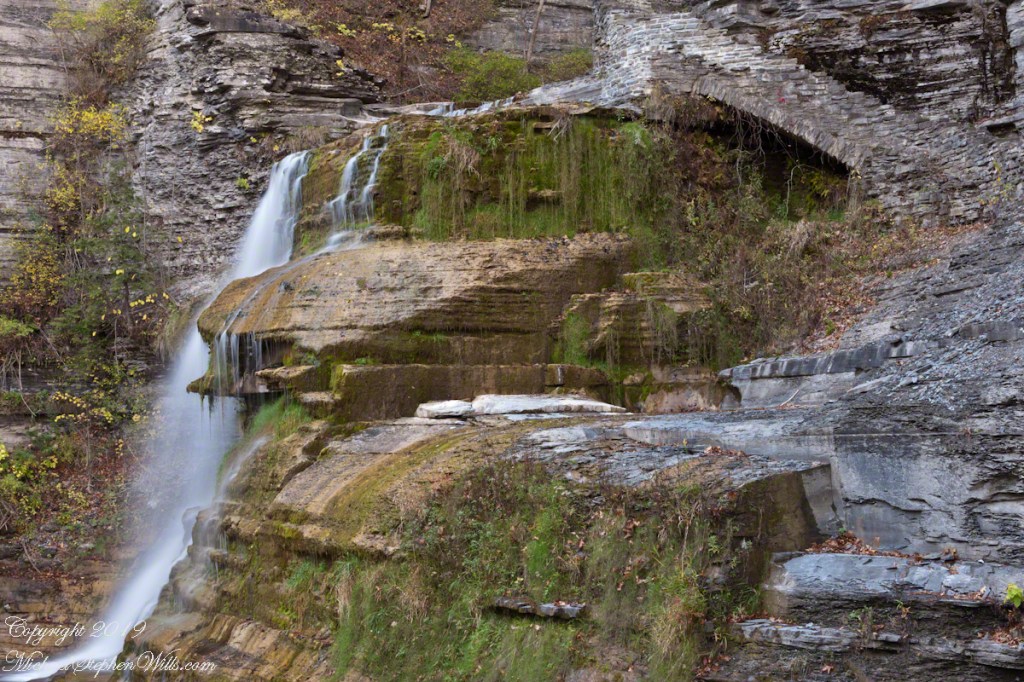
Robert H. Treman New York State Park.
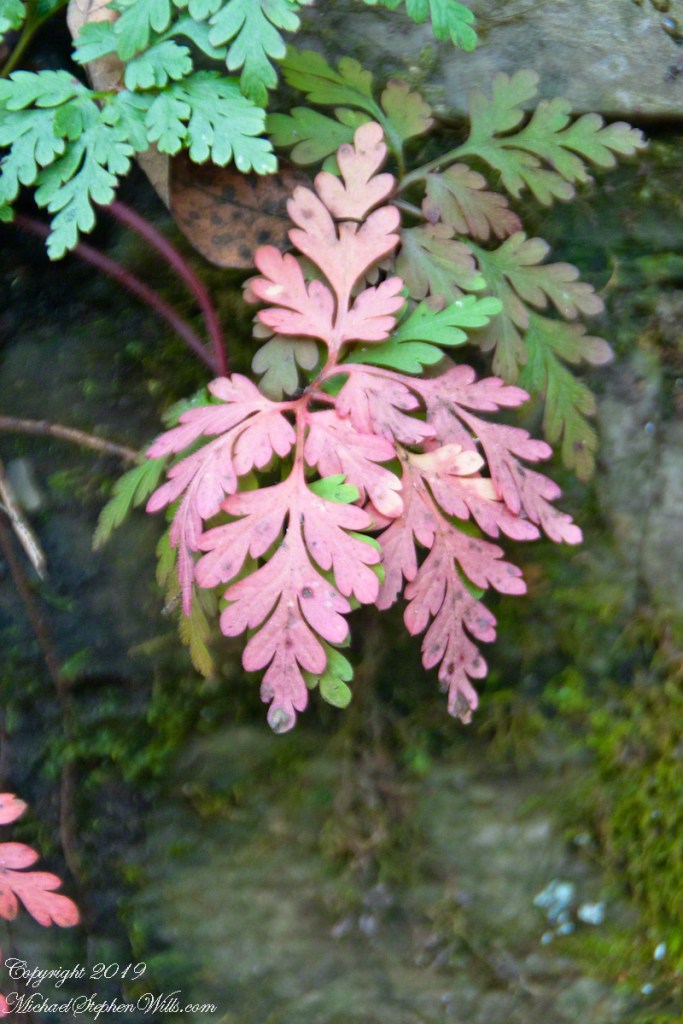
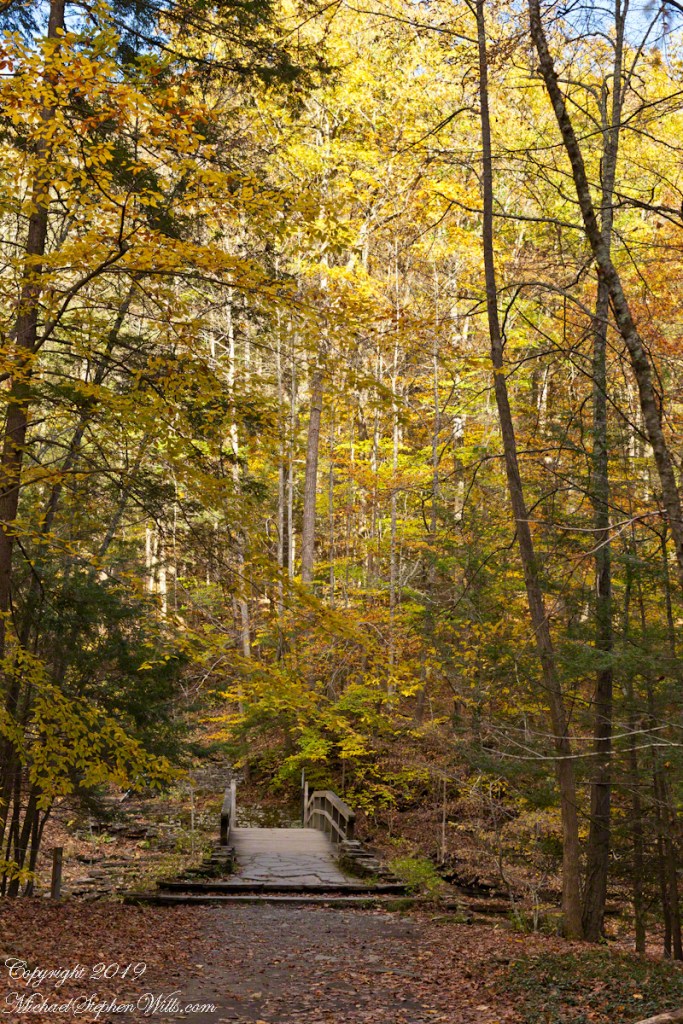
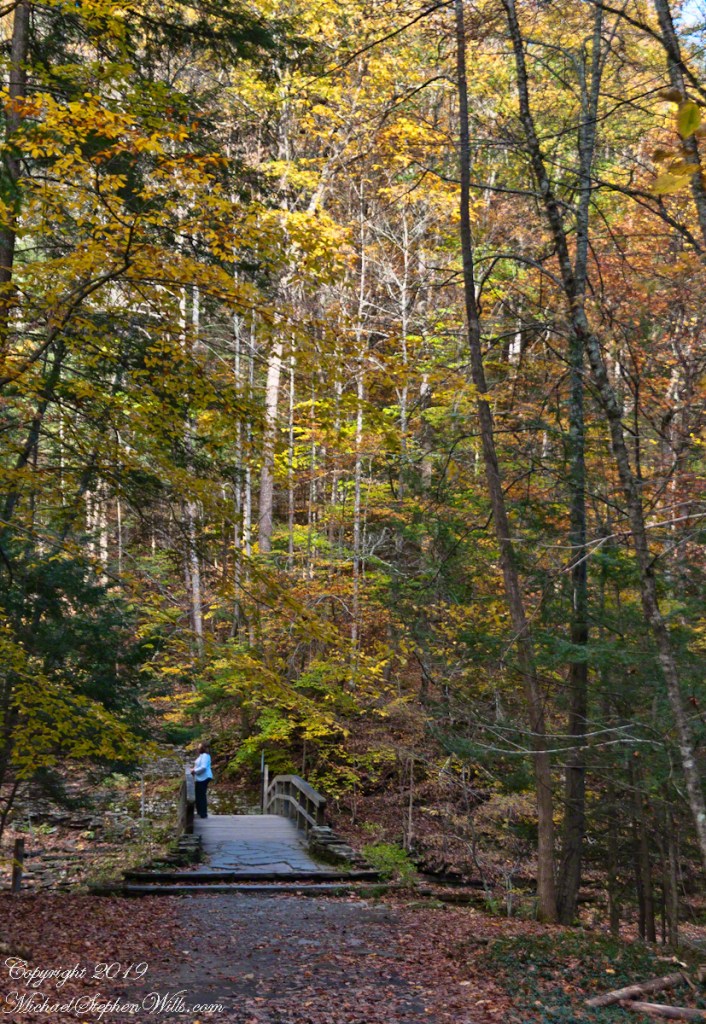
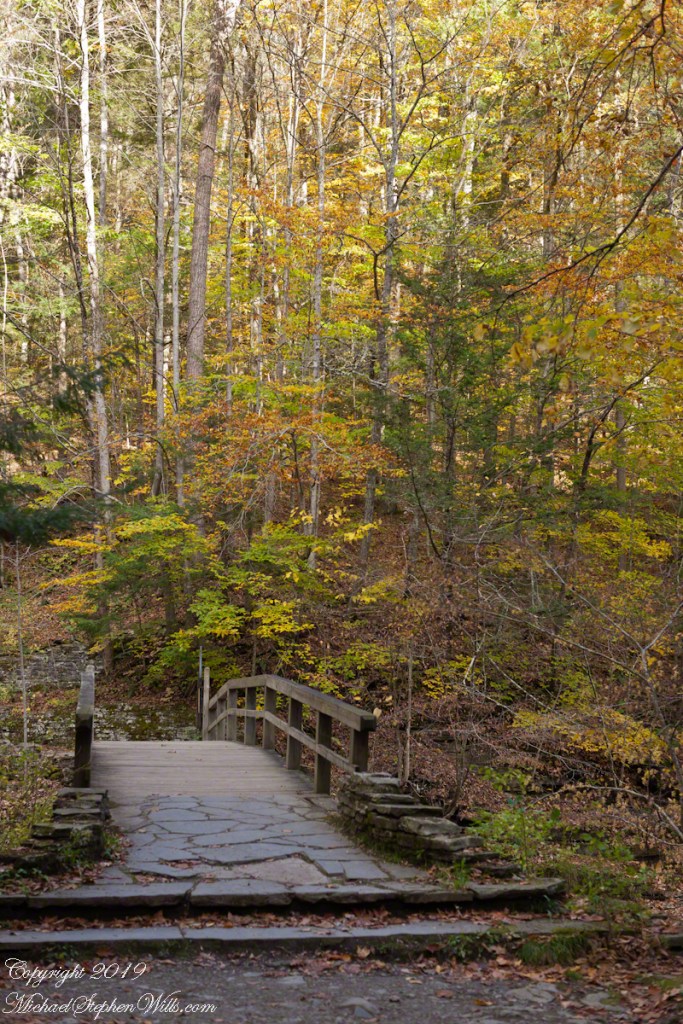
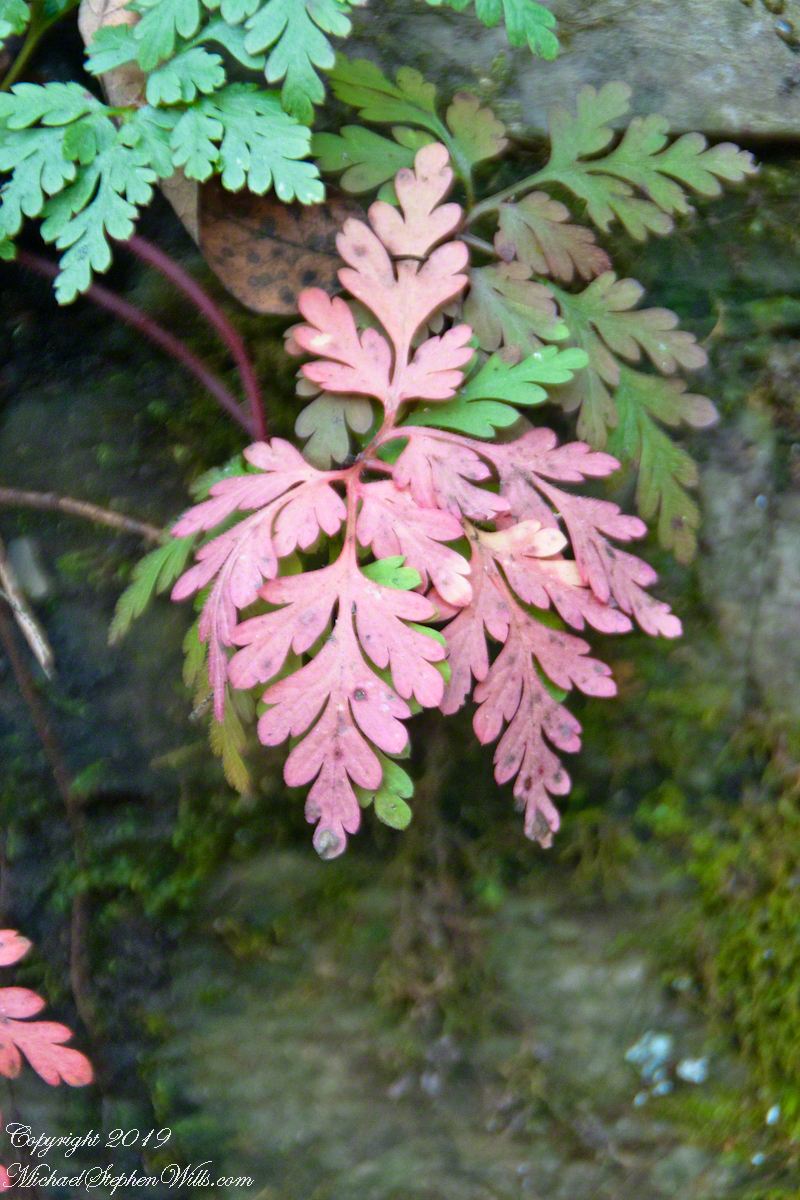
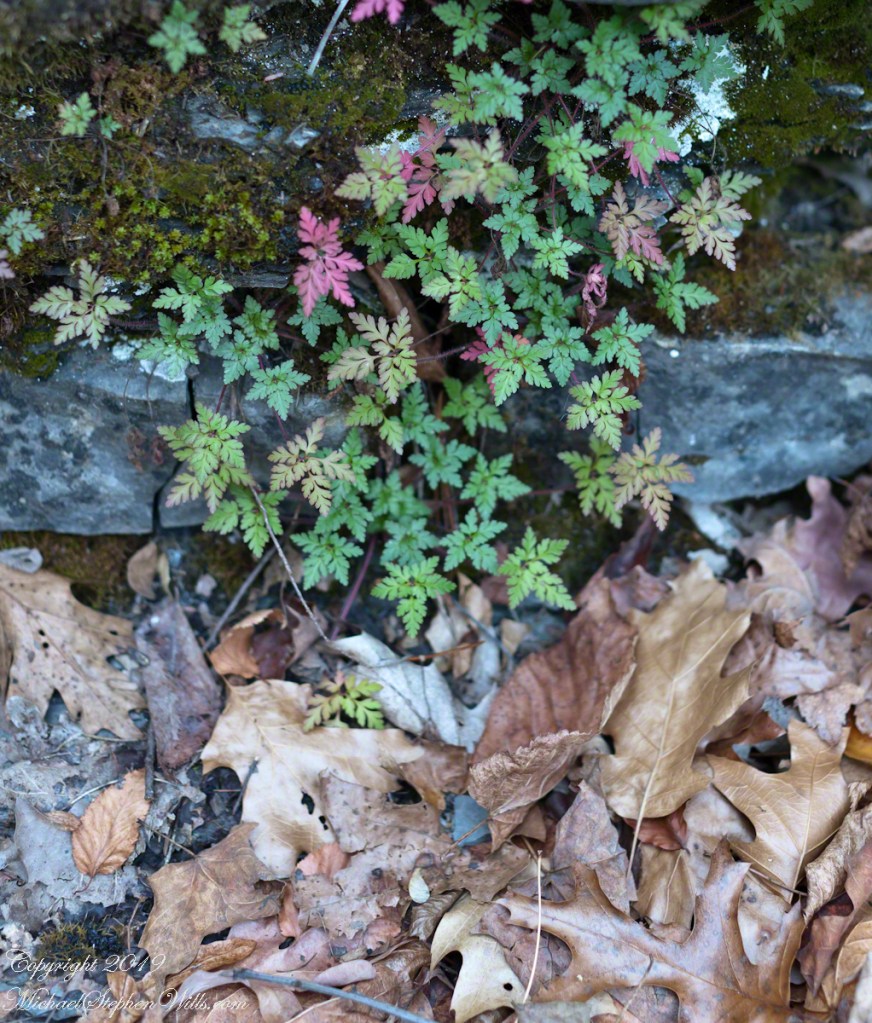
“Red-shanks”
This geranium species (scientific name Geranium robertianum) are also called “Herb-Robert” for a reputed ability to ward off disease.
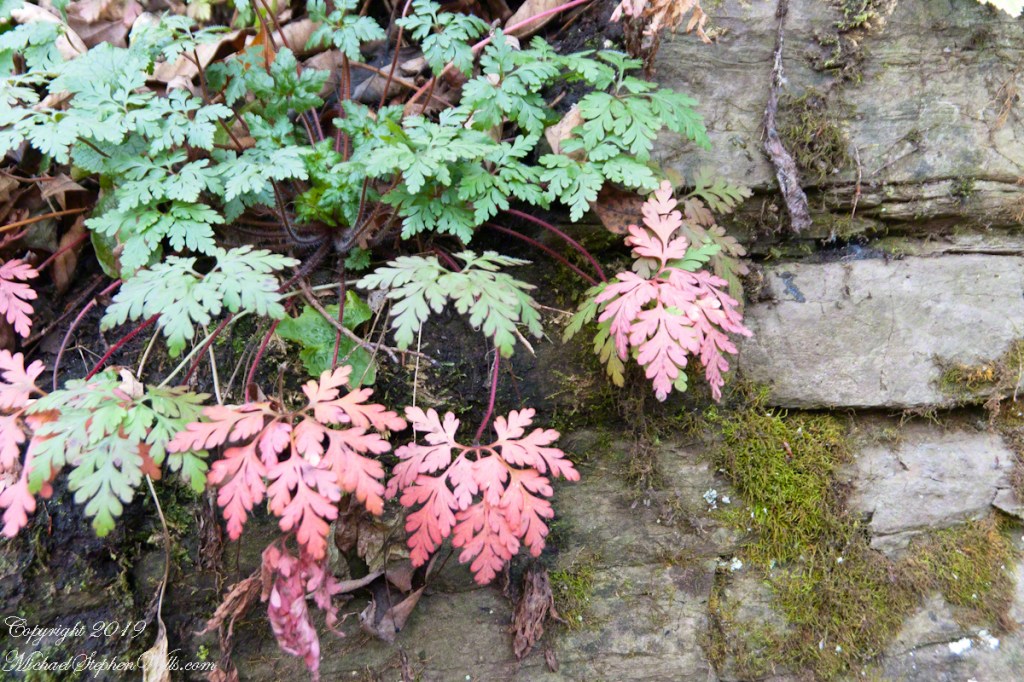
Scottish Highlands residents call these wild geraniums “red-shanks” for the deep red color of the stalks, seen in both photographs.
Robert H. Treman New York State Park.
Source, “How to Know the Wildflowers” by Mrs. William Star Dana, 1989, Houghton Mifflin, Boston.
read the sign
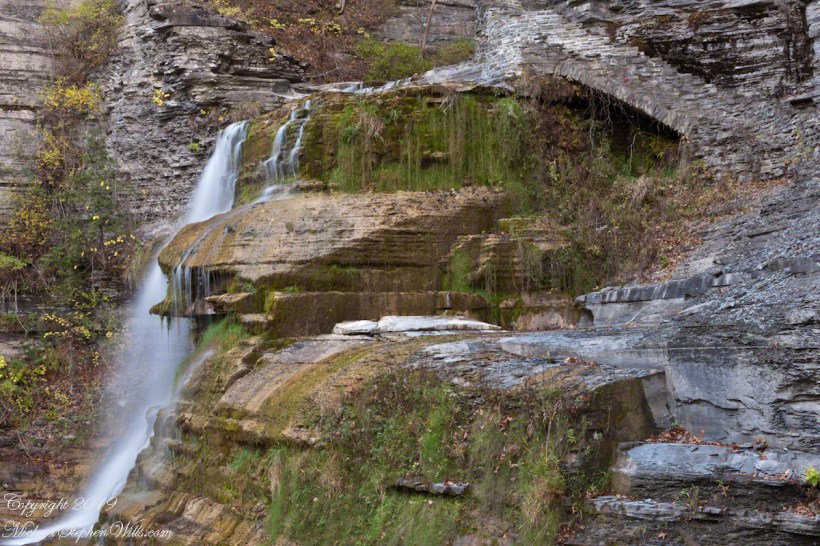
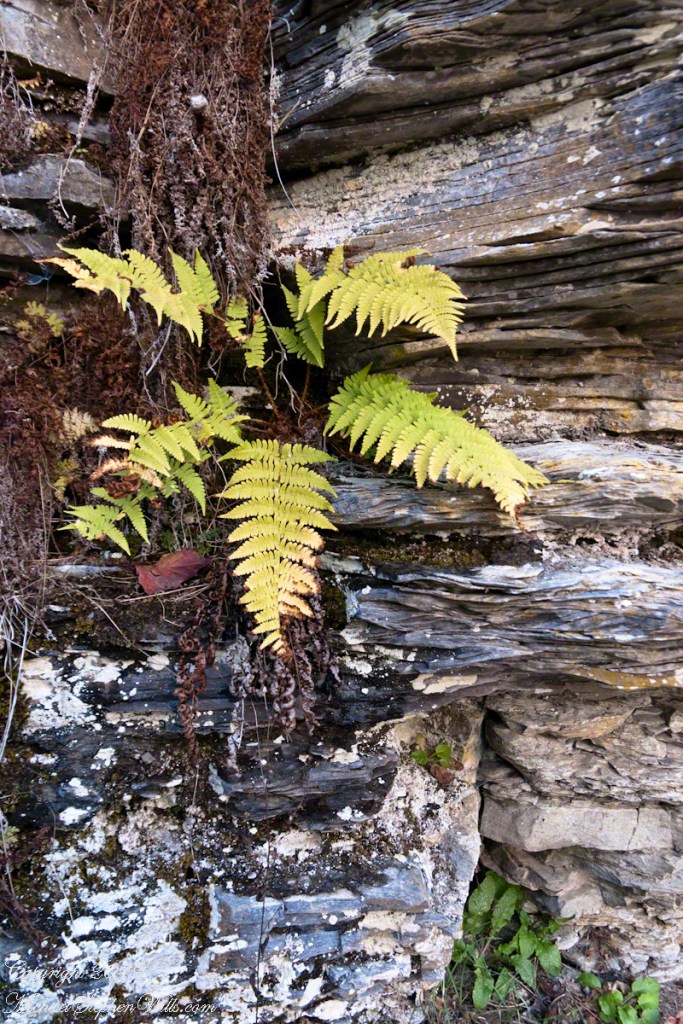
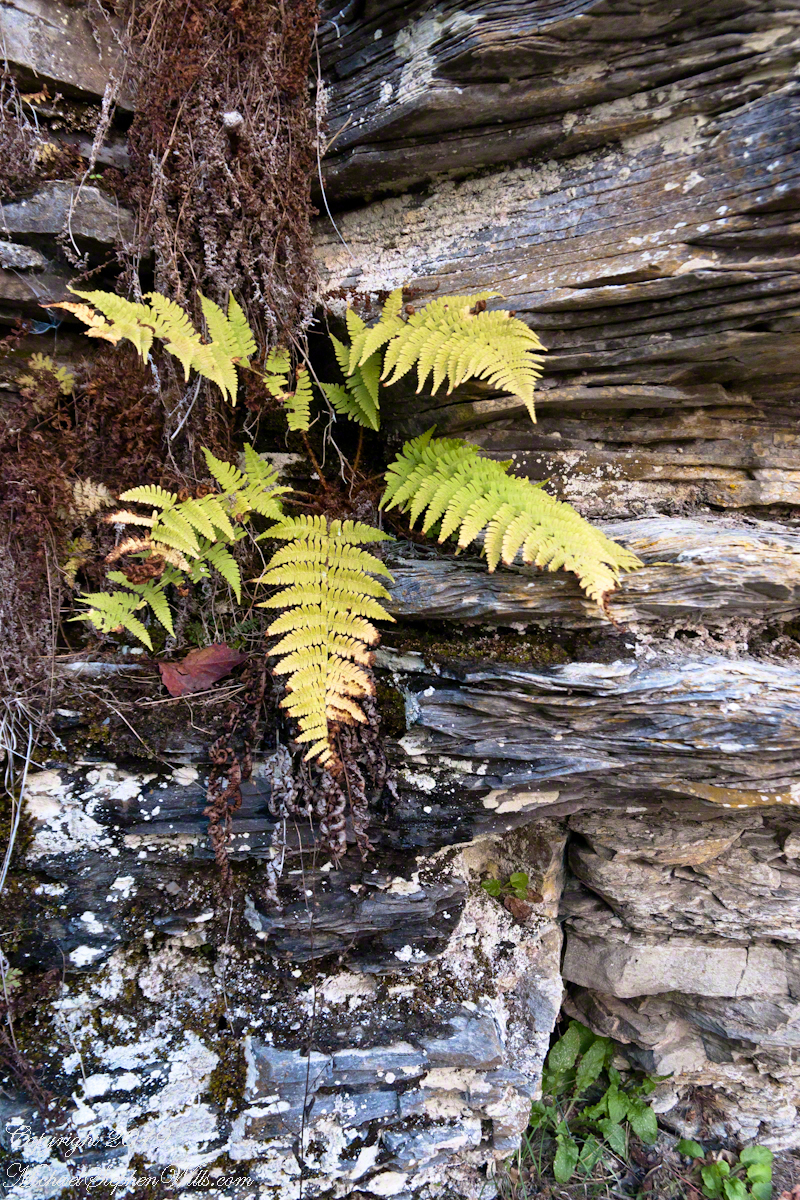
Each autumn, species of fern turns yellow towards a winter death. Here we see growing from Devonian shale, both the yellowed and desiccated fern fronds. Robert H. Treman New York State Park.
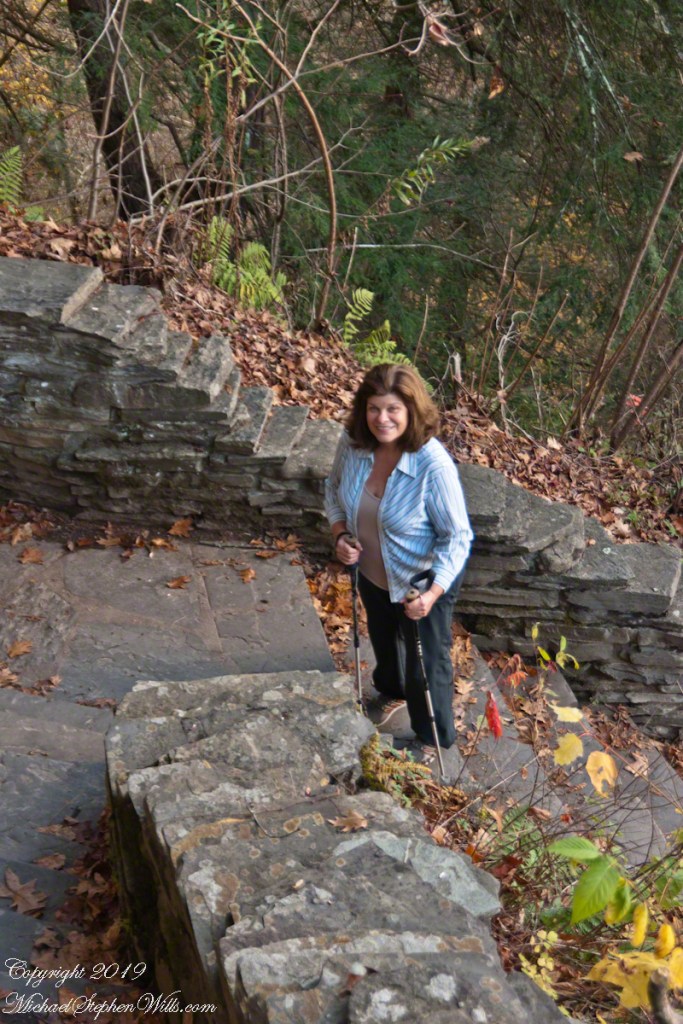
Pam pauses for a photograph
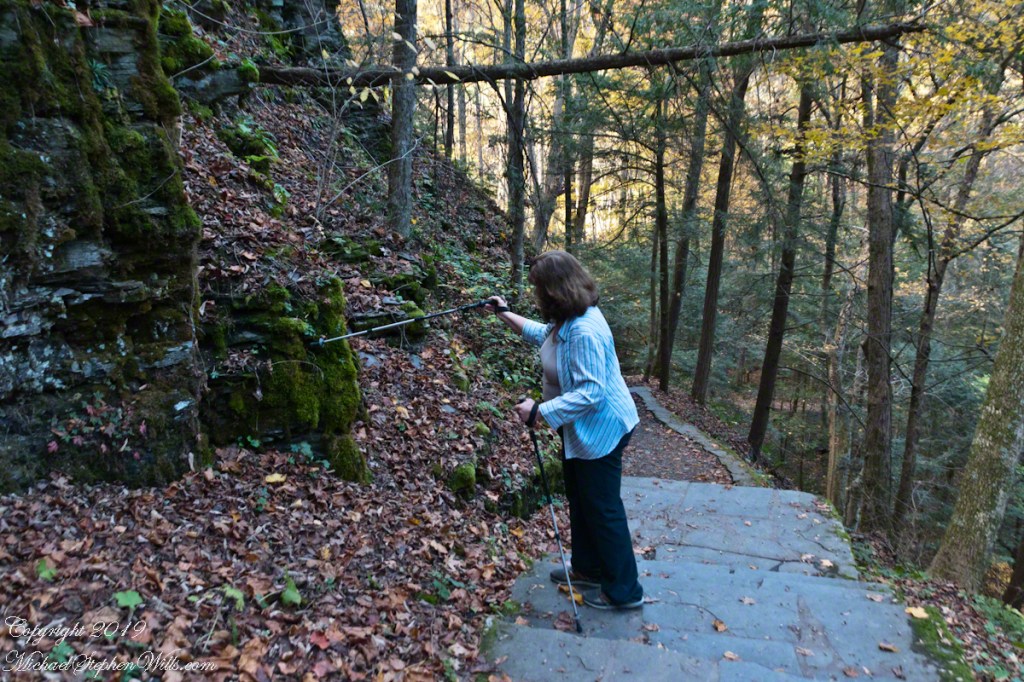
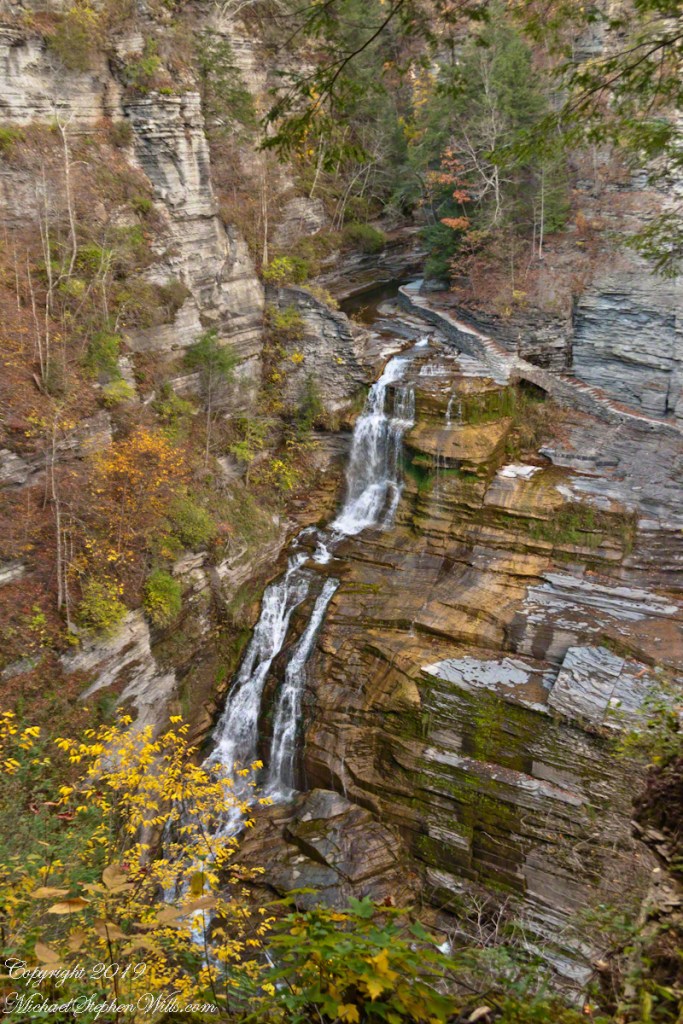
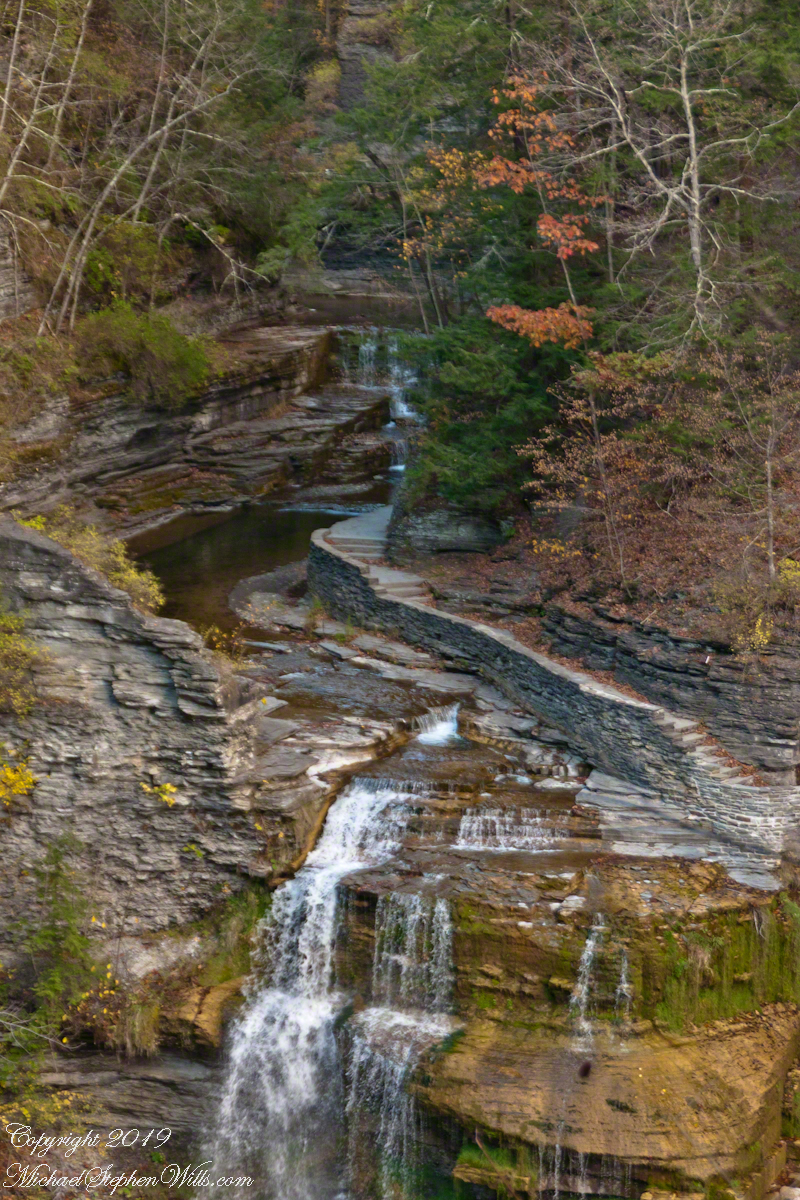
On a day in late October 2017 Pam and Mike did a photography walk. Here is Pam pausing to pose during a descent into the gorge on the cliff staircase after visiting the overlook high above Lucifer Falls, Robert H. Treman New York State Park in the Finger Lakes Region.
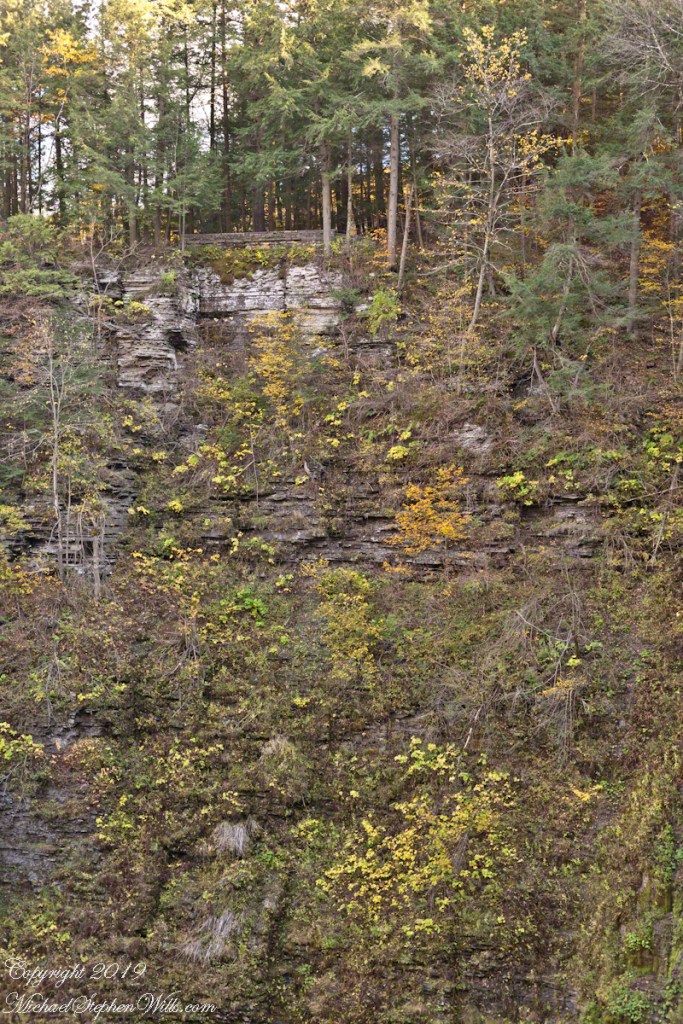
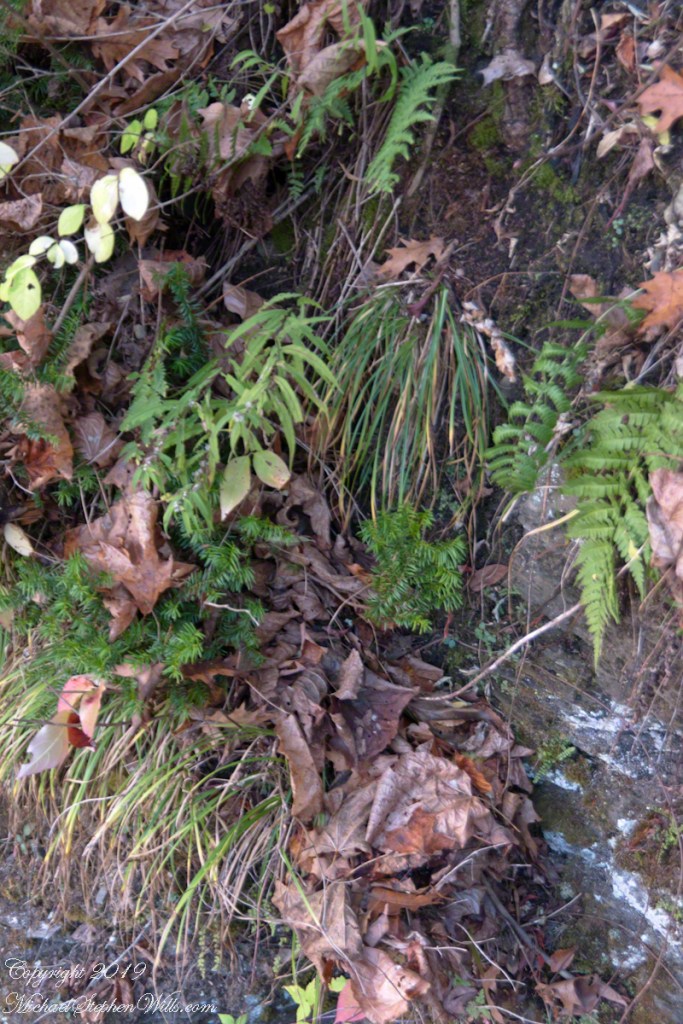
Grasses, hemlock saplings, goldenrod, spent leaves and ferns on the wall of the 223 Cliff Stair steps.
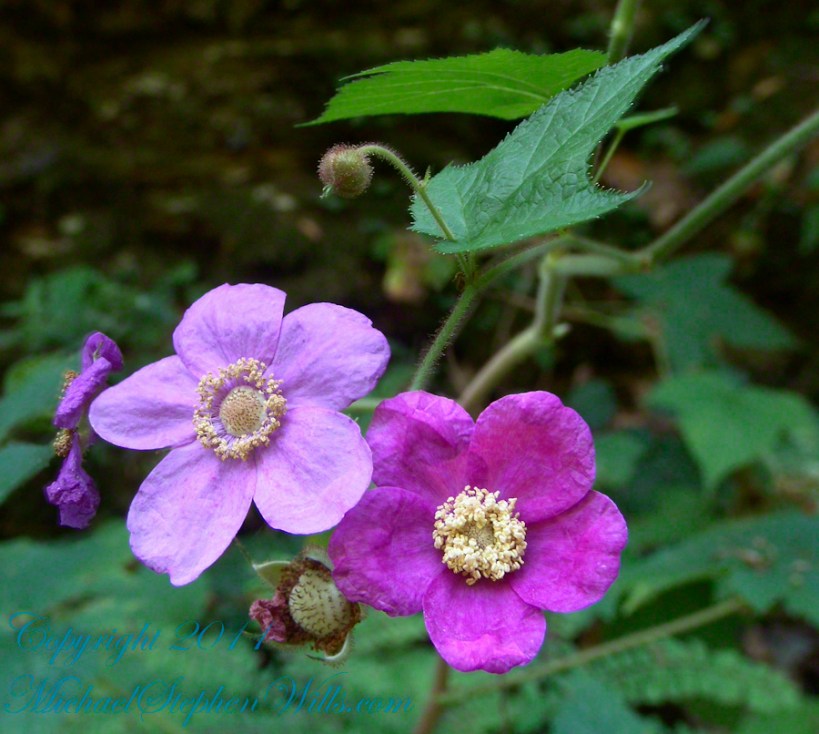
Among our Gorges
“Rubus odoratus, the purple-flowered raspberry, flowering raspberry, Virginia raspberry, or Thimbleberry is a species of Rubus, native to eastern North America, from Nova Scotia west to Ontario and Wisconsin, and south along the Appalachian Mountains as far as Georgia and Alabama.”
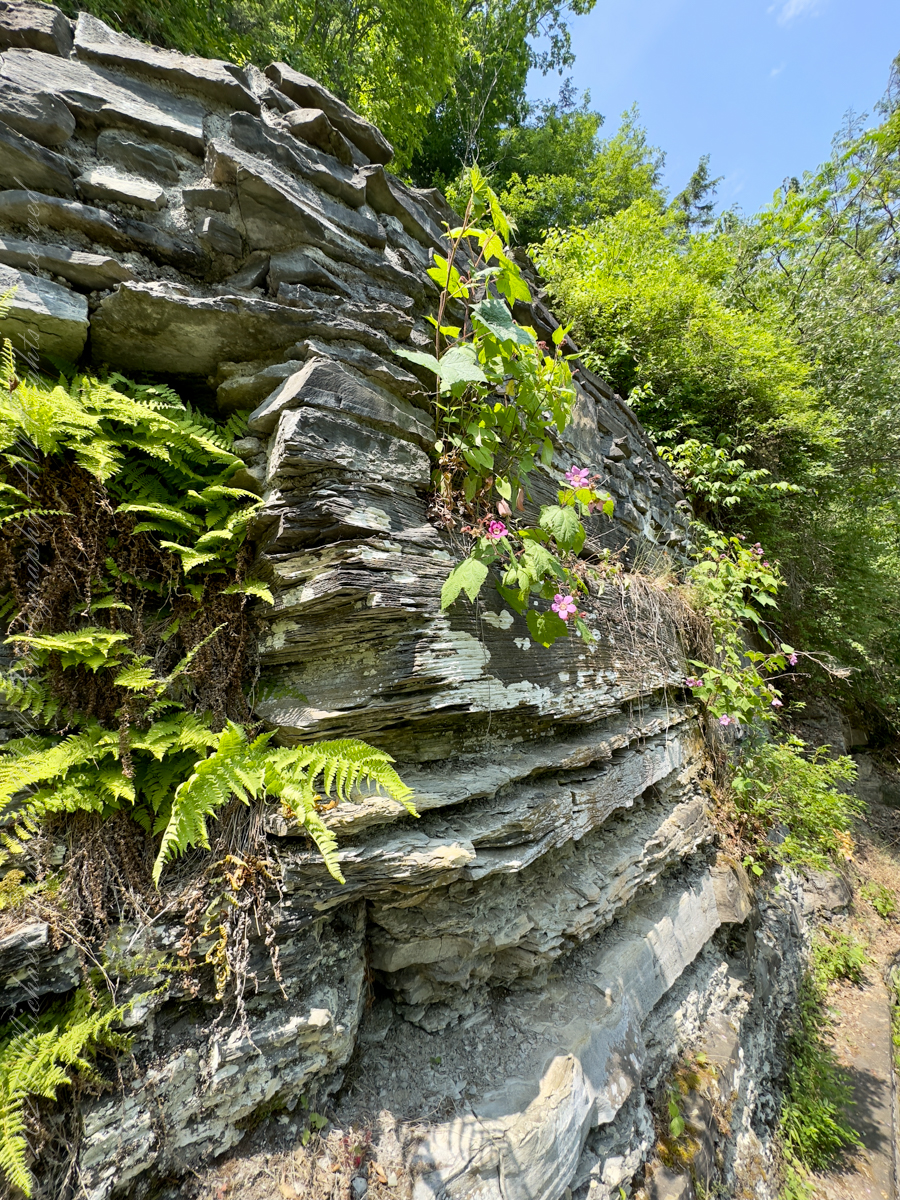
“Rubus odoratus is a shrub growing to 3 meters (10 feet) tall, with perennial, not biennial, stems (unlike many other species in the genus). Also, unlike most other related species this plant does not have thorns.”
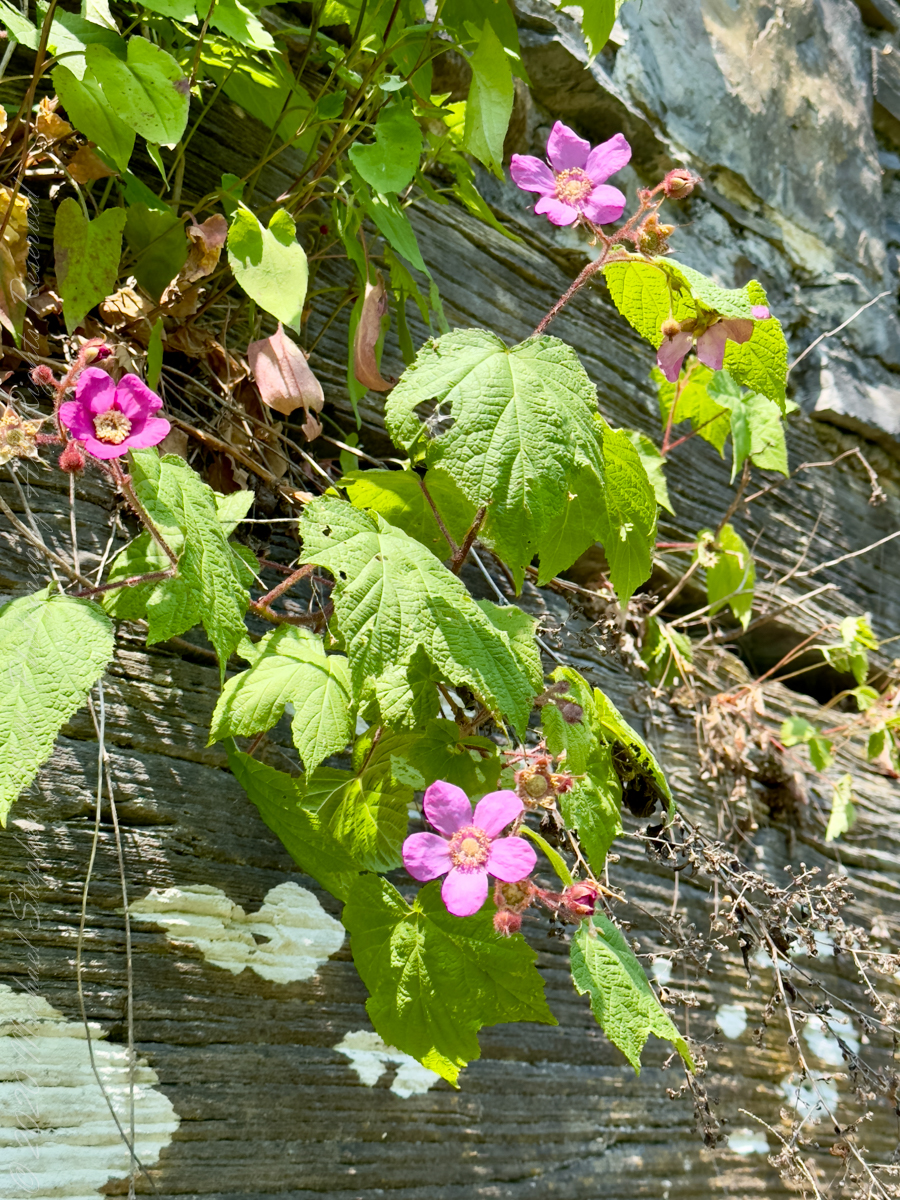
“The leaves are palmately lobed with five (rarely three or seven) lobes, up to 25 cm (10 inches) long and broad, superficially resembling maple leaves. The flowers are 3–5 cm (1.2–2 inches) in diameter, with five magenta or occasionally white petals; they are produced from early spring to early fall. The red edible fruit matures in late summer to early autumn, and resembles a large, flat raspberry with many drupelets, and is rather fuzzy to the touch and tongue.”
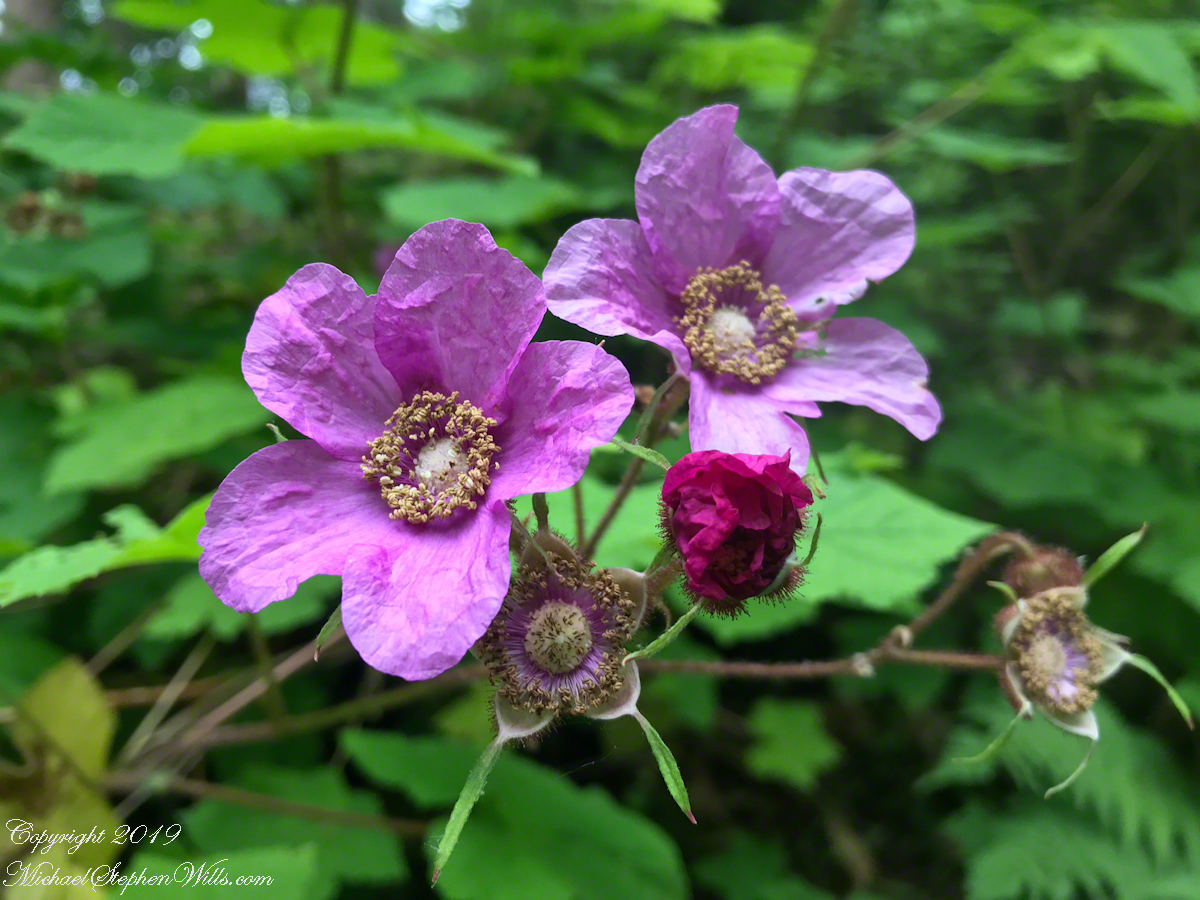
We find Purple-flowering Raspberry in the gorges of the Finger Lakes Region of Central New York State where it finds partial shade, rich, slightly acid soil and moderate water. “It is locally naturalized in parts of Washington State and also in Europe, notably southeastern England.”
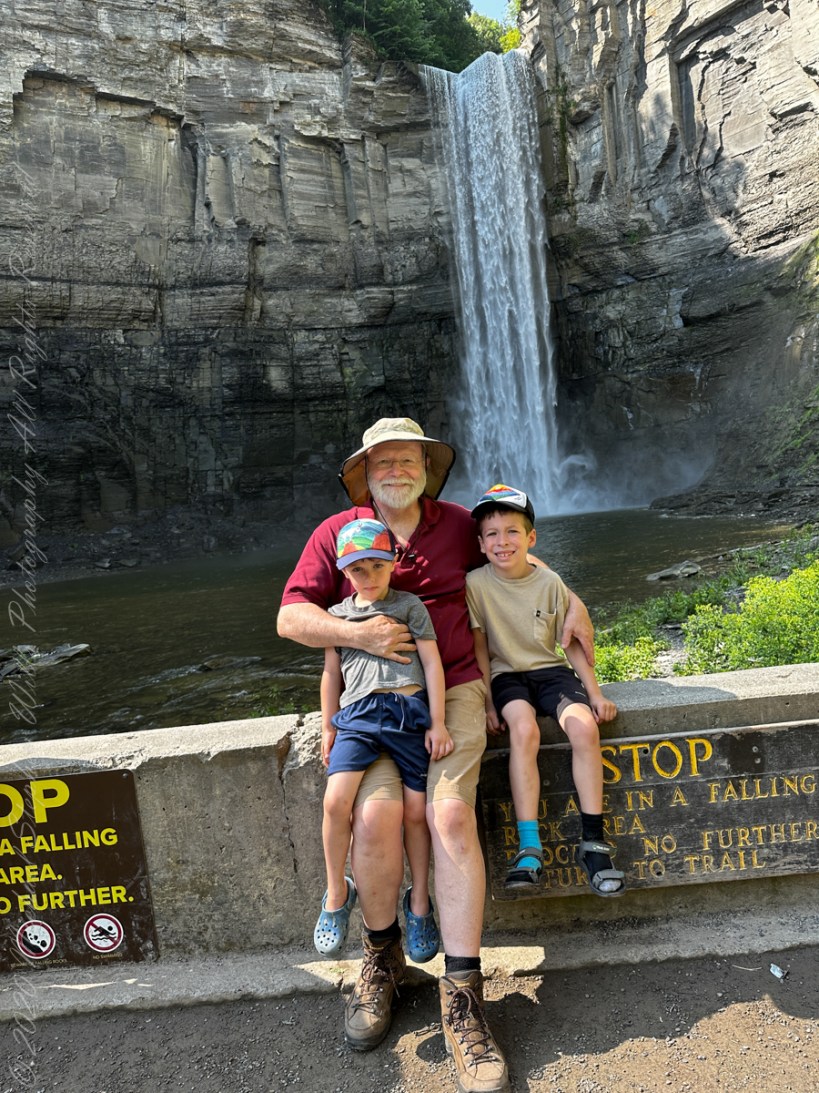
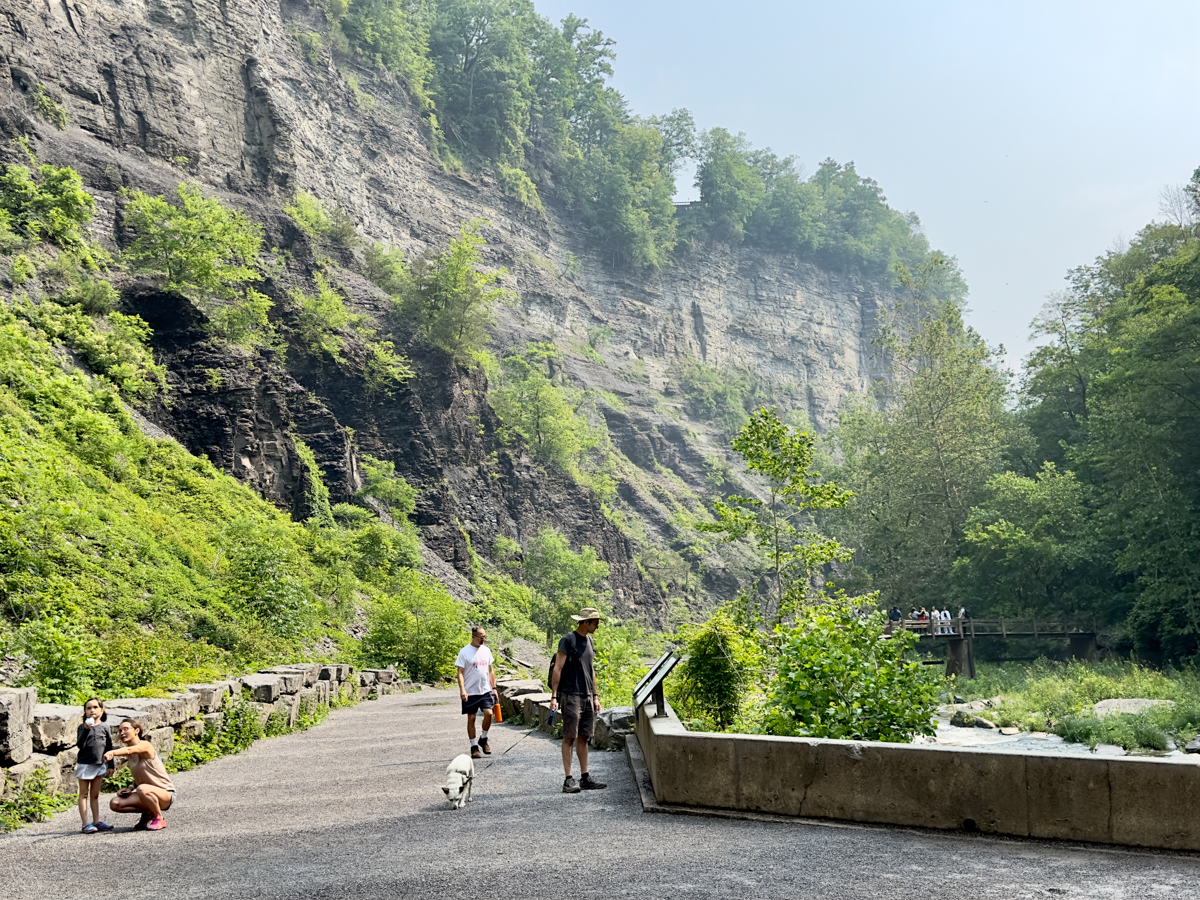
Several possible sources have been proposed for the name Taughannock, all of which describe Native American origins. One translation suggests that the name is derived from a combination of Iroquois and Algonquin terms meaning “great fall in the woods”. An alternate theory suggests that the name may refer to a Lenni Lenape (Delaware) chief named Taughannock who died near the falls during a battle.
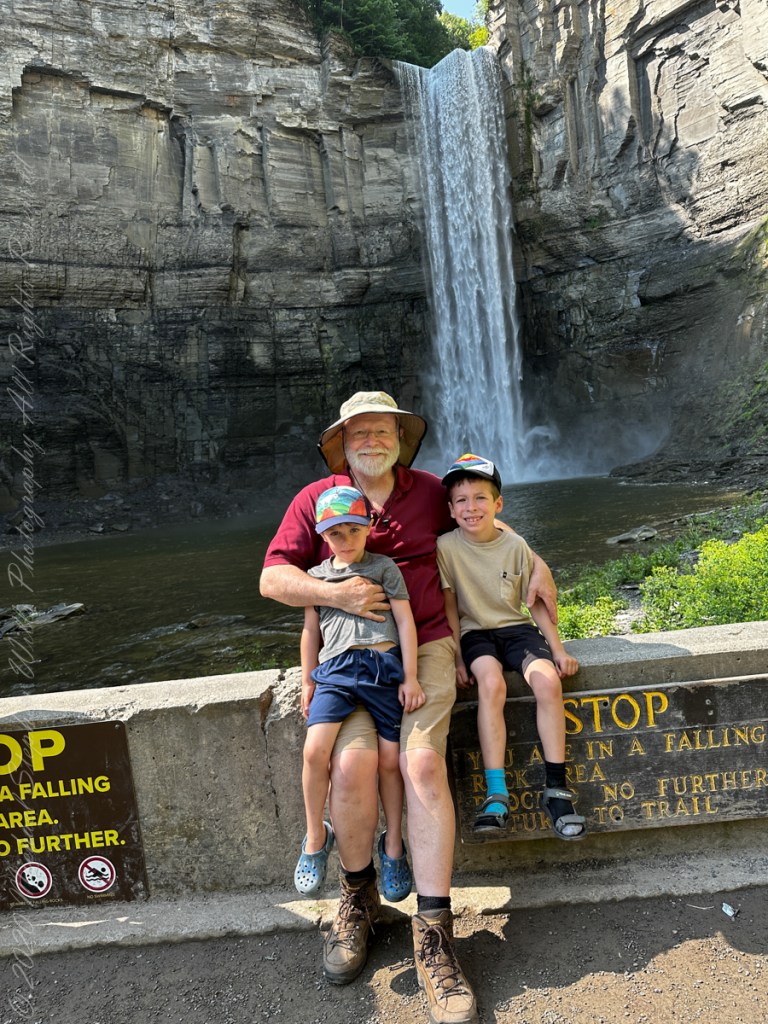
During the second half of the nineteenth century, steamboats, railroads and Victorian hotels were built in the region to serve tourists who traveled to view the falls. By 1925 the hotels were failing due to a decline in tourism, and New York State began acquiring land to form a park.

J.S. Halsey built a two and a half story hotel in 1850, known variously as the Cataract Hotel or Taughannock House (or simply as Halsey’s Hotel) at the Taughannock Falls Overlook.
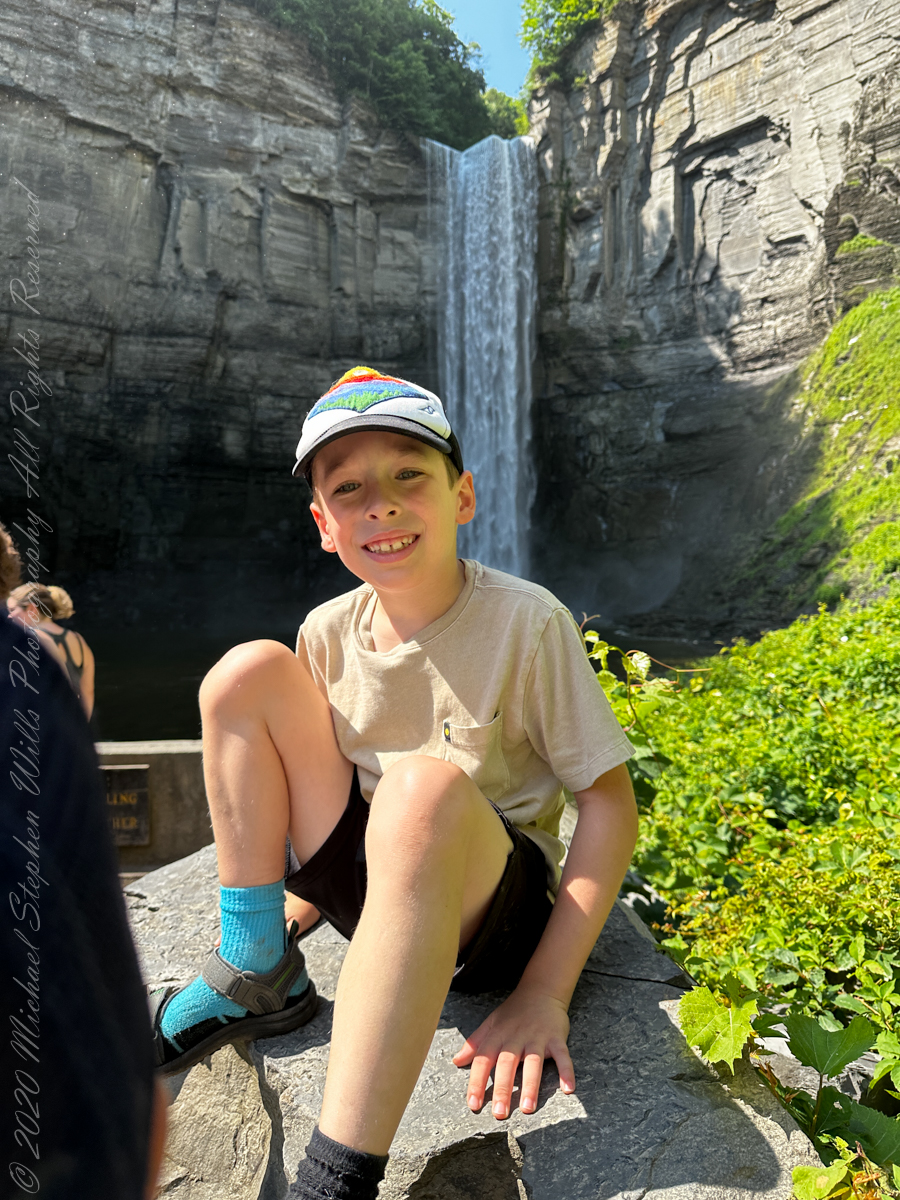
Visitors could reach the hotel by taking a train to Cayuga Lake, take a steamboat across the lake to Goodwin’s Point, then finally board a stagecoach to reach the hotel. The hotel site today is the location of the park visitor center and parking lot.


Enjoy!!

and ice cream!!
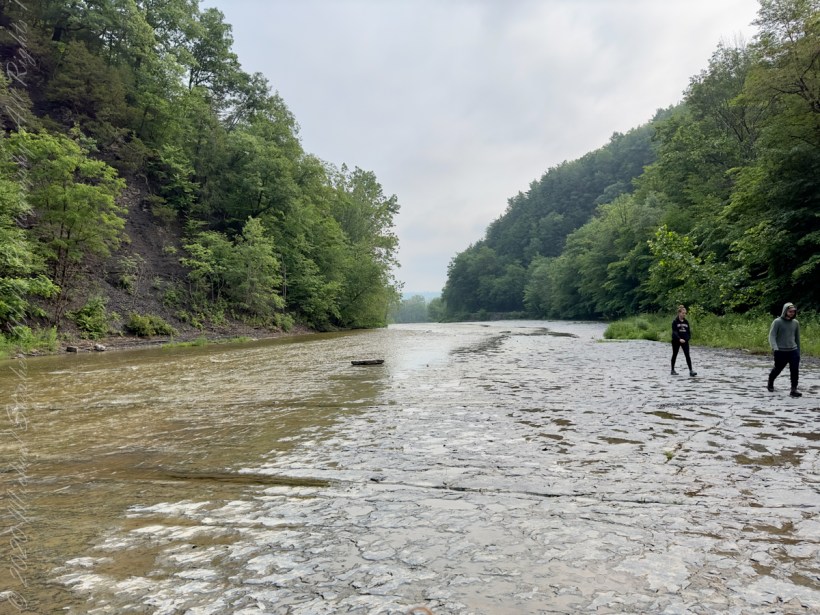
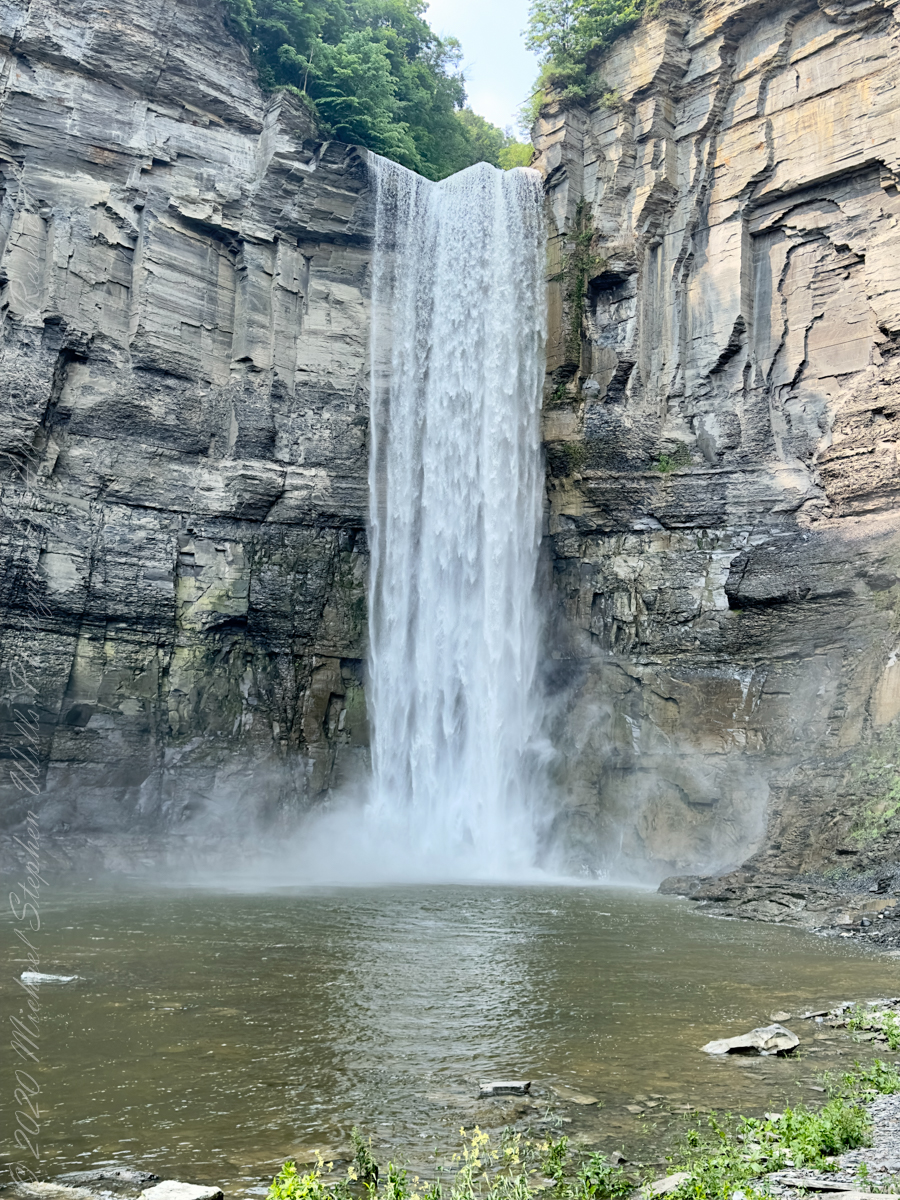
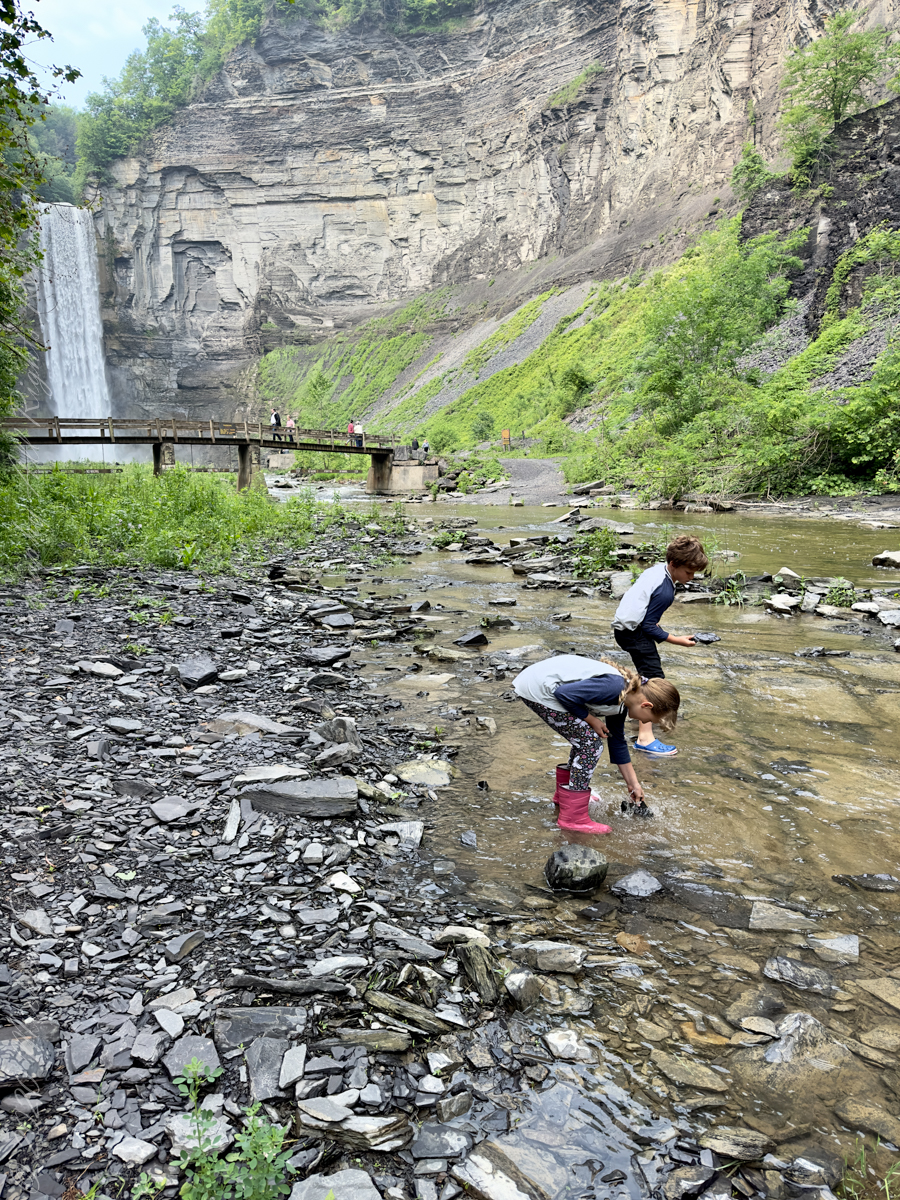
The waterfall and gorge comprise an example of a hanging valley, formed where Taughannock Creek’s stream-carved valley meets the deeper glacially carved valley that contains Cayuga Lake.
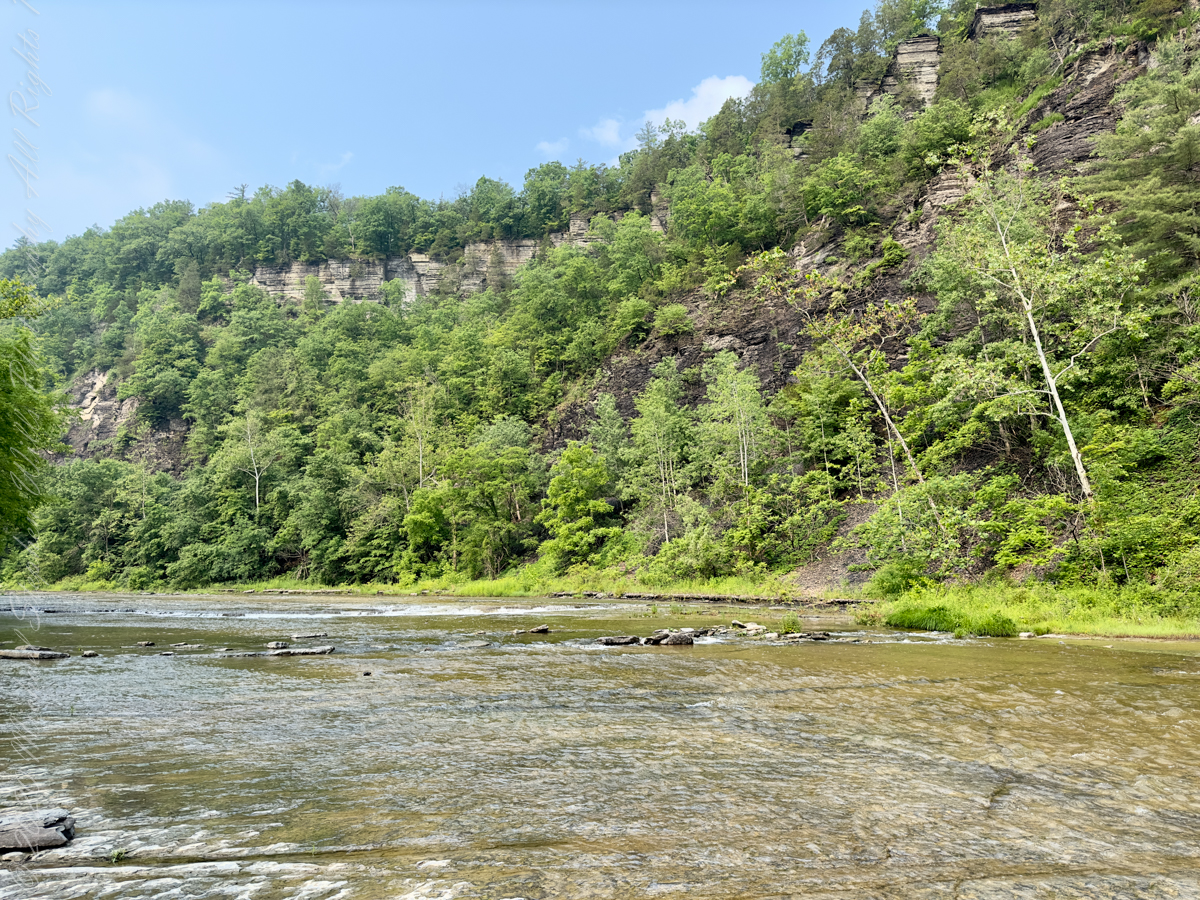
The gorge has continued to retreat westward from Cayuga Lake as easily eroded shale near the fall’s base is worn away by the stream, which supports erosion-resistant siltstone and sandstone found in the upper portions of the gorge.
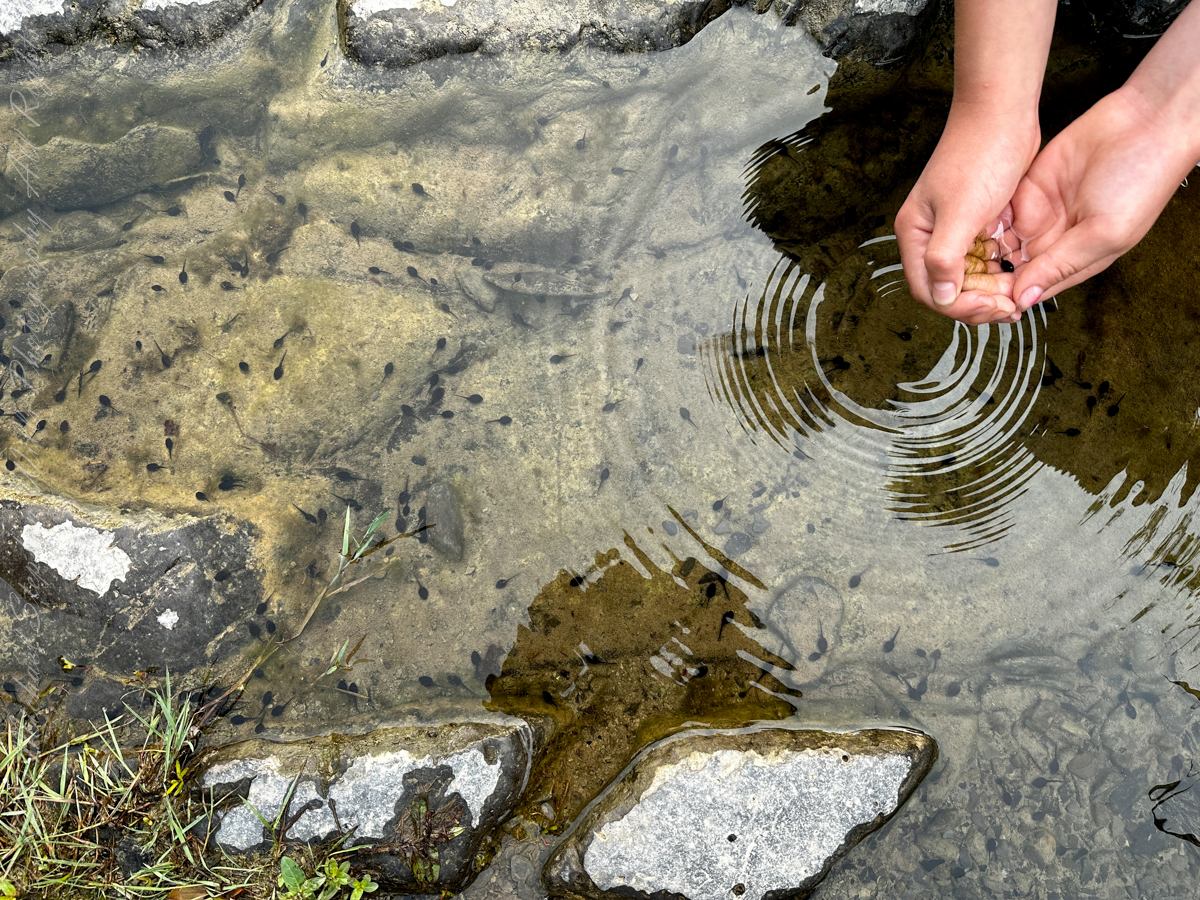
Annual freeze and thaw cycles also act upon small faults in the rock, causing large sections to occasionally break away, further expanding the gorge.
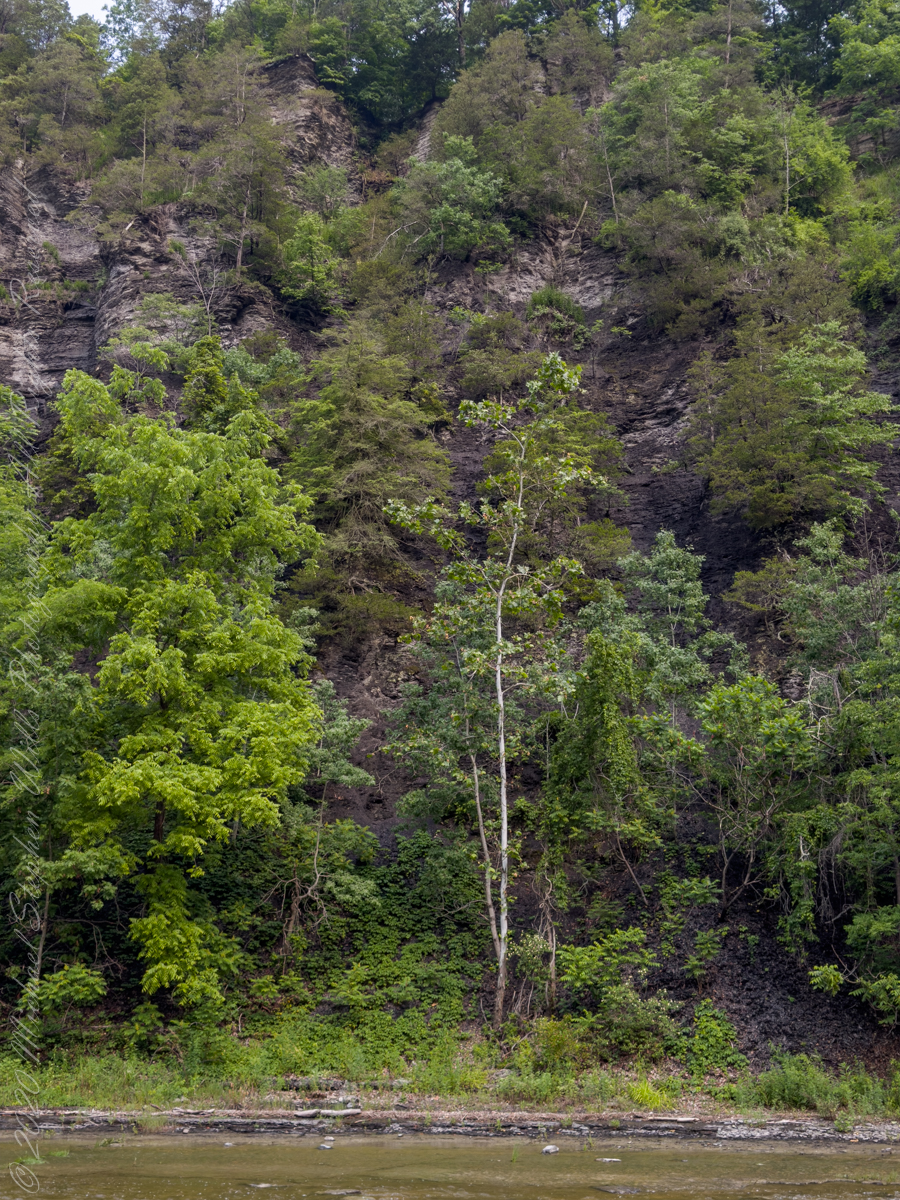
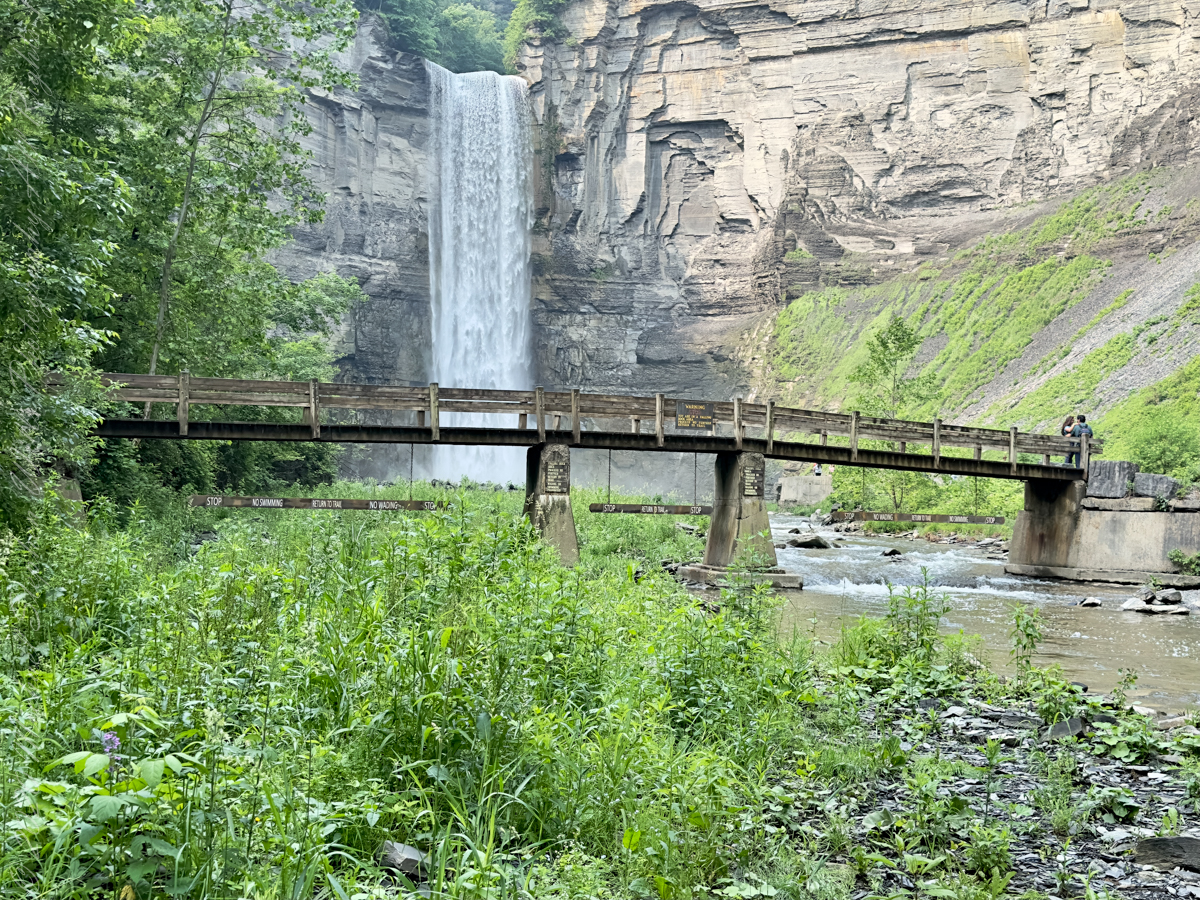
Taughannock Falls’ main cataract is a 215-foot drop (66 m), making it 33 feet (10 m) taller than Niagara Falls. It is the tallest single-drop waterfall east of the Rocky Mountains. The waterfall is located along Taughannock Creek, which flows through a long gorge with cliffs up to 400 feet (120 m) high.


Enjoy!!
 Michael Stephen Wills Photography