Stargazing Winter’s Crab: Watching the 2019 Total Lunar Eclipse Near Cancer’s Beehive Cluster

Join me as a full moon slips into Earth’s shadow, turning copper beside Cancer’s Beehive—science, illusion, and wonder entwined in a winter night.

Colored lights of our skies are lifelong triggers for the imagination. On any moonless, crystal night—far from the town-glow—three thousand or so stars and the wandering planets scatter across the dark. We read them instinctively, stitching patterns the way our ancestors did, turning a brilliant chaos into stories. Along the ecliptic, twelve of those patterns became the constellations, a starry calendar by which careful observers told the seasons. When Cancer, the Crab rides high, winter has the northern hemisphere in its grip

Click Photograph for my OnLine Galleries
Click photograph for my OnLine Galleries. Clicking the other photographs in this post will yield a larger image.

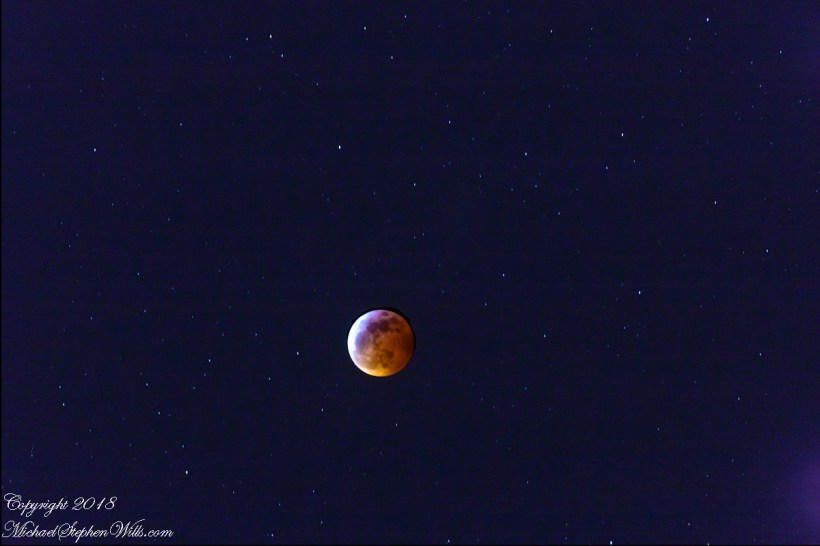
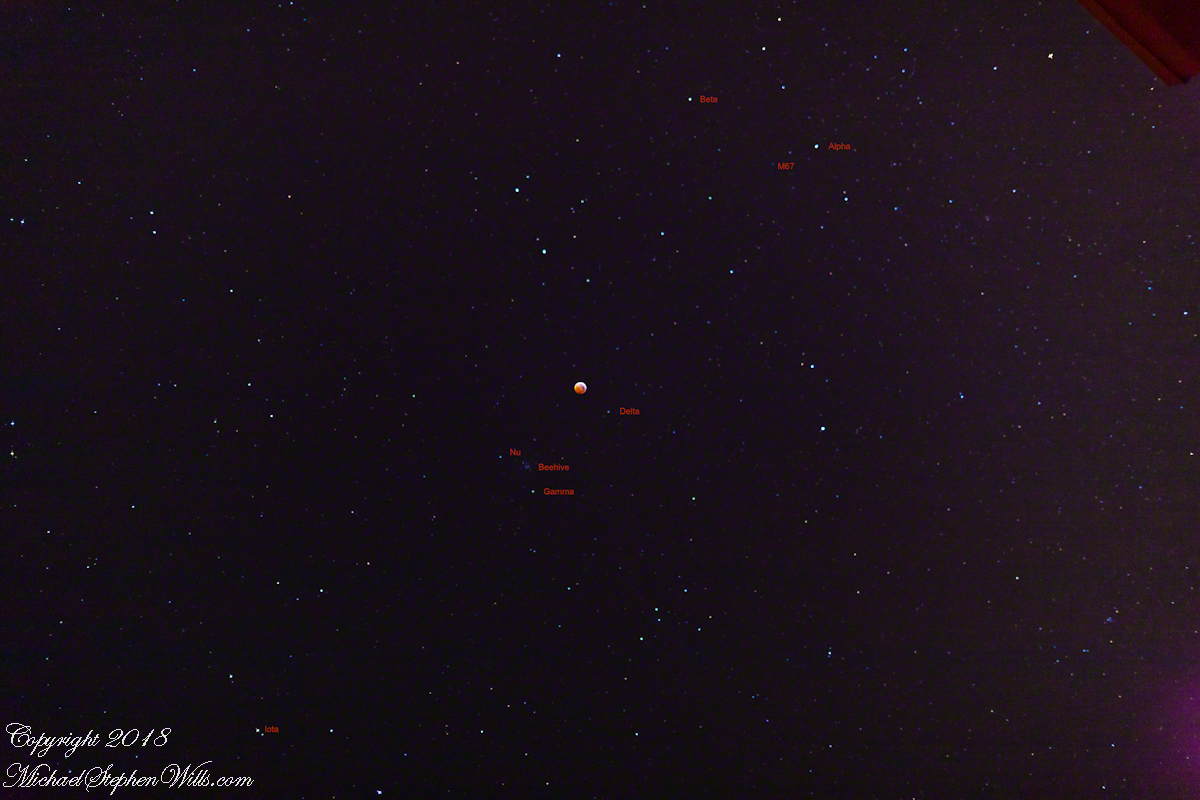
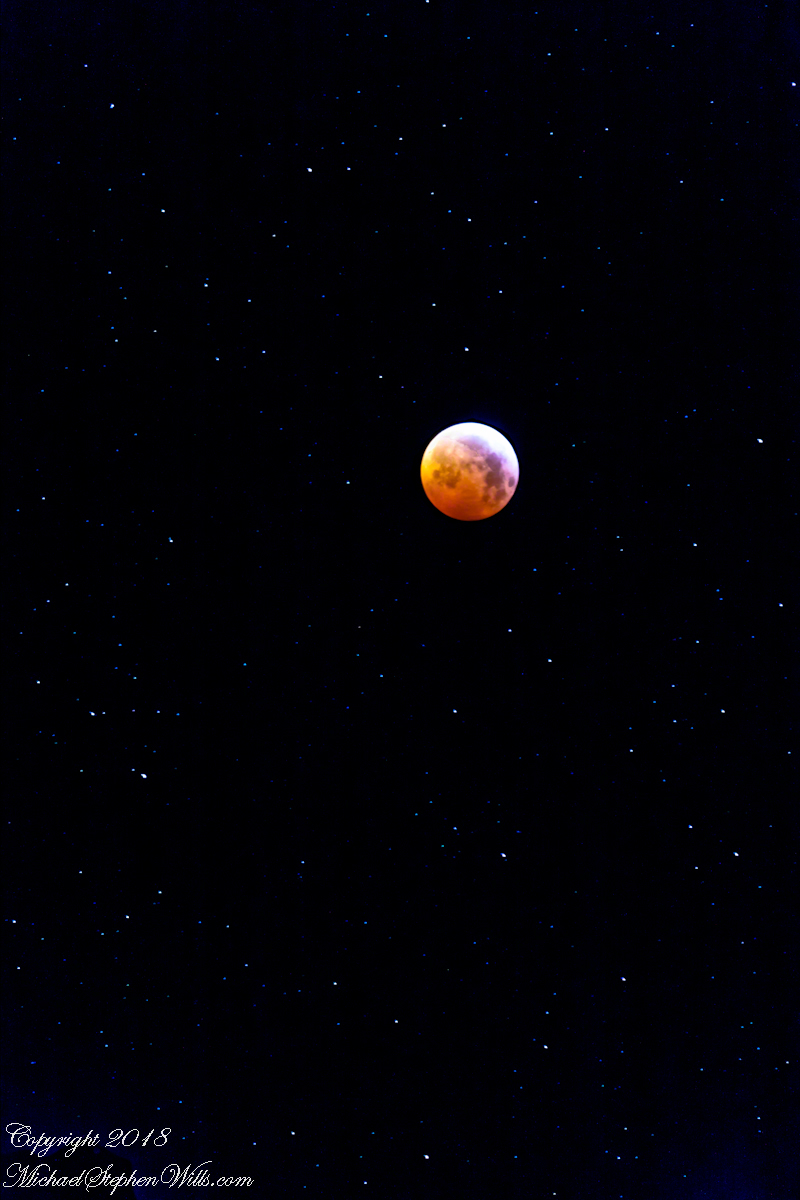
On the night of January 20–21, 2019, a full moon climbed from the horizon and slid into Earth’s shadow, transforming a familiar face into a copper coin. As it rose, that low-horizon “larger” moon—an illusion born of context—felt close enough to pocket. Hours later, the moon darkened to a dull copper color and appeared to float amid Cancer’s dim stars.

I set up a Canon DSLR on a tripod with a 24mm f/1.4 lens, pushed the ISO to 3200, and shortened the exposure to 1.3 seconds—a compromise between freezing star points and preserving the feel of the sky. The moon, of course, was overexposed in that wide frame; later, I overlaid a correctly exposed moon (from a telephoto shot later in the night) at its true apparent size to match the scene as the eye saw it. Is it the most “technical” astrophotograph of the eclipse? No. But it is faithful to the moment I witnessed and good enough to carry the story forward.

The Moon on the Crab’s back

Cancer is never an easy connect-the-dots. Its stars are modest, more suggestion than signature. Look just to the side of the moon’s position that night and you come to Delta Cancri, the orange giant nicknamed the Southern Donkey. Draw a mental line down and slightly right to the faint pair Nu and Gamma Cancri—white stars that only masquerade as twins. They are not physically bound, merely near each other by line of sight: Nu about 390 light-years away, Gamma at 181. Scatter in Alpha and Beta off the Crab’s back and the outline becomes more plausible, the way a minimal sketch becomes a creature once the eye knows what to look for.

The Beehive

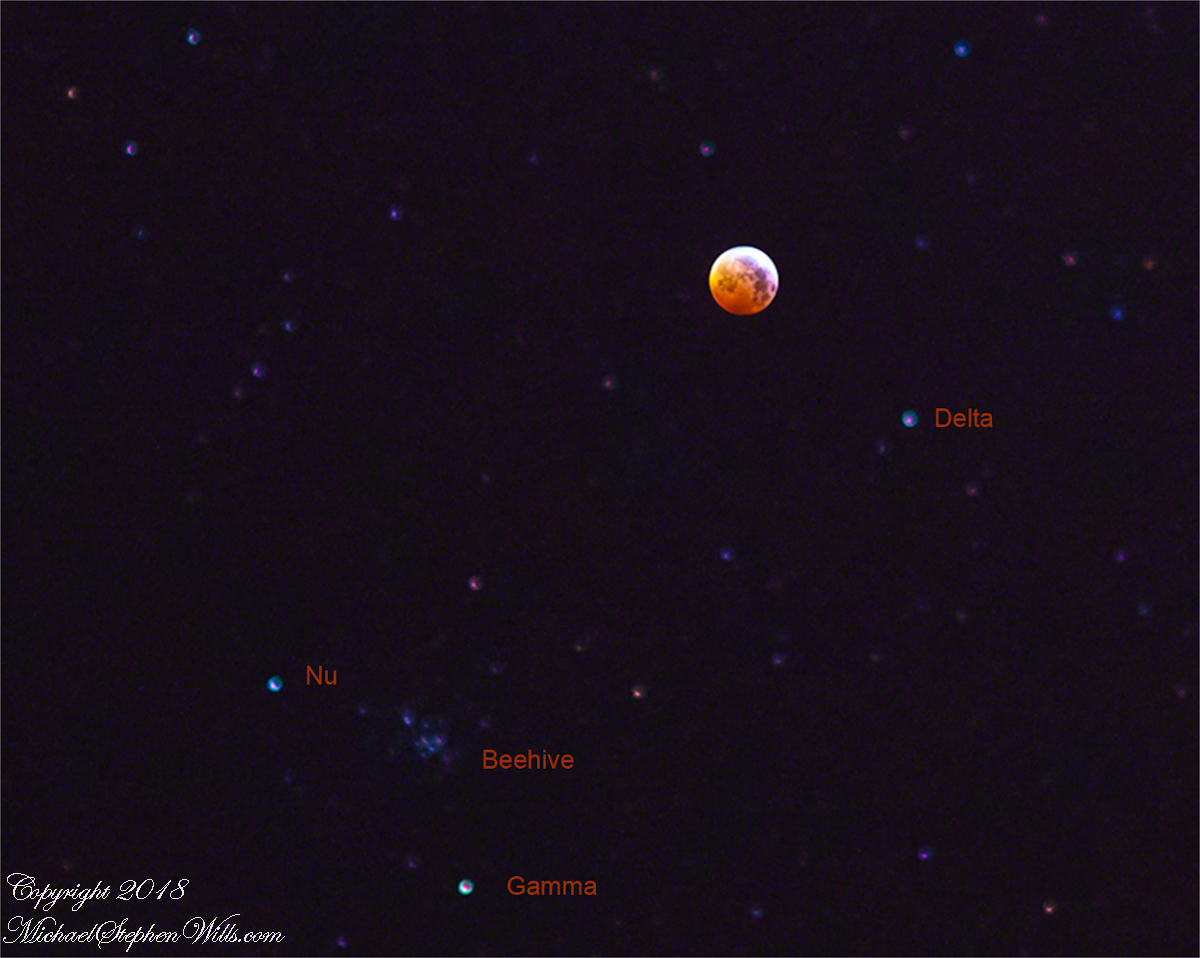
Between Nu and Gamma, edged closer to the moon, lies the real prize: the Beehive Cluster—also known as Praesepe or M44. Even with modest binoculars, Praesepe explodes into a field of delicate sparks, a thousand stars loosely wrapped into a hive. Galileo famously turned his early telescope on this cloud and teased forty separate points from the mist; modern optics reveal a populous neighborhood of stellar siblings in shades from ice-blue to ember-red. It is one of those sights that converts a casual sky-gazer into a repeat offender.

Click for more information about this view

Click photograph for a higher resolution version
Total Lunar Eclipse and Surrounding Sky with labels for primary element of the Cancer constellation

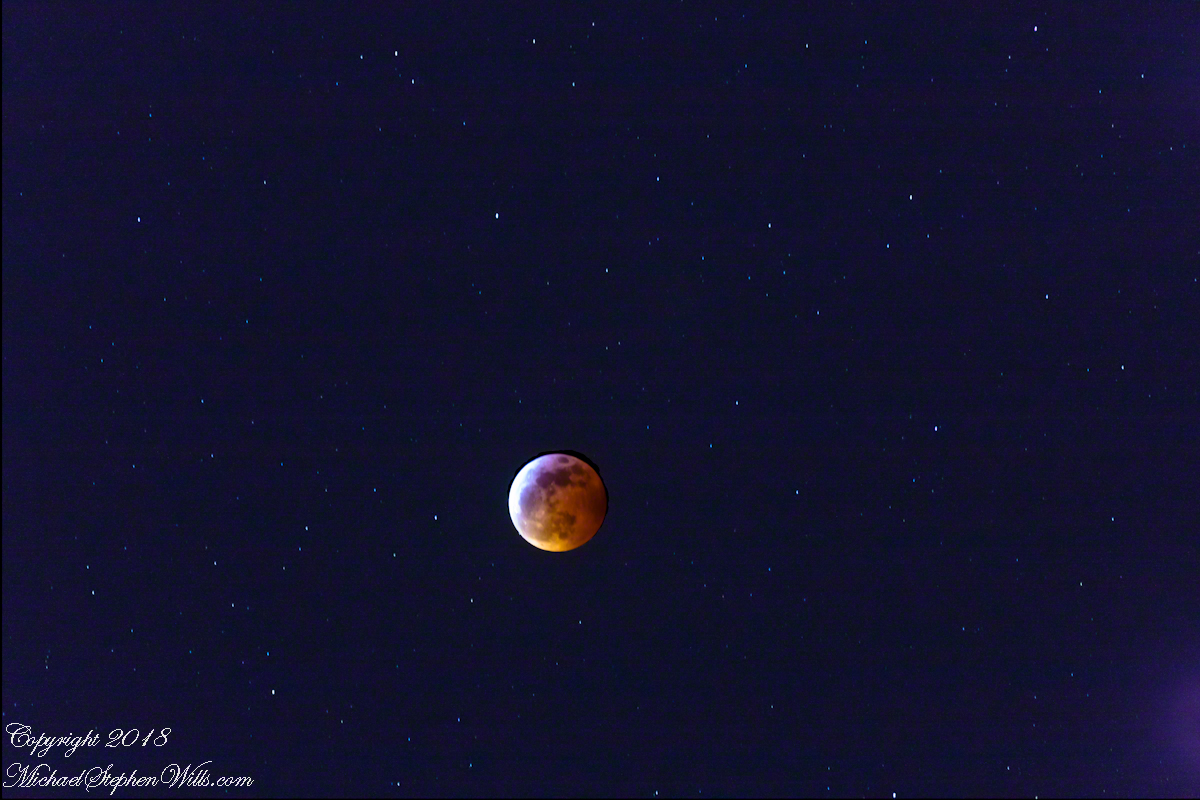
Later in the night I lifted the telephoto—70–300mm at 300mm, ISO 3200, 3.2 seconds—and let the moon fill more of the frame. At totality, the light thinned to a clay-jar red as Earth’s atmosphere bent sunlight around the planet and into its shadow. The effect is both simple and profound: every sunset on Earth happening at once, projected onto the moon’s face. Craters and maria softened into relief, and the globe stopped being a flat disk and became a round, ancient body again. Even without Delta, Gamma, Nu, and the Beehive in that tighter field, the sense of placement remained; I knew the Crab’s back was there in the dark, and that the moon had joined it—just for an hour—as a guest at the manger.

Click photograph for a higher resolution image
“Beehive” with Total Lunar Eclipse with labels for primary elements of Cancer Constellation

The Total Eclipse

What I love most about an eclipse is its pace. Nothing is impatient: the bite appears, the light drains, the color warms, and the world around you changes temperament. As the bright glare wanes, neighborhood sounds recalibrate—the hush between footfalls, the small click of a door, even the steadying breath you didn’t know you were holding. A total lunar eclipse is an astronomy lesson that behaves like a poem; it teaches by arranging time and light until awe and understanding meet.

Click photograph for larger image

And then, quietly, it returns what it borrowed. A thin wedge of white blooms at one edge, a rehearsal for dawn. Copper gives way to pearl, and the old moon looks new again, just higher and smaller against the deepening night. Cancer recedes into suggestion; Praesepe goes back to being a faint cloud to the unaided eye. The camera is packed away, the tripod shoulders its own shadow, and you keep the best exposure of the night where it can’t be corrupted: in memory.

Click photograph for larger image

If you have binoculars, mark Cancer on a winter chart and step outside when the sky is clear. Find Delta, sweep toward the dim pair of Nu and Gamma, and then rest your gaze on that hazy patch between them. Bring a friend into the circle and let the cluster resolve, star by star, into something alive with depth. It will not be the last time you look for it. And if you’re lucky enough, as we were that January, the moon will pass nearby, reminding you that even the most familiar companion can be made strange and beautiful by the turn of a shadow.

The sky is a storybook, yes—but also an instrument. Nights like this tune both.

Enter your email to receive notification of future postings. I will not sell or share your email address.

Bullet Dodge Series 3

Not quite murmuration

Today, enjoy two videos of shorebirds taking flight at once. Starlings can flock and swarm in clouds of birds, called murmuration. My videos of a shorebird colony taking fright, at something unknown as the beach was empty, are from my IPhone 7.

This is a still image, high resolution, similar to the view of the second video. A repeat from yesterday.

Click photograph for larger image. To do this from WordPress Reader, you need to first click the title of this post to open a new page.

With a tripod it is simpler to achieve a level horizon….

December 3, 2014 President Obama warned of the coming pandemic and passed along plans and a team to the incoming Trump administration. By December 2019, the pandemic unleashed in China, Trump gutted this capability and, while Pam and I were planning out January 10th Walt Disney World trip, hid the truth from United States Citizens.

We were keeping an eye on China, by January 10th the Chinese communist government was lying, “there is no human-to-human” transmission they told the WHO (World Health Organization). Knowing the truth, our plans for that day would be different.

Click to open video in a new browser tab for better experience and also more information about the context.

Sunrise, January 109, 2020 Cocoa Beach, Florida

Click to open the next video in a new browser tab for better experience and also more information about the context.

Copyright 2020 All Rights Reserved Michael Stephen Wills

References:

CNN YouTube, “Hear what Barack Obama said in 2014 about pandemics.”

Daily KOS, “How the Obama administration tried to save us from what Trump is doing right now.”

FOX News, “WHO haunted by January tweet saying China found no human transmission of coronavirus.”

Bullet Dodge Series 2

Shroomed (Happy May Day)

One week before January 10, the dawning of the day photographed here, “the CDC Director Robert Redfield was notified by a counterpart in China that a “mysterious respiratory illness was spreading in Wuhan [China]”. Redfield notified HHS Secretary Alex Azar shortly thereafter, who shared his report with the National Security Council (NSC). According to The Washington Post, warnings about the virus were included in the President’s Daily Brief in early January, an indicator of the emphasis placed on the virus by the intelligence community.” December( and maybe October/November), 2019 through January, 2020: COVID-19 was spreading across the USA as visitors from Wuhan disembarked from planes.

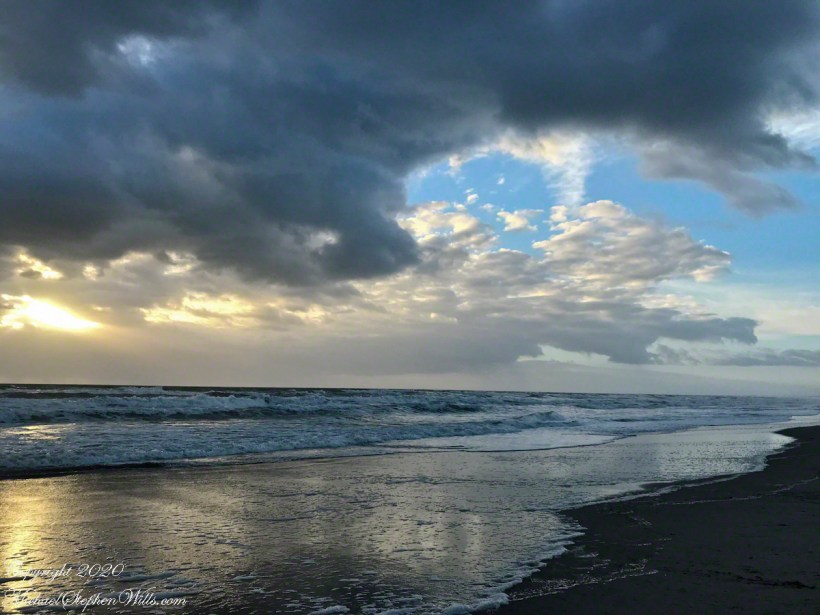
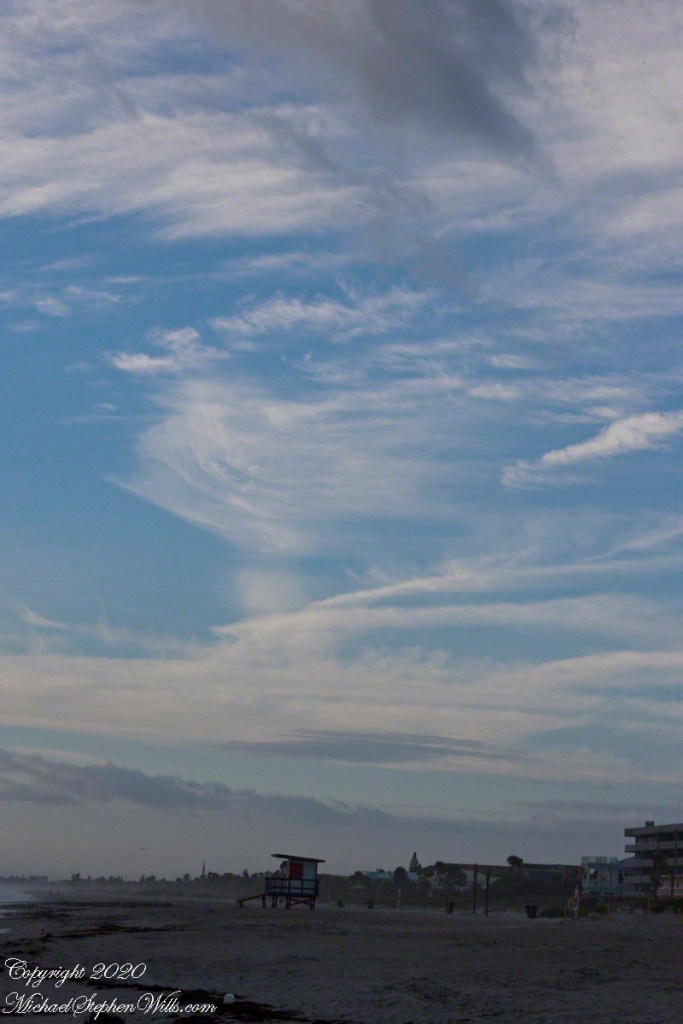
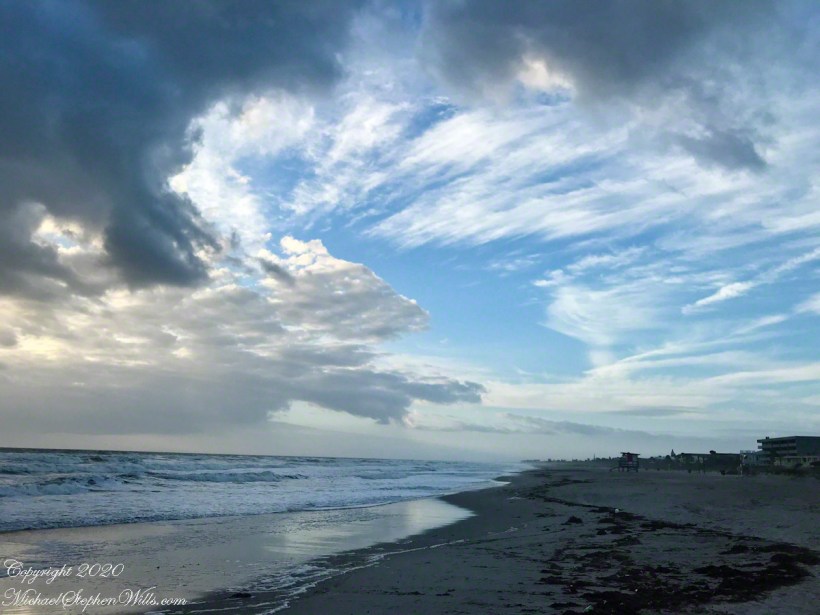
The following images compare IPhone 7 to a dslr mounted on a tripod.

Click photograph for larger image. To do this from WordPress Reader, you need to first click the title of this post to open a new page.

With a tripod it is simpler to achieve a level horizon….

I heard the word “shroomed” (as a verb) used in Episode 1, Season 6, of Bosch. As in “the Federal Government treats us like mushooms”: grown in excrement and kept in the dark.

Click to open video in a new browser tab for better experience.

Sunrise, January 10, 2020 Cocoa Beach, Florida

Want to see more? Click me to visit my Florida photography on Getty IStock.

Copyright 2020 All Rights Reserved Michael Stephen Wills

Reference: the quote is from the Wikipedia article “Timeline of the 2020 coronavirus pandemic in the United States.”

Bullet Dodge Series 1

First of a looooonnnngggg series

One day after my “Sunrise Texture” series as the sun rose on Cocoa Beach I was waiting with the same photographic kit. It was perfect weather for a visit to Walt Disney World, planned for that day: unsettled.

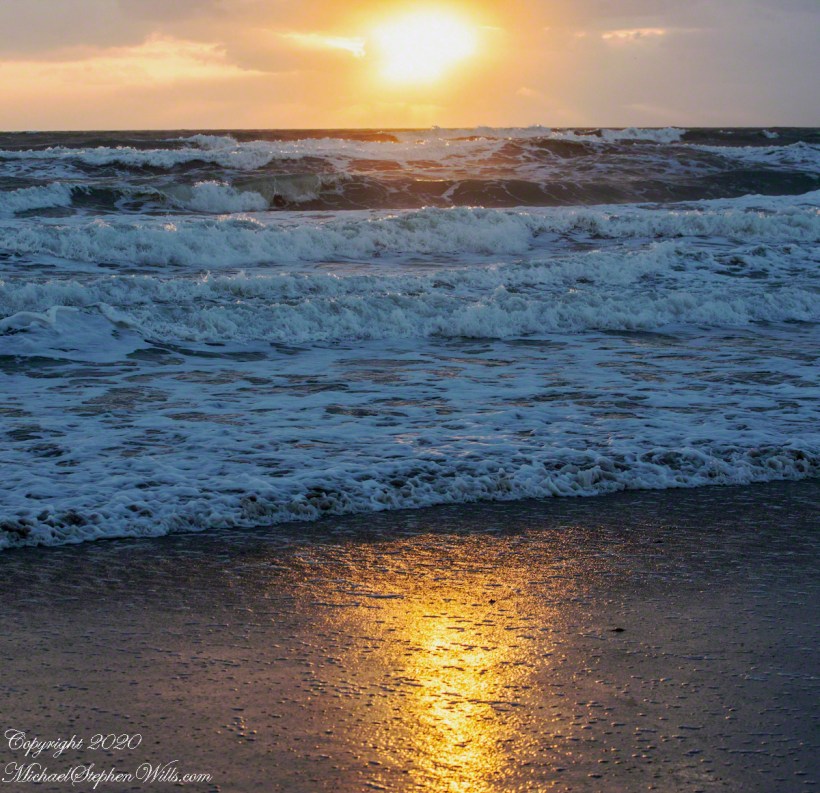
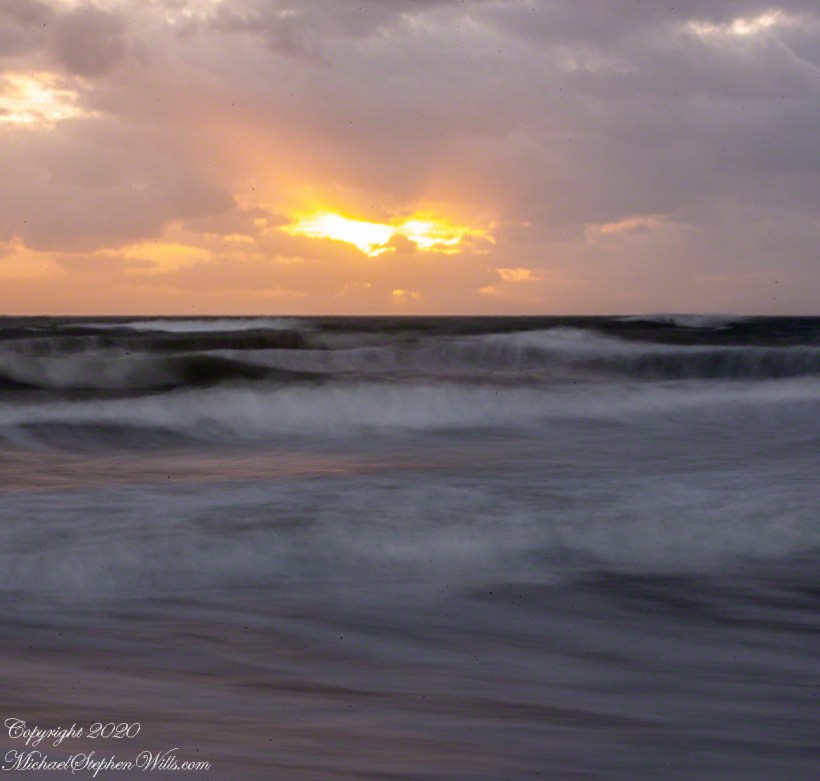
This image couple demonstrates the effect of long / short exposure without using filters. I changed the ISO and F-stop to achieve these effects.

Click photograph for larger image. To do this from WordPress Reader, you need to first click the title of this post to open a new page.

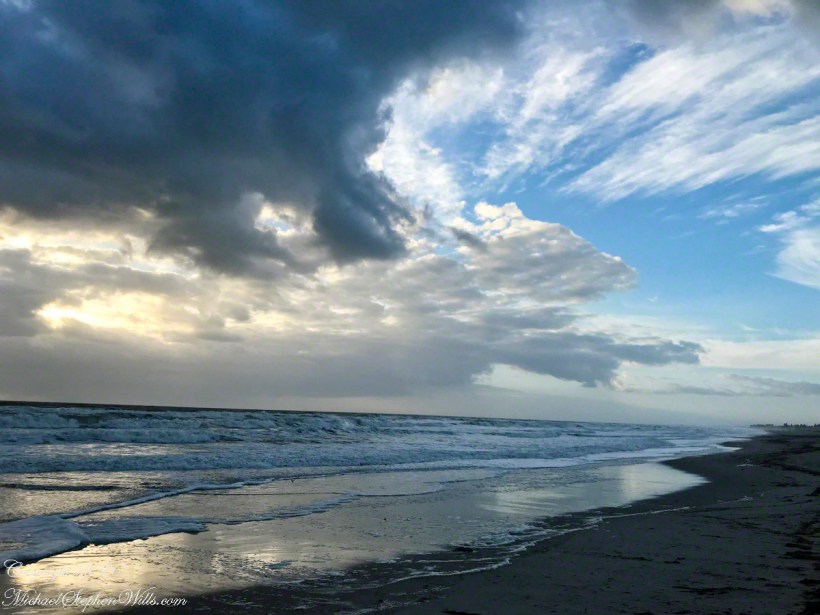
With a tripod it is simpler to achieve a level horizon….

I turned around to observe the colonies of shore birds…..

Click to open video in a new browser tab for better experience.

Want to see more? Visit this my “Sunrise Textures” series on Getty IStock.

Copyright 2020 All Rights Reserved Michael Stephen Wills

Sunrise Texture Series 7

Final Series, Sunrise Completion

Betelgeuse, AKA “Alpha Orionis”, was the first star disk, other than our Sun, measured. One hundred years ago the apparent size of Betelgeuse was then as now 0.003% of the sun. I bring this up because this “red” star at the end of its life cycle, is in the news, being now 40% of its brightness last year.

Betelgeuse is so far away this dimming is 700 year old news, the time it takes for light span the distance. News of our sun is more recent, sunlight informs us of the Sun’s surface from 8.33 minutes ago. Sunlight bursts from clouds to the camera in an instant of a second. In comparison my reactions to capture it are glacial. Sixteen seconds passed since the images of Series 6, time for three exposures at a slowed pace now the sun breaks free from the clouds.

Twelve minutes, fifty four seconds elapsed from the first images of this series. Seventy nine exposures taken with 16 selected moments, these last without the sand mirror.

Click photograph for larger image. To do this from WordPress Reader, you need to first click the title of this post to open a new page.

A Willet feeds in the new day. This is a species sandpipers, a cousin of the Sanderling of yesterday’s post.

All sixteen Sunrise Texture moments are presented below.. Suggestion, for this series in a larger format, open a separate browser tab for each post. At series end you will then have eight (including the very first post a few weeks ago) landscapes to compare.

Want to see more? Visit this series on Getty IStock.

Copyright 2020 All Rights Reserved Michael Stephen Wills

Sunrise Texture Series 6

Sunburst

Two minutes pass from Series 5, and not because I have stopped snapping. My routine is to insert a (automated) sequential number into each filename. Using this it is possible to calculate the number of exposures in a series. Since Series 5, 16 were snapped before the first I could use in Series 6. Ten exposures between the first and last of Series 6, during which a minute, twenty eight seconds elapsed..

The sun disk is above the horizon, bursting from clouds.

Ten minutes, eighteen seconds elapsed from the first images of this series. Seventy one exposures taken with 14 selected moments of shining sand mirror, a strong curving return flow.

The small bird feeding, of the first image, is a Sanderling, one of the smallest species of Sandpipers.

Click photograph for larger image. To do this from WordPress Reader, you need to first click the title of this post to open a new page.

In this second image, the mirror is erased as sand absorbs surf. I needed to show the developing sun burst.

A slide show of these images. This set compares short exposure with open aperture (f 4.5) to a much longer exposure driven by a narrow aperture (f 22) and the lowest film sensitivity of the camera (ISO 50). Suggestion, for this series in a larger format, open a separate browser tab for each post. At series end you will then have eight (including the very first post a few weeks ago) landscapes to compare.

Want to see more? Visit this series on Getty IStock.

Copyright 2020 All Rights Reserved Michael Stephen Wills

Sunrise Texture Series 5

a paradox

A scant five seconds pass from Series 4, with the sun above the horizon I strive to catch the moment.

The sun disk is above the horizon, shining behind the clouds.

Seven minutes, 34 seconds elapsed from the first images of this series.

Click photograph for larger image. To do this from WordPress Reader, you need to first click the title of this post to open a new page.

I selected moments of shining sand mirror, a strong curving return flow with a continuing mark of a southeast wind of seventeen miles per hour, with bursts above twenty. Wind, waves, even the rounded particles of sand all created from the energy of the celestial body I am waiting to appear.

A slide show of these images. Suggestion, for this series in a larger format, open a separate browser tab for each post. At series end you will then have eight (including the very first post a few weeks ago) landscapes to compare.

Want to see more? Visit this series on Getty IStock.

Copyright 2020 All Rights Reserved Michael Stephen Wills

Sunrise Texture Series 4

a paradox

Thirty three seconds pass from Series 3, the high clouds shine less bright, the sun disk now blocked by those clouds on the horizon, the rising sun brings darkness yet a first hint of sunburst.

Seemingly, the first image foam-wave swath will erase the mirror.

Click photograph for larger image. To do this from WordPress Reader, you need to first click the title of this post to open a new page.

Fifty seconds later, instead of erasure the new water brings clarity.

Six minutes, 39 seconds elapsed from the first images of this series.

A slide show of these images. Suggestion, for this series in a larger format, open a separate browser tab for each post. At series end you will then have eight (including the very first post a few weeks ago) landscapes to compare.

Want to see more? Visit this series on Getty IStock.

Copyright 2020 All Rights Reserved Michael Stephen Wills

Sunrise Texture Series 3

Gathering Light

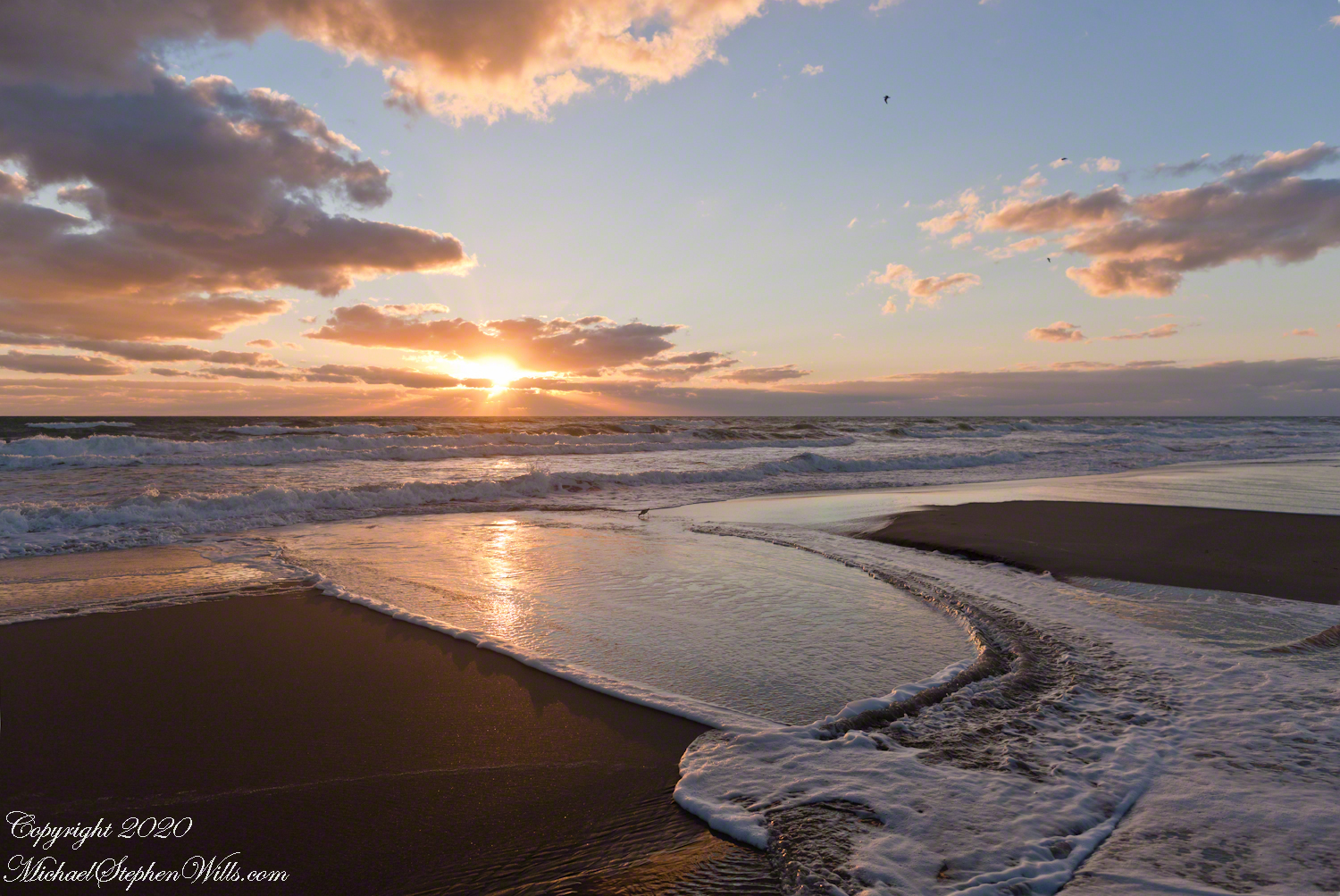
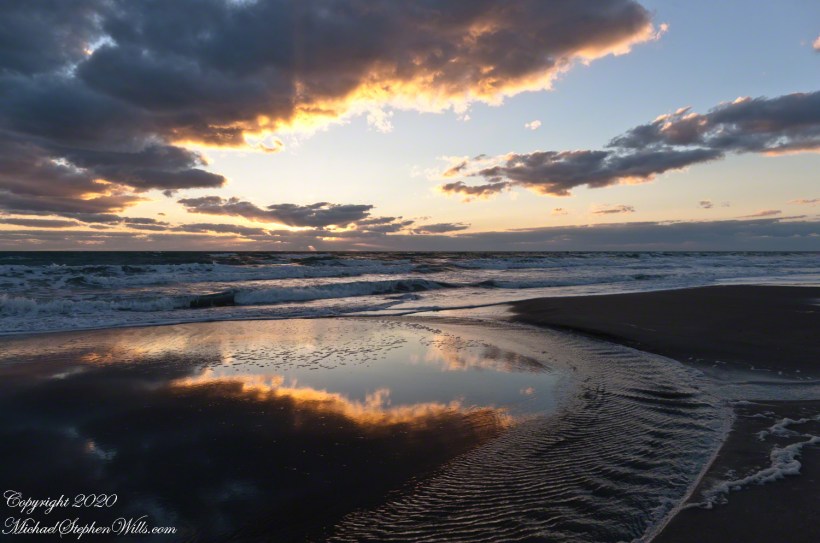
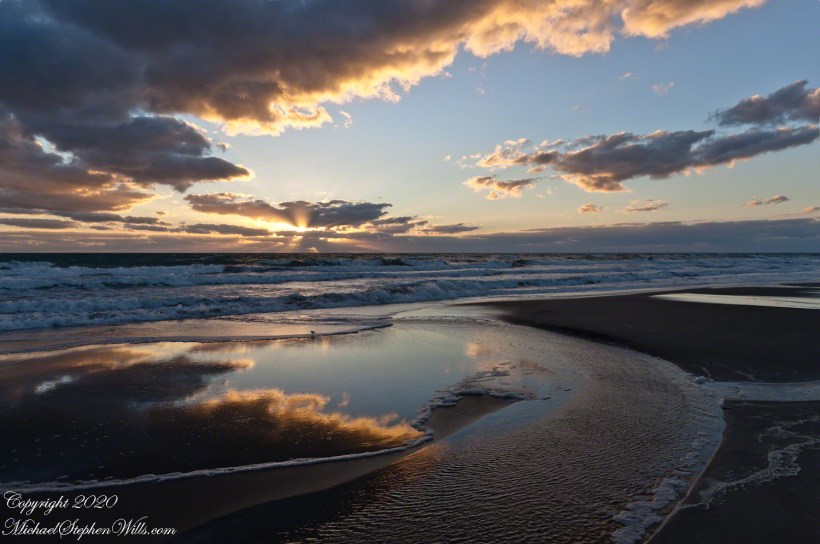
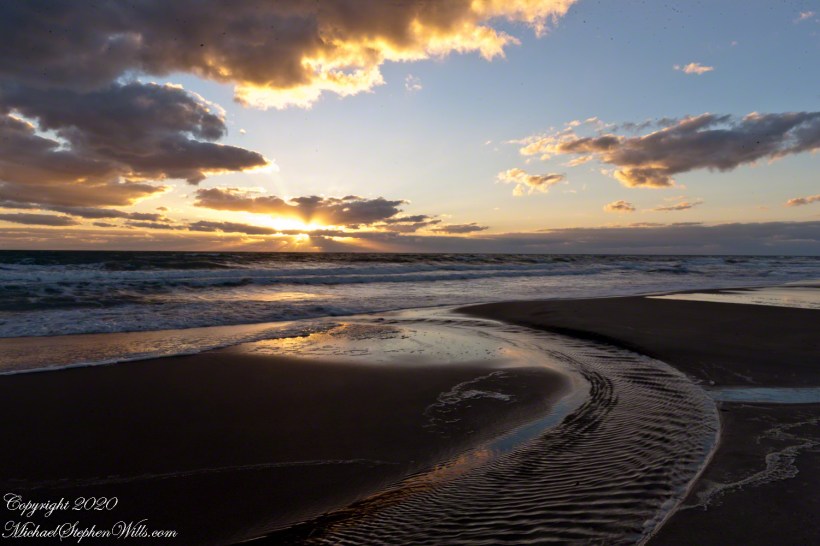
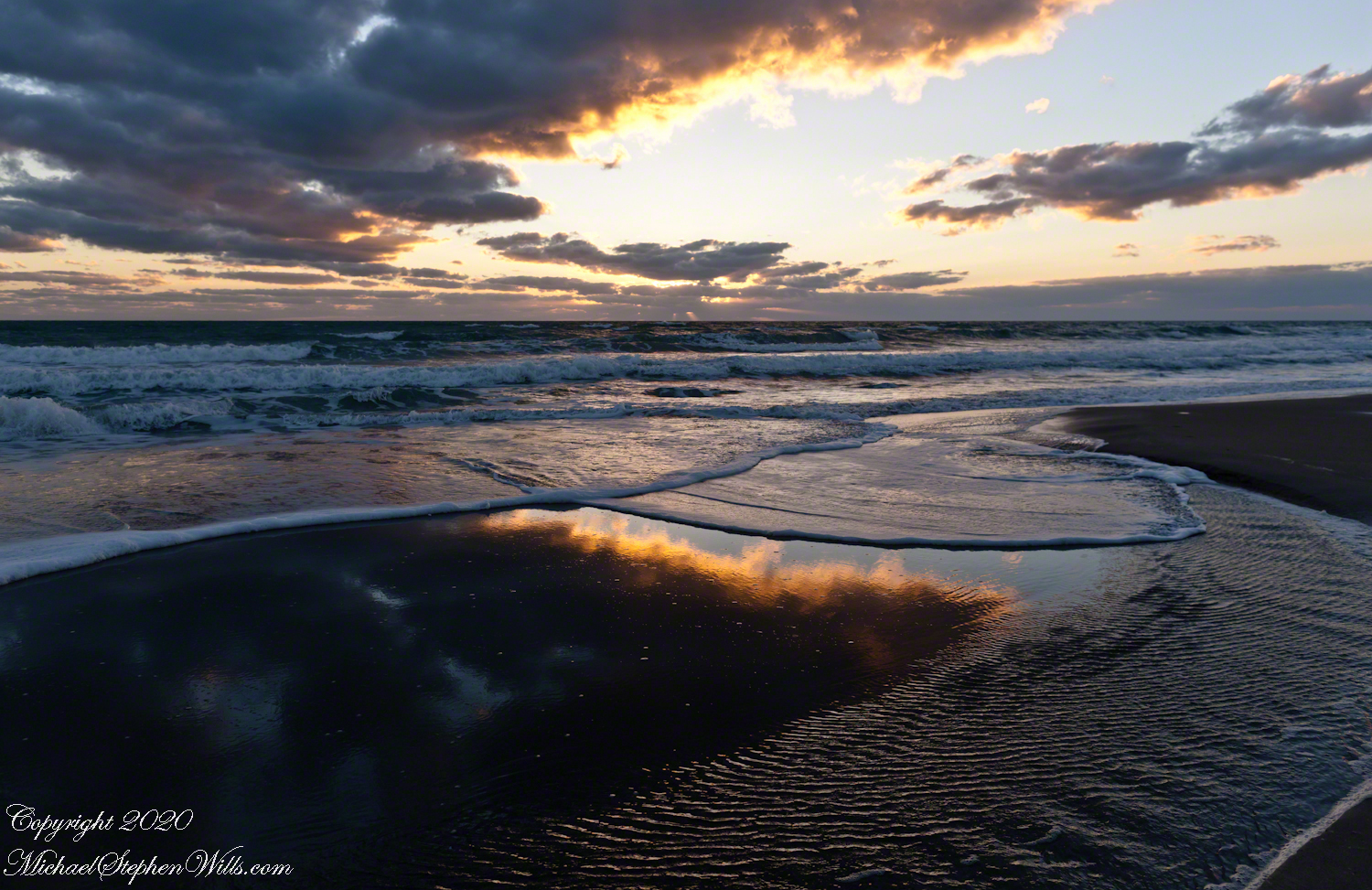
You will notice the sky changing, compared to the first set published here , Almost 6 minutes have passed, 4 minutes from the last image from Sunrise Texture Series 2. From behind the horizon, the first rays of sunlight catch the sky undersides. Unseen. the sun disk broaches the horizon.

Working fast, I used the dial to change from aperture-priority to shutter-priority with settings saved from the last use. In this way the duration is only twelve seconds between shots. The sun disk is near to/passed the horizon hidden behind those distant clouds.

Click photograph for larger image. To do this from WordPress Reader, you need to first click the title of this post to open a new page.

Breaking of a small wave.

A slide show of these images. Suggestion, for this series in a larger format, open a separate browser tab for each post. At series end you will then have eight (including the very first post a few weeks ago) landscapes to compare.

Want to see more? Visit this series on Getty IStock.

Copyright 2020 All Rights Reserved Michael Stephen Wills

Sunrise Texture Series 2

Time measured by the waves

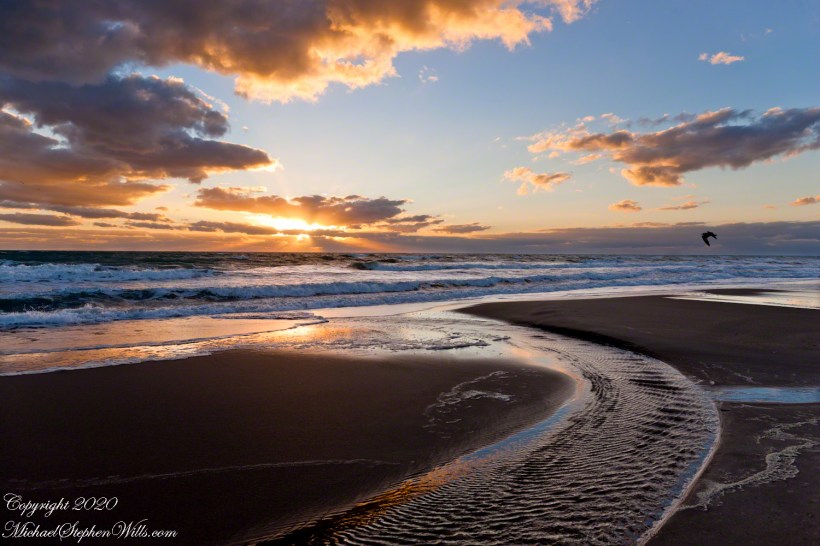
Twelve minutes, fifty four seconds separate the first and list images of this series of 16 images, starting with the first set published here fourteen days ago.

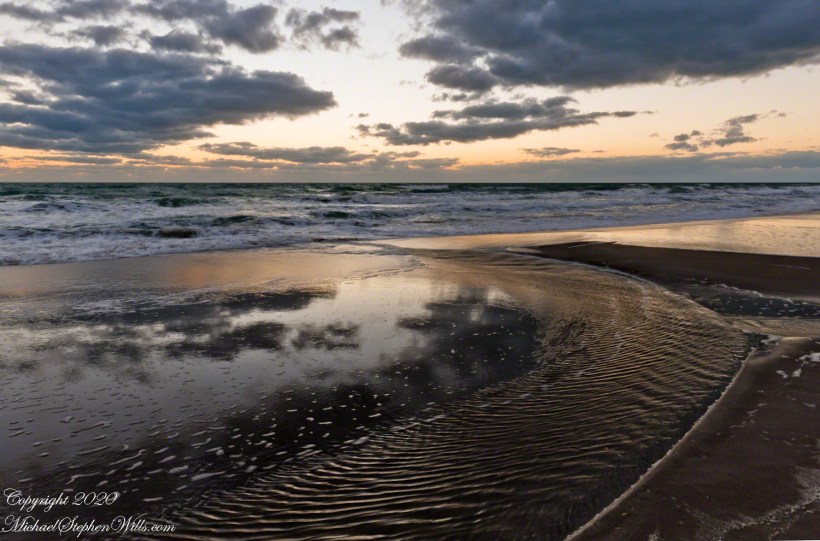
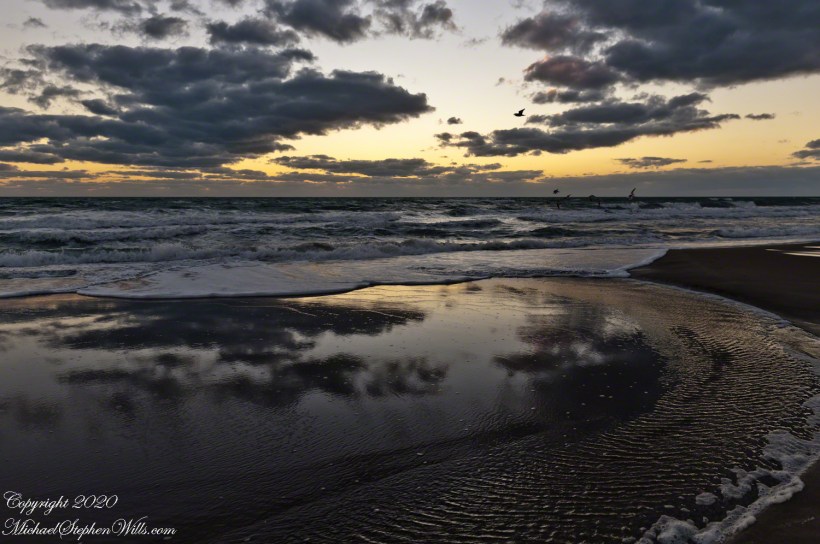
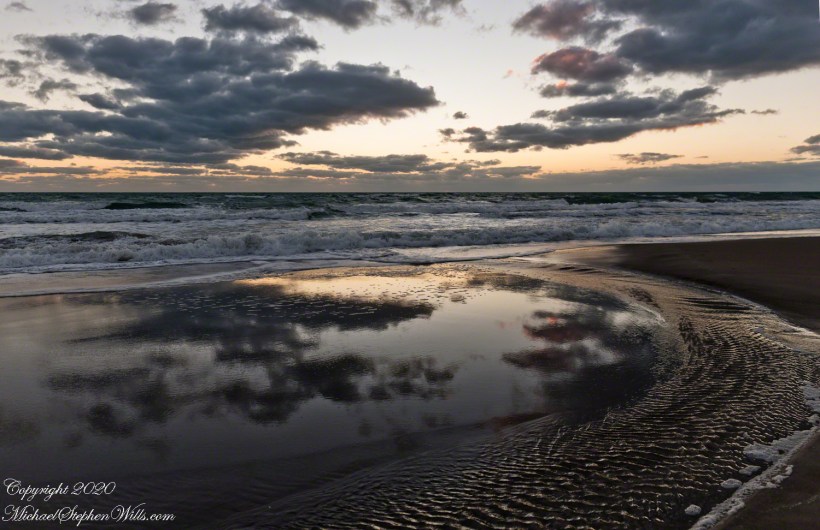
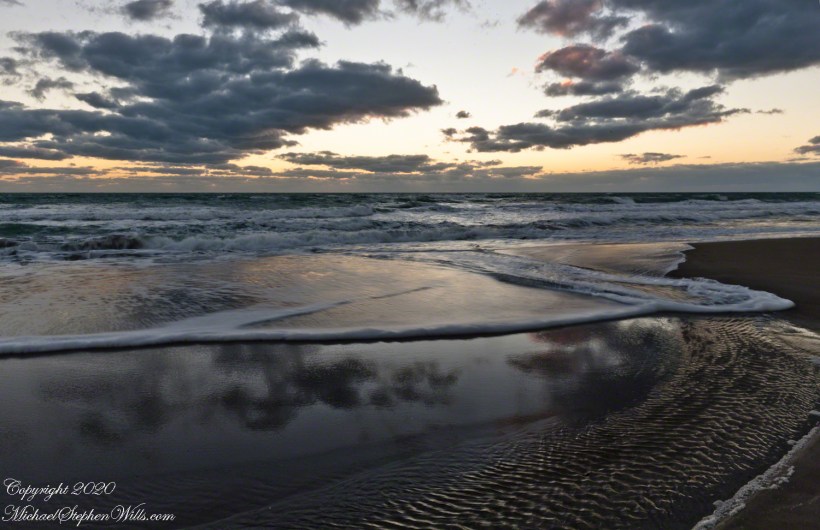
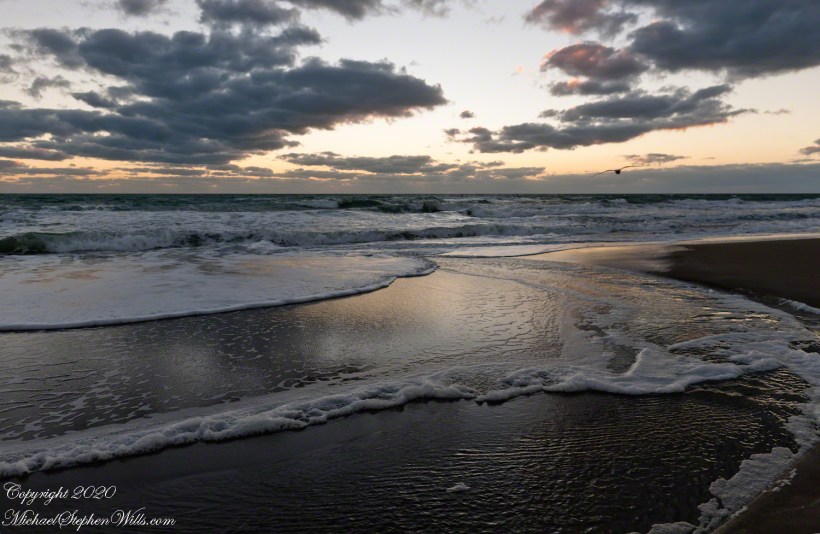
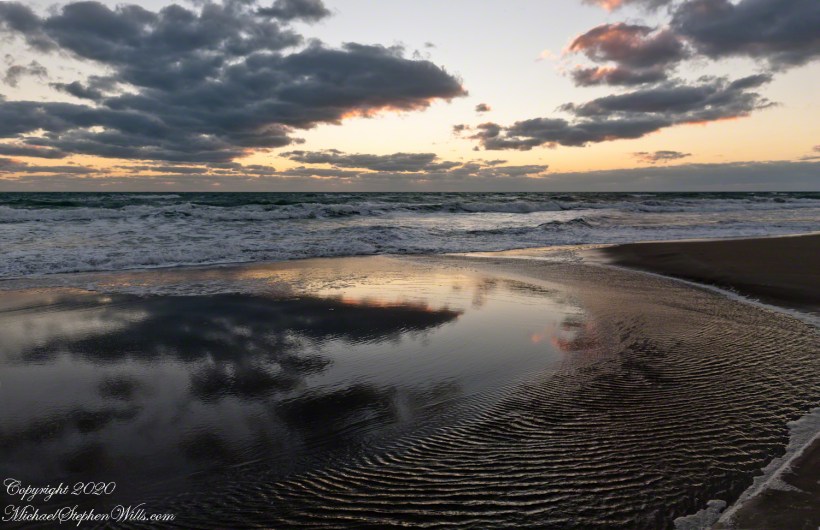
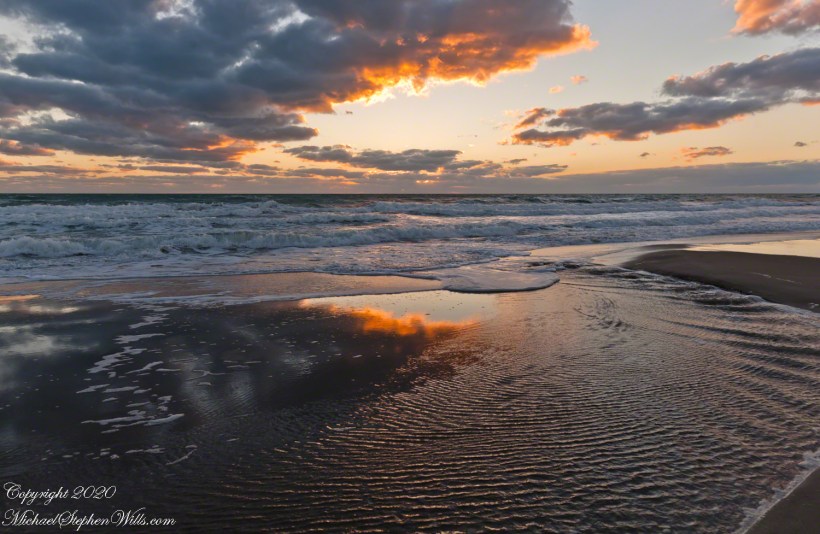
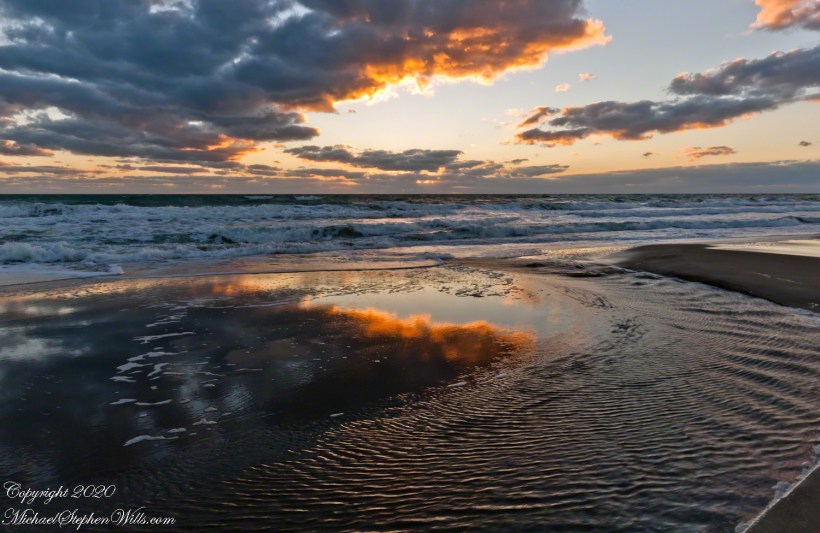
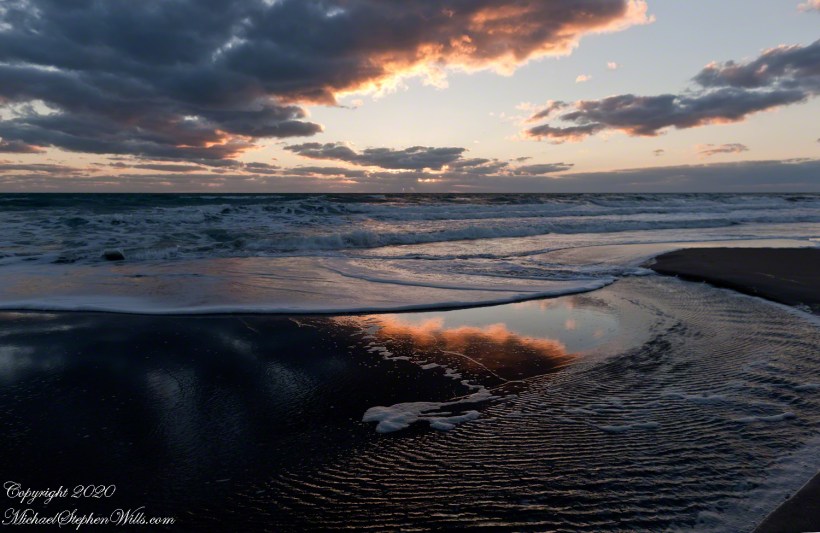
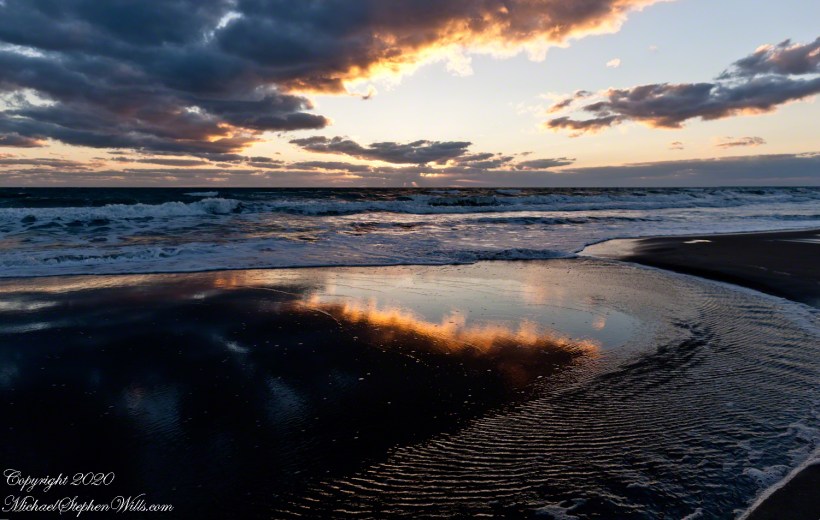
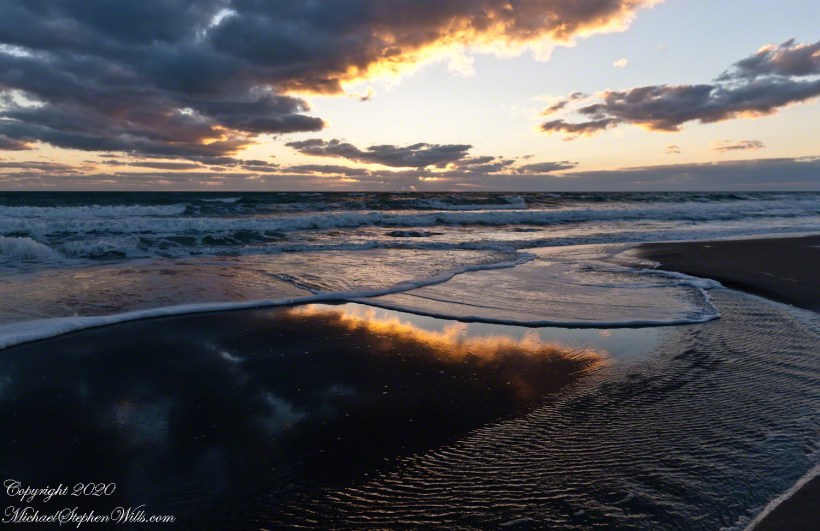
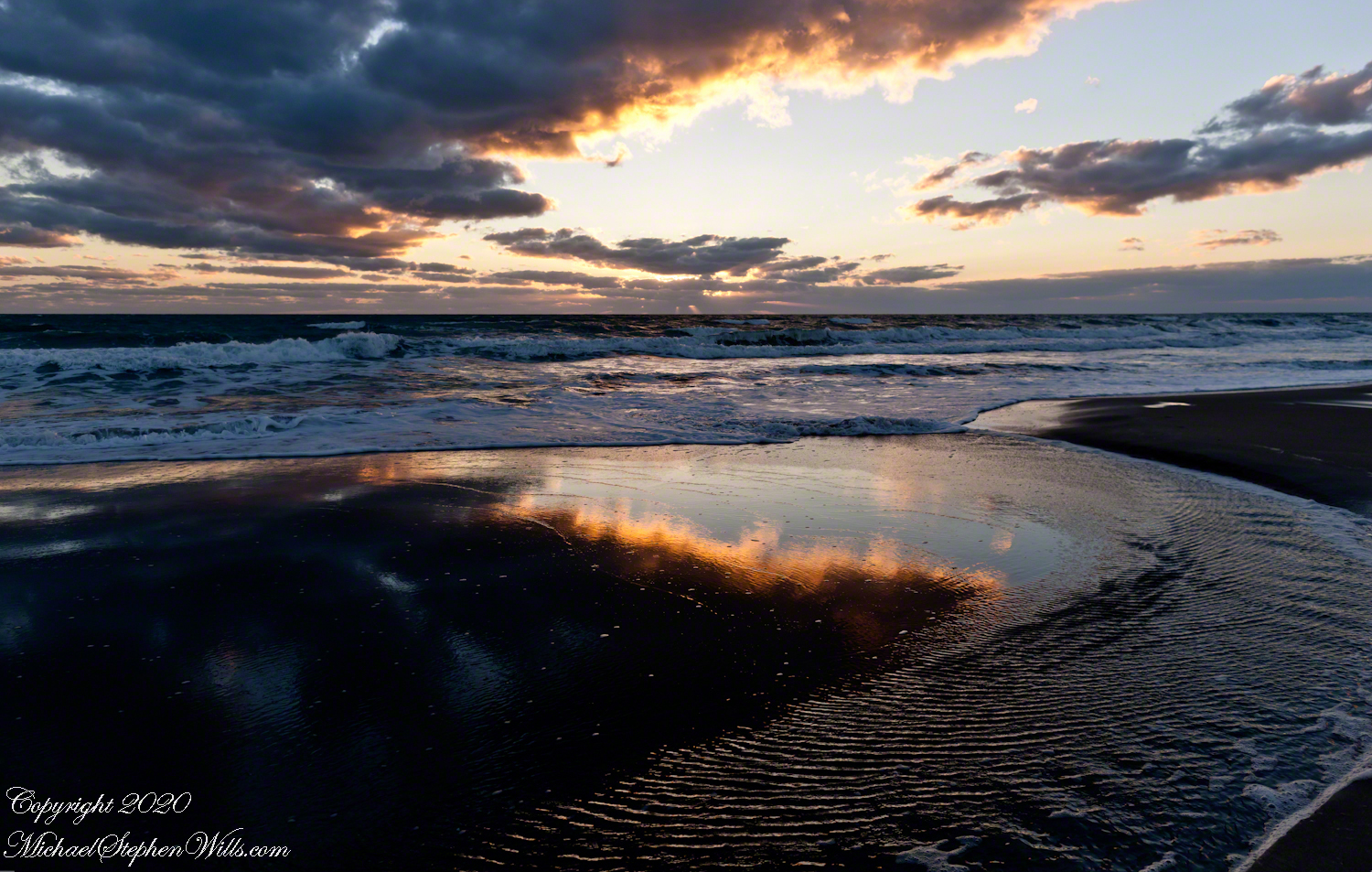
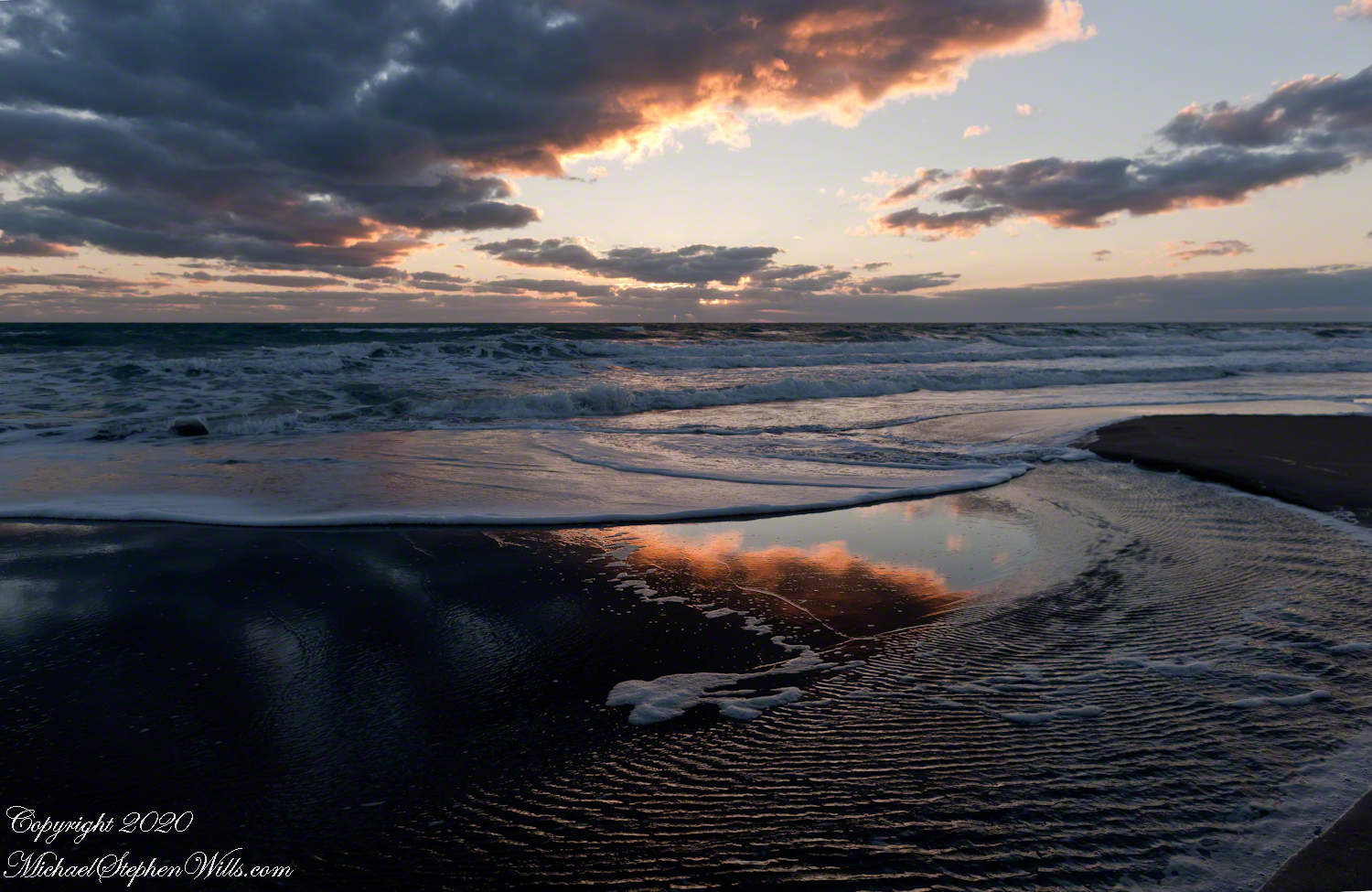
Almost a minute, fifty two seconds, separates the images of this post, enough time for a wave to sweep over a boss of sand, forming a mirror, and to start a return flow to the sea.

Happy turning of February to March.

Click photograph for larger image. To do this from WordPress Reader, you need to first click the title of this post to open a new page.

A sand boss held water briefly each cycle to form a mirror.

A slide show of these images.

Want to see more? Visit this series on Getty IStock.

Copyright 2020 All Rights Reserved Michael Stephen Wills