Begonia Flowers and a Sweat Bee

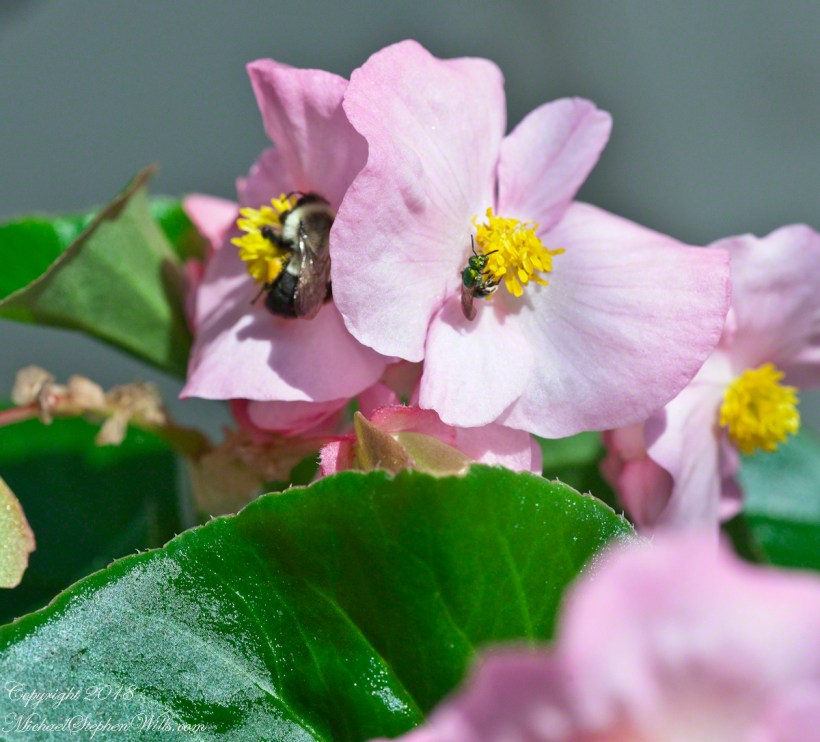
shiny, bright green tiny bee

Once a year when Pam’s gardens are at a summer peak I venture out to capture her work in early morning light. For this third image of the begonia series I used the same handheld Canon EOS 1Ds Mark III SLR but with the Canon lens EF 100 mm f 2.8L IS USM variable lens. Click me for the first post, “Begonia Grandis.”

Click photograph for a larger view.
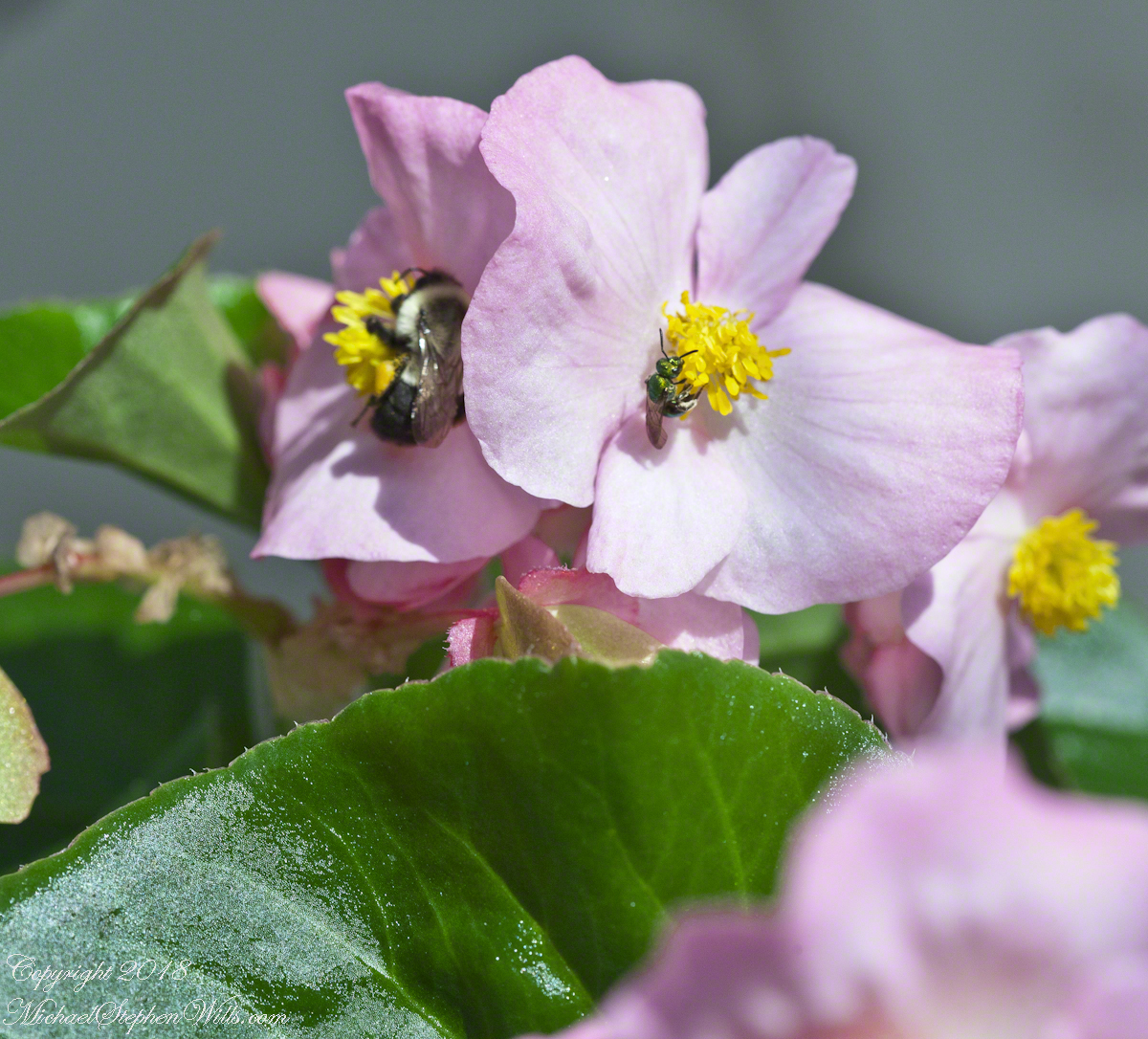
Sweat Bee!!

The bee on the right, in sharp focus, was a puzzle to me. I am familiar with it, they are very common around here, and striking with a bright green shiny thorax. For this post I decided to identify it.

After thirty minutes of poking around I found a list of New York Wild bees on the Cornell CALS (College of Agriculture and Life Sciences) site. It is in the form of an excel spreadsheet and very helpful. There are over 400 species listed. Using the “filter” feature I found the six families and, for each, did a web search. I am 98% sure this bee is in the family Halictidae, known as “sweat bees,” being attracted to the salt of perspiration they use for nutrition.

Next I looked as the first name in the species designation within the family Halictidae. Tjhis is the genus. There were not many, in a few minutes singling out Agapostemon, known as the “metallic green sweat bee.” I did not find it necessary to hone in on the exact species as members of the genus Agapostemon have defining characteristics.

There are four species listed on the Cornell CALS spreadsheet, all are ground nesting and solitary. Sweat bees are useful as crop pollinators. In Texas they can replace honeybees for pollination of cotton.

Agapostemon sericeus
Agapostemon splendens
Agapostemon texanus
Agapostemon virescens

The lens is designed for macro work and is a fixed focus, it can capture small details without needed to be close to the subject. I decided to crop the image down to emphasize the bees. The sharper focus is on the sweat bee


Copyright 2022 Michael Stephen Wills All Rights Reserved

Bumblebees and Begonia Flowers

early morning light

Once a year when Pam’s gardens are at a summer peak, I venture out to capture her work in early morning light. For this second image of the begonia, I used the same handheld Canon EOS 1Ds Mark III SLR but with the Canon lens EF 70-300 f 4-5.6L ISM variable lens.

Click photograph for a larger view.

Bumblebees numbers will tell you if local mouse populations are under control. Mice will invade bumblebee burrows to eat the eggs and young. If the bees are plentiful, it means more are escaping mouse predation and only because mouse numbers are low.
This morning, bees of all kinds filled the begonia flowers. Bumblebees were amusing to watch enthusiastically roll around the many stamen of the male flowers, gathering as much pollen as possible.

The lens focal length is set to 84 mm to capture the entire plant, on reviewing the proofs I decided to crop the image down to emphasize the bee.

Copyright 2022 Michael Stephen Wills All Rights Reserved

Begonia Grandis

Macro!!

Once a year when Pam’s gardens are at a summer peak I venture out to capture her work in early morning light. For this image I used a handheld Canon EOS 1Ds Mark III SLR with the Canon lens EF 100 f 2.8L Macro. This is the first post of this series. Click me for “Water Lily Flower with hornet,” from my photography gallery.

Click photograph for a larger view.

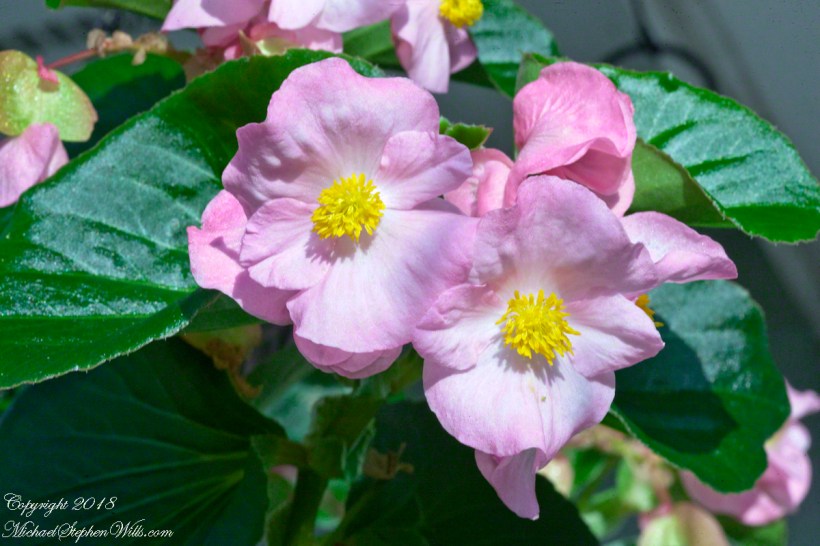
Begonia is a large genus of flowering plants, sub-tropical and tropical natives, adapted her to a hanging basket put out after the last frost, the end of May, Memorial Day, in these parts. The flowers are monoecious, both male and female unisex flowers bloom on a single plant.

Pictured are double male flowers composed entirely of stamens. This plant has a sour flavor enjoyed in parts of its range. Over consumption will produce ill effects as the tissues are high in oxalic acid, a poison to humans.

Here, the leaves and flowers glow in the gentle light of early morning.

Copyright 2022 Michael Stephen Wills All Rights Reserved

Gorge Jewels

“J” trees and a charming weed

Friday last Pam and I joined a “James Potorti Memorial Gorge Walk” through Buttermilk Falls State Park where we learned interesting facts connected to one of my most successful photographs, “Summer Dream: Buttermilk Falls.” This is the fifth and final post of this series.

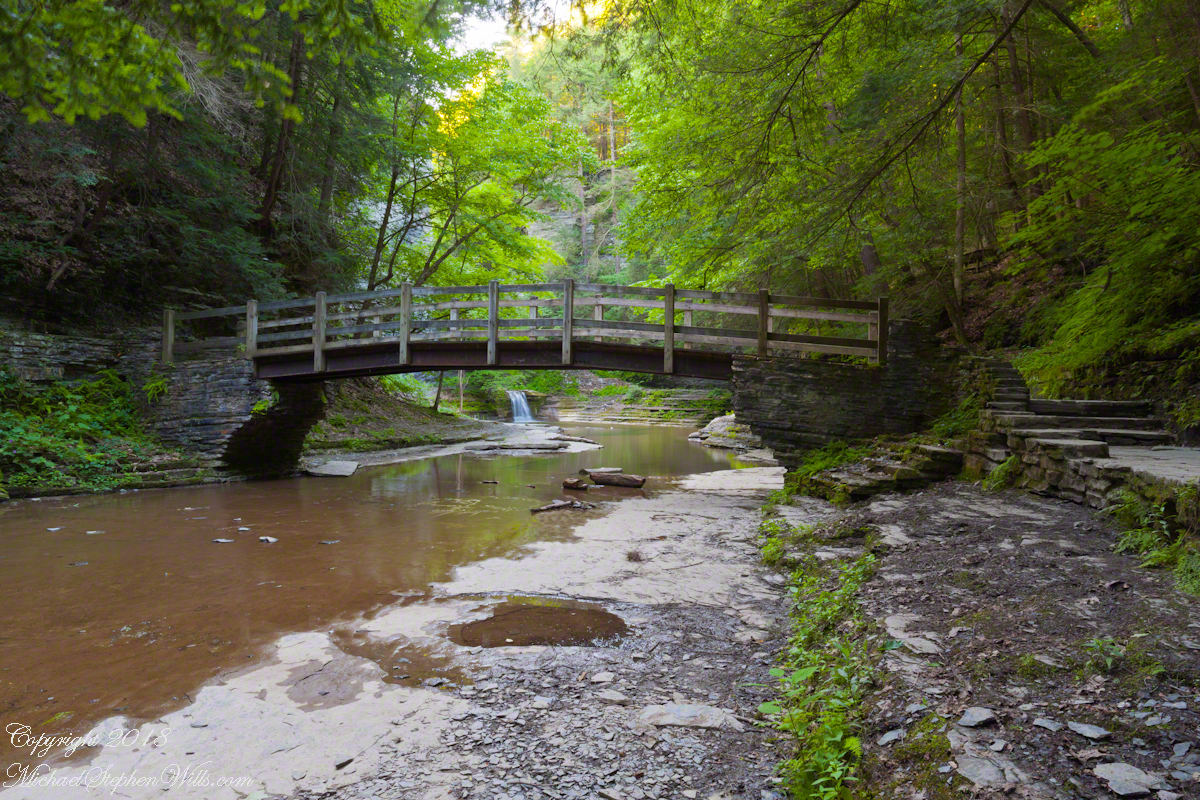
Final Photograph of my “Creek Views” post — not waterfall in distance

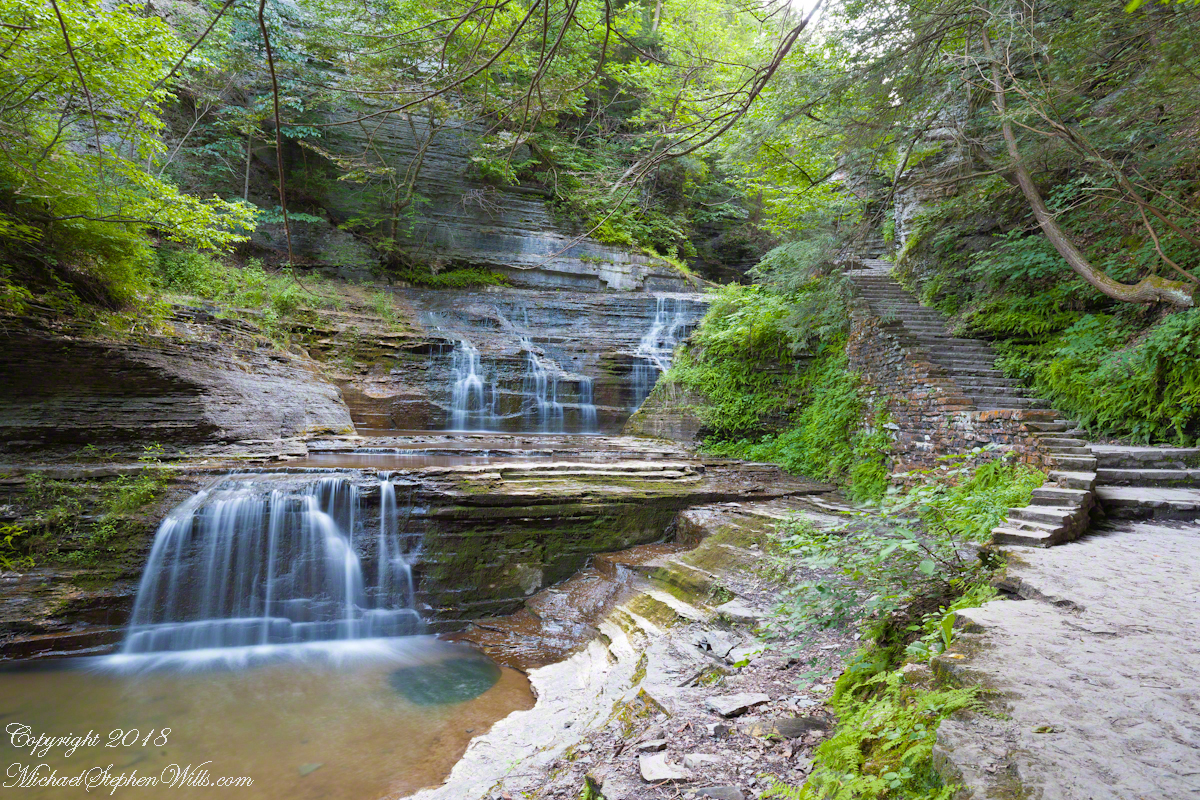
Upper Buttermilk Gorge Trail

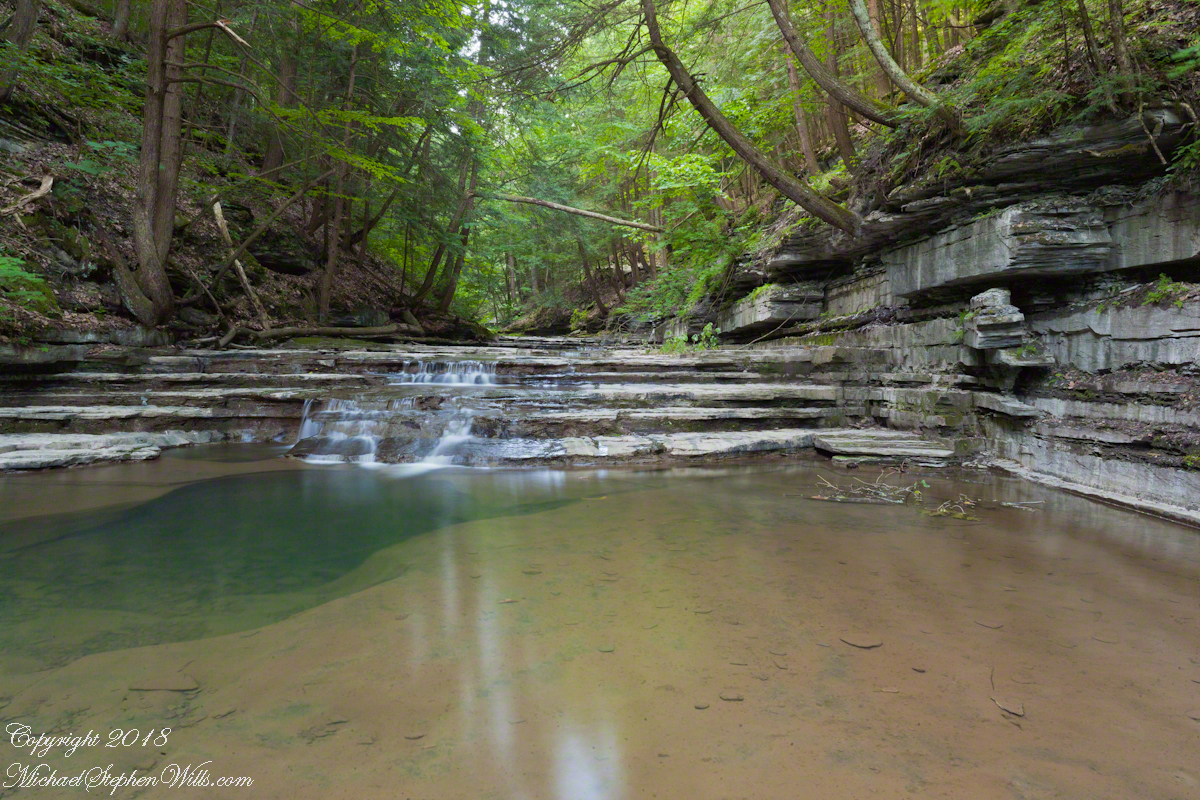
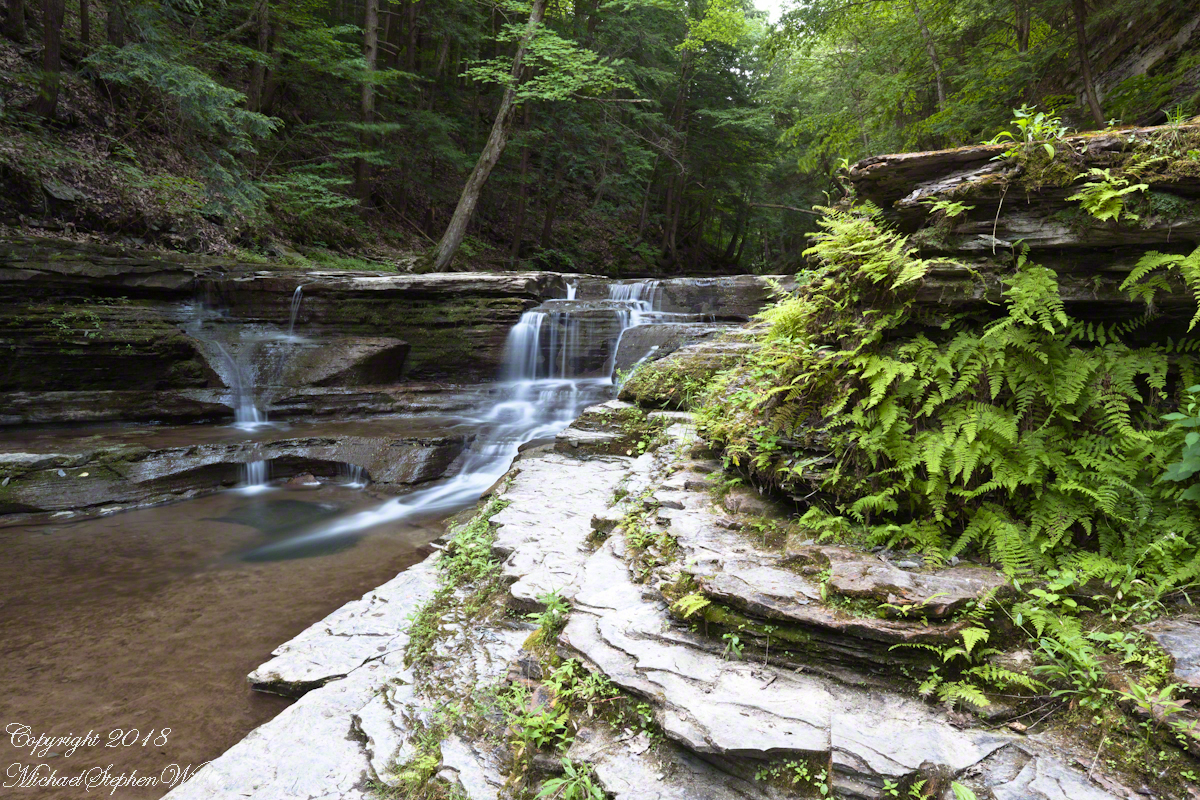
Below is a photograph of that distant waterfall. Taken using a tripod mounted Canon EOS 1DS Mark III body with the Canon lens EF 24mm f/1.4L II USM w/a neutral density filter (0.6 as I recall) it is from an early morning solo walk, July 2018.

This photograph is one of a series from that day. Here is a link to my waterfall photographs on Getty IStock, including the series captured on that July 2018 morning.

Click any photograph for a larger view.
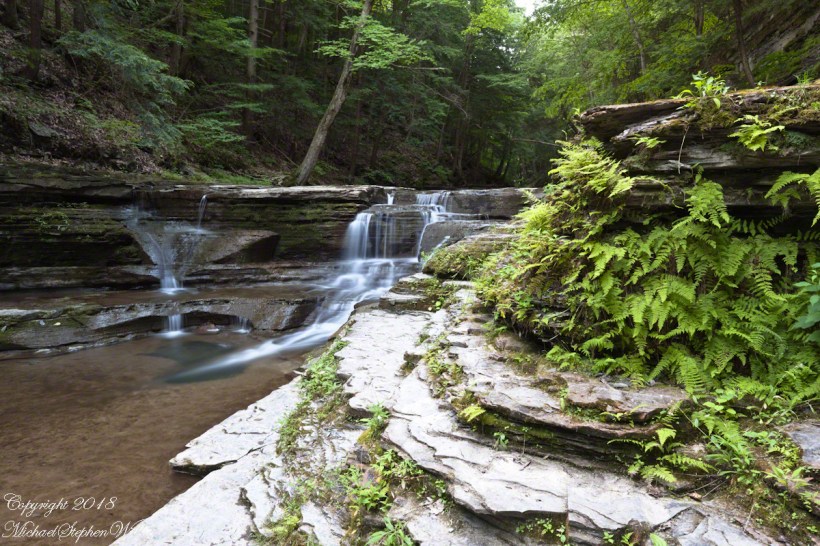
Natural steps

J Tree
A characteristic of Finger Lakes Gorges is a constant infall from fragile sedimentary walls. Tree roots hold the slopes in place until the inevitable slippage. Tree trunks bear the mark, as you can see from tree to the right of the steps. Slippage moves the trunk horizontal, subsequent growth toward the sun curves the trunk. In extreme cases the tree forms the shape of an umbrella handle.
More examples of this slippage are seen on the right creek bank in the following photograph from my post of this series, “Creek Views.”

More curved trees

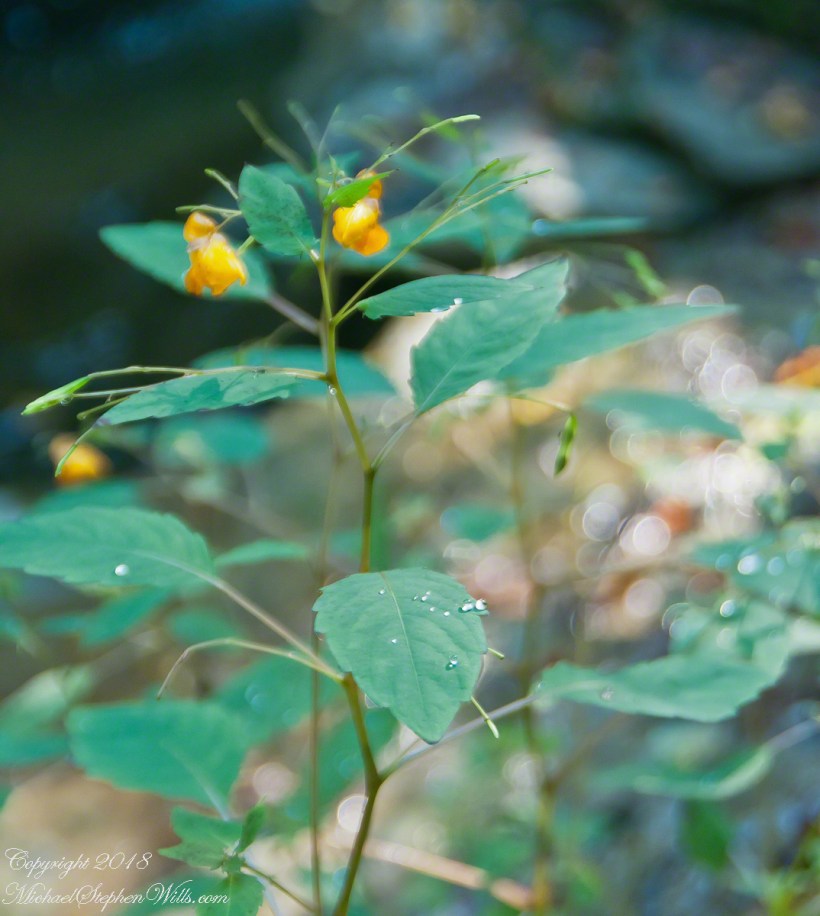
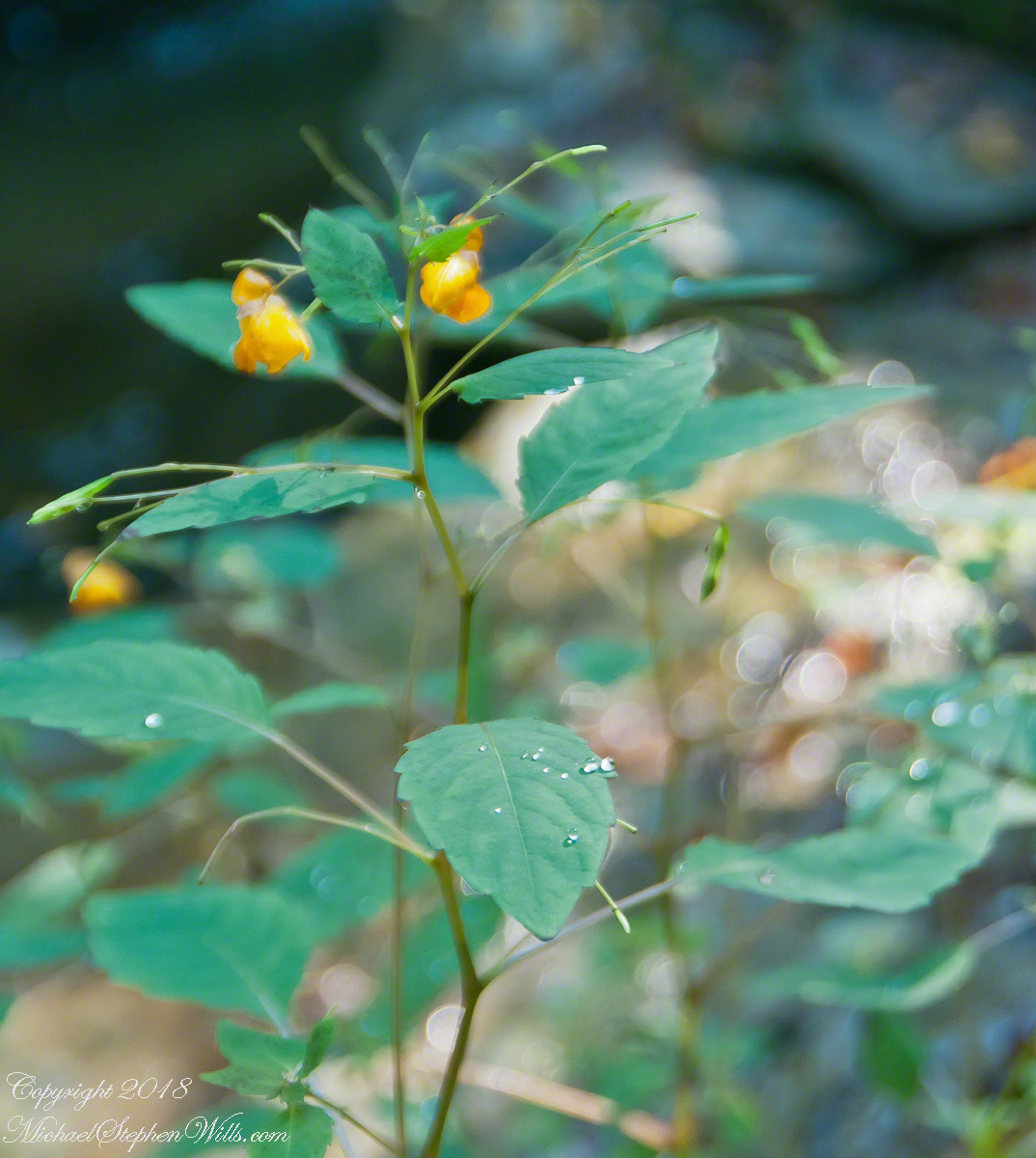
Impatiens capensis

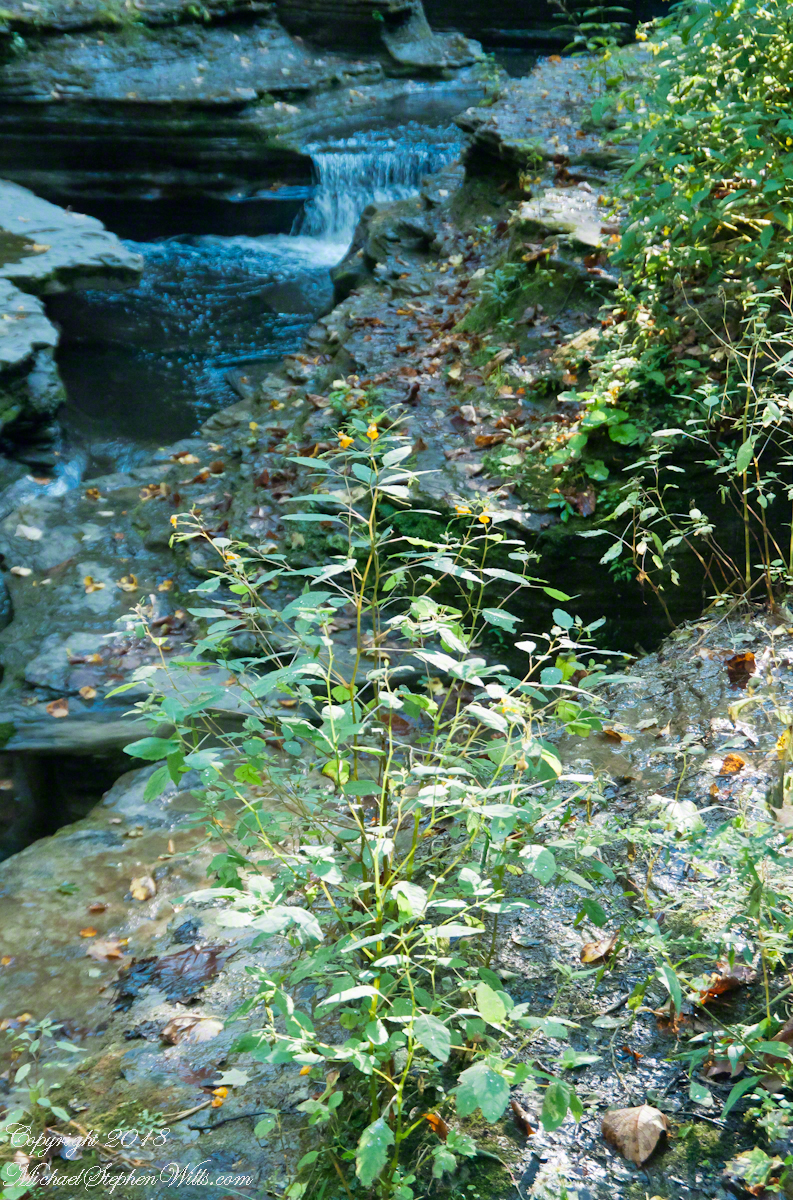
Emerging from the gorge, soil accumulates on narrow shelves where this Jewelweed plant grows. Here we leave the gorge for now.

(Impatiens capensis) growing along the upper portion of the Buttermilk Sate Park Gorge Trail in early September, just after Labor Day. This photograph shows the plant growth pattern and the surrounding environment.

In Memorium

James Potorti was a native of Ithaca who perished at 52 years of age in New York City on September 11, 2001 were he worked on the 96th floor of 1 World Trade Center.

Copyright 2022, Michael Stephen Wills All Rights Reserved

Creek Views

off the path

Friday last Pam and I joined a “James Potorti Memorial Gorge Walk” through Buttermilk Falls State Park where we learned interesting facts connected to one of my most successful photographs, “Summer Dream: Buttermilk Falls.” This is the fourth post of this series.

Starting Point

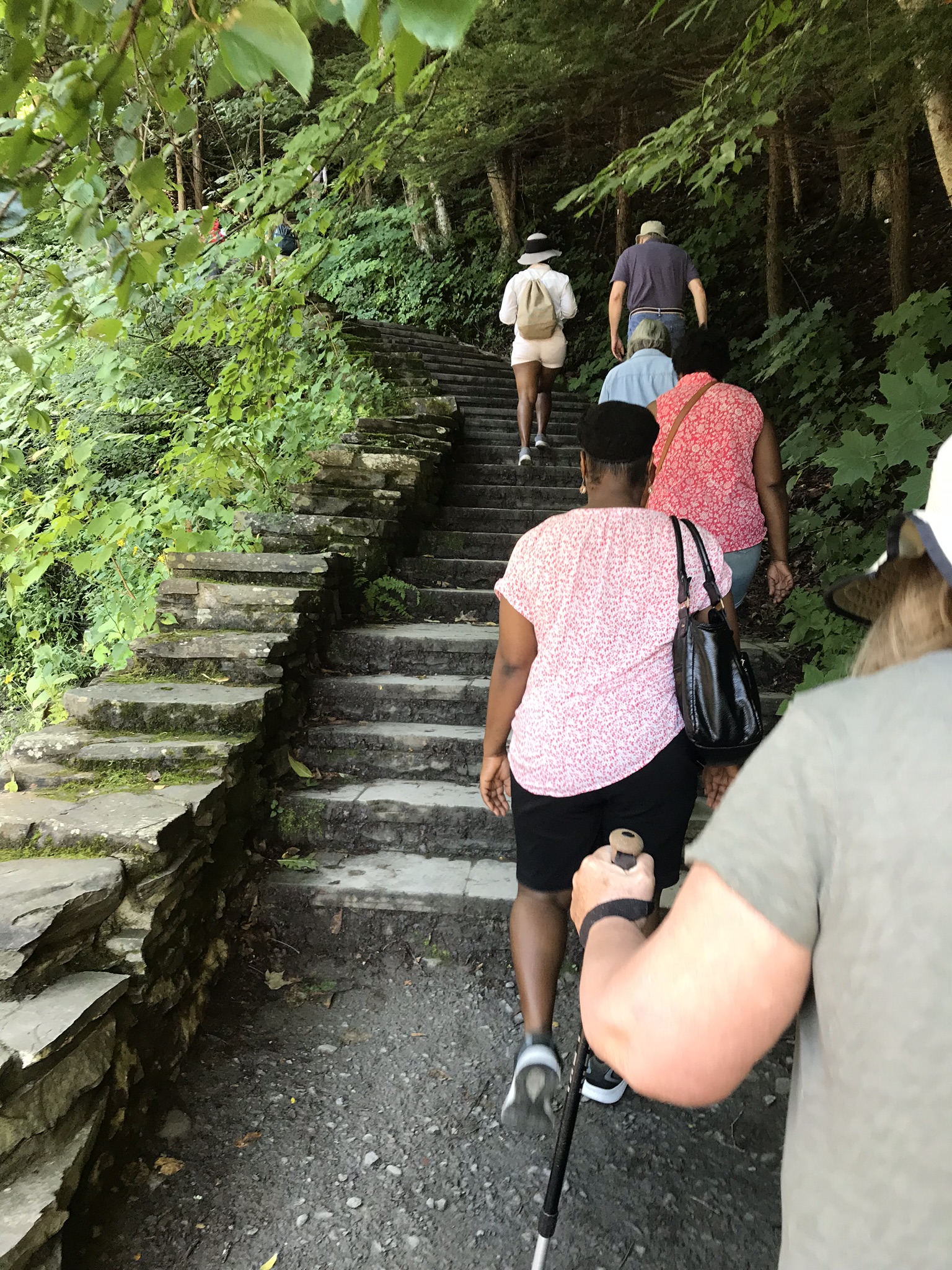
Buttermilk Falls State Park has two parks, upper and lower. Friday’s hike began at lower park. Using GoogleEarth I see the half mile trail along the lower gorge climbs 506 feet, 355 feet of this is ascended in 300 steps in the first quarter mile. Here is a view of the magnificent cascade that greets lower park visitors.

To my knowledge, nobody has ascended the creek bed at this point. The climb is not impossible, people with technical rock climbing skills and equipment can do it. We use the trail. Most often, Pam and I visit the upper park and walk down the gorge to the top of this ascent. Friday, we walk up with everyone else.

Creek Level Photographs

On a July morning 2018 I walked Buttermilk Creek from the scene of my “Summer Dream: Buttermilk Falls”, up the steps on the right of that photograph to where the water flows across a flat expanse of stone. The following three photographs from that walk were taken using a tripod mounted Canon EOS 1DS Mark III body with the Canon lens EF 24mm f/1.4L II USM w/a neutral density filter (0.6 as I recall).

Click any photograph for a larger view.
Natural steps

Low Flow

The “secret” behind my successful “Summer Dream: Buttermilk Falls” photograph is waiting for a seasonal low creek flow. For the same reason, this is a safe time to walk this part of the creek to capture the scene. See the previous post, “Walking Buttermilk Creek”, for the entry to this creek level walk. Attempting to walk the creek in other seasons can be fatal….there is a plaque along the trail memorializing an attempted rescue during a March flood where two people died: the rescued and the rescuer.

At high water the creek gouged a channel through the limestone creek bed

The most difficult passage was through the above photograph. I walked along that narrow, water level ledge using the tripod as a third leg. Here is a link to my waterfall photographs on Getty IStock, including the series captured on that July 2018 morning.

Time to Exit the Creek Bed

In Memorium

James Potorti was a native of Ithaca who perished at 52 years of age in New York City on September 11, 2001 were he worked on the 96th floor of 1 World Trade Center.

Copyright 2022, Michael Stephen Wills All Rights Reserved

Walking Buttermilk Creek

getting our feet wet

Friday last Pam and I joined a “James Potorti Memorial Gorge Walk” through Buttermilk Falls State Park where we learned interesting facts connected to one of my most successful photographs, “Summer Dream: Buttermilk Falls.” This is the third post of this series.

On the path vs. in the creek

Friday’s hike began at the bottom, here we are at the start of the 400 foot climb, 300 steps, along cascading waterfalls.

Responsible Adults Staying on the path

Everyone stays on the path at this point, here is a video that demonstrates why.

Falls along the 300 step climb

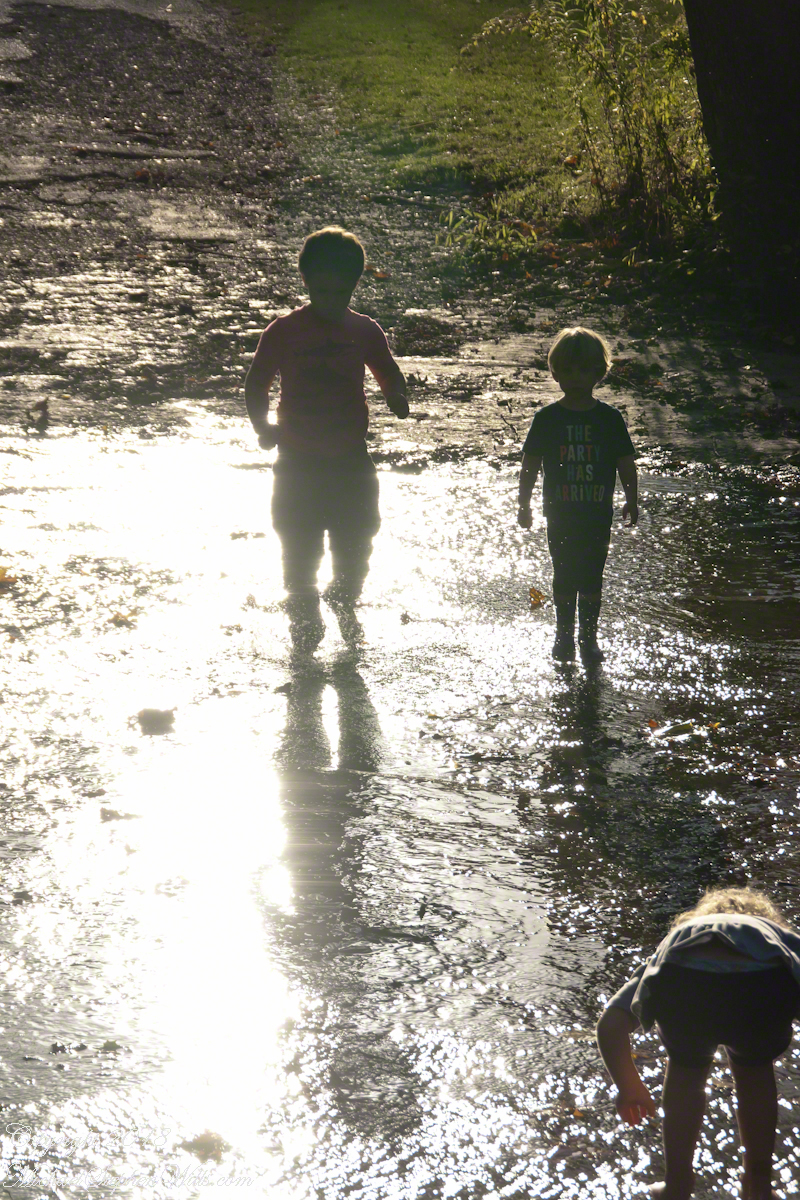
Hiking with the grandchildren we prefer the upper park, walking along the road to a place where the creek flows over the pavement. They love taking off shoes and jumping in.

Click any photograph for a larger view.
Children wading Buttermilk Creek, take note of the shirt, “The Party Has Arrived.”

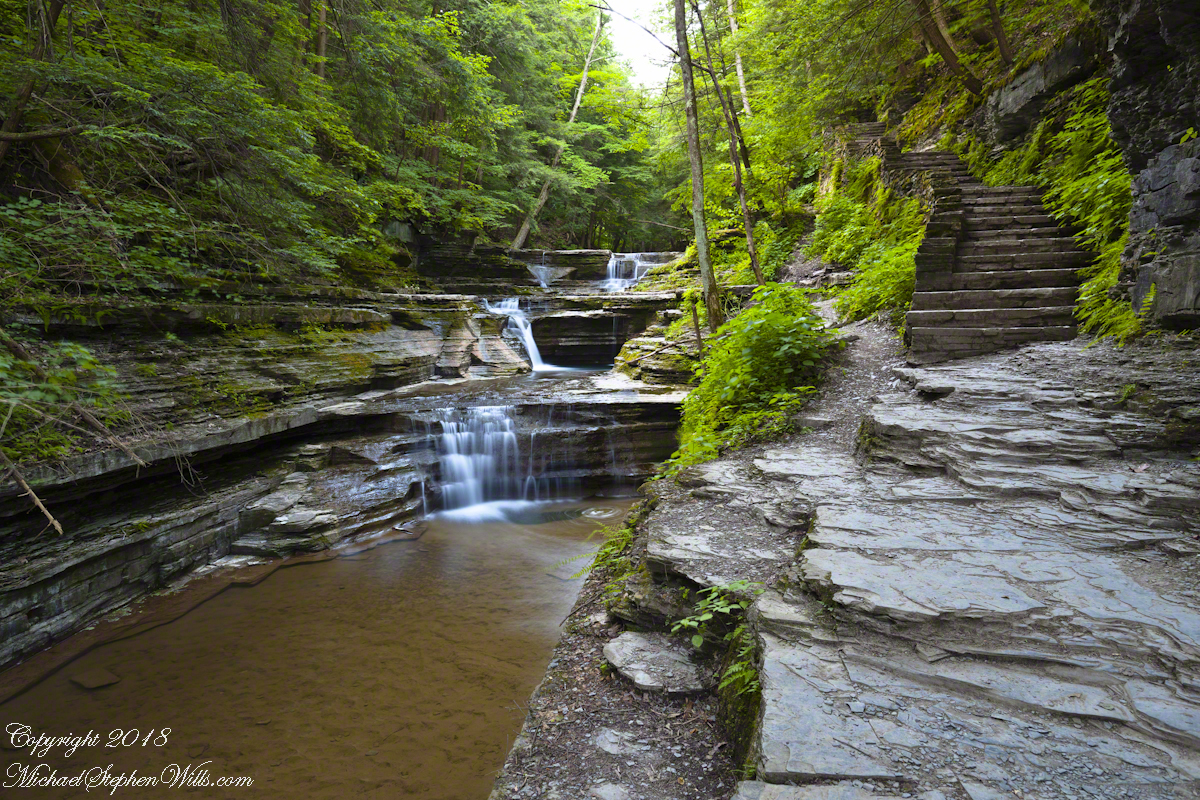
On a July morning 2018 I walked Buttermilk Creek from the scene of my “Summer Dream: Buttermilk Falls”, up the steps on the right of that photograph to where the water flows across a flat expanse of stone. This photograph from that walk was taken using a tripod mounted Canon EOS 1DS Mark III body with the Canon lens EF 24mm f/1.4L II USM w/a neutral density filter (0.6 as I recall).

Off the Path

Here is where the creek bed is flat enough to allow me to follow it when I wear waterproof boots. Note: it is against park rules to do this and the fines are steep, although some summer days it is a free-for-all of visitors in bathing suits, it looks like the beach. This session started shortly after sunrise, around 5:30 am at the best lighting, so there were no witnesses. When the sun shines over the gorge rim there are too many hot spots, the contrast between shadow and sunlight is too distracting.

In Memorium

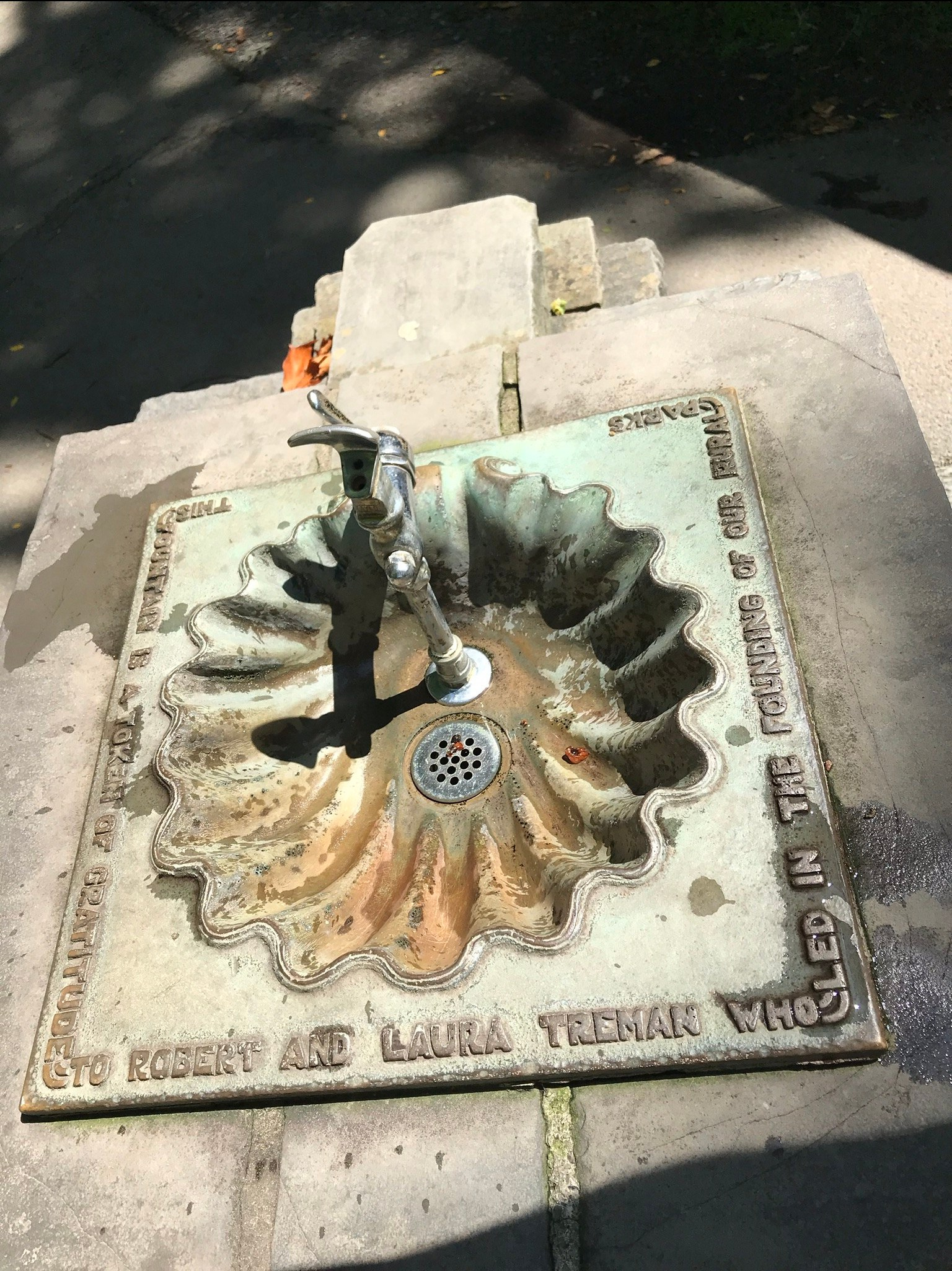
Friday is the first visit I noticed this bronze water fountain in the lower park. The land for the park was an early 20th Century donation. The inscription text is in the photograph caption.

“This fountain is a token of gratitude to Robert and Laura Treman who led the founding of our rural parks.”

James Potorti was a native of Ithaca who perished at 52 years of age in New York City on September 11, 2001 were he worked on the 96th floor of 1 World Trade Center.

Copyright 2022, Michael Stephen Wills All Rights Reserved

Ancient “Fracking”

a form revealed

Friday last Pam and I joined a “James Potorti Memorial Gorge Walk” through Buttermilk Falls State Park where we learned interesting facts connected to one of my most successful photographs, “Summer Dream: Buttermilk Falls.” This is the second post of this series.

Click me for “Summer Dream, Buttermilk Falls” in my Fine Art Gallery.

Many Right Angles, Why?

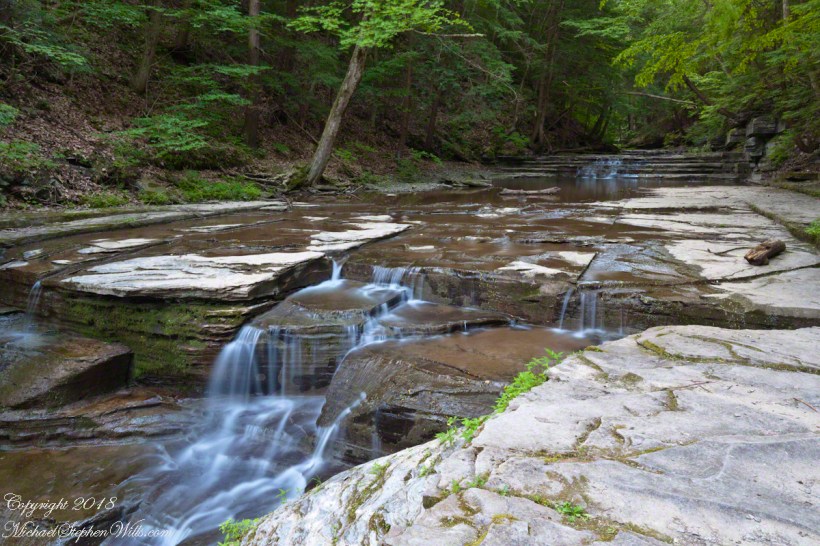
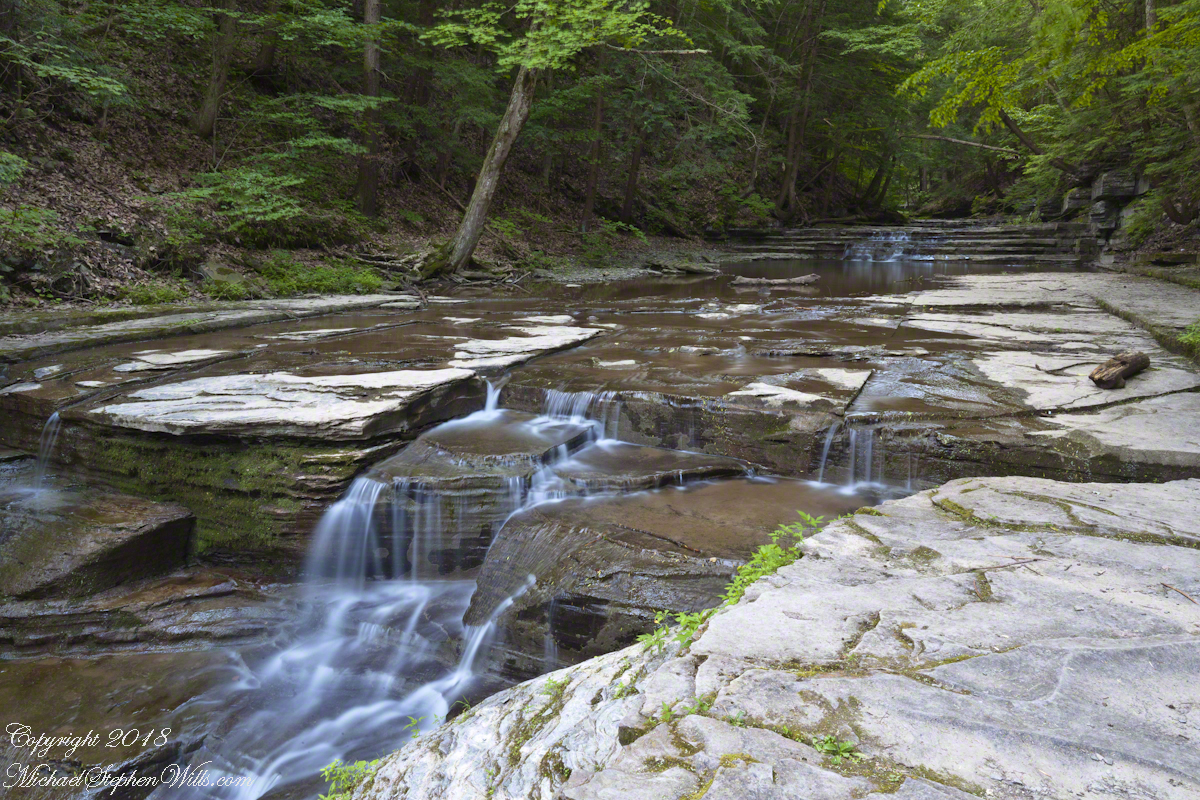
On a July morning 2018 I walked Buttermilk Creek from the scene of my “Summer Dream: Buttermilk Falls”, up the steps on the right of that photograph to where the water flows across a flat expanse of stone. This is a photograph of that expanse taken using a tripod mounted Canon EOS 1DS Mark III body with the Canon lens EF 24mm f/1.4L II USM w/a neutral density filter (0.6 as I recall).

Click photograph for a larger view.
“Summertime Cascades – 2018”

For a scene from nature there are many straight lines and, even, right angles in addition to the layering of the sedimentary rock from its origin as eroded material from the ancient Arcadia mountains collected on the floor of a warm shallow sea. We learned from Friday’s walking tour this sea was close to the equator at that time, riding on a tectonic plate that’s since drifted north. This North American Plate jostling with the others.

Beneath these rocks were older formations in which decomposed organic matter had transformed to methane gas. When the African plate and this pressed together, the stressed rocks weakened at right angles to the force, each stress point joining others in straight lines. The methane gas pressure from below forced the weak points to open a straight line fractures.

As the plates continued to move, orientation to the African plate transformed by ninety degrees and the two pressed together again. Methane gas pressure was present, causing straight line fractures at right angles to the others. Everywhere these rocks are exposed across the Finger Lakes region we see these right angle fractures.

In Memorium

James Potorti was a native of Ithaca who perished at 52 years of age in New York City on September 11, 2001 were he worked on the 96th floor of 1 World Trade Center.

Copyright 2022, Michael Stephen Wills All Rights Reserved

Balloon over Home

Waiting for the Whooooosh

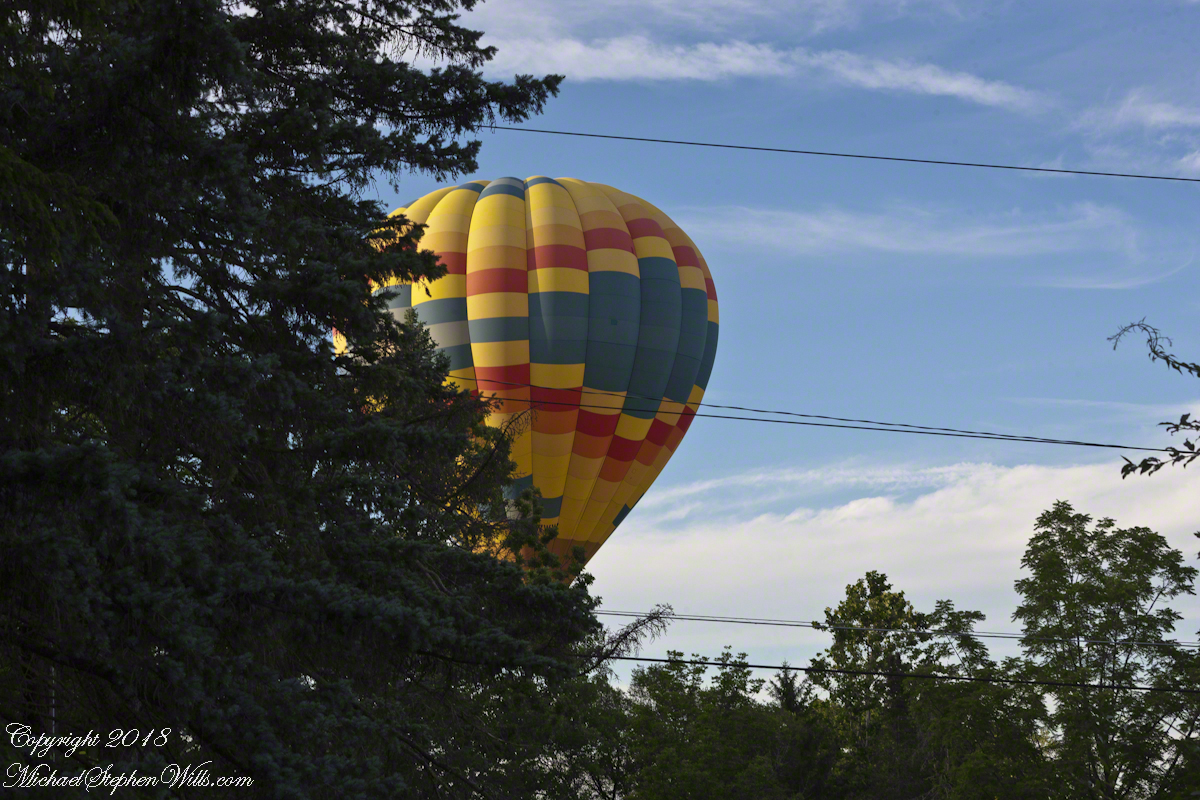
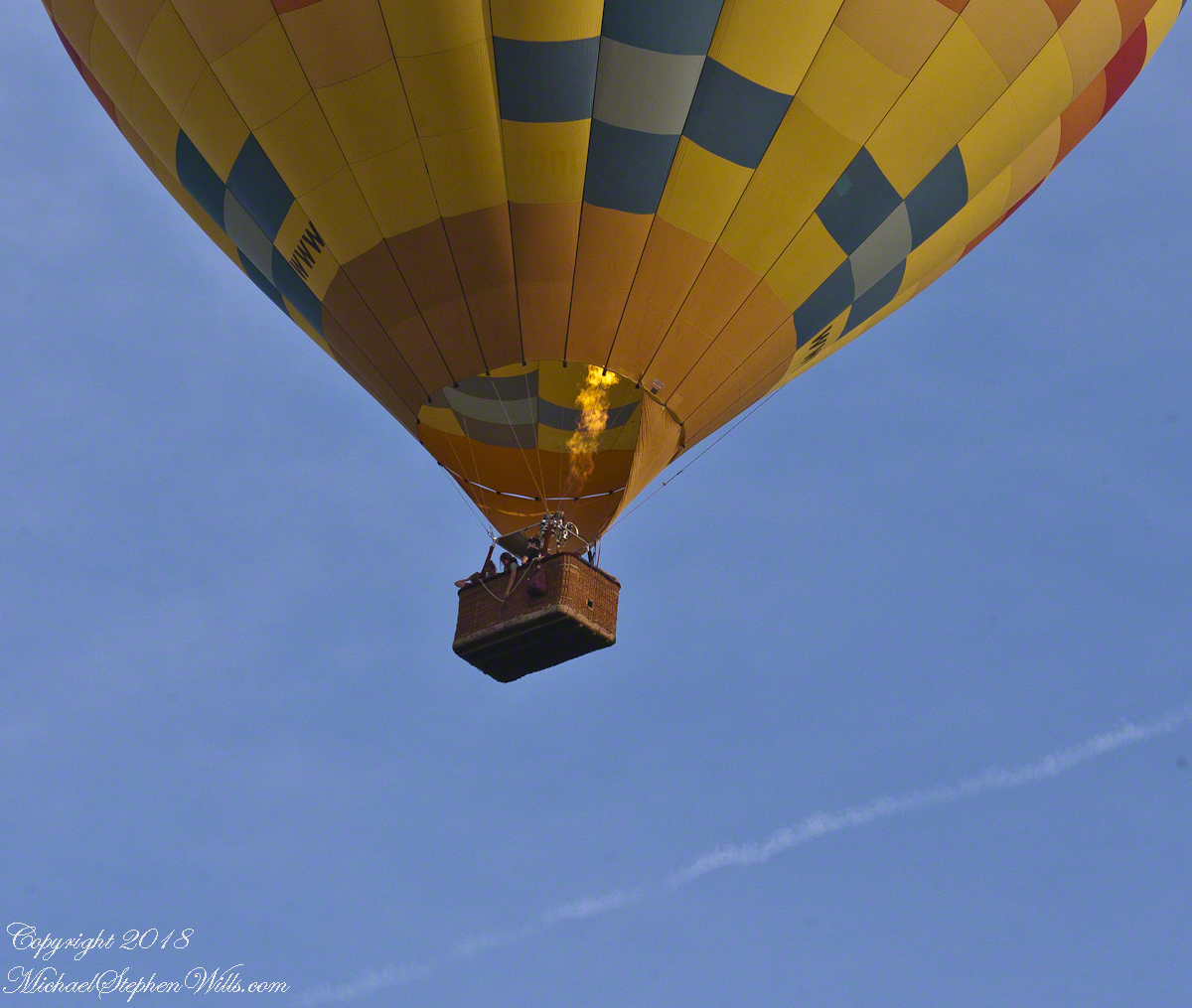
Whoosh….whoosh. Taking out the garbage Monday evening, July 15th, 2019 I heard the unmistakable sound of a liquid propane burner. As the propane is gasified and ignited, the flame and exhaust are directed into the balloon, all under control of the human operator. What a sound!!

These past years, hot air balloons started launching from West Hill and, when the breeze (balloons never launch in winds, as far as I know) is right the balloon and gondola full of passengers drift in the direction of our home. More than one time, directly overhead, I estimate 200 feet away. We could clearly see and converse with the passengers. What fun.

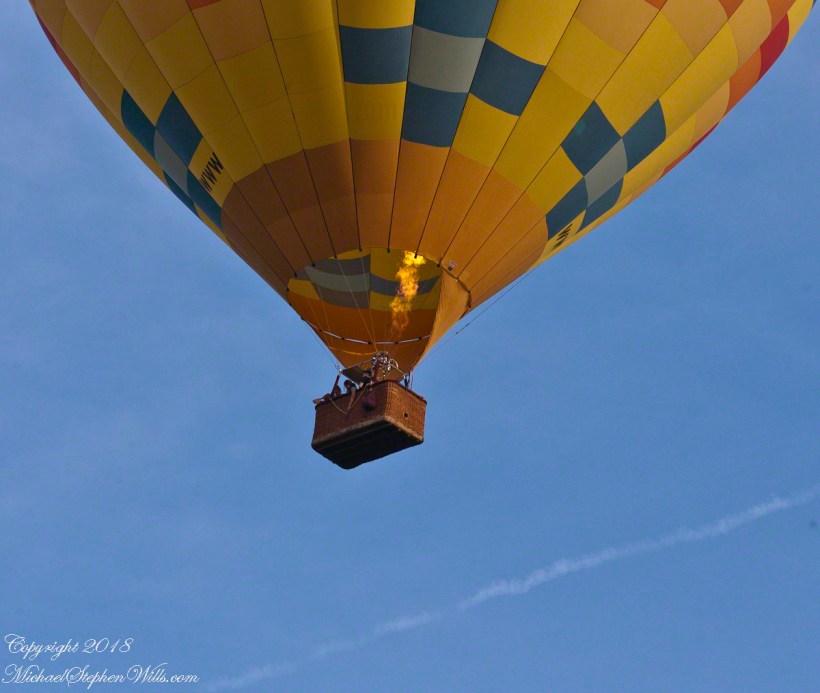
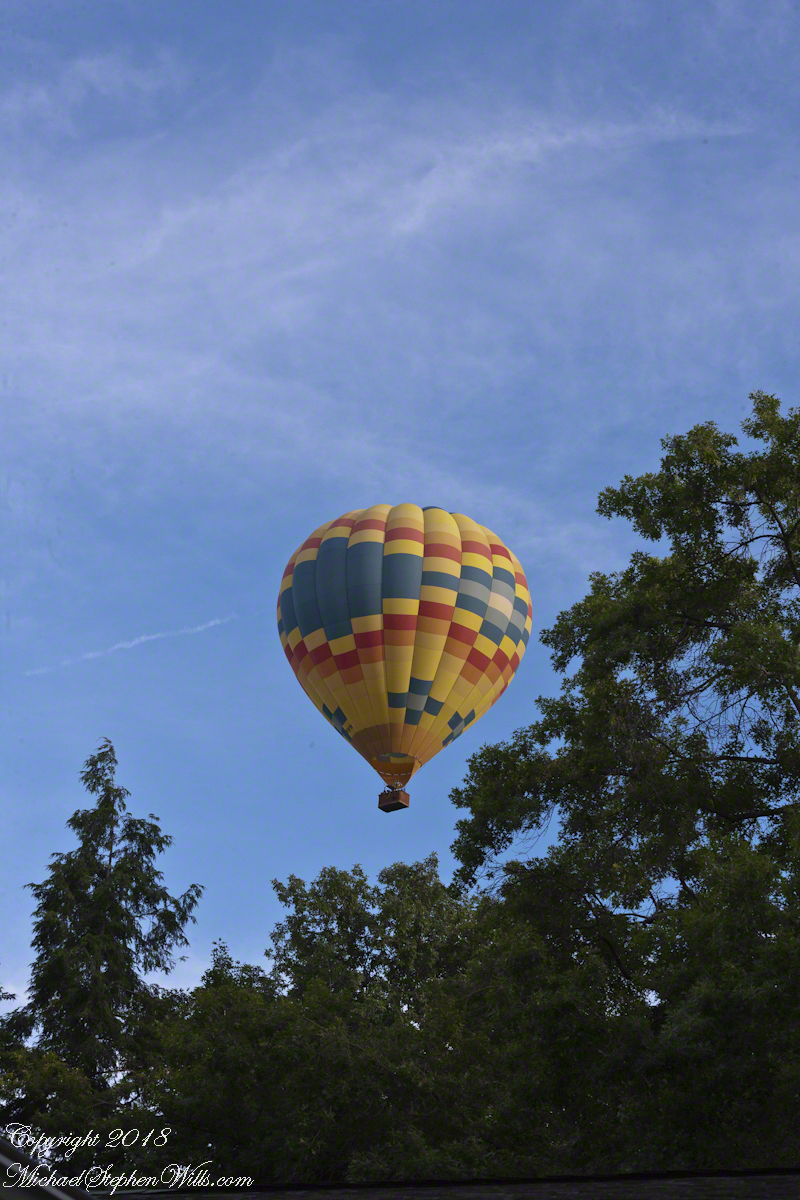
Each previous viewing I regretted not filming the balloon as the vision floated away. Last Monday, I dropped everything (not literally, I did leave the garbage in the bin), mounted the Canon lens EF 70-300mm f/4-5.6L IS USM on a EOS 1Ds Mark III body, returning to the north side of our property as the balloon emerged from the trees, only the envelope visible.

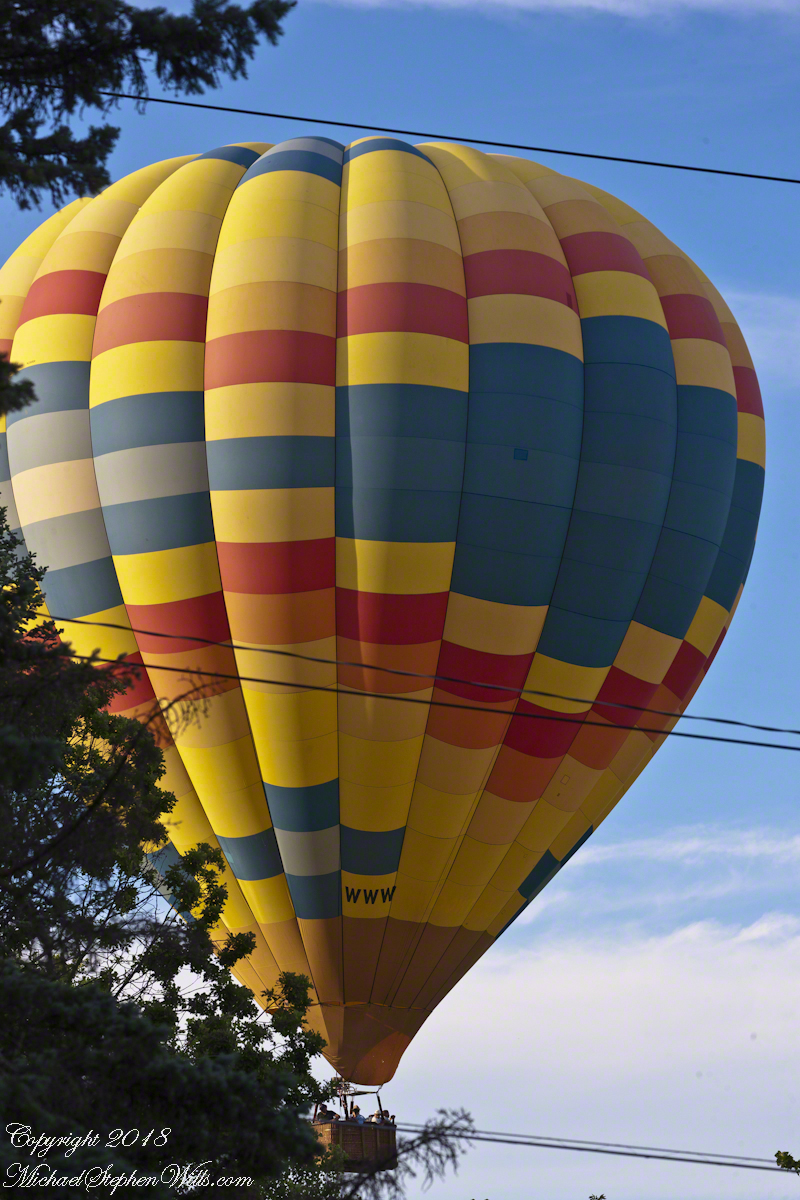
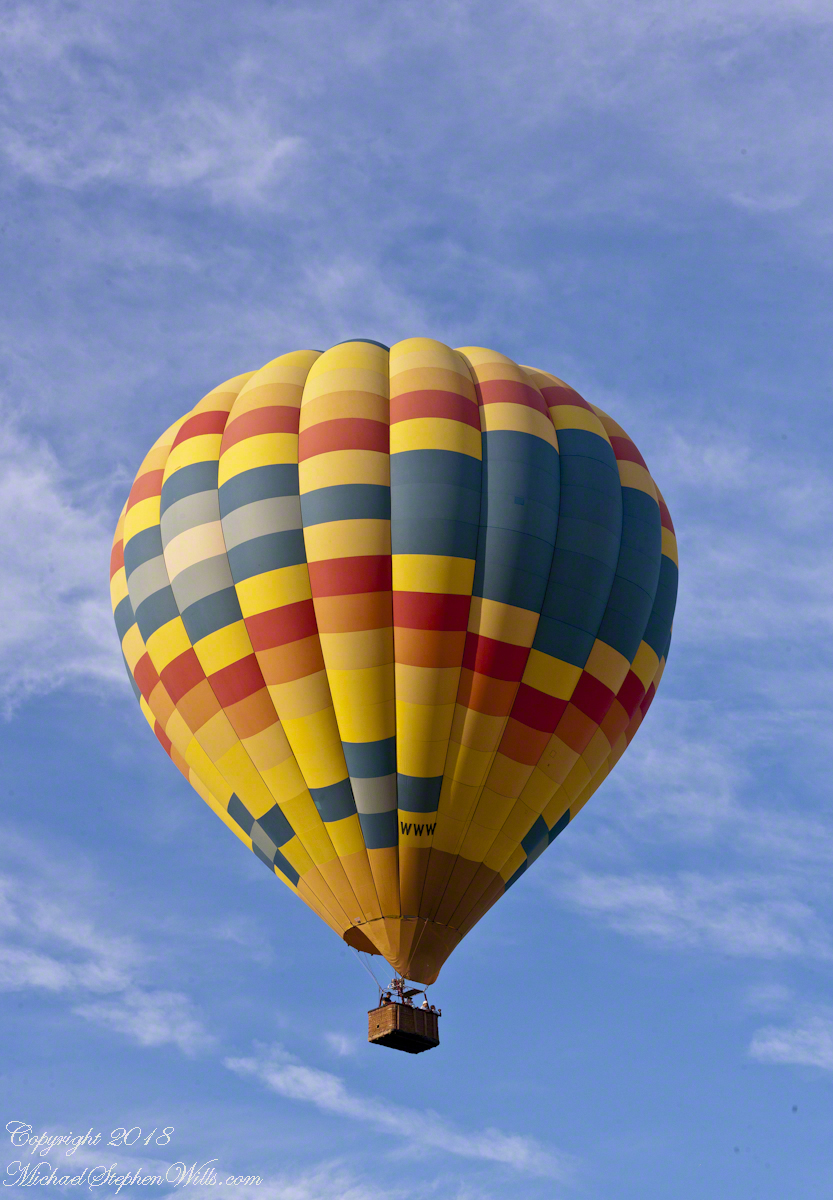
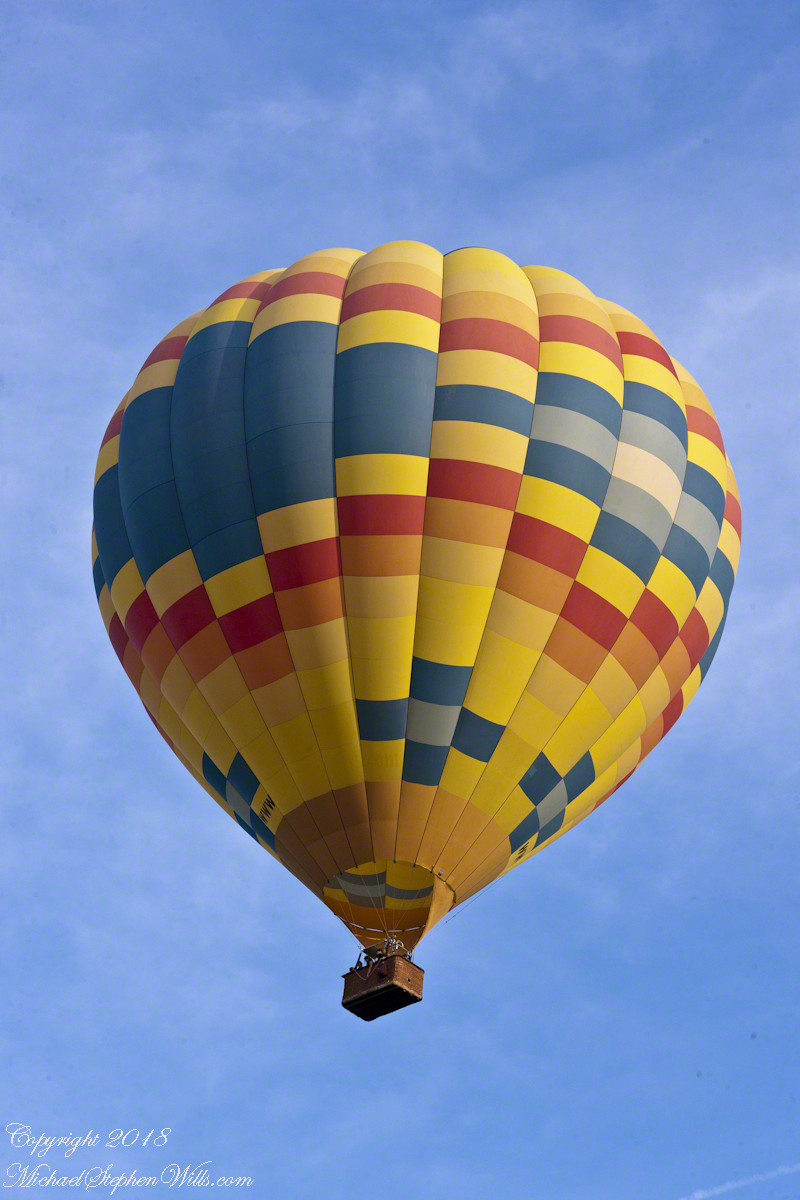
We have enjoyed this balloon before, the envelope pattern evokes a classic Navajo Rug, the colors really pop against the blue sky.

Why the Whooooosh?

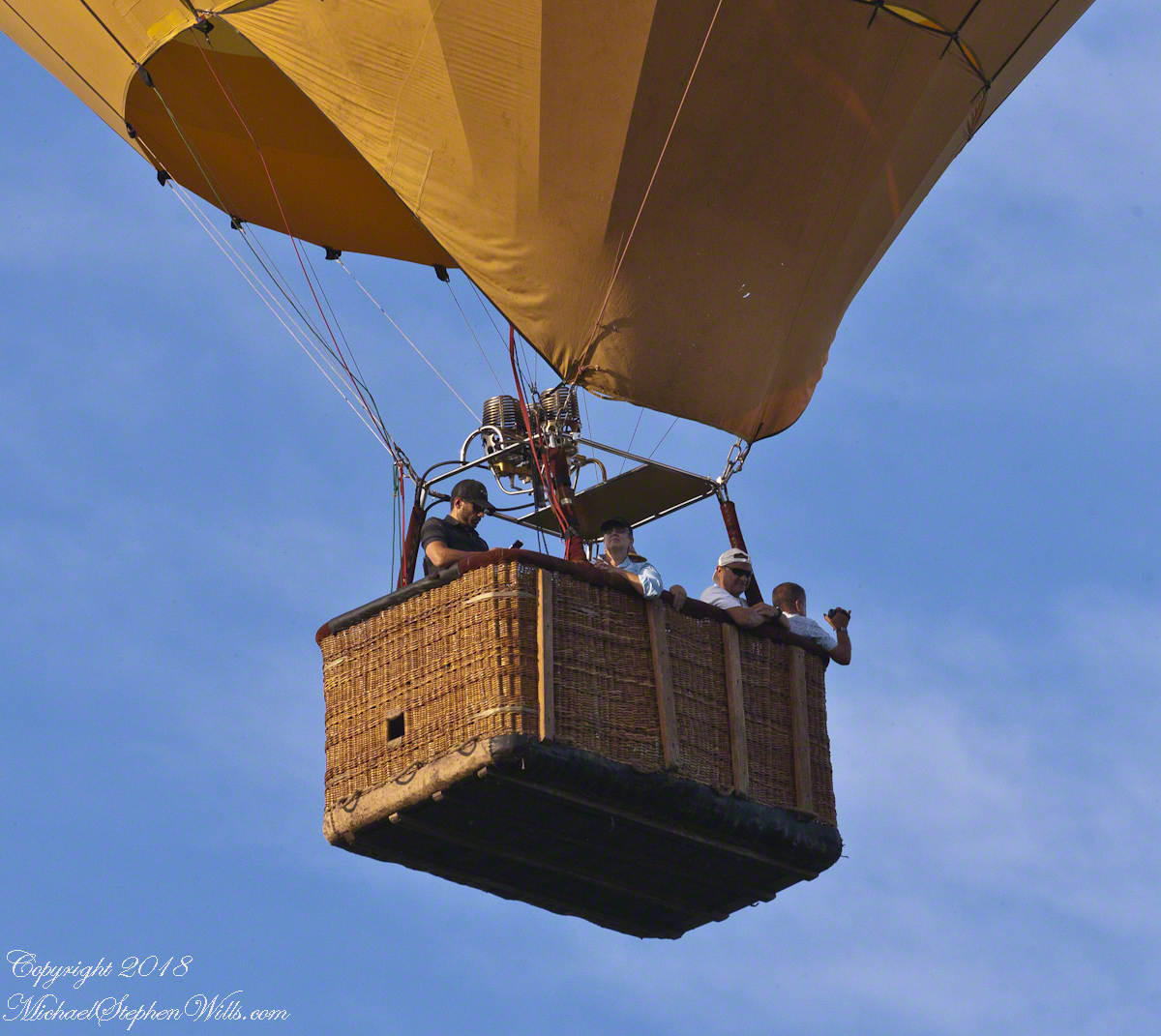
Tourists and local residents pay $230 per person for the experience of floating silently over Finger Lakes landscape with a launch from Trumansburg, ending up over Ithaca, in its valley surrounded by hills. Cayuga Lake is visible the entire flight, to the east, then northeast as the path reaches Ithaca. As they approached the balloon elevation was not so high relative to our home. You can see this clearly in the first photograph. With the zoom on 300 mm I was almost able to look into the basket, each of the four riders (the operation, looking at a cell phone, and three passengers) was recognizable.

There are three propane burners, two in front and the edge of a third just visible between the front pair.

Ethereal silence and reveres are broken when the burner lights up. Here it appears only one burner is running, sending the craft high above us.

Seven of the forty images are shared here. The duration was three minutes. With a goal of capturing the action, I had the camera on burst mode, with the shutter pressed the exposures run serially, in close succession.

I perfected these seven photographs to represent the perfection of this colorful event as it passed from the northwest, disappearing in the tree line to the southeast.

I am listening for the next event, camera and lens ready.

Post script….it was my usual early morning blogging time when I heard the familiar Whooooosshh, whoooosssshhh, grabbed my IPhone for a video and captured the following. You will hear the gondola occupants chatting. The burner was turned on at 1:03 when the balloon was fairly distant. The Whoooosssshhhh is low, but audible.

Today, they were headed North/Northwest in the opposite direction from Monday and are backlit. Enjoy!!

Copyright 2022 Michael Stephen Wills All Rights Reserved

Kite Surfing Action Series

three shots in one second

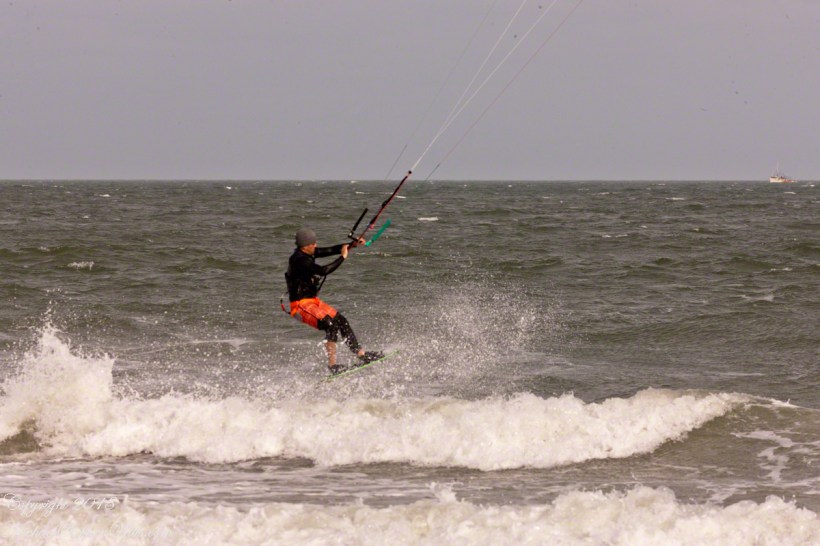
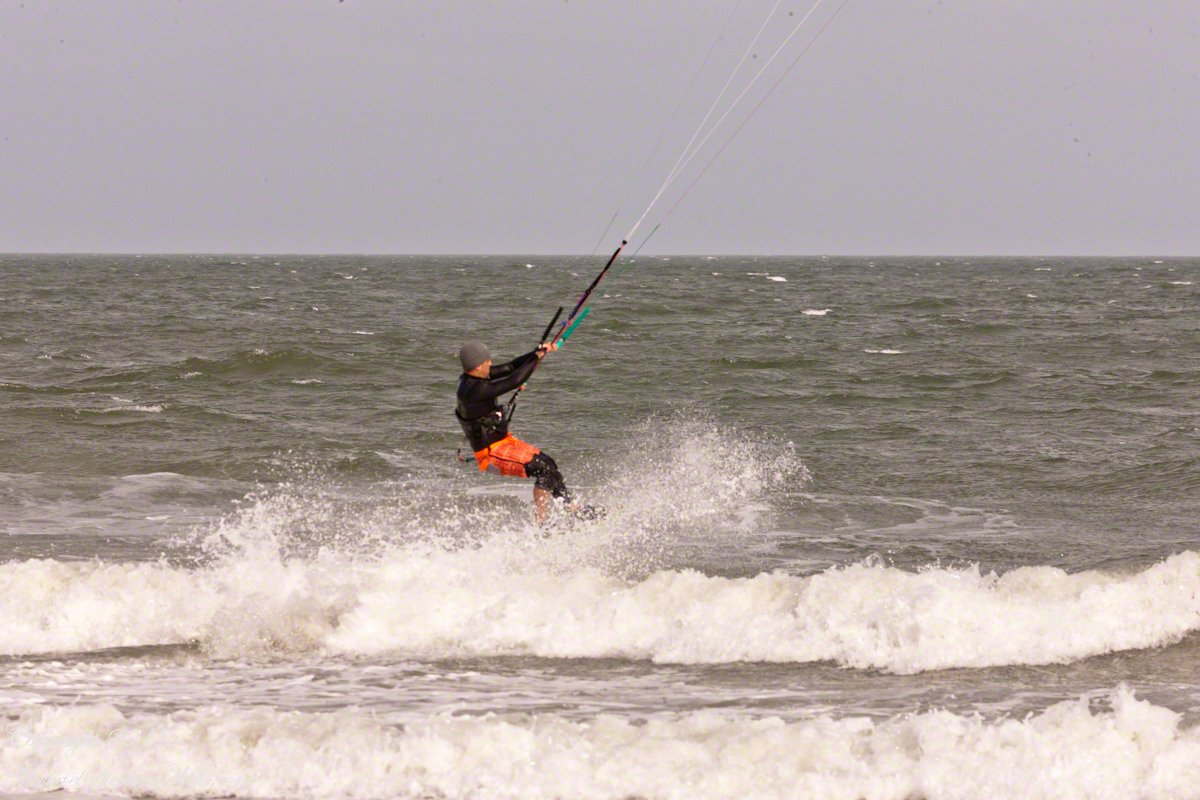
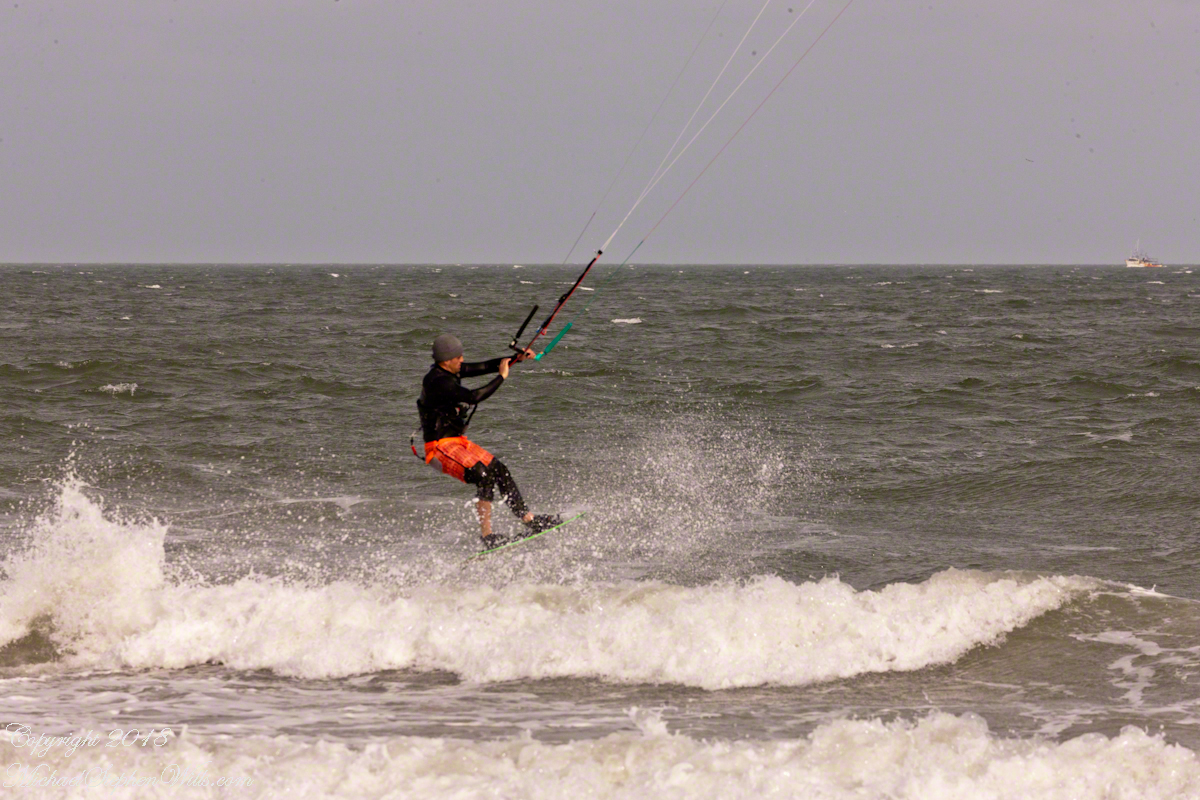
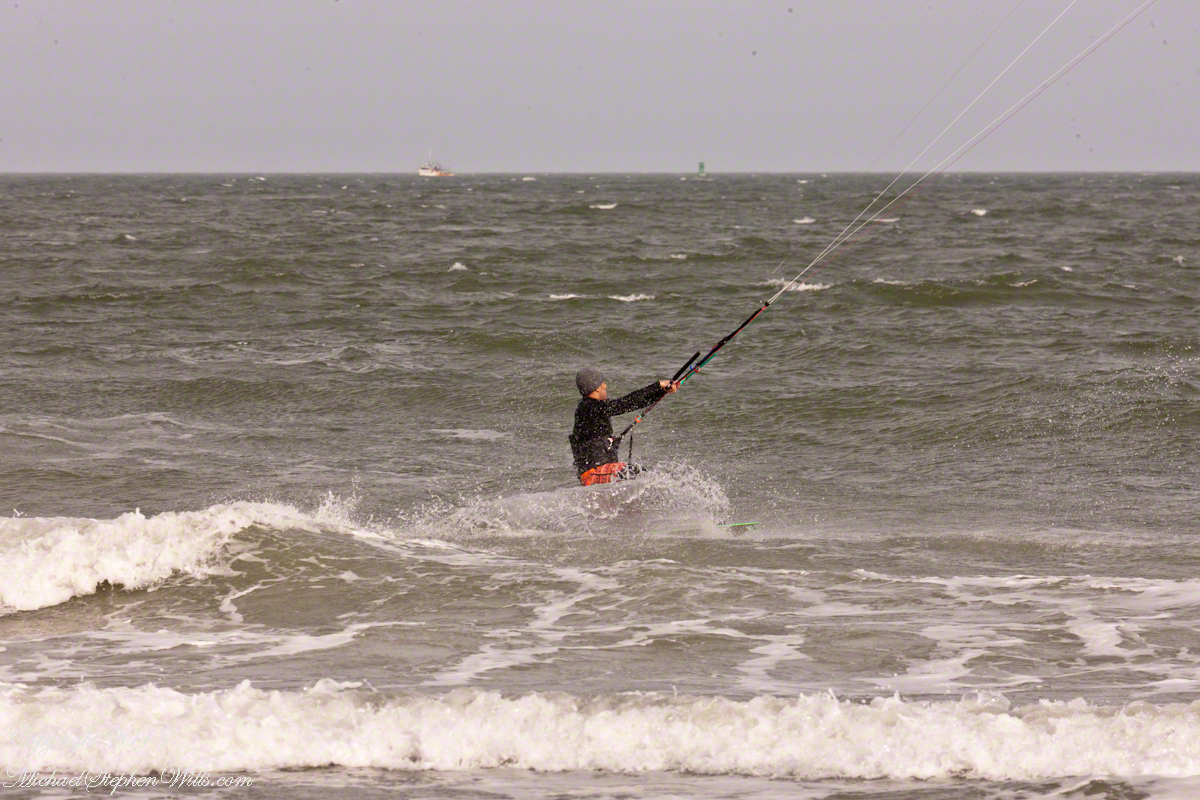
For a change of scene we visited Cape Canaveral, the beach at Cherie Down Park were an informal gathering of Kite Surfers was underway. Here is a series of action shots, one second elapsed from first to last.

Click the photograph for my Online Galleries
Click any photograph for my Online Galleries

Conditions were excellent: good northerly wind, the sun overcast and, it being afternoon, in the west. Surfers stayed relatively close to shore, near their starting point. I had packed the “heavy gun” camera with a tripod.

Click the photograph for my OnLine Galleries

Panning the scene (swiveling on the tripod), the camera in rapid exposure mode, I pressed the shutter release and held it down.

Click the photograph for my Online Galleries

The surfer was captured mid-jump to landing.


Copyright 2022 All Rights Reserved Michael Stephen Wills

Mercury 7 Pre-Launch Facilities

Hosting Astronaut ZZZZZZZ’s and much more

Here is the sixth in a series of photographs centered on the early history of space flight on Cape Canaveral mostly taken during a tour organized by the Cape Canaveral Lighthouse Foundation. “Google” the foundation for details of future tours. Here we explore pre-launch support for the Mercury program, including the first USA Orbital Launch of John Glenn from Launch Complexe 14 (LC 14).

Overview

Leaving LC 1 – 4 (see Post WWII Launch Complexes”), our bus turned onto Central Control Road passing construction on Launch Complex 36 (LC36). In 2015 Blue Origin (Amazon money) leased LC36 where it planned to launch the “New Glenn” vehicle after 2020. I snapped the churned-up sand and construction equipment, not interesting at all IMHO.

Click Any Image for a larger viewe
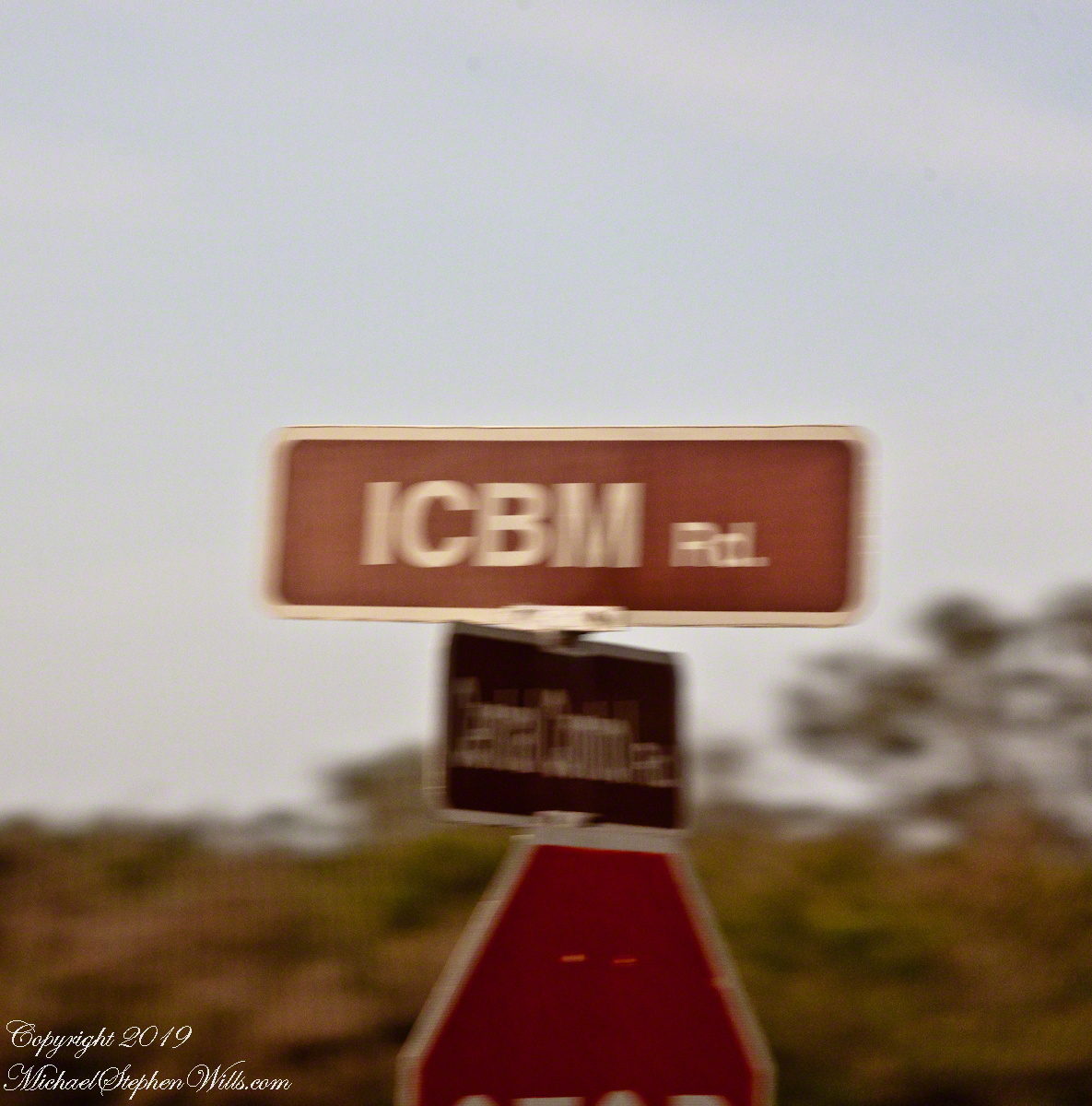
Corner of Central Control and ICBM Roads. Cape Canaveral Air Force Station.

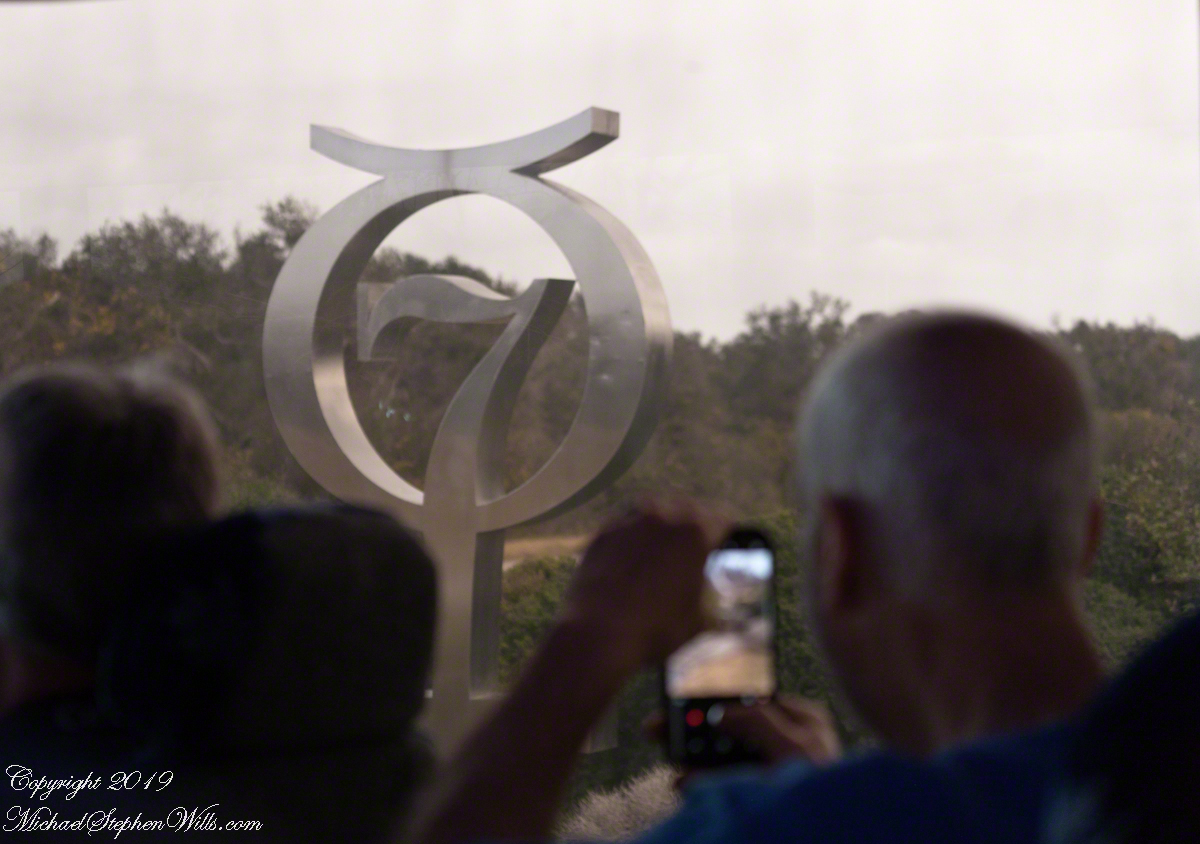
The “New Glenn” was named in homage to John Glenn, the first American to orbit the earth in 1962. We turned right onto to ICBM Road, headed generally north, following a string of launch complexes along the Altantic shore toward Launch Complex 14 (LC14). A dissapointment was not stopping to walk the Mercury 7 Memorial at the corner of ICBM Road and LC14. Our bus stopped briefly enough for the following snap. It is a memorial because John Glenn, the surviving member of Mercury 7, passed away December 8, 2016 at the age of 95.

Mercury 7 Memorial, just off ICBM Road

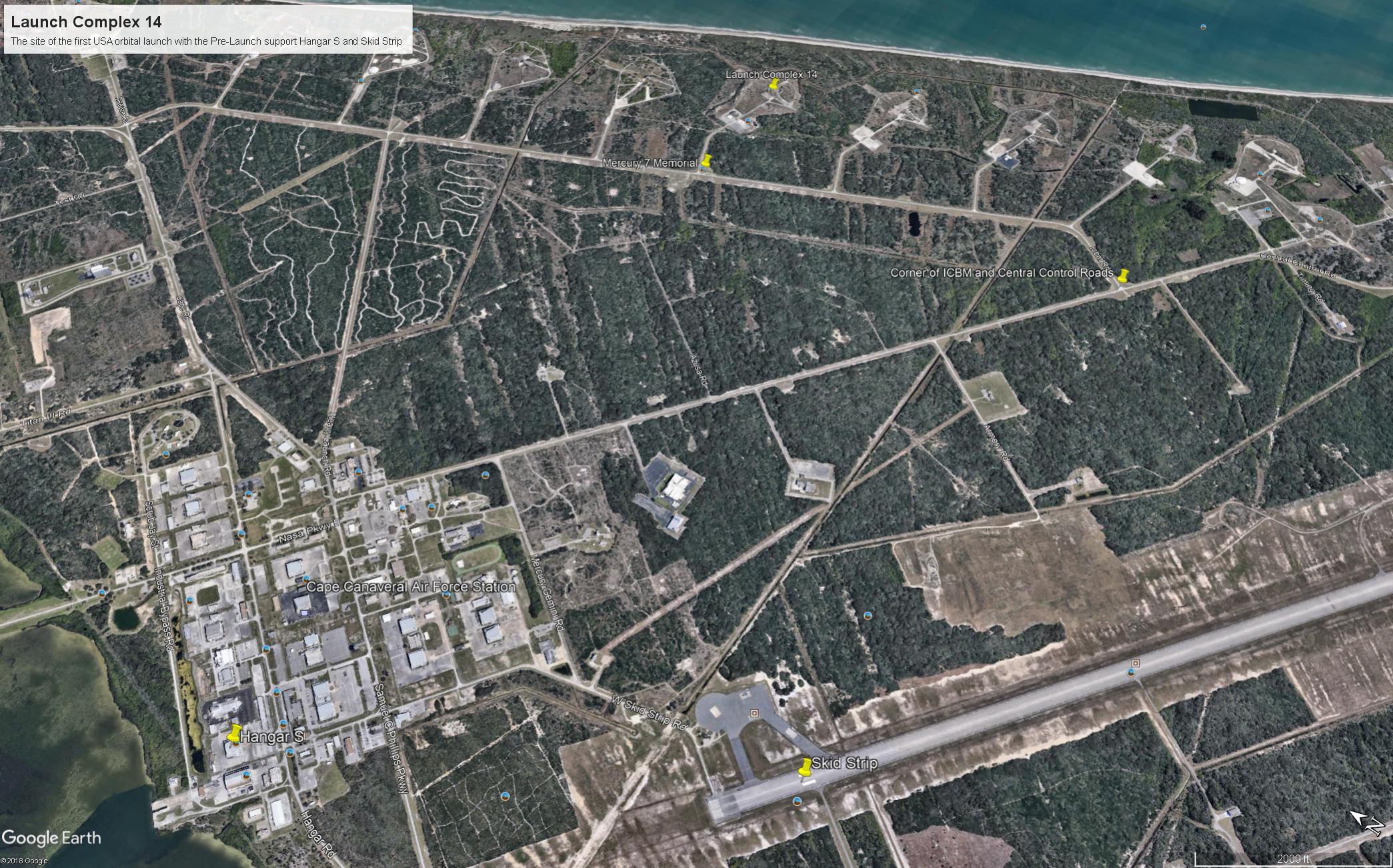
I will cover at length the Mercury-Atlas vehicle that powered John Glenn into orbit February 20, 1962. The tie-in between ICBM road and this series of launch complexes is the early space missions were on re-purposed Intercontinental Ballistic Missles (thus, ICBM). “Atlas” is the name of the ICBM used for Colonel Glenn’s 1962 flight. Click on the following image to find labled pushpins for the corner of Central Control and ICBM Roads (upper right), the road to LC14 and Mercury 7 Memorial.

You will also find a pushpin for the Skid Strip, bottom just to right of center. The earliest cruise missle tests (see “Cruise Missles” and Post WWII Launch Complexes” ) included navigation to a landing on non-wheeled “skids.” The strip was maintained in support of the manned and later missions when cargo planes delivered the early space capsules, landing, not skidding hopefully, for transfer to a Pre-Launch facility, Hangar S.

Cape Canaveral Launch Complex 14 and Pre-Launch Support: Hangar S and the Skid Strip

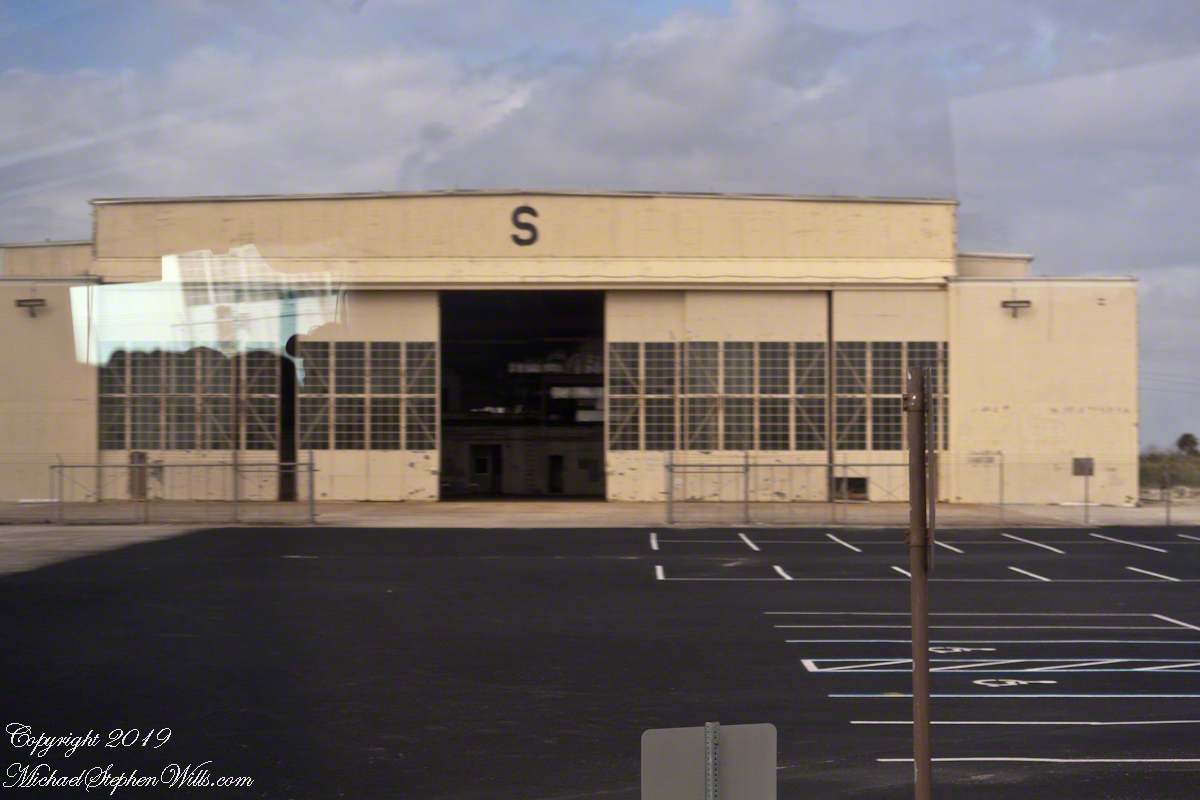
Hangar S is seen below as we passed later in the tour. Built 1957 by the military the 61,300 square feet were acquired by NASA in 1959. The early space capsules were tested here in an vacume chamber to ensure the vehicle supported an breathable atmosphere for the occupants.

The first American space voyager was Ham, a chimpanzee. Ham lived in a residential area on the second floor of Hangar S. For a period of time the Mercury 7 shared the spartan second floor quarters. “The Right Stuff” (a 1984 film from a Tom Wolfe book) included scenes from this episode of the program.

Constructed in 1957, Hangar S served for pre-flight processing from Mercury through the final flight of the Space Shuttle. This is where the Mercury 7 astronauts were first quartered on the second floor and later, is where they stayed prior to flight. The Lunar Orbiter was prepared here.

Comfortable Quarters

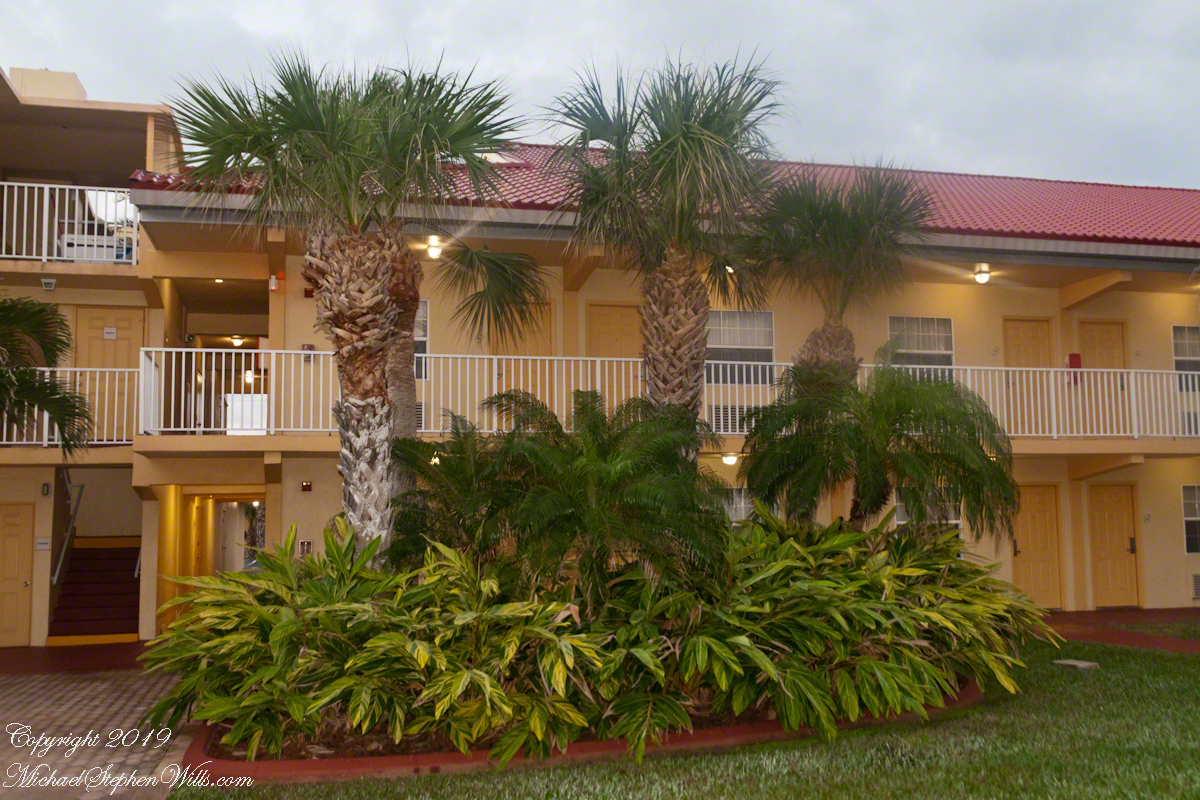
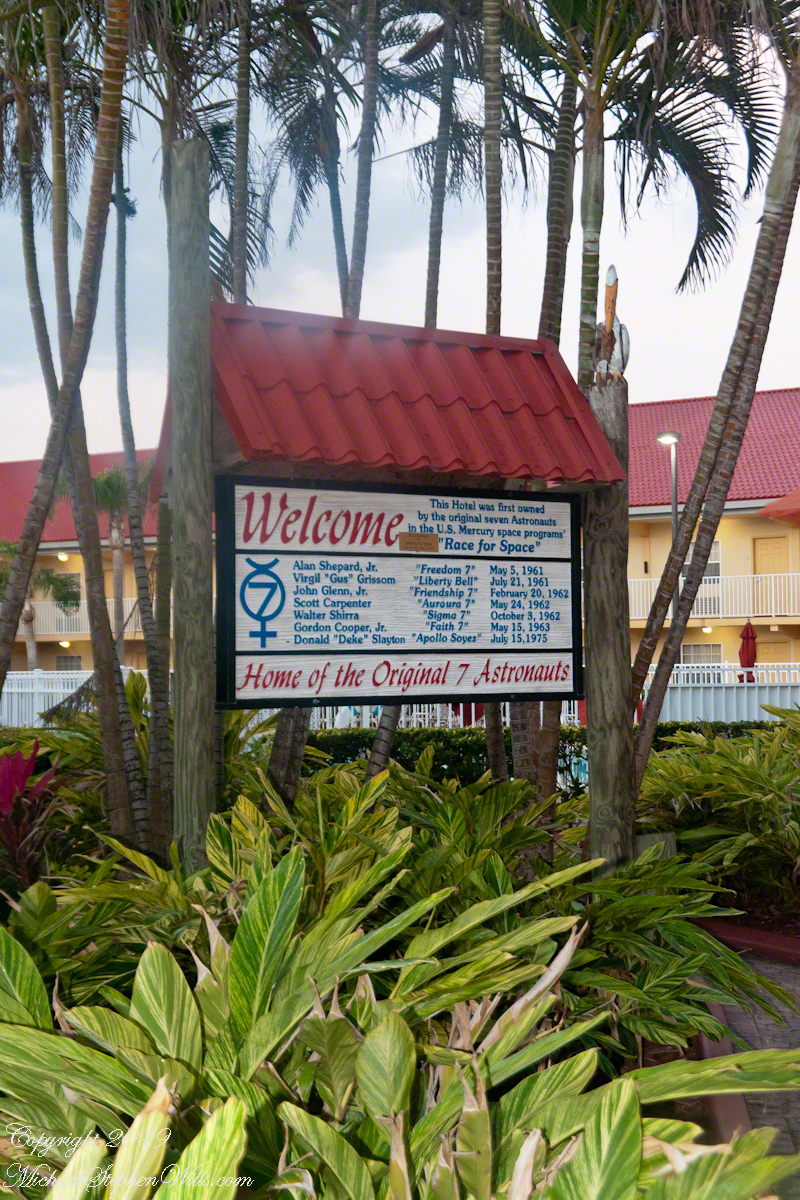
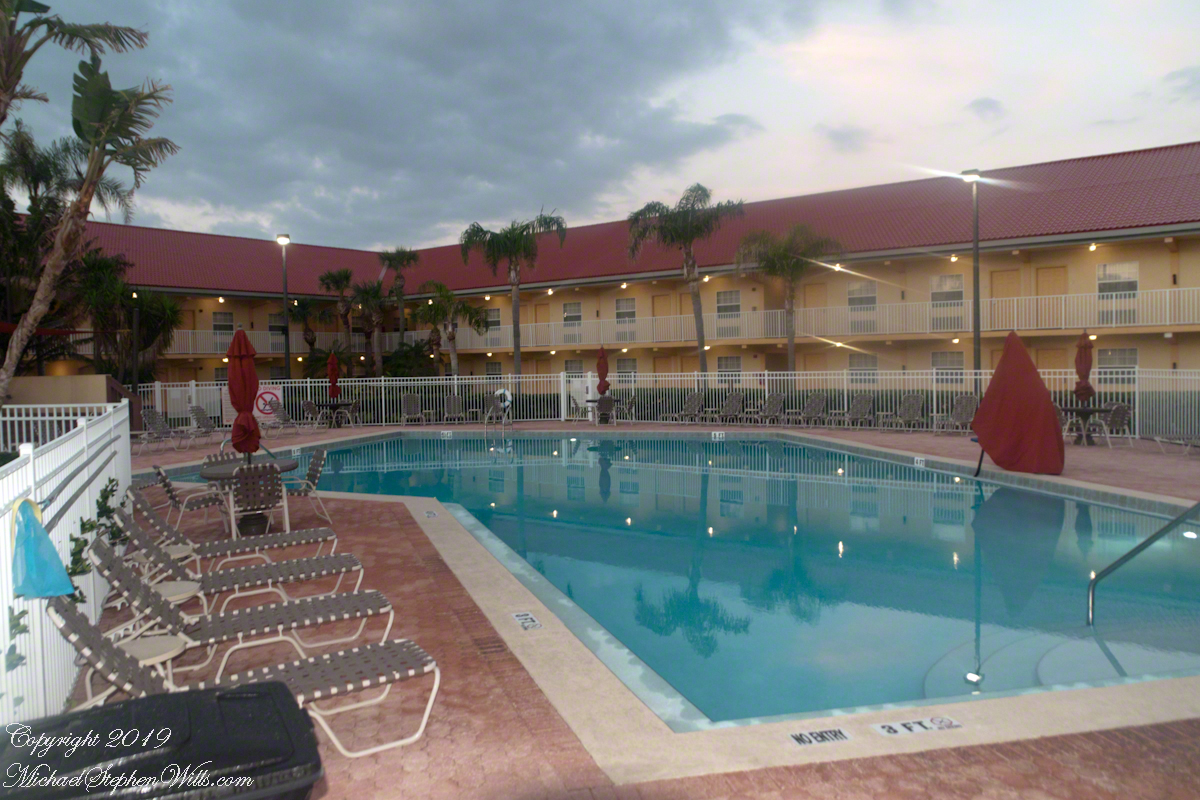
In short order arrangements were made for more comfortable quarters, just off the ocean in Cocoa Beach. It was a new hotel given over entirely to the Mercury 7. Pam and I stayed there in 2018 while taking this tour, it is the La Quinta across from the International Palms. We recommend it a clean, comfortable, reasonably price and a great story to share afterwards. The Atlantic Ocean is a five minute walk.

La Quinta Inn was the home of the Mercury 7 Astronauts, 1275 N Atlantic Avenue Cocoa Beach, Florida 32931

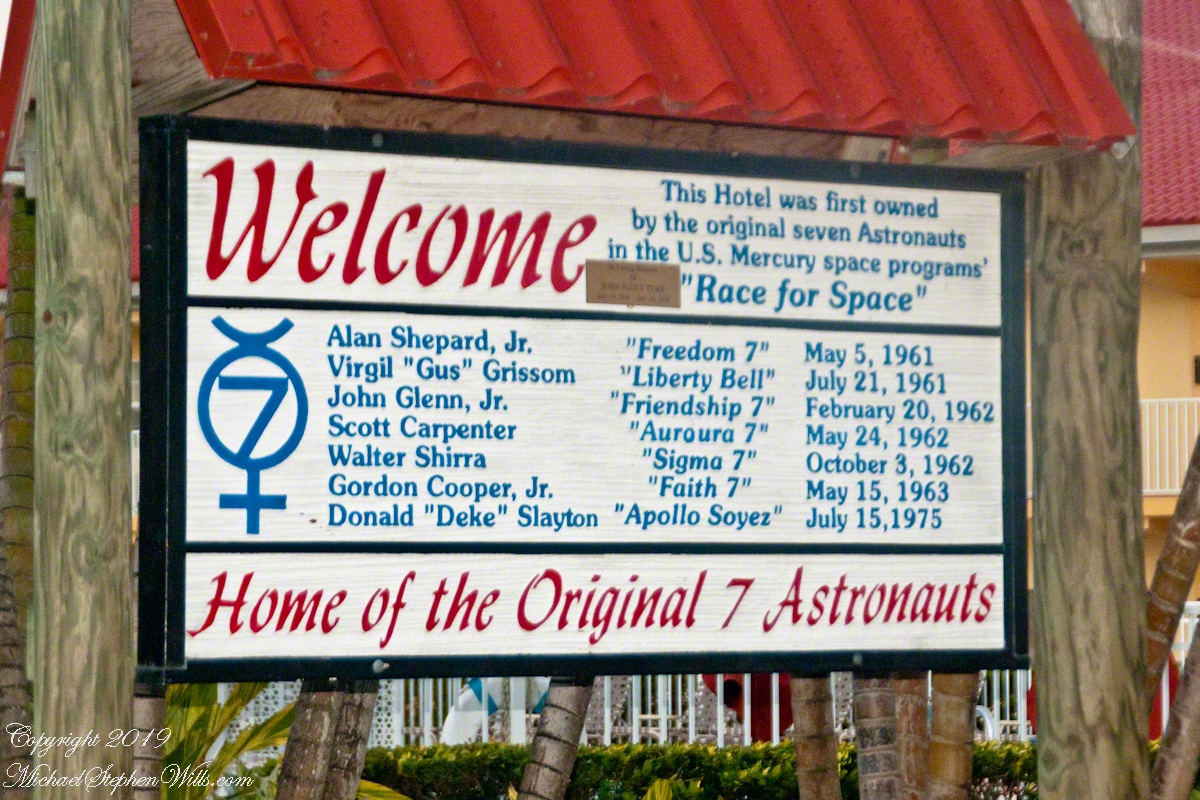
I learned from the tour how the hotel was donated to the Mercury 7 by a private individual. They owned the hotel. Here is a very informative sign just off the La Quinta lobby with their names. Each first mission, as named by the astronaut, is listed.

La Quinta Inn was the home of the Mercury 7 Astronauts, 1275 N Atlantic Avenue Cocoa Beach, Florida 32931
View of the hotel built for and first owned by the Marcury 7 astronauts. They lived here in the early days of the USA space program.

Blastoff!!

Next post will feature images of LC14 from 2018.

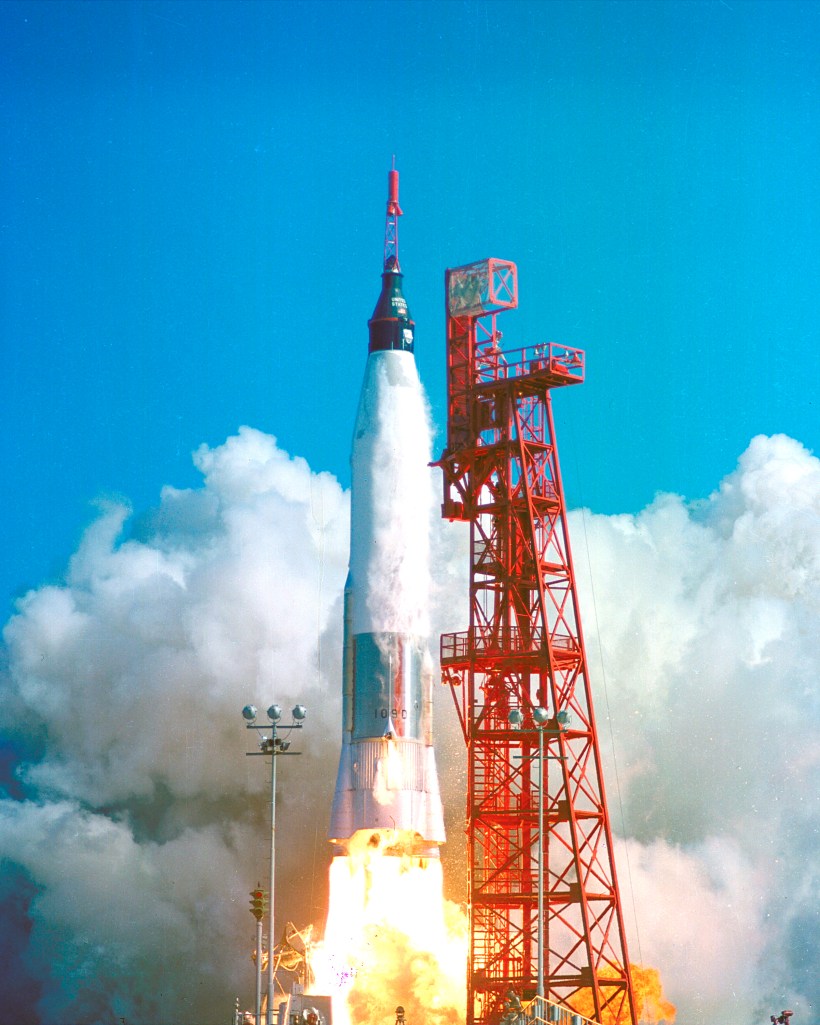
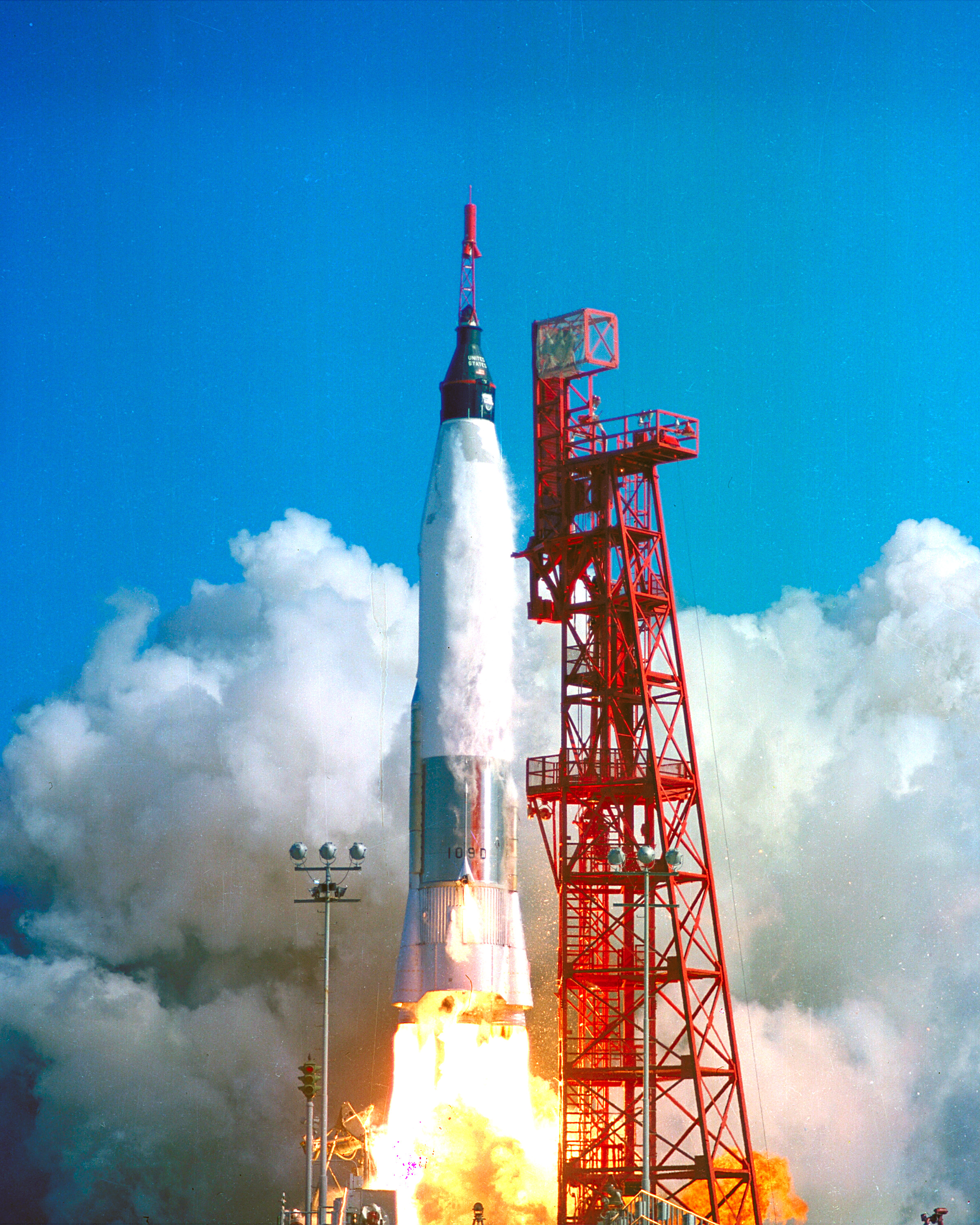
Launch of Friendship 7, the first American manned orbital space flight. Astronaut John Glenn aboard, the Mercury-Atlas rocket is launched from Pad 14. Public Domain Photograph by NASA.

ClickMe for the next post in this series, “Launch Complex 14 Today.”

ClickMe for the first post in this series, “Cape Canaveral Lighthouse.”

Sources of information for this post: I used information from the Wikipedia site for the key words John Glenn, Launch Complex 14, Mercury-Atlas, Launch Complex 36. Plus a “google” on “Hangar S History” that found an excellent page hosted on the NASA site. Cover photo of Friendship 7 Launch my be found on Flickr in “NASA on the Commons” photostream.

Copyright 2022 Michael Stephen Wills All Rights Reserved.