Exploring Lime Hollow: Nature Walks with My Grandsons

Enjoy a memorable visit to Lime Hollow Nature Preserve by a grandfather and his grandsons, exploring nature, observing wildlife, and connecting through shared experiences, fostering curiosity and appreciation for the environment.

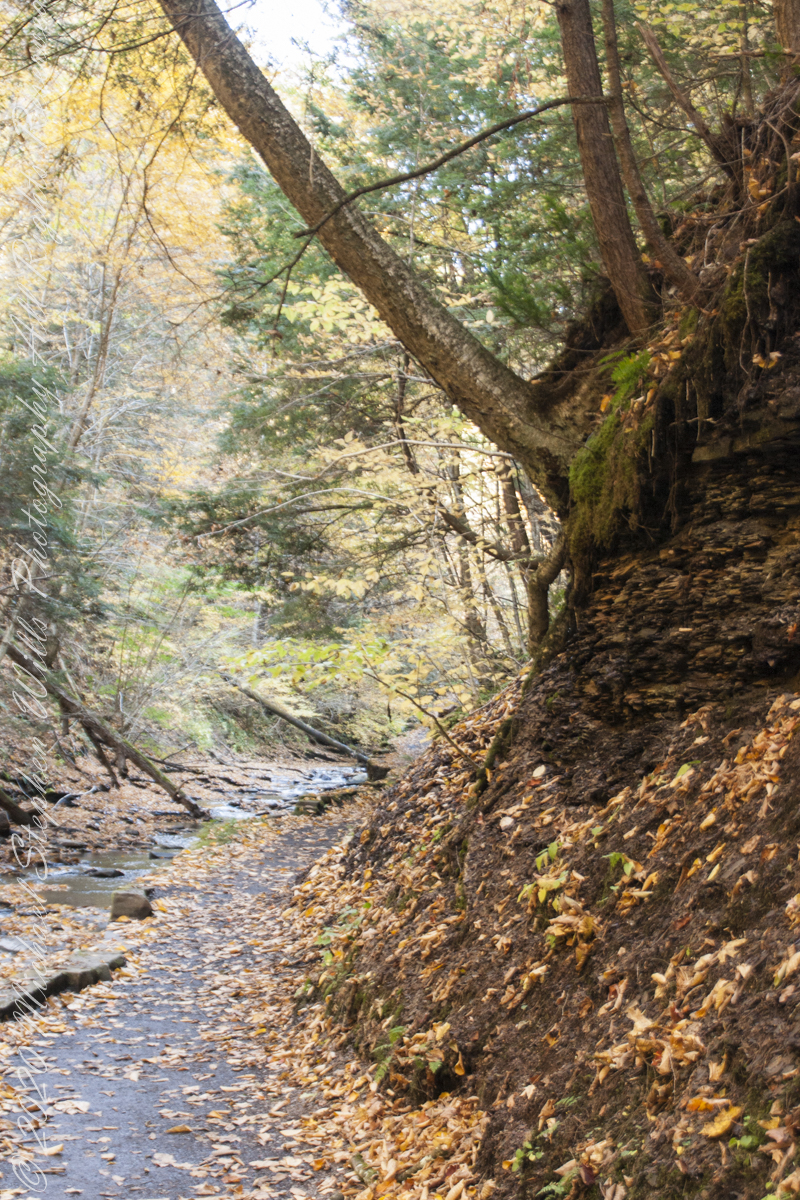
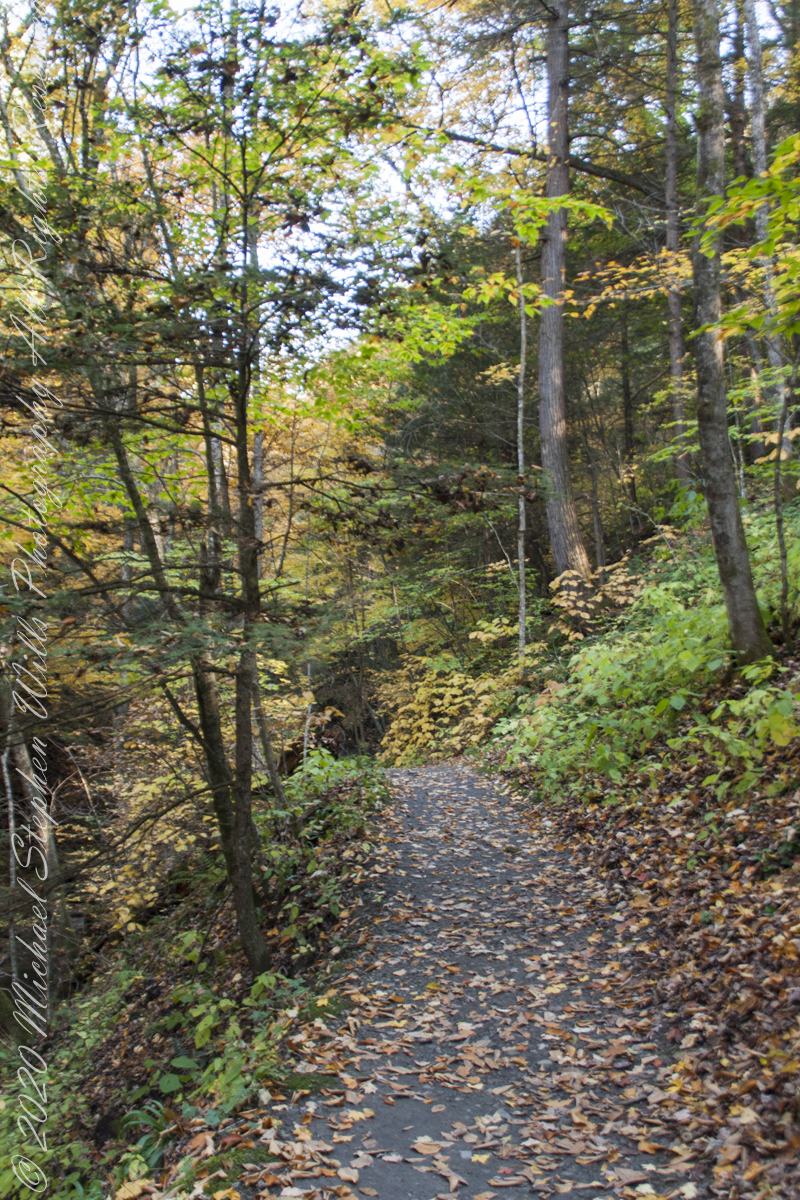
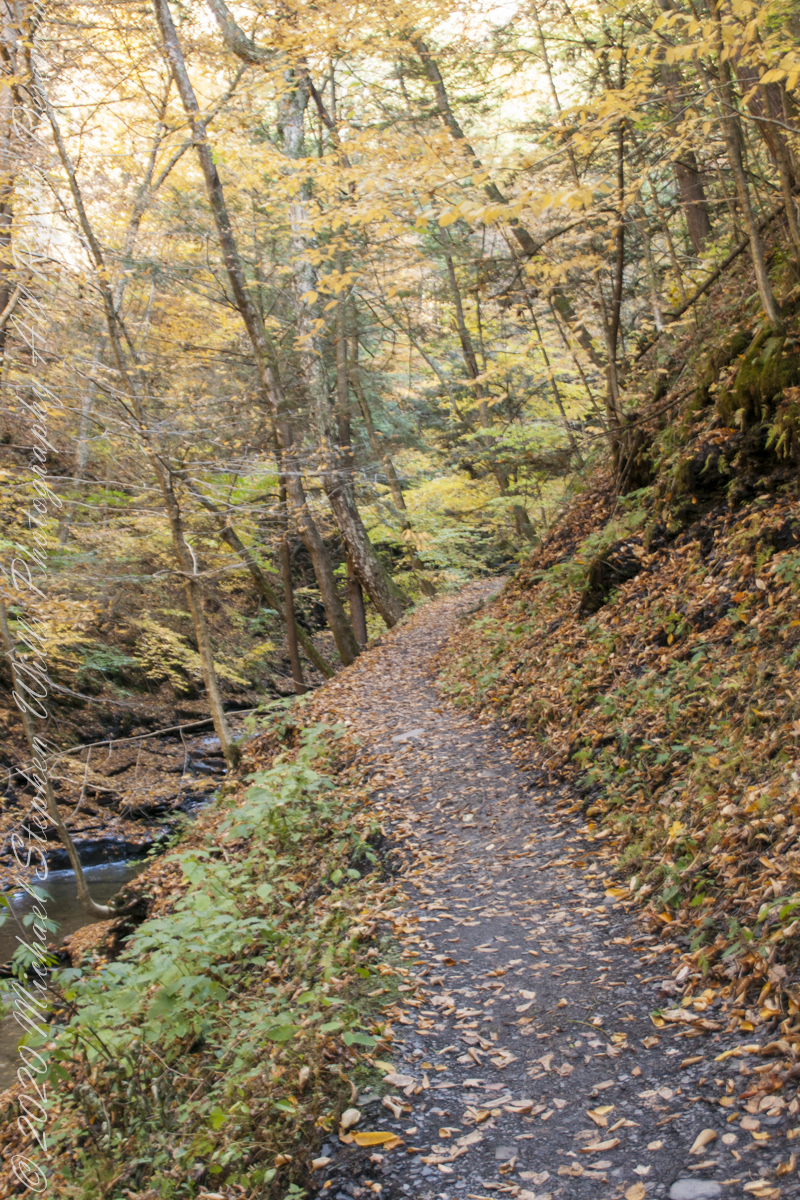
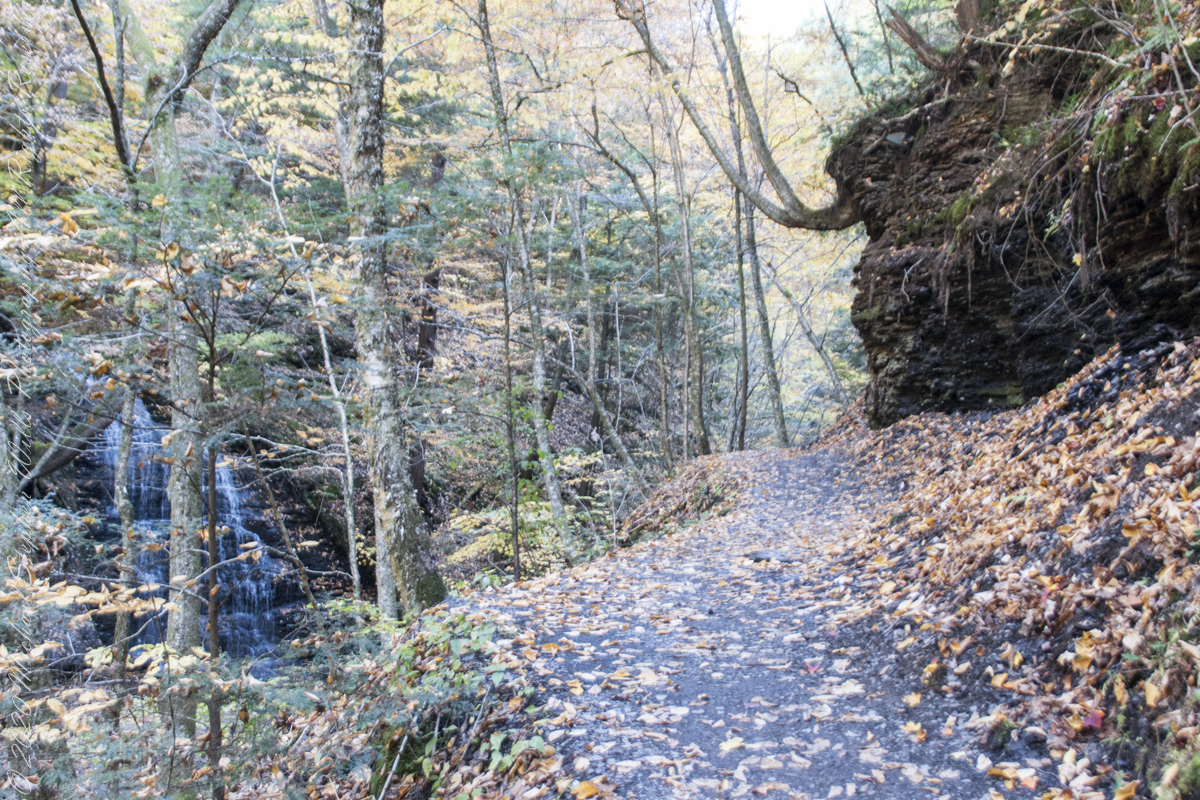
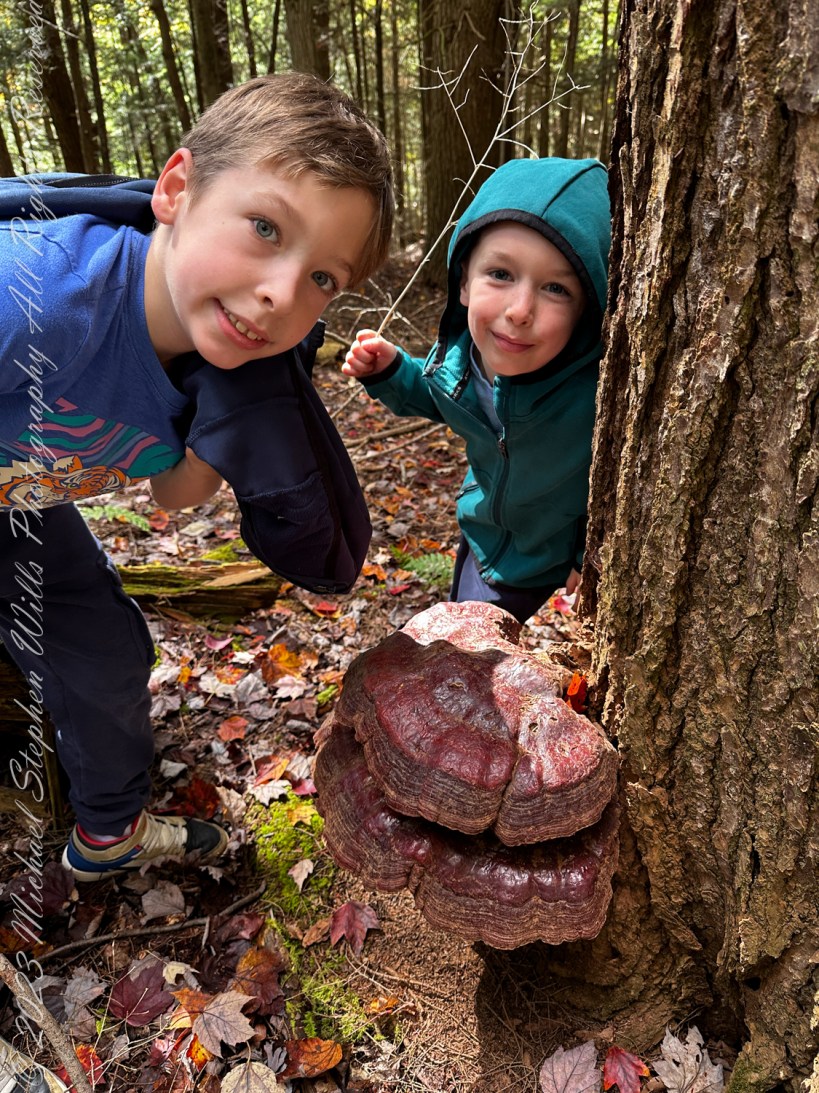
The October sunlight was gentle as we entered Lime Hollow Nature Preserve from Gracie Road, my grandsons, Sam and Rory, bursting with excitement beside me. Sam, the eldest, took the lead, confidently striding ahead along the Sunset Trail while Rory, his younger brother, stayed close to my side, his eyes wide with wonder at the forest around us.

Descent to the Pond


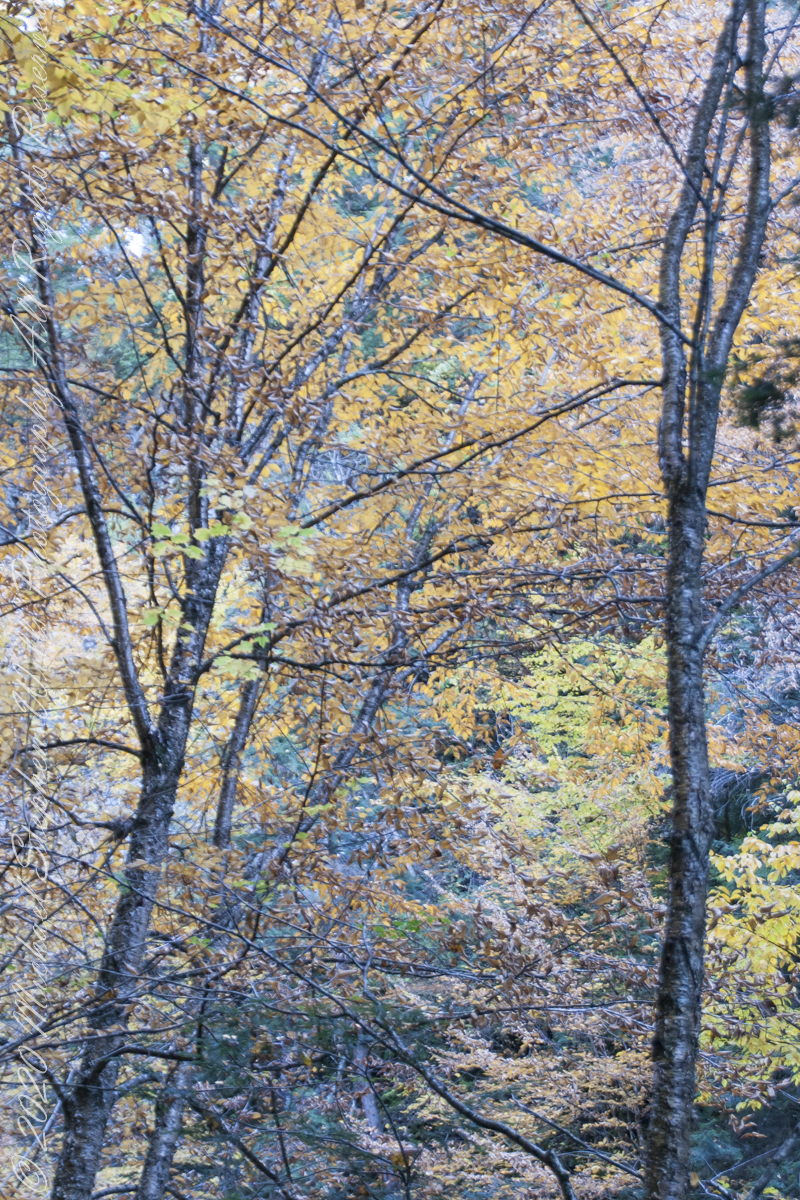
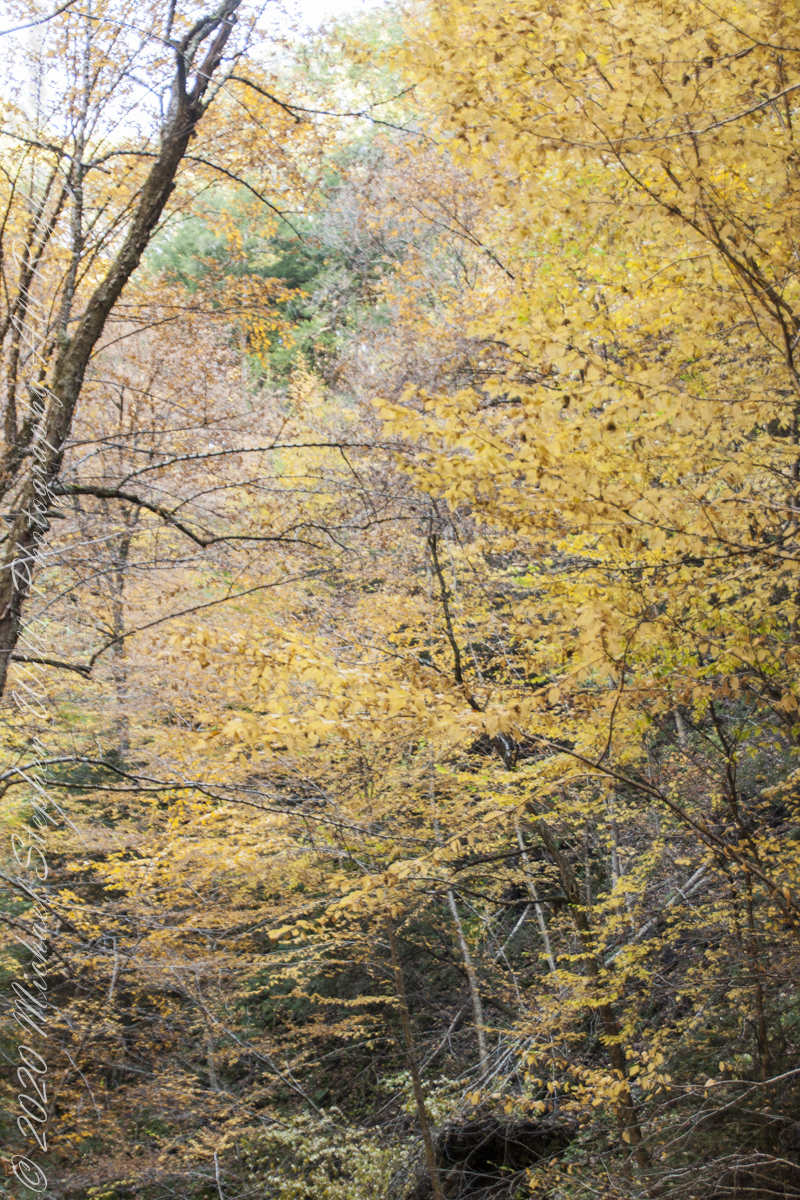
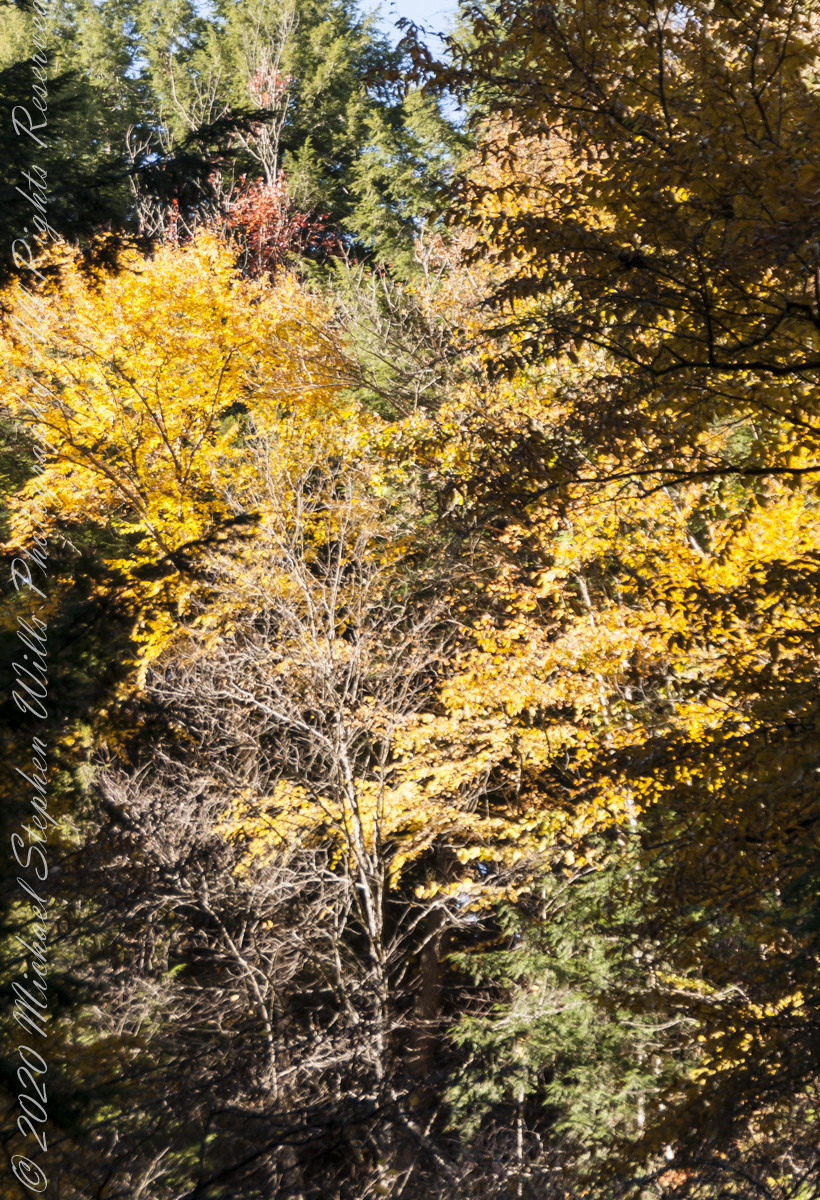
The trail wound through the woods, dappled with the golds and reds of early autumn. Sam spotted a squirrel darting between trees, and Rory pointed to the sky, “Look, Grandpa, a woodpecker!” I smiled at their enthusiasm, feeling grateful for these moments of connection to nature and family.

We descended toward the pond via the Pond View Trail, the sound of trickling water drawing us closer. As we approached, the landscape opened up, revealing the calm, reflective surface of the water, bordered by reeds swaying in the light breeze. I remembered bringing the boys here last spring, how different the pond looked then—brimming with life as frogs leapt from the banks and dragonflies zipped across the water’s surface. Today, the scene was quieter, but no less magical.

Rory, ever the adventurer, crouched by the pond’s edge, watching for frogs. Sam, too, paused to observe but soon grew restless, his curiosity pushing him onward. “Come on, Grandpa! Let’s see what’s next!” His voice echoed through the trees as he darted back onto the trail, Rory quick to follow.

Encounter with the Giant Fungus


The path led us deeper into the forest, and soon we turned onto the Brookside Trail, which merged with the High Ridge Trail. Here, the air grew cooler under the dense canopy of trees, and the forest floor softened beneath our feet with layers of leaves. It was then that we stumbled upon the most magnificent sight of the day: an enormous bracket fungus, its wide, layered shelves clinging to the trunk a hoary snag.

Rory gasped in delight, running over to inspect it more closely. “Look how big it is!” he exclaimed, his small hands hovering just above its ridged surface. Sam, never one to be outdone, knelt beside it, carefully touching the spongy layers. “It’s a staircase for squirrels,” he said, grinning up at me.
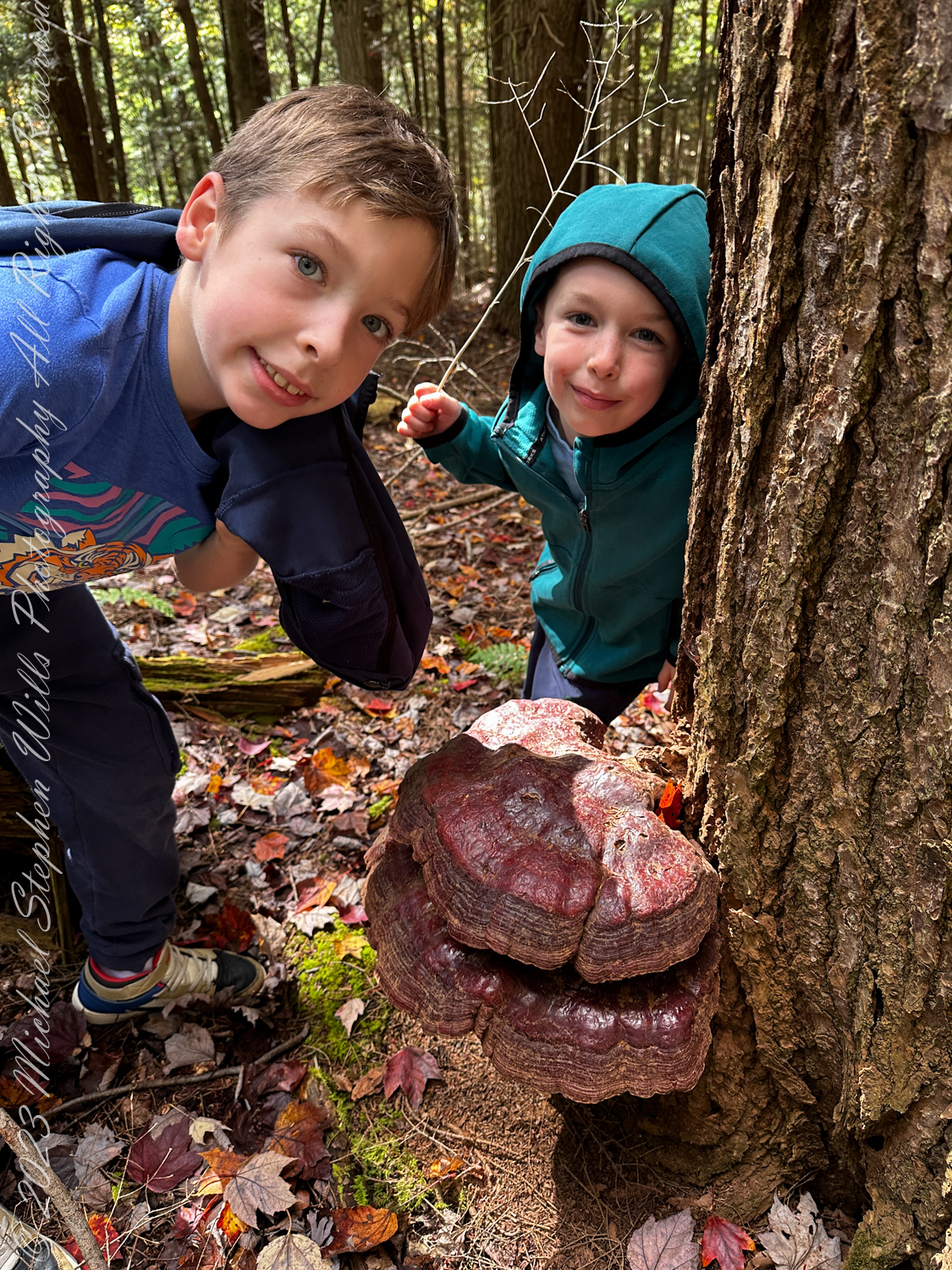
Turkey Tail bracket fungus (Trametes versicolor) is a common wood decay fungus found on dead and decaying hardwoods. Named for its concentric, colorful bands resembling a turkey’s tail, it plays a vital role in forest ecosystems by breaking down lignin, facilitating nutrient recycling. It’s also valued for its medicinal properties. Lime Hollow Nature Center, Cortland, Cortland County, New York State. Finger Lakes Regions

As I watched them, I couldn’t help but think back to all the times I had wandered these trails alone before they were born. Now, these woods had become a classroom for them—full of discoveries that sparked their curiosity and wonder. It was a beautiful moment of generational connection, this passing on of my love for the natural world to Sam and Rory.

Fascinating Beech Tree Roots


On the way out, we took the Brookside / Pond View / Sunset trails once again, but this time, this intricate network of roots from a massive beech tree fascinated us. The roots twisted and coiled across the path like veins, in our imaginations the gnarled shapes snagged our feet. Sam, ever the explorer, stepped cautiously along the roots, balancing himself as if walking a tightrope. Rory followed suit, his giggles filling the air.
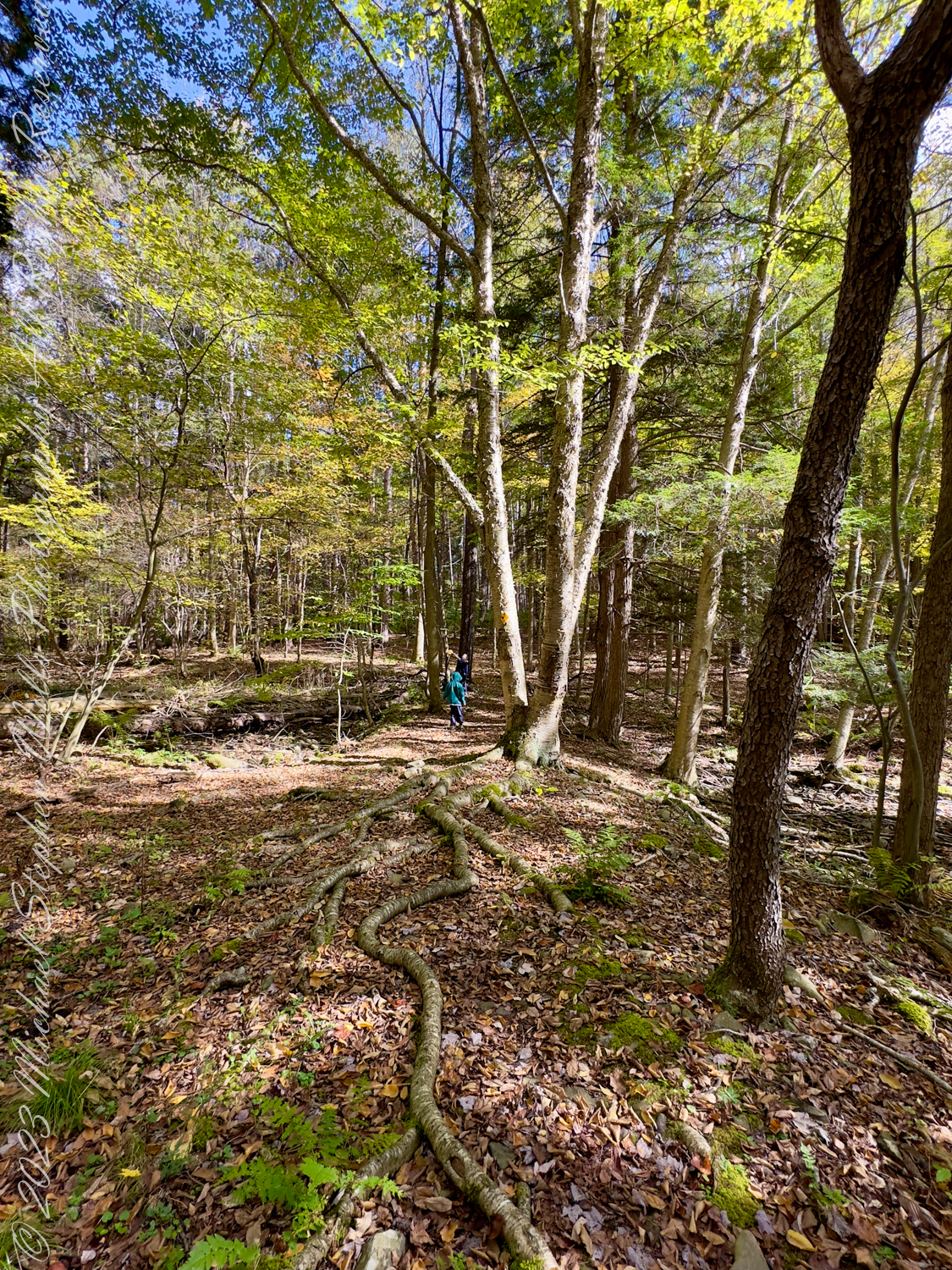
An American beech (Fagus grandifolia). These trees are quite common in northeastern forests.
The beech tree is known for its smooth smooth, gray bark, which can become marked with scars or etchings as the tree ages. Additionally, its leaves are typically dark green, with serrated edges, and turn yellow to bronze in the fall, often staying on the tree through winter. Lime Hollow Nature Center, Cortland, New York State

“These roots are older than us,” I told them. “Beech trees can live for hundreds of years. Just think, this tree has seen many more seasons than we ever will.”

Sam’s eyes widened at the thought, while Rory gave the tree a gentle pat, as if to thank it for its wisdom. I marveled at how something as simple as a root system could captivate their imaginations and bring the lesson of time and growth to life.

Reminiscing on the Chicago Bog
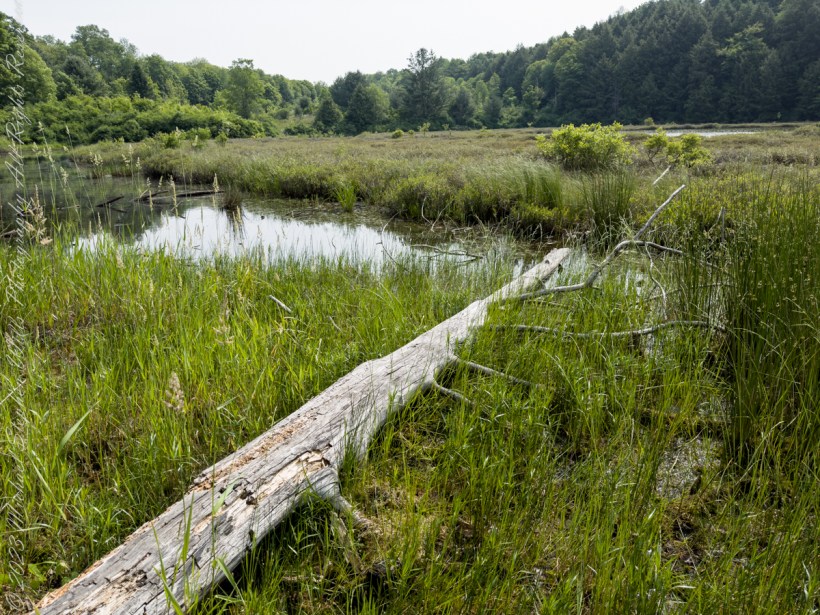
In the 1830’s there was a village named Chicago along Gracie Road, which gives it the name we have today. The Chicago Bog is home to many carnivorous plants, including sundew, the pitcher plant, and more. The deepest depth of the bog is about 7.2 ft. The bog is along the Phillips Memorial Trail, which can be found on Gracie Road. Lime Hollow Nature Center, Cortland, New York


As we walked, my mind wandered back to a visit we had made to the Chicago Bog just a year before. I remembered the day clearly—how we had trekked through the wetland on a warm June afternoon, the ground soft beneath our feet, alive with the buzzing of insects and the vibrant green of new growth.
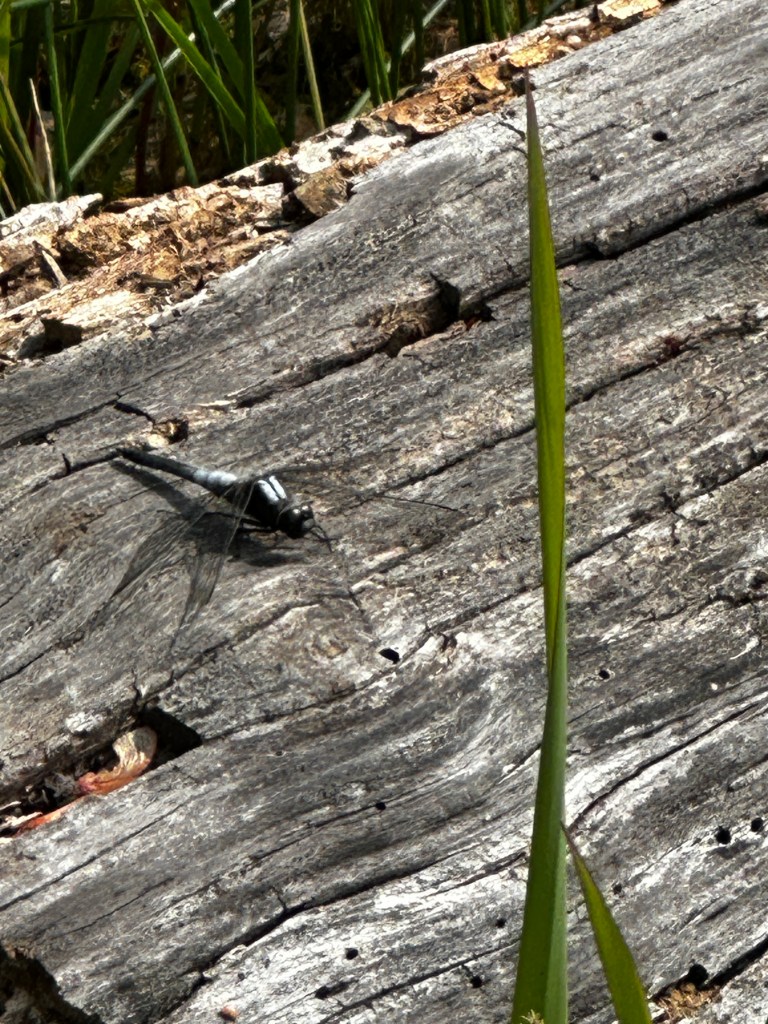
The chalk-fronted corporal (Ladona julia) is a skimmer dragonfly found in the northern United States and southern Canada.
Juveniles of both sexes are light reddish brown, with white shoulder stripes and a black stripe down the middle of the abdomen. As they mature, males develop a white pruinescence on the top of the thorax and at the base of the abdomen, while the rest of the abdomen turns black. Females become almost uniformly dark brown, with a dusting of gray pruinescence near the base of the abdomen; a few develop the same color pattern as the males.
Chalk-fronted corporals often perch horizontally on the ground or on floating objects in the water, flying up to take prey from the air. They are gregarious for dragonflies, and are commonly seen perching in groups. They readily approach humans to feed on the mosquitoes and biting flies that humans attract.

It was there, by the edge of the bog, that we had encountered a dragonfly, a Chalk-fronted Corporal, resting on a fallen log. Its dark, iridescent wings shimmered in the sunlight, and Sam had been mesmerized by its delicate beauty. He had asked so many questions that day—about how dragonflies flew, what they ate, and where they lived. I had done my best to answer, but truth be told, I learned as much as he did in that moment.
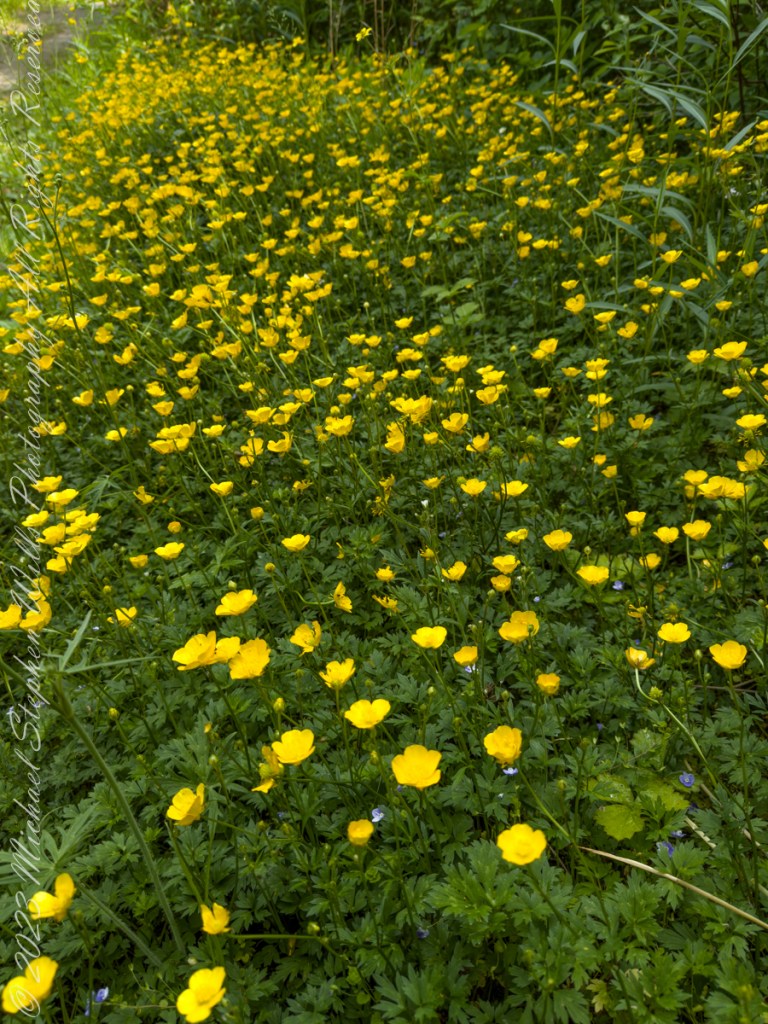
Nearby, a meadow of buttercups had stretched out before us, their yellow blooms dancing in the breeze. Rory had run through them, his laughter ringing out as he tried to catch a butterfly that flitted between the flowers. The memory of that field of gold still brought a smile to my face as we made our way through Lime Hollow today.

A Day to Remember


As we neared the end of our hike, the afternoon light filtering through the trees, I couldn’t help but feel a sense of contentment. These outings with Sam and Rory had become more than just walks in the woods—they were opportunities to share, to learn, and to make memories that I knew would last a lifetime.

“Grandpa, can we come back?” Rory asked, his face flushed with excitement.

“Of course,” I said, smiling. “We’ll always have time for another adventure.”
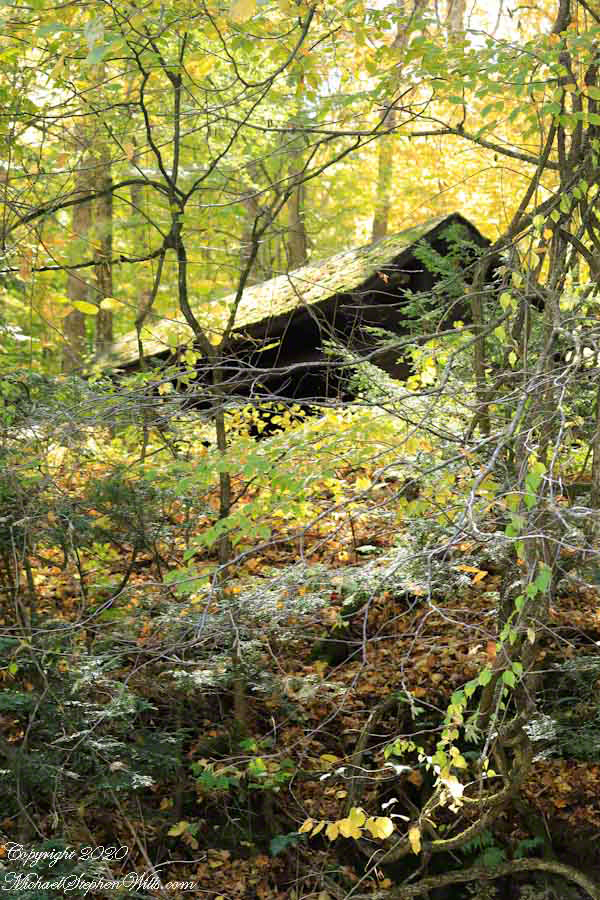
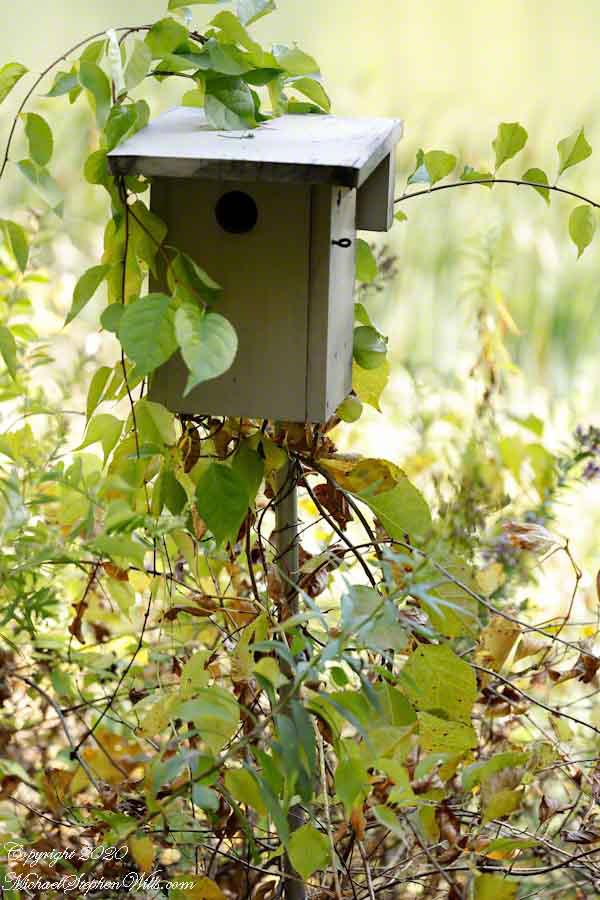
Woodland Shelters…

Here we have the harmony between humans and nature, represented through woodland shelters like lean-tos and birdhouses. It portrays these shelters as spaces of coexistence, mutualistic masterpieces blending function, form, and aesthetic in nature.

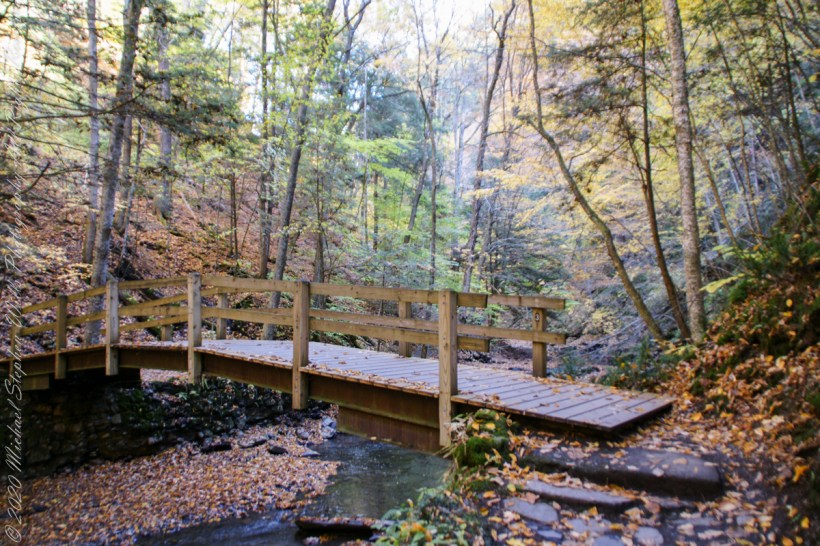
…on the Dam Pond at Fillmore Glen.

Hint: click image for larger view. Ctrl/+ to enlarge / Ctrl/- to reduce

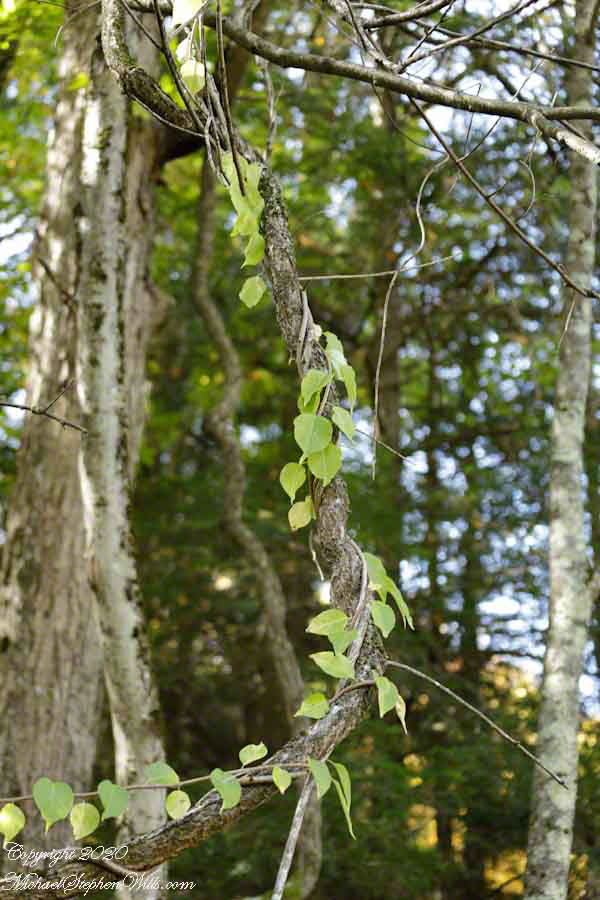
…vines running free.

In the dappled sanctuary of the woodlands, where the rustle of leaves is a constant whisper and the breeze carries the secrets of the earth, there lies an unspoken harmony between the realm of the rooted and the realm of the roving. Here, the art of shelter is not just necessity but poetry—a dialogue between man and nature, bird and branch, leaf and sky. It is in the woodland shelters—those humble lean-tos and the charming birdhouses—that this conversation finds its most enchanting expressions.

A lean-to, a simple structure, a slant of sanctuary against the embracing trunk of a venerable oak or the crook of a steadfast pine, rises like an ode to minimalist refuge. It is both a testament to human ingenuity and a bow to the grandeur of the forest. Constructed from the very bones of the woods, with limbs that have fallen in the last tempest’s dance, it is clad in the textures of the wild—a tapestry of bark, a patchwork of leaves. It does not impose but rather suggests, whispering, “Here, rest awhile, where the earth holds you and the canopy cradles the sky.”

Within this woodland embrace, the lean-to is the hermit’s haven, the hiker’s pause, the dreamer’s alcove. It is the place where one can commune with the murmur of the brook, the chitter of the squirrel, and the silent flight of the owl at twilight. It is here that the smoke of a small fire mingles with the mist of dawn, where stories unfold to the rhythm of the crackling embers and the forest listens.

And what of the birdhouses, those quaint dwellings that pepper the woodland tableau? They are not mere shelters but the grand stages for the aerial ballet of wings and the morning serenades of feathered minstrels. Each is a mansion of possibility, an invitation etched in wood and lovingly placed among the boughs. They are the outposts of avian dreams, where the pulse of tiny hearts beats in time with the dripping of rain and the warmth of the sun’s caress.

The birdhouse is a symbol of the generosity of the woodsman’s spirit, a gift to the skyborne, a token of respect to the delicate denizens of the firmament. Here, the chickadee, the finch, the nuthatch, and the wren find respite and nurture the next generation of sky dancers. Each hole is a portal to a home, each perch a threshold to the warmth within, and every departure and return is witnessed by the vigilant trees, the silent sentinels of the forest.

Lean-tos and birdhouses, these woodland shelters, are the chorus of the sylvan symphony, the unseen chords that bind human to habitat, life to life. They are proof that in the quiet places of the world, where humanity treads lightly and the wild holds sway, there can be a beautiful coexistence, a mutualistic masterpiece painted on the canvas of the wilderness. They stand as symbols of the beauty that arises from the marriage of function and form, purpose and aesthetic, the innate and the crafted.

In the woodland shelters, there is a rhapsody played in the key of nature—a song of simplicity, of connection, of the perpetual dance between the earth and its many children. It is here, in the lean-tos and birdhouses, that the heart of the woods beats strongest, beneath the watchful eyes of ancient trees and the endless sky.

Copyright 2023 Michael Stephen Wills All Rights Reserved MichaelStephenWills.com

Last Bridge

Golden Road

Good news….Click Me for the link to my latest photographs accepted by Getty, from this series of 2022 Fillmore Glen. You may acquire reasonably priced rights to use these photographs in your work.

My Sony Alpha was in use during our October 16 drive to Fillmore Glen. As we traversed landscapes, autumn glory of Tompkins and Cayuga Counties was captured. Thank You, Pam, for driving.

Heading today’s post is a windshield shot, I’m loving the effect of a golden road.

During our walk, I used the Sony Alpha for a parallel series of shots to compliment the tripod mounted Canon. Here are some of those results.

Step up and over

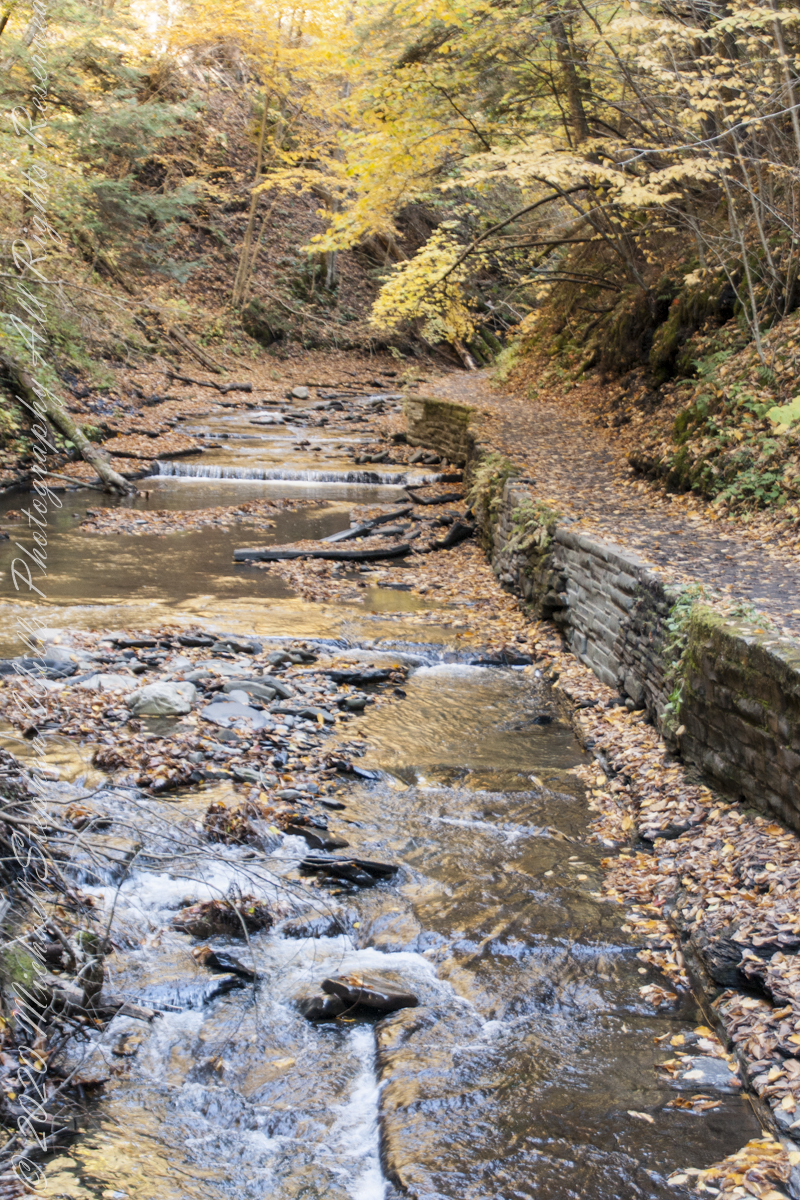
Enjoy this collection of Fillmore Glen pathways

Fillmore Glen, New York State Park, Cayuga County, Moravia, New York

Copyright 2022 All Right Reserved Michael Stephen Wills

Waterfall Gallery

” I ventured up the gorge from bottom to this point where, blocked by an enormous shining emerald-colored ice wedge accumulated from the water pouring over the path in warmer months, I turned around”

Good news….Click Me for the link to my latest photographs accepted by Getty, from this series of 2022 Fillmore Glen. You may acquire reasonably priced rights to use these photographs in your work.

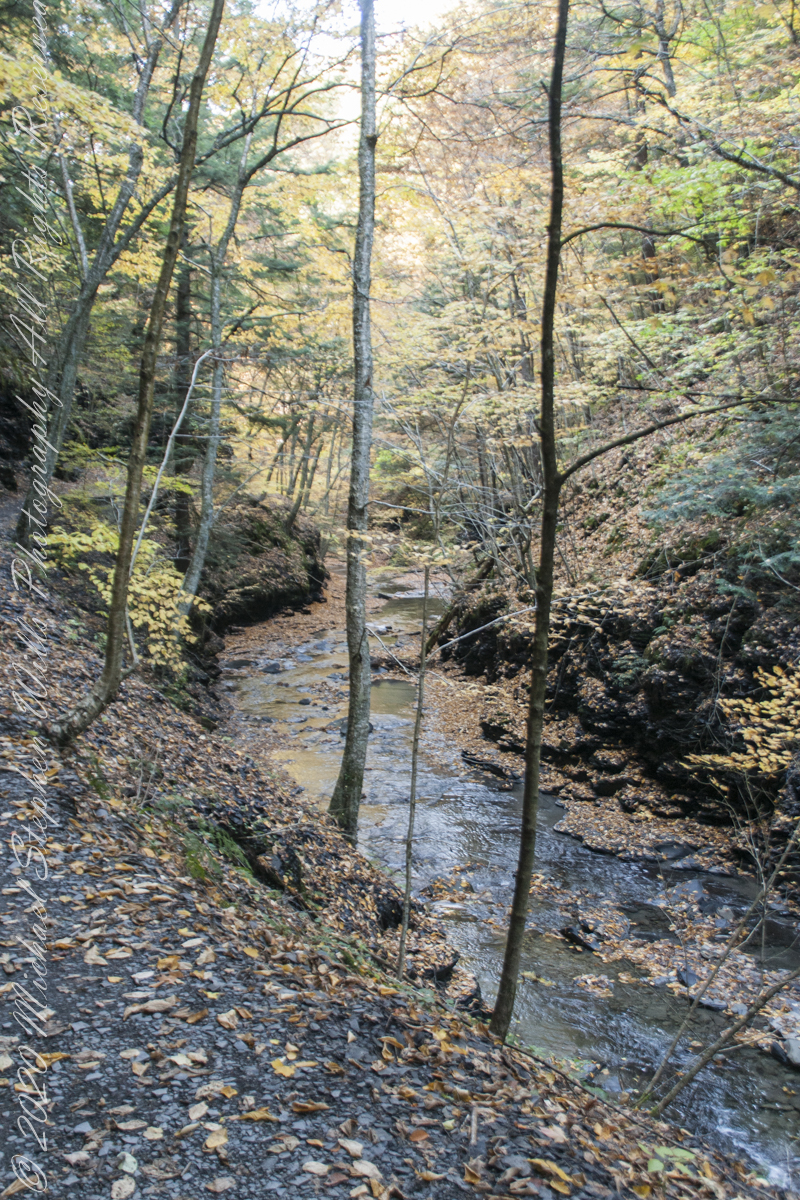
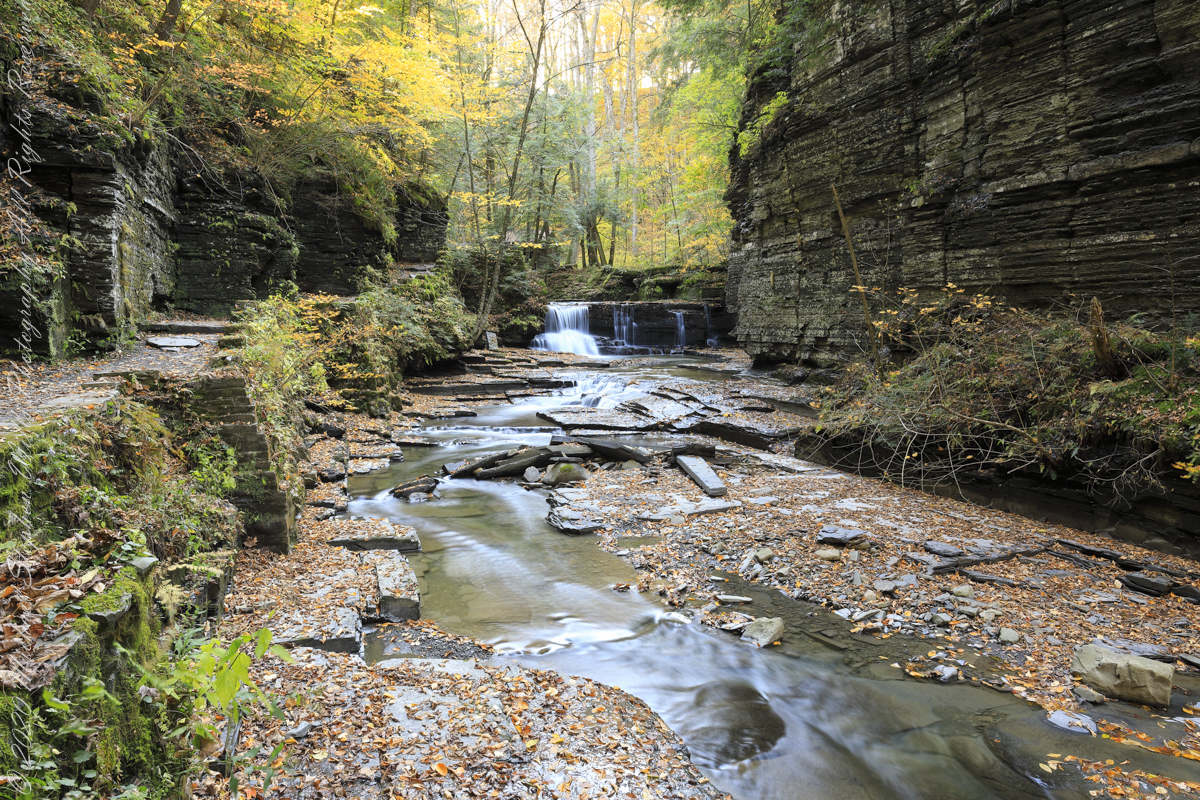
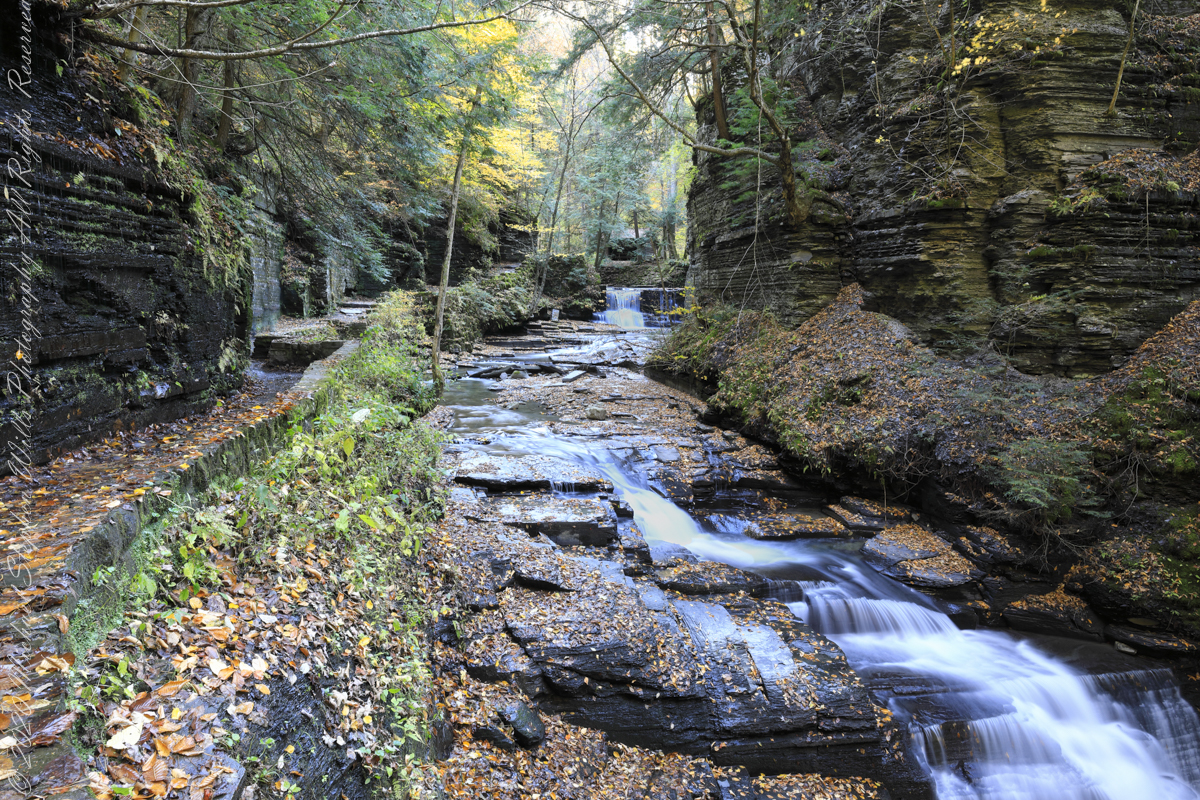
Between the metal walkway (see previous post) and the last numbered bridge, eight (8), the gorge narrows with sedimentary rock cliffs on either side, remnants of the forces that formed this rock in the form of water pouring from the porous stone flowing over the trail.

One February morning, equipped with climbing boots, crampons, gaiters, I ventured up the gorge from bottom to this point where, blocked by an enormous shining emerald-colored ice wedge accumulated from the water pouring over the path in warmer months, I turned around.

I call it a Waterfall Gallery for these walls bracing this wonderful collection of cascades in these photographs.

Waterfall gallery between bridges seven (7) and eight (8). Fillmore Glen, New York State Park, Moravia, Cayuga County, New York

A warm and cool versions of this spot.

Warm

Cool

Watch Your Step!!

Fillmore Glen, New York State Park, Cayuga County, Moravia, New York

Copyright 2022 All Right Reserved Michael Stephen Wills

Climb to Glory

New and Ancient

Good news….Click Me for the link to my latest photographs accepted by Getty, from this series of 2022 Fillmore Glen. You may acquire reasonably priced rights to use these photographs in your work.

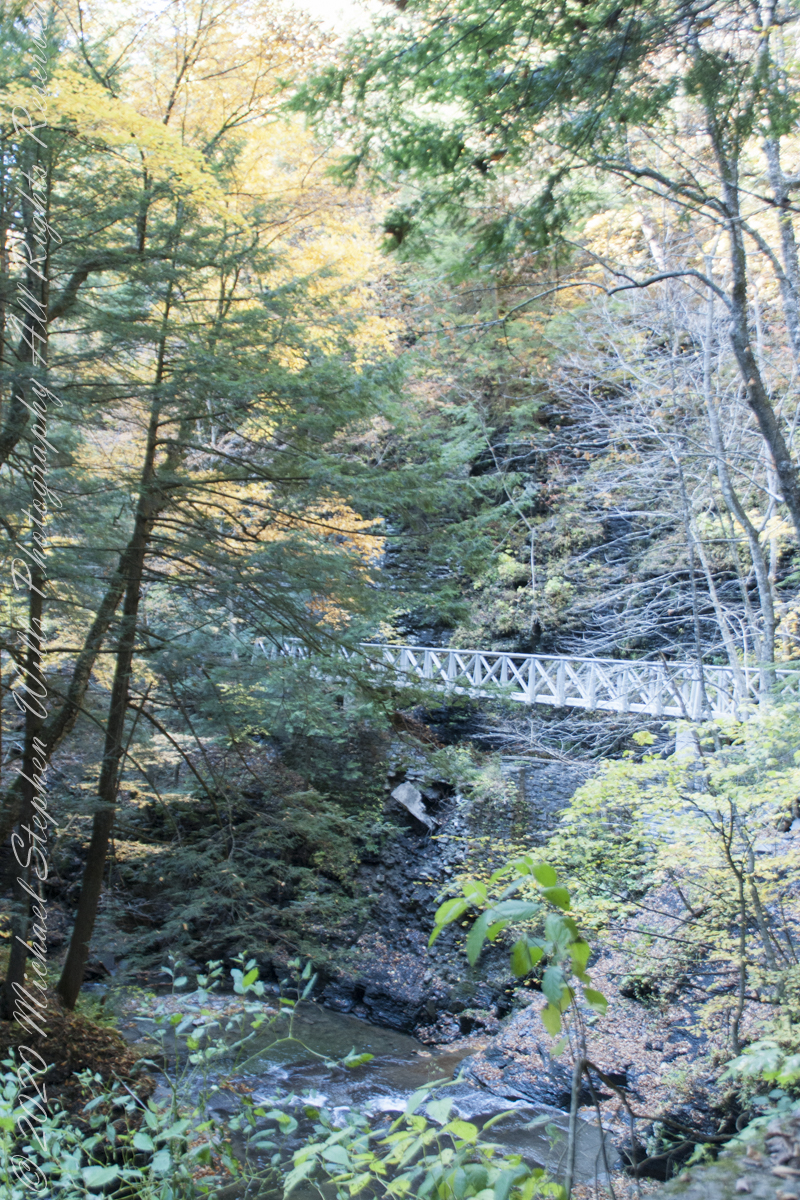
Crossing bridge seven (7), “Lovers’ Bridge, we encounter this passage, from the earliest work of the Civilian Conservation Corps of the 1930’s. Stairs carved into the Cambrian cliff. These images are a combination of handheld Sony Alpha dslr and tripod mounted Canon captures. Can you tell the difference (please comment on your insights).

View from the new walkway

Looking back to the walkway installed this year. This span does not cross Dry Creek, is not included in the bridge count.

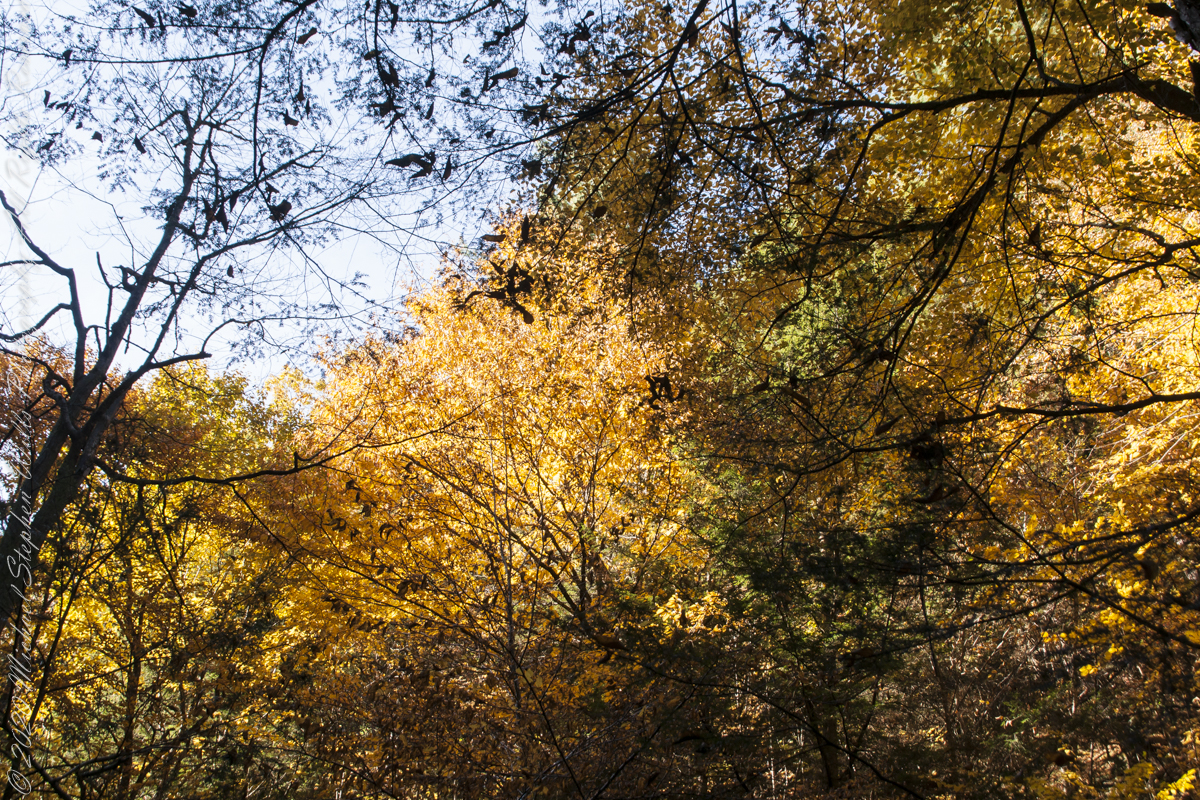
Overhead, the glorious autumn canopy

Fillmore Glen, New York State Park, Cayuga County, Moravia, New York

Copyright 2022 All Right Reserved Michael Stephen Wills