The Mathematical Beauty of Autumn Leaves

Here I reflect on the mathematical beauty of falling leaves from two trees, revealing order amidst perceived chaos in nature’s patterns.

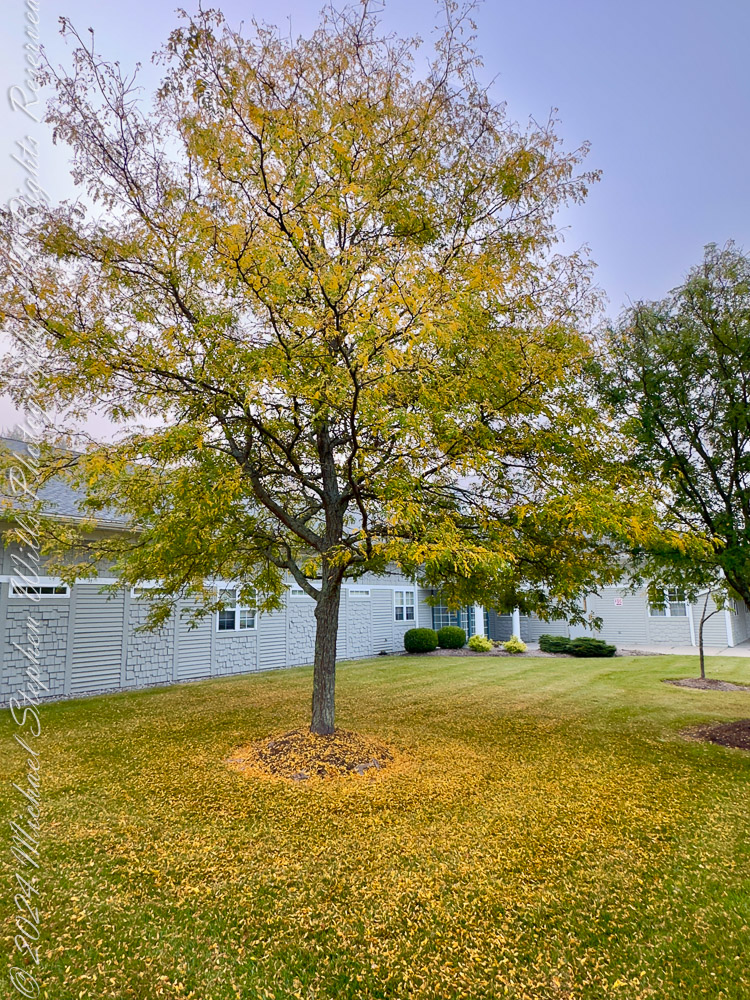
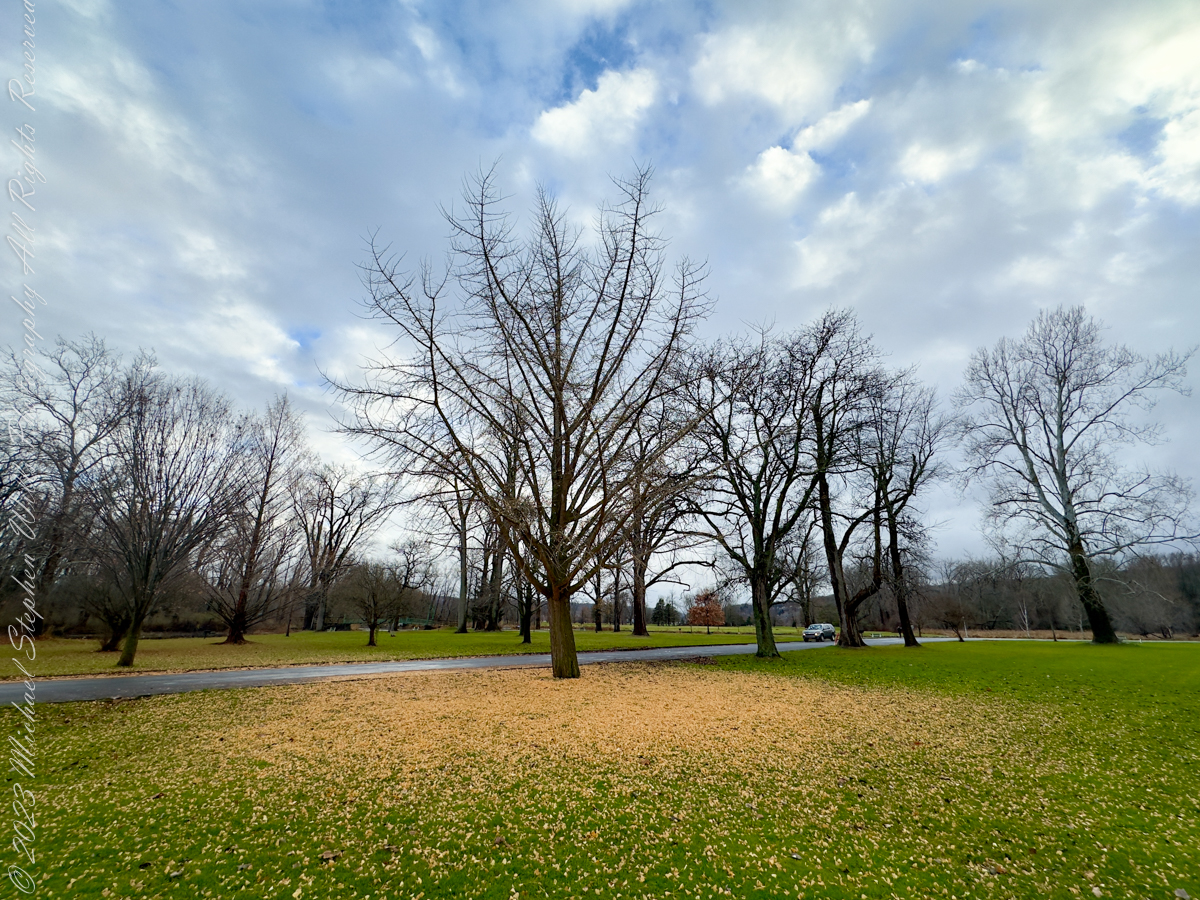
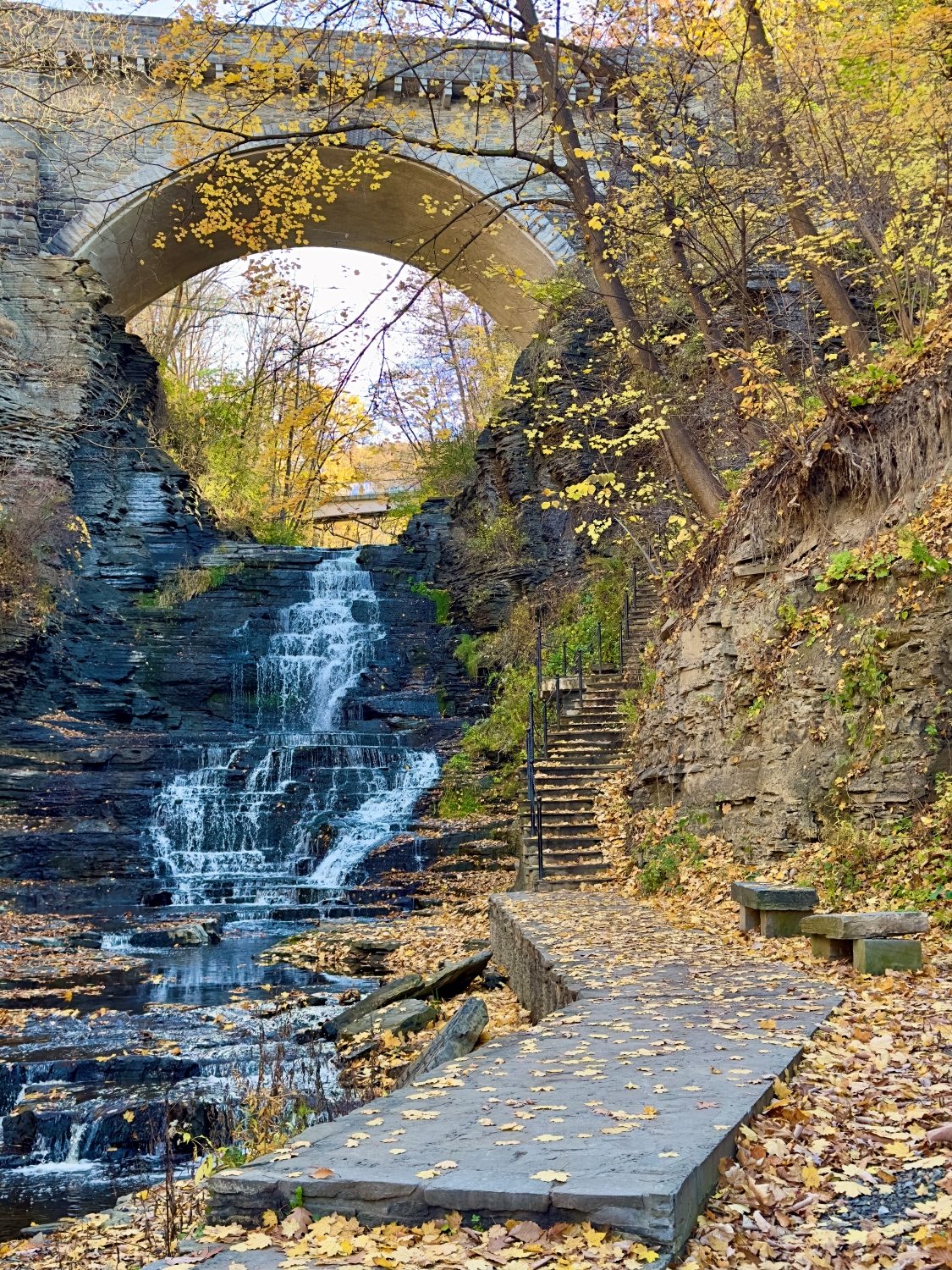
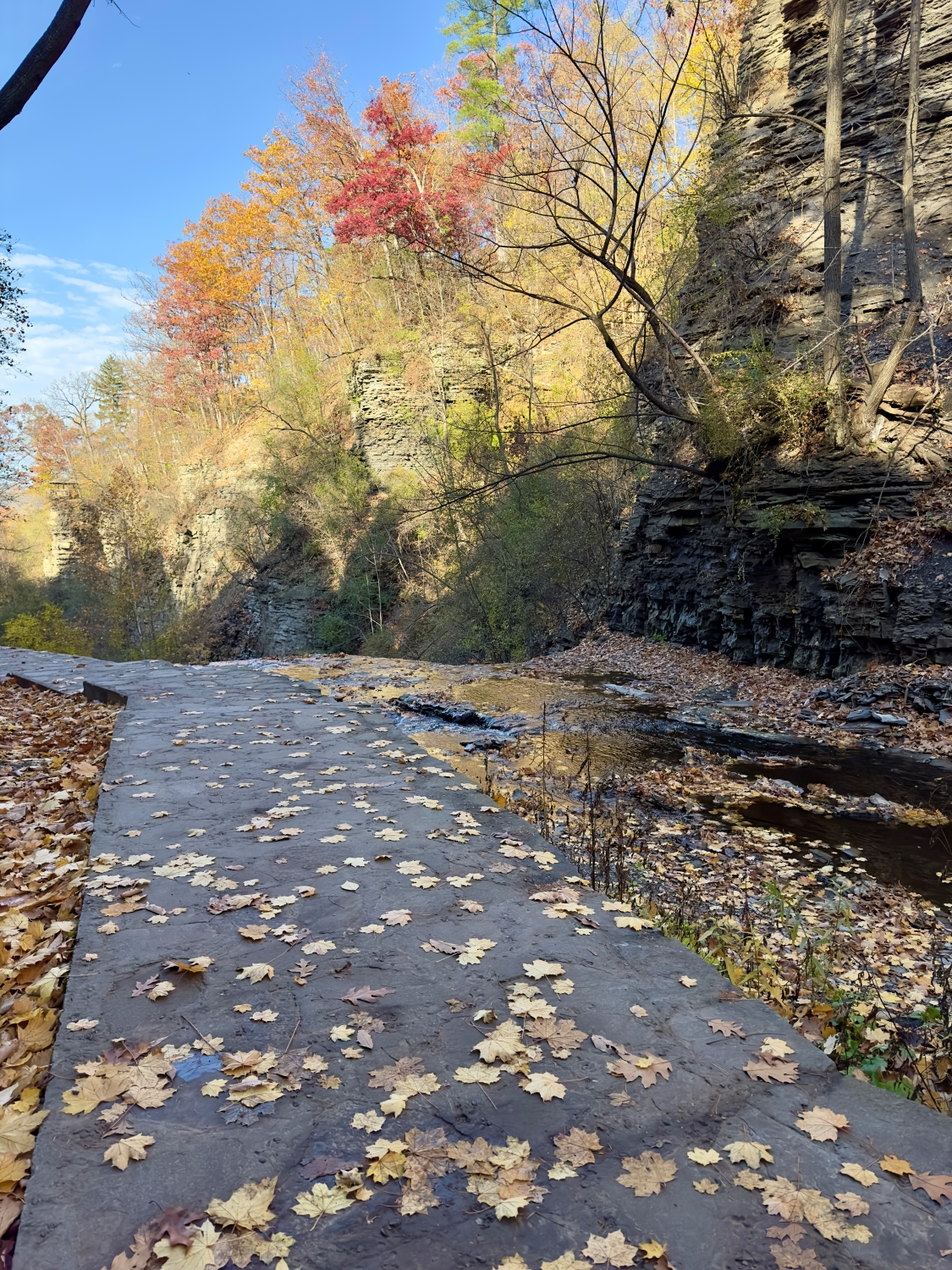
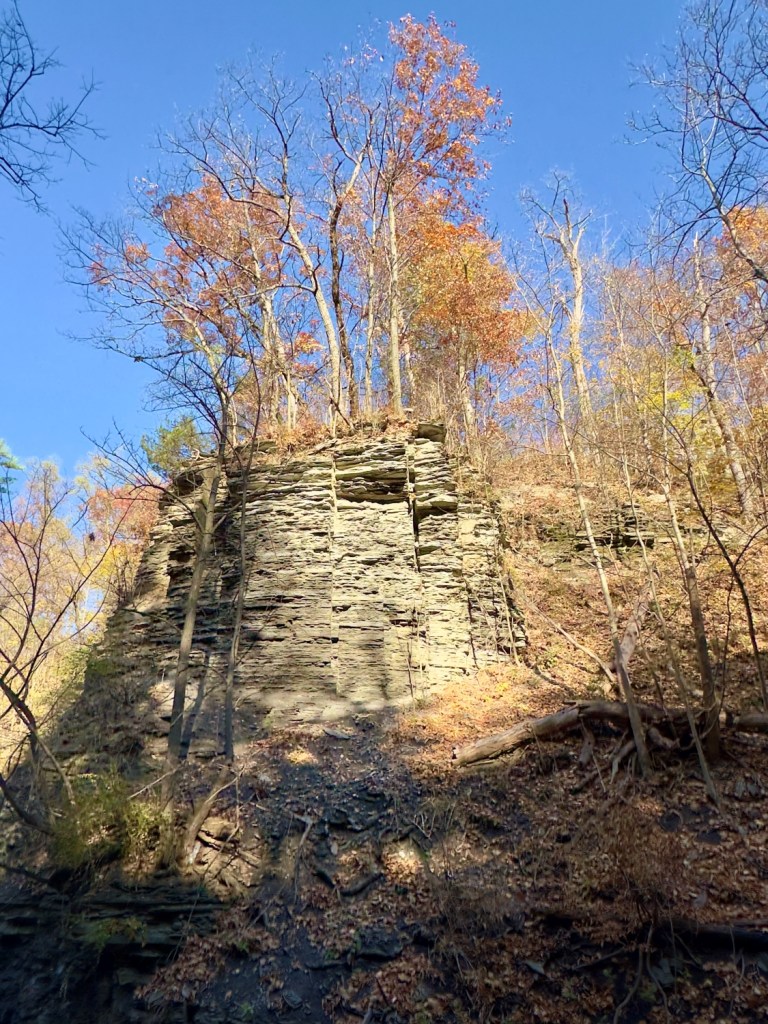
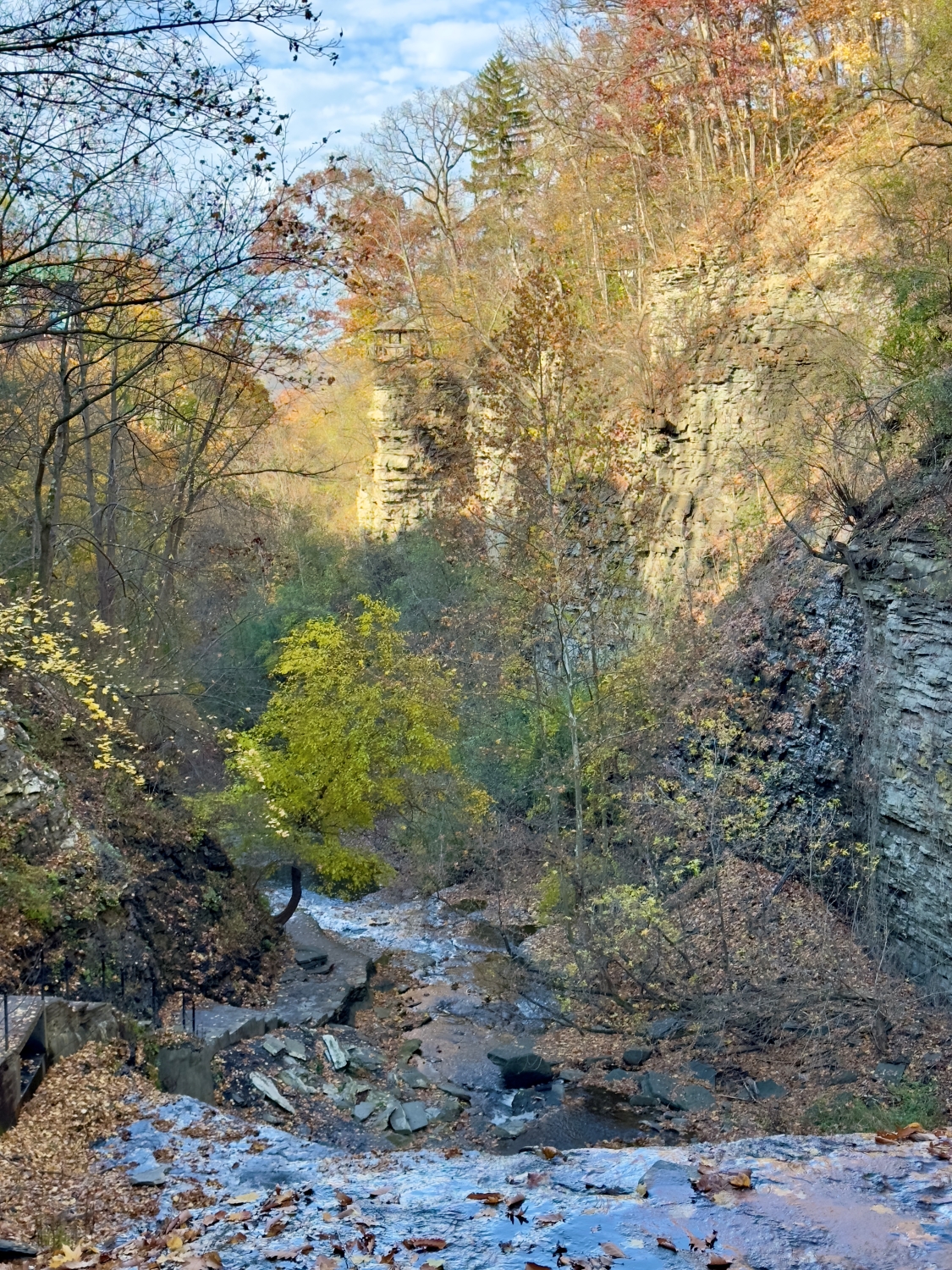
Standing before these two trees on a unseasonably warm autumn day, I am struck by the intricate patterns of their fallen leaves. Against the vibrant green of the grass, the golden leaves form halos around the trunks, as if nature herself were sketching mandalas. There’s something profoundly mathematical about these arrangements—a quiet order amidst what might initially seem like chaos.

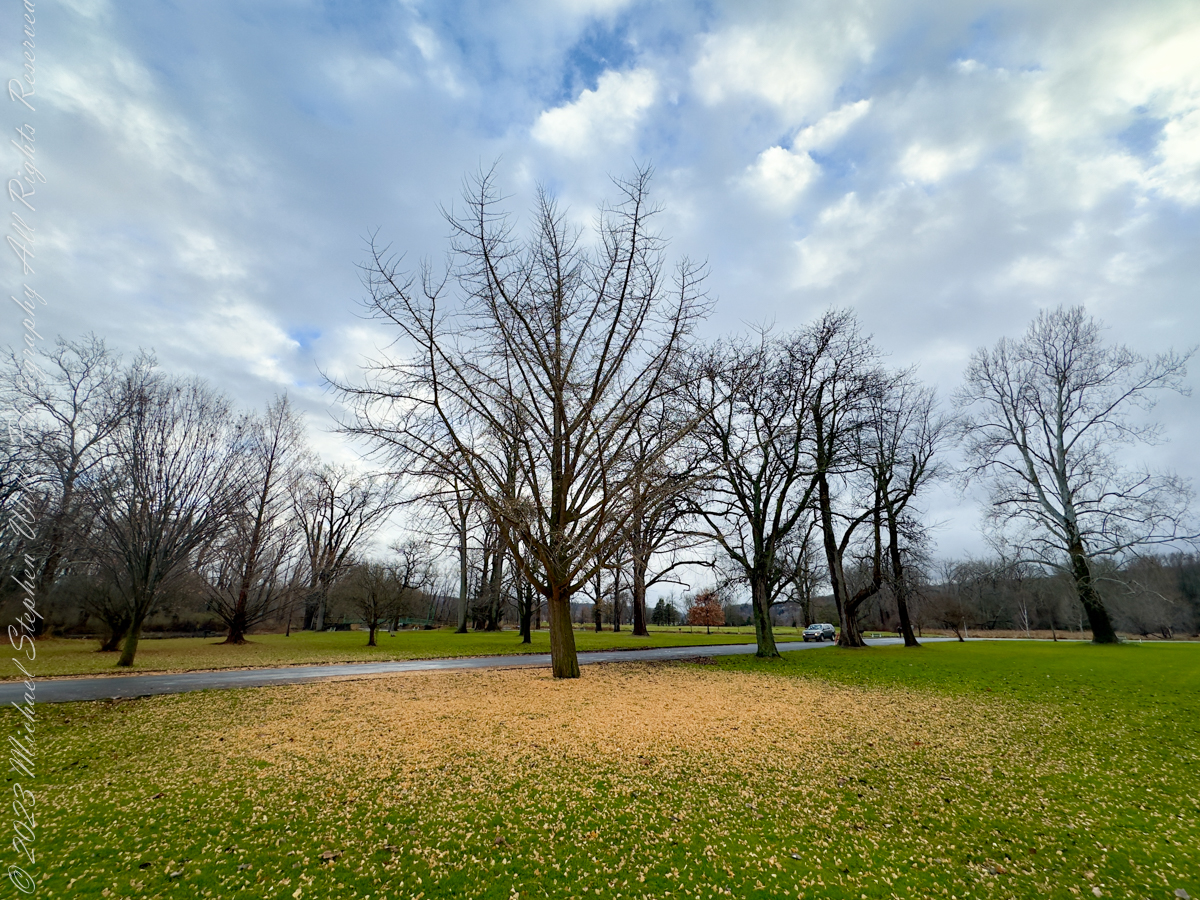
The first tree, its barren branches reaching skyward, stands on a carpet of yellow that radiates outward in near-perfect symmetry. The leaves have fallen in such a way that their density decreases as the distance from the trunk increases. It reminds me of the inverse square law—a principle in physics that governs how light, gravity, and sound diminish with distance. Here, instead of energy dispersing, it’s the leaves thinning out, their graceful scatter dictated by the wind’s whims and gravity’s pull. There’s an undeniable harmony in this seemingly random process, a convergence of natural forces creating an elegant gradient.

Stewart Park, Ithaca, New York

The second tree presents a different story, yet one equally mesmerizing. Its leaves, still clinging in part to the branches, form a looser ring at the base. The distribution is uneven, hinting at prevailing winds or the sheltering influence of nearby buildings. But even in this asymmetry, I see fractals—the self-similar patterns that repeat at different scales throughout nature. Look closely, and you’ll notice clusters of leaves mimicking the broader structure of the canopy above. It’s as if the tree’s essence is echoed in the ground below, a reminder of how deeply interconnected every part of a system can be.

Robinia pseudoacacia, commonly known as the black locust

These patterns invite reflection on the mathematical principles governing our world. Fibonacci sequences, golden ratios, and fractals—abstract concepts are not confined to textbooks. They are etched into the fabric of existence, visible in the spiral of a sunflower’s seeds, the curve of a nautilus shell, and the fall of leaves beneath a tree. Even the chaos of autumn is underpinned by order, a dance choreographed by countless variables: the angle of the branches, the strength of the wind, the moisture in the air.

I find myself wondering about the unseen forces at play. How many leaves fell straight down, obeying only gravity? How many were carried aloft by a breeze before settling farther afield? Could we model these patterns with algorithms, tracing the arc of each leaf’s descent? Would the data reveal a perfect equation, or would it remind us that some mysteries resist full comprehension?

As I stand here, I feel a deep gratitude for these natural equations. They ground me in the present moment while also connecting me to the infinite. The pattern of leaf fall is a reminder of life’s balance: chaos and order, randomness and structure, fleeting moments and timeless principles. The trees, now shedding their golden crowns, invite me to pause, observe, and marvel at the beautiful mathematics of autumn.

Enter your email to receive notification of future postings. I will not sell or share your email address.

Autumn Reflections: The Majesty of Acer Rubrum

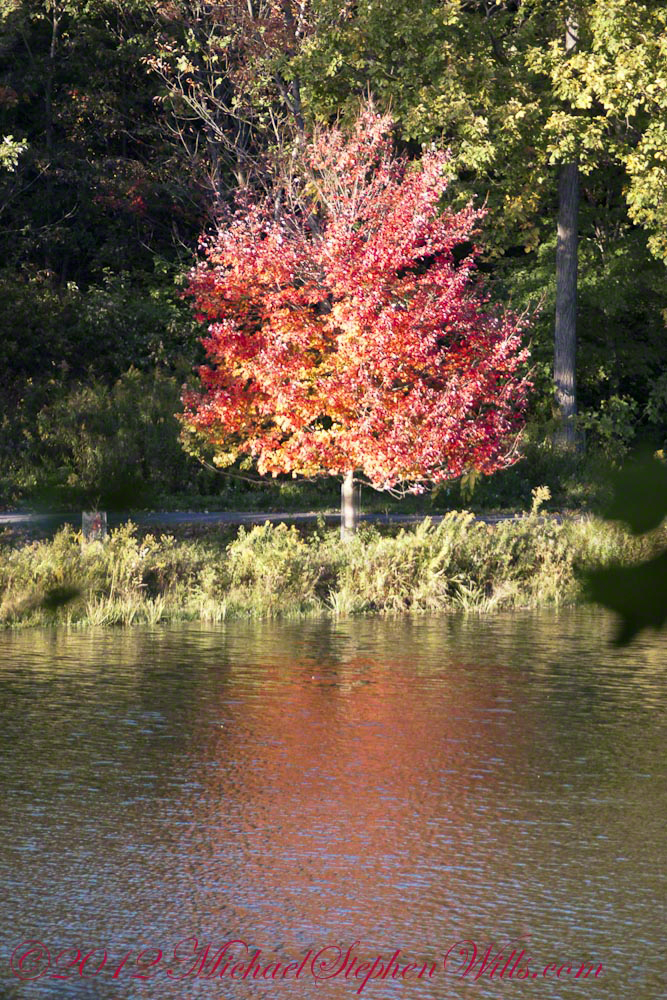
On a serene autumn afternoon by Beebe Lake, a solitary red maple stood out against the backdrop, showcasing its vibrant colors and resilience, symbolizing autumn’s fleeting beauty.

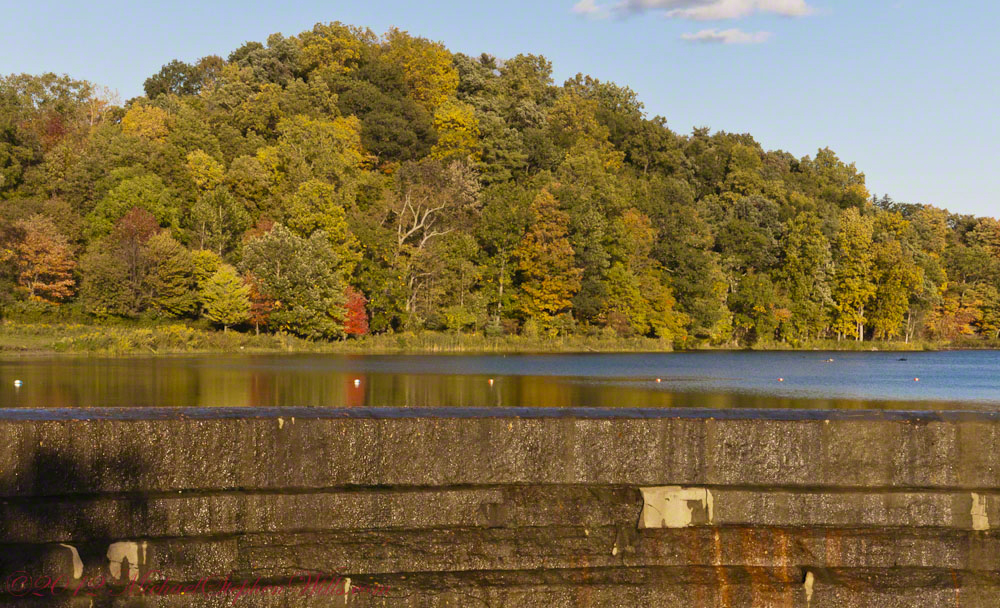
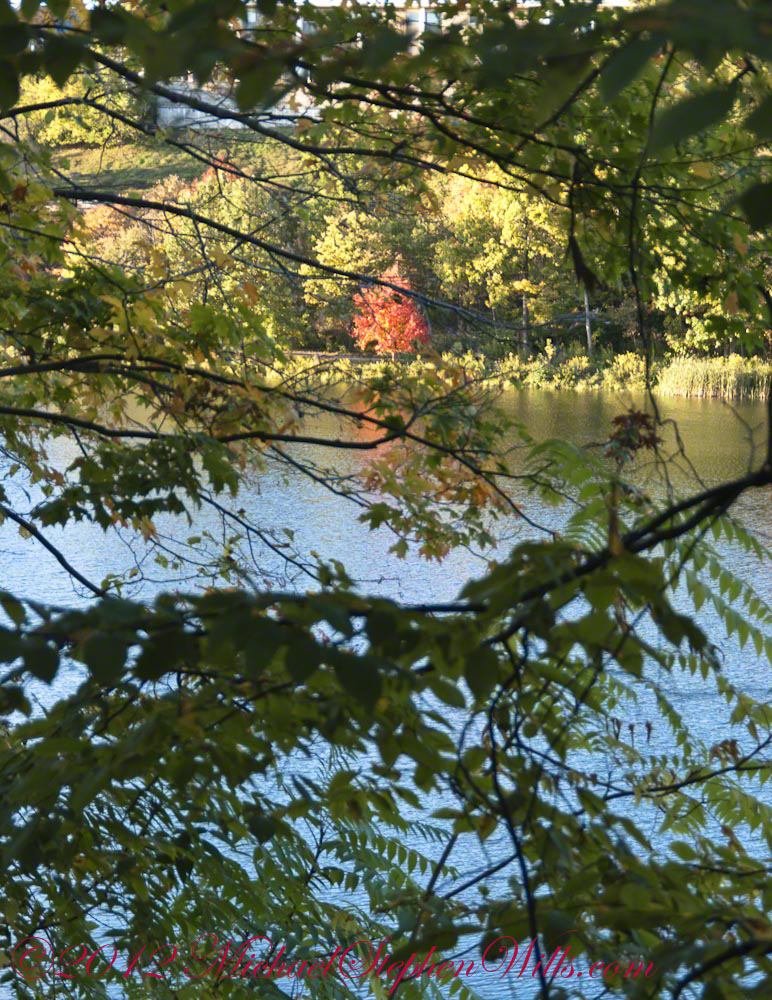
It was one of those serene autumn afternoons that linger in memory, the kind where the sky seems impossibly clear, the air crisp and gently scented with fallen leaves. I stood at the edge of Beebe Lake, my gaze first drawn to the textured concrete dam holding back the water, its weathered facade contrasting sharply with the soft reflections shimmering across the lake’s calm surface. Beyond, the wooded hillside rose gently, a tapestry woven with the warm hues of autumn—golds, greens, oranges, and reds mingling like brush strokes on a canvas.


An October Glory, turning before all others

Yet amidst this collective beauty, one tree captured my attention, singular in its brilliance—a solitary red maple standing proudly on the lakeshore. Its leaves had turned a vivid crimson, blazing brightly as though defying the muted earth tones surrounding it. Even from a distance, framed and partially obscured by larger trees, its vibrant reflection cast a fiery echo on the water, rippling softly in the afternoon breeze.

The maple, Acer Rubrum, seemed perfectly at home here, thriving robustly at the water’s edge. I remembered reading how adaptable red maples are, able to flourish in conditions ranging from dry uplands to swampy shores. This spot, near the edge of the tranquil Beebe Lake, seemed to showcase its resilient character perfectly.

Up close, the maple’s glow was even more striking. Its leaves cascaded in fiery clusters, hues deepening from bright scarlet at the tips to a darker maroon closer to the branches. This dramatic gradient seemed symbolic of autumn itself—beautiful, fleeting, and subtly tinged with the melancholy reminder of winter’s approach.

The Red Maple (Acer Rubrum) to tolerant of diverse conditions, making it a perfect choice for this spot on the short of Beebe Lake.

A memory surfaced of early spring in the Finger Lakes region, a time when maples, including this red maple, generously share their sap. Though not traditionally tapped like its sweeter cousin, the sugar maple, this species’ sap can indeed be boiled down into syrup, a surprising sweetness hidden within its sturdy trunk. Standing in its shadow, imagining those early spring days, it seemed astonishing that the same tree could offer both the delicate sweetness of syrup and the fierce beauty now on display.

Curiously, the transformation of the tree appeared methodical yet whimsical—it changed colors from the top down, its upper branches already bare, exposing slender twigs pointing skyward. Like an artist carefully removing layers to reveal something deeper beneath, the maple unveiled its upper bare bones first, as though reminding observers of the quiet strength supporting its autumn splendor.

This Red Maple (Acer Rubrum) turns from the top down and has already bare for most top branches.

As I lingered, taking in this turning tree, joggers passed by along the path, their rhythmic footsteps a gentle percussion beneath the rustling leaves. Briefly, they glanced toward the vivid maple, perhaps drawn, like me, by its striking contrast to the surrounding foliage. It felt like we shared a secret admiration for this singular tree, recognizing in it a quiet assertion of individuality amidst conformity.

Eventually, I viewed the maple once more from afar, framed now by broader sweeps of branches and leaves, partially obscured but no less vivid. Through layers of leaves and dappled sunlight, it glowed like a distant flame, a beacon that seemed to encapsulate the entire mood of the season—warm yet cool, bright yet transient.

The Red Maple (Acer Rubrum) is the first to flower in spring and the first to turn in autumn.

Walking away, the image of that maple lingered, its reflection shimmering gently in the afternoon sun, a moment suspended between summer’s lush vitality and winter’s bare stillness. Beebe Lake had offered scenic beauty, a quiet meditation, a reflection mirrored not only on its tranquil surface but in the heart of an observer captivated by a single tree’s fleeting glory.

Enter your email to receive notification of future postings. I will not sell or share your email address.

A Finger Lakes Afternoon: An Ode to October Splendor

The Finger Lakes’ autumn beauty is vividly captured in photographs showcasing vibrant foliage, intertwining nature and human presence in October 2024.

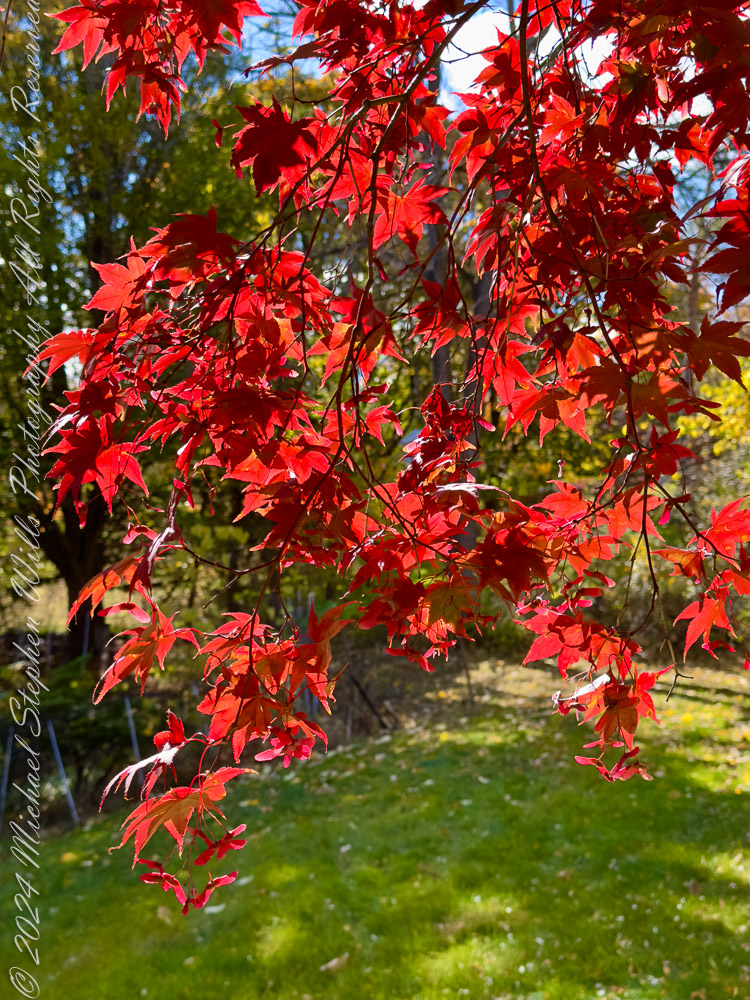
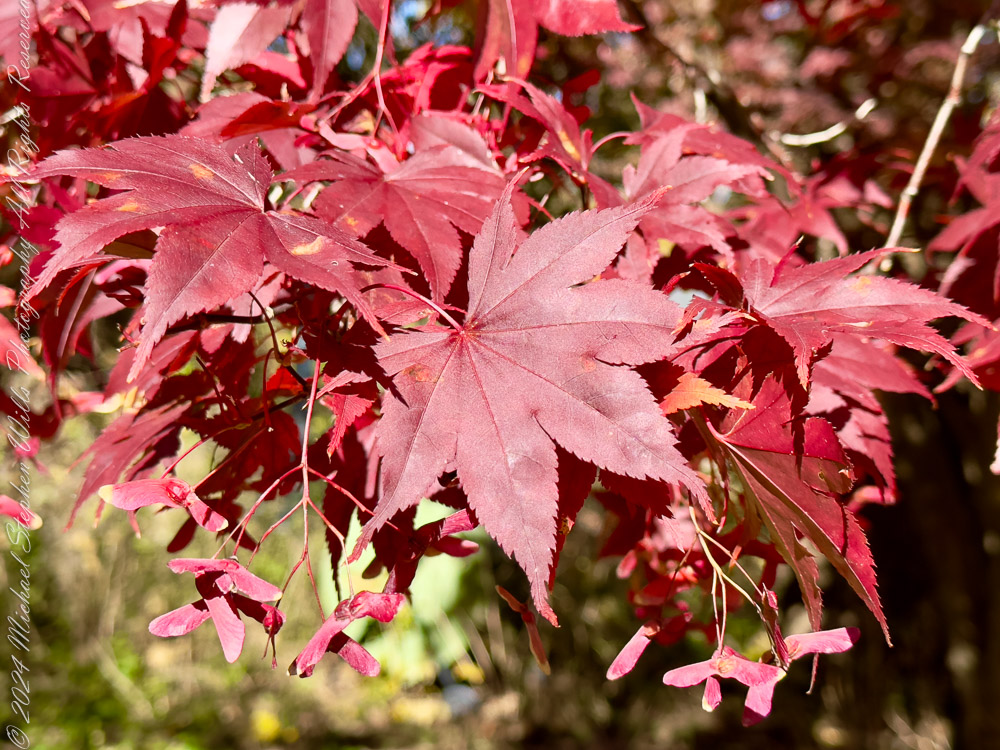
The Finger Lakes region, renowned for its natural beauty and changing seasons, put on a stunning performance on October 24, 2024. From the vibrant reds of a Japanese maple (Acer palmatum) to the golden hues of oak leaves (Quercus spp.), this photographic journey through our home captures the essence of autumn in upstate New York.

A Panoramic Tapestry

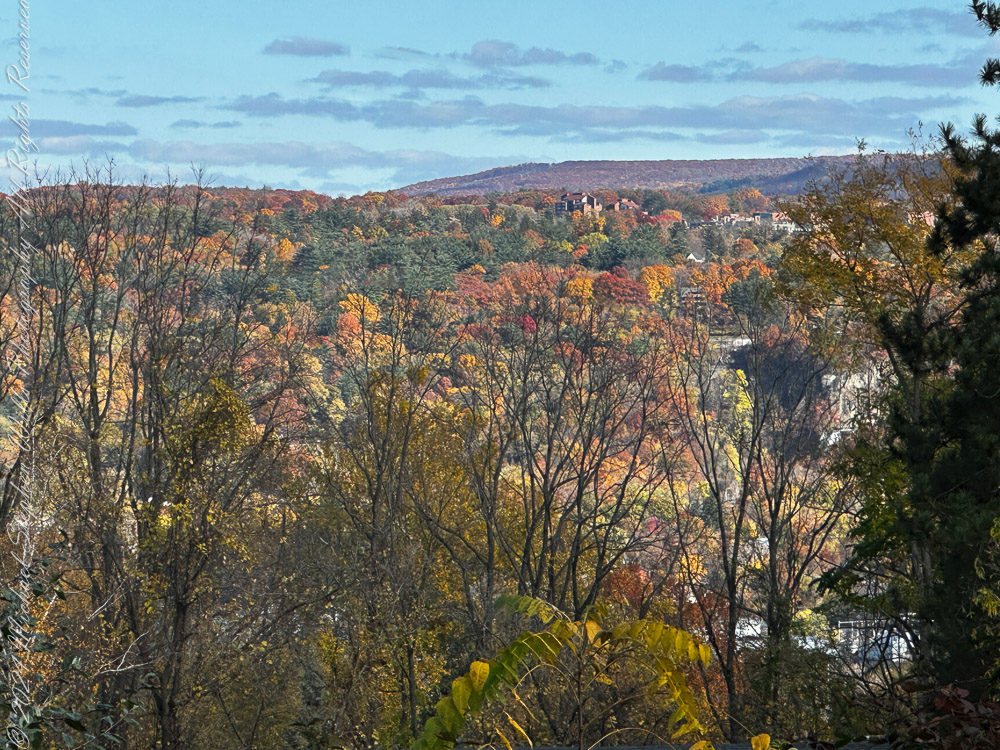
In the first photograph, the landscape unfolds like a watercolor painting. Hills dressed in fiery oranges and golds stretch across the horizon, with hints of evergreen pines (Pinus spp.) providing contrast. The sky, dotted with wispy clouds, serves as a serene backdrop, while the foreground frames the scene with bare tree limbs—a reminder that autumn is both a celebration of life and a prelude to winter’s dormancy. This image evokes a sense of timelessness, connecting us to the rolling hills that have witnessed countless seasons of change.

View from our porch across Ithaca to East Hill, Cornell University, Ithaca Falls on an October 2024 afternoon. Tompkins County, Finger Lakes Region, New York State

Japanese Maple: A Crimson Jewel

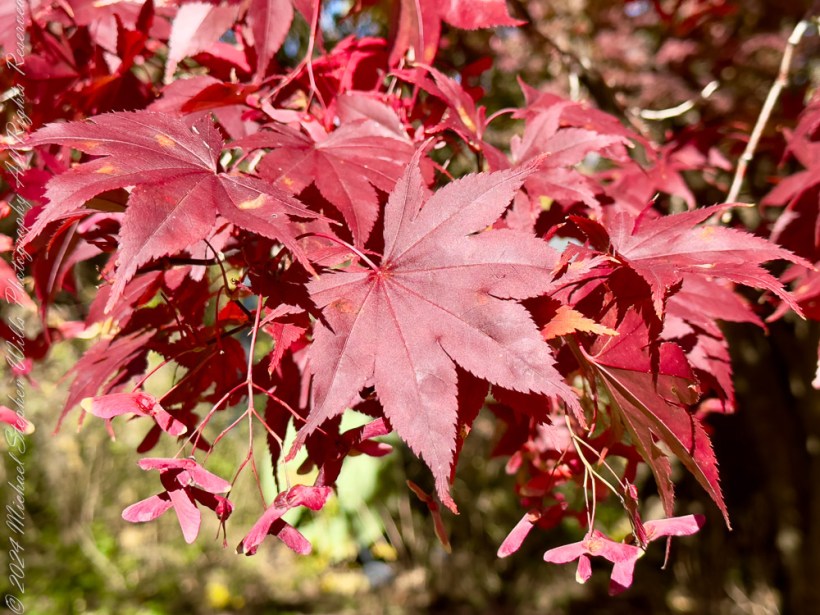
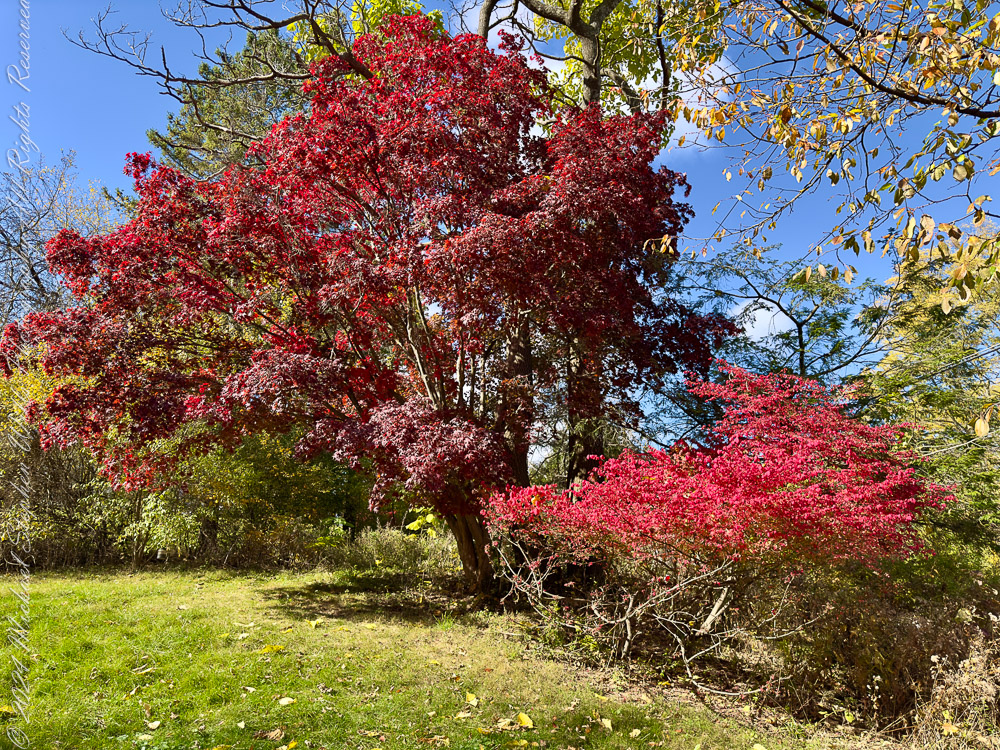
The next series of images focuses on the Japanese maple (Acer palmatum), a tree whose vibrant red foliage becomes a magnet for admiration in autumn. One close-up reveals delicate leaves, their intricate lobes illuminated by the afternoon sun. The interplay of light and shadow transforms each leaf into a tiny stained-glass window. Another photograph showcases the tree in its entirety, a commanding presence against the verdant lawn. It is a poignant reminder of nature’s artistry, where every branch and leaf contributes to the symphony of color.

Home Amid the Foliage

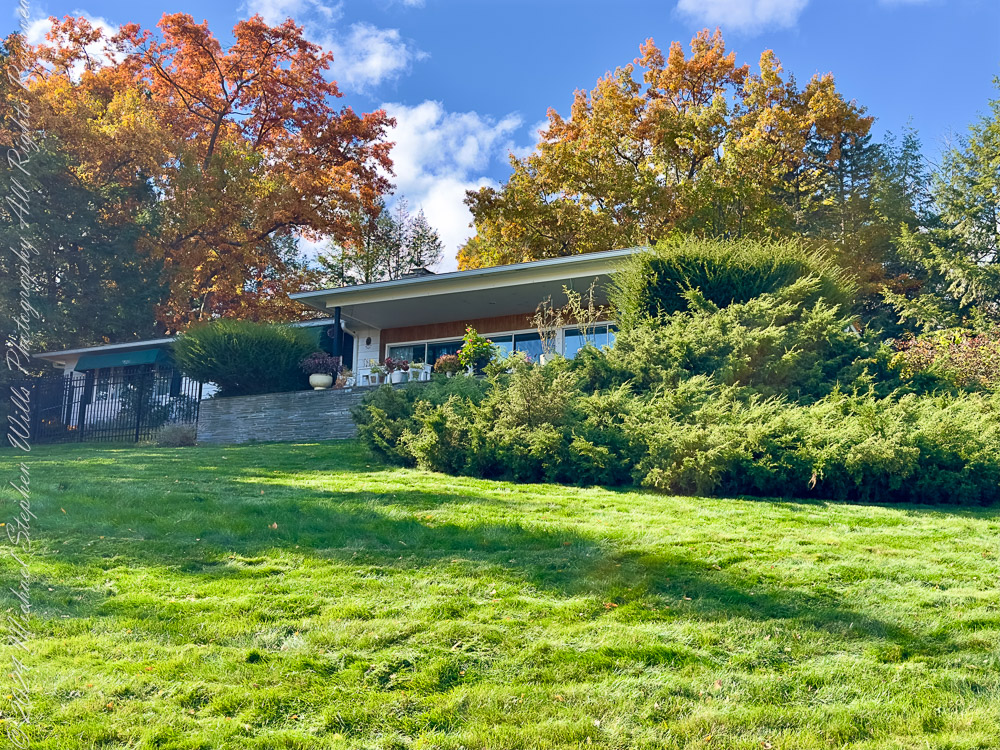
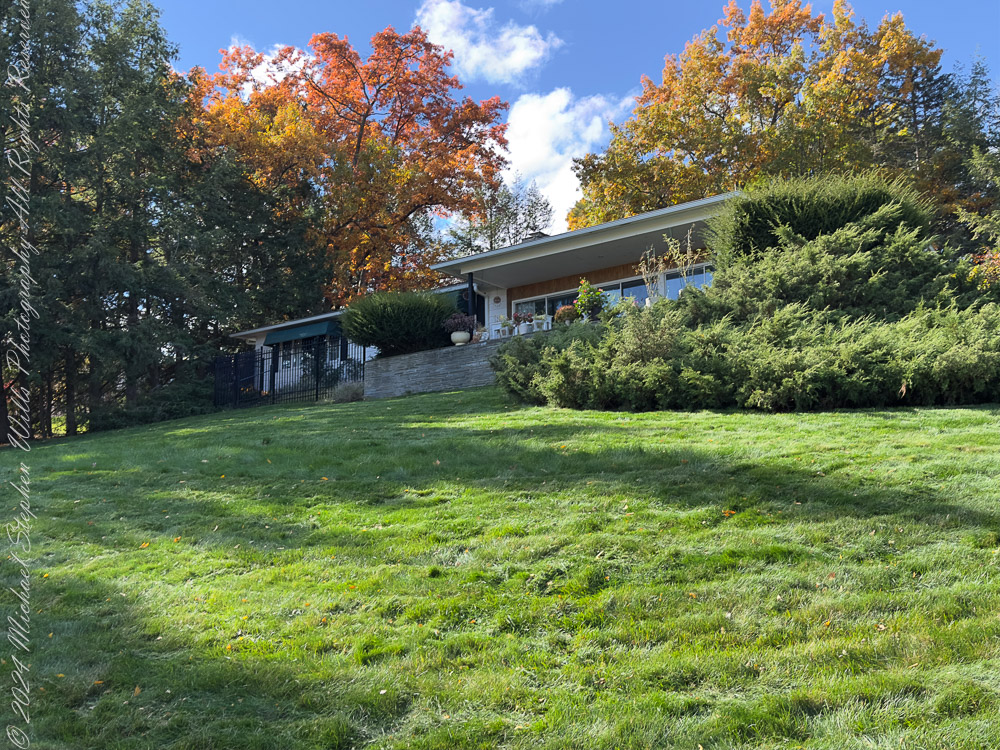
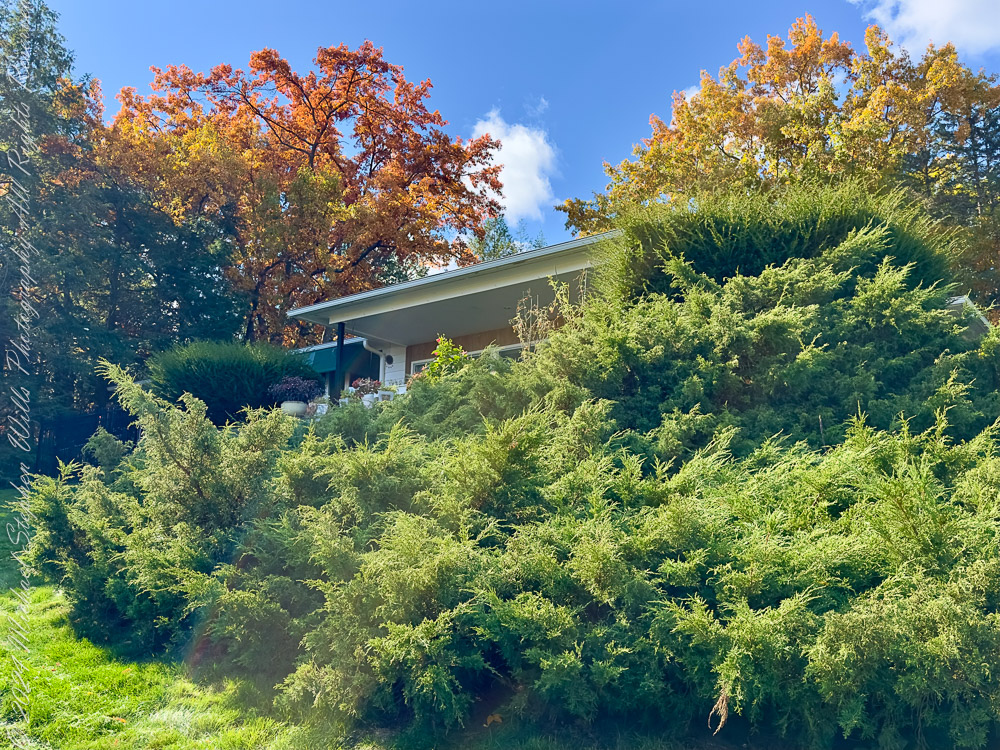
Nestled within this autumnal palette is our home, a mid-century structure that seems almost inseparable from its surroundings. The expansive lawn, a lush carpet of green, contrasts with the fiery colors of nearby oak (Quercus spp.) and maple trees (Acer spp.). In one angle, the house appears almost tucked away, sheltered by Eastern Hemlock (Tsuga canadensis) and junipers (Juniperus spp.) that add a sense of permanence to the scene. This juxtaposition of human habitation and natural splendor underscores how our lives are intertwined with the land we call home.

Oak Leaves: A Study in Texture

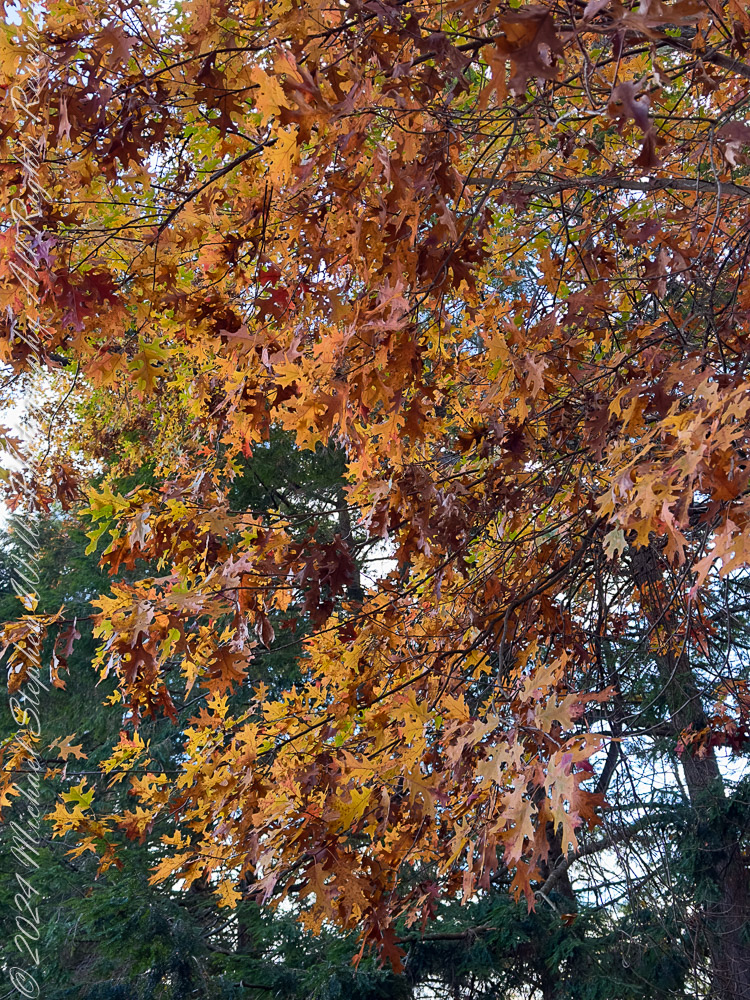
A close-up of oak leaves (Quercus spp.) showcases their rugged beauty, with jagged edges and deep veins that seem etched by time itself. Their colors—ranging from deep amber to burnished copper—are a testament to the richness of autumn’s palette. These leaves, clinging tenaciously to their branches, remind us of resilience and the fleeting beauty of the season.

Our oak tree in autumn colors. Helmock backdrop

Hydrangeas in Transition

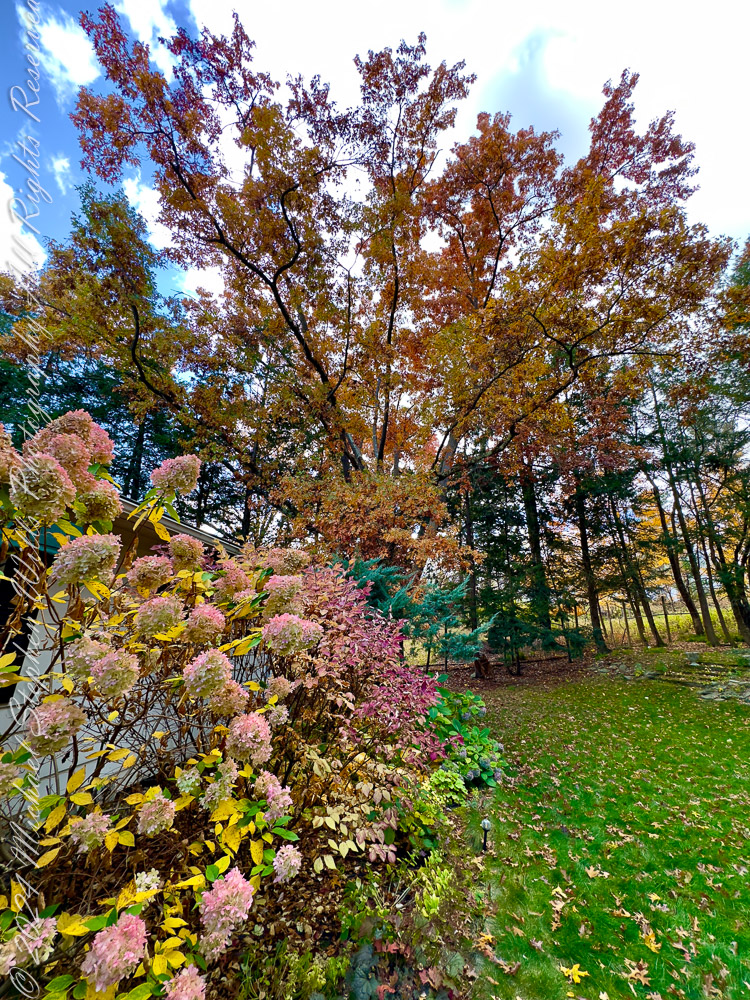
The hydrangea bushes (Hydrangea paniculata) by the house present a softer side of autumn. Their once-vivid blooms have faded to pastel pinks and creams, lending an air of nostalgia. These flowers, in their gentle decline, mirror the transition of the season, where vibrancy gives way to a quieter beauty. The hydrangea blooms seem to whisper the story of the summer past, offering a delicate contrast to the bolder hues of the surrounding trees.

Our oak tree in autumn colors. Pam’s hydrangia.

The Resilient Shrubs

Creeping Juniper (Juniperus horizontalis), here in the foreground, provides a grounding element in the composition, with a steadfast green the reminder of life persisting even as deciduous leaves fall. The dense shrubbery near the house creates a protective cocoon, framing the building with a sense of natural security. The dynamic interplay between these evergreens and the changing foliage of maples and oaks reflects the layered complexity of this landscape.

Reflections on an Afternoon

As I wandered through these scenes with camera in hand, I was struck by the interplay of light, color, and texture. Each photograph captures a fleeting moment, a slice of a season that, despite its predictability, never fails to surprise and inspire. Autumn in the Finger Lakes is a time of reflection, a reminder to pause and appreciate the world around us.

These images, taken on a single afternoon, tell a story of a landscape alive with color and character. From the steadfast junipers to the delicate hydrangea blooms, from the fiery maples to the enduring oaks, they invite us to celebrate not just the beauty of nature but also our place within it—a home nestled among trees that have stood for decades, witnessing the rhythms of the earth.

Enter your email to receive notification of future postings. I will not sell or share your email address.

Autumn Trail Adventures: Nature’s Colorful Showcase

The Cayuga Waterfront Trail showcases autumn’s beauty through vibrant plants like pokeweed, oak, Virginia Creeper, and New England Asters.

A Flash of Red: The Mysterious Pokeweed

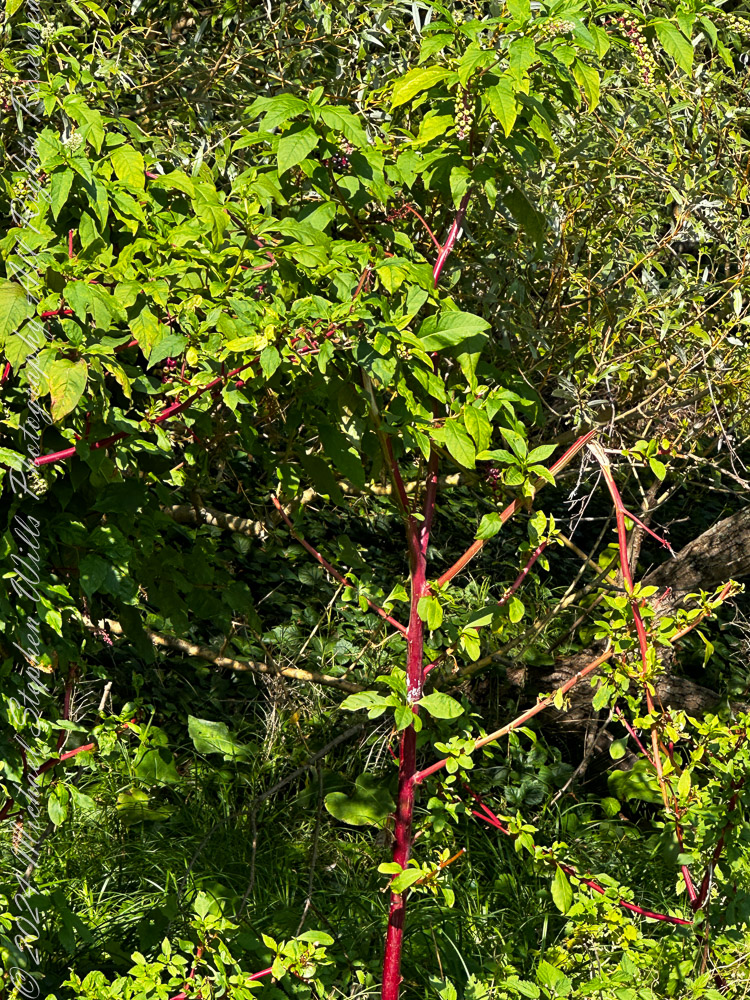
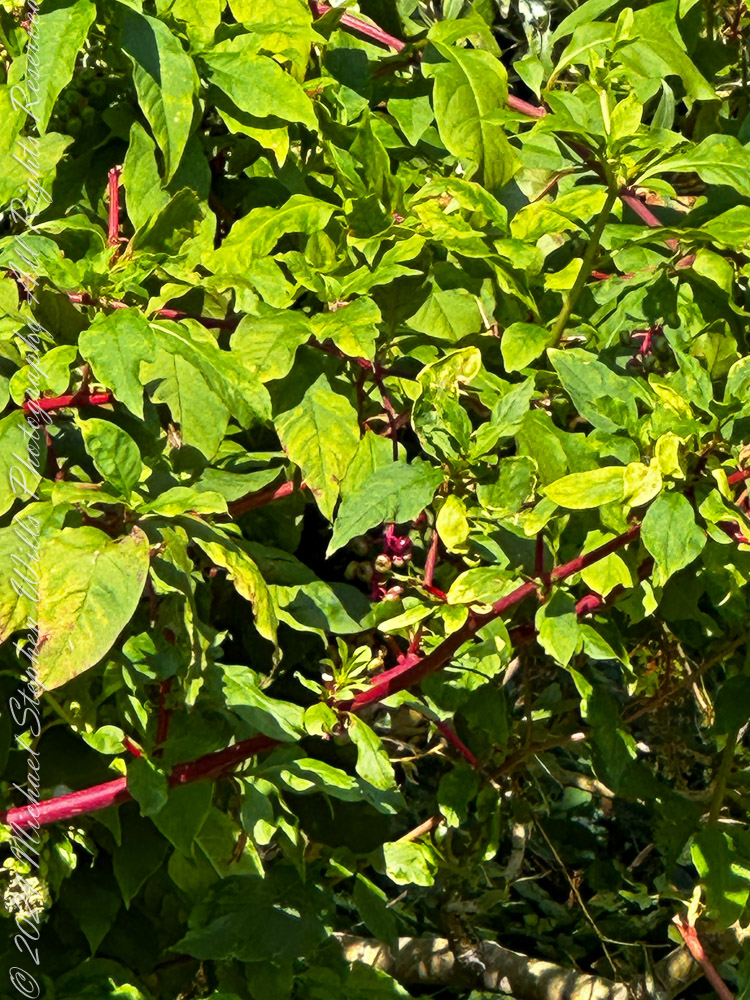
Our explorations along Ithaca’s Cayuga Waterfront Trail begins with the striking Pokeweed (Phytolacca americana), its ruby-red stems rising like sentinels against a sea of green leaves. At a glance, it’s bold, almost tropical, yet this native plant is a quintessential autumn feature in the Northeast. Those drooping clusters of berries (not yet ripe here) are food for birds like robins and mourning doves — though toxic to us, pokeweed adds a bit of danger to its beauty.

Nature’s Note: While visually stunning, pokeweed’s ripe purple berries were historically used as dye. Early settlers and Native Americans knew its power, though caution is always the rule here!

The Mighty Oak: Sentinel of the Trail

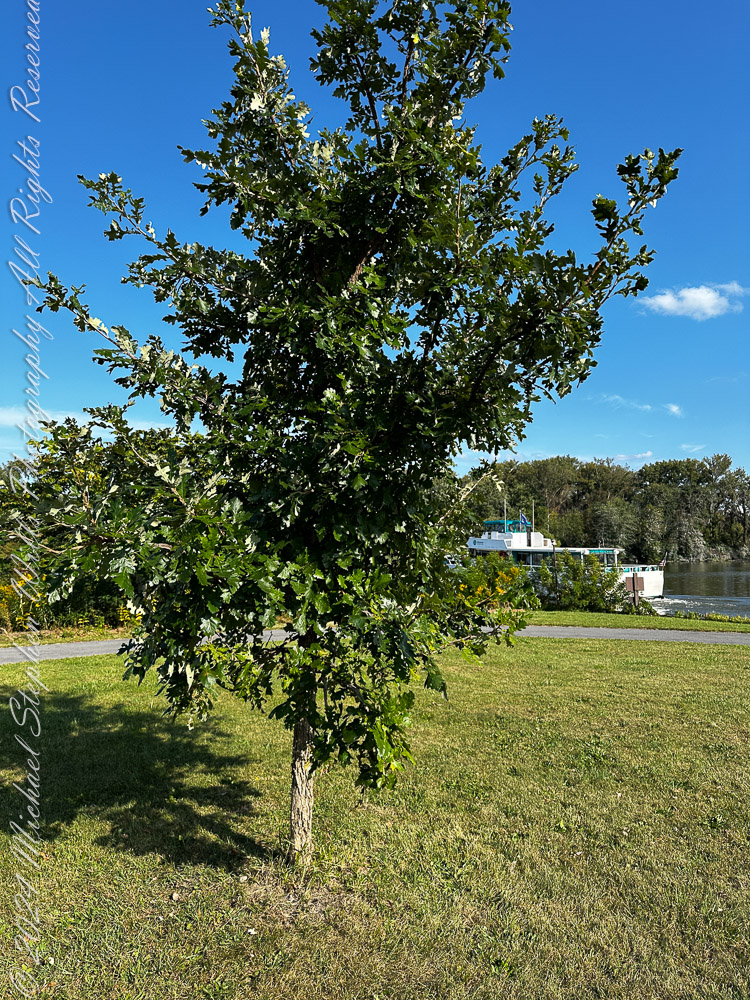
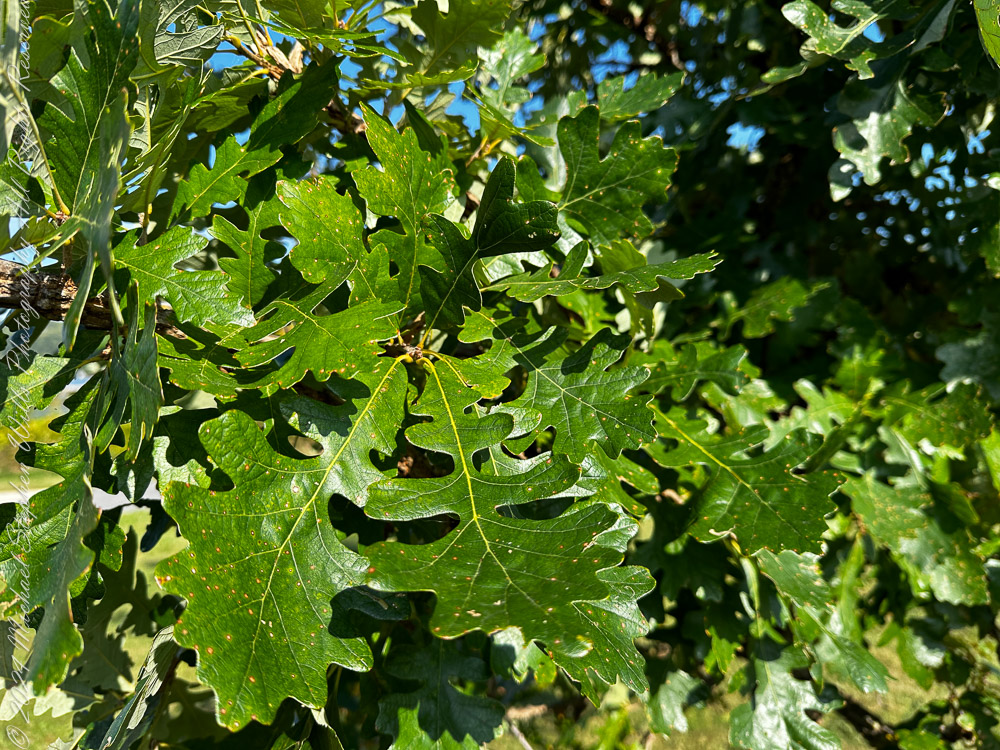
Next, we imnagine the cool shade of an oak tree, its lobed leaves silhouetted like green lacework against the clear blue sky. The photogenic Oaks are ecosystem powerhouses. Supporting hundreds of species of moths, butterflies, and birds, oaks quietly hold the fabric of nature together.

In autumn, these leaves will transform, dropping gently to create warm beds for overwintering insects. Stand beneath its branches long enough, and you’ll swear it whispers stories of the seasons gone by.

Quick Fact: Oaks produce acorns that are a favorite food of squirrels. Ever notice a squirrel “planting” them? That’s nature’s accidental reforestation plan in action.

Reflections of Autumn’s Palette

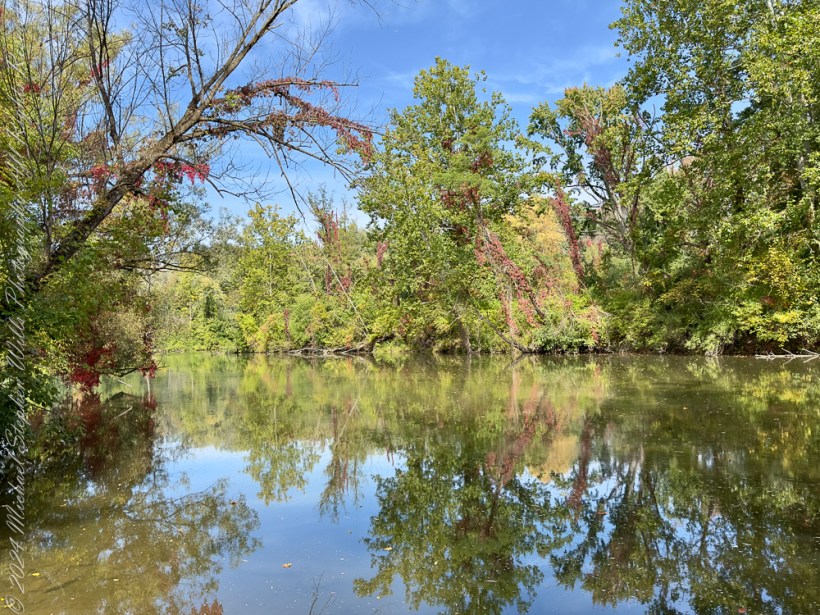
We reach the water’s edge, where the serene surface where Fall Creek joins Cayuga Lake mirrors the fiery splashes of red Virginia Creeper (Parthenocissus quinquefolia) winding through the trees. This climbing vine, with its scarlet fall foliage, is like nature’s ribbon tying the forest together.

The reflection — a perfect painting — blurs the boundary between land and water. Here, quiet reigns, save for the soft ripple of a fish or the rustle of leaves overhead.

Curious Note: Virginia Creeper is often mistaken for poison ivy. The secret? Virginia Creeper has five leaflets, while poison ivy wears three — nature’s rhyme: “Leaves of three, let it be.”

Aster Alley: A Burst of Purple Beauty

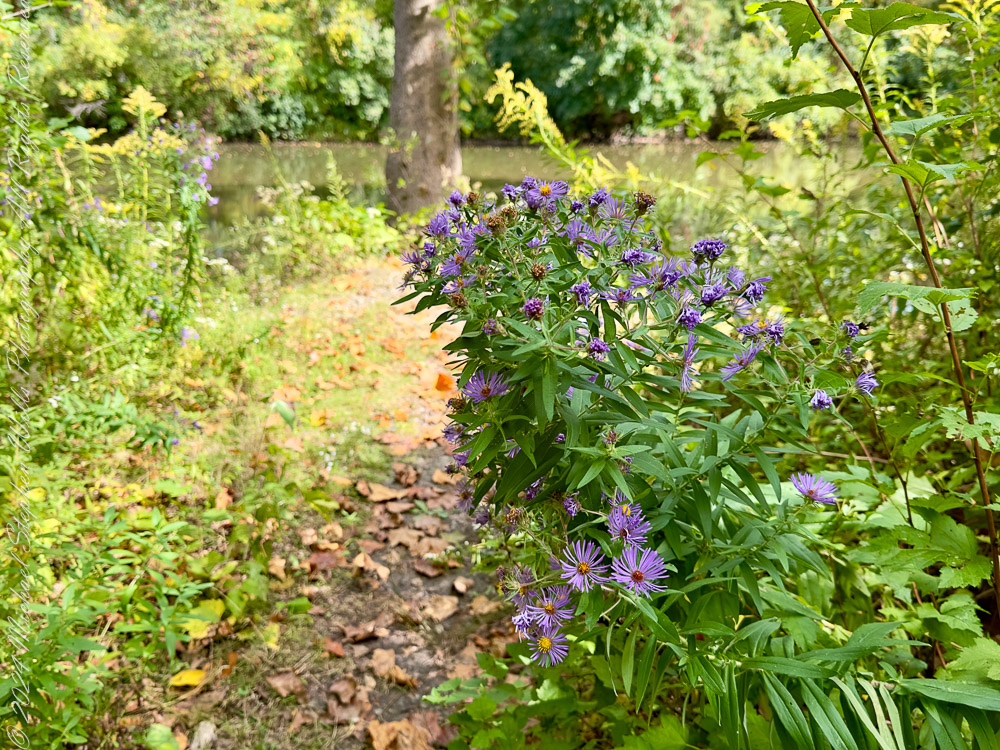
On the trail’s side, a cheerful gathering of New England Asters (Symphyotrichum novae-angliae) steals the spotlight. These vibrant purple flowers, with their golden centers, are late-season treasures. As most blooms fade, asters feed pollinators like bees and butterflies in their final push before winter.

Walk by slowly, and you might catch a bumblebee lazily humming its thanks — a last sip of nectar before the chill sets in.

Did You Know? Asters get their name from the Greek word for star. Fitting, don’t you think?
Nature’s Quilt: Pine Needle Carpet

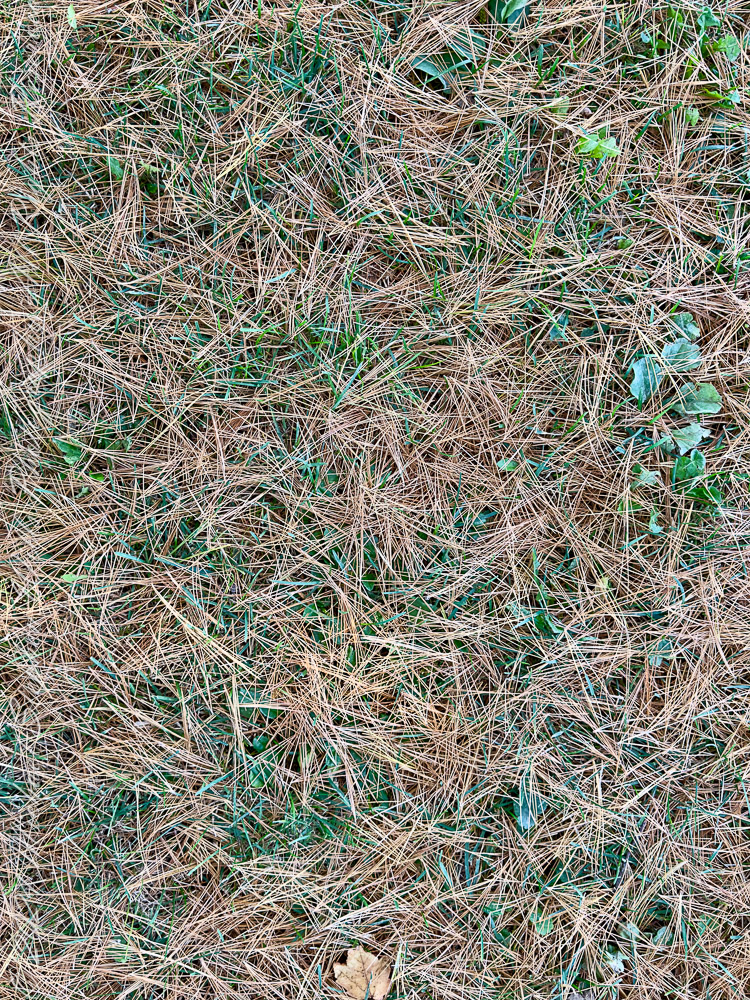
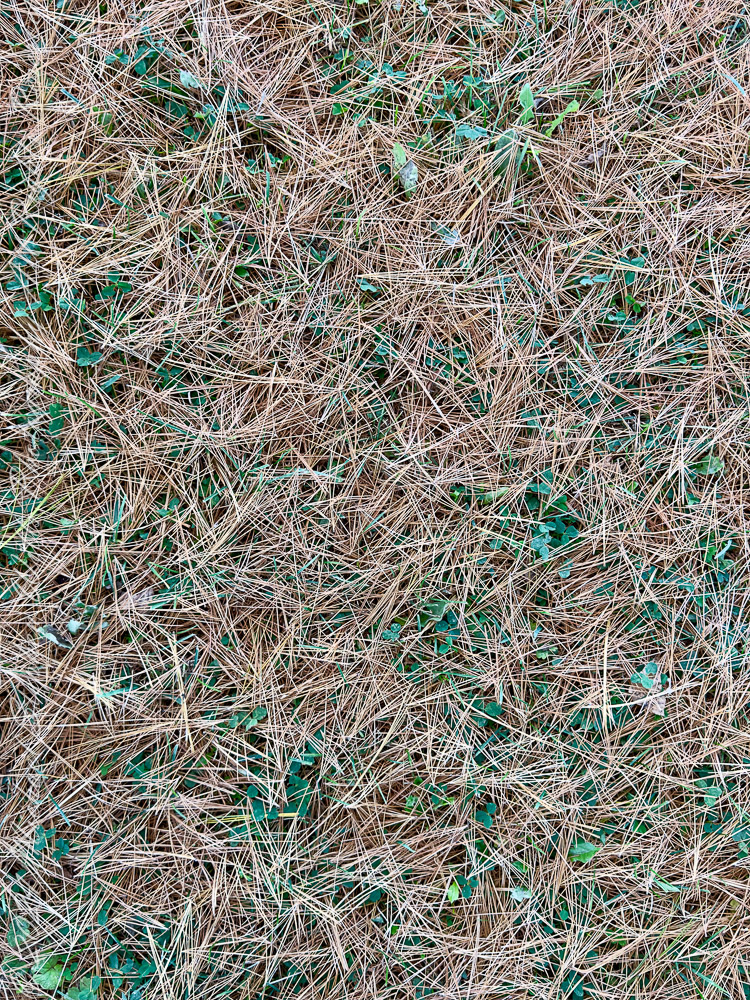
Finally, we tread across a textured carpet of pine needles, blanketing the ground in warm, earthy hues. Beneath this seemingly simple scene lies a story of renewal. As pines shed their needles, they enrich the soil with organic matter, providing a soft bed for new life to sprout in the spring.

The crunch underfoot feels both nostalgic and meditative — a gentle reminder that every fallen needle is part of nature’s endless cycle.

Fun Observation: Pine needles, often called “nature’s mulch,” are slightly acidic, which helps pine trees thrive while keeping competition at bay.

Closing Thoughts

From the bold reds of pokeweed to the mirrored waters adorned with Virginia Creeper, and the twinkle of asters amid the foliage, autumn along the Cayuga Waterfront Trail is a celebration of nature’s resilience and beauty. It’s a quiet reminder that even as the seasons shift, the world remains vibrant — a living, breathing tapestry stitched together by trees, plants, and reflections.

So, walk slowly, listen closely, and let the stories of leaves, stems, and waters guide your journey.

Enter your email to receive notification of future postings. I will not sell or share your email address.

Ginkgo and Sycamore: Nature’s Beauty Amid Climate Change

On Thanksgiving 2023, I reflected on climate change’s impact while observing contrasting ginkgo and sycamore leaves during the Turkey Trot.

The air was soddenly warm that Thanksgiving morning in 2023, carrying a foreboding of climate change. Standing on the grounds of Ithaca High School, I couldn’t help but feel the incongruity of the unseasonable warmth. The annual “Turkey Trot” was unfolding around me, an event filled with cheerful camaraderie, yet beneath the surface of this tradition, the world itself seemed to whisper a warning. My attention drifted from the runners to the ground, where fallen leaves painted a story that echoed this uneasy tension.

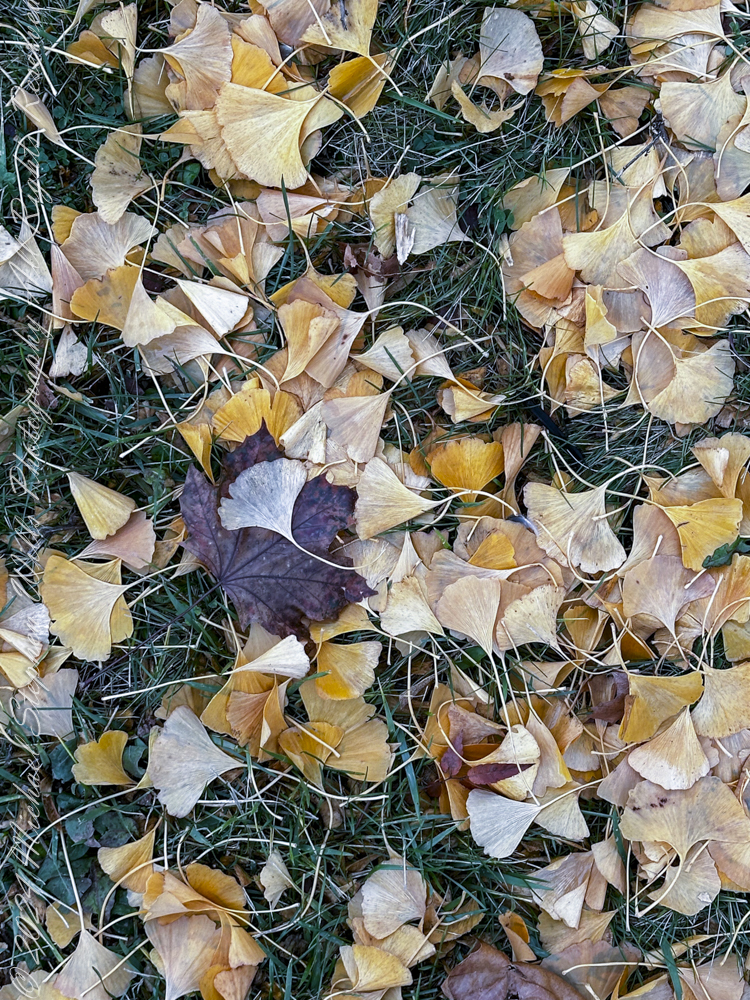
The ginkgo leaves, their vibrant golden hues glowing against the damp grass, seemed almost out of place in the humid air. Ginkgos are ancient survivors, trees that have witnessed millennia of change, yet even they now face a future shaped by the rapid pace of human disruption. Their fan-like shapes, so delicate and timeless, carried an irony—symbols of endurance scattered on a landscape where the seasons no longer held the predictability they once did. That morning, their luminous beauty felt like a quiet plea, a reminder of nature’s fragility in the face of human indifference.
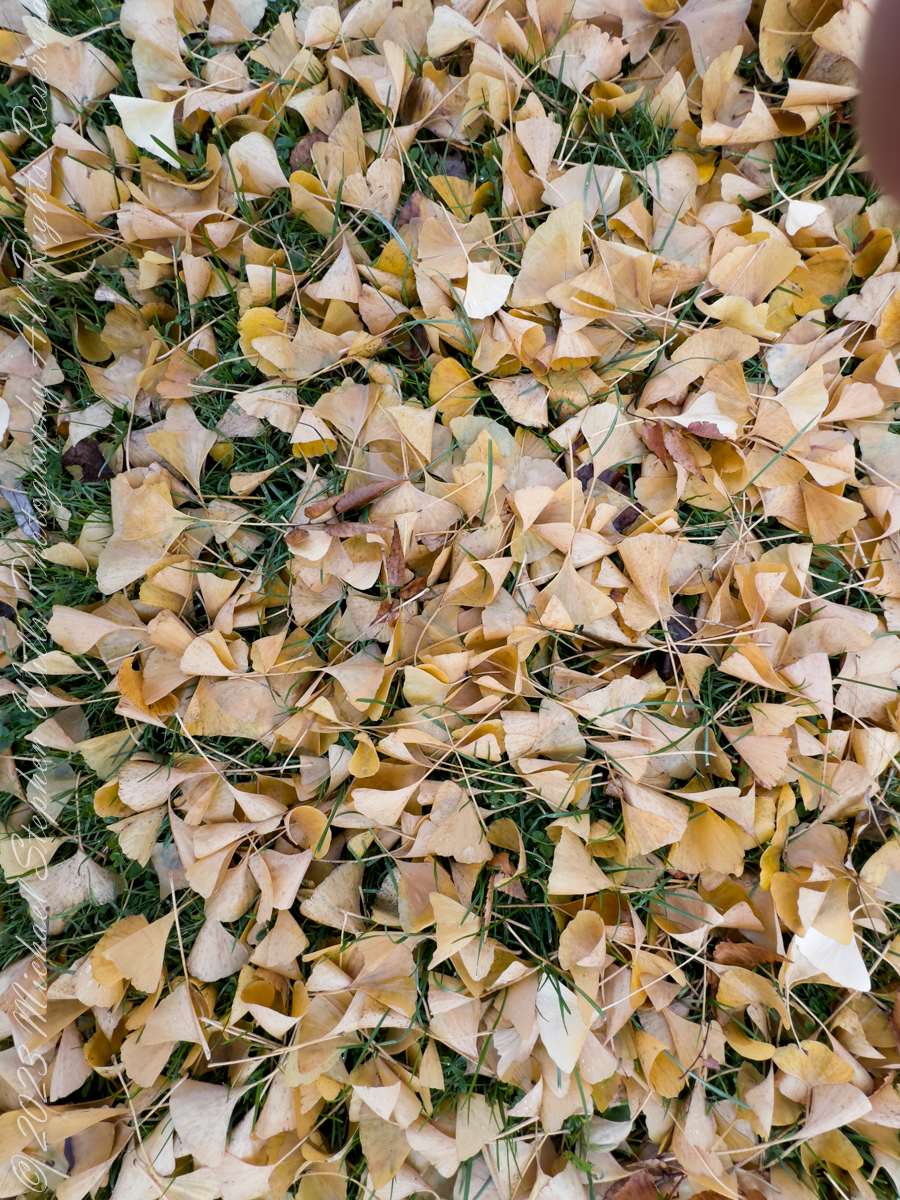
As a spectator of the 2023 “Turkey Trot” on Thanksgiving Day I found these Ginko and Sycamore leaves at Ithaca High School, Ithaca, Tompkins County New York. Finger Lakes Region

Among them, the sycamore leaves lay darker and more rugged, their broader forms curled and weathered by the elements. The sycamore is a resilient tree, often thriving in difficult conditions, yet its leaves bore a somber note against the warmth of the day. Together, the ginkgo and sycamore leaves formed a poignant tableau—a meeting of strength and delicacy, both subject to the same unrelenting forces of change. As I stood there, the leaves seemed to whisper their own story, a testament to survival amidst an increasingly uncertain world.

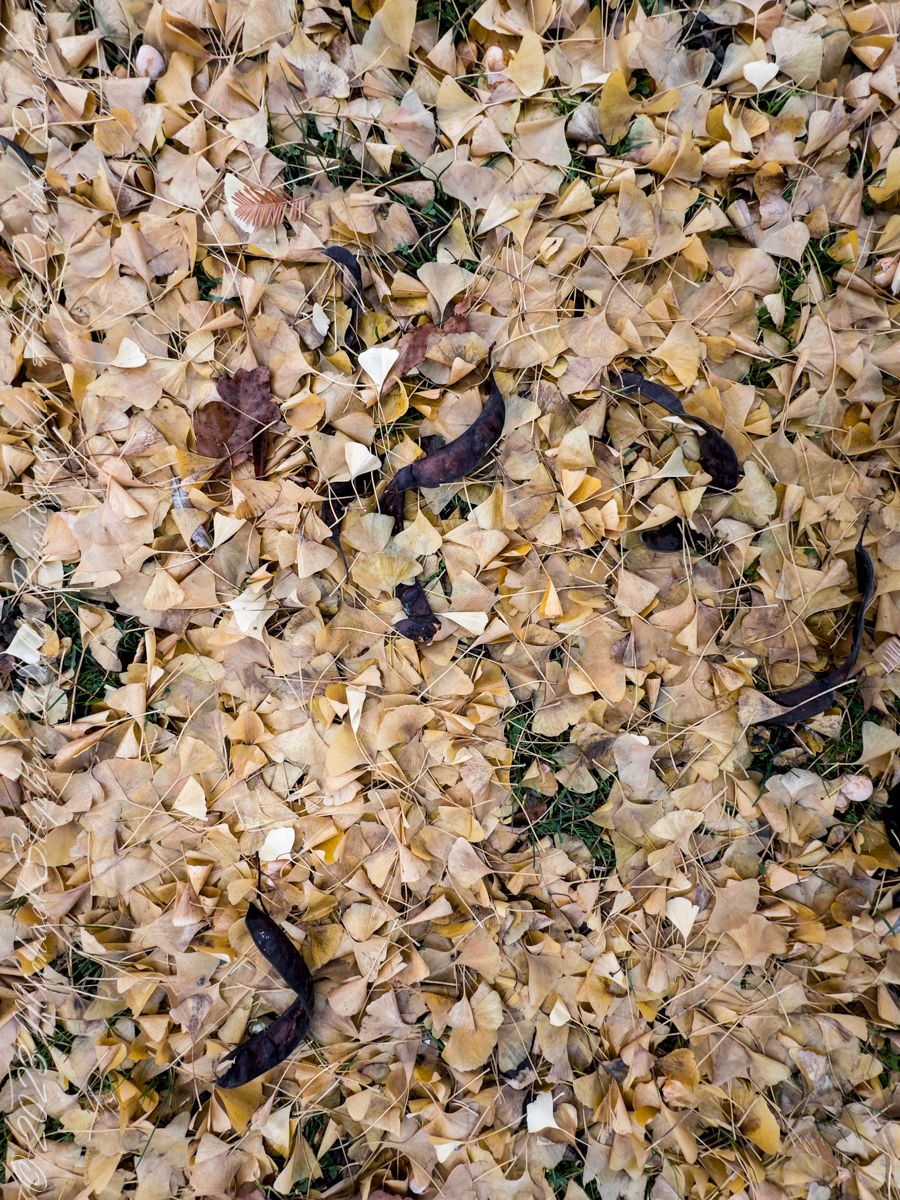
Ginko Leaves and Honey Locust Pods, Stewart Park on a December 2023 afternoon

The Turkey Trot unfolded with its usual energy—children dashed ahead with gleeful abandon, adults paced themselves in cheerful determination, and older participants moved with quiet dignity. The warmth seemed to amplify the human vibrancy of the event, yet it also cast a shadow of dissonance. This race, this celebration of resilience and community, was happening against the backdrop of a world in flux. The warmth of the morning was a reminder that even cherished traditions like this might one day feel the strain of climate shifts.

I crouched to capture the leaves in a photograph, drawn by their interplay of color and form. The ginkgo leaves glimmered like gold coins scattered across the ground, while the sycamore leaves added a depth and weight that anchored the scene. Together, they reminded me of the cyclical nature of life, the beauty and decay that coexist within the same space. Yet this year, the warmth in the air added an unsettling layer to the story. These leaves, so central to the rhythm of seasons, were now falling in a world where those rhythms seemed increasingly disrupted.

Bare Ginko tree with leaf pattern, Stewart Park on a December afternoon 2023

As the sunlight broke through the clouds, it illuminated the edges of the ginkgo leaves, making them shimmer with an almost otherworldly light. I lingered in that moment, feeling the weight of its quiet truth: life is fleeting, but its beauty endures in the connections we foster and the memories we hold. That Thanksgiving, the humid warmth of the air reminded me that we live in a time of profound change, yet even amid uncertainty, there is still wonder to be found beneath our feet. It is a wonder worth preserving.

Enter your email to receive notification of future postings. I will not sell or share your email address.

Cascadilla Gorge: Nature and Art in Harmony

Explore this place with me in the spirit of Thanksgiving.

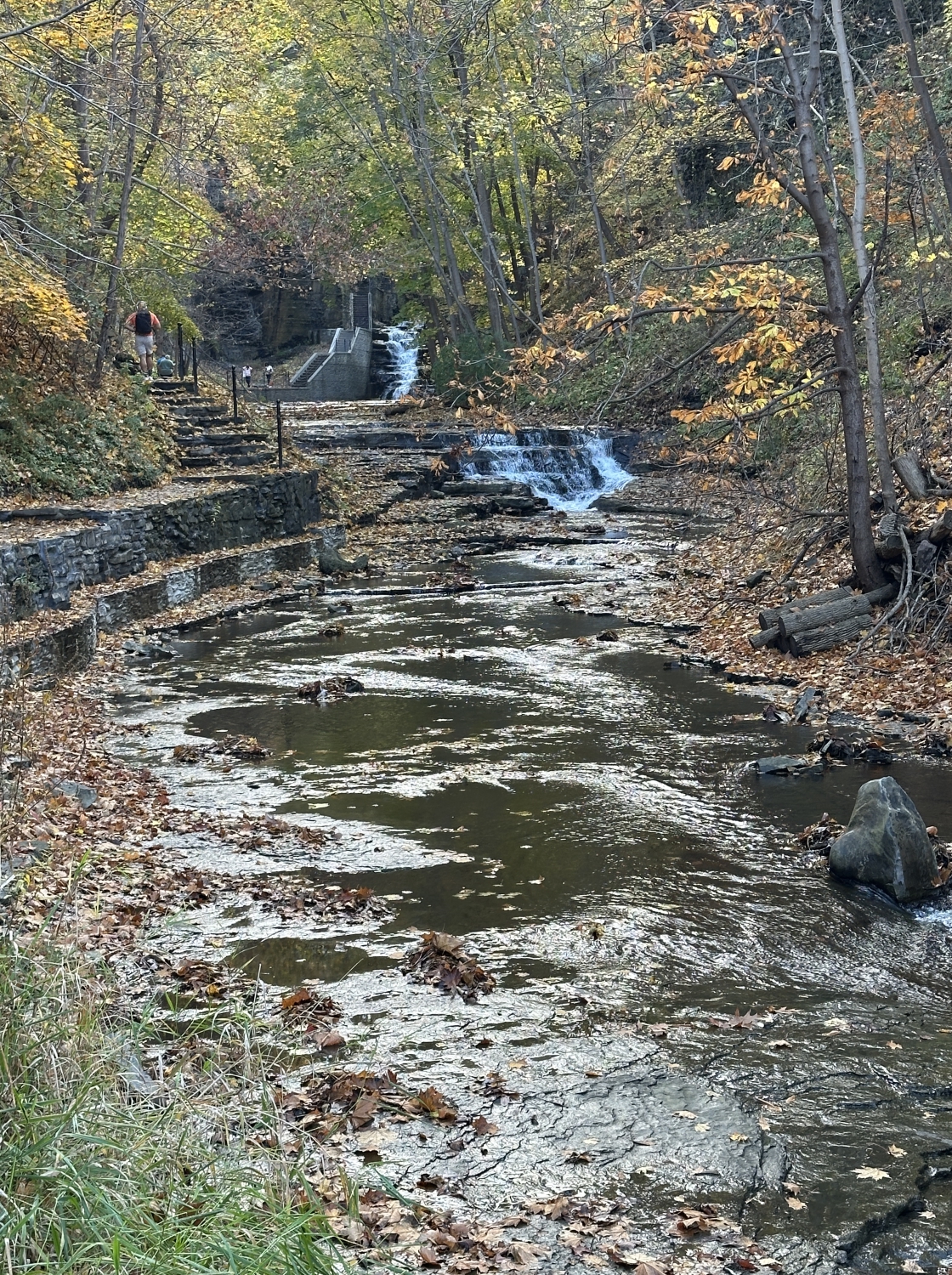
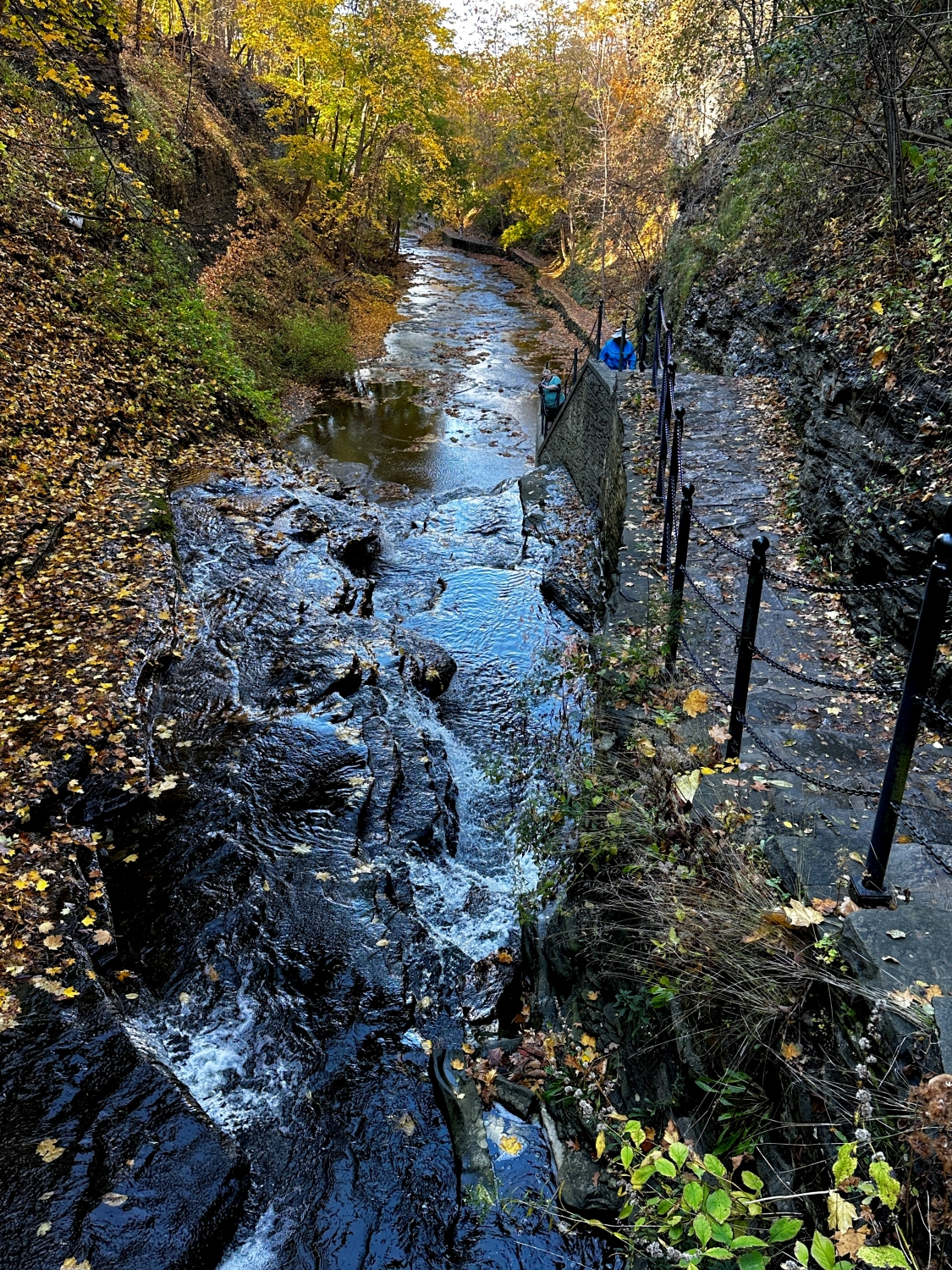
As I step into Cascadilla Gorge from the Linn Street entrance, I’m greeted by the soft rustling of leaves and the constant, soothing rush of water. The air this Halloween Day is warm, the autumn colors vibrant against the cool blue sky. I know Cascadilla Gorge is part of the Cornell Botanical Gardens, but the immediate beauty of this natural sanctuary makes it easy to forget I’m still within the city limits of Ithaca. The sounds of the gorge draw me in, as if whispering there’s more to see, more to explore. With a deep breath, I begin my journey up the trail, eager to discover what lies ahead.

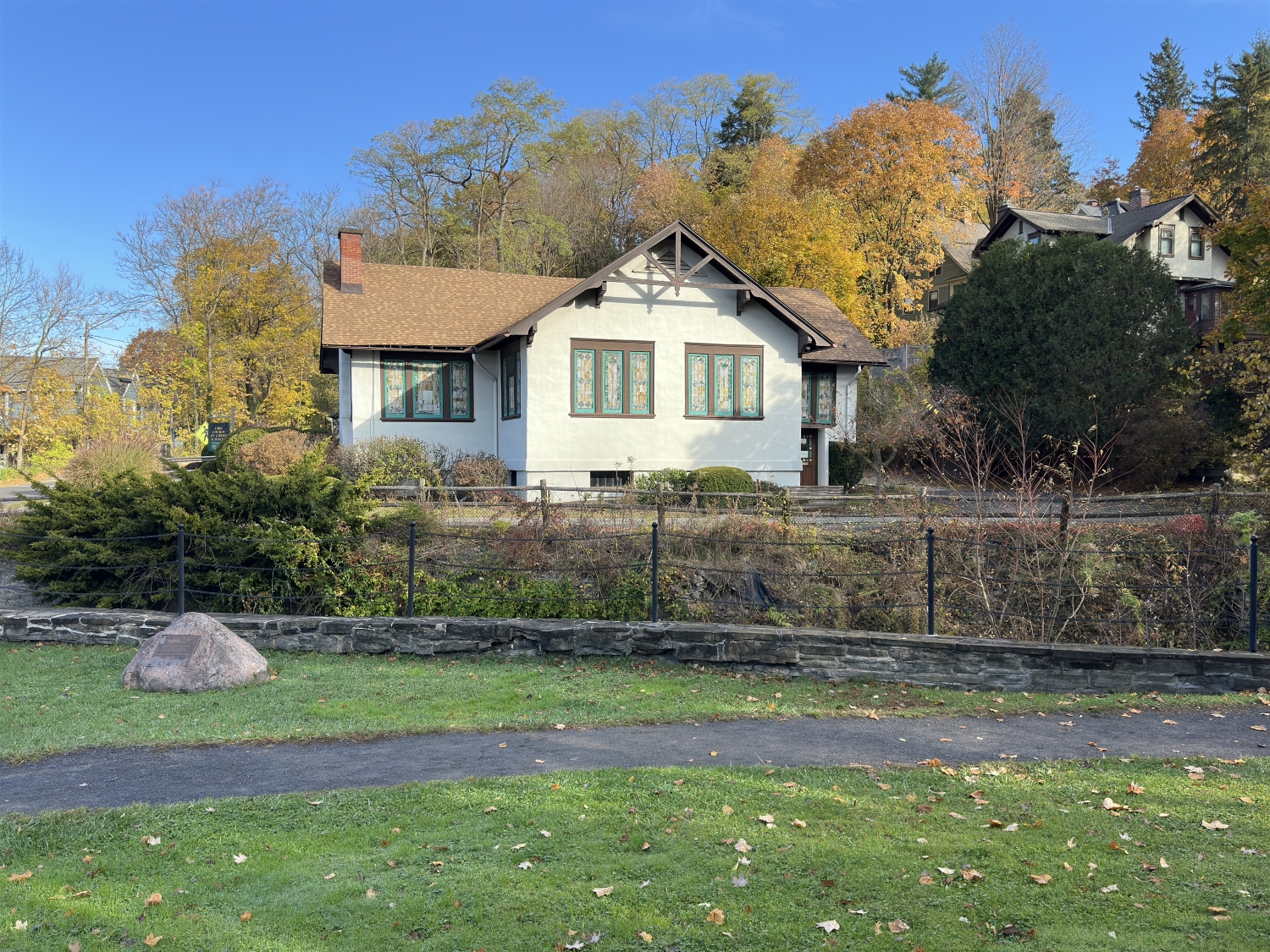
Just a short way in, I notice the First Church of Christ, Scientist perched on the corner of University Avenue and Cascadilla Park Road. The architecture of the church is both quaint and elegant, with its light-colored facade framed by dark trim and roof. Surrounded by foliage, it feels like the church belongs here, as much a part of the landscape as the trees and rocks. The sight of this historic building nestled so close to the gorge reminds me that this wild and ancient place is woven into the fabric of Ithaca’s community life.

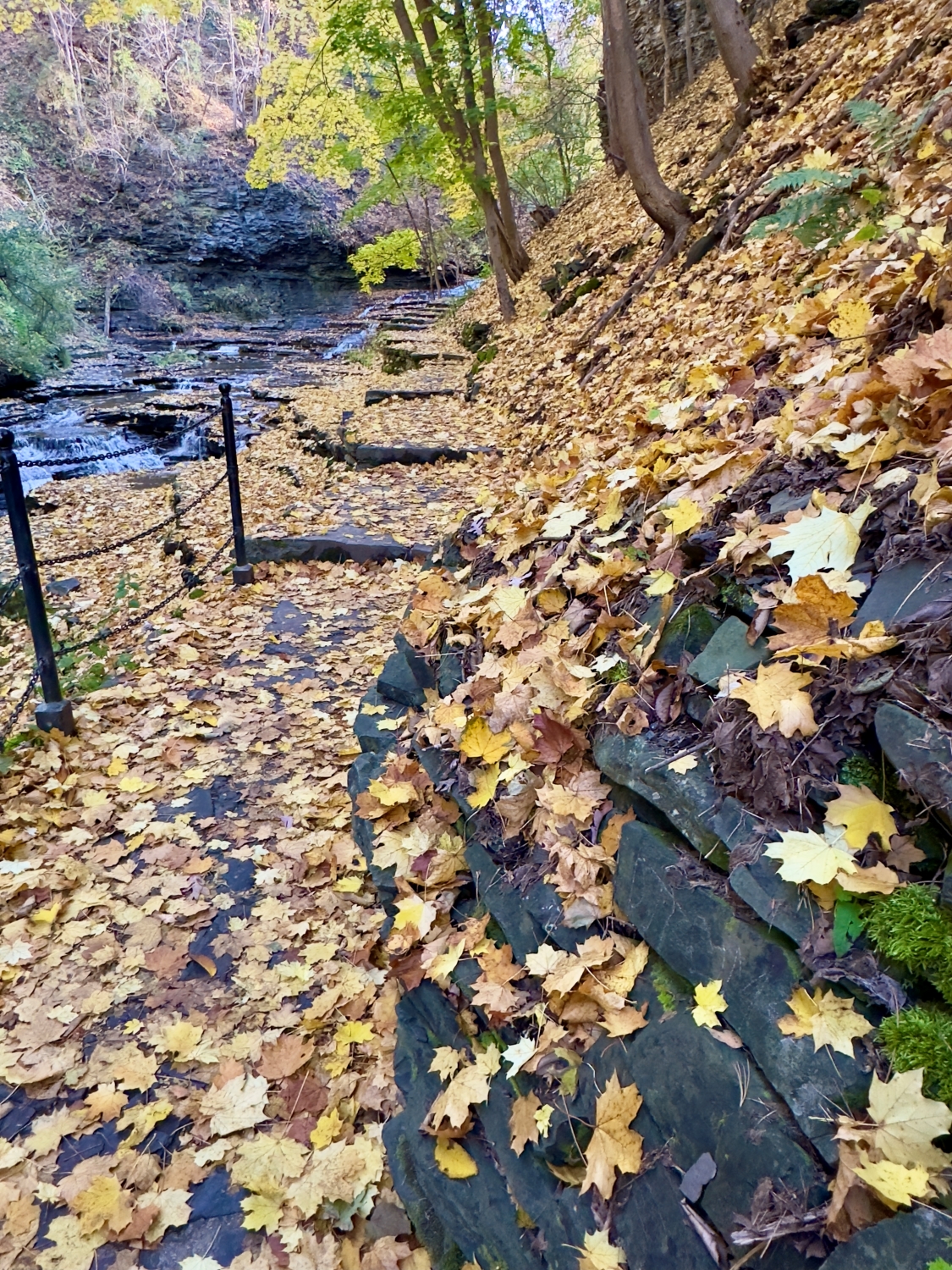
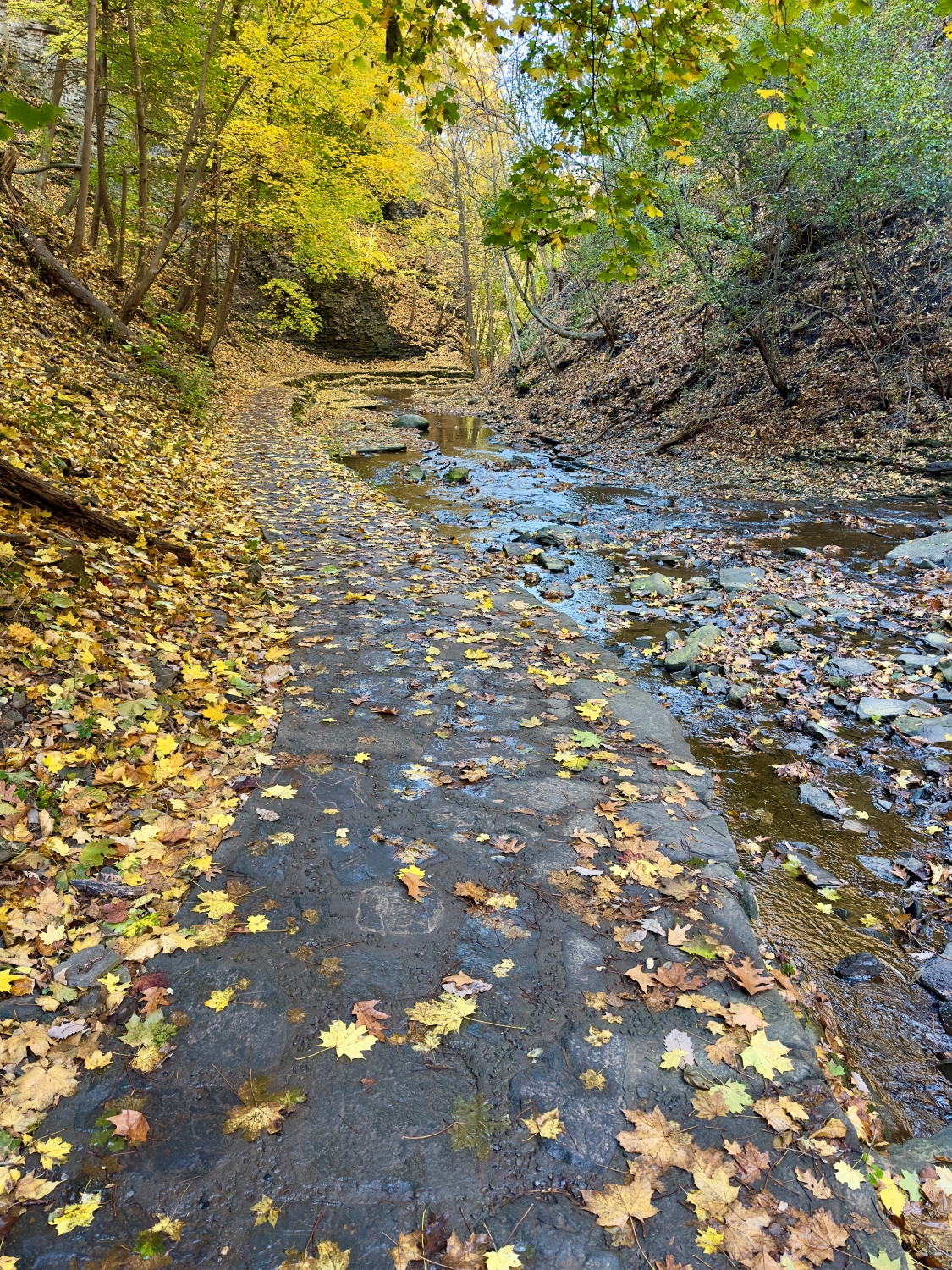
I move further along the trail, and the terrain begins to shift. Fallen leaves create a golden carpet along the path, their crisp shapes overlapping like nature’s confetti celebrating the season. Each step crunches underfoot, adding my own rhythm to the symphony of sounds. The trees overhead are a kaleidoscope of colors—deep golds, fiery oranges, and the occasional flash of red from Virginia Creeper vines (Parthenocissus quinquefolia). Together, the trees create a canopy that filters sunlight, casting dappled patterns on the gorge walls. It’s an ever-changing play of light and shadow, one moment bright and the next subdued, adding a layer of magic to the experience.

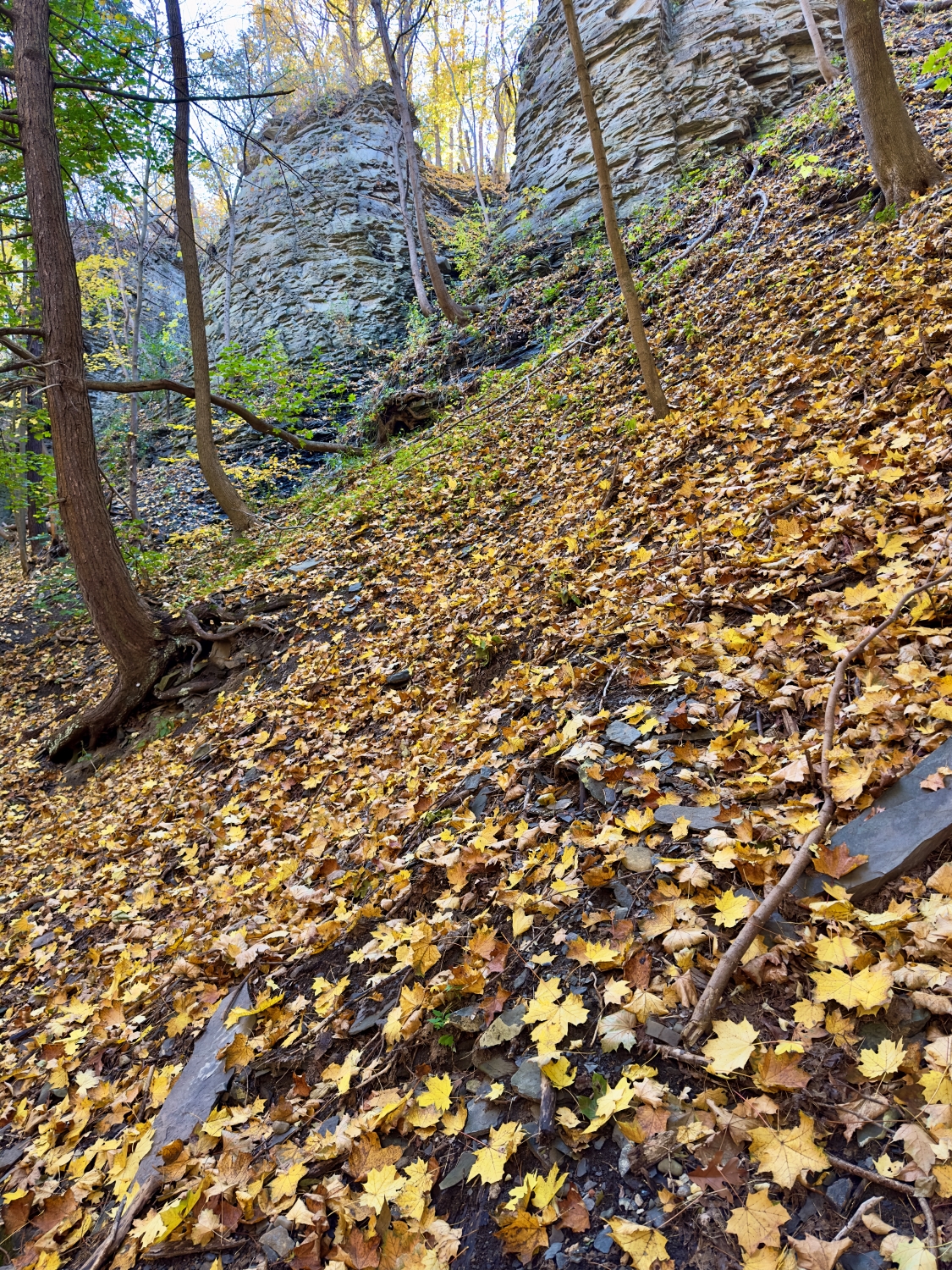
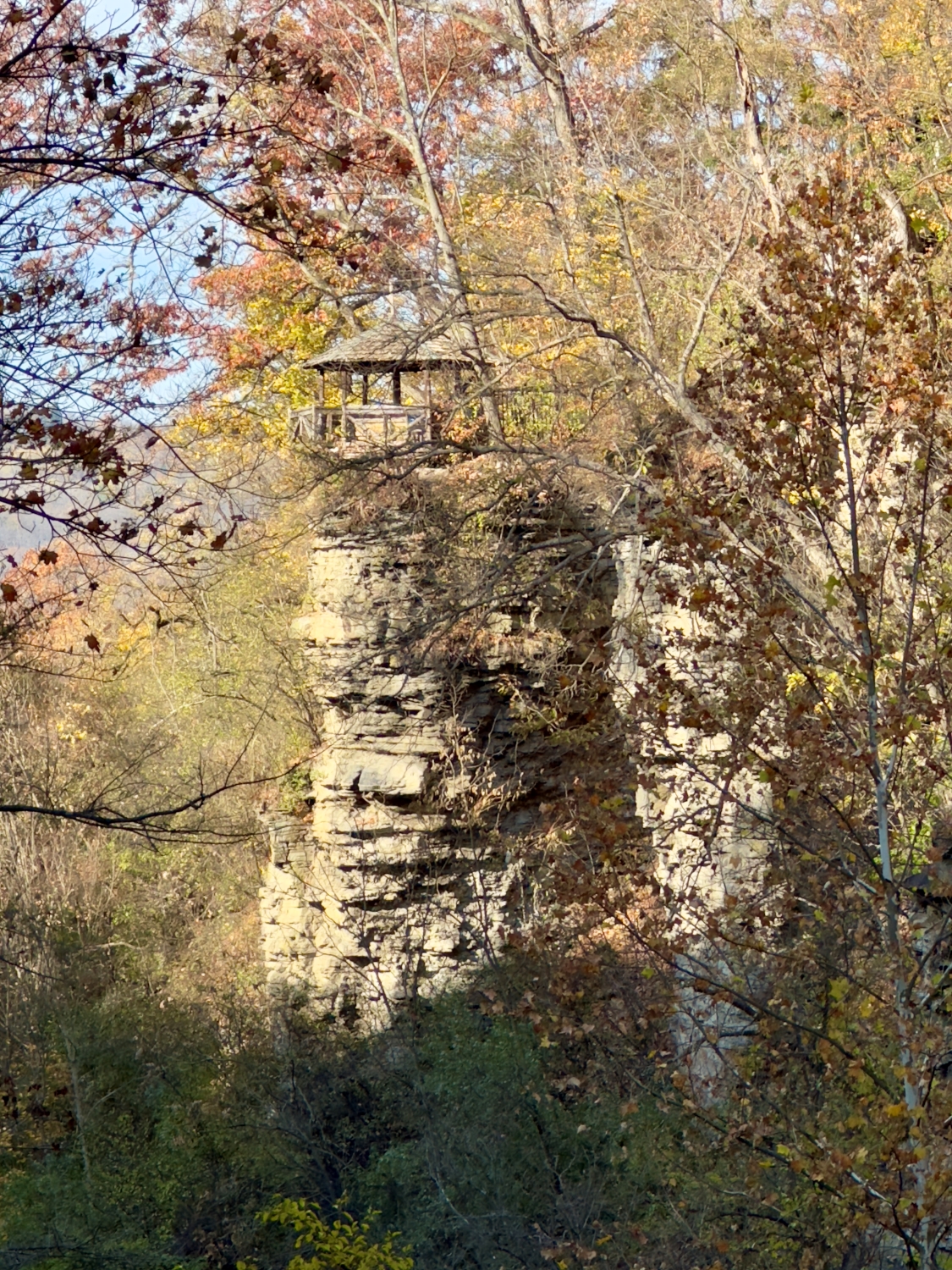
As I follow the trail upward, the gorge narrows, and I find myself surrounded by towering walls of rock. Here, layers of siltstone and shale formed more than 300 hundred million years ago are exposed, a testament to the forces of water and time that carved this place across mere millennia of recent geologic time. The rock formations are fascinating, with the water flowing over them in gentle cascades, finding every groove and crevice. There’s something humbling about standing in a place shaped by forces so much larger and older than myself. I pause, letting the rush of water and the stillness of stone fill my senses.

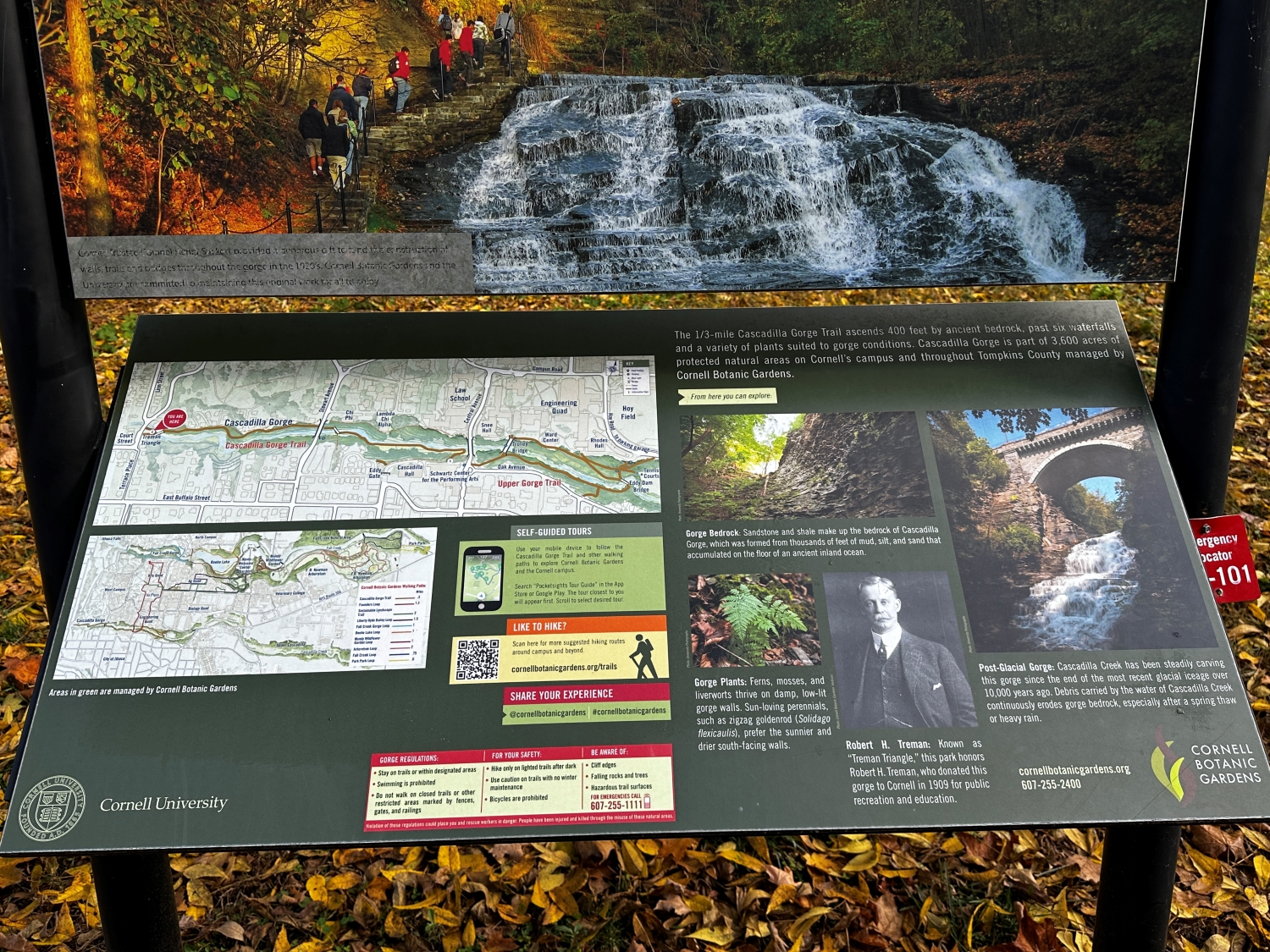
Along the way, I come across an interpretive sign provided by the Cornell Botanical Gardens. They tell the story of Cascadilla Gorge, how it was formed from the bedrock of sandstone and shale that eroded from mountains to the east, in the Devonian era when an ancient inland sea covered the region. The signs also introduce Robert H. Treman, a philanthropist who saw the beauty and educational value of the gorge. Thanks to him and the efforts of many, this natural wonder is preserved for all to experience. Knowing this adds depth to my walk; it’s a reminder that places like this exist not only by chance but because people cared enough to protect them.

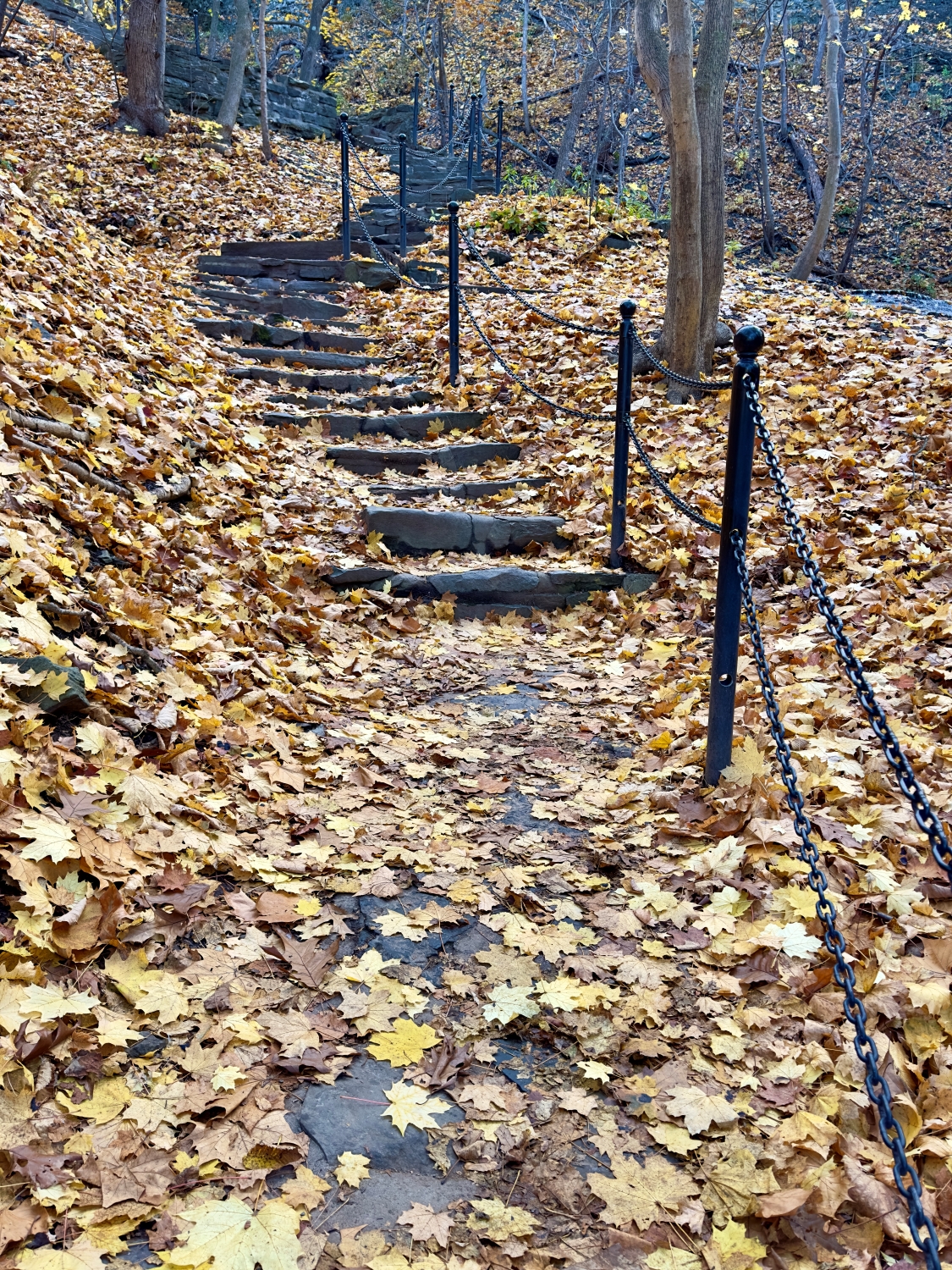
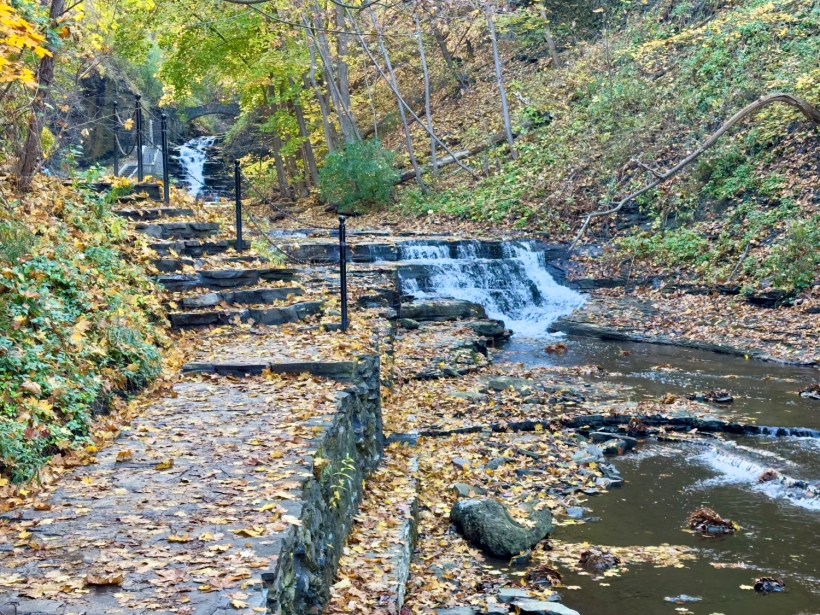
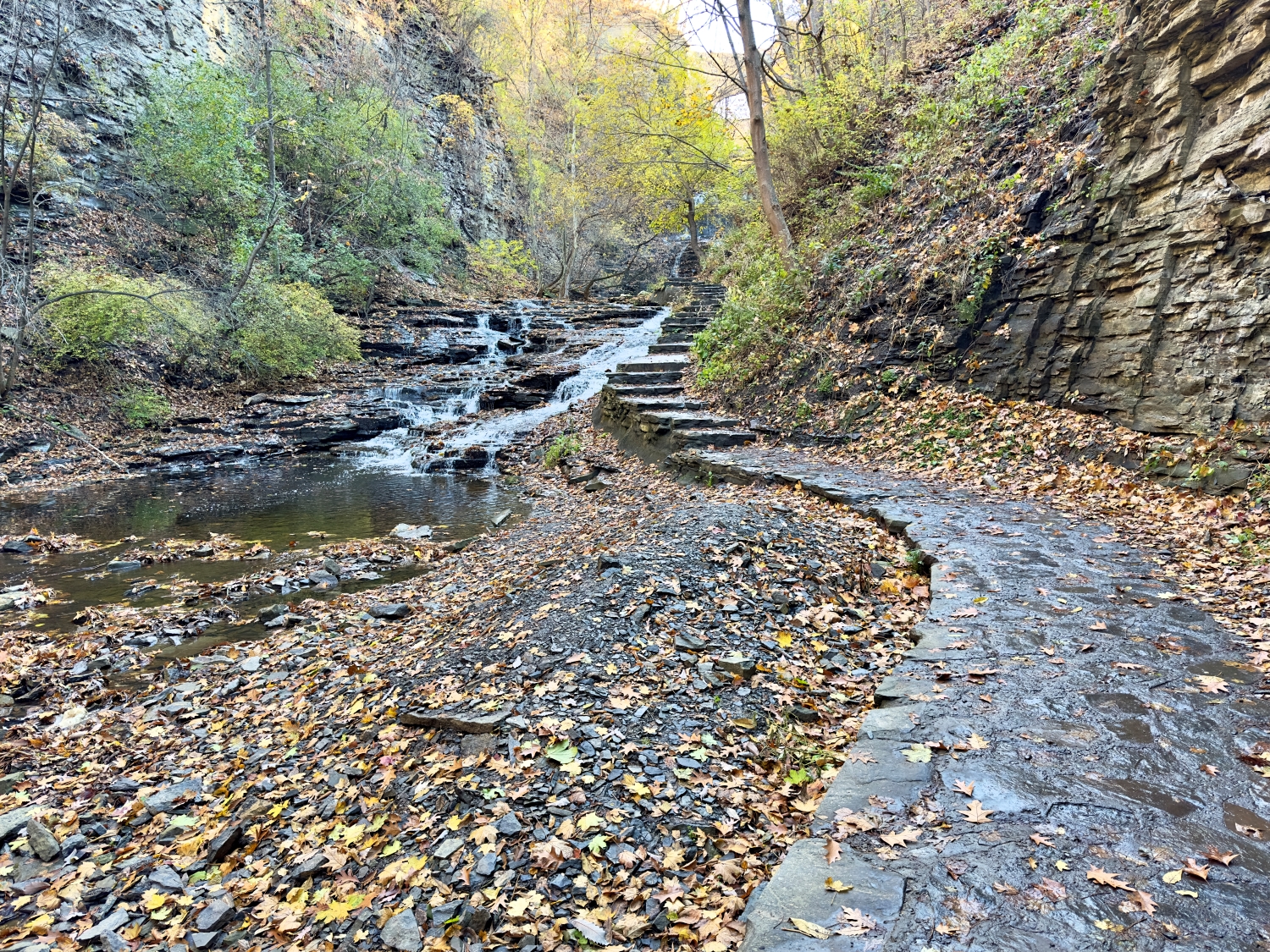
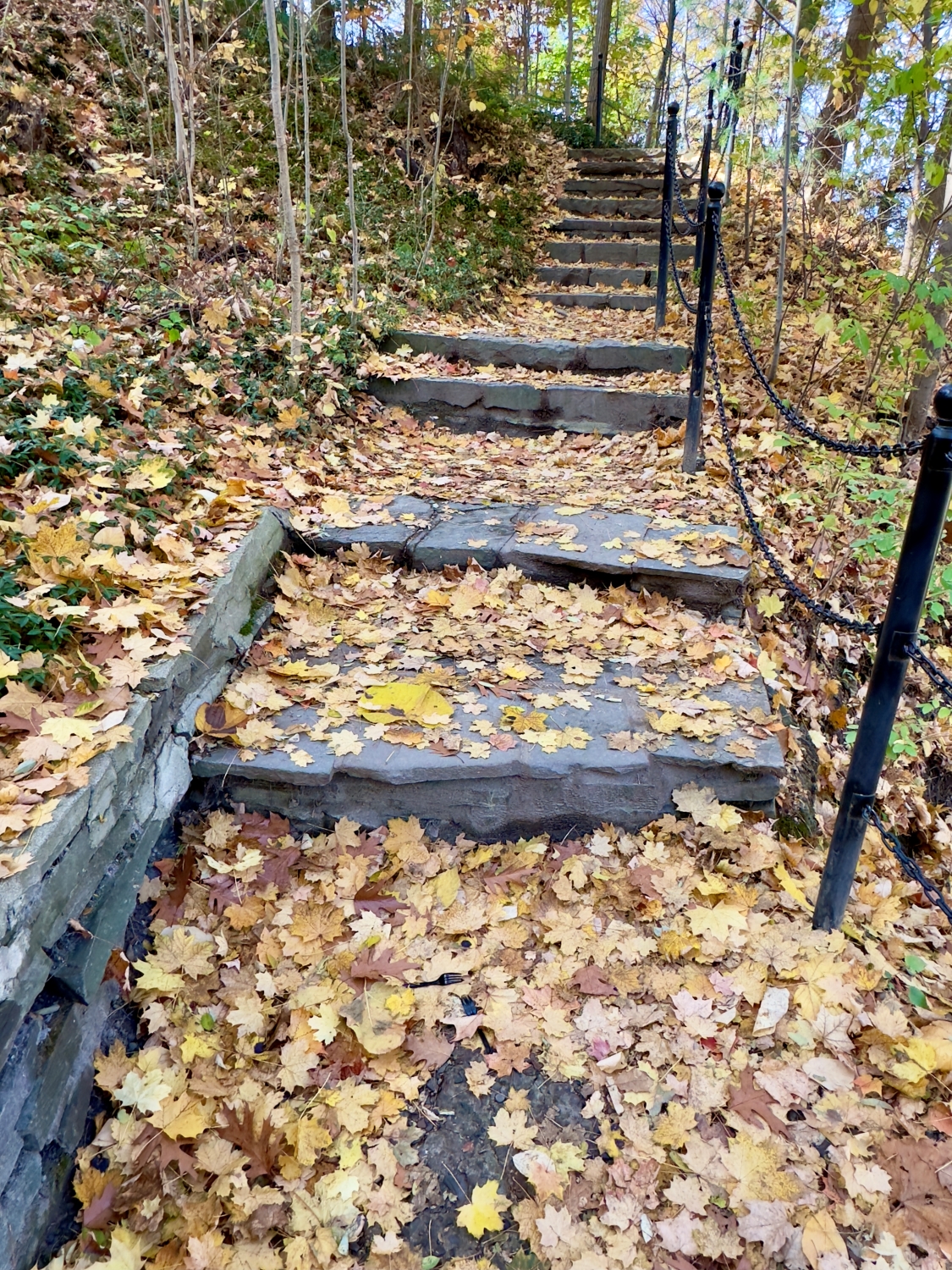
The sandstone staircases along the trail are a marvel in themselves. Some sections are steep, winding up the gorge in a series of steps that seem to have been placed with precision, blending seamlessly into the natural landscape. The steps are covered with leaves now, making each ascent feel a bit like climbing through a fairy-tale forest. The chains along the path provide a comforting grip, especially as I climb higher. I look back and see how far I’ve come, the creek below winding its way over rocks and around bends, each step a small journey of its own.

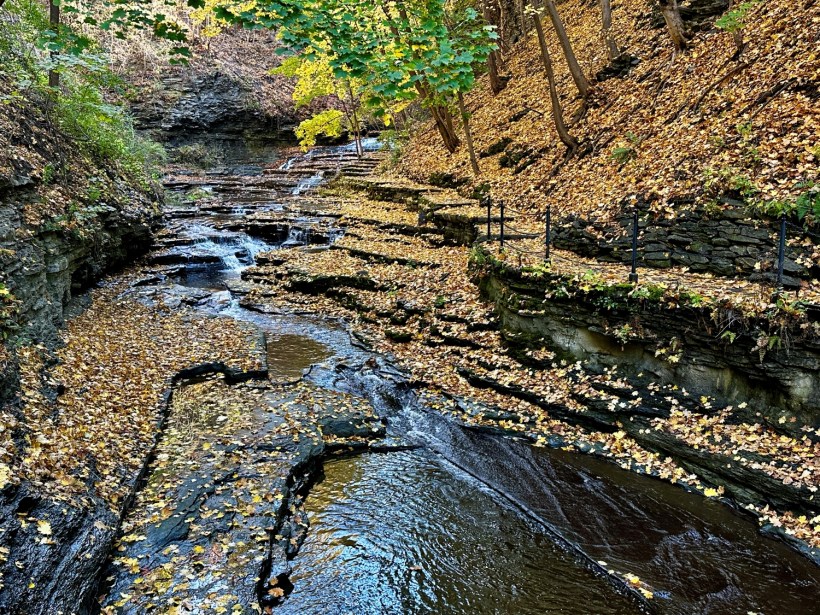
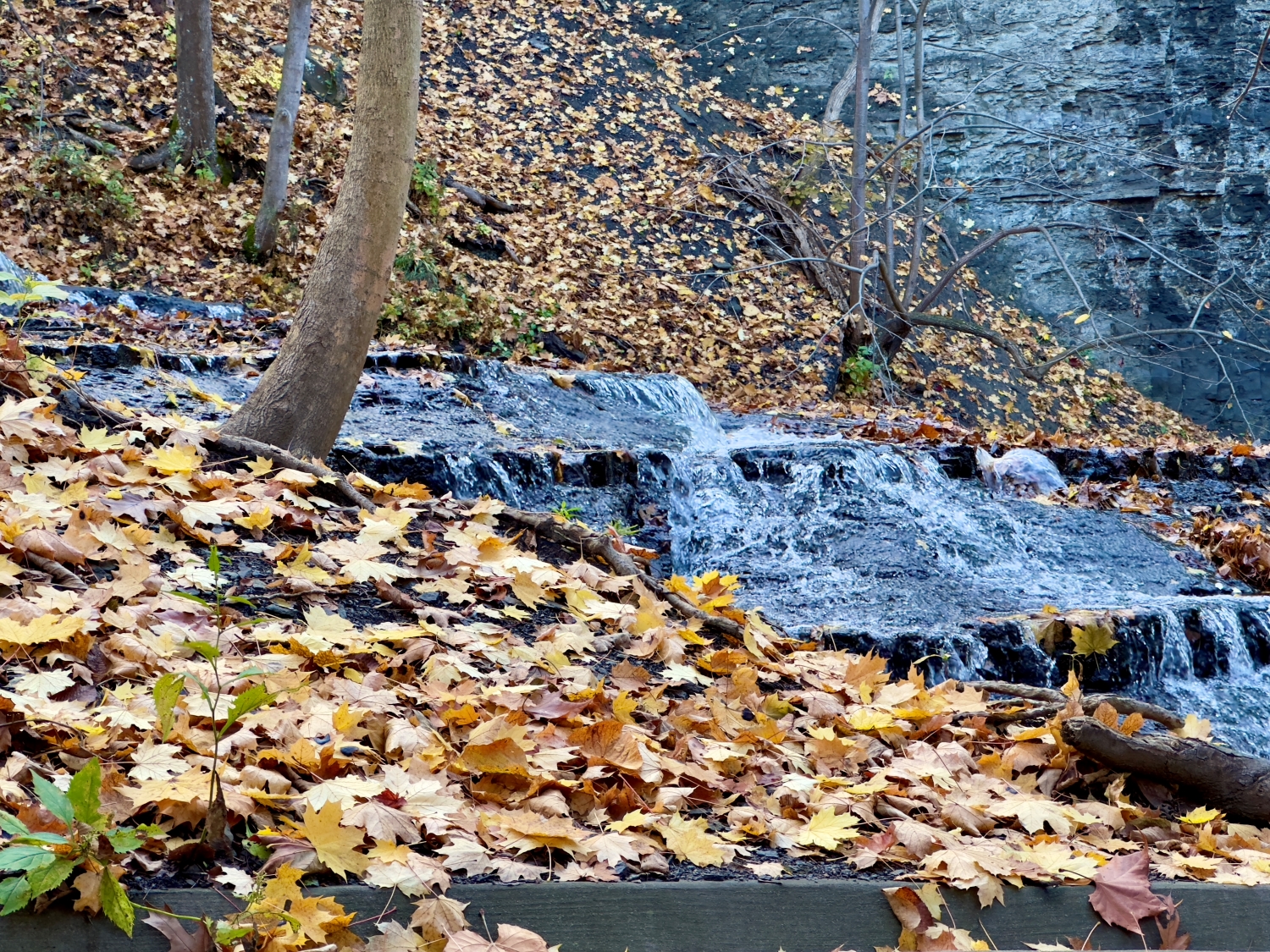
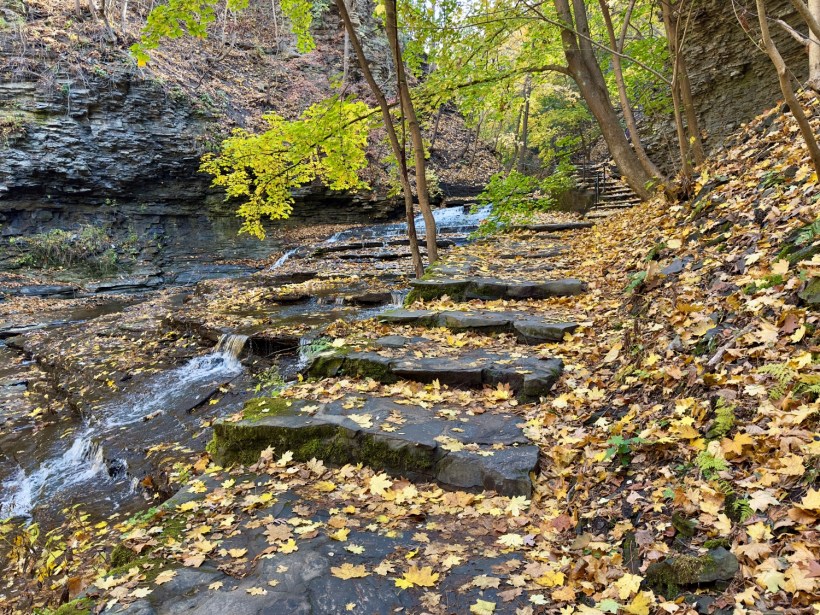
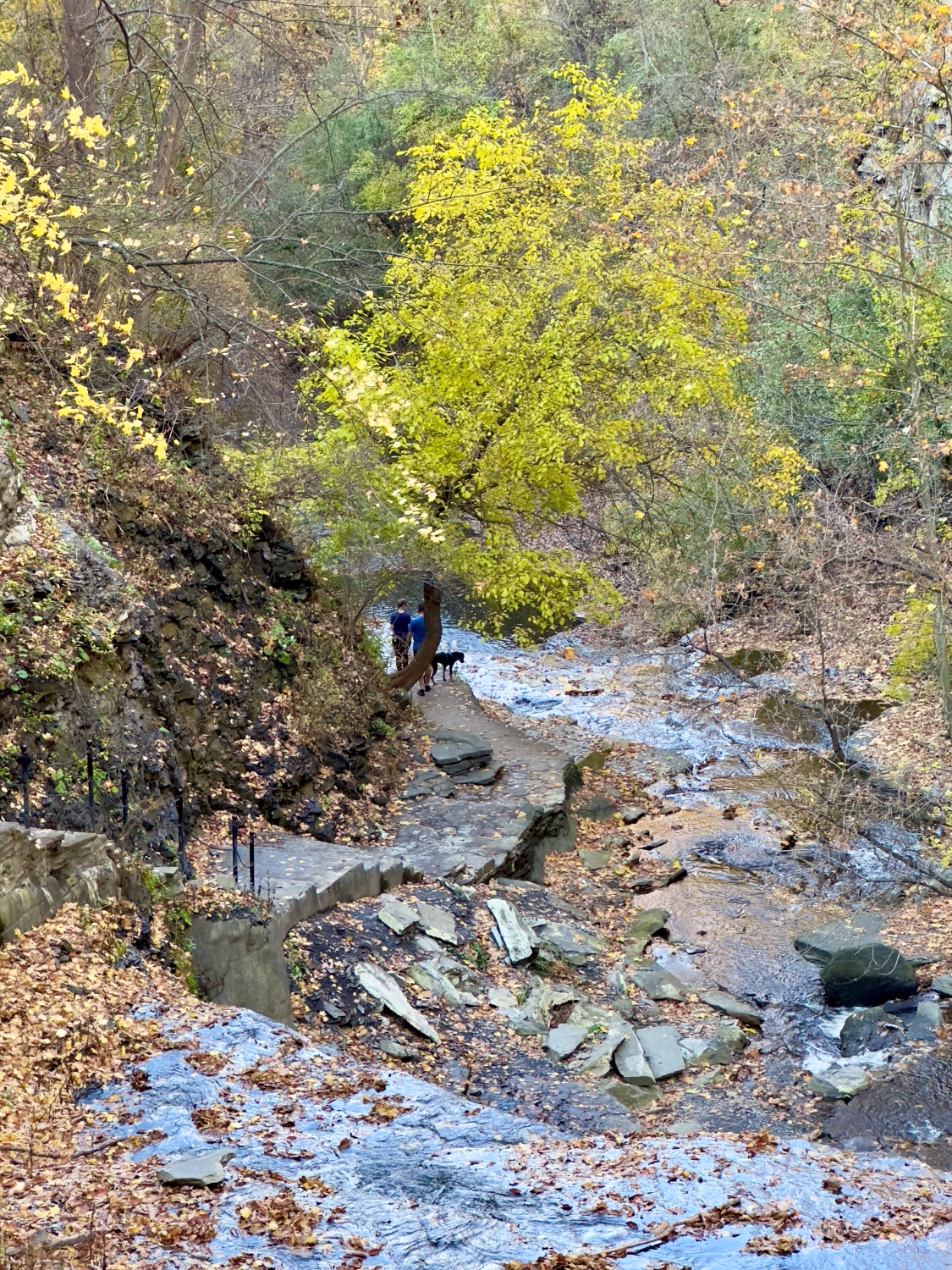
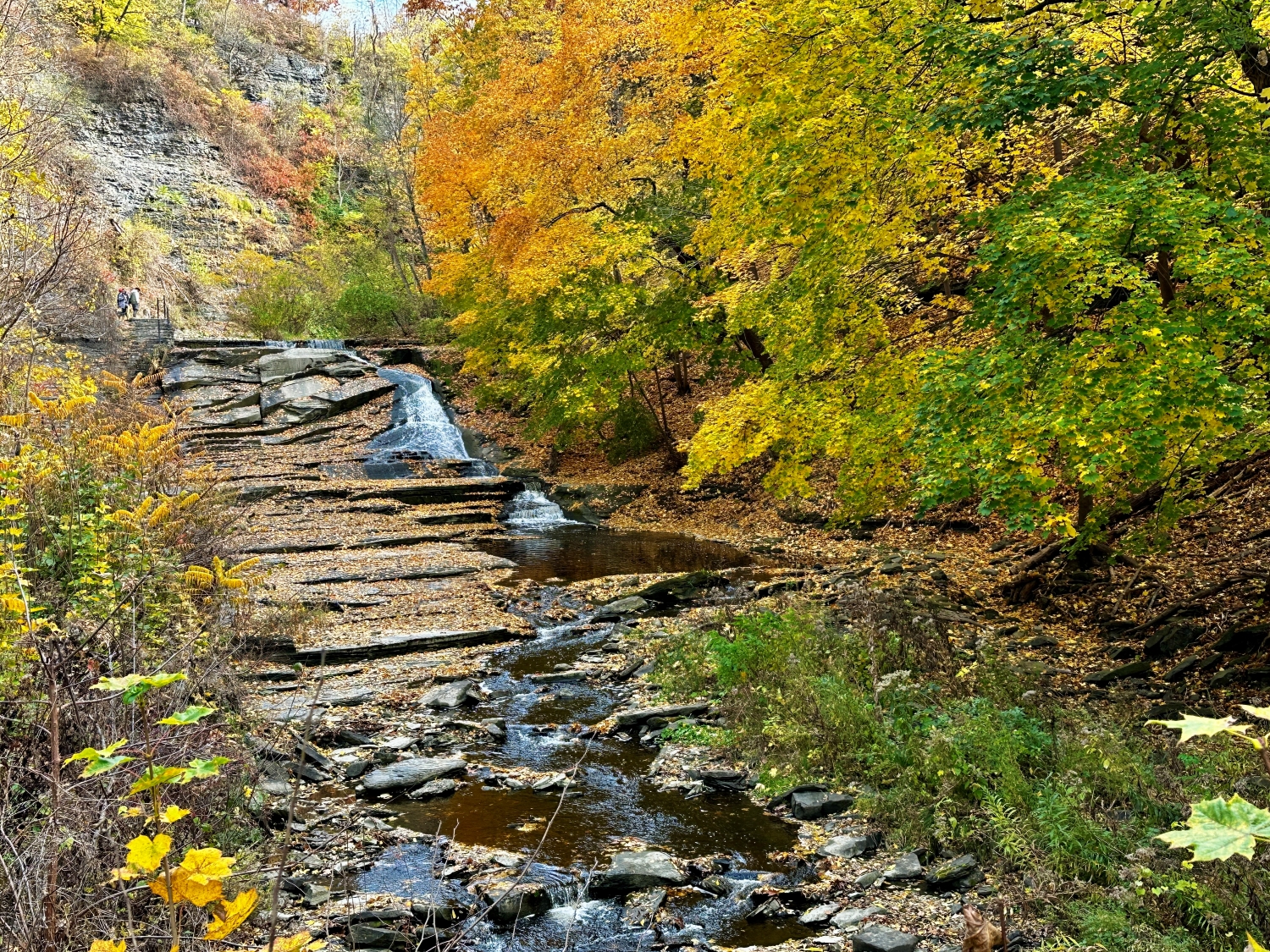
I pass several small waterfalls, each one unique in its character. Some are gentle trickles, while others pour over the rocks with more force, their sound reverberating off the gorge walls. I stop frequently, entranced by the way the water carves its path, eternally moving, adapting, wearing down even the hardest stone. Leaves float down from above, landing in the creek and swirling in miniature whirlpools before being carried downstream. It’s mesmerizing to watch nature at work in such a quiet, persistent way.

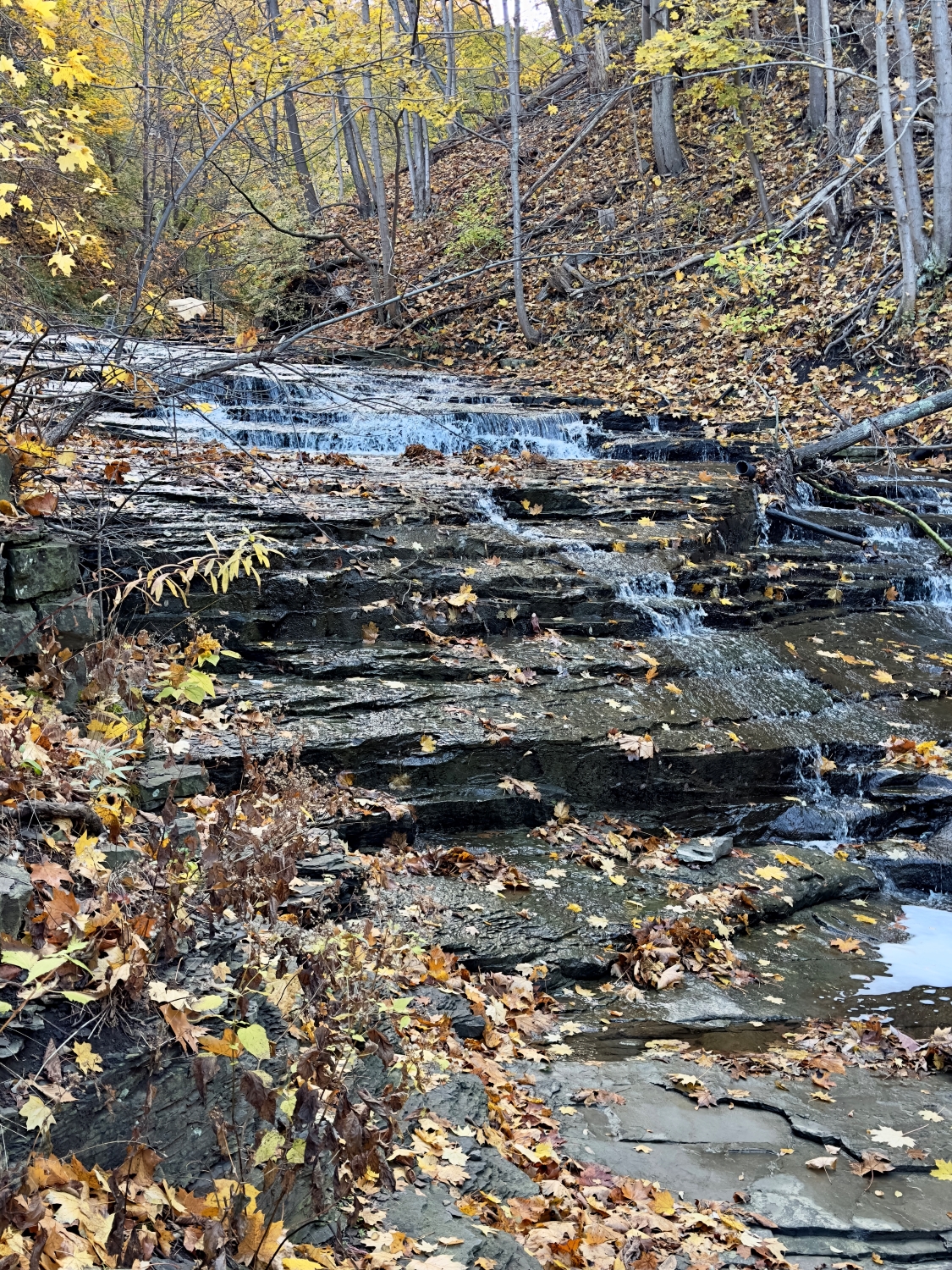
Further up the gorge, the views open up, and I can see the layers of rock descending in terraces, each level a little cascade of its own. I watch as the water flows across these steps, catching the light as it moves—a silvery ribbon winding through the golden autumn landscape. The tranquility of the scene is meditative. Around me, the trees stand as silent witnesses, their branches bare in places but still adorned with clusters of leaves clinging through the last days of fall.

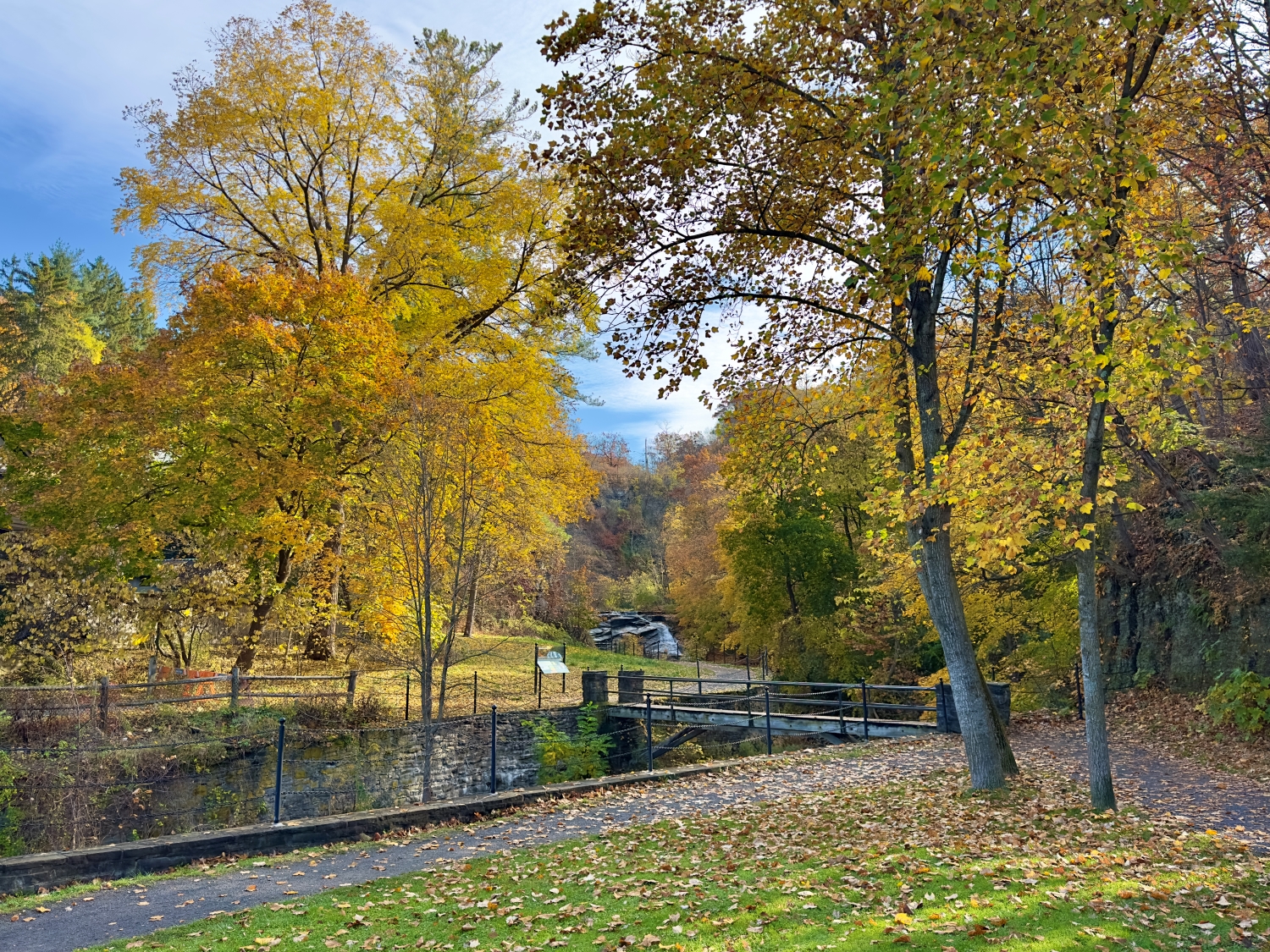
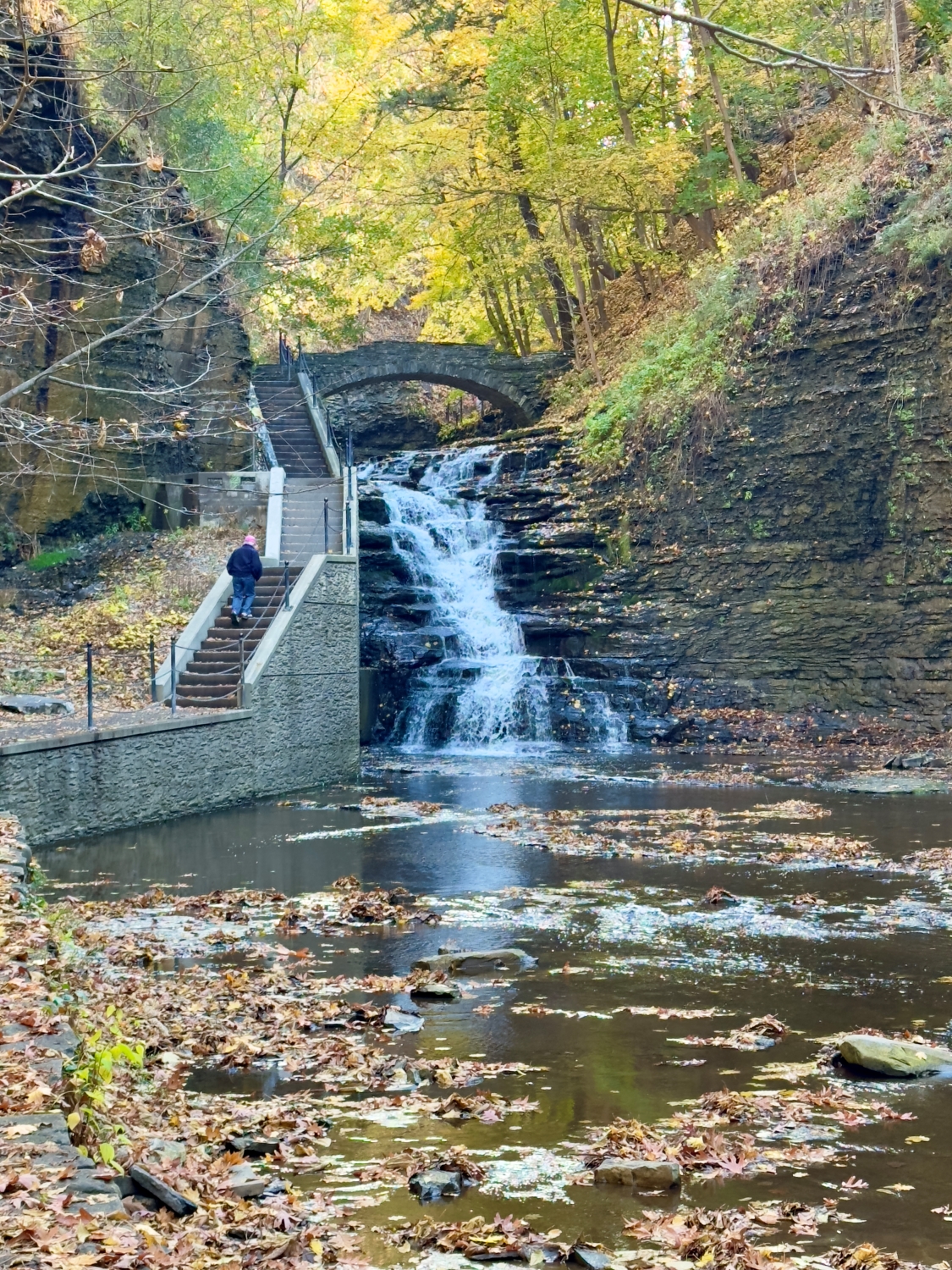
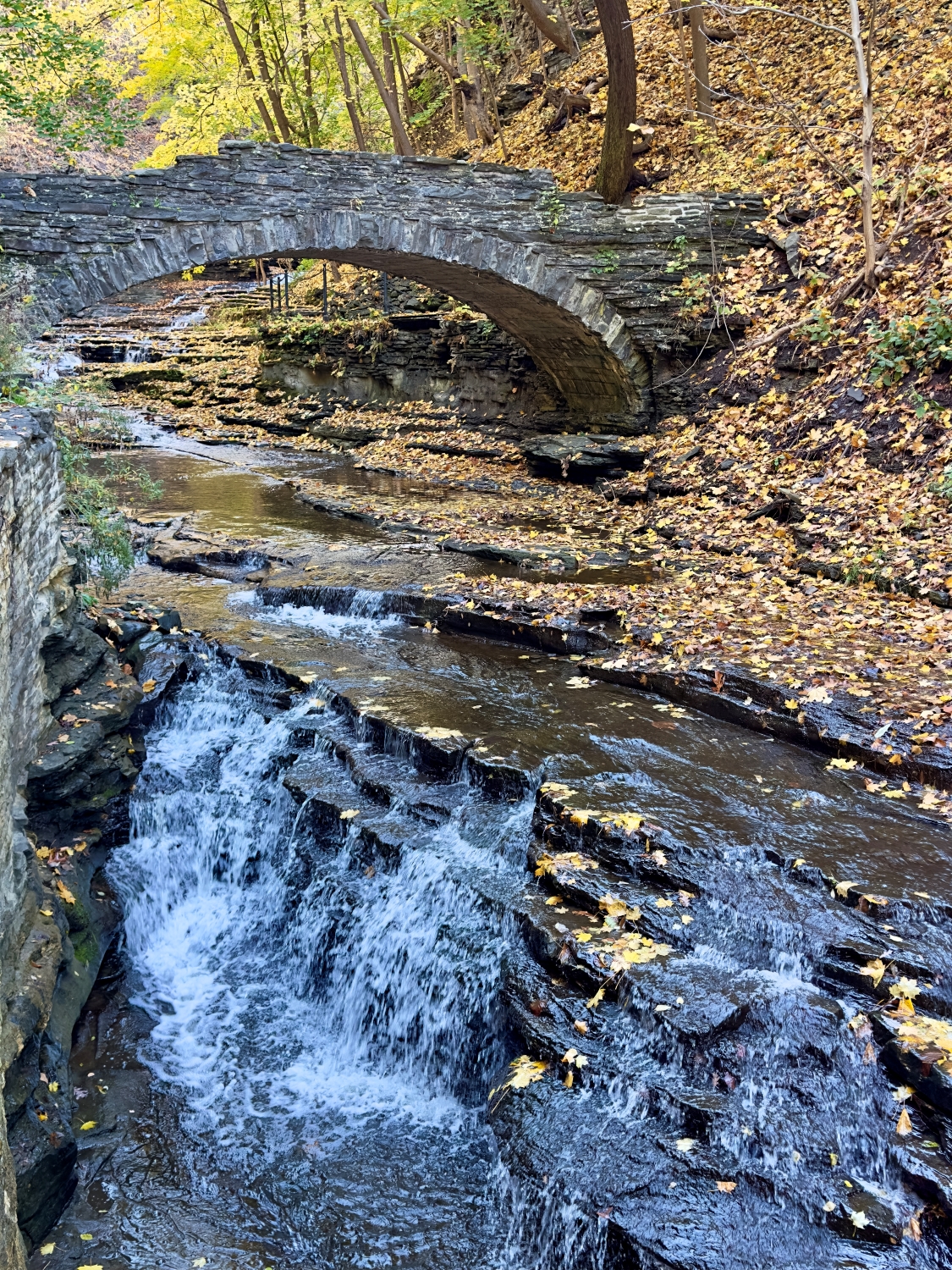
Finally, I reach one of the larger waterfalls, framed by a graceful stone arch bridge that crosses high above. The scene is something out of a painting. Water pours over the rocks, gathering in pools below before spilling onward. I pause on the bridge, looking down at the gorge below and the trail I’ve followed, grateful for the journey.

Along the way, artists are positioned along the path, each lost in the beauty of Cascadilla Gorge. They stand or sit in quiet reverie, brushes or pencils in hand, capturing the gorge’s unique character. Some focus on the play of light over the water’s surface, while others seem intent on the rugged details of the rock formations. Their presence adds a contemplative depth to the scene; it’s as if each artist has uncovered a hidden aspect of the gorge that I have overlooked in my journey upward.

I slow my pace to take it all in, appreciating how the artists interpret this natural wonder through their own eyes. Their canvases reveal layers of colors that shift as the sun filters through the leaves, casting vibrant golds and subtle greens on the cascading water. The scene feels almost collaborative—nature and human hand creating art together, each reflection of the gorge as unique as the individual capturing it. I’m tempted to pause beside them, to see how they choose to frame the towering walls, the stone bridge arching above the water, and the gentle curves of the creek as it meanders downstream. I can imagine each artist’s work holding a different piece of this place, like fragments of a memory.

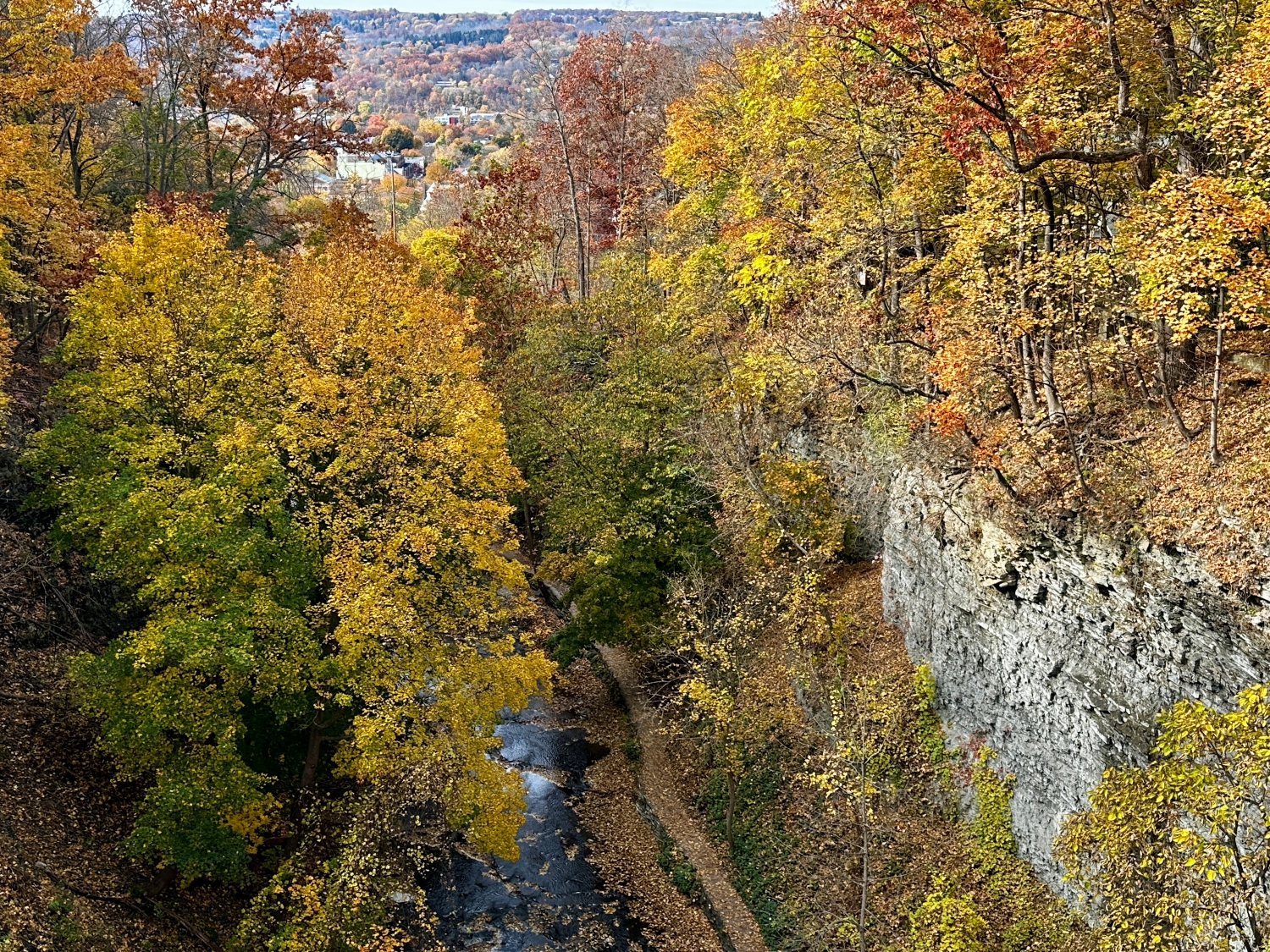
Bridge View looking up Cascadilla Creek
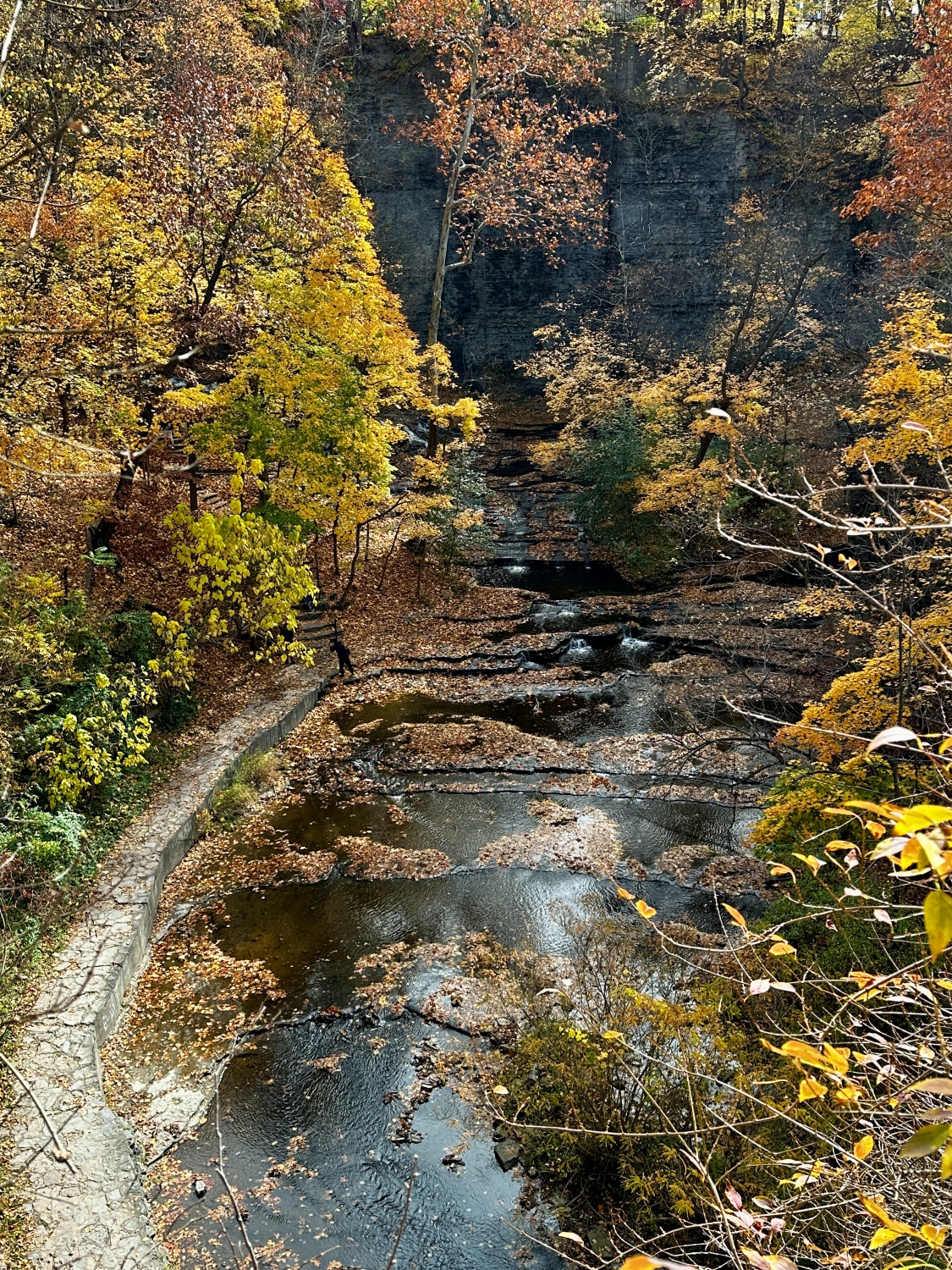
Bridge View looking back the way I came

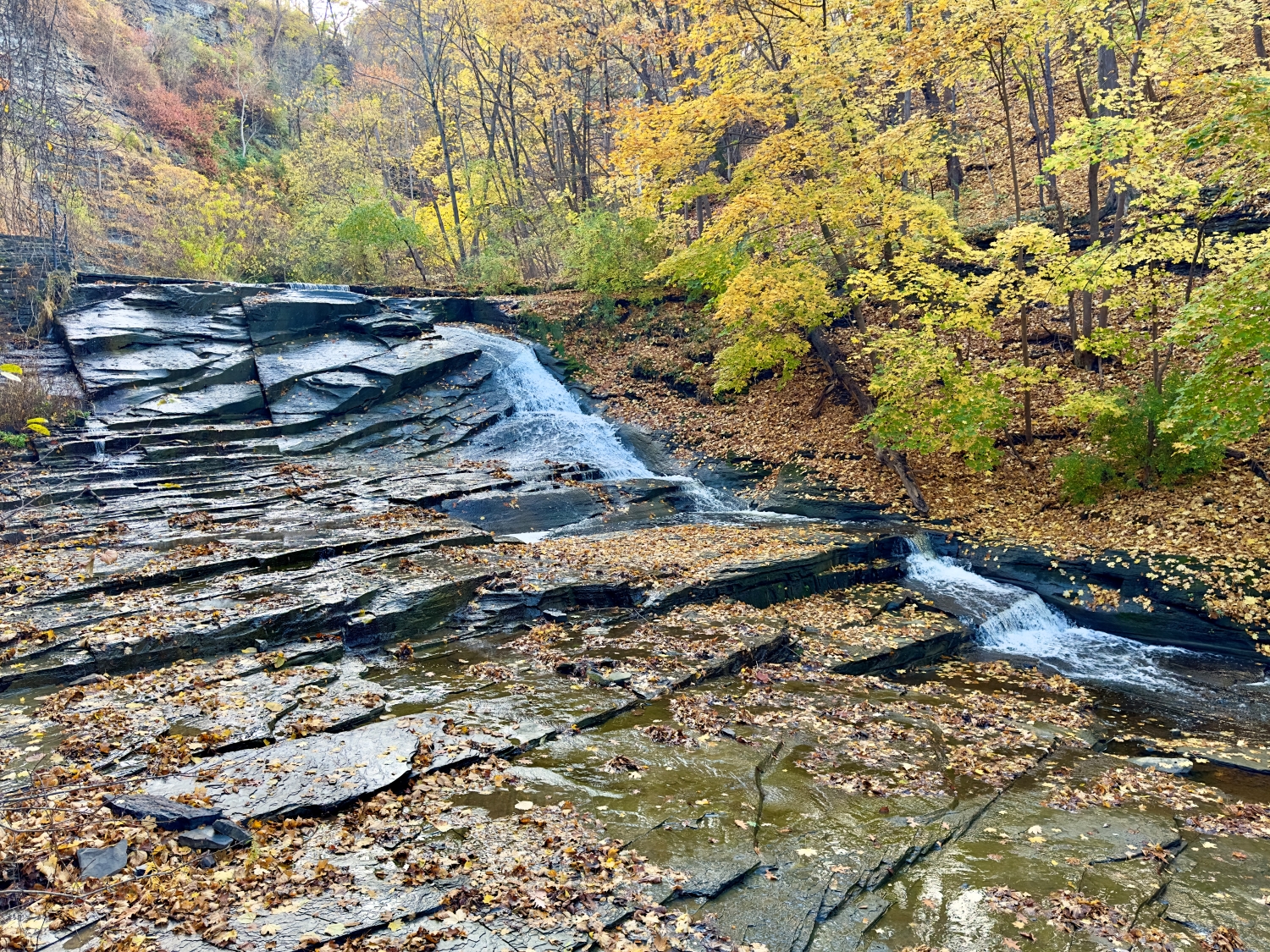
As I continue, the sound of rushing water grows louder, drawing me towards another cascade that tumbles in steps down the gorge. The rocks are layered in angular formations, giving the water a zigzagging path to follow. Leaves are scattered across the stones, their colors—yellows, browns, and the occasional splash of red—standing out against the dark, wet rock. There’s a timelessness here, a feeling that this scene has remained unchanged for centuries, save for the shifting leaves and the ever-present flow of the creek. The thought makes me feel like a small part of something much larger, a guest in an ancient place shaped by nature’s slow, steady hand.

The path narrows again, following the edge of the creek where the water has worn smooth channels into the stone.

Moving forward, the trail climbs steeply, and I find myself surrounded by tall rock faces on either side. The walls are layered and weathered, a geological history book open to the forces that shaped this land. It’s humbling to see how this place puts everything into perspective, how it reminds us of our place in the natural world.

Columns of sedimentary rock

Ahead, the path becomes more rugged, the air feels cooler here, shaded by the gorge’s high walls, and the sounds of the city are long gone, replaced by the steady rhythm of water and the drift of leaves. The layers of ancient limestone that form these towering walls give shape to our landscape and ecosystem. As rainwater falls and seeps through the porous rock, the limestone raises the pH of the water, neutralizing its natural acidity. This subtle alchemy nurtures the flora and fauna, fostering a unique biome that thrives in the gorge. The artists fade from view as I move further into the solitude of the trail, but their presence lingers in my mind. Each turn of the path reveals another scene worthy of capturing, another moment that seems to call out for remembrance.

Looking back toward the way I came

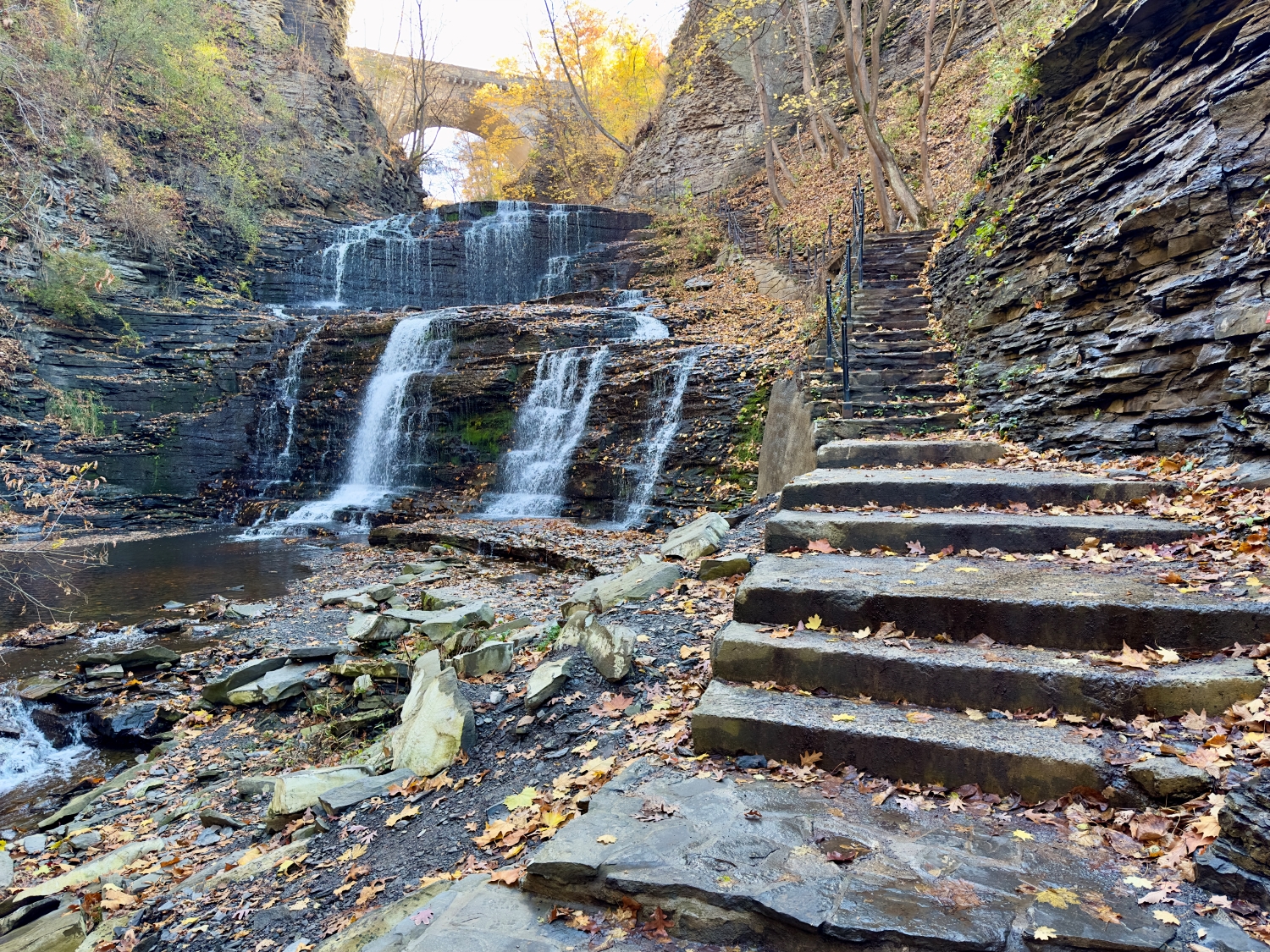
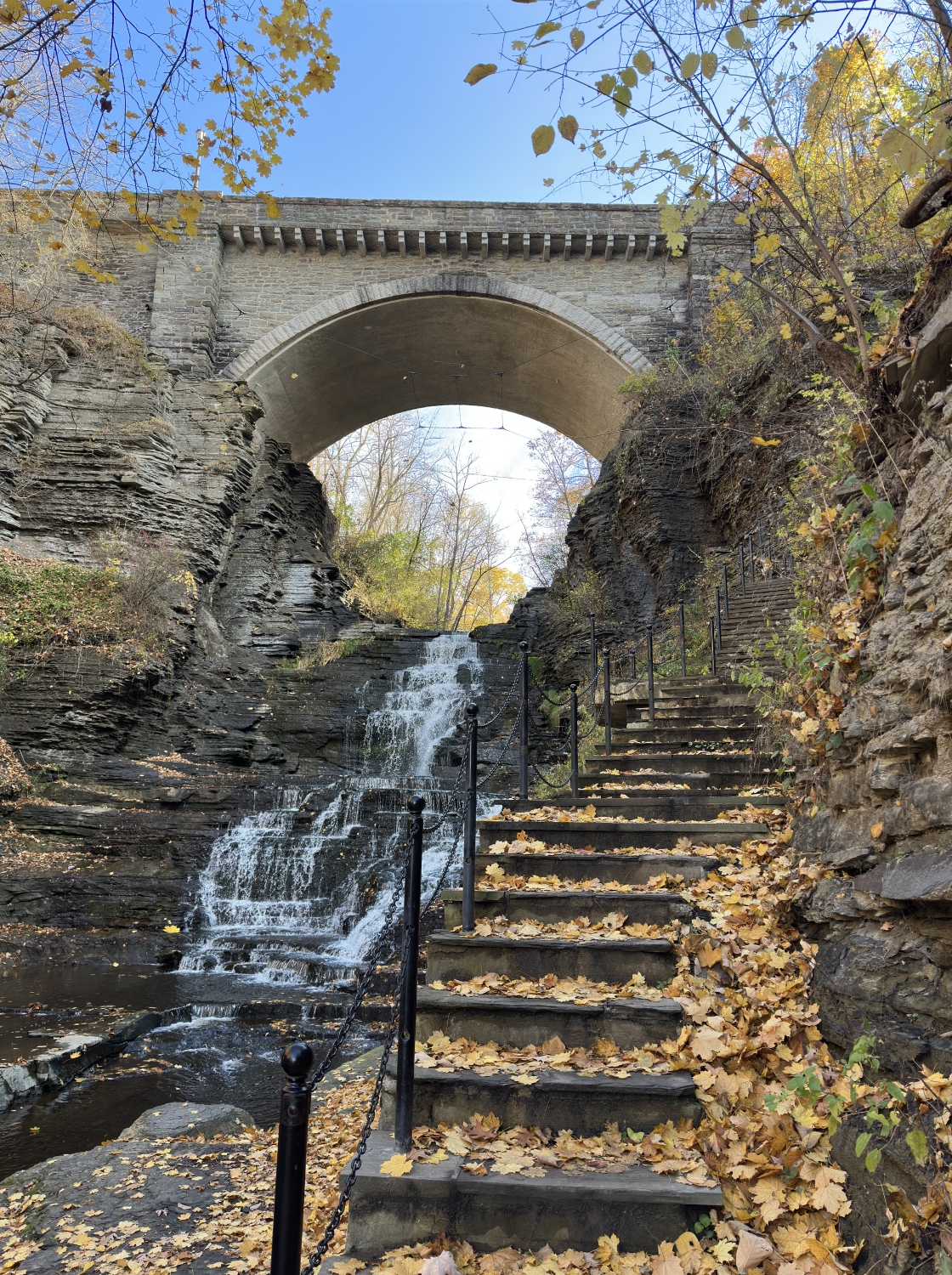
The trail steepens, and I press onward, the sound of the water intensifying as I near a grand waterfall framed by the impressive stone steps leading up to the College Avenue Stone Arch. Each step is littered with leaves, their colors vivid against the worn stone—golds, russets, and the occasional brilliant red, like embers scattered along my path. The waterfall beside me spills down in steady streams, each cascade creating rivulets that catch the light as they flow downward.

The gorge walls rise sharply on either side, embracing the path in rugged layers that tell stories of geological time. I feel as if I’m climbing a passage through history itself. These rocks, these trees, the very water carving its way through the stone—all have been here far longer than I can fathom, shaped by forces beyond my understanding. There’s a certain thrill in being among such enduring elements, a reminder of how small and fleeting we are in the face of nature’s grandeur.

Reaching the next tier of the trail, I pause to take in the sight of the massive stone arch spanning the gorge above. The bridge is a striking feature, its wide arch perfectly framing the sky and the last vibrant colors of autumn. It feels like a gateway, a fitting culmination to the journey. Standing beneath it, I’m struck by how well it harmonizes with the gorge, the careful craftsmanship of its stonework complementing the rough beauty of the surrounding cliffs.

The sunlight flows around the arch, illuminating the leaves that cling to the branches above, casting a warm glow over the scene. I feel a sense of reverence here, a quiet acknowledgment of both human artistry and the relentless beauty of nature.

I paused to capture this video of the moment.

Sights and Sounds of Autumn

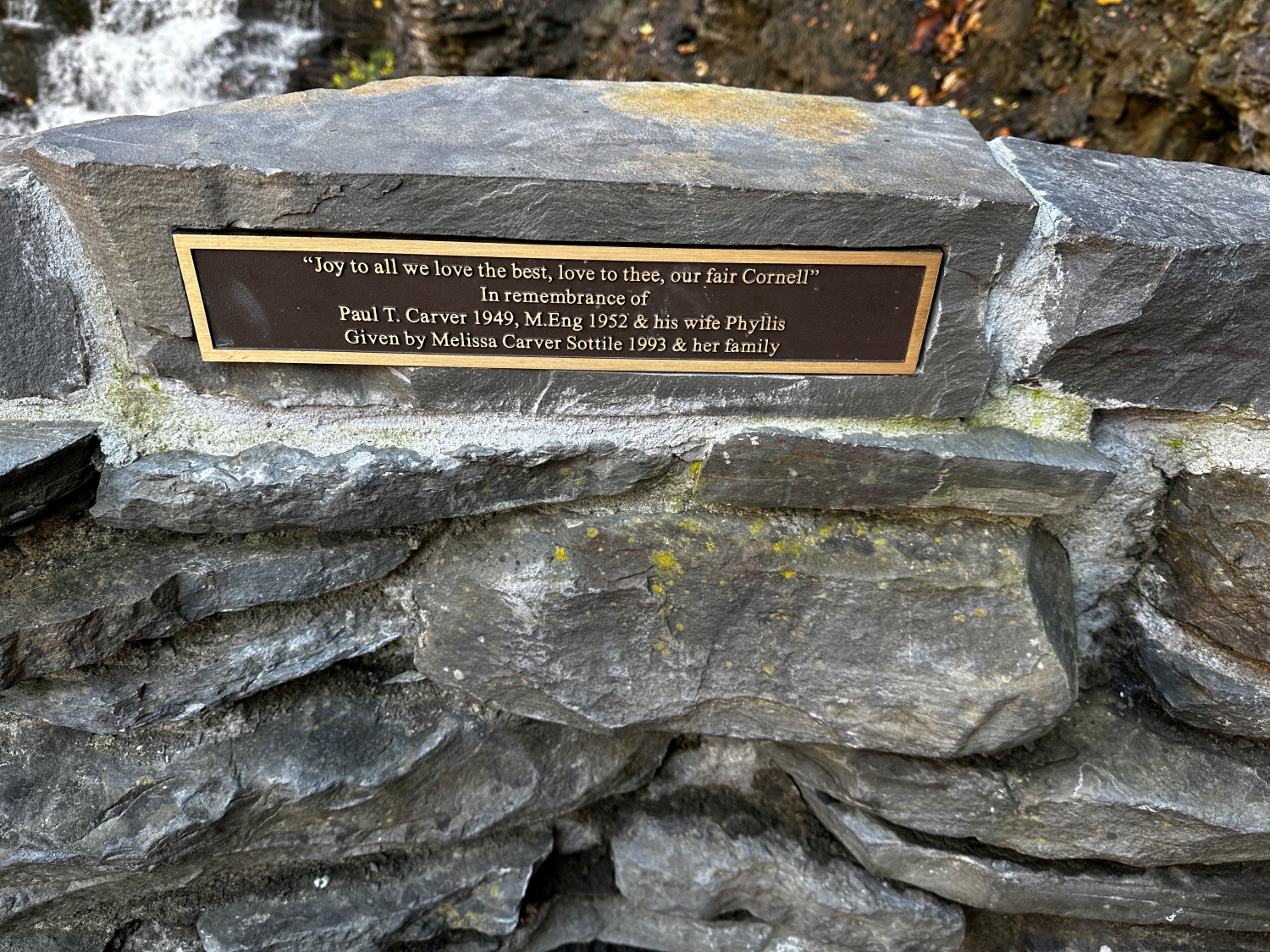
The final ascent is graced by a bench where a stone plaque catches my eye. It’s a tribute, etched with words that resonate in this place: “Joy to all we love the best, love to thee, our fair Cornell.” A gift from a family whose lives intertwined with Cornell, it serves as a reminder of the deep connections people have to this landscape, to the university, and to the memories rooted in these trails and gorges. I pause, reflecting on my own connection to this path, which has taken me through an ever-unfolding tapestry of nature and history.

The last stretch of steps is leaf blanketed, their shapes and colors a beautiful final mosaic before I emerge from the shaded coolness of the gorge. The sun filters down through the thinning trees, illuminating the stone buildings of the Cornell campus that peek through the branches ahead. With each step, I feel the transition, moving from the curated wildness of Cascadilla Gorge and its trail to the structured beauty of the university grounds.

Myron Taylor Hall, Cornell Law School from the gorge.

As I reach the top, the Schwartz Center for the Performing Arts comes into view, its modern architecture a contrast to the ancient rocks I’ve left behind. Here, in this space where art, education, and nature converge, I take a last look back into the gorge and a journey, a gem in the heart of the Finger Lakes, a place that holds stories, both old and new, and invites every visitor to become a part of them.

Enter your email to receive notification of future postings. I will not sell or share your email address.

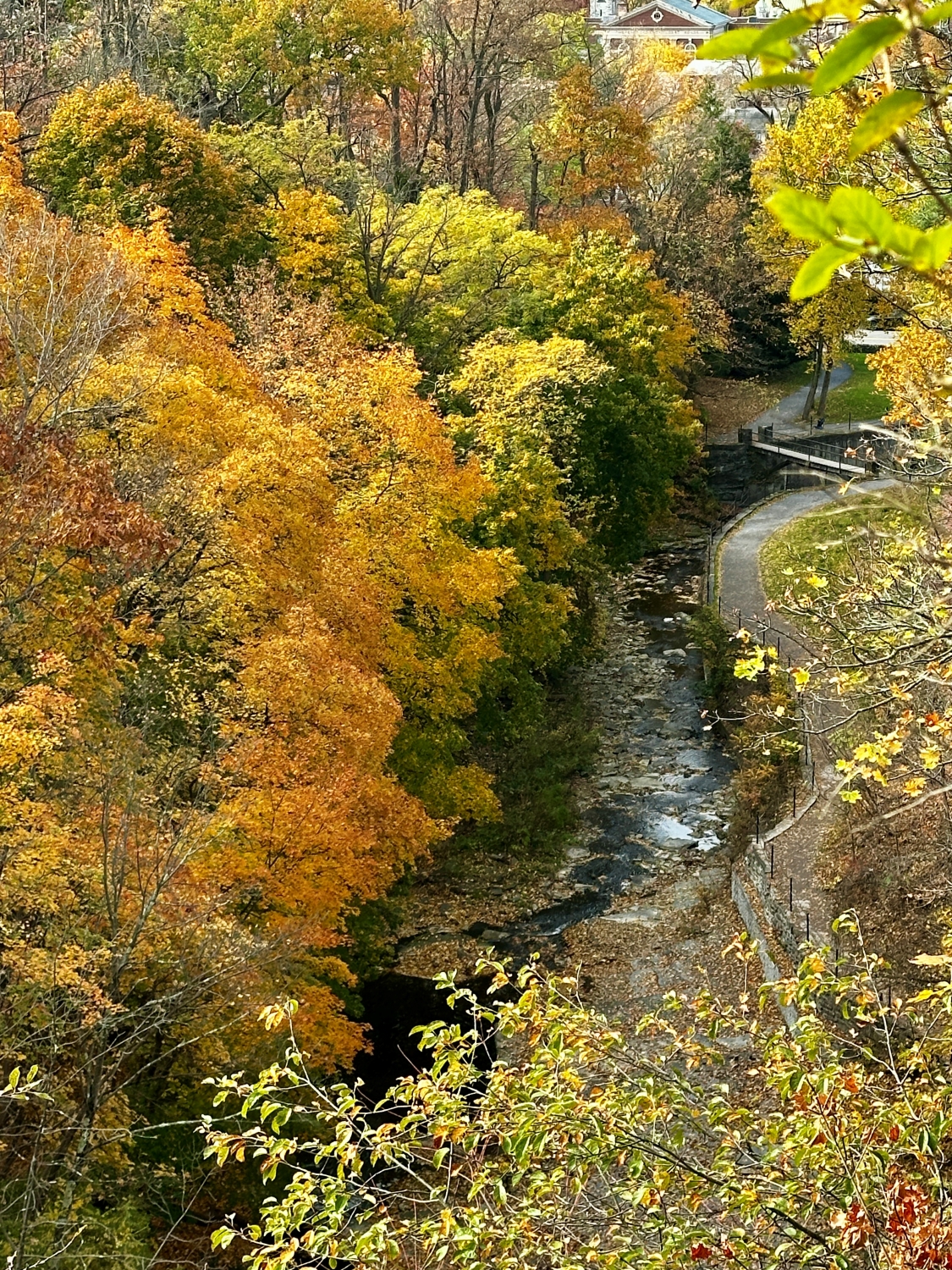
The Enchantment of Autumn Over Cascadilla Gorge

Join me for a serene autumn walk in Ithaca, appreciating nature’s beauty, impermanence, and the calming rhythms of life.

A few days before Halloween, I found myself on the rim of Cascadilla Gorge, Ithaca’s autumnal crown jewel. The air had that crisp October quality, each breath carrying a hint of the colder days to come yet still tempered by the lingering warmth of early fall. A breeze carried a scent of damp earth and decaying leaves, a rich, organic aroma that signaled the turning of the seasons. The path beneath my feet was a tapestry of fallen leaves—russet, gold, and burnt orange—a natural carpet leading me through a world suspended between vibrancy and rest.

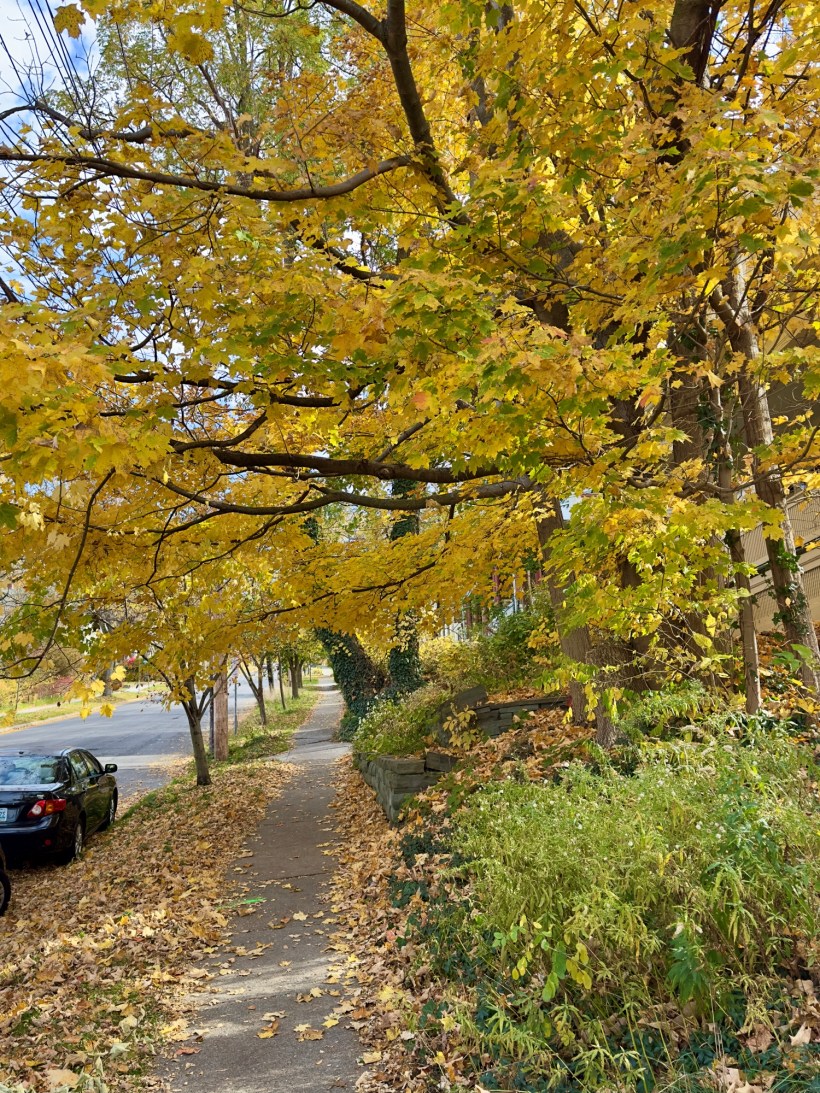
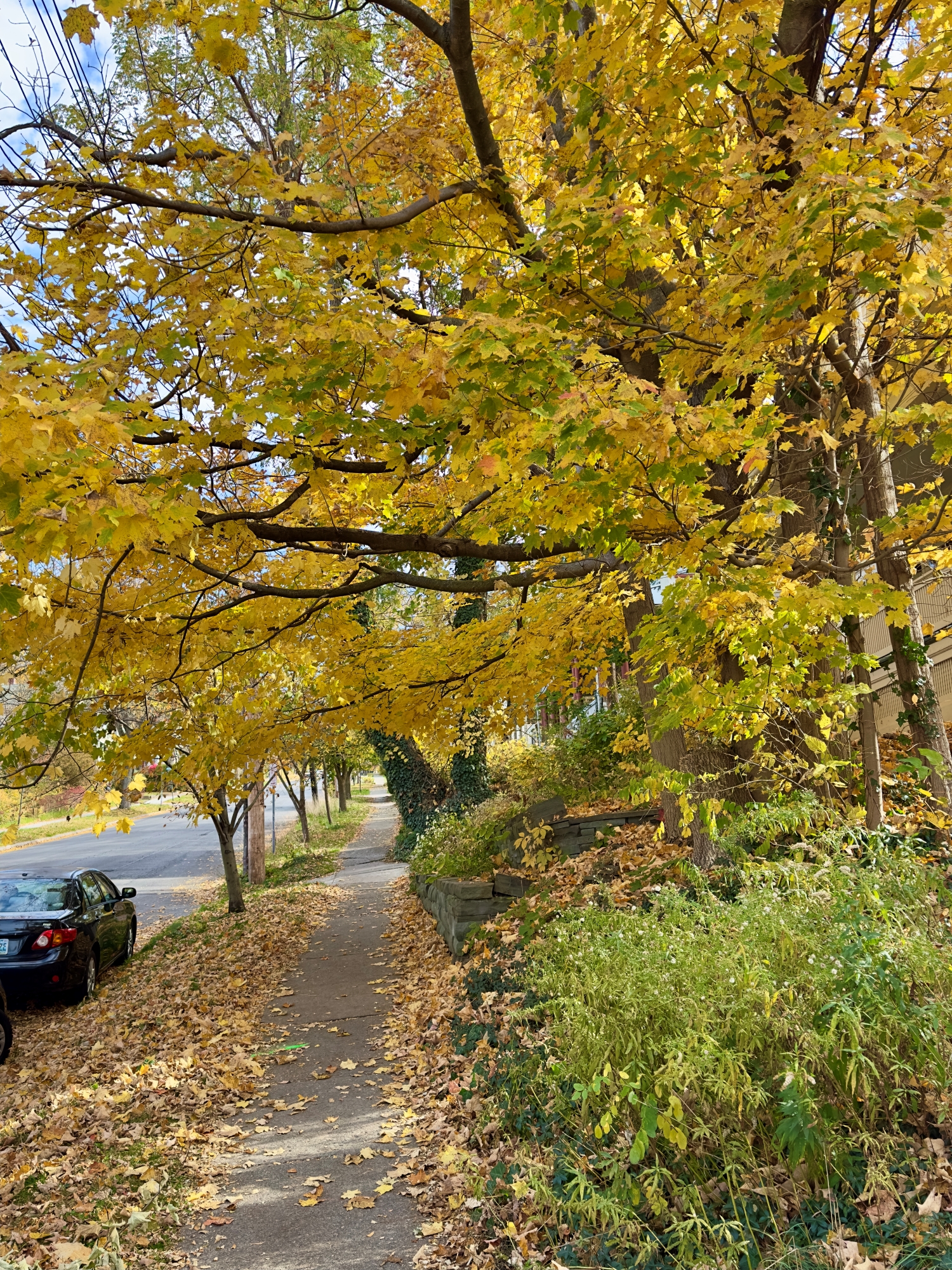
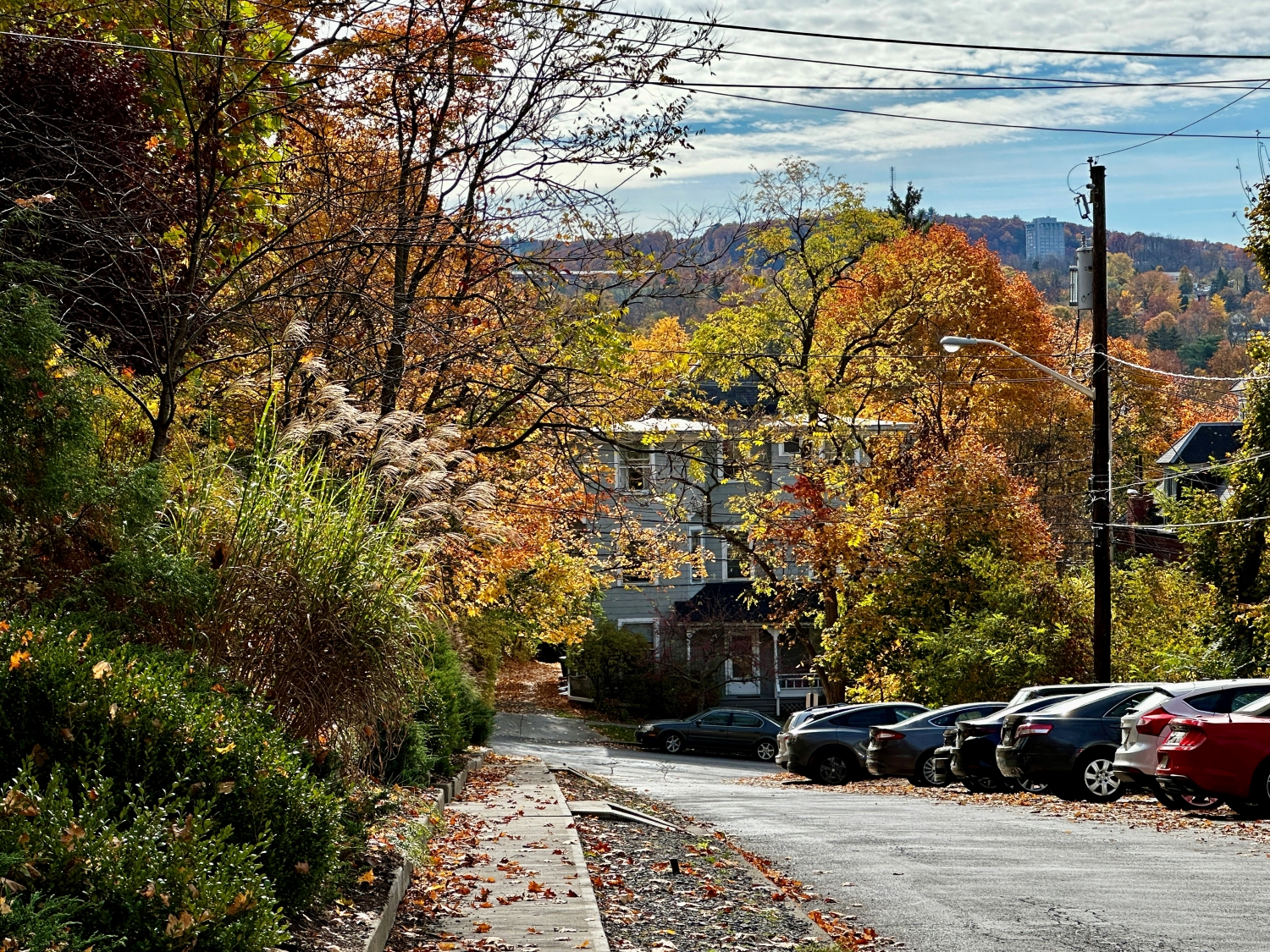
Golden Canopy over Buffalo Street Sidewalk

Continuing up Buffalo Street, I marveled at the trees, their branches thick with yellow and gold leaves, creating a canopy above. The leaves shivered with every gust, whispering the ancient secrets of the forest. The air was infused with the sweet, woody fragrance of maple and oak, mingling with the faint scent of chimney smoke from nearby houses. The sunlight filtered through, casting a dappled pattern on the sidewalk, a fleeting mosaic as the leaves danced in the wind. A sense of impermanence struck me; soon, these leaves would be gone, leaving bare branches silhouetted against a winter sky.

Scene from Dewitt Place toward South Hill and Ithaca College

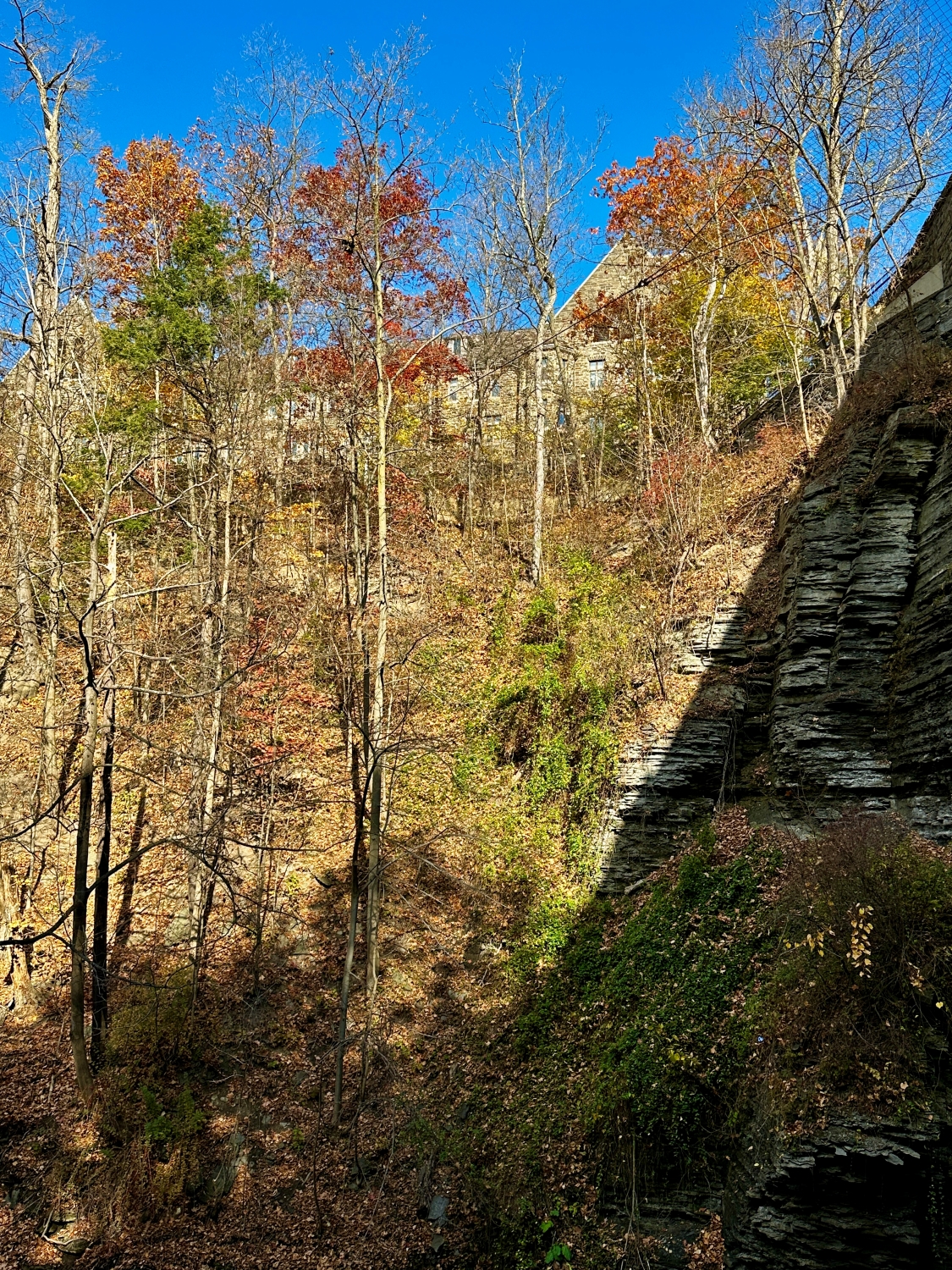
Crossing the Stewart Avenue bridge, the Cascadilla Gorge came into view, a steep wall of stratified rock layers standing guard over the gently flowing stream below. The contrast between stone and foliage was breathtaking—the hard, unyielding rock juxtaposed with the softness of leaves in full autumnal bloom. The earthy scent of wet stone mixed with the crisp aroma of the flowing water, creating a sensory tapestry unique to the gorge. The colors seemed to intensify against the gray and brown of the cliff, each leaf like a brushstroke on nature’s canvas, celebrating the season’s final flourish before surrendering to winter.

Below footpath along the gorge rim, the creek wound through, its banks littered with leaves that had completed their journey from branch to earth. They floated on the water’s surface, spinning gently in the current as though reluctant to leave this last dance. The sound of the water was a steady undercurrent, soothing and rhythmic, as it tumbled over stones and carved its way through the gorge. I paused to watch, entranced by the way water and rock, ephemeral and eternal, seemed to coexist in a kind of harmony.

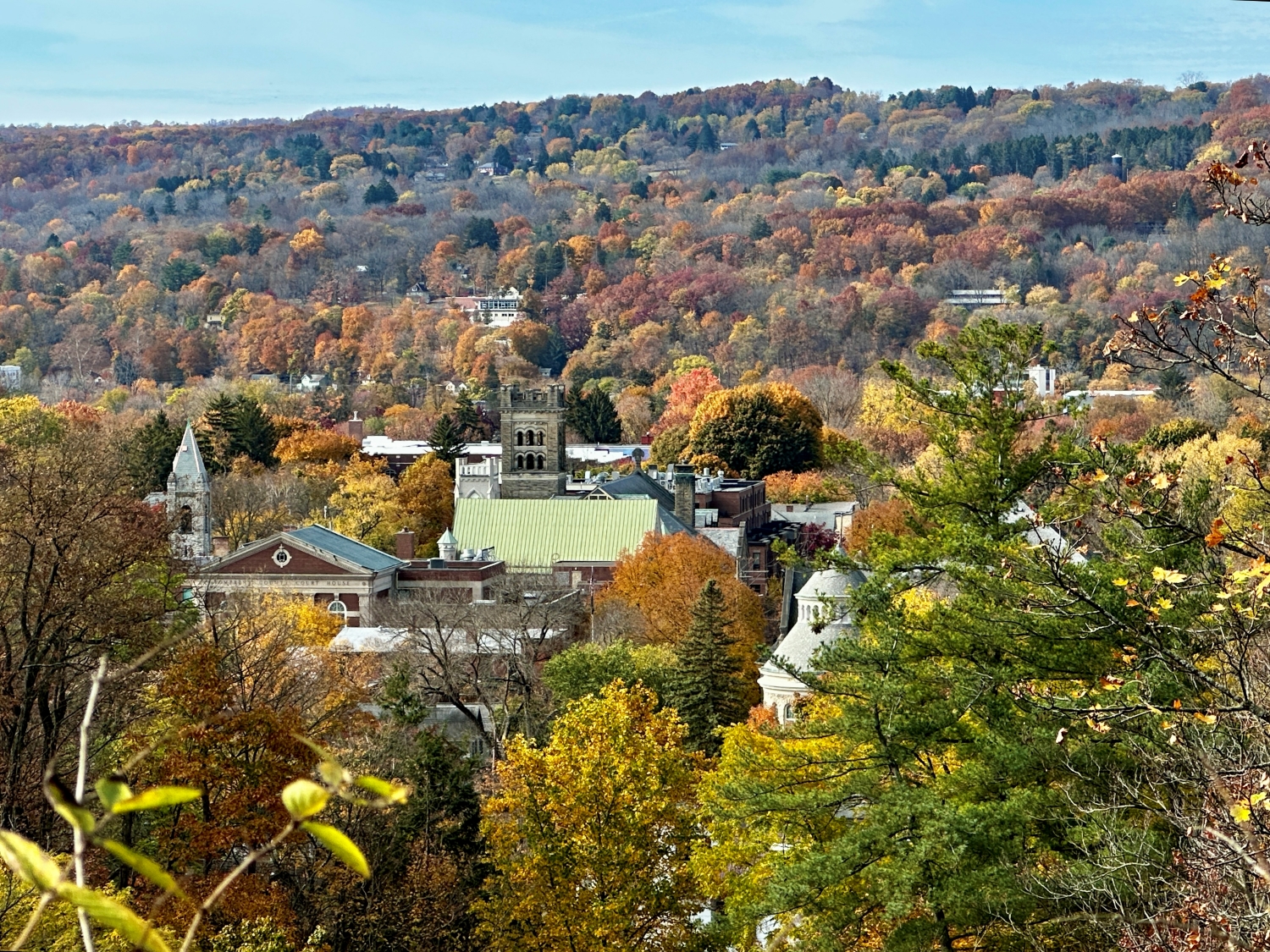
I stopped at a lookout point and surveyed the town sprawled out below, nestled amidst the fiery colors of the surrounding hills. The architecture of Ithaca’s buildings peeked through the trees, each roof and spire framed by the season’s palette. This was a town embraced by nature; its rhythm dictated as much by the seasons as by human hands. The sight stirred a sense of gratitude within me; here was a place that reminded you to slow down and observe, to notice the subtle shifts in light, in color, in the way a single gust of wind could change a landscape.

I continued along the rim, passing a small waterfall that spilled over the rocks with a quiet insistence. The water had carved smooth pathways in the stone, evidence of its long journey and persistent power. The sunlight hit the spray just right, casting a fleeting rainbow that shimmered and then disappeared as I moved. I felt a sense of companionship with the water—both of us moving forward, shaped by the paths we traverse, yet always adapting to whatever lay ahead.

The last part of the trail led me through a dense thicket of trees, their branches hanging low, forming a natural archway. The air was heavy with the musky scent of fallen leaves and the spicy aroma of pine needles underfoot. Here, the light was softer, muted by the thick canopy overhead. The quietness enveloped me, broken only by the occasional rustle of a squirrel in the leaves or the distant caw of a crow. It was the kind of silence that feels sacred, where each sound, no matter how small, becomes profound.

Entering Cascadilla Gorge from Linn Street

Emerging from the shaded path, I took one last look back at the gorge. The scene was both familiar and new—a blend of natural beauty and the nostalgia of seasons past. I felt a sense of peace, grounded by the cycles of the earth, by the ebb and flow of life around me. In this moment, on the brink of Halloween, the world felt both hauntingly beautiful and reassuringly steadfast, a reminder that even as the leaves fall and the days grow shorter, there is a promise of renewal in the quiet persistence of nature.

Enter your email to receive notification of future postings. I will not sell or share your email address.

Capturing Fall’s Beauty: A Journey of Healing

During a reflective walk, the author parallels the beauty of autumn his wife’s healing journey post-surgery, celebrating transformation and resilience.

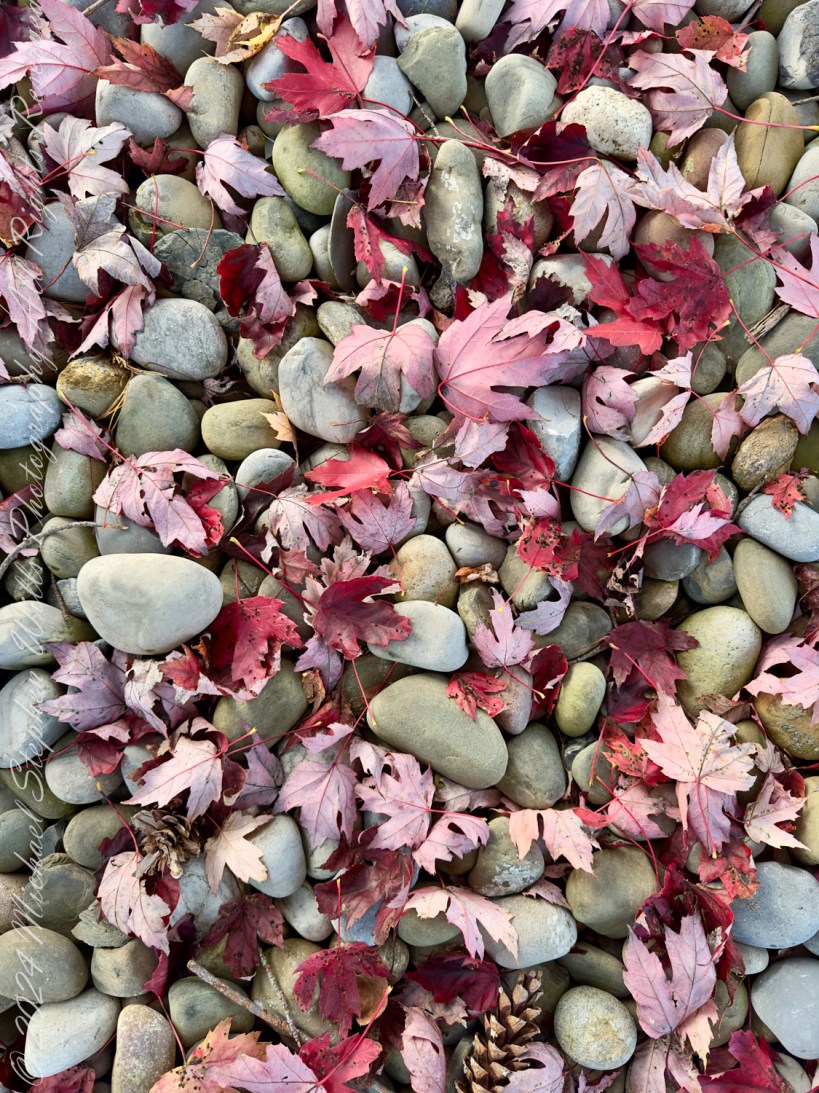
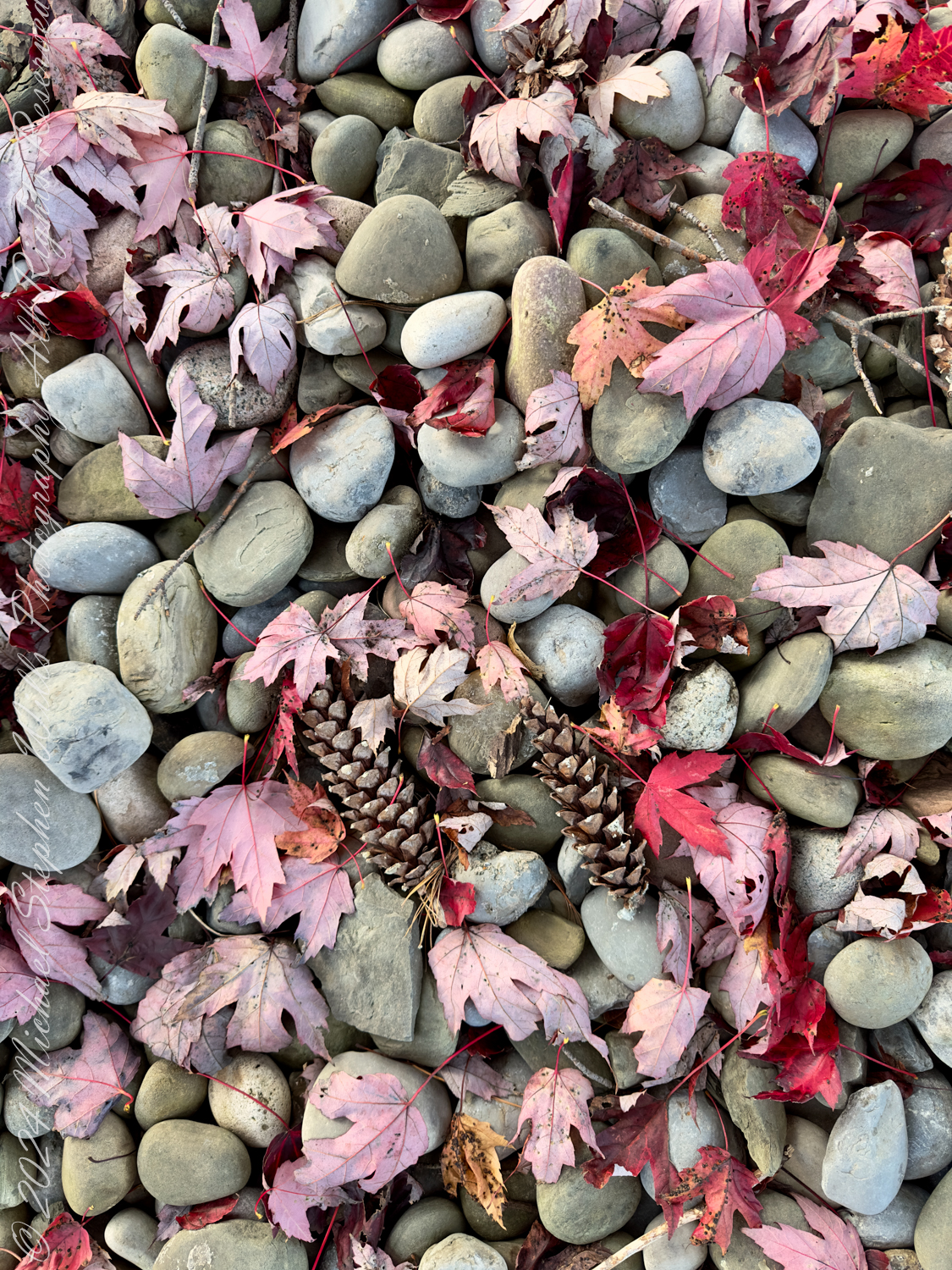
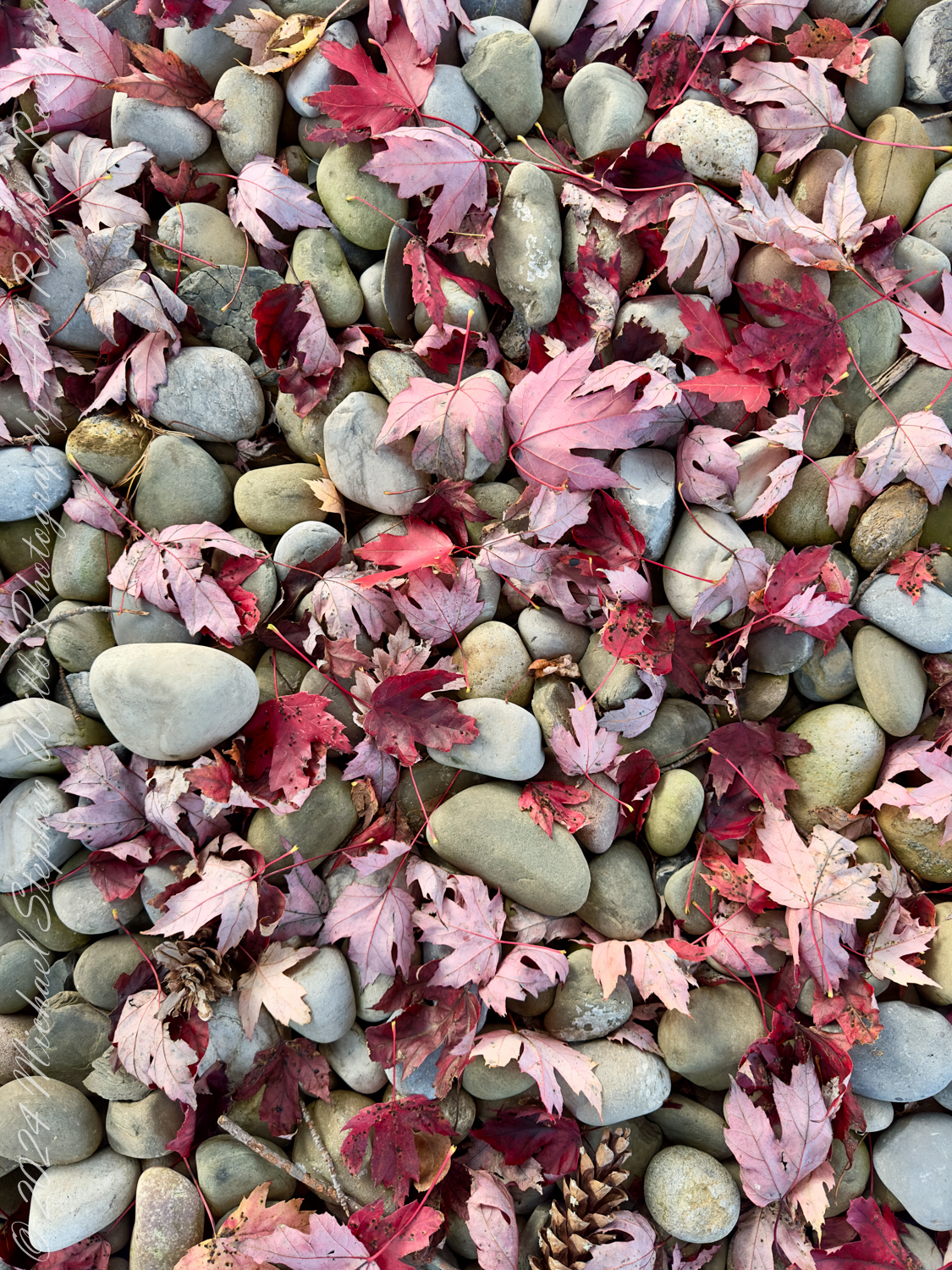
As I waited for Pam to finish her 30-minute physical therapy session at the Northeast Ithaca medical complex, I decided to capture moments of the fall season through my camera lens while walking. There’s something about this time of year—the crispness in the air, the vibrancy of the colors—that invites reflection, especially with the significance of Pam’s recovery following her hip replacement. These moments, both large and small, weave together to form the tapestry of life, and today, I felt a strong pull to observe, to pause, and to appreciate.

The first scene that caught my eye was a delicate scattering of maple leaves over smooth, weather-worn stones. The contrast between the rigid rocks and the soft, decaying leaves reminded me of life’s cyclical nature. The bright red and pale pink hues of the leaves, now beginning their slow decomposition, seemed to symbolize the passage of time—how even in their decay, they added beauty and texture to the scene. The leaves, having served their purpose on the tree, now danced with the wind, finding a new purpose in creating a natural mosaic. Much like how Pam’s healing journey is both the end of one struggle and the beginning of a new phase in our lives.

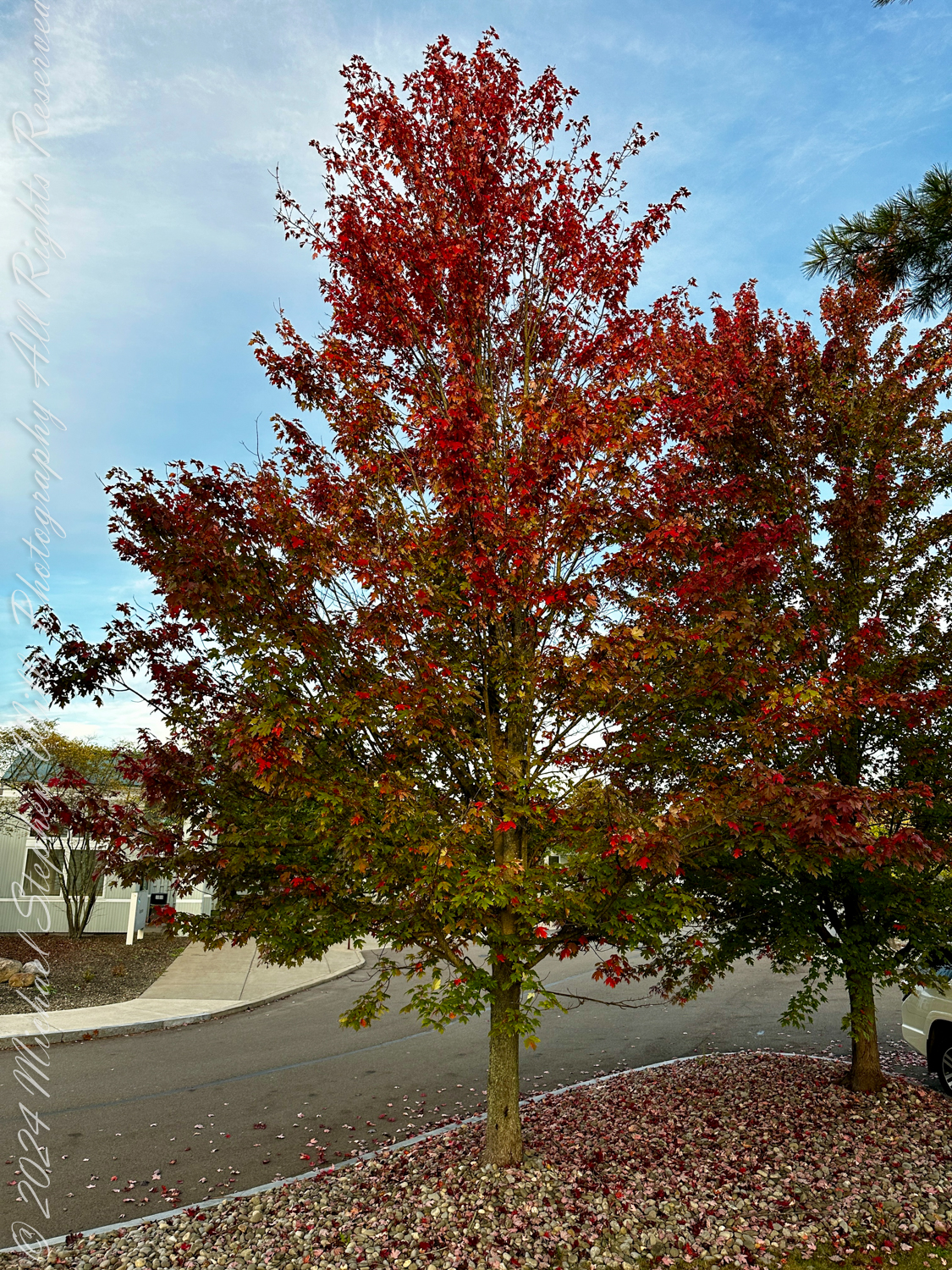
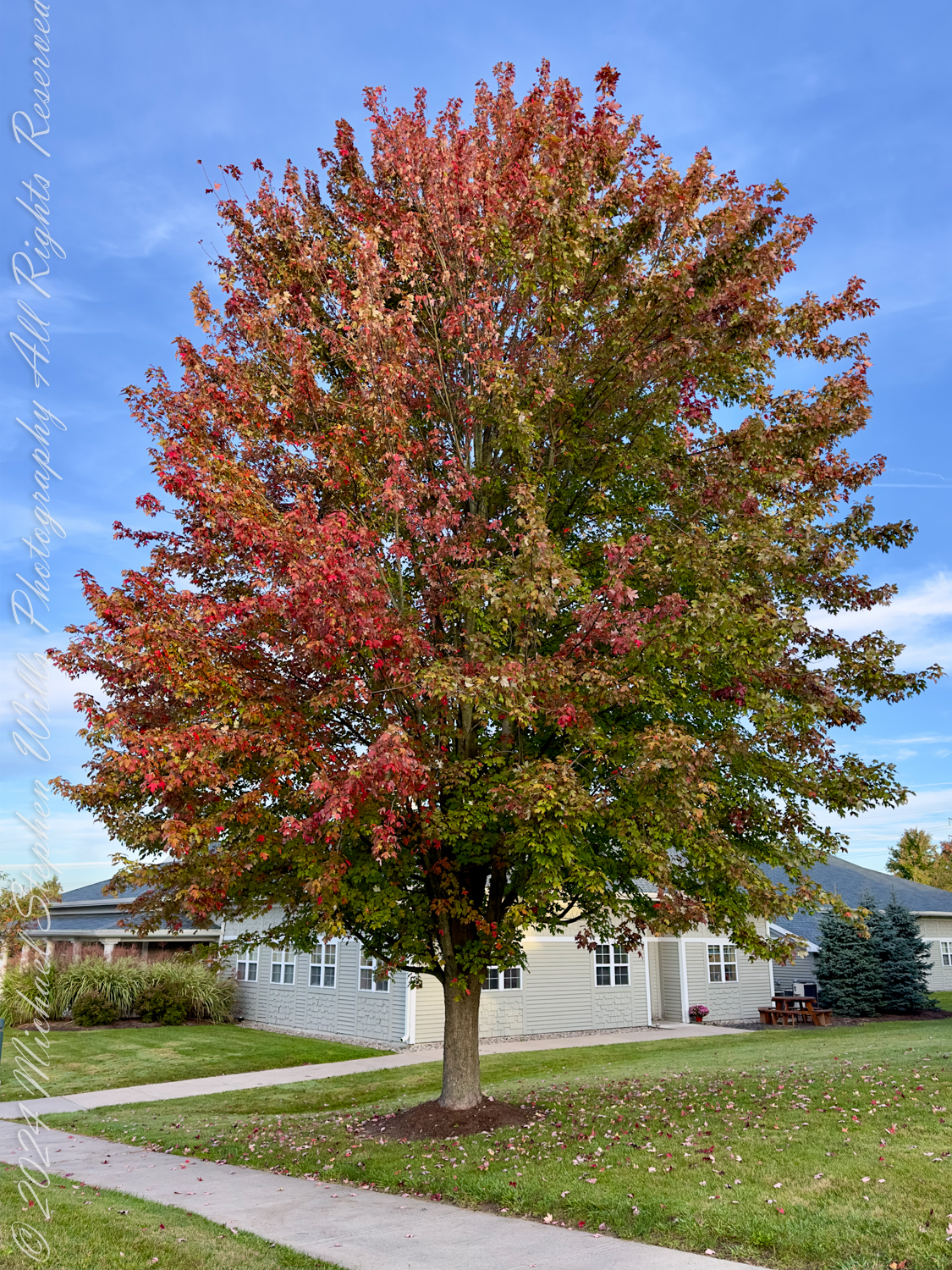
As I continued walking, I came upon a maple tree, standing tall with its branches adorned in fiery reds. The vibrancy of the foliage against the sky reminded me of strength in adversity. The tree had begun its seasonal transformation, shedding its leaves as it prepares for winter—a time of rest before the renewal of spring. I thought about how Pam, too, is in a season of transformation. Her body is adjusting, healing from the surgery, and preparing for new movement and freedom that will come in time. Watching the wind gently tug at the leaves, I couldn’t help but feel grateful for her resilience.

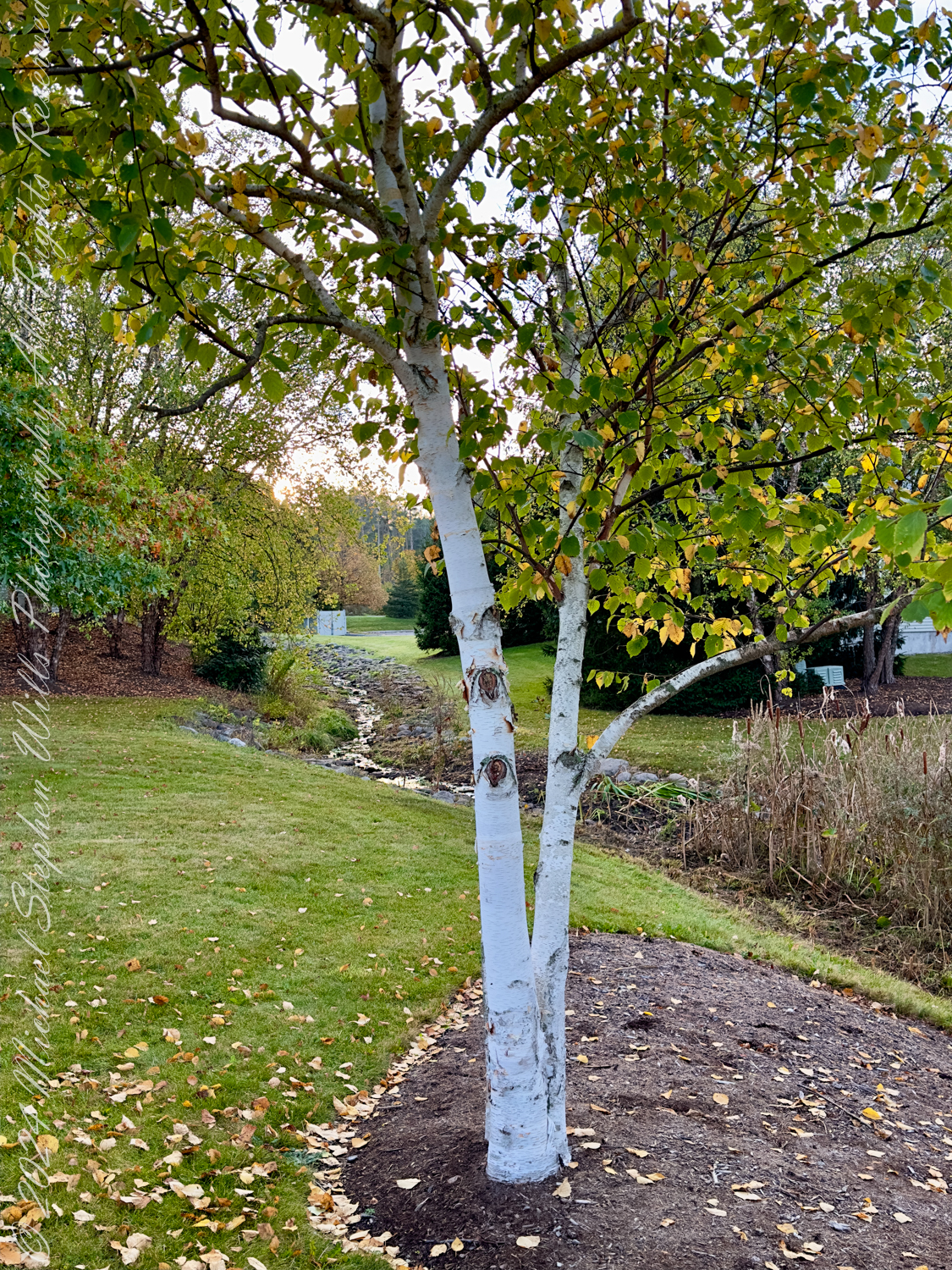
Nearby, a slender birch tree stood out, its bark a striking white against the greens and golds of early fall. The birch, with its smooth and peeling bark, fascinates me. It exudes a quiet elegance, standing firm and graceful; a symbol of quiet endurance, a steadfast presence amidst the ever-changing landscape. Much like the birch, Pam has weathered the storm of surgery with grace, moving through pain and discomfort with a quiet determination. The sound of a gentle stream nearby only added to the serenity of the scene, offering a soft, meditative backdrop to my thoughts.

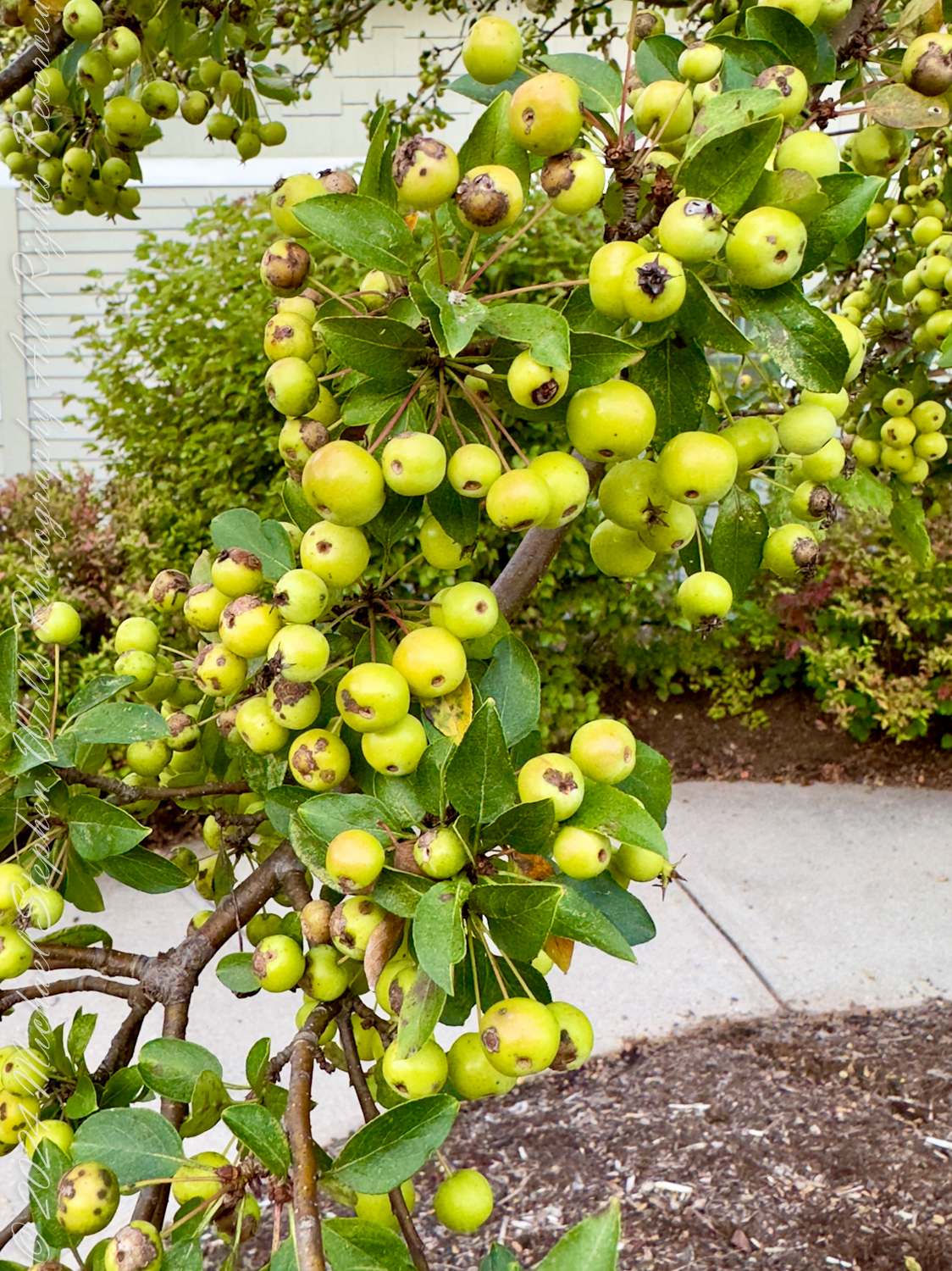
Further along, I encountered clusters of green crabapples hanging heavily from a tree. Their small, round forms were imperfect, dotted with blemishes and signs of wear, yet there was beauty in their abundance. These fruits, while not perfect, are a testament to the tree’s efforts throughout the year, a reminder that growth and effort often result in the imperfect. Pam’s recovery isn’t without its challenges, but each step, each small victory, is a testament to her effort and determination. The crabapples reminded me that perfection is not the goal—progress and perseverance are.

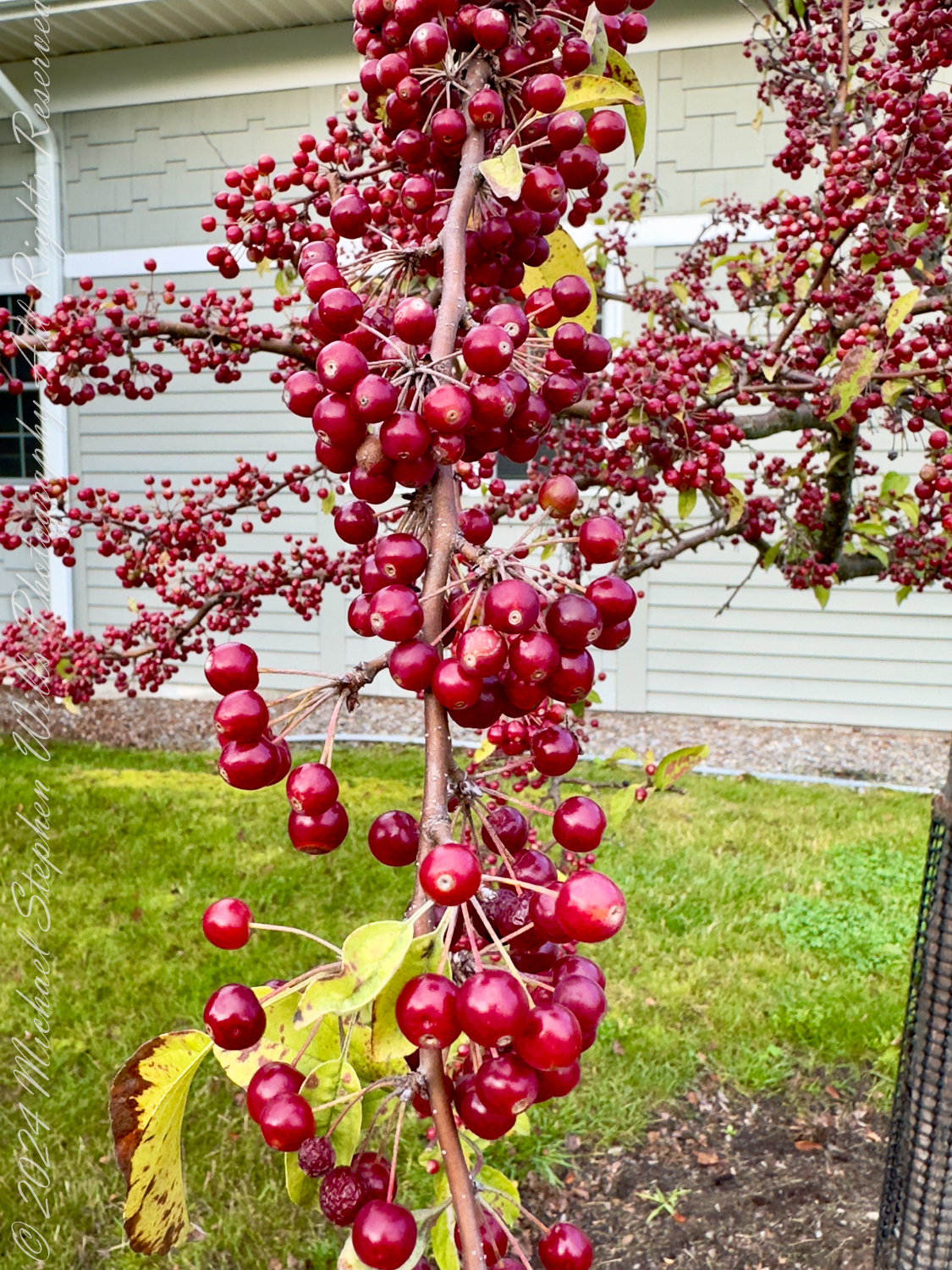
On another tree, I found its branches laden with bright red berries, their glossy surfaces shining in the light. These berries, hanging so densely, added a sense of richness to the landscape, a vibrant contrast to the yellowing leaves of nearby trees. In many cultures, red berries symbolize vitality and protection, and in this moment, I thought of Pam’s vitality, her strength to heal and return to her daily life. The image of the berries will always remind me of this chapter of her recovery—a time where her strength was most evident.

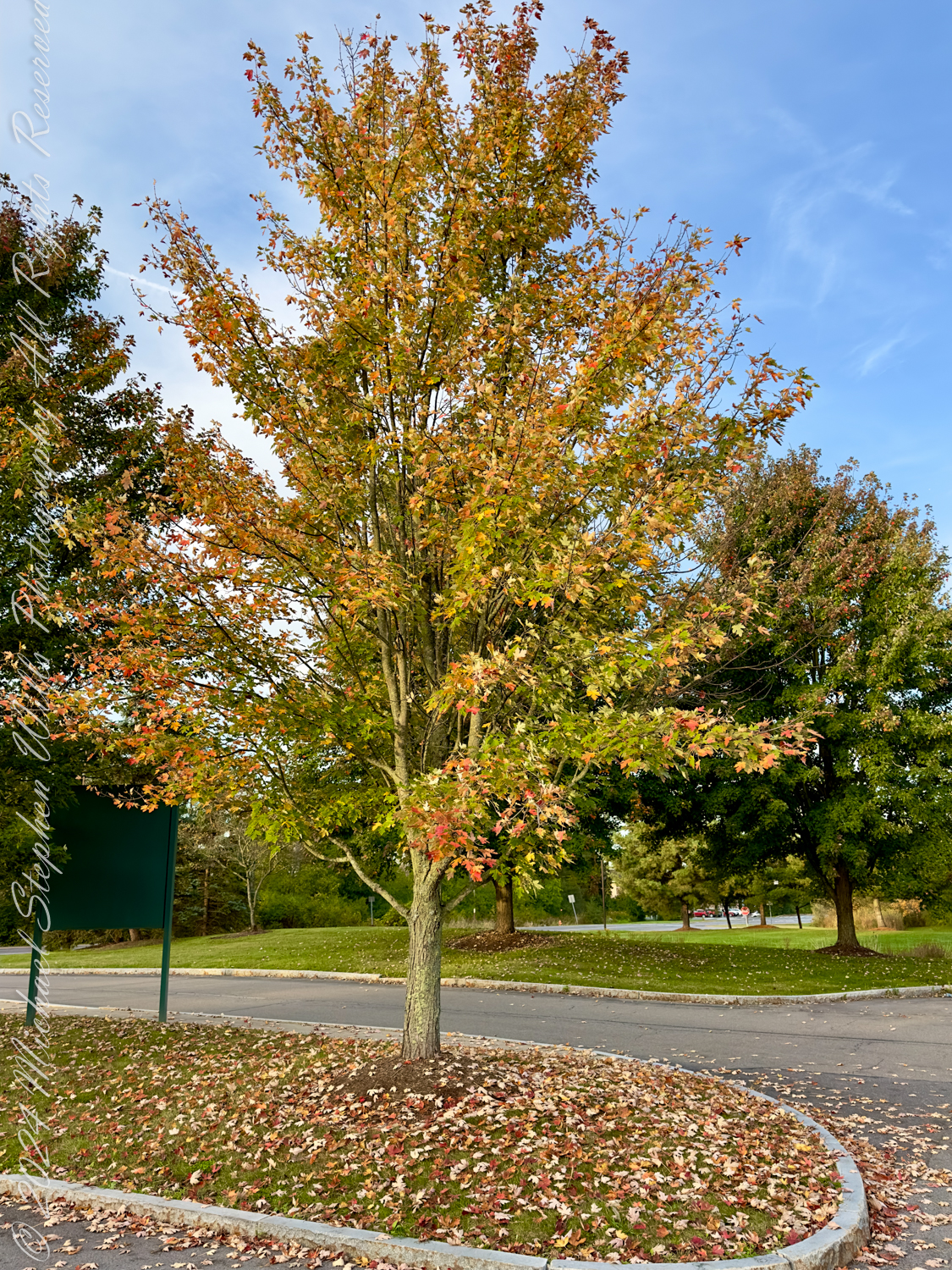
As my walk continued, I marveled at another maple tree, its colors starting to fade into yellows and oranges, the leaves slowly dropping to the ground. The fallen leaves created a soft blanket around the tree, a reminder that letting go is a natural part of life. We often hold on to things, ideas, or even pain, long after they have served their purpose. Watching these leaves fall, I thought about Pam letting go of the pain and limitations she’s carried for months. Her body, much like this tree, is learning to release, to move forward.

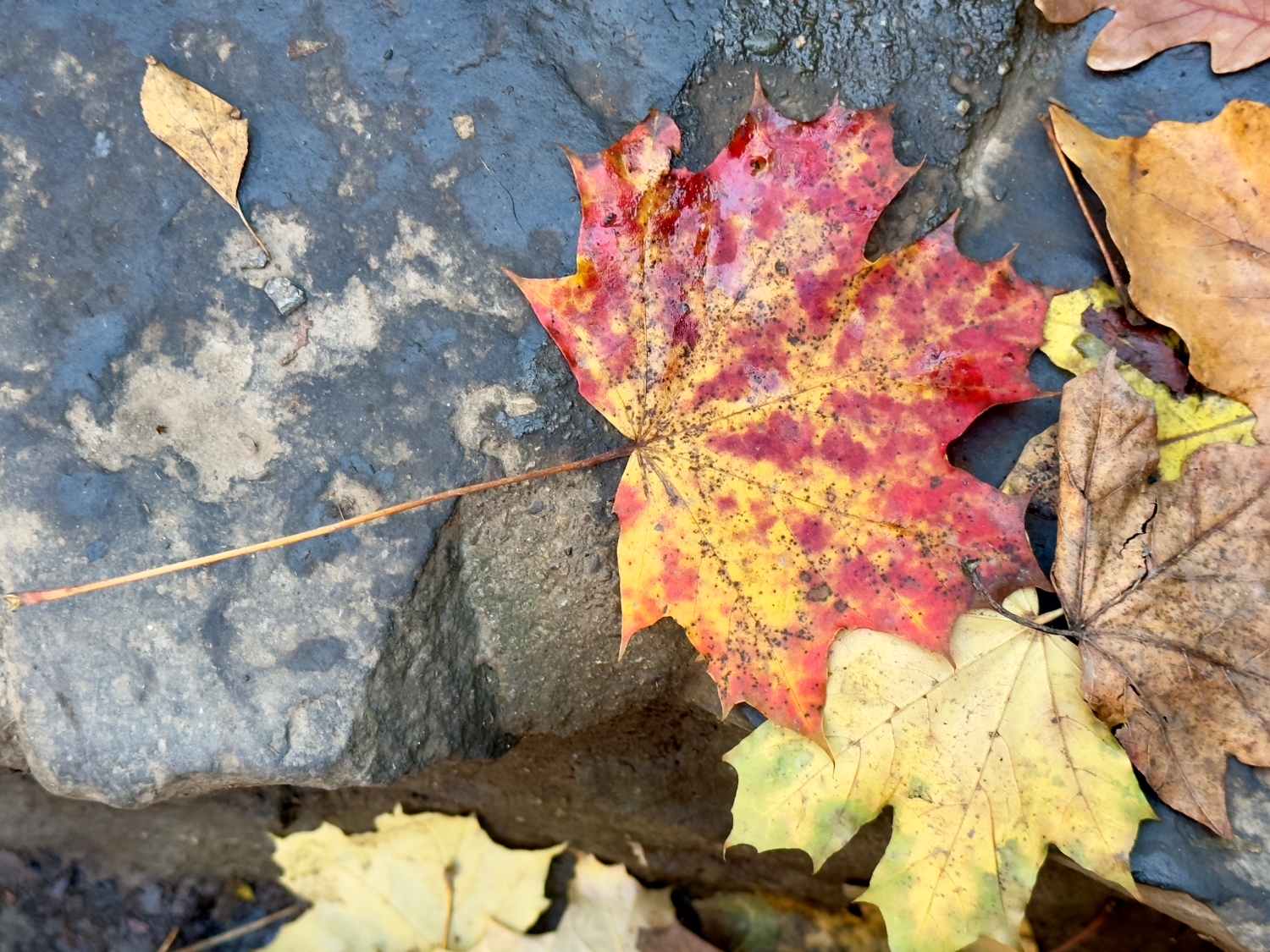
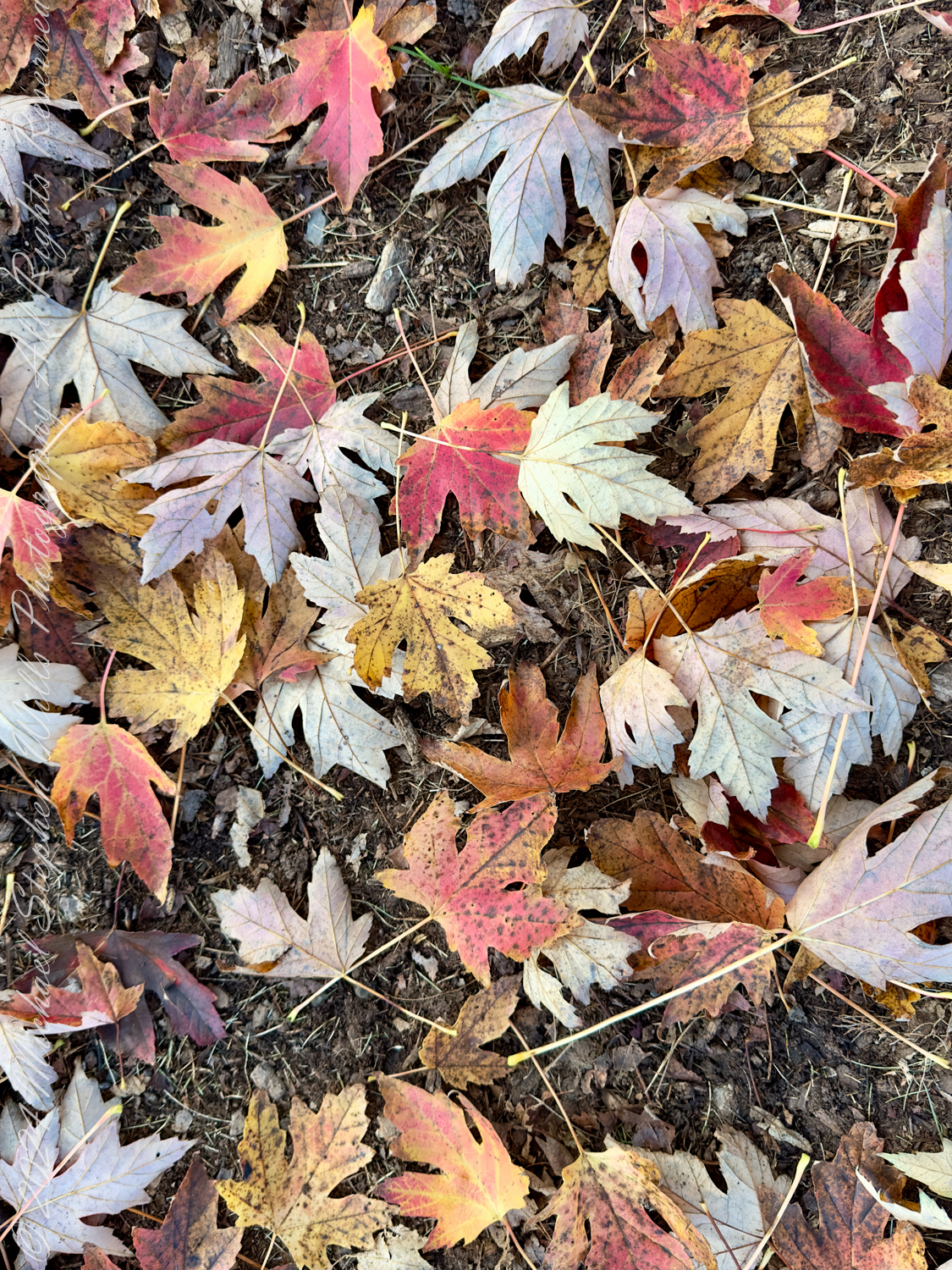
On the ground, I noticed a close-up of more fallen leaves, these ones touched with both vibrant and fading hues, each in a different stage of its journey. Together, they formed a beautiful, textured layer over the soil, offering nutrients to the earth below. Even in their end, they contribute to new life. It struck me that even in difficult times, there is always a sense of renewal and growth. Pam’s healing is part of a larger cycle—one of renewal and transformation.

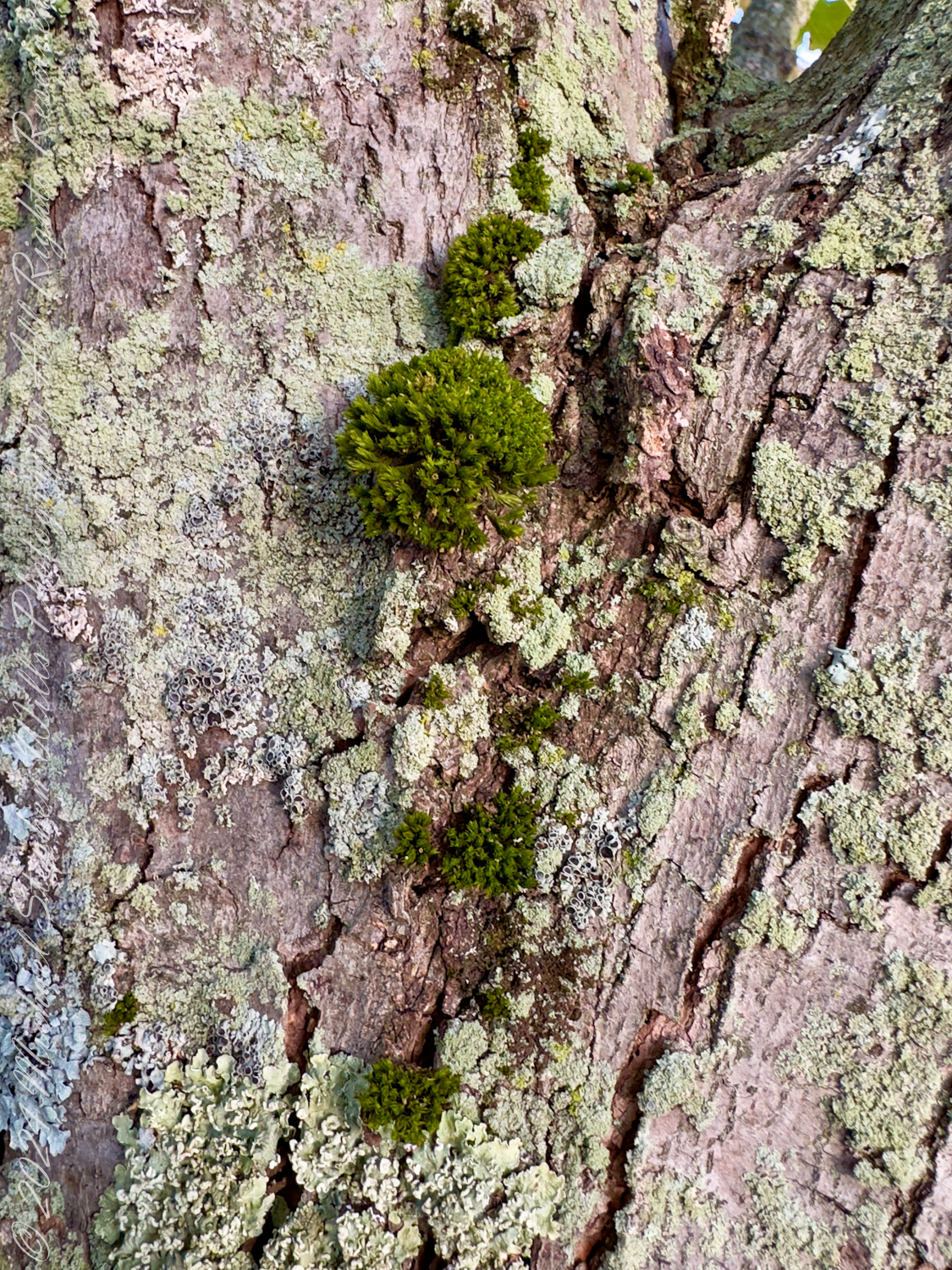
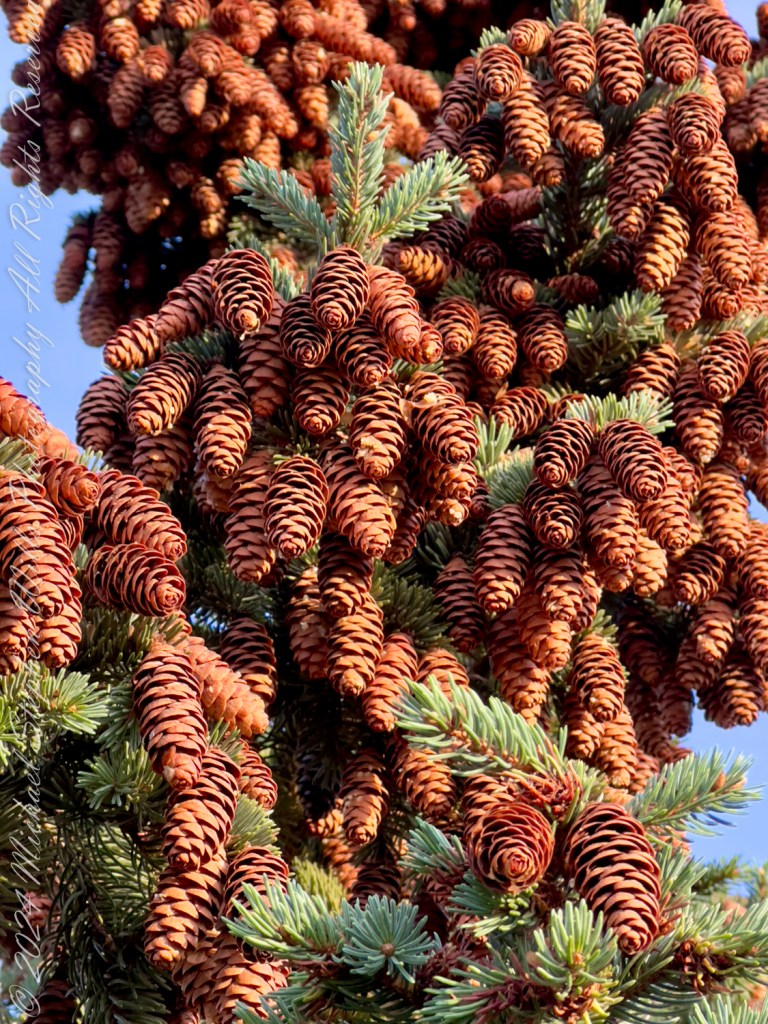
The final images of my walk were close-ups of a tree trunk covered in moss and lichen, and then the cones of a towering spruce tree. The moss, a soft green against the rough bark, seemed like nature’s way of nurturing the tree, offering protection and a touch of life in an otherwise harsh world. The cones, hanging in abundance from the spruce, signified a sense of continuity, of life moving forward even as the seasons change.

As I made my way, I realized this walk had been a meditation on Pam’s recovery, on the beauty of change, on the lessons nature offers in every season. Just as the trees prepare for winter and eventual rebirth, Pam too is in a season of healing, and I am grateful for every step she takes toward renewal.

Enter your email to receive notification of future postings. I will not sell or share your email address.

The Mallard Ducks of Early Spring

Discover the secret world of mallards in Ithaca’s Cass Park: a drake and hen dance upon the water’s surface, inviting you into the fleeting magic of a vernal pool. Join their springtime sojourn.

Introduction to Vernal Pools and Mallard Ducks


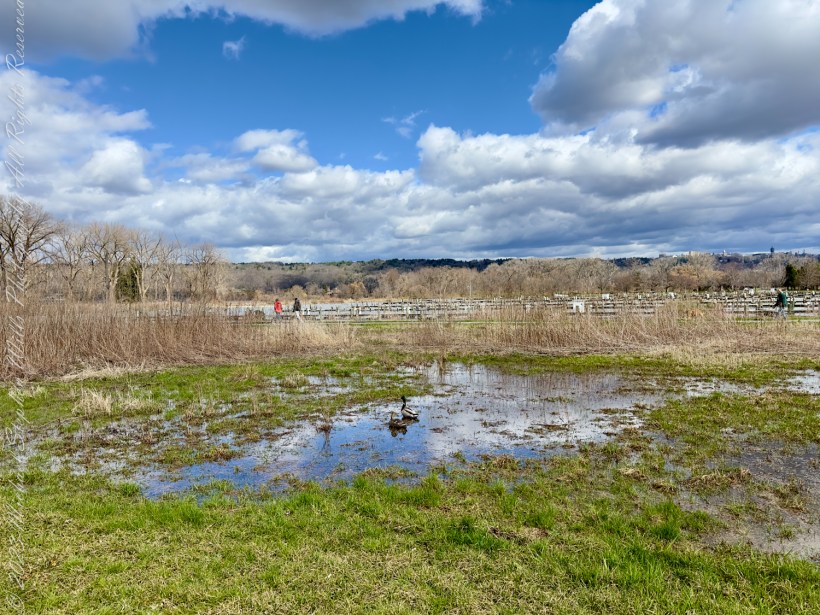
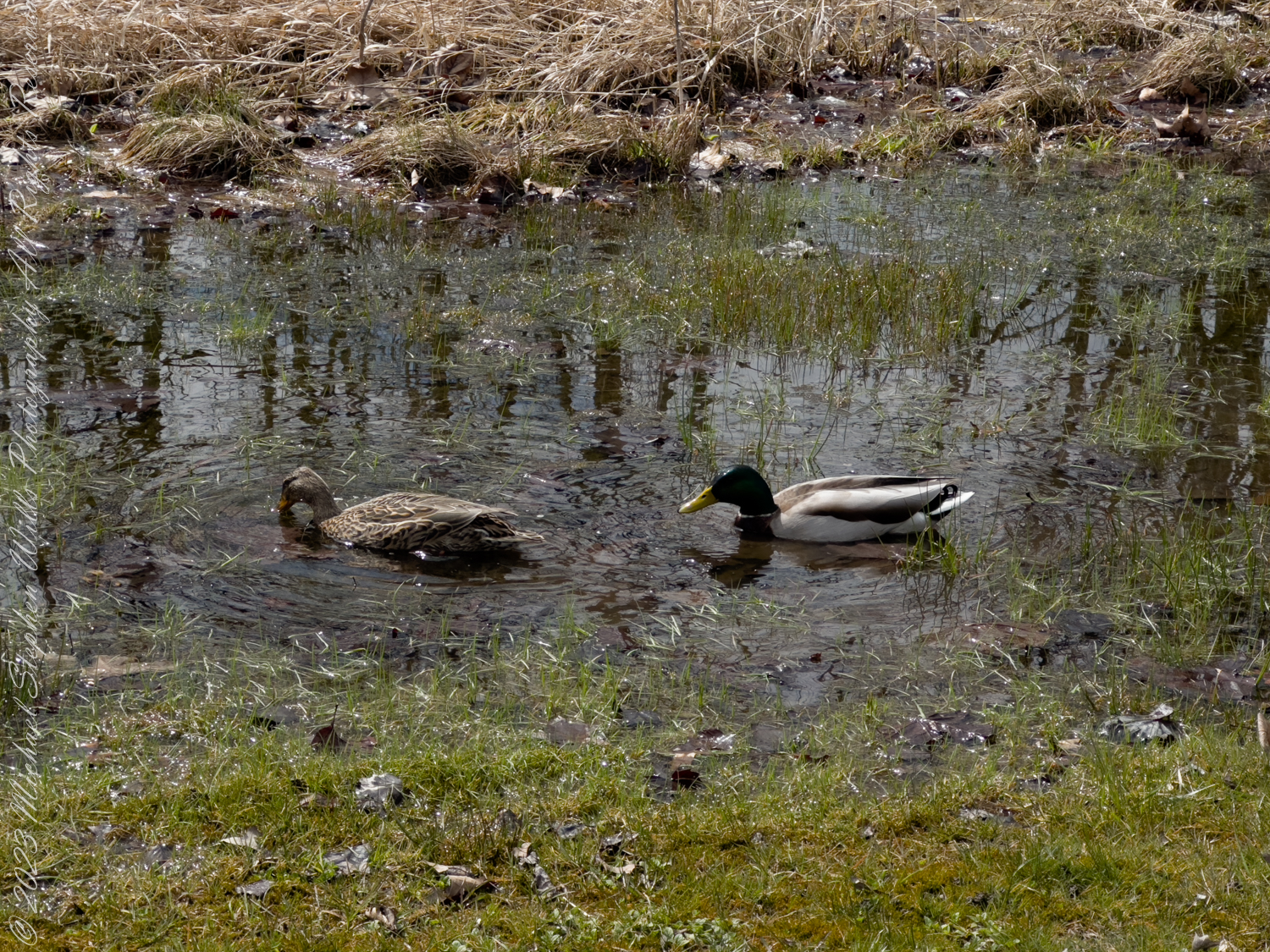
The image provided offers a tranquil glimpse into the natural world, capturing two mallard ducks—a drake and a hen—as they forage for food in a vernal pool. Vernal pools are temporary bodies of water that provide critical habitat for a variety of wildlife during the early spring. Mallards (Anas platyrhynchos), with their iconic coloration and widespread presence across the globe, are among the most recognizable and adaptable of waterfowl, making use of these ephemeral waterscapes.

Birding Trail near Cass Park, a pair of Mallard ducks in breeding plumage feed in a vernal pool the inlet of Cayuga Lake in the background.

Significance of Vernal Pools


Vernal pools are unique wetlands that usually form in the spring from melting snow and spring rainfall. These pools are crucial for the breeding of certain species of amphibians, insects, and provide essential resources for birds like mallards. In the image, the ducks take advantage of the abundance of food such as aquatic invertebrates that thrive in these undisturbed waters, showcasing the importance of these habitats in supporting biodiversity.

A Closer Look at the Mallards’ Habitat

A male and female mallard (Anas platyrhynchos) feeding in a vernal pool along the Cayuga Waterfront Trail near Union Fields.


The photo depicts the ducks in a natural setting that speaks volumes about their environment. The surrounding dry grasses indicate a transition from the dormancy of winter to the burgeoning life of spring. The reflection of leafless trees in the water hints at an ecosystem on the cusp of renewal. This setting is not only a feeding ground for the ducks but also a haven that provides shelter and protection from predators.

The Mallards’ Spring Behavior


Mallards are known for their migratory patterns, often traveling to warmer climates during the winter and returning to their breeding grounds in the spring. The ducks in the photo are likely partaking in a crucial phase of their life cycle—feeding and preparing for the breeding season ahead. Their presence in the vernal pool is a testament to their resilience and adaptability as they utilize a wide range of habitats to meet their needs.

Conservation and the Future


While mallard ducks are not currently endangered, the conservation of their habitats, like vernal pools, is vital for the continued health of their populations and the greater ecosystem. Such habitats are under threat from urban development, pollution, and climate change. It’s imperative that we recognize the importance of preserving these natural resources, not only for mallards but for all species that depend on them.

Conclusion: Reflections on Nature’s Cycles


The photo invites reflection on the cycles of nature and the interconnectedness of species and their environments. It serves as a reminder that the arrival of mallards at a vernal pool is not just a sign of spring, but a marker of the health of our natural world. As the seasons change, so too do the opportunities for life to thrive, guided by the rhythms of the Earth and the behaviors of its inhabitants. The mallards, in their simple act of feeding, become symbols of continuity and the delicate balance of ecosystems.

Copyright 2024 Michael Stephen Wills All Rights Reserved

Tuxedos on Tour: Three Majestic Mergansers

Join the escapade as you witness three majestic Mergansers, donning nature’s finest tuxedos, in a graceful ballet on the springtime stage of Cayuga Lake.

As you gaze upon these three fine feathered fellows, all members of the exclusive Common Merganser men’s club, they seem to glide upon the watery stage of Cayuga Lake with all the confidence of Broadway stars on opening night. They are the aquatic equivalent of a sharply dressed barbershop quartet, minus one, in their matching tuxedos, ready to sing the springtime serenade of their species.

The chap at the forefront is Captain Black-Crest, sporting a glossy noggin that shimmers with an inner light, undoubtedly the envy of every duck on the pond. He’s streamlined and debonair, with a white body that’s as crisp as the first snowfall and a dark back that’s as sleek as a shadow in moonlight. If ducks had monocles and top hats, he’d be first in line.

In the middle, there’s Sir Dapper-Diver, a mirror image of his companion, with a neck as white as the driven snow and a dignified black back that gleams like polished onyx in the dappled sunlight. He’s the quiet achiever of the group, poised and ready to make the plunge into the depths below, proving that style need not be sacrificed for substance.

And to the right, meet Admiral Feather-Finesse. His poise on the water suggests a mastery of the waves, a commander of the current. He carries his elegant attire with an air of grace that only comes with a natural pedigree. In synchronized perfection, he and his brethren form a regatta of refinement, a display of nature’s own black-tie affair.

These are male Common Merganser (Mergus merganser) in breeding plumage, characterized the body white with a variable salmon-pink tinge, the head black with an iridescent green gloss, the rump and tail grey, and the wings largely white on the inner half, black on the outer half. Like the other mergansers, these piscivorous ducks have serrated edges to their bills to help them grip their prey, so they are often known as “sawbills”. In addition to fish, they take a wide range of other aquatic prey, such as molluscs, crustaceans, worms, insect larvae, and amphibians; more rarely, small mammals and birds may be taken. As in other birds with the character, the salmon-pink tinge shown variably by males is probably diet-related, obtained from the carotenoid pigments present in some crustaceans and fish. When not diving for food, they are usually seen swimming on the water surface, or resting on rocks in midstream or hidden among riverbank vegetation, or (in winter) on the edge of floating ice.

Together, these three Common Mergansers (Mergus merganser) in their prime are a trifecta of elegance, a testament to the timeless beauty found in nature’s simplicity. They paddle forth with purpose, their matching plumage a striking contrast to the rippling blues and grays of the water, a parade of poise and plumage that delights the observant eye.

So, dear reader, as you observe this photo, take a moment to appreciate the charming uniformity and the subtle quirks that make each bird, despite their shared wardrobe, uniquely magnificent. It’s a snapshot of life at its most graceful, a picture worth far more than a mere thousand words.

Copyright 2024 Michael Stephen Wills All Rights Reserved