A Serene Walk in Glendalough: Nature and History Unite

Find here a serene visit to Glendalough, highlighting the ancient beauty of its landscape, monastic history, and the deep sense of peace felt among the gravestones.

We arrived in Glendalough on a bright spring morning, a gentle breeze carrying the scent of grass and distant water. Even before stepping out of the car, I sensed something ancient in the air, as though the centuries themselves lay waiting among the stones. The peaks of the Wicklow Mountains rose around me, their slopes draped in verdant forests that whispered of forgotten tales. In the distance, shimmering like a secret, the Upper Lake beckoned under the watchful hush of rugged hillsides. I took a deep breath and started my wander.
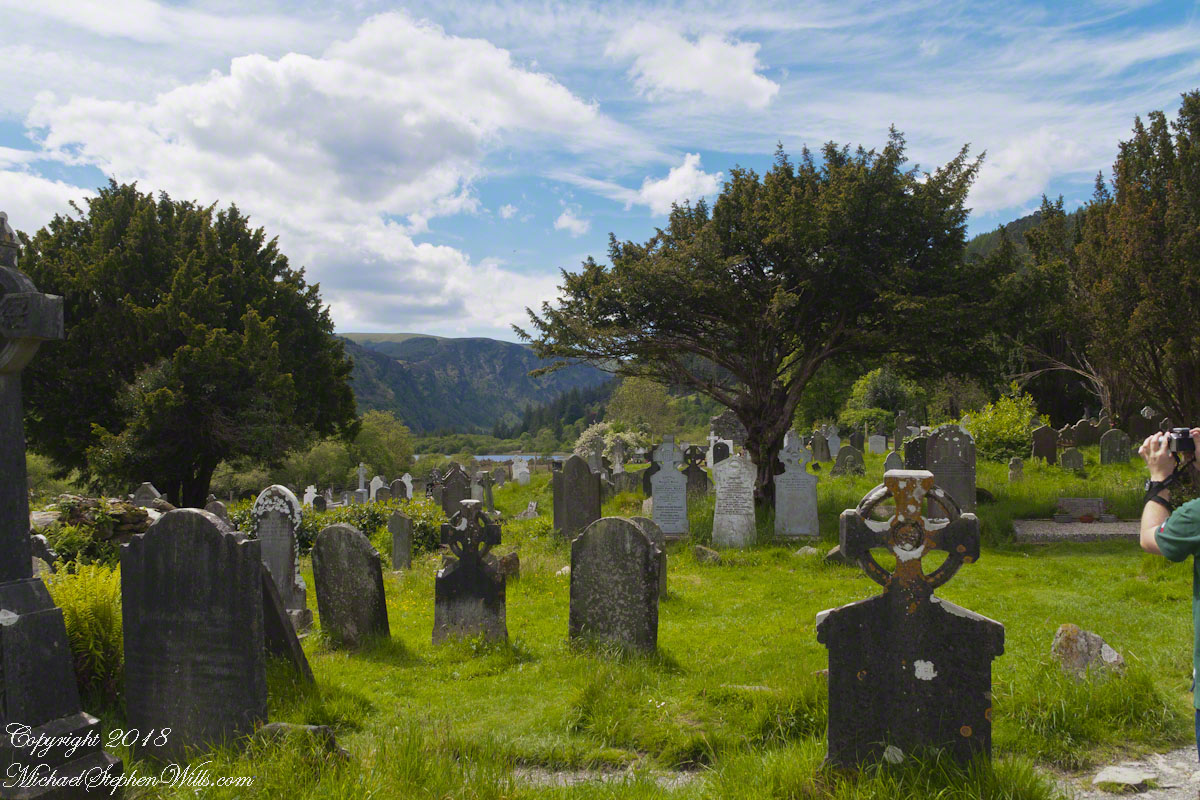
One of the lakes for which the valley is named, above the headstones in the mid-distance

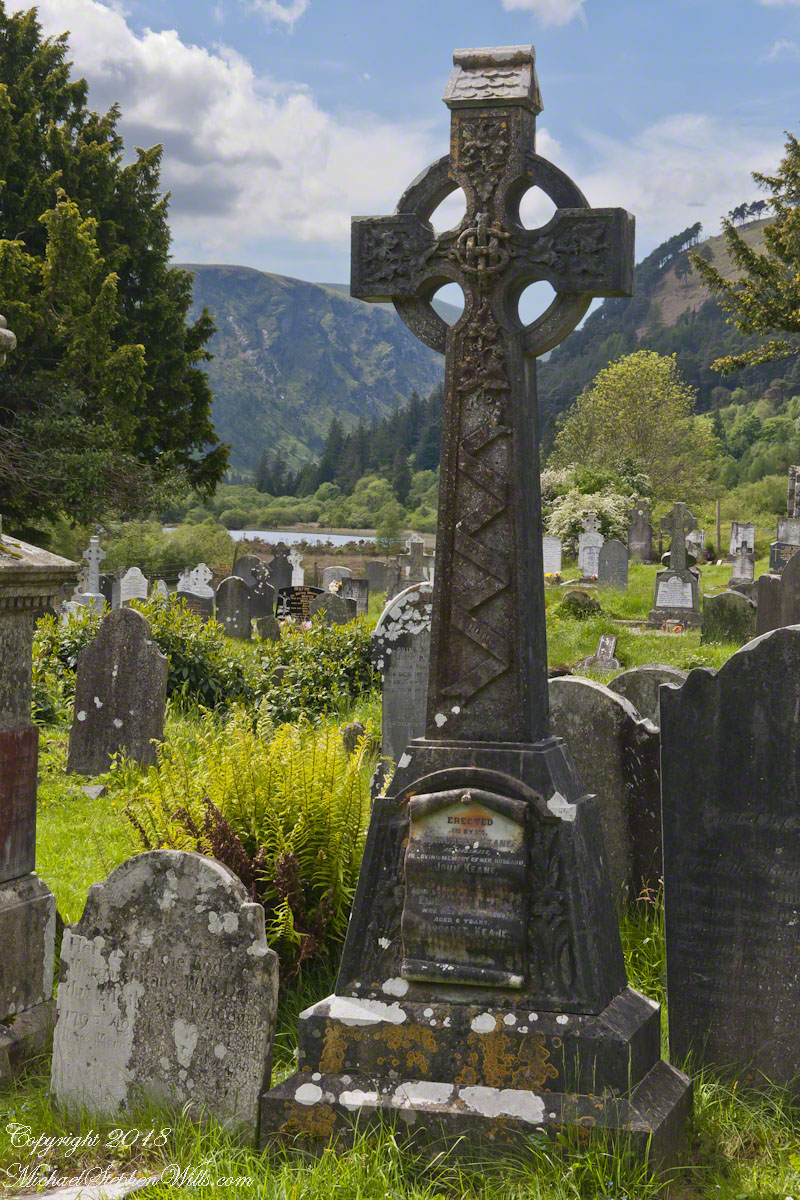
Walking through the monastic settlement, I felt enveloped by a hush both reverential and oddly comforting. The path led me to a cluster of gravestones leaning gently askew, each marked by Celtic crosses standing guard over the memory of those buried below. One cross, carved from sturdy stone, immediately drew my attention with its intricate knotwork etched deep into the surface. The front of it bore swirling designs reminiscent of interwoven vines—symbols of eternity, continuity, and faith. I found myself imagining centuries of pilgrims, each pausing here, hands gently resting on the weathered carvings, offering up their prayers and hopes.
Memorial from a mother to her 6 year old son and husband

A bit farther on, I came upon a small grouping of headstones bowed in silent unity. Ferns and moss carpeted the ground in bright greens, creating a natural tapestry that wove together life and memory. The slightly overgrown grass softened the entire landscape, allowing each stone to stand quietly yet firmly in the earth. From behind these markers, I caught my first glimpse of the shimmering lake, framed perfectly by the slopes of the valley. The water’s surface reflected the sky’s azure brilliance and accentuated the gentle hush that fell upon the graveyard like a comforting quilt.

As I paused to take a few photographs, I felt a hint of magic floating through the air—an indefinable sense that beyond what my eyes perceived, an age-old spirit thrived. The Celtic symbols on the headstones seemed alive, their swirling knots hinting at the cycle of life and death, the oneness of the world, and the bridging of earthly existence with the mystic realm. I found myself recalling old Irish legends: stories of saints who could converse with animals, of spirits dwelling in hidden glades, of holy wells that healed weary travelers. It felt as though those tales were all around me, wrapped in the tapestry of this timeless valley.

Looking out toward the remains of the stone church—its walls crumbled yet proud—my imagination conjured the chanting of monks, their voices echoing off the surrounding hills. The same forest that sheltered me now would have encircled them all those centuries ago, shifting from season to season. It was easy to picture them gathering by the lake’s edge, cups of cold, clear water cupped in their hands, or moving reverently among the graves of those who had come before them. Here, time seemed an illusion. The line between past and present faded as I stood among these enduring stones.

Winding paths of grass guided me to another section of the cemetery, where weathered inscriptions told the stories of families, lineages, and deep connections to the land. Some headstones were so old that the lettering had nearly eroded, but others still proudly bore legible names and dates. Names like Power, Byrne, and Keane were etched in memory, followed by poignant words of affection and devotion. The place felt both solemn and comforting at once—a harmonious interplay of remembrance, reverence, and the gentle pulse of nature.
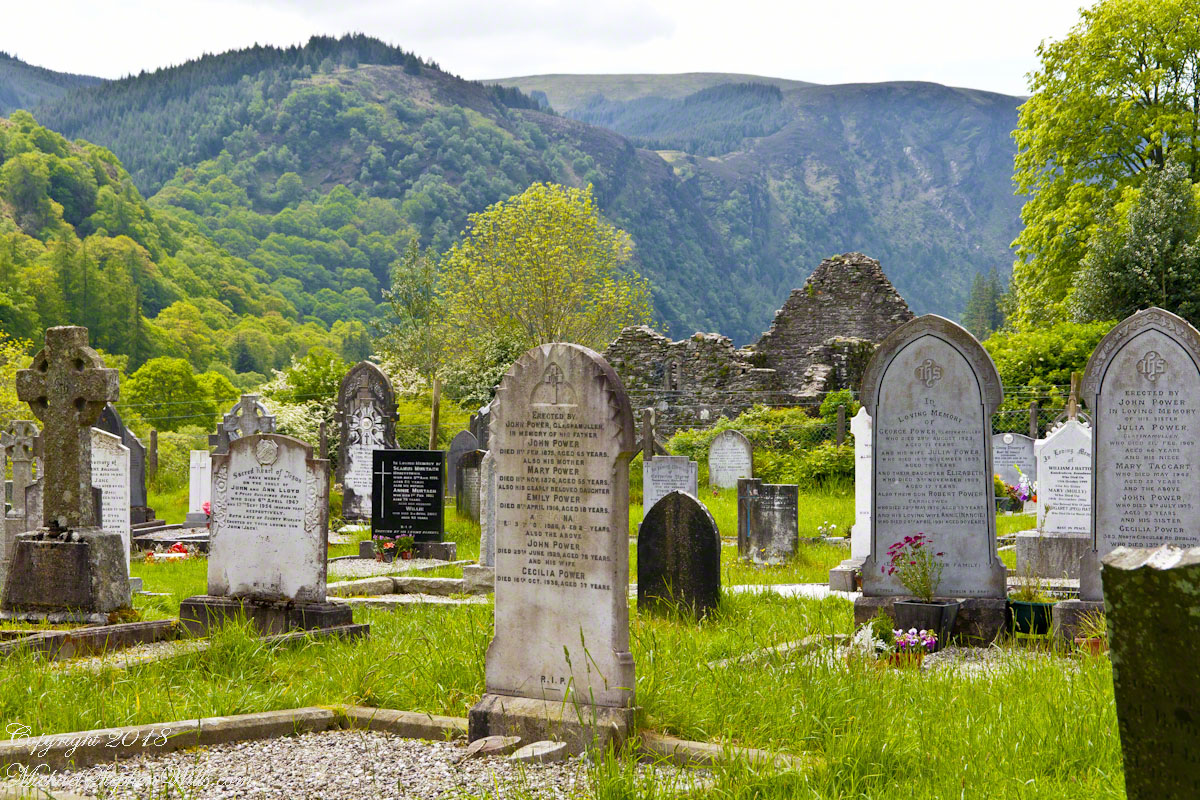
Valley walls are dramatic and steep

A sudden breeze rippled through the trees, setting the leaves to dance and carrying the lilt of birdsong across the valley. I turned to admire the view once more, and there, between towering yew trees, the lake glowed like a polished mirror. Soft clouds glided overhead in a pale blue sky. The entire scene seemed woven from a single, unbroken strand—mountain, forest, gravestone, lake, and sky merging in a spellbinding harmony. It was the kind of moment that invited awe, a moment in which to lose oneself and yet feel more fully found.

I left the cemetery with a deeper sense of peace than I had known in some time. The photographs I took may capture the beauty of Glendalough’s ancient crosses and serene landscape, but it’s the intangible hush of centuries and the gentle brush of magic that remain with me. With every step back toward the car, I felt the warmth of timelessness, and as the day’s golden light enveloped the stone monuments behind me, I carried away a tiny spark of the valley’s enchantment—a reminder that some places are truly touched by the divine.Look closely at the carved scroll at the foot of the cross.

For more background of this site, see my posting “The Cloigheach of Glendalough.”
Enter your email to receive notification of future postings. I will not sell or share your email address.

Lessons in the Woods: A Grandfather’s Nature Walk

On a crisp September morning, a grandfather leads his grandsons on a nature walk, discovering the mysteries of the forest. Together, they encounter a curious caterpillar and uncover the wonders of the natural world.

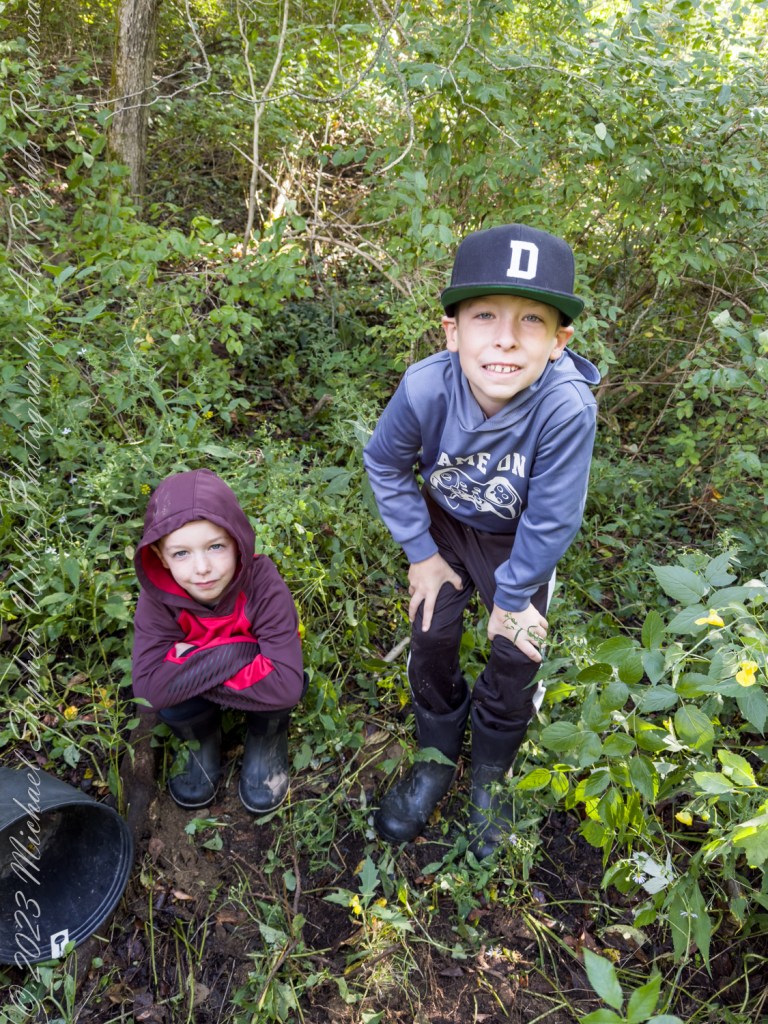
Unseasonably warm September morning air gently stirred the leaves as I guided my grandsons, Sam and Rory, through our woods near Freeville. Our boots crunched softly on the damp earth, and the sounds of nature enveloped us like an old, familiar melody. Today we were on a mission of discovery, with Mother Nature as our guide.

“Grandpa, look at this!” Sam called, excitement radiating from his face. Rory, always close behind his older brother, crouched down, his bright eyes scanning the ground for any movement. I smiled. Sam’s sharp curiosity and Rory’s quiet attentiveness reminded me so much of myself at their age, exploring the woods.

We stopped at a patch of earth, where the boys had found a small hole in the ground, evidence of something recently disturbed. “Do you think it’s a mole, Grandpa?” Rory asked, his voice a mix of wonder and uncertainty.

“Maybe,” I said, leaning down beside them. “Or it could be something larger, like a chipmunk. These woods are full of surprises.”

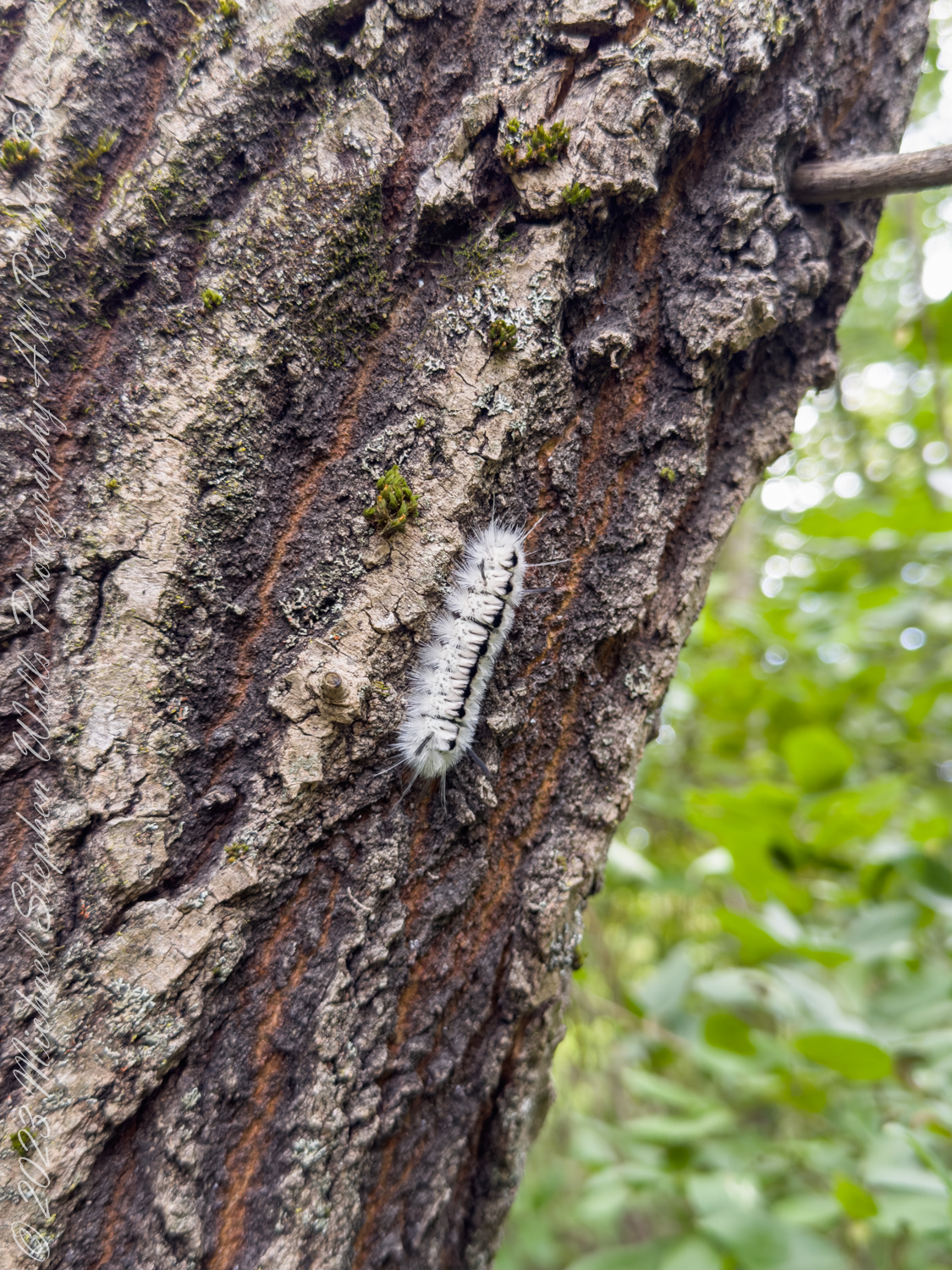
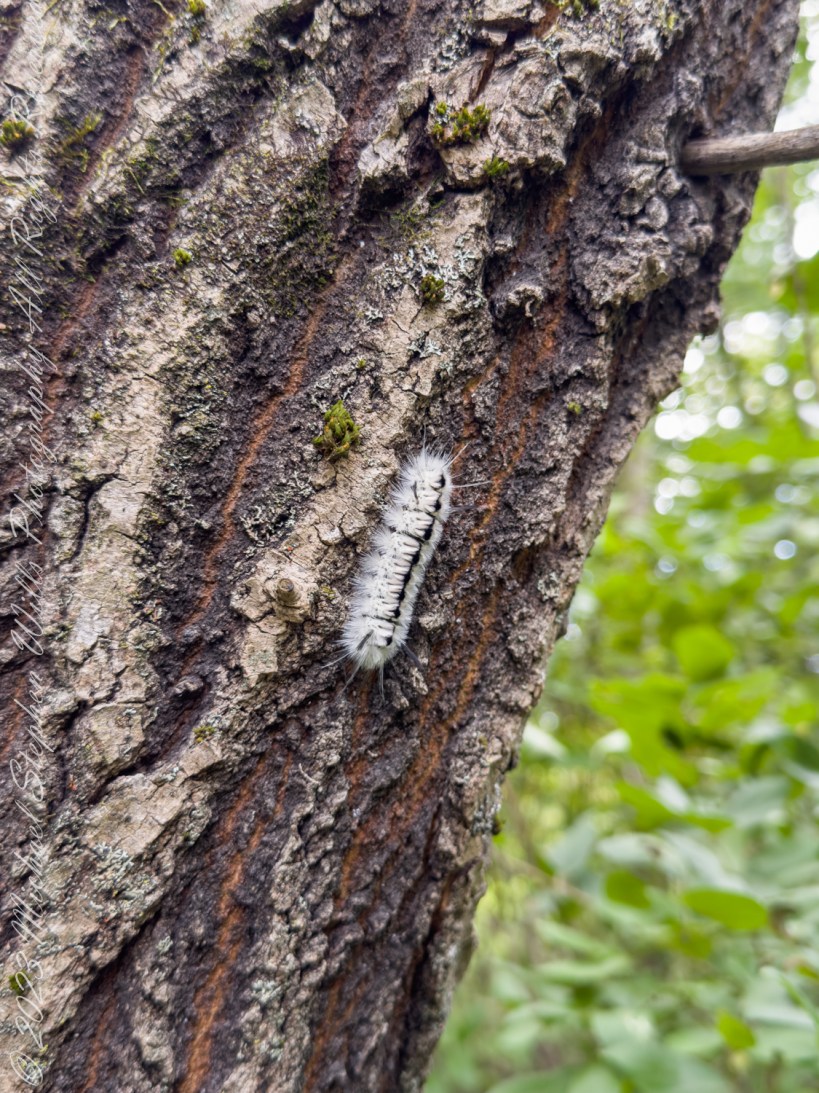
As they explored further, I glanced at the trees, their trunks coated in a rich tapestry of moss and lichen. Then, something caught my eye—a familiar white and black figure on the bark of a young tree, I’ll call it a hickory.

“Hey, boys, come over here for a second. I’ve got something to show you,” I called, my voice calm but laced with excitement. Sam and Rory, ever eager, bounded over. “Look at this caterpillar.”

Their faces lit up when they spotted it. “Whoa, it’s so fuzzy!” Sam exclaimed.

“Yeah, but don’t touch,” I warned gently, kneeling to get a better look. “This little guy is called a Hickory Tussock Moth Caterpillar. See those long white hairs? Some of them can irritate your skin. Always good to admire from a distance.”

Rory looked up at me, wide-eyed. “What does it turn into?”

I smiled. “That’s the magic of it. This caterpillar will eventually become a moth, a Hickory Tussock Moth, in fact. But right now, it’s preparing for a long journey. In just a few weeks, it’ll spin itself a cocoon and wait all winter before emerging as a moth in the spring.”

Sam squinted at the caterpillar, studying its every bristle. “So it’s it’s going to sleep for the winter?”

“Exactly,” I said, pleased with his understanding. “It’s one of nature’s ways of resting and preparing for something new.”

The boys stared at the caterpillar in silence for a moment, and I could tell their young minds were spinning with thoughts. Maybe they were thinking about their own journeys—how each season brought something new to learn, something new to experience.

As we moved on from the caterpillar, deeper into the woods, I couldn’t help but feel a quiet sense of gratitude. These moments, small as they may seem, were the kinds of memories that last a lifetime. I was passing down not just knowledge but a love for the natural world, a connection to the earth that I hoped would stay with them long after I was gone.

We finished our adventure with planting two oak saplings. The boys dug in the rich soil, each working carefully as we prepared a young sapling to take root. I watched as they placed the sapling into the earth, their hands gentle yet sure. Together, we packed the soil around its base.

“You know,” I said softly, “these oaks will grow just like you two. Stronger every year. And one day, you’ll bring your own children here to see it.”

Sam and Rory exchanged a look, a flicker of understanding passing between them, and I knew the lesson had landed. Nature has a way of teaching us that growth, whether in a tree or in ourselves, takes time and patience.

As we packed up to leave, I glanced back at the hickory tree where the caterpillar still clung, a tiny, determined creature, preparing for the change to come. In that moment, I felt the same sense of wonder I’d seen in the boys’ eyes earlier. Even after all these years, nature never ceased to amaze me.

“Come on, boys,” I said, with one last glance at the woods. “Let’s see what other adventures await us.”

Copyright 2024 Michael Stephen Wills All Rights Reserved

On the Road to Killen

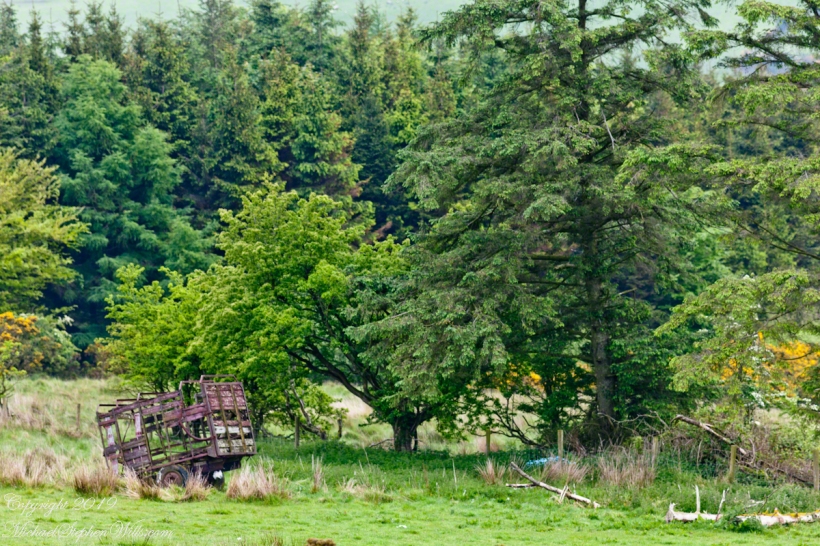
In the early dawn, I walked the path to Killen, drawn by the legacy of my mother’s Irish youth. An abandoned hay wagon stood, a relic amidst the whispers of history and myth. Join me in uncovering the roots that intertwine family and the enduring Irish land.

Continue reading “On the Road to Killen”

Reflections on the Inlet: The Convergence of Realities

In the shadow of McGraw Tower, Natan grapples with surreal encounters and mystical occurrences, questioning the nature of reality itself. Open my blog to uncover the mysteries of McGraw Tower and Natan’s journey into the heart of the extraordinary.

Continue reading “Reflections on the Inlet: The Convergence of Realities”