1959 through today



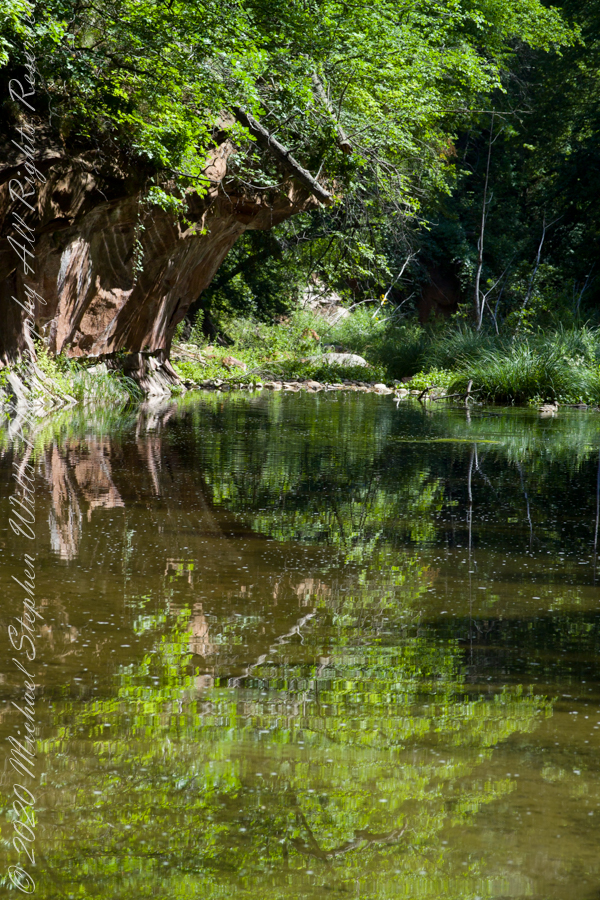
early one still morning
The fault of Oak Creek changes direction, here it turns east/west through Schnebly Hill Formation red sandstone for which Sedona is famous.
West Fork (108) Trail, Sedona, Yavapai County, Arizona
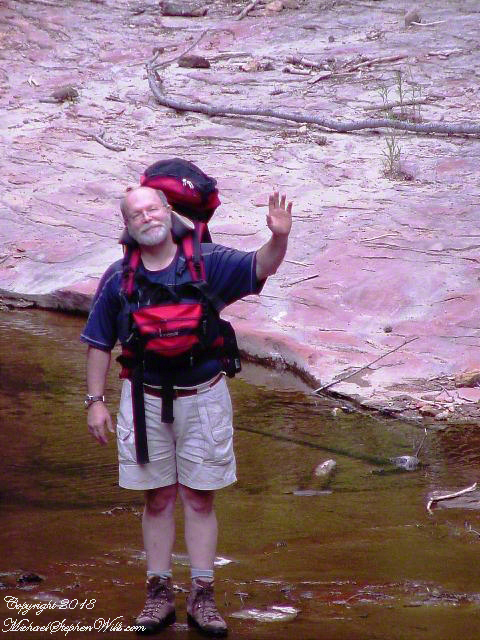
“Hello” from Oak Creek Canyon, “Photo by Pam Wills”
Click this link for my Fine Art Photography gallery. You can find Oak Creek Mandala in the Arizona gallery. The gallery description gives more information about the site.
Click this link for another Arizona post, “Cochise Dawn.”
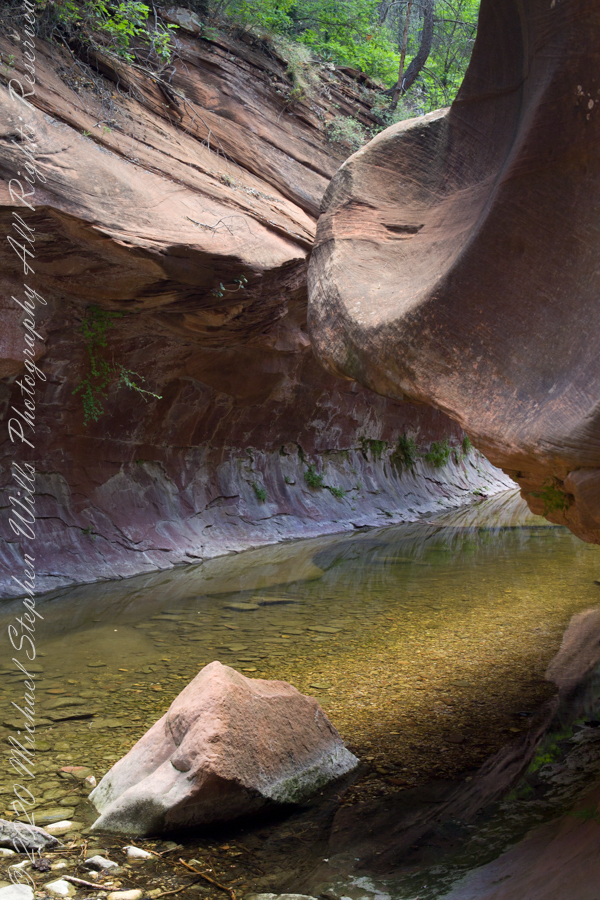
early one still morning
The fault of Oak Creek changes direction, here it forms a north/south gallery through Schnebly Hill Formation red sandstone for which Sedona is famous.
West Fork (108) Trail, Sedona, Yavapai County, Arizona
“Hello” from Oak Creek Canyon, “Photo by Pam Wills”
Click this link for my Fine Art Photography gallery. You can find Oak Creek Mandala in the Arizona gallery. The gallery description gives more information about the site.
Click this link for another Arizona post, “Cochise Dawn.”

Across the years into a future
Gratitude for miracles witnessed is my emotion for this series, “Frozen Fall Creek.” Fifteen winters after Pam and I walked Fall Creek as a solid walking path, the stream flows without ice most years. My son, whose family now lives in the house, and his wife recalling walking the creek a few years ago, not in the past few years.
Weather records support our recollections and observations: here is an analysis of Ithaca January temperatures. The years 2009 through 2019 show a warming trend in daily temperatures for both minimum and maximum.
Excel I used to plot minimum and maximum temperatures (Fahrenheit) for the 31 days of each January for eleven years 2009 – 2019. Click on the images of this post for a larger version.


Pam and I moved to Ithaca 2011 and missed our Fall Creek winter walks, miss them even more now our weekend excursions are only memories. Here are January minimum/maximum average daily temperature projections from 2020 through 2044 based on the trend established from the 2009 through 2019 series. The trend is the solid color, projection the faded color.
Reading from the chart, if the current trend continues by January 2044 the average maximum daily temperature will be 47 degrees compared to 29 for 2009. In other words, the temperature never rose above freezing in the year 2009. By 2044 temperatures will be above freezing every day, on average, with daily minimums averaging 21 degrees.

From what I read, we can expect these warming trends to accerate within our lifetimes. My son named small mid-creek hummocks “islands” with numbers. Here is a view of his Second Island in late summer. What will Second Island be in 2044 late summer?

Reader of posts I and II of this series have commented about snow shadows. Here are the shadows produced from snow fallen on the vegetation of the last photograph: soft mounds to contrast with tree trunk shadows.

I prefer the composition of the following photograph. What do you think?

A combination of contrasting shadow forms.


Natural Ice Sculpture
My last post, “Frozen Fall Creek I”, ended with macros of Ice Crystals on a bed of frost over creek ice within sight of our former home, a restored water mill. I continued on the ice, following the creek to this spot were the stream bed turns 90 degrees, changing from a southerly to a western flow.
Here I encountered an open course where constant water motion resisted freezing. A few frigid days later, the course had an amazing transformation.

The transparent ice of the now frozen space retained the impression of movement, the surface rippled by current. In the following photograph, motionless ice crystals reveal the truth.

In the intervening days, the constant motion resisted freezing while the water temperature dropped well past freezing to achieve a supercooled state. As the water temperature continued to drop, a fast transition from fluid to solid happened so quickly the movement of the water surface was preserved.

Here is the matching “after” photograph to the “before” that started this post.


Ice Crystals


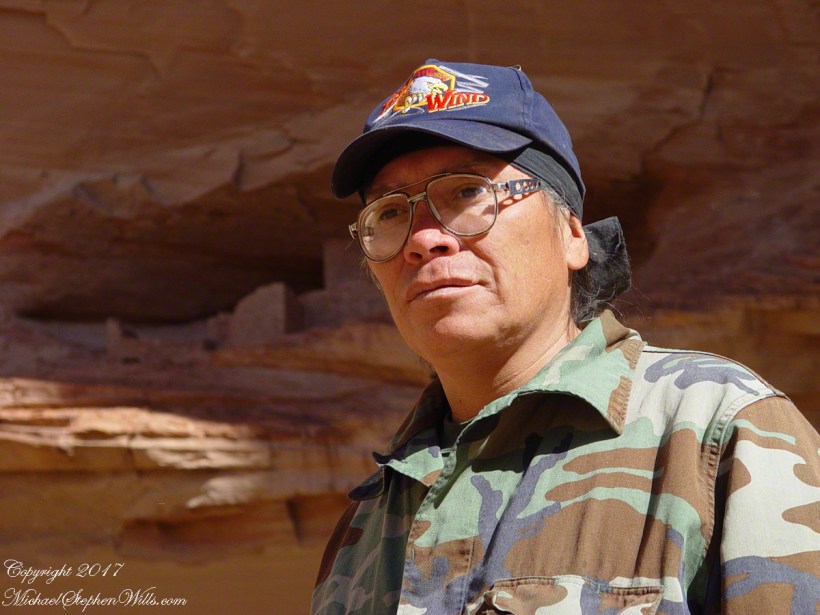
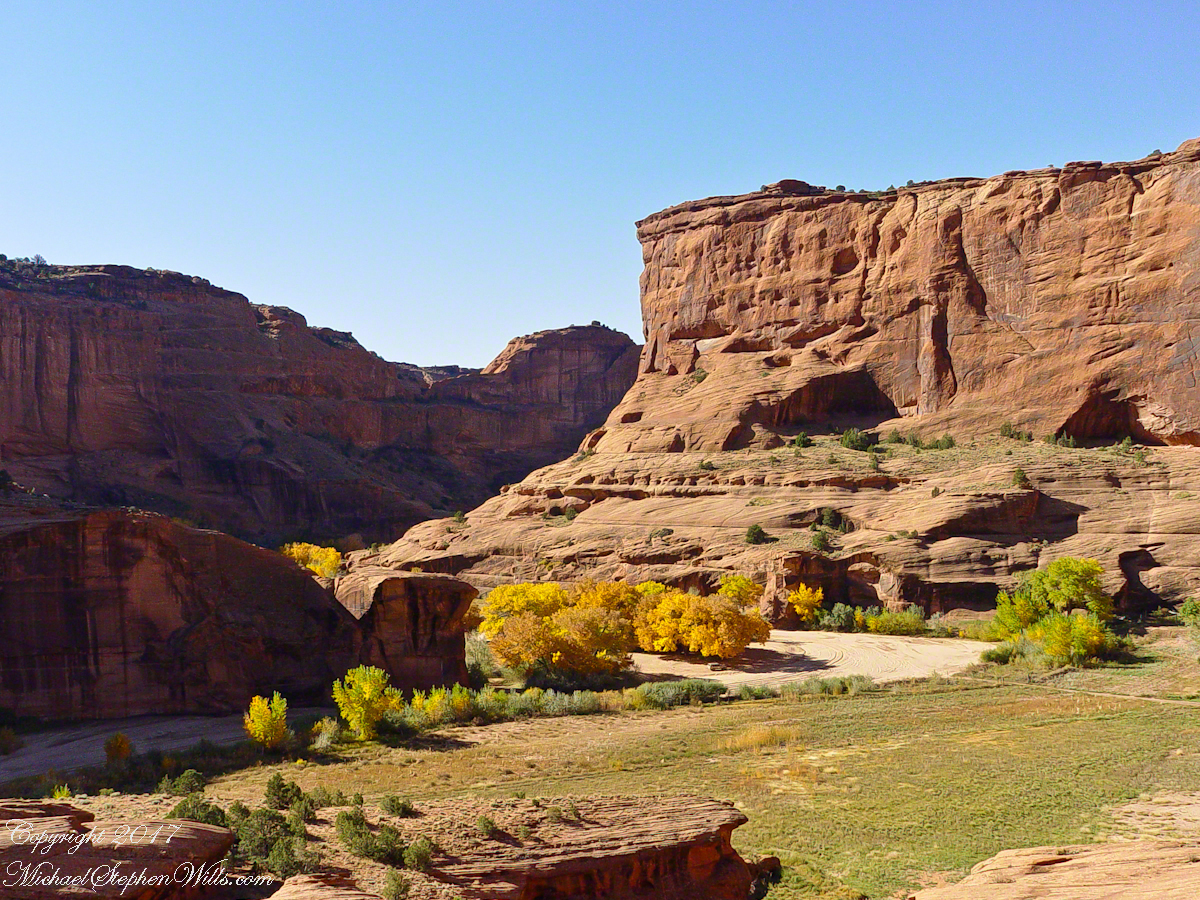
In November 2004, a visit to Canyon de Chelly with guide Hadley Tsosie revealed ancient petroglyphs and ruins, highlighting Navajo culture and the canyon’s unique beauty.
On November 3, 2004 my son, Sean, and I made our way to Chinle, Arizona on the Navajo Reservation at the mouth of Canyon de Chelly.
The next day, driving a rented 4 wheel drive, we arrived at the visitor center, at dawn, and there met Hadley Tsosie who worked as a guide. This is how you do it, if learning about the Canyon is your goal. It is possible to walk, unaccompanied, into the canyon to view the “White House” and this I highly recommend. Tourists can also drive around the rim to various overlooks. This is what most people do.
The canyon is still farmed and the tribe only allows visitors when accompanied by a guide. Only Diné (Navajo) are certified as guides. They know the rights of way and the preferences of the landowners.
We negotiated with Hadley to take us for half a day for our interest in petroglyphs and ruins. It is important to start early when the sun is low in the sky, when directly overhead the details of ruins and petroglyphs are washed out by the light. Catching the late afternoon/evening sun is also an approach that requires detailed knowledge of the route, taking into account the time of year.
Hadley was an excellent choice, though he was our only option on that day. He was fluent in Navajo beliefs, the lore of the canyon and generous in sharing what he knew.
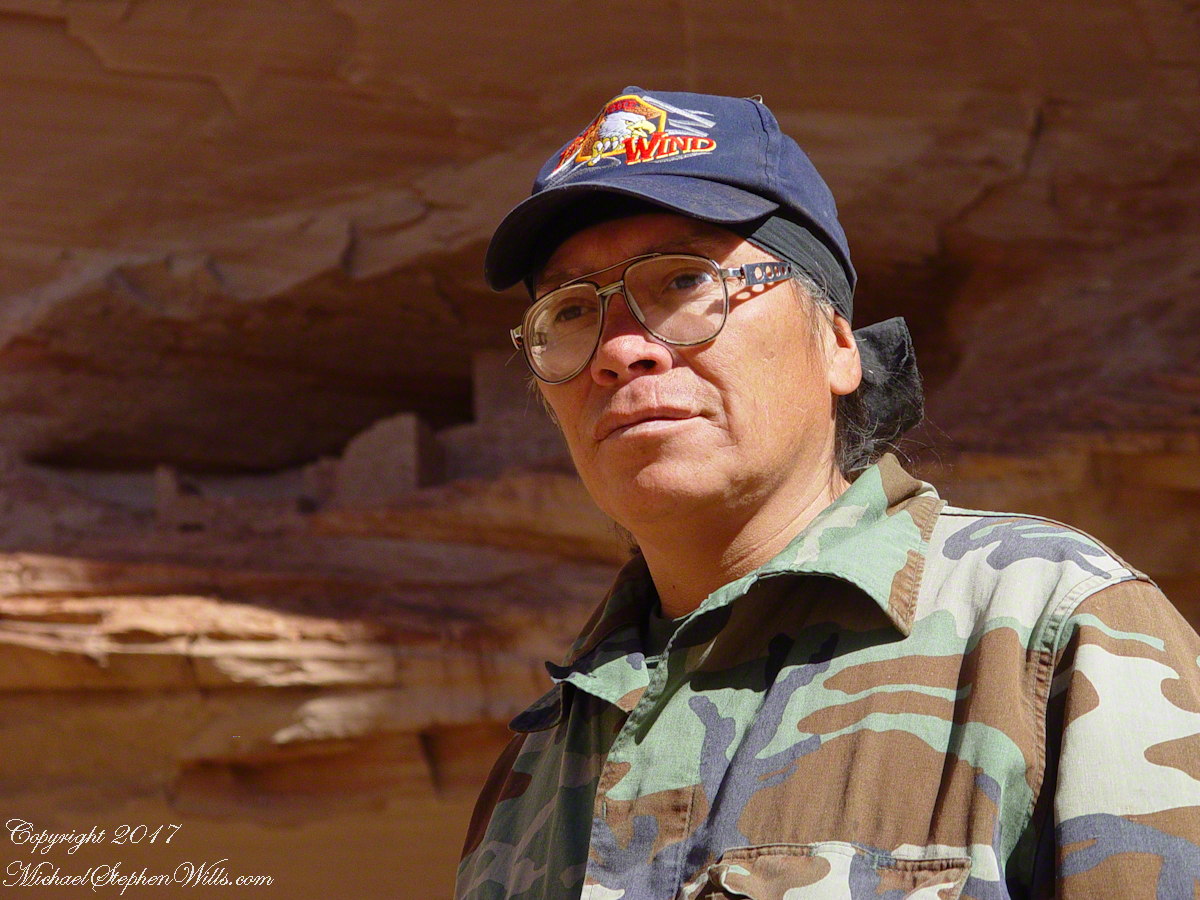
Here is Hadley, approximately 6.2 miles into the canyon with the “Ledge Ruin” behind. We arrived at the junction just in time, before the sun was high enough to wash out the ruin. It is slow going into the canyon what with the deep sand and water that must be negotiated. Hadley did the driving and was expert. We passed other parties bogged down in the wet sand. I do not believe it was luck that kept us moving . We stopped many times to talk and admire the petroglyphs and pictographs.
Petroglyphs are symbols incised, or cut, into the surface (the name means petro, “rock”, glyph, “symbol”). In the desert climate of the southwestern USA a thin, dark pigment forms on rock surfaces of overhanging cliffs. The pigment forms from infrequent precipitation, in the form of water, flowing downward over the surface or even dew. The high heat of the desert drives a chemical reaction between water, clays, iron and manganese oxide to form a coating on the rock surface. The dark coating, called “desert varnish”, contrasts with the underlying rock. When it is scraped away a line forms. Many of the petroglyphs were of this form. Others were carved into the rock itself, more time consuming and durable. No one knows when the petroglyphs were made, they were always there are respected. People have inhabited Canyon de Chelly for over a thousand years.
The word pictograph has a different meaning when used to describe prehistoric art. The earliest writing were symbols incised in wet clay, then allowed to harden. The pictographs we viewed was prehistoric art, mostly white pigment on the red rock, outlines of hands. There were also kokopelli, the outline of a flute player and jagged lines, symbolizing, Peter told us, lightening.
In November the cottonwoods were in fall foliage, a brilliant yellow under a cloudless sky. The sun is lower in the south and rises later. The Navajo Reservation follows daylight savings time, unlike Arizona. This November morning the sun rose around 7:45 am, so if you are not an early riser this time of year is an excellent choice for a Canyon de Chelly tour.


there if you want to see it
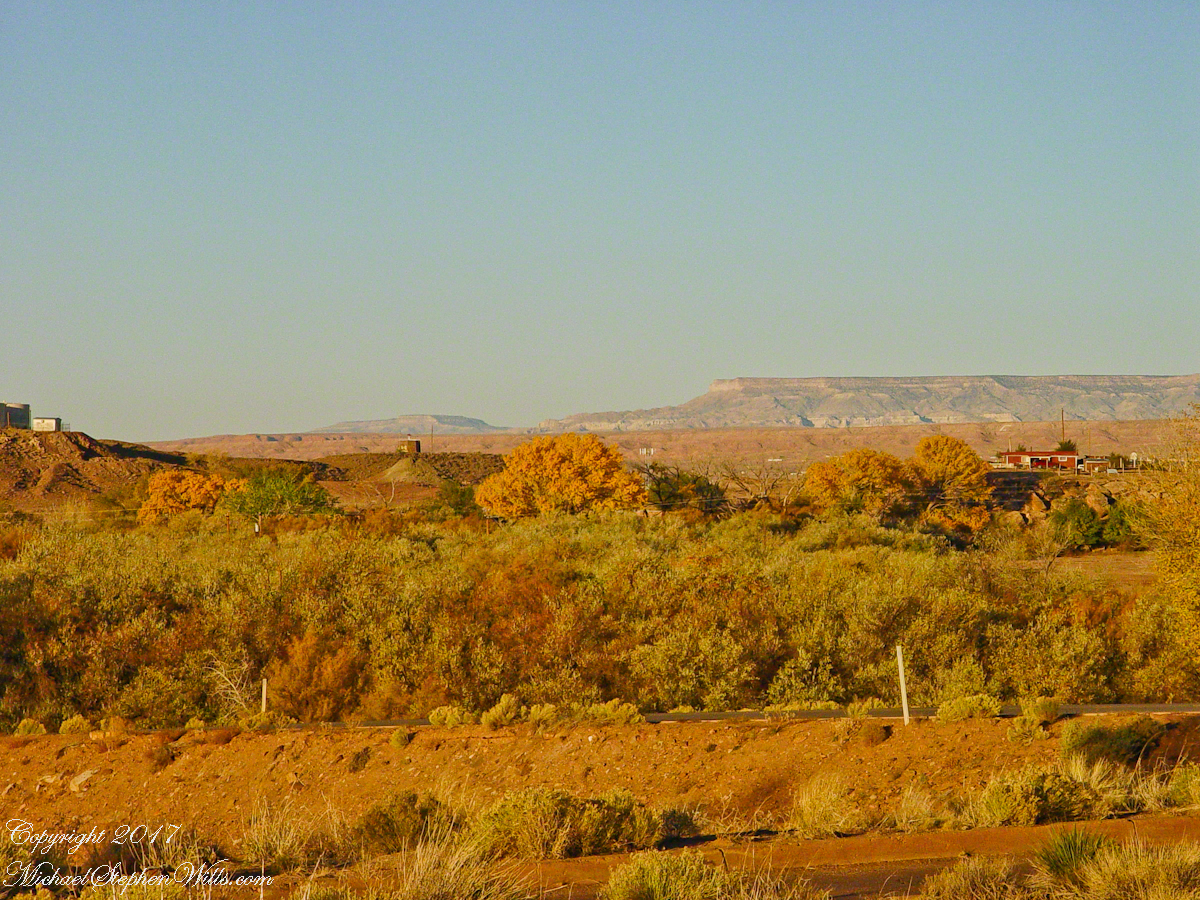
The village of Chinle is a “census designate place”, in other words it only exists because people live there, it was not formally recorded in “official” records. On the Navajo reservation, people lived here beyond recorded time. It is called in their language “flowing out”, where live giving water flows out from the canyons.
There is a fine Best Western in Chinle, better than most of that brand and the only choice for mile and miles and miles.
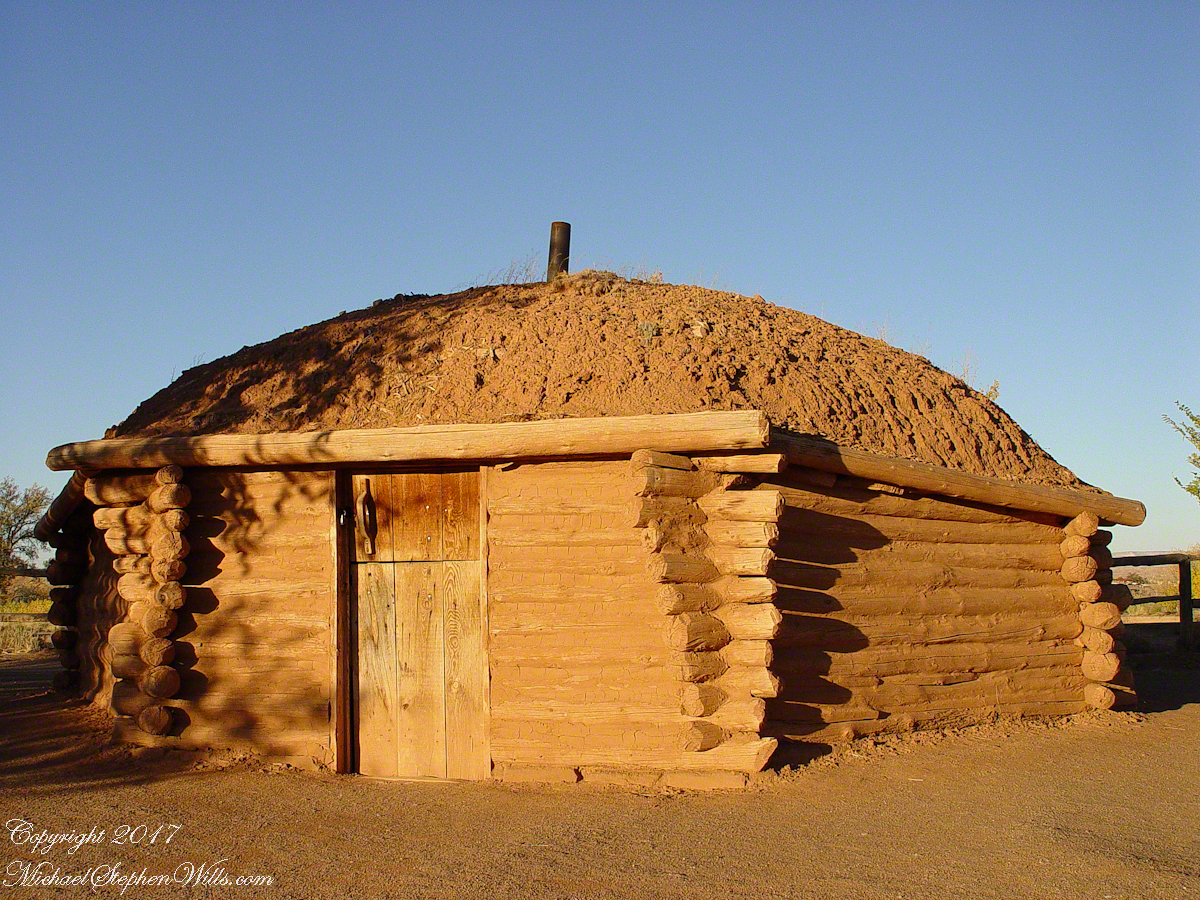
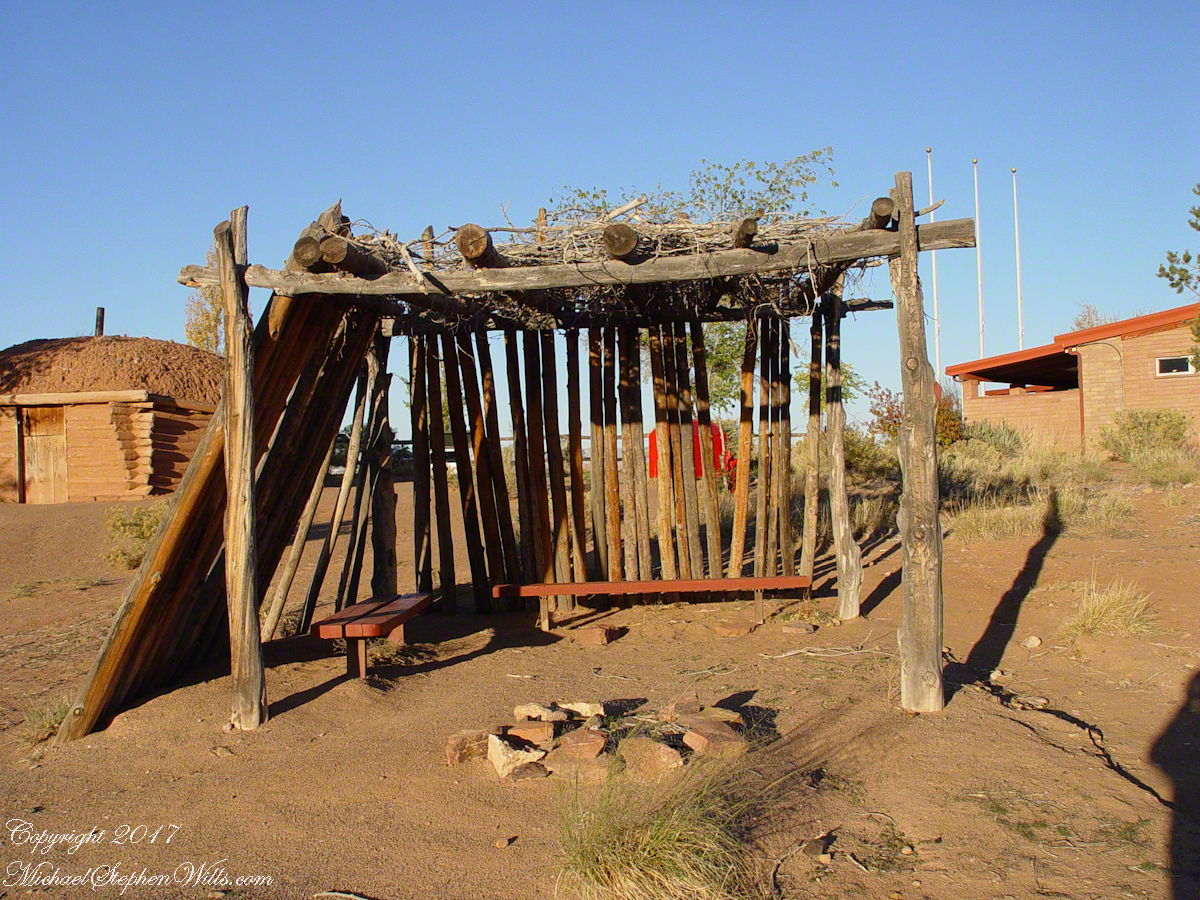
In Junction Ruin Musings, the previous post, a ruin from the Anasazi people was contemplated. Above is a traditional Navajo dwelling from a later, more secure, time.
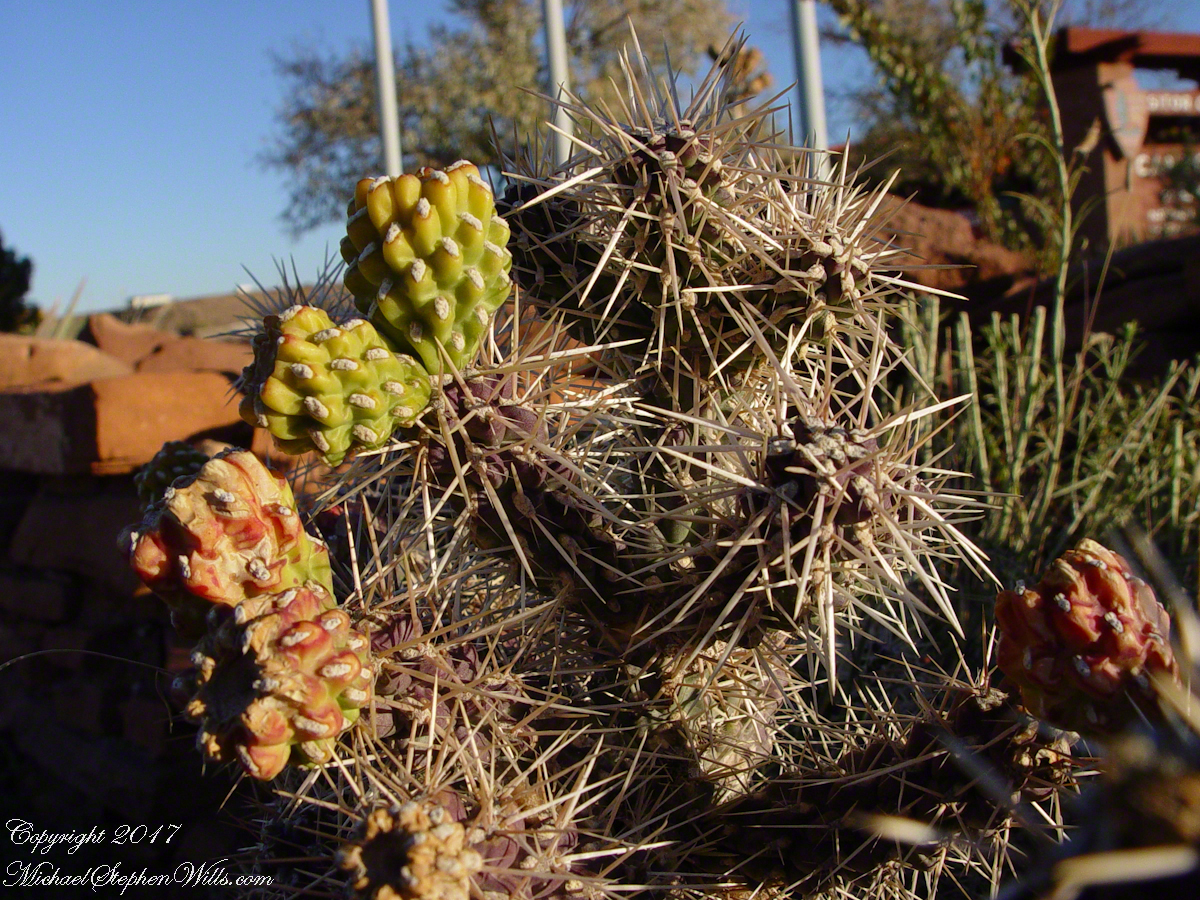
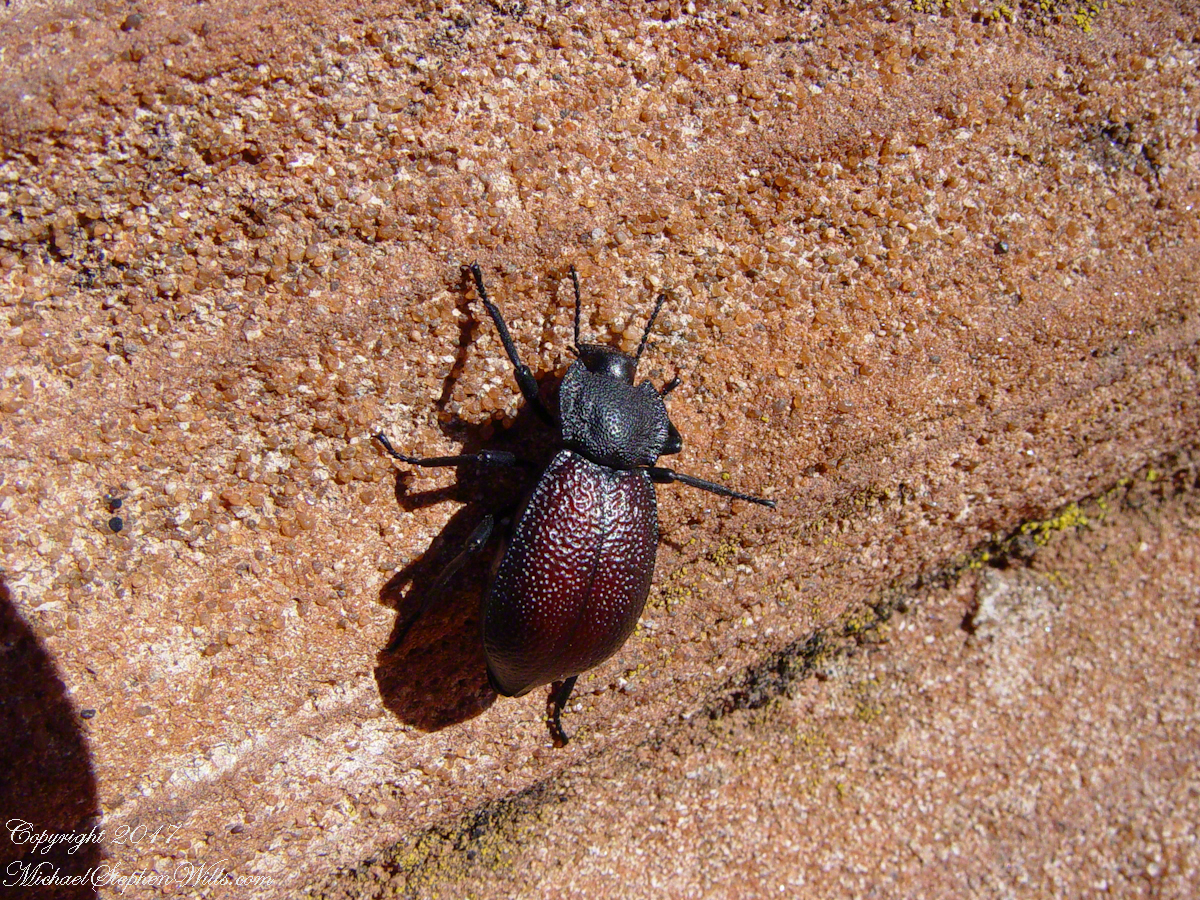
Ouch!! Everywhere in the southwest, watch where you tread.
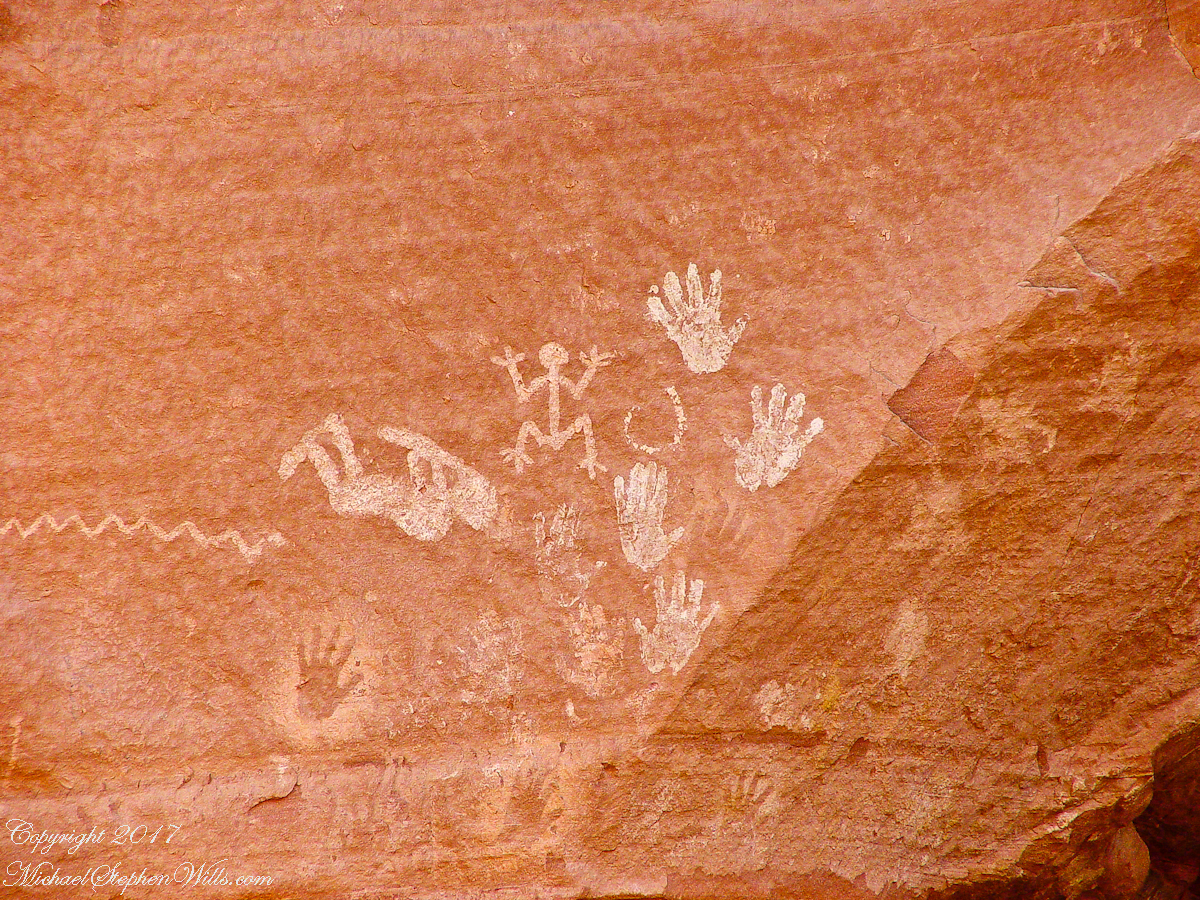
A Native American, seeing the flute playing Kokopelli, hears in the mind the sonorous melodies of their native flutes carried in as if on the wind. The hands waving in rhythm, “Here we are.”
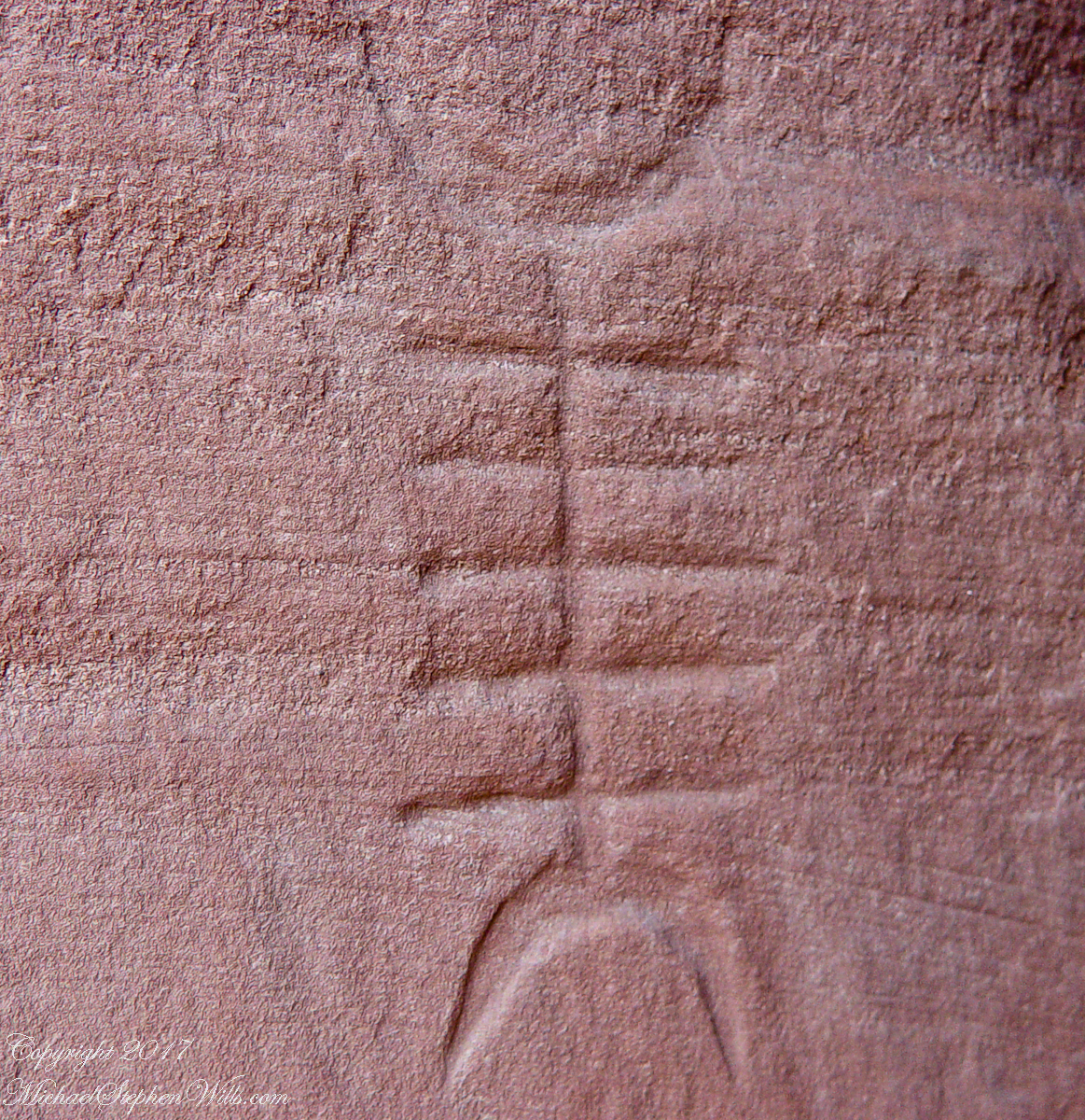
I recall our guide, Peter, describes this as a scorpion.
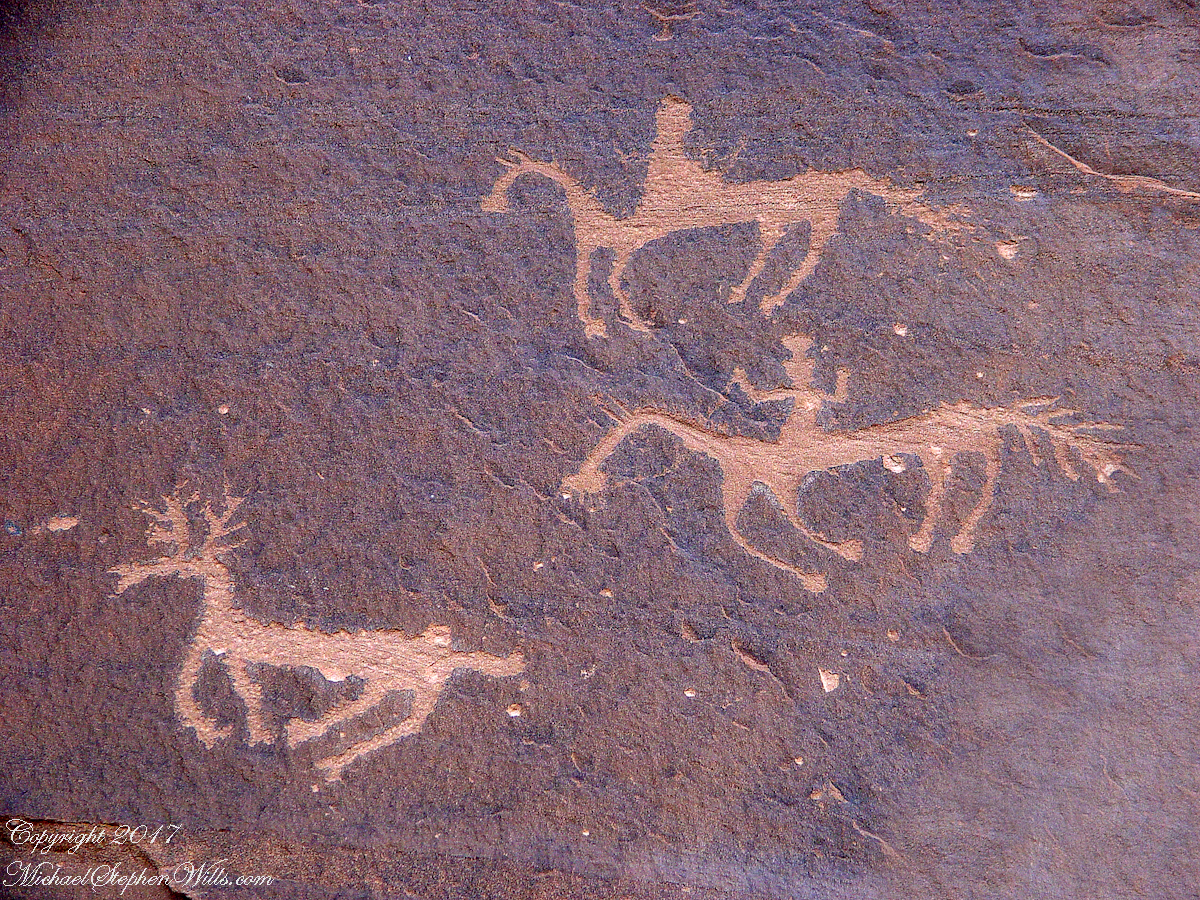
The feeling of movement and the story invoked viewing this drawing etched carefully on the rock demonstrates we are in the presence of an accomplished artist. The story of the times for us to learn from.
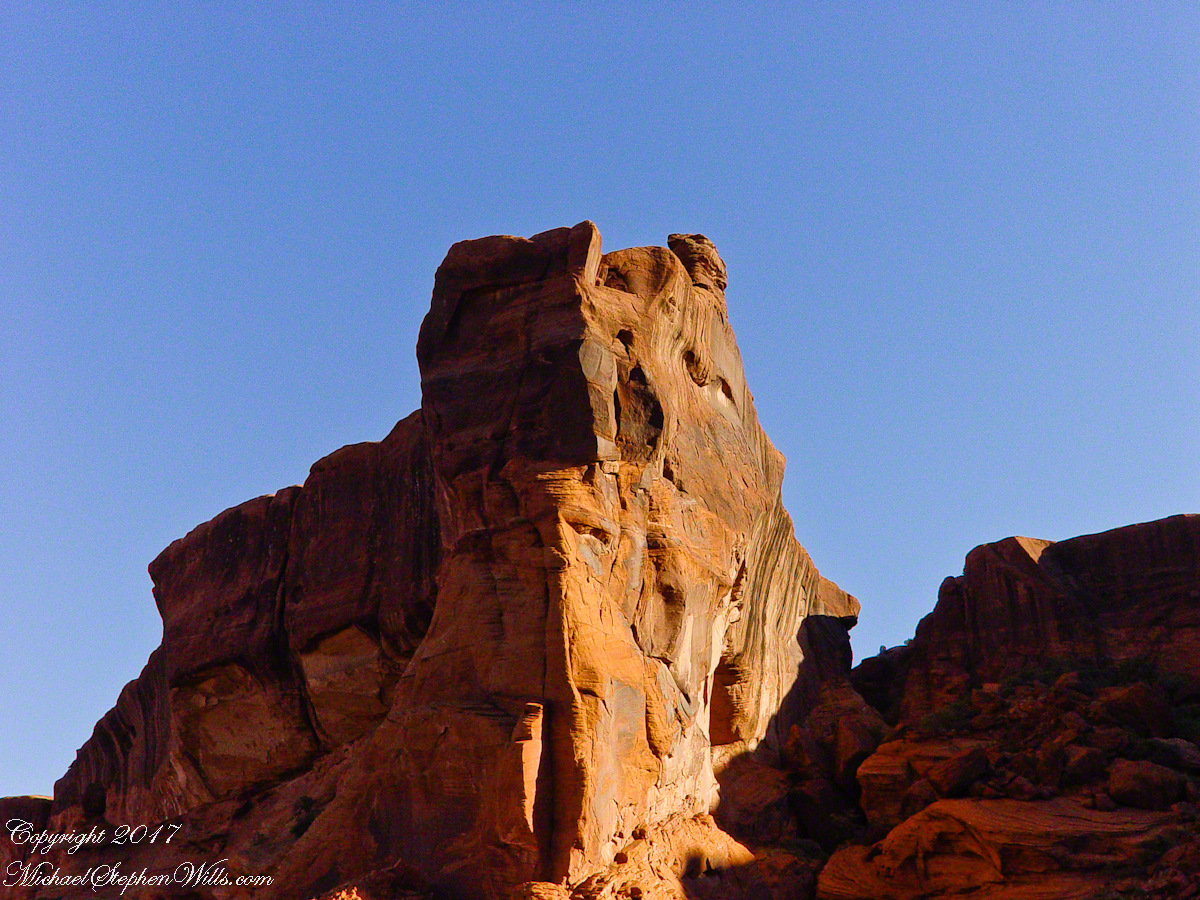
A Navajo woman, fleeing Apache captors, flew over this cliff, or seemed to. Survival depended on knowing how to run over slickrock without stumbling and to know where and how to disappear into the rocks.
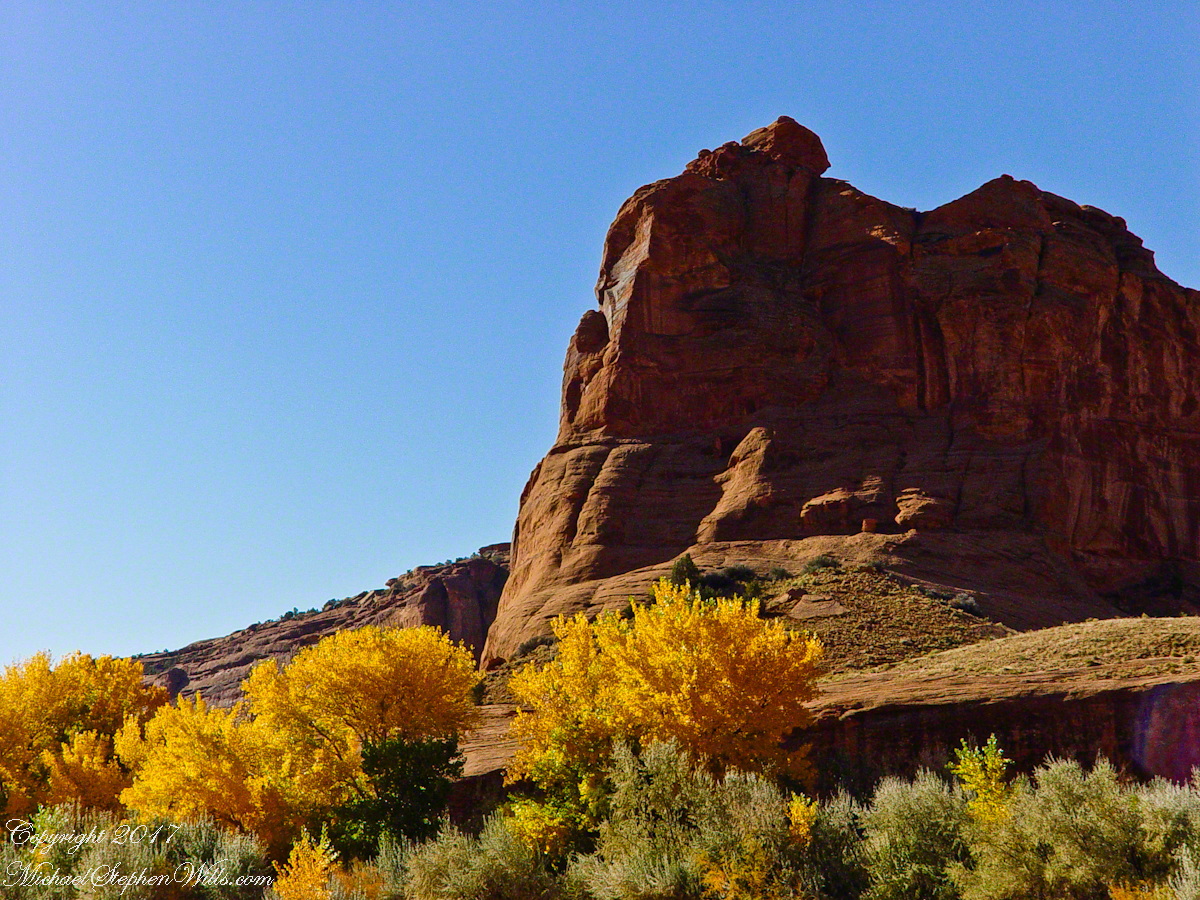
Click for my OnLine Gallery of Arizona photography
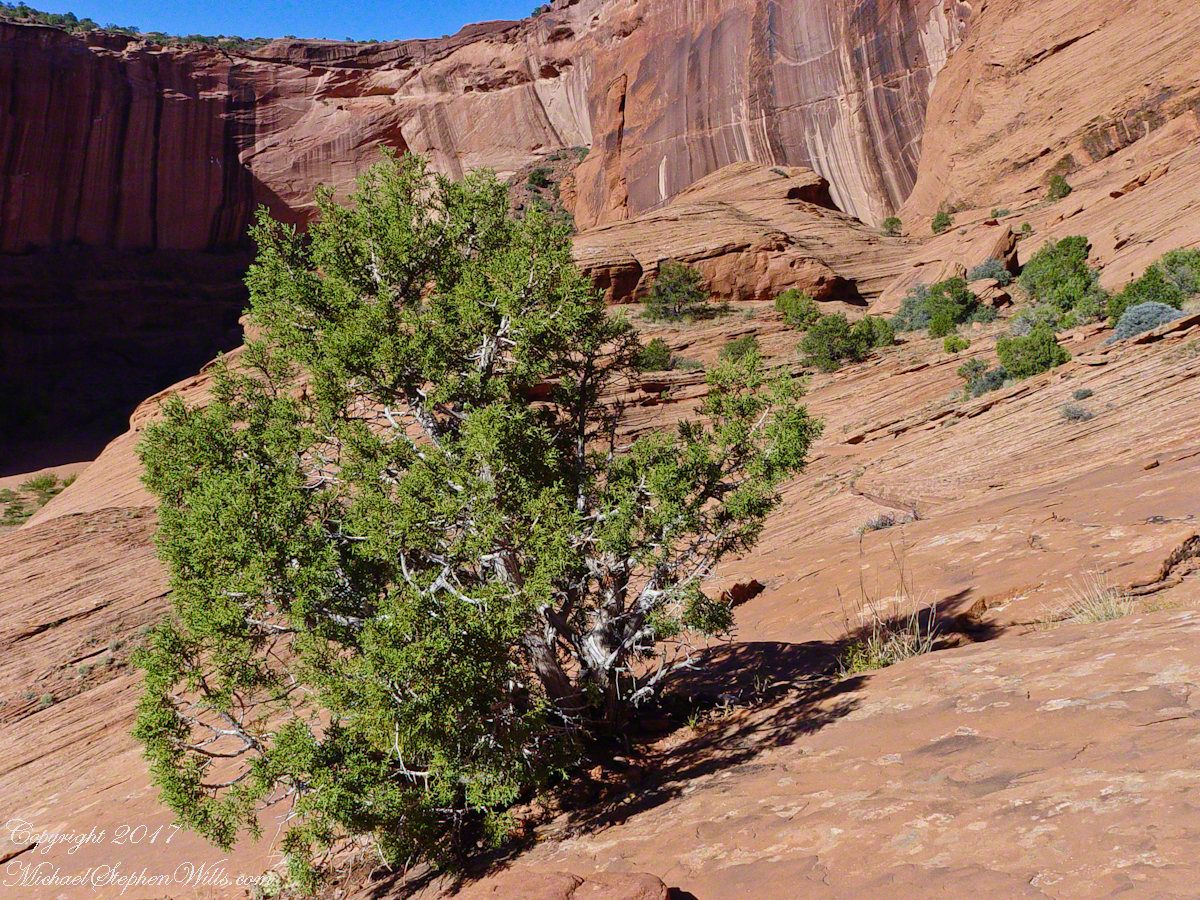
Click for the next posting in this series, “Moon Fin”

along the River Bannon
The tenth and final of a series of idiosyncratic posts from a walking tour of Kinsale by Dermot Ryan. My Sony Alpha 700 captured the events back in May 2014.
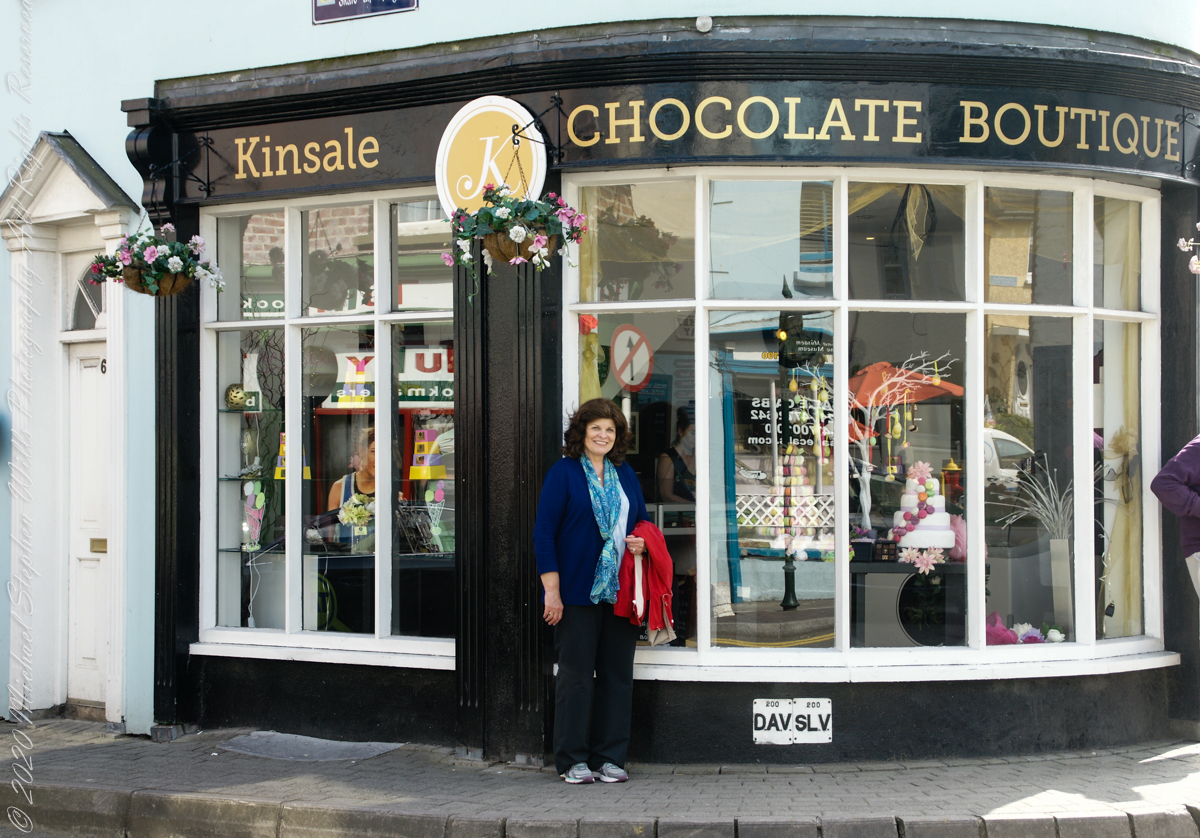
We are headed toward lunch along the River Bannon. The Kinsale Chocolate Boutique, Exchange Buildings, 6 Market Square, did not survive the pandemic. This iconic corner is now the First South Credit Union (sigh).
With headquarters in Dublin, the Irish Red Cross provides in Ireland (click the links to learn more):
PRISON PROGRAMME – COMMUNITY BASED HEALTH & FIRST AID
EMBLEMS OF THE RED CROSS MOVEMENT
INTERNATIONAL HUMANITARIAN LAW

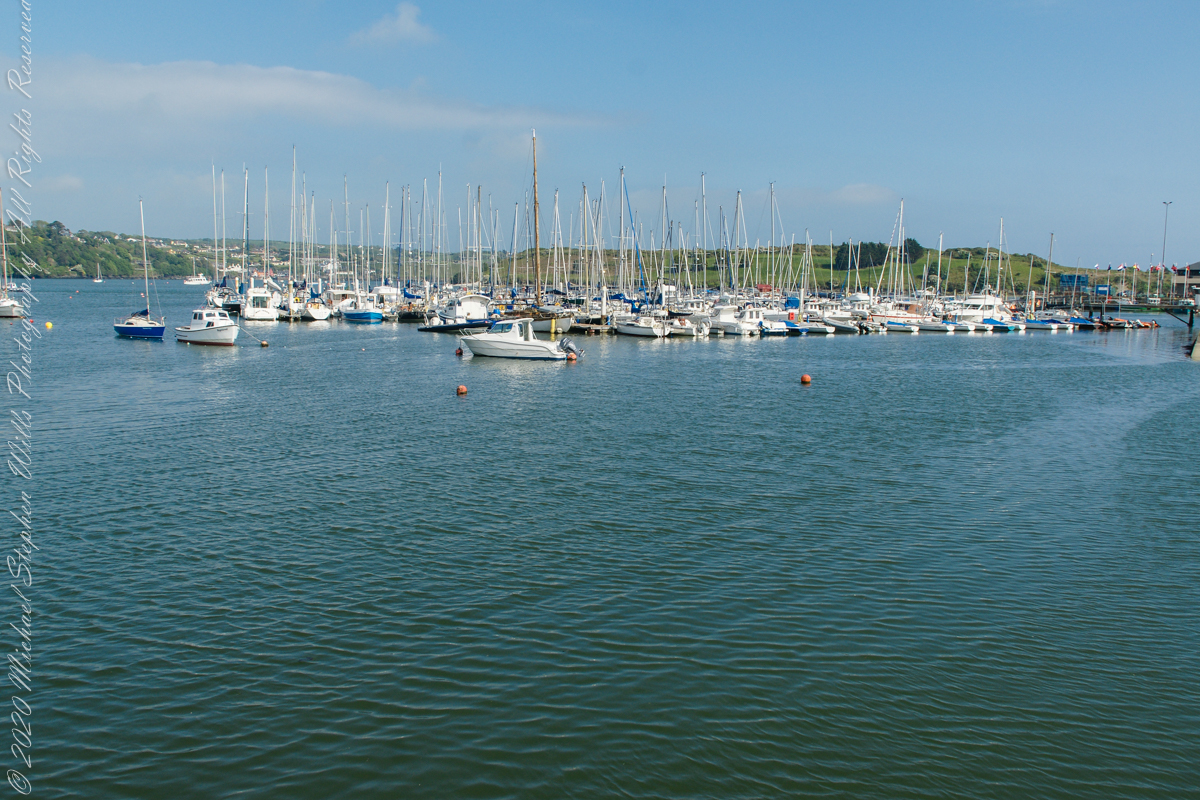
Come out of the center town to walk along Pier Road, River Bannon on its way to the harbor, on one side, town parks on the other.

Across from Kinsale Town Park rises this Tall Ship mast and other memorabilia from Kinsale’s maritime heritage.
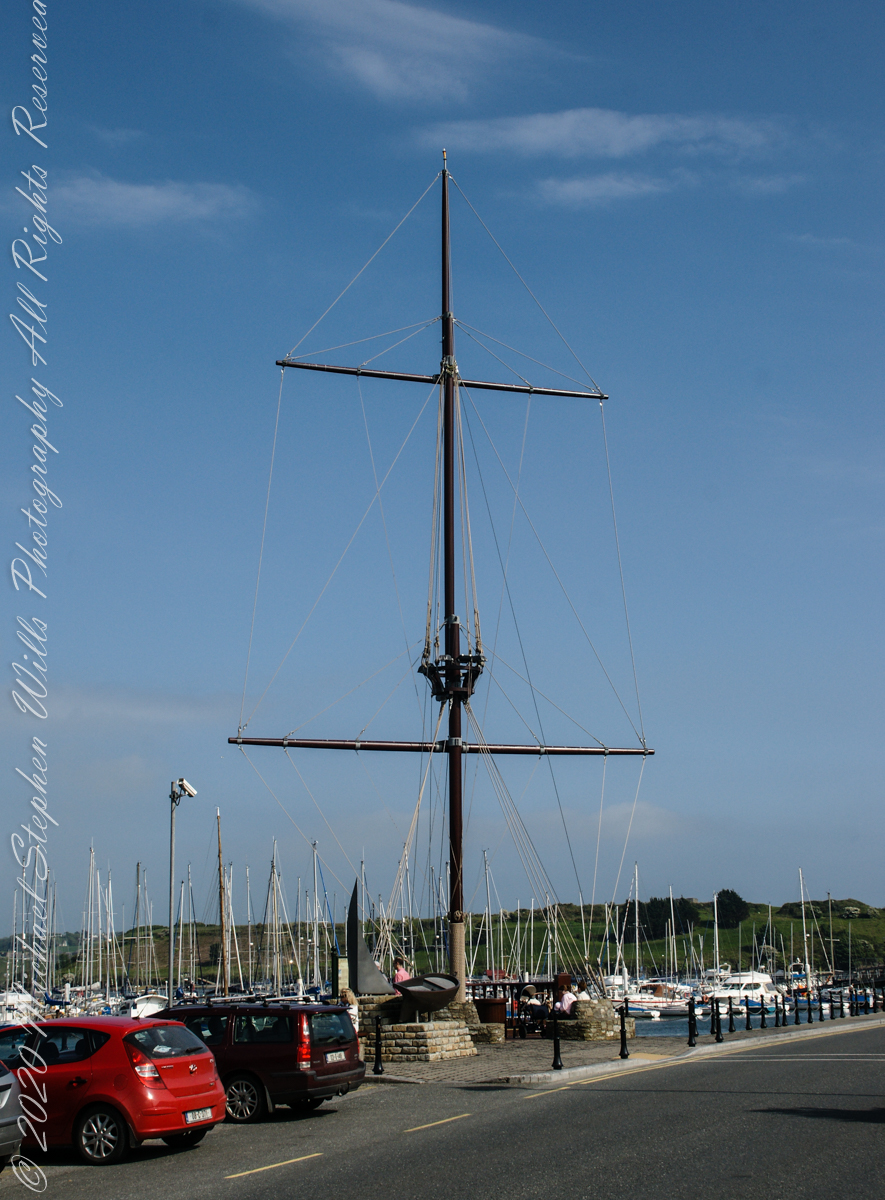
A few hundred feet away are moorings for the Kinsale Yacht club, ” located in Kinsale, County Cork lies just 120 nautical miles from Wales, 240 from North West France and only 500 from the Galician Coast of North Spain. Most significantly it is only 30 km by road from Cork, Ireland’s second city, and between the two lies one the region’s main assets – Cork International Airport – with its daily links to many European capitals. Keelboats and Dinghies. The club runs inshore and offshore races, has active cruising and powerboat sections and most significantly for any real club, a strong and dynamic junior training program. Kinsale Yacht Club and marina are only a few minutes walk from every shop, hotel, pub and restaurant in Ireland’s gourmet capital.” — from the Yacht Club web site.
Copyright 2022 All Rights Reserved Michael Stephen Wills
Protected Storage
The ninth of a series of idiosyncratic posts from a walking tour of Kinsale by Dermot Ryan. My Sony Alpha 700 captured the events back in May 2014.
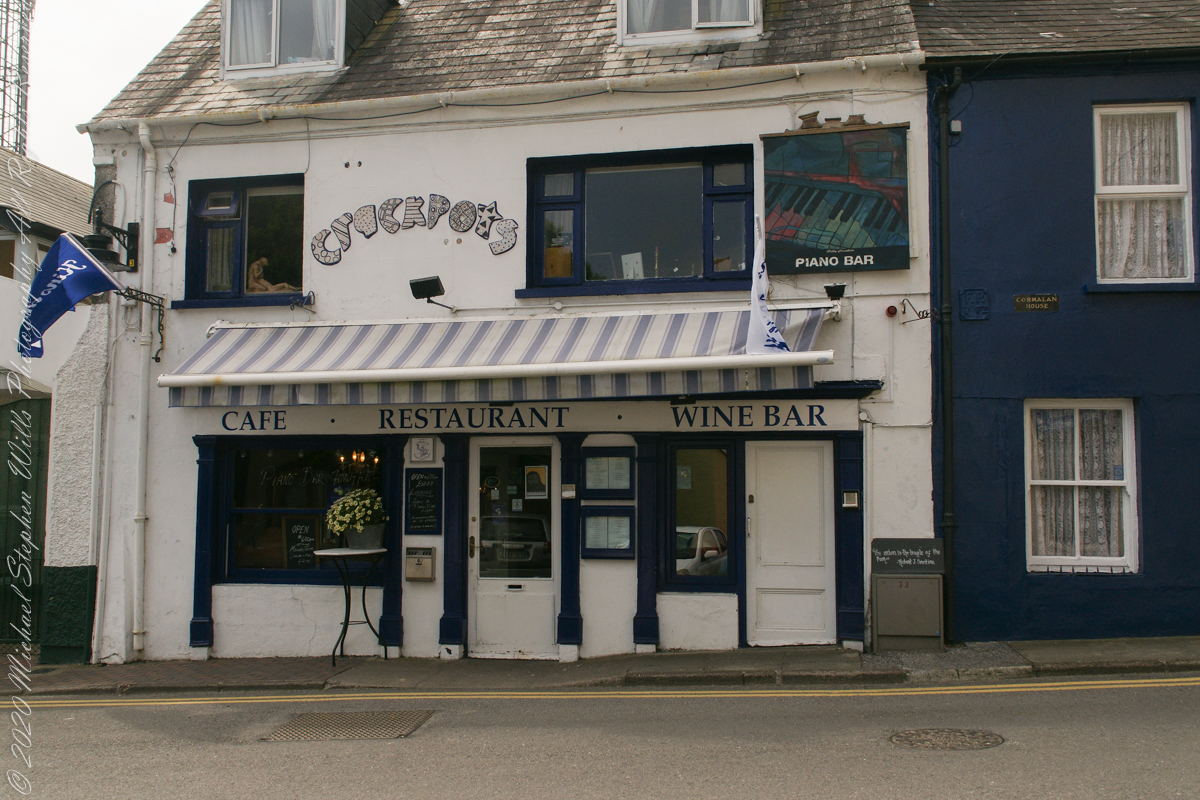
Look closely to see this quote “The Onion is the truffle of the poor.” –Robert J. Courtine. Crackpots was decorated with unusual pottery, a casualty of Covid-19.
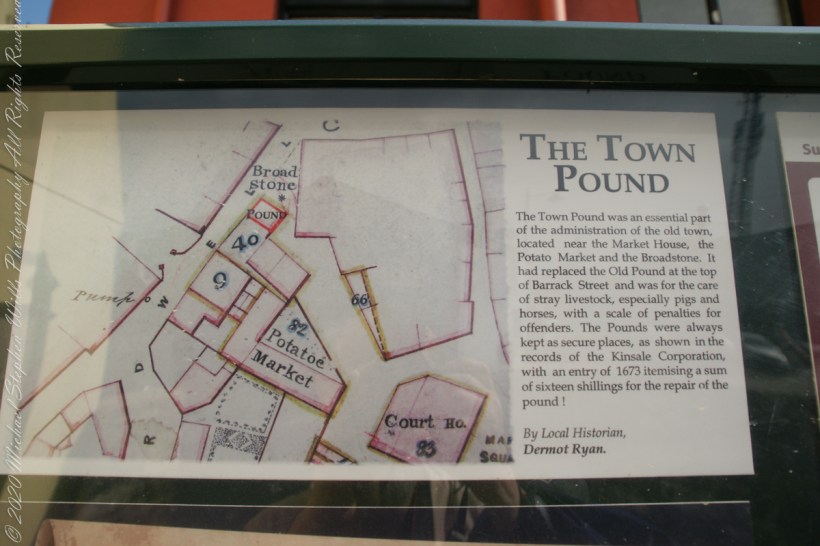
From a placard inside the stone walled “Town Pound.” “The Town Pound was an essential part of the administration of the old town, located near the Market House, the Potato Market and the Broadstone. It had replaced the Old Pound at the top of Barrack Street and was for the care of stray livestock, especially pigs and horses, with a scale of penalties for offenders. The Pounds were always kept as secure places, as shown in the records of the Kinsale Corporation, with an entry of 1673 itemizing a sum of sixteen shillings for the repair of the pound!” By Local Historian, Dermot Ryan.
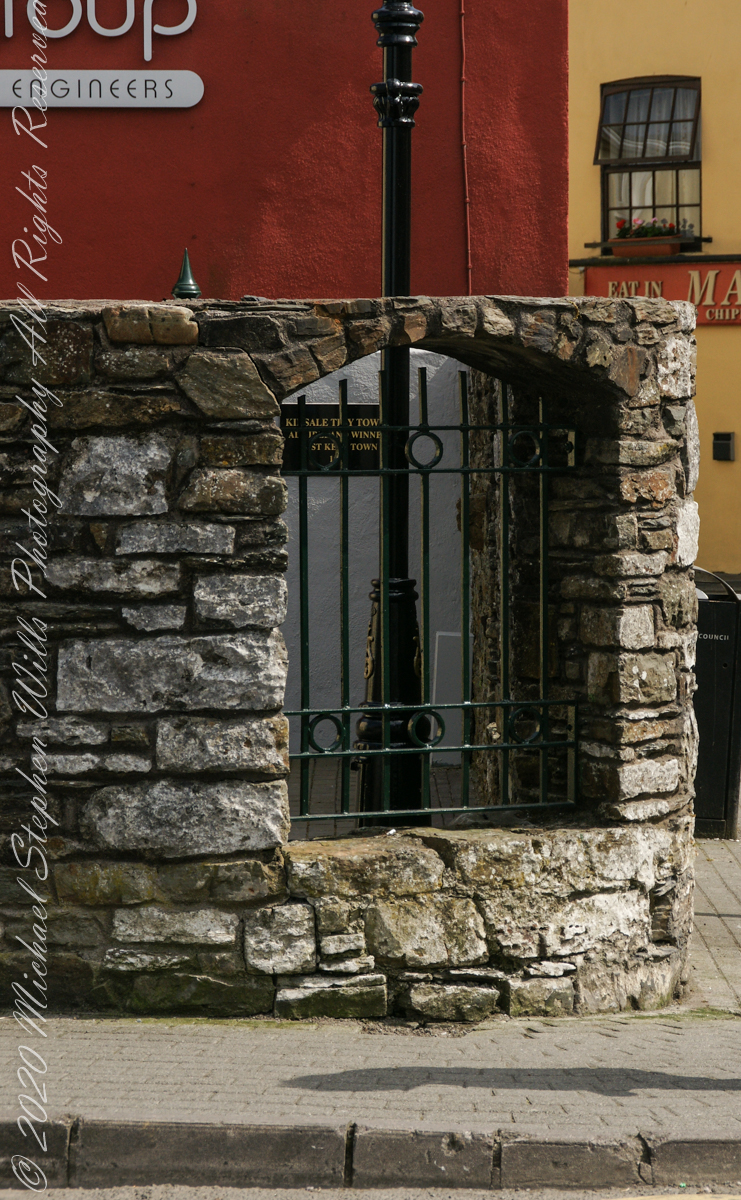
The Tan Tavern is on the other side of Guardwell street, seen here over the stone wall of “The Old Town Pound” historical site.

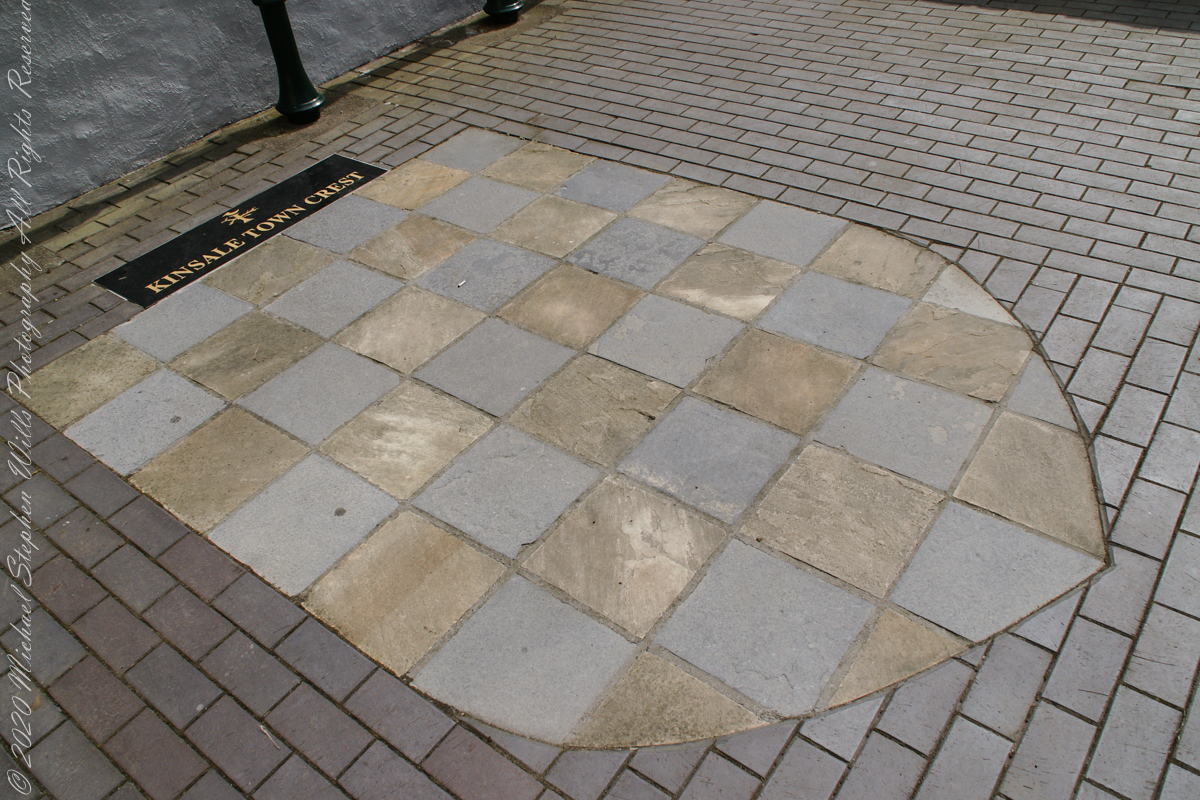
“Kinsale Town Crest
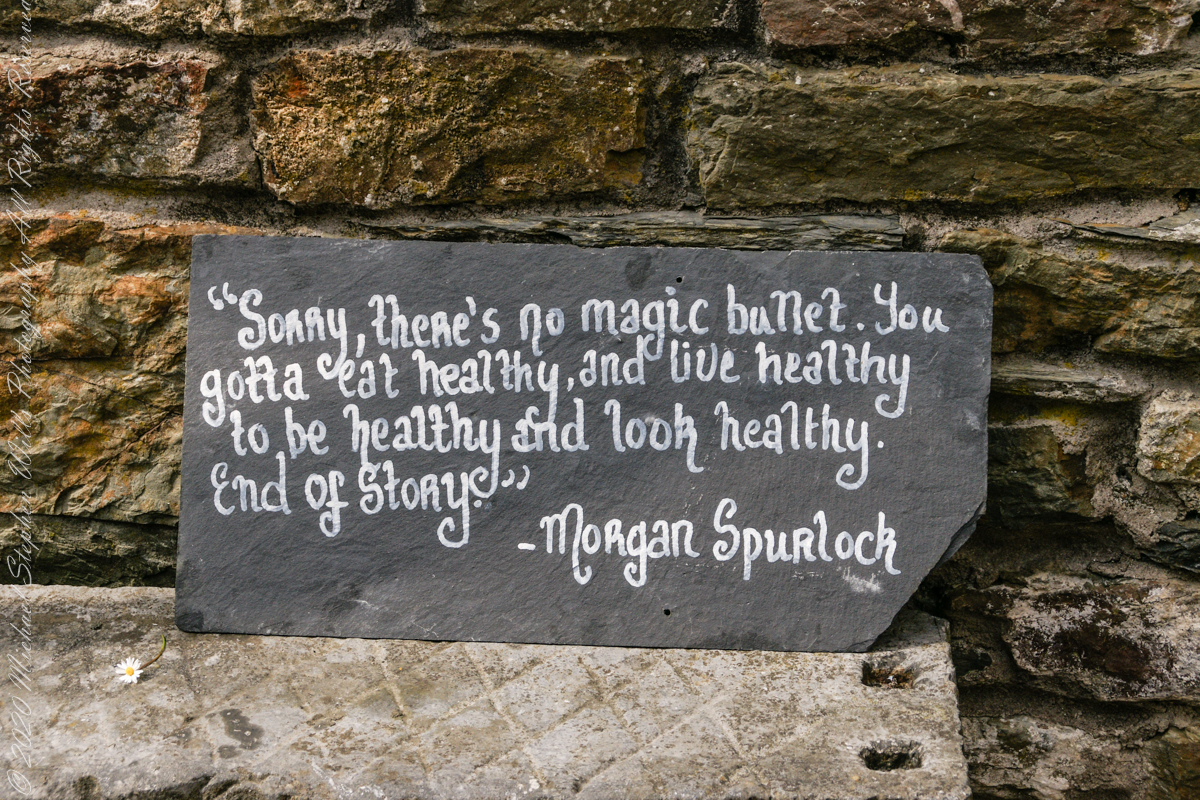
I don’t recall where exactly this quote was placed. It is associated in time with the Town Pound (photo time stamps). Morgan Spurlock of the documentary “Supersize Me” is an American of Irish descent.
Copyright 2022 All Rights Reserved Michael Stephen Wills
 Michael Stephen Wills Photography