The American Basswood: A Journey of Discovery

Discover the rich history and ecological significance of the American Basswood, a majestic tree that intertwines nature, culture, and human history. Uncover its beauty, versatility, and the fascinating pollinators that bring it to life.

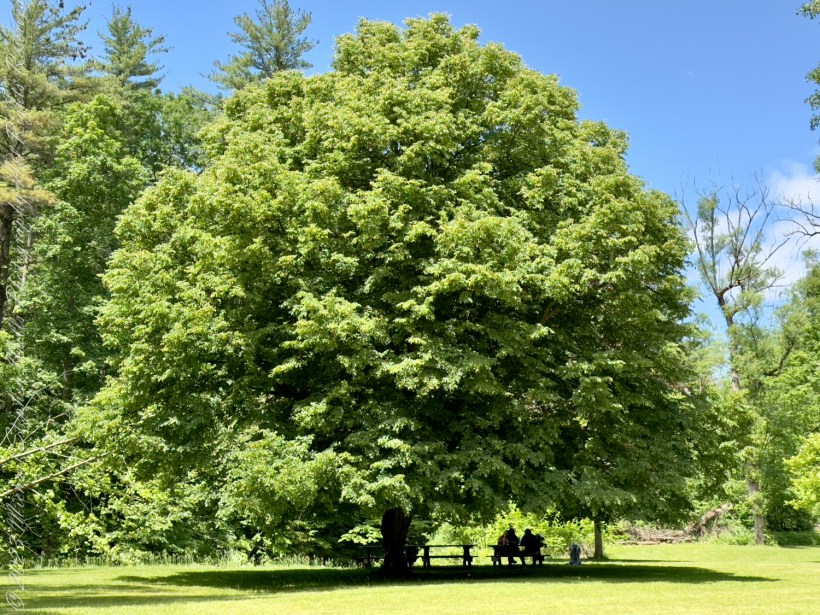
As I strolled through the sun-dappled glade, my eyes were drawn to a magnificent tree standing sentinel at the edge of the clearing. Its broad canopy spread like a green umbrella, casting a generous shade over the picnic bench below. Intrigued by its commanding presence, I approached, eager to unravel the secrets of this arboreal giant. Little did I know that this encounter would lead me on a journey through history, etymology, and the myriad uses of the American Basswood.

This photograph features the growth pattern for which the Basswood is known. Buttermilk Falls State Park, Ithaca, Tompkins County, New York State. The Finger Lakes Region.

The American Basswood, or Tilia americana, is a tree steeped in history and lore. Its name, “Basswood,” is derived from the word “bast,” referring to the inner bark of the tree, which is known for its fibrous and pliable nature. This etymology hints at the tree’s historical uses, which I would soon discover are as rich and varied as the foliage above me.

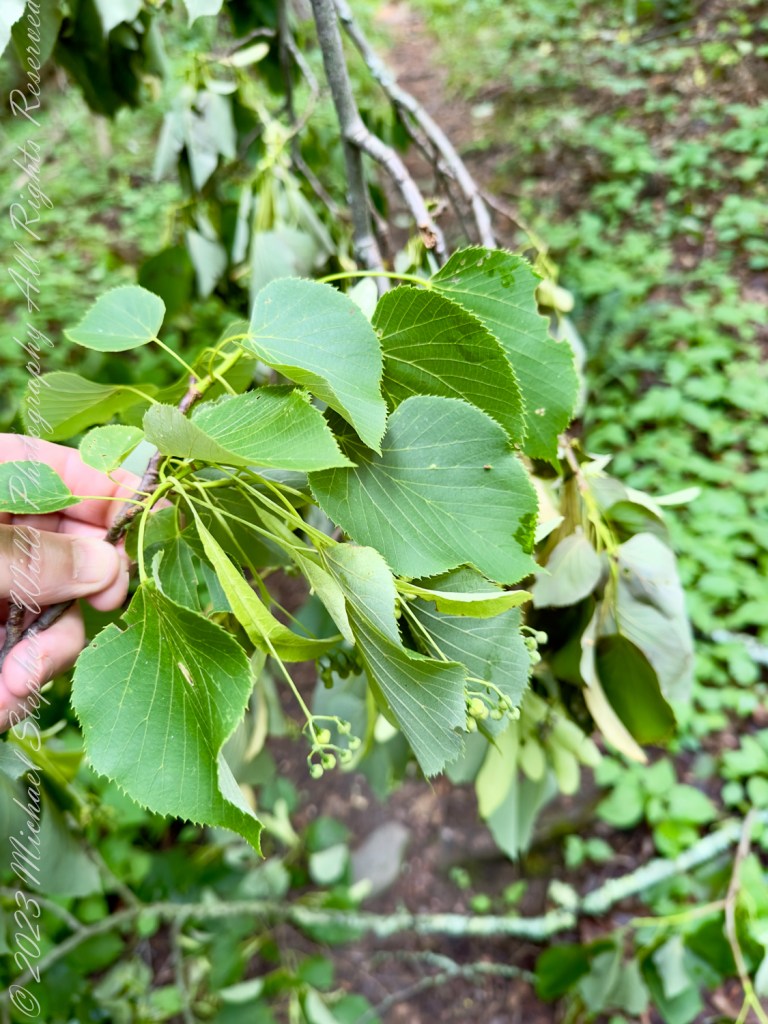
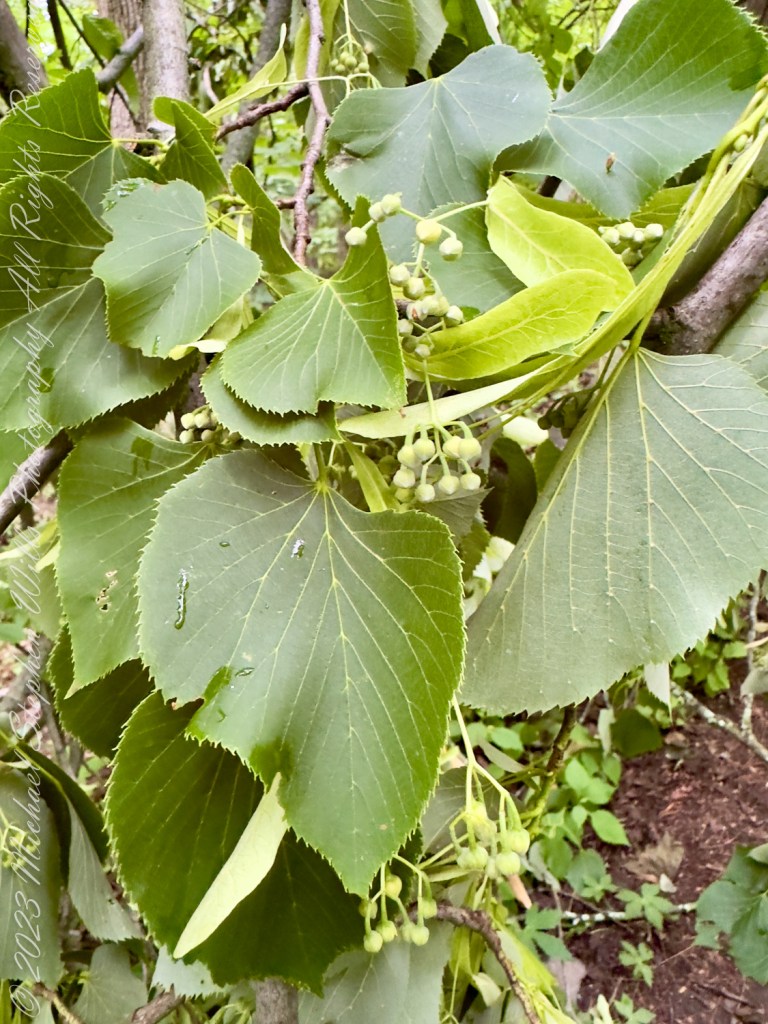
As I examined the leaves, I was struck by their heart-shaped form, a feature that has made the Basswood a symbol of love and romance in various cultures. The leaves were smooth and slightly serrated at the edges, with a deep green hue that seemed to capture the essence of summer. Hanging delicately from the branches were clusters of small, round buds, hinting at the tree’s flowering potential. These flowers, I would later learn, are not just beautiful but also aromatic, attracting bees and other pollinators with their sweet fragrance.

These are leaves from a branch broken by spring storms and fallen across the Finger Lakes Trail that follows the southern side of Treman Park above the South Rim Trail. Robert H. Treman New York State Park, Tompkins County, Ithaca. June 27, 2024

The history of the American Basswood in America is intertwined with the lives of indigenous peoples and early settlers. Native Americans valued the Basswood for its soft, easily worked wood and its inner bark, which they used to make ropes, mats, and other essential items. The tree’s wood, known for being lightweight and finely grained, was perfect for carving and crafting tools, utensils, and even ceremonial masks. This versatility made the Basswood an integral part of daily life and cultural practices.

With the arrival of European settlers, the uses of Basswood expanded. Settlers quickly recognized the tree’s potential, using its wood for a variety of applications. The soft, yet sturdy wood was ideal for making furniture, musical instruments, and even crates and boxes. Its workability and smooth finish made it a favorite among craftsmen and artisans. I imagined the hands of these early Americans, shaping and molding the wood, breathing life into their creations.

As I continued to explore the tree, I was drawn to the small, green fruits hanging from slender stems. These fruits, known as nutlets, are encased in a leafy bract that aids in their dispersal by wind. This ingenious natural design ensures the propagation of the species, allowing new generations of Basswoods to take root and flourish.

Curious about the tree’s name, I delved into its etymology and discovered an interesting linguistic journey. In England and Ireland, the Basswood is commonly referred to as the “Lime Tree.” This name does not relate to the citrus fruit tree but instead comes from the Old English word “Lind,” related to the German word “Linde.” Both terms historically referred to trees of the Tilia genus. Over time, “Lind” evolved into “Lime,” influenced by phonetic changes and regional dialects, solidifying the term “Lime Tree” for Tilia species in these regions. Despite sharing the same common name, the Tilia “Lime Tree” and the citrus “Lime Tree” belong to entirely different plant families.
The American Basswood’s significance extends beyond its practical uses. The tree has found a place in American culture and literature, often symbolizing strength, resilience, and longevity. Its towering presence and expansive canopy make it a popular choice for parks and public spaces, where it provides shade and beauty. I thought of the many people who must have sought refuge under its branches, finding solace and inspiration in its quiet strength.

In addition to its cultural and historical significance, the Basswood also plays a crucial ecological role. Its flowers are a vital source of nectar for bees, making it an essential component of local ecosystems. Beekeepers, in particular, value the Basswood for the high-quality honey produced from its nectar, known for its delicate flavor and aroma. The tree’s leaves and bark also provide habitat and food for various wildlife, contributing to the biodiversity of the area.

Pollination is a critical aspect of the American Basswood’s lifecycle, and a variety of insects are drawn to its fragrant, nectar-rich flowers. Honeybees (Apis mellifera) are among the most significant pollinators, their presence around the Basswood a testament to the tree’s importance in the ecosystem. These industrious bees not only gather nectar but also facilitate the pollination process, ensuring the production of seeds. Bumblebees (Bombus spp.) also play a crucial role, utilizing their unique buzz-pollination technique to effectively transfer pollen within the flowers.

These are leaves from a branch broken by spring storms and fallen across the Finger Lakes Trail that follows the southern side of Treman Park above the South Rim Trail. Robert H. Treman New York State Park, Tompkins County, Ithaca. June 27, 2024

Additionally, native bees such as sweat bees (Halictidae), mining bees (Andrenidae), and leafcutter bees (Megachilidae) are frequent visitors, drawn by the abundant nectar and pollen. Butterflies, while not as significant as bees, contribute to the pollination process, adding a touch of grace as they flutter from flower to flower. Moths, particularly those active in the evening, are another group of pollinators, their nocturnal activity complementing the daytime efforts of bees and butterflies. Hoverflies (Syrphidae), also known as flower flies, are attracted to the nectar and aid in the pollination, showcasing the diverse array of insects that rely on the Basswood.

Reflecting on my discovery, I realized the American Basswood is a living testament to the interconnectedness of nature and human history. Its presence in the landscape is a reminder of the many ways in which plants and trees shape our lives, providing resources, inspiration, and a connection to the natural world.

As I left the shade of the Basswood and continued my walk, I felt a deep sense of gratitude for the opportunity to learn and connect with this remarkable tree. Its story is a reminder of the importance of preserving and cherishing the natural world, ensuring that future generations can continue to discover and appreciate the wonders of the American Basswood.

Copyright 2024 Michael Stephen Wills All Rights Reserved

The Wonder of Penstemon hirsutus in Treman Gorge

Discover the enchanting Hairy Beardtongue nestled in Treman Gorge. Learn about its striking lavender blooms, unique adaptations, and fascinating history in our latest nature exploration. Dive into the beauty of Penstemon hirsutus!

On a sunny day at the end of May 2024, I embarked on one of my cherished walks through Robert H. Treman Park, located in the heart of Ithaca, New York. The park, with its stunning gorges and waterfalls, never ceases to amaze me with its natural beauty and diverse plant life. This time, my exploration led me to a delightful discovery along the south-facing walls of Treman Gorge: Penstemon hirsutus, commonly known as the Hairy Beardtongue.

As I navigated the rocky terrain, my attention was caught by a cluster of delicate, tubular flowers emerging from the crevices of the gorge walls. Their soft lavender hues stood out against the rugged backdrop of moss-covered rocks and shale. Upon closer inspection, I noticed the characteristic hairy stems and leaves, confirming that I had indeed found Penstemon hirsutus.

Penstemon hirsutus is a perennial herbaceous plant native to eastern North America. It typically reaches a height of 1 to 3 feet, with erect stems covered in fine hairs. The leaves are lanceolate, arranged oppositely along the stem, and also bear a slight fuzziness. The flowers, which bloom from late spring to early summer, are tubular and two-lipped, resembling a small beard—a feature that likely inspired the common name “Beardtongue.” Each flower is about 1 to 1.5 inches long, with a delicate lavender color that fades to white at the throat.

The genus name “Penstemon” is derived from the Greek words “pente,” meaning five, and “stemon,” meaning stamen, referring to the plant’s five stamens—four fertile and one sterile, the latter often appearing as a small, hairy tongue within the flower. The species name “hirsutus” comes from Latin, meaning hairy, a nod to the plant’s hirsute stems and leaves.

The Hairy Beardtongue thrives in well-drained soils and can often be found in rocky, open woodlands, meadows, and along cliffs—exactly the kind of environment provided by Treman Gorge. This plant is well-adapted to the microhabitats created by the gorge’s south-facing walls, where sunlight and moisture create ideal growing conditions. The rock walls not only offer physical support but also help retain heat and moisture, creating a microclimate that supports a variety of plant species.

Historically, Penstemon hirsutus and its relatives have been valued for their ornamental beauty and ecological benefits. The flowers attract a variety of pollinators, including bees, butterflies, and hummingbirds, making them an important component of the local ecosystem. Native Americans also recognized the medicinal properties of some Penstemon species, using them to treat ailments such as toothaches, sore throats, and respiratory issues.

In recent times, gardeners and horticulturists have come to appreciate Penstemon hirsutus for its hardiness and low maintenance requirements. It is often used in native plant gardens, rock gardens, and naturalized areas to add a touch of wild beauty. The plant’s ability to thrive in poor soils and its resistance to deer browsing make it a valuable addition to any garden aiming to support local wildlife and biodiversity.

Finding the Hairy Beardtongue in Treman Gorge was a moment of pure joy and wonder. It reminded me of the resilience and adaptability of nature, as this delicate yet sturdy plant has carved out a niche for itself in the rocky walls of the gorge. The sight of its soft lavender blooms swaying gently in the breeze was a testament to the beauty and tenacity of life in even the most rugged environments.

As I continued my hike, I felt a renewed sense of connection to the natural world. The discovery of Penstemon hirsutus was not just a botanical find but a reminder of the intricate and interconnected web of life that thrives in Treman Gorge. Each plant, each flower, has a story to tell—a story of survival, adaptation, and beauty that enriches our understanding of the natural world and our place within it.

Copyright 2024 Michael Stephen Wills All Rights Reserved

The Joy of Adventure at Treetops

Join us as we explore the enchanting “Treetops” treehouse at Cayuga Nature Center. Discover the joy of hide and seek, and the magic of nature, through the eyes of my grandsons on a serene Sunday morning.

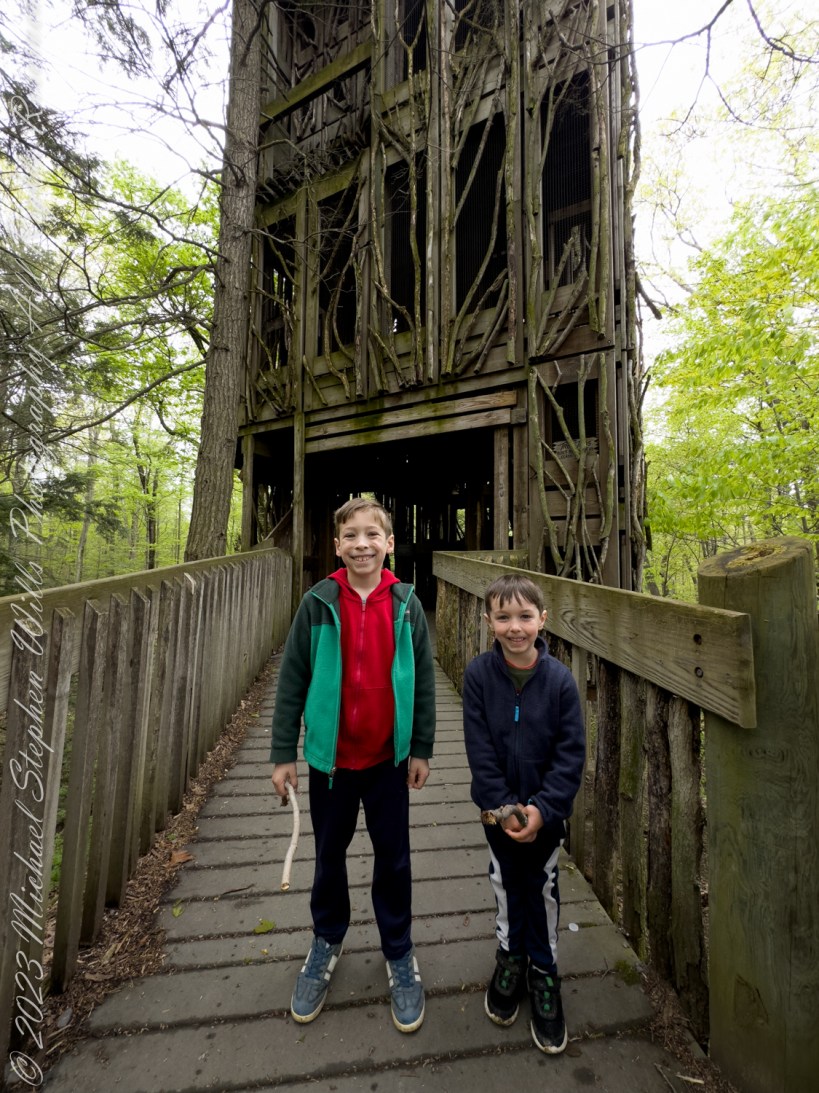
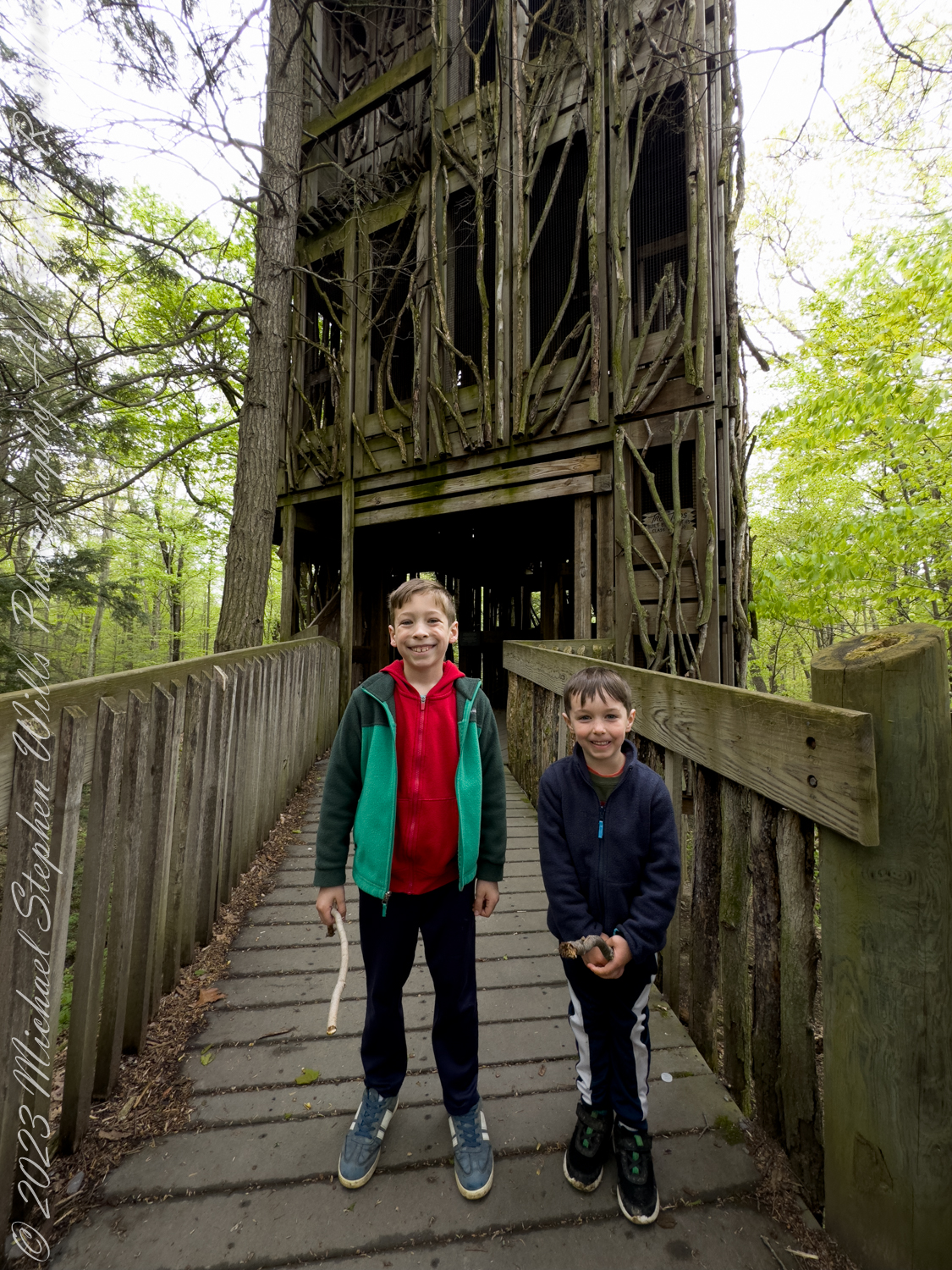
The air was crisp and cool as I strolled hand in hand with my grandsons, Sam and Rory, through the vibrant greens of the Cayuga Nature Center. The leaves rustled gently in the Sunday morning breeze, their whispers the only company we had. It was a quiet, serene moment, with no one else around, and the boys’ excitement was palpable as they chattered about their previous visits.

“Grandpa, do you remember this place?” Sam asked, his eyes twinkling with anticipation. Rory, not to be outdone, chimed in, “We have to show you the treehouse! It’s the best part!”

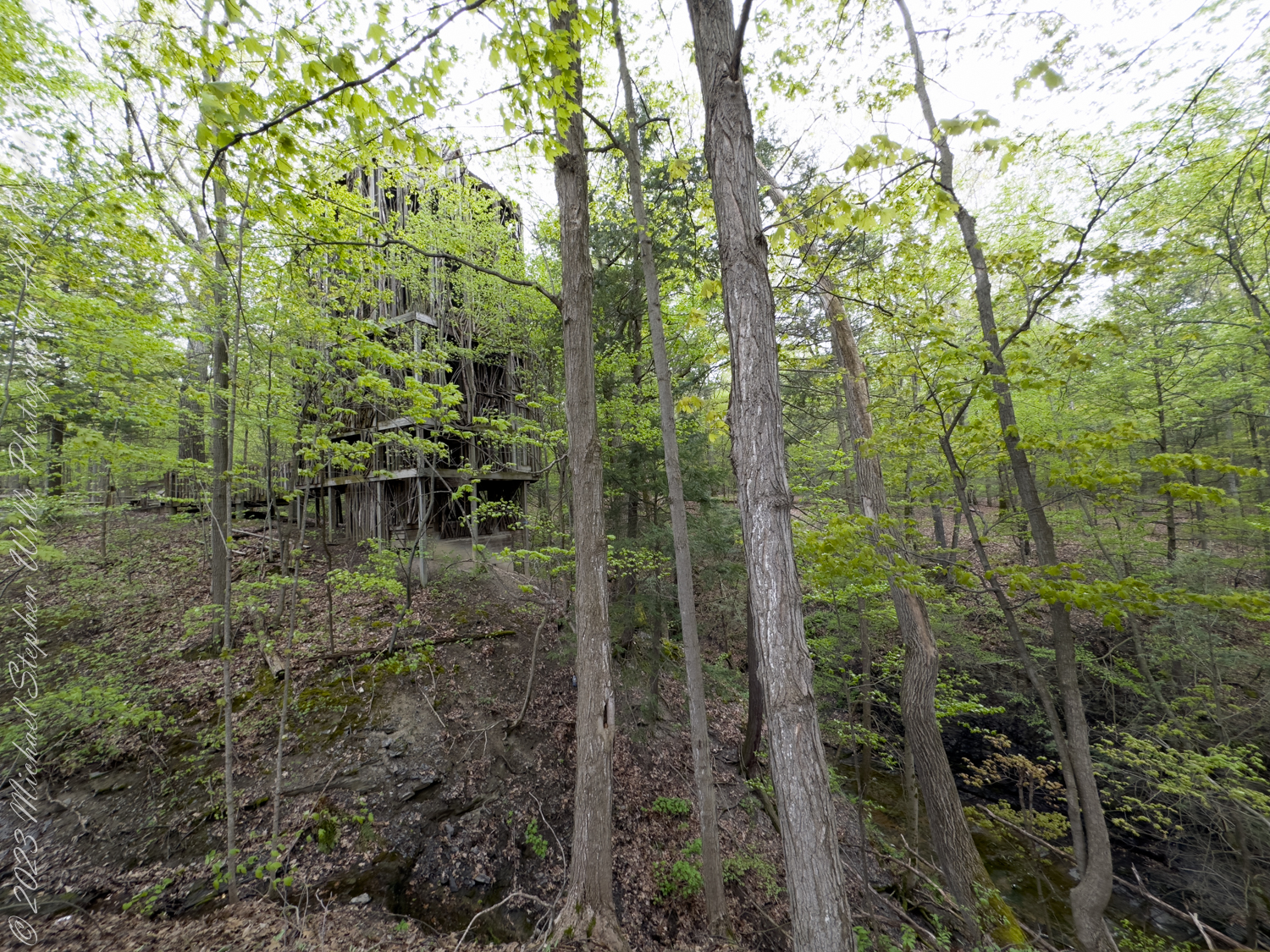
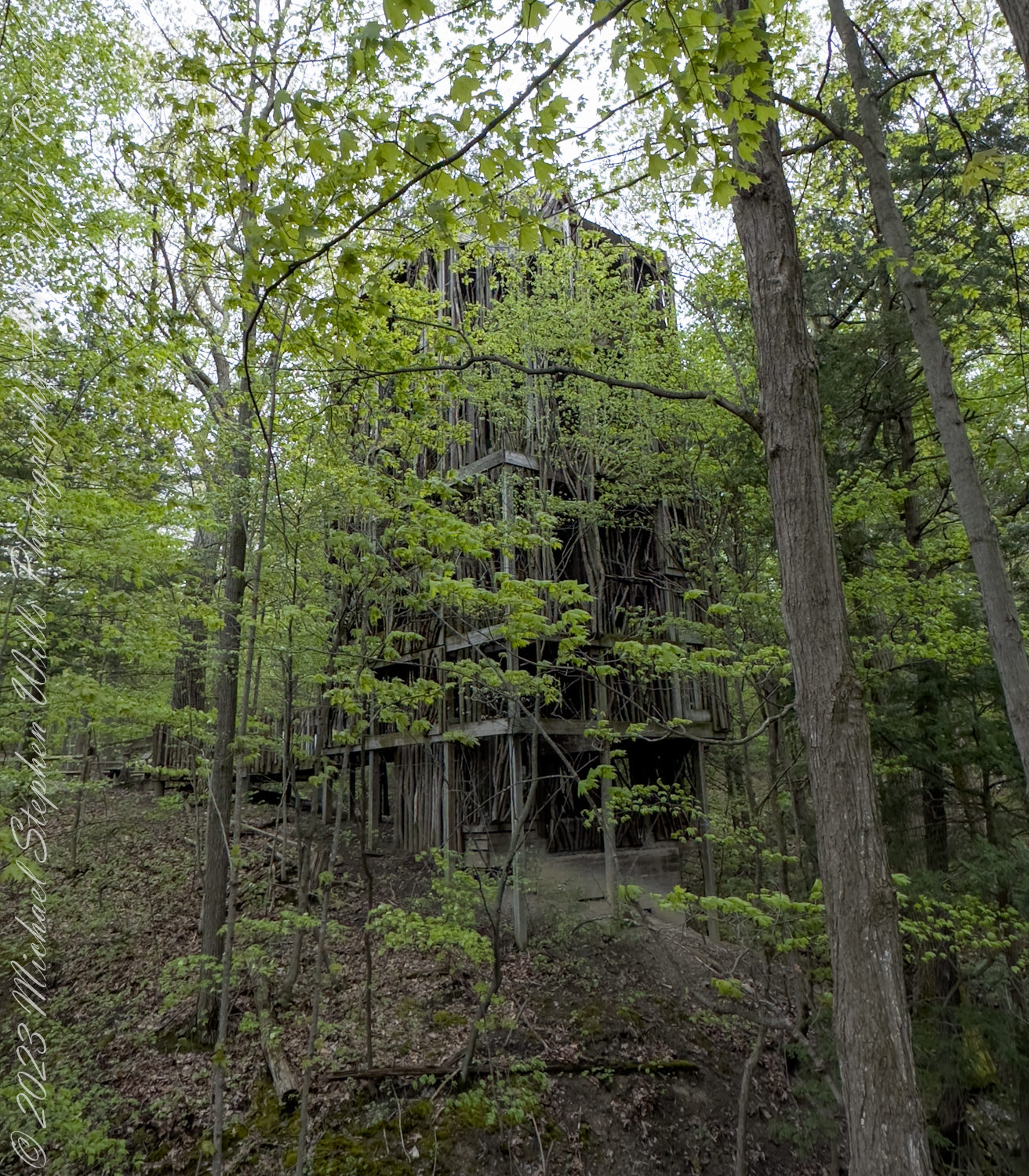
Their enthusiasm was infectious, and I found myself eager to see this magical place they spoke of. We followed a winding path, each step bringing us deeper into the lush woodland, until at last, the imposing structure of the “Treetops” treehouse came into view. It stood tall and mysterious; an intricate wooden edifice cloaked in the verdant embrace of the forest.

The treehouse was a marvel, its towering form constructed of twisted branches and sturdy planks, blending seamlessly with the natural surroundings. A wooden bridge led up to the entrance, and as we approached, the boys’ pace quickened.

“Let’s play hide and seek!” Rory suggested, his voice echoing with excitement. Sam nodded vigorously, already darting towards the treehouse entrance. “You count, Grandpa!” he called over his shoulder.

I began counting aloud, my voice mingling with the sounds of nature—the chirping of birds, the gentle rustle of leaves. When I reached twenty, I opened my eyes to find the boys had disappeared into the labyrinth of the treehouse. I stepped inside, the cool shade a welcome respite from the sun’s gentle warmth.

The interior was a maze of hidden nooks and winding staircases, each turn revealing a new secret. I could hear the faint giggles of the boys as they tried to stifle their laughter. The treehouse was alive with the echoes of their joy, each sound bouncing off the wooden walls like a symphony of childhood exuberance.

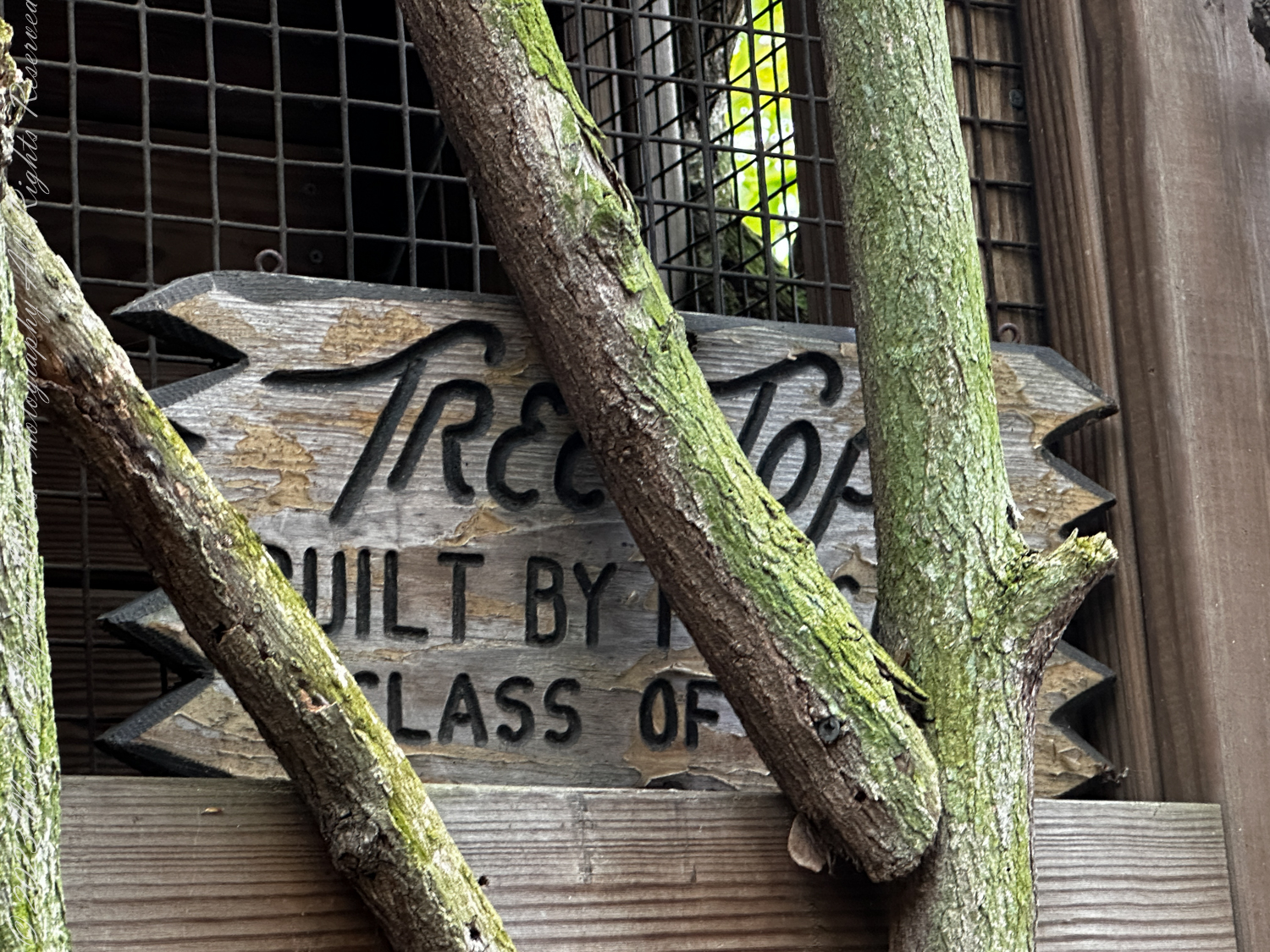
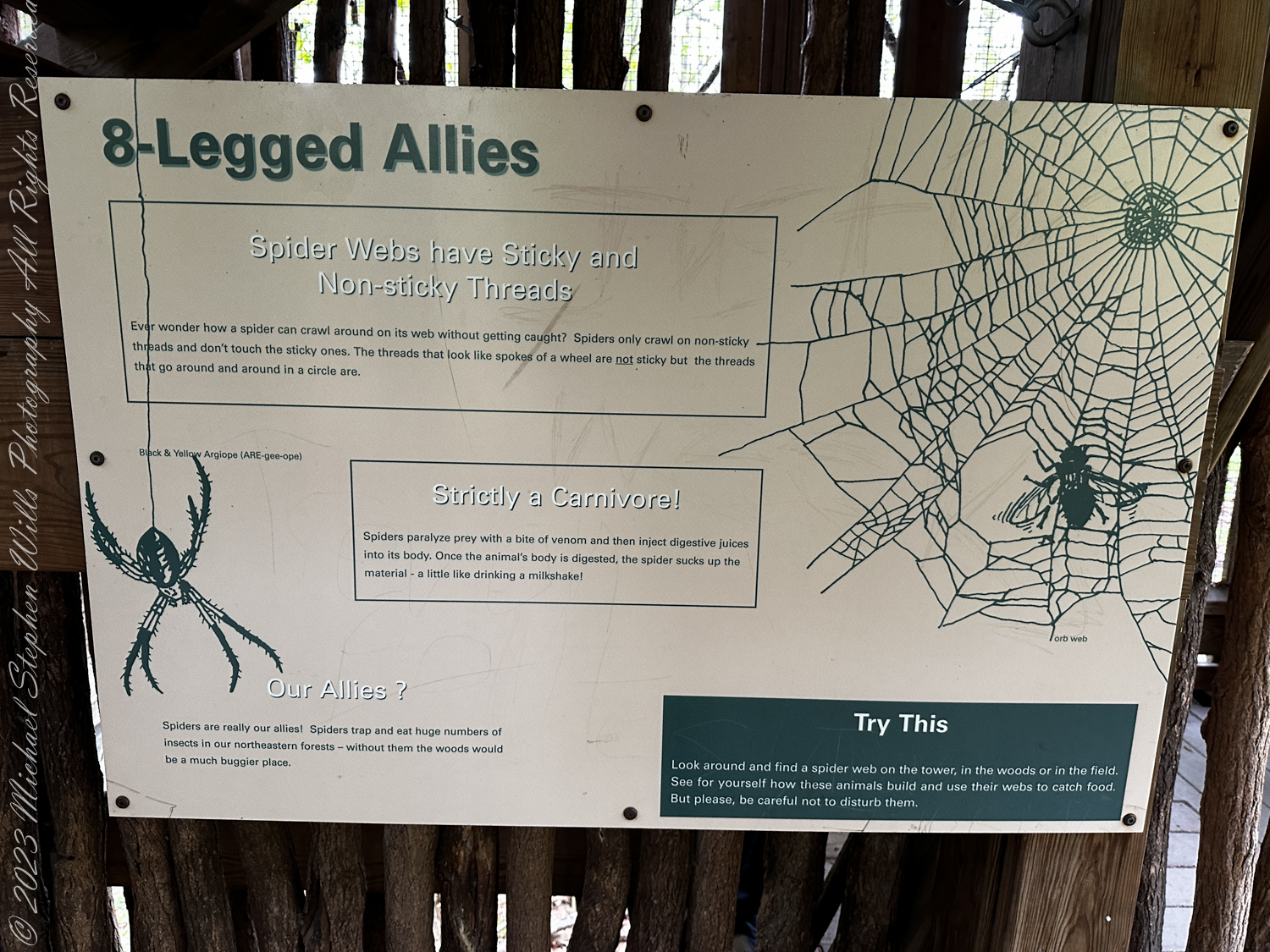
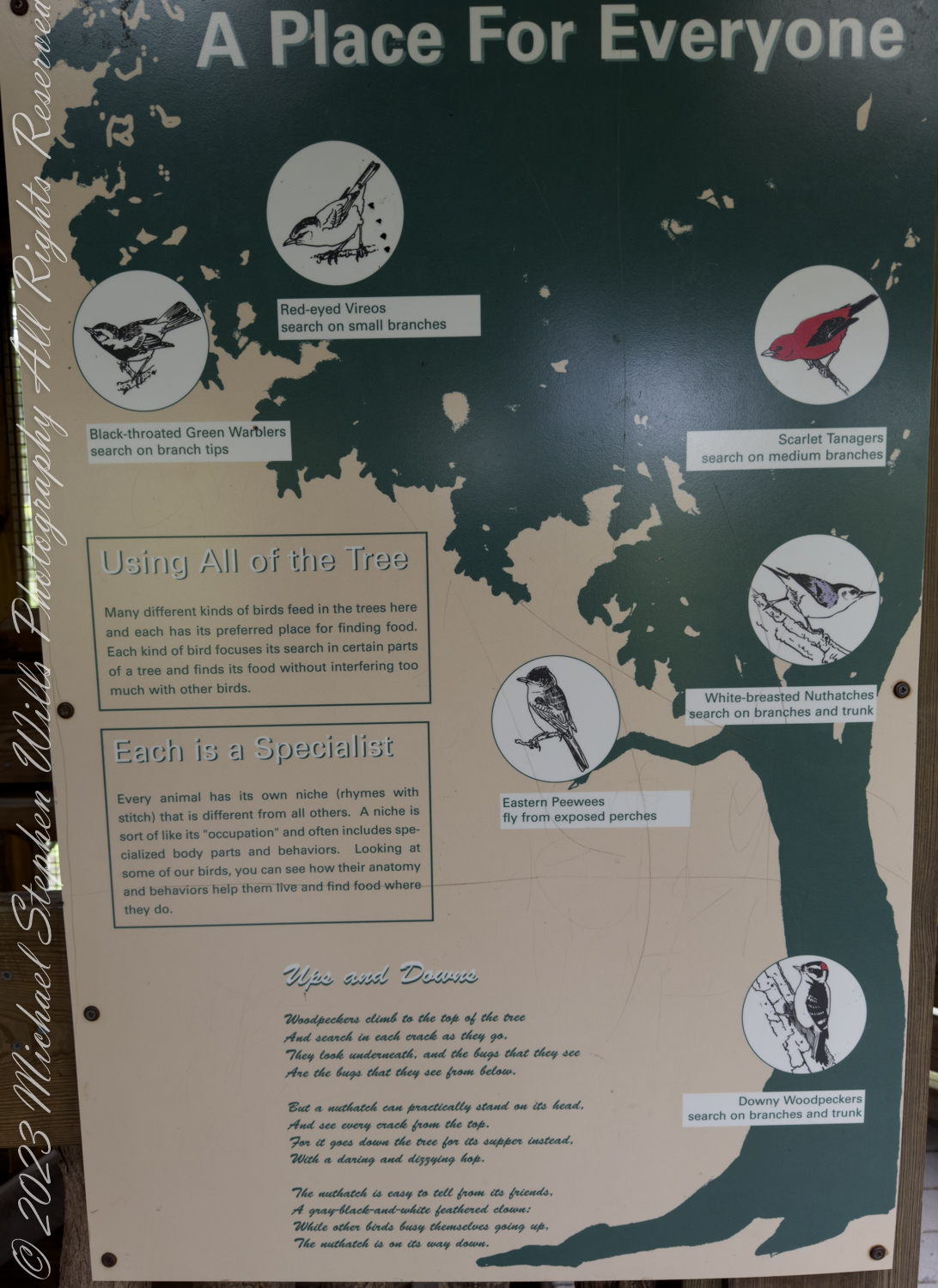
As I navigated the winding paths, I couldn’t help but marvel at the intricate details of the structure. The signs scattered throughout added an educational touch, detailing the lives of the birds and spiders that called this place home. One sign, titled “A Place For Everyone,” explained how each bird species had its niche, much like the boys had found their hiding spots.

“Found you!” I called out, spotting Sam’s bright red shirt from behind a wooden beam. He laughed and dashed off, his footsteps a rhythmic drumbeat on the wooden floor. Rory was next, his giggles giving away his hiding spot behind a thick cluster of branches.

We continued our game, the treehouse transforming into a magical playground where time seemed to stand still. The boys’ laughter filled the air, mingling with the natural symphony of the forest. We explored every corner, from the highest platform with its breathtaking view of the surrounding forest to the dark, cozy nooks perfect for hiding.

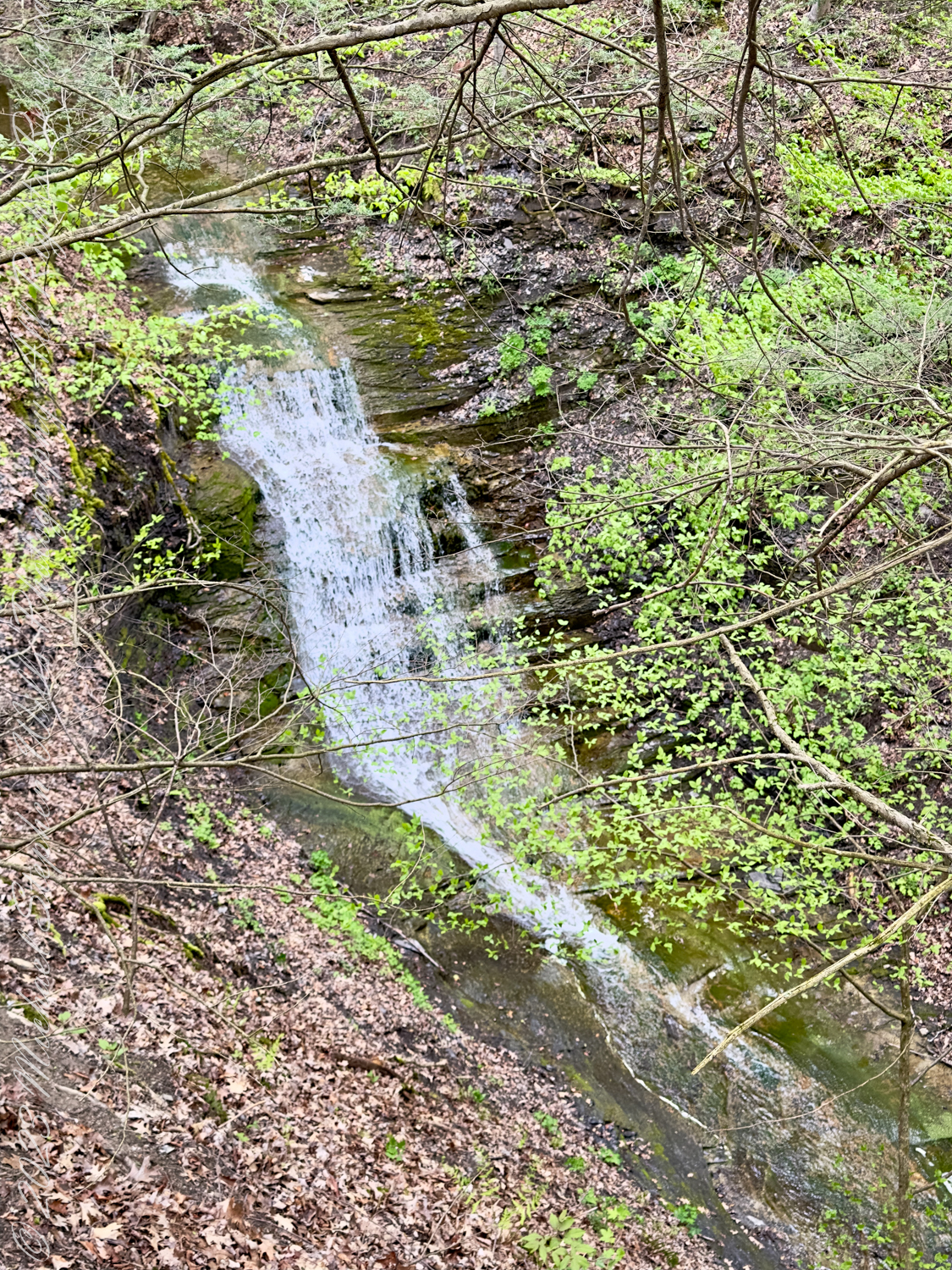
Phillips Falls is a picturesque waterfall located on Comstock Creek in view of the Treetops treehouse within the Cayuga Nature Center in Ithaca, New York. The falls are a highlight of the Nature Center, offering visitors a scenic and tranquil spot to enjoy the natural beauty of the area. The waterfall is accessible via the nature trails that wind through the Center’s diverse landscapes, including forests and meadows. Here are a few key points about Phillips Falls: Scenic Beauty: Phillips Falls is known for its serene and beautiful setting, making it a popular spot for nature enthusiasts, hikers, and photographers. Hiking Trails: The falls can be reached by hiking trails within the Cayuga Nature Center. The trails vary in difficulty, providing options for different levels of hikers. Educational Programs: The Cayuga Nature Center often includes Phillips Falls in its educational programs and guided tours, focusing on the ecology and geology of the area. Wildlife Habitat: The area around Phillips Falls is home to a variety of wildlife, making it a great spot for birdwatching and observing other animals in their natural habitat. Seasonal Changes: The appearance and flow of the waterfall can change with the seasons, offering a different experience for visitors throughout the year. Overall, Phillips Falls is a cherished natural feature of the Cayuga Nature Center, providing both a peaceful retreat and an educational experience for visitors.

After our game, we stood on the bridge, looking out over the creek below. The water sparkled in the sunlight, a serene contrast to our playful morning. “This place is amazing,” I said, turning to the boys. They nodded, their faces flushed with happiness.

“We love coming here,” Sam said. “It’s like a secret world.”

Rory nodded in agreement. “And now you know our secret too, Grandpa.”

As we made our way back down the path, I felt a deep sense of gratitude for this moment, for the chance to share in the boys’ joy and to see the world through their eyes. The “Treetops” treehouse had not only been a place of play but also a bridge between generations, a testament to the simple, timeless pleasures of exploring nature together.

Phillips Falls on Comstock Creek, seen from Treetops

Copyright 2024 Michael Stephen Wills All Rights Reserved

Forest Gems – The Natural History and Lore of Hepatica

Join us on a journey through the enchanting forests of the Finger Lakes as we explore the fascinating world of Hepatica nobilis. Discover the lore, natural history, and beauty of these early spring bloomers. Dive into the magic of the wild!

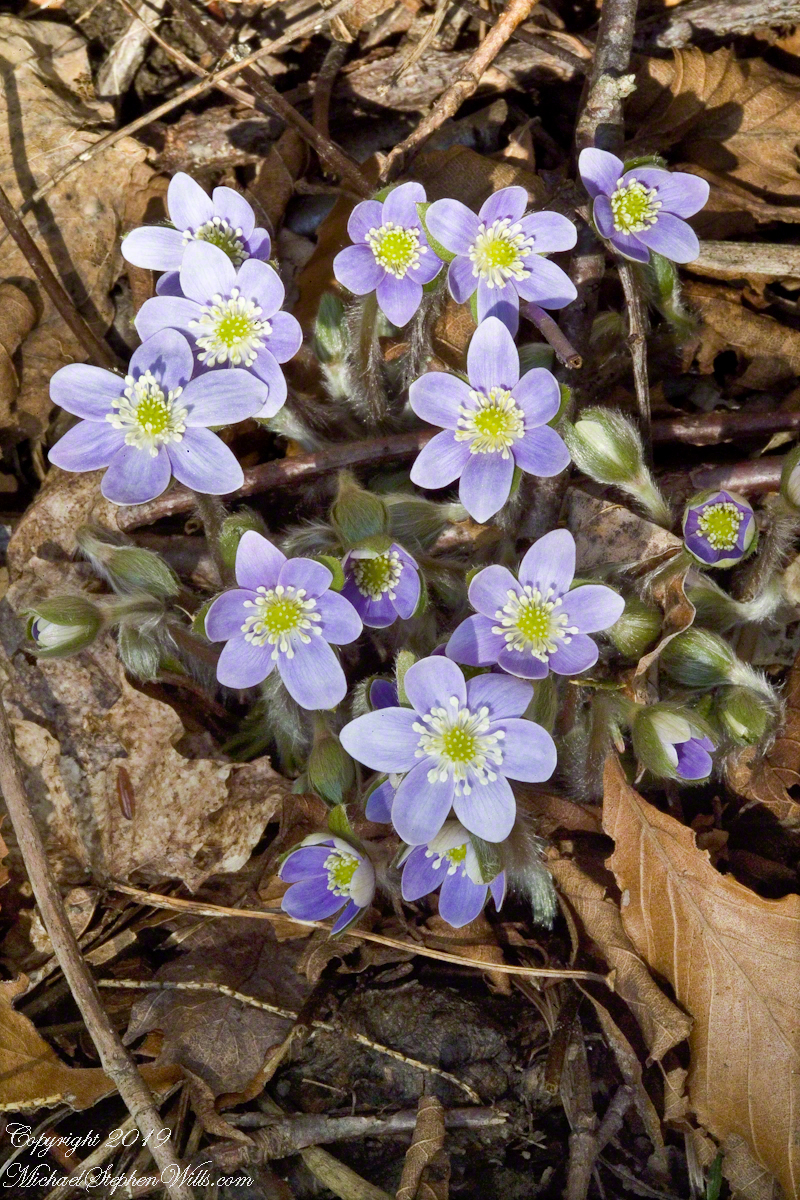
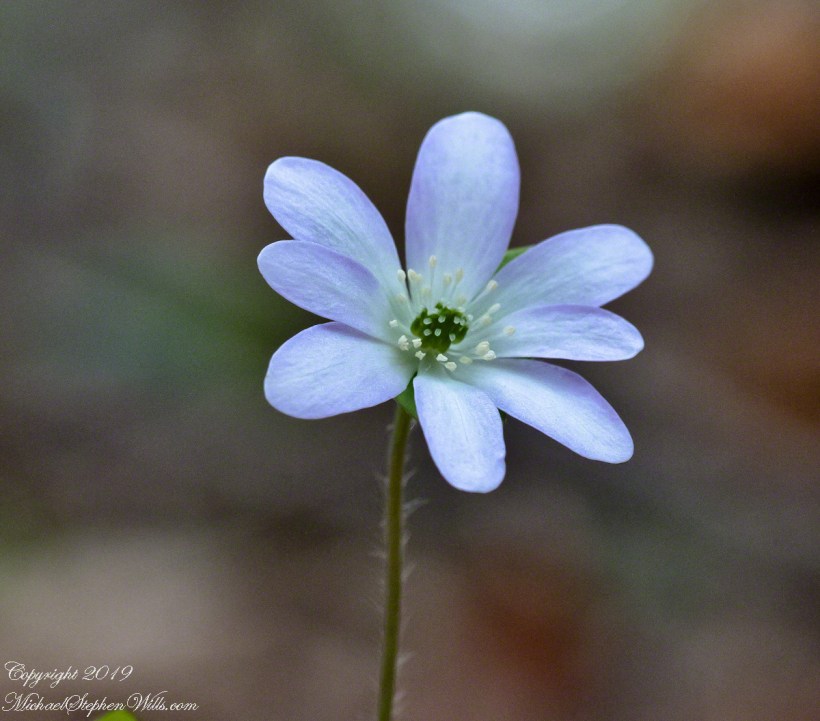
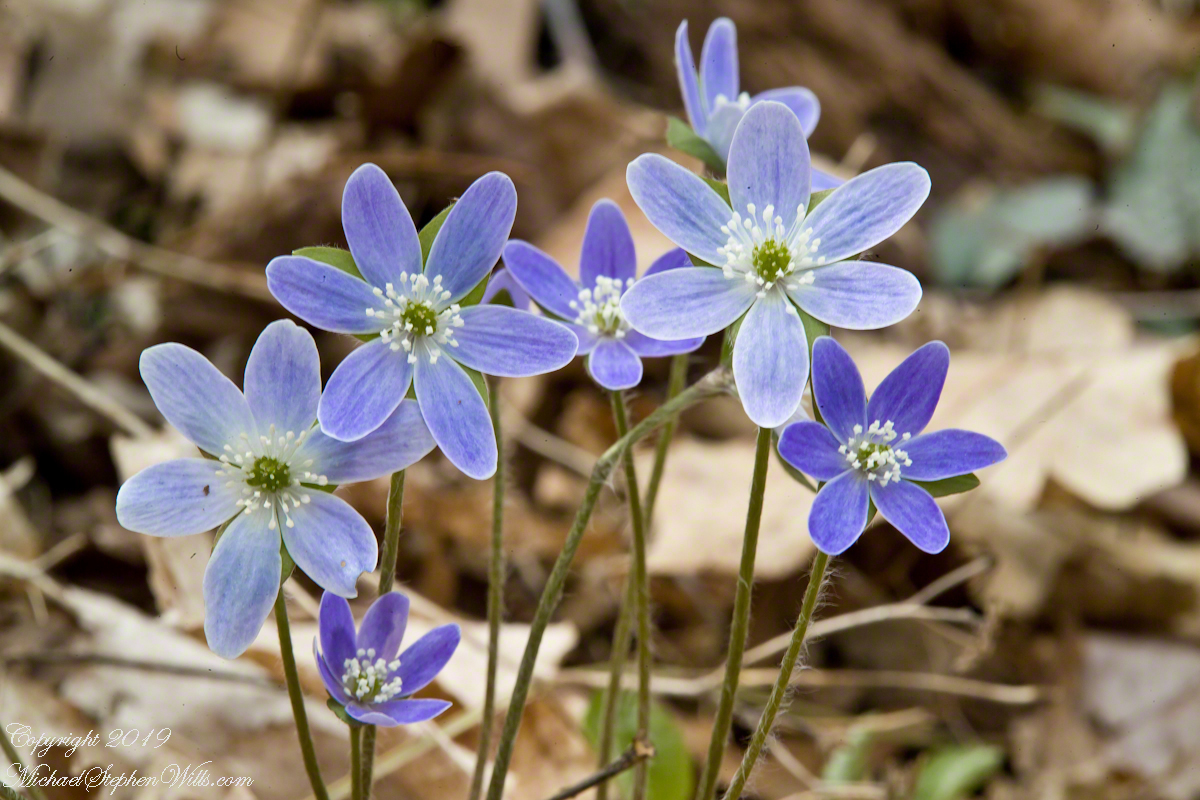
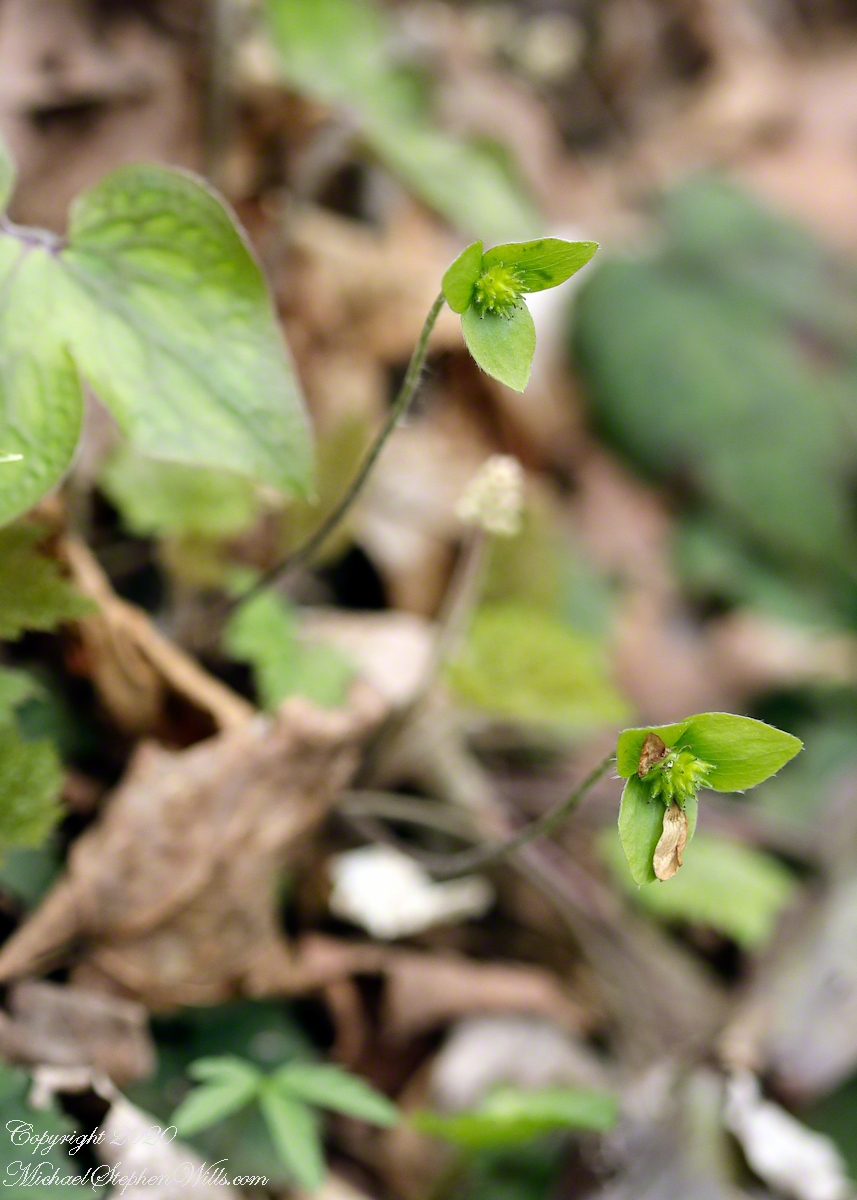
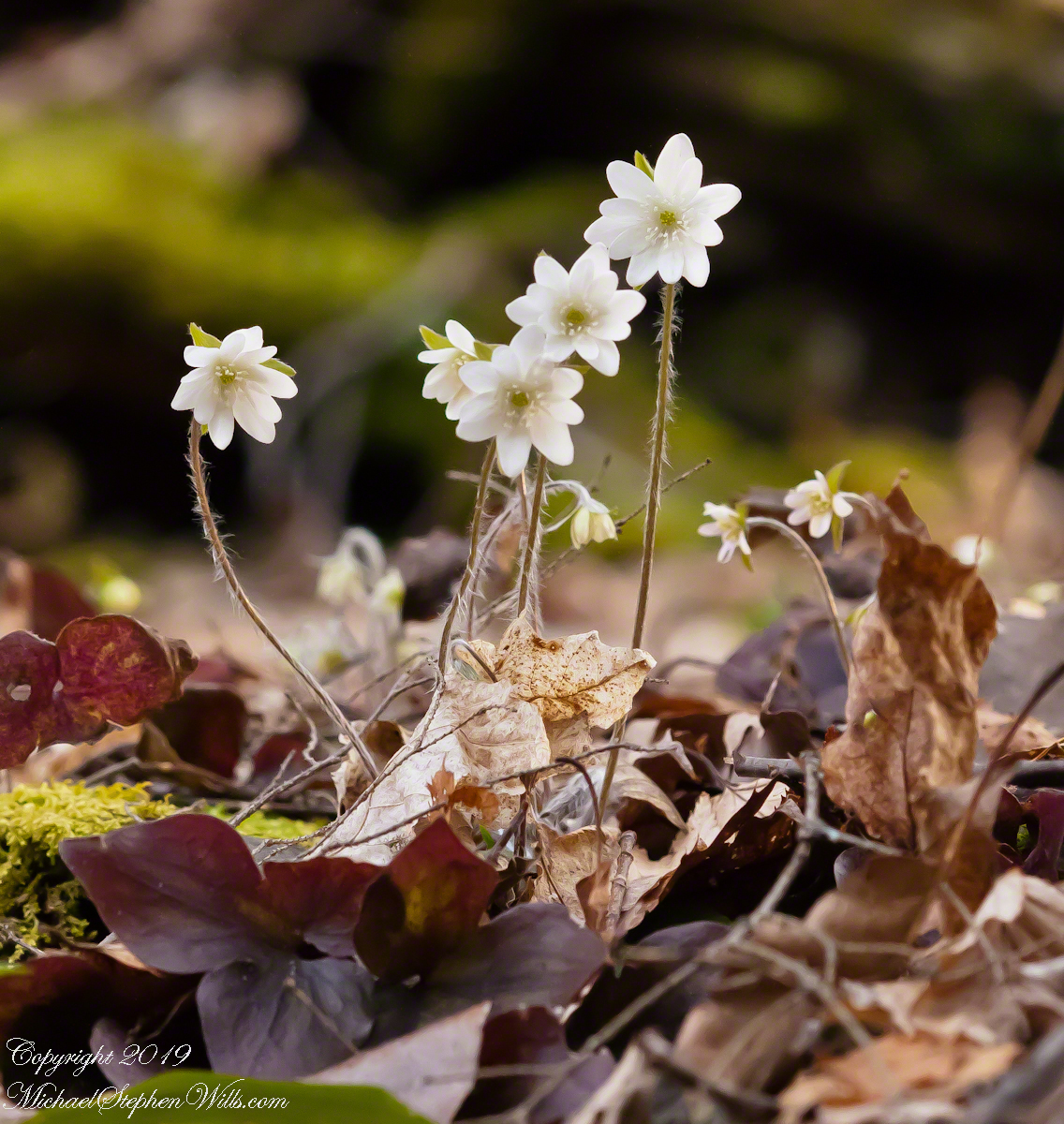
As I ventured along the Gorge Trail of Robert H. Treman New York State Park, I stumbled upon a captivating sight. Amidst the rich leaf litter and emerging greenery, clusters of Hepatica plants caught my eye. Although the flowers had already gone to seed, their distinctive leaves and stems told a story of early spring beauty in the heart of the Finger Lakes Region, Tompkins County. Using my Apple iPhone 14 ProMax, I documented these charming plants, eager to delve deeper into their fascinating world.

Hepatica, scientifically known as Hepatica nobilis, also goes by several common names including Liverleaf, Liverwort, and Kidneywort. The genus name “Hepatica” comes from the Greek word “hepar,” meaning liver, due to the shape and color of its leaves, which resemble the lobes of a human liver. This resemblance led to the plant being used historically in herbal medicine to treat liver ailments, in line with the Doctrine of Signatures—a belief that plants resembling body parts could cure ailments of those parts.

Fillmore Glen New York State Park, Moravia, New York on an April afternoon.

The common names of Hepatica reflect its historical medicinal uses. “Liverleaf” and “Liverwort” both reference its liver-shaped leaves, while “Kidneywort” likely arose from the kidney-like appearance of its seeds. These names have endured through centuries, reflecting the plant’s significant role in both folklore and herbal medicine.

Hepatica is a perennial plant in the buttercup family, Ranunculaceae. It thrives in deciduous forests, often found in shaded areas with rich, well-drained soil. The plant is one of the first to bloom in early spring, producing delicate flowers in shades of white, pink, blue, or purple. By the time I encountered them on my hike, the flowers had already transitioned to seed, but the distinctive lobed leaves remained vibrant and lush.

Fillmore Glen New York State Park, Moravia, New York on an April afternoon.

Reproduction in Hepatica is primarily through seed, though the plant can also propagate vegetatively. The flowers are insect-pollinated, attracting early-season pollinators such as bees and flies. Once pollinated, the flowers produce seeds encased in small, fuzzy fruits. These seeds are often dispersed by ants, a process known as myrmecochory, which helps ensure the plant’s spread throughout the forest floor.

Native American tribes, including the Iroquois, valued Hepatica for its medicinal properties. They used the leaves to brew teas believed to treat liver disorders, digestive issues, and skin ailments. European settlers adopted similar practices, incorporating Hepatica into their own herbal remedies.

In European folklore, Hepatica was often associated with healing and protection. The plant was believed to ward off evil spirits and protect against various maladies. In the language of flowers, Hepatica symbolizes confidence and bravery, reflecting its early emergence in the harsh conditions of early spring.

Fillmore Glen New York State Park, Moravia, New York on an April afternoon.

Today, Hepatica continues to enchant nature enthusiasts and hikers with its early blooms and lush foliage. It plays a crucial role in the ecosystem, providing a vital source of nectar for early pollinators and contributing to the biodiversity of deciduous forests.

Walking through the gorge, I felt a deep connection to the natural history and cultural significance of Hepatica. The plant’s resilience and beauty, even in its seeding stage, served as a reminder of the enduring cycles of nature and the intricate relationships between plants, animals, and humans.

In conclusion, Hepatica nobilis, or Liverleaf, is a plant of remarkable beauty and historical significance. Its early spring blooms and distinctive leaves make it a cherished sight in the forests of the Finger Lakes. As I continued my hike, I felt a profound appreciation for the rich tapestry of life that Hepatica represents, a testament to the enduring wonders of nature.

Copyright 2024 Michael Stephen Wills All Rights Reserved

The Enchanting Sweet White Violets of Treman Gorge

Discover the enchanting Sweet White Violets (Viola blanda) in Treman Gorge. Join us as we explore their natural history, lore, and beauty in the heart of the Finger Lakes. Dive into the magic of spring time blooms!

As I walked the Gorge Trail of Robert H. Treman New York State Park, my attention was captivated by a lush carpet of delicate white flowers nestled among the vibrant green foliage. These enchanting blooms, known as Viola blanda or Sweet White Violets, were a delightful sight against the backdrop of the rugged terrain of the Finger Lakes Region in Tompkins County. Armed with my trusty Apple iPhone 14 ProMax, I couldn’t resist capturing the moment.

Viola blanda, also known as Sweet White Violet or Pale Violet, derives its scientific name from Latin. “Viola” is the classical Latin name for violets, while “blanda” means charming or pleasant, an apt description for these delightful little plants. The name “Sweet White Violet” alludes to the delicate and sweet fragrance of its flowers, a scent that is often subtle but unmistakably pleasant when noticed.

Sweet White Violets are perennial plants, part of the Violaceae family, and are typically found in moist, wooded areas. They are one of the first wildflowers to bloom in spring, their pure white petals standing out amidst the fresh green growth of the forest floor. The leaves are heart-shaped with finely serrated edges, and they form a dense mat that can cover the ground in a verdant blanket.

The reproduction of Viola blanda is fascinating. These plants produce both cleistogamous and chasmogamous flowers. The chasmogamous flowers, which are the ones most of us are familiar with, are the showy, white blooms that open fully and are pollinated by insects. Cleistogamous flowers, on the other hand, do not open and are self-pollinating. This dual strategy ensures that the plant can reproduce even in the absence of pollinators, securing its presence in the ecosystem year after year.

Native Americans, particularly the Iroquois tribes whose region this included, held violets in high regard. They used the plant medicinally to treat colds, coughs, and headaches. The leaves were often brewed into a tea, believed to have soothing properties. European settlers, too, were fond of the violet. They would often use the leaves and flowers in salads and as a garnish, taking advantage of both its nutritional value and pleasant taste.

Interestingly, in folklore, violets were associated with love and were often used in love potions. The ancient Greeks believed that violets could moderate anger and induce sleep. In the language of flowers, which was particularly popular during the Victorian era, violets symbolized modesty and faithfulness.

In modern times, the Sweet White Violet continues to charm nature enthusiasts and hikers alike. It plays a crucial role in the ecosystem, providing early spring nectar for pollinators such as bees and butterflies. The plant also serves as a host for certain butterfly species, which lay their eggs on the leaves. As the caterpillars hatch, they feed on the leaves, continuing the cycle of life.

Walking through the gorge, I felt a profound connection to the natural world. The Sweet White Violet, with its humble beauty and rich history, served as a reminder of the intricate web of life that thrives in these woods. Each step on the trail was a journey through the park and a walk through time, connecting me to the countless generations who have walked these paths before me, enchanted by the same delicate flowers.

In conclusion, the Viola blanda, or Sweet White Violet, is more than just a pretty face in the forest. It is a plant steeped in history, folklore, and ecological importance. As I continued my hike, I felt grateful for the opportunity to witness such beauty firsthand and to share in the timeless joy that these charming plants bring to the world.

Copyright 2024 Michael Stephen Wills All Rights Reserved

Trillium: A Springtime Encounter

Discover the enchanting beauty and rich history of the Great White Trillium in Treman Gorge. Learn about its unique life cycle, medicinal uses, and the fascinating pink tints that emerge as these elegant flowers age. Read more!

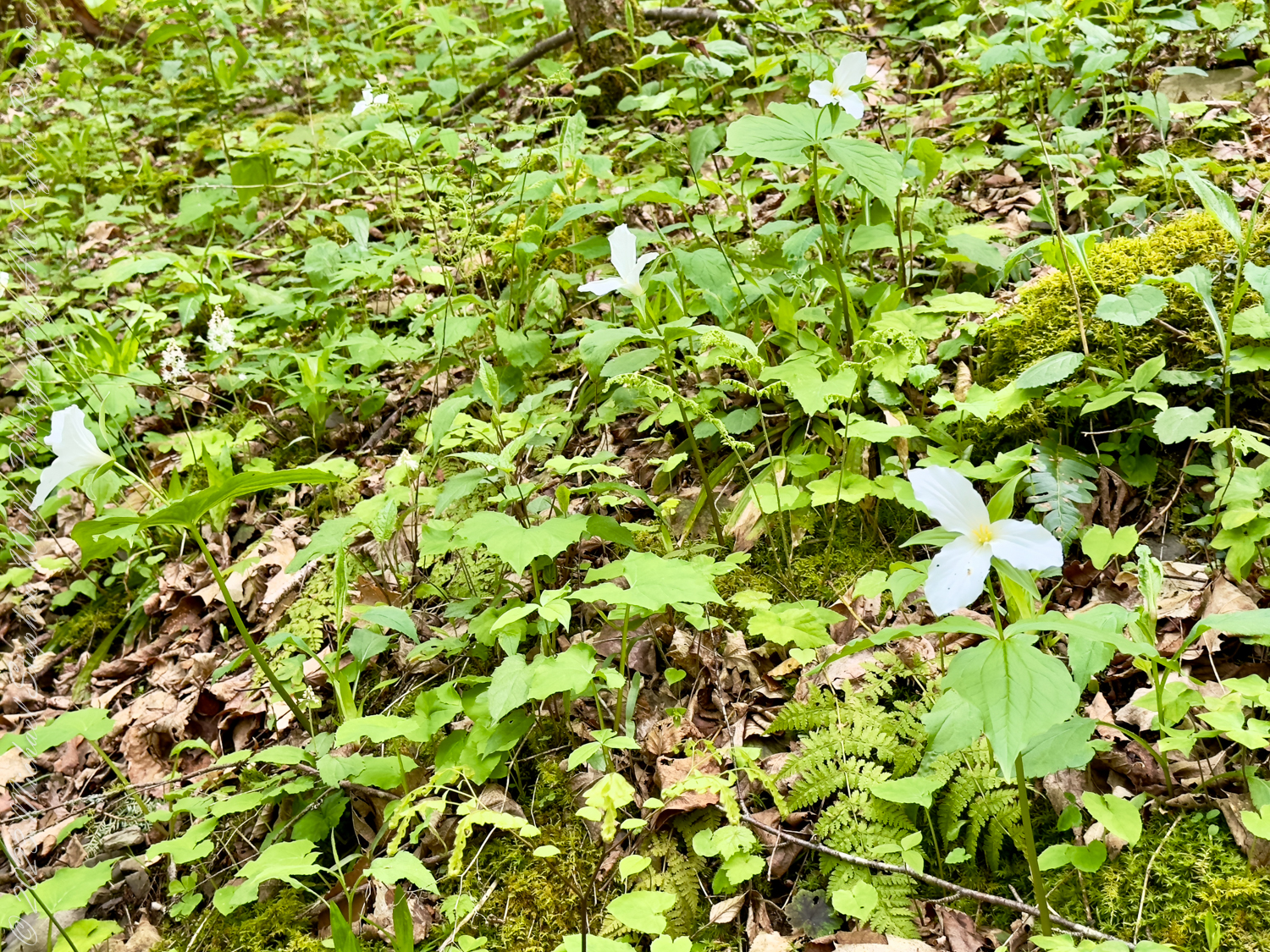
Walking through Treman Gorge in early May, I am always struck by the lush greenery that carpets the forest floor. The delicate ferns and emerging wildflowers create a tapestry of colors and textures. On this particular visit, my attention is drawn to a cluster of striking flowers that stand out against the verdant backdrop. These are the Trilliums, a genus known for their three-petaled blooms.

A Closer Look at Trillium grandiflorum


As I approach the flowers, I recognize them as Trillium grandiflorum, commonly known as the Great White Trillium. The species name “grandiflorum” aptly describes its large, showy flowers. Each blossom consists of three pure white petals that gently arch outward, giving the flower a graceful appearance. The petals are complemented by three green sepals and three broad leaves that form a whorl beneath the bloom.

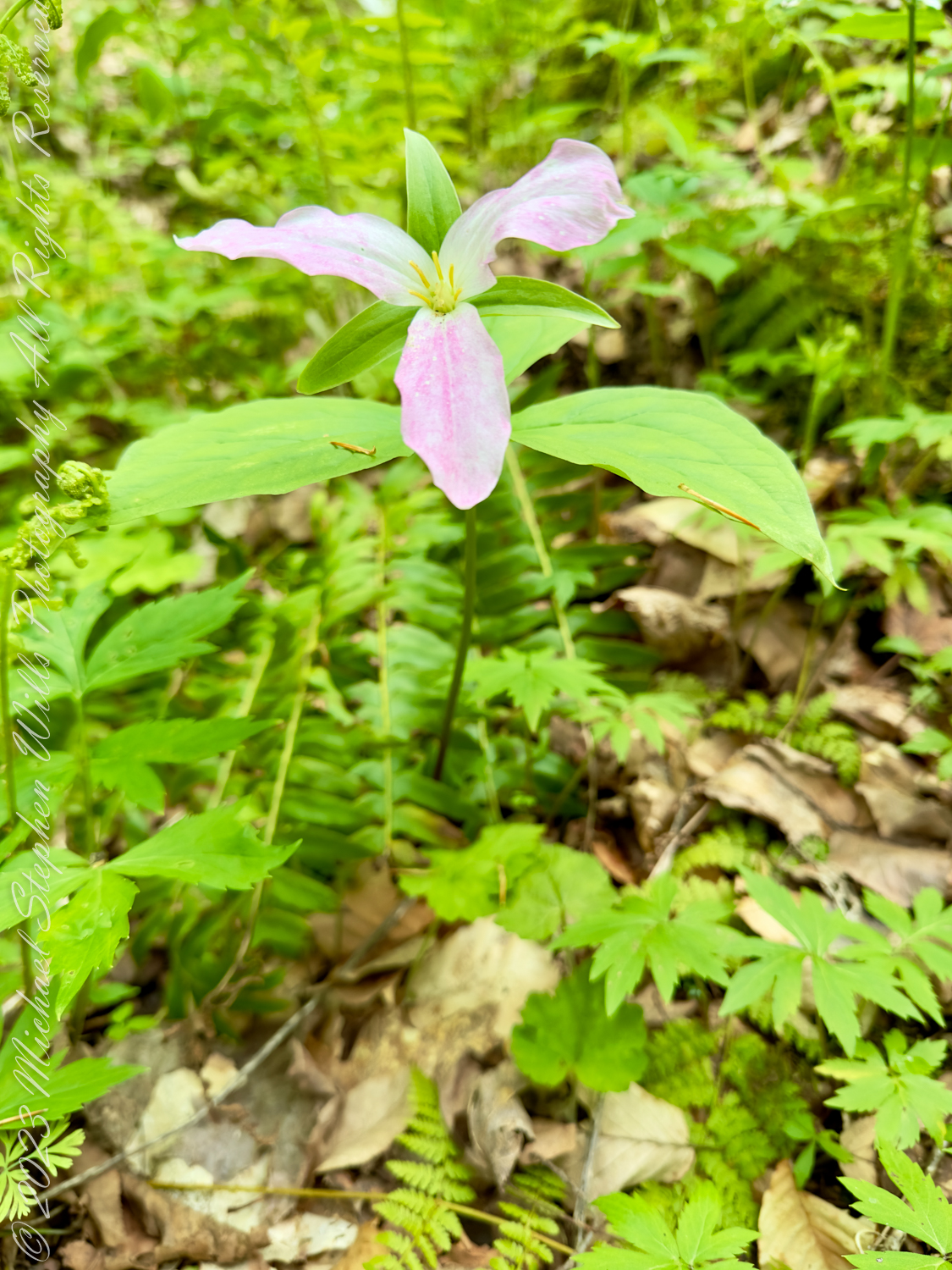
Some flowers, in particular, catch my eye. They have a faint pink hue, the end of its blooming period approaches. This natural aging process transforms the white petals into a soft pink, adding another layer of beauty to these already stunning plants. This subtle pink tint is a sign of the flower’s progression through its lifecycle, a gentle reminder of the ever-changing nature of the forest.

The Natural History of Trilliums


Trillium grandiflorum is native to the deciduous forests of North America, thriving in the rich, moist soils found in areas like Treman Gorge. These perennial plants emerge in early spring, often before the tree canopy fully develops, taking advantage of the available sunlight.

Trilliums have a unique reproductive strategy known as myrmecochory. This means their seeds are dispersed by ants. The seeds have a fatty appendage called an elaiosome, which attracts ants. The ants carry the seeds back to their nests, consume the elaiosome, and discard the seed, effectively planting it in a nutrient-rich environment.

Historical and Modern Uses

Historically, another trillium species, Trillium erectum, held significance for both Native American tribes. Various parts of the plant were used for medicinal purposes. The roots, in particular, were valued for their astringent and antiseptic properties. They were used to treat wounds, inflammation, and other ailments. Some tribes referred to Trillium as “birthroot” because it was used to ease childbirth and labor pains.

European settlers also adopted these uses and incorporated Trillium into their herbal remedies. The roots were used to facilitate labor, manage menstrual disorders, and treat wounds and inflammations. Because of its association with childbirth and its perceived benefits in regulating menstrual cycles, the plant became widely known as “Bethroot.”​

In modern times, while the medicinal use of Trillium has waned, the plant is still admired for its beauty and ecological role. Conservation efforts are in place to protect wild populations of Trillium grandiflorum, as habitat loss and over-harvesting have threatened some local populations.

Capturing the Moment


Photographing these Trilliums is a delight. Using the Apple IPhone 14 ProMax I carefully frame each shot to capture the intricate details of the flowers. Macros reveal the delicate veins on the petals and the fine texture of the leaves. I developed the images in Adobe Lightroom to highlight the contrast between the white flowers and the lush green foliage. Some of the images beautifully capture the pink tints on the petals, showcasing the flower’s natural aging process and adding depth to their already stunning appearance.

Reflecting on the Experience


Encountering Trillium grandiflorum in full bloom is a profound experience. These flowers, with their simple yet elegant structure, embody the essence of spring’s renewal. They remind me of the intricate connections within ecosystems and the historical ties humans have to the natural world.

As I continue my walk through Treman Gorge, I carry with me a sense of gratitude for the opportunity to witness such beauty. The Trilliums, with their timeless grace and the gentle pink tints of their aging petals, have left an indelible mark on my heart. I look forward to returning each year to see these perennial wonders, knowing that each visit offers a chance to reconnect with nature’s enduring splendor.

Copyright 2024 Michael Stephen Wills All Rights Reserved

From Myths to Medicine Unraveling the Tales of False Solomon’s Seal

Step into Treman Gorge and discover the enchanting world of False Solomon’s Seal. Unveil the myths, medicinal uses, and ecological wonders of Smilacina racemosa as it flourishes beneath the forest canopy.

In the shaded woodland of Treman Gorge, near the tumbling waters of Lucifer Falls, the understory blooms with the intriguing presence of Smilacina racemosa, commonly known as false Solomon’s seal. This perennial wildflower’s identity is as layered as the forest floor it adorns, its names—both scientific and common—woven with historical and cultural threads.

Smilacina racemosa—the plant’s scientific name—offers a botanical breadcrumb trail to its identity. “Smilacina” derives from a diminutive form of the Latin word for smile, “smilax”, a reference not to the plant’s demeanor but to its resemblance to the related sarsaparilla plants, which belong to the genus Smilax. The species name “racemosa” speaks directly to its form, describing the characteristic raceme or cluster of flowers that gracefully arch at the end of its stalk, each blossom a delicate dot along the green wand.

The common name, false Solomon’s seal, tells a tale of mistaken identity and botanical homage. The name playfully suggests a sibling rivalry of sorts with its look-alike, the true Solomon’s seal (Polygonatum), which bears its flowers and fruits along the stem, rather than at the tip as in Smilacina. The term “Solomon’s seal” itself is steeped in lore, supposedly referring to the circular seals from King Solomon’s ring—a mark of wisdom and an echo in the circular scars on the rhizome of the true Solomon’s seal. Here, in this false version, the legacy is mimicked in form but remains uniquely distinct in its flowering finale.

As for its cultural tapestry, false Solomon’s seal holds its own chapter in Native American ethnobotany. The plant was not merely a forest decoration but a source of sustenance and medicine. Its young shoots and leaves were often harvested in spring, a woodland asparagus of sorts, eaten raw or cooked. The roots served a more medicinal role, employed in treatments from stomachaches to rheumatic pains, revealing a deep-rooted reverence for this plant’s healing potential.

Beyond its uses, false Solomon’s seal paints a broader stroke in the ecological canvas of Treman Gorge. Flowering in May, its creamy white blossoms are a ballet of light in the dappled shade, attracting a suite of spring pollinators. By autumn, the flowers give way to speckled red berries, a feast for the eyes and a banquet for birds and mammals, knitting itself into the life threads of its woodland home.

Thus, the journey of understanding Smilacina racemosa is as much about unearthing its etymological roots as it is about appreciating its ecological and cultural resonance. A plant of beauty and utility, it stands as a silent sentinel in the history-laden woods of Treman Gorge, its presence a whispered tale in the symphony of spring. As it stretches beneath the towering trees, it invites those who wander to delve deeper into its story, a tale woven through the very fabric of the forest floor.

Copyright 2024 Michael Stephen Wills All Rights Reserved

Discovering the Delicate Beauty of Mitella Diphylla in Treman Gorge

As you wander virtually through Treman Gorge, let yourself be charmed by the delicate Mitella diphylla. Discover this modest yet mesmerizing wildflower, a hidden gem among the forest’s early spring tapestry.

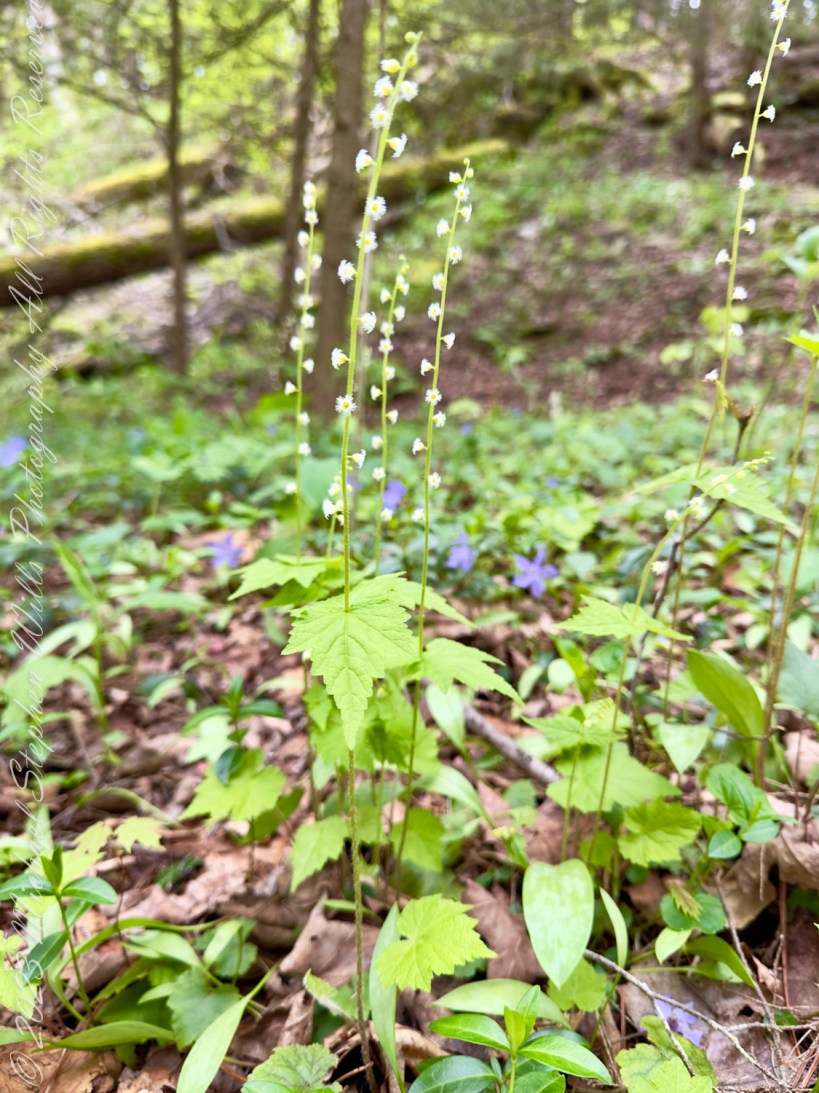
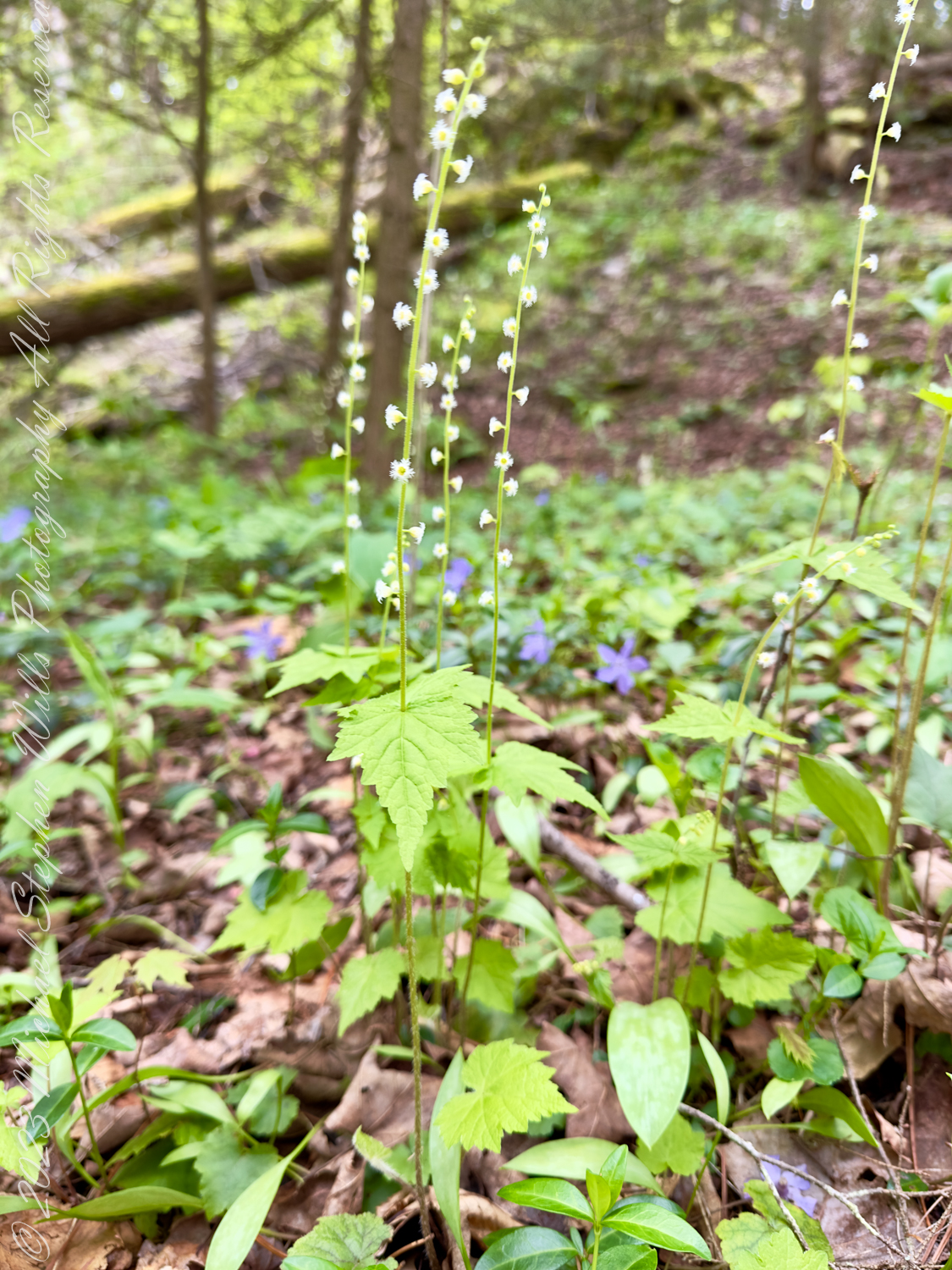
As I rediscover the wonders of Treman Gorge this spring, I stumbled upon a delightful surprise nestled among the leaf litter—an encounter with Mitella diphylla, commonly known as the bishop’s cap or two-leaved miterwort. This charming wildflower, modest yet mesmerizing, seemed to beckon with its understated beauty, provoking a sense of wonder at its delicate presence.

The name Mitella diphylla is a poetic nod to its physical form—’Mitella’ meaning ‘little mitre,’ a reference to the small, mitre-shaped capsules of the fruit, and ‘diphylla,’ meaning ‘two leaves,’ highlighting its characteristic pair of basal leaves. This etymology whimsically captures the essence of the bishop’s cap, a plant whose morphology and name alike hint at a past intertwined with religious symbolism and natural history.

Physically, Mitella diphylla is a study in grace and efficiency. Its slender, upright stems rise unassumingly from the forest floor, crowned by a spire of tiny, star-like white flowers. Each flower, though no more than a whisper on the wind, is a masterpiece of design, with five deeply cut petals that seem to twinkle against the backdrop of the gorge’s dappled light. The leaves, broad and heart-shaped, lay a verdant carpet at the base, completing this picturesque plant profile.

Nestled in the cool, moist understory of Treman Gorge, the bishop’s cap finds its ideal habitat. Here, under the canopy of mature deciduous trees, it plays a subtle yet significant role in the ecosystem. The flowers, though not flamboyant, are a crucial nectar source for early spring pollinators, who are drawn to its discreet charm. The plant’s presence also speaks to the health of its woodland habitat—thriving in undisturbed soil, where it forms part of a complex web of flora and fauna.

Discovering Mitella diphylla in its natural setting was a reminder of the layered complexity and interconnectedness of our ecosystems. Each element, no matter how small or seemingly insignificant, holds a place in the narrative of the natural world. To encounter such a wildflower is to be gifted a moment of connection with the past and a simple, pure joy in the persistence of nature’s subtle beauties.

Copyright 2024 Michael Stephen Wills All Rights Reserved

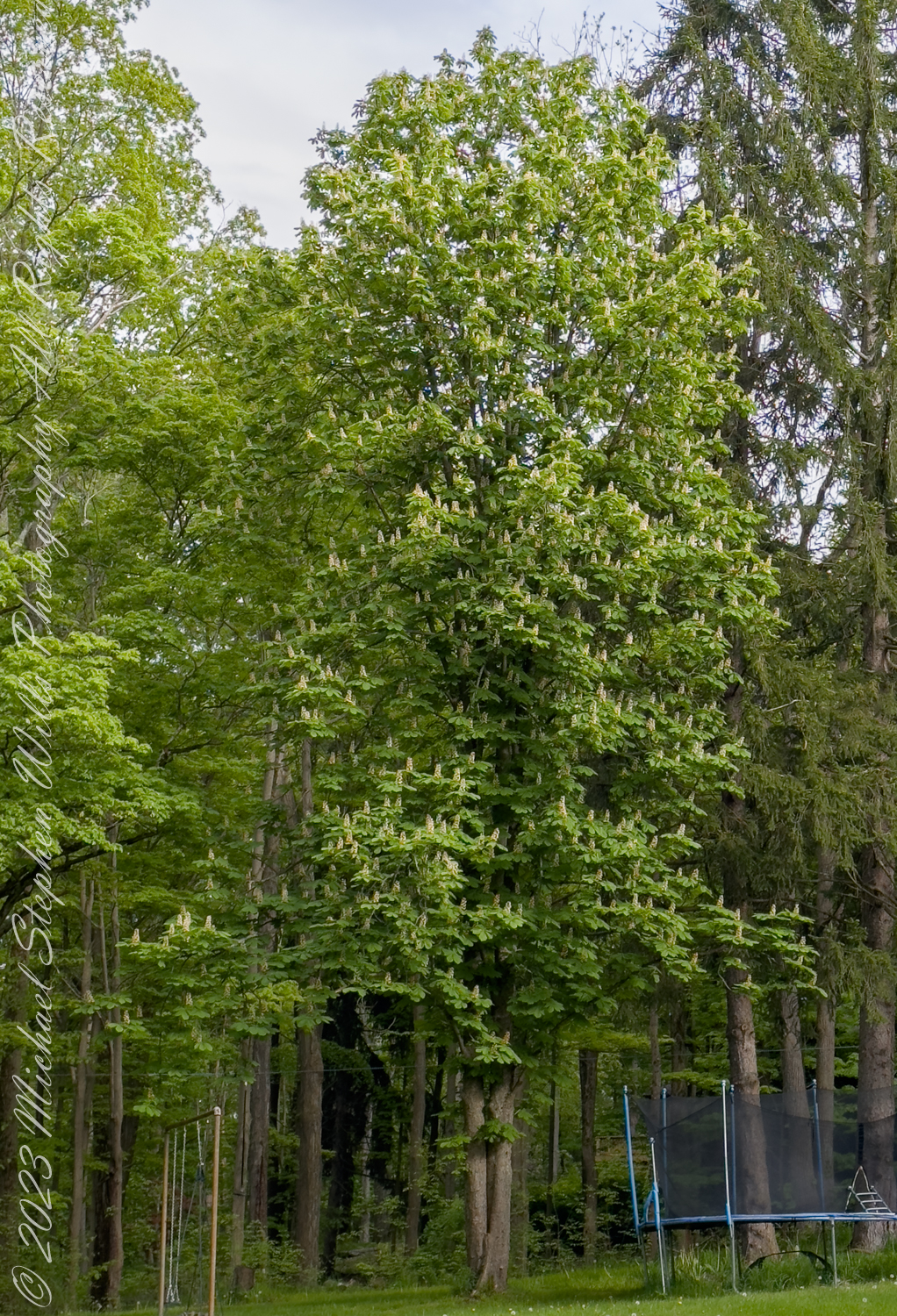
Mother’s Day Amid the Blossoms of the Horse Chestnut

Explore the enchanting world of the Horse Chestnut, its vibrant spring blossoms, and its rich tapestry of historical and ecological significance, as I wander the slopes above Cayuga Lake on a serene Mother’s Day.


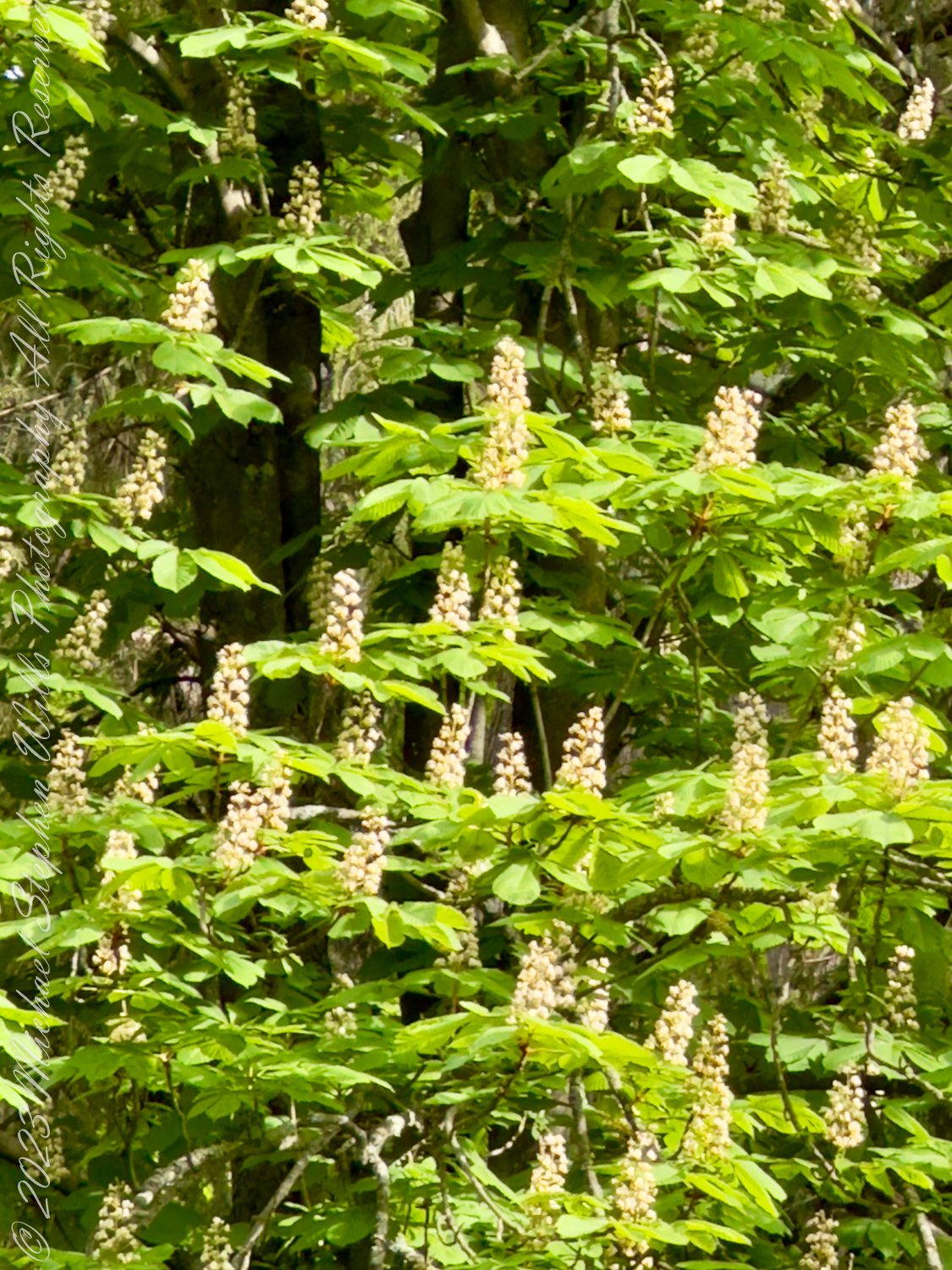
On a serene Mother’s Day in 2024, I found myself walking the slopes above Cayuga Lake, embraced by the spring warmth and the vibrant blossoms of the Horse Chestnut tree (Aesculus hippocastanum). This moment was a seasonal celebration and a deep dive into the botanical and cultural tapestry that this majestic tree weaves.

The Botanical Brilliance of the Horse Chestnut


The Horse Chestnut tree, with its robust stature and radiant floral displays, is a sight to behold, a study in botanical survival and adaptation. Originally native to a small area in the Pindus Mountains mixed forests and the Balkan mixed forests of Southeast Europe, this tree has traversed continents and histories to root itself into diverse landscapes, including the fertile grounds above Cayuga Lake.

Each spring, the Horse Chestnut’s candle-like flower spikes, scientifically known as ‘panicles’, burst forth in a shower of whites and subtle pinks, each petal marked distinctively with a blotch of yellow or red. These blooms are structured to attract a variety of pollinators, playing a crucial role in the local ecological narrative by supporting biodiversity.

Historical Uses and Cultural Significance


The journey of the Horse Chestnut tree from its native lands to the Americas is a tale of practicality and reverence. Native Americans, prior to the arrival of European settlers, were keen observers of their environment but may not have had a direct historical use for the Horse Chestnut, as it was introduced later. However, the European settlers quickly discovered the tree’s multiple uses. The wood, known for its softness and workability, was used to make furniture and boxes, while the bark found its place in the tanning industry due to its rich tannin content.

Most notably, the seeds of the Horse Chestnut were ground and used as a form of laundry detergent and to treat various ailments, a testament to the tree’s utility in pioneering life. This aspect of the Horse Chestnut highlights a broader theme of how both Native Americans and European settlers utilized natural resources for survival and economic purposes, blending the lines between utility and conservation.

A Reflection on the Natural History and Ecology


As I strolled beneath the boughs heavy with spring’s bounty, the historical echoes of the Horse Chestnut’s uses merged with the present chorus of birds nesting in its branches. The tree’s role extends beyond human uses; it is a vital component of the local ecosystems. The dense canopy provides shelter and the flowers feed pollinators, which in turn support the broader food web.

Environmental factors, particularly those influenced by climate change, pose challenges to the Horse Chestnut. Issues such as leaf blotch and the conker tree moth threaten its health and longevity. Observing the Horse Chestnut’s current vibrancy, I am reminded of the resilience and adaptability that this species has demonstrated over centuries.

Conclusion: A Legacy Continues

As the day drew to a close and the sun cast long shadows over Cayuga Lake, the Horse Chestnut stood as a botanical specimen, a living monument to natural history and human ingenuity. The tree’s story is a powerful reminder of our intertwined destinies with the plant kingdom—how plants shape our cultures, sustain our environments, and continue to amaze with their ecological and aesthetic contributions.

Copyright 2024 Michael Stephen Wills All Rights Reserved

Viola pubescens: A Delight of the Deciduous Forest

The yellow forest violet, Viola pubescens, with bright yellow flowers, serves as nectar source and butterfly host, indicating forest health and offering medicinal uses.

The yellow forest violet is easily recognizable by its bright yellow flowers, which add a splash of color to the forest floor in early to mid-spring. The petals are slightly fringed and the lower petal exhibits delicate veins that serve as nectar guides for pollinators. The leaves of Viola pubescens are heart-shaped with a slight pubescence, or fuzziness, that gives the plant its characteristic downy appearance.

As a member of the Violet family, Viola pubescens is important ecologically. It serves as an early source of nectar for pollinators such as bees and butterflies. Additionally, the plant is a host for the larvae of some Fritillary butterflies, playing a crucial role in their lifecycle.

This plant not only contributes to the biodiversity of its habitat but also enchants those who wander through its woodland home. The presence of Viola pubescens indicates a healthy, undisturbed forest ecosystem, making it an excellent indicator of ecological stability.

Viola pubescens is also noted for its medicinal uses among Native American tribes, who used various parts of the plant to treat ailments ranging from colds to heart trouble. The roots and leaves were often used in traditional remedies, showcasing the plant’s utility beyond its aesthetic appeal.

In summary, Viola pubescens, or the yellow forest violet, is a noteworthy component of the North American woodland biome. Its ecological role and historical significance make it a valued species for both naturalists and conservationists alike.

Copyright 2024 Michael Stephen Wills All Rights Reserved