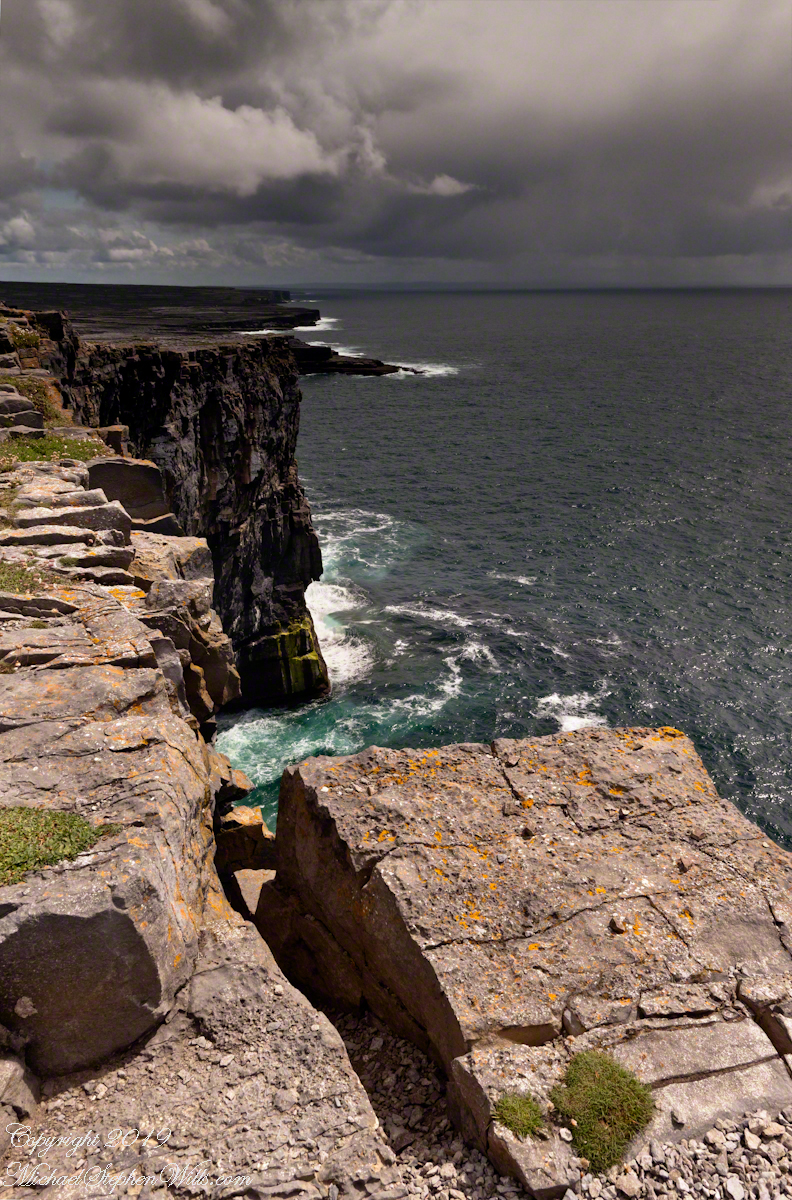
From the heights of Dun Aonghasa the karst, a type of limestone, of Inishmore falls away for the sight of the twelve pins against Galway Bay. These unworked, barren slopes have a pale green covering growing seemingly on air.
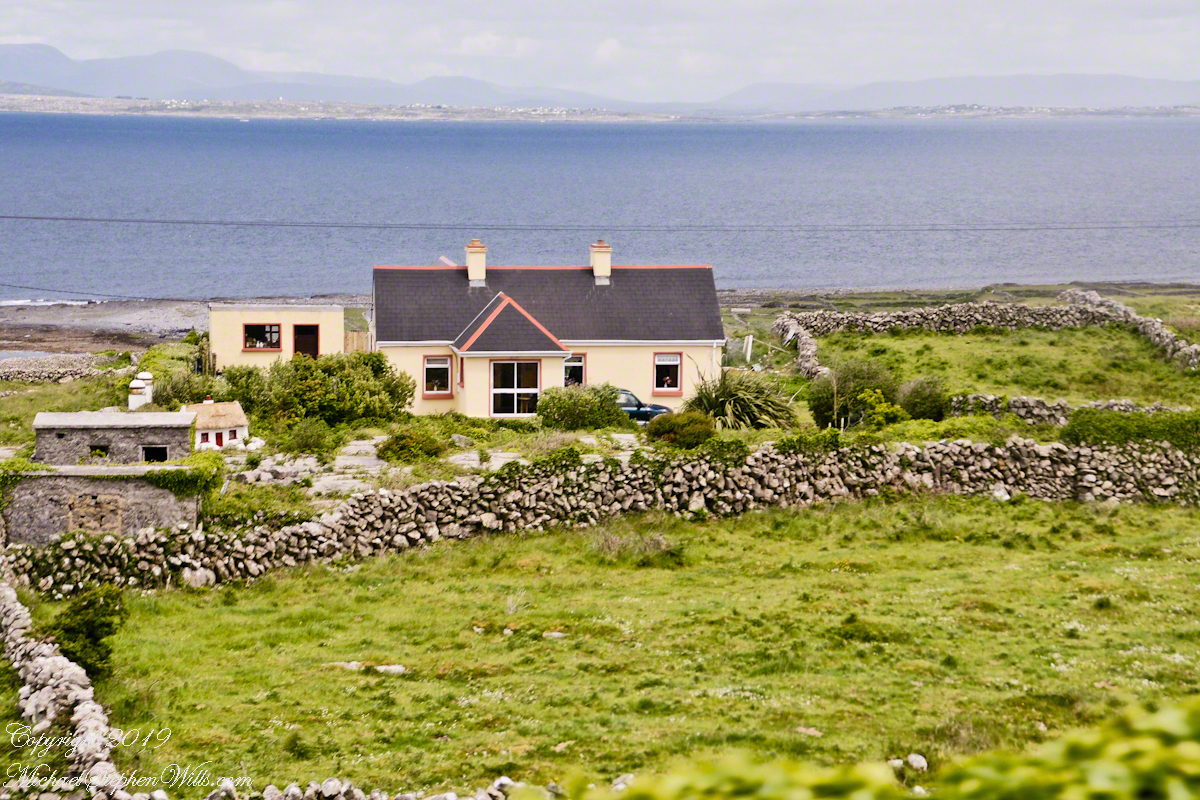
On approach to Dun Aonghasa, Cottage Road dips closer to the road for this view of a field with enough dense grass for five cows to feed, the rest on the cushioning green. Where did this come from?
The answer is simple hard work, hundreds, a thousand years of hauling seaweed and sand, mixing it on the barren limestone, allowing the rot of time to work. Hold it down with roots, till and refresh.
From the commanding location of Dun Aonghasa, looking northeast across Inishmore island, we can understand why the ancient builders chose this location.
We also see the transition from exposed limestone to the fields built literally from the ground up (see my post “The How of Soil”). For a closer view of island houses see my posts “Settled In” and “Cottage Road Cottage.”
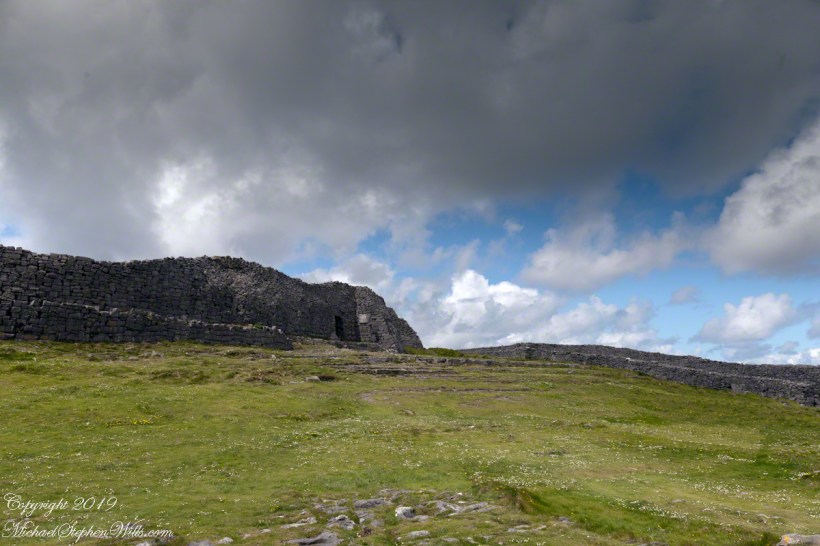
In a previous post, “Inner Ring, at last” we passed over the entrance to the inner enclosure.
A long path through fields, karst landscapes and outer walls leads to this entrance to the inner ring of Dun Aonghasa (Dun Aengus) of Inishmore, Aran Islands, County Galway, Ireland. The image composition is as a dramatic landscape with the surrounding walls and the cloudscape of an approaching storm.
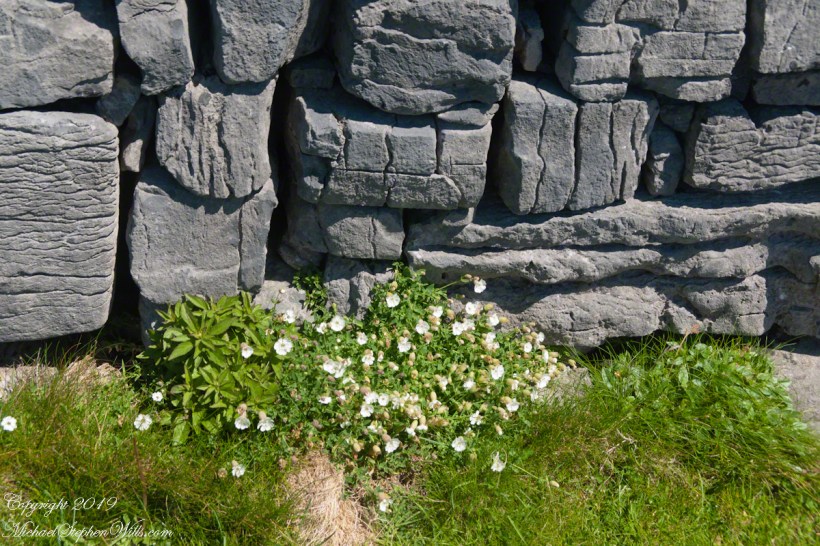
My previous post, “Inner Ring, at last”, lowered the horizon. Here, we study the base of the inner wall.
A detail of the interior wall of Dun Aonghasa (Dun Aengus) in springtime. White flowers of Sea Campion (Scientific Name: Silene uniflora) (Irish Name: Coireán mara) set against the ancient dry stone wall. Inishmore, Aran Islands, County Galway, Ireland.
We found Sea Campion throughout the west Ireland coast.
Detail of Dun Aonghasa Dry Stone Wall with White Flowers of Sea
Wishing a blessed All Saints Day (November 1st) for all my readers.
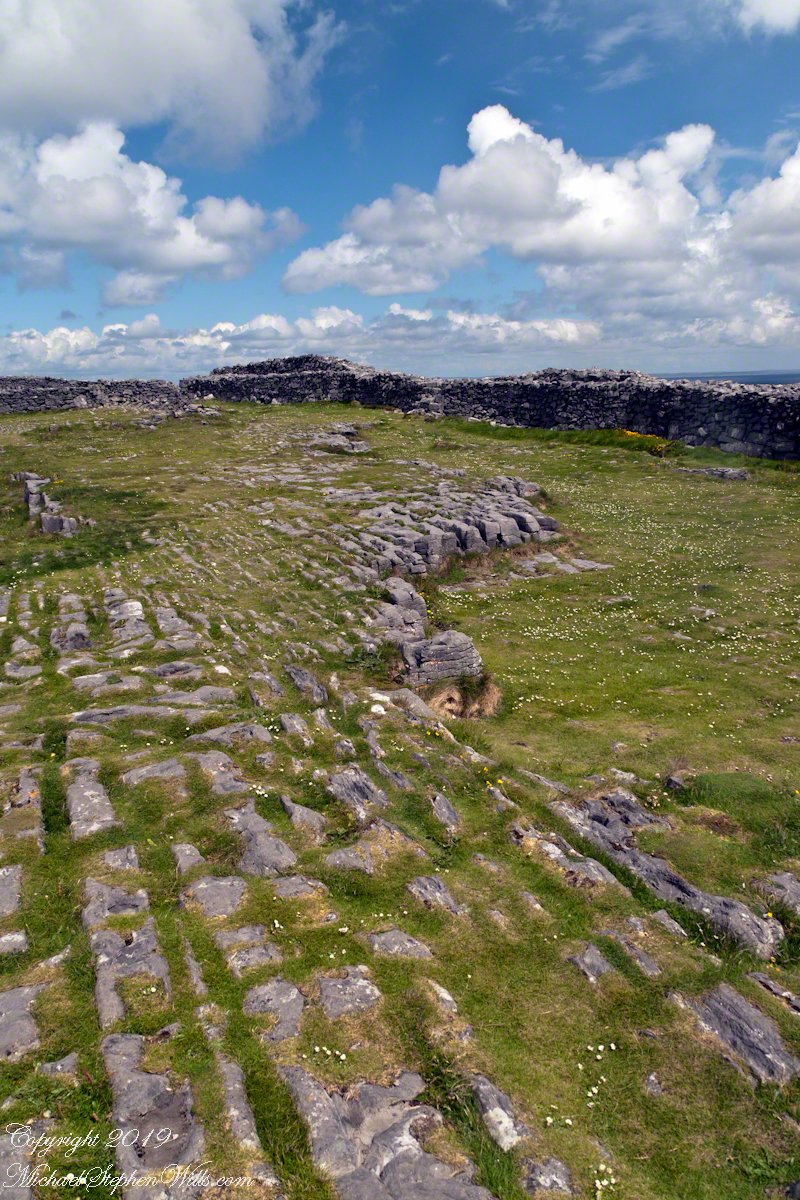
A view to the northwest from within Dun Aonghasa in springtime. The interior a karst formation (see my post, ” Galway Bay View from Dún Aonghasa”), the grikes filled with grass and a sprinkling of white and yellow flowers, a cloudscape rising over the walls. Inishmore, Aran Islands, County Galway, Ireland.
Karst Landscape with Interior Walls of Dun Aonghasa
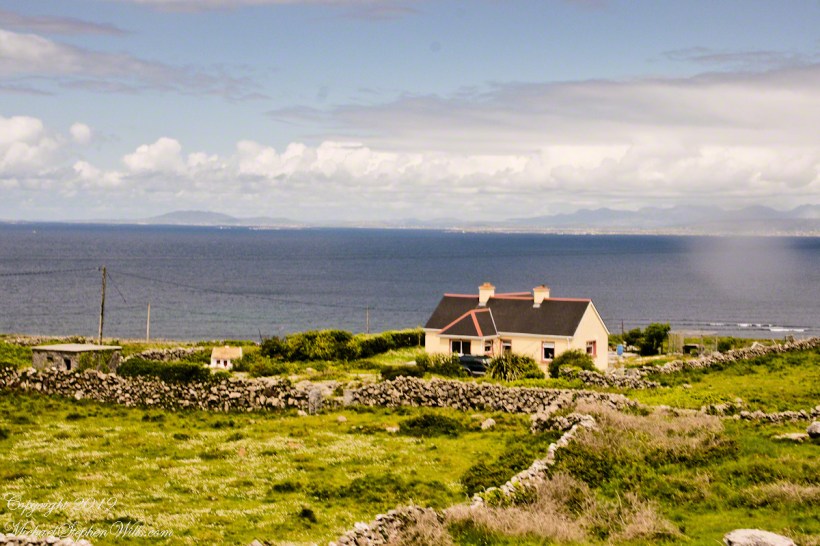
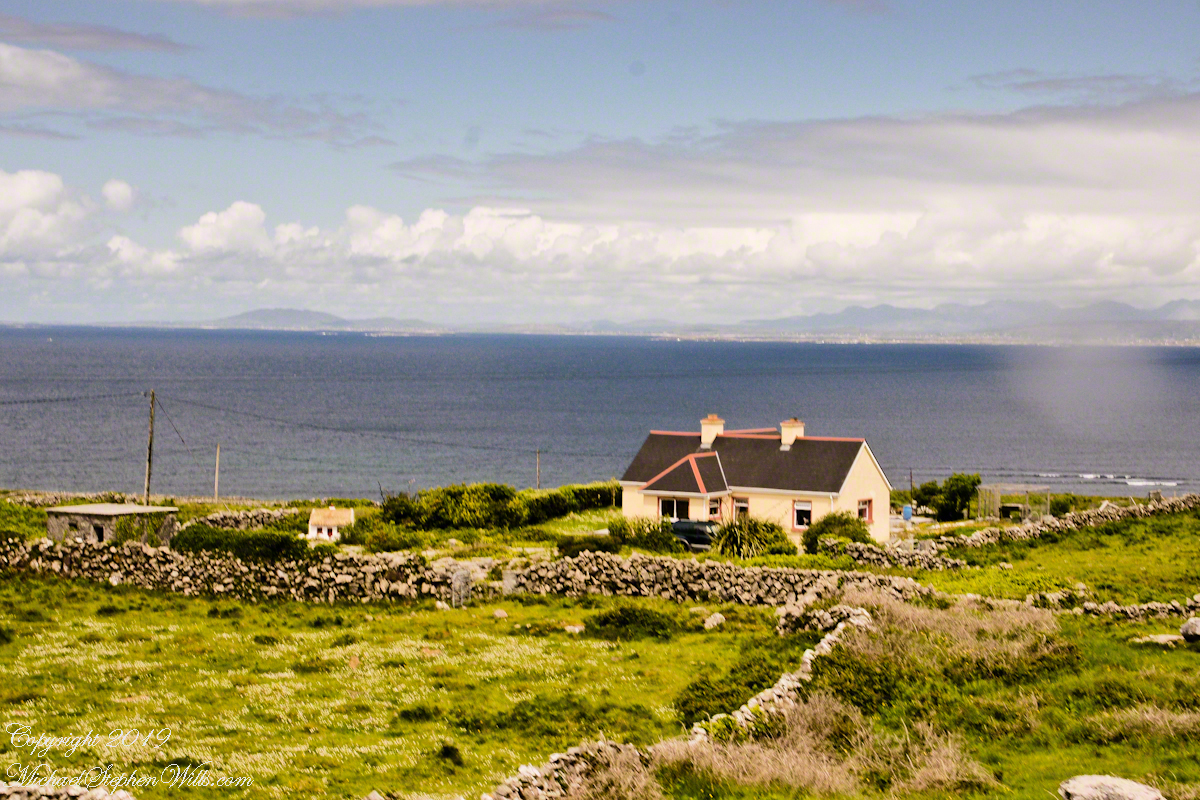
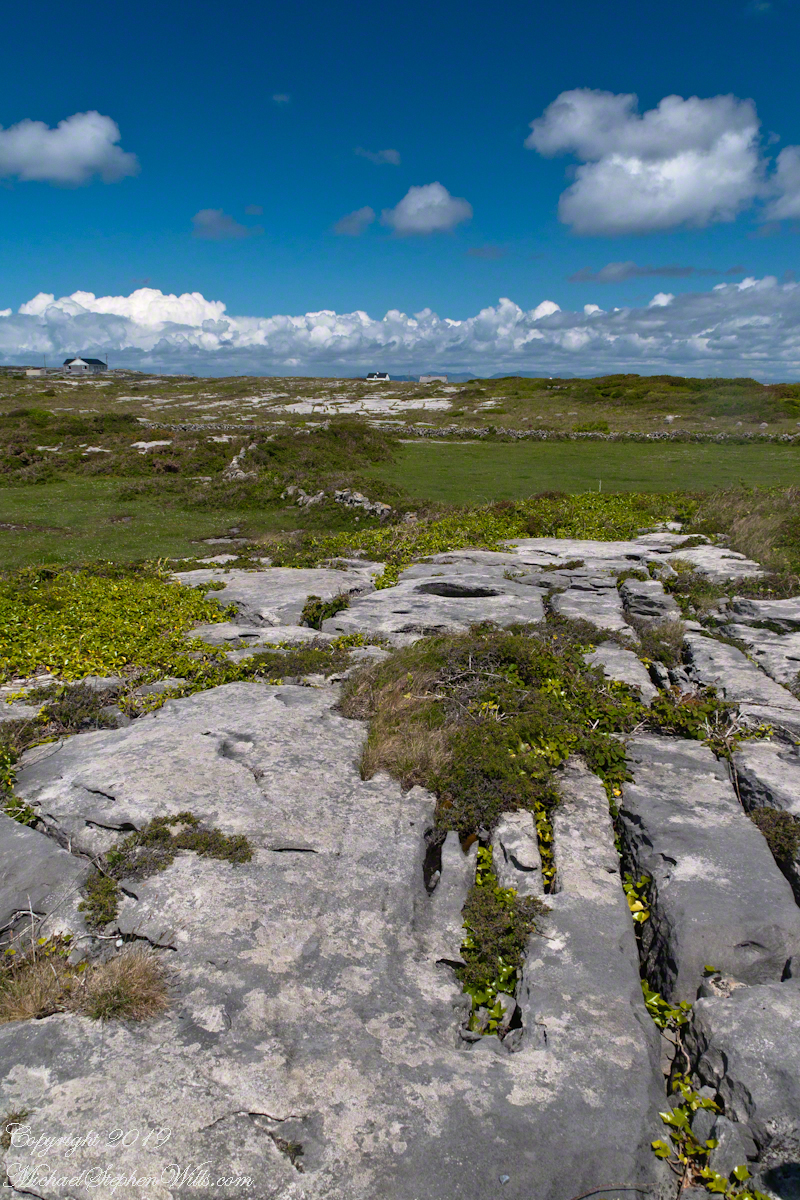
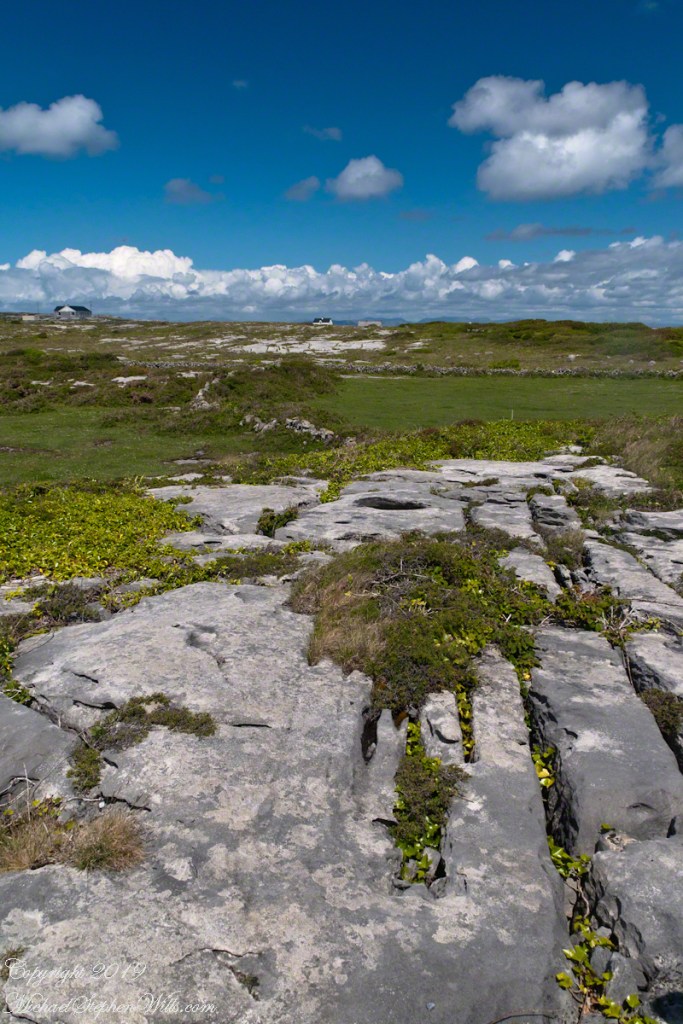
The exposed limestone of the Aran Islands here transitions to a fertile field of grass, husbanded by generations of islanders. Photograph was taken from the path on Inishmore leading up to Dun Aonghasa.
The Aran Islands are an extension of The Burren of Ireland’s Counties Claire and Galway. The word burren is from the Irish Boireann, meaning “great rock.” The glaciers that covered Ireland, retreating about 10,000 years ago, scraped down to the bedrock, exposing wide areas of limestone and dropping, here and there, large rocks. When people came along the foreign nature of the large rocks was recognized, all the more obvious for lying on the horizontally bedded, exposed limestone. We call the foreign rocks erratics. The underlying scoured rock is a pavement for a resemblance to a cobbled roadway.
The incised line, filled with grass and wildflowers, in the following photograph is called a gryke. The body of stone between the grykes are clints. Sometimes, the grykes are cross hatched and the clints resemble cobblestones or flat paving stones.
The view is northeast toward the 12 Bens of Connemara. Inishmore, Aran Islands, County Galway, Ireland
Modern stonework borders the 1/2 mile path to the inner Dún Aonghasa walls, keeping tourists off delicate plants, maintaining the integrity of this ancient site.
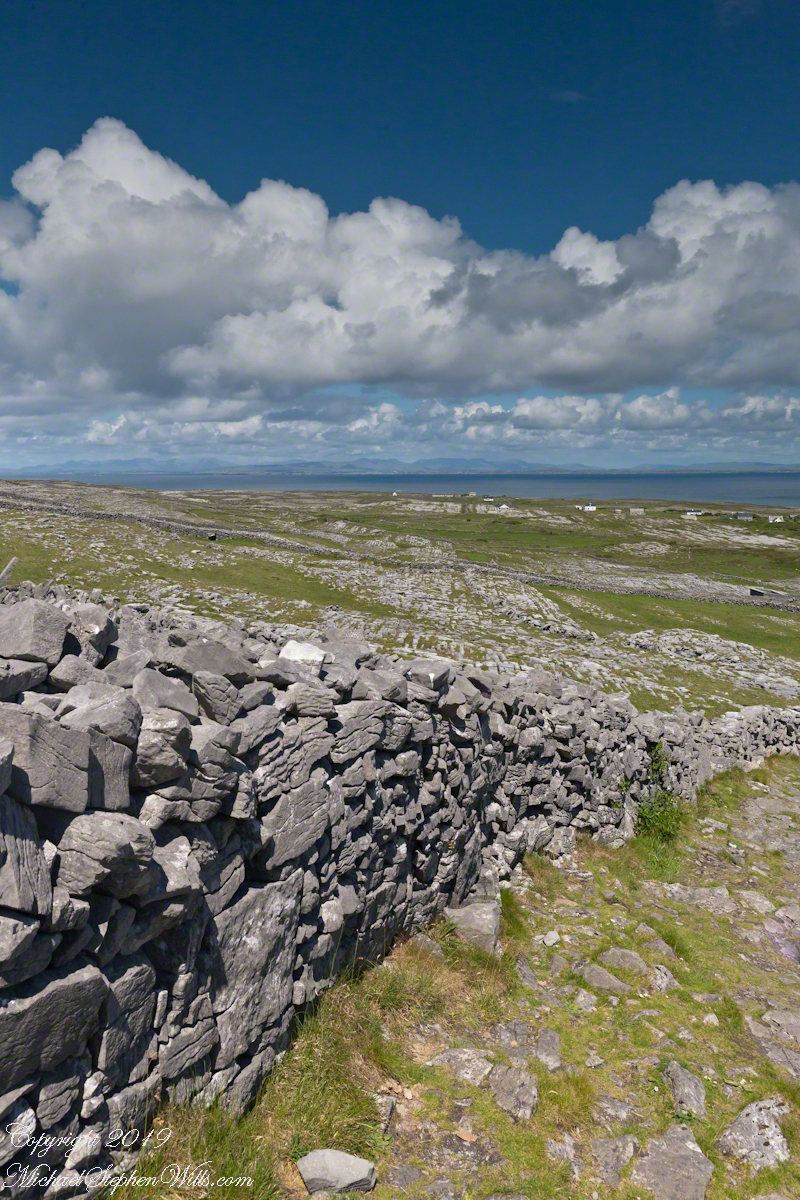
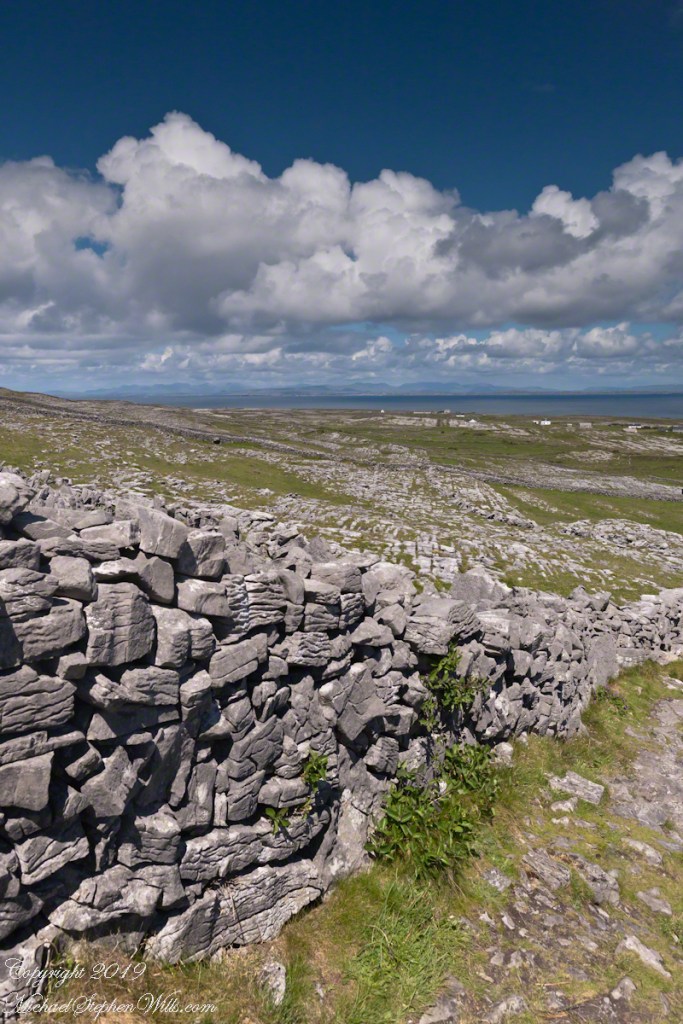
The view north, northwest over the walled path to Dun Aonghasa (Dun Aengus) looking across karst landscape, walled fields, farms, the North Atlantic Ocean, coast of Connemara and the 12 Bens (12 Pins) mountains. Aran Islands, County Galway, Ireland.
In Cong Village, County Mayo, Ireland, the Dying Man House on Riverview Street from “The Quiet Man” attracts visitors who share behind-the-scenes facts. The village remains quaint despite commercialization, with visitors enjoying film locations and historic buildings.
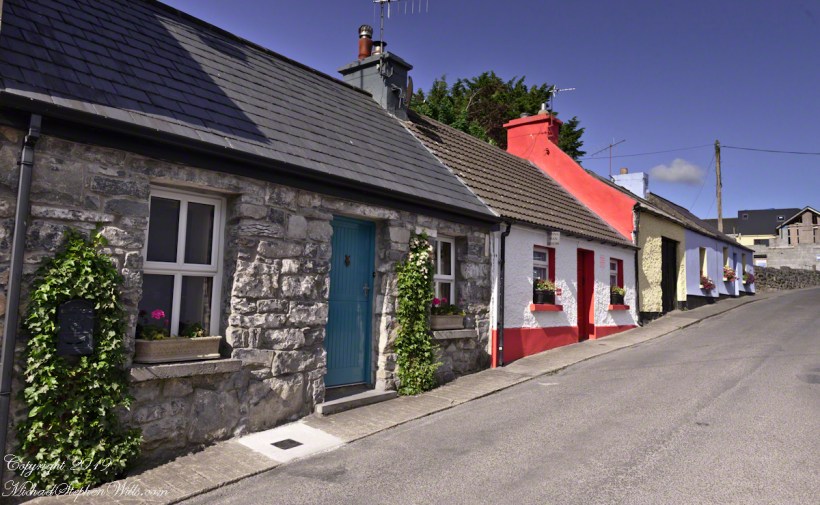
Cong Village, County Mayo Ireland. A scene from “The Quiet Man” has a man, on hearing a fist fight underway, jump from his death bed to run from this house on Riverview Street. This is the view heading east with the Cong River behind.
Dying Man House on Riverview Street is a popular photograph on my Facebook Photography page, to this day visitors leave comments with occasionally inside information about “The Quiet Man.” Here are some examples:
Edward James Soul The dying man in the film was actually, John Ford’s (the director) brother in real life. And the actor who played the young priest was, in real life, Maureen O’ Hara’s brother. The movie is definitely a classic.
Diane Benson Morrow And 2 other brothers were in the film. The older priest and the man who met John Wayne at the railway station at the beginning of the movie were brothers.
Edward James Soul,you are in the right church but the wrong pew. The older priest was Ward Bond. The man who met John Wayne was Barry Fitzgerald. In real life he was the brother to Arthur Shields, the actor who played the Protestant Minister, ” Rev. Playfare”. If you look at the two, you can see the family resemblance.
Edward James Soul, also remember the scene at the lnishfree race, where there were children sitting on a railing next to Maureen O’Hara? They were John Waynes children.
Pauline Ryan Grew up and around the village of Cong lovely wee place its swarming with visitors most of the time but it’s nice and quiet for a few months of winter. It’s getting very commercialized but thank God there is very little room for it to grow.
John Feeley The guided tour of Cong includes the tourists playing a scene from the movie. I got to play the part of Barry Fitzgerald. I had one line…”Where’s me pint?” Type-casting?
Jackie Smith Just watched that movie this weekend.
Greg Thompson Will never forget our singing tour guide and the most glorious artisan shop ever there in Cong…….
Ethel Beth Gallagher That was John Ford’s brother. He’s the man who referred to Seaneen as “tall man” in the Pub and got the coat thrown over his head.
Kolokea Kakiki I didn’t realize that film was made in 1950! I watched it in the 70’s and loved it!
Diane Eiden Been there, it was great to see after watching the movie all my life. I believe Maureen O’ Hara grew up close to Cong, and spent her final years there.
Marnie Rosé This is on my bucket list of places I want to go and I only live up north .. my favorite movie 🎥 ❤️
Robin Axler Kupfer We really enjoyed our visit to Cong. Got some great poses of my husband and me on the Stone Bridge. Enjoyed seeing where they filmed the race on the beach….charming town.
MichaelStephenWills Photography If you walk by the Abbey over the River Cong and forest path, you will recognize another shot from the film where Mary Kate and Sean walked along the river. 2
Ann McNamara Visited Cong a few MONTHS ago.Love taking photographs- so between Cong,the grounds of Ashford Castle,Ashford Lodge and Ballinahinch castle I was in 7th heaven.Lots of wonderful photos to use for my calligraphy + card making class in the Library over Halloween- if I can arrange it!!!!
Julie Dance I bet it is, my family are from co Clare, a little place called Kilkee, and I visit Killarney a lot got friends there.
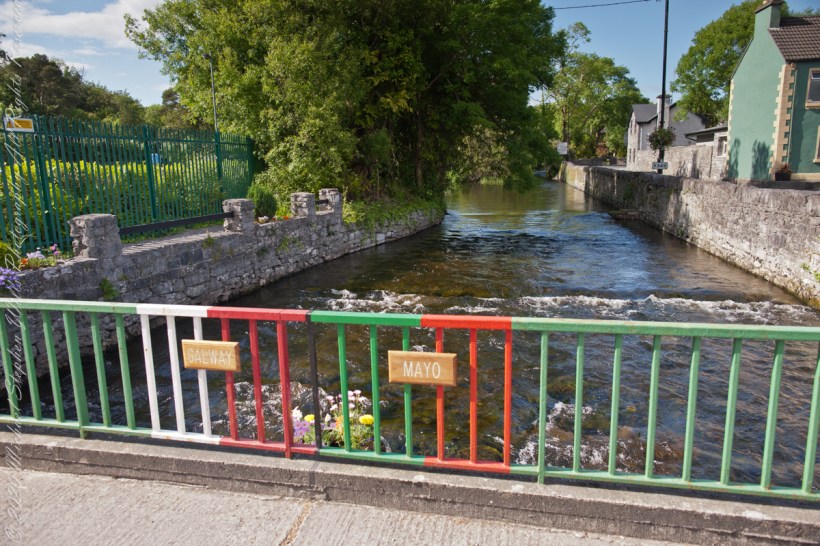
Colorful railings highlight the county border, the centerline of River Cong. To the left is the Cong Salmon Hatchery of County Galway to the right the bridge enters Abby Street of Cong Village, County Mayo. Ahead is where this river, this enormous body of moving water emerges from underground passages through limestone.







 Michael Stephen Wills Photography