Thermogenic

Plant Identification

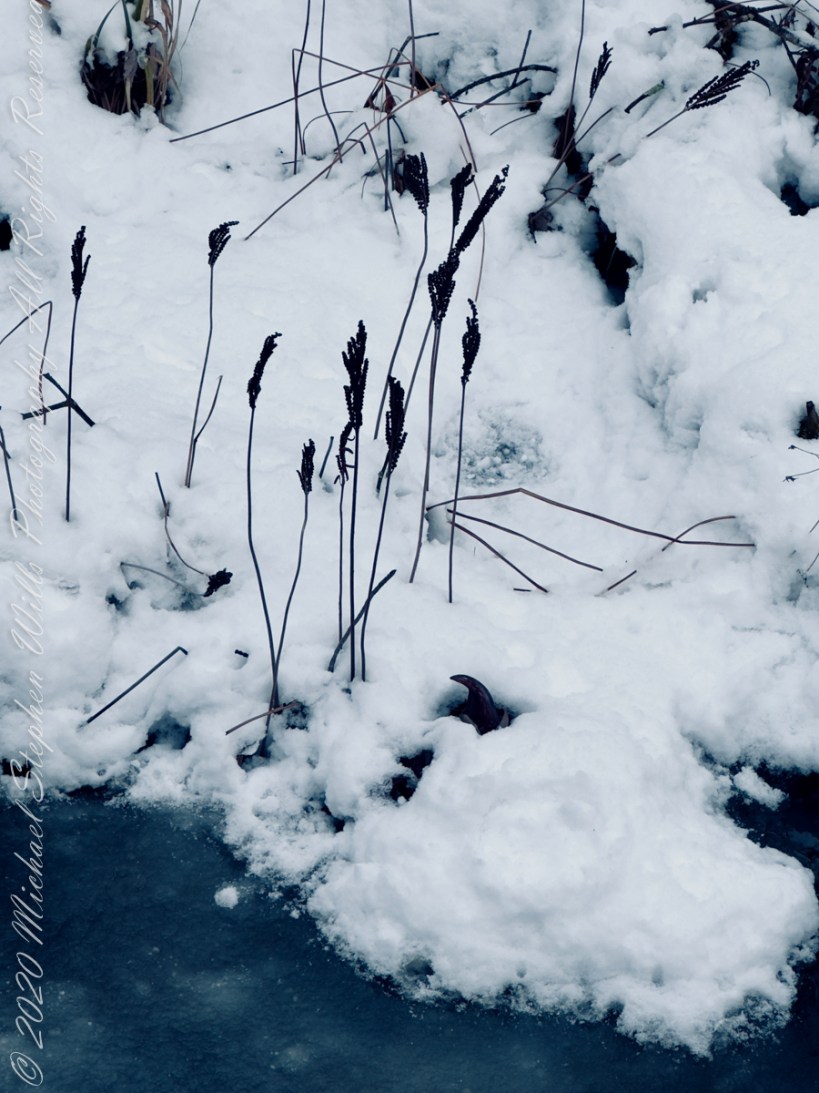
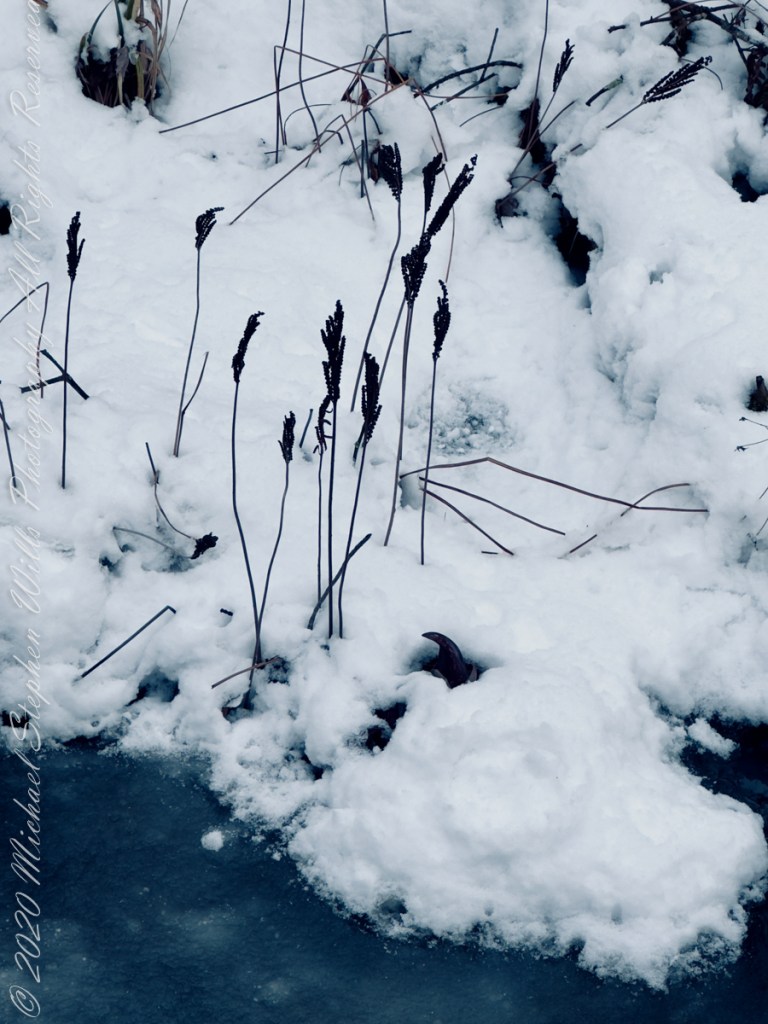
Can you spot the Skunk Cabbage (Symplocarpus foetidus)? Hint: the plant emits heat, melting surrounding snow.

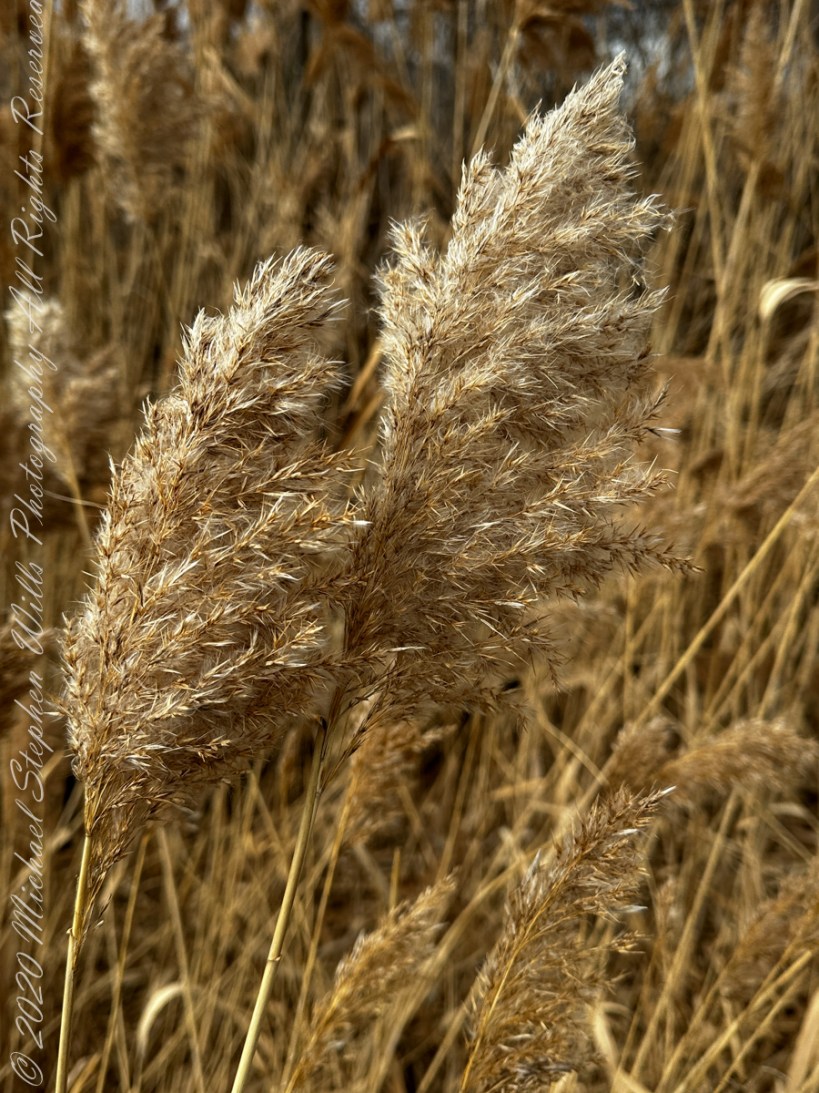
I cannot remember, don’t recall (?), the identification of those long stalks. Dear readers: can you identify?
Eastern skunk cabbage belongs to a select group of thermogenic plants for its capacity to create temperatures of up to 15–35 °C (59–95 °F) above air temperature through cyanide–resistant cellular respiration (via alternative oxidase) in order to melt its way through frozen ground.

One mechanism behind maintaining heat around the plant is the thermogenic oscillation of the spadix: Independent of light, a precise thermal regulator is produced by an oscillatory temperature-sensing model in the spadix under dynamic external temperature variations. An equilibrium between heat production and loss, due to heat radiation, evaporation, conduction and convention is maintained in the spadix. Additionally, the airflow around the spathe effectively maintains heat generated by the spadix.

Click Me for “Finger Lakes Memories” my online gallery.

Reference on the thermogenic features: Wikipedia, “Skunk Cabbage.”
Copyright 2018 Michael Stephen Wills All Rights Reserved

Home to Birds and Trees

Fuertes Bird Sanctuary / Renwick Wood

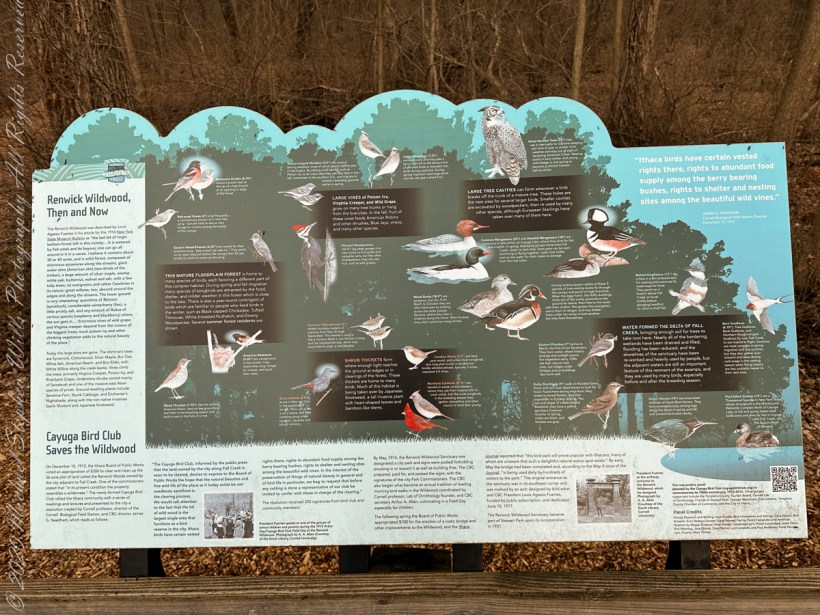
This large sign found along the Cayuga Waterfront Trial at the entrance to Renwick Woods. It provides the origin story (floodplain, delta of Fall Creek), how it came to be conserved and the importance of the place to birds.

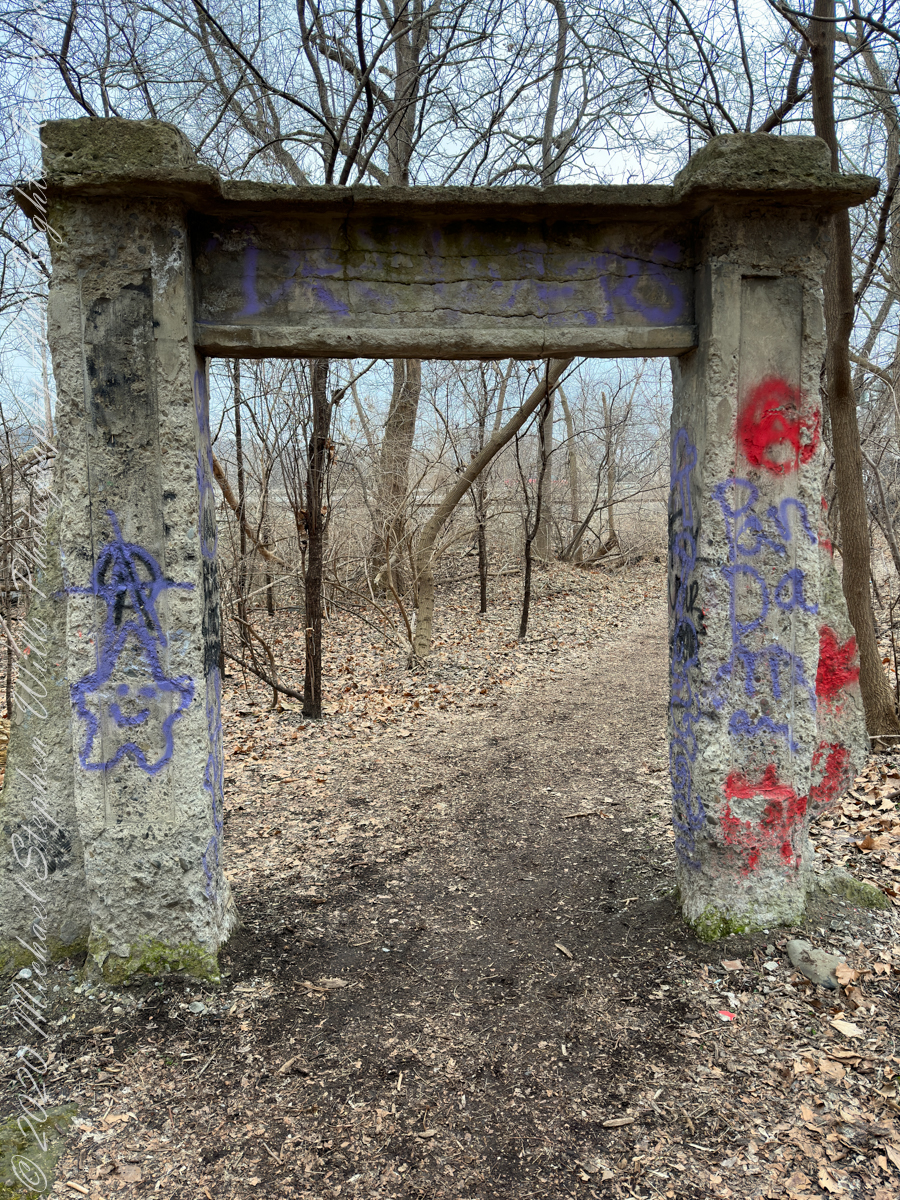
The original entrance to the Fuertes Bird Sanctuary, now called Renwick Wood, was marked by this arch, designed by Louis Agassiz Fuertes, dedicated June 10, 1917.

The professor was born February 7, 1874, at Ithaca, the son of Prof. Estevan Antonio and Mary Stone (Perry) Fuertes. He was graduated by Cornell with the degree of A.B., in 1897, and married Margaret F. Sumner of Ithaca, in 1904. Since 1898 he had been a painter of birds.

Professor Fuentes illustrated such volumes as “Birding on a Broncho,” “Citizen Bird,” Song Birds and “Water Fowls.” His permanent work included habitat groups in the American Museum of Natural History; 25 decorative panels for F.M. Brewster, at New Haven, Conn., birds of New York at the State Museum, Albany; murals in the Flamingo Hotel, at Miami, Fla., paintings for the New York Zoological Society, Bronx. (Source: Find a Grave)
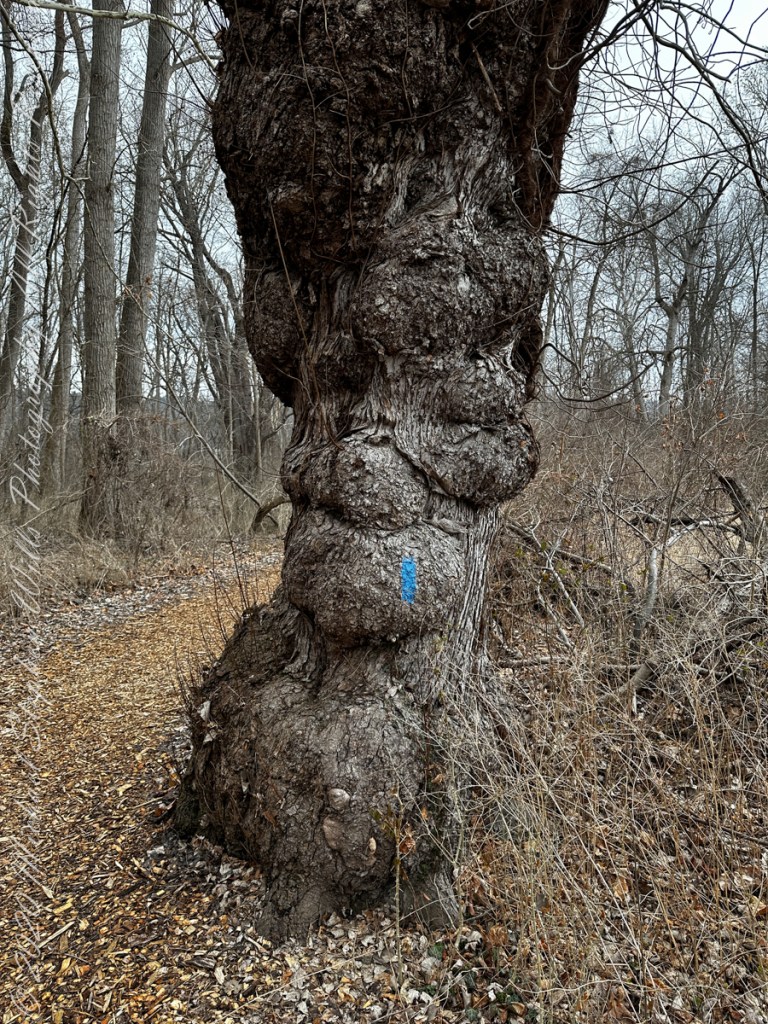
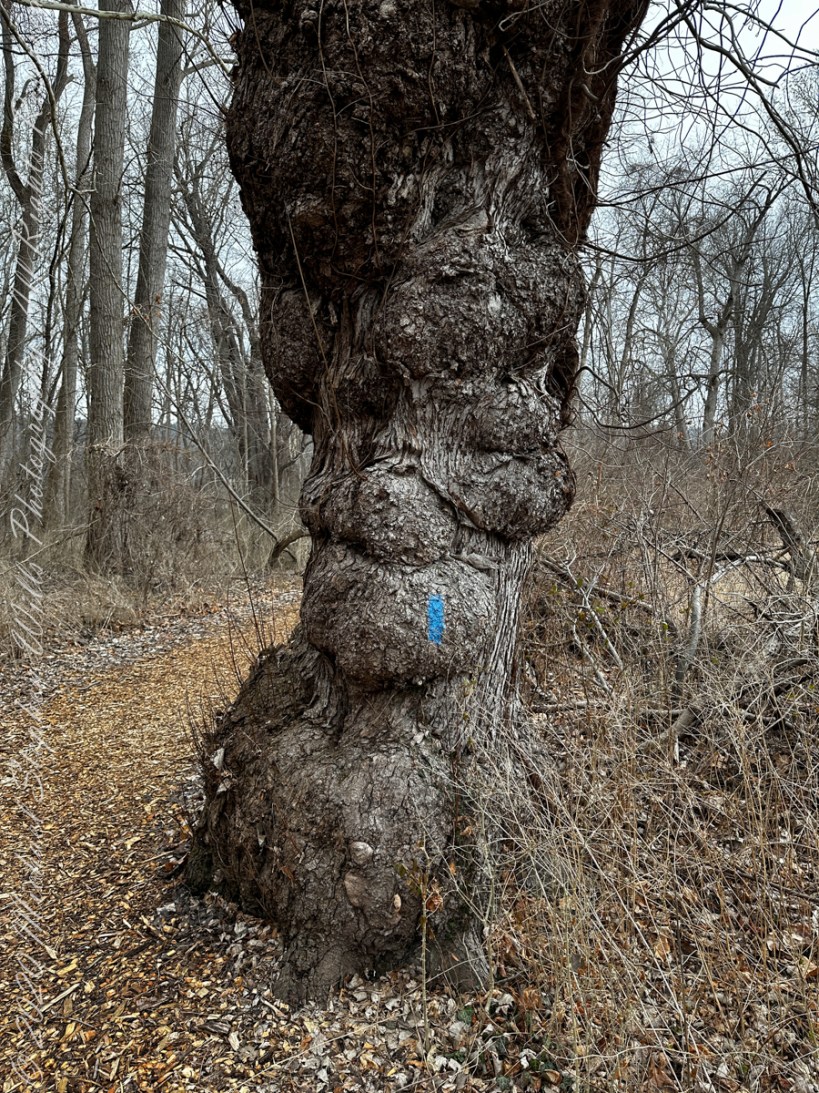
Misshapen tree trunk on the shore of Fall Creek, Renwick Woods

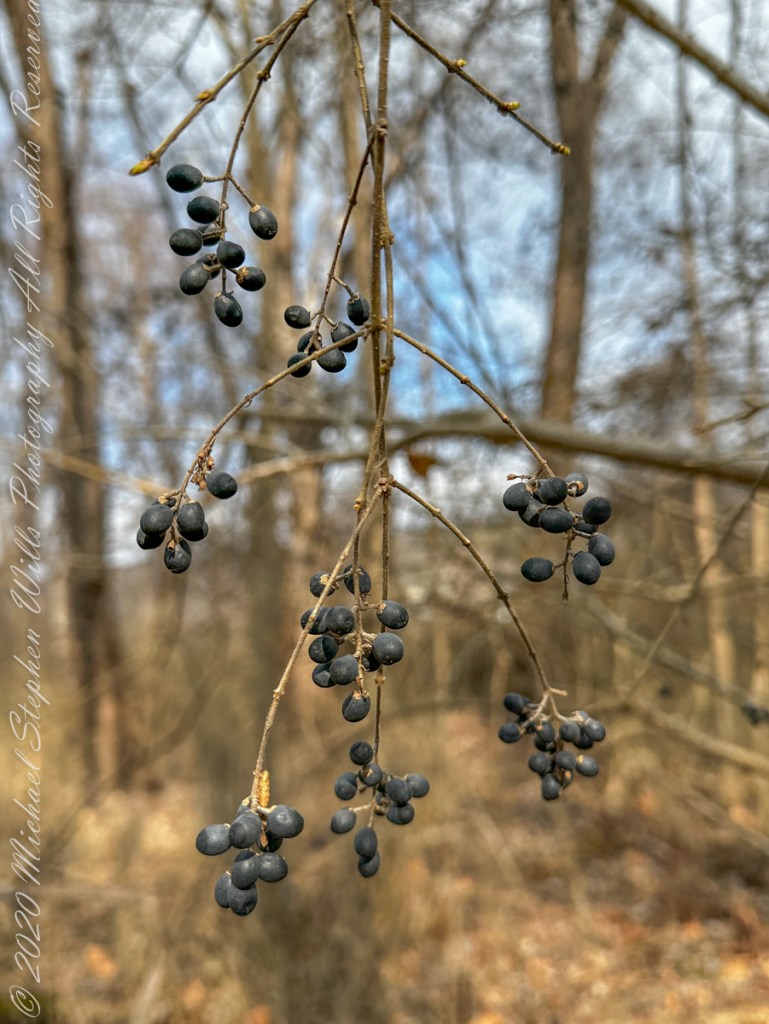
The flowers of this small shrub identify it as a member of the Rose family. The berries I captured in the following photograph are edible (non-poisonous), though astringent. Autumn time, the leaves turn red. It is native to eastern North America. I found these berrys along the Renwick Wood trail.

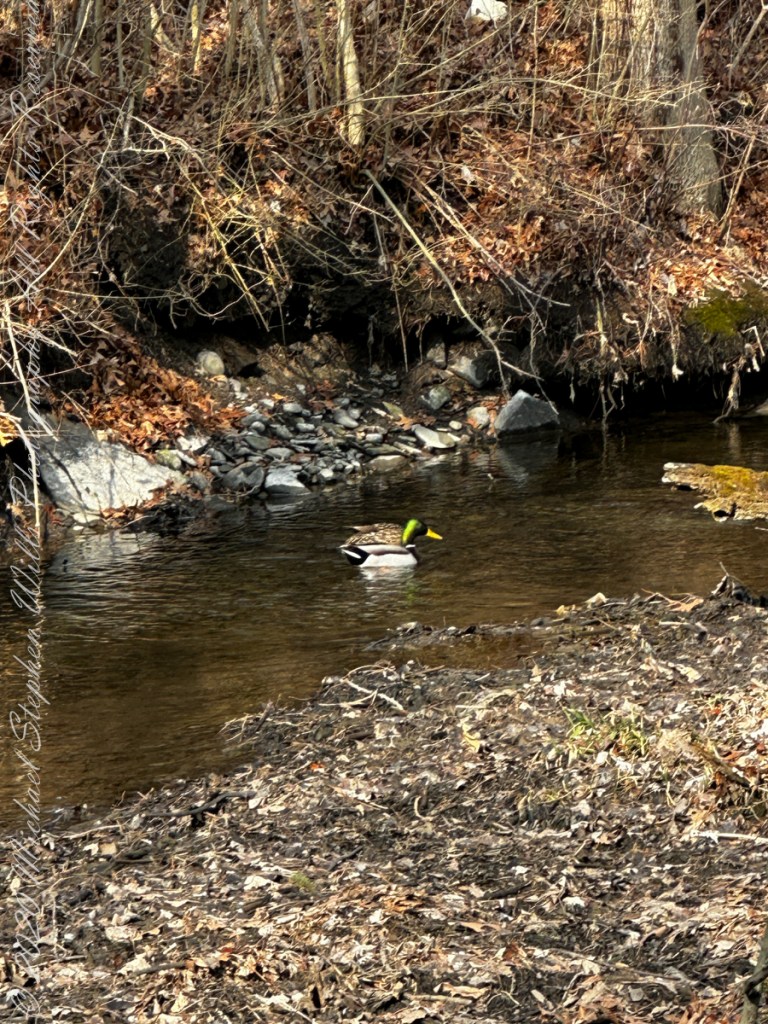
A pair of Mallard ducks foraging along a Fall Creek bayou on the edge of Renwick Woods where Stewart Park begins.

Ithaca Fire Department was training at their facility on Pier Road, next to Newman Golf Course, and across Fall Creek from Renwick Woods.

Copyright 2023 Michael Stephen Wills All Rights Reserved

Happening on Cayuga Lake

Wave Riders

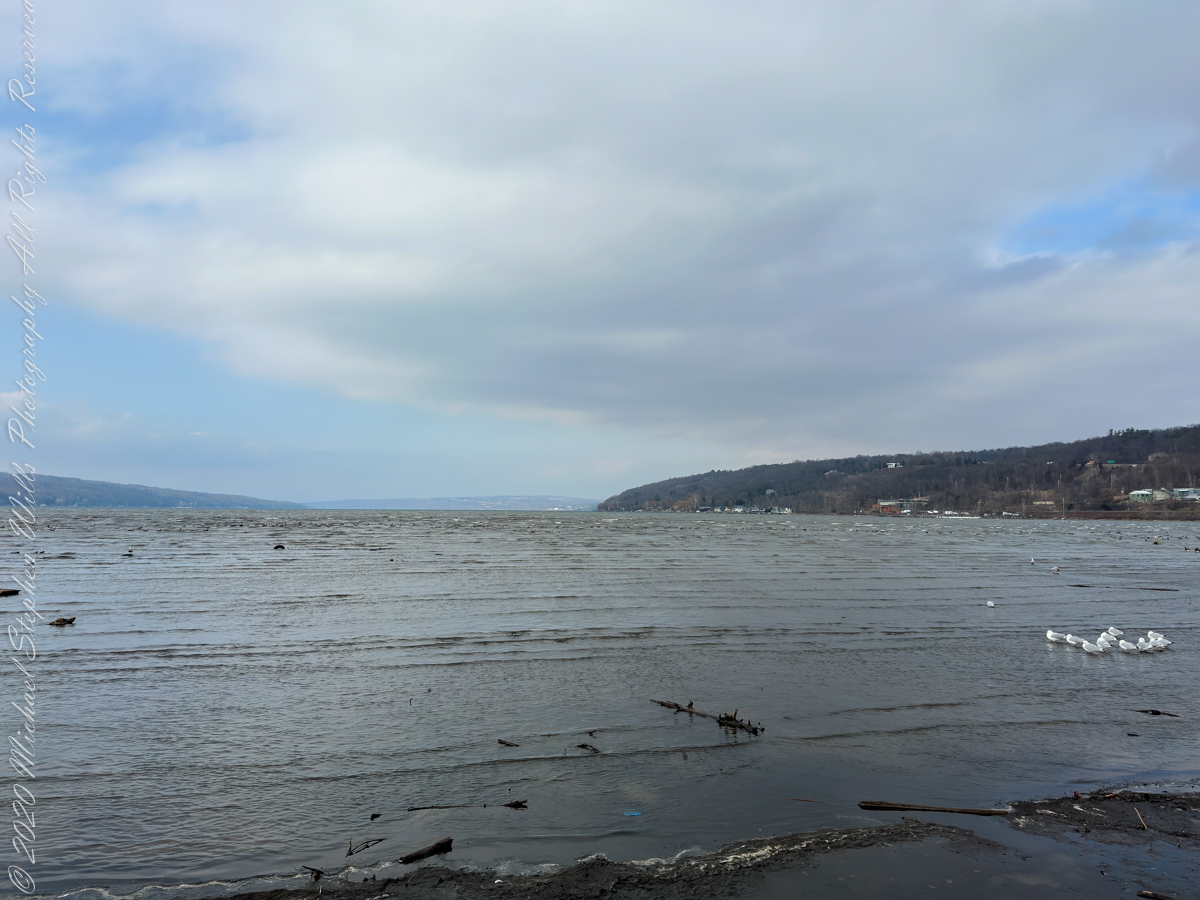
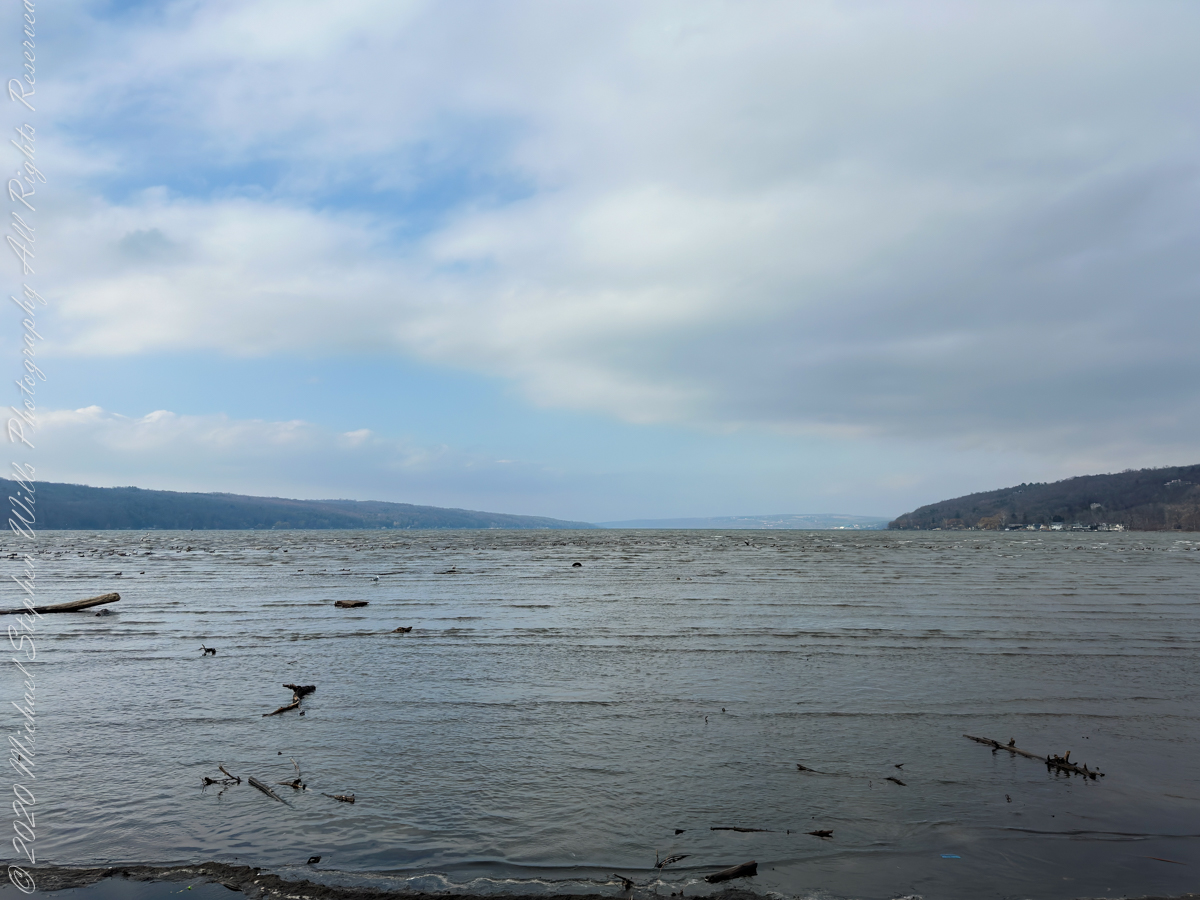
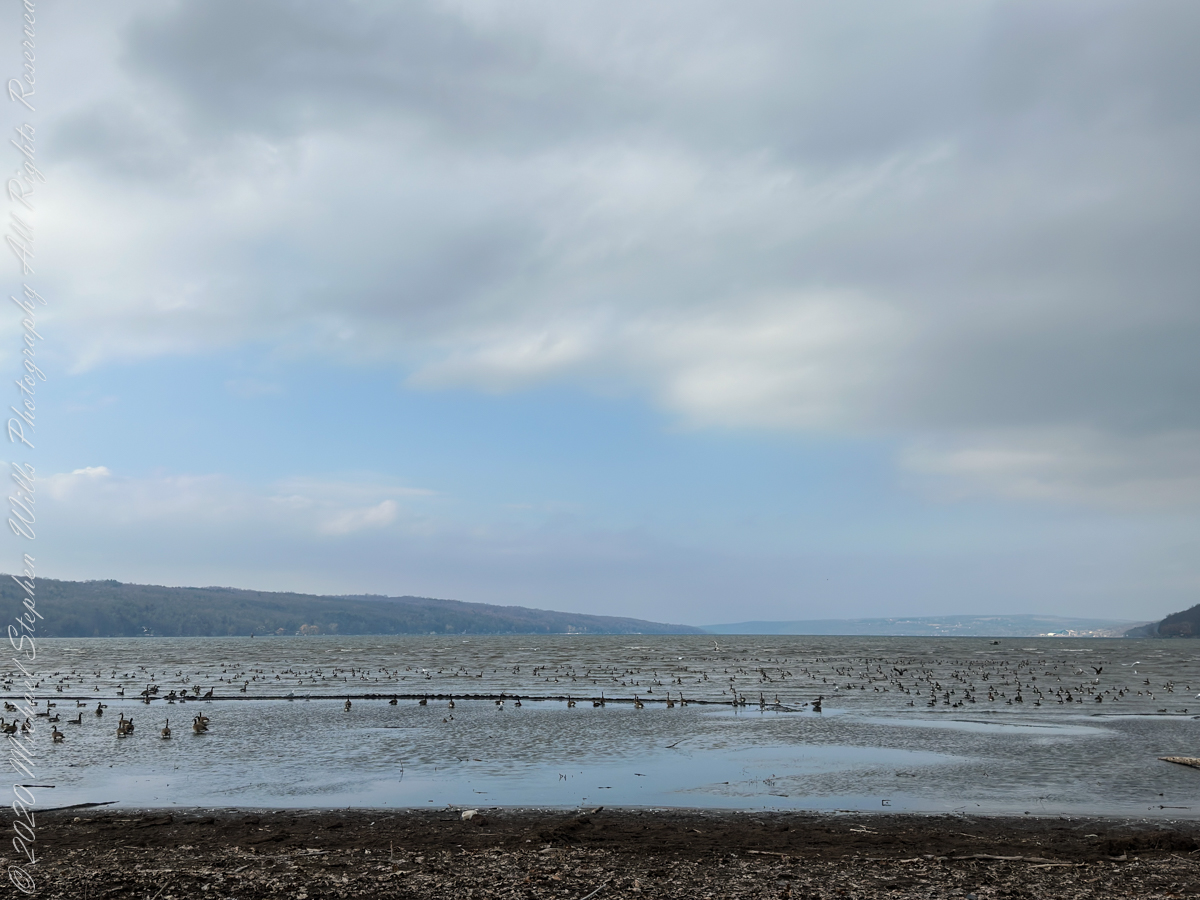
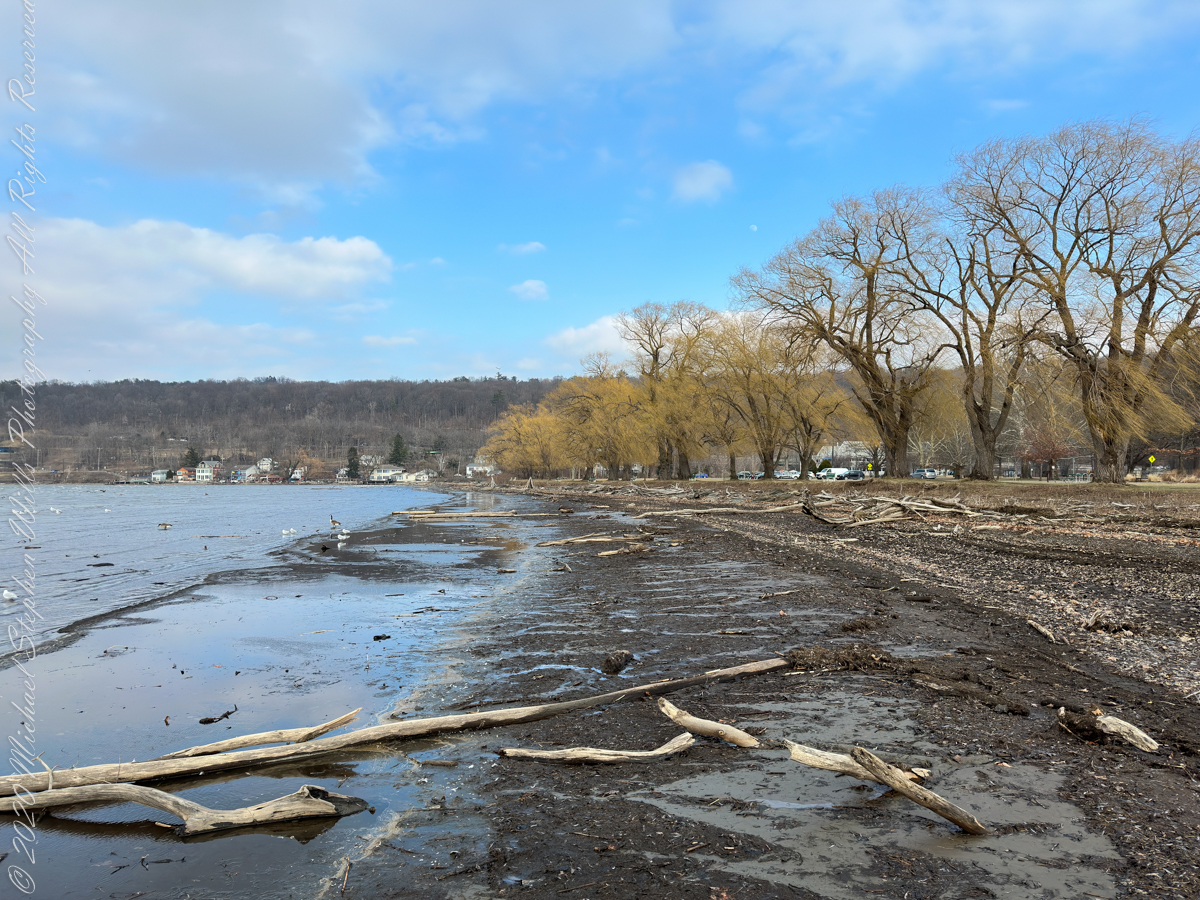
Pam and I have sailed past Crowbar Point, the arm of land projecting into the lake on left, so we know this end of Cayuga Lake well. The lake reach northward is deceiving as the bulk of the 39-mile reach is north of the headlands of the west lakeshore visible in the distance as the apparent end of the lake.

I love the pale blue of late February / early March skies.

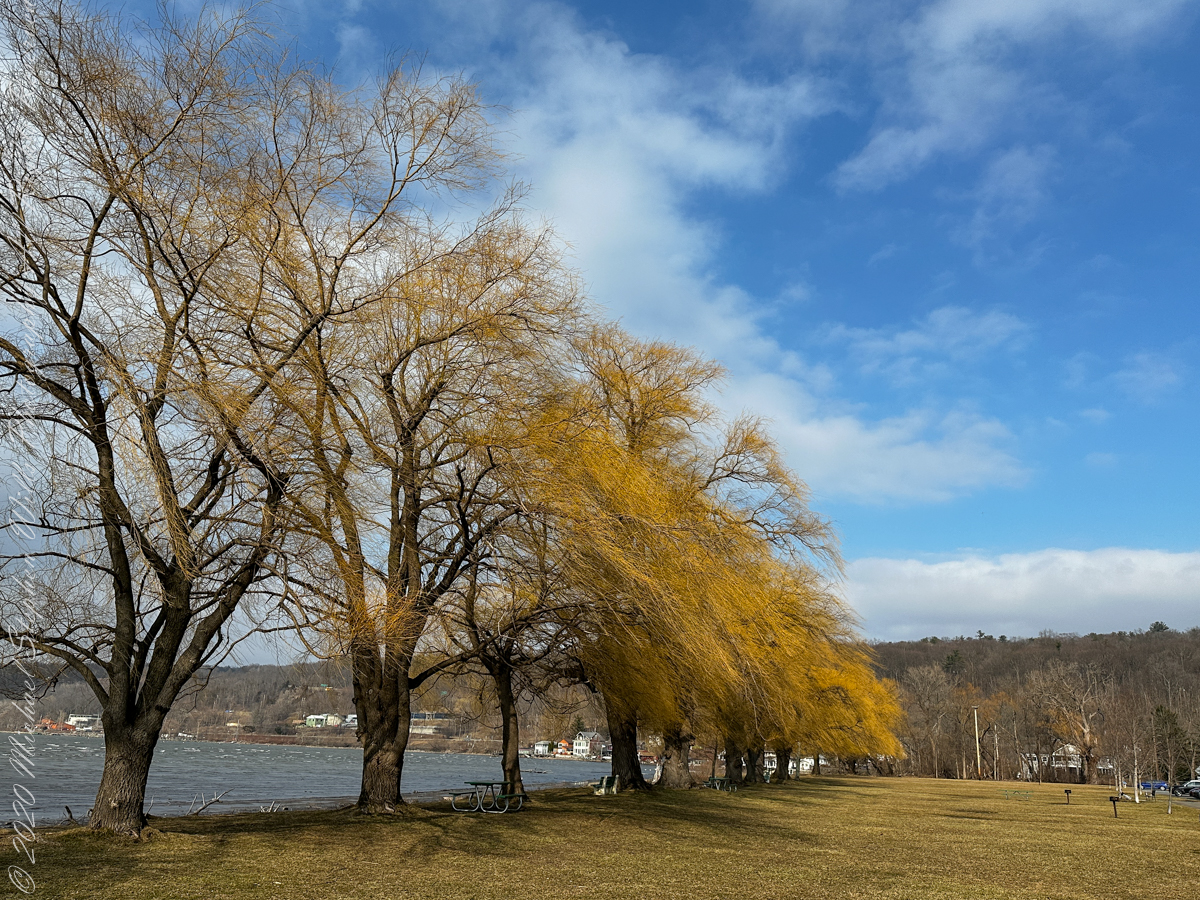
Also known as White Willow, for the white undersides of the leaves that flash in the wind. These flourish on the southernmost shore of Cayuga Lake.

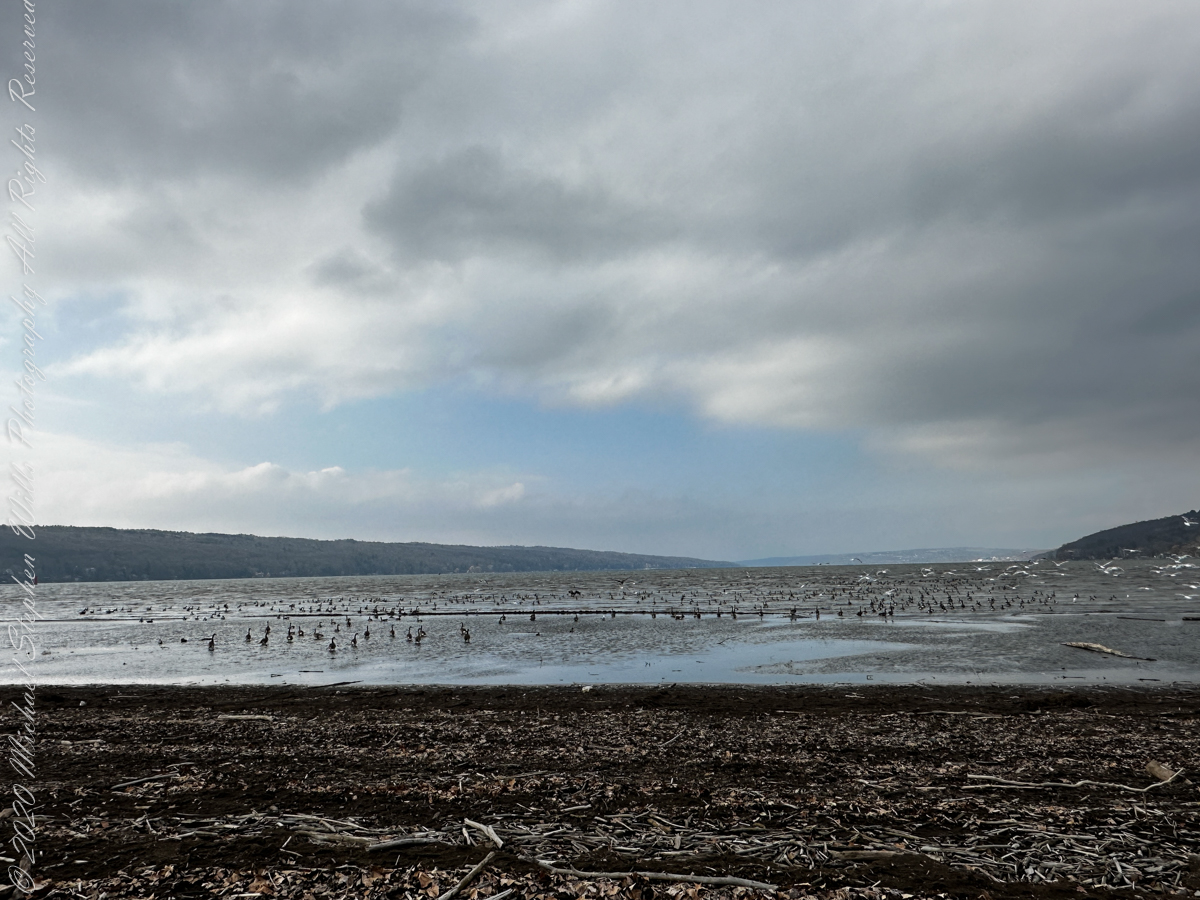
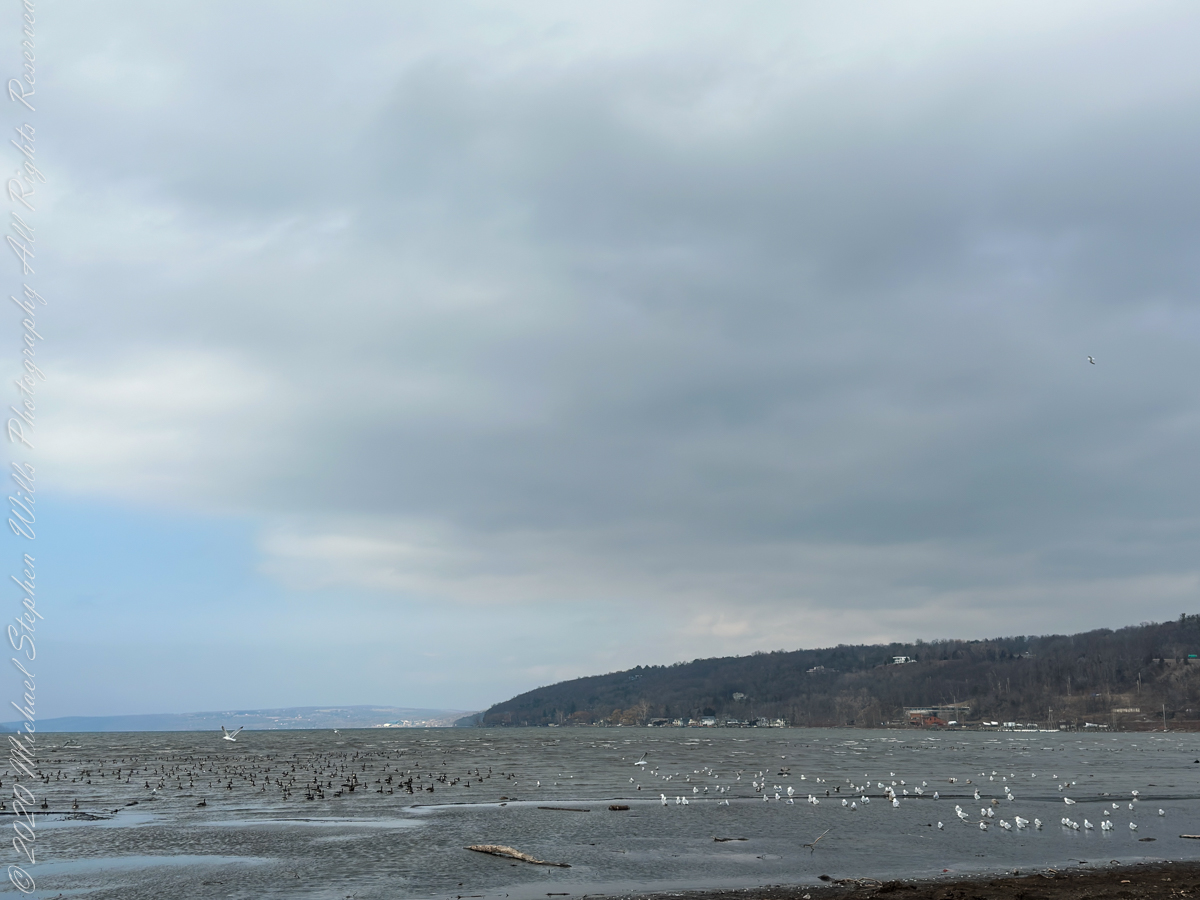
Here is a video of a large gathering of Canadian Geese, multitudes landing to ride lake waves on an unsettled, windy March afternoon.

Copyright 2023 Michael Stephen Wills All Rights Reserved

Golden Willows

Stewart Park

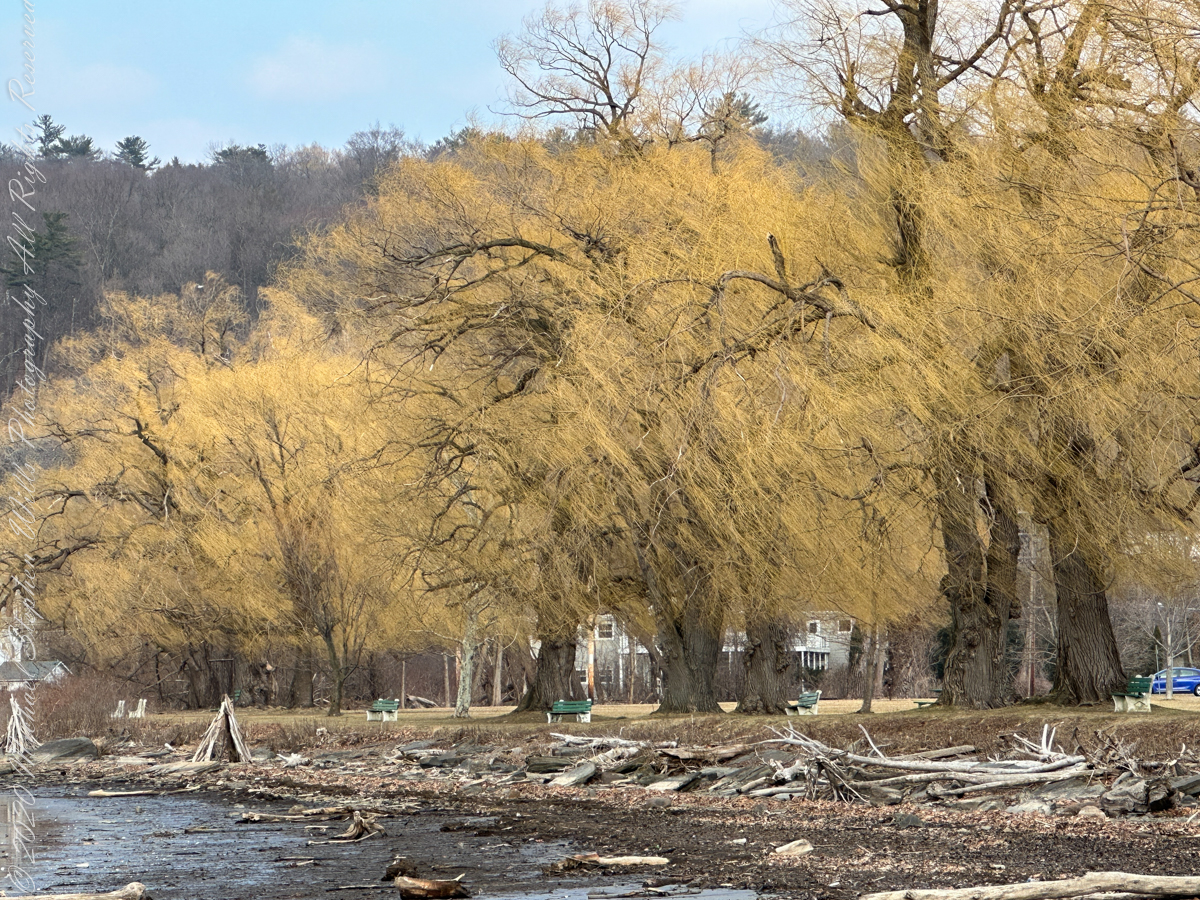
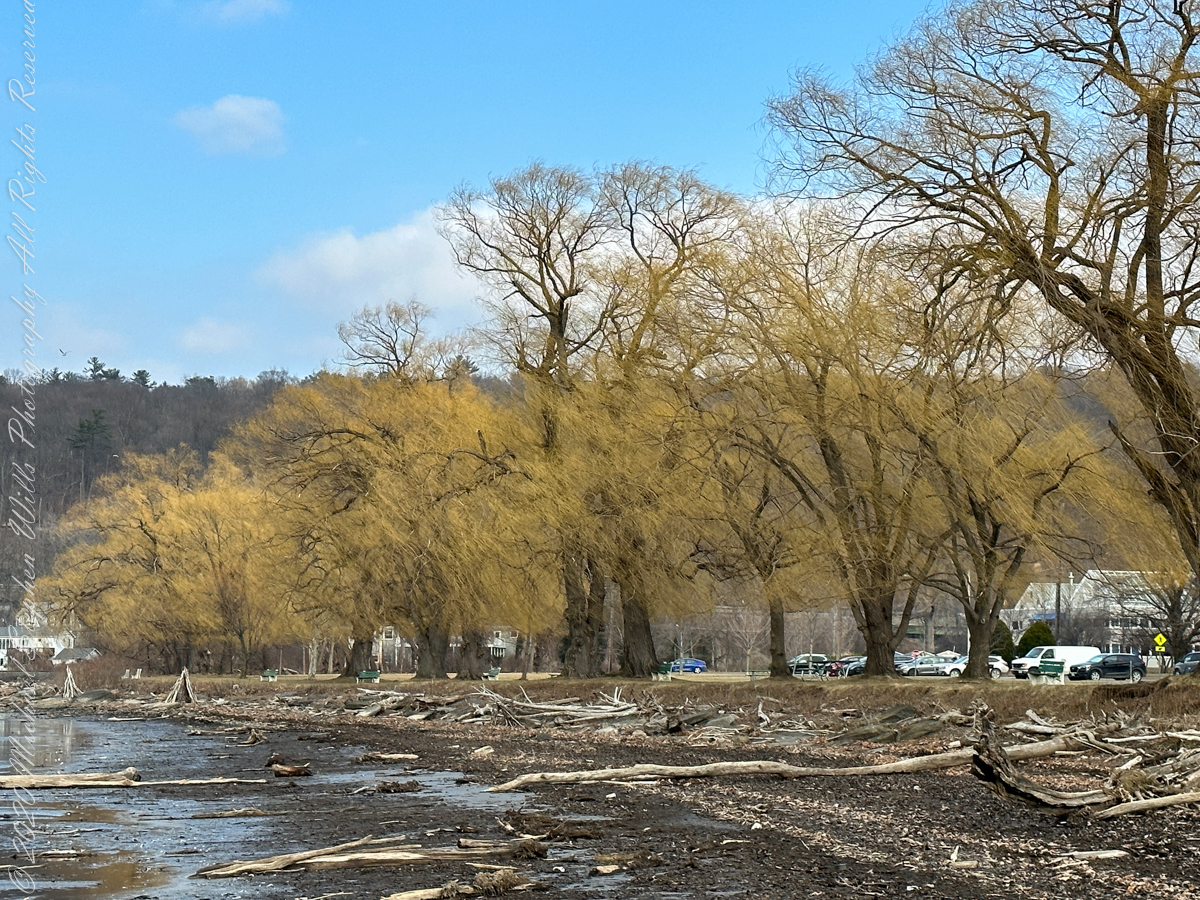
Among the earliest plants to flower, brilliant yellow willows (Salix alba ‘Tristis’) are glorious early spring as new growth sprouts.

Willows native to New York State are all shrub-like, the homeland of these large trees is Europe and Asia.

Also known as White Willow, for the white undersides of the leaves that flash in the wind. These flourish on the southernmost shore of Cayuga Lake.

Willow bark does NOT have analgesic properties. The genus name, Salix, is the root for acetylsalicylic acid (aka aspirin), a chemical that does not appear in nature, originally synthesized from salicylic acid extracted from Meadowsweet.

Movement of budding willow branches in a north wind off Cayuga Lake

Copyright 2023 Michael Stephen Wills All Rights Reserved

Musclewood

Memorial

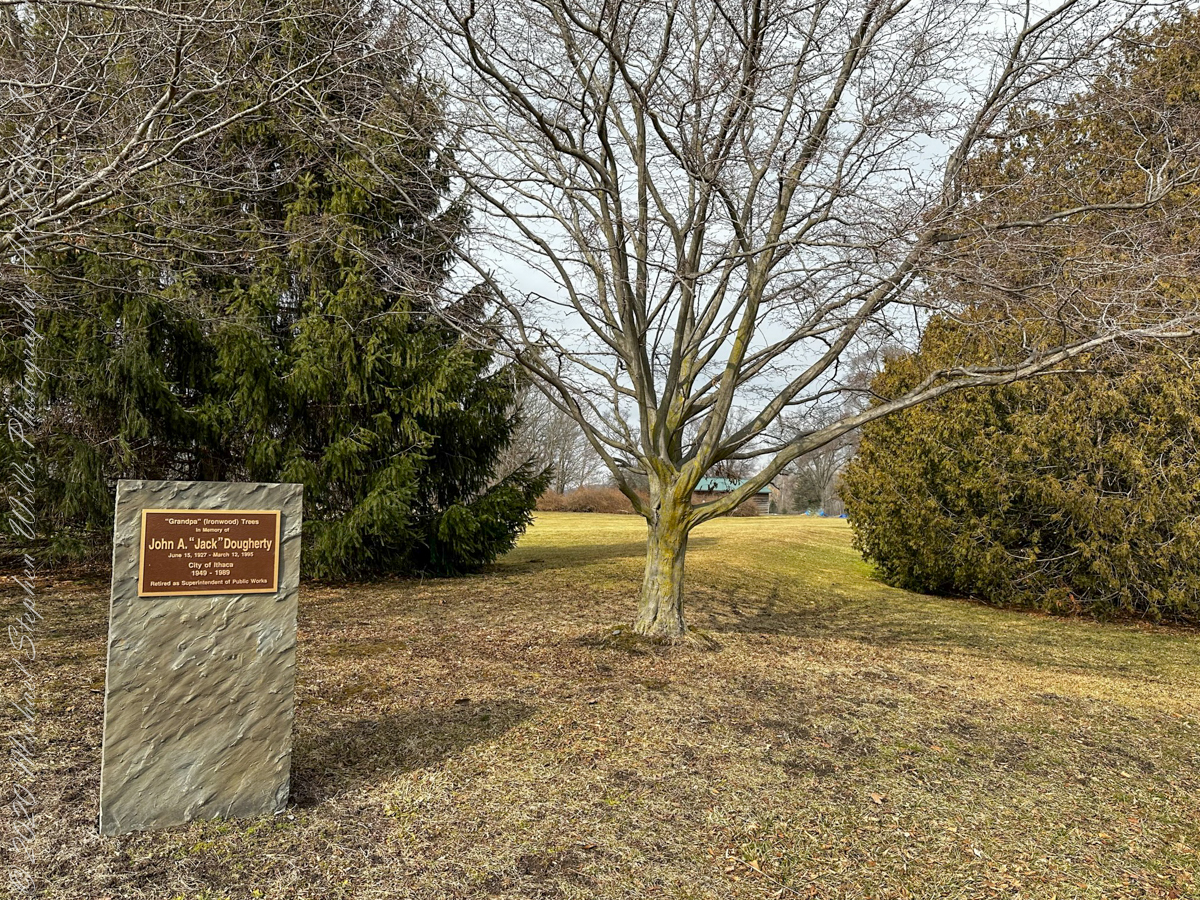
Another Cayuga Waterfront Trail stop is this memorial. The plaque reads ” ‘Grandpa’ (Ironwood) Trees in memory of John A. ‘Jack’ Dougherty; June 15, 1927 – March 12, 1995; City of Ithaca 1949-1989, Retired as Superintendent of Public Works.” Located near the intersection of Pier Road and Willow Avenue, Newman Golf Course, Ithaca, Tompkins County, New York. That is an Ironwood tree, midgound center.
The American Hornbeam (scientific name: Carpinus caroliniana) is also known as Musclewood for the rippled surface of the mature trunk. Other names are blue-beech, ironwood and muscle beech.

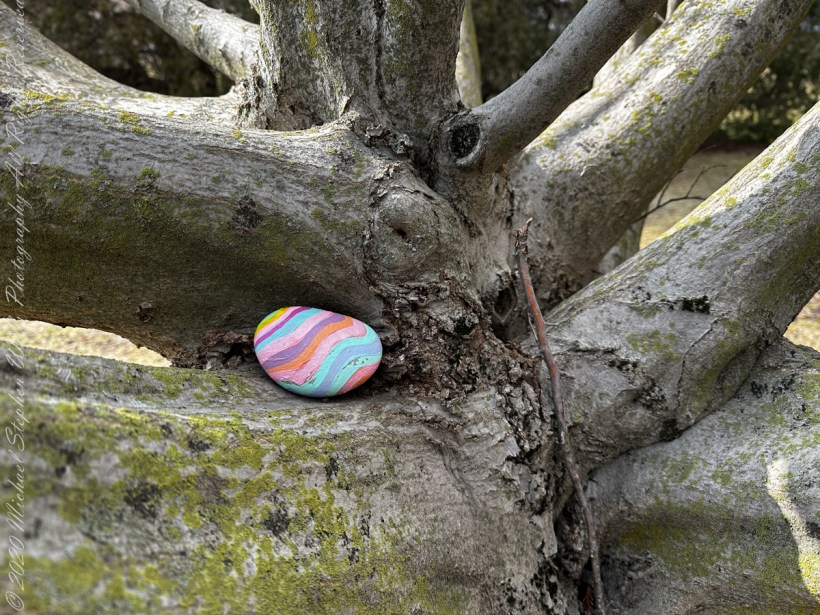
Nestled on the trunk……

Copyright 2023 Michael Stephen Wills All Rights Reserved

Phragmites!!!

Sundry elements

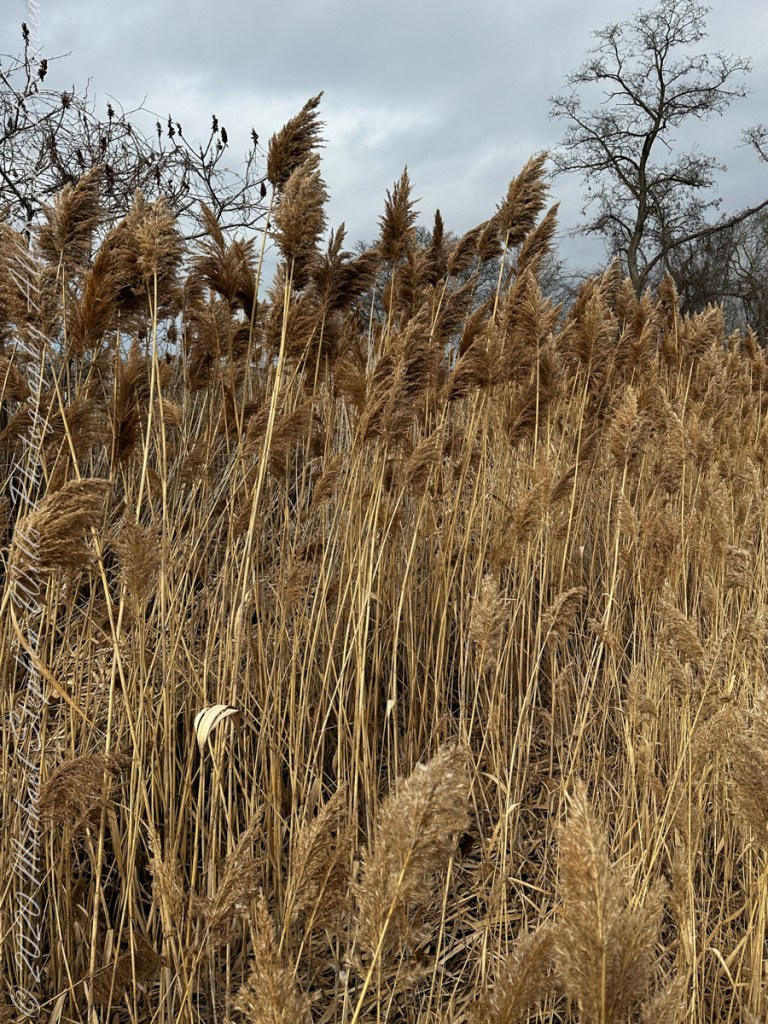
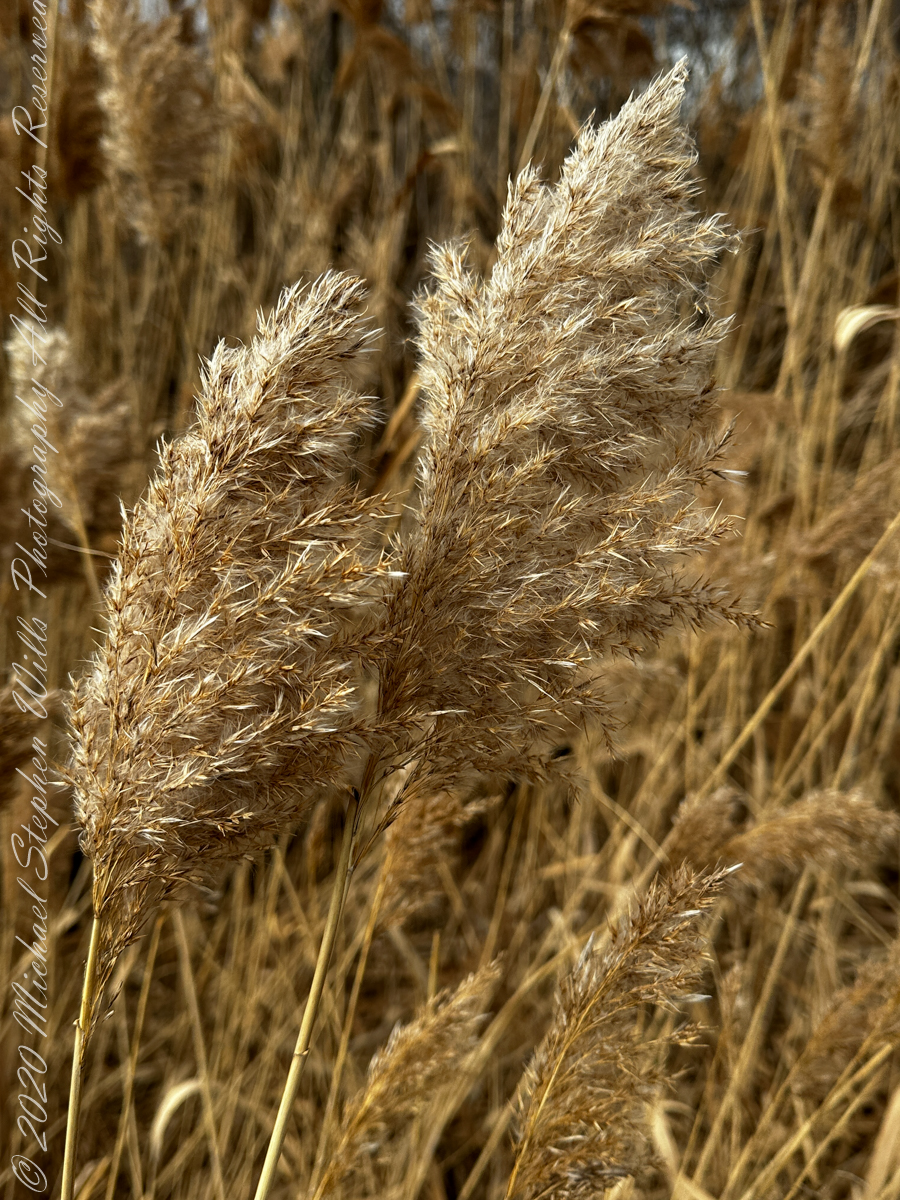
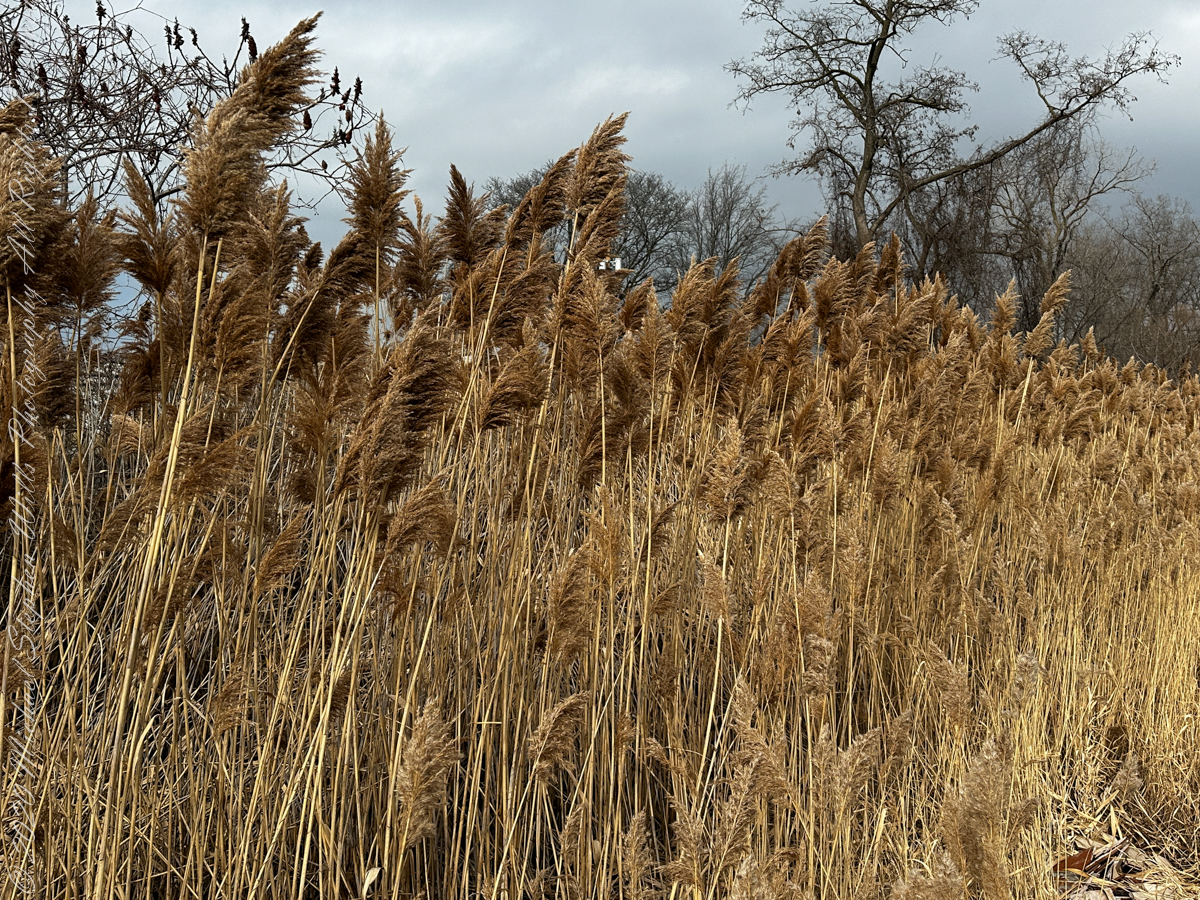
These Phragmites, aka The Common Reed, grow along Cayuga Lake shoreline. Cayuga Waterfront Trail, Ithaca, New York

A humble and fertile weed.

I learned today in China the stem of Phragmites, not this species possibly, is a common component of kites. Around our home here in Ithaca, New York, I’ve noticed the seed heads on stems used in home decoration. Some other uses Some other uses for Phragmites and other reeds in various cultures include baskets, mats, reed pen tips (qalam), and paper. Beekeepers can utilize the reeds to make nesting. In the Philippines, Phragmites is known by the local name tambo. Reed stands flower in December, and the blooms are harvested and bundled into whisk brooms called “walis”. Hence the common name of household brooms is walis tambo. Reeds have been used to make arrows and weapons such as spears for hunting game.

The movements of grace.

This is my first posting of photographs and video from the IPhone 14 ProMax.

Copyright 2023 Michael Stephen Wills All Rights Reserved

Point Lookout at Dawn, Mesa Verde

Dramatic Entrance

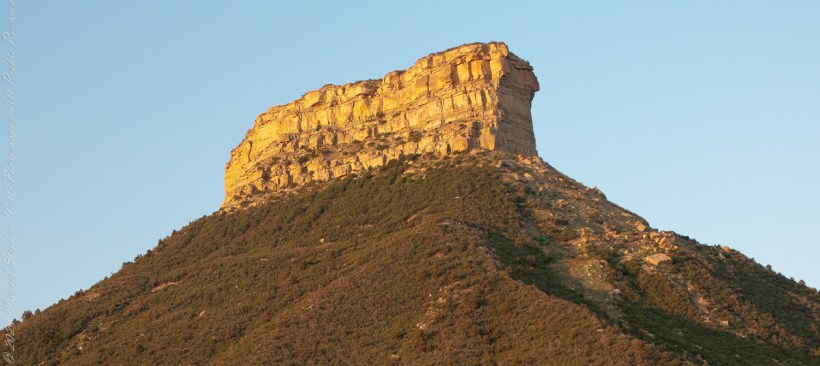
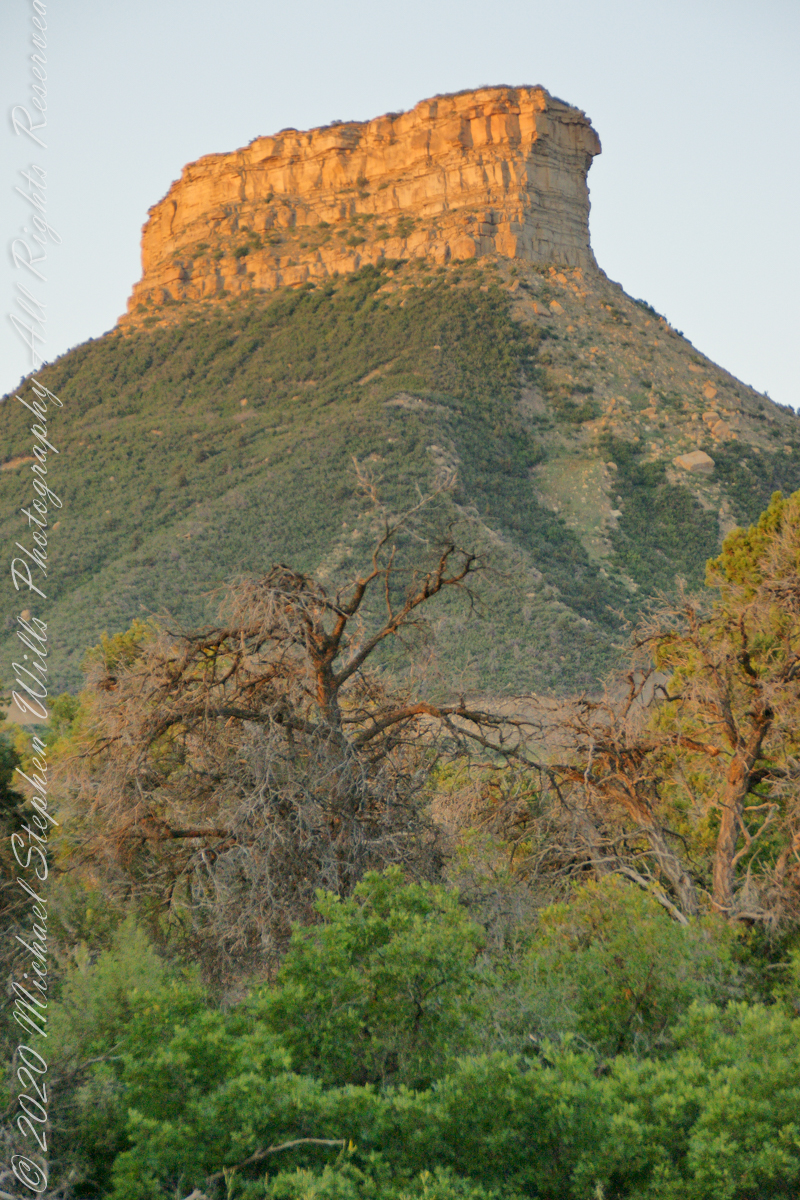
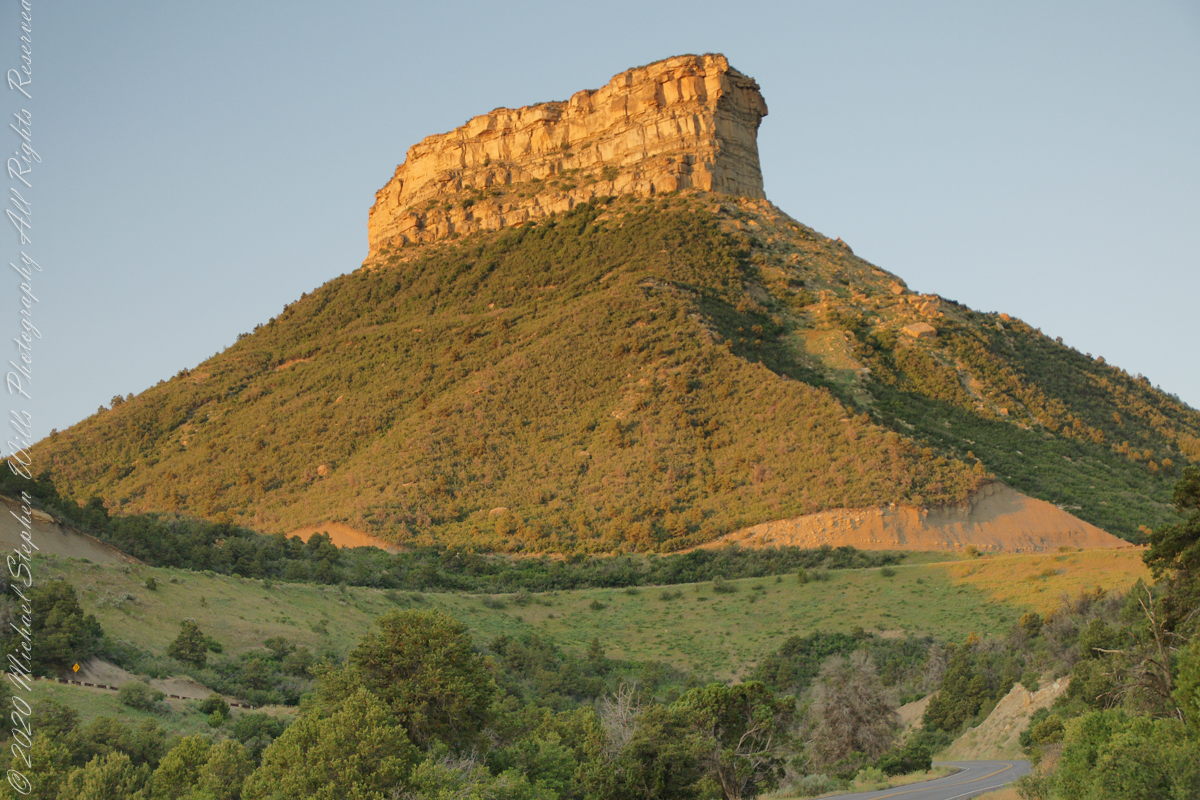
This dramatic butte at the entrance to Mesa Verde National Park, golden in the first light of a July morning.  My wife, Pam, and I were on this road in the pre-dawn hours.  Our delight with this surprise view was worth it.

Click me for more Mesa Verde works in my Fine Art Gallery

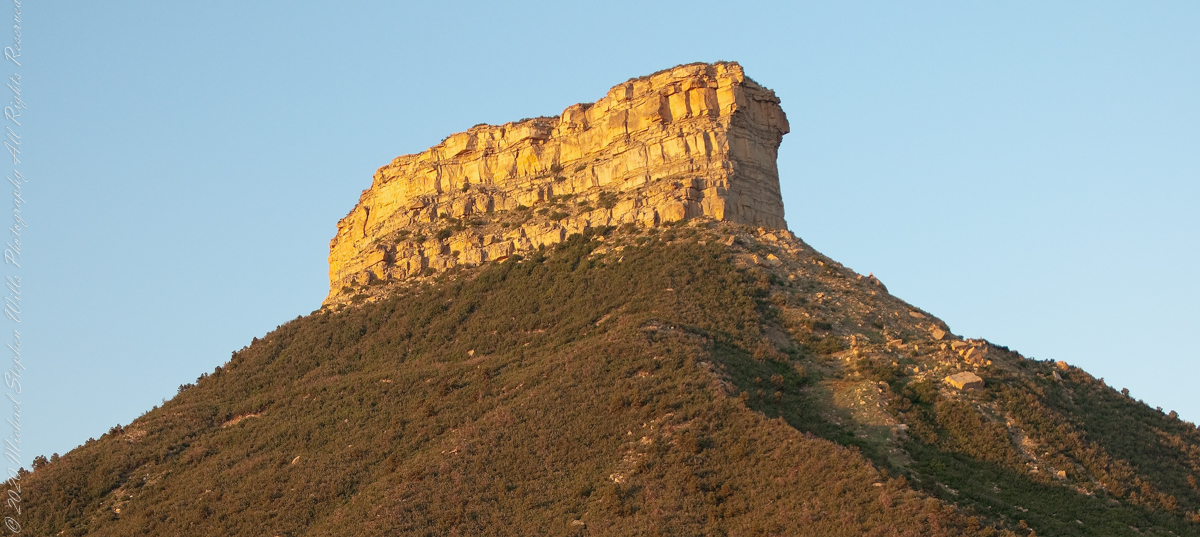
In this Point Lookout area, near the park’s entrance, the Mancos Shale is about 2,000 ft thick, and this is what this butte is composed of. Mancos Shale is the lowest formation of the park and is a thick sequence of gray to black marine shale containing minor tan siltstone and fine sandstone beds. On steep slopes, such as those near the northern and eastern boundaries of the park, this formation is prone to landslides and debris flows. This is the base of the butte. The lovely golden rock is Point Lookout Sandstone of the Mesaverde Group, a predominantly yellowish-gray or pale-orange, fine- to medium-grained marine sandstone, approximately 300-400 ft thick. The Point Lookout Sandstone forms much of the cap rock in the northern park area.

I reworked the above image into this Fine Art image of Point Lookout.

Reference: http://esp.cr.usgs.gov/info/meve/

Copyright 2023 Michael Stephen Wills All Rights Reserved

Sipapu Bridge Up Close

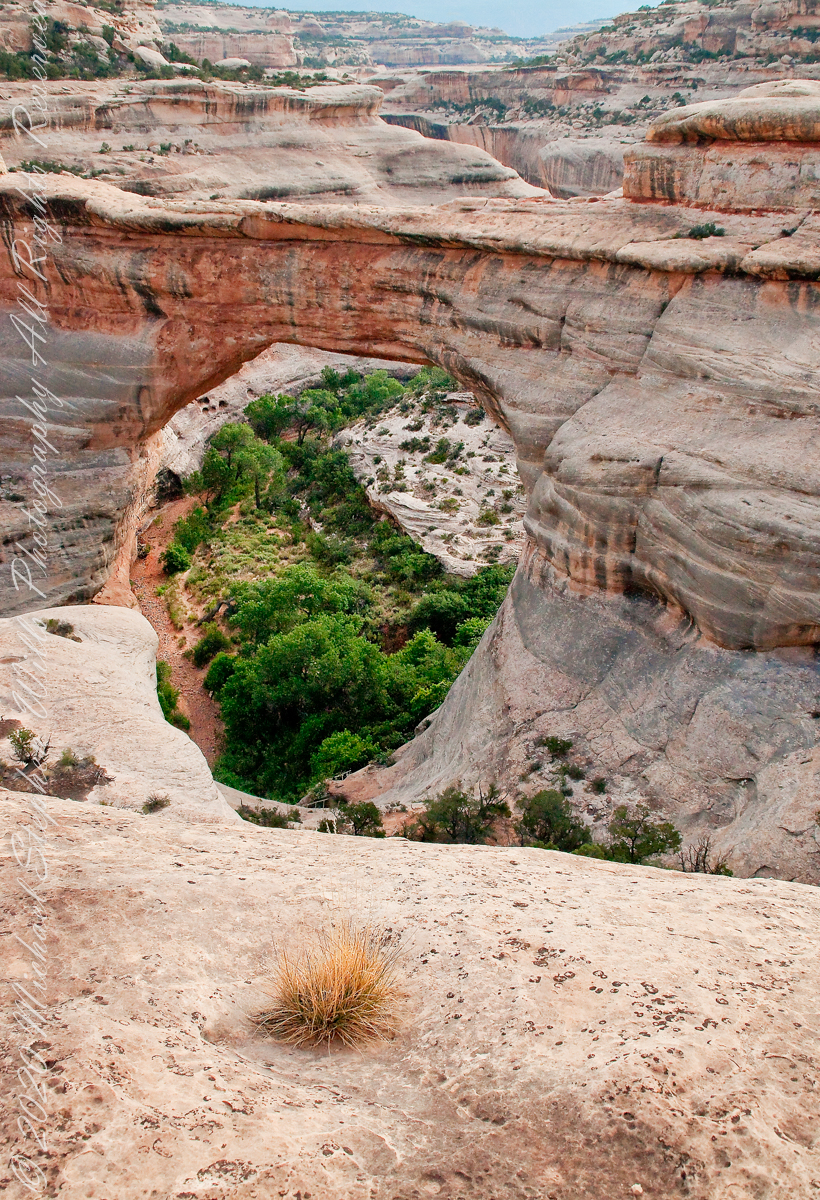
This post continues my story of Sipapu Bridge.

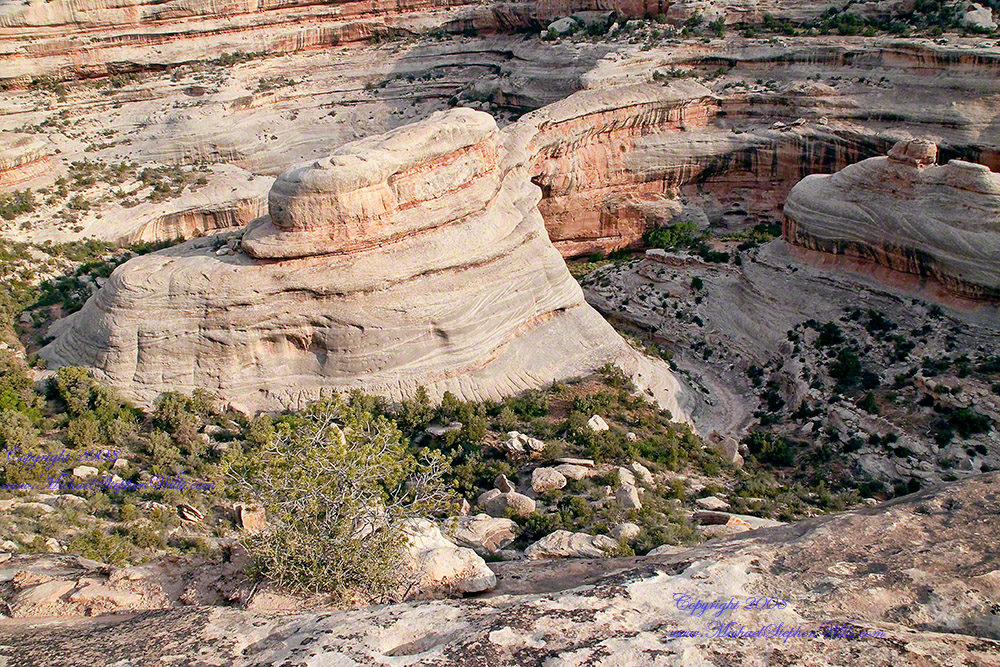
I created a series of fine art prints from a visit my wife Pam and I made to Natural Bridges National Monument in Utah.  Here are a few of these prints which grace fine homes around the world.  Click any of the photographs to visit the gallery.

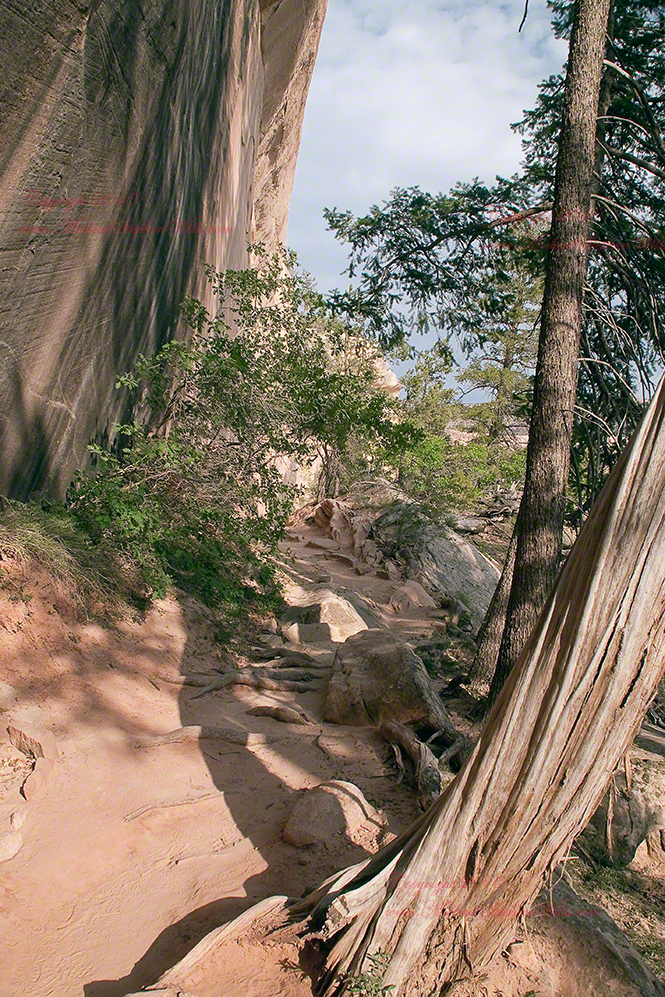
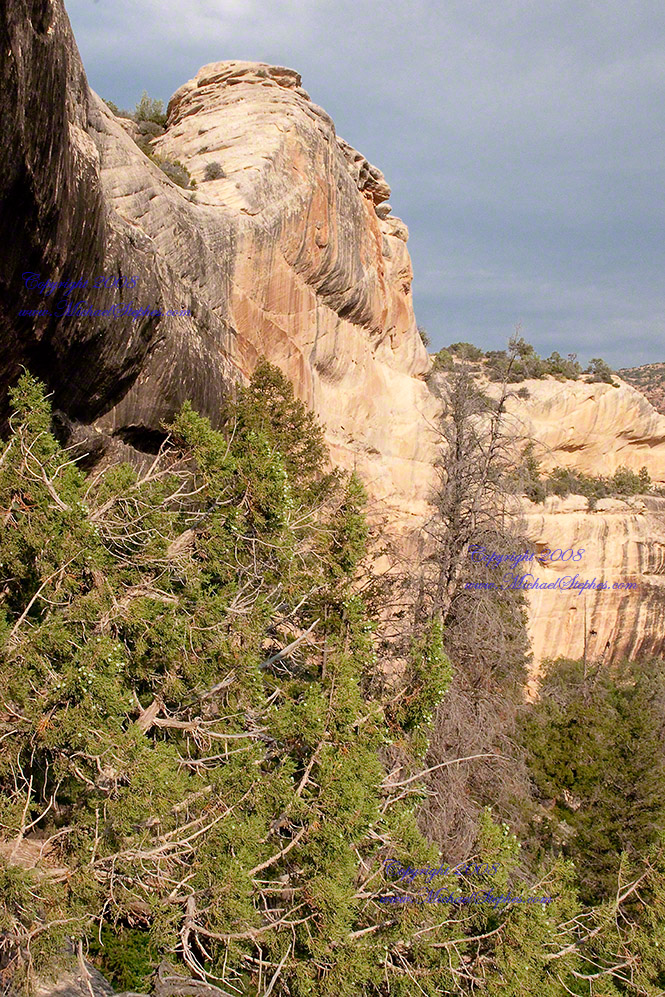
We walked a narrow cliff patch climbed a series of weathered pine ladders  to  achieve these views of Sipapu Bridges National Monument.

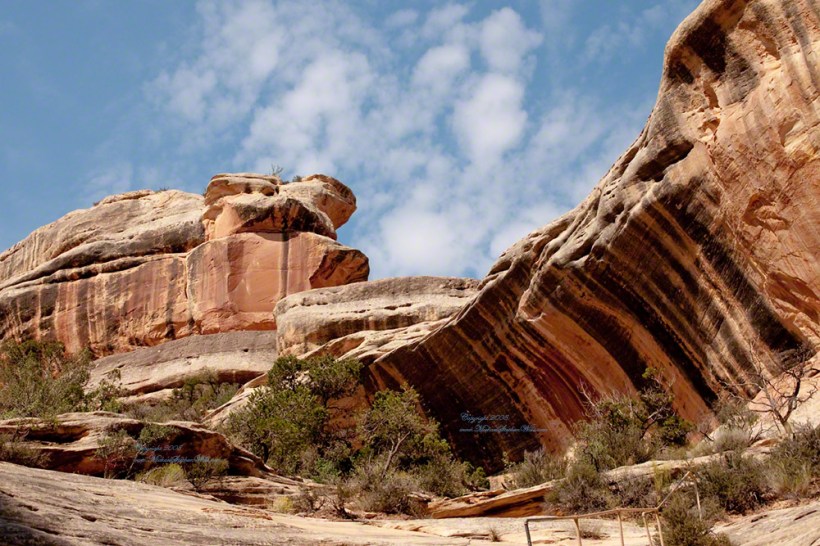
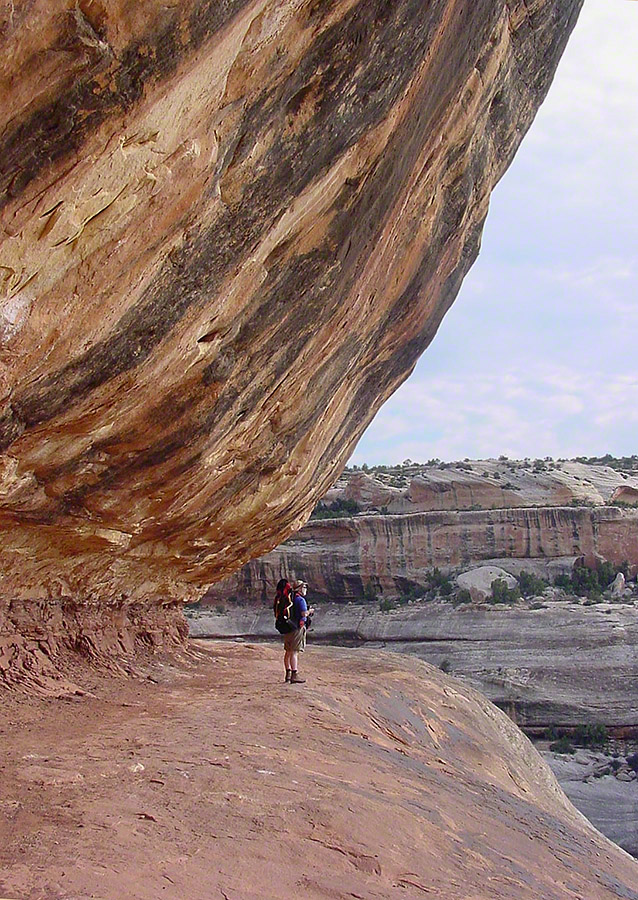
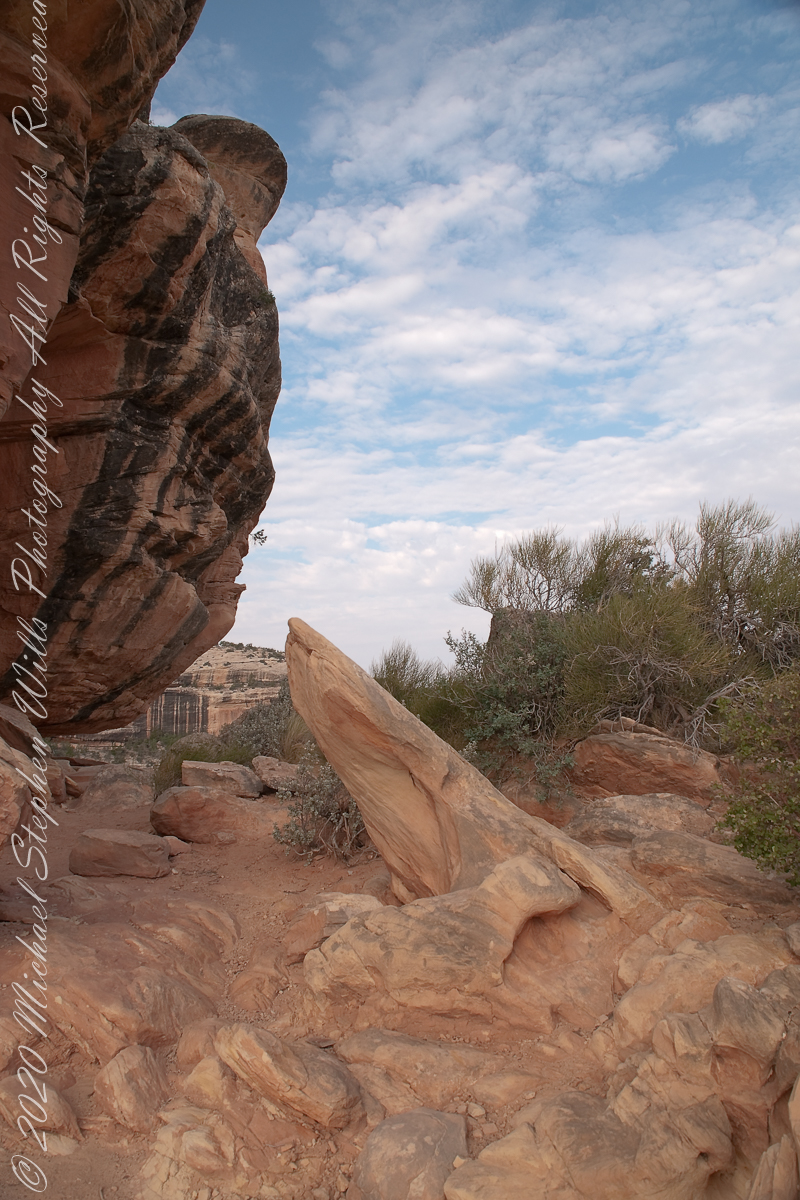
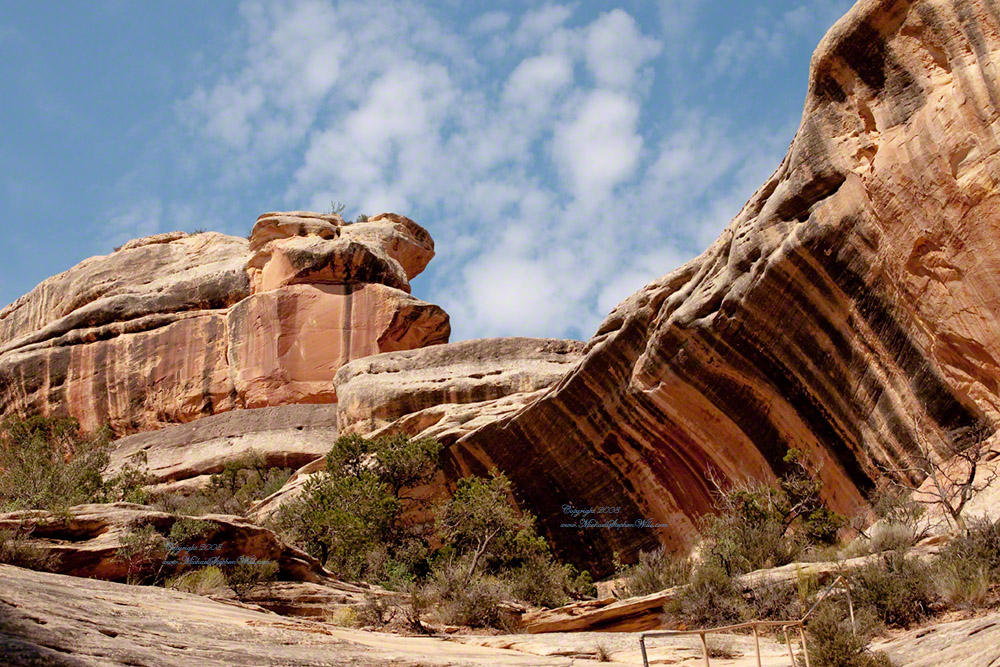
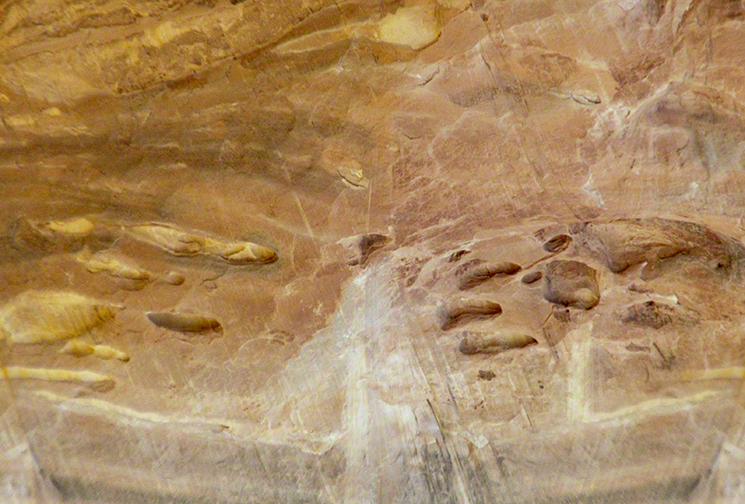
While the sky is unchanged, below the canyon rim is another world.  The black stripes of the cliffs is desert varnish, a thin deposit of clay, iron and manganese oxides.  The rock supporting the varnish is resistant to wear and protected from direct precipitation (in this case by the overhanging cliff).

Eventually we came to a ledge with a view of Sipapu Bridge.  Pam took the opportunity to capture this amazing experience.

Mike at Sipapu Bridge
SONY DSC

A Utah Juniper (Juniperus osteosperma). Historically, across the west, Native Americans used the wood in building their houses. They ate the berries; smoked the bark; made shoes, clothing, and rope from it.

Sipapu is a Hopi word for the small hole or indentation in the floor of kivas used by the Ancient Pueblo Peoples and modern-day Puebloans. It symbolizes the portal through which their ancient ancestors first emerged to enter the present world. A natural bridge is formed through erosion by water flowing in the stream bed of the canyon. Sipapu Bridge is 268 feet across and, standing in the stream bed, it is 220 feet above your head.

Here is a close up of the white Permian sandstone of the bridge arch.  The entire canyon is carved from this stone and named after it.

SONY DSC

World Portal

Sipapu is one of the largest natural bridges known.

Part of the Natural Bridges National Monument in Utah, a place inaccessible until the “uranium boom” of the 1950’s and the road was only paved in 1976.

We visited on a July day of thunderstorms, which you see building here.  If you look closely at the base of the bridge, you can see the railings my wife and I used to climbed the steep sides of White Canyon.

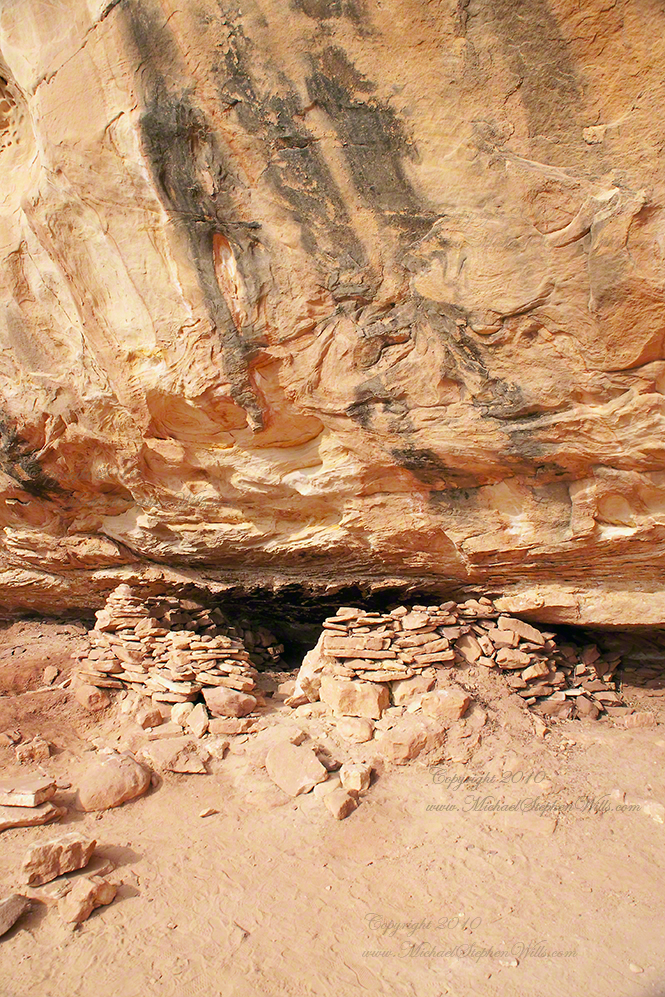
We hiked a few miles along an unmaintained trail.  On the way we passed ancient cliff dwellings. The area is a maze of canyons throughout which these ruins are scattered.

Sipapu is a Hopi word for the small hole or indentation in the floor of kivas used by the Ancient Pueblo Peoples and modern-day Puebloans. It symbolizes the portal through which their ancient ancestors first emerged to enter the present world.

A natural bridge is formed through erosion by water flowing in the stream bed of the canyon.

Sipapu Bridge is 268 feet across and, standing in the stream bed, it is 220 feet above your head. That is white Permian sandstone, after which White Canyon is named.

Copyright 2023 Michael Stephen Wills All Rights Reserved

Parts of the Scorpion

Twenty million years ago a then nonexistent earth-bound human civilization could recognize none of the prominent stars of the constellation Scorpius (The Scorpion) as these, compared to our 4.6 billion year old star, lit up less than 12 million years ago. The brightest star, Alpha Scorpii AKA Antares, is a red giant destined to burst into a supernova bright as the full moon within two million years. Will the human race be around to witness it?

Such as it is, The Scorpion was traced out by the Babylonian astronomers around 8 BCE following even more ancient Sumerian traditions naming Alpha Scorpii “The Heart of the Scorpion.”

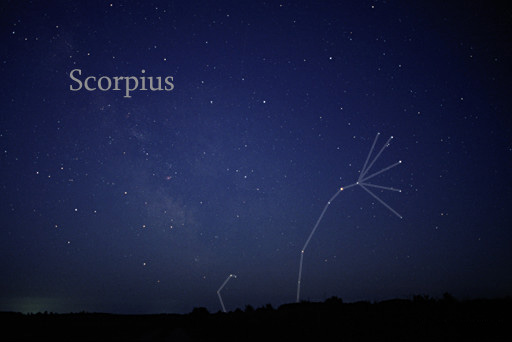
I first became aware of Antares March 2009 during a stay on Cocoa Beach. Setting the room clock to a 5 am alarm to view the sunrise. As I sat listening to the surf, Antares glowed dark red in the south. It is the reddish tint star in the following illustration.

Till Credner, CC BY-SA 3.0 https://creativecommons.org/licenses/by-sa/3.0, via Wikimedia Commons

Here is a photograph of Antares, the reddish dot in center, along with the 6 of the 18 Scorpius bright stars. For this shot a Canon EOS 5D Mark IV dlsr had mounted a Canon lens EF 70-300 f4-5.6L IS USM set to 70 mm focal length, 1600 ISO. Exposure was “bulb,” meaning when the shutter button is pressed and held the shutter remains open: for this exposure this was for approximately 10 seconds. The equipment was held steady on a Manfrotto BeFree Carbon Fiber tripod. As the Earth continued to turn, the resulting star images are smeared a bit.

Bracketing Antares, the Scorpion Heart are “The Arteries” Theta and Tau. About those Greek letters, these designate relative brightness of each star respective of the others in the constellation. “Alpha” the first letter of the Greek alphabet is the brightest. Here are the other letters listed, with the alphabetic order in brackets Beta(2), Delta(4), Pi(16), Sigma(18), Tau(19). Ancient Greek built on the traditions of the Mesopotamians (Babylonian and Sumerian) and were in turn used for modern stellar nomenclature, including the tracings of sky images, the constellations.

The position of a relatively minor star, Tau, near Antares elevates it to the important function of an artery. The stars themselves run against their brightness hierarchy placement: The star Delta Scorpii, after having been a stable 2.3 magnitude star, flared in July 2000 to 1.9 in a matter of weeks. It has since become a variable star fluctuating between 2.0 and 1.6. This means that at its brightest it is the second brightest star in Scorpius.

Copyright 2023 Michael Stephen Wills All Rights Reserved