Carex Plantaginea: A Hidden Gem in Treman Gorge

Venture into the shaded woods of Treman Gorge and discover the understated elegance of Carex plantaginea, or seersucker sedge. Explore its broad, textured leaves and uncover its place in nature’s tapestry. Read more!

Today I will start the practive of posting once a week, early Tuesday mornings.

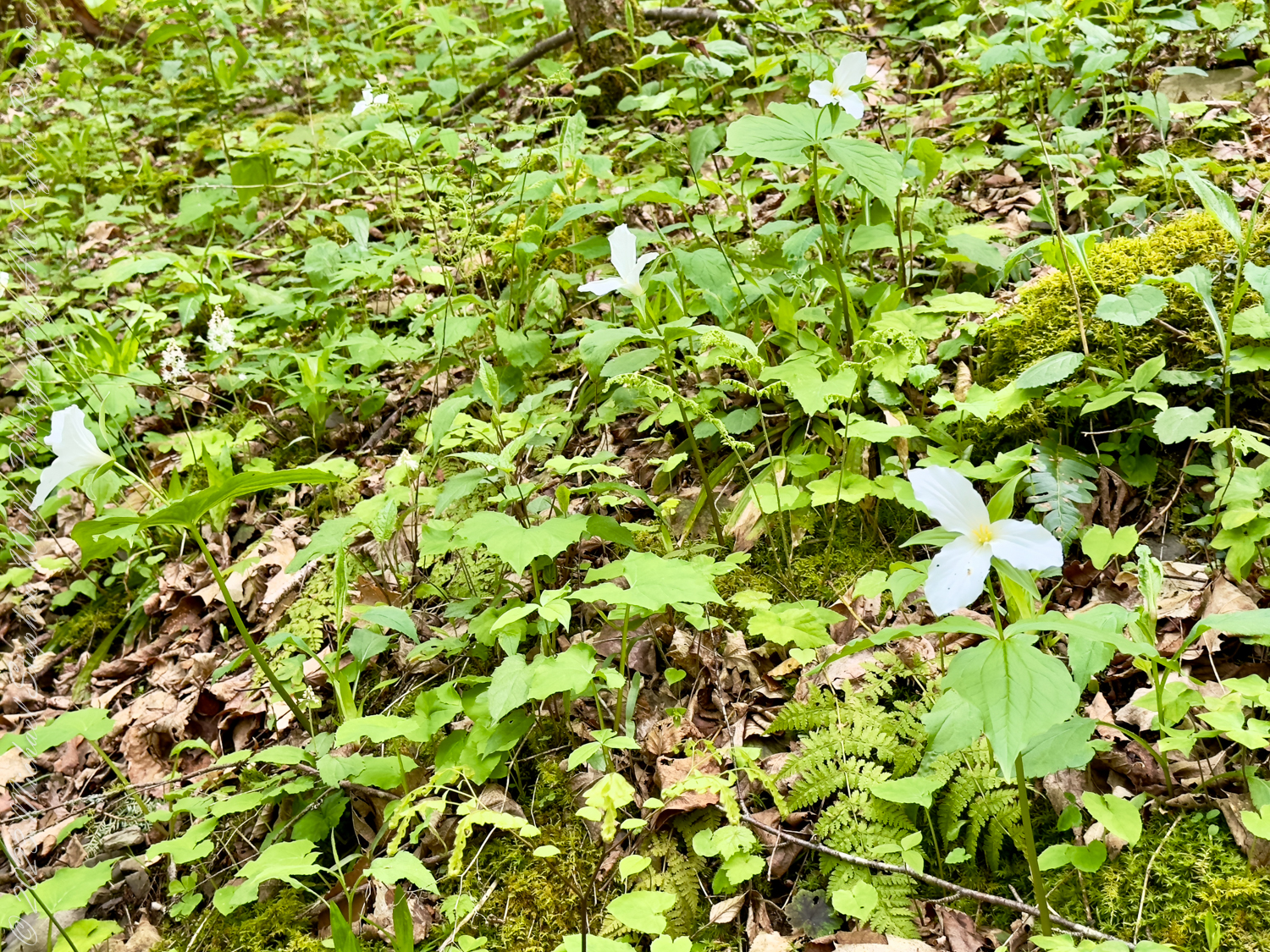
As I made my way through Treman Gorge, the lush greenery and diverse plant life never ceased to amaze me. The trail led me to a lesser-known, but equally fascinating, plant that stood out amid the forest floor’s tapestry. This was Carex plantaginea, commonly known as plantainleaf sedge or seersucker sedge.

First Impressions

My attention was initially drawn to the broad, bright green leaves that resembled those of plantains, hence the common name “plantainleaf sedge.” The leaves were prominently veined and slightly wrinkled, reminiscent of seersucker fabric, giving the plant a unique texture. The scientific name, Carex plantaginea, aptly reflects this characteristic, with “plantaginea” referring to its plantain-like leaves.

Natural History and Habitat


Carex plantaginea is native to the deciduous forests of eastern North America. It thrives in the rich, moist soils found in these regions, making Treman Gorge an ideal habitat. The plant prefers shaded environments, often flourishing under the canopy of taller trees where it can take advantage of the dappled sunlight filtering through the leaves.

This perennial sedge is part of the larger Carex genus, which includes numerous species of sedges that are often found in wetlands and forest understories. Unlike some of its relatives, Carex plantaginea is more commonly found in upland areas, adding to the diversity of the forest floor.

Historical and Modern Uses


Historically, Native American tribes recognized the utility of various Carex species, though specific references to Carex plantaginea are scarce. Sedges were generally used for their fibrous leaves, which could be woven into mats, baskets, and other useful items. The broad leaves of Carex plantaginea would have been particularly suitable for such purposes.

In modern times, Carex plantaginea is appreciated more for its ornamental value. Gardeners and landscape designers often use it in shade gardens and woodland settings, where its striking foliage and low maintenance needs make it a popular choice. Its ability to thrive in shaded areas with moist soil conditions makes it an excellent ground cover for forested landscapes.

Capturing the Moment


I couldn’t resist photographing Carex plantaginea to capture its distinctive beauty. The Apple Iphone 14 ProMax image shows the plant nestled among the rich vegetation of Treman Gorge, its vibrant green leaves contrasting with the surrounding foliage. The wrinkled texture of the leaves is clearly visible, highlighting the plant’s unique appearance.

As I continued my exploration, I felt a sense of wonder and appreciation for the hidden gems that nature offers. Carex plantaginea, with its subtle beauty and ecological importance, is a reminder of the intricate connections within forest ecosystems. Discovering this plant added another layer of richness to my journey through Treman Gorge, deepening my understanding and appreciation of the natural world around me.

Copyright 2024 Michael Stephen Wills All Rights Reserved

Trillium: A Springtime Encounter

Discover the enchanting beauty and rich history of the Great White Trillium in Treman Gorge. Learn about its unique life cycle, medicinal uses, and the fascinating pink tints that emerge as these elegant flowers age. Read more!

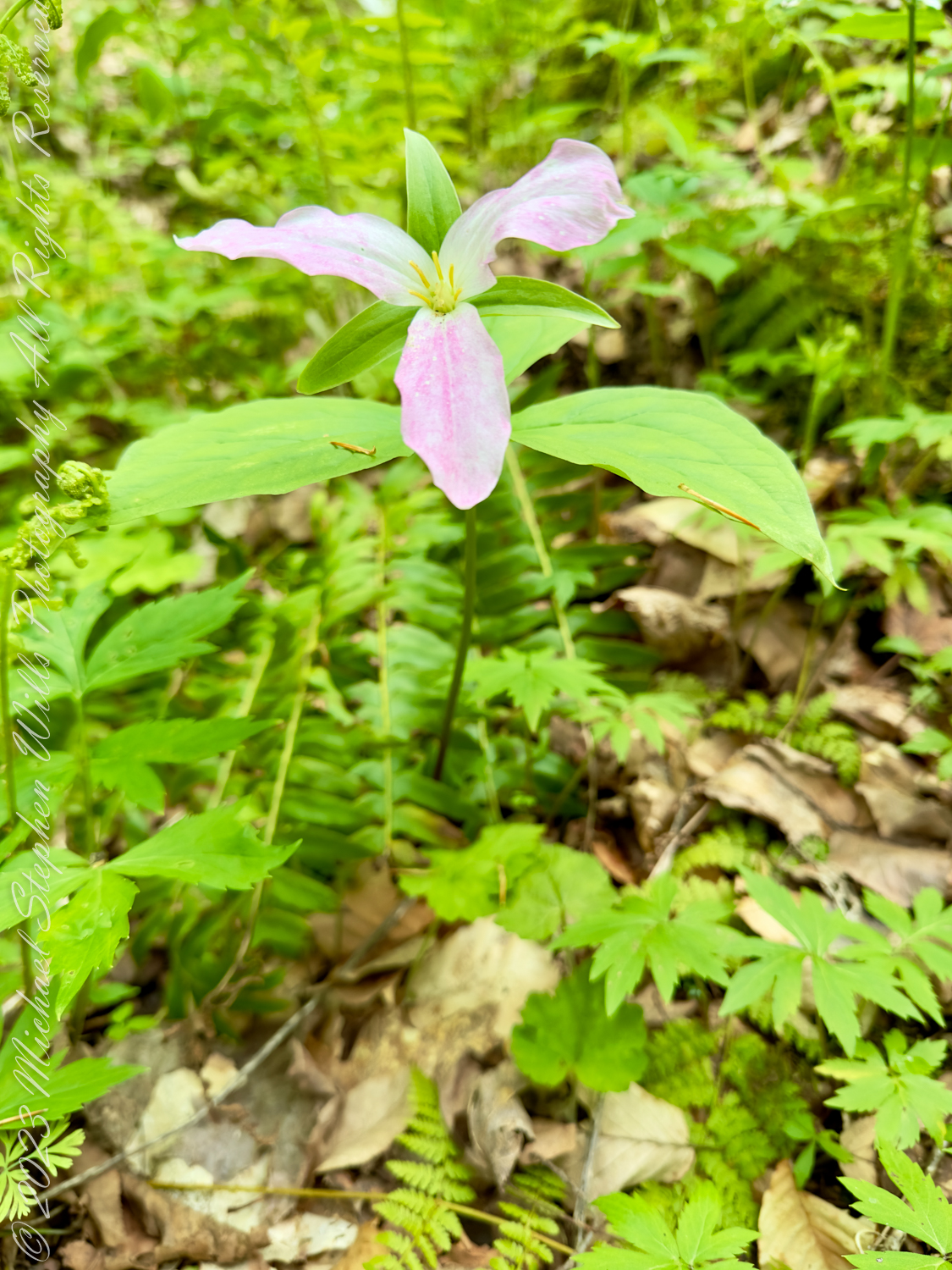
Walking through Treman Gorge in early May, I am always struck by the lush greenery that carpets the forest floor. The delicate ferns and emerging wildflowers create a tapestry of colors and textures. On this particular visit, my attention is drawn to a cluster of striking flowers that stand out against the verdant backdrop. These are the Trilliums, a genus known for their three-petaled blooms.

A Closer Look at Trillium grandiflorum


As I approach the flowers, I recognize them as Trillium grandiflorum, commonly known as the Great White Trillium. The species name “grandiflorum” aptly describes its large, showy flowers. Each blossom consists of three pure white petals that gently arch outward, giving the flower a graceful appearance. The petals are complemented by three green sepals and three broad leaves that form a whorl beneath the bloom.

Some flowers, in particular, catch my eye. They have a faint pink hue, the end of its blooming period approaches. This natural aging process transforms the white petals into a soft pink, adding another layer of beauty to these already stunning plants. This subtle pink tint is a sign of the flower’s progression through its lifecycle, a gentle reminder of the ever-changing nature of the forest.

The Natural History of Trilliums


Trillium grandiflorum is native to the deciduous forests of North America, thriving in the rich, moist soils found in areas like Treman Gorge. These perennial plants emerge in early spring, often before the tree canopy fully develops, taking advantage of the available sunlight.

Trilliums have a unique reproductive strategy known as myrmecochory. This means their seeds are dispersed by ants. The seeds have a fatty appendage called an elaiosome, which attracts ants. The ants carry the seeds back to their nests, consume the elaiosome, and discard the seed, effectively planting it in a nutrient-rich environment.

Historical and Modern Uses

Historically, another trillium species, Trillium erectum, held significance for both Native American tribes. Various parts of the plant were used for medicinal purposes. The roots, in particular, were valued for their astringent and antiseptic properties. They were used to treat wounds, inflammation, and other ailments. Some tribes referred to Trillium as “birthroot” because it was used to ease childbirth and labor pains.

European settlers also adopted these uses and incorporated Trillium into their herbal remedies. The roots were used to facilitate labor, manage menstrual disorders, and treat wounds and inflammations. Because of its association with childbirth and its perceived benefits in regulating menstrual cycles, the plant became widely known as “Bethroot.”​

In modern times, while the medicinal use of Trillium has waned, the plant is still admired for its beauty and ecological role. Conservation efforts are in place to protect wild populations of Trillium grandiflorum, as habitat loss and over-harvesting have threatened some local populations.

Capturing the Moment


Photographing these Trilliums is a delight. Using the Apple IPhone 14 ProMax I carefully frame each shot to capture the intricate details of the flowers. Macros reveal the delicate veins on the petals and the fine texture of the leaves. I developed the images in Adobe Lightroom to highlight the contrast between the white flowers and the lush green foliage. Some of the images beautifully capture the pink tints on the petals, showcasing the flower’s natural aging process and adding depth to their already stunning appearance.

Reflecting on the Experience


Encountering Trillium grandiflorum in full bloom is a profound experience. These flowers, with their simple yet elegant structure, embody the essence of spring’s renewal. They remind me of the intricate connections within ecosystems and the historical ties humans have to the natural world.

As I continue my walk through Treman Gorge, I carry with me a sense of gratitude for the opportunity to witness such beauty. The Trilliums, with their timeless grace and the gentle pink tints of their aging petals, have left an indelible mark on my heart. I look forward to returning each year to see these perennial wonders, knowing that each visit offers a chance to reconnect with nature’s enduring splendor.

Copyright 2024 Michael Stephen Wills All Rights Reserved

Twilight Serenade: Experiencing the Eclipse Amidst Nature’s Splendor

Step into the enchanting world of the VanRiper Conservation Area during a total solar eclipse. Witness nature’s grand spectacle, where daylight fades into an ethereal twilight, and the cosmos whispers secrets to those who listen.

Standing within the serenity of the VanRiper Conservation Area, we had the rare privilege to witness a celestial marvel—the total solar eclipse. The coordinates, 42°43’8.62″N 76°45’30.41″W, marked not a unique vantage point on the southern edge of the total eclipse zone. Here, the total eclipse enveloped the sky for an awe-inspiring 50 seconds, a fleeting yet unforgettable spectacle that we were fortunate enough to experience.

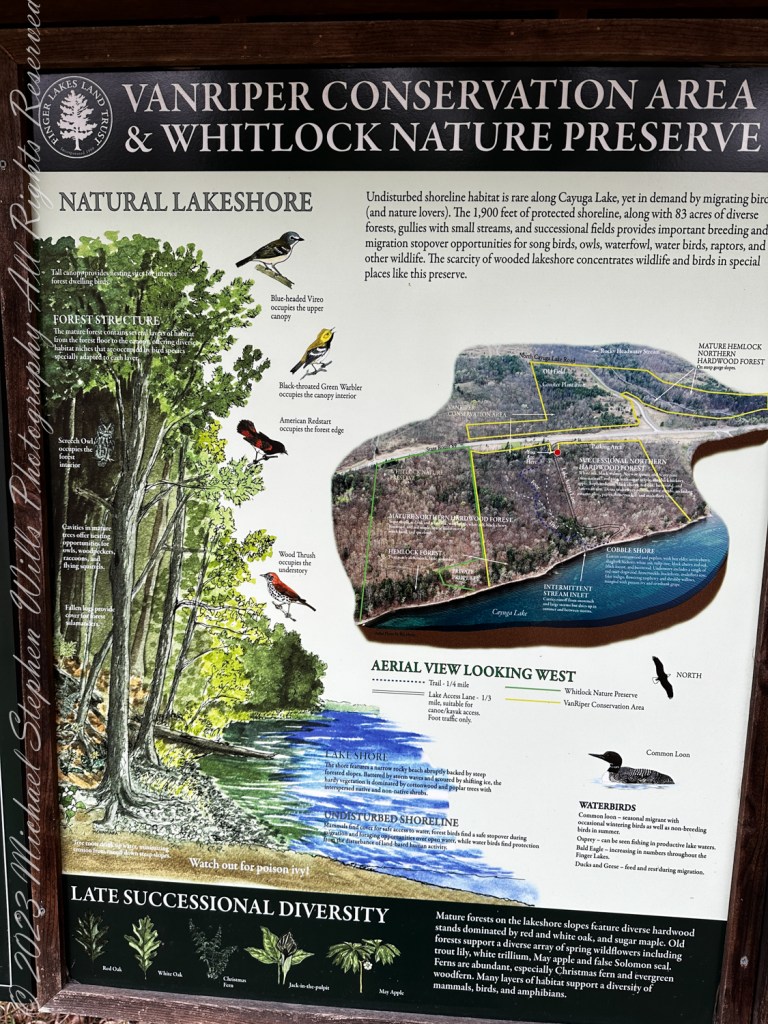
The VanRiper Conservation Area served as a magnificent backdrop to this astronomical event. Known for its diverse habitats, including wetlands, forests, and meadows, the area is a haven for wildlife and a sanctuary for those who seek solace in nature; a place where the sky seems vast, unobstructed by the trappings of urban life, offering a clear canvas for the eclipse to paint its momentary magic.

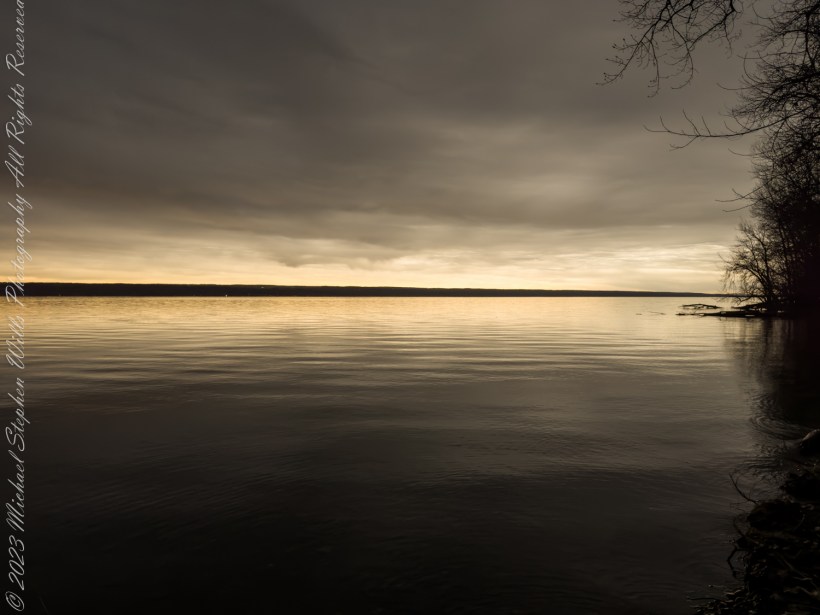
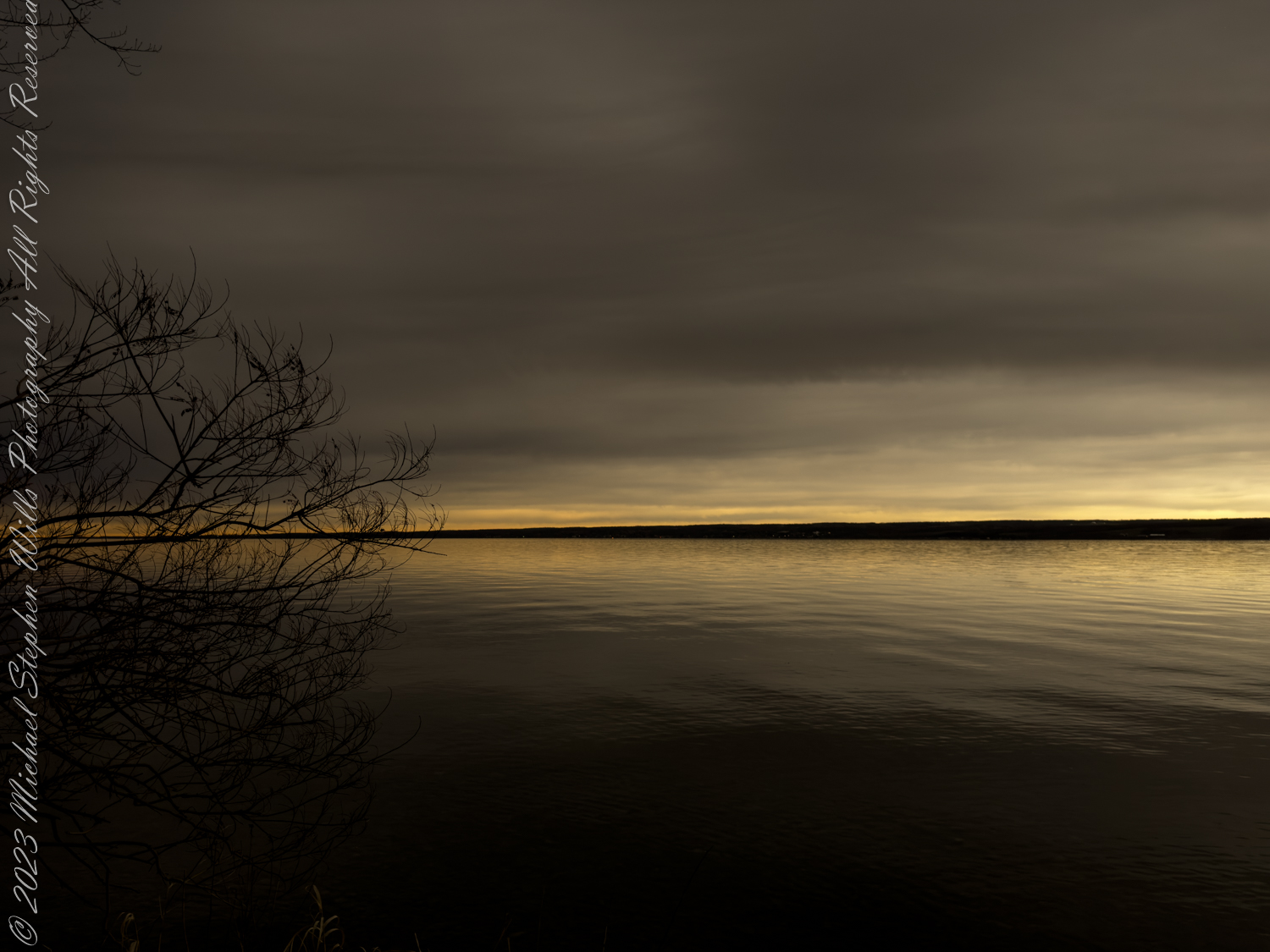
13:38:07, 39 minutes 41 seconds before the moon’s edge touched the sun. From the shoreline of VanRipen Conservation Area, Town of Romulus, Seneca County, Finger Lakes Region, New York State

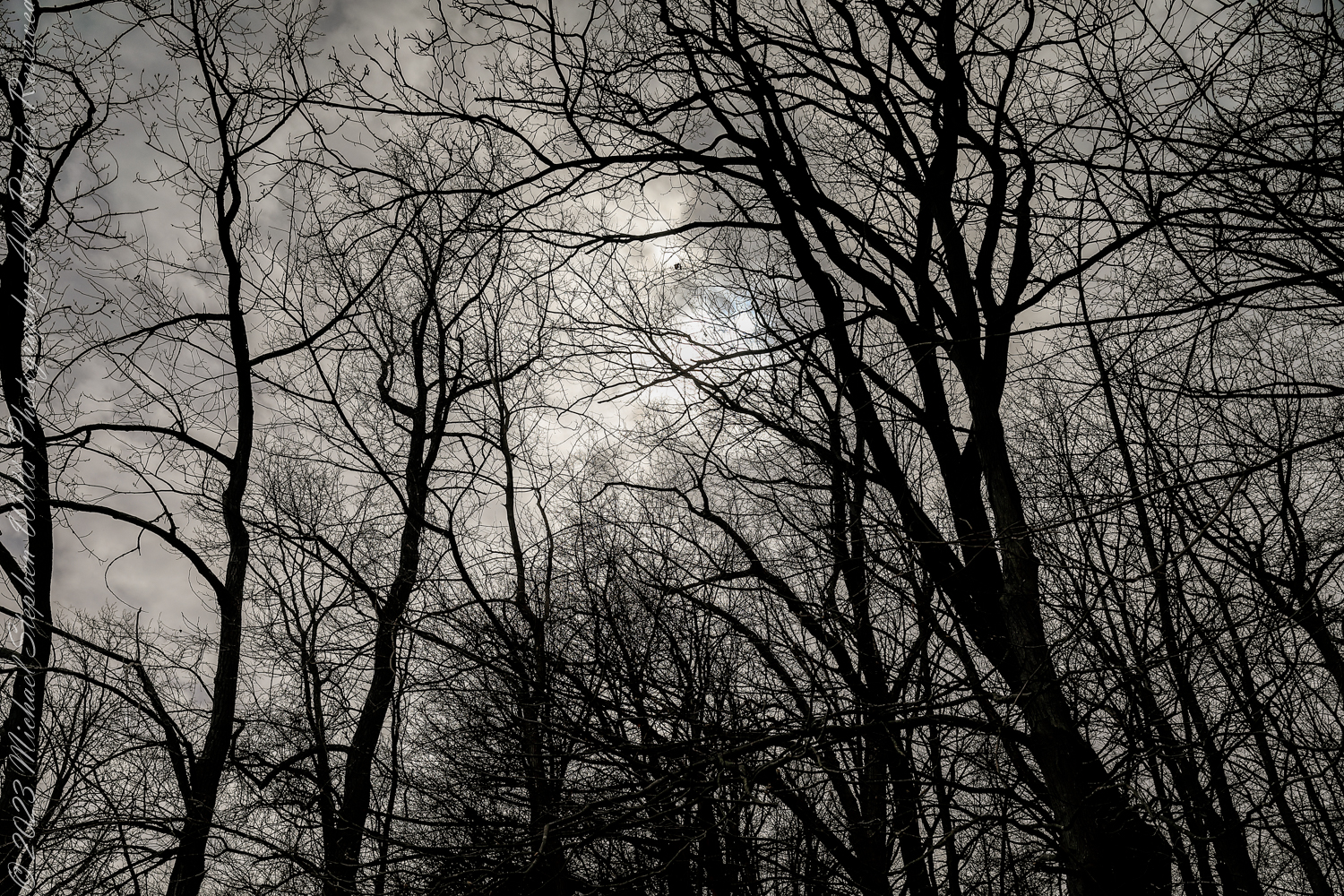
As the time for the eclipse approached, a thick blanket of clouds enveloped the sky, obscuring our view of the sun entirely. This unexpected veil not only robbed us of the celestial spectacle but also intensified the darkness, casting a deeper shadow over the landscape and amplifying the surreal, twilight ambiance.

As the moon began its slow sweep over the sun, an eerie twilight descended upon the conservation area. The temperature dropped noticeably, a testament to the sun’s masked radiance. The birds, momentarily confused by the sudden dusk, fell silent, heightening the surreal atmosphere. This was the moment I had been waiting for, the total eclipse, where day momentarily turns to night, and the ordinary becomes extraordinary.

15:21:37, 56 seconds to totality. From the shoreline of VanRipen Conservation Area, Town of Romulus, Seneca County, Finger Lakes Region, New York State

Positioned on the southern edge of the total eclipse zone, I observed a fascinating phenomenon: the southern side of the horizon retained a brighter hue compared to the north, which veiled itself in deeper shades of twilight. This luminous gradient painted across the sky was a direct consequence of our location’s proximity to the eclipse’s path of totality.

In this captivating 4-minute YouTube video, you’re whisked away to the shores of Cayuga Lake, beneath a cloudy sky, on the day of the Total Eclipse, April 8, 2024 viewed from the VanRiper Conservation Area Cayuga Lake Shoreline in the town of Romulus, Seneca County of the Finger Lakes of New York State. As the moon dances across the sun at 5 times normal speed you witness the gradual darkening of the lake. On the opposite shore, the town of Aurora lights wink with the total eclipse of the sun. In normal time Loons herald the Sun’s return with a bright and eerie serenade, a natural symphony celebrating light’s triumph over darkness. Join us on this remarkable journey, where day turns to night and back again, all within the embrace of the Finger Lakes Region.

The totality lasted for a mere 50 seconds, when time seemed to stand still, yet it was a period rich with emotion and wonder. To witness the total eclipse was to see the universe align in a rare spectacle of shadow and light, a reminder of our place in the cosmos.

Reflecting on the experience, the VanRiper Conservation Area was a portal to a deeper understanding and appreciation of the natural world. Its untouched Cayuga Lake shoreline provided a setting for observing the eclipse with a reminder of the beauty and fragility of our planet.

As the eclipse passed and daylight returned the silence was filled with Loon calls, a celebration of life and the return of light. The solar eclipse was a convergence of time, place, and celestial mechanics, offering a spectacle for the eyes, a moment of introspection about our existence in this vast universe: a reminder of the ephemeral nature of life and the enduring awe of the cosmos. In the heart of the conservation area, I stood at the crossroads of science, nature, and spirituality, left to reflect on the dance of shadows and light.

Copyright 2024 Michael Stephen Wills All Rights Reserved

A Glimpse into Steamboat Landing, Ithaca, New York

Discover the enchanting beauty of Steamboat Landing in Ithaca, New York. From the quiet winter majesty to the vibrant warmth of spring, this historical waterfront is a testament to the city’s rich past and evolving present.


Historical Significance and Transformation


Steamboat Landing in Ithaca, New York, is steeped in historical significance, serving as a testament to the city’s rich past and its evolving present. At the dawn of the 20th century, it was a bustling hub where steamboats carried passengers and freight, linking Ithaca to an ever-growing nation. These vessels were vital for the development of commerce, aiding travelers as they embarked and disembarked on their journeys that continued by stagecoach or later, by train.

In 1790, this spot marked the beginnings of commerce in the area, with the establishment of Ithaca’s first store. Over the years, Steamboat Landing has transformed from a pivotal commerce point to a recreational area, housing Ithaca’s Farmers Market—a vibrant hub that mirrors the liveliness of its heyday.

The Evolving Landscape


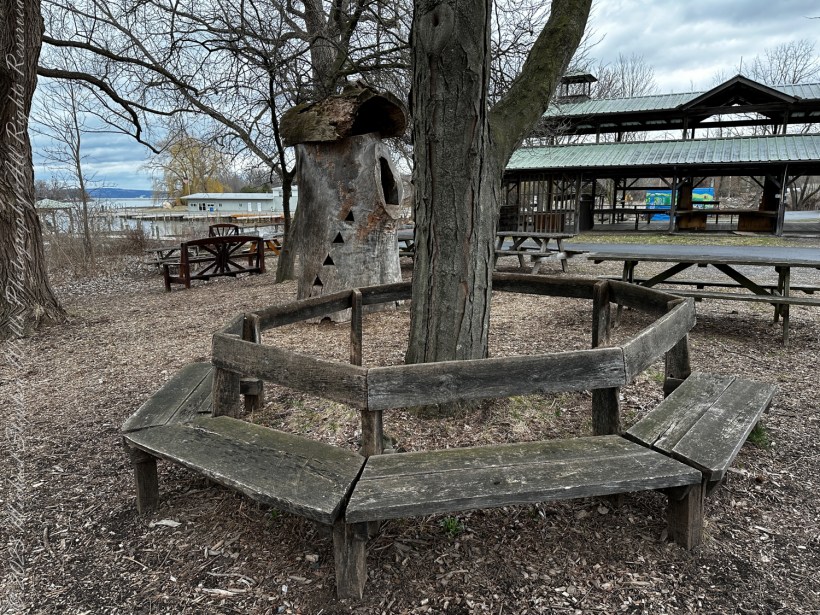
Today, Steamboat Landing is a place of gathering and serenity. My photographs showcase a tranquil setting moving through winter. In one scene, the rustic benches encircle a barren tree, standing as silent guardians of the land. It’s a still image, almost reminiscent of a painting, where the leafless trees stand vigil over the quiet benches.

A circular bench that has seen better days, a hollowed out tree trunk repurposed as a children’s playgound house, picnic benches and, in background, a portion of the Farmer’s Market pavilion, to the right is Johnson Boatyard, Cayuga Inlet and lake. This is the Steamboat Landing, historically the southern port on Cayuga Lake. Cayuga Waterfront Trail, Ithaca, Tompkins County, Finger Lakes Region, New York State.

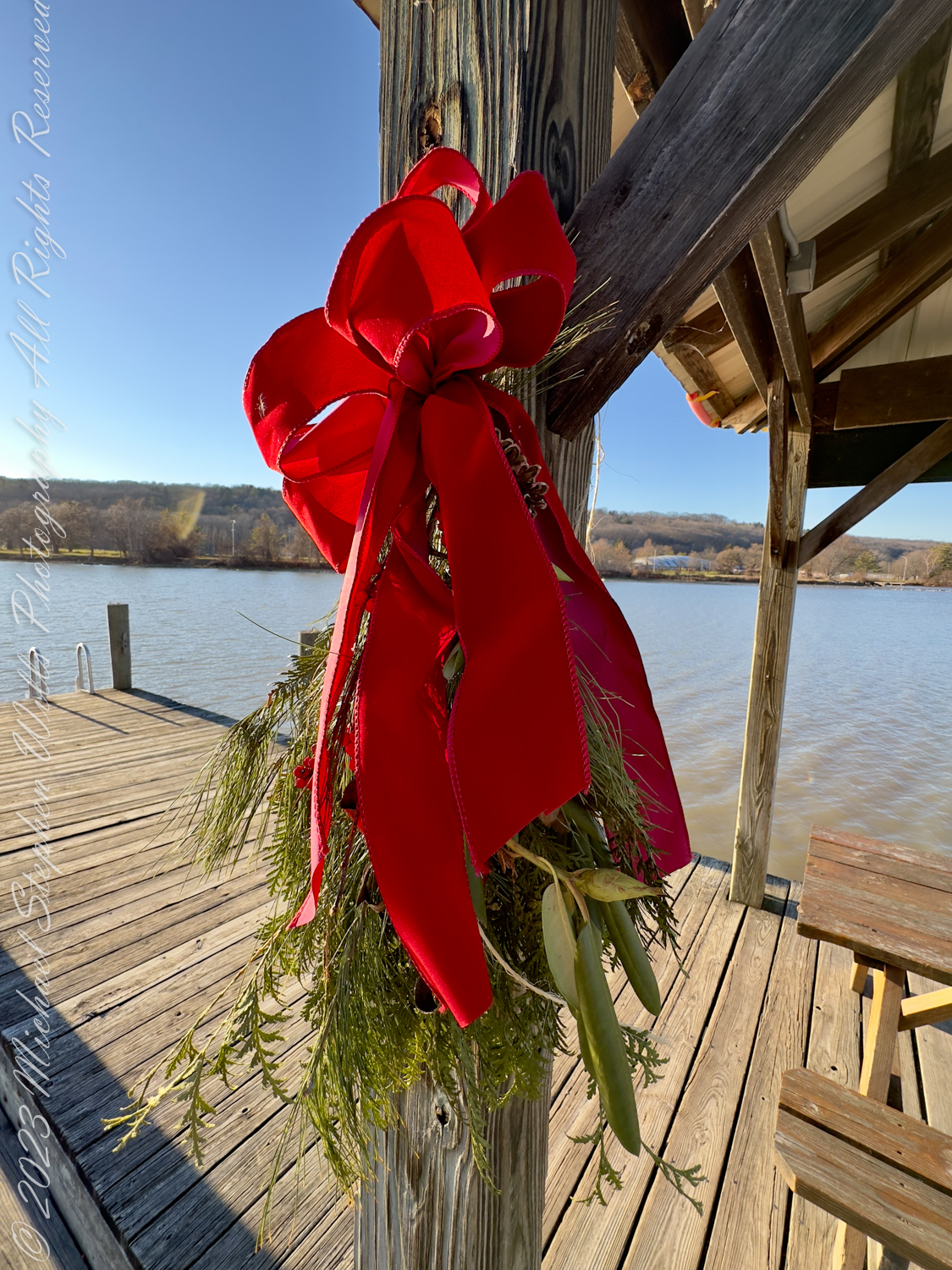
Switching seasons, we see the docks adorned with festive wreaths, injecting life and celebration into the scenery. The bright red ribbons stand out against the crisp blue of the water and the sky, suggesting a community that embraces tradition and the joy of the moment.

Connection with Nature and Community


The pictures depict how the landing is woven into the natural tapestry of the area. It is a place where one can sit and watch the placid waters of Cayuga Lake or stroll along the docks, feeling the crisp air against their skin. The images of the clear skies, the open waters, and the flight of birds in the distance are a subtle reminder of nature’s continuous presence.

Steamboad Landing on the Cayuga Waterfront Trail, Farmers Market, Ithaca, Finger Lakes Region, New York State

The waterfront trail exemplifies the community’s efforts to merge history with modernity, providing a space where people can connect with the environment and each other. The docks, once a stage for industrial exchange, now serve as a peaceful retreat, hinting at the deep-seated human desire for connection—not only to each other but also to the very essence of the environment we inhabit.

Seasonal Beauty and Reflection


The change in seasons at Steamboat Landing brings a unique beauty, which the photographs showcase poignantly. From the barren coldness of winter to the lush warmth of spring, each season imbues the landing with a distinct character. The winter images reveal a quiet majesty, with the bare branches and gray skies reflecting the introspective nature of the season. The springtime shots, however, burst with promise and vitality, as greenery begins to cloak the landscape and the water shimmers under the strengthening sun.

Enduring Legacy and Future Prospects


Steamboat Landing’s legacy as a historical transport hub has set the stage for its future as a cherished community locale. The images and historical texts paint a picture of a place that has embraced its past while looking forward to a vibrant and inclusive future. It is a locale that pays homage to its roots through the Farmers Market and other community events, ensuring that the spirit of the old steamboats continues to thrive in the hearts of Ithacans.

In conclusion, Steamboat Landing is a geographic location and a chronicle of Ithaca’s journey through time. Through its transformation, it has become a place where history breathes, nature speaks, and the community finds its heartbeat. It stands as a beacon of heritage, recreation, and beauty—a corner of the world where past and present dance together in harmony.

Copyright 2024 Michael Stephen Wills All Rights Reserved

A Shoreline Spectacle: The Power and Grace of Military Aviation

While beachcombing I witnessed an awe-inspiring moment where tranquility meets military prowess.
Discover the captivating blend of nature and technology in my latest post.

As I approached the placid stretch of sand known as Second Beach, adjacent to the Patrick Space Force Base, the Atlantic breeze carried a tang of salt that mixed with the distant, almost imperceptible hum of powerful engines. The sand, still cool beneath my feet, bore the imprints of morning walkers and the scuttle marks of sandpipers. It was a peaceful canvas, soon to be underscored by the might of aviation prowess.

Having walked barely a tenth of a mile along the shoreline, the tranquil horizon was interrupted by the advancing silhouette of the Lockheed Martin C-130J Super Hercules. The Hercules, a titan of the skies, made its approach, its four Rolls-Royce AE 2100D3 turboprop engines altering the cadence of the ocean’s whispers. There’s a unique blend of awe and humility one feels in the presence of such human engineering, a craft capable of touching the farthest reaches of the globe, delivering hope or strategic might with equal prowess.

As the Hercules descended, its shadow enveloped my position, transient and thrilling. The aircraft’s formidability was evident in the robust structure and the propellers cutting through the air with surgical precision. The six-bladed composites, in harmonious rotation, seemed like the spokes of some celestial chariot, ushering the giants of the sky onto the earthly stage. Even as it neared the runway, the versatility of the Super Hercules was unmistakable; crafted for austere conditions, yet here it was, gliding over a picturesque landscape, a sentinel on a peaceful mission.

The Hercules passed overhead with a display of grace uncharacteristic of such a large aircraft, the whirring of its engines a testament to the ceaseless vigil it keeps across the skies. As it touched down, the craft transformed from a spectral giant back into a tangible instrument of air superiority and logistical support.

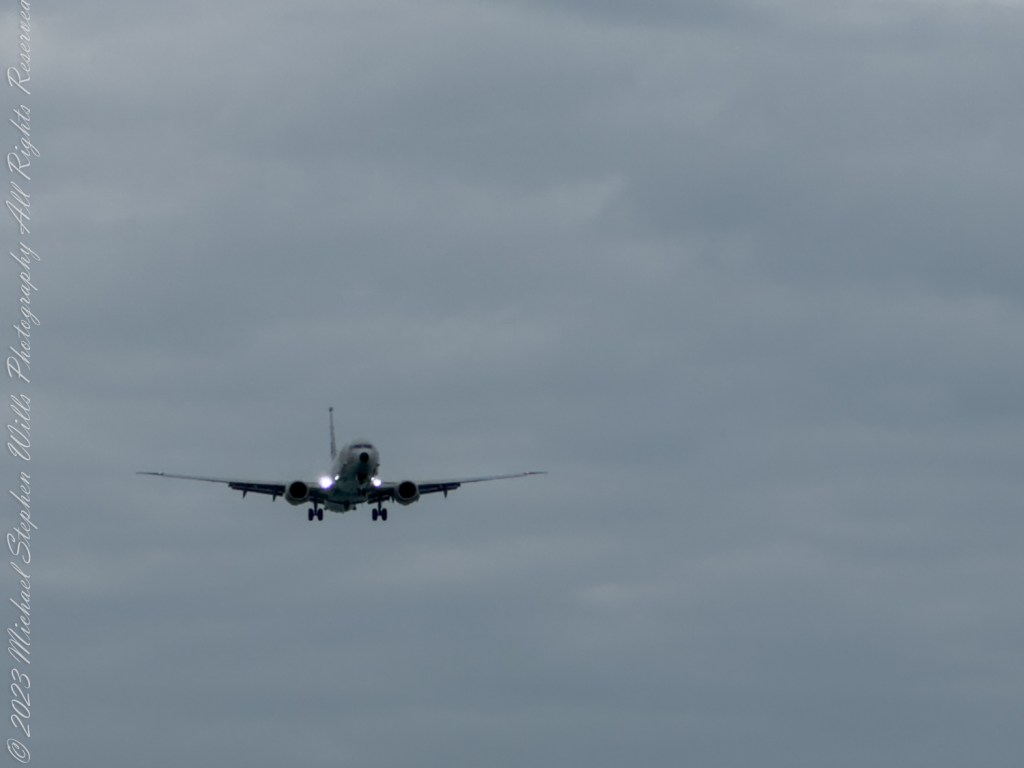
After an interlude of peaceful wave breaks another form caught my eye. The sleek, more modern contours of the Boeing P-8 Poseidon emerged from the azure, its twin engines a whisper of progression against the roar of the Hercules before it. This maritime patrol aircraft, with its lineage traced back to the reliable Boeing 737, represents the evolution of aerial surveillance and anti-submarine warfare.

As the P-8 Poseidon drew closer, descending with an elegant ease, its profile cut a striking contrast against the gray clouds above. Its advanced radar arrays, mounted under the wings and fuselage, hinted at the craft’s hidden eyes—eyes that watch over the ocean’s expanse with vigilance. There was an undeniable presence of precision and technological advancement that surrounded the Poseidon as it sailed through the air.

It passed over with a smoothness that belied its tactical purpose, a guardian of the seas ensuring the unseen threats remained held at bay. It was an ethereal sight, the embodiment of modern warfare’s stealth and strategic intelligence. The Poseidon’s landing gear, deployed and ready, connected with the tarmac in a seamless dance of man, machine, and purpose.

Standing there, I felt enveloped in a narrative much larger than myself—a narrative of human ingenuity, the relentless pursuit of security, and the silent promise of guardianship from above. With the passing of these large warplanes, I was reminded of the thin line between serene shores and the turbulent skies, and the ever-vigilant watch kept by these titans of the sky.

Copyright 2024 Michael Stephen Wills All Rights Reserved

The Mallard Ducks of Early Spring

Discover the secret world of mallards in Ithaca’s Cass Park: a drake and hen dance upon the water’s surface, inviting you into the fleeting magic of a vernal pool. Join their springtime sojourn.

Introduction to Vernal Pools and Mallard Ducks


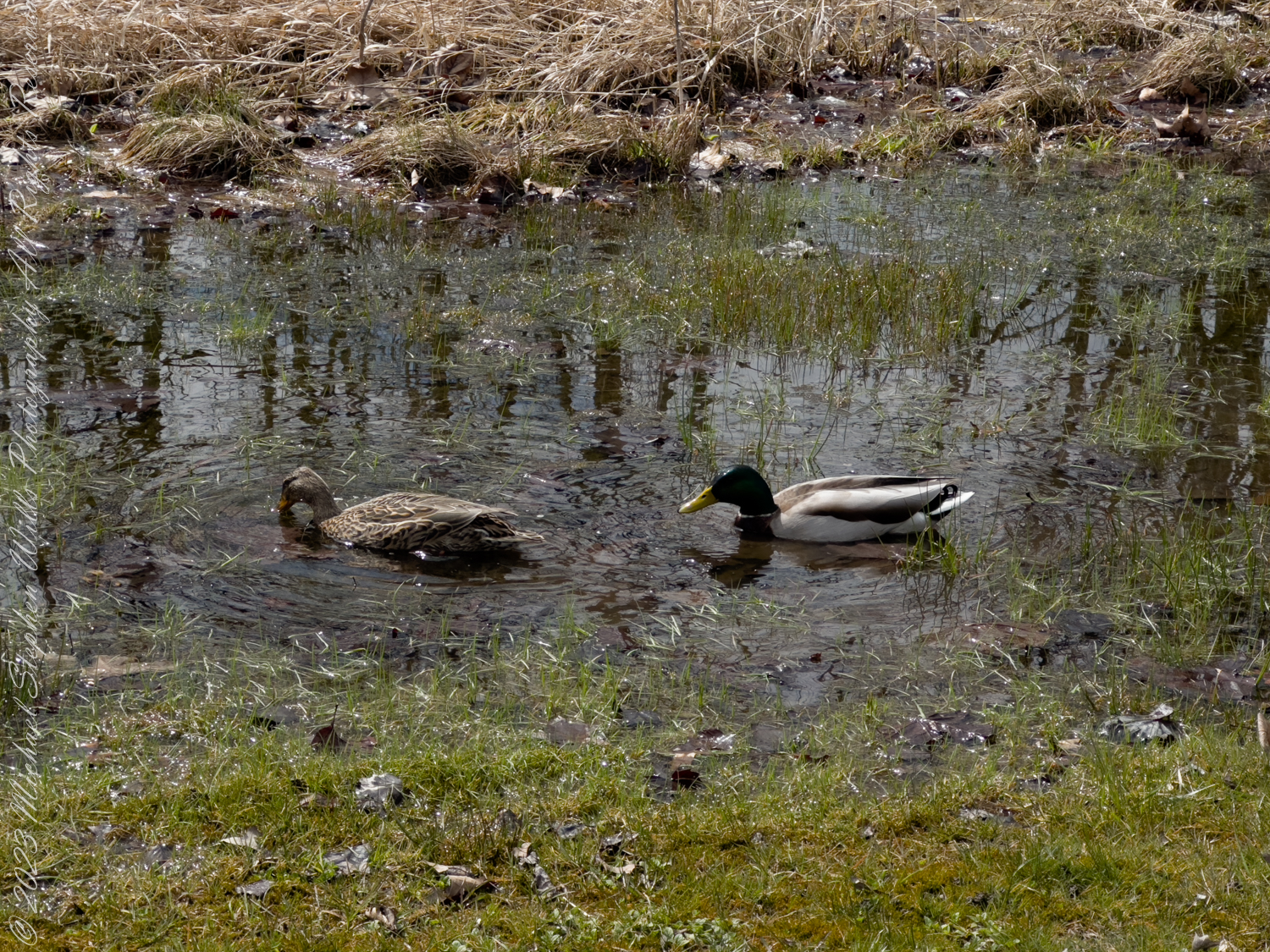
The image provided offers a tranquil glimpse into the natural world, capturing two mallard ducks—a drake and a hen—as they forage for food in a vernal pool. Vernal pools are temporary bodies of water that provide critical habitat for a variety of wildlife during the early spring. Mallards (Anas platyrhynchos), with their iconic coloration and widespread presence across the globe, are among the most recognizable and adaptable of waterfowl, making use of these ephemeral waterscapes.

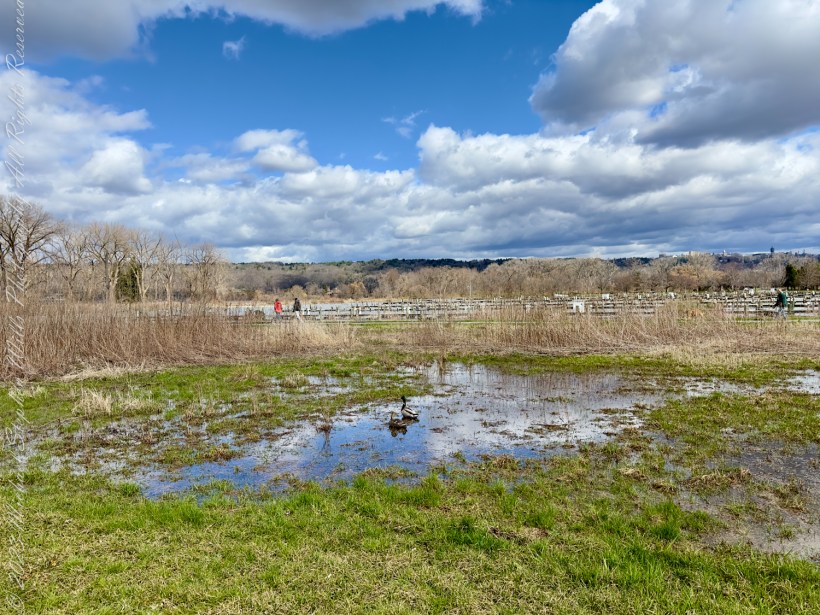
Birding Trail near Cass Park, a pair of Mallard ducks in breeding plumage feed in a vernal pool the inlet of Cayuga Lake in the background.

Significance of Vernal Pools


Vernal pools are unique wetlands that usually form in the spring from melting snow and spring rainfall. These pools are crucial for the breeding of certain species of amphibians, insects, and provide essential resources for birds like mallards. In the image, the ducks take advantage of the abundance of food such as aquatic invertebrates that thrive in these undisturbed waters, showcasing the importance of these habitats in supporting biodiversity.

A Closer Look at the Mallards’ Habitat

A male and female mallard (Anas platyrhynchos) feeding in a vernal pool along the Cayuga Waterfront Trail near Union Fields.


The photo depicts the ducks in a natural setting that speaks volumes about their environment. The surrounding dry grasses indicate a transition from the dormancy of winter to the burgeoning life of spring. The reflection of leafless trees in the water hints at an ecosystem on the cusp of renewal. This setting is not only a feeding ground for the ducks but also a haven that provides shelter and protection from predators.

The Mallards’ Spring Behavior


Mallards are known for their migratory patterns, often traveling to warmer climates during the winter and returning to their breeding grounds in the spring. The ducks in the photo are likely partaking in a crucial phase of their life cycle—feeding and preparing for the breeding season ahead. Their presence in the vernal pool is a testament to their resilience and adaptability as they utilize a wide range of habitats to meet their needs.

Conservation and the Future


While mallard ducks are not currently endangered, the conservation of their habitats, like vernal pools, is vital for the continued health of their populations and the greater ecosystem. Such habitats are under threat from urban development, pollution, and climate change. It’s imperative that we recognize the importance of preserving these natural resources, not only for mallards but for all species that depend on them.

Conclusion: Reflections on Nature’s Cycles


The photo invites reflection on the cycles of nature and the interconnectedness of species and their environments. It serves as a reminder that the arrival of mallards at a vernal pool is not just a sign of spring, but a marker of the health of our natural world. As the seasons change, so too do the opportunities for life to thrive, guided by the rhythms of the Earth and the behaviors of its inhabitants. The mallards, in their simple act of feeding, become symbols of continuity and the delicate balance of ecosystems.

Copyright 2024 Michael Stephen Wills All Rights Reserved

Reeds of Resilience: A Tale of Growth and Survival

Discover the hidden world of Phragmites australis, the common reed: a story of resilience, beauty, and ecological significance, told through the eyes of the wetlands.

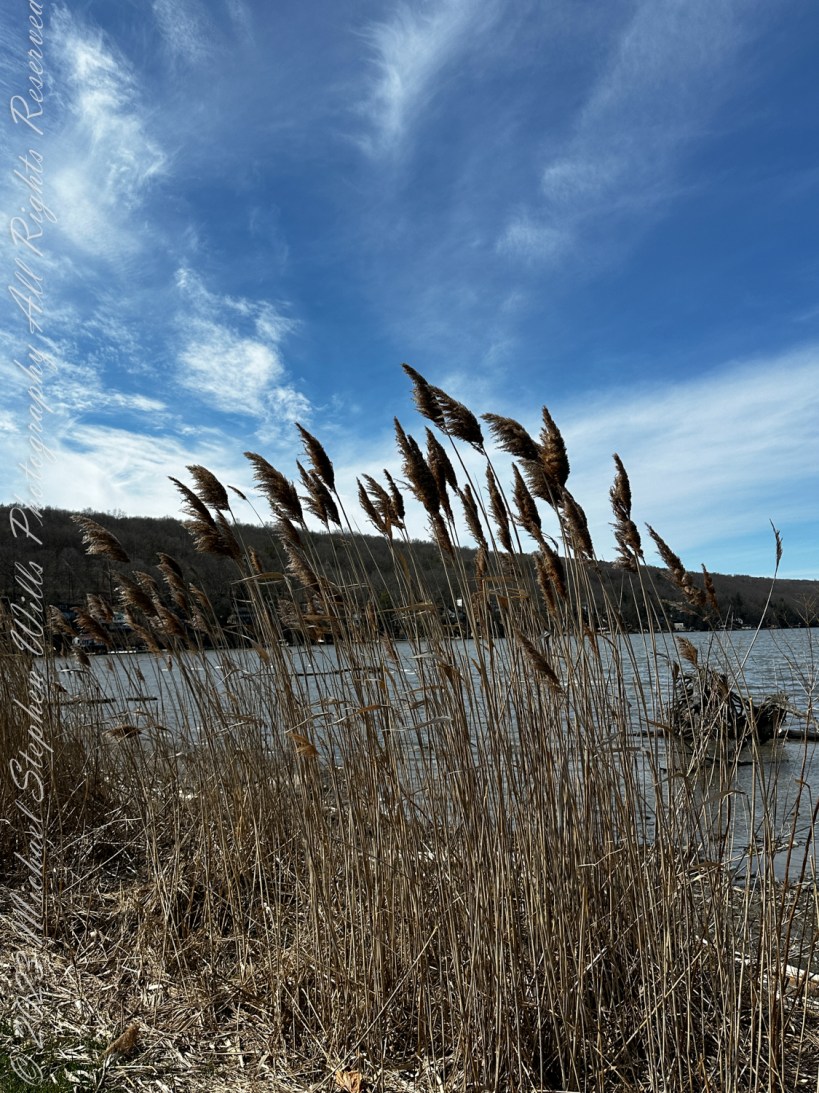
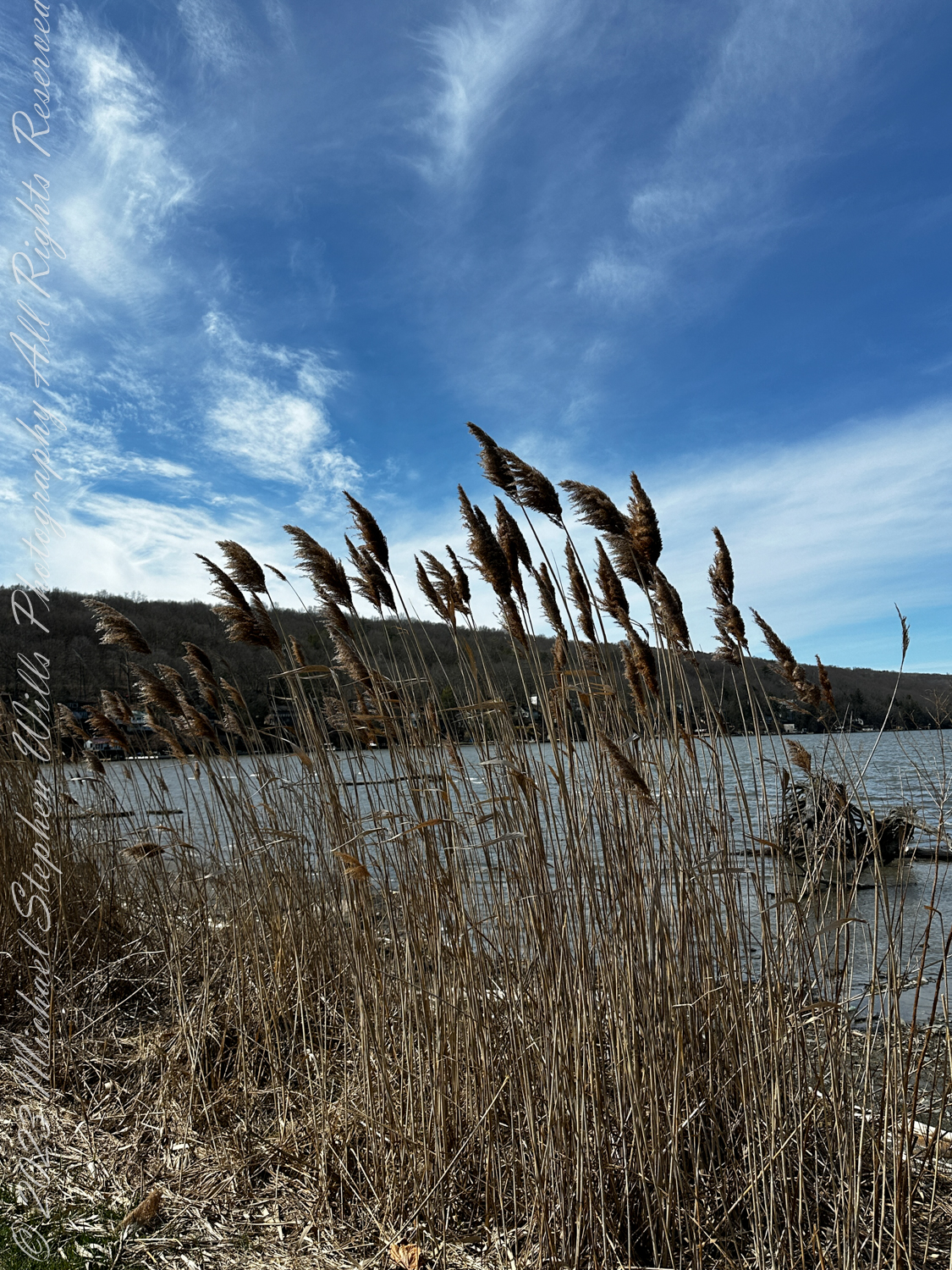
On the southern shore of Cayuga Lake, where waters mirror the ever-changing sky, I found this common reed, Phragmites australis, a plant of unassuming grace yet profound influence. This tale unfolds at the broad boarders of earth and water, a refuge and kingdom to countless beings.

Phragmites australis, a reed both simple and complex, begins its journey as a whisper in the mud. From the soft, fertile earth, it bursts forth into the world, a slender shoot reaching for the heavens. Its growth is steady and assured, fueled by the sun’s embrace and the water’s caress. In time, it stands tall, a sentinel in a sea of green, its feathery plumes, called panicles, wafted by the breeze.

This reed, you see, is a cornerstone of its ecosystem, a master architect, shaping its environment, crafting homes and havens for creatures great and small, in keeping with the genus name “Phragmites.” The Greek word “phragma” translates to “fence” or “hedge”, derived from the verb “phrassein”, meaning “to enclose.” Within that realm tiny creatures find refuge. From dragonflies and damselflies to grasshoppers and beetles are found by careful, patient observers. Insects play essential roles in pollination and nutrient cycling. Birds use the dense vegetation for shelter and foraging, you might find red-winged blackbirds, marsh wrens, and rails among the stems. Frogs, toads, and salamanders find refuge in reedy marshes. They lay their eggs in the waterlogged areas, and their tadpoles thrive amidst the reed stems. Phragmites australis is a giver of life, a source of sustenance and protection for many.

Yet, the tale of Phragmites is also one of struggle and resilience. In lands far from its native soil, it is often seen as an invader, a usurper of territories, spreading with a zeal that can overwhelm native flora and alter habitats. Its spread, unchecked, can lead to monocultures, diminishing biodiversity. But in its essence, Phragmites does not seek conquest but survival, thriving in spaces both gentle and harsh, adapting with an elegance that commands admiration.

As seasons turn, the reed undergoes a transformation, its green turning to gold, then to the brown of the earth from which it sprang. But even in decay, it nurtures life, its fallen stalks a shelter for the small and the silent, its seeds a promise of renewal. And when spring whispers anew, Phragmites rises once more, a cycle unbroken, a circle complete.

In the tale of Phragmites australis, we find a narrative of life itself—growth and decay, beauty and conflict, resilience and adaptation. This common reed, standing tall among the waters of the world, is a testament to the enduring power of nature, a reminder of the intricate tapestries of life that flourish in the quiet corners of our planet.

Click Me for another posting on the Common Reed.

Copyright 2024 Michael Stephen Wills All Rights Reserved

Nesting Chronicles: The Life of A Cayuga Lake Osprey

Imagine you’re soaring with ospreys over Cayuga’s shimmering waters, preparing the nest, embracing the ritual of spring—a majestic cycle of life awaits you.

As the first warm breezes of early spring ruffle the chilled waters at the south end of Cayuga Lake, anticipation rises in me. I am a female Osprey, returning alone from far to the south along the old sky-roads. We do not migrate as a pair; my mate often reaches the nest ahead of me to reclaim the site and begin repairs. Still, this is the place we claim again, season after season.
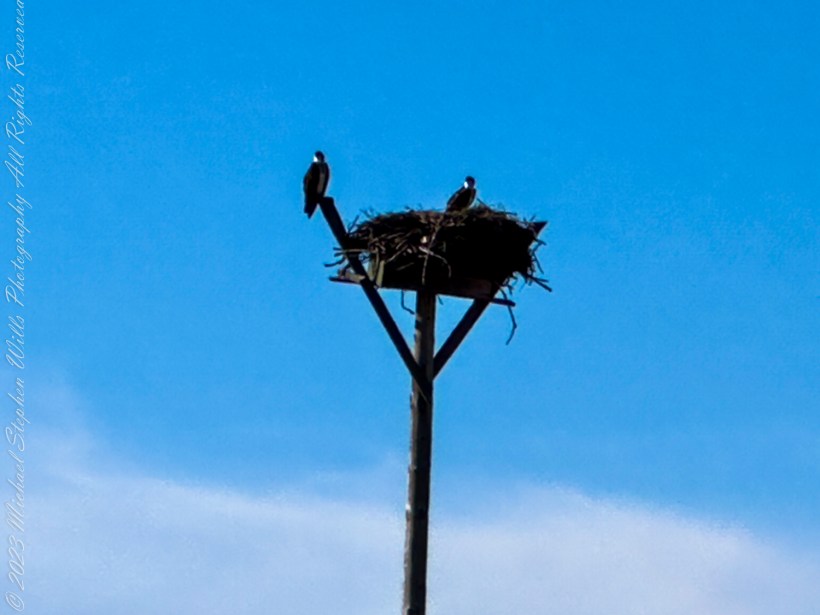
Two Osprey perched on the nest near the Birding Trail of Cass Park. Cayuga Lake in the distance.

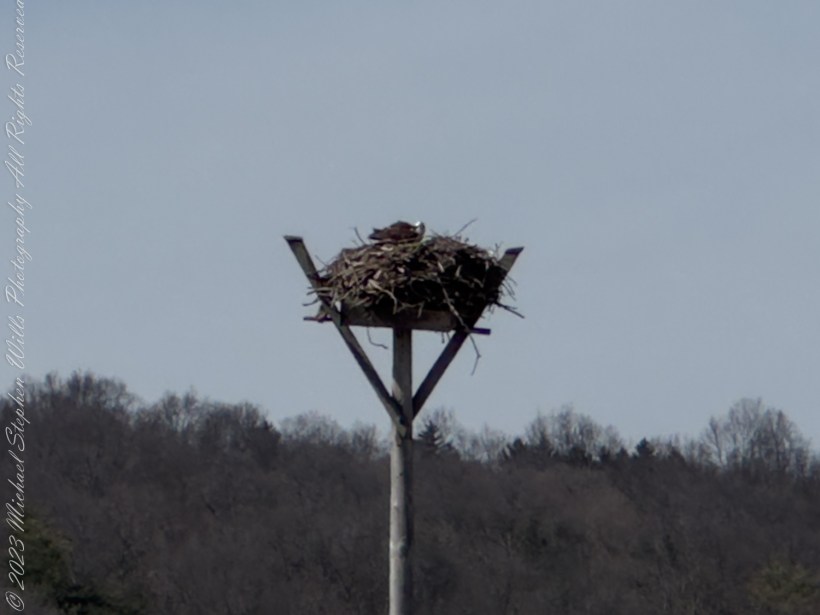
On arrival I wheel high above the shoreline, searching for the platform we left to winter. There it stands—the tall sentinel above the lake. He is there, too, calling once as he lifts, and the rim already shows the first fresh sticks of the year. Against the bright sky the nest looks rough-hewn, yet every branch lies to a purpose.

Two Osprey perched on the nest near the Birding Trail of Cass Park.

As I settled onto the platform, tthe familiar tilt of the timbers and the dry rattle of last year’s sticks steady me. I meticulously inspected our creation, the repository of our hopes and future lineage. My mate and I ferry fresh twigs and weeds, wedging them into the rim and lacing the walls tight against the spring winds.

In due time, beneath the sheltering rim, I laid a small clutch of mottled eggs—the culmination of our bond, the promise of continuity. Through the weeks that follow I keep them warm and dry, turning them with my beak and settling the heat of my breast upon them. My mate does the heavy work of provision—fish after fish to the rail—and stands guard, calling when intruders drift close. Now and then he eases onto the eggs while I feed, but the watching and warming are chiefly mine.

Two Osprey perched on the nest near the Birding Trail of Cass Park.

The world around us burgeoned with life. The lake’s surface now rippled with the activity of fish – a bounty for our growing family. Days turned into weeks, and our vigilance was rewarded as the first cracks appeared in the eggs. The chicks emerged, delicate yet voracious, their mouths agape for the nourishment we unceasingly provide.

Click Me for another Osprey Post

Thank you Candace E. Cornell of the Cayuga Lake Osprey Network for your helpful advice.

For further information: —–Poole, Alan F. ; 2019, “Ospreys: The Revival of a Global Raptor”; Johns Hopkins University Press —Mackrill, Tim; 2024; “The Osprey”; Bloomsbury Publishing

Enter your email to receive notification of future postings. I will not sell or share your email address.

Tuxedos on Tour: Three Majestic Mergansers

Join the escapade as you witness three majestic Mergansers, donning nature’s finest tuxedos, in a graceful ballet on the springtime stage of Cayuga Lake.

As you gaze upon these three fine feathered fellows, all members of the exclusive Common Merganser men’s club, they seem to glide upon the watery stage of Cayuga Lake with all the confidence of Broadway stars on opening night. They are the aquatic equivalent of a sharply dressed barbershop quartet, minus one, in their matching tuxedos, ready to sing the springtime serenade of their species.

The chap at the forefront is Captain Black-Crest, sporting a glossy noggin that shimmers with an inner light, undoubtedly the envy of every duck on the pond. He’s streamlined and debonair, with a white body that’s as crisp as the first snowfall and a dark back that’s as sleek as a shadow in moonlight. If ducks had monocles and top hats, he’d be first in line.

In the middle, there’s Sir Dapper-Diver, a mirror image of his companion, with a neck as white as the driven snow and a dignified black back that gleams like polished onyx in the dappled sunlight. He’s the quiet achiever of the group, poised and ready to make the plunge into the depths below, proving that style need not be sacrificed for substance.

And to the right, meet Admiral Feather-Finesse. His poise on the water suggests a mastery of the waves, a commander of the current. He carries his elegant attire with an air of grace that only comes with a natural pedigree. In synchronized perfection, he and his brethren form a regatta of refinement, a display of nature’s own black-tie affair.

These are male Common Merganser (Mergus merganser) in breeding plumage, characterized the body white with a variable salmon-pink tinge, the head black with an iridescent green gloss, the rump and tail grey, and the wings largely white on the inner half, black on the outer half. Like the other mergansers, these piscivorous ducks have serrated edges to their bills to help them grip their prey, so they are often known as “sawbills”. In addition to fish, they take a wide range of other aquatic prey, such as molluscs, crustaceans, worms, insect larvae, and amphibians; more rarely, small mammals and birds may be taken. As in other birds with the character, the salmon-pink tinge shown variably by males is probably diet-related, obtained from the carotenoid pigments present in some crustaceans and fish. When not diving for food, they are usually seen swimming on the water surface, or resting on rocks in midstream or hidden among riverbank vegetation, or (in winter) on the edge of floating ice.

Together, these three Common Mergansers (Mergus merganser) in their prime are a trifecta of elegance, a testament to the timeless beauty found in nature’s simplicity. They paddle forth with purpose, their matching plumage a striking contrast to the rippling blues and grays of the water, a parade of poise and plumage that delights the observant eye.

So, dear reader, as you observe this photo, take a moment to appreciate the charming uniformity and the subtle quirks that make each bird, despite their shared wardrobe, uniquely magnificent. It’s a snapshot of life at its most graceful, a picture worth far more than a mere thousand words.

Copyright 2024 Michael Stephen Wills All Rights Reserved

Nature’s First Green….

…is gold, / her hardest hue to hold, / her early leaf’s a flower; / but only so an hour… Robert Frost

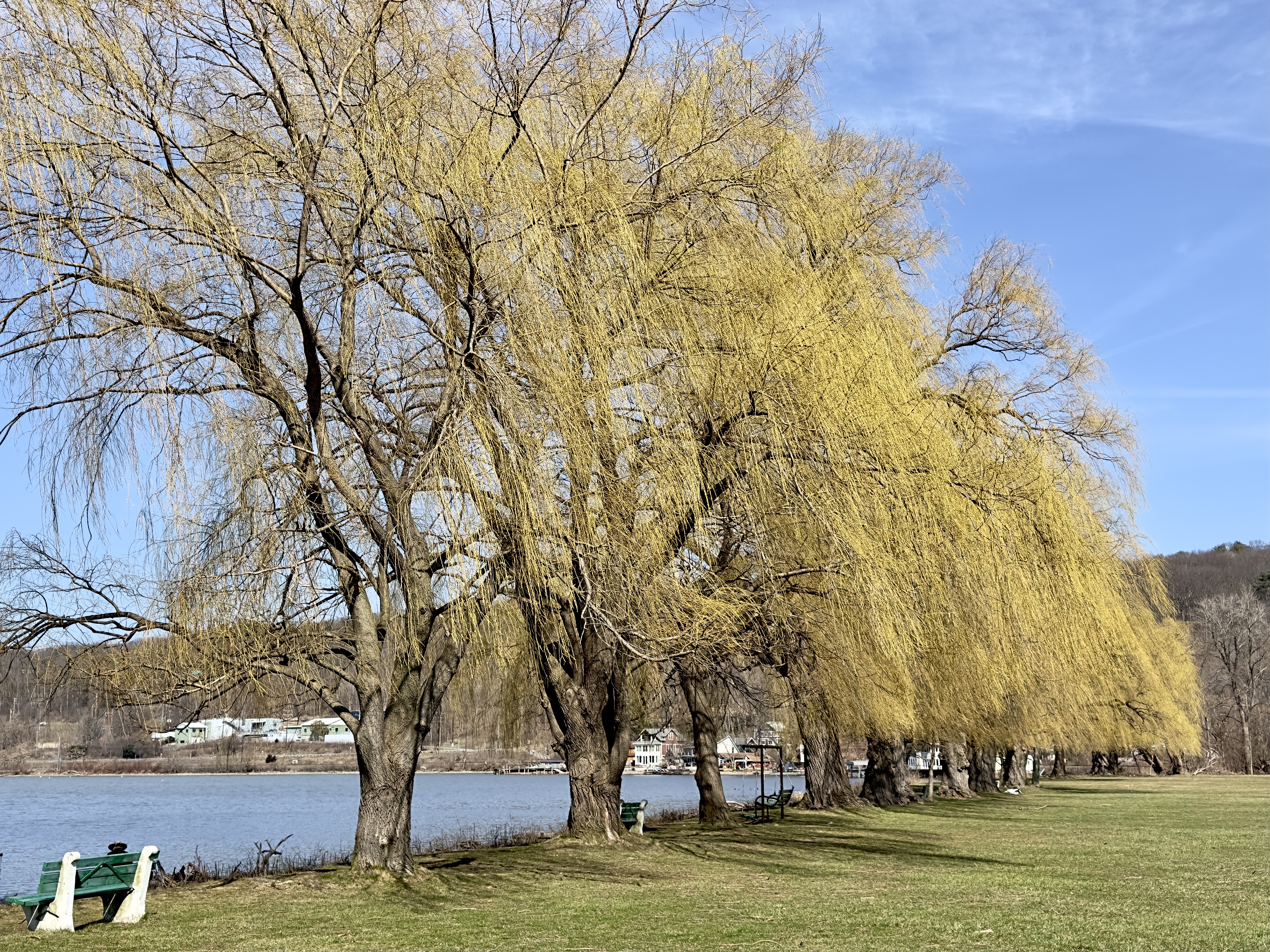
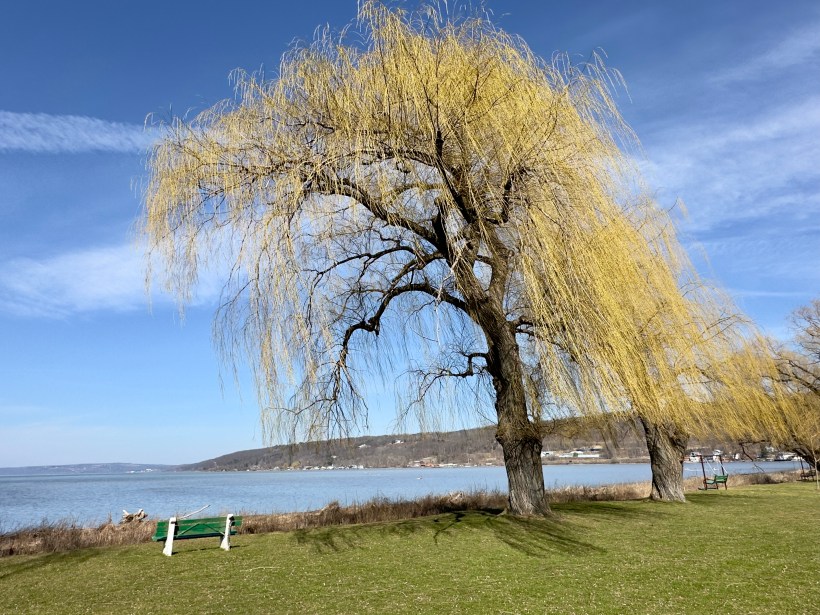
You walk alone by the waters of Cayuga Lake in Stewart Park, nestled in the heart of Ithaca’s Finger Lakes, where Salix alba, the white willow, stands proudly along the shoreline. You’re immediately drawn to the flurry of yellow flowers, a stark contrast to the still chilly early March air.

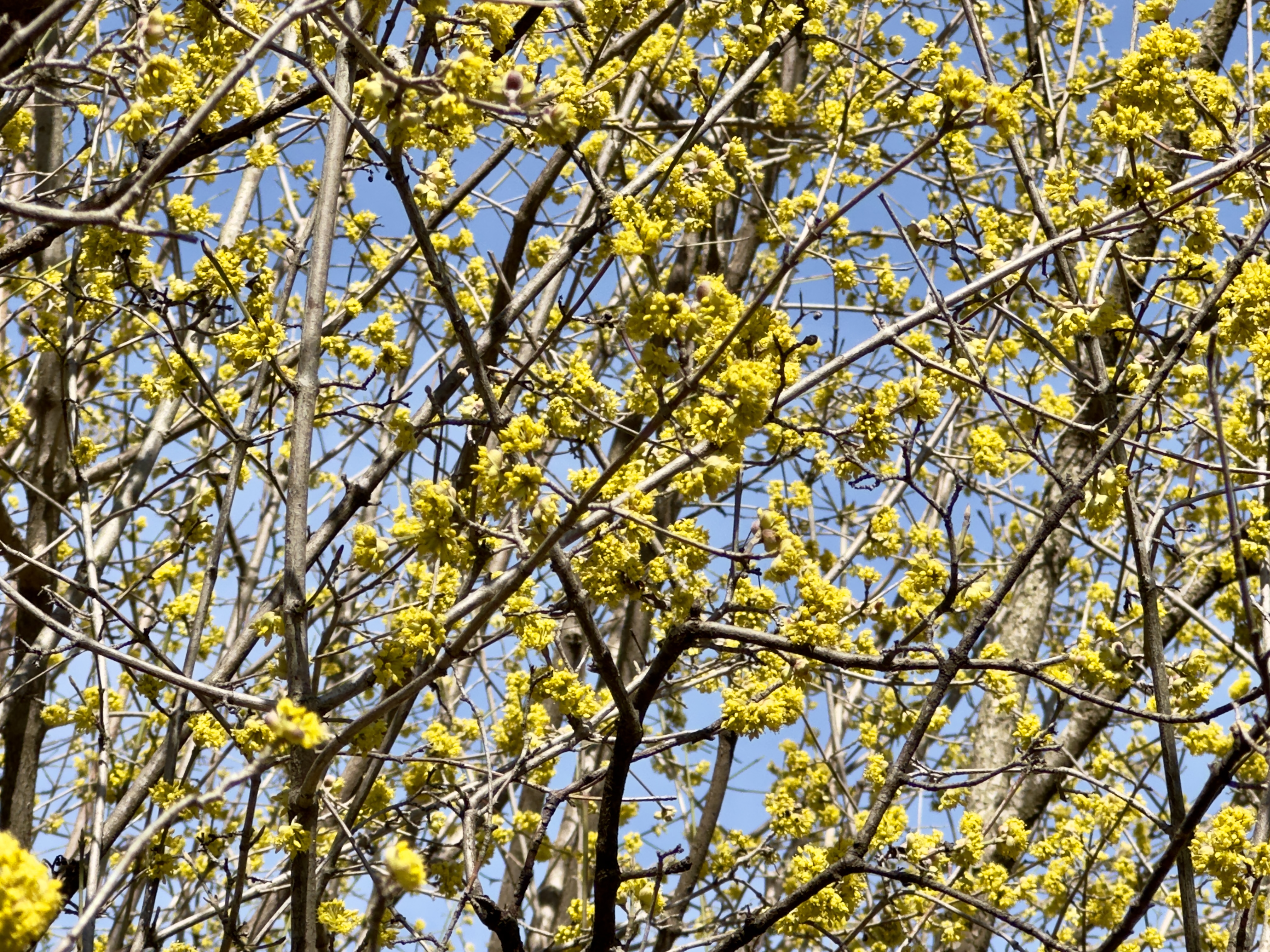
The white willow (Salix alba), with its rough, gray bark, is beginning to dress in its spring finery, its branches teeming with tiny, starburst-like flowers. Each one is a miniature sun, casting a glow against the intricate lattice of branches. These aren’t the soft catkins of the pussy willow but the yellow inflorescences that are characteristic of the white willow’s early bloom, a signpost that winter’s grip is loosening.

These trees, you learn, are dioecious, with separate male and female trees. The blossoms you see are likely the male flowers, their stamens dusting your fingers with pollen as you brush against them. It’s this pollen that will soon beckon the bees, urging them to emerge from their hives and begin the work that sustains the ecosystem. You can almost hear the faint buzz, a prelude to the symphony of life that summer will bring. Return in midsummer to find the female catkins comprise numerous small (4 mm) capsules, each containing numerous minute seeds embedded in silky white hairs, which aids wind dispersal.

As you wander further, you note the presence of the white willow’s kin, other deciduous companions some still bare and stretching into the sky and others leafing out. You stand there, at the cusp of seasonal change, where the slumbering trees are on the verge of awakening, and you feel a kinship with them. Like these trees, you have weathered the cold, dark months, and now you stand poised to greet the renewal that comes with spring.

The stark, knotted forms of the white willow branches against the clear sky speak to you of endurance and resilience. These trees have weathered storms and droughts; they have been companions to the lake, mirrors to its moods, and now they are beginning to celebrate the cycle of rebirth and growth.

You take a seat on a bench, the cool wood through your clothes a reminder of the lingering winter. You gaze out across the lake, the water reflecting the brilliance of the sun like a vast, rippling mirror, framed by the elegant silhouettes of the white willows. You feel the peace of the park seep into you, the slow, rhythmic lapping of the water syncing with your breath.

This is a moment of transition, from the sleeping to the awakening world. You think about the Salix alba, how its presence here is a testament to nature’s adaptability, thriving in the moist soil by the lake, offering shade in summer and shelter in winter, its branches a playground for the winds.

As you leave Stewart Park, you take with you the memory of the white willows in early March, the quiet guardians of Cayuga Lake. They remind you of the enduring beauty of nature, the seamless flow from one season to the next, and the quiet joy of standing witness to the first whispers of spring on the shores of the Finger Lakes.

Copyright 2024 Michael Stephen Wills All Rights Reserved