Nature’s Role in Recovery: October at Treman Park

Pam’s recovery from hip replacement unfolds in Upper Robert H. Treman State Park, intertwining personal resilience with nature’s healing beauty.

On a crisp October afternoon, October 3, 2024, Pam and I reveled in Upper Robert H. Treman State Park, a serene oasis nestled in Tompkins County. This visit was particularly special for us, a step in Pam’s recovery from her August hip replacement. I remember the sound of her hiking pole tapping the ground as we walked together, feeling grateful for her progress since surgery. The air was cool, and the leaves, turning gold and orange, whispered in the breeze, providing the perfect backdrop for our outing that day.

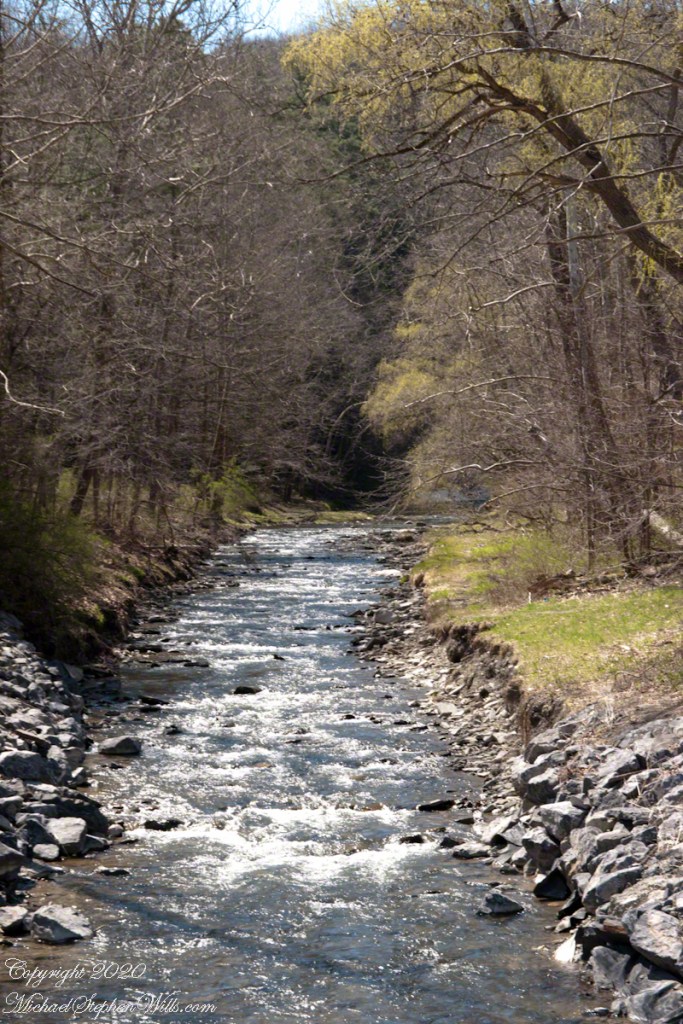
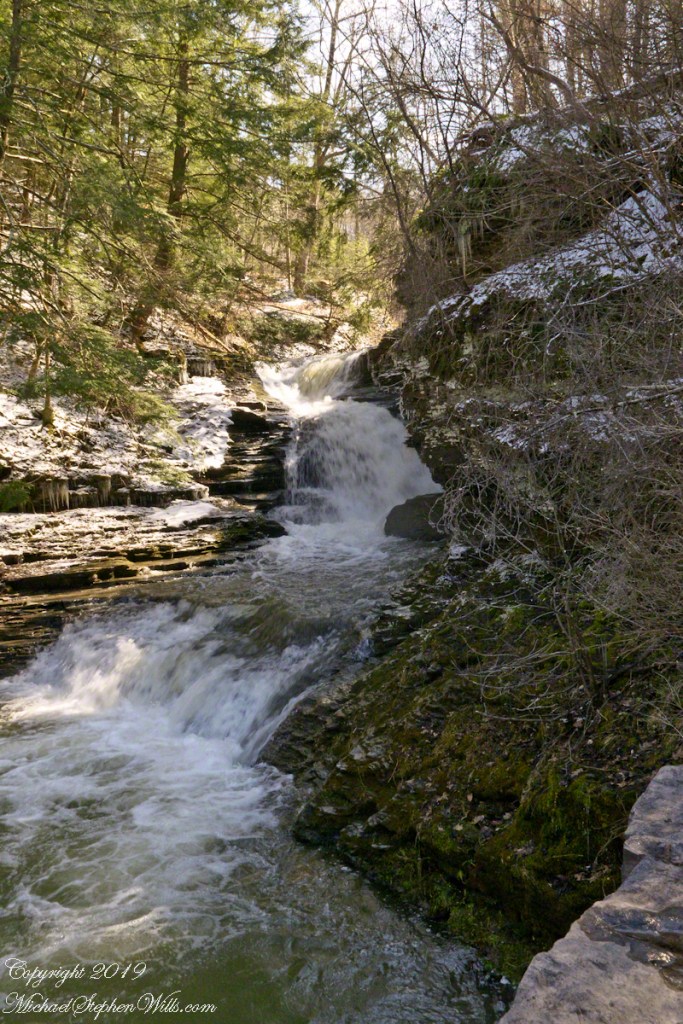
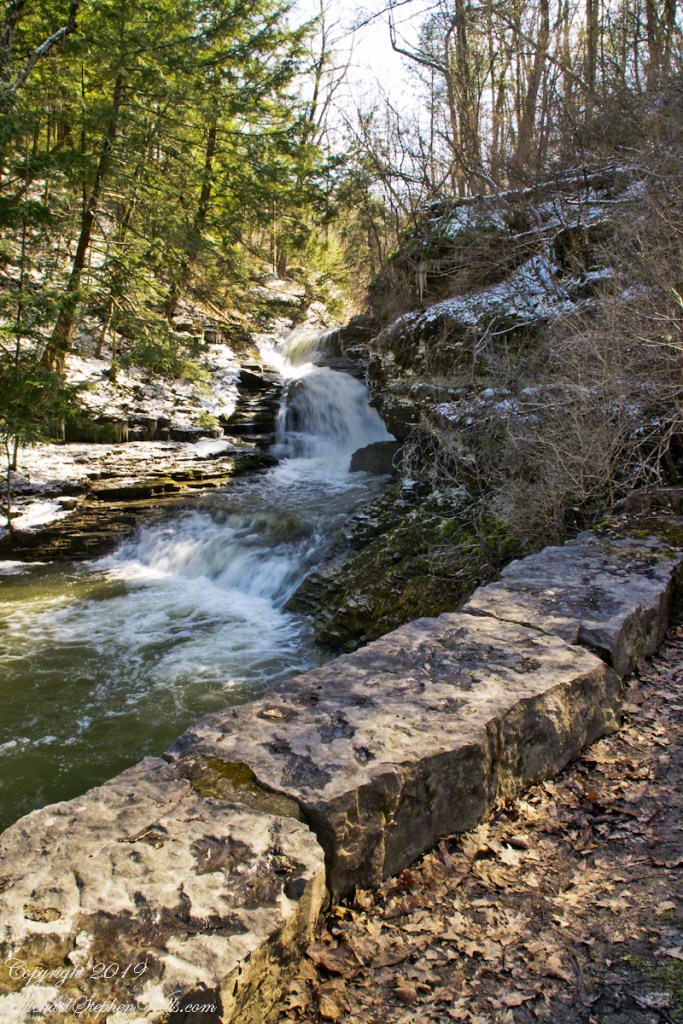
Our path followed the creek, the same creek that winds through the heart of the park, framed by layers of stone and lush vegetation. In one of the first photos I took that day, you can see the creek reflecting the soft autumn light, its bed dotted with rocks and fallen branches. The vibrant greens of the undergrowth juxtaposed with the golden leaves made the scene feel timeless, as though nature itself was participating in Pam’s recovery, offering healing in its quiet, enduring beauty.
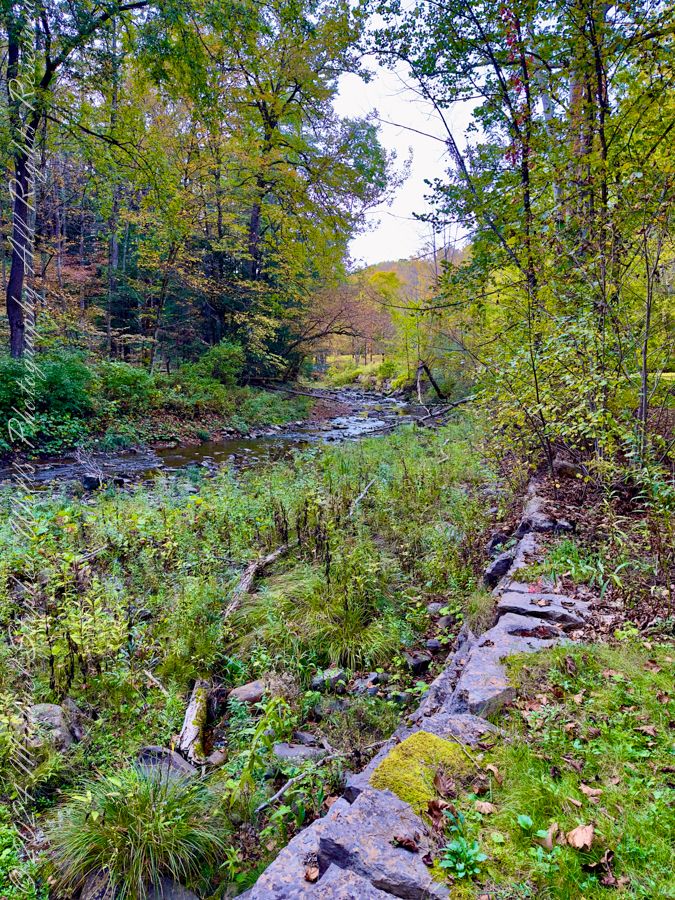
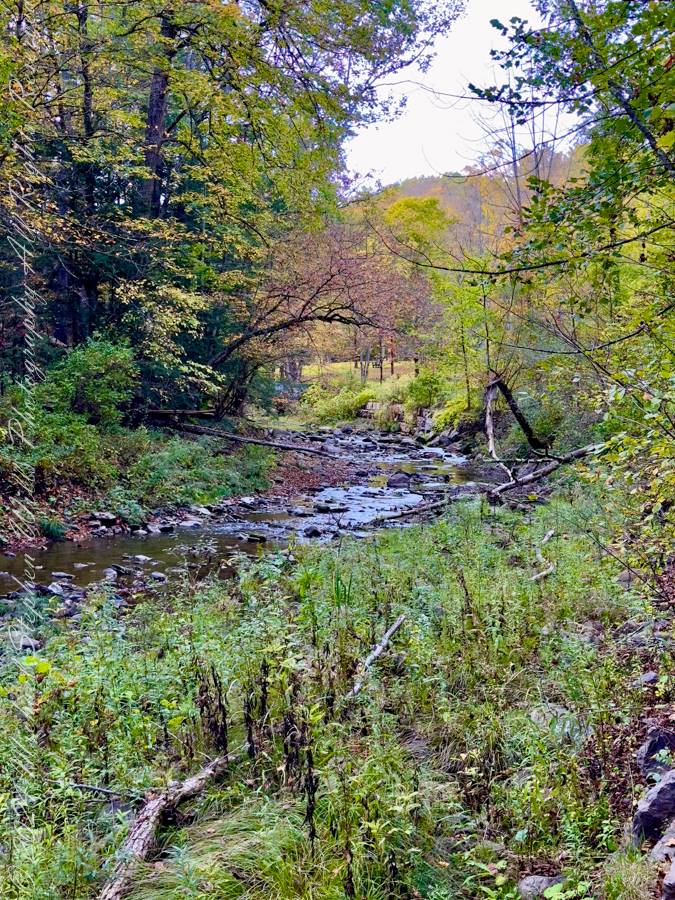
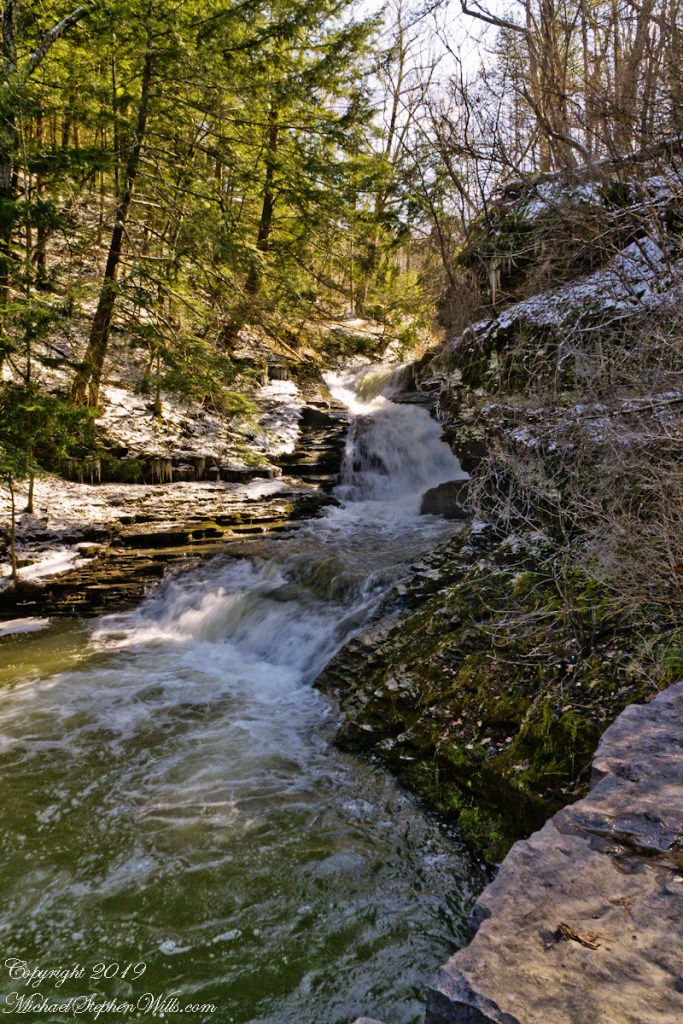
The view upstream just before the creek enters The Gallery. Robert H. Treman State Park, Enfield, Tompkins County, Finger Lakes Region, New York State.

We paused to take in the quiet hum of life around us. There was a sense of history in the park that seemed to blend with our personal story. As we wandered deeper, we reached the foundation of the old Budd House, its stone blocks now barely a shadow of the past but still carrying echoes of life lived long ago. The placard described Charles Budd, a village blacksmith and postmaster, and his wife, Deborah, who continued to serve the community after his passing. Standing there, I reflected on how these stones, much like Pam’s journey, represented resilience and the passage of time.
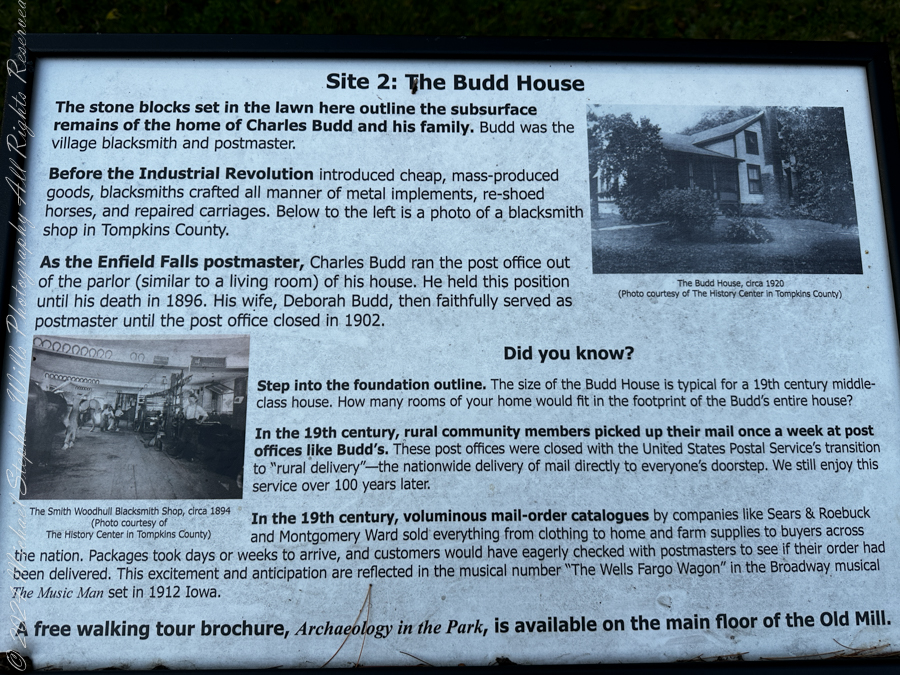
Site 2: The Budd House The stone blocks set in the lawn here outline the subsurface remains of the home of Charles Budd and his family. Budd was the village blacksmith and postmaster. Before the Industrial Revolution introduced cheap, mass-produced goods, blacksmiths crafted all manner of metal implements, re-shoed horses, and repaired carriages. Below to the left is a photo of a blacksmith shop in Tompkins County. As the Enfield Falls postmaster, Charles Budd ran the post office out of the parlor (similar to a living room) of his house. He held this position until his death in 1896. His wife, Deborah Budd, then faithfully served as postmaster until the post office closed in 1902. Did you know? Step into the foundation outline. The size of the Budd House is typical for a 19th century middle-class house. How many rooms of your home would fit in the footprint of the Budd’s entire house? In the 19th century, rural community members picked up their mail once a week at post offices like Budd’s. These post offices were closed with the United States Postal Service’s transition to “rural delivery”—the nationwide delivery of mail directly to everyone’s doorstep. We still enjoy this service over 100 years later. In the 19th century, voluminous mail-order catalogues by companies like Sears & Roebuck and Montgomery Ward sold everything from clothing to home and farm supplies to buyers across the nation. Packages took days or weeks to arrive, and customers would have eagerly checked with postmasters to see if their order had been delivered. This excitement and anticipation are reflected in the musical number “The Wells Fargo Wagon” in the Broadway musical The Music Man set in 1912 Iowa. A free walking tour brochure, Archaeology in the Park, is available on the main floor of the Old Mill. Upper Treman. Robert H. Treman State Park, Enfield, Tompkins County, Finger Lakes Region, New York State.

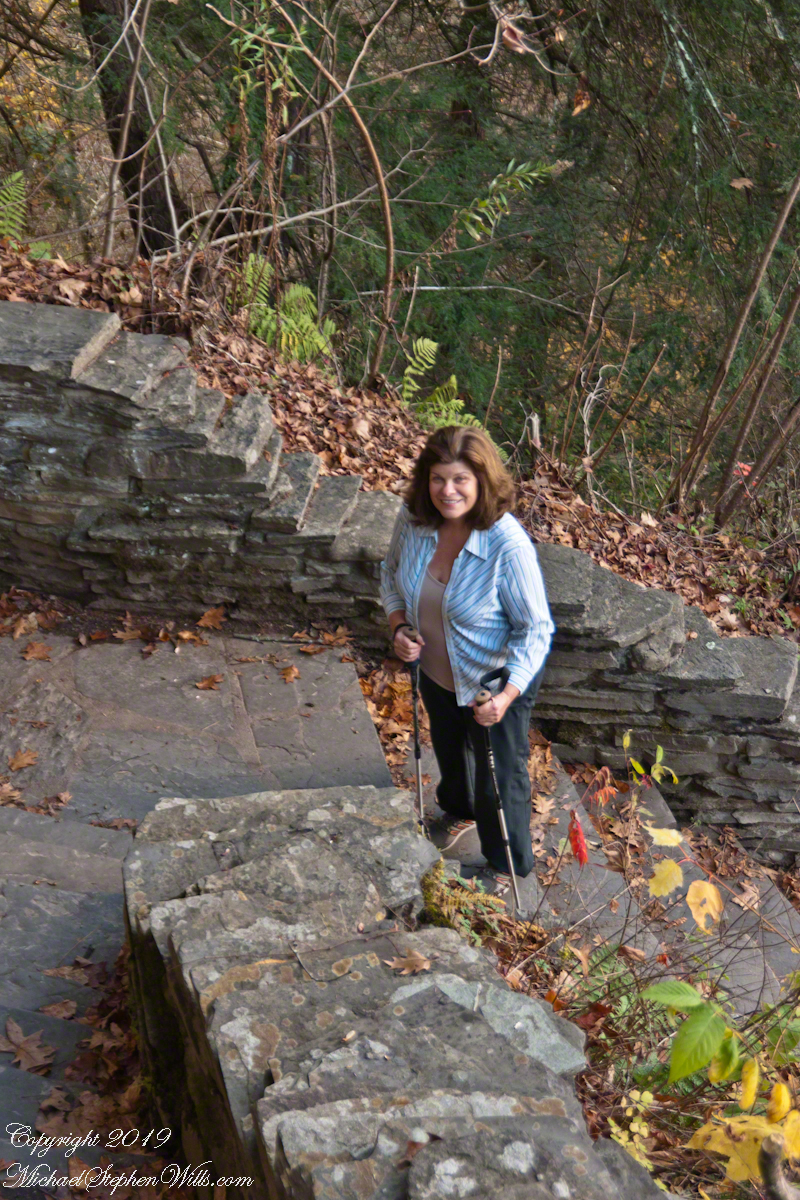
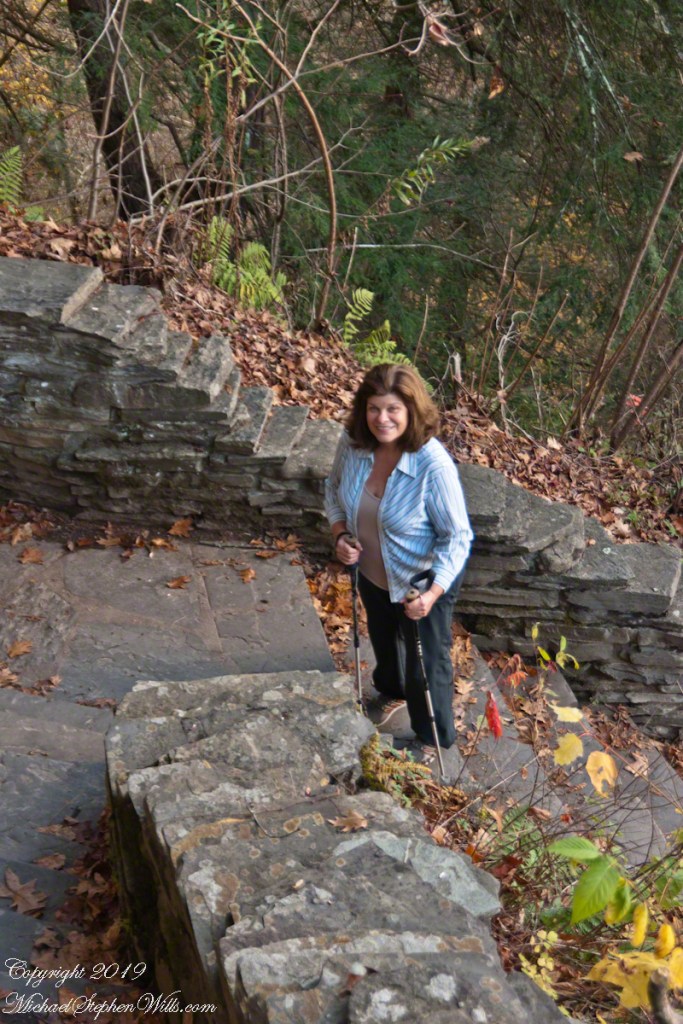
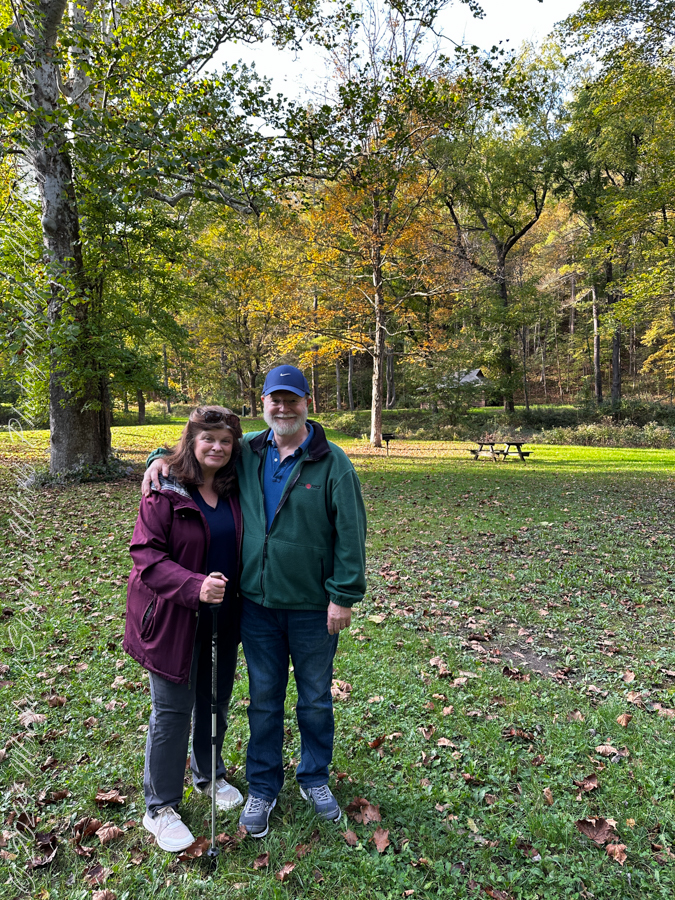
As we stood by the foundation, we met another couple. The woman shared her own story of recovery, a tale of resilience that resonated deeply with us. She had fallen and suffered a spinal injury, becoming paralyzed from the neck down, while traveling. Thanks to surgery and rehabilitation, she regained full mobility. There was a moment of understanding and connection between us. We offered to take a photo of them, and they returned the favor, capturing the two of us—Pam leaning lightly on her cane, smiling, surrounded by trees whose leaves were beginning to fall. That picture, one of my favorites from the day, symbolizes not just Pam’s strength but also the support and shared experiences that come with recovery.
We are taking a walk through upper Treman Park during Pam’s recovery from hip replacement. This was taken by a couple we met.

The park offered us a space for reflection and a sense of continuity. The trees, some towering over us with roots gripping the earth, had seen many seasons of change, and now they watched over us as we walked beneath them. In the clearing where picnic tables stood, we sat for a while, simply absorbing the moment. The afternoon light filtered through the branches, casting long shadows on the grass.
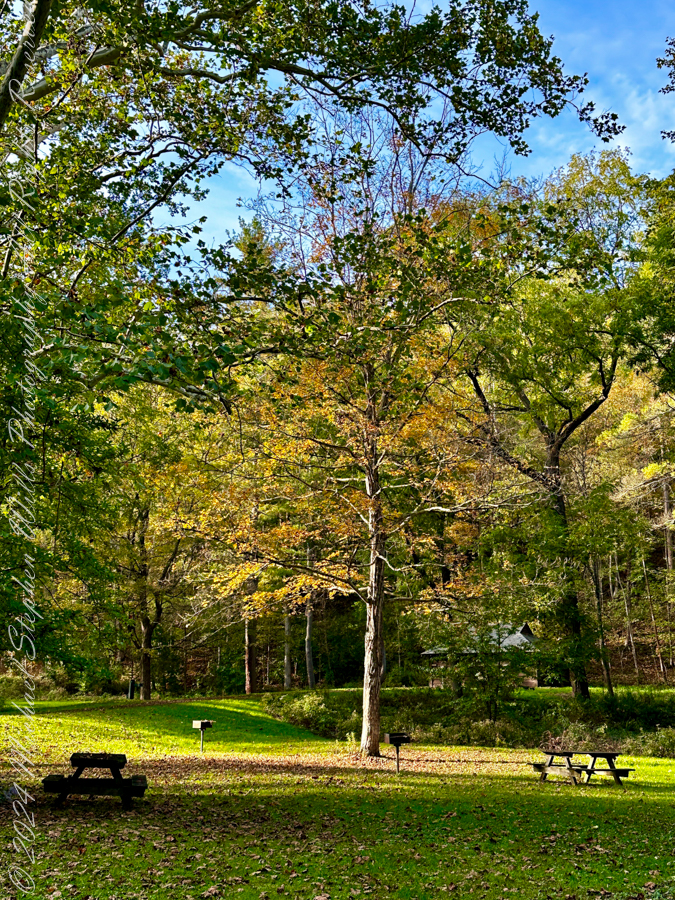
One of the final photos I took that day captures the creek from another angle. The water, calm and clear, reflects the yellow hues of the trees, while the rocks and roots along the bank seem frozen in time. It’s a peaceful image, one that reminds me of the quiet strength that Pam has shown throughout her recovery.
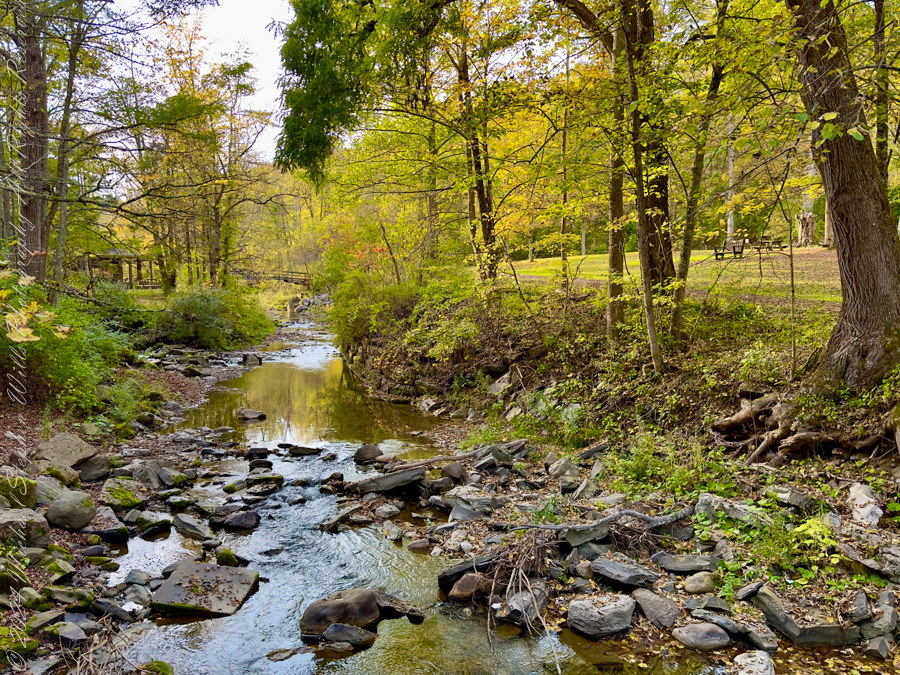
Here Fish Creek, a tributary of Enfield Creek joins the flow just below the pavilion of Upper Treman.

We left the park that day feeling both uplifted and grounded, the layers of history and personal resilience blending seamlessly into the natural landscape. Upper Robert H. Treman had become had become a part of Pam’s recovery story, a testament to the healing power of both nature and community.

Enter your email to receive notification of future postings. I will not sell or share your email address.

224 Steps

Each wall is support for the next flight of stairs

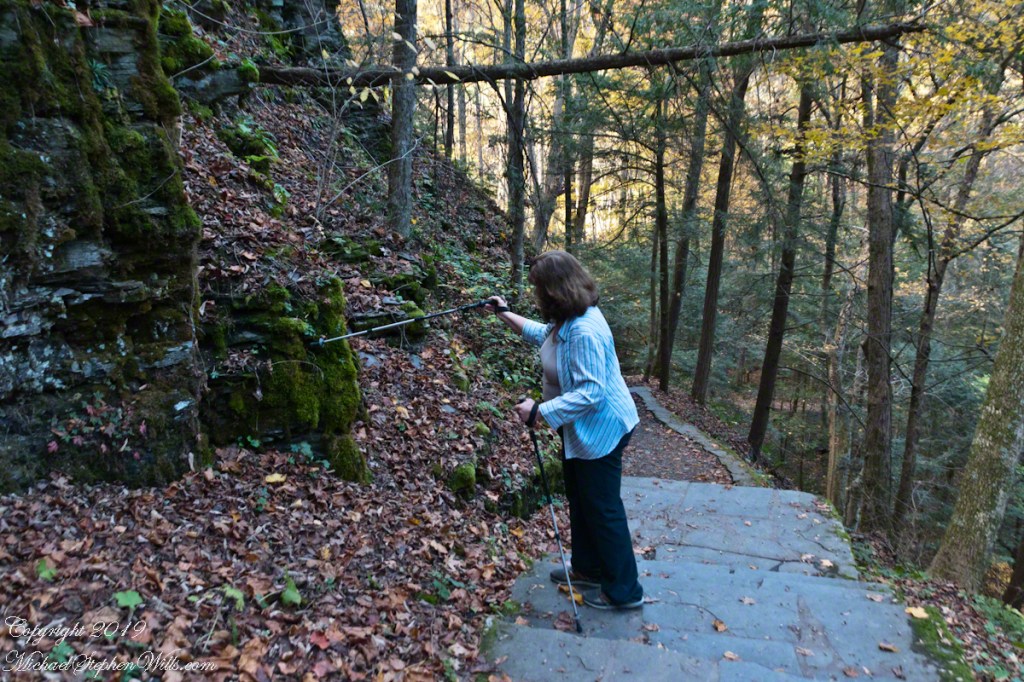
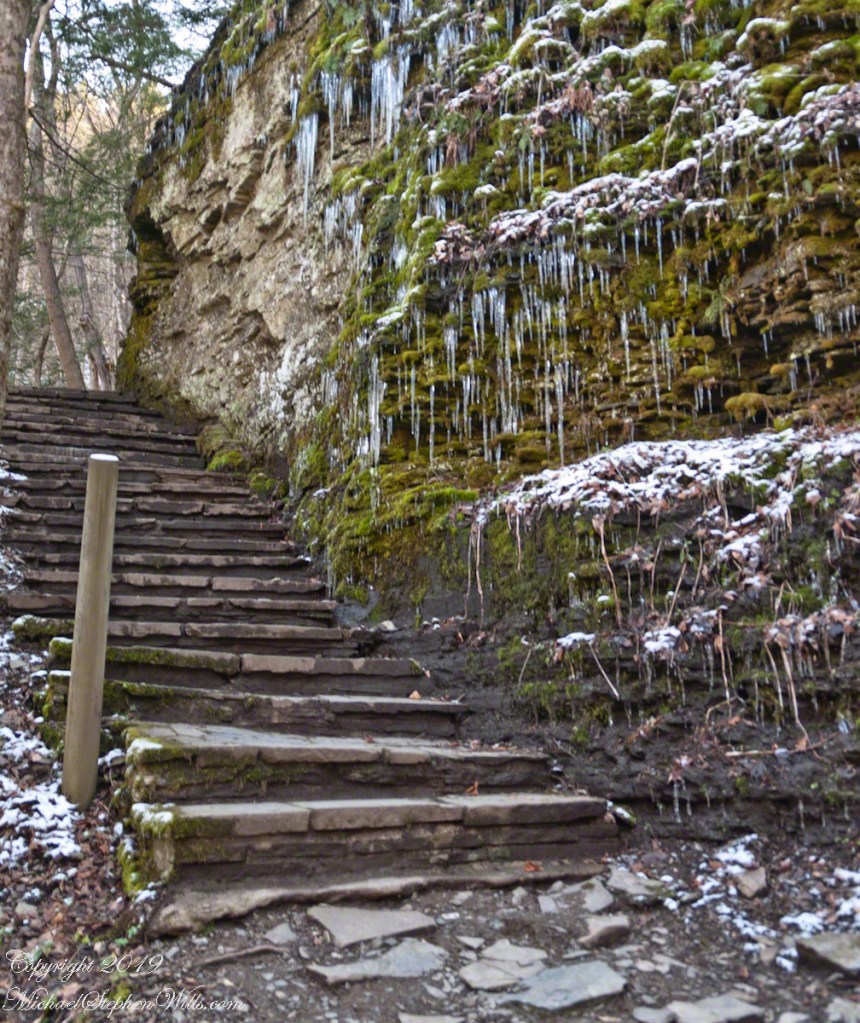
The stairs are cut into a cliff, using switchbacks with landings and strategically placed benches.

Click photograph for a larger view. To do this from WordPress Reader, you need to first click the title of this post to open a new page.

This work was accomplished by the Civilian Conservation Corps in the 1930’s, during the Great Depression.

These shots were hand held. I used a Sony Alpha 700 dslr with a variable “zoom” lens, great for framing compositions.

Robert H. Treman New York State Park.

Click for macro slideshow.

Copyright 2024 All Rights Reserved Michael Stephen Wills

So Like A Christmas Tree

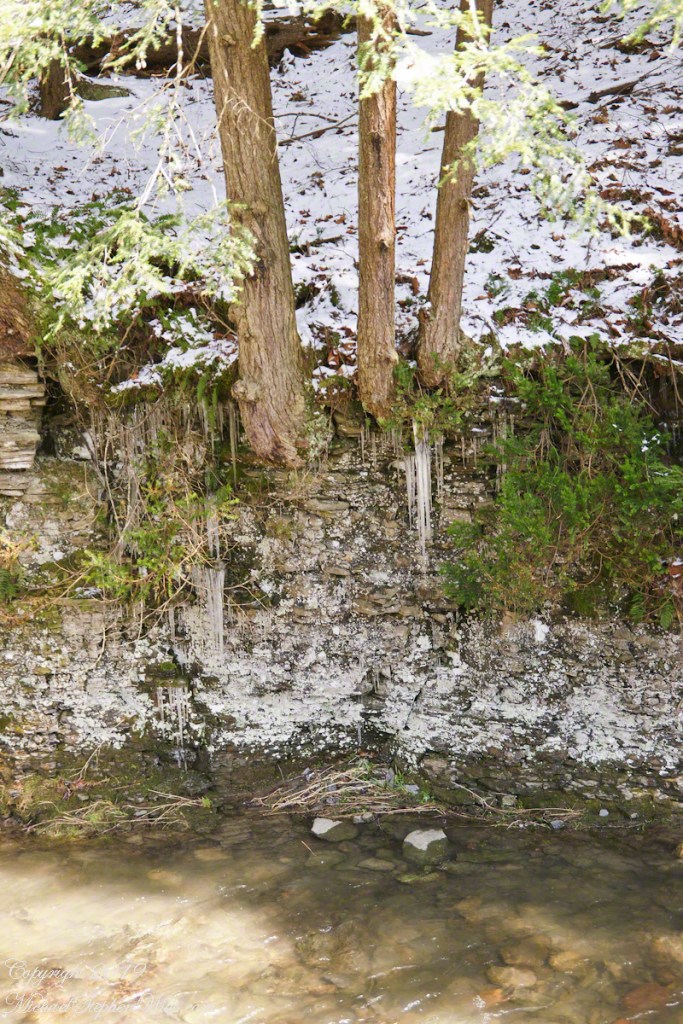
Icicles Catch The Light

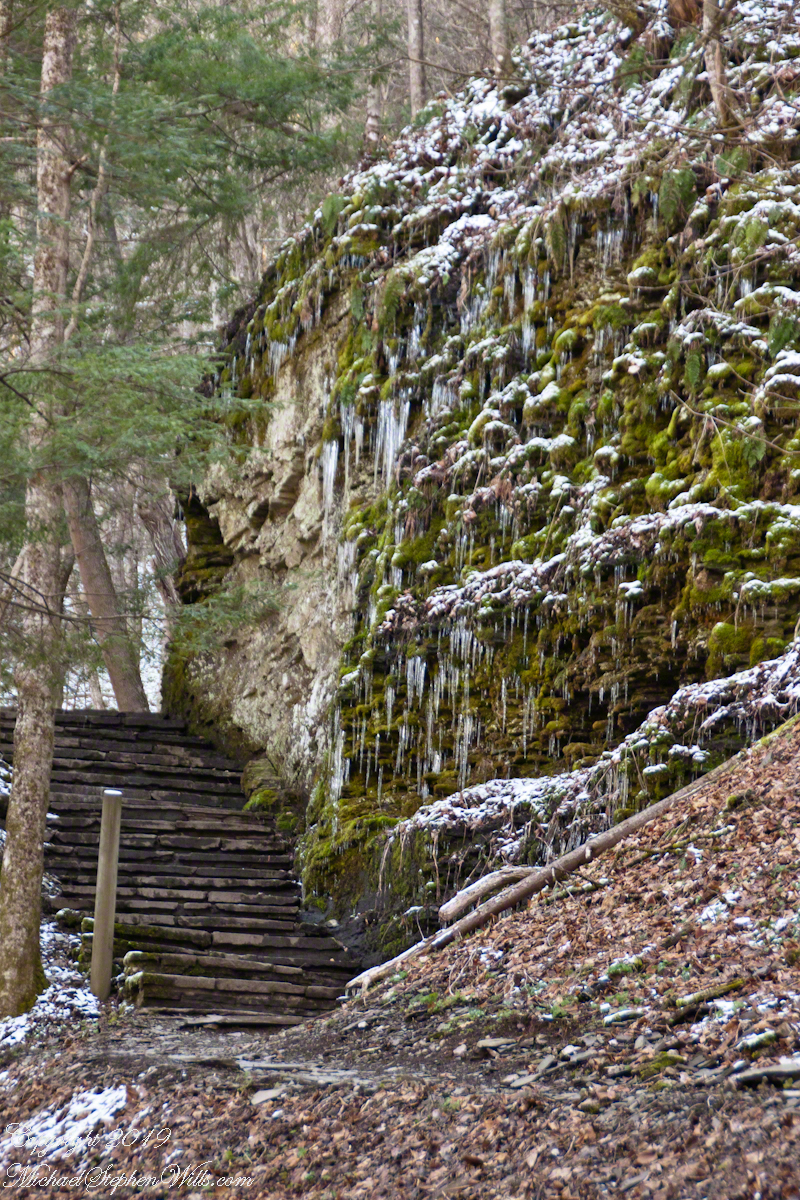
Approaching the Cliff Stair after a sudden April frost.

Click photograph for a larger view. To do this from WordPress Reader, you need to first click the title of this post to open a new page.

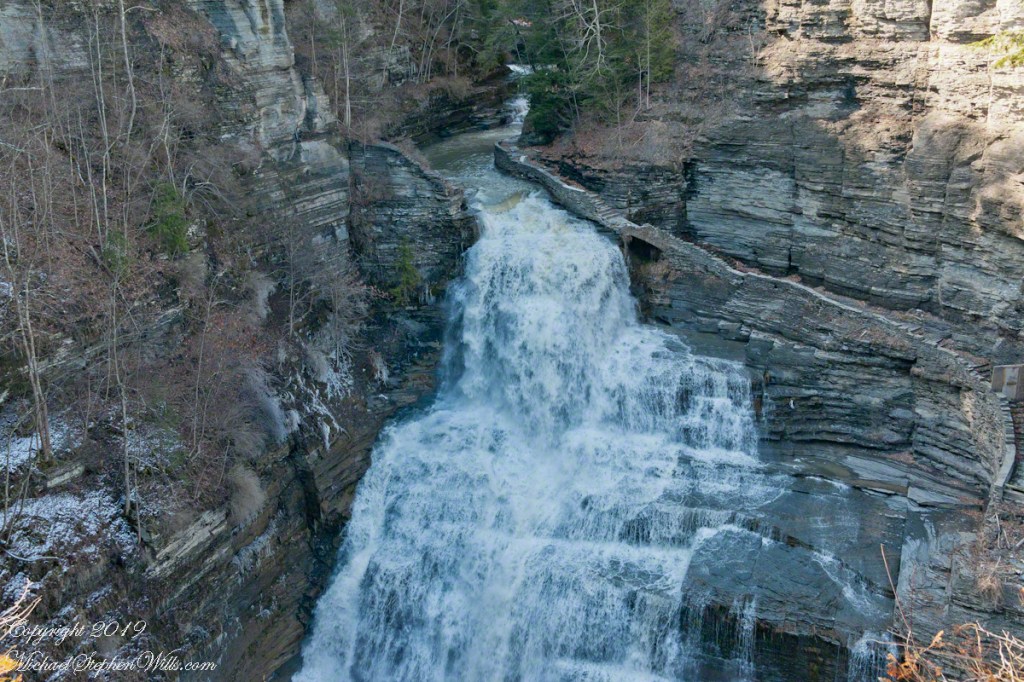
Lucifer Falls in spring flood is a constant roar.

These shots were hand held. I used a Sony Alpha 700 dslr with a variable “zoom” lens, great for framing compositions.

Robert H. Treman New York State Park.

Click for macro slideshow.

Copyright 2024 All Rights Reserved Michael Stephen Wills

Spring Outing II

Lower Waterfall

This series of posts opens with the ascent to where the wildflowers grow.

Click photograph for a larger view. To do this from WordPress Reader, you need to first click the title of this post to open a new page.

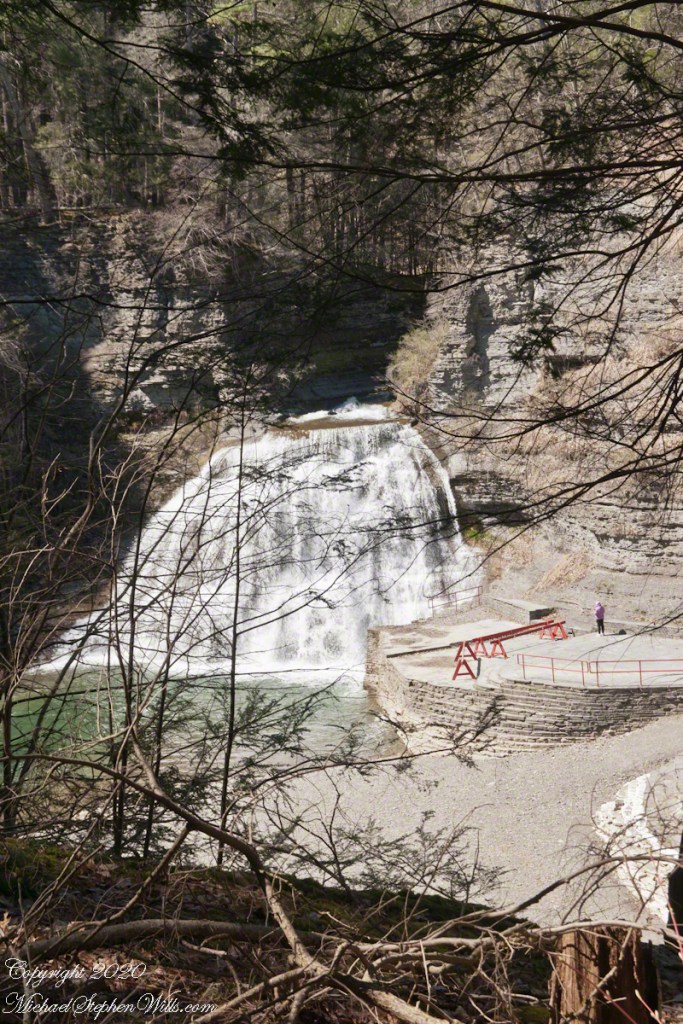
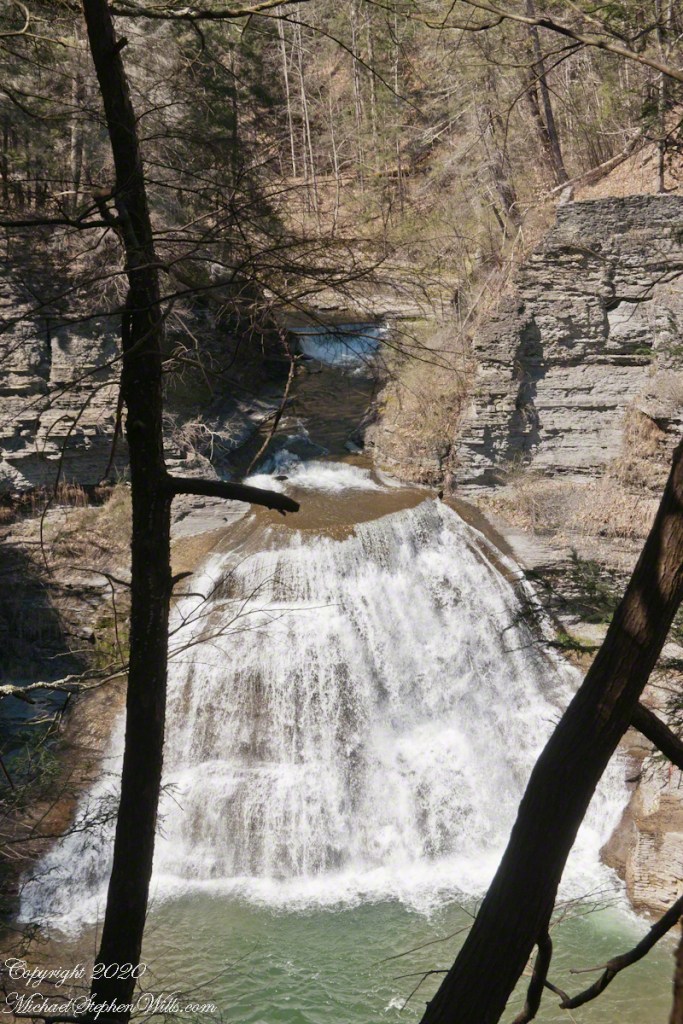
After just a taste of the climb to come, hikers are treated to an view of the Lower Falls of Enfield Creek. I call them the Wedding Cake. Summertime, a dam is erected, the water is deep enough to dive into the very cold creek water, lower than 70 degrees.

The trail is on a beetling crag.

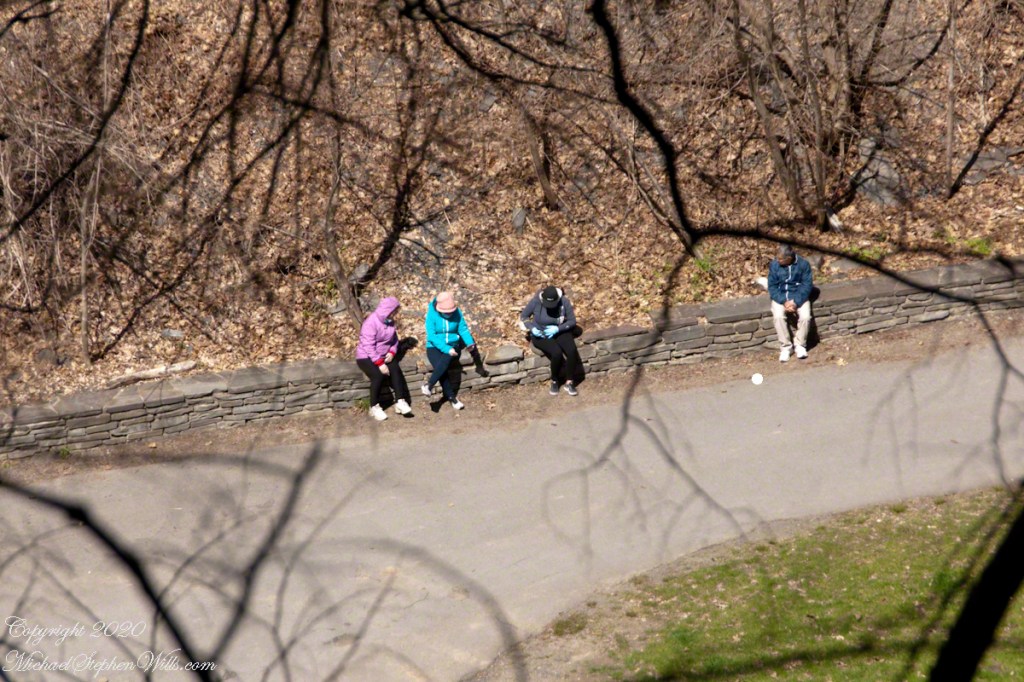
Looking up Enfield Glen above the falls. Up to the trail, keeping distance was no problem. It is nowhere near as crowded as the trail to Taughannock Falls in February.
Copyright 2024 All Rights Reserved Michael Stephen Wills

Spring Outing I

Revisiting a Socially Distanced outing

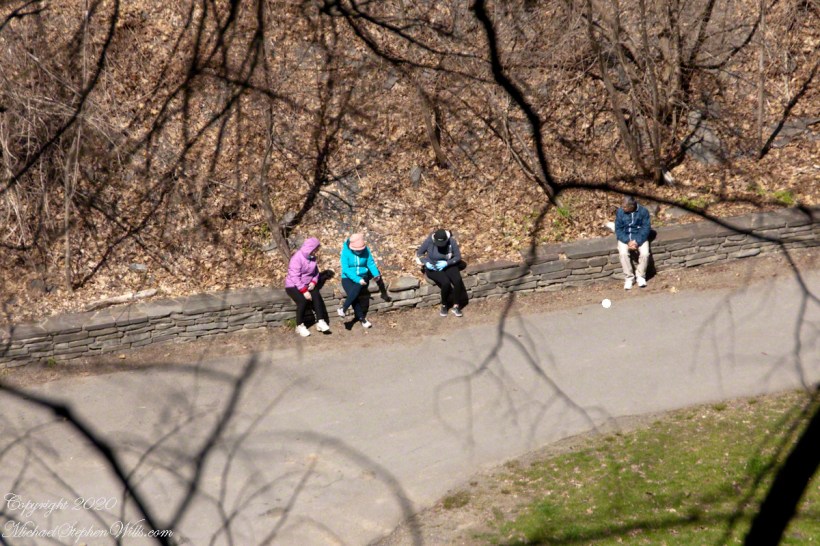
Parks were open during Govenor Cuomo’s “New York State on PAUSE.” Still, as a member of the at-risk group I was reluctant to visit, unsure of how crowded it will be. On a Monday afternoon, bright with sun, I drove over to Robert H. Treman lower park to check out the situation.
Click photograph for a larger view. To do this from WordPress Reader, you need to first click the title of this post to open a new page.

I carried the Sony in hand and packed in a Canon with macro lens and a Manfrotto travel tripod.

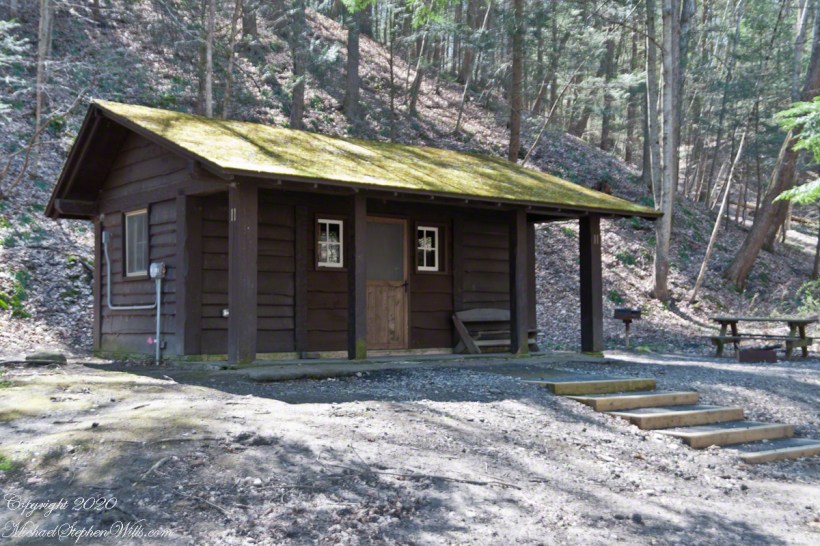
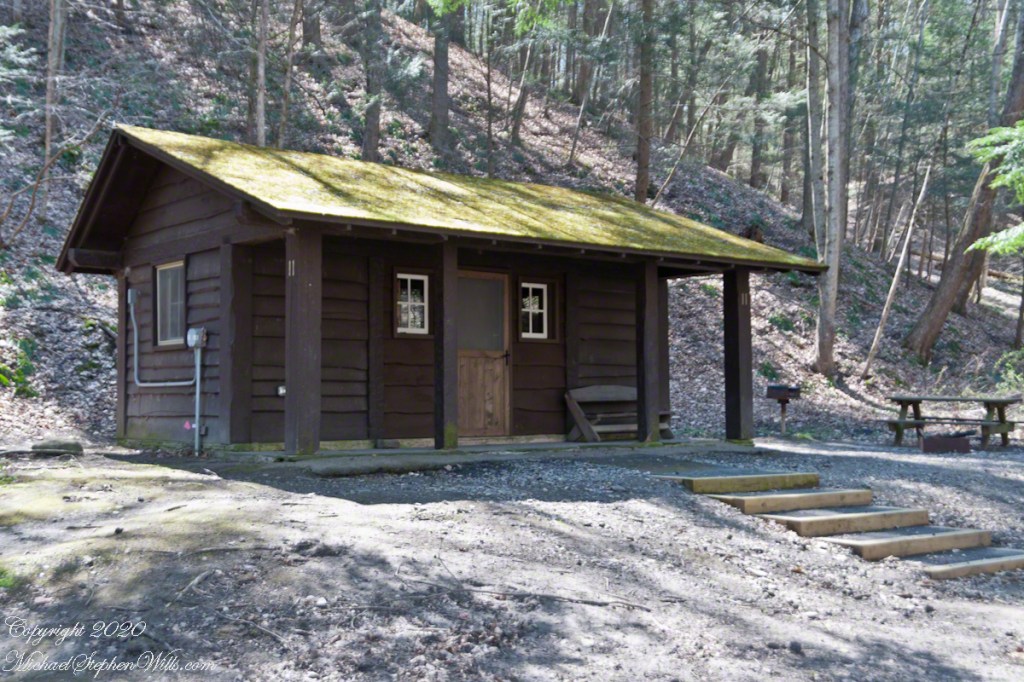
The path to a trail that climbs up the south side of Enfield Glen crosses Enfield Creek via a bridge, wends through cabins……

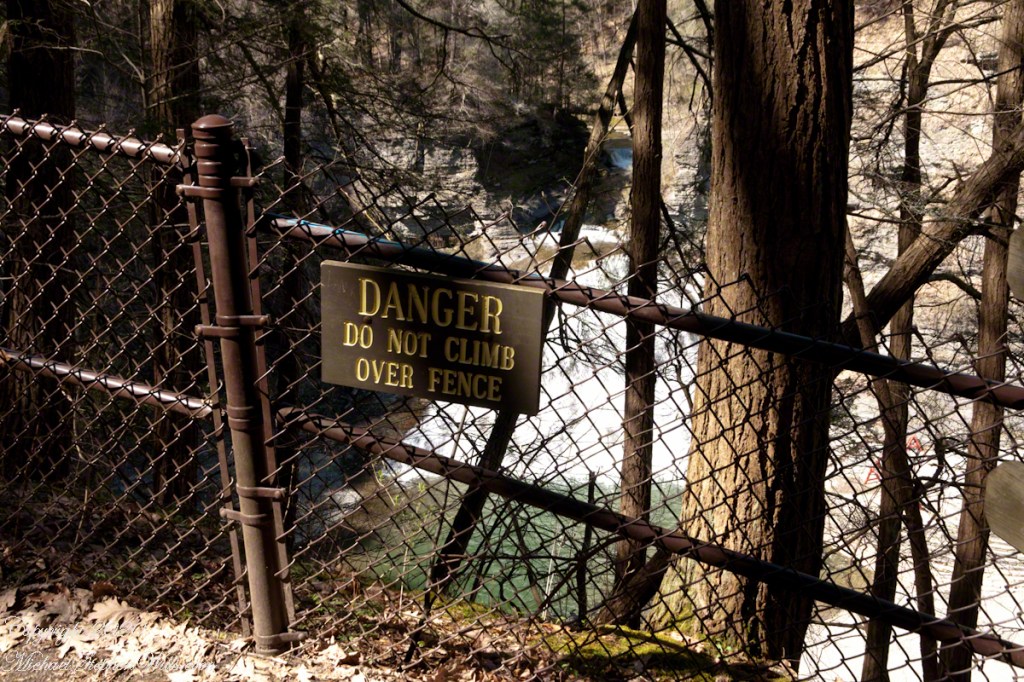
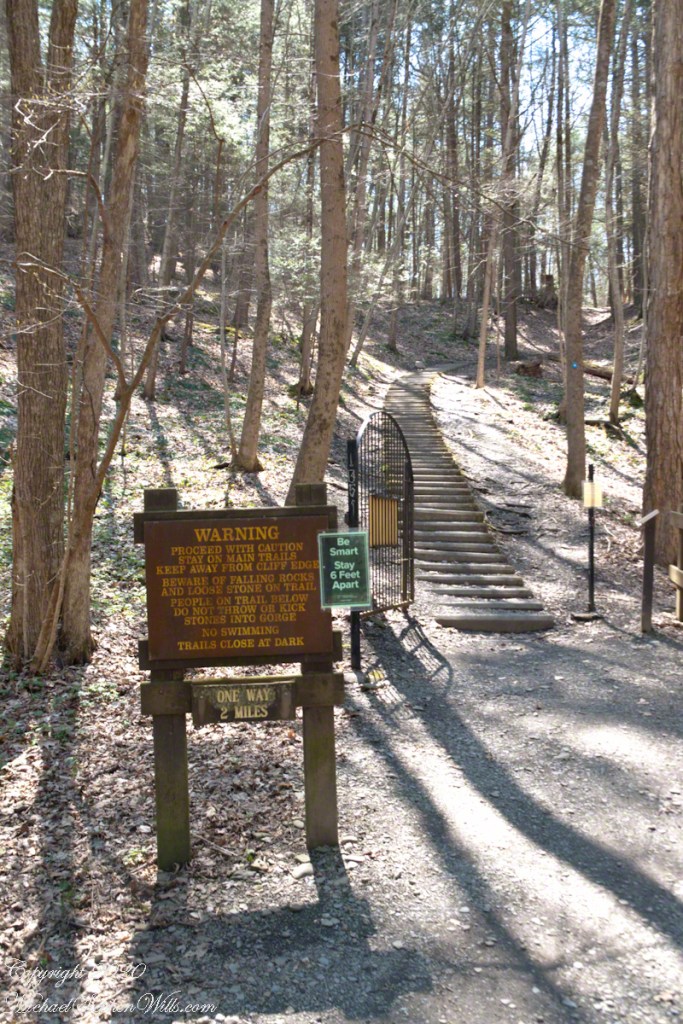
…..then heads up stairs that can seem to be forever. The green sign with white letters is new. This the South Rim Trail avoids the cliffs that make the Gorge trail so dangerous November through May.

Copyright 2024 All Rights Reserved Michael Stephen Wills

April Freeze Slideshow

Here is a recapitulation of my latest posts in the form of a slideshow.

Click photograph to start show. To do this from WordPress Reader, you need to first click the title of this post to open a new page.

Robert H. Treman New York State Park.

Copyright 2024 All Rights Reserved Michael Stephen Wills

Through a Veil

A Hemlock Curtain

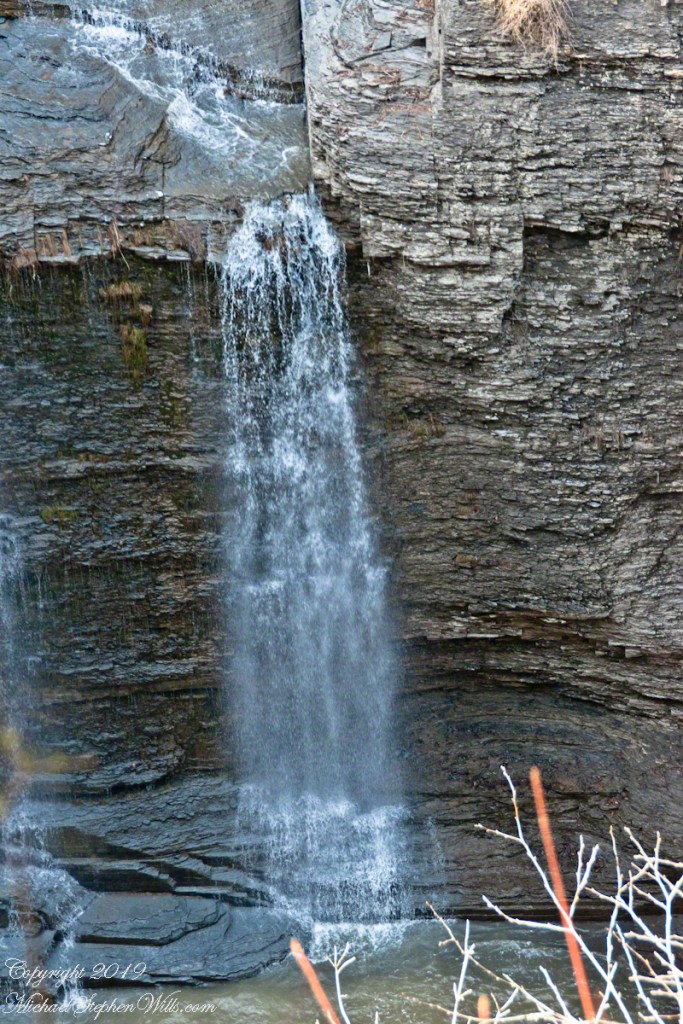
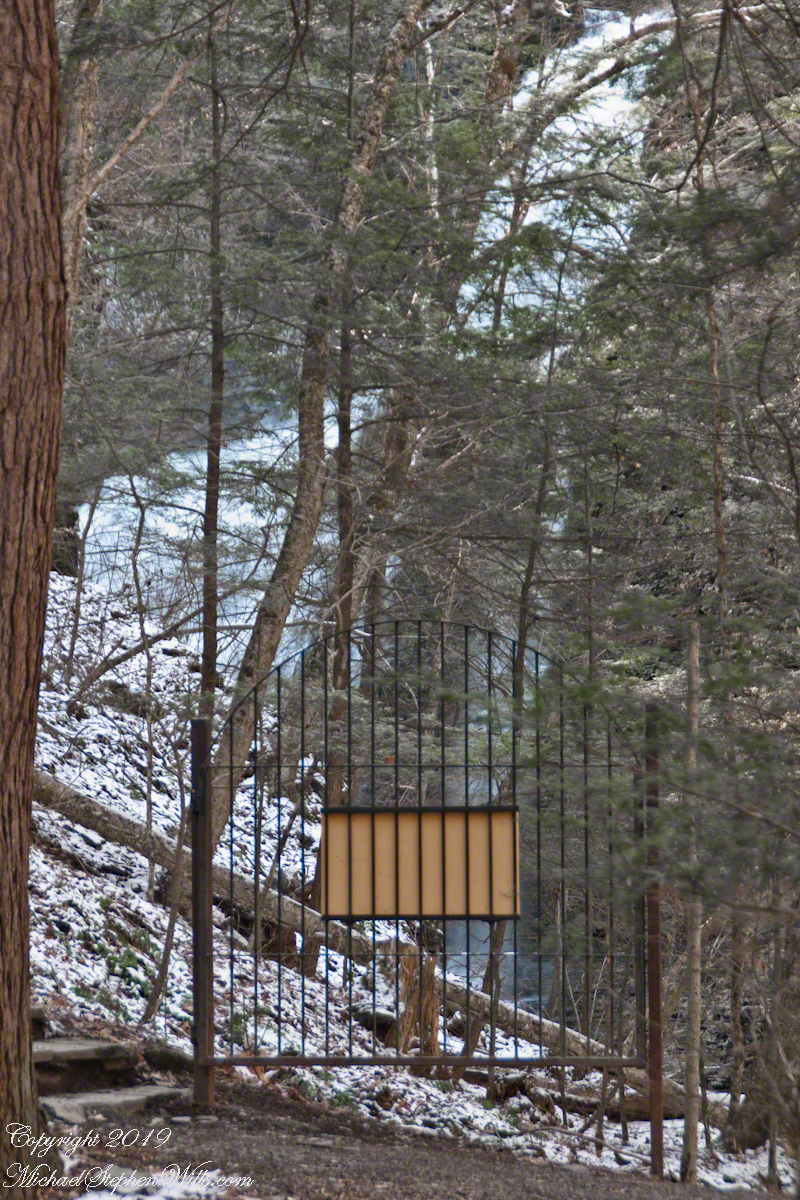
Early April the Gorge Trail along Lucifer Falls is closed, here we look up to the falls in flood from a safe distance.

Click photograph for a larger view. To do this from WordPress Reader, you need to first click the title of this post to open a new page.

The Rim Trail gate to the Cliff Stairs is open. We are headed that way.

These shots were hand held. I used a Sony Alpha 700 dslr with a variable “zoom” lens, great for framing compositions.

Robert H. Treman New York State Park.

Click for macro slideshow.

Copyright 2024 All Rights Reserved Michael Stephen Wills

Up the Rim Trail

Key words: steep, icy

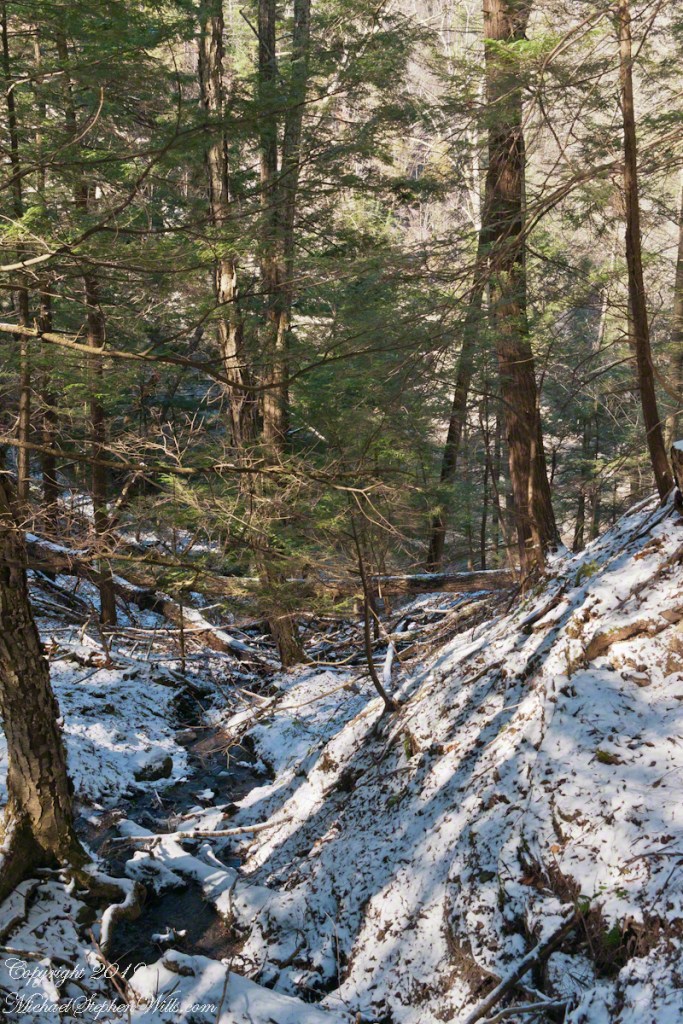
It is the Gorge Trail that’s closed for the cold months, November through April. The Rim Trail remains open for those who dare icy, steep paths Unlike Gorge Trail, Rim Trail climbs above the dangerous cliffs from which rocks are wedged free by ice to fall on the trail. On an early spring day, after a sudden frost, we walked the Rim Trail to capture the moment.

Here is the steep start, climbing up from the Upper Park where a footbridge crosses Fish Kill. Kill is the old Dutch word for creek. Fish Kill mergers with Enfield Creek a few hundred feet downstream.

Click photograph for a larger view. To do this from WordPress Reader, you need to first click the title of this post to open a new page.

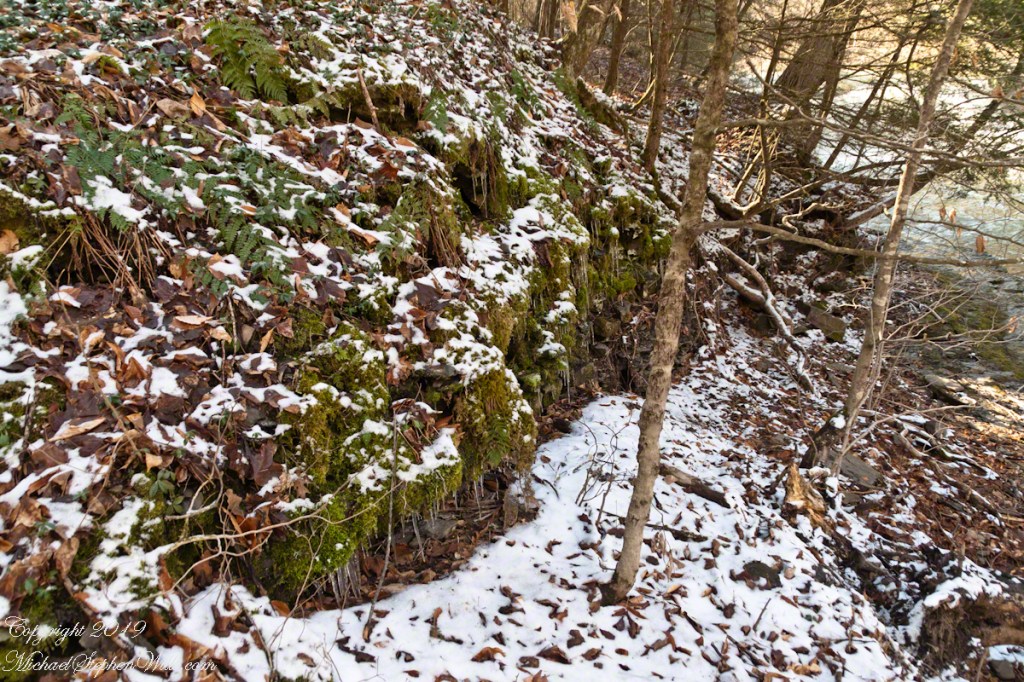
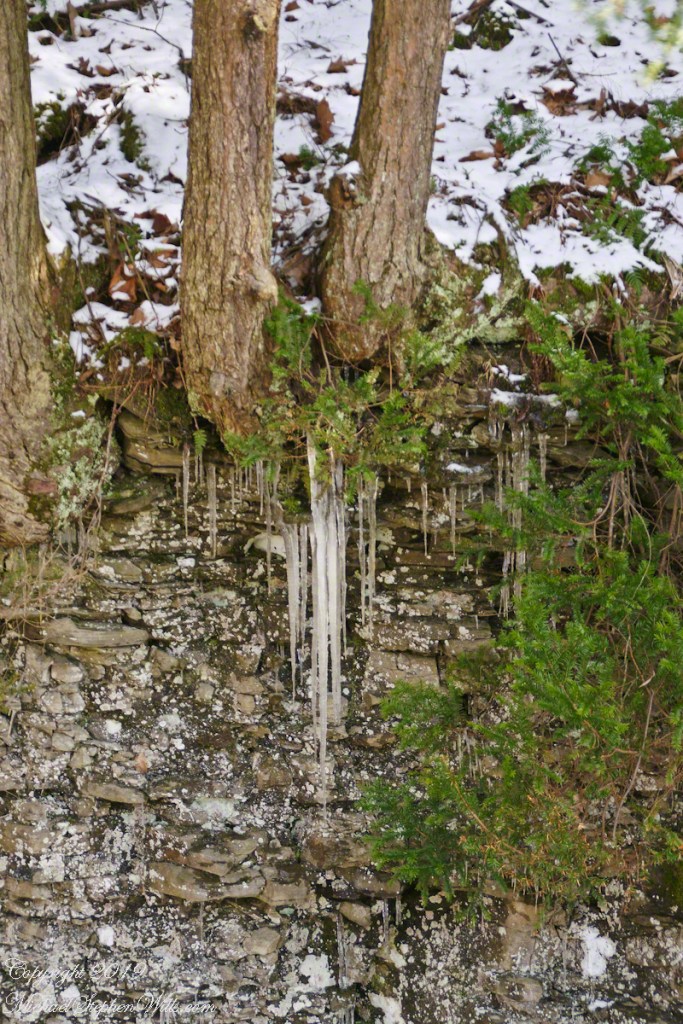
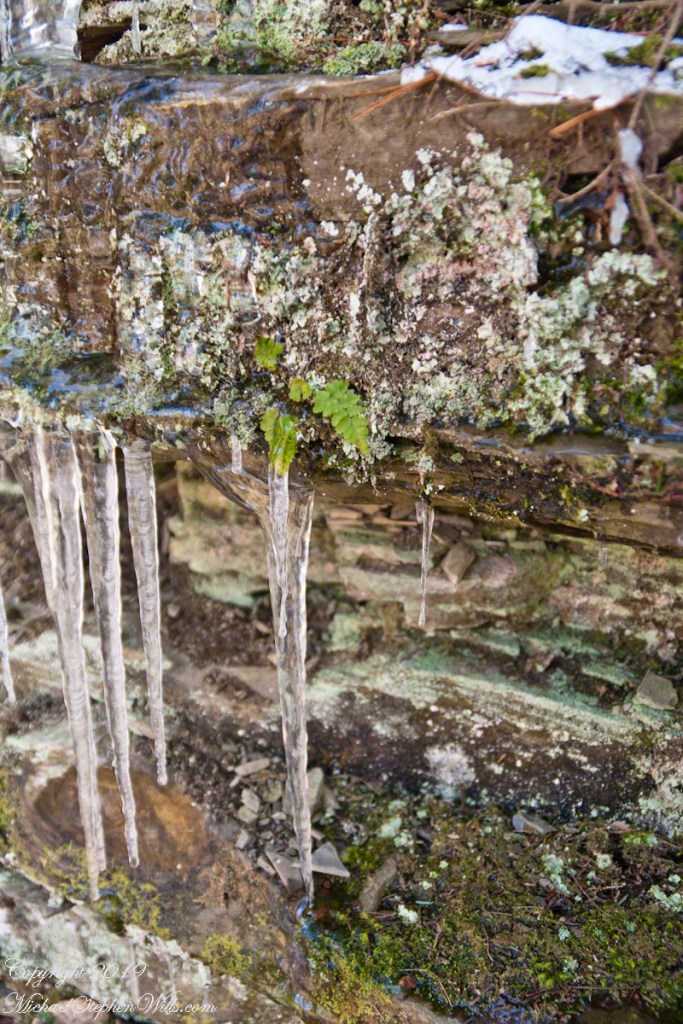
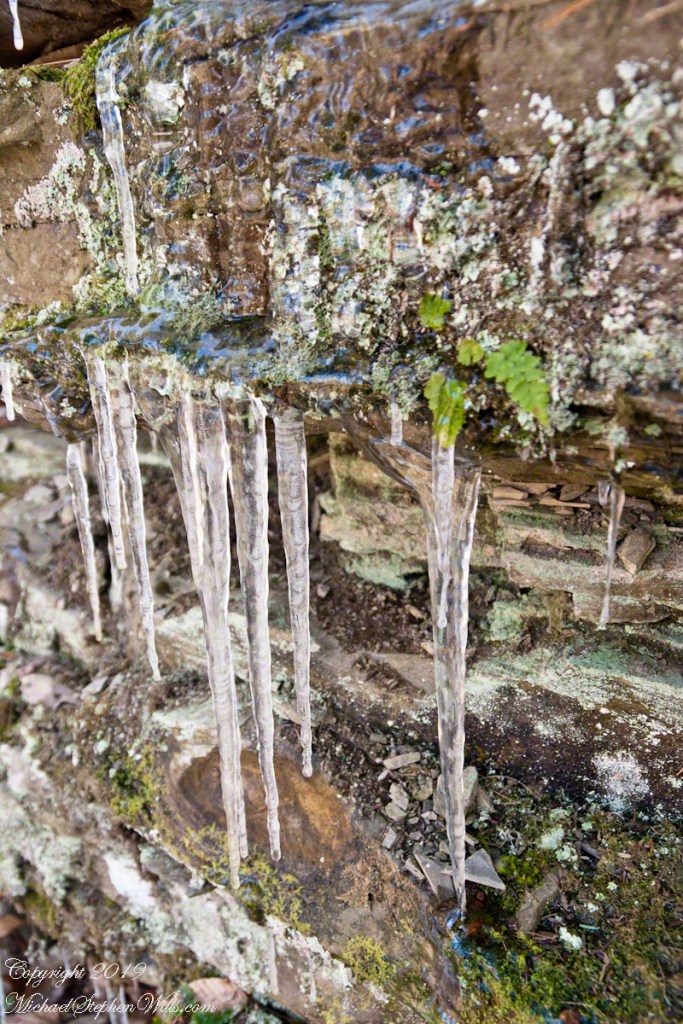
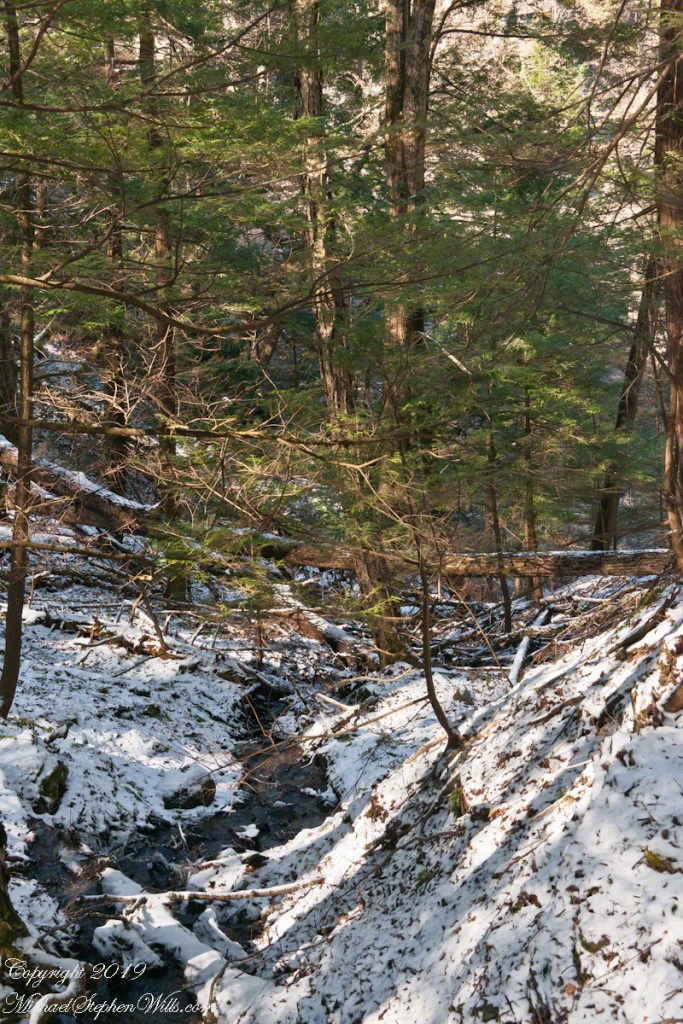
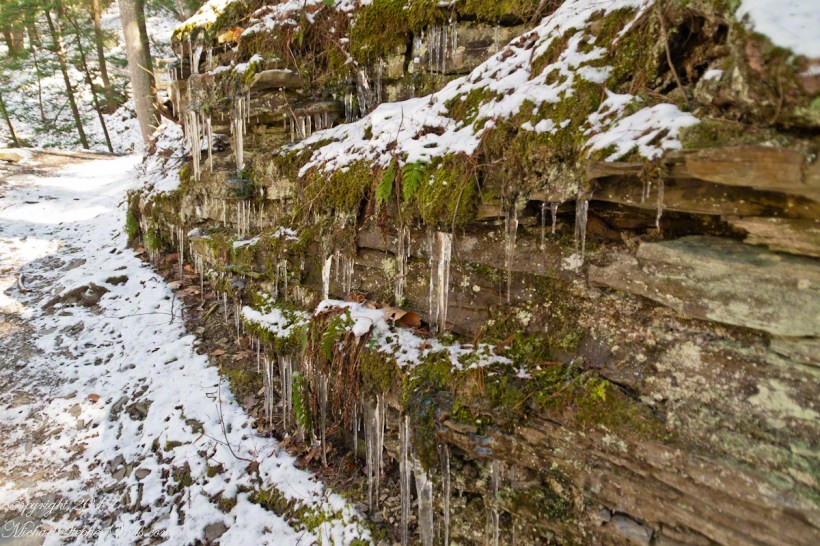
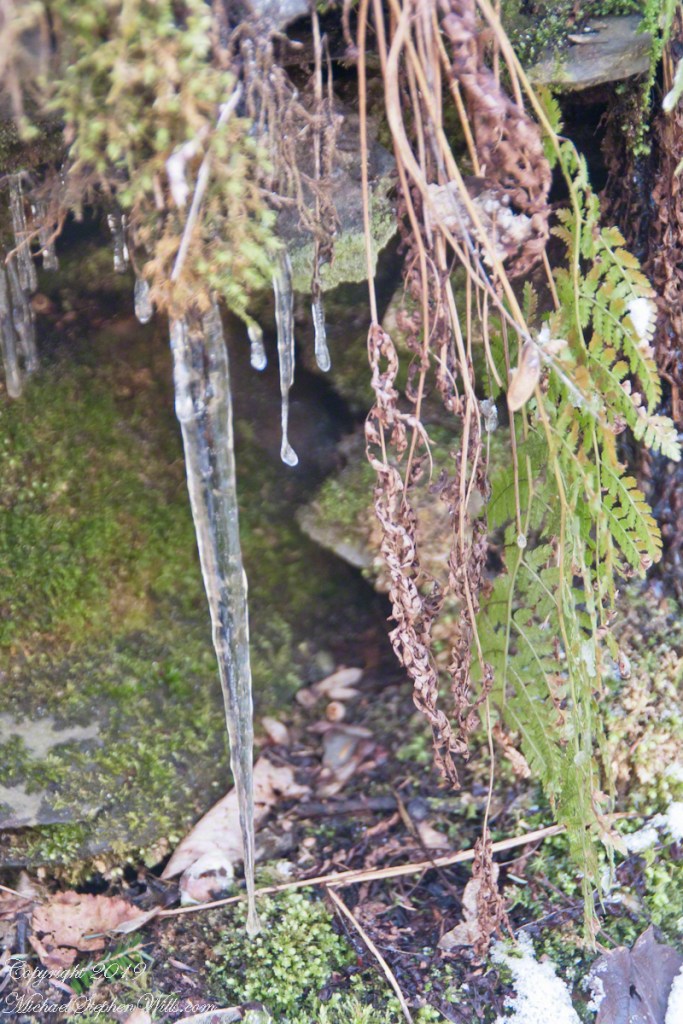
This north facing slope stays frozen into May. Here layers of the sedimentary rock shale, laid down in a shallow warm sea over 350 million years ago, are slowly pried apart. Hemlock tree roots wedge between rock layers, slowly growing. The action of ice, water expands in volume at the point of freezing, aids the process.

In places the rock face appears to be a hastily made dry stone wall, the rock layers are so disrupted by plant and frost.

These shots were hand held. I used a Sony Alpha 700 dslr with a variable “zoom” lens, great for framing compositions.

Robert H. Treman New York State Park.

Click for a slideshow of this Waterfall of the Old Mill sequence
Copyright 2024 All Rights Reserved Michael Stephen Wills

Ascent

Andrew Wyeth effect

Here the Rim Trail climbs out of the flats beneath the Cliff Stairs, away from Enfield Creek, onto the upper slopes of the gorge.

Click photograph for a larger view. To do this from WordPress Reader, you need to first click the title of this post to open a new page.

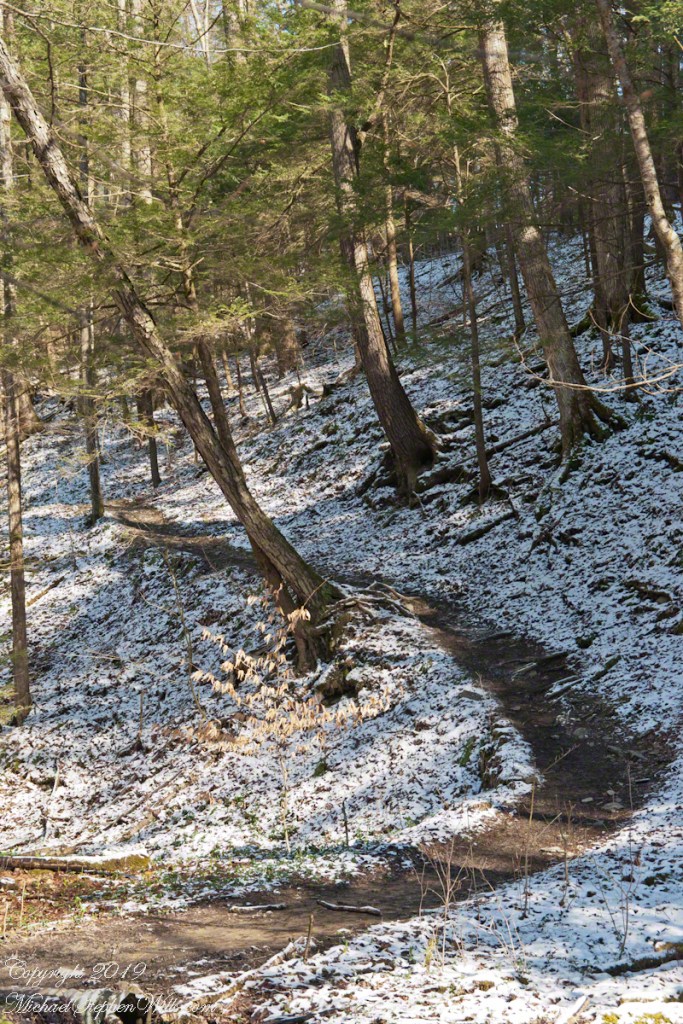
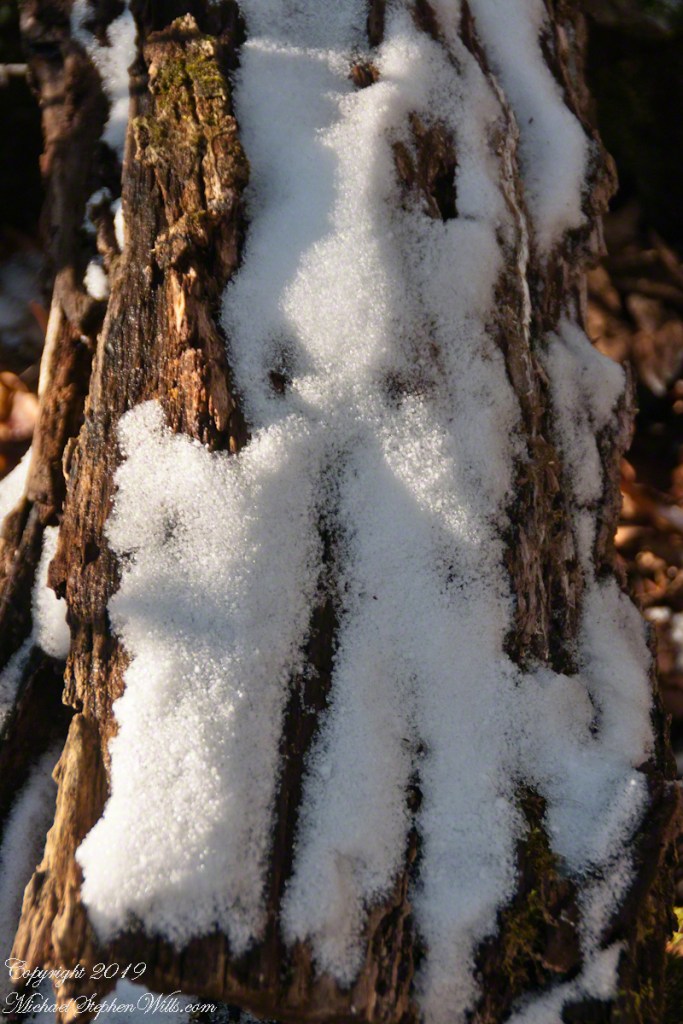
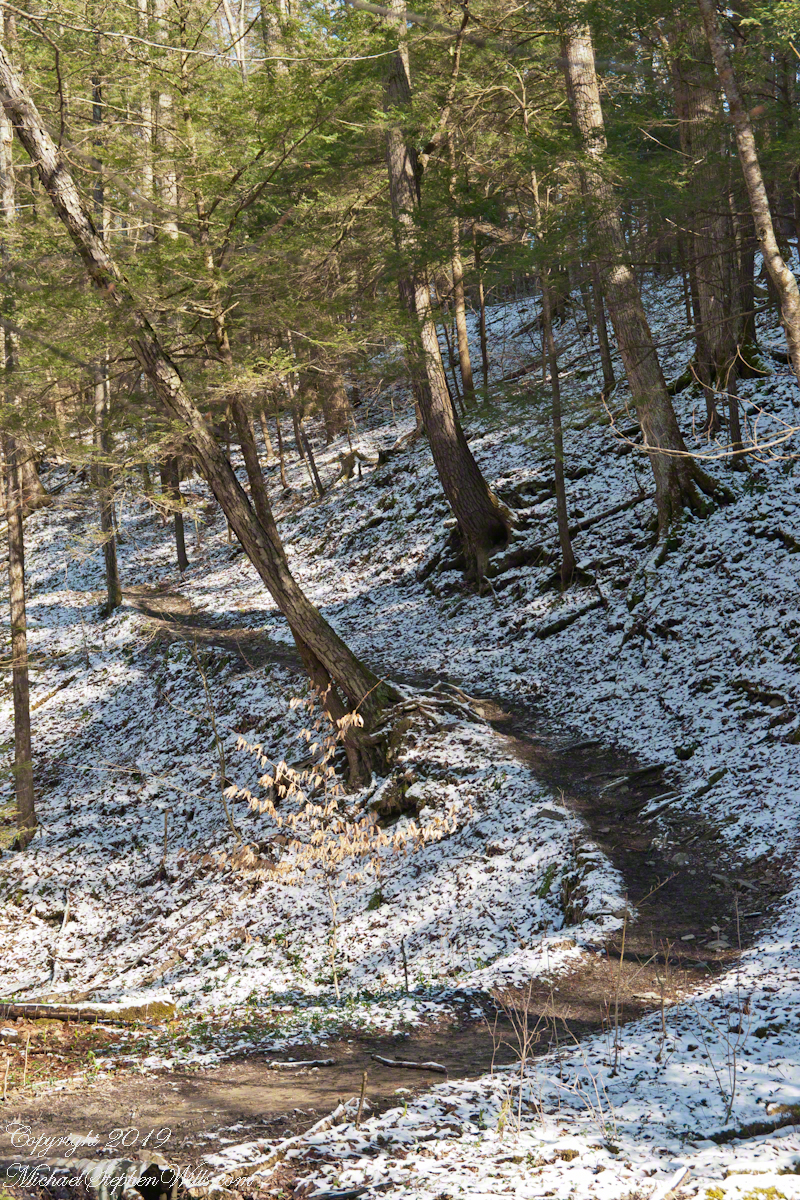
Early spring snow highlights the path, threading between hemlocks. The American realistic painter Andrew Wyeth comes to mind with I see the mottled texture of this light snow. He captured some of this in landscape paintings such as “Snow Flurries.”

Here is more of this effect……

These shots were hand held. I used a Sony Alpha 700 dslr with a variable “zoom” lens, great for framing compositions.

Robert H. Treman New York State Park.

Click for a slideshow of this Fertile Flats sequence.
Copyright 2024 All Rights Reserved Michael Stephen Wills

Periwinkle

Source of life-saving drug

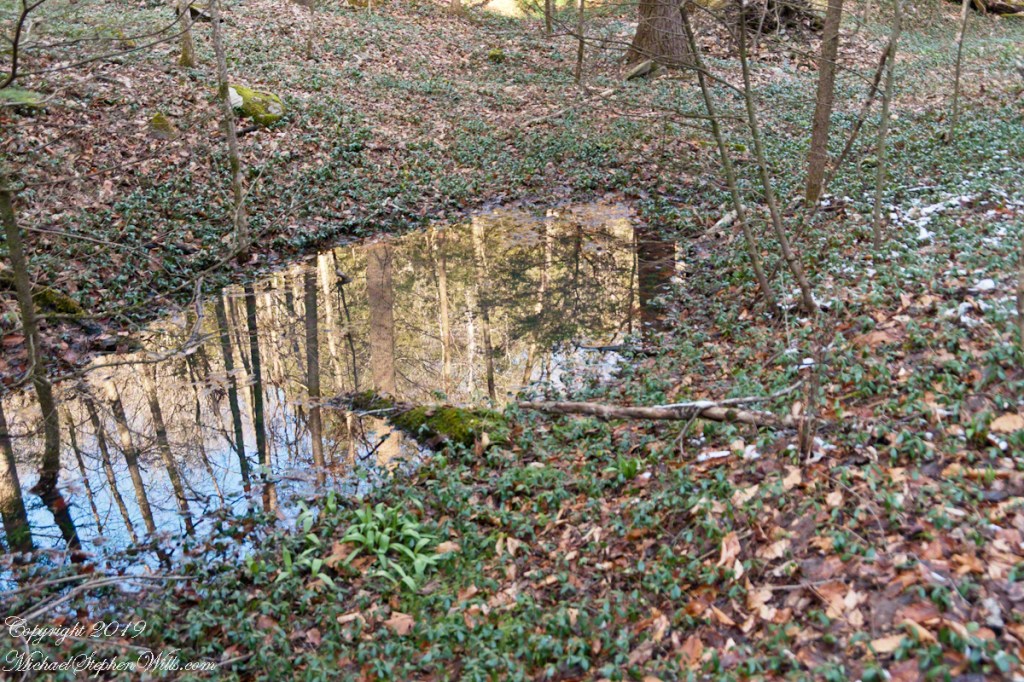
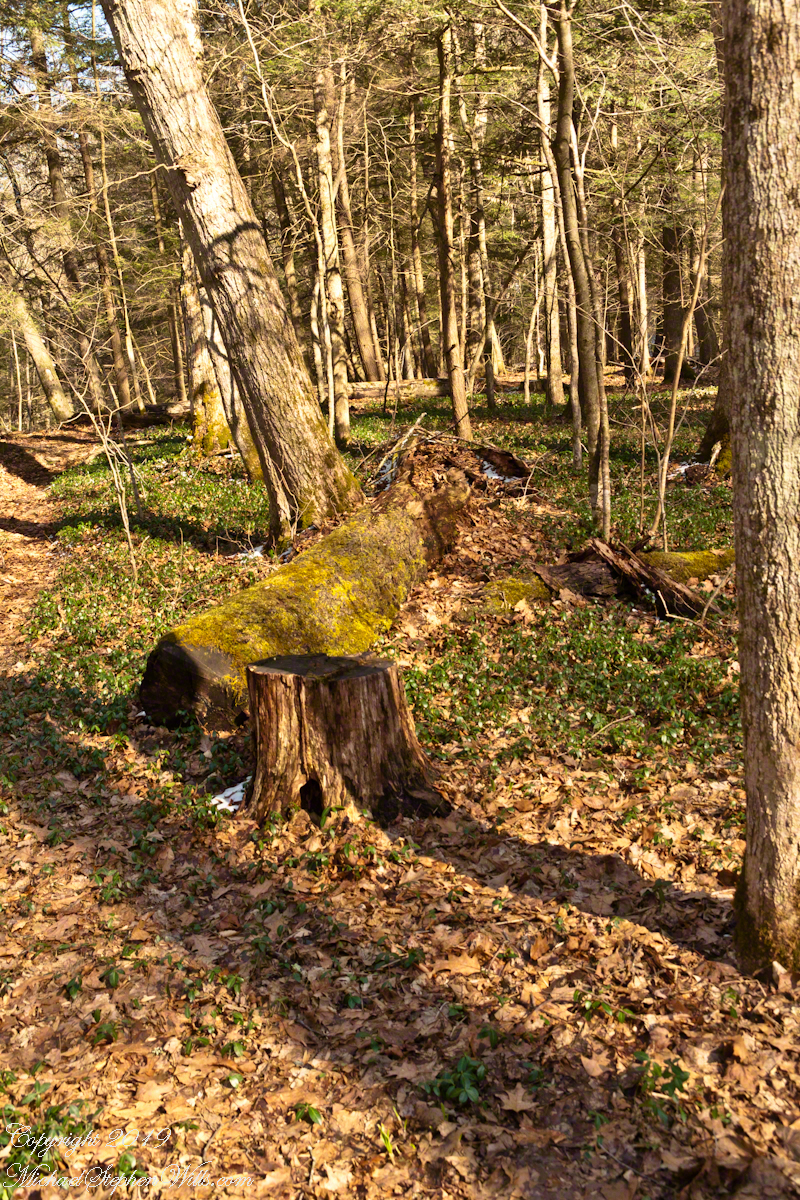
A broad, fertile flat between gorge walls supports a dense growth of invasive creeping myrtle. Springtime there is a sprinkling of small blue flowers, this may be the source of another name, periwinkle, or lesser periwinkle.

Click photograph for a larger view. To do this from WordPress Reader, you need to first click the title of this post to open a new page.

Periwinkle is an evergreen and in early times vinca vine (another name we call it, from the scientific name Vinca Minor) was planted in graveyards and cemeteries. The isolated growth of vinca vine in this section of the gorge maybe from such a planting on a lost grave.

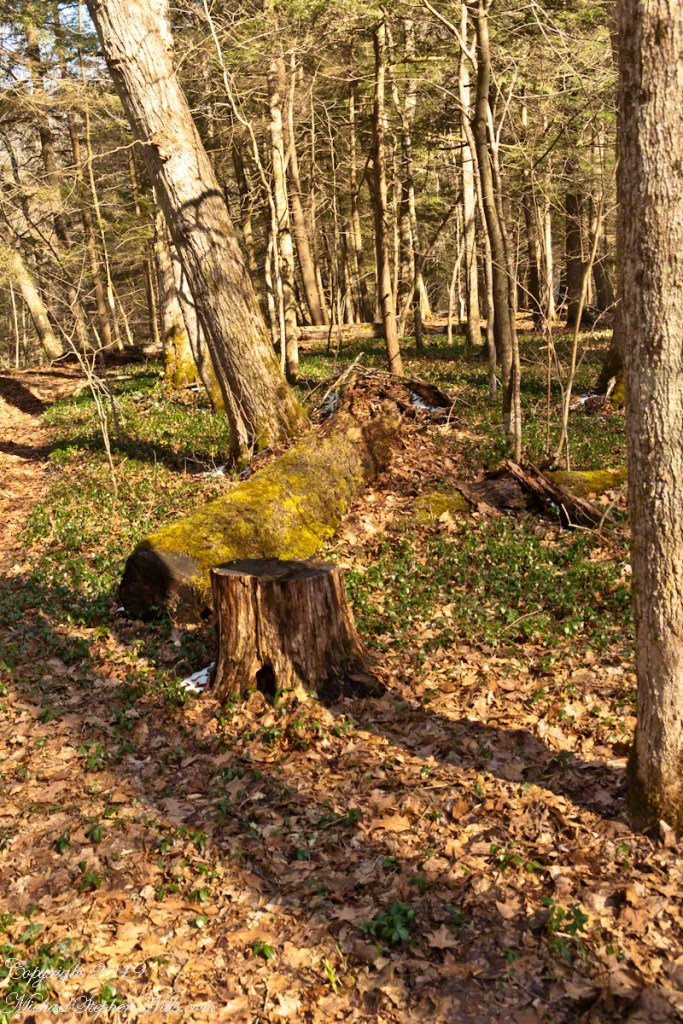
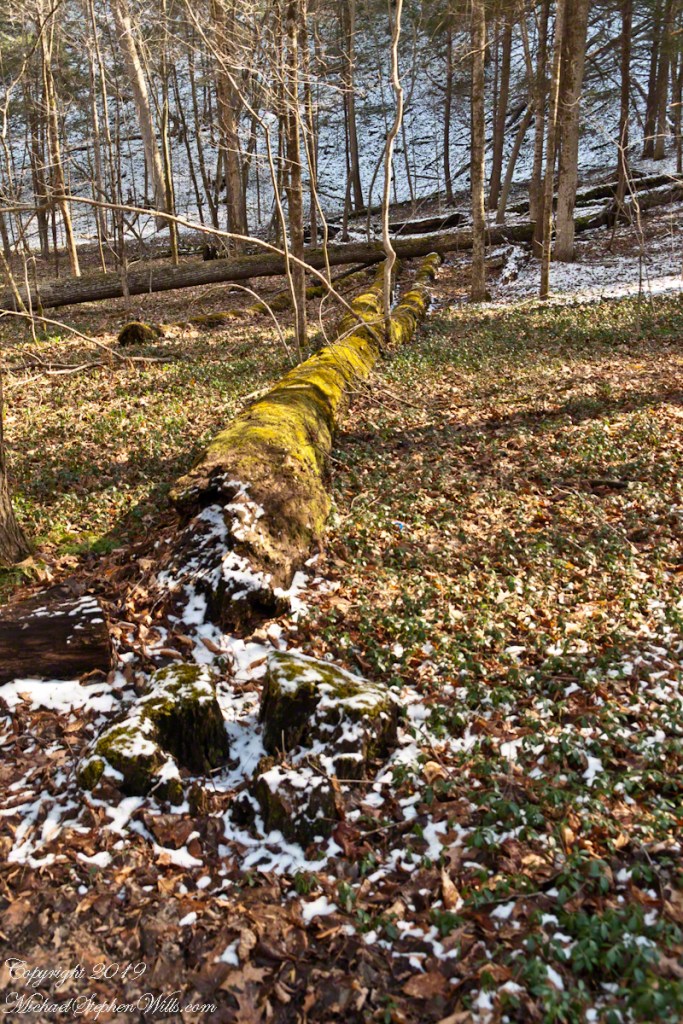
Today, the park practices leaving fallen trees in place, here they are covered in years of moss, a memory of headstones. Lesser Perriwinkle is significant for the living as the source of vincamine, from the leaves. A synthetic form of this compound is a potent vasodilator, a therapeutic treatment for stroke and other brain disorders.

These shots were hand held. I used a Sony Alpha 700 dslr with a variable “zoom” lens, great for framing compositions.

Robert H. Treman New York State Park.

Source: Wikipedia, “Vinca Minor.”

Click for a slideshow of this Fertile Flats sequence.
Copyright 2024 All Rights Reserved Michael Stephen Wills