Pam’s Holiday Cranberry Pecan Salad
Easy to make, nutritious, a favorite with our family == read full post for the recipe.
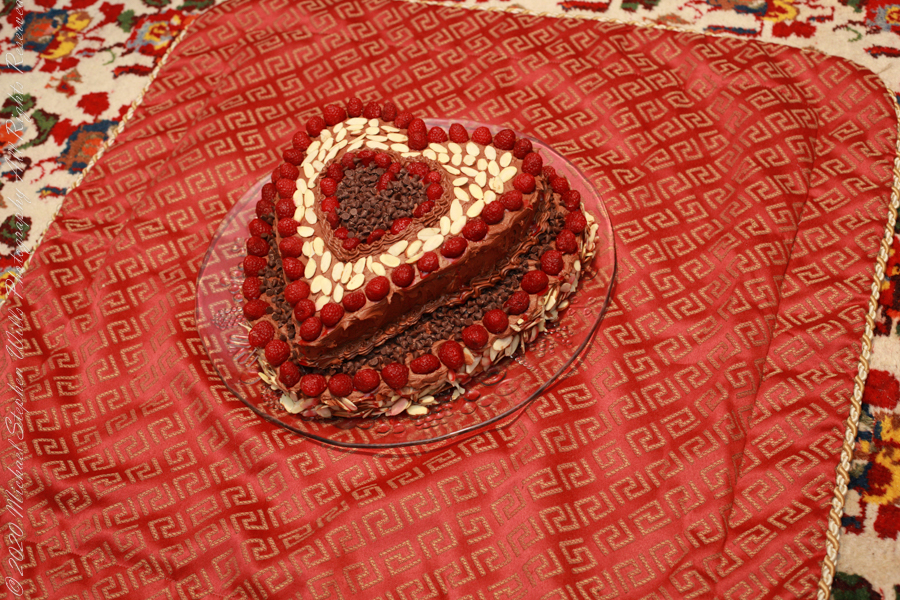
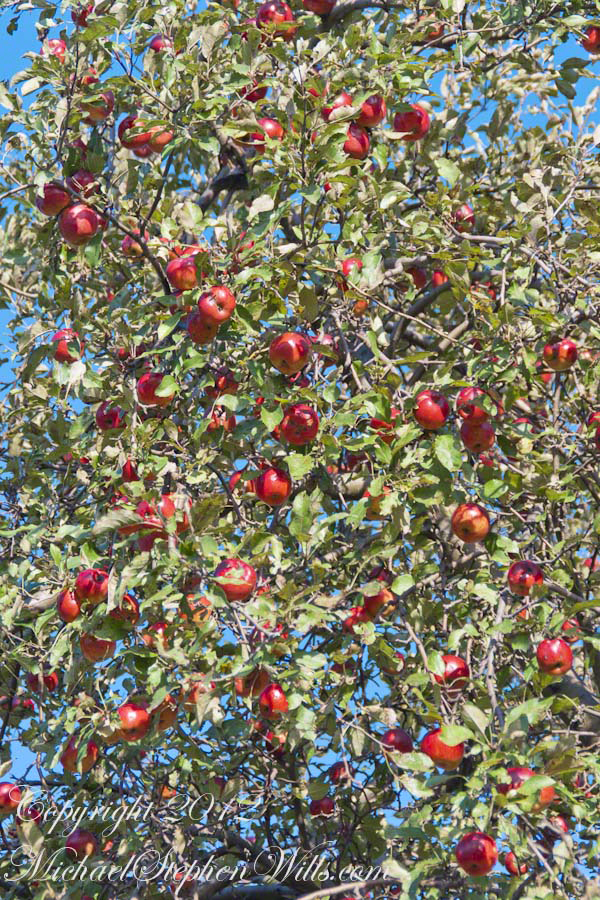
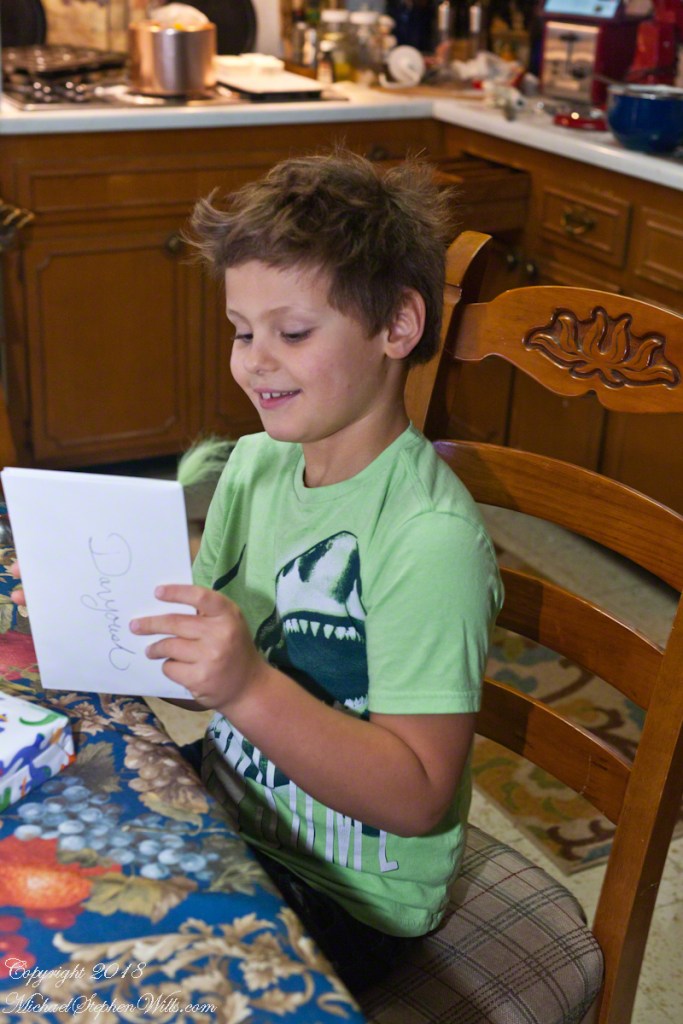
Sunday last we had a morning of it with a family fall apple picking event. Afterwards our granddaughter hosted us for coffee where her daughter finished her latest creation.
Chicago Bog, part of Lime Hollow Nature Center
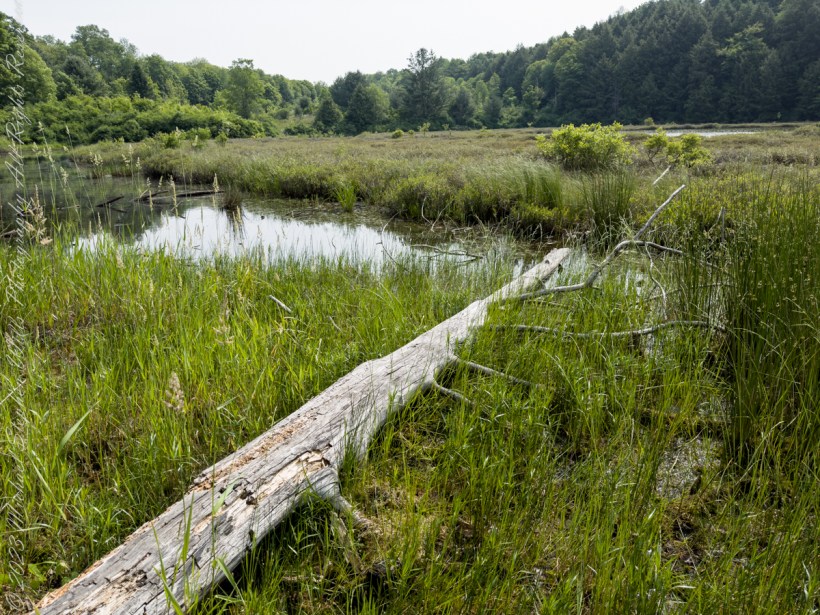
The grandchildren and I hiked the 0.6 mile trail through old growth forest to visit a bog. In the 1830’s there was a village named Chicago along Gracie Road, which gives it the name we have today. The Chicago Bog is home to many carnivorous plants, including sundew, the pitcher plant, and more. The deepest depth of the bog is about 7.2 ft. The bog is along the Phillips Memorial Trail, which can be found on Gracie Road. Lime Hollow Nature Center, Cortland, New York.

Listen to the Wood Thrush and other bird song in this short video.
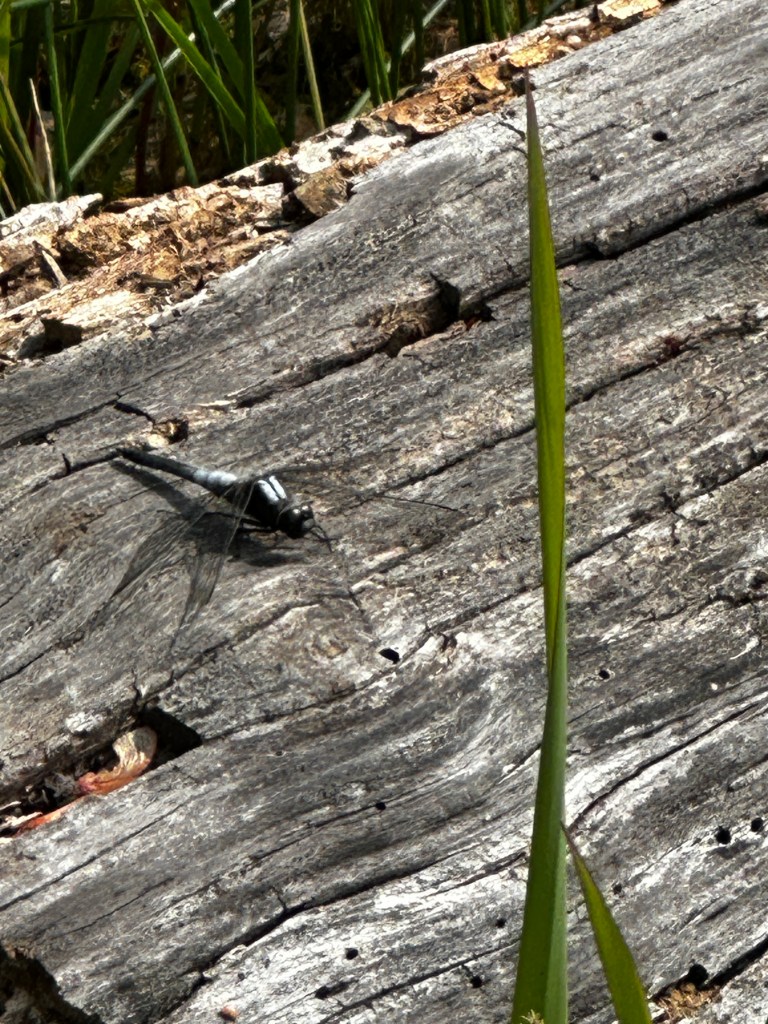
A dragonfly landed on the log, in the above images, lying at my feet. This male Chalk-fronted Corporal (Ladona julia) is a skimmer dragonfly found in the northern United States and southern Canada.

Juveniles of both sexes are light reddish brown, with white shoulder stripes and a black stripe down the middle of the abdomen. As they mature, males develop a white pruinescence on the top of the thorax and at the base of the abdomen, while the rest of the abdomen turns black. Females become almost uniformly dark brown, with a dusting of gray pruinescence near the base of the abdomen; a few develop the same color pattern as the males.
Chalk-fronted corporals often perch horizontally on the ground or on floating objects in the water as you can see it doing here. They are gregarious for dragonflies and are commonly seen perching in groups. They readily approach humans to feed on the mosquitoes and biting flies that humans attract.

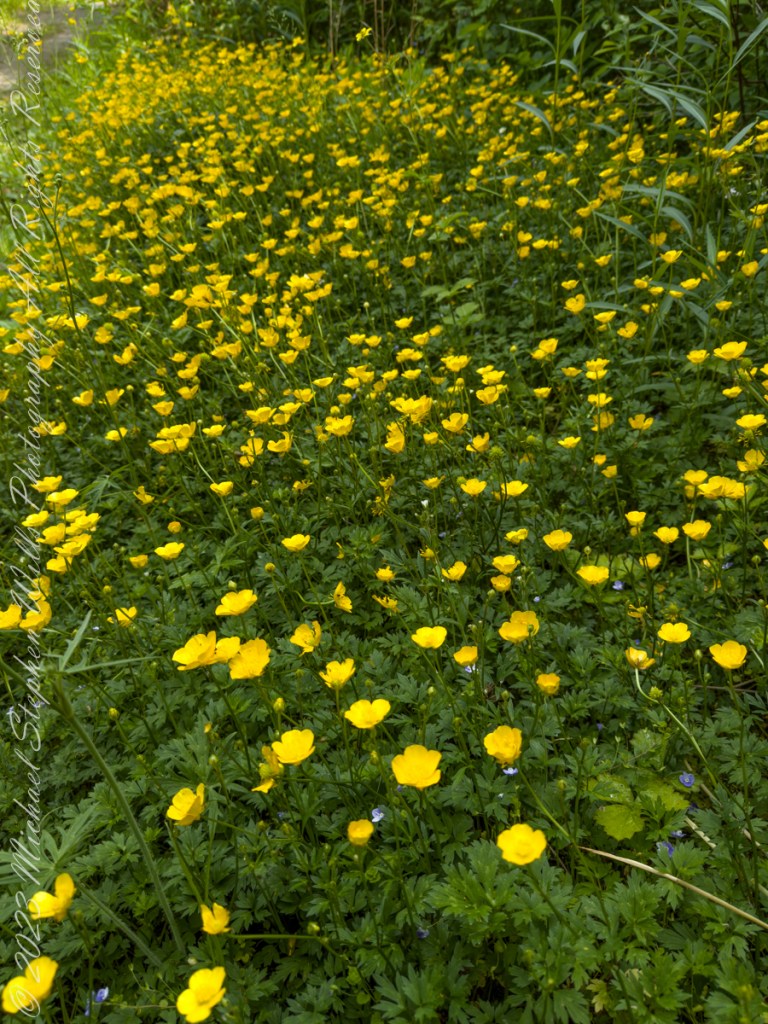
We noticed a large patch of buttercups growing in a sunny patch along the trail. Petals of these buttercups are highly lustrous owing to a special coloration mechanism: the petal’s upper surface is very smooth causing a mirror-like reflection. The flash aids in attracting pollinating insects and temperature regulation of the flower’s reproductive organs.

Click me for “Celestial Geese with two haiku by Issa”.
….and a photographic gallery.
As of April 5th 1181 is the count of subscribers to this blog, an interesting number. The individual numerals sum to a prime number, 11. I appreciate each and every “1” added together, you readers. Thank You.
Coincidentally, yesterday 1,200 of my blogs are published….Here is a selection of images from these posts.


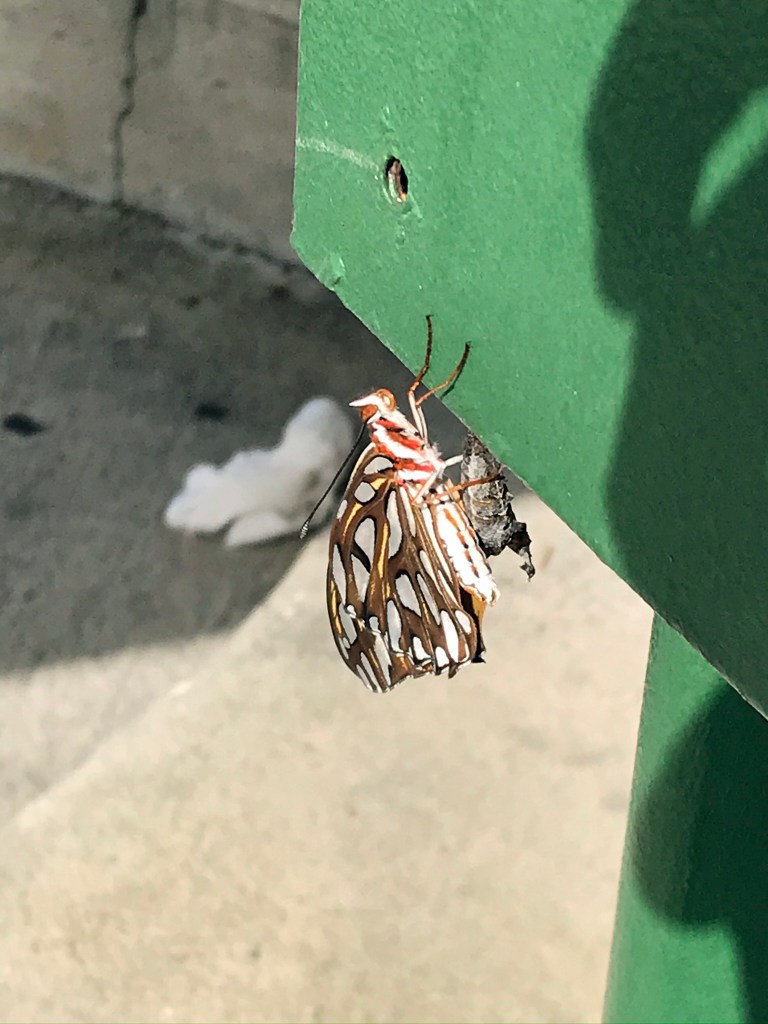
a monarch in steady progress south
On a sunny autumn morning we set out, my soon to be three grandson Sam and I, to the Lime Hollow Nature Center near Cortland for an adventure. For the first time I brought a newly purchased iPhone 7 instead of the usual slr camera. The phone can be carried in a pocket and is simpler to us, to allow me to give full attention to Sam.

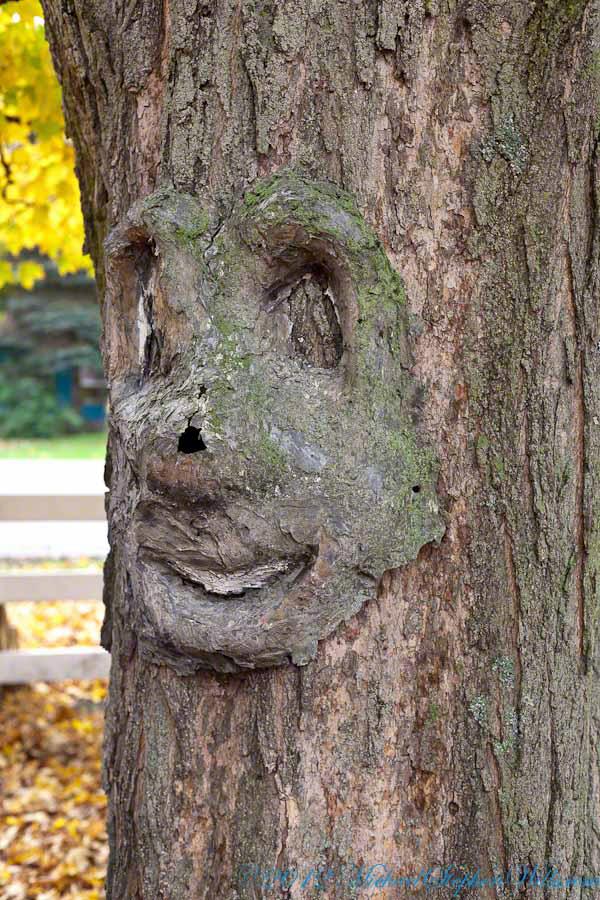
At the start is a large, today sunlit, field with an “art trail.” There are various anthropomorphic transformations on the trees and a very large sculpture of a blue face. Here is a tree from another place near here, to give you an idea.

I do not point out the tree faces to Sam. His Mom likes to say he enjoys being frightened and, when the blue face came into view, he turned back and said, “home.” Sam was mildly anxious, so I carried him and tried to turn him up the trail away from the face. He turned to keep an eye on it while I assured him it could not move. This and a climb up a 230 foot hill were the only times he didn’t walk the half mile to a open grassy knoll with a bench.

There we sat for 30 minutes, still and watching, Sam and I talked about our sightings:
1. The sunlit sky of clouds, from a milky blue towards the north to, overhead, a bright robins egg blue.
2. A circling hawk, shadow crossing over us.
3. One blue jay in a maple turning red, loudly calling over and over.
4. A little while after a second jay, landing in a tree turned yellow, drawn in and giving answer.
5. A monarch butterfly’s steady progress south. Such a strong gliding path.
6. A yellow butterfly who did not leave us, fluttering round and round.
7. Four honking Canadian geese flying north east, turned to check out a nearby pond, the returned to the original heading.
8. The sound of wind through the trees, listening to the sound made by each tree.
9. The late season golden rod, now dried gray.
10. A distant chittering red squirrel.
11. Distant peeper frogs in the swamps at the foot of the hill.
Sam did not want to leave the bench, eventually we headed on to the pond the geese checked out.

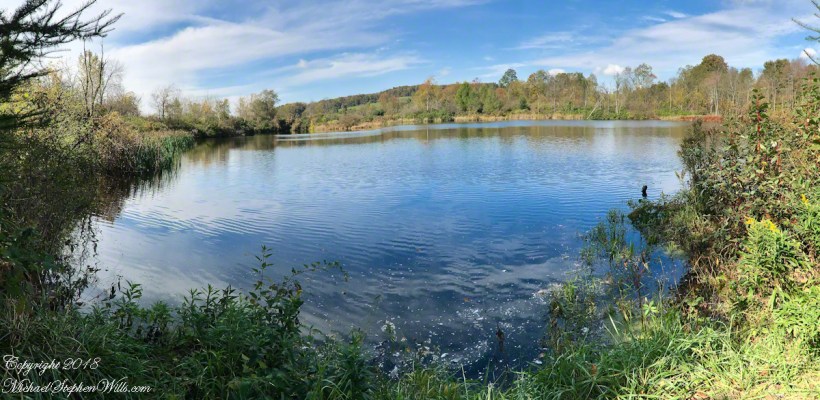
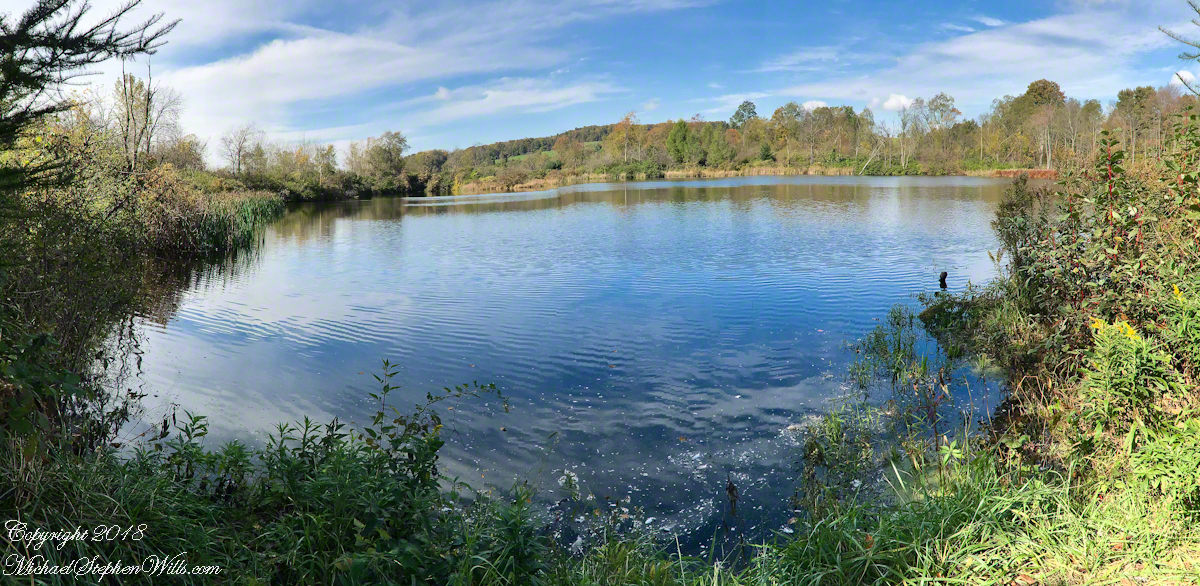
I used the “panoramic” feature of the iPhone 7 for this shot. On the hill we were sheltered by trees and bushes from the steady northeast wind. Here, on a bench by the pond, that direction was open to the wind. The sun kept us warm. It was clear why the geese did not land, the water surface was deserted, filled only by rippling wind driven waves.

On our walk back we sat on a bench on the edge of the art trail field, the blue face out of sight. A woman, the only other person encountered, emerged from one of the trails cut from the brush, camera in hand. She was collecting images for a Cortland Historical Society publication and asked to take our photograph. “OK,”, I said and gave the story of living here for 25 years in the house on Fall Creek where my son’s family lives now. She replied, “My daughter is in San Francisco. We don’t know who will have our house when we are gone.”
Click me for “Celestial Geese with two haiku by Issa”.
Romance of Stones
I have an update to my post “Proleek, Grandfather McCardle’s home” where we explored the site of the boyhood home of my grandfather, Peter McCardle, on great grandfather James McCardle’s Proleek farm. April 2018 an email arrived from the brother of the owner of the house across the road. He recognized the property from the blog photography and reached out to introduce himself and share information. His own genealogical research suggested we shared a great aunt. We now work together to define this connection.
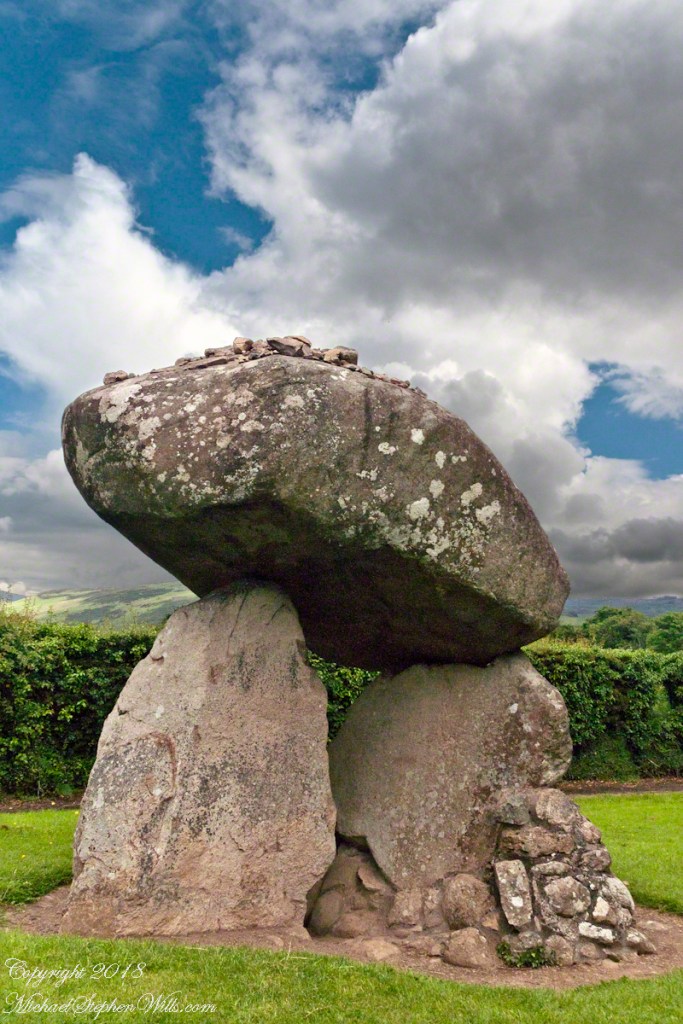
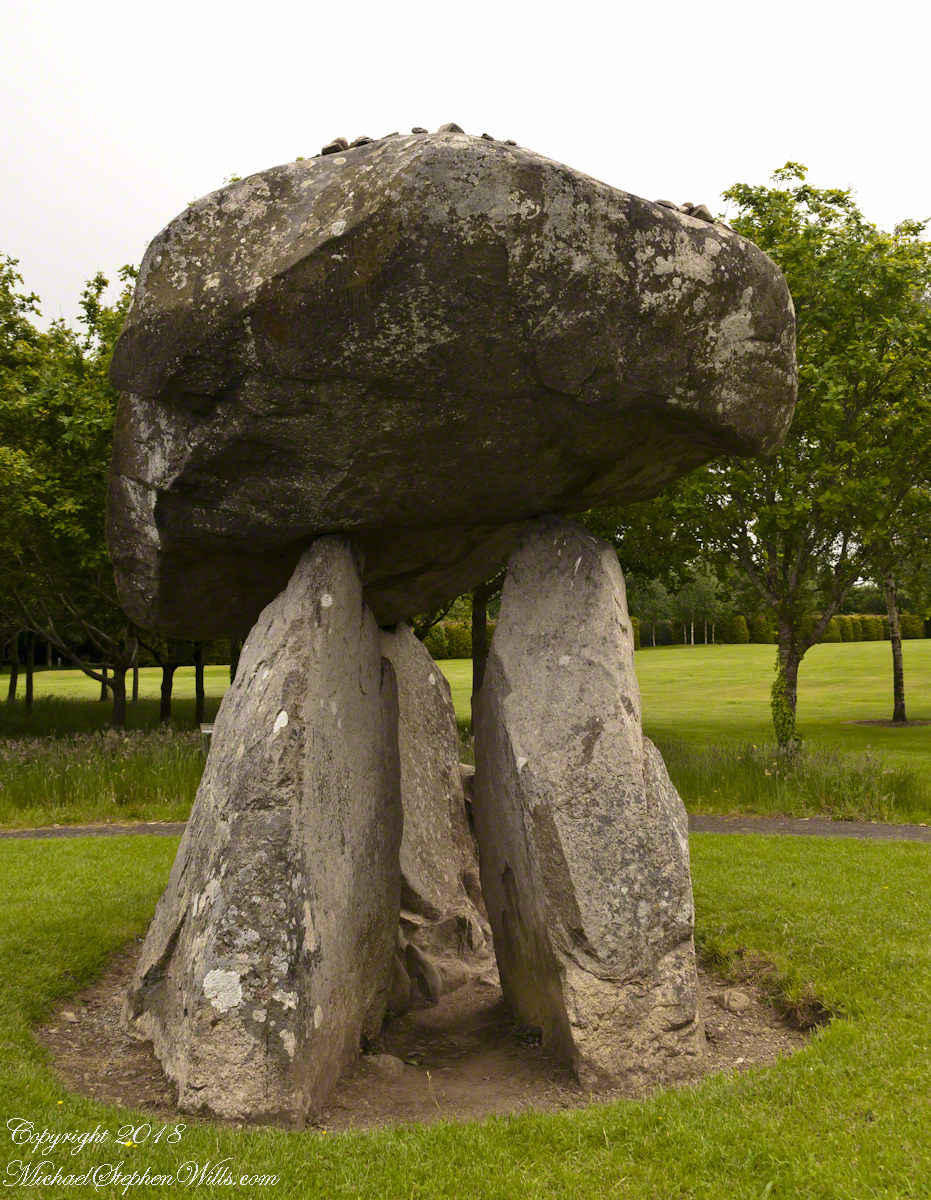
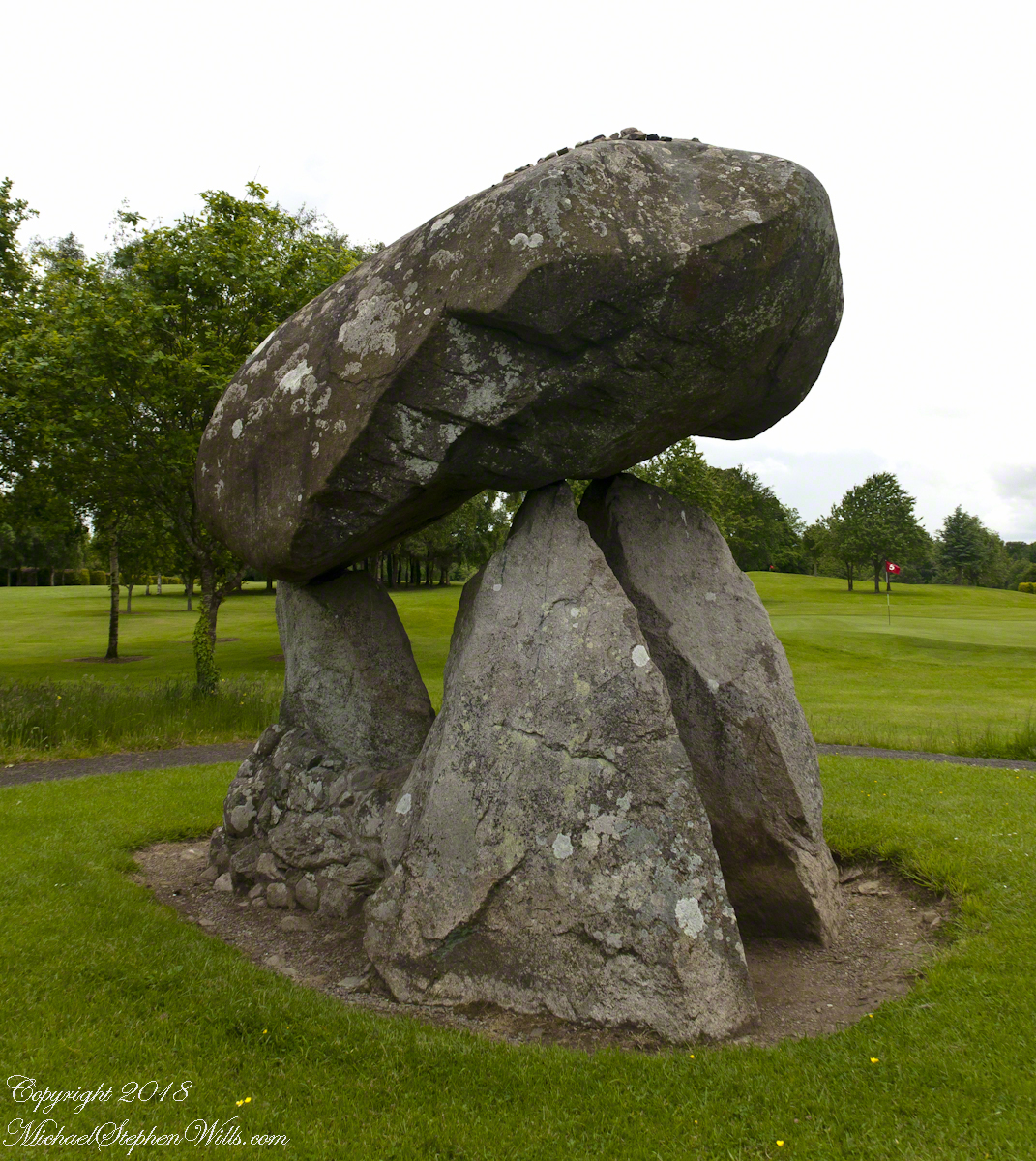
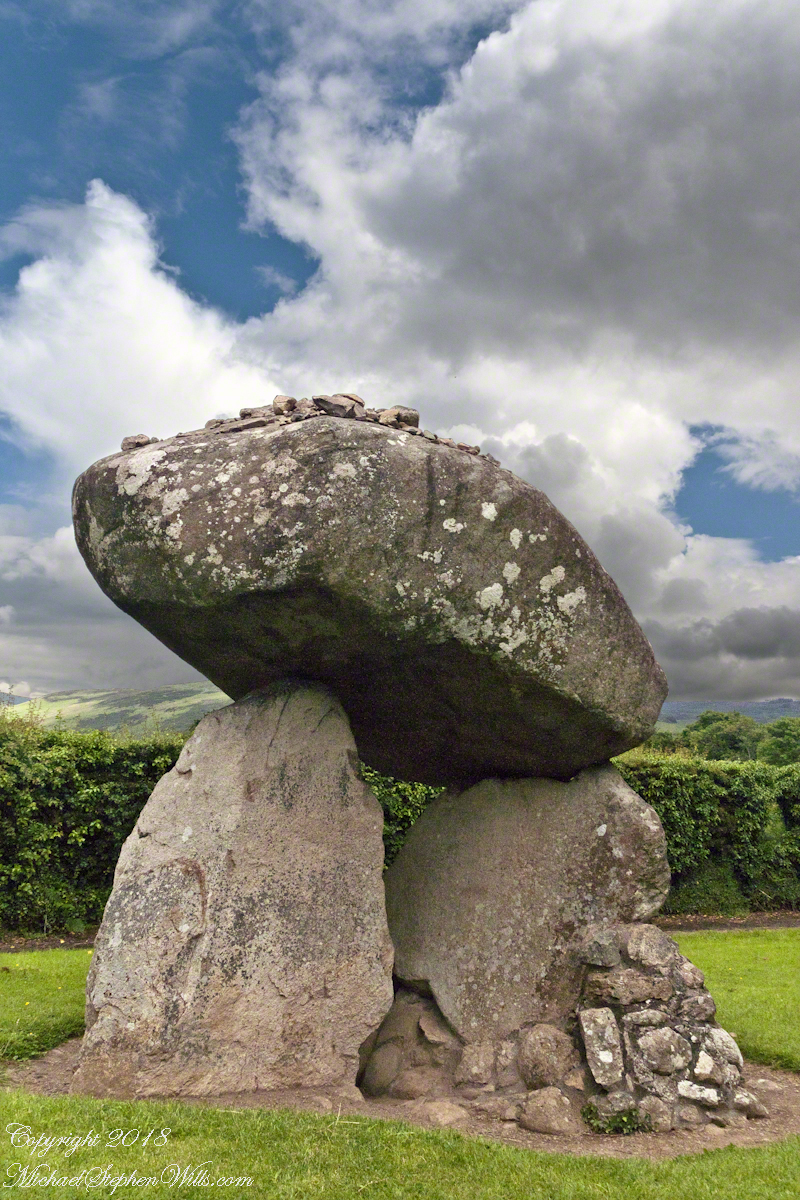
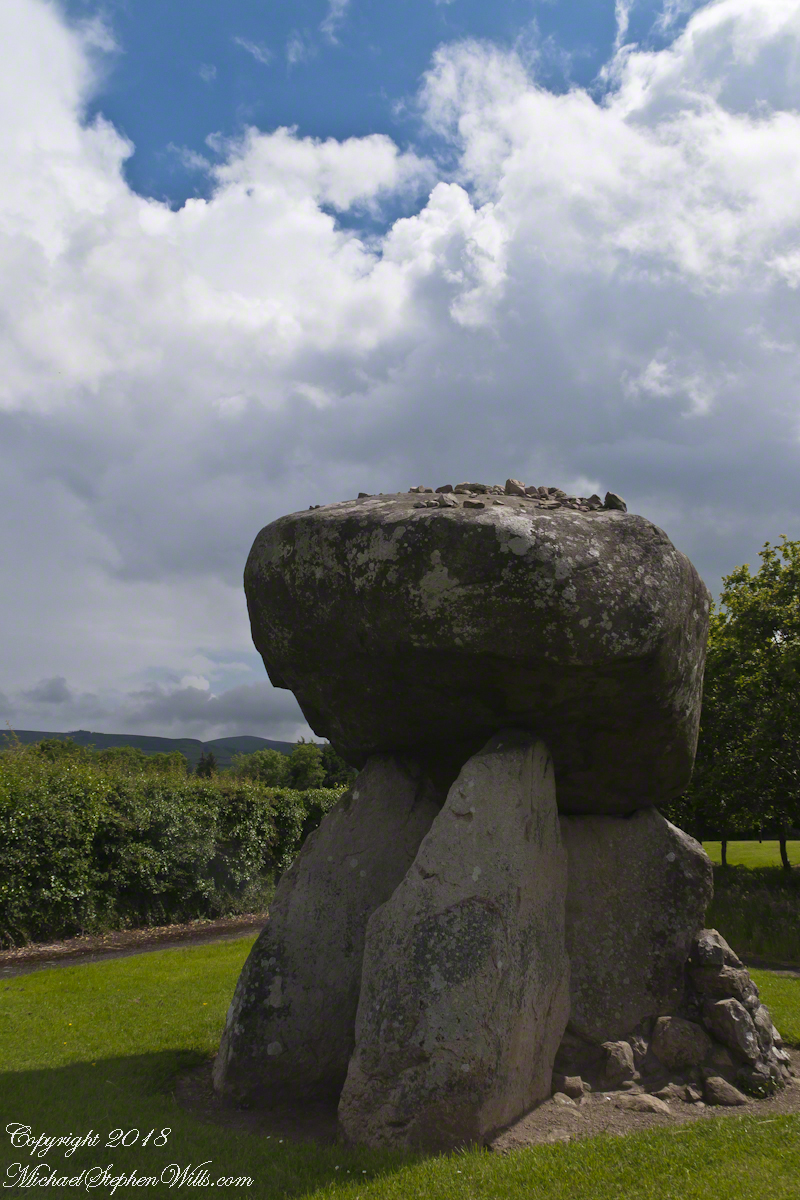
Our tour of Ireland was bookended by a visit to the farm site and, located little more than a kilometer away, a 5,000+ year old portal tomb, the last site Pam and I visited. We parked at the hotel / golf course built around the monuments. There is no fee to visit the site, number 476 on the list of Republic of Ireland National Monuments (Irish: Séadchomhartha Náisiúnta), protected at the level of guardianship by the National Monuments Act of 1930. The townland is named after the dolmen. The anglicized “Proleek” is derived from the Irish for “bruising rock”, as in a millstone. The grave is attributed in folklore to the resting place of the Scotch Giant, Para Buidhe More Mahac Seoidin, who came to challenge Fin Mac Coole.

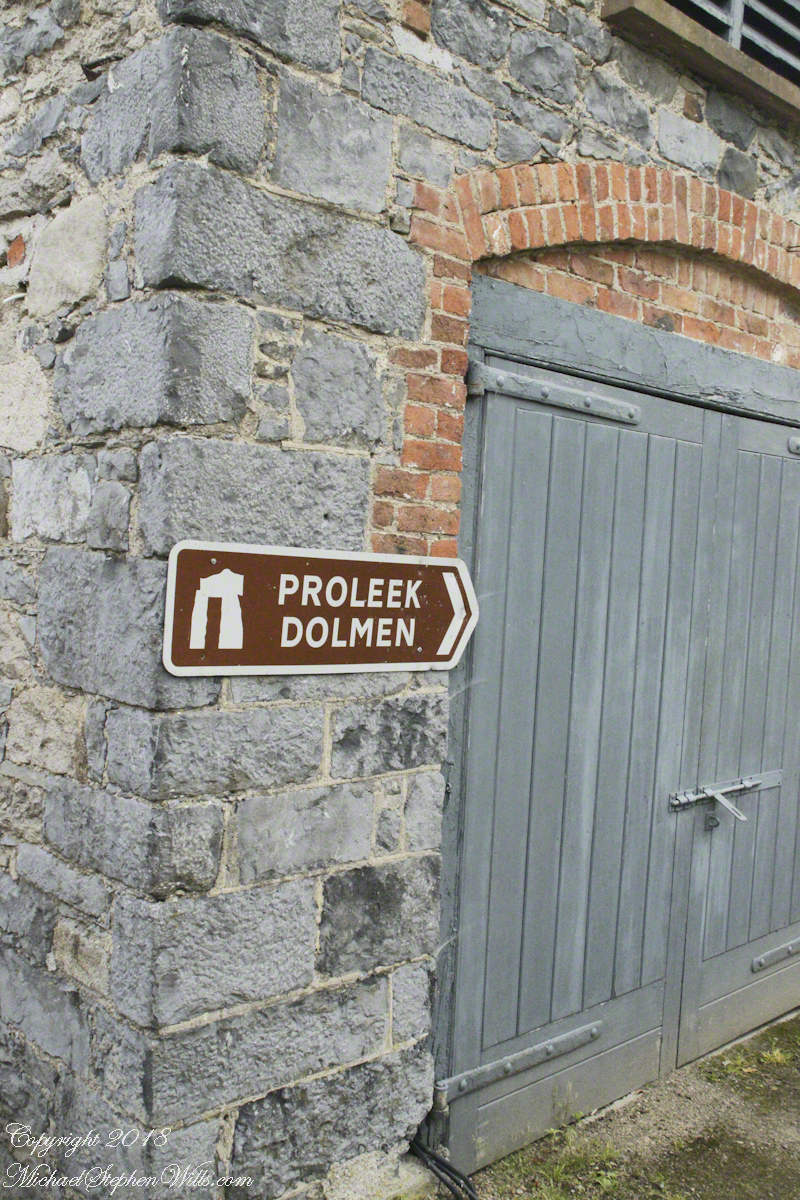
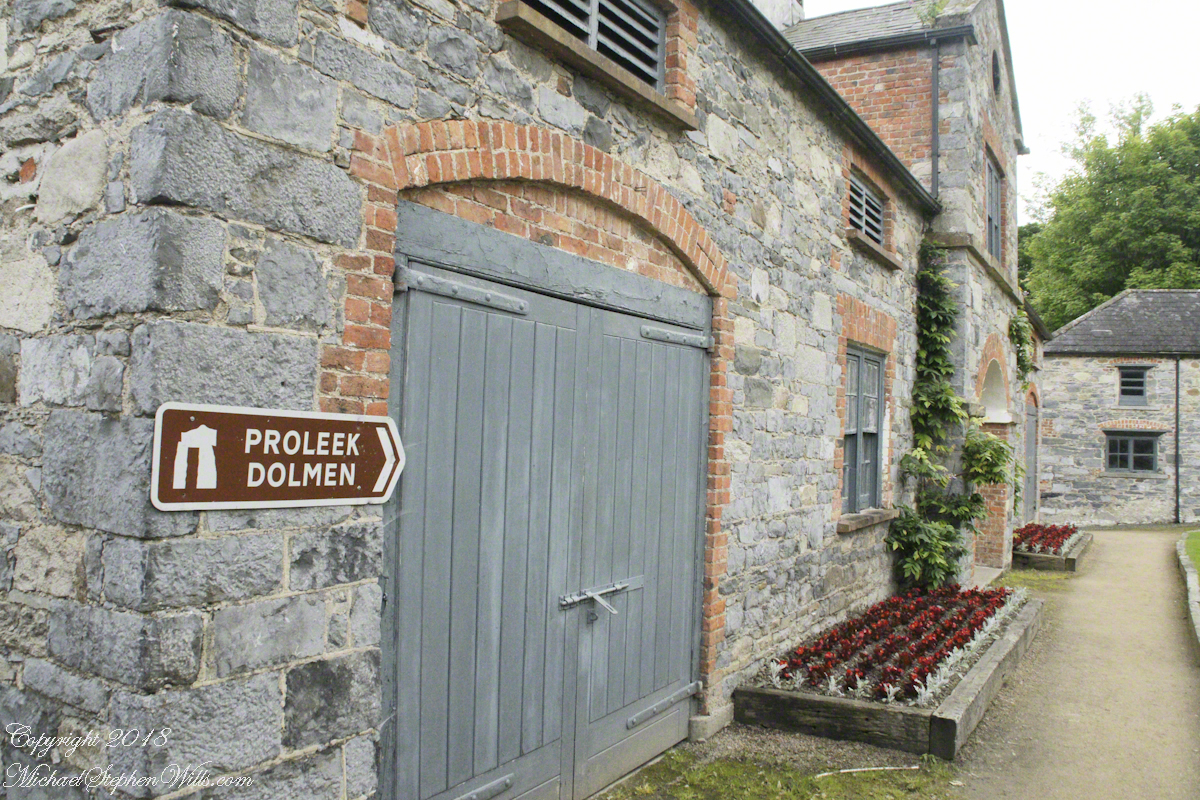
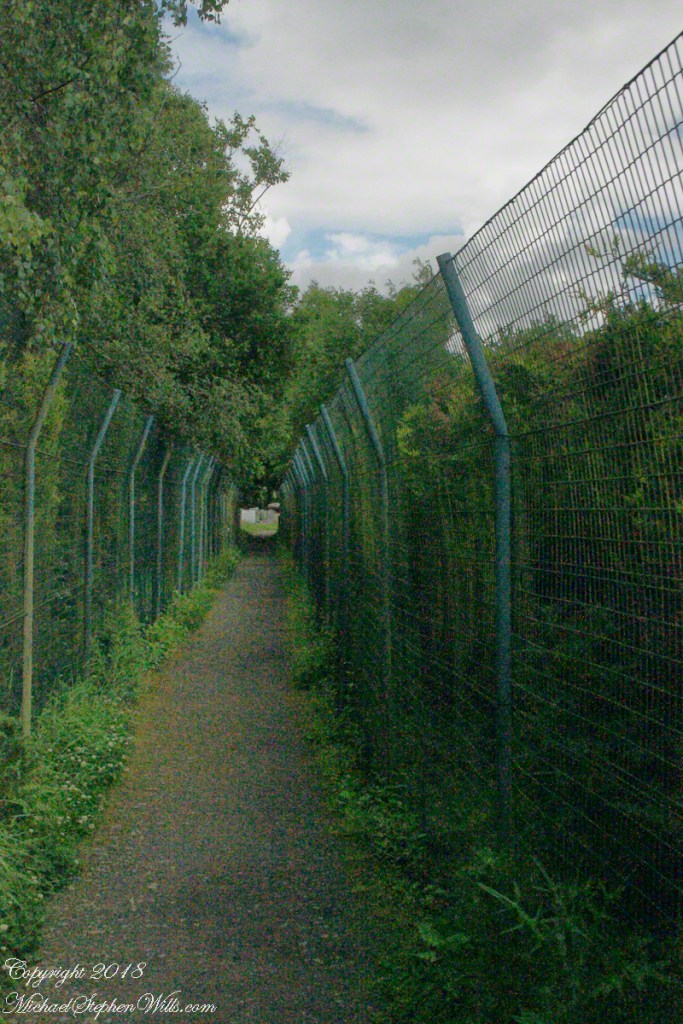
Ballymascanlon House Hotel is on the R173, on the left heading from the M1 towards Jenkinstown. Path to the monument is marked here and there and requires attention. It helps to understand the general location of the monument on the property. The parking lot and hotel are on the southern end, the monument is on the north end.
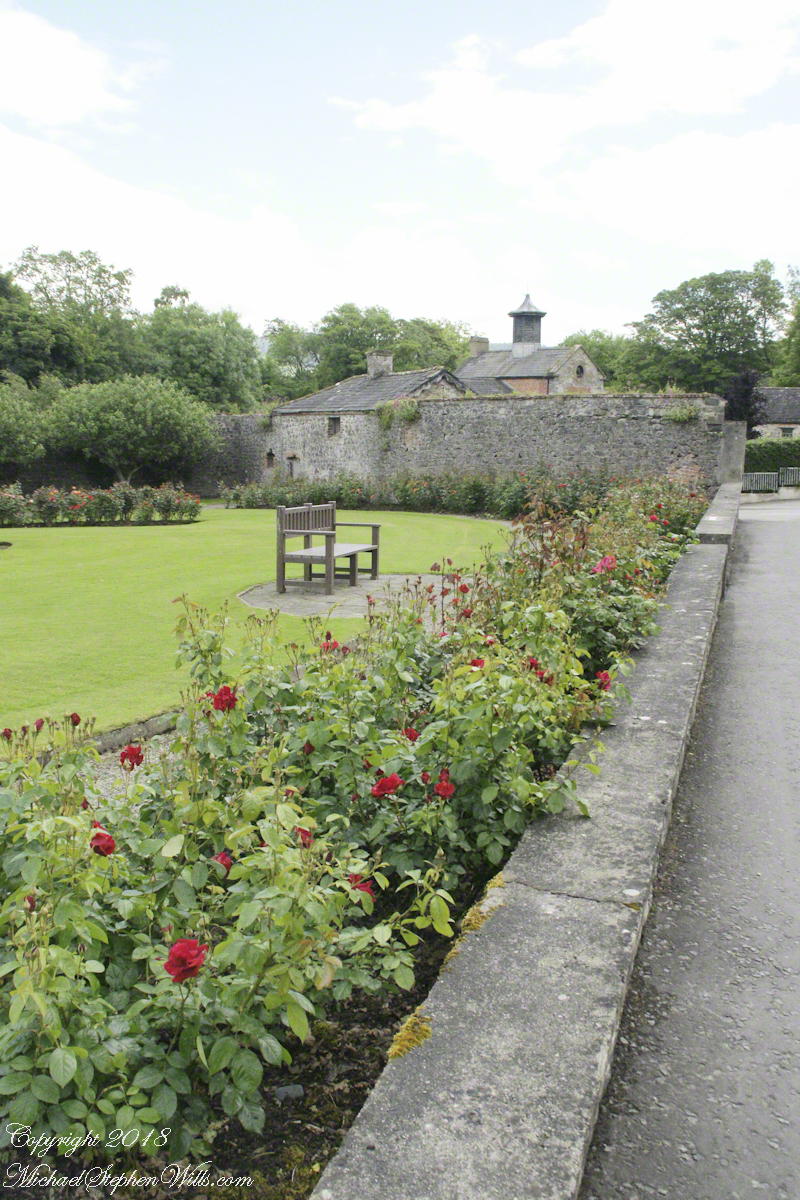
The path leads through the hotel grounds….


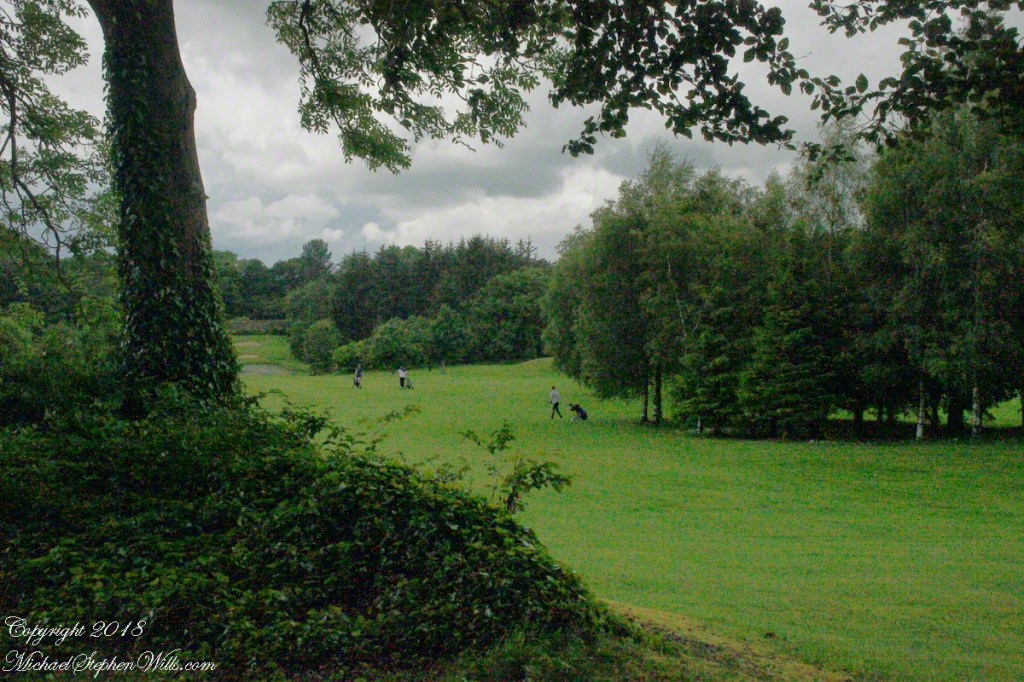
….and golf course…


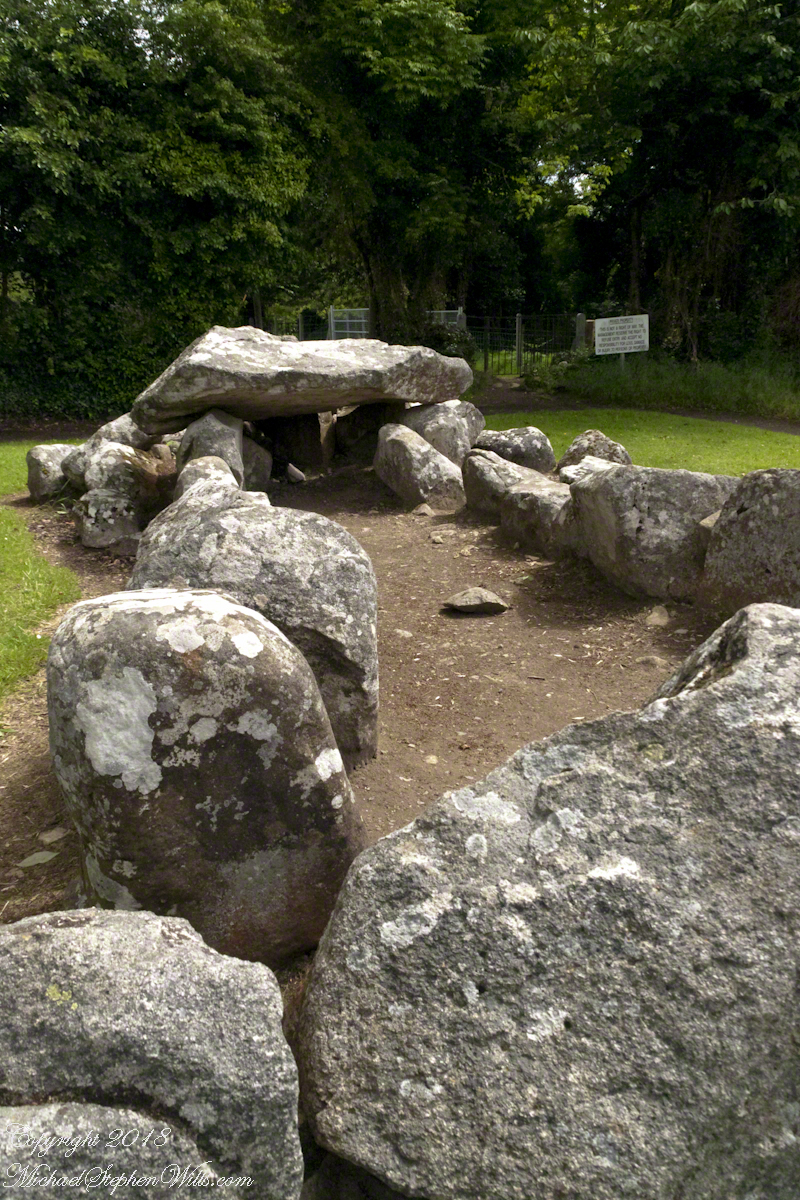
…and you first encounter the megalithic Gallery Grave of a type named “wedge shaped.”

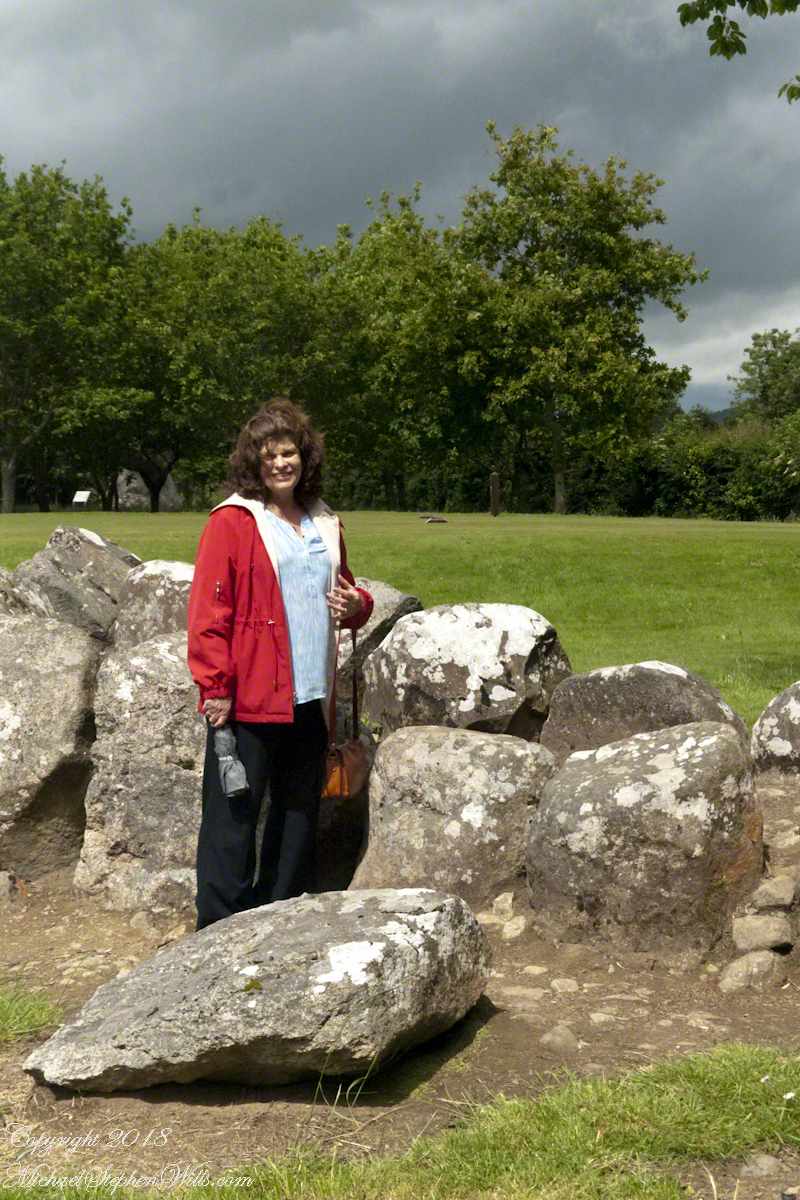
The 22 foot long tomb gallery supported stories of a giant burial. Pam poses for a sense of scale.

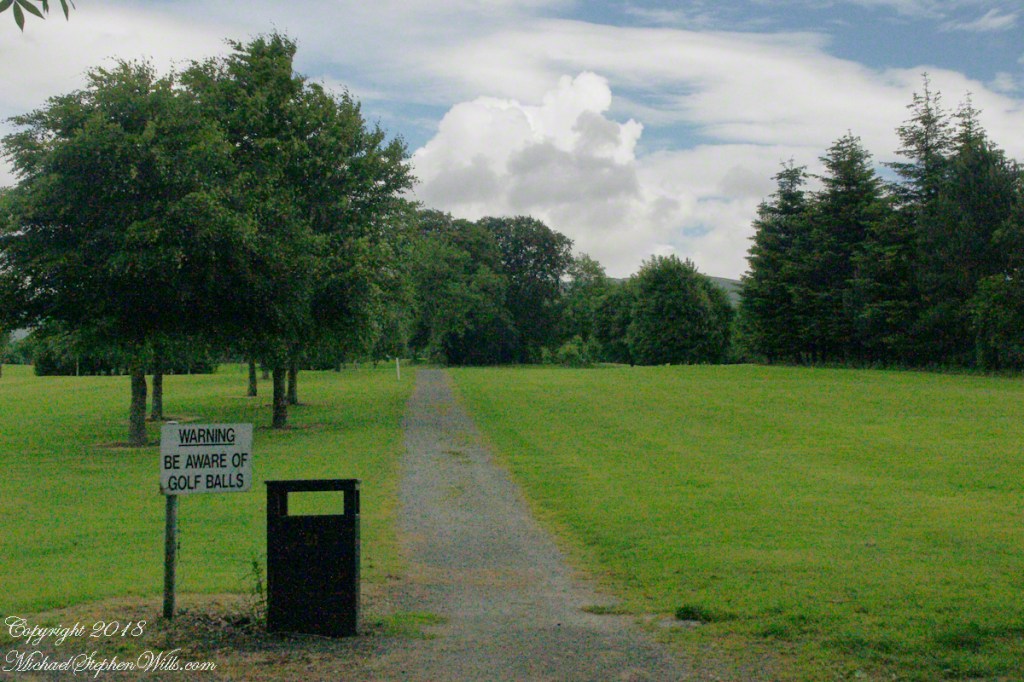
These are the only ancient monuments in Ireland were a stray golf ball may be encountered.


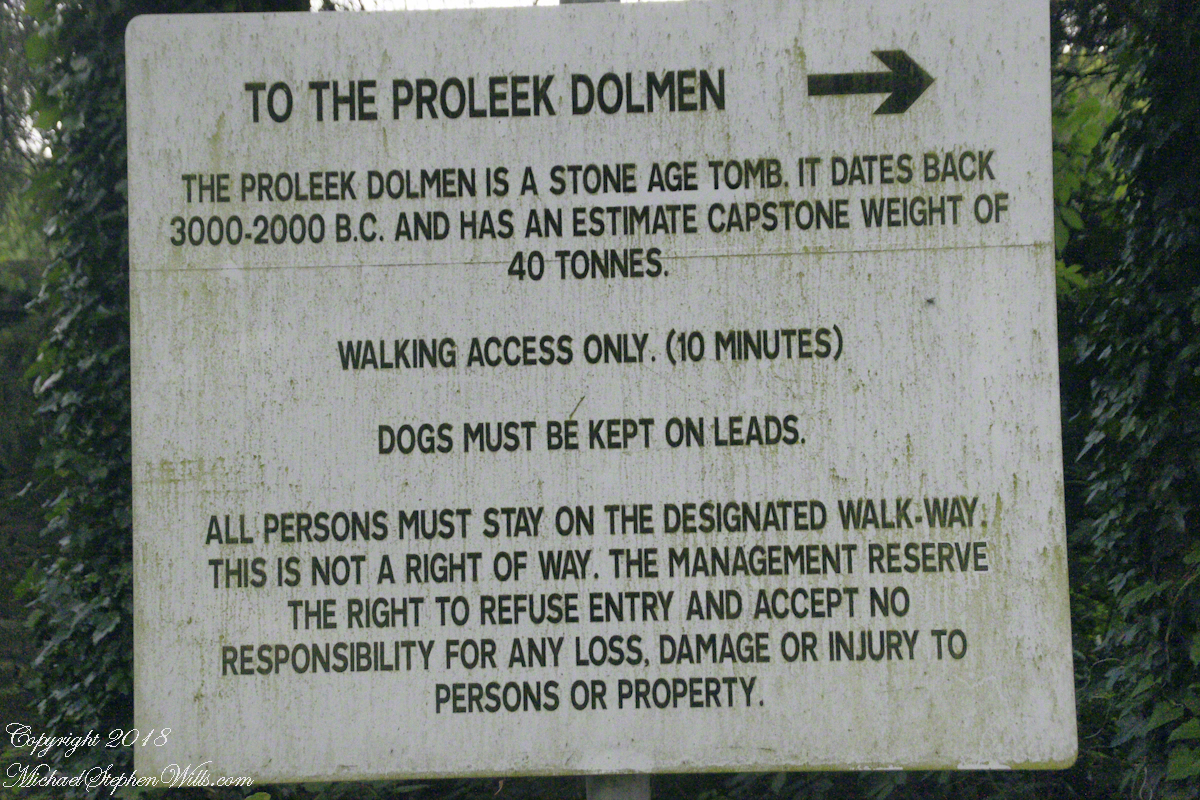
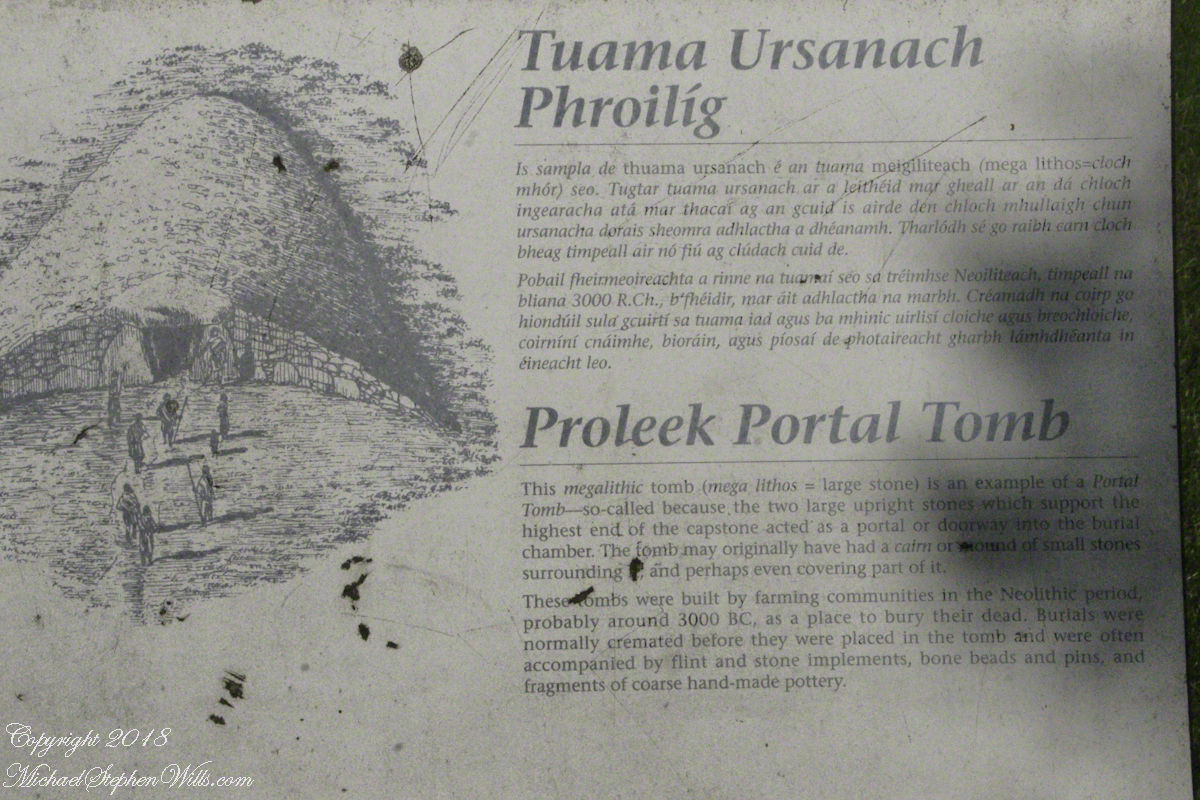
A short way ahead is the dolmen, or portal tomb. The informational placard is in English and Gaelic. There is an illustration of the stones covered with earth with a stone façade.

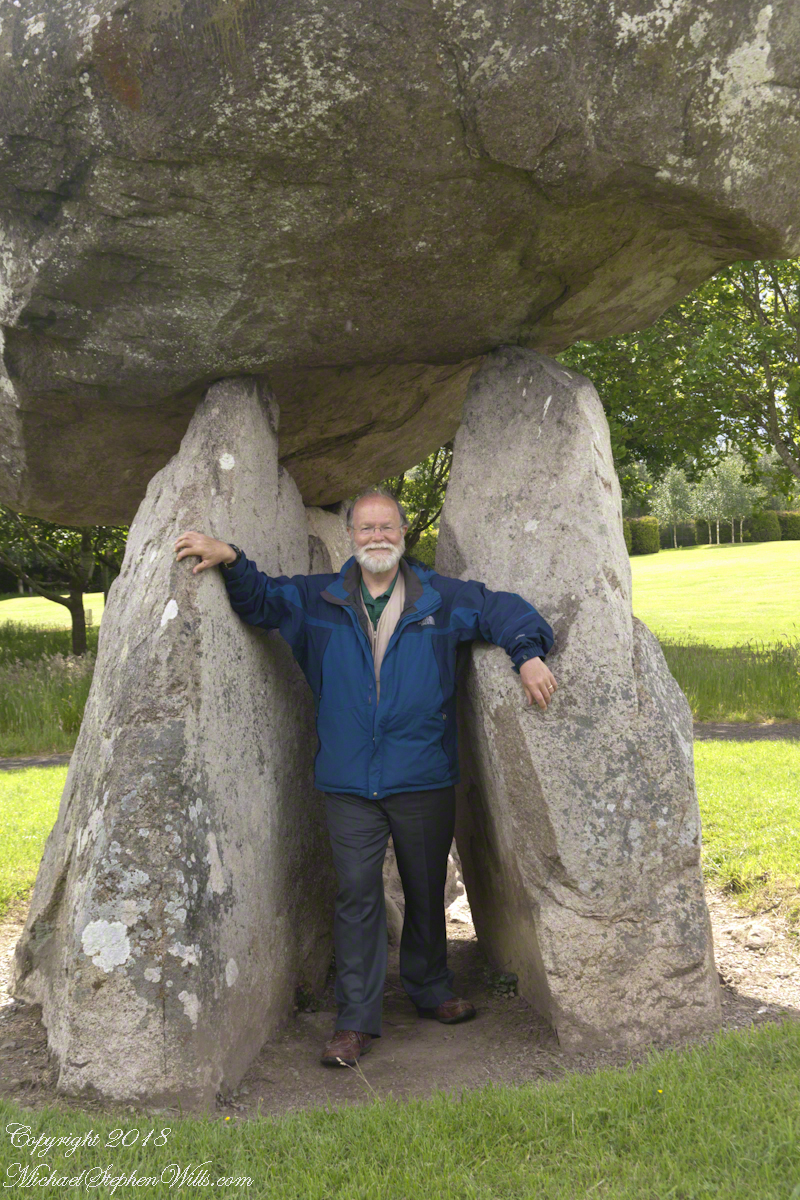
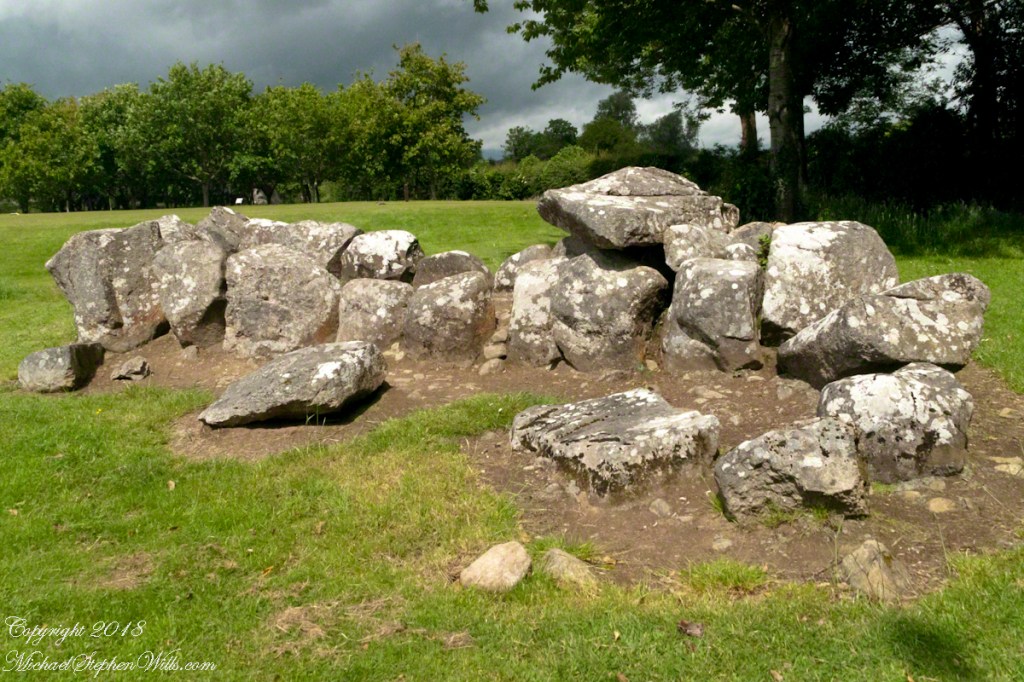
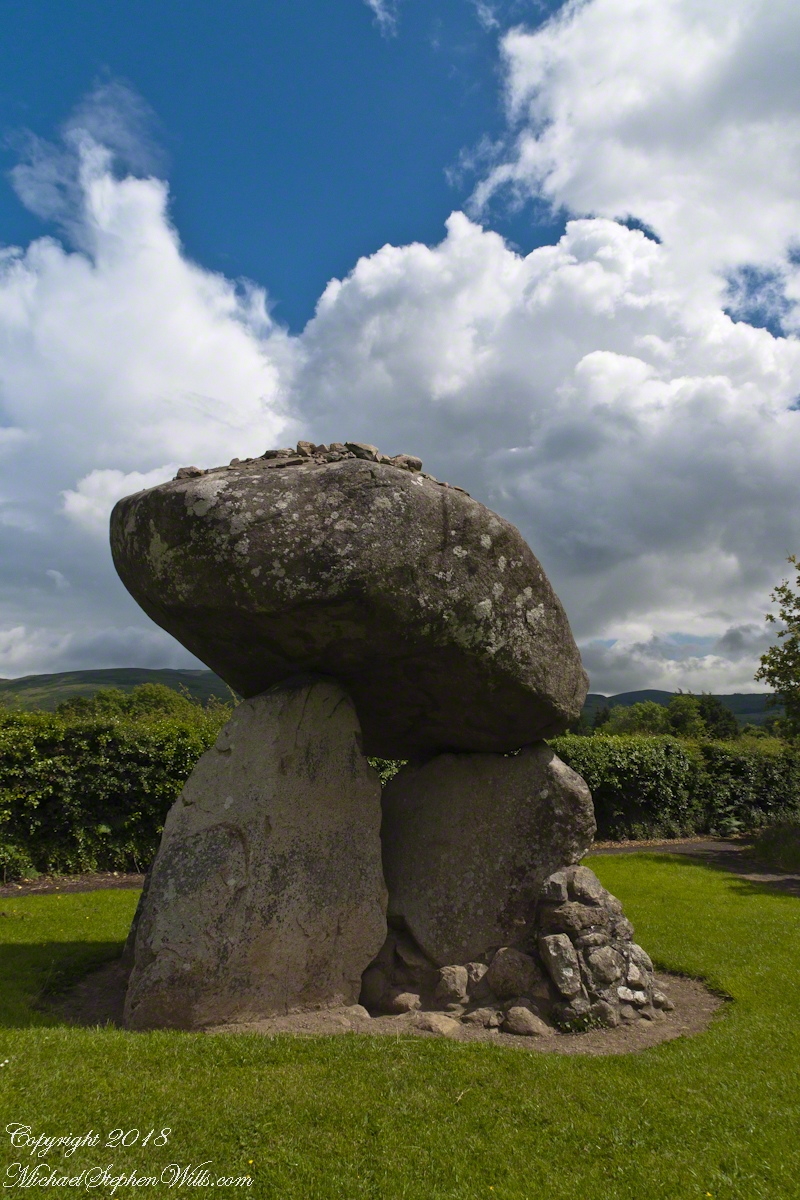
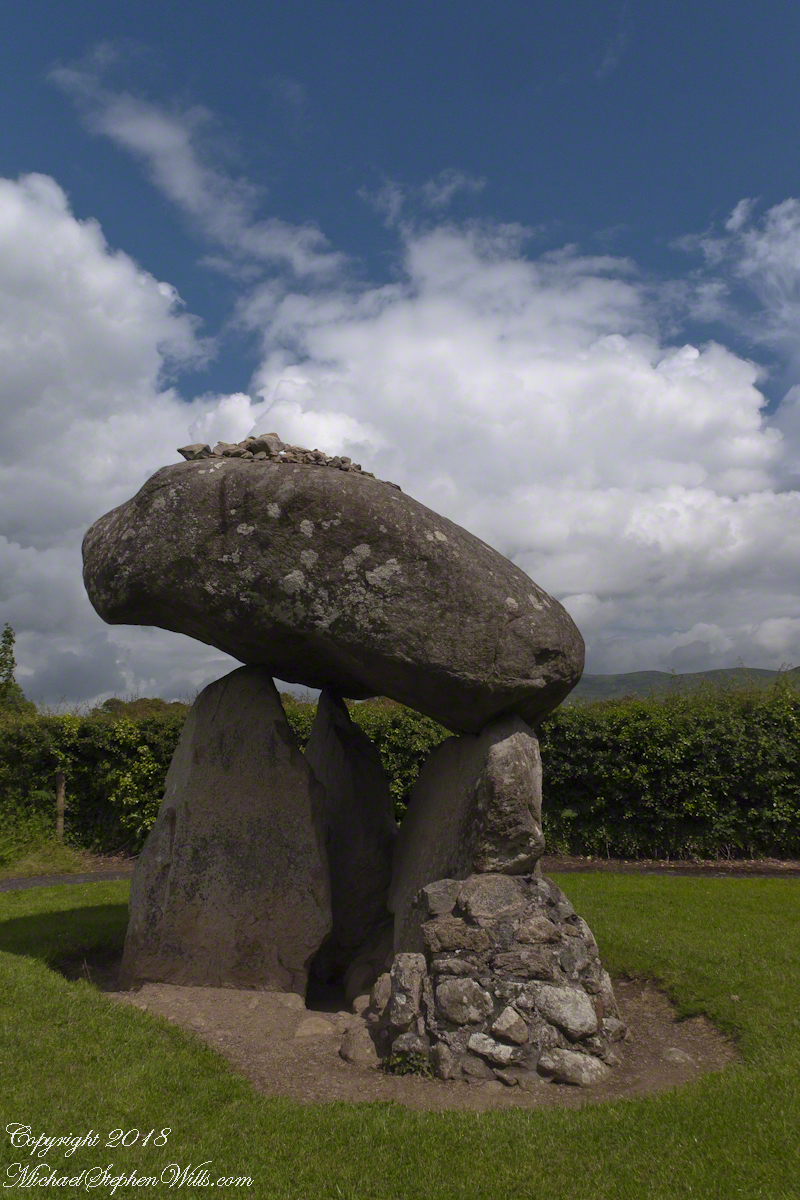
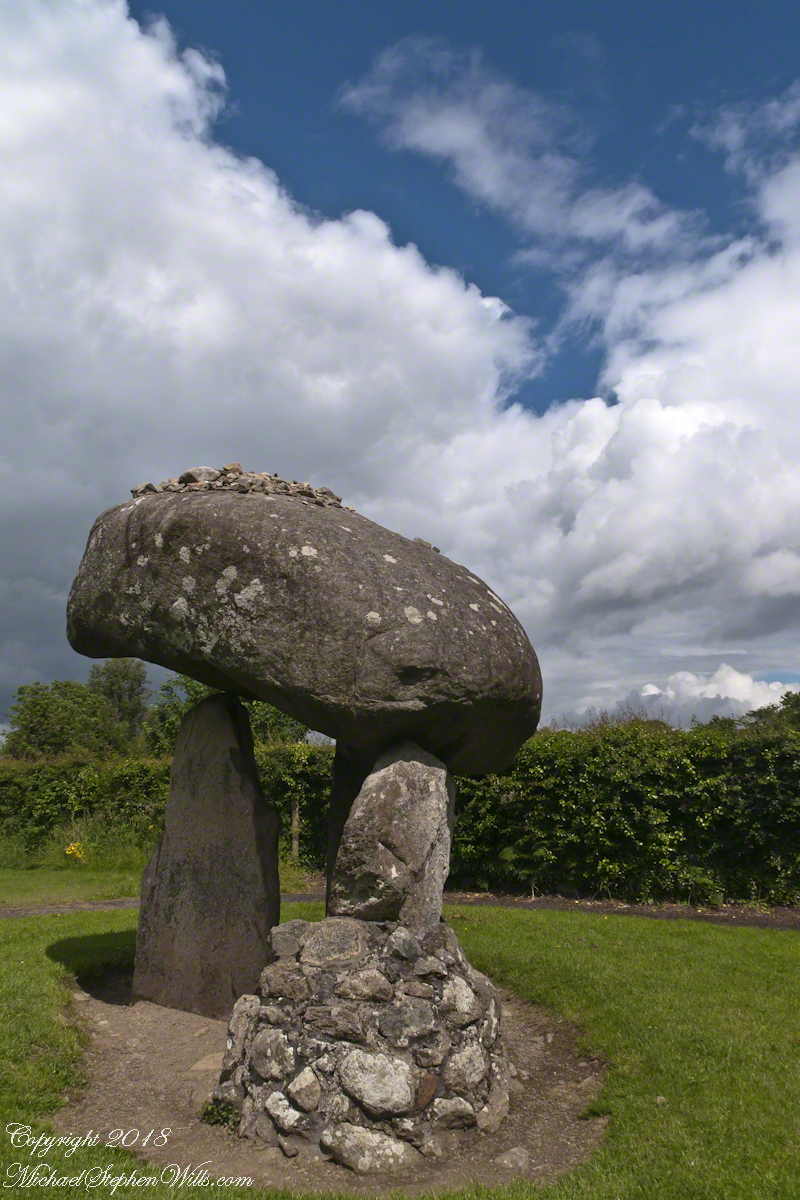
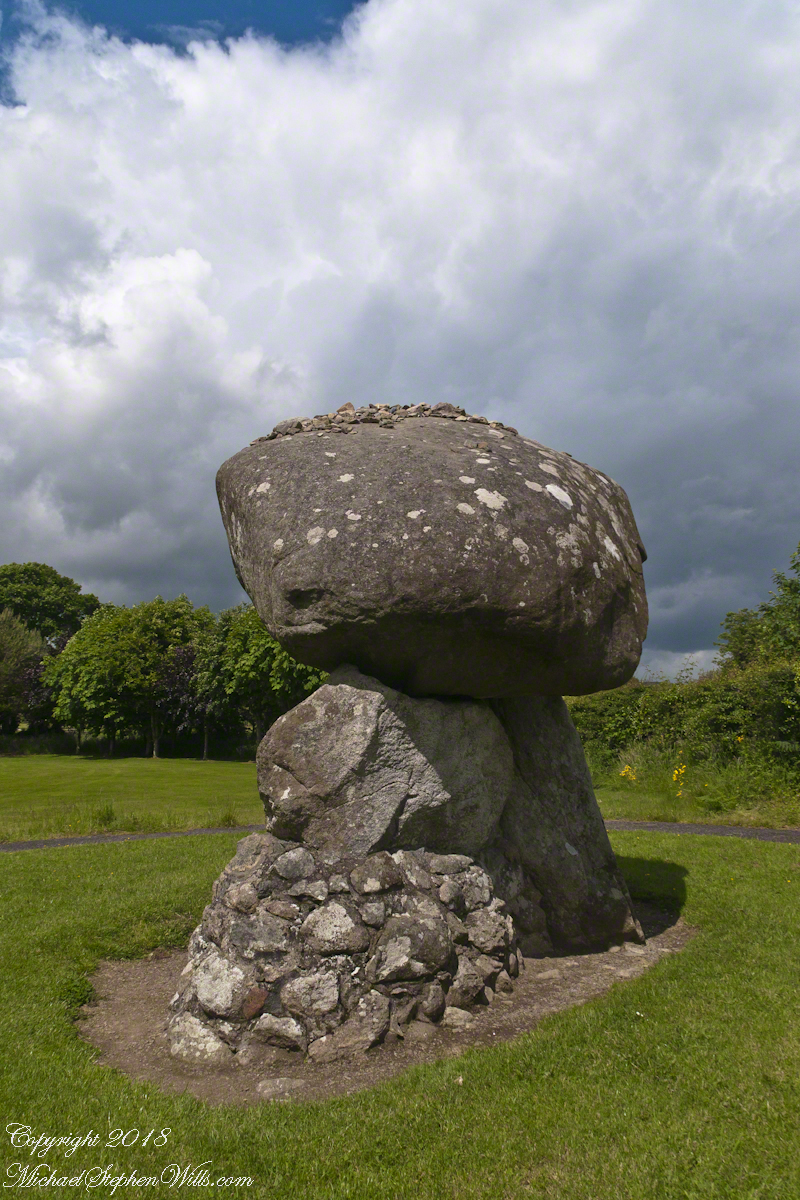
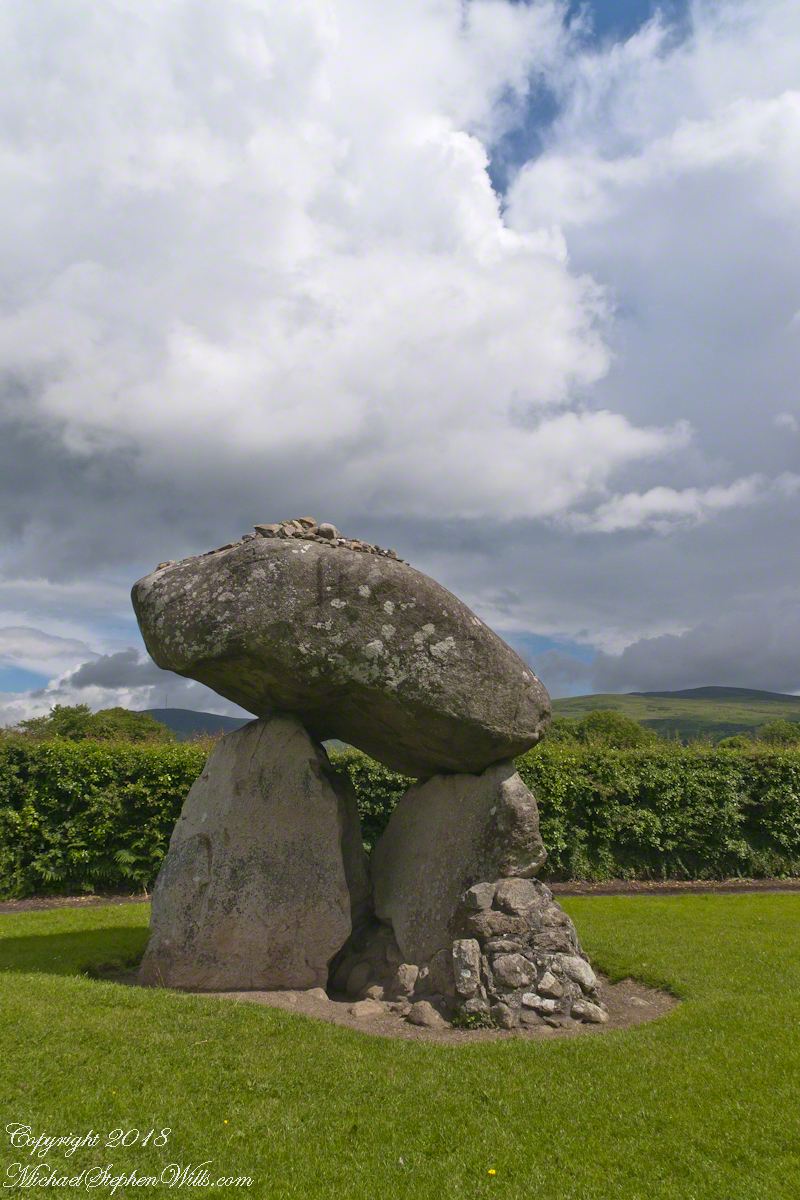
Some describe the formation as a giant mushroom with warts. The posting feature image is of the same aspect as the next photograph, with me for scale.

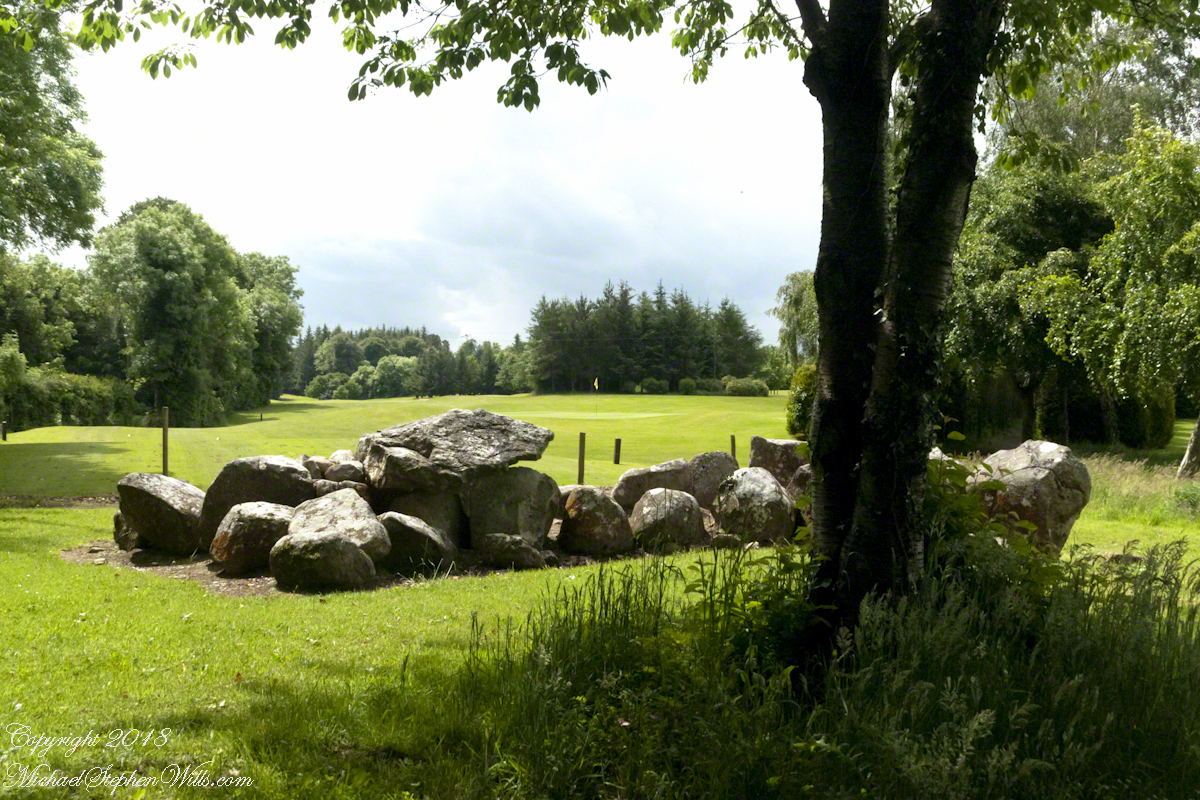
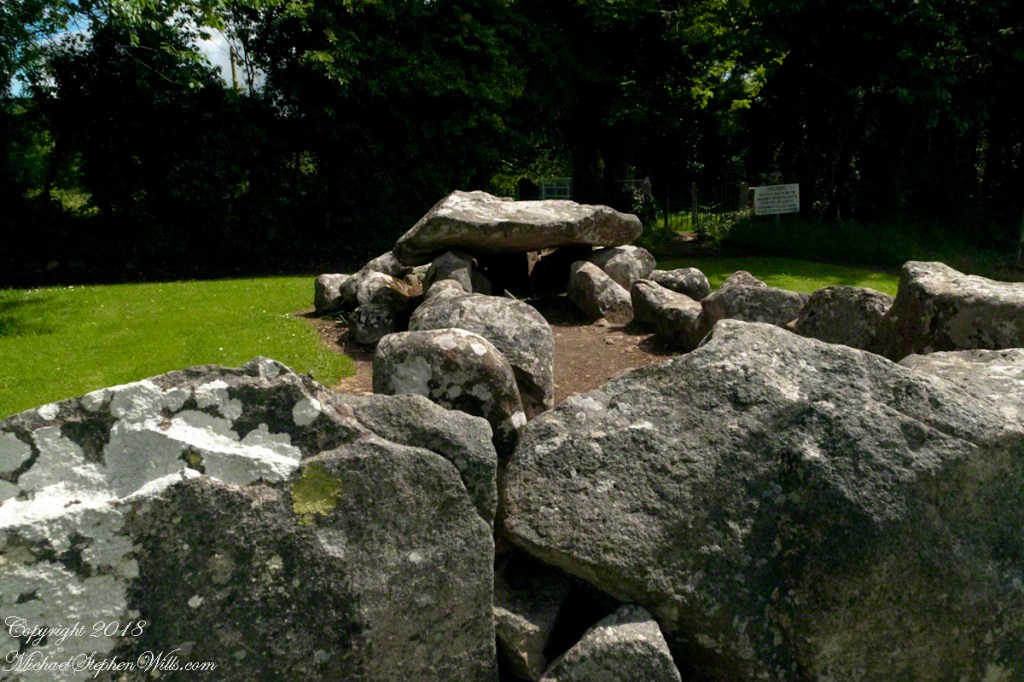
We are surrounded on three sides by the golf course. The “entrance” to the tomb, through the two upright portal stones, faces northwest toward Slieve Gullion, a mountain with its own Neolithic burial site next to a lake on the summit. The mountain and the flat land, such as Proleek township, feature in the story of how the Irish hero Cú Chulainn came by his name. To learn more, click this link for “On the Tain Way” the first of my posting that includes some stories of the hero.

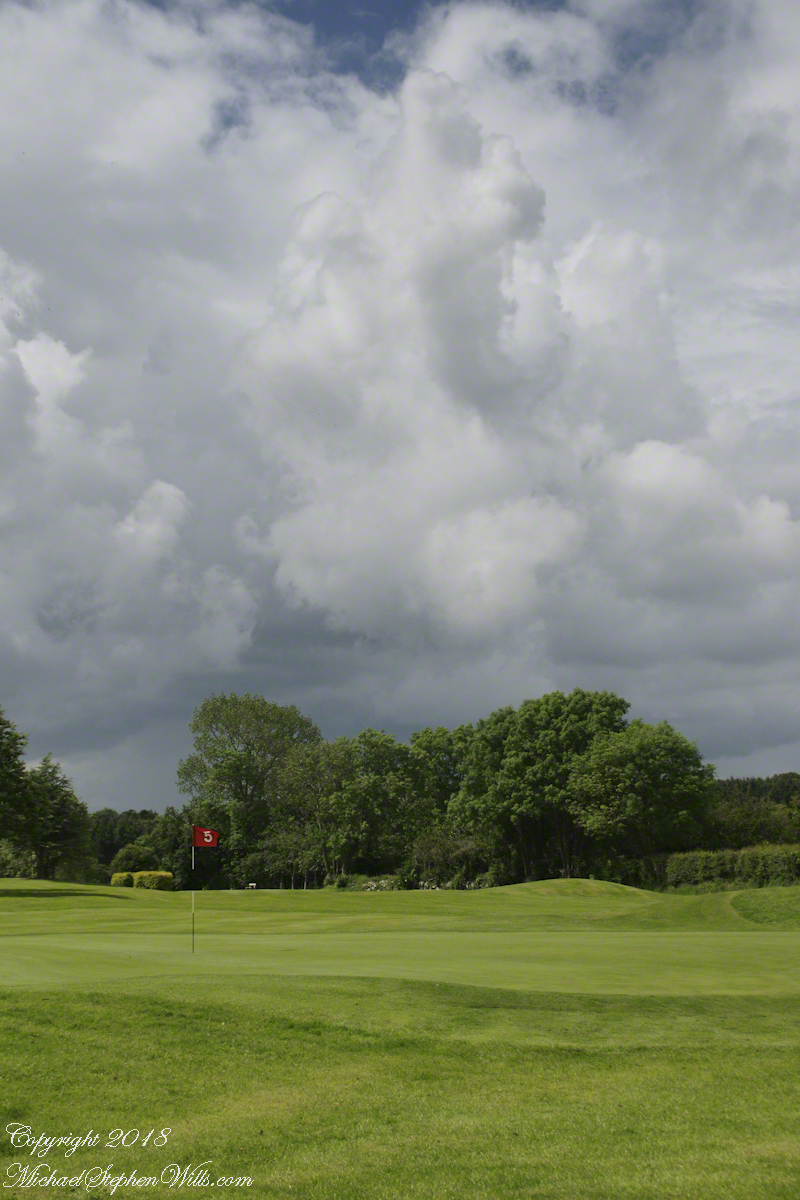
The fifth hole.

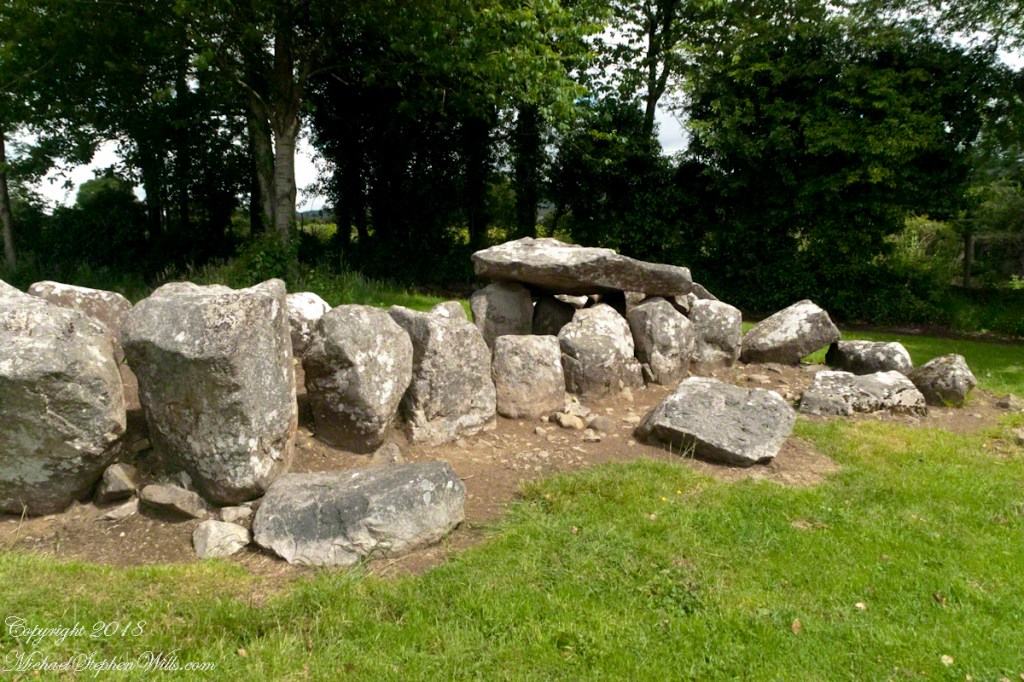
We had a beautiful day, so I took time to capture all aspects. The hedge is the northern property border.

The “warts” are stones. There is a local saying that success in placing three stones on top will give a wish or lead to marriage within the year.


Click for more Ireland stories.
On the Tain Way
On Monday, June 9, 2014, cousin John Mills dropped his son, Sean Mills, myself and Pam Wills off at the foot of the western slopes of Slieve Foy on the Tain Way. Sean, Pam and I walked the way over the mountain and into Carlingford in the footsteps of epic Irish heroes.

Saint Patrick Day Family Humor
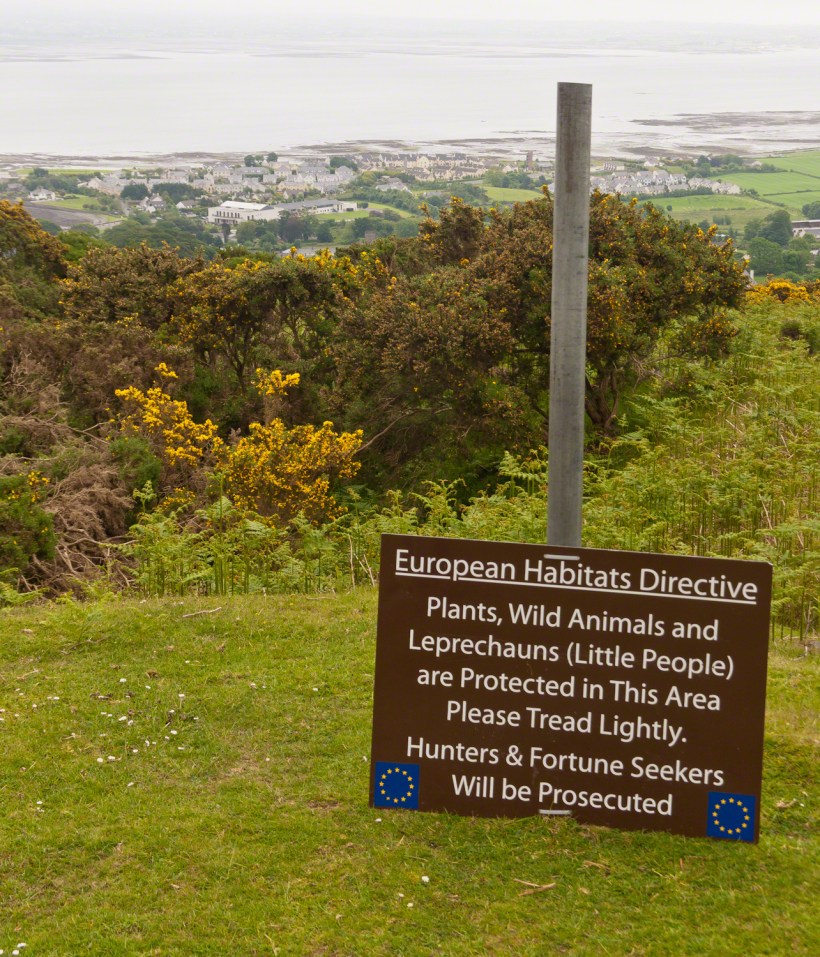
In a previous posting we hiked through the only European Union Leprechaun Preserve on Slieve Foy above Carlingford, County Louth, Ireland.

This home was lower on the mountain, on the way to town.

You will not find Calla Lilies thriving in front yards here in Ithaca, New York (43 degrees north latitude) as they do in the Temperate Oceanic Climate of Ireland, pictured in Carlingford on a June day. At 54 degrees these Calla Lilies are growing at a latitude 800 miles north of Ithaca, in the middle of Quebec Province, Canada.
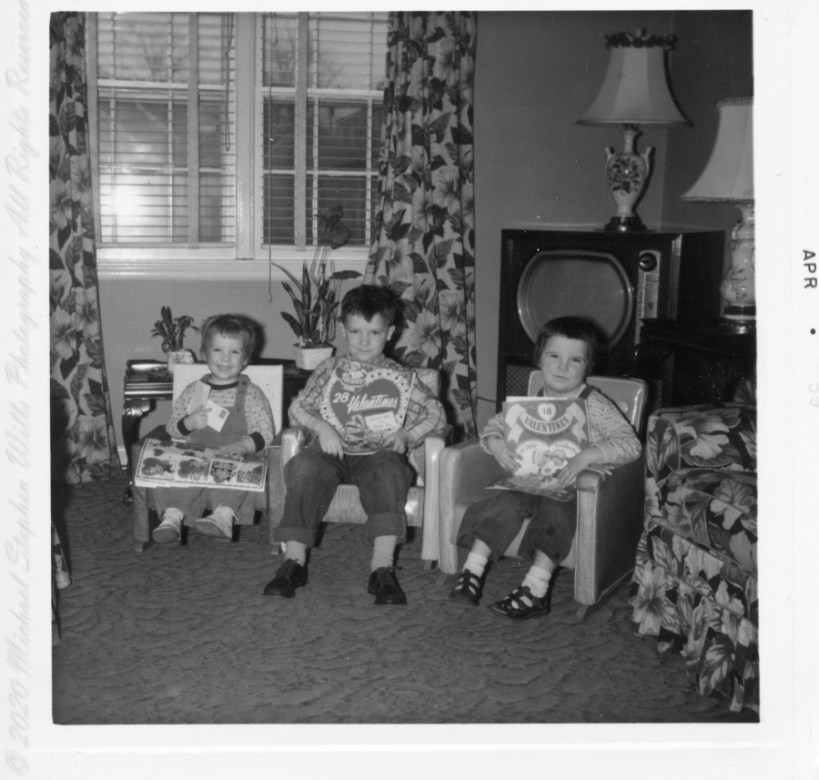
In spite of this, here in Ithaca we keep March 17th, Saint Patrick’s Day, warm. In the home of our three grandchildren (3, 4 and 6 years old) who live in Ithaca they celebrate by playing tricks on Leprechauns.
This year, we visited Saint Patrick’s Day eve and reviewed their bag of tricks with the Leprechaun in Chief, their Mom. In response, the Leprechauns leave them letters to make it clear the tricks did not work. On top of this, the children have big laughs on the tricks played in return. A favorite is finding their socks taped all over the mirror.
Mom pulled out a few of the Leprechaun letters and we read them for the children to great laughter as they remembered tricks of previous years. Afterwards, when alone with Mom, Pam and I recalled the tradition in Chicago, to color the river green (a well as green milkshakes, etc), and suggested to the Leprechaun in Chief to put green food color in the toilet. It was a winning idea.
The next morning Mom, on hearing the toilet flushed repeatedly, found her 4 year old daughter totally appalled. “The Leprechauns used our toilet (and did not flush). YUUUUKKKK.” She then ran upstairs hoping for a “clean” bathroom up there. Well, green milkshakes are off the menu.
Romance of Ruins
In three, so far, postings on the cottage ruins at Loughan an Lochan (Loughan Bay) we explored a former community above the Irish Sea with a view of Scotland. For the third posting I shared some research on the last cottage people of that site with the intent of additional postings.
I wondered, “What motivates you to do this?” and remembered my mother’s Canadian passport in which, for place of birth “Proleek, Ireland” was written and my request to our cousin, John Mills, who invited us to stay with them after my mother passed away, June, 2013, the request being to visit the site of great grandfather James McCardle’s home, where grandfather Peter McCardle was raised, information since discovered from the Irish census.
On the morning of Sunday, May 25, John took us from mass on a tour of sites related to the family. One of these was the site of the McCardle home, Proleek Townland.

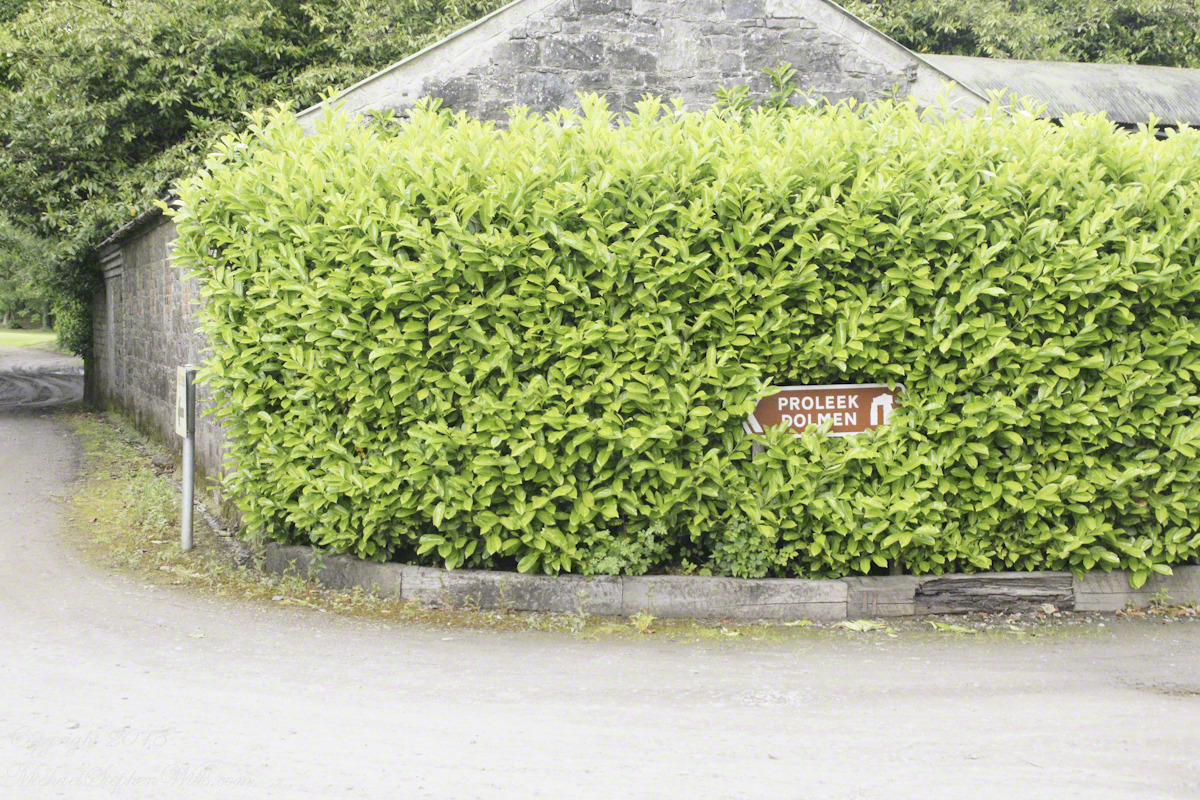
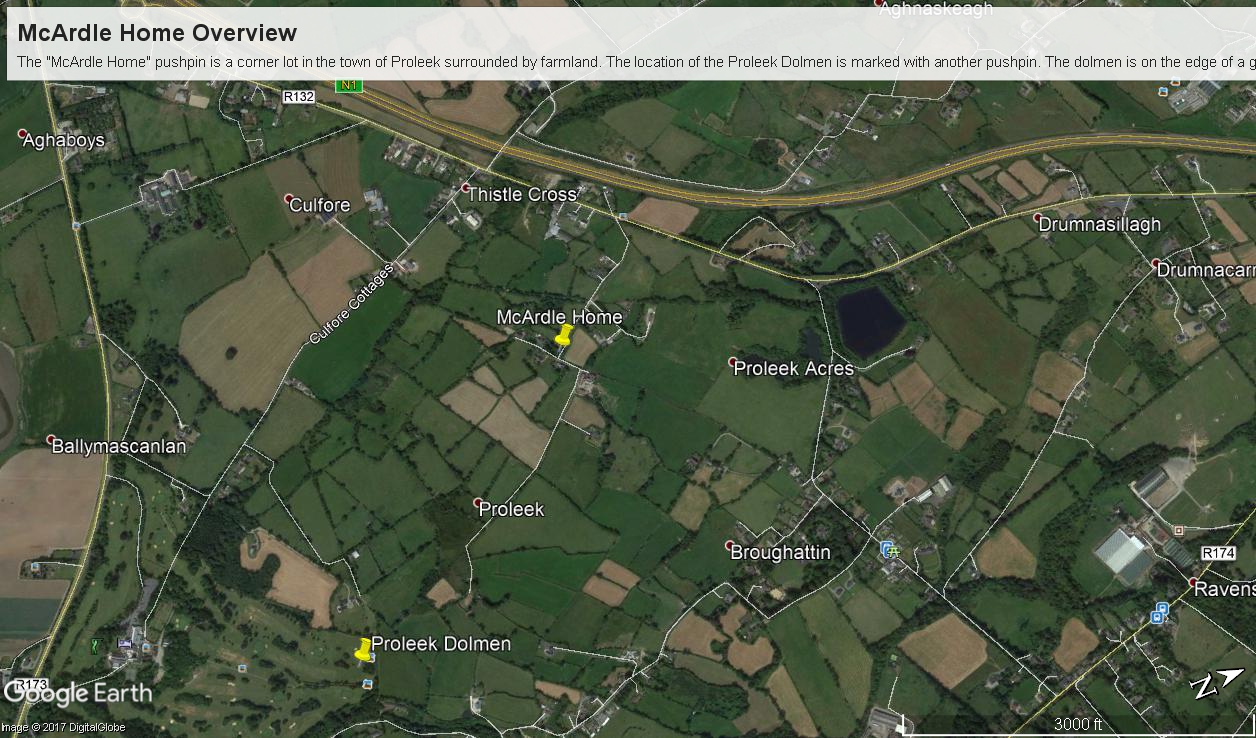
There site is an anonymous corner on a unnamed street with no outlet. The street ends close to the Proleek Dolmen, an ancient passage tomb, after passing farms and fields.

The 1901 Irish Census provides these details from 116 years ago:
Today, the site is another person’s property, it was not possible to explore further than when the camera lens reached when I leaned as far a possible into the brush. No sign of standing walls.

Modern homes surround the corner, solid and prosperous.

For this posting I collected the following images from Google Earth. The site is marked with a pushpin, “McCardle Home.” A “Proleek Dolmen” pushpin marks the passage tomb.

A closer view suggests, if we trespassed and poked around, some remains of the structure were concealed by the trees and brush.

Between May 2014 and this image, from 2015, the center of the plot was gouged out. The area corresponds to the corresponds to the remains indicated in the 2013 image. From this we can understand were the structures stood in relation to the road.
Using the polygon ruler tool the size of the site is 413 feet in circumference, 9,619 square feet, and the gouge, indicating the ruins, is 1,368 square feet.

But for John and Betty Mills, their kind invitation to stay and John’s guidance that day, the “Proleek” notation on my mother’s Canadian passport would still be a mystery today.
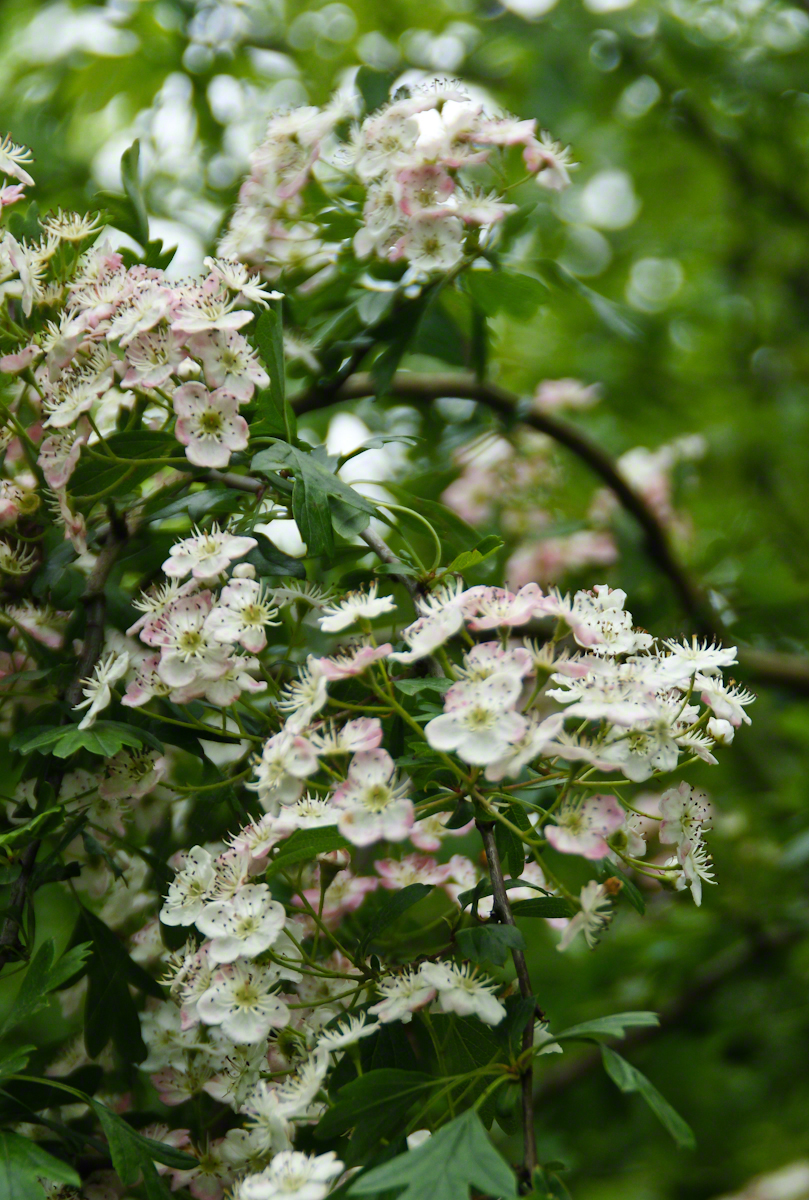
John Mills passed away the next year, September 26, 2015. Here are Hawthorne Blossoms from the corner of the former McCardle home in memory.
Here is some follow-up to my story in the posting “A Visit to Proleek Dolmen.”

A Poem to accompany our arrival at Carlingford
To close our time on the Tain Way I offer a poem written and presented to the congregation of the First Unitarian church of Ithaca New York 25 years ago, 1992. Interspersed are final photographs from our walk on the Tain Way of 2014.
The poem content is not directly biographical / confessional although it draws upon my experience as a single parent in the 1980’s through 1990’s.
A Poem Read To The Congregation
I
a crisis threatened an Irish village
men women children filled the meeting place
everyone participated especially the infants


in spite of it all a plan was arrived at
after the vote
from the back of the room a man called out
….you know the type…
THIS WILL BE OUR PLAN
UNTIL
WE FIND OUT WHAT IT IS.

II
my son John and I have a photo of him at 5 years
washing dishes
standing on a chair up to his elbows in rubber gloves
the caption reads “Two Men On Their Own.”
i had agreed to accept a divorce from helen
only if john was left with me
one night in particular stands out from that time
i did not sleep for planning what john and I would do

seven years passed
not a long time
since then we’ve moved
found another a better life

raising John alone was not part of the plan
Its been just john and me
helen gave birth to john
to have a part of me
in case of loss
i felt the same way
and she understood

a welcome
feminine voice in our home
“Little House on the Prairie”
and
“Little House in the Big Woods” twice.

Here is an excerpt from a newspaper article by Wilder
called “HOME”
that has an emotional resonance for me
dated 1923
Wilder was in her 50’s.
Out in the meadow, I picked a wild sunflower, and as I looked into its golden heart, such a wave of homesickness came over me that I almost wept. I wanted Mother, with her gentle voice and quiet firmness; I longed to hear Father’s jolly songs and to see his twinkling blue eyes; I was lonesome for the sister with whom I used to play in the meadow picking daisies and wild sunflowers.
Across the years, the old home and its love called to me, and memories of sweet words of counsel came flooding back. I realize that’s all my life the teaching of these early days have influenced me, and the example set by Father and Mother has been something I have tried to follow, with failure here and there, with rebellion at times; but always coming back to it as the compass needle to the star.
So much depends upon the homemakers. I sometimes wonder if they are so busy now with other things that they are forgetting the importance of this special work. Especially did I wonder when reading recently that there was a great many child suicides in the United States during the last year. Not long ago we had never heard of such a thing in our own country, and I am sure there must be something wrong with the home of a child who commits suicide.

we give so much to our children
what’s left over though
is ours

William Carlos Williams wrote
it is difficult to get the news from poems
yet men diet miserably every day
for lack
of what is found there

it is not difficult to understand this
to live it is another matter

you have to live it
in order to have something
left over

never the less
my emotional resonance in reading that piece
“Home”

did not come from the sentiments Wilder so skillfully evoked
though I shared them it was that sharp part

i did not agree with it lacking a reason
and so must have re-read
“Home”
fifty times a hundred
who knows

so committed to speak today
and began to write
something was bound to shake loose

then those lines form Deuteronomy
gave themselves to me
Before you this day is set good and evil, life and death.
Choose life, that both you and your descendants might live.

“Home” was a twist of these lines
as long ago as 1923
Wilder was experiencing our present
contemplating the unthinkable
Wilder held her own experience as a shield
and denied such a tragedy
could ever touch her
for me the result
is a beautiful poisoned apple
innocently offered
by a treasured friend

life is a gift
not entirely under our control
Yes we must be careful
but for some this is not enough

we must forgive others
and ourselves
************************************************************************