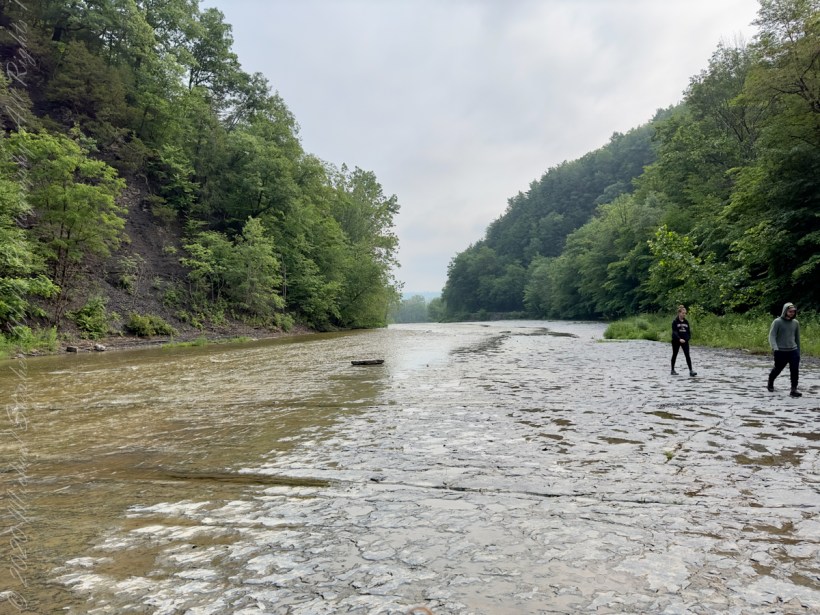
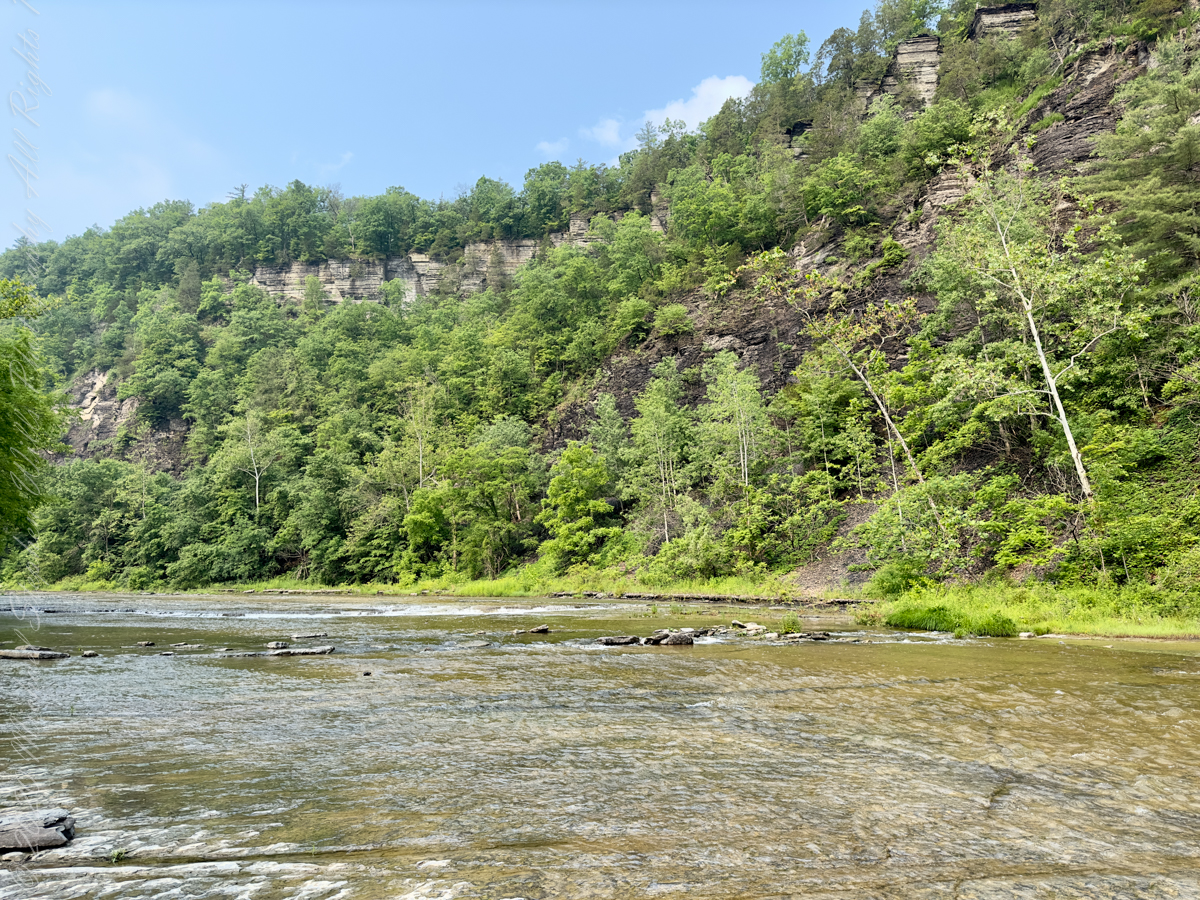
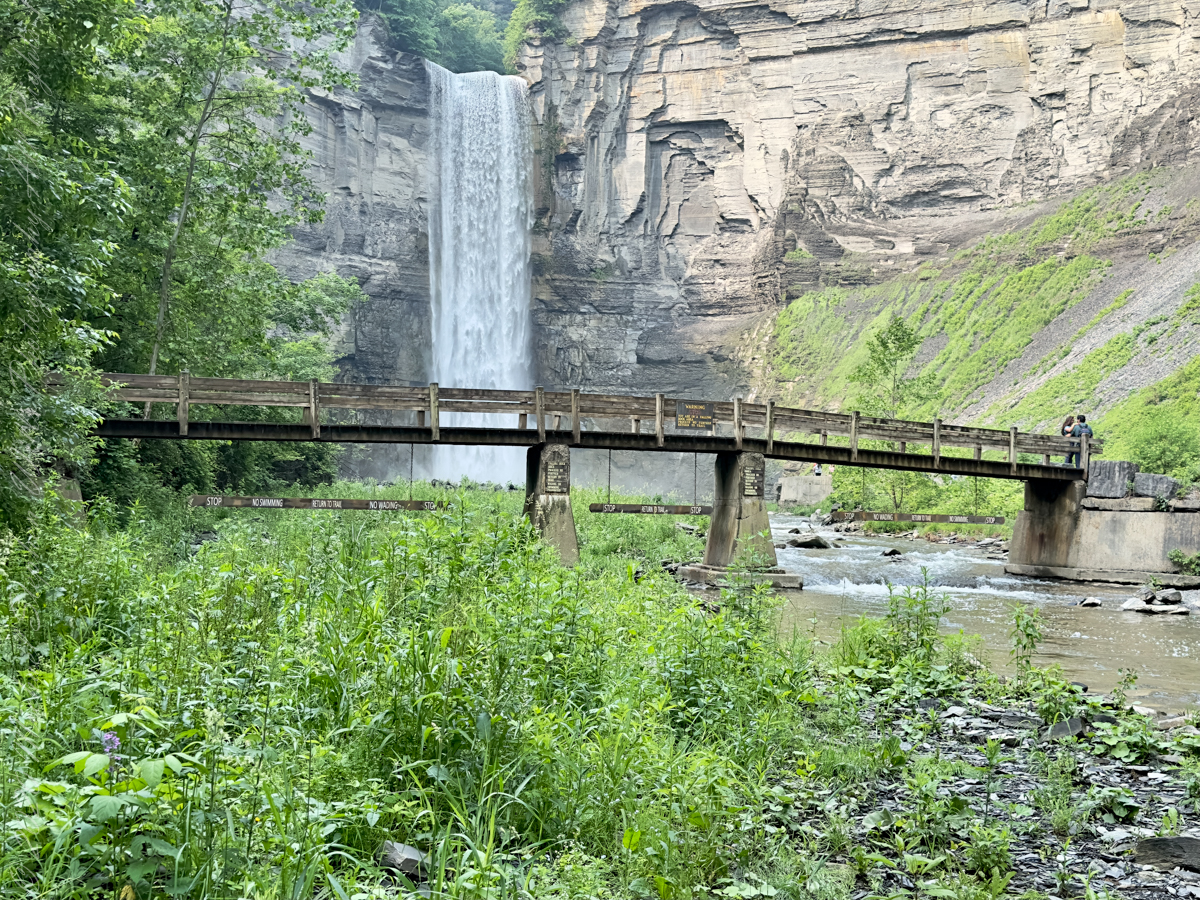
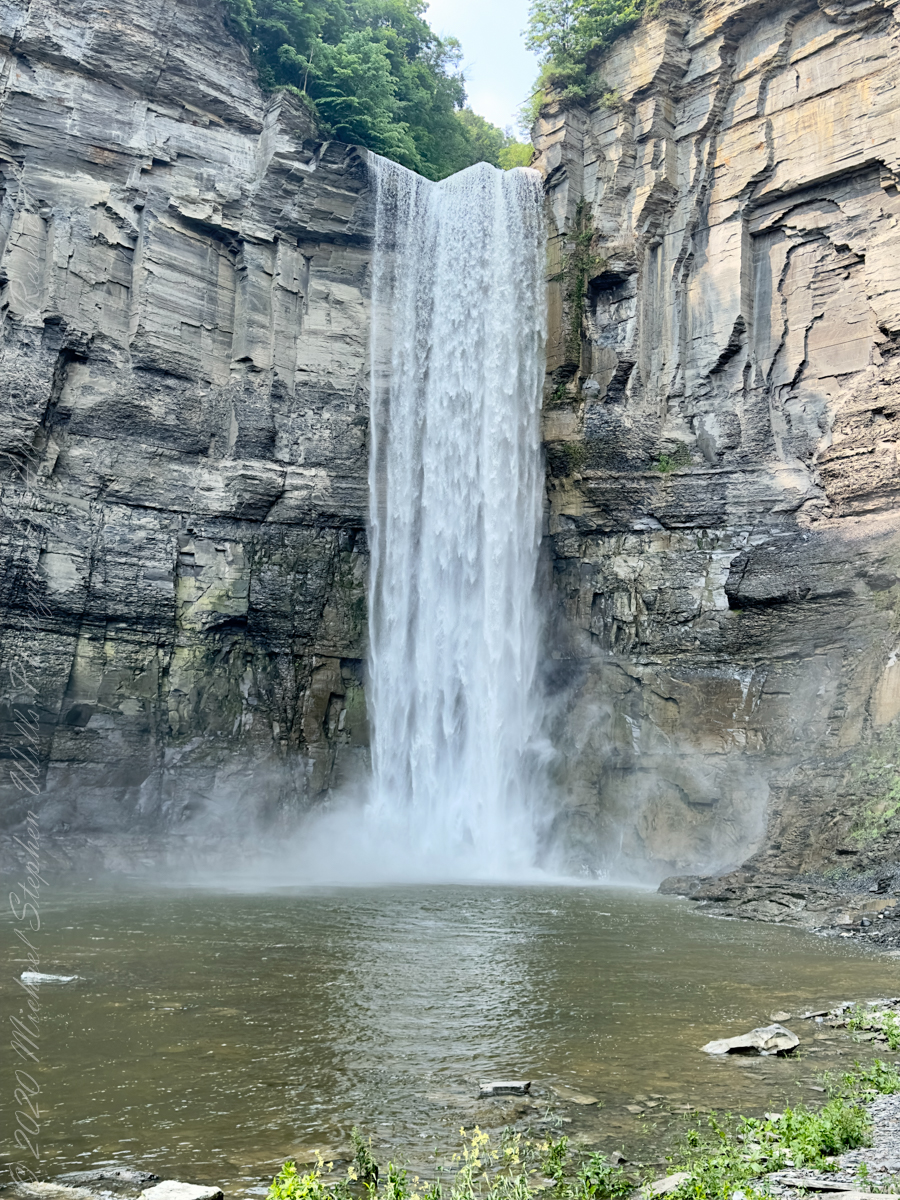
The waterfall and gorge comprise an example of a hanging valley, formed where Taughannock Creek’s stream-carved valley meets the deeper glacially carved valley that contains Cayuga Lake.
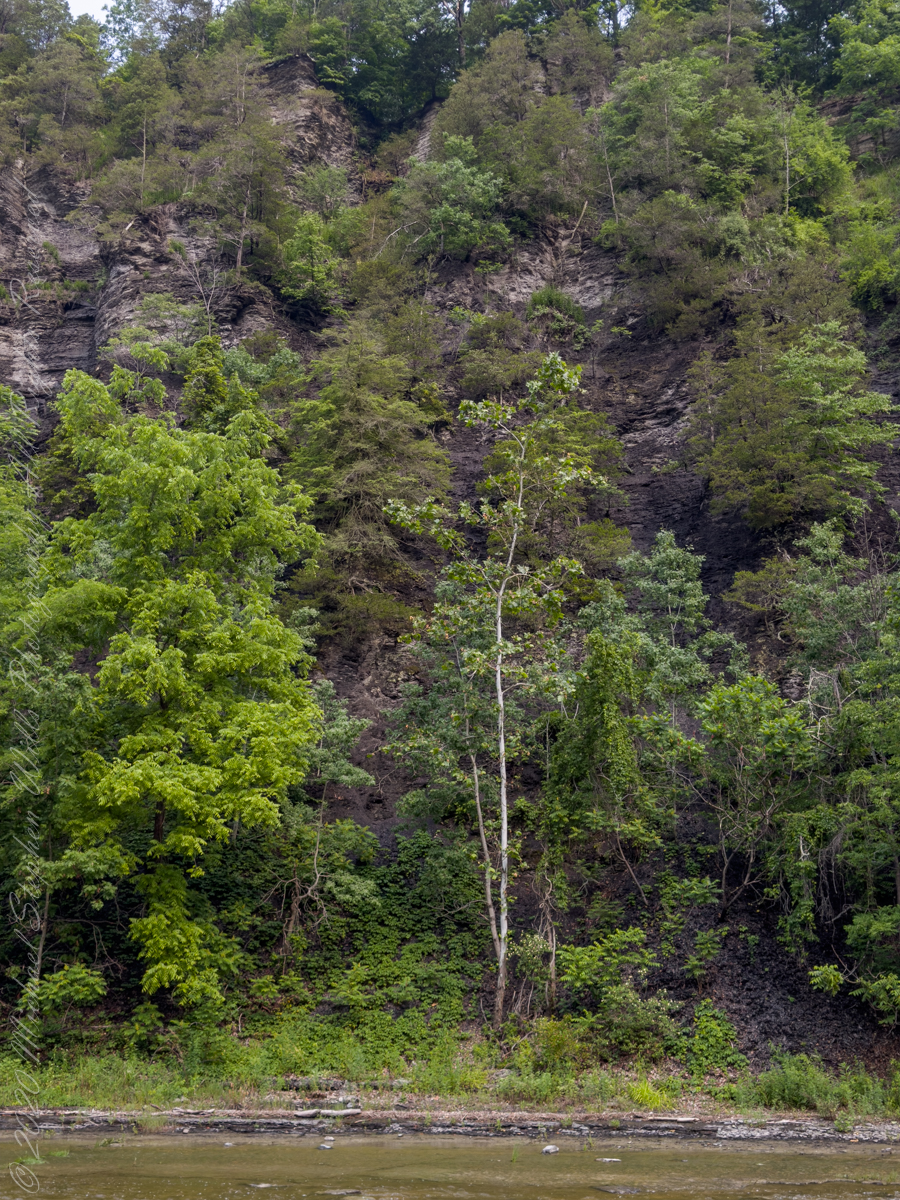
The gorge has continued to retreat westward from Cayuga Lake as easily eroded shale near the fall’s base is worn away by the stream, which supports erosion-resistant siltstone and sandstone found in the upper portions of the gorge.
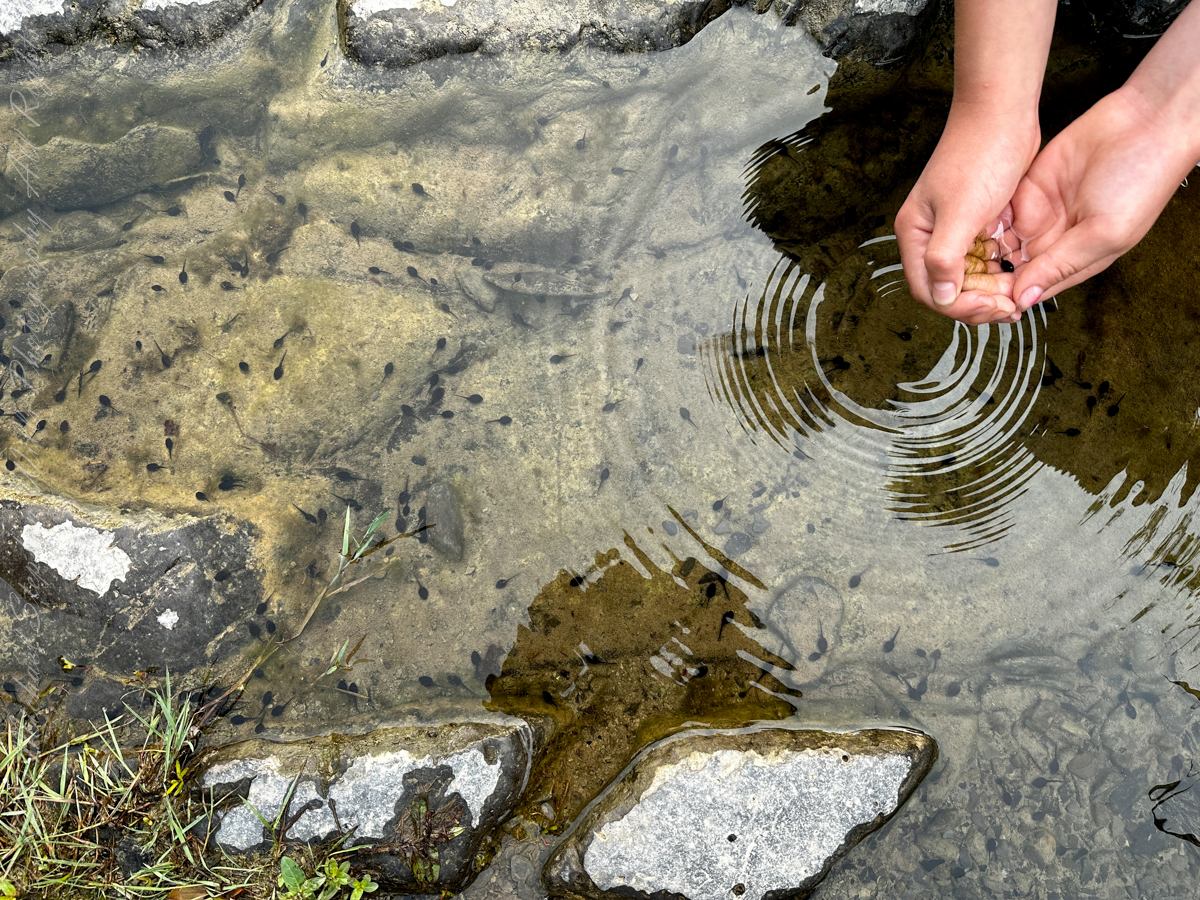
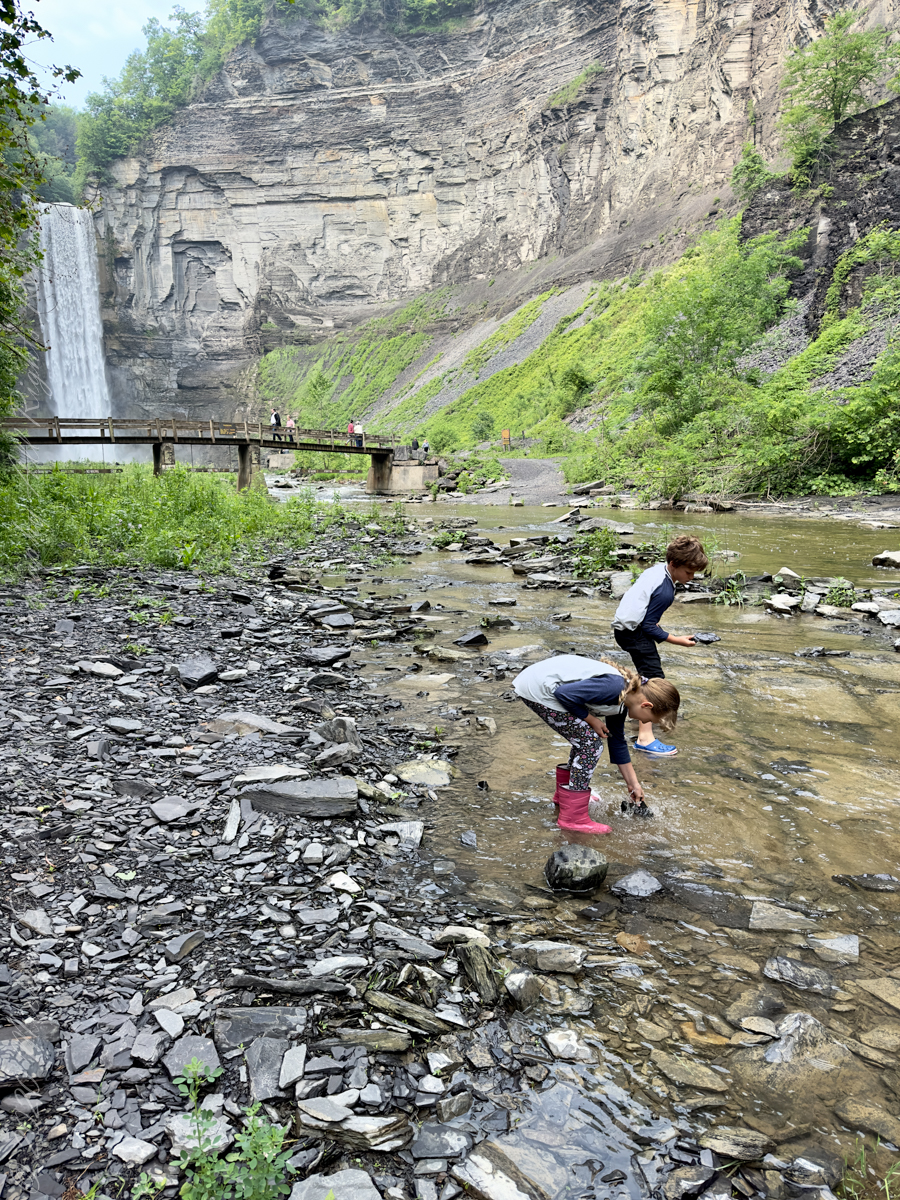
Pollywogs!! Catch and release
Annual freeze and thaw cycles also act upon small faults in the rock, causing large sections to occasionally break away, further expanding the gorge.
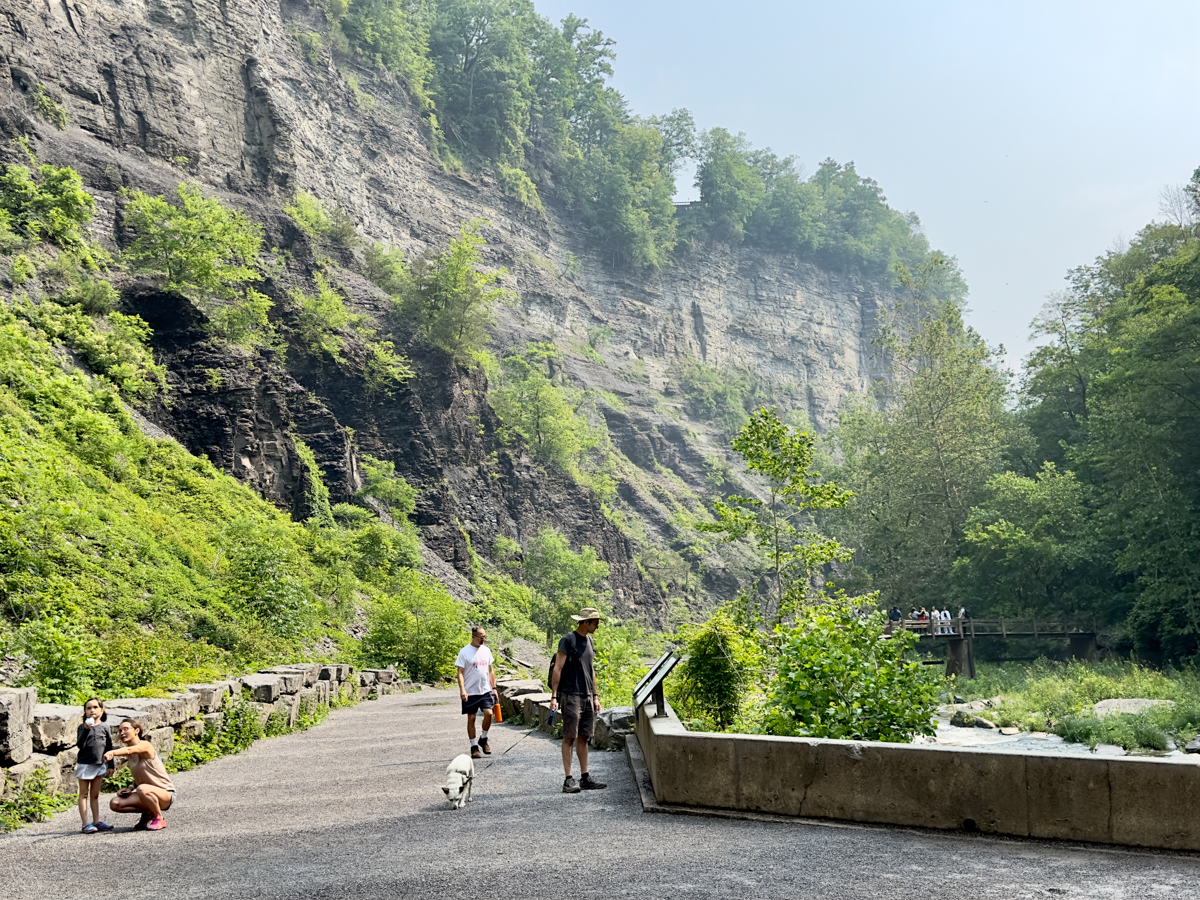
Taughannock Falls’ main cataract is a 215-foot drop (66 m), making it 33 feet (10 m) taller than Niagara Falls. It is the tallest single-drop waterfall east of the Rocky Mountains. The waterfall is located along Taughannock Creek, which flows through a long gorge with cliffs up to 400 feet (120 m) high.
Enjoy!!
Copyright 2023 Michael Stephen Wills All Rights Reserved
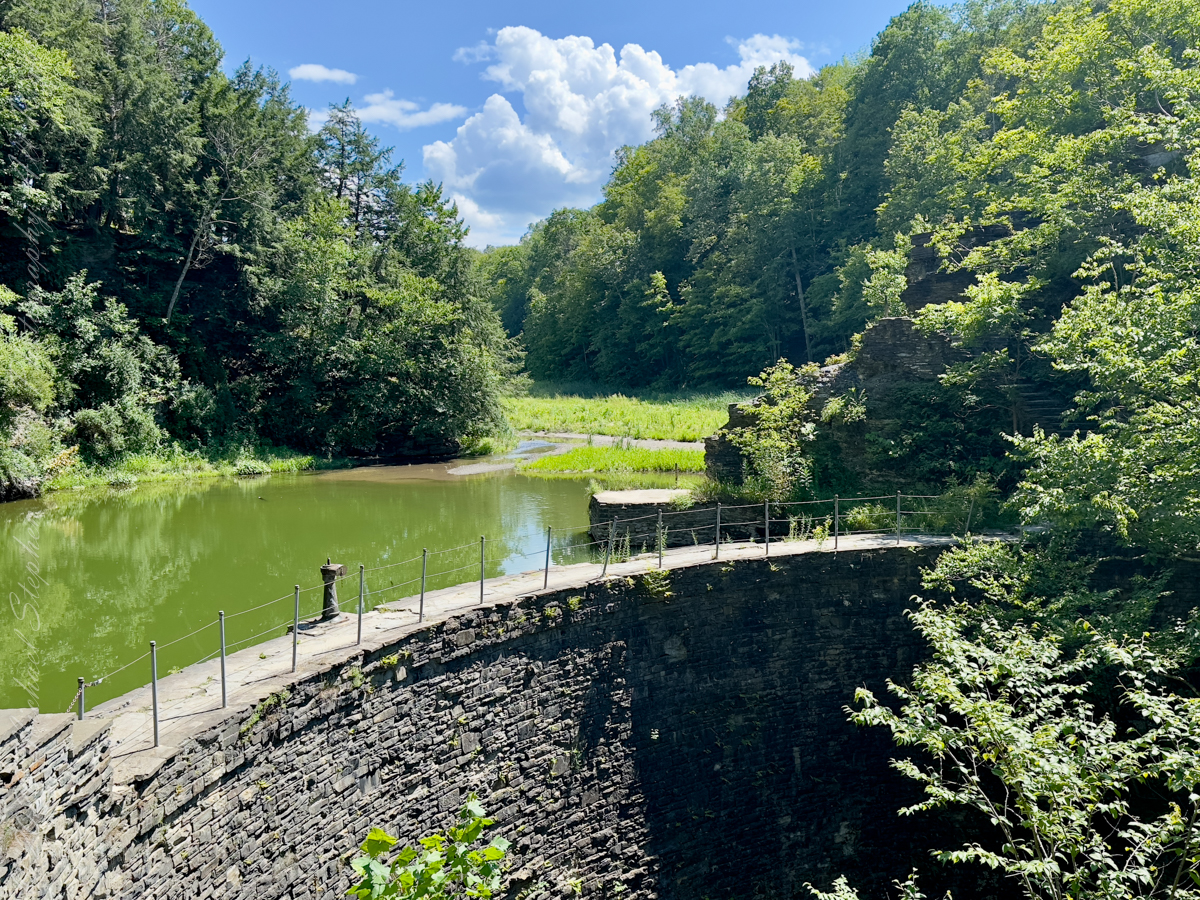
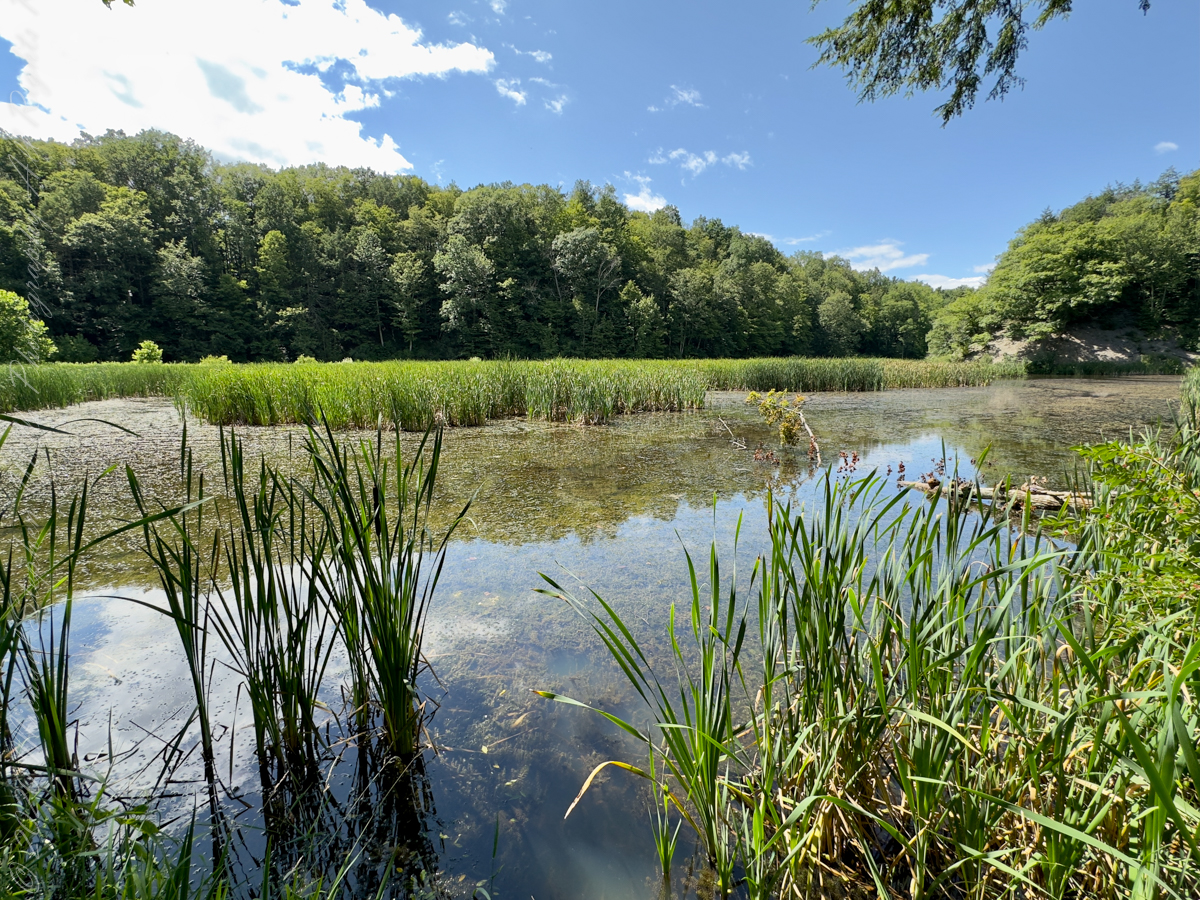
Dam on Buttermilk creek that forms Lake Treman. Here is stunning Civilian Conservation Corp (1930’s) work in this 36-foot-high stone dam that is not only a spectacle to observe but also serves as part of the trail that encircles Lake Treman. The man-made lake’s wooded shores and placid waters are a stark comparison to the gorge’s rocky cliffs and surging water
August 2023, Buttermilk Falls New York State Park, Ithaca, Tompkins County, New York.
Copyright 2023 Michael Stephen Wills All Rights Reserved
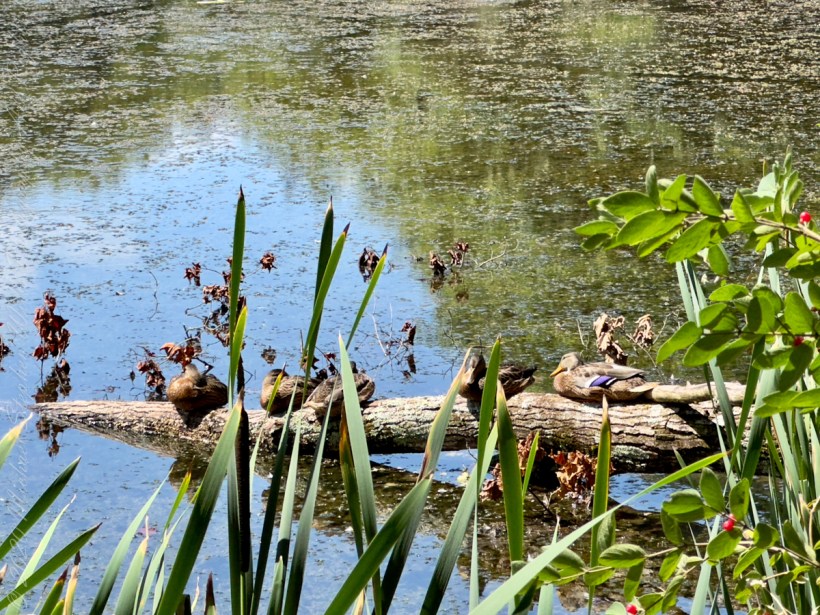
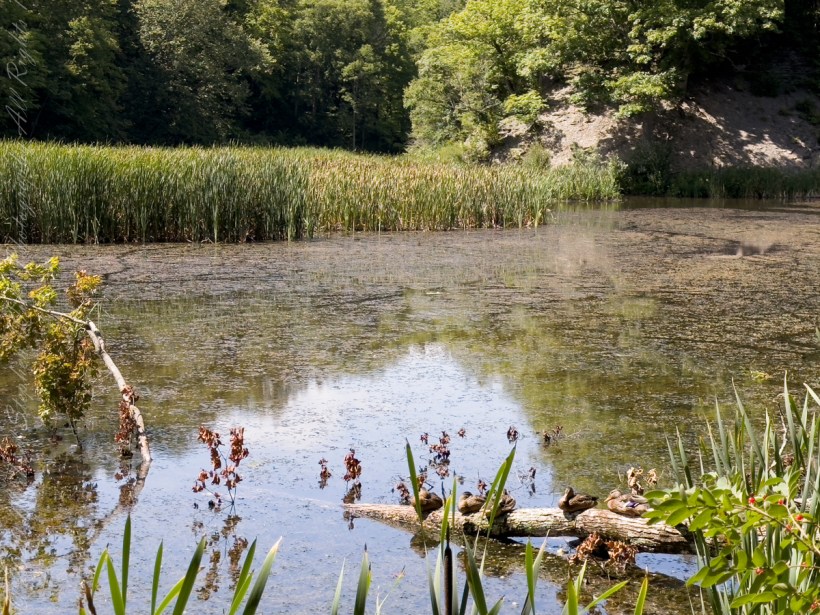
Two species of wild ducks rest on a fallen tree trunk.
That is a female Wood Duck (Aix sponsa) on right.
Wood Ducks mainly eat berries, acorns, and seeds, but also insects, making them omnivores. They are able to crush acorns after swallowing them within their gizzard.
August 2023, Buttermilk Falls New York State Park, Ithaca, Tompkins County, New York.
Copyright 2023 Michael Stephen Wills All Rights Reserved
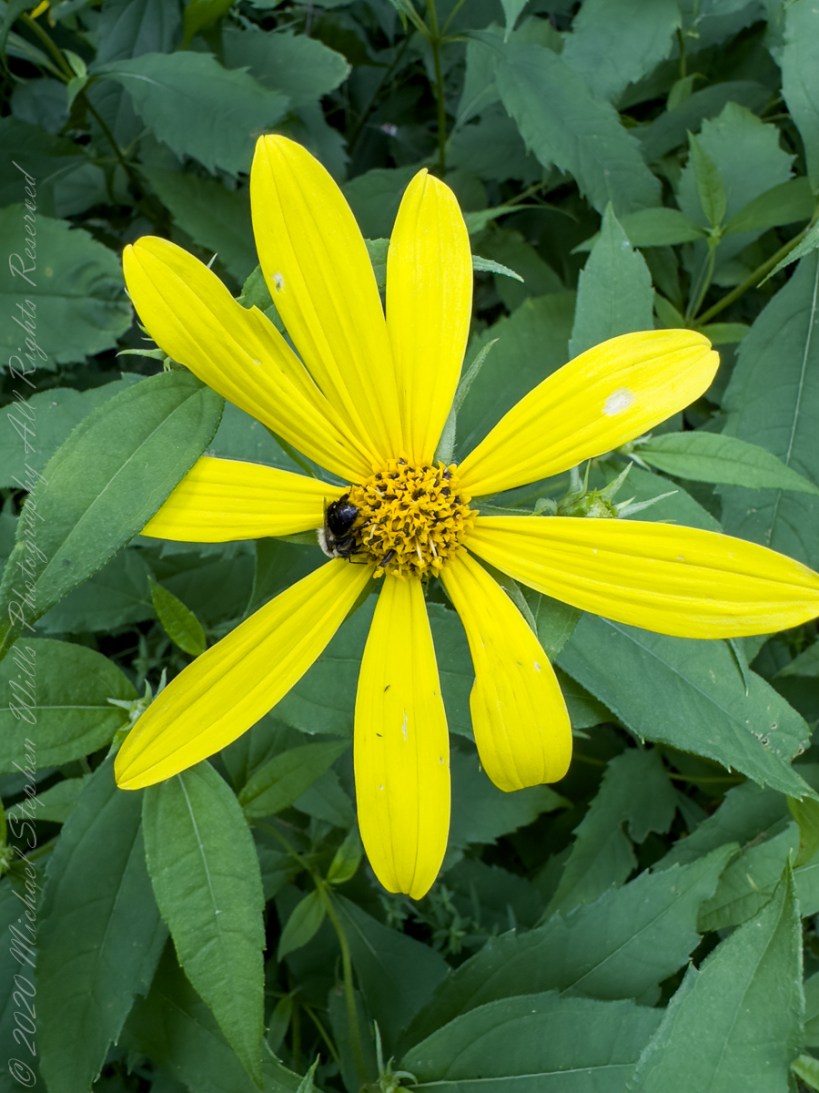
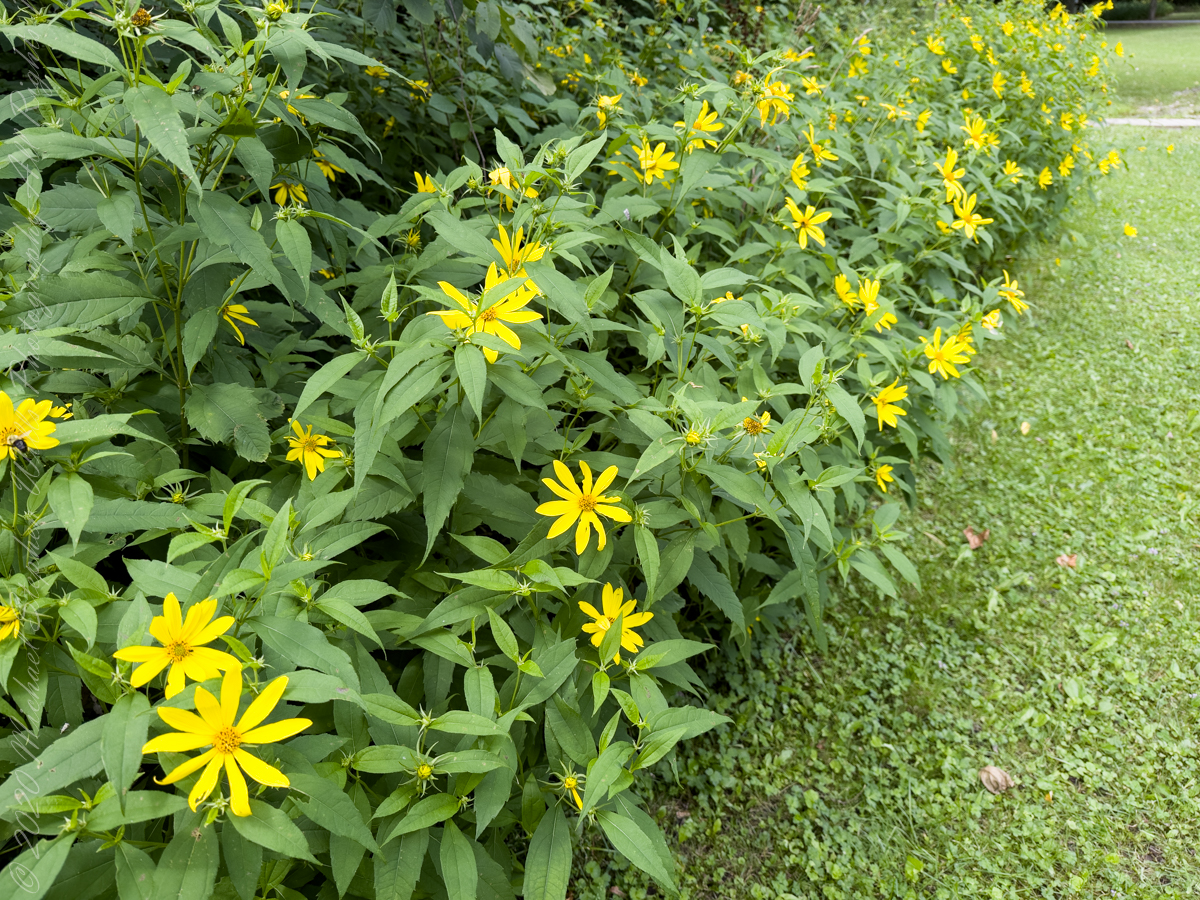
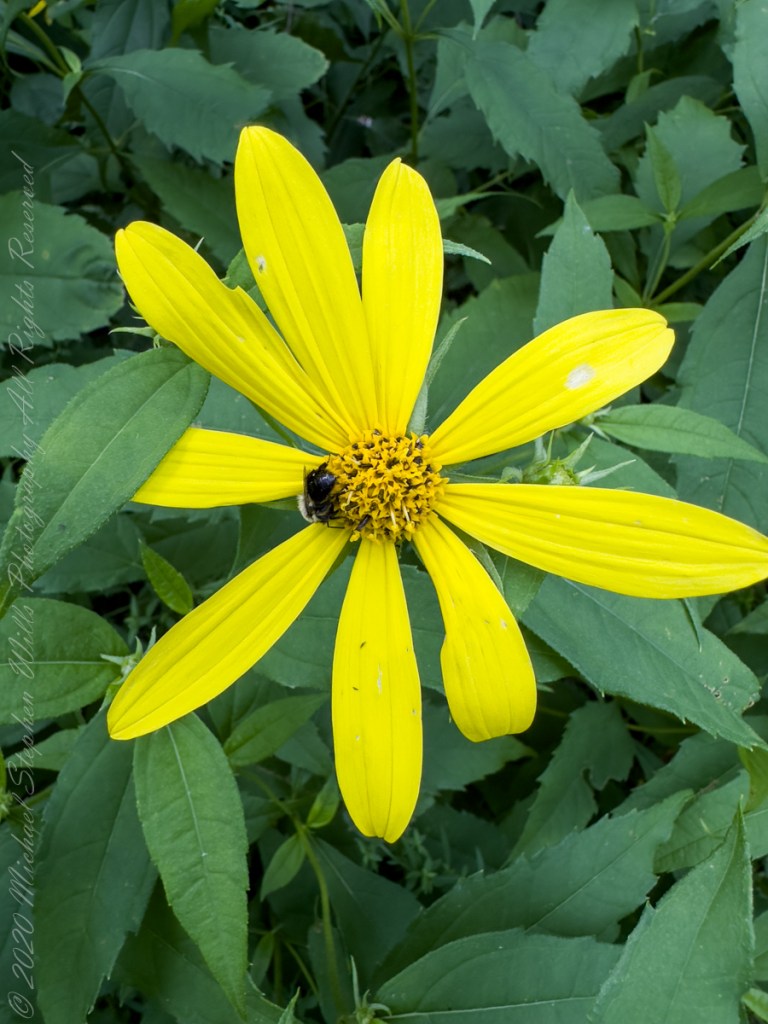
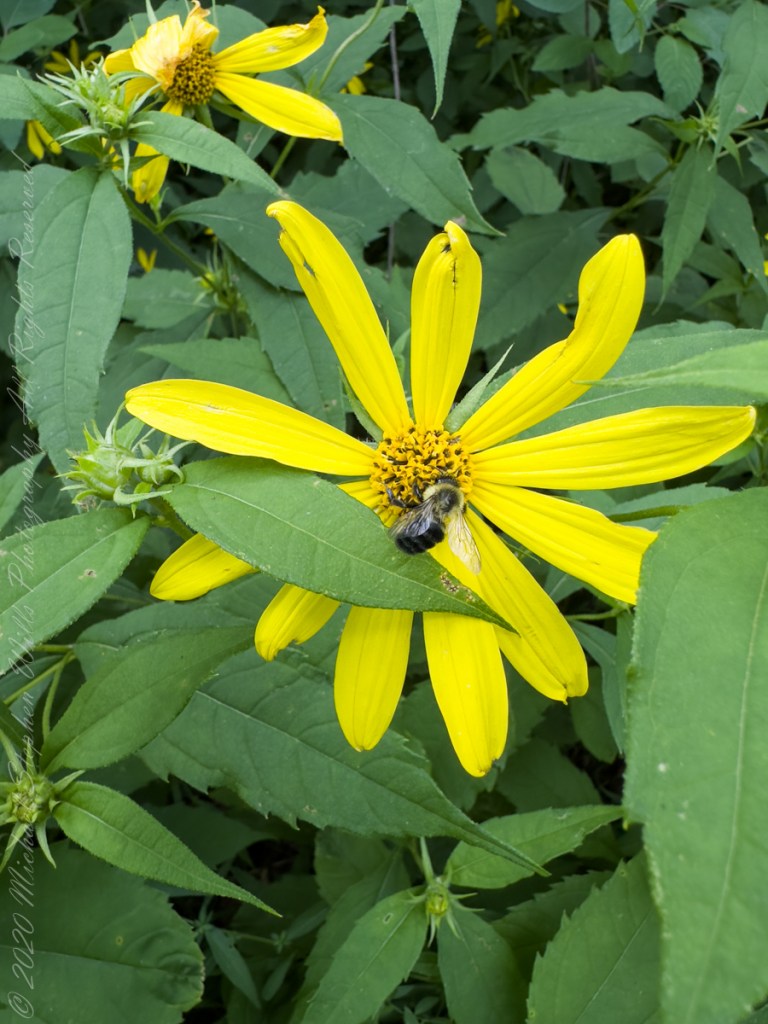
As with other members of the family Asteraceae, Thin Leaved Sunflowers are composed of ray florets. The scientific species name “decapetalus” is inaccurate on several counts. The flower is composed of 8-12 (not only 10, as in “deca”) of these ray florets, not petals. These ray florets are part of the flower reproductive organs, a flower petal is adjacent to, not a component of, a flowers reproductive parts.
The flowers attract many kinds of insects, including bees and butterflies, some of which, such as the painted lady and the silvery checkerspot, use the plant as a larval host. The seeds provide a source of food for birds. Muskrats eat the leaves and stems and use the stems in the construction of their lodges. Here we see a honeybee gathering nectar and pollen.
August 2023, Buttermilk Falls New York State Park, Ithaca, Tompkins County, New York.
Copyright 2023 Michael Stephen Wills All Rights Reserved
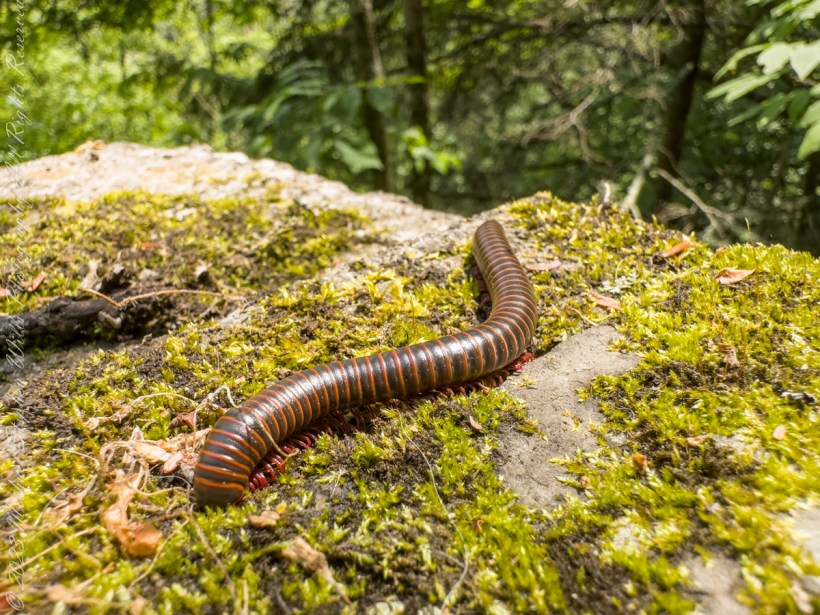
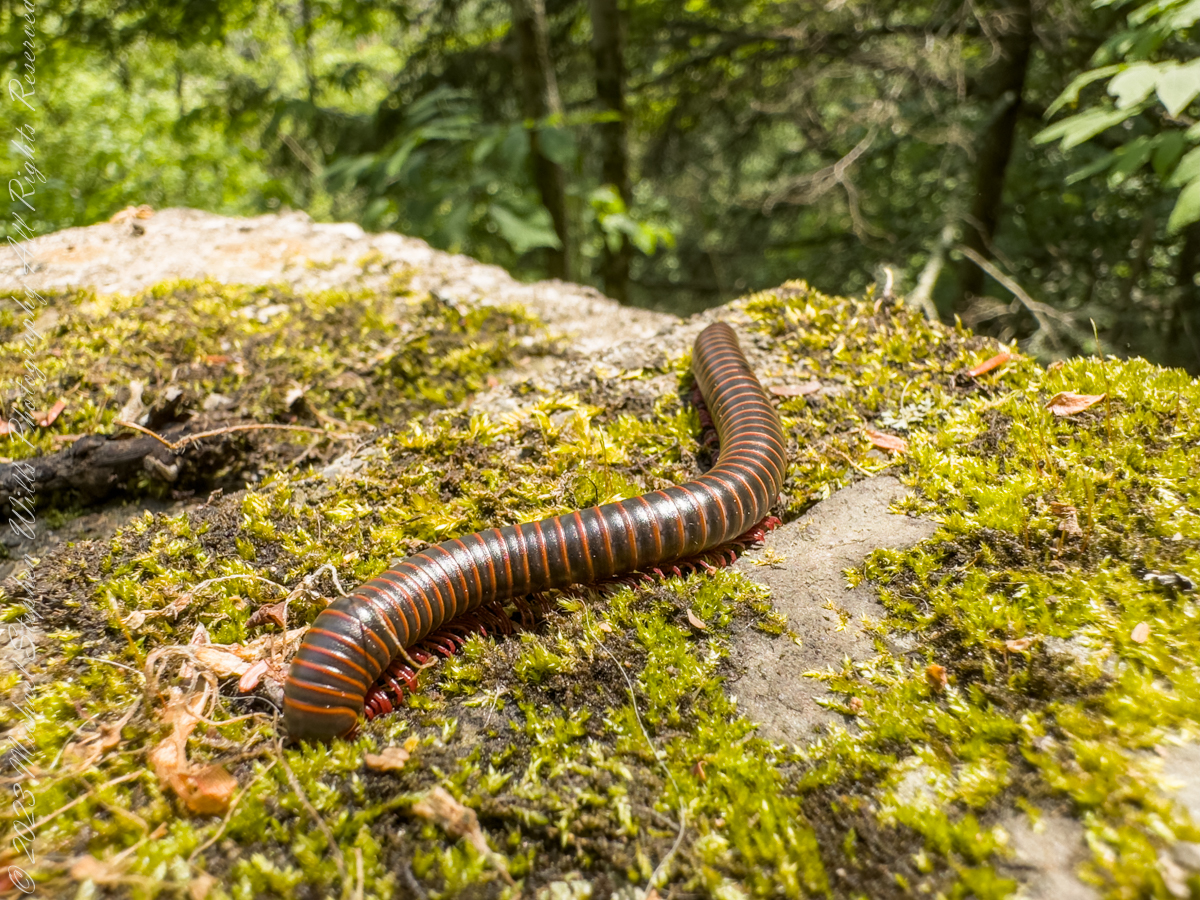
Visitors to Robert H. Treman park think nothing of crushing millipedes on the trail, it is concerning to encounter evidence of such disrespectful and boorish behavior. Here is an intact millipede I found last week. Millipedes are a group of arthropods that are characterized by having two pairs of jointed legs on most body segments; […]
Visitors to Robert H. Treman park think nothing of crushing millipedes on the trail, it is concerning to encounter evidence of such disrespectful and boorish behavior. Here is an intact millipede I found last week.
Millipedes are a group of arthropods that are characterized by having two pairs of jointed legs on most body segments; they are known scientifically as the class Diplopoda, the name derived from this feature. Each double-legged segment is a result of two single segments fused together. Most millipedes have very elongated cylindrical or flattened bodies with more than 20 segments, while pill millipedes are shorter and can roll into a tight ball. Although the name “millipede” derives from Latin for “thousand feet”, no species was known to have 1,000 or more until the discovery of Eumillipes persephone, which can have over 1,300 legs.
There are approximately 12,000 named species classified into 16 orders and around 140 families, making Diplopoda the largest class of myriapods, an arthropod group which also includes centipedes and other multi-legged creatures. Most millipedes are slow-moving detritivores, eating decaying leaves and other dead plant matter. Some eat fungi or drink plant fluids, and a small number are predatory.
Millipedes are generally harmless to humans, although some can become household or garden pests. Millipedes can be an unwanted nuisance particularly in greenhouses where they can potentially cause severe damage to emergent seedlings. Most millipedes defend themselves with a variety of chemicals secreted from pores along the body, although the tiny bristle millipedes are covered with tufts of detachable bristles. Its primary defense mechanism is to curl into a tight coil, thereby protecting its legs and other vital delicate areas on the body behind a hard exoskeleton. Reproduction in most species is carried out by modified male legs called gonopods, which transfer packets of sperm to females.
Millipedes are among the first animals to have colonized land during the Silurian period. Early forms probably ate mosses and primitive vascular plants. Millipedes also exhibit the earliest evidence of chemical defense, as some Devonian fossils have defensive gland openings called ozopores. Millipedes, centipedes, and other terrestrial arthropods attained very large sizes in comparison to modern species in the oxygen-rich environments of the Devonian and Carboniferous periods, and some could grow larger than one meter. As oxygen levels lowered through time, arthropods became smaller.
Most millipedes are detritivores and feed on decomposing vegetation, feces, or organic matter mixed with soil. They often play important roles in the breakdown and decomposition of plant litter: estimates of consumption rates for individual species range from 1 to 11 percent of all leaf litter, depending on species and region, and collectively millipedes may consume nearly all the leaf litter in a region. The leaf litter is fragmented in the millipede gut and excreted as pellets of leaf fragments, algae, fungi, and bacteria, which facilitates decomposition by the microorganisms.
Reference: “Millipede” Wikipedia
Copyright 2023 All Rights Reserved Michael Stephen Wills
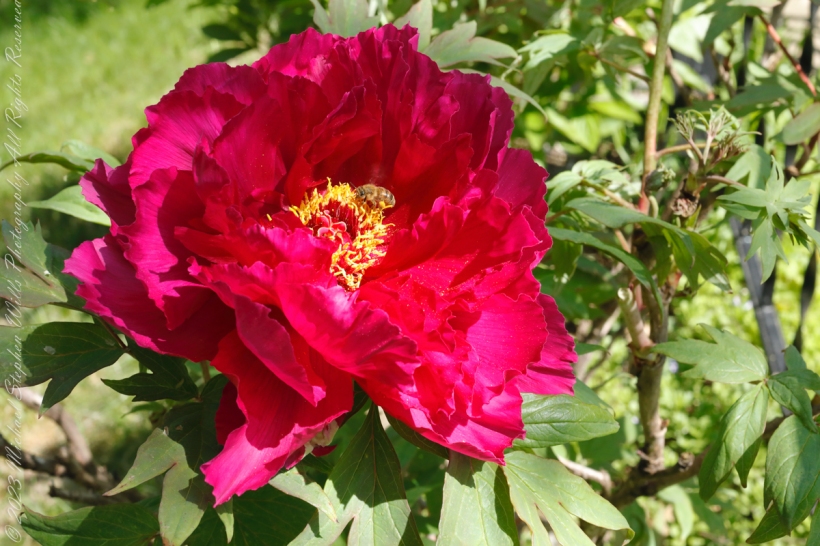
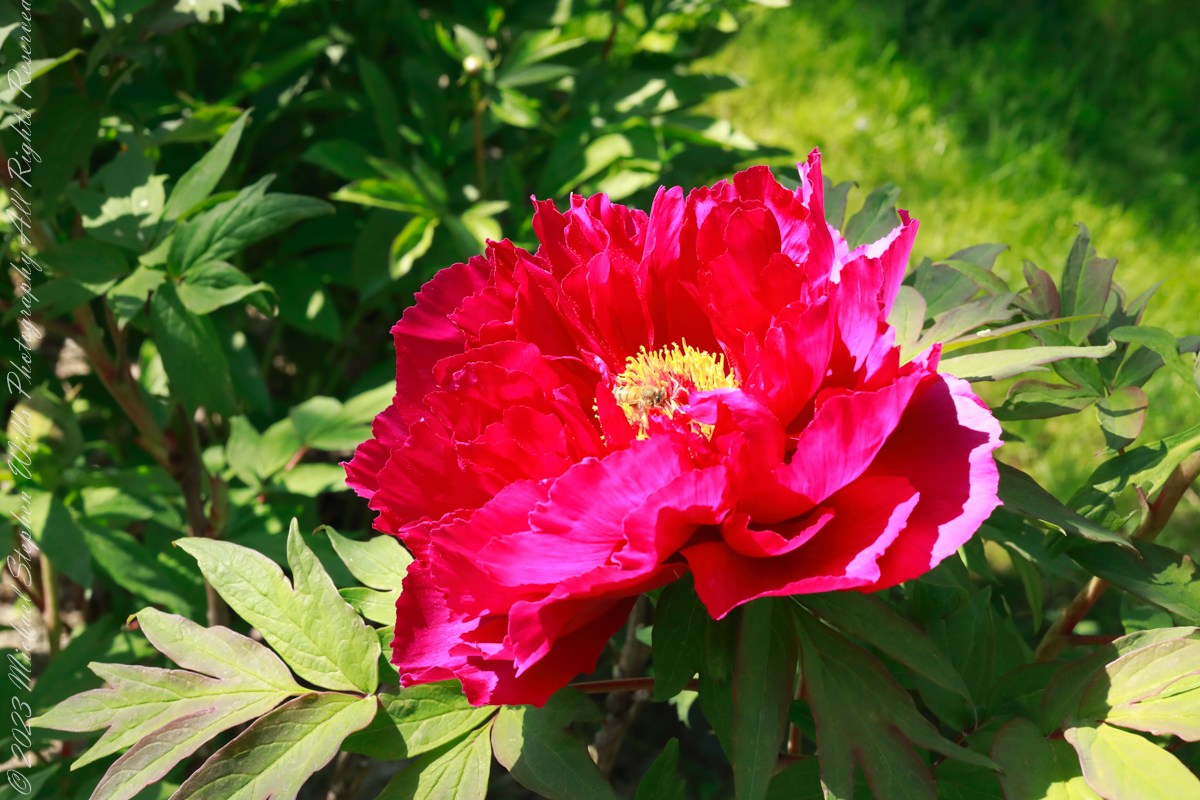
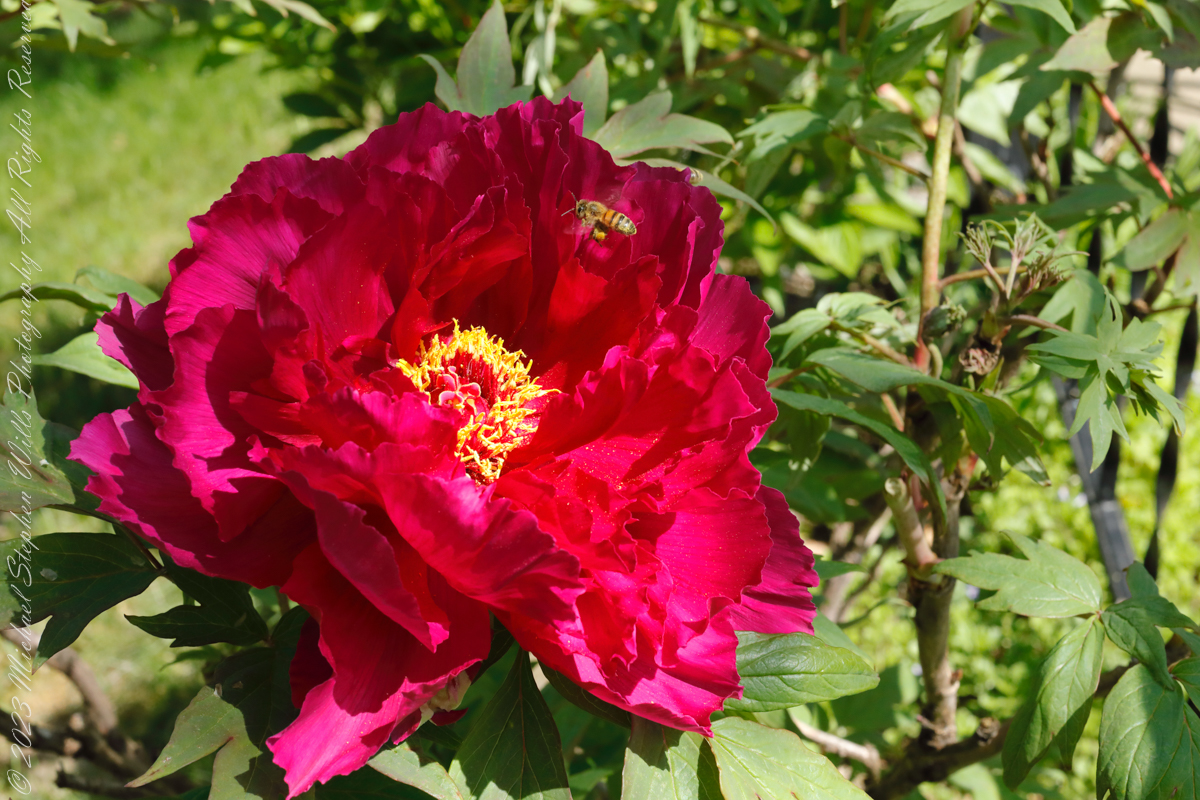
Like the previous year, spring 2022, though cold, is early. As I write this the peony blooms presented here, photographed May, 2021 are seeding. Every year, Pam and I marvel at the color. 2019 this peony was in full bloom only by the end of May, around Memorial Day.
These photographs were taken with a Canon EOS 5D Mark IV dslr, and the Canon EF 50 mm f/1.2L USM lens stabilized with the Manfrotto BeFree Carbon Fiber tripod with ball head. Color results from the Canon dslr are impressive. In prior years I favored shooting late evening in the shade with a slight underexposure. This year I experimented with full sunlight. I found a slight under exposure captured the plum – fine burgundy wine nature of this Japanese cultivar, “Shimadaijin,” planted in the 1970’s or 1980’s.
This set brings out the petal’s fiery nature. In the wild, woody (also called tree) peonies favored cliffs and scrub of western and central China, eastern Himalayas (southeastern Tibet).
ISO 1600 f16 1/320 sec
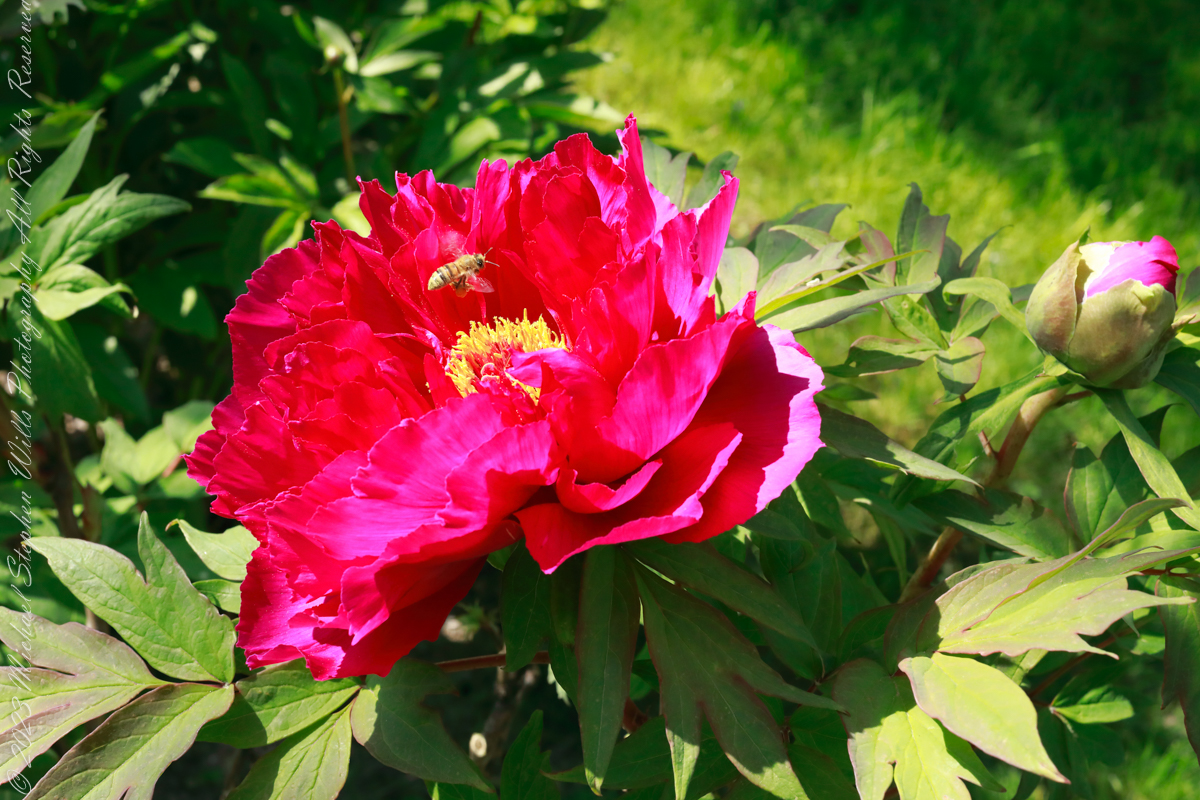
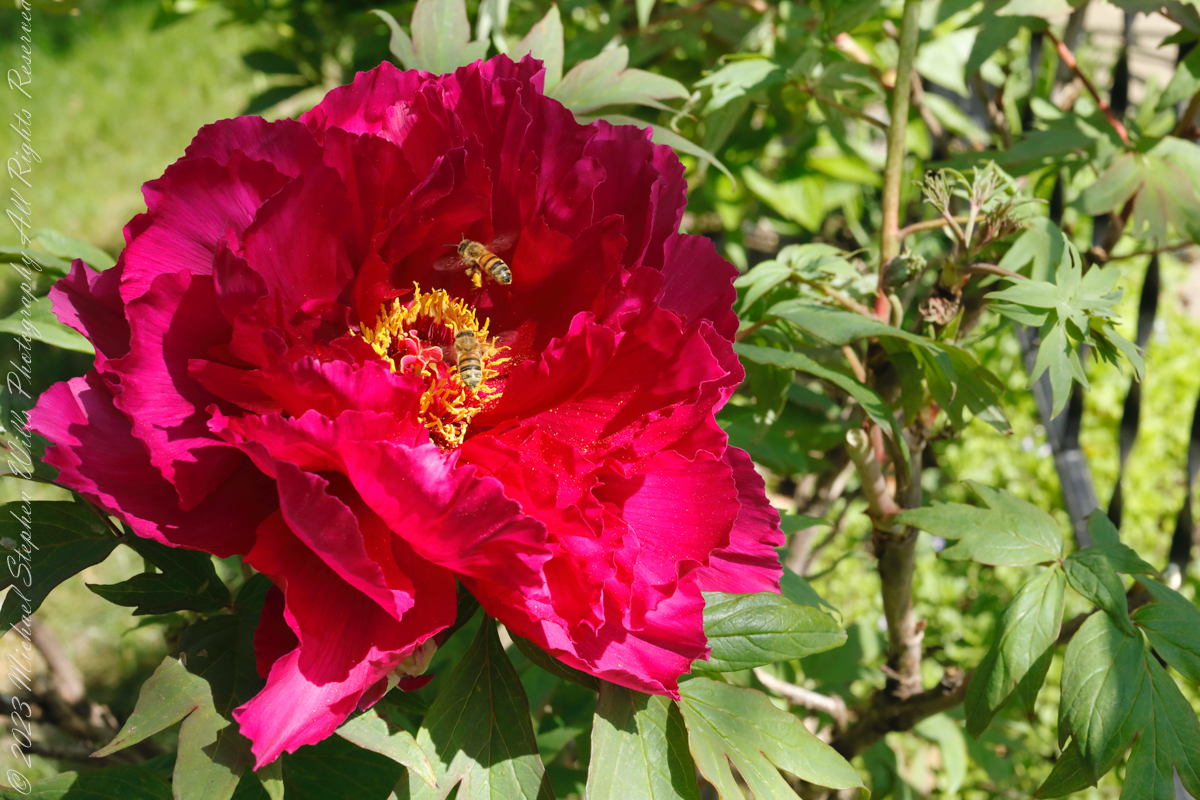
By a happy accident our neighbor’s honeybees foraged the nectar and pollen of these newly opened blooms. The woody stems hold the profusion of large flowers each one erect. “Tree” is a misnomer as this plant is a shrub growing mid-thigh high. One of the classic ornamental genera of China, known there as moutan or hua wang “King of Flowers.”
ISO 1600 f16 1/320 sec
Cultivation in China began in Chekiang in the early 4th century AD. By the early Tang period (circa 700 AD) hundreds of varieties were grown.
ISO 1600 f16 1/320 sec
The bees happily rolled around among the stamens, notice their full pollen sacs.
ISO 1600 f16 1/320 secISO 1600 f16 1/250 sec
References
Roger Philips and Martyn Rix, “The Botanical Garden, Vol 1, Trees and Shrubs” p 133
Wikipedia “Magenta” color
Copyright 2023 All Rights Reserved Michael Stephen Wills
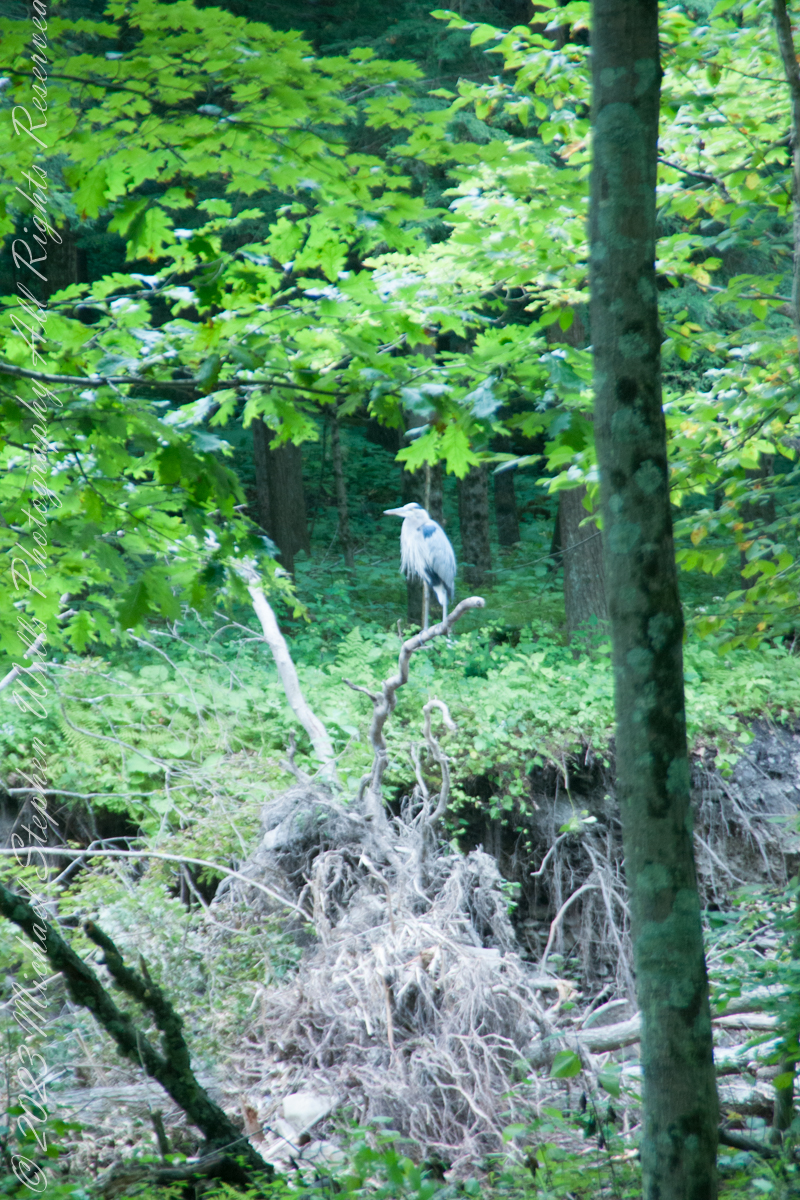
A Great Blue Heron spotted from Bear Trail during a family hike, perched on a splayed root of a tree undercut by flooding, fallen into Buttermilk Creek bed.
A heron recurves its long neck while perched. Adult herons have few natural predators and are rarely preyed upon due to their large size and sharp beak, but bald eagles (Haliaeetus leucocephalus) are known to attack great blue herons at every stage of their lifecycle from in the egg to adulthood.
Copyright 2023 Michael Stephen Wills All Rights Reserved
As with other members of the family Asteraceae. Thinleaved Sunflowers are composed of ray florets. The scientific species name “decapetalus” is inaccurate on several counts. The flower is composed of 8-12 (not only 10, as in “deca”) of these ray florets, not petals. These ray florets are part of the flower reproductive organs, a flower petal is adjacent to, not a component of, a flowers reproductive parts.
Found growing August 24, 2019 along a sunny trail, The flowers attract many kinds of insects, including bees and butterflies, some of which, such as the painted lady and the silvery checkerspot, use the plant as a larval host. The seeds provide a source of food for birds. Muskrats eat the leaves and stems and use the stems in the construction of their lodges. Here we see a honeybee gathering nectar and pollen.
August 20129, Buttermilk Falls New York State Park, Ithaca, Tompkins County, New York.
Copyright 2023 Michael Stephen Wills All Rights Reserved








 Michael Stephen Wills Photography