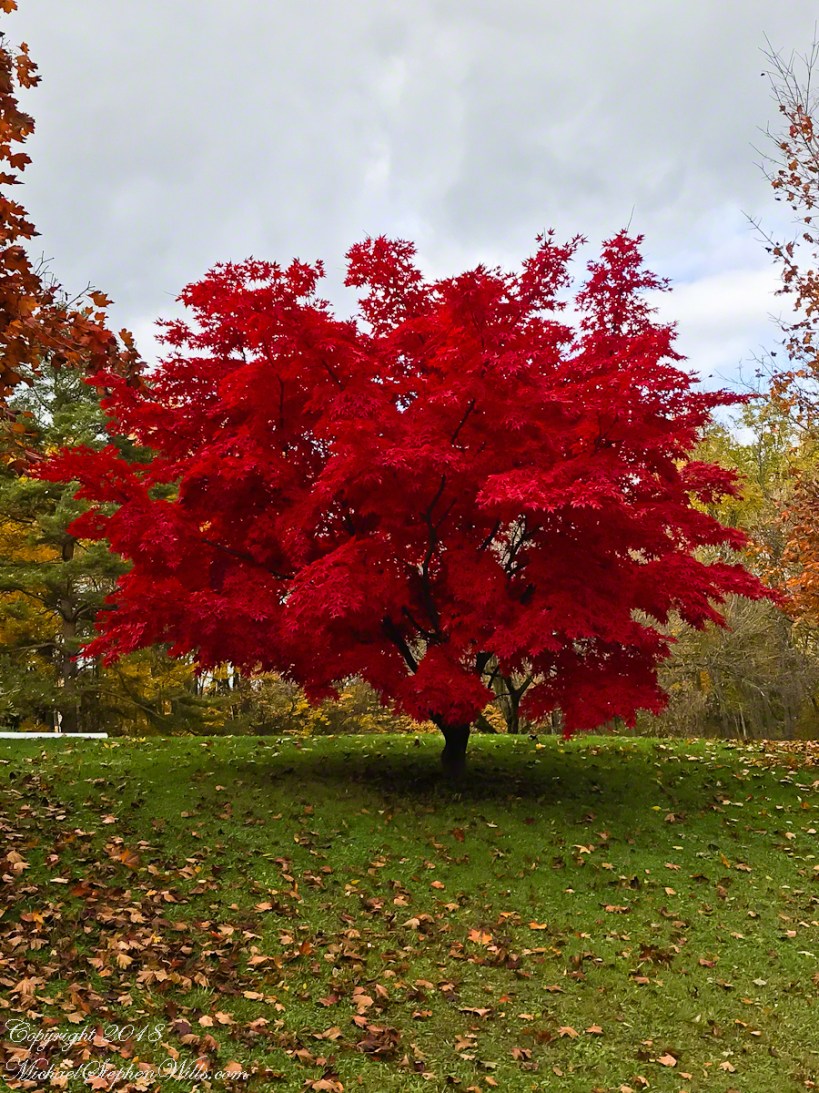
Red Near and Far

Yesterday, Pam and I headed to the peneplane behind our home to enjoy the Finger Lakes terrain graced by fall colors.  The day before I noticed the Japanese Maple leaves had turned from maroon to vermillion.  While waiting for Pam to get ready, I capture the following two shots.

Click the link for my Fine Art Photography Galleries
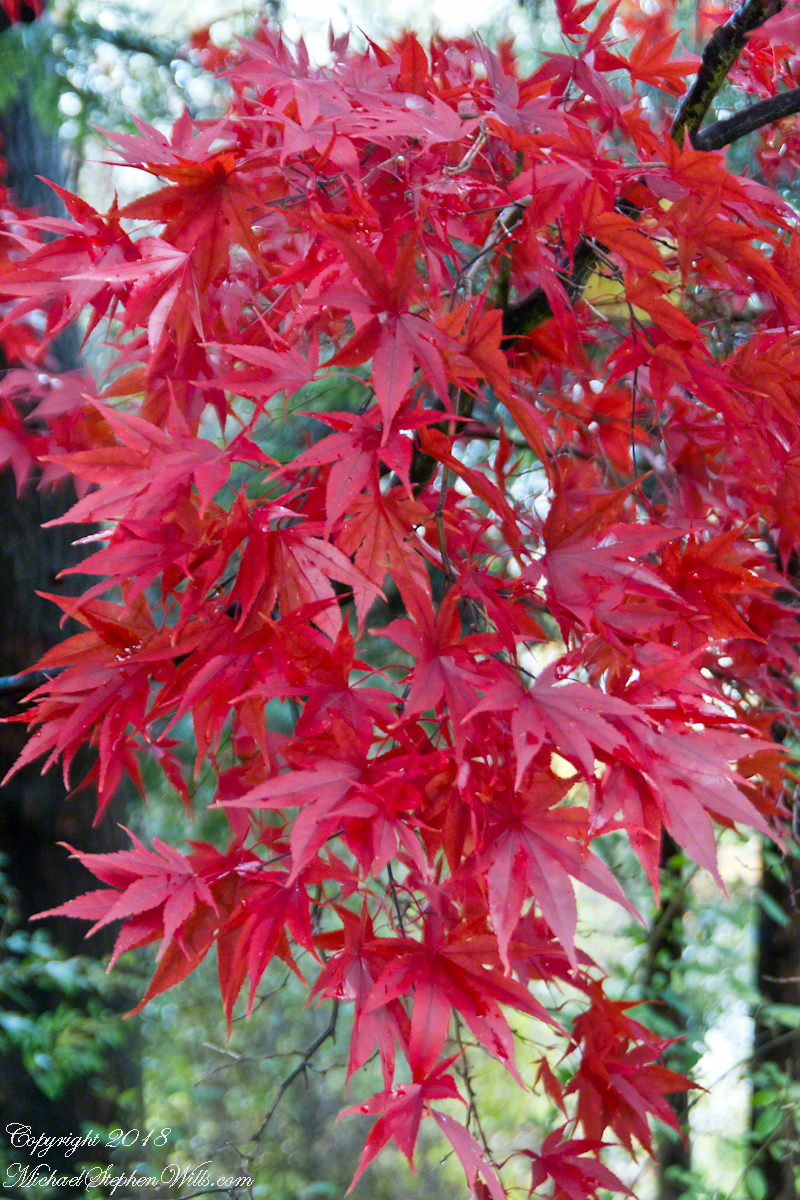
RedNearAndFar-7

This tree was planted by my father and mother in-laws.  Developed over the centuries by the Japanese, specimens reached England in the 1820 and spread from there.  It is not strictly accurate to call the color vermillion, since cinnabar finely ground produces the pigment for which the color is named, when the sun strikes the leaves vermillion is a metaphor for the impression made.

The scientific name for these trees is Acer palmatum with common names Palmate Maple (for the shape of the leaves “like a palm tree”, as for the scientific name), Japanese Maple or Smooth Japanese-Maple (for the bark).

Click the link for my Fine Art Photography Galleries
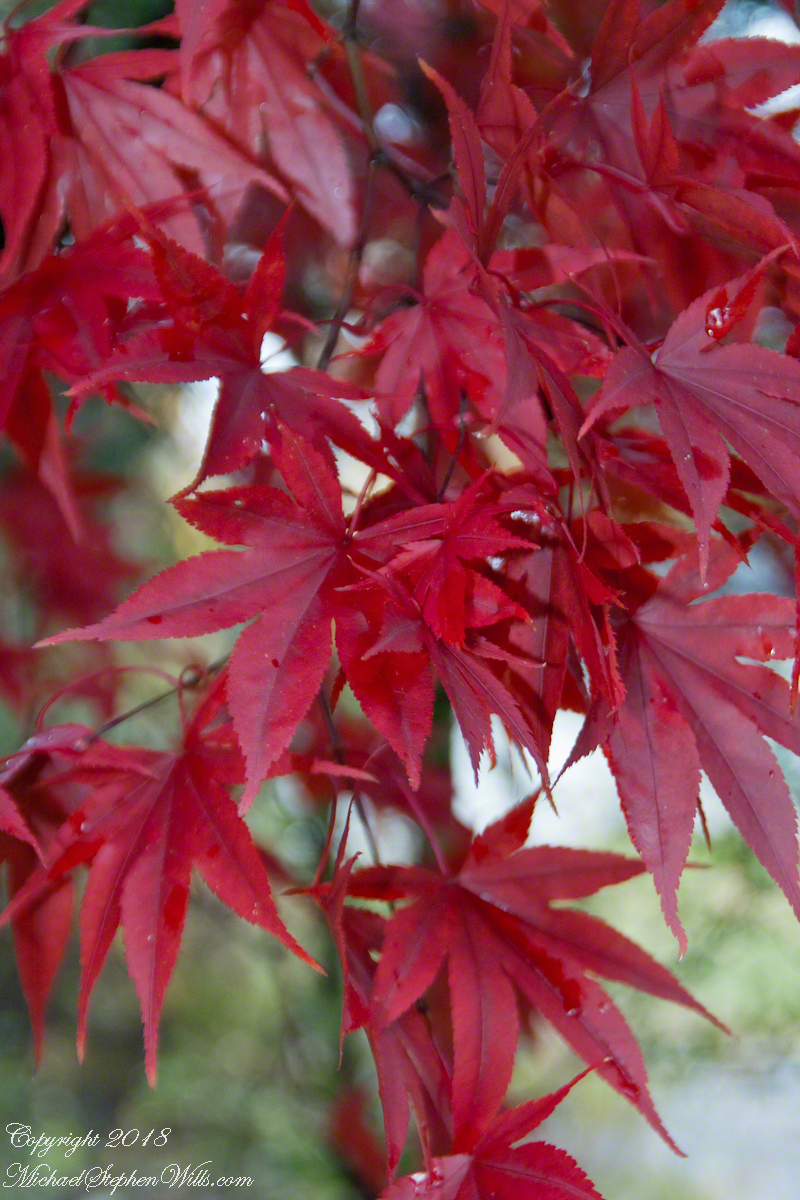
RedNearAndFar-6

We drove under the clouds, enjoying the rare dramatic shafts of sunlight and I gave up, finally, tying to time my shots.  Here is the view from Connecticut Hill.
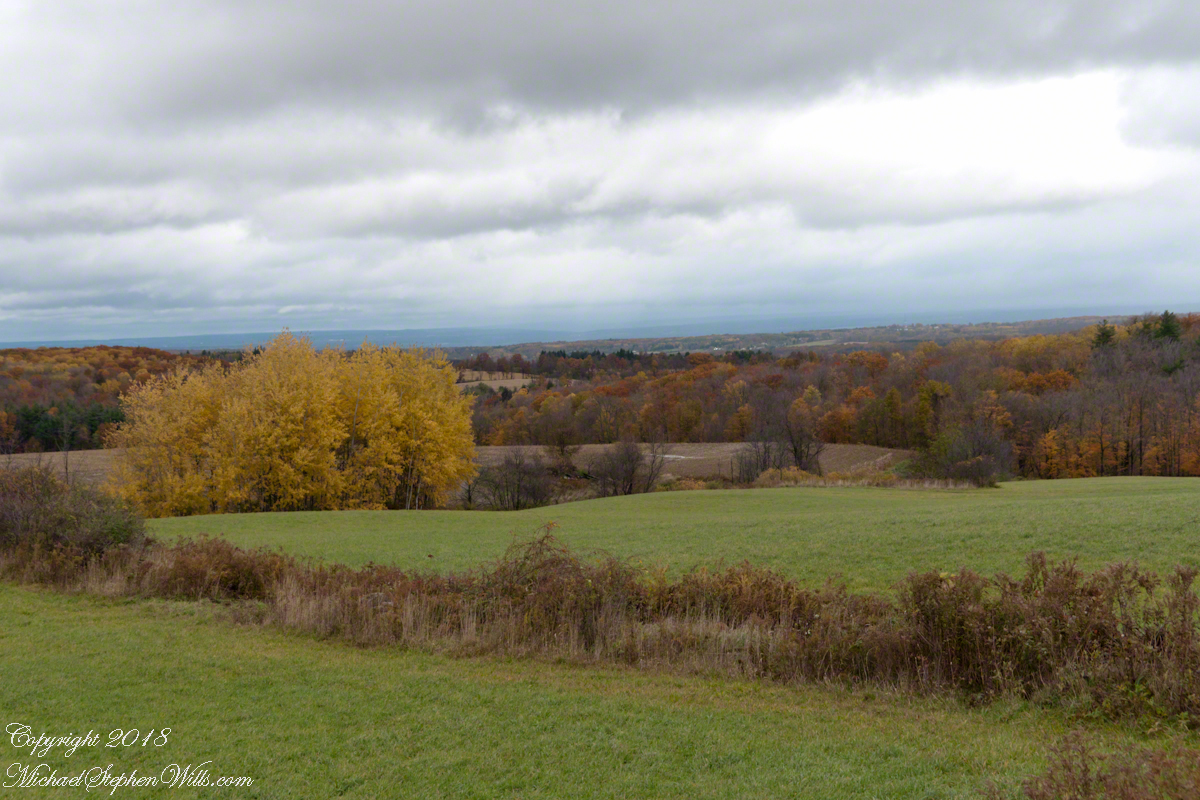
RedNearAndFar-1

The previous photos were taken with a hand held Sony Alpha 700 with variable lens.  The next two are with an Apple iPhone I had a hand when Pam and I returned home for a walk around the neighborhood to witness the transformations.

We were surprised by this orange maple, never recalling this shade before.  Like our Japanese Maple were assume it is a non-native ornamental.

Click the link for my Fine Art Photography Galleries
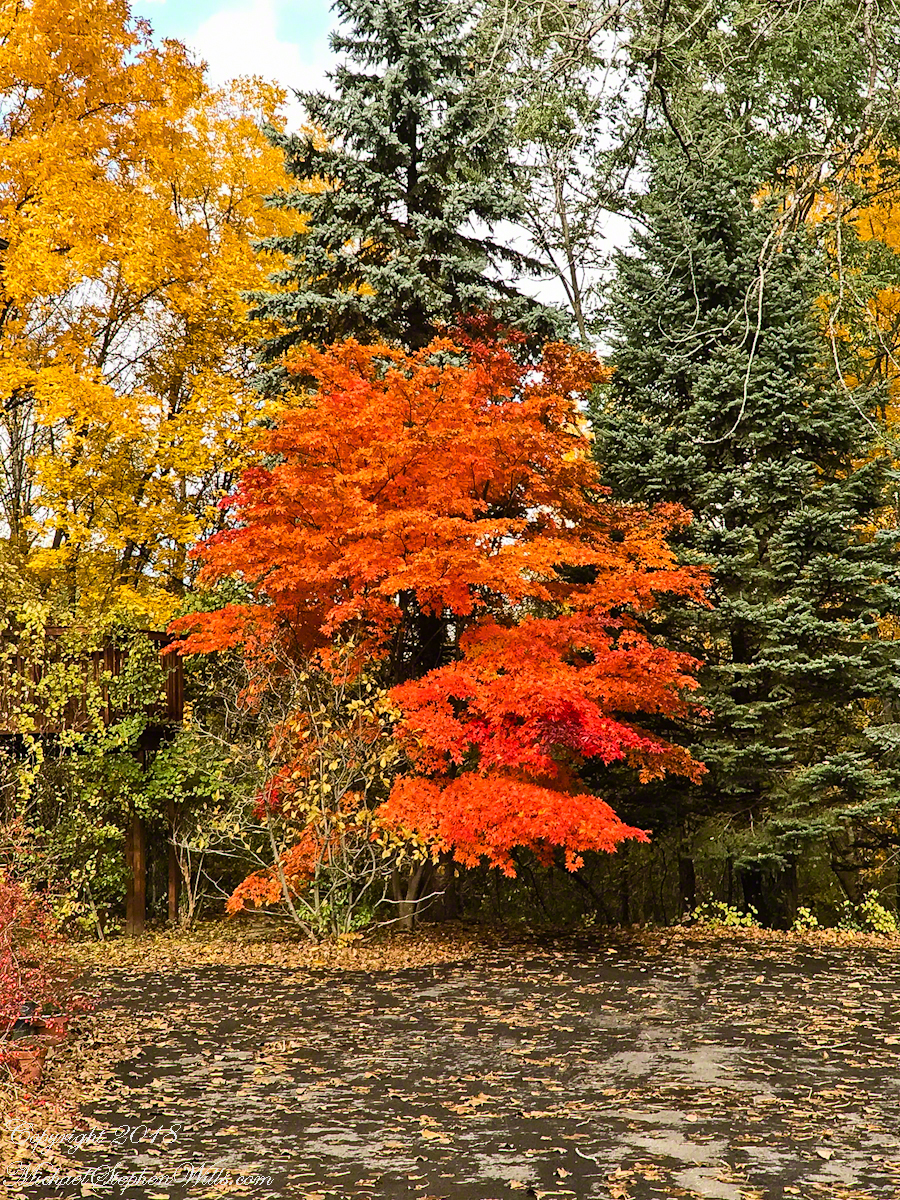
RedNearAndFar-2

Our Japanese Maple is a challenge to capture photographically as it grows beneath a larger “nut” (don’t recall the kind at the moment) tree.  We are working together to improve that, so I don’t have an overall photograph.

Here is our neighbor’s Japanese Maple.  They have a story of carrying this tree, as a sapling, on the bus from Long Island.   I love the impression of dark limbs among the clouds of red foliage. 

RedNearAndFar-3

This photograph (the “far” of the “near and far”) is from a remote corner of Chiricahua National Monument, during the trip mentioned in my post, “History and Ghosts of the Triangle T Ranch”.  To get there, I drove over a mountain pass to a location was featured in an “Arizona Highways” I read long ago.

I call this photograph “Red Dragon,” the formation is known as a “maple “

dragon”, from the long sinuous form of the tree limb.  Known for this reddish orange autumn color, this is a Big Tooth Maple, AKA Canyon Maple.  Scientific Name Acer grandidentatum (as in “big tooth”).  It is a wild specimen, living along the north fork of Cave Creek.  It is a area well know to avid bird watchers and ornithologists.

Click the link for my offering of this photograph in my Fine Art Galleries
RedNearAndFar-8

The camera was my Kodak, DSC slr-c with a Canon 50 mm lens mounted on a tripod.

Copyright 2021 All Rights Reserved Michael Stephen Wills
Cascadilla Gorge Walks: Scenic Views and History

An 84-degree October walk up Cascadilla Gorge—quiet paths, bluestone porches, fresh paint on the bridge—waiting for the footbridge to catch the last, warm evening sunlight.

Every fall I make a point of walking Cascadilla Gorge at least once. On an 84-degree October 9 afternoon, Pam was tied up with chores, so I parked downtown and stopped to see the grandchildren. They were with their mom. Two were “too tired” after school to do anything. The youngest, at the age of four, was not yet in school and he floated the idea of the skateboard park; for me, that wasn’t in the cards. So I set off on foot up Court Street, past the residence of Buddhist monks at the gorge entrance.

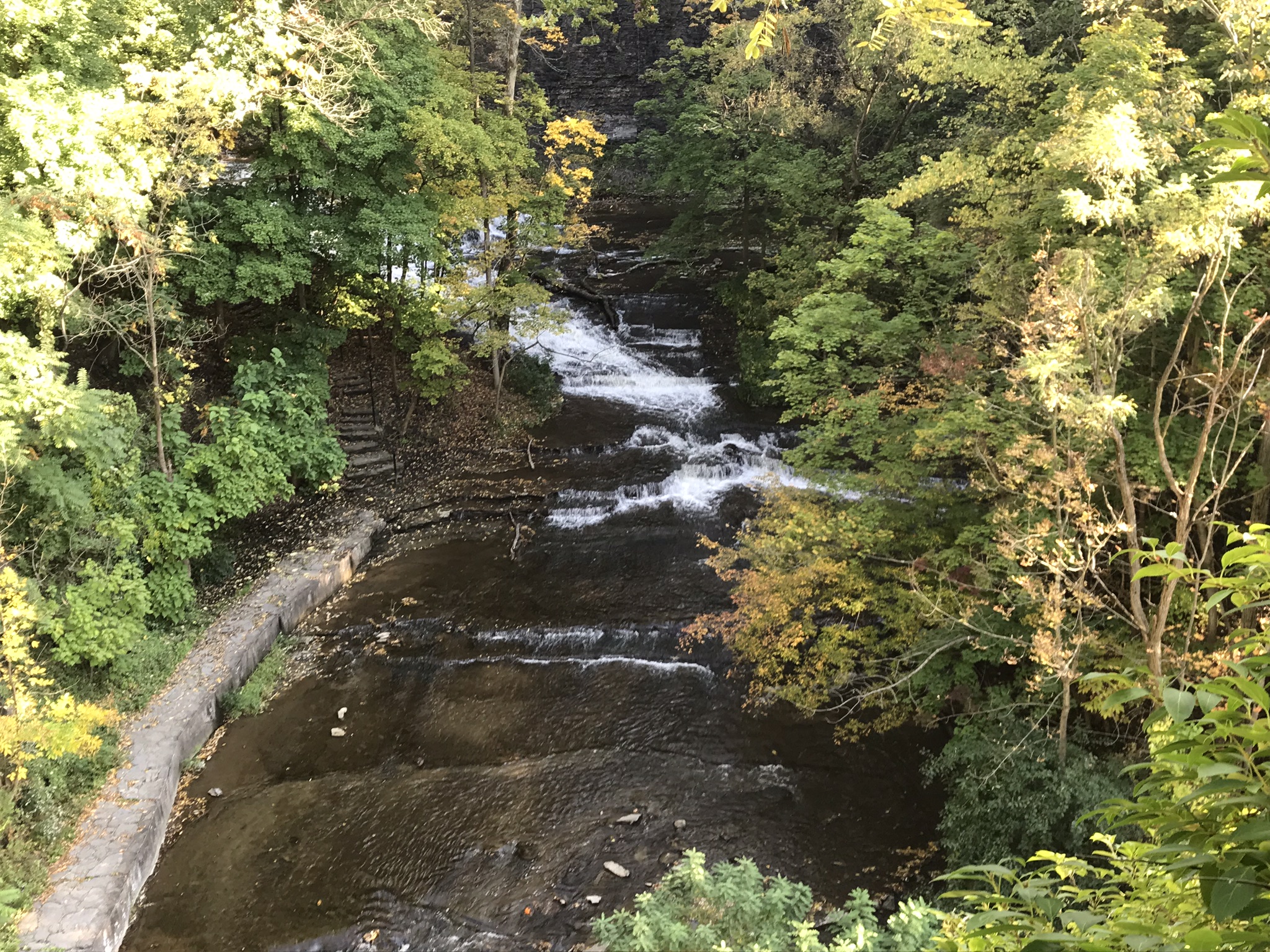
Cascadilla Gorge is part of Cornell Botanic Gardens (formerly the Plantations), the university unit that stewards natural areas and gardens across campus. Foot traffic was light. A sign explained why: the lower trail was closed at Stewart Avenue, where the bridge spans the ravine. I crossed to the north side by the Christian Science church and wound up Cascadilla Park Road to the rim trail that climbs East Hill toward campus.

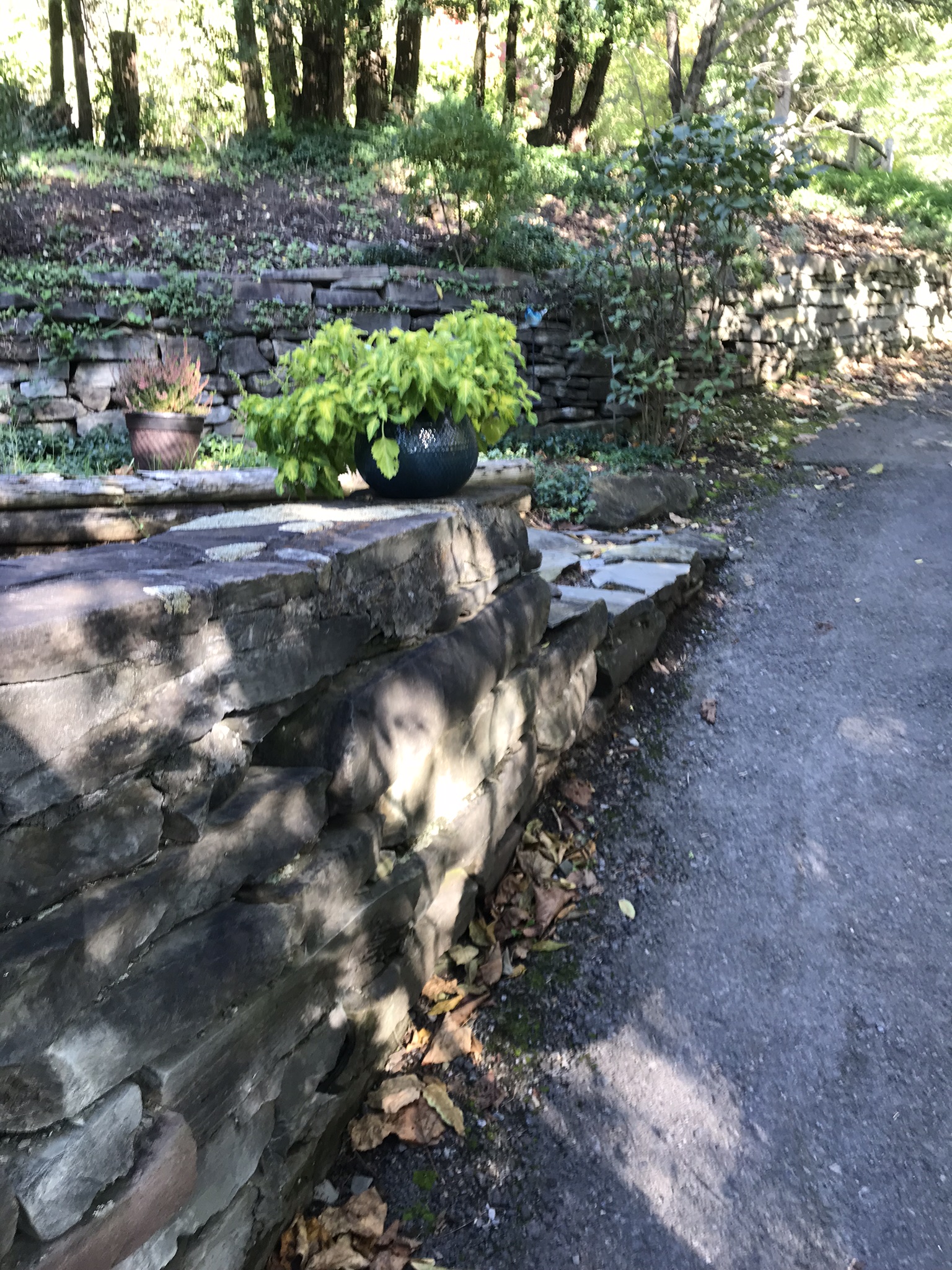
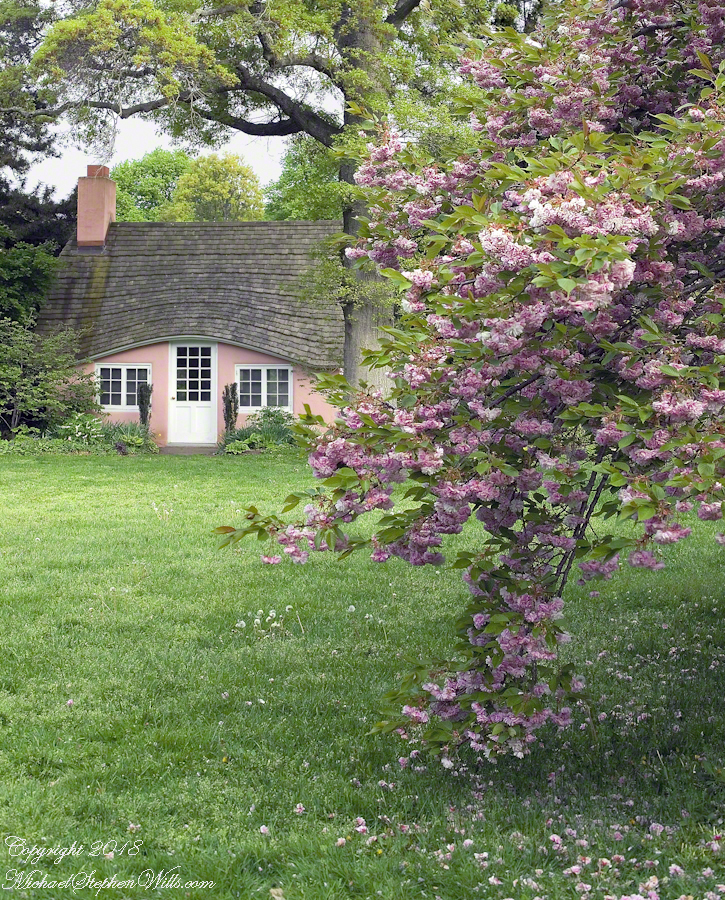
Homes line this stretch, porches facing the gorge where the constant music of creek and falls carries up. Not feeling ambitious, I made a few phone snapshots. Here the path squeezes past a porch built of local “bluestone,” a feldspathic sandstone native to the region—around town it’s sometimes called “Llenroc,” Cornell in reverse.

That pot you see in the previous photo gets a closer look here, with more of the same weathered bluestone.

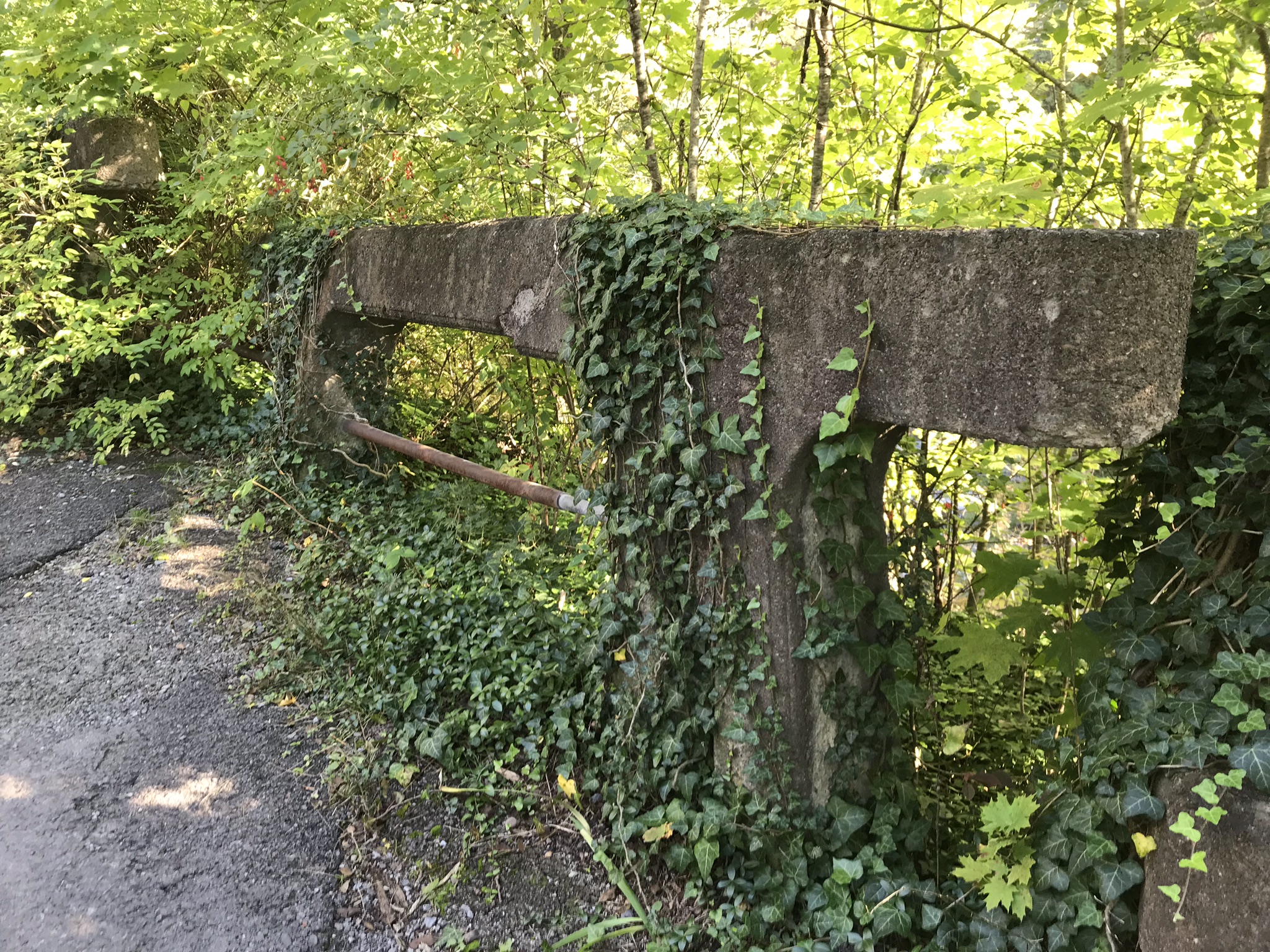
The drop to the gorge floor is steep, sheer in places. The barrier fence looks stout in some sections and thins to almost nothing in others. A few years ago, a recent Cornell graduate walking home late along this path fell to his death. I continued to the fork for the Ithaca City Cemetery, climbed to Stewart Avenue, turned right to cross the Cascadilla bridge, then right again onto the Gorge Rim Trail back toward town. At the bridge I noticed part of the closure work: fresh paint on the bridge and on the suicide-prevention netting beneath. On September 24—just fifteen days earlier—a Cornell senior had jumped; the net caught him, and the fire department brought him to safety.

From the concrete barrier in that photo you can peer into the gorge: a beautiful view, the steady voice of water rising from below. I try to leave the darker stories where they belong—at least until the sight of fresh paint pulls them back to mind.

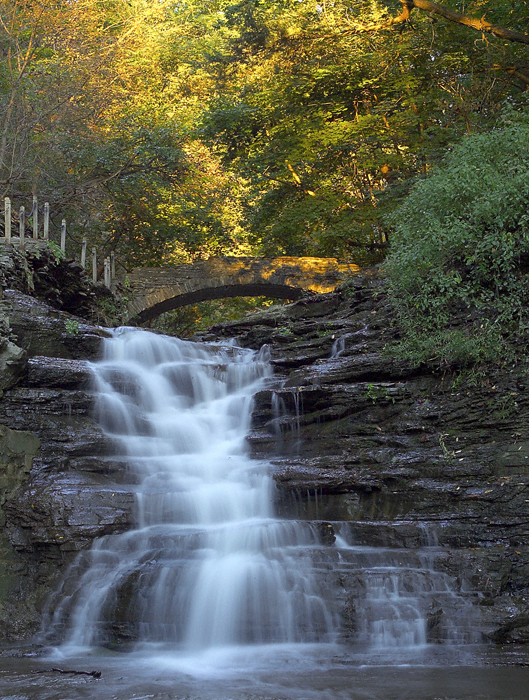
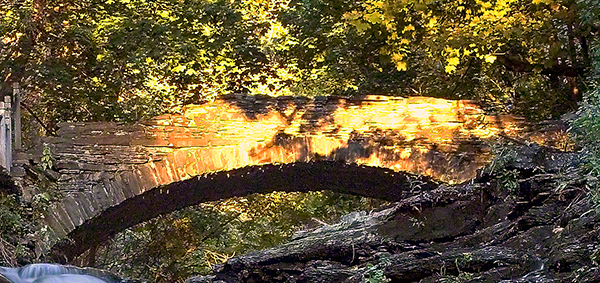
I took the following photograph in 2005, the September before my previous post, “Autumn Stroll in Sapsucker Woods” with the Kodak DSC pro slr-c, an ND filter, 50 mm lens and a tripod. It was a planned session, I work waterproof boots and was able to stand in the creek after a series of rain-free days. At this time of the year the gorge opens to the setting sun. I waited, taking a series of photographs for the perfect amount of light on the footbridge. The feature photograph (the header to this posting) is a detail from a shot with the bridge more fully lit.

The header image for this post comes from a planned session in September 2005, just before the photograph of my “Autumn Stroll in Sapsucker Woods” post. I used a Kodak DCS Pro SLR/c with an ND filter, a 50 mm lens, and a tripod. After several rain-free days I wore waterproof boots and stood mid-creek. In autumn the gorge opens to the setting sun; I waited and shot a sequence until the light laid perfectly across the footbridge. The banner image is a detail from a frame where the bridge is more fully lit.

We have a framed print of that photograph at home. I mounted it as a gift to Pam on our first Valentine’s Day.

“September Sunset in Cascadilla Gorge”

If you’ve walked Cascadilla Gorge in autumn, I’d love to hear your favorite vantage points—porches along the rim, the lower stone steps, or the footbridge at golden hour. Do you know any stories about Llenroc bluestone on these houses, or remember the Stewart Avenue Bridge before its safety upgrades? Photographers: what helps you balance deep shade and bright water from the designated trails? Share a tip or a memory in the comments.

Enter your email to receive notification of future postings. I will not sell or share your email address.

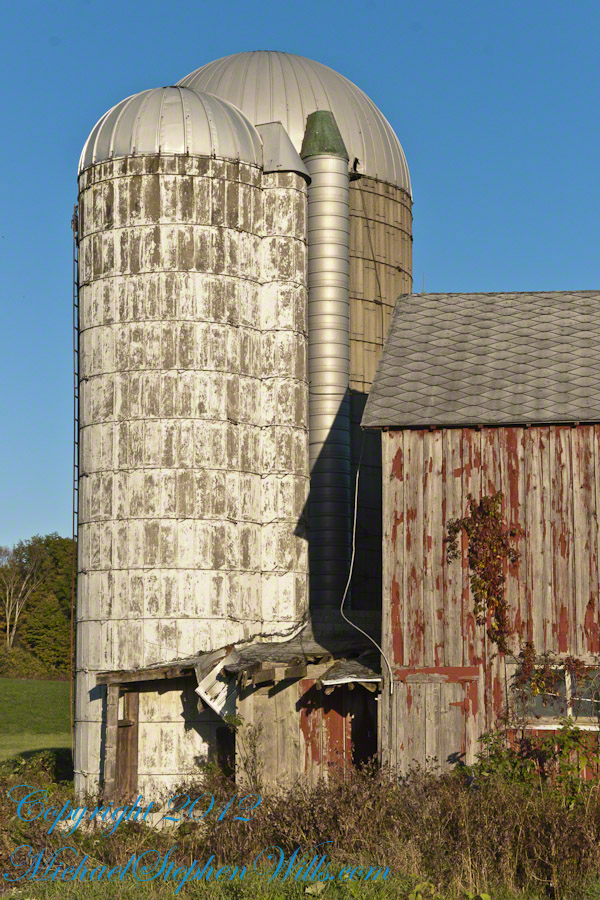
Antique Silo Apple Harvest

A Bumper Apple Crop

More from the day Pam and I walked up the hill from our Malloryville Mill House.

The setting sun works its magic on a century plus maple tree on an esker bank.  The glaciers deposited this esker, under the tree, when waters from the melting flowed under the ice to carve a tunnel later filled with glacier debris.

Click any photograph to visit my Online Gallery “Finger Lakes Memories.”

The light brings out the beauty of two this pair of silos from the early 20th century abutting an abandoned barn and active cornfields.

Pam is using my first camera, a Sony Mavica.  It writes to a 4.5″ disk that limits the number of exposures and I carried a number of the disks.  It has a decent variable lens.  We still have that camera.  These photos are from my Sony dslr Apha700 with a variable lens.

At that time, our three apple trees gave a bountiful harvest.  We spent two days making and canning apple sauce.  For some batches we’d grind in blackberries or concord grapes.  We enjoyed the work over the next year.  Our grandchildren loved that stuff.

These apples hung from a tree of the farm house next to the abandoned barn.  A young family lived there, their toddler daughter recognized us from other walks and came over for a “hello”.

Other postings this Harvest View evening.  Click the link to go there.
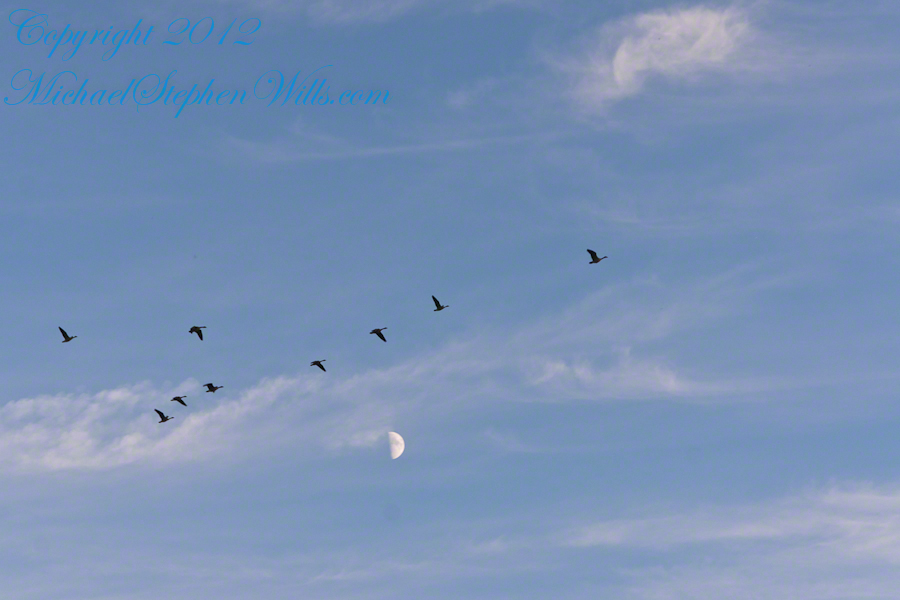
“Celestial Geese”
“Harvest Views”
Copyright 2018 Michael Stephen Wills All Rights Reserved

Through A Glass Darkly

Visual Spirit

The title is a fragment from the thirteenth chapter of the First Epistle to the Corinthians.

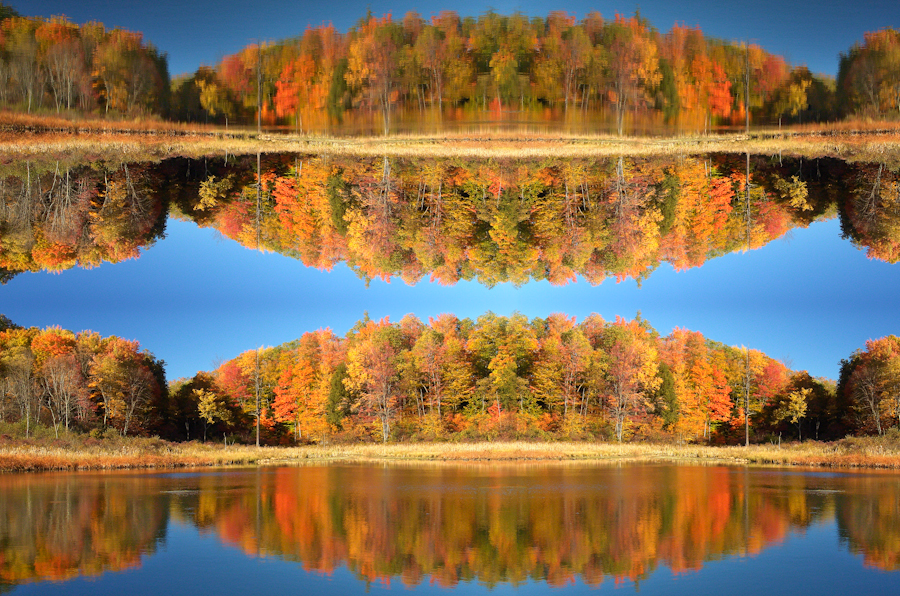
During brief moments of the upstate New York autumn season perfect images are mirrored in quiet pond waters.

It this case the effects lasted a few seconds.

The site of this photograph, McLean Bogs, is part of Cornell Plantations. McLean Bogs is known for its biodiversity and is reserved for research.

This work is a composite of four images, the mirror image of each of two photographs. I print it on a stretched canvas 5 feet wide by 4 feet high.

Click the photograph to visit my online gallery “Memories Dreams Reflections”
Copyright 2021 Michael Stephen Wills All Rights Reserved

Around the Kiva

a fascinating lecture

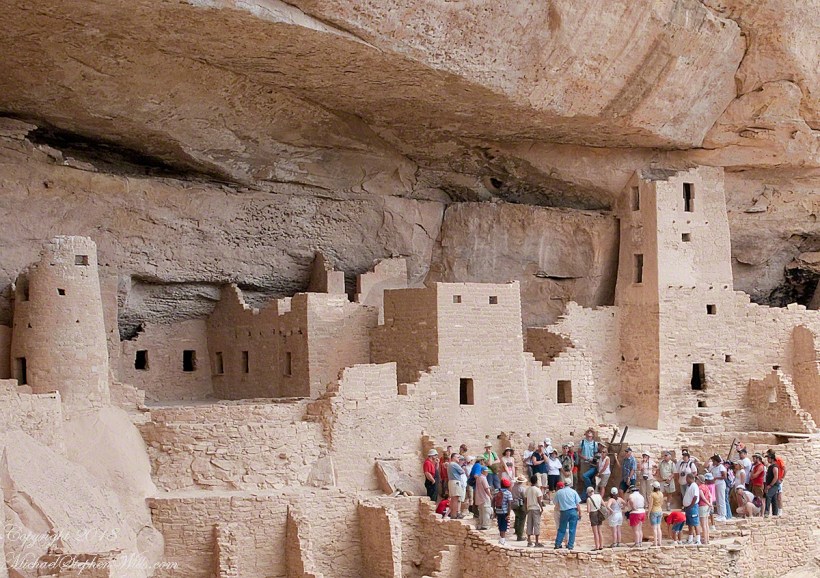
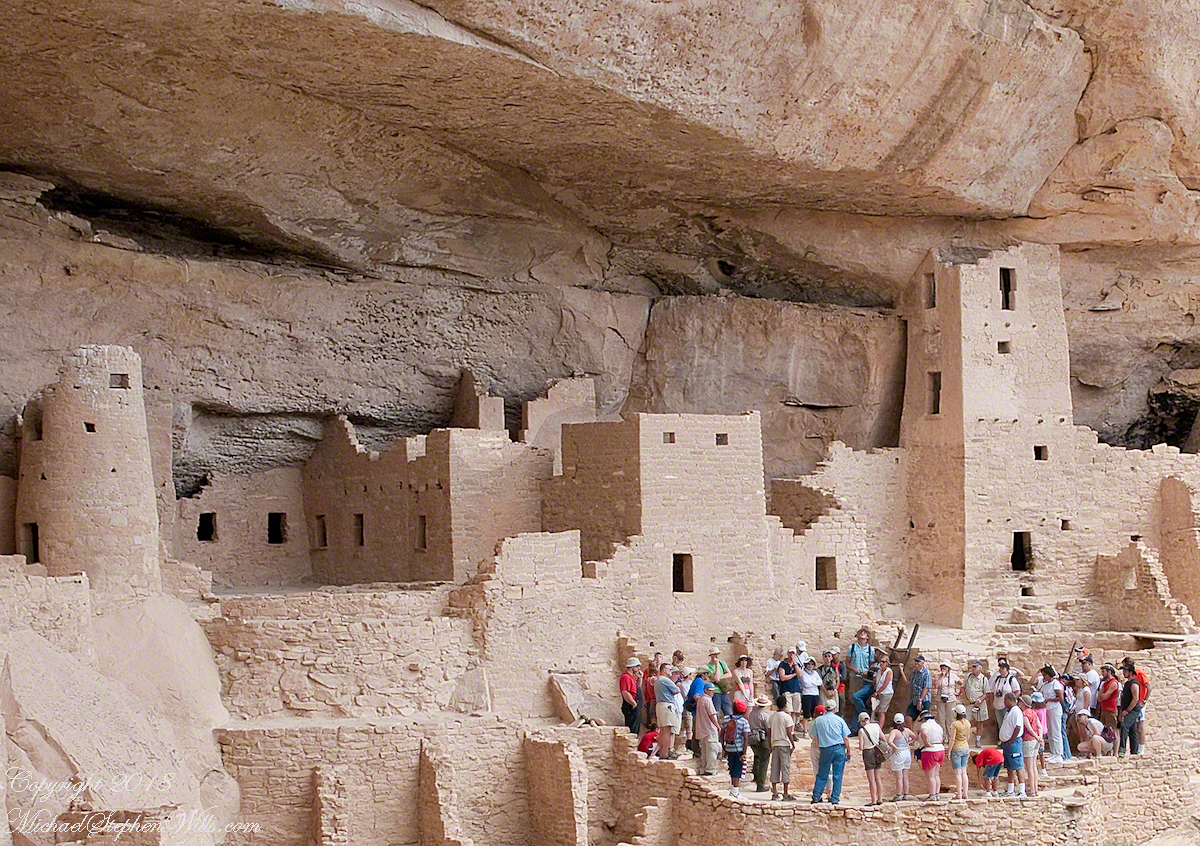
This diverse group of fifty three individuals are gathered around a kiva of the Mesa Verde Cliff palace on a July afternoon.

Click Link to view this work in my Online Gallery

Copyright 2021All Rights Reserved Michael Stephen Wills
Long Island Sakura (Cherry Blossoms)

Clouds of Blossoms

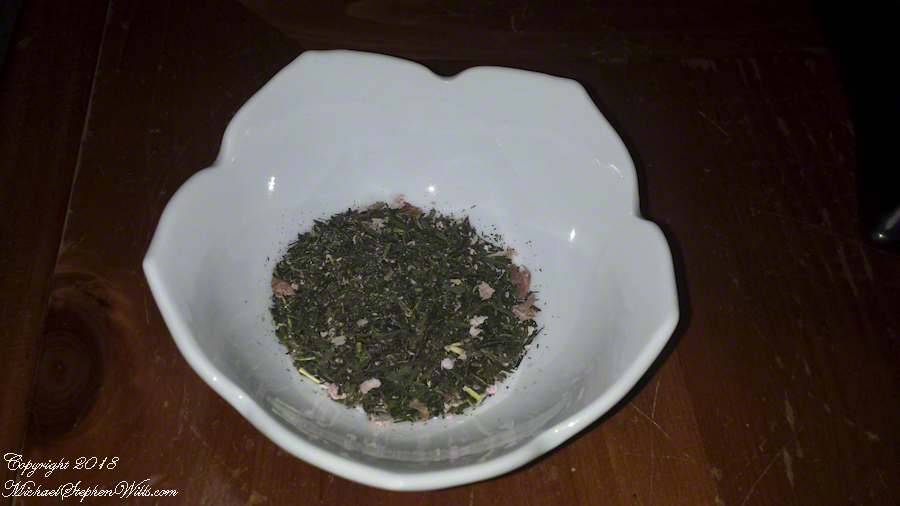
We have a selection of teas at home for brewing afternoons as a pick-me-up. Some brought back from travels, most from a local supermarket. This Japanese green tea brings to mind my childhood and our trips to Long Island to visit my Mom until she passed away June 2013.

As you can see from this photograph of the tea in a white lotus bowl, there are pieces of pink and white stuff mixed in. These are called by the Japanese “sakura”, cherry blossoms.

Click any photograph for my Getty portfolio.Japanese Sakura Sencha Green Tea – CLICK ME for my Getty Portfolio.

In Japan, since the 8th century, “Hanami” is the centuries-old practice of picnicking under a blooming sakura or ume tree. Here in the United States, the National Cherry Blossom Festival is celebrated commemorating the 1912 gift of Prunus serrulata Japanese cherry trees from Tokyo to the city of Washington.

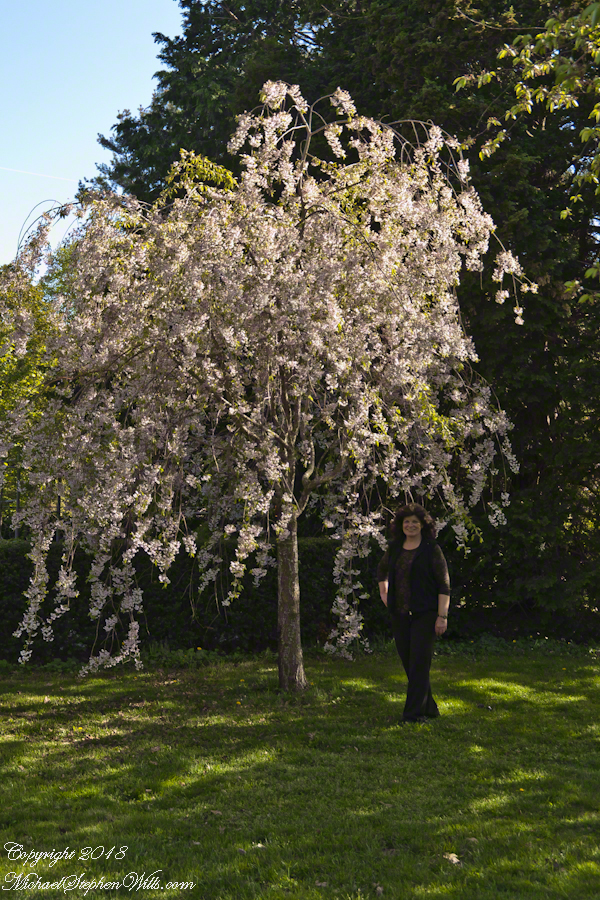
Traditionally cherry blossoms remind the Japanese of clouds, the blooms come out en mass, the tree changes shape with the breeze.  Viewing sakura brings to mind thoughts of the transience of existence, the fragility and transience of the exquisite blooms leads one to appreciate the moment.  The following photograph of Pam was taken a month before my Mother’s sudden decline and passing in 2013.  We’d travel to Long Island several times a year to visit her, then take in familiar sights.

The tree over Pam is called a Shirofugen (Scientific name: Prunus serrulata, of the Rosaceae family) and is one species planted around National Tidal Basin, Washington D.C. Shirofugen blossoms are described “Flowers double, deep pink at first, fading to pale pink.”


Click any photograph for my Getty portfolio.Pam with a Shirofugen Flowering Cherry in bloom – CLICK ME for my Getty Portfolio.

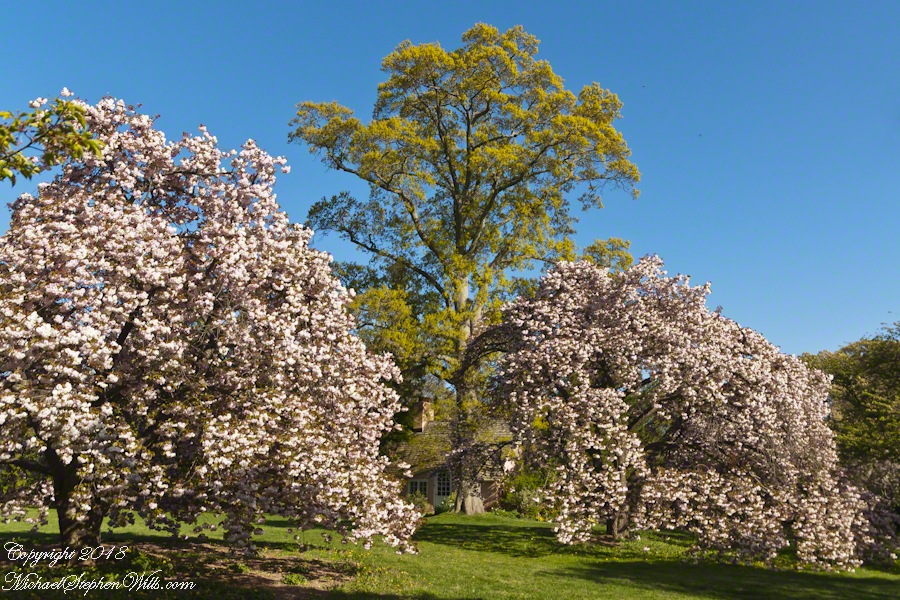
Growing up, our family visited the Planting Fields, a state park, several times in the spring and summer. As an adult with a growing family in Glen Cove, right around the corner, the Planting Fields were a welcome outing and visited several time times a year. The following photograph, taken that same May 2013 day, was a favorite park scene.

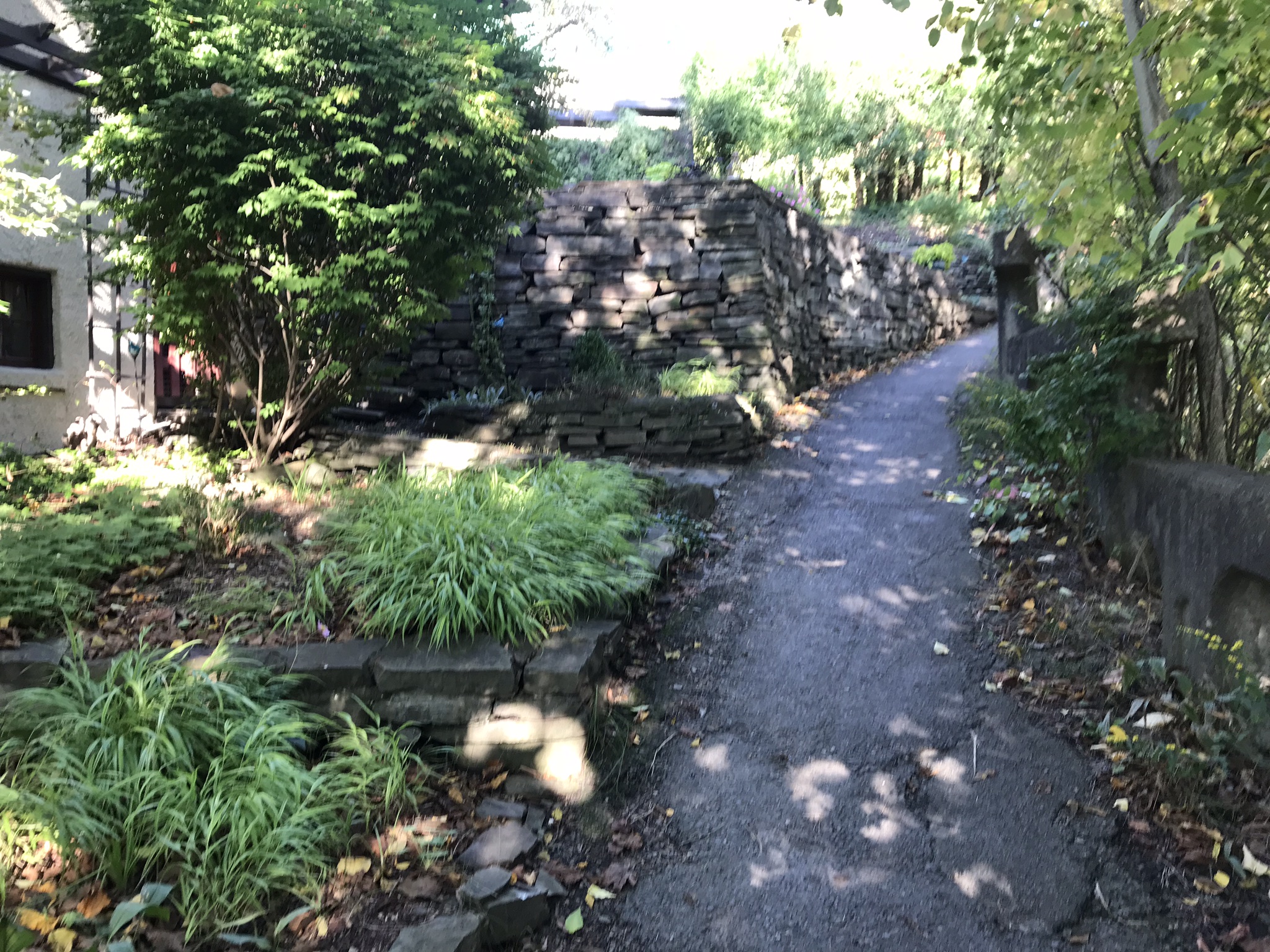
The two flowering cherry trees in the foreground are a type of Japanese sakura called Yoshino, one the most popular flowering cherries in temperate climates worldwide. All Yoshinos are clones from a single grafting and propagated throughout the world. The scientific name outlines the cross breeding of this variety, Prunus X Yeaoensis. Behind the cherries is an Oak tree, new leaves a bright green, and a pink child’s playhouse cottage.

A changing scene of the park is the now frequent visits by wedding parties and photographers, groups of Asian people, the bride and groom posing under the clouds of blossoms. By frequent I mean a steady stream, one after the other, when the blossoms are full.

Click any photograph for my Getty portfolio.Playhouse with Flowering Cherry and Oak trees – CLICK ME for my Getty Portfolio.

In 2007 I spent hours framing and capturing the following photograph on a Saturday, the day before Mother’s Day, during a visit to my Mother, who was widowed December, 1995. I used an inexpensive tripod, a Kodak DCS Pro slr/c camera body with the Canon 50mm f 1.4 USM lens, a UV filter and lots of time. There were no interruptions that day, at 5:30 pm I had the area to myself.

This child’s garden playhouse, framed by an ancient oak, pink Japanese cherry blossoms and gracious lawn was awarded a Photographic Society of American, Pictorial Print Division, Print of the Month award, published in the society magazine for that month.

My online gallery (see link below) “Memories, Dreams, Reflections”, has this print available for sale on high quality photographic stock with optional framing.

This week, I submitted the photograph for my Getty portfolio.  As of today, I have not received their decision.

Click any photograph for my Getty portfolio.Playhouse – CLICK ME for my Getty Portfolio.

Please browse my reasonably priced stock photography.  License a photograph, download and use it for your website or blog.  Click this link to browse all my Getty IStock Photography offerings.

Or click this link to purchase a print of “Playhouse” with optional custom framing from my Fine Art Gallery.

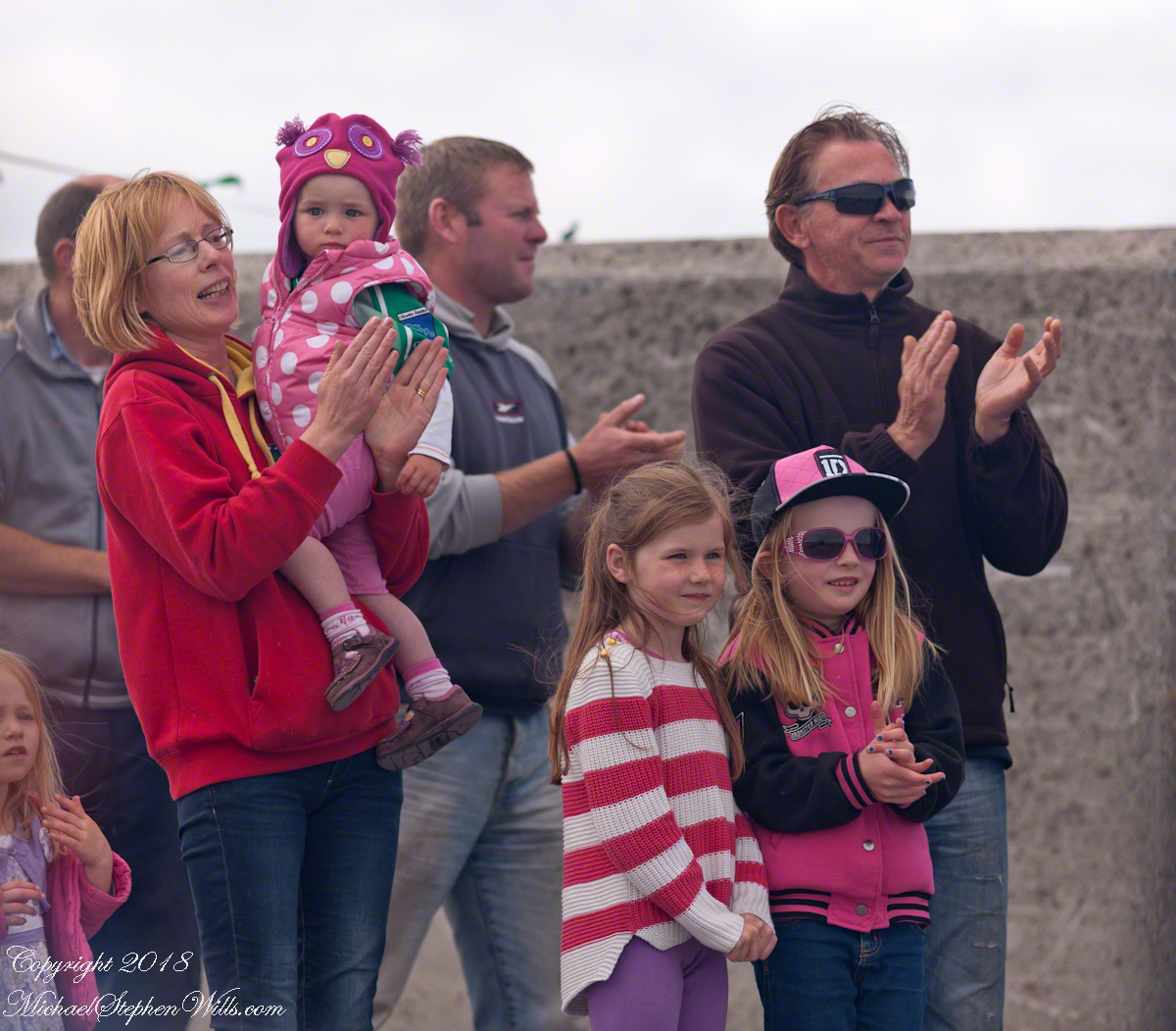
Inisheer Welcomes the 2014 Gaeltacht Irish Football champions

Inisheer Welcomes Their Champions

After we passed the Killeany bouy on our ferry trip, on the Queen of Aran, (click the link to see this posting) from the harbor of Inis Mor to Doolin, the ship made four, yes four, dockings before arriving at Doolin: three on Inis Meáin and one on Inisheer.

A few days prior the Gaeltacht held the annual Irish football championship the weekend of May 21 through June 1 in Moycullen, County Galway. It was the Three Aran Islands (Oileaín Árann) team who won the 2014 championship. Sunday, June 1, the weekend of their victory, the cup was presented to Inis Mór, the largest Aran island and the one furthest into Galway Bay.

Click the link for my Getty IStock photography of the Aran Islands

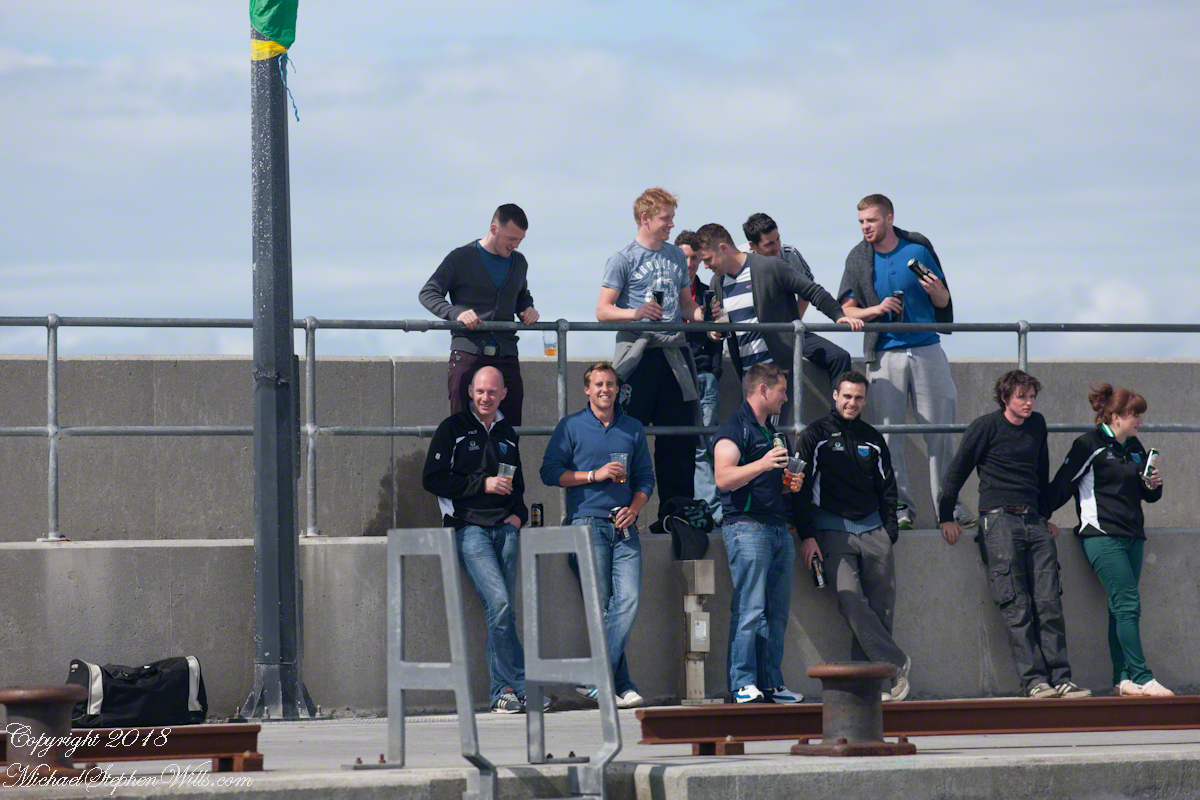
The team on Monday, June 2, the day of our trip, was on Inis Meáin, in celebration mode.  Some of them were waiting for the ferry when we pulled into the dock of Inis Meáin, the second largest Aran island between the other two.

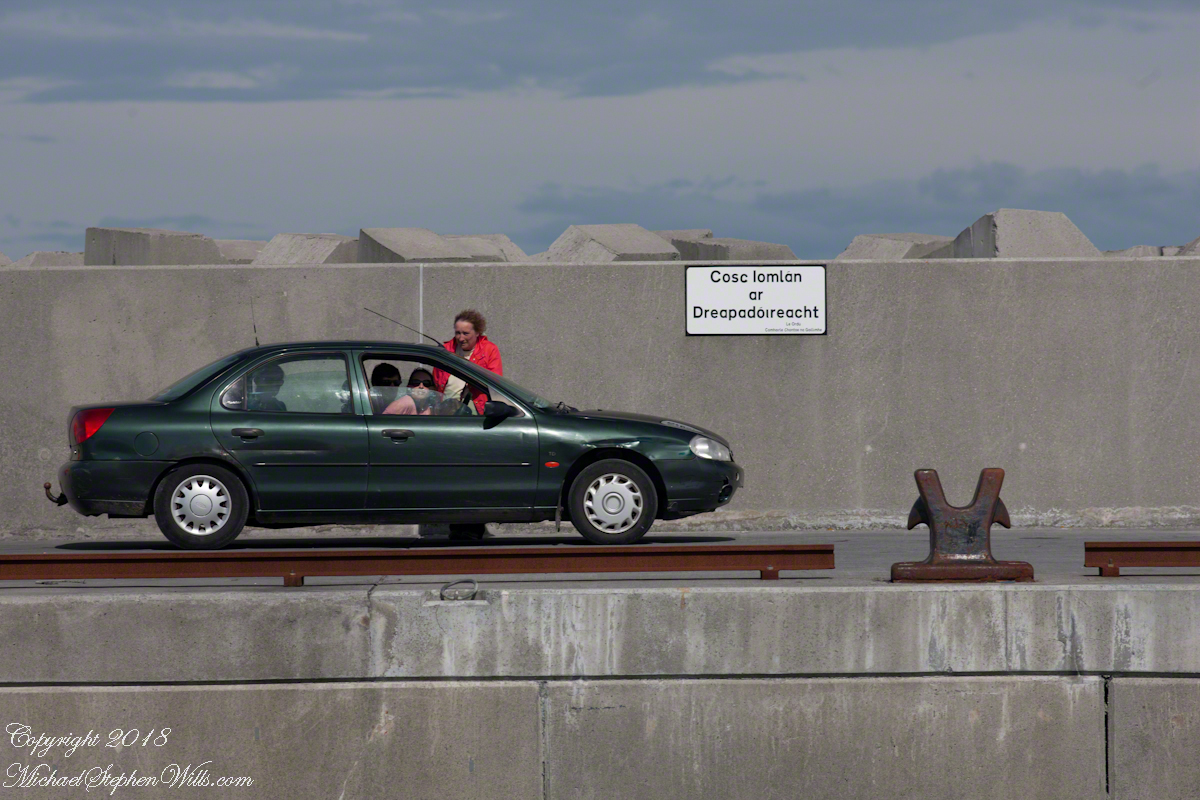
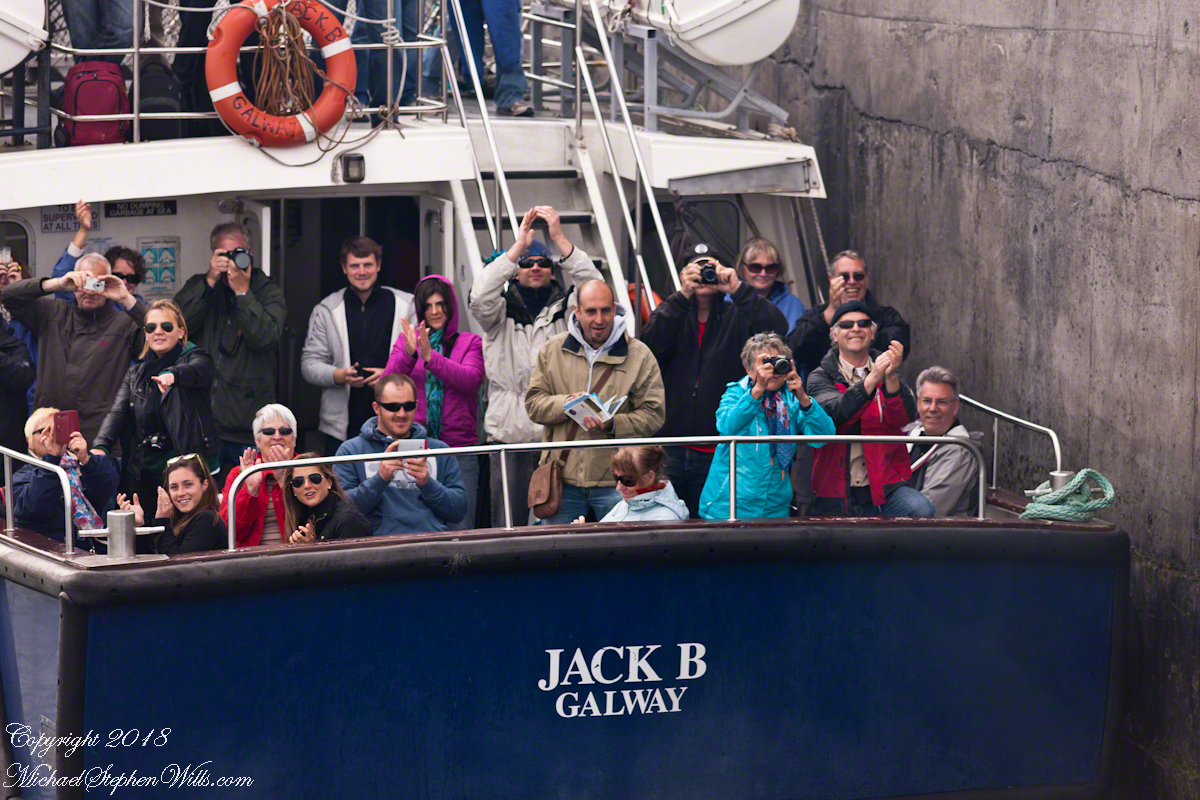
The first of the previous three photographs is of the waiting team members who boarded and we left for Inisheer Island, the smallest of the three and the closest to Galway City.  The Queen of Aran was well out of the harbor when I imagine the radio in the pilot house said, “Come back, there are more team members on the dock.”  So we turned around, docked and several more came on board.

In way once again, well away from the harbor, the ferry turned around for a second time for a third landing at the  Inis Meáin dock.  With the full compliment of champions on board the ferry turned out of the harbor a third and final time for the last leg of with Silver Cup’s tour of the islands.

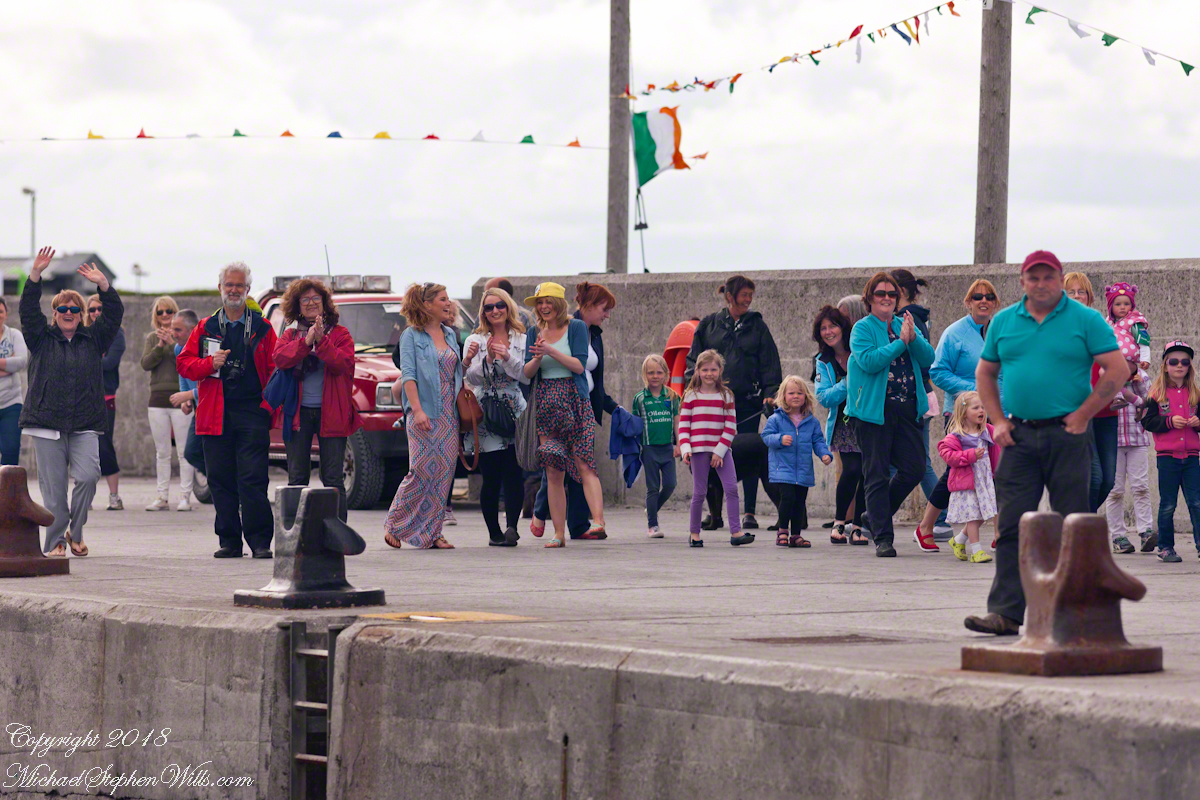
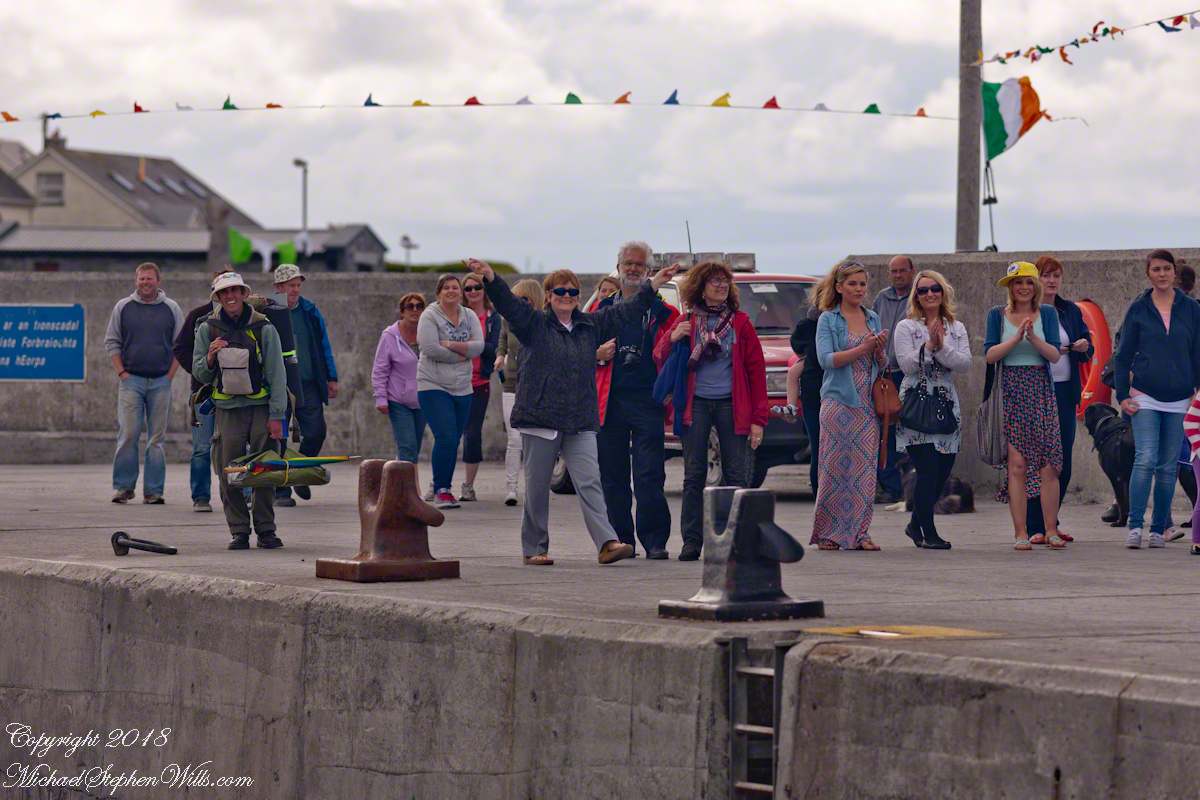
The population of Inisheer is about 250 souls.  It seemed all were waiting to greet the team.

Click the link for my Getty IStock photography of the Aran Islands

A large bon fire blazed as the Queen of Aran approached.

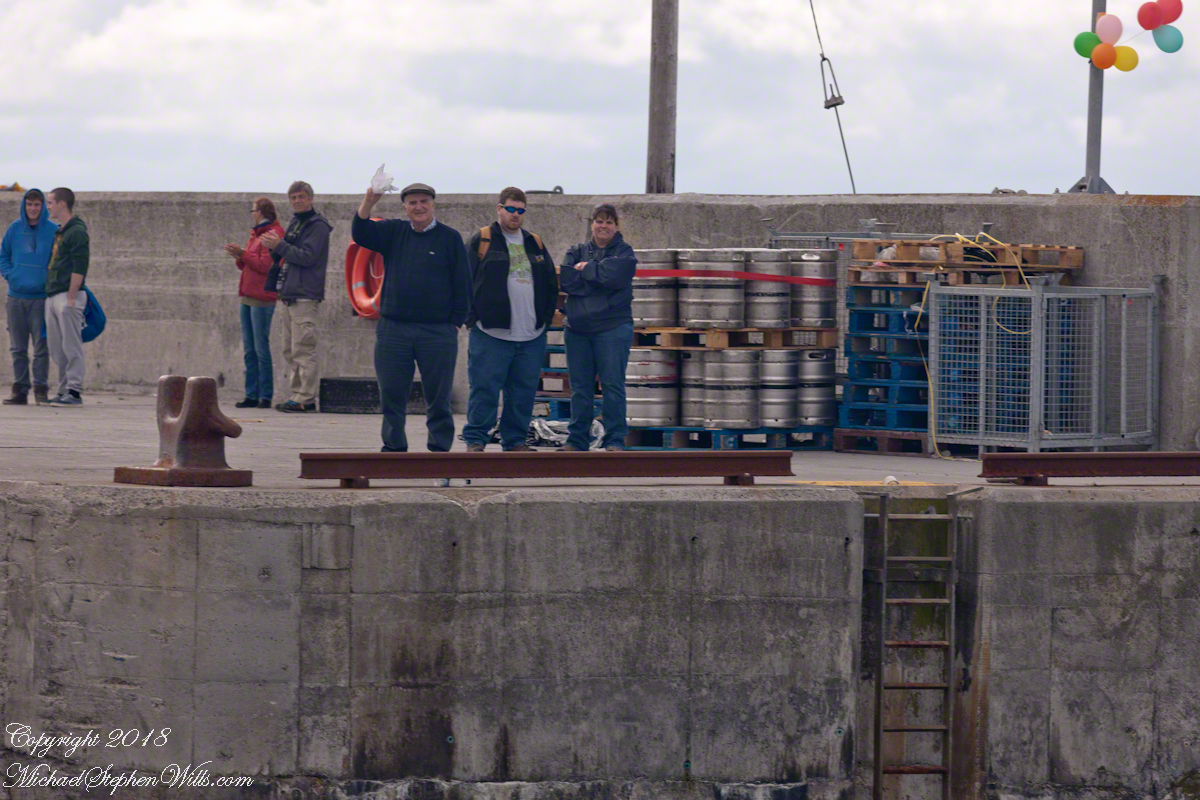
People lined the dock from beginning to end.

Calling out, waving their arms.

Click the link for my Getty IStock photography of the Aran Islands

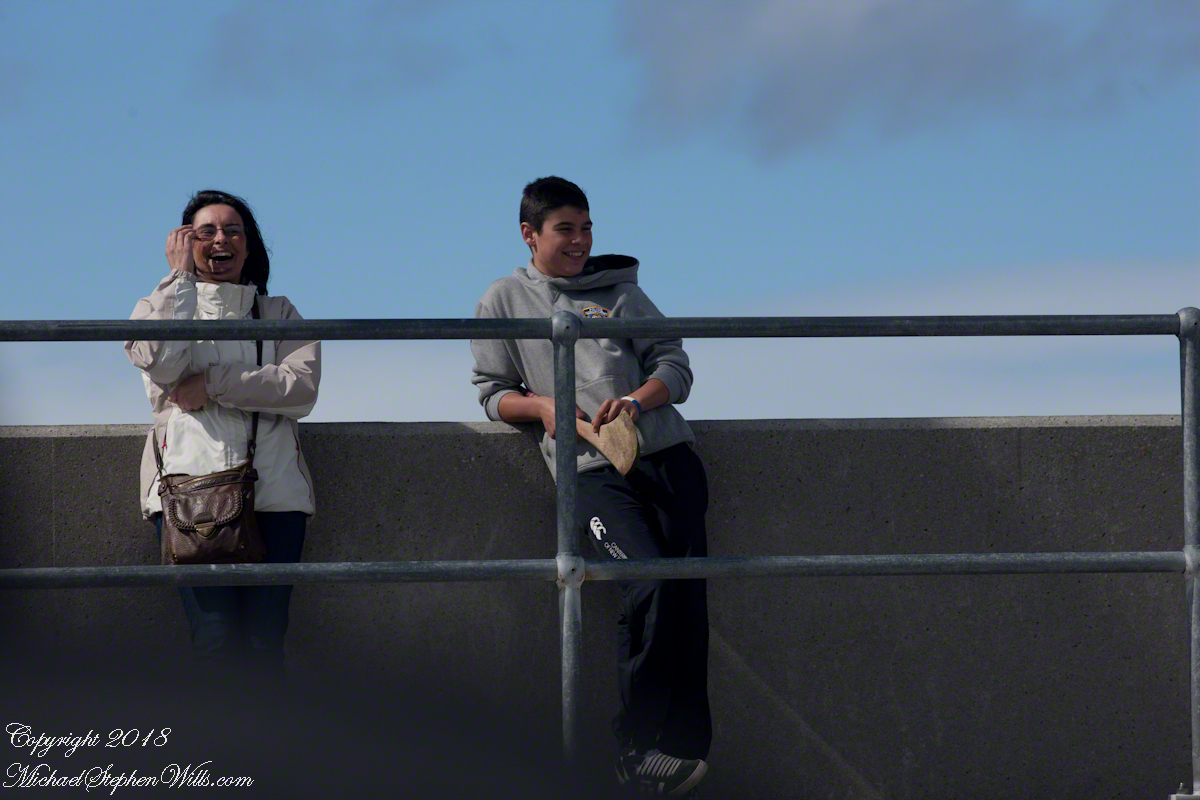
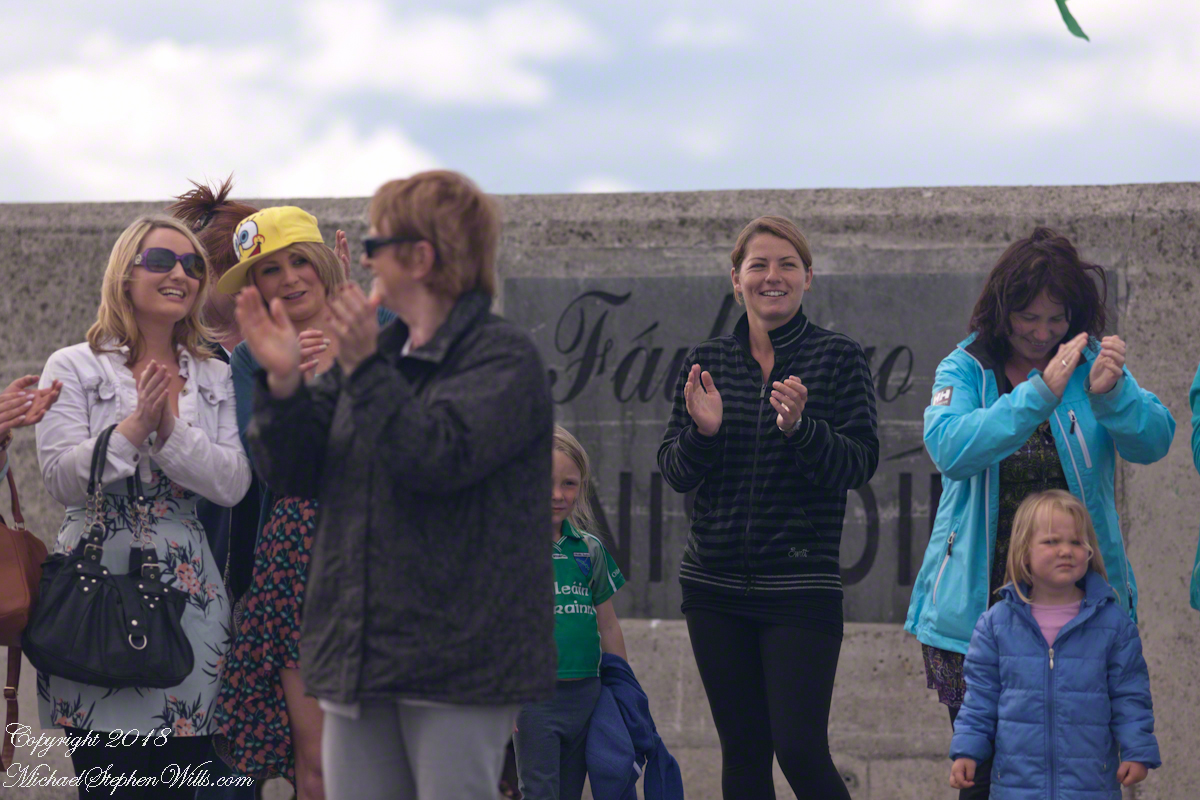
Standing and smiling.  Here is a flock of fans, from Galway apparently, very pleased at the sight.

The team was on the upper ferry deck.  I turned around and was lucky enough to capture the team captain (Not sure, but who else would it be?) holding the silver cup for all to admire.  Theirs for a year.

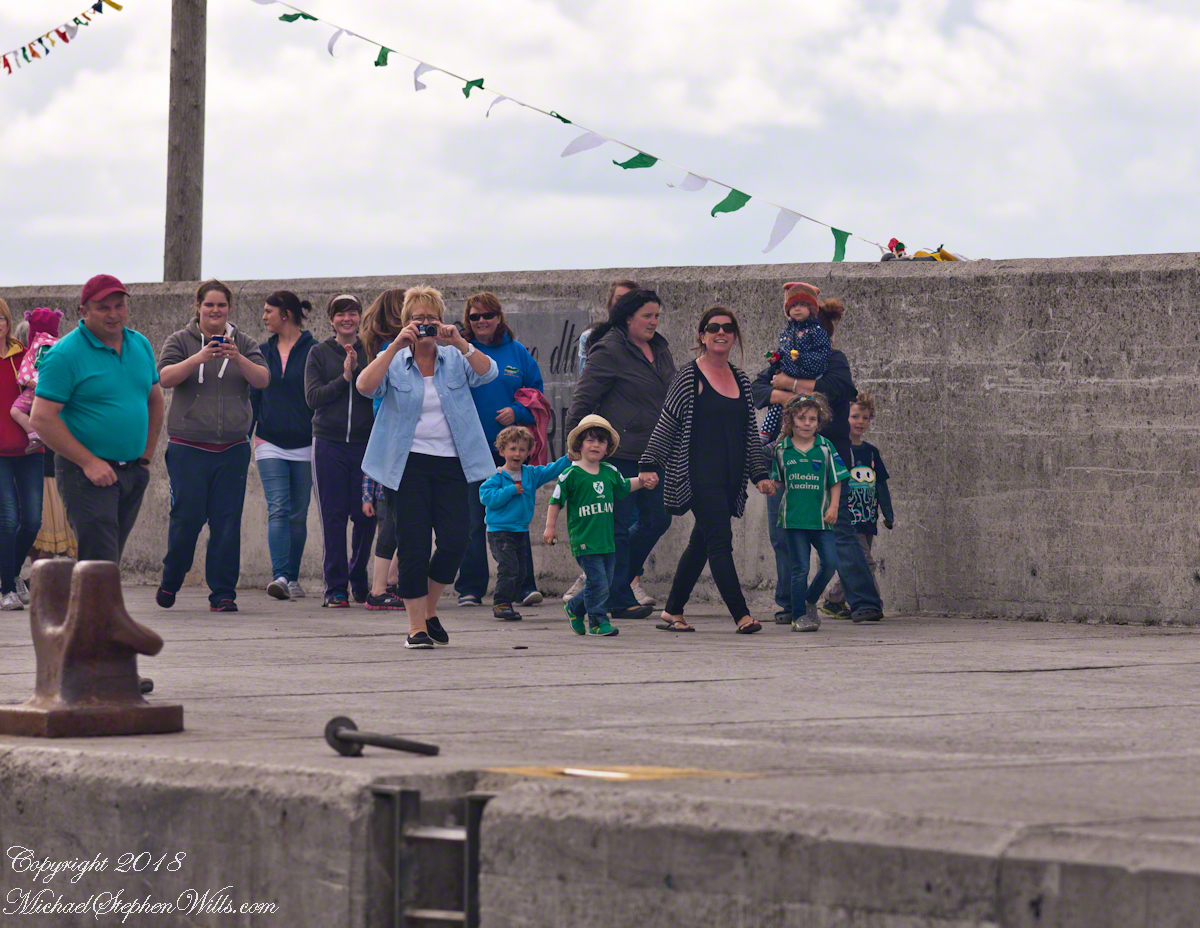
The crowd welcomed their own back home.

Click the link for my Getty IStock photography of the Aran Islands

Surrounded the team and walked them grandly to town.

Enter your email to receive notification of future postings. I will not sell or share your email address.

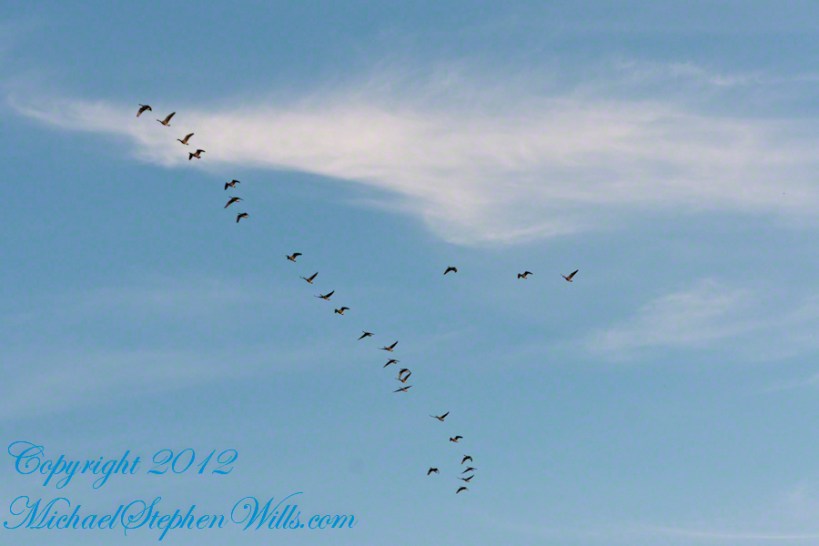
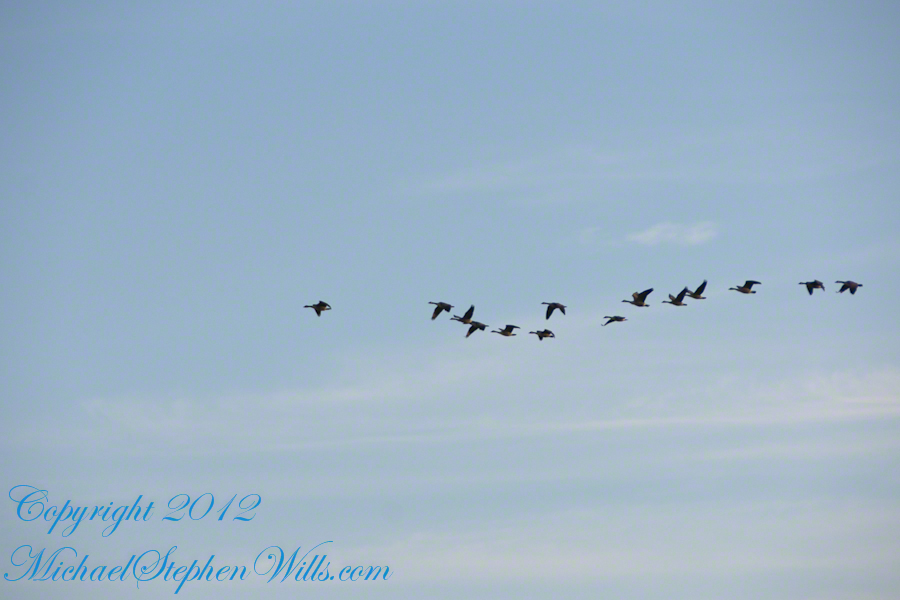
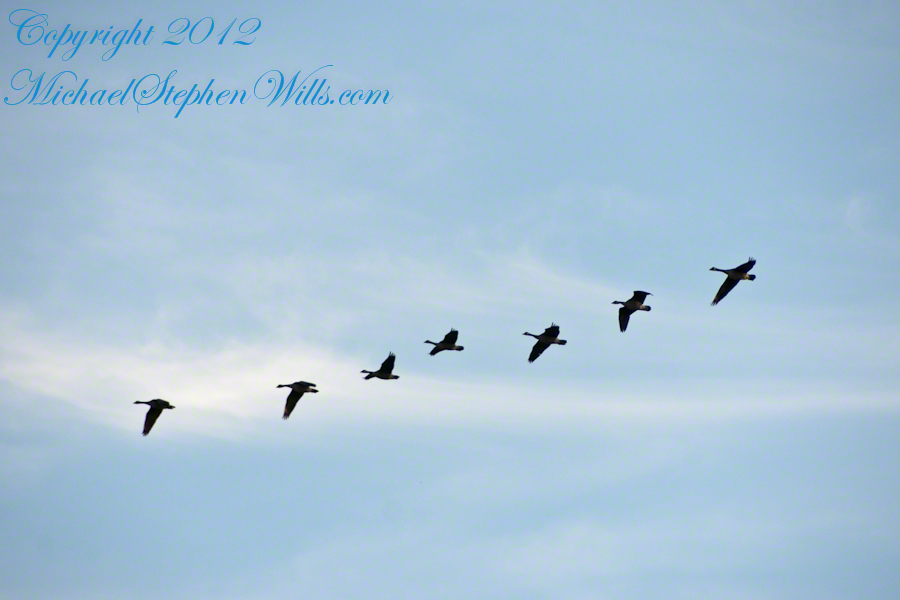
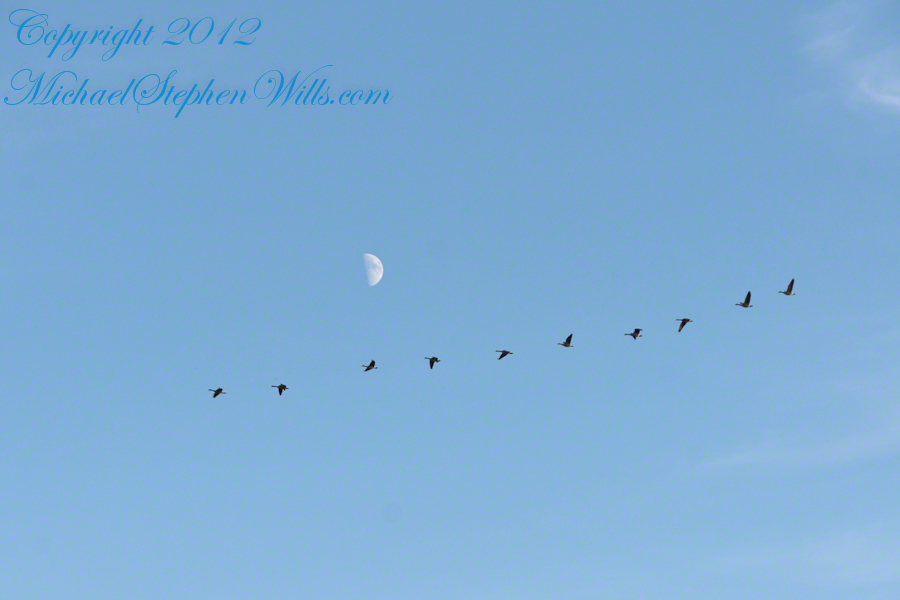
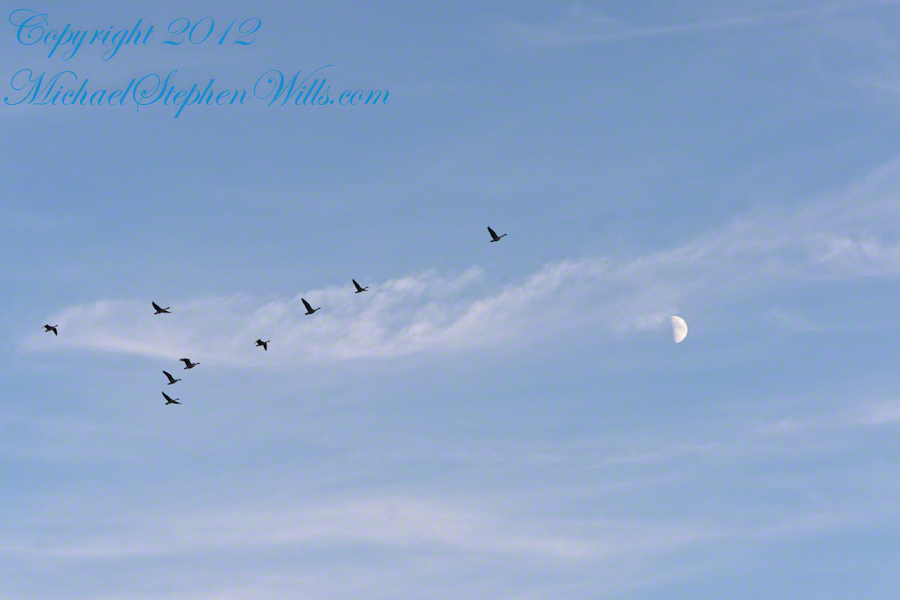
Celestial Geese with two haiku by Issa

Celestial Geese

None of Them Come Down

To My Pine

~Kobayashi Issa

Click any photograph view my Finger Lakes Memory gallery

The Bright Moon

In Raindrops from the Eves

The Geese Depart

~Kobayashi Issa


Other postings this evening. Click the link to go there.

“Harvest Views”

“Antique Silo Apple Harvest”

Copyright 2018 Michael Stephen Wills All Rights Reserved
The Three Laughers of Tiger Glen – repost

The Sound of Laughter Among Friends

In the midst of a pine forest……

Click Me for the complete post….

Copyright 2020 Michael Stephen Wills All Rights Reserved
Pam’s Holiday Cranberry Pecan Salad

Our holiday tradition

You will be well-remembered for years when Pam’s salad is part of your holiday celebration. We hosted 2017 Thanksgiving and Pam’s salad was requested by her son and daughter’s families. When we went around the table to give thanks, our six year old grandson offered, “I am thankful for the jello”, meaning Pam’s salad.

My wife, Pamela Wills, perfected this recipe over the years as a nutritious and tasty dish she could make in advance.

Thanksgiving, Hanukkah, Christmas or Anytime

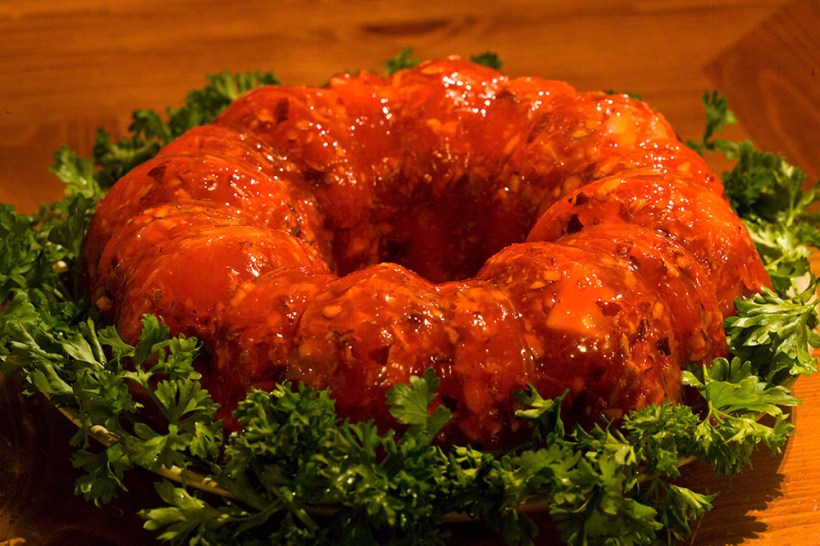
Holiday Cranberry-Pecan Salad travels well and is a visually appealing dish to share at parties.
Holiday Cranberry-Pecan Salad

Ingredients:

1 12 oz. bag of raw cranberries

1 6 oz. box of raspberry gelatin

1 6 oz. box of orange gelatin

3 cups orange juice

3 cups boiling water

1 large orange

2 large apples of your choice (I use sweet/tart/firm apples)

1 tablespoon orange rind

½ cup chopped pecans

Curly leaf parsley

3-4 small bunches of green grapes. I dip the grapes in water, then in sugar and let dry. Or you can use raw cranberries.

Directions:

  1. Boil water. In large mixing bowl pour water over raspberry and orange gelatin and stir until dissolved. Wait a few minutes until the gelatin cools down (keep stirring). Add orange juice and stir again. Place in refrigerator until gelatin is the consistency of raw egg whites. This is tricky step since, if you don’t let it set up enough, the fruit will sink to the bottom.  When set too much the fruit mixture won’t blend with the gelatin.
  2. In food processor finely chopped cranberries. By hand cut orange and apples into small bit-size pieces. Combine chopped cranberries, apples and orange. Fold in grated orange rind and pecans. Set this aside while waiting for the gelatin (see above).
  3. Fold fruit mixture into the gelatin. With a large spoon scoop up mixture and transfer it to a Bundt pan. Cover with plastic wrap and return to the refrigerator for several hours or until set.

To serve:

Dip bottom of mold into a sink of a few inches of luke warm water (not too warm or the gelatin will melt). Turn upside down on a large round platter or plate and garnish around the edges with parsley and the sugar-coated grapes or raw cranberries.

This is a great dish to share at a holiday party since you can make it in advance. My family prefers it over cooked cranberry relish and it is even good enough to serve as a dessert. It is easy to make, it’s festive and has always been a big hit. Enjoy!

Note: EAT the parsley garnish. Parsely is packed with vitamins and minerals.  Just 7.5 grams (a fraction of an ounce) contains 150+% of most people’s Vitamin K requirement and about 15% for Vitamin A and C.