A Late Winter Walk Through Cornell University Campus

Explore a late winter walk through Cornell University’s scenic campus, discovering blooming snowdrops, historic landmarks, and the striking “Magna Dancer” sculpture. Uncover the beauty and heritage captured in each step of this serene journey.


On the late winter afternoon of March 1, 2024, I decided to take a long walk starting from Cascadilla Park Road, making my way up through the Cornell University campus, and ending at Fall Creek near the Mundy Wildflower Garden before returning to my starting point. The sun was shining brightly, casting long shadows, and the crisp air was filled with a hint of spring. Carrying an Apple IPhone 14 Pro Max smartphone, I set off to capture the beauty and essence of this serene day.

Starting Point: Cascadilla Park Road

The walk began on Cascadilla Park Road, where I was greeted by a delightful patch of snowdrops (Galanthus nivalis) nestled among the glossy green leaves of periwinkle (Vinca minor). These delicate white flowers, blooming despite the chill, were a hopeful sign of the approaching spring. Their pristine petals contrasted beautifully with the dark, shiny leaves, creating a picturesque start to my journey.
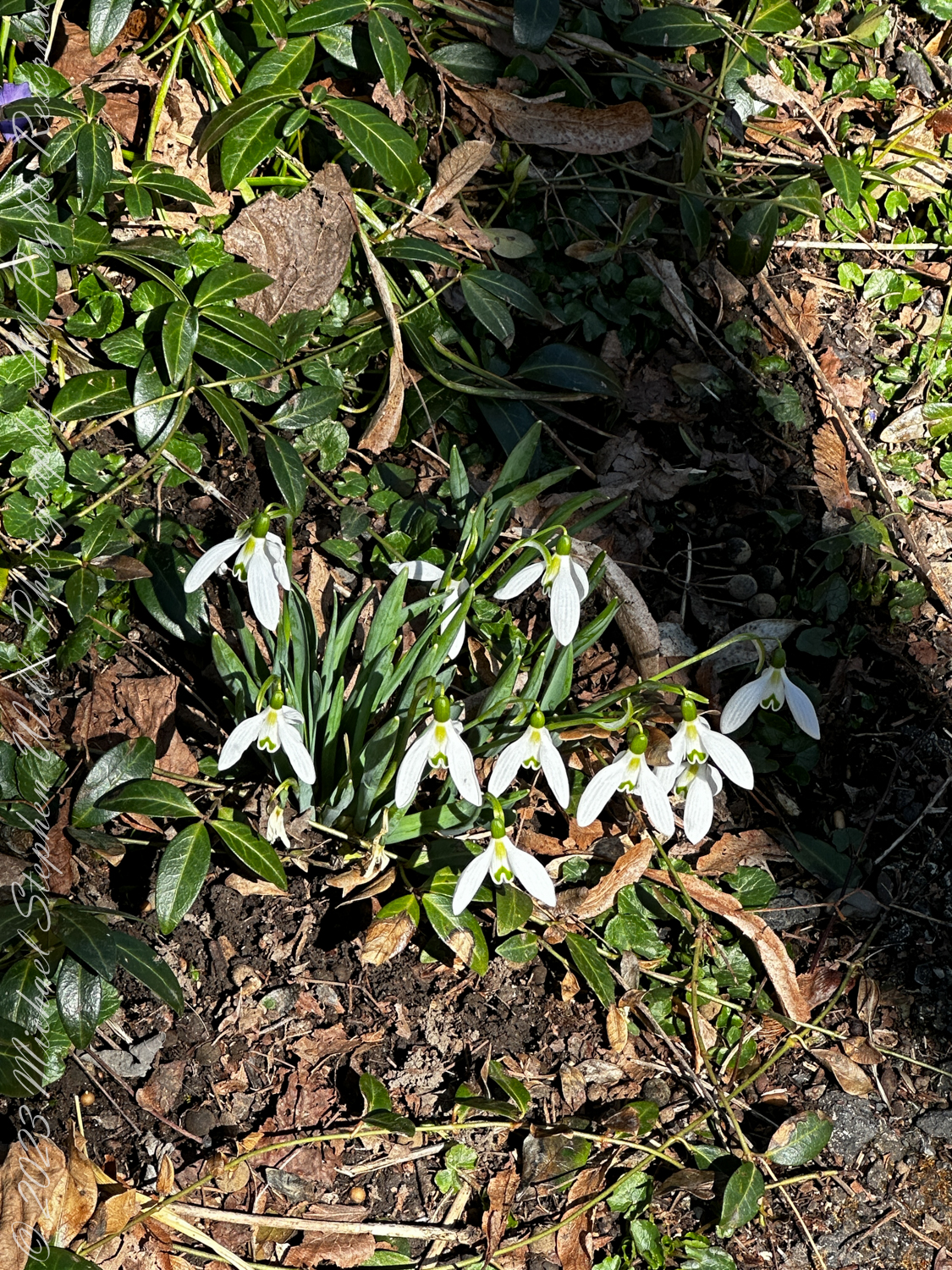
These flowers were found in a garden on Cascadilla Park Road, Ithaca, March 1, 2024. Snowdrops (Galanthus nivalis) are among the first flowers to bloom in late winter and early spring, often pushing up through the snow. These plants are known for their nodding, white, bell-shaped flowers and are a common sight in gardens during this time of year. The glossy green leaves belong to a plant known as Periwinkle (Vinca minor). Periwinkle is a popular ground cover plant, often found in gardens due to its ability to spread quickly and form a dense mat of evergreen foliage. It typically has glossy, dark green leaves and produces small, blue or purple star-shaped flowers in the spring.

Climbing the Steps to Steps to Myron Taylor Hall

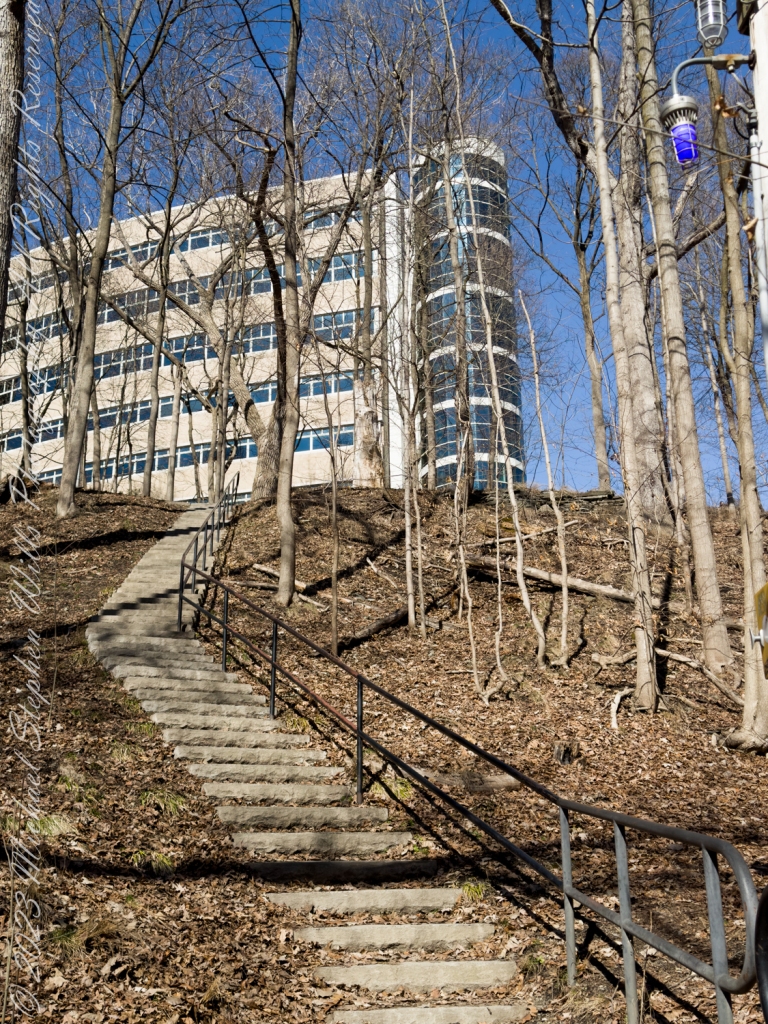
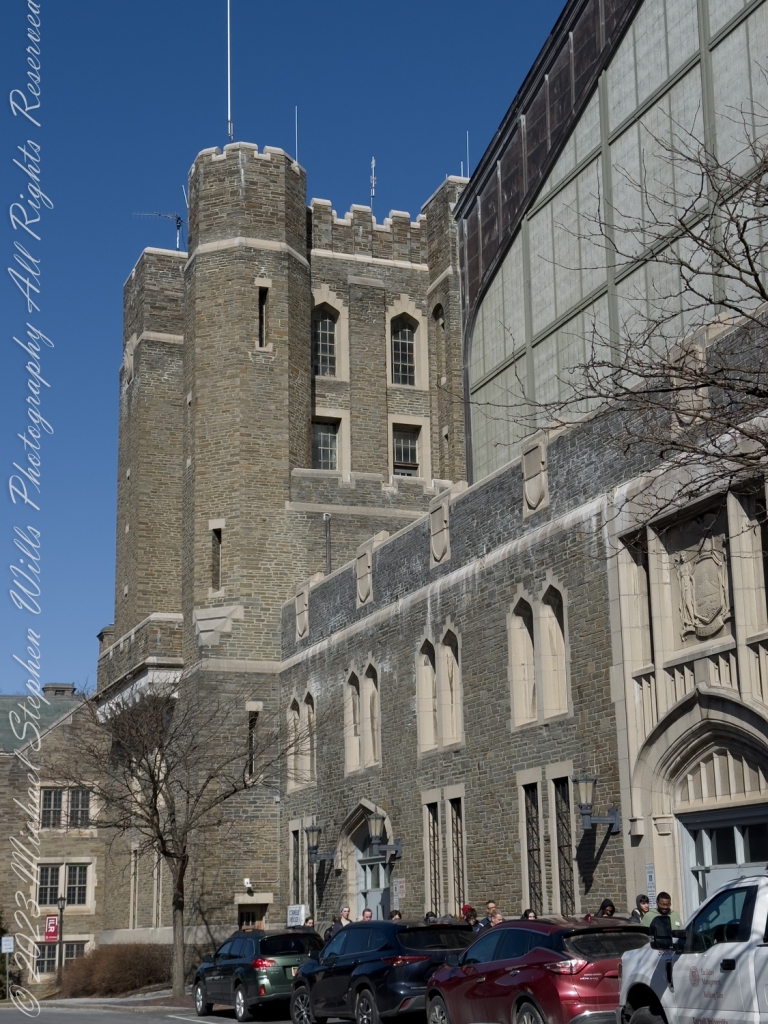
My path led me up flights of granite steps toward Myron Taylor Hall. As I climbed, I could feel the history and tradition of Cornell University enveloping me. The McGraw Tower bells chimed softly, adding a melodic backdrop to my ascent.
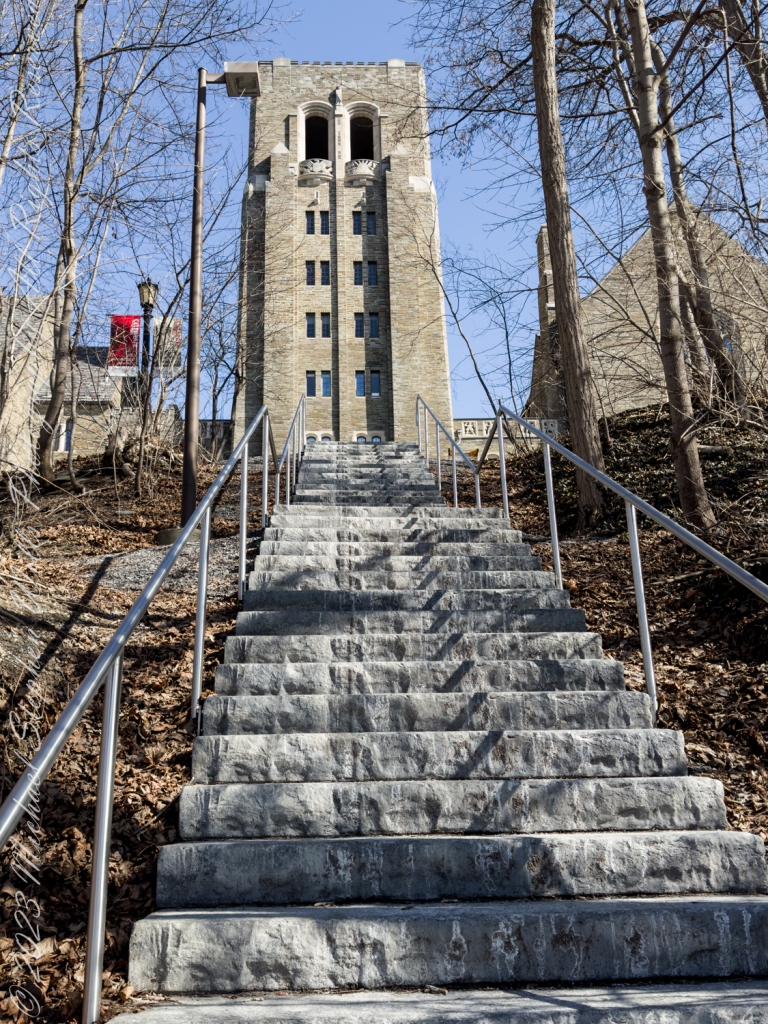
Steep steps leading from a parking lot off West Avenue to the Cornell Law School (Myron Taylor Hall).

Discovering “Magna Dancer”

Reaching the top of the steps, I encountered, at the entrance to Hughes Hall museum, the striking “Magna Dancer” sculpture by Arline Peartree. Its bold red forms stood out vividly against the backdrop of the historic stone buildings. The plaque at the base provided a glimpse into its significance, commemorating the contributions of Cornell alumni. The sculpture’s dynamic lines and vibrant color injected a sense of modernity into the historic setting.
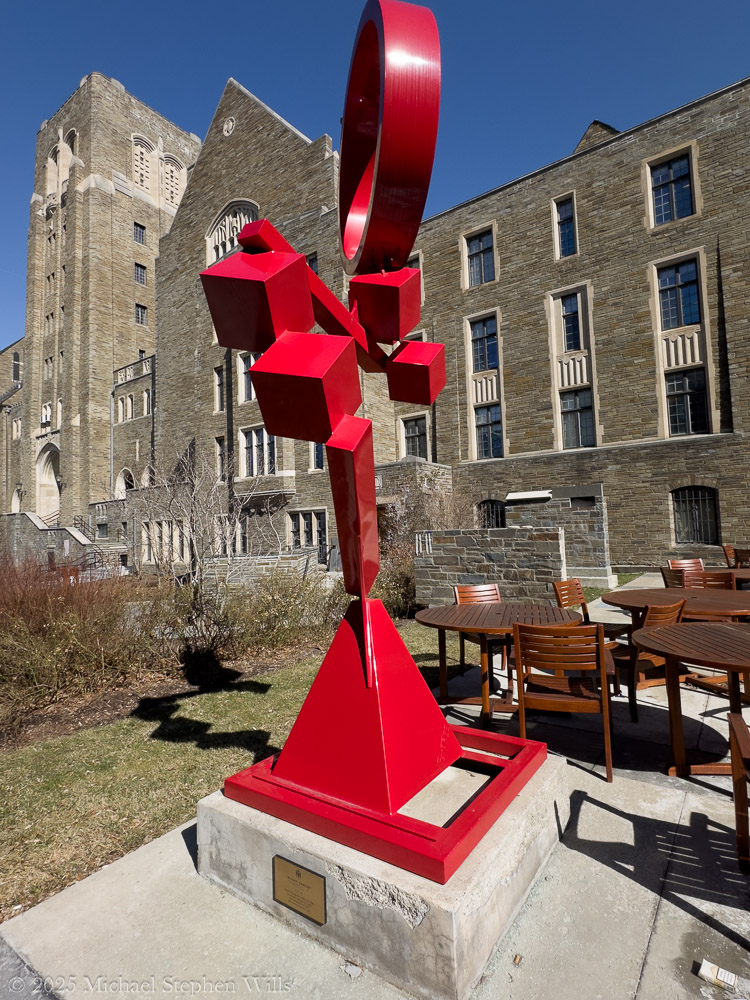
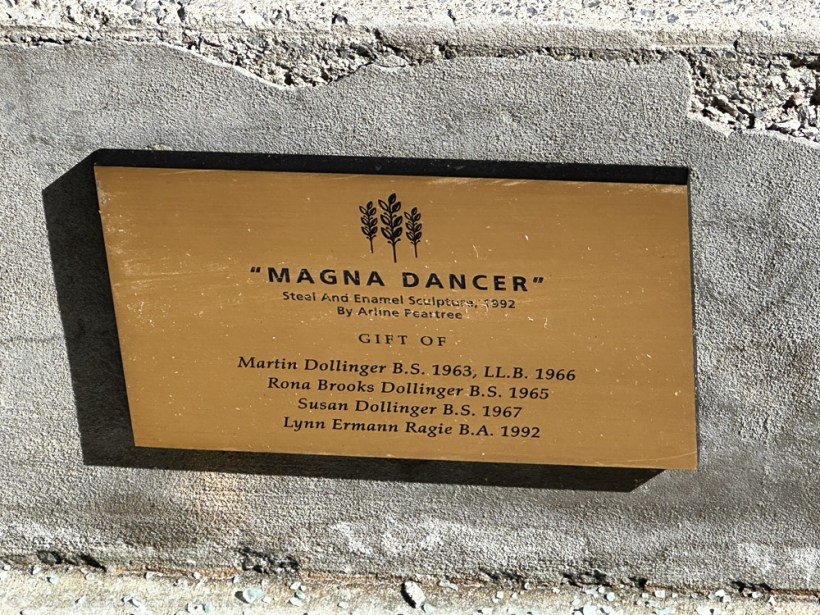
“Magna Dancer” steel and enamel sculpture, 1992 by Arline Peartree. Plaque on the sculpture plinth located outside Hughes Hall (behind Myron Taylor Hall – Cornell Law School), 241 Campus Road

Winter Buds and the Robinson Herb Garden

Here, I passed through the Robinson Herb Garden, where the late winter buds of a Cornelian Cherry Dogwood (Cornus mas) were beginning to unfurl. These bright yellow clusters heralded the arrival of spring, standing out against the bare branches and muted tones of the garden. It was a reminder of the cyclical nature of life and the resilience of the natural world.
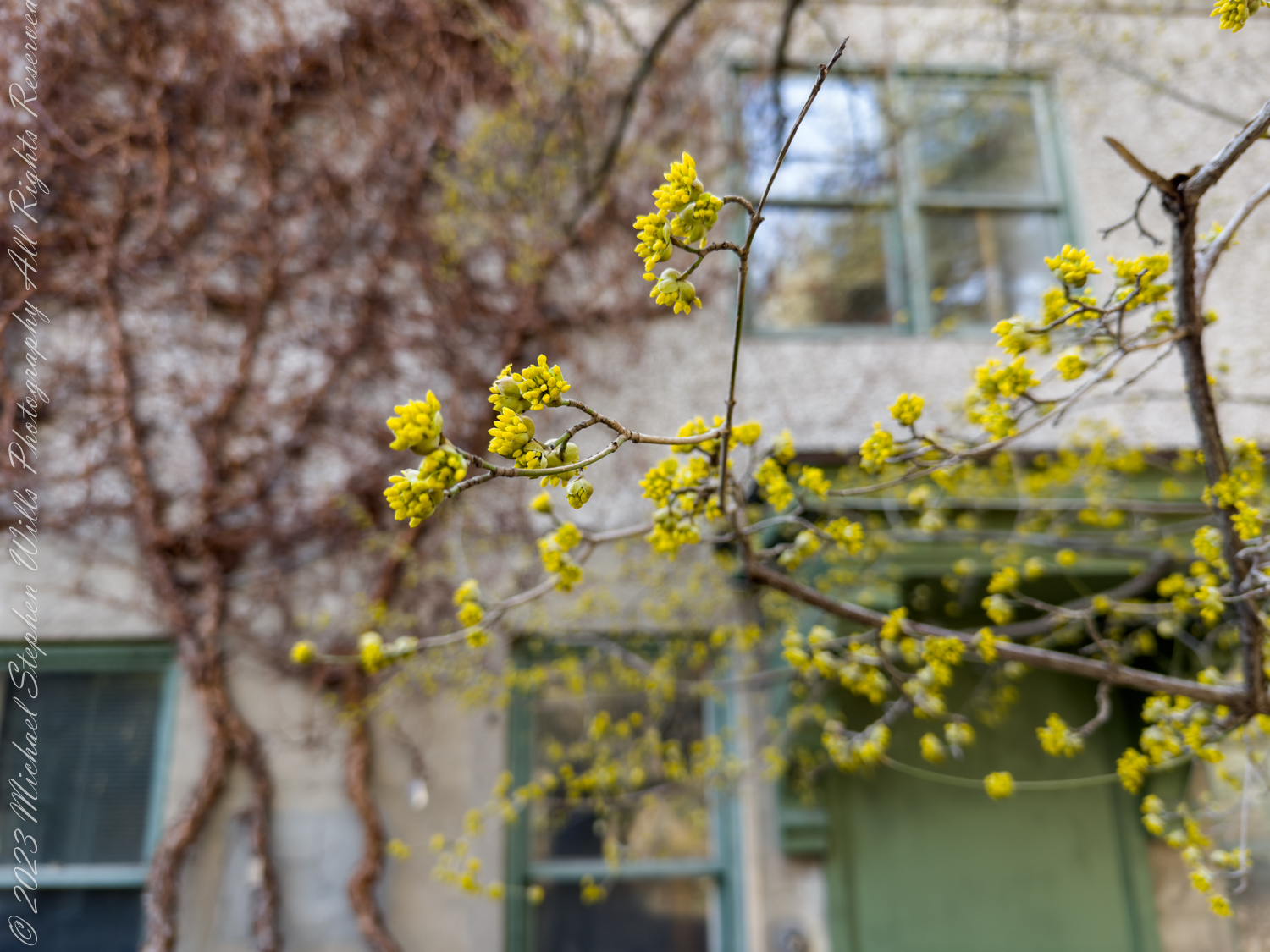
The tree in the photograph with the yellow buds is a Cornelian Cherry Dogwood (Cornus mas). It is one of the first trees to bloom in late winter to early spring, producing clusters of small, bright yellow flowers before the leaves emerge. Cornelian Cherry Dogwood is often used in landscapes and gardens for its early bloom and attractive appearance. This tree grown in the Robinson Herb Garden, Cornell University

Mundy Wildflower Garden and Fall Creek

At Mundy Wildflower Garden, a hidden gem nestled beside Fall Creek, the landscape transformed into a tranquil haven, with the gentle sound of water flowing nearby. Though it was still early in the season, the promise of blooming wildflowers lingered in the air. The garden’s carefully maintained paths and rustic benches invited quiet contemplation.
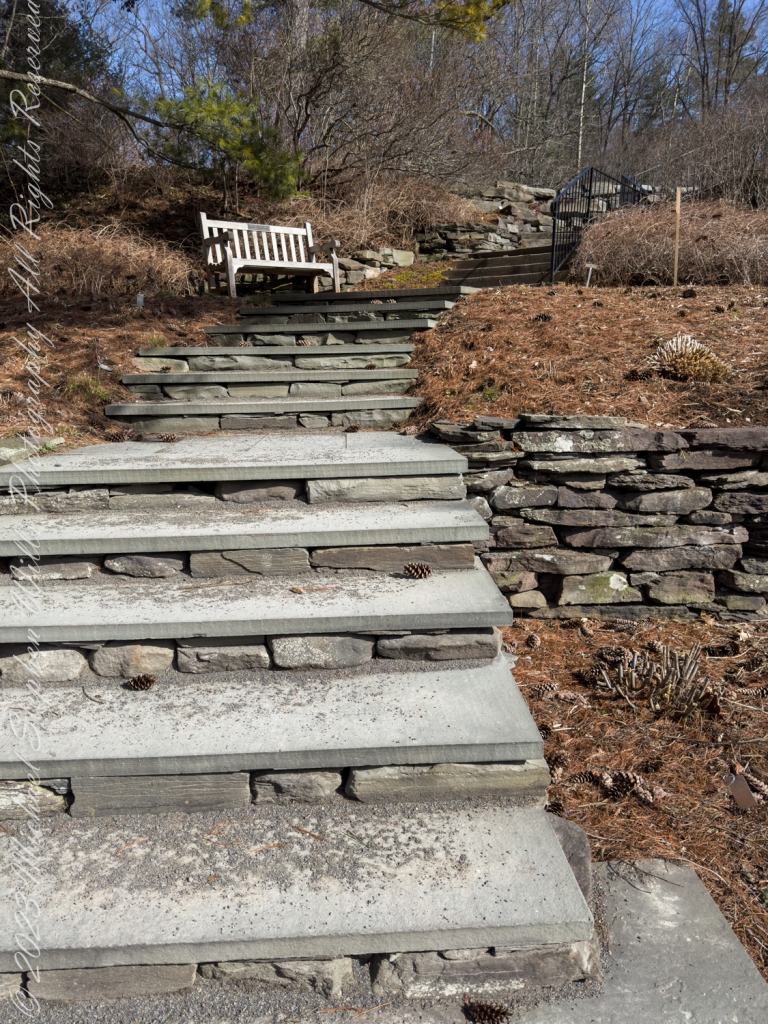
These steps lead from the Robison New York State Herb Garden to Judd Falls Road and the Mundy Wildflower Garden

Exploring the Common Ferns Display

As I ventured further, I came across a display showcasing common ferns. The display included photographs and names of various ferns, such as the Christmas Fern (Polystichum acrostichoides) and Goldie’s Fern (Dryopteris goldiana). This educational exhibit was both informative and visually appealing, highlighting the diverse flora found on the campus.
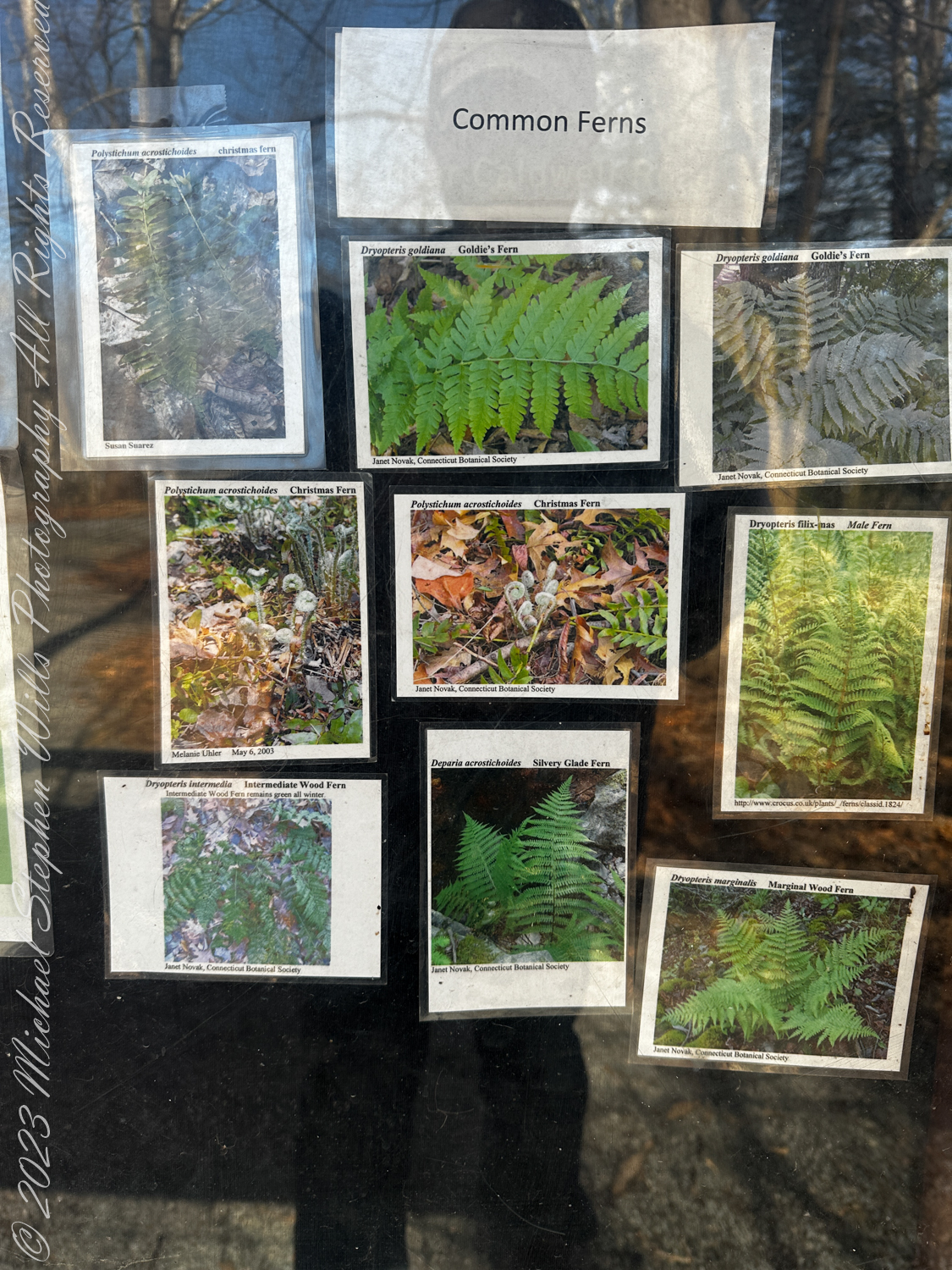
Displayed on a display in the Mundy Wildflower Garden, part of Cornell (University) Botanical Gardens.

Observing the Weather Station

Nearby, a weather station stood tall, equipped with various sensors to monitor climate conditions. A sign explained its purpose: to help understand how climate change is affecting plants in the area. The data collected here would provide valuable insights into the phenological changes occurring within the garden.
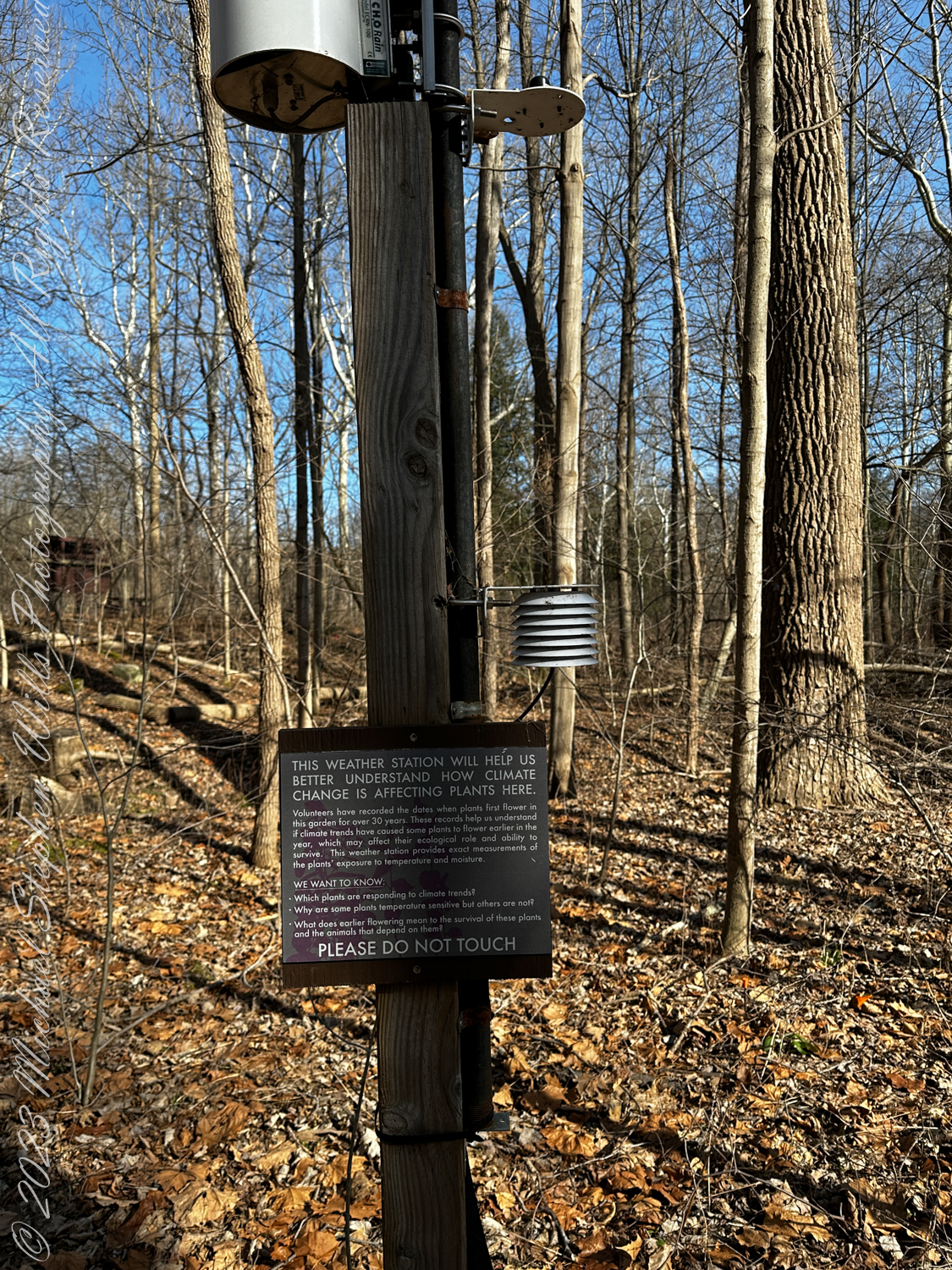
Traversing the Slope to Olin Library

Returning, I made my way toward Olin Library. The path took me along a steep incline, “Lib Hill,” where I could see the stark branches of deciduous trees reaching toward the sky. The steps seemed to stretch endlessly upward, mirroring the journey of knowledge that students undertake within the library’s walls. The modern architecture of the library contrasted sharply with the surrounding natural landscape, symbolizing the intersection of nature and human achievement.

Approaching McGraw Tower

As I neared the heart of the campus, the McGraw Tower stood tall and prominent, albeit encased in scaffolding for restoration work. The historic building, with its distinctive clock face, was an emblem of Cornell’s rich heritage. Despite the scaffolding, the tower retained its majestic presence, a testament to the ongoing efforts to preserve its legacy.
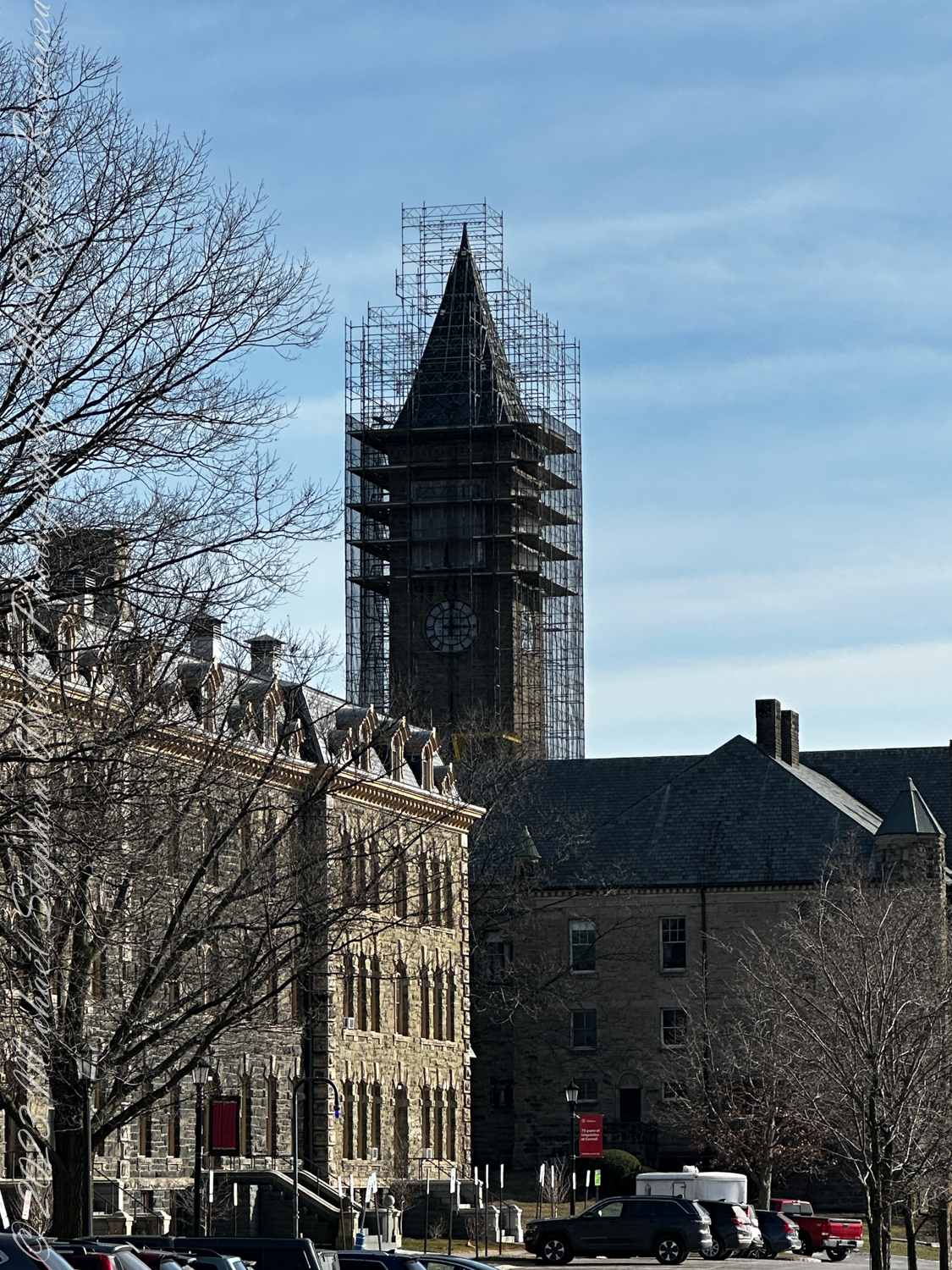
This view is from Central Avenue. Morrill Hall is on the left. The tower is part of Uris Library. Cornell University, Ithaca, Tompkins County, New York State

Returning to Cascadilla Park Road

As descended the hill, following Cascadilla Creek, reflecting on the six mile journey, I felt a profound connection to the enduring beauty and resilience of both nature and human creativity. The walk had taken me through time and space, from historic landmarks to natural wonders, each step revealing a new facet of the Cornell University campus.

Reflecting on History

My walk took me past a plaque commemorating the site of the first settlers’ log cabin in Tompkins County, built in 1788. The plaque, erected by the Cayuga Chapter D.A.R. in 1927, was a poignant reminder of the area’s deep-rooted history and the pioneering spirit that shaped it.
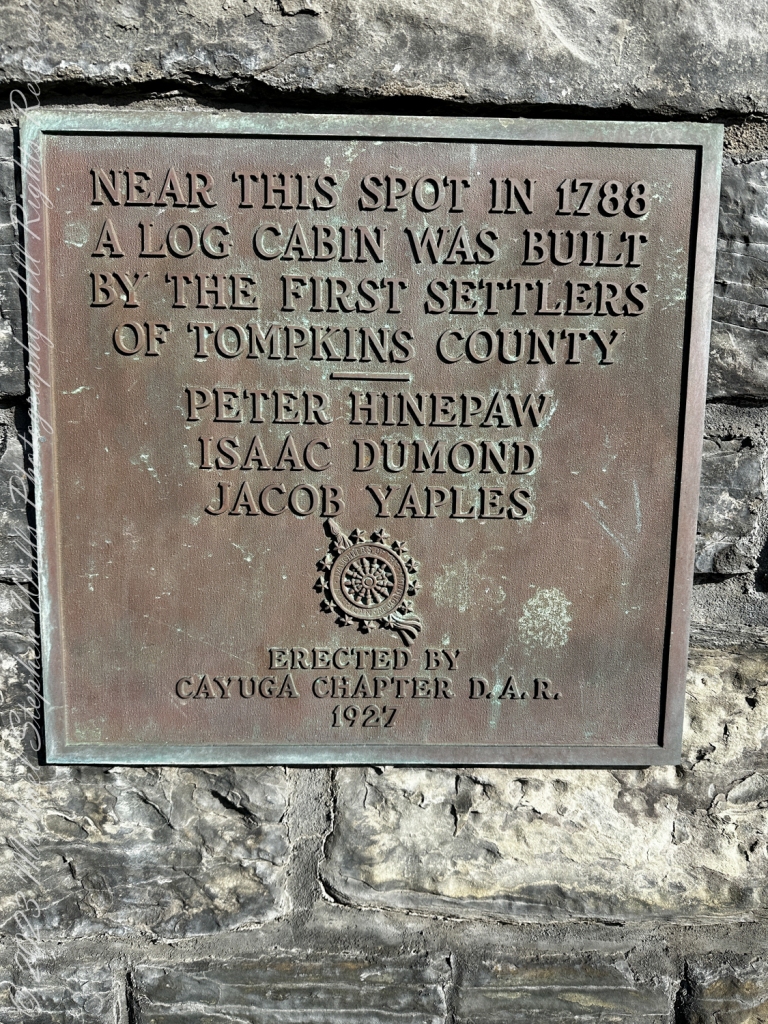
This plaque on the corner of University Avenue and Cascadilla Park Road Road, “Near this spot in 1788 a log cabin was built by the first settlers of Tompkins County — Peter Hinepaw, Isaac Dumond, Jacob Yaples. Erected by Cayuga Chapter Daughters of the American Revolution 1927

This late winter walk, captured through my lens, was a celebration of the quiet splendor of the season and the enduring spirit of a place that thrives on discovery and growth.
Copyright 2024 Michael Stephen Wills All Rights Reserved

Periwinkle

Source of life-saving drug

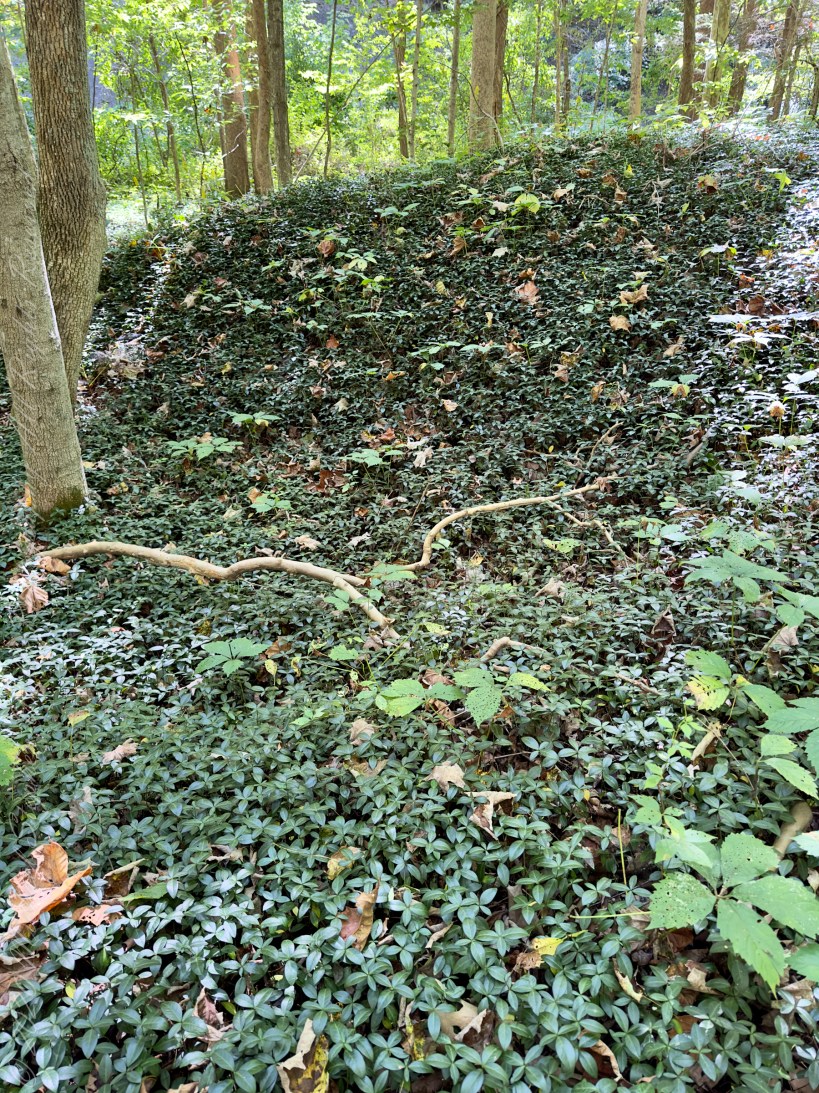
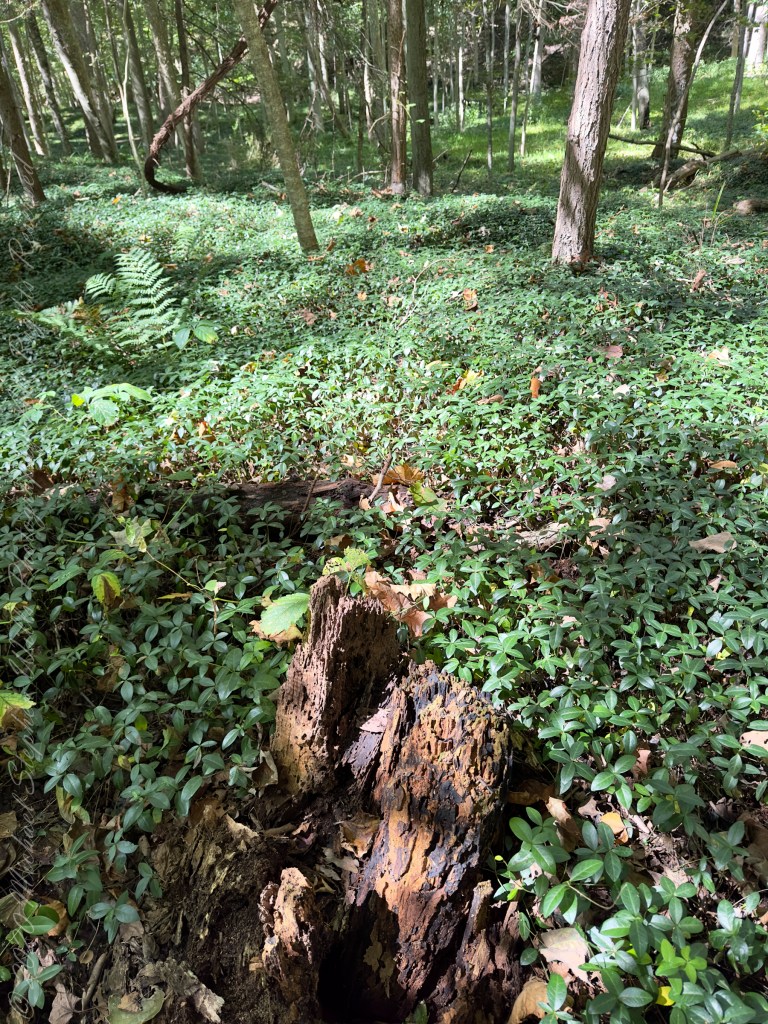
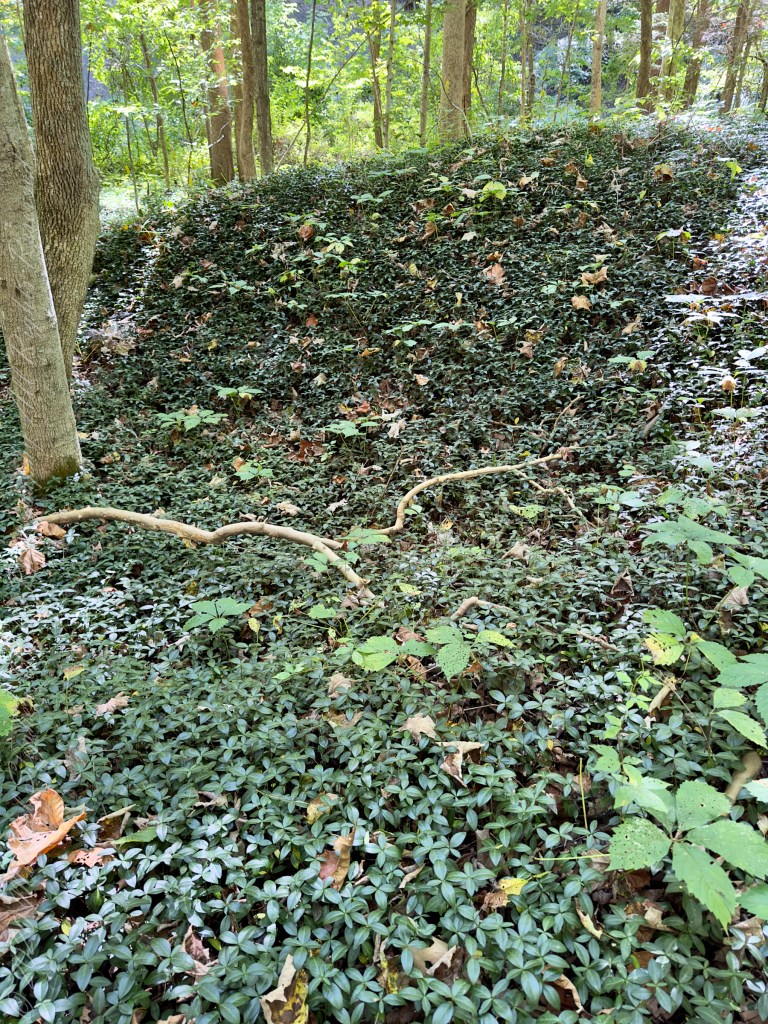
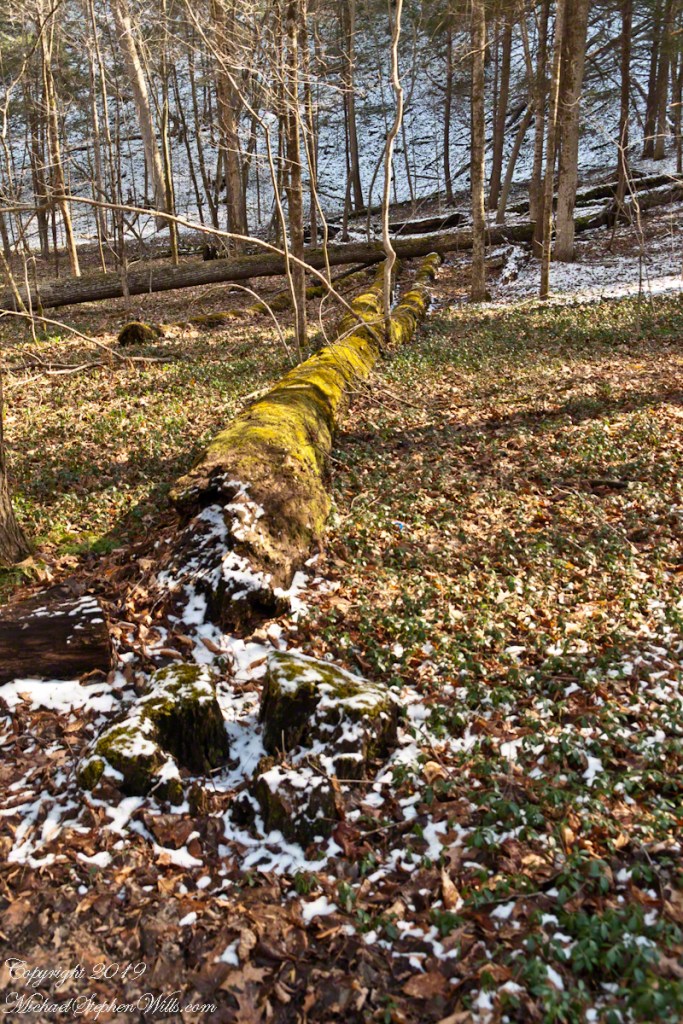
A broad, fertile flat between gorge walls supports a dense growth of invasive creeping myrtle. Springtime there is a sprinkling of small blue flowers, this may be the source of another name, periwinkle, or lesser periwinkle.

Click photograph for a larger view. To do this from WordPress Reader, you need to first click the title of this post to open a new page.

Periwinkle is an evergreen and in early times vinca vine (another name we call it, from the scientific name Vinca Minor) was planted in graveyards and cemeteries. The isolated growth of vinca vine in this section of the gorge maybe from such a planting on a lost grave.

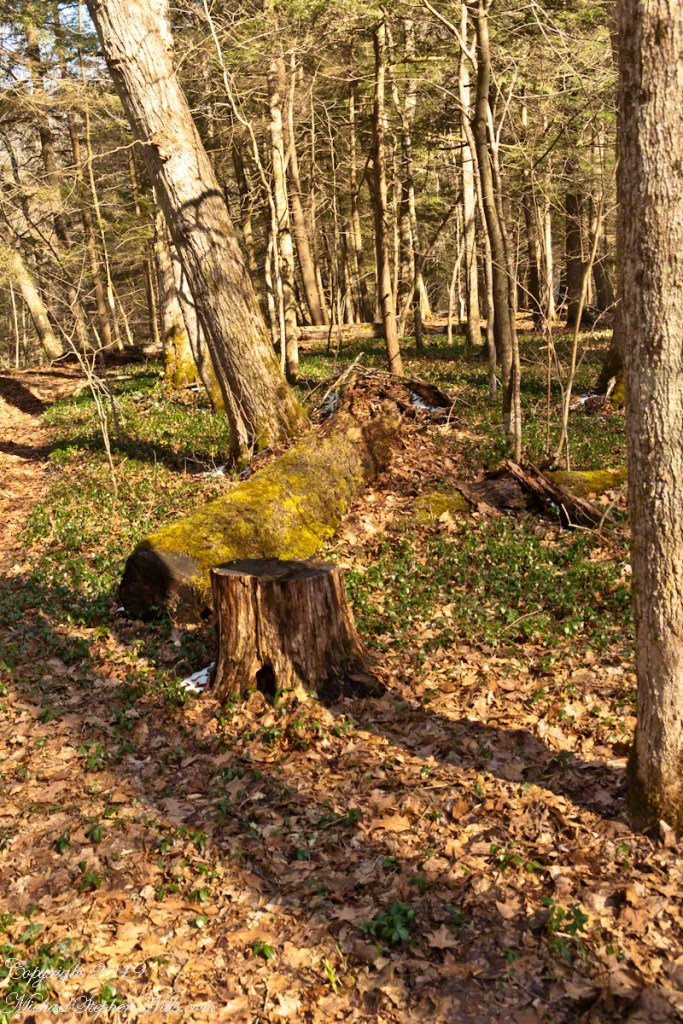
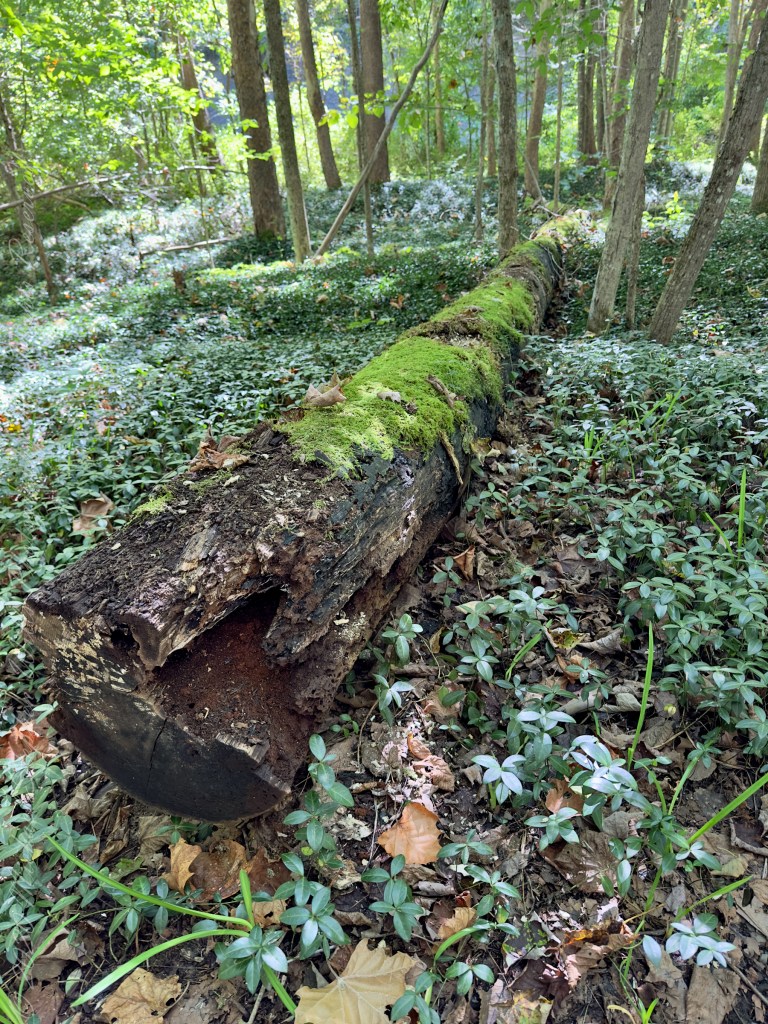
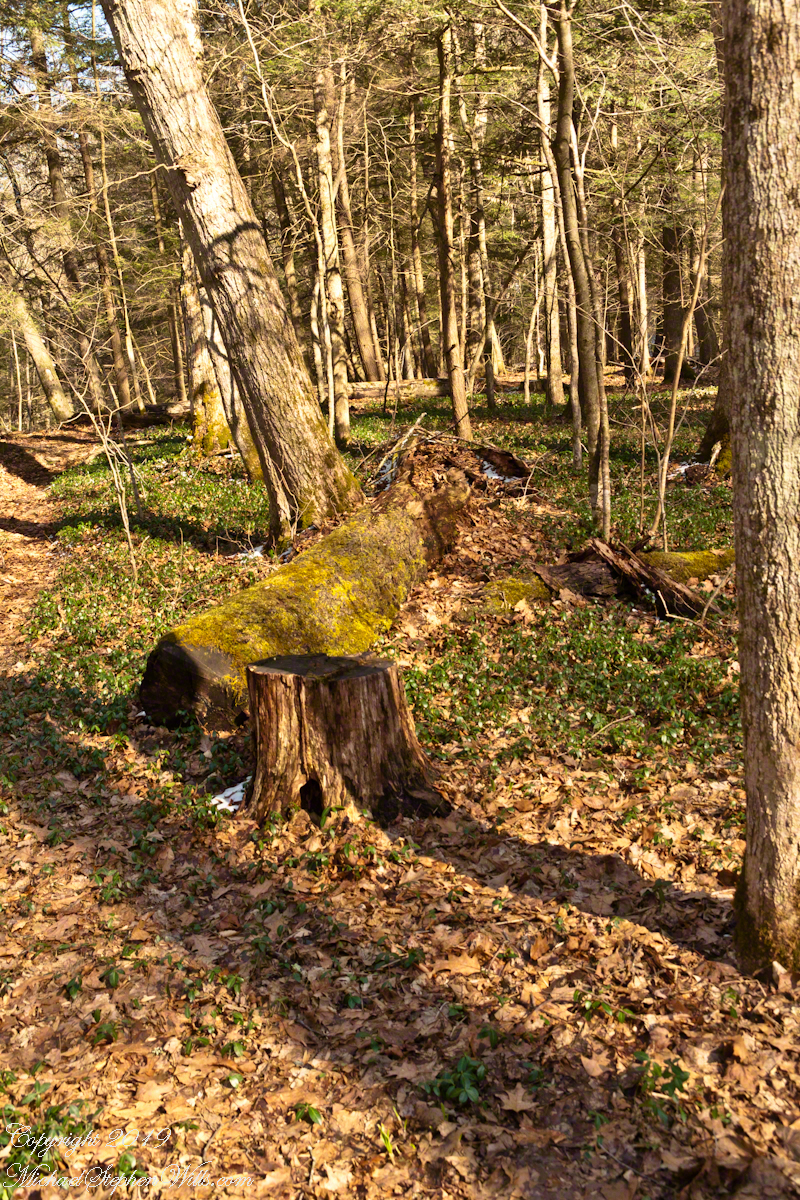
Today, the park practices leaving fallen trees in place, here they are covered in years of moss, a memory of headstones. Lesser Perriwinkle is significant for the living as the source of vincamine, from the leaves. A synthetic form of this compound is a potent vasodilator, a therapeutic treatment for stroke and other brain disorders.

These shots were hand held. I used a Sony Alpha 700 dslr with a variable “zoom” lens, great for framing compositions.

Robert H. Treman New York State Park.

Source: Wikipedia, “Vinca Minor.”

Click for a slideshow of this Fertile Flats sequence.
Copyright 2024 All Rights Reserved Michael Stephen Wills

Treman Early Autumn Walk VI

Fairy Forest

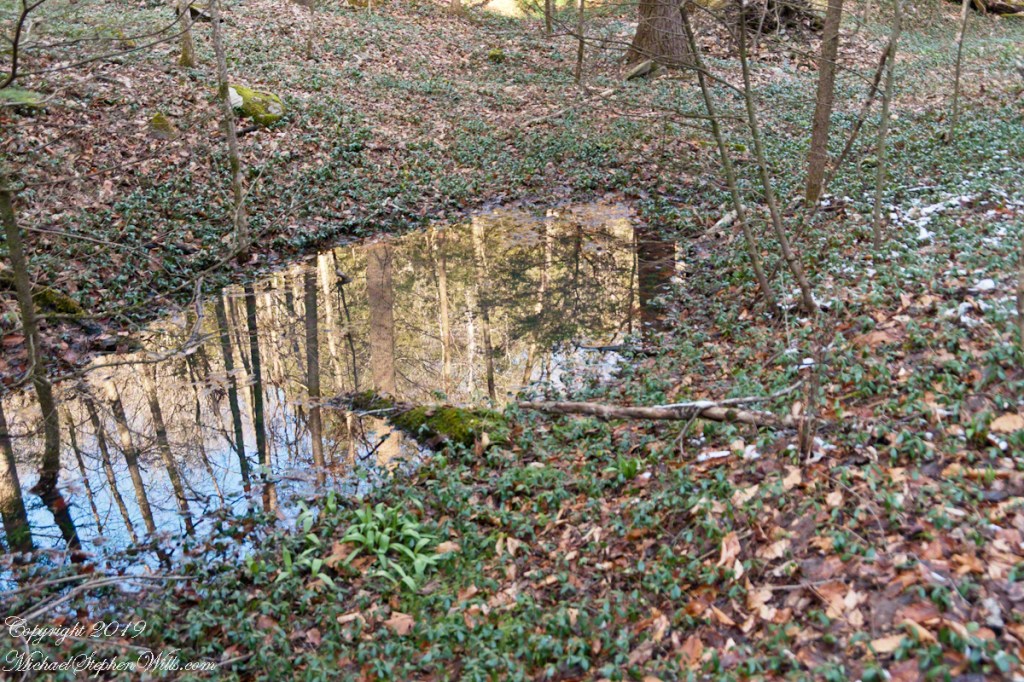
Over a period of 11,000 years this former stream bed, abandoned when a melting tongue of the Laurentide Ice Sheet deposited drift across Enfield Creek, transformed to this sun dappled glade, one of two along the Gorge Trail of Treman Park.

Pam calls this the Fairy Forest for the feeling of peaceful expectation she feels here. Another reason is the small flowers of this native myrtle after which the periwinkle is named.

Fallen trees are left be to return to the soil.

“Vinca minor (common names lesser periwinkle, dwarf periwinkle is a species of flowering plant in the dogbane family, native to central and southern Europe, from Portugal and France north to the Netherlands and the Baltic States, east to the Caucasus, and also southwestern Asia in Turkey. Other vernacular names used in cultivation include small periwinkle, common periwinkle, and sometimes in the United States, myrtle or creeping myrtle.”

“Vinca minor is a trailing subshrub, spreading along the ground and rooting along the stems to form large clonal colonies and occasionally scrambling up to 40 centimeters (16 in) high but never twining or climbing. The leaves are evergreen, opposite, 2–4.5 centimeters (0.79–1.77 in) long and 1–2.5 centimeters (0.39–0.98 in) broad, glossy dark green with a leathery texture and an entire margin.

“The flowers are solitary in the leaf axils and are produced mainly from early spring to mid-summer but with a few flowers still produced into the autumn; they are violet-purple (pale purple or white in some cultivated selections), 2–3 centimeters (0.79–1.18 in) diameter, with a five-lobed corolla. The fruit is a pair of follicles 2.5 centimeters (0.98 in) long, containing numerous seeds.”

“The species is commonly grown as a groundcover in temperate gardens for its evergreen foliage, spring and summer flowers, ease of culture, and dense habit that smothers most weeds.”

“Vinca minor contains more than 50 alkaloids, including vincamine. Other alkaloids include reserpine, rescinnamine, akuammicine, majdine, vinerine, ervine, vineridine, tombozine, vincamajine, vincanine, vincanidine, vinburnine, apovincamine, vincaminol, desoxyvincaminol, vincorine[ and perivincine.  Vinpocetine (brand names: Cavinton, Intelectol; chemical name: ethyl apovincaminate) is a semisynthetic derivative alkaloid of vincamine.”

It is possible this is a cemetery as myrtle was once commonly planted in cemeteries in parts of the United States and naturalized periwinkle may indicate the presence of graves whose other markers have disappeared.

Reference: text in italics and quotes is from the Wikipedia, “Vinca Minor.”

Copyright 2023 All Rights Reserved Michael Stephen Wills

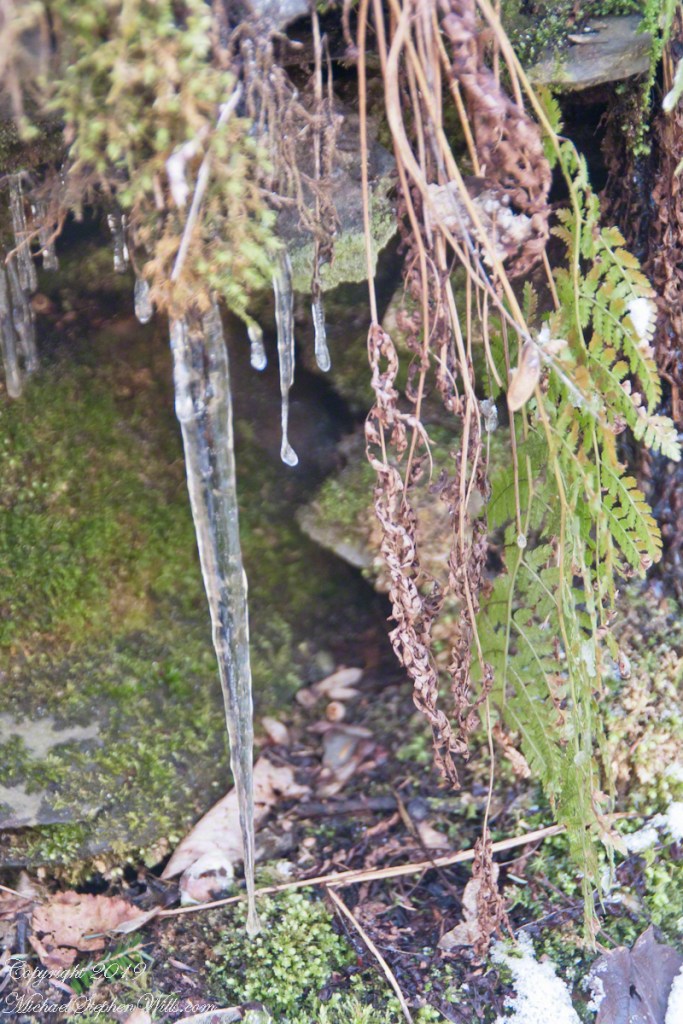
Fronds with Icicle

Fern Generations

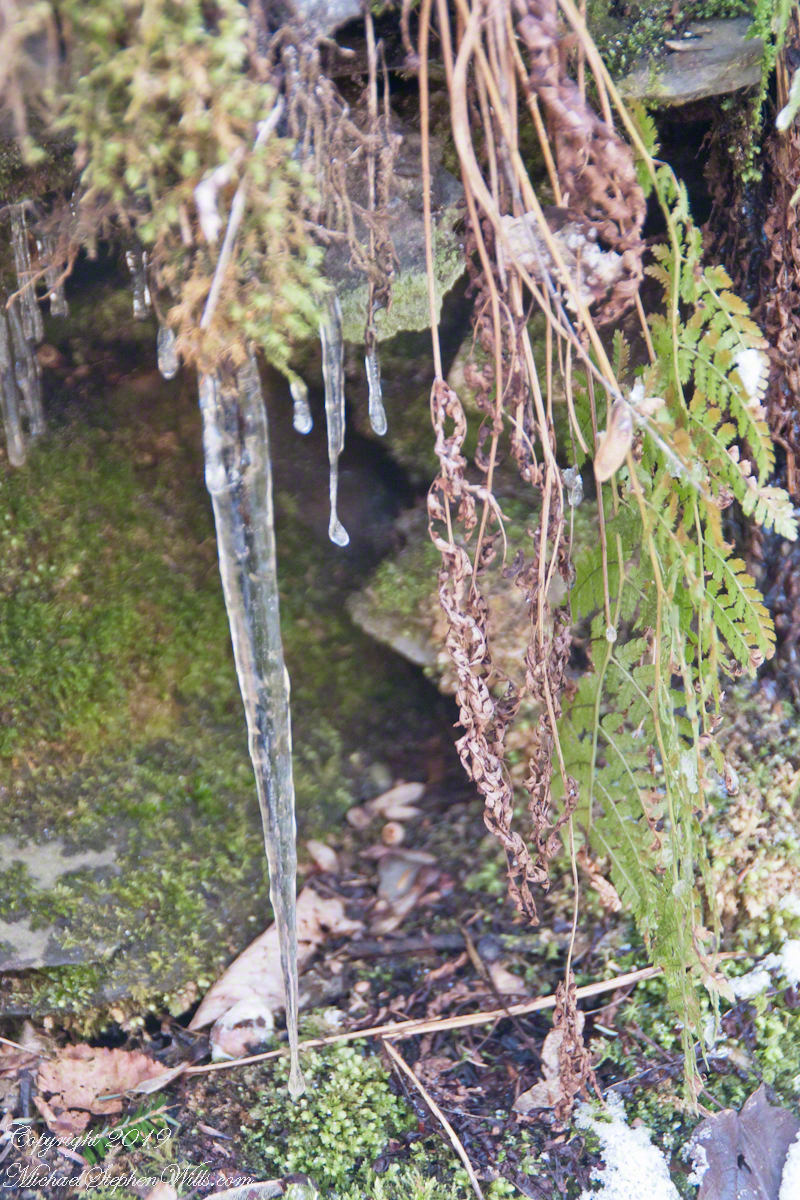
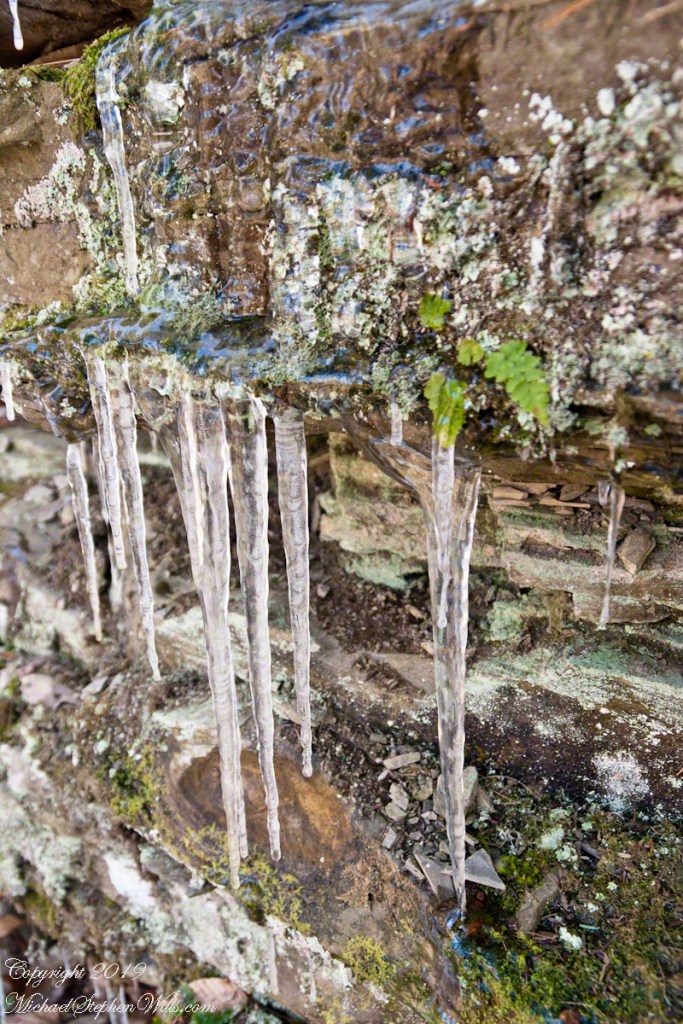
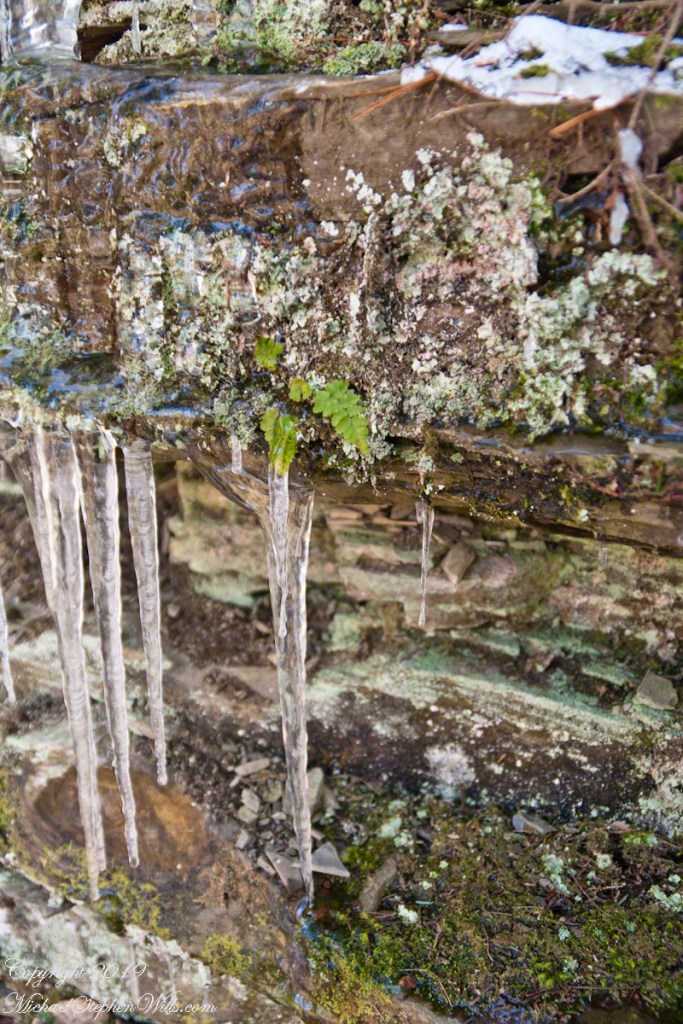
Spent and green fern frond with moss and icicles formed during an early April frost.

Click photograph for a larger view. To do this from WordPress Reader, you need to first click the title of this post to open a new page.

Fern generations are here with the spent fronds from earlier years, pale green survivors of this season.

These shots were hand held. I used a Sony Alpha 700 dslr with a variable “zoom” lens, great for framing compositions.

Robert H. Treman New York State Park.

Click for macro slideshow.

Copyright 2019 All Rights Reserved Michael Stephen Wills