Exploring Rincon Peak: Hiking Adventures in Arizona

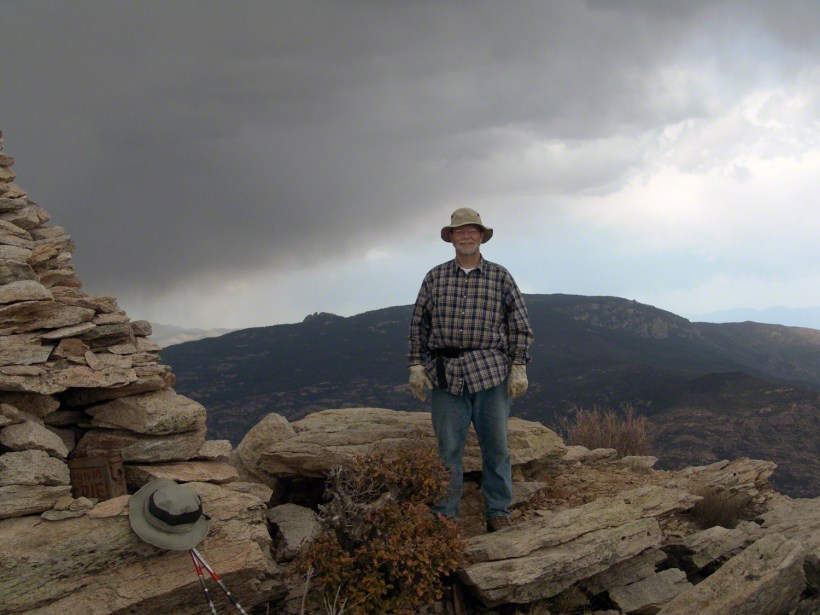
As we stood atop Rincon Peak, the sky darkened with the approach of a sudden thunderstorm. Below us, the San Pedro River valley sprawled, with the Mae West Peaks to the left and the legendary Dragoon Mountains straight ahead. This photograph captures that exhilarating moment—standing on the summit with the world at our feet and the wild Arizona sky closing in. Curious about how we got there and our race against nature’s fury? Join me on the blog to delve into the full adventure and explore more stunning images from the heart of the Rincon Wilderness.

The Rincons are one of 42 Sky Island mountains isolated from each other due to gradual warming and drying climate changes since the last ice age, 10,000 years ago. While this marvelous environment of oak and pine forests is accessible only on foot and with significant effort, it is visible from every point of the Tucson valley, home to a million inhabitants.

The name ‘Rincon,’ Spanish for ‘corner,’ reflects the mountains’ shape as they enclose a space on the west and northwest. This area, formerly used for ranching, is now being developed for tract housing. In contrast, the mountains themselves are preserved as wilderness, with parts designated within the Saguaro National Park and the Coronado National Forest.

In the past 51 years, I have been lucky enough to visit the Rincon Wilderness interior four times, shouldering different style backpacks onto the mountain and walking in different boots. My first trip was during college in the 1970s, when a party of six of us left from the end of Speedway, heading up the Douglas Springs trail. The climb was an exercise in desert survival that several friendships did not survive, replaced by new friends met on Mica Mountain. I have no photographs from that experience, only memories and the backpack.

Decades later, reconnecting with Arizona in 2004—thirty-one years after that first experience—I took no chances. This time, my attempt on Rincon Peak was a success. I reduced risk and effort, though not eliminating them, by hiring a guide for the four-day trip. We reached Rincon Peak via the Turkey Creek Trail out of Happy Valley, climbing a mountain buttress with views that widened and lengthened with every step.

Capturing these moments, I took several photographs during that experience. Two years later I added a landscape of the peak at sunset.

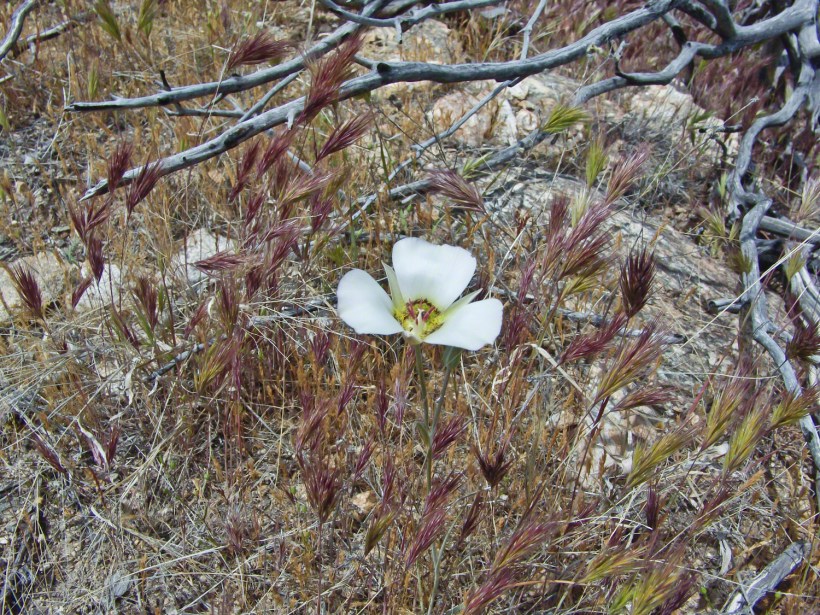
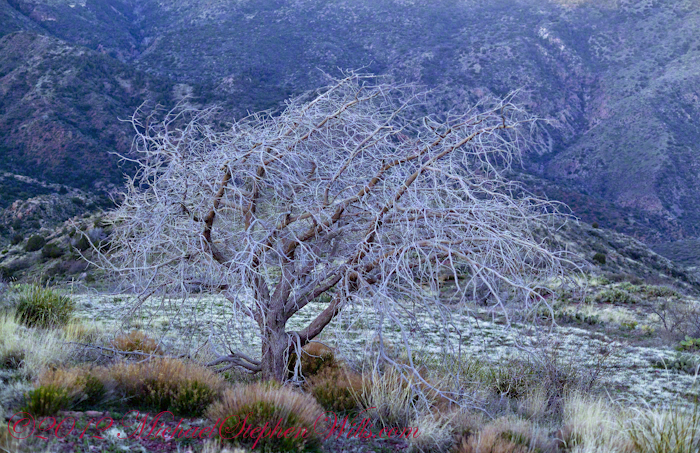
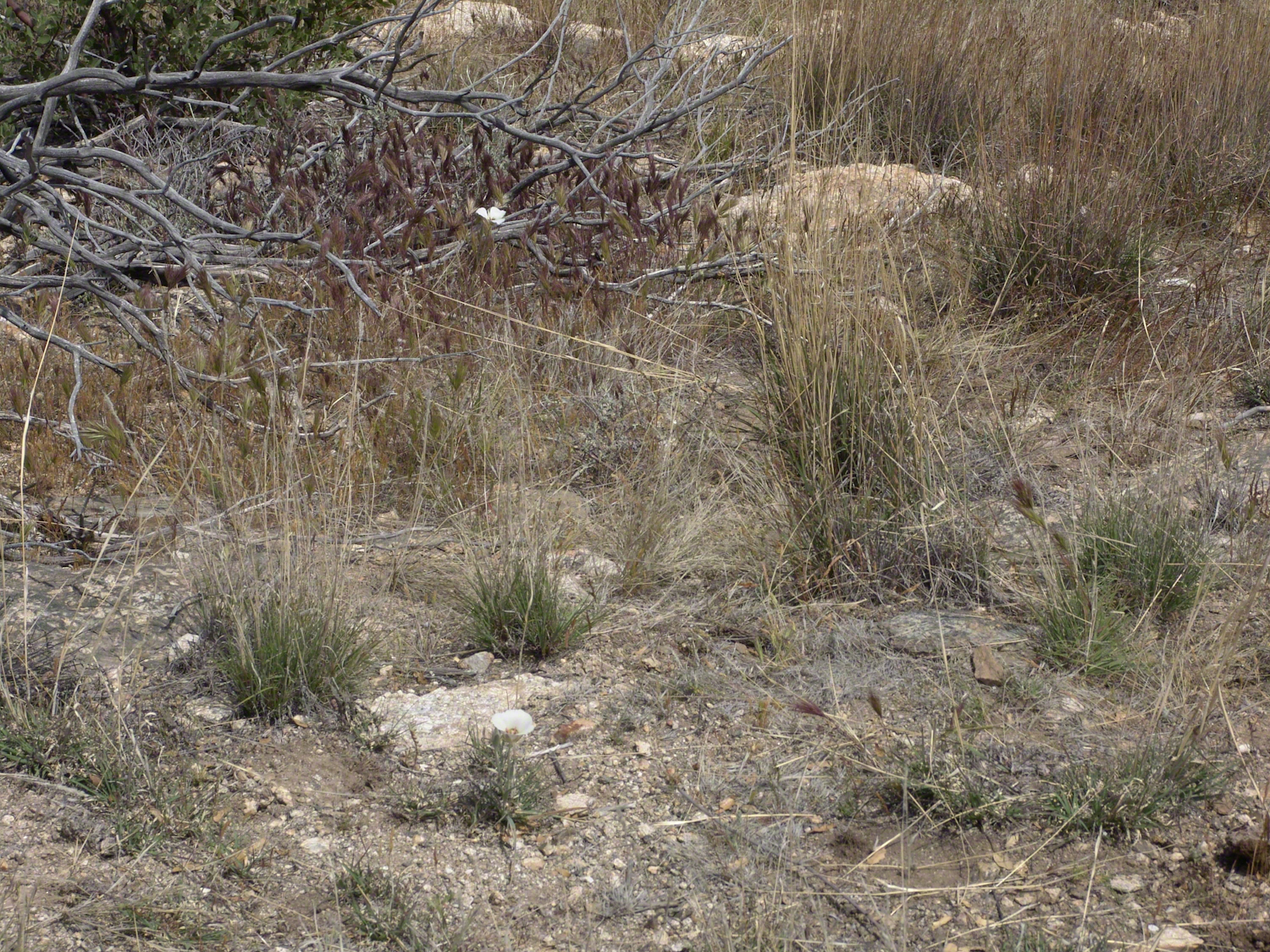
Along the Turkey Creek trail, Sego Lilies bloomed among a stricken oak and drying grasses, offering a vivid glimpse into the region’s delicate ecosystem. It is the winter rains that trigger such a bloom.
Sego Lilies -- CLICK ME!!!!

Enthralled by their beauty, we paused while I unpacked my gear to photograph the Sego Lilies growing along the trail.
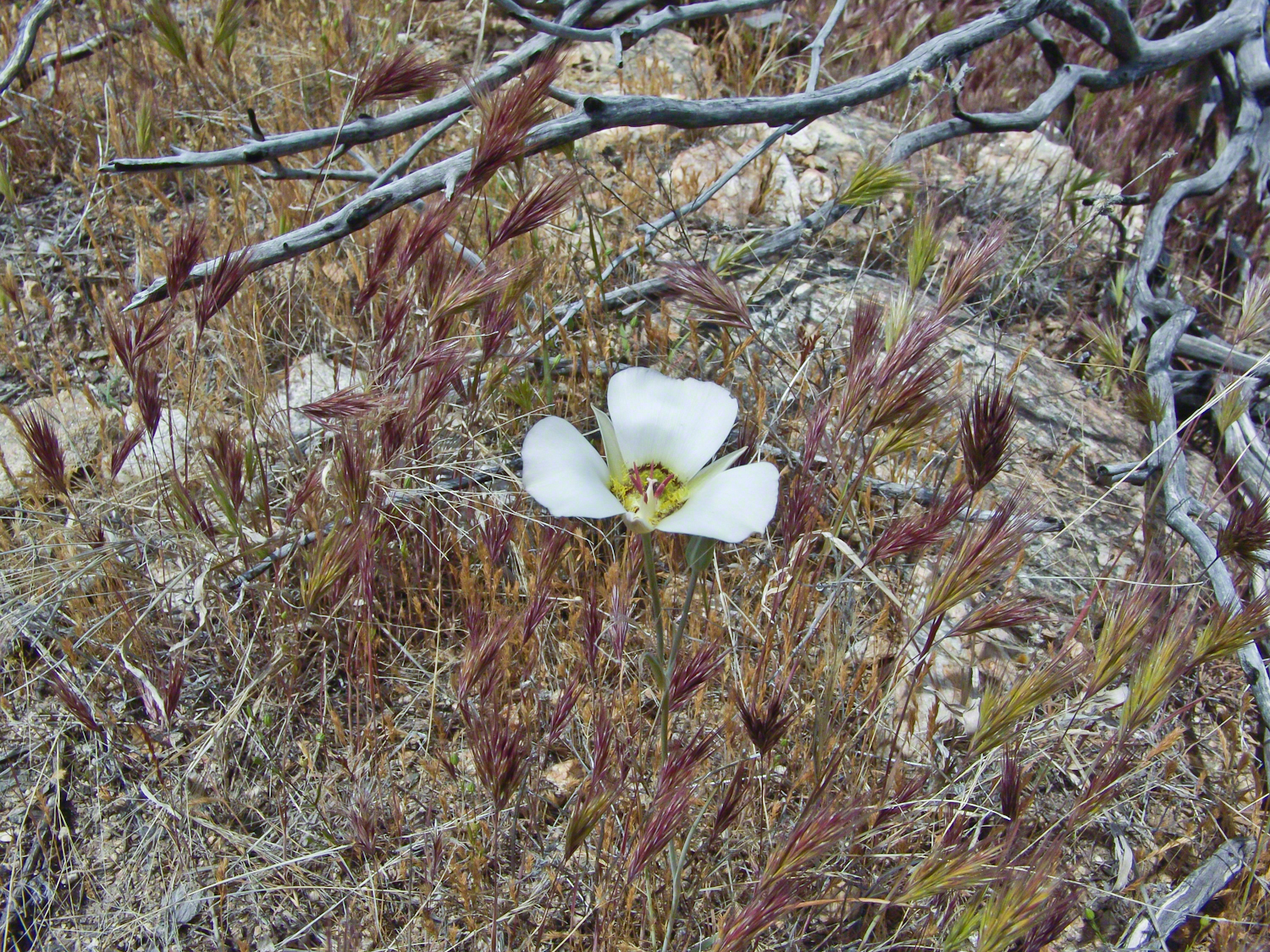
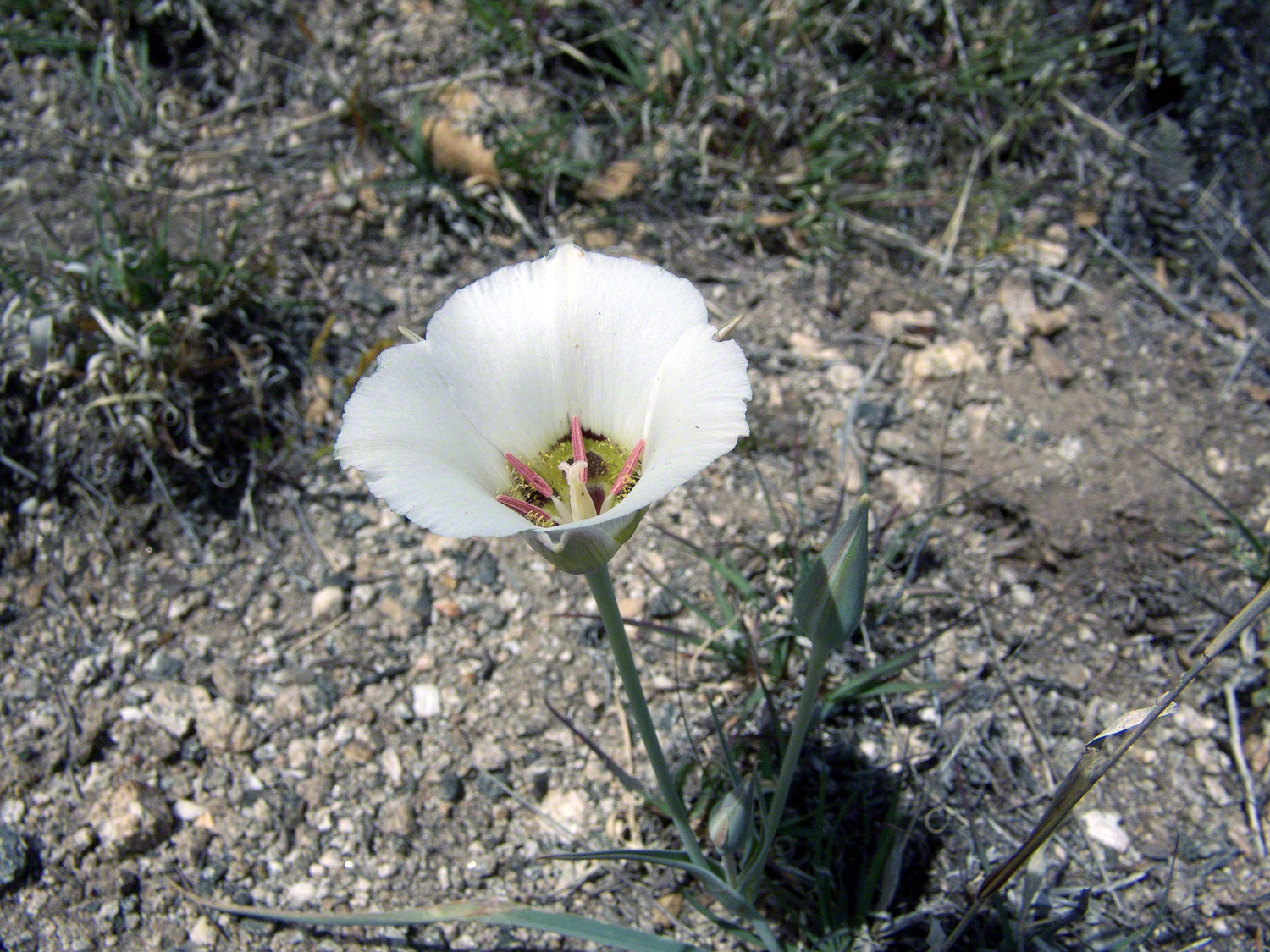
Sego Lilies -- CLICK ME!!!!

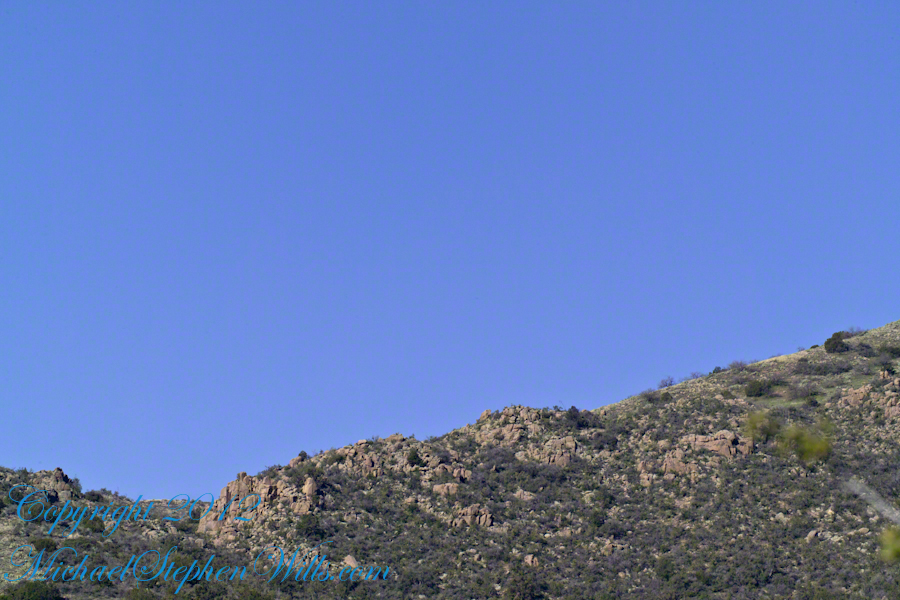
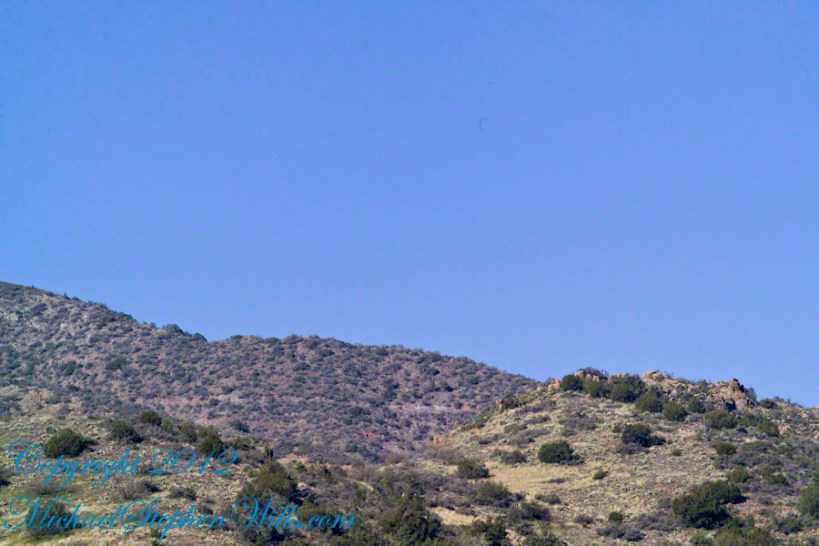
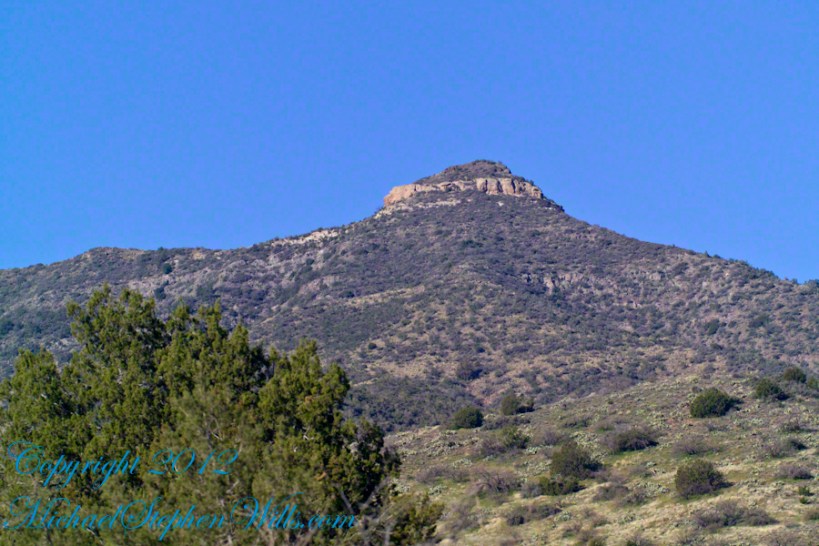
When we reached Deer Head Spring at the top of Turkey Creek Trail on April 27, 2004, it was a moist spot with no accessible water. With only about a gallon of water each remaining, we pressed ahead to Heartbreak Ridge and climbed into Happy Valley Saddle, where, thankfully, the creek—though low and full of algae—was usable. It was here that I caught my first glimpses of Rincon Peak, looking across the aptly named Heartbreak Ridge and Happy Valley Saddle.
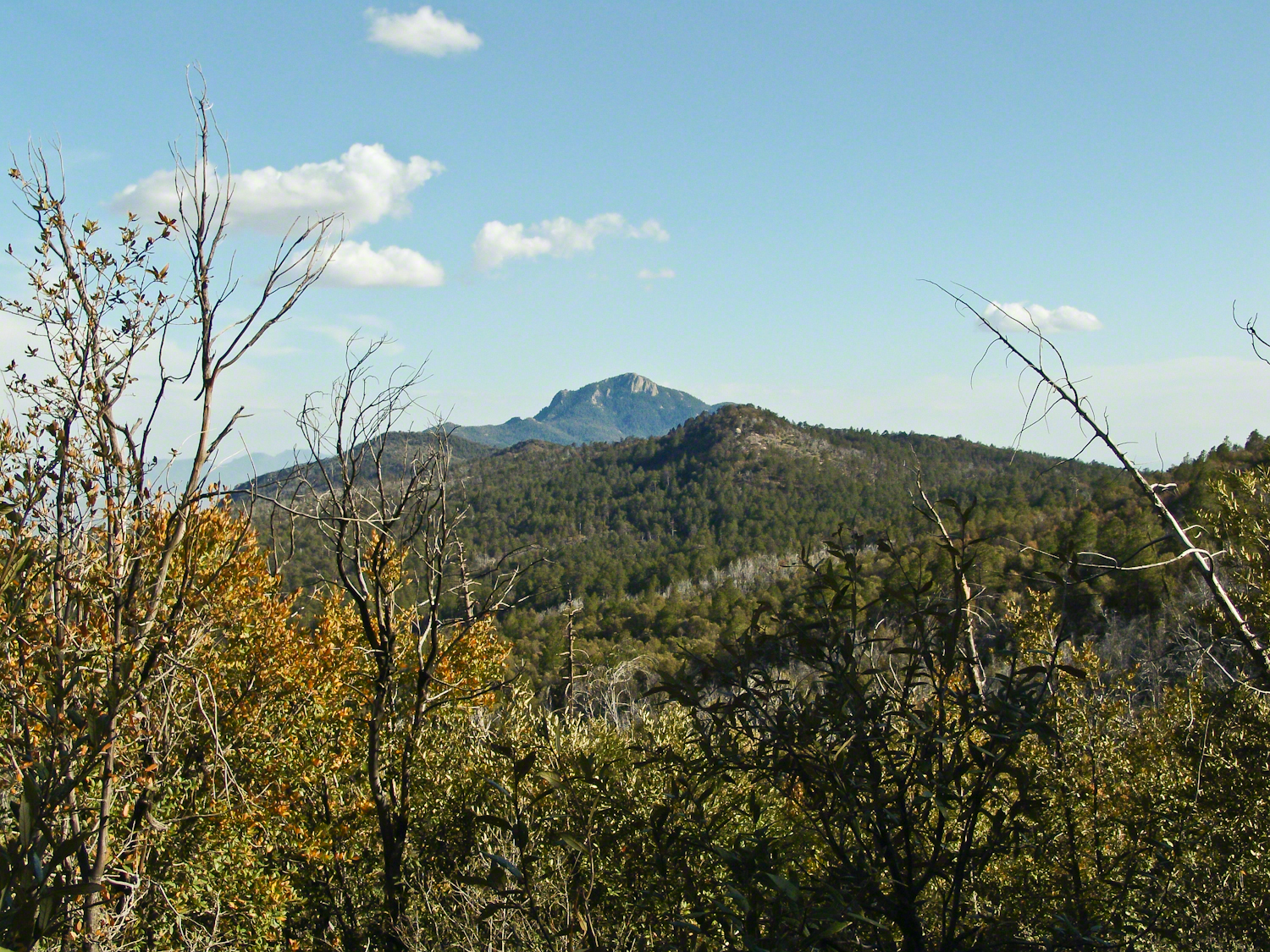
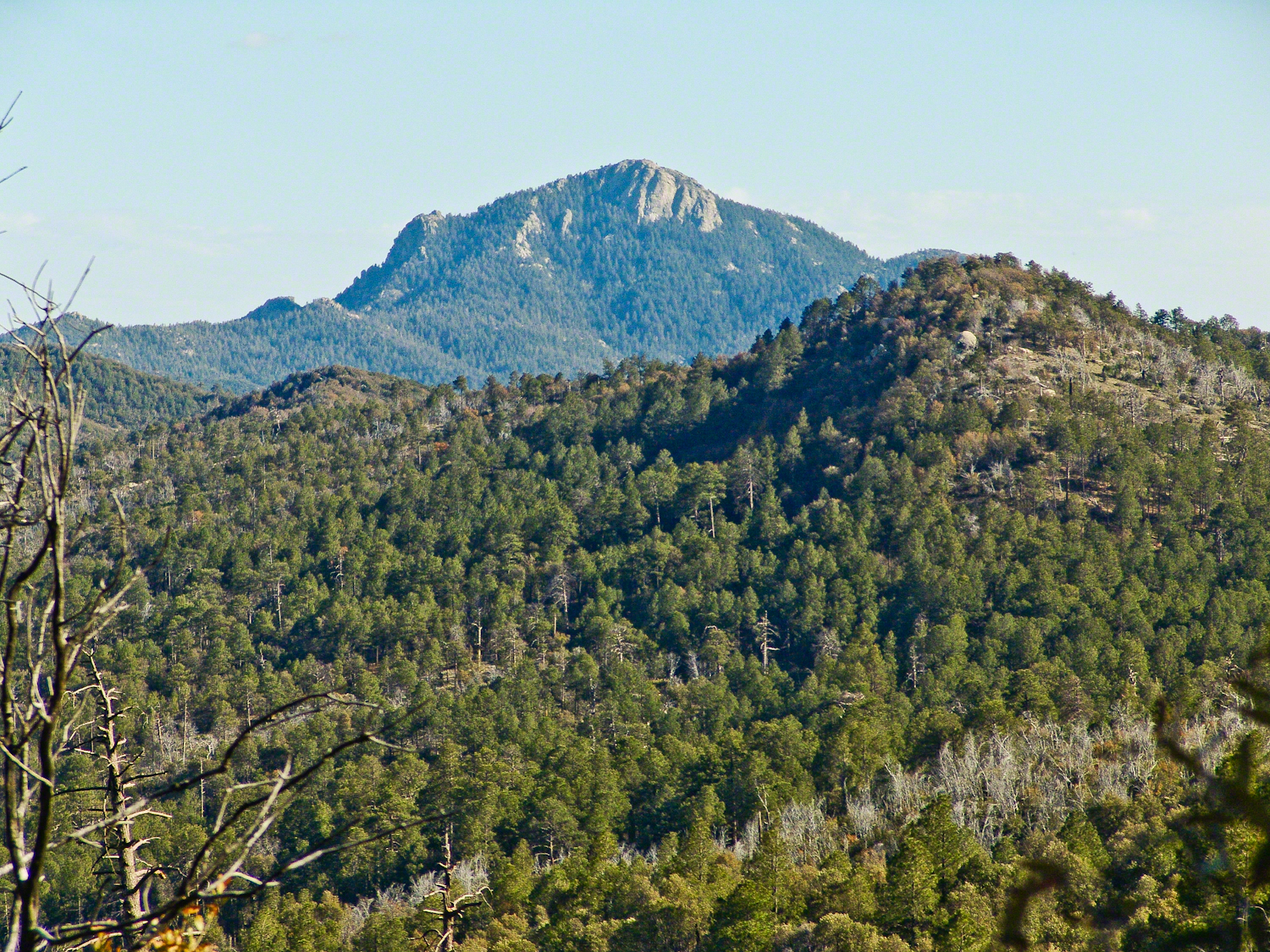
Distant View of Rincon Peak-- CLICK ME!!!!
Telephoto view of Rincon Peak -- CLICK ME!!!!

From Rincon Peak, the view to the south was breathtaking. The white rocks at the lower right formed the Valley of the Moon wall. Below lay the San Pedro River valley, with the Mae West Peaks at the left margin and the Dragoon Mountains with Cochise Stronghold at the center. I took this photograph around 12:30 PM on April 28, 2004, just as a thunderstorm was approaching.
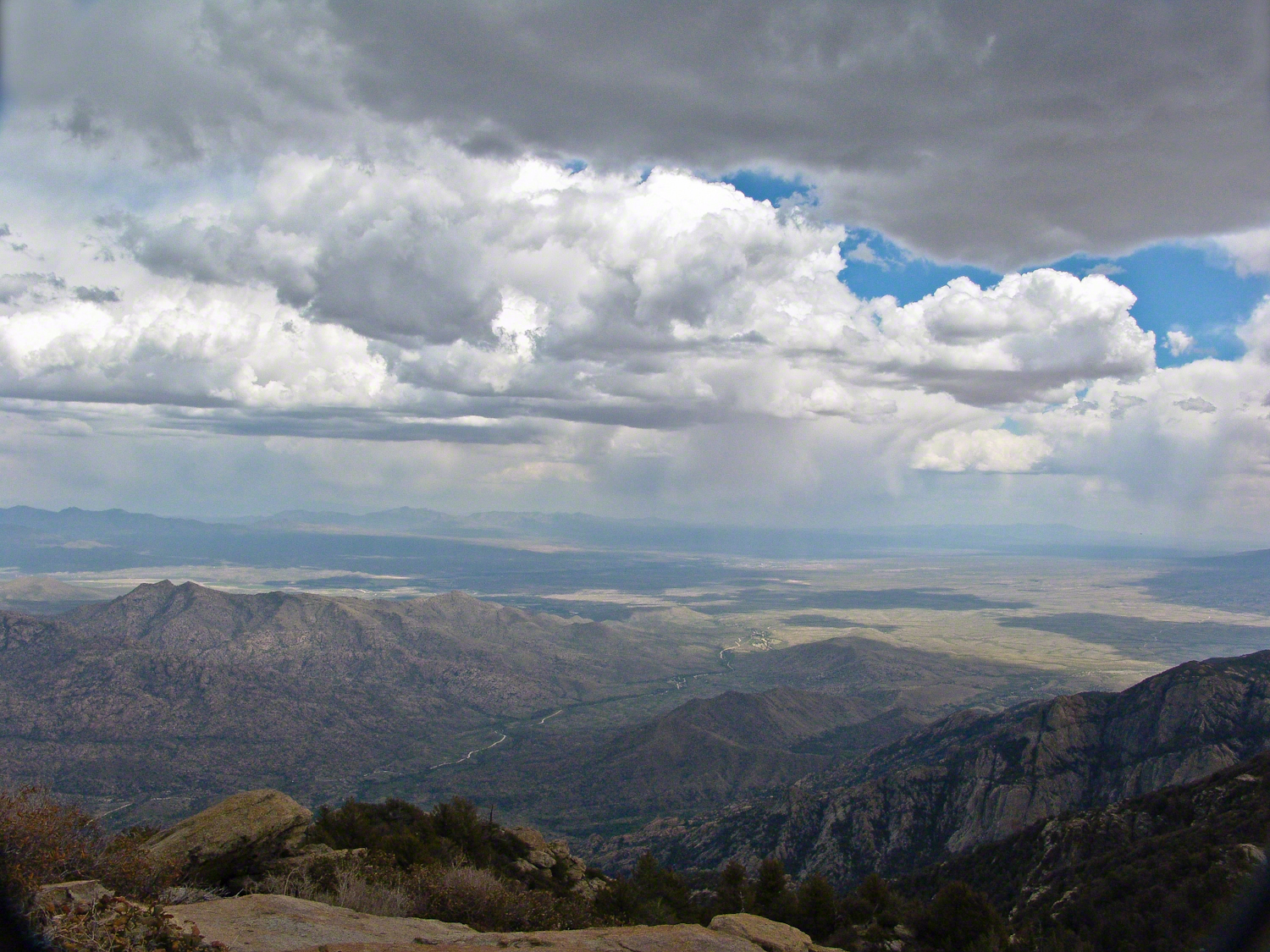
View from Rincon Peak -- CLICK ME!!!!

Rotating the camera to the south-southwest, the view stretched over the Valley of the Moon to the eastern Tucson Valley and the Sky Islands of the Whetstone Mountains (Apache Peak), with the Santa Ritas behind them. In this vast landscape, the works of man are overpowered by sky, rock, and distance.
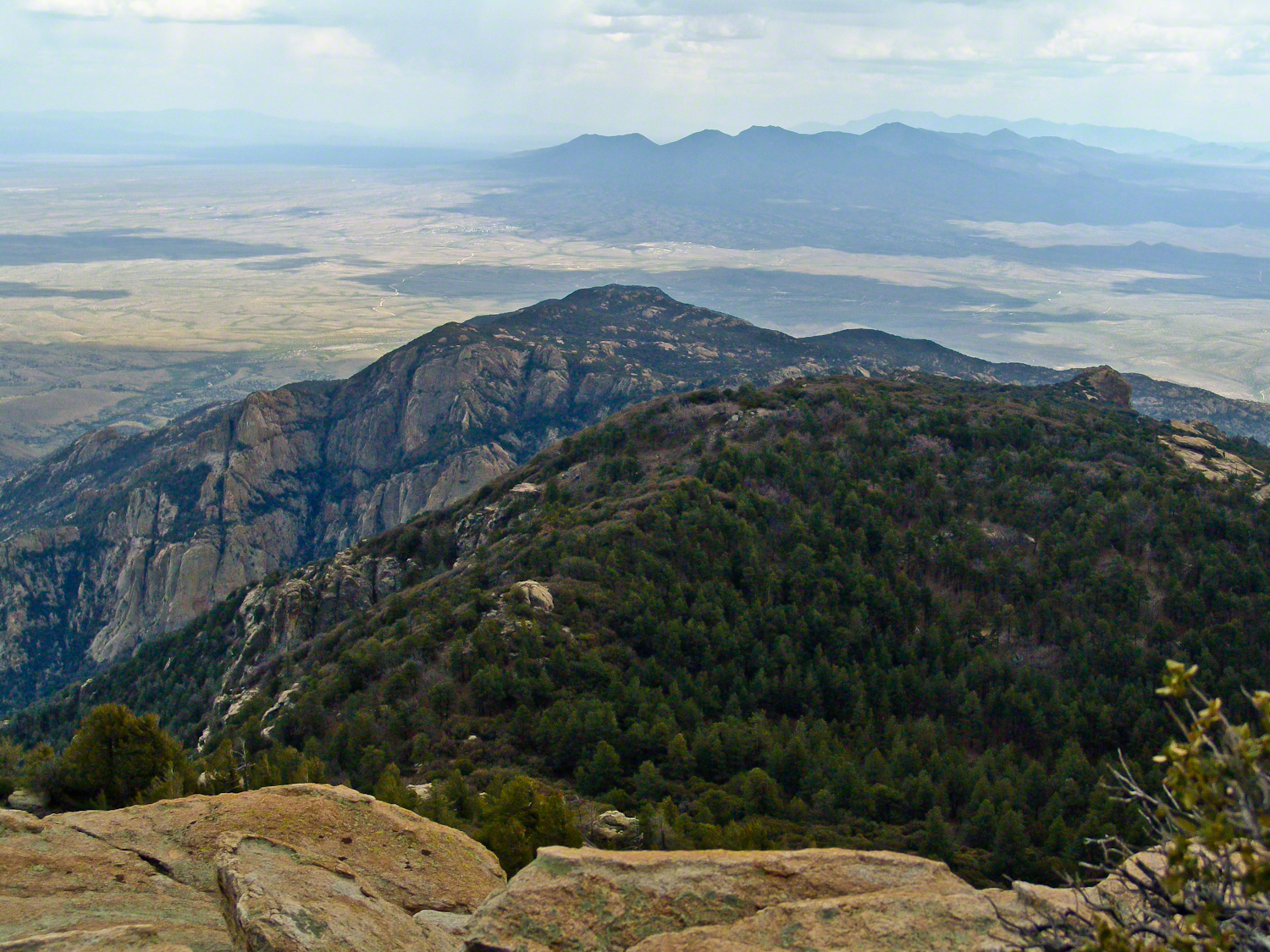
View from Rincon Peak -- CLICK ME!!!!

We made a hasty departure ahead of the thunderstorm. Attempting the peak that day had been a touch-and-go decision, but we reached the summit with moments to spare.

On the morning of April 29, 2004, the day after reaching Rincon Peak, I set up my tripod near our Happy Valley Saddle camp. In the serene early morning sunlight, I captured images of Rincon Peak, reflecting on the previous day’s ascent.
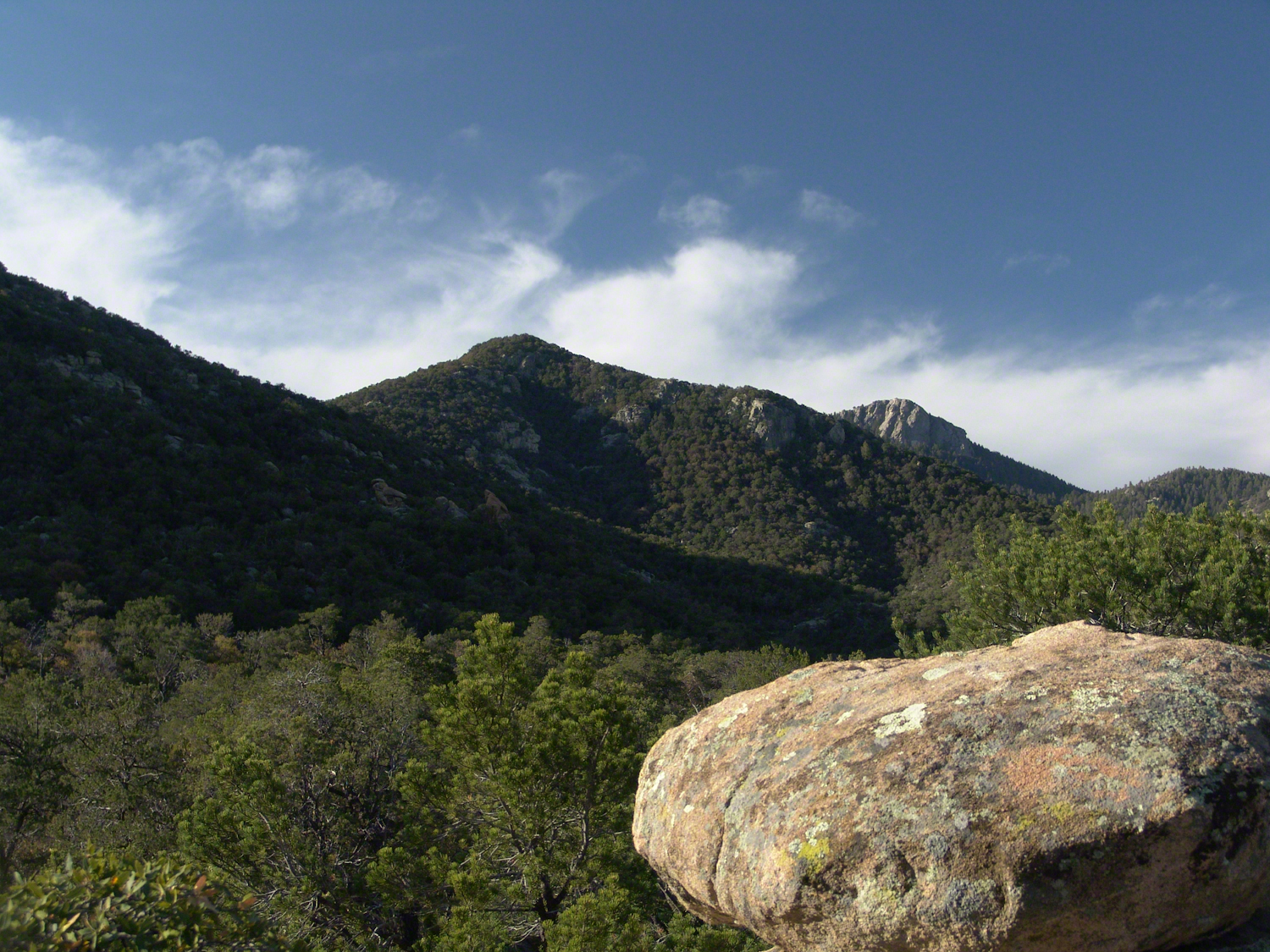
Rincon Peak from Happy Valley Saddle, dawn -- CLICK ME!!!!

On the day we descended to the X9 Ranch via the Rincon Creek trail, we were granted a unique opportunity. My guide’s grandfather had a homestead at the X9, and his access to the trailhead through private lands opened this ro ute for us. That evening, I took a photograph of the sunset on Rincon Peak from the X9 Ranch, looking east from the ‘Rincon’—the corner formed by the massifs of Rincon Peak, Mica Mountain, and Tanque Verde Ridge.
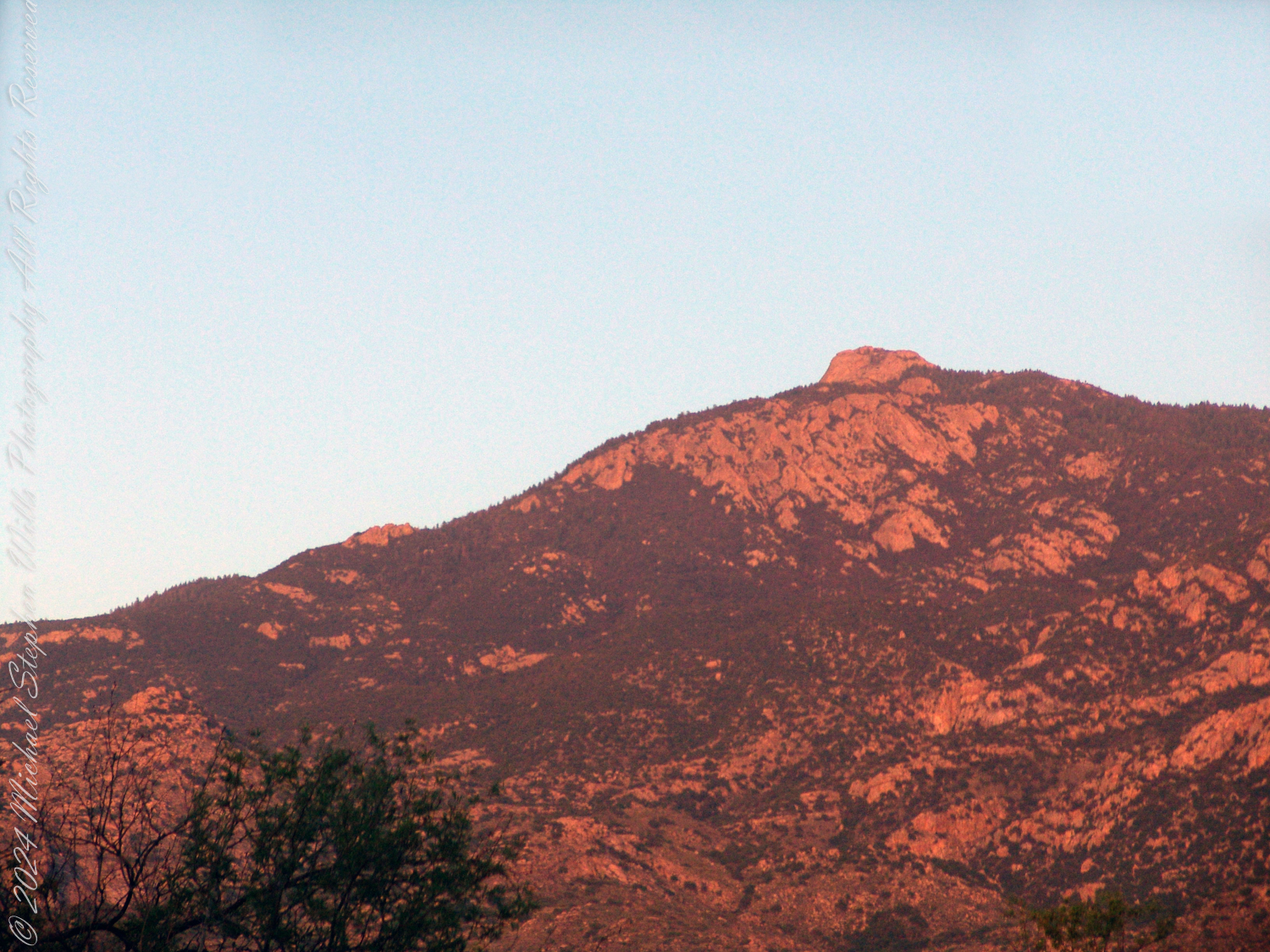
The X9 ranch sits in the Rincon (spanish for corner) made by the massifs Rincon Peak, Mica Mountain and Tanque Verde ridge.

Two years later, on the evening of November 2, 2006, I climbed the Tanque Verde trail in Saguaro National Park East for about 30 minutes to reach a vantage point of Rincon Peak. Intending to capture the peak bathed in golden light, I waited until just before the sun set behind the Tucson Mountain. Afterwards, I raced the sun hiked back to the car. In my hurry, I tripped on a stepped turn and dove headfirst into a large prickly pear cactus. It was a very painful experience. Large spines pierced my face, while tiny, pesky spines covered my chest and back. The large spines, not being barbed, came out easily, but I needed to visit a physician to remove the rest.

Click me for a framed version of this photograph
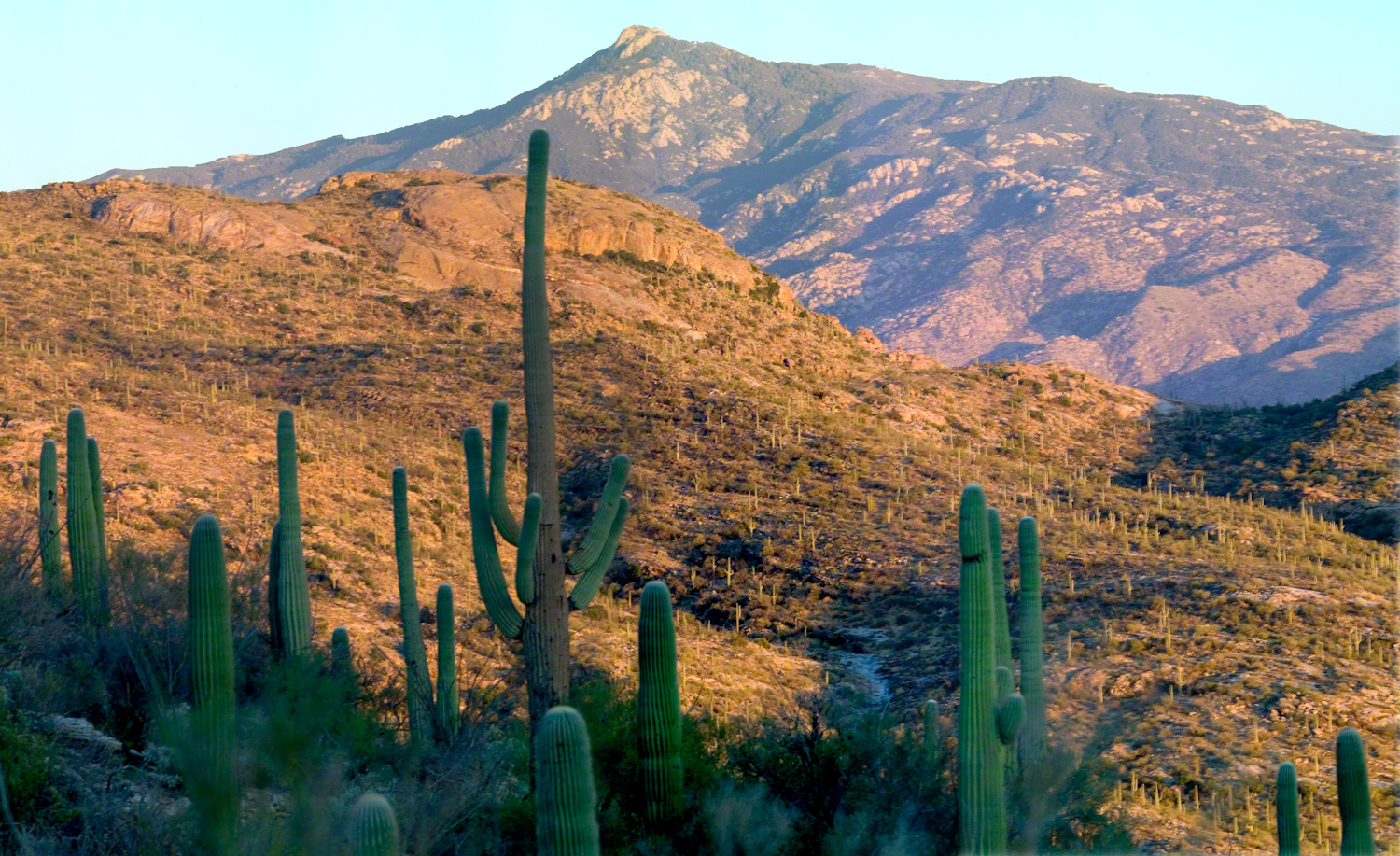
Rincon Peak from the X9 Ranch-- CLICK ME!!!!

Enter your email to receive notification of future postings. I will not sell or share your email address.

Resilient Mountain Beauty

Embark on a journey through the serene Rincon Mountain Wilderness with me. Witness the rugged beauty of the Hedgehog Cactus and the whispering Bear Grass through my lens. Let’s unravel the secrets of the desert together, and find solace in the still life of the Happy Valley Saddle. Join me, and let’s capture the enduring spirit of Arizona’s hidden treasures.

Continue reading “Resilient Mountain Beauty”

Rincon Flame: The Southwestern Paintbrush’s Desert Dance

Step into the Rincon Wilderness with me, where the Southwestern Paintbrush blooms amidst the ancient stones.

Discovery in the Rincon Wilderness

In the embrace of the Rincon Mountains, east of Tucson’s hum, lies the Rincon Wilderness, a tapestry of desert life and geological marvels. These mountains, one of the “Sky Island” ranges cradling the Tucson valley, are less rugged than their siblings, the Santa Catalinas and the Santa Ritas, offering a gentler invitation to explore their secrets.

Happy Valley Saddle’s Floral Jewel

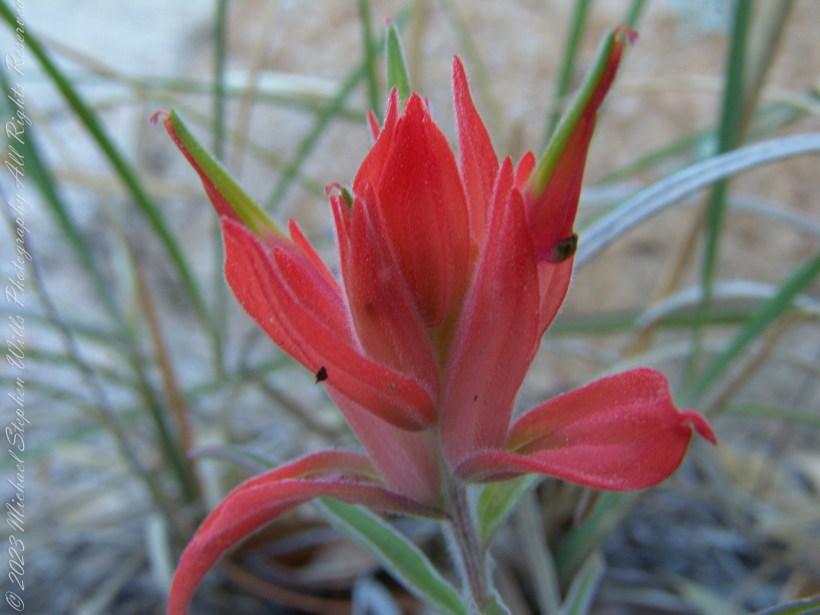
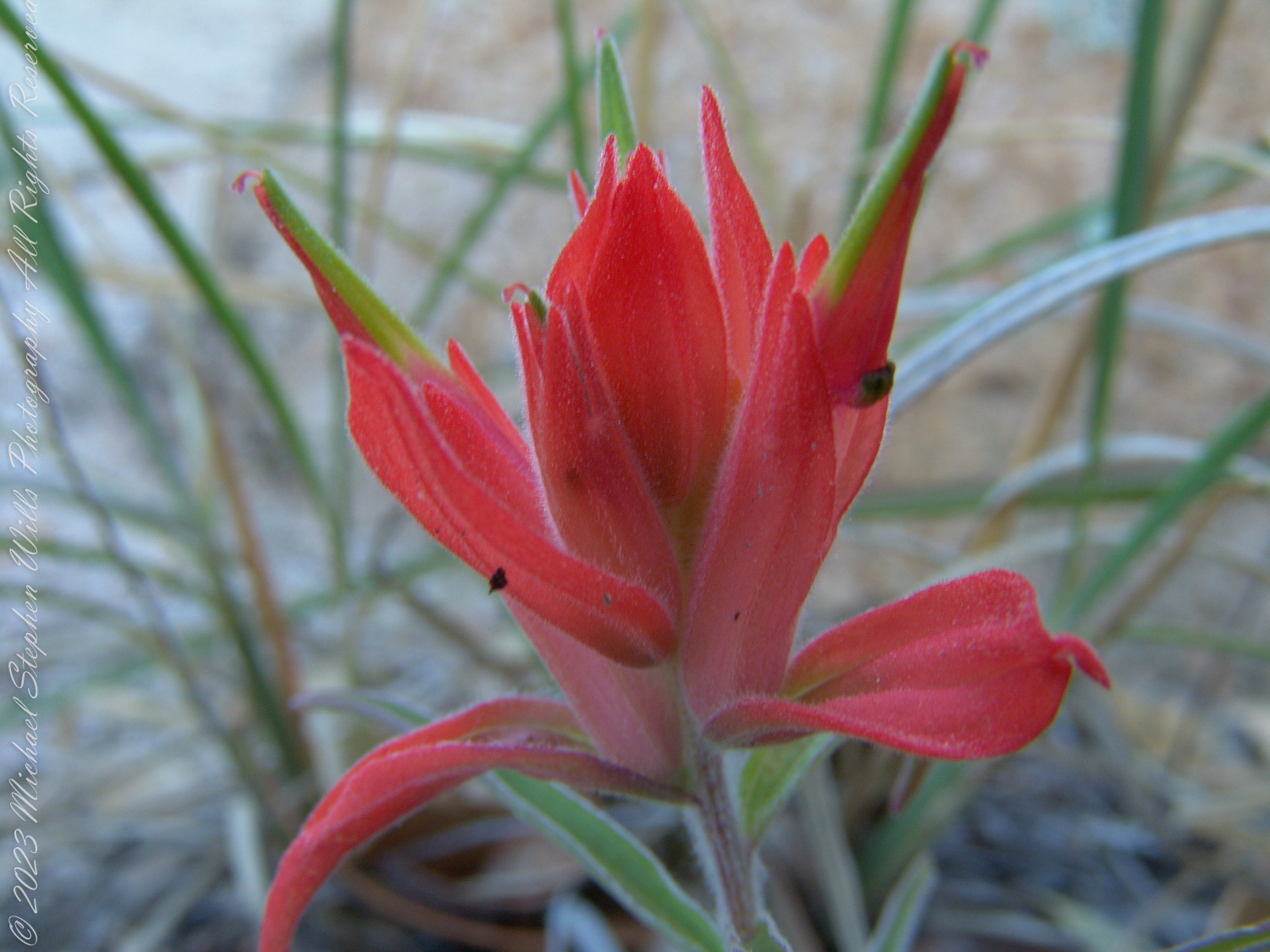
Amidst the rugged beauty of Happy Valley, a hidden corner in the quilt of the Rincon Wilderness, a singular red-orange glow caught my eye. There, among the lichen-encrusted boulders, stood the Southwestern Paintbrush, Castilleja integra, its flamboyant bracts a fiery contrast to the muted greens and grays of its surroundings.

Portrait of a Parasite

This herbaceous perennial, with its soft downy coat, is a paradox, both painting the desert with life and leeching it from others as a hemi-parasite. Its roots, entwined with those of other desert dwellers, tell a tale of survival that’s as old as the hills themselves.

The Brushstrokes of Evolution

Each leaf, narrow and dusted with hairs, speaks to the adaptive artistry of nature, designed to conserve precious moisture. The flowers, with their extended blooming season and generous nectar, court the hummingbirds who dance between the blooms, pollinators in this ancient symbiosis.

A Symbiotic Canvas

The Southwestern Paintbrush, with its colorful allure, draws more than just winged admirers. Its presence among the rocks is a reminder of the complex ecological web of the Rincon Wilderness, a part of Saguaro National Park’s rich mosaic

Click Me to visit the photographs of Michael Stephen Wills on Getty.

Copyright 2024 Michael Stephen Wills All Rights Reserved

Dawn’s Embrace: A Morning Among the Rincon Peaks

Step into the serene embrace of Happy Valley Saddle through our latest blog post, and wander with us as the dawn unfolds over the majestic Rincon Peak.

Continue reading “Dawn’s Embrace: A Morning Among the Rincon Peaks”

Understanding the Sego Lily: Calochortus nuttallii

Discover the Sego Lily, Calochortus nuttallii, a symbol of resilience and beauty in the arid deserts of the West. Uncover its role in pioneer survival and its captivating presence on a serene April backpack into the Rincon Wilderness. Join us in exploring the enduring grace of this desert gem.

Continue reading “Understanding the Sego Lily: Calochortus nuttallii”

Reavis Canyon Camp

below the Falls

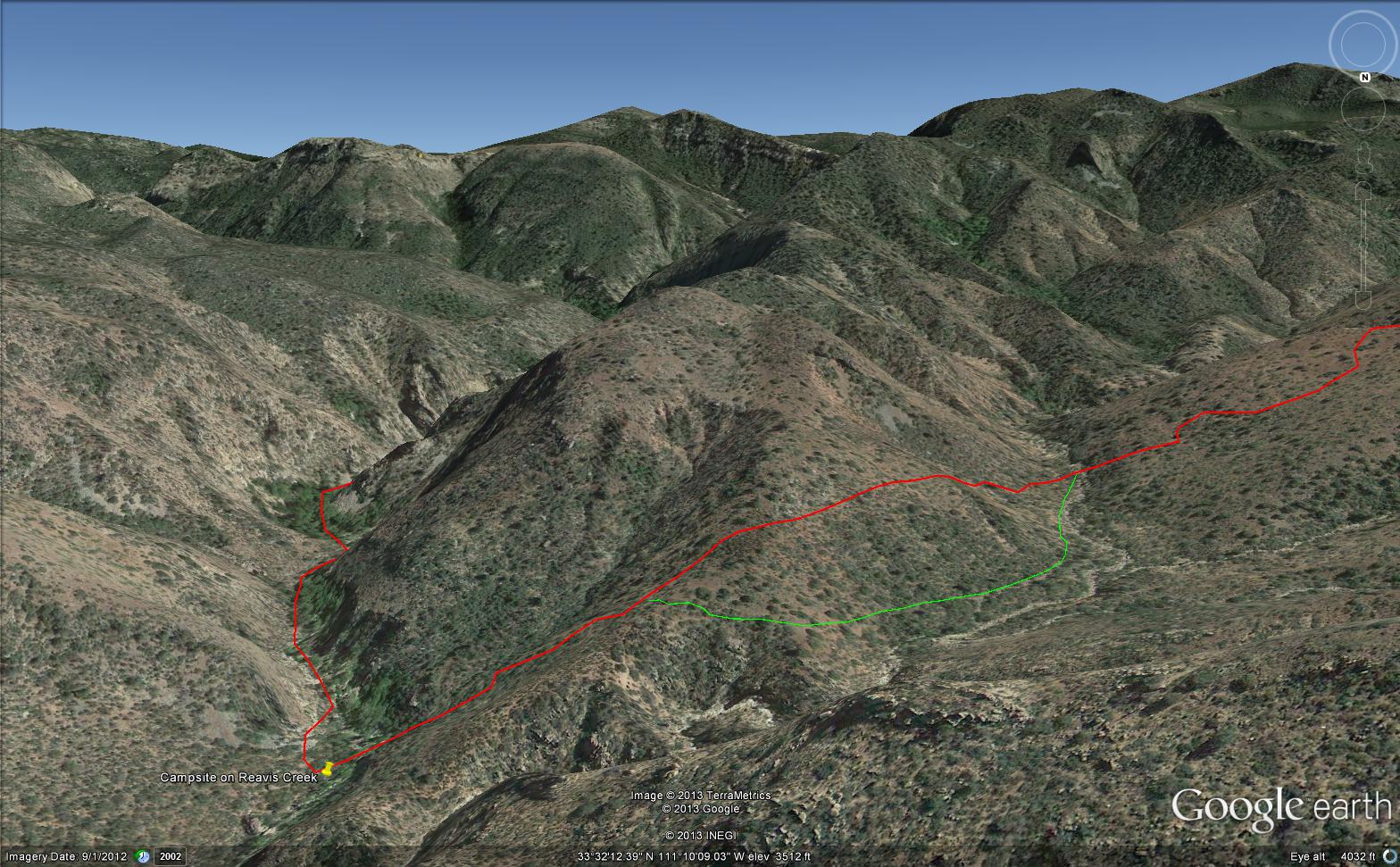
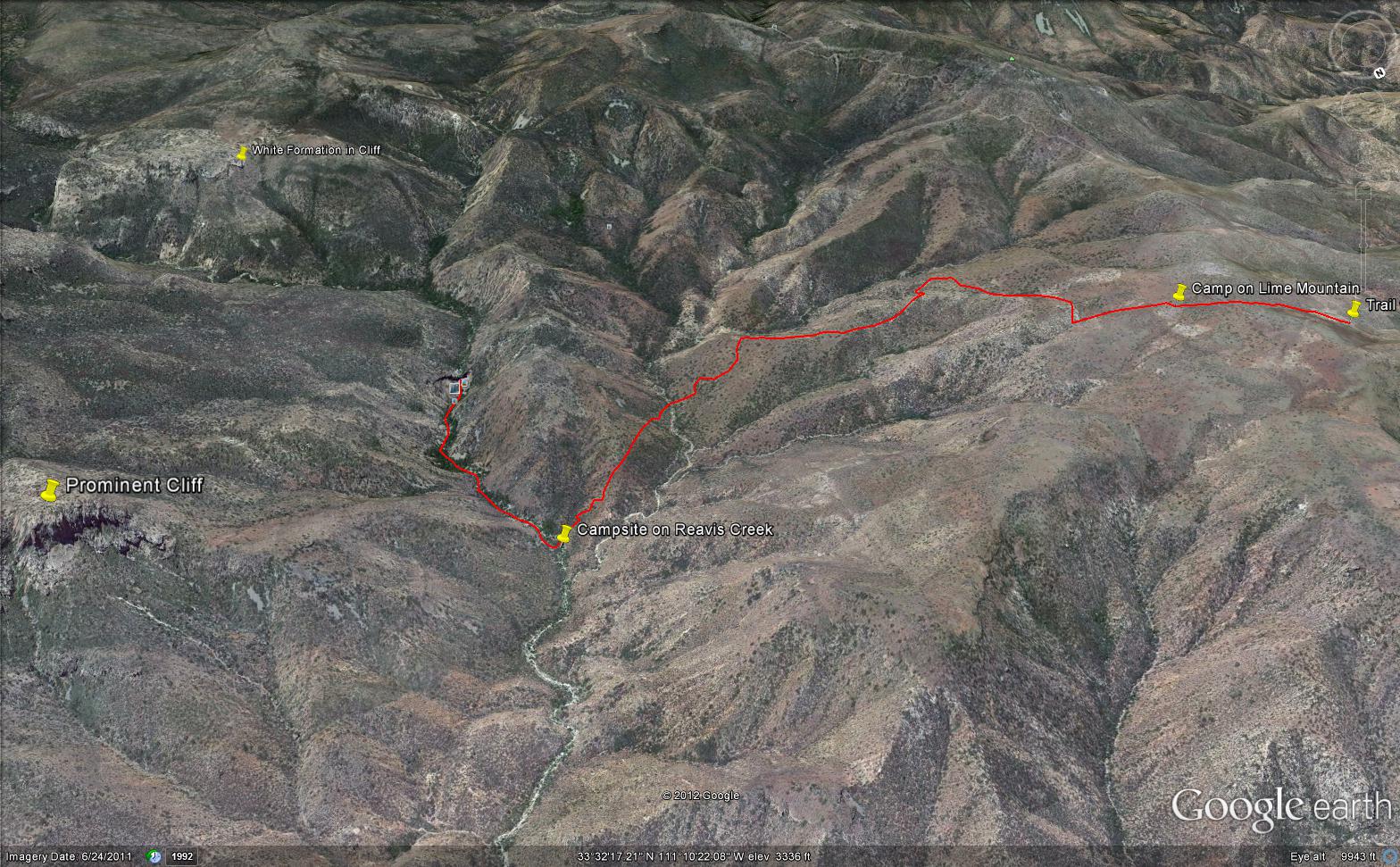
Here is an overview of my route through Cedar Basin on the way to Reavis Falls.  There are two paths in the following image from Google Earth.  The red path brings you into Cedar Basin and straight up a ridge and down to the campsite.  The red path is incorrect in the approach to the ridge and, rather than repaint the path, I created the green path as the gradual and accurate description of how I climbed to the ridge point where I captured the photographs Hoodoos on the Descent to Reavis Falls.

No Path to Reavis Falls

You need to understand there is NO path through this terrain.  It is necessary to follow a faint trail marked out by the footsteps of those before you and an occasional rock cairn placed at the most difficult points.  The following image is misleading in that what looks like a road next to my green path is actually a creek bed from the Lime Mountain spring.

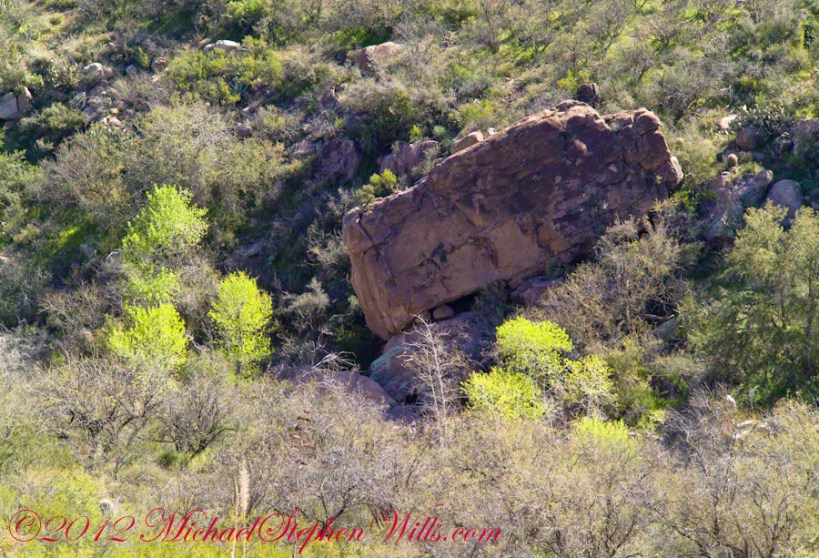
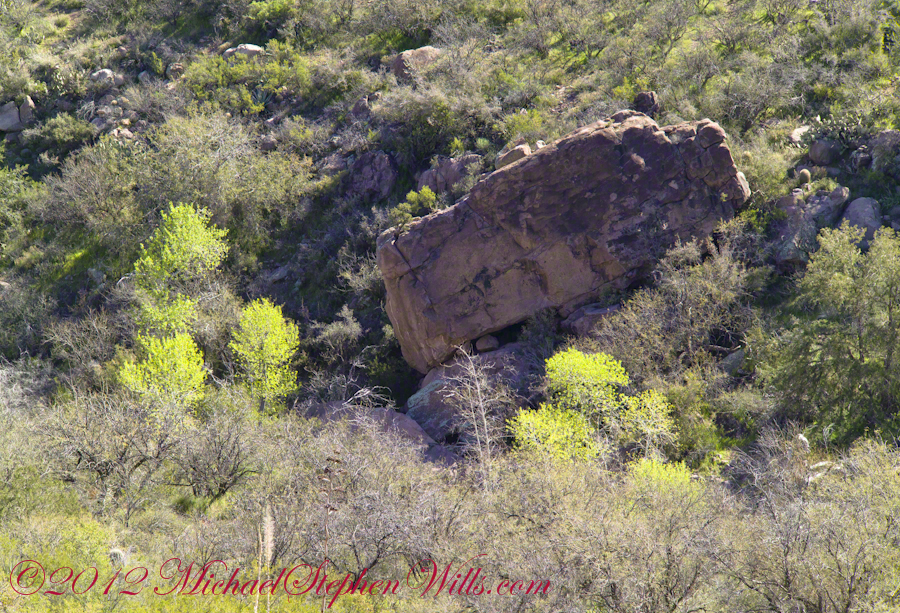
Huge Boulders

What looks like a road is the resting place of huge boulders fallen from the surrounding mountains. Since there is water, thick brush and trees grow everywhere in cracks and spaces between the boulders and rocks.  Getting through the creek bed with an 80 pound pack and not getting lost is close to impossible. The solution is to hug the ridge slope, following the contours and navigate around boulders.

Reavis Canyon below the falls is filled with boulders of this size held in place by friction.

View of Reavis Canyon and Campsite

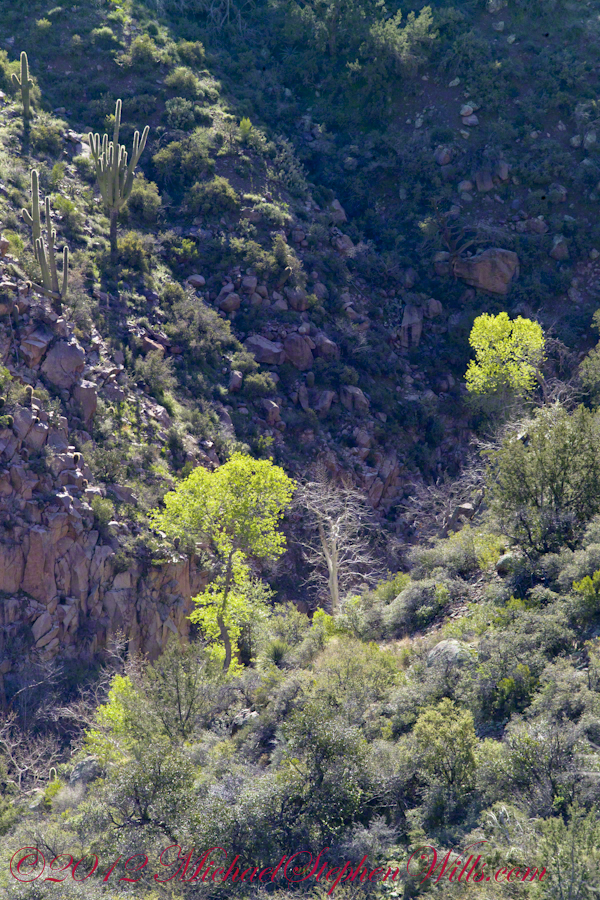
From the ridge small portions of Reavis Canyon were visible.  I even spotted a campsite.

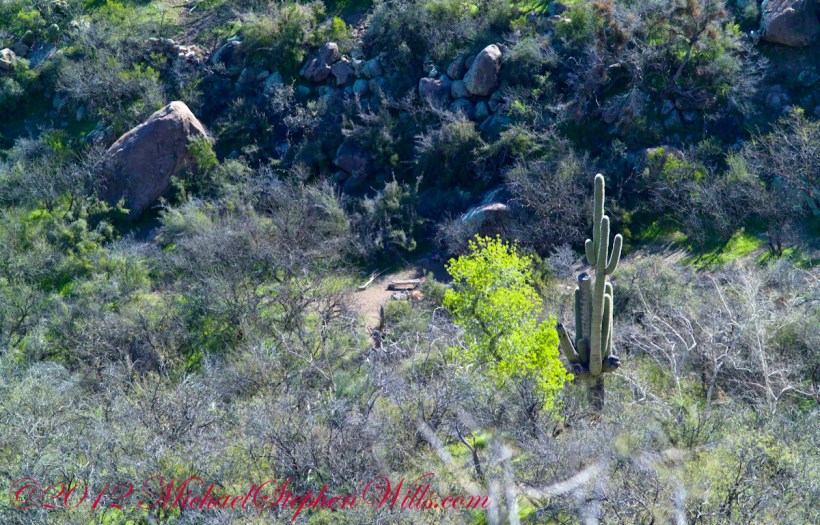
The mouth of Reavis Canyon below the falls opens into a sandy bottom. This camp, surronded by house-size boulders fallen from the slopes above, has a patch of grass bright green and fresh.

This camp, 1,636 feet below Lime Mountain peak, surrounded by house-size boulders fallen from the slopes above, has a patch of grass bright green and fresh to the right.  In the center of the photograph is a tree trunk on rocks to serve as a bench next to a fireplace. With an 80 pound pack on my back, I was still an hour or so away from this spot.  It was March, so sunset was around 6 pm, enough time to find a way down before darkness to overtook me.

Looking down from a ridge above the canyon that holds Reavis Creek and the falls.

This is an overview of my progress, with the Lime Mountain and Reavis Canyon campsites marked. Landforms are marked on the left: the Prominent Cliff , in the background it says “White Formation on Cliff.”

Copyright 2023 Michael Stephen Wills All Rights Reserved

Cedar Basin Hoodoos

Hoodoos and Young Saguaros

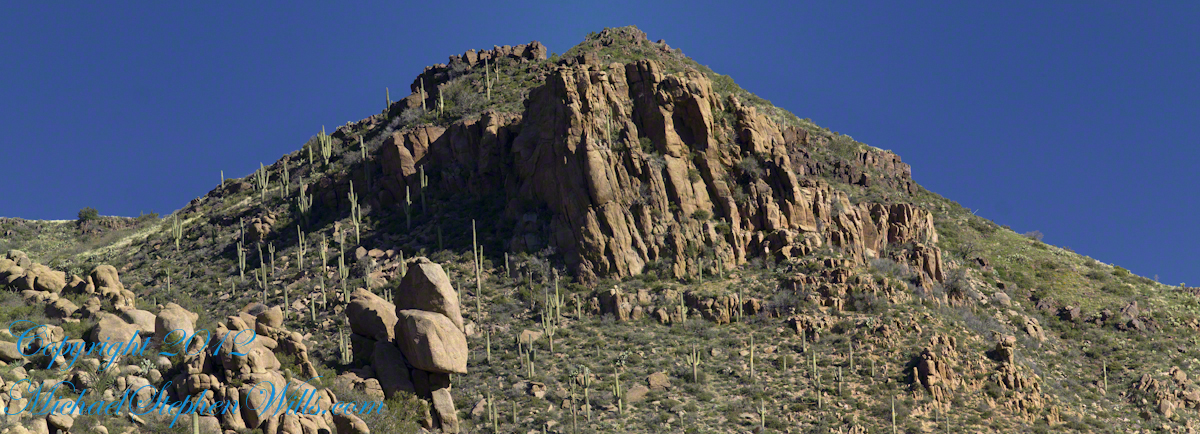
In my previous posting “Hoodoos on the Descent to Reavis Falls” I describe how I came to find these strange rock formations during a solo expedition to Reavis Falls in the remote eastern Superstition Wilderness.

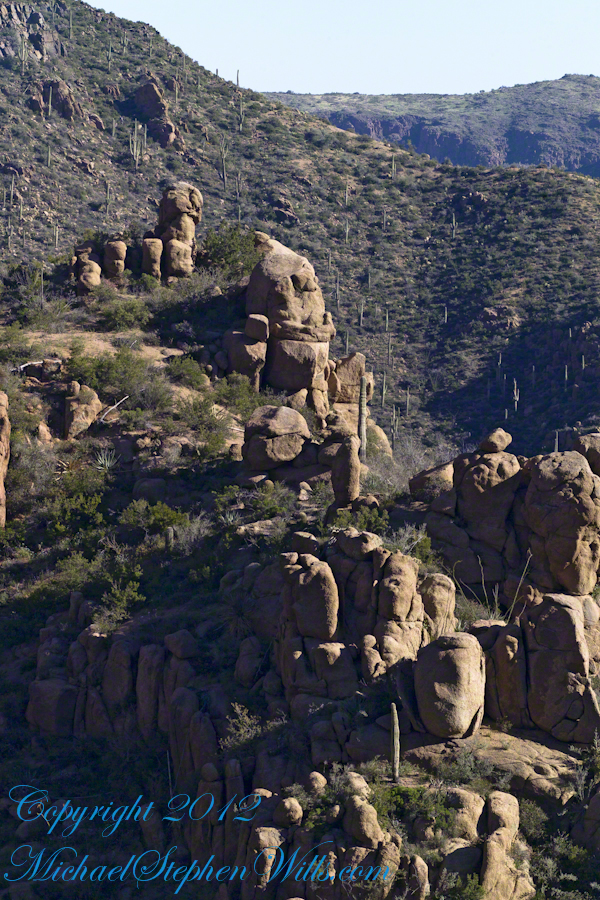
Here I present several photographs captured from my tripod mounted Kodak DCS pro slr/c and a Canon EF 200 mm f2.8 L telephoto lens.  These provide a better understanding of the strange, wonderful and possibly frightening impressions these formations make when discovered in a deserted location such as Cedar Basin.

Here is the highest point of the ridge….

Hoodoo Ridge

…..and from a portion of the ridge that projects closer to my observation point above the canyon mouth of Reavis Falls. The numerous green poles are young Saguaro cactus. In the distance are mature Saguaros with lateral arms.

Hoodoos of Cedar Basin

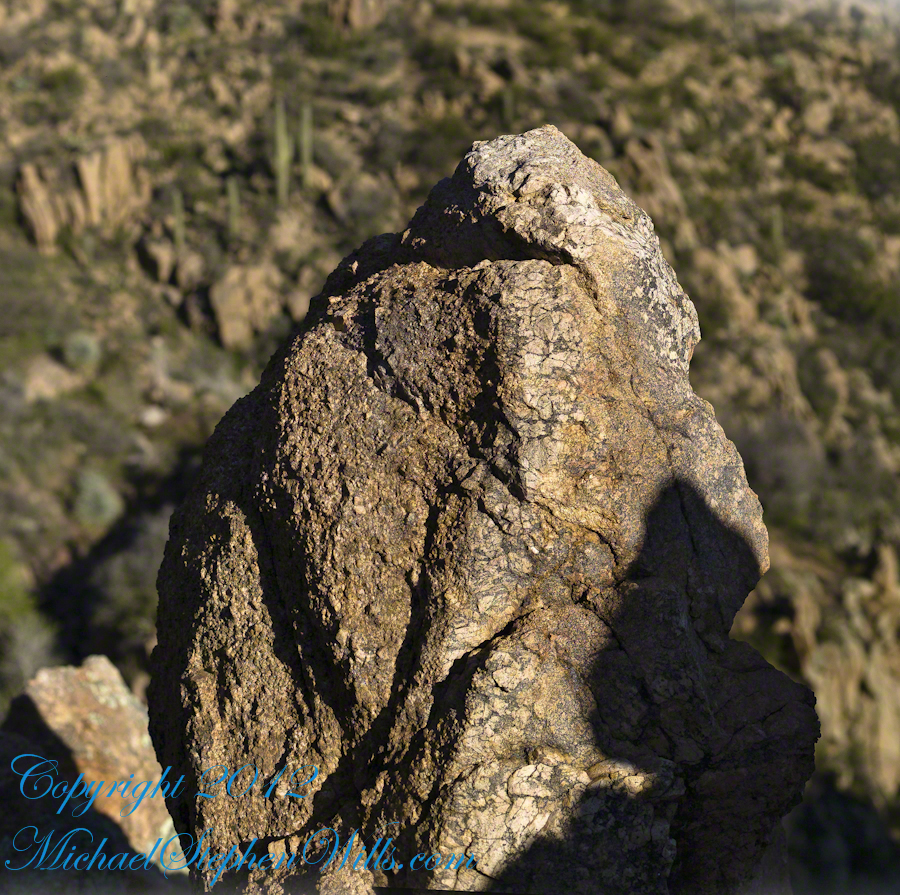
..and even closer than this were the rocks standing around me.   This specimen I captured with the 50 mm 1.4 Canon lens.  I believe it is a different rock type than the above, rounded, hoodoos.  Those look like rock from ash of a volcanic eruption.  This rock seems to be igneous, formed deep inside the earth.

Cedar Basin Rock Closeup

My next posting will describe the surroundings of the campsite from which I explored the canyon and Reavis Falls.

Copyright 2023 Michael Stephen Wills All Rights Reserved

Hoodoos on the Descent to Reavis Falls

layers of stone weathered over eons by water, wind, sun and cold

My previous post, “Dry Juniper Descent” had me above the ridge of the featured photograph.

I interrupted my descent to Reavis Falls to stop on a ridge overlooking Reavis Creek, the same ridge that forms the western wall of the canyon.  By this time it was late afternoon on a March Day with the angle of the sun being perfect for capturing rock formations.  Notice the effect of the light on the distant mountains.

This is the North / Northeast view of the opposite ridge above a flow from multiple springs on Lime Mountain.

This photograph was created from multiple images using tripod-mounted Kodak DCS ProSlr/c with a 50mm, 1.4 Canon lens.

Cedar Basin hoodoos on the slopes of Lime Mountain
Click Me for my Online Gallery

Hoodoos

The ridge and slopes are covered with a rock formation named Hoodoos for the fantastic shapes taken on by layers of stone weathered over eons by water, wind, sun and cold.  These hoodoos are enormous, some precisely balanced and carved into elaborate shapes.  The word “Hoodoo” derives from the name of the practice of sorcery or folk magic.  You can image the effect on ancient people of coming upon these formations and believing them created by malevolent beings (djinns, goblins, demons) in their leisure time, when not causing problems, and worse, for humans.  These beings are especially active in desert places, such as this, which has the comforting name of Cedar Basin.

The hoodoos cast a spell on me.  I had never heard of Cedar Basin, but knew, as the sun was low in the west, I needed to unload my 70 pound pack, set up the tripod and camera to spend over an hour of precious time to capture the images of this blog.

Ancient Village

Cedar Basin forms on one side from the ridge of this photograph. On the other side of the ridge, the mountain slope levels out to a site settled by ancient people we call Sin Agua.  There is nothing but a few stones left of their village and way of life.

Cedar Basin

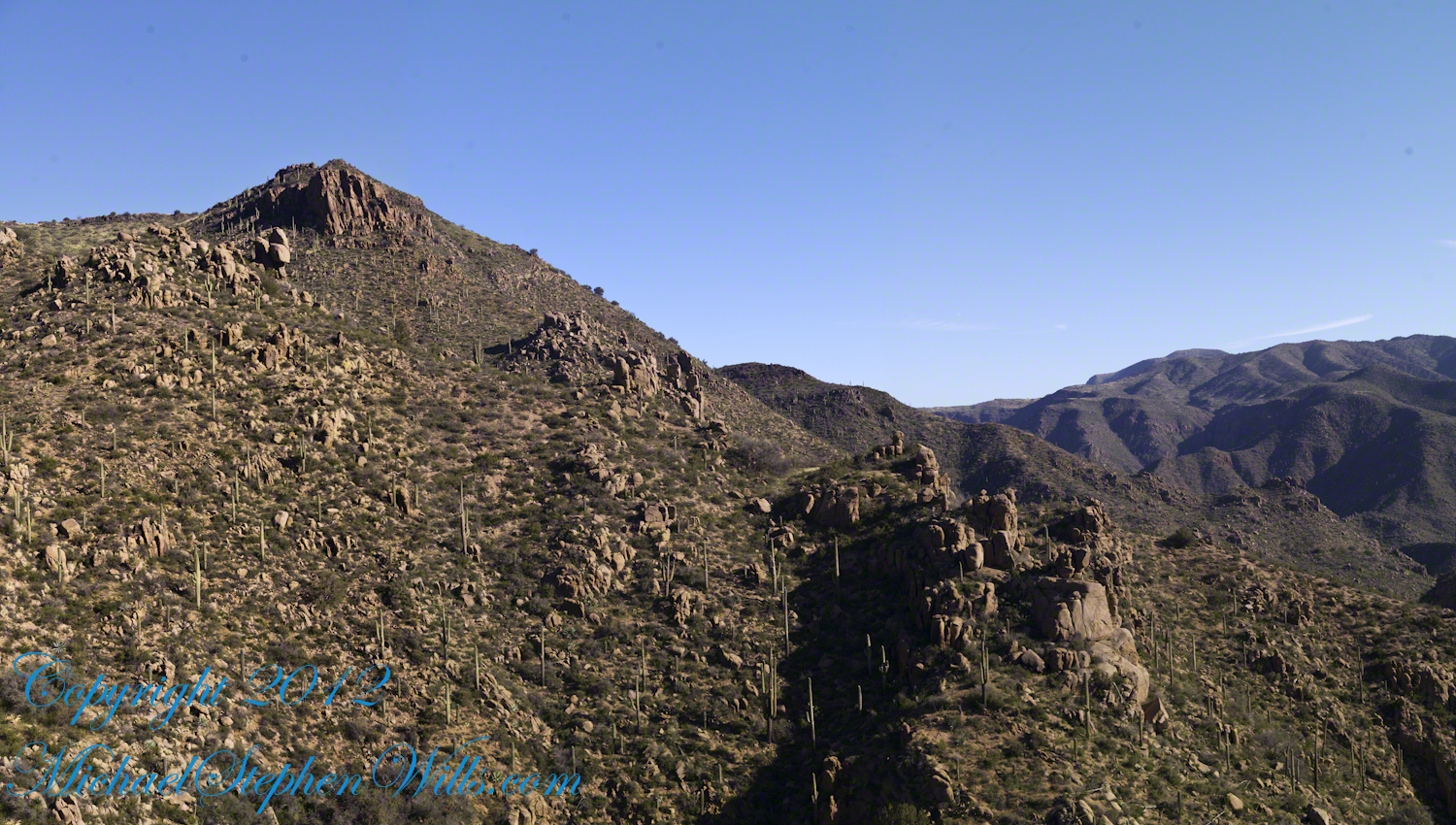
Looking to the left of the Hoodoo Panorama photograph and into Cedar Basin, you see more of that same rock type that formed the hoodoos to the right on this same ridge.  This is also the lower slopes of Lime Mountain, as you can see from the color of the upper ridge.

The Slopes of Cedar Basin

This and the following photographs were created using a tripod-mounted Kodak DCS ProSlr/c with a 200mm, 1.4 Canon L type lens.

Another side of the basin is formed by the ridge I am on.  This side is across from the canyon of Reavis Creek and Falls.  The trail leads down switchbacks from the Dry Juniper of my previous post to a dry draw.  You can see the way I came in the following two photographs.  I captured Castle Dome, then panned to the right for the rest of the ridge.  You can see the trail to Reavis Ranch carved into the slopes of Castle Dome.

Castle Dome Ridge and Reavis Ranch Trail

Cedar Basin and Castle Dome

I then panned one more time to the right to capture the ridge above Cedar Basin and the start of the hoodoos.  It was an army spread across the entire ridge!!

Cedar Basin and Castle Dome

My next posting will feature close-up of the most interesting hoodoos from the panorama, using a 200 mm telephoto lens.

Copyright 2023 Michael Stephen Wills All Rights Reserved

Dry Juniper Descent

One-seed Juniper

On my fourth morning, after I awoke to am immense silence, my first photography subject was the lone dry juniper you see below.

Then the dawn lit up the far mountains.  You can view a larger image these mountains at dawn in my previous blog, “Superstition Wilderness Dawn.”

A Lone Dry Juniper

This is a photograph of that juniper tree, dryer than most, being dead.  I take it to be a One-seed Juniper from the thick growth of branches and the strong rounded aspect of the crown.  I captured this photograph from a tripod mount using a Kodak DCS slr/c with a Canon EF 50mm f/1.4 USM lens.
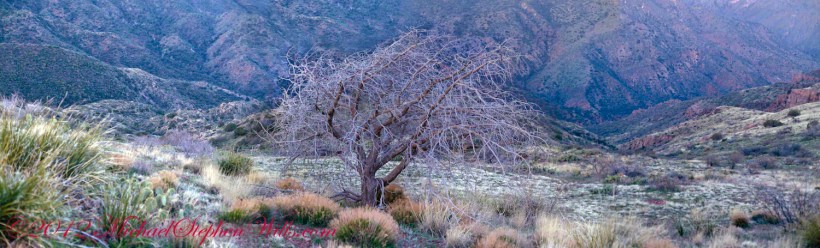
Looking into Reavis Creek Canyon from Lime Mountain

I used the tripod to bracket this shot on the left and right for the following panorama.

The Reavis Creek Canyon from Lime Mountain while still in shadow, morning

The Spirit of Elisha Reavis

From this vantage you can see my route into Reavis Creek Canyon and Reavis Falls taken on the first afternoon of the expedition.  That first morning I loaded up 65 pounds of food, supplies and photography equipment and headed out from the Reavis Trailhead on the Reavis Ranch Trail.  This was one of the trailed used by Elisha Reavis to ride a favorite burro and a string of 8 to 15 burros loaded with vegetables he sold to various communities throughout central Arizona.  See my blogs “A Ride to Reavis Ranch” and “Apple Orchard in the Wilderness“for views of the paradise (as of the early 21st century) where Elisha Reavis, lived and prospered in the latter part of the 19th century where he lived his 70’s.

This his mountain valley, using a perennial creek, Reavis cultivated and irrigated about fifteen acres of land by himself with chickens, turkeys, hogs, burros, two horses and several dogs.   The horses, teamed together, pulled a shear plow, disc and leveler.  On April 9, 1896 Reavis was preparing of another trip to Mesa, to buy seed potatoes, and was found by a friend a month later on what is now the Reavis Ranch trail, to the south and west of his valley, near what is now called Grave Canyon were friends buried him.

Past the Dry Juniper and Down

102 years later, I headed up the Reavis Ranch Trail, over the ridge of Lime Mountain and past this dry juniper in the same spirit as Elisha Reavis if for a different purpose.

Reference

An excellent article on Elisha Reavis by Tom Kollenborn, author of “Lost Dutchman Gold” and “Circlestone”.

Copyright 2023 Michael Stephen Wills All Rights Reserved

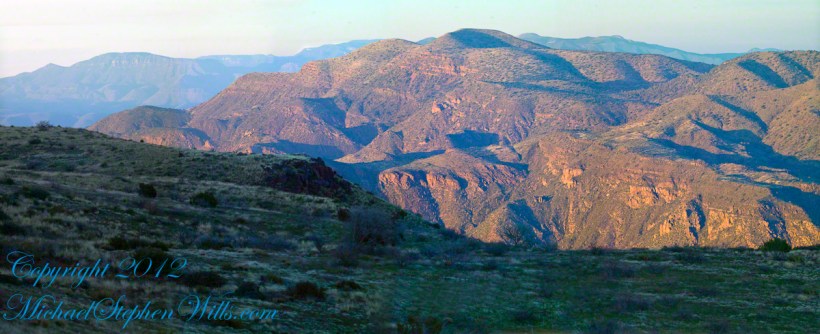
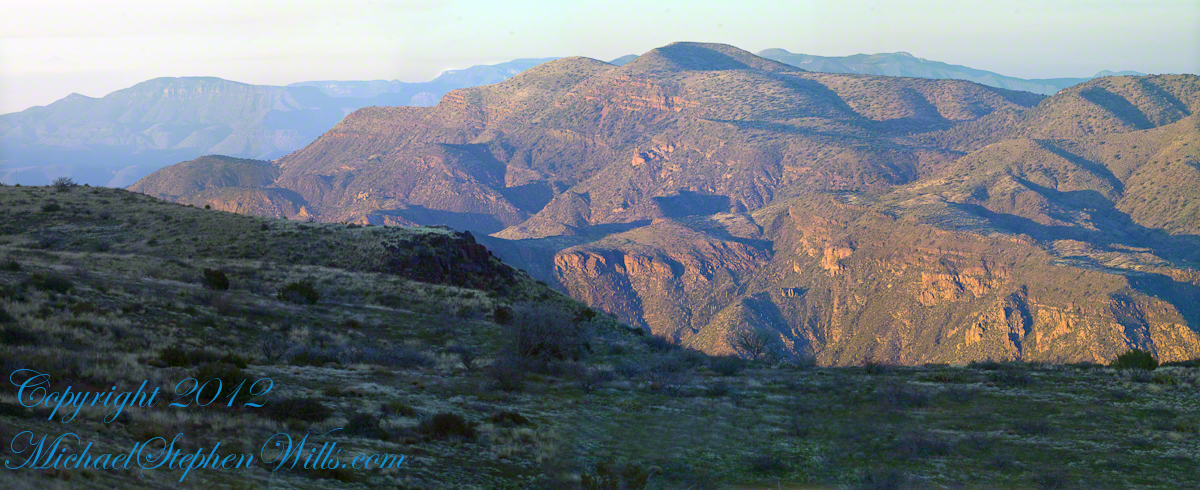
Superstition Wilderness Dawn

on the slopes of Lime Mountain

Pre-dawn on the fourth morning of my solo expedition to Reavis Falls, before the last posting “Among the Desert Wildflowers“, on the slopes of Lime Mountain, as the eastern sky became slightly less dark, I woke to an unusual sensation:  total silence.  The air was absolutely still, no insects trilled, the birds were still asleep.  Lying very still, the ringing of my ears announced the silence.

In that silence I set up for this panorama taken from a tripod-mounted Kodak DCS ProSLR/c mounted with a Canon EF 200mm f/2.8L II USM telephoto lens.  It is 5 image files combined.  The source file is about 300 MB.

That is Pinyon Mountain in the center distance.  The Arizona Trail traverses that terrain, though it is not visible from this distance (it is about 3 miles away).

Lime Mountain is truly a light green, as you can see from the foreground ledge.  From there, a cliff runs round where on a south-facing site there are cliff dwelling ruins.  The trail to Reavis Falls runs to the right, along a ridge broken by a narrow canyon with access to Cedar Basin, also at the foot of these cliffs.

Copyright 2023 Michael Stephen Wills All Rights Reserved