Stiffed

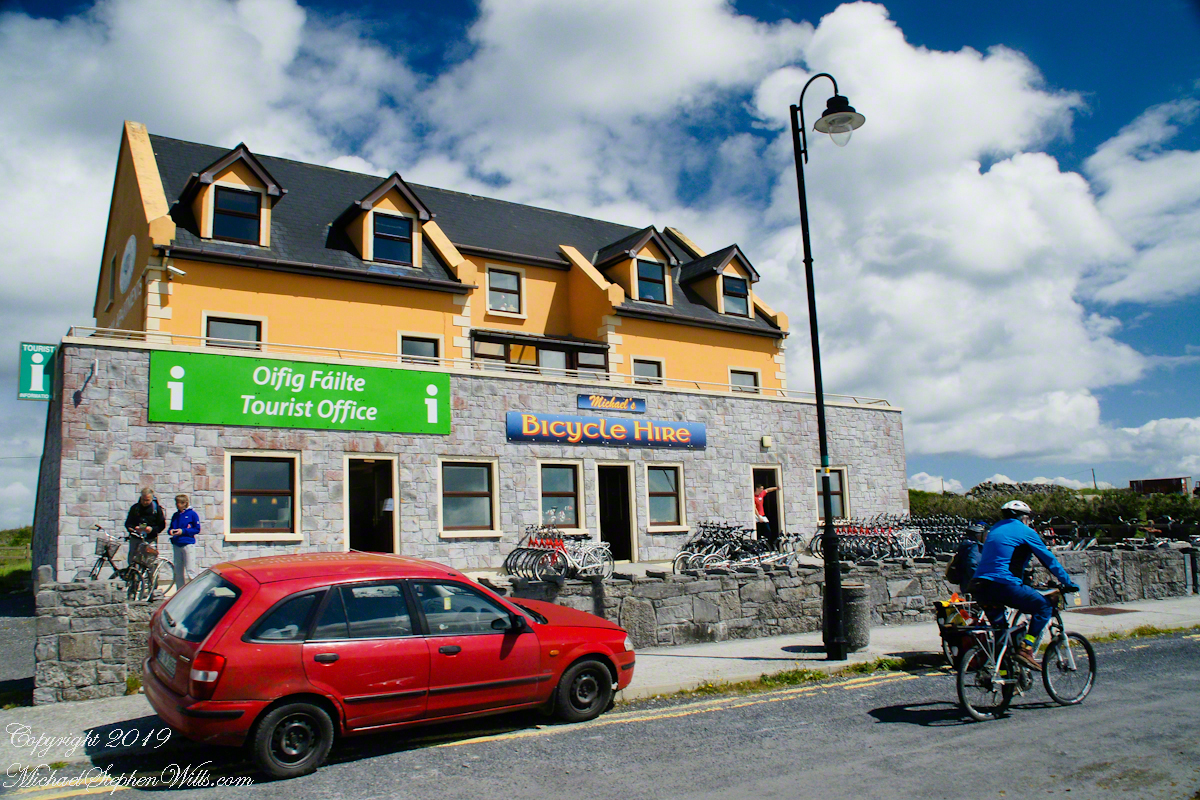
The bicycle rental place got the short end…unfortunately.

Admittedly, I over-planned the Ireland trip.  For every day possible the venues were pre-booked and paid.  In theory planning provides more flexibility when life interrupts.

For the Inishmore planning, a perfect day, for me, was tooling around on a bicycle stopping where we pleased with welcome exercise in between.  That was unrealistic, the day worked out otherwise. 
Click the link for my Getty IStock photography of the Aran Islands
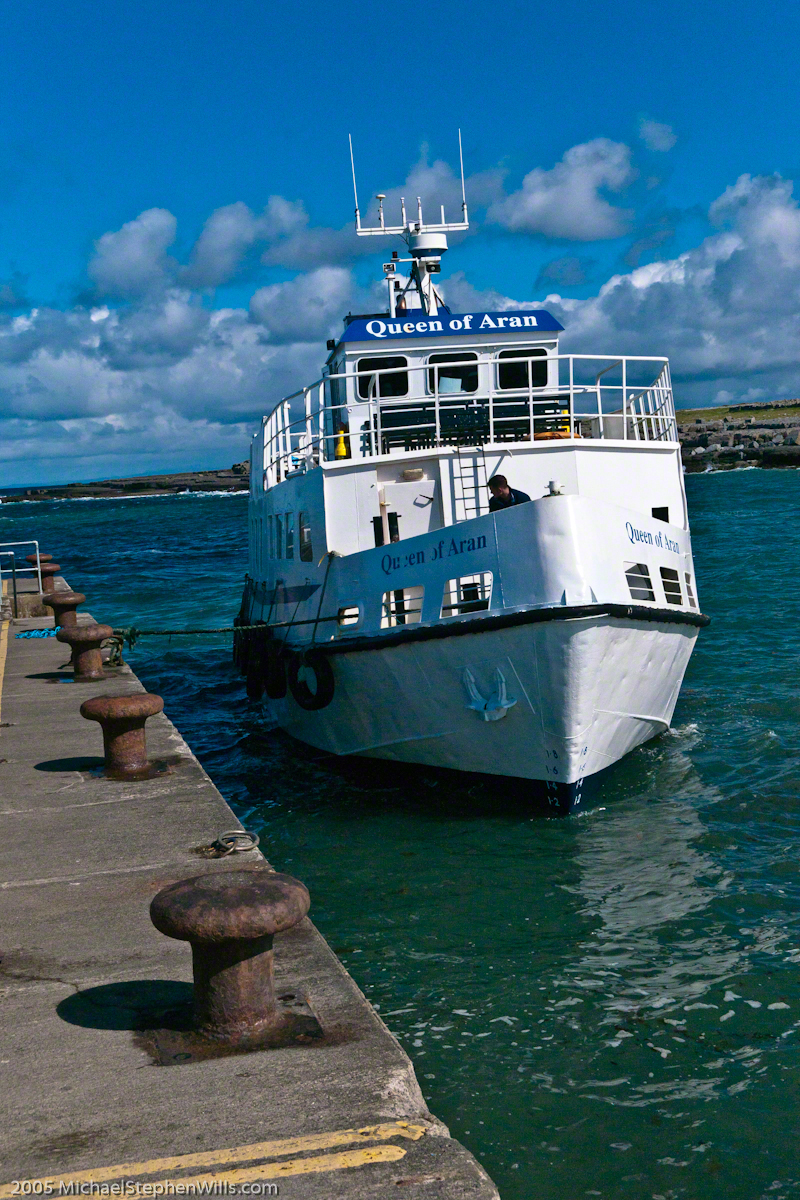
Upon disembarking from Queen of Aran, our ferry out of Doolin, onto the Kilronan quay we walked toward the bicycle rental and Pam refused to bicycle. Her objections were many, safety, impending rain, time. She did have a point about time, the ferry leaves at a set time leaving errant tourists to fend for themselves. We were unused to cycling, still Dun Aonghasa is just over 5 miles from Kilronan, less than an hour round trip. With our starting time of 11:30 am there was 3.5 hours slack for returning to the quay before the 4 pm departure. Plenty of time for wandering the ruins and stopping along the way.
We followed Pam’s advice. Still there were the many bicyclists. Perched on our horse drawn carriage, on the uphill runs, each bicyclist we passed was proof positive to Pam of the wisdom of our choice. I was silently envious of their freedom and overlooked the many mini-buses on the narrow road.

When the day comes to mind, not often, I am left with the guilty feeling of not stopping into the bicycle rental office to cancel the reservation. An email was waiting for me the next day, asking where we were. Thus, the title of this post, “Stiffed.”

Pam’s Response to this post.

Pam’s reasons for not wanting to ride a bicycle around Inishmore:
“I hadn’t been on a bike for approximately 20 years.  However, if it wasn’t going to rain (it did), if the narrow road was larger, if there weren’t any minibuses loaded to the gills or horse traps sharing the same single lane, I would have considered it.  Sitting back and enjoying the beautiful view on our private horse trap and listening to our very knowledgeable tour guide/driver was the highlight of this adventure for me. I am sorry you felt like you didn’t have a choice.”

Pam’s correction of my statement about her being concerned about time:
“Time wasn’t a factor in my decision making.  I also didn’t have a problem with you biking but there was no way I was going to do that.”

Copyright 2022 Michael Stephen Wills All Rights Reserved

What is a rock? What is a stone?

Daisies are a plus

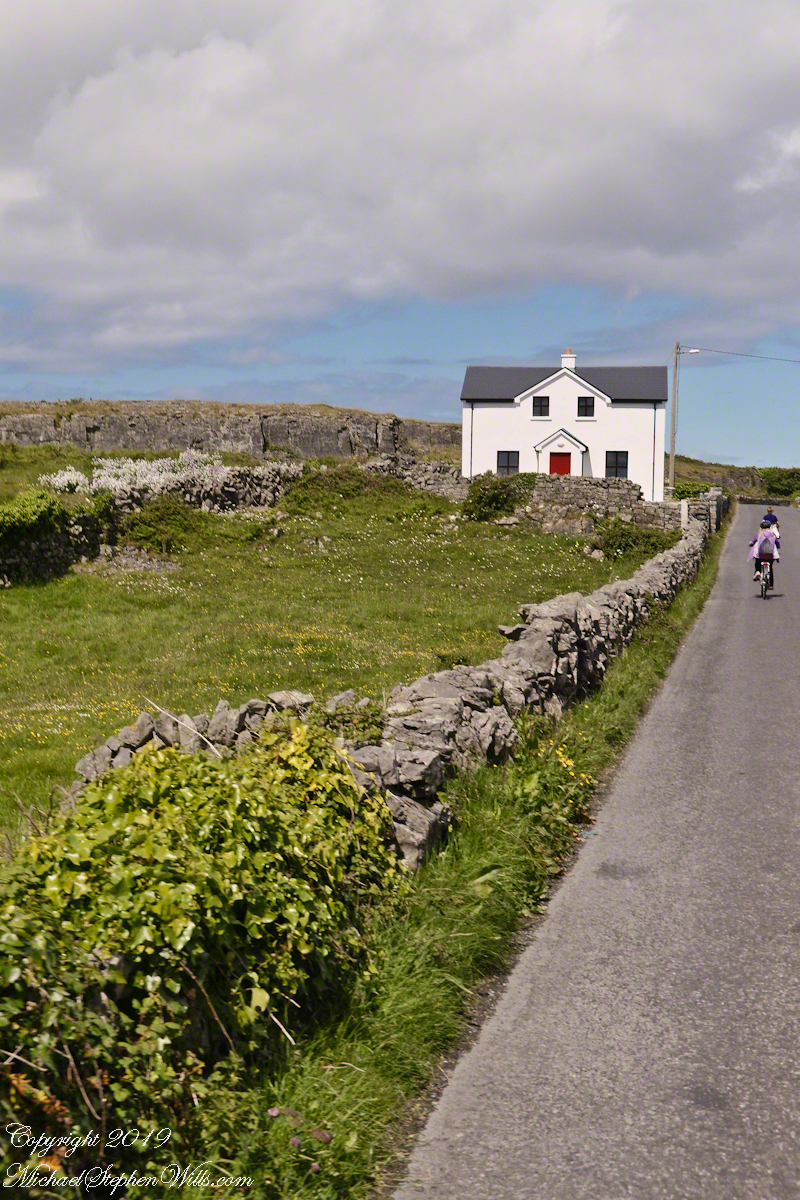
Enjoying travel on a horse trap, a type of carriage, on Inishmore , the largest Aran Island in Galway bay, we headed up Cottage Road from Kilronan, the main island settlement. It was from Kilronan we disembarked from the ferry, hired the driver and trap. Our destination an Iron Age fort, Dun Aengus, and sights along the way.

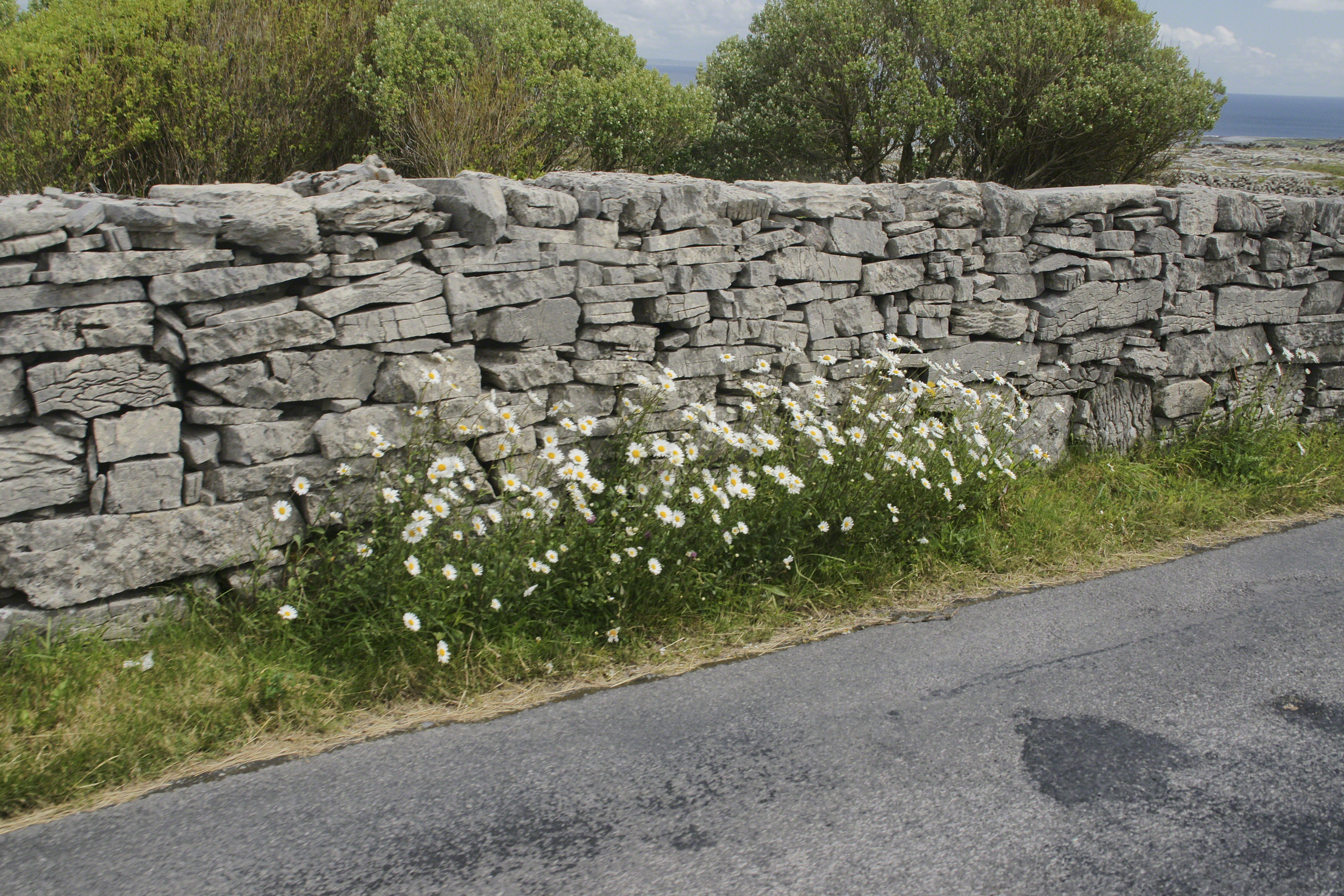
Dry Stone walls abound throughout Ireland.  Ancient walls, buried in peat, were discovered in County Mayo and dated to 3,800 BC.  This is a field wall on Cottage Road with daisies growing at the wall base.

Click the link for my Getty IStock photography of the Aran Islands

Roadside Daisies against dry rock wall on Cottage Road, Inishmor

The wall is composed of stones, not rocks. I have read in places a stone is a rock put to use or shaped by human hands. Other usages have rock and stone used interchangeably. For example, an internet search on “Dry Rock Wall” will return hits on the same. “You pays your money and takes your choice.”

Sources for this post: search Wikipedia for “Dry Stone”.

Click me for the first post of this series, “Horse Trap on Inishmore.”

Copyright 2022 Michael Stephen Wills All Rights Reserved

Killeany Bouy

a dangerous channel

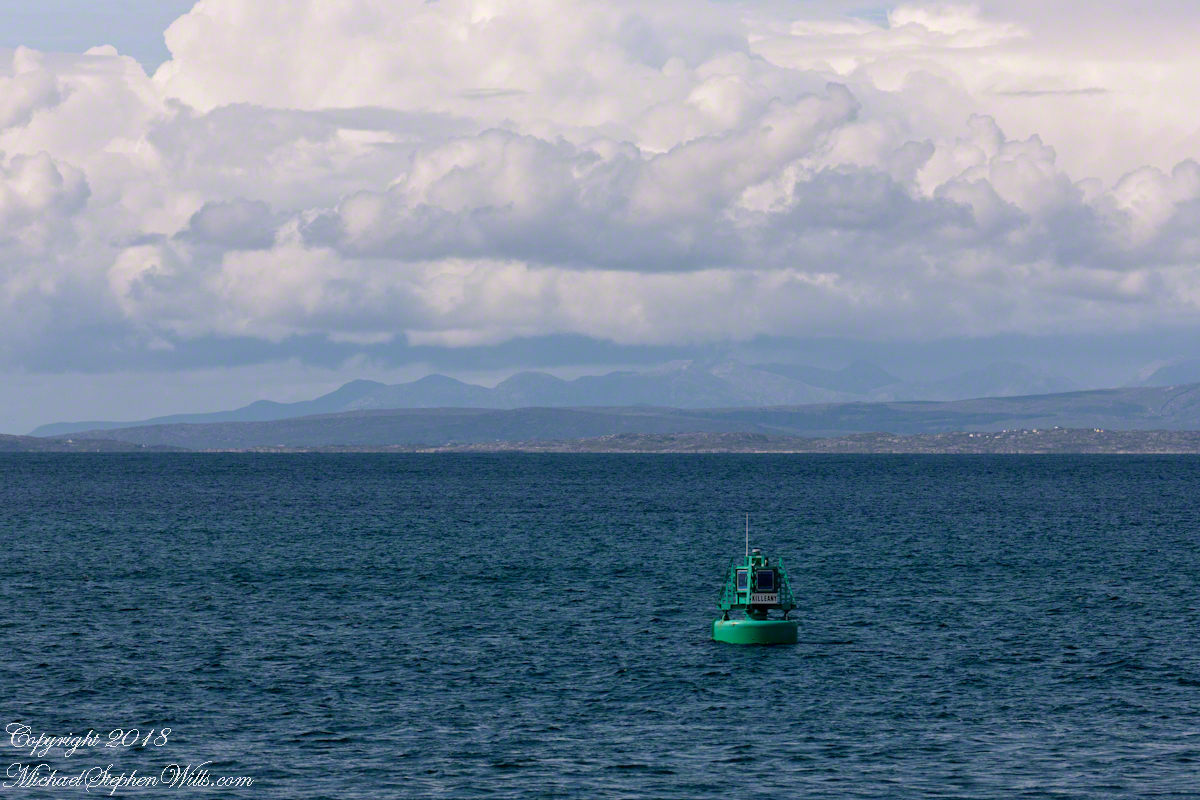
The approach to Killeany Bay of the Aran Island Inishmore is very dangerous, guarded by a Lighthouse on Straw Island to the South and the Killeany buoy to the North.

Click the link for my Getty IStock photography of the Aran Islands
KilleanyBouyINishmore2014-8

This view is to the north, northwest from a ferry en route to Inishmaan through Galway Bay.  In the distance is the Connemara and the 12 Bens (12 Pins) mountains. Aran Islands, County Galway, Ireland.

There of stories of this buoy coming unmoored.  October 27th 2012 it went adrift.  An Aran fisherman, Micheál Seóighe (Ml Joyce) and his boat Naomh Beanán tracked  it down, hauled it back to the harbor.  The buoy was back in service shortly after.

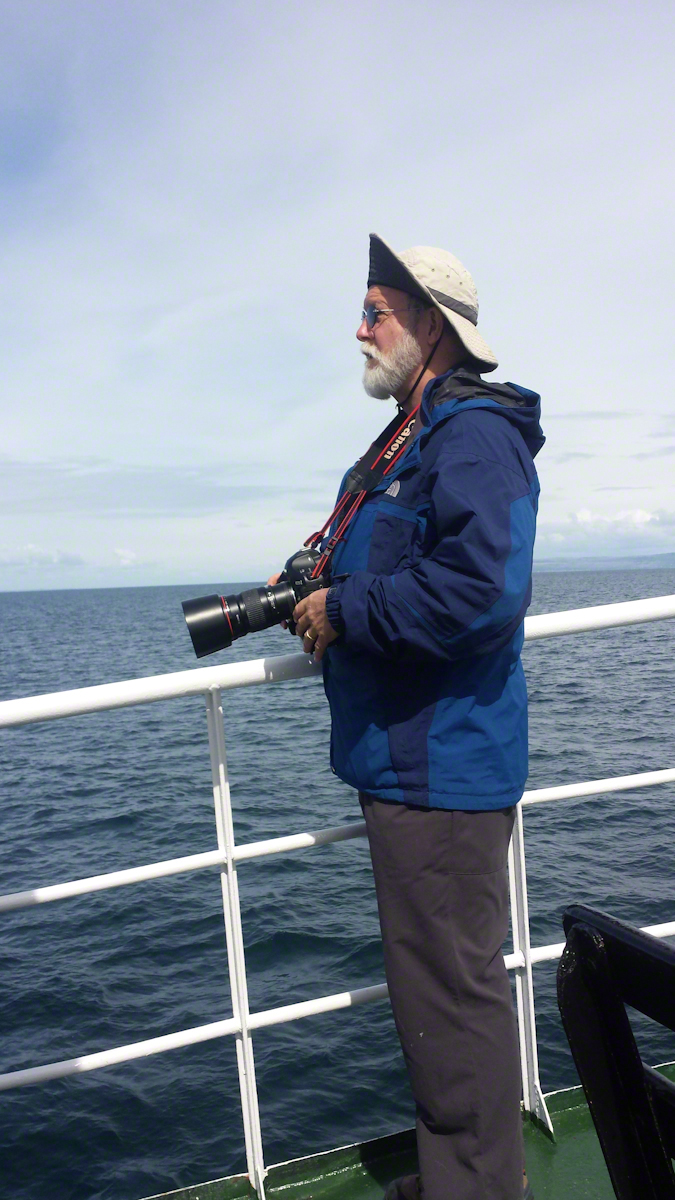
Here is a photograph of me with the camera used.  It is a Canon EOS 1Ds Mark III with a Canon lens 200 mm f2.8/L.  I am standing on the deck of the Queen of Aran ferry out of Doolin next to the Cliffs of Mohr.

Pam Wills took this photograph with her Samsung Galaxy 4 smart phone.

WillsMichaelGalwayBay2014
Click the link for my Getty IStock photography of the Aran Islands
SONY DSC
Copyright 2022 All Rights Reserved Michael Stephen Wills

A Day in a Life

“An early-morning walk is a blessing for the whole day.” Henry David Thoreau

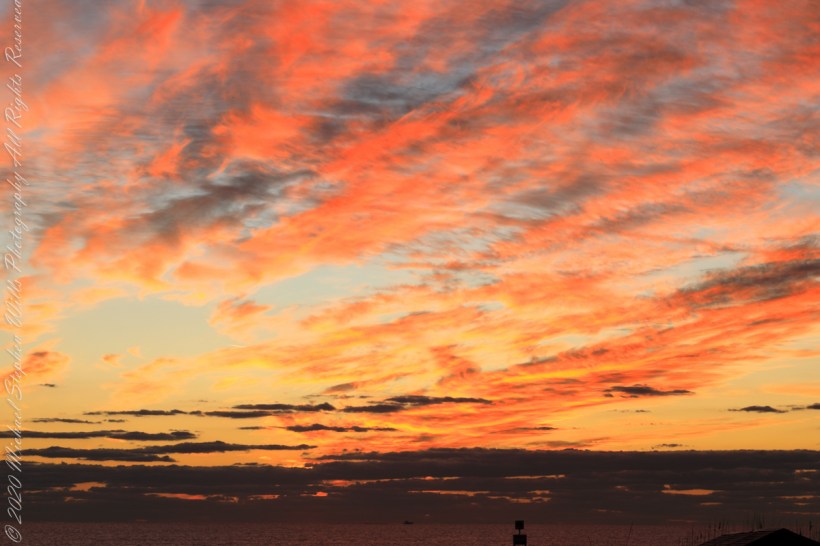
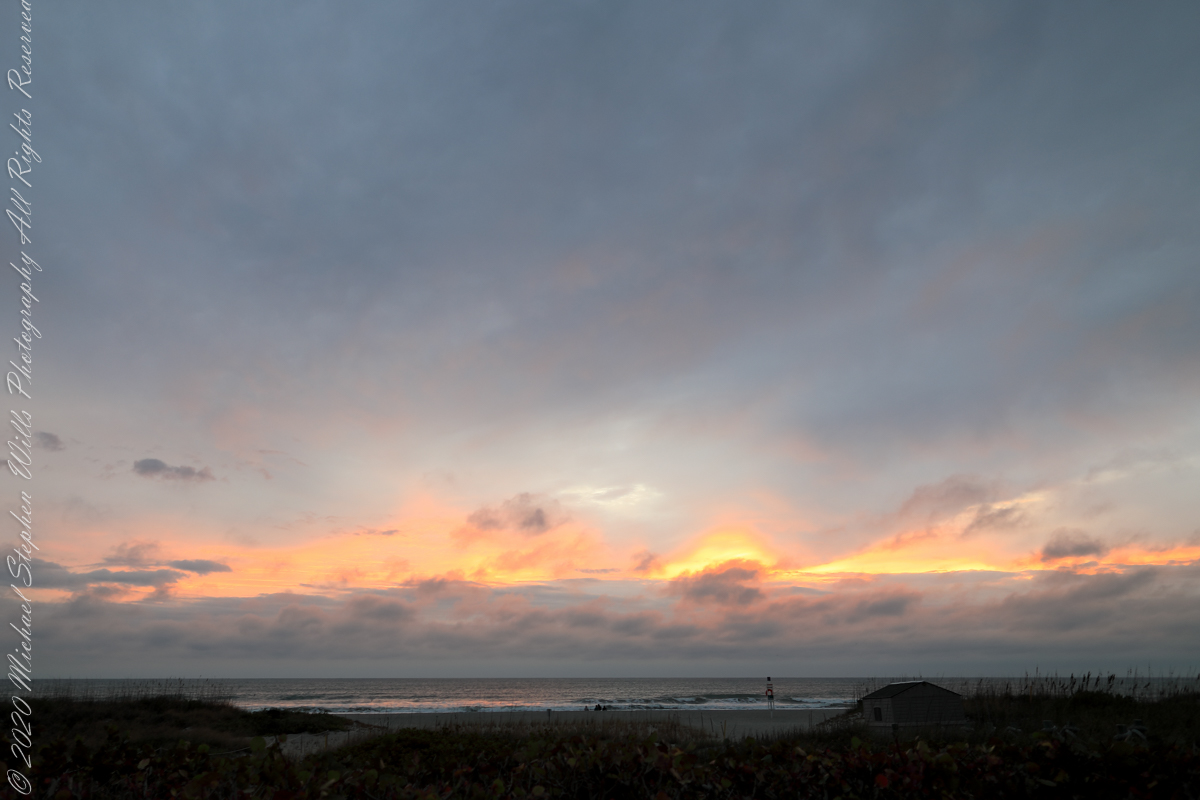
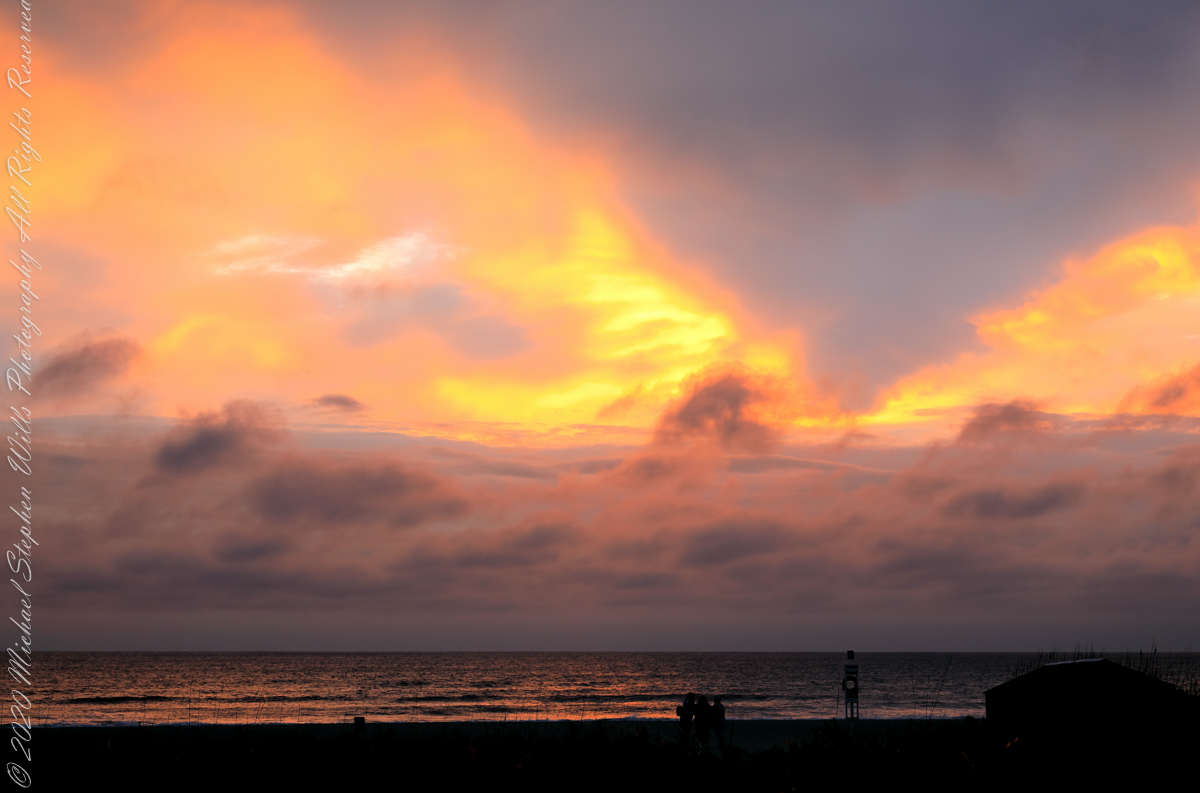
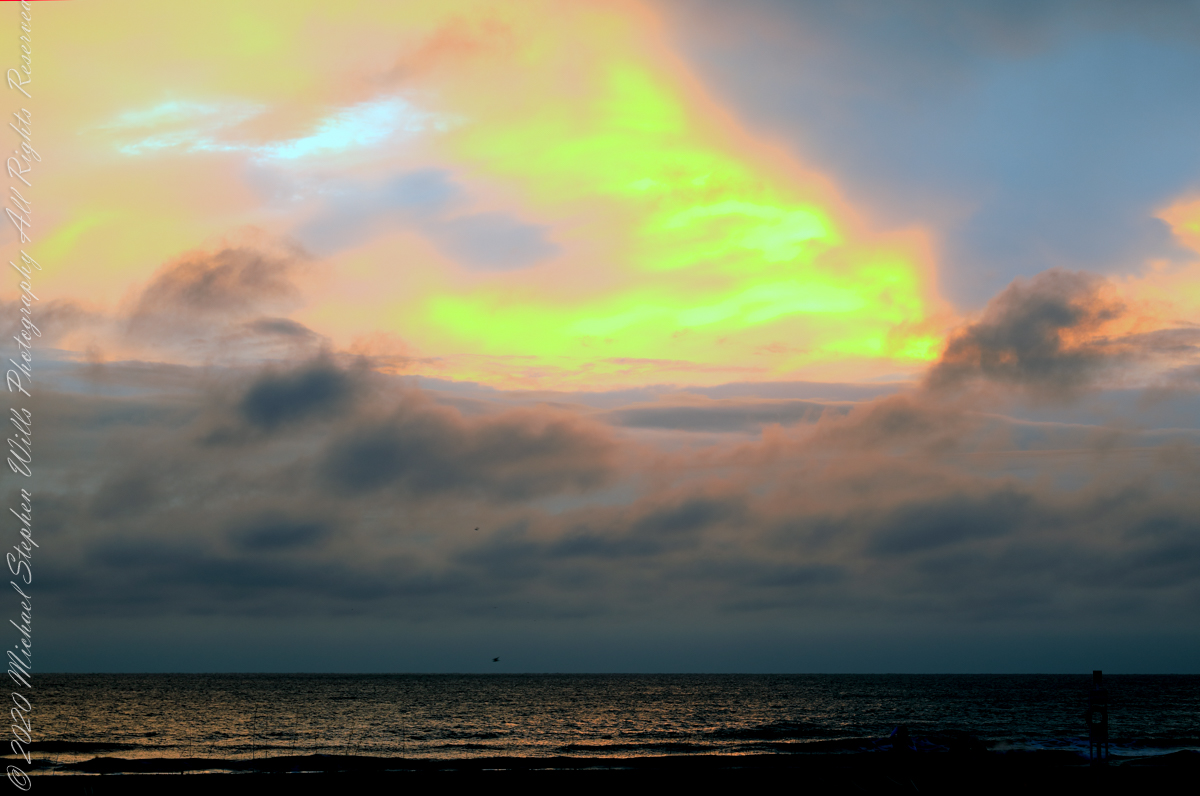
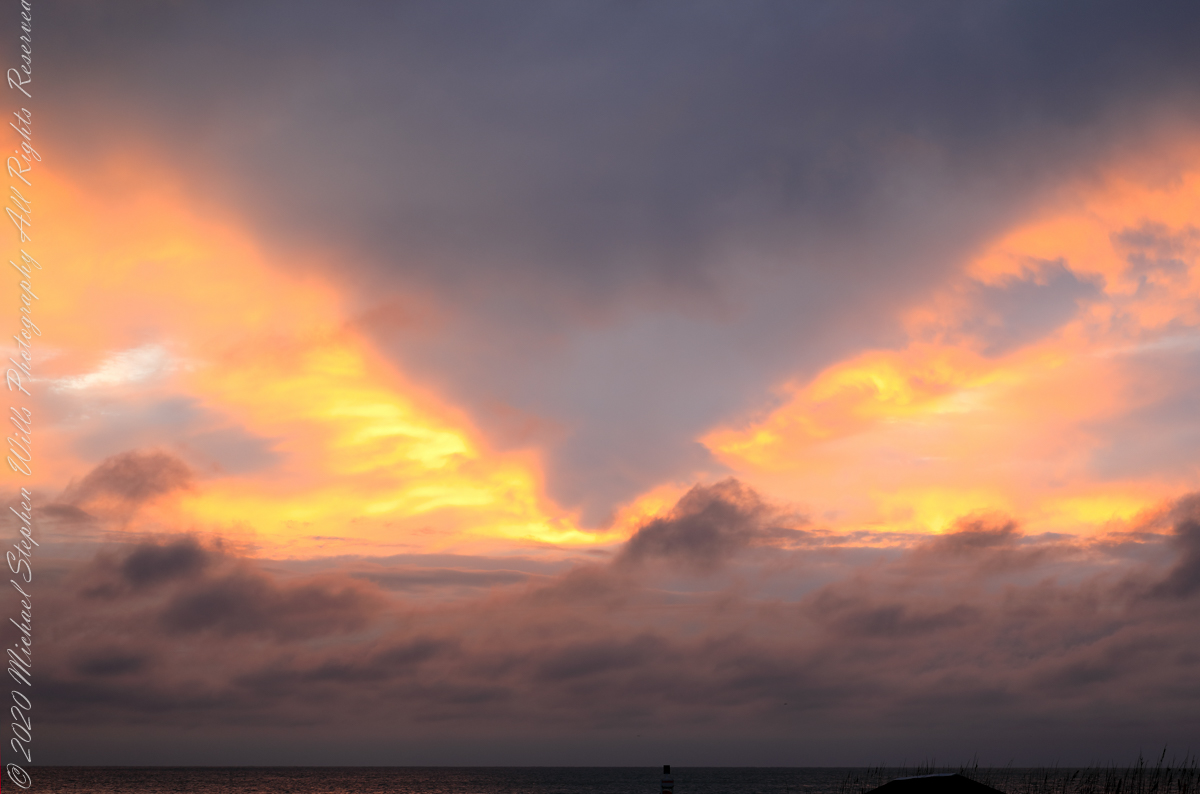
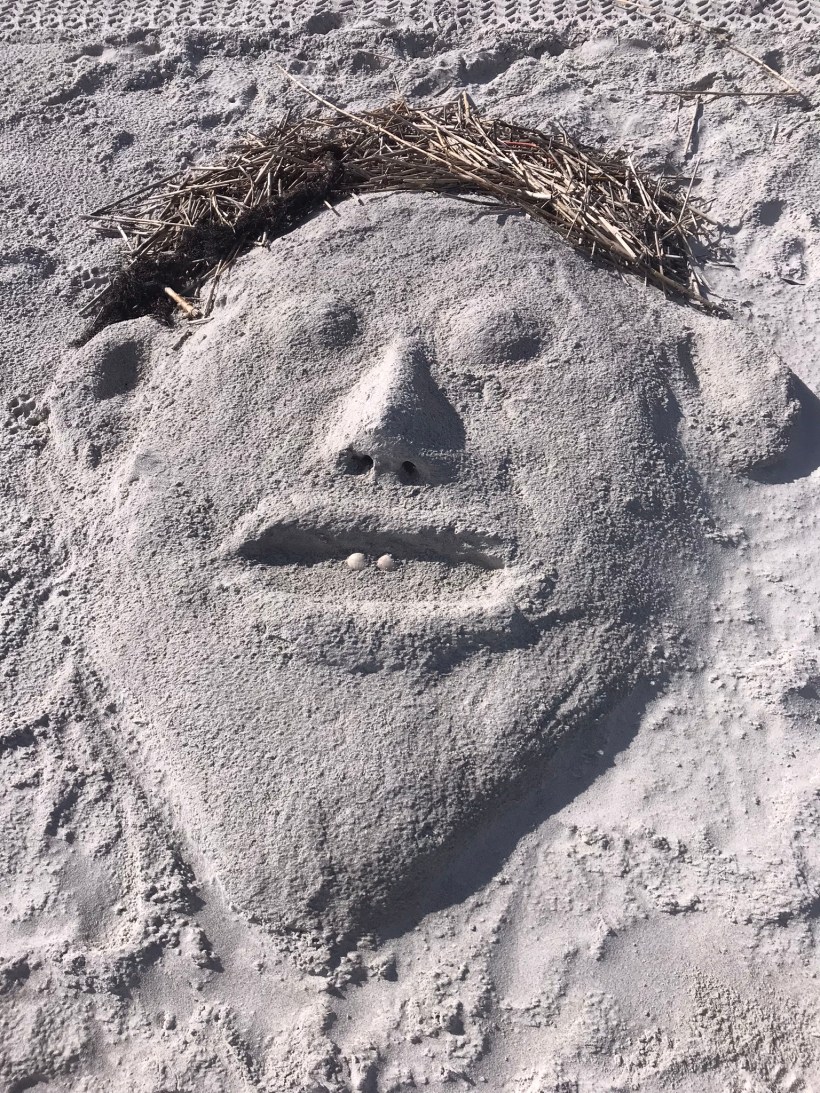
Images saved from this winter day of beachcombing and exploring around Cocoa Beach, Brevard County, Florida

Sunrise

The Day Taking Shape

Beach Wandering

Kite Boarding

Beauty in Motion I

Beauty in Motion 2

Beauty in Motion 3

Manatee Park Wildlife

Biplane

I saved this to share with the grandchildren

Copyright 2022 Michael Stephen Wills All Rights Reserved

Brock-Harvey Forest Preserve

first look

On September 14, 2013, the Bock-Harvey Forest Preserve was dedicated protecting 48 acrea of open meadow, transitional meadow, mixed hardwood forest, a special environmental protection zone and the Finger Lakes Trail.  Brock-Harvey Forest Preserve, and all land as far as the eye can see from there, was part of the Military Tract of Central New York, 28 townships given classical Greek and Roman names, each township 100 lots of 600 acres each, approved by the U.S. Congress 1799.  Here, the township was Ulysses, encompassing the southern end of Cayuga Lake and surrounding lands.  Thus, the city of Ithaca and Hector Street winding up from the valley passing below our home.

This land and several other military tracts were purchased by Samuel Harvey.  He then gave he lands to his sons including this farm to Silas Harvey, the great-great-great-great grandfather of Megan Barber who led the dedication ceremony of the forest preserve.  Megan’s great-grandmother Martha Harvey married Fred Bock and lived on this land used for dairy farming for over 150 years. 

The preserve exceeded my expectations for great upland views.

View from Shelter across the valley of Enfield Creek, the same that flows over Lucifer Falls of Treman State Park

Brock-Click me for another Brock-Harvey Forest Preserve post, “Burgeoning Forest.”

References

The background on the land was taken from a posting on the preserve and from Wikipedia, “Military Tract of Central New York.”

Copyright 2022 Michael Stephen Wills All Rights Reserved

Saint Patrick’s Return to Ireland

Thoughts on the Fifth Century return of Saint Patrick to Ireland

In follow-up to my last post my IStock photograph of Saint Patrick on the Hill of Tara was accepted and is available for viewing (click the link to go there).

Since July 2008 a sea generation tidal turban, “SeaGen”, produces electricity (1.2 MW) for between 18 and 20 hours a day while the tide is forced in and out of Strangeford Lough through the Narrows where the generator is installed. The first large scale commercial production of electricity from the tide, “SeaGen” is located between the Northern Ireland towns of Strangeford and Portaferry, the strength of the tides there were used by the earliest tidal mill known, the Nendrum Monastery mill dating 787 based on archeological excavation.

History records Patrick converted the island of Erin (Ireland) to Christianity in the Fifth Century AD as a return to his place of captivity and slavery.

Saint Patrick legend, Down Cathedral
An informational plaque mounted on granite next to the grave of Saint Patrick.

There is a connection between “SeaGen” and the return of Patrick to Ireland. The first sanctuary dedicated by Patrick was at Saul, County Down not far from River Quoile that drains into Strangeford Lough. Historians identify Patrick’s first landing site, upon return, as Wicklow where he was forced to leave by the locals. Heading north in the boats of the time, the strong tide of Strangeford Narrows pulled them into the Lough and, from there, headed up the River Quoile to encounter the local chieftain, Díchu mac Trichim. Patrick’s first Irish convert to Christianity, the feast of Saint Dichu is April 29.

On June 7, 2014 Pam and I visited this area. Here are some photographs of the traditional burial place of Saint Patrick.

View of Downpatrick
View of Downpatrick from the hill of the Cathedral Church of Holy Trinity (Down Cathedral)
Downpatrick High Cross
The High Cross of Downpatrick fronts Down Cathedral on a hill overlooking the town. The informational placard reads
“The granite head and shaft date to about 900 AD and were once re-used as part of a Market Cross at the bottom of English Street. The pieces were found in various places in town, reassembled and presented to the Dean and Chapter of the Cathedral in 1897.”
St Patrick's Grave
The placard text reads:
“A large memorial stone of Mourne granite was place here in 1900 to mark the traditional burial-place of St. Patrick. The stone was quarried at Slieve-na-largie near Castlewellan, and it took 12 men 14 days to cut from the quarry.”
Inscription, St Patrick Grave
Inscription on the upper surface of stone marking grave of Saint Patrick.

Please browse my reasonably priced stock photography. License a photograph, download and use it for your website or blog. Click this link to browse all my Getty IStock Photography offerings.

Or click this link or any photograph or this link to select a print with custom framing from my “Ireland” Fine Art Gallery.

Copyright 2018 Michael Stephen Wills All Rights Reserved

Climb the Hill of Tara

Explore the Hill of Tara with us! Discover the rich history of Saint Patrick’s statue, the legendary bonfire, and stunning panoramic views of County Meath. Join our journey through Ireland’s ancient and mystical landscapes in our blog post.

Arriving around noon on a Tuesday, Pam and I were greeted at the Hill of Tara by these children, headed to the school bus.

Schoolchildren on Hill of Tara – CLICK ME for more Ireland photography.

A statue of Saint Patrick fittingly welcomes visitors to the Hill of Tara, County Meath, Ireland. This statue of cast concrete was an existing statue donated by the Sisters of Charity, moved from an existing installation to the Hill of Tara in the year 2000 AD. The creator is anonymous, the is no plaque or other attribution on or around the statue.
The original statue was erected on the summit of the Hill of Tara shortly after Catholic emancipation in 1829, commemorated the events of 433AD when St. Patrick lit a bonfire on the nearby hill of Slane on the eve of Easter Sunday. Slane was the second site we visited on our day of arrival, Saturday, May 24.

Lighting such a fire was contrary to the pagan laws of the time which dictated that the first fire lit that night be in Tara. Observing St. Patrick’s bonfire from afar, the chief druid of the ancient Gaelic capital predicted that if the flame were not extinguished that night, Christianity would never be extinguished in Ireland.
The saint’s bonfire continued burning and the next morning, Easter Sunday, St. Patrick entered Tara to convert the king and his followers to Christianity.

Here is more about the history of this statue.
Saint Patrick Hill of Tara – CLICK ME for more Ireland photography.

A series of mounds surmounts the hilltop, one is visible across the expanse of grass.

Hill of Tara View – CLICK ME for more Ireland photography.

Climbing higher, the view opens.

Hill of Tara View – CLICK ME for more Ireland photography.

On the top, views from all cardinal directions, 360 degrees.

Hill of Tara View – CLICK ME for more Ireland photography.

The Hill of Slane is visible in the east, the tall cathedral ruin though not visible in this view.

Hill of Tara View – CLICK ME for more Ireland photography.

The first of the following panel is a view northwest from looking across County Meath with views of Counties Westmeath and Cavan. On the horizon, right, is Hag’s Mountain, (Irish: Sliabh na Caillí) , site of the Loughcrew Cairns. The standing stone is the “Stone of Destiny: (Irish: Lia Fáil), which served in coronation the coronation of the High Kings of Ireland. It stands on the Inauguration Mound (Irish: an Forrad) of Tara. This photograph was taken the morning of May 27, 2014 hours before the stone was vandalized, doused with green and red paint.

A bit to the east is the Mound of the Hostages, a passage tomb.

Walk into a glade, through the ancient graveyard to the visitors center in a deconsecrated church.

Browse my reasonably priced stock photography. This blog features three (3) photographs I published last week to Getty Istock and my Fine Art gallery.

License the photo, download and use it. Click this link to browse all my Getty IStock Photography offerings.

Or click this link or any photograph or this link to select a print with custom framing from my “Ireland” Fine Art Gallery.

Here’s another of my Ireland postings, “St. Patrick’s Return to the Hill of Tara.”

Oceans’ Eons

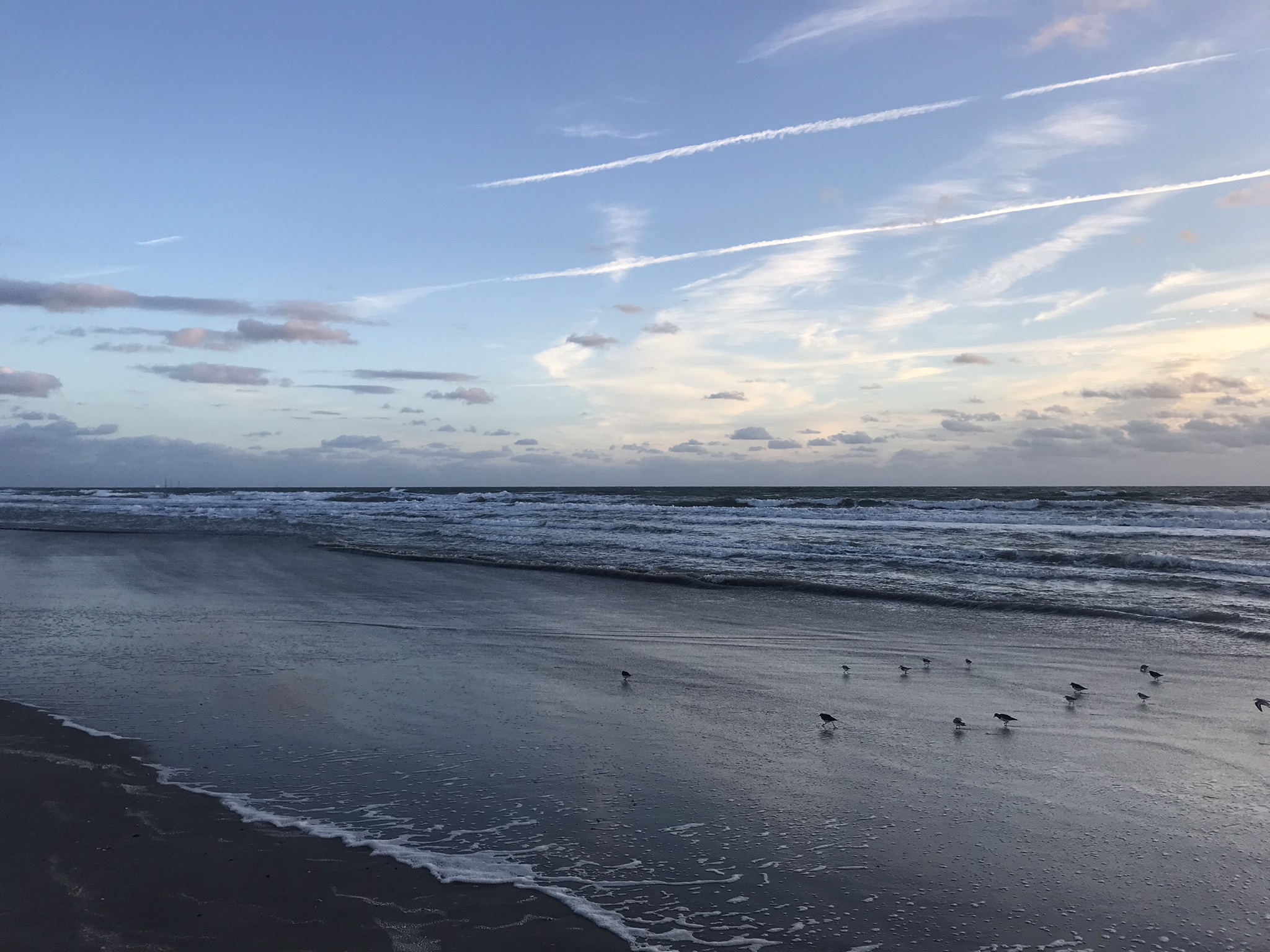
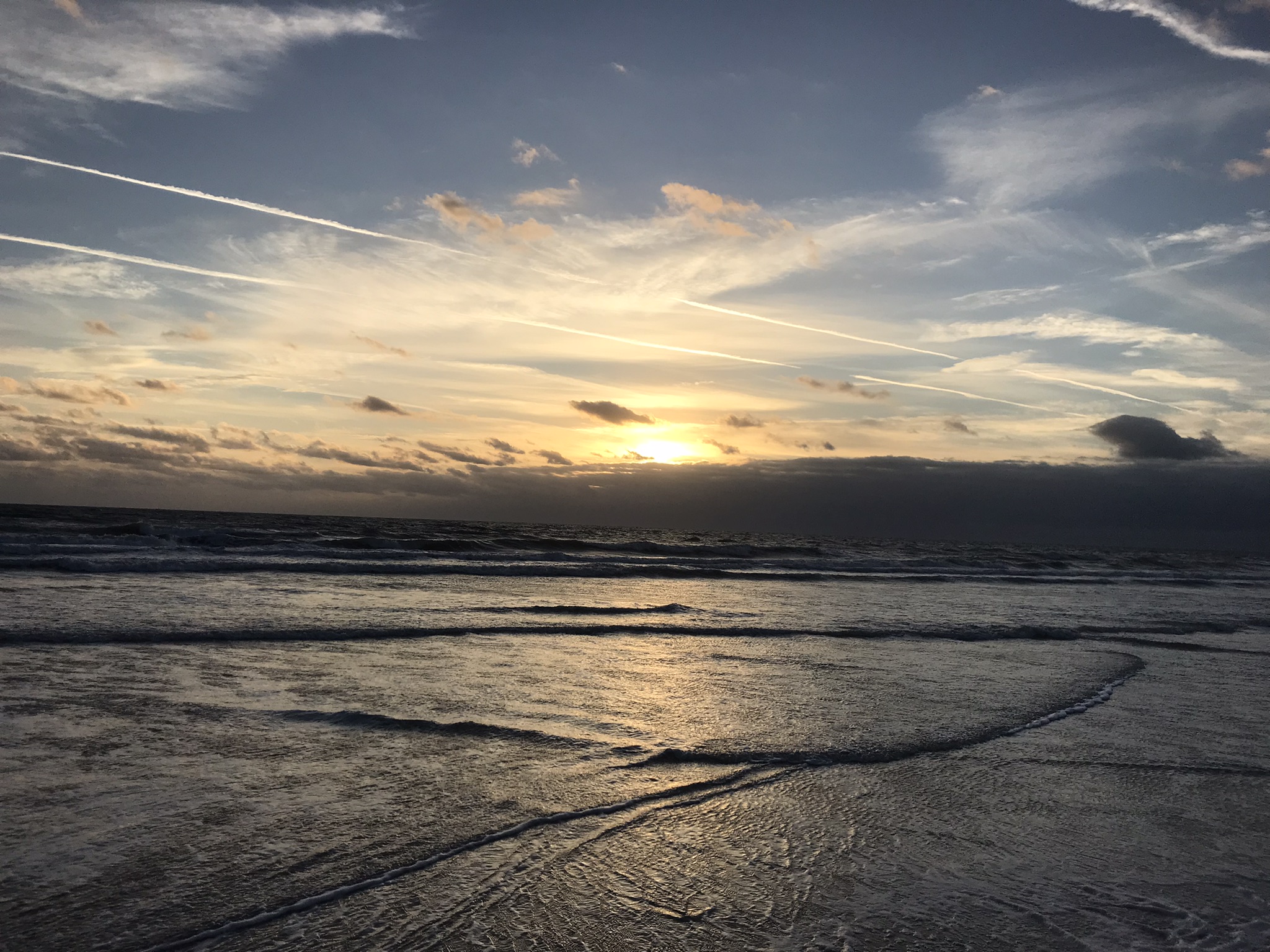
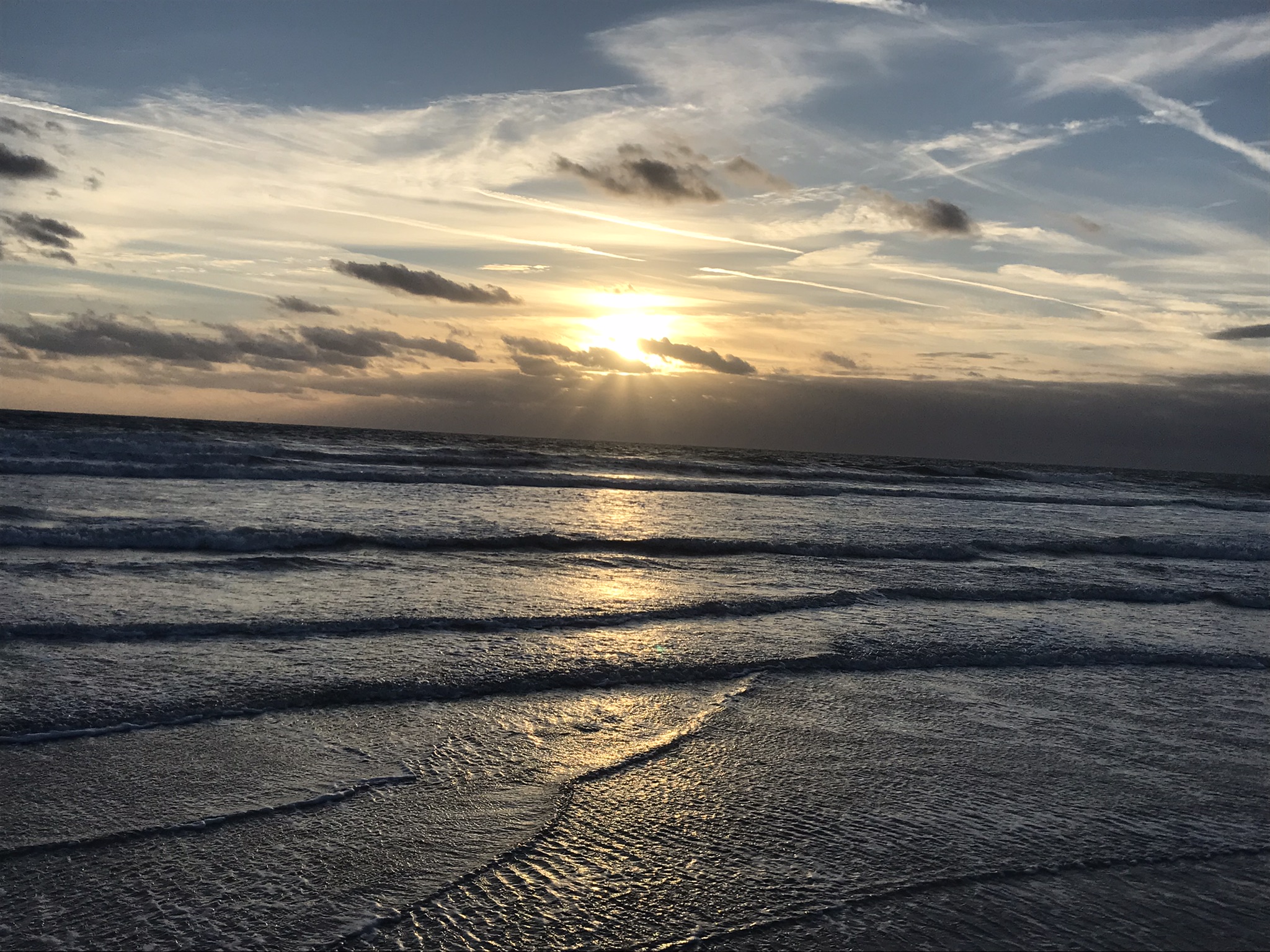
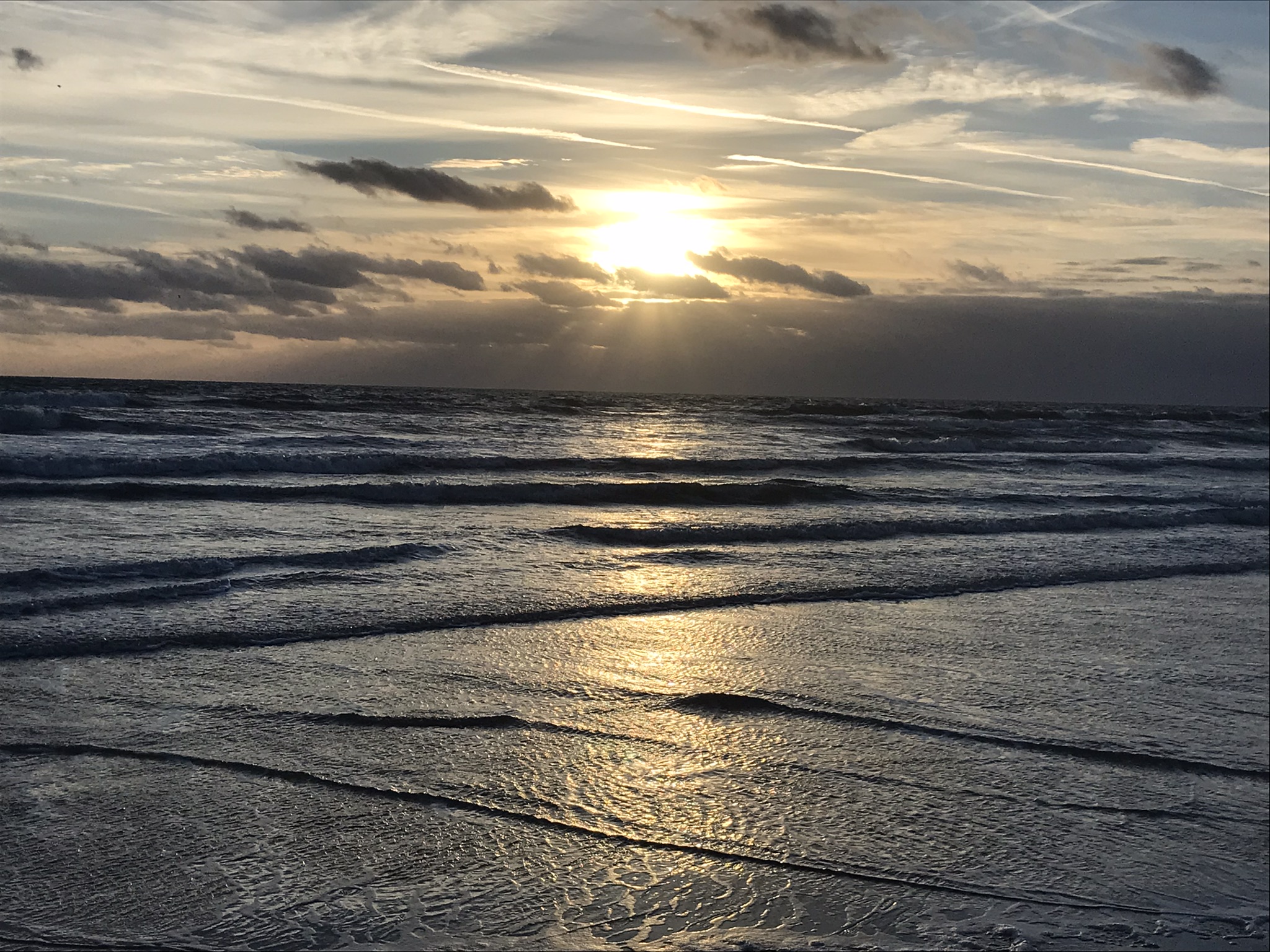
Tranquil Morning Surf with Peaceful Music for Tranquility, Relaxation, Meditation.

For full peace and tranquility view on a large screen “smart” television.

Eight minutes of ocean waves and gentle music in 4K UHD.

The Haw in Hawthorn

I originally published these blossoms as “wild  rose”.  It was my Facebook friends who pointed  out these are hawthorn flowers.  The key to identification was the shape of the leaves.

Hawthorne Blossoms on the former McArdle Home
Blossoms of Hawthorne taken on the site of the former McCardle Home, Proleek Townland, County Louth, Ireland.

In correcting my mistake, I learned the young leaves of Hawthorn are excellent for salads.  Wonder how the fairy folk, associated with single hawthorns (as in the following photograph from the Hill of Tara), react to picking leaves from their trees?  I didn’t hear of the practice during our time in Ireland.

Speaking Stone Hill of Tara
View northwest from Hill of Tara looking across County Meath with views of Counties Westmeath and Cavan. On the horizon, right, is Hag’s Mountain, (Irish: Sliabh na Caillí) , site of the Loughcrew Cairns. The standing stone is the “Stone of Destiny: (Irish: Lia Fáil), which served in coronation the coronation of the High Kings of Ireland. It stands on the Inauguration Mound (Irish: an Forrad) of Tara. This photograph was taken the morning of May 27, 2014 hours before the stone was vandalized, doused with green and red paint.

My mistake was understandable, in botany the hawthorn is in the same family as the rose.  The flowers are similar, having five petals.  The “haw” in hawthorn is from the Old English word for hedge, as is this linear standoff the tree lining the way up to the Loughcrew Cairns.

Path on Hag's Mountain, Loughcrew
Reaching highest point of County Meath, Ireland means a steep path, not too long, to glorious views on all points plus Lough Craobh (Lake of the Branches).

I read these votive offerings are made at Beltane, in which case these are fresh from placement May 1.

Hawthorn Tree with Offerings
A hawthorn tree in bloom on May 27, 2016. Growing on the slope of Hag’s Mountain

The following year Pam underwent double total knee replacements, never the less, she was great company for all our adventures on the island.  Even this steep climb.

Pam and the Offering Hawthorn
The steep path to Loughcrew passes a hawthorn covered with flowers and May offerings.

These views were our reward for reaching the top.

Loughcrew View, North by Northwest
View from Loughcrew Cairns, “Hags Mountain”

The Emerald Isle, we fully understood this name.

Standing Stone, Loughcrew
Loughcrew Megalithic Site, County Meath, Ireland. A solitary standing stone below the trail to the Loughcrew site surrounded by whin bush (gorse) and hawthorn hedge rows. A fieldstone fence, farmhouses, a patchwork quilt of fields completes the view.

The Greek name for the Hawthorn species is formed from two words meaning “strength” and “sharp”, referring to the thorny branches.

Charlemagne of County Cork
For County Cork we stayed with Marantha House B&B.   Our day of arrival, that evening, I visited Charlemagne and fed him an apple, saved from dinner. We learned from our hosts, Olwen and Douglas Venn, he is a retired show horse they rescued. The following morning I visited Charlemagne again with an apple and my camera. As I walked up, starting from the far end of his field, Charlemagne rewarded me with a series of astounding poses, trotting toward me in fine form. The morning mists, hawthorn in bloom, distant hills came together for this memory.

We marveled at the hawthorn hedges in field after field.  I first notice them from the World Heritage Site, Newgrange (Brú na Bóinne, “Palace of the Boyne”).  Here is one on the Dingle Peninsula, on the other side of the island.

Field of Yellow Iris Flowers, Dingle Peninsula
A roadside field of yellow Iris flowers with flowering Hawthorn and Whin Bush in the windbreaks. Looking northwest toward Killeenagh and Caherpierce on the R561 between Lack West and Inch. Dingle Peninsula, County Kerry, Ireland.

Another Ireland post of interest, “Proleek, Grandfather McCardle’s home.”