Trillium: A Springtime Encounter

Discover the enchanting beauty and rich history of the Great White Trillium in Treman Gorge. Learn about its unique life cycle, medicinal uses, and the fascinating pink tints that emerge as these elegant flowers age. Read more!

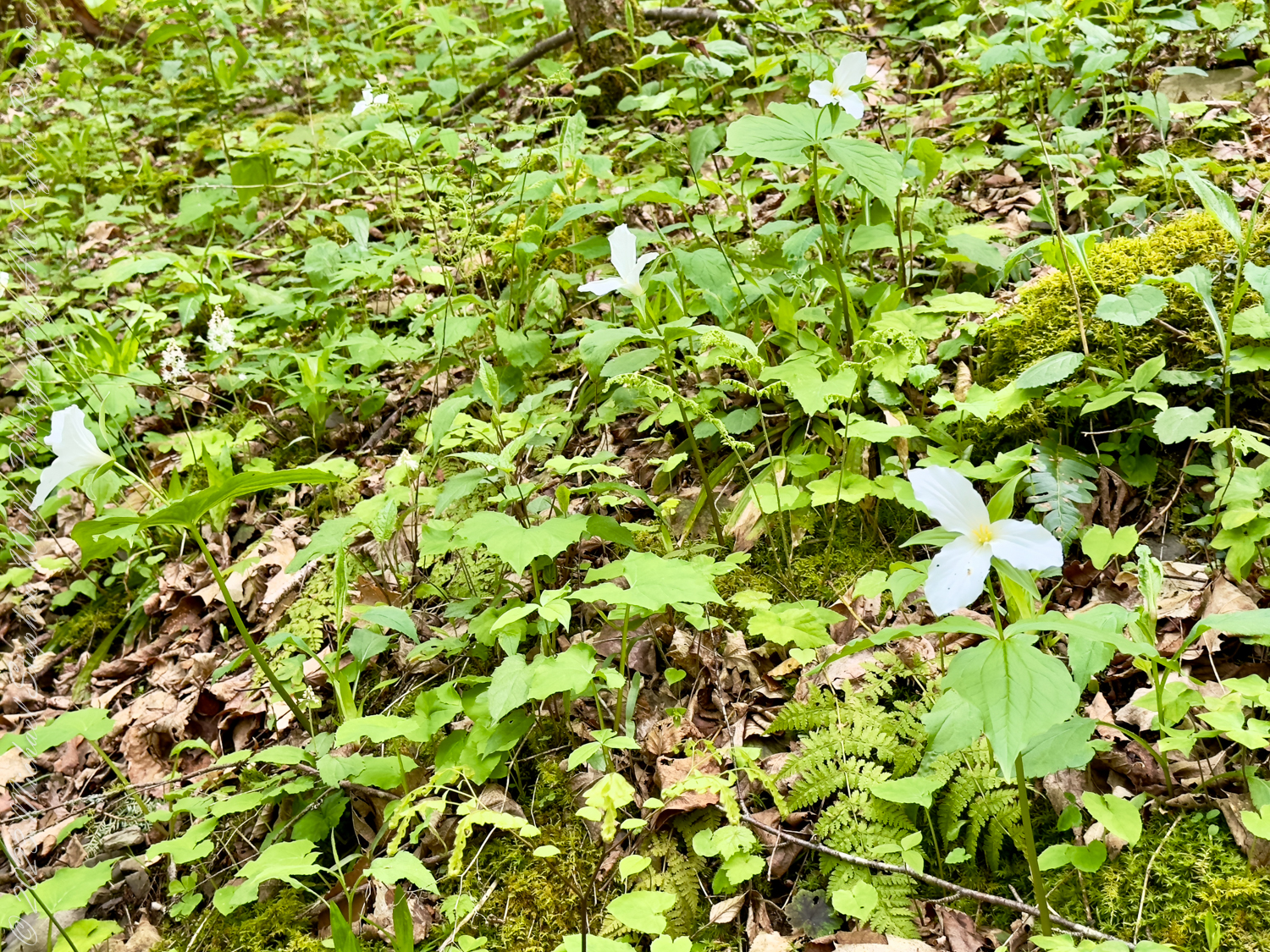
Walking through Treman Gorge in early May, I am always struck by the lush greenery that carpets the forest floor. The delicate ferns and emerging wildflowers create a tapestry of colors and textures. On this particular visit, my attention is drawn to a cluster of striking flowers that stand out against the verdant backdrop. These are the Trilliums, a genus known for their three-petaled blooms.
A Closer Look at Trillium grandiflorum


As I approach the flowers, I recognize them as Trillium grandiflorum, commonly known as the Great White Trillium. The species name “grandiflorum” aptly describes its large, showy flowers. Each blossom consists of three pure white petals that gently arch outward, giving the flower a graceful appearance. The petals are complemented by three green sepals and three broad leaves that form a whorl beneath the bloom.

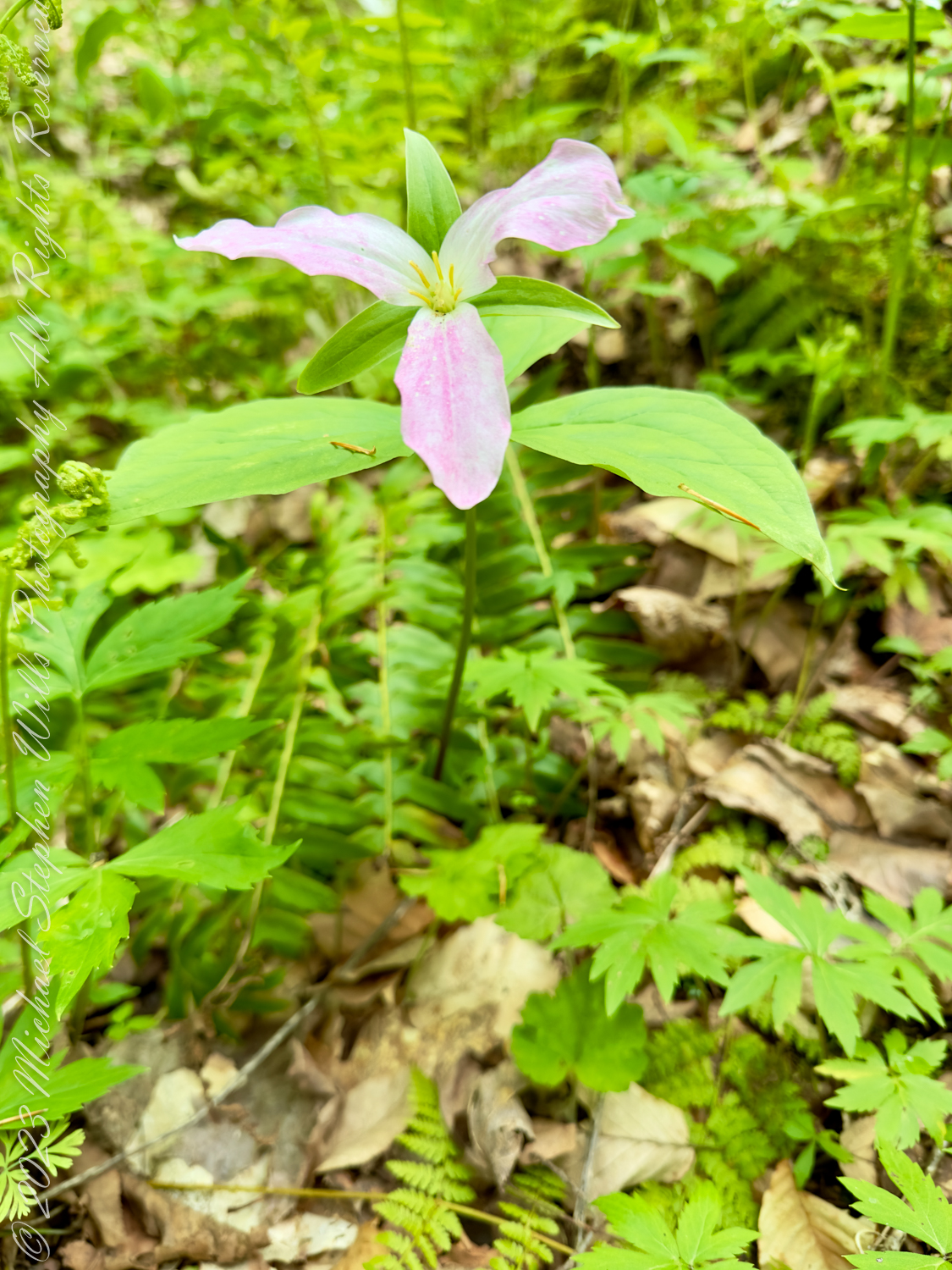
Some flowers, in particular, catch my eye. They have a faint pink hue, the end of its blooming period approaches. This natural aging process transforms the white petals into a soft pink, adding another layer of beauty to these already stunning plants. This subtle pink tint is a sign of the flower’s progression through its lifecycle, a gentle reminder of the ever-changing nature of the forest.

The Natural History of Trilliums


Trillium grandiflorum is native to the deciduous forests of North America, thriving in the rich, moist soils found in areas like Treman Gorge. These perennial plants emerge in early spring, often before the tree canopy fully develops, taking advantage of the available sunlight.

Trilliums have a unique reproductive strategy known as myrmecochory. This means their seeds are dispersed by ants. The seeds have a fatty appendage called an elaiosome, which attracts ants. The ants carry the seeds back to their nests, consume the elaiosome, and discard the seed, effectively planting it in a nutrient-rich environment.

Historical and Modern Uses

Historically, another trillium species, Trillium erectum, held significance for both Native American tribes. Various parts of the plant were used for medicinal purposes. The roots, in particular, were valued for their astringent and antiseptic properties. They were used to treat wounds, inflammation, and other ailments. Some tribes referred to Trillium as “birthroot” because it was used to ease childbirth and labor pains.

European settlers also adopted these uses and incorporated Trillium into their herbal remedies. The roots were used to facilitate labor, manage menstrual disorders, and treat wounds and inflammations. Because of its association with childbirth and its perceived benefits in regulating menstrual cycles, the plant became widely known as “Bethroot.”​

In modern times, while the medicinal use of Trillium has waned, the plant is still admired for its beauty and ecological role. Conservation efforts are in place to protect wild populations of Trillium grandiflorum, as habitat loss and over-harvesting have threatened some local populations.
Capturing the Moment


Photographing these Trilliums is a delight. Using the Apple IPhone 14 ProMax I carefully frame each shot to capture the intricate details of the flowers. Macros reveal the delicate veins on the petals and the fine texture of the leaves. I developed the images in Adobe Lightroom to highlight the contrast between the white flowers and the lush green foliage. Some of the images beautifully capture the pink tints on the petals, showcasing the flower’s natural aging process and adding depth to their already stunning appearance.

Reflecting on the Experience


Encountering Trillium grandiflorum in full bloom is a profound experience. These flowers, with their simple yet elegant structure, embody the essence of spring’s renewal. They remind me of the intricate connections within ecosystems and the historical ties humans have to the natural world.

As I continue my walk through Treman Gorge, I carry with me a sense of gratitude for the opportunity to witness such beauty. The Trilliums, with their timeless grace and the gentle pink tints of their aging petals, have left an indelible mark on my heart. I look forward to returning each year to see these perennial wonders, knowing that each visit offers a chance to reconnect with nature’s enduring splendor.
Copyright 2024 Michael Stephen Wills All Rights Reserved

Spring Outing VIII

Sun catchers

Click photograph for a larger view. To do this from WordPress Reader, you need to first click the title of this post to open a new page.

Click me for another Hepatica wildflower posting.

Copyright 2024 All Rights Reserved Michael Stephen Wills

Spring Outing VII

Groupings, 1 flora and 1 dangerous

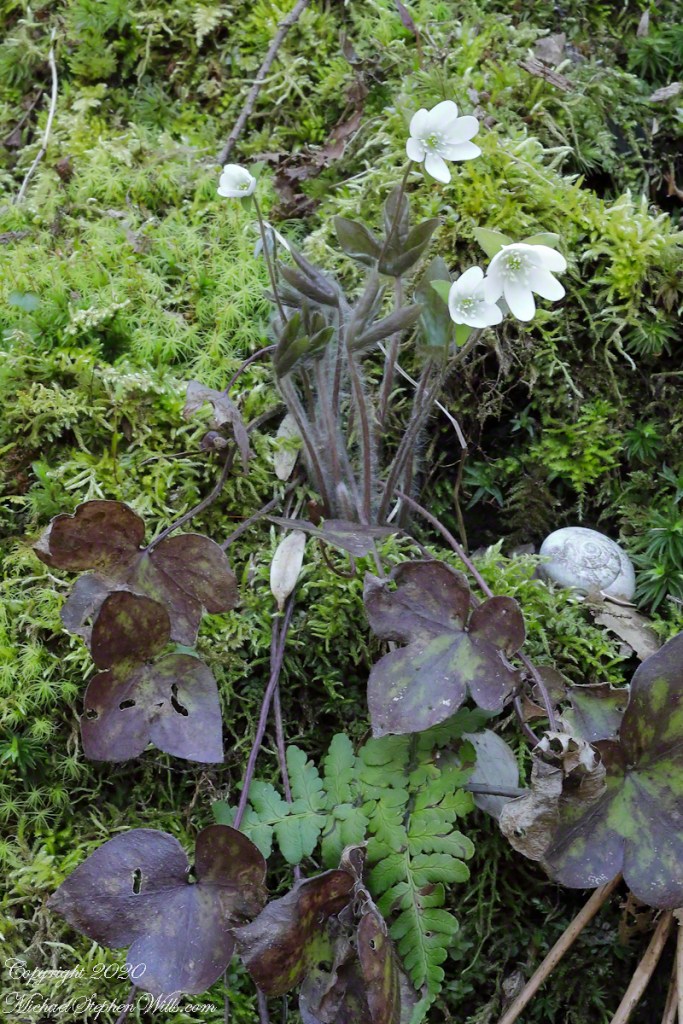
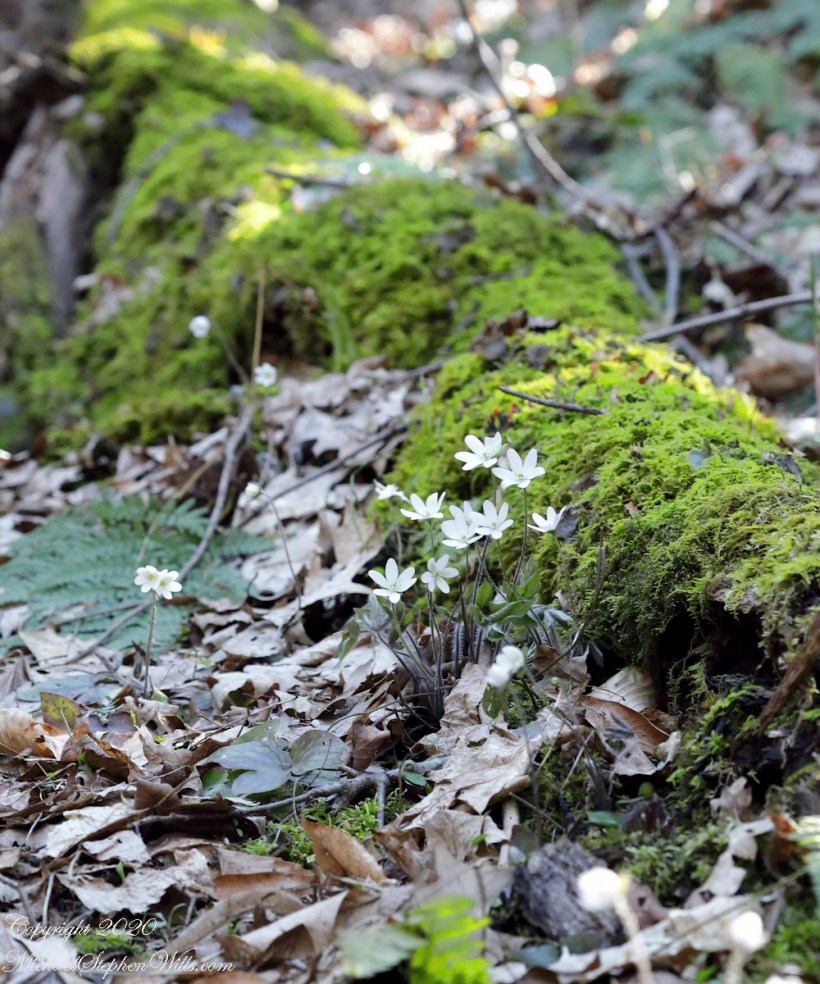
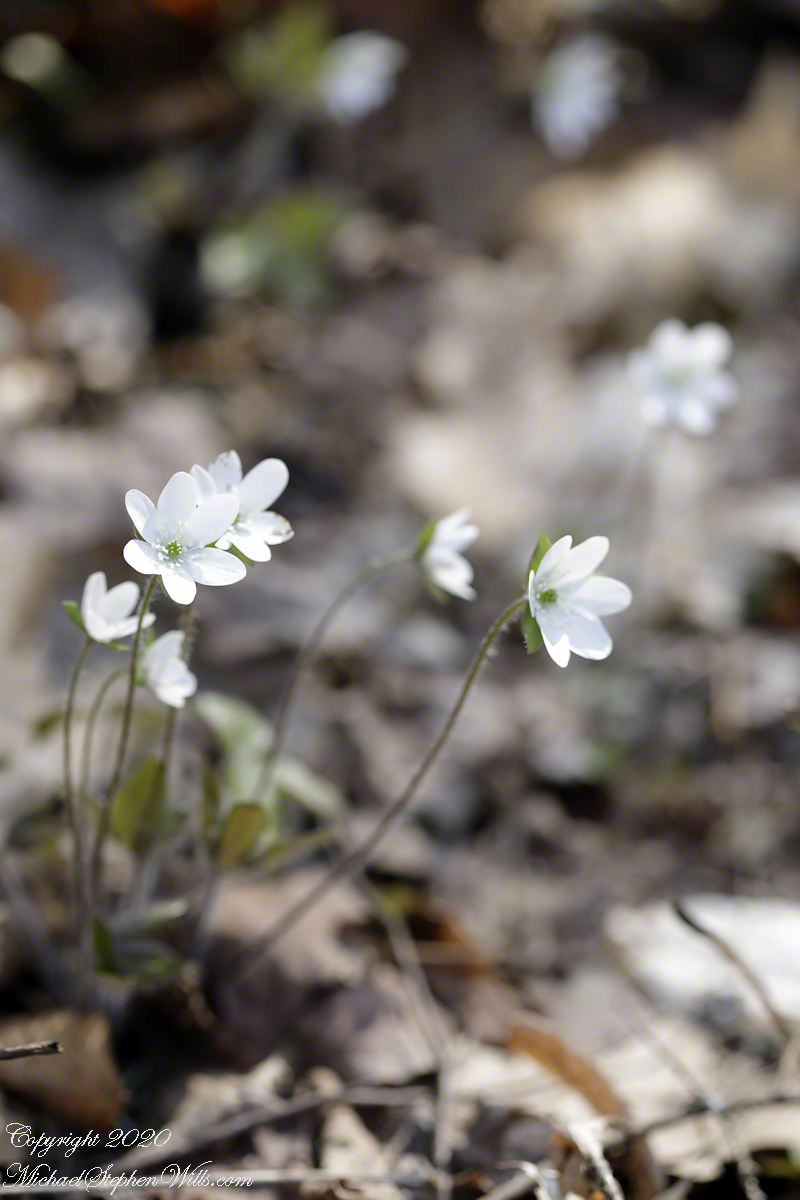
Hepatica positioned perfectly above the trail, sprouting from moss, a grouping of the plant and flowers.

Scientific Name: Hepatica nobilis var. obtusa. I found the two land snail shells this session, I identified it as Neohelix albolabris, and positioned it in this shot to lend interest. In a future posting you will see the shell where it was found.

Click photograph for a larger view. To do this from WordPress Reader, you need to first click the title of this post to open a new page.

Six unrelated young adults, all female and without masks, not following social distancing guidelines, passed as a group just before I set up for this shot. I heard them coming and made plenty of space between them and me. COVID-19 testing in Tompkins continues to find several positive cases each week.

Finding an appropriate combination of settings for this grouping was a puzzle. My goal was to bring the flowers and surrounding into focus with intermittent breezes. The f-stop needed to be high to accommodate the depth with minimal exposure duration as the flowers moved in the slightest breeze. The solution was a high ISO (2500) and f-stop (32), yielding a 1/3 second exposure (Not fast). The compromise was patiently waiting for a break in the breezes.

Copyright 2024 All Rights Reserved Michael Stephen Wills

Spring Outing VI

Just opened wind-flowers

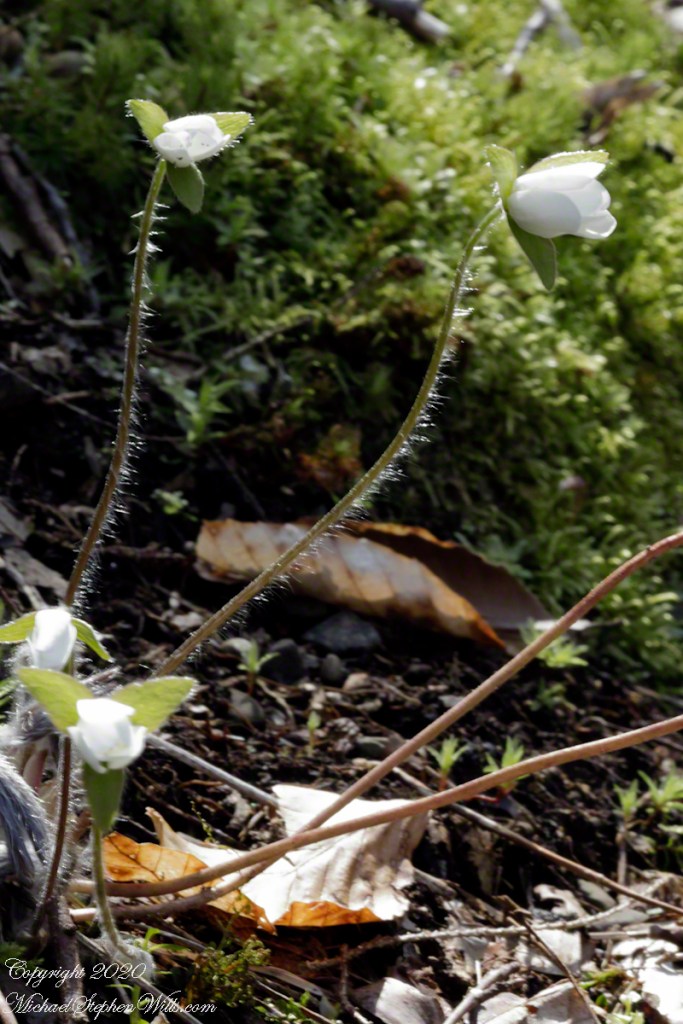
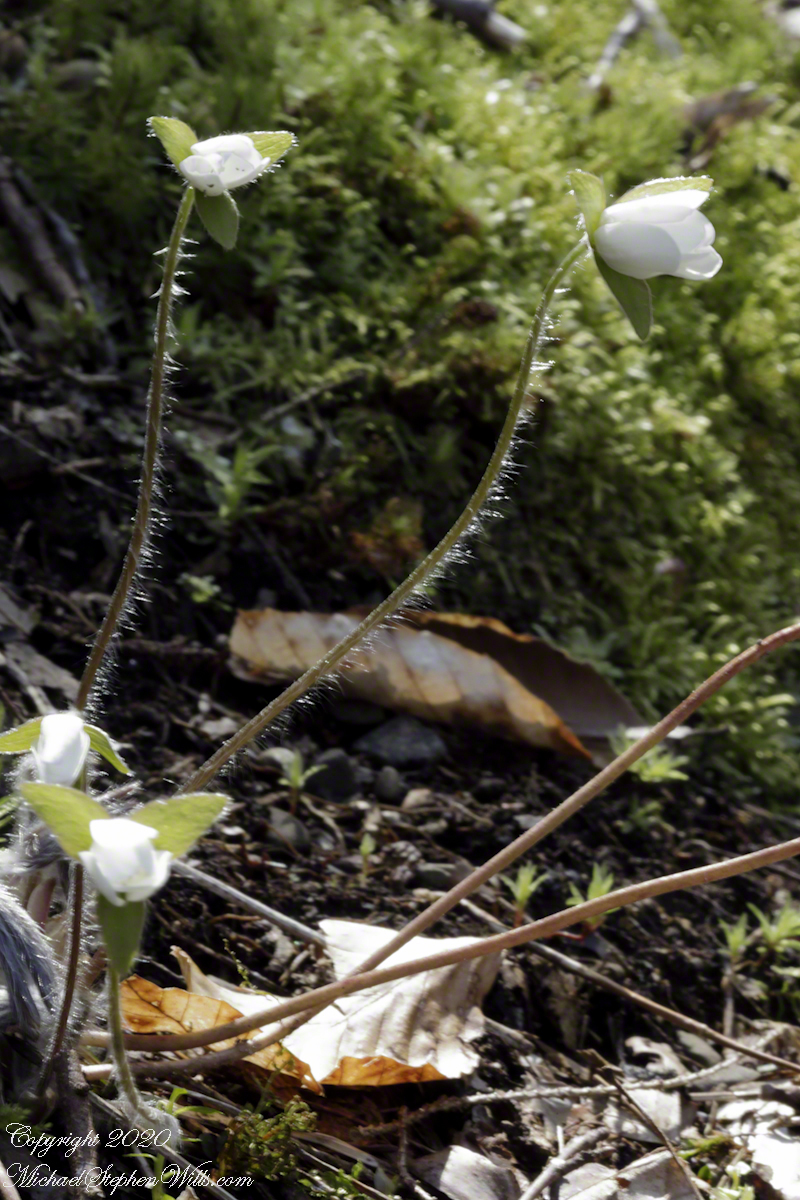
Just opened flowers on long hairy stems, tiny anemones. A crawl and tripod we needed to capture these. The scene scale is revealed by the dried leaves from last autumn.

Click photograph for a larger view. To do this from WordPress Reader, you need to first click the title of this post to open a new page.

I call these anemones from the disputations among taxonomists. All agree there is some relationship and differ in the degree. Classifications add a designation “tribe” before genus (hepatica). Alternatively, the genus is designated Anemone instead of Hepatica . A common name for anemones is “wind-flower” for how the flower is sensitive to a slight breeze, on these long stems.

This is the first hepatica capture of the session. There was no breeze at this time and the ISO is 800, f-stop 29 (lending some definition of the background, less than I’d expect) and a relatively slow exposure of 1/4 second. The 100 mm macro lens on a tripod mounted camera.

Reference: Wikipedia article, “Hepatica.”

Copyright 2024 All Rights Reserved Michael Stephen Wills

Spring Outing V

Wildflower Groupings

Red Trillium are early bloomers, along with Hepatica. I often photograph them together. Click me for a 2019 Red Trillium post of photographs from 2007 taken in Fillmore Glen Park.

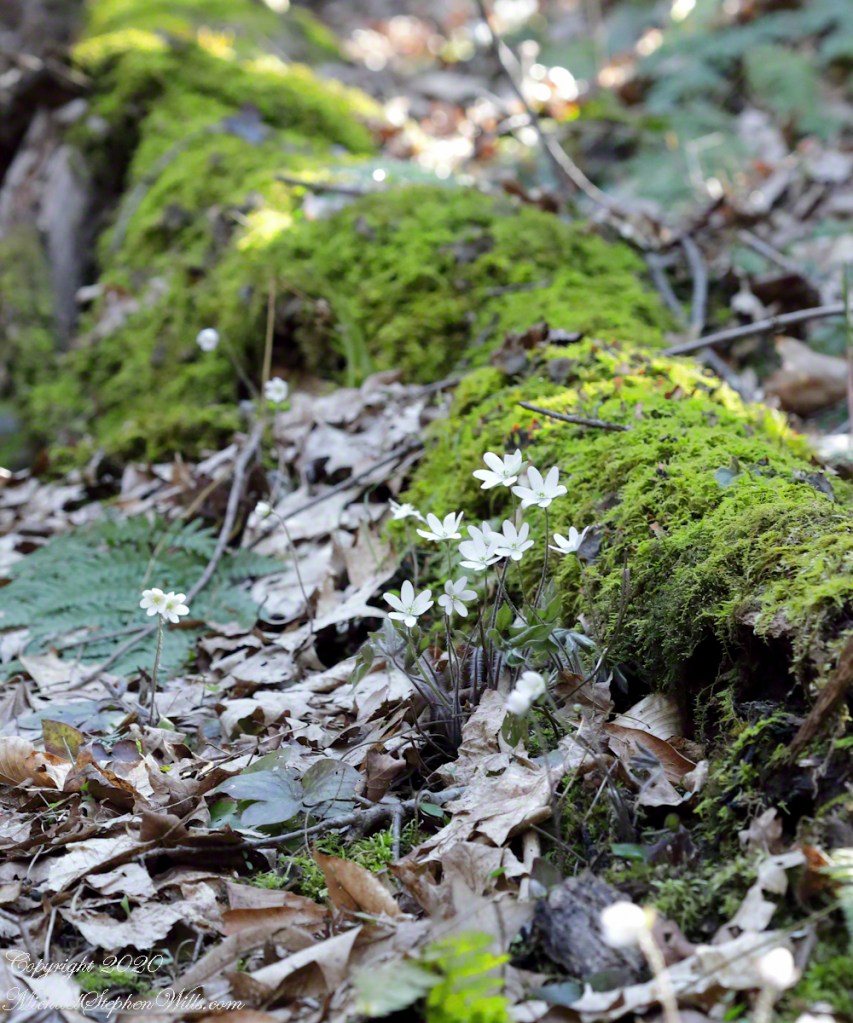
Here we have two photographs from the end of the April 20, 2020 session. I finished a series of macro Hepatica and, tired (emotionally, not physically) and not wanting to step up the slope, captured the following grouping of a single Red Trillium, lit by a bolt of sunlight, White Hepatica, fern and the budding White Trillim from yesterday’s post. Not the same trillium, a continuation of all the individuals in bud.

Click photograph for a larger view. To do this from WordPress Reader, you need to first click the title of this post to open a new page.

These were 15 feet or so up the slope above the South Rim Trail. I used the 100 mm macro lens, with the spring breezes ISO set to 2500, f/5.6 for a 1/200 exposure.

Not far away, also upslope, was this flower grouping against a moss covered log. Park forestry leaves fallen trees in place to return to the soil. Camera settings are the same.

Both photographs were handheld.

Copyright 2024 All Rights Reserved Michael Stephen Wills

Spring Outing IV

Turn to Light

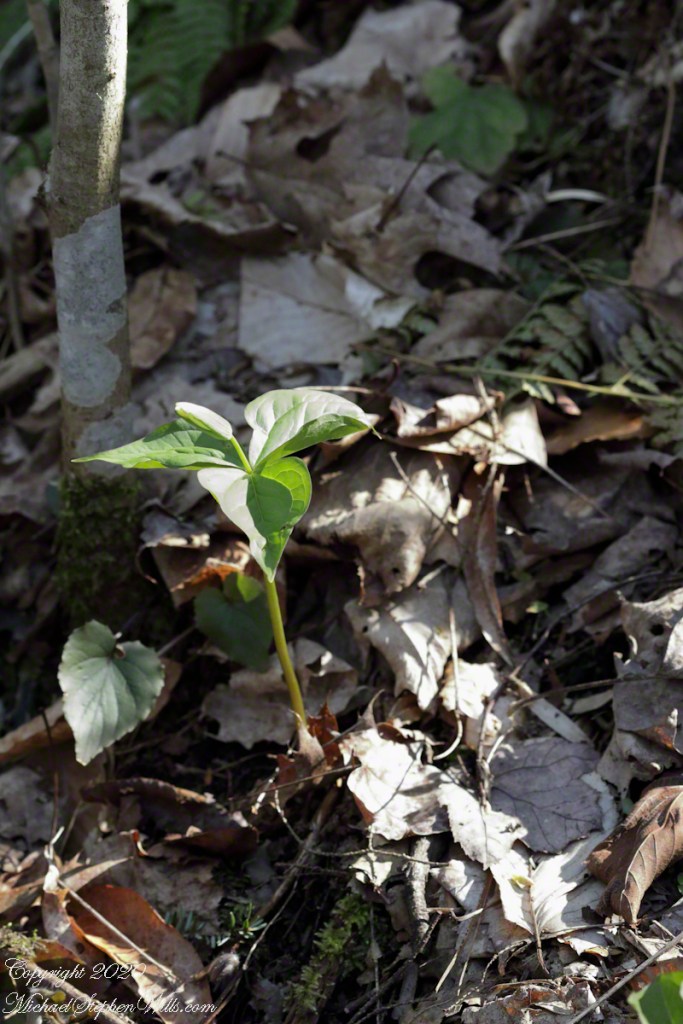
Wildflowers flourished where the slope turned to the north and late afternoon light spread across the small ravine created by a small stream. This early in the season White Trillium buds were forming between three green bracts.

Click photograph for a larger view. To do this from WordPress Reader, you need to first click the title of this post to open a new page.

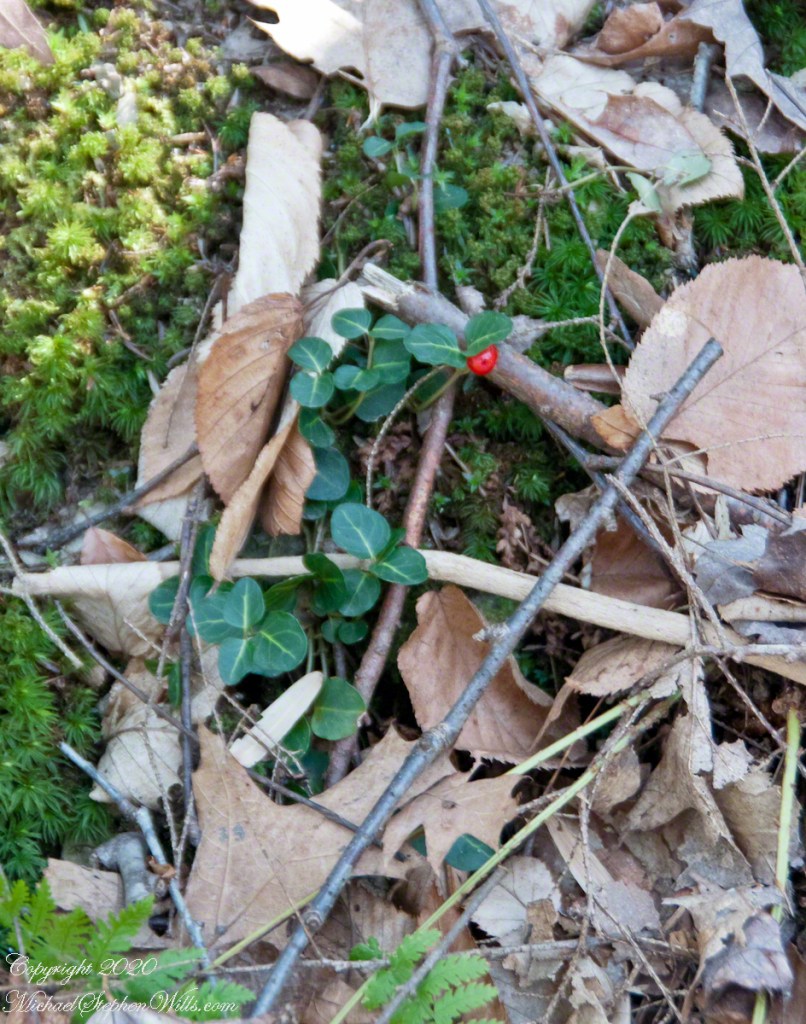
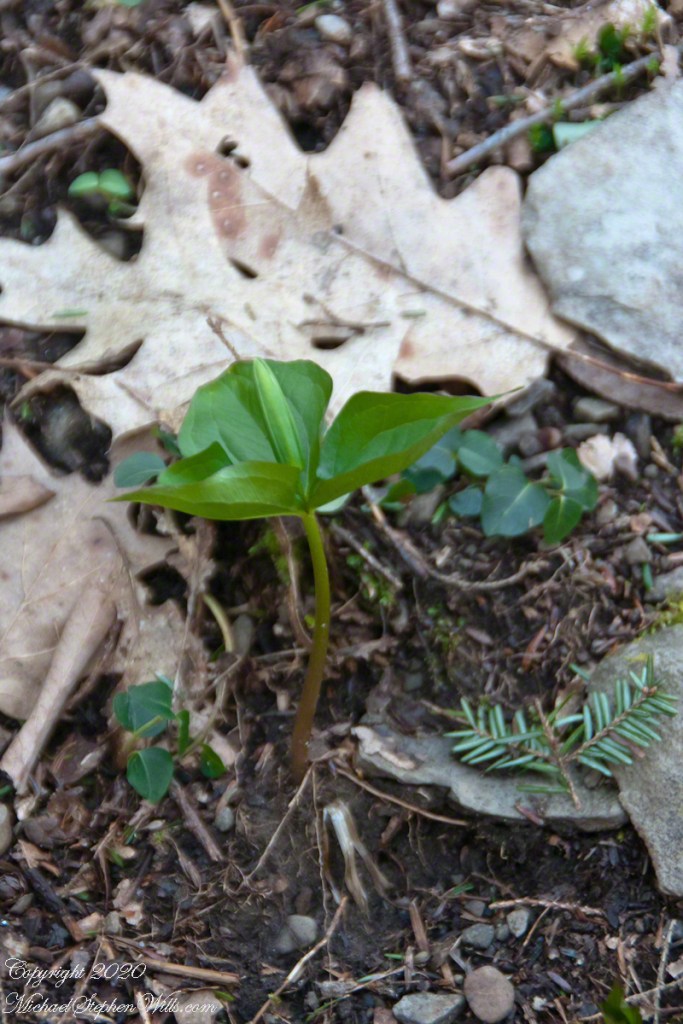
The above photograph taken handheld with a variable zoom lens captures the plant and environment. On the forest floor is twig of hemlock, probably knocked off by squirrels feeding on the tiny cones. Oak leaves from last season frame the dark green bracts. We also see a few wintergreen leaves and the rich soil.

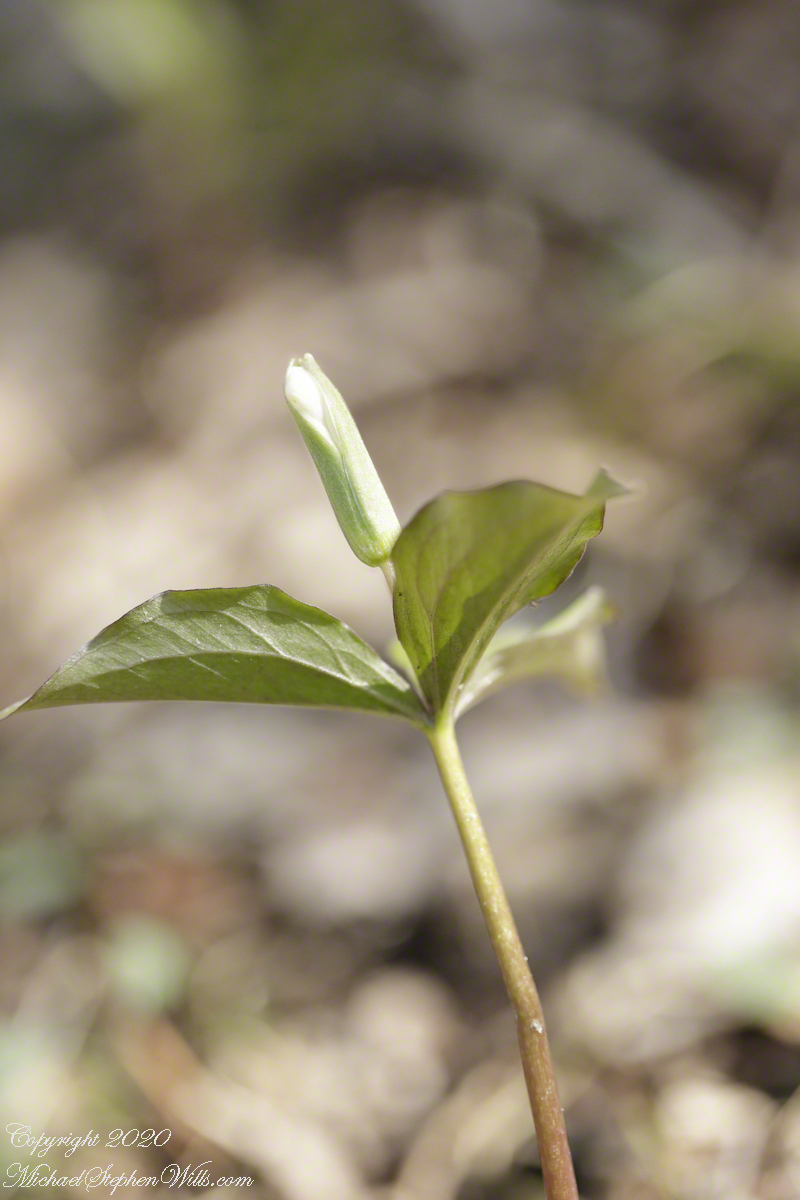
With the low light ISO is 2000, the f-stop of 5.6 allowed crisp details of the hemlock and wintergreen, the focus is soft on the oak leaves. Where is topography allowed sunlight, the White Trillium were a bit further along. Here is a bud opening.

Here I used a travel tripod and a macro lens with f-stop opened up to 3.2, not lens maximum, and all but the forward bract tip are in focus. A lower camera angle places surroundings in distance, allowing all to be blurred unrecognizable: the plant is the star of this shot. ISO 800 with the ample light. I was struggling with the spring breezes, having to wait for a break to take each exposure.

Copyright 2024 All Rights Reserved Michael Stephen Wills

Spring Outing III

Red Pine on the level

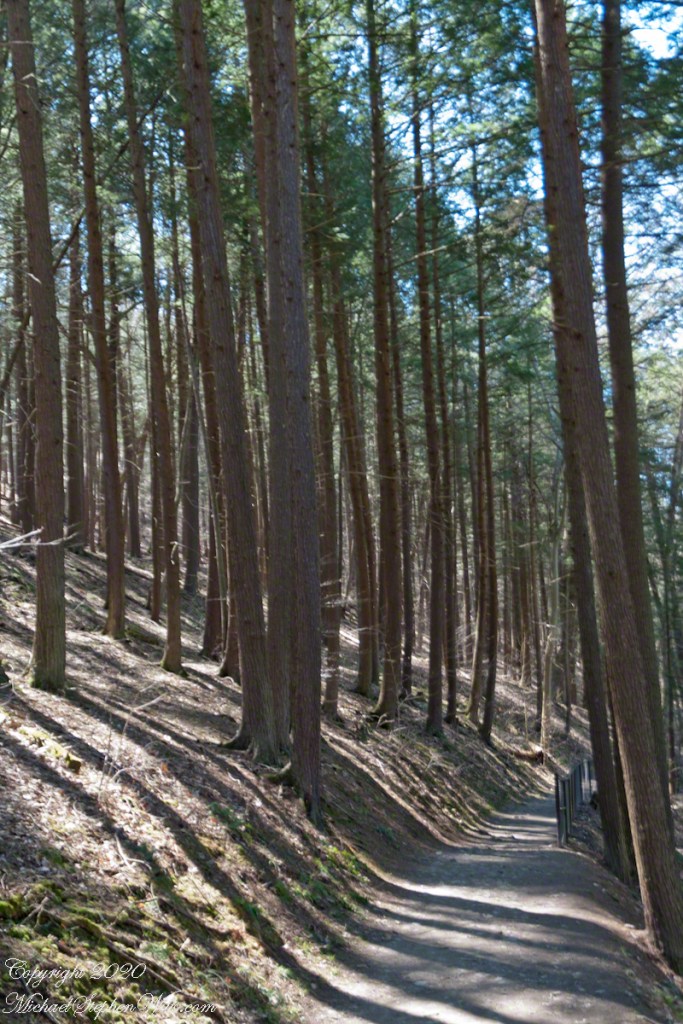
One hundred and fifty feet in a series of steep climbs is the effort expended to reach the relatively level portion of South Rim Trail where the tall Red Pines briefly reign. Here the trees thrive on the northeast facing slope. They grow in this way in one other location, in the upper park, on an eponymous trail.

Encounters with groups of people descending always demanded I step off the trail to allow social distancing. Everyone work a flimsy face covering, although Governor Coumo’s order covers situations where social distancing is not possible. As of you, we do not have the loose masks; but only the N95 or a full respirator (both acquired very early on, our respirators were purchased for spreading lawn chemicals and spray painting).

Click photograph for a larger view. To do this from WordPress Reader, you need to first click the title of this post to open a new page.

Red Pine (Pinus resinosa), also know as Norway Pine, shed pollen prolifically. Some Aprils my boots are covered with it, a dusting of yellow. Not today.

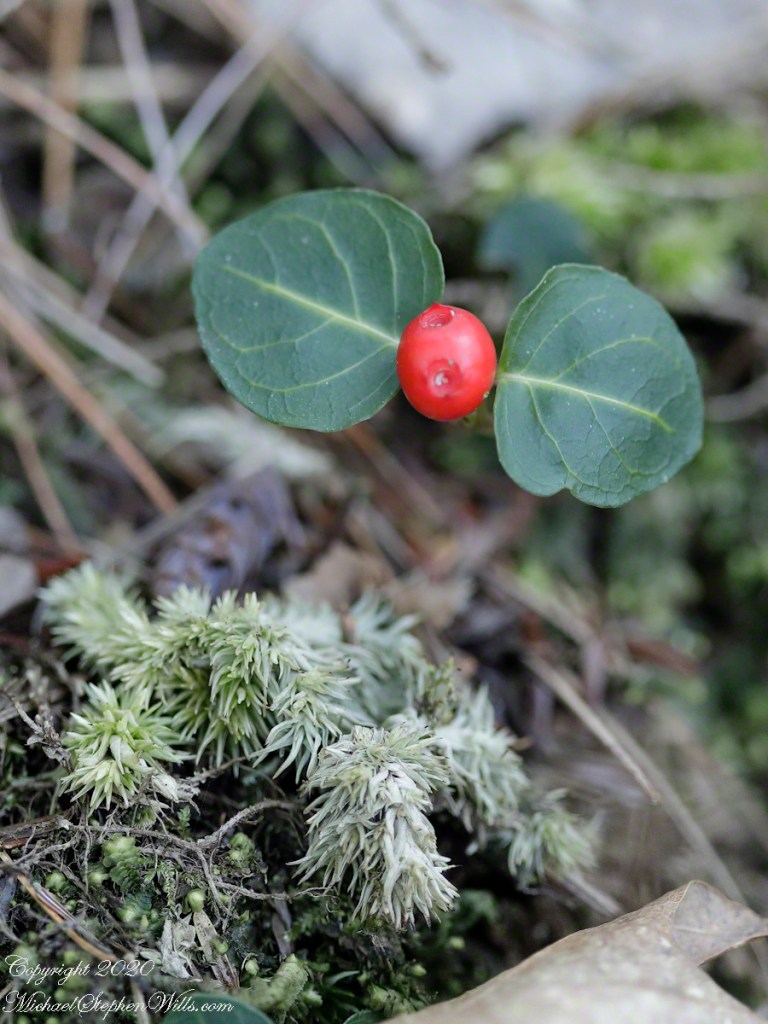
A species easy to spot among the green, an example of a shrub of the genus Gaultheria, though a very small specimen. The common name is wintergreen and I have never found larger specimens in Treman park. It is growing among the mosses on the wall of Enfield Glen South Rim.

The tough wintergreen leaves endue the cold seasons, the name is synonymous with evergreen.

Both shots are handheld, the macro is from a 100 mm “macro” fixed focus lens. ISO 2500, the f-stop to be wide open at 2.8 to gather the sparse light and present the subjects, blurring the immediate background. The overview shot is also a high ISO, 2000, the f-stop 5.8 on a variable focus lens set to 60 mm.

Copyright 2024 All Rights Reserved Michael Stephen Wills

Long Ride

An expert surfer takes a wave

An expert surfer takes a wave near Jetty Pier Park, Cape Canaveral, Florida. Taken with an Apple IPhone 8.

Click video to start. To do this from WordPress Reader, you need to first click the title of this post to open a new page.

Copyright 2024 All Rights Reserved Michael Stephen Wills

Wildflowers Late Winter / Early Spring 2

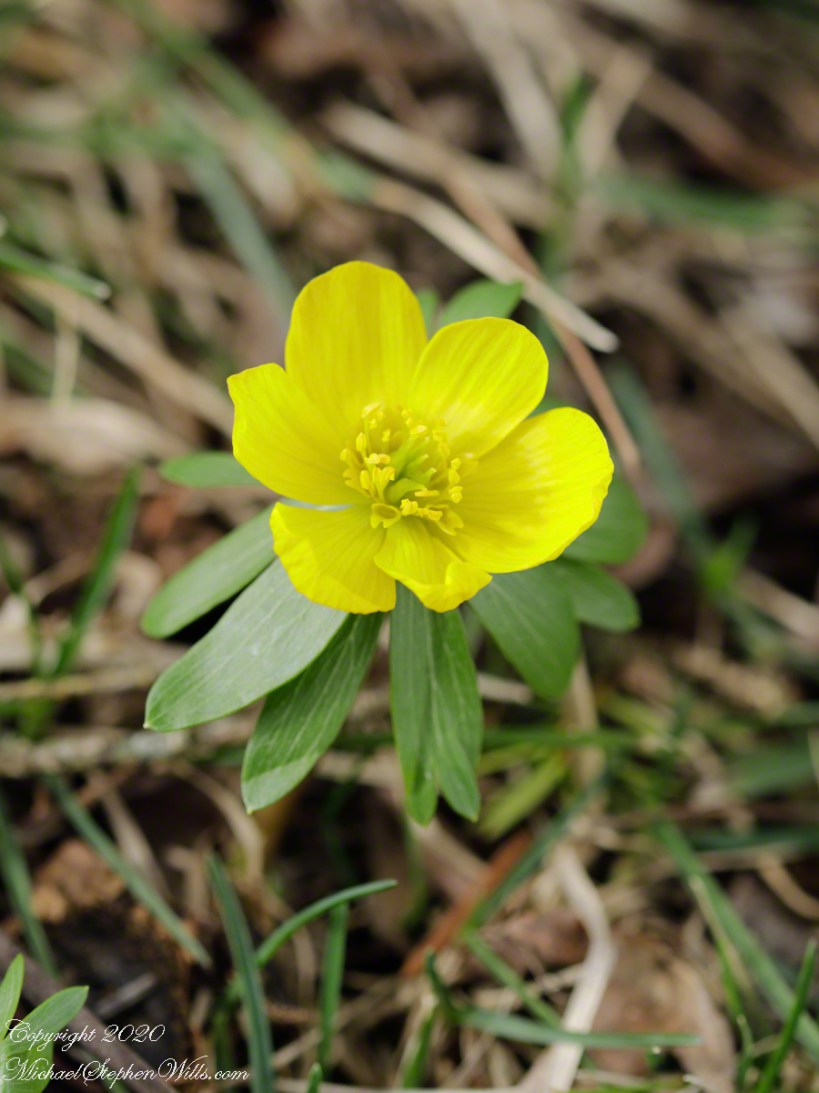
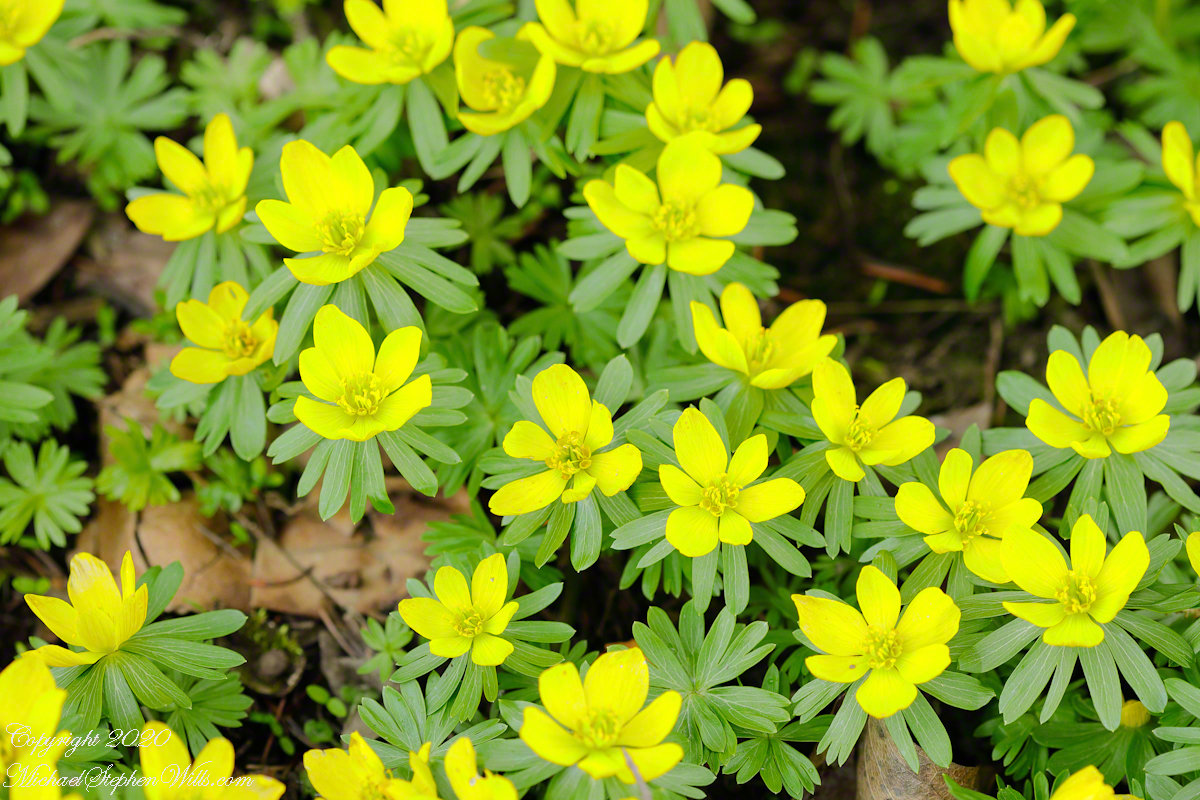
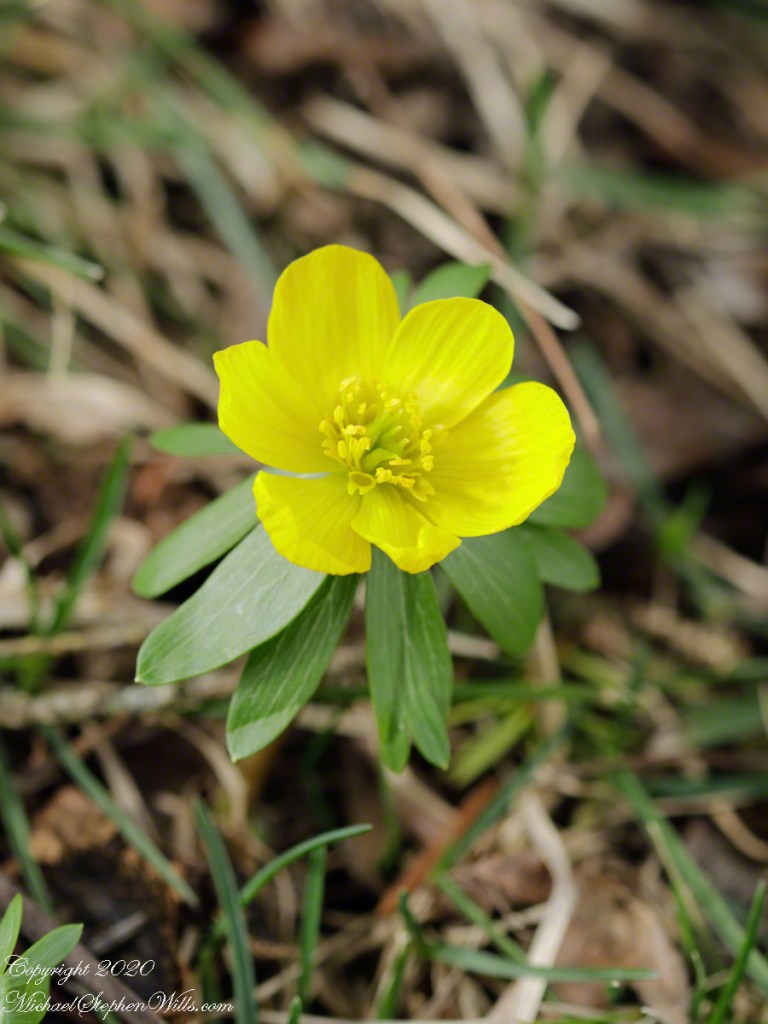
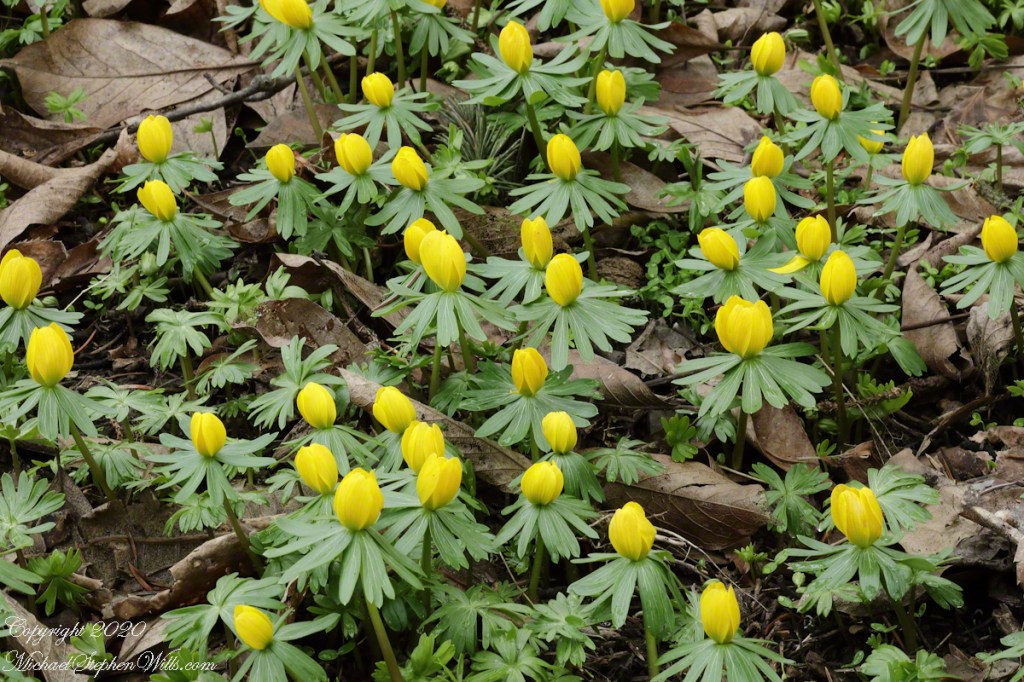
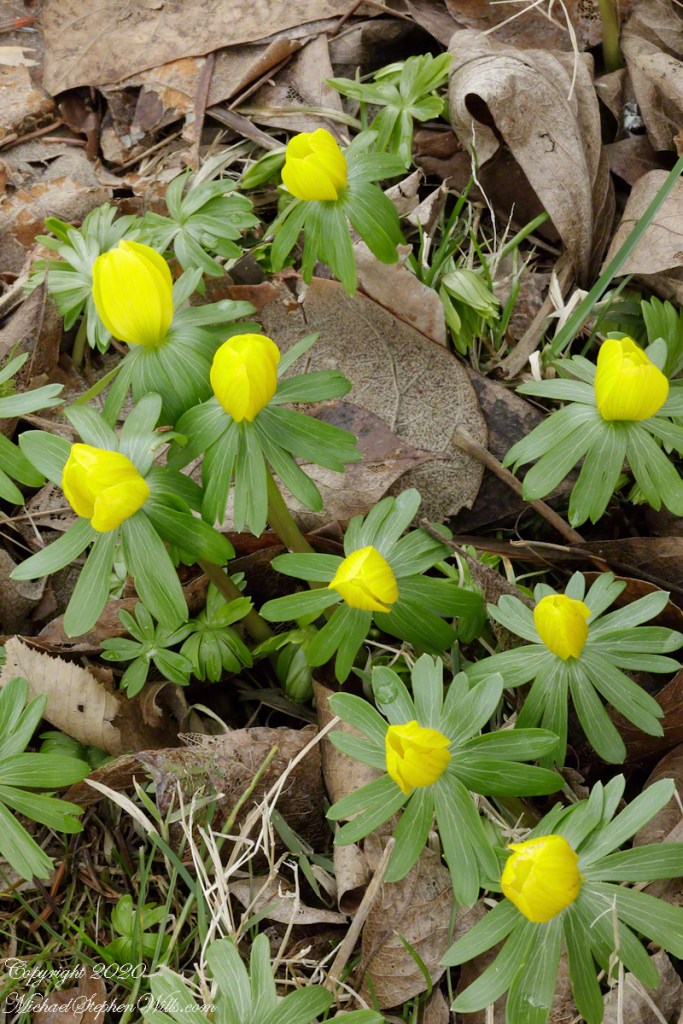
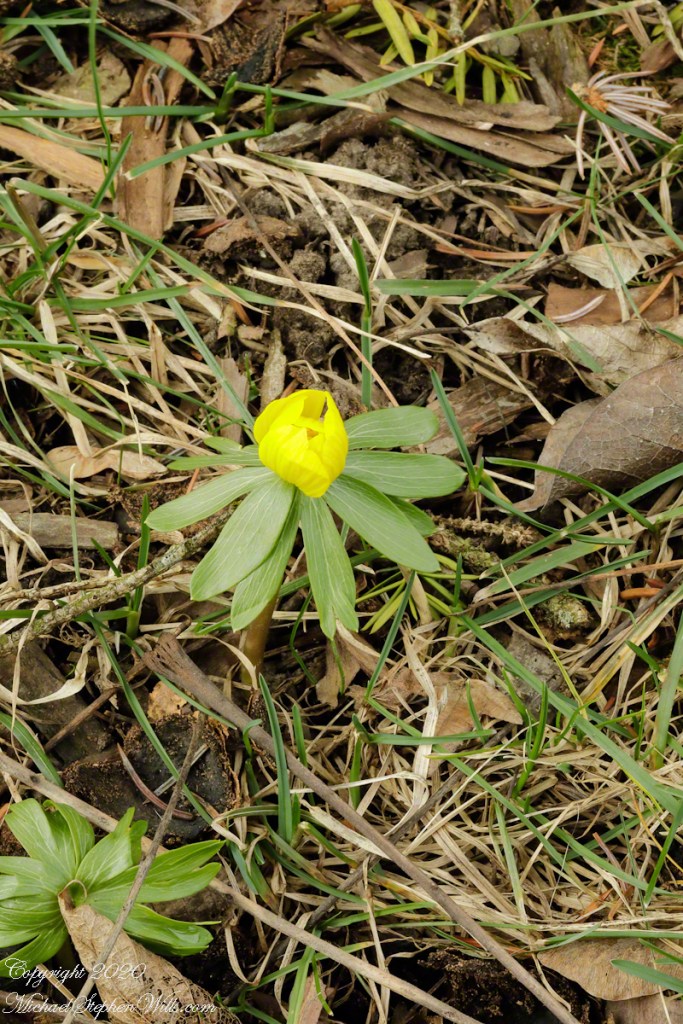
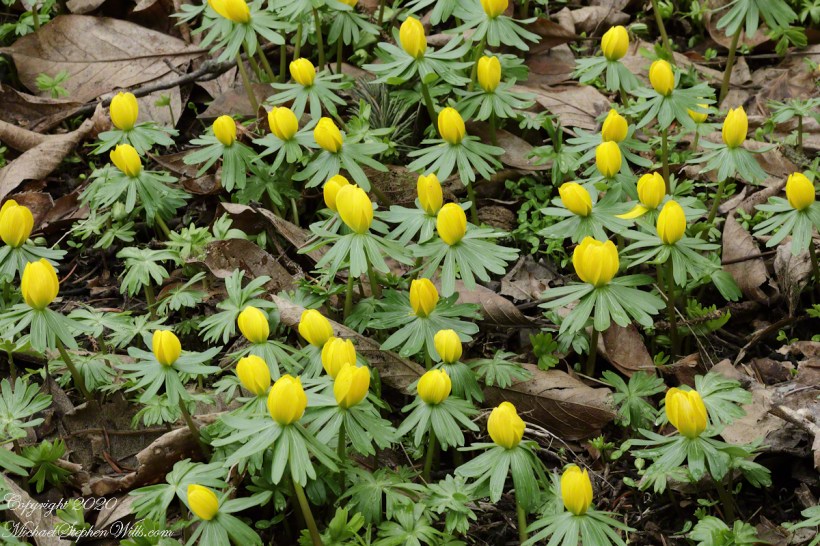
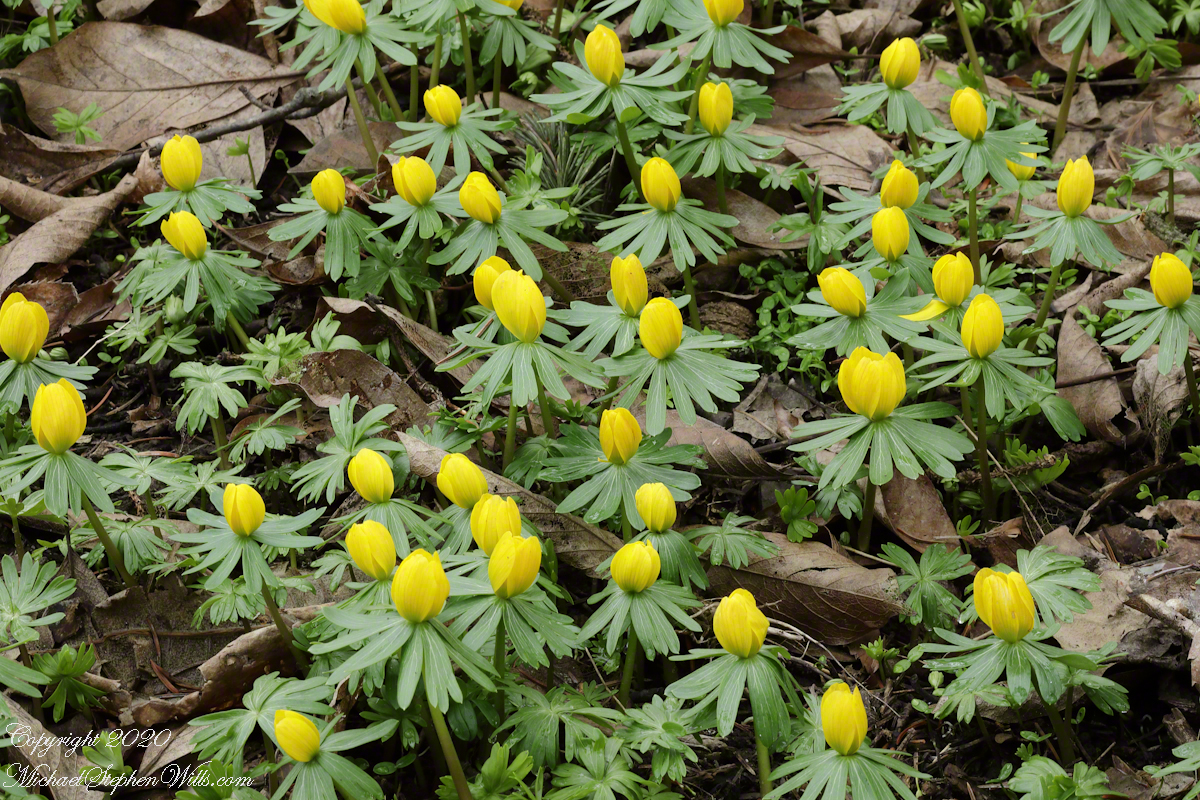
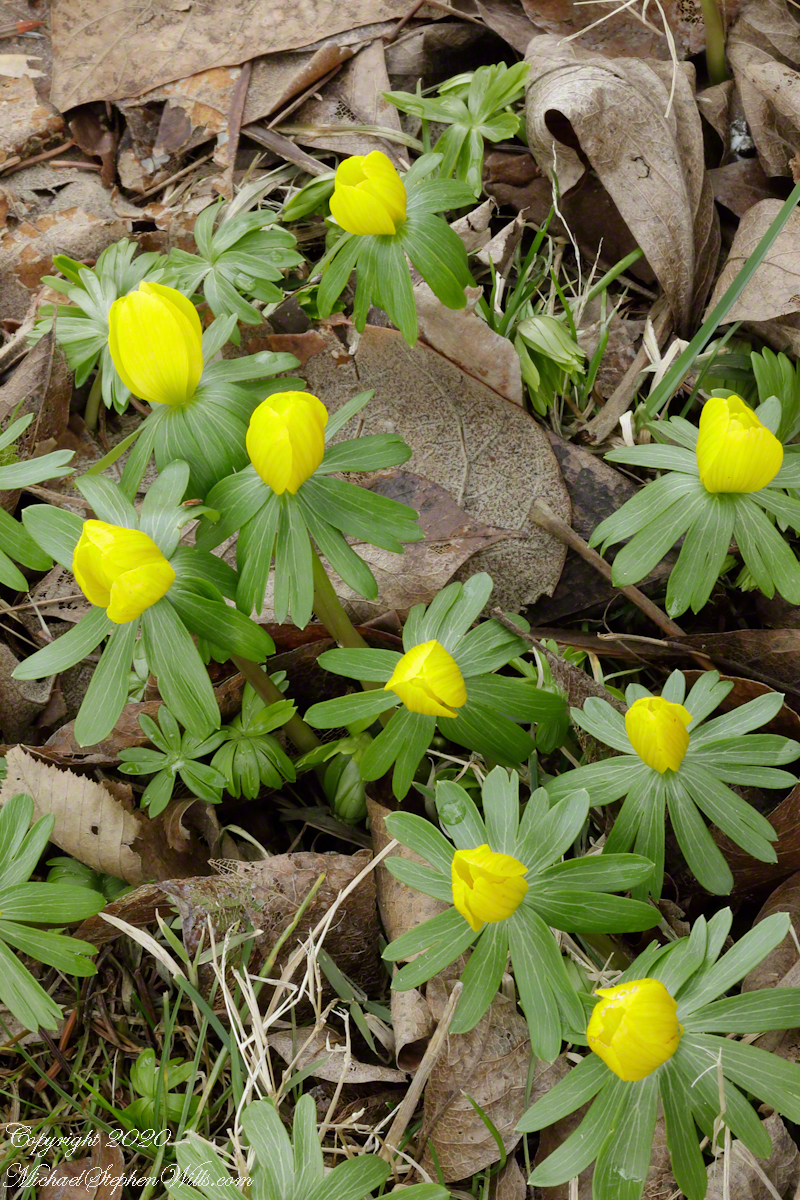
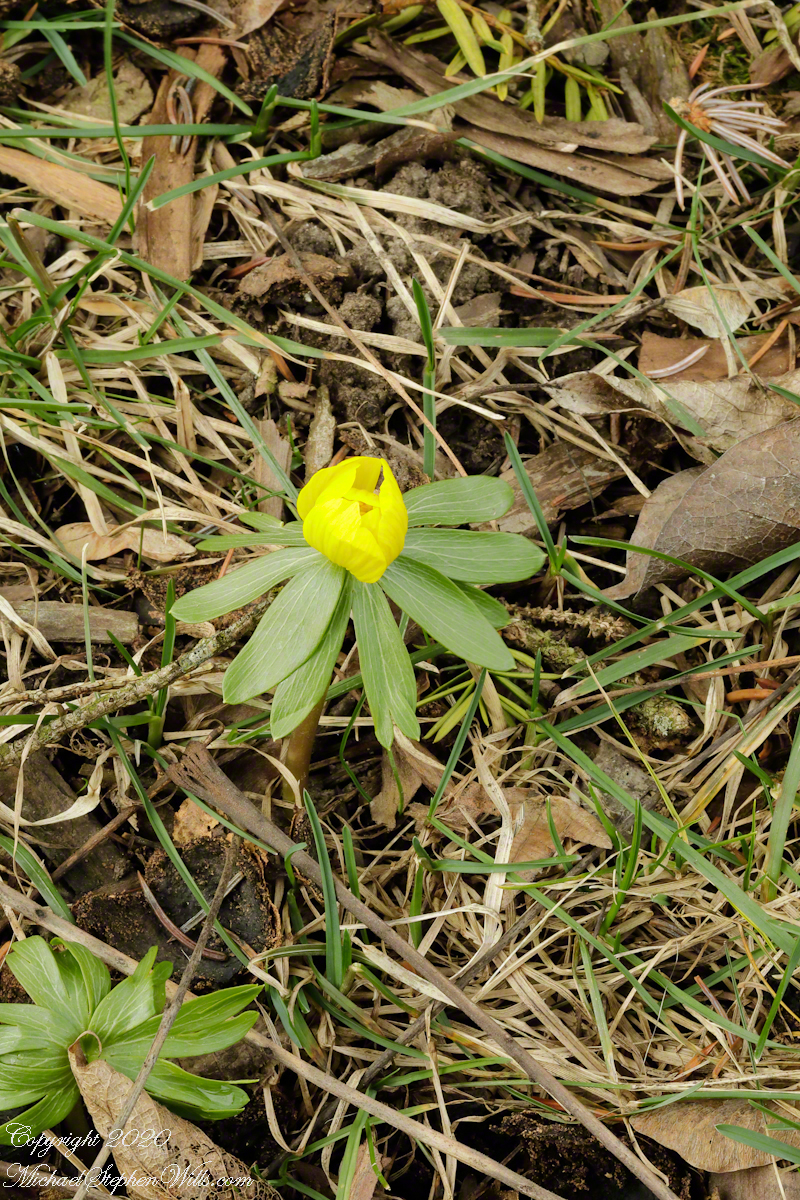
With the thermometer in the 60’s on March 10, 2020 the “buttercups” of yesterday are open. When we first moved here, the plants were much thinner. I used fertilizer spikes on the Magnolia tree around which they grow. Each early the flowers pollinate, forming seeds and spreading.

A tripod held the composition steady, and the timer was set to 2 seconds for extra stability at the f25 setting.

Here is a slideshow of yesterday and today’s shots.

Copyright 2021 All Rights Reserved Michael Stephen Wills

Wildflowers Late Winter / Early Spring 1

In February 2020, I captured images of the first flowers to bloom on their property with a Canon 5D Mark IV DSLR and a macro lens. The flowers belong to the Eranthis genus, known for early flowering.

These flowers are the first to bloom on our property, around the magnolia tree, and are also the first wildflowers photographed with my then new Canon 5D Mark IV dslr . Each year these “buttercups” grow thicker and spread. The latin scientific name Eranthis hyemalis proclaims the early nature of its flowering both in the genus, “Eranthis” – composed of two Greek language roots meaning “spring flower”, and species, “hyemalis” – a term from the Latin language meaning, “winter flowering.” The genus encompasses eight species, all early flowering plants with the common name winter aconite. These can also rightly be called Buttercups as the plant belongs to family Ranunculaceae, buttercups.

To capture the intricate details possible with the Canon EF 100 mm f/2.8 Macro lens I used here, it’s often necessary to adjust the camera settings to allow for a longer exposure time. This adjustment ensures that enough light reaches the sensor, particularly in macro photography or low-light situations, which helps in producing sharper and more detailed images. All these photographs are from f25. Setting a longer exposure compensates for the reduced light that might be a consequence of using a smaller aperture (higher f-number) for greater depth of field, a common technique in macro photography.”

It’s important to note that while setting a longer exposure can improve image quality by allowing more light to hit the camera’s sensor, it can also introduce the risk of motion blur if the camera or subject moves during the exposure. To minimize camera shake and achieve the best results, I used a Manfrotto “BeFree” tripod and the camera’s built-in timer set to a 2 second delay after a manual shutter release.

With the thermometer hovering above freezing, these blooms did not open today. The calendar says “late winter”, these Aconite are singing “early spring.”

Reference: Wikipedia “Eranthis hyemalis” and “Eranthis.”

Copyright 2024 All Rights Reserved Michael Stephen Wills