Taughannock Falls State Park: A Geological and Ecological Marvel

Taughannock Falls, a majestic 215-foot waterfall, showcases nature’s beauty and power, intertwining geological history with vibrant ecosystems in New York.


Introduction
Nestled in the heart of the Finger Lakes region of New York, Taughannock Falls stands as a testament to the delicate balance of power and beauty in nature. This iconic waterfall plunges 215 feet—one of the tallest single-drop waterfalls east of the Rocky Mountains—into a gorge whose story is written in stone. The park surrounding this natural wonder offers a symphony of sights, from towering cliffs to lush greenery, inviting visitors to explore its ancient secrets and vibrant life.
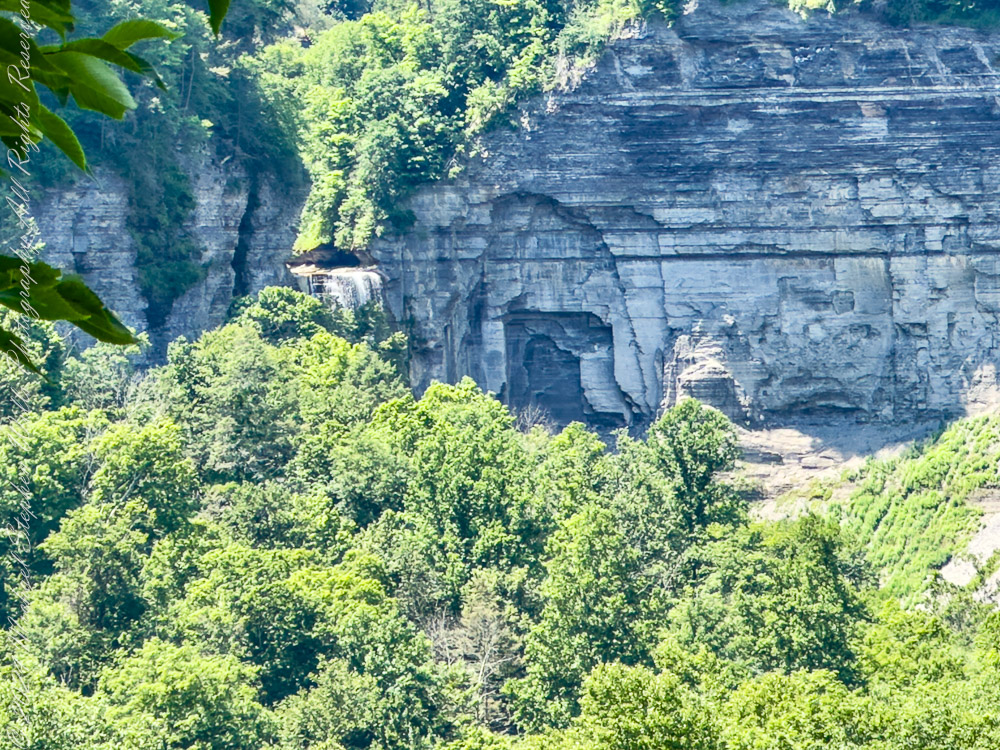
View of taughannock Falls from the South Rim Trail. Taughannock Falls New York State Park, Trumansburg, Tompkins County, Finger Lakes Region

A Story Written in Stone
The rocks of Taughannock Falls tell a story that stretches back 380 million years to the Devonian Period, a time when the region was submerged beneath a shallow inland sea. Layer upon layer of shale, sandstone, and limestone formed as sediment settled to the ocean floor, preserving the fossils of marine life that once thrived here. These rocks have endured the passage of eons, but the gorge itself is a far more recent creation.
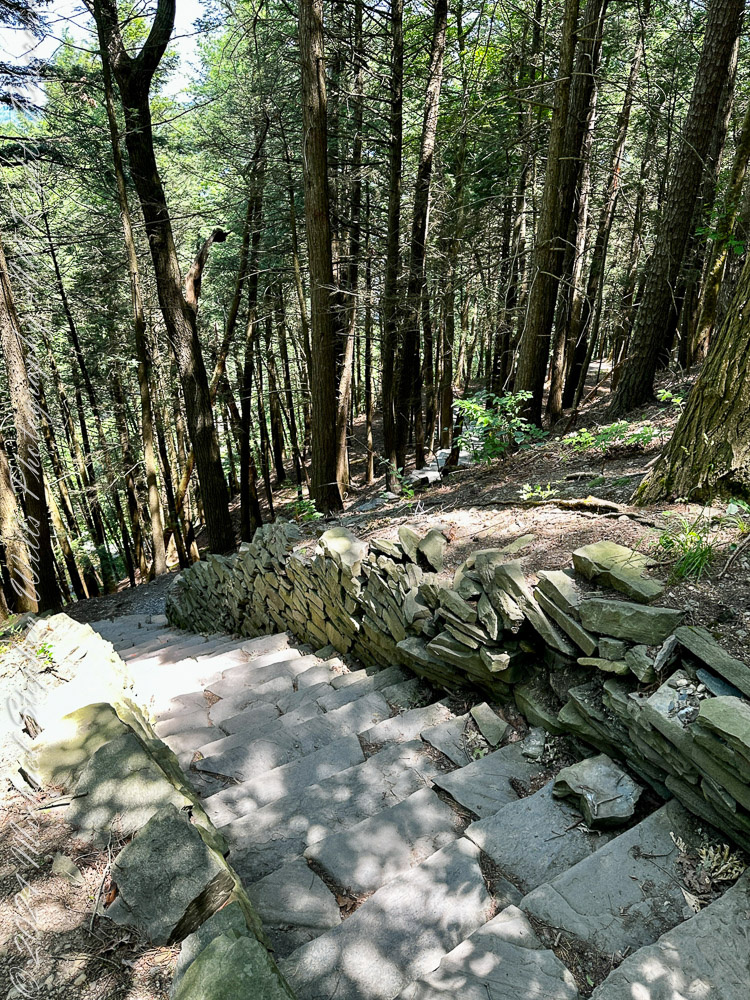
Limestone Steps on the South Rim Trail descend to the gorge floor.

It was the retreat of the mighty Laurentide Ice Sheet, approximately 10,000 years ago, that set the stage for Taughannock’s grandeur. As glaciers melted, torrents of water carved the U-shaped valleys that now cradle the Finger Lakes. Taughannock Creek, a tributary of Cayuga Lake, began its work, etching its path through ancient rock, sculpting the gorge we see today. In just 10,000 years—a fleeting moment in geological time—the relentless force of water carved its way 3/4 of a mile upstream, creating the awe-inspiring chasm and waterfall that continue to evolve even now.
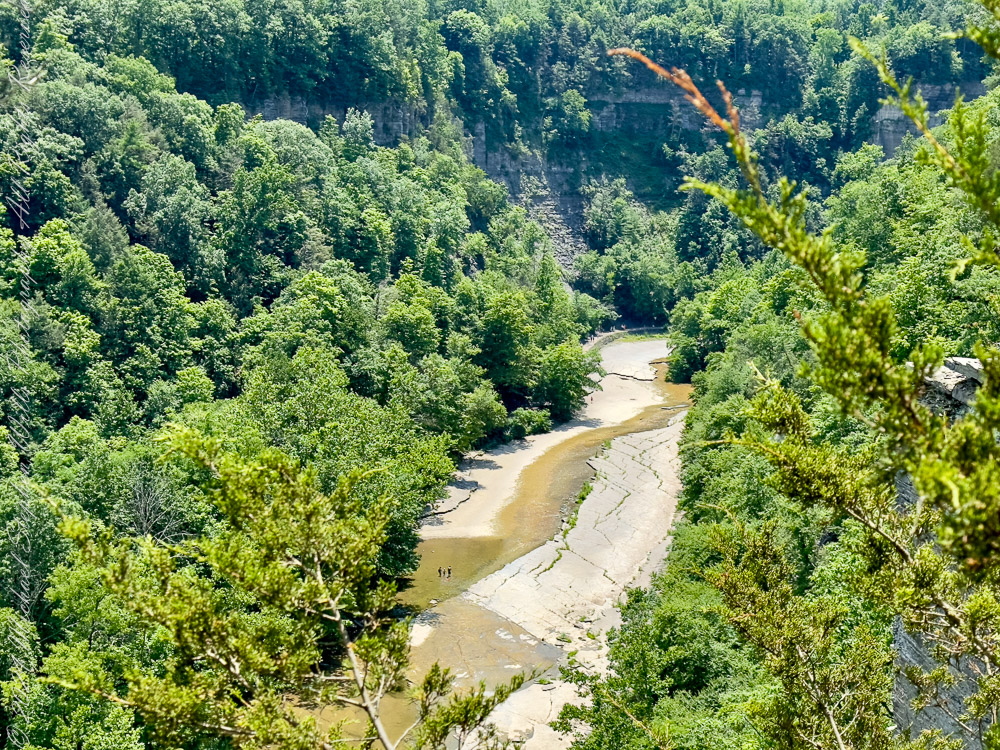
Taughannock Creek carved this landscape over thousands of years.

The Gorge’s Living Tapestry
Beyond its geological wonders, Taughannock Falls State Park bursts with life. Along the North and South Rim Trails, Eastern Hemlocks (Tsuga canadensis) stand tall, their evergreen branches weaving shadows that dance across stone stairways and forest floors. These silent sentinels are habitats for myriad creatures and protectors of the delicate ecosystem.
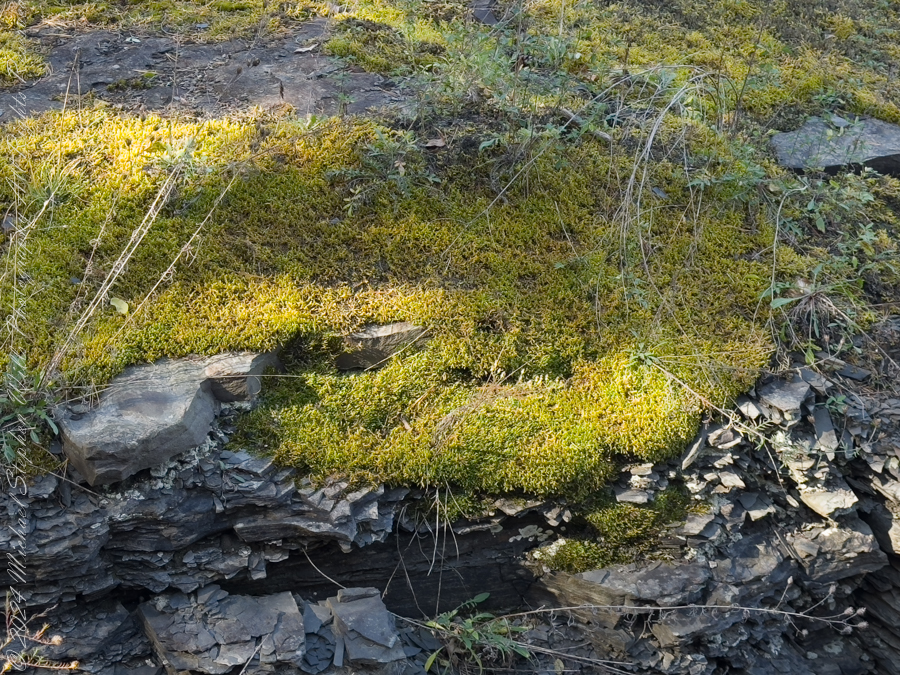
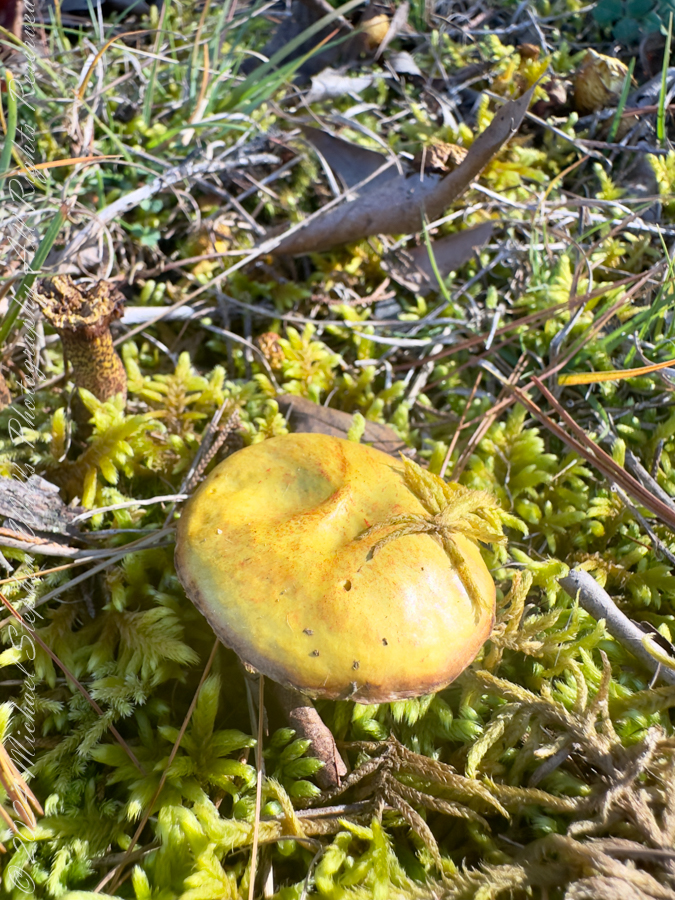
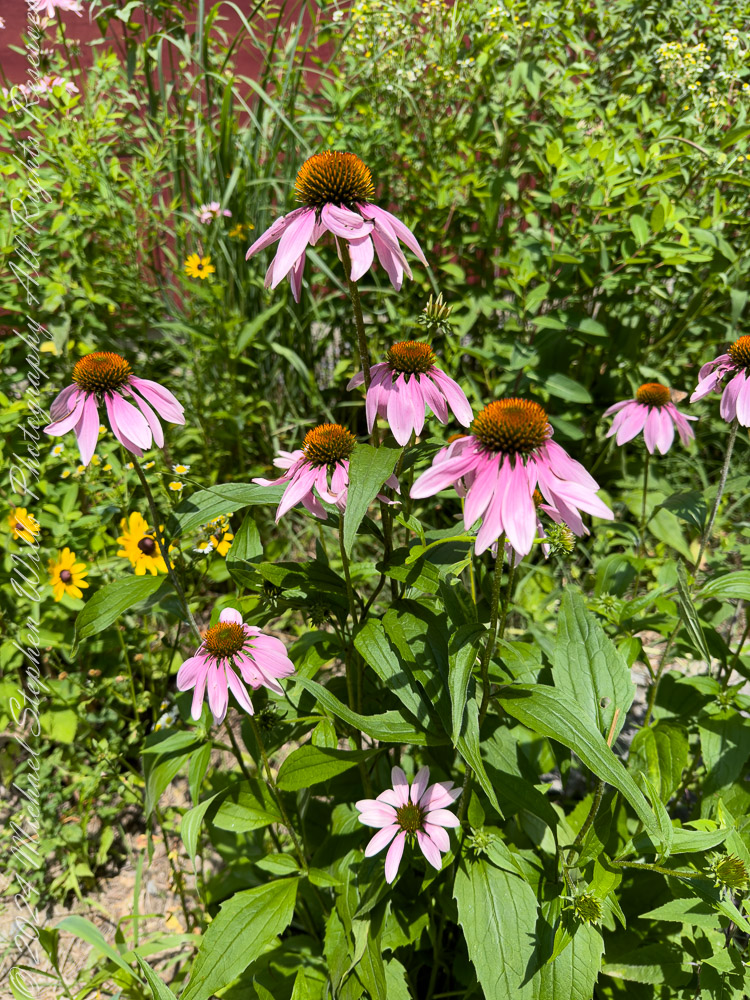
Wildflowers were planted by park staff at the Falls Overlook. The bright yellow of Black-eyed Susans (Rudbeckia hirta) and the vibrant purple of Coneflowers (Echinacea purpurea) attract bees and butterflies, their nectar fueling the intricate web of life that thrives here. Along the trail, on the forest floor, mosses and ferns cling to rocks, softening the edges of the gorge with their verdant touch.
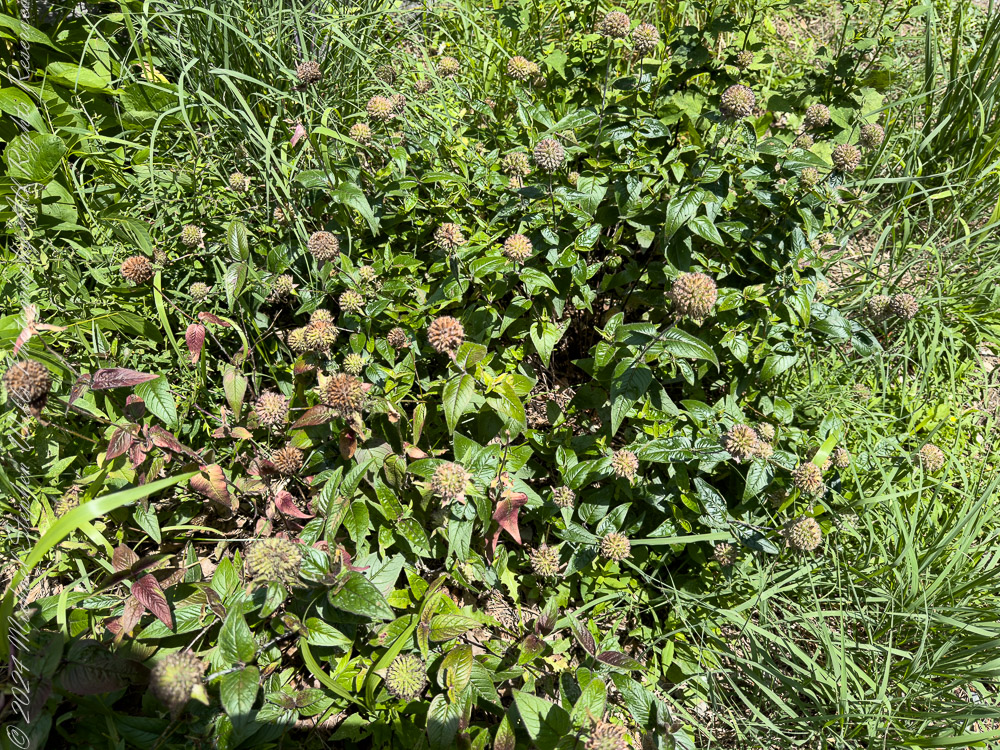
Cone Flowers
Cone Flowers gone to seed
From a walk around Taughannock Falls State Park “Rim Trails” October 22nd, 2024. Trumansburg, Tompkins County, Finger Lakes Region, New York State.

The Fall’s Eternal Dance
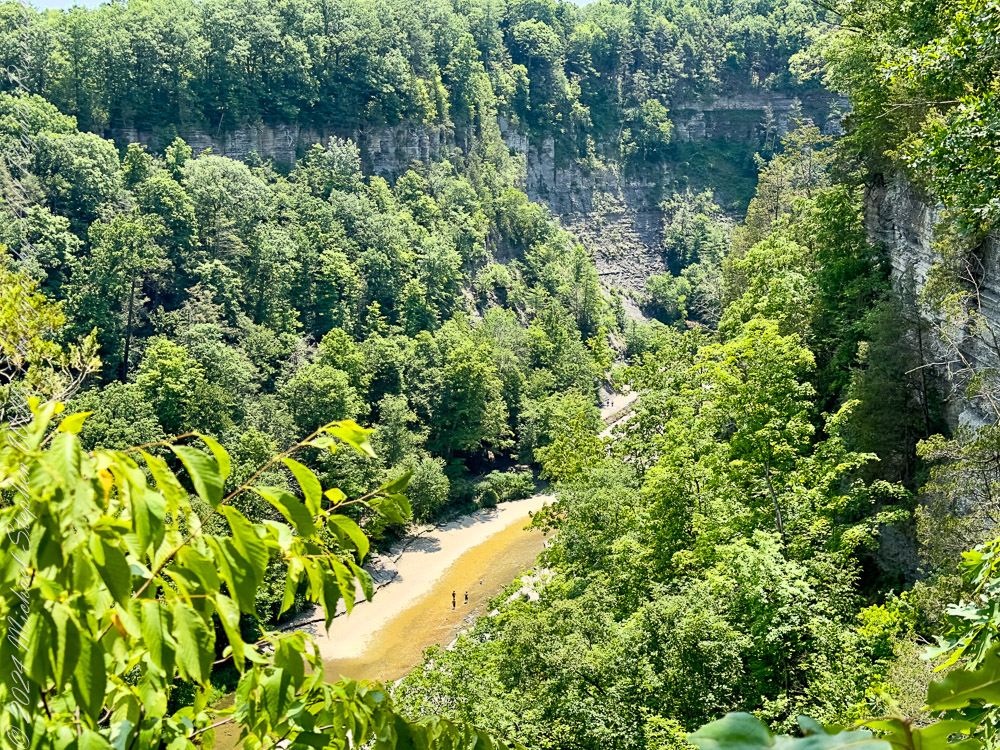
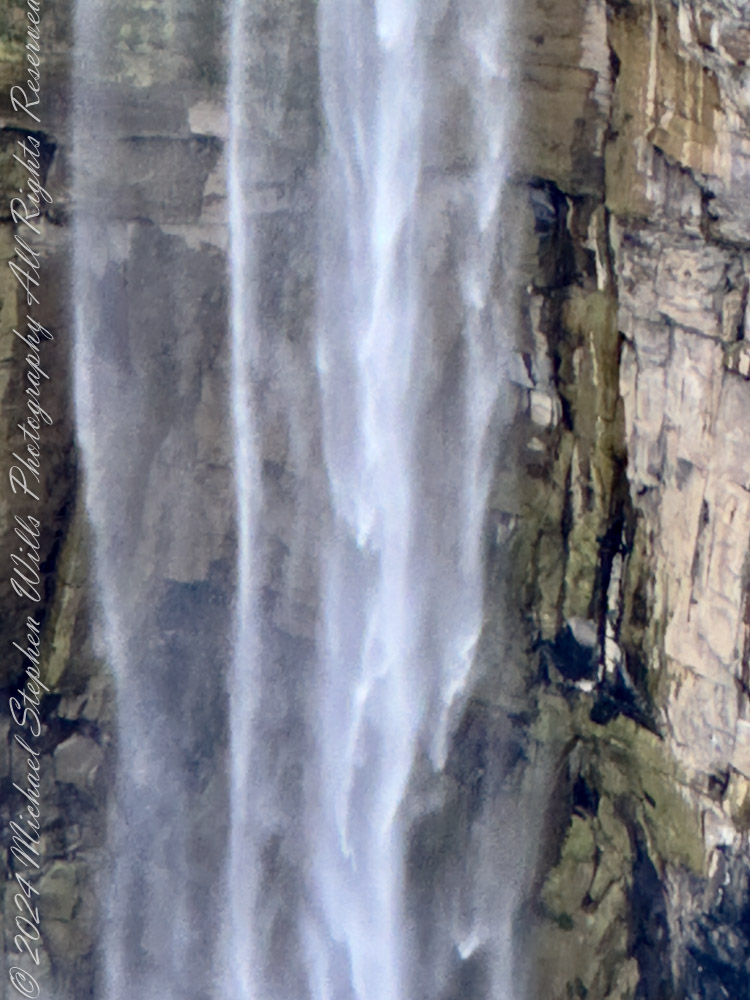
At the heart of the park is the waterfall itself, its roar both a hymn and a whisper of time’s passage. The view from the North Rim Trail reveals the waterfall framed by steep cliffs, their striations like pages in a book written by water, wind, and time. The plunge pool below, shimmering in sunlight, seems almost sacred—a place where the forces of nature meet in harmony.
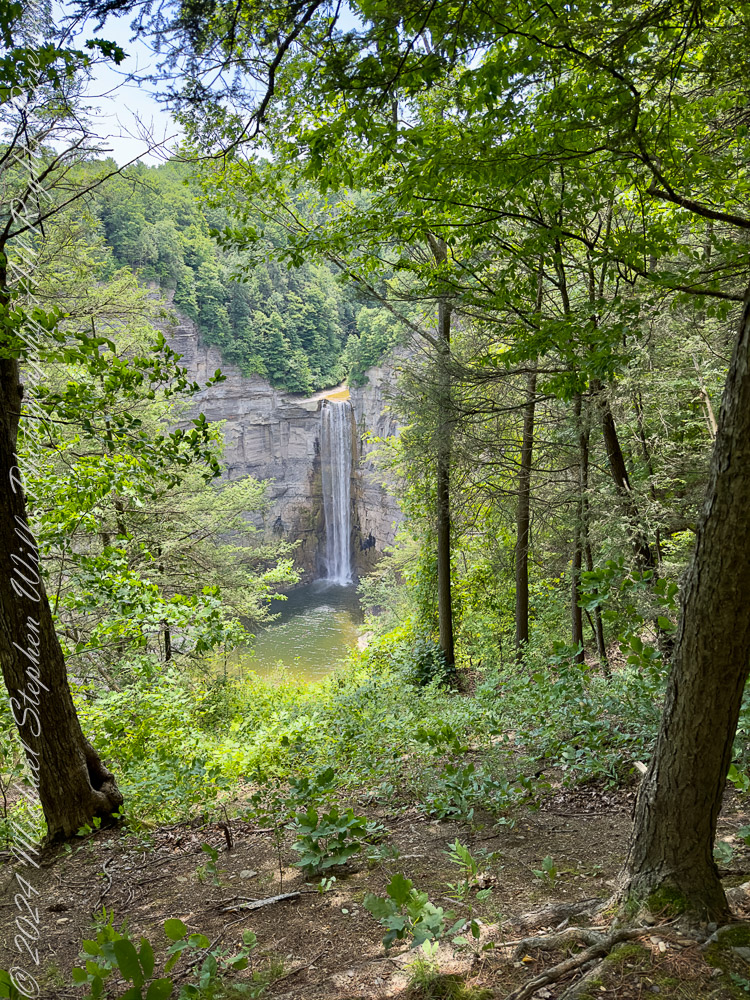
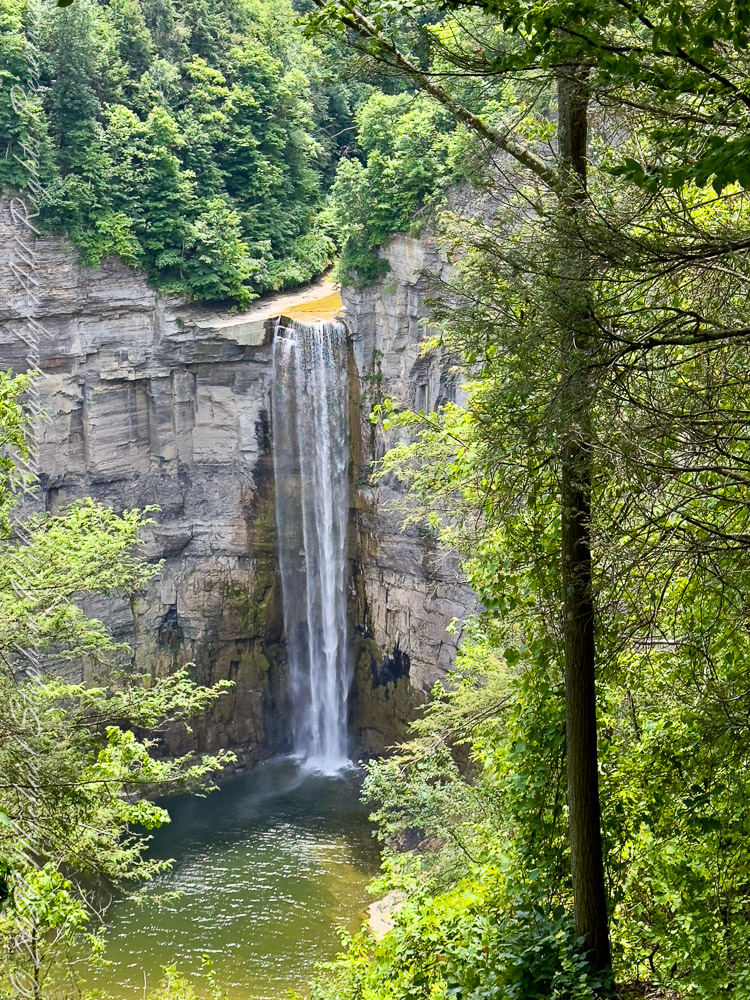
Viewed from the North Rim Trail on a summer morning. Taughannock Falls New York State Park, Trumansburg, Tompkins County, Finger Lakes Region

Even as we marvel at its beauty, the falls are a reminder of the earth’s constant transformation. Each drop of water that cascades down the cliff face carries away tiny fragments of rock, continuing the slow, deliberate work of reshaping the land. What we witness today is but one moment in an ongoing process—a fleeting glimpse of a masterpiece in progress.

A Place of Wonder
To stand at the edge of Taughannock Falls is to feel both small and connected. The cliffs, formed over hundreds of millions of years, whisper of ancient seas and forgotten worlds. The gorge, carved in the blink of an eye by geological standards, speaks to the power of water and time. And the vibrant life that fills the park reminds us of nature’s resilience and beauty.
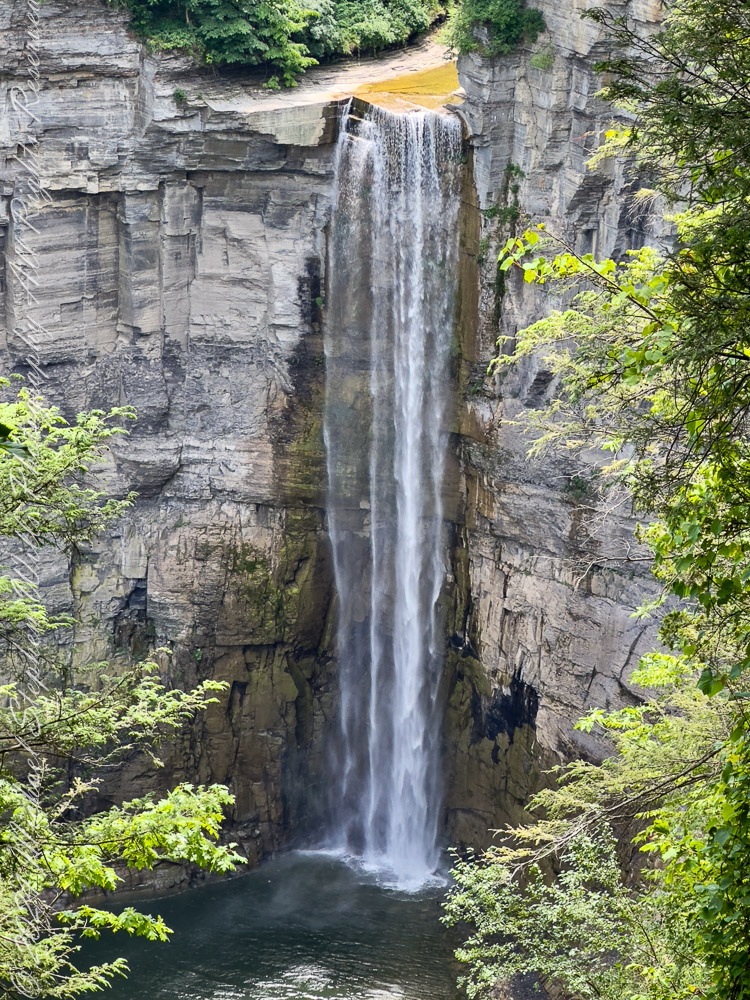
As the sun filters through the trees, illuminating the mist that rises from the falls, it’s easy to believe that this place holds magic. Perhaps it’s in the way the water sparkles like diamonds in the sunlight or the way the breeze carries the scent of pine and earth. Or maybe it’s in the knowledge that here, in this park, we are witnesses to a story billions of years in the making.
Conclusion
Taughannock Falls State Park is a place of wonder where geology, ecology, and history converge. It invites us to reflect on the immense forces that shape our world and to cherish the fleeting beauty of each moment. Whether you come to marvel at the towering waterfall, walk among the hemlocks, or simply stand in awe of the gorge, Taughannock Falls leaves an indelible mark on the heart—a reminder of nature’s power, resilience, and enduring grace.

Enter your email to receive notification of future postings. I will not sell or share your email address.

From Myths to Medicine Unraveling the Tales of False Solomon’s Seal

Step into Treman Gorge and discover the enchanting world of False Solomon’s Seal. Unveil the myths, medicinal uses, and ecological wonders of Smilacina racemosa as it flourishes beneath the forest canopy.

In the shaded woodland of Treman Gorge, near the tumbling waters of Lucifer Falls, the understory blooms with the intriguing presence of Smilacina racemosa, commonly known as false Solomon’s seal. This perennial wildflower’s identity is as layered as the forest floor it adorns, its names—both scientific and common—woven with historical and cultural threads.

Smilacina racemosa—the plant’s scientific name—offers a botanical breadcrumb trail to its identity. “Smilacina” derives from a diminutive form of the Latin word for smile, “smilax”, a reference not to the plant’s demeanor but to its resemblance to the related sarsaparilla plants, which belong to the genus Smilax. The species name “racemosa” speaks directly to its form, describing the characteristic raceme or cluster of flowers that gracefully arch at the end of its stalk, each blossom a delicate dot along the green wand.

The common name, false Solomon’s seal, tells a tale of mistaken identity and botanical homage. The name playfully suggests a sibling rivalry of sorts with its look-alike, the true Solomon’s seal (Polygonatum), which bears its flowers and fruits along the stem, rather than at the tip as in Smilacina. The term “Solomon’s seal” itself is steeped in lore, supposedly referring to the circular seals from King Solomon’s ring—a mark of wisdom and an echo in the circular scars on the rhizome of the true Solomon’s seal. Here, in this false version, the legacy is mimicked in form but remains uniquely distinct in its flowering finale.

As for its cultural tapestry, false Solomon’s seal holds its own chapter in Native American ethnobotany. The plant was not merely a forest decoration but a source of sustenance and medicine. Its young shoots and leaves were often harvested in spring, a woodland asparagus of sorts, eaten raw or cooked. The roots served a more medicinal role, employed in treatments from stomachaches to rheumatic pains, revealing a deep-rooted reverence for this plant’s healing potential.

Beyond its uses, false Solomon’s seal paints a broader stroke in the ecological canvas of Treman Gorge. Flowering in May, its creamy white blossoms are a ballet of light in the dappled shade, attracting a suite of spring pollinators. By autumn, the flowers give way to speckled red berries, a feast for the eyes and a banquet for birds and mammals, knitting itself into the life threads of its woodland home.

Thus, the journey of understanding Smilacina racemosa is as much about unearthing its etymological roots as it is about appreciating its ecological and cultural resonance. A plant of beauty and utility, it stands as a silent sentinel in the history-laden woods of Treman Gorge, its presence a whispered tale in the symphony of spring. As it stretches beneath the towering trees, it invites those who wander to delve deeper into its story, a tale woven through the very fabric of the forest floor.

Copyright 2024 Michael Stephen Wills All Rights Reserved

Thayer Preserve: Autumn Still Life 3

on display

Crisp maple leaves among hemlock roots on the bank of Lick Brook, Thayer Preserve. Nestled within the breathtaking expanse of Tompkins County in New York’s Finger Lakes Region, is a canvas where nature paints its most exquisite scenes. This preserve is a symphony of serene landscapes, a place where the tranquility of nature is preserved and cherished.

In this haven, the chorus of birdsong greets the day, echoing through the lush canopy of trees that stand as ancient guardians of the land. Oaks, maples, and hemlocks, some as old as time, stretch their boughs towards the sky, creating a verdant cathedral that shelters a diverse array of flora and fauna. The sunlight filters through these leafy domes, casting dappled shadows on the forest floor, a mosaic of light and life.

Click photograph for larger view. Use combination keys to enlarge/reduce: Ctrl+ (Control / Plus) and Ctrl- (Control / Minus)

The trails of Thayer Preserve meander through this natural paradise, inviting visitors to embark on a journey of discovery. Each path is a narrative, telling the story of the land, from the delicate wildflowers that peek shyly from the underbrush to the stately deer that roam with a quiet dignity.

The preserve is not just a place of beauty; it’s a testament to the delicate balance of ecosystems. Here, conservation efforts intertwine with recreation, ensuring that the splendor of the environment is preserved for future generations. It’s a sanctuary where the hustle of modern life fades, and one can reconnect with the earth’s gentle rhythms.

As the seasons change, Thayer Preserve transforms. Spring brings a burst of color, with wildflowers carpeting the ground. Summer deepens the greens of the forest, while autumn sets the woods ablaze with fiery hues. In winter, a serene blanket of snow envelopes the landscape, turning it into a quiet wonderland.

In the heart of the Finger Lakes Region, Thayer Preserve stands as a beacon of natural beauty and tranquility. It’s a place where the soul can find peace, the mind can wander freely, and the heart can revel in the simple joy of nature’s embrace. This preserve is not just a location on a map; it’s a journey, an experience, a love letter to the natural world.

Click Me to view my photographs on Getty.

Copyright 2023 Michael Stephen Wills All Rights Reserved http://www.MichaelStephenWills.com