A Bit About Coolranny Townland

Neat and tidy

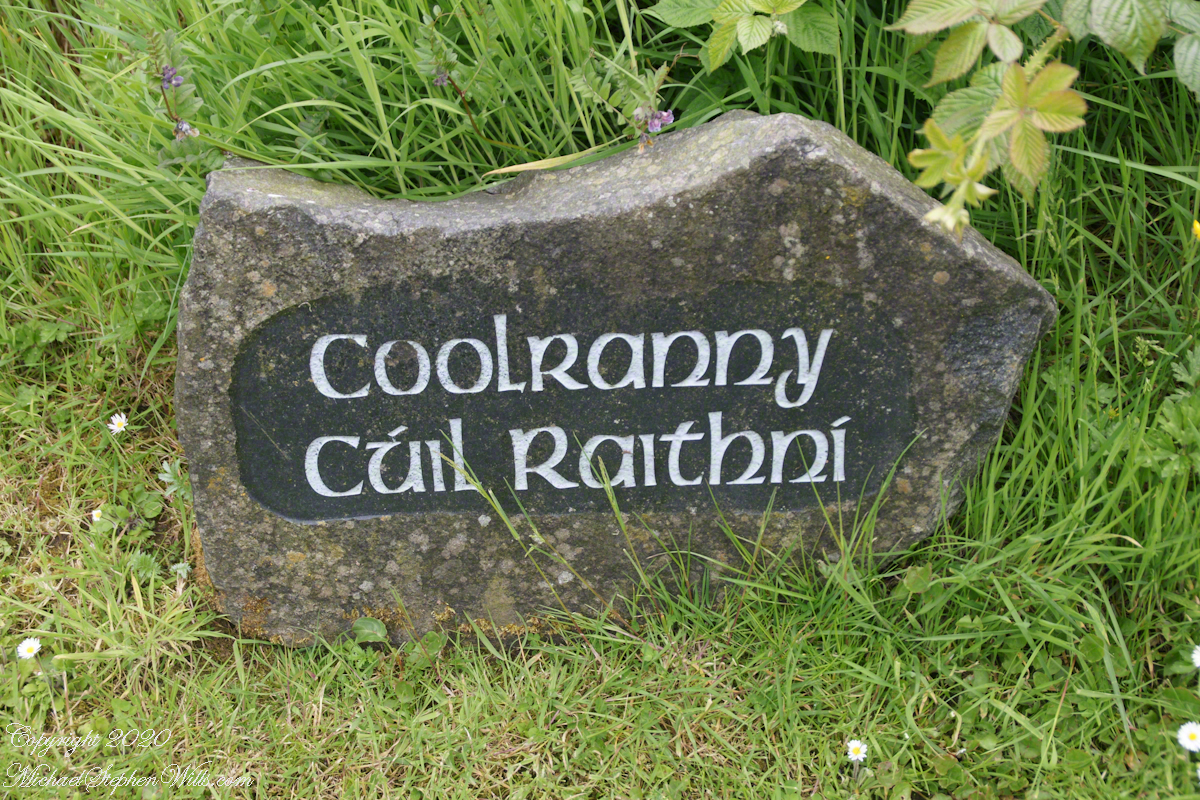
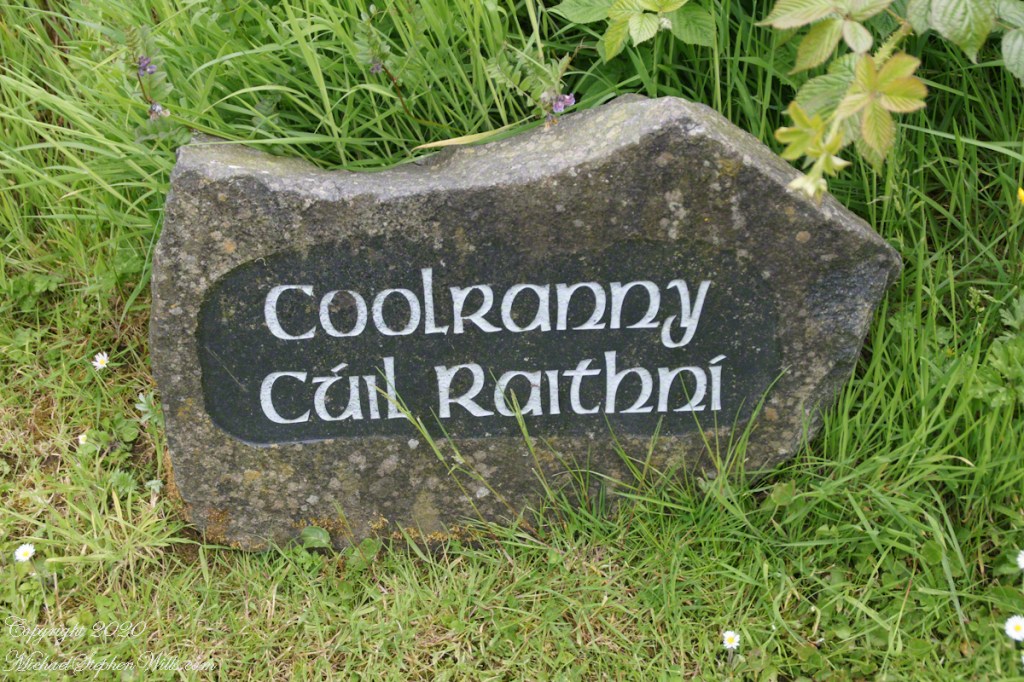
2014, the count of townlands on and around the island of Ireland was 61,098 with most of Irish Gaelic origin predating the Norman invasion, first recorded in 12 century church records. The names have a pride of place reflected in the beauty of the namestones along Torr Road.

Click photograph for a larger view. To do this from WordPress Reader, you need to first click the title of this post to open a new page.
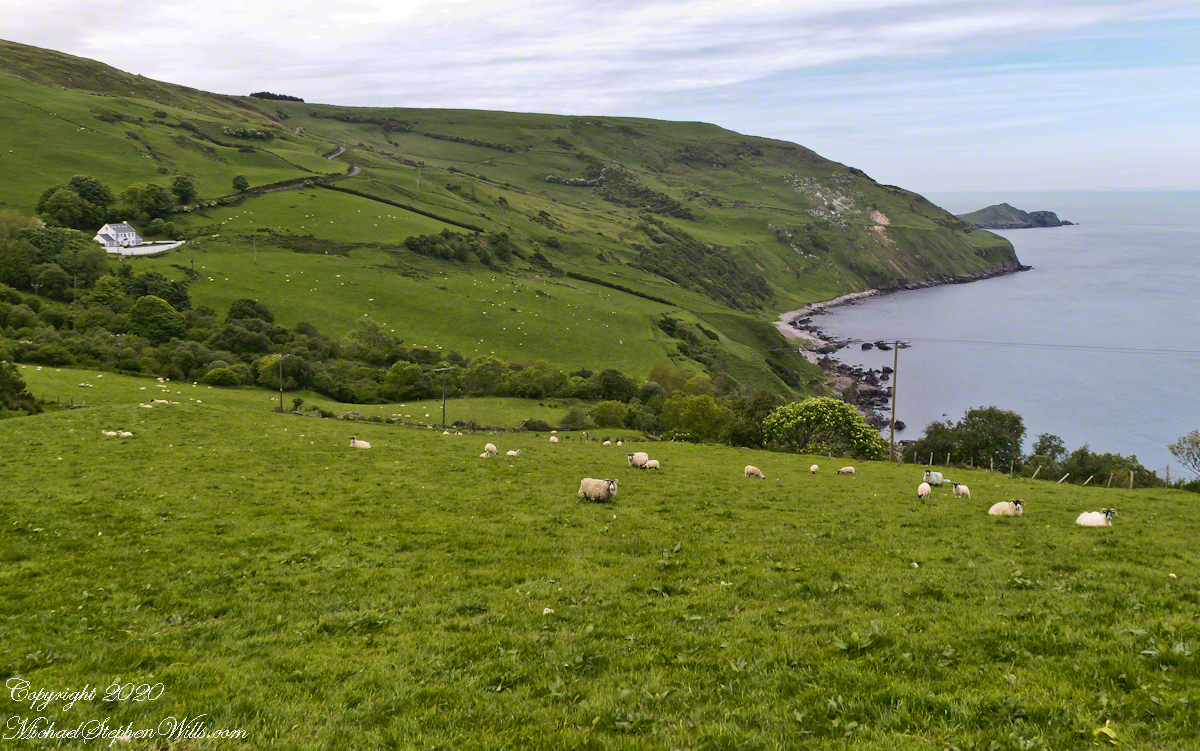
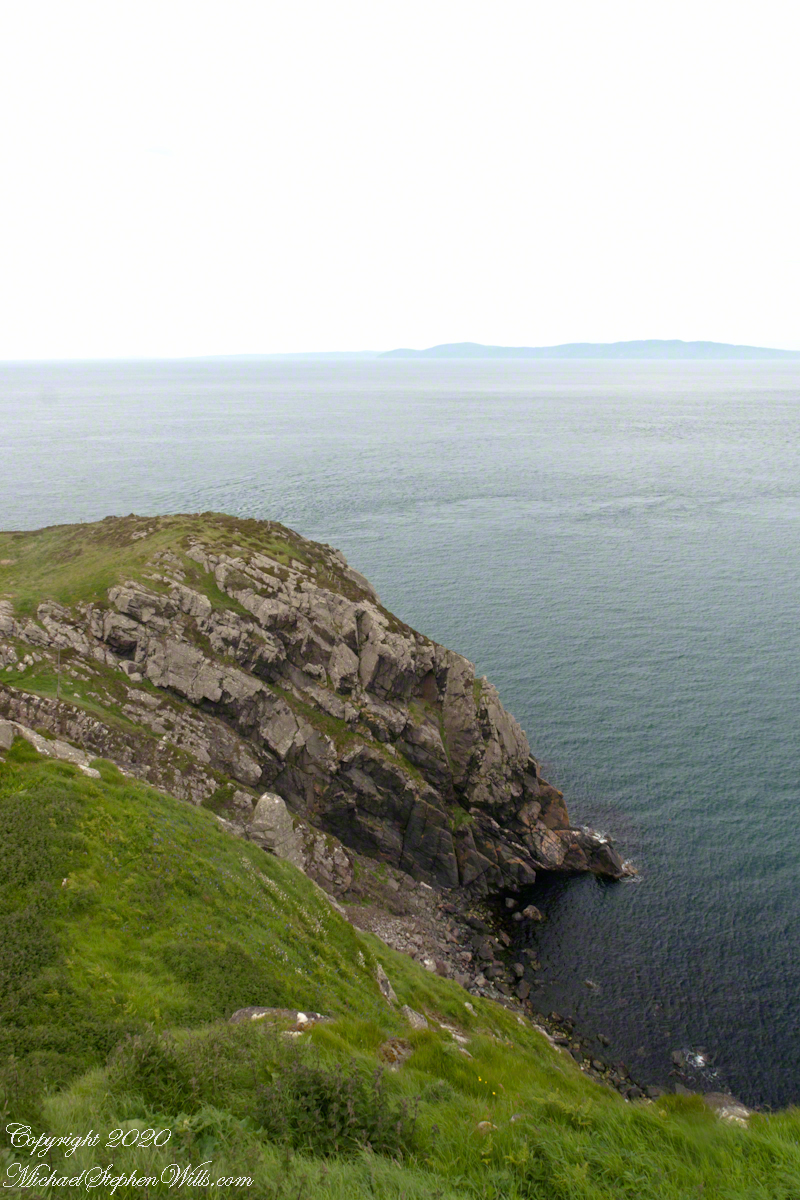
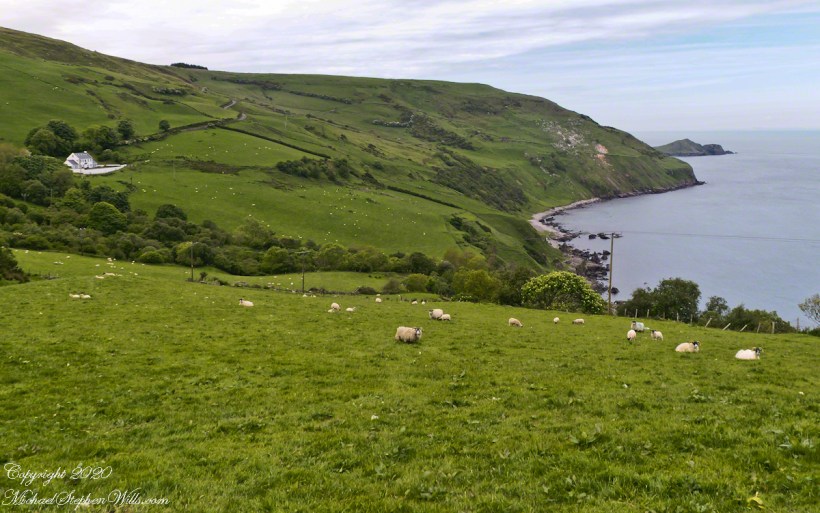
The 82 acres of Coolranny forms a slice of land running from a ridge to Loughan Bay off the North Channel of the Irish Sea across from Scotland.

See this post for a description of wildflowers flowering here in the month of June.

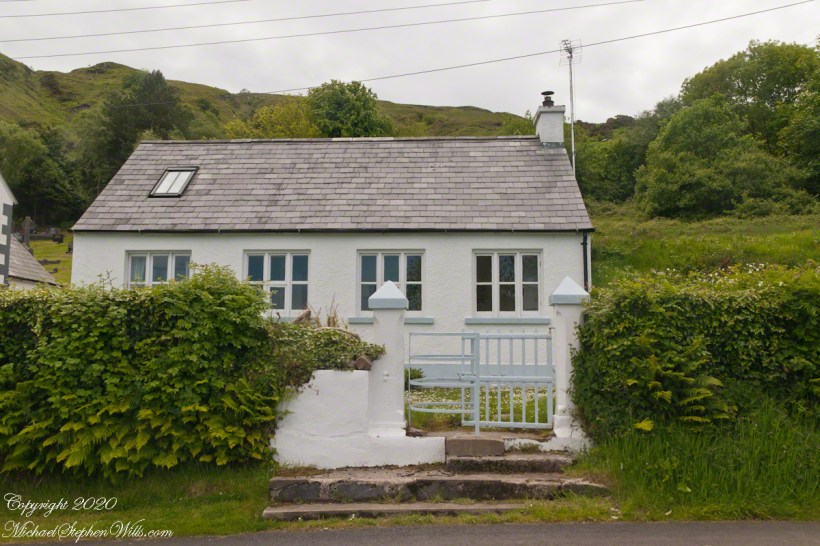
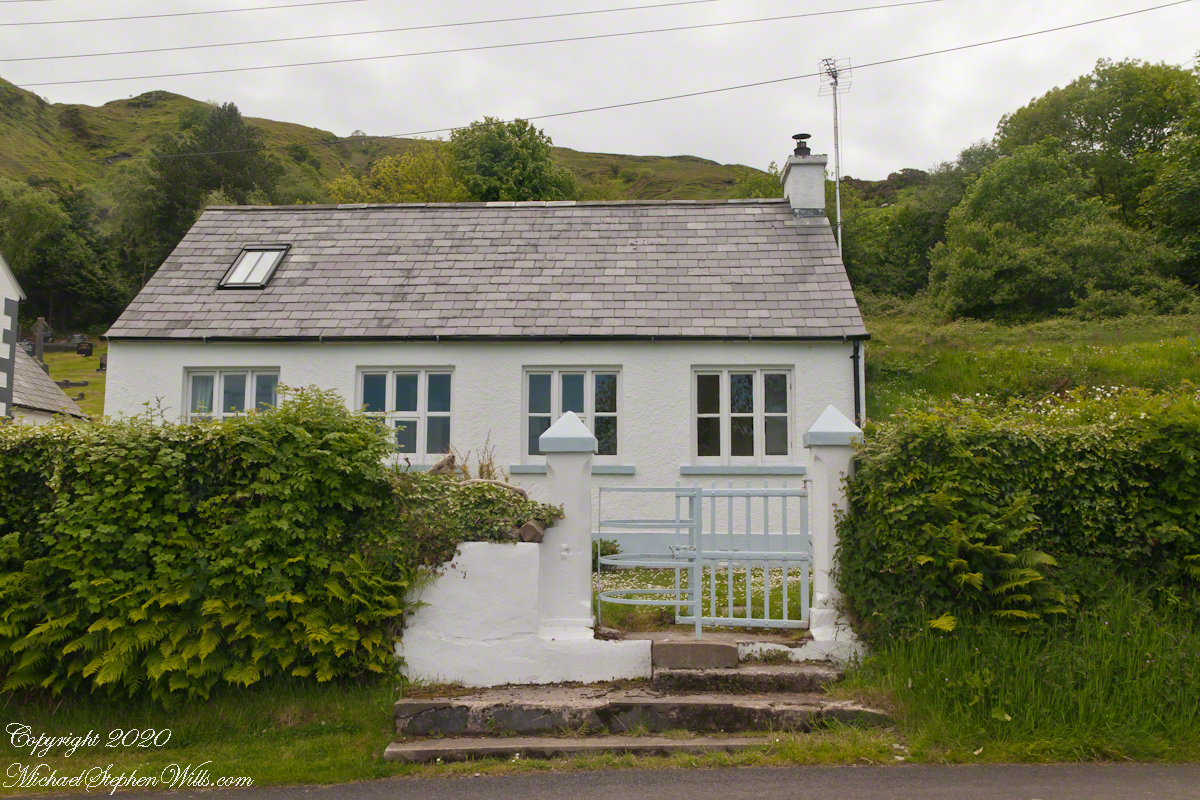
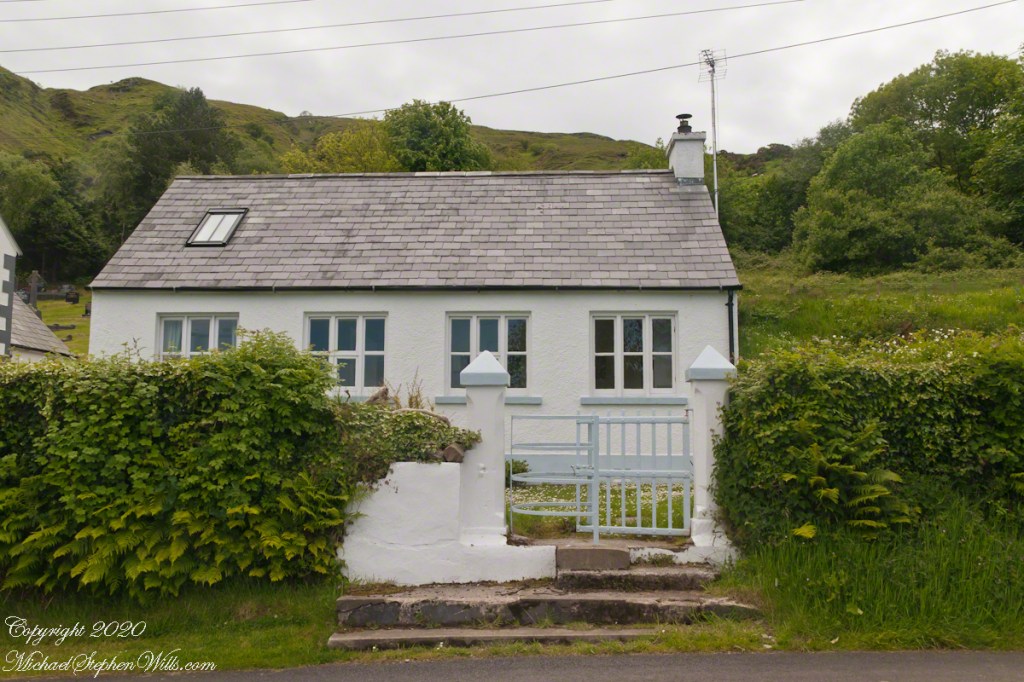
A spic and span cottage on Torr Road, maybe the rectory for the Saint Mary’s Star of the Sea church.

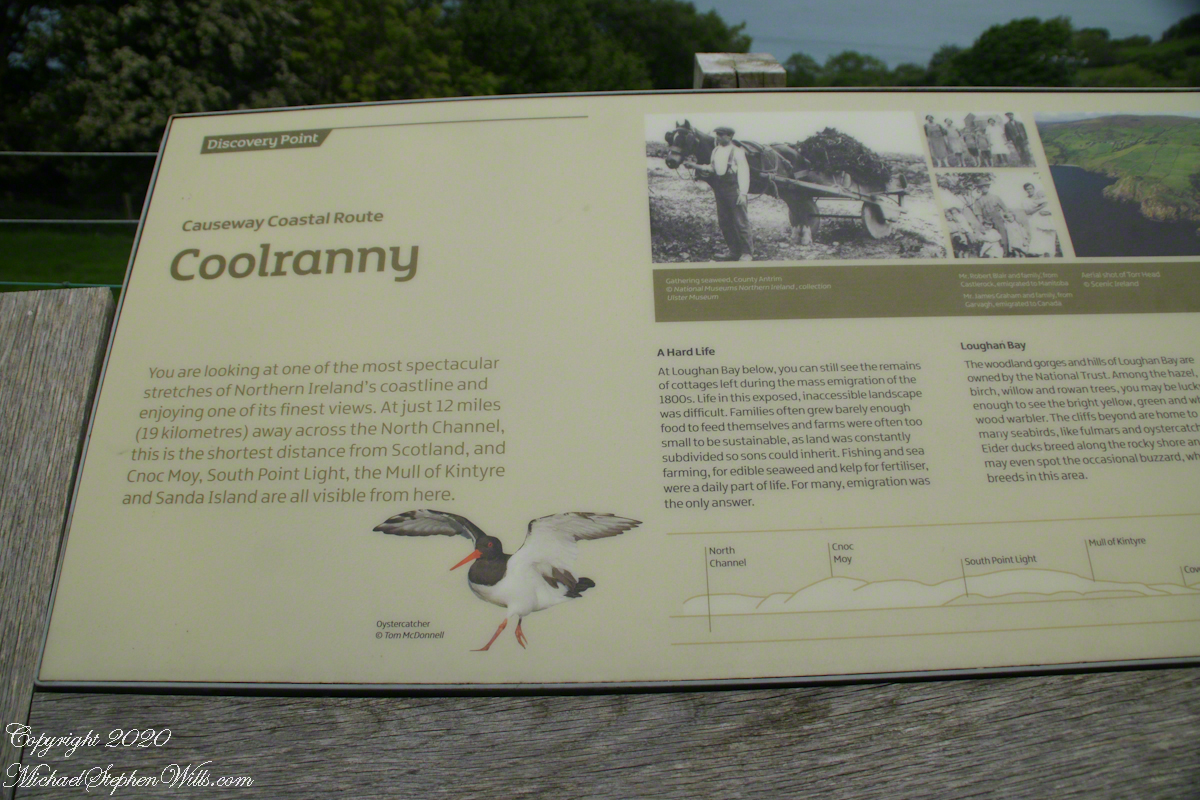
An informative placard.

Here is a slideshow of this post’s images. To visit from WordPress Reader, you need to first click the title of this post to open a new page.
Copyright 2022 All Rights Reserved Michael Stephen Wills

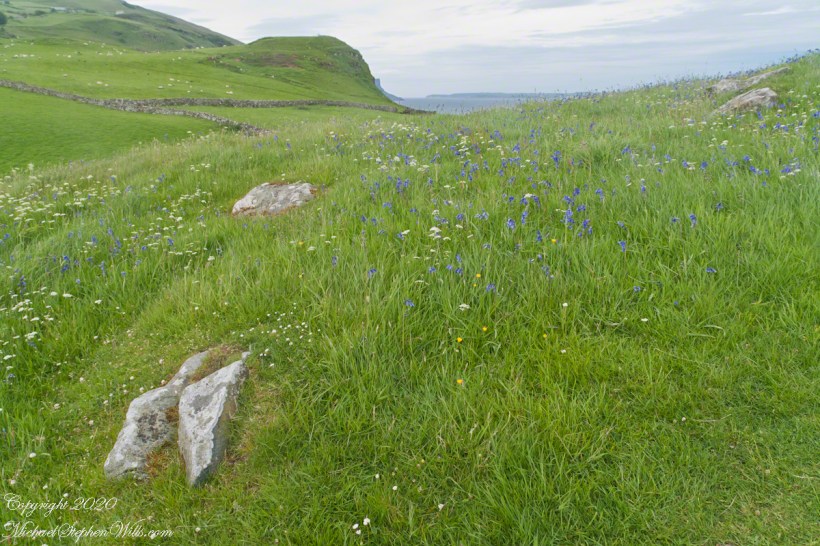
Torr Head Wildflower Meadow

can you see any other flowers/plans in this photograph? Please leave a comment if you do.

We parked below the Coast Guard station, headed toward the height of Torr Head. I was stopped in my tracks by the hillside meadow wildflower profusion. 
Here are a few I identified, listed by common name: Bluebell, Daisy, Meadow Buttercup, Sea Campion, Yarrow.  We love daisies and buttercups around home.  We spotted Sea Campion on the Dingle Peninsula, as well.  Yarrow is common through Ireland.  I don’t recall seeing bluebells anywhere else. 

It was the bluebells in this photograph that clued me into why I took a photograph of the hillside.  The view north takes in coastal sheep pasture looking on a portion of North Channel and the Irish island Rathelin.

The web page I used for identification was wildflowersofireland.net . Great information and links to the Botanical Society of Britain and Ireland with a distribution map.

Copyright 2022 All Rights Reserved Michael Stephen Wills

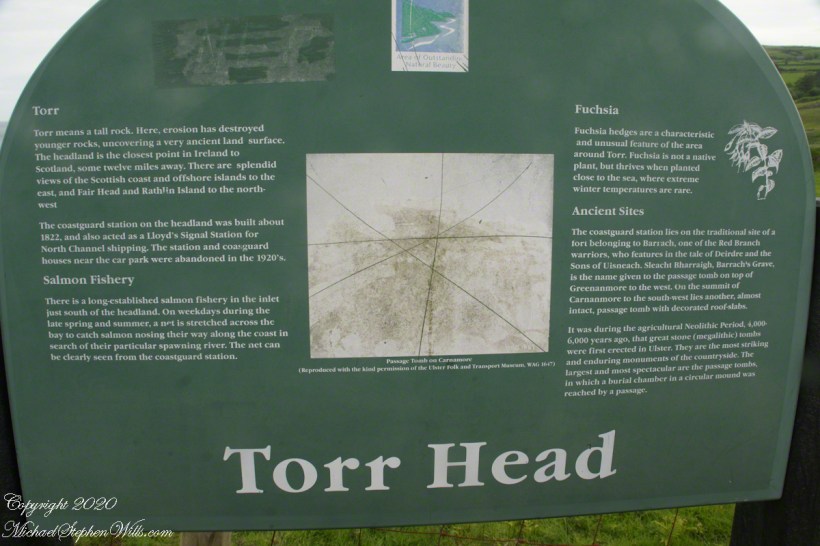
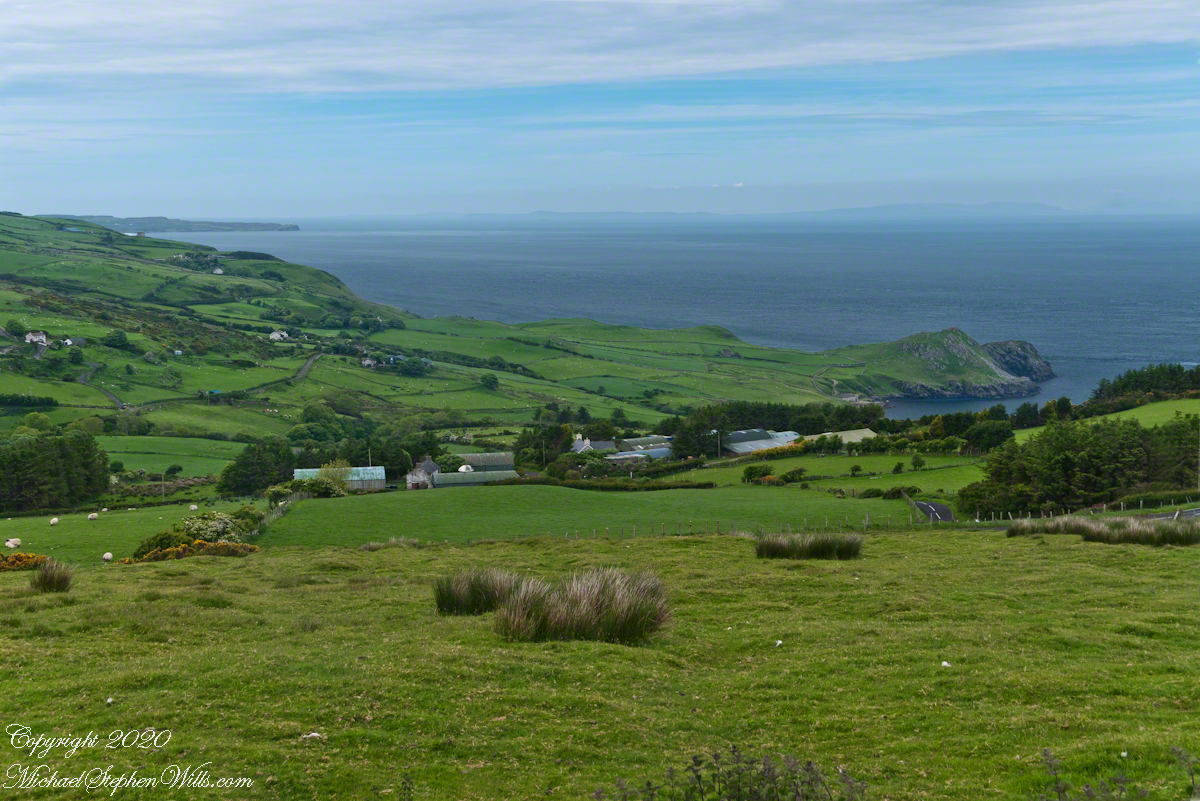
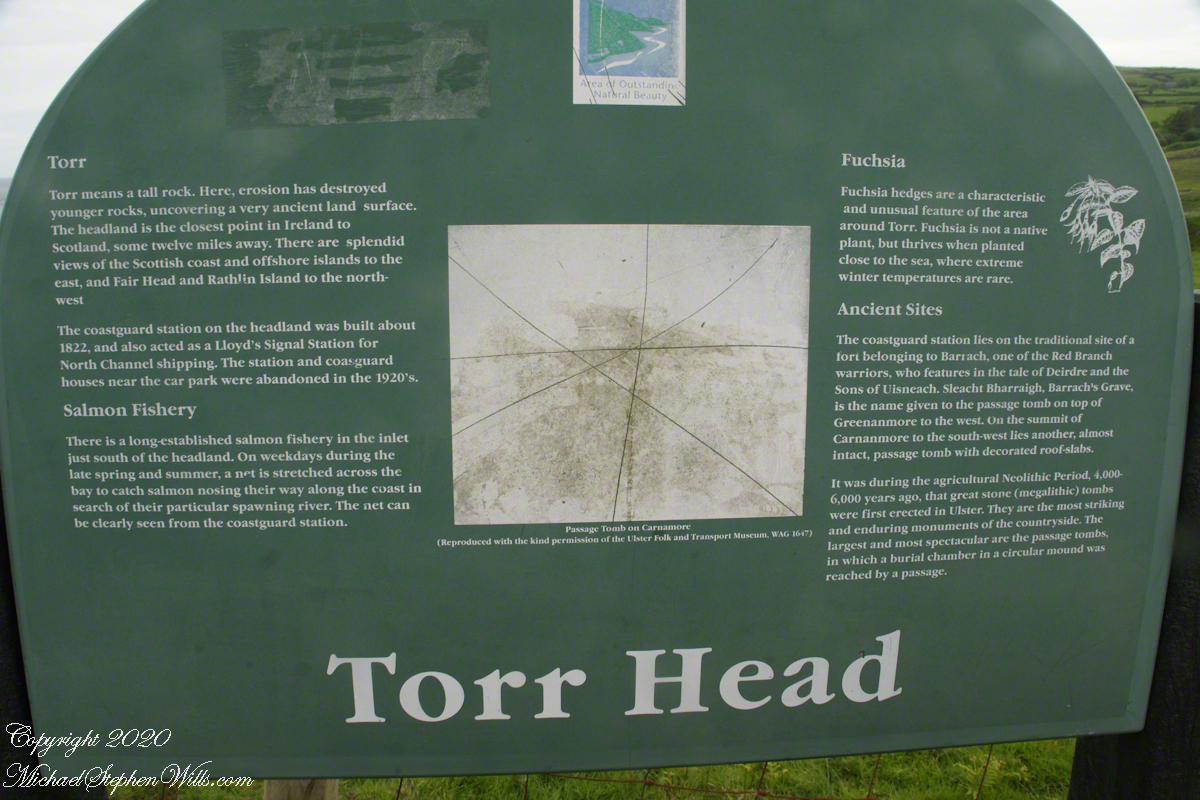
A Bit About Torr Head

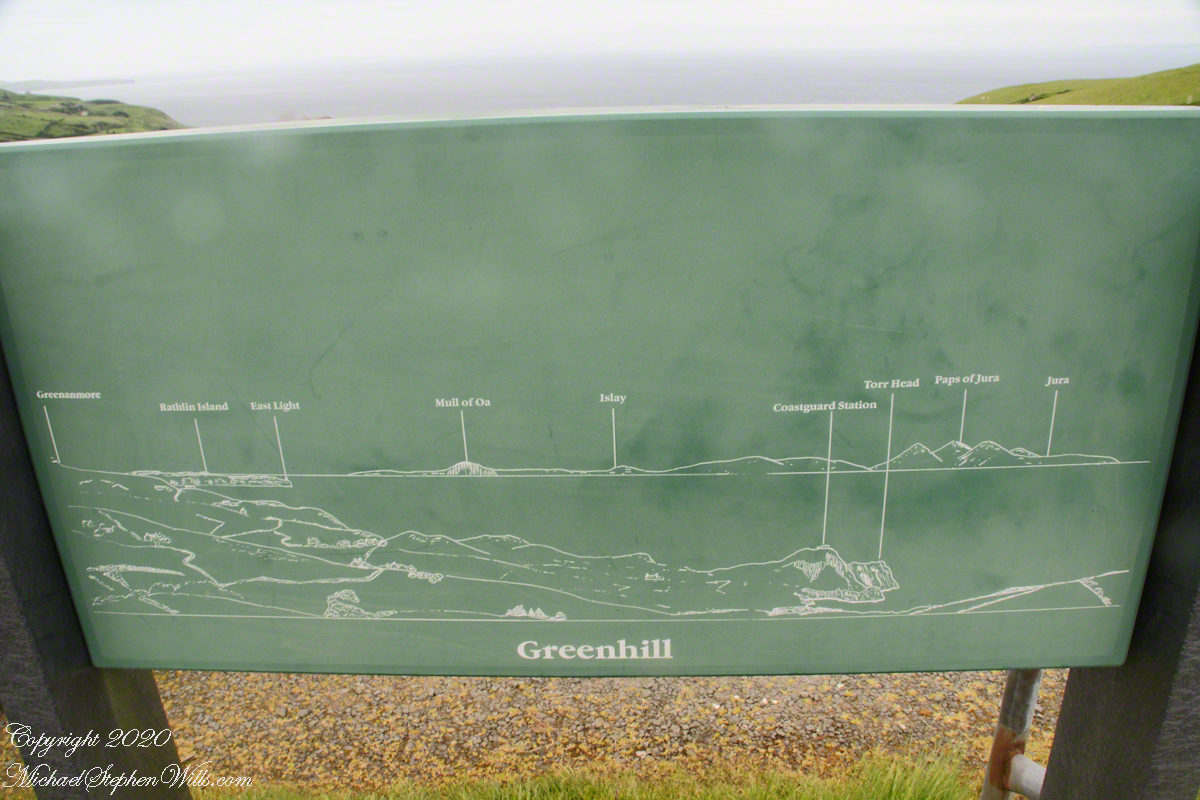
the information board is not to be outdone

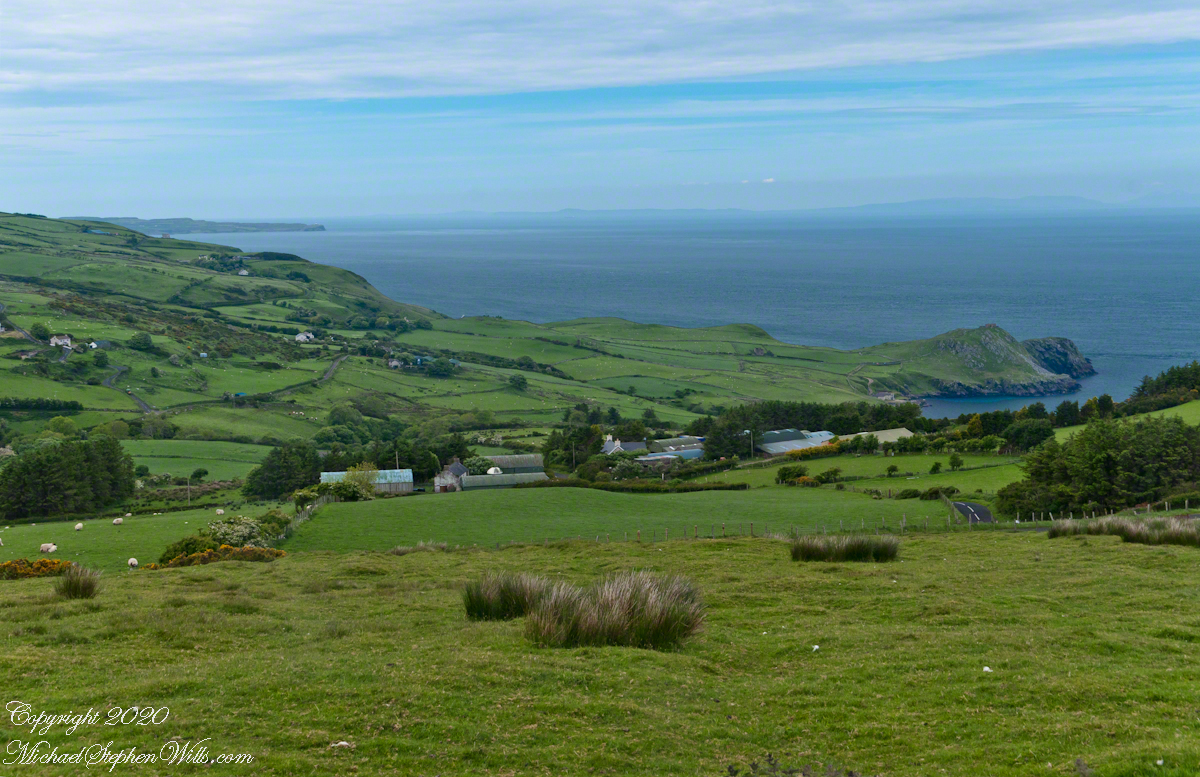
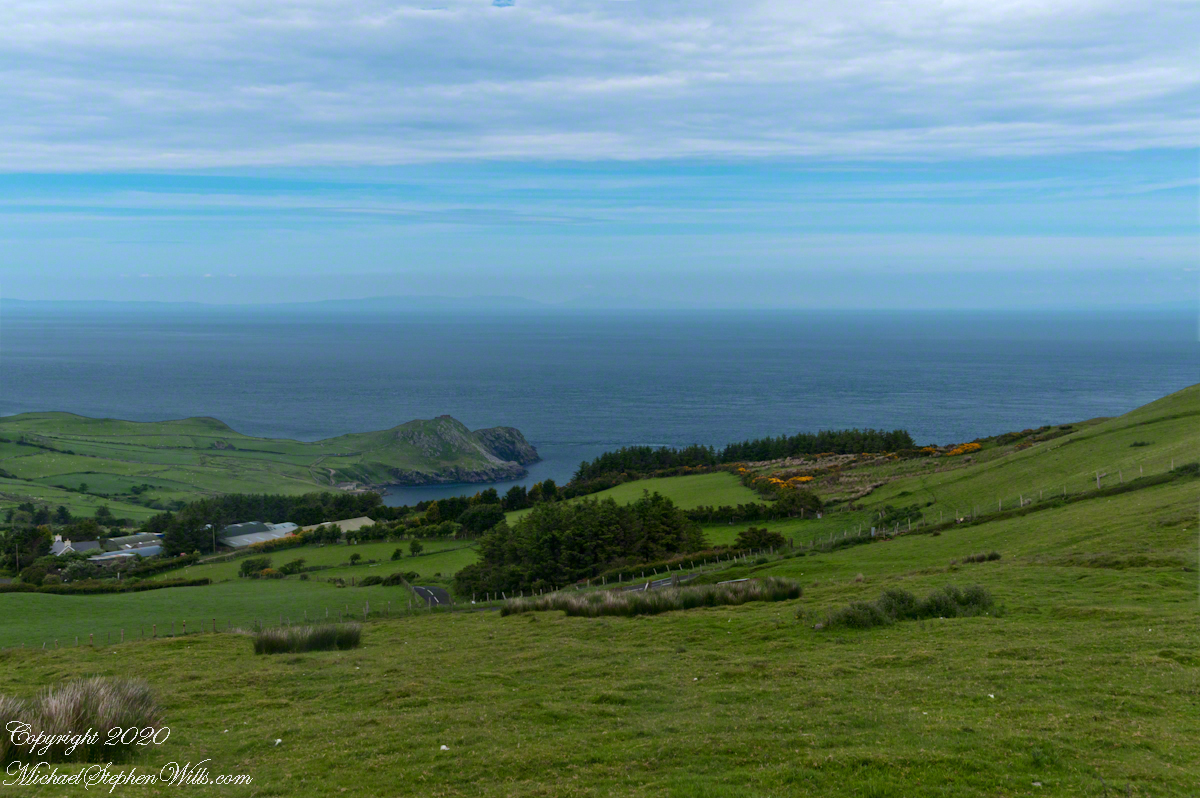
Twenty five minutes before the photos of Pam on Torr Head we enjoyed this view from high above. The placard captures and explains a great deal.

There is at least one tanker ship traversing the North Channel. You can just make out the Torr Road we followed through those farm buildings to the parking near the Coast Guard Station.

Here is a post published last year with more views of this coast.

Here is a gallery for easier flipping between photographs. To do this from WordPress Reader, you need to first click the title of this post to open a new page.

Copyright 2022 All Rights Reserved Michael Stephen Wills

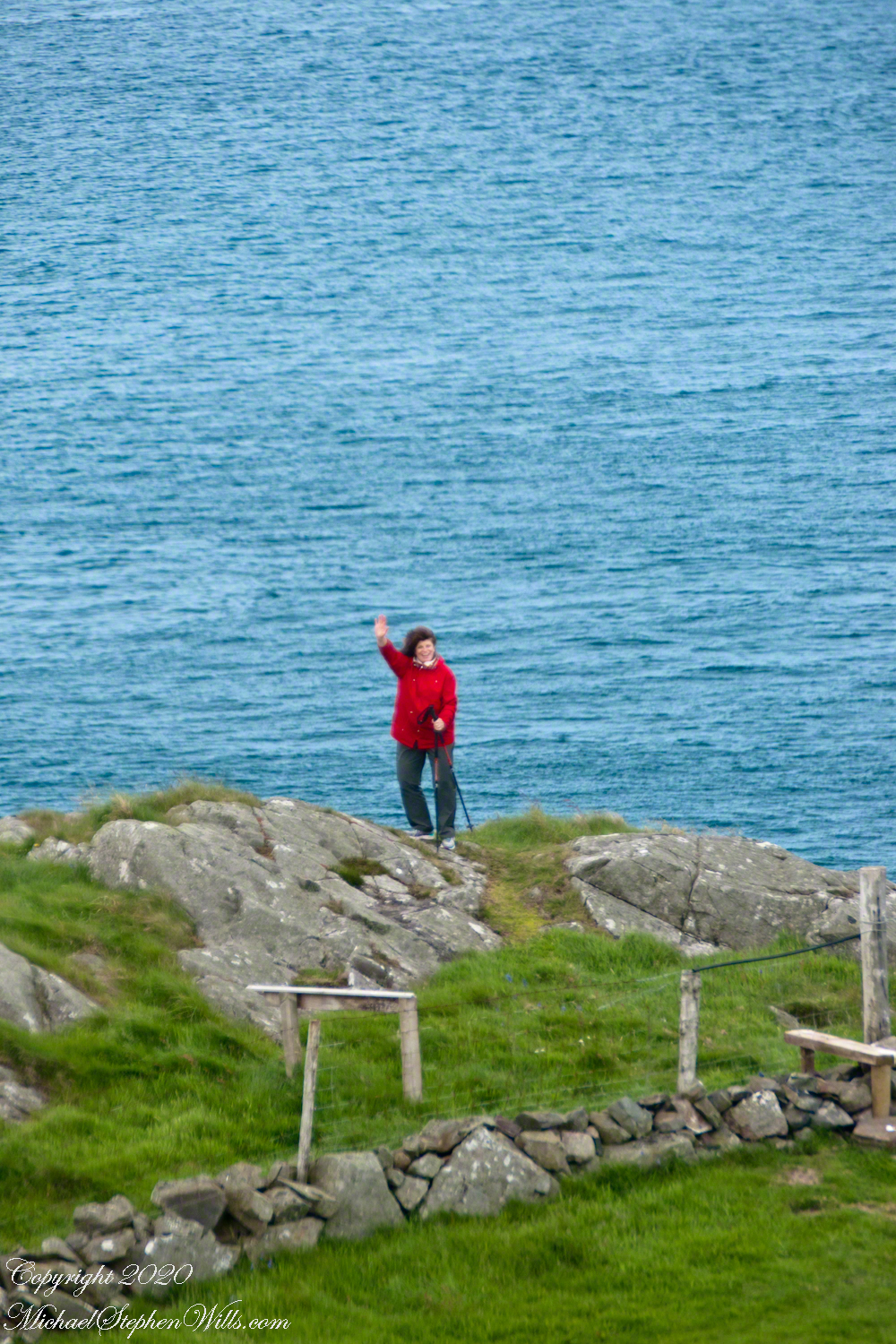
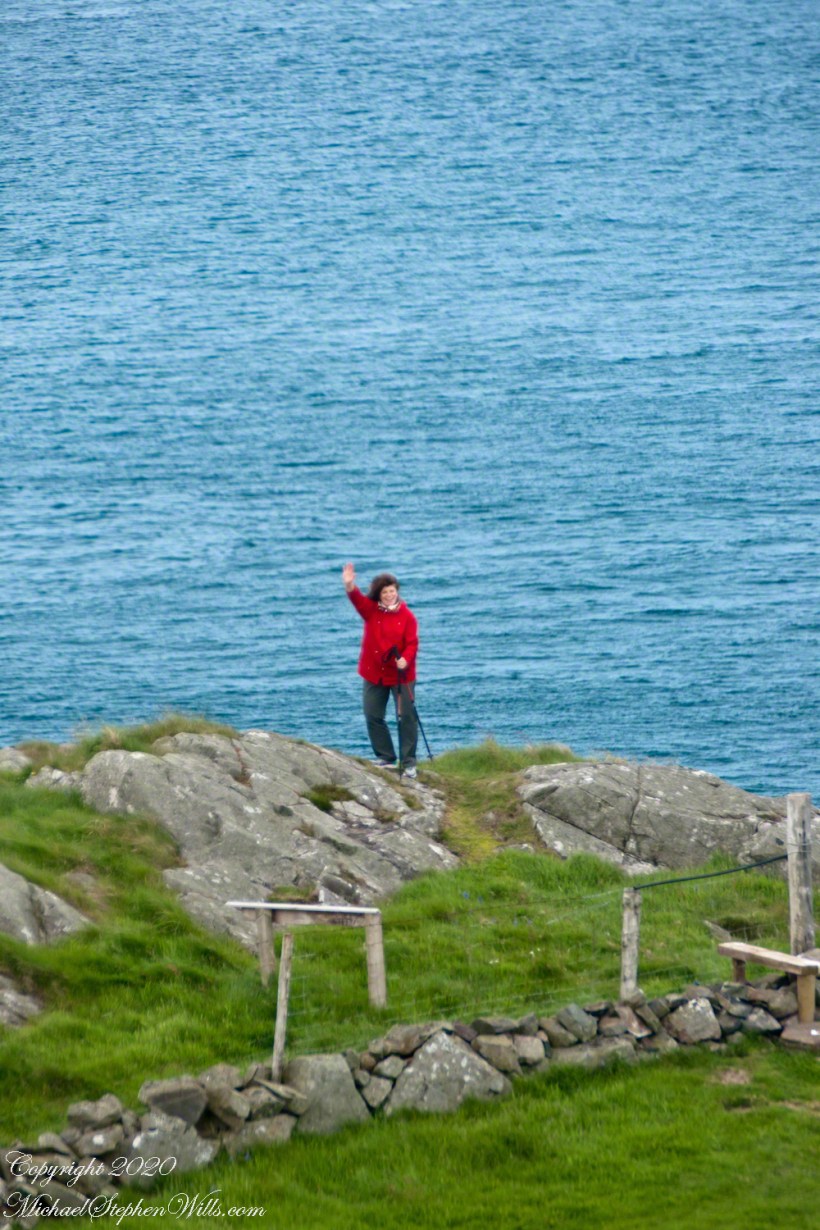
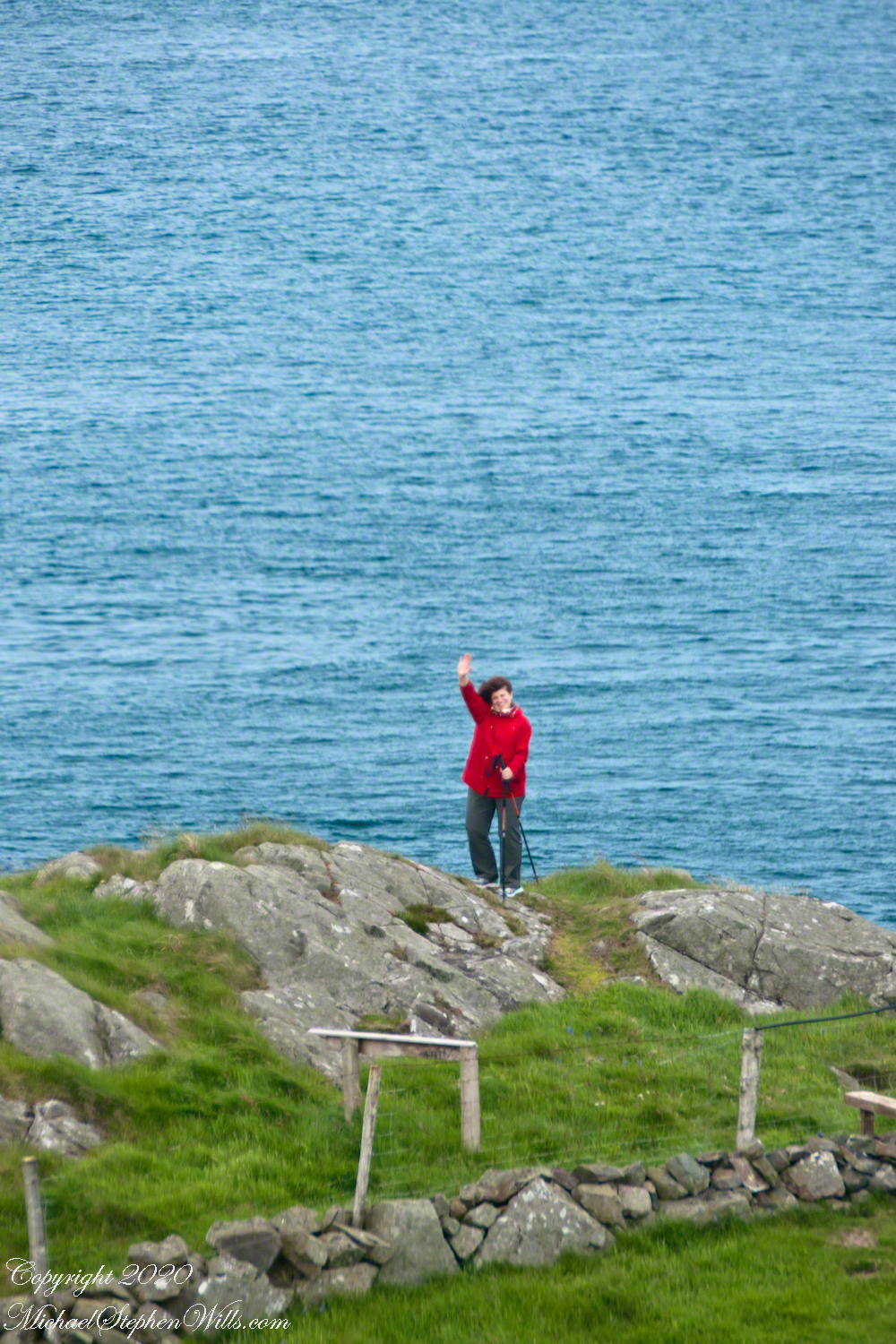
Greetings from Torr Head, Northern Ireland

Pam is standing on the closest point on Ireland to the Mull of Kintyre, Scotland, framed by the Irish Sea, blue from reflected sky on a June day.

Click photograph for a larger view. To do this from WordPress Reader, you need to first click the title of this post to open a new page.

From a June 6, 2014 day spent among the Antrim Glens of Northern Ireland.

Copyright 2022 All Rights Reserved Michael Stephen Wills

Slievenaglogh View, east, V

Looking east

This the fifth and final of a series of landscape photographs taken from this position.

Click photograph for a larger view. To do this from WordPress Reader, you need to first click the title of this post to open a new page.

The peak is named, in the English language, Slievenaglogh. It is so strange as it’s not English, being instead a transliteration of the Irish name “Sliabh na gCloch.” This is “Rock Mountain” translated literally. Slievenaglogh is carried to the townland, a long thin swath of land being the peak and associated ridge-line.

The rocks up there are called “gabbro,” a type of magma slowly cooled under ground. Slievenaglog, Slieve Foy across the valley, and the Morne mountains all formed within volcano magma chamber(s) of the Paleocene, 66 million years ago, a time associated with extensive volcanism and the Cretaceous–Paleogene extinction event that gave rise to the current age.

Our younger cousin has been up there, optimistically we left it for a later trip.

Click for another interesting post and story from County Louth.

Here is a slide show of this landscape series.

A link with interesting reading on County Lo uth geology.

Copyright 2022 All Rights Reserved Michael Stephen Wills

Slievenaglogh View, northeast, IV

View of Slieve Foy

This the fourth of a series of landscape photographs taken from this position.

Click photograph for a larger view. To do this from WordPress Reader, you need to first click the title of this post to open a new page.

The distant ridge, Slieve Foy, is the site of a mythic battle from the epic “The Cattle Raid of Cooley” (Irish: Táin Bó Cúailnge).

Pam and I did a circuit of the island, returning to the home of my Mom’s first cousin. Our last full day on Ireland a cousin took us on the Tain Trail, over Maeve’s Gap of Slieve Foy and into Carlingford town.

Our route is partly visible to the right of the ridge, hidden in low clouds.

Click for another interesting post and story from the Cooley Peninsula.

Here is a slide show of this landscape series.

Copyright 2022 All Rights Reserved Michael Stephen Wills

Slievenaglogh View, northeast, II & III

Rural Scenery

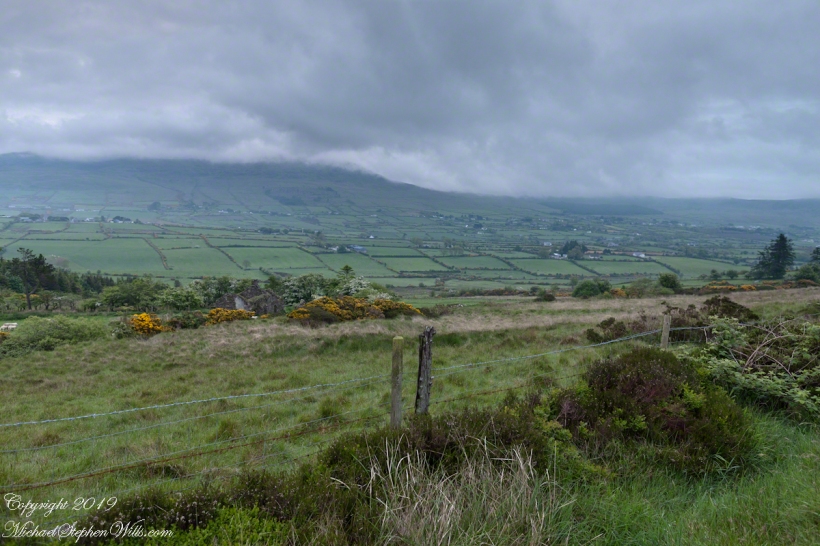
These are the second and third of a series of landscape photographs taken from this position. See the previous post for the first.

Click photograph for a larger view. To do this from WordPress Reader, you need to first click the title of this post to open a new page.

I visited here early morning of the Monday Pam and I embarked on a trip around the island of Ireland.

Arrived the previous Saturday when, after some sites between Dublin airport and the Cooley Peninsula, we met my Mom’s first cousin who had invited us for a visit. We had a grand time meeting them.

The ruin in this view is on the slopes of the peak. Some of these ruins are former homes with the replacement nearby. This appears to be an abandoned farm.

Click Me for the first post of this series.

Click me for the next post of this series.

Copyright 2022 All Rights Reserved Michael Stephen Wills

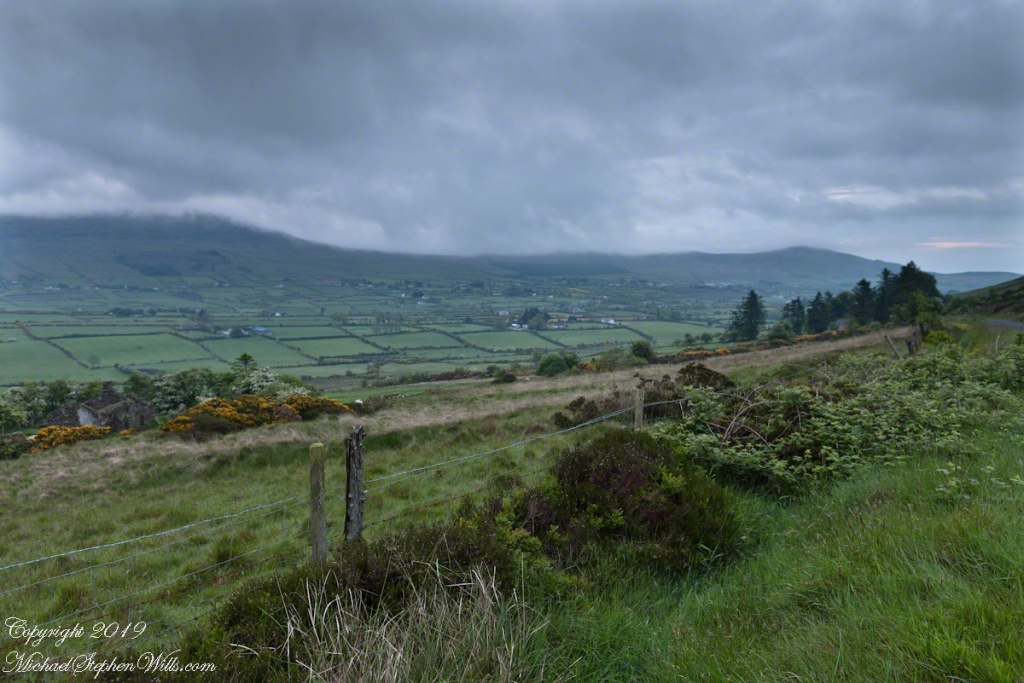
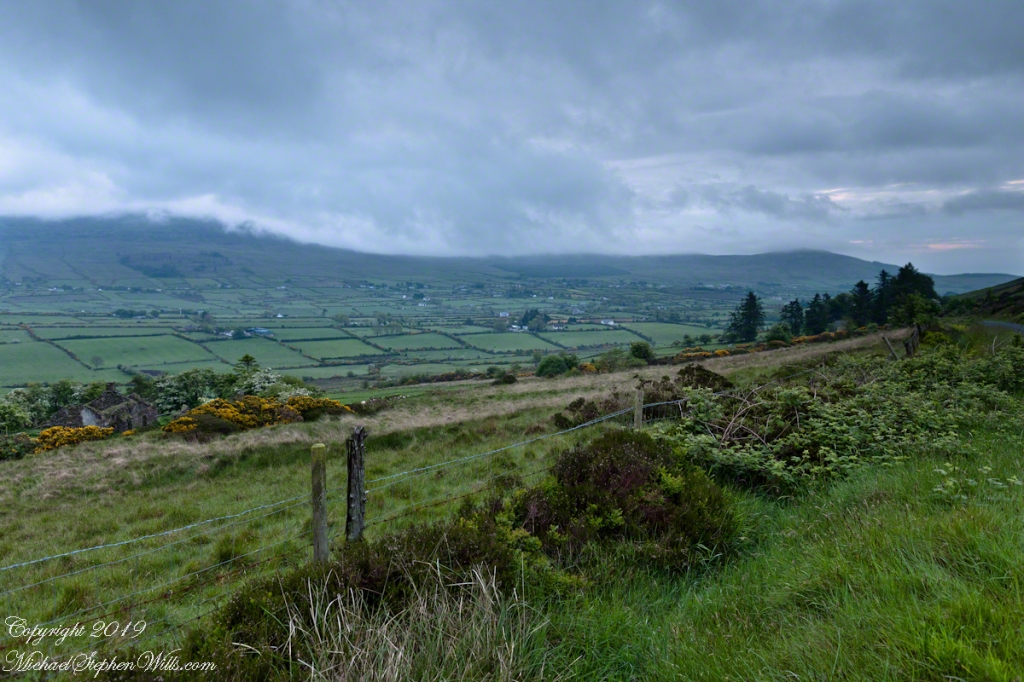
Slievenaglogh View, northeast I

It goes on and on and on

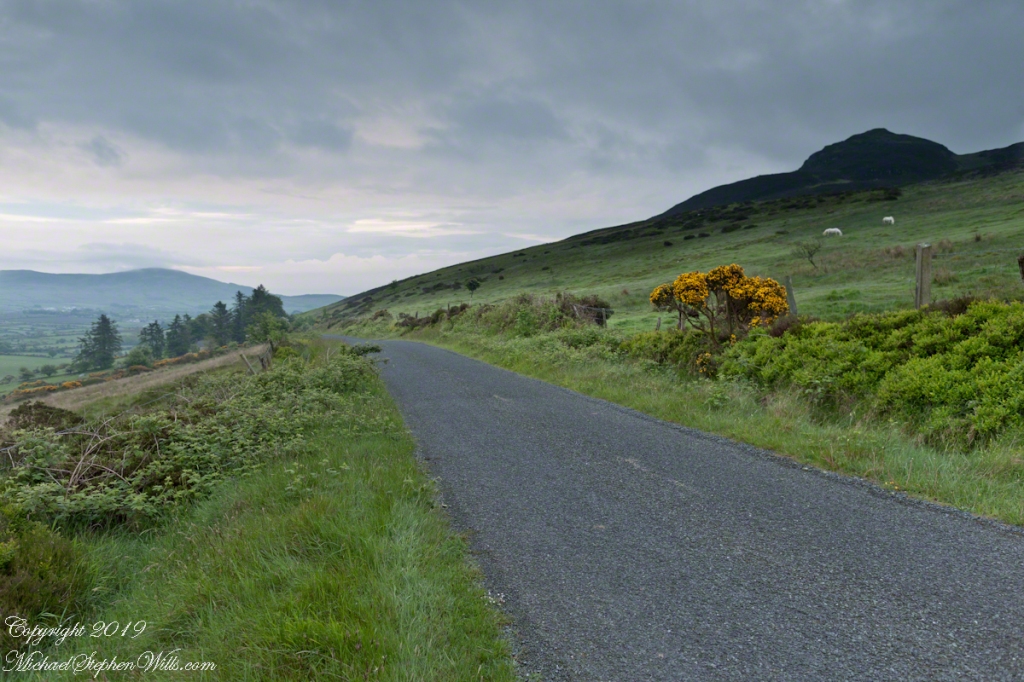
Slievenaglogh is the name of a peak on the Cooley Peninsula of County Louth, Ireland near to the birthplace of my Mom, Proleek, a few townlands to the west.

Click photograph for a larger view. To do this from WordPress Reader, you need to first click the title of this post to open a new page.

On the northeast slope of Slievenaglogh peak (Irish: Sliabh na gCloch) on the road from Mullaghattin Townland to Riverstown.

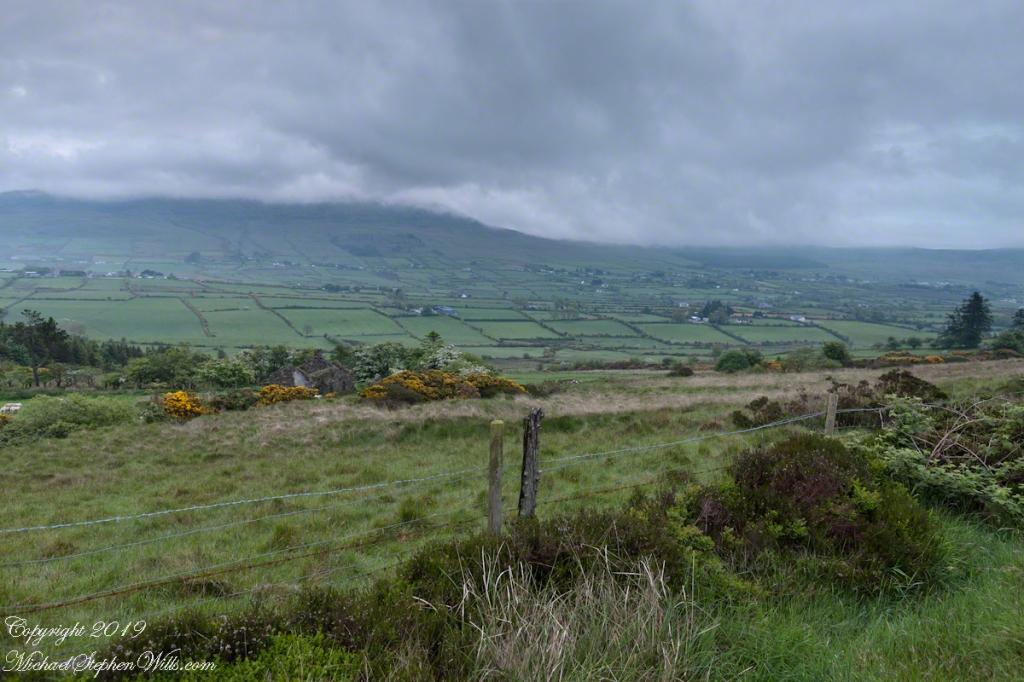
Here we look northeast from the Slievenaglogh Townland, the valley between Slieve Foy and Slievenaglogh peaks.

The view includes Little River, Ballycoly Townland and Castletown River.

Adjacent is a sheep pasture with a farm ruin behind the yellow flowered gorse (whin bush, scientific name Ulex).

Slieve Foy is the far ridge lost in clouds. Early morning, late May 2014.

Click for an interesting post and story from the Cooley Peninsula.

Copyright 2022 All Rights Reserved Michael Stephen Wills

Bog Bodies

In the the long view

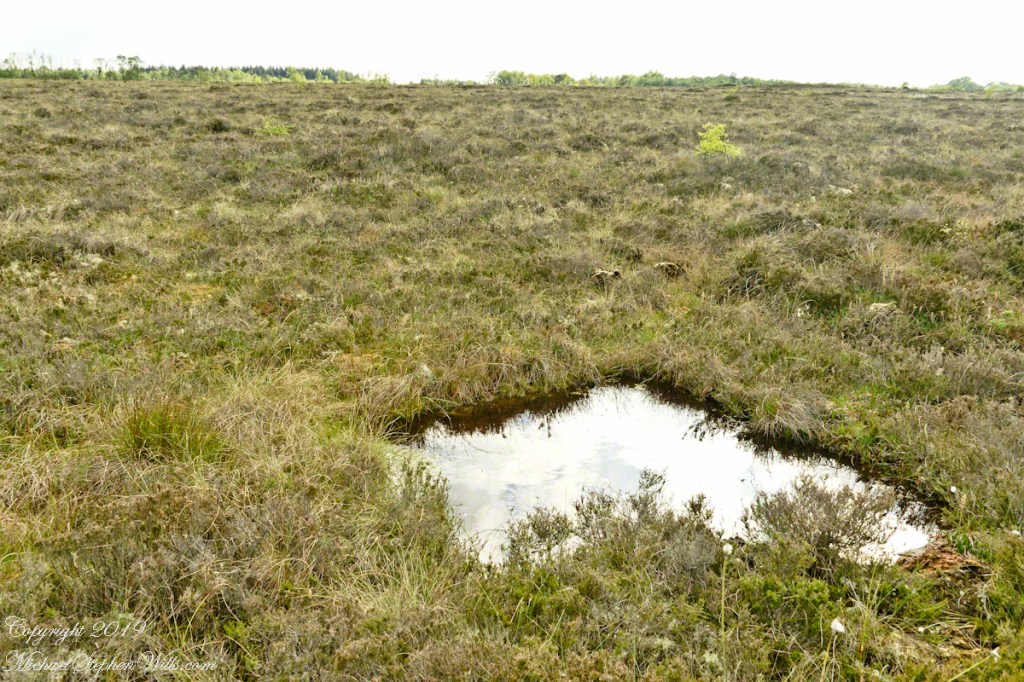
On this occasion we will explore a time machine found four miles south of Kells, County Meath, Ireland.

Step into this pool and you, too, can emerge 4,000-odd years later, skin intact, to achieve fame and fortune, a place in a museum and the record books if such exist 6019 AD. Reference the Cashel Man from Cúl na Móna bog near Cashel in County Laois, Ireland who now resides within the National Museum of Ireland.

Click photograph for the expanded view. To do this from WordPress Reader, you need to first click the title of this post to open a new page.

True, post mortem fame is hollow for the individual. Maybe, attaching your life story engraved on a gold plaque with a gold chain encircling your torso will offset the loss of your bones (dissolved in the acidic waters) and life itself.

The water of this pool is colored dark by long decayed vegetable matter. Beware of walking the bog surface, it is dangerous and destructive to the environment. Pam and I visited Girley Bog on our tour of County Meath, Ireland.

Copyright 2022 All Rights Reserved Michael Stephen Wills

Introduction to the Loughan an Lochan Ruins

Romance of Ruins

Here is a photograph from our day touring the Glens of Antrim.  While making our way up the coast to Torr Head a group of stone walls resolved into ruins. A cluster of cottages on grassy slopes above the Irish sea above Loughan Bay.  This is the townland of Loughan.  Along the road are wonderful signs providing in handsome carved letters the place name in english and gaelic.  Here a signed only provided a gaelic name: “Loughan an Lochan”…near enough to meaning “Loughan Bay” in English.  The bay is a shallow scallop shaped indentation of the coast, a margin of narrow sand strand.

Ruins are spread across the slope.  Immediately before the views are traces of a foundation above the grass.  Beyond the top of a gable, an entire gable to the left.  On the far ridge, just visible, is an entire structure with doorways, gables, walls.

Across the Irish Sea, 13 miles distant, is the Mull of Kintyre.  In faint outline, rising above the horizon, find the highlands of Islay more than 30 miles.  Both are tips of peninsulas jutting from Scotland.

Click pic for larger view in a new browser tab. If you are in WordPress Reader, open the post to use this feature.

The ruins lead to curiosity over who live here?  What were their lives like?  Why did they leave?

Want more? Click the link for my Ireland Gallery

Enter your email to receive notification of future postings. I will not sell or share your email address.