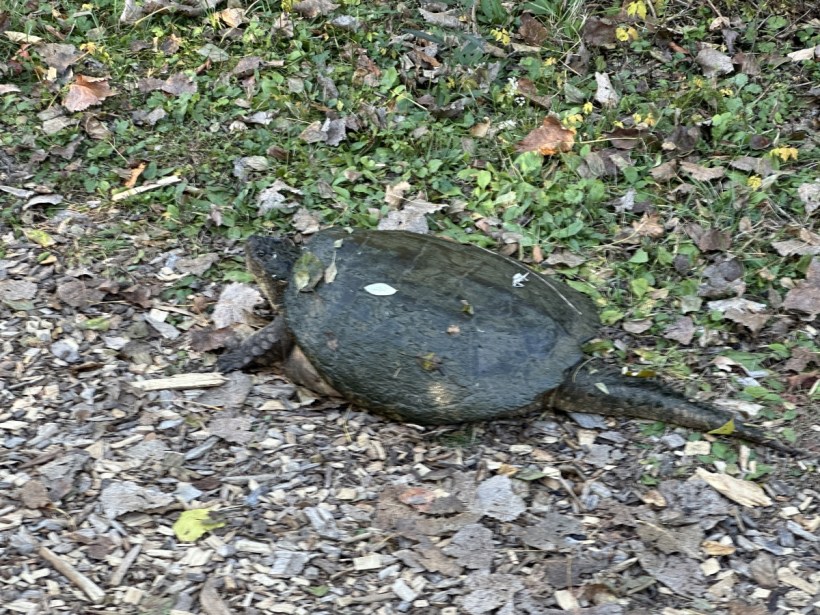
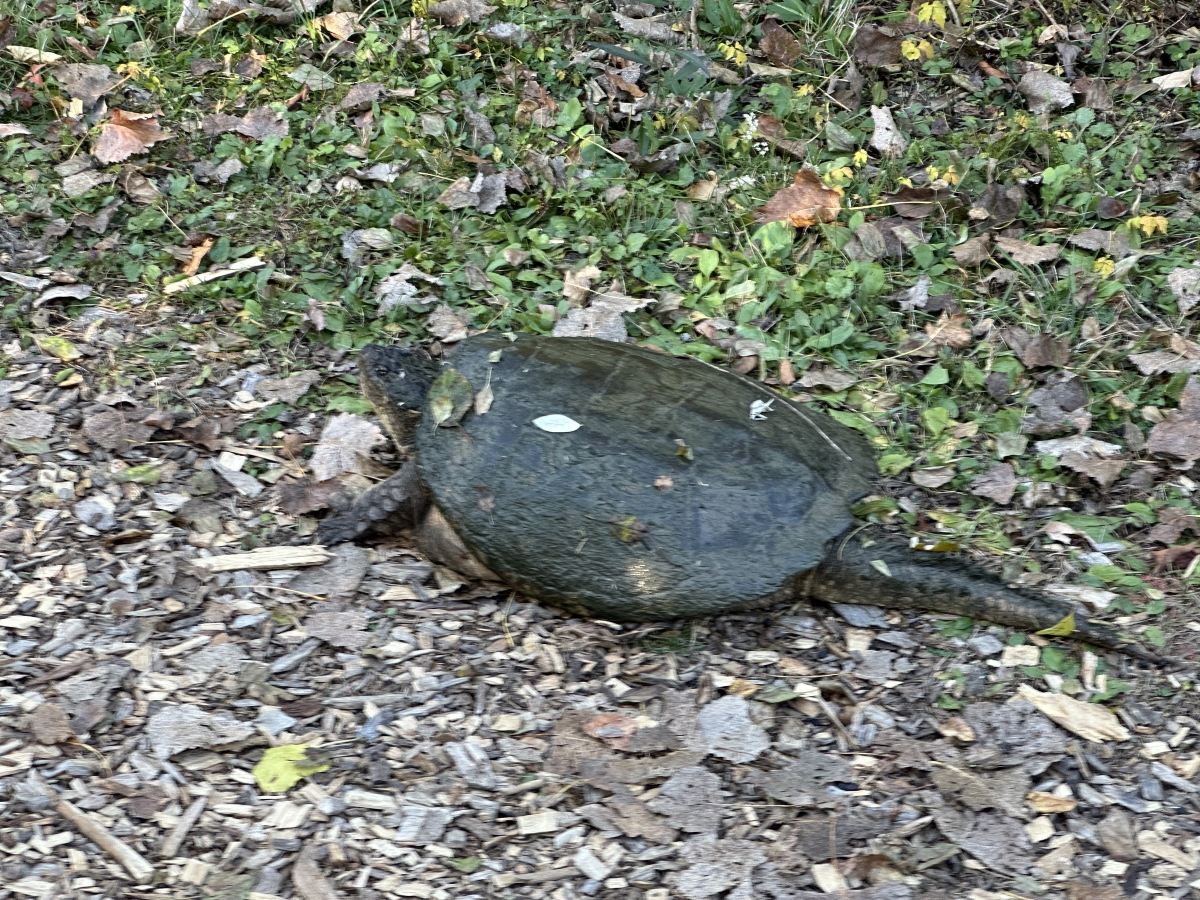
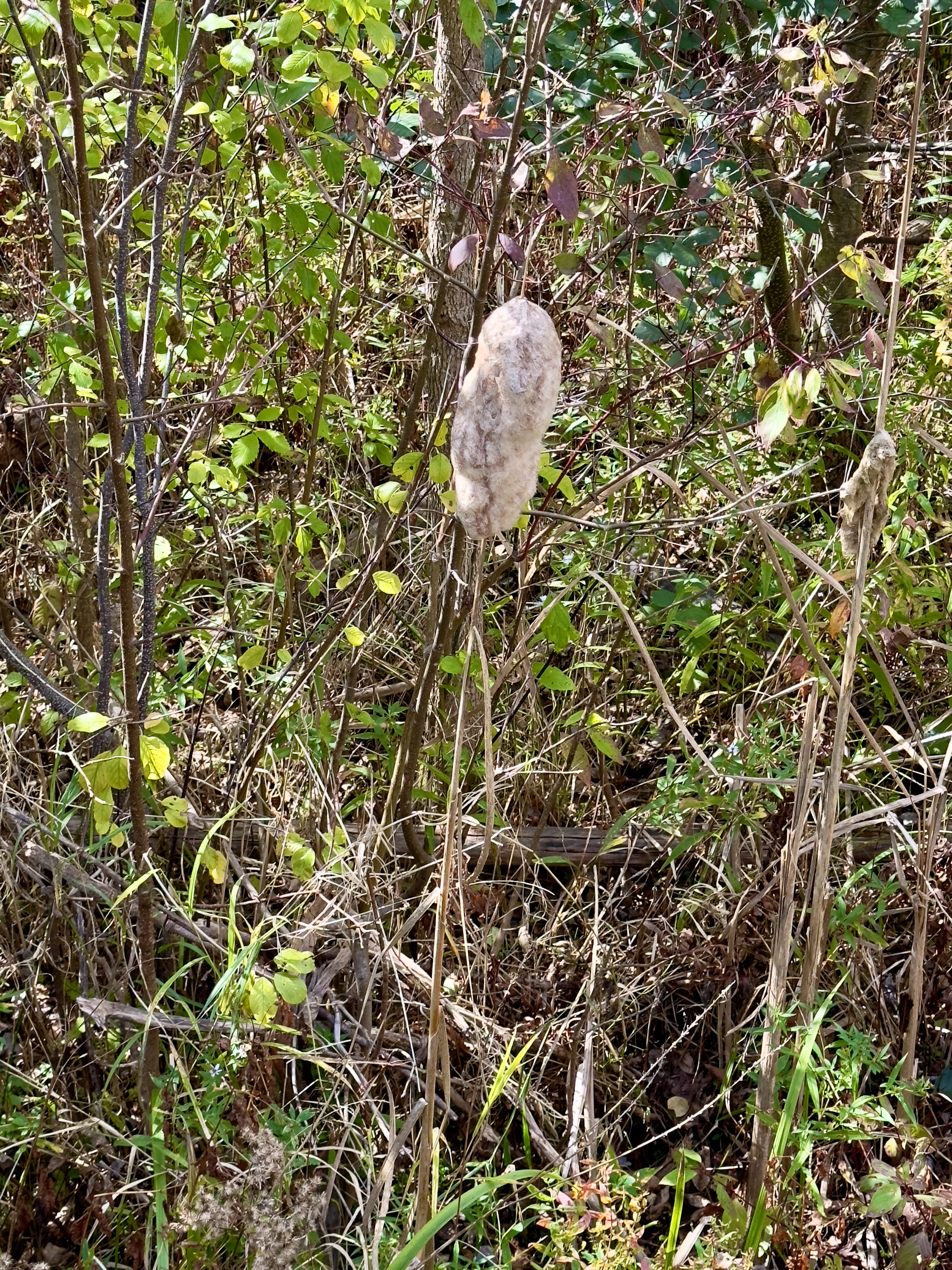
O ancient wanderer of Sapsucker Woods, armor-clad and quiet, you lumber forth, carved from the earth itself, sculpted from mud and pondweed dreams.
October’s afternoon light paints you with golden shadows, each leaf fallen, each branch broken a whispered testament to the slowness of your path, steady as a heartbeat unmoved by haste.
You bear the centuries in the lines of your shell, grooves and valleys where stories settle, tales of reeds and minnows, and the deep-rooted knowing that life is best met with patience, with pause.
O creature of edges and silence, you bridge water and wood, the line between stillness and stride. What weight you carry, not of burden, but of presence— a shell that holds the weight of stars, the bones of ancient rivers, and the soft clay of Sapsucker’s floor.
In your slow, silent passing, the trail bows to you. Leaves make way, and the earth beneath you settles a little deeper, reminded of the strength that moves without noise, the wisdom that crawls in the path of shadows.
Turtle, you who wear the world’s patience, I watch you disappear, an ambassador of ponds and pools, a silent architect of marsh and moss. May your journey be long, your pauses endless, and your shell a testament to the beauty of age, carved by time, blessed by the sun.
Enter your email to receive notification of future postings. I will not sell or share your email address.
Copyright 2025 All Rights Reserved Michael Stephen Wills
On this autumn Sapsucker Woods afternoon, the world seems crafted to soothe. Sunlight filters through the canopy, setting leaves ablaze in rich reds, golden yellows, and softened greens, the seasonal palette reflecting nature’s grand finale. Today, the woods are a sanctuary for healing, a space where steps are measured not by speed but by strength, each one a testament to resilience.
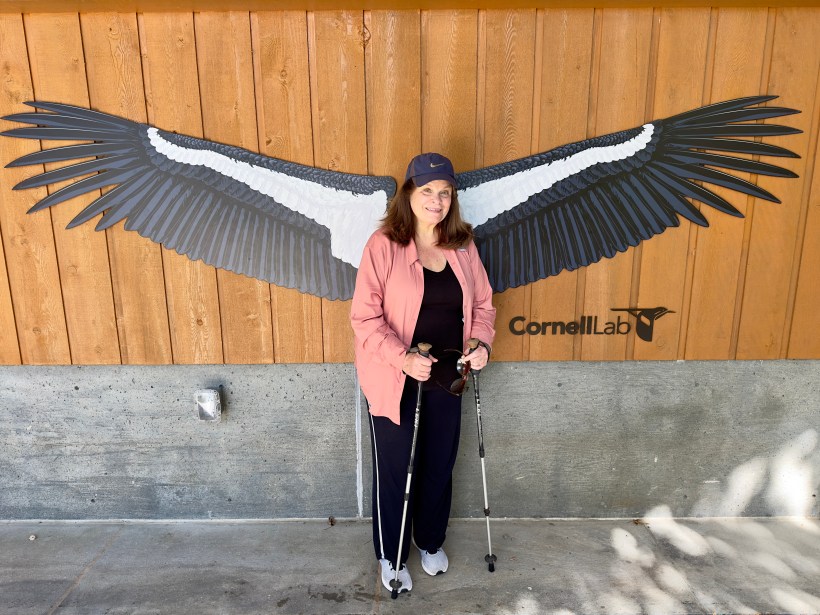
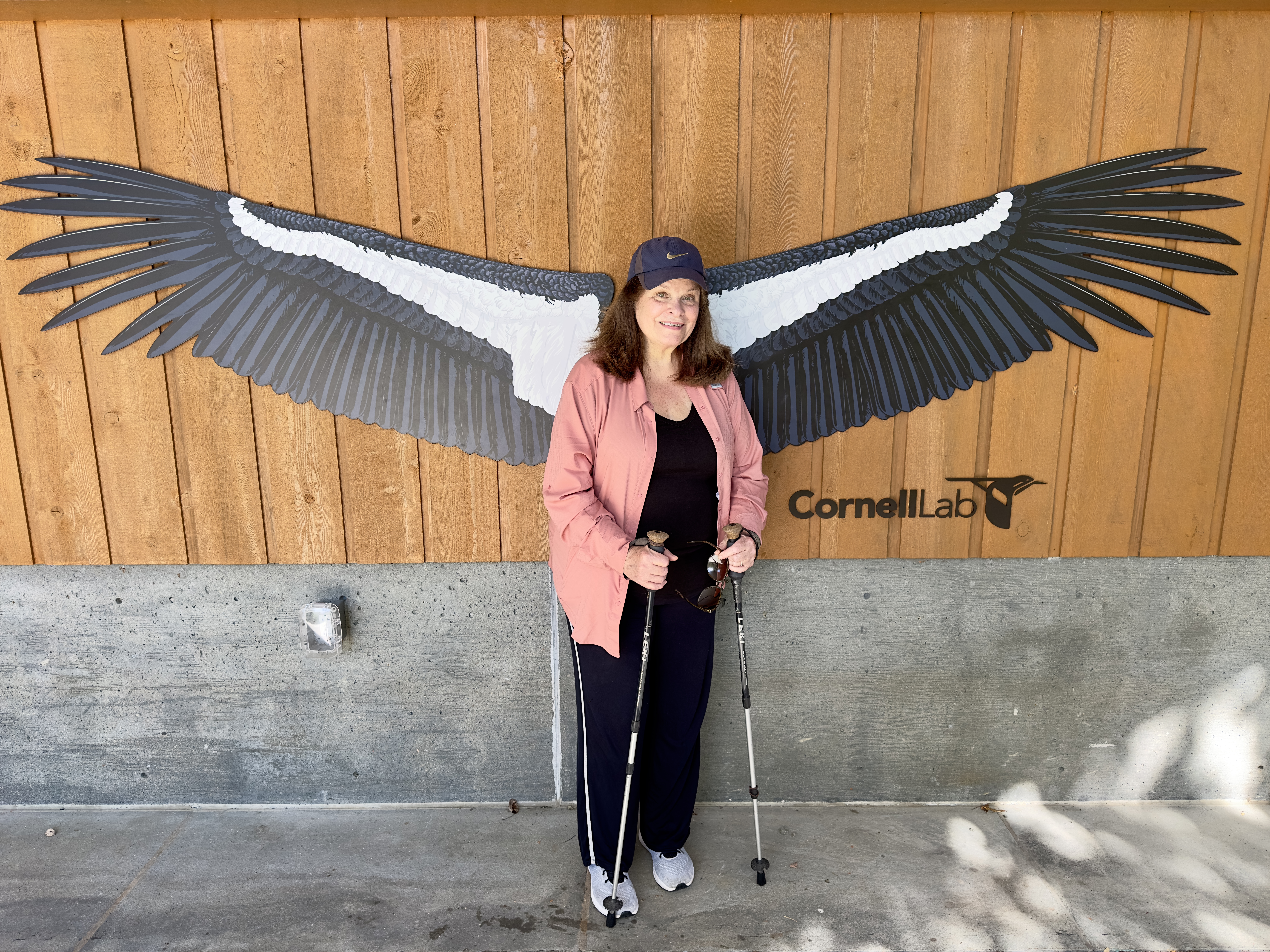
Pam stands before the wide, outstretched wings painted on the wall at the Cornell Lab of Ornithology, wings so vast that they dwarf her. She smiles, resting against her hiking poles, the Condor wings an emblem of a journey toward reclaiming freedom. Her recent hip replacement surgery has given her back this independence, a reminder that recovery is not just about physical mending, but about lifting the spirit to soar once again.
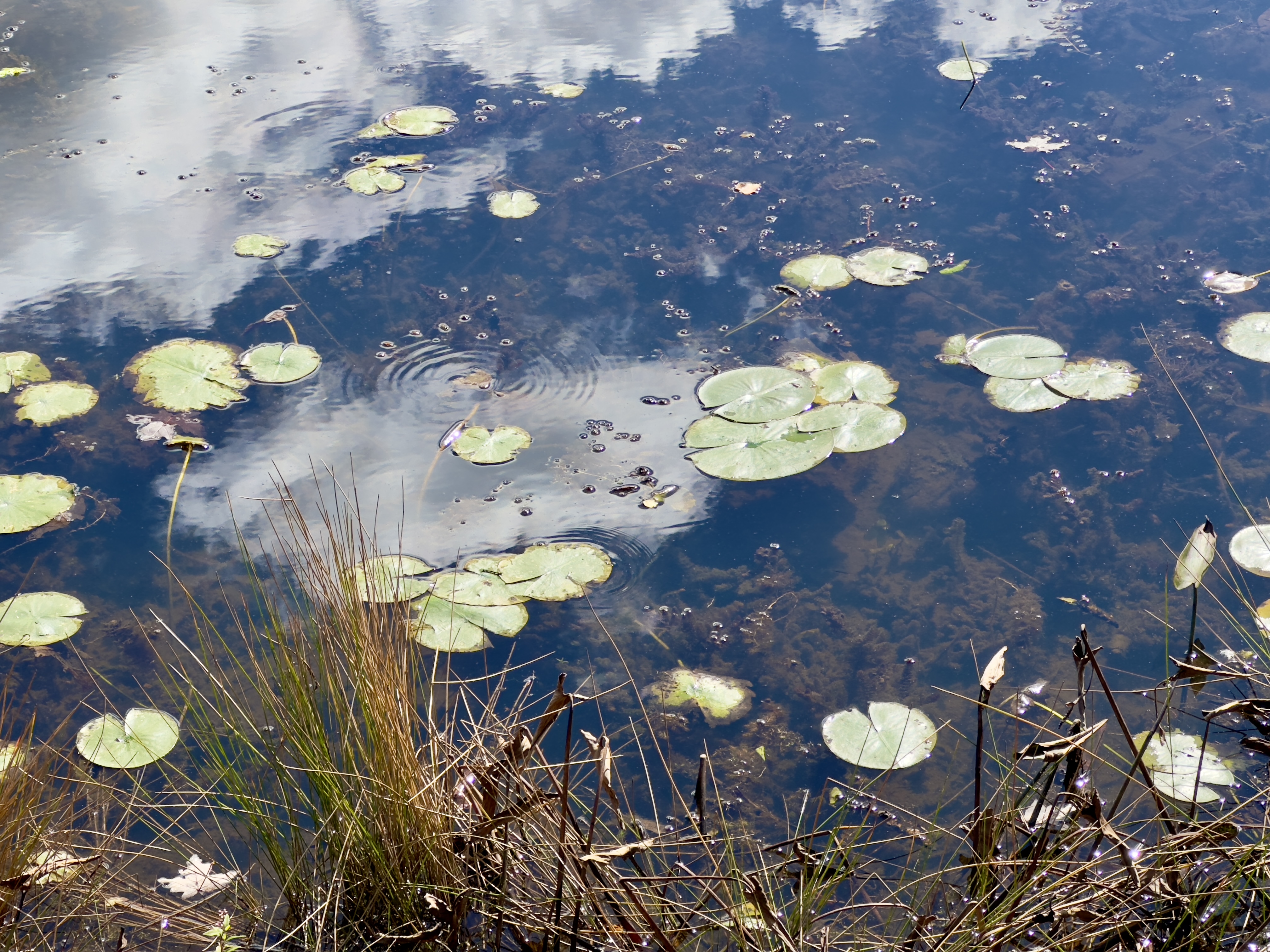
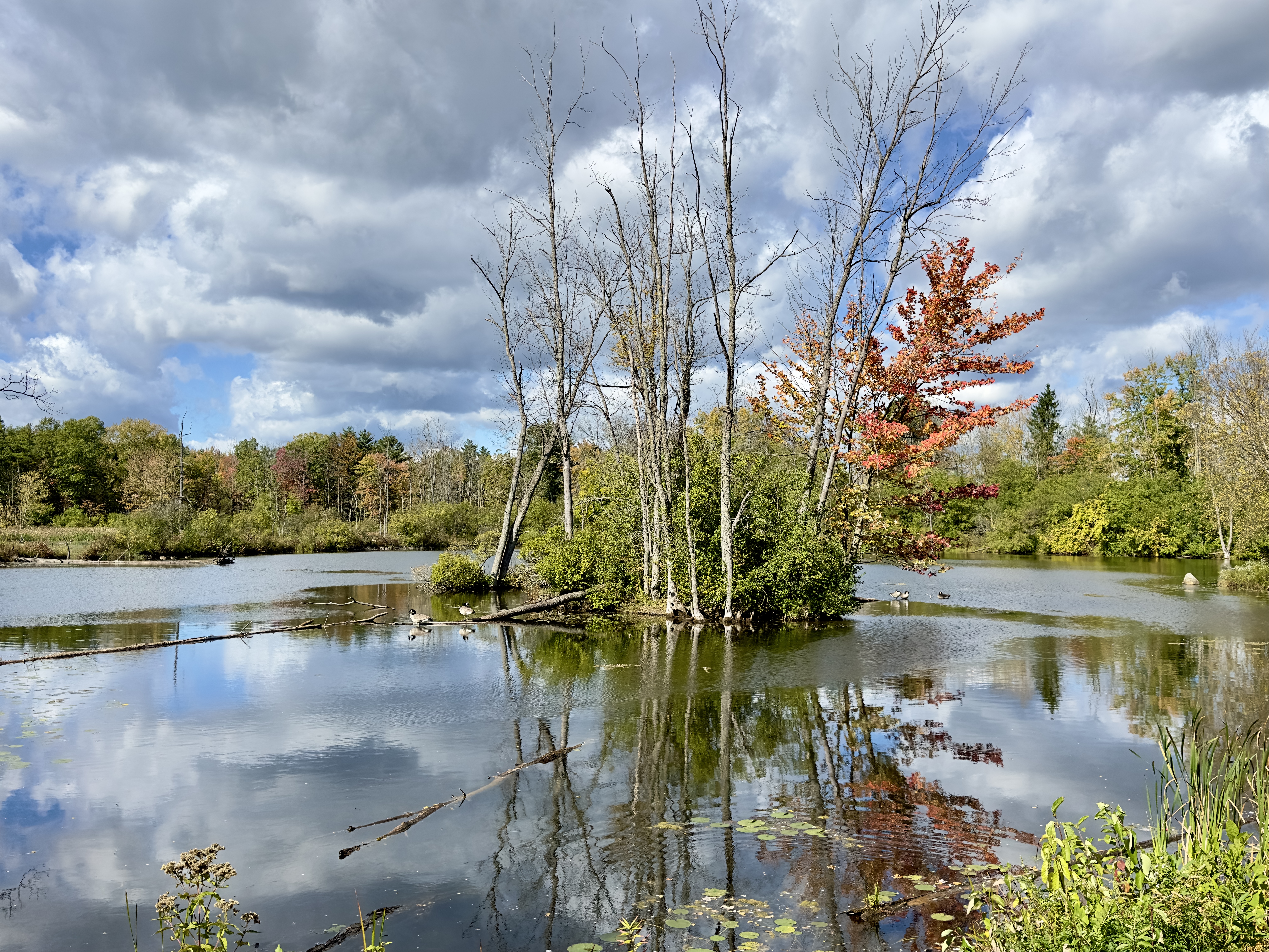
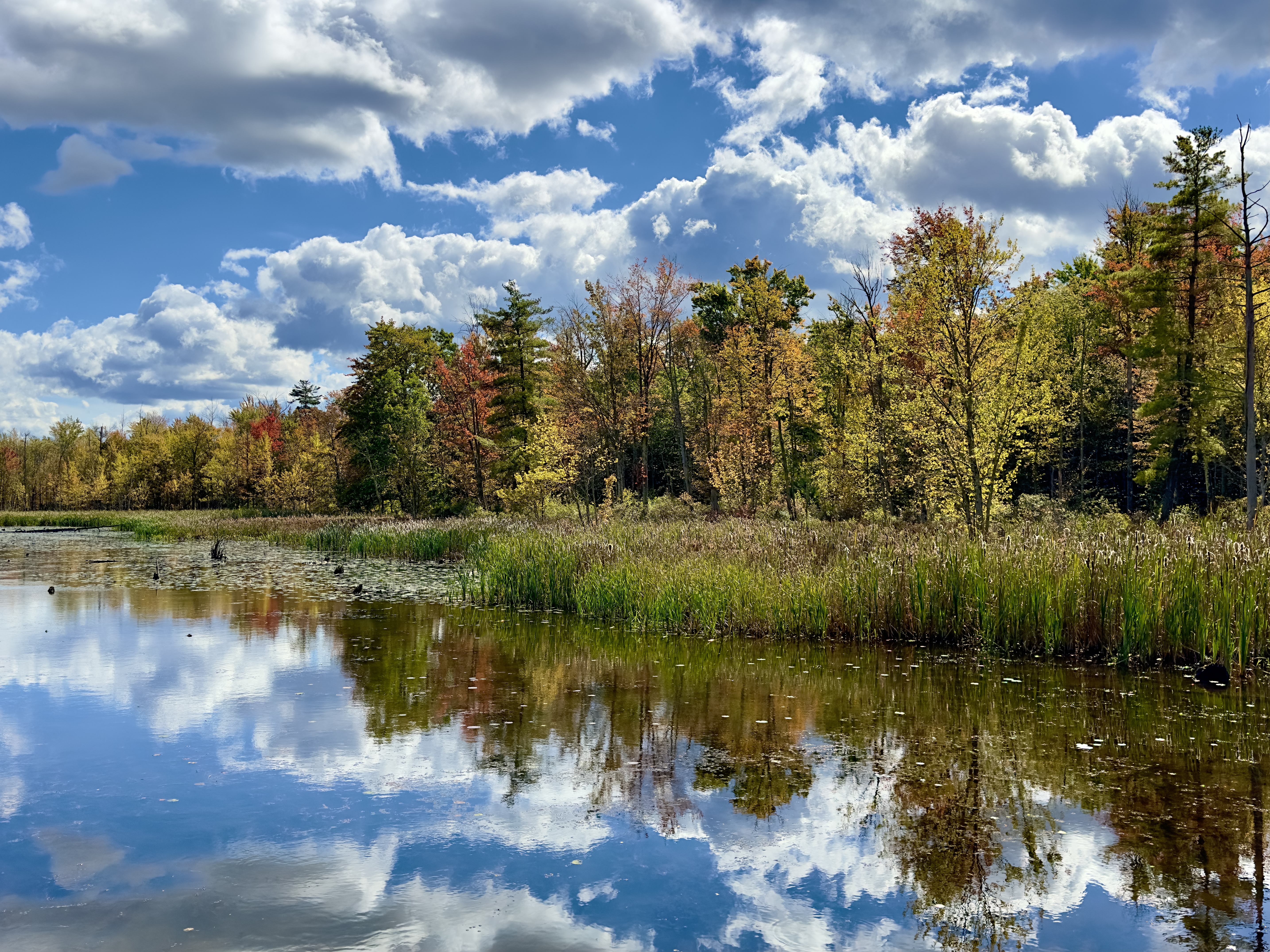
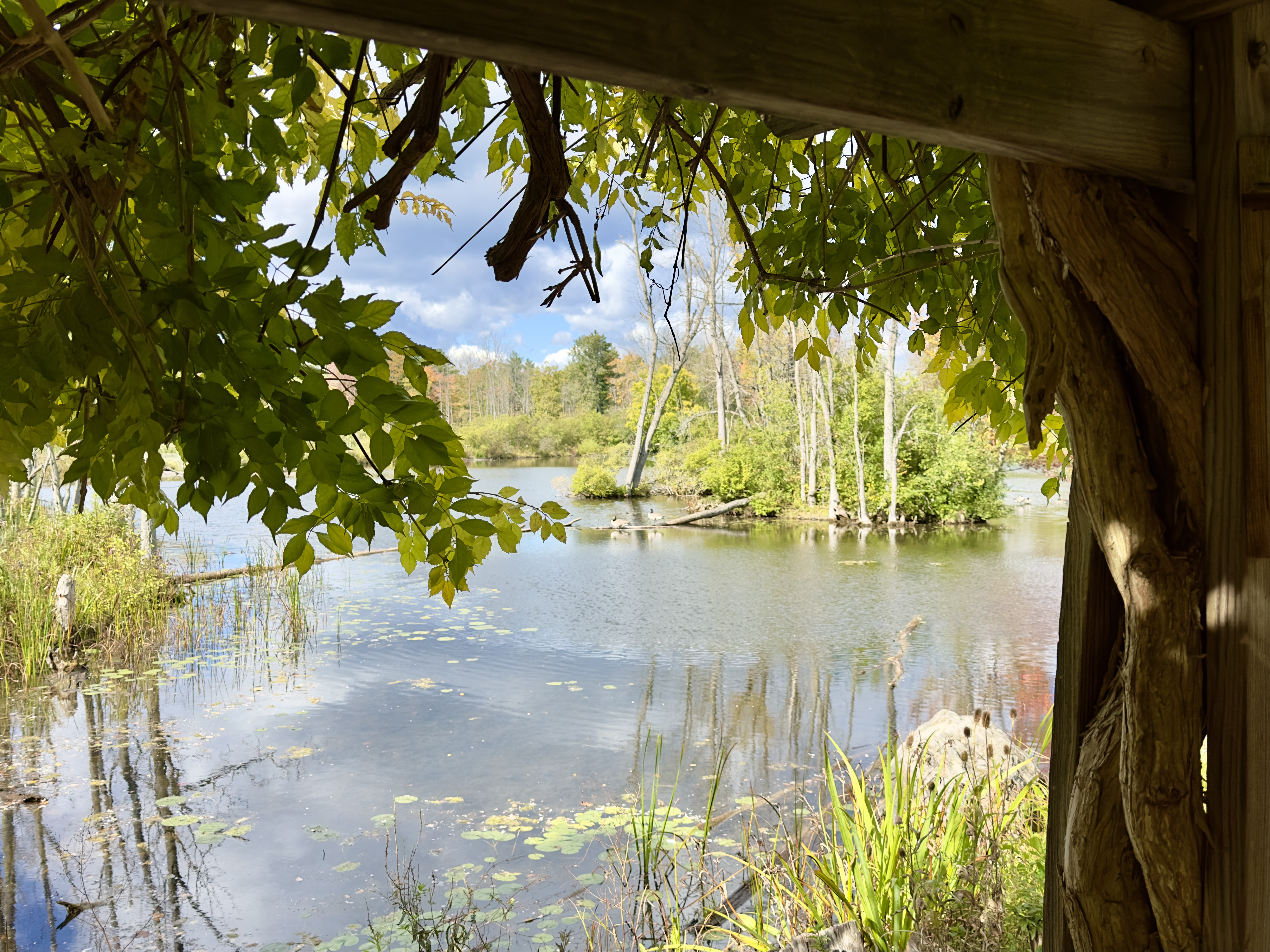
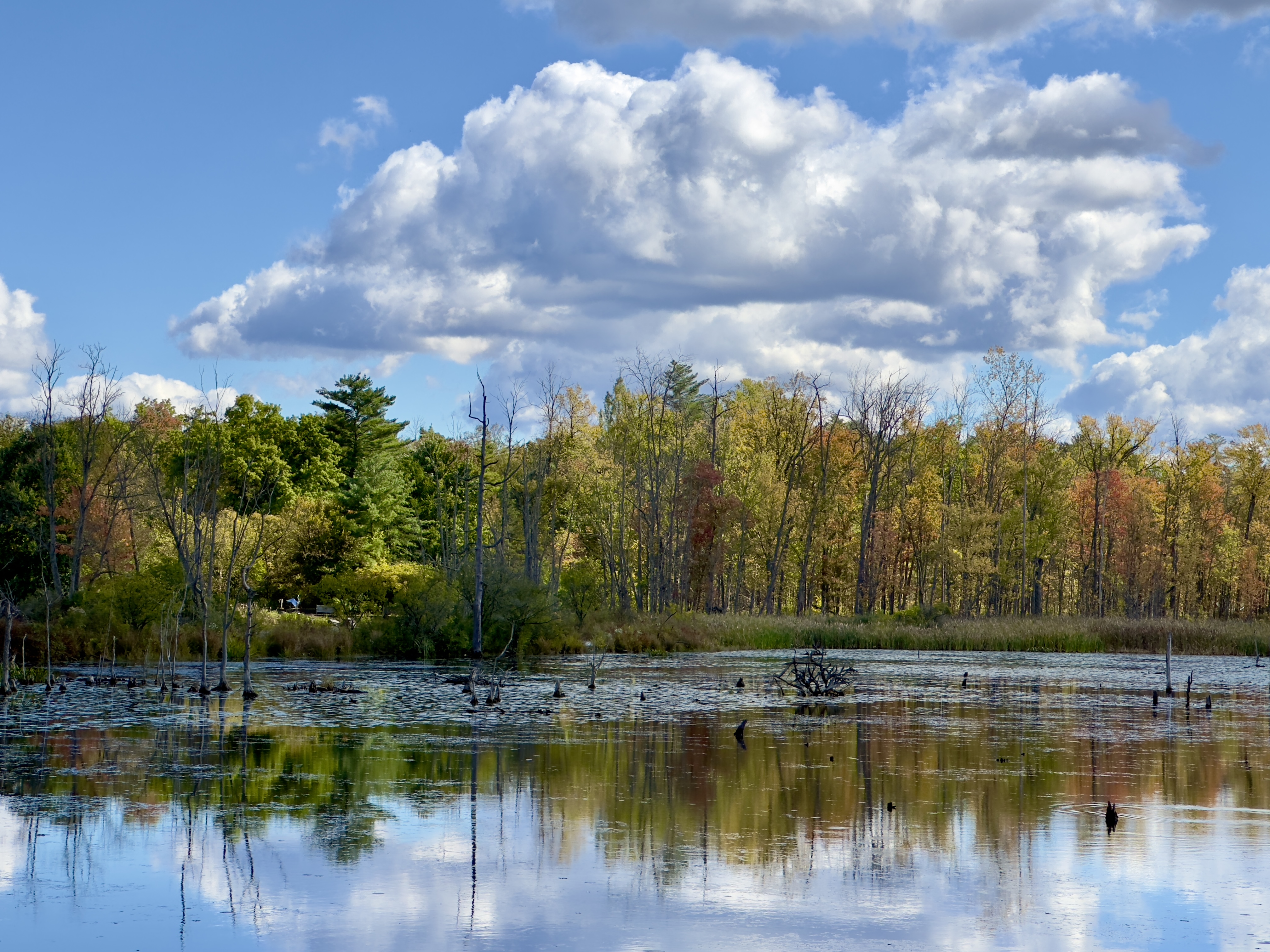
The trail unfolds gently, bordered by cattails and still waters that mirror the sky—a bright blue canvas mottled with soft clouds drifting in and out of the reflections. Fallen leaves float upon the pond’s surface, creating patches of color that seem suspended between water and sky. Nearby, lily pads, green stepping stones over shadowed depths, their edges lit by glittering sunlight. Geese glide by, unbothered, embodying a calm flowing outward, wrapping the whole scene in peace.
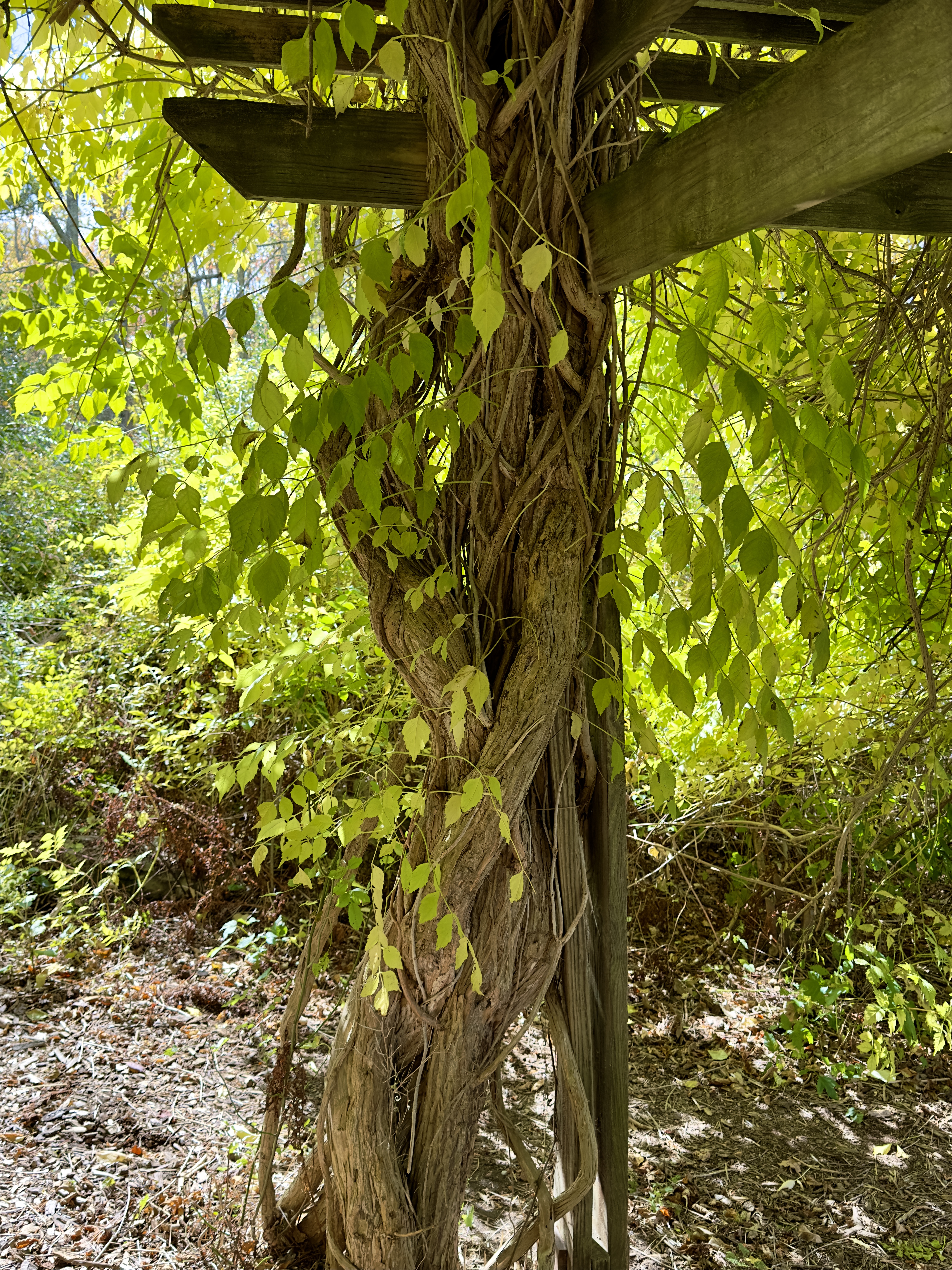
Each step Pam takes is deliberate, accompanied by the steady rhythm of her poles striking the ground. It is the kind of walk that invites contemplation, where time slows, and even the smallest detail—a single yellow leaf spiraling down, a ripple breaking the pond’s surface—feels like an invitation to pause and breathe. She moves from the open path toward a shaded arbor, draped with twisting vines. The vines climb upward, winding around the wooden beams, their leaves creating a soft veil that frames her view of the water beyond. Through this leafy curtain, she gazes upon the pond, where autumn’s reflection glows, offering a quiet moment of solitude, of healing drawn from nature’s persistence.
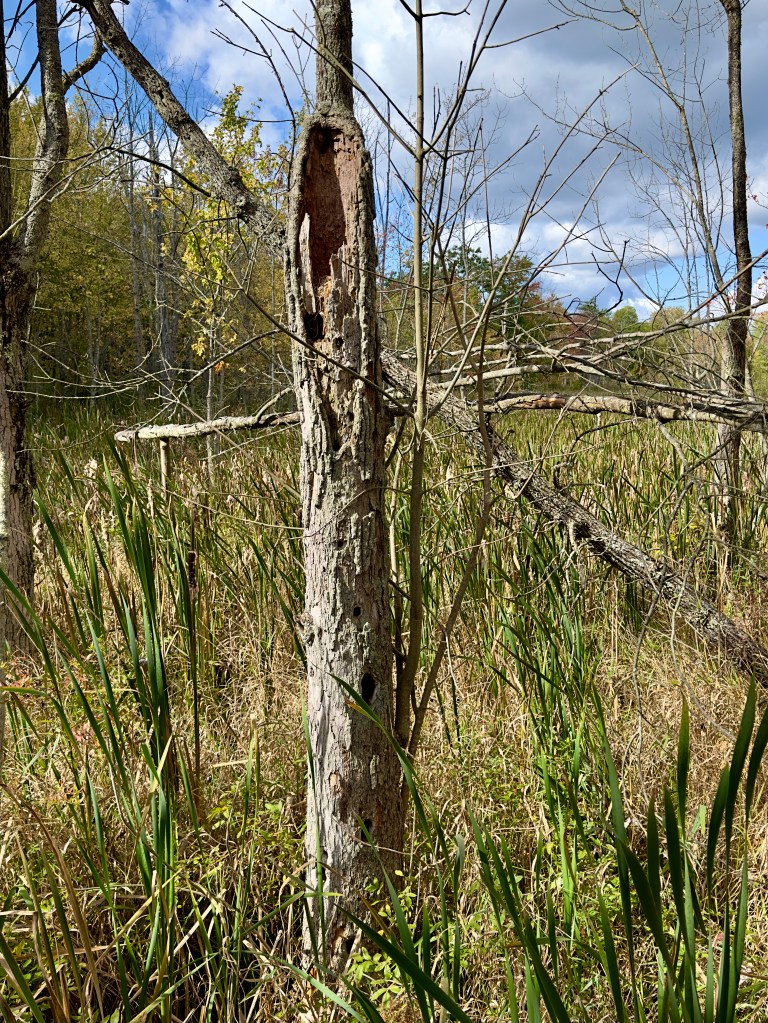
Just beyond, a bare tree stands, its trunk hollowed by years, its exposed wood testament to the life that has passed through it. In its decay, it offers a home to the creatures of the marsh, a structure among reeds and grasses that sway with the wind. The tree reminds Pam of her own journey, how resilience is often found in adapting, in letting time and life shape you.
At last, we reach a bench overlooking the pond, a perfect place to rest and reflect. She settles in, feeling the quiet thrill of accomplishment. The woods are still, save for the sound of a breeze rustling the reeds and the occasional bird song piercing the silence. In this moment, with the vast sky overhead and the world reflected below, she feels a profound sense of gratitude—not only for the beauty around her but for the strength within her. Sapsucker Woods are a personal cathedral, a space where nature and recovery intertwine, offering peace in every step, in every breath.
Enter your email to receive notification of future postings. I will not sell or share your email address.
Copyright 2024 All Rights Reserved Michael Stephen Wills
Enjoy a memorable visit to Lime Hollow Nature Preserve by a grandfather and his grandsons, exploring nature, observing wildlife, and connecting through shared experiences, fostering curiosity and appreciation for the environment.
The October sunlight was gentle as we entered Lime Hollow Nature Preserve from Gracie Road, my grandsons, Sam and Rory, bursting with excitement beside me. Sam, the eldest, took the lead, confidently striding ahead along the Sunset Trail while Rory, his younger brother, stayed close to my side, his eyes wide with wonder at the forest around us.
Descent to the Pond
The trail wound through the woods, dappled with the golds and reds of early autumn. Sam spotted a squirrel darting between trees, and Rory pointed to the sky, “Look, Grandpa, a woodpecker!” I smiled at their enthusiasm, feeling grateful for these moments of connection to nature and family.
We descended toward the pond via the Pond View Trail, the sound of trickling water drawing us closer. As we approached, the landscape opened up, revealing the calm, reflective surface of the water, bordered by reeds swaying in the light breeze. I remembered bringing the boys here last spring, how different the pond looked then—brimming with life as frogs leapt from the banks and dragonflies zipped across the water’s surface. Today, the scene was quieter, but no less magical.
Rory, ever the adventurer, crouched by the pond’s edge, watching for frogs. Sam, too, paused to observe but soon grew restless, his curiosity pushing him onward. “Come on, Grandpa! Let’s see what’s next!” His voice echoed through the trees as he darted back onto the trail, Rory quick to follow.
Encounter with the Giant Fungus
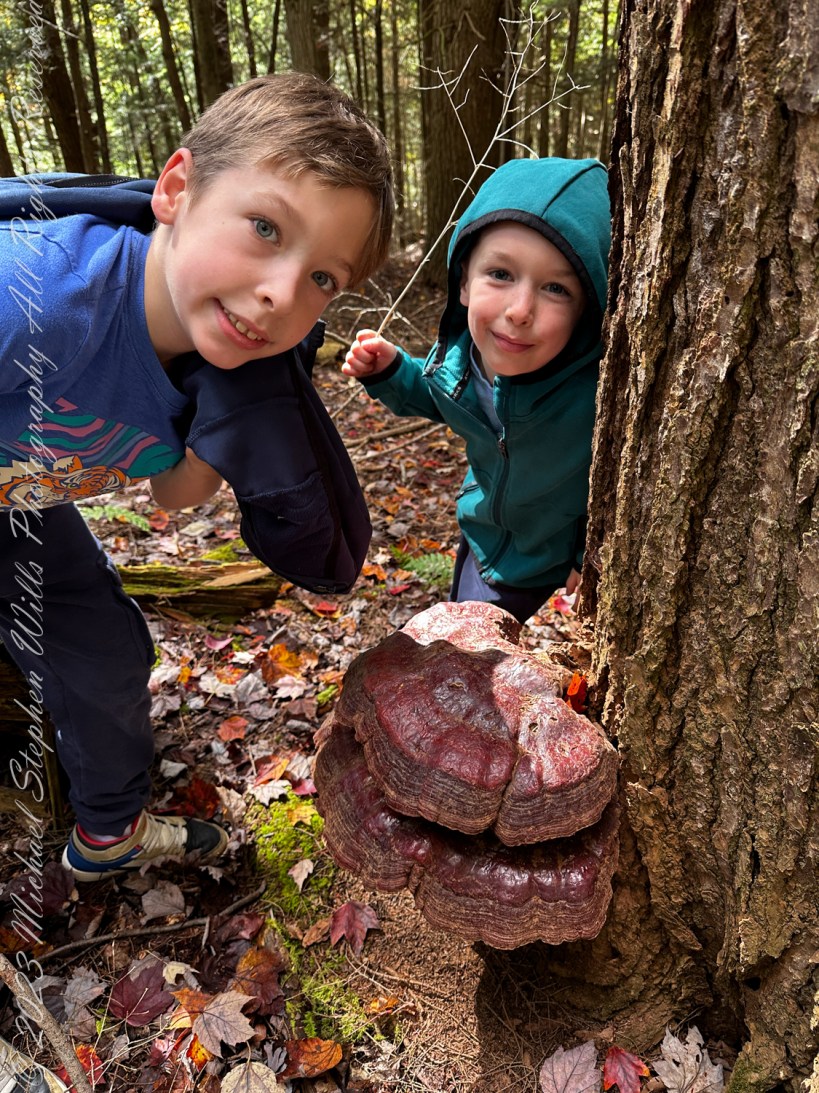
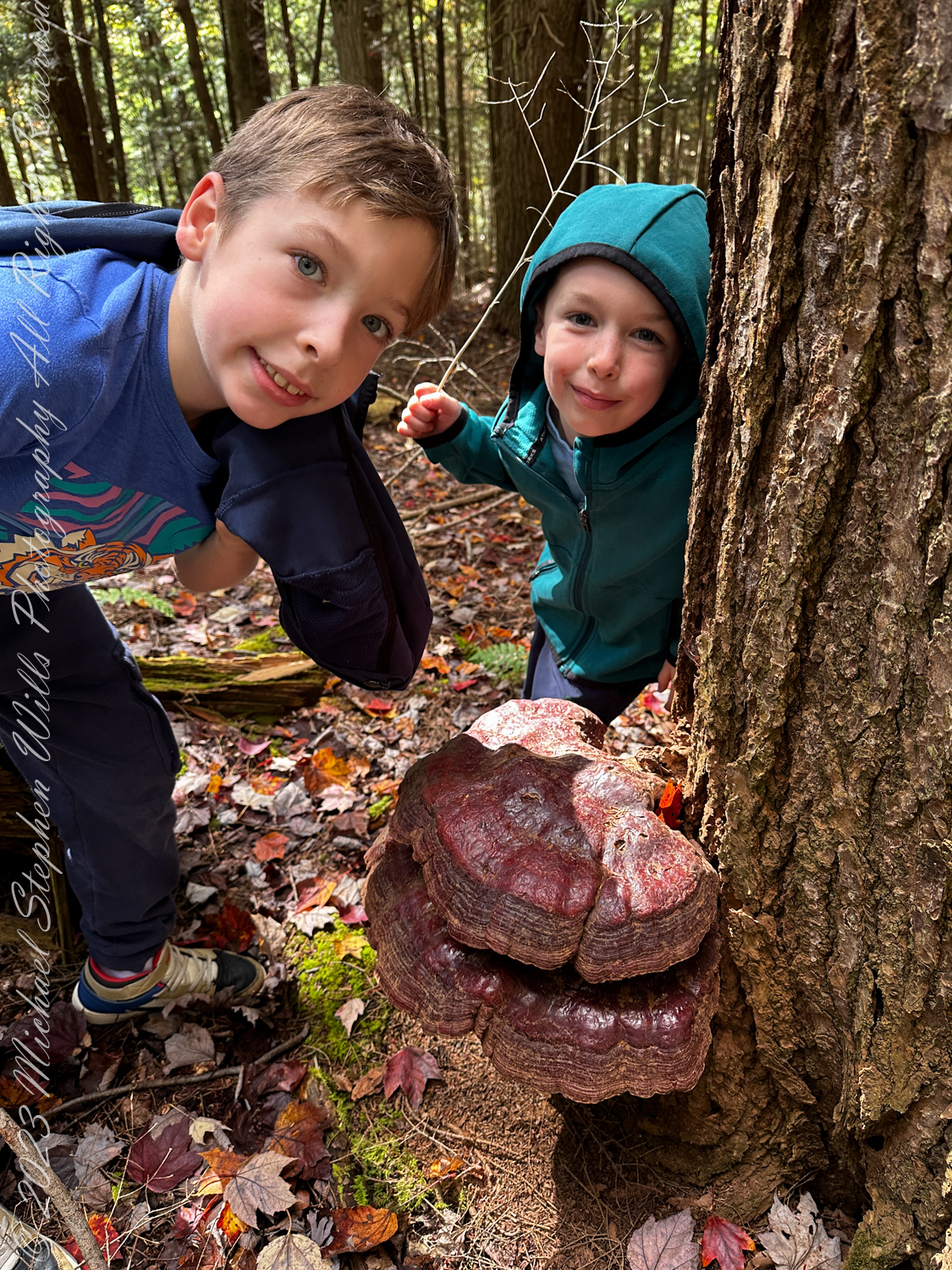
The path led us deeper into the forest, and soon we turned onto the Brookside Trail, which merged with the High Ridge Trail. Here, the air grew cooler under the dense canopy of trees, and the forest floor softened beneath our feet with layers of leaves. It was then that we stumbled upon the most magnificent sight of the day: an enormous bracket fungus, its wide, layered shelves clinging to the trunk a hoary snag.
Rory gasped in delight, running over to inspect it more closely. “Look how big it is!” he exclaimed, his small hands hovering just above its ridged surface. Sam, never one to be outdone, knelt beside it, carefully touching the spongy layers. “It’s a staircase for squirrels,” he said, grinning up at me.
Turkey Tail bracket fungus (Trametes versicolor) is a common wood decay fungus found on dead and decaying hardwoods. Named for its concentric, colorful bands resembling a turkey’s tail, it plays a vital role in forest ecosystems by breaking down lignin, facilitating nutrient recycling. It’s also valued for its medicinal properties. Lime Hollow Nature Center, Cortland, Cortland County, New York State. Finger Lakes Regions
As I watched them, I couldn’t help but think back to all the times I had wandered these trails alone before they were born. Now, these woods had become a classroom for them—full of discoveries that sparked their curiosity and wonder. It was a beautiful moment of generational connection, this passing on of my love for the natural world to Sam and Rory.
Fascinating Beech Tree Roots
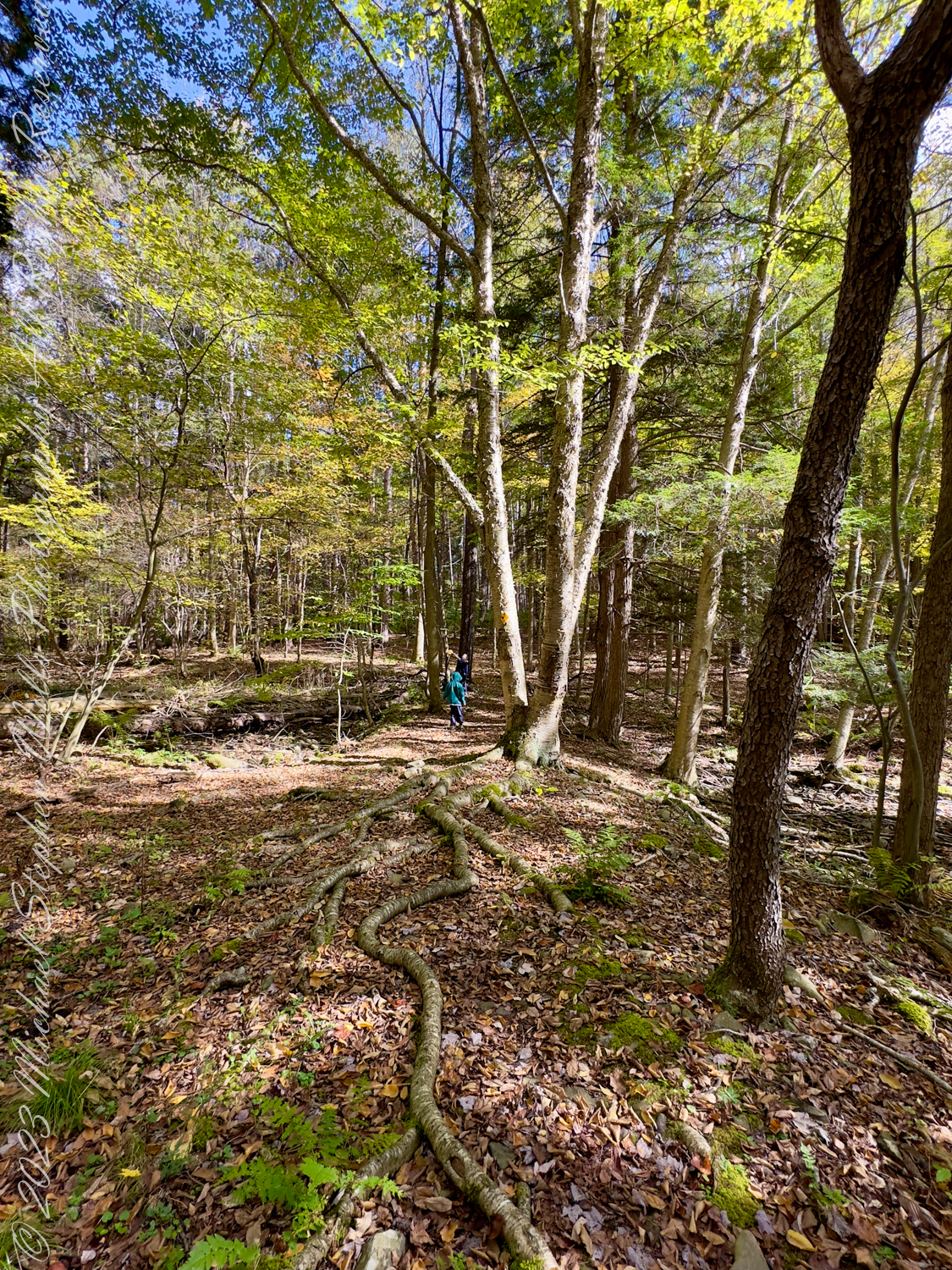
On the way out, we took the Brookside / Pond View / Sunset trails once again, but this time, this intricate network of roots from a massive beech tree fascinated us. The roots twisted and coiled across the path like veins, in our imaginations the gnarled shapes snagged our feet. Sam, ever the explorer, stepped cautiously along the roots, balancing himself as if walking a tightrope. Rory followed suit, his giggles filling the air.
An American beech (Fagus grandifolia). These trees are quite common in northeastern forests. The beech tree is known for its smooth smooth, gray bark, which can become marked with scars or etchings as the tree ages. Additionally, its leaves are typically dark green, with serrated edges, and turn yellow to bronze in the fall, often staying on the tree through winter. Lime Hollow Nature Center, Cortland, New York State
“These roots are older than us,” I told them. “Beech trees can live for hundreds of years. Just think, this tree has seen many more seasons than we ever will.”
Sam’s eyes widened at the thought, while Rory gave the tree a gentle pat, as if to thank it for its wisdom. I marveled at how something as simple as a root system could captivate their imaginations and bring the lesson of time and growth to life.
Reminiscing on the Chicago Bog
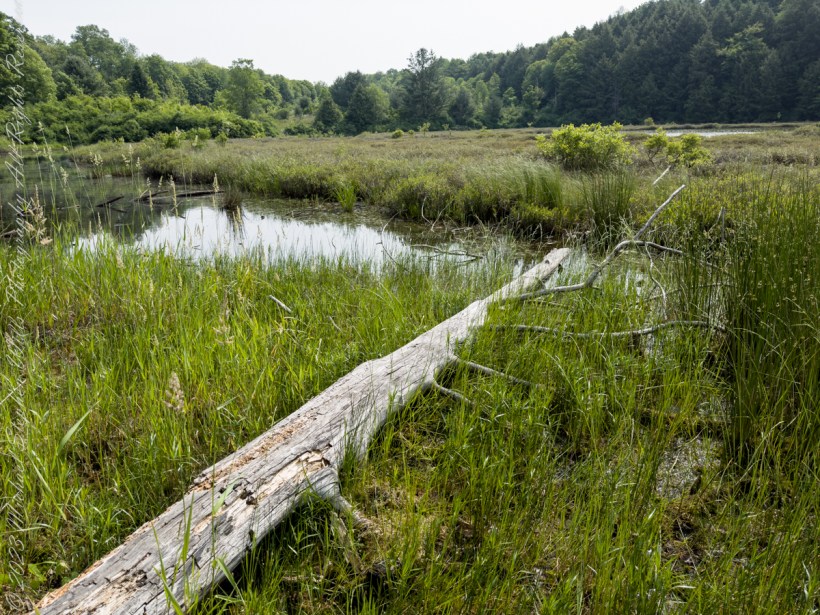
In the 1830’s there was a village named Chicago along Gracie Road, which gives it the name we have today. The Chicago Bog is home to many carnivorous plants, including sundew, the pitcher plant, and more. The deepest depth of the bog is about 7.2 ft. The bog is along the Phillips Memorial Trail, which can be found on Gracie Road. Lime Hollow Nature Center, Cortland, New York
As we walked, my mind wandered back to a visit we had made to the Chicago Bog just a year before. I remembered the day clearly—how we had trekked through the wetland on a warm June afternoon, the ground soft beneath our feet, alive with the buzzing of insects and the vibrant green of new growth.
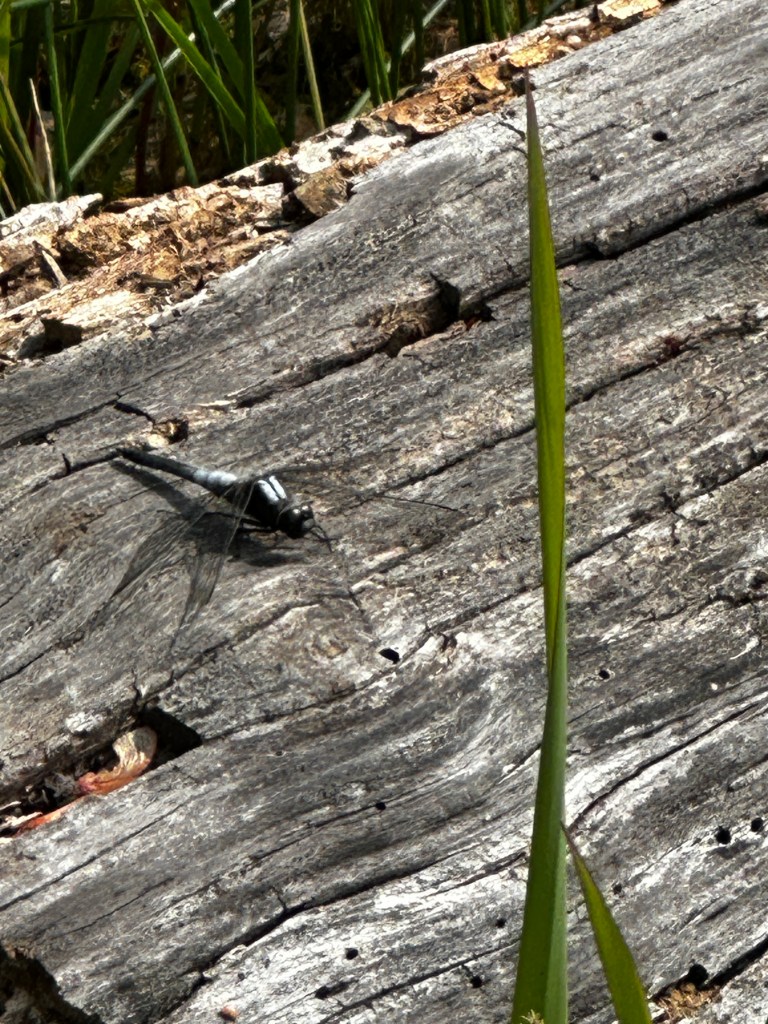
The chalk-fronted corporal (Ladona julia) is a skimmer dragonfly found in the northern United States and southern Canada. Juveniles of both sexes are light reddish brown, with white shoulder stripes and a black stripe down the middle of the abdomen. As they mature, males develop a white pruinescence on the top of the thorax and at the base of the abdomen, while the rest of the abdomen turns black. Females become almost uniformly dark brown, with a dusting of gray pruinescence near the base of the abdomen; a few develop the same color pattern as the males. Chalk-fronted corporals often perch horizontally on the ground or on floating objects in the water, flying up to take prey from the air. They are gregarious for dragonflies, and are commonly seen perching in groups. They readily approach humans to feed on the mosquitoes and biting flies that humans attract.
It was there, by the edge of the bog, that we had encountered a dragonfly, a Chalk-fronted Corporal, resting on a fallen log. Its dark, iridescent wings shimmered in the sunlight, and Sam had been mesmerized by its delicate beauty. He had asked so many questions that day—about how dragonflies flew, what they ate, and where they lived. I had done my best to answer, but truth be told, I learned as much as he did in that moment.
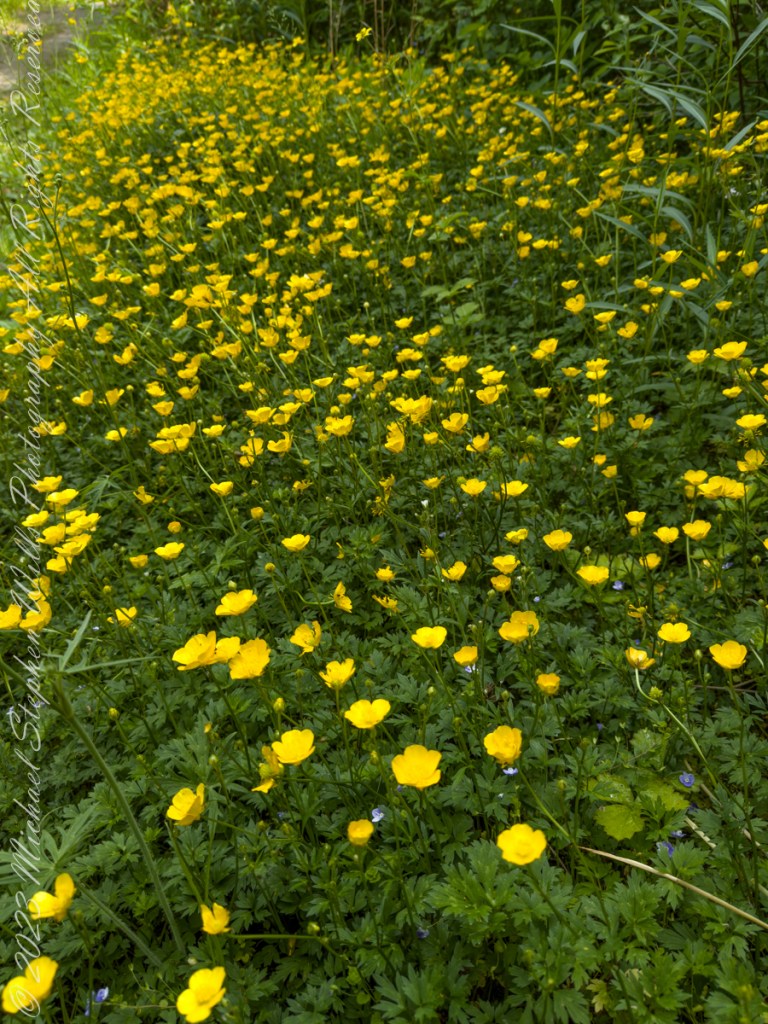
Nearby, a meadow of buttercups had stretched out before us, their yellow blooms dancing in the breeze. Rory had run through them, his laughter ringing out as he tried to catch a butterfly that flitted between the flowers. The memory of that field of gold still brought a smile to my face as we made our way through Lime Hollow today.
A Day to Remember
As we neared the end of our hike, the afternoon light filtering through the trees, I couldn’t help but feel a sense of contentment. These outings with Sam and Rory had become more than just walks in the woods—they were opportunities to share, to learn, and to make memories that I knew would last a lifetime.
“Grandpa, can we come back?” Rory asked, his face flushed with excitement.
“Of course,” I said, smiling. “We’ll always have time for another adventure.”
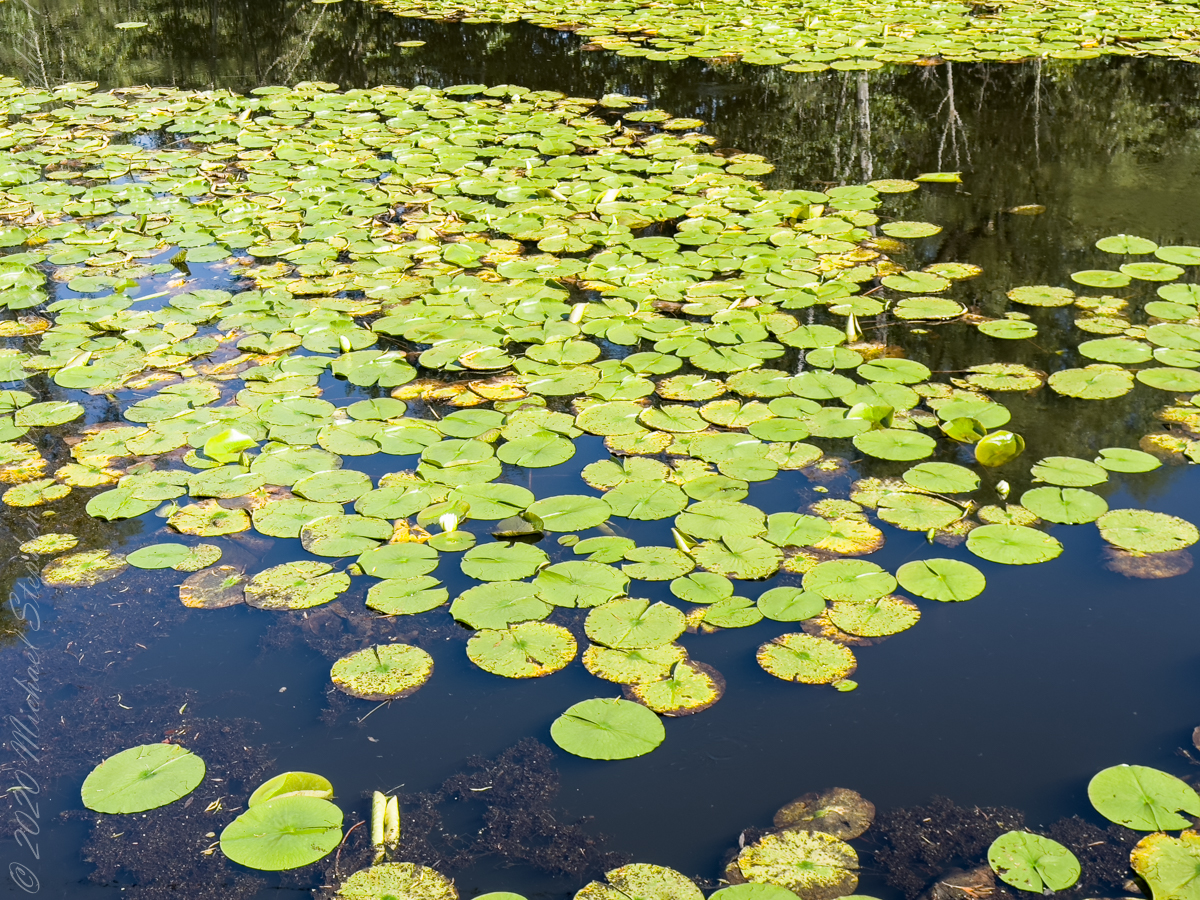
Thursday last, grandsons Sam and Rory and I visited Sapsucker Woods, enjoying a late summer morning we clambered onto a wooden platform over a watery swamp.
Look closely for flowers and buds of the White Water Lily native to New York State.
Although the young leaves of White Water-lily reportedly can be boiled and served as a vegetable, the main human use of this plant appears to have been medicinal. Native Americans used it as a herbal remedy for a variety of ailments, including colds, tuberculosis, bronchial complaints, toothaches, and mouth sores.
The many names for this plant: American White Waterlily, American White Water-lily, Fragrant Water-lily, Fragrant White Water Lily, Fragrant White Water-lily, Sweet Water-lily, Sweet-scented Water Lily, Sweet-scented White Waterlily, Tompkins County, Water, Water Lily, Waterlily, White Water Lily, White Waterlily, White Water-lily (Nymphaea odorata ssp. odorata)
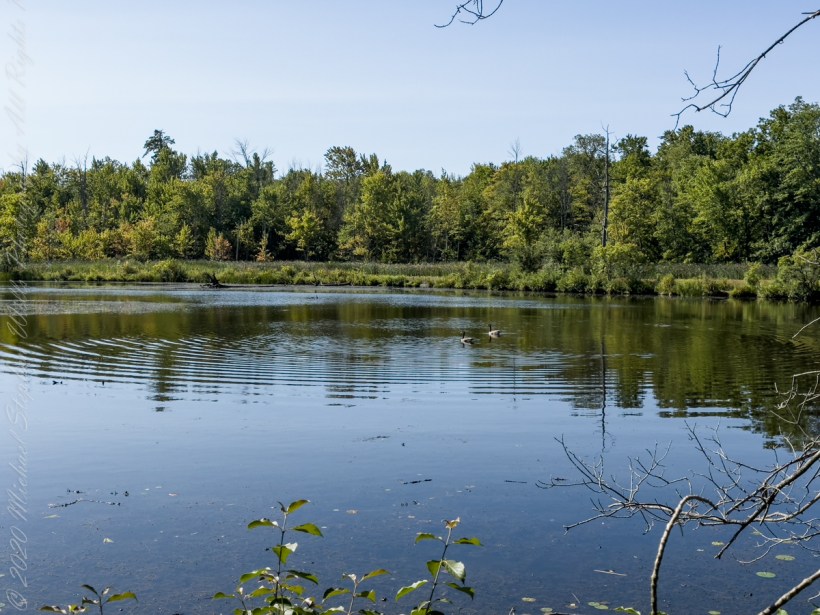
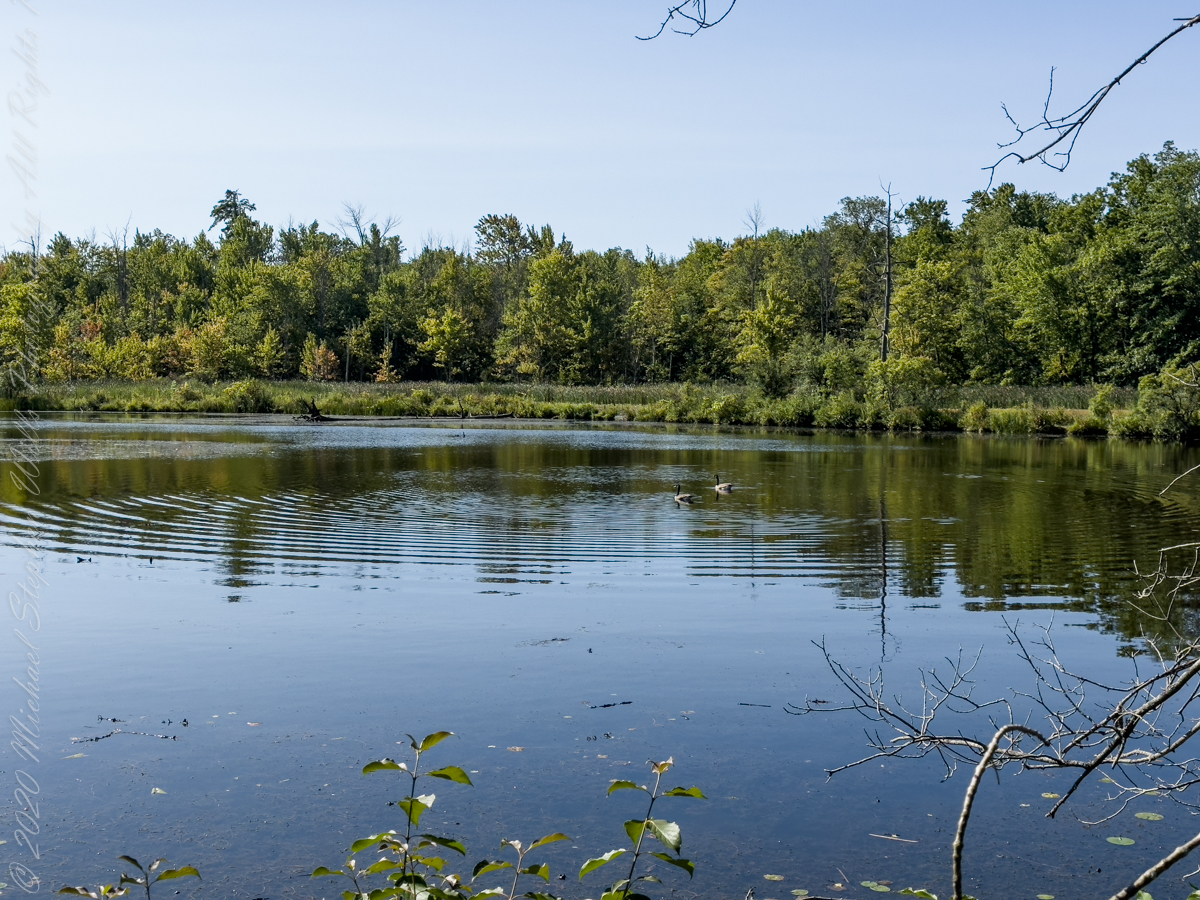
Thursday last, grandsons Sam and Rory and I visited Sapsucker Woods, enjoying a late summer morning. From the north side on Wilson Trail, these Canada geese landed on the pond.
In North America, nonmigratory Canada goose populations have been on the rise. The species is frequently found on golf courses, parking lots, and urban parks, which would have previously hosted only migratory geese on rare occasions.
Owing to its adaptability to human-altered areas, it has become one of the most common waterfowl species in North America. In many areas, nonmigratory Canada geese are now regarded as pests by humans.
They are suspected of being a cause of an increase in high fecal coliforms at beaches. An extended hunting season, deploying noise makers, and hazing by dogs have been used to disrupt suspect flocks.
A goal of conservationists has been to focus hunting on the nonmigratory populations (which tend to be larger and more of a nuisance) as opposed to migratory flocks showing natural behavior, which may be rarer.
Pam and I ambled around the Arboretum for our Easter 2023 outing. A type of sandstone popular with Cornell monument builders, called “Lenroc” after a mansion build by Cornell’s founder, was used for these benches built into the hillside of the FR Newman Arboretum. The views are more interesting than the bench, the arch of stone in midground in one photo.
All photography using the IPhone 14 ProMax triple camera, raw format, edited on the phone.
The stone is mined locally from surrounding hills. Calling it “Lenroc” (Cornell spelled backward) is a misnomer as the stone is mined widely throughout the region.
Feldspathic Greywacke
“Bluestone from Pennsylvania and New York is a sandstone defined as feldspathic greywacke. The sand-sized grains from which bluestone is constituted were deposited in the Catskill Delta during the Middle to Upper Devonian Period of the Paleozoic Era, approximately 370 to 345 million years ago…..
Glacial Landscape on an early spring day, Easter 2023
Textures
…The Catskill Delta was created from runoff from the Acadian Mountains (“Ancestral Appalachians”). This delta ran in a narrow band from southwest to northeast and today provides the bluestone quarried from the Catskill Mountains and Northeastern Pennsylvania. The term “bluestone” is derived from a deep-blue-colored sandstone first found in Ulster County, New York.”
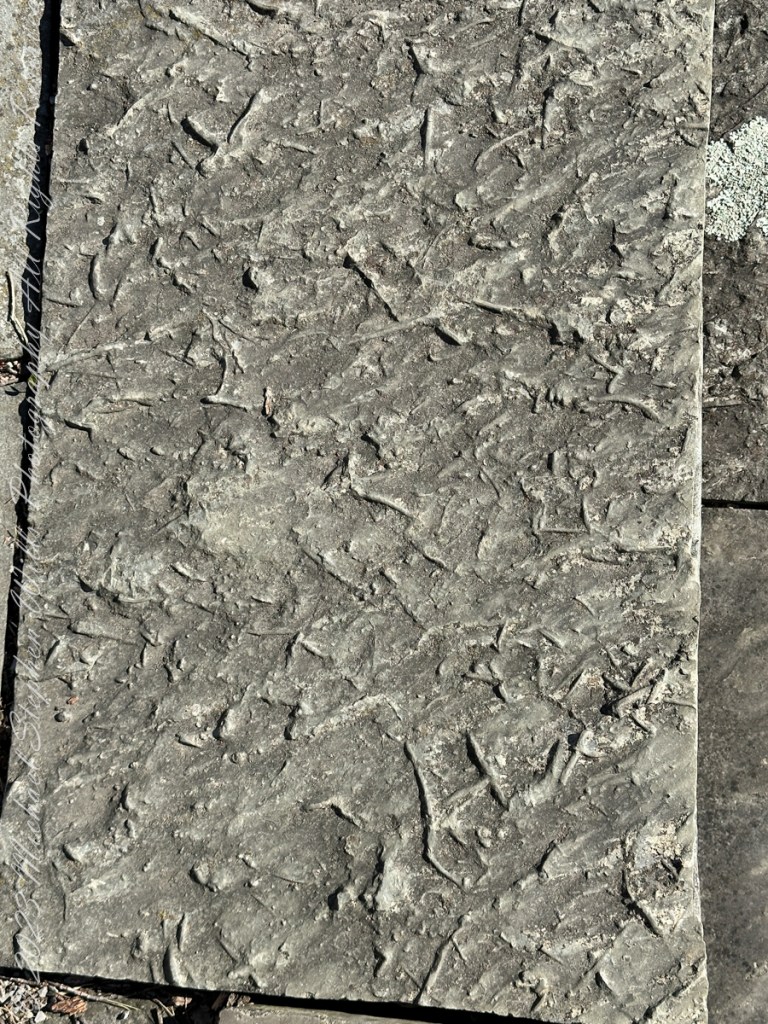
You can feel the origin of this bluestone from these macros of two pavers from a monument bench.
Reference: “Bluestone” Wikipedia.
Copyright 2023 Michael Stephen Wills All Rights Reserved








 Michael Stephen Wills Photography