A Serendipitous Meeting: The Hermit Crab and the Moon Snail

Washed up together on a sunlit shore, a hermit crab and a Moon Snail tell an extraordinary tale of survival and resilience in the vast ocean. Discover how these unlikely companions reveal the intricate dance of life beneath the waves and the profound connections that bind marine ecosystems. Dive into their captivating story and uncover the secrets of their intertwined destinies.

The high tide left behind a myriad of treasures scattered along the shore. Among the shells and seaweed, two unlikely companions lay side by side—a Moon Snail and a hermit crab. This serendipitous meeting speaks volumes about the intricate dance of life in the ocean’s depths.

Life Beneath the Waves

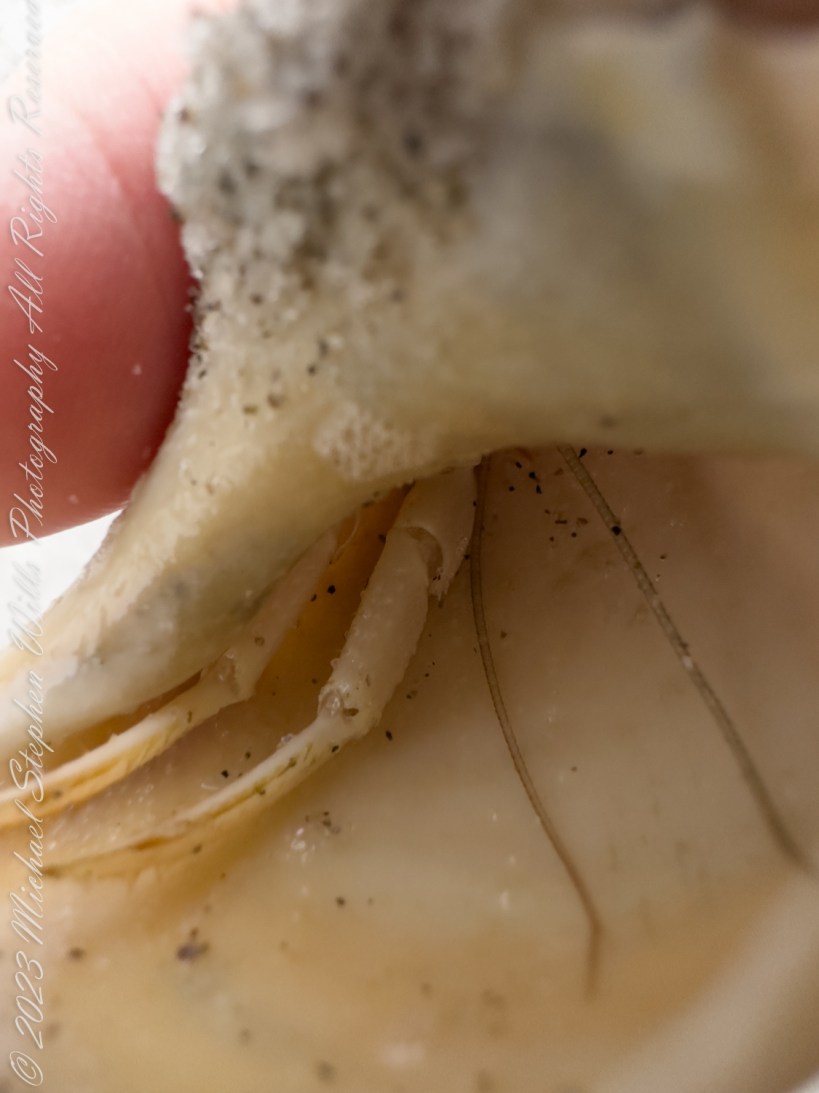
Hermit crabs are fascinating creatures, exhibiting behaviors and adaptations that ensure their survival in the ever-changing marine environment. These crabs are not born with shells. Instead, they scavenge for empty shells discarded by snails, meticulously choosing the perfect fit. The shells provide essential protection against predators and environmental hazards.
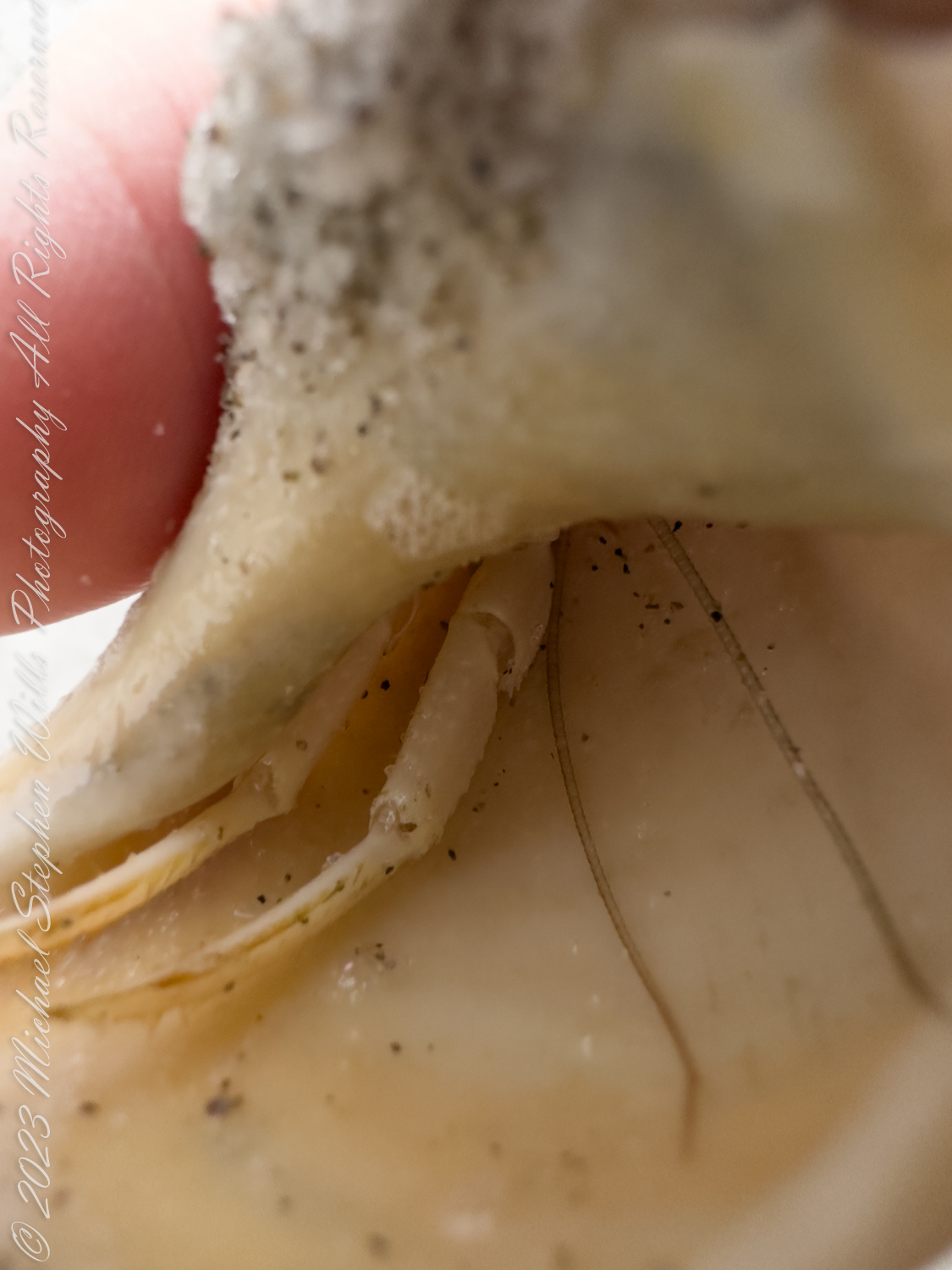
In their early life stages, hermit crabs undergo a series of molts, shedding their exoskeletons to grow. Each molt presents a critical opportunity to upgrade their shell, moving to a larger one as they increase in size. This constant need for new housing drives a competitive dynamic among hermit crabs, with individuals often engaging in “shell exchanges” where one crab may forcibly evict another from its shell.

The Hermit and the Moon Snail

The Moon Snail, known scientifically as Neverita duplicata, is a predatory mollusk famous for its distinctive, moon-shaped shell. These snails are both feared and admired in the marine community for their voracious appetite and remarkable hunting tactics. They drill into the shells of their prey, typically other mollusks, using a specialized appendage called a radula, combined with acidic secretions to bore through the hard exterior. Click me for another post with more information about the Moon Snail.
The juxtaposition of the Moon Snail and the hermit crab washed up together is a tableau that invites deeper contemplation. How did these two distinct beings come to share the same stretch of sand?

A Dance of Survival

It’s likely that the hermit crab, in its search for a suitable home, found itself in the proximity of the Moon Snail. The Moon Snail, a relentless hunter, could have been following its own trail of prey when the tide caught them both off guard. The ocean’s currents, indifferent to their individual struggles, deposited them together on the beach, a fleeting moment of stillness in their otherwise tumultuous lives.

This meeting is a stark reminder of the interconnectedness of marine life. The hermit crab relies on the discarded shells of snails for survival, while the Moon Snail’s role as a predator keeps the balance in check, ensuring that no single species dominates the ecosystem.

Reflections on Resilience

The image of the hermit crab within its borrowed shell speaks to the resilience and adaptability inherent in nature. These crabs are perpetual nomads, continually seeking, adapting, and thriving in environments that can be both generous and harsh. Their survival hinges on their ability to repurpose and reuse, a lesson in resourcefulness that resonates beyond the tidepools.

The Moon Snail, with its powerful drilling capabilities, exemplifies the raw force of nature. Its presence is a reminder of the predatory relationships that underpin marine ecosystems, driving evolution and diversity through a relentless cycle of life and death.

The Final Tide

As we ponder the scene before us, it’s worth considering the broader implications of these two creatures’ lives. The ocean, vast and unfathomable, is a realm where survival is an art form, honed by millennia of adaptation. The hermit crab and the Moon Snail, though vastly different in form and function, share a common thread—their existence is a testament to the delicate balance of nature.

The hermit crab’s journey, from shell to shell, mirrors our own quests for security and stability. The Moon Snail’s predatory prowess underscores the inevitable challenges we face. Together, they remind us that life, in all its forms, is a continuous interplay of seeking and surviving, of finding and losing, of moments of stillness and sudden change.

In the end, the hermit crab and the Moon Snail, brought together by the whims of the tide, offer a glimpse into the profound and often unseen connections that weave the tapestry of life beneath the waves. Their story is a poignant reflection on resilience, adaptability, and the ever-present dance of survival that defines the natural world.
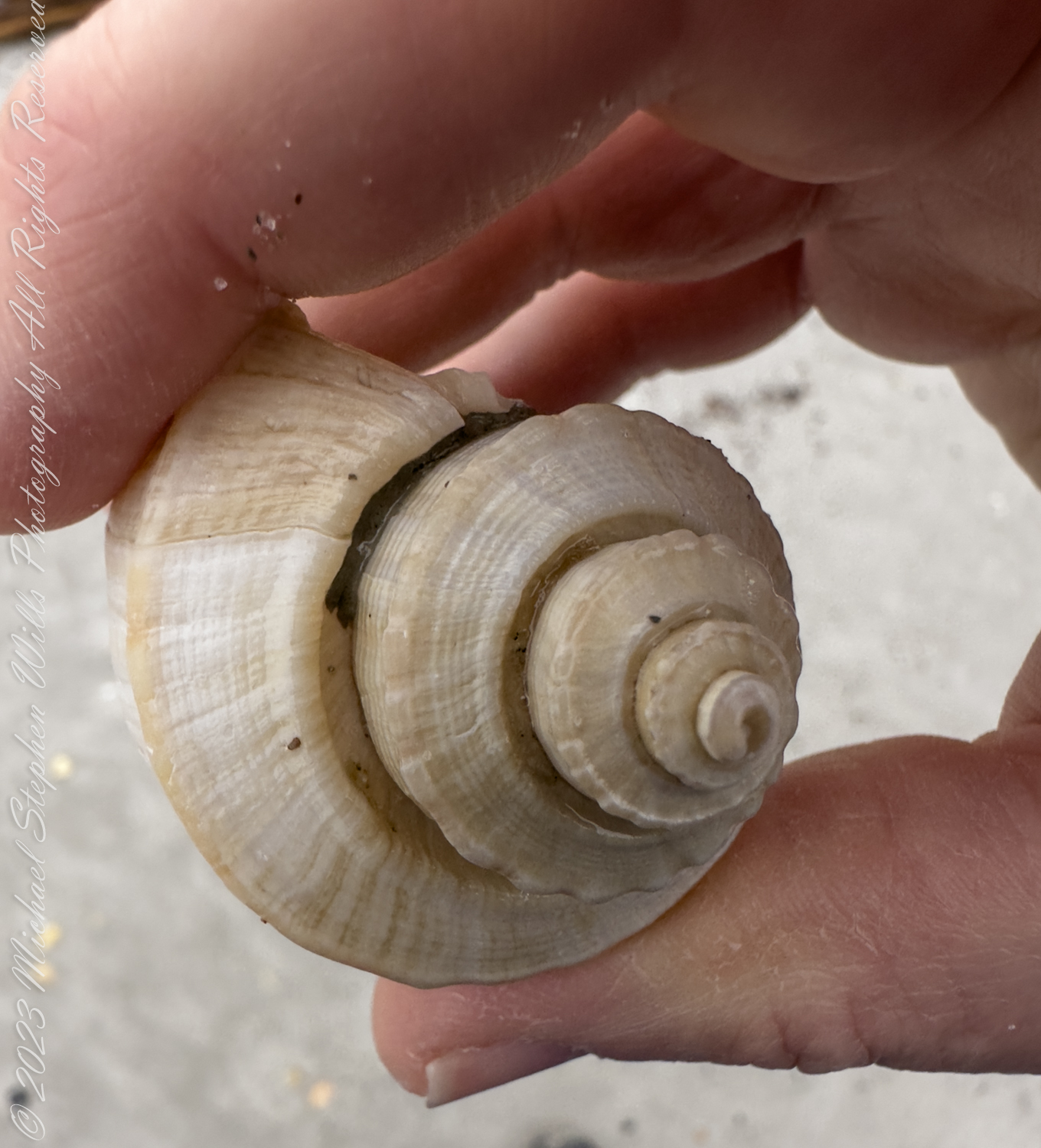
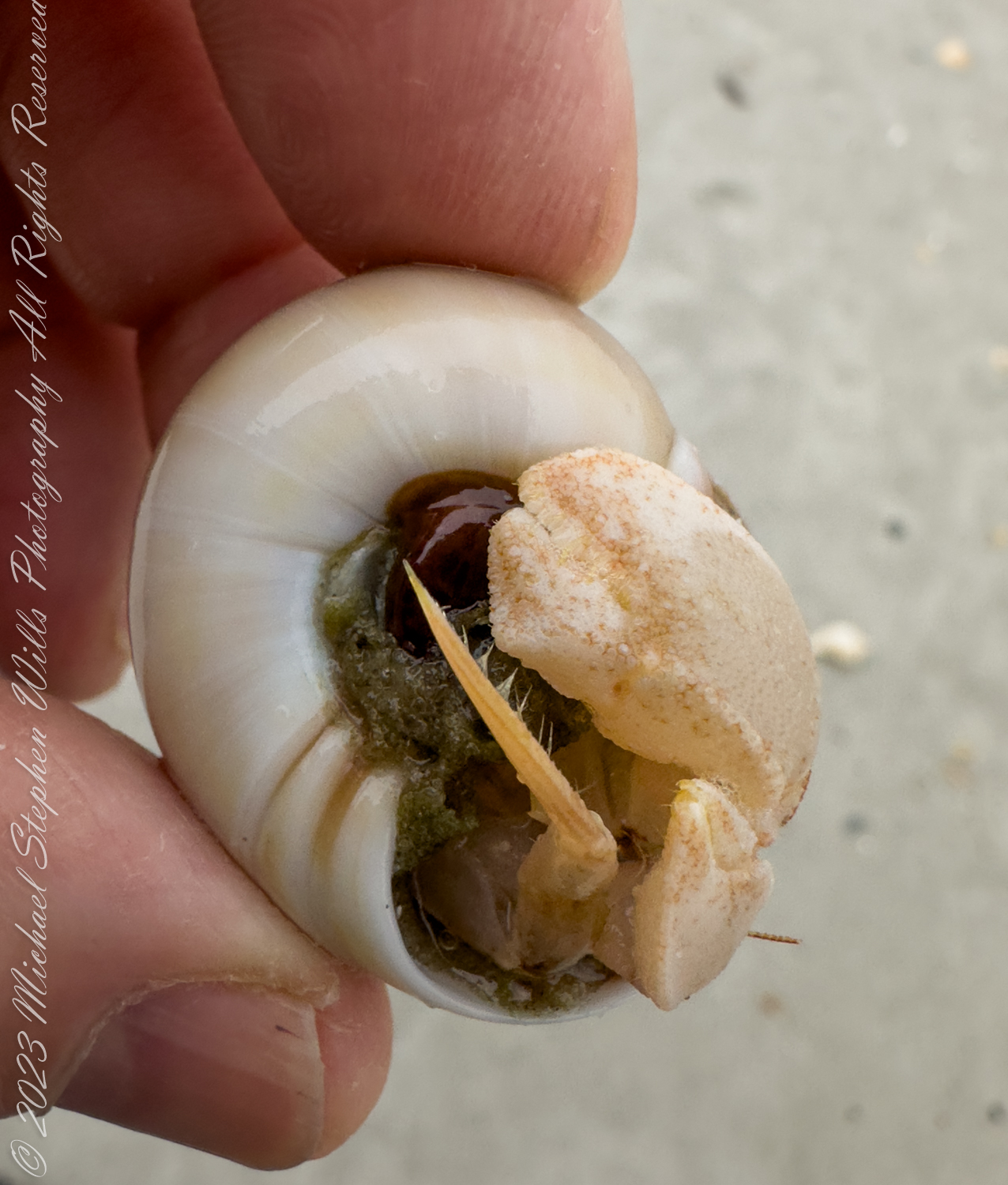
A top view of the shell occupied by a Hermit Crab found on Cocoa Beach, Brevard County, Florida. The Space Coast.

An Uncertain Identification

The identification of our hermit crab companion is made challenging by the absence of one of its claws, a vital characteristic for precise classification. This missing claw hints at the hardships faced by hermit crabs in their dynamic and sometimes perilous environments. Whether lost in a struggle with a predator or another hermit crab, this detail serves as a reminder of the tenacity and resilience required for survival in the marine world. While the exact species remains a mystery, the broader story of the hermit crab’s life and survival remains clear and compelling.
Copyright 2024 Michael Stephen Wills All Rights Reserved

A Beachcomber’s Musings on Floridian Dune Ecology

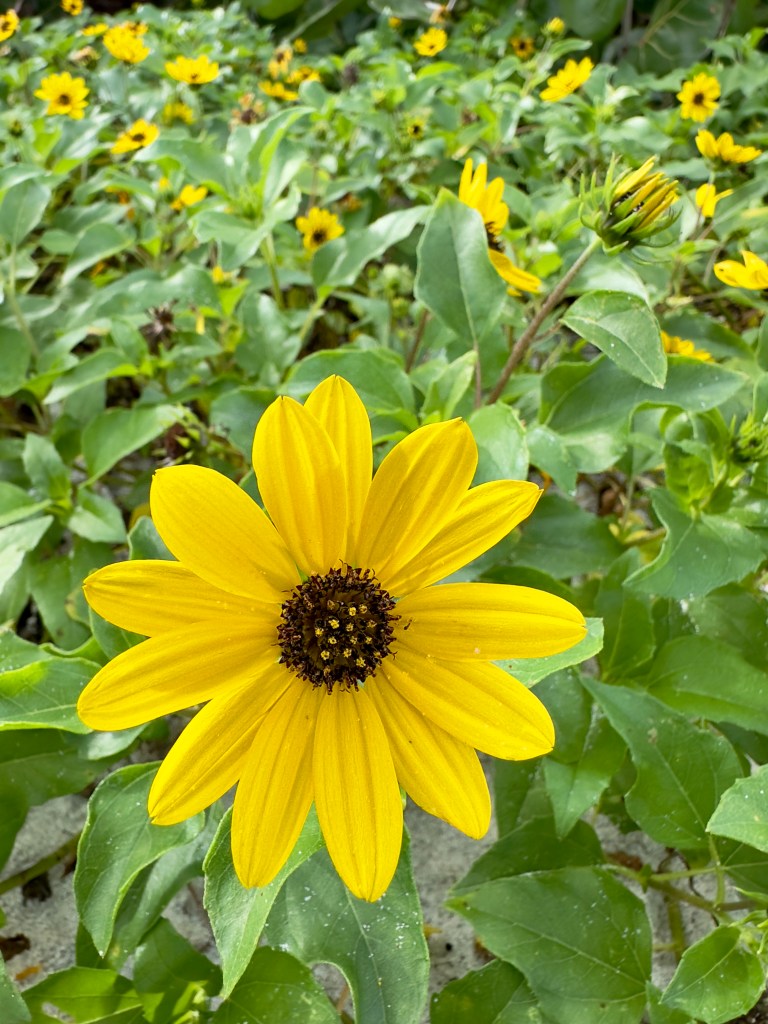
Discover the resilient beauty of Florida’s dune sunflowers through the eyes of a beachcomber. Uncover the secrets of Helianthus debilis, a symbol of hope thriving where sea meets sand. Join the coastal dance of life.

Encounter with Helianthus debilis


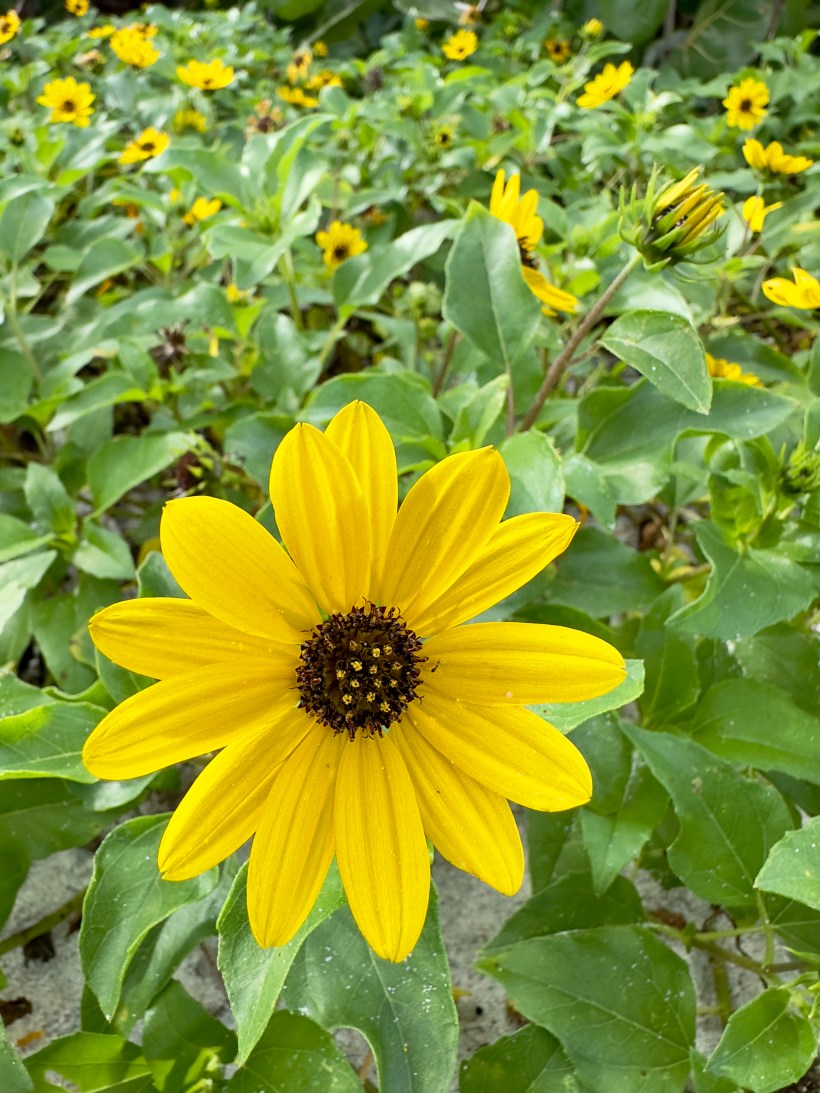
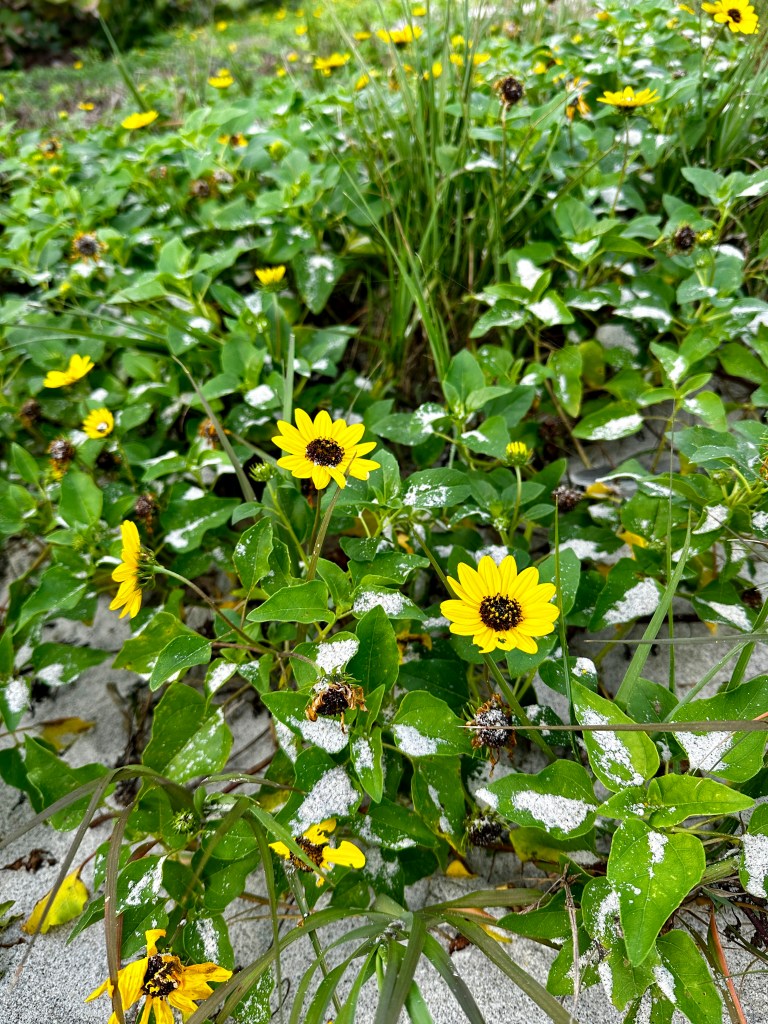
Strolling along the beachfront of Patrick Space Force Base, Florida, my gaze is captivated by a cluster of dune sunflowers, or Helianthus debilis. These hardy perennials are native to the coastal sand dunes of the southeastern United States and have made a home amidst the sandy grains where few dare to take root.

The Sunflower’s Domain


Helianthus debilis, distinguished by its large, yellow ray florets and dark center disks, thrives in this challenging environment. The dunes provide a unique ecosystem, where the sunflowers can withstand high salinity, shifting sands, and the full force of the sun’s rays. Their deep root systems anchor the sandy soil, helping to prevent erosion and maintain the integrity of the dune landscape.

Adaptation and Survival


The dune sunflower’s adaptation to its coastal environment is a marvel of nature. Its silvery-green leaves are covered with tiny hairs, reflecting sunlight and conserving moisture. The flowers bloom throughout the year, ensuring a constant presence of color along the dunes. Their hardiness is a testament to the sunflower’s evolutionary success in a habitat where freshwater is scarce and the soil is nutrient-poor.

A Native’s Role in the Ecosystem


As a native species, the dune sunflower plays a crucial role in the coastal ecosystem. It serves as a food source for local wildlife, including insects and birds, and its presence helps stabilize dune formations. The ecological value of Helianthus debilis extends beyond its beauty, as it contributes to the biodiversity and resilience of the coastal dunes.

The Dynamics of Dune Life


The life of a dune sunflower is inextricably linked to the ebb and flow of the coastal environment. Each plant is a microhabitat, supporting a range of organisms from the larvae of the dune butterfly to the burrowing beetles that find refuge in the sand. The interaction between the sunflowers and these creatures creates a dynamic web of life, each species depending on the others for survival.

Reflections on Resilience


The dune sunflower’s ability to flourish in such an austere environment is a profound reminder of the resilience of nature. As I observe the sunflowers, I am struck by their tenacity, their willingness to face the elements head-on. They are a beacon of life in a place where existence is a daily challenge, and their perseverance is a lesson in the art of endurance.

Conclusion: A Testament to Nature’s Ingenuity


As the sun begins to set, casting a warm glow over the dunes, I take a final look at the Helianthus debilis. Their scientific wonders and ecological im portance leave a lasting impression. They are not just flowers; they are a testament to nature’s ingenuity, an embodiment of the delicate balance between life and the environment. These dune sunflowers are a symbol of hope, a reminder that in the face of adversity, life finds a way to not just survive, but to thrive.

Copyright 2024 Michael Stephen Wills All Rights Reserved

Juniper Sunrise

crack of dawn

In this post we start the day of my posting “Family Trek, July 19, 2008, when, well before the sun rose at 6:23 am Mountain Daylight Time (the Navajo Reservation observes daylight savings, the rest of Arizona does not), Pam and I were at the Spider Rock Overlook.

Most visitors to the canyon make use of a system of roads and parking lots next to strategic views.  There is the White House Overlook we visited our first day, July 18, to hike from the trailhead into the canyon.  There are also, on the south side of the canyon:

  • Tsegi Overlook, taken from a Navajo word that translates directly to “between the rocks” and usually refers to a deep canyon with steep cliffs.
  • Junction Overlook above the point where Canyon Del Muerto (see my posting “Sun and Shade, Canyon Del Muerto”, and Canyon De Chelly intersect.  There is an Anasazi ruin in the south-facing cliff across the canyon.
  • Sliding House Overlook, another Anasazi run across the canyon.
  • Face Rock Overlook, to view the eponymous formation.
  • Spider Rock Overlook, the most stunning rock formation. 
Sunrise Canyon De Chelly
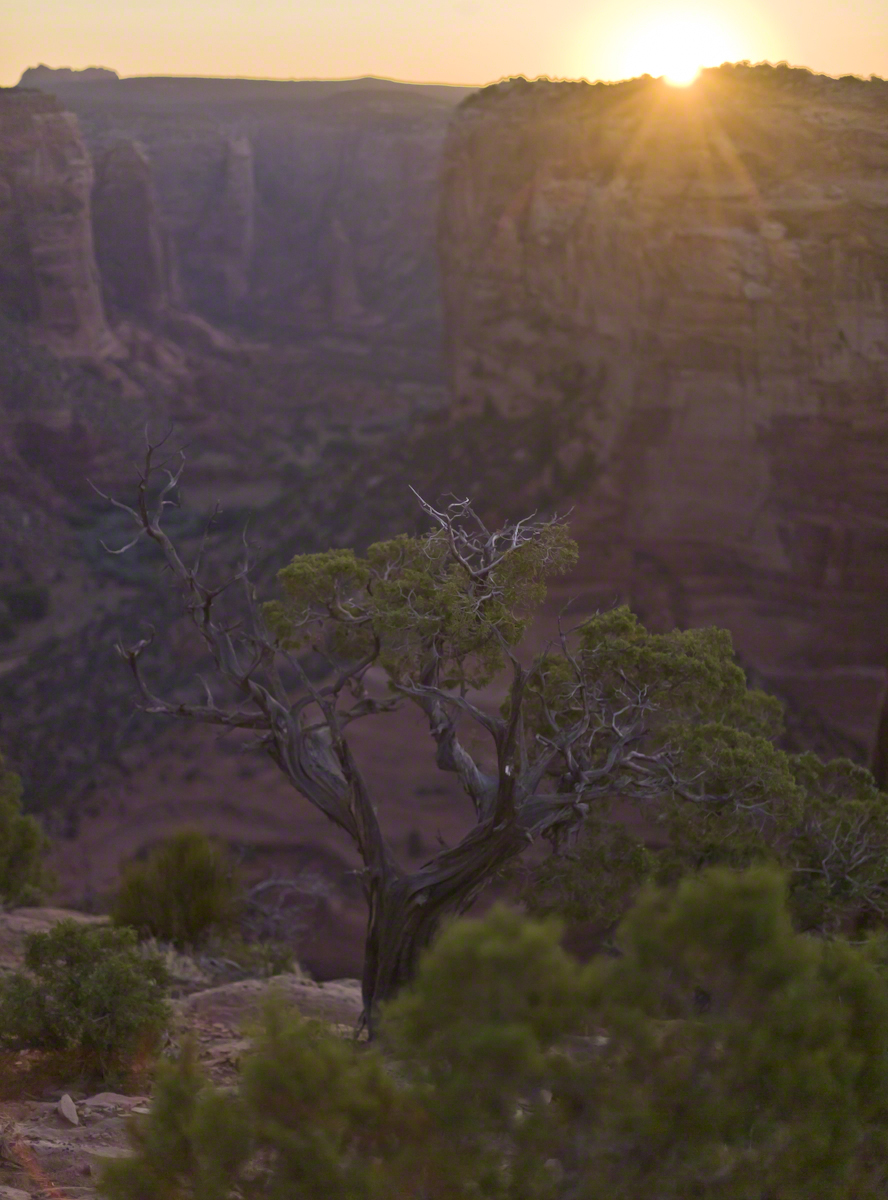
Looking east from the Spider Rock overlook, Canyon De Chelly.

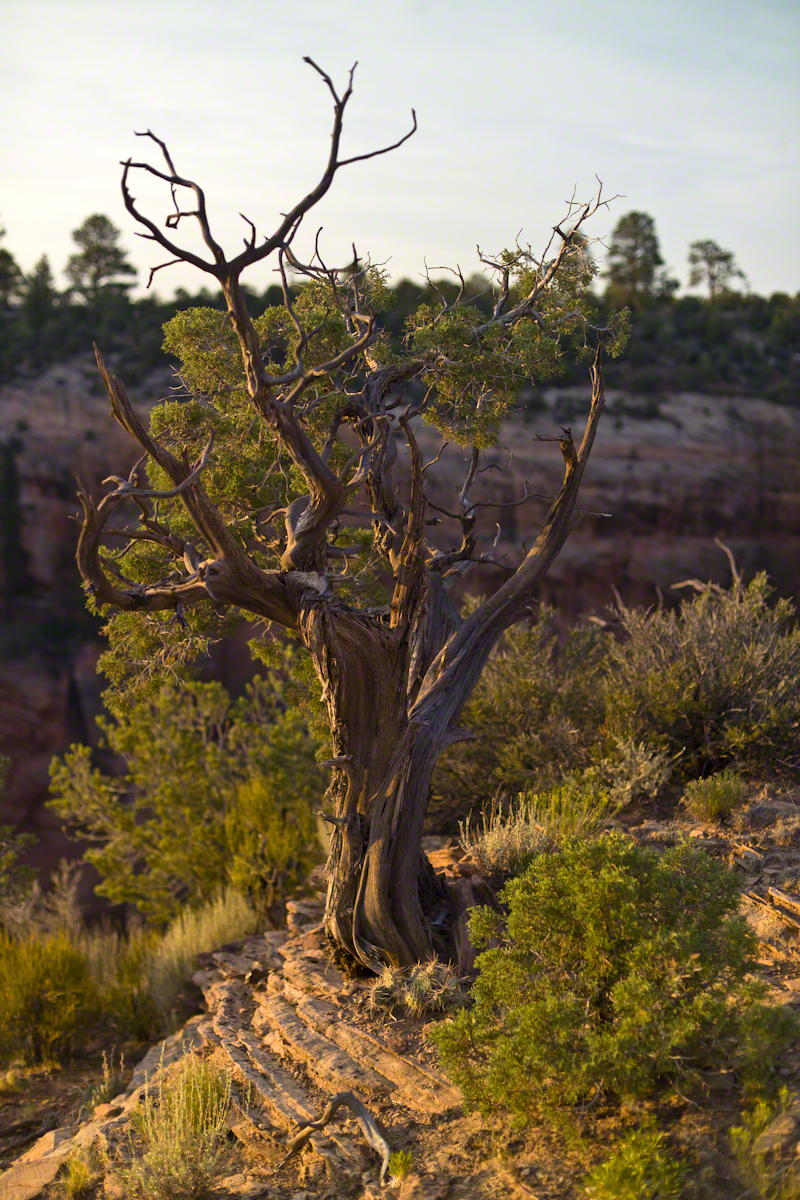
While getting ready I scoped out the location for interesting visual tropes.  Utah Junipers are exceptionally hardy shrubs, stressed individual plants grow into compelling forms shaped by hardship.  As the sun rose, this specimen emerged from the gloom and caught the first sun rays.

Juniper Sunrise
A distressed Utah Juniper on the edge of Canyon De Chelly overlooking Needle Rock a few moments after sunrise.

Enjoy!!

Click for the first posting of this series, “Portrait of a Navajo Guide.”
 

Sycamores and Riparian Space

a Preview of Reavis Ranch

….continued from the chapter “A Peaceful Day at Pine Creek.”

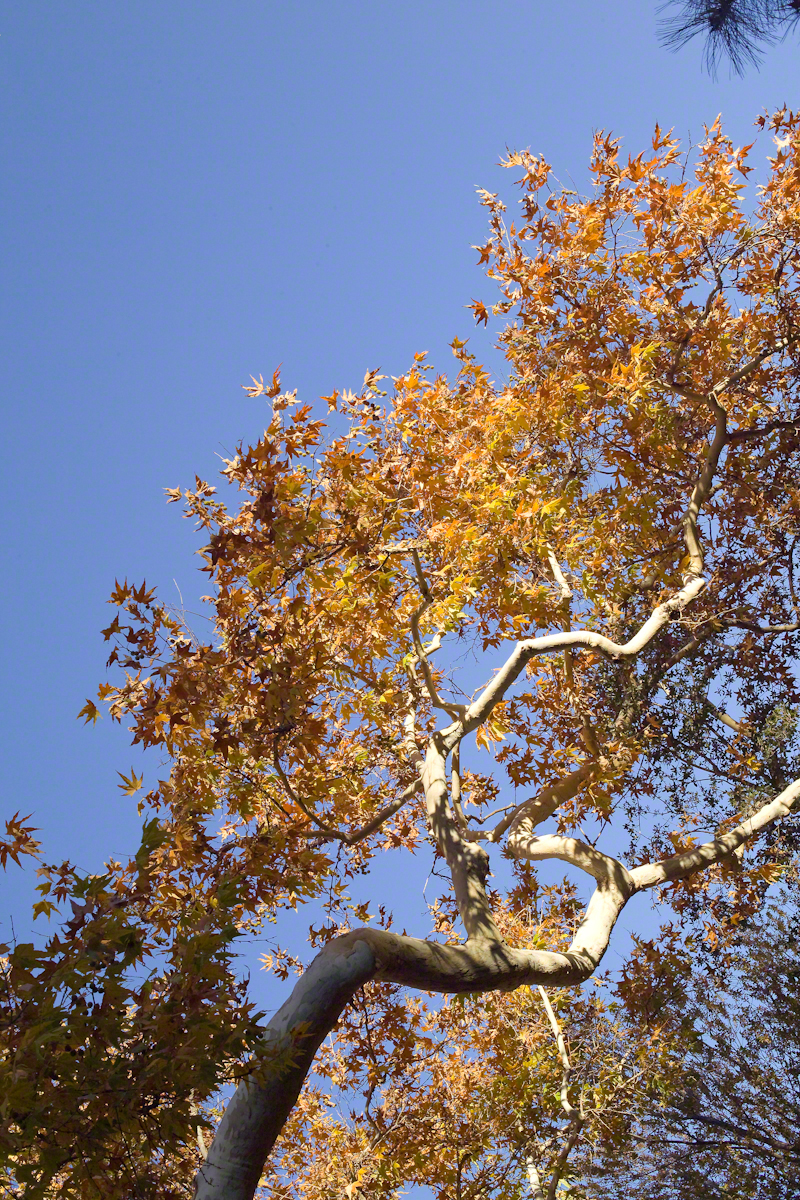
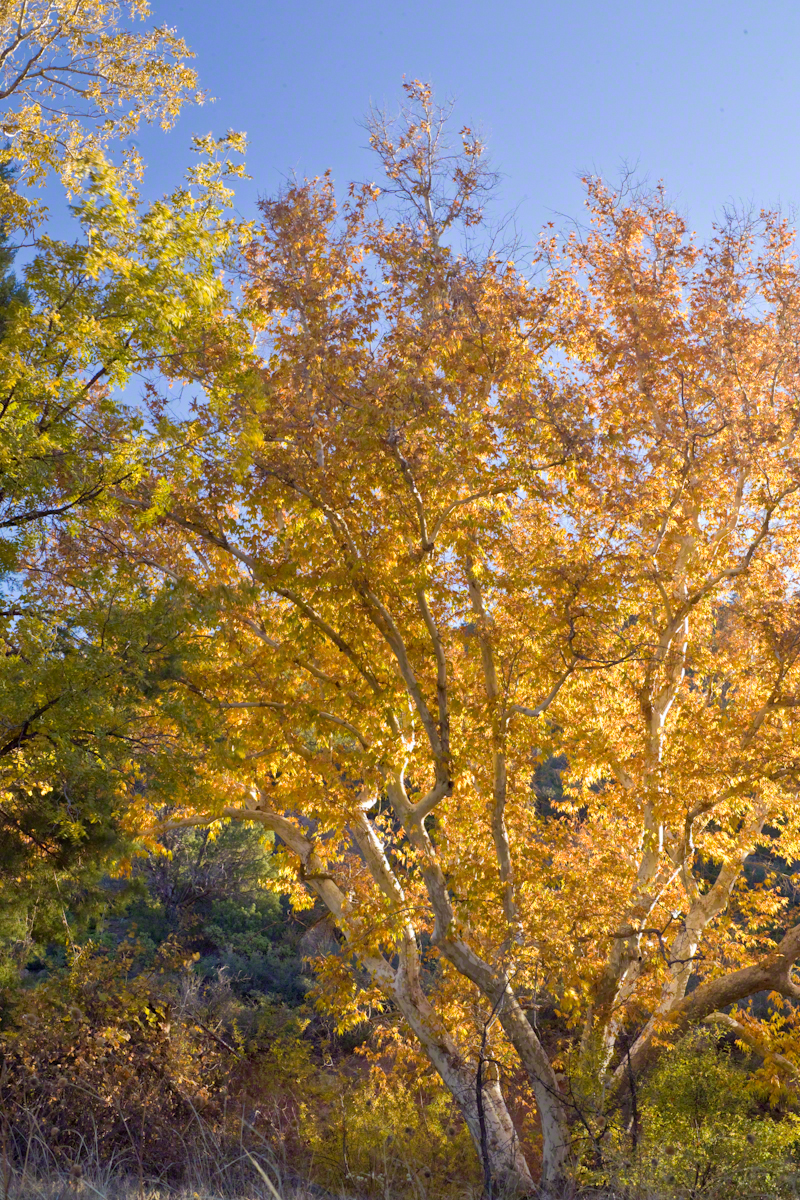
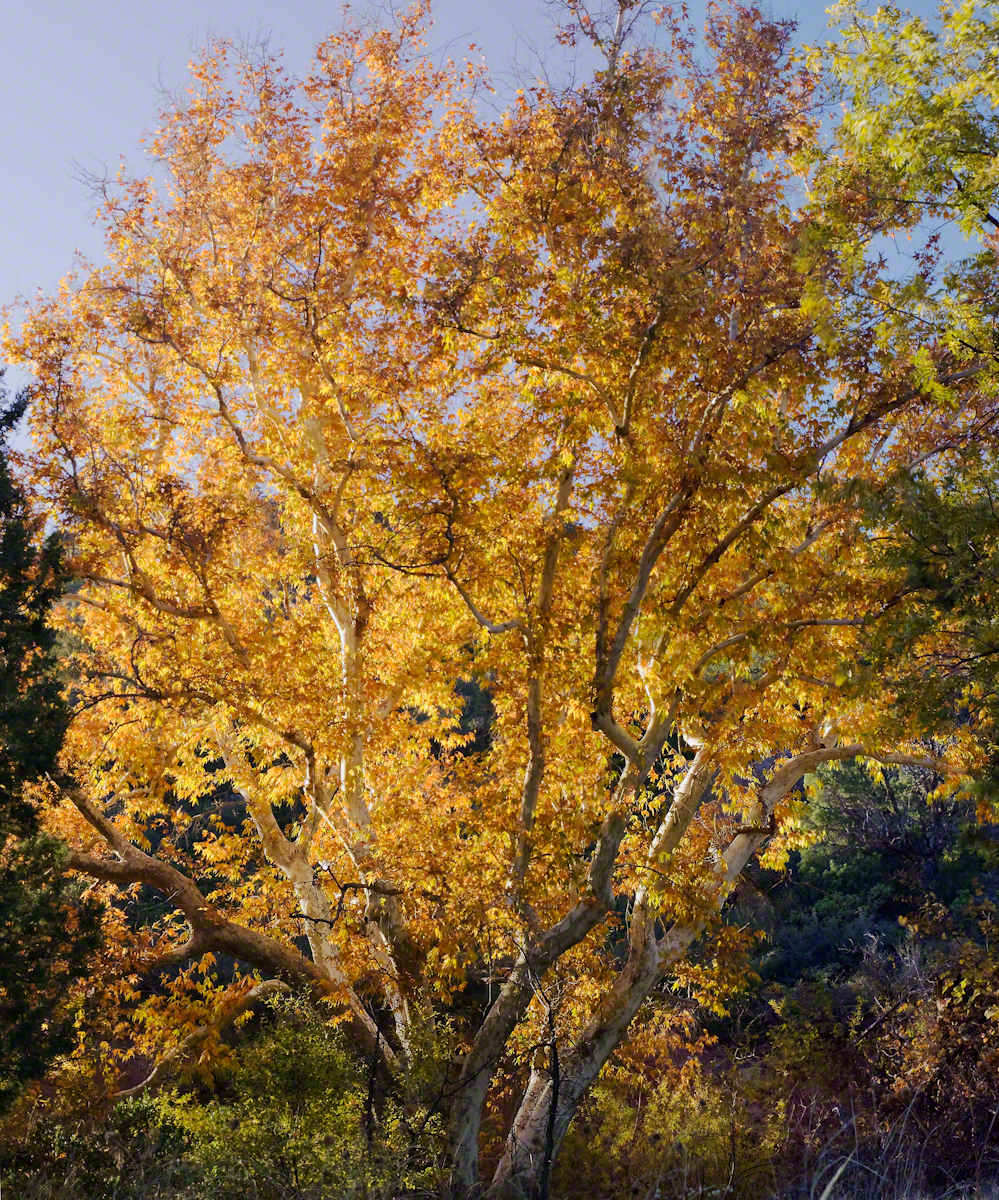
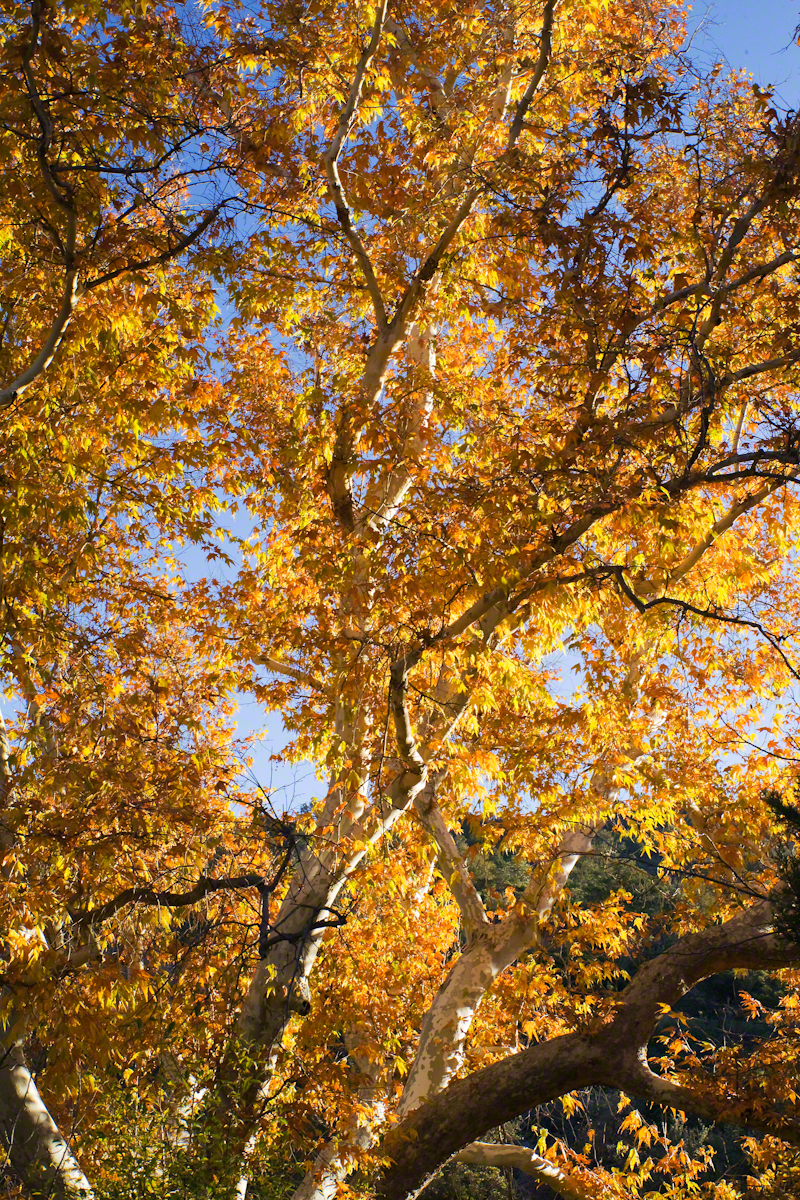
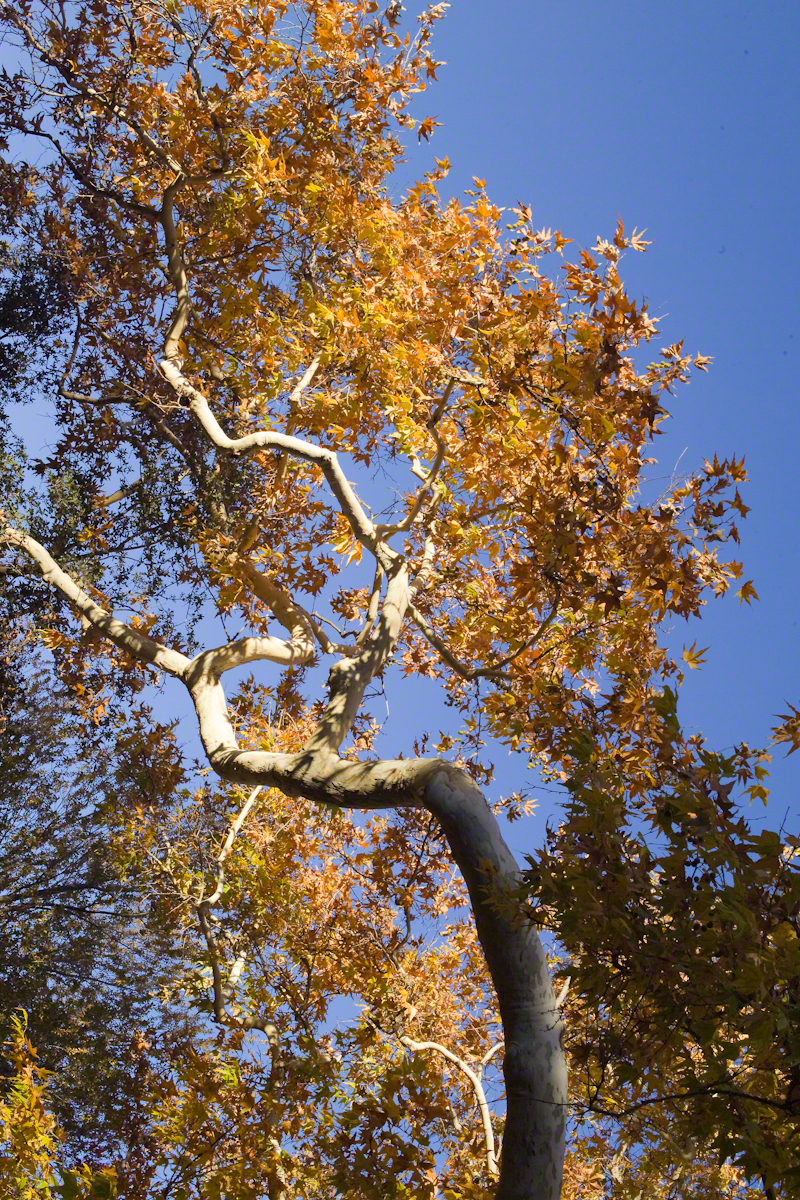
Compare these Arizona Sycamores with the struggling specimen from the last chapter, “A Peaceful Day at Pine Creek.” Many Sycamores such as this one flourish along Reavis Creek, a perennial stream of the eastern Superstition Wilderness. The drainage that feeds Pine Creek is far less acreage than that of Reavis Creek and, when the Pine Creek flow fades in the driest seasons, plants go into survival mode and halt growth and may even slough off limbs to conserve water.

These Sycamores grace a stream that seldom stops flowing, even in the driest of seasons. I had the good fortune to visit the Reavis valley of the Superstition Wilderness in November 2007, when these trees were at peak autumn foliage.

The tree requires a supply of water to thrive. This specimen demonstrates the species growth habit growing multiple trunks with a shape driven by water availability and the environmental context. The multiple trunks may be a desert survival mechanism. In dry periods a trunk or trunks are sloughed off to reduce moisture loss. This is why the Sycamore of “A Peaceful Day at Pine Creek” has a single trunk.”

To encounter a riparian space of the Arizona desert is a revelation, to progress from Sonoran desert spaces assailed by the breath of dry wind, to see the first signs of water in the distance as a welcome fluttering of leaves, to feel a welcome odor of water.

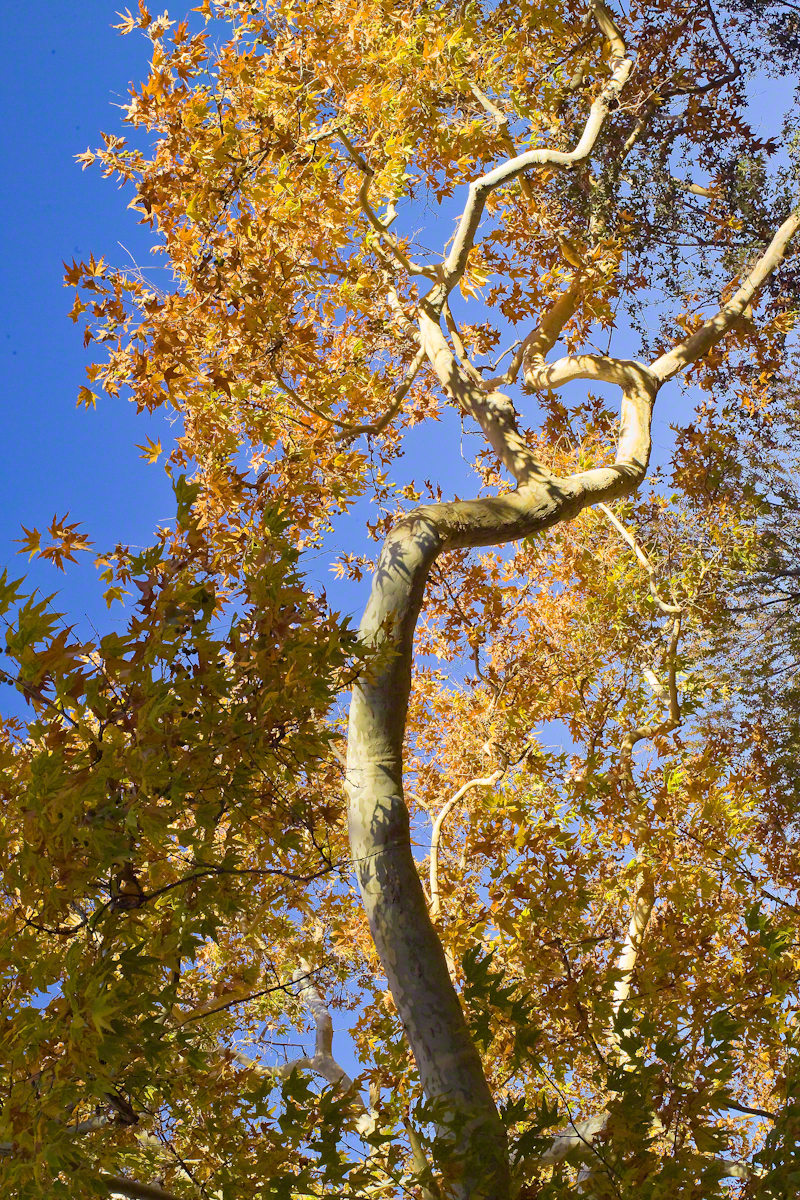
Yes, the first effect of a riparian space on the senses is the smell of water. Let’s finish this post with limbs of the Reavis Creek Arizona Sycamore reaching for the sky.

Click me for the next episode, “Desert Luxuries.”

Click me to visit Michael Stephen Wills Online Arizona Gallery.

Copyright 2021 All Rights Reserved Michael Stephen Wills