From a modest bench above Taughannock Gorge, Cayuga Lake shifts from distant glimmer to presence—a quiet invitation to pause, breathe, and follow the water down.
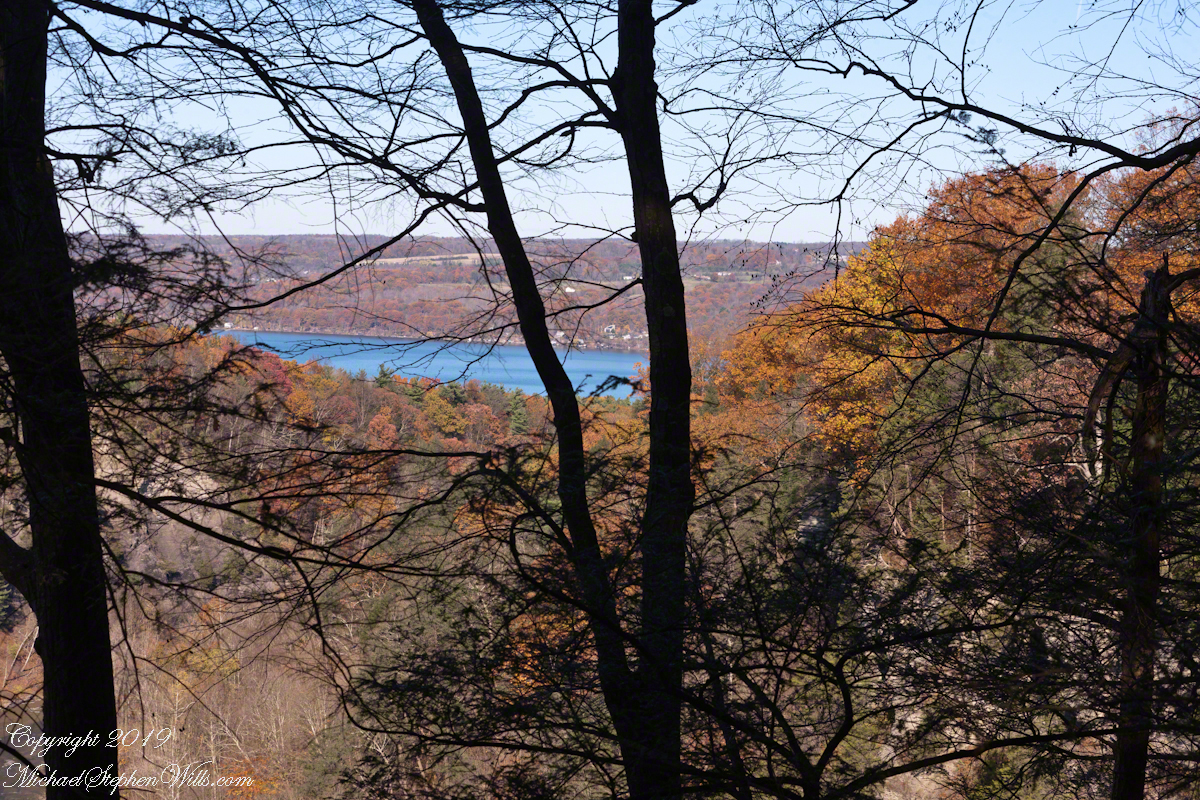
From the south rim of Taughannock Gorge, Cayuga Lake appears like a distant strip of sapphire, framed today by a soft veil of hemlock and oak. The overlook here is modest—a fence, a bit of open sky—but someone wisely added a comfortable bench, an invitation to pause between gorge and lake, rock and water.
I stood in front of that bench, resting the camera body on the fence, fingers braced against the wood to steady the shot. This is not the grand, sweeping vista of a postcard. Instead, it is a quieter, more human vantage point, the way a person actually encounters the lake after walking the rim: emerging from the trees, breath easing, eyes adjusting to the light on water.
From here, the trail descends toward Cayuga’s shore, each turn bringing you lower and closer, trading the lofty perspective for the intimate sounds of waves and stone. In Distant Sapphire I and II, the lake was a glimpse—caught between branches, distant beyond the gorge. Now, in this “Bench View,” the water feels nearer, almost within reach, as though the landscape itself is drawing you gently down.
Click photograph for a larger view. To do this from WordPress Reader, you need to first click the title of this post to open a new page.
Cayuga Lake Bench View
I’ve gathered the three photographs—Glimpse of Cayuga Lake, Gorge View with Oak Leaves, and this Cayuga Lake Bench View—into a small gallery, a progression of approach. Each frame is a step closer: from suggestion, to invitation, to the quiet promise of the bench, waiting for whoever needs to sit and look a little longer.
A gallery of the three Cayuga Lake photographs for comparison.
Glimpse of Cayuga LakeGorge View with Oak LeavesCayuga Lake Bench View
Enter your email to receive notification of future postings. I will not sell or share your email address.
Copyright 2025 All Rights Reserved Michael Stephen Wills
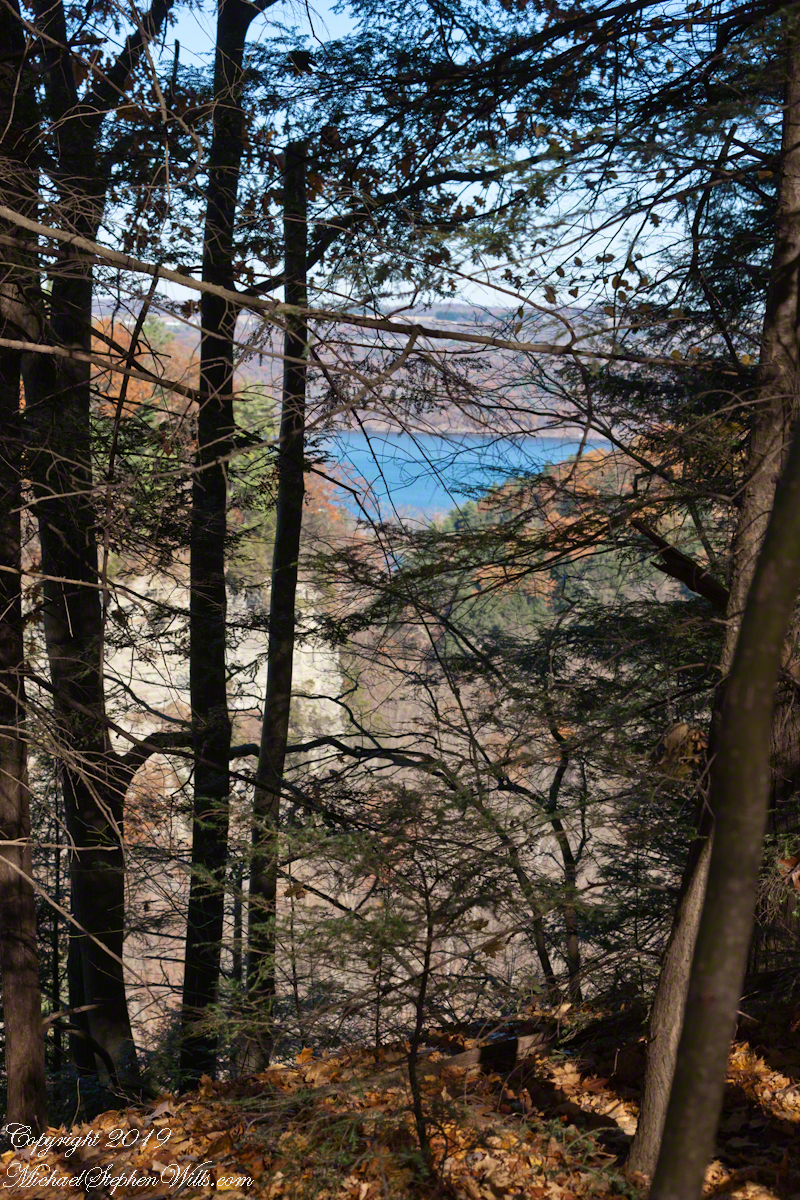
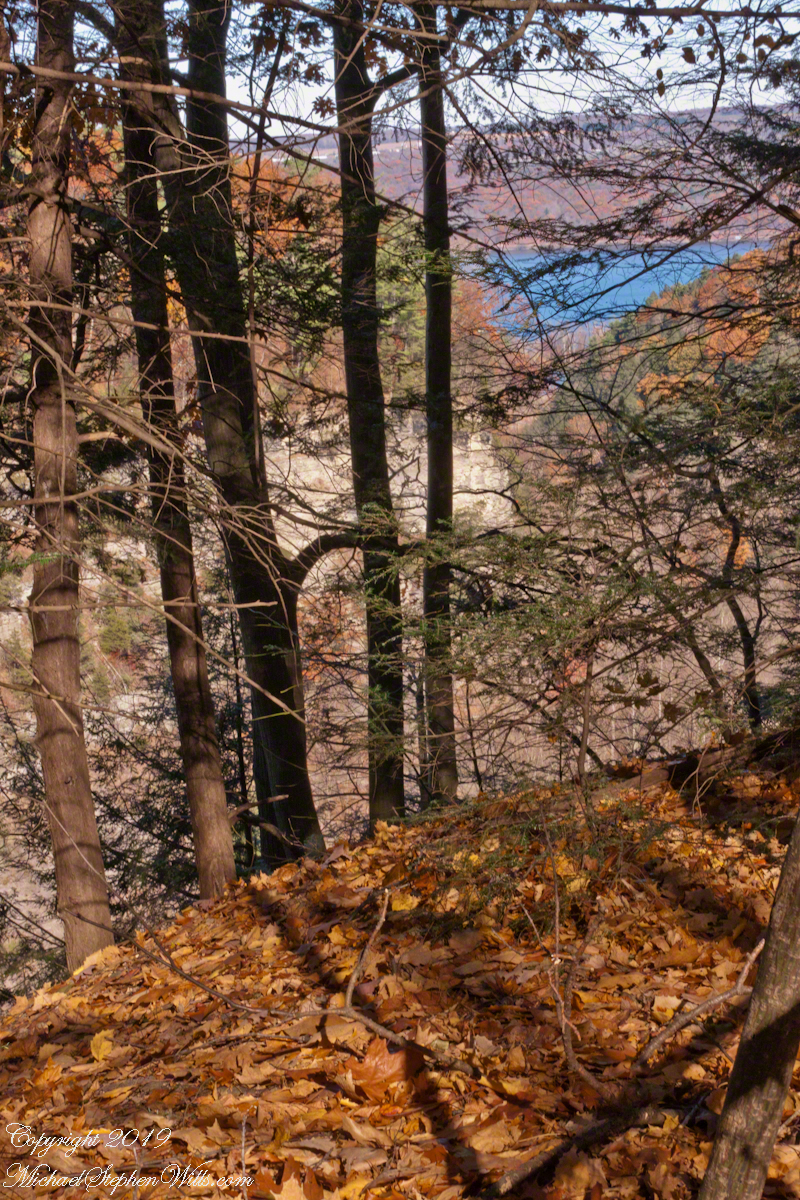
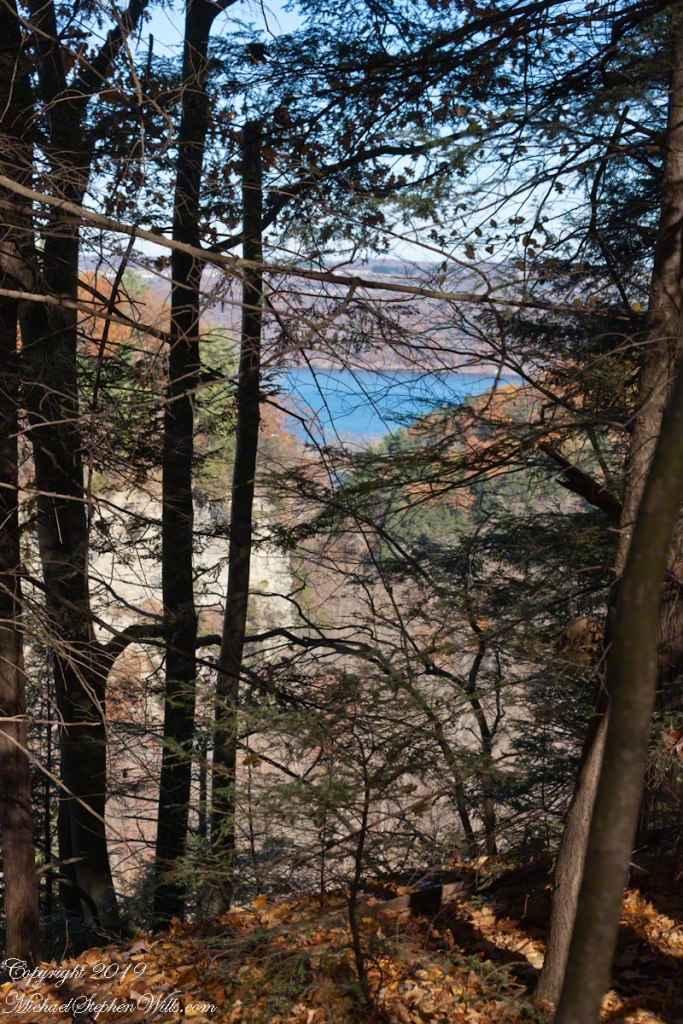
Cayuga Lake from the south rim of Taughannock Gorge, seen through a veil of hemlock with a carpet of fallen oak leaves, foreground. This is a companion to the previous post, both were handheld. For this the foreground was included to increase interest. For added stability, I rested the camera body on the fence bracketed with my fingers.
Click photograph for a larger view. To do this from WordPress Reader, you need to first click the title of this post to open a new page.
Gorge View with Oak Leaves
A gallery of the two photographs for comparison.
Glimpse of Cayuga LakeGorge View with Oak Leaves
Enter your email to receive notification of future postings. I will not sell or share your email address.
Copyright 2025 All Rights Reserved Michael Stephen Wills
A bench beside a cedar, unchanged through time, stirred memory and gratitude—reminding me that some places wait quietly, holding space until we find them again.
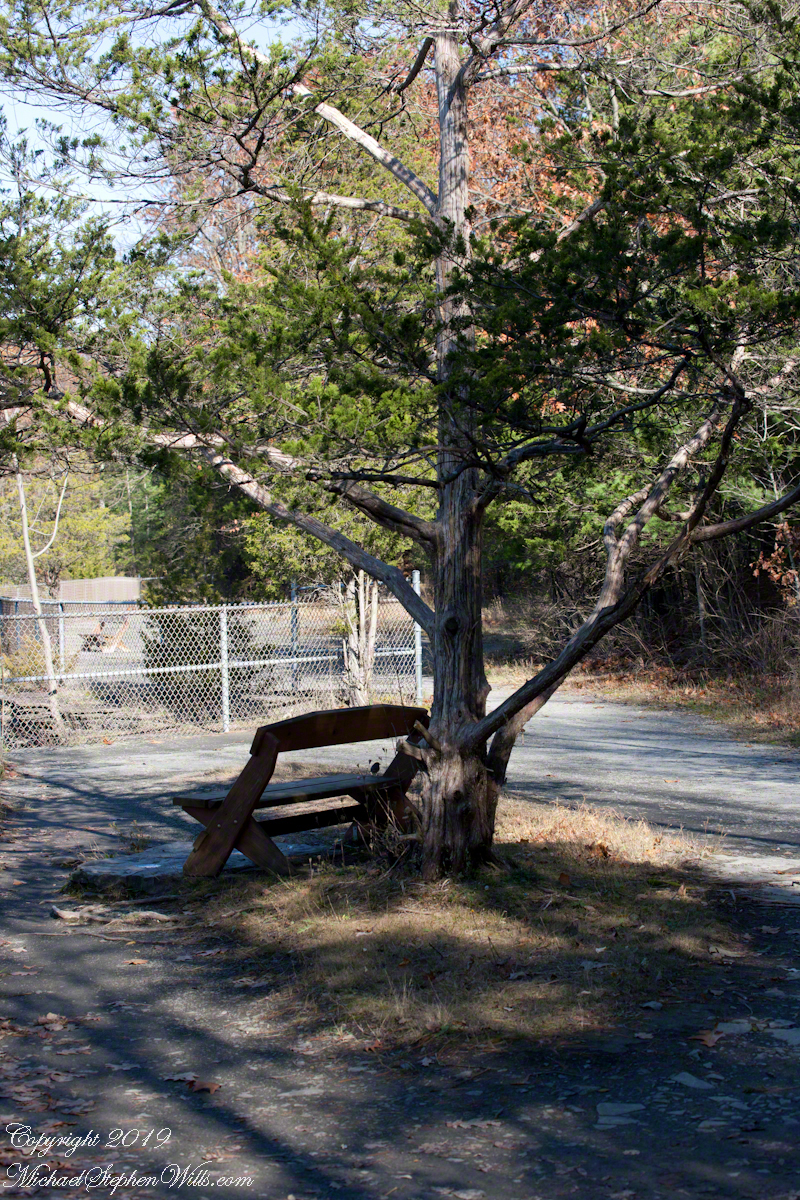
A lingering memory hovers over this spot. The soft crunch of gravel beneath my boots, the filtered light through pine and oak, the scent of warm stone and moss—all of it felt at once familiar and distant, like a half-remembered tune that returns in full when you hear the first few notes. I hadn’t thought about the simple bench until I turned the bend this summer day on the South Rim Trail.
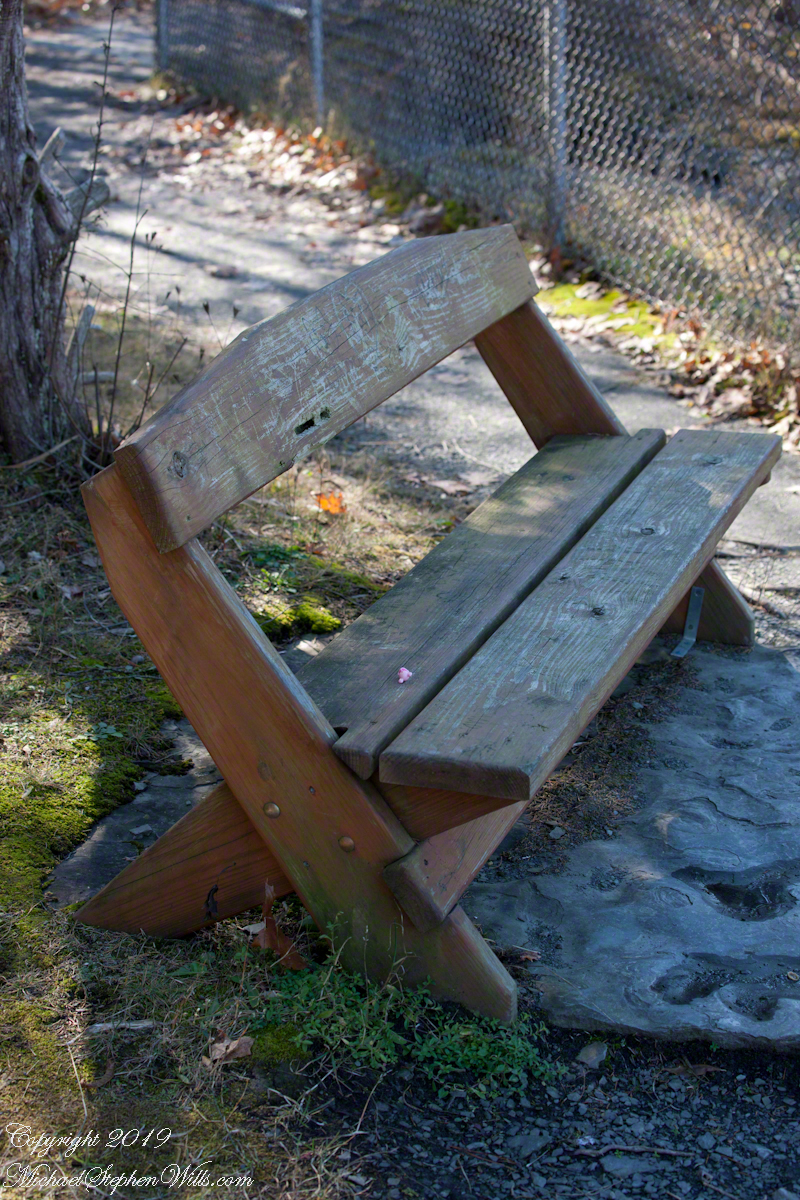
It was still there. The same humble bench nestled beside a cedar, its weathered frame now bearing the patina of years. The tree remained slightly bowed as if in silent conversation with the bench it had embraced.. The space between them, still and shaded, seemed to invite reflection without demanding it.
Welcome Summertime Shade
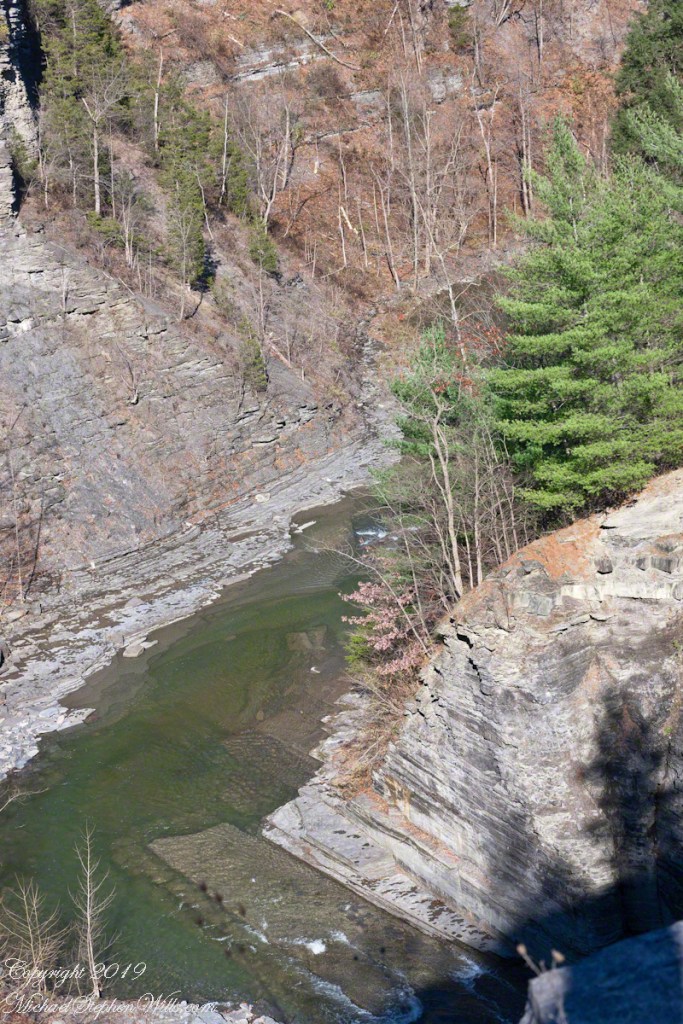
I sat down, letting the moment settle around me. In the gorge below, water moved quietly through sculpted shale, the same layered gray that once caught my attention through a camera lens long packed away. From this overlook, the view had scarcely changed: stone and water, green clinging to cliff, sky rolling in above it all. My photograph captures it now just as it might have then—perhaps from the same angle. The gorge unfolding in a graceful arc, with trees perched impossibly along the sheer face.
It struck me, not as a grand revelation but with quiet certainty, that very few places in life offer such stillness. So much shifts in the world—landscapes erode, trails are rerouted, lives move forward. Yet here I was again, sitting in the same spot, as though the intervening decades had folded in on themselves.
The Why for the Bench
Back then, I had rested here out of curiosity, pausing to take in the view, enjoy a respite. Now, I sat with a deeper kind of stillness. The second photograph holds the space as I found it—quiet, dappled with shadow, edges softened by time. The fence beyond it remains, unchanged, a modest boundary between the trail and the deep gorge beyond.
I don’t remember what thoughts filled my mind that first time. But today, a kind of gentle gratitude rose instead. Gratitude for the bench, yes—but also for the path that led me here again, for the act of remembering, and for the rare gift of finding something familiar, something steady.
Left Behind or an Offering?
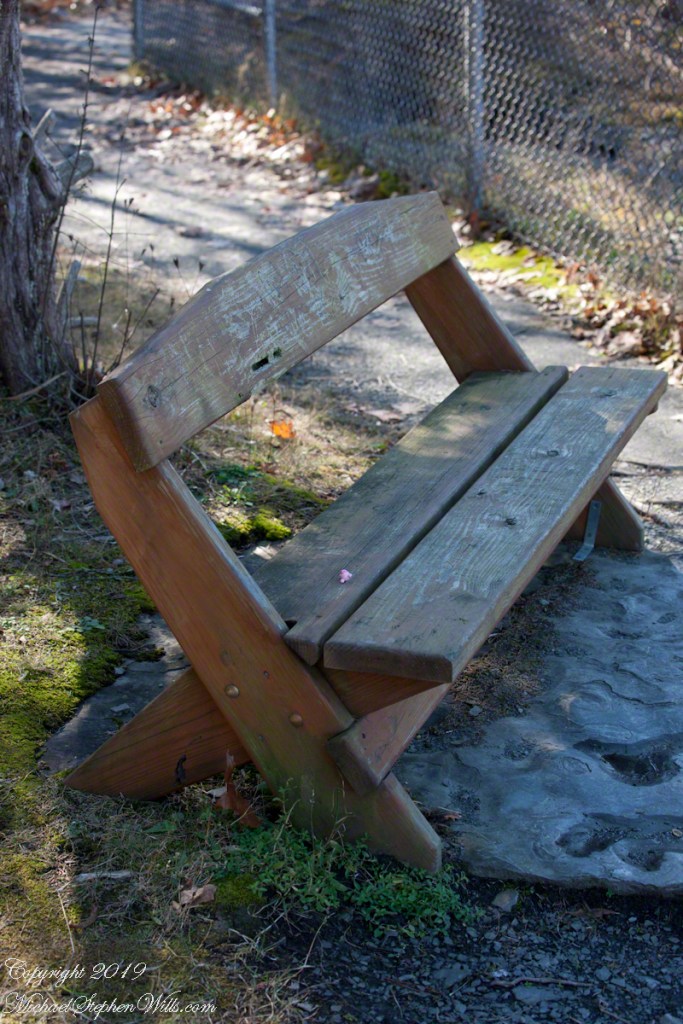
A final image frames just the bench, its surface worn smooth, its structure slightly leaning now. A single flower petal had fallen on the wood—a quiet grace note in the morning light. I stood and took that last photo as a way of holding the moment, though I knew no picture could fully capture what it meant to find something that had waited without fanfare.
As I turned and walked back along the rim, I felt lighter. Not because time had reversed or been conquered, but because it had been witnessed—and somehow, that was enough.
Enter your email to receive notification of future postings. I will not sell or share your email address.
Copyright 2025 All Rights Reserved Michael Stephen Wills
Explore the enchanting Lick Brook in the Finger Lakes region, where the Land Trust’s conservation efforts preserve nature’s beauty. Join me to uncover this hidden gem and its ecological wonders.
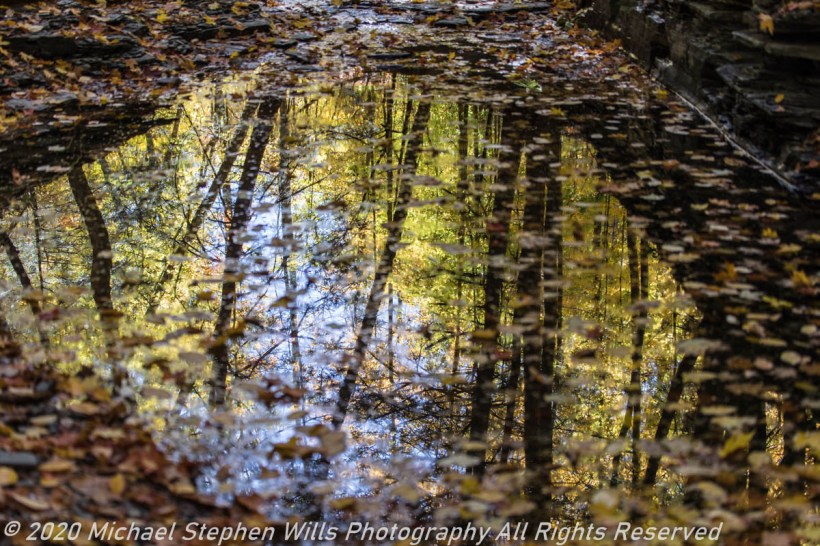
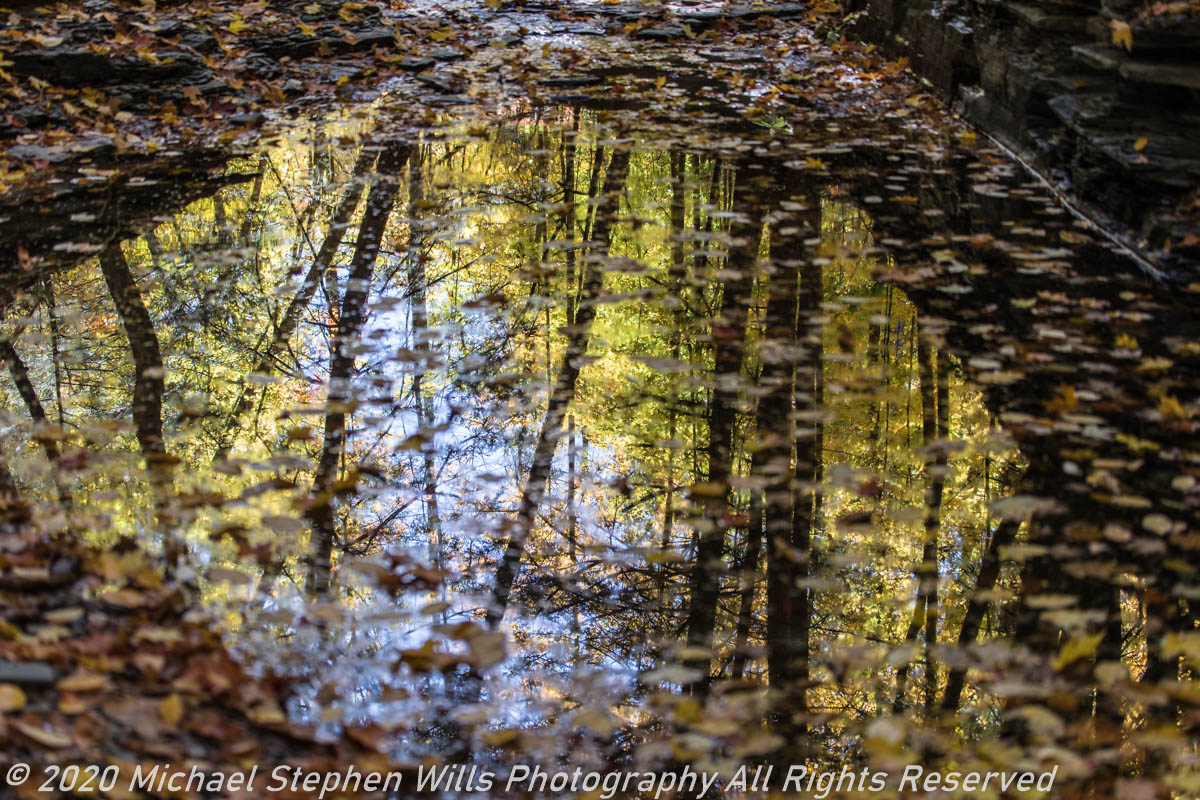
In the Thayer Preserve during a dry autumn, Lick Creek forms still pools that act like nature’s mirrors, capturing the autumnal scenery in a breathtaking display of reflection. Scattered maple leaves add depth, disrupting yet enhancing the scene’s tranquility. These pools offer a unique perspective of nature’s beauty, sketching a vivid picture of changing seasons. As the dry season progresses, the mirror-like pools shrink, encapsulating the fleeting beauty of autumn.
In Thayer Preserve, where Lick Creek meanders, a unique spectacle unfolds during a dry autumn. Here, still pools form along the creek, transforming into natural mirrors. These pools capture a moment in time, reflecting an autumnal world above.
The scene is breathtaking. A bright sky, painted in shades of blue, stretches endlessly above. Trees, adorned in brilliant yellow, stand tall, their leaves like nature’s own gold. In these pools, their reflections are so clear, so vivid, it’s as if another world lies just beneath the surface. This is nature’s artistry at its finest, a canvas where the sky meets the earth in a tranquil embrace.
But there’s a twist in this serene tableau. Maple leaves, scattered across the water’s surface, disrupt the mirror-like stillness. They are like brushstrokes on a masterpiece, adding texture and depth. These leaves, once part of the lofty canopy, now rest on the water, each one a reminder of the fleeting nature of beauty. They break the illusion, yet somehow enhance it, adding a touch of reality to this dreamlike scene.
This is a place of contrasts. The still pools contrasts with the dynamic life of the forest. The unbroken reflections contrast with the scattered leaves. It’s as if nature is playing a game of hide and seek with reality, teasing the observer with glimpses of both the real and the reflected world.
In Thayer Preserve, the story of autumn is told not just in the changing leaves but in the waters of Lick Creek. These pools are like nature’s mirrors, reflecting the season’s palette. They offer a different perspective, a view from below, where the sky and trees trade places with their watery twins.
Click photograph for larger view. Use combination keys to enlarge/reduce: Ctrl+ (Control / Plus) and Ctrl- (Control / Minus)
Lick Brook, Thayer Preserve, still pools become mirrors at low flow during a dry autumn.
As one walks along Lick Creek, the beauty of Thayer Preserve unfolds in these reflective pools. Each step brings a new image, a new blend of sky, tree, and water. It’s like walking through a gallery where nature is the artist, and each pool is a frame capturing a moment of autumnal splendor.
These pools are more than just a feature of the landscape. They are storytellers. They tell of a season of change, of a time when the world dresses in its most vibrant colors before the quiet of winter. They speak of the cycle of life, of leaves that fall to rise again in the reflections.
As autumn progresses and the dry season deepens, these pools will shrink, their reflections fading away. But for now, they are here, holding within them a world of brilliant yellows and blues, a world where the sky lies beneath your feet, and the trees grow upside-down.
This is the magic of Thayer Preserve in autumn. It’s a place where nature plays with perceptions, where reflections create a world as real as it is illusory. Here, on the banks of Lick Creek, the still pools are not just bodies of water. They are windows into another world, a world where nature’s beauty is doubled, and the ordinary becomes extraordinary.
Ithaca’s bedrock, formed 370 million years ago, deeply influences its landscape, neutralizes rainwater’s acidity, and carries a story of Earth’s resilience and transformation.
In Ithaca, New York, the story of the land is deeply rooted in its geology. Beneath the vibrant autumn leaves and along the path of Lick Creek lies a bedrock formed 370 million years ago. This ancient foundation, once the sediment of a vast inland sea, now forms the solid base upon which the city stands.
The bedrock here is a silent witness to Earth’s long history. Originating in the Devonian period, it marks a time when vast seas covered much of the Earth’s surface. Within these ancient waters, life flourished, leaving behind sediments that, over eons, transformed into the layered rock beneath Ithaca.
These layers are more than just historical records; they actively shape the landscape. The bedrock influences soil composition, affects plant growth, and directs the flow of streams. Lick Creek, with its clear waters, is one such stream that interacts intimately with this bedrock.
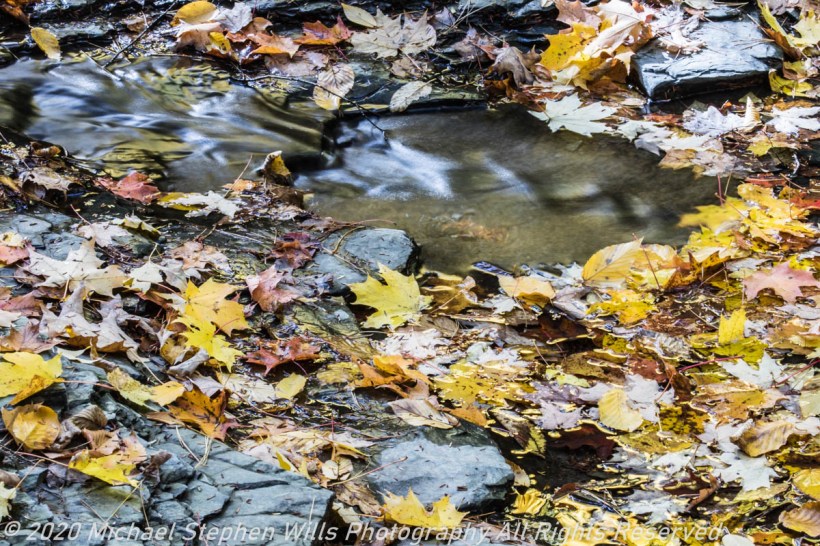
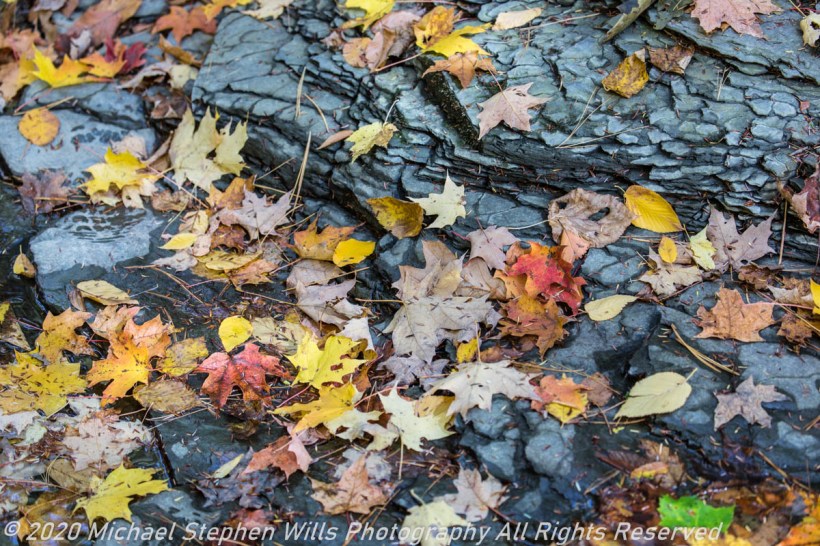
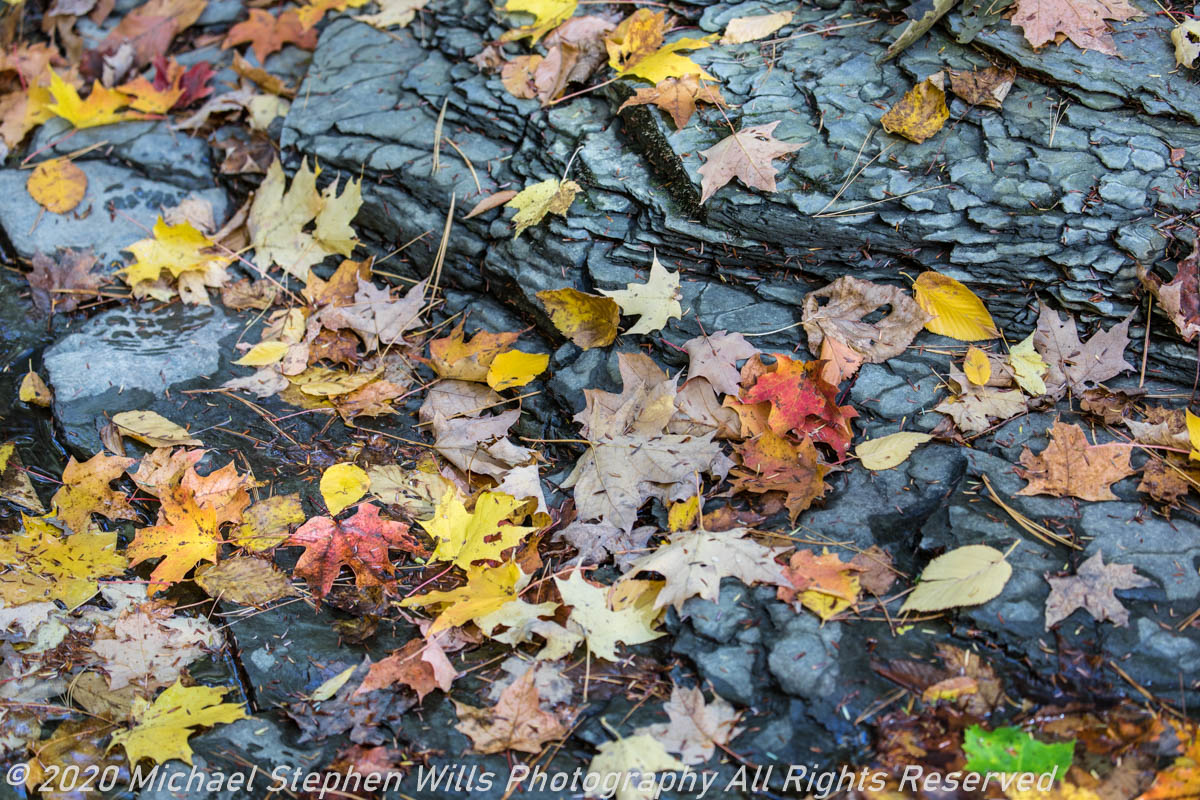
In autumn, the beauty of this interaction is vividly displayed. The red and yellow maple leaves create a striking contrast against the grey-blue backdrop of the bedrock, a blend of the vibrant present with the ancient past. These fallen leaves, over time, decompose and enrich the soil, continuing a cycle of life that this bedrock has supported for millions of years.
This bedrock also plays a crucial role in water chemistry. As acidic rainwater percolates through it, a remarkable transformation occurs. The bedrock naturally neutralizes the acidity of the rainwater. By the time the water emerges as streams, it is buffered to a neutral pH. This process is vital for maintaining the ecological balance of the area. The streams that flow out, including Lick Creek, support diverse ecosystems thanks to this natural filtration process.
Click photograph for larger view. Use combination keys to enlarge/reduce: Ctrl+ (Control / Plus) and Ctrl- (Control / Minus)
The bedrock on which Lick Creek flows formed 370 million years ago from sediment of a vast inland sea, making a soothing grey-blue backdrop to this year’s autumn foliage.
The neutral pH water is crucial for the flora and fauna of Ithaca. It sustains the forests, the wildlife, and the natural beauty that defines the region. This water, once acid rain, purified by the ancient bedrock, now nurtures life in its journey.
In Ithaca, the bedrock is a testament to the enduring nature of our planet. It reminds us of the continuous cycle of transformation that defines the Earth. The contrast of the autumn leaves against the bedrock is not just a scene of ephemeral beauty; it symbolizes the dynamic interplay between the living and the geological, between the present and the deep past.
The bedrock of Ithaca, with its ability to neutralize acidic water, highlights the interconnectedness of natural processes. It shows how the Earth self-regulates and sustains life in intricate ways. As the buffered, neutral pH water of Lick Creek flows over this bedrock, it carries with it the story of a planet that is constantly renewing and sustaining itself.
In this landscape, the past is not just a memory; it is an active participant in the present. The bedrock, the autumn leaves, and the flowing streams tell a story of resilience, continuity, and the beauty of nature’s balance. This is the legacy of Ithaca’s bedrock, a legacy of endurance, transformation, and life.





 Michael Stephen Wills Photography