A Path Lined with Promise: Spring’s Embrace in Ithaca

Happy April 1, 2024

You find yourself on the cusp of spring, the earth slowly awakens from its wintery slumber, and life begins to stir in the subtlest of forms. Imagine strolling through a park in Ithaca, the evidence of spring’s tender handiwork unfolding before your eyes. As you traverse this liminal space where the grey of winter meets the vibrant hues of spring, you are greeted by a cheerful brigade of daffodils, a sure harbinger of warmer days.

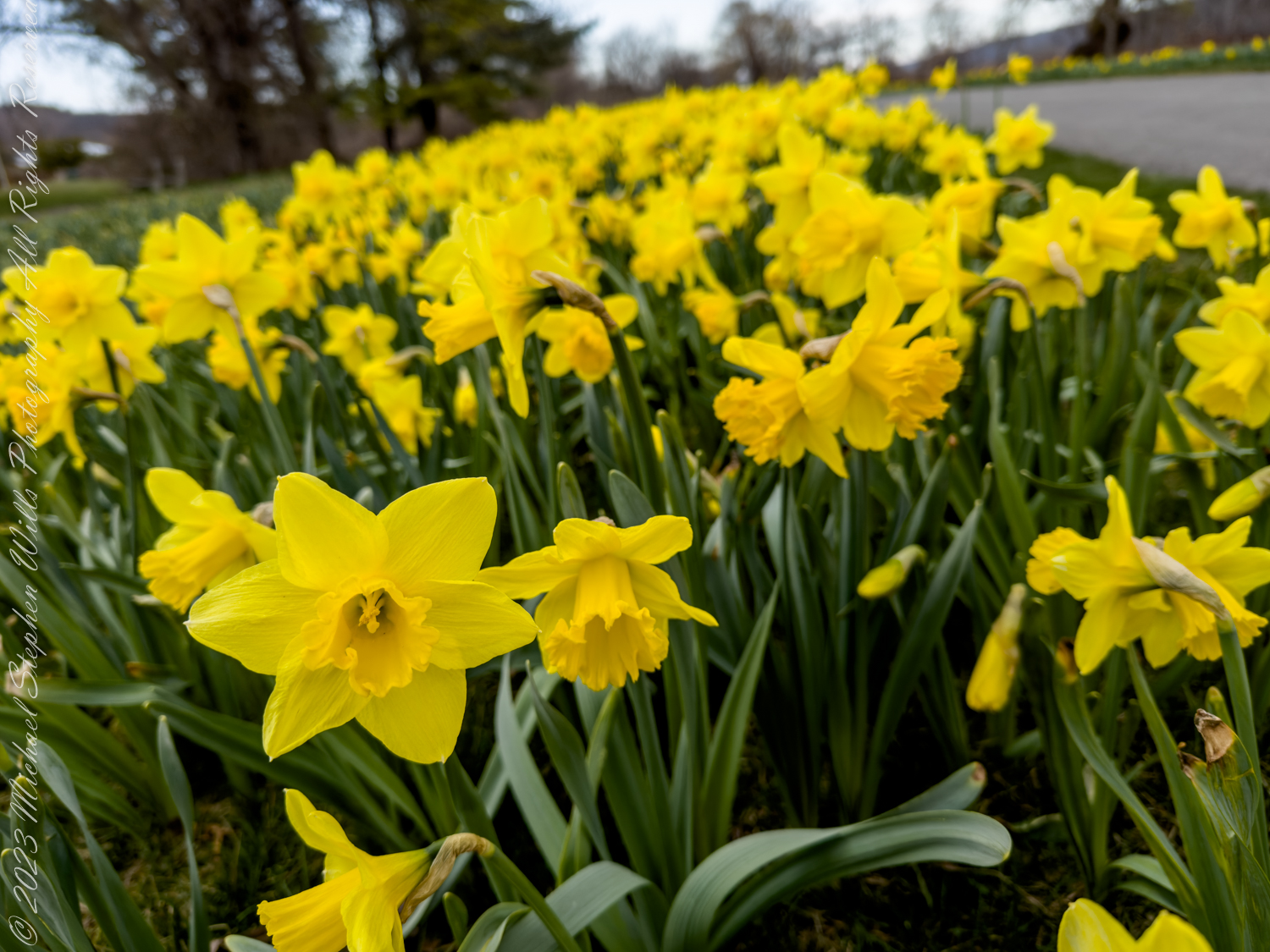
These daffodils are blooming along the Cayuga Waterfront Trail within Cass Park, Ithaca, Tompkins County, New York

Through the above image, it’s as though you are leaning in, your gaze just inches above the blooms. These daffodils are not merely flowers; they are the golden trumpets of spring, each one a burst of joy amidst the still-dormant earth. You can almost feel the softness of the petals, the coolness of the air, and the promise of renewal that each bud encapsulates. With their faces eager to bask in the strengthening sun, they seem to resonate with your own readiness for change, for the fresh possibilities that each new season brings.

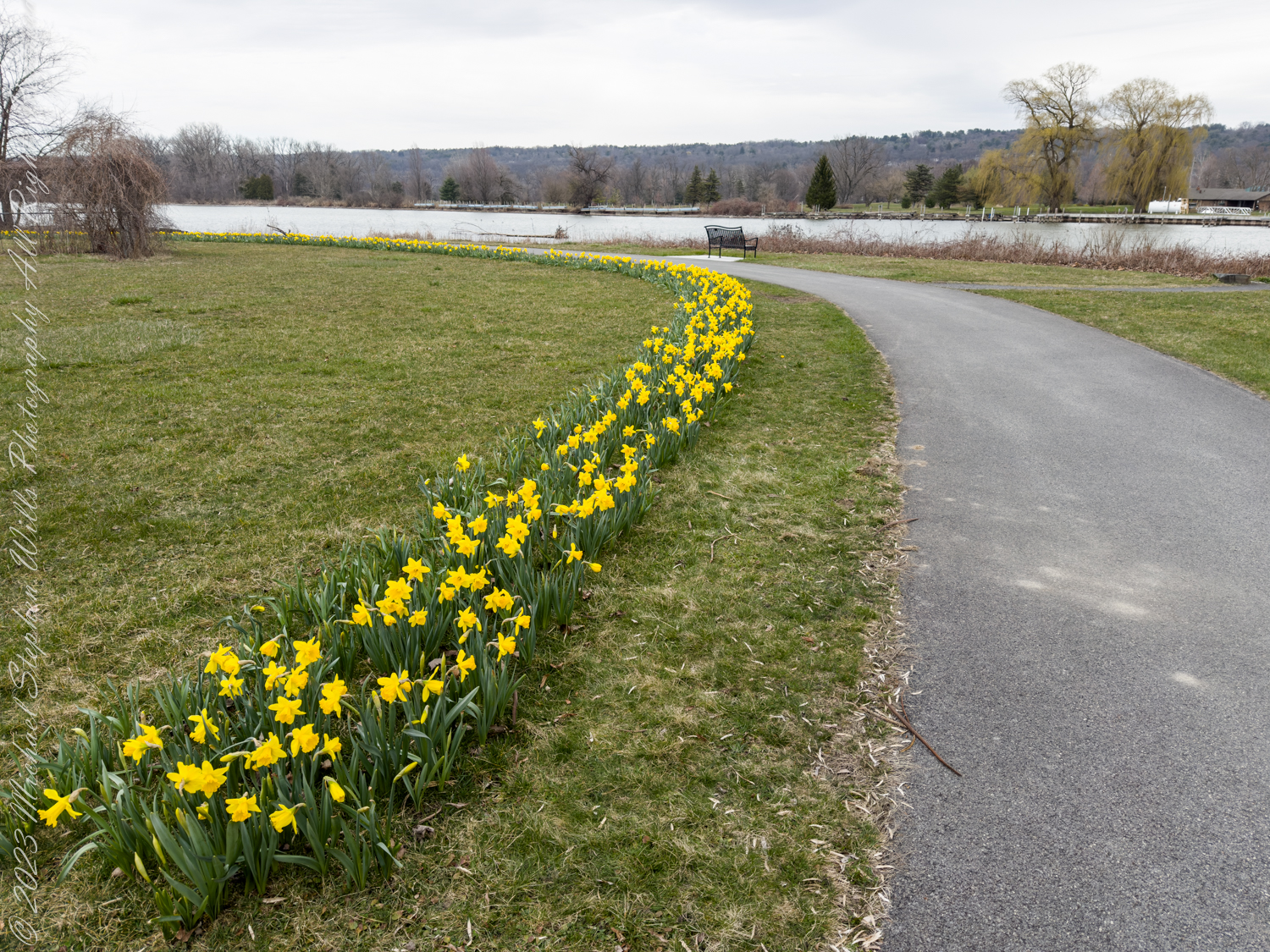
As you stand up and take a few steps back, the following image grants you a wider perspective. Here lies a path, winding gently alongside a burgeoning line of daffodils. They stand in unity, a vivid yellow line drawn against the canvas of awakening green. The bench in the distance is vacant, an invitation to sit and appreciate the tranquility of Cass Park, the expanse of water beyond serving as a mirror to the open sky. It’s a scene that calls for contemplation, urging you to appreciate the simplicity of the moment, the serenity of nature’s process.

These daffodils are blooming along the Cayuga Waterfront Trail within Cass Park. Here the trail has passed over Linderman Creek and we are looking toward the Cayuga Lake inlet. Ithaca, Tompkins County, New York

These photographs are more than visual delights; they’re sensory experiences. Can you hear the subtle sounds of the park? The distant call of birds returning home, the soft rustle of grass stirred by a gentle breeze, the hushed murmur of water lapping at the shore? Each sound is a note in the symphony of spring, played just for you.

The images you see are not frozen in time; they carry within them a narrative of life’s perseverance. The daffodils, with their bright faces and sturdy stems, have weathered the cold, the snow, and the frost. They emerge, not just as survivors of winter, but as its conquerors. Each flower is a testament to resilience, a living metaphor for the human spirit that you, too, possess.

This is the season of rejuvenation, where the old is shed, and the new embraced. With each day, the sun lingers a bit longer, casting its golden glow upon the earth. It’s the time to set aside the grayness of yesterday and look forward to the spectrum of tomorrow. The photographs are not just to be viewed; they are to be felt, to remind you that no winter lasts forever, no spring skips its turn.

As you walk away from this scene, you carry with you the warmth of the sun and the cheer of the daffodils. Let the images serve as a reminder of the perennial cycle of life, the undying hope, and the enduring beauty that awaits just outside your door. Feel encouraged to seek these moments, these fragments of beauty, in your everyday wanderings, and hold onto the message of the daffodils: after every winter, no matter how harsh, comes the gentle kiss of spring.

Copyright 2024 Michael Stephen Wills All Rights Reserved

Nature’s First Green….

…is gold, / her hardest hue to hold, / her early leaf’s a flower; / but only so an hour… Robert Frost

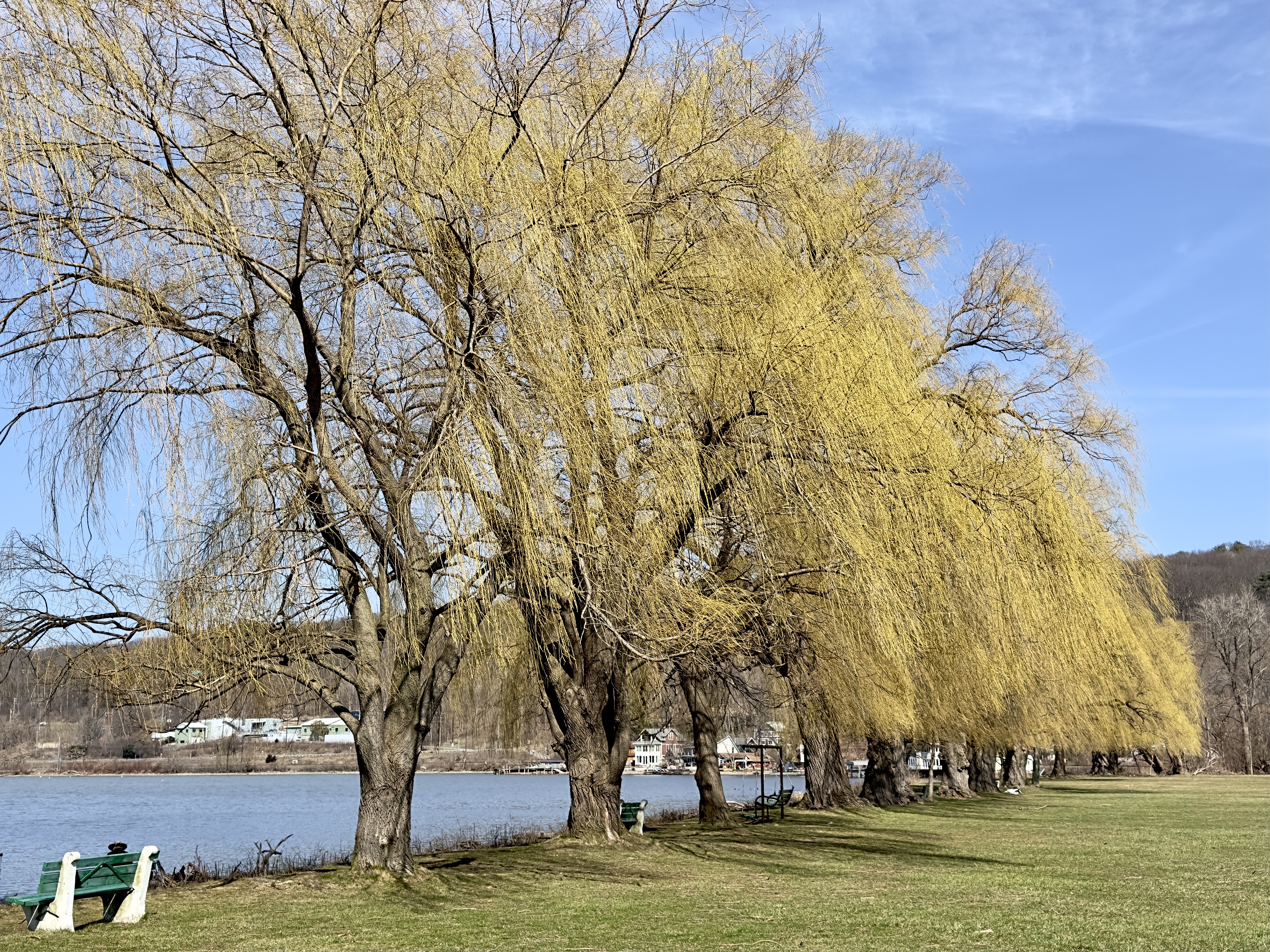
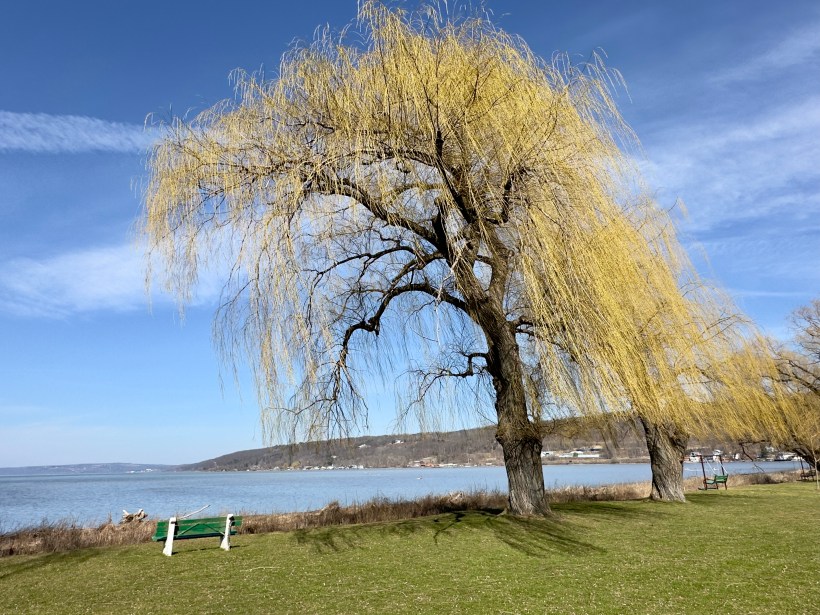
You walk alone by the waters of Cayuga Lake in Stewart Park, nestled in the heart of Ithaca’s Finger Lakes, where Salix alba, the white willow, stands proudly along the shoreline. You’re immediately drawn to the flurry of yellow flowers, a stark contrast to the still chilly early March air.

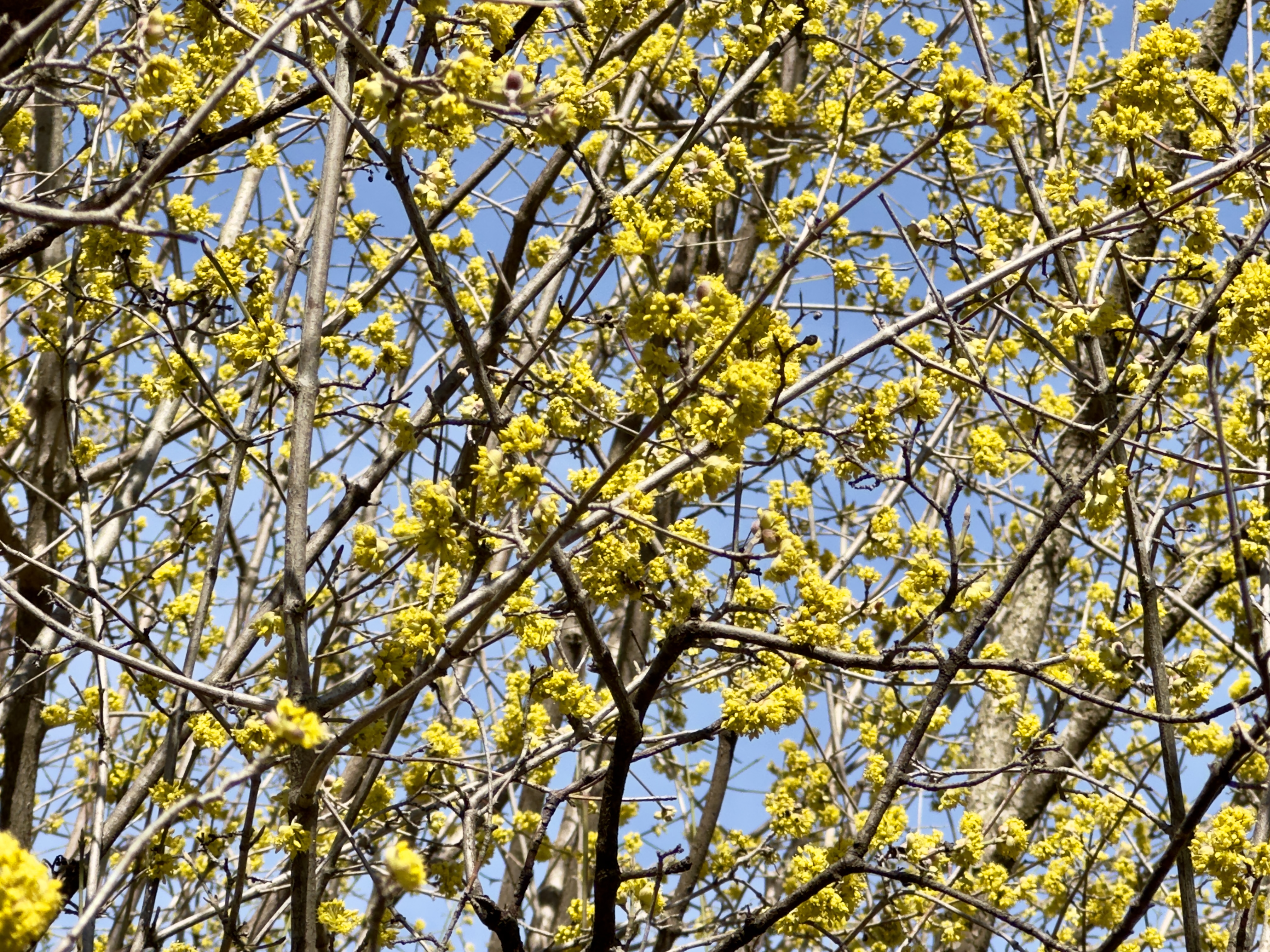
The white willow (Salix alba), with its rough, gray bark, is beginning to dress in its spring finery, its branches teeming with tiny, starburst-like flowers. Each one is a miniature sun, casting a glow against the intricate lattice of branches. These aren’t the soft catkins of the pussy willow but the yellow inflorescences that are characteristic of the white willow’s early bloom, a signpost that winter’s grip is loosening.

These trees, you learn, are dioecious, with separate male and female trees. The blossoms you see are likely the male flowers, their stamens dusting your fingers with pollen as you brush against them. It’s this pollen that will soon beckon the bees, urging them to emerge from their hives and begin the work that sustains the ecosystem. You can almost hear the faint buzz, a prelude to the symphony of life that summer will bring. Return in midsummer to find the female catkins comprise numerous small (4 mm) capsules, each containing numerous minute seeds embedded in silky white hairs, which aids wind dispersal.

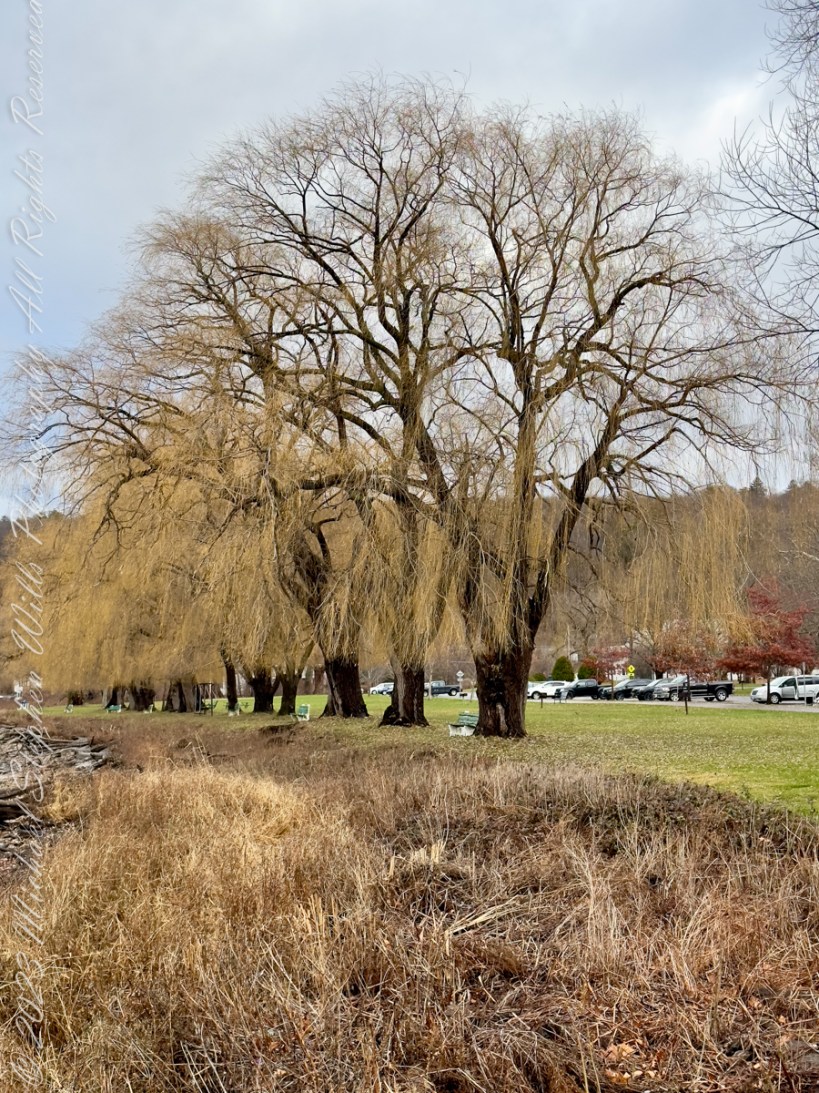
As you wander further, you note the presence of the white willow’s kin, other deciduous companions some still bare and stretching into the sky and others leafing out. You stand there, at the cusp of seasonal change, where the slumbering trees are on the verge of awakening, and you feel a kinship with them. Like these trees, you have weathered the cold, dark months, and now you stand poised to greet the renewal that comes with spring.

The stark, knotted forms of the white willow branches against the clear sky speak to you of endurance and resilience. These trees have weathered storms and droughts; they have been companions to the lake, mirrors to its moods, and now they are beginning to celebrate the cycle of rebirth and growth.

You take a seat on a bench, the cool wood through your clothes a reminder of the lingering winter. You gaze out across the lake, the water reflecting the brilliance of the sun like a vast, rippling mirror, framed by the elegant silhouettes of the white willows. You feel the peace of the park seep into you, the slow, rhythmic lapping of the water syncing with your breath.

This is a moment of transition, from the sleeping to the awakening world. You think about the Salix alba, how its presence here is a testament to nature’s adaptability, thriving in the moist soil by the lake, offering shade in summer and shelter in winter, its branches a playground for the winds.

As you leave Stewart Park, you take with you the memory of the white willows in early March, the quiet guardians of Cayuga Lake. They remind you of the enduring beauty of nature, the seamless flow from one season to the next, and the quiet joy of standing witness to the first whispers of spring on the shores of the Finger Lakes.

Copyright 2024 Michael Stephen Wills All Rights Reserved

Watching with the Willows

On a brisk day at Stewart Park, I stroll alongside Cayuga Lake, observing Canadian Geese and white willows. The tranquil, interconnected scene proves an enduring memory despite everyday worries.

Continue reading “Watching with the Willows”

Reflections on the Inlet: The Convergence of Realities

In the shadow of McGraw Tower, Natan grapples with surreal encounters and mystical occurrences, questioning the nature of reality itself. Open my blog to uncover the mysteries of McGraw Tower and Natan’s journey into the heart of the extraordinary.

Continue reading “Reflections on the Inlet: The Convergence of Realities”

Moonlit Parallels

Discover this mysterious encounter at Cayuga Lake Inlet where I met Neven, my doppelganger. Who is he? Join me in unraveling this eerie twilight mystery.

Continue reading “Moonlit Parallels”

Life of an Osprey: From Nest to Sky

Read about this osprey’s journey, from a hatchling to a fledgling soaring over Cayuga Lake.

Continue reading “Life of an Osprey: From Nest to Sky”

Reflected Sunset

An evening at Cayuga Lake Inlet, home to the Cornell University Crew, is depicted as a serene haven for reflection. The Collyer Boathouse, vital to the local lore, sits across the inlet holding a rich history of crew camaraderie and competition.

Continue reading “Reflected Sunset”

A Stunning Find

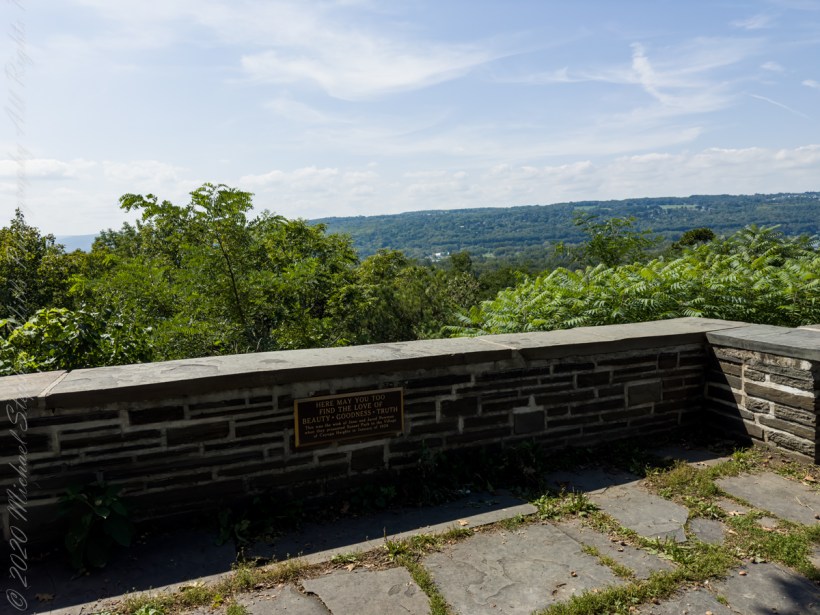
After living here since 1986 I discovered this Cayuga Heights park on a warm early September day, 2023.

Looking across Cayuga Lake, not visible in the valley, to West Hill.

Plaque inscription: “Here may you too find the love of beauty, goodness, truth. This was the wish of Jane and Jared Newman when they presented Sunset Park to the village of Cayuga Heights in January of 1938.”

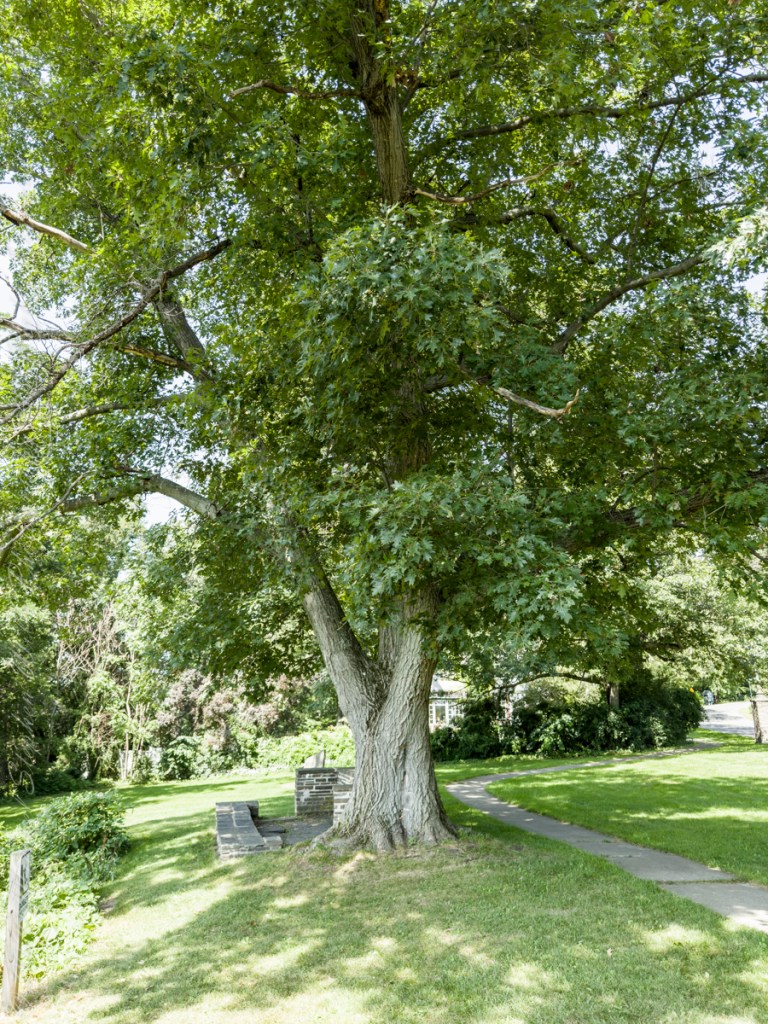
Rest on a limestone bench beneath a mature oak tree.

Limestone benches

View across Ithaca towards West Hill and, in the far distance, Connecticut Hill.

Copyright 2023 Michael Stephen Wills All Rights Reserved

Taughannock Gorge with the kids – part 2

Several possible sources have been proposed for the name Taughannock, all of which describe Native American origins. One translation suggests that the name is derived from a combination of Iroquois and Algonquin terms meaning “great fall in the woods”.  An alternate theory suggests that the name may refer to a Lenni Lenape (Delaware) chief named Taughannock who died near the falls during a battle.

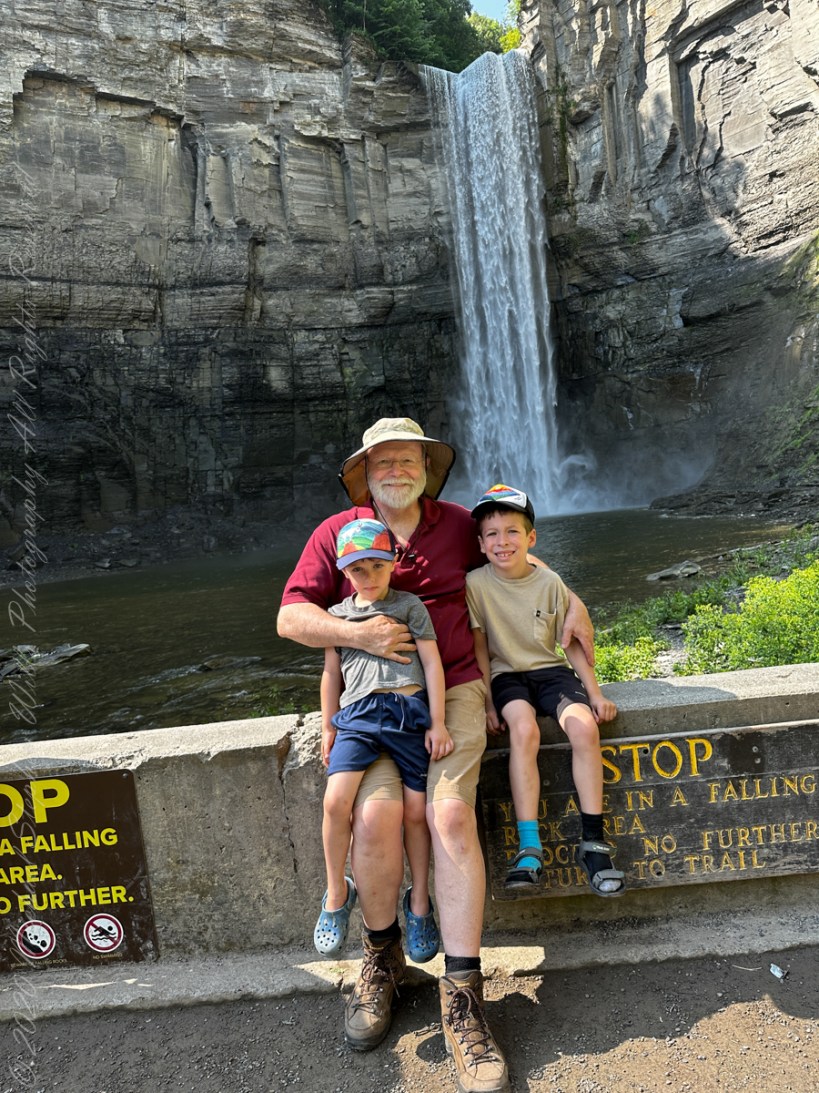
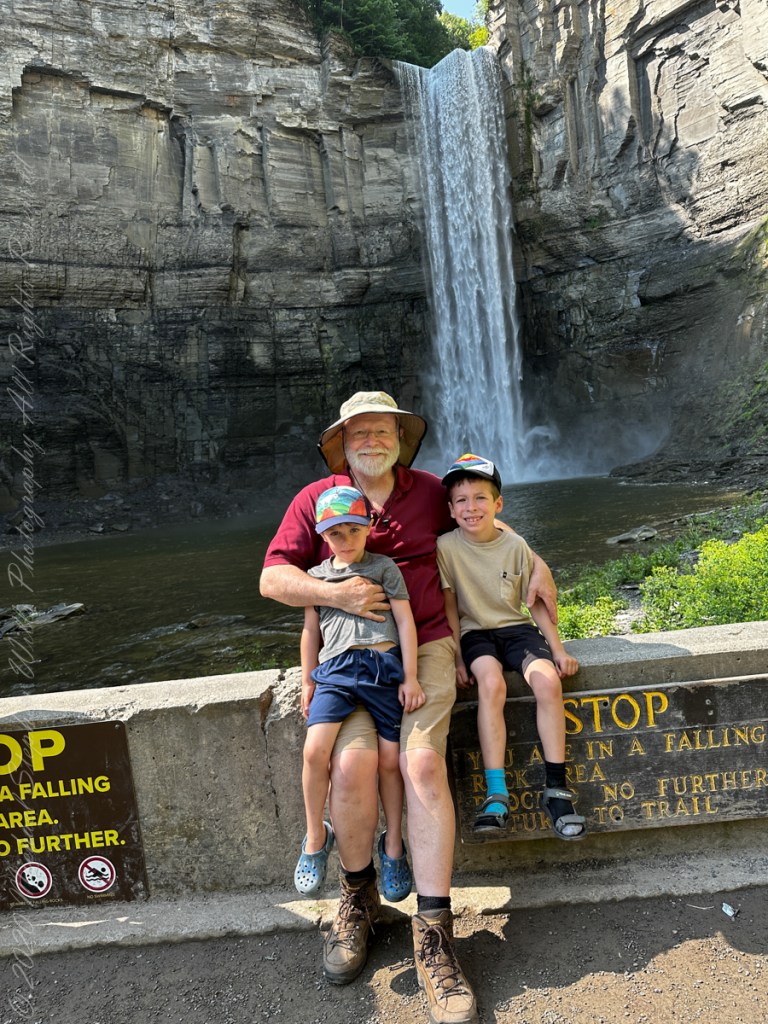
A nice lady offered to take the photo….challenged to keep it straight.

During the second half of the nineteenth century, steamboats, railroads and Victorian hotels were built in the region to serve tourists who traveled to view the falls. By 1925 the hotels were failing due to a decline in tourism, and New York State began acquiring land to form a park.

Pollywogs!! Catch and release

J.S. Halsey built a two and a half story hotel in 1850, known variously as the Cataract Hotel or Taughannock House (or simply as Halsey’s Hotel) at the Taughannock Falls Overlook.

Visitors could reach the hotel by taking a train to Cayuga Lake, take a steamboat across the lake to Goodwin’s Point, then finally board a stagecoach to reach the hotel. The hotel site today is the location of the park visitor center and parking lot.

Enjoy!!

Taughannock Gorge with the kids

and ice cream!!

The waterfall and gorge comprise an example of a hanging valley, formed where Taughannock Creek’s stream-carved valley meets the deeper glacially carved valley that contains Cayuga Lake.

The gorge has continued to retreat westward from Cayuga Lake as easily eroded shale near the fall’s base is worn away by the stream, which supports erosion-resistant siltstone and sandstone found in the upper portions of the gorge.

Pollywogs!! Catch and release

Annual freeze and thaw cycles also act upon small faults in the rock, causing large sections to occasionally break away, further expanding the gorge.

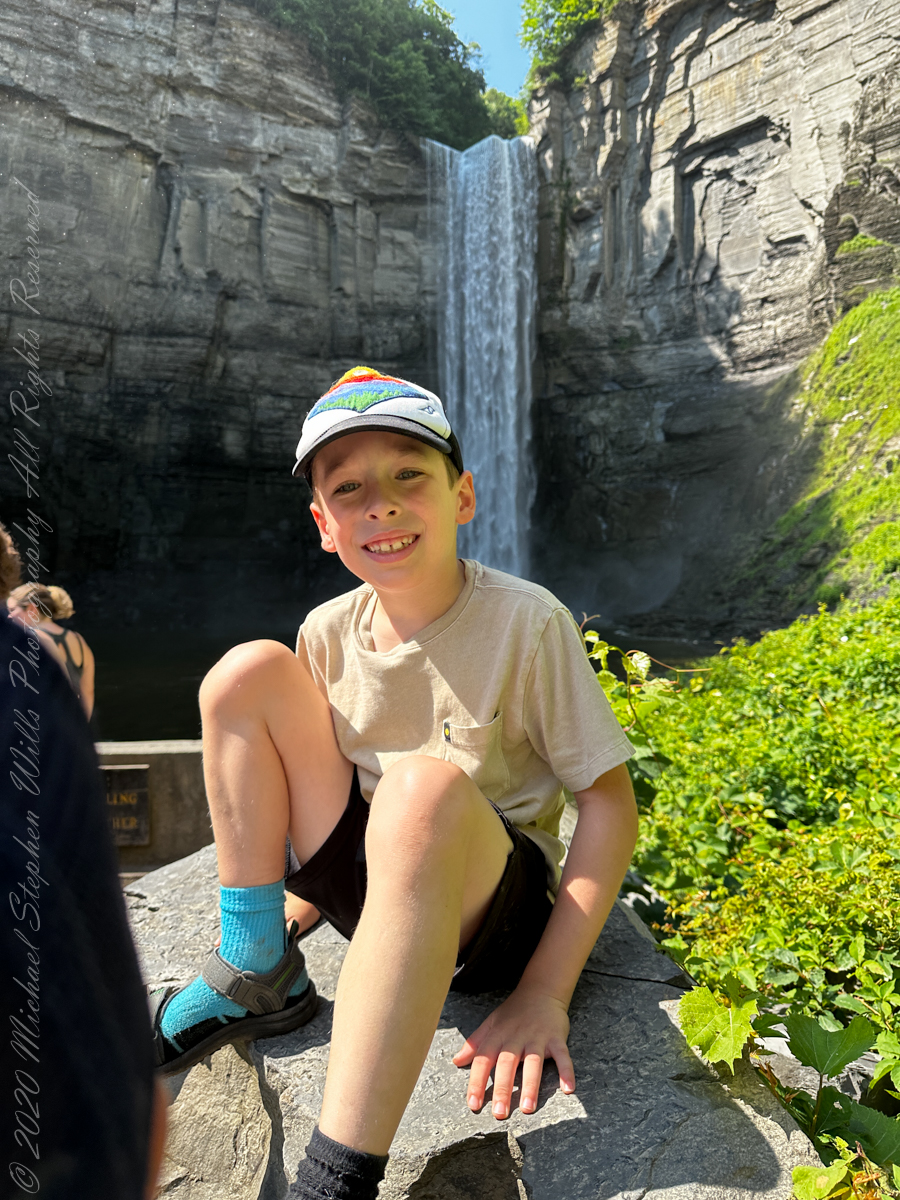
Taughannock Falls’ main cataract is a 215-foot drop (66 m), making it 33 feet (10 m) taller than Niagara Falls. It is the tallest single-drop waterfall east of the Rocky Mountains. The waterfall is located along Taughannock Creek, which flows through a long gorge with cliffs up to 400 feet (120 m) high.

Enjoy!!