As I waited during my wife’s physical therapy session, the connection between ancient healing traditions and modern medicine revealed a journey of resilience and hope.
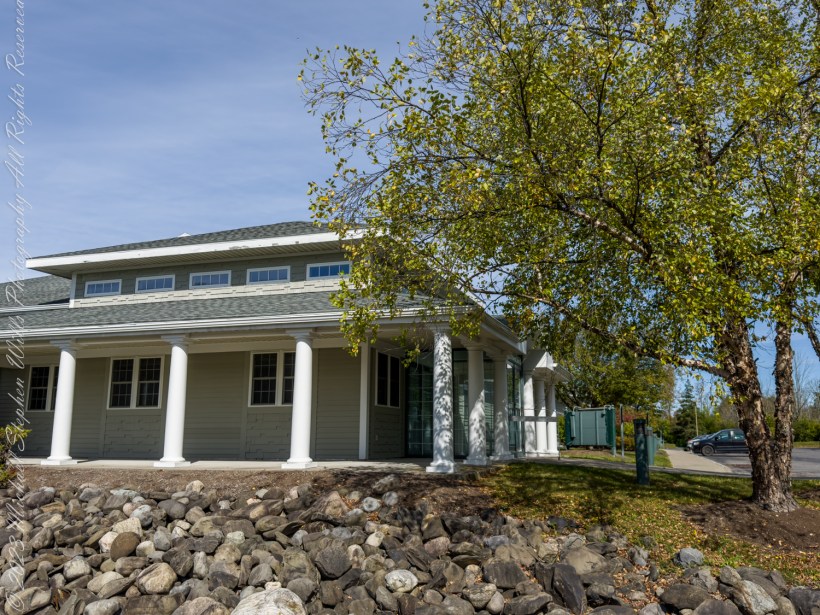
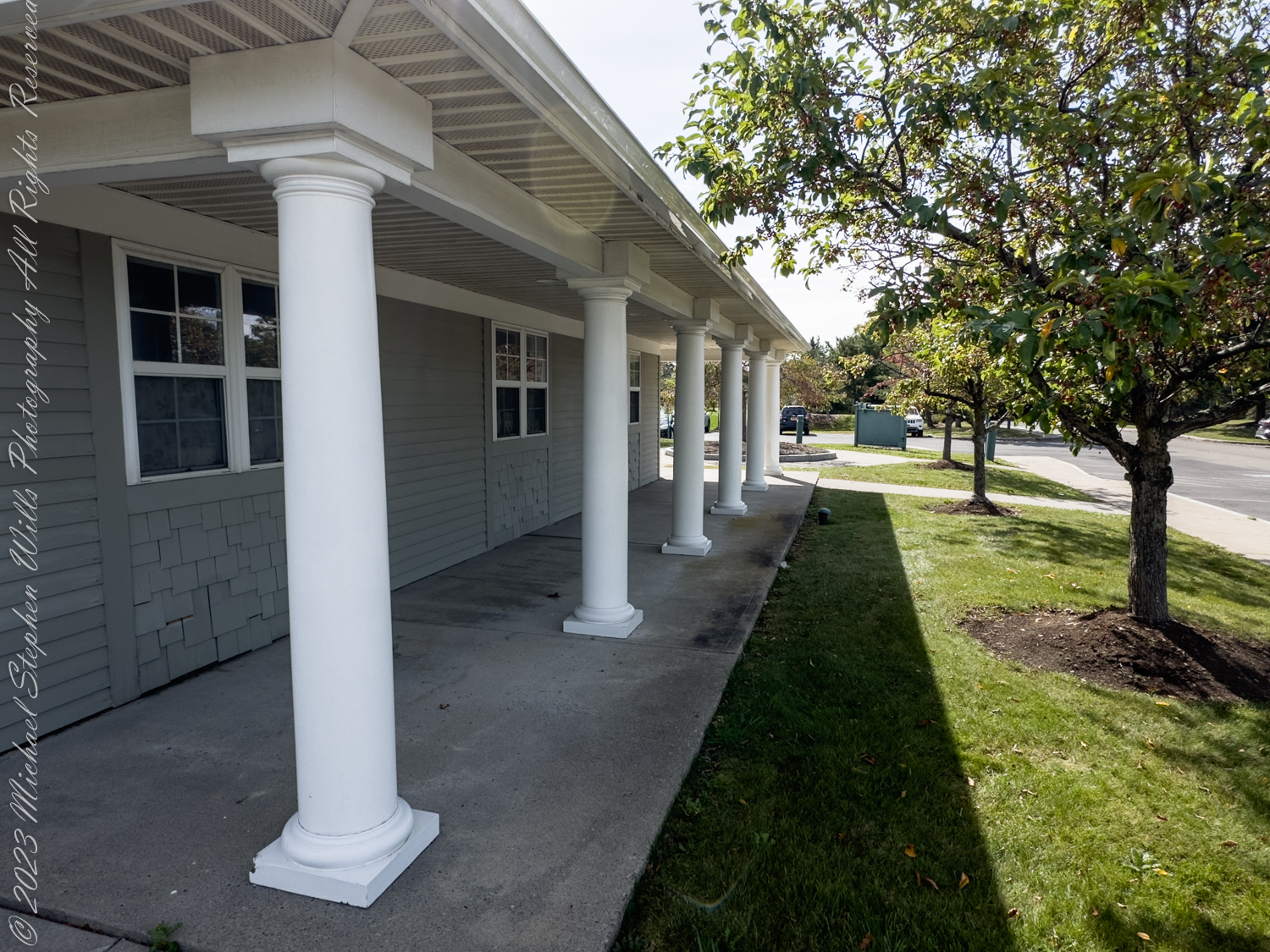
Standing in the cool autumn sunlight, I find myself pacing beneath the sturdy Doric columns of this medical campus in Northeast Ithaca, waiting as Pam undergoes another session of physical therapy. The simplicity of the columns strikes me—clean, white, and unadorned. They hold up the building with a kind of timeless grace, a quiet reflection of ancient design.
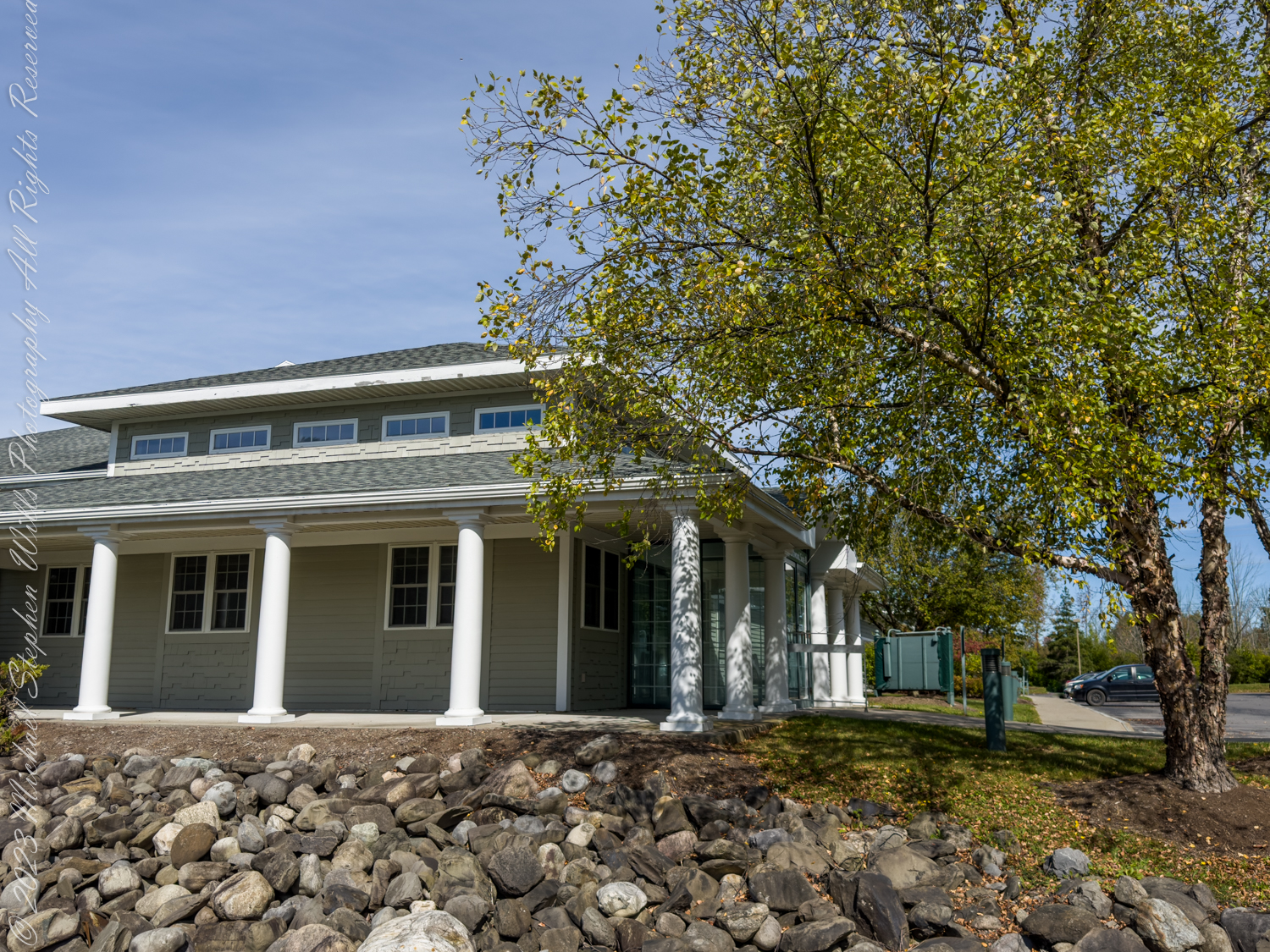
The architecture of the Medical Office Campus of northeast Ithaca is graced by doric columns arrayed in a row forming a portico colonnade. The original Greek Doric columns were fluted, and had no base, dropping straight into the platform on which the temple or other building stood. The capital was a simple circular form, with some mouldings, under a square cushion that is very wide in early versions, but later more restrained. Here the form of the capital is mirrored in the base. 20 Arrowwood Drive, Ithaca, Tompkins County, New York State
Doric columns are symbols of strength and stability. In this moment, they remind me of the quiet resilience I’ve seen in Pam throughout her recovery. Each column, solid and unwavering, reflects the foundational principles that underpin both architecture and the healing arts. Just as these columns have withstood the passage of centuries, modern medicine, too, stands tall on the legacy of ancient knowledge.
As I lean against one of these pillars, I think about the deep connections between ancient civilizations and the medicine we practice today. The origins of healing reach back to the Egyptians, who understood anatomy with remarkable precision. They would have been familiar with the use of medicinal plants. It’s remarkable to think that the surgeries performed back then, basic as they were, have evolved into the complex procedures of modern times, procedures like the one that replaced Pam’s hip with the efficiency of a machine through the care of skilled hands.
10 Brentwood Drive, Ithaca, Tompkins County, New York State
I look up at the sky, tracing the outline of the roof these columns support. The Greeks, with their reverence for observation, would have appreciated the rational design of this building. Hippocrates, the father of medicine, laid the groundwork for clinical observation, a method still used by the doctors caring for Pam. They probe, ask questions, and observe her movements, trying to decipher the hidden ailments within her body, much as the ancient physicians did centuries ago. It’s in this continuity that I find comfort—knowing that the doctors and physical therapists here are part of a long tradition, stretching back to Galen, who wrote about anatomy and physiology in ways that informed medical students for generations.
Modern medicine, like these columns, is a blend of the old and the new. Acupuncture, an ancient Chinese practice, is now commonly recommended for pain relief, a reminder that even today we rely on wisdom passed down through millennia. Pam’s therapists blend tradition with cutting-edge technology, using machines that track her progress and exercises that help her regain strength. Yet, at the heart of it, the human body heals the way it always has—with time, patience, and care.
As I walk the perimeter of the building, past patches of sunlight falling on the sidewalk, I’m struck by the parallels between the construction of this space and the body’s own repair. Both depend on a solid foundation. Roman innovations in public health, sanitation, and the idea of hospitals have shaped the spaces where we now seek healing. And here, in this modern medical facility, the connection to those roots feels tangible, much like the stones beneath my feet.
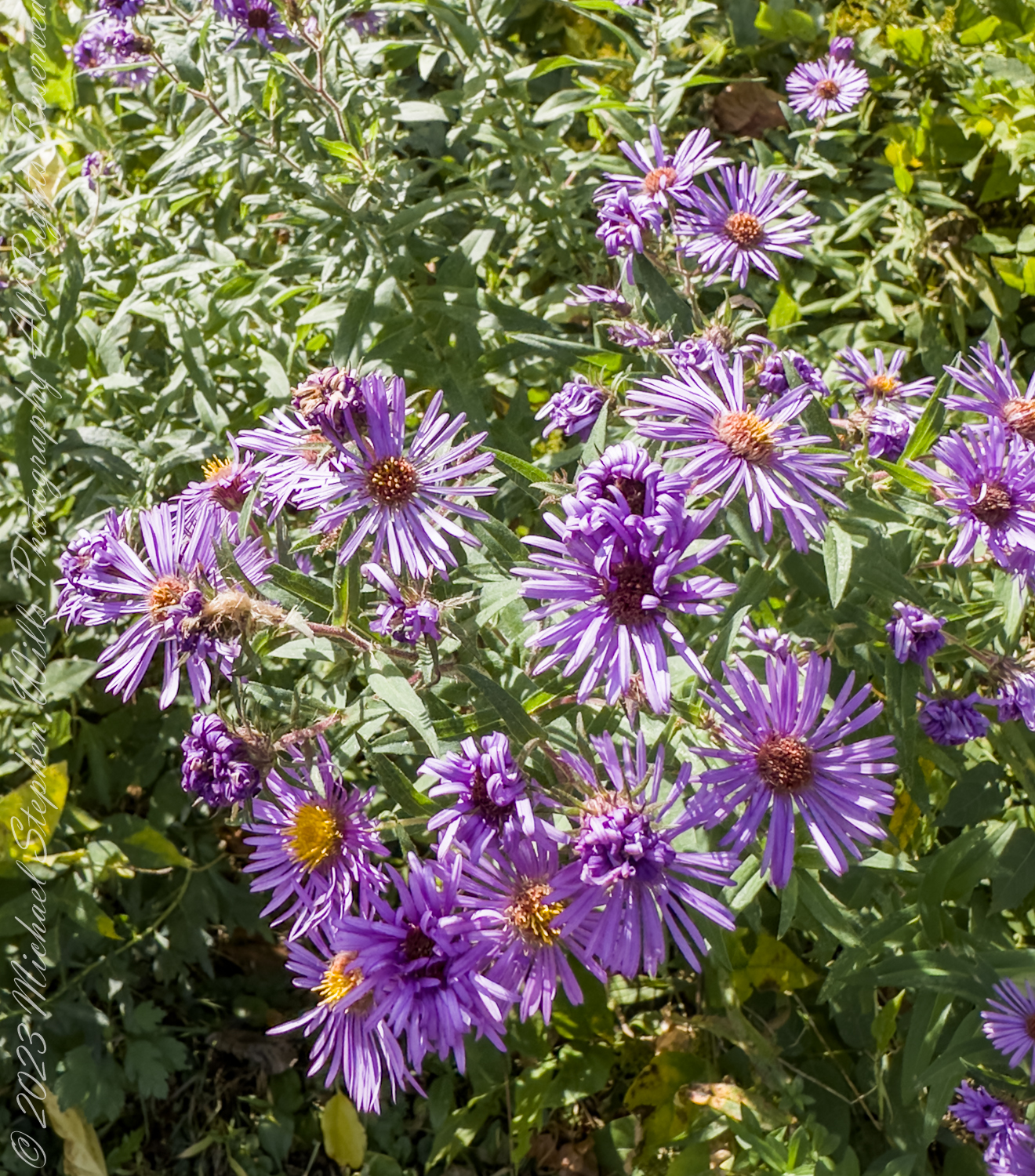
The name Aster comes from the Ancient Greek meaning “star”, referring to the shape of the flower head. ‘Aster’ species are used as food plants by the larvae of a number of Lepidoptera species. These asters grew wild on an otherwise landscaped medical campus. Found on an eaqrly autumn morning near 10 Brentwood Drive, Ithaca, Tompkins County, New York State
Asters, blooming nearby, sway gently in the breeze. They too are resilient, much like Pam. Their purple blossoms remind me of the hope that pervades our journey. The columns stand as sentinels of a kind of knowledge that is both ancient and ever-evolving—a blend of science, history, and faith in the power of the human spirit to endure.
Copyright 2024 Michael Stephen Wills All Rights Reserved
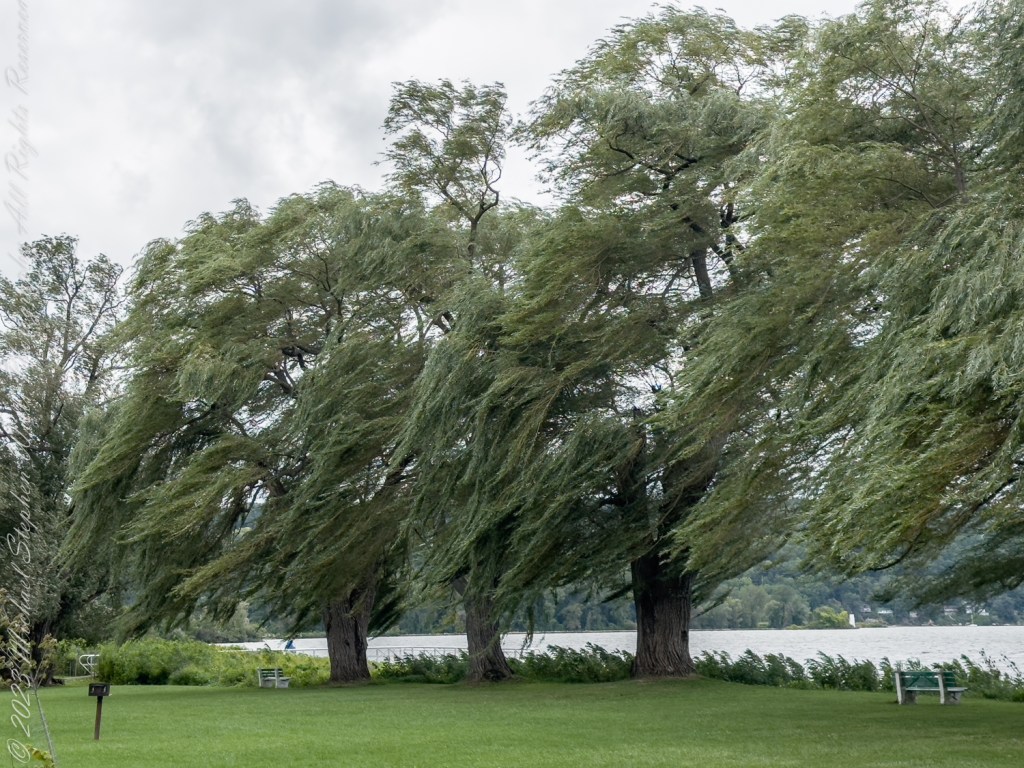
As Pam took her first therapeutic steps through Stewart Park after hip surgery, the wind off Cayuga Lake carried memories of our sailing days. This walk, a milestone along a journey of strength and reflection.
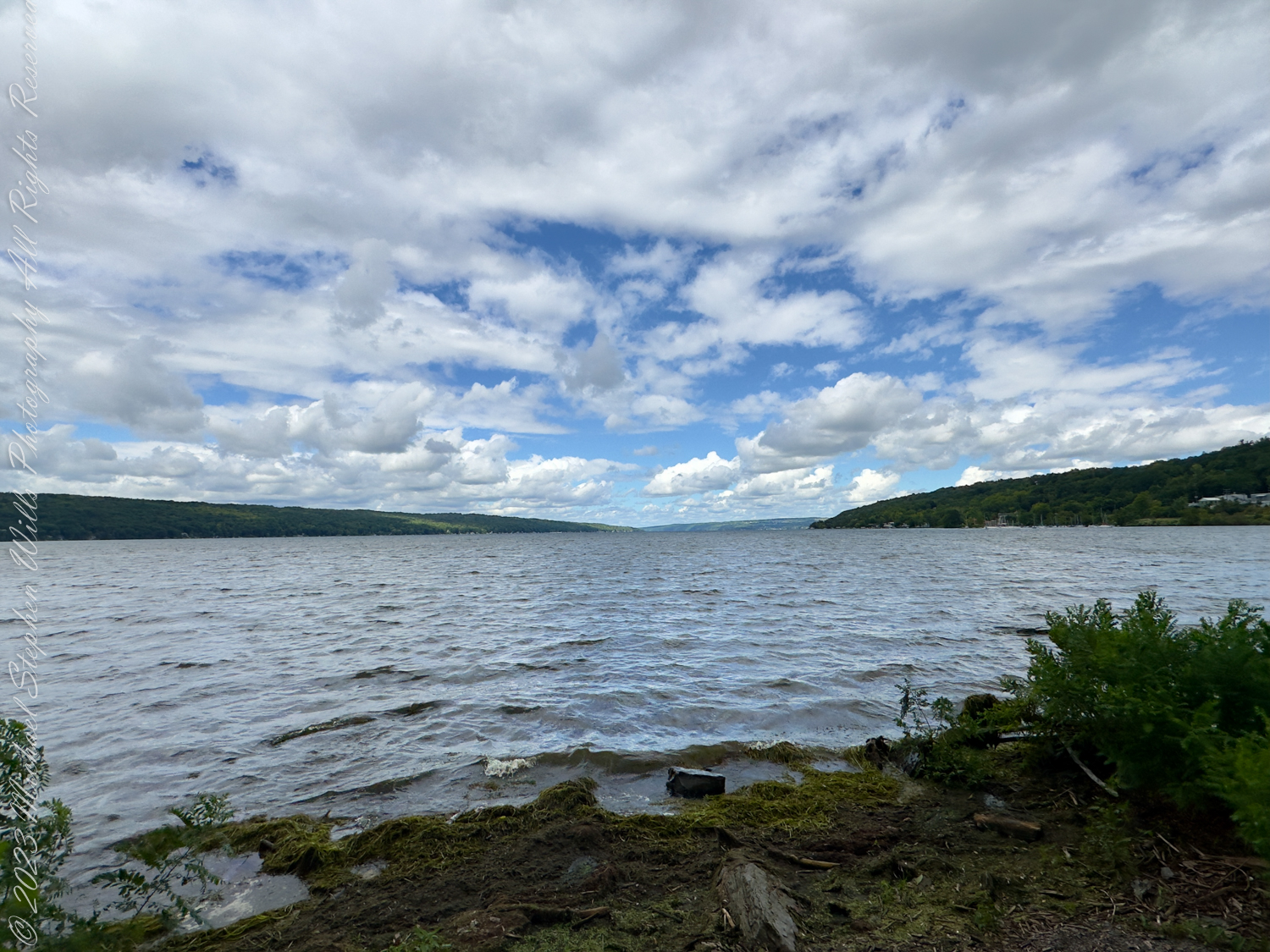
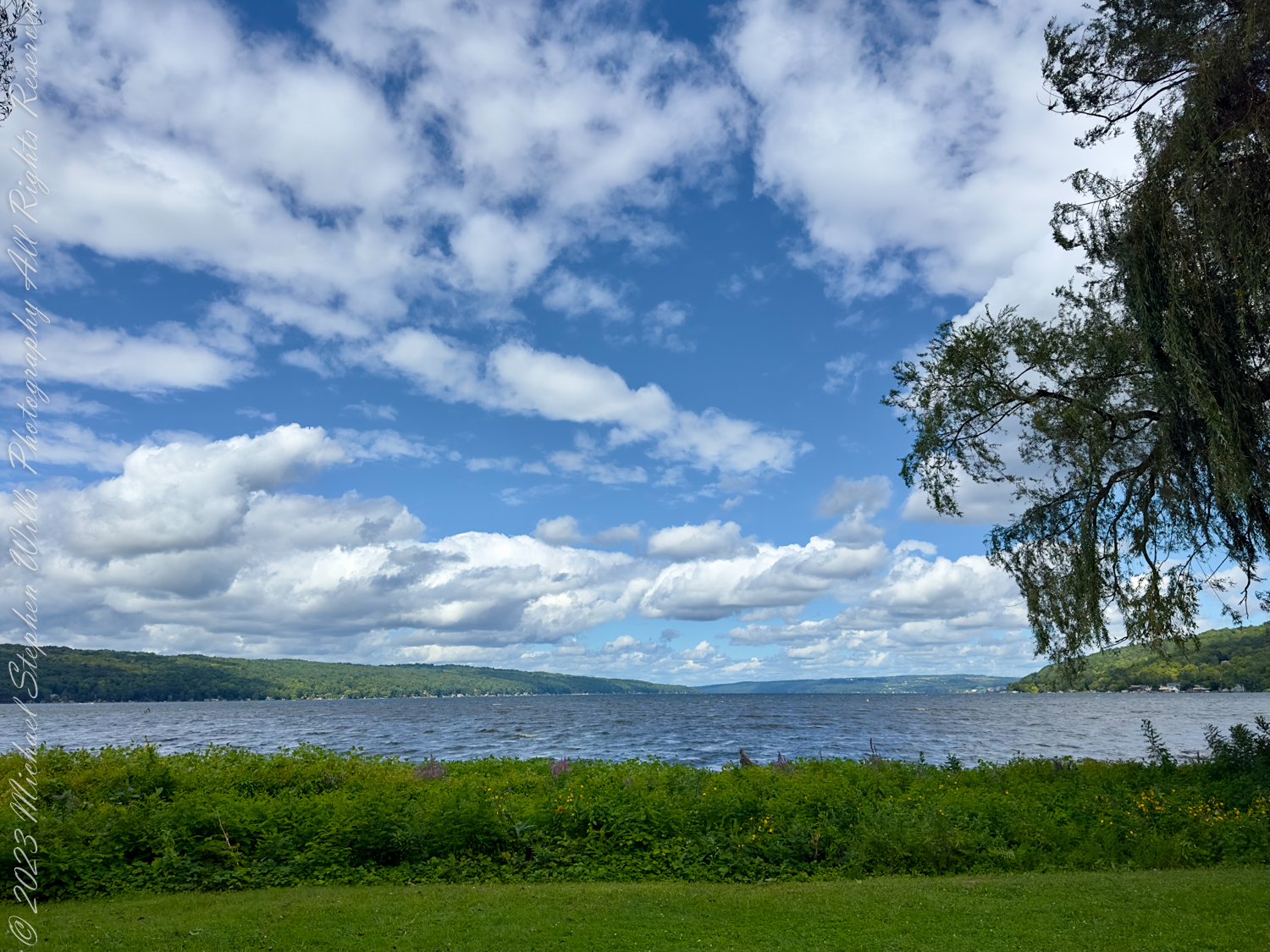
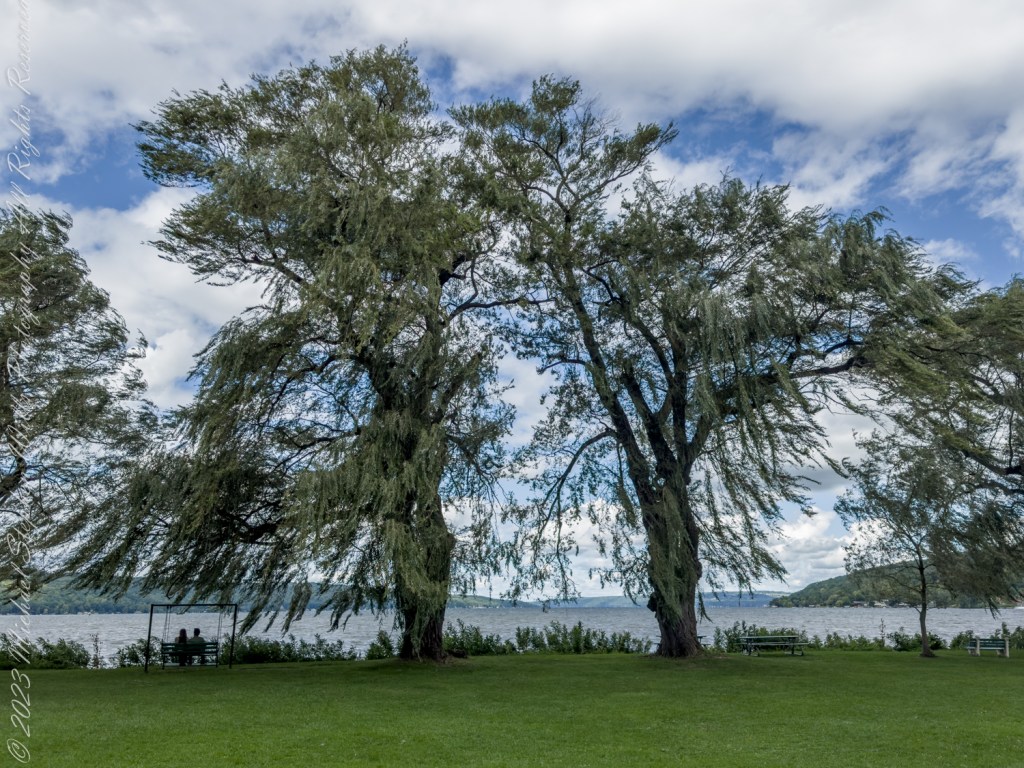
The breeze off Cayuga Lake was lively, stirring the willows and creating waves that rippled across the water’s surface as we arrived at Stewart Park. For Pam, this day marked a significant milestone: her first therapeutic walk since undergoing total hip replacement surgery. The park, located on the outskirts of Ithaca, New York, had long been a place of peaceful walks and scenic reflection for us, but on this day, it took on new meaning. The pathways and views we had enjoyed over the years now served as the backdrop for Pam’s journey of recovery.
As Pam began her walk, using her walker for support, the air felt crisp with the late-summer breeze. She moved carefully along the paved path, her steps steady but measured. The sight of her, framed by the grand trees lining the park, was a testament to the resilience and strength she had displayed throughout the weeks following her surgery. The park’s beauty offered a sense of calm that seemed to support her determination, as though nature itself was encouraging her every step.
Stewart Park, with its sweeping views of Cayuga Lake and towering willows, had always been a special place for us. Over the years, we had spent afternoons such as this sailing the lake’s expansive waters. We ventured out to let the wind carry us across the lake. As Pam walked, we reminisced about those times—how we would navigate the gusty winds that filled our sails, steering into the waves with a sense of adventure. “This wind reminds me your calls to ‘control the jib!!’,” Pam said, smiling as we remembered the thrill of maneuvering the boat to dock.
On days like those, the lake was unpredictable, much like Pam’s journey through recovery had been. Yet, whether on the water or facing the challenges of healing, Pam had always shown a quiet, steadfast determination. Just as we had learned to adjust the sails to accommodate the changing wind patterns, Pam had adapted to her new circumstances, tackling each step of her rehabilitation with grace.
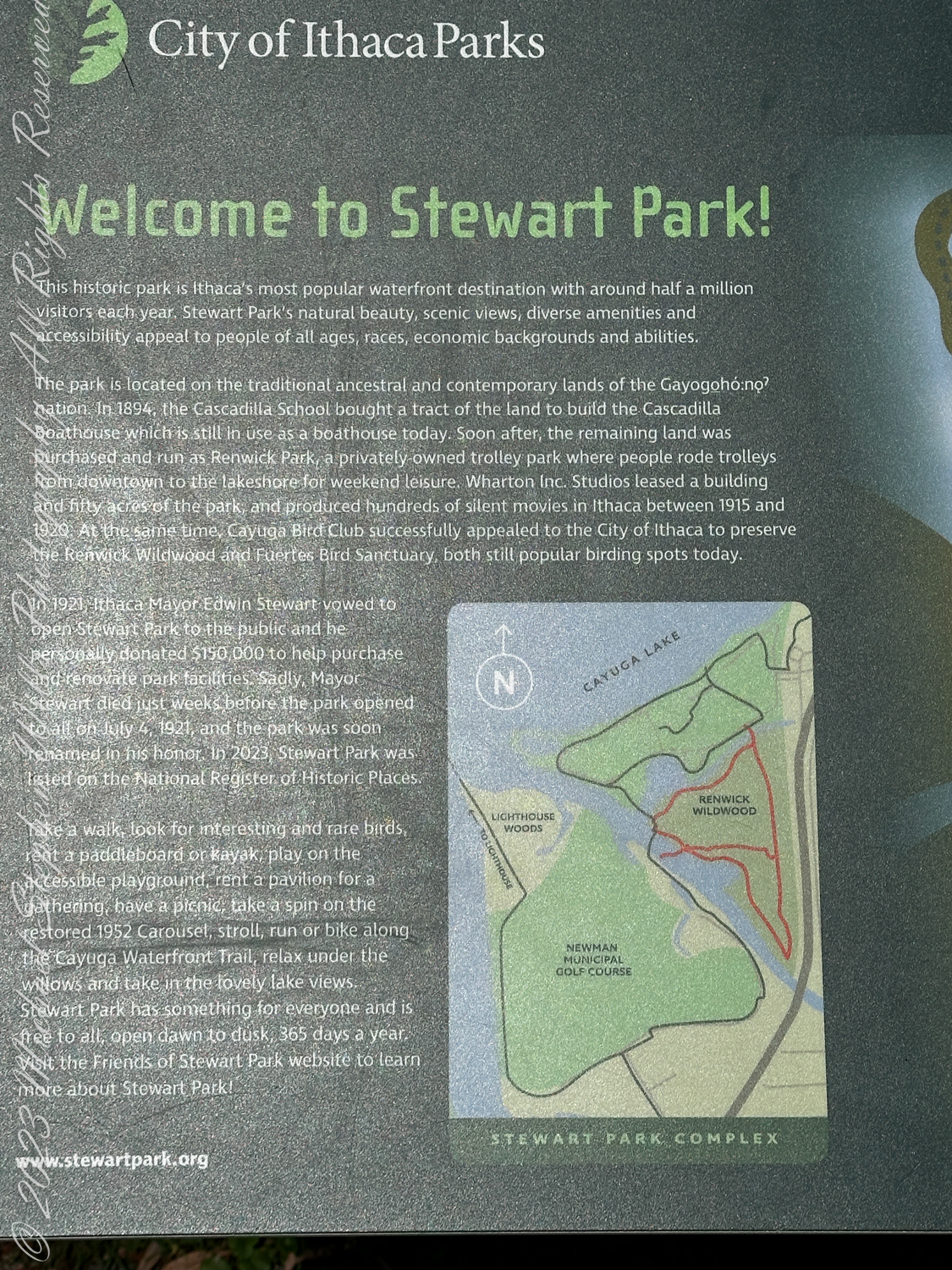
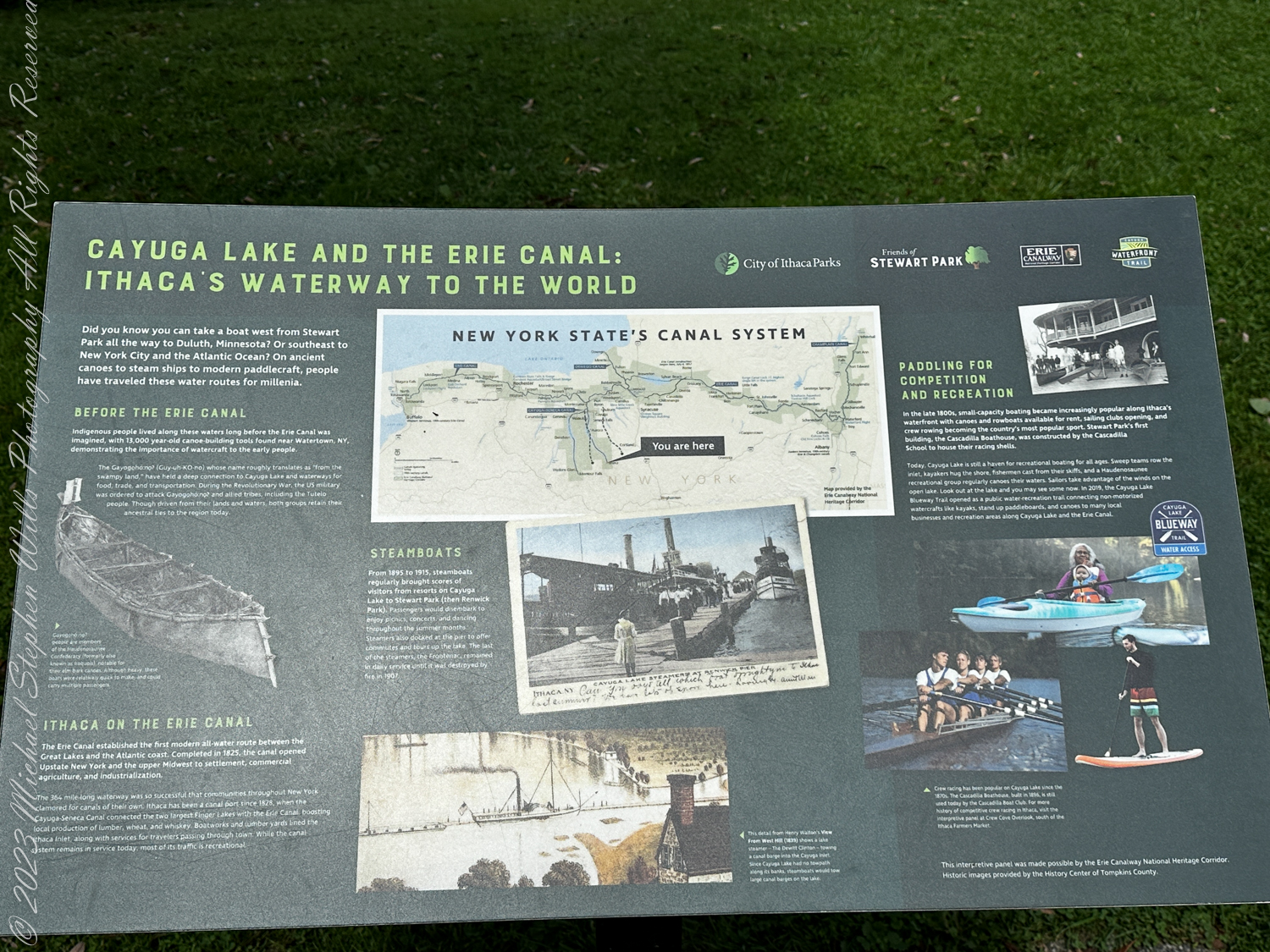
We paused at one of the informational signs along the path. The sign detailed the park’s history, noting that it sits on the ancestral lands of the Gayogo̱hó꞉nǫ’. Originally developed in 1894 for the Cascadilla School’s boathouse, the park had undergone many transformations before becoming the public space it is today. The sign spoke of Mayor Edwin Stewart, who had donated $150,000 to help purchase and renovate the park’s facilities, only to pass away weeks before its official opening in 1921. In 2021, the park was listed on the National Register of Historic Places, a testament to its enduring role in the community.
City of Ithaca Parks
Welcome to Stewart Park!
This historic park is Ithaca’s most popular waterfront destination with around half a million visitors each year. Stewart Park’s natural beauty, scenic views, diverse amenities and accessibility appeal to people of all ages, races, economic backgrounds and abilities.
The park is located on the traditional ancestral and contemporary lands of the Gayogo̱hó꞉nǫʼ nation. In 1894, the Cascadilla School bought a tract of the land to build the Cascadilla Boathouse which is still in use as a boathouse today. Soon after, the remaining land was purchased and run as Renwick Park, a privately owned trolley park where people rode trolleys from downtown to the lakeshore for weekend leisure. Wharton Inc. Studios leased a building and fifty acres of the park, and produced hundreds of silent movies in Ithaca between 1915 and 1920. At the same time, Cayuga Bird Club successfully appealed to the City of Ithaca to preserve the Renwick Wildwood and Fuertes Bird Sanctuary, both still popular birding spots today.
In 1921 Ithaca Mayor Edwin Stewart vowed to open Stewart Park to the public and he personally donated $150,000 to help purchase and renovate park facilities. Sadly, Mayor Stewart died just weeks before the park opened to all on July 4, 1921, and the park was soon renamed in his honor. In 2021 Stewart Park was listed on the National Register of Historic Places.
Take a walk, look for interesting and rare birds, rent a paddleboard or kayak; play on the accessible playground, rent a pavilion for a gathering, have a picnic, take a spin on the restored 1952 Carousel, stroll, run or bike along the Cayuga Waterfront Trail, relax under the willows and take in the lovely lake views. Stewart Park has something for everyone and is free to all, open dawn to dusk, 365 days a year. Visit the Friends of Stewart Park website to learn more about Stewart Park!
CAYUGA LAKE AND THE ERIE CANAL: ITHACA’S WATERWAY TO THE WORLD
Did you know you can take a boat west from Stewart Park all the way to Duluth, Minnesota? Or southeast to New York City and the Atlantic Ocean? On ancient canoes to steam ships to modern paddlecraft, people have traveled these water routes for millenia.
Before the Erie Canal
Indigenous people lived along these waters long before the Erie Canal was completed in 1825. In 1790, a dugout canoe was found near Elmira, NY, demonstrating the importance of waterways to the early people.
The Cayuga/Seneca Gayogo̱hó꞉nǫʼ who lived here for nearly a thousand years used the lake and rivers to transport people and goods. In the 1600s, French explorers reported meeting the Gayogo̱hó꞉nǫʼ as they traveled east along these waterways. Canoes and later watercraft helped settlers move people, goods, and ideas, transforming upstate New York. With only one lock, the lake’s water level would rise and fall, but goods still needed to be portaged, or moved over land. As the first commercial waterway in the US, the Erie Canal used river systems, canal channels, and lakes to connect New York’s inland towns to world markets.
ITHACA ON THE ERIE CANAL
The canal established the first modern all-water route between the Great Lakes and the Atlantic. Completed in 1825, the canal opened Upstate New York and the upper Midwest to settlement, commercial agriculture, and industry.
The southernmost port of the canal was at Cayuga Lake, near present-day Route 90, where steamboats ferried passengers and freight to and from Ithaca. Products like salt from Syracuse, wood from the region, and coal from Pennsylvania were loaded onto canal boats for shipment to New York City or via Buffalo, to the upper Midwest.
After more than 200 years of service, the canal has evolved into a water route that is primarily used by small boats for recreation. In 2017, the NYS Canal Corporation rebranded the canal as a recreation destination.
As Pam read the sign, she reflected on how the park’s evolution mirrored her own journey. Like Stewart Park, which had undergone multiple transformations over the years, Pam was in the midst of her own renewal. Her new hip, like the park’s renovations, represented a fresh start, a return to activity, and a promise of more days spent outdoors, enjoying the natural beauty that had always brought us peace.
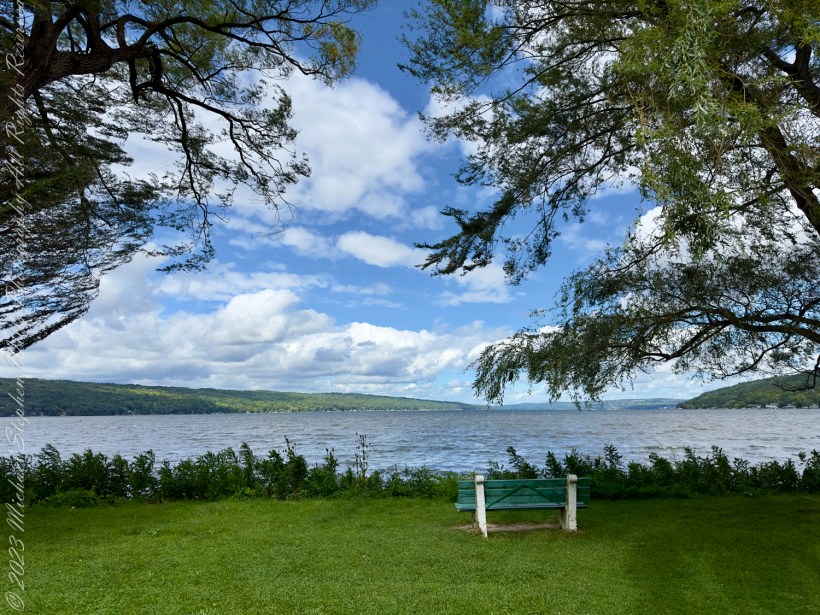
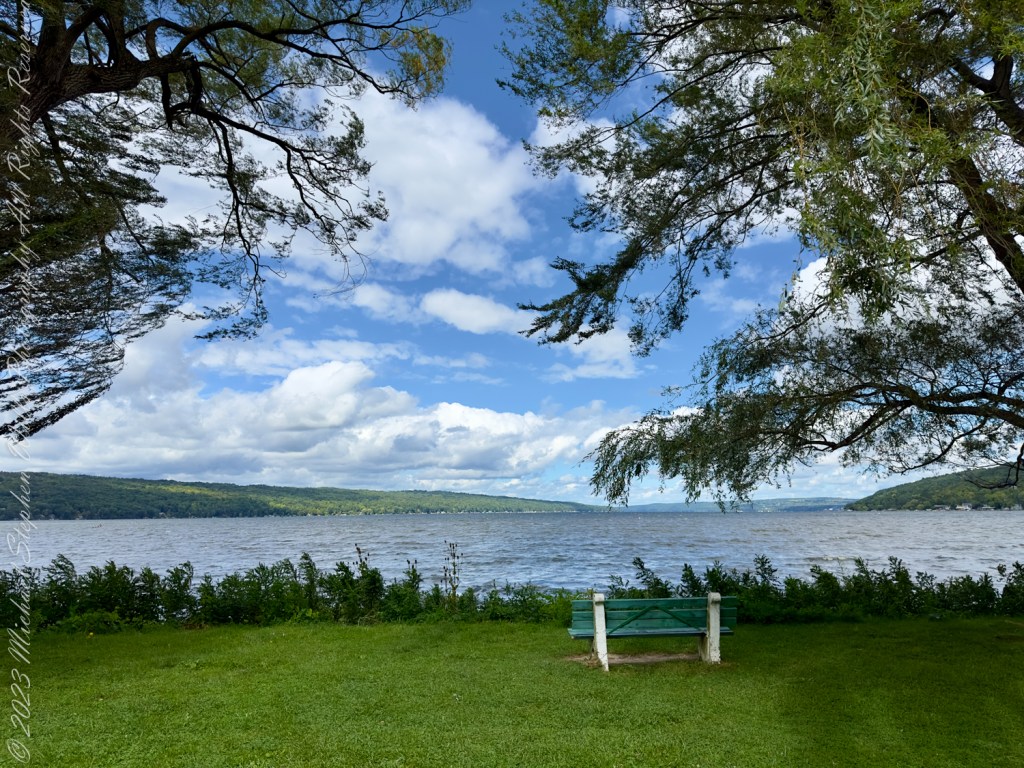
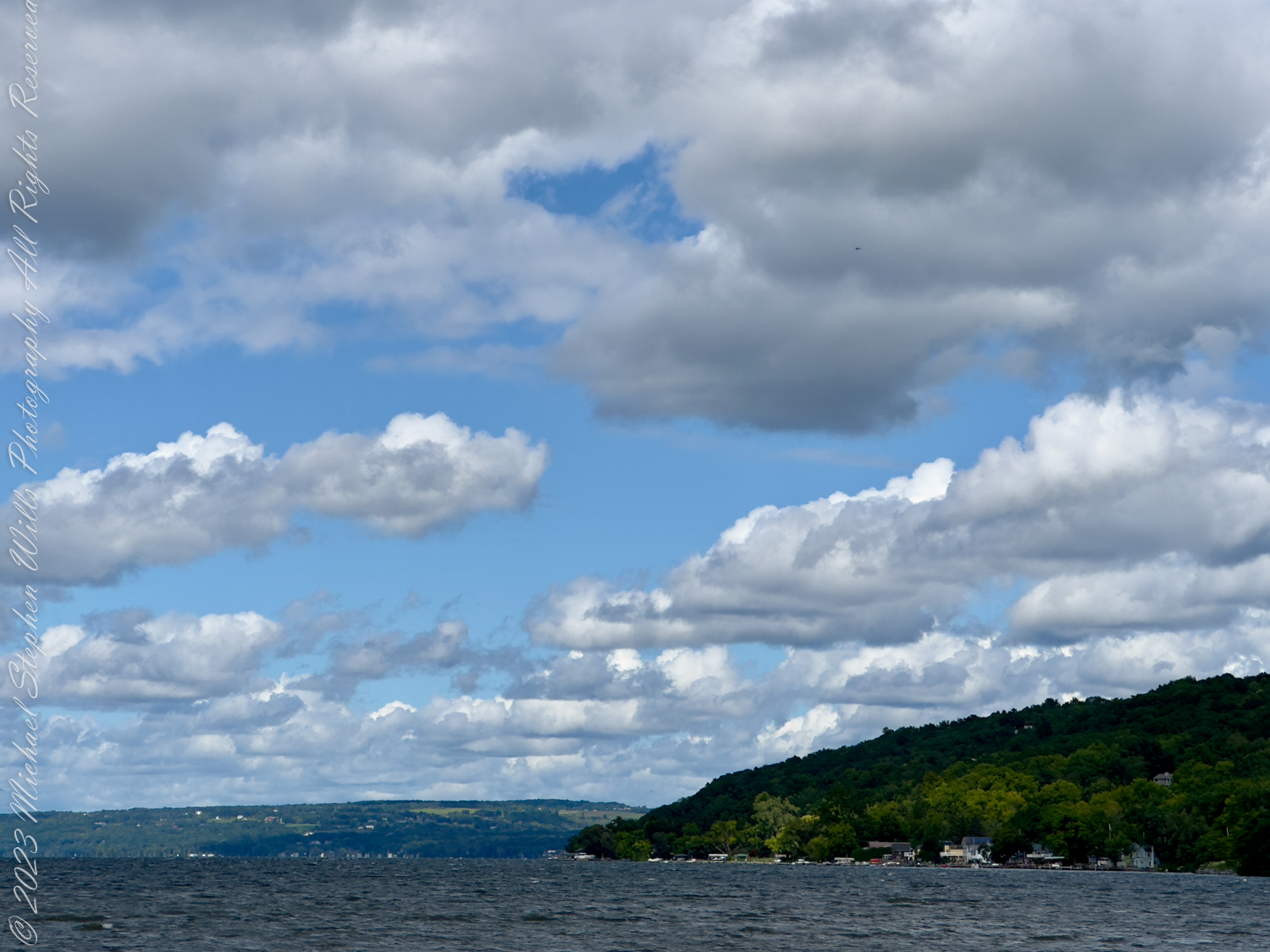
Continuing along the path, we passed several benches nestled beneath the graceful willows, their branches swaying gently in the breeze. Pam took a moment to rest on one of the benches, her eyes focused on the vast expanse of Cayuga Lake. The view stretched toward the distant hills, where the clouds and sun played together, casting ever-shifting patterns of light across the water. For a brief moment, it felt like we were back on our sailboat, riding the waves and allowing the wind to guide us toward new horizons.
As we made our way back along the path, the tall willows swaying and the sound of the waves lapping at the shore, I couldn’t help but feel gratitude. Stewart Park had always been a place of calm and reflection, but on this day, it became a place of healing. Pam’s steps, though slow and deliberate, were filled with the same strength and grace she had shown throughout her life.
The park’s beauty, the history we had shared here, and the memories of our time spent sailing on Cayuga Lake all came together to create a sense of peace. Pam’s recovery journey was far from over, but her progress was undeniable. As we looked out over the lake one last time before heading home, the water shimmered in the sunlight, promising more adventures to come.
Stewart Park, with its windswept trees and timeless views, would forever be tied to this day—Pam’s first steps toward reclaiming her mobility, set against the backdrop of a place that had long been part of our shared story. It was a day filled with hope, strength, and the quiet knowledge that, like the wind, life would continue to move us forward, no matter the challenges.
Copyright 2024 Michael Stephen Wills All Rights Reserved
As I walked the quiet medical campus, a dying ash tree caught my eye. Its bark revealed the intricate, destructive galleries left by the relentless Emerald Ash Borer, telling a silent story of loss.
Feeling the need for air, for motion I walk the grounds of a medical campus in Northeast Ithaca, New York, as my wife undergoes physical therapy following her total hip replacement. The sun is high, casting long shadows across the neatly trimmed lawn and scattered trees. There’s a certain calmness here, a space to reflect amid the quiet hustle of the healthcare world.
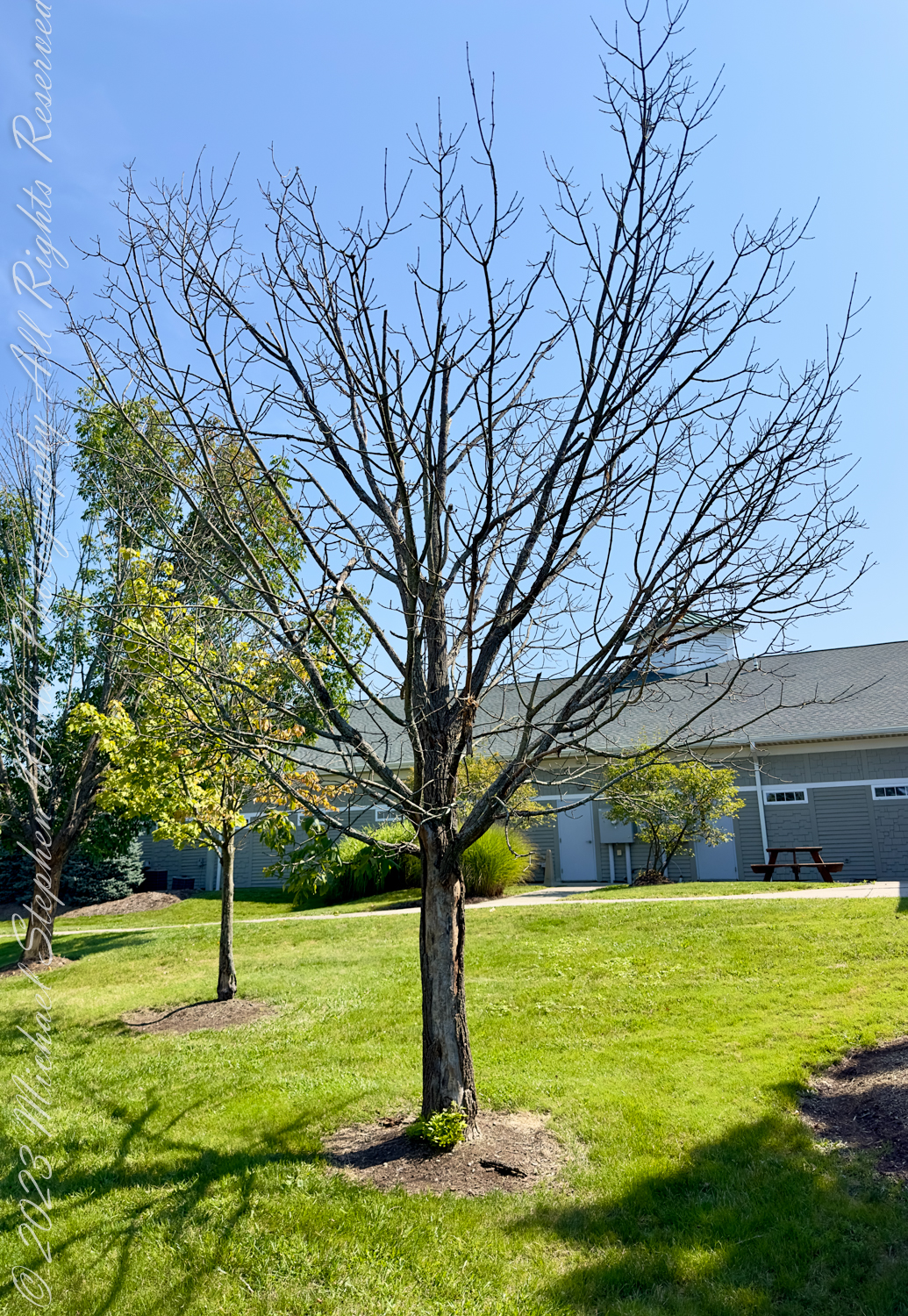
One tree stands out from the others. I immediately sense that something is not quite right. The branches, bare and brittle, reach out like skeletal arms against the blue sky. It’s summer—this tree should be lush, green, full of life. Yet, here it stands, a stark silhouette among the healthier trees nearby. My curiosity draws me closer, and as I circle the tree, my suspicions are confirmed: it’s an ash tree, Fraxinus americana, dying from an all-too-familiar enemy, the Emerald Ash Borer (Agrilus planipennis).
A dying ash tree on the medical campus off Warren Road, Northeast Ithaca.
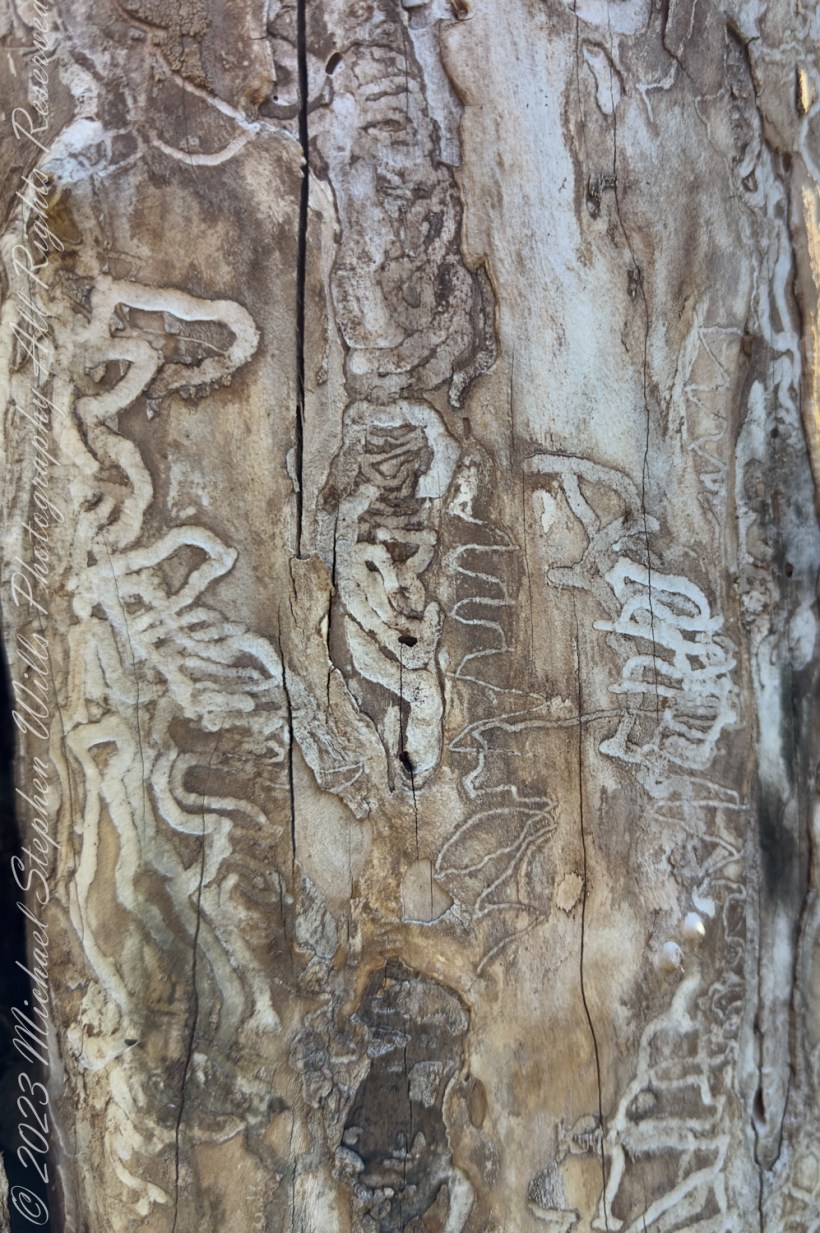
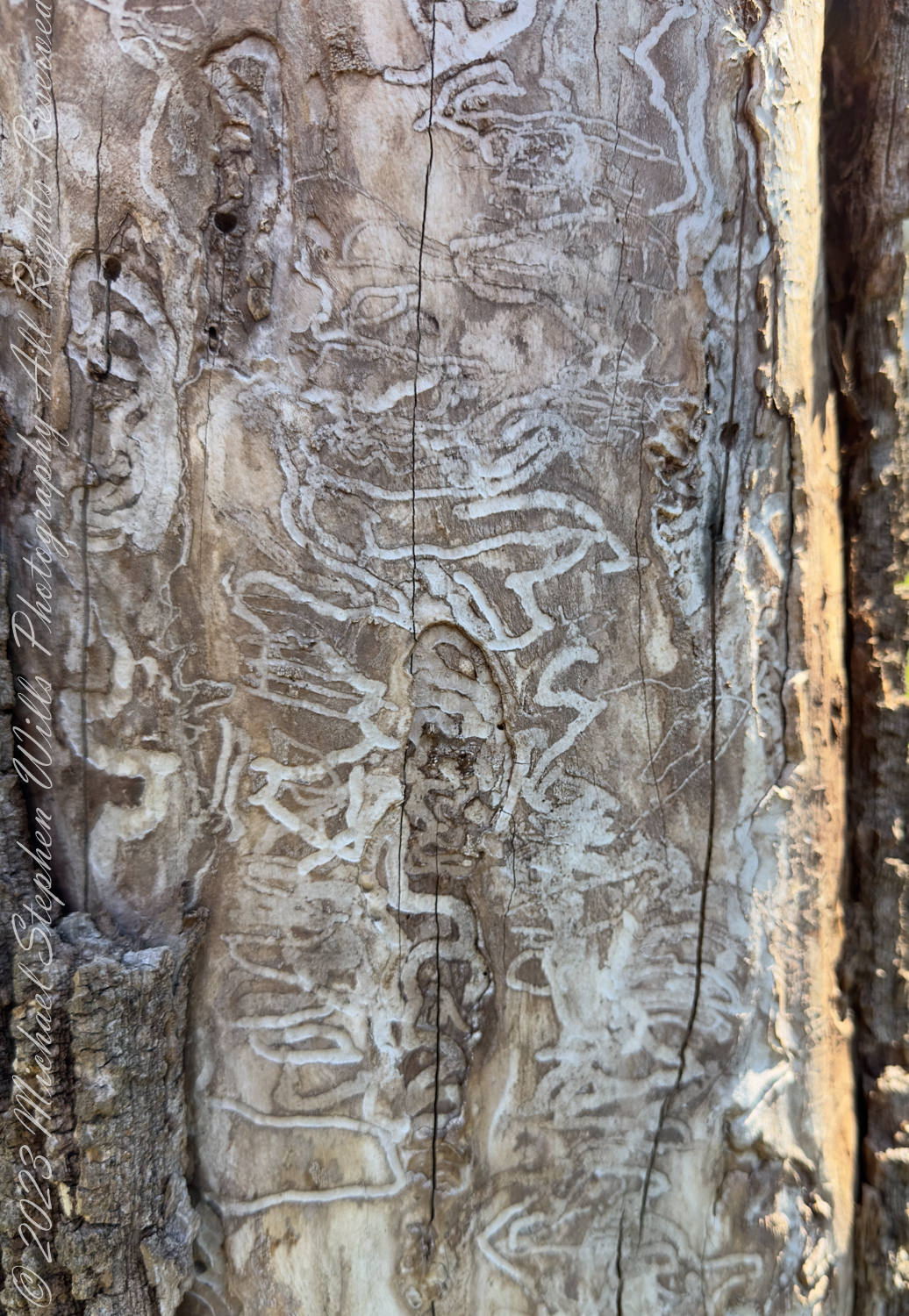
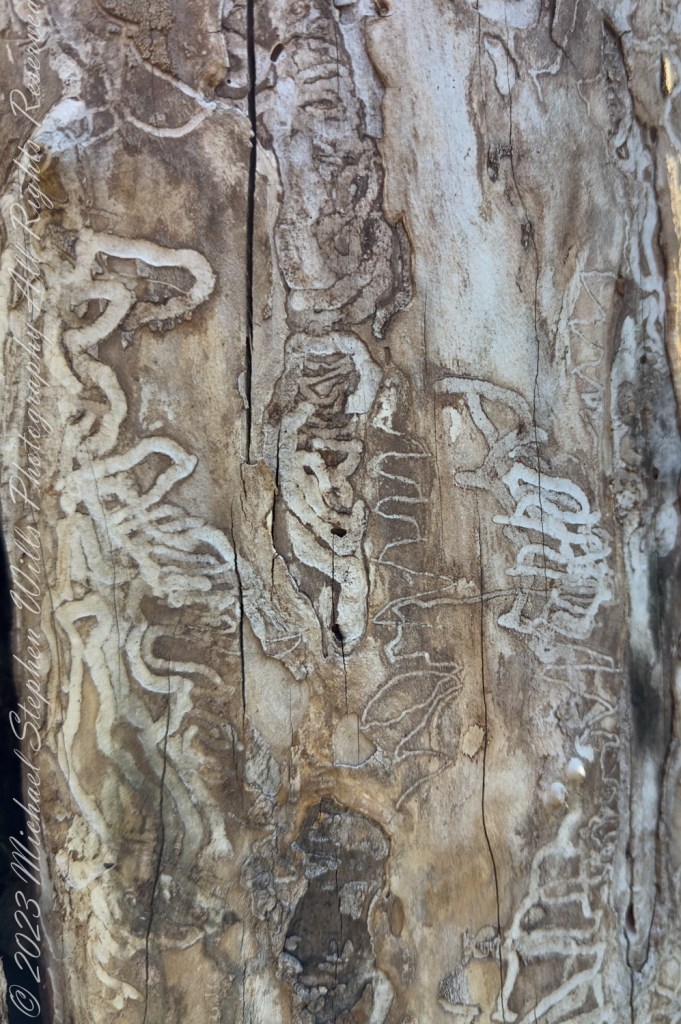
The first clue is a thinning canopy. Ash trees, in their prime, have such graceful foliage, creating broad umbrellas of shade. But when they fall victim to the Emerald Ash Borer, their decline is swift and merciless. The branches I see now are devoid of leaves, save for a few stragglers clinging on in vain. The bark tells an even clearer story. Large chunks have sloughed off, revealing a labyrinth of winding, S-shaped galleries just beneath the surface. These are the telltale signs of the larvae, relentlessly feeding on the inner bark, severing the tree’s lifeline as they go.
The tunnels left by the Emerald Ash Borer (EAB) are called galleries. These S-shaped galleries are created by the larvae of the EAB as they feed on the inner bark and cambium of ash trees. The galleries disrupt the tree’s ability to transport nutrients and water, eventually leading to the tree’s death.
I pull out my phone to capture some close-up shots. The gnarled, crisscrossing tunnels that wind through the exposed wood are mesmerizing in a way, almost like a natural etching carved by the tiny jaws of the Emerald Ash Borer. They’ve created a kind of grim artwork on this dying tree, though there’s nothing beautiful about the destruction they leave behind. I know that underneath this bark, the tree’s circulatory system—the xylem and phloem—has been disrupted, no longer able to transport water or nutrients. Slowly, the tree has starved.
It’s strange how, in the middle of waiting for my wife’s recovery, I find myself thinking about life and loss in this quiet moment with the ash tree. In some ways, this frail giant mirrors what my wife has been going through. The breakdown of something once strong and vital—be it bone or tree—doesn’t happen overnight. It’s gradual, unnoticed at first, until the damage becomes too great to ignore. But while my wife’s new hip will give her strength and mobility once more, there’s no hip replacement for this ash tree. The damage here is irreversible.
I circle the tree again, and the more I look, the more I notice the signs of decline. The bark peels away easily, almost like paper, exposing more of the damaged wood beneath. In some areas, there are what look like D-shaped exit holes, where the adult Emerald Ash Borers have chewed their way out to fly off and start the cycle anew. This is what makes the battle against this invasive species so frustrating—they are small, almost insignificant in size, but the sheer numbers in which they attack, combined with their ability to spread so quickly, make them nearly impossible to stop.
Just as I’m about to walk away, a thought crosses my mind: how many more ash trees will fall to this same fate? The Emerald Ash Borer, a native of Asia, arrived in the United States sometime in the early 2000s, hitching a ride in wooden packing materials. It quickly spread across states, leaving devastation in its wake. Here in New York, the effects have been nothing short of catastrophic. Entire forests of ash are being wiped out, and this tree, standing alone on the edge of the medical campus, is just one more casualty.
I turn back toward the building, the rhythmic crunch of my footsteps on the path feeling heavier now. As my wife works to heal and rebuild her strength inside, I think about the resilience of the human body, its ability to repair, to bounce back after trauma. But for the ash tree, there is no such recovery. Without intervention—chemical treatments that are costly and often impractical on a large scale—this tree will eventually become firewood, its wood too damaged to be of much use for anything else.
It’s a sobering thought, but also a reminder. Nature’s battles, much like our own, are often unseen, quiet struggles that unfold slowly over time. Sometimes, we win, as my wife will with her new hip, but other times, like the ash tree and its silent battle with the Emerald Ash Borer, the fight is already lost.
Copyright 2024 Michael Stephen Wills All Rights Reserved
Step into the serene realms of Robert H Treman State Park, where the Early Saxifrage blossoms amidst ancient stones, embodying resilience and the timeless beauty of nature’s persistence against all odds.
Ambling along the rugged Gorge Trail within the serene expanse of Robert H Treman State Park, my gaze is caught by the delicate clusters of Early Saxifrage (Micranthes virginiensis), formerly known as Saxifraga virginiensis. Nestled in nooks and crannies along the limestone-rich corridors, this resilient plant, also colloquially known as “Virginia saxifrage” or “rockfoil,” presents a mesmerizing spectacle against the moss-draped backdrop of the gorge’s ancient stones.
Early Saxifrage thrives in these modest crevices, its roots gripping tightly to the scant soil amidst the rocks, drawing nourishment from the most unlikely of places. The plant’s small, white star-like flowers blossom in dense clusters, creating a soft contrast against the rugged gray of weathered stone. The base of the plant, typically hidden, burgeons with rosettes of spoon-shaped leaves, which persist through the winter, ready to embrace the spring with vigor.
This plant not only captures the eye but also whispers tales of medicinal lore. Historically, Early Saxifrage has been utilized in folk medicine, primarily valued for its supposed efficacy in dissolving kidney stones—a testament to its name, “saxifrage,” which means “stone-breaker.” Though modern usage does not commonly reflect these ancient practices, the plant’s presence here speaks to the deep-rooted herbal knowledge passed down through generations.
As I tread lightly over the worn paths that weave through the gorge, the sight of Early Saxifrage serves as a poignant reminder of the park’s ecological tapestry. This flora, modest yet striking, symbolizes the tenacity of life, blooming splendidly in the stark environment it calls home. It is a beacon of endurance and beauty, inviting us to pause and appreciate the quieter, often overlooked wonders of nature.
In this corner of the Finger Lakes, where water and stone sculpt the landscape, Early Saxifrage flourishes. It stands as a testament to the persistence of the wild, a delicate yet resilient inhabitant of this storied terrain, weaving its subtle magic into the fabric of the gorge. Here, among the whispers of streams and the echoes of stone, it finds its place, a fragile star in the vast, enduring sky of green.
Copyright 2024 Michael Stephen Wills All Rights Reserved
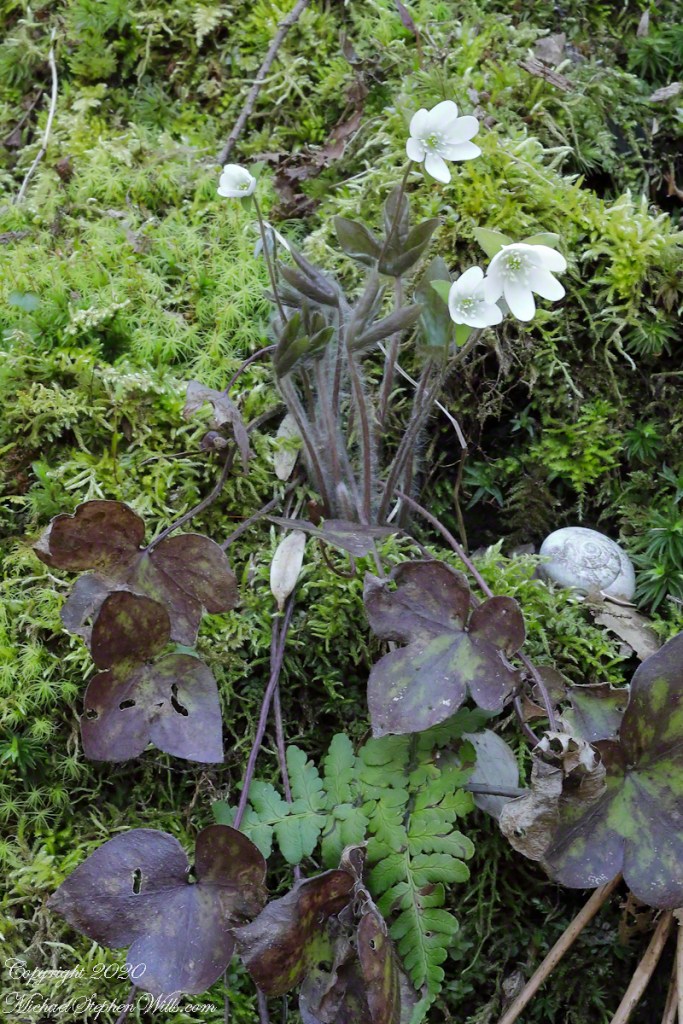
Hepatica positioned perfectly above the trail, sprouting from moss, a grouping of the plant and flowers.
Scientific Name: Hepatica nobilis var. obtusa. I found the two land snail shells this session, I identified it as Neohelix albolabris, and positioned it in this shot to lend interest. In a future posting you will see the shell where it was found.
Click photograph for a larger view. To do this from WordPress Reader, you need to first click the title of this post to open a new page.
Hepatica Blossoms
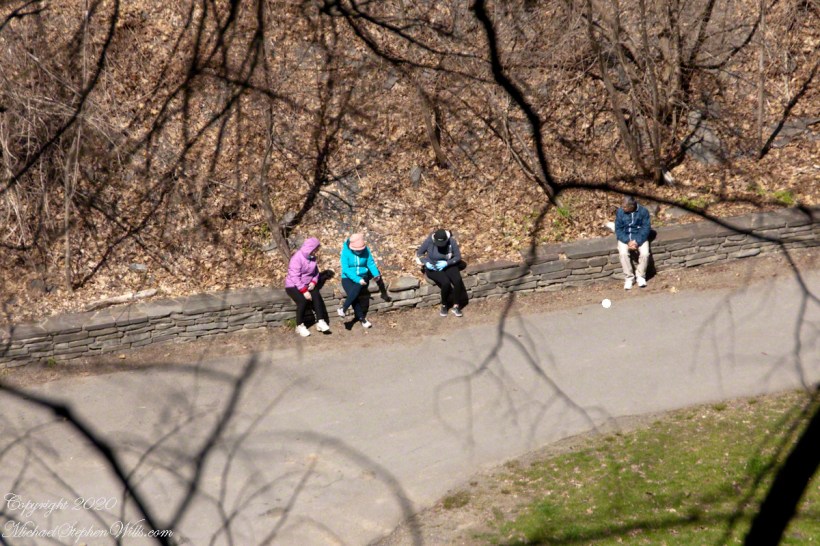
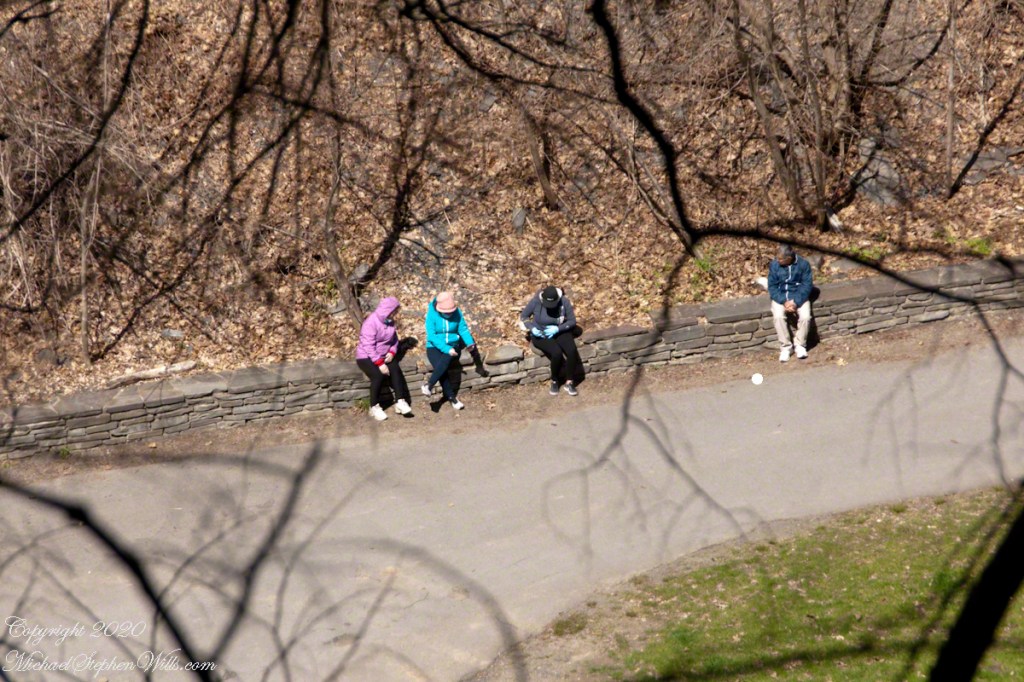
Six unrelated young adults, all female and without masks, not following social distancing guidelines, passed as a group just before I set up for this shot. I heard them coming and made plenty of space between them and me. COVID-19 testing in Tompkins continues to find several positive cases each week.
Finding an appropriate combination of settings for this grouping was a puzzle. My goal was to bring the flowers and surrounding into focus with intermittent breezes. The f-stop needed to be high to accommodate the depth with minimal exposure duration as the flowers moved in the slightest breeze. The solution was a high ISO (2500) and f-stop (32), yielding a 1/3 second exposure (Not fast). The compromise was patiently waiting for a break in the breezes.
Gallery of Flowers in this series
Copyright 2024 All Rights Reserved Michael Stephen Wills
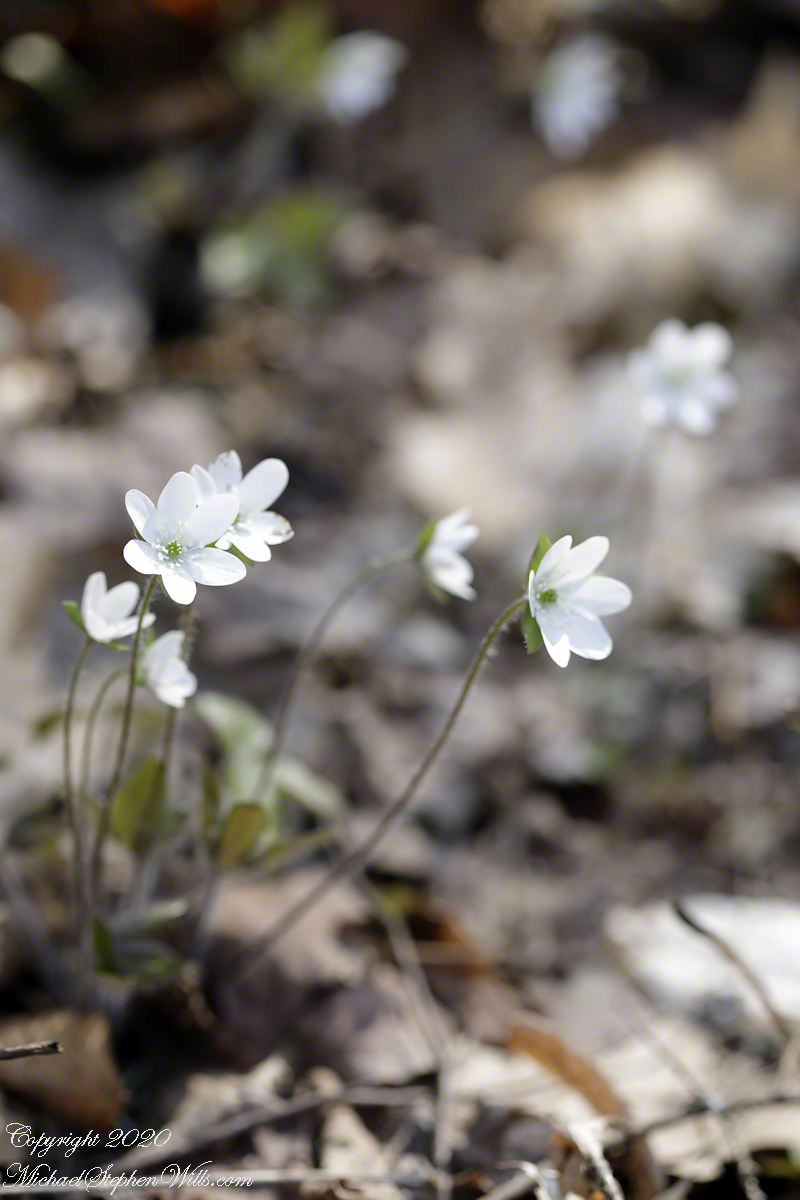
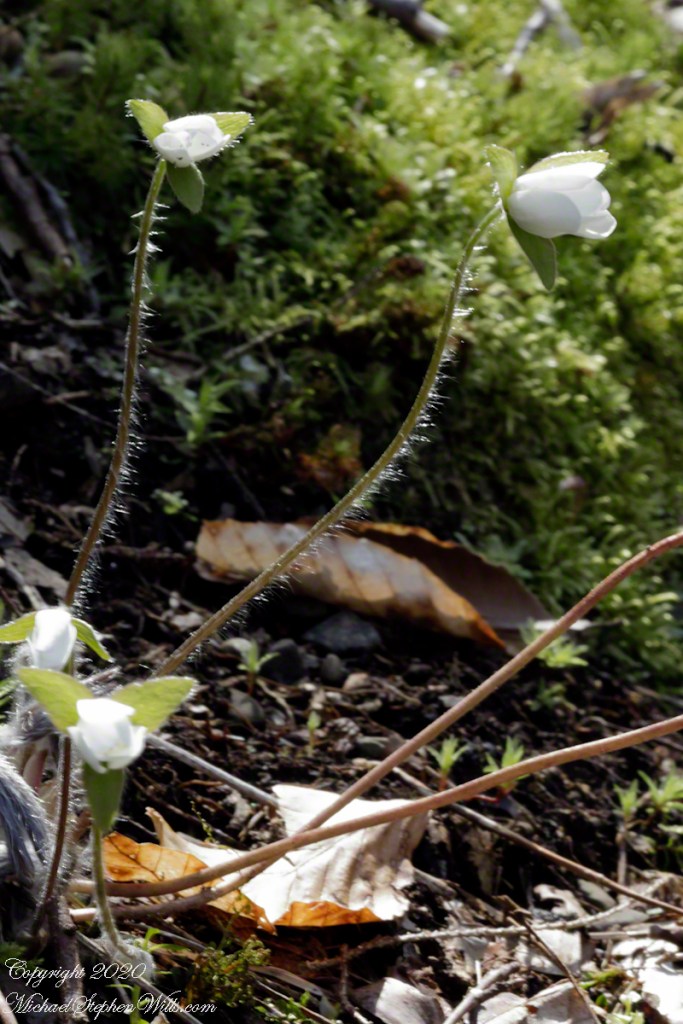
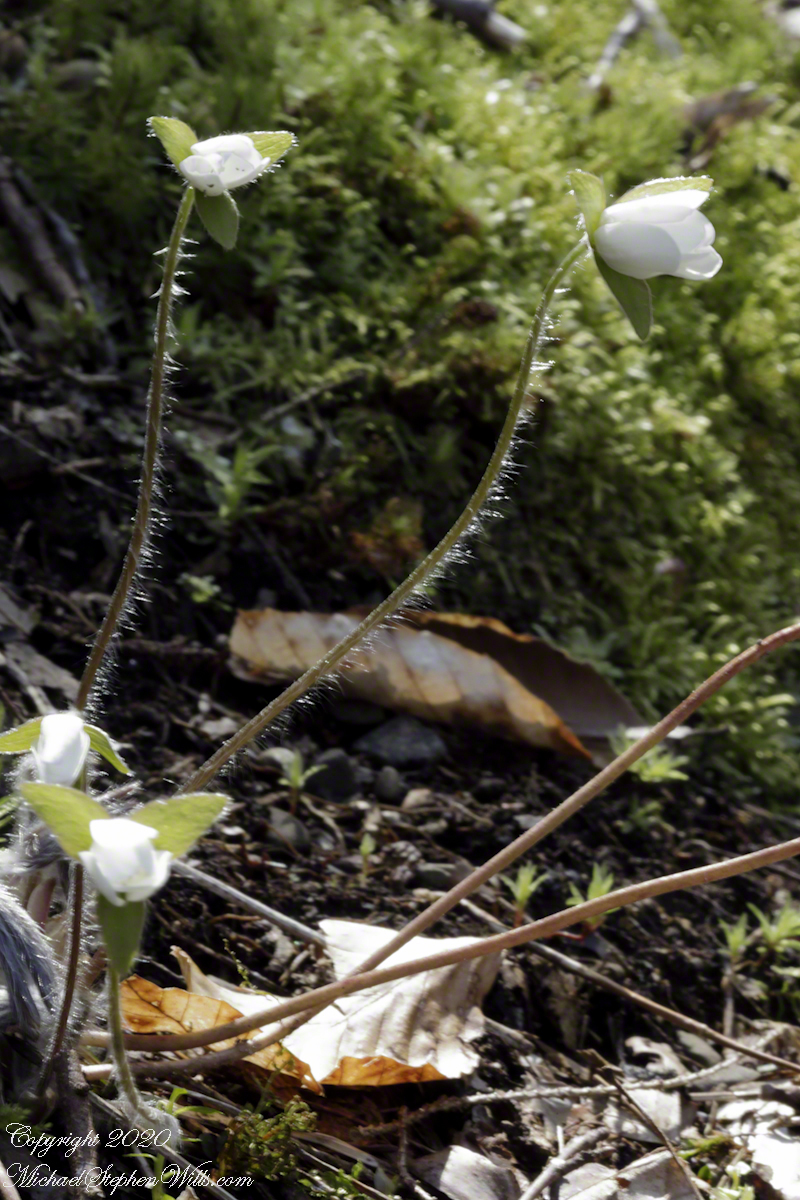
Just opened flowers on long hairy stems, tiny anemones. A crawl and tripod we needed to capture these. The scene scale is revealed by the dried leaves from last autumn.
Click photograph for a larger view. To do this from WordPress Reader, you need to first click the title of this post to open a new page.
Hepatica Blossoms
I call these anemones from the disputations among taxonomists. All agree there is some relationship and differ in the degree. Classifications add a designation “tribe” before genus (hepatica). Alternatively, the genus is designated Anemone instead of Hepatica . A common name for anemones is “wind-flower” for how the flower is sensitive to a slight breeze, on these long stems.
This is the first hepatica capture of the session. There was no breeze at this time and the ISO is 800, f-stop 29 (lending some definition of the background, less than I’d expect) and a relatively slow exposure of 1/4 second. The 100 mm macro lens on a tripod mounted camera.
Gallery of Flowers in this series
Reference: Wikipedia article, “Hepatica.”
Copyright 2024 All Rights Reserved Michael Stephen Wills
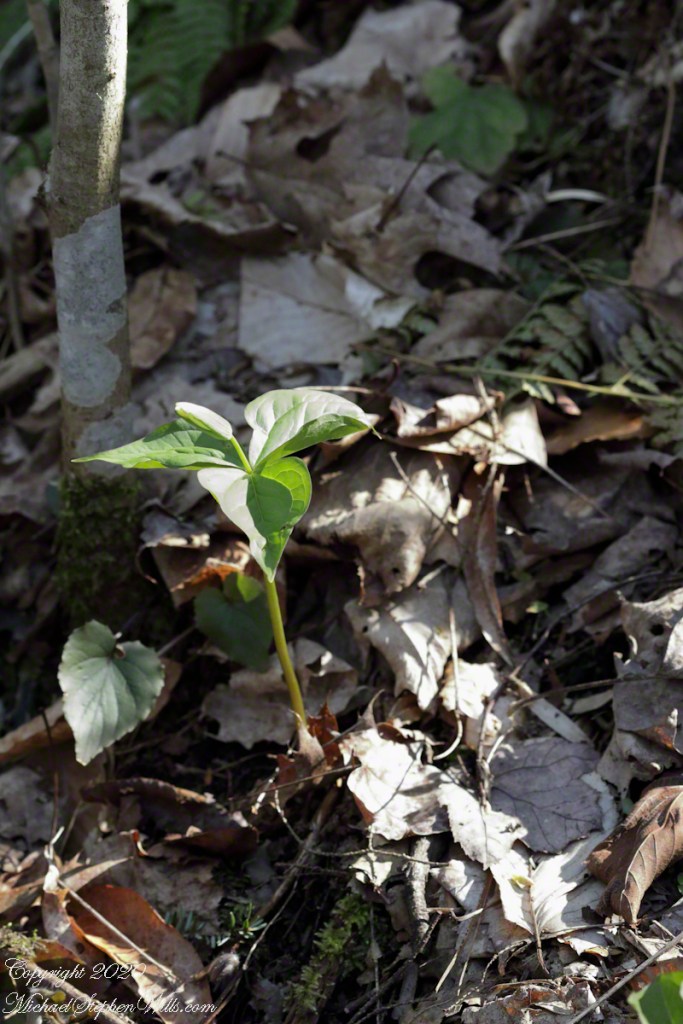
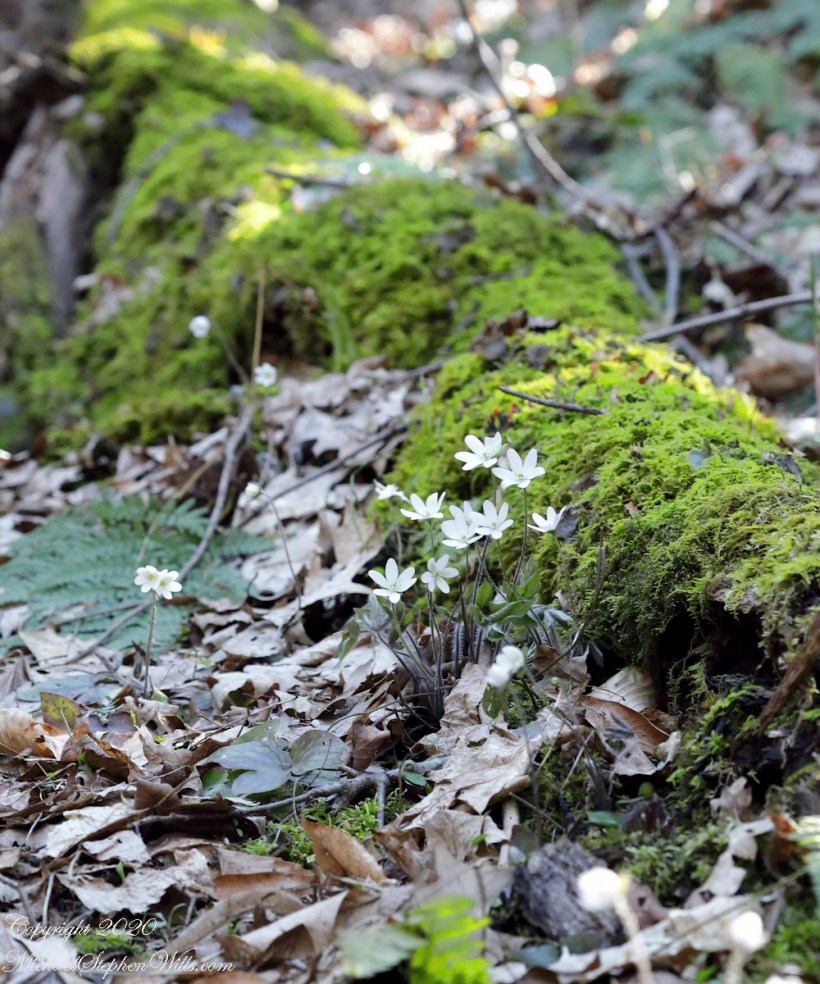
Here we have two photographs from the end of the April 20, 2020 session. I finished a series of macro Hepatica and, tired (emotionally, not physically) and not wanting to step up the slope, captured the following grouping of a single Red Trillium, lit by a bolt of sunlight, White Hepatica, fern and the budding White Trillim from yesterday’s post. Not the same trillium, a continuation of all the individuals in bud.
Click photograph for a larger view. To do this from WordPress Reader, you need to first click the title of this post to open a new page.
On the South Rim Trail of Robert H. Treman New York State Park. April 19, 2020.Wildflower Grouping
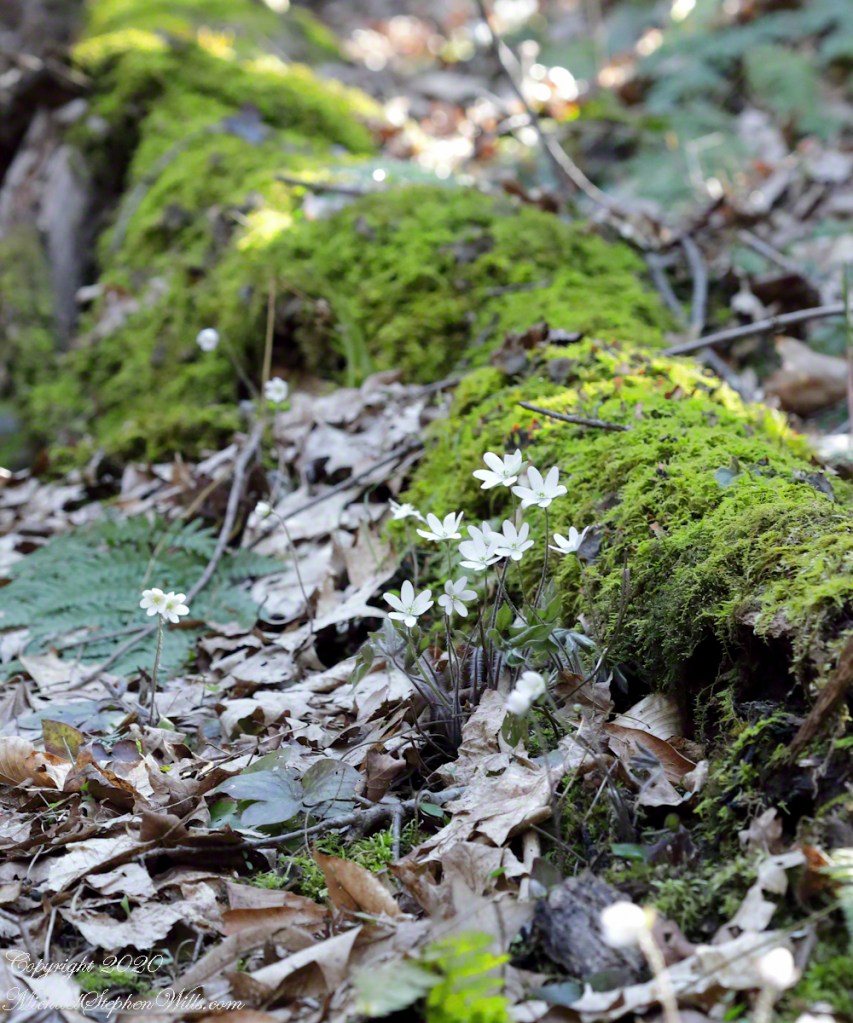
These were 15 feet or so up the slope above the South Rim Trail. I used the 100 mm macro lens, with the spring breezes ISO set to 2500, f/5.6 for a 1/200 exposure.
Not far away, also upslope, was this flower grouping against a moss covered log. Park forestry leaves fallen trees in place to return to the soil. Camera settings are the same.
Lobe leaved Hepatica
Both photographs were handheld.
Copyright 2024 All Rights Reserved Michael Stephen Wills
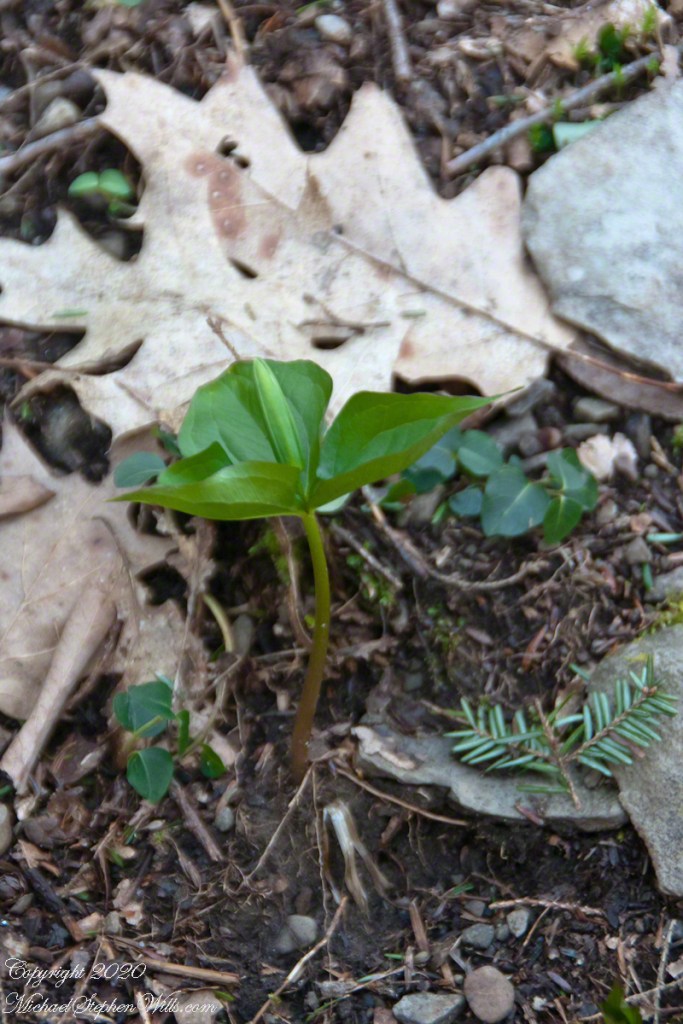
Wildflowers flourished where the slope turned to the north and late afternoon light spread across the small ravine created by a small stream. This early in the season White Trillium buds were forming between three green bracts.
Click photograph for a larger view. To do this from WordPress Reader, you need to first click the title of this post to open a new page.
Trillium Grandiflorium
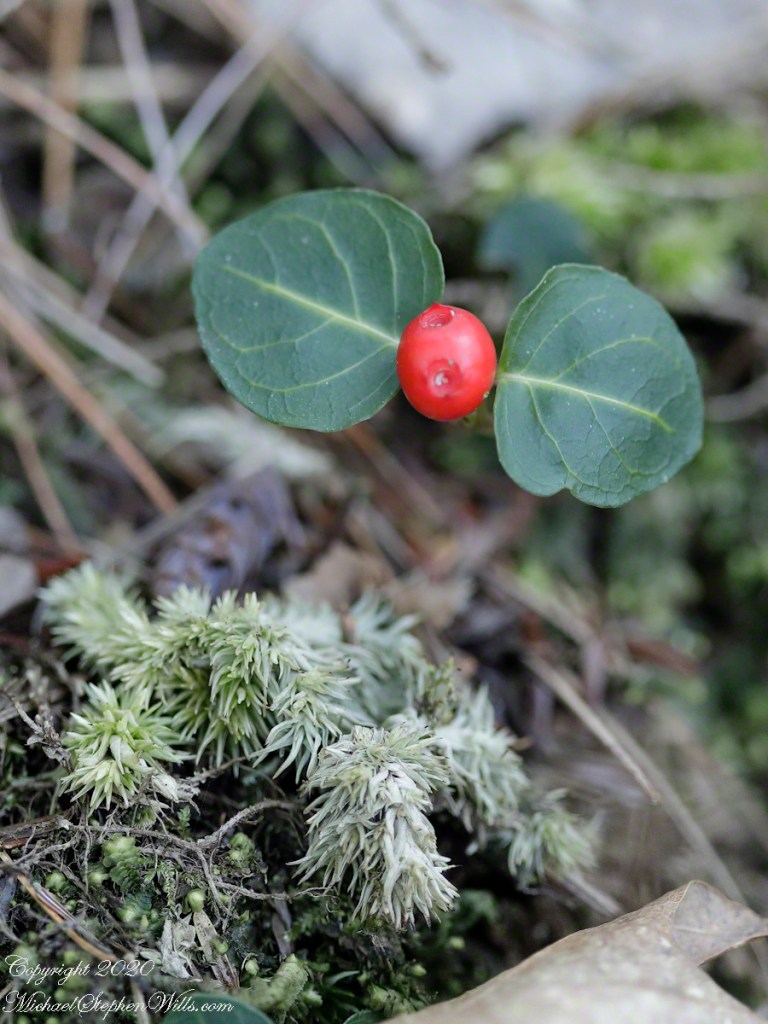
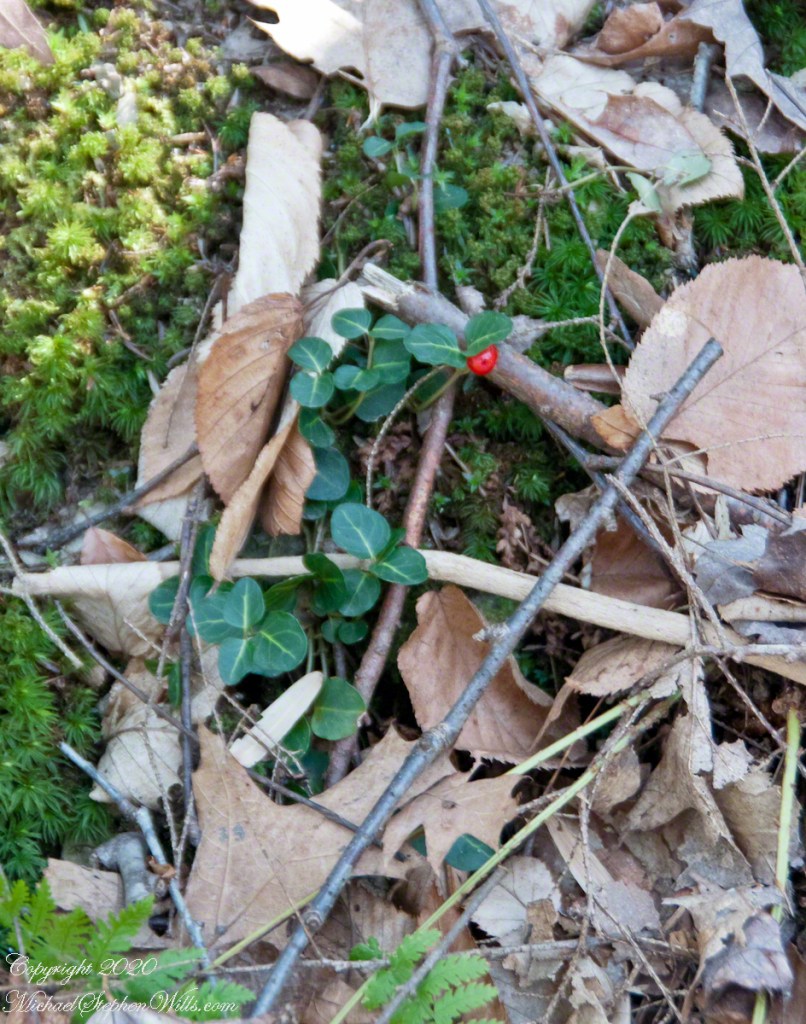
The above photograph taken handheld with a variable zoom lens captures the plant and environment. On the forest floor is twig of hemlock, probably knocked off by squirrels feeding on the tiny cones. Oak leaves from last season frame the dark green bracts. We also see a few wintergreen leaves and the rich soil.
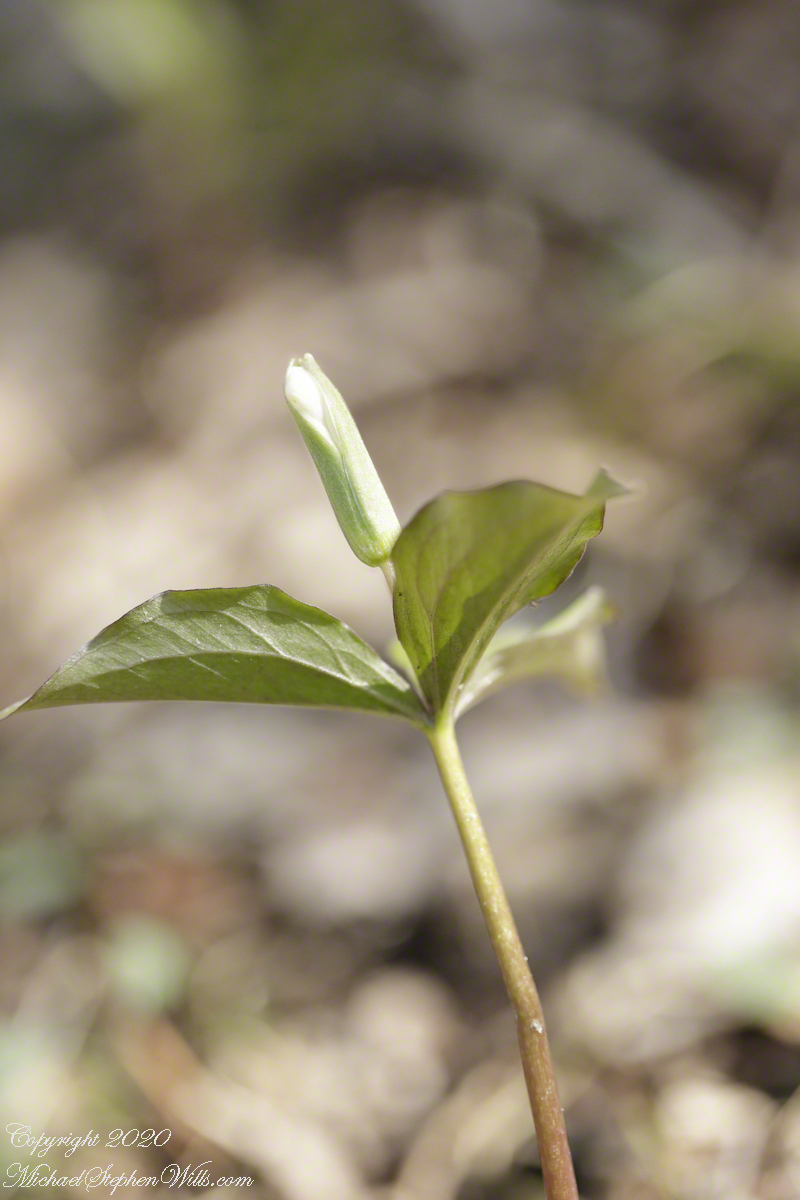
With the low light ISO is 2000, the f-stop of 5.6 allowed crisp details of the hemlock and wintergreen, the focus is soft on the oak leaves. Where is topography allowed sunlight, the White Trillium were a bit further along. Here is a bud opening.
Trillium Grandiflorium
Here I used a travel tripod and a macro lens with f-stop opened up to 3.2, not lens maximum, and all but the forward bract tip are in focus. A lower camera angle places surroundings in distance, allowing all to be blurred unrecognizable: the plant is the star of this shot. ISO 800 with the ample light. I was struggling with the spring breezes, having to wait for a break to take each exposure.
Copyright 2024 All Rights Reserved Michael Stephen Wills
This series of posts opens with the ascent to where the wildflowers grow.
Click photograph for a larger view. To do this from WordPress Reader, you need to first click the title of this post to open a new page.
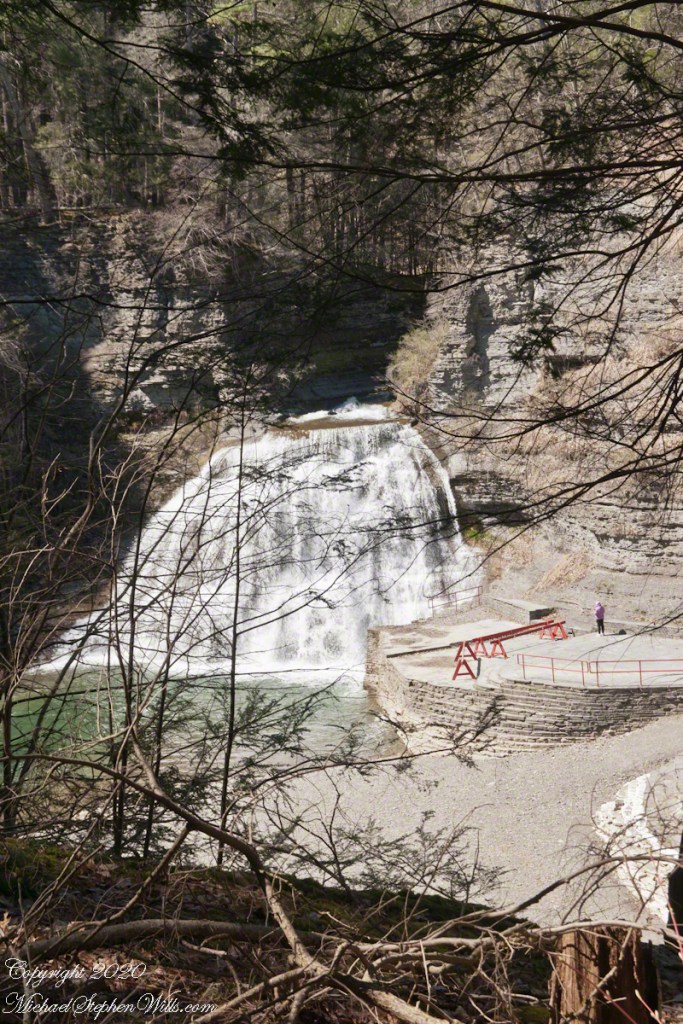
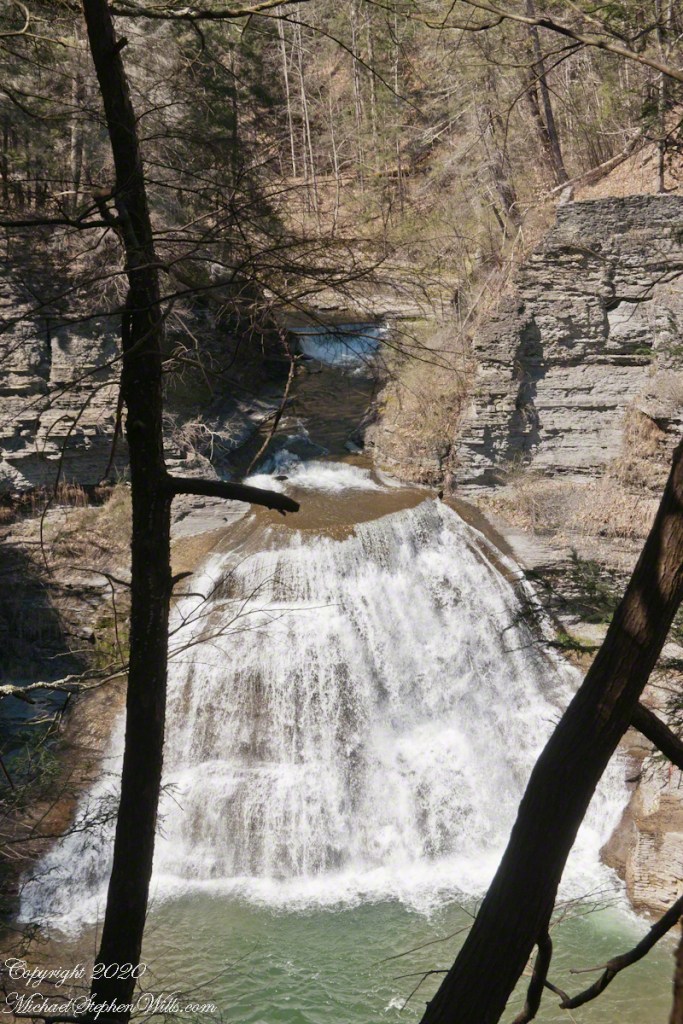
Lower Falls
After just a taste of the climb to come, hikers are treated to an view of the Lower Falls of Enfield Creek. I call them the Wedding Cake. Summertime, a dam is erected, the water is deep enough to dive into the very cold creek water, lower than 70 degrees.








 Michael Stephen Wills Photography