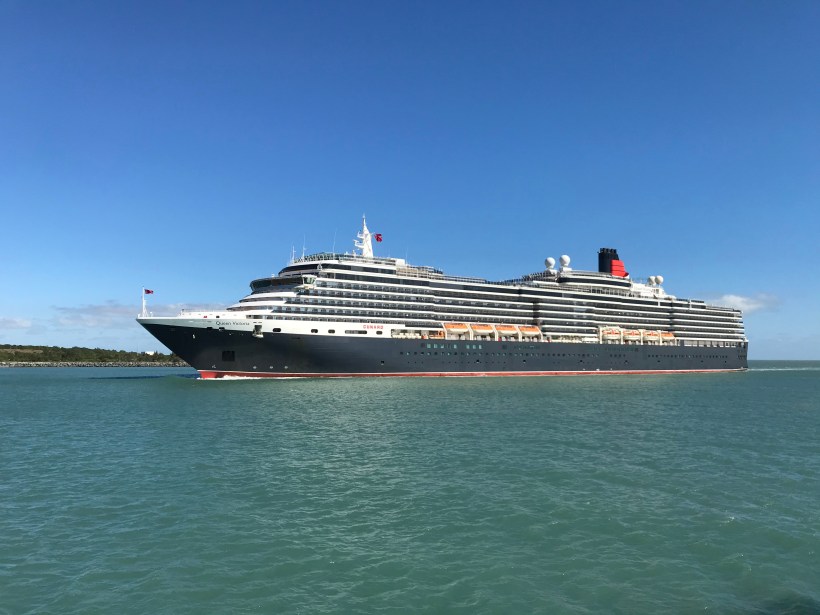
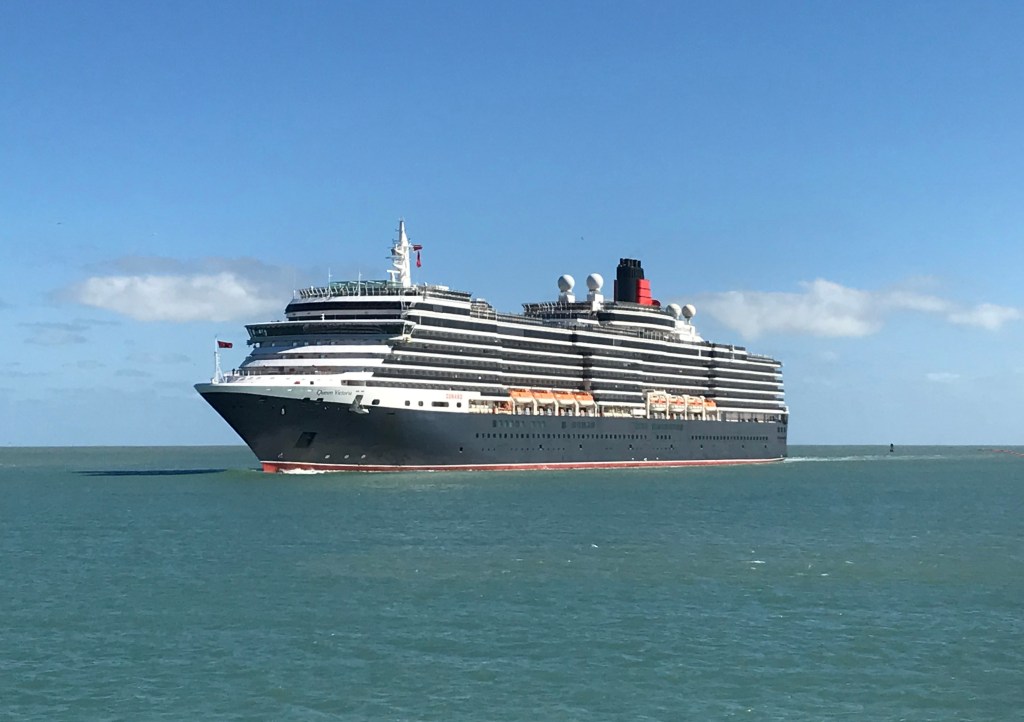
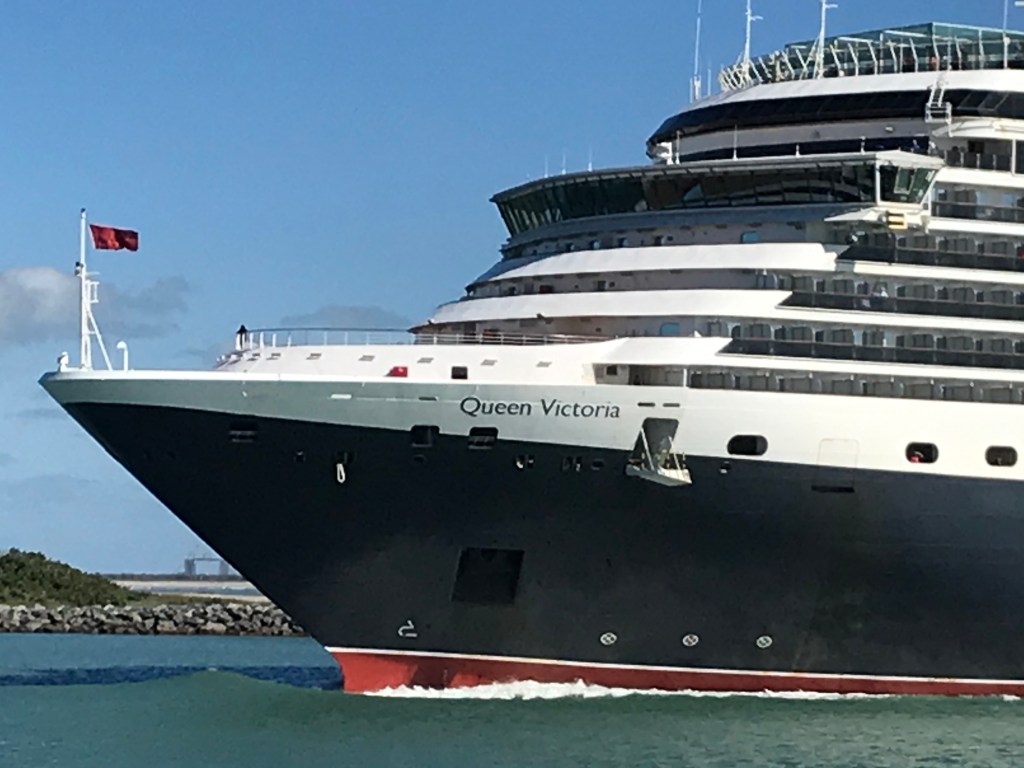
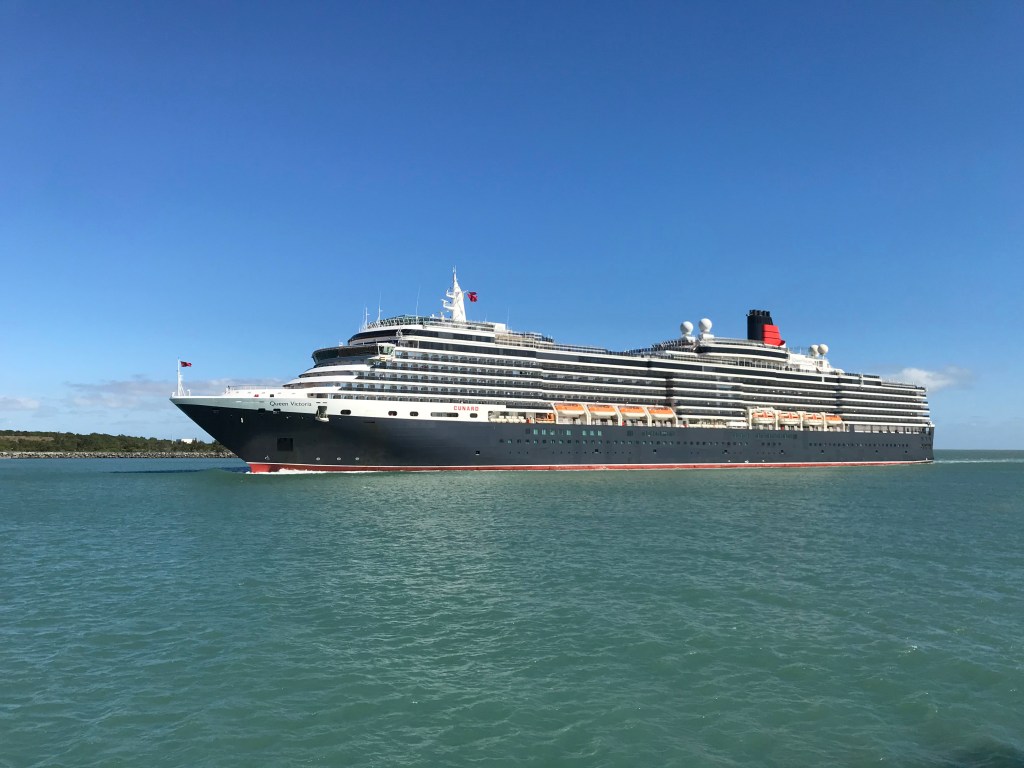
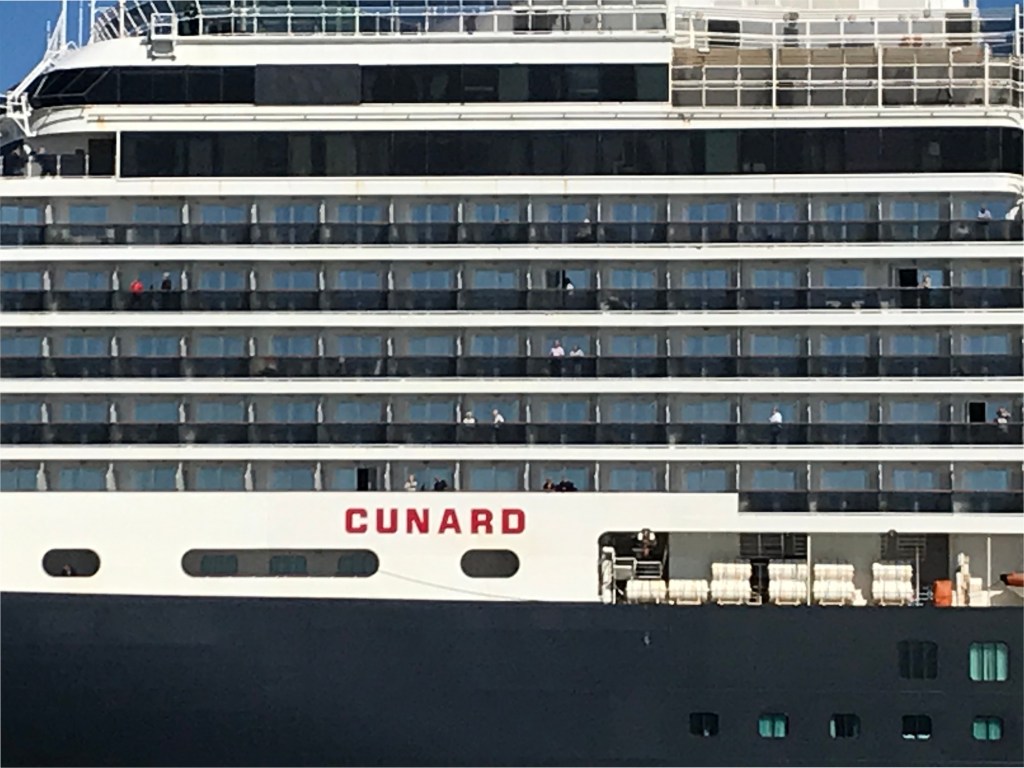
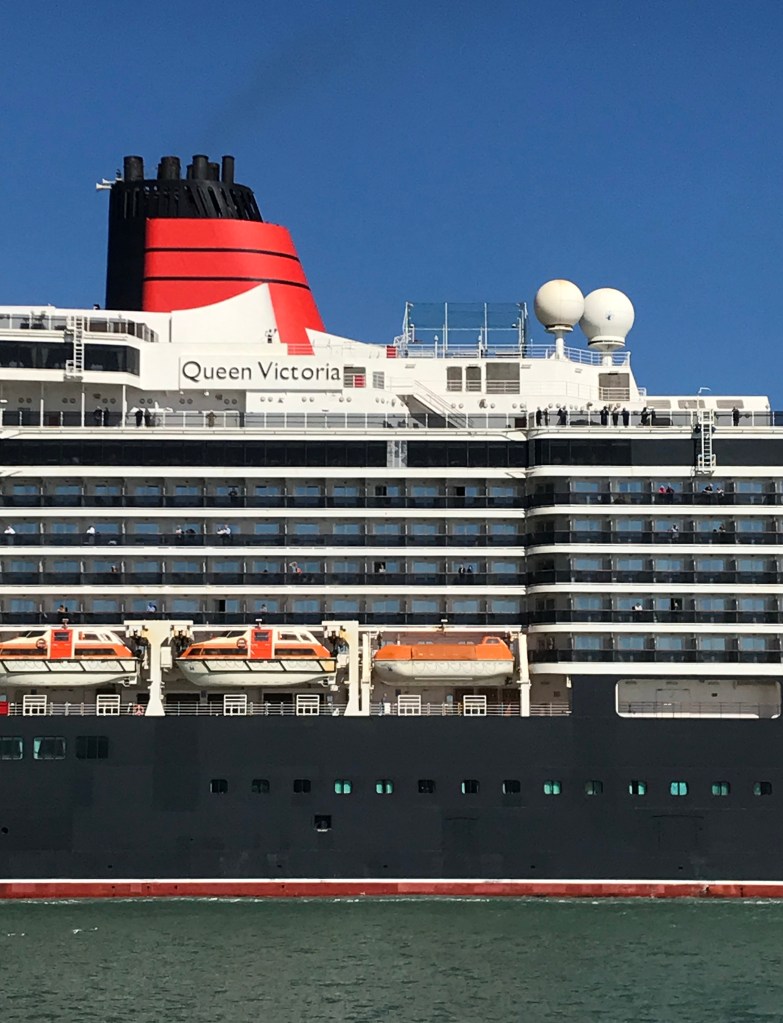
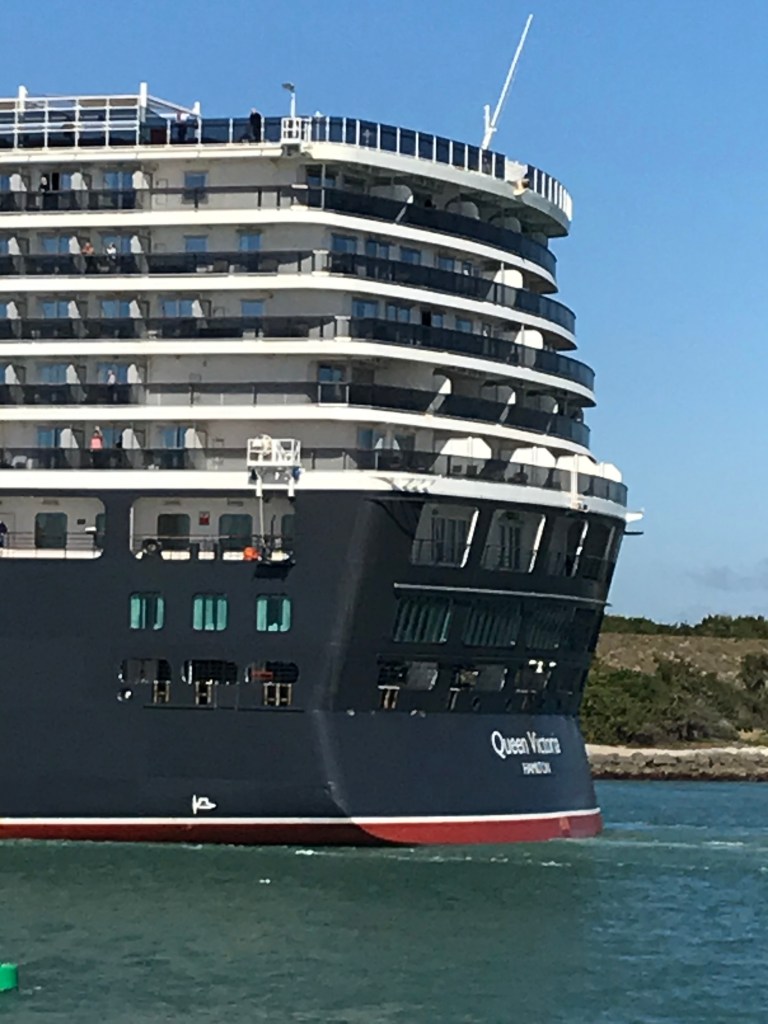
Pam and I walked from Cheri Down park this morning of February 2020 to Jetty Park where we were fortuitous witnesses to the arrival of the Cunard ship Queen Victoria on an 84-day cruise around South America.
Click video to start. To do this from WordPress Reader, for best results first click the title of this post to open a new page. Ditto for the photograph
I used my IPhone 7 to capture the event. Understanding the context of a ship’s arrival opens a whole new world. Standing on the pier I researched the voyage.
Here is the list of ports on the itinerary. These include the Caribbean, Central America and many of the same ports visited on the 2016 Oceania cruise Pam and I enjoyed from Lima, Peru to Buenos Aires, Argentina.
Here are some thoughts on various physical representations of the iconic Space Shuttle we encountered during our travels.
Vision
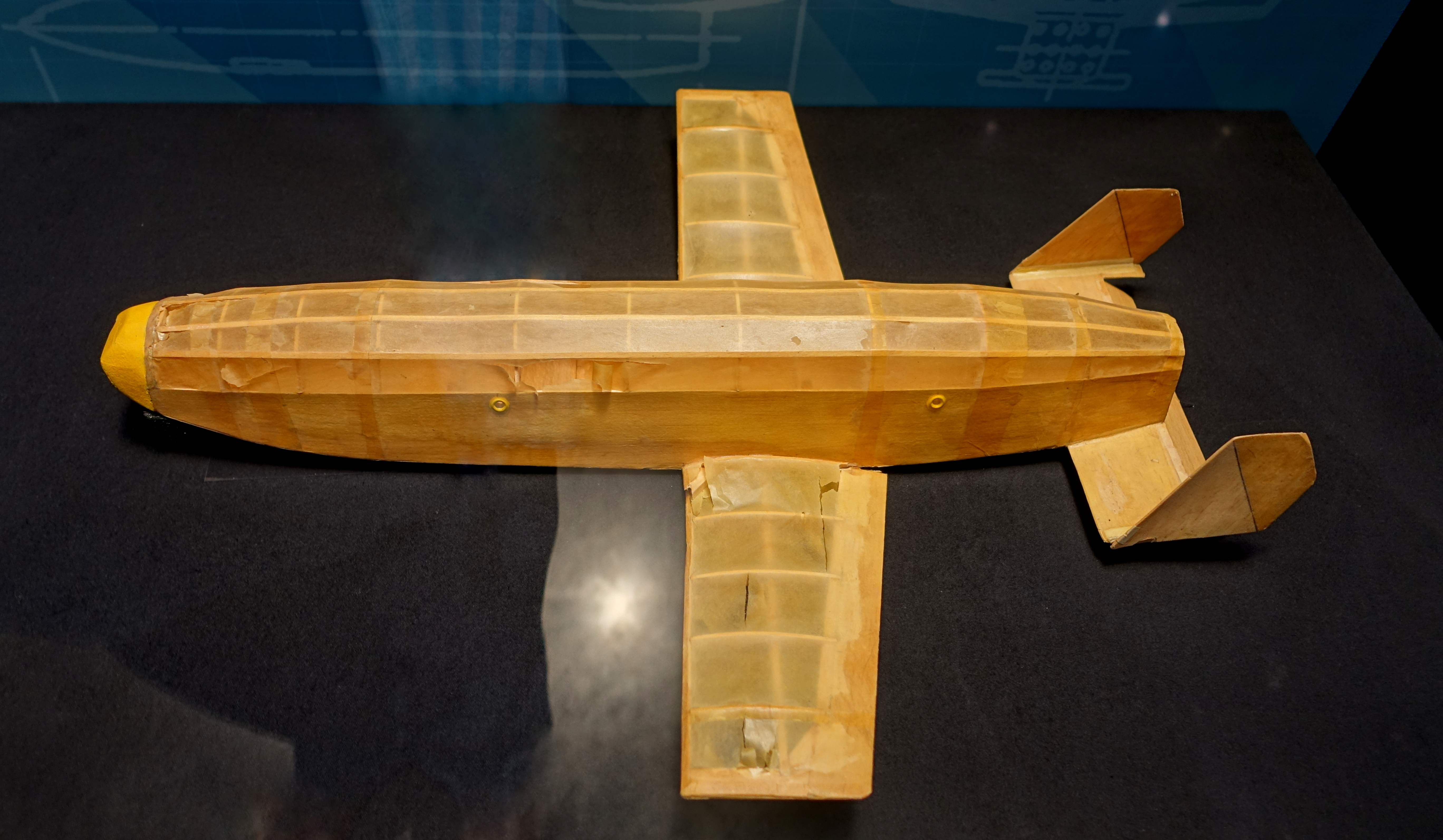
Dr. Maxime “Max” Faget joined NASA in 1958, where he headed the group that designed America’s first manned spacecraft, the Mercury capsule. In 1969, Dr. Faget was the director of engineering and development at NASA. On April 1, 1969, Dr. Max Faget tossed this balsa wood toy toward his team of engineers hard at work landing a man on the moon. During this time Dr. Faget’s team also began creating a revolutionary space vehicle for NASA. “We’re going to build America’s next spacecraft. And it’s going to launch like a spacecraft. It’s going to land like a plane.” –text from Kennedy Space Center display, see following.
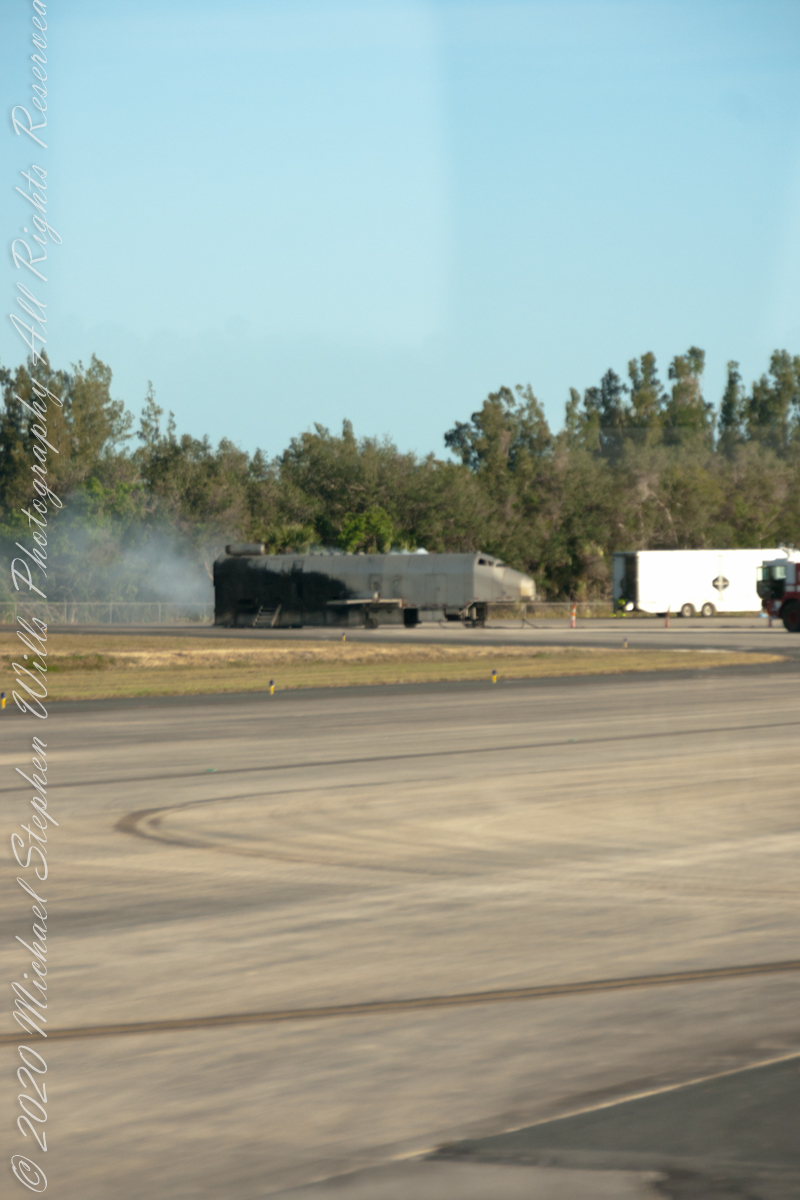
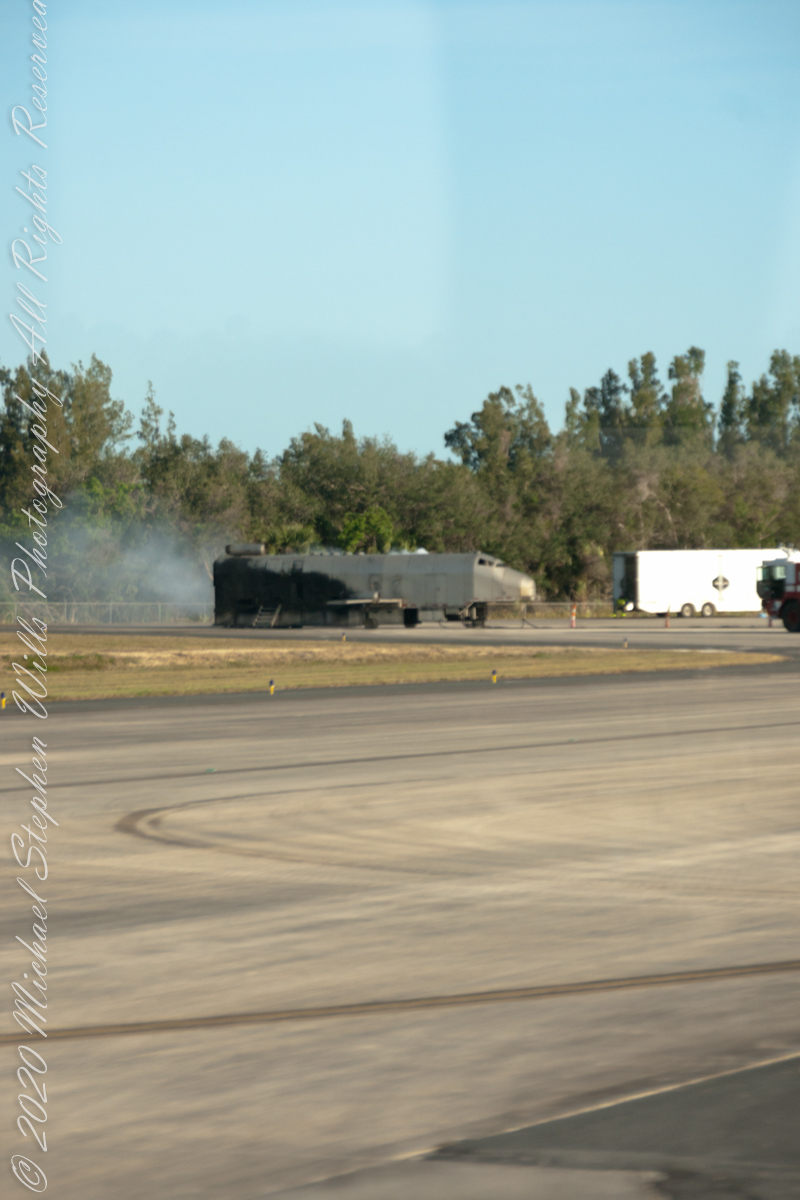
The Space Shuttle life size model still in use for fire training at Station #2 at the Shuttle Landing Facility.
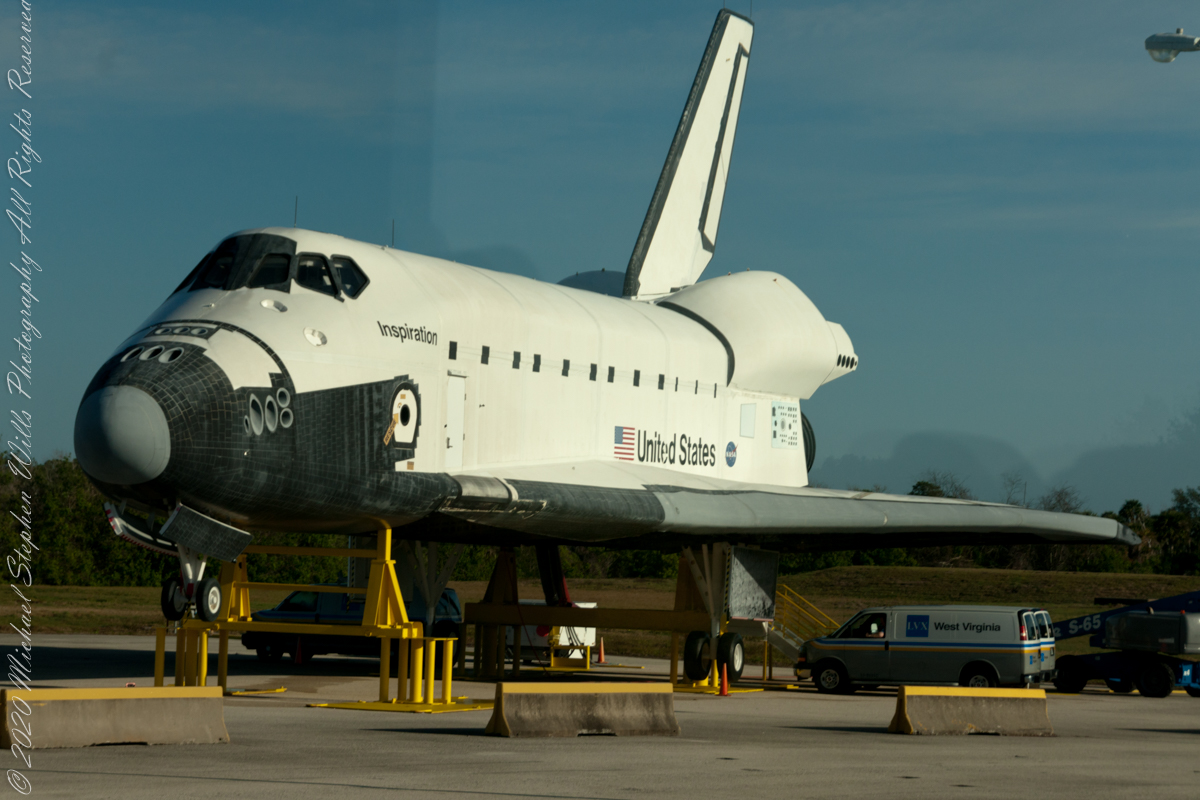
Two Inspirations
On display next to the Shuttle Landing Facility
April 29, 2016 – Almost five years after NASA’s last space shuttle landed in Florida, an orbiter returned to the runway at the Kennedy Space Center. The model orbiter “Inspiration” was rolled out to Kennedy’s Shuttle Landing Facility on Wednesday (April 27), where it will be rebuilt into a traveling exhibit. The full-scale mockup was previously on display at the now-former location of the U.S. Astronaut Hall of Fame in Titusville. LVX System, which acquired the 122-foot-long (37 meter) shuttle replica from NASA, moved the Inspiration from the Hall to a work yard in January. The company, which has an agreement with NASA to study visual light communication for deep space missions, intends to use the space shuttle as a vehicle for both educational outreach and marketing. “Over the past four months, work has been done to bolster the shuttle’s structure and aesthetics in preparation for the move this week, an LVX spokesperson said.” – from the “Collect Space” web site
The “Inspiration” model of my photograph, from our 2018 Shuttle Landing Facility visit, is a second Space Shuttle mock-up built by Kennedy Space Center carpenters from a rocket booster body.
Happy Birthday
Three birthday cakes Pam Wills created with input from her grandson. He helped to decorate the cakes. Featured is the Cape Canaveral lighthouse with launch sites, Kennedy Space Center launch site 39A with the shuttle and rockets. Foreground, in partial view is a tableau of the 1969 moon landing.
Copyright 2022 Michael Stephen Wills All Rights Reserved.
Here is the sixth in a series of photographs centered on the early history of space flight on Cape Canaveral mostly taken during a tour organized by the Cape Canaveral Lighthouse Foundation. “Google” the foundation for details of future tours. Here we explore pre-launch support for the Mercury program, including the first USA Orbital Launch of John Glenn from Launch Complexe 14 (LC 14).
Overview
Leaving LC 1 – 4 (see “Post WWII Launch Complexes”), our bus turned onto Central Control Road passing construction on Launch Complex 36 (LC36). In 2015 Blue Origin (Amazon money) leased LC36 where it planned to launch the “New Glenn” vehicle after 2020. I snapped the churned-up sand and construction equipment, not interesting at all IMHO.
Click Any Image for a larger viewe
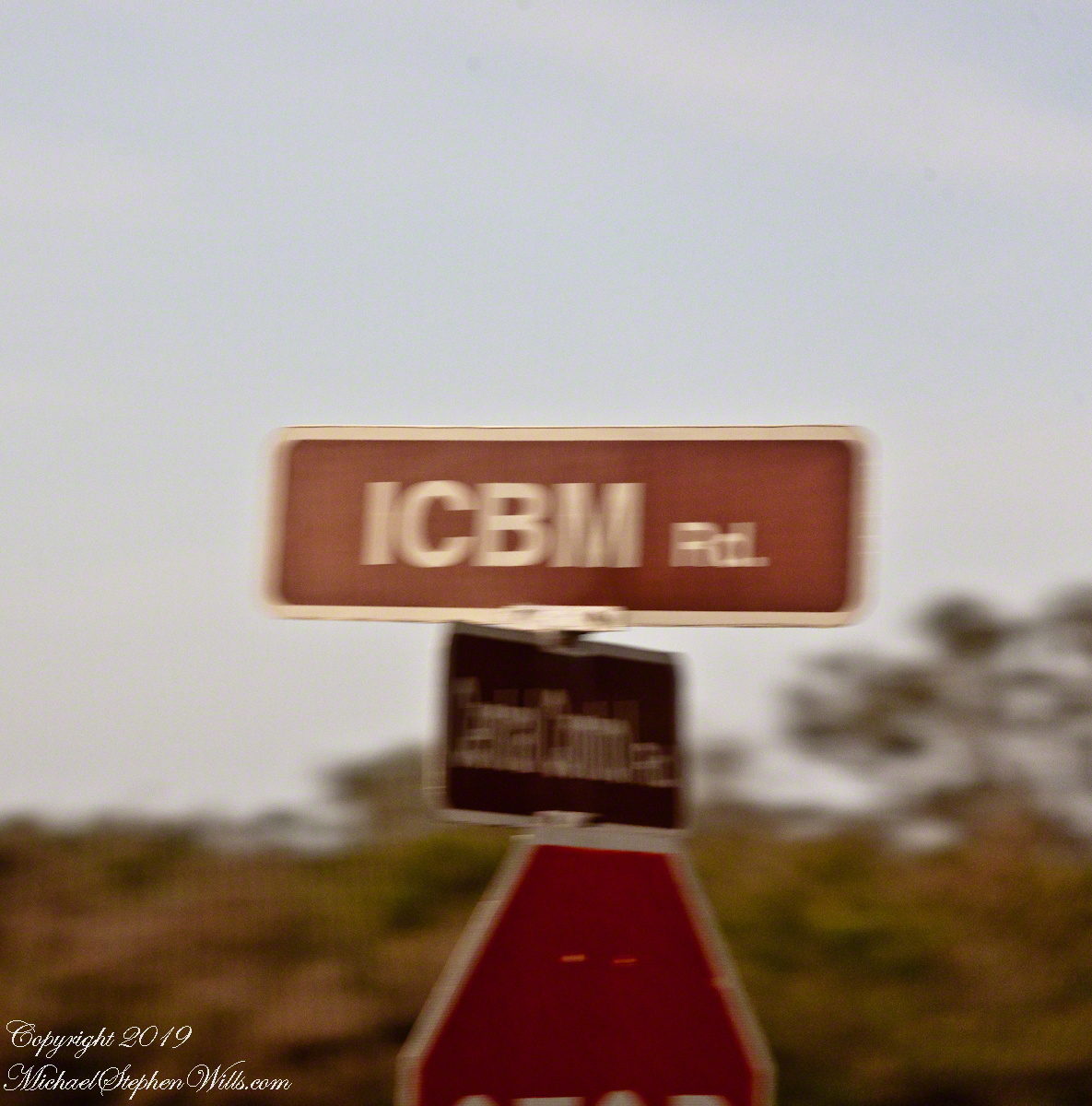
Corner of Central Control and ICBM Roads. Cape Canaveral Air Force Station.
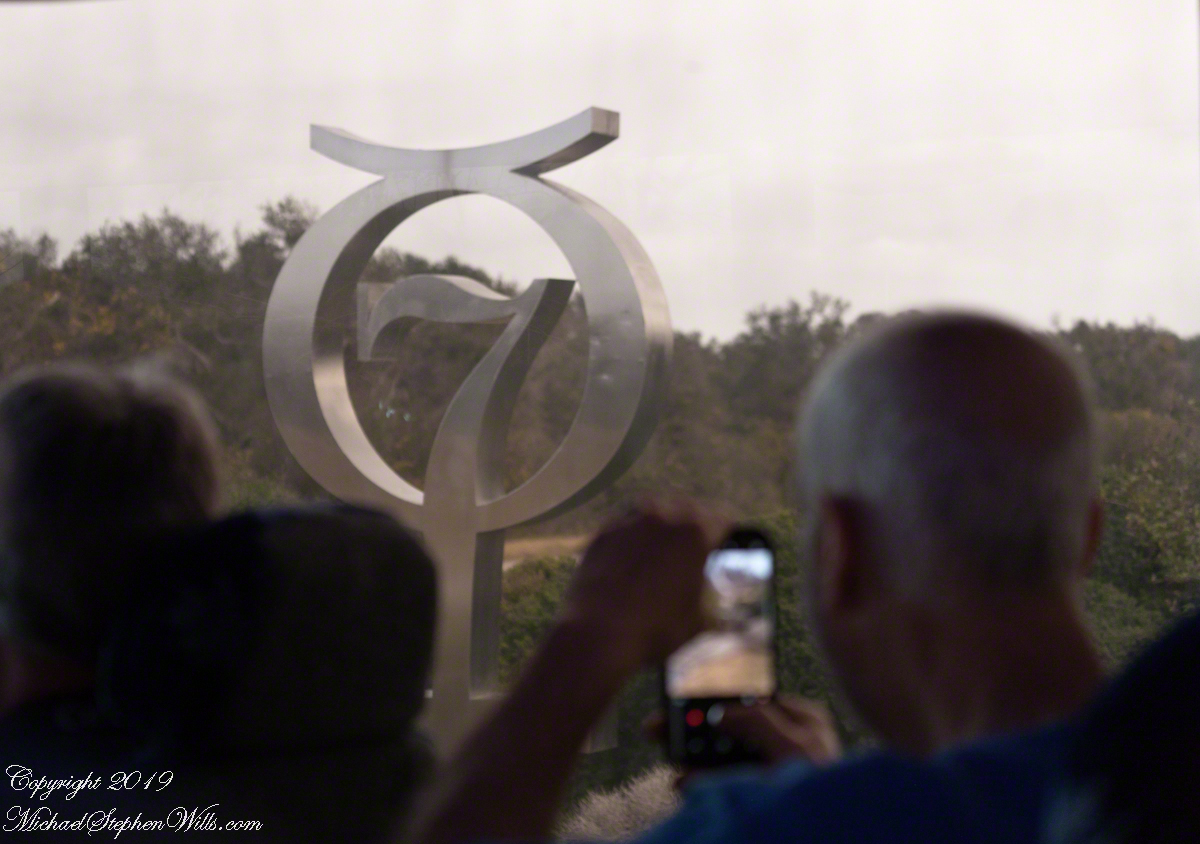
The “New Glenn” was named in homage to John Glenn, the first American to orbit the earth in 1962. We turned right onto to ICBM Road, headed generally north, following a string of launch complexes along the Altantic shore toward Launch Complex 14 (LC14). A dissapointment was not stopping to walk the Mercury 7 Memorial at the corner of ICBM Road and LC14. Our bus stopped briefly enough for the following snap. It is a memorial because John Glenn, the surviving member of Mercury 7, passed away December 8, 2016 at the age of 95.
Mercury 7 Memorial, just off ICBM Road
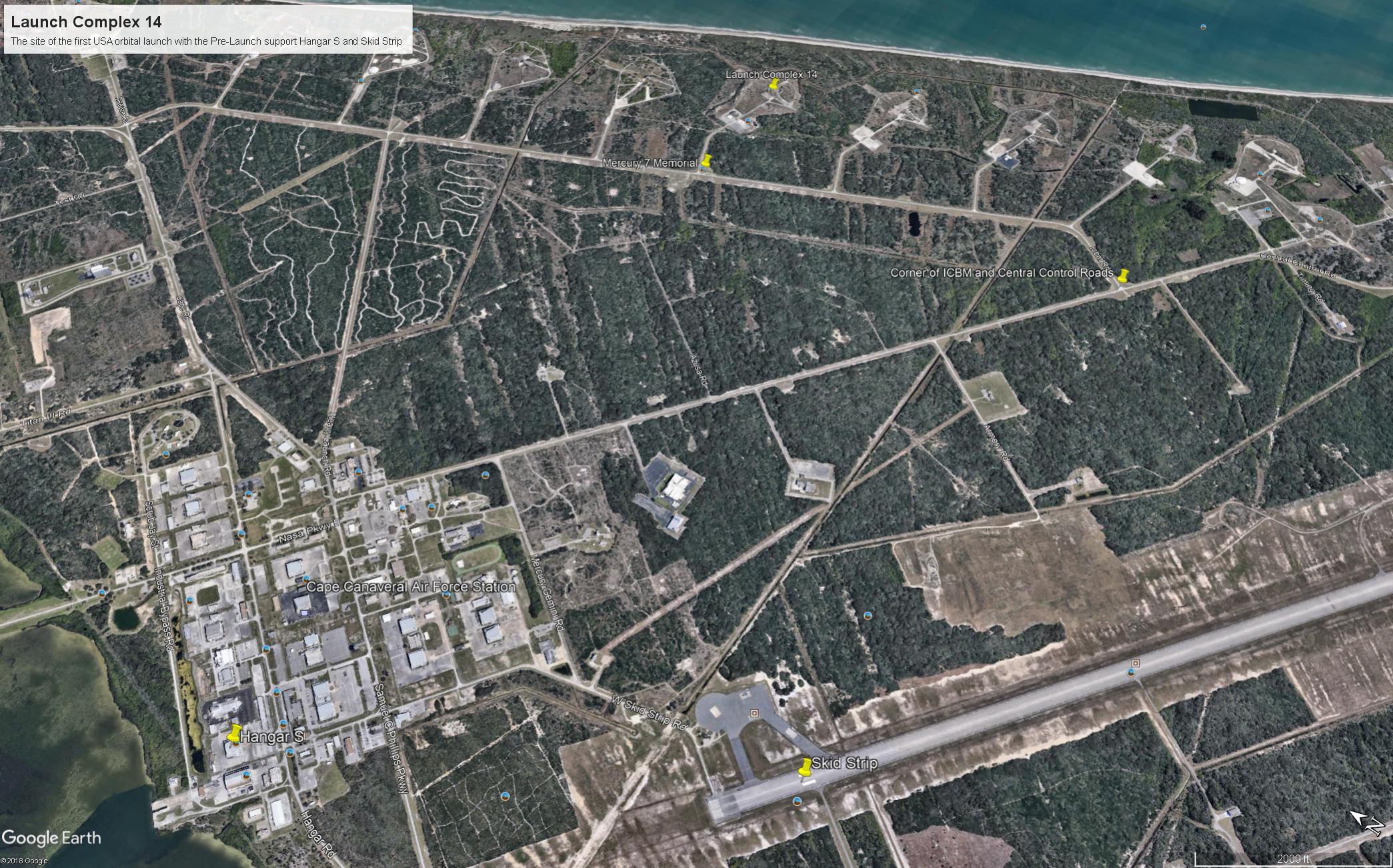
I will cover at length the Mercury-Atlas vehicle that powered John Glenn into orbit February 20, 1962. The tie-in between ICBM road and this series of launch complexes is the early space missions were on re-purposed Intercontinental Ballistic Missles (thus, ICBM). “Atlas” is the name of the ICBM used for Colonel Glenn’s 1962 flight. Click on the following image to find labled pushpins for the corner of Central Control and ICBM Roads (upper right), the road to LC14 and Mercury 7 Memorial.
You will also find a pushpin for the Skid Strip, bottom just to right of center. The earliest cruise missle tests (see “Cruise Missles” and “Post WWII Launch Complexes” ) included navigation to a landing on non-wheeled “skids.” The strip was maintained in support of the manned and later missions when cargo planes delivered the early space capsules, landing, not skidding hopefully, for transfer to a Pre-Launch facility, Hangar S.
Cape Canaveral Launch Complex 14 and Pre-Launch Support: Hangar S and the Skid Strip
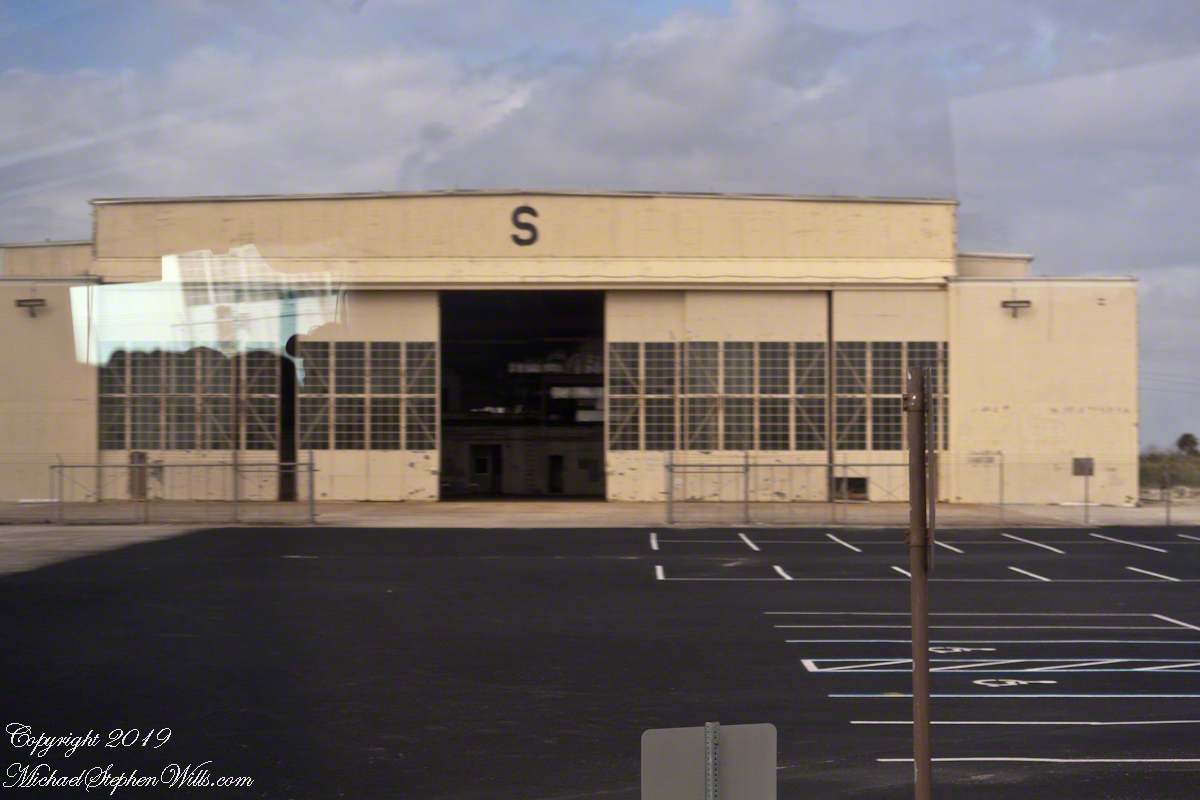
Hangar S is seen below as we passed later in the tour. Built 1957 by the military the 61,300 square feet were acquired by NASA in 1959. The early space capsules were tested here in an vacume chamber to ensure the vehicle supported an breathable atmosphere for the occupants.
The first American space voyager was Ham, a chimpanzee. Ham lived in a residential area on the second floor of Hangar S. For a period of time the Mercury 7 shared the spartan second floor quarters. “The Right Stuff” (a 1984 film from a Tom Wolfe book) included scenes from this episode of the program.
Constructed in 1957, Hangar S served for pre-flight processing from Mercury through the final flight of the Space Shuttle. This is where the Mercury 7 astronauts were first quartered on the second floor and later, is where they stayed prior to flight. The Lunar Orbiter was prepared here.
Comfortable Quarters
In short order arrangements were made for more comfortable quarters, just off the ocean in Cocoa Beach. It was a new hotel given over entirely to the Mercury 7. Pam and I stayed there in 2018 while taking this tour, it is the La Quinta across from the International Palms. We recommend it a clean, comfortable, reasonably price and a great story to share afterwards. The Atlantic Ocean is a five minute walk.
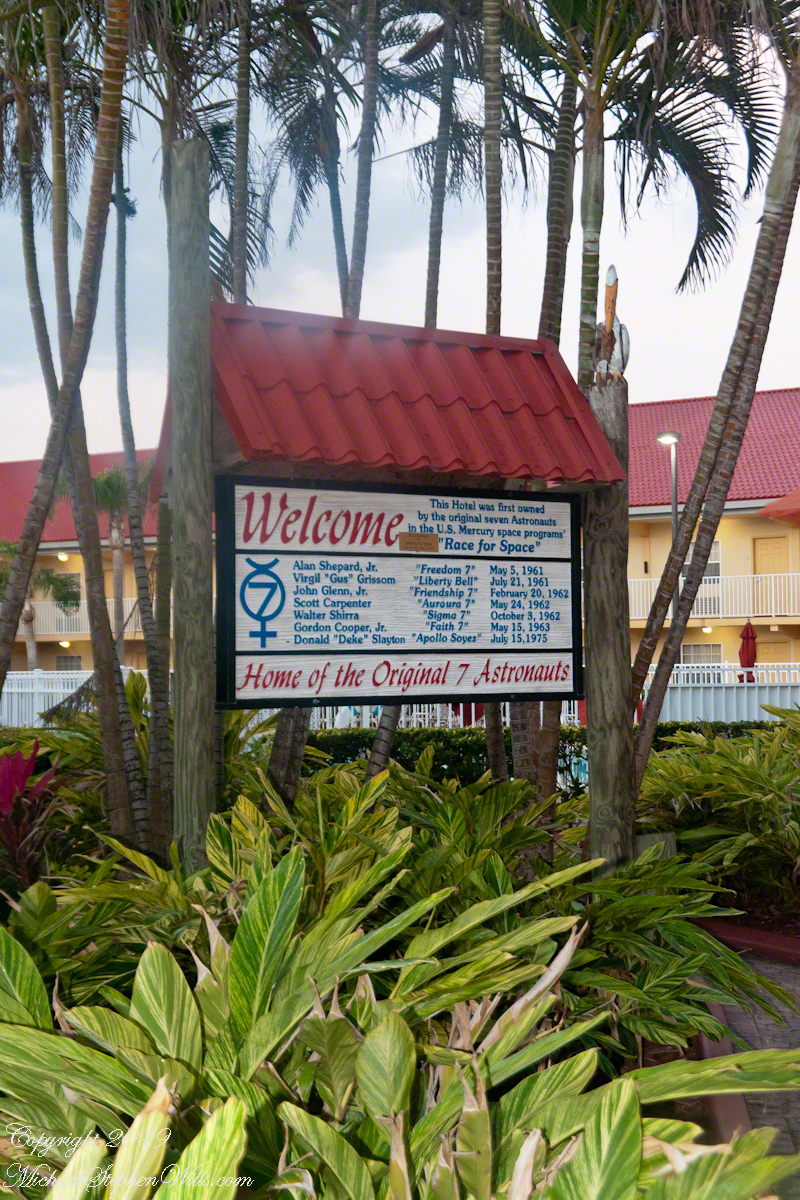
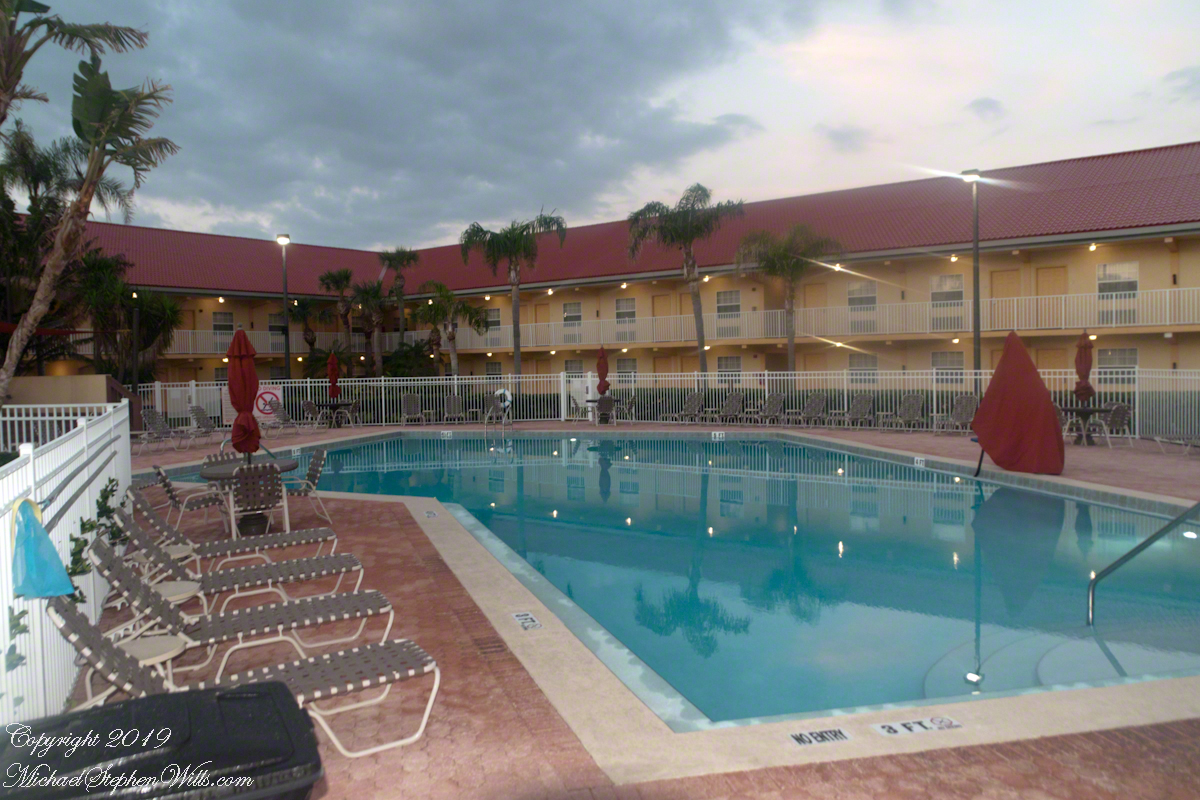
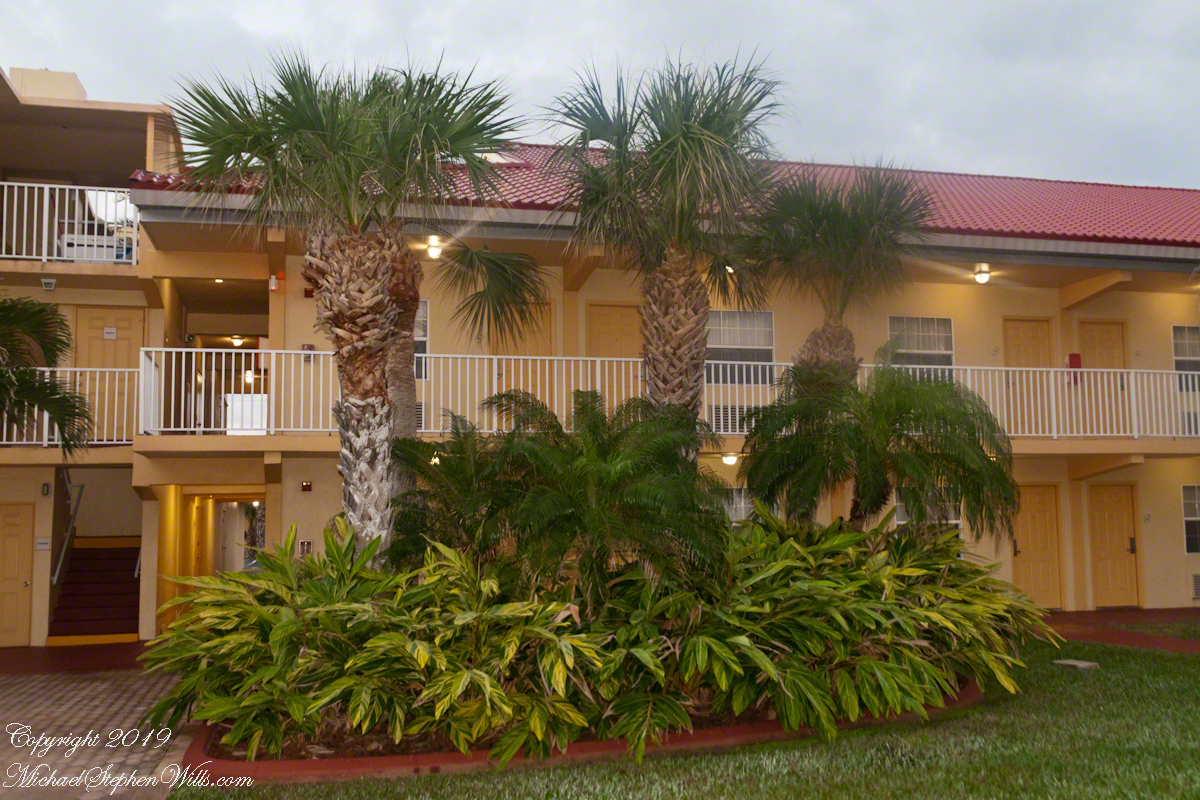
La Quinta Inn was the home of the Mercury 7 Astronauts, 1275 N Atlantic Avenue Cocoa Beach, Florida 32931
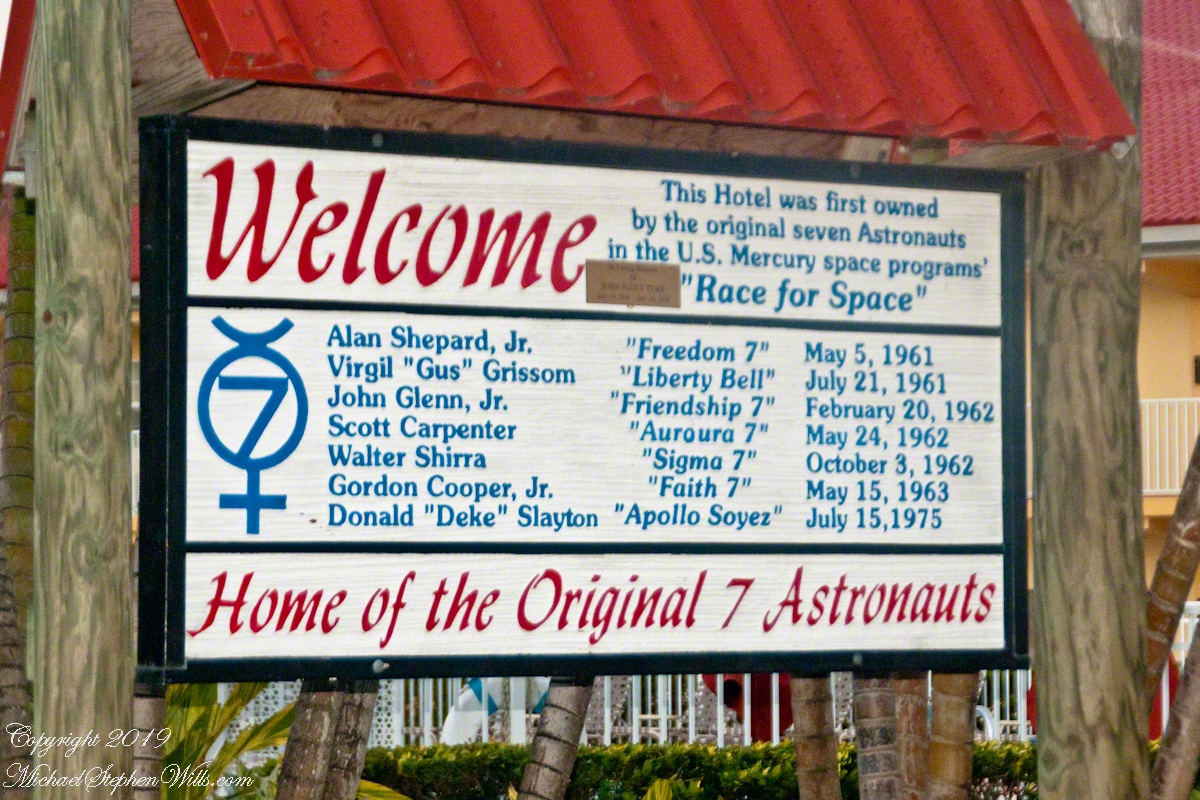
I learned from the tour how the hotel was donated to the Mercury 7 by a private individual. They owned the hotel. Here is a very informative sign just off the La Quinta lobby with their names. Each first mission, as named by the astronaut, is listed.
La Quinta Inn was the home of the Mercury 7 Astronauts, 1275 N Atlantic Avenue Cocoa Beach, Florida 32931View of the hotel built for and first owned by the Marcury 7 astronauts. They lived here in the early days of the USA space program.
Blastoff!!
Next post will feature images of LC14 from 2018.
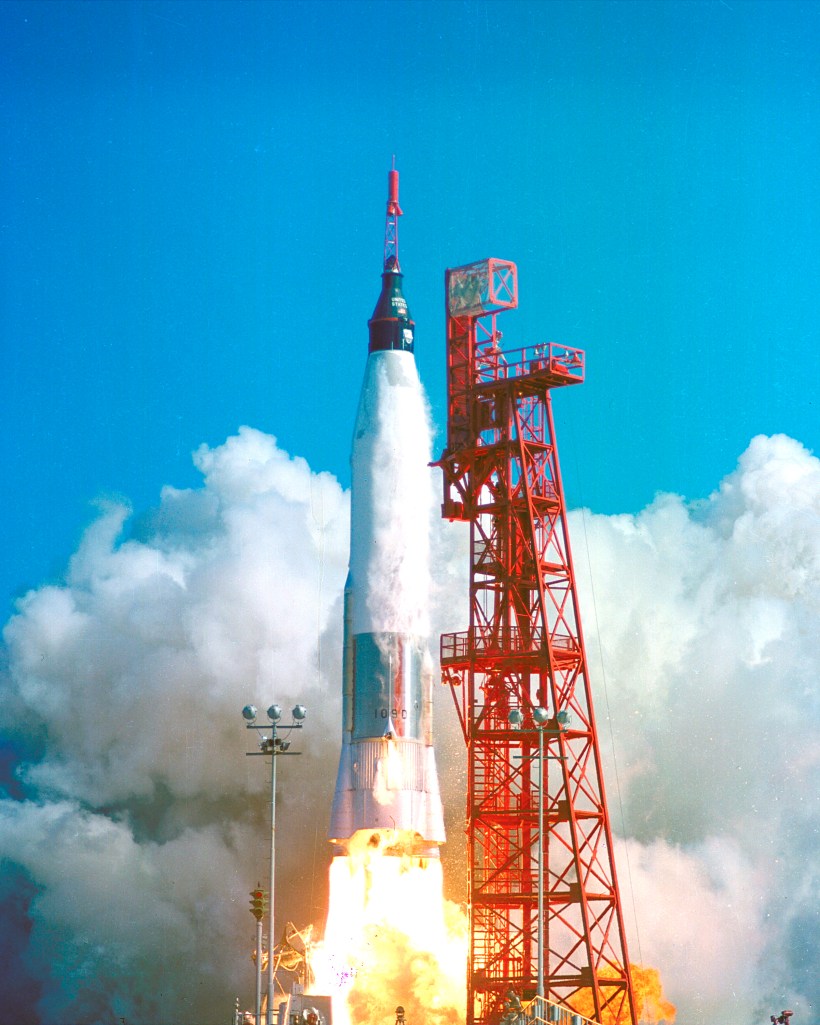
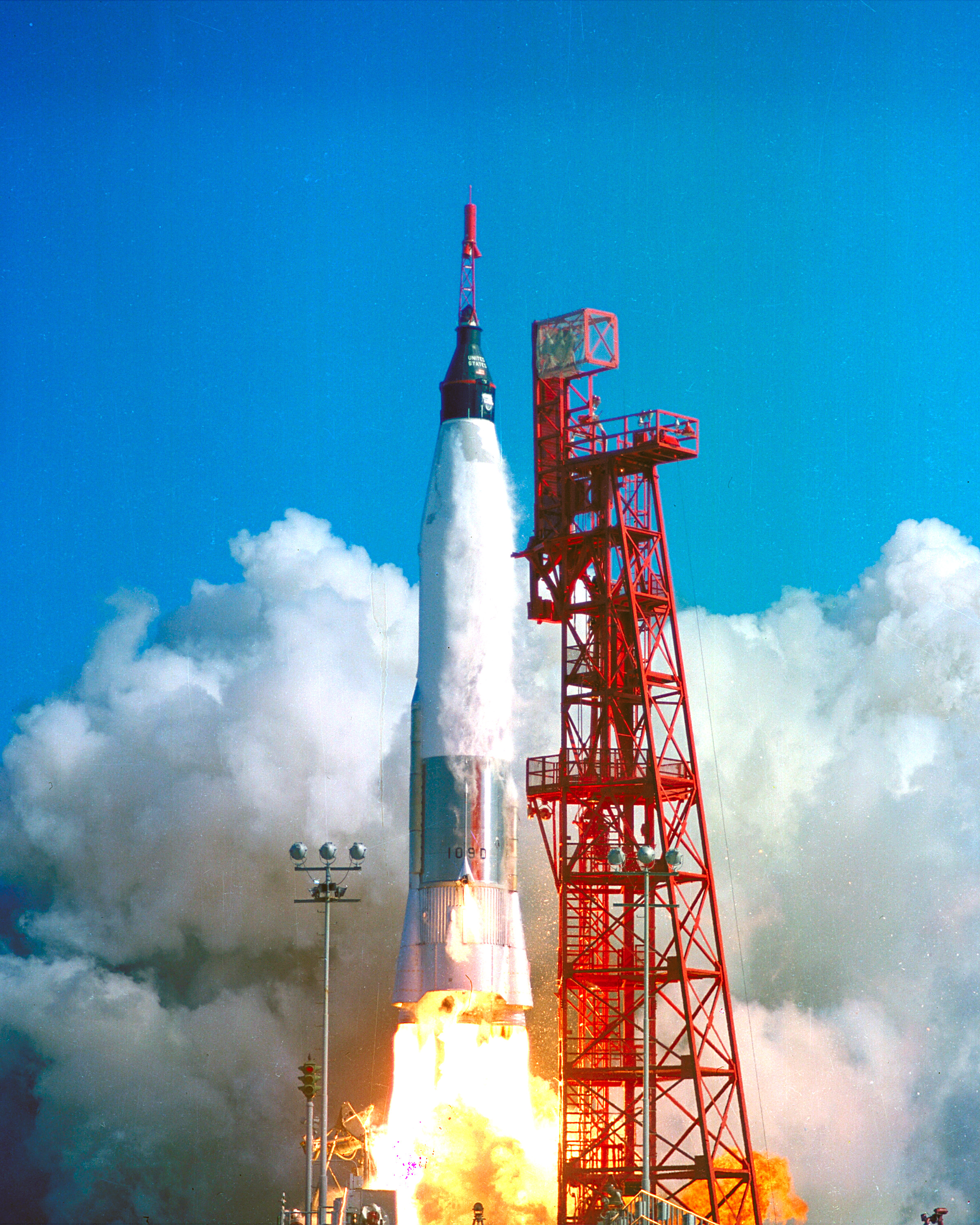
Launch of Friendship 7, the first American manned orbital space flight. Astronaut John Glenn aboard, the Mercury-Atlas rocket is launched from Pad 14. Public Domain Photograph by NASA.
Sources of information for this post: I used information from the Wikipedia site for the key words John Glenn, Launch Complex 14, Mercury-Atlas, Launch Complex 36. Plus a “google” on “Hangar S History” that found an excellent page hosted on the NASA site. Cover photo of Friendship 7 Launch my be found on Flickr in “NASA on the Commons” photostream.
Copyright 2022 Michael Stephen Wills All Rights Reserved.
We left our Cocoa Beach hotel in the pre-dawn hours of February 6, 2018, with our tickets in hand for the first launch of Space X’s “Falcon Heavy”, our reward for arriving early was a spot on the third bus.
Tooling Around
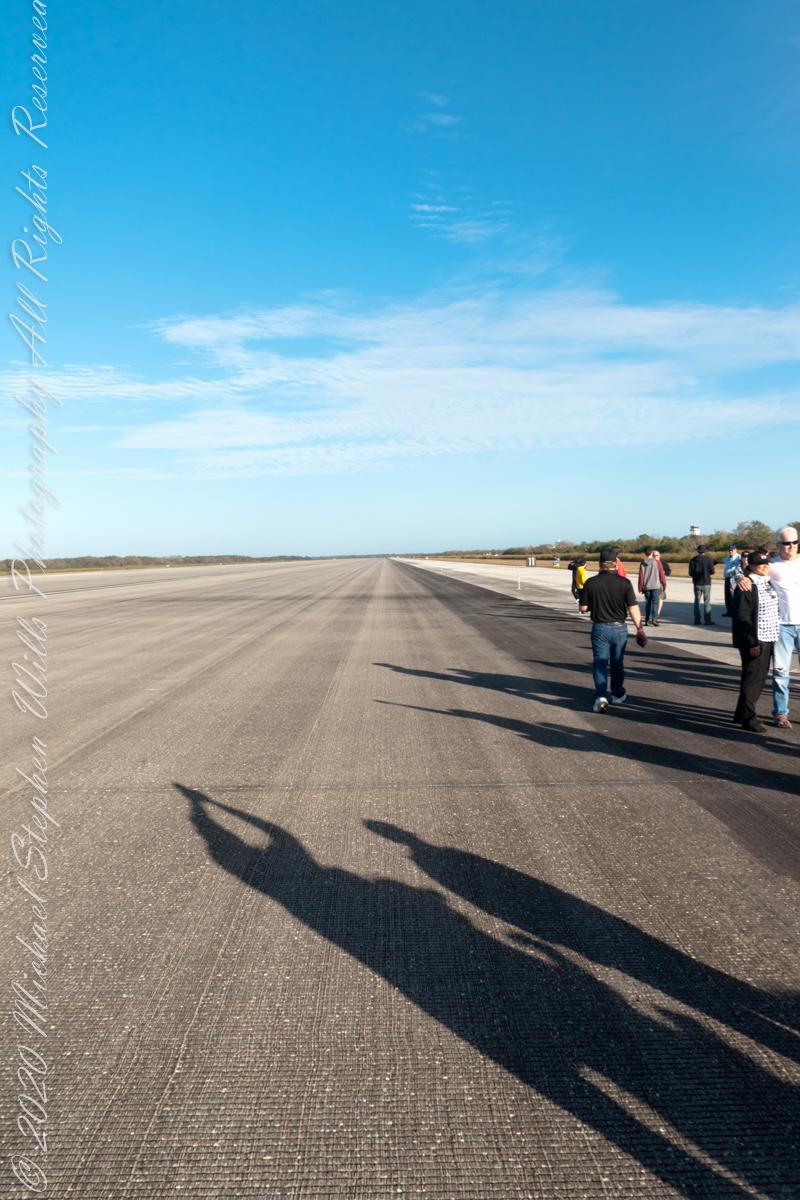
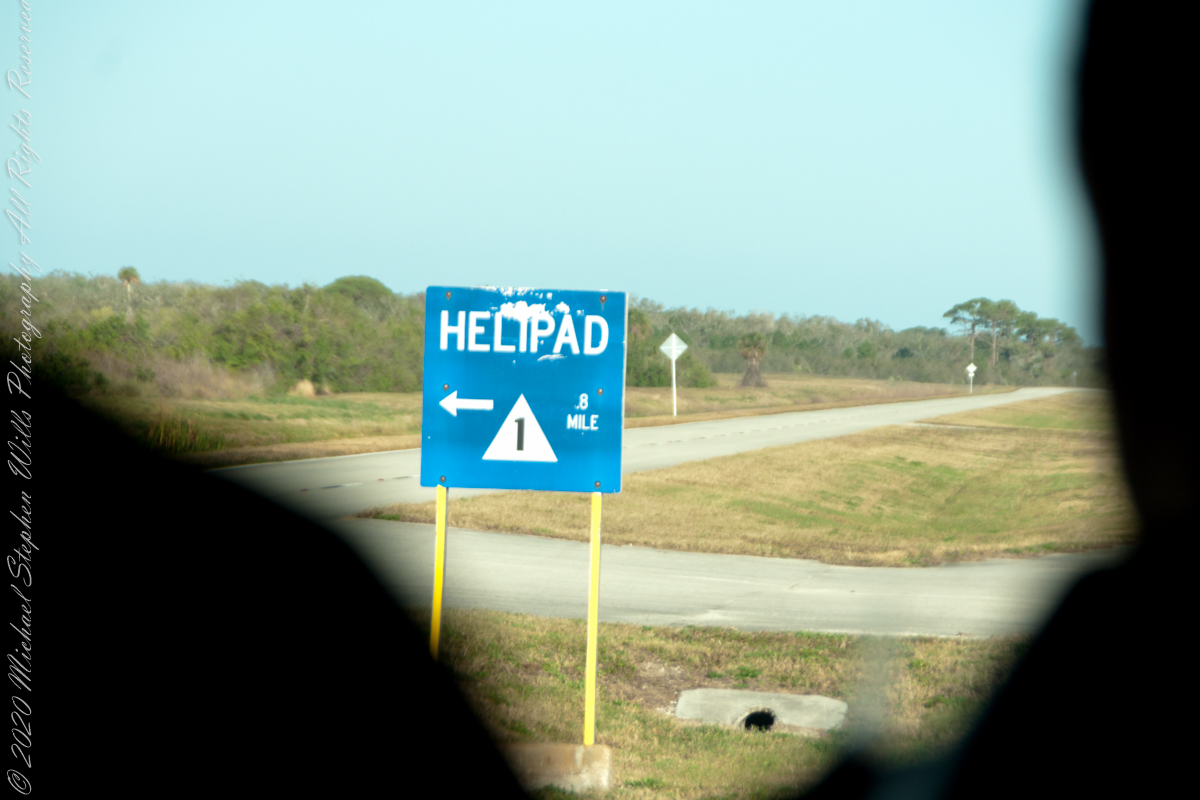
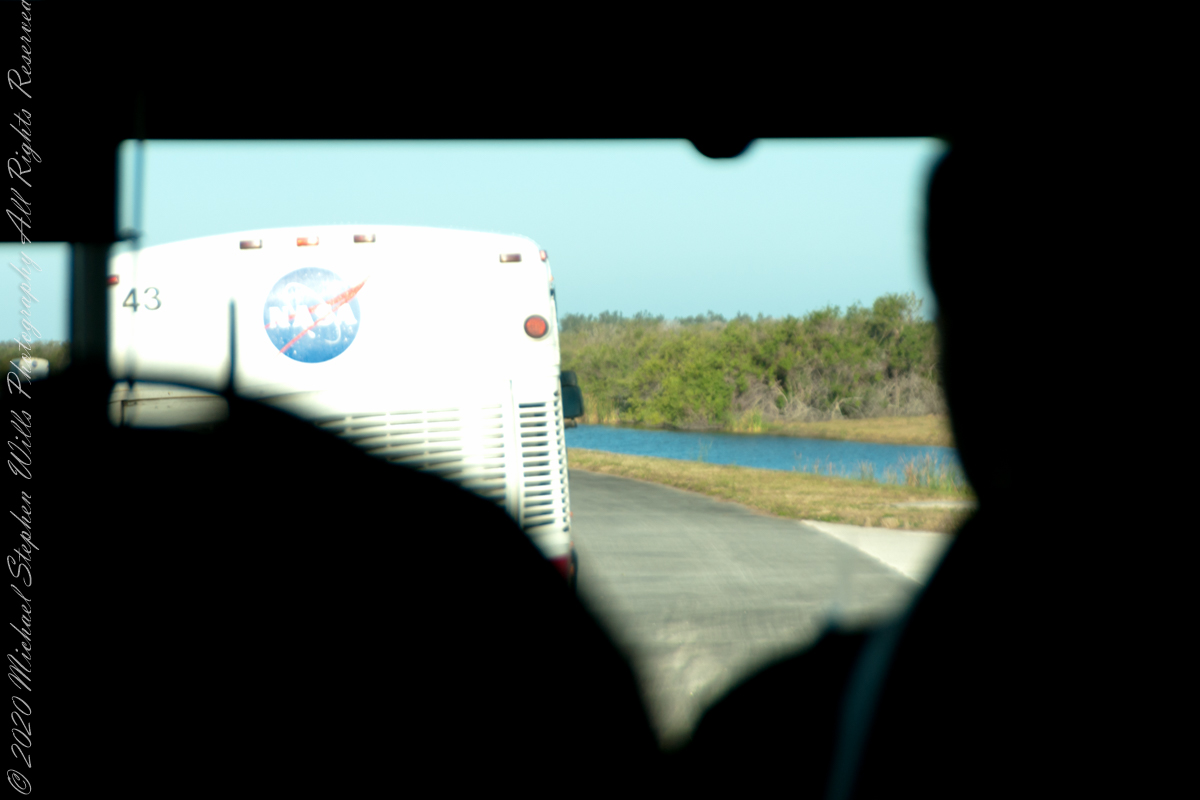
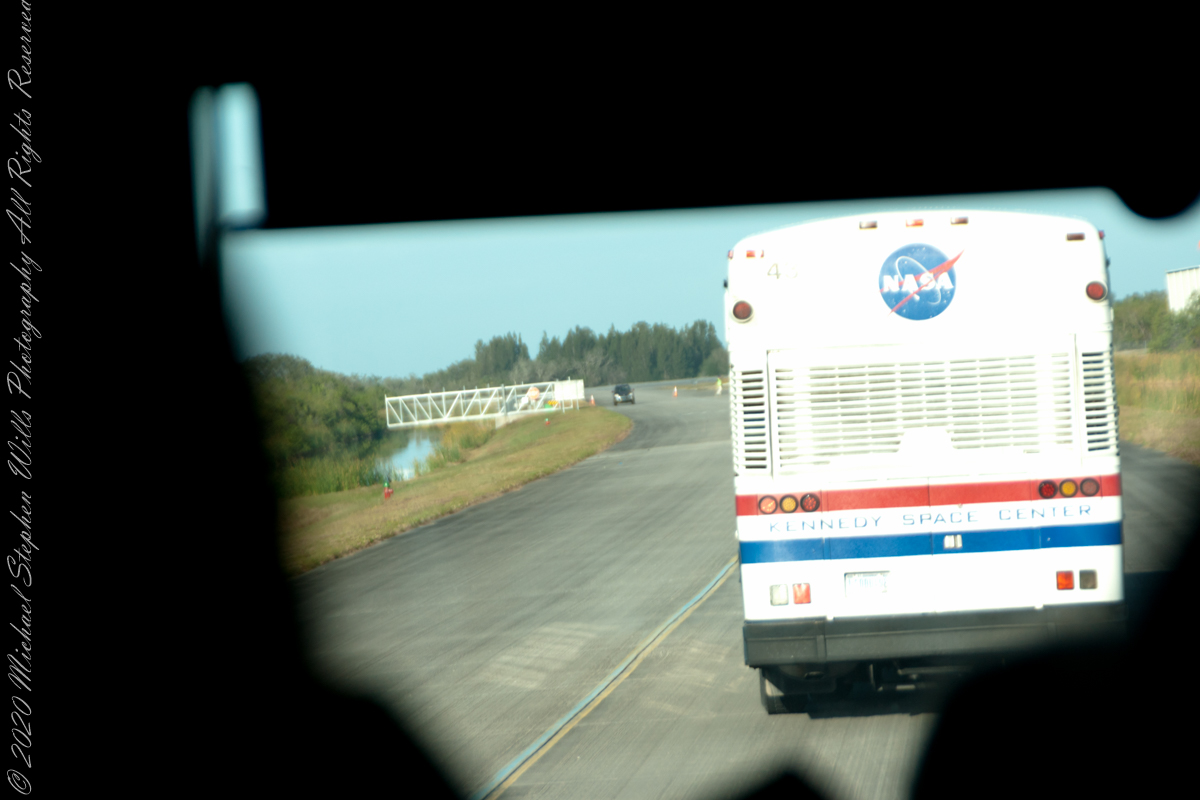
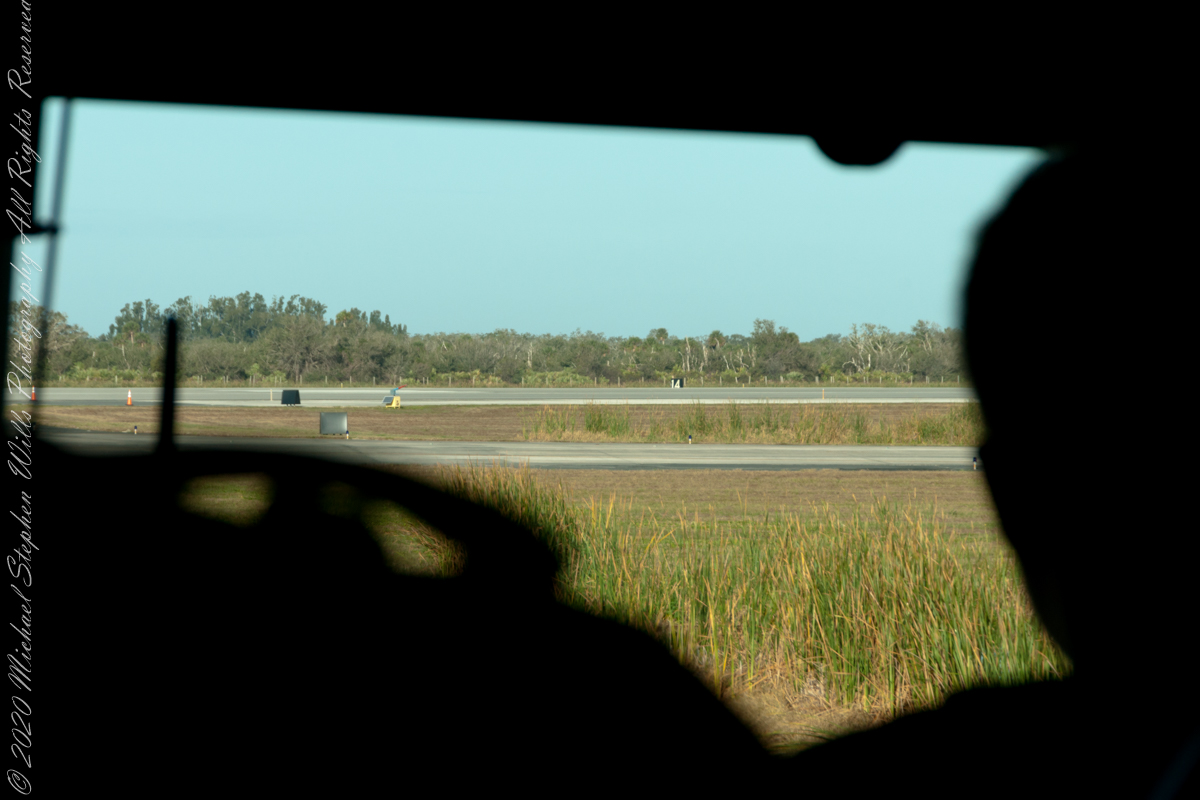
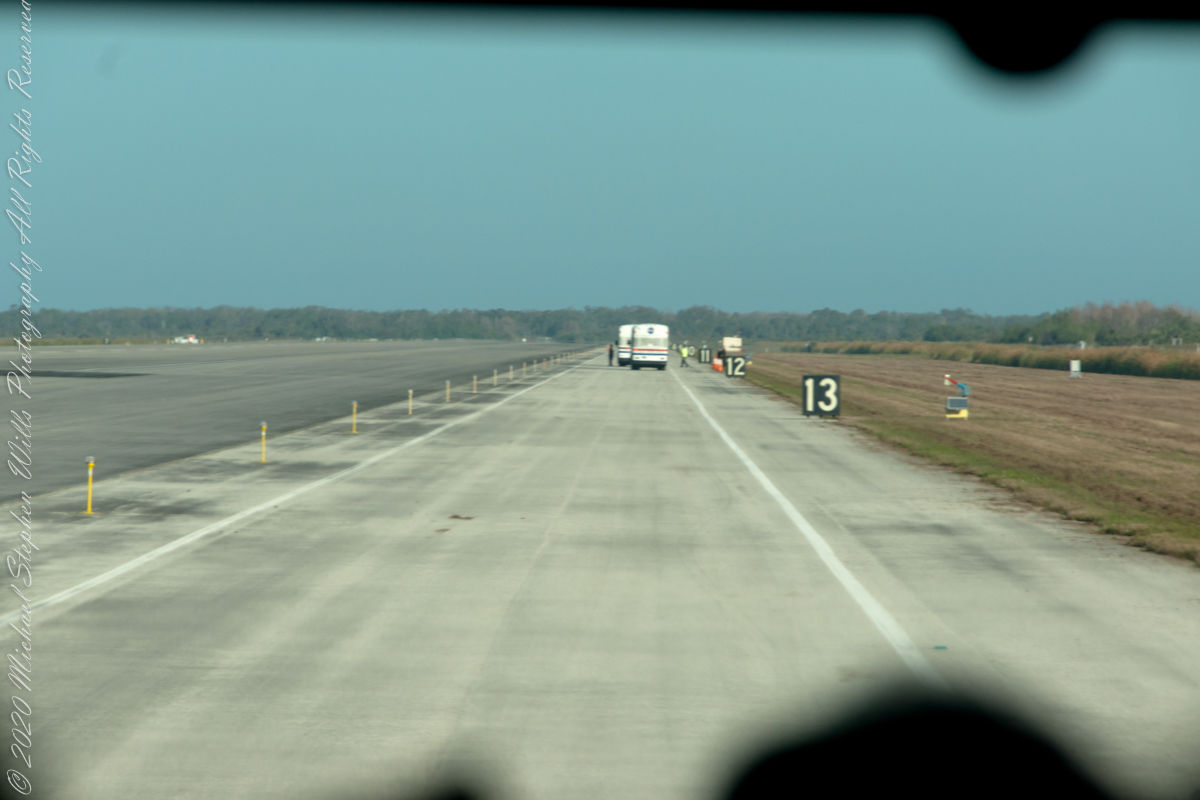
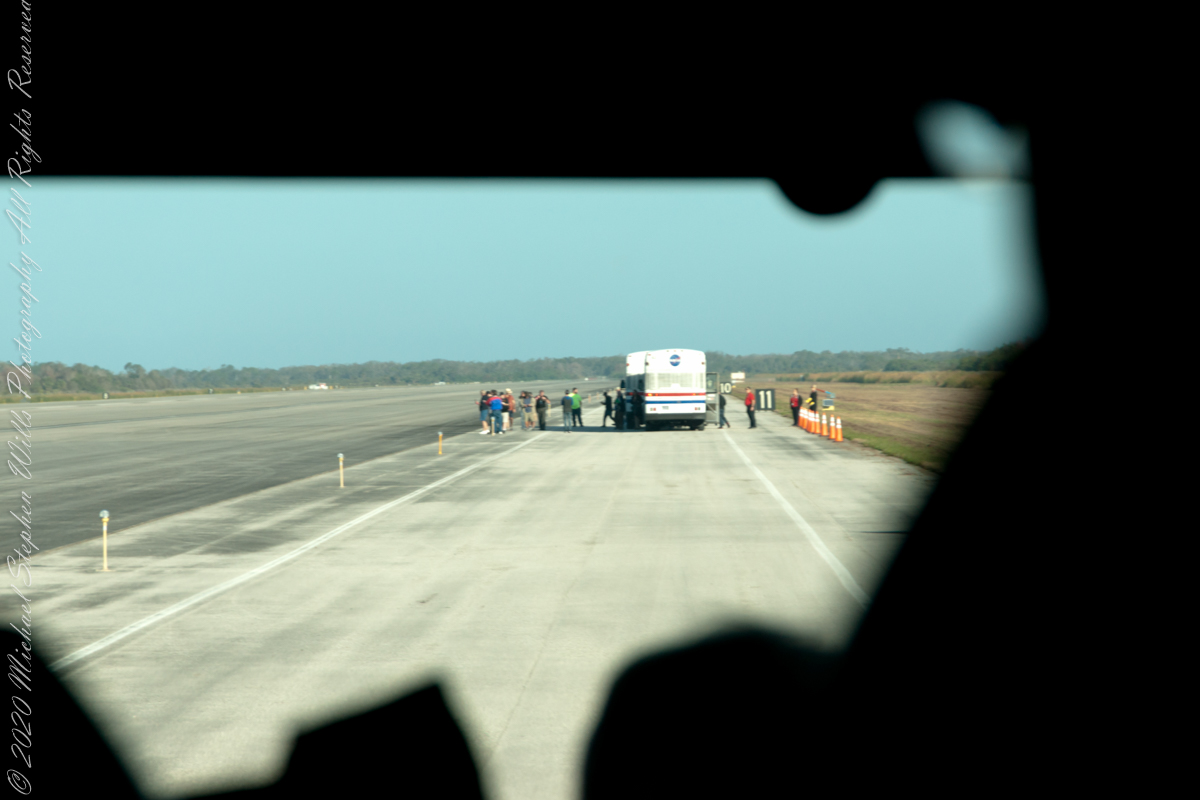
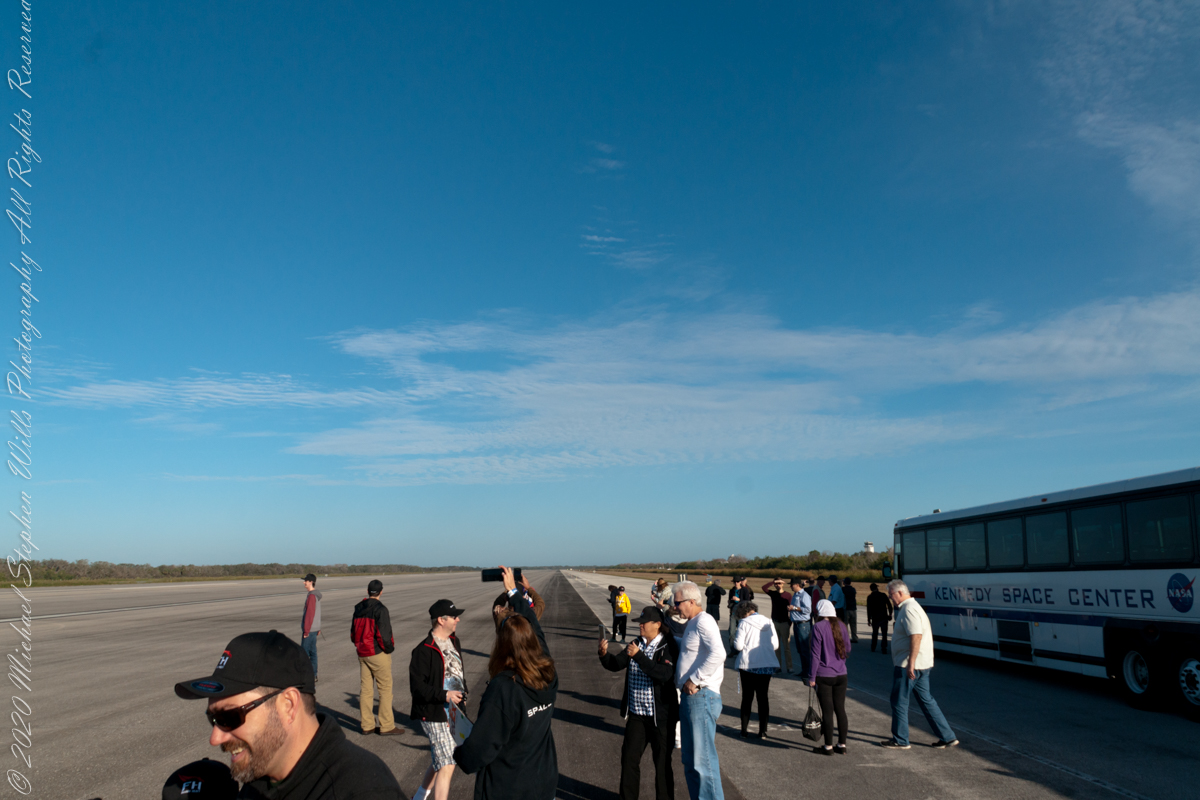
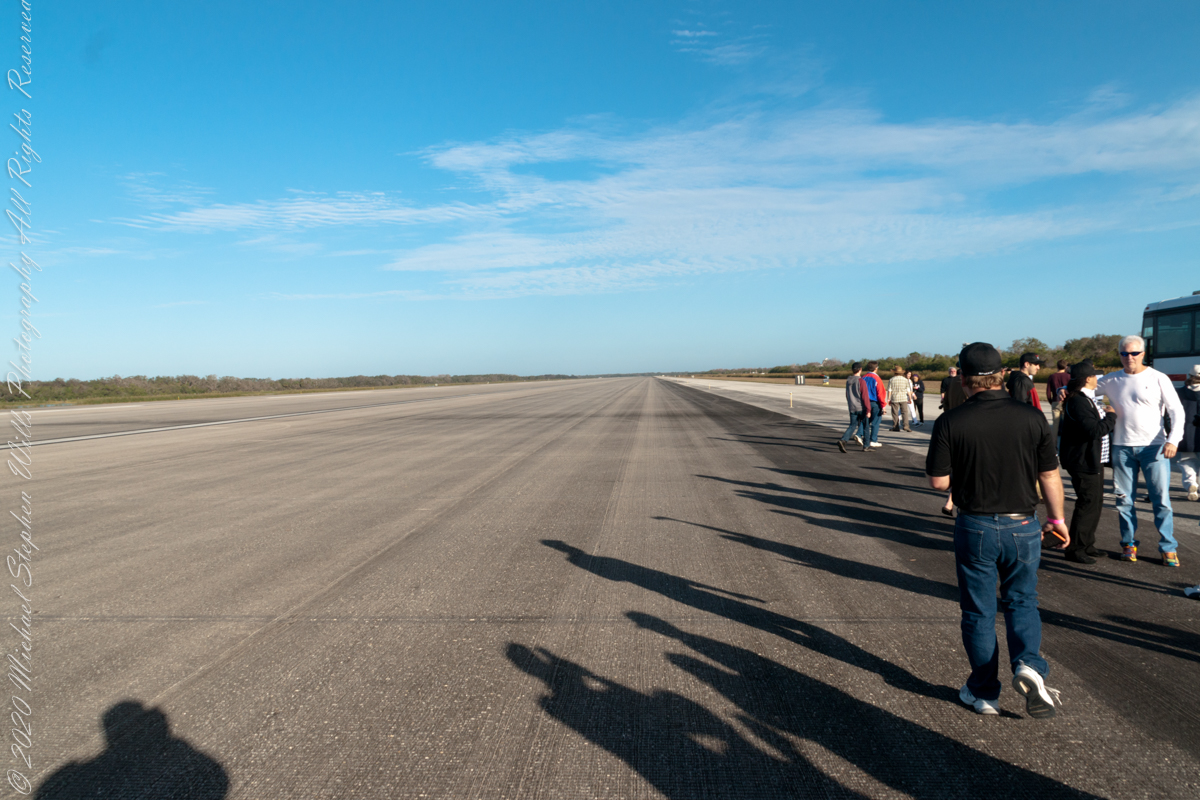
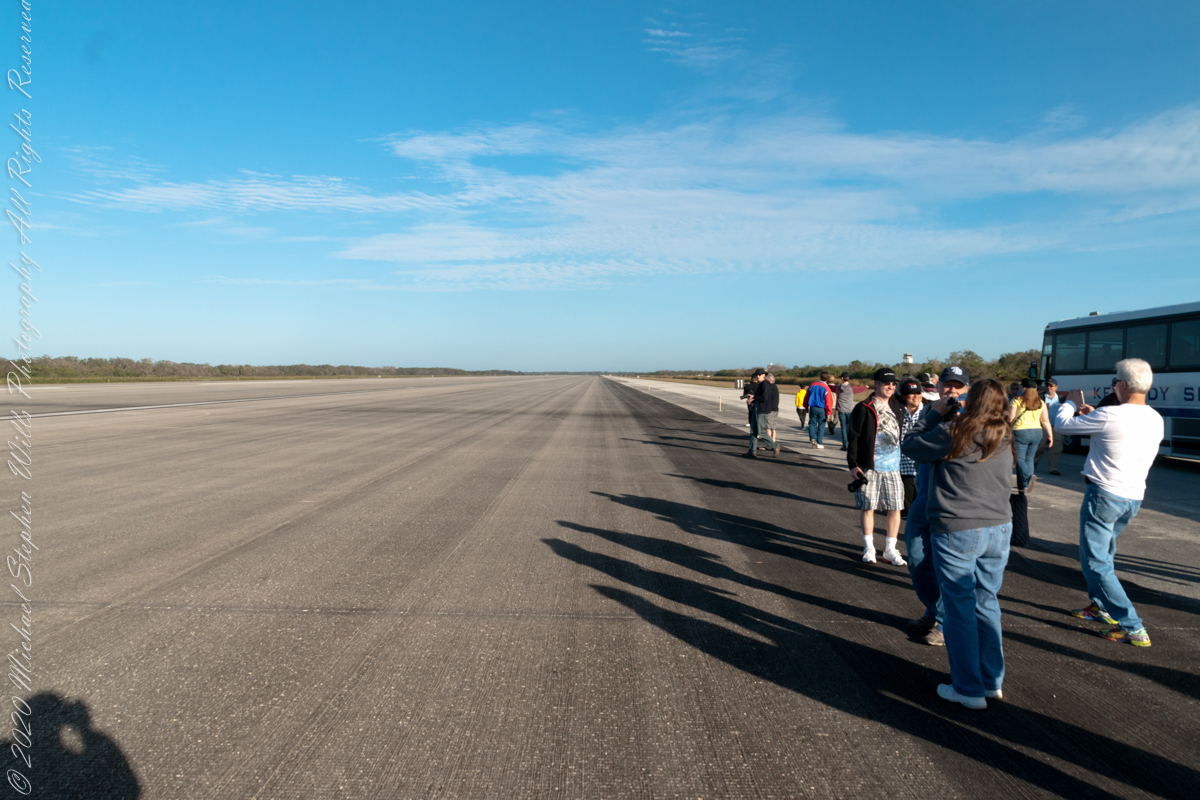
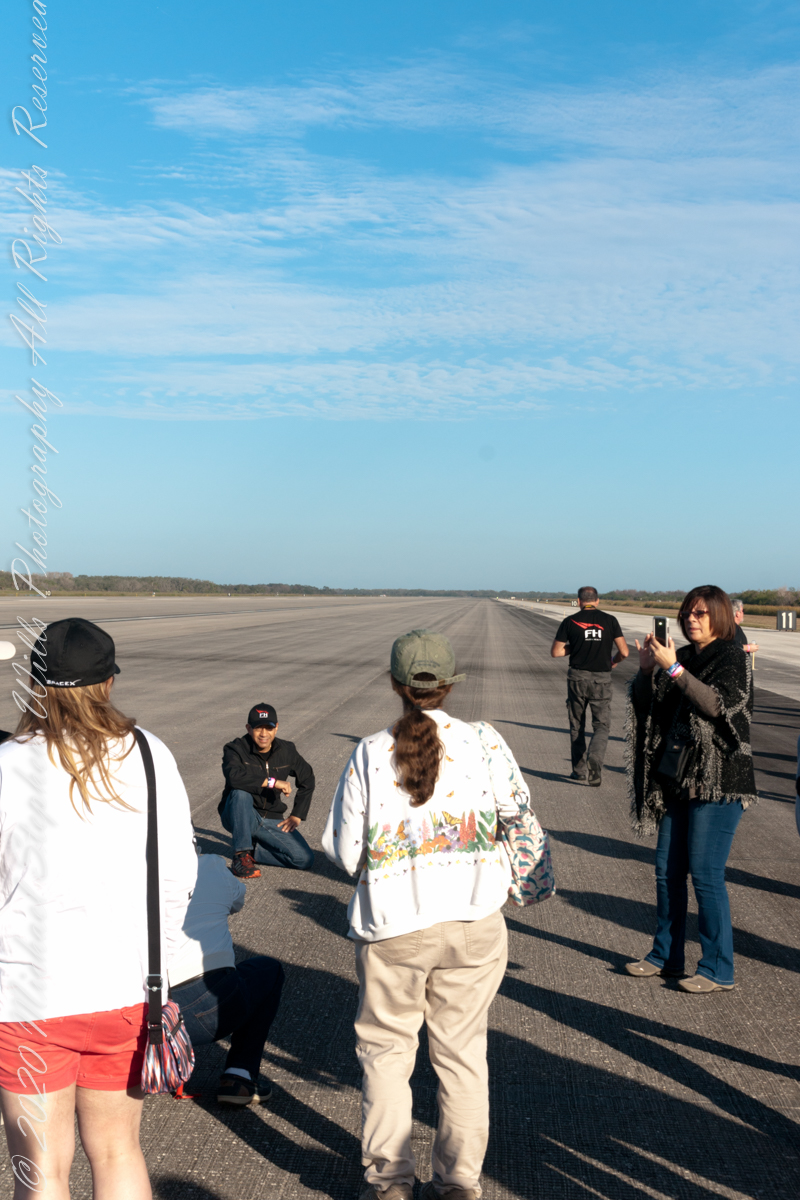
On the way to our final destination, the Apollo-Saturn V center, we were privileged to visit the Shuttle Landing Facility. Here are a few snapshots from the bus.
Click Any Image for a larger viewe
A waterway chock full of alligators — not visible until it is “too late”First view of runway
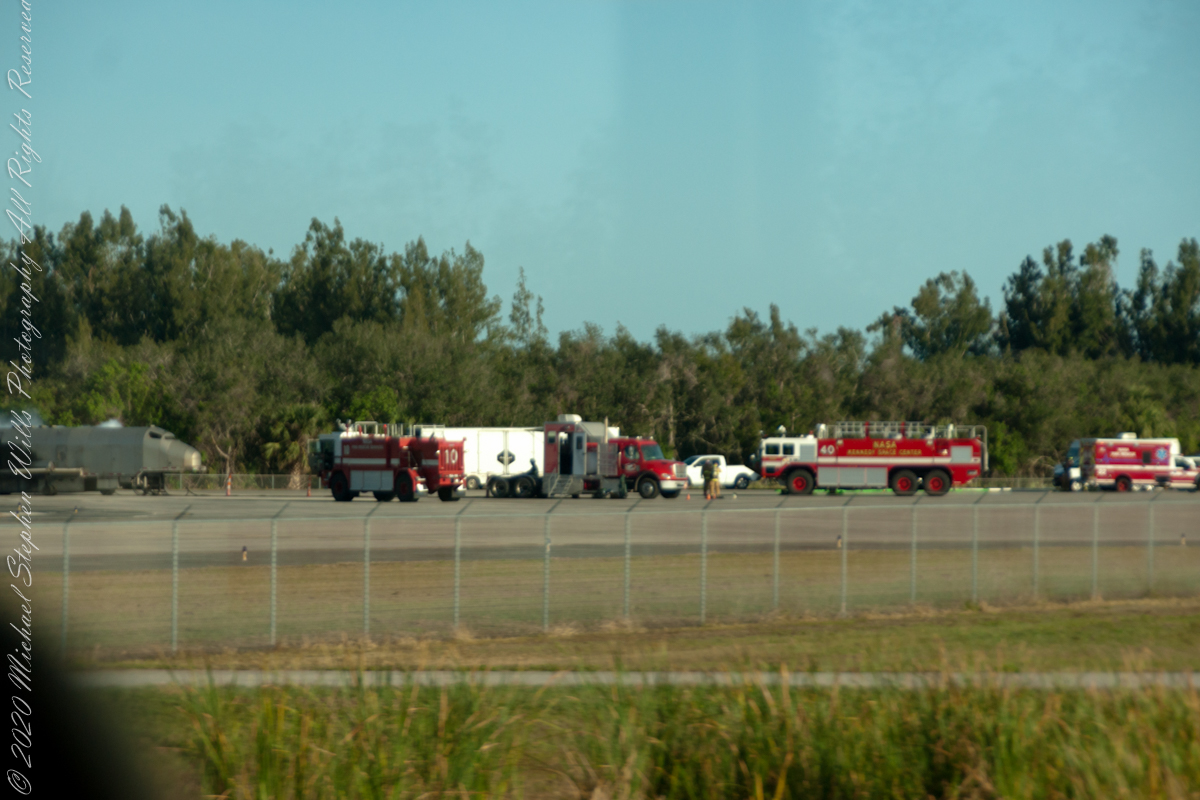
Preparing for the Worst
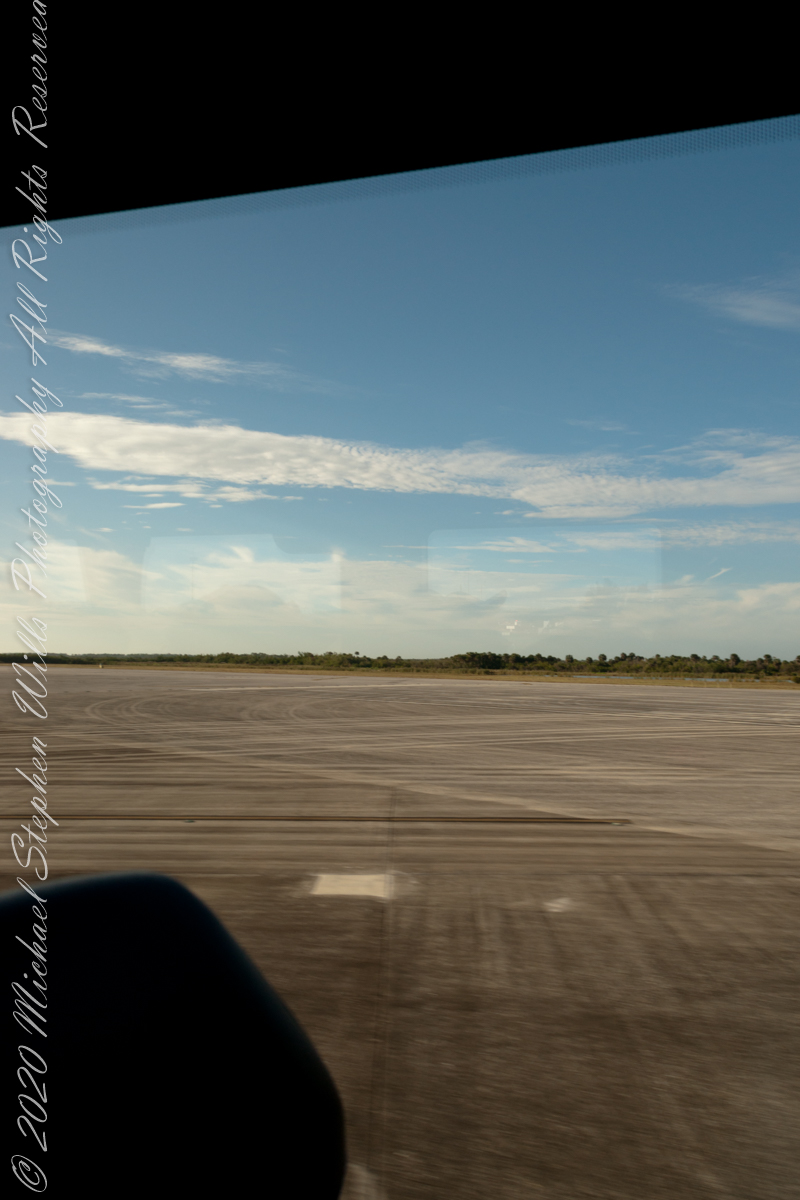
Fire Station 2 (Shuttle Landing Facility) – Kennedy Parkway NorthA rough and charred mock up of a Space Shuttle still smoking from the last training sessionImmense Turnabout, runway just visible
A Smooth Landing
Two buses ahead of us
Aside from holding the record for world’s longest runway, the surface itself exceptionally engineered, consisting of an extremely high-friction concrete strip designed to maximize the braking ability of the Space Shuttle at its high landing speed, with a paving thickness of 16.0 inches (40.6 cm) at the center. It uses a grooved design to provide drainage and further increase the coefficient of friction. The original groove design was found to actually provide too much friction for the rubber used in the Shuttle’s tires, causing failures during several landings. This issue was resolved by grinding down the pavement, reducing the depth of the grooves significantly
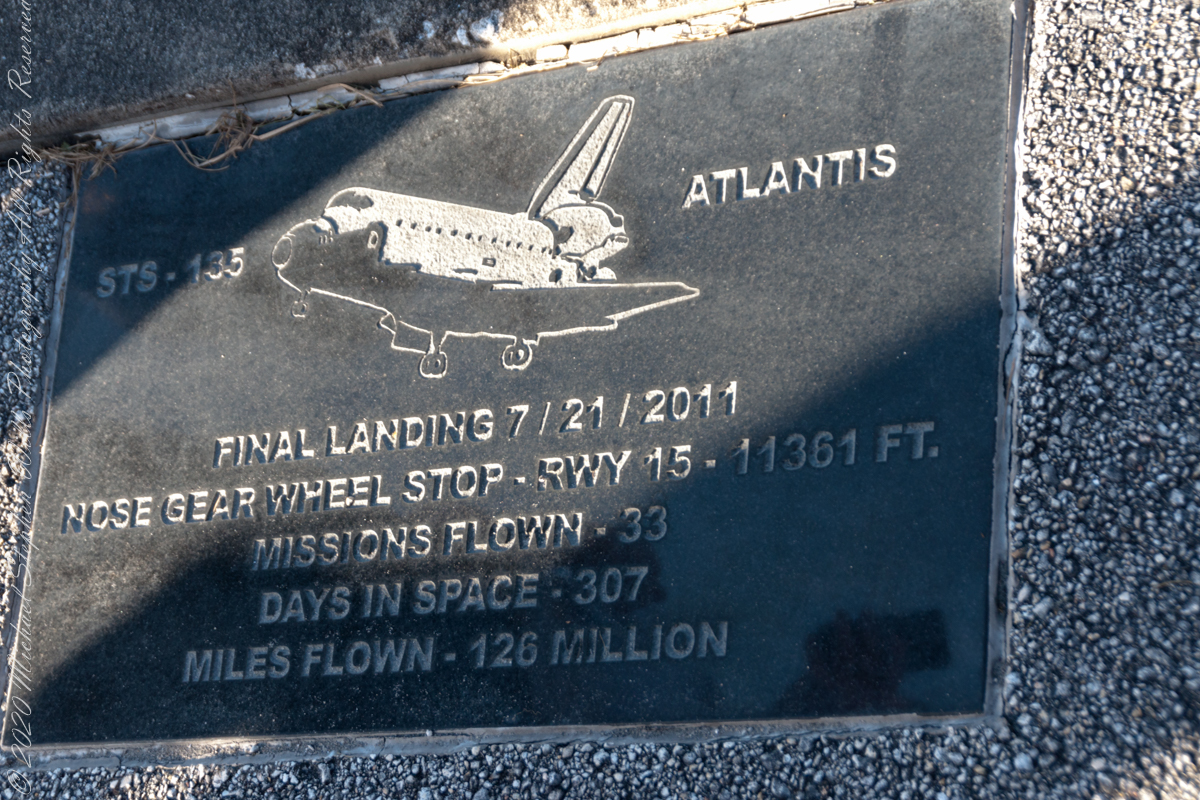
Atlantis plaque on the access pathway along the Shuttle Landing Facility. It reads “STS-135 Atlantis Final Landing 7/21/2011. Nose Gear Whell Stop – RWY 15 – 11,361 Feet. Missions Flown- 33 ; Days in Space – 307 ; Miles Flown – 125 Million
Sources of information for this post: I used information from the Wikipedia site for the key words “STS-107” as well as the official web site for Kennedy Space Center Fire Department.
Copyright 2022 Michael Stephen Wills All Rights Reserved.
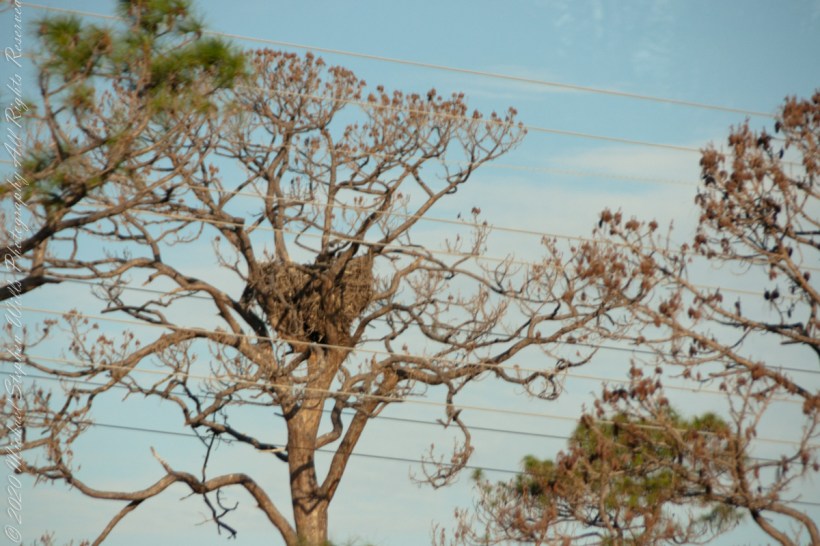
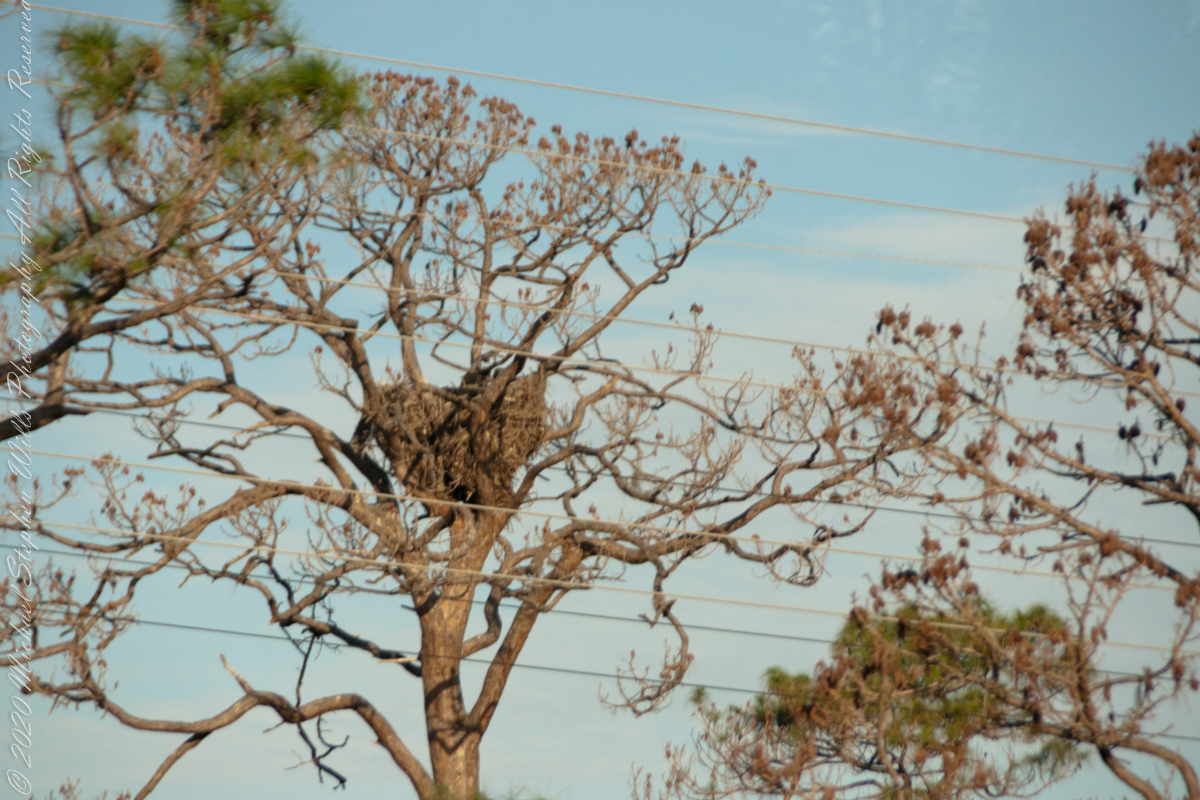
Our Shuttle Landing Facility side trip brought us twice by one of the five Bald Eagle nests around Kennedy Space Center. The entire Center land is part of the National Wildlife Refuge of Merrit Island. Rockets and wildlife coexist very well, in fact the Shuttle Landing Facility is also known as the Gator Tanning Facility. The reptiles crawl up from the canals surrounding the landing strip on all four sides to bask on the smooth concrete.
First Turn
The nest tree is on the median of a divided highway. Driving into the Landing Facility the nest tree was to the east, brightly lit by the morning sun.
Click Any Image for a larger viewe
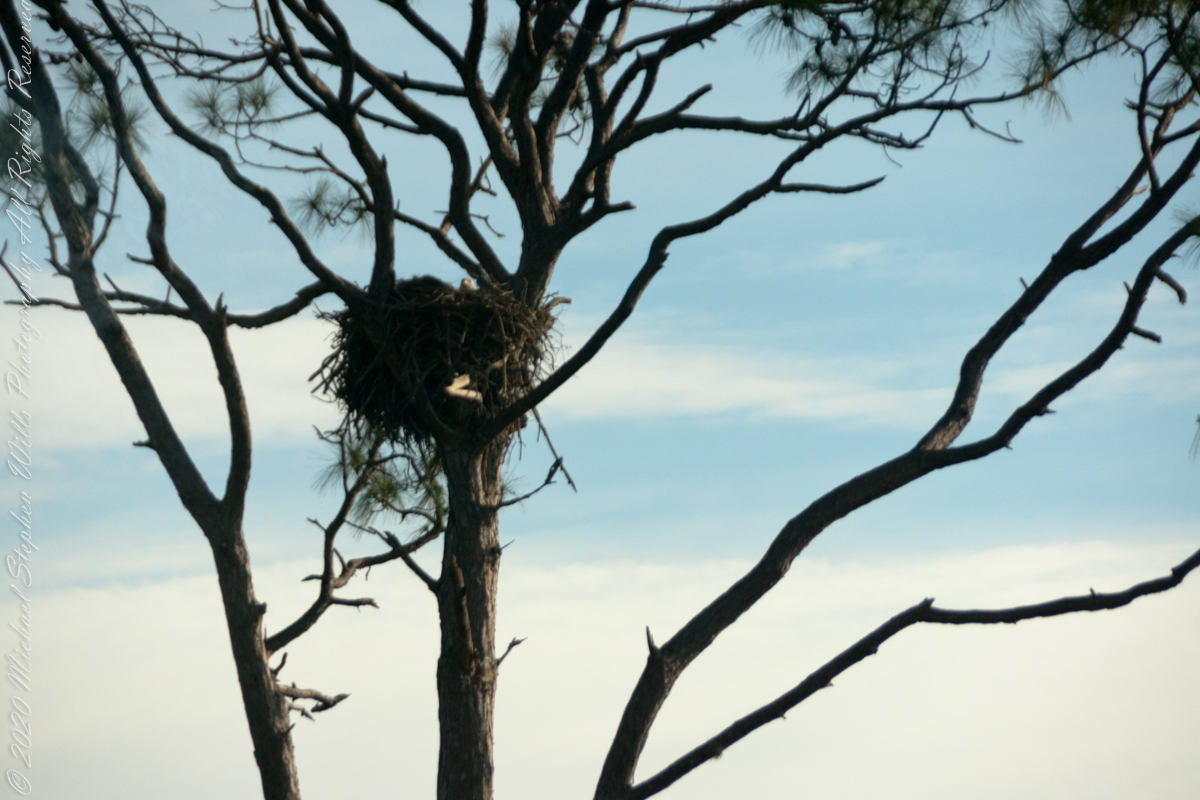
Second Turn
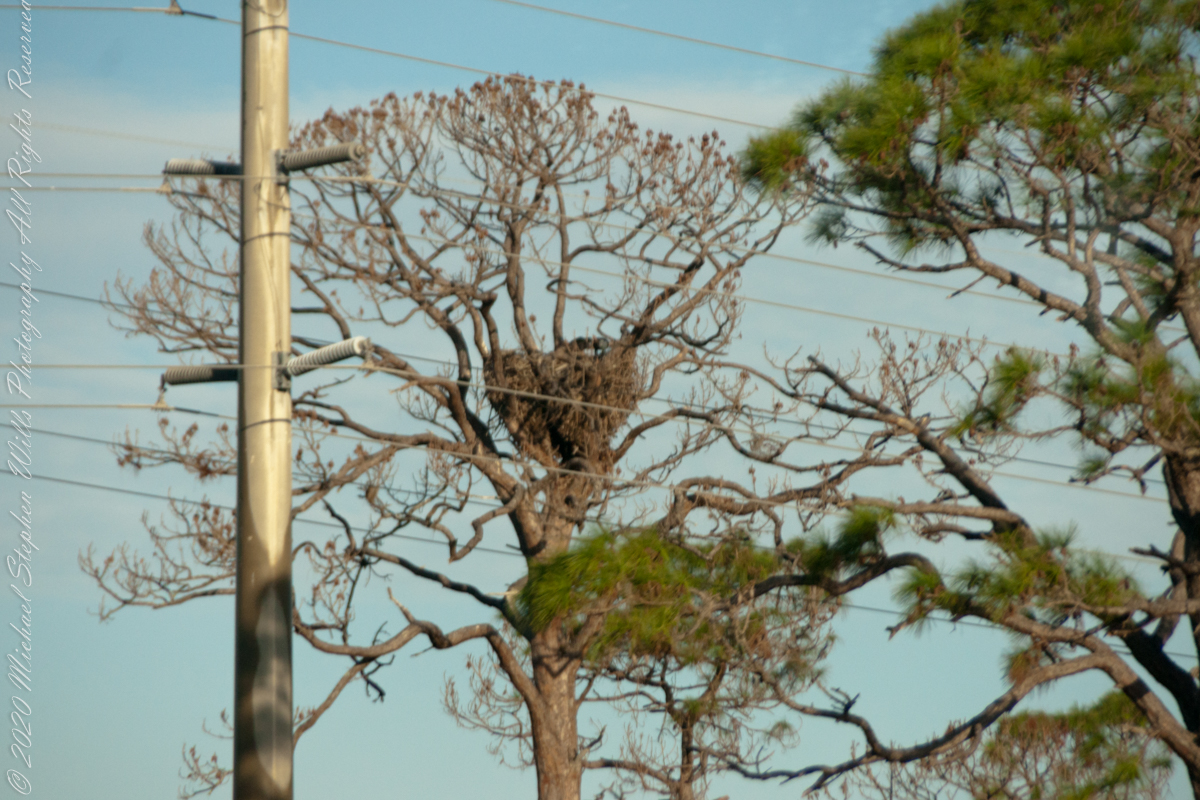
On the return trip the nest was backlit. Look closely: the head of an eaglet (?) is just visible above the nest rim.
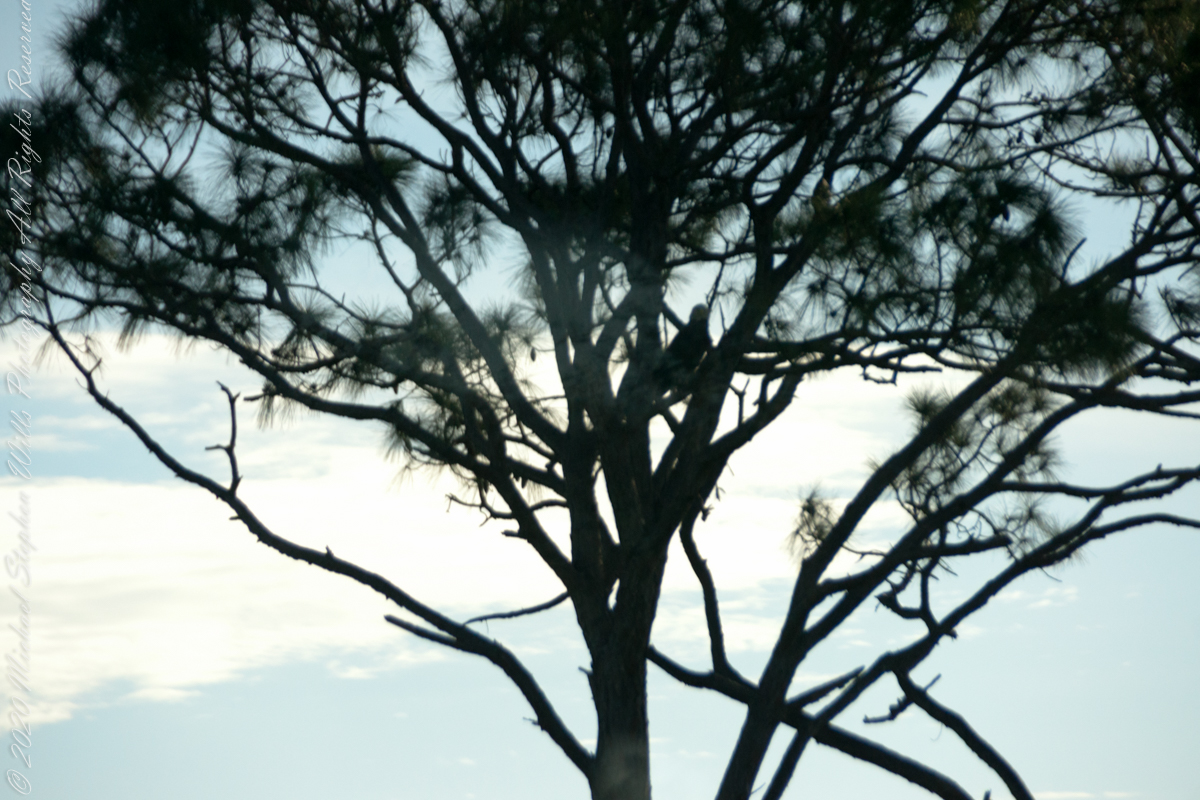
The parent eagle is silhouetted in the tree branches.
Sources of information for this post: I used information from the Wikipedia site for the key words “STS-107.”
Copyright 2022 Michael Stephen Wills All Rights Reserved.
We left our Cocoa Beach hotel in the pre-dawn hours of February 6, 2018 with our tickets in hand for the first launch of Space X’s “Falcon Heavy, our reward for arriving early was a spot on the third bus to the Apollo-Saturn V center. At 4 miles from Launch Complex 39a this is the prime location for “VIP” viewing.
The Columbia Disaster
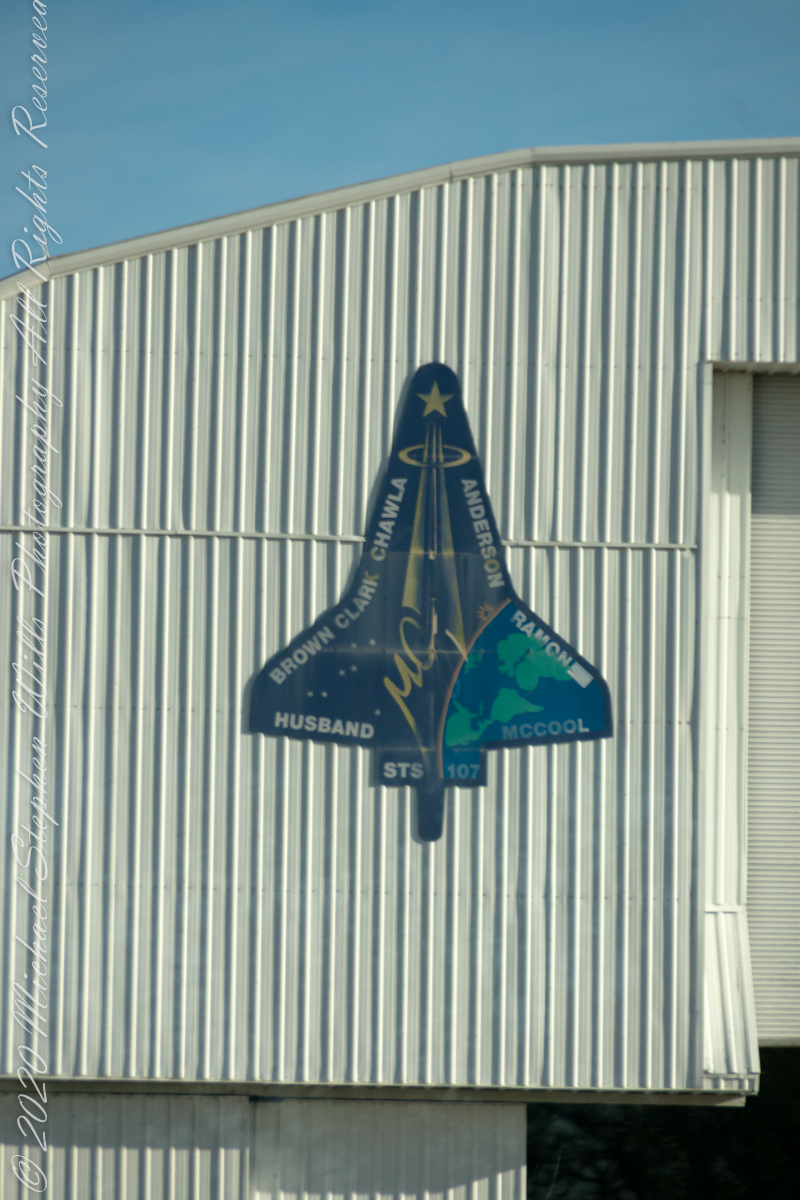
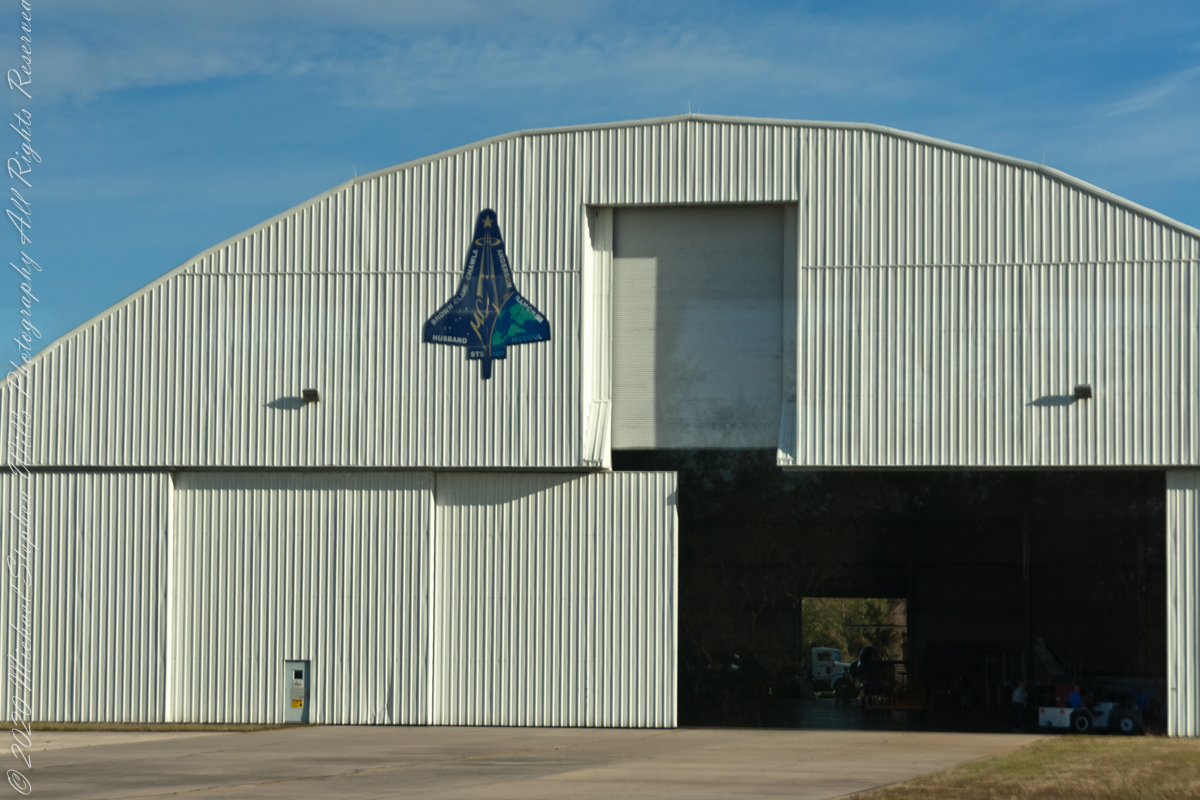
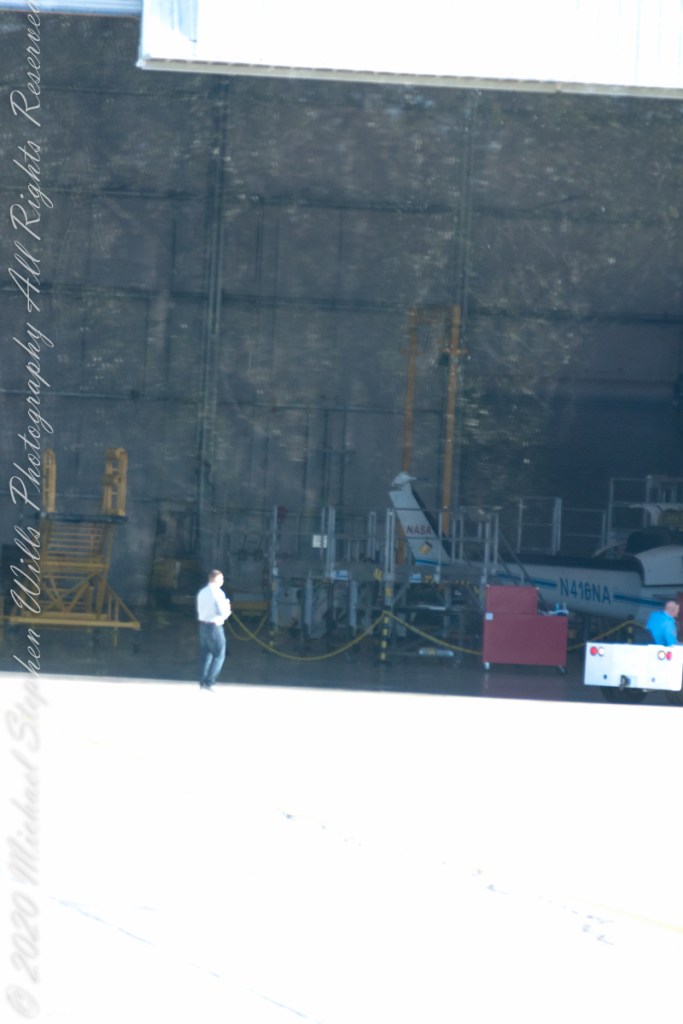
We were privileged to visit the Shuttle Landing Facility on the way, this hangar on the SLF access road was pointed out by the guide. Here was where the remains of Space Shuttle Columbia were collected after the disaster.
Click Any Image for a larger viewe
STS-107 was the 113th flight of the Space Shuttle program, and the 28th and final flight of Space Shuttle Columbia. The mission launched from Kennedy Space Center in Florida on January 16, 2003 and during its 15 days, 22 hours, 20 minutes, 32 seconds in orbit conducted a multitude of international scientific experiments. It was also the 88th post-Challenger disaster mission. An in-flight break up during reentry into the atmosphere on February 1 killed all seven crew members and disintegrated Columbia. — wikipedia
The logo is from the Columbia Accident Safety Board, the group that investigated the cause of the loss.
Immediately after the disaster, NASA convened the Columbia accident Investigation Board to determine the cause of the disintegration. The source of the failure was determined to have been caused by a piece of foam that broke off during launch and damaged the thermal protection system (reinforced carbon-carbon panels and thermal protection tiles) on the leading edge of the orbiter’s left wing. During re-entry the damaged wing slowly overheated and came apart, eventually leading to loss of control and disintegration of the vehicle. The cockpit window frame is now exhibited in a memorial inside the Space Shuttle Atlantis Pavilion at the Kennedy Space Center. — wikipedia
I zoomed in for a close look at the interior
The damage to the thermal protection system on the wing was similar to that Atlantis had sustained in 1988 during STS-27, the second mission after the Space Shuttle Challenger disaster. However, the damage on STS-27 occurred at a spot that had more robust metal (a thin steel plate near the landing gear), and that mission survived the re-entry. — wikipedia
Sources of information for this post: I used information from the Wikipedia site for the key words “STS-107.”
Copyright 2022 Michael Stephen Wills All Rights Reserved.
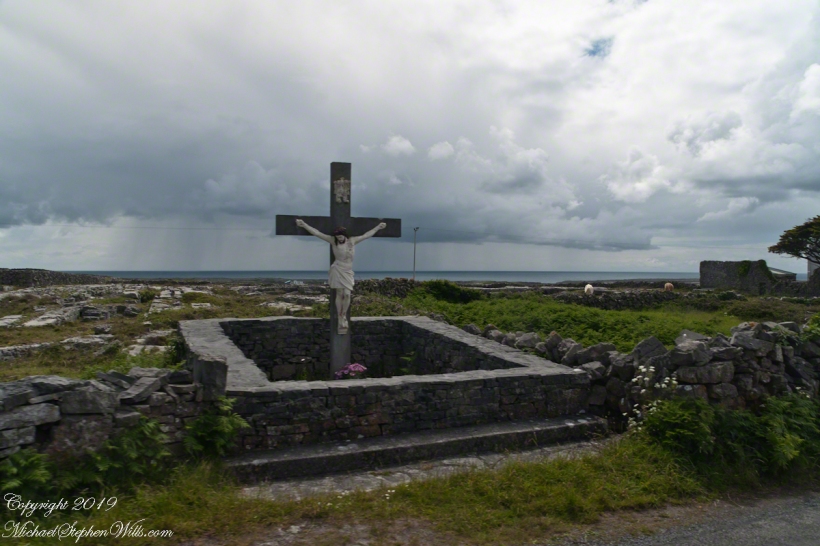
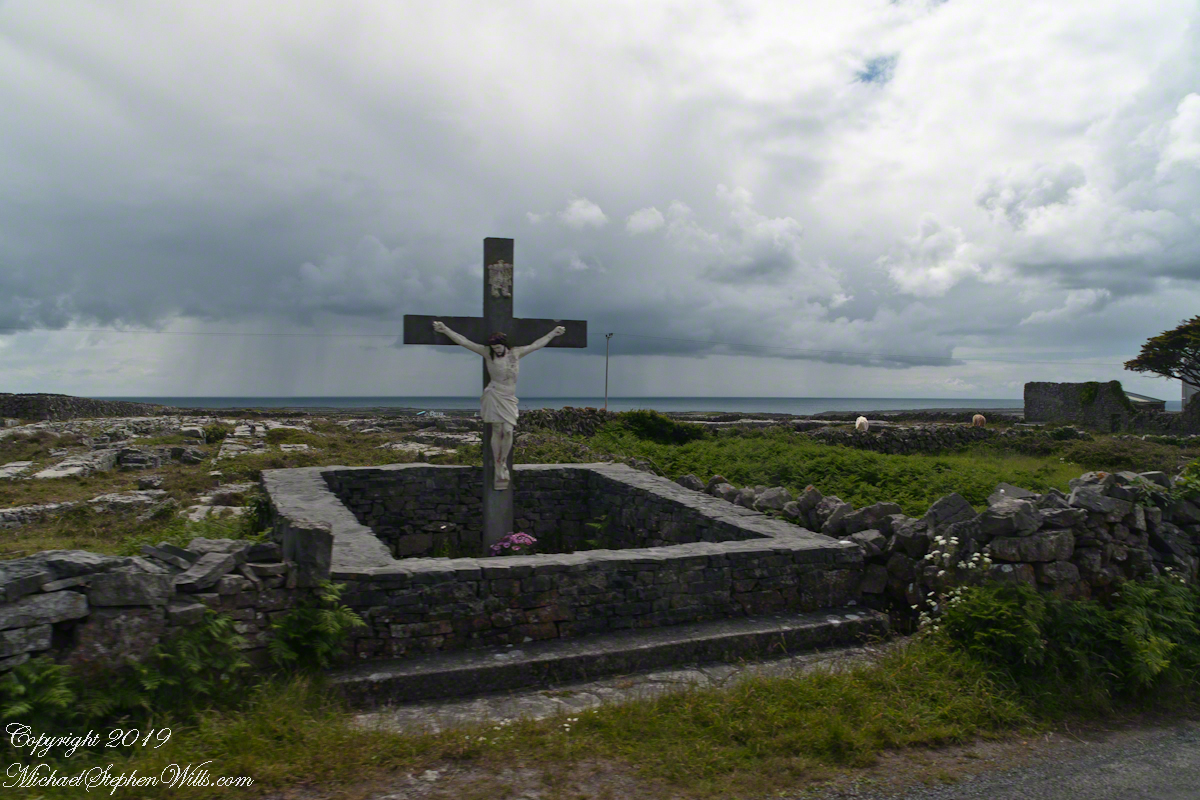
A roadside shrine on Cottage Road, Inishmore. The faith brought by the saints has deep roots here.
A large crucifix set with wet stone walls with cut flowers. The walls are the native limestone.
It is a spring (early June) afternoon and there are fern and wildflowers. The white flowers are Greater Burnet saxifrage (Scientific Name: Pimpinella major).
The existing dry stone wall was interrupted by the shrine. In the distance are dry stone walls around fields, a stone shed, feeding horses and the sea, being Galway Bay, storm clouds with distant rain.
Aran Islands, County Galway, Ireland.
Roadside Shrine and Island Landscape, Inishmore, Aran Islands, County Galway, Ireland
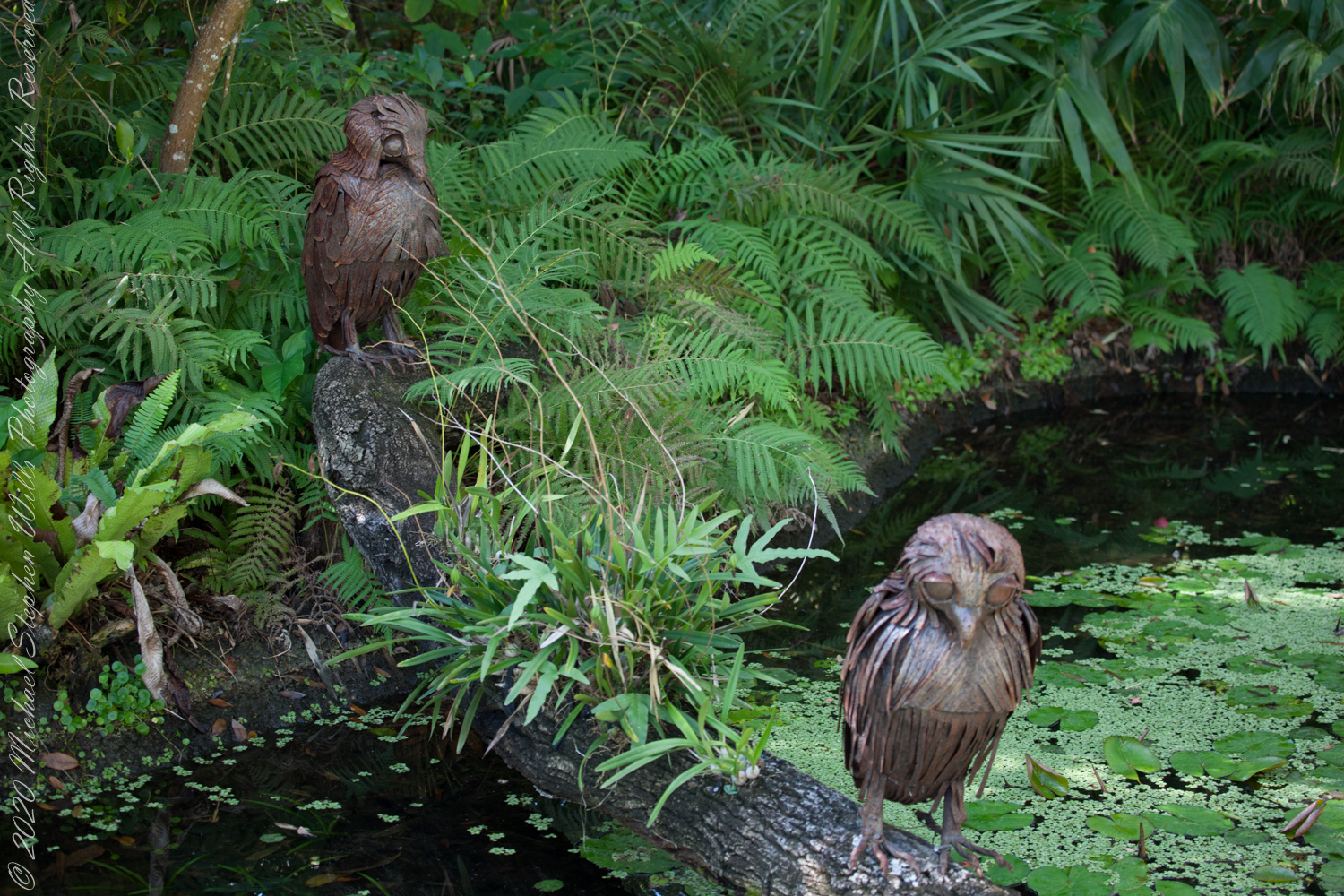
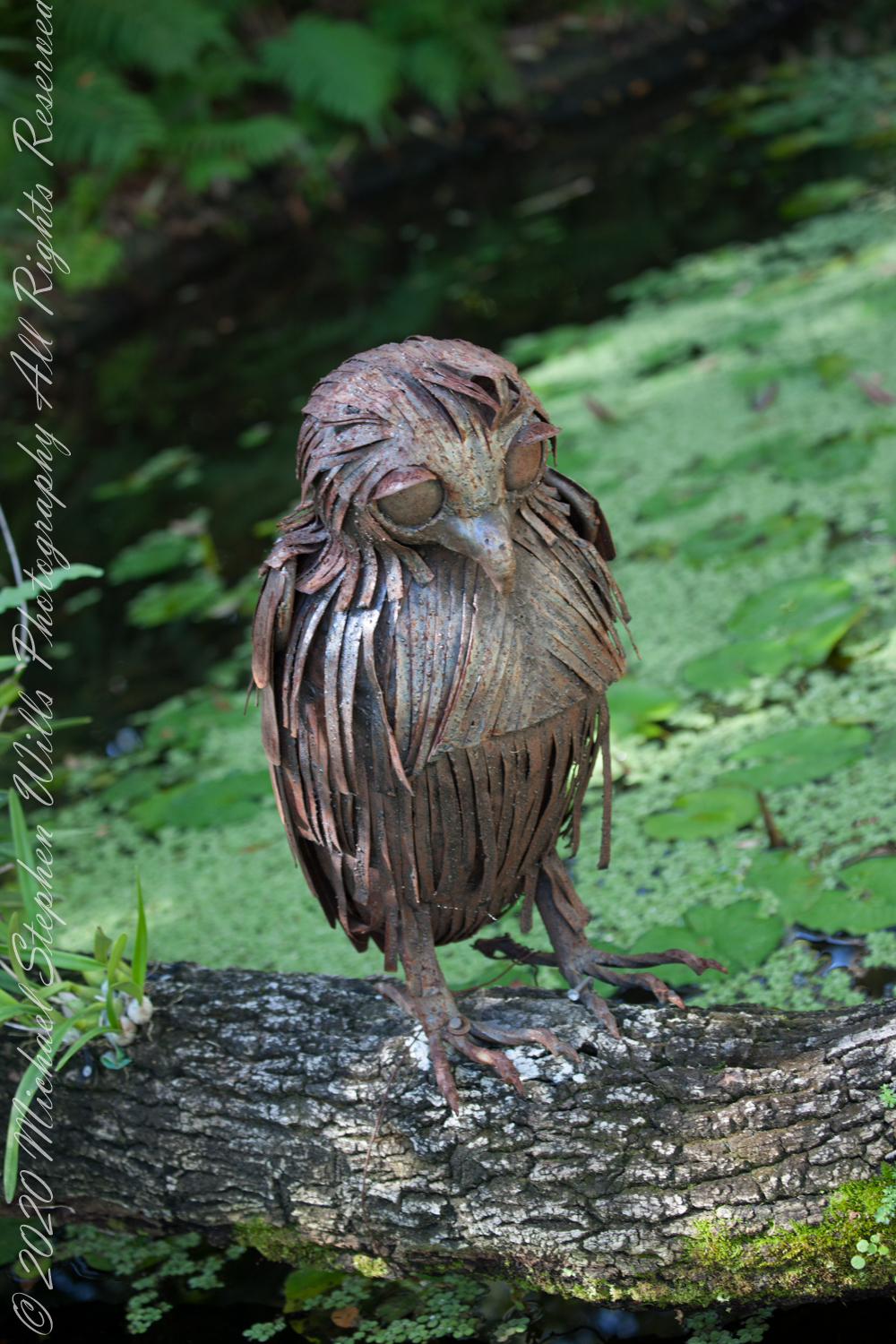
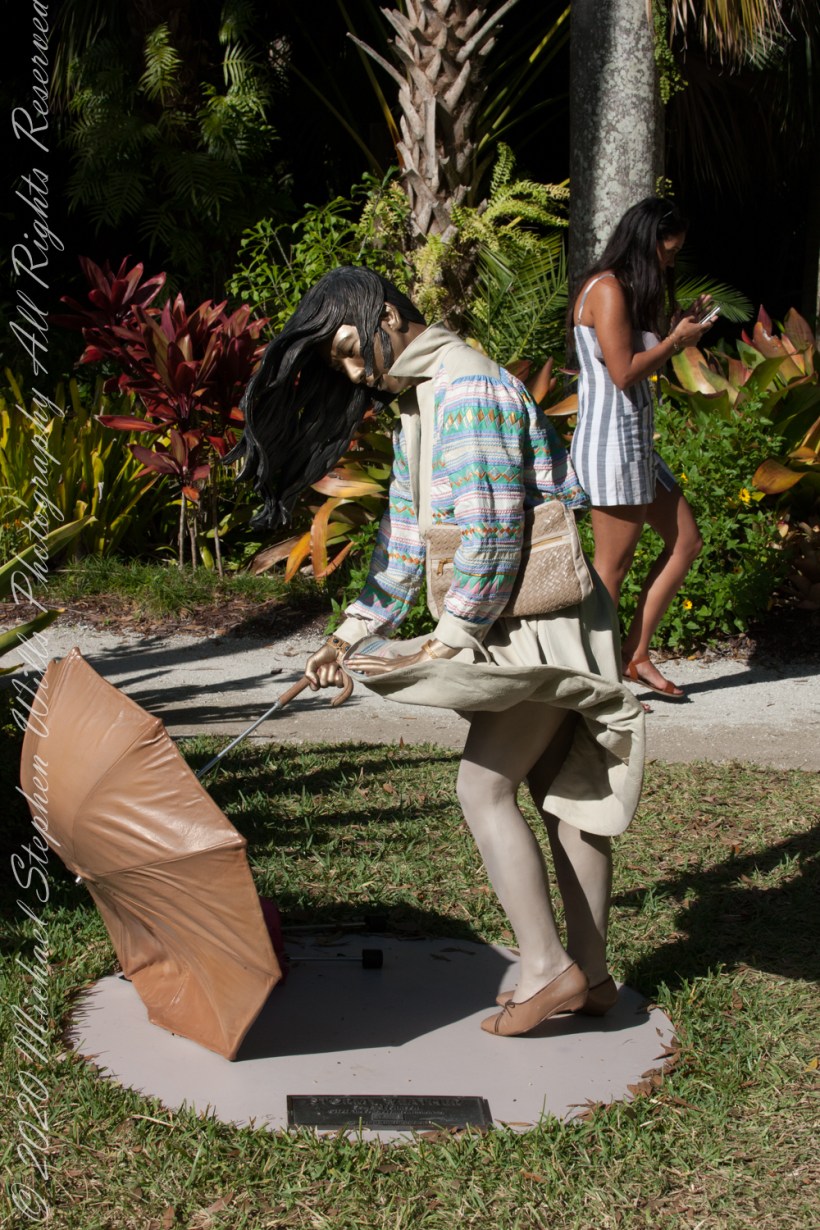
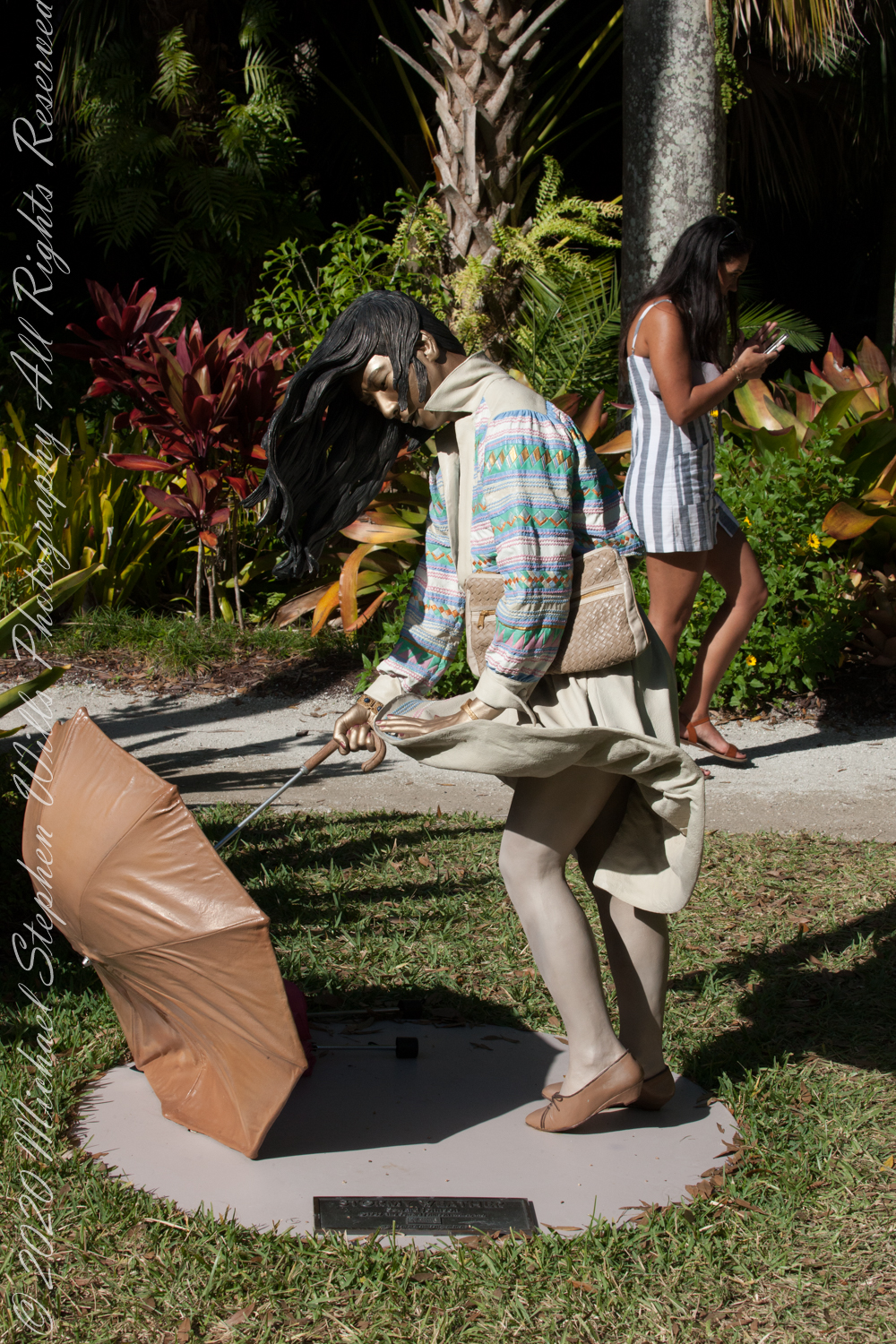
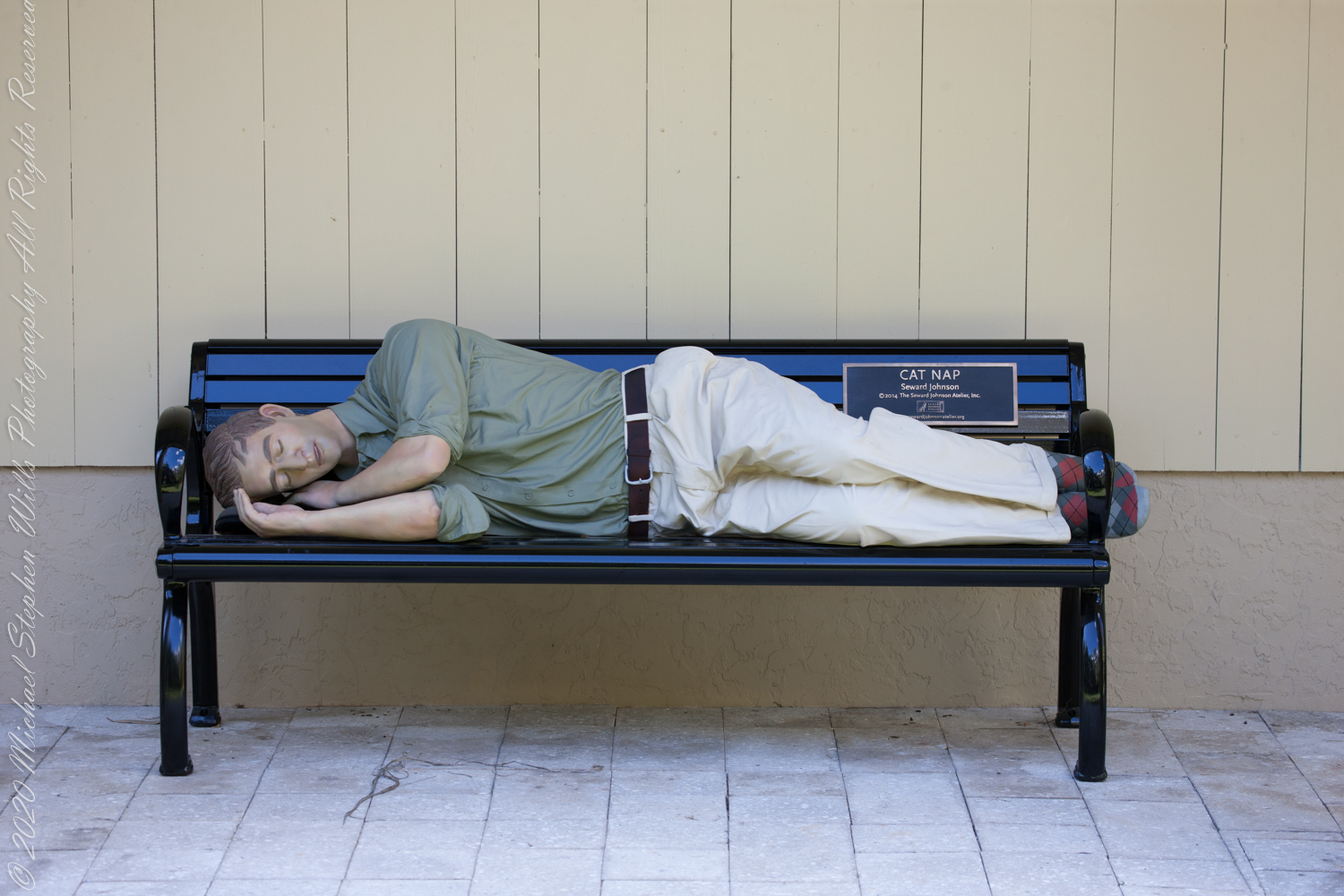
My final Seward Johnson sculpture posting opens with a piece of uncertain authorship, I just know it was not installed for our second 2020 visit just before COVID-19 hit.
“untitled”
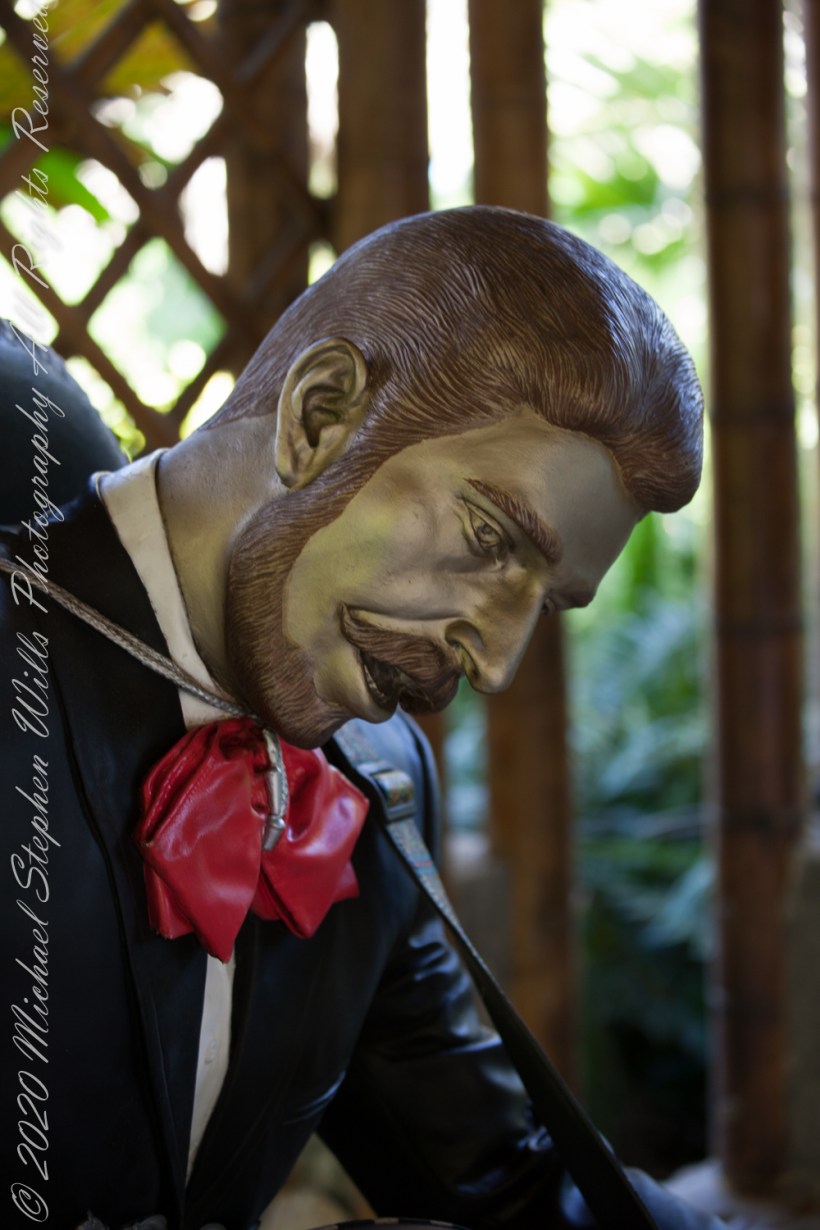
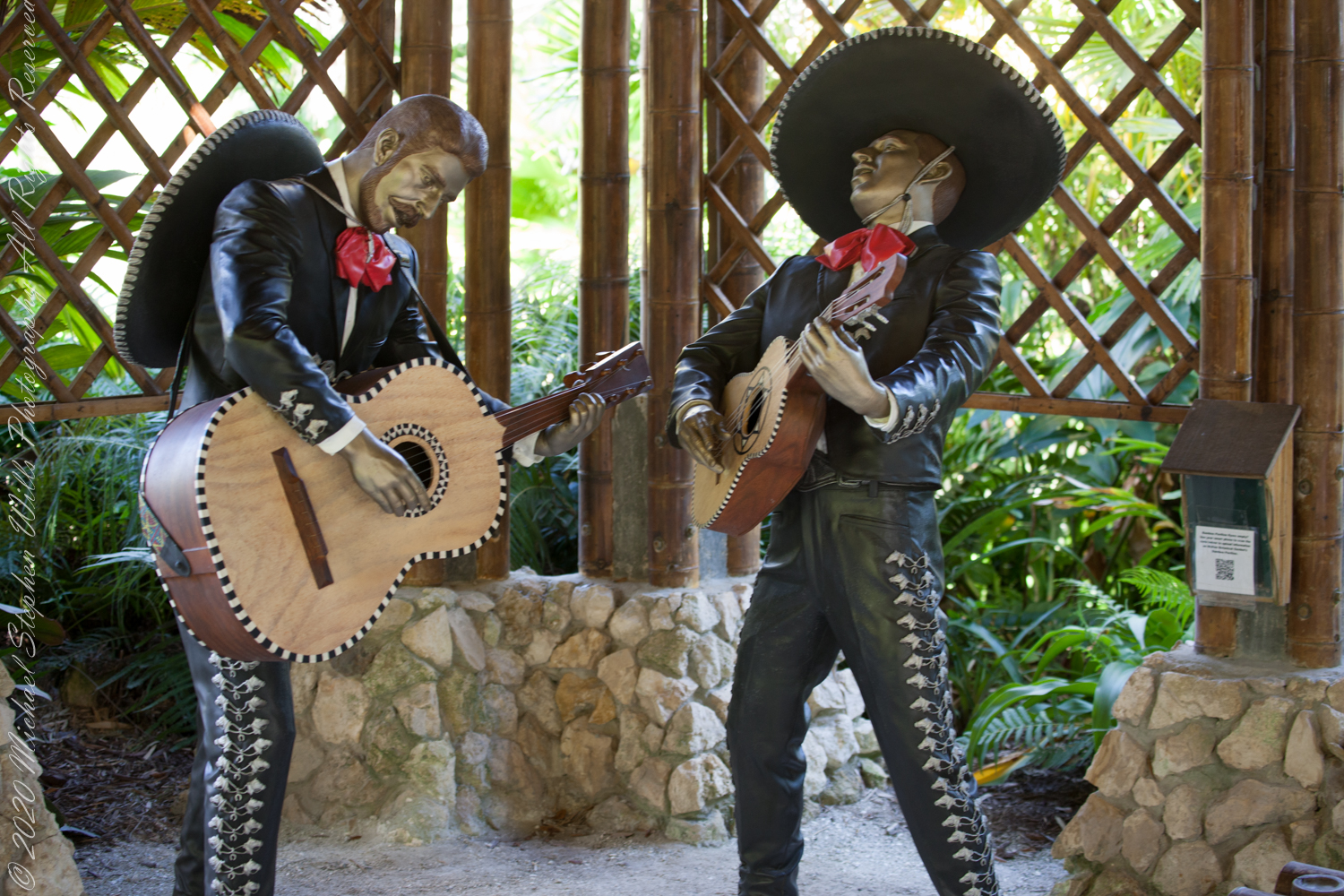
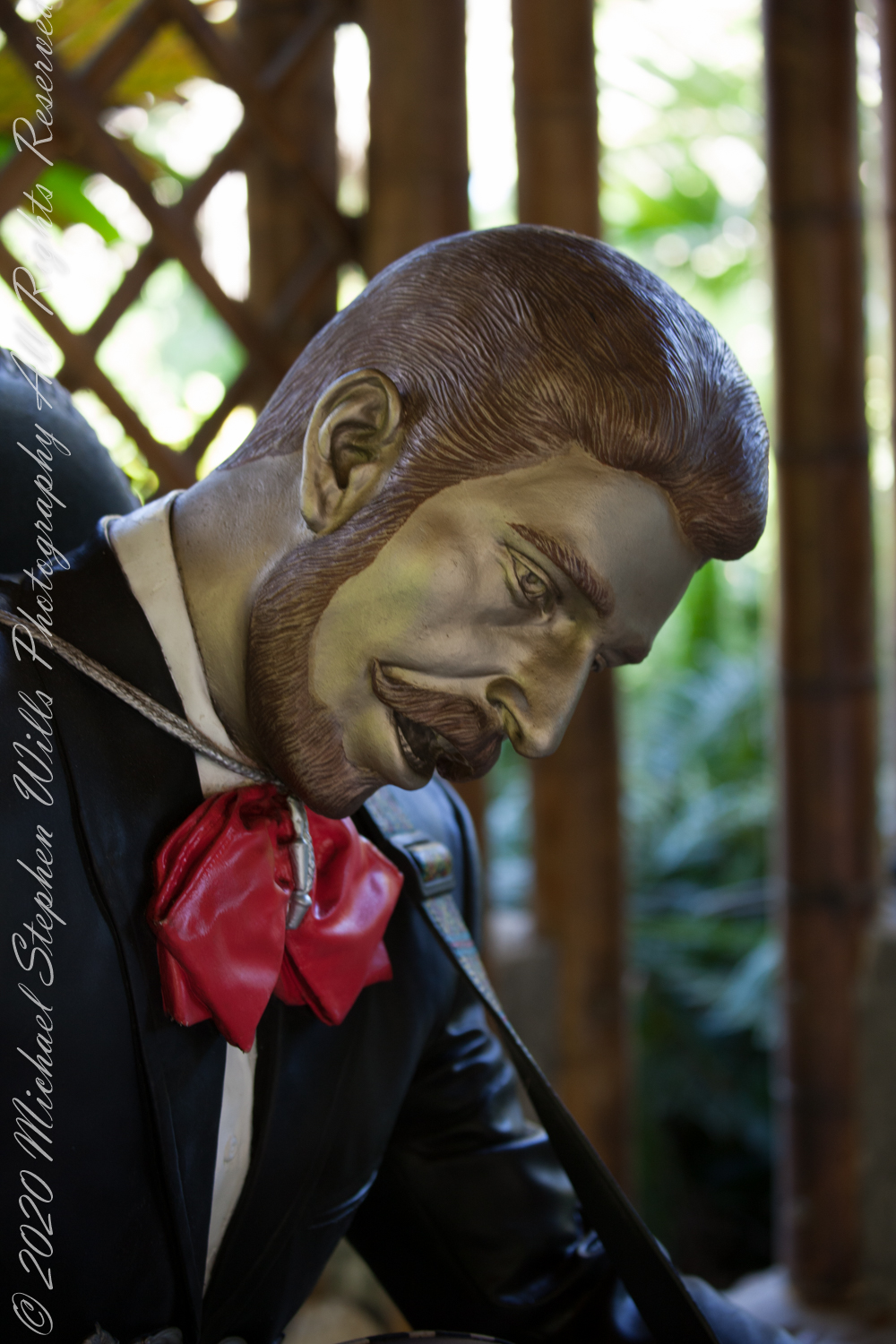
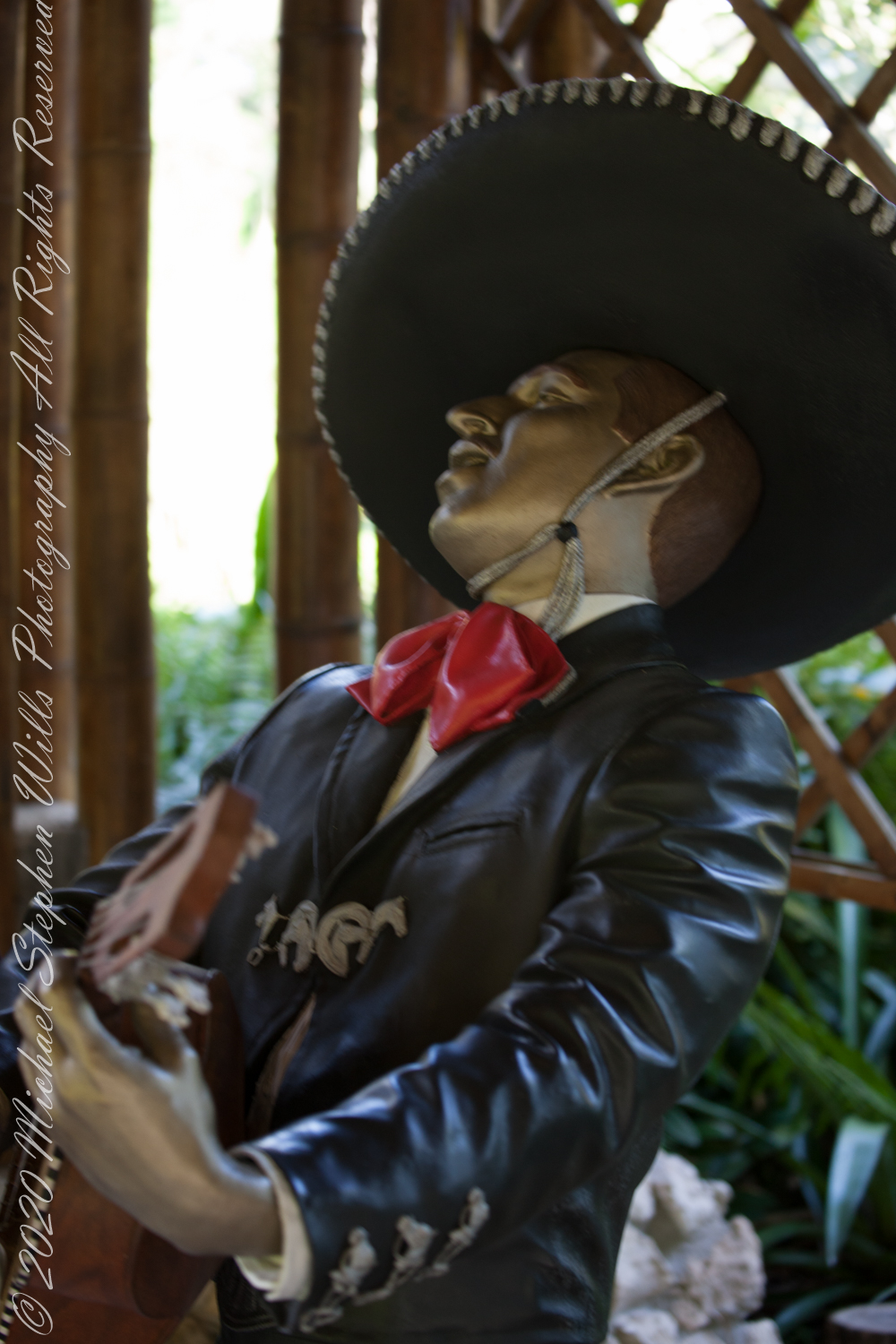
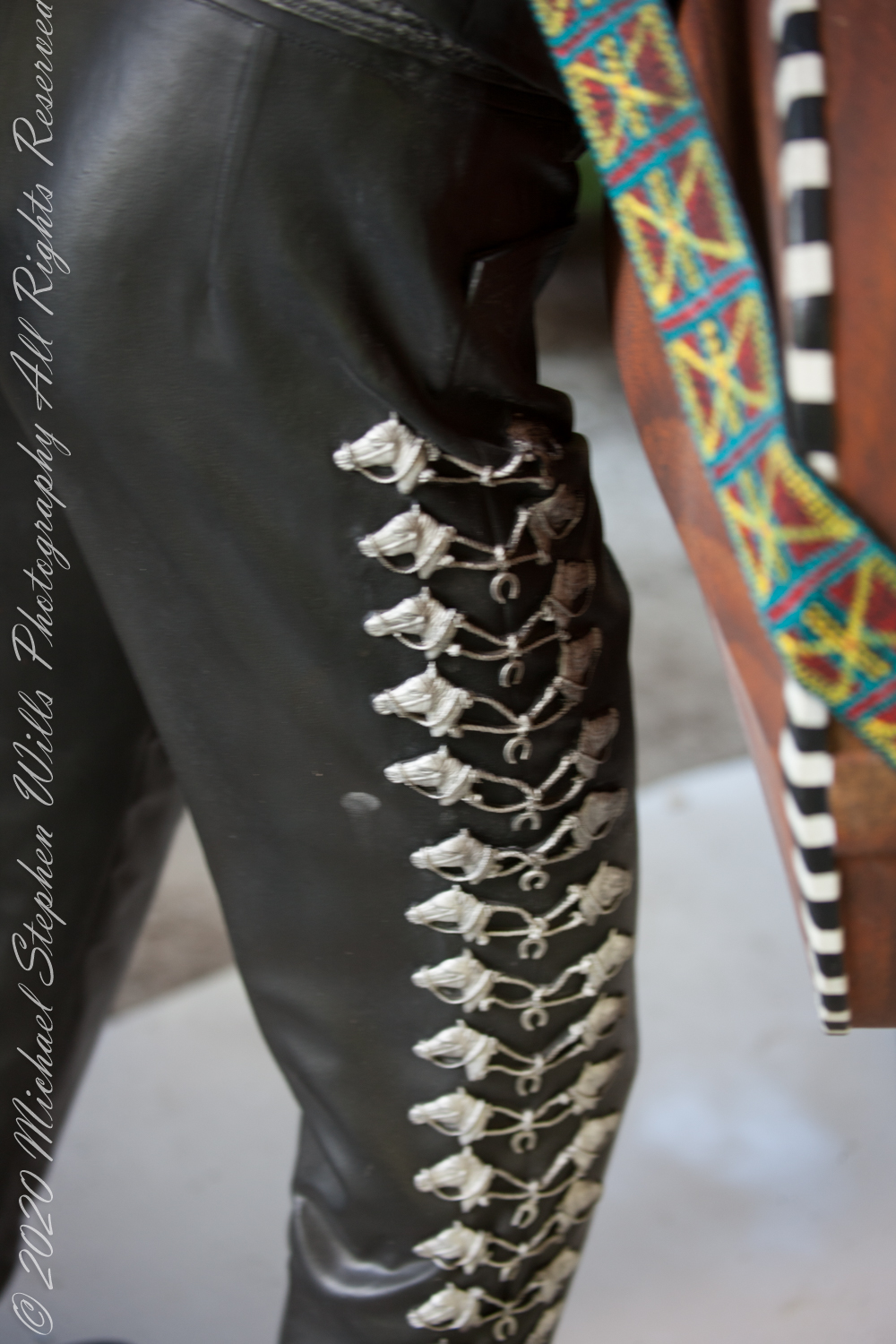
“Los Mariachis”
Here we have a dynamic group, I can almost hear the music.
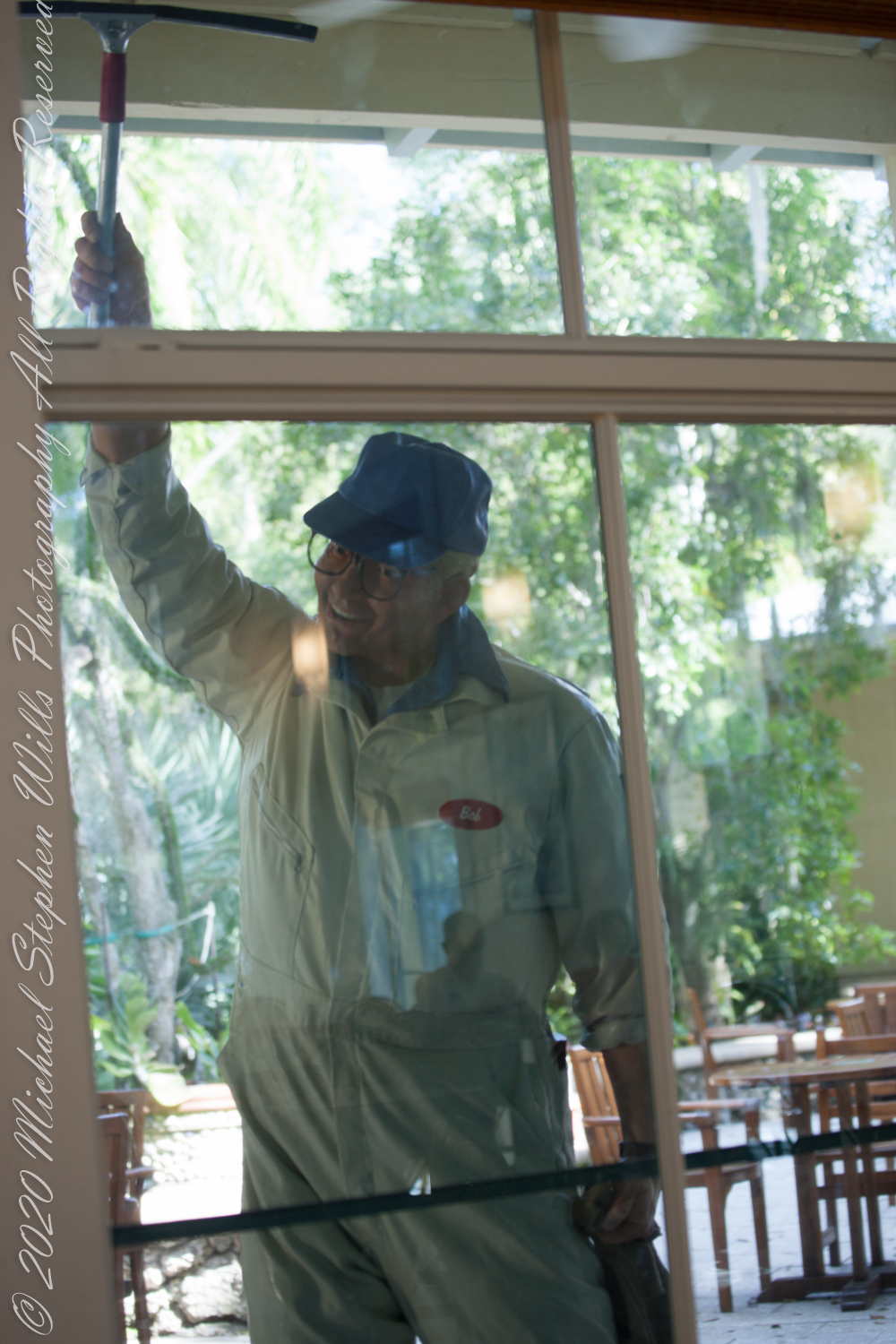
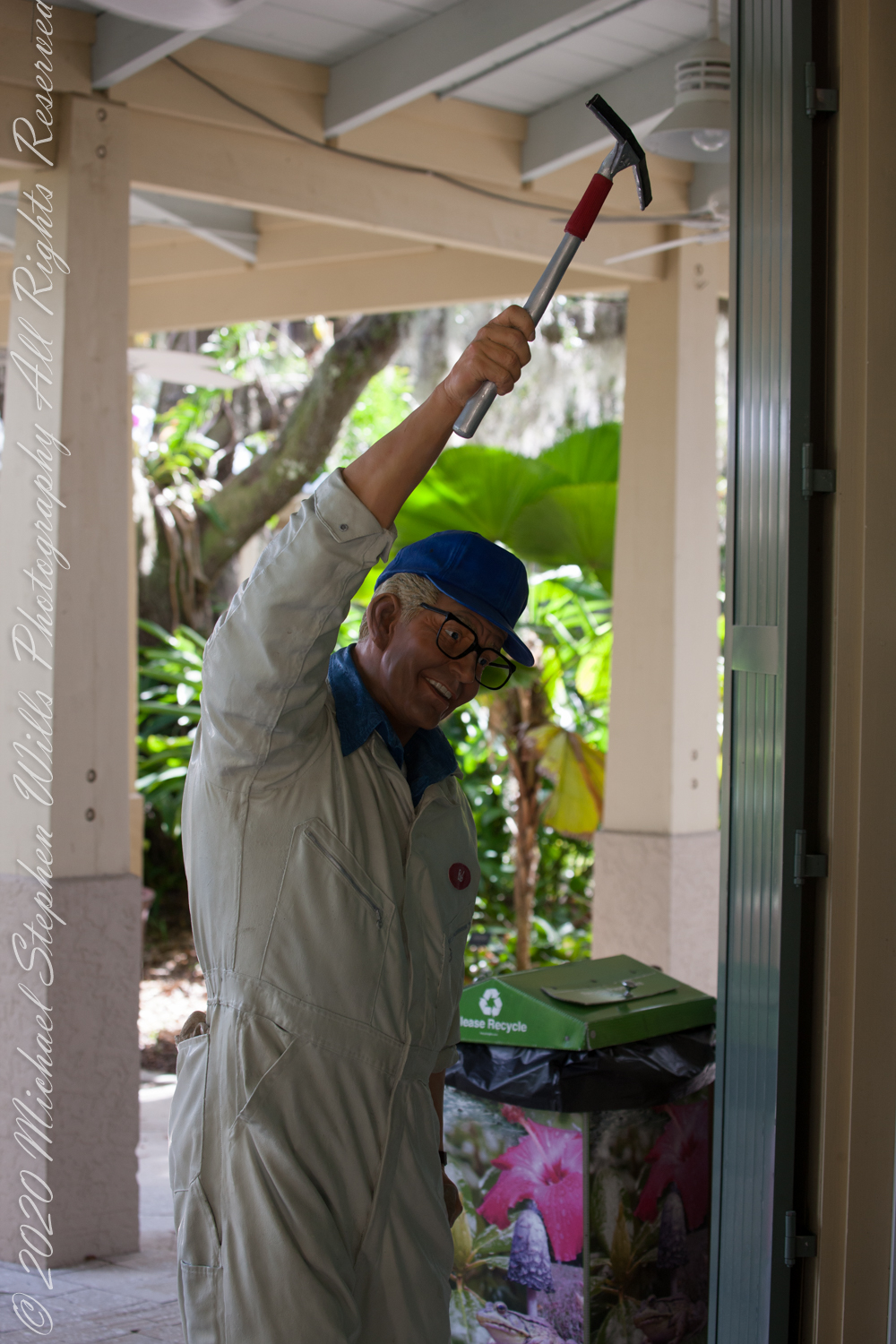
This set starts off with a nice guy at work. He was positioned on the large cafe windows. We met the grandchildren around lunch time, so we caught up around the food.



 Michael Stephen Wills Photography