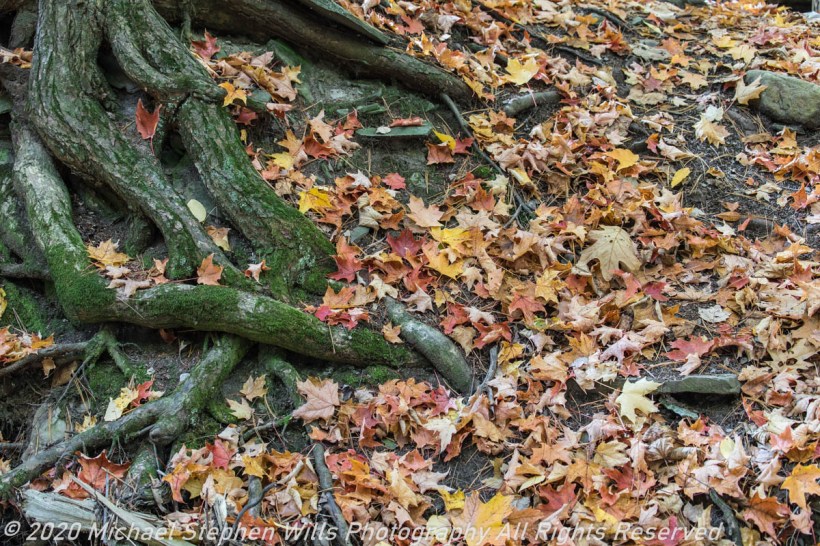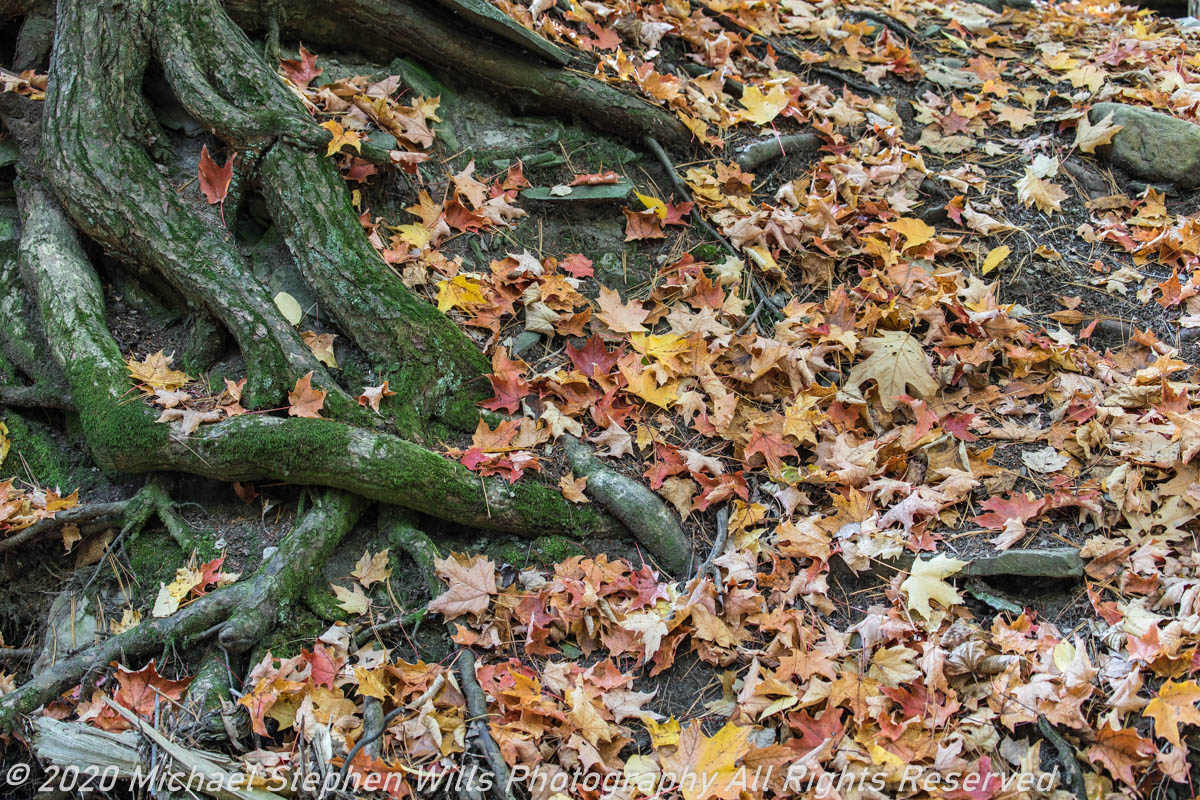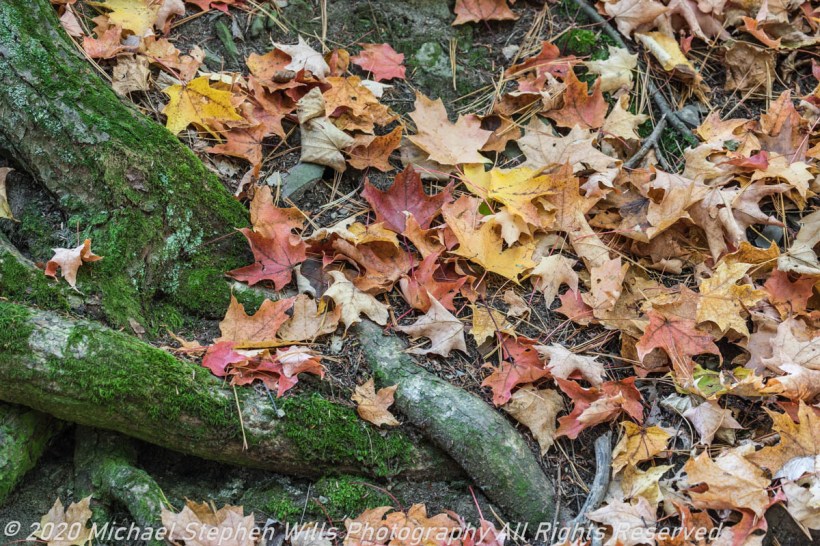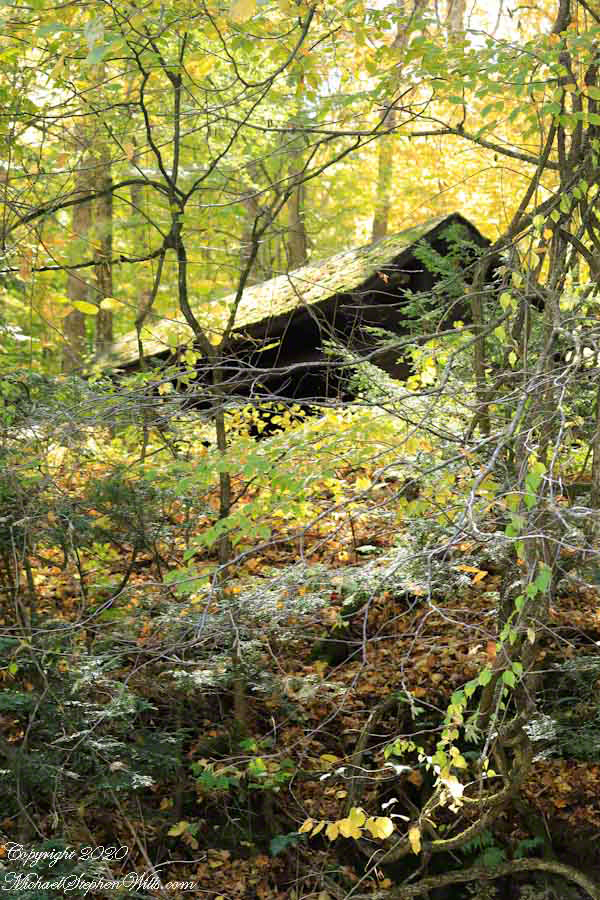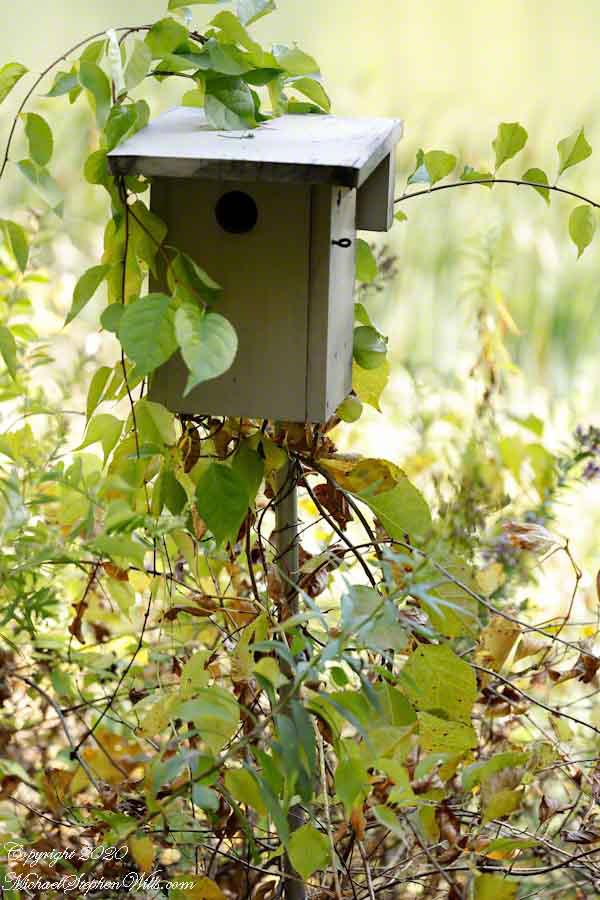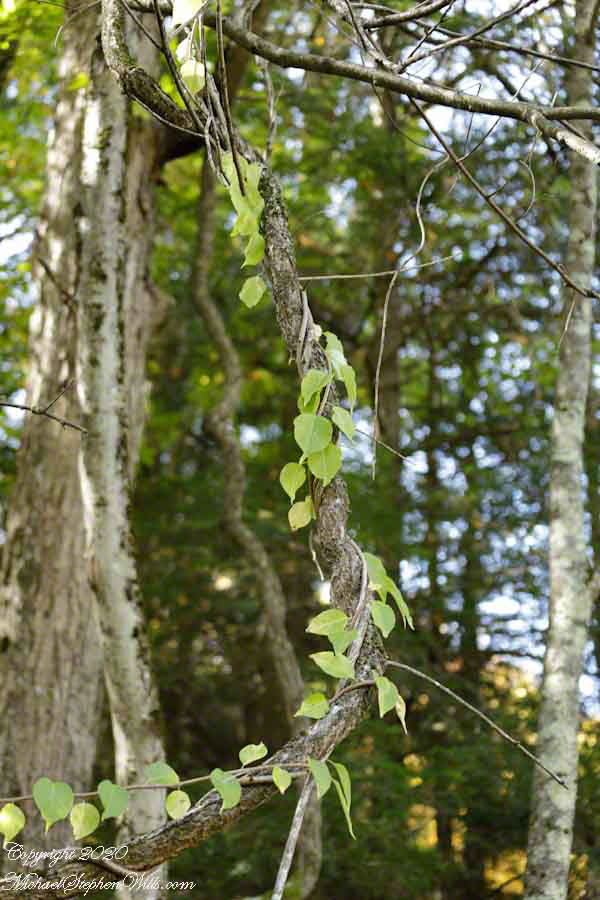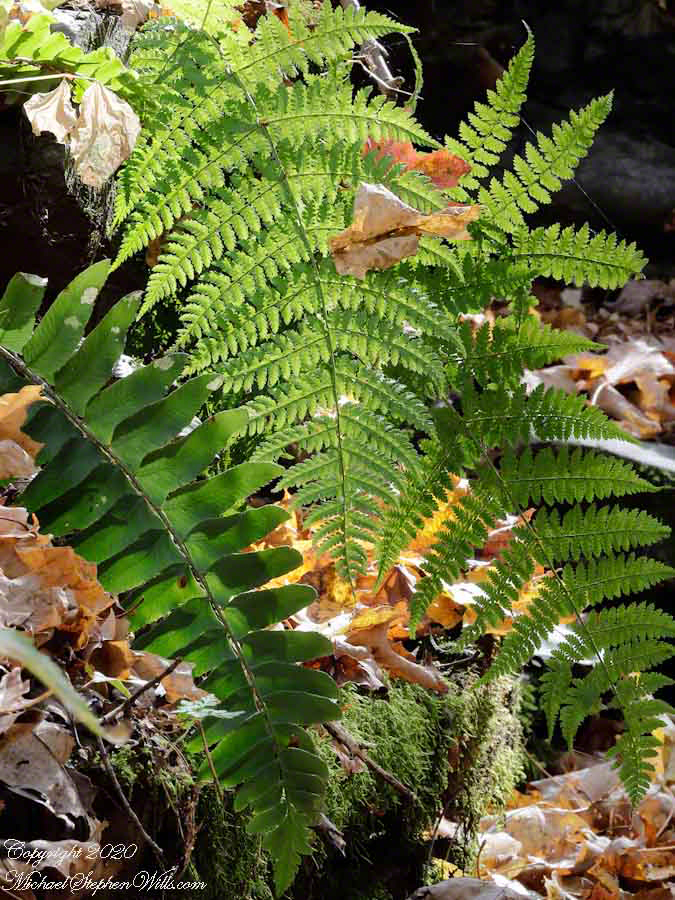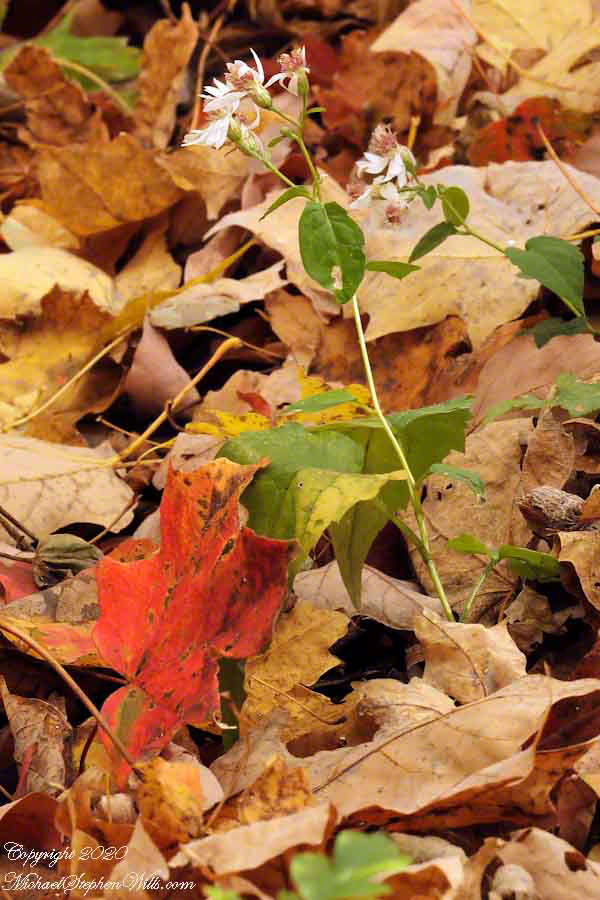
more Jennings Pond IV

Still life and stillness

I described Jennings Pond to Pam and we returned together. Here is a photographic essay from that day, one of a series.

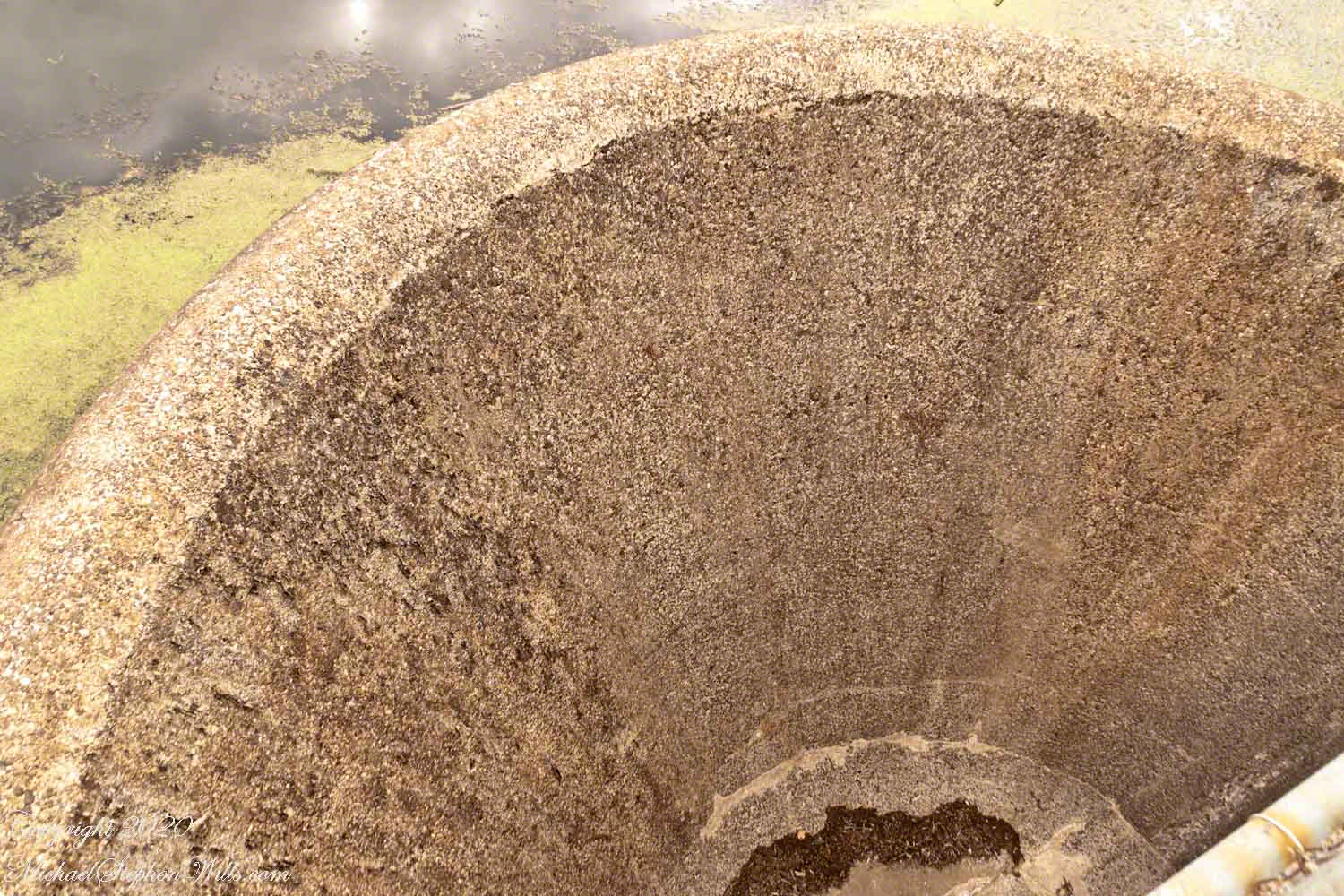
The first image is the small concrete dam, taken from the footbridge over the pond outlet, source for Buttermilk Creek.

Copyright 2023 Michael Stephen Wills All Rights Reserved

Newgrange VIII

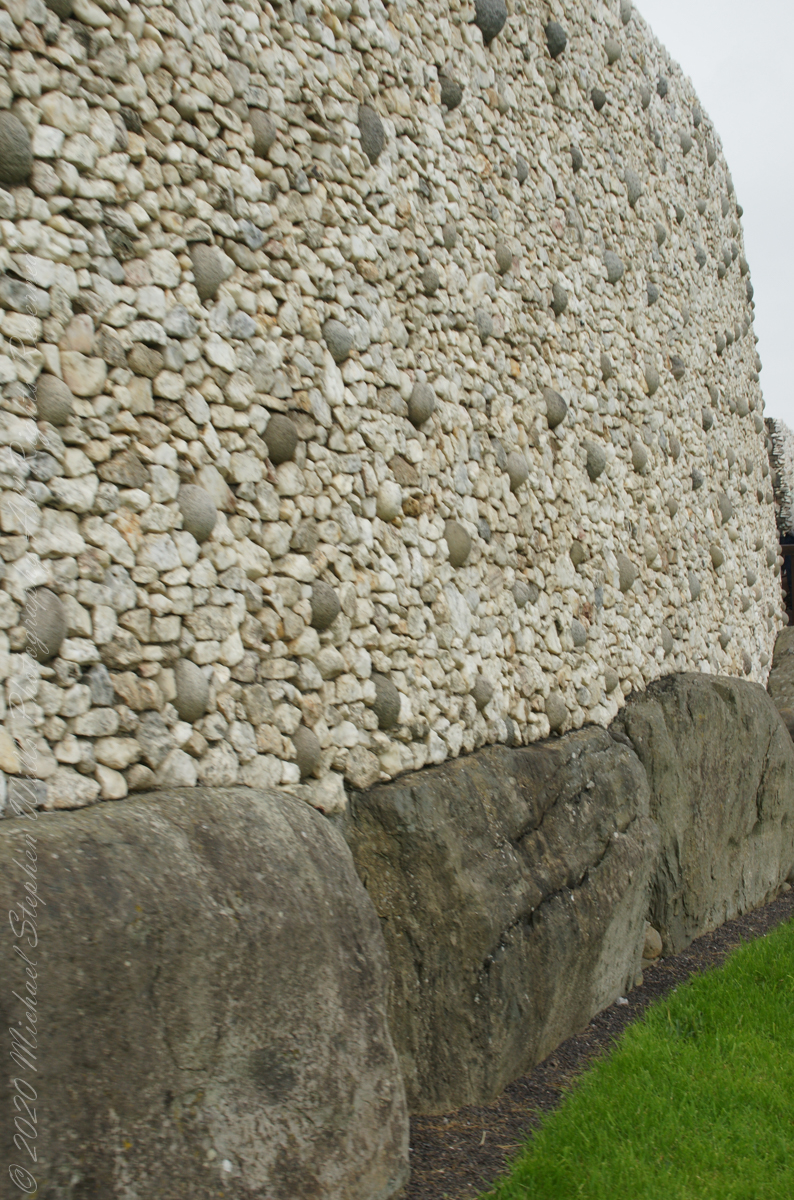
The Newgrange facade and kerbstones consists of stones from various locations, believed to be transported by sea and river.

The Newgrange façade and entrance of today is a creation from the large quantity of small stones unearthed and conserved during excavation given form by a steel-reinforced concrete retention wall. 

The brilliant white quartz cobblestones were collected from the Wicklow Mountains, 31 miles to the south.  Our guide called them “sunstones” for the way they reflect sunlight. In the following photograph is white quartz, the same excavated 1967-1975 from the Newgrange site and incorporated into the facade, I collected from “Miners Way” along R756 (above Glendalough).

You can also see in these photographs dark rounded granodiorite cobbles from the Mourne Mountains, 31 miles to the north.  Dark gabbro cobbles from the Cooley Mountains and banded siltstone from the shore at Carlingford Lough both locations on the Cooley Peninsula where my mother’s family still has farms.

The stones may have been transported to Newgrange by sea and up the River Boyne by fastening them to the underside of boats at low tide. None of the structural slabs were quarried, for they show signs of having been weathered naturally, so they must have been collected and then transported, largely uphill, to the Newgrange site. The granite basins found inside the chambers also came from the Mournes.

Geological analysis indicates that the thousands of pebbles that make up the cairn, which together would have weighed about 200,000 tons, came from the nearby river terraces of the Boyne. There is a large pond in this area that is believed to be the site quarried for the pebbles by the builders of Newgrange.

Most of the 547 slabs that make up the inner passage, chambers, and the outer kerbstones are greywacke. Some or all of them may have been brought from sites either 3 miles away or from the rocky beach at Clogherhead, County Louth, about 12 miles to the northeast.

Click Me for the first post of this series.

Copyright 2023 Michael Stephen Wills All Rights Reserved

Treman Early Autumn Walk XIV

The post discusses the Hepatica acutiloba plant, highlighting its characteristics, growth, historical medicinal use, and its natural habitat in central eastern North America. It also includes an observation made in Robert H. Treman Park.

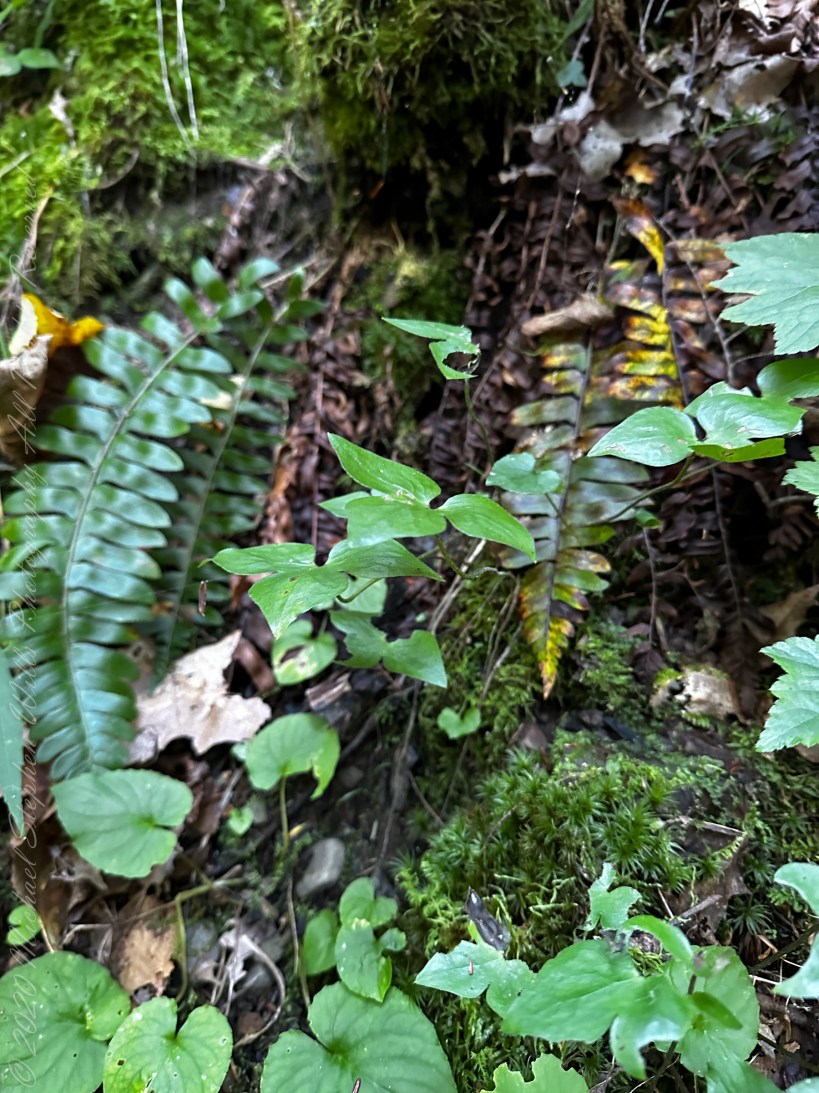
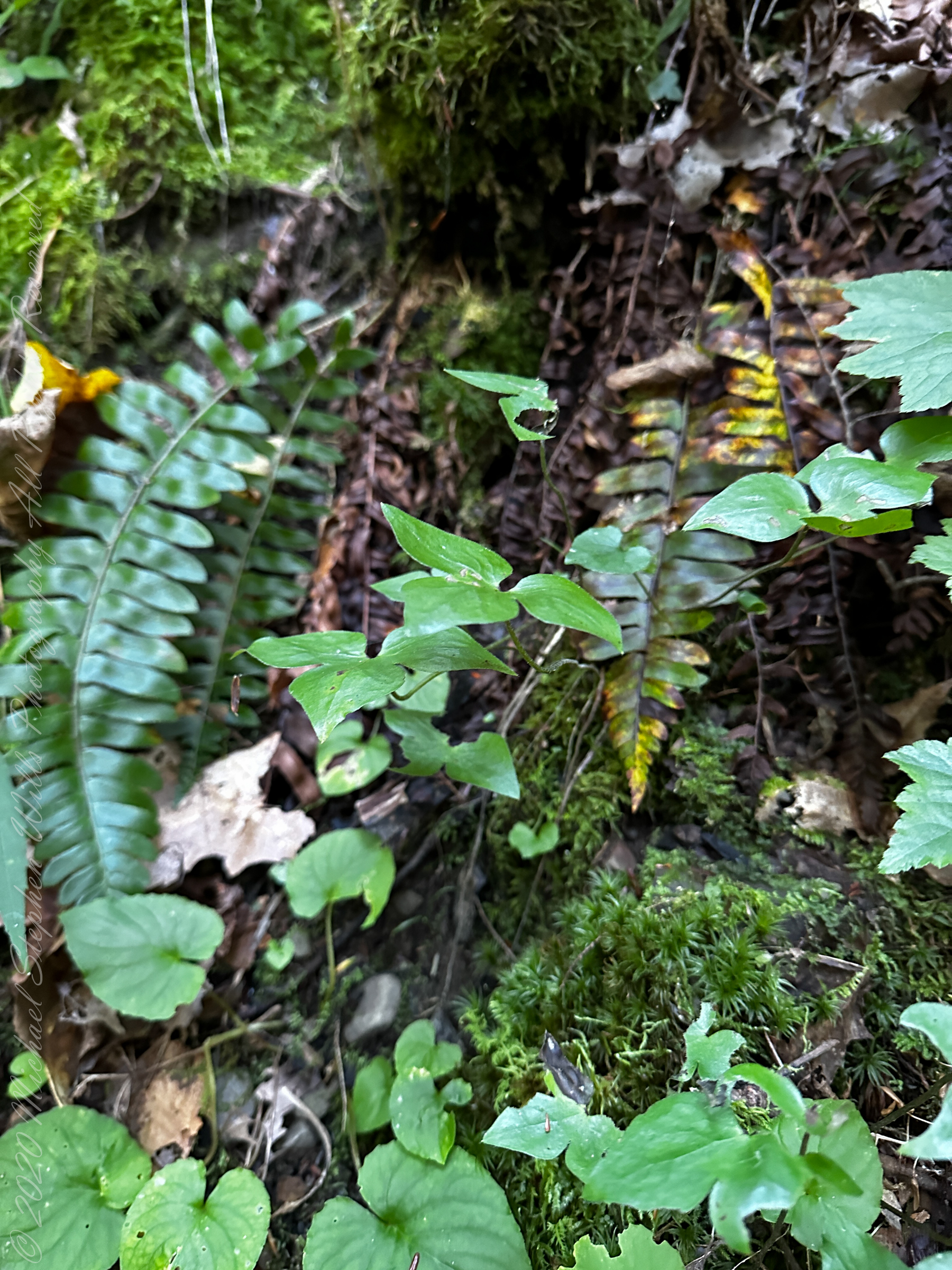
These characteristic leaves are Hepatica plants growing on the sun dappled southern rim of Robert H. Treman Park captured on a bright late September morning.

“Hepatica acutiloba, the sharp-lobed hepatica, is a herbaceous flowering plant in the buttercup family Ranunculaceae. It is sometimes considered part of the genus Anemone, as Anemone acutiloba, A. hepatica, or A. nobilis. Also generally known as Liverleaf and Liverwort.”


“The word hepatica derives from the Greek ἡπατικός hēpatikós, from ἧπαρ hêpar ‘liver’, because its three-lobed leaf was thought to resemble the human liver.”


“Each clump-forming plant grows 5 to 19 cm (2.0 to 7.5 in) tall, flowering in the early to mid spring. The flowers are greenish-white, white, purple or pinkish in color, with a rounded shape. After flowering the fruits are produced in small, rounded columned heads, on pedicels 1 to 4 mm long. When the fruits, called achenes, are ripe they are ovoid in shape, 3.5–4.7 mm long and 1.3–1.9 mm wide, slightly winged and tend to lack a beak.”

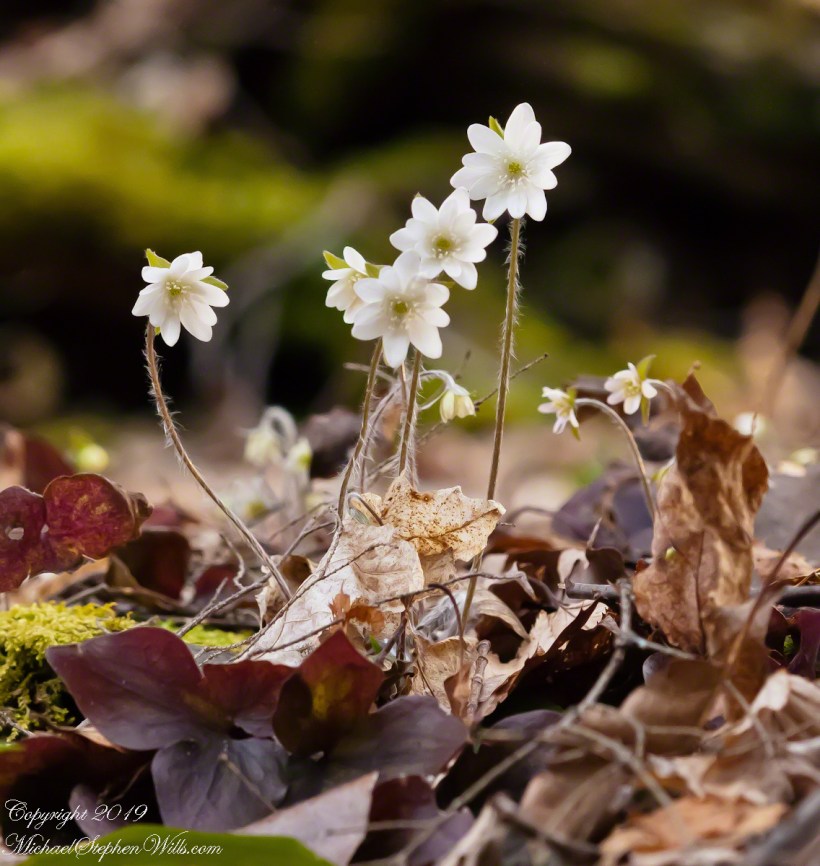
Hepatica Flowers in early spring on the Rim Trail

“Hepatica acutiloba is native to central eastern North America where it can be found growing in deciduous open woods, most often in calcareous soils. Butterflies, moths, bees, flies and beetles are known pollinators. The leaves are basal, leathery, and usually three-lobed, remaining over winter.”

“Hepatica was once used as a medicinal herb. Owing to the doctrine of signatures, the plant was once thought to be an effective treatment for liver disorders. Although poisonous in large doses, the leaves and flowers may be used as an astringent, as a demulcent for slow-healing injuries, and as a diuretic.”

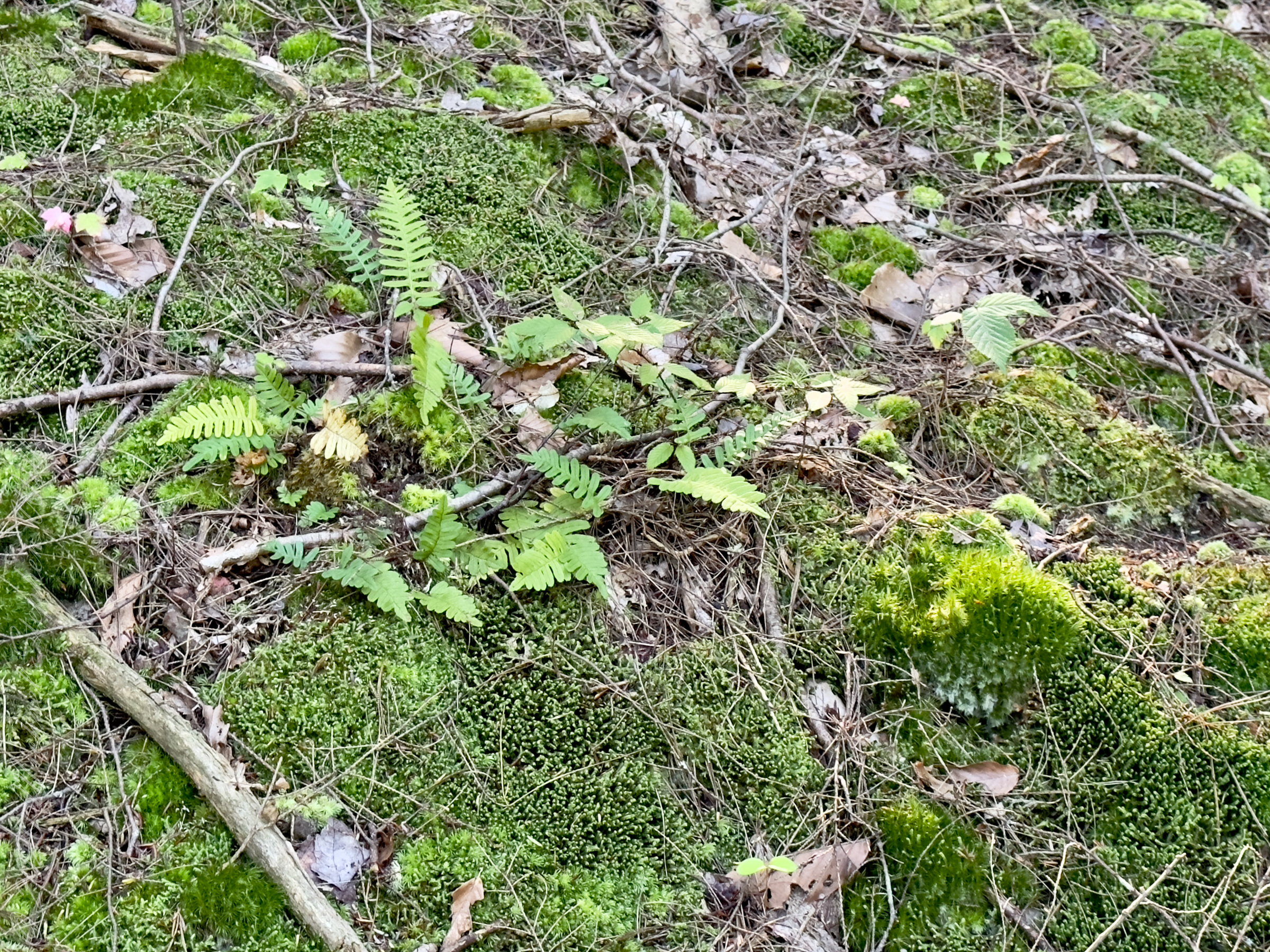
Ferns and Mosses growing beneath Red Pines

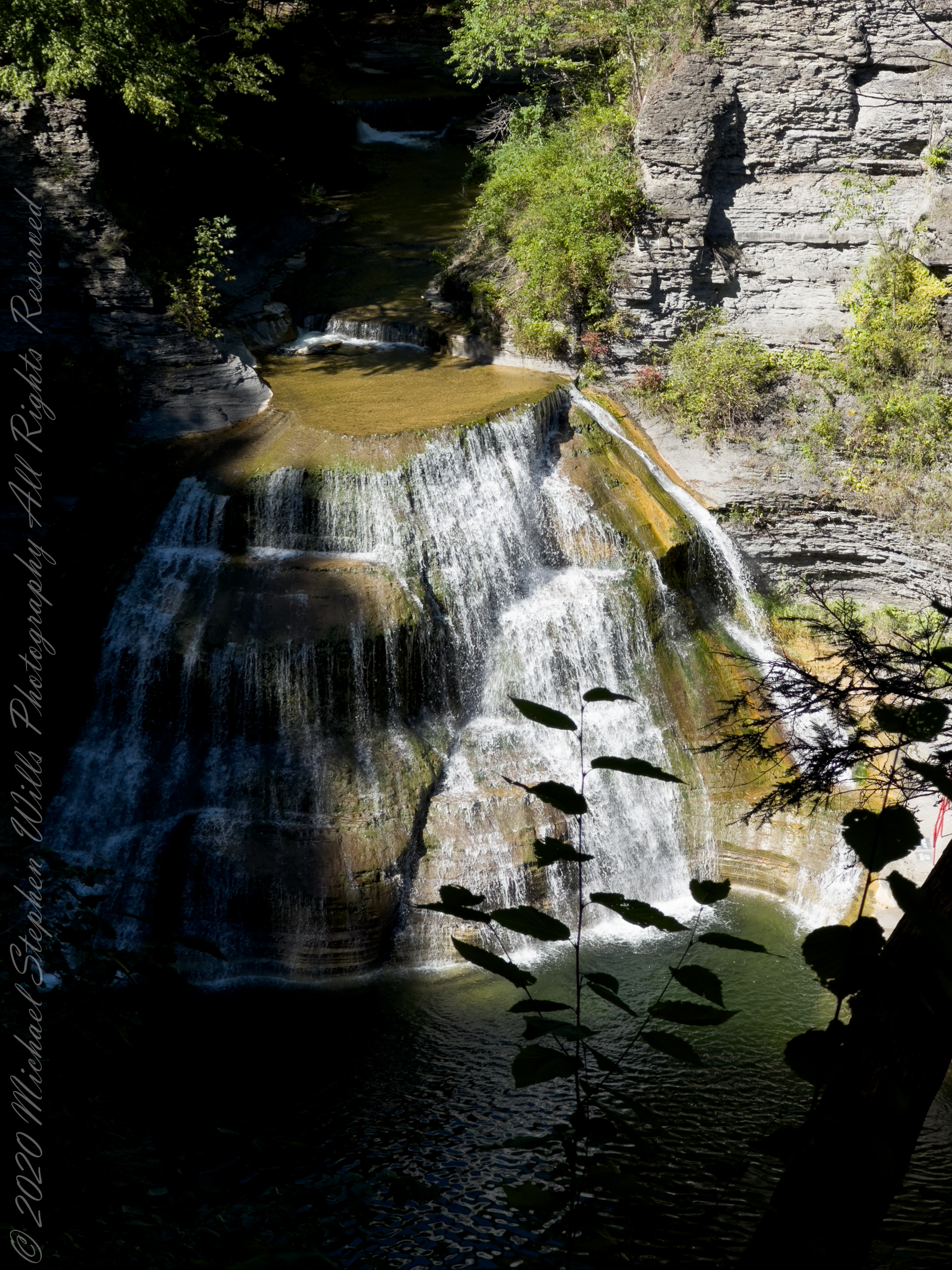
View of the lower falls and swimming hole from the Rim Trail

Click Me another post featuring Hepatica flowers

References
–text in italics and quotes is from Wikipedia, “Hepatica” and “Hepatica acutiloba.”
–“The Botanical Garden Vol II Perennials and Annuals,” Roger Phillips and Martyn Rix, Firefly Books, 2002.

Copyright 2023 All Rights Reserved Michael Stephen Wills

Treman Early Autumn Walk XII

Assistance sought for identification of a plant discovered in Robert H. Treman park, Enfield Gorge.

Can anyone identify this plant found growing on the south rim of Enfield Gorge within the Robert H. Treman park?

Click Me for the first post in this series.

Copyright 2023 All Rights Reserved Michael Stephen Wills

Treman Early Autumn Walk XI

Thomas Edison and Henry Ford innovatively used goldenrod to produce rubber, potentially counteracting rubber shortages.

Where the Rim Trail descends to an ending on the Enfield Gorge floor a perennial patch of sunlight promotes an extravagant woodland growth of Zigzag goldenrod.

Solidago flexicaulis, AKA Broadleaf Goldenrod and Ziazag Goldenrod

“Inventor Thomas Edison experimented with goldenrod to produce rubber, which it contains naturally. Edison created a fertilization and cultivation process to maximize the rubber content in each plant. His experiments produced a 12 ft-tall (3.7 m) plant that yielded as much as 12% rubber. The tires on the Model T given to him by his friend Henry Ford were made from goldenrod. Like George Washington Carver, Henry Ford was deeply interested in the regenerative properties of soil and the potential of alternative crops such as peanuts and soybeans to produce plastics, paint, fuel and other products.  Ford had long believed that the world would eventually need a substitute for gasoline and supported the production of ethanol (or grain alcohol) as an alternative fuel. In 1942, he would showcase a car with a lightweight plastic body made from soybeans. Ford and Carver began corresponding via letter in 1934, and their mutual admiration deepened after George Washington Carver made a visit to Michigan in 1937.”

“By the time World War II began, Ford had made repeated journeys to Tuskegee to convince George Washington Carver to come to Dearborn and help him develop a synthetic rubber to help compensate for wartime rubber shortages. Carver arrived on July 19, 1942, and set up a laboratory in an old water works building in Dearborn. He and Ford experimented with different crops, including sweet potatoes and dandelions, eventually devising a way to make the rubber substitute from goldenrod, a plant weed commercially viable. Carver died in January 1943, Ford in April 1947, but the relationship between their two institutions continued to flourish: As recently as the late 1990s, Ford awarded grants of $4 million over two years to the George Washington Carver School at Tuskegee.”

“Extensive process development was conducted during World War II to commercialize goldenrod as a source of rubber. The rubber is only contained in the leaves, not the stems or blooms. Typical rubber content of the leaves is 7%. The resulting rubber is of low molecular weight, resulting in an excessively tacky compound with poor tensile properties.”

References: text in italics and quotes is from the Wikipedia, “Solidago.”

Copyright 2023 All Rights Reserved Michael Stephen Wills

Treman Early Autumn Walk X

The zigzag goldenrod is a crucial plant to North American pollinator biodiversity, hosting diverse insects.

After crossing the bridge at Swan Road I turned back down the gorge on the Rim Trail, climbing above the gorge where these interesting woodland goldenrod thrive.

“Solidago flexicaulis, the broadleaved goldenrod, or zigzag goldenrod,is a North American species of herbaceous perennial plants in the family Asteraceae. It is native to the eastern and central parts of the United States and Canada, from Nova Scotia west to Ontario and the Dakotas, and south as far as Alabama and Louisiana. It grows in a variety of habitats including mesic upland forests, well drained floodplain forests, seepage swamp hummocks, and rocky woodlands.”

“The plant is called the “zigzag goldenrod” because the thin, wiry stem zigs and zags back and forth, changing direction at each node (leaf attachment point). The plant bears sometimes as many as 250 small yellow flower heads, some at the end of the stem, others in the axils of the leaves. The leaves are very broad, almost round, but with an elongated tip at the end and large teeth along the edges.”

“Goldenrod is considered a keystone species and has been called the single most important plant for North American pollinator biodiversity. Goldenrod species are used as a food source by the larvae of many Lepidoptera species. As many as 104 species of butterflies and moths use it as a host plant for their larvae, and 42 species of bees are goldenrod specialists, visiting only goldenrod for food. Some lepidopteran larvae bore into plant tissues and form a bulbous tissue mass called a gall around it, upon which the larva then feeds. Various parasitoid wasps find these galls and lay eggs in the larvae, penetrating the bulb with their ovipositors. Woodpeckers are known to peck open the galls and eat the insects in the center.”

“Solidago flexicaulis is host to the following insect induced galls: Asteromyia modesta, a species of gall midges in the family Cecidomyiidae. Gnorimoschema gallaesolidaginis also called the solidago gall moth, goldenrod gall moth or goldenrod gallmaker, is a moth in the family Gelechiidae.”

References: text in italics and quotes is from the Wikipedia, “Solidago flexicaulis,” “Solidago,” “Asteromyia modesta,” and “Gnorimoschema gallaesolidaginis.”

Copyright 2023 All Rights Reserved Michael Stephen Wills

Still Blooming

Though it is sometimes referred to as a night-blooming cereus, it is not closely related to any of the species in the tribe Cereeae

It was a quiet day, upping shutter speed via an increased ISO and both exposures are equally sharp.

These were captured with the Canon EOS 5D Mark IV dslr on a Manfrotto tripod.

“The flowers are nocturnal. They grow on flattened stems and are up to 30 cm (12 in) long and 17 cm (7 in) wide, and very fragrant. The principal odor components in the aroma are benzyl salicylate and methyl linoleate.[5] Pericarpels are nude, slightly angled, and green. Bracteoles are short and narrow up through ca. 10 millimetres (0.39 in) long. Receptacles are up through 20 cm long, 1 cm thick, brownish, and arching. The outer tepals are linear, acute, 8–10 cm long, and reddish through amber. The inner tepals are whitish, oblanceolate or oblong, acuminate, up through 8–10 cm long and 2.5 centimetres (0.98 in) wide. The stamens are greenish white or white, slender and weak. The styles are greenish white, pale yellow, or white, 4 mm thick, as long as inner tepals, and with many lobes.”

“The fruits are oblong, up through 12 x 8 cm, purplish red, and angled.”

“It is known to have medicinal properties in many Asian cultures, including India, Vietnam, and Malaysia. The plant is widely used in traditional medicine to treat respiratory ailments, bleeding conditions, and is also believed to have the property of reducing pain and inflammation.”

Click me for another “Cereus” Post.

Copyright 2023 Michael Stephen Wills All Rights Reserved

Night bloomer

Though it is sometimes referred to as a night-blooming cereus, it is not closely related to any of the species in the tribe Cereeae

This set compares a deep focus exposure to a shallow focus with bokeh.

These were captured with the Canon EOS 5D Mark IV dslr on a Manfrotto tripod.

“Epiphyllum oxypetalum is an easily cultivated, fast growing Epiphyllum. Epiphyllum from Greek epi- “upon” + phullon “leaf.” Oxypetalum = with acute petals. It flowers in late spring through late summer; large specimens can produce several crops of flowers in one season. This is a widely cultivated Epiphyllum species.”

“It is known to have medicinal properties in many Asian cultures, including India, Vietnam, and Malaysia. The plant is widely used in traditional medicine to treat respiratory ailments, bleeding conditions, and is also believed to have the property of reducing pain and inflammation.”

Click me for another “Cereus” Post.

Copyright 2023 Michael Stephen Wills All Rights Reserved

Cereus not

Though it is sometimes referred to as a night-blooming cereus, it is not closely related to any of the species in the tribe Cereeae

“Epiphyllum oxypetalum, the Dutchman’s pipe cactus, princess of the night or queen of the night, is a species of cactus. It blooms nocturnally, and its flowers wilt before dawn. Though it is sometimes referred to as a night-blooming cereus, it is not closely related to any of the species in the tribe Cereeae, such as Selenicereus, that are more commonly known as night-blooming cereus. All Cereus species bloom at night and are terrestrial plants; Epiphyllum species are usually epiphytic.”

These were captured with the Canon EOS 5D Mark IV dslr on a Manfrotto tripod.

“Epiphyllum (“upon the leaf” in Greek) is a genus of epiphytic plants in the cactus family (Cactaceae), native to Central America and South America. Common names for these species include climbing cacti, orchid cacti and leaf cacti.”

Click me for another “Cereus” Post.

Copyright 2023 Michael Stephen Wills All Rights Reserved

Mass Bloom 2023

Our “cereus” summers on a water barrel poolside, this year, 2023, over 40 blossoms opened over the course of a week in September.

These were captured with the Canon EOS 5D Mark IV dslr on a Manfrotto tripod.

“Epiphyllum (“upon the leaf” in Greek) is a genus of epiphytic plants in the cactus family (Cactaceae), native to Central America and South America. Common names for these species include climbing cacti, orchid cacti and leaf cacti.”

Click me for another “Cereus” Post.

Copyright 2023 Michael Stephen Wills All Rights Reserved