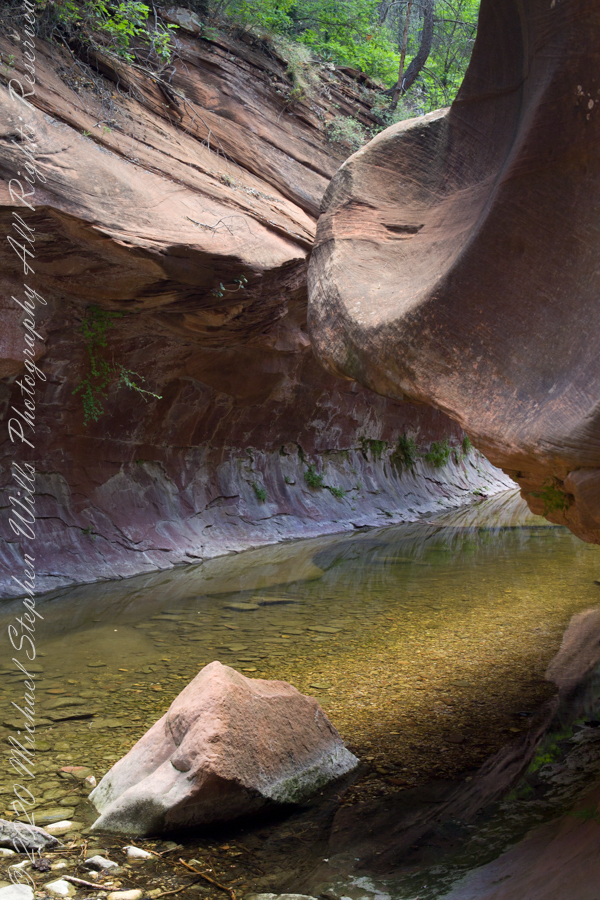
The fault of Oak Creek changes direction, here it forms a north/south gallery through Schnebly Hill Formation red sandstone for which Sedona is famous.
West Fork (108) Trail, Sedona, Yavapai County, Arizona
“Hello” from Oak Creek Canyon, “Photo by Pam Wills”
Gratitude for miracles witnessed is my emotion for this series, “Frozen Fall Creek.” Fifteen winters after Pam and I walked Fall Creek as a solid walking path, the stream flows without ice most years. My son, whose family now lives in the house, and his wife recalling walking the creek a few years ago, not in the past few years.
Weather records support our recollections and observations: here is an analysis of Ithaca January temperatures. The years 2009 through 2019 show a warming trend in daily temperatures for both minimum and maximum.
Analysis
Excel I used to plot minimum and maximum temperatures (Fahrenheit) for the 31 days of each January for eleven years 2009 – 2019. Click on the images of this post for a larger version.
Click any image for a larger view.
Forecast
Pam and I moved to Ithaca 2011 and missed our Fall Creek winter walks, miss them even more now our weekend excursions are only memories. Here are January minimum/maximum average daily temperature projections from 2020 through 2044 based on the trend established from the 2009 through 2019 series. The trend is the solid color, projection the faded color.
Reading from the chart, if the current trend continues by January 2044 the average maximum daily temperature will be 47 degrees compared to 29 for 2009. In other words, the temperature never rose above freezing in the year 2009. By 2044 temperatures will be above freezing every day, on average, with daily minimums averaging 21 degrees.
From what I read, we can expect these warming trends to accerate within our lifetimes. My son named small mid-creek hummocks “islands” with numbers. Here is a view of his Second Island in late summer. What will Second Island be in 2044 late summer?
Late Summer 2018, second island
Memories
Reader of posts I and II of this series have commented about snow shadows. Here are the shadows produced from snow fallen on the vegetation of the last photograph: soft mounds to contrast with tree trunk shadows.
Winter 2009, second island
I prefer the composition of the following photograph. What do you think?
Play of winter shadows
A combination of contrasting shadow forms.
Low Winter Sun
Copyright 2023 All Rights Reserved Michael Stephen Wills
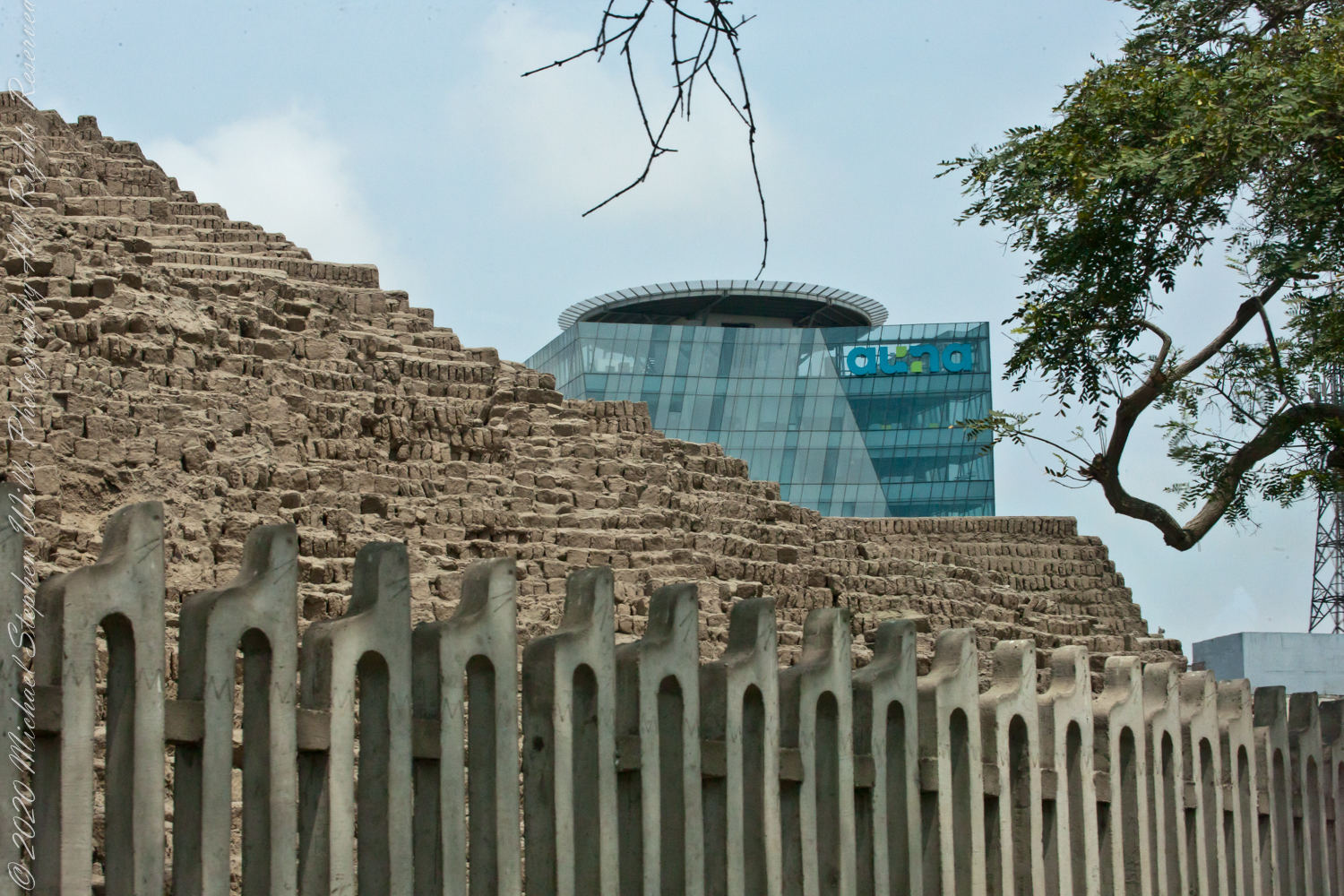
View of Clinica Delgado (hospital) from Lima Peru’s Elias Aguirre (street), Huaca Pucllana filling the foreground. Huacas are commonly located in nearly all regions of Peru outside the deepest parts of the Amazon basin in correlation with the regions populated by the pre-Inca and Inca early civilizations. They can be found in downtown Lima today in almost every district, the city having been built around them. Huaca Pucllana, located in Miraflores district, is an adobe and clay pyramid built from seven staggered platforms. It served as an important ceremonial and administrative center for the advancement of the Lima Culture, a society which developed in the Peruvian Central Coast between the years of 200 AD and 700 AD.
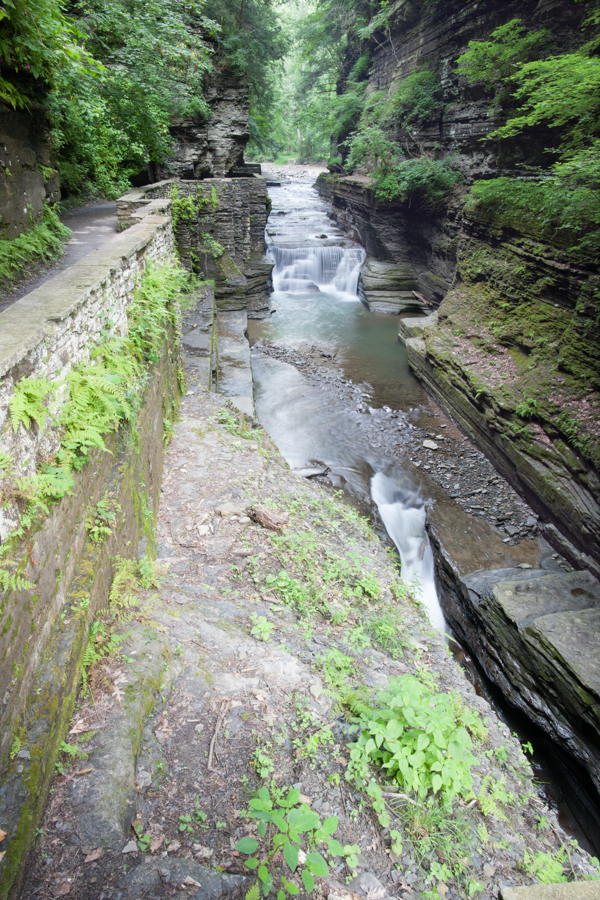
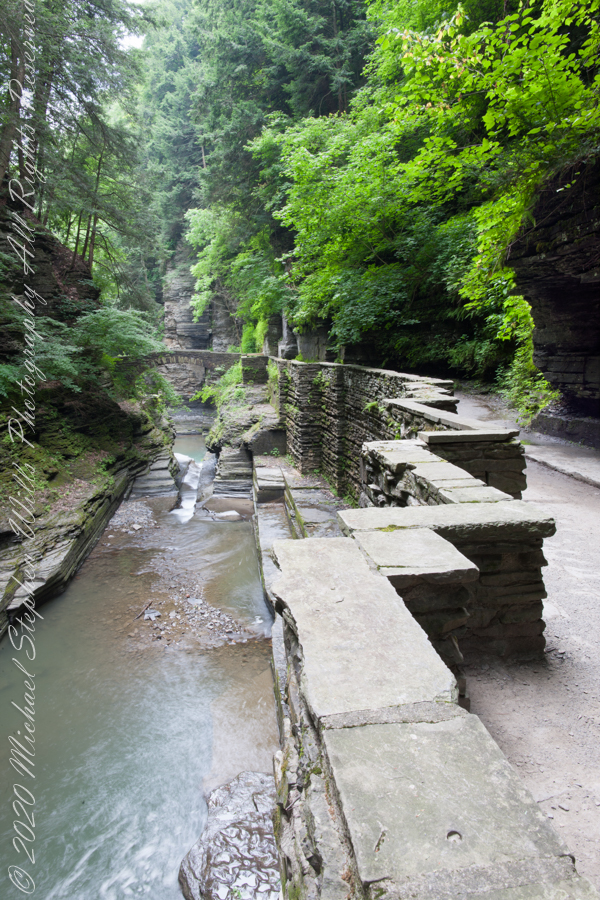
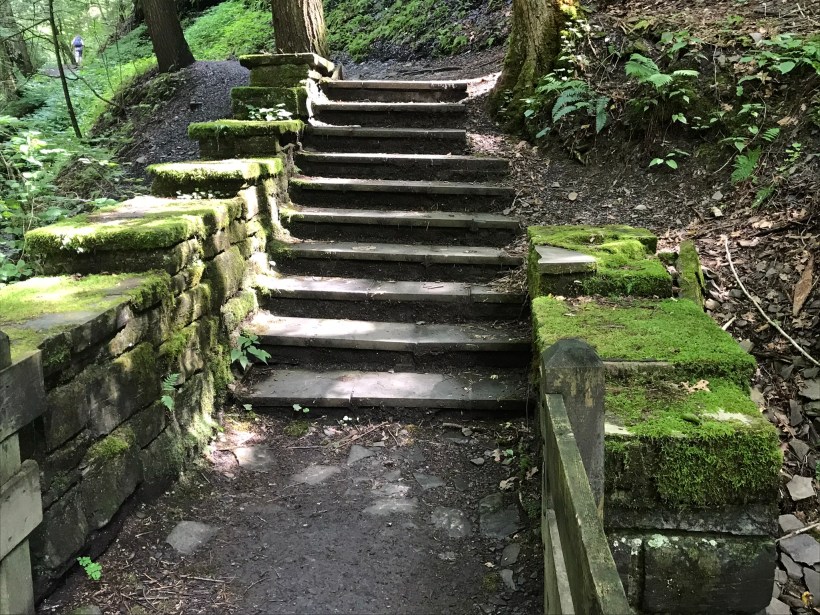
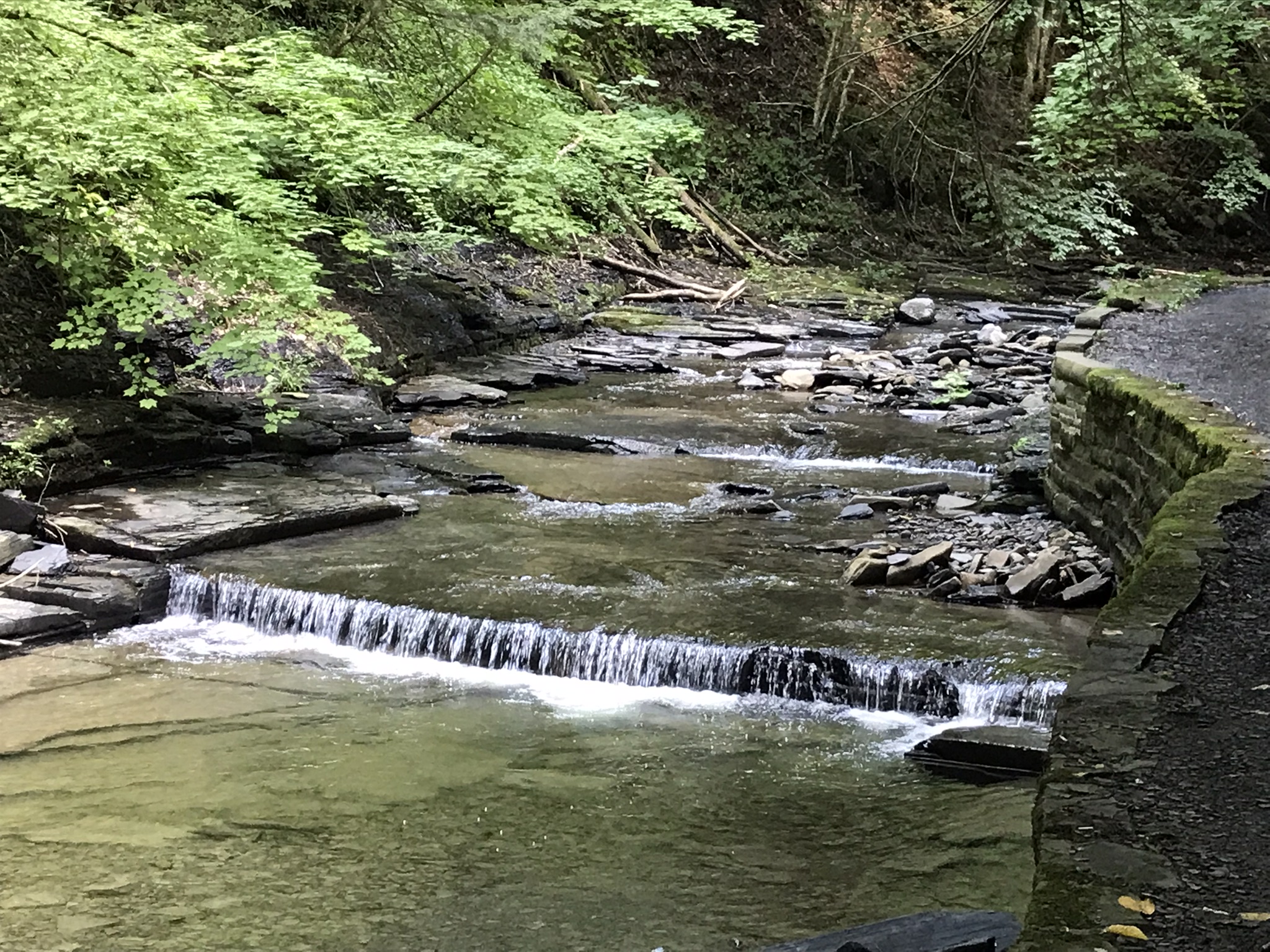
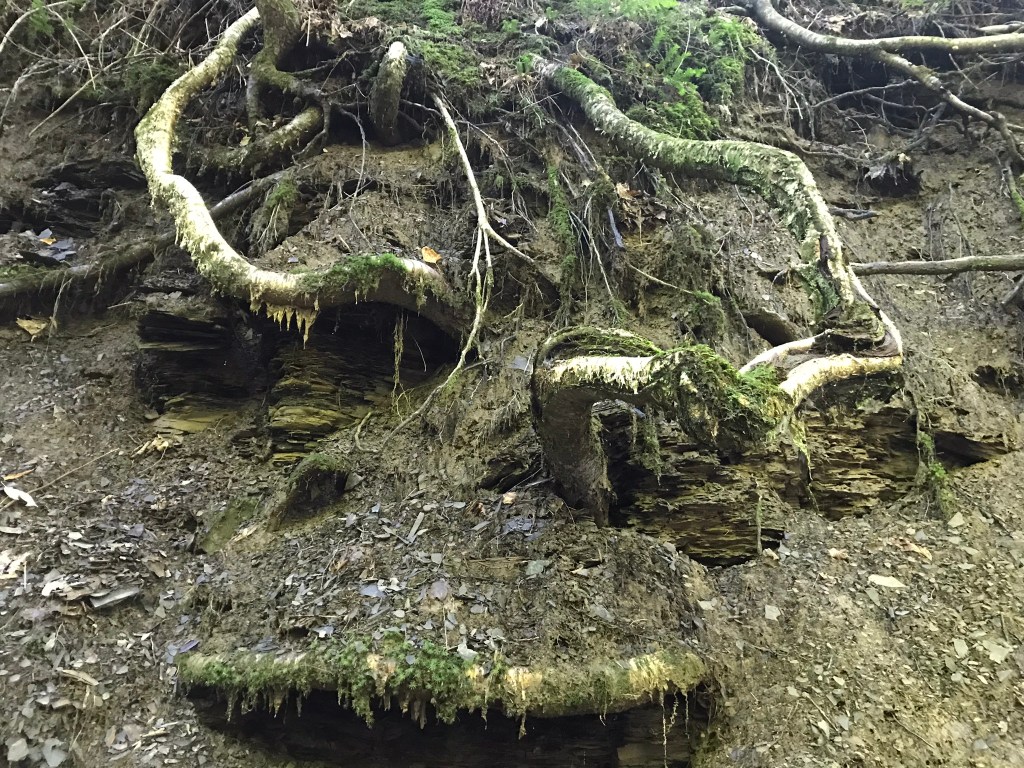
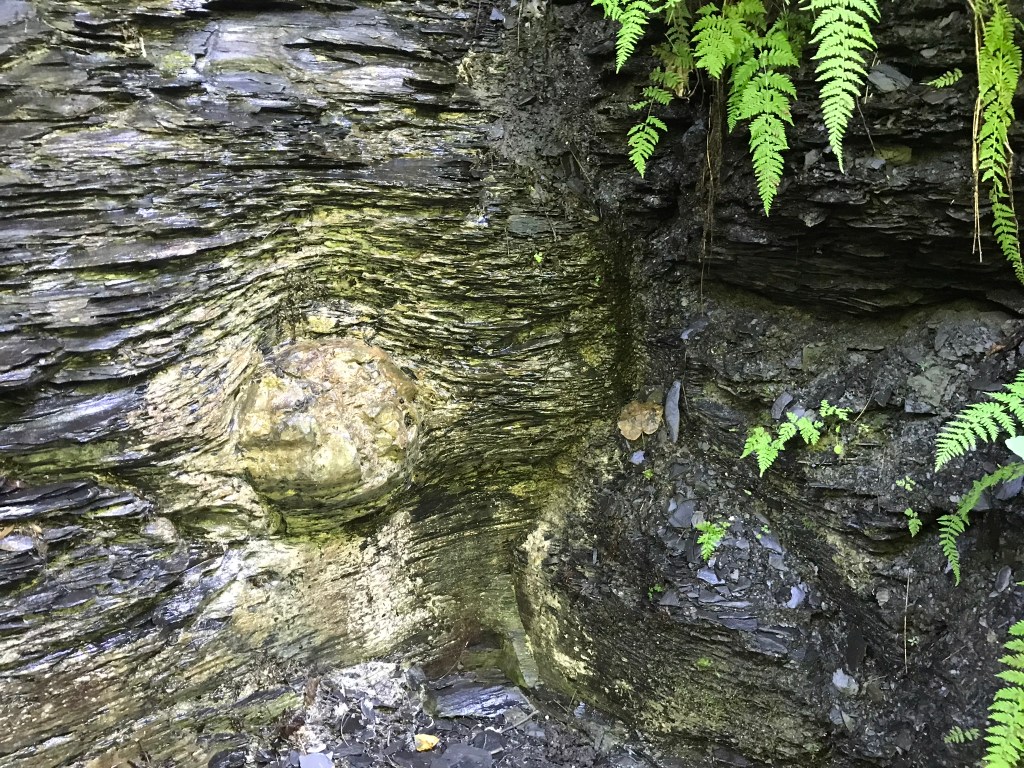
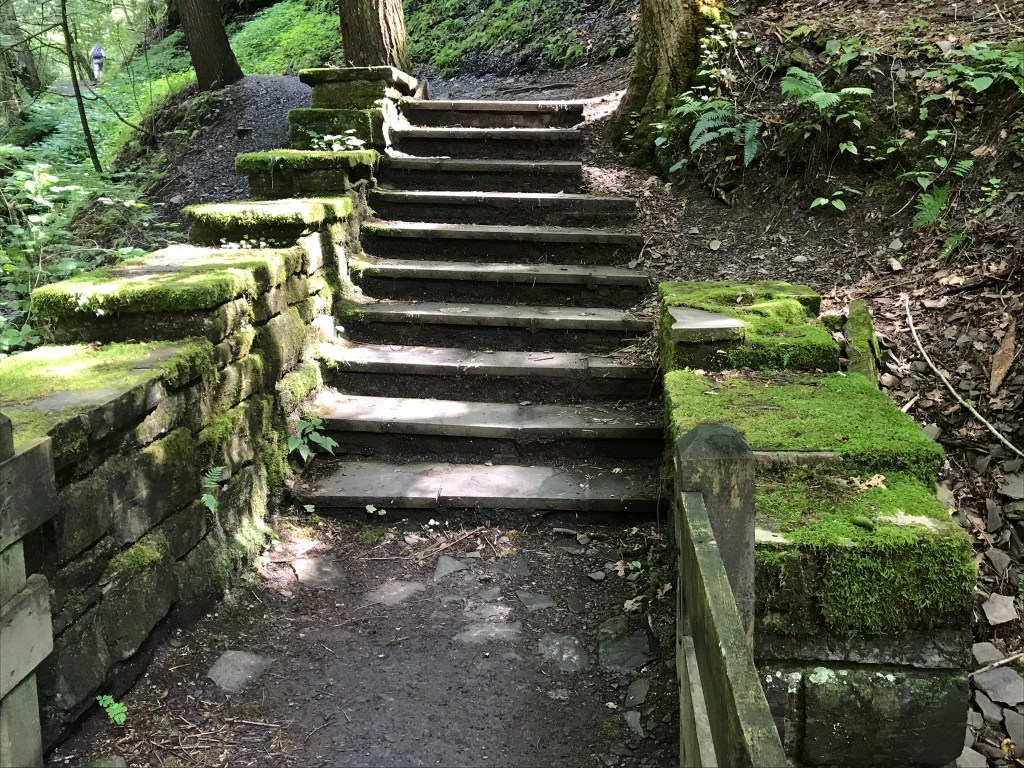
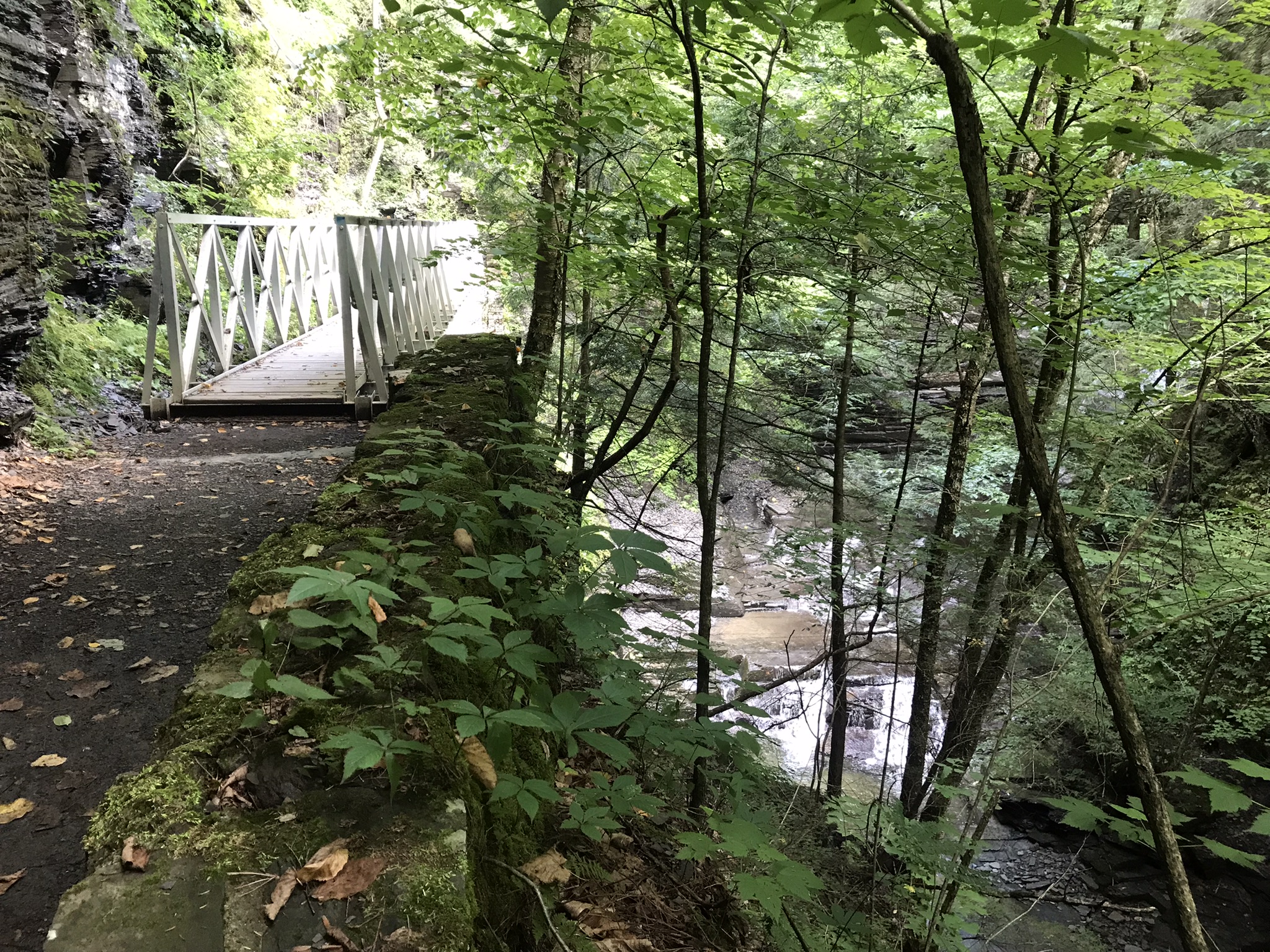
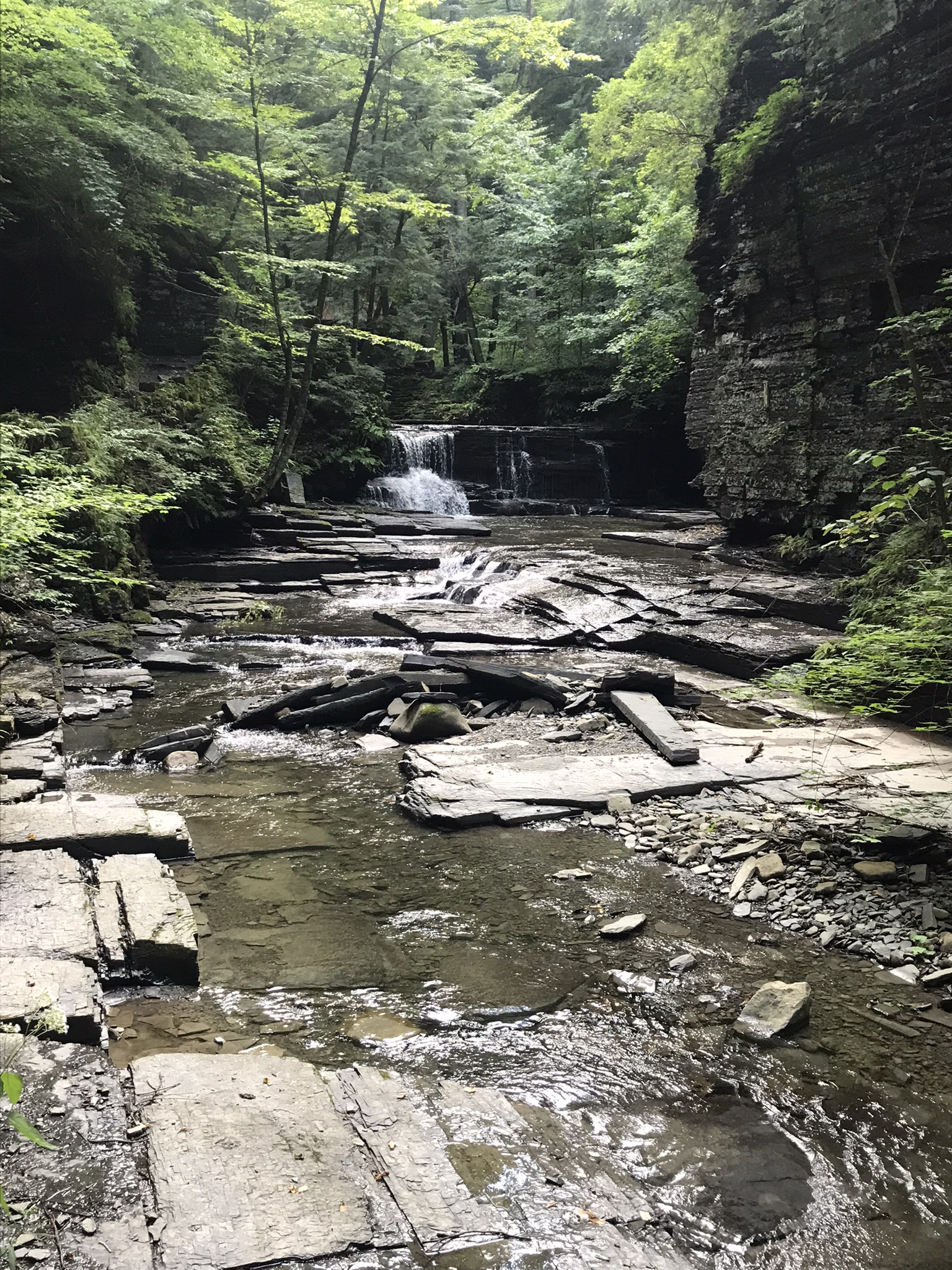
Gentle Waterfall SeriesLife Clings to Gorge WallsRoots Hold All In PlaceAncient Rockfall RememberedWelcoming Steps
Ephemeral Waterfall
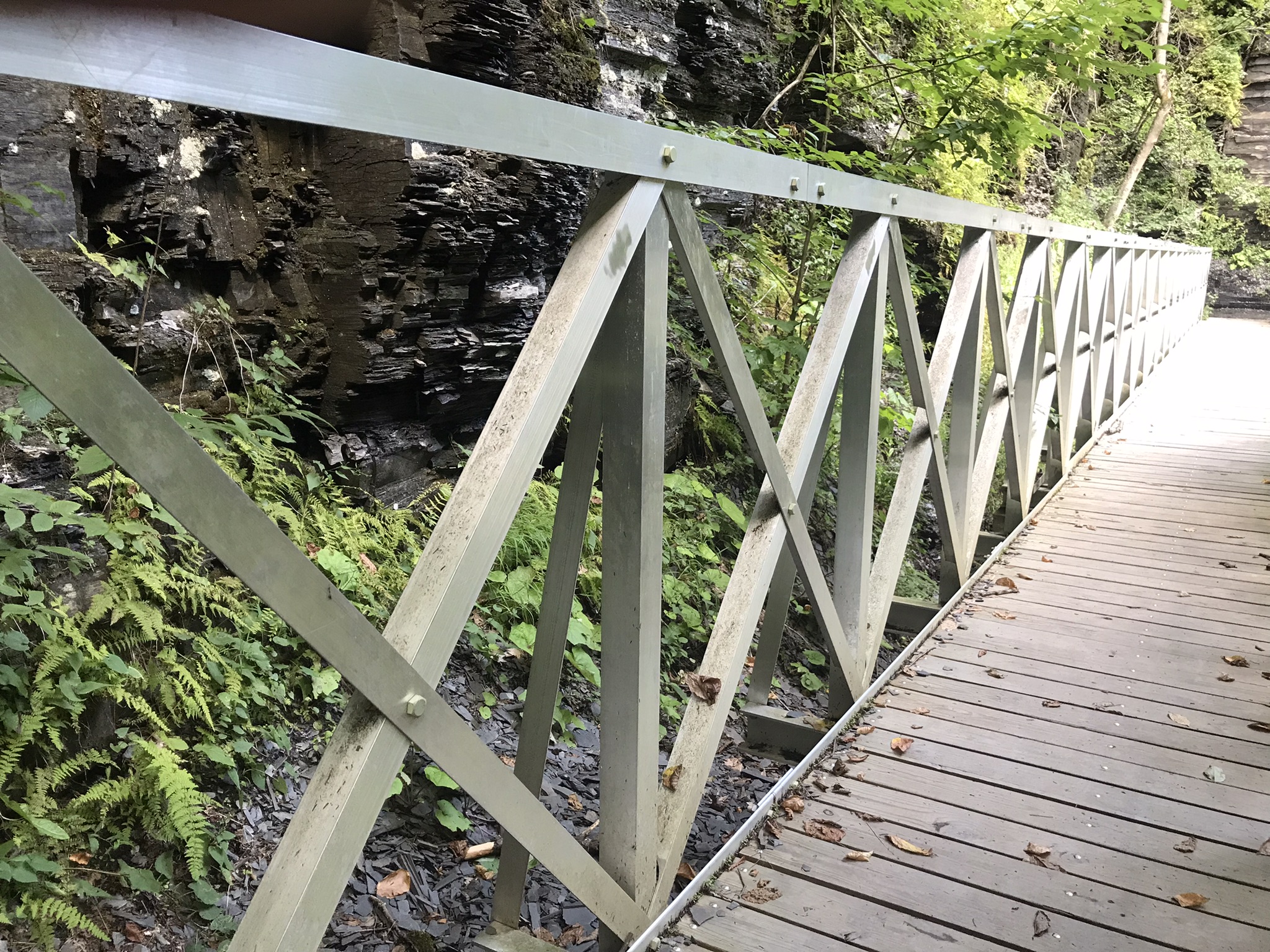
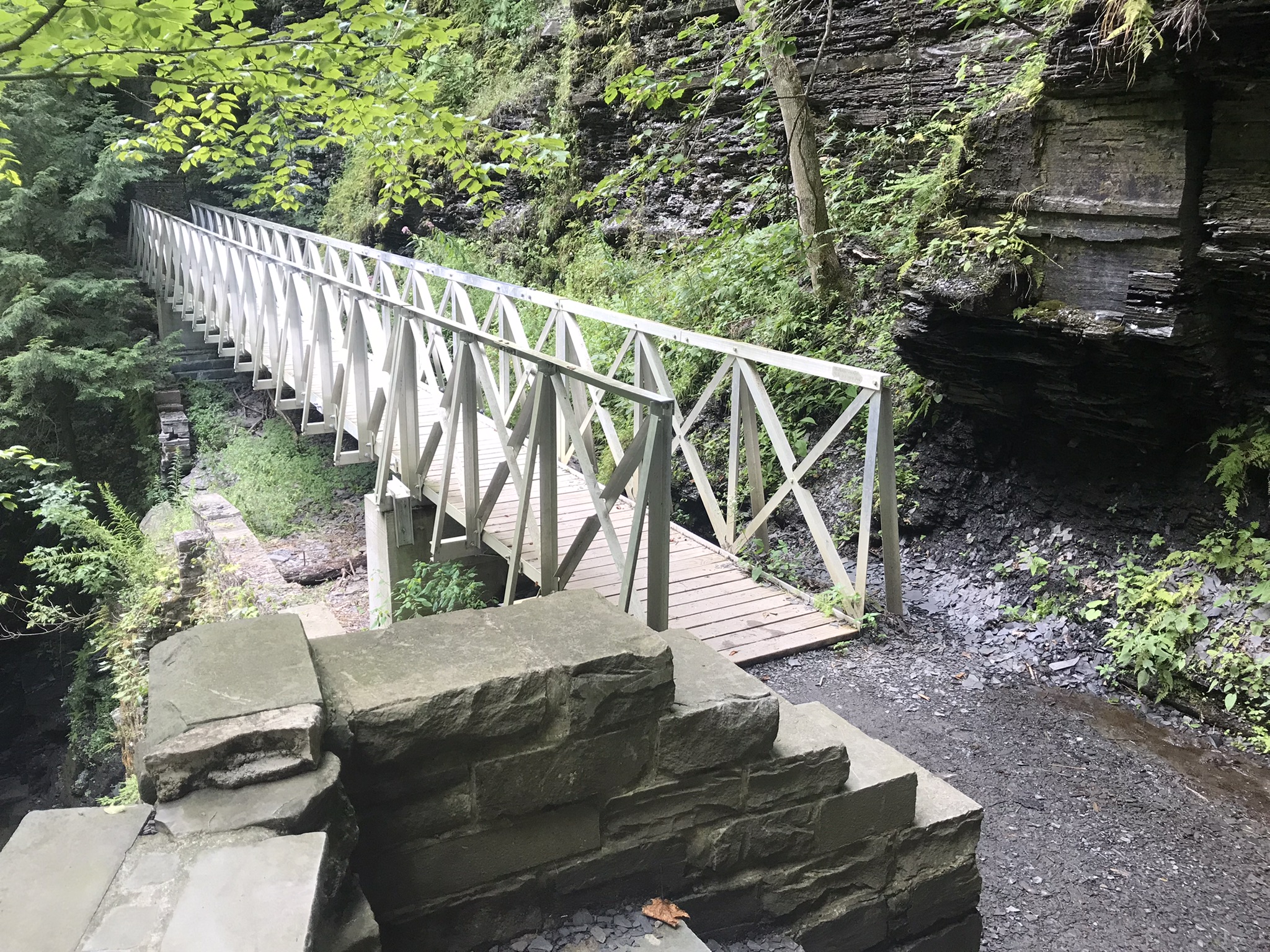
Metal Intrusion
Spring thaw washed away the gorge wall, this functional metal bridge will outlast all but the most catastrophic gorge wall disruptions.
Turn Around Here for the Following ViewI call these Hermit FallsCan you ss “The Hermitage”?View Back to BridgeNew Path
Graceful Waterfall Overview
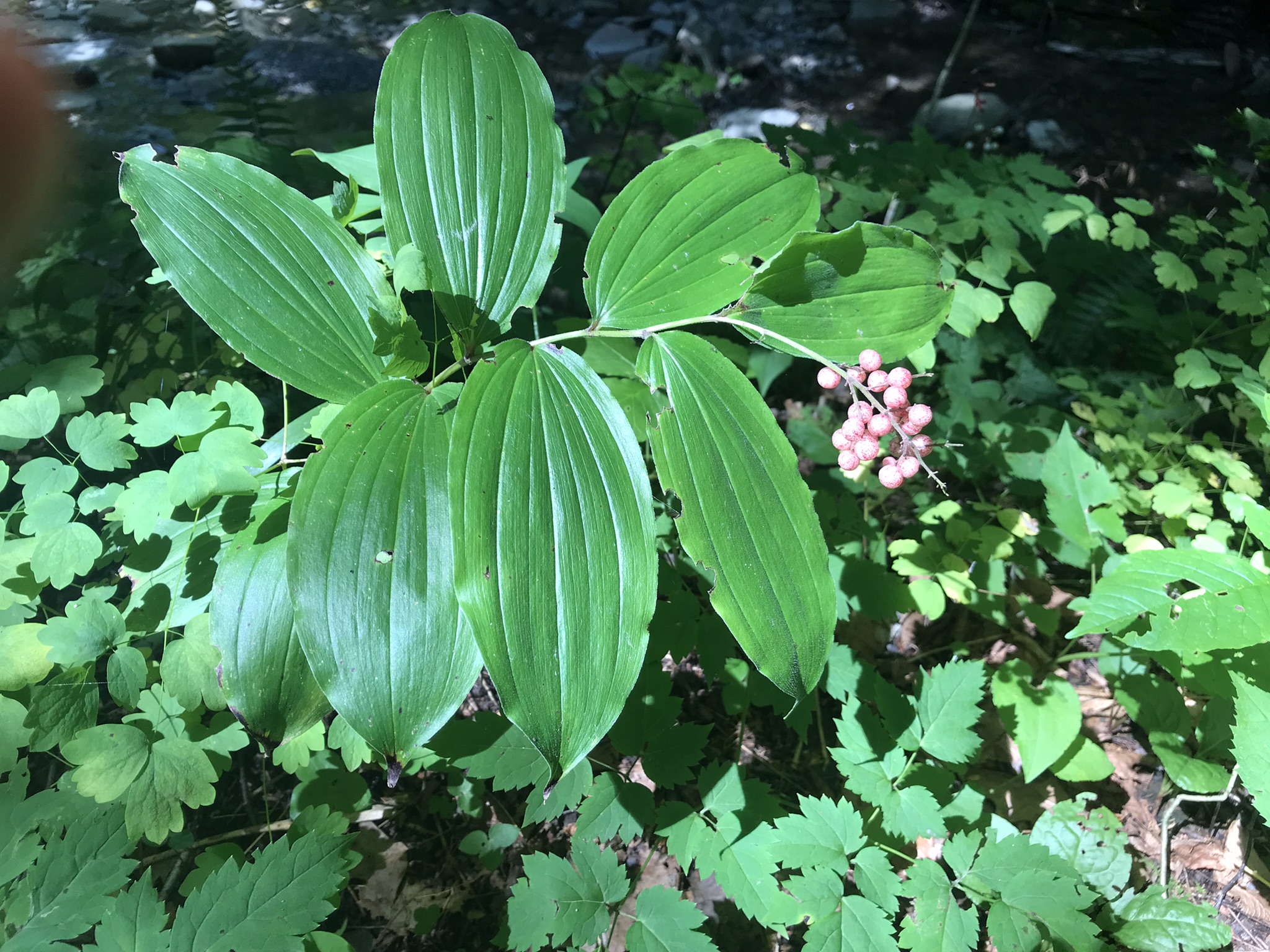
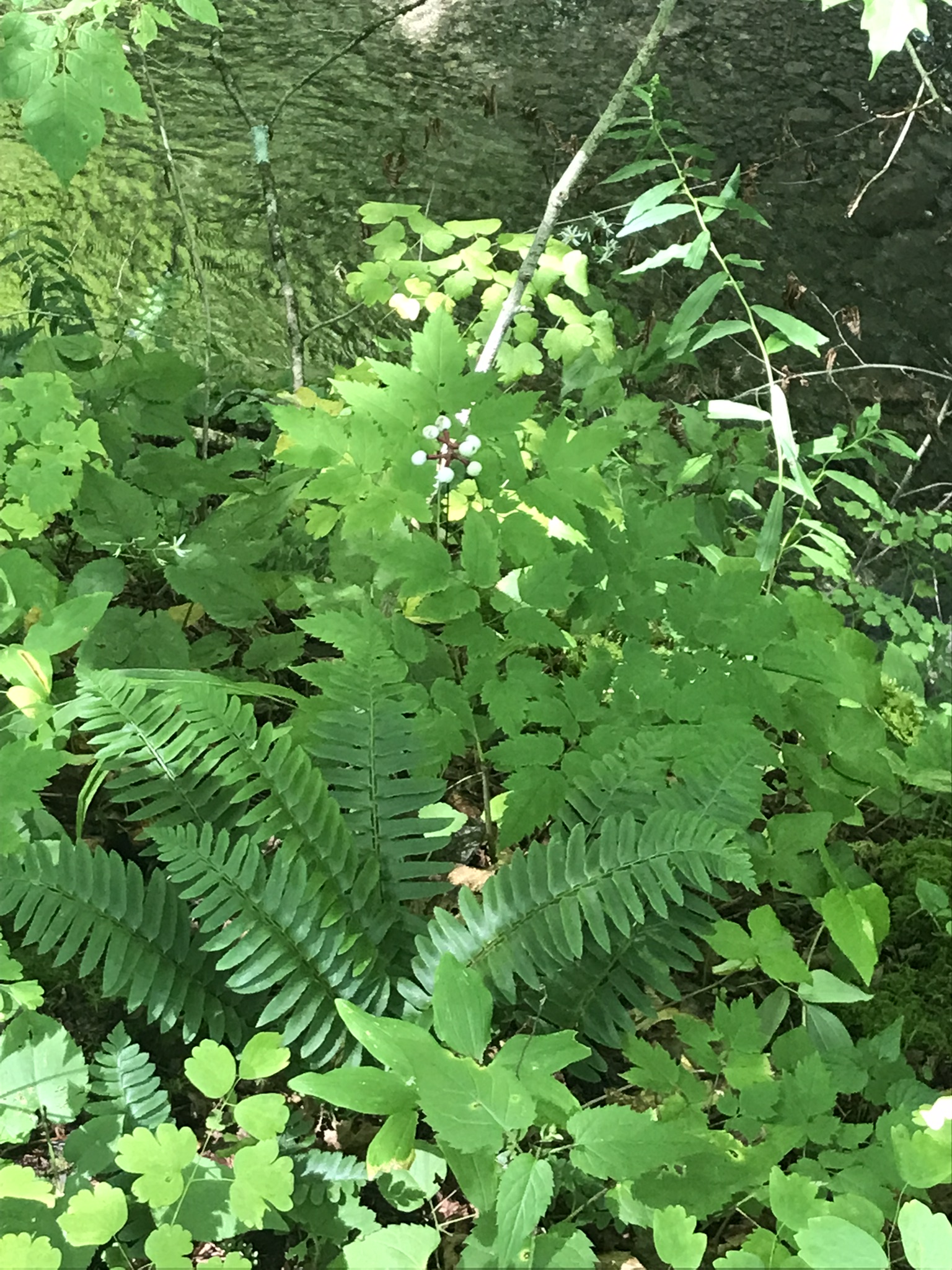
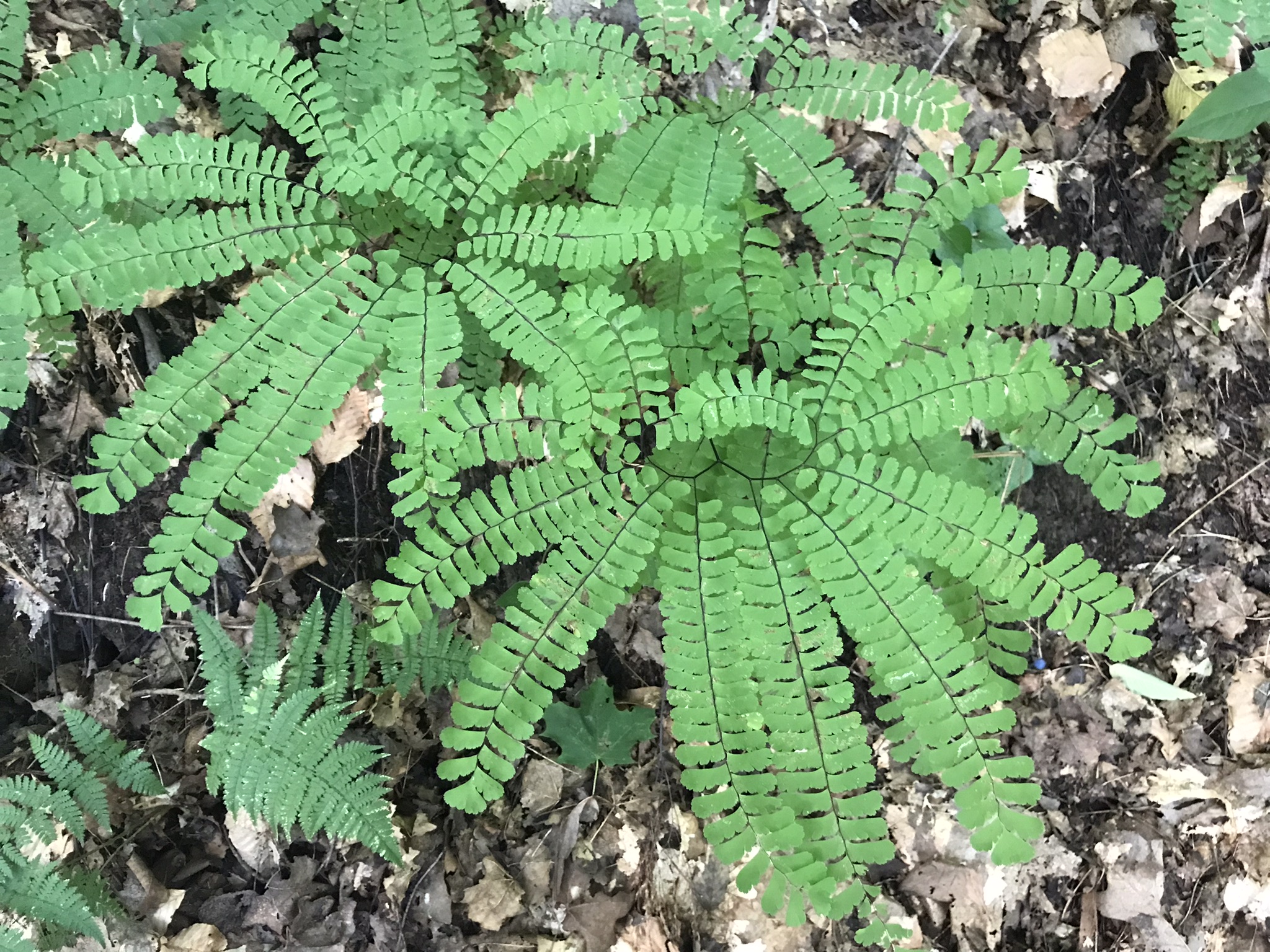
Flora
White Baneberry, aka “Dolls Eyes,” a fascinating plant, entirely poisonous.
All parts of all Baneberry varieties (red and white) are highly poisonous, the bane of Baneberry. The berries are deadly. Ingestion of as few as two berries by children will cause death from cardiac arrest. Six for an adult.
Landscape Features
Erratic Granite BoulderSpillwayDam Pond
Overview, Spillway and Pond
Copyright 2022 Michael Stephen Wills All Rights Reserved
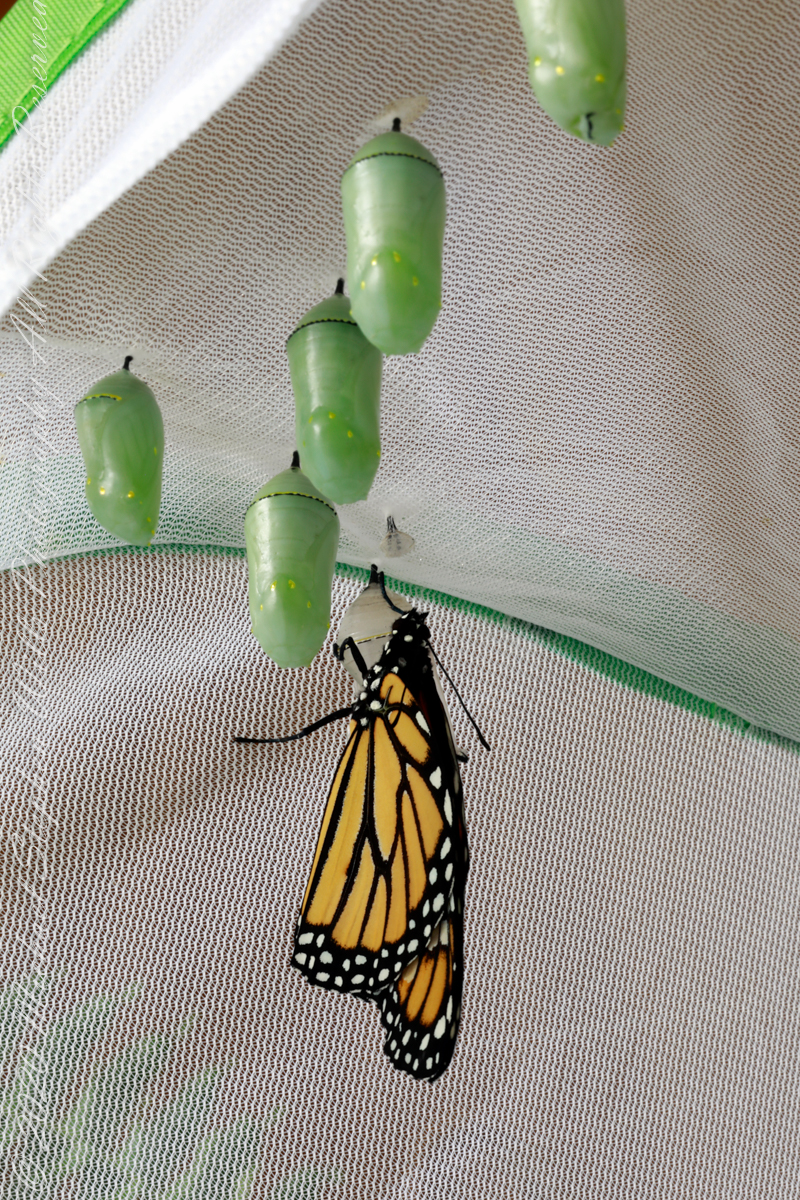
We successfully raised nine (9) Monarch butterflies this season, leaving us feeling, “Let’s do more in 2023.” Today’s post cover is a portrait of the last. She flew yesterday, September 23rd, forty (40) feet up to the oak tree shading the back yard, lost to us in the leaves.
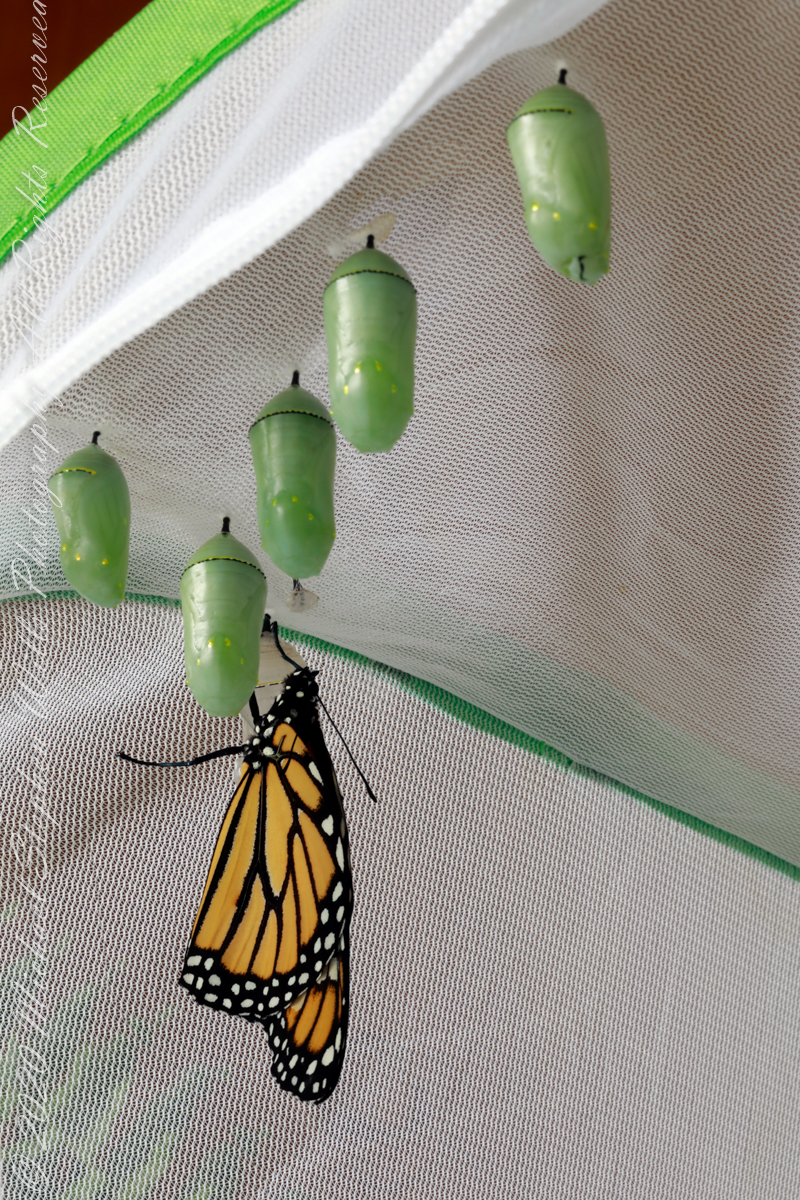
Her chrysalis is the second from right in the following family photograph.
Here are two videos of our last 2022 Monarch to emerge and the first.
Emergence of a Monarch butterfly from a chrysalis 4K UHD with relaxing music. A caterpillar attached itself with silk to hang by its two rear legs to transform to a green chrysalis. Fourteen days later the chrysalis shell becomes translucent. Inside the chrysalis the Monarch butterfly moves to shed the shell. The released insect’s abdomen pumps fluid, expanding the crumpled wings. The entire process takes twenty minutes, compressed in this video to about six (6) minutes.
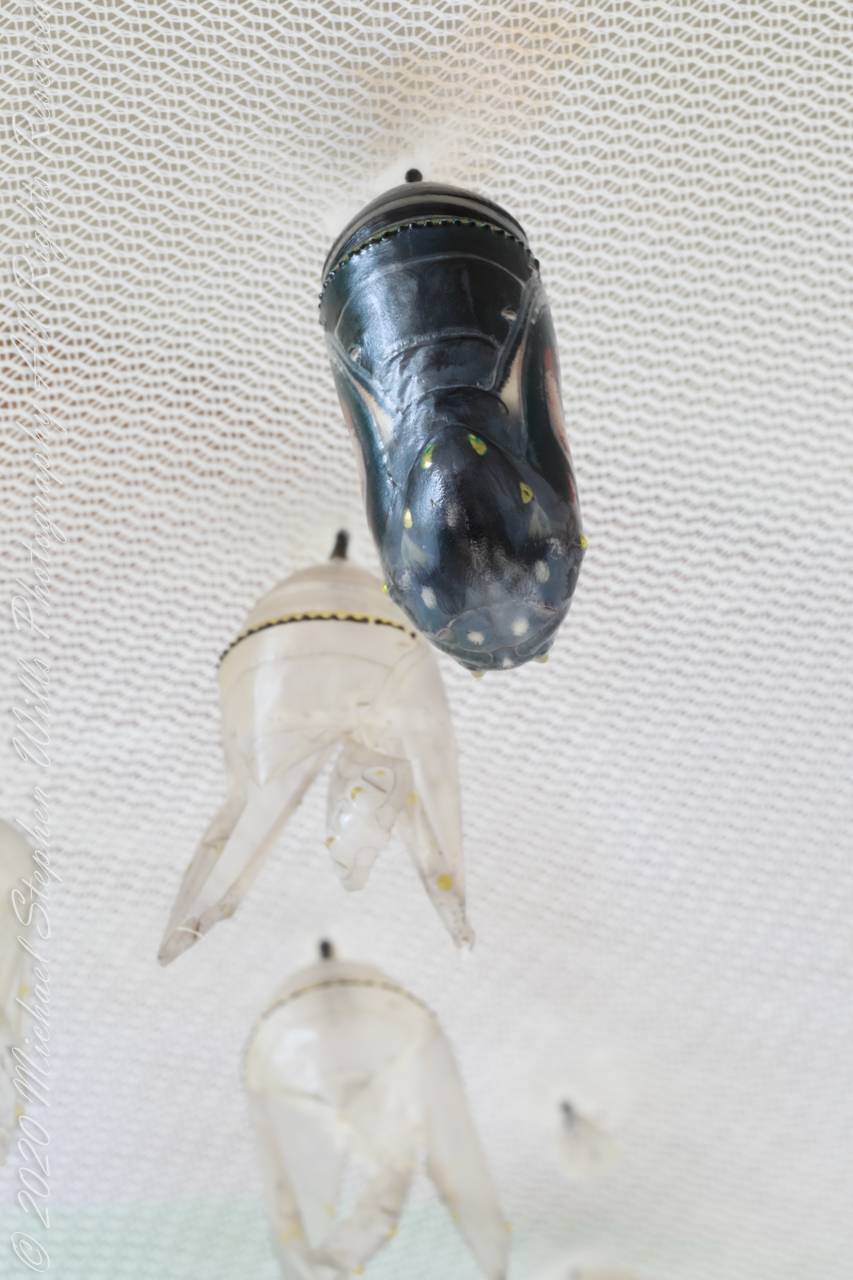
As the moment of emergence approaches, the skin of a Monarch chrysalis becomes translucent to reveal the butterfly compressed into that small space.
A real time film of our first 2022 Monarch Butterfly emerging from the chrysalis, then expanding its wings in 4K UHD with relaxing music. The process takes twenty (20) minutes.
The butterfly emerges from the chrysalis about fourteen (14) days after setting. To the photographer needing to capture the moment a signal is the green, jewel-like chrysalis turns transparent, apparently darkening to reveal the compressed form of the butterfly. It can be hours before the insect breaks free, the Canon EOS 5D Mark IV dslr camera is used for this. I set it on a Manfrotto BeFree Carbon Fiber tripod (with ball head), a Canon EF 100mm f/2.8L macro lens for optics. The Mark IV has WIFI and HD video capabilities, so I connected the camera to an Apple IPhone 7 using Canon software. Monitoring the transparent chrysalis in real time, I continually reset the video from the IPhone until the butterfly emerged. I used AVS video editor software to produce the film for YouTube publication.
Copyright 2022 Michael Stephen Wills All Rights Reserved
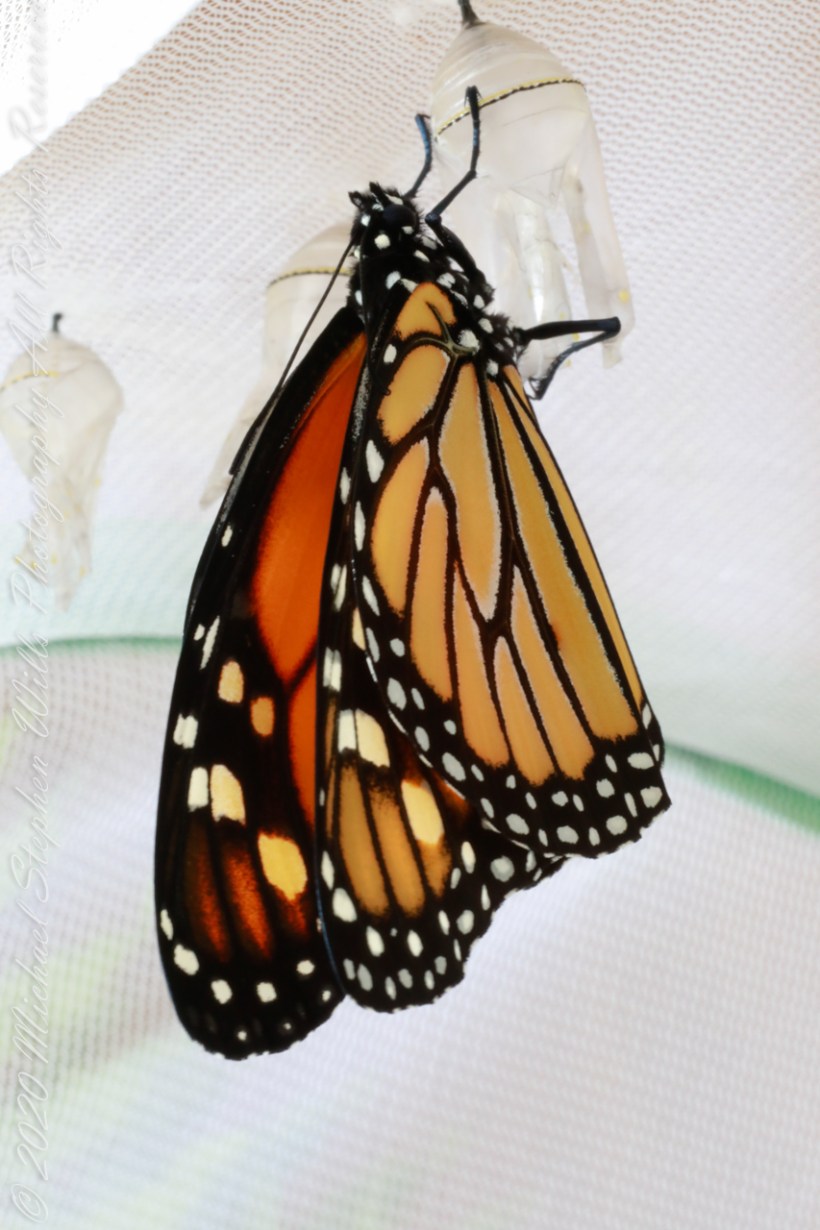
This Monarch butterfly emerged from the chrysalis a few moments ago. A minimum of two hours is required for the wings to harden before release to the wild.
Five wait off stage for their turn to fly.
Rainy weather forced us to leave her resting a full 24 hours.
Here are two videos of a Monarch release from 2020.
Copyright 2022 Michael Stephen Wills All Rights Reserved
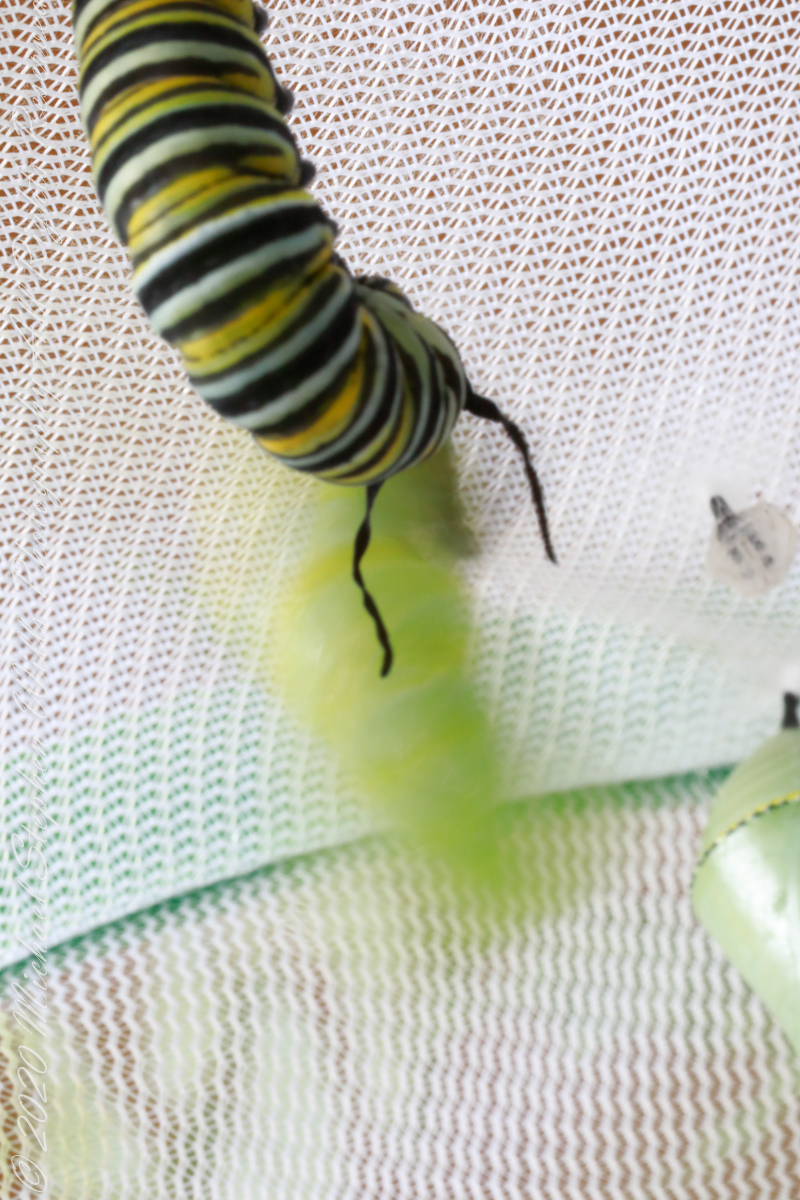
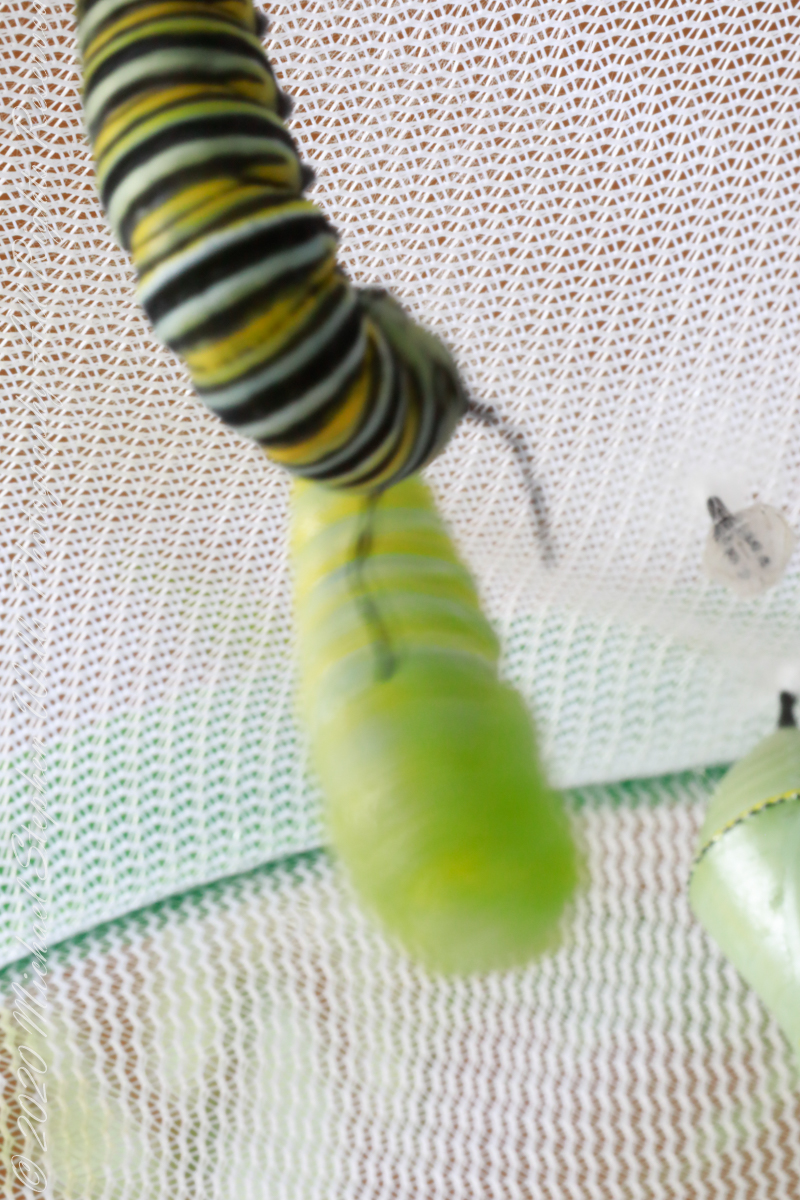
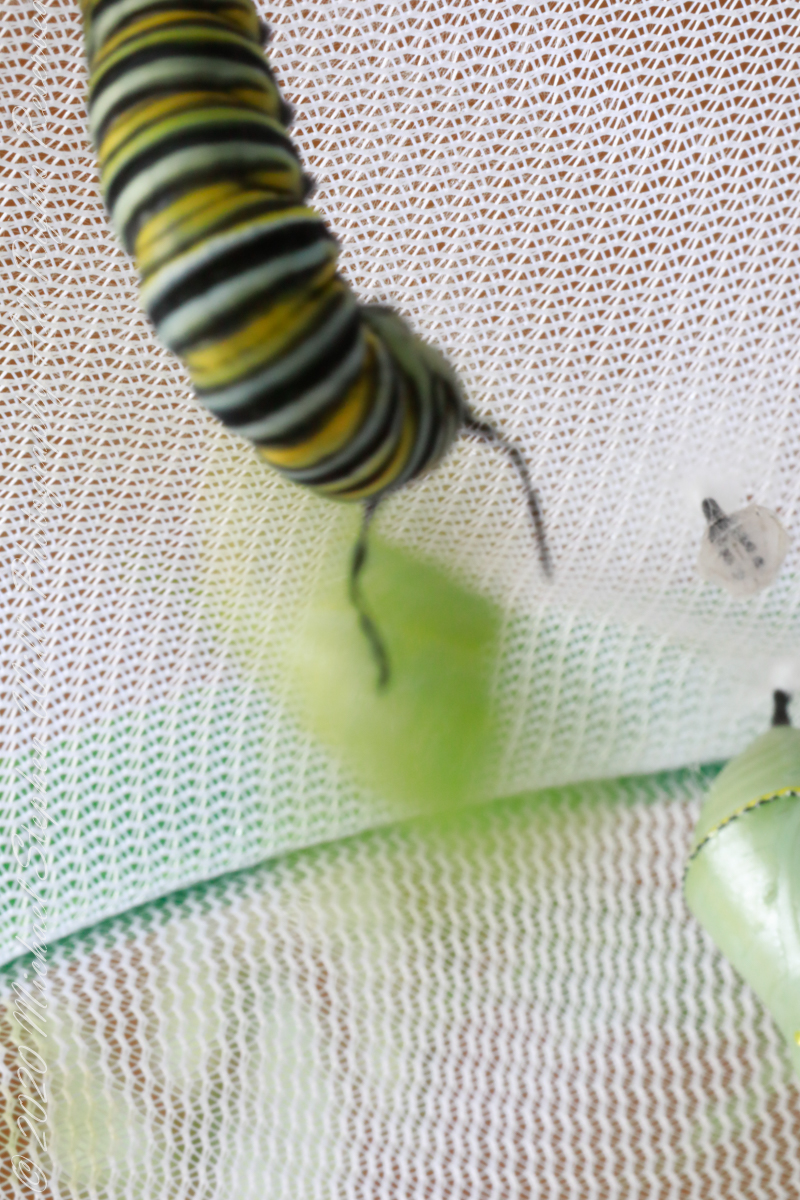
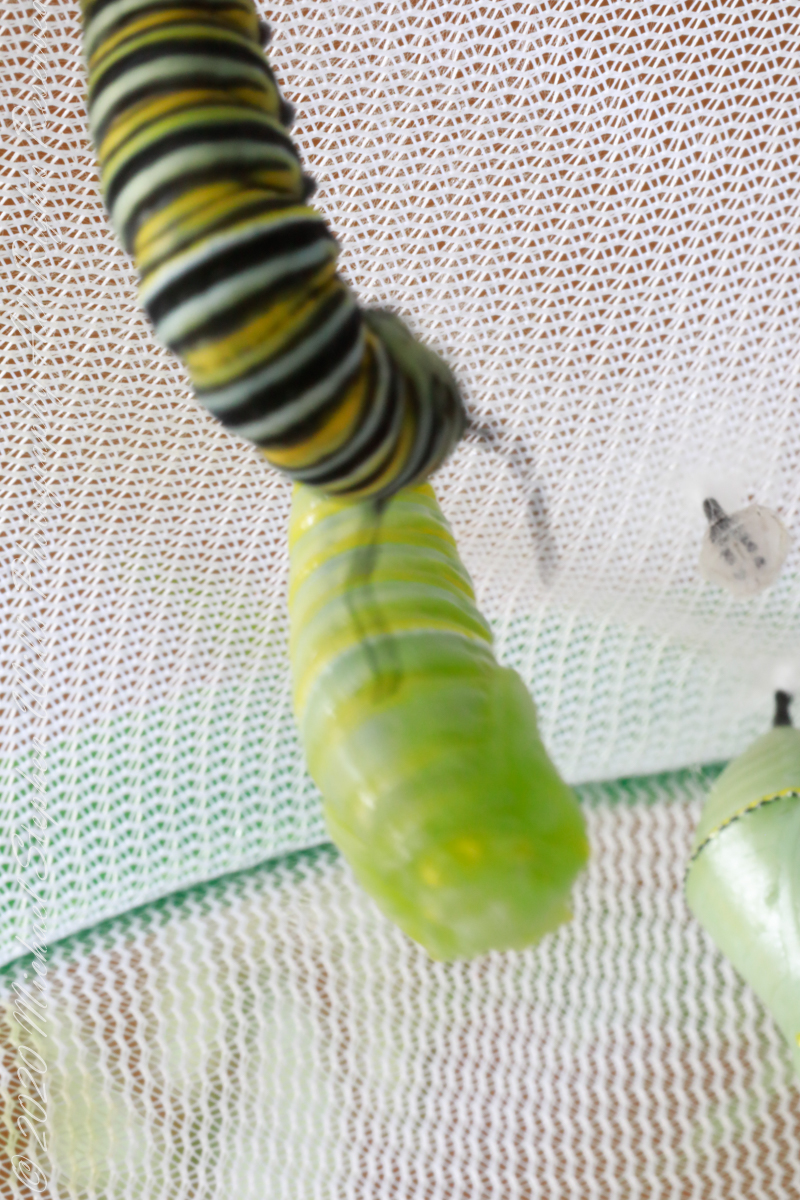
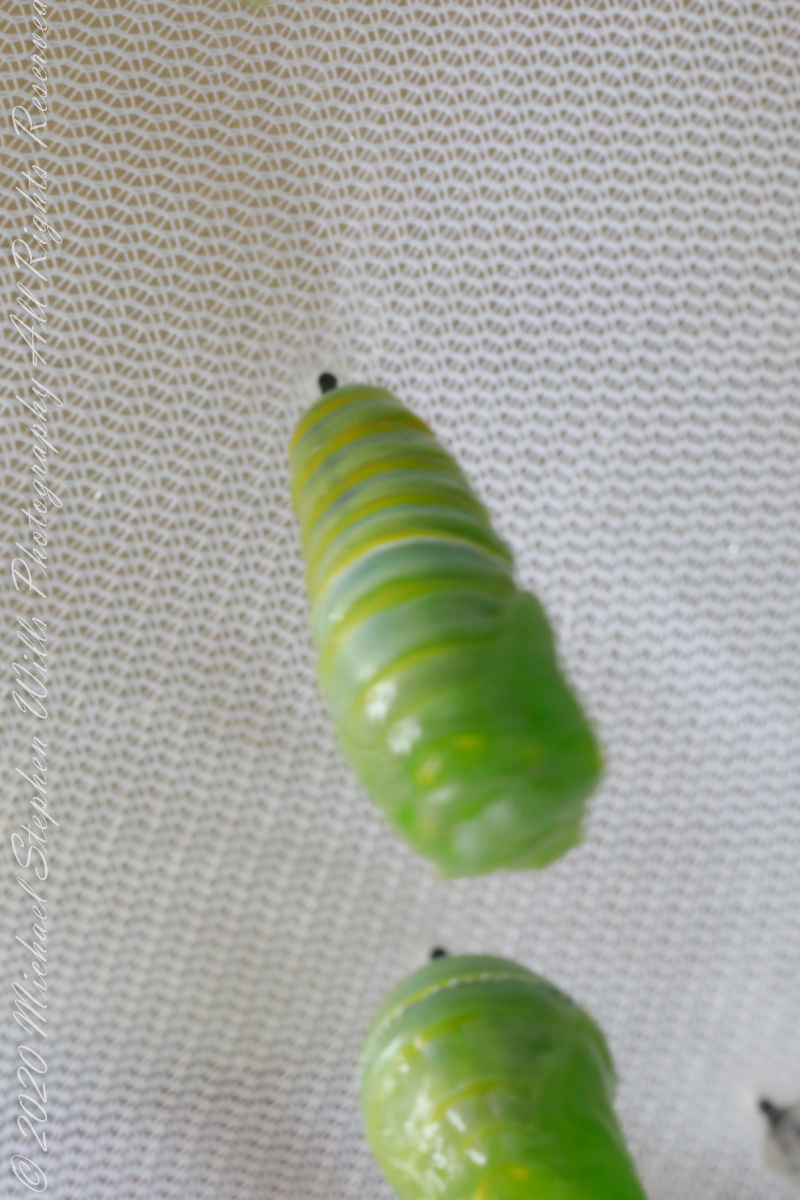
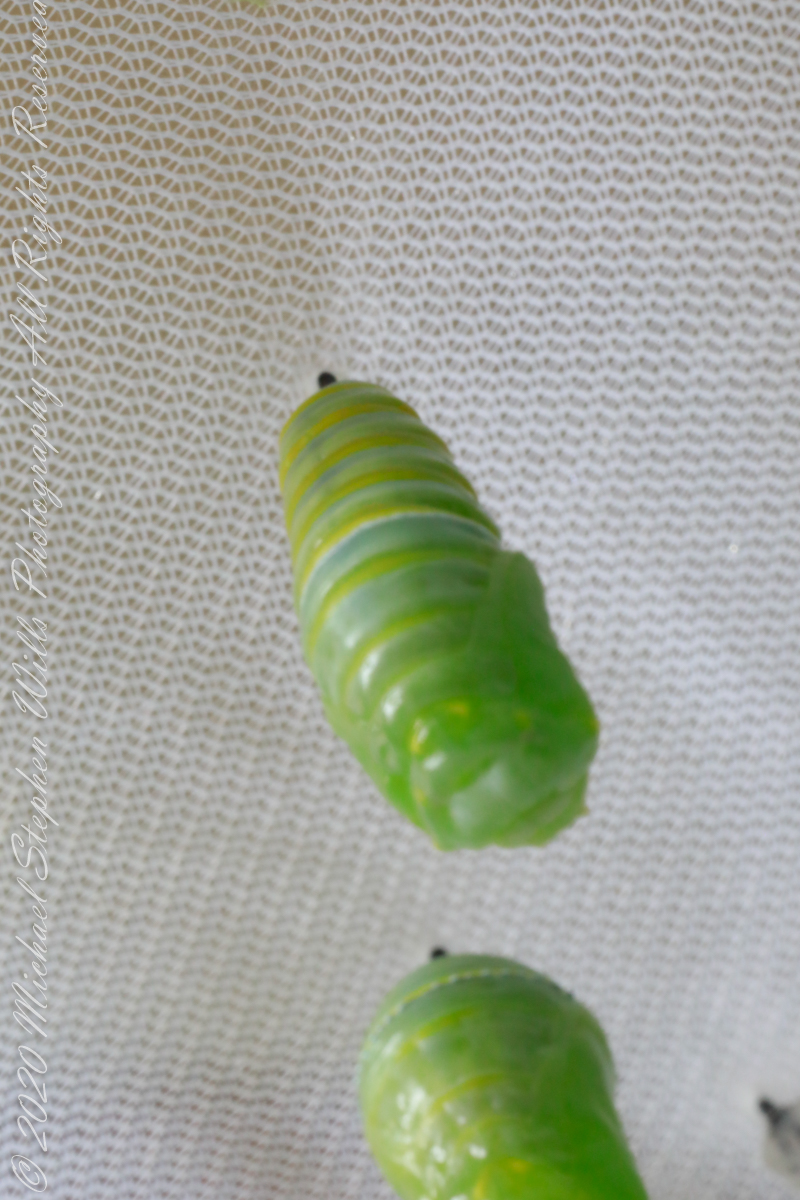
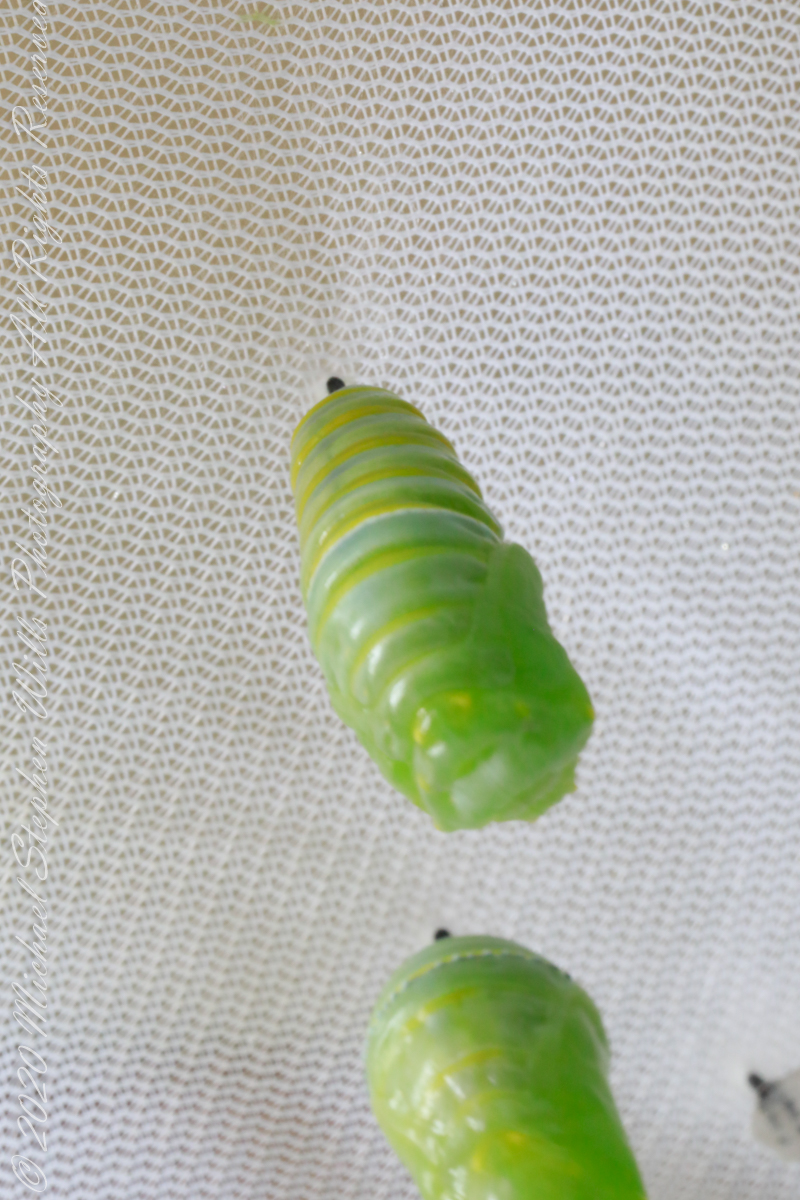
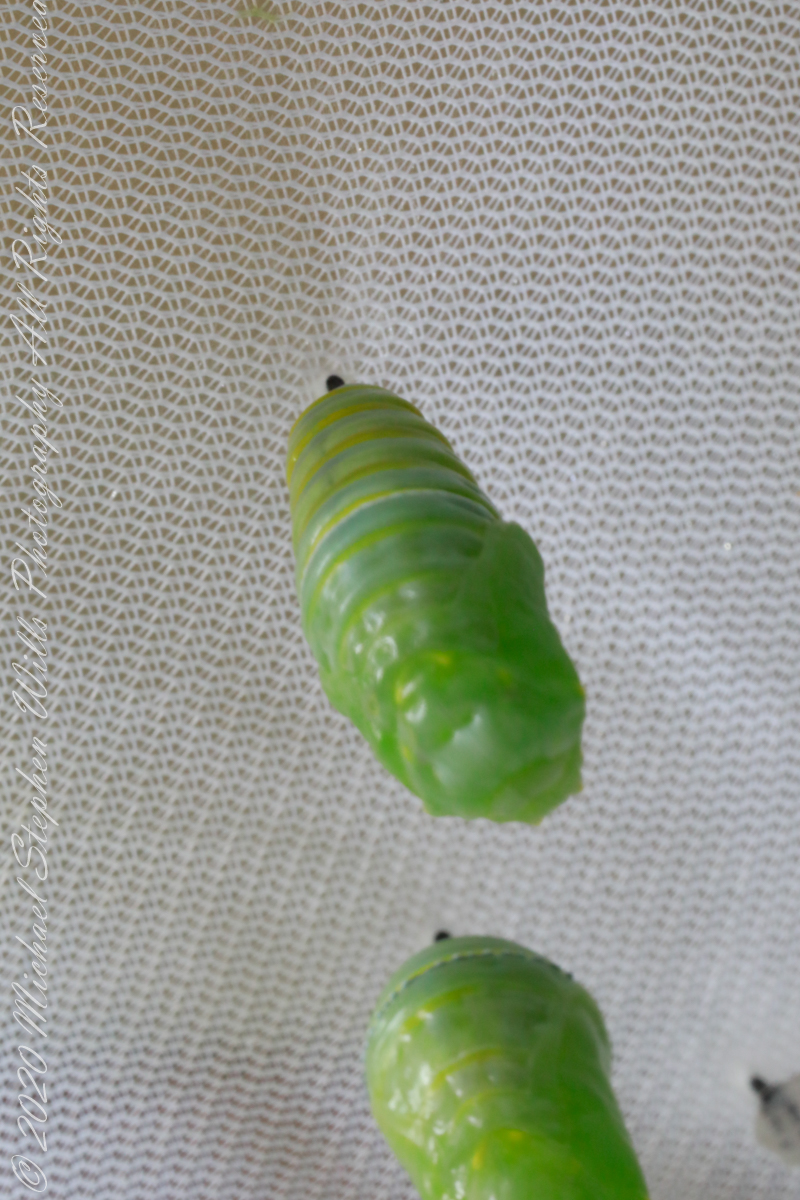
In my last series of “Monarch caterpillar transforming to chrysalis” time lapse photographs, the 30-minute time interval missed the moult. For this series, I set the Canon EOS 5D Mark IV to remote from a IPhone 7, tethering me to hanging around the house for an afternoon of waiting for the magic moment of “transformation” (more accurately called “the moult”), thinking through the nature of the moment.
A monarch caterpillar accomplishes seven body transformations shielded from view. Six within its skin: the first five retaining a caterpillar body configuration, the sixth transforming to chrysalis. For all six, an enveloping skin conceals the change. The same holds true for the seventh transformation. The chrysalis remains opaque green with bright gold spots until turning transparent after the transfiguration to butterfly is complete.
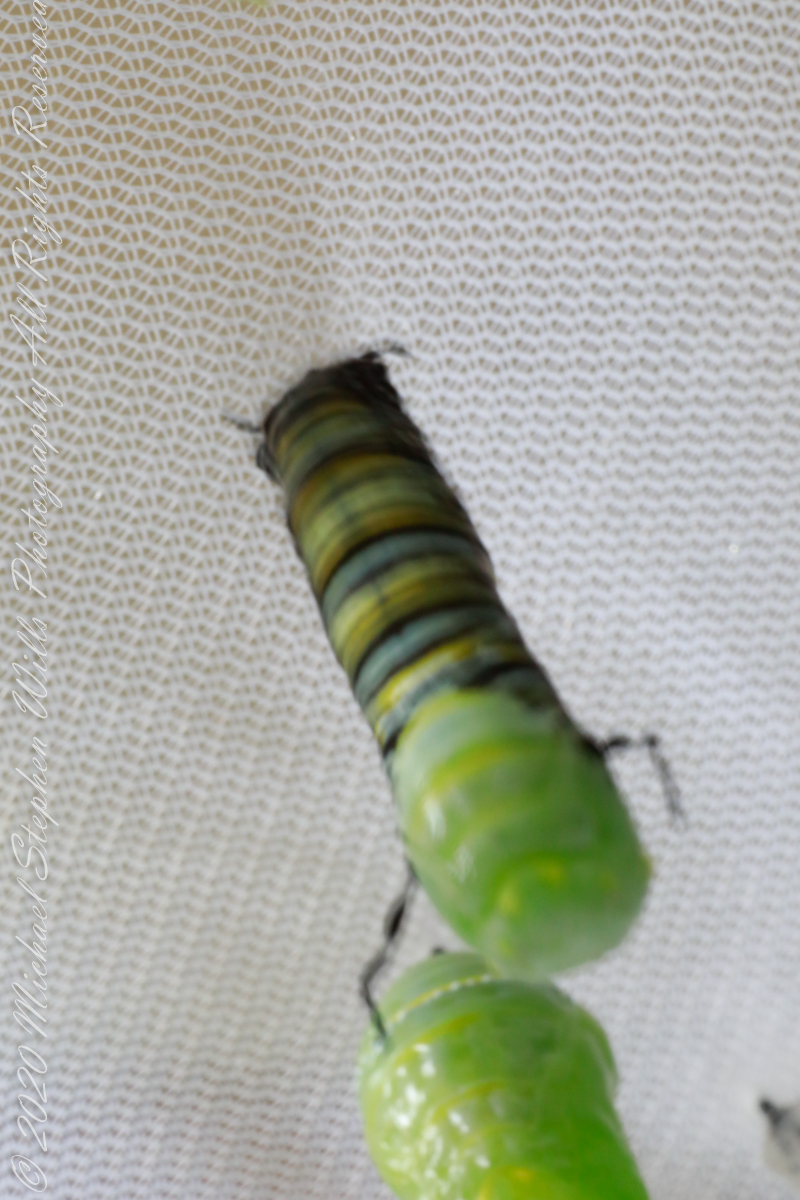
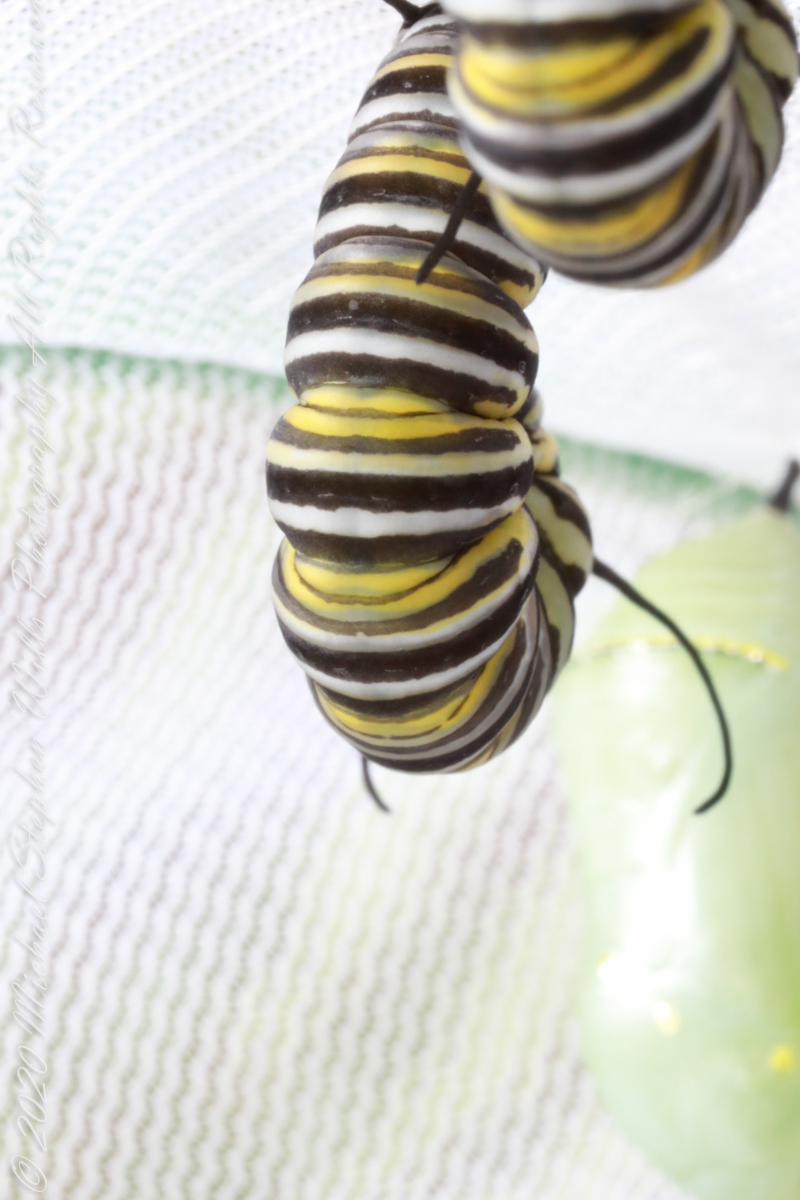
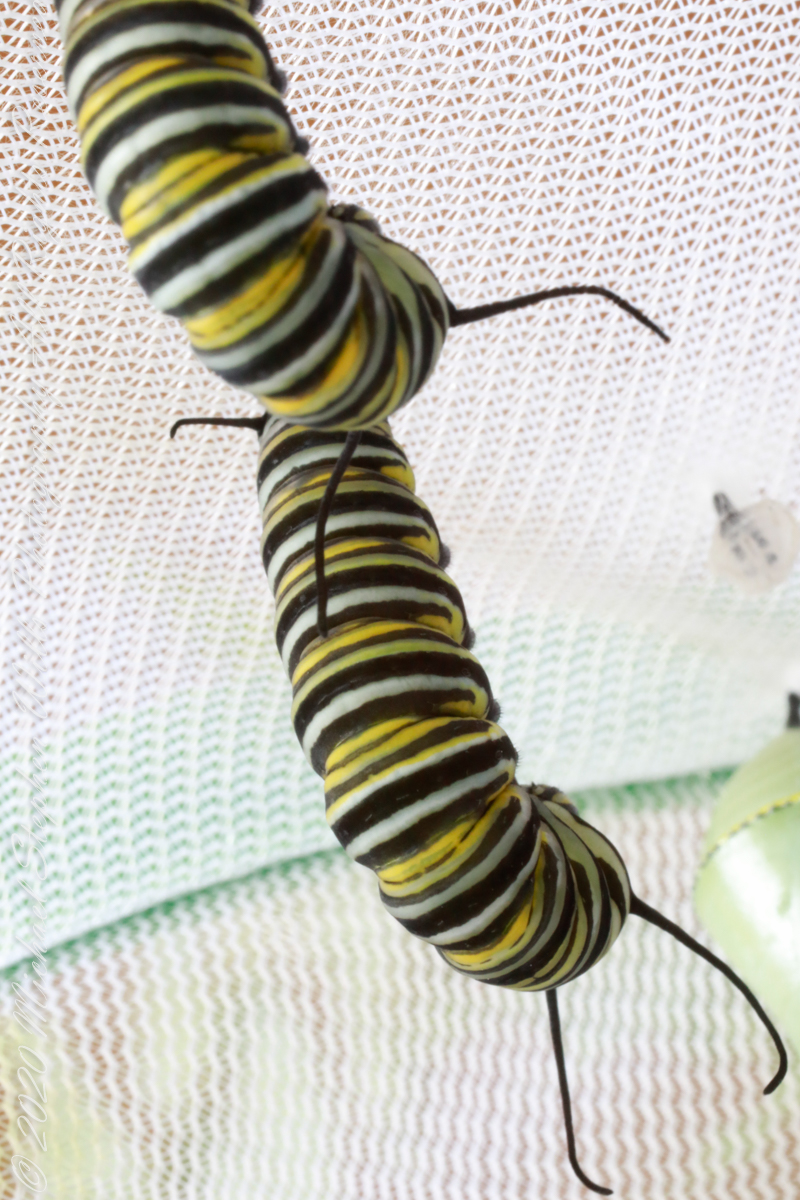
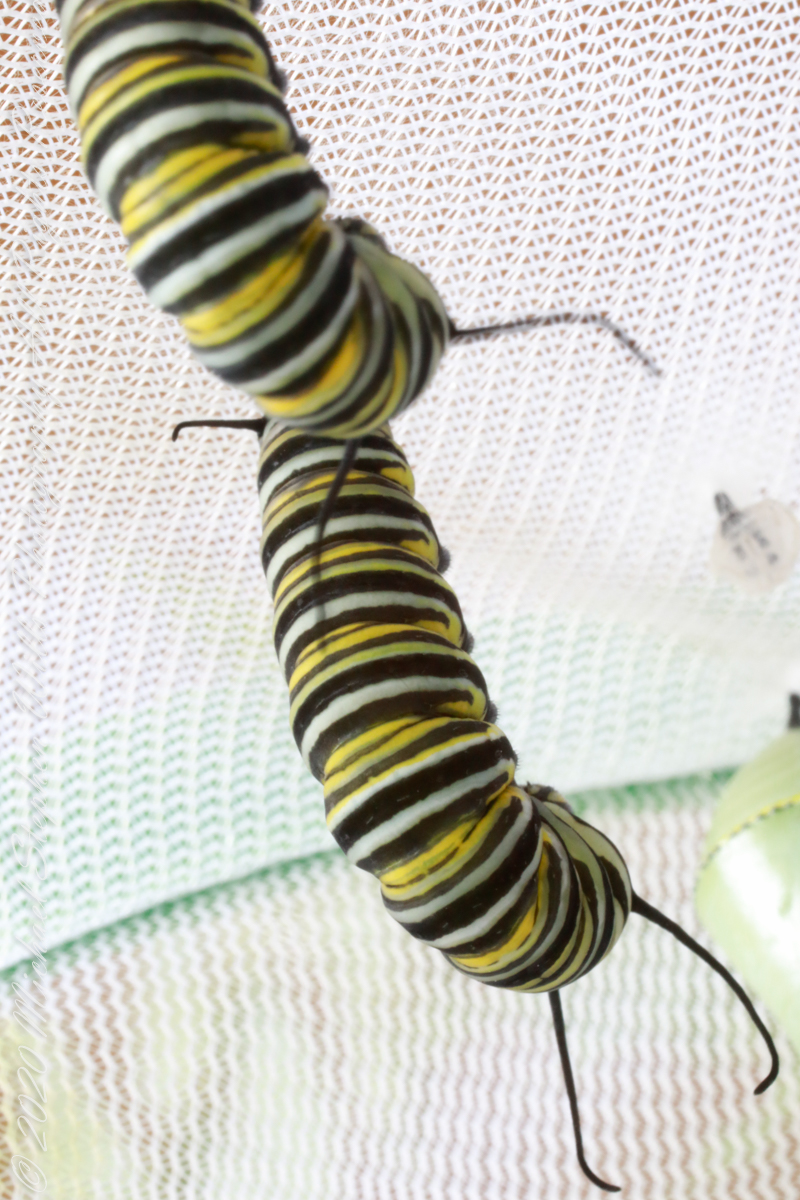
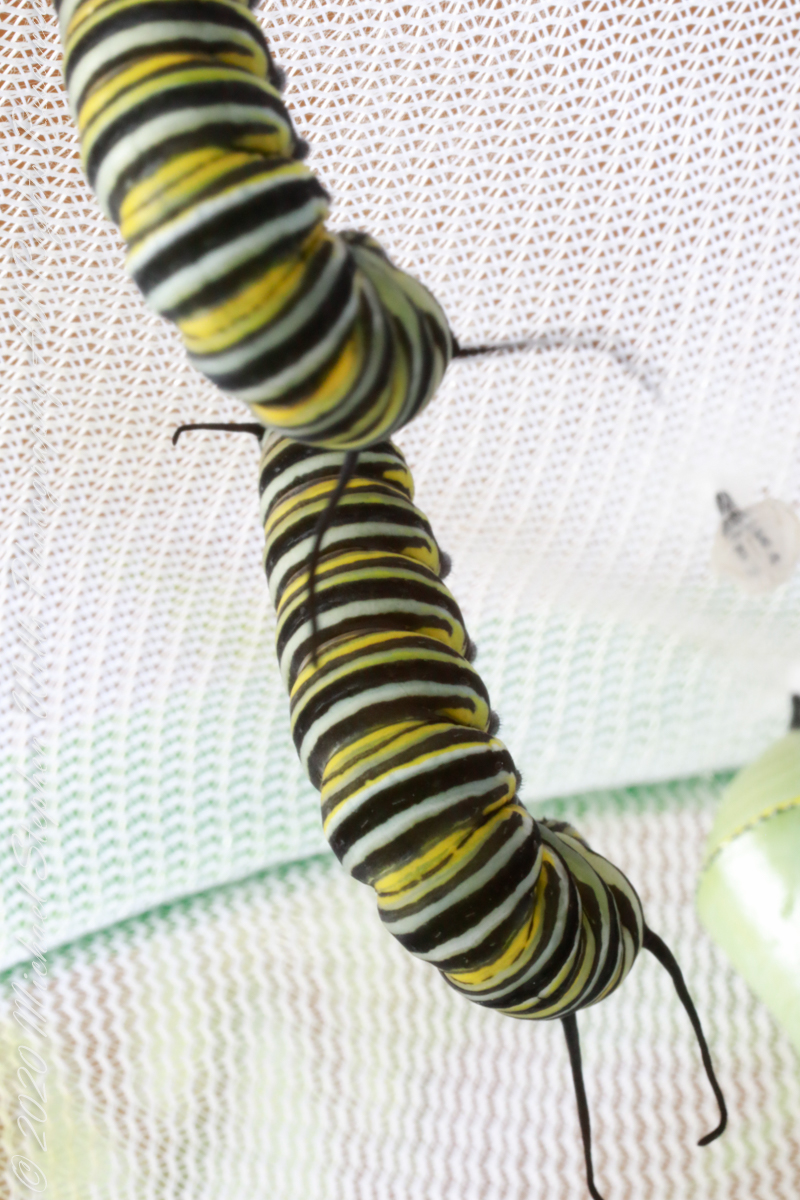
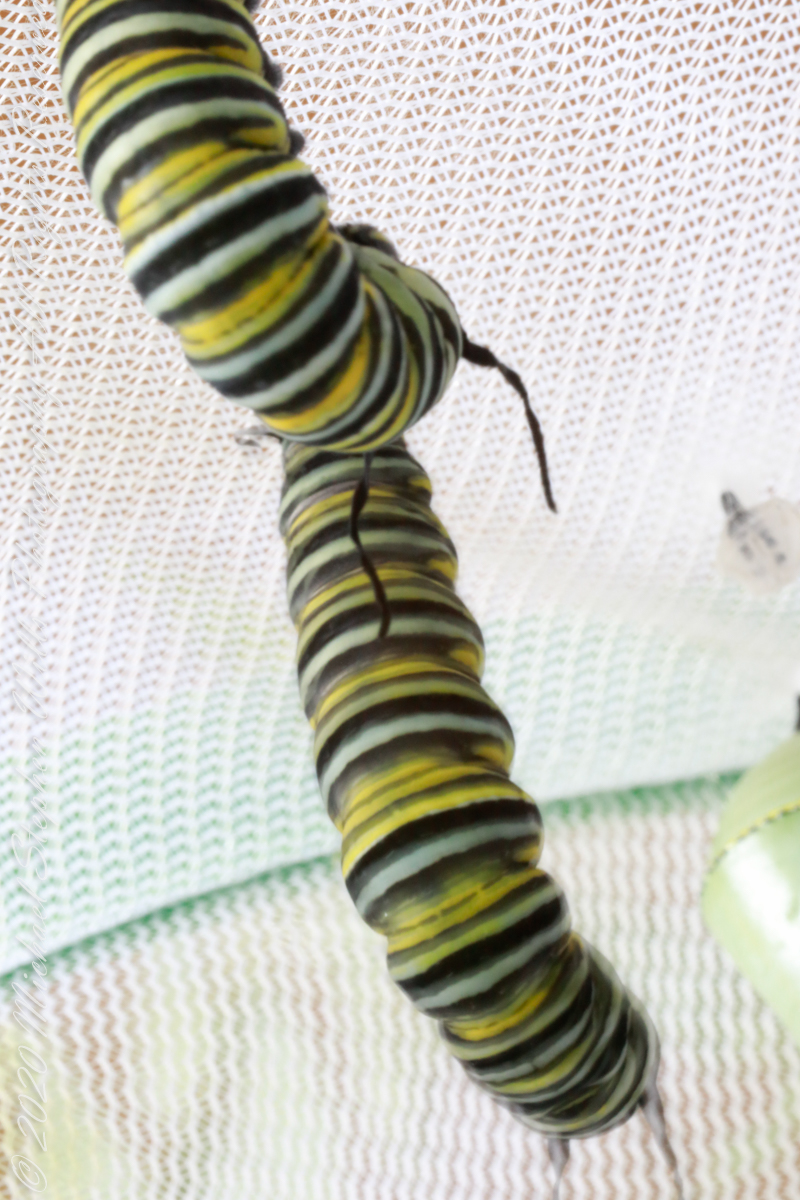
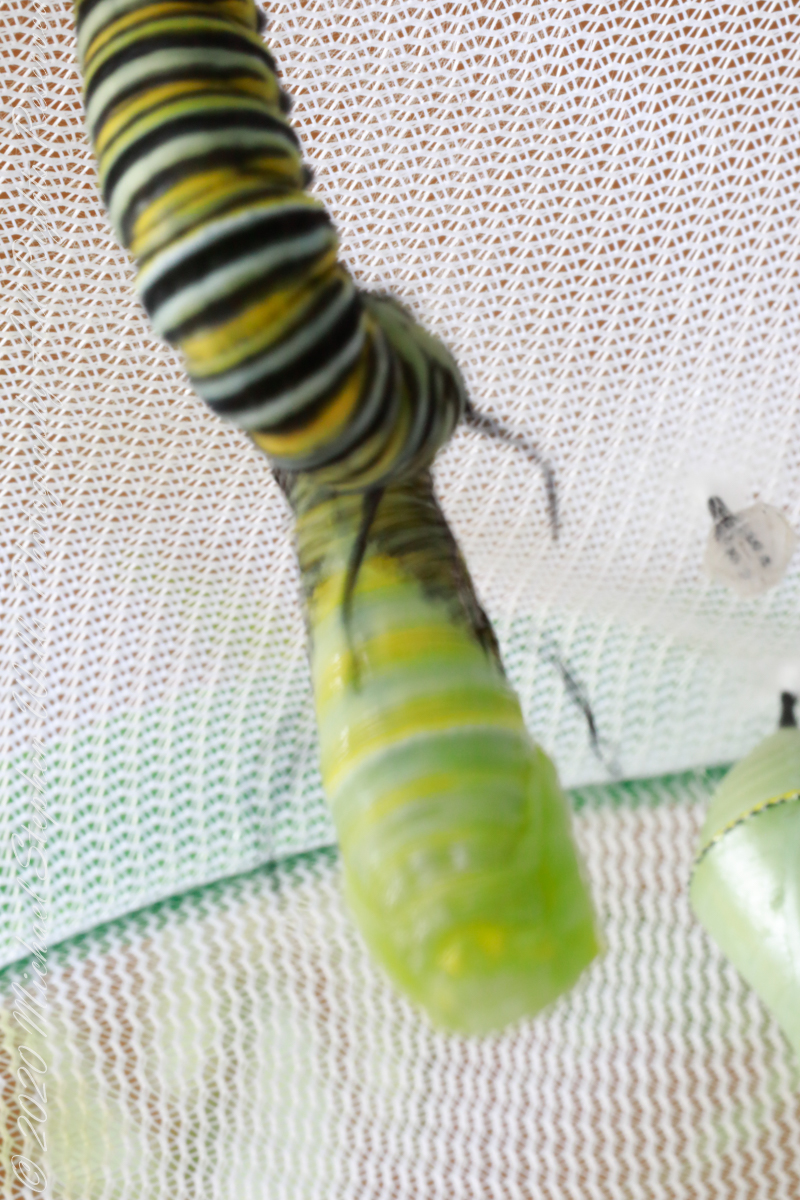
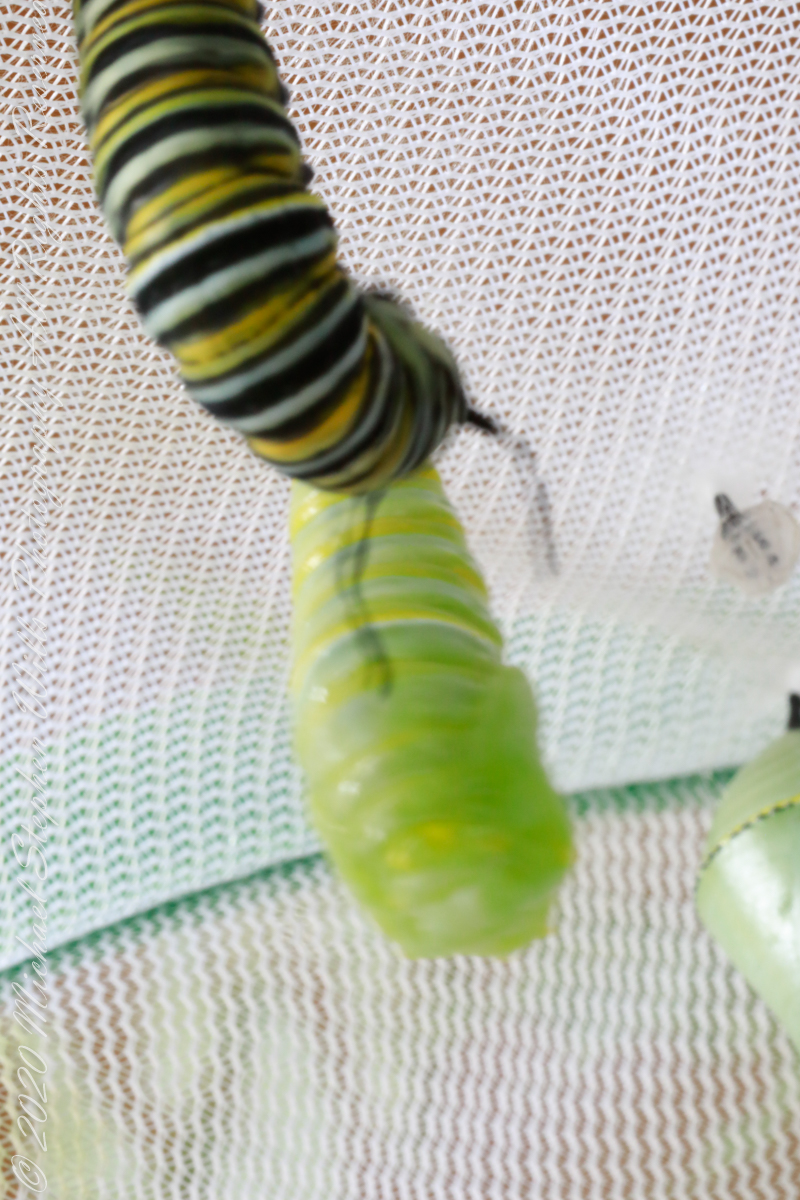
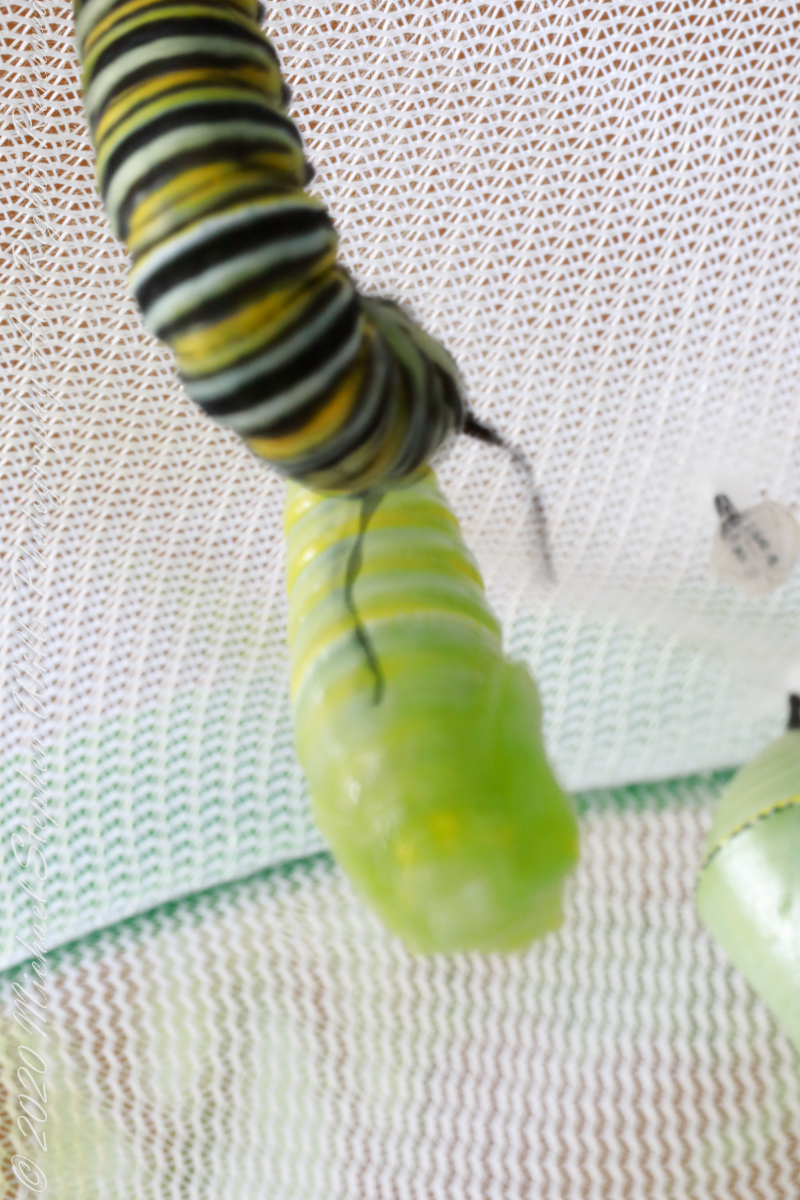
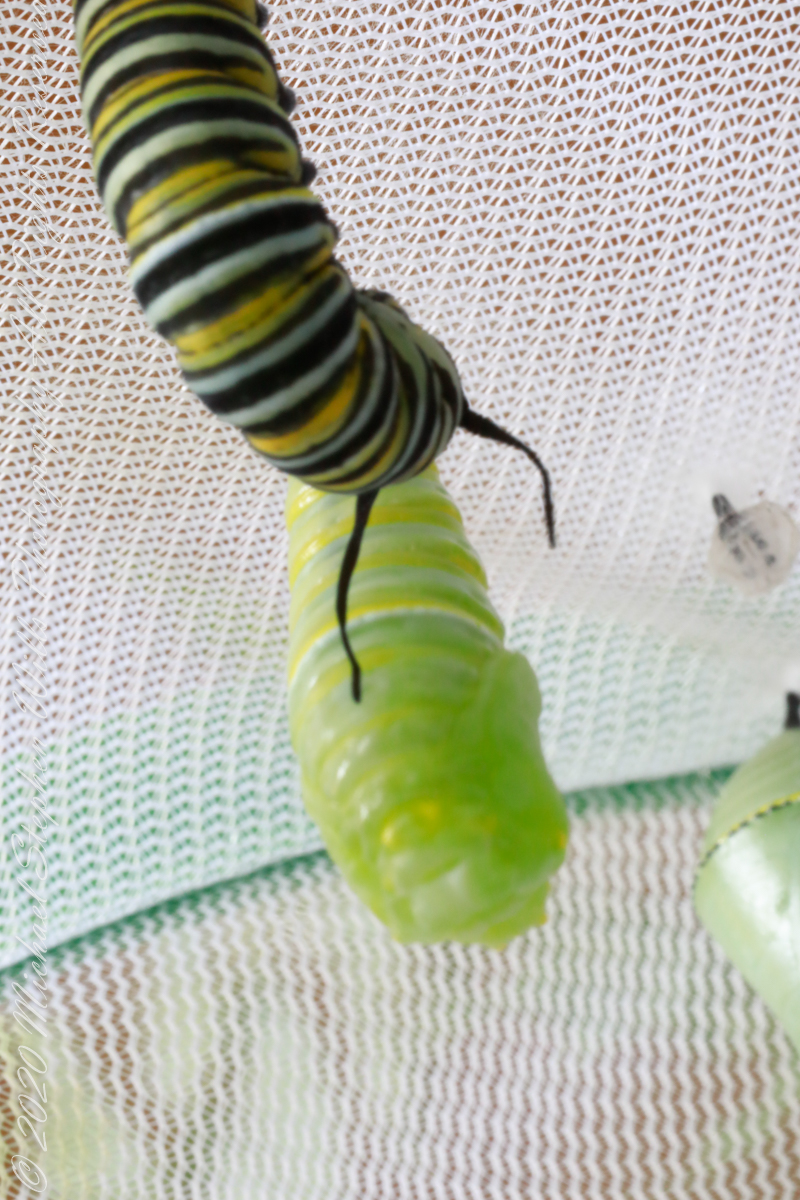
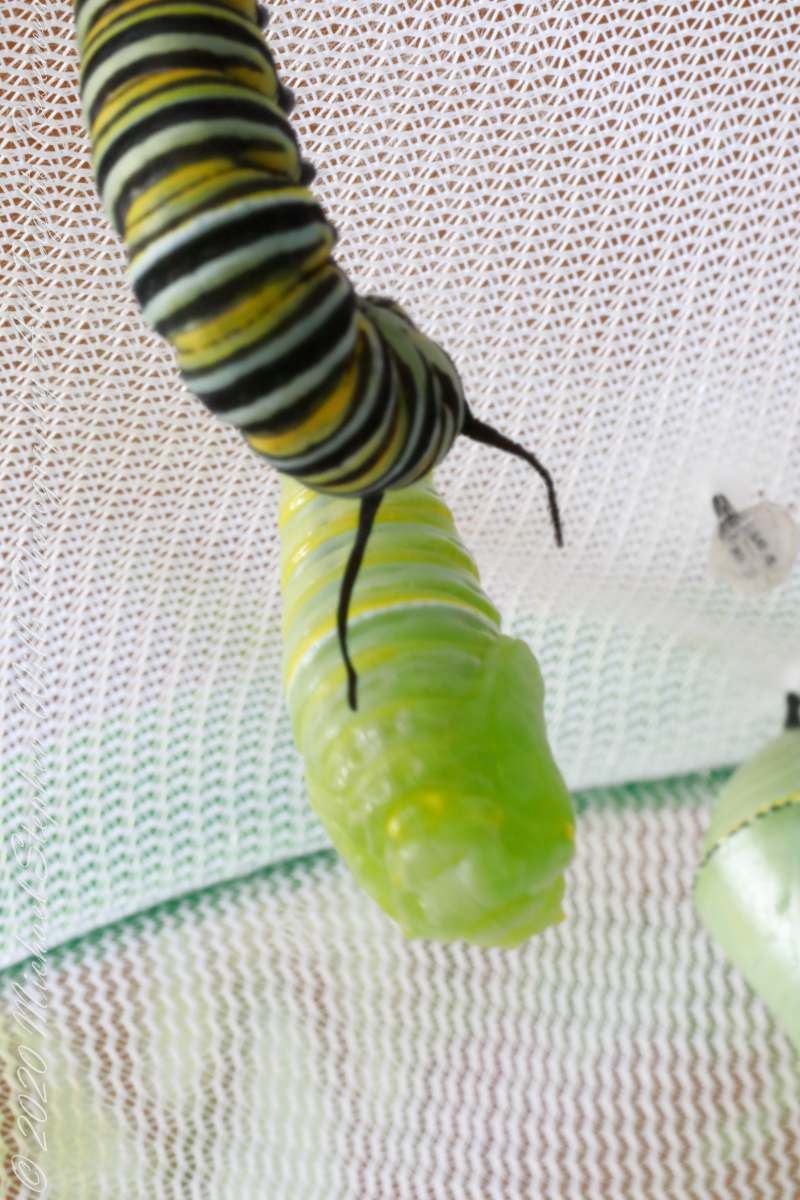
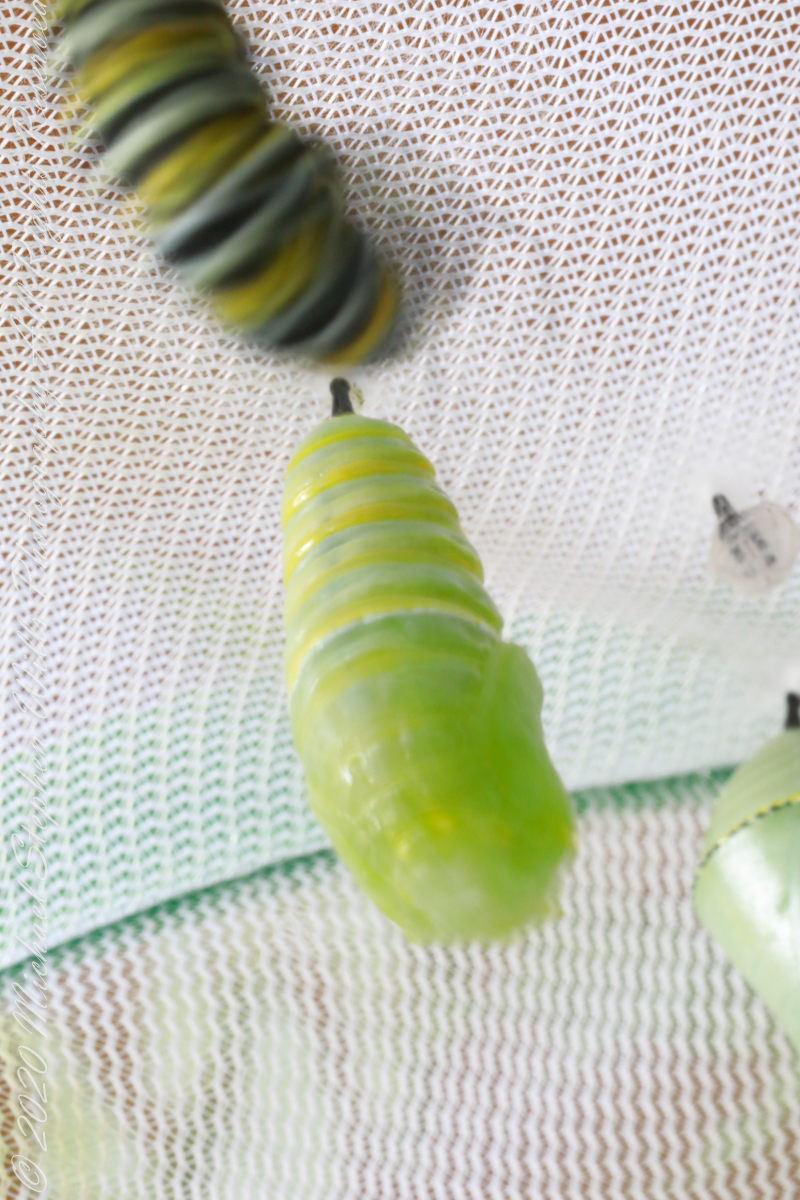
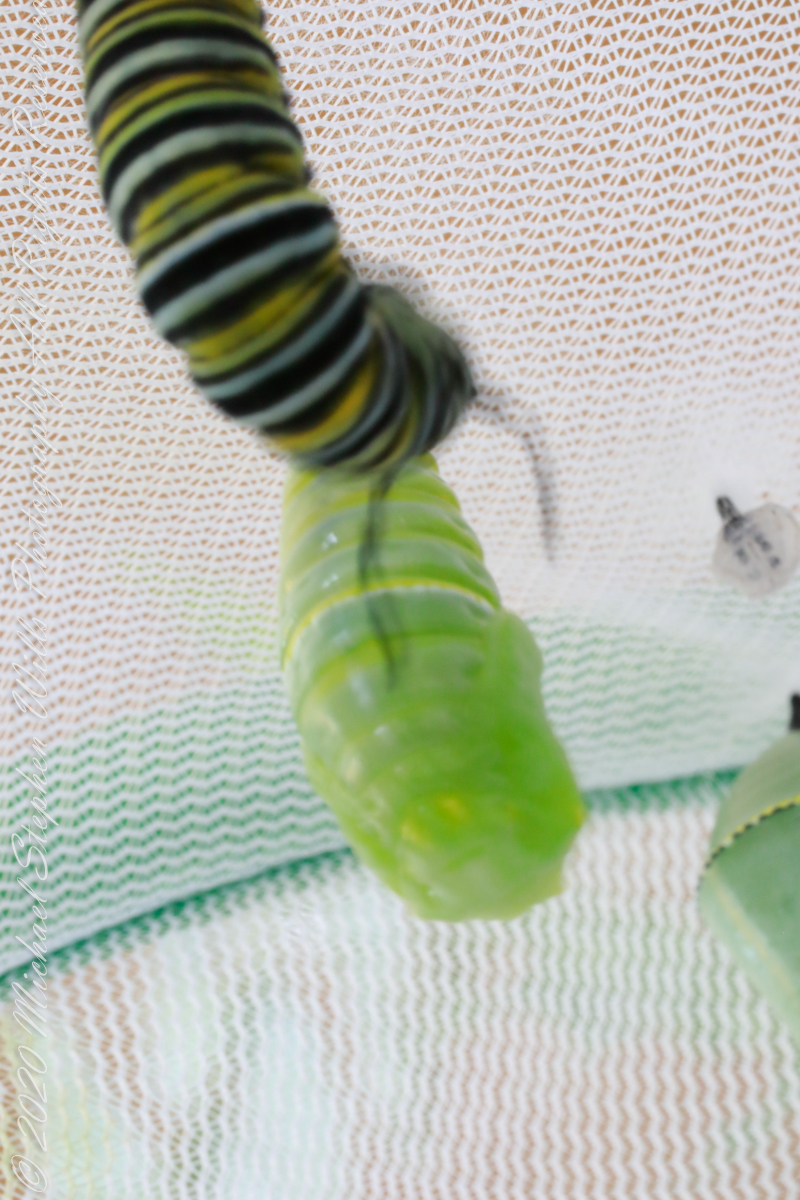
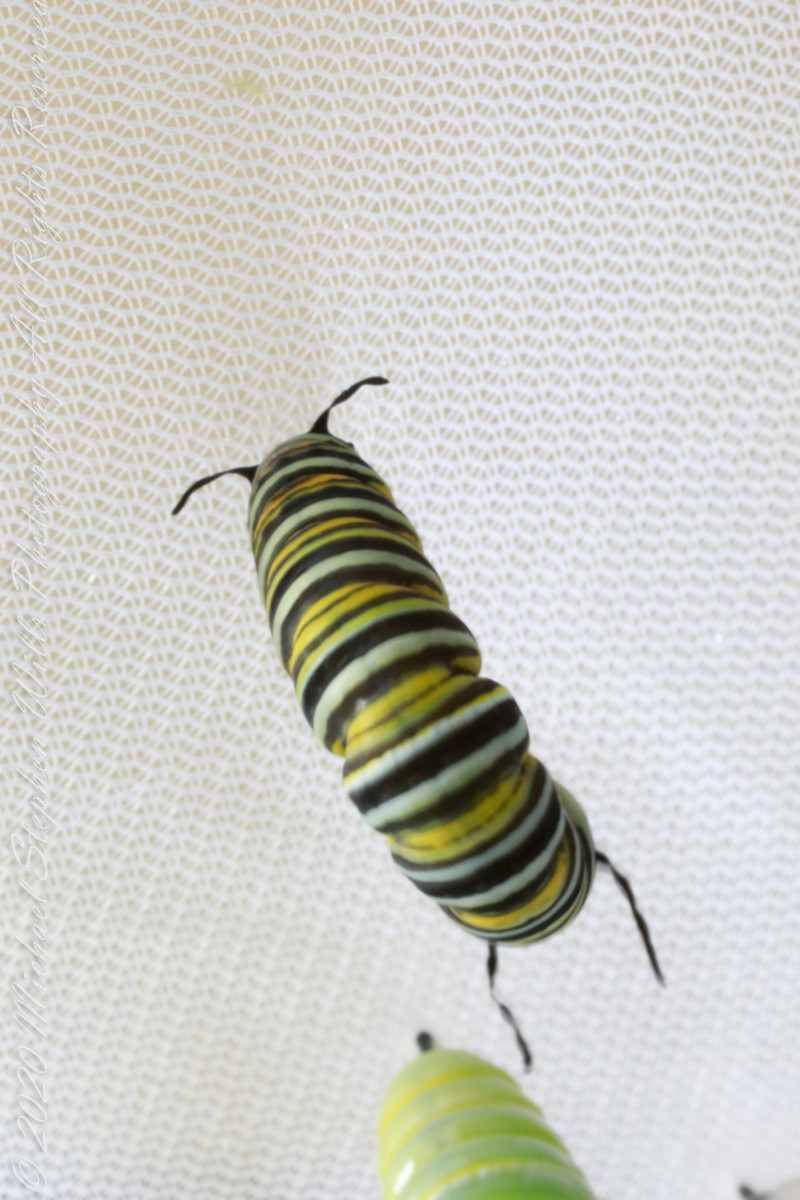
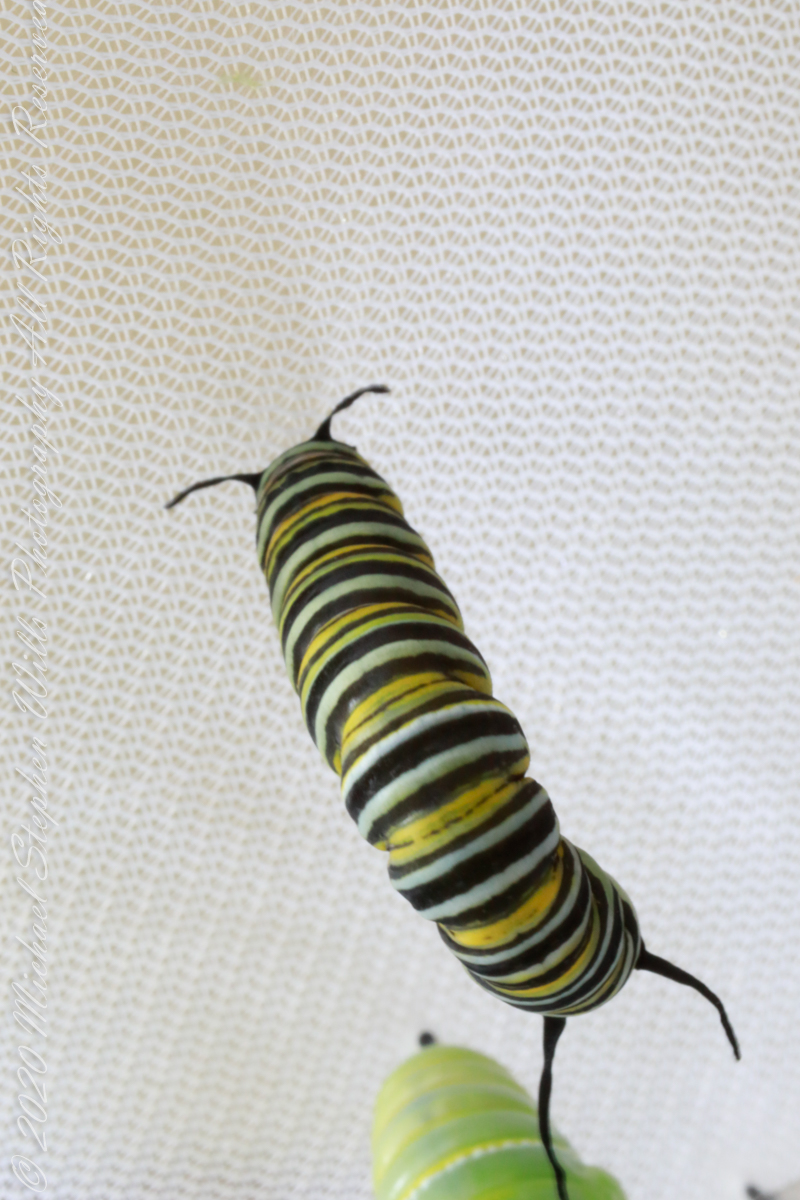
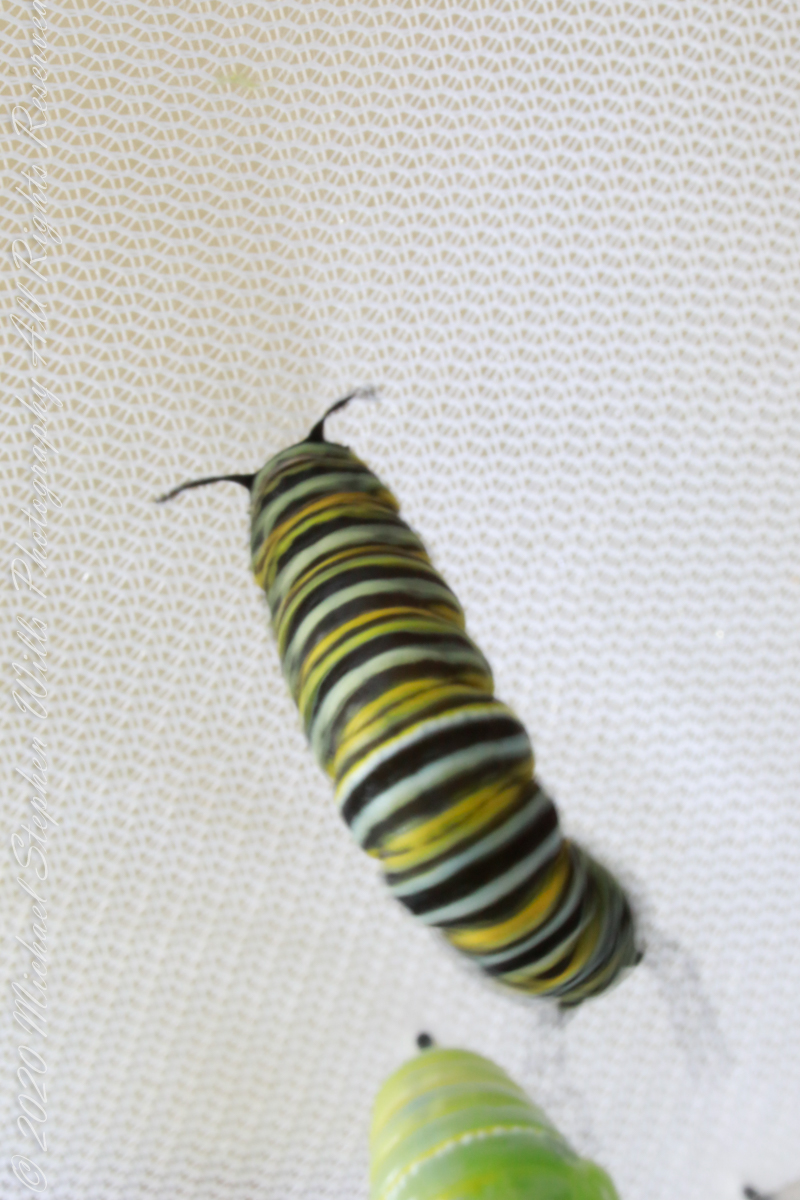
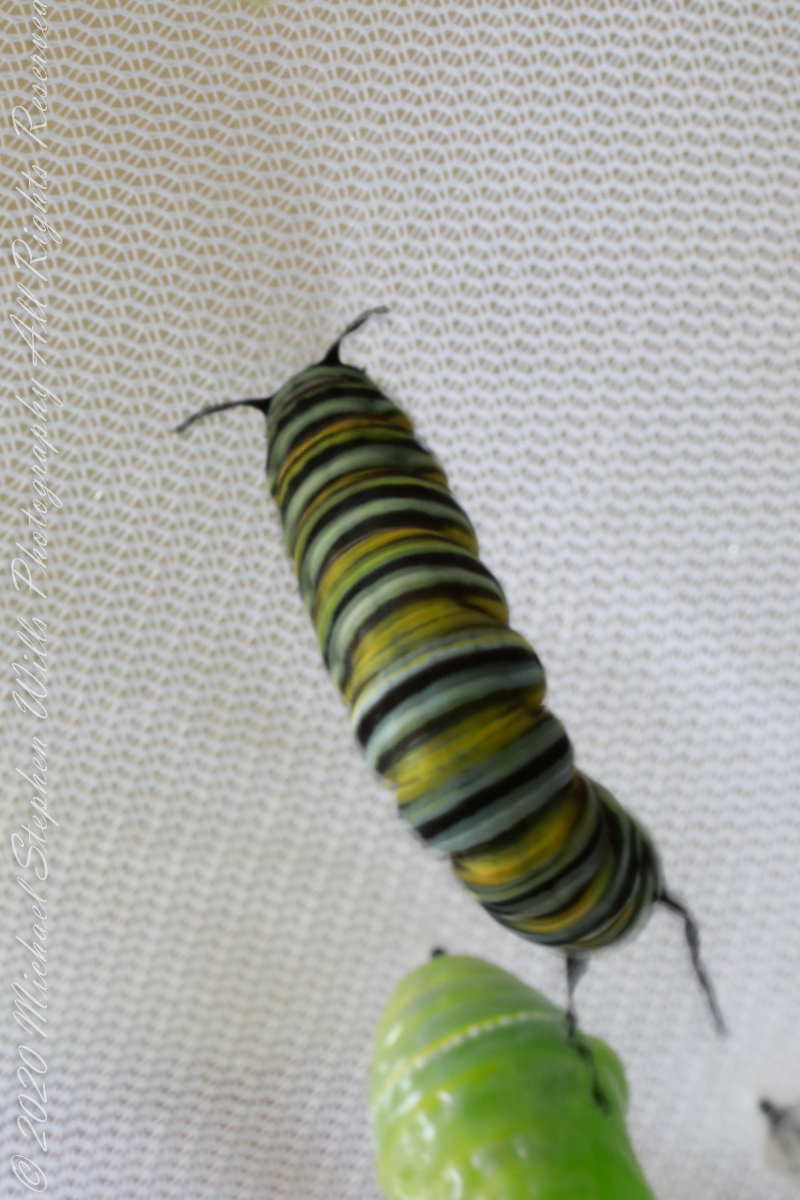
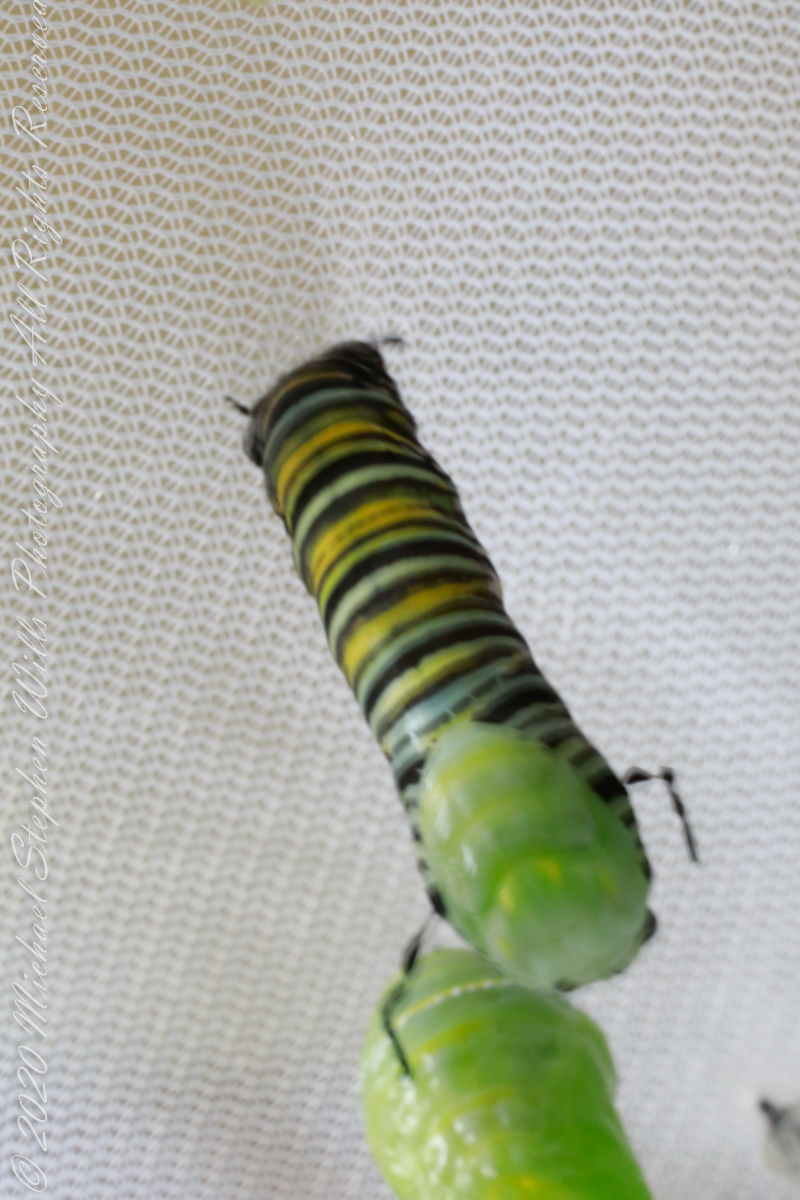
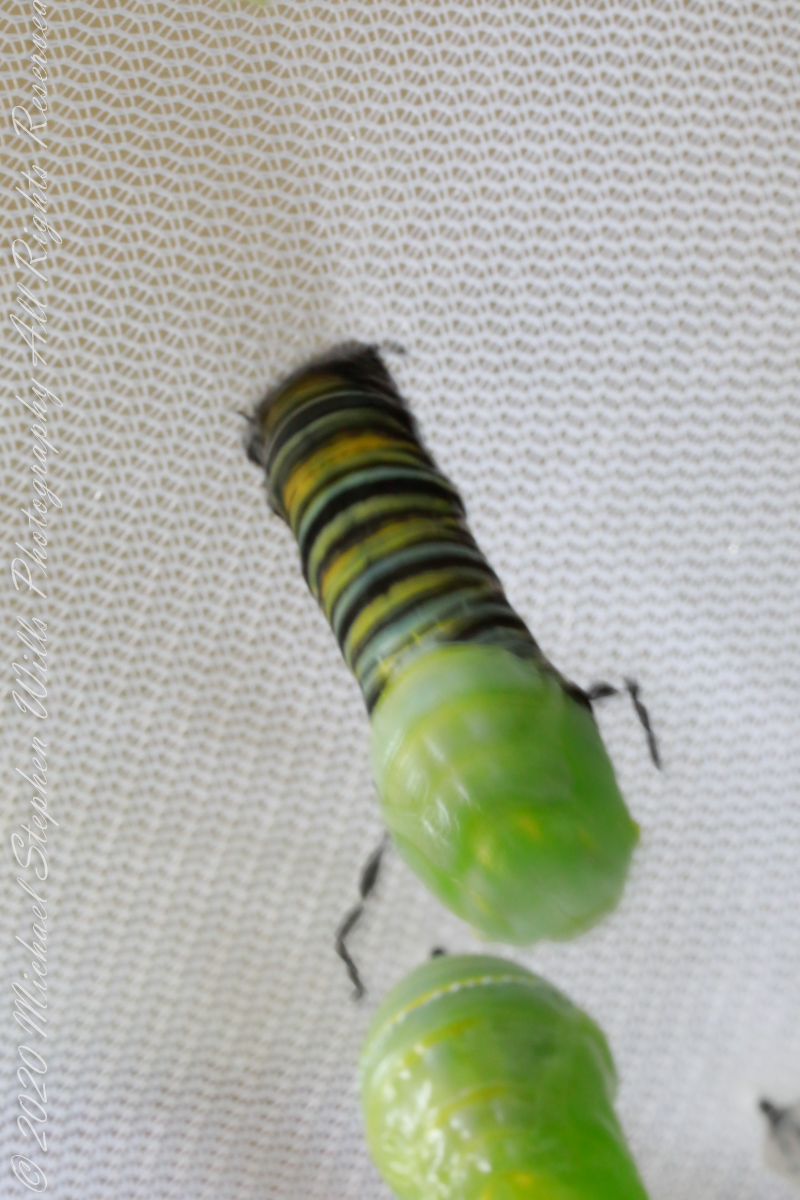
The sixth transformation happens when the fifth instar caterpillar, fully sated with milkweed, climbs to a perch, spins silk around a set of prolegs, affixing them from a horizontal surface from which to hang. For this set I captured the moult of two monarchs hanging side by side inside a mesh cage with an east facing window for light. Even though the day was sunny, with the f-stop set to the lens maximum (32) for the deepest field of view, ISO at 32,000 the energetic skin shedding movements of the chrysalis cause blurring.
For 10-12 hours of profound bodily configuration changes the hanging caterpillar hangs without movement. In the last image of this first set, the next caterpillar is blurred by initial moult movement.
My attempt to capture a video of the moult was frustrated by inadequate lighting, the result was too dark to use. I must solve this technical challenge as the motions of the chrysalis as difficult to believe without visual proof. That said, here is the second moult with the first completed moult in background.
An interesting fact is the caterpillar uses silk to attach the skin to a substrate for the first five moults to hold the skin back while it crawls out of the discarded skin. The first meal of the hatched caterpillar (first instar) is the egg, the shed skin is the first meal for instars 2 – 4. The shed skin of instar 5 drops from the chrysalis. This is why you should never remove a Monarch caterpillar from the leaf, as in doing so may hinder a moult in progress.
Copyright 2022 Michael Stephen Wills All Rights Reserved









 Michael Stephen Wills Photography