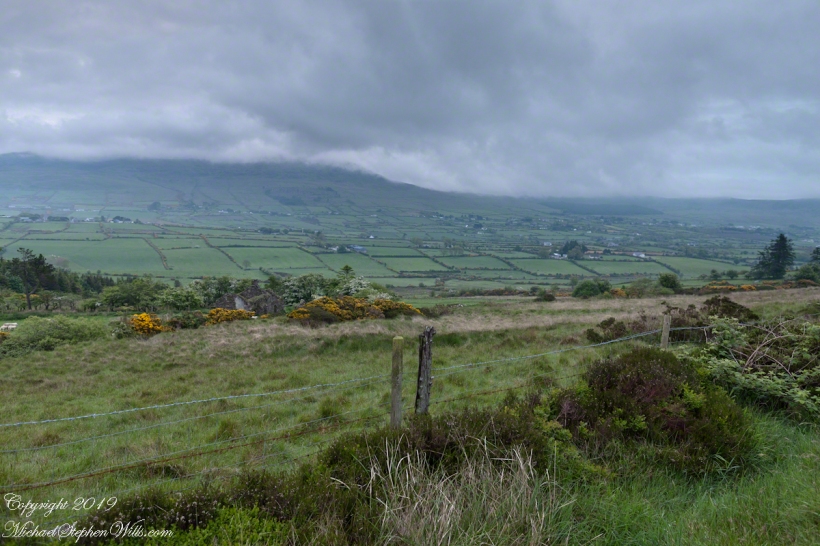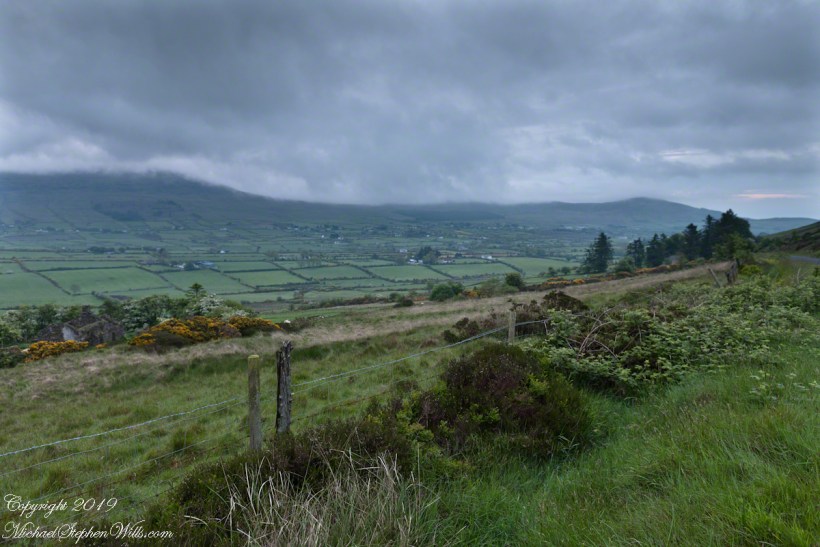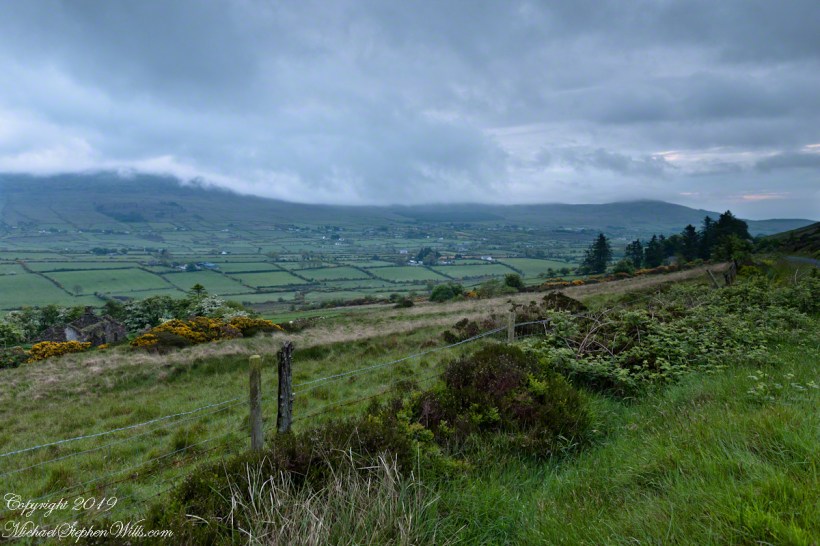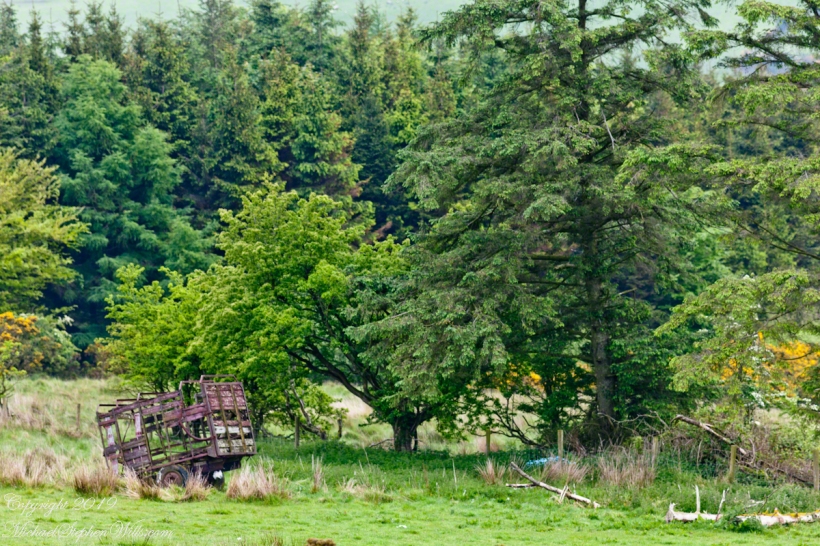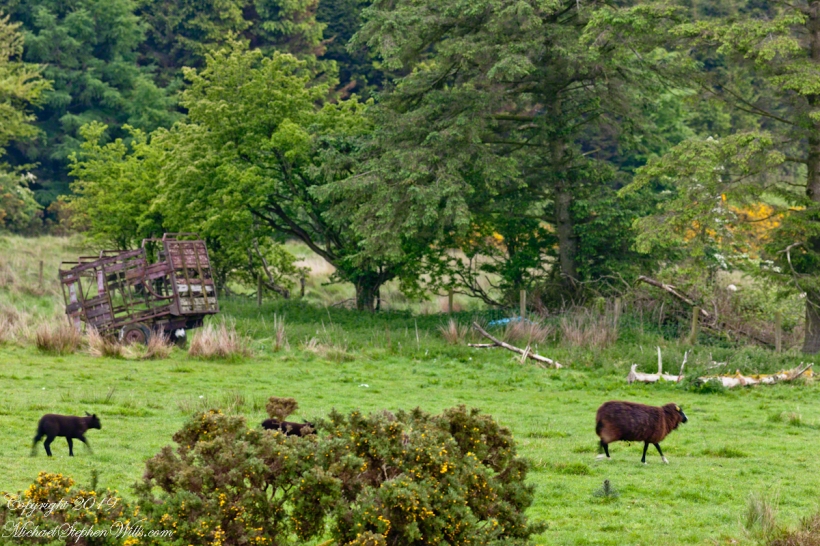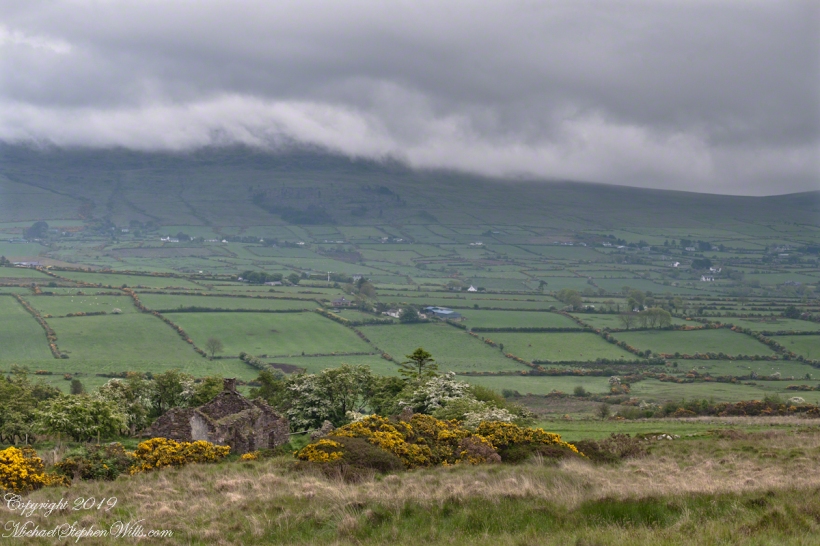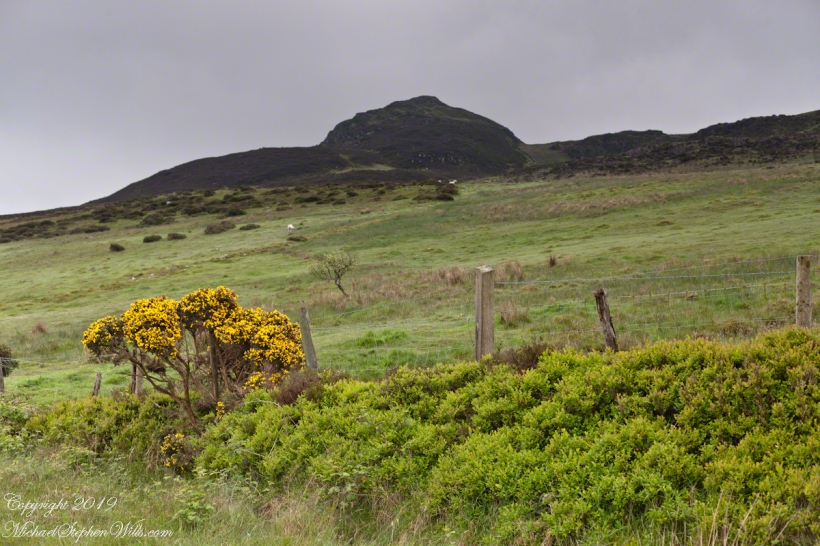
Torr Head Crooked Horizon Problem 4

What solutions do you see? Please post your solutions in comments. Thank You

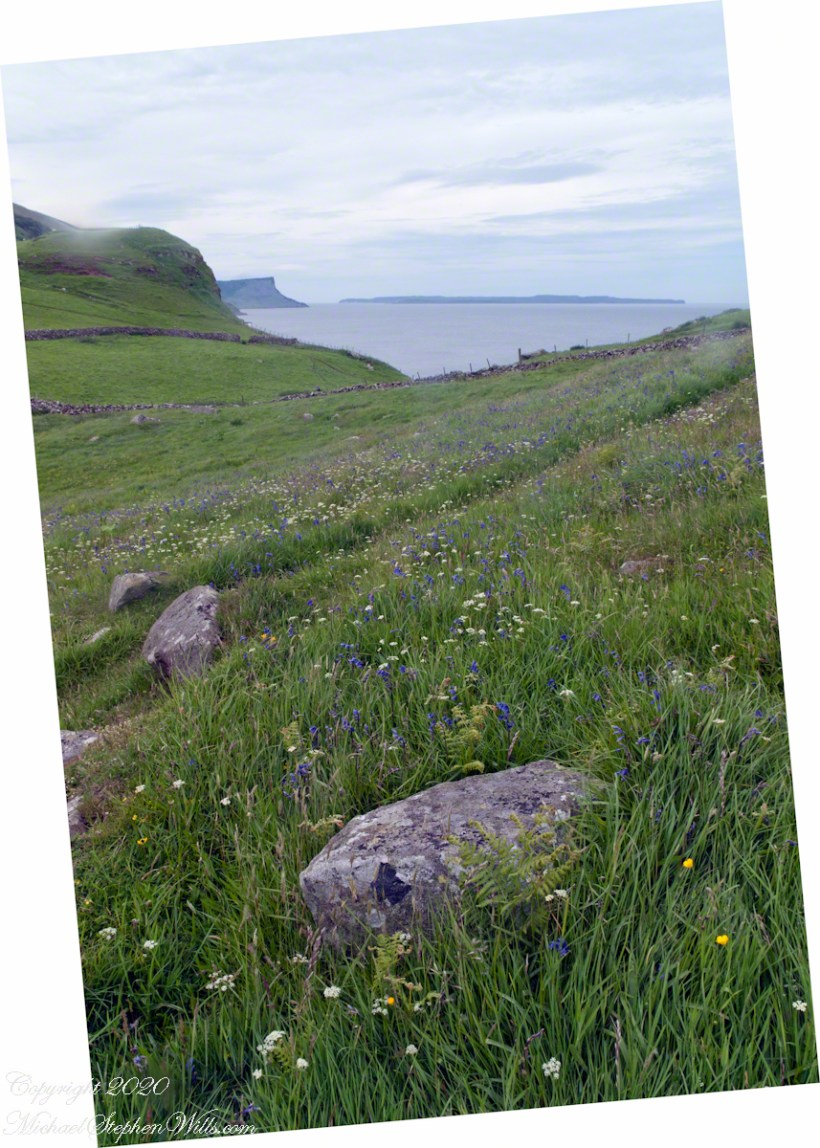
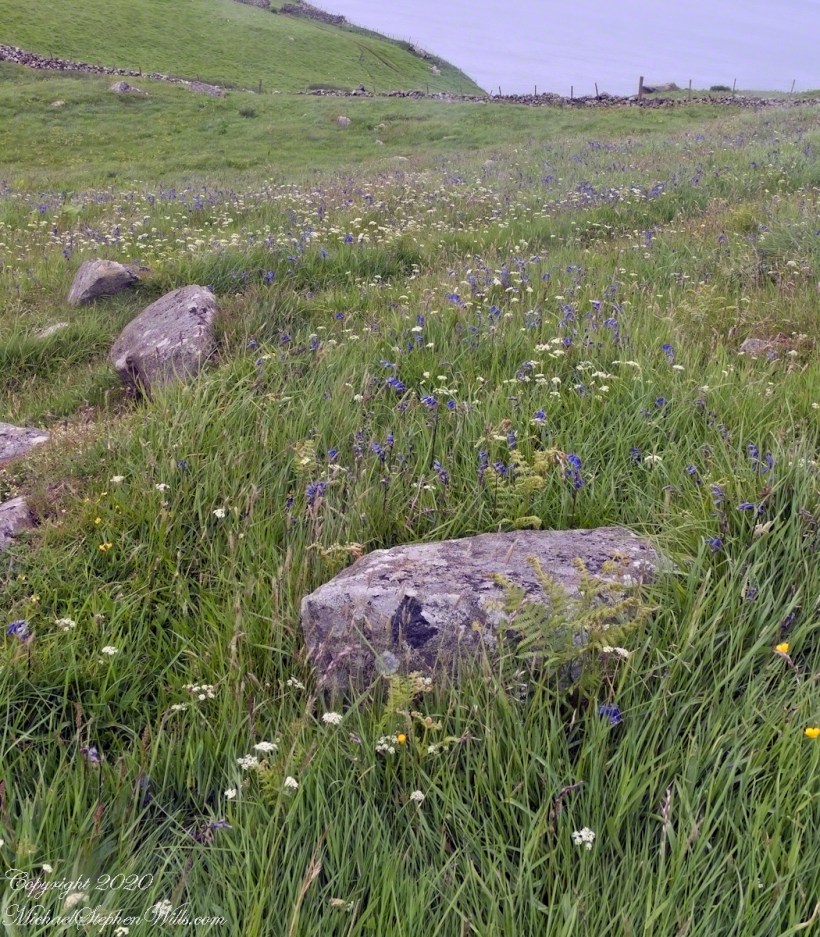
A third technique to solve a tilted horizon, first described this post, is the counterpoint to the second technique and a variation of the first technique. Instead of building out, this solution is to crop the blank space also removing a portion of the image.

Here is a Photoshop screen capture from just before the crop is executed. The grid of fine lines is the Crop tool. For example, on the upper right corner a portion of Rathlin Island, the water, a slice of land are removed along with the blank portion.
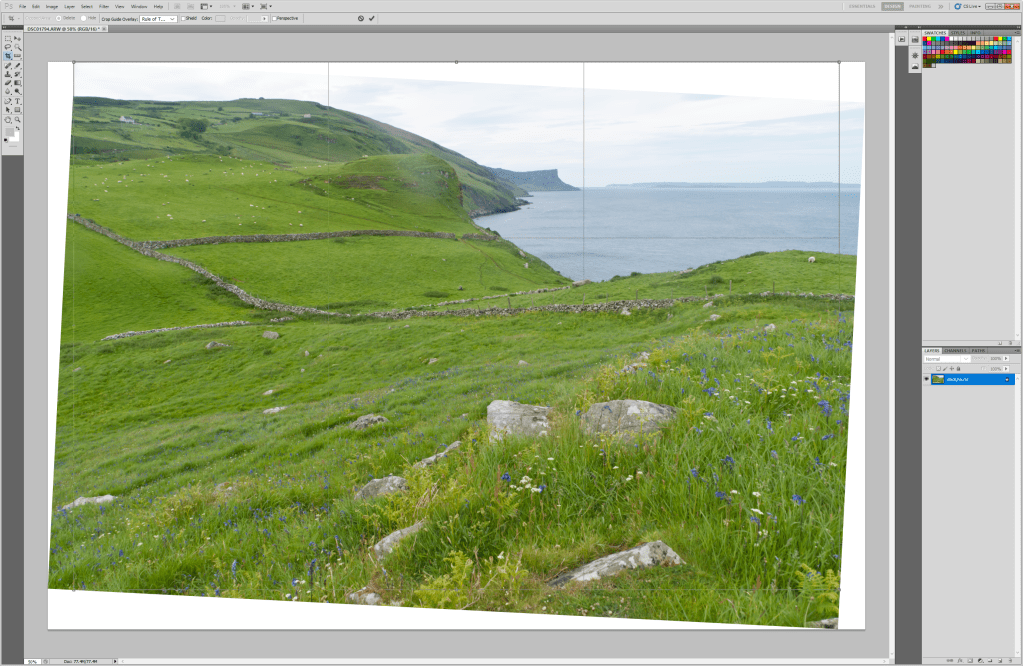
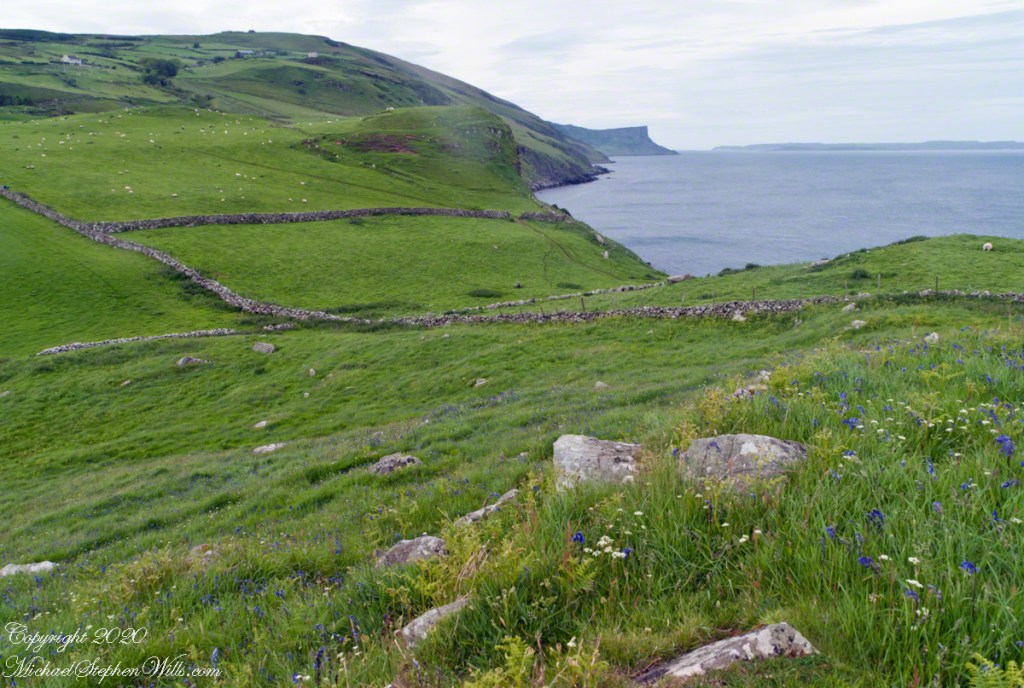
Note from the Photoshop screen capture, the blank space along the upper margin is NOT removed. To do so will ruin the composition, the top of the hill on the upper left would be removed. Instead, I used the second technique to copy the sky over the blank portion left after cropping.

Click photograph for a larger view. To do this from WordPress Reader, you need to first click the title of this post to open a new page.

The second solution post describes how copying content onto the blank space can cause duplication of image features. In the above example, I need to perfect the image, modifying the clouds OR perfect the copy process to avoid the duplication.

The end result is a view of wildflower meadow, foreground, coastal sheep pastures running up the high hill. Named Greenanmore, the hill is a site notable for a neolithic passage tomb. The distant land across the North Channel water is Rathelin Island.

See this post for a description of the foreground wildflowers.

Here is a slideshow of the corrected images of this series. To visit from WordPress Reader, you need to first click the title of this post to open a new page.
Copyright 2020 All Rights Reserved Michael Stephen Wills

Torr Head Crooked Horizon Problem 3

What solutions do you see? Please post your solutions in comments. Thank You

Click photograph for a larger view. To do this from WordPress Reader, you need to first click the title of this post to open a new page.

Here is the second approach to correction of the tilted horizon problem that was first described this post.

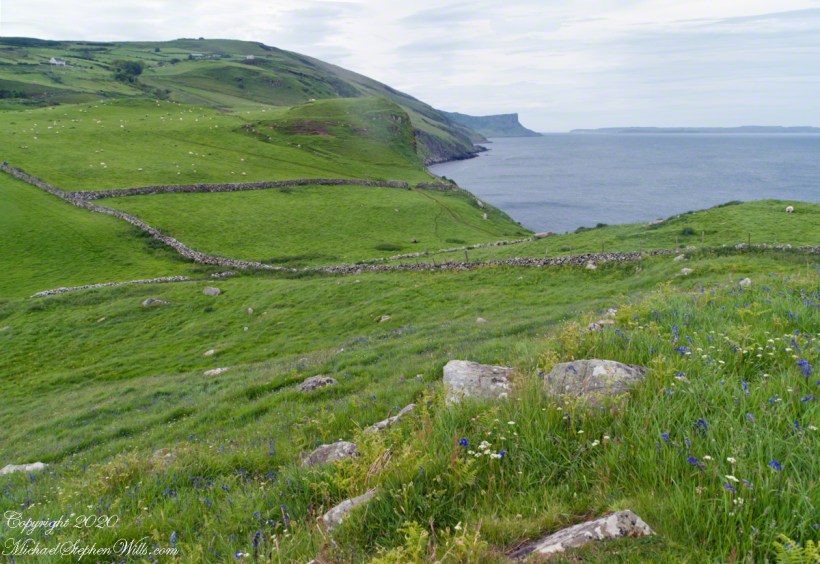
A time intensive technique is, after straightening the image, to build out the blank sections. Here is an image after straightening. Corrected image size increases with degree of tilt, measured by the degrees of correction with the area of size increase being blank. It is this blank space that is filled by this technique.

The technique is to open a copy of the image, leaving the original unchanged, then, with Photoshop Lasso tool, select a portion to copy to clipboard, then to the blank space. A great deal of time is consumed by the trail-and-error approach required.

The sky was the simplest, the cliffs most difficult. The grass and flowers were not a difficult as they first appear. I varied feathering with sky the highest (30 pixels), grass and flowers at 10 pixels. Another general maxim is to run the lasso line through pixels the most similar to each other. After pasting use the Move tool to place the new layer.

A common effect to avoid is duplication of image elements. For example, after copying there are duplicates of flowers. This can be corrected through use of the Erase tool to reveal original image elements under the copied layer.

The cliffs on the upper left were impossible to correct. I solved this corner by running the Lasso line through the sky, water and grass. As a result the space between Rathlin and the “mainland” is wider.

See this post for a description of the foreground wildflowers.

Here is a slideshow a straightened, uncorrected and straighted, corrected images. To visit from WordPress Reader, you need to first click the title of this post to open a new page.
Copyright 2020 All Rights Reserved Michael Stephen Wills

Torr Head Crooked Horizon Problem 2

What solutions do you see? Please post your solutions in comments. Thank You

Click photograph for a larger view. To do this from WordPress Reader, you need to first click the title of this post to open a new page.

Here is one approach to correction of the problem described in my last post.

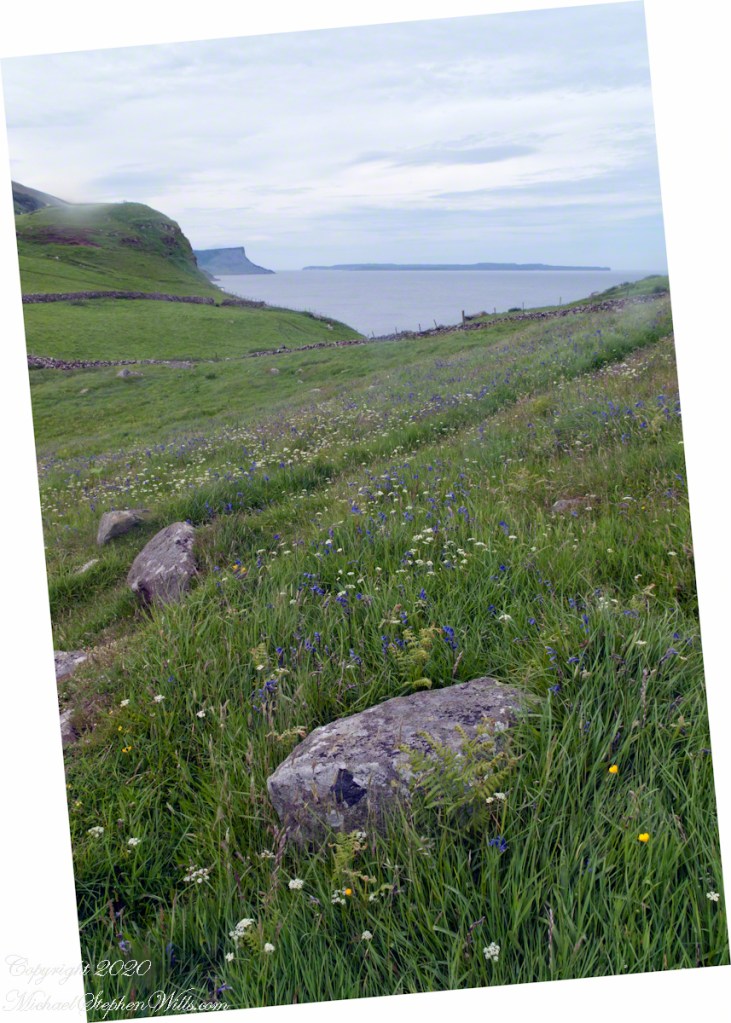
In Photoshop, make a copy of the file and crop out reference to the crooked horizon. In this case, my focus is the wild flower meadow. The raw image was large enough leave enough pixels for a usable image.

A portion of the ocean water was filled in using a technique I will explain tomorrow. See this post for a description of the wildflowers.

Here is a slideshow a straightened, uncorrected and straighted, corrected images. To visit from WordPress Reader, you need to first click the title of this post to open a new page.
Copyright 2020 All Rights Reserved Michael Stephen Wills

Torr Head Crooked Horizon Problem 1

What solutions do you see? Please post your solutions in comments. Thank You

Click photograph for a larger view. To do this from WordPress Reader, you need to first click the title of this post to open a new page.

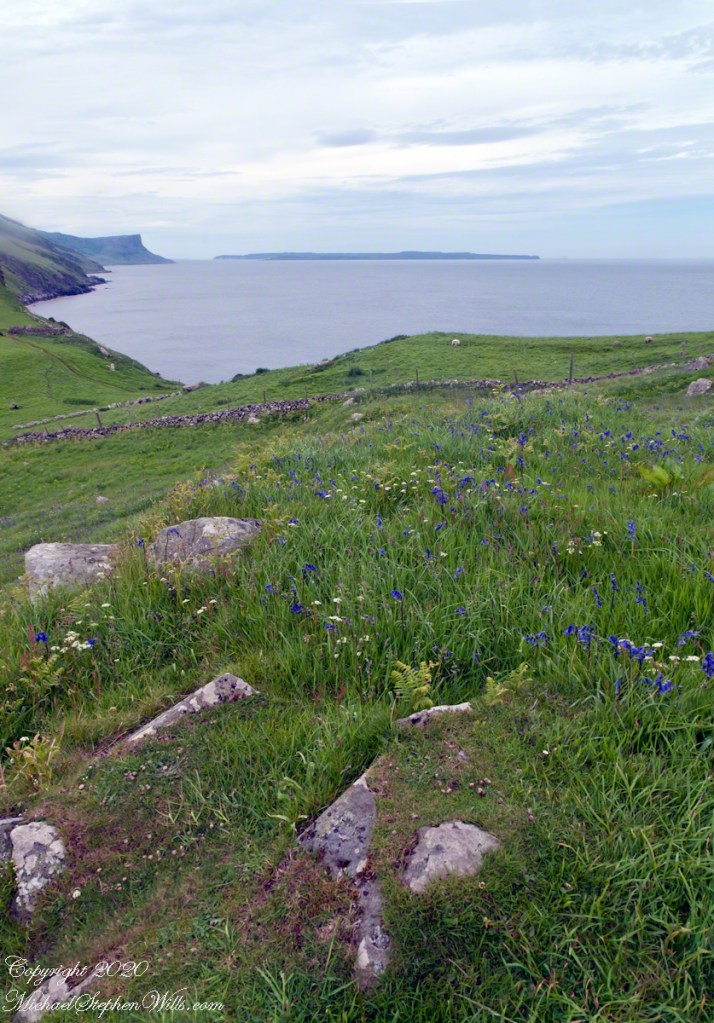
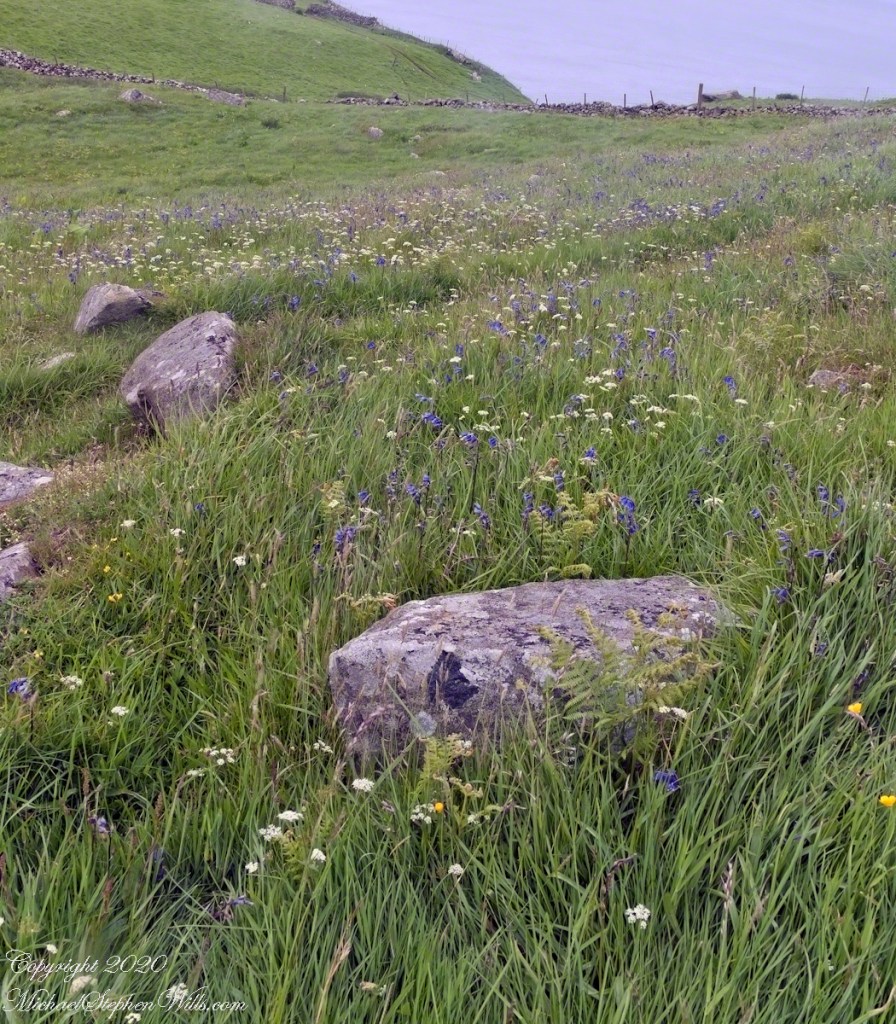
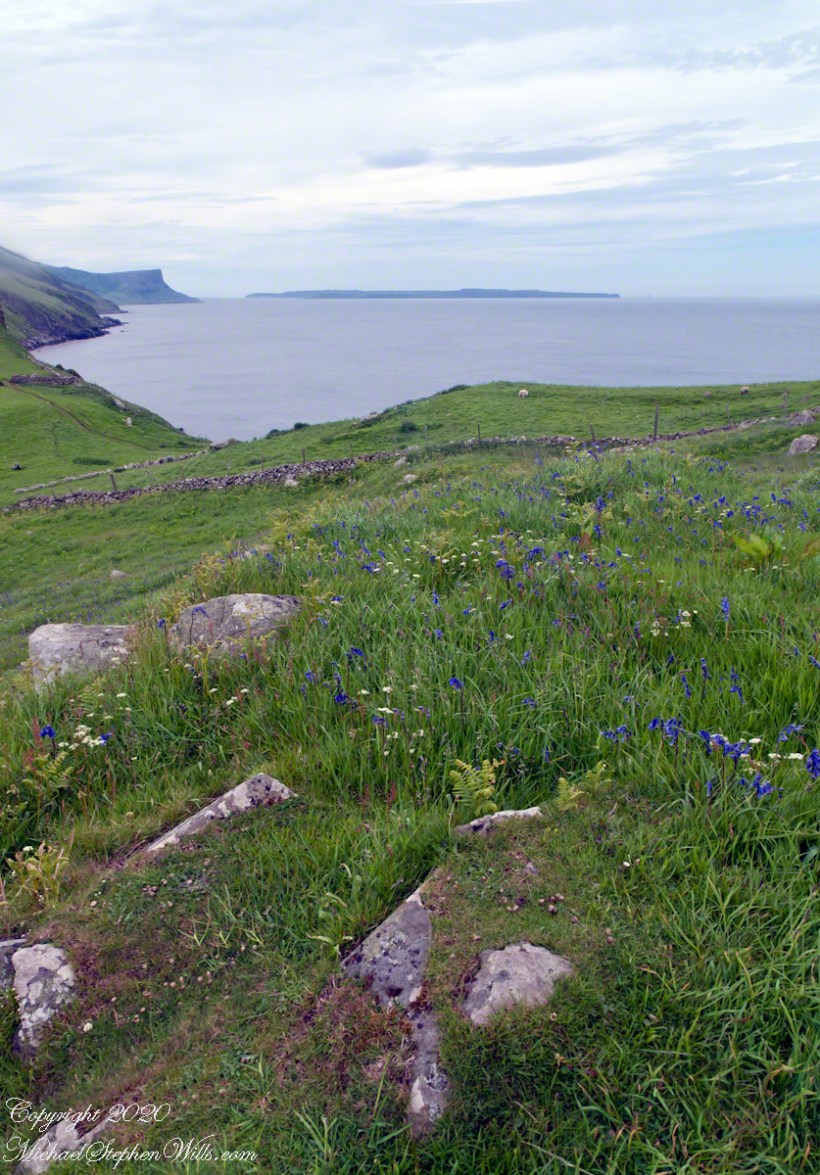
For this photograph using a handheld Sony Alpha 700 dslr, taking in the foreground wildflower meadow, I neglected to maintain a level horizon.  

Leveling the image results in too much cropping of this view from Torr Head, north. The best approach is to level the camera. When using the handheld technique, I found many lenses have guides in the view finder the horizon can be lined up against. This technique is useful for a tripod mount. Later camera models have a feature that displays a level, handy for use with a tripod. For the handheld technique, these cameras provide a viewfinder leveling grid.

The next few days I will explore some solutions to the problem of corrected for a crooked horizon.

Copyright 2020 All Rights Reserved Michael Stephen Wills

Slievenaglog Slideshow

A May Morning, Early

Every photograph from my recent posting were accepted by Getty IStock. Click this link to visit the photographs on IStock.

Here is a slideshow of my Slievenaglog photography. To visit from WordPress Reader, you need to first click the title of this post to open a new page.
Copyright 2020 All Rights Reserved Michael Stephen Wills

Curious Horses

A photographer and his audience

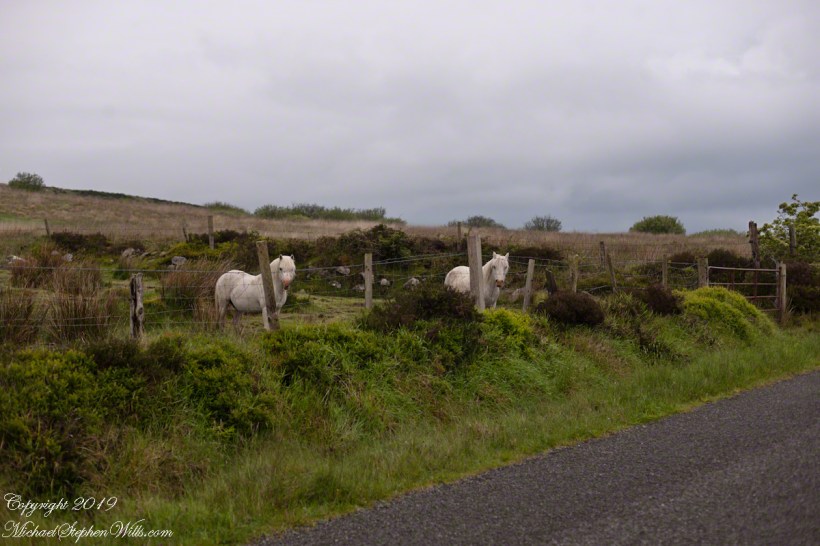
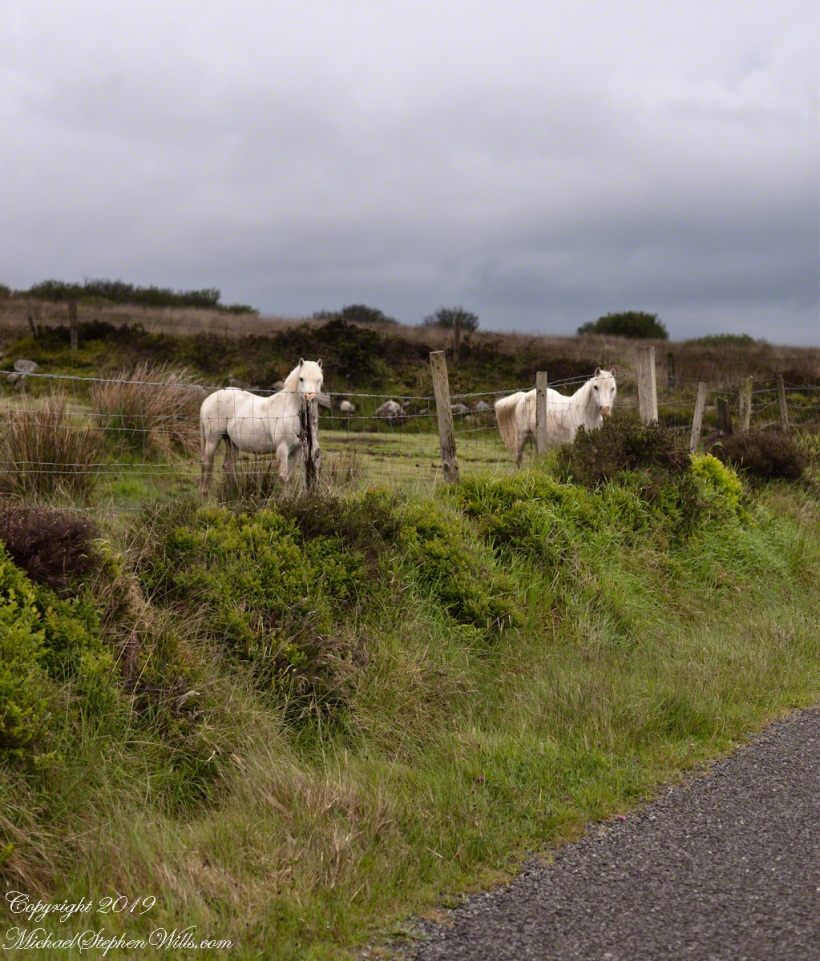
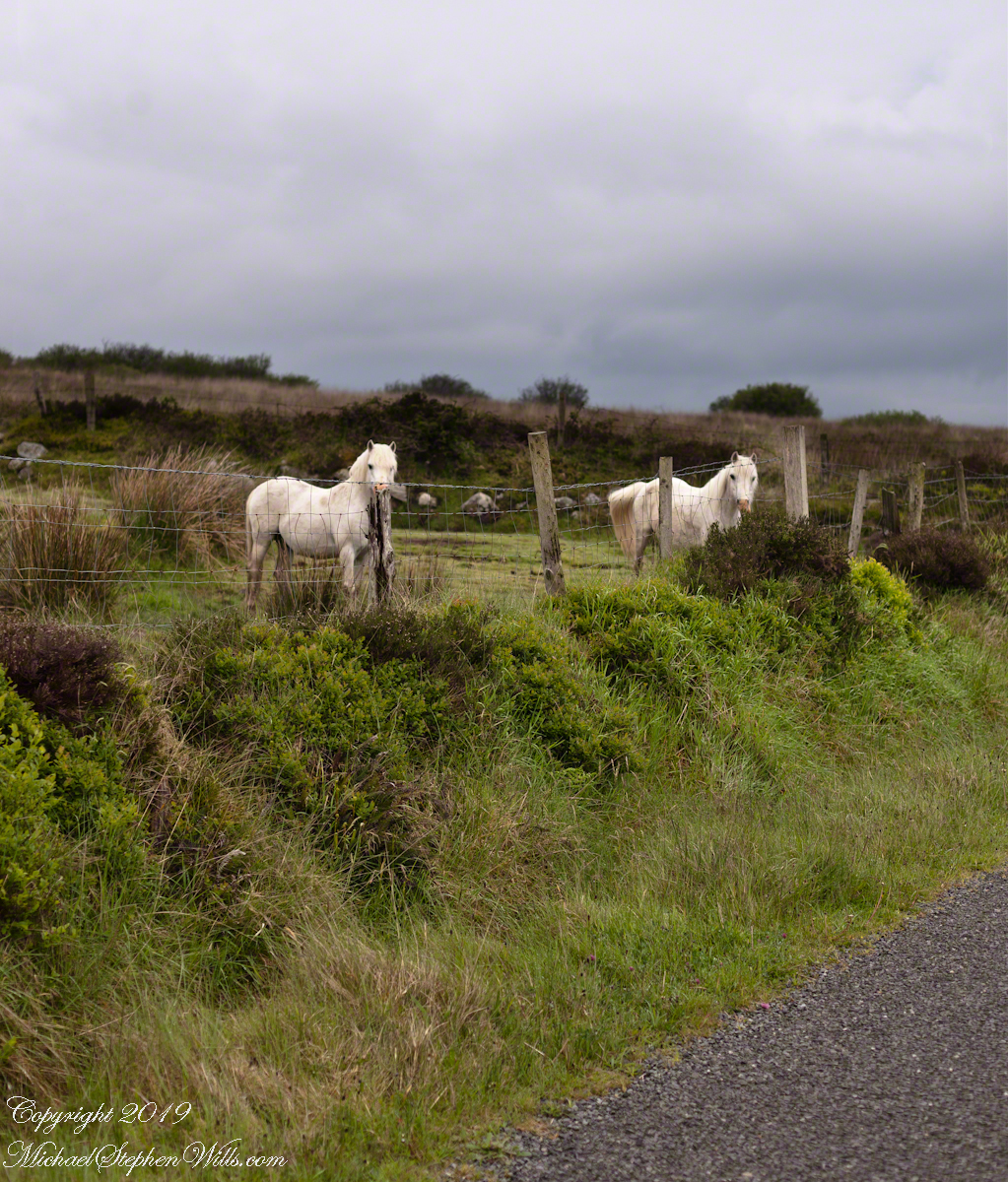
One May early morning two white horses come down from a sloping pasture on Slievenaglogh to view an interloper taking photographs. Slievenaglogh Townland, County Louth, Ireland.

Slievenaglogh Townland, County Louth, Ireland.

This I used the Canon EF 50mm f/1.4 USM lens. It is two shots, the first in horizontal, the second in vertical mode.

Click for another interesting Ireland post and story

Copyright 2020 All Rights Reserved Michael Stephen Wills

50 vs 24 mm focal length

A Cooley Peninsula Valley on a May Morning

On the northeast slope of Slievenaglogh peak (Irish: Sliabh na gCloch) on the road from Mullaghattin Townland to Riverstown. This day I swapped lenses and took in the same general direction for each. This is the first and last of a series using the Canon EF 50mm f/1.4 USM lens and I pulled in the shots from the Canon 24mm f1.4 L II USM lens, published in previous posts.

Click photograph for a larger view. To do this from WordPress Reader, you need to first click the title of this post to open a new page.

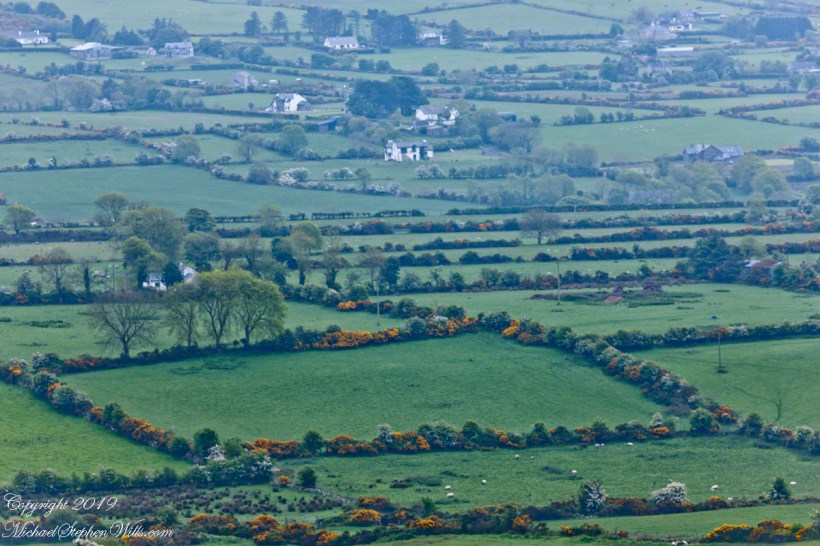
Here we look northeast from the Slievenaglogh Townland over the valley between Slievenaglogh and Slieve Foy peaks. Slieve Foy is the far ridge lost in clouds.

This is the first and last of a series using the Canon EF 50mm f/1.4 USM lens.

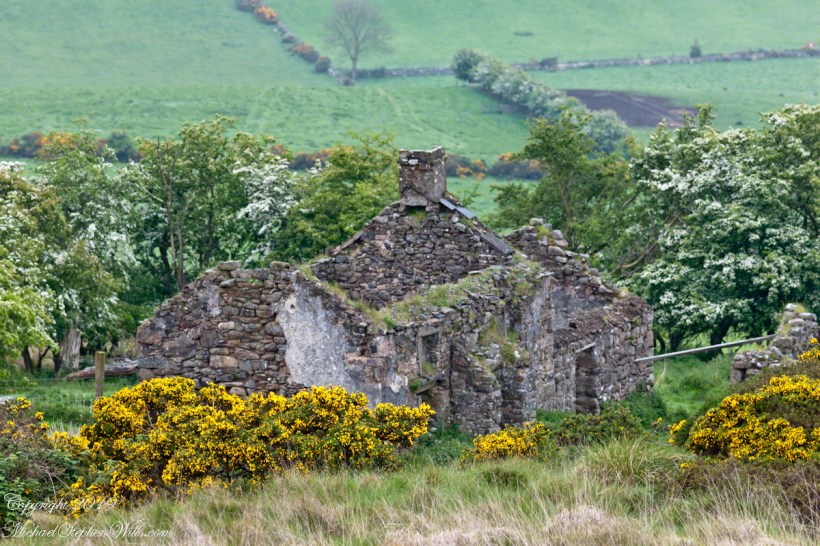
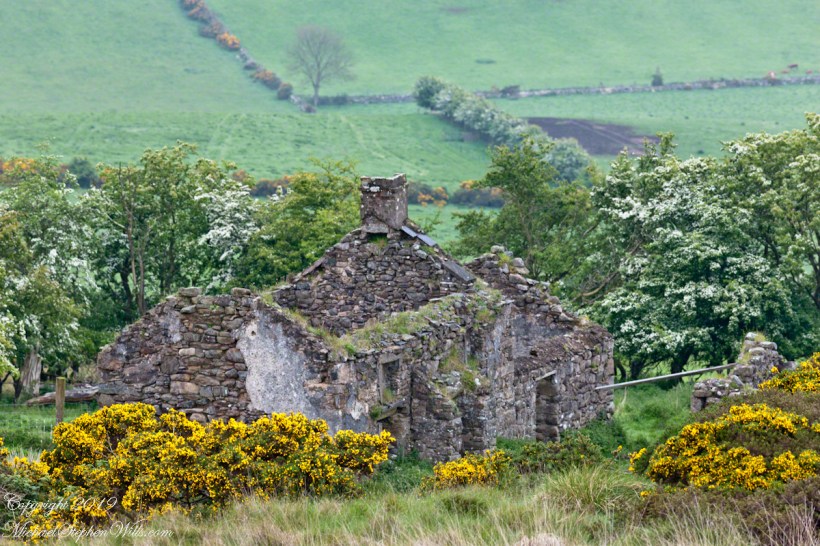
The view includes Little River, Castletown River, Ballycoly and Glenmore Townlands. Adjacent is a sheep pasture with a farm ruin behind the yellow flowered gorse (Whin bush, scientific name Ulex).

Early morning, late May 2014.

Here is a slideshow of the 50mm and 24mm images of this post.

Click for another interesting Ireland post and story

Copyright 2020 All Rights Reserved Michael Stephen Wills

Frame

green pastures framed by Whin Bush and Hawthorn windbreak

The road runs high on the shoulder of Slievenaglog peak, the 200 mm lens peers into the next townland over, Ballycoly (or Ballygoley), the valley floor broad, pastured.

Click photograph for a larger view. To do this from WordPress Reader, you need to first click the title of this post to open a new page.

This is the seventh and last of a series using the Canon EF 200mm f/2.8L USM lens.

Here is a recap of recent posts with the 200 and 24 mm lens. Can you tell the difference?

Click for another interesting Ireland post and story

Copyright 2020 All Rights Reserved Michael Stephen Wills

Abandoned II

So much depended on this wagon

Quickly moving sheep pass the hay wagon on May morning, early. A great start to this week.

Click photograph for a larger view. To do this from WordPress Reader, you need to first click the title of this post to open a new page.

This mountainside pasture is grazed by a flock of sheep alongside a long unused farm wagon. Slievenaglogh Townland, Cooley Peninsula, County Louth, Ireland.

This is the fifth of a series using the Canon EF 200mm f/2.8L USM lens.

Here is a recap of recent posts with the 200 and 24 mm lens. Can you tell the difference?

Click for another interesting Ireland post and story

Copyright 2020 All Rights Reserved Michael Stephen Wills

Balwen? Shetland?

Or neither?

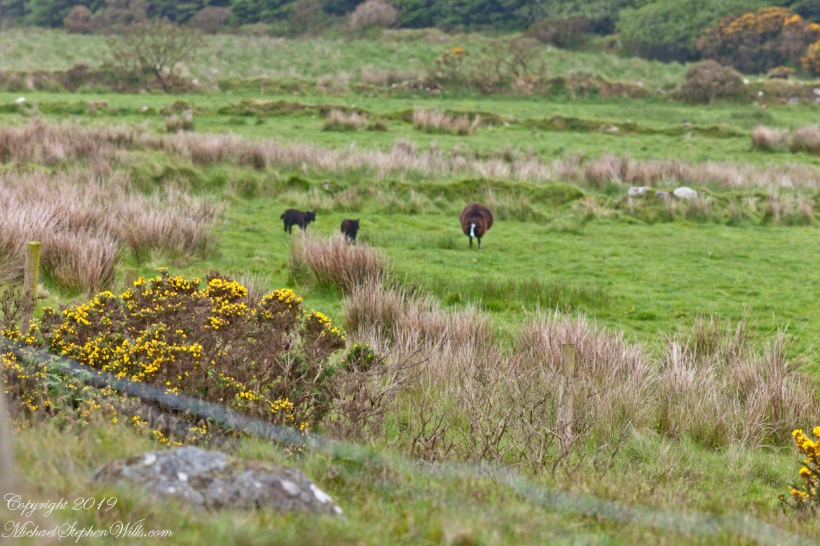
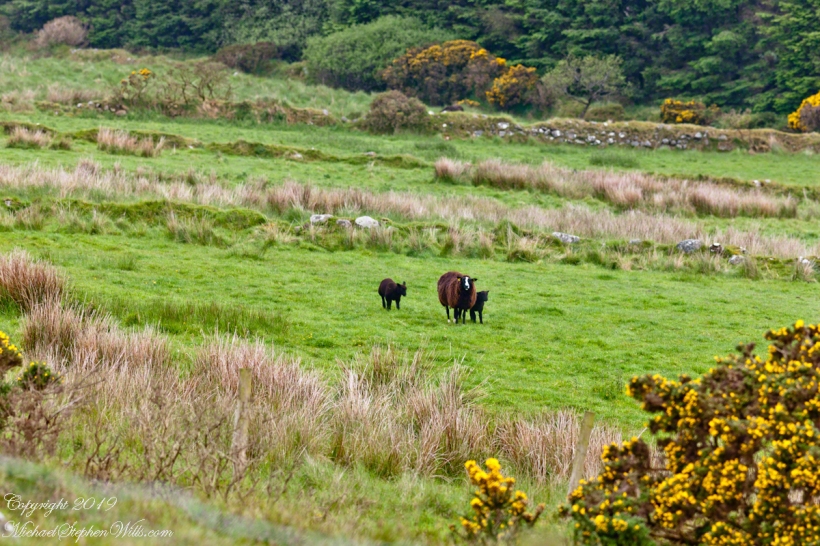
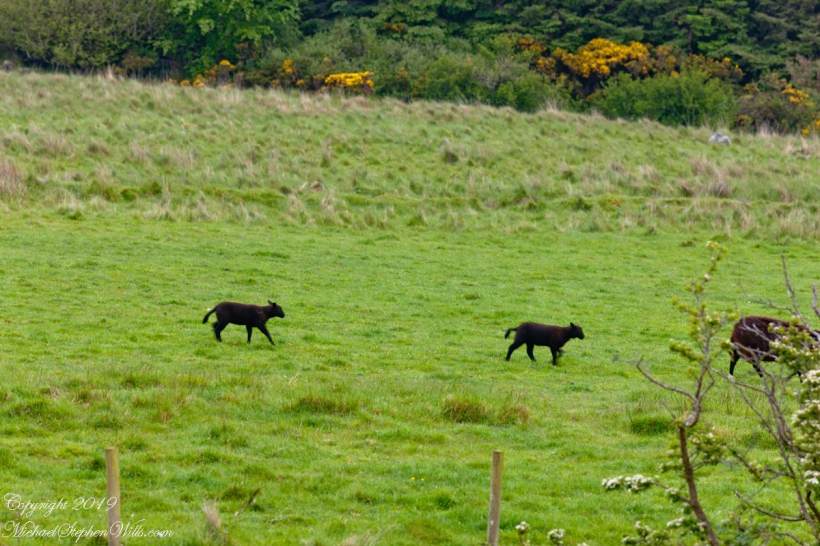
This breed may be a Balwen Welsh Mountain sheep, as it fits the description. When the ewe caught sight of me, she hightailed it for cover, the lambs followed.

Click photograph for a larger view. To do this from WordPress Reader, you need to first click the title of this post to open a new page.

The Balwen is bred for meat and that is the rule in this area, the lambs are sold.

The description is of a black color with a white blaze on the face, four white “socks” and white on the tail. This individual is missing a white tale, so might be a Shetland and even more so as the others of the herd are white (Shetlands are a variety of colors), Shetland is common and the other rare.

These are on the hillside of Slievenaglogh Townland, County Louth, Ireland.

This is the fourth of a series using the Canon EF 200mm f/2.8L USM lens.

Click for another interesting Ireland post and story

Copyright 2020 All Rights Reserved Michael Stephen Wills