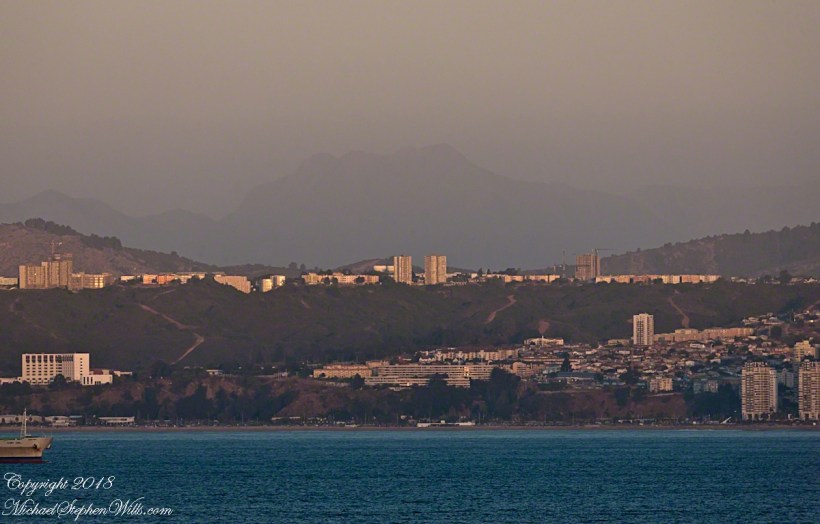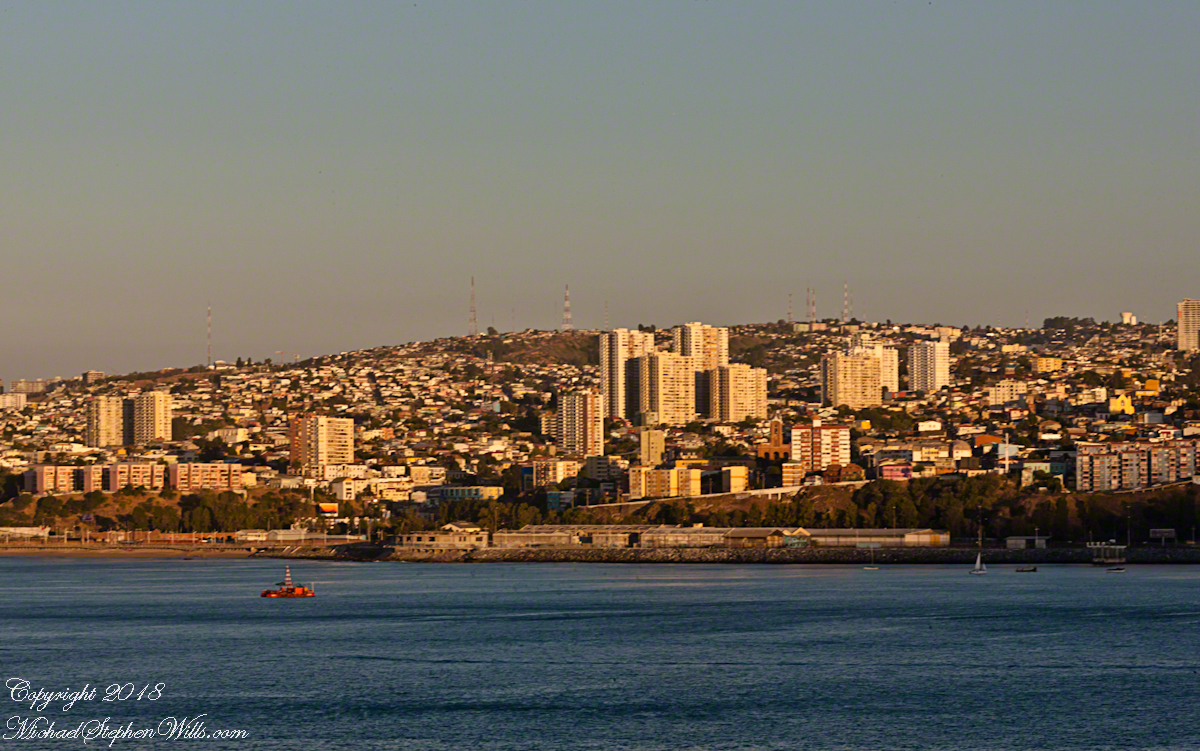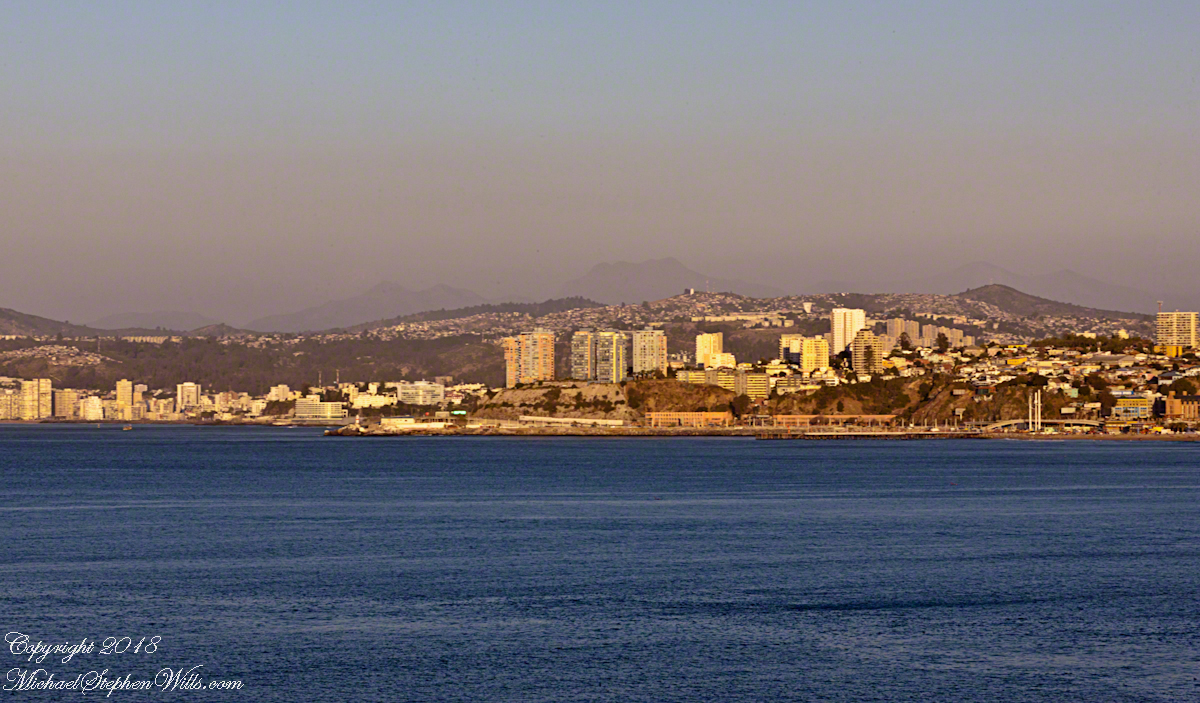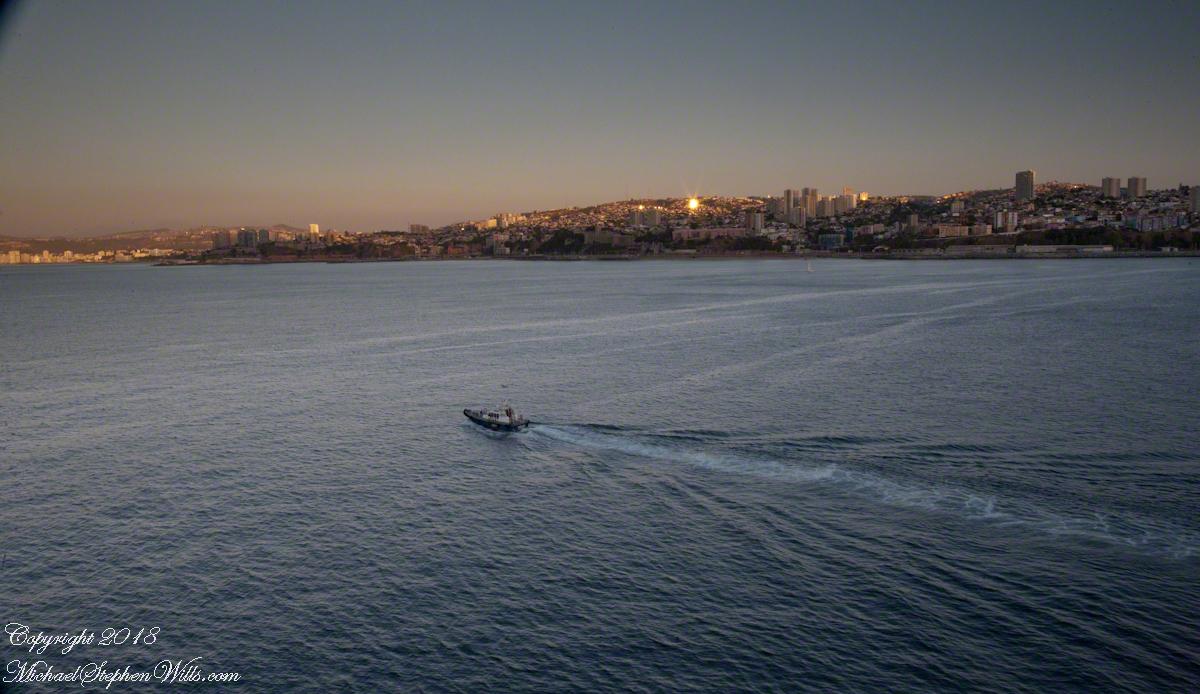
Valparaiso Old and New

Stray Thoughts on Labeling, Valparaiso Port

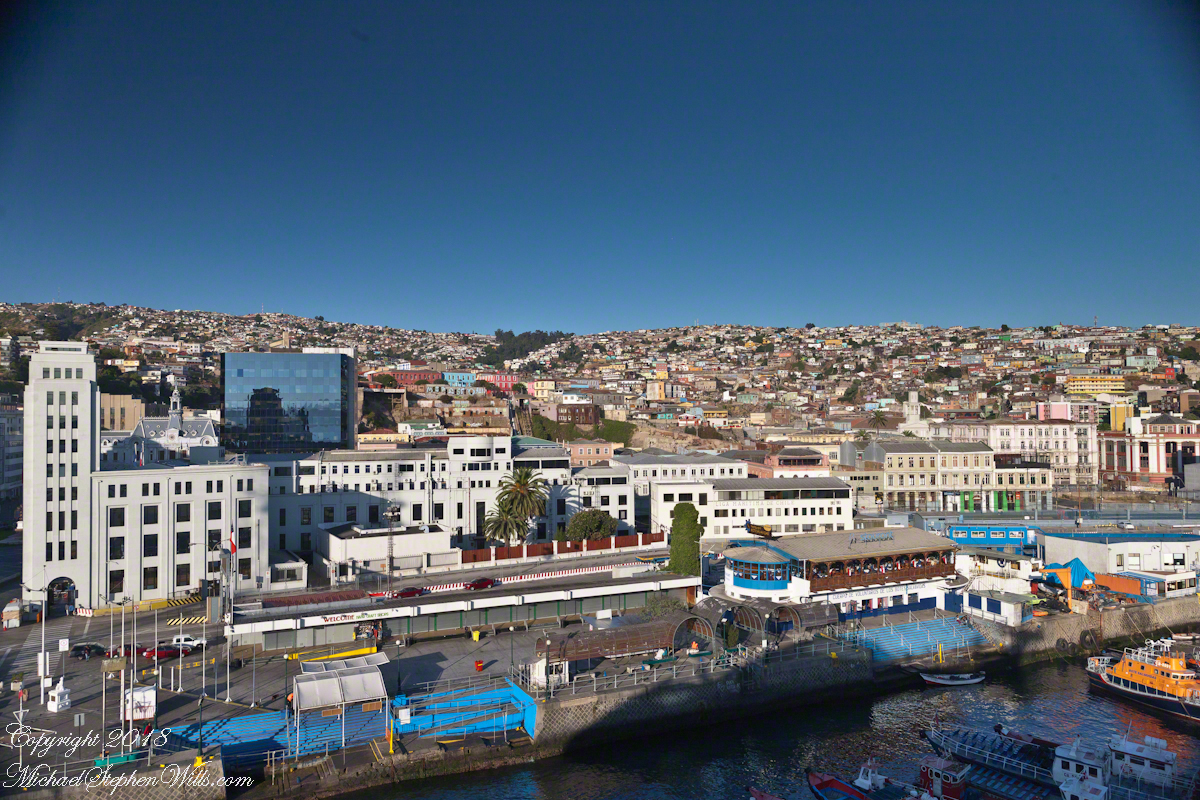
Shortly after breakfast Pam and I were among a gathering of travelers, several friends made in the last ten days among them, waiting in the Regatta lounge for tour assignments.  In my previous posting, “Valparaiso Separation, you can see exactly where the Regatta was docked among the orderly chaos of the port as seen from the Ascensor Conception.  “Valparaiso Separation” also includes several photographs from my early morning hours on our port side stateroom terrace photographing the approach to Valparaiso and the city itself.

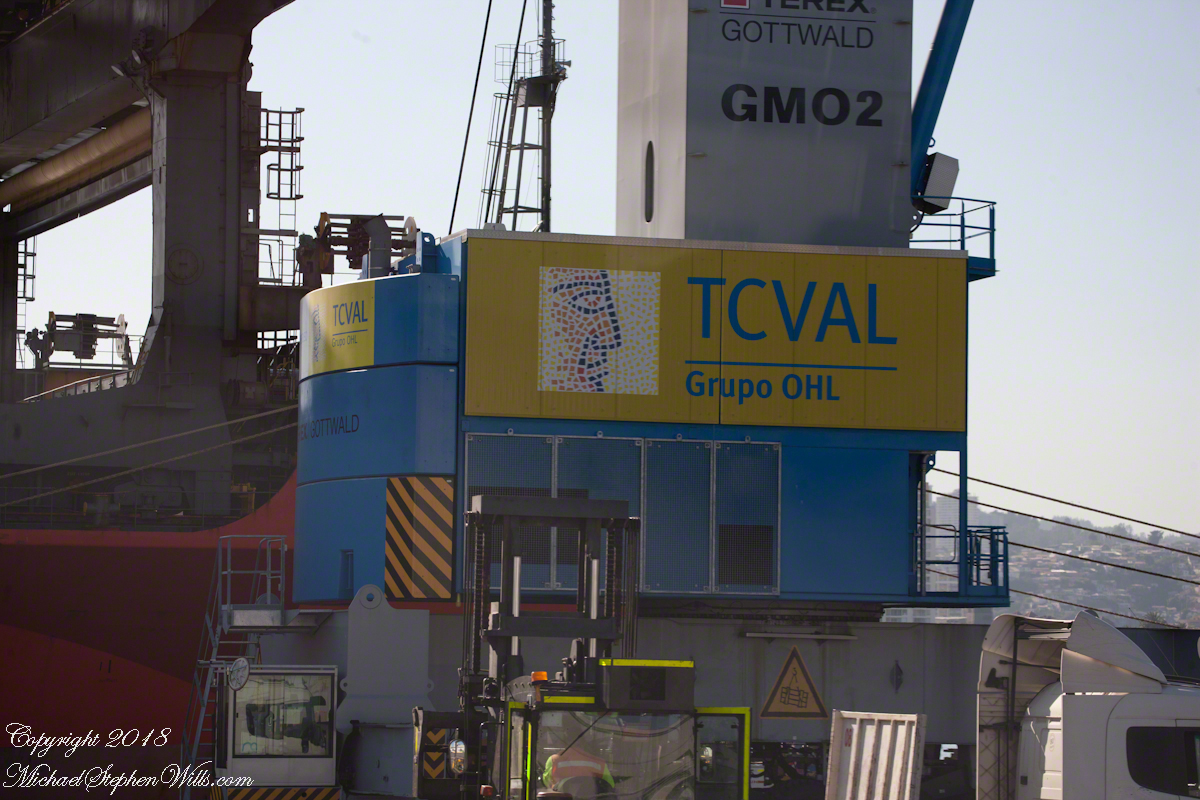
Walking down the gang plank, our bus assignment in hand, number 17, we boarded a shuttle to take us through the port, to customs.  See the upper left corner?  Here is part of a loading crane, seemingly the underside of a bridge.  In “Valparaiso Departure I”  you saw it loading rolls of wire.

The structure labeled TCVAL is called the Gottwald, a mobile harbor crane from the TEREX based in Dusseldorf, Germany.  TCVAL is an acronym, “Terminal Cerros de Valparaíso” (Hills Terminal of Valparaiso), and stands for the port management company.

I caught two overviews of the area from our stateroom balcony.
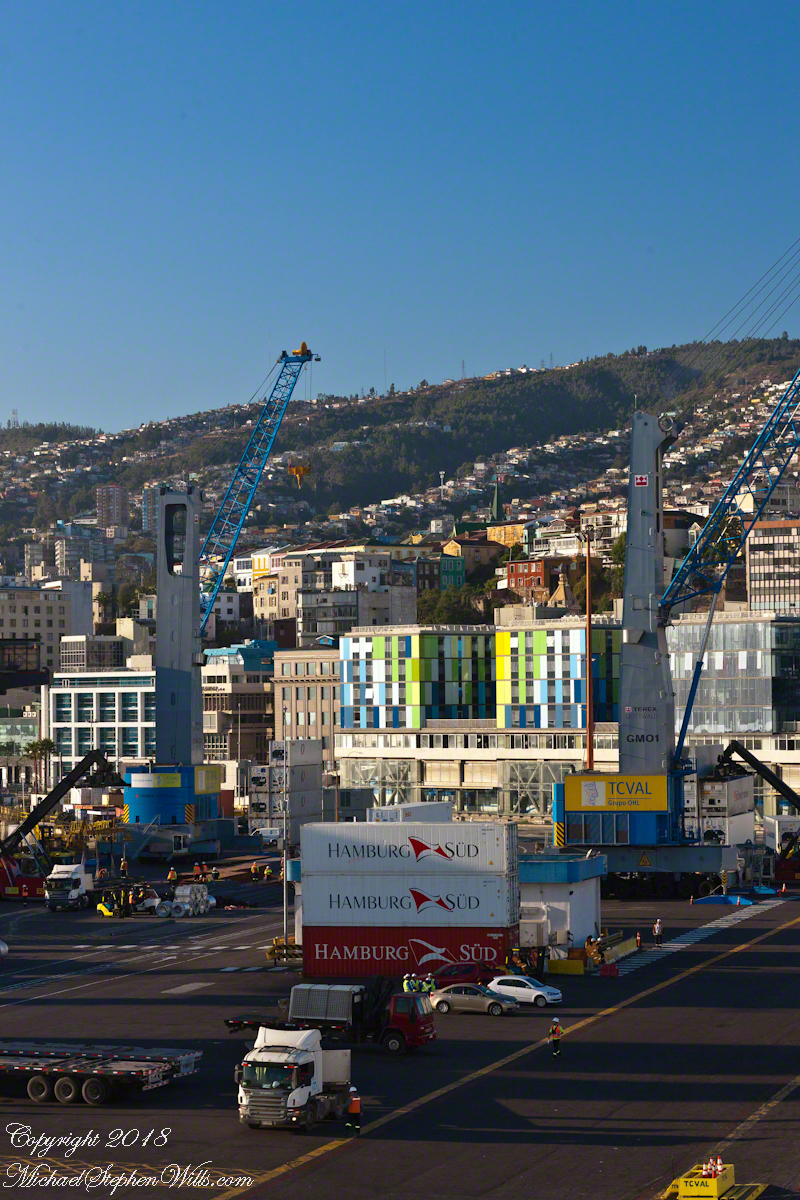
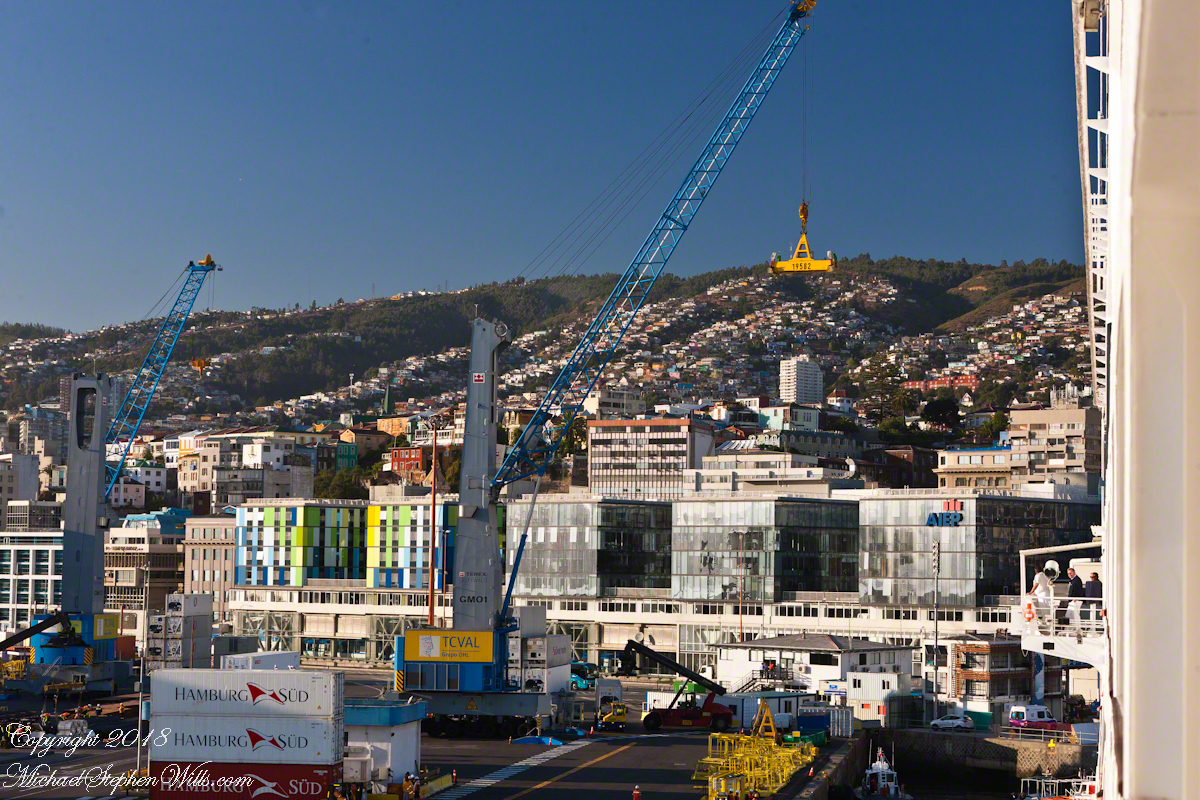
Looking along the port side of the Regatta.  Our room was on the same level as the bridge, visible on the right with several Regatta officers enjoying the Valparaiso port view.  From here, the shipping containers (“Hamburg SUD”) are loaded onto semi-tractor trailers for points all around South America, they call the southern most land “The Cone.”

We are surrounded by labels, the #17 in our hands, “Regatta” on the ship bow, all with a story to tell.

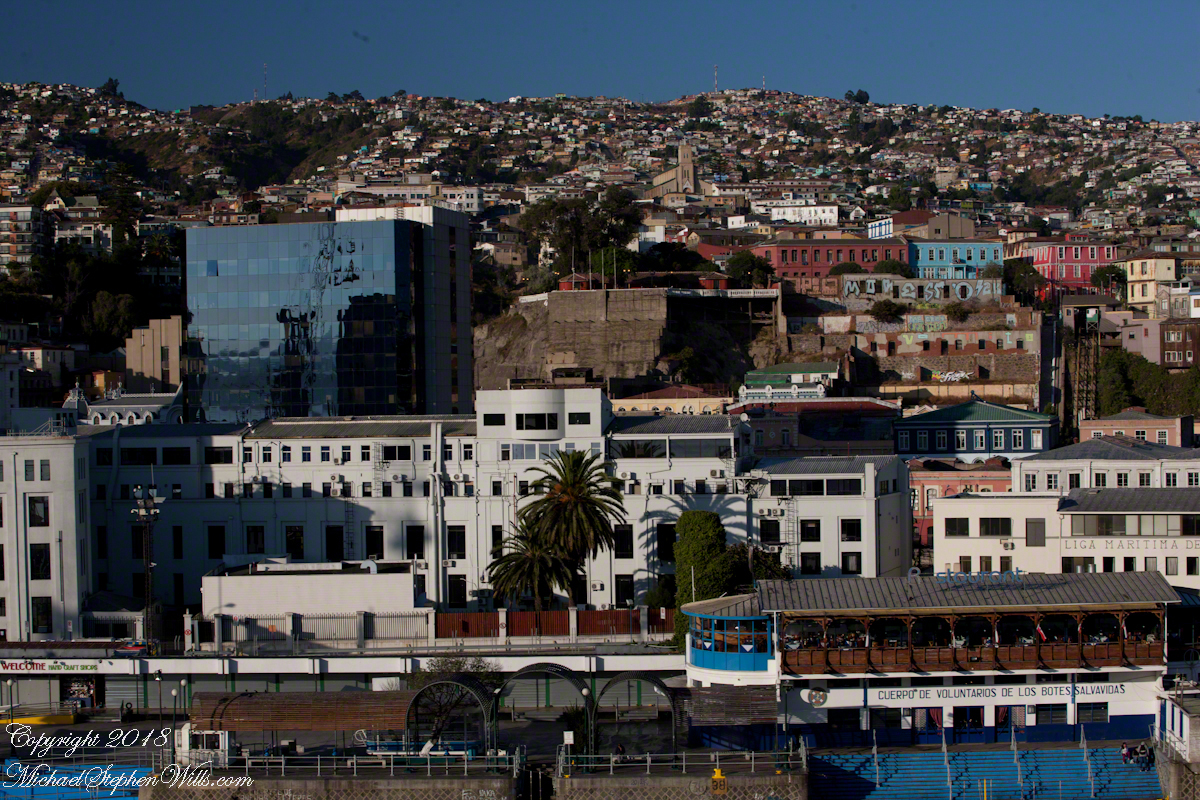
Unlabeled from this side, two towers covered with multi-colored panels, shades of green and blue with white, the Hotel ibis Valparaiso.  I looked it up on Google Maps.

To the right is AIEP Valparaiso, a technical college, founded just three years before, 2013.  We are seeing them from behind, the side that faces the harbor, both the hotel and school front a street named Errázuriz.

Take note of the lower floors with the large, crisscrossed supporting struts.

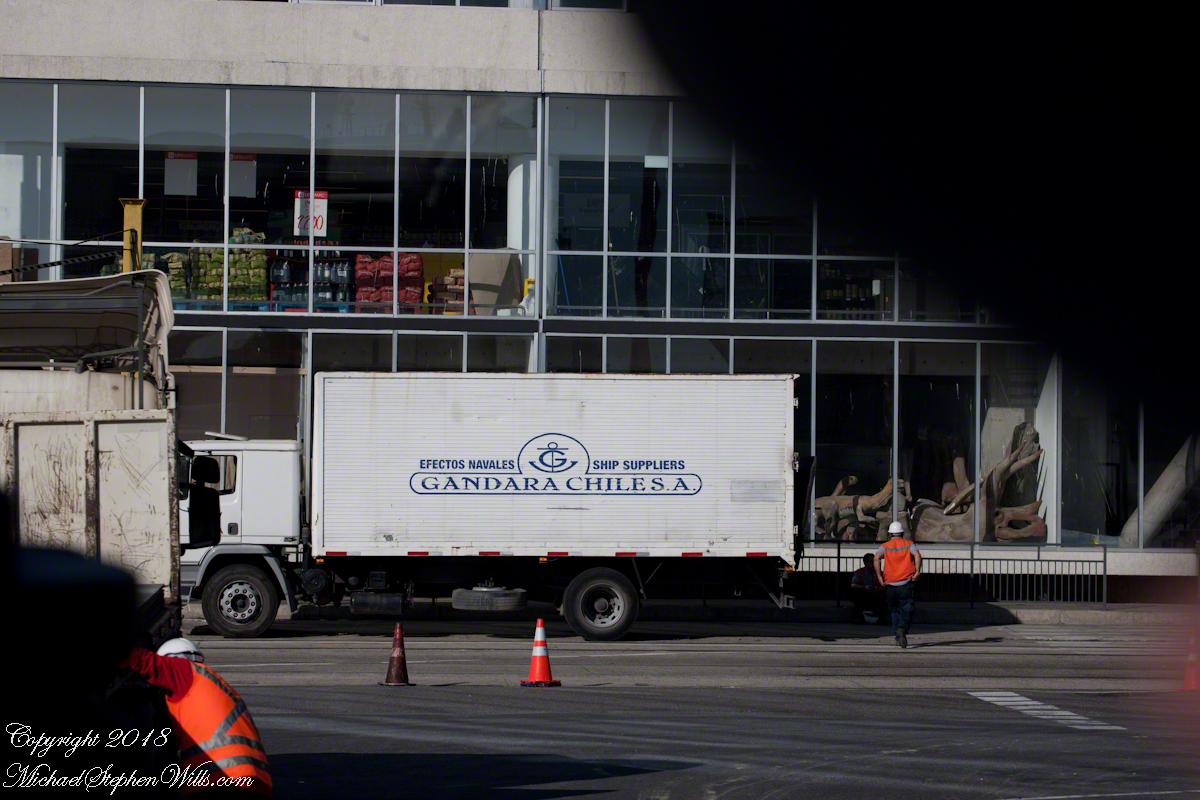
Back on the shuttle, we pass along those lower floors.  Look to the right of the Gandara Chile, SA truck….dinosaur models.  The floor above seems to be retail displays of bulk packaged products.
Everywhere stacked shipping containers….
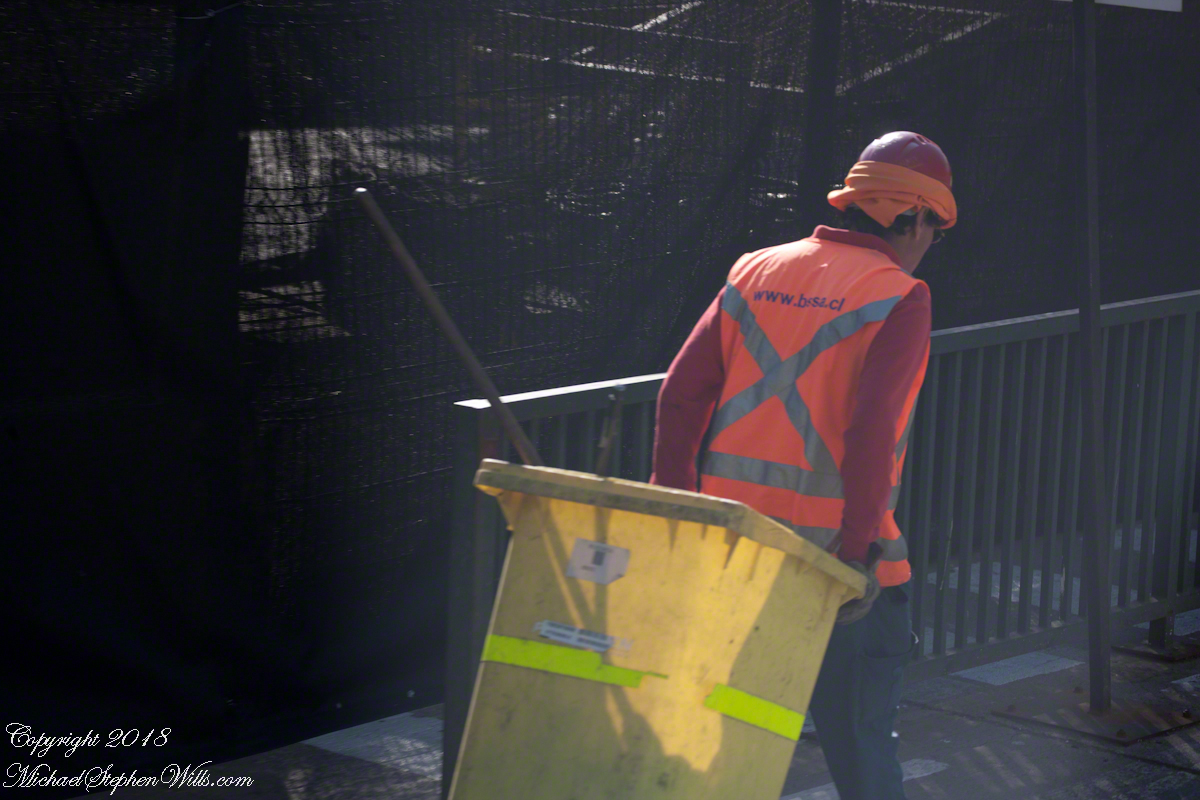
…throngs of busy workers.  This fellow works for “Building Services”, a cleaner.

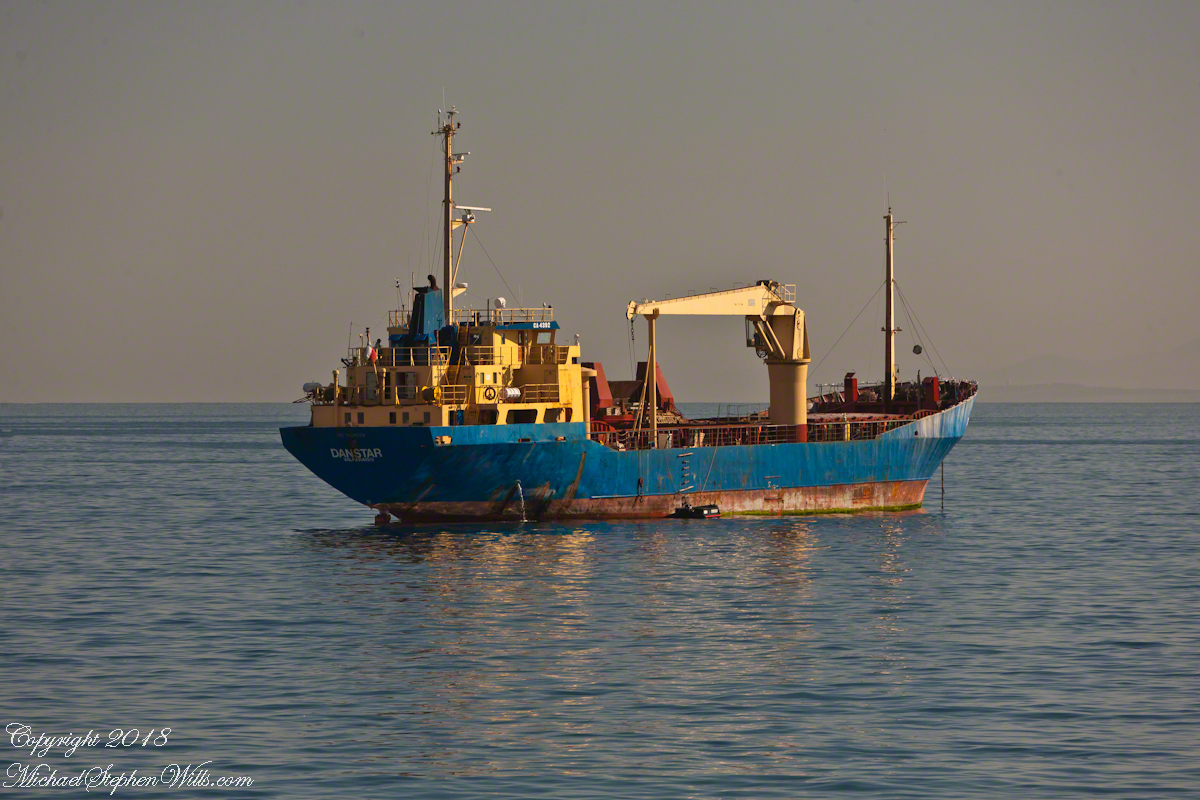
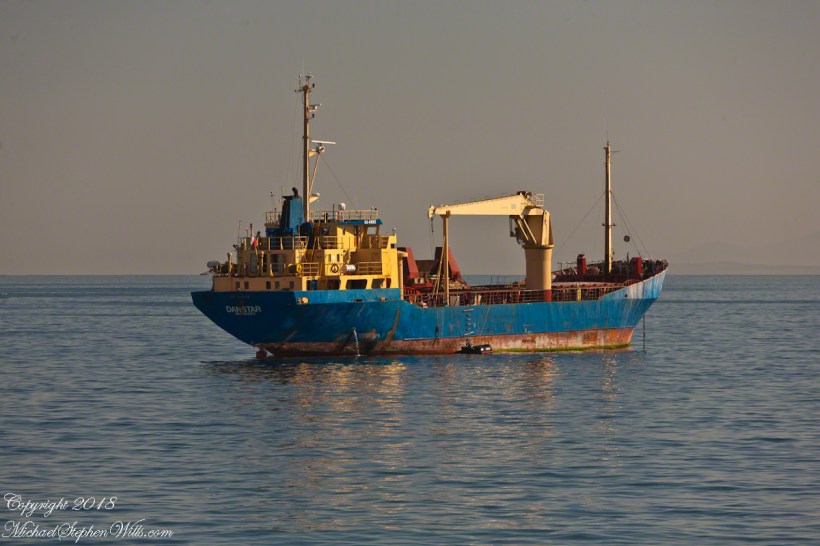
We’ve looked right.  To the left a view of the port opens.  War ships in the distance.  Foreground is a general cargo ship, the crane midship is used for unloading in smaller ports.  Currently unloaded, we can tell by how high it is riding.  There is a rope ladder on the visible starboard side, a landing boat with an outboard motor along side.  One person is visible on the upper deck, wearing a baseball cap.
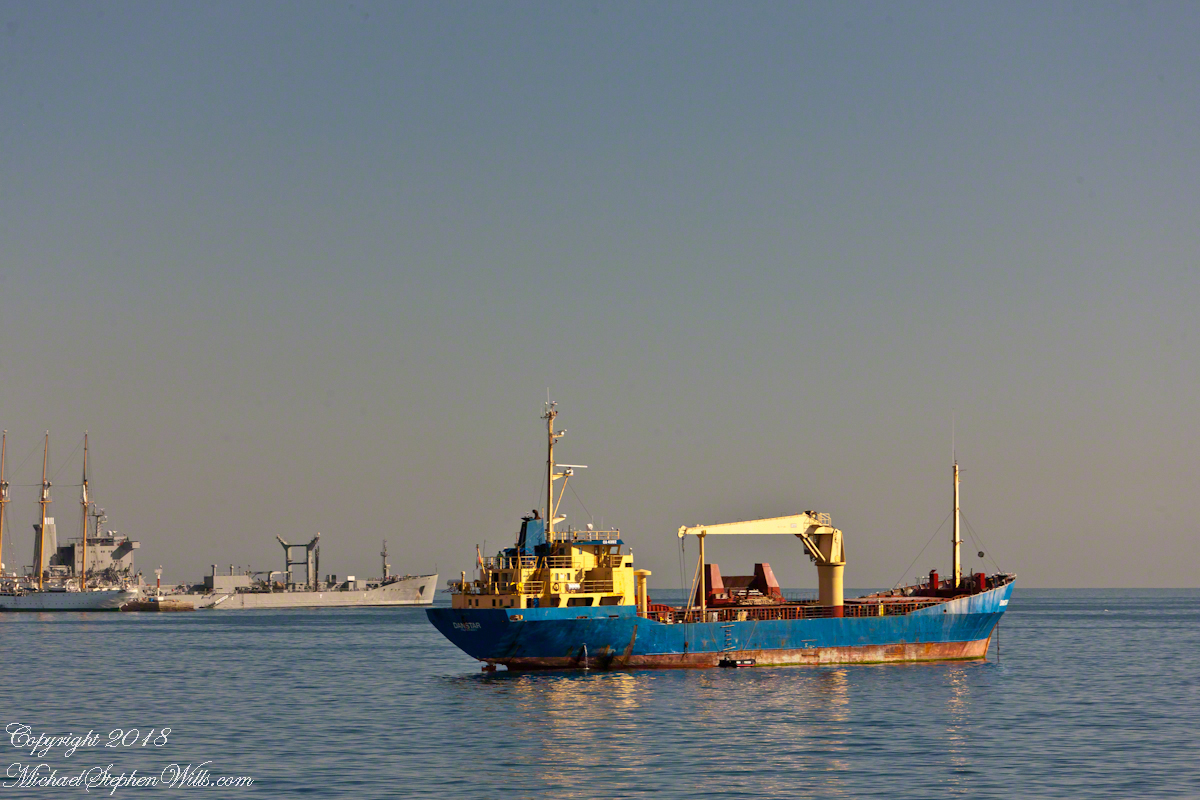
Named “Danstar” home port Valparaiso, the Chilean flag hangs stern side.  A general cargo ship, I looked it up.  On the day I started this post, it was sailing the southern pacific heading from Hanga Roa, Easter Island.  The label on the bridge, CA 4392, is the radio call sign.  The bilge pump is working….wonder how strict the pollution stands are for Valparaiso harbor?

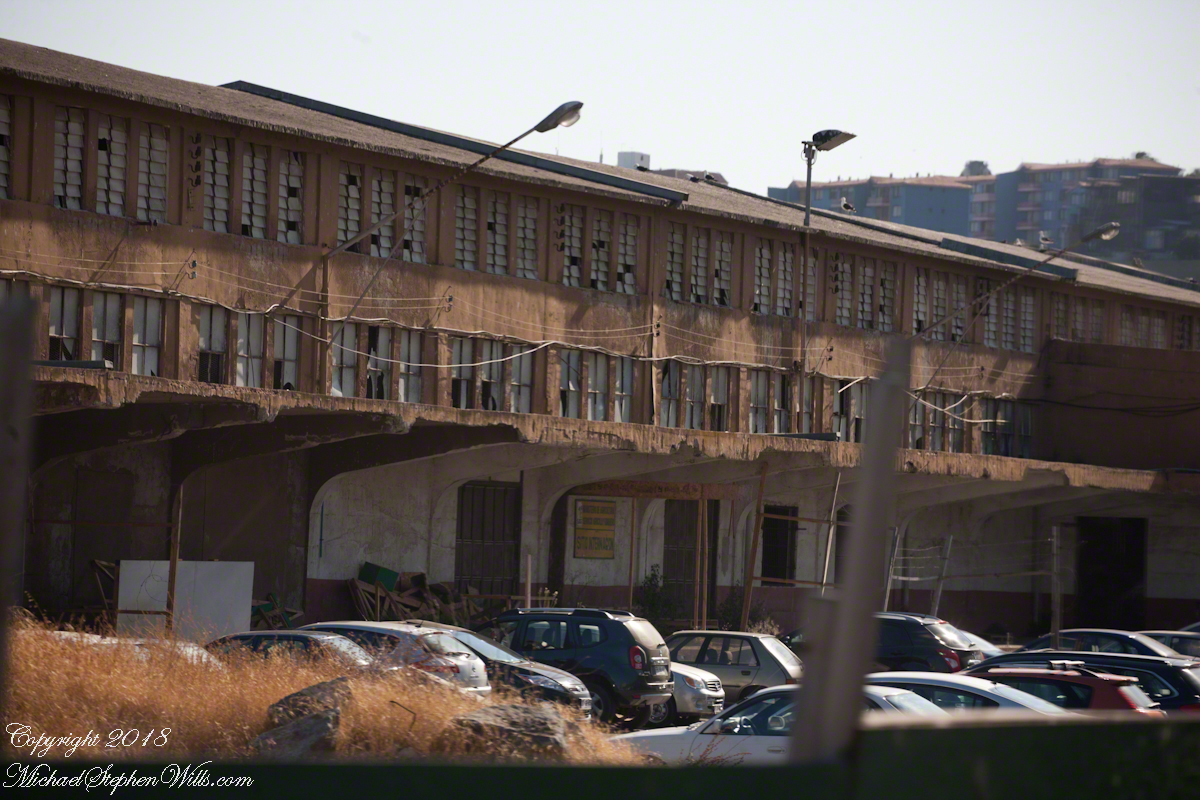
Back to the left, an unpromising aspect.  No labels here.  Shortly after the transport unloaded us for customs.  I generally do not photograph those workings, no use being pulled aside for questioning by unsympathetic officers.  Just a precaution, the entire trip the customs people were friendly and the inspections cursory.
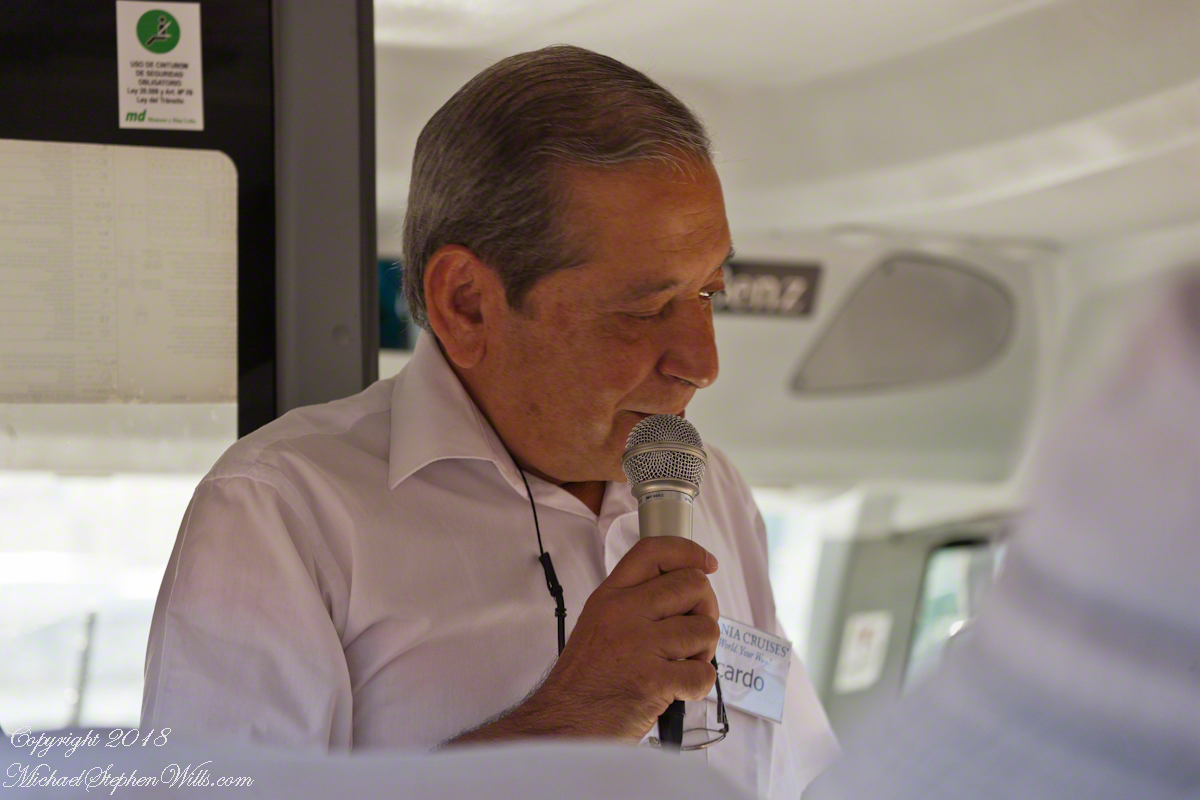
Here is where our slip of paper, #17, is used just in case we forget the number.  Here is wonderful guide, Ricardo, holding a loft the #17 flag in from of bus #17.  The wonderful city of Valparaiso laid out for us in the morning sun, the sky cloudless.
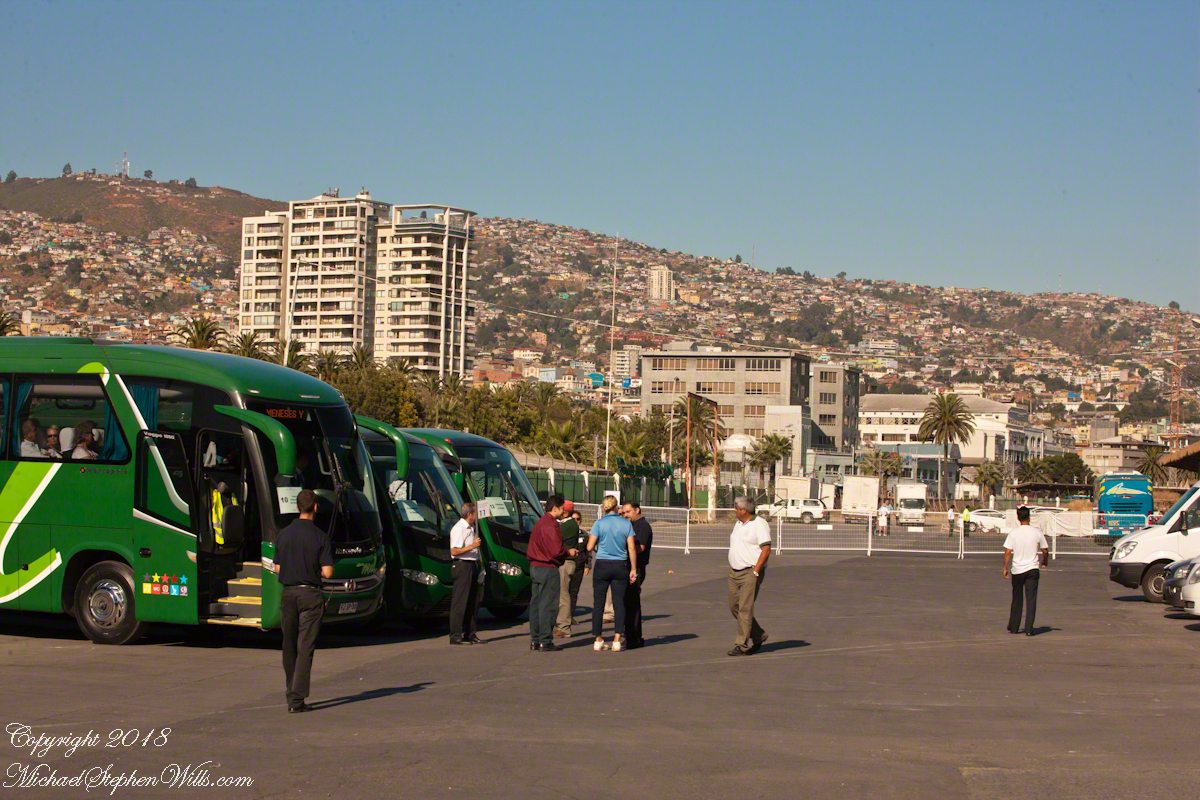
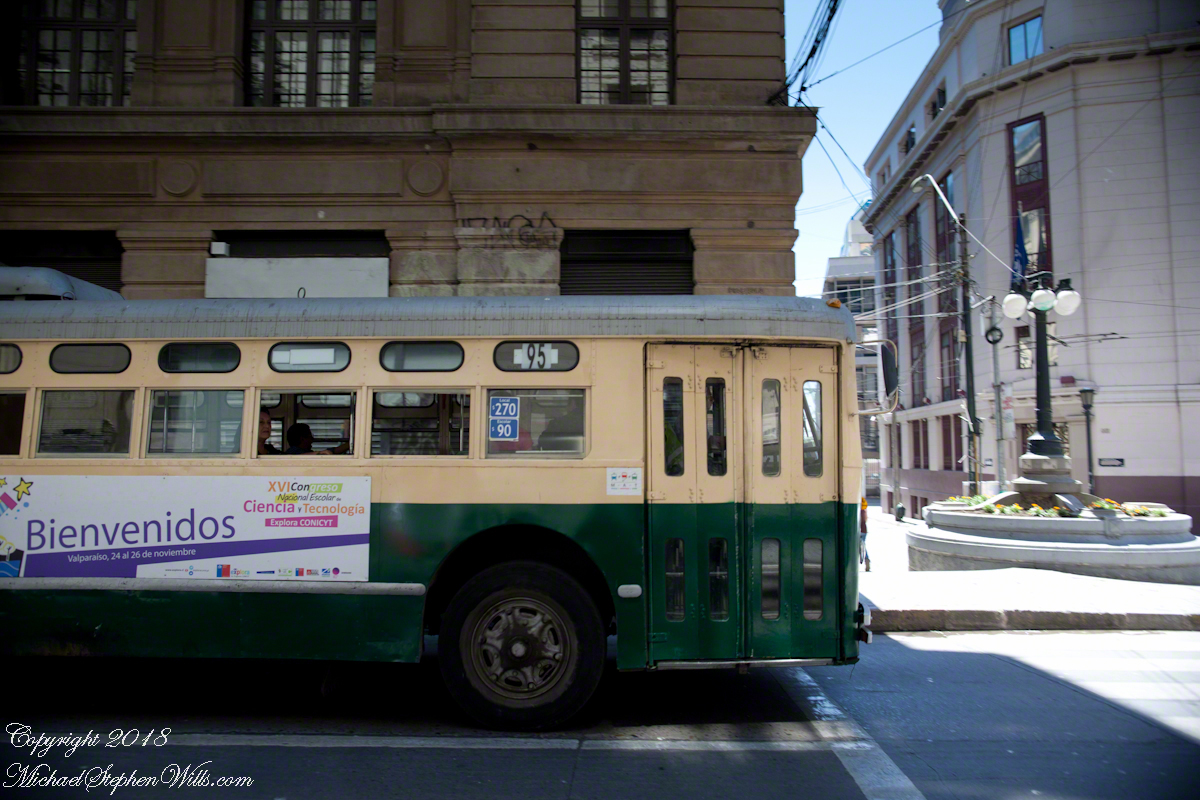
New buses, nice!!!
Ricardo introduces himself.  His name tag “Oceania, Your World, Your Way.”  Cannot help getting some humor from that.

Valparaiso Separation

Learn about funiculars

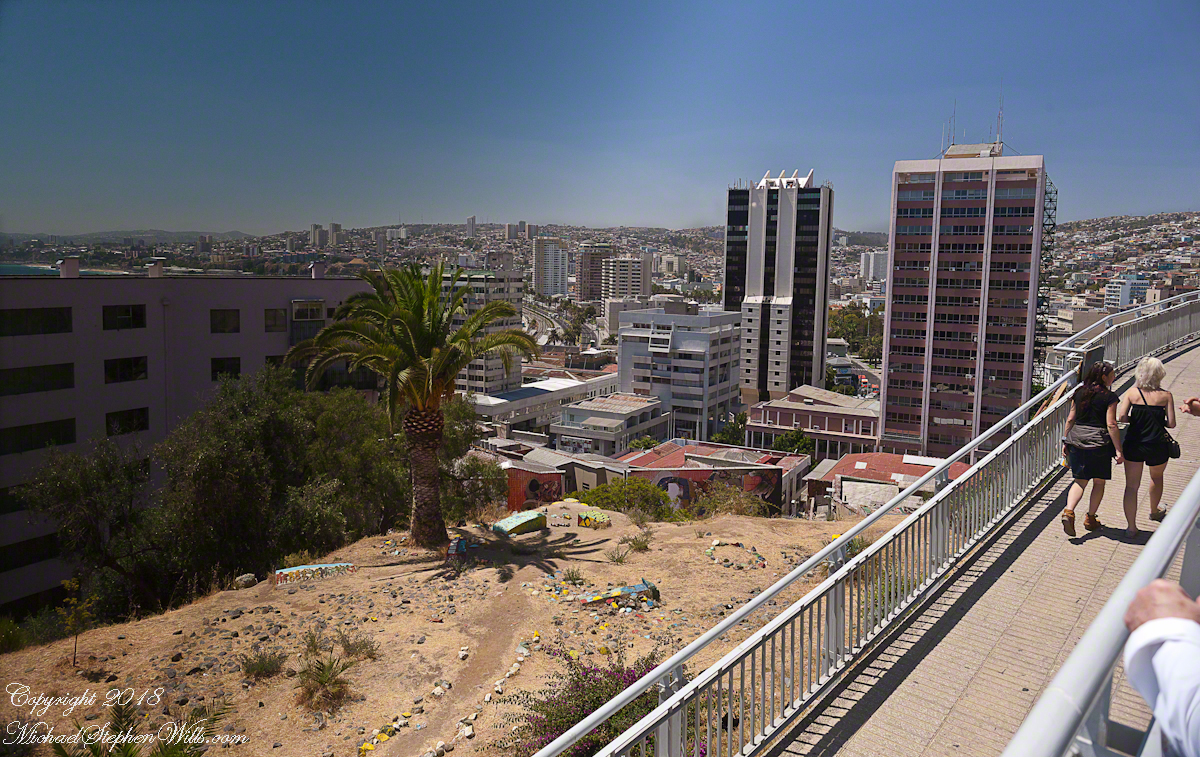
To begin with an epilogue to my last post, “Our Fifteen Minutes of Fame on Conception Hill” , our meeting with the El Mercurio reporter never appeared.  Inquiries to the newspaper were promptly and courteously replied to, there was nothing.  They suggested a search of the online archive and only a January 2014 fashion show, the article featured a photo from the same terrace.  After our pleasant time we walked off some calories on Gervasoni Promenade, a showcase of city harbor and hillside views.

ValparaisoConceptionAscensor-6

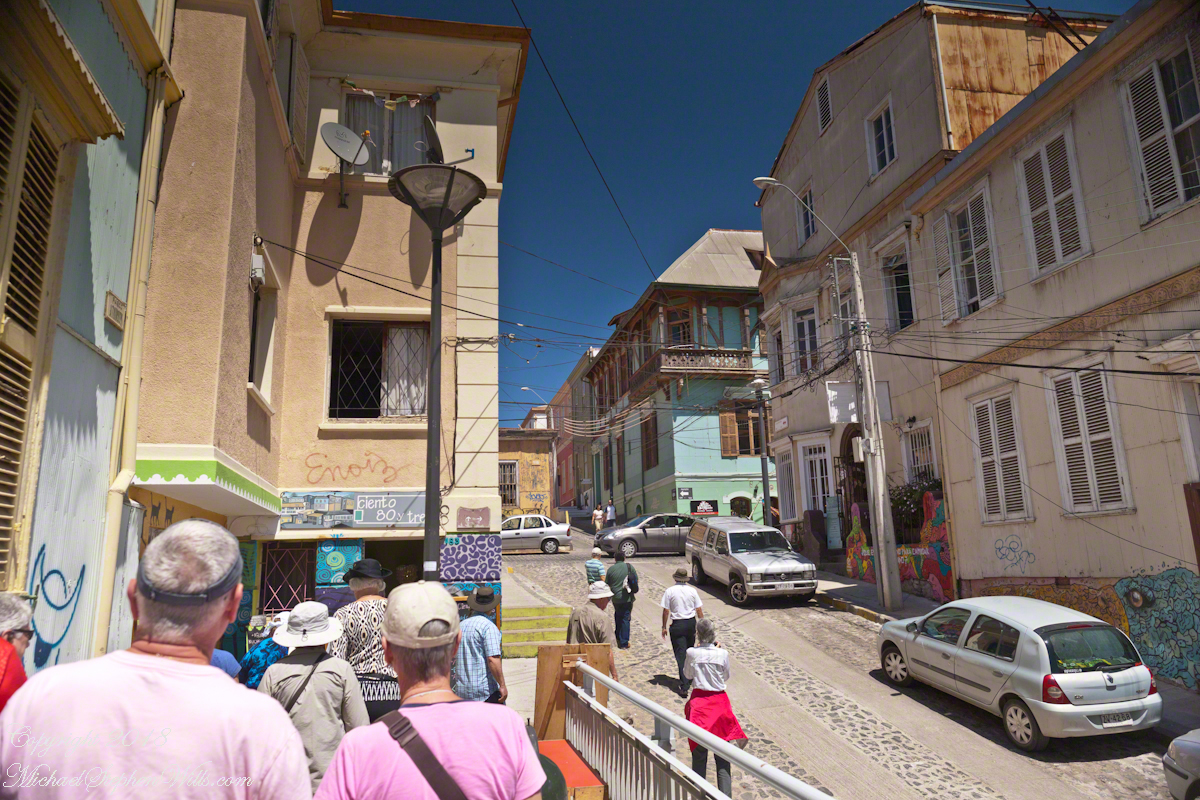
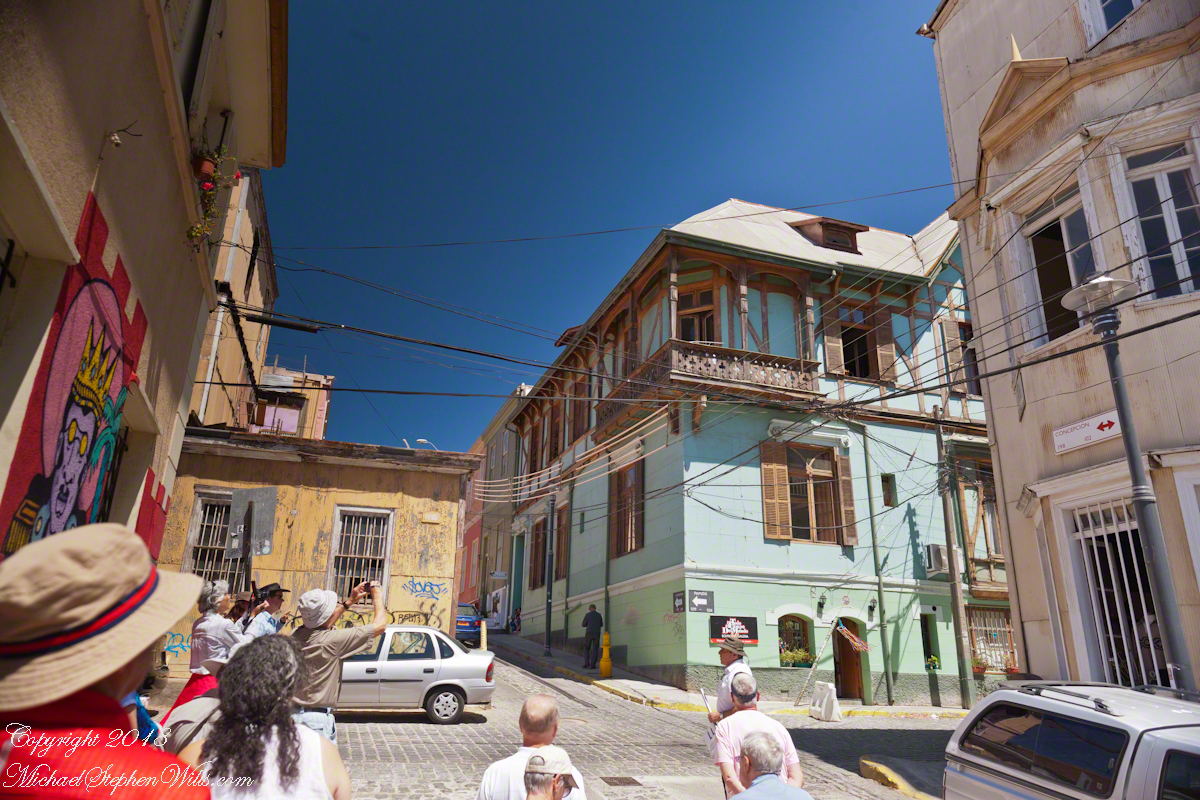
Most city visits on this cruise we traded independence and flexibility for the convenience of the guided tour.  Ricardo, our guide, was a knowledgeable, good humored companion to our small group.  After we left the promenade for Calle Conception Ricardo was most helpful.

Ascensor Concepcion

It was here I entered a photographic fugue, losing touch with my surroundings through concentration on capturing the moment.

Ascensor Concepcion

I walked ahead of Pam, expecting her to follow, and caught the view of the arriving care of the Conception funicular.

Ascensor Concepcion

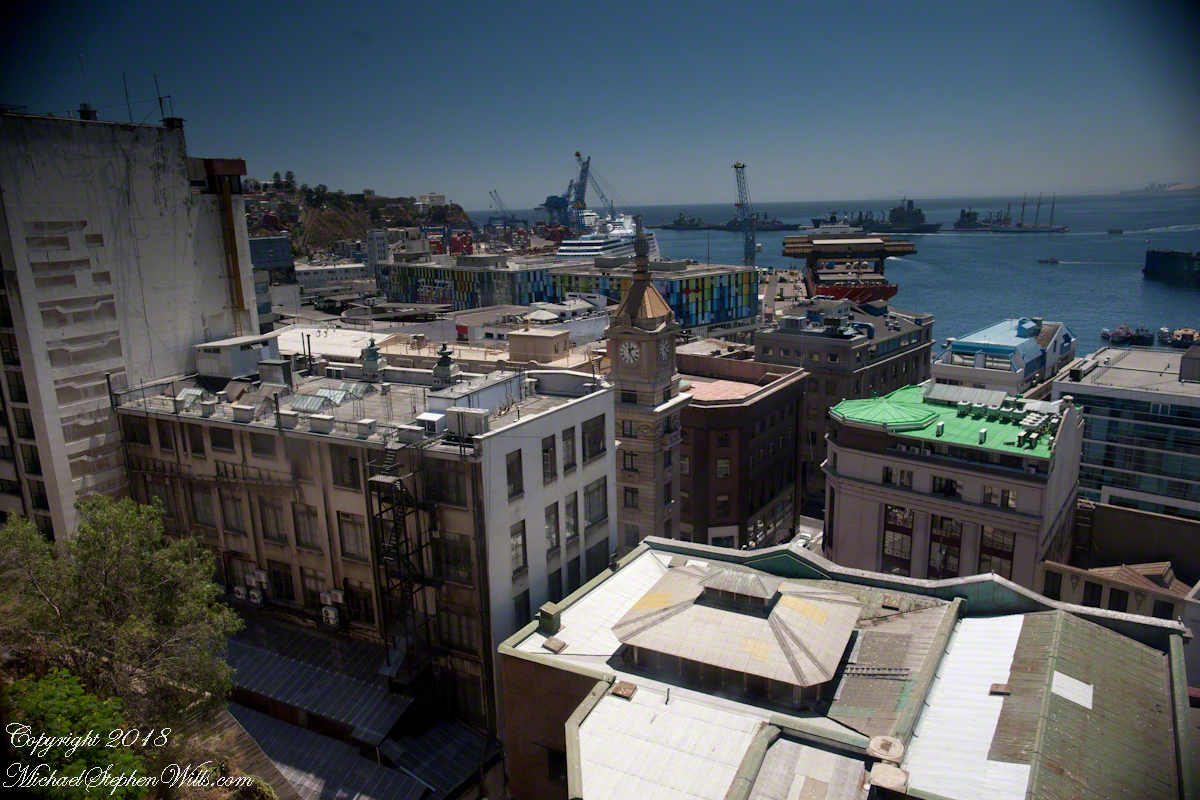
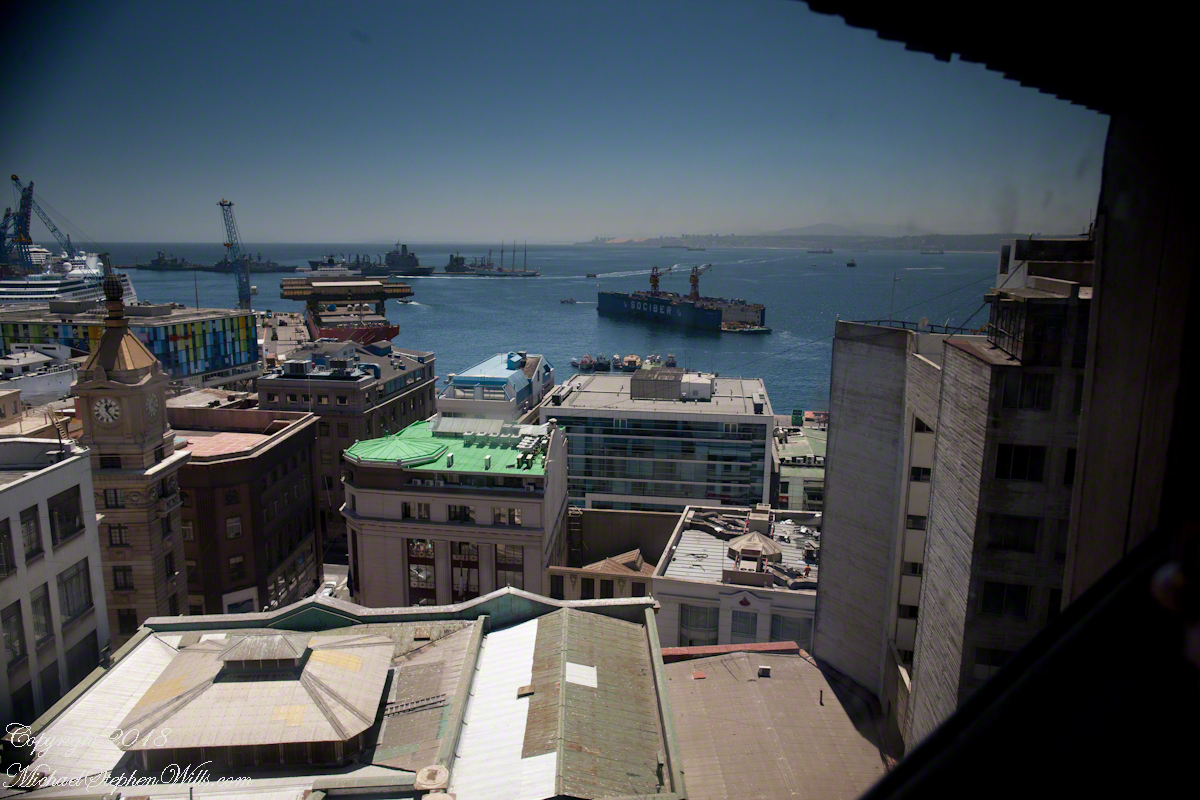
Wow, that’s the Regatta at dock.  Other elements of this vista are the harbor, of course, then the famous Turri clock tower.  Hmmm, almost 1:30 pm.

Ascensor Concepcion

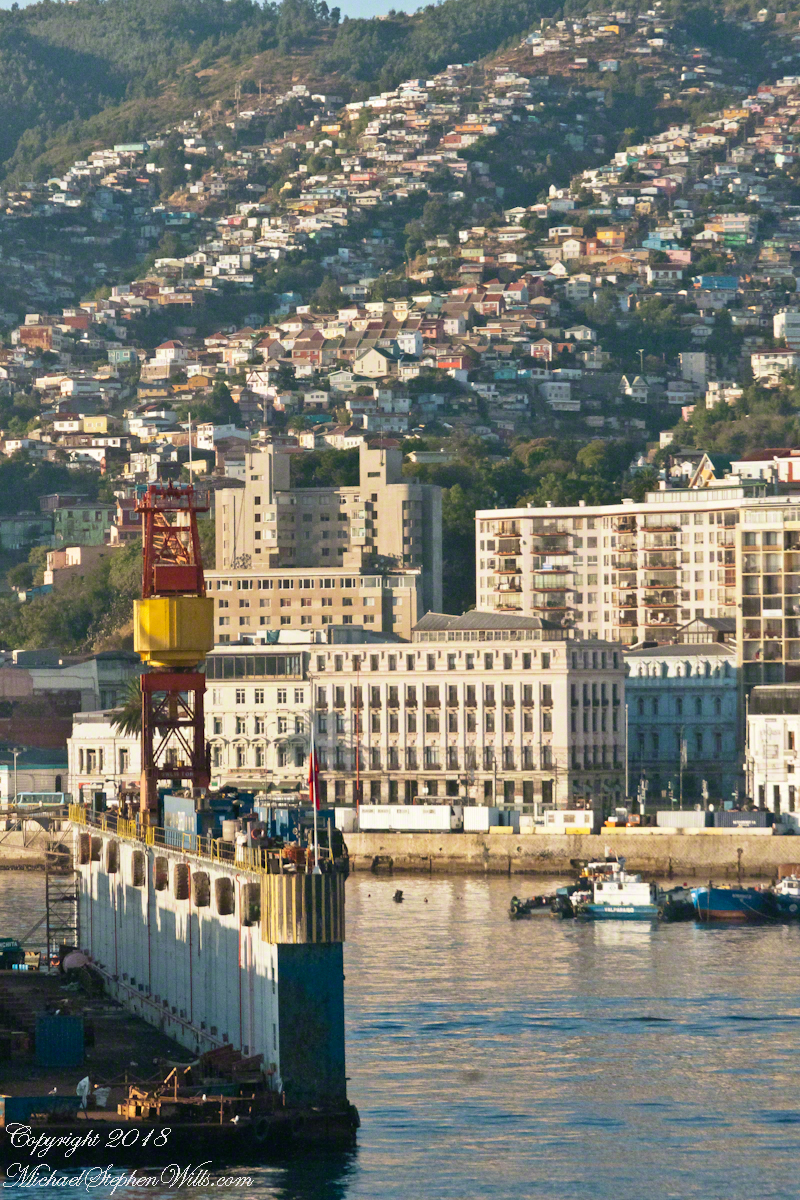
I was fascinated by the view of a drydock the Regatta passed while docking early that  morning.  It is the red structure with the letters “Sociber”, it even has a Facebook page!!!

Ascensor Concepcion

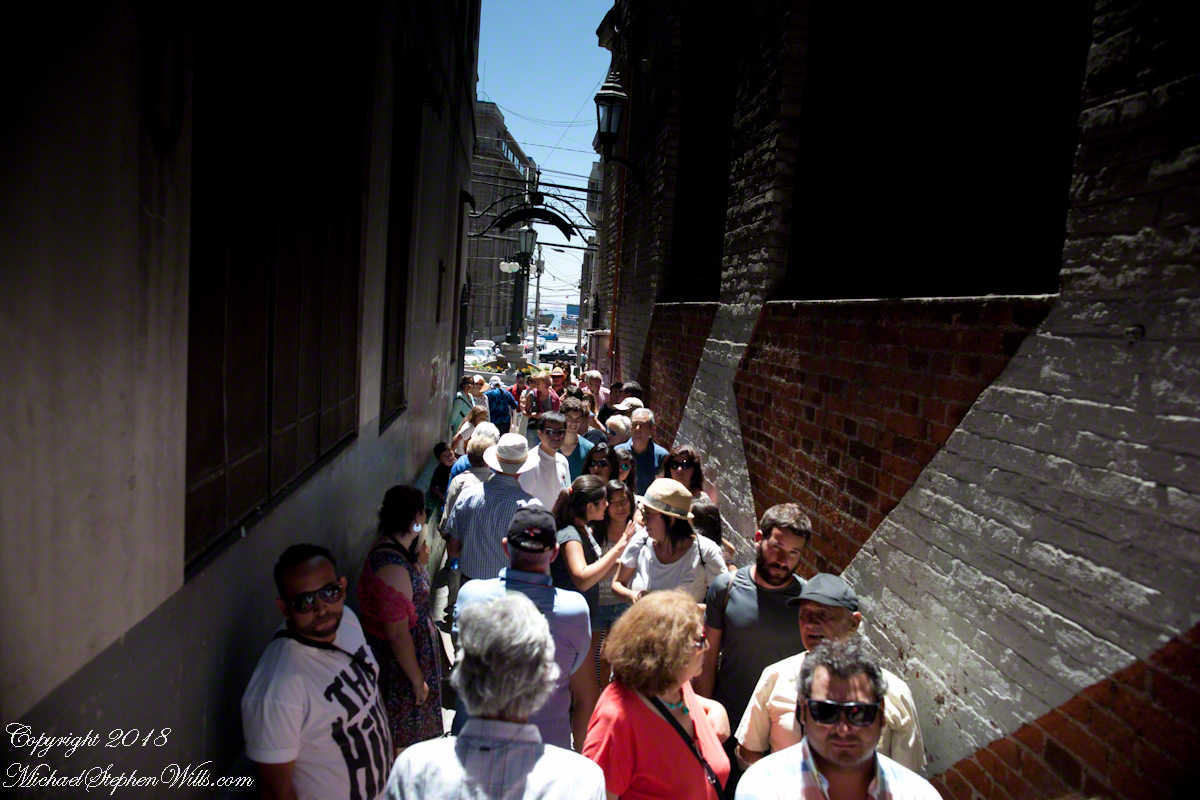
Once at street level the experience of the crowd on the alley opening onto Calle Prat, waiting for the ride up, brought back reality.  “Where’s Pam?”  I could not go back up because of the crowd, the views from the car fell from my mind.

Ascensor Concepcion

I was on the street, disoriented and alone.

Ascensor Concepcion

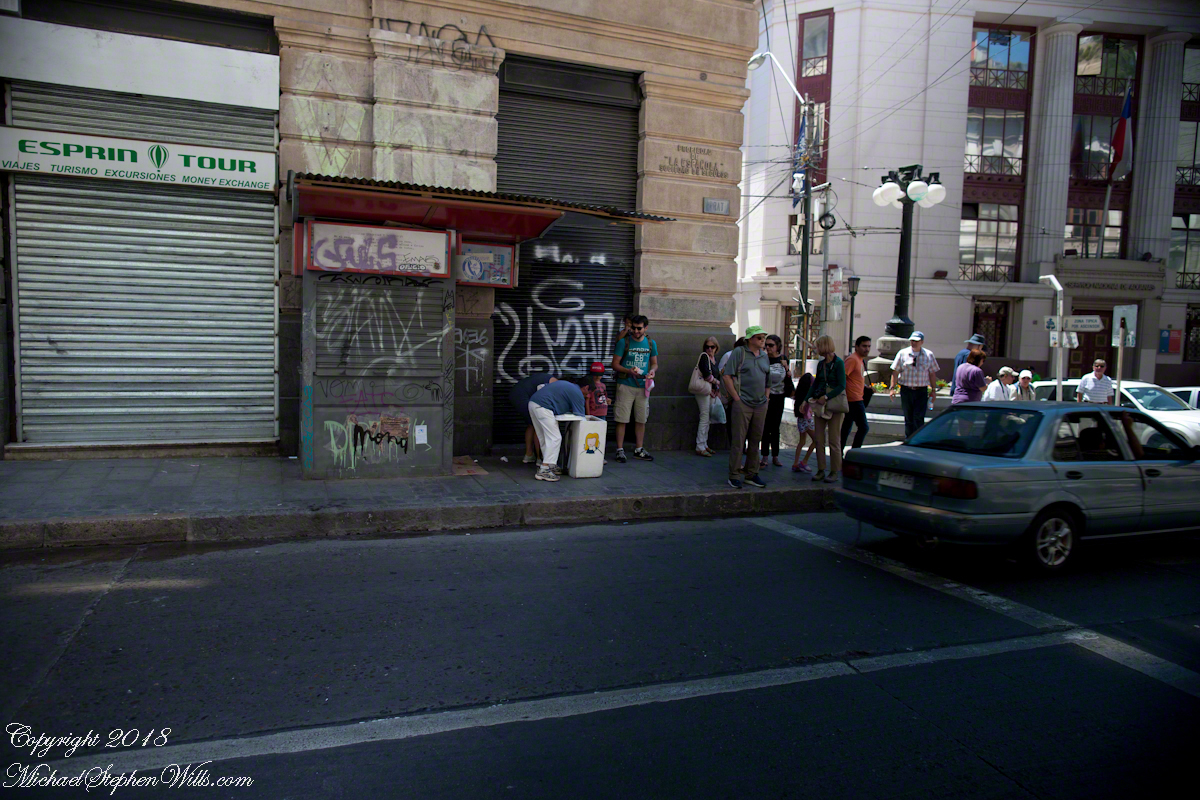
I fell back on photography to pass the time.  Nowhere near the charm of Cerro Conception, typical downtown urban environment.

Ascensor Concepcion

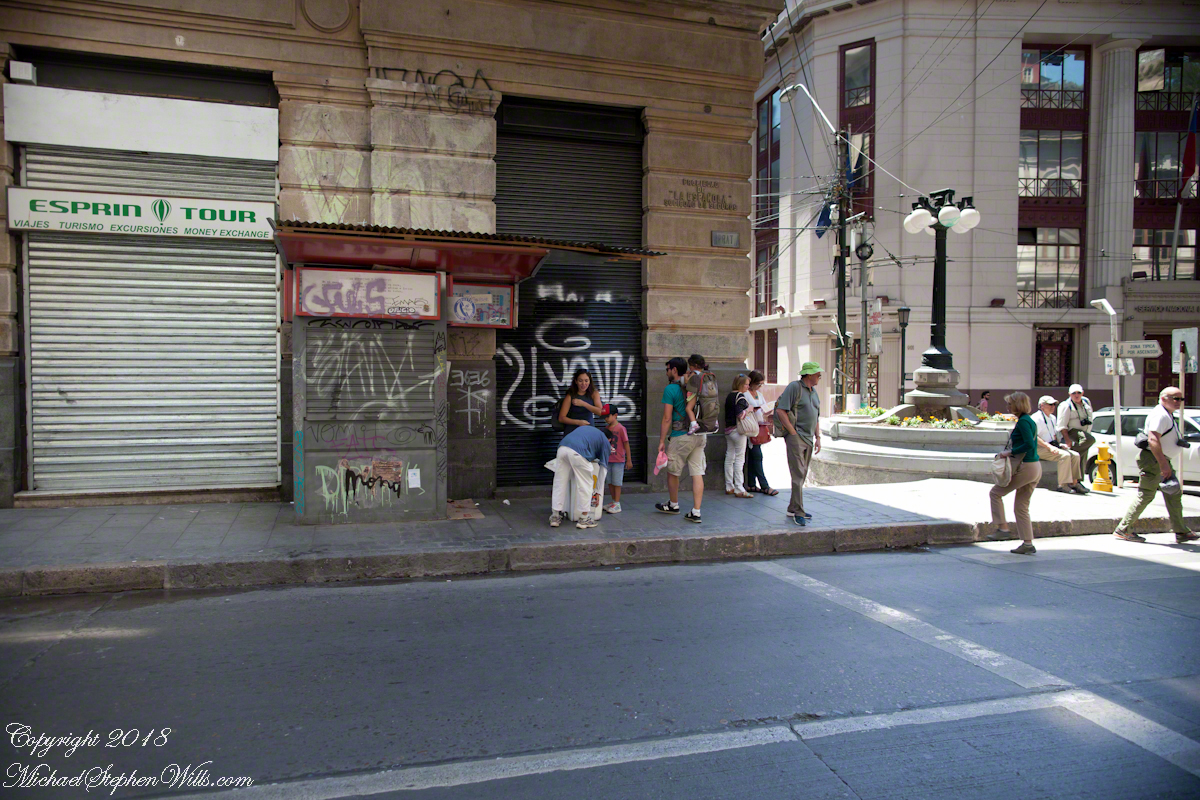
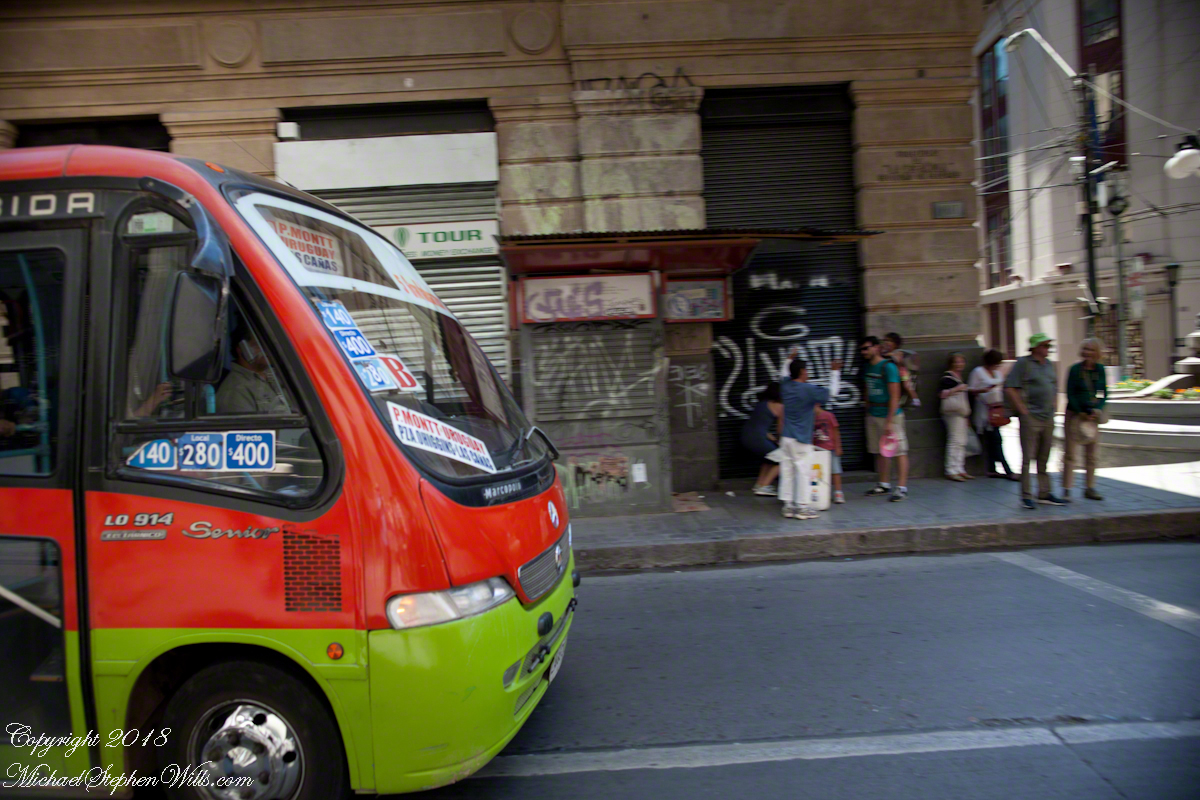
A man approached the family across Prat, “What is going on?” I wondered when the tour bus arrived.  Still no Pam.

Ascensor Concepcion

Oh, it is an ice cream vendor.  Delicious.  “Where’s Pam?”  Ricardo not around, either.  Back on the bus, waiting, a younger member of the tour was an Irish wag who declaimed on the benefits of freedom, even temporary.

Ascensor Concepcion

Finally, Ricardo arrived followed by a few other tour members and Pam.  Whew!!  I’ll never live down “deserting” her.  She was not able to find the entrance to the Conception funicular.  Along with a few others they kept each other company until Ricardo rounded them up.   That was a long 20 minutes (reading from the photograph metadata), I was worried.  As I mentioned, at the time I was clueless about my whereabouts.  Reviewing the numerous photographs, I found the “Servicio Nacional de Aduanas” (National Customs) building across the where Calle Esmeralda joins with Cochrane and pieced it together from there.

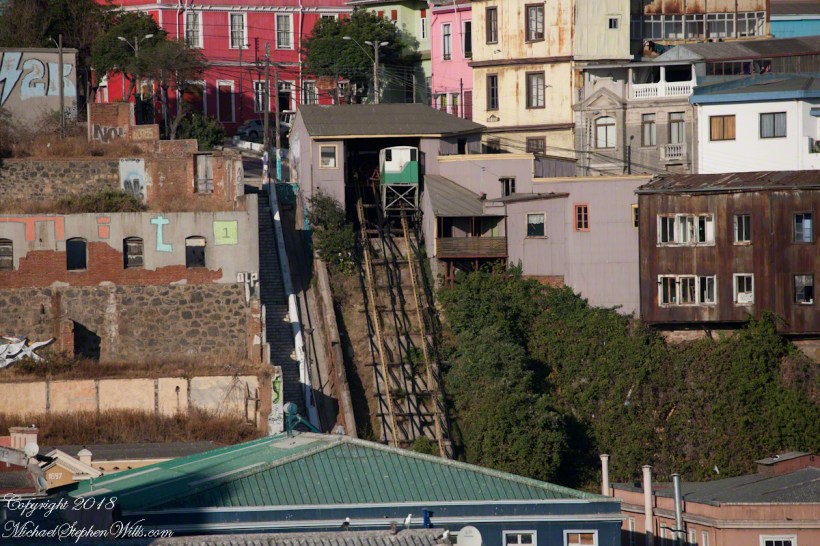
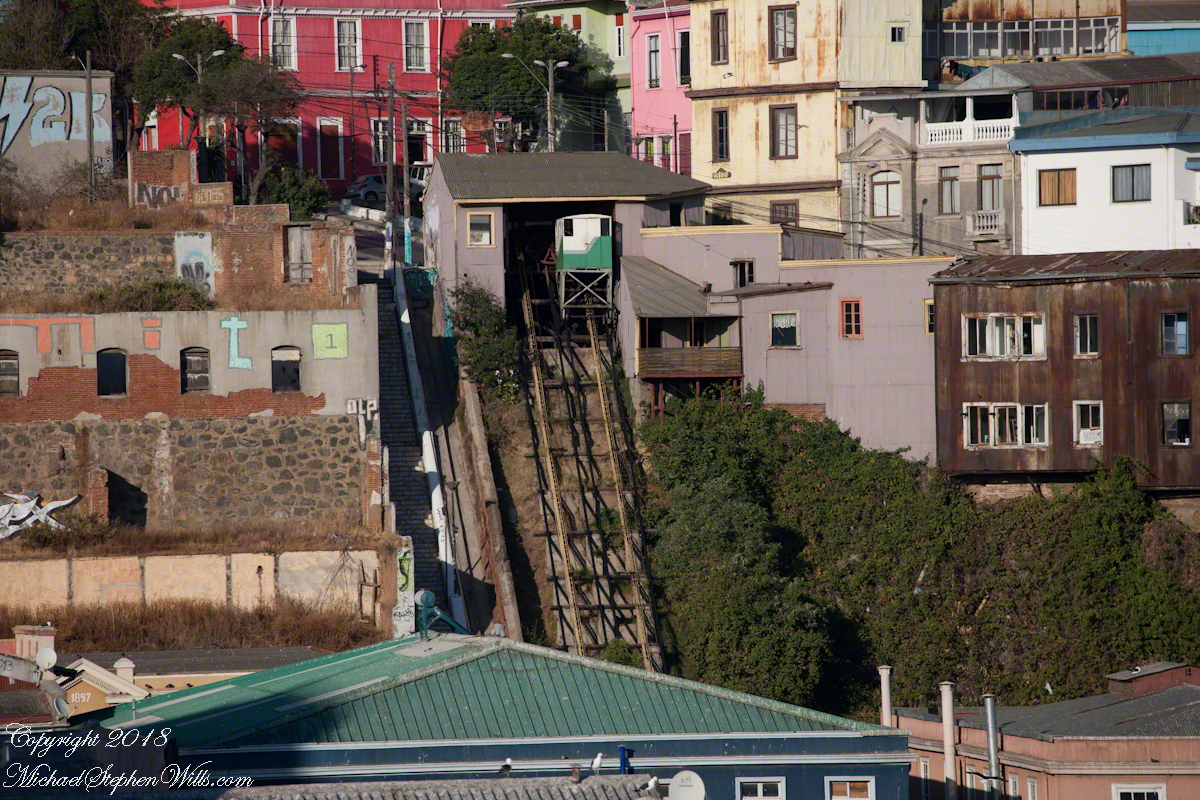
About the Conception funicular, that morning while the Regata docked I caught this view of Valparaiso hillside.  It is a microcosm of the Andean topography, ravines cut through the heights.  This is when I noted the Sociber drydock, it is on the lower left…look down into it — the business is to sell that dry space in the middle of the harbor for ship repair.  The space and be flooded, opened to allow entry of a ship, then drained for work on the hull or whatever.

The city pioneers adapted to this terrain.  As a entrepreneurial endeavor, in 1882 Mr. Liberio E. Brieba Pacheco founded the Mechanical Elevators Company of Valparaíso.  Conception funicular opened the following year to facilitate the urbanization of Alegre and Concepción hills.  Conception funicular is closed for repairs currently, from 1883 until recently this, the oldest and first funicular of Valparaiso lifted people from the downtown Plan (plain) to the hilltop for a small fee.

Funicular is derived from latin “funis” for rope.  It is an elevator that runs two counter balanced cars on a rails on a steep, less than vertical, slope.  As one car rises the other lowers.

SONY DSC

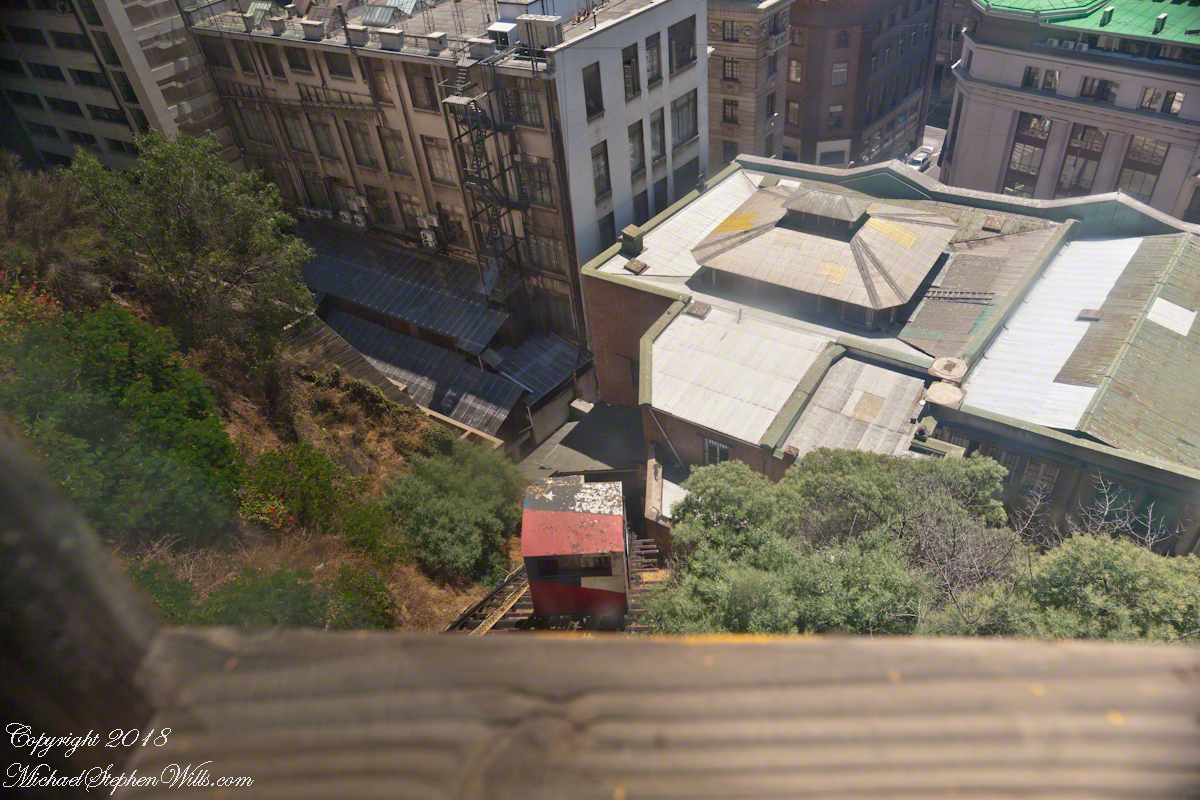
Here are some views of the Conception funicular and environs as seen from the upper Regatta deck.  First, a 24 mm wide angle view.  Look to the center for the rails and one car at the top.  Above are the buildings of Cerro Conception (Conception Hill).

ValparaisoConceptionAscensor-3

The funicular emerges from downtown on the right in the following view. The prominent church is Parroquia Perpetuo Socorro, just above the midpoint.  It rises from Cerro Cordillera, above Cerro Conception.  A Catholic church founded by the Redemptionist Fathers, the first stone was laid down 1905.  Learning from the devastating earthquake of 1906, the engineer Juan Tonkin chose construction of Oregon pine and concrete to stand tall today.  What a view (I’ve seen photographs).

ValparaisoConceptionAscensor-2

A view a bit to the right, many of the colorful exteriors are zinc panels brought from early sailing ships, repurposed as siding.

ValparaisoConceptionAscensor-4
ValparaisoConceptionAscensor-5

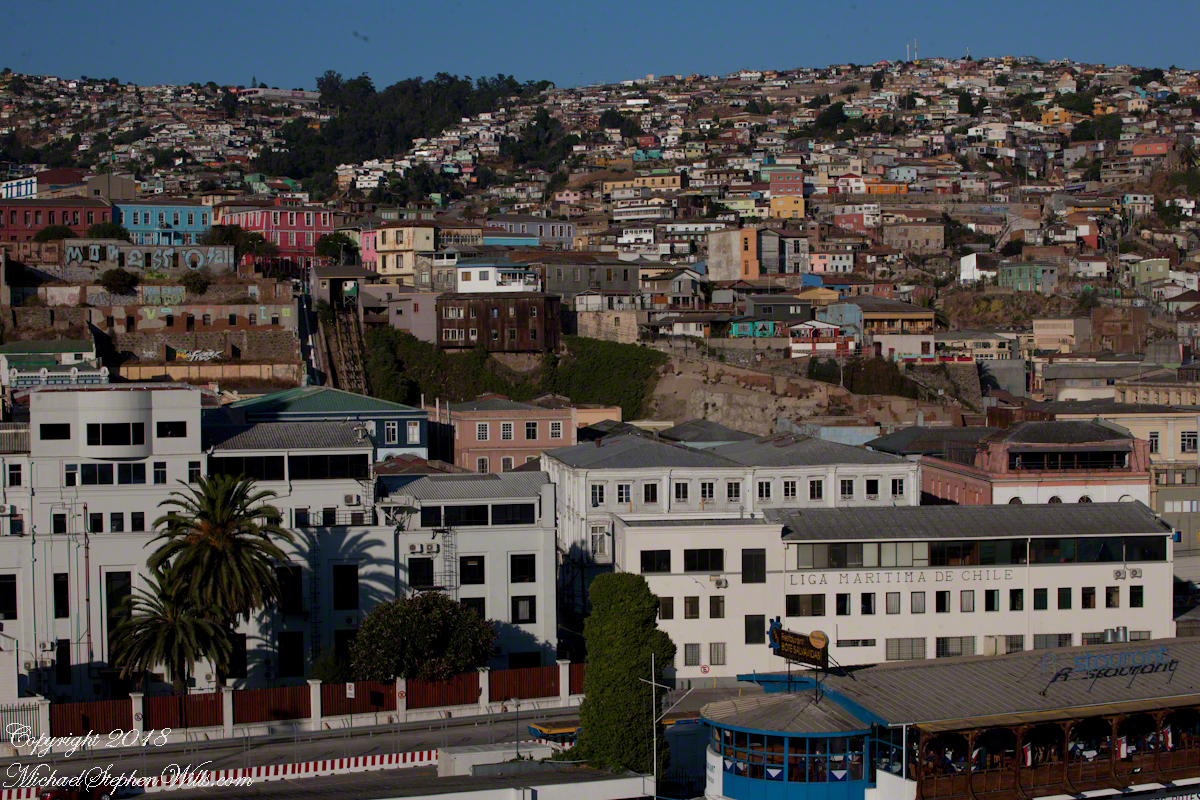
After the wide angle shot I used the variable “zoom” lens for the rest.  Here is a close view of the Conception funicular.  The business of building and running these services thrived, over the years up to 29 funiculars and one elevator, served the city portenos (people of the port).  In 2018 seven are in operation, nine are under a process of restoration and modernization, including Conception.

Our Fifteen Minutes of Fame on Conception Hill

A modest dose of history with wine and empanada

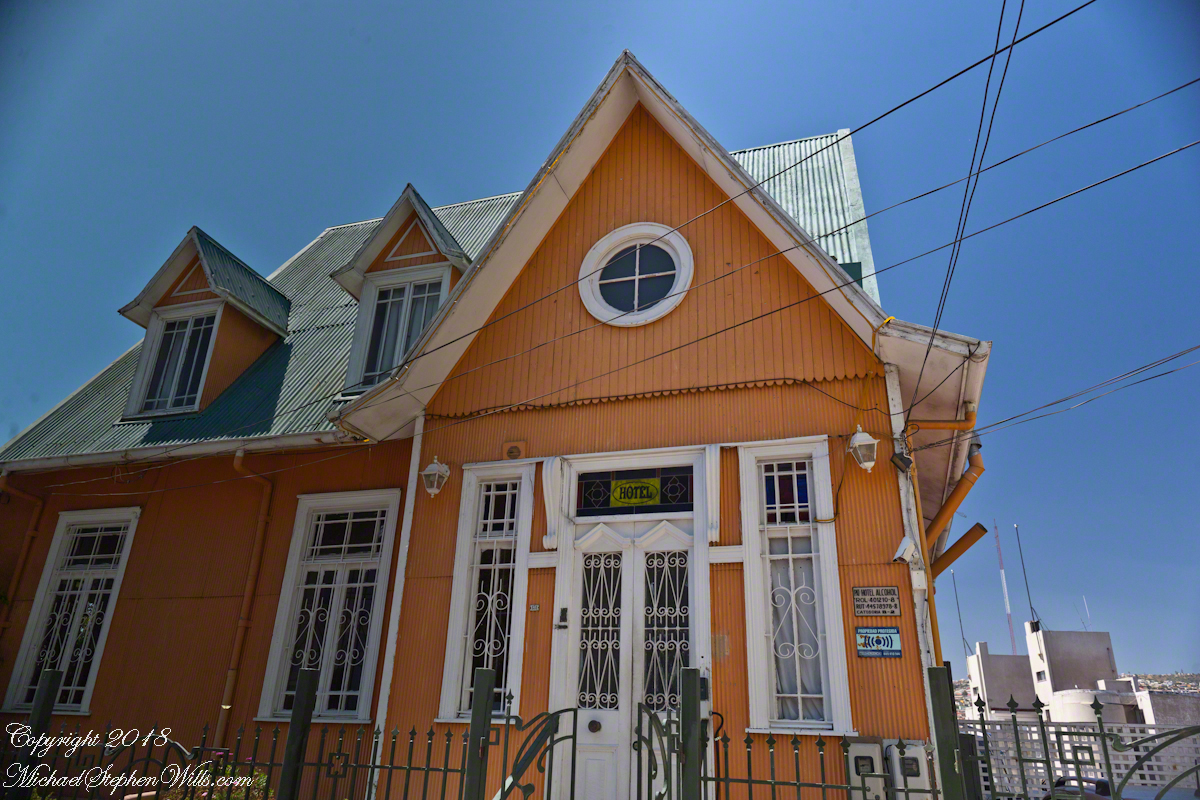
Posting about our departure from Valparaiso, Chile (see Valparaiso Departure III “The Sunset”) brings us to the time spent wandering this World Heritage Site, added to the UNESCO list in 2003.  Within the amphitheater of hills is Cerro Conception (Conception Hill), historically settled by English and German immigrants.  The façade of the Hotel Brighton, a building from the 19th century heyday of Valparaiso when it was a stopping point for shipping through the Straits of Magellan, reveals why so many of the buildings are alike: all are constructed from materials dropped off from sailing ships.

Hotel BrightonThe theme of the Hotel Brighton evokes thoughts of immigrants remembering their origins, emigres claiming a spot of real estate to mold a sense of place for themselves.  This goes both ways, Valparaiso, Indiana was formerly Porterville of Porter County.  The motive force behind the renaming were the memories of the retired Captain David Porter, the sole survivor of an attack on his ship USS Essex by the British frigates Phoebe and Cherub in the War of 1812, within sight of Valparaiso. Fifty eight (58) United States Marines lost their lives in that sea battle.  To point out the obvious, Captain Porter is the namesake of Porter County.  

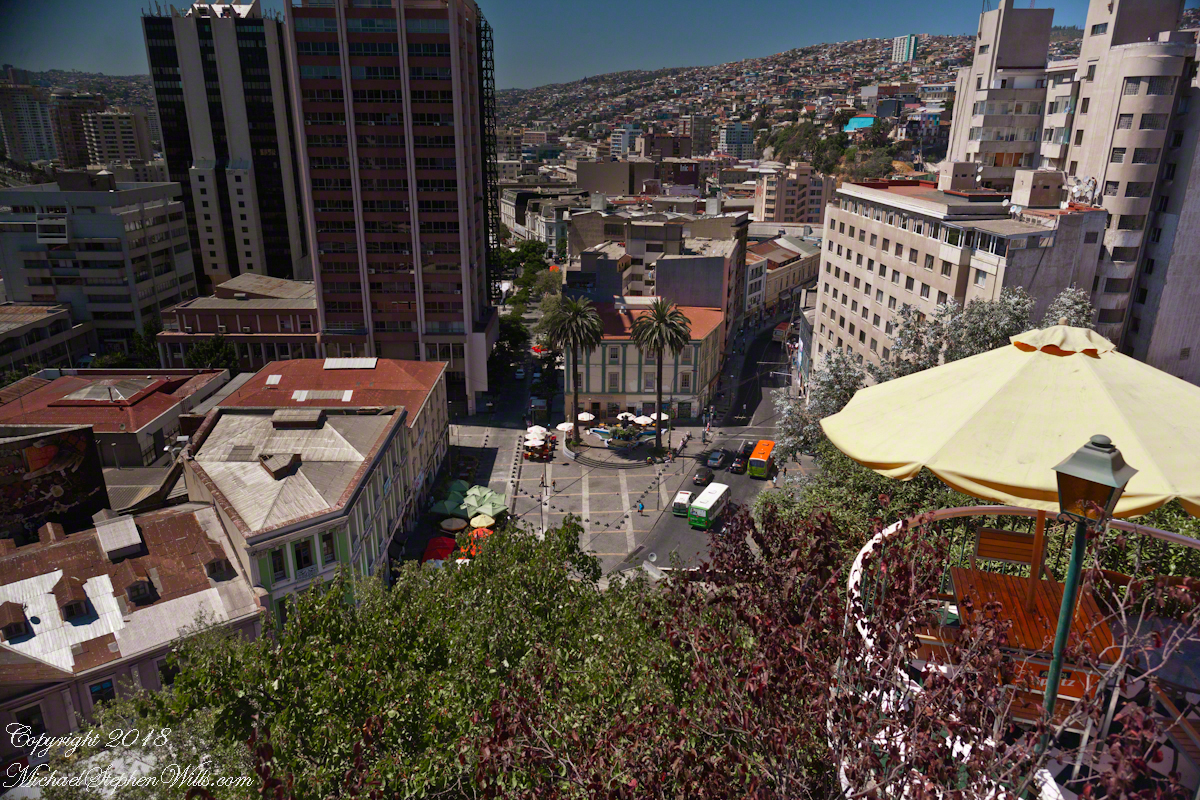
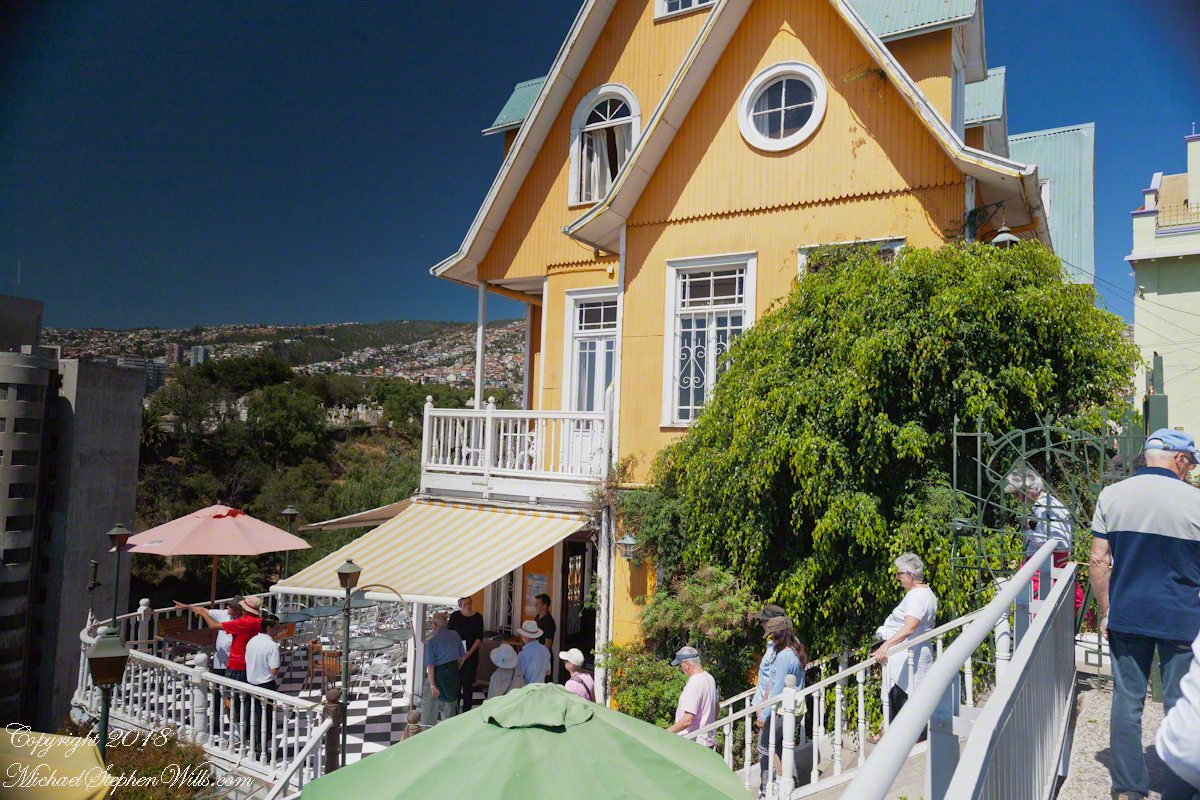
Pam corrects me when I say we “stopped for lunch” at the Hotel Brighton, pointing out we “only” had a glass of red wine and an empanada.  Both were tasty, even more so with this marvelous view looking north into the other hills of the city.  The yellow umbrella is on the hotel restaurant terrace.  

Hotel Brighton

I missed capturing the signature wrought iron gate forming the word “Brighton” among decorative scrolls.  Built on the edge of Conception Hill it overlooks the coastal plain almost all of which is man-made.

Hotel Brighton

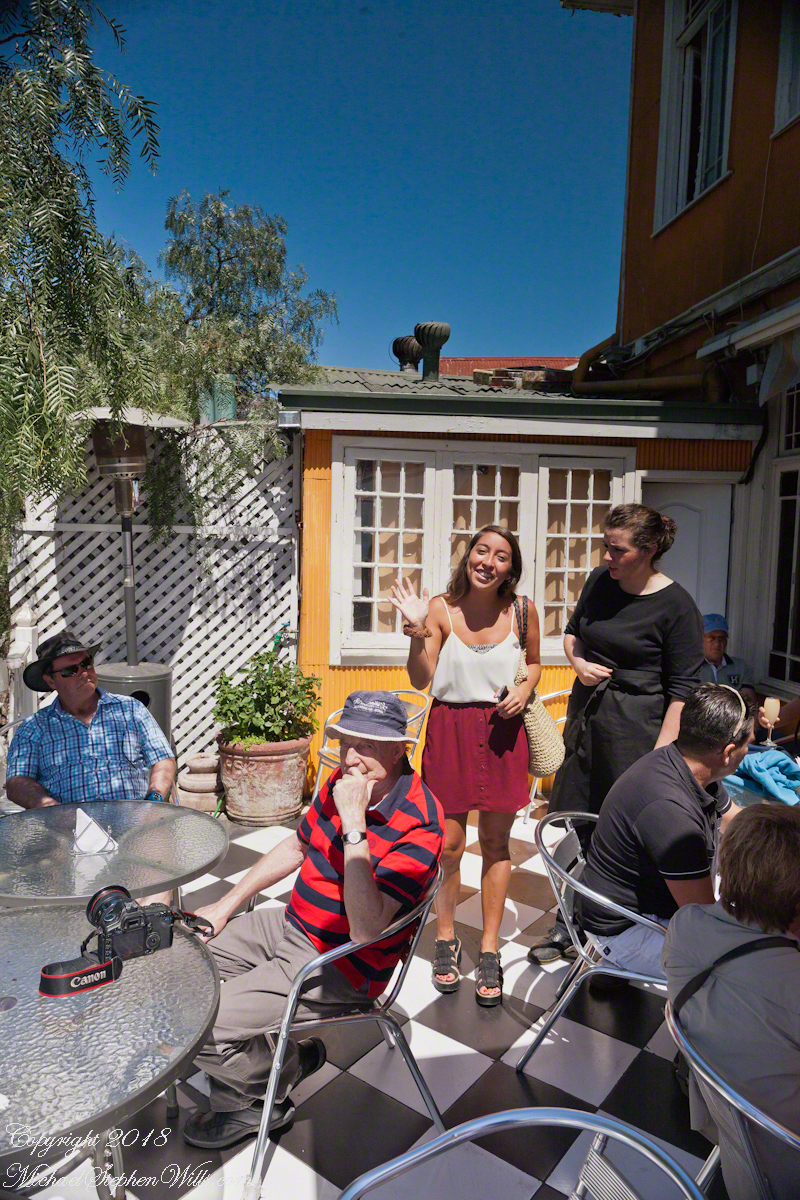
During our refreshment, this young lady (see photograph below) introduced herself as a reporter for El Mercurio.  Accompanied by a photographer, she interviewed us and we had our photograph taken, I returned the favor with the following photograph saying the story might appear in the next edition.  Standing next to her, with a puzzled look, is our waitress who was from the States.

Hotel Brighton

El Mercurio de Valparaiso is the oldest continuously published Spanish language newspaper in the world.  In my research for these photographs I discovered the newpaper officers were a short walk from the landing of the Ascensor Conception.

Valparaiso Departure III “The Sunset”

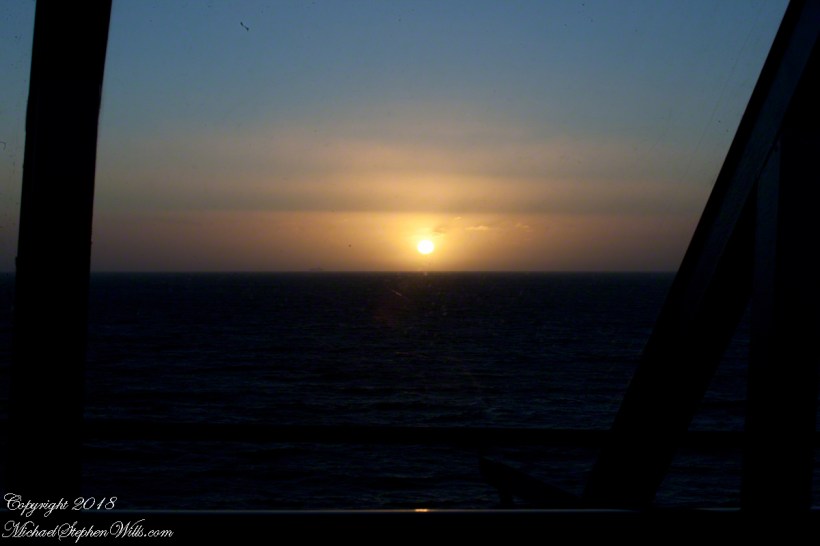
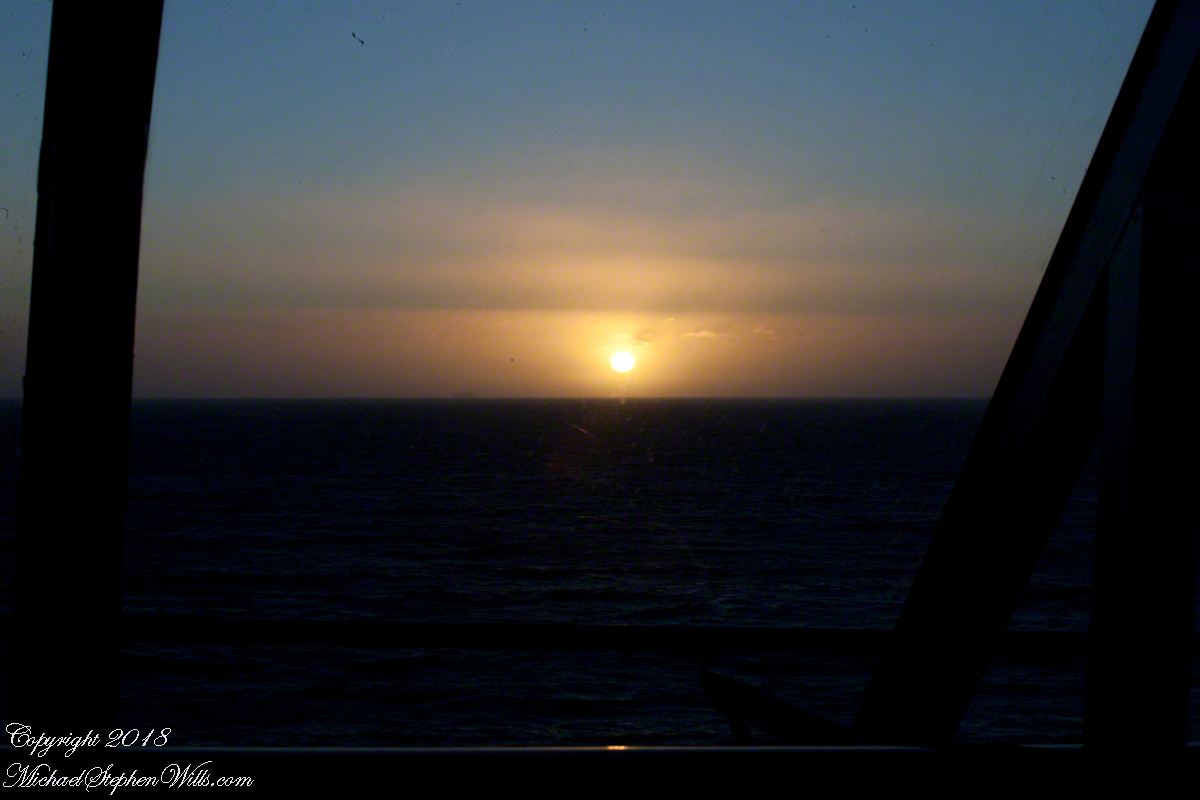
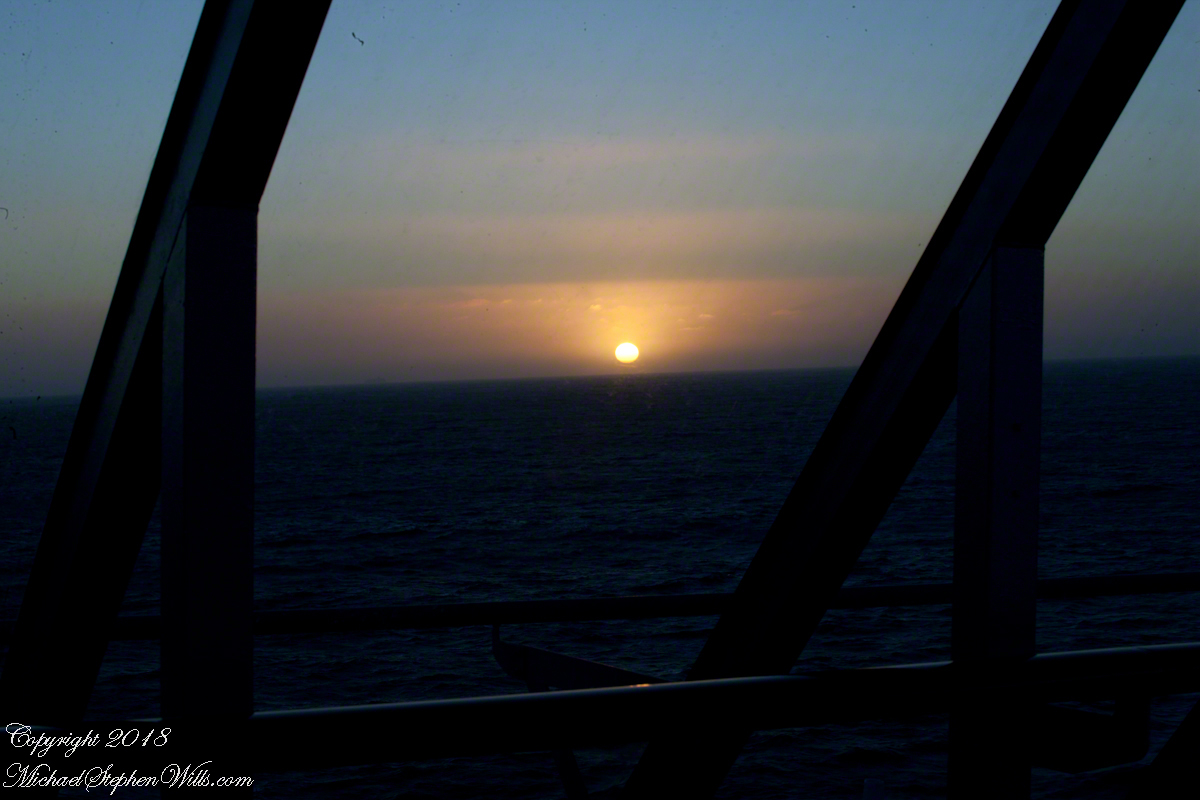
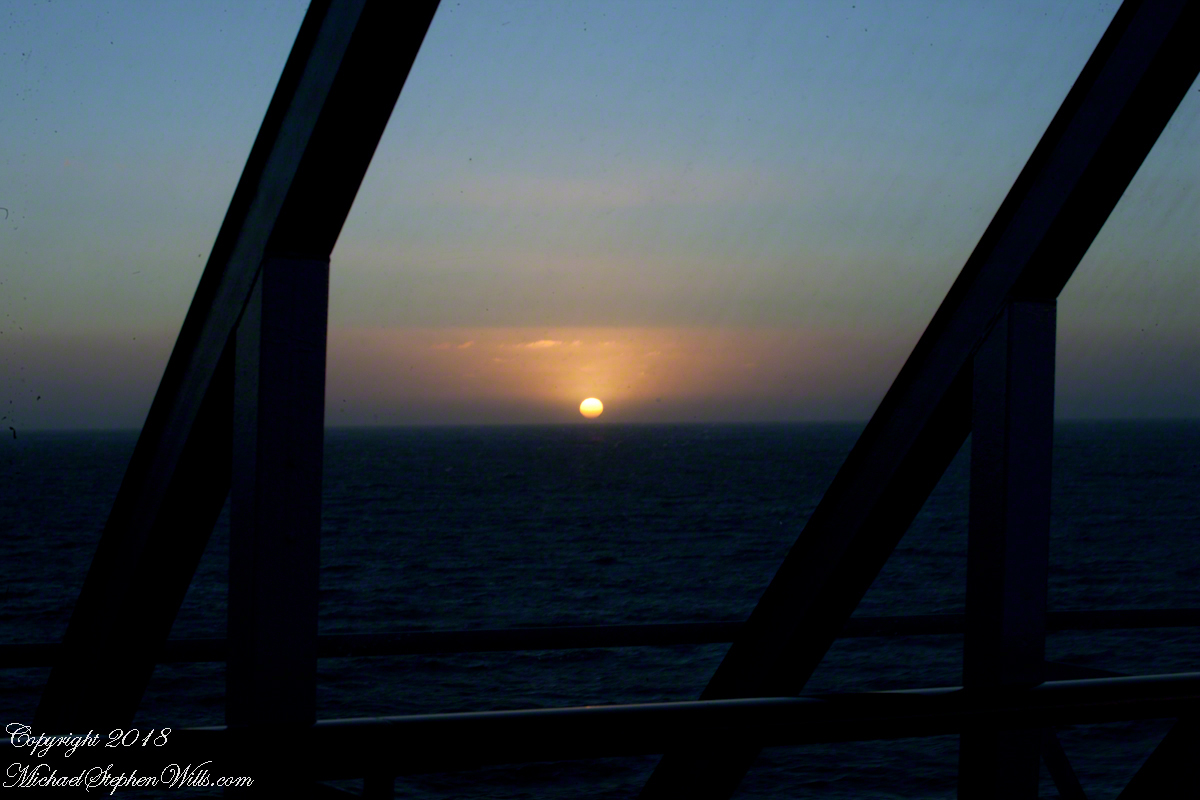
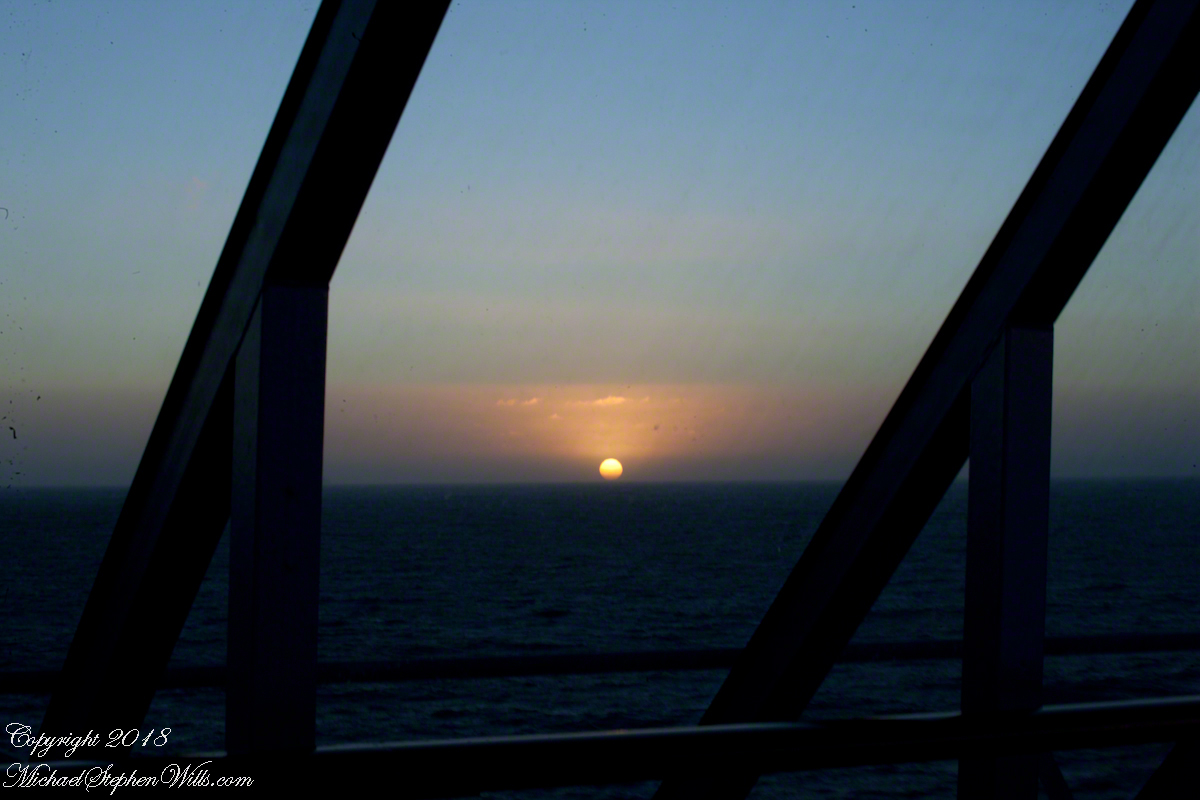
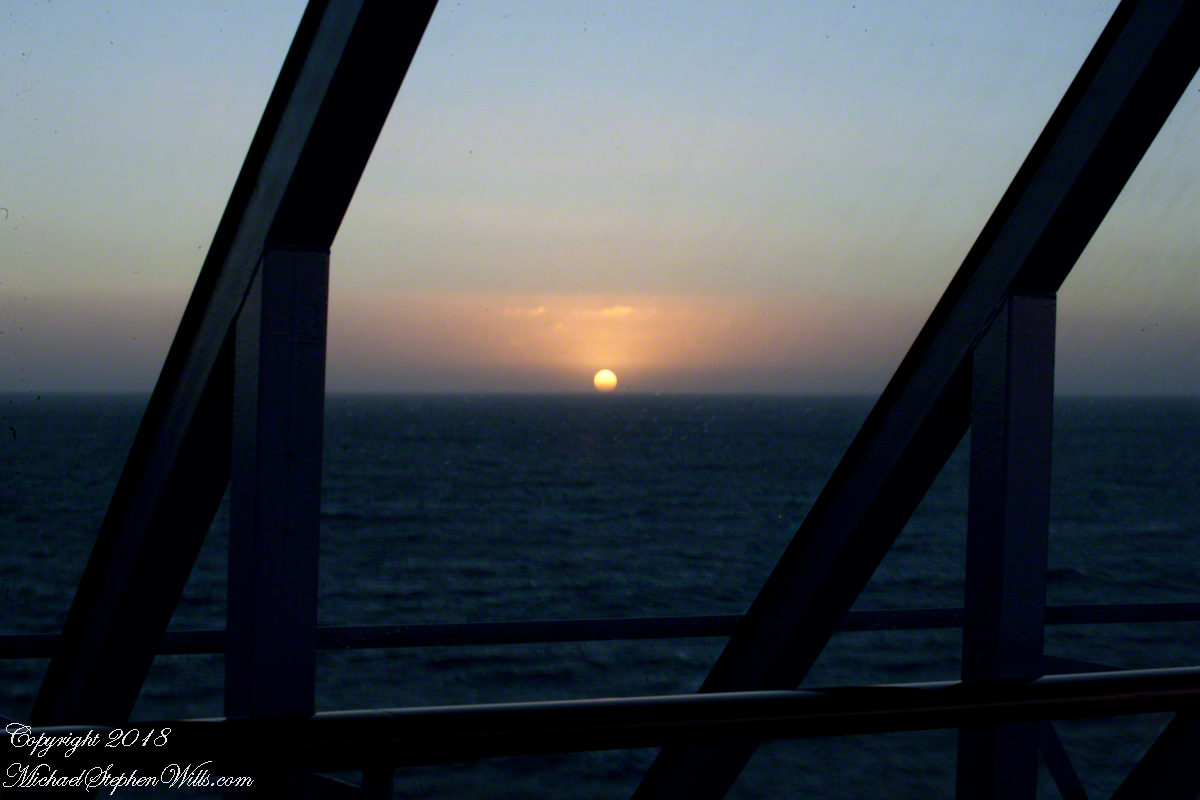
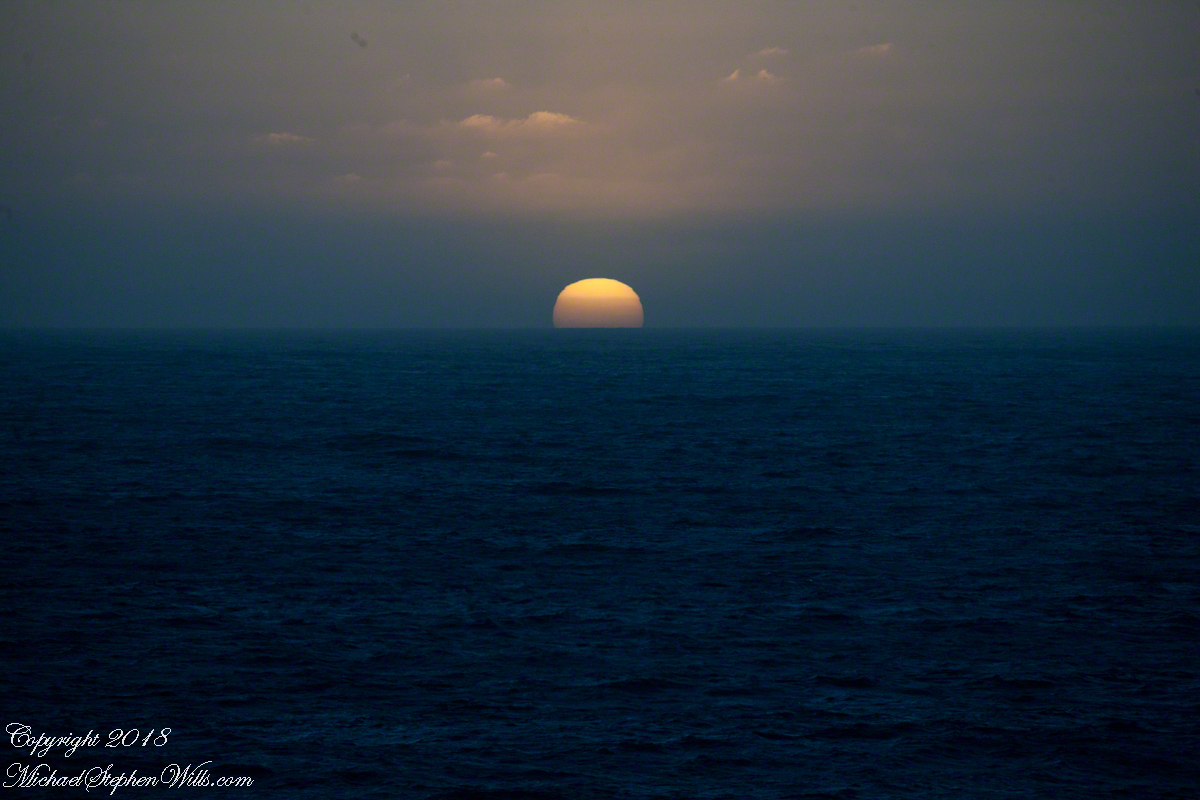
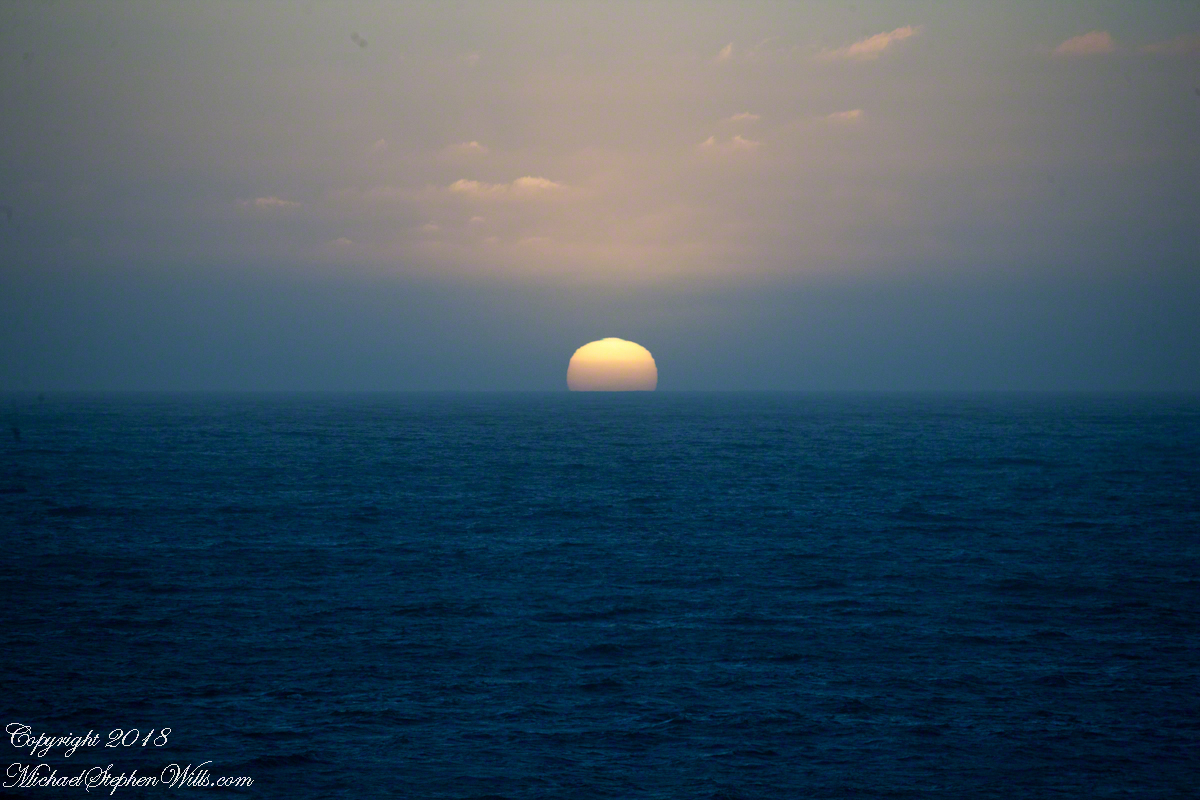
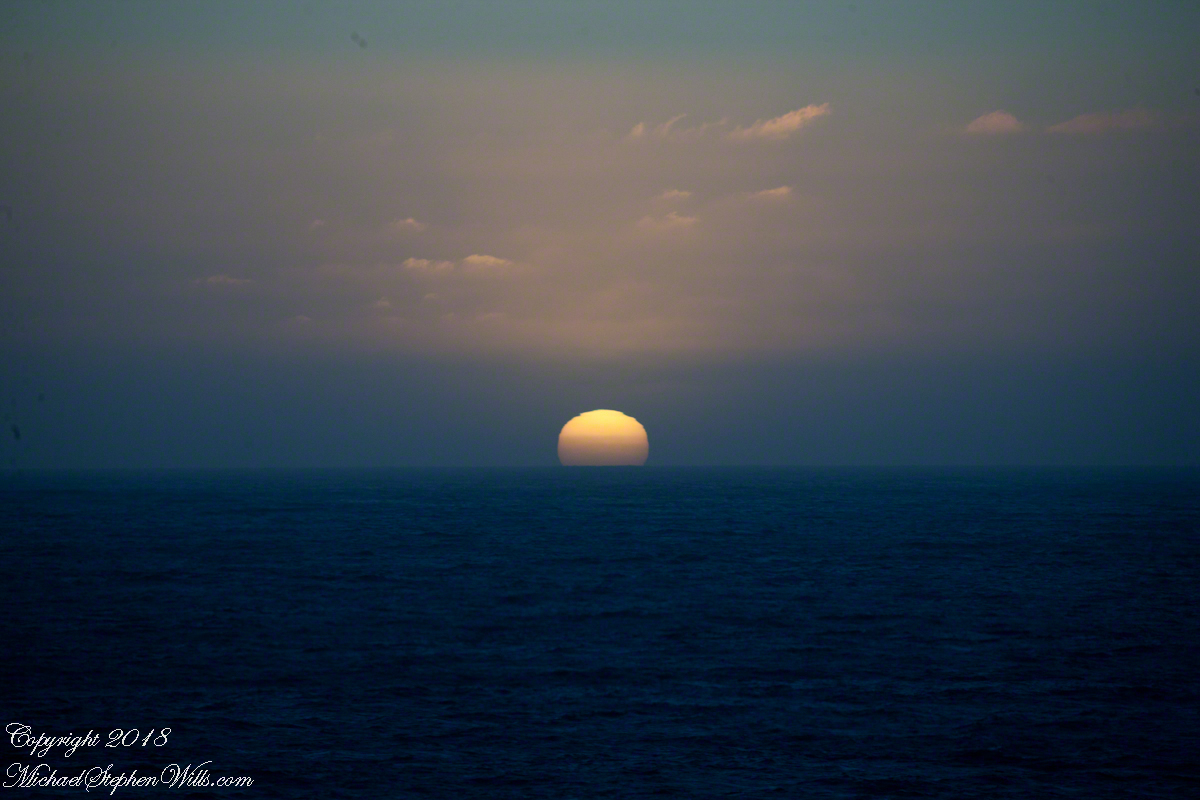
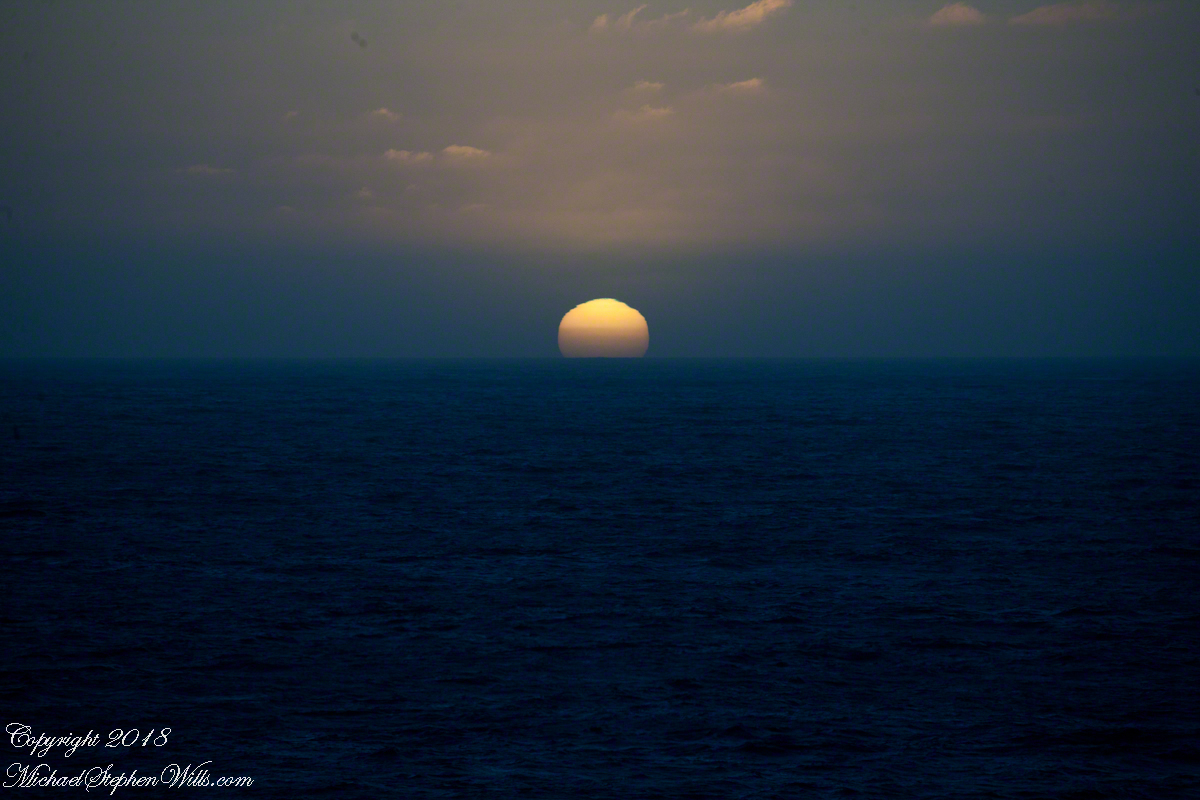
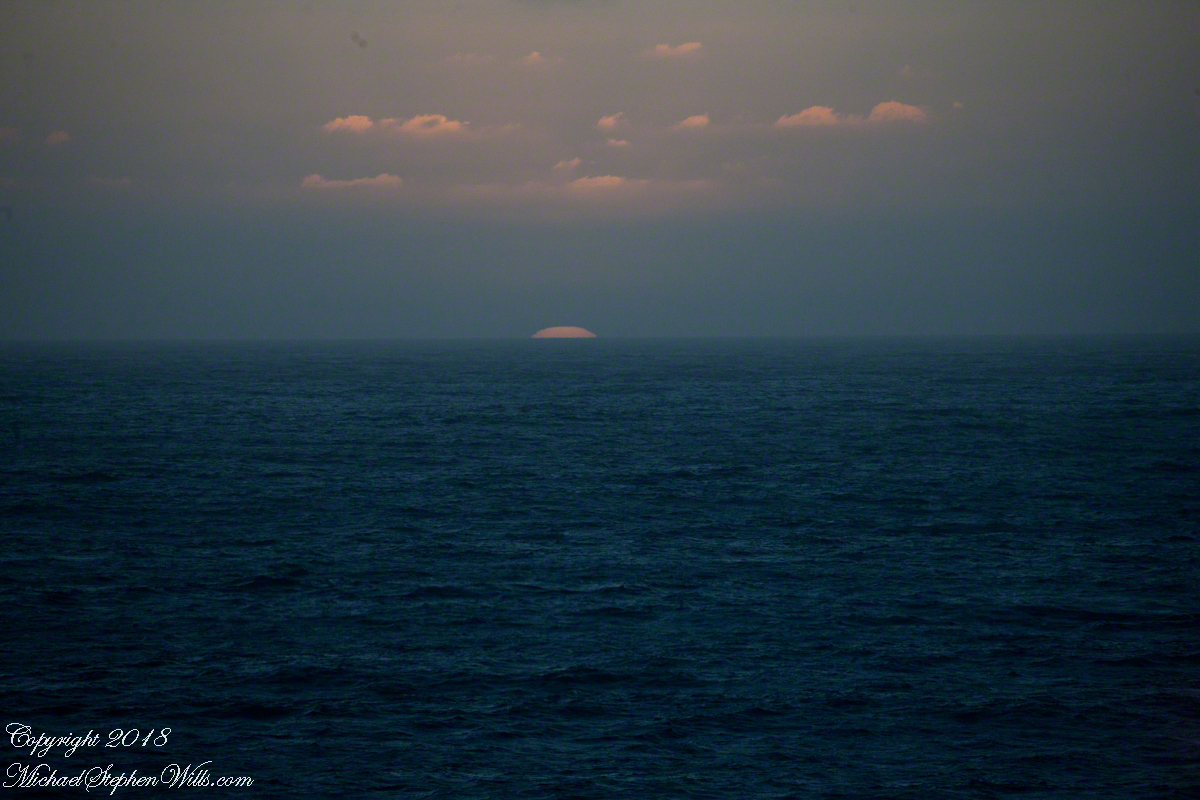
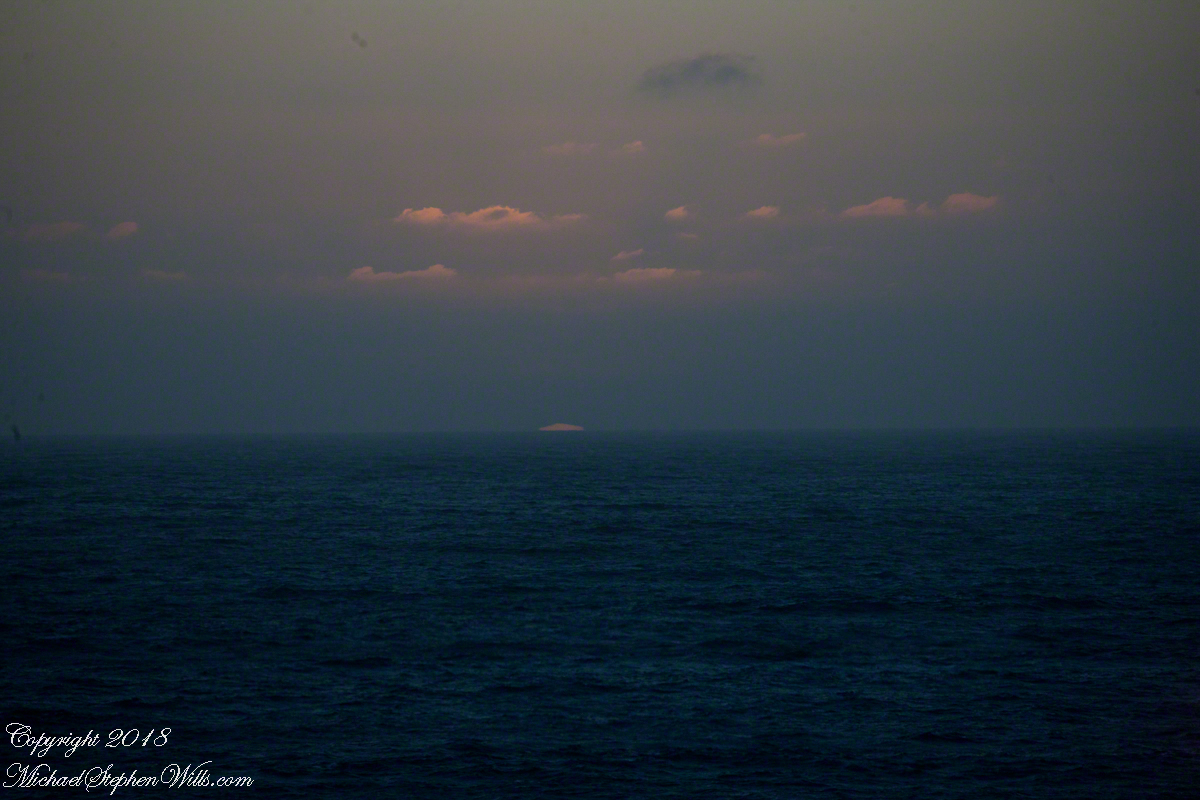
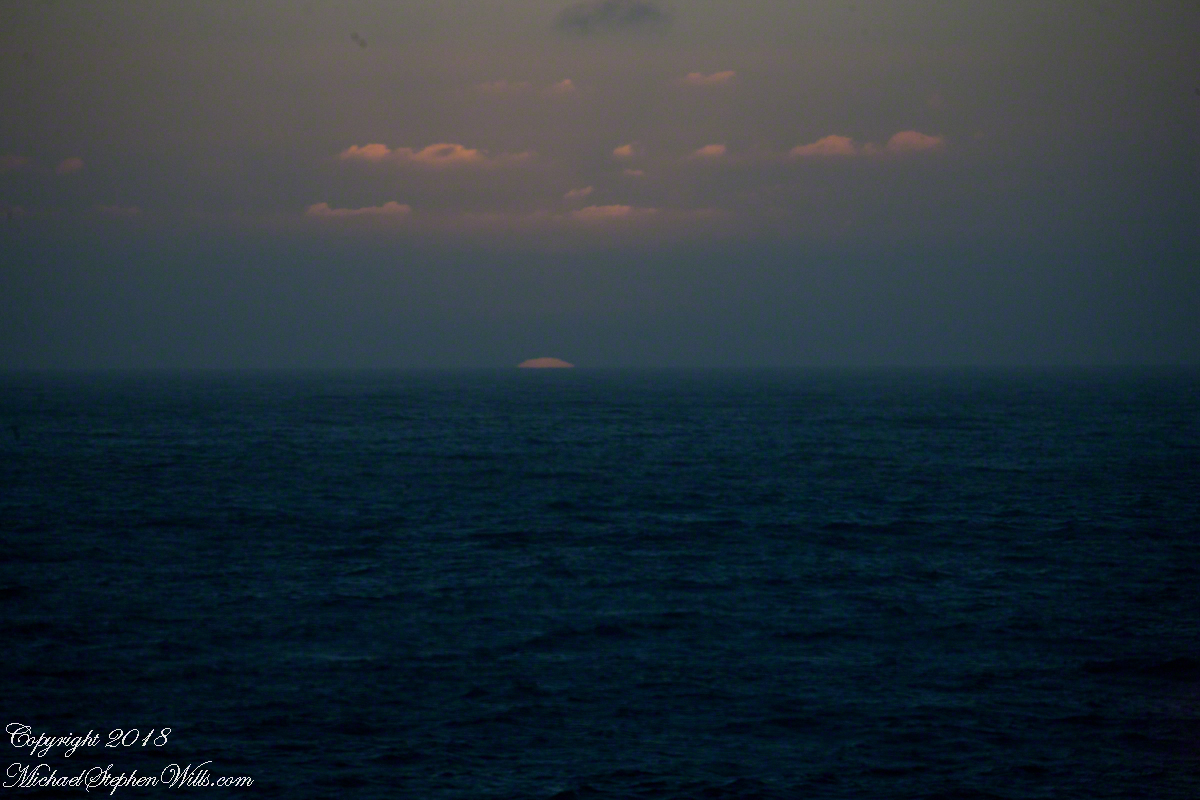
The Sun’s Progress

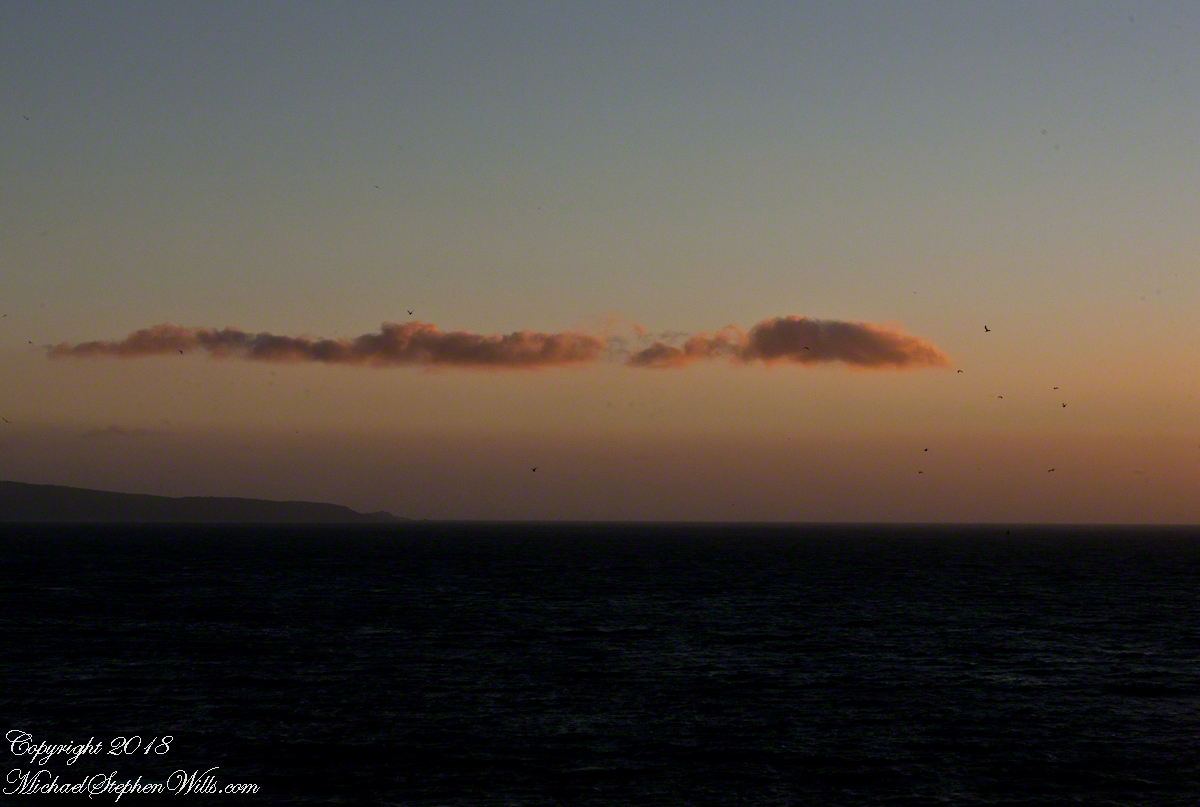
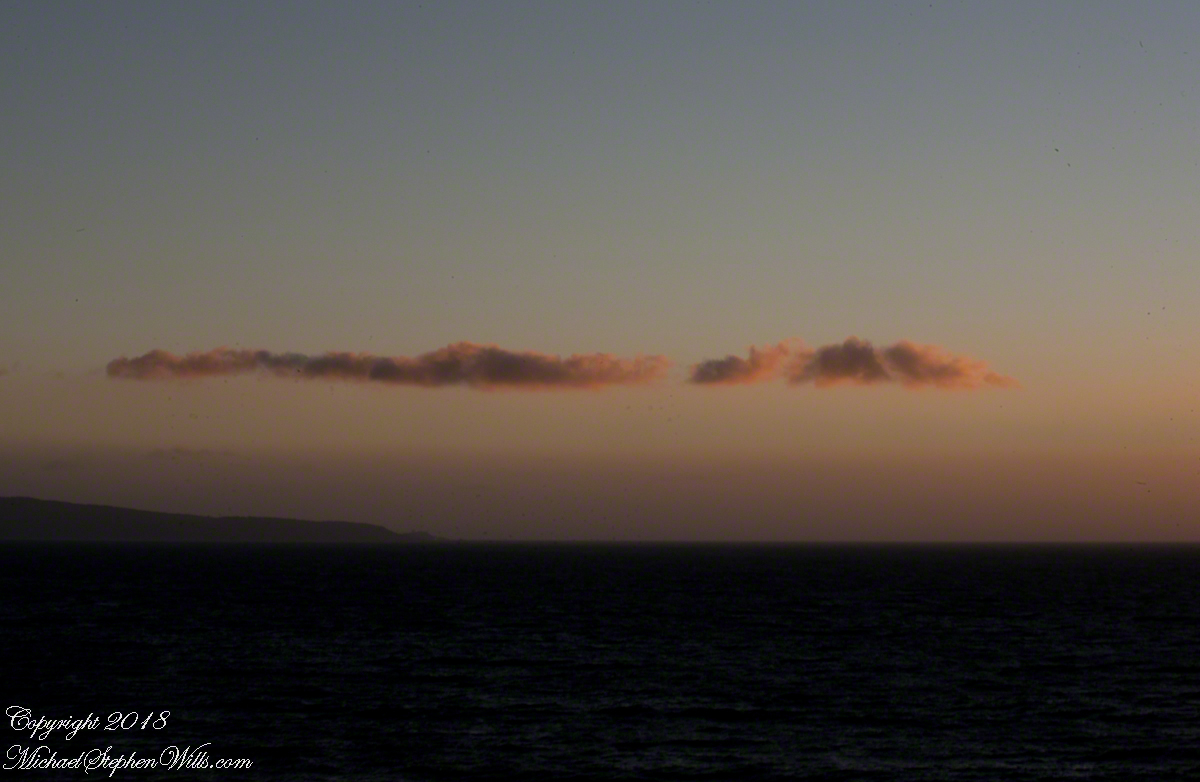
Two minutes after capturing the last light on Concon Point, see “Valparaiso Departure II”, turning the camera 180 degrees, to the south, looking along the Chilean coast, to capture birds on the wing headed toward shore at day’s end.
ValparaisoDeparture-22
Remembering other times,

ValparaisoDeparture-23

waiting for darkness

ValparaisoDeparture-24

with a sky map, studying it to make sense of the stars.

ValparaisoDeparture-25

How far?  How large?

ValparaisoDeparture-26

Light from our star, eight minutes old,

ValparaisoDeparture-27

grazed the earth’s rim the breath of a moth wing ago.

ValparaisoDeparture-28

Connect the dots, stories of heroes, monsters.

Our star, as we know it now

ValparaisoDeparture-31

Singular, alone,

Progress, an illusion to be understood

No less mysterious for that

ValparaisoDeparture-45

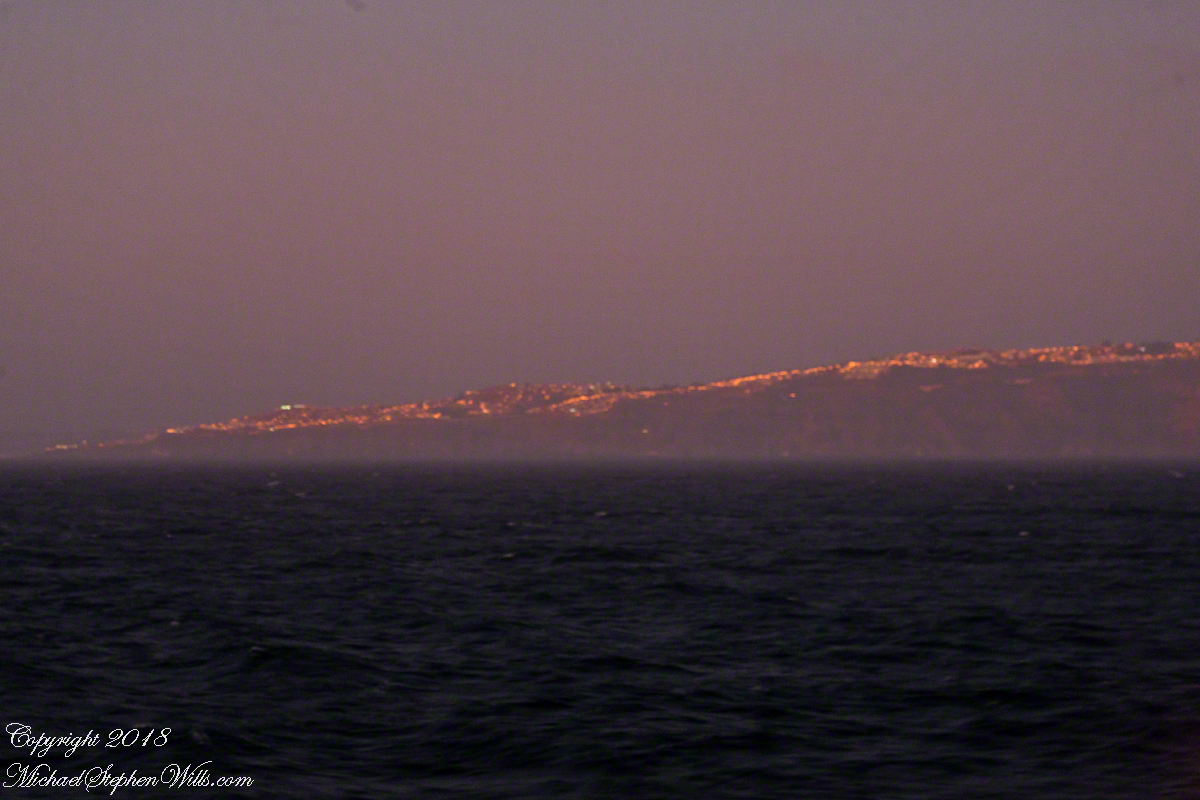
Look back to the sheltering headland of Valparaiso, glowing.

ValparaisoDeparture-47

Valparaiso Departure II

View of Aconcagua Mountain at Sunset

After the Ocean Princess sailed off toward its destiny in my last posting, “Valparaiso Departure I,” Pam and I left the deck for dinner to return two hours later for the Regatta’s departure in the magic sunset hour.

This first photograph is 22 minutes before sunset as the ship swung into a course along the northern shore of Valparaiso Bay.  The city grew along the bay shore, starting from the city center in the southern cup and into the north.  We are looking southeast across a lighthouse named “Club de Yates”, identified from the red fiberglass tower, a triangular daymark, toward the north end of Valparaiso.

Click this link for my Fine Art Photography gallery.
ValparaisoDeparture-17

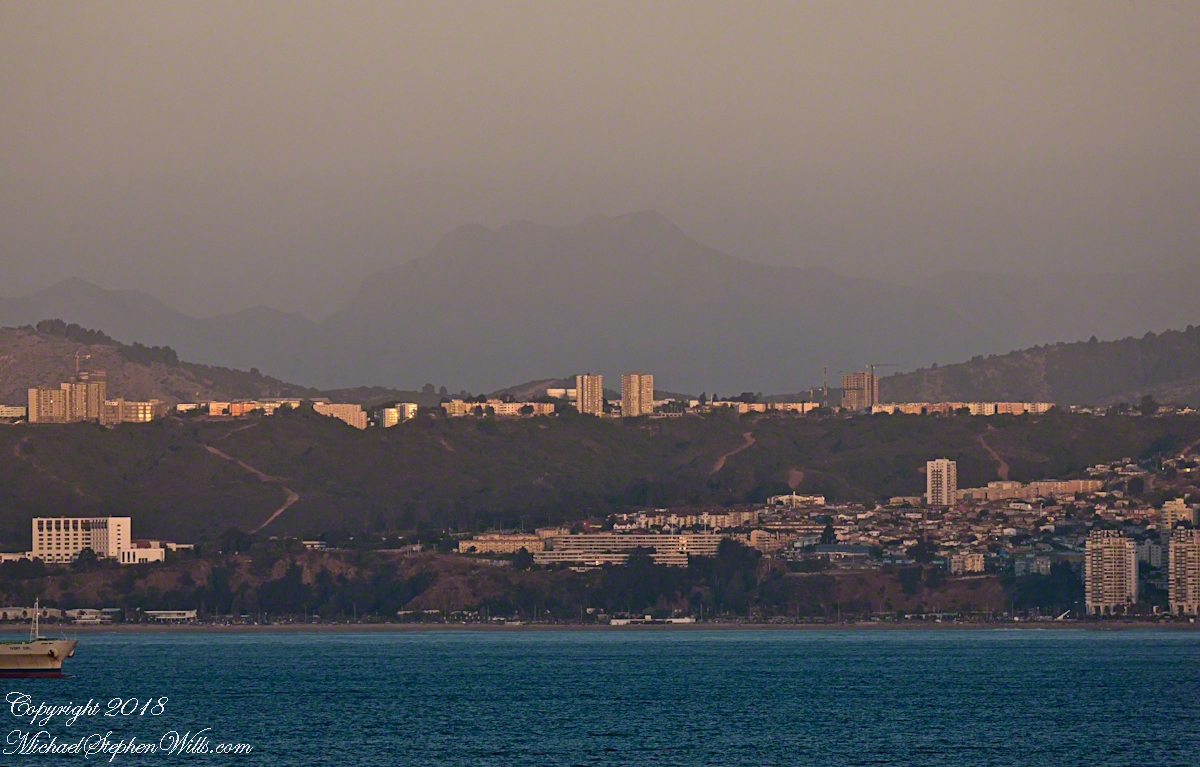
Here we see a different city altogether, the fourth largest of Chile and also within the Valparaiso Region and the Greater Valparaiso Area, named Vina Del Mar (Vineyard of the Sea).  The view is almost due east and, from here, it is difficult to discern why it is also called “La Ciudad Jardin” (Garden City), it is do densely populated.  North Valparaiso ends with a ridge with Vina Del Mar the next valley.  Look carefully along the shore to find the Punta Gruesa lighthouse with a red band on a white metal tower daymark.  By way of scale the tower is 56 feet high.  Follow Punta Gruesa to the right for the ridge separating Vina Del Mar (the taller apartment buildings, from Valparaiso.

The distant mountain is huge, visible from 95 miles away.  More about it later.  

ValparaisoDeparture-18

The previous photographs were using a tripod mounted Canon EOS-1Ds Mark III with the Canon 70 – 300 mm f4-5.6 L IS USM lens set to 108 mm focal length, taken 15 seconds apart.  I then swapped  the EF 24 mm f 1.4 L USM lens for the following photograph of the pilot boat heading to a rendezvous with the Regatta, having dropped off “our” harbor pilot.  It will wait beyond the harbor to bring the pilot back home.  The photograph is 7 minutes after the previous.  Punta Gruesa and the lighthouse and the Vina Del Mar apartment towers are just visible, having lost the sun.

Click this link for my Fine Art Photography gallery.
ValparaisoDeparture-19

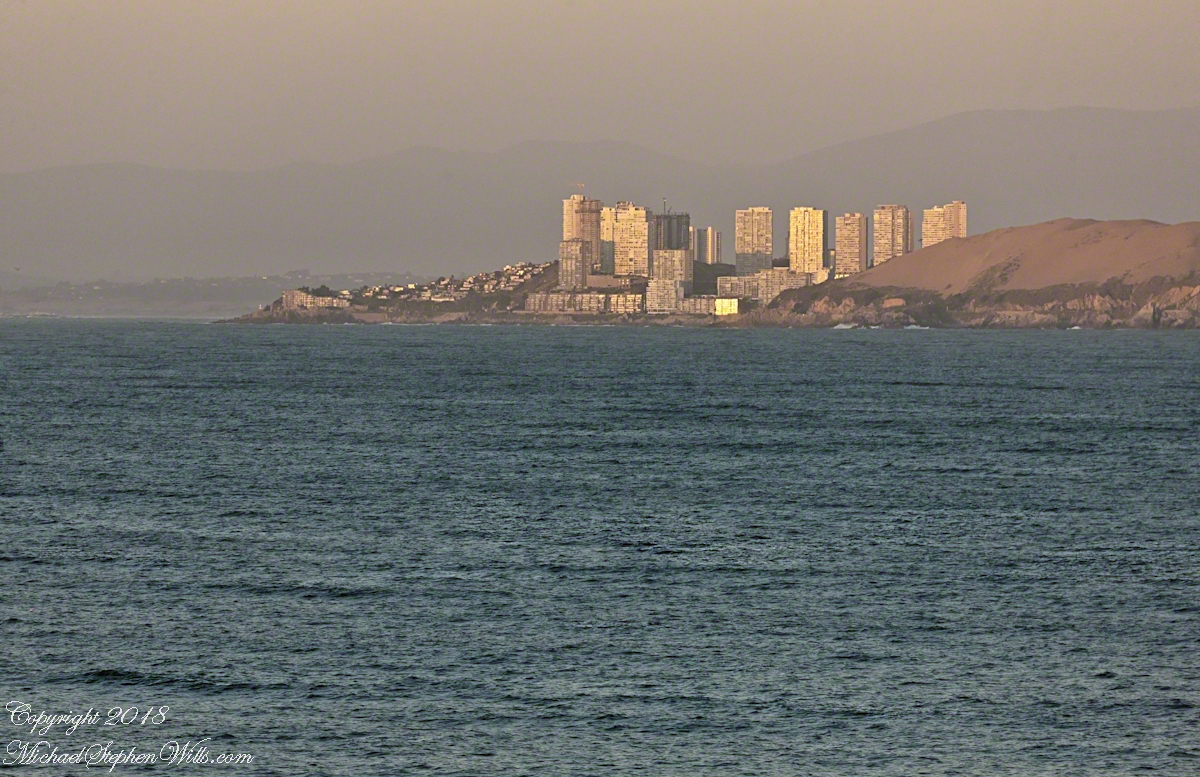
On the northern tip of Valparaiso Bay Punta Concon, the City of Concon and tall sand dunes also called Concon reflect the sun’s light 10 minutes before sunset.  The city is the fastest growing in Chile, 106% between 1992 and 2010 (28,157 to 50,000).  The Regatta is now well underway and I returned to the “long” lens here set to the 3oo mm focal length maximum.

On the other side of Punta Concon (Concon Point) the Aconcagua River flows into the Pacific.  Although the river has the same name as Aconcagua Mountain, the head waters are in Chile, 12 miles from the slopes of the mountain in Argentina.

ValparaisoDeparture-20

A swivel of the camera brings Aconcagua Mountain into view.  This former volcano, dead now for 8 – 10 million years is the highest mountain in North and South America.  The next highest peak is in the Hindu Kush, 10,000 miles to the northeast.  That said, Aconcagua is less challenging than Denali of Alaska and so many people attempt it each year human excrement is a major pollutant there.  We are looking here over the Vina Del Mar Valley 95 miles to Aconcagua Mountain in Argentina.

Click this link for my Fine Art Photography gallery.
ValparaisoDeparture-21

Copyright 2022 Michael Stephen Wills All Rights Reserved

Valparaiso Departure I

Thoughts on Departures

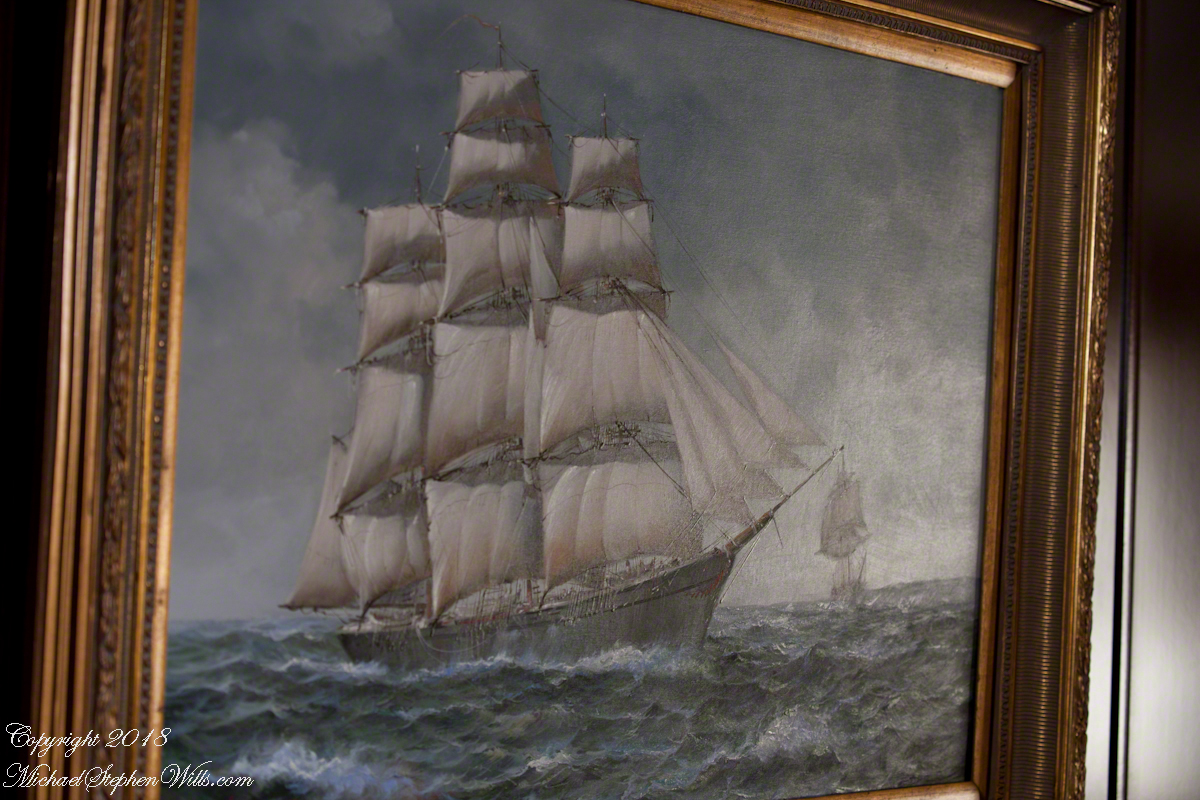
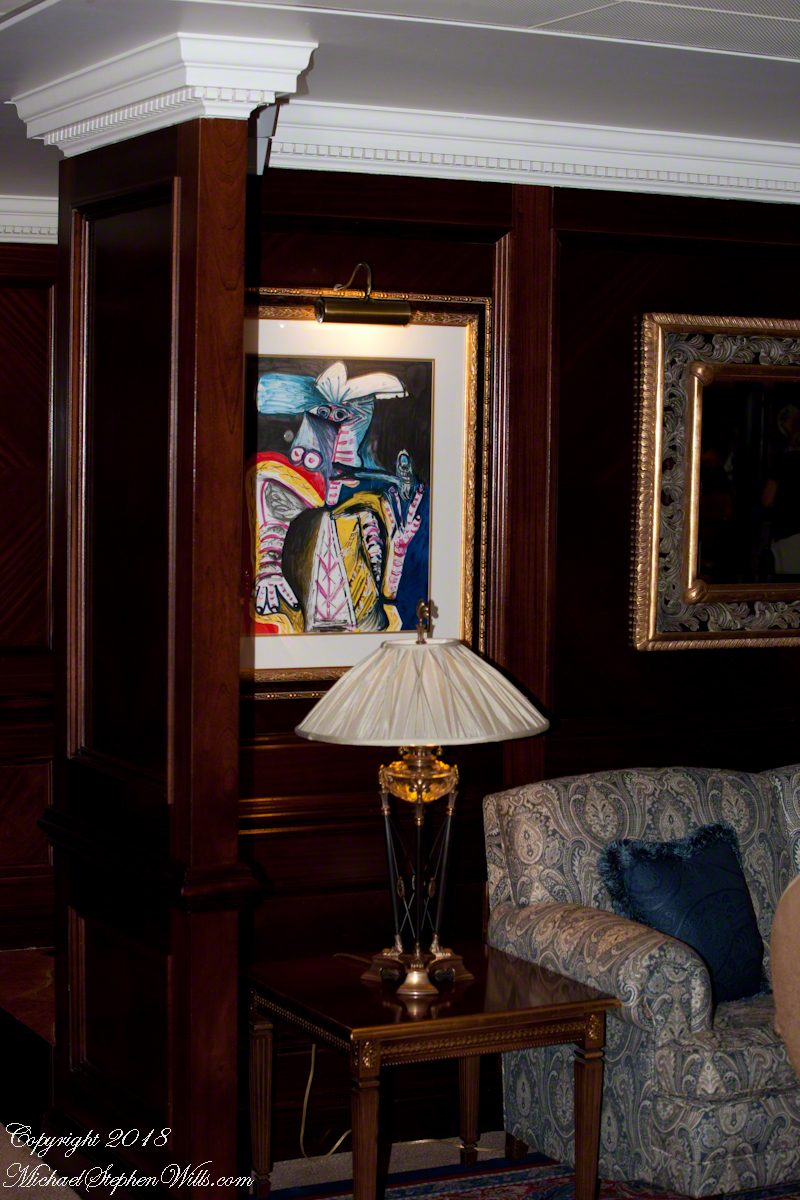
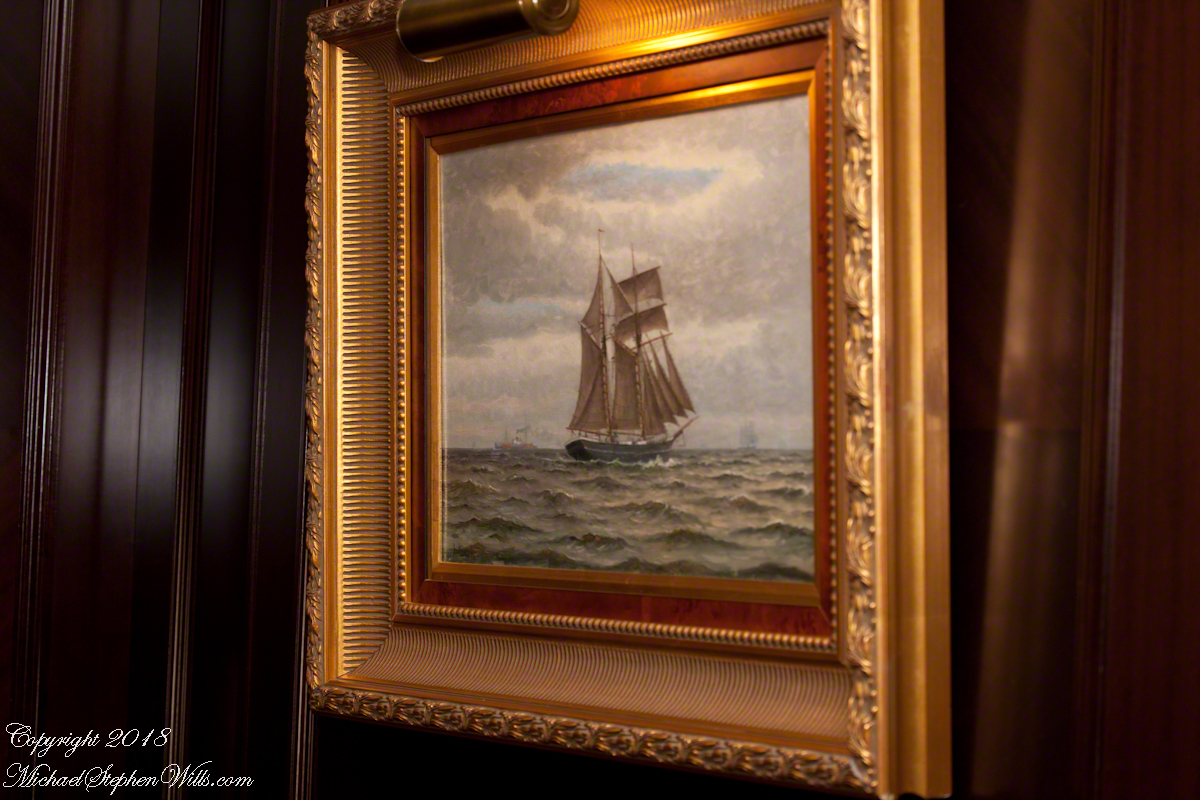
Late afternoon of our departure from the Chilean port city Valparaiso,  Pam and I enjoyed entertainments on the Regatta.  This painting of a ship under sail brings to mind the history of Valparaiso, as a place only reachable by ship, clinging to a narrow ledge on the Andes, barely existing for centuries, repeatedly destroyed by earthquakes until the 19th century brought sailing vessels such as this, growth and prosperity.  Major earthquakes hit the years 1730, 1822, 1839, 1873, 1906, 1907.  After 1907, the city was rebuilt anew in the modern form.  The inhabitants must enjoy spot, naming it “Vale of Paradise.”

Click this link for my Fine Art Photography gallery.
ValparaisoDeparture-1

While, in the 21st century the city enjoys a refreshment of an influx of artists and visitors such as the Regatta, the danger of the next massive quake is ever present and unpredictable.

As we enjoyed the artwork….

ValparaisoDeparture-13

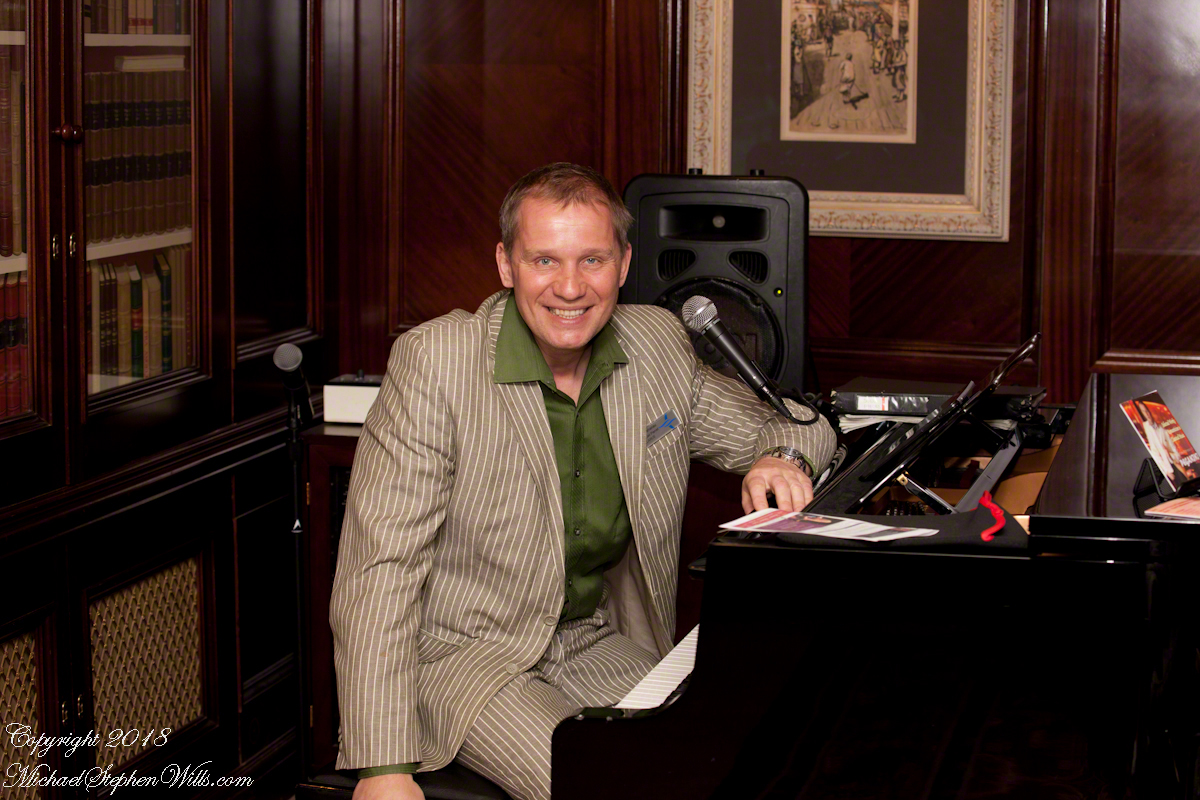
….a pianist entertained us.

ValparaisoDeparture-14

As usual, I was carting photography equipment to capture the moments as the afternoon moved towards…

ValparaisoDeparture-15

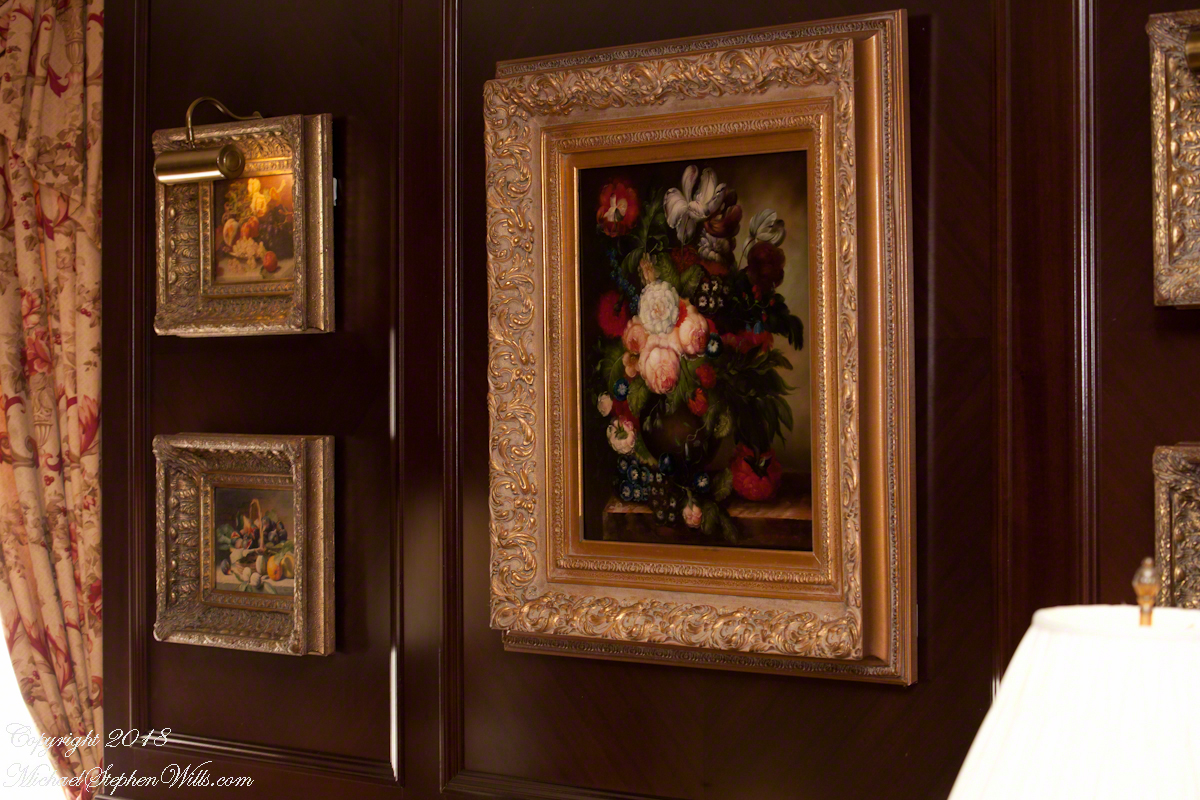
….the scheduled departure among still life painting in the style of the Dutch masters.

Click this link for my Fine Art Photography gallery.
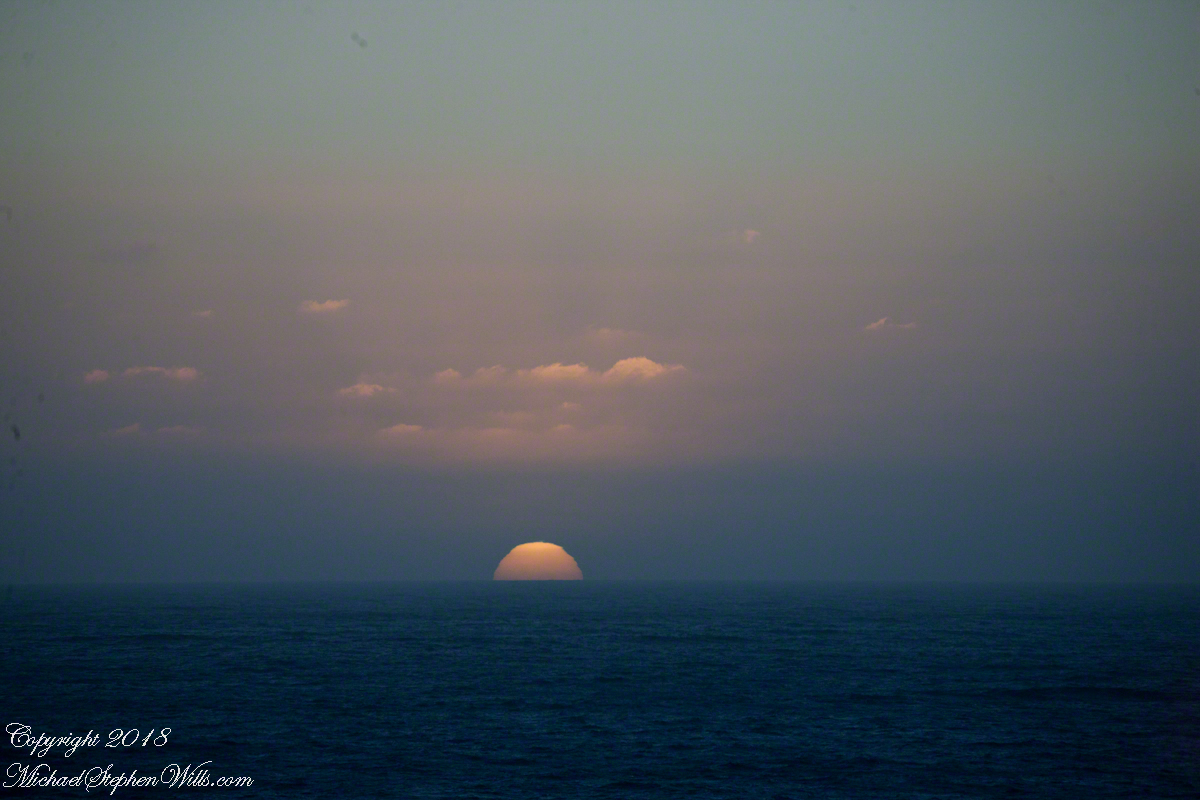
ValparaisoDeparture-16

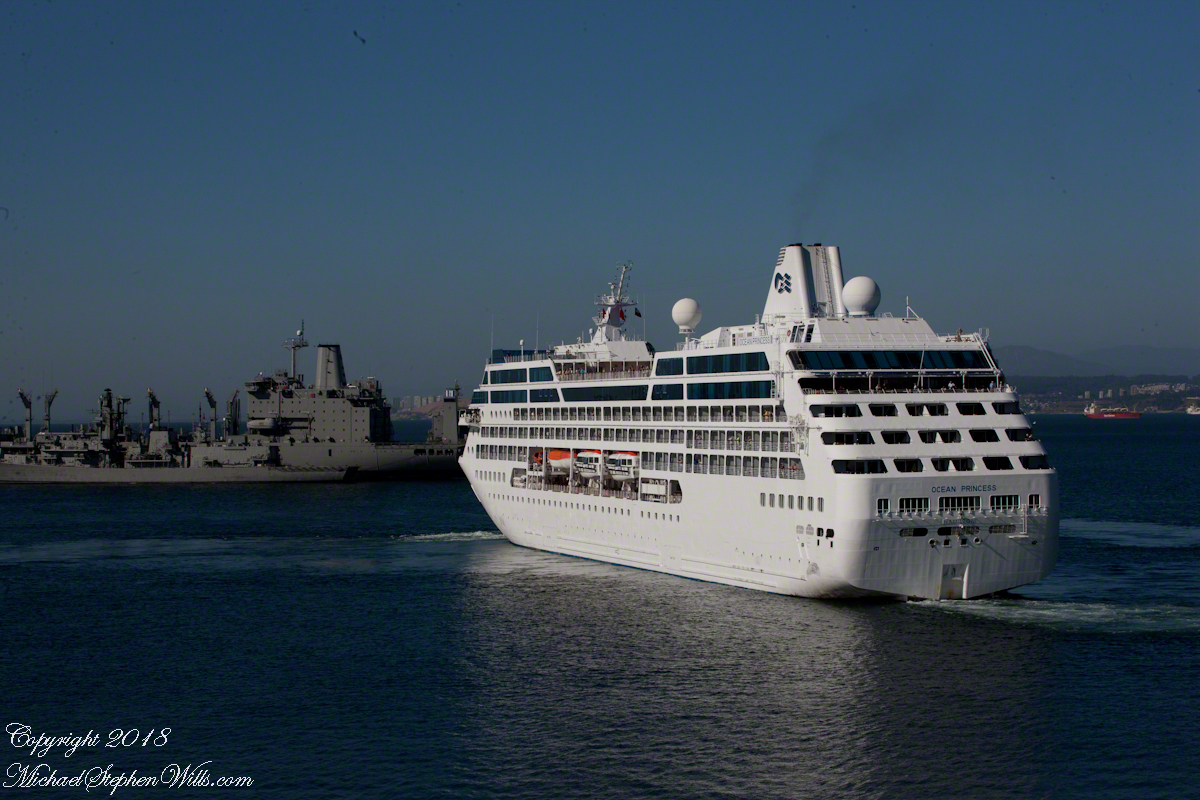
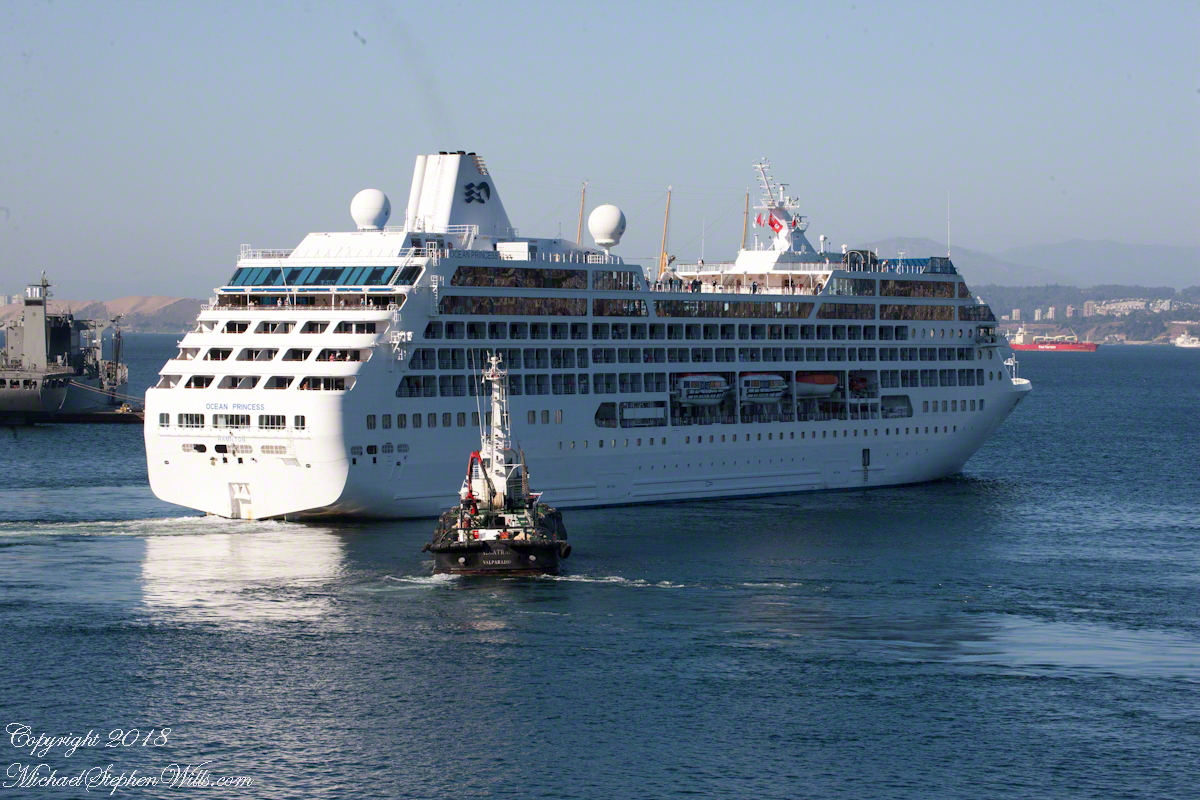
That day I chose the upper decks as the best vantage point.  From there, Pam and I viewed the departure of a similar ship to the Regatta, the “Ocean Princess.”  It must have been the last voyage of the Princess under that name as, the same year, it was acquired by the Oceania line, refurbished, relaunched as the “Sirena”.

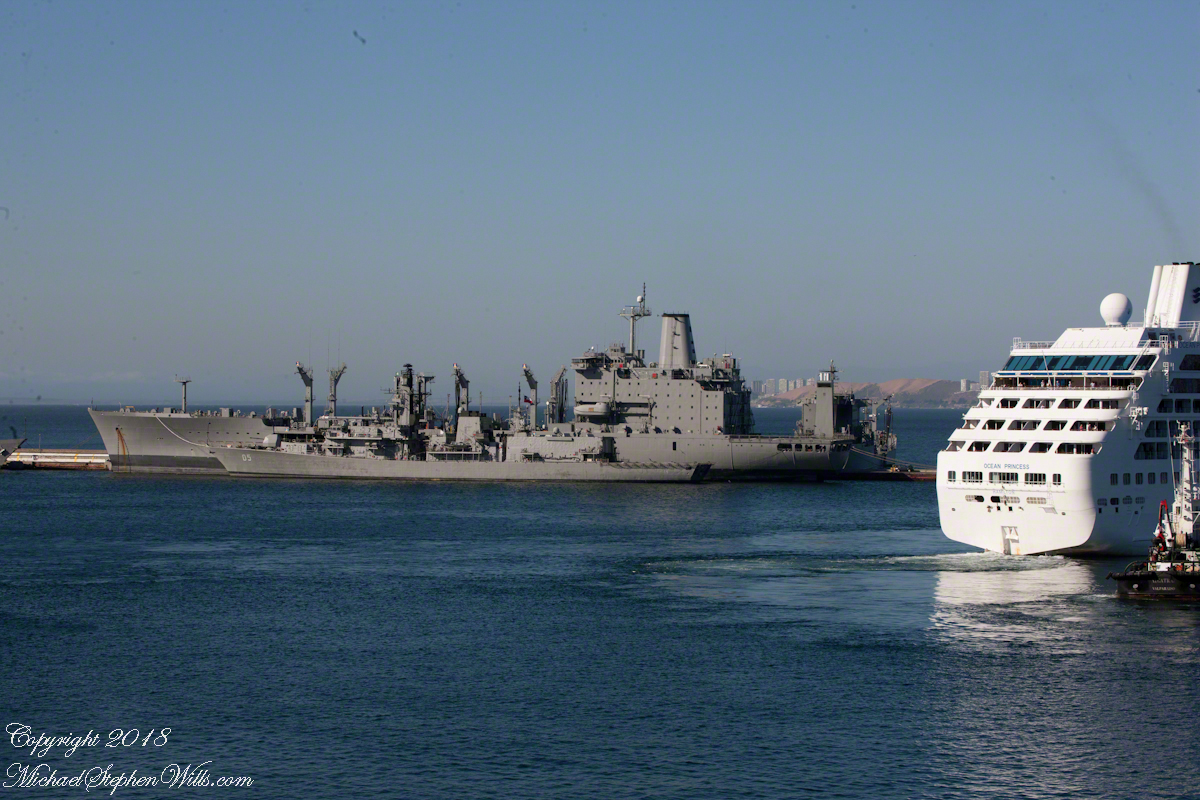
The Chilean navy base and Naval Academy is there.  The Ocean Princess navigated around this docked destroyer…..

ValparaisoDeparture-2

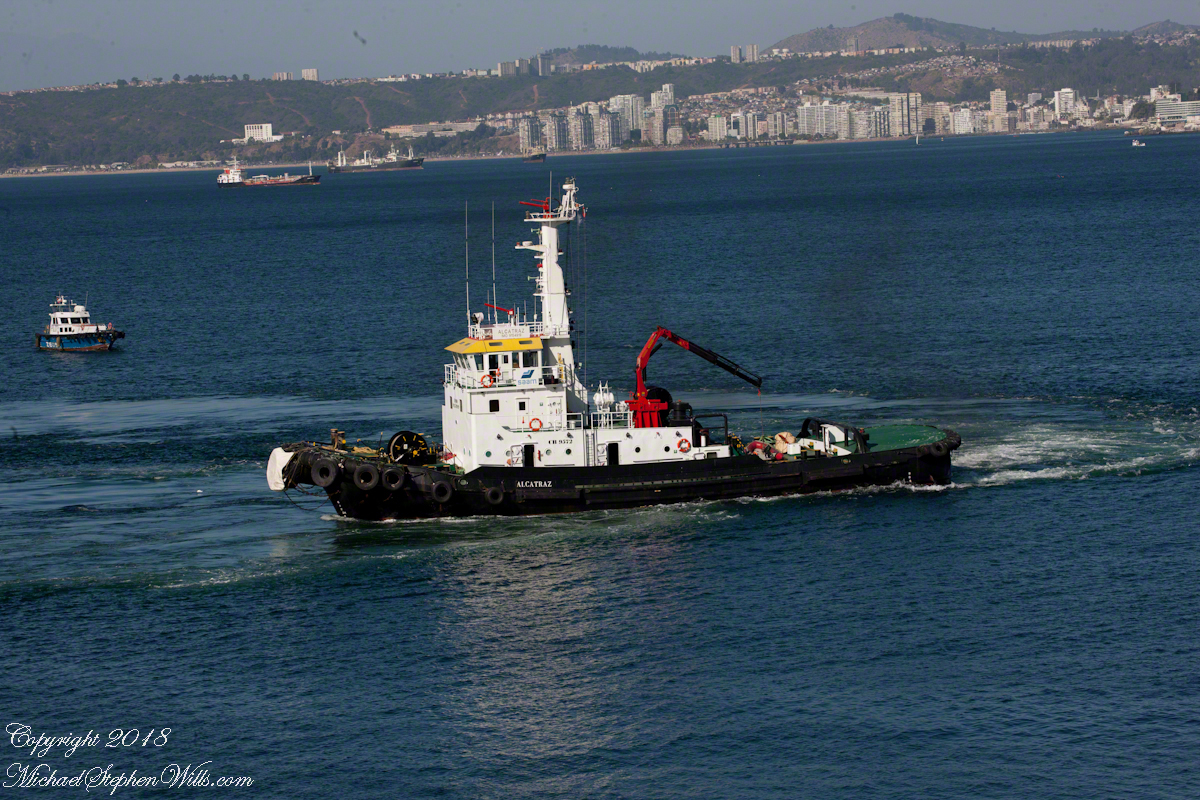
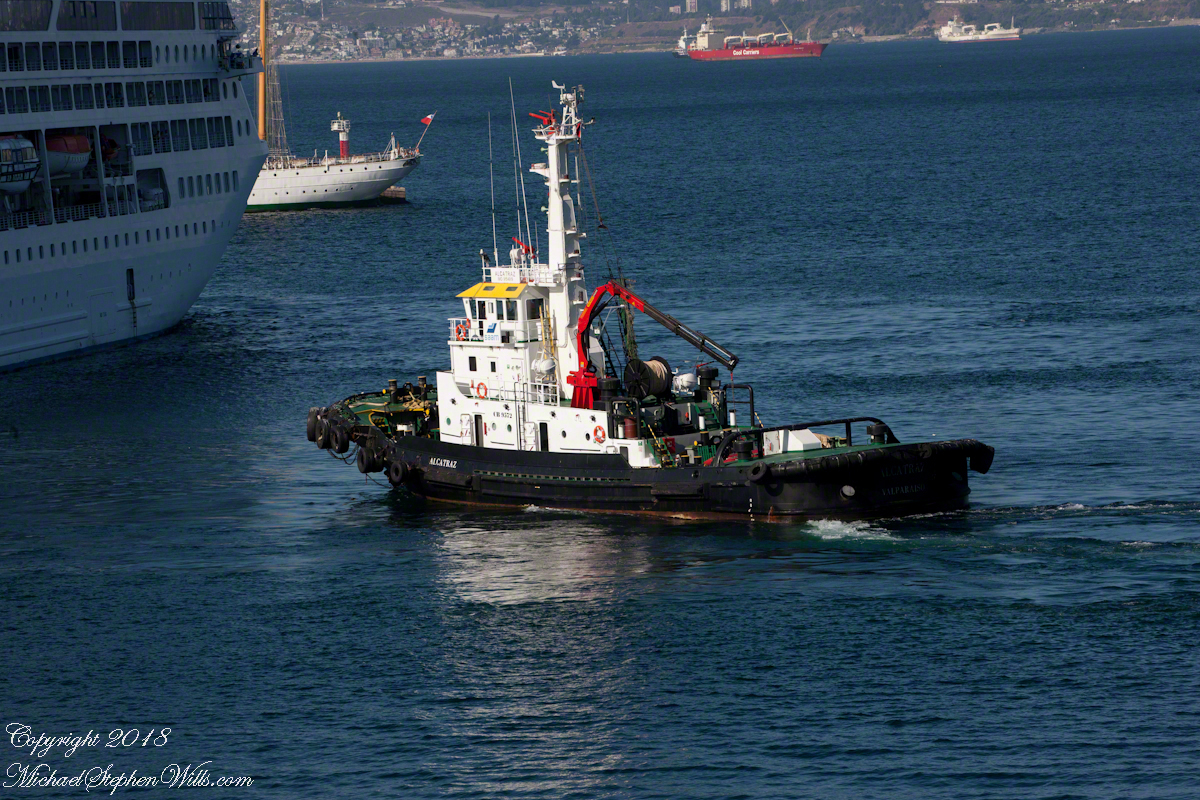
…with the assistance of the tugboat Alcatraz, a name derived from the Spanish word for pelican as in “La Isla de los Alcatraces” (Island of the Pelicans) where the former Alcatraz prison was built in San Francisco Harbor.  Spanish speakers think of birds when viewing the tub boat.  Americans think of prisoners (escaping) and San Francisco.  Unlike San Francisco Harbor, Valparaiso Bay is a semi-circle open to the ocean, the harbor is on the southern, north facing (away from the ocean) shore, protected by a long (3,000 foot) breakwater along which the Chilean war ships dock.  We are viewing the Alcatraz after most of the work for the Ocean Princess departure was done.

ValparaisoDeparture-3

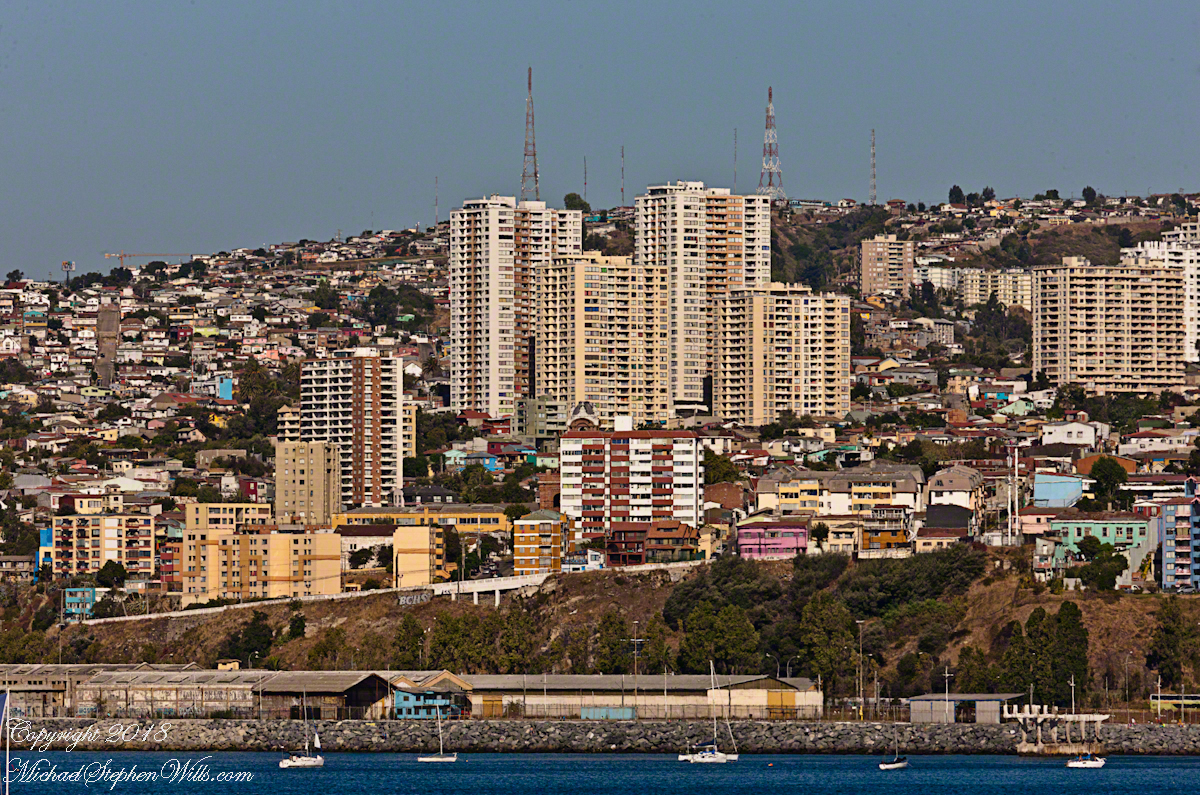
The north end of the bay is residential, behind the towers are homes arrayed on the hillside, the only land available.

Click this link for my Fine Art Photography gallery.
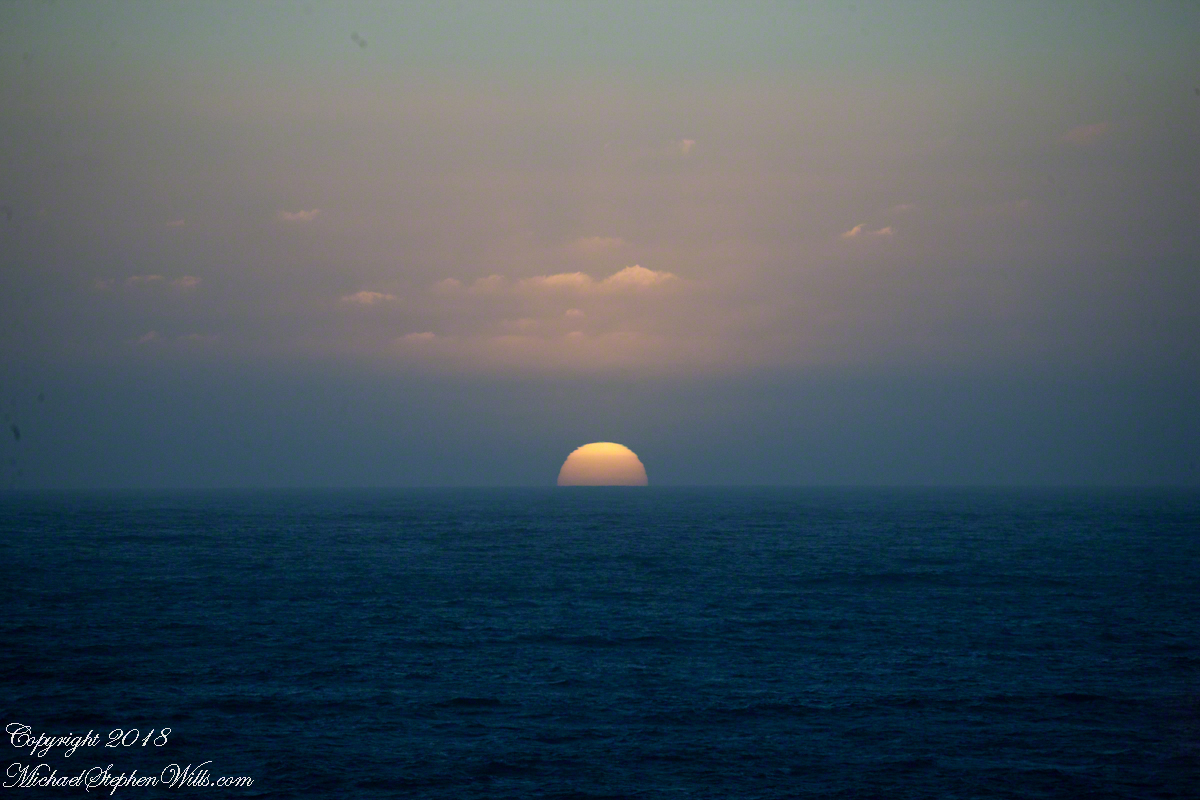
ValparaisoDeparture-4a

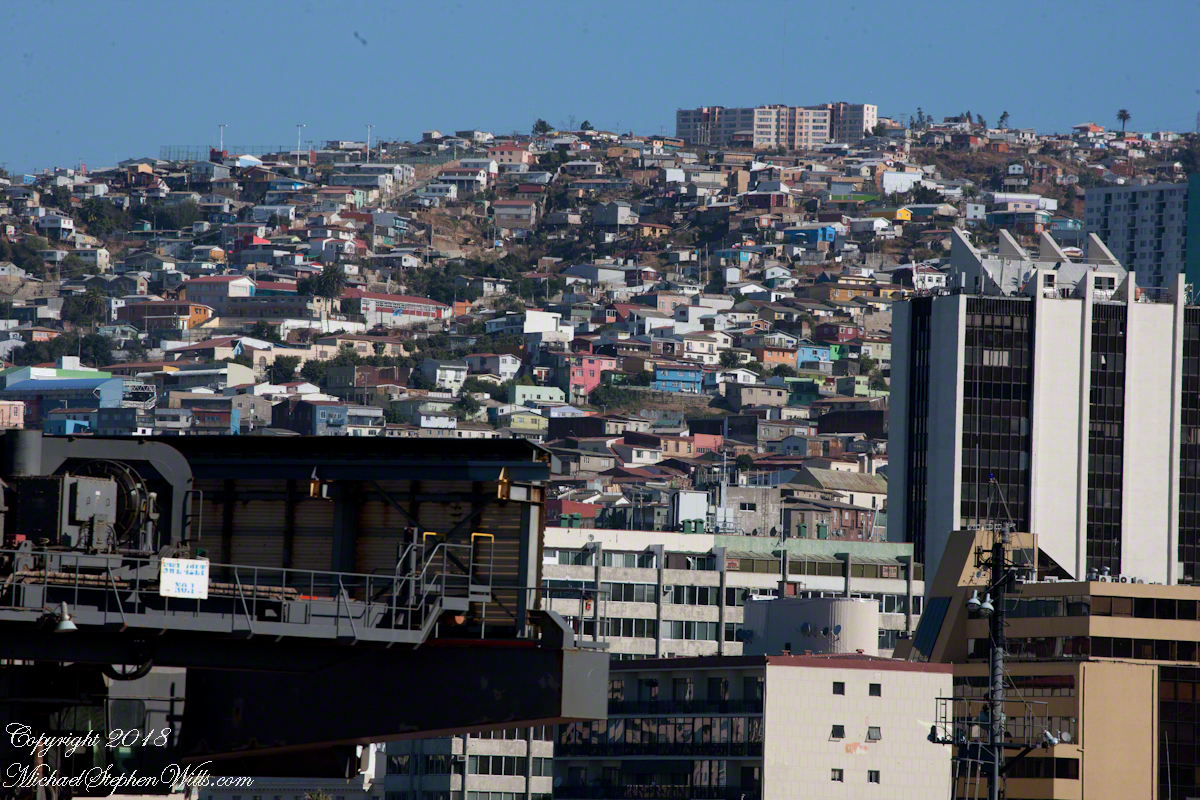
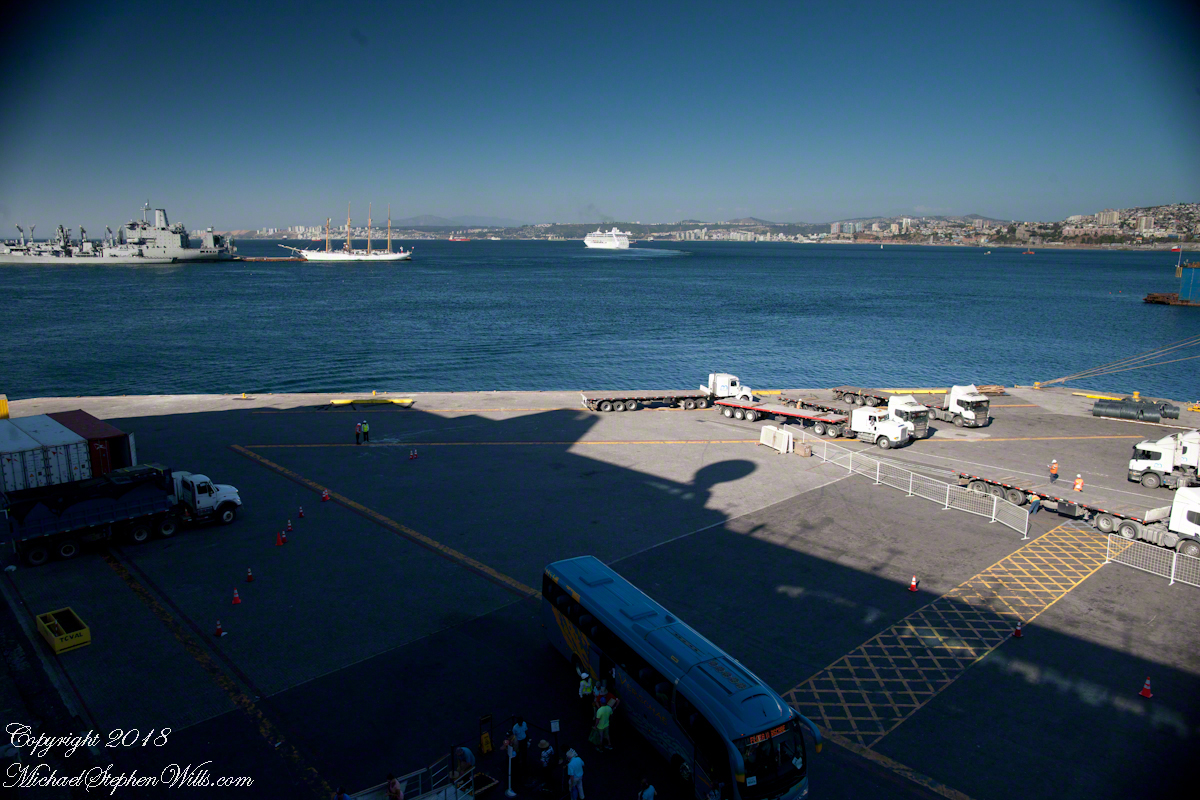
Much of the harbor and city business district, in the foreground (below), on the south side is on land reclaimed from the sea.
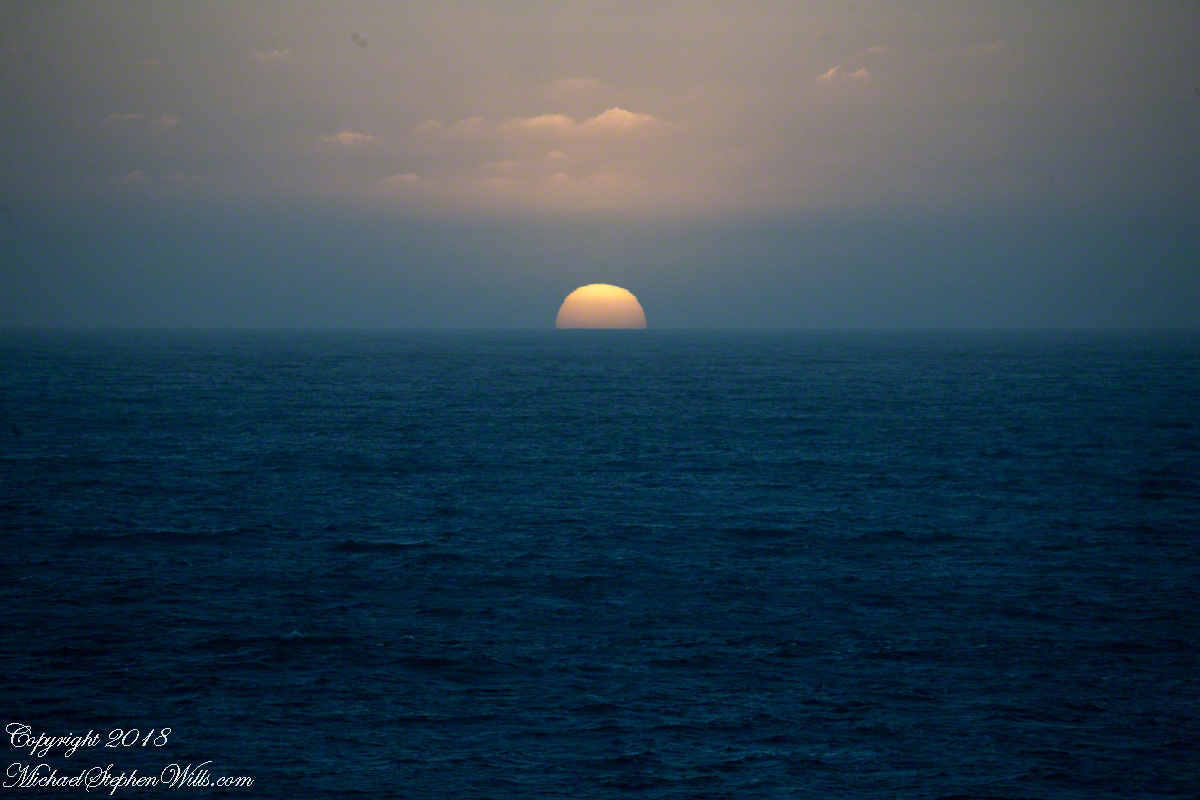
ValparaisoDeparture-5

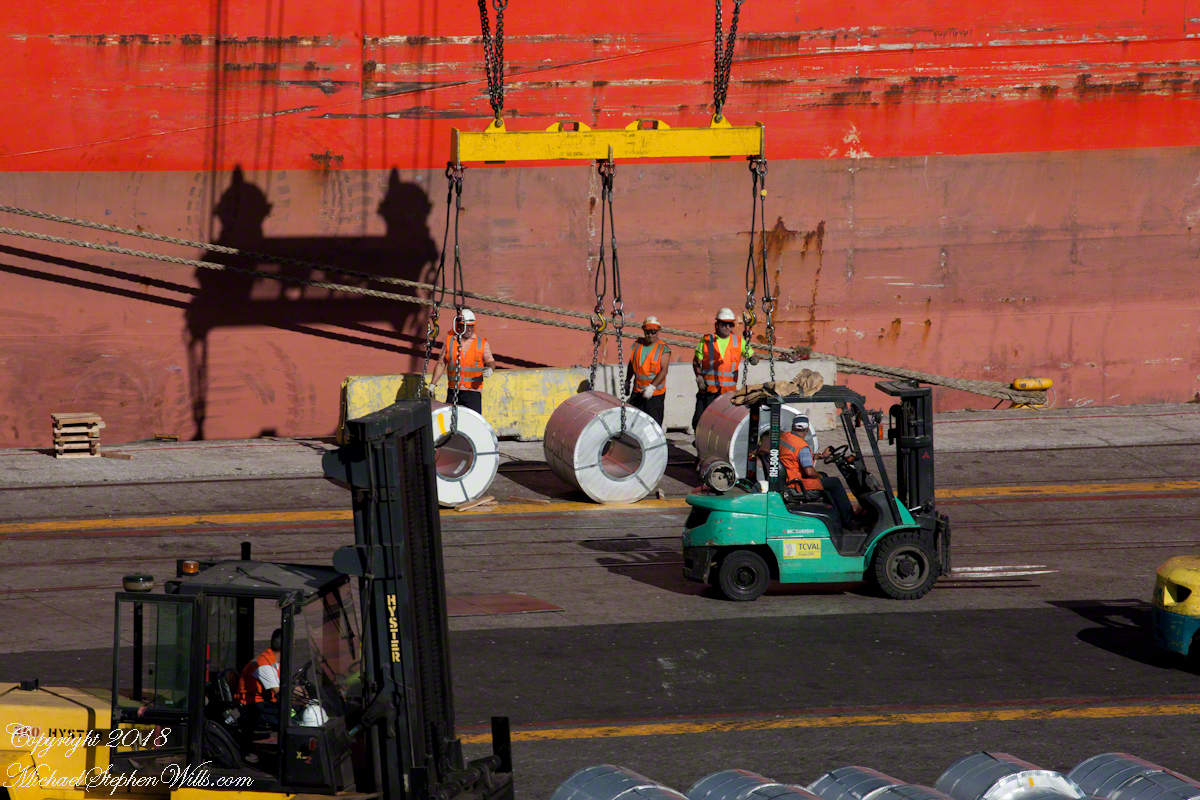
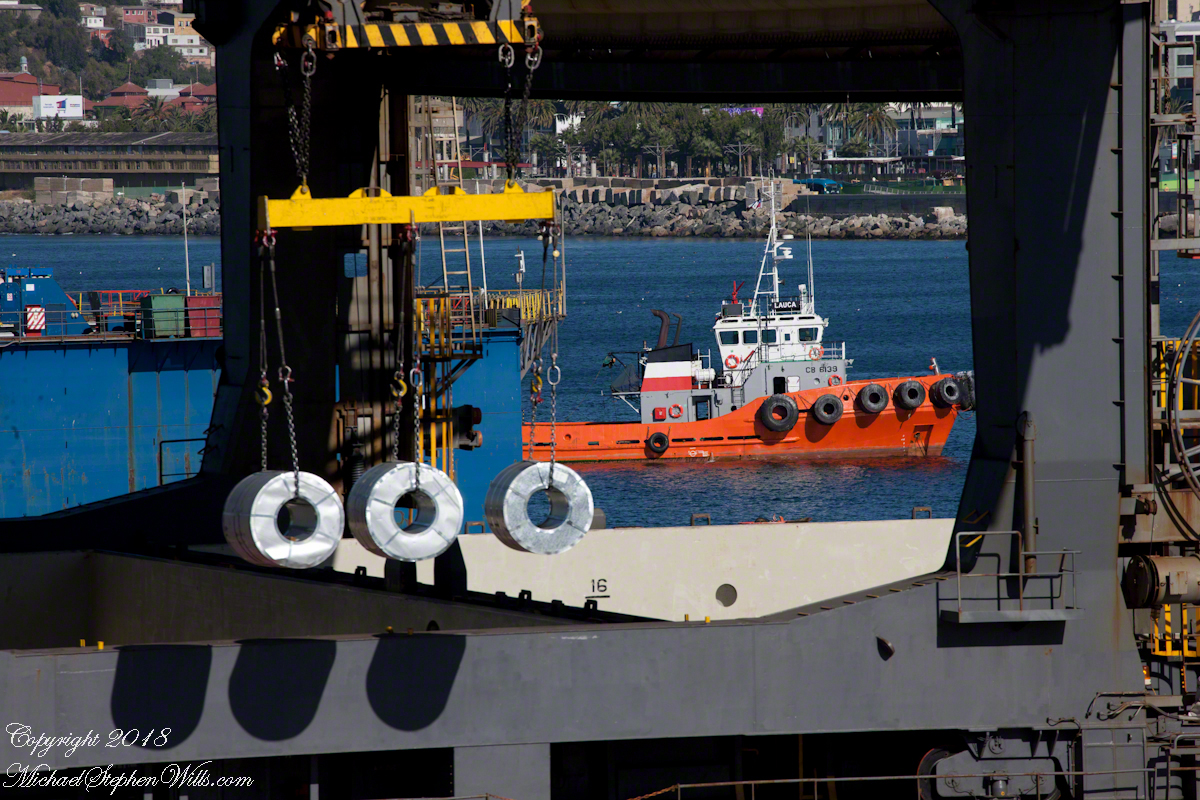
All around the Regatta was a working port.  Here rolls of cable (wire?) are prepared for hoisting onto a cargo ship.  Note the hawsers, taught under the strain, between the workmen and the ship hull.

ValparaisoDeparture-6

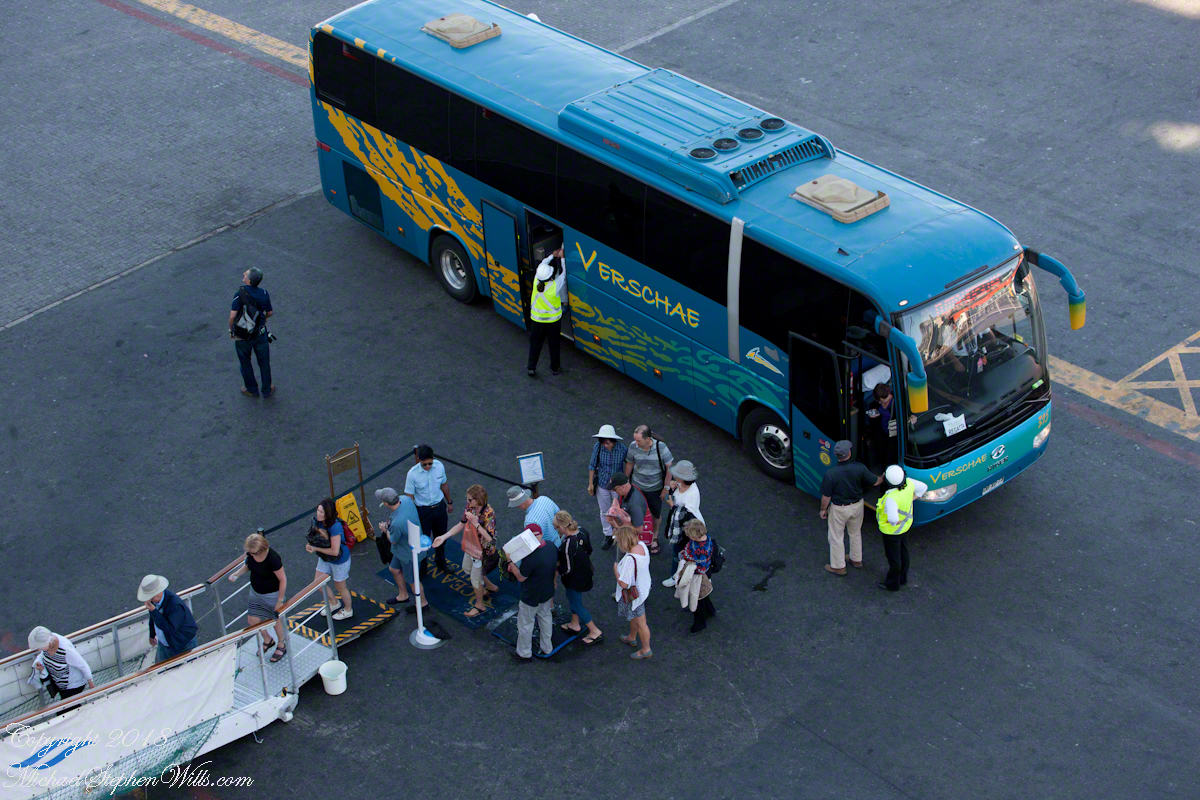
Passengers board the Regatta from the last tours.  I expect this is the trip to Santiago.  Most of the dockings the Regatta was surrounded by the port, the only way to access the city was on a tour bus as the port activity made walking too dangerous.

Click this link for my Fine Art Photography gallery.
ValparaisoDeparture-7

I can only guess the role the Alcatraz is playing here…..

ValparaisoDeparture-8

…. probably it is positioned to give the Ocean Princess a nudge if the harbor pilot misjudges the turn around the breakwater and warships.  In a harbor, a ship’s crew passes control to a harbor pilot who knows the navigation challenges much better than is possible for them.

ValparaisoDeparture-9

Today, as 99.9% of all days, the pilot makes the turn safely.  Here is a better view of the warship.

ValparaisoDeparture-10

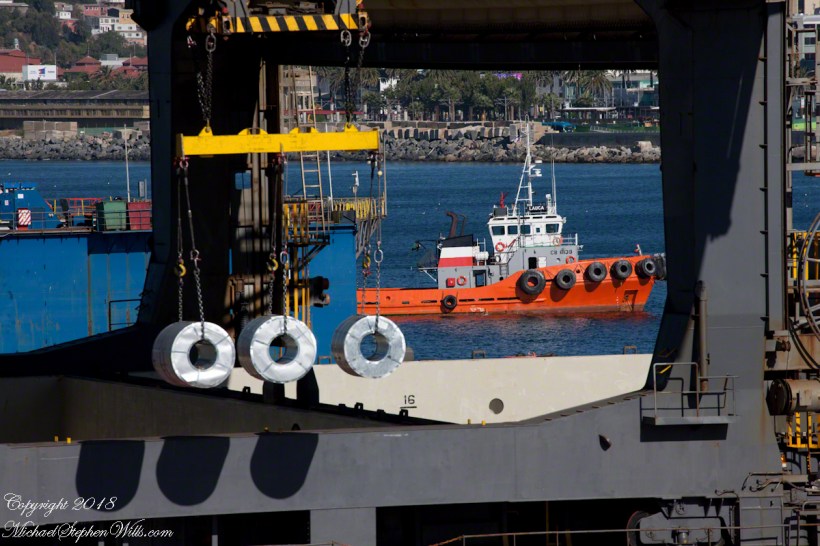
Looking back toward the harbor, the crane is hoisting those rolls, the tug boat “Lauca” framed by the superstructure of (I think) the crane.

ValparaisoDeparture-11

The Ocean Princess is will under way, as shown by the long wake.  As luck will have it, When the Regatta follows the sun will be much lower, the light better for photography.  At the stern of the warship, the masted vessel is a training ship for the Chilean Naval Academy.

Click this link for my Fine Art Photography gallery.
ValparaisoDeparture-12

Copyright 2022 Michael Stephen Wills All Rights Reserved 

Headed Up Cottage Road, Inishmore

View from a horse trap on the Aran Islands, Galway Bay, Ireland

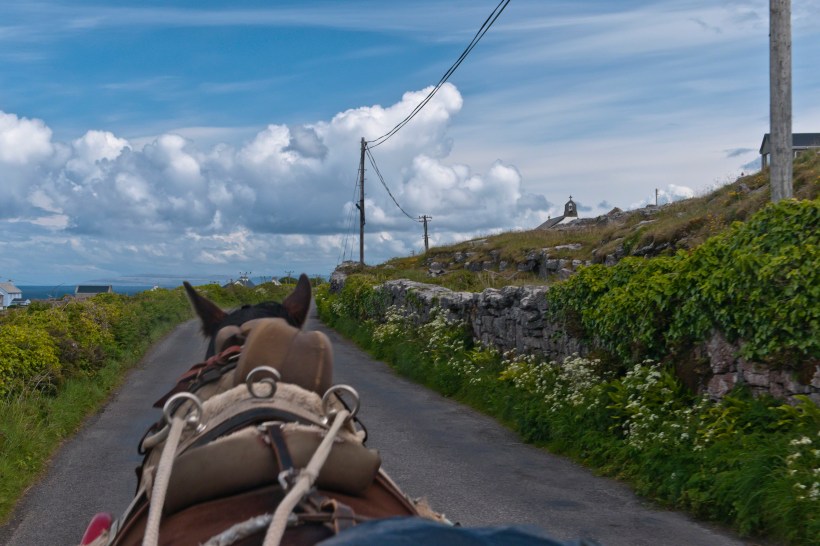
Enjoying travel on a horse trap, a type of carriage, on Inishmore (Inis Mór), the largest Aran Island in Galway Bay we headed up Cottage Road from Kilronan, the main island settlement.  It was there we embarked from the ferry, hired the driver, his horse drawn trap.  Our destination an iron age fort, Dun Aengus (Dún Aonghasa, the Irish language name) and the sights along the way. 
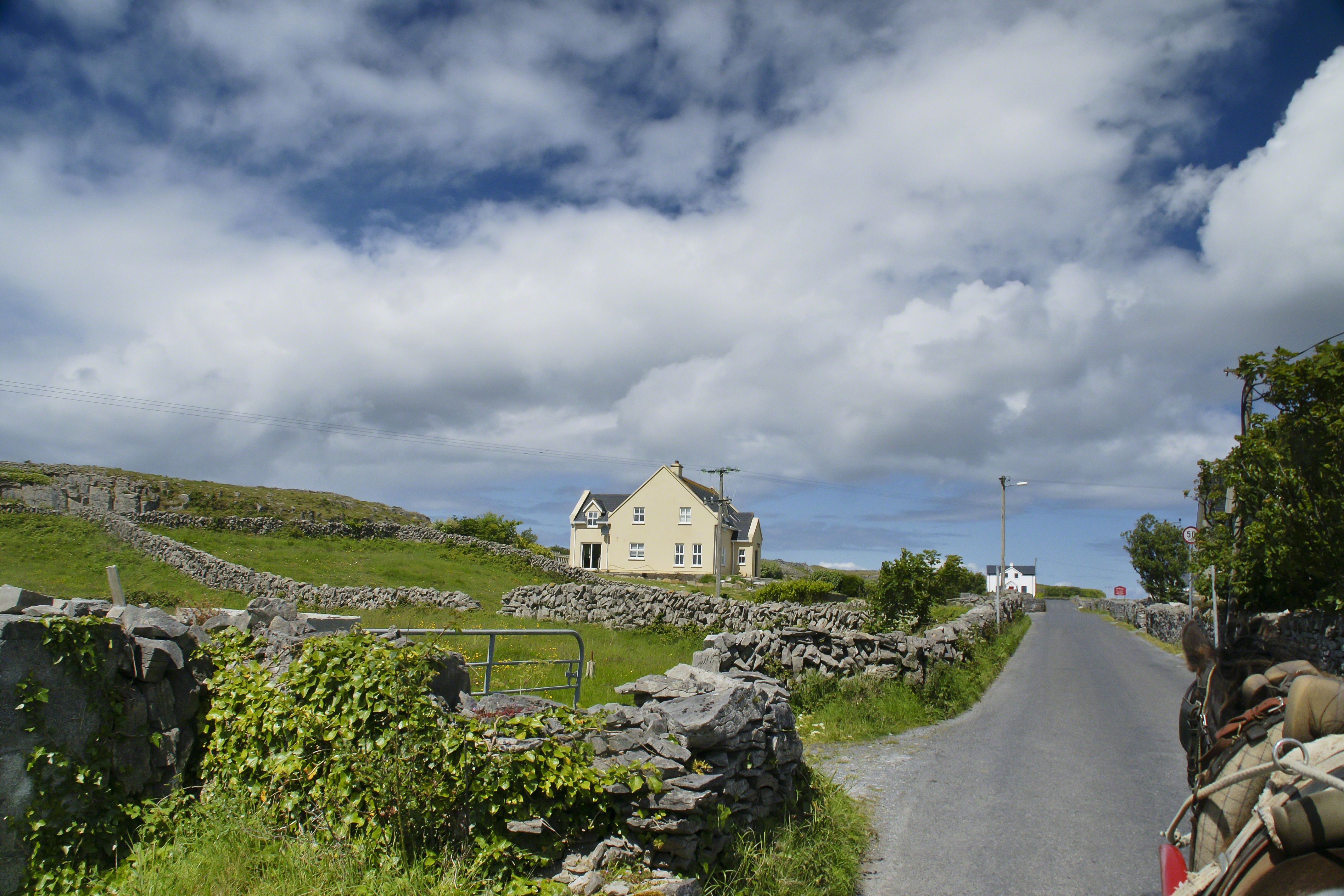
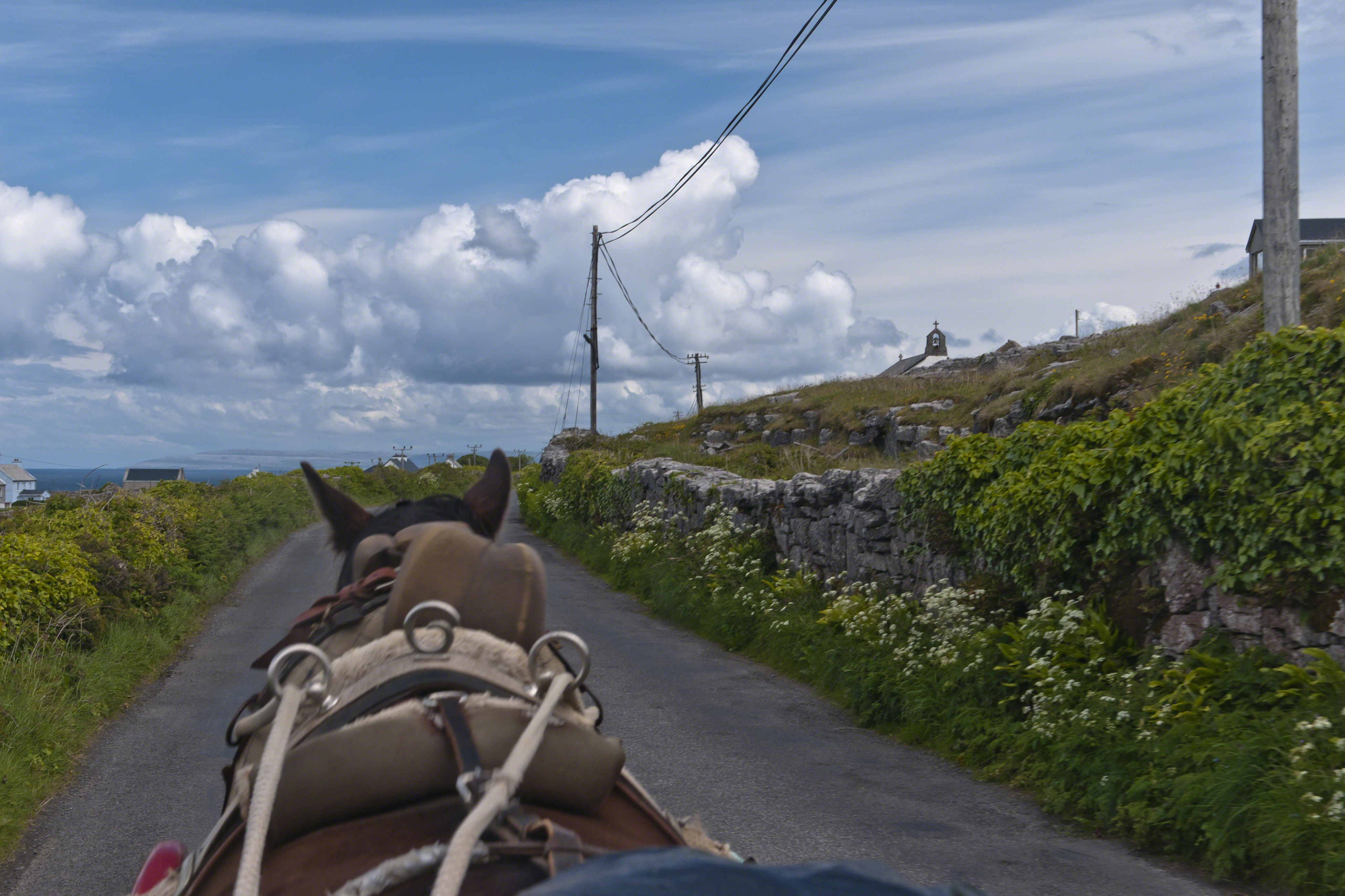
Headed up Cottage Road, I captured this view of dry stone walls and homes against the May sky over the shoulder of our horse.
Click the link for my Getty IStock photography of the Aran Islands
Headed up Cottage Road

Copyright 2019 All Rights Reserved Michael Stephen Wills

Copyright 2021 Michael Stephen Wills All Rights Reserved

Horse Trap on Inishmore

Travel at its best

Enjoying travel on a horse trap, a type of carriage, on Inishmore (Inis Mór), the largest Aran Island in Galway Bay.

Click the link for my Getty IStock photography of the Aran Islands
View from Horse Drawn Trap on Cottage Road headed into Kilronan

Copyright 2019 All Rights Reserved Michael Stephen Wills

Galway Bay View from Dún Aonghasa

a season of wildflowers across a karst landscape

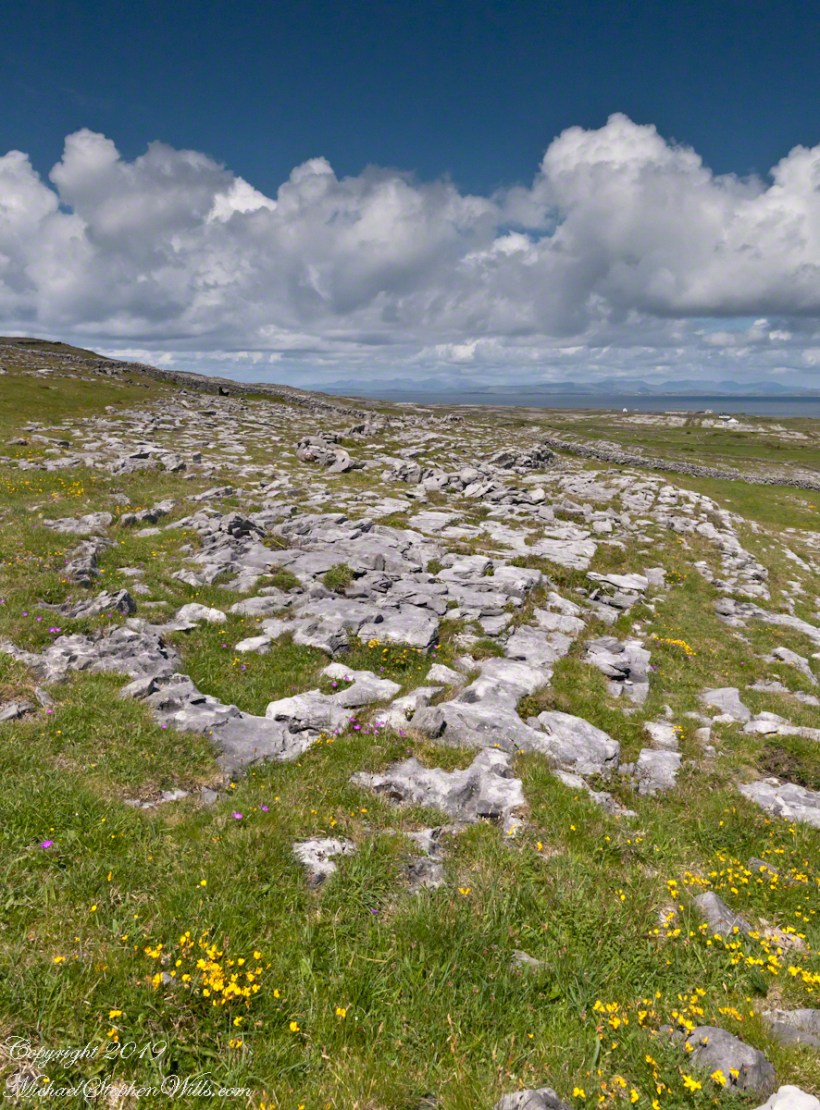
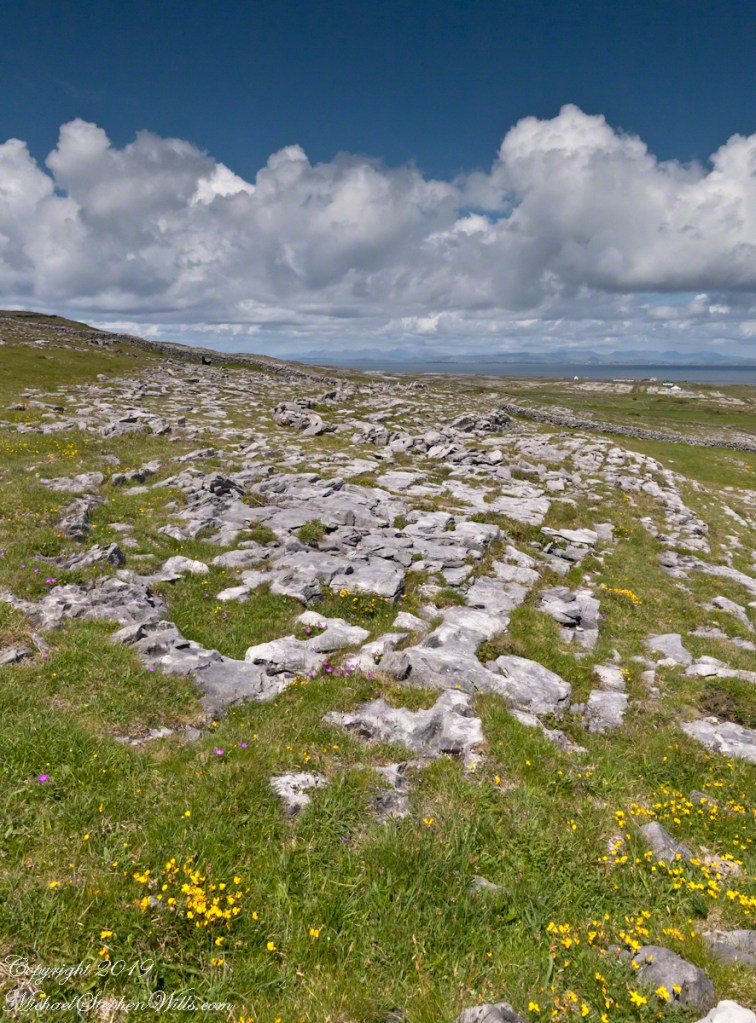
Another aspect of the gradual 1/2 mile inclined path to the central ring of the prehistoric Dun Aonghasa ruins of County Galway, Ireland.

The view north, northwest from this way to Dun Aonghasa (Dun Aengus).  In early June, looking across wildflowers, karst landscape, walled fields, farms, the North Atlantic Ocean, coast of Connemara and the 12 Bens (12 Pins) mountains. 

Note the doorway (with long lintel) in the surrounding wall, to left of center in middle distance.

Click the photograph for a larger view.

Click the link for my Getty IStock photography of the Aran Islands
Click me for the first post of this series, “Horse Trap on Inishmore.”

References: search wikipedia “Dún Aonghasa.”

Copyright 2021 Michael Stephen Wills All Rights Reserved

New Neighbors

Manufactured Home Installed Next Door, September 2017

When Pam and I made Westwood Knoll our home in 2011, to the north, across the street, was an empty wooded lot that has since been subdivided into three of the last home sites in Ithaca. This summer, the corner lot was razed of all its trees, the lovely mature cherry, sycamore, ash, maple reduced to stumps to be cut up and carted away. There was a positive in that the lot was overgrown and unsightly, but every spring the upper reaches were masses of blooms and young green leaves.

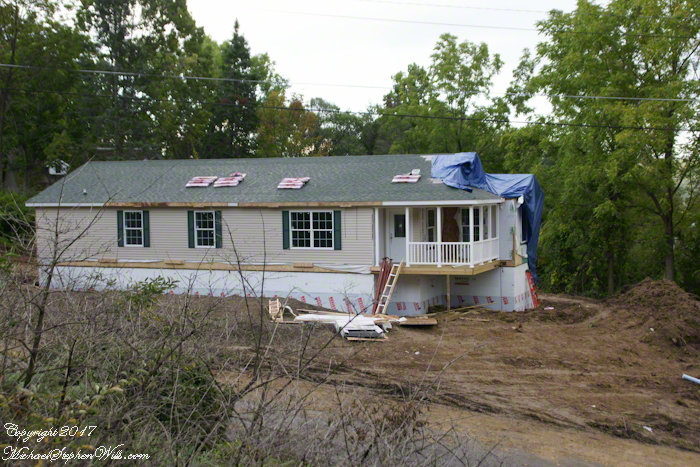
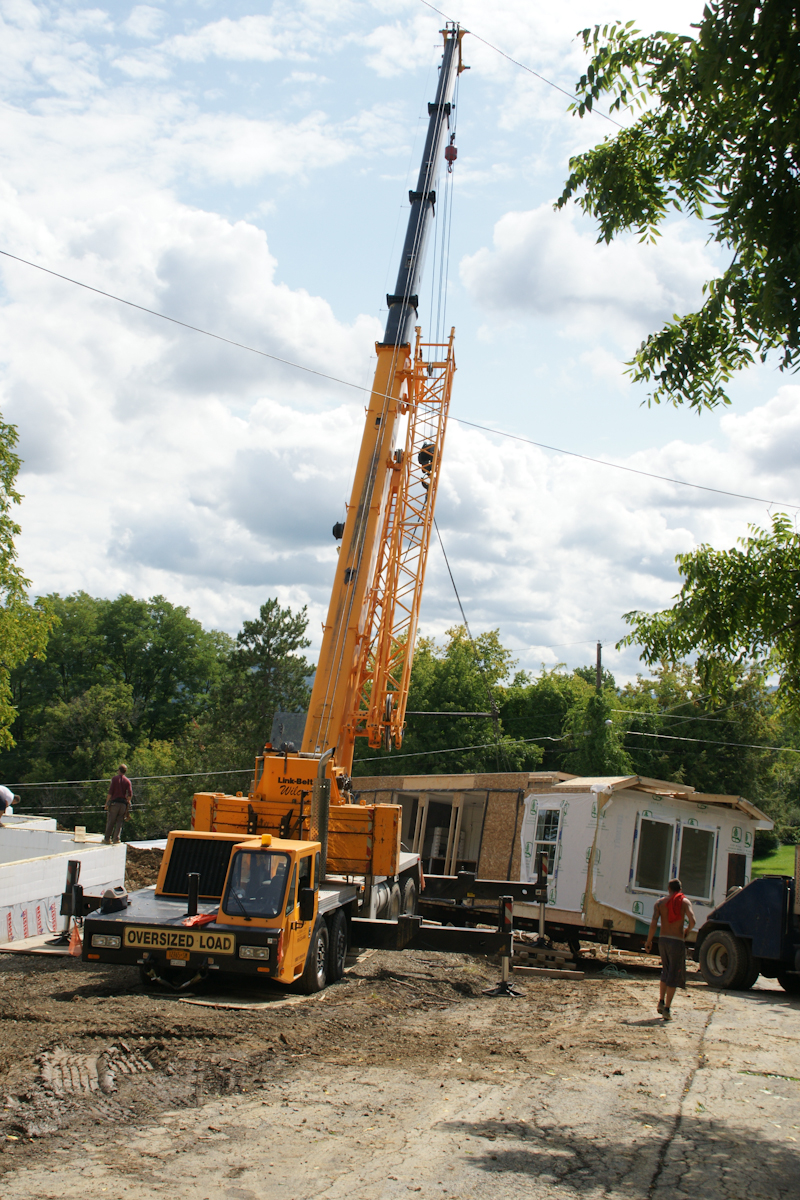
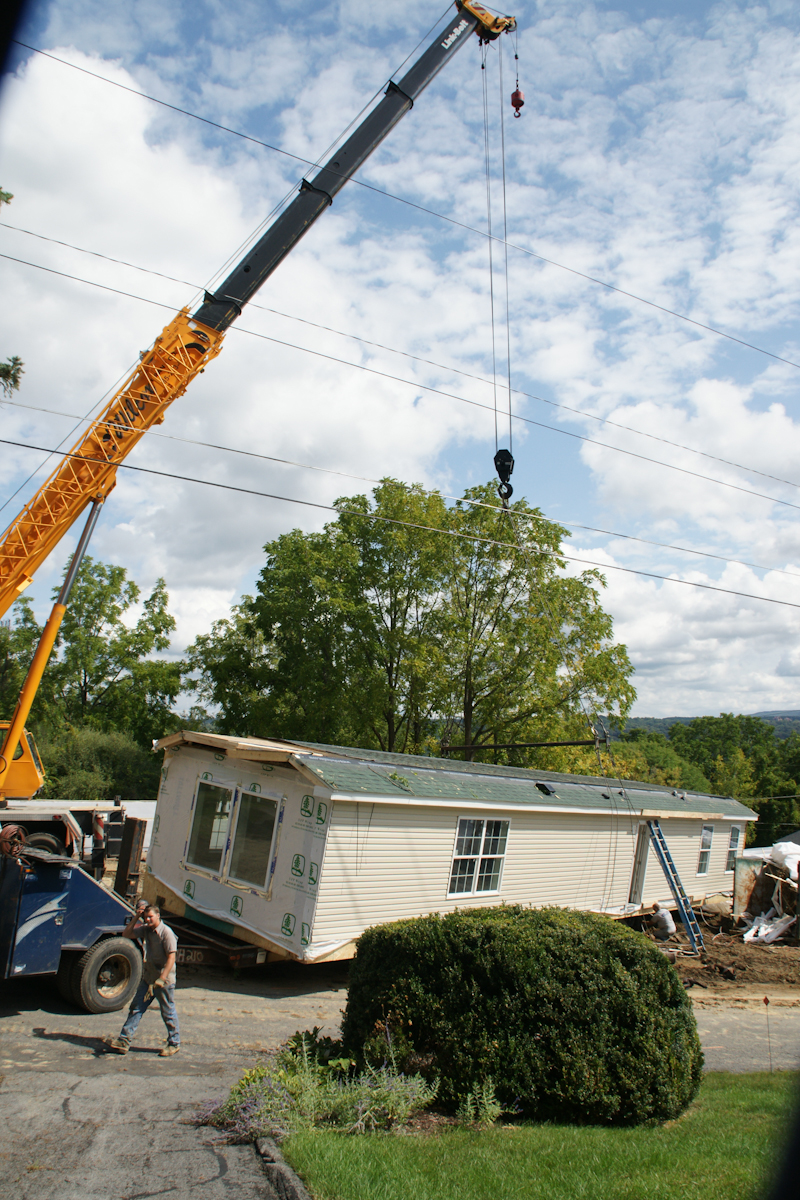
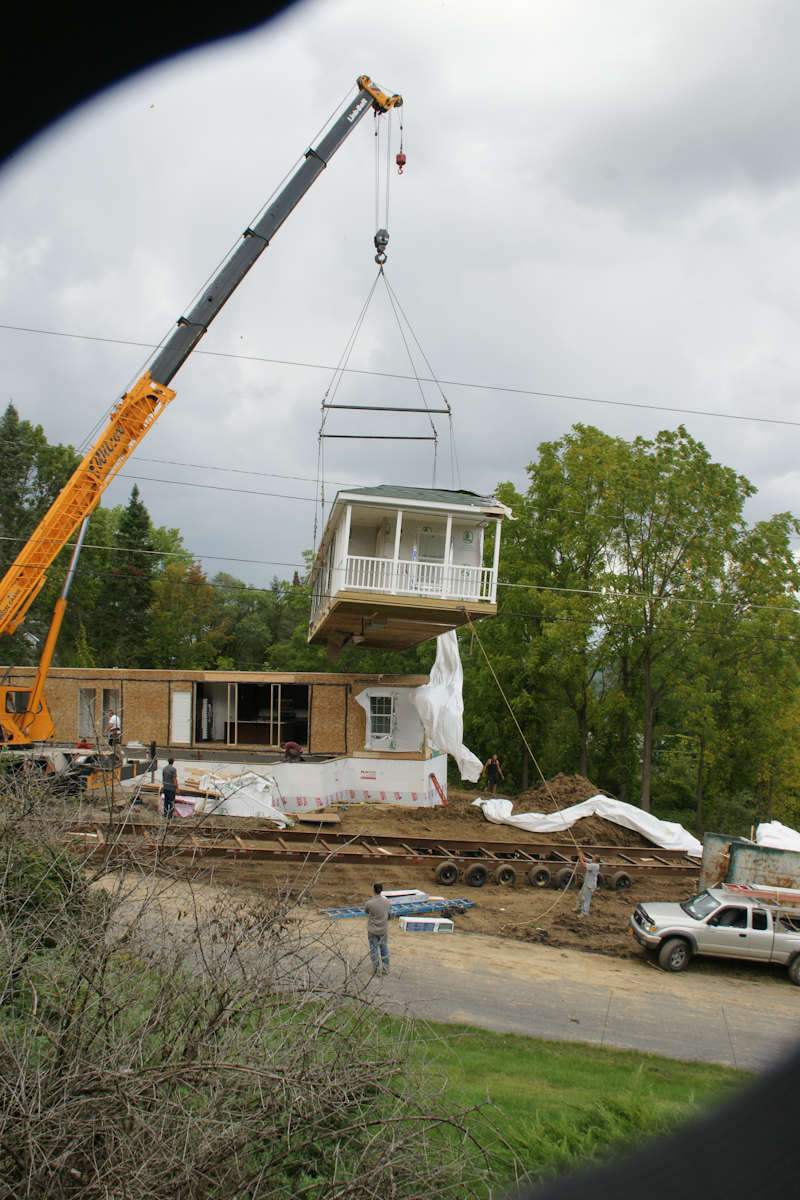
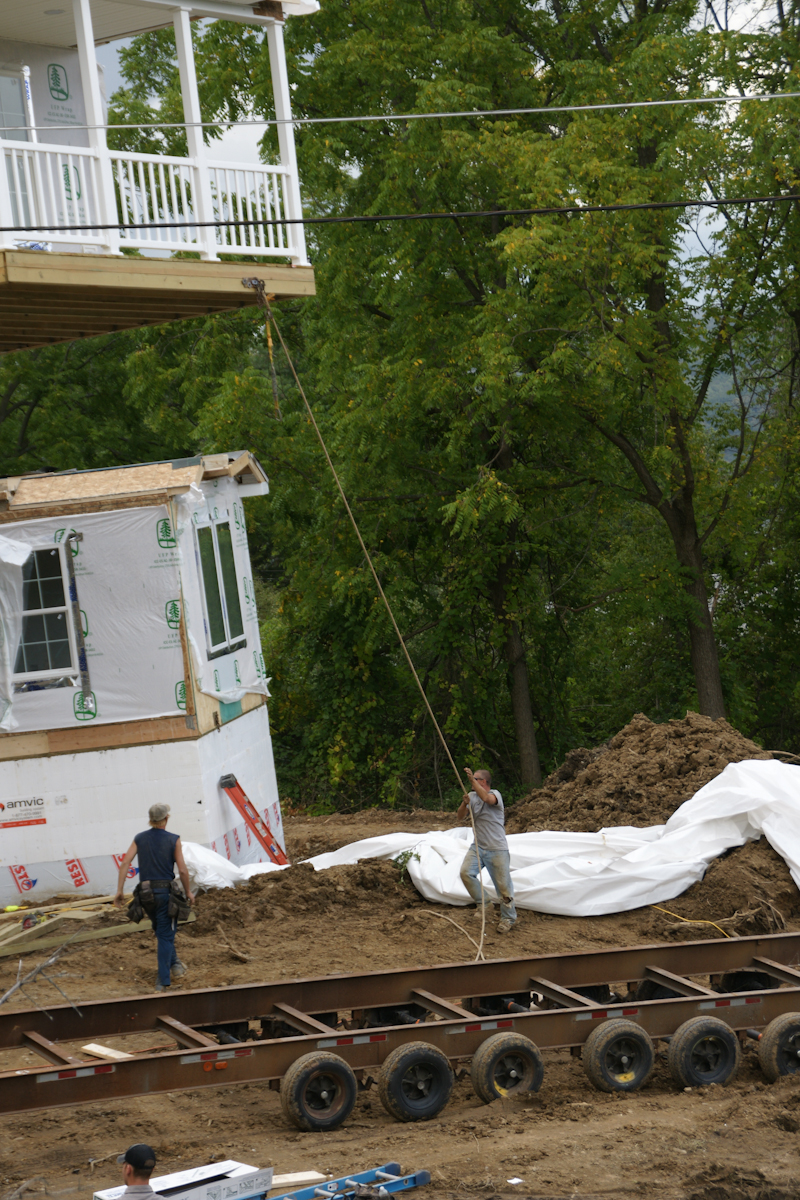
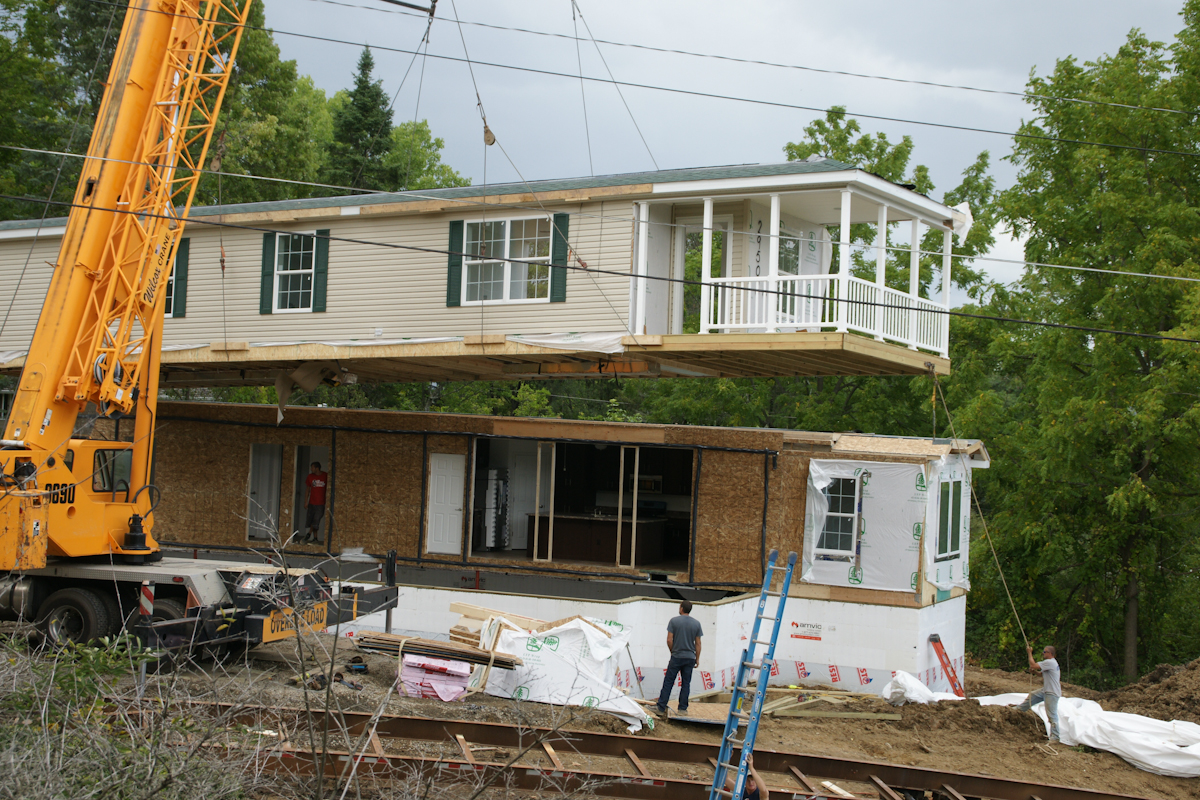
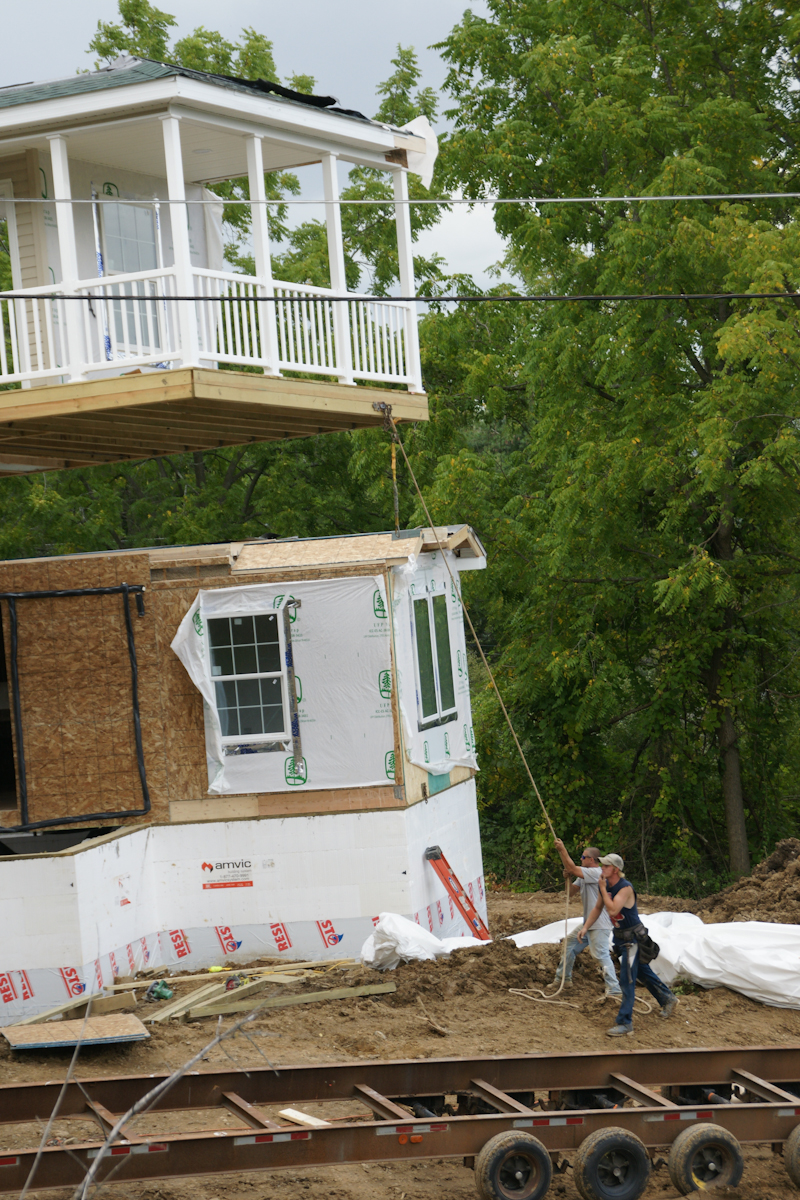
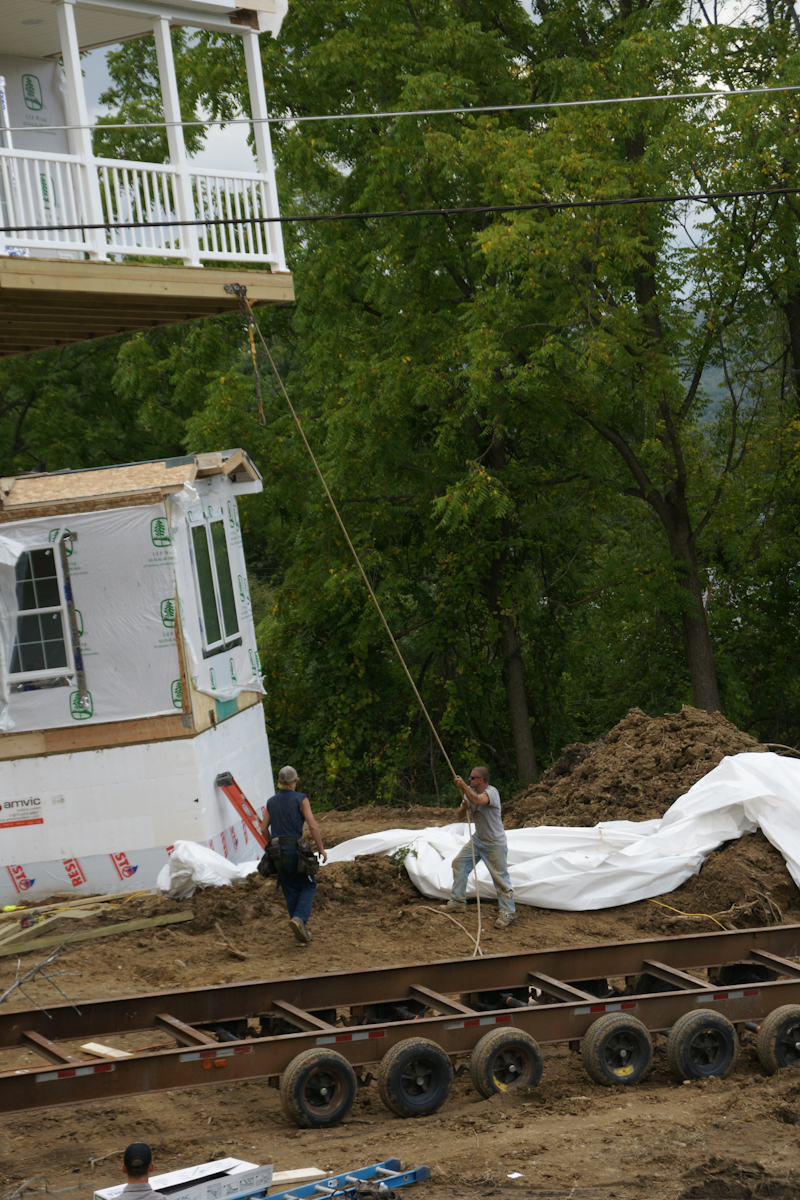
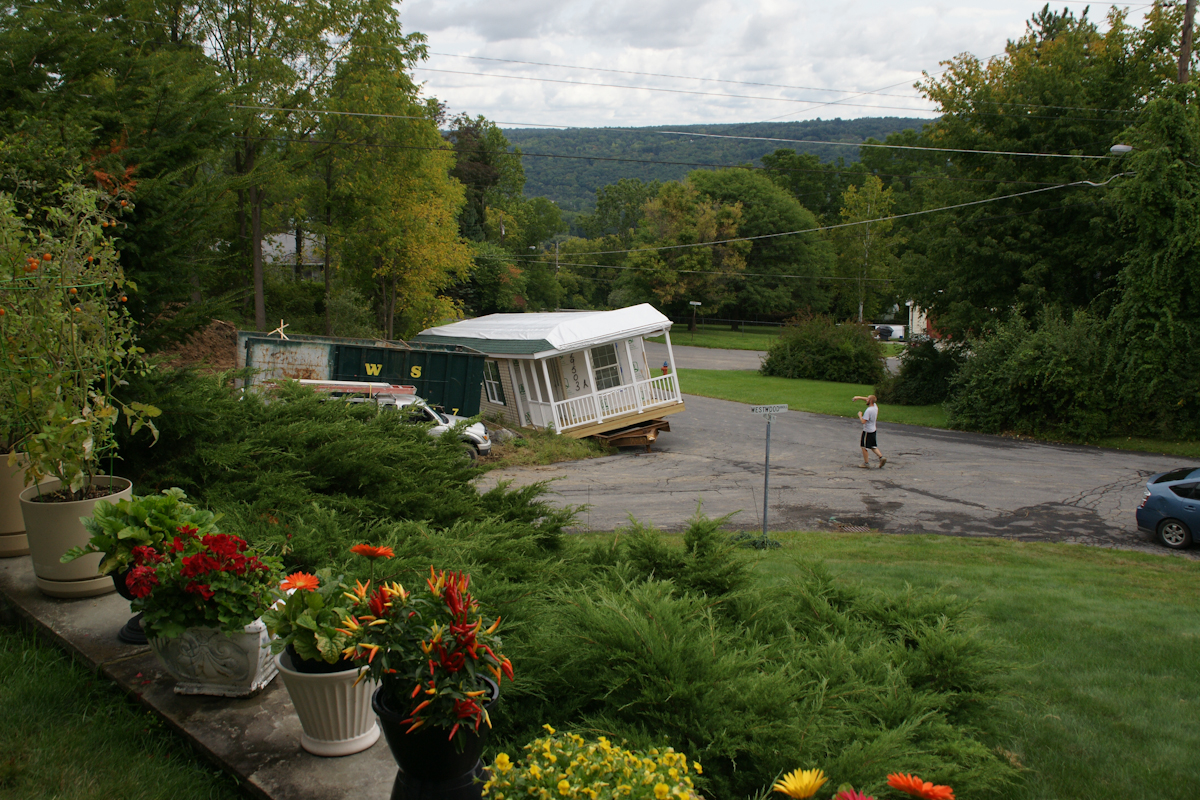
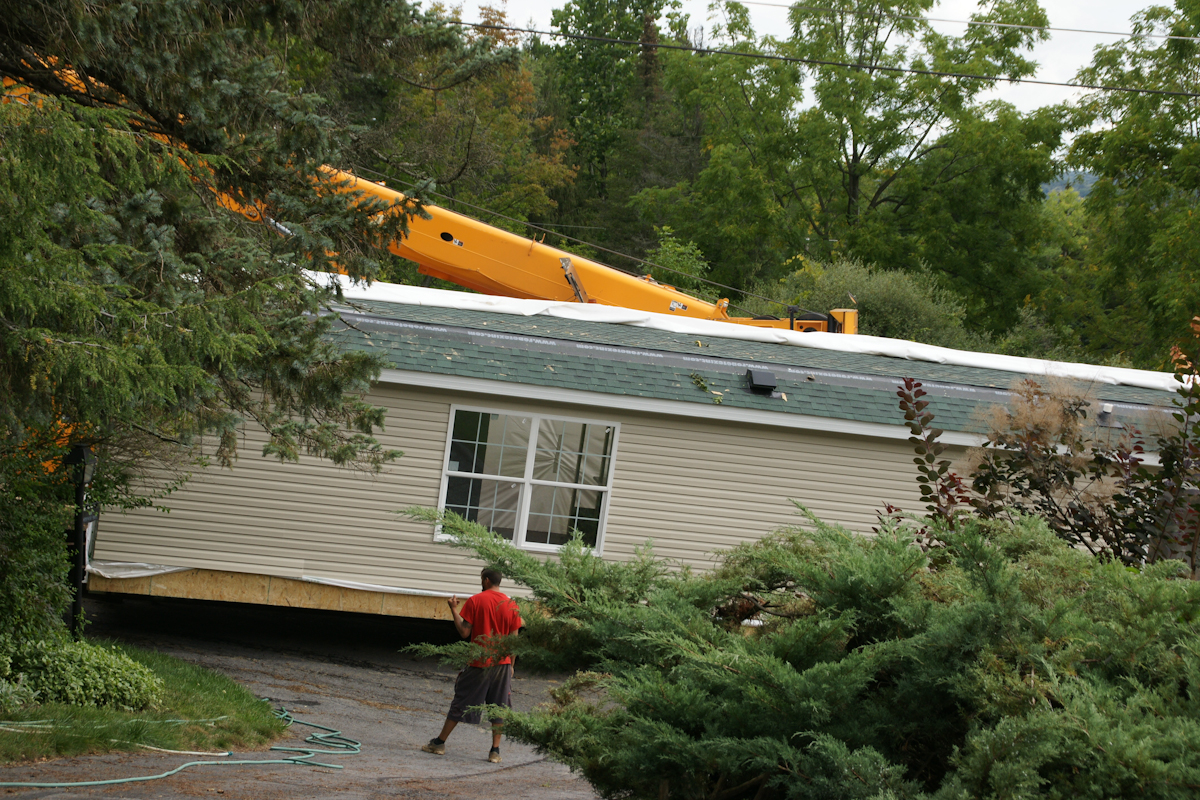
In a heavy rain on September 5th, 2017 the two parts, call them “modules”, were delivered, and then sat until September 7th to be assembled in one day. The process itself was interesting to witness and, while being otherwise occupied, I came out now and then to document the progress.

Here are my photographs. What do you think? Please leave comments.

The Foundation
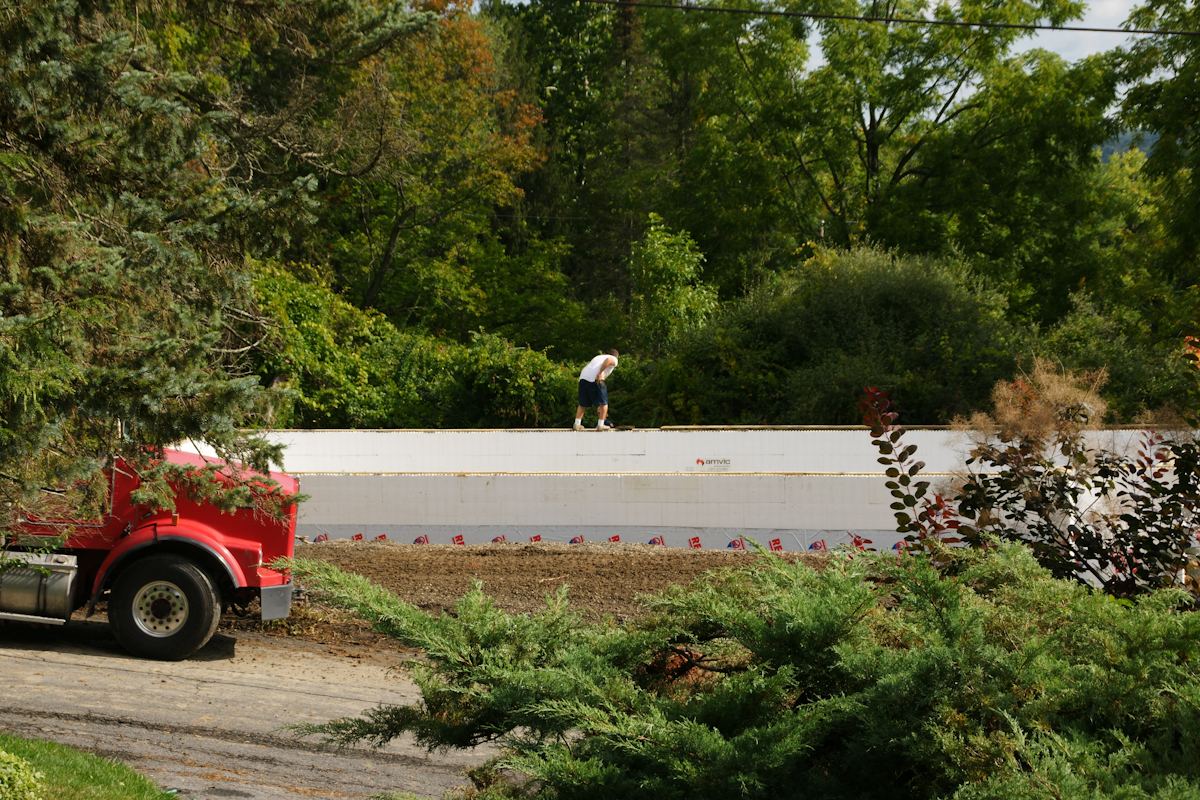
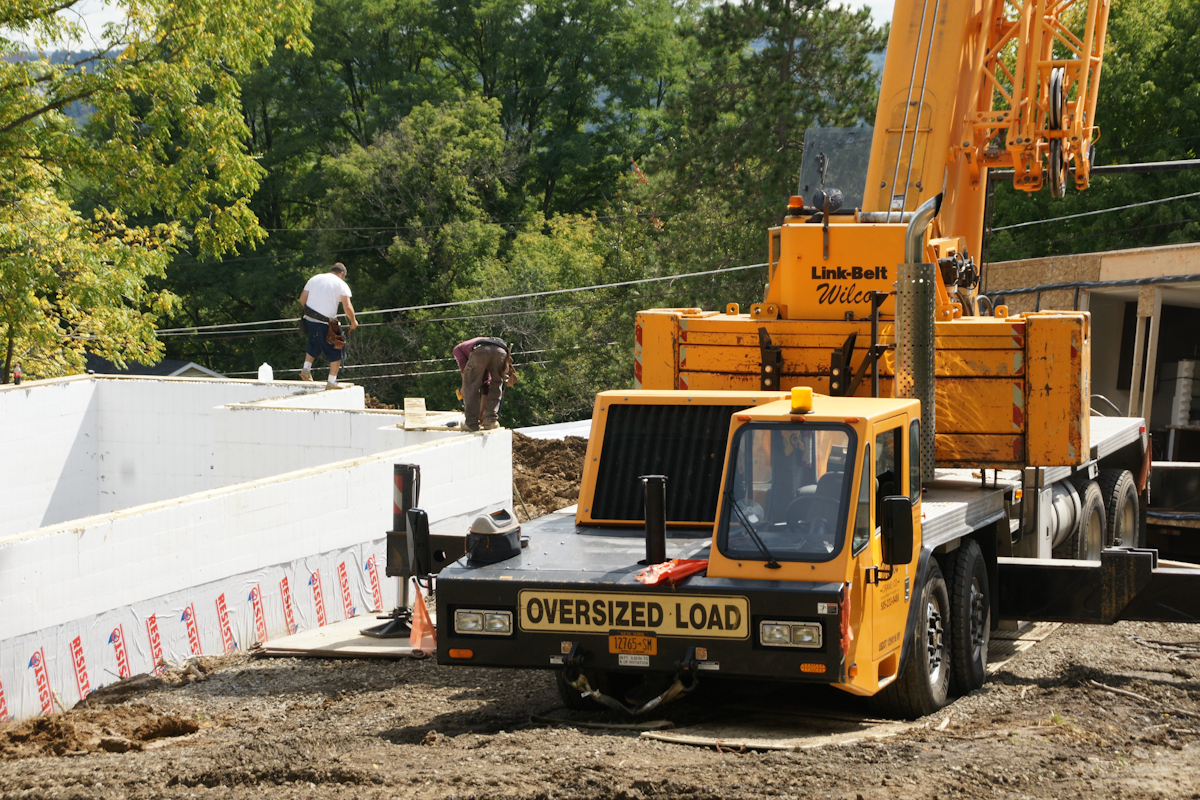
The foundation installation took a week to construct. It started with, literally, blocks of styrofoam held together with plastic and assembled by hand, like a child’s block set. There is an 8 inch gap in between filled with concrete. There was NO rebar used. bolts were inserted for attaching the modules.
How Module Two  was Hauled
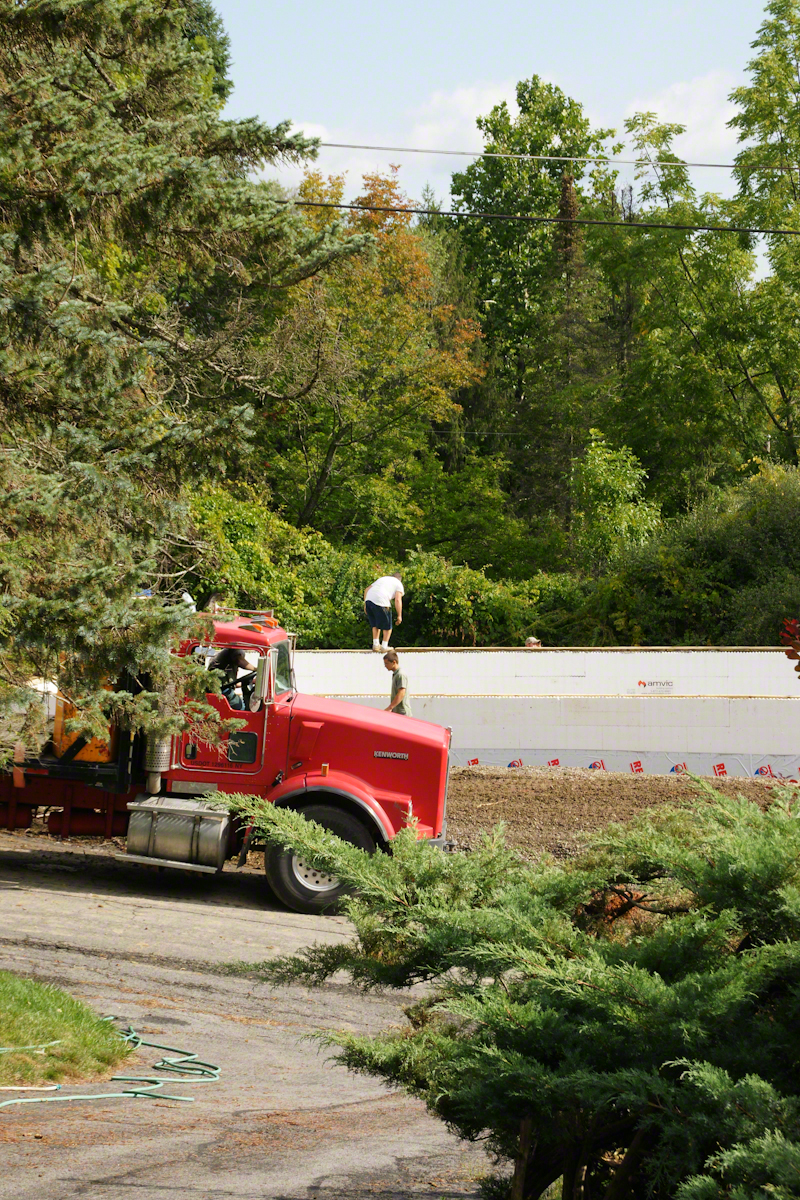
Module Two was delivered on wheels and moved into position by this semi.
Module Two, the house next door
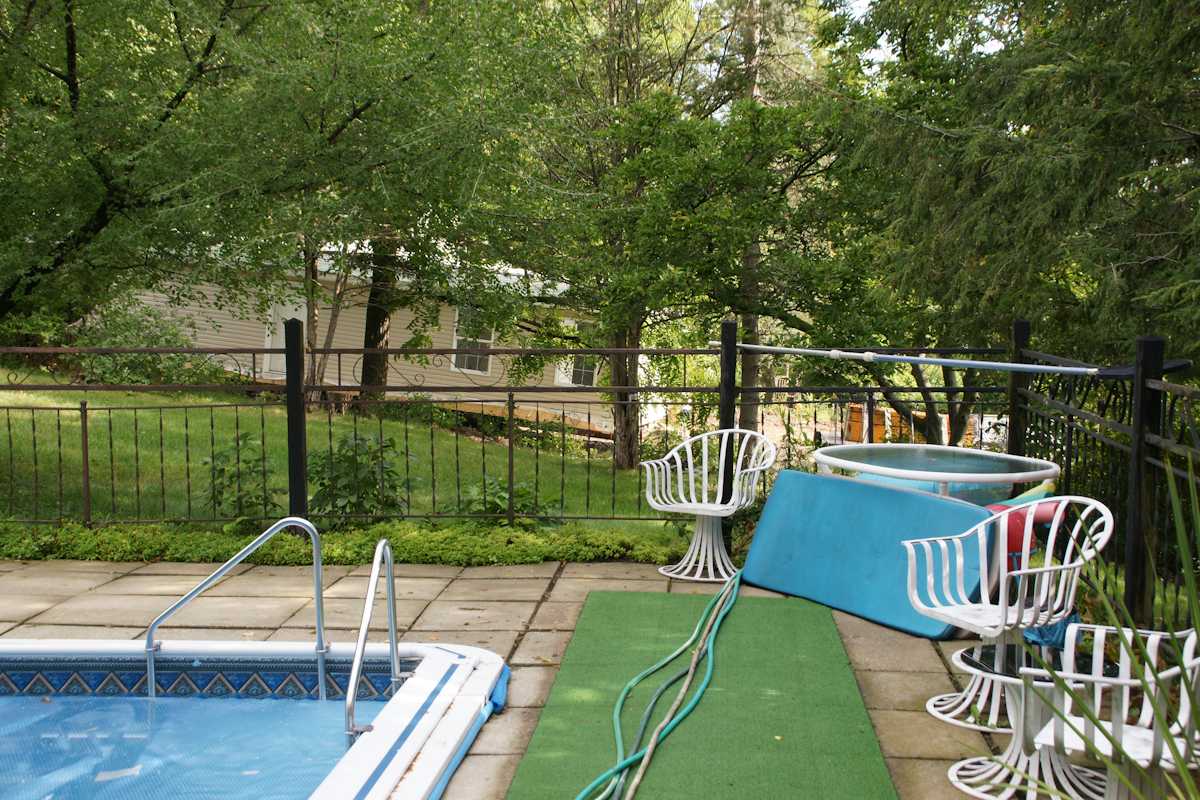
Module Two will eventually face the opposite direction. That will be the rear door. This is our swimming pool, I use garden hoses to siphon excess rainwater.
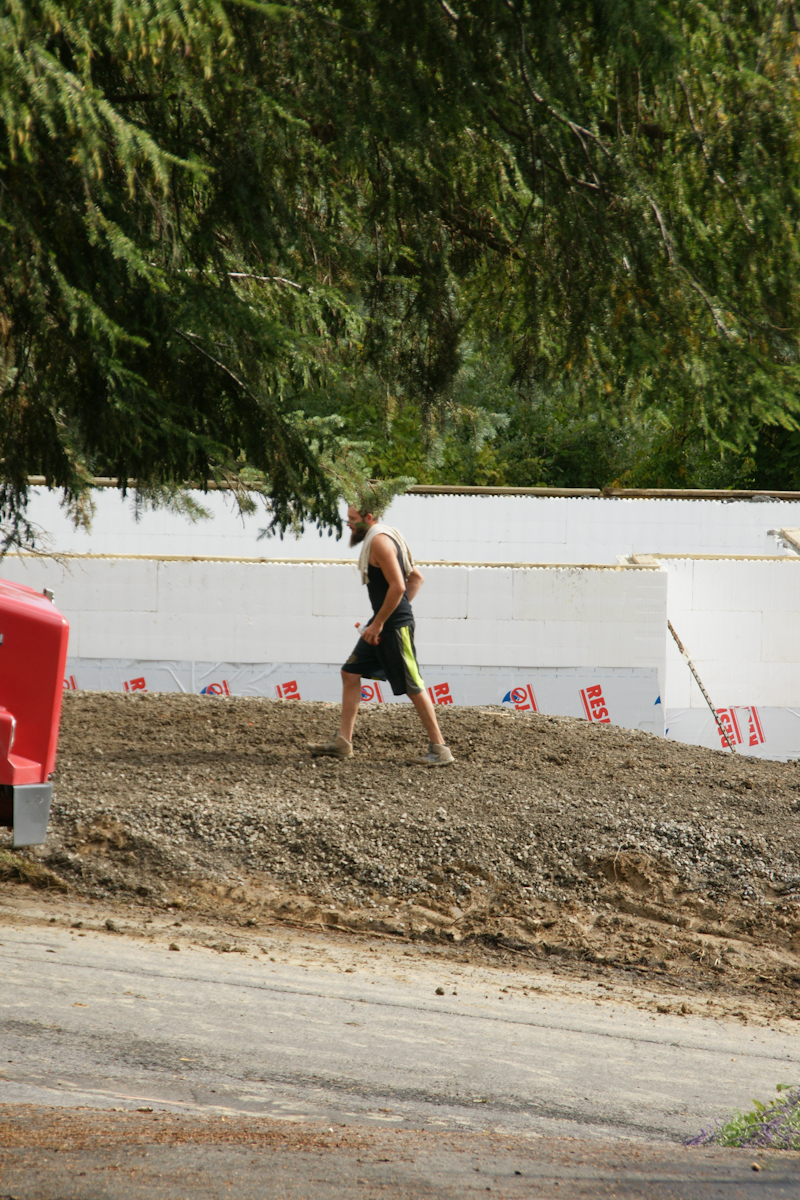
Construction Worker??
Most of the workers were dressed like this, casually, no protection for feet or head. We were concerned with this. No one was injured this day, as far as we know.
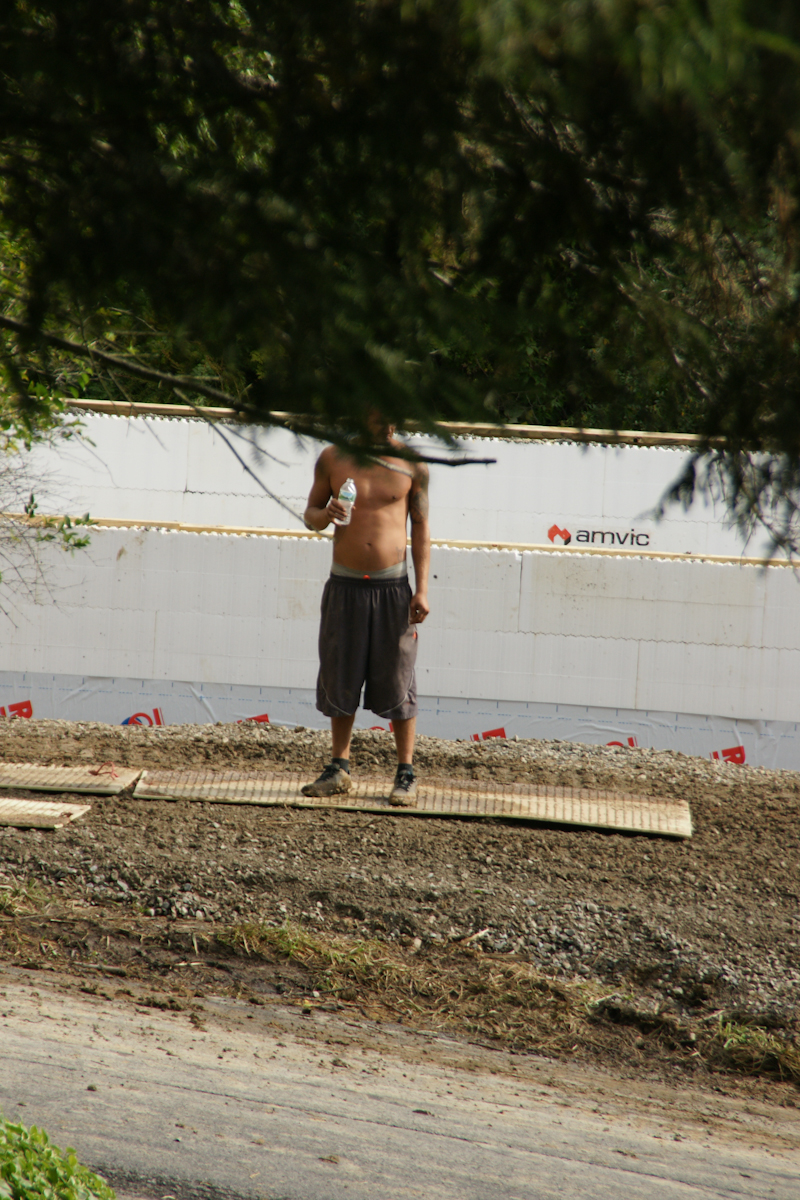
Another Construction Worker
The worker is standing on a board on which the crane wheels will rest.
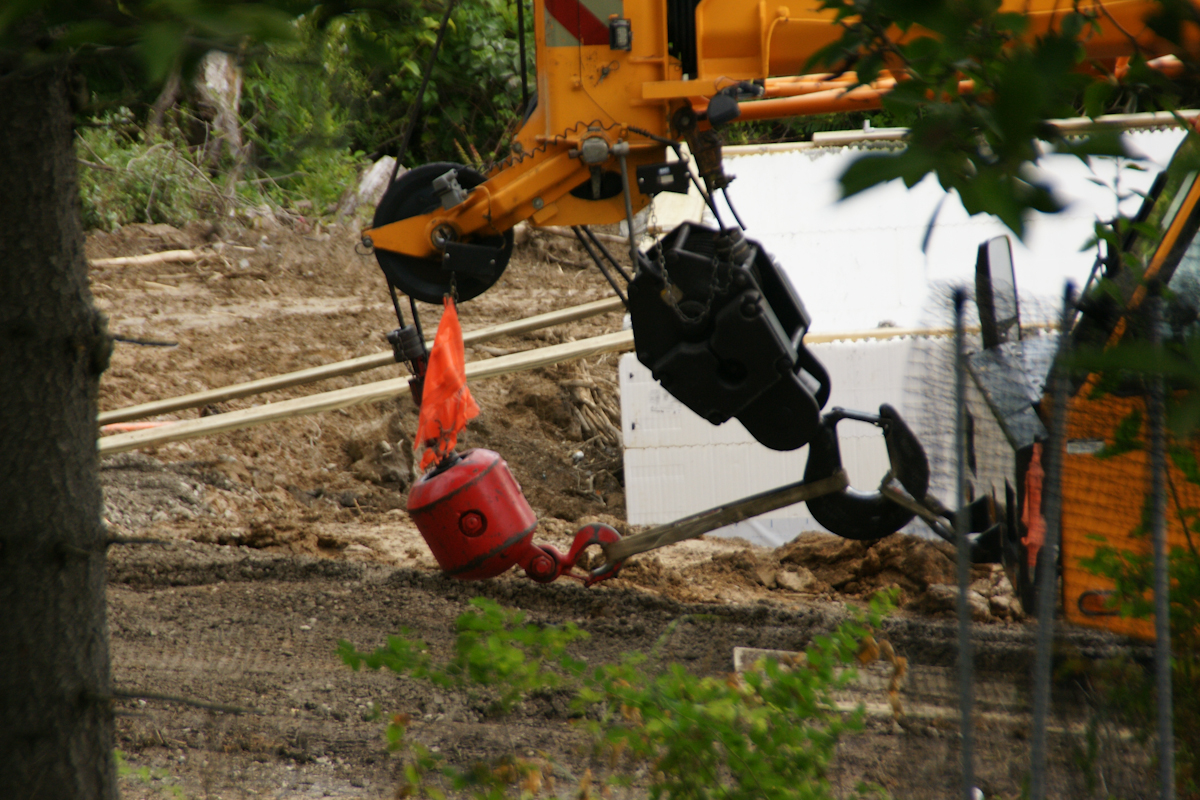
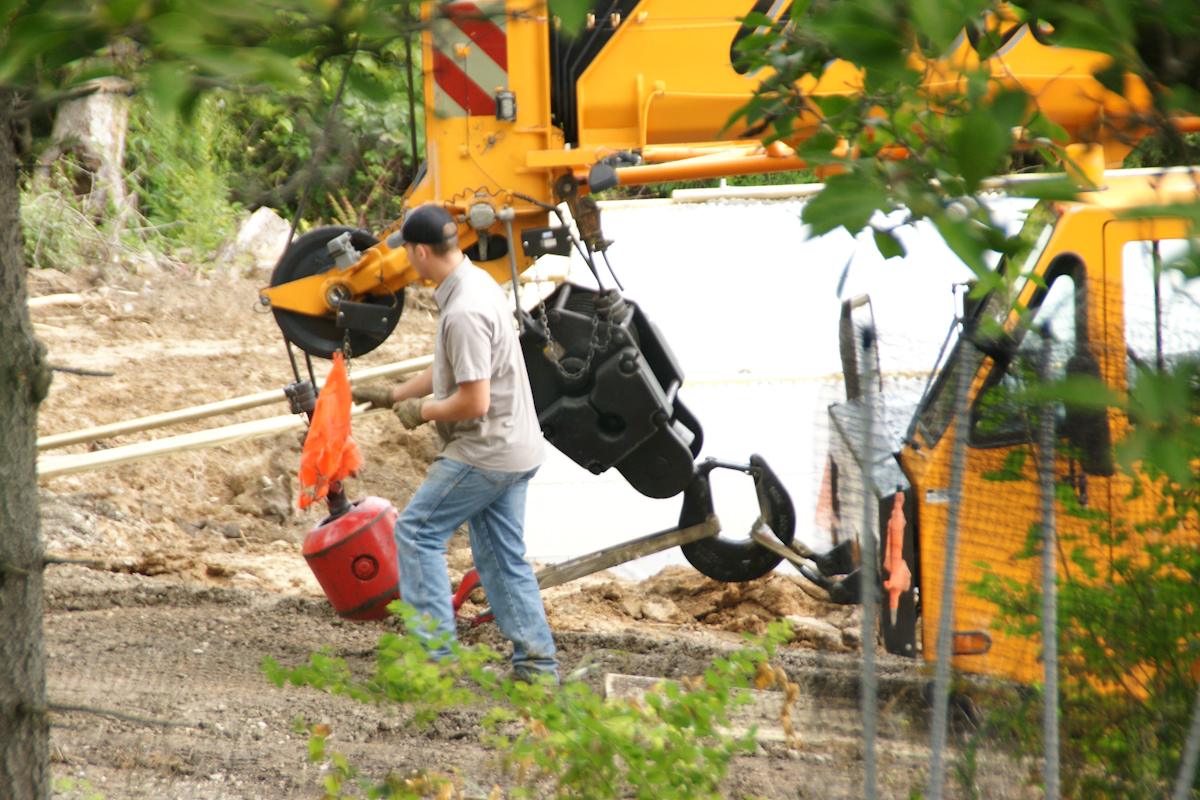
Crane Boom End and Hooks
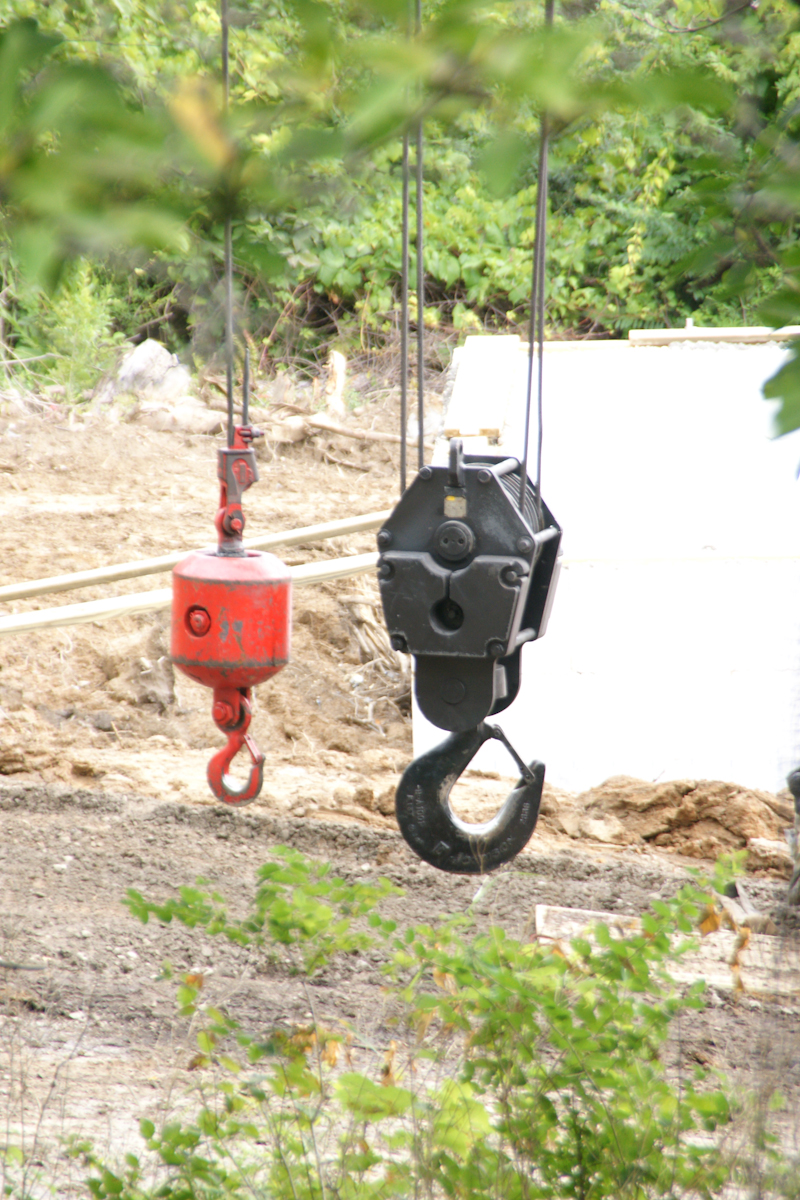
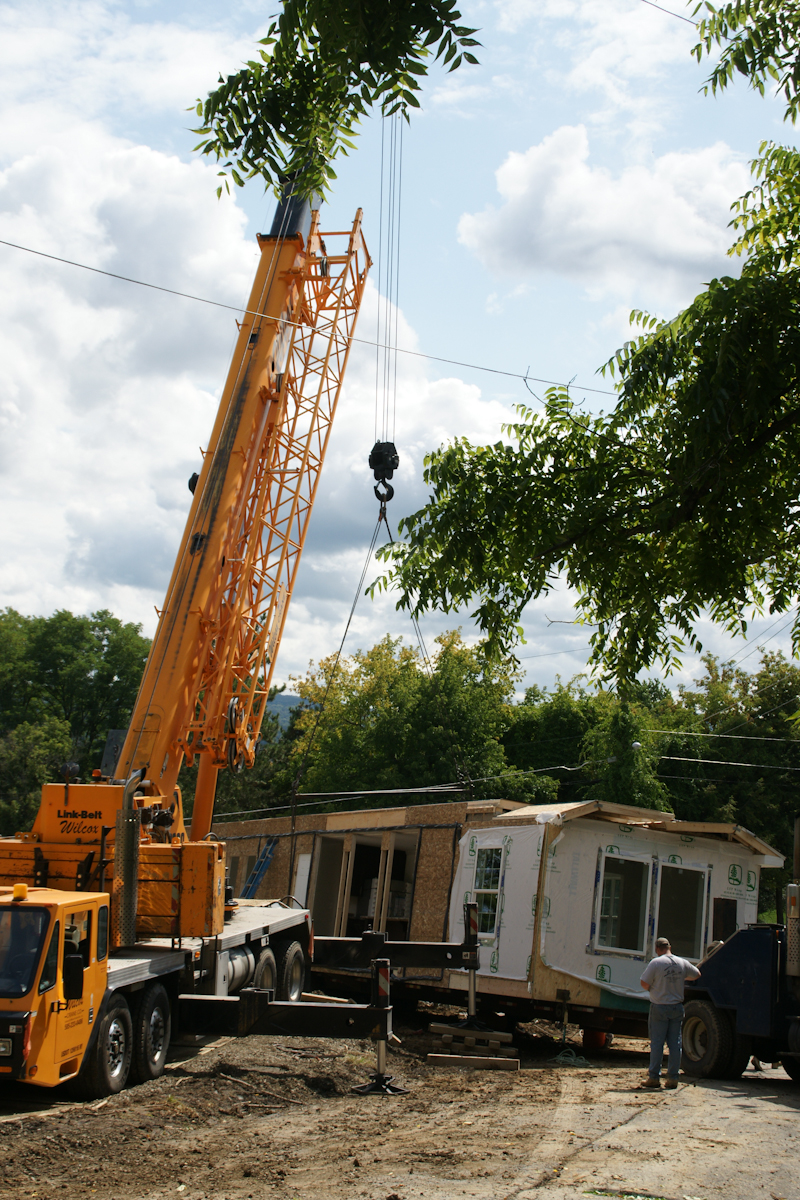
Crane Boom End with hooks in transport configuration. These are attached to the modules for positioning over and lowering onto the foundation.
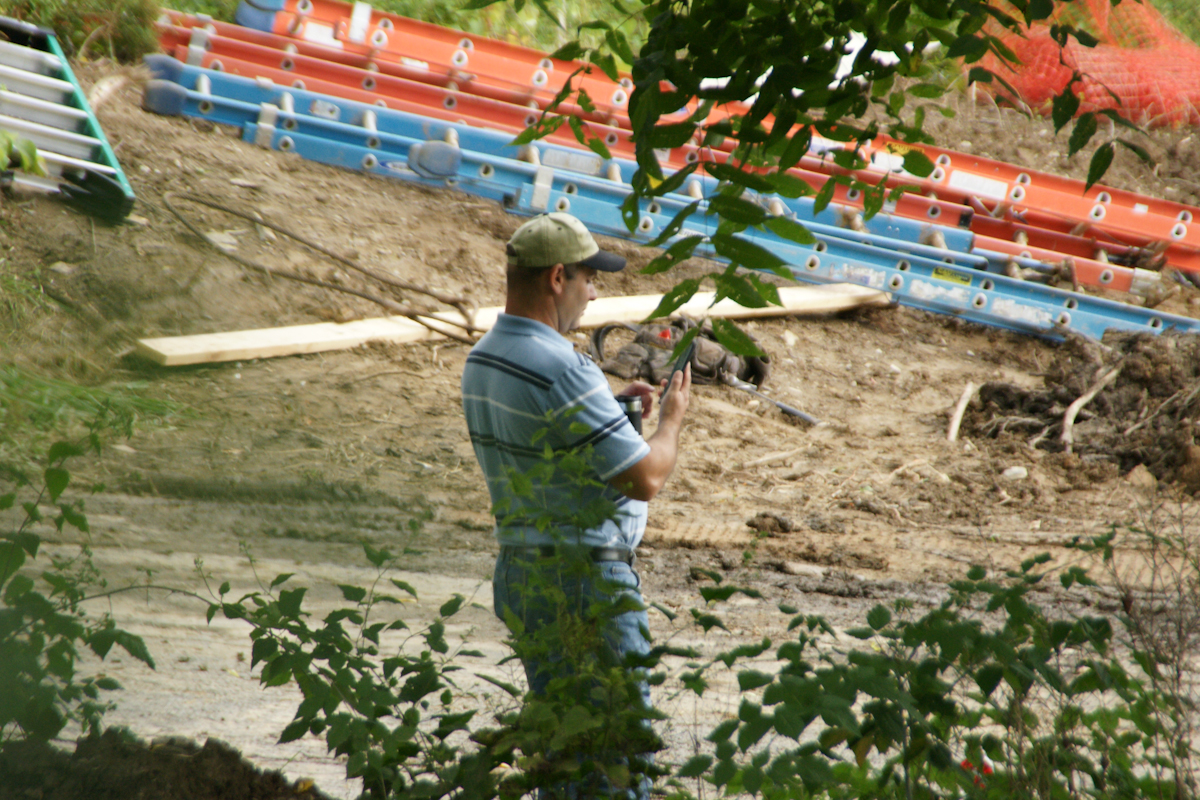
A supervisor
This fellow arrived to take pictures from that smart phone.
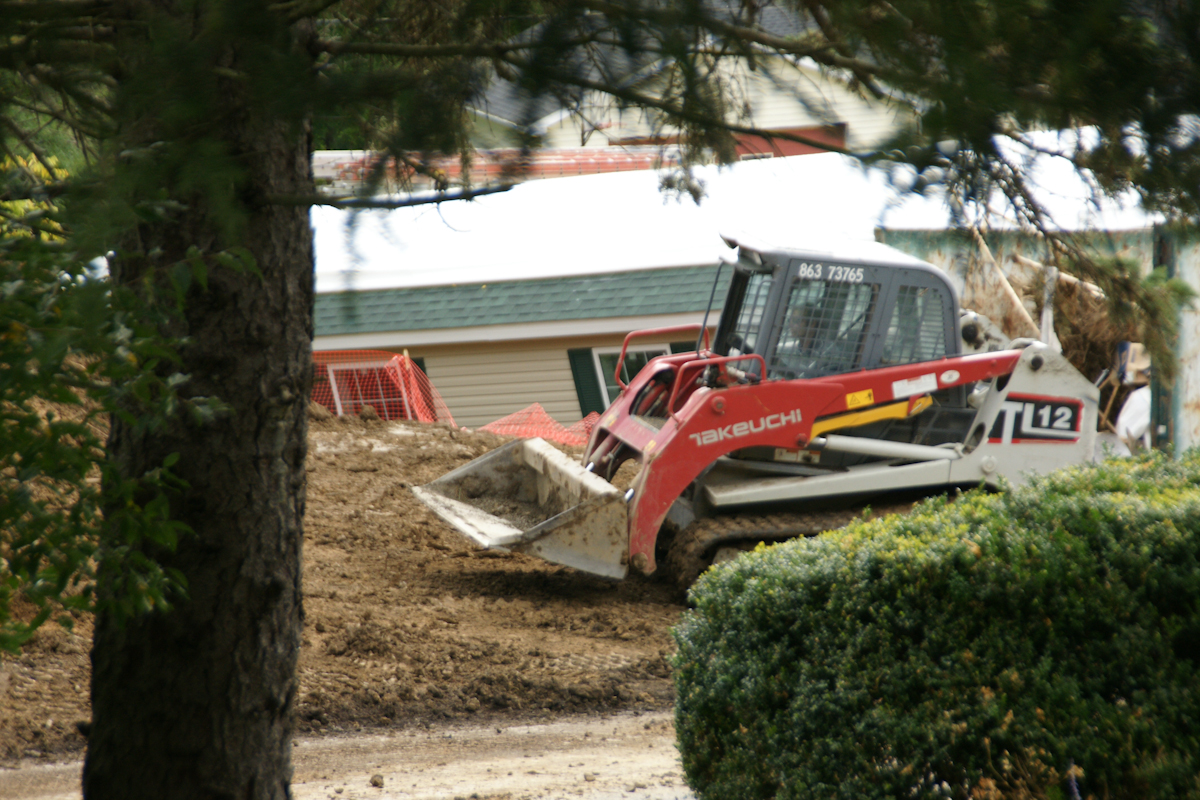
Tracked Loader
A versatile tracked loader used throughout the foundation construction and module installation.
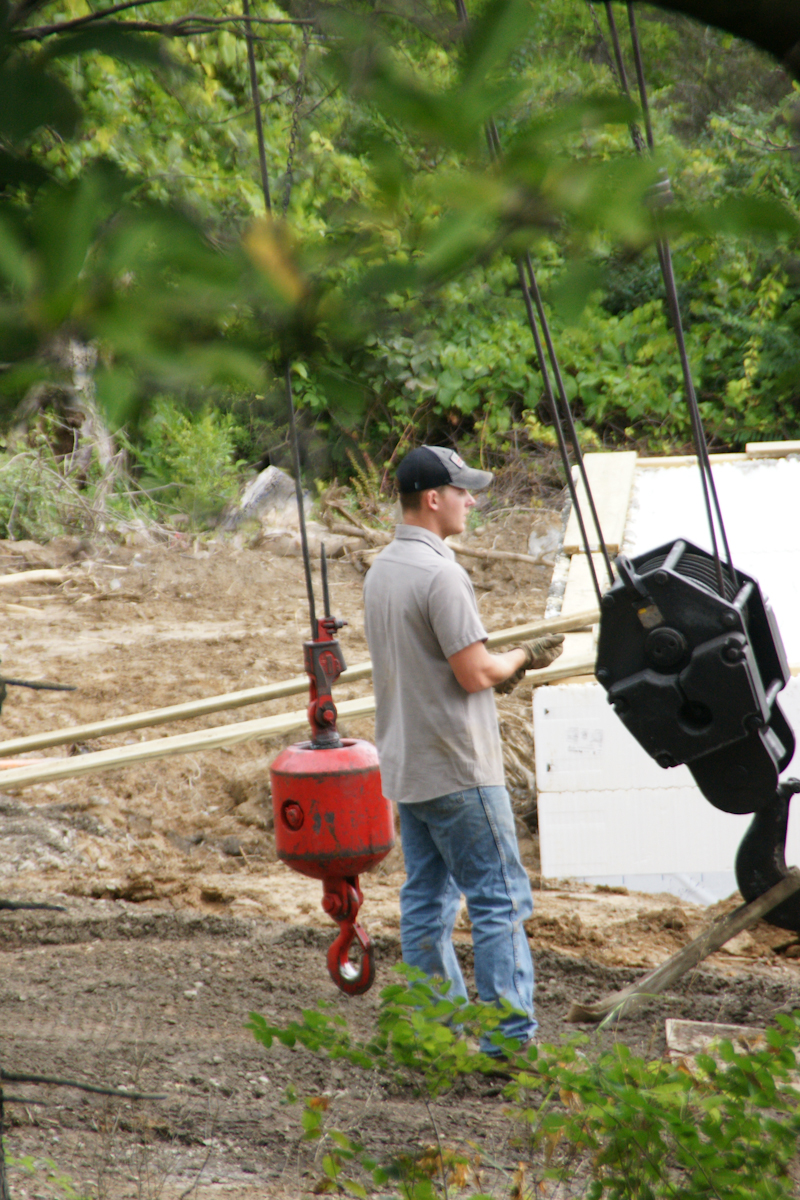
Worker and Hooks
A worker prepares the hooks for use. No head protection was a concern to us.
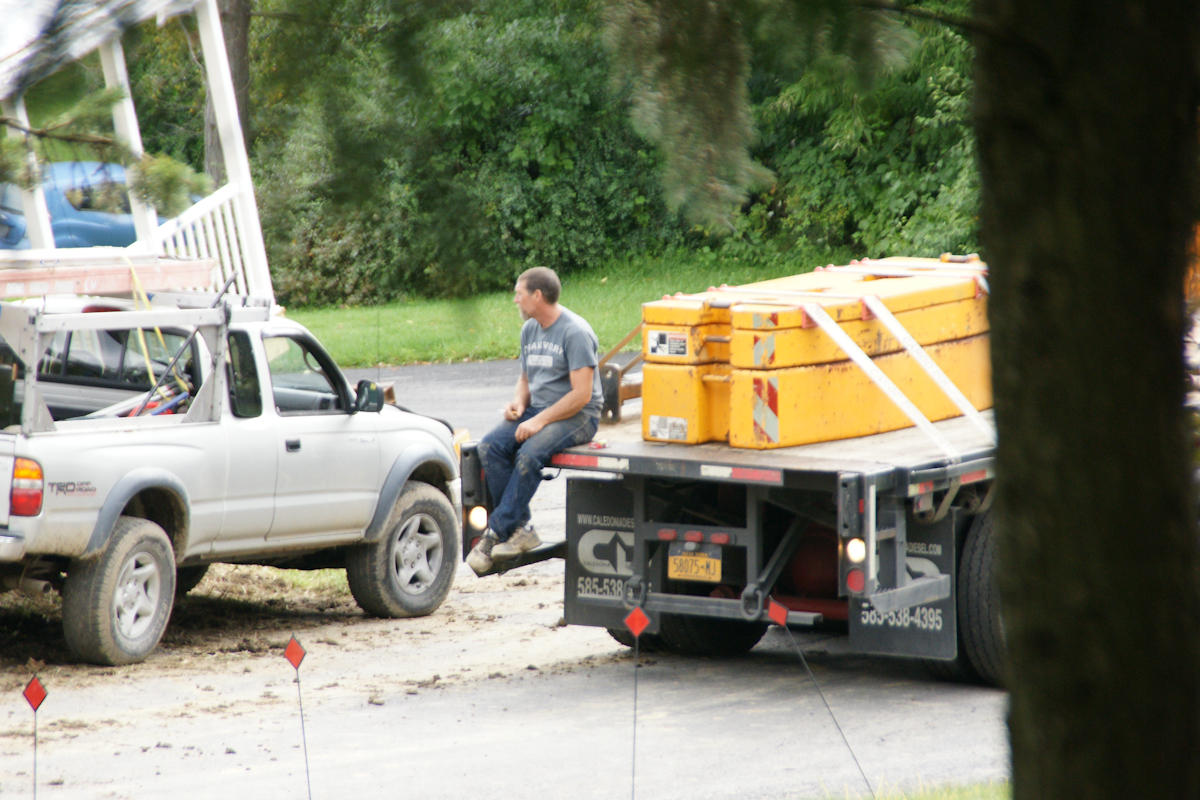
Support Blocks
Yellow blocks of metal used to support the crane.. A railing of Module One is above the truck, to left.
Hooks Prepared for Use
The red hook is ready.
Hooks ready to go.
The hooks hang free, ready to use.
Module One
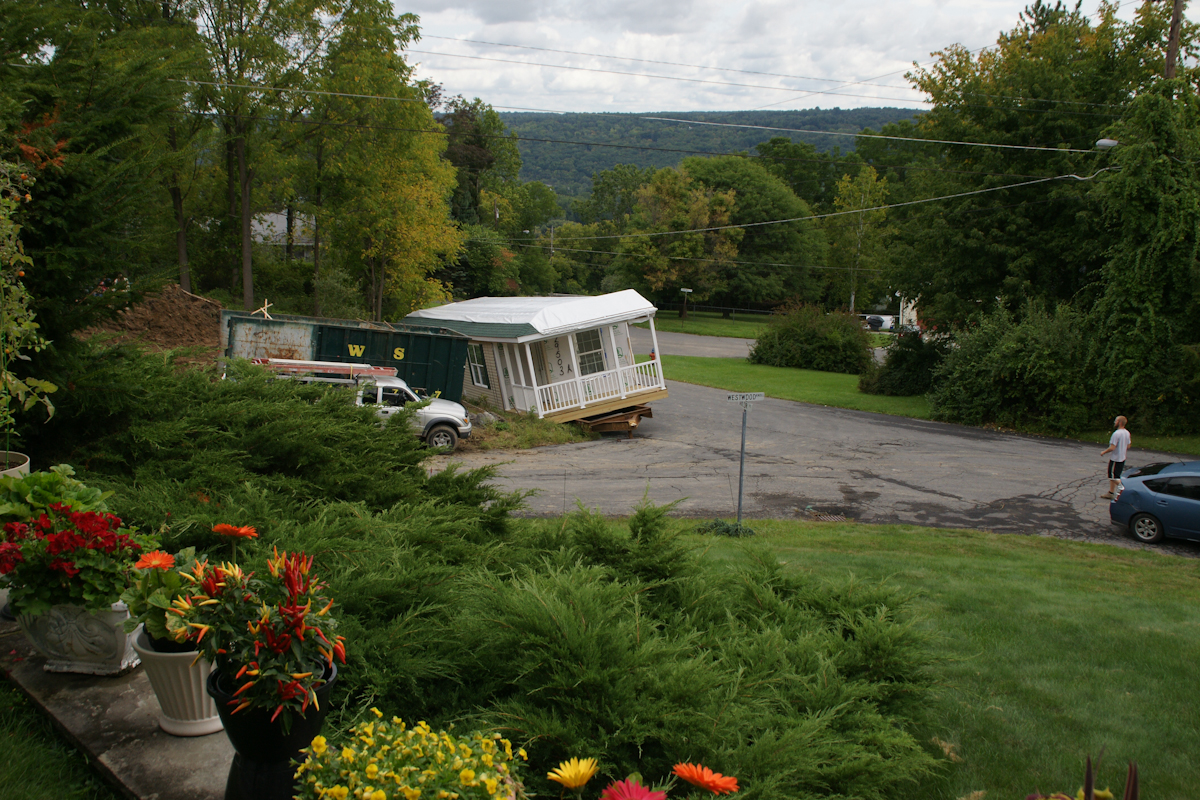
This is where Module One was dumped on the side of the road on September 5th, two days before installation.
Module One and Construction Worker
We are looking here over the edge of our patio and landscaped yard to the site of module one, pre-installation, a worker approaching.
Module Two
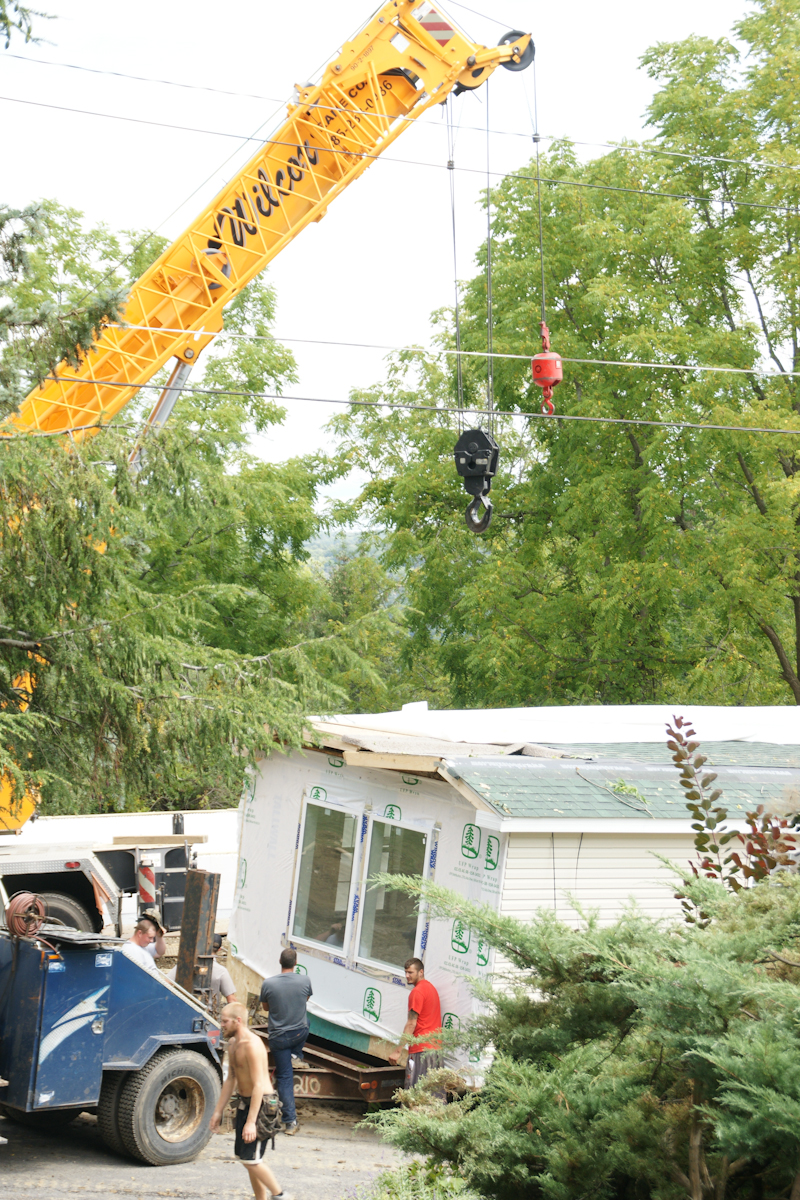
The first step was to extricate module two from the mud and haul it up the street. A construction worker foreground, the boom of crane beyond.
Positioning Module Two
The semi backed Module Two into position, the crane boom and hooks loom.
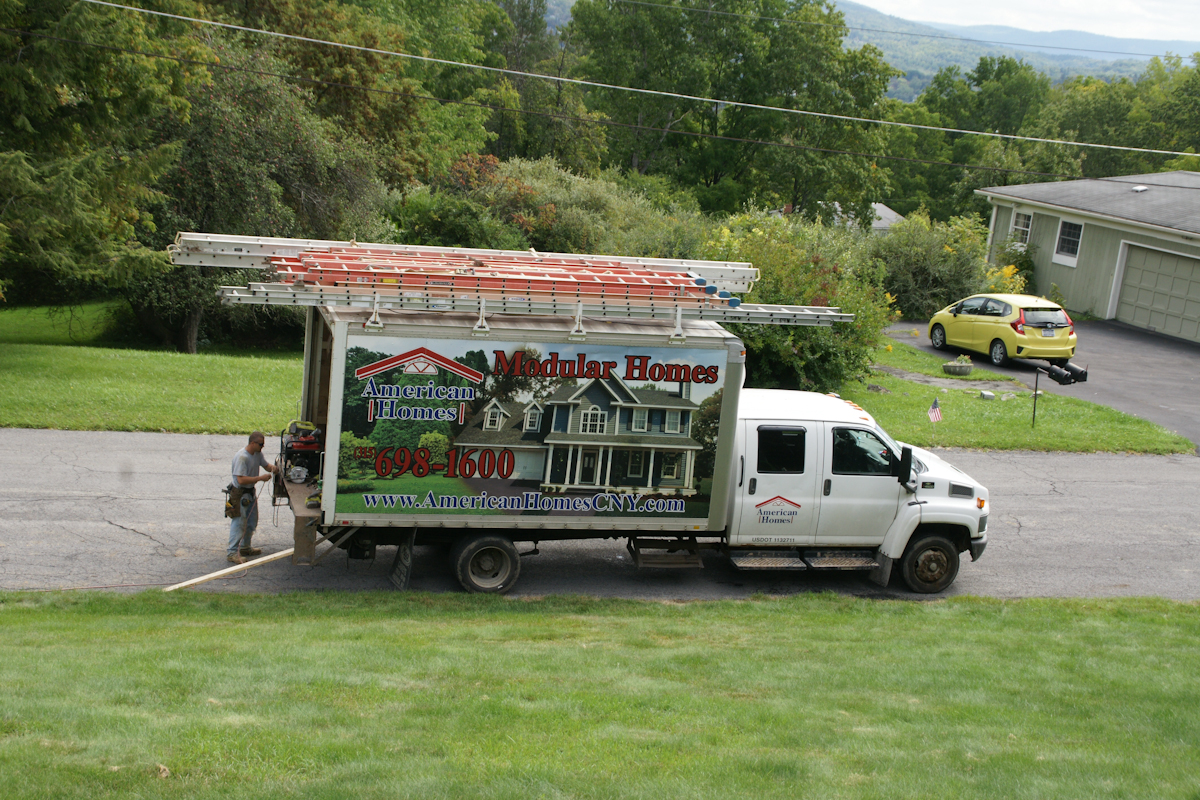
The Company Responsible
The workers were considerate of our lawn. There was minimal damage. The modules installed this day looks nothing like this image.
Module Two Attached and Ready
From here Module Two will be lifted onto the foundation.
Workers Prepare Foundation.
Workers prepare foundation to receive Module Two while the unit is readied.
Module Two Lifted.
I see only the black hook is in use.
Another View of Module Two
Another View of Module Two with worker. That is the bottom of our driveway.
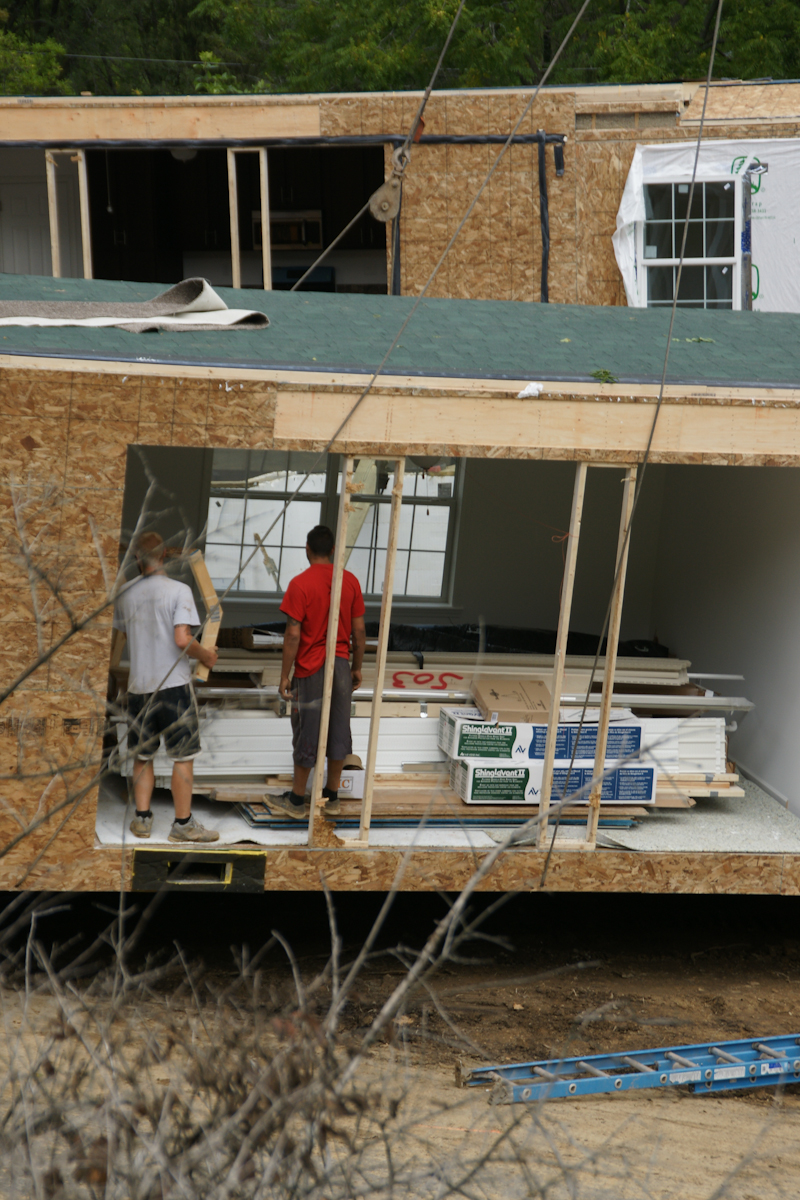
Module One with Construction Materials
Module One was delivered with construction materials inside.
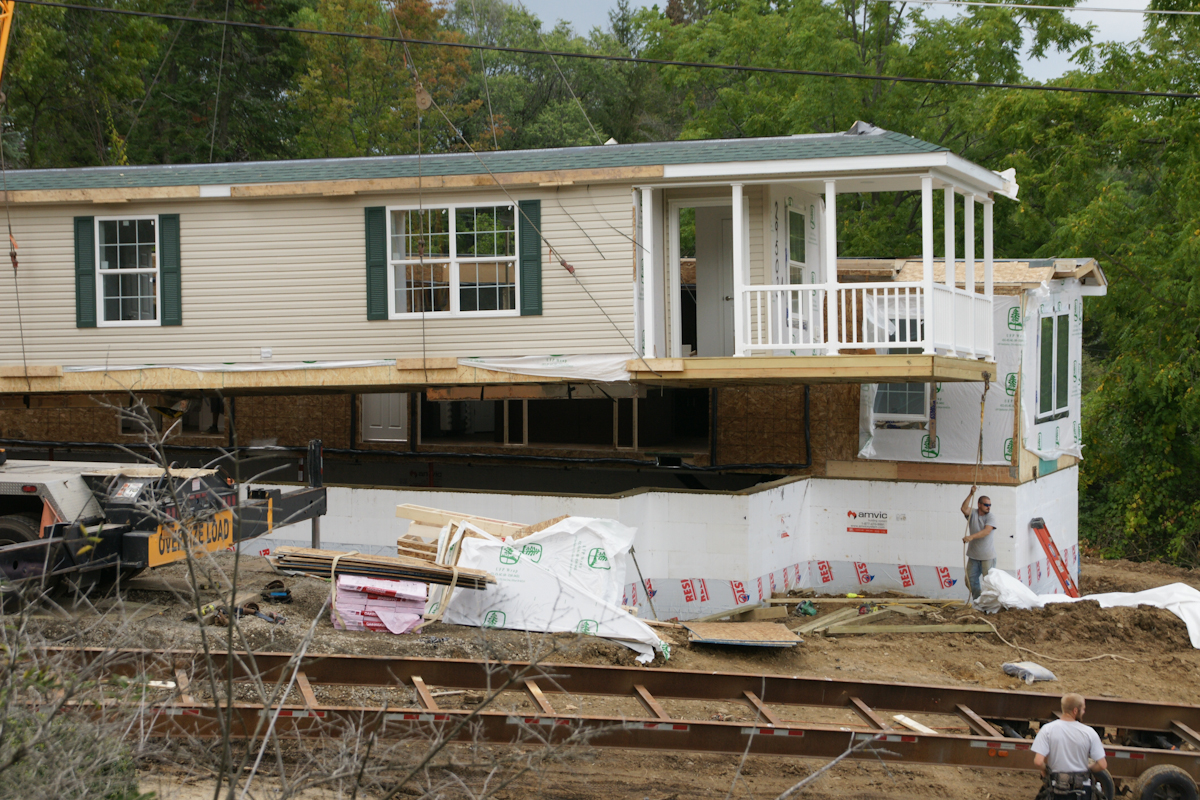
Module One with Carrier and workers.
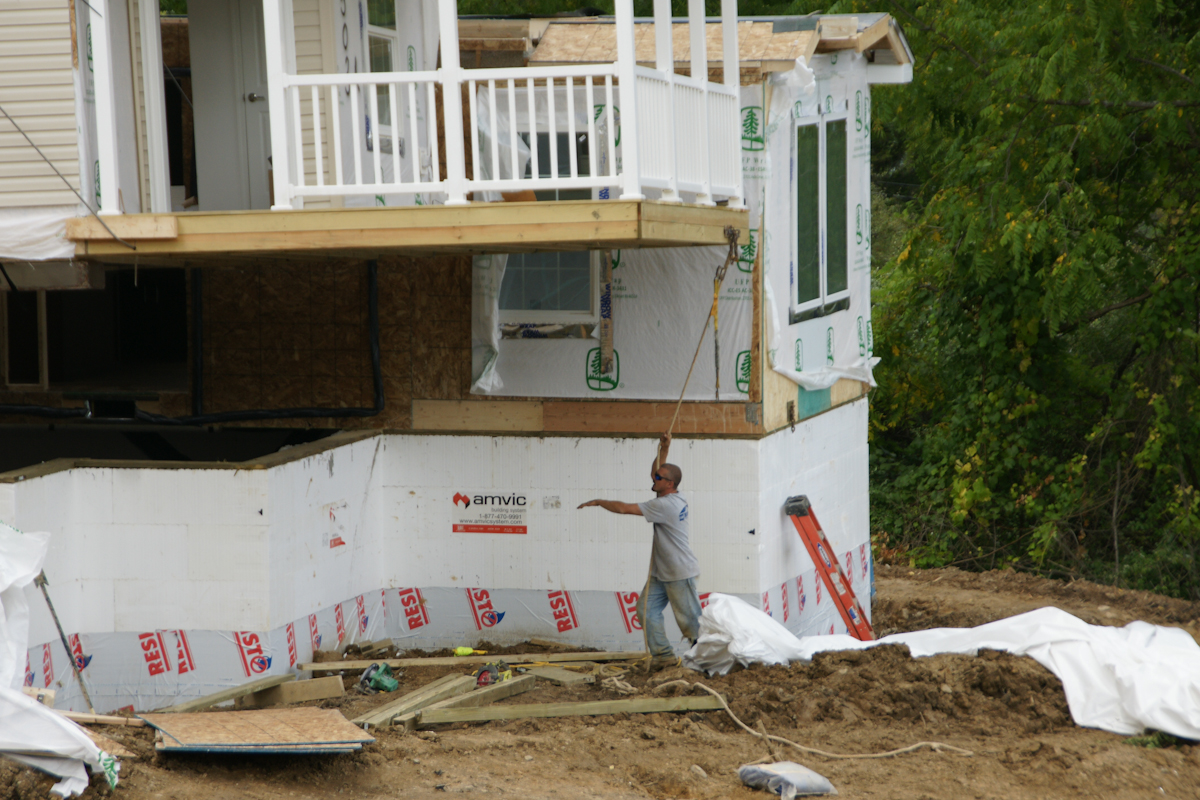
The porch and entry door of Module One with worker and rope. The worker needs to negotiate the carrier.
Pulling Module One Around
A 180 degree turn orients Module One to Module Two. The porch overhangs the foundation.

Positioning module one over foundation.

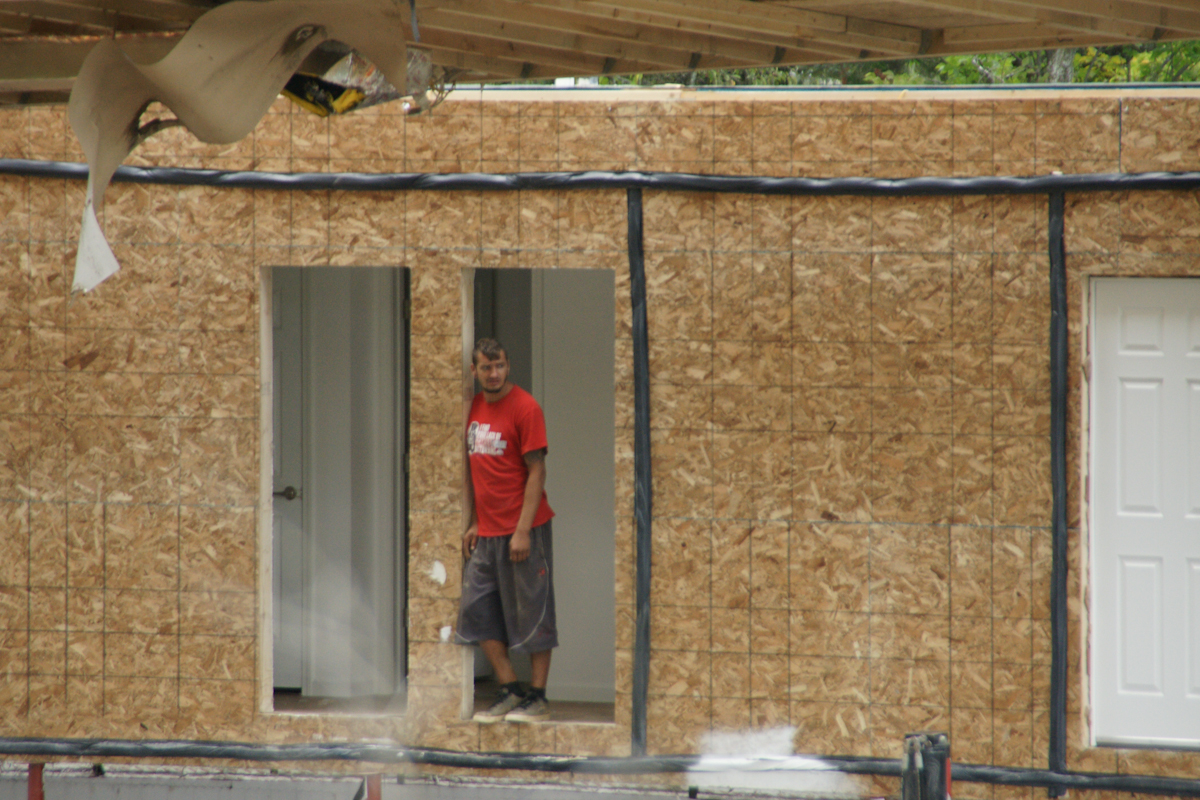
Worker Stands in Module Two
A worker observes from the interior of Module Two. Here is a closer view of the wire harness.

Final positioning of the module to form a whole structure.

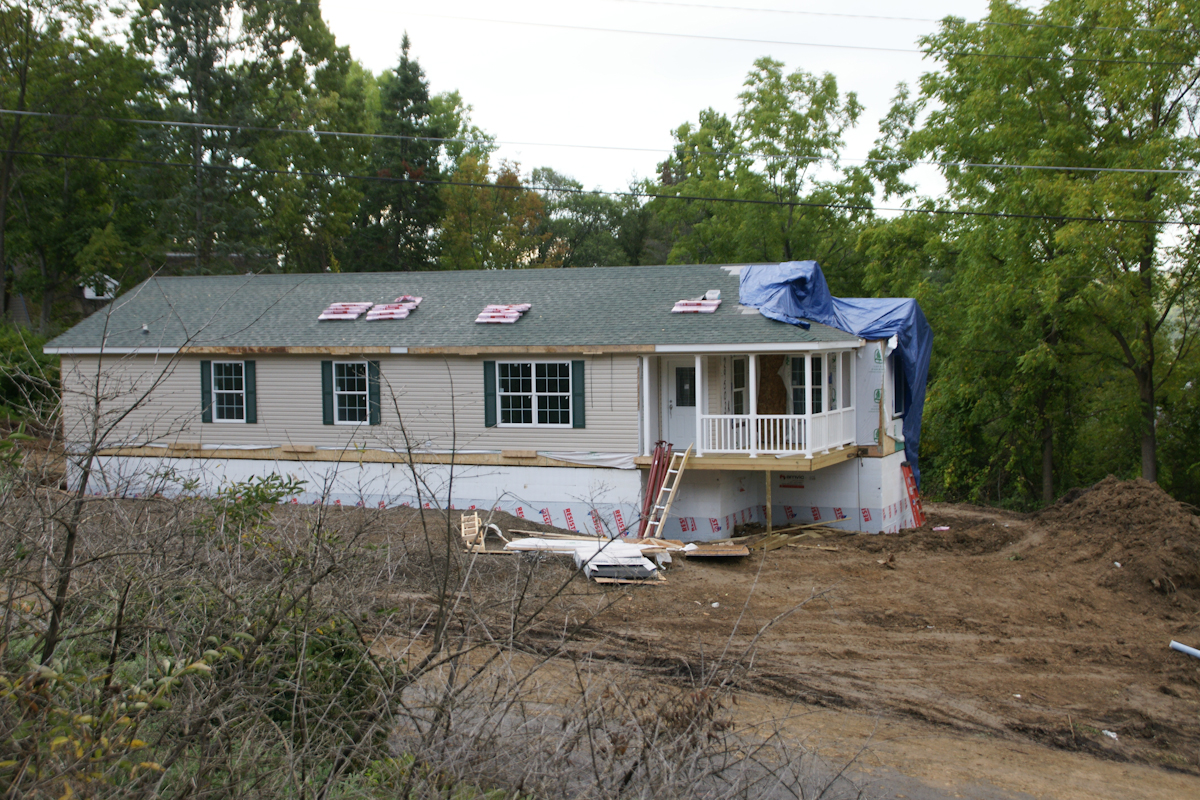
Finished.
The roof panels are here lifted to a peak. The shingles and such in place for installation. These are the materials delivered inside Module One.

Update: since this post was first published September 2017 the original owners moved to the southern USA after selling the property at an inflated price to a young Cornell professor.

Copyright 2021 Michael Stephen Wills All Rights Reserved