Explore Louisa Duemling Meadows: Nature and Conservation

The Louisa Duemling Meadows celebrate conservation and biodiversity, showcasing vibrant flora and honoring Louisa Duemling’s legacy as a steward of nature.

The Louisa Duemling Meadows, nestled within the expansive embrace of Sapsucker Woods, offers a vibrant tableau of life, brimming with opportunities for exploration and a sense of wonder. This new trail, winding through golden fields and punctuated by bursts of wildflowers, whispers tales of the land’s natural and cultural heritage.

Louisa Duemling: A Steward of Nature
Louisa Duemling, the meadows’ namesake, was a dedicated conservationist and philanthropist who supported the Cornell Lab of Ornithology’s mission to protect birds and their habitats. Her legacy lives on in these serene fields, where her commitment to preserving the environment is reflected in every thriving plant and songbird.
Black-eyed Susans: The Meadow’s Golden Treasure
Dominating this summertime landscape with their radiant yellow petals and dark central disks, Black-eyed Susans (Rudbeckia hirta) are a hallmark of the meadows. These cheerful blooms are a delight to the eye, a cornerstone of meadow ecosystems. As members of the Asteraceae family, their composite flowers serve as a rich nectar source for pollinators like bees and butterflies, ensuring the vibrancy of these fields.
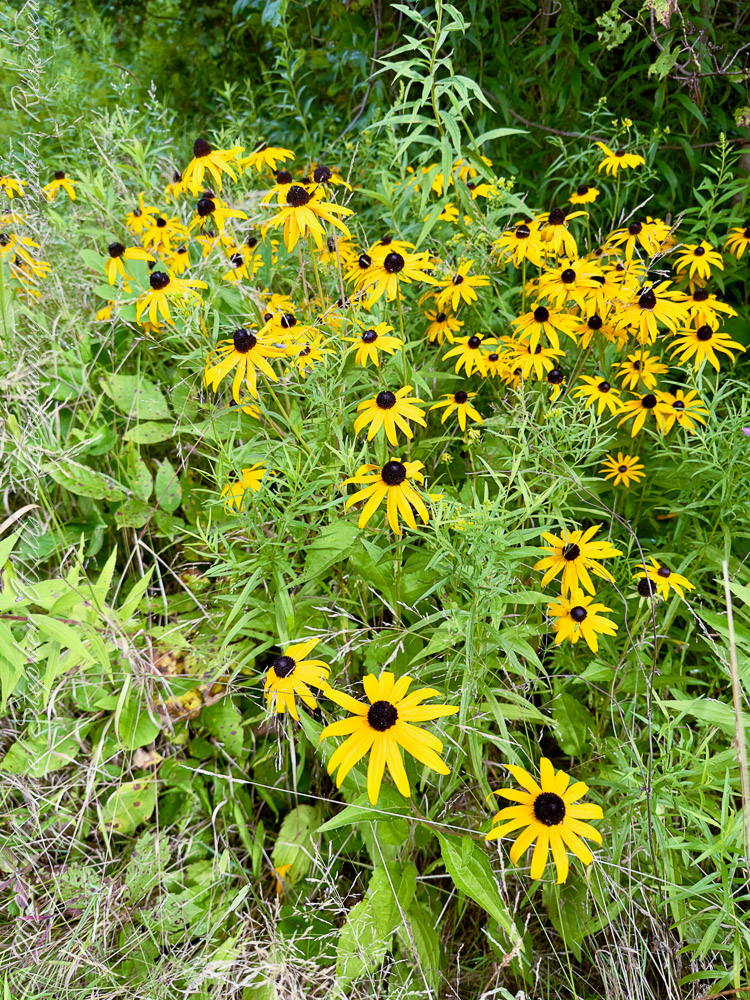
Historically, Black-eyed Susans have been used in traditional medicine by Native American tribes for their putative anti-inflammatory properties. Their ability to thrive in diverse conditions also makes them a symbol of resilience and adaptability.
A Symphony of Green and Gold
Walking through the trail, one is greeted by the harmonious interplay of goldenrods (Solidago spp.), milkweeds (Asclepias spp.), and asters (Symphyotrichum spp.). Goldenrods, with their feathery clusters of yellow blooms, are often mistaken as allergenic culprits, though it is the inconspicuous ragweed (Ambrosia artemisiifolia) that deserves this reputation. Milkweeds, with their milky sap and delicate pink or white flowers, are vital to monarch butterflies (Danaus plexippus), serving as the sole food source for their larvae.
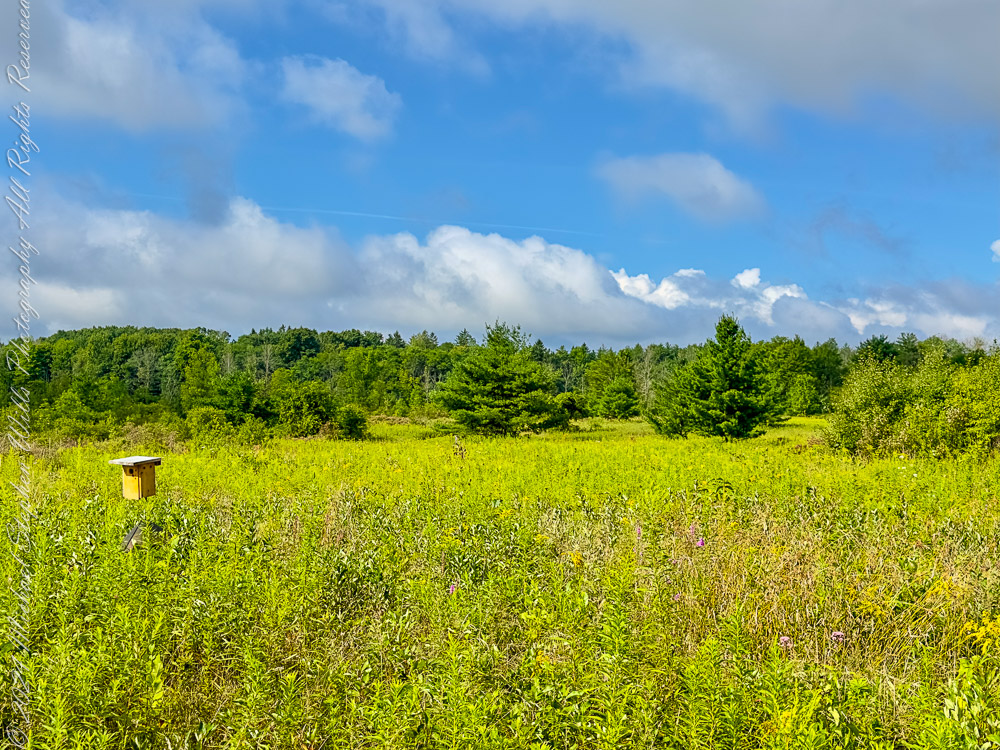
Among these botanical wonders, the birdhouse stands as a sentinel, a reminder of the intricate relationship between flora and fauna. These wooden structures provide safe havens for cavity-nesting birds like Eastern Bluebirds (Sialia sialis) and Tree Swallows (Tachycineta bicolor), fostering biodiversity within the meadow.

A Horizon Framed by Pines and Clouds
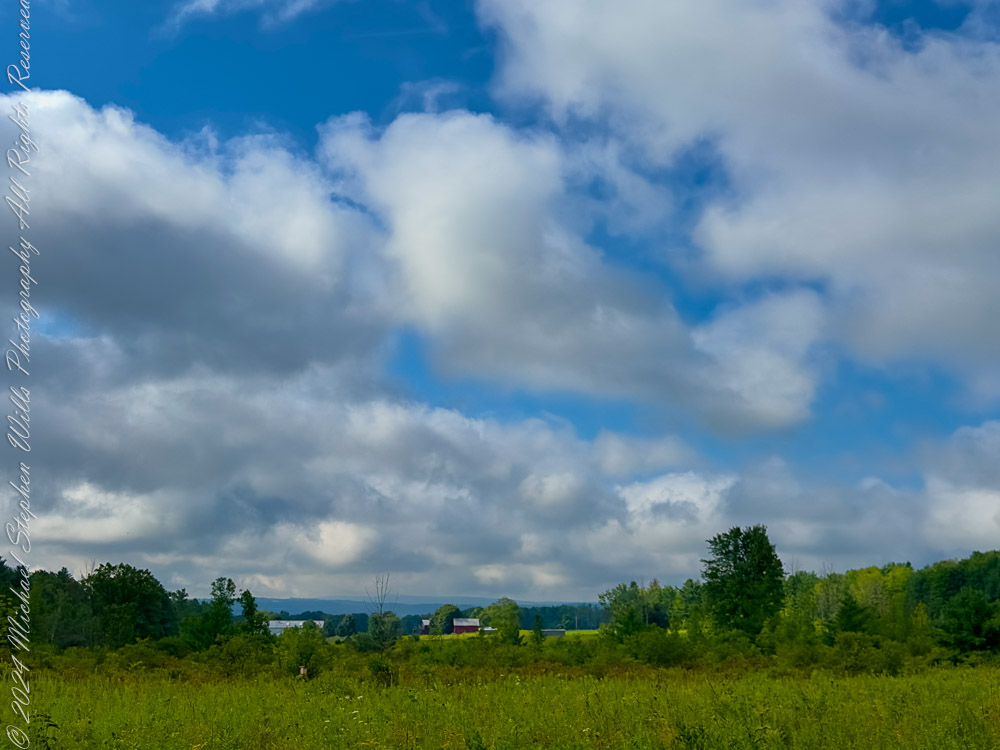
The open meadow trails, flanked by clusters of Eastern White Pines (Pinus strobus) and punctuated by the azure sky, invite reflection and renewal. This is a place where the human spirit can align with the rhythms of nature, where each step reveals new layers of beauty and discovery.
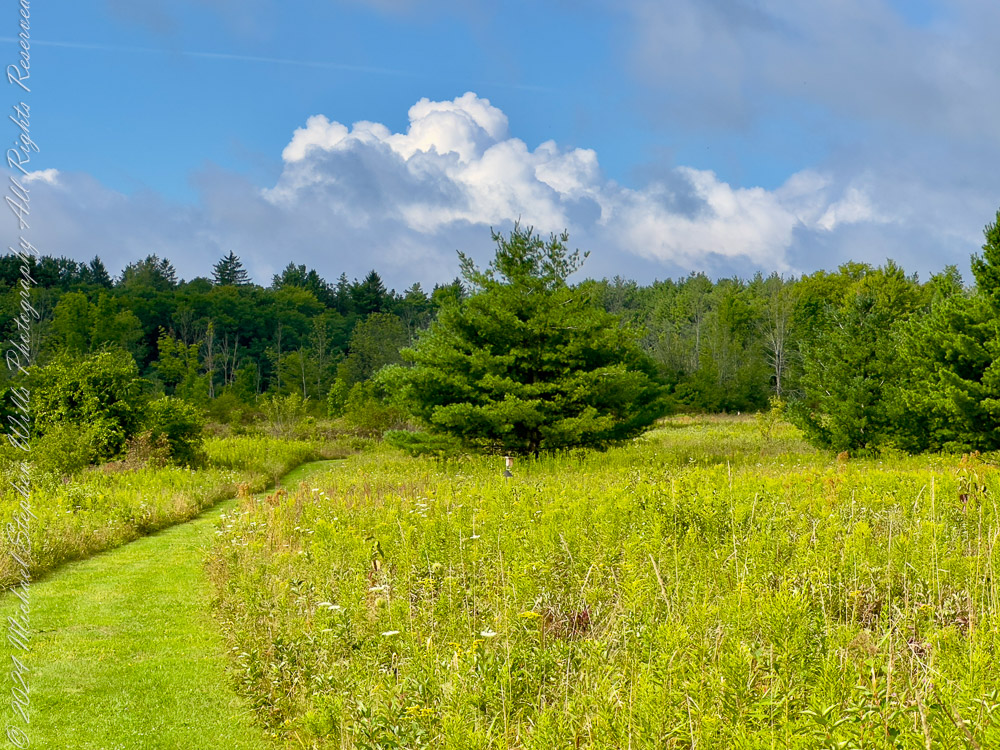
Embracing the Spirit of Discovery
To wander the Louisa Duemling Meadows is to immerse oneself in the timeless dance of life. The trail, carefully marked yet wild in essence, invites visitors to lose themselves in its beauty while finding solace in its quietude. This is not just a path through nature—it is a journey into the heart of conservation and a celebration of the life that thrives under Louisa Duemling’s enduring legacy.

As you leave the meadow, carry with you not just the memory of golden flowers and vibrant skies but the inspiration to cherish and protect the natural world. The Louisa Duemling Meadows are not only a gift to those who walk its trails but a reminder of the profound impact one can have in preserving our planet’s fragile beauty.

Enter your email to receive notification of future postings. I will not sell or share your email address.

Ginkgo and Sycamore: Nature’s Beauty Amid Climate Change

On Thanksgiving 2023, I reflected on climate change’s impact while observing contrasting ginkgo and sycamore leaves during the Turkey Trot.

The air was soddenly warm that Thanksgiving morning in 2023, carrying a foreboding of climate change. Standing on the grounds of Ithaca High School, I couldn’t help but feel the incongruity of the unseasonable warmth. The annual “Turkey Trot” was unfolding around me, an event filled with cheerful camaraderie, yet beneath the surface of this tradition, the world itself seemed to whisper a warning. My attention drifted from the runners to the ground, where fallen leaves painted a story that echoed this uneasy tension.

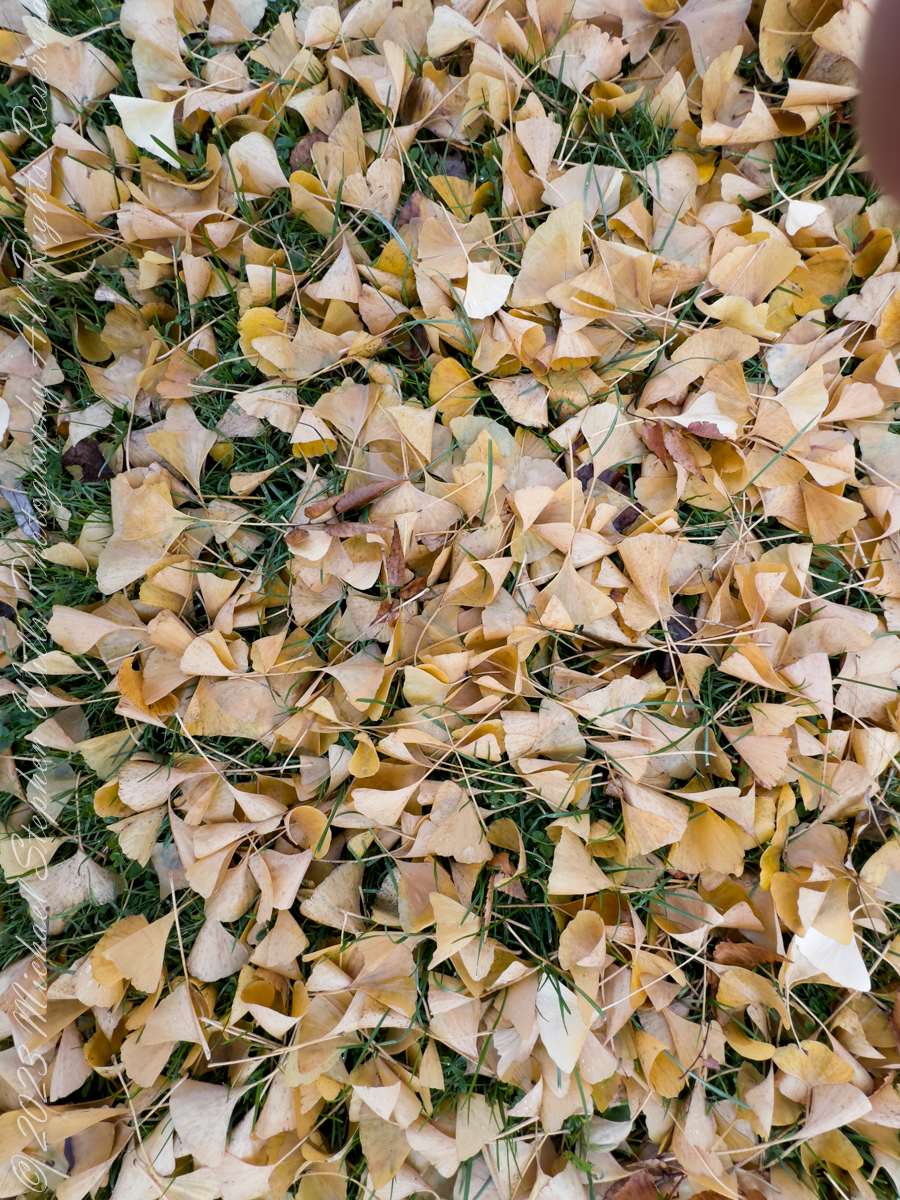
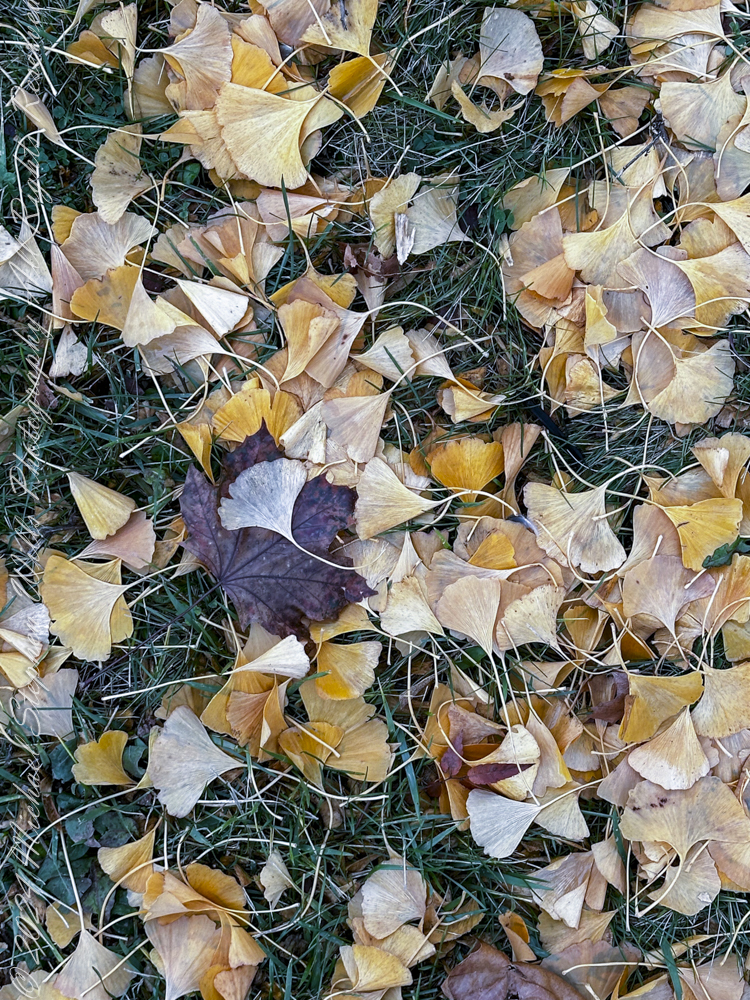
The ginkgo leaves, their vibrant golden hues glowing against the damp grass, seemed almost out of place in the humid air. Ginkgos are ancient survivors, trees that have witnessed millennia of change, yet even they now face a future shaped by the rapid pace of human disruption. Their fan-like shapes, so delicate and timeless, carried an irony—symbols of endurance scattered on a landscape where the seasons no longer held the predictability they once did. That morning, their luminous beauty felt like a quiet plea, a reminder of nature’s fragility in the face of human indifference.

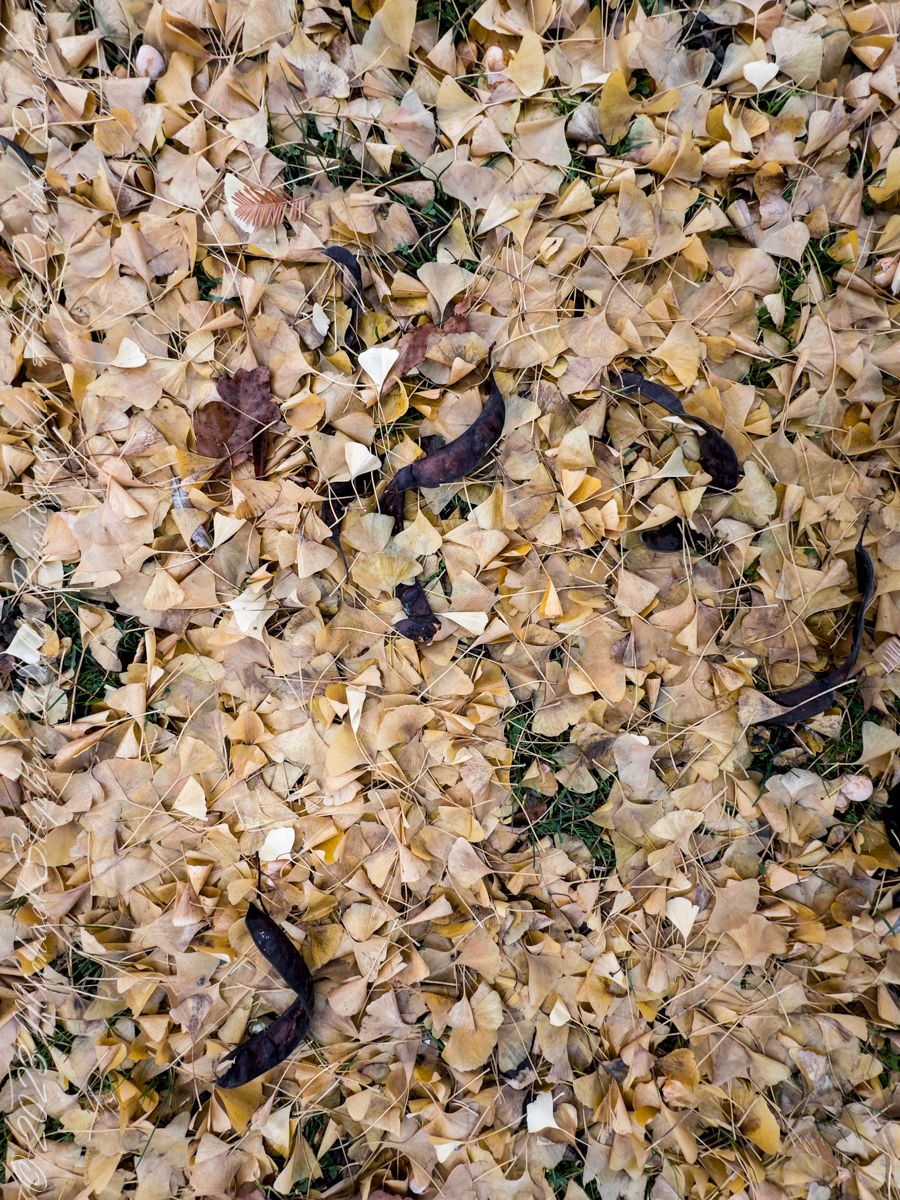
As a spectator of the 2023 “Turkey Trot” on Thanksgiving Day I found these Ginko and Sycamore leaves at Ithaca High School, Ithaca, Tompkins County New York. Finger Lakes Region

Among them, the sycamore leaves lay darker and more rugged, their broader forms curled and weathered by the elements. The sycamore is a resilient tree, often thriving in difficult conditions, yet its leaves bore a somber note against the warmth of the day. Together, the ginkgo and sycamore leaves formed a poignant tableau—a meeting of strength and delicacy, both subject to the same unrelenting forces of change. As I stood there, the leaves seemed to whisper their own story, a testament to survival amidst an increasingly uncertain world.

Ginko Leaves and Honey Locust Pods, Stewart Park on a December 2023 afternoon

The Turkey Trot unfolded with its usual energy—children dashed ahead with gleeful abandon, adults paced themselves in cheerful determination, and older participants moved with quiet dignity. The warmth seemed to amplify the human vibrancy of the event, yet it also cast a shadow of dissonance. This race, this celebration of resilience and community, was happening against the backdrop of a world in flux. The warmth of the morning was a reminder that even cherished traditions like this might one day feel the strain of climate shifts.

I crouched to capture the leaves in a photograph, drawn by their interplay of color and form. The ginkgo leaves glimmered like gold coins scattered across the ground, while the sycamore leaves added a depth and weight that anchored the scene. Together, they reminded me of the cyclical nature of life, the beauty and decay that coexist within the same space. Yet this year, the warmth in the air added an unsettling layer to the story. These leaves, so central to the rhythm of seasons, were now falling in a world where those rhythms seemed increasingly disrupted.

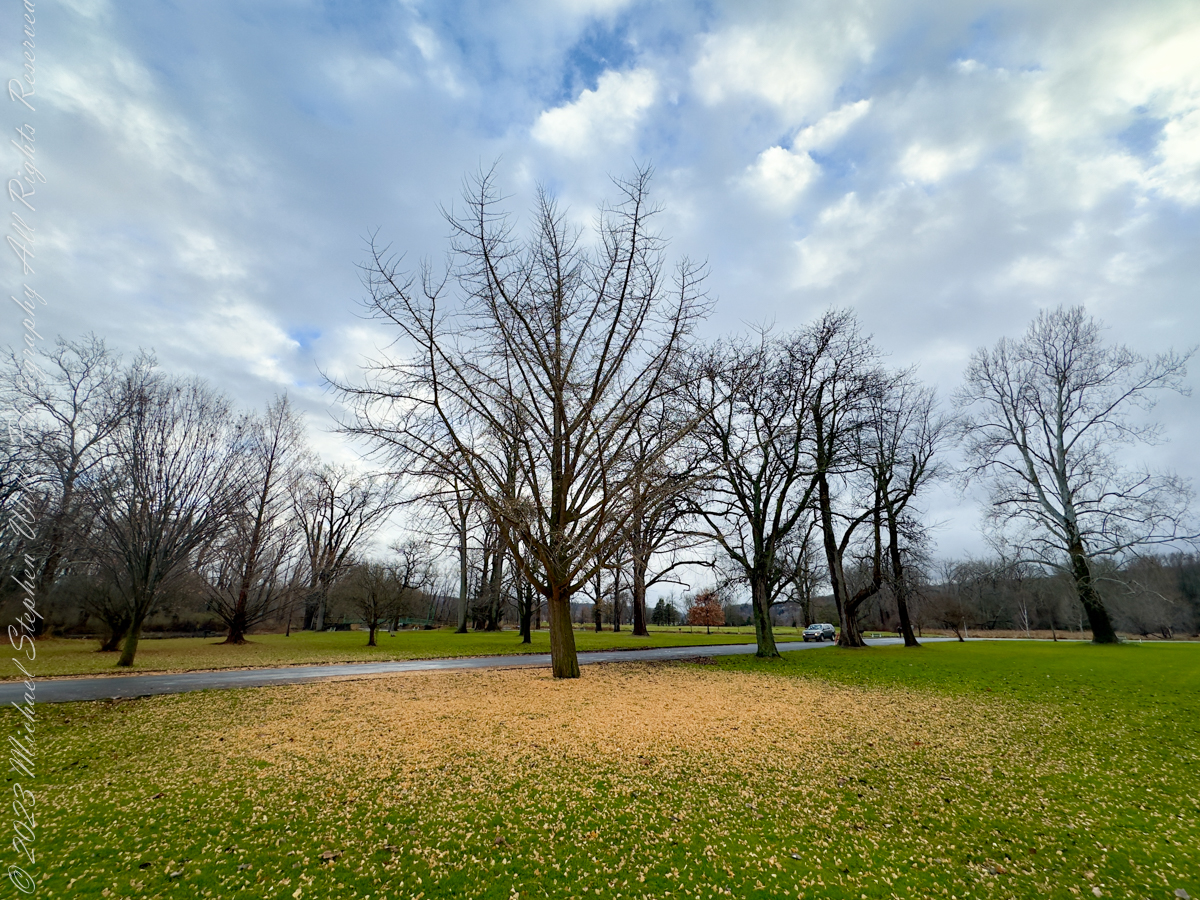
Bare Ginko tree with leaf pattern, Stewart Park on a December afternoon 2023

As the sunlight broke through the clouds, it illuminated the edges of the ginkgo leaves, making them shimmer with an almost otherworldly light. I lingered in that moment, feeling the weight of its quiet truth: life is fleeting, but its beauty endures in the connections we foster and the memories we hold. That Thanksgiving, the humid warmth of the air reminded me that we live in a time of profound change, yet even amid uncertainty, there is still wonder to be found beneath our feet. It is a wonder worth preserving.

Enter your email to receive notification of future postings. I will not sell or share your email address.

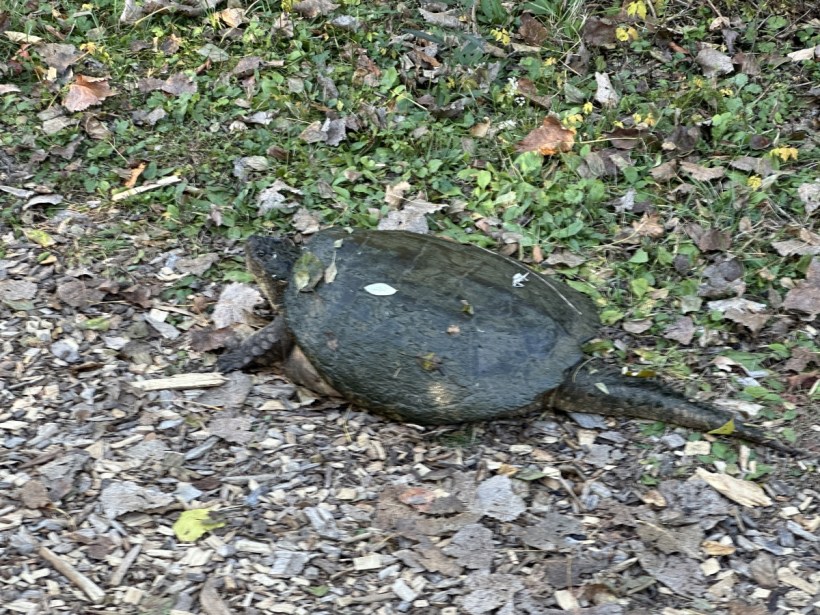
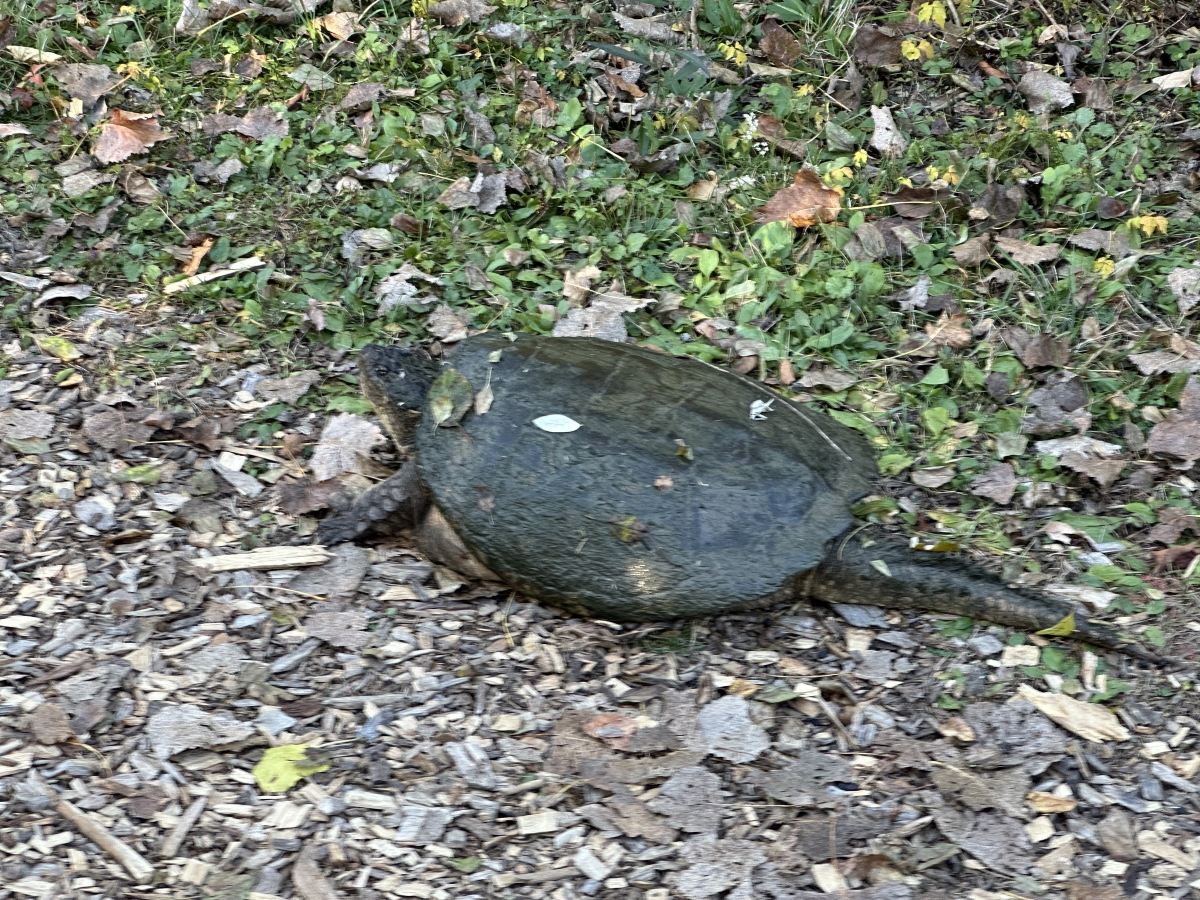
Ode to a Snapping Turtle

In homage to Pable Neruda and chance encounters

O ancient wanderer
of Sapsucker Woods,
armor-clad and quiet,
you lumber forth,
carved from the earth itself,
sculpted from mud
and pondweed dreams.

October’s afternoon light
paints you with golden shadows,
each leaf fallen,
each branch broken
a whispered testament
to the slowness
of your path,
steady as a heartbeat
unmoved by haste.

You bear the centuries
in the lines of your shell,
grooves and valleys
where stories settle,
tales of reeds and minnows,
and the deep-rooted knowing
that life is best met
with patience, with pause.

O creature of edges and silence,
you bridge water and wood,
the line between stillness and stride.
What weight you carry,
not of burden, but of presence—
a shell that holds
the weight of stars,
the bones of ancient rivers,
and the soft clay of Sapsucker’s floor.

In your slow, silent passing,
the trail bows to you.
Leaves make way,
and the earth beneath you
settles a little deeper,
reminded of the strength
that moves without noise,
the wisdom that crawls
in the path of shadows.

Turtle,
you who wear the world’s patience,
I watch you disappear,
an ambassador of ponds and pools,
a silent architect
of marsh and moss.
May your journey be long,
your pauses endless,
and your shell a testament
to the beauty of age,
carved by time,
blessed by the sun.

Enter your email to receive notification of future postings. I will not sell or share your email address.

Healing Through Nature in Sapsucker Woods

An autumn walk for healing, resilience, and gratitude.

On this autumn Sapsucker Woods afternoon, the world seems crafted to soothe. Sunlight filters through the canopy, setting leaves ablaze in rich reds, golden yellows, and softened greens, the seasonal palette reflecting nature’s grand finale. Today, the woods are a sanctuary for healing, a space where steps are measured not by speed but by strength, each one a testament to resilience.

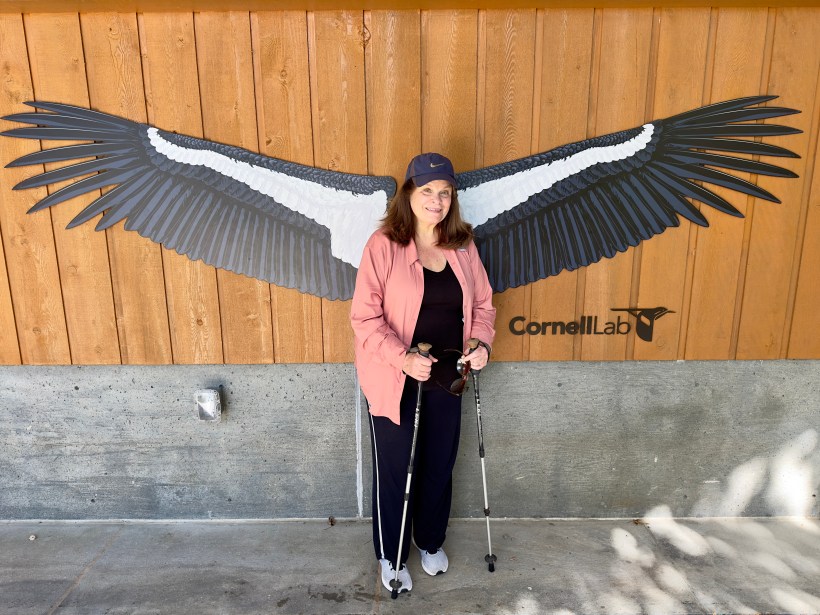
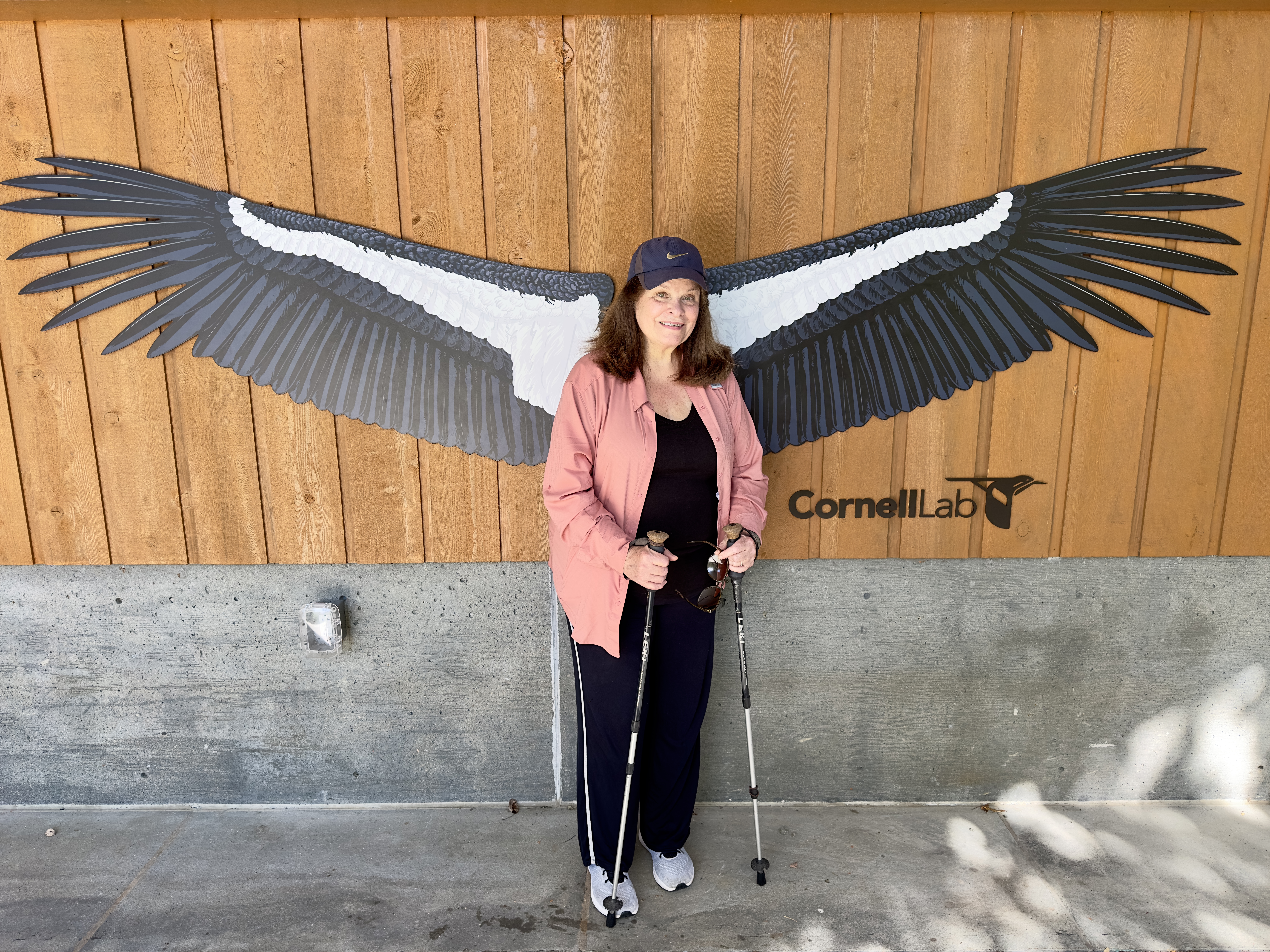
Pam stands before the wide, outstretched wings painted on the wall at the Cornell Lab of Ornithology, wings so vast that they dwarf her. She smiles, resting against her hiking poles, the Condor wings an emblem of a journey toward reclaiming freedom. Her recent hip replacement surgery has given her back this independence, a reminder that recovery is not just about physical mending, but about lifting the spirit to soar once again.

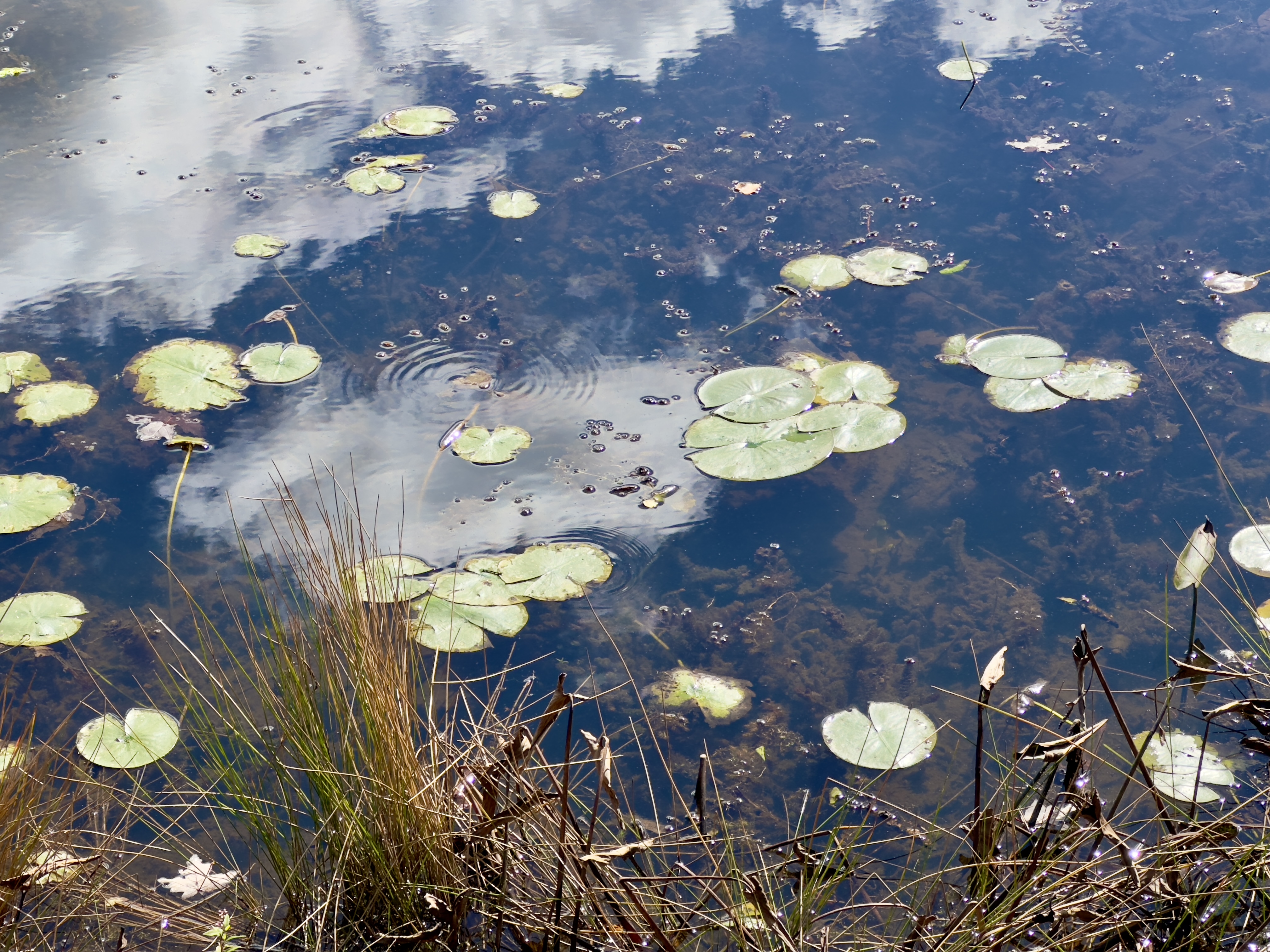
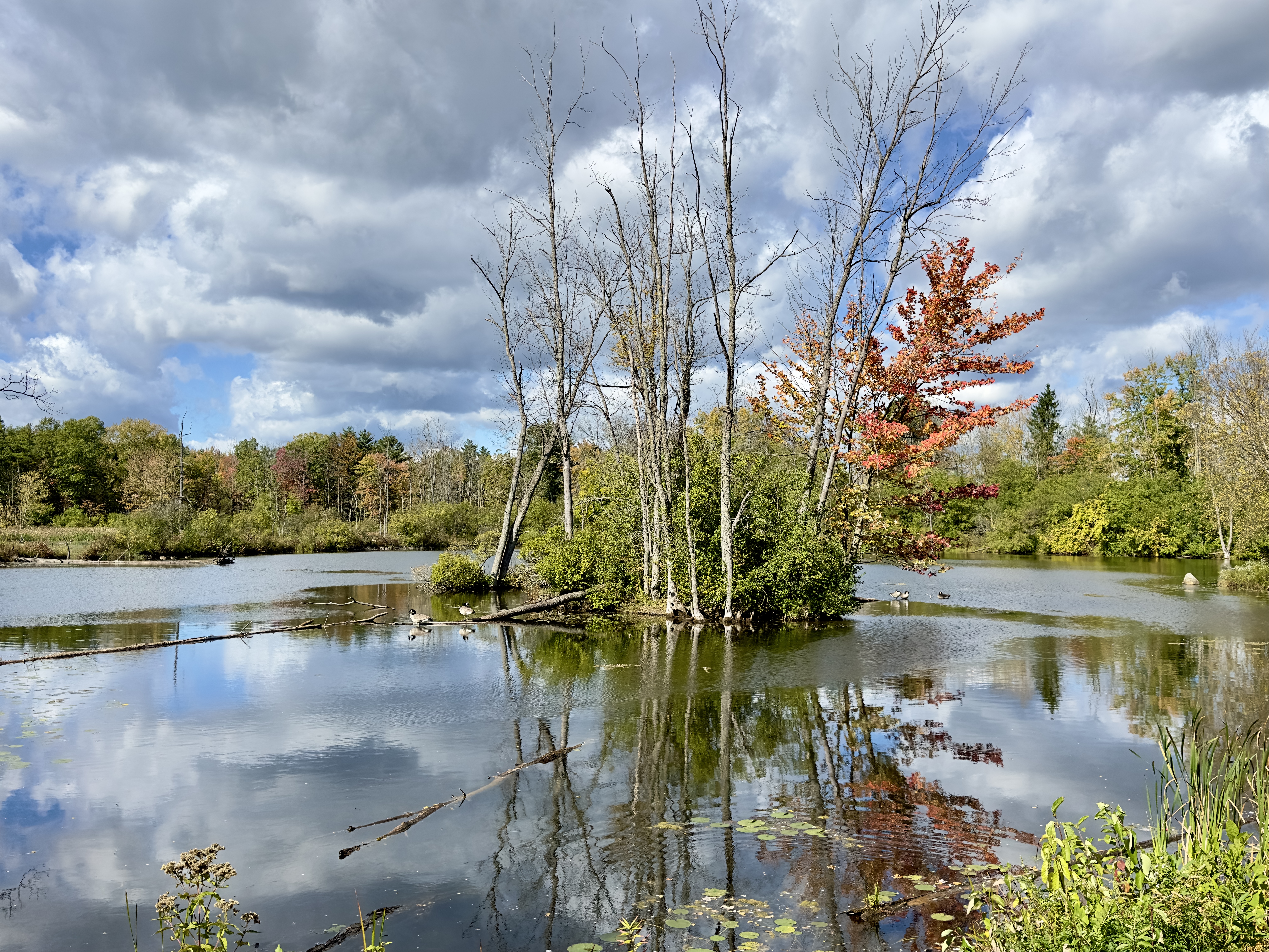
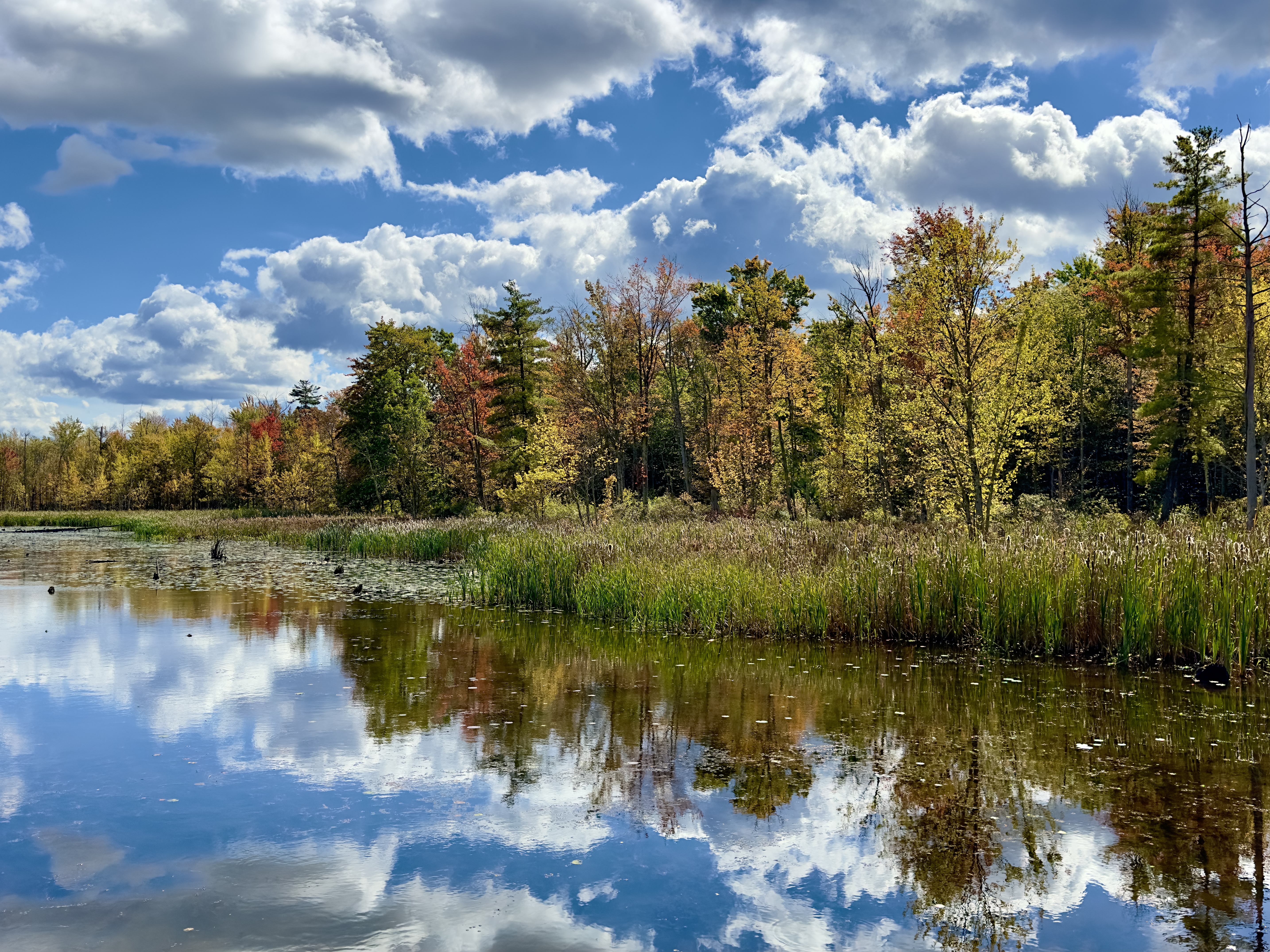
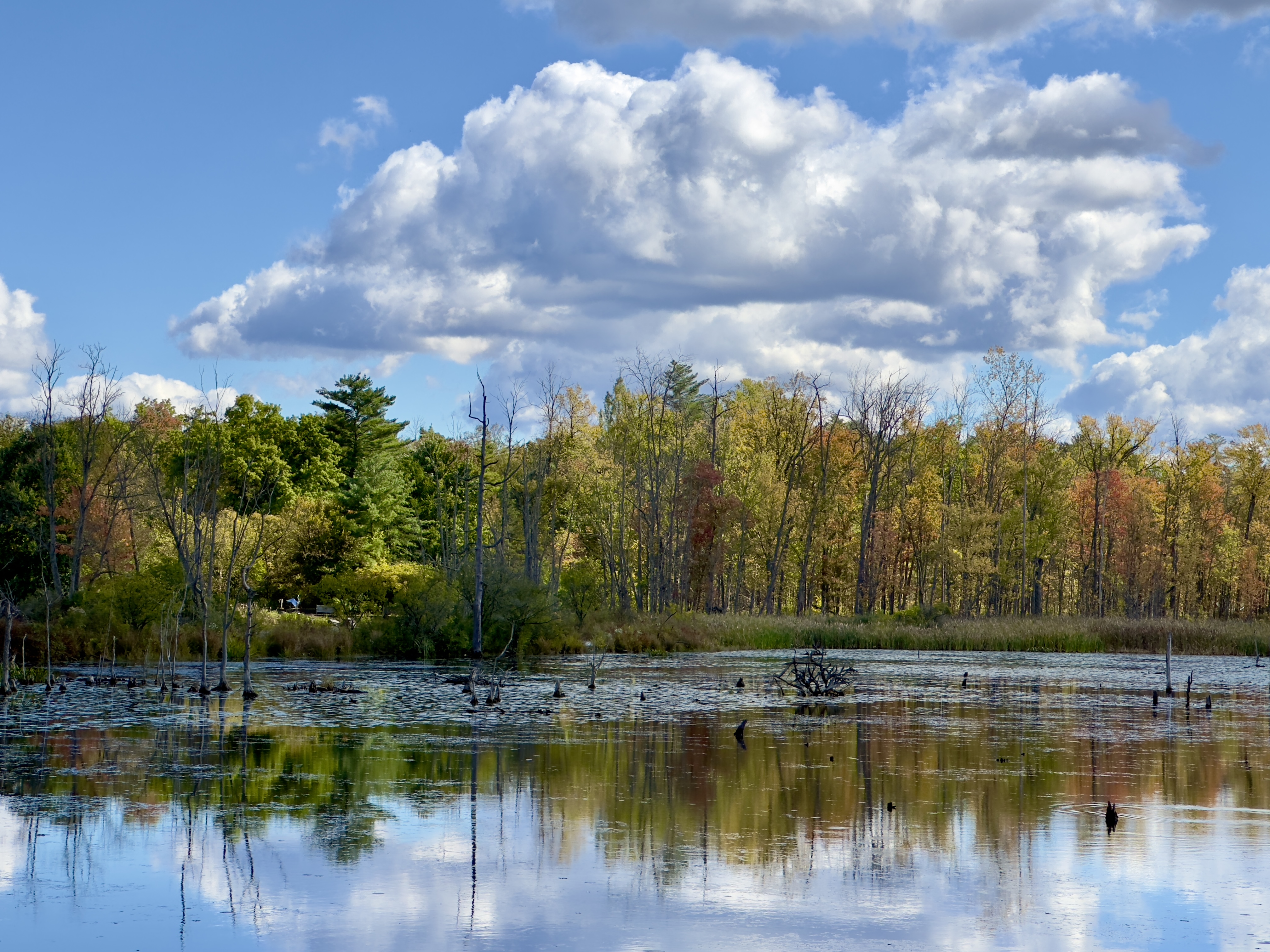
The trail unfolds gently, bordered by cattails and still waters that mirror the sky—a bright blue canvas mottled with soft clouds drifting in and out of the reflections. Fallen leaves float upon the pond’s surface, creating patches of color that seem suspended between water and sky. Nearby, lily pads, green stepping stones over shadowed depths, their edges lit by glittering sunlight. Geese glide by, unbothered, embodying a calm flowing outward, wrapping the whole scene in peace.

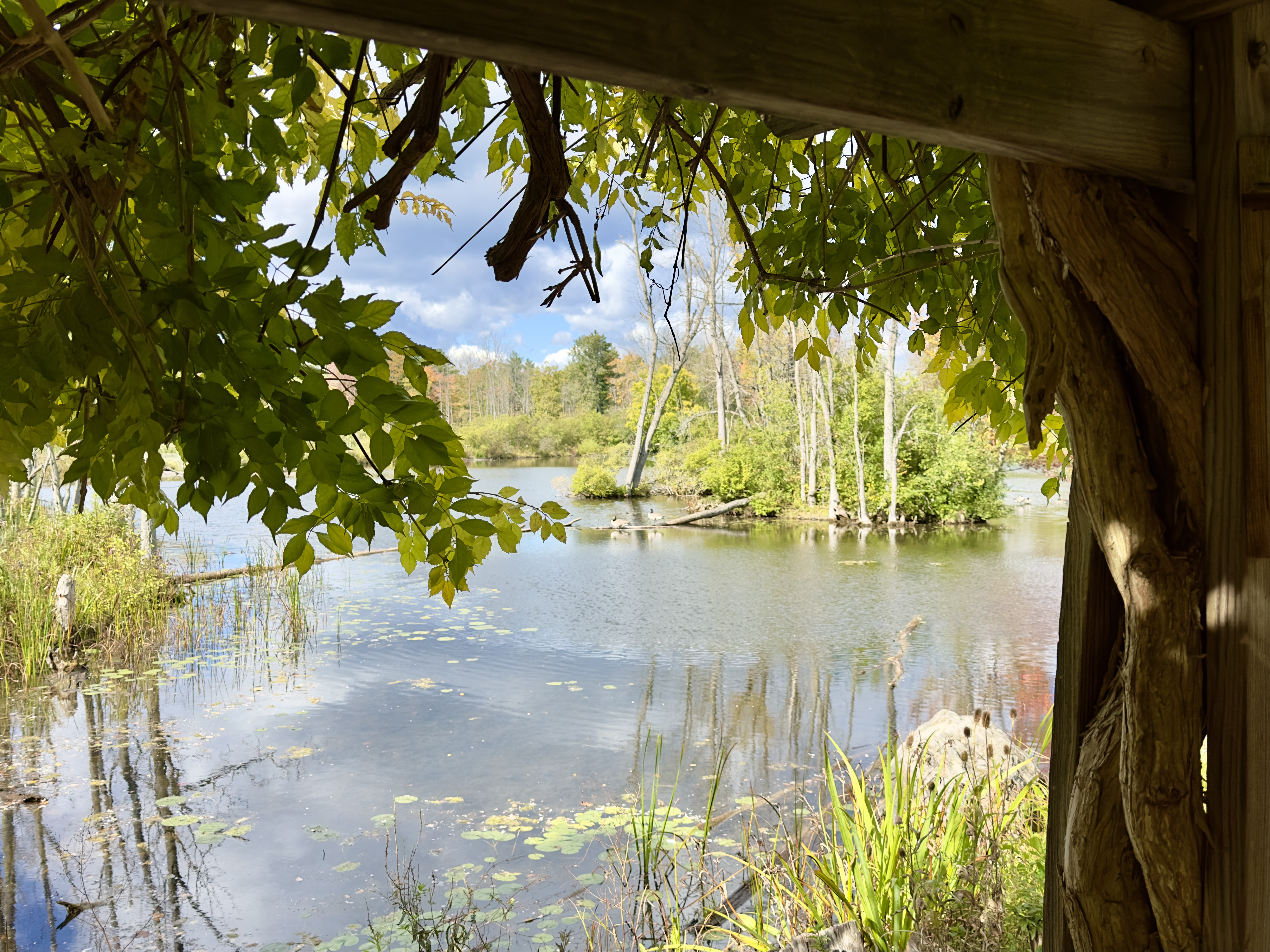
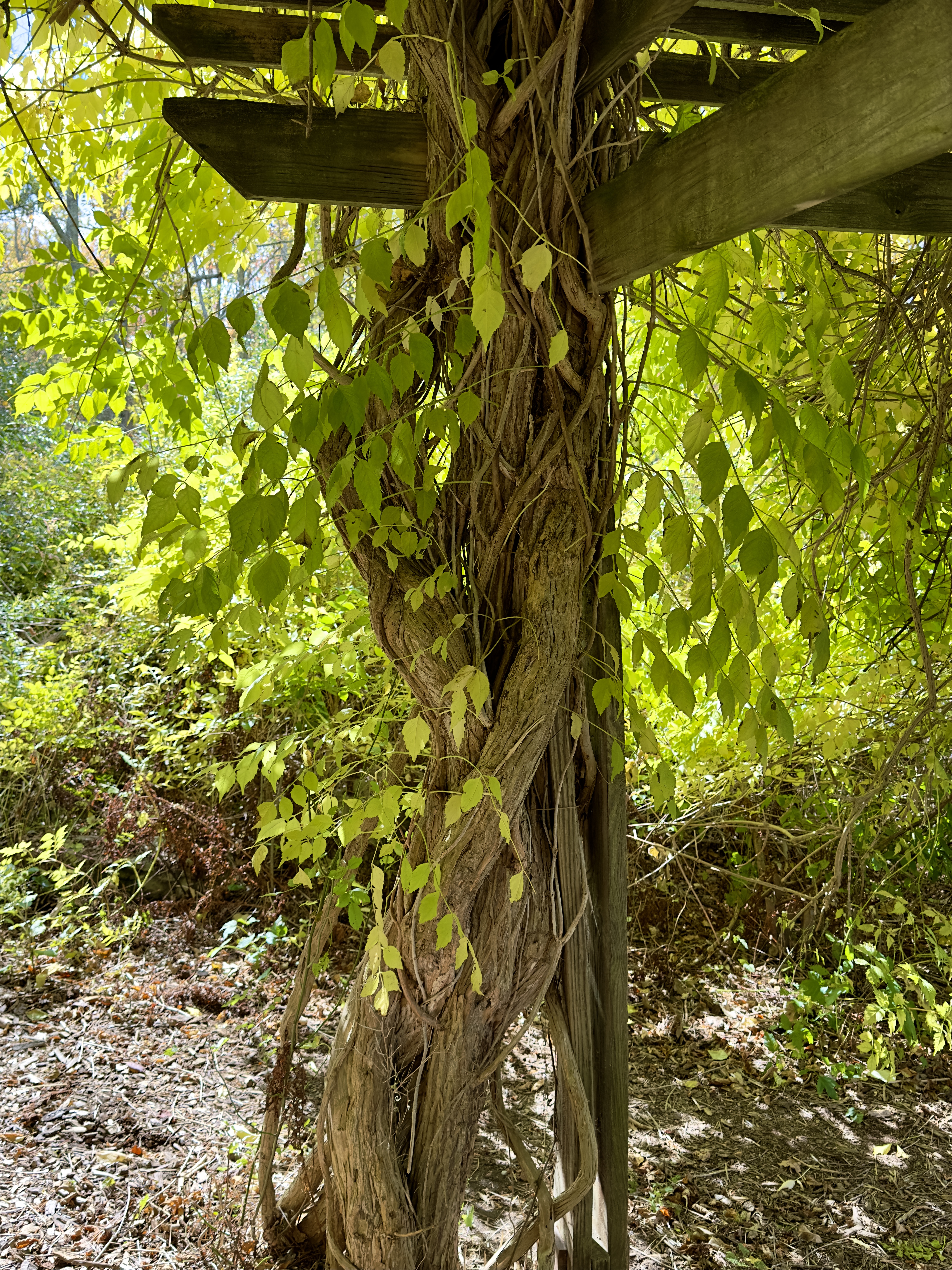
Each step Pam takes is deliberate, accompanied by the steady rhythm of her poles striking the ground. It is the kind of walk that invites contemplation, where time slows, and even the smallest detail—a single yellow leaf spiraling down, a ripple breaking the pond’s surface—feels like an invitation to pause and breathe. She moves from the open path toward a shaded arbor, draped with twisting vines. The vines climb upward, winding around the wooden beams, their leaves creating a soft veil that frames her view of the water beyond. Through this leafy curtain, she gazes upon the pond, where autumn’s reflection glows, offering a quiet moment of solitude, of healing drawn from nature’s persistence.

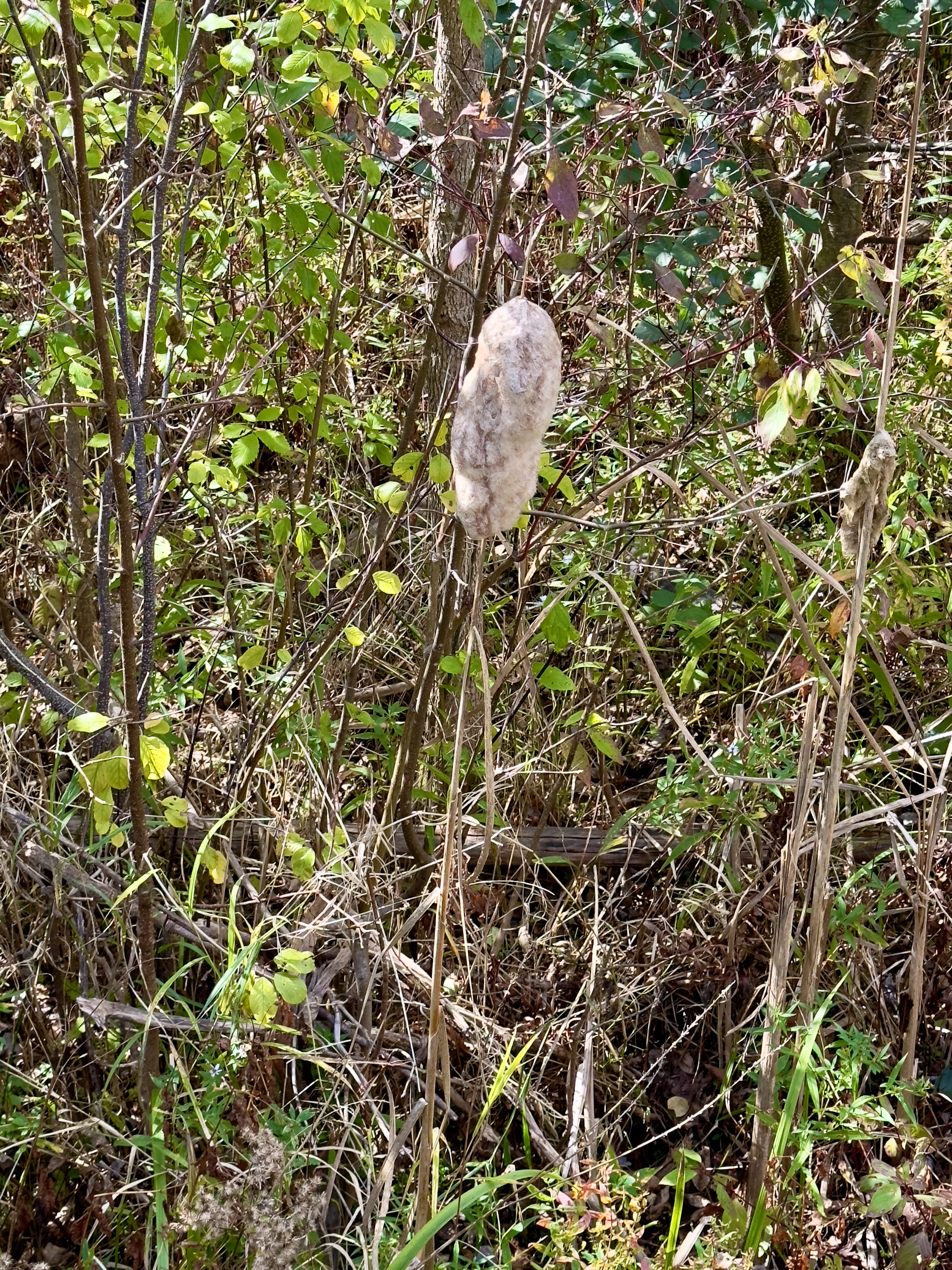
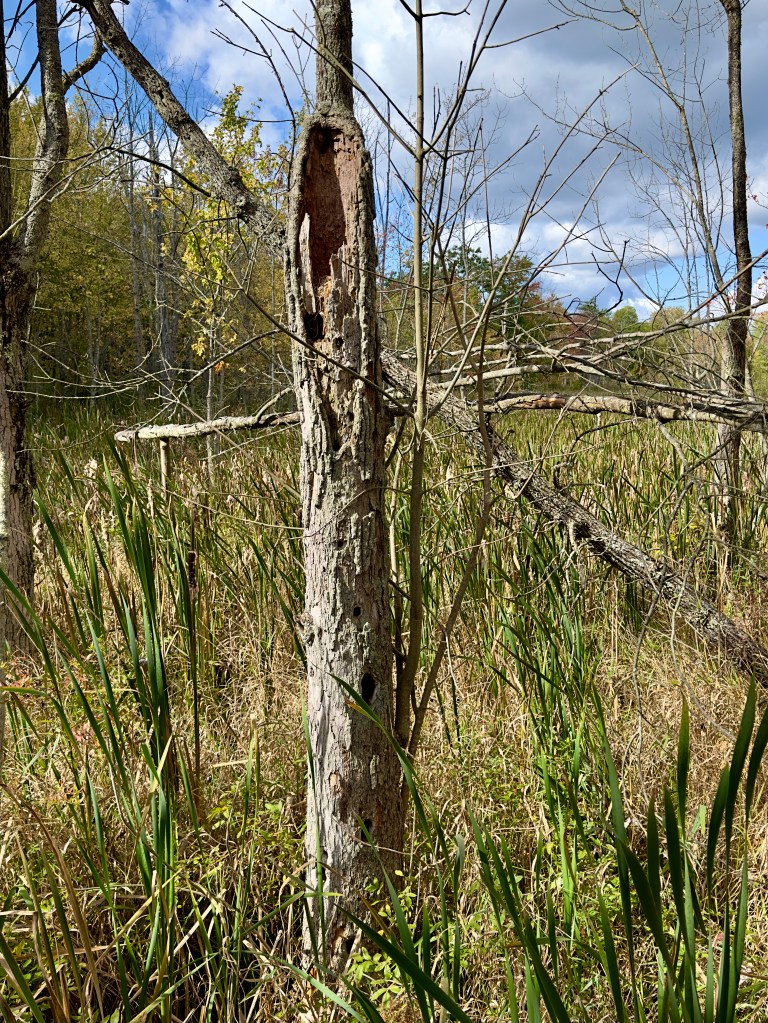
Just beyond, a bare tree stands, its trunk hollowed by years, its exposed wood testament to the life that has passed through it. In its decay, it offers a home to the creatures of the marsh, a structure among reeds and grasses that sway with the wind. The tree reminds Pam of her own journey, how resilience is often found in adapting, in letting time and life shape you.

At last, we reach a bench overlooking the pond, a perfect place to rest and reflect. She settles in, feeling the quiet thrill of accomplishment. The woods are still, save for the sound of a breeze rustling the reeds and the occasional bird song piercing the silence. In this moment, with the vast sky overhead and the world reflected below, she feels a profound sense of gratitude—not only for the beauty around her but for the strength within her. Sapsucker Woods are a personal cathedral, a space where nature and recovery intertwine, offering peace in every step, in every breath.

Enter your email to receive notification of future postings. I will not sell or share your email address.

Nature’s Role in Recovery: October at Treman Park

Pam’s recovery from hip replacement unfolds in Upper Robert H. Treman State Park, intertwining personal resilience with nature’s healing beauty.
On a crisp October afternoon, October 3, 2024, Pam and I reveled in Upper Robert H. Treman State Park, a serene oasis nestled in Tompkins County. This visit was particularly special for us, a step in Pam’s recovery from her August hip replacement. I remember the sound of her hiking pole tapping the ground as we walked together, feeling grateful for her progress since surgery. The air was cool, and the leaves, turning gold and orange, whispered in the breeze, providing the perfect backdrop for our outing that day.

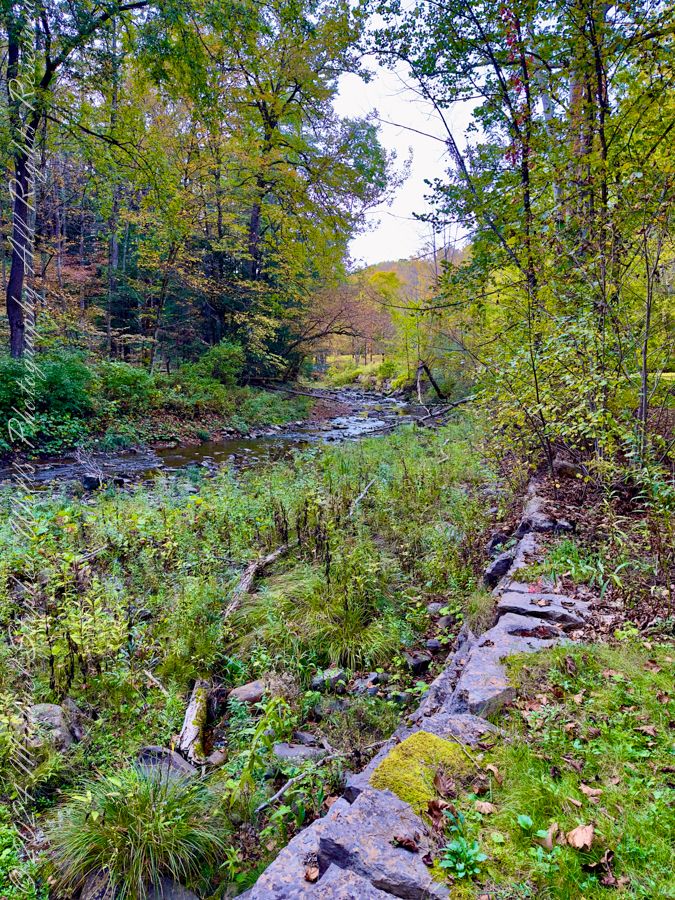
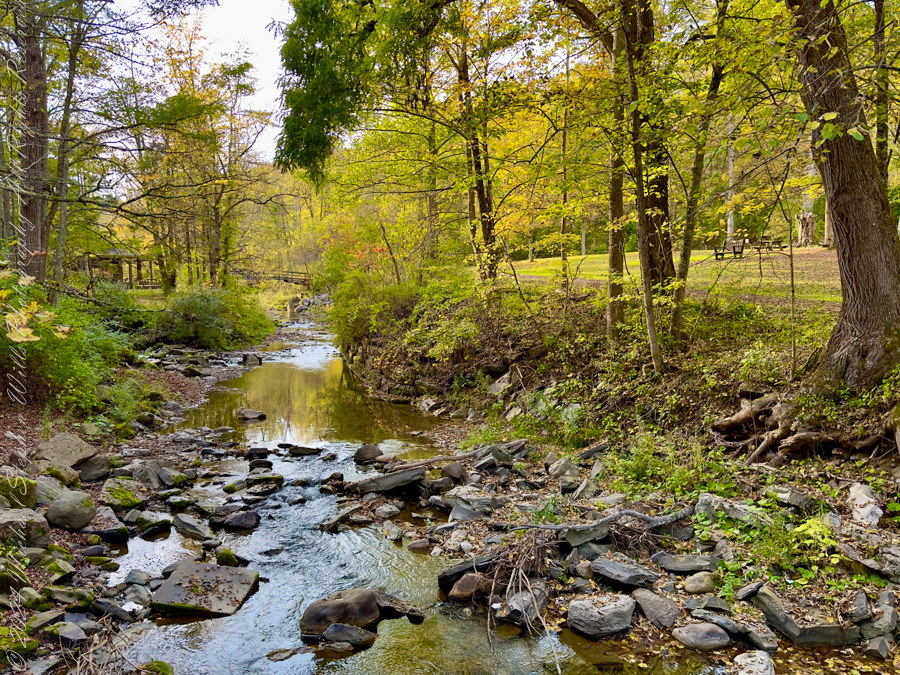
Our path followed the creek, the same creek that winds through the heart of the park, framed by layers of stone and lush vegetation. In one of the first photos I took that day, you can see the creek reflecting the soft autumn light, its bed dotted with rocks and fallen branches. The vibrant greens of the undergrowth juxtaposed with the golden leaves made the scene feel timeless, as though nature itself was participating in Pam’s recovery, offering healing in its quiet, enduring beauty.
The view upstream just before the creek enters The Gallery. Robert H. Treman State Park, Enfield, Tompkins County, Finger Lakes Region, New York State.

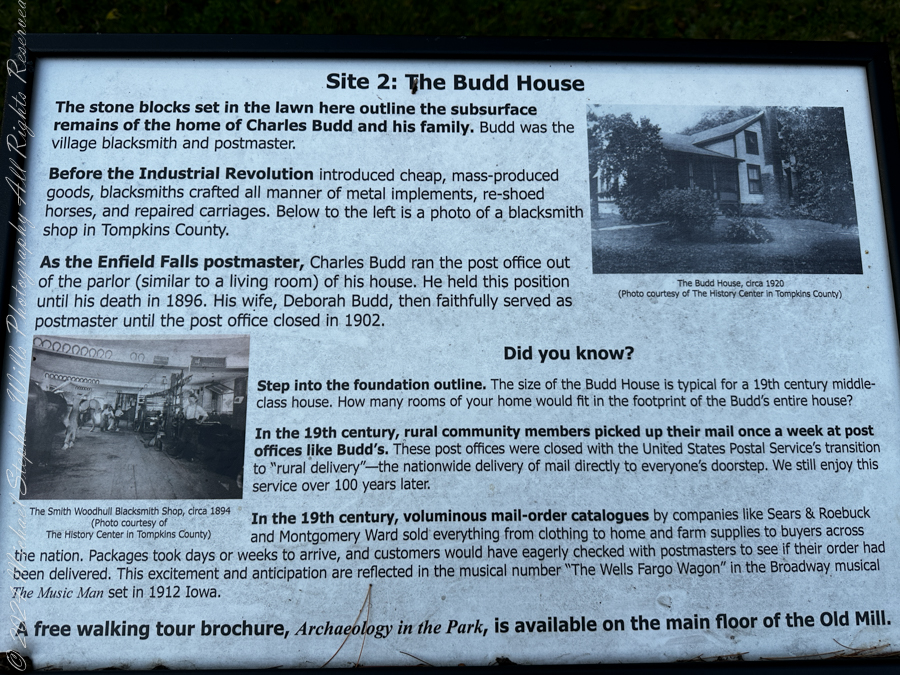
We paused to take in the quiet hum of life around us. There was a sense of history in the park that seemed to blend with our personal story. As we wandered deeper, we reached the foundation of the old Budd House, its stone blocks now barely a shadow of the past but still carrying echoes of life lived long ago. The placard described Charles Budd, a village blacksmith and postmaster, and his wife, Deborah, who continued to serve the community after his passing. Standing there, I reflected on how these stones, much like Pam’s journey, represented resilience and the passage of time.

Site 2: The Budd House The stone blocks set in the lawn here outline the subsurface remains of the home of Charles Budd and his family. Budd was the village blacksmith and postmaster. Before the Industrial Revolution introduced cheap, mass-produced goods, blacksmiths crafted all manner of metal implements, re-shoed horses, and repaired carriages. Below to the left is a photo of a blacksmith shop in Tompkins County. As the Enfield Falls postmaster, Charles Budd ran the post office out of the parlor (similar to a living room) of his house. He held this position until his death in 1896. His wife, Deborah Budd, then faithfully served as postmaster until the post office closed in 1902. Did you know? Step into the foundation outline. The size of the Budd House is typical for a 19th century middle-class house. How many rooms of your home would fit in the footprint of the Budd’s entire house? In the 19th century, rural community members picked up their mail once a week at post offices like Budd’s. These post offices were closed with the United States Postal Service’s transition to “rural delivery”—the nationwide delivery of mail directly to everyone’s doorstep. We still enjoy this service over 100 years later. In the 19th century, voluminous mail-order catalogues by companies like Sears & Roebuck and Montgomery Ward sold everything from clothing to home and farm supplies to buyers across the nation. Packages took days or weeks to arrive, and customers would have eagerly checked with postmasters to see if their order had been delivered. This excitement and anticipation are reflected in the musical number “The Wells Fargo Wagon” in the Broadway musical The Music Man set in 1912 Iowa. A free walking tour brochure, Archaeology in the Park, is available on the main floor of the Old Mill. Upper Treman. Robert H. Treman State Park, Enfield, Tompkins County, Finger Lakes Region, New York State.
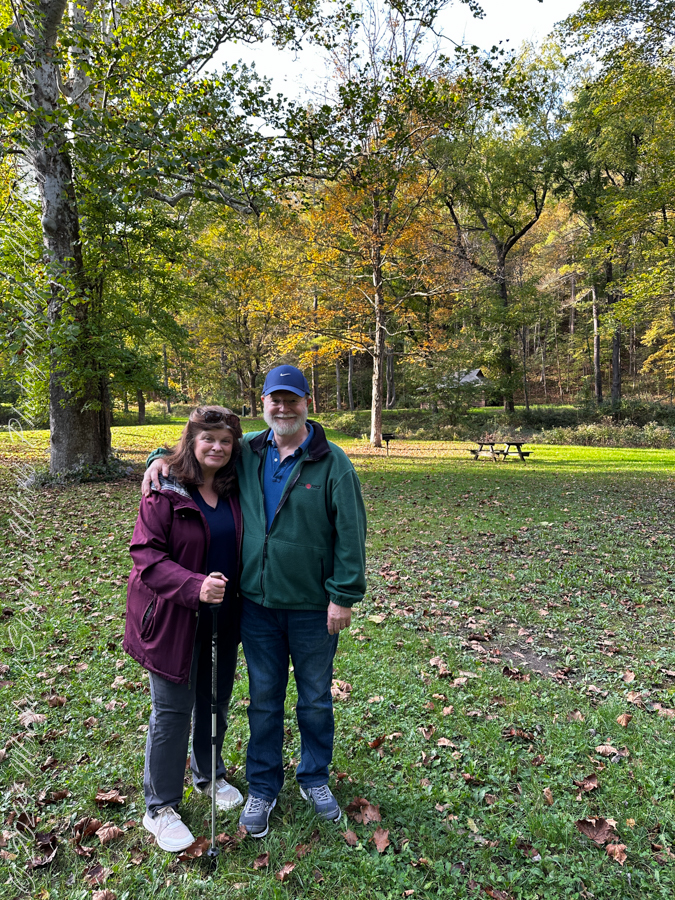
As we stood by the foundation, we met another couple. The woman shared her own story of recovery, a tale of resilience that resonated deeply with us. She had fallen and suffered a spinal injury, becoming paralyzed from the neck down, while traveling. Thanks to surgery and rehabilitation, she regained full mobility. There was a moment of understanding and connection between us. We offered to take a photo of them, and they returned the favor, capturing the two of us—Pam leaning lightly on her cane, smiling, surrounded by trees whose leaves were beginning to fall. That picture, one of my favorites from the day, symbolizes not just Pam’s strength but also the support and shared experiences that come with recovery.
We are taking a walk through upper Treman Park during Pam’s recovery from hip replacement. This was taken by a couple we met.

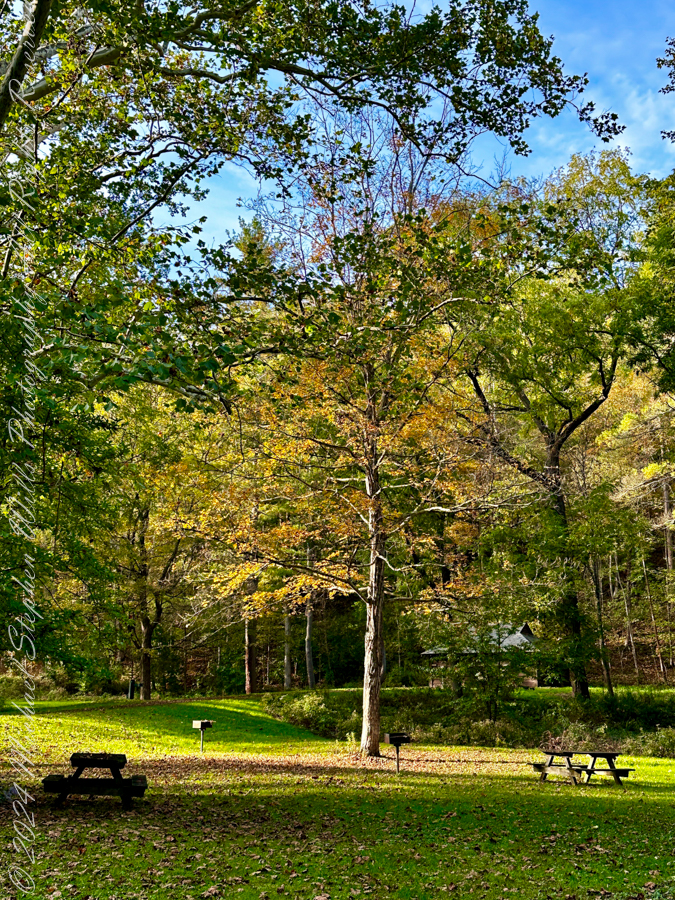
The park offered us a space for reflection and a sense of continuity. The trees, some towering over us with roots gripping the earth, had seen many seasons of change, and now they watched over us as we walked beneath them. In the clearing where picnic tables stood, we sat for a while, simply absorbing the moment. The afternoon light filtered through the branches, casting long shadows on the grass.

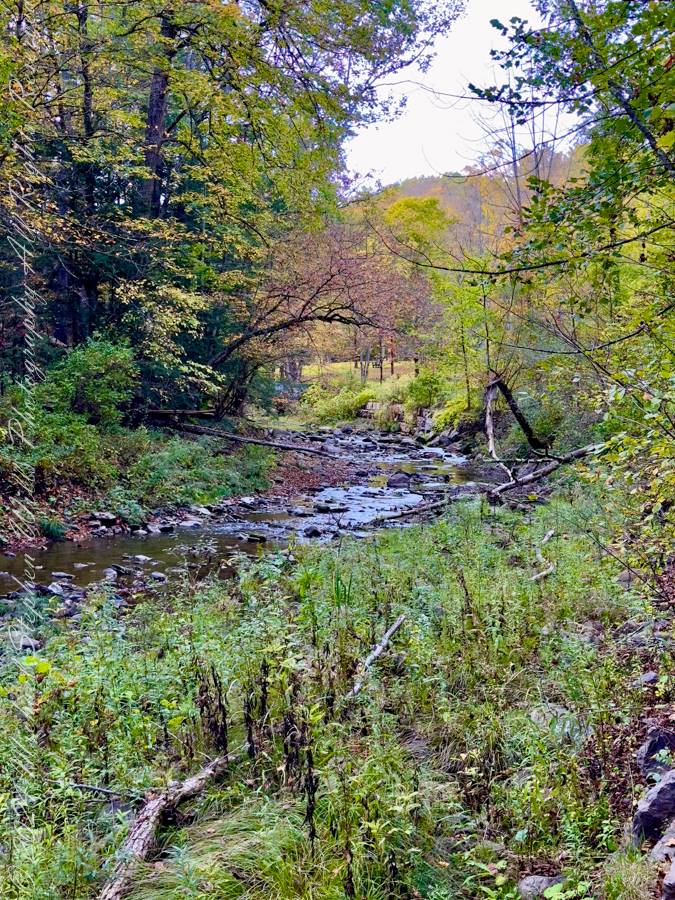
One of the final photos I took that day captures the creek from another angle. The water, calm and clear, reflects the yellow hues of the trees, while the rocks and roots along the bank seem frozen in time. It’s a peaceful image, one that reminds me of the quiet strength that Pam has shown throughout her recovery.

Here Fish Creek, a tributary of Enfield Creek joins the flow just below the pavilion of Upper Treman.

We left the park that day feeling both uplifted and grounded, the layers of history and personal resilience blending seamlessly into the natural landscape. Upper Robert H. Treman had become had become a part of Pam’s recovery story, a testament to the healing power of both nature and community.

Enter your email to receive notification of future postings. I will not sell or share your email address.

Capturing Fall’s Beauty: A Journey of Healing

During a reflective walk, the author parallels the beauty of autumn his wife’s healing journey post-surgery, celebrating transformation and resilience.

As I waited for Pam to finish her 30-minute physical therapy session at the Northeast Ithaca medical complex, I decided to capture moments of the fall season through my camera lens while walking. There’s something about this time of year—the crispness in the air, the vibrancy of the colors—that invites reflection, especially with the significance of Pam’s recovery following her hip replacement. These moments, both large and small, weave together to form the tapestry of life, and today, I felt a strong pull to observe, to pause, and to appreciate.

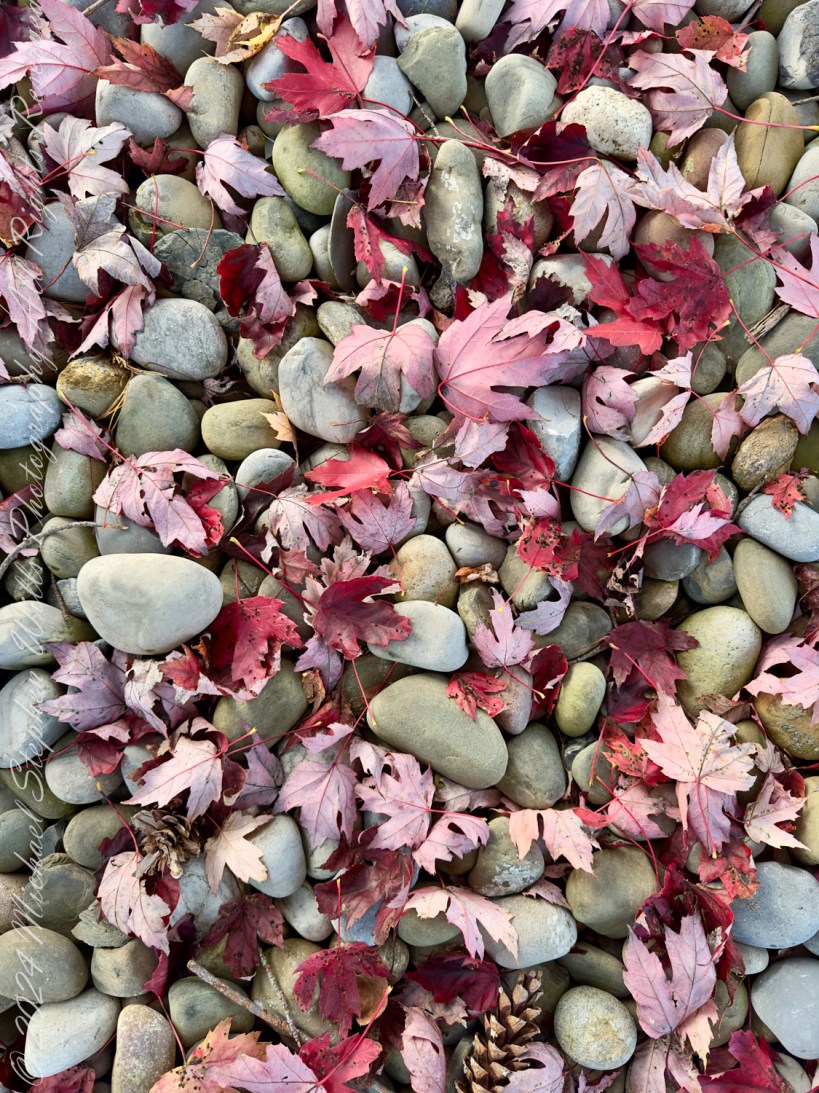
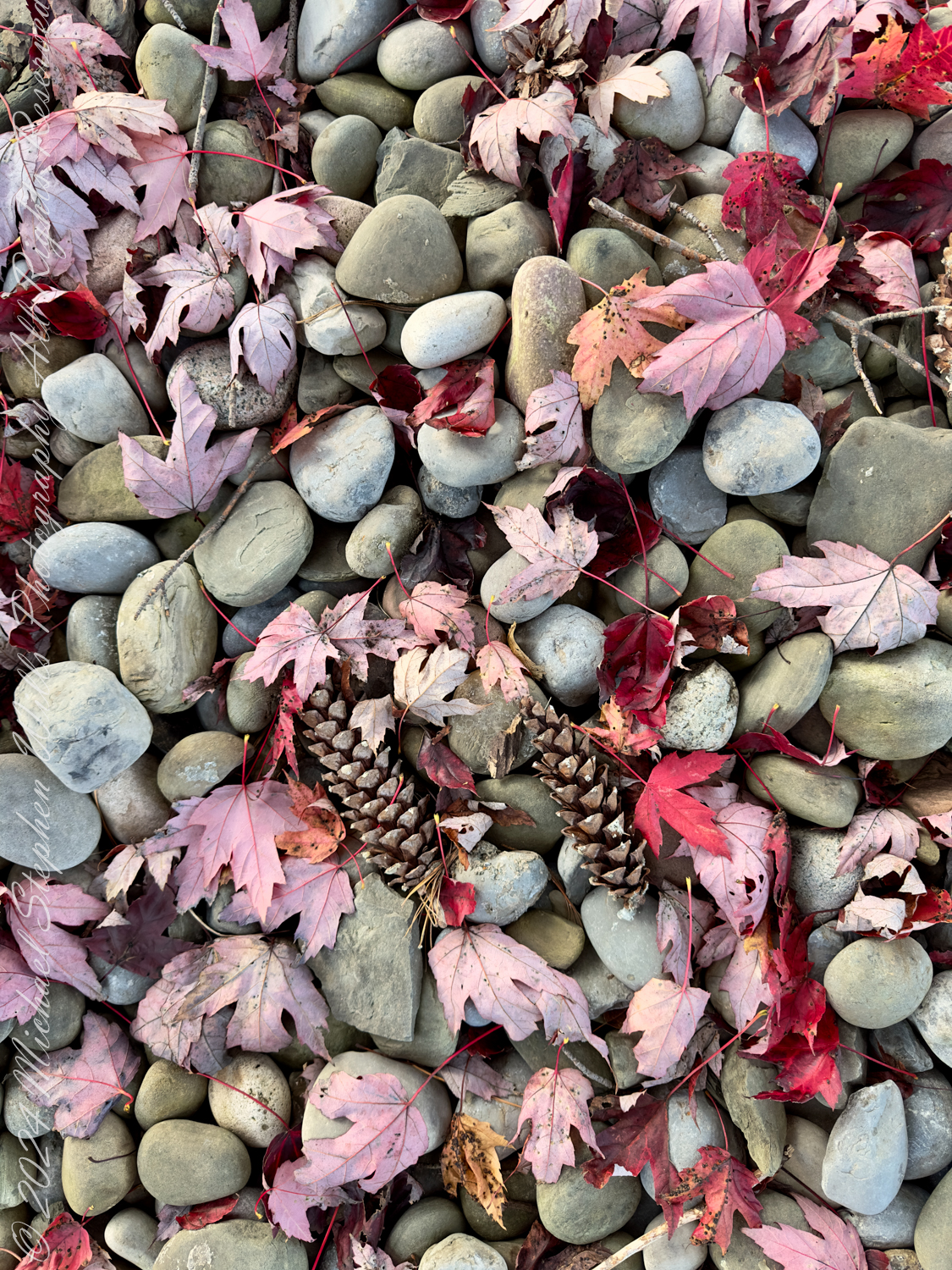
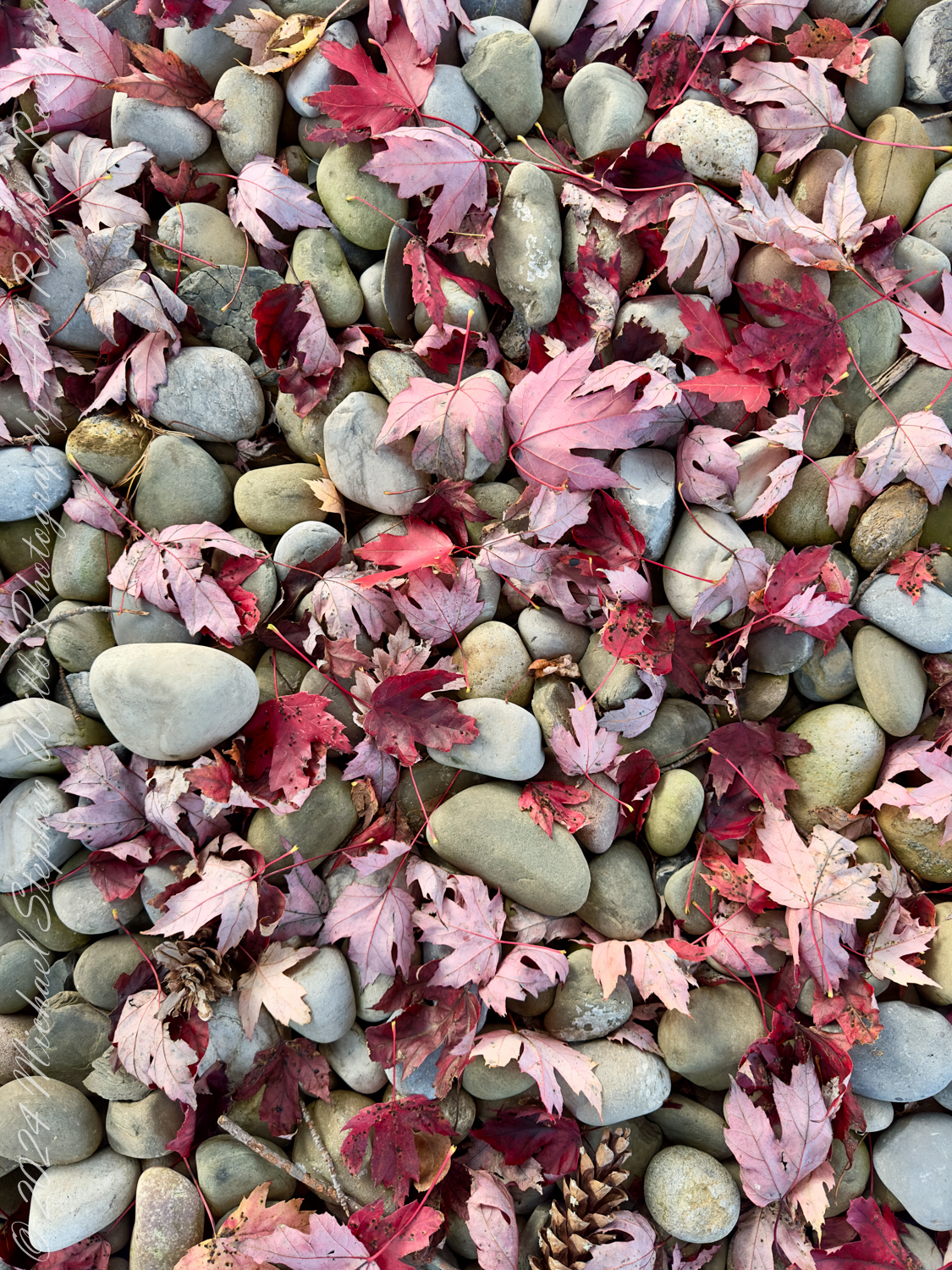
The first scene that caught my eye was a delicate scattering of maple leaves over smooth, weather-worn stones. The contrast between the rigid rocks and the soft, decaying leaves reminded me of life’s cyclical nature. The bright red and pale pink hues of the leaves, now beginning their slow decomposition, seemed to symbolize the passage of time—how even in their decay, they added beauty and texture to the scene. The leaves, having served their purpose on the tree, now danced with the wind, finding a new purpose in creating a natural mosaic. Much like how Pam’s healing journey is both the end of one struggle and the beginning of a new phase in our lives.

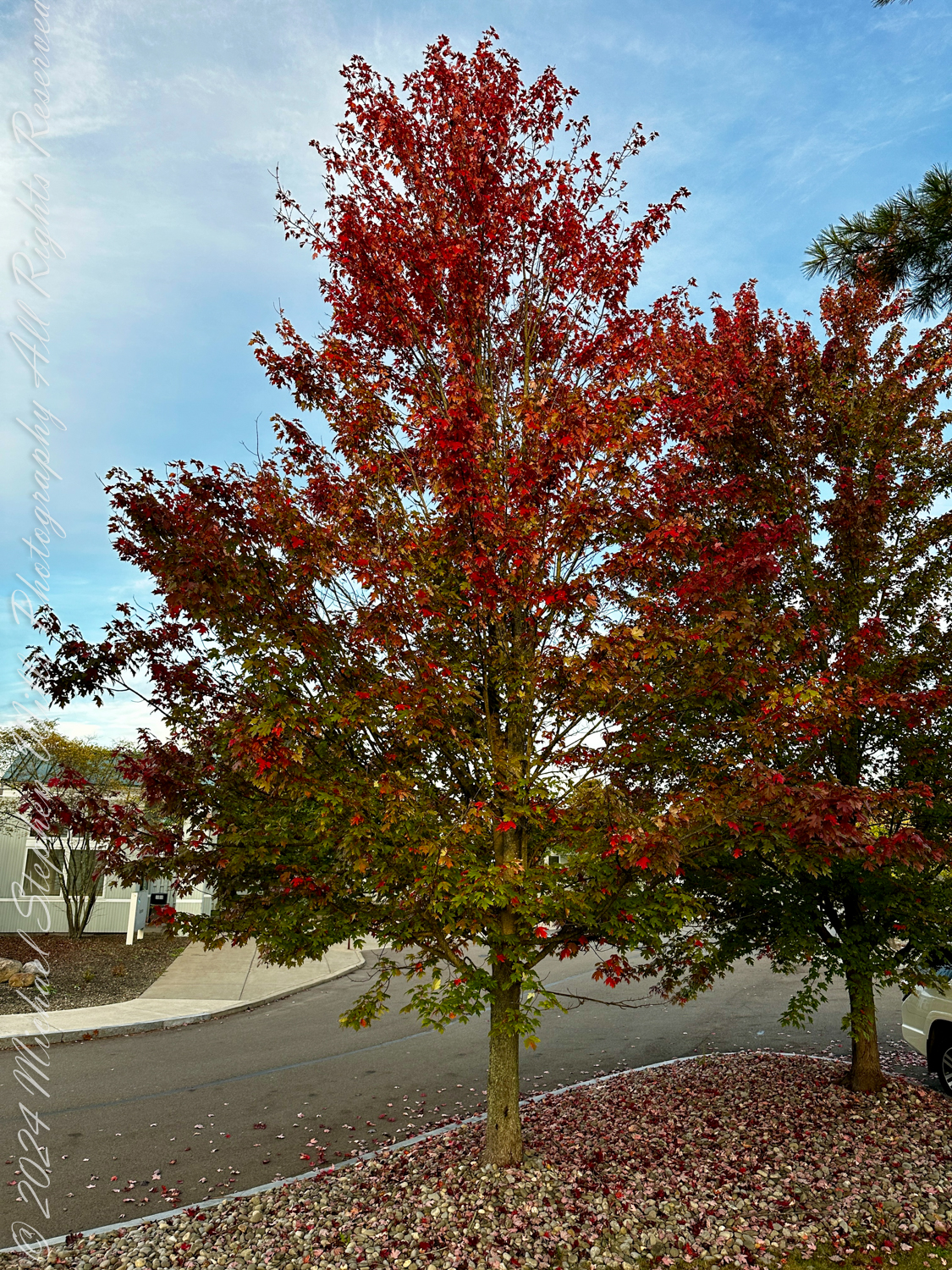
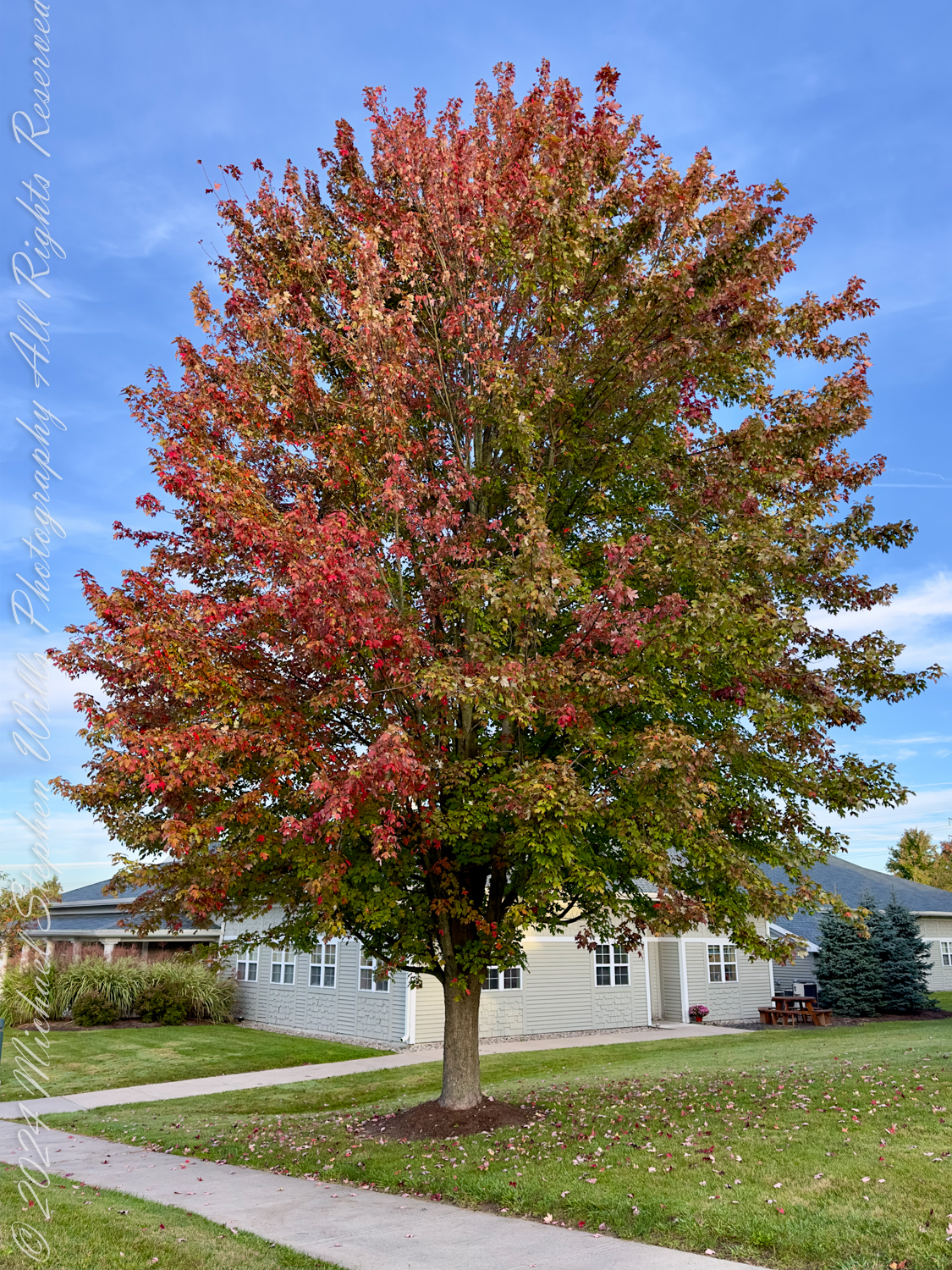
As I continued walking, I came upon a maple tree, standing tall with its branches adorned in fiery reds. The vibrancy of the foliage against the sky reminded me of strength in adversity. The tree had begun its seasonal transformation, shedding its leaves as it prepares for winter—a time of rest before the renewal of spring. I thought about how Pam, too, is in a season of transformation. Her body is adjusting, healing from the surgery, and preparing for new movement and freedom that will come in time. Watching the wind gently tug at the leaves, I couldn’t help but feel grateful for her resilience.

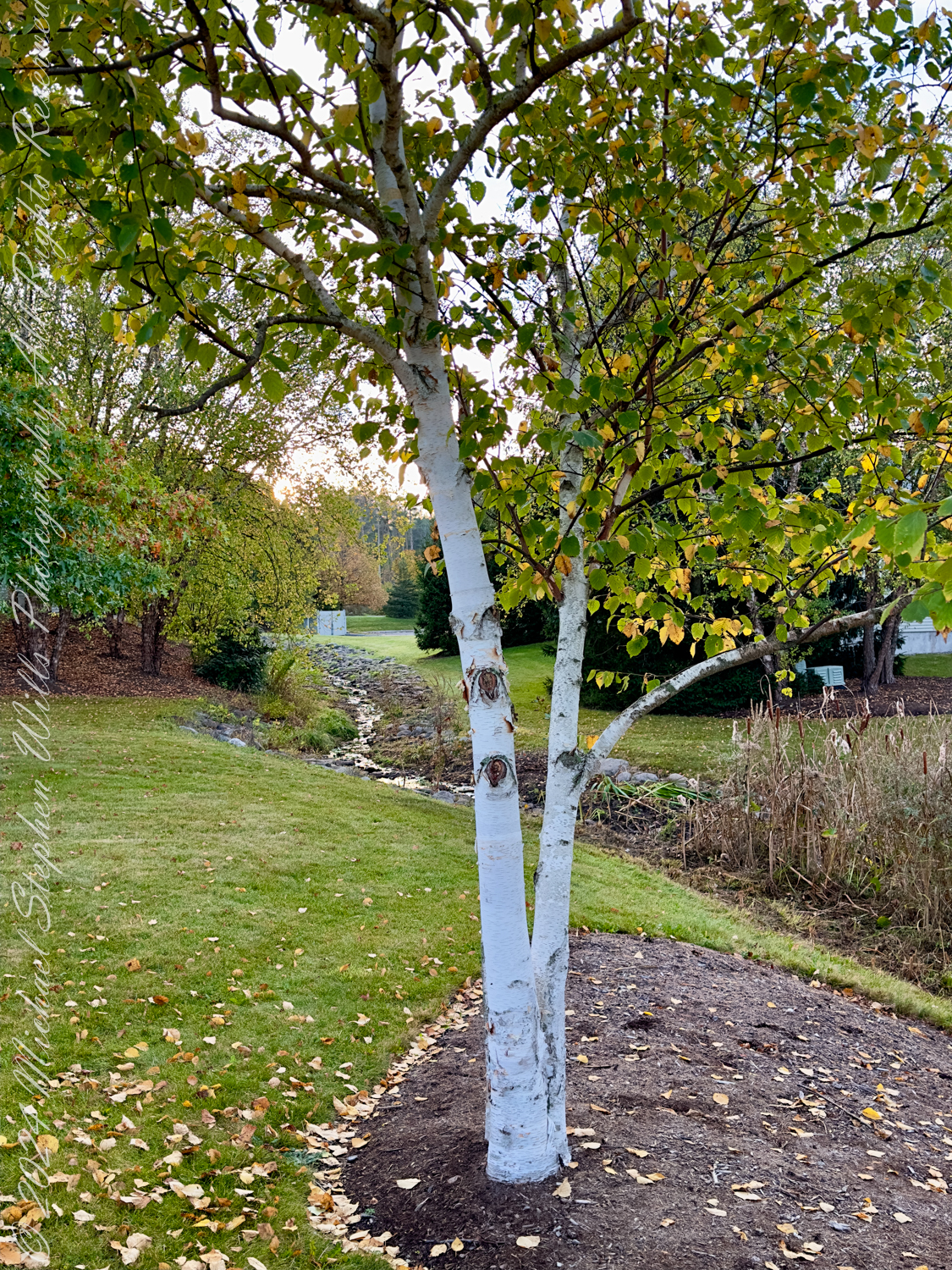
Nearby, a slender birch tree stood out, its bark a striking white against the greens and golds of early fall. The birch, with its smooth and peeling bark, fascinates me. It exudes a quiet elegance, standing firm and graceful; a symbol of quiet endurance, a steadfast presence amidst the ever-changing landscape. Much like the birch, Pam has weathered the storm of surgery with grace, moving through pain and discomfort with a quiet determination. The sound of a gentle stream nearby only added to the serenity of the scene, offering a soft, meditative backdrop to my thoughts.

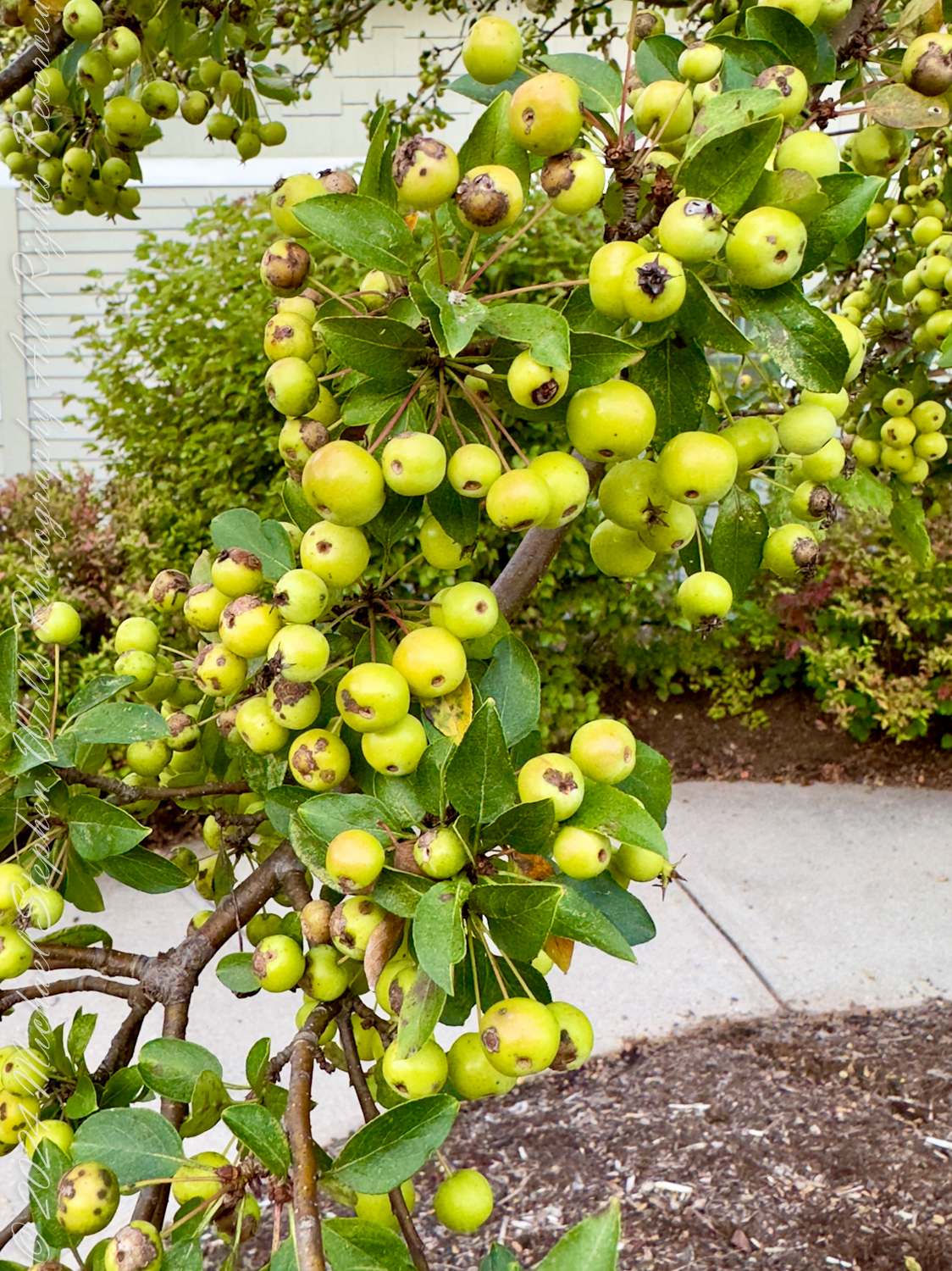
Further along, I encountered clusters of green crabapples hanging heavily from a tree. Their small, round forms were imperfect, dotted with blemishes and signs of wear, yet there was beauty in their abundance. These fruits, while not perfect, are a testament to the tree’s efforts throughout the year, a reminder that growth and effort often result in the imperfect. Pam’s recovery isn’t without its challenges, but each step, each small victory, is a testament to her effort and determination. The crabapples reminded me that perfection is not the goal—progress and perseverance are.

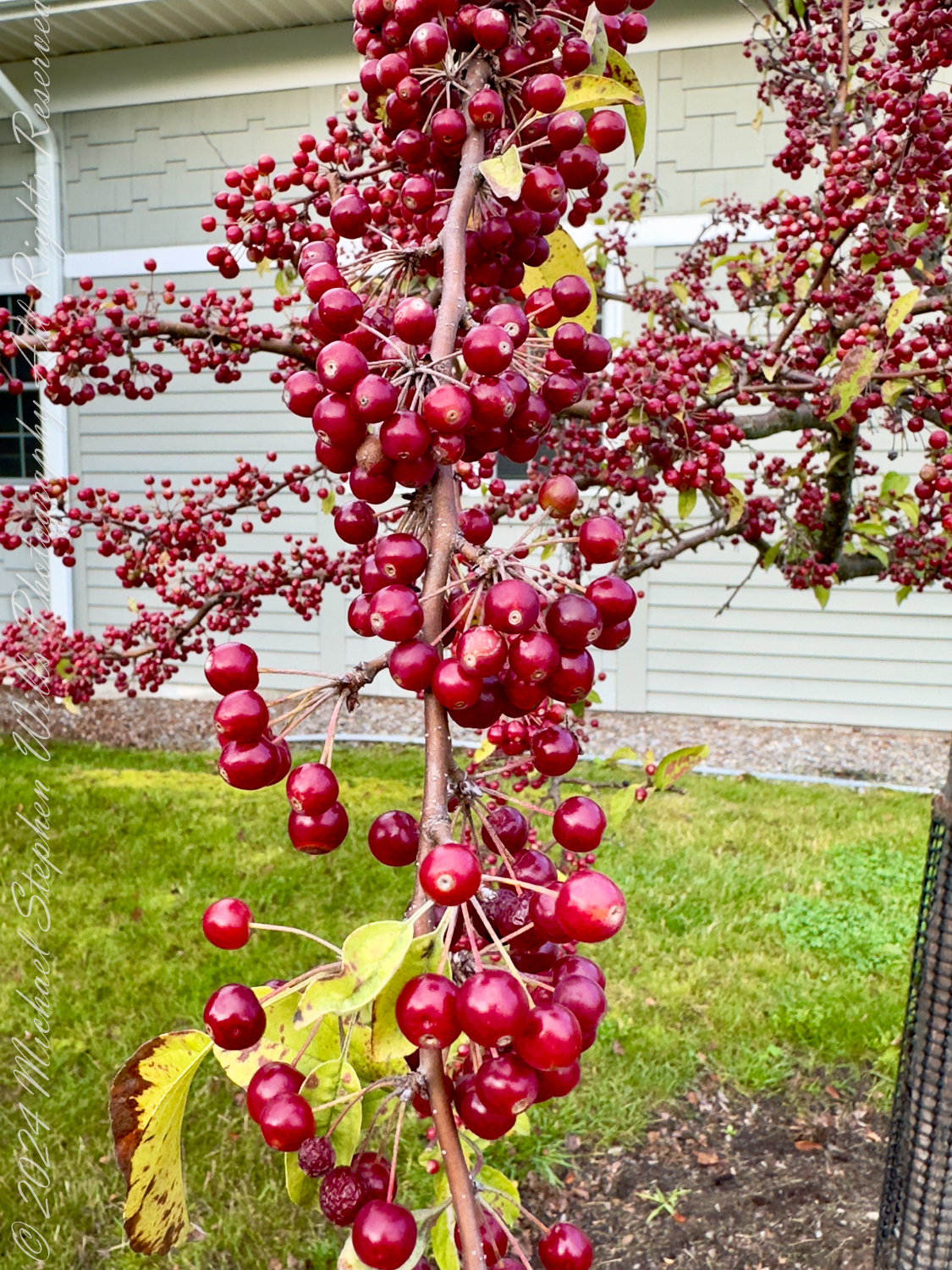
On another tree, I found its branches laden with bright red berries, their glossy surfaces shining in the light. These berries, hanging so densely, added a sense of richness to the landscape, a vibrant contrast to the yellowing leaves of nearby trees. In many cultures, red berries symbolize vitality and protection, and in this moment, I thought of Pam’s vitality, her strength to heal and return to her daily life. The image of the berries will always remind me of this chapter of her recovery—a time where her strength was most evident.

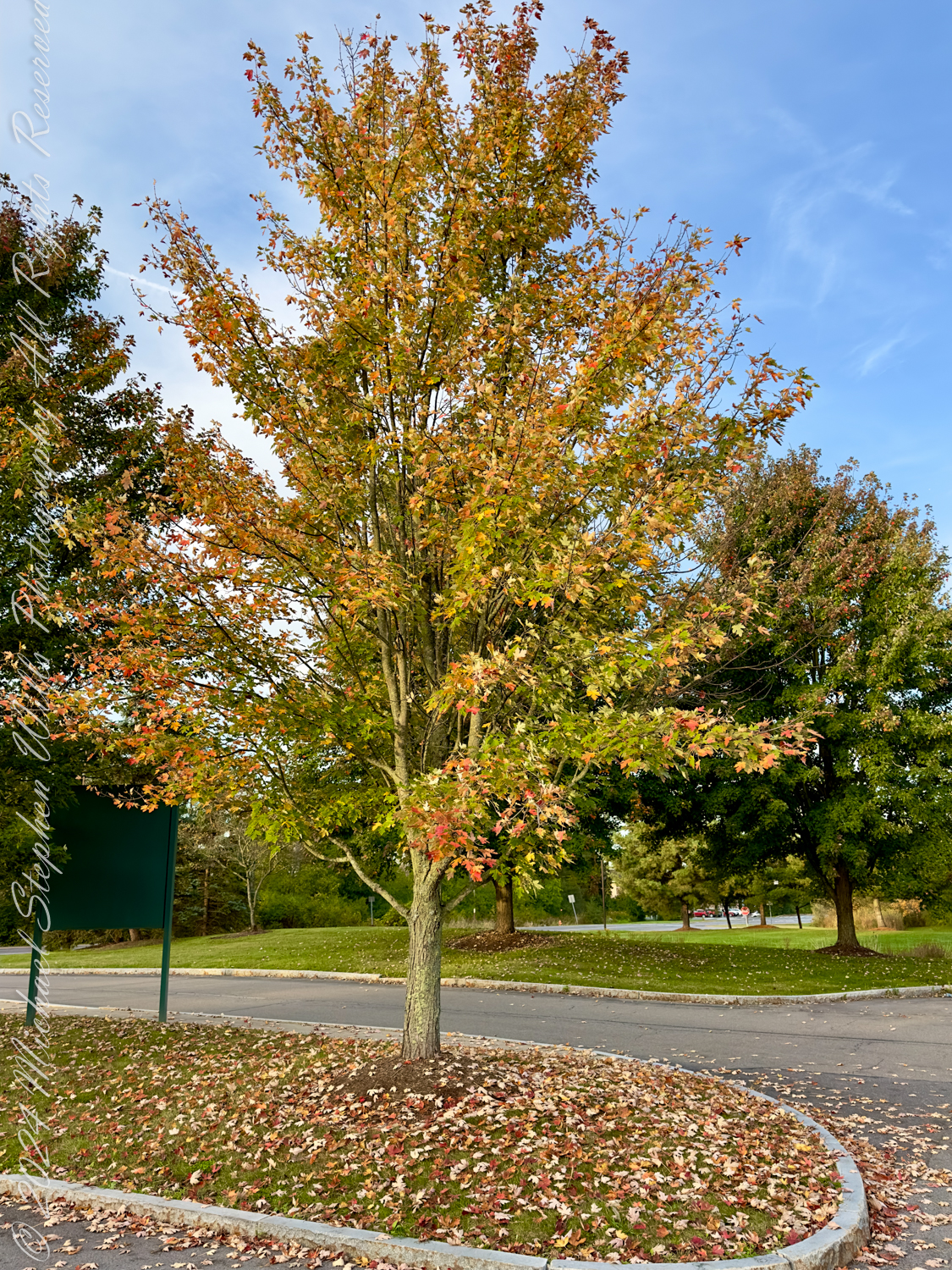
As my walk continued, I marveled at another maple tree, its colors starting to fade into yellows and oranges, the leaves slowly dropping to the ground. The fallen leaves created a soft blanket around the tree, a reminder that letting go is a natural part of life. We often hold on to things, ideas, or even pain, long after they have served their purpose. Watching these leaves fall, I thought about Pam letting go of the pain and limitations she’s carried for months. Her body, much like this tree, is learning to release, to move forward.

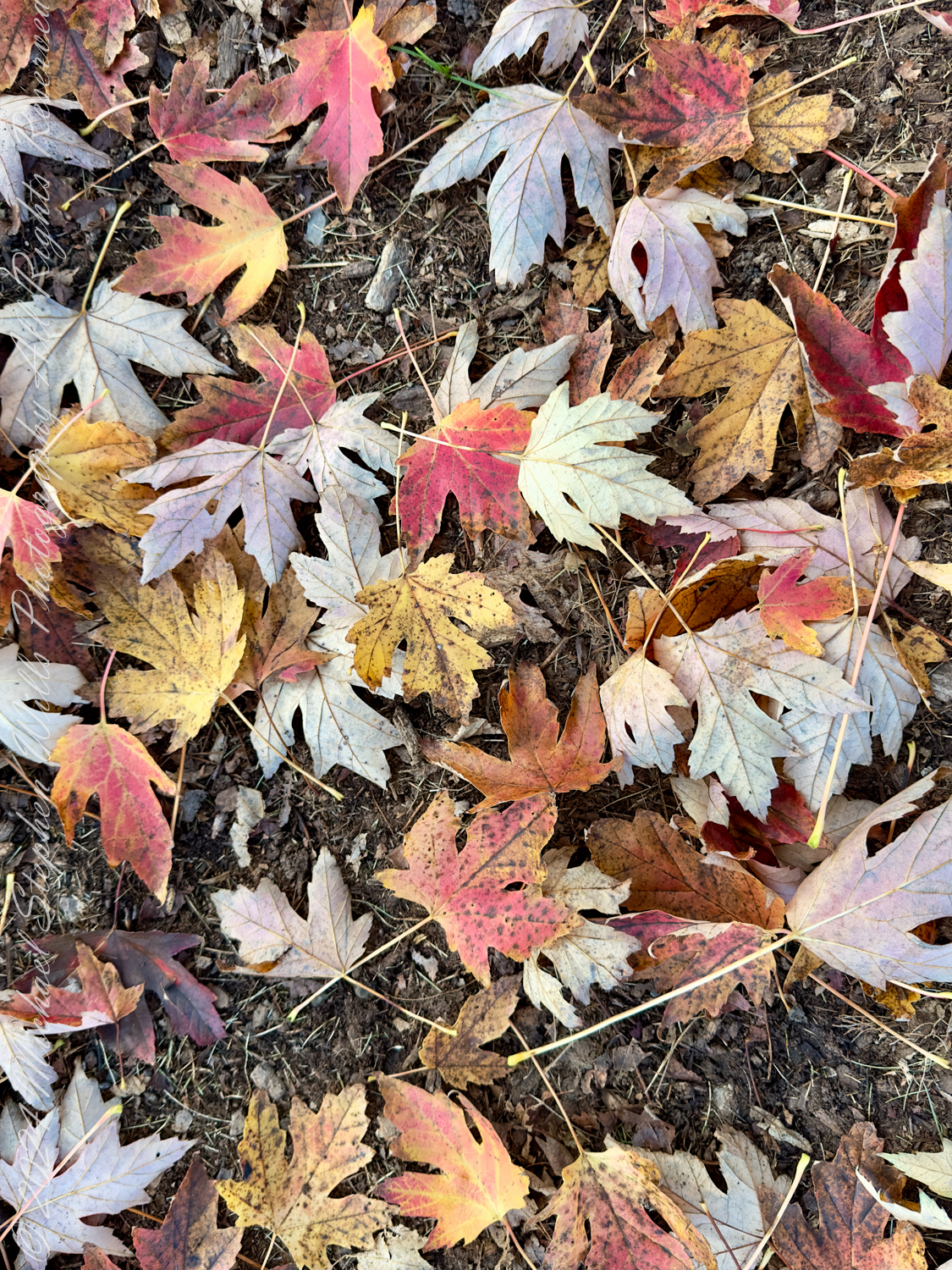
On the ground, I noticed a close-up of more fallen leaves, these ones touched with both vibrant and fading hues, each in a different stage of its journey. Together, they formed a beautiful, textured layer over the soil, offering nutrients to the earth below. Even in their end, they contribute to new life. It struck me that even in difficult times, there is always a sense of renewal and growth. Pam’s healing is part of a larger cycle—one of renewal and transformation.

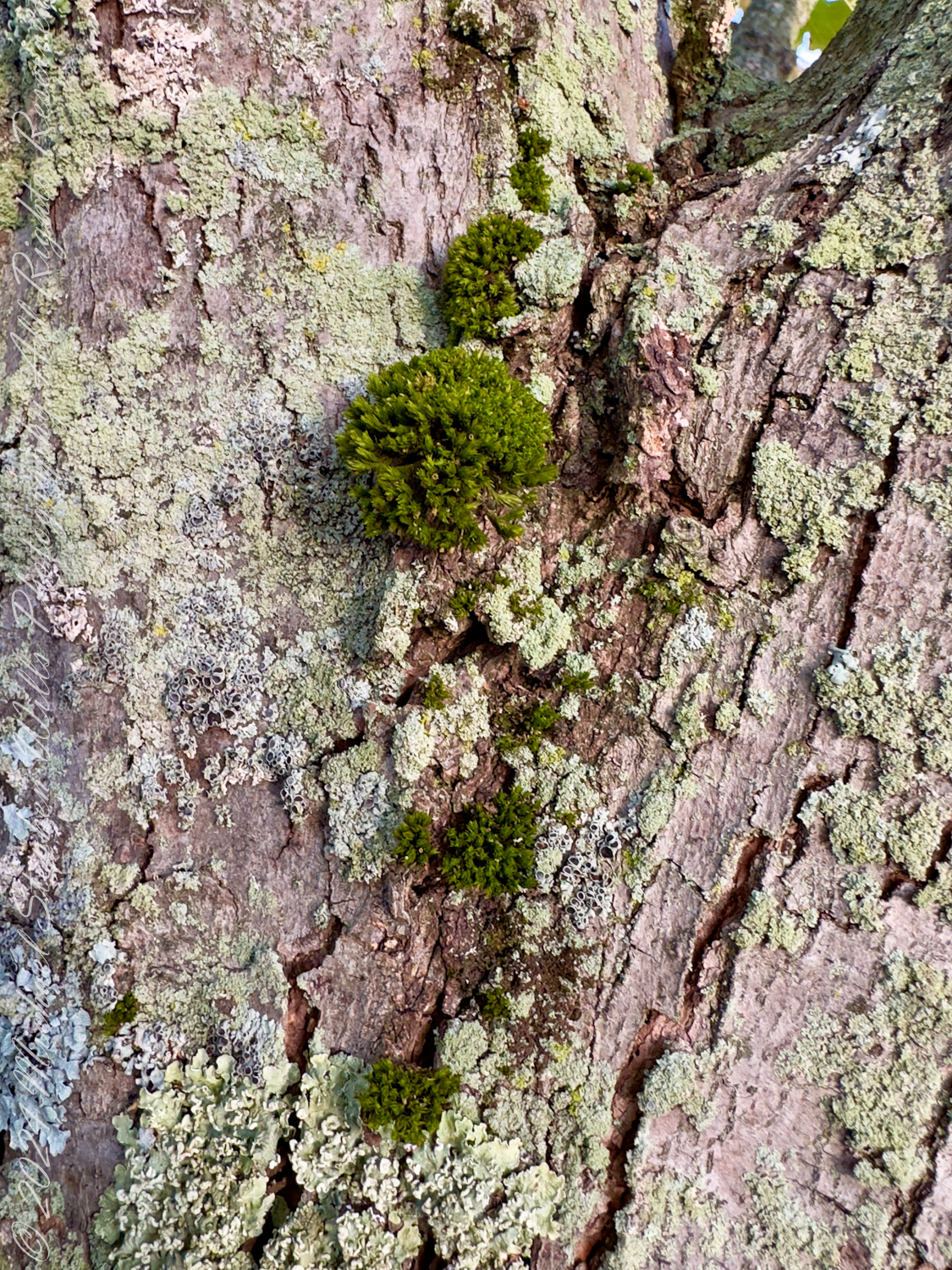
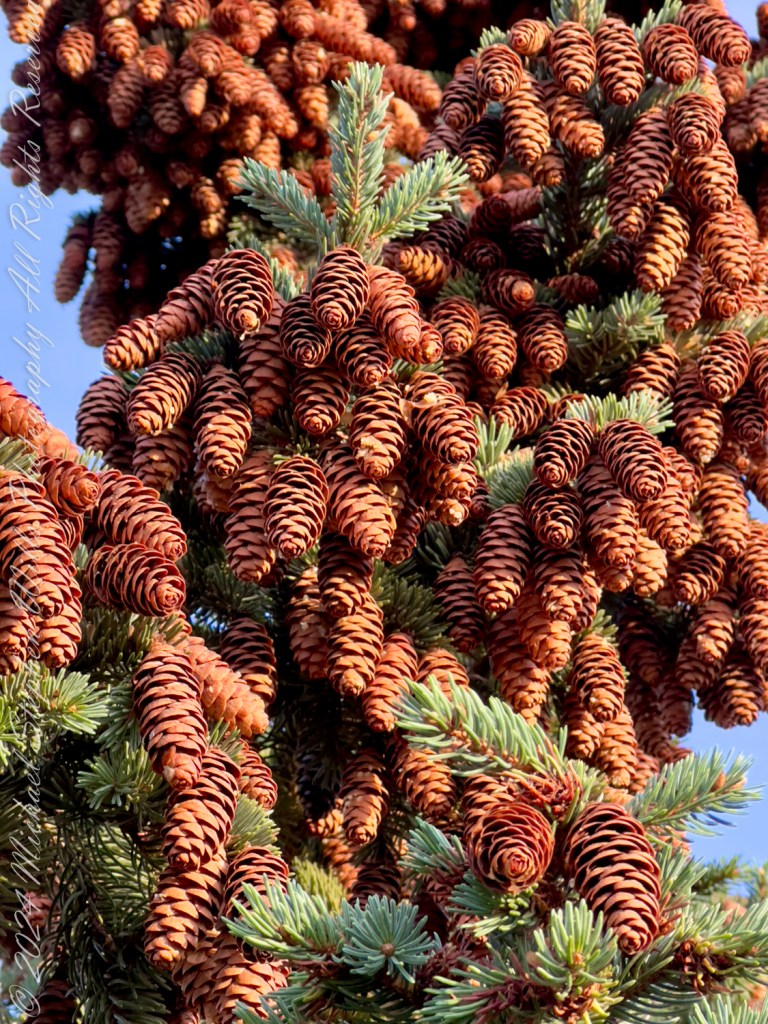
The final images of my walk were close-ups of a tree trunk covered in moss and lichen, and then the cones of a towering spruce tree. The moss, a soft green against the rough bark, seemed like nature’s way of nurturing the tree, offering protection and a touch of life in an otherwise harsh world. The cones, hanging in abundance from the spruce, signified a sense of continuity, of life moving forward even as the seasons change.

As I made my way, I realized this walk had been a meditation on Pam’s recovery, on the beauty of change, on the lessons nature offers in every season. Just as the trees prepare for winter and eventual rebirth, Pam too is in a season of healing, and I am grateful for every step she takes toward renewal.

Enter your email to receive notification of future postings. I will not sell or share your email address.

Cayuga Lake’s Daylilies: A Symbol of Survival and Adaptation

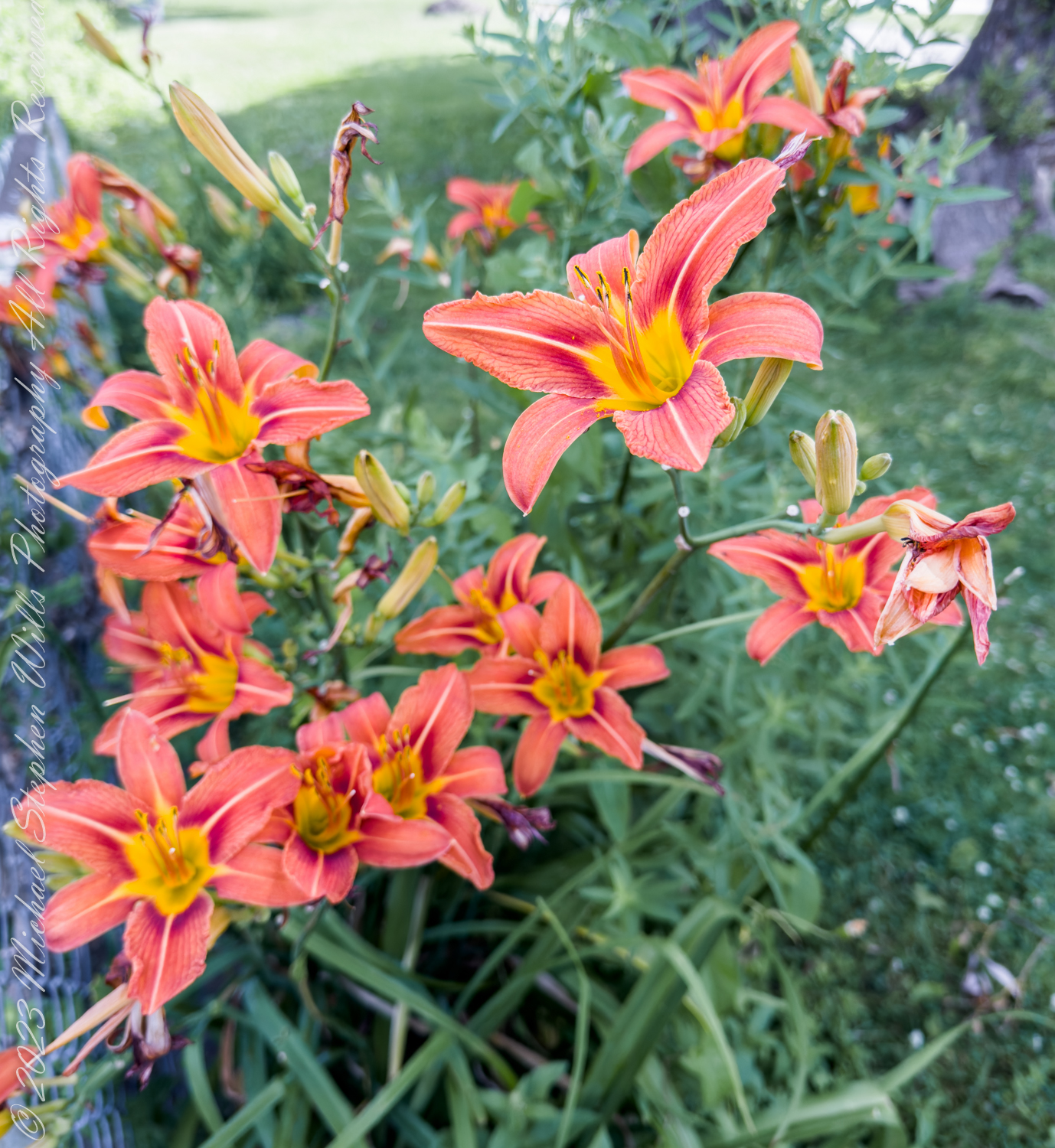
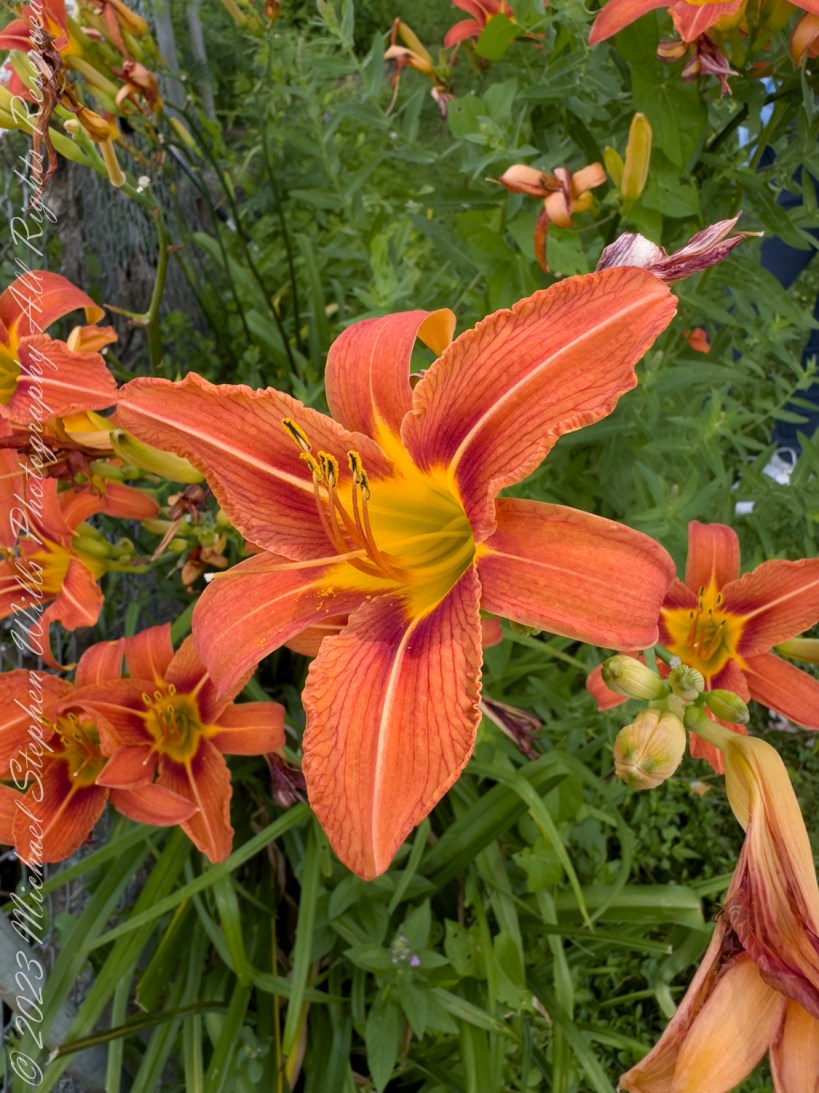
In Stewart Park, the Hemerocallis fulva, or Tawny Daylily, blooms vibrantly.


Stewart Park, Cayuga Lake, Ithaca, New York

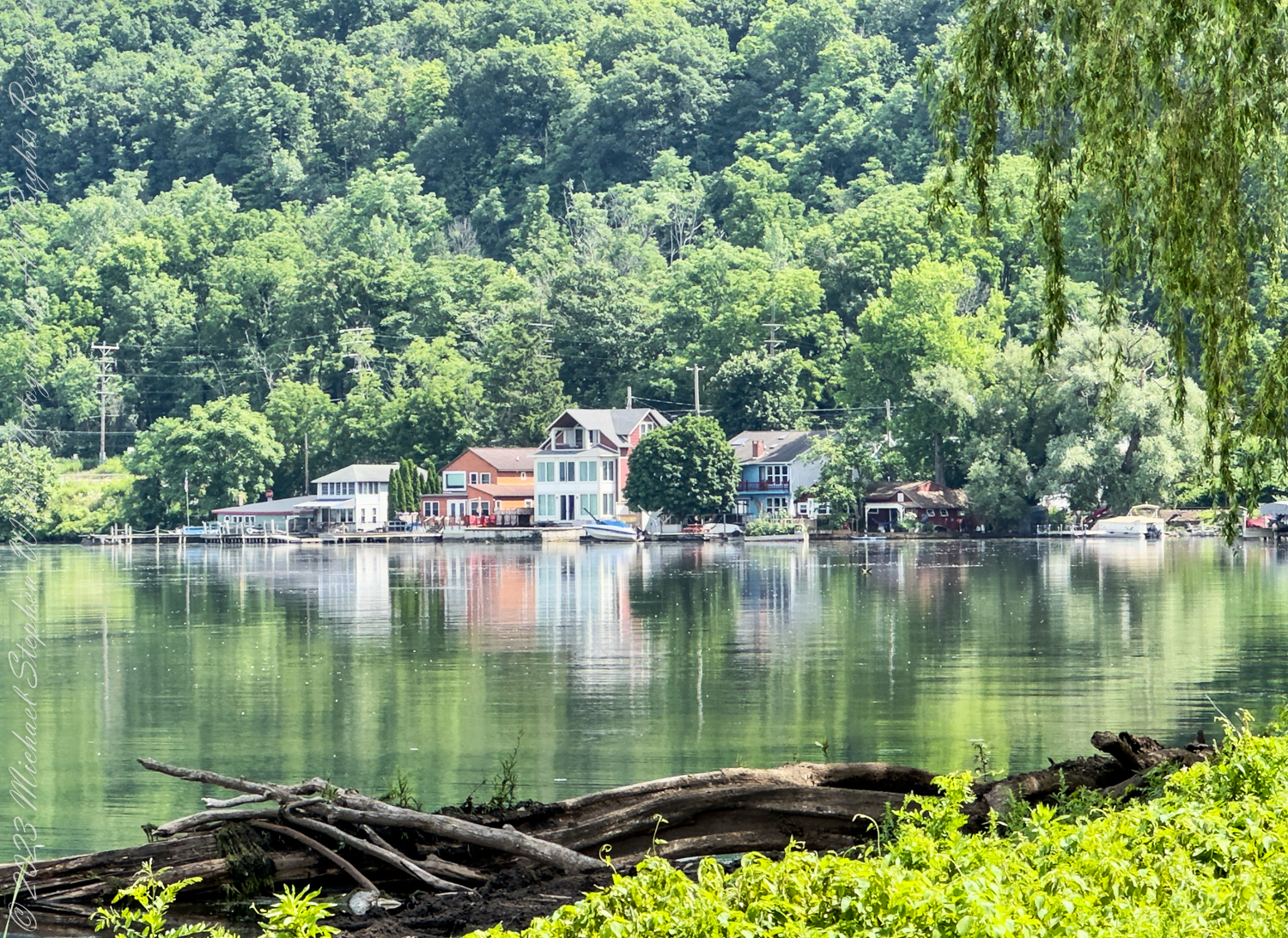
Seen from Stewart Park, these lakefront homes line the southern shore of Cayuga Lake. Tompkins County, Ithaca, New York State. The Finger Lakes Region

On a warm June morning, with the early summer sun casting a golden glow across the shores of Cayuga Lake, Pam and I set out for a walk around Stewart Park. The soft lapping of the water against the shore mixed with the calls of distant birds, and the familiar hum of life in the park settled into a rhythm that has long been a part of this place. As I strolled along a familiar path, a flash of orange caught my eye—the unmistakable brilliance of the Hemerocallis fulva, the Tawny Daylily, in full bloom.

A Glimpse of the Familiar


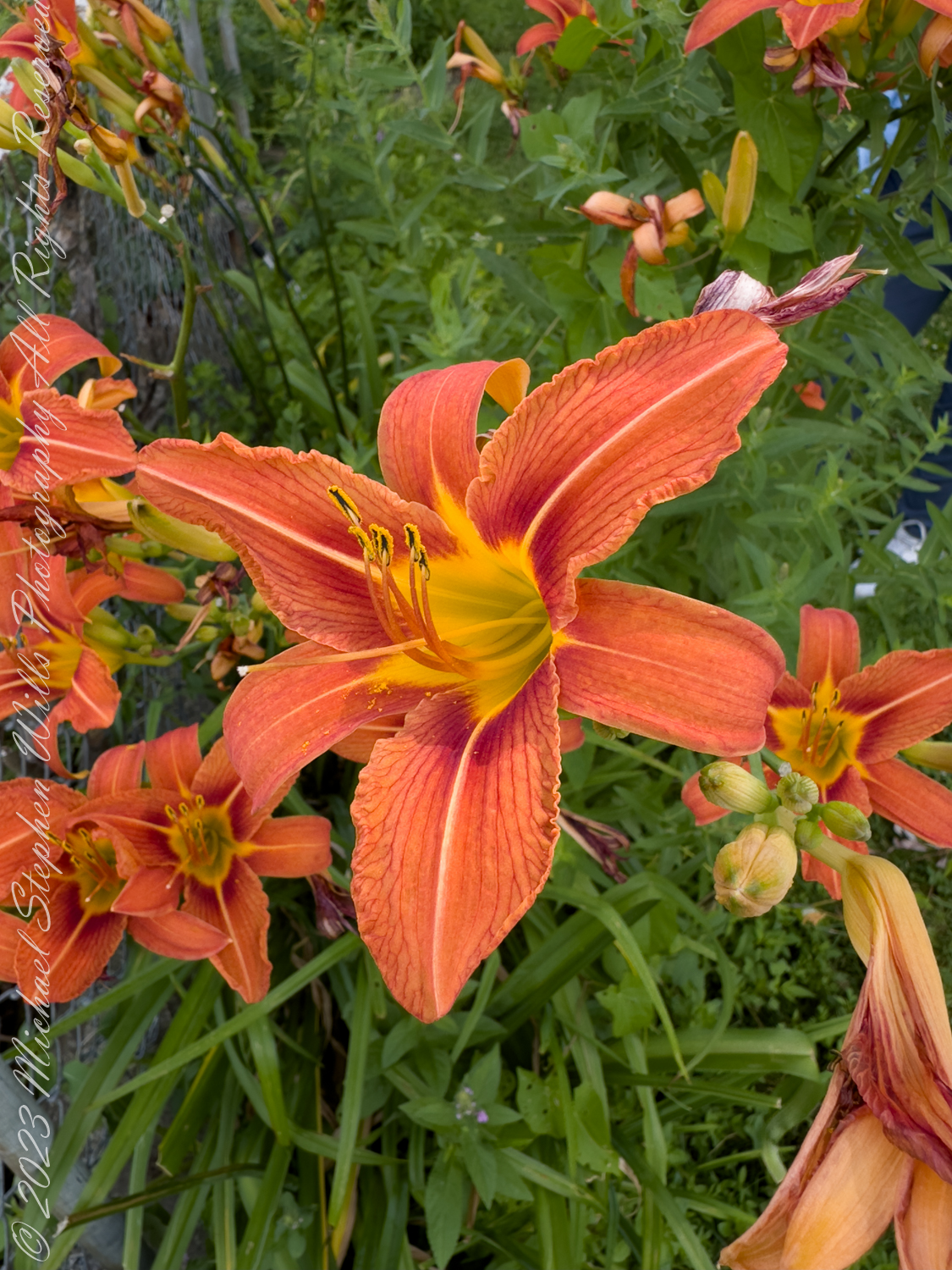
At first glance, the orange petals of the daylily seemed like small flames scattered across the green of the park, their brightness undimmed by the heat of the day. The sight was both familiar and captivating, for these daylilies are common in garden, parks and roadsides around Ithaca and much of New York State. Despite their prevalence, each encounter feels fresh, like meeting an old friend who always has something new to share.

I knelt closer, letting my eyes follow the curve of the petals, which unfurled gracefully from a vibrant yellow throat. The delicate lines streaked down the petals like rays of sunlight. Though each flower lives only a day, I felt the quiet confidence of this plant, as though it knew its bloom was fleeting, yet still essential in the tapestry of summer.

The Resilience of a Traveler


The daylily’s ubiquity belies its status as a traveler from distant lands. Hemerocallis fulva is not native to New York, nor to any part of North America. It came to these shores from Asia, introduced by gardeners who admired its hardiness and vibrant color. Over time, the daylily escaped the bounds of cultivated gardens, spreading to roadsides, fields, and yes, even here, to the edges of Stewart Park.

I find myself reflecting on the journey of this plant, which began in the faraway lands of China, Korea, and Japan. In its homeland, daylilies have long been symbols of devotion and motherhood, their roots used in traditional medicine, their blooms celebrated in art. Now, as I stand in Stewart Park, I marvel at how far the Hemerocallis fulva has come, adapting to new lands and naturalizing in the wild corners of the American landscape.

The irony of its “wild” appearance does not escape me—this orange beauty, so deeply associated with our rural and parkland settings, is still very much an outsider. And yet, in the soft breeze of the morning, it feels as though this plant has always belonged here, as much a part of the park’s landscape as the willows by the lake or the ducks bobbing in the water.

Nature’s Balancing Act


As lovely as they are, daylilies are not without their complications. The very same traits that make Hemerocallis fulva such a beloved garden plant—its resilience, its ability to thrive in poor soil, and its spreading rhizomes—also make it an unintentional invader. Without careful tending, these plants can spread aggressively, pushing out native species and altering the ecological balance of the areas where they take root.

Here in Stewart Park, where cultivated gardens meet the untamed edges of the lake, the daylilies are a reminder of nature’s delicate balance. They offer nectar to bees and butterflies, providing sustenance to the creatures that flit through the morning air and also represent challenge to the native wildflowers that have long called this place home.

I wonder what plants might have once thrived in this very spot before the Hemerocallis fulva arrived. Perhaps native species, like the delicate Asclepias tuberosa—Butterfly Weed—or the sturdy Rudbeckia hirta, the Black-eyed Susan, held court here, their blooms attracting the same bees now drawn to the daylilies.

The Fleeting Bloom


Despite its role as a naturalized non-native, the daylily has a fleeting grace that draws me in. By tomorrow, these orange blooms will have withered and fallen, replaced by new blossoms that will unfurl in their place. Each bloom’s brief life is a reminder of the ephemerality of beauty, and I find myself appreciating the daylily all the more for its transient nature.

We continue our walk, leaving behind the patch of daylilies but taking with me a sense of quiet reflection. As invasive as they may be, these plants offer a meditation on the impermanence of life and the ways in which non-native species can become a part of the landscape’s fabric, for better or worse. The Hemerocallis fulva may not belong here by birthright, but it has made a place for itself, a symbol of survival and adaptation in the ever-changing world around it.

A Lesson from the Daylily


As I near the edge of the lake, watching the sunlight dance across the water’s surface, I think about the lessons that the daylily offers. Life is fleeting, yes, but also full of color and vibrancy, no matter how brief the bloom. And in that brief bloom, there is the possibility of resilience, growth, and belonging, even in a place far from home.

Much like the daylily, we too find ourselves in unfamiliar places at times, learning to adapt, to thrive, and to leave our mark on the world—if only for a day.

Copyright 2024 Michael Stephen Wills All Rights Reserved

Exploring Ancient Wisdom in Today’s Healing Practices

As I waited during my wife’s physical therapy session, the connection between ancient healing traditions and modern medicine revealed a journey of resilience and hope.

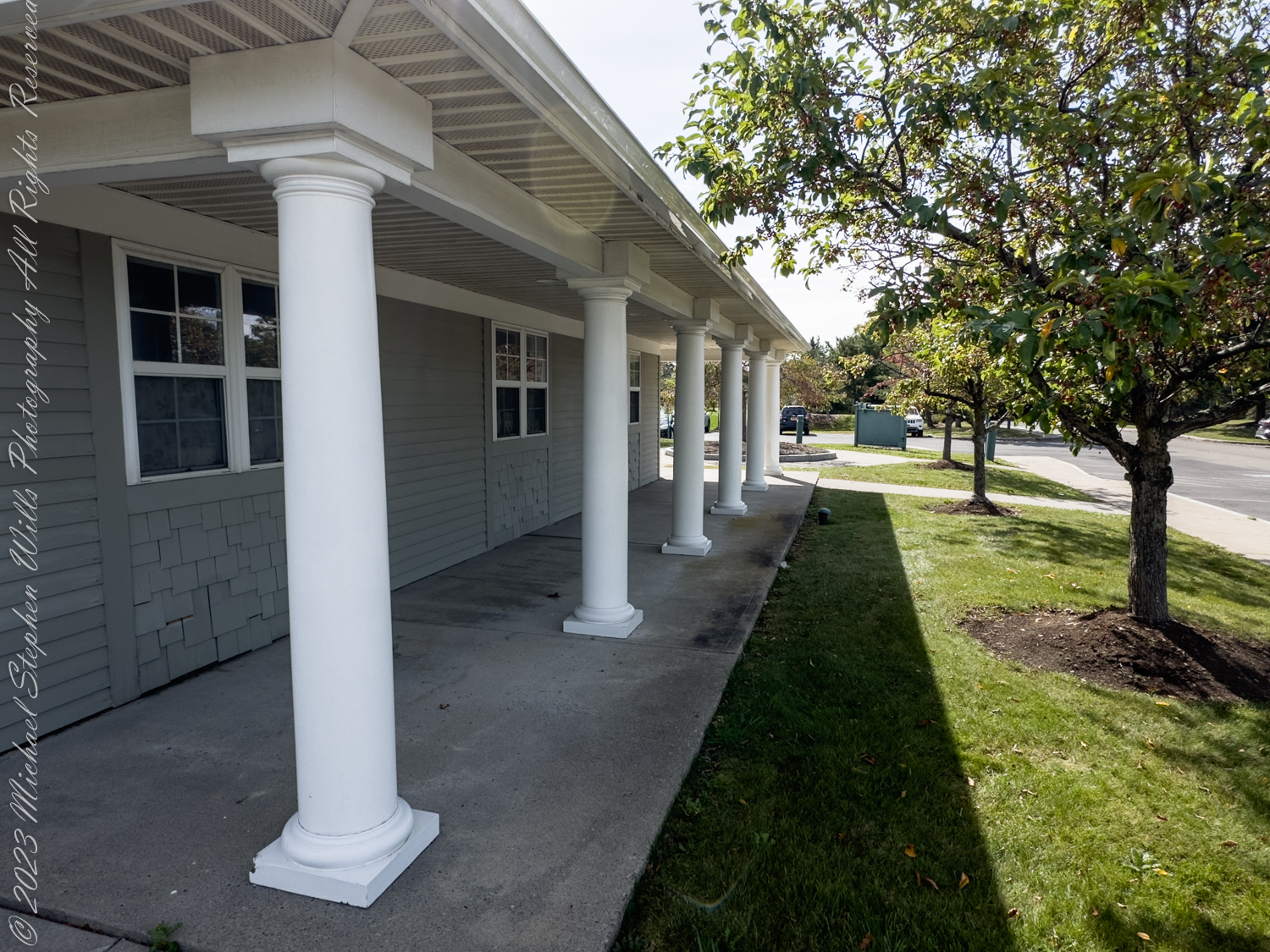
Standing in the cool autumn sunlight, I find myself pacing beneath the sturdy Doric columns of this medical campus in Northeast Ithaca, waiting as Pam undergoes another session of physical therapy. The simplicity of the columns strikes me—clean, white, and unadorned. They hold up the building with a kind of timeless grace, a quiet reflection of ancient design.

The architecture of the Medical Office Campus of northeast Ithaca is graced by doric columns arrayed in a row forming a portico colonnade. The original Greek Doric columns were fluted, and had no base, dropping straight into the platform on which the temple or other building stood. The capital was a simple circular form, with some mouldings, under a square cushion that is very wide in early versions, but later more restrained. Here the form of the capital is mirrored in the base. 20 Arrowwood Drive, Ithaca, Tompkins County, New York State

Doric columns are symbols of strength and stability. In this moment, they remind me of the quiet resilience I’ve seen in Pam throughout her recovery. Each column, solid and unwavering, reflects the foundational principles that underpin both architecture and the healing arts. Just as these columns have withstood the passage of centuries, modern medicine, too, stands tall on the legacy of ancient knowledge.

As I lean against one of these pillars, I think about the deep connections between ancient civilizations and the medicine we practice today. The origins of healing reach back to the Egyptians, who understood anatomy with remarkable precision. They would have been familiar with the use of medicinal plants. It’s remarkable to think that the surgeries performed back then, basic as they were, have evolved into the complex procedures of modern times, procedures like the one that replaced Pam’s hip with the efficiency of a machine through the care of skilled hands.

10 Brentwood Drive, Ithaca, Tompkins County, New York State

I look up at the sky, tracing the outline of the roof these columns support. The Greeks, with their reverence for observation, would have appreciated the rational design of this building. Hippocrates, the father of medicine, laid the groundwork for clinical observation, a method still used by the doctors caring for Pam. They probe, ask questions, and observe her movements, trying to decipher the hidden ailments within her body, much as the ancient physicians did centuries ago. It’s in this continuity that I find comfort—knowing that the doctors and physical therapists here are part of a long tradition, stretching back to Galen, who wrote about anatomy and physiology in ways that informed medical students for generations.

Modern medicine, like these columns, is a blend of the old and the new. Acupuncture, an ancient Chinese practice, is now commonly recommended for pain relief, a reminder that even today we rely on wisdom passed down through millennia. Pam’s therapists blend tradition with cutting-edge technology, using machines that track her progress and exercises that help her regain strength. Yet, at the heart of it, the human body heals the way it always has—with time, patience, and care.

As I walk the perimeter of the building, past patches of sunlight falling on the sidewalk, I’m struck by the parallels between the construction of this space and the body’s own repair. Both depend on a solid foundation. Roman innovations in public health, sanitation, and the idea of hospitals have shaped the spaces where we now seek healing. And here, in this modern medical facility, the connection to those roots feels tangible, much like the stones beneath my feet.

The name Aster comes from the Ancient Greek meaning “star”, referring to the shape of the flower head. ‘Aster’ species are used as food plants by the larvae of a number of Lepidoptera species. These asters grew wild on an otherwise landscaped medical campus. Found on an eaqrly autumn morning near 10 Brentwood Drive, Ithaca, Tompkins County, New York State

Asters, blooming nearby, sway gently in the breeze. They too are resilient, much like Pam. Their purple blossoms remind me of the hope that pervades our journey. The columns stand as sentinels of a kind of knowledge that is both ancient and ever-evolving—a blend of science, history, and faith in the power of the human spirit to endure.

Copyright 2024 Michael Stephen Wills All Rights Reserved

Breezes and Memories: Pam’s First Walk and Reflections at Stewart Park

As Pam took her first therapeutic steps through Stewart Park after hip surgery, the wind off Cayuga Lake carried memories of our sailing days. This walk, a milestone along a journey of strength and reflection.

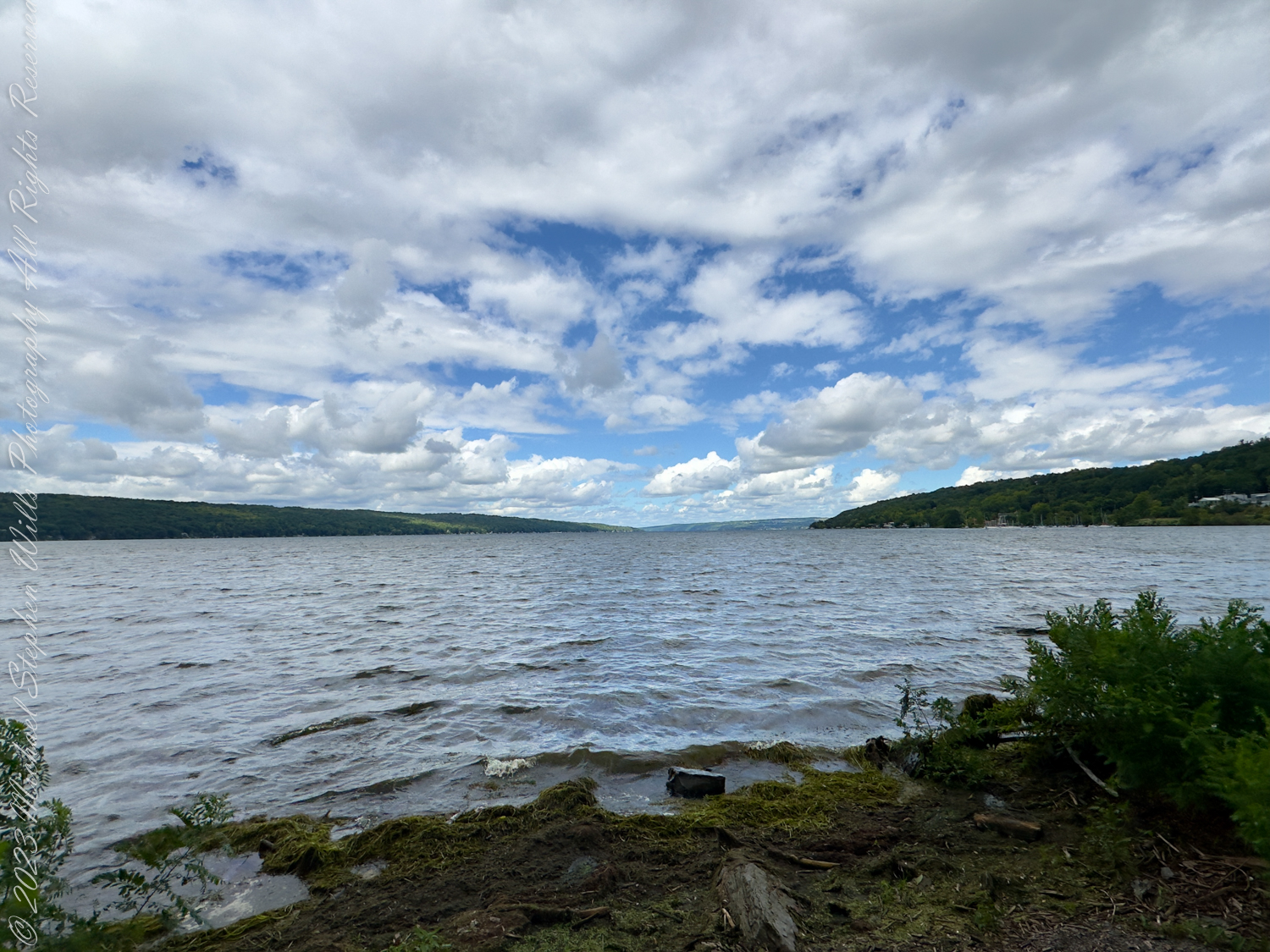
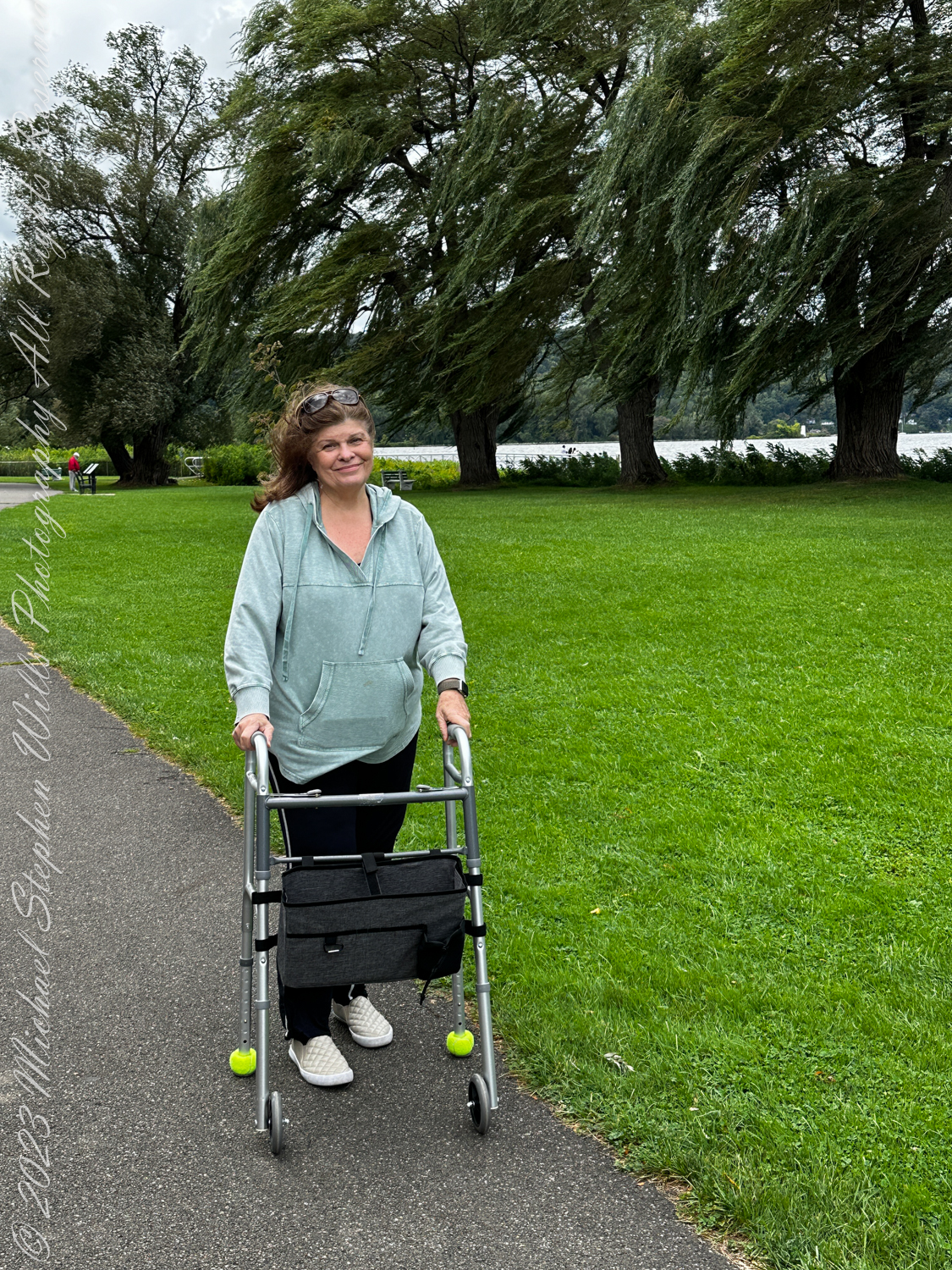
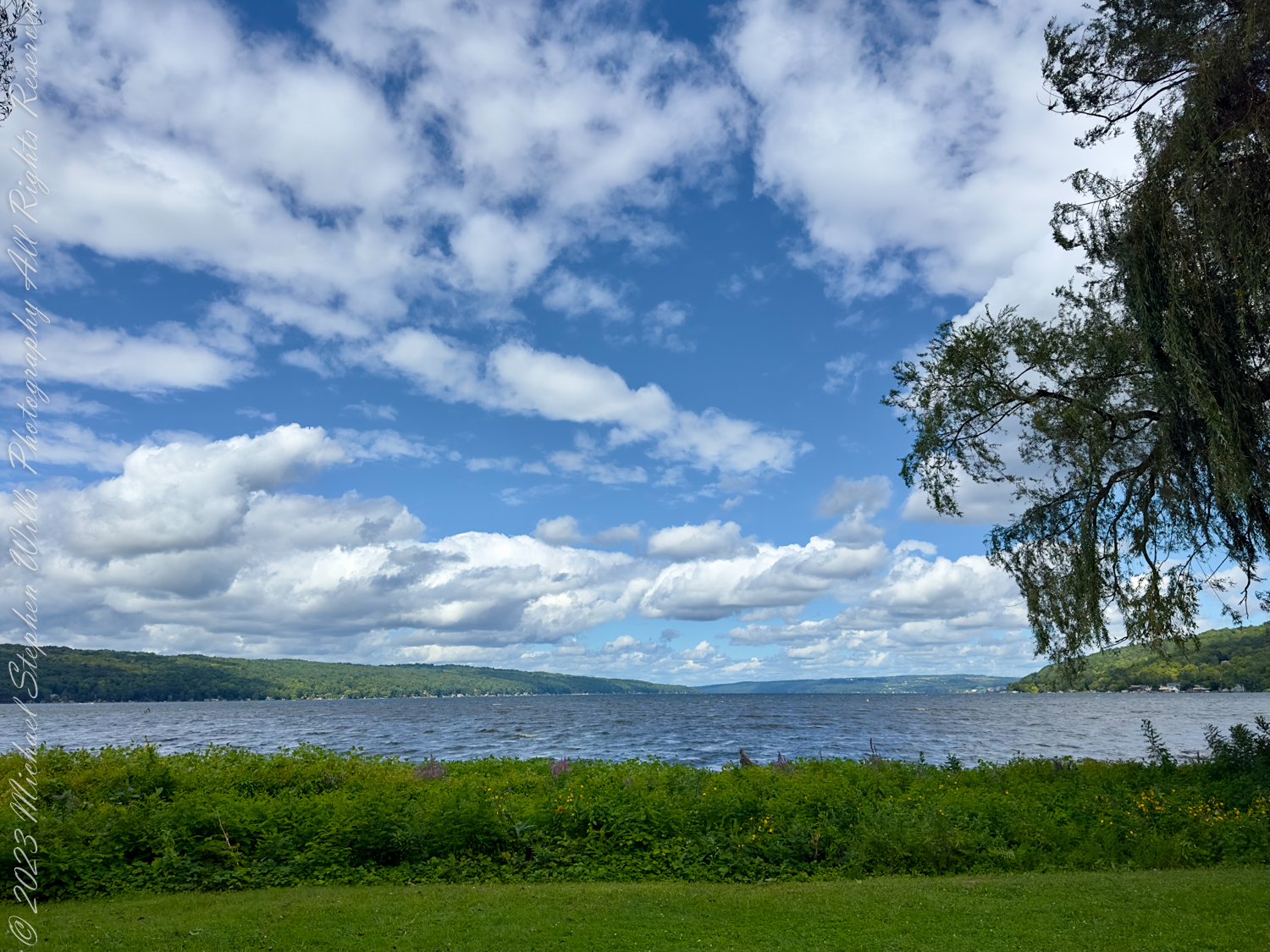
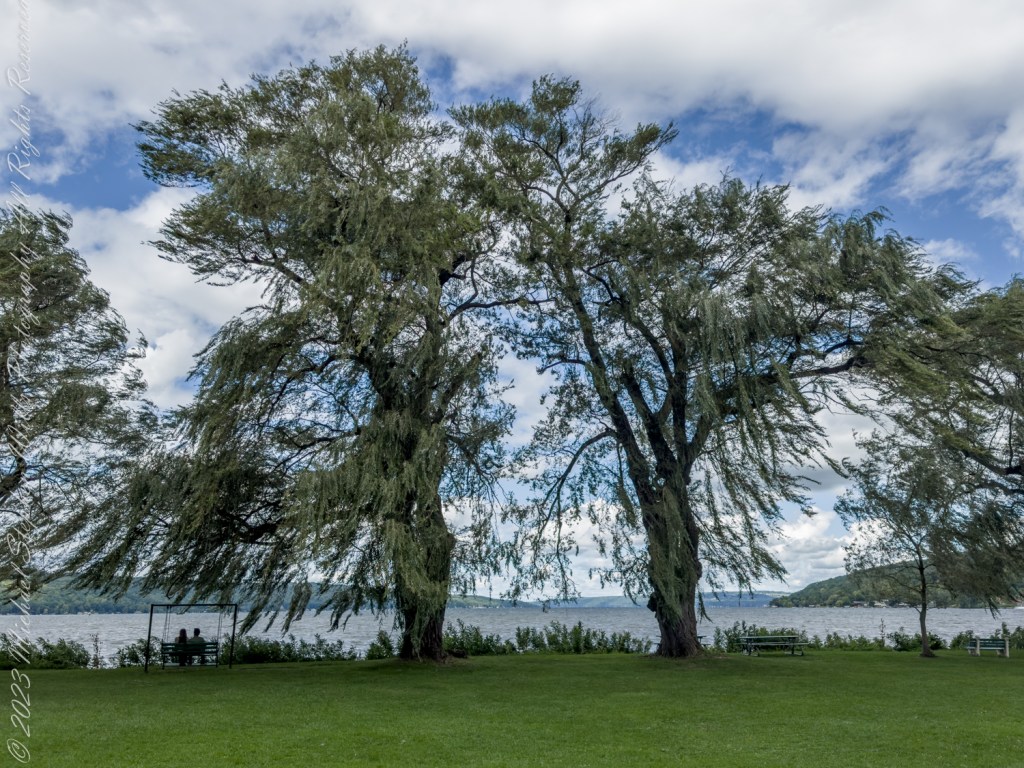
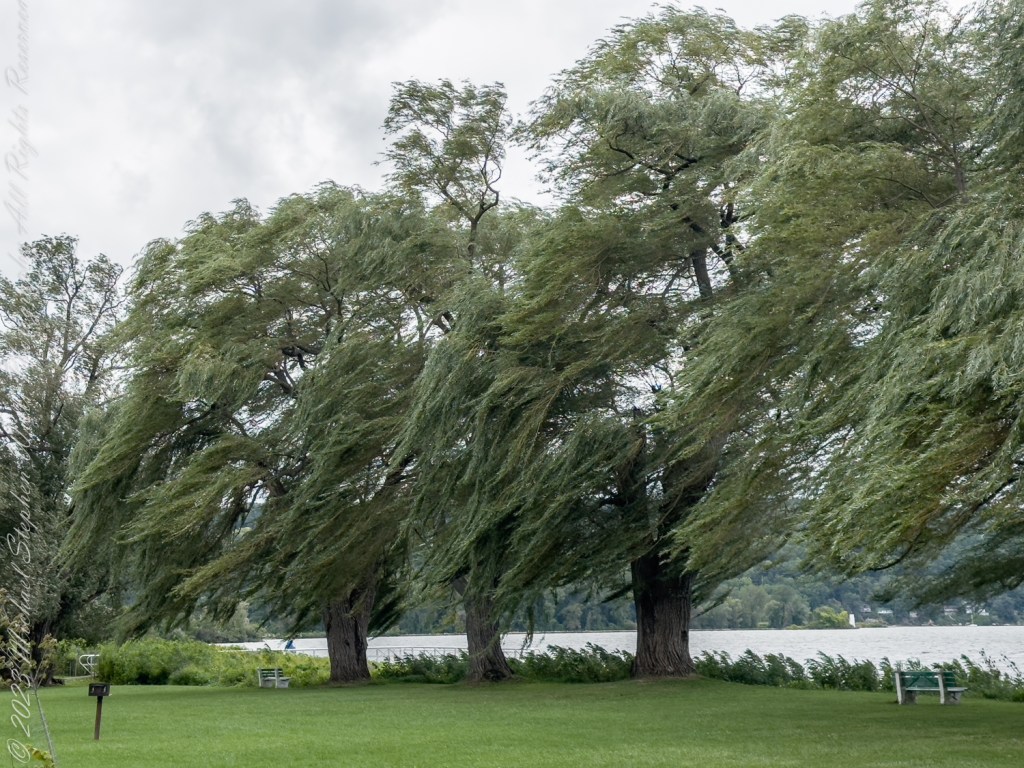
The breeze off Cayuga Lake was lively, stirring the willows and creating waves that rippled across the water’s surface as we arrived at Stewart Park. For Pam, this day marked a significant milestone: her first therapeutic walk since undergoing total hip replacement surgery. The park, located on the outskirts of Ithaca, New York, had long been a place of peaceful walks and scenic reflection for us, but on this day, it took on new meaning. The pathways and views we had enjoyed over the years now served as the backdrop for Pam’s journey of recovery.

As Pam began her walk, using her walker for support, the air felt crisp with the late-summer breeze. She moved carefully along the paved path, her steps steady but measured. The sight of her, framed by the grand trees lining the park, was a testament to the resilience and strength she had displayed throughout the weeks following her surgery. The park’s beauty offered a sense of calm that seemed to support her determination, as though nature itself was encouraging her every step.

Stewart Park, with its sweeping views of Cayuga Lake and towering willows, had always been a special place for us. Over the years, we had spent afternoons such as this sailing the lake’s expansive waters. We ventured out to let the wind carry us across the lake. As Pam walked, we reminisced about those times—how we would navigate the gusty winds that filled our sails, steering into the waves with a sense of adventure. “This wind reminds me your calls to ‘control the jib!!’,” Pam said, smiling as we remembered the thrill of maneuvering the boat to dock.

On days like those, the lake was unpredictable, much like Pam’s journey through recovery had been. Yet, whether on the water or facing the challenges of healing, Pam had always shown a quiet, steadfast determination. Just as we had learned to adjust the sails to accommodate the changing wind patterns, Pam had adapted to her new circumstances, tackling each step of her rehabilitation with grace.

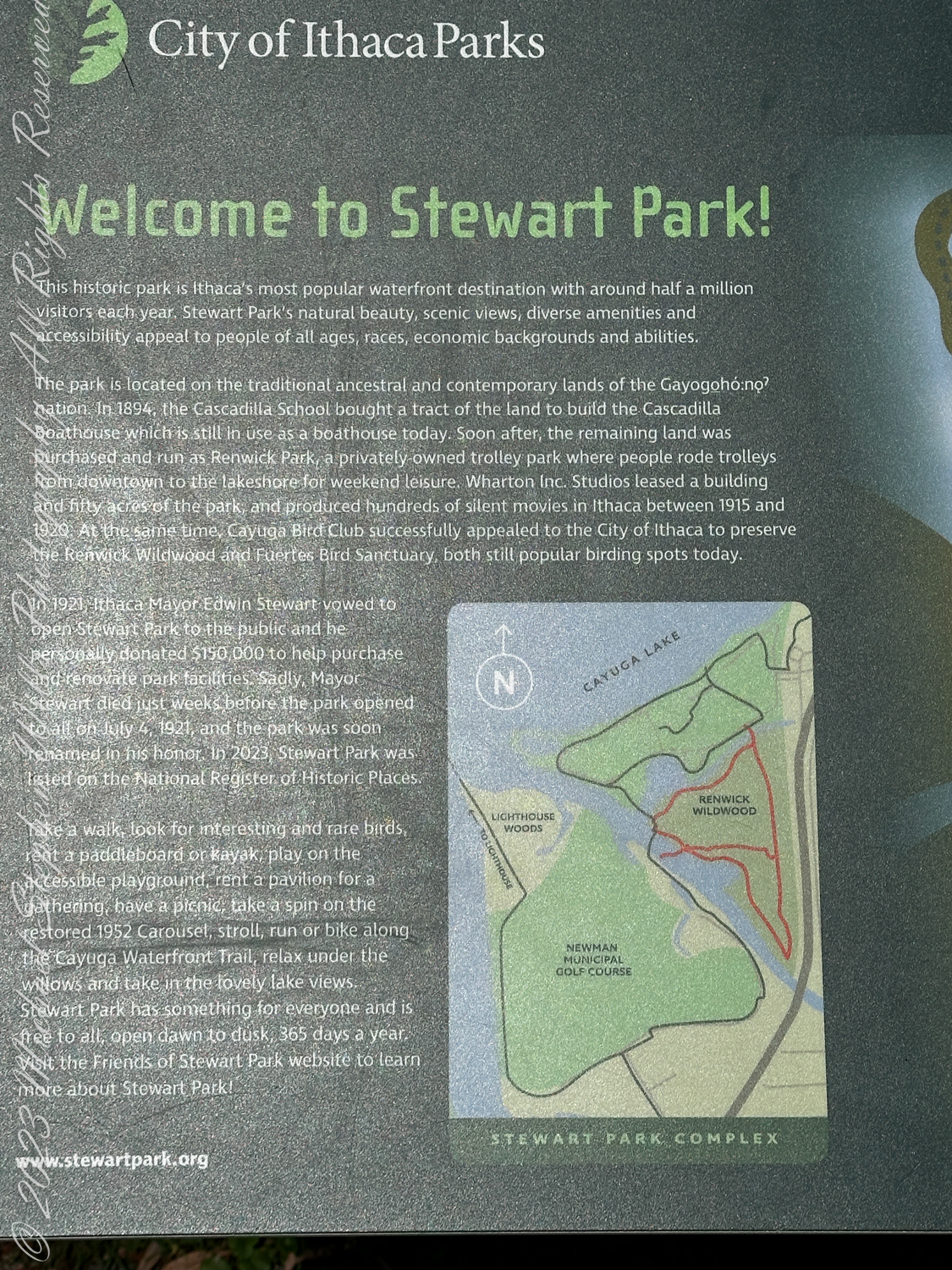
We paused at one of the informational signs along the path. The sign detailed the park’s history, noting that it sits on the ancestral lands of the Gayogo̱hó꞉nǫ’. Originally developed in 1894 for the Cascadilla School’s boathouse, the park had undergone many transformations before becoming the public space it is today. The sign spoke of Mayor Edwin Stewart, who had donated $150,000 to help purchase and renovate the park’s facilities, only to pass away weeks before its official opening in 1921. In 2021, the park was listed on the National Register of Historic Places, a testament to its enduring role in the community.

City of Ithaca Parks Welcome to Stewart Park! This historic park is Ithaca’s most popular waterfront destination with around half a million visitors each year. Stewart Park’s natural beauty, scenic views, diverse amenities and accessibility appeal to people of all ages, races, economic backgrounds and abilities. The park is located on the traditional ancestral and contemporary lands of the Gayogo̱hó꞉nǫʼ nation. In 1894, the Cascadilla School bought a tract of the land to build the Cascadilla Boathouse which is still in use as a boathouse today. Soon after, the remaining land was purchased and run as Renwick Park, a privately owned trolley park where people rode trolleys from downtown to the lakeshore for weekend leisure. Wharton Inc. Studios leased a building and fifty acres of the park, and produced hundreds of silent movies in Ithaca between 1915 and 1920. At the same time, Cayuga Bird Club successfully appealed to the City of Ithaca to preserve the Renwick Wildwood and Fuertes Bird Sanctuary, both still popular birding spots today. In 1921 Ithaca Mayor Edwin Stewart vowed to open Stewart Park to the public and he personally donated $150,000 to help purchase and renovate park facilities. Sadly, Mayor Stewart died just weeks before the park opened to all on July 4, 1921, and the park was soon renamed in his honor. In 2021 Stewart Park was listed on the National Register of Historic Places. Take a walk, look for interesting and rare birds, rent a paddleboard or kayak; play on the accessible playground, rent a pavilion for a gathering, have a picnic, take a spin on the restored 1952 Carousel, stroll, run or bike along the Cayuga Waterfront Trail, relax under the willows and take in the lovely lake views. Stewart Park has something for everyone and is free to all, open dawn to dusk, 365 days a year. Visit the Friends of Stewart Park website to learn more about Stewart Park!

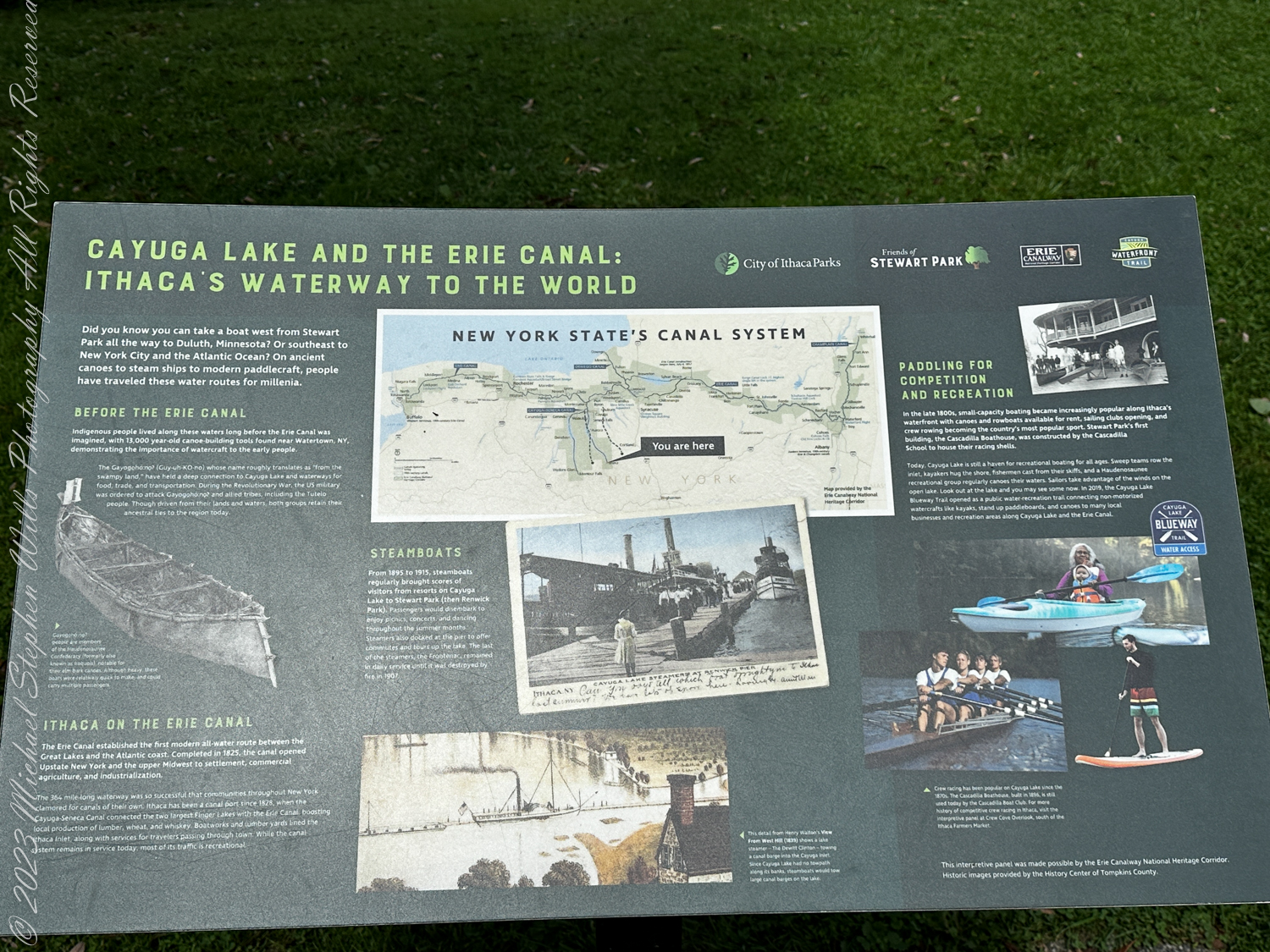
CAYUGA LAKE AND THE ERIE CANAL: ITHACA’S WATERWAY TO THE WORLD

Did you know you can take a boat west from Stewart Park all the way to Duluth, Minnesota? Or southeast to New York City and the Atlantic Ocean? On ancient canoes to steam ships to modern paddlecraft, people have traveled these water routes for millenia.

Before the Erie Canal

Indigenous people lived along these waters long before the Erie Canal was completed in 1825. In 1790, a dugout canoe was found near Elmira, NY, demonstrating the importance of waterways to the early people.

The Cayuga/Seneca Gayogo̱hó꞉nǫʼ who lived here for nearly a thousand years used the lake and rivers to transport people and goods. In the 1600s, French explorers reported meeting the Gayogo̱hó꞉nǫʼ as they traveled east along these waterways. Canoes and later watercraft helped settlers move people, goods, and ideas, transforming upstate New York. With only one lock, the lake’s water level would rise and fall, but goods still needed to be portaged, or moved over land. As the first commercial waterway in the US, the Erie Canal used river systems, canal channels, and lakes to connect New York’s inland towns to world markets.

ITHACA ON THE ERIE CANAL

The canal established the first modern all-water route between the Great Lakes and the Atlantic. Completed in 1825, the canal opened Upstate New York and the upper Midwest to settlement, commercial agriculture, and industry.

The southernmost port of the canal was at Cayuga Lake, near present-day Route 90, where steamboats ferried passengers and freight to and from Ithaca. Products like salt from Syracuse, wood from the region, and coal from Pennsylvania were loaded onto canal boats for shipment to New York City or via Buffalo, to the upper Midwest.

After more than 200 years of service, the canal has evolved into a water route that is primarily used by small boats for recreation. In 2017, the NYS Canal Corporation rebranded the canal as a recreation destination.

As Pam read the sign, she reflected on how the park’s evolution mirrored her own journey. Like Stewart Park, which had undergone multiple transformations over the years, Pam was in the midst of her own renewal. Her new hip, like the park’s renovations, represented a fresh start, a return to activity, and a promise of more days spent outdoors, enjoying the natural beauty that had always brought us peace.

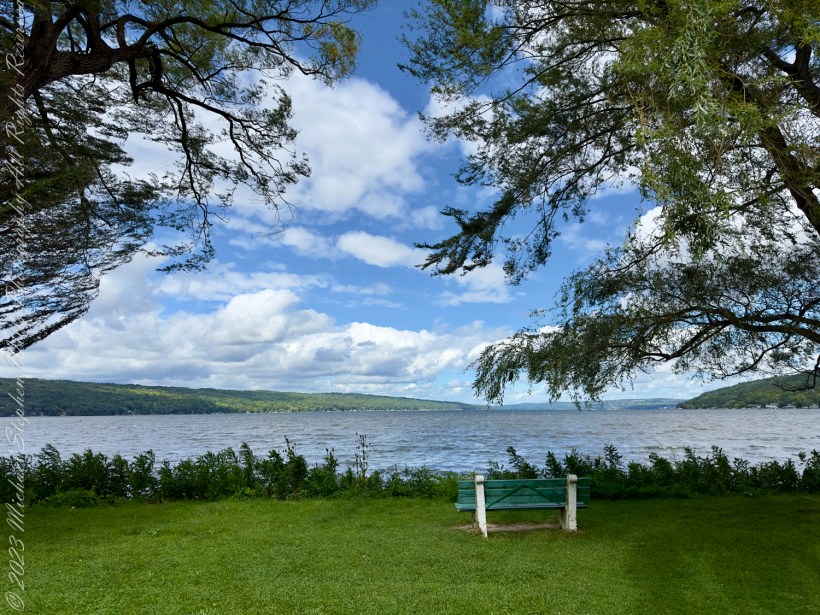
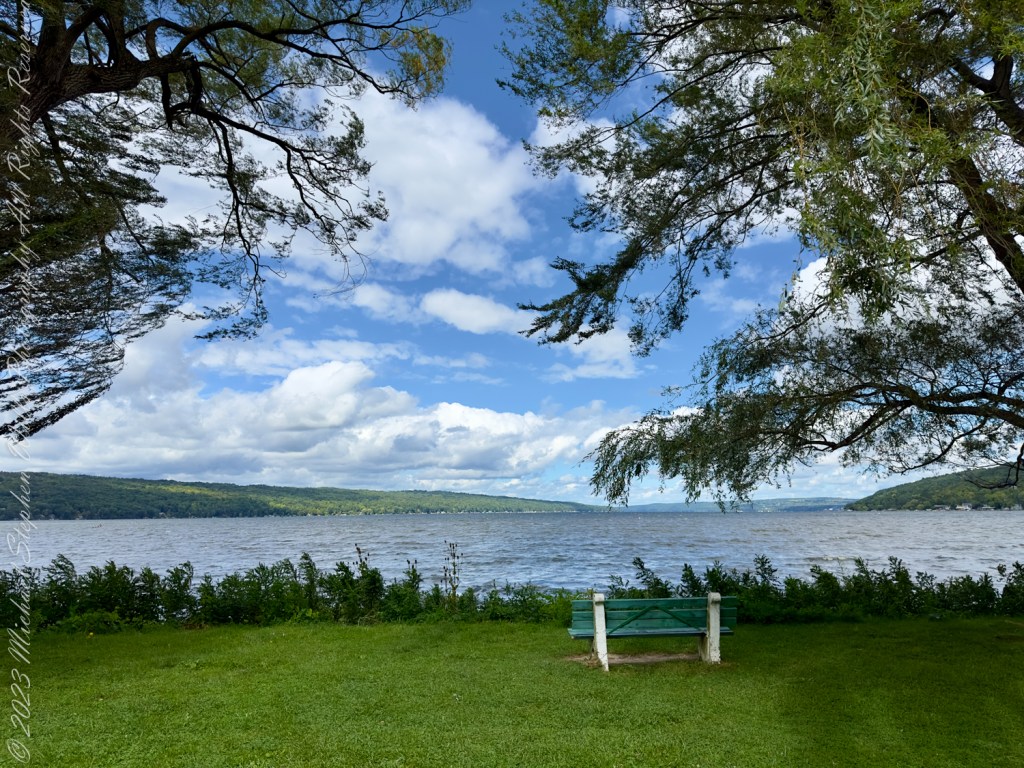
Continuing along the path, we passed several benches nestled beneath the graceful willows, their branches swaying gently in the breeze. Pam took a moment to rest on one of the benches, her eyes focused on the vast expanse of Cayuga Lake. The view stretched toward the distant hills, where the clouds and sun played together, casting ever-shifting patterns of light across the water. For a brief moment, it felt like we were back on our sailboat, riding the waves and allowing the wind to guide us toward new horizons.

As we made our way back along the path, the tall willows swaying and the sound of the waves lapping at the shore, I couldn’t help but feel gratitude. Stewart Park had always been a place of calm and reflection, but on this day, it became a place of healing. Pam’s steps, though slow and deliberate, were filled with the same strength and grace she had shown throughout her life.

The park’s beauty, the history we had shared here, and the memories of our time spent sailing on Cayuga Lake all came together to create a sense of peace. Pam’s recovery journey was far from over, but her progress was undeniable. As we looked out over the lake one last time before heading home, the water shimmered in the sunlight, promising more adventures to come.

Stewart Park, with its windswept trees and timeless views, would forever be tied to this day—Pam’s first steps toward reclaiming her mobility, set against the backdrop of a place that had long been part of our shared story. It was a day filled with hope, strength, and the quiet knowledge that, like the wind, life would continue to move us forward, no matter the challenges.

Copyright 2024 Michael Stephen Wills All Rights Reserved

A Saint’s Origins: How Famine and Faith Shaped Marianne Cope

While exploring Saint Marianne Cope’s early life, I uncovered the hardships her family faced during Germany’s devastating 1816 famine. Their struggles and eventual emigration shaped the resilient spirit of this future saint. Read more about their journey in my blog.

While my wife was recovering from major surgery at Saint Francis Hospital in Syracuse, New York, I spent a morning at the nearby Shrine and Museum of Saint Marianne Cope. There, I delved into the early life of this remarkable saint, born Barbara Koob. As I explored her story, I found myself drawn to the experiences of her parents, Peter and Barbara Wirzenbacher Koob, who endured some of the most challenging times in early 19th-century Germany. Their struggles, shaped by the economic and social crises of the time, played a pivotal role in the Koob family’s eventual emigration to the United States, setting the stage for their daughter’s life of service.

Saint Marianne Cope Shrine and Museum, adjacent to Saint Joseph’s Hospital, Syracuse, New York. Captured from a street view of Google Maps.

The story begins in Heppenheim, a small town nestled in the southern part of Hesse, Germany. Like many other towns in the region, Heppenheim was reliant on agriculture for survival. However, the year 1816 brought unprecedented hardship. Known as the “Year Without a Summer,” this period was marked by extreme cold and wet conditions, caused by the catastrophic eruption of Mount Tambora in Indonesia. The volcanic ash released into the atmosphere blocked sunlight and disrupted weather patterns across the globe.

Heppenheim is the seat of Bergstraße district in Hesse, Germany, lying on the Bergstraße on the edge of the Odenwald. This photograph is from Google Maps.

For the people of Heppenheim, this meant crop failures on an unimaginable scale. Rye and wheat, staples of their diet, rotted in the fields. Food became scarce, and prices soared. The ensuing famine left families, including the Koobs and their ancestors, struggling to survive. As hunger gnawed at them, they faced a bleak future. This economic strain was compounded by broader challenges: industrialization was beginning to transform the German economy, leaving traditional agrarian lifestyles in its wake, while political unrest simmered as the fragmented German states wrestled with issues of governance and unity.

These hardships were not unique to Heppenheim. Across Germany, the “Hunger Years” of 1816-1817 prompted widespread despair. For many, including the Koob family, the promise of a better life beckoned from across the Atlantic. The United States, with its vast expanses of fertile land and burgeoning economy, seemed to offer a way out of the grinding poverty and instability that had taken hold in their homeland.

A home in Heppenheim. Photograph from Google Maps and taken around 2022.

Barbara Koob was born on January 23, 1838, into a family deeply rooted in their community. Peter Koob was identified as a “Citizen and Farmer,” and shortly after her birth, Barbara was baptized at St. Peter’s Church, marking the beginning of her journey in a devout Catholic family.

Heppenheim, where Barbara Koop (Saint Marianne Cope) was born here January 23, 1838 and baptized as a Catholic shortly after this church, Saint Peter’s. Google Maps Photograph taken around 2022

By 1839, Peter and Barbara Koob, like many others from their region, made the difficult decision to leave Heppenheim behind. With their young daughter Barbara, they embarked on a journey to the United States. They settled in Utica, New York, where the opportunities for a new beginning were more promising, even though the bustling industrial town was a far cry from the rural life they had known. In 1862, Barbara committed herself to the Sisters of the Third Order of St. Francis in Syracuse, New York, taking the name “Marianne Cope.”

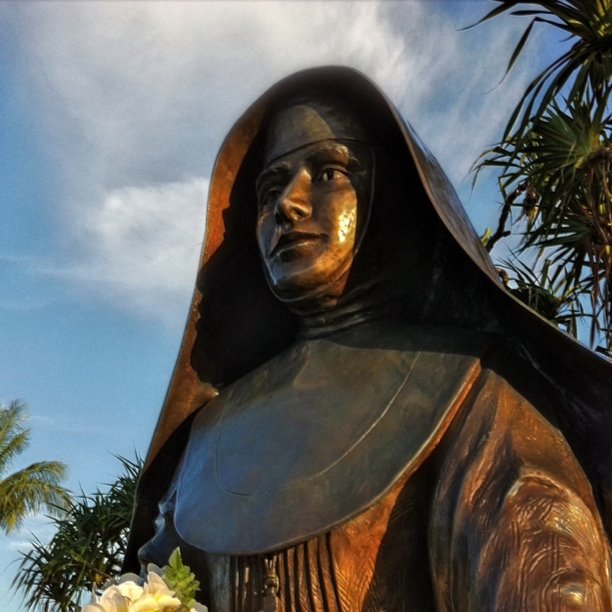
Mother Marianne Cope statue dedicated January 23, 2010, in Honolulu.
Attribution: billsoPHOTO, CC BY-SA 2.0 , via Wikimedia Commons

Reflecting on these events, it becomes clear how deeply the early experiences of famine and economic hardship must have influenced the Koob family’s decisions and, ultimately, the life of their daughter. The struggles of her parents during those hard years in Germany laid the foundation for Marianne Cope’s own resilience and dedication to serving those in need. Their story is a testament to the strength of the human spirit in the face of adversity and the powerful role that faith and hope can play in guiding one’s path.

Copyright 2024 Michael Stephen Wills All Rights Reserved