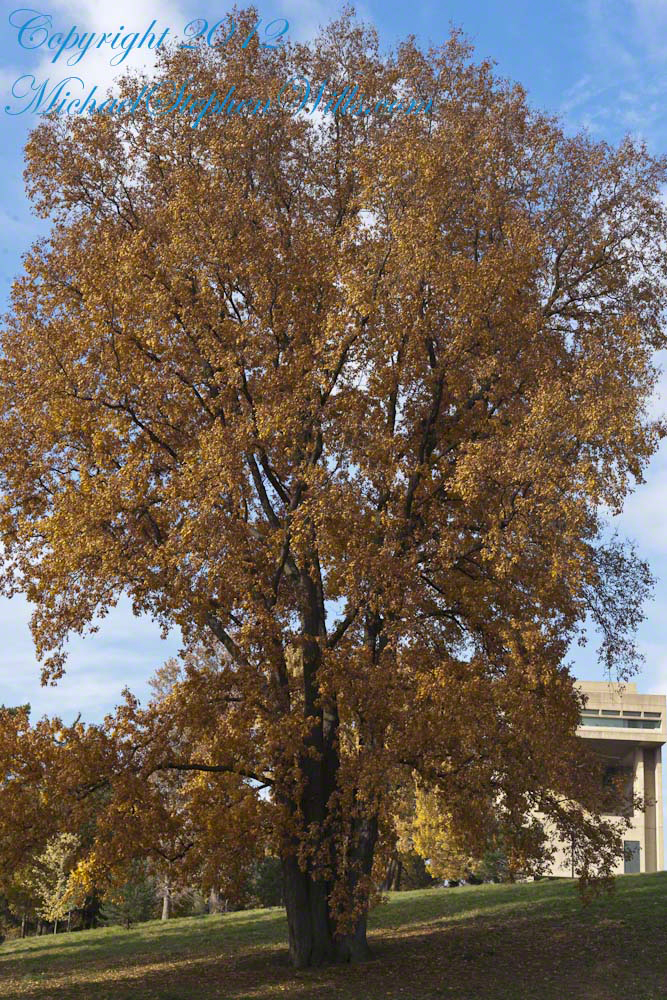
Autumn Stroll in Sapsucker Woods

a meditaton

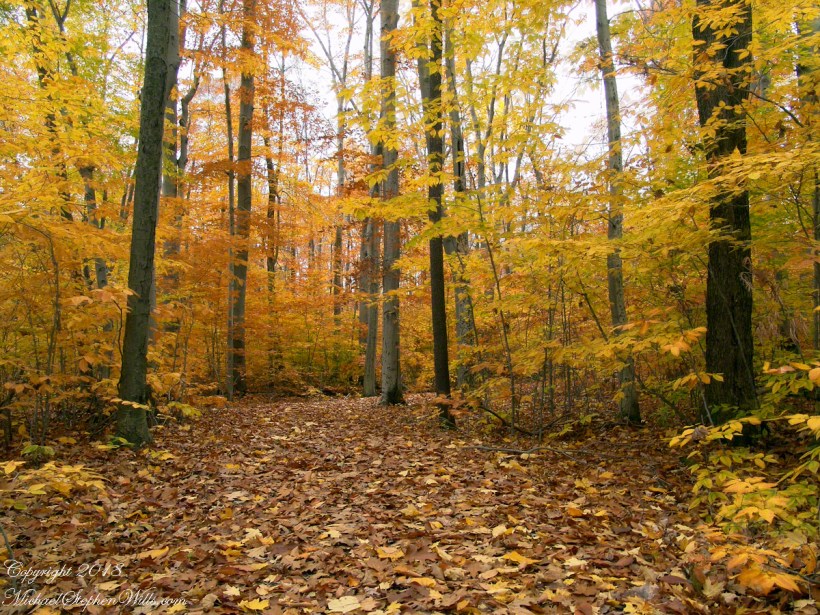
On Halloween morning 2004 I set out with a camera upgrade purchased spring of that year, a Sony “Cyber Shot, DSC-F828” with an inexpensive tripod. My photograph “Autumn Stroll in Sapsucker Woods”, the feature photograph and below, achieved prizes with the Photographic Society of American and a few sales of self-produced prints. It was an early success.

Click any photograph to visit my Online Gallery “Finger Lakes Memories.”
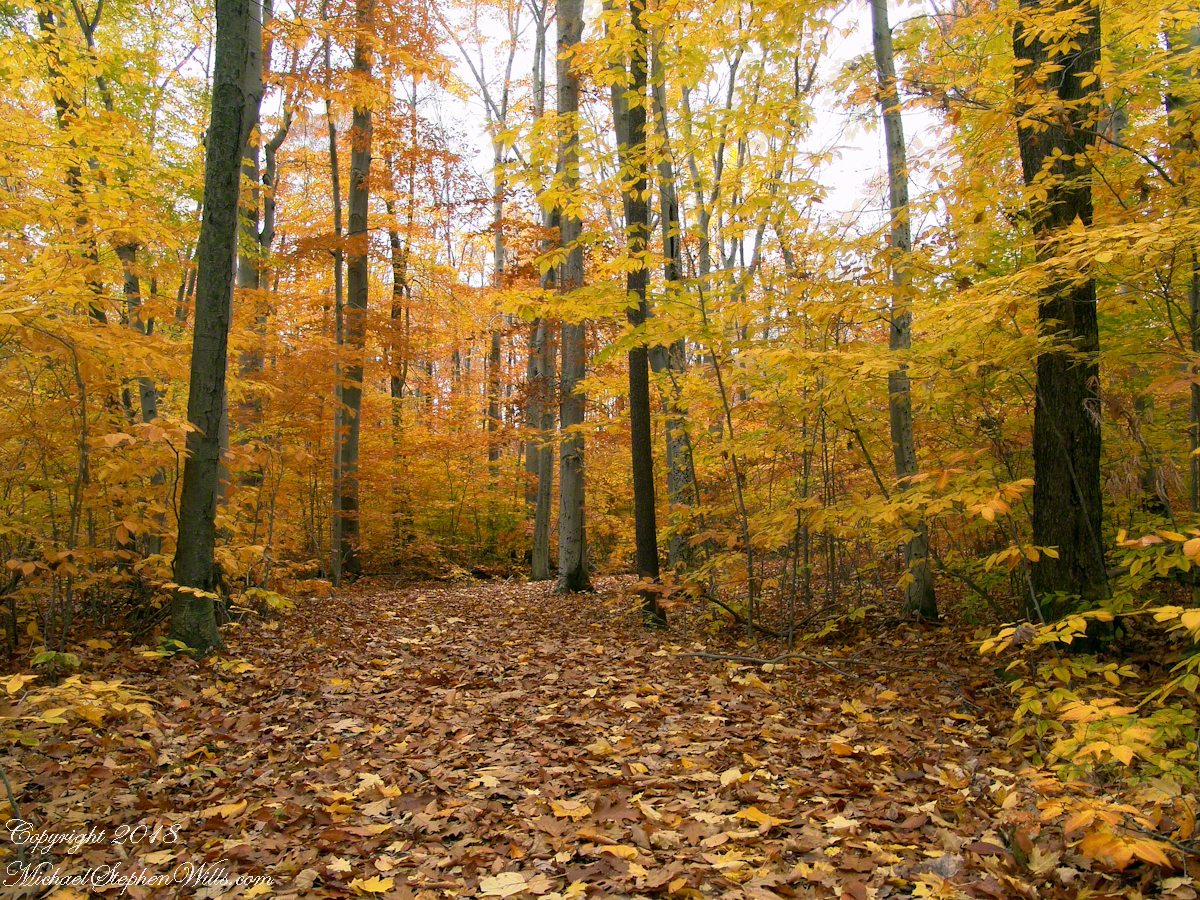
It is available on my Finger Lakes Memories online gallery where I provide recommendations for sizing, the best print medium with ideas for frame and matt.

The fall of 2005 I invested in a Kodak DCS Pro dslr-c and a Canon EF 50mm f/1.4 USM lens.  October 30, 2005, one day short of the 2004 Halloween shoot, found me driving down Fall Creek Road on a mission of revisiting Sapsucker Woods to possibly improve upon my offerings.

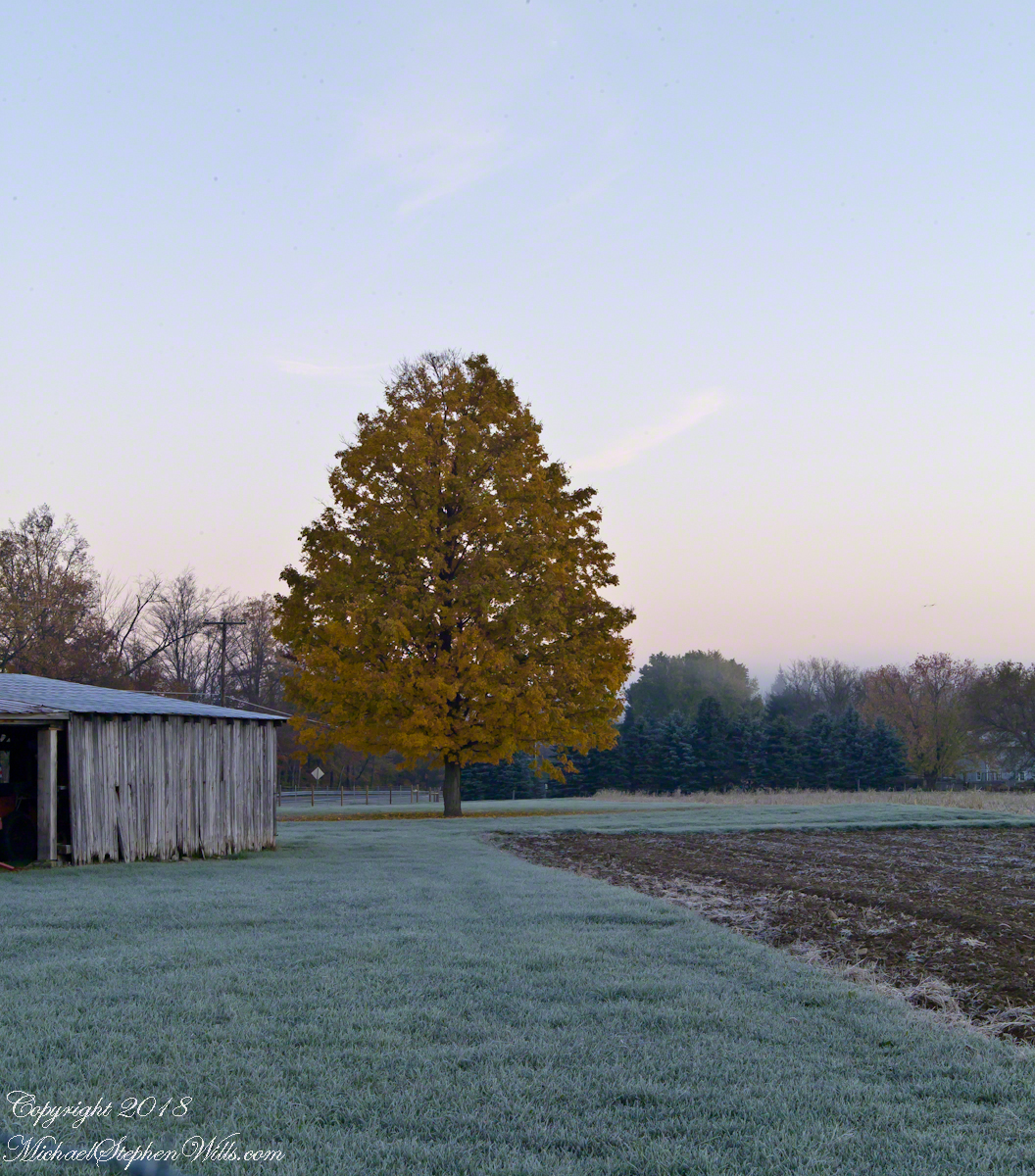
Over the years, travelling Fall Creek Road on my daily commute, I admired this well formed maple next to a farm field.  At 6:45 am the sun was about this rise, the frost limned grass not yet burned off.  This tree turned a bright yellow, here a green-yellow and dull.  The form of the tree is perfect.  I was never able to catch this at the right moment, it is still there and maybe I can time it this year during a pick-up of my grandson.  If I do, my intention is to climb the fence and use the 24 mm lens to capture the tree and shed with less sky (unless there are some dramatic clouds).  That day, I needed to make time for Sapsucker woods.
On site, thirty minutes later, as the leaves of the Fall Creek Road maple predicted, Sapsucker Woods foliage is behind last year’s by a week or so.  In “Autumn Stroll in Sapsucker Woods” the over story leaves have fallen and the understory is at peak.  Here, I believe the overstory is gone, the understory leaves are yellow-green.

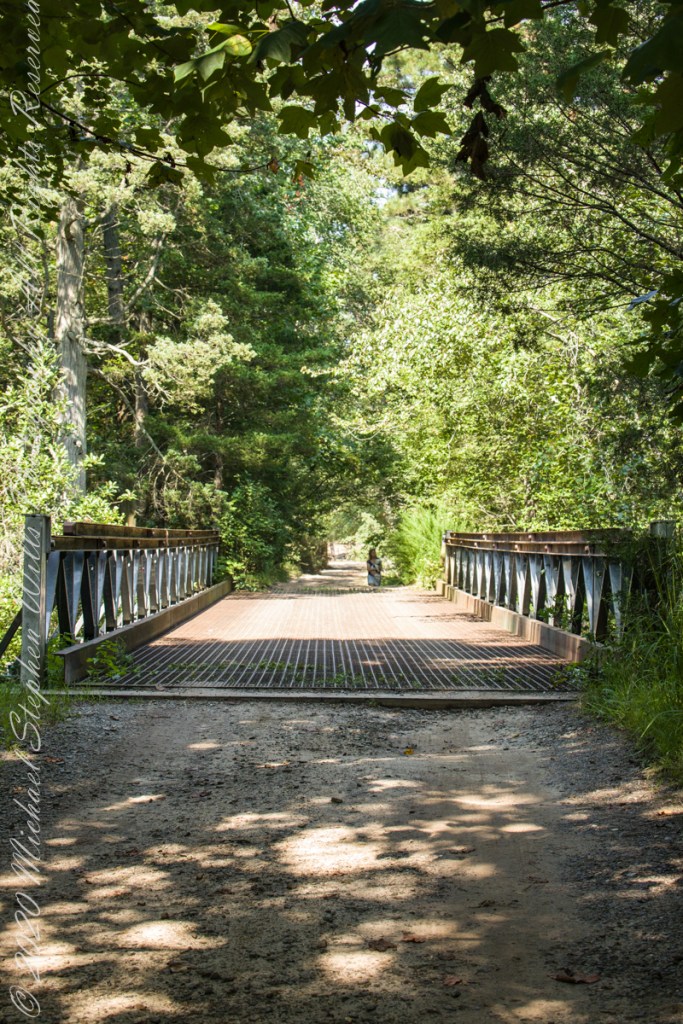
I carefully choose the sites and this one is a risen walk of boards.  In the nine years since, the walk as deteriorated and this scene will be different, possibly.
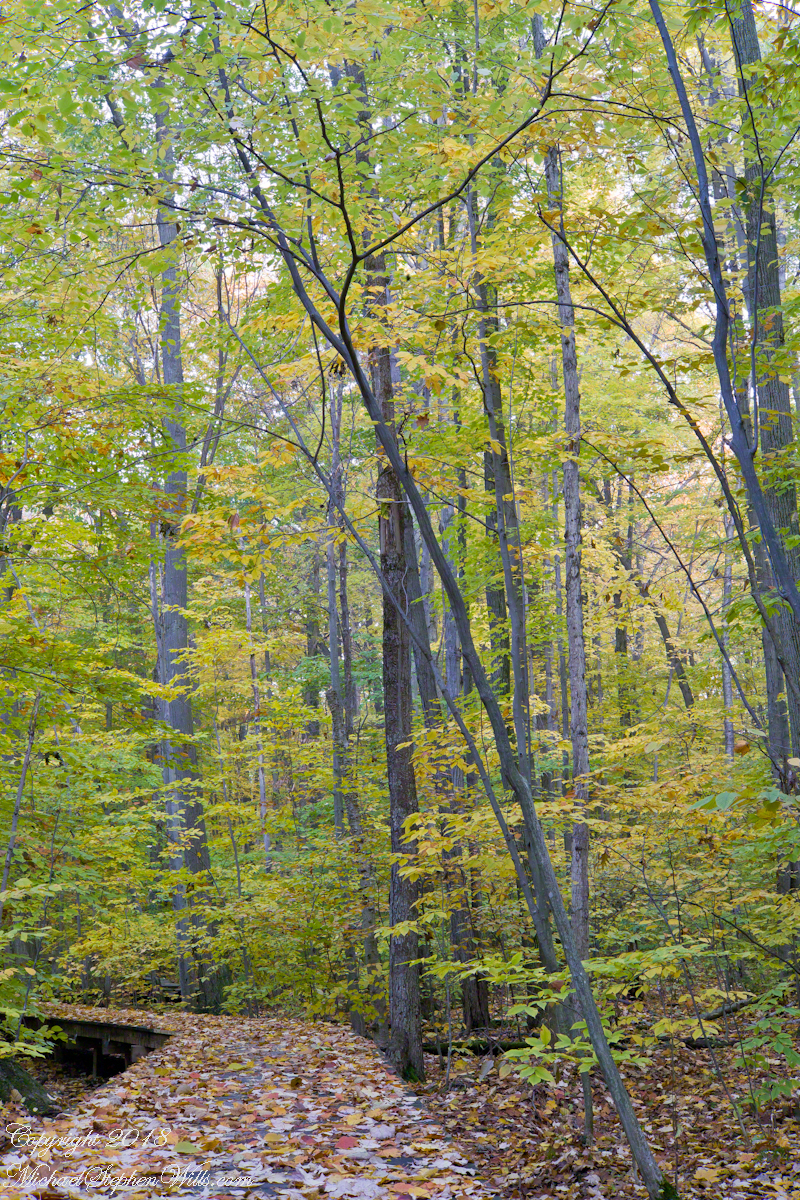
This is a match for the 2004 photograph as far as the camera position.  What I enjoy from the 2004 version, aside from the foliage, are the details of the fallen leaves taking up the foreground, a carpet filling the field to lead the eye up through the trees, path fading from view to the right.

This effect is not possible on the boardwalk, above.  With the fixed focus 50 mm lens it might be possible with effort.  Today, the 24 mm is my first choice to capture this effect.
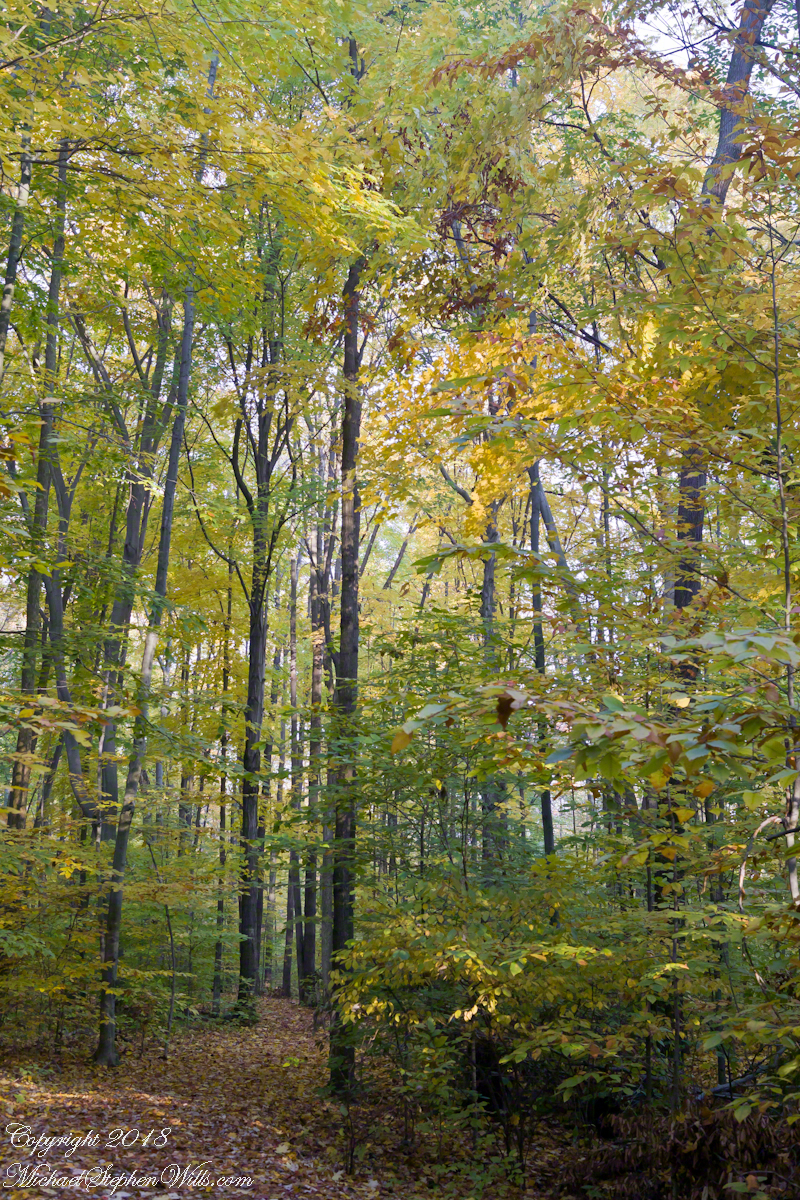
Here we can see the leaf carpet is possible, if the f-stop is higher to allow a crisp focus.  In this scene it is f2 because I happened upon a buck in a daze.  He was just standing there as I headed back to the car.  I did not risk changing out lenses to the telephoto, so I moved forward slowly.
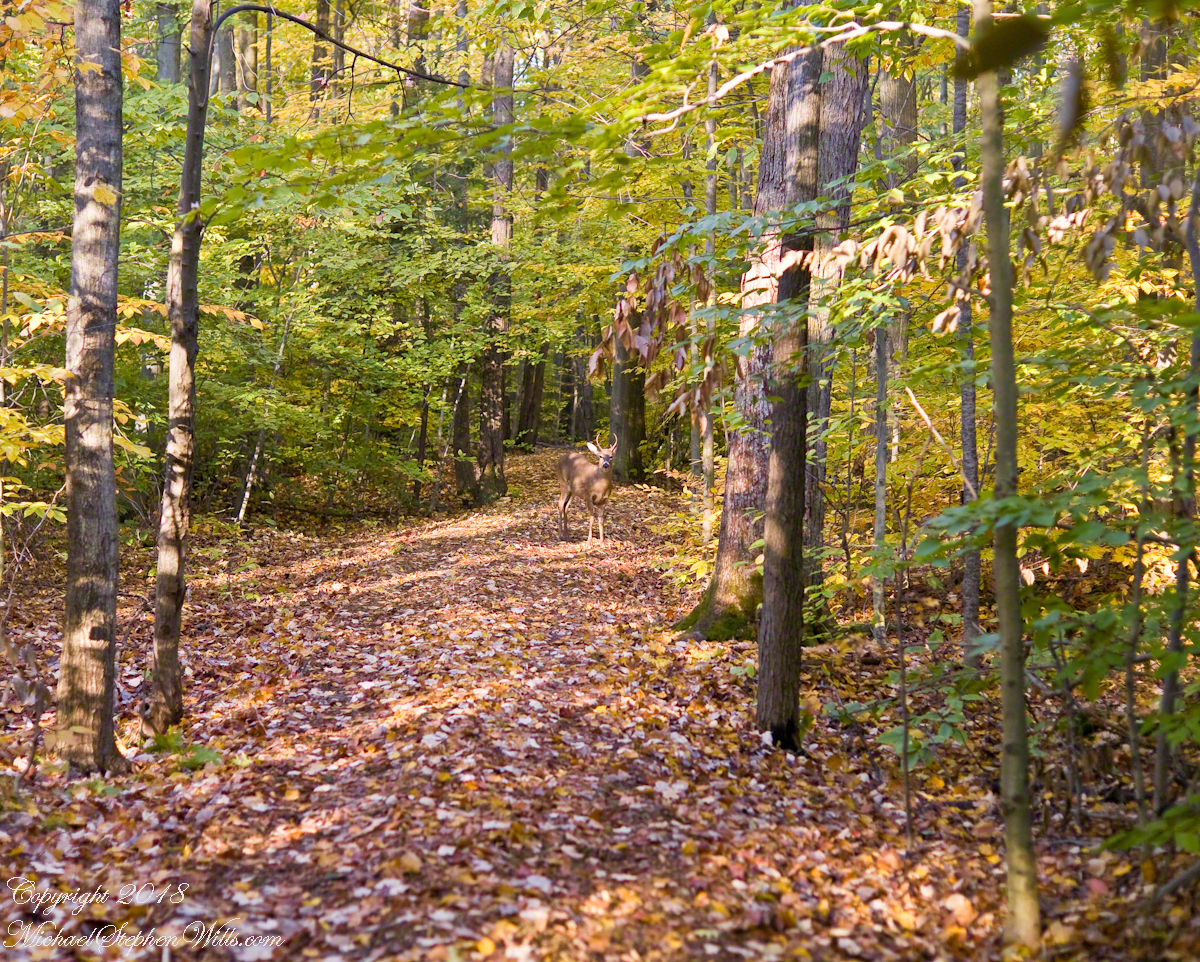
The best I did was this rear view as he looked backward.  Lack of flexibility is a draw back of a fixed-focus lens.
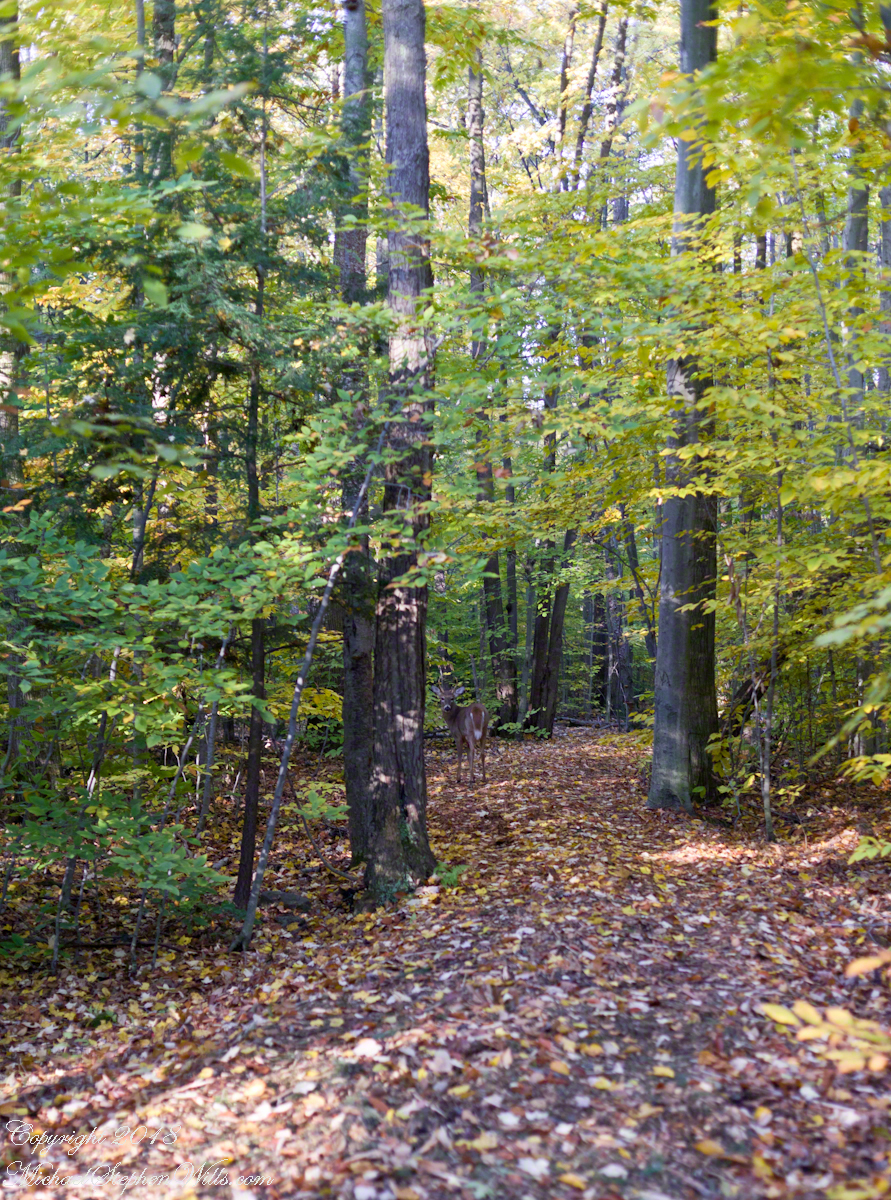
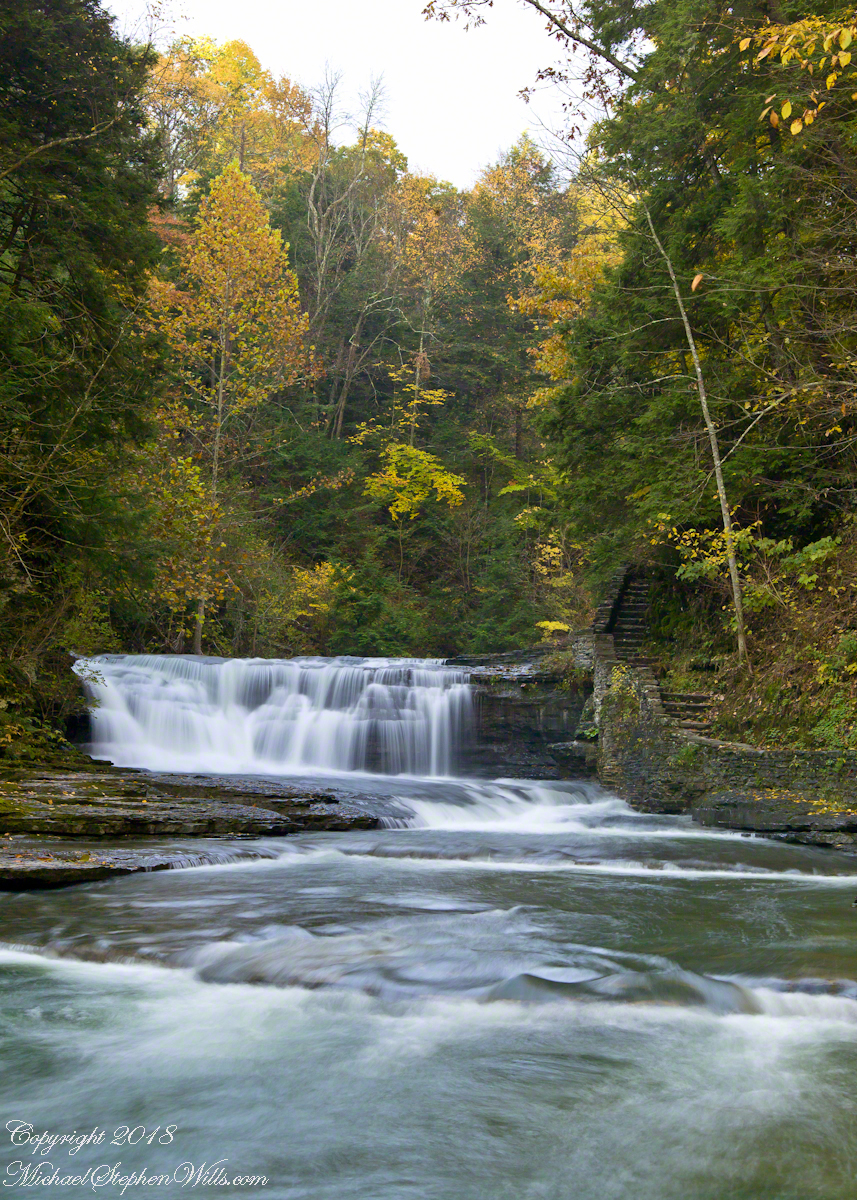
In 2004 my day concluded with Robert Treman State Park.  In 2005 the 50 mm fixed focus with a ND filter and tripod was in its element.  The sun is higher and overcast, one background tree is a peak foliage.  The moderate water flow and stair complete the effect.  This was my best work of that day.  I need to get this up on the “Finger Lakes Memories” gallery.
Other postings of interest. Click the link to go there.
“Last Sunlight” — the Gorge Waterfall
“Autumn Evening Hike Part 1 of 3”
Copyright 2018 Michael Stephen Wills All Rights Reserved

Zion Narrows X

Flash Flood Refuge?

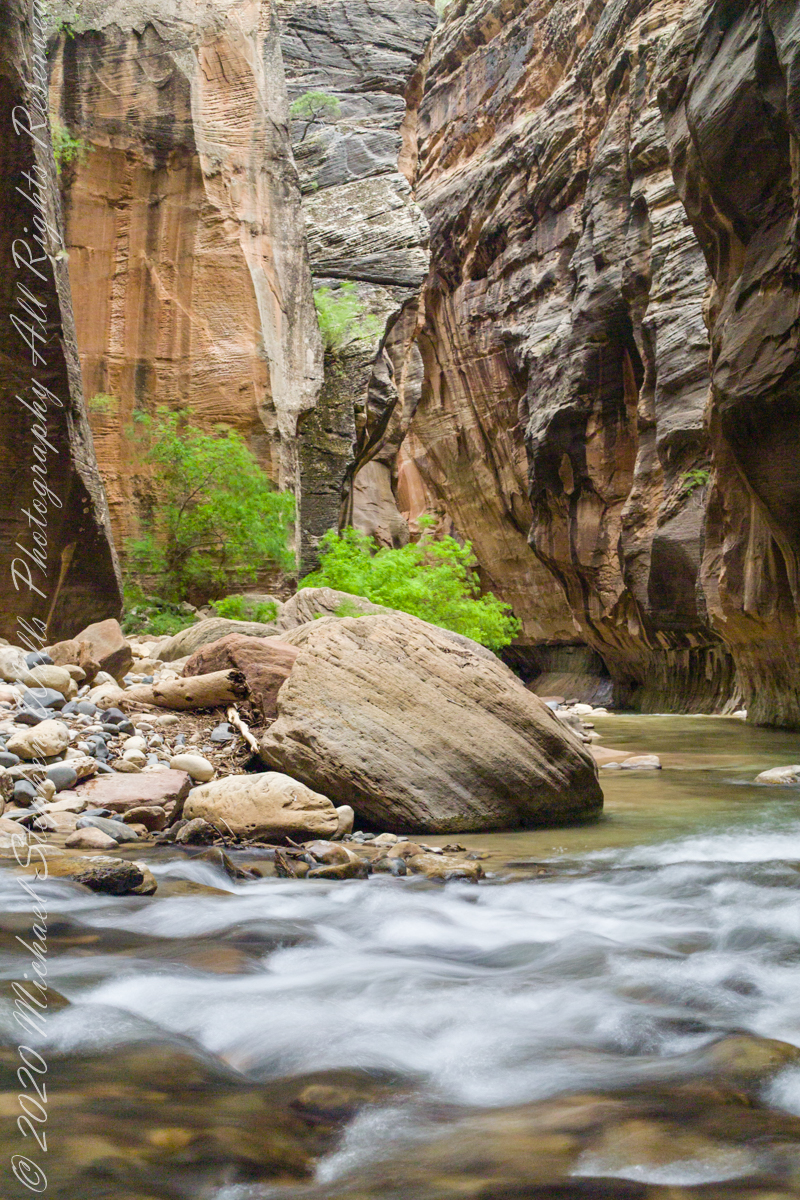
The first of three long exposures of the Virgin River from the Narrows on the way back to Pam. Earlier on Pam headed back, concerned about thunderstorms and the possibility of flash floods. I hung on, for the perfect photo. I came pretty close here, with the flowing water coming aound this outcrop of picturesque boulders, canyon turning sharply right up ahead.. The Narrows, Zion National Park, Springdale, Utah

Copyright 2021 Michael Stephen Wills All Rights Reserved

Antique Silo Apple Harvest

A Bumper Apple Crop

More from the day Pam and I walked up the hill from our Malloryville Mill House.

The setting sun works its magic on a century plus maple tree on an esker bank.  The glaciers deposited this esker, under the tree, when waters from the melting flowed under the ice to carve a tunnel later filled with glacier debris.

Click any photograph to visit my Online Gallery “Finger Lakes Memories.”

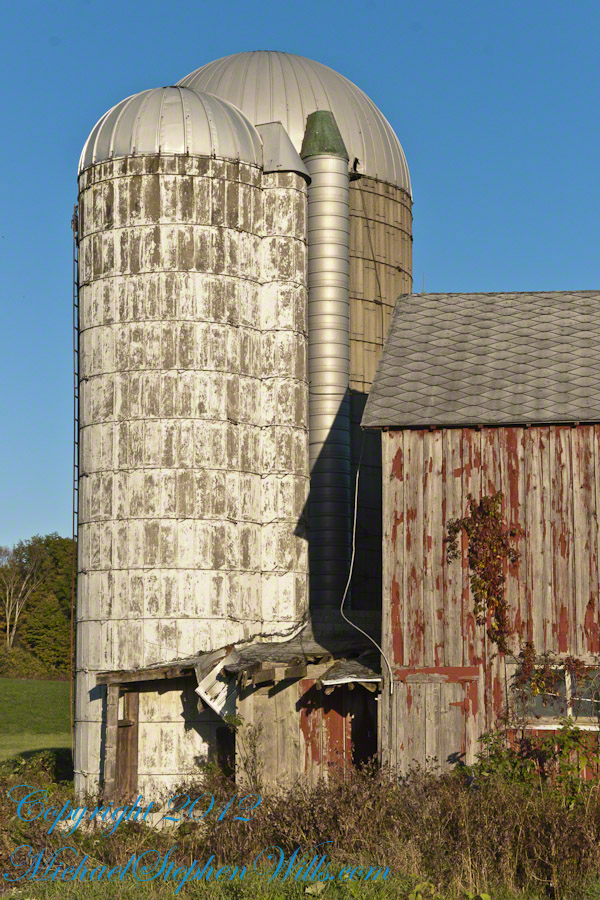
The light brings out the beauty of two this pair of silos from the early 20th century abutting an abandoned barn and active cornfields.

Pam is using my first camera, a Sony Mavica.  It writes to a 4.5″ disk that limits the number of exposures and I carried a number of the disks.  It has a decent variable lens.  We still have that camera.  These photos are from my Sony dslr Apha700 with a variable lens.

At that time, our three apple trees gave a bountiful harvest.  We spent two days making and canning apple sauce.  For some batches we’d grind in blackberries or concord grapes.  We enjoyed the work over the next year.  Our grandchildren loved that stuff.

These apples hung from a tree of the farm house next to the abandoned barn.  A young family lived there, their toddler daughter recognized us from other walks and came over for a “hello”.

Other postings this Harvest View evening.  Click the link to go there.
“Celestial Geese”
“Harvest Views”
Copyright 2018 Michael Stephen Wills All Rights Reserved

Through A Glass Darkly

Visual Spirit

The title is a fragment from the thirteenth chapter of the First Epistle to the Corinthians.

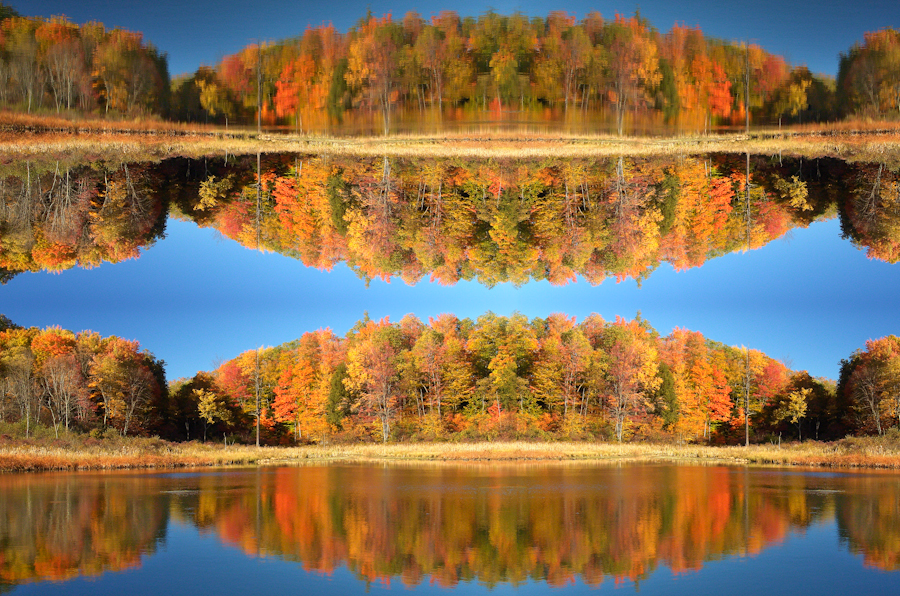
During brief moments of the upstate New York autumn season perfect images are mirrored in quiet pond waters.

It this case the effects lasted a few seconds.

The site of this photograph, McLean Bogs, is part of Cornell Plantations. McLean Bogs is known for its biodiversity and is reserved for research.

This work is a composite of four images, the mirror image of each of two photographs. I print it on a stretched canvas 5 feet wide by 4 feet high.

Click the photograph to visit my online gallery “Memories Dreams Reflections”
Copyright 2021 Michael Stephen Wills All Rights Reserved

Blessed Lights

9/11 Remembrance

I choose to remember September 11, 2001 with the IPhone 7 video of September sunlight shining through clear water, set to the music “Blessing.”

Click on thenWatch on YouTube to open a new tab and a better viewing experience.

The post header is sunlight shining through the clear water of Reavis
Creek, Superstition Wilderness, Arizona.

Copyright 2021 Michael Stephen Wills All rights Reserved

The Fulacht Fiadh: Insights from Drombeg’s Huts

Two Huts and a Hearth

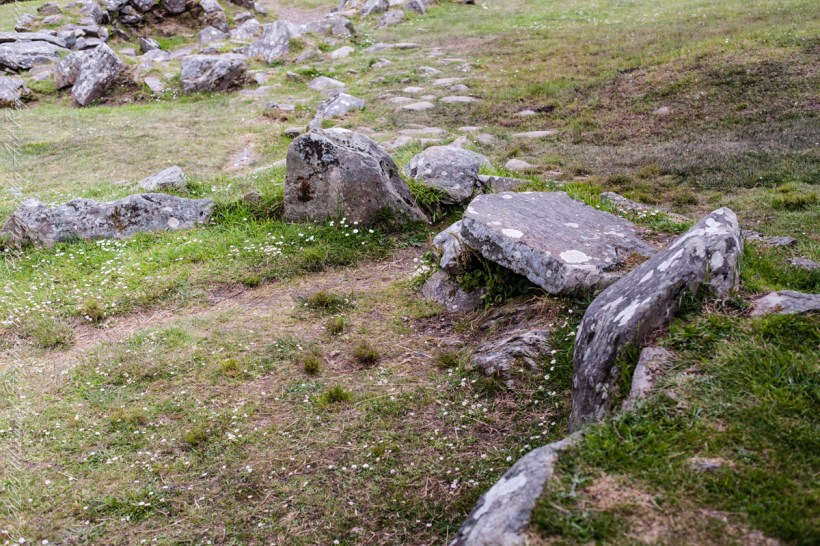
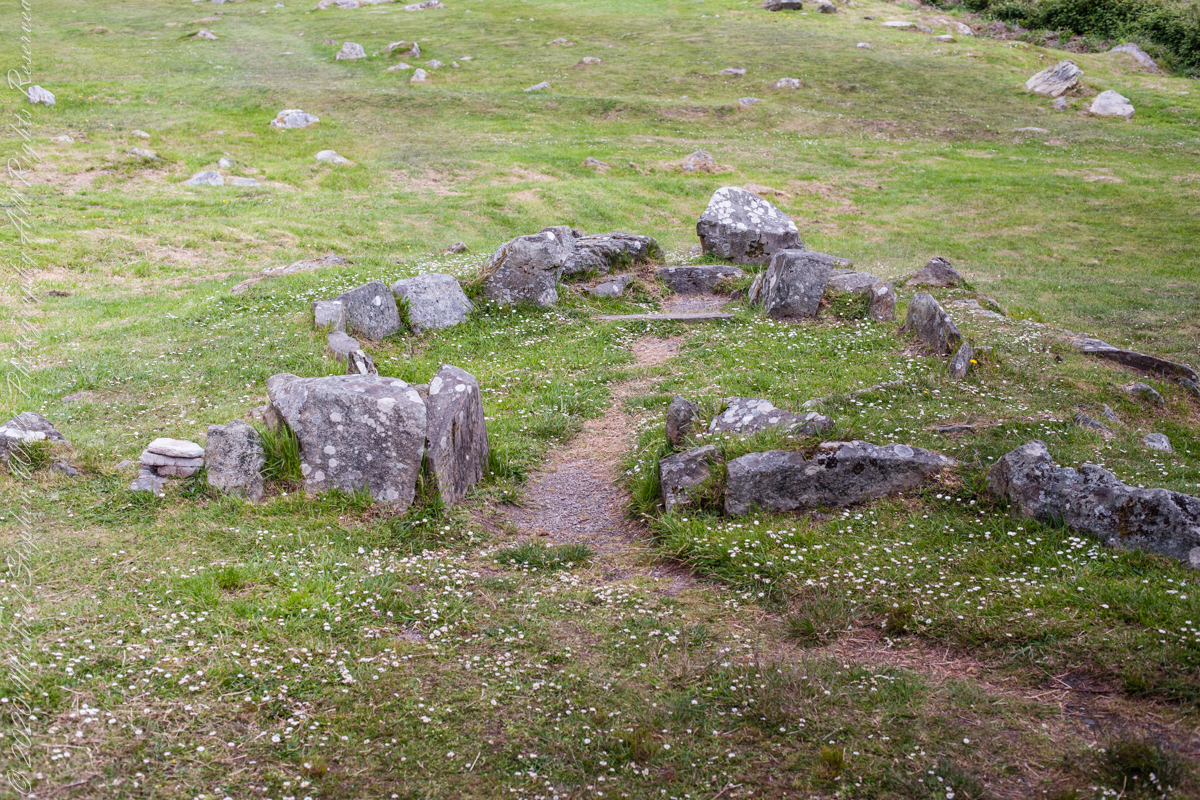
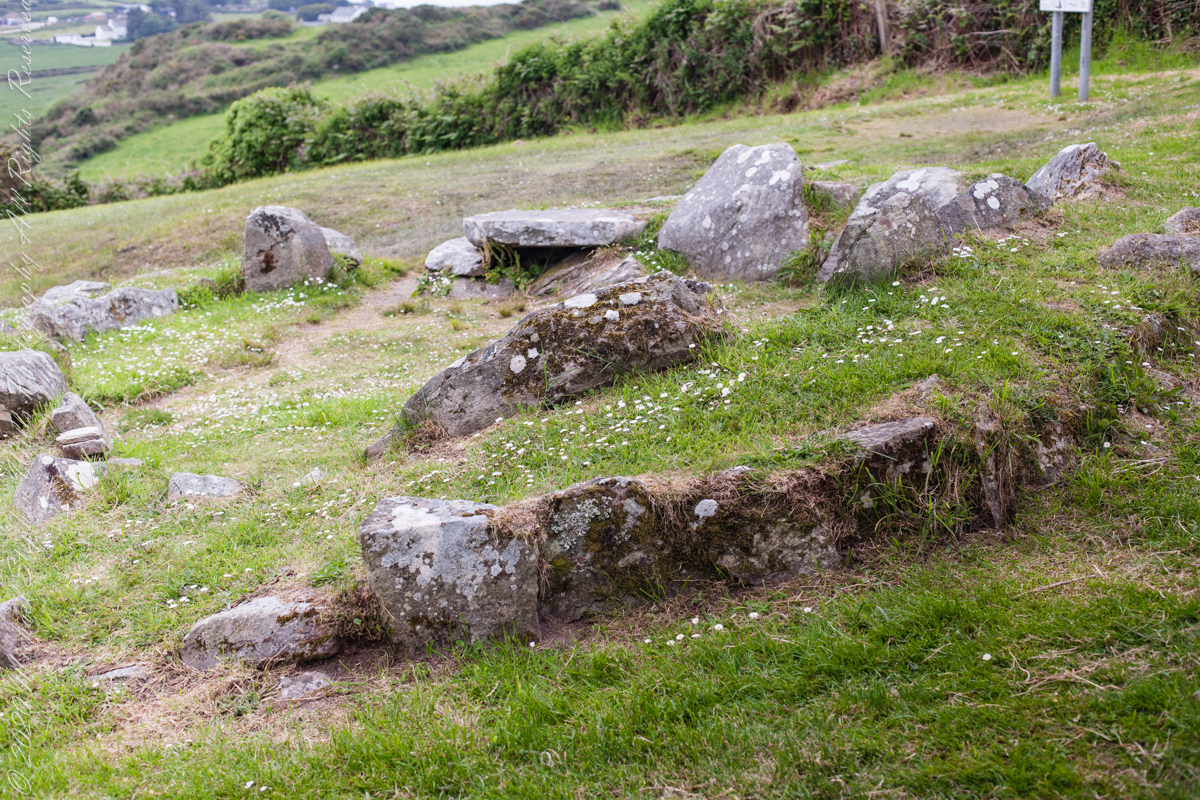
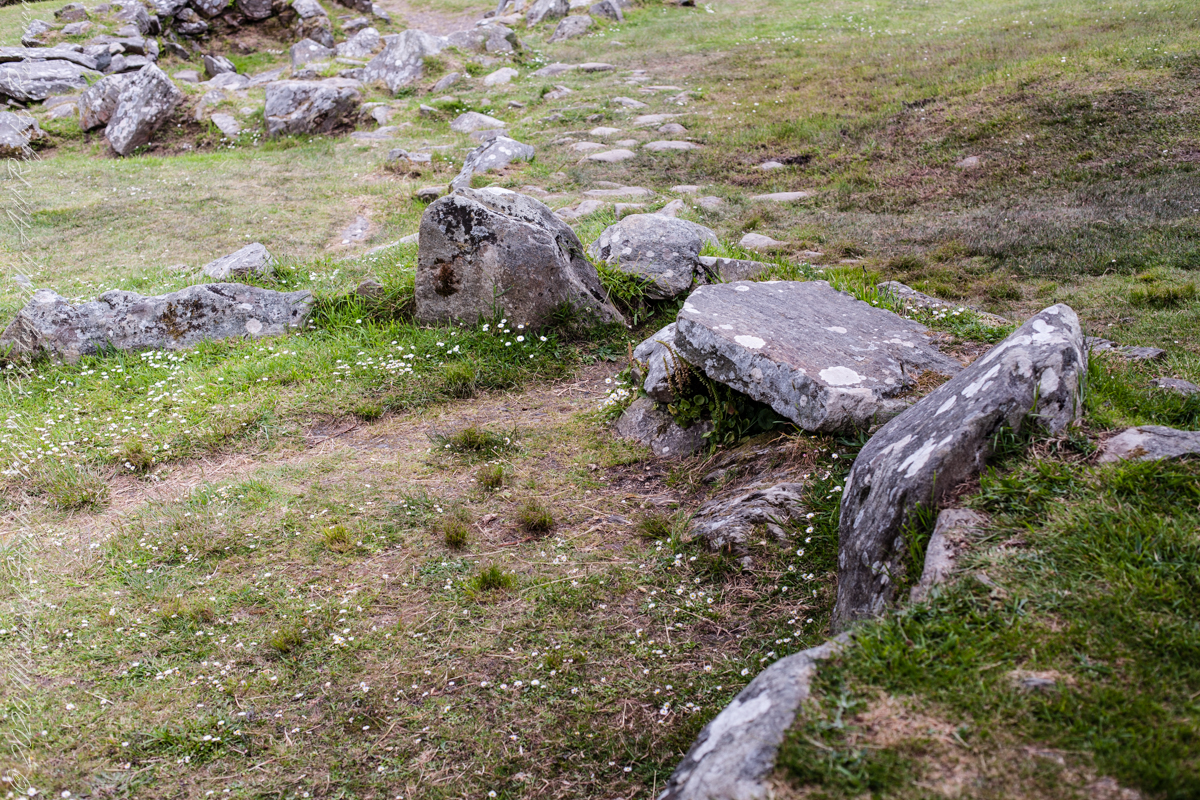
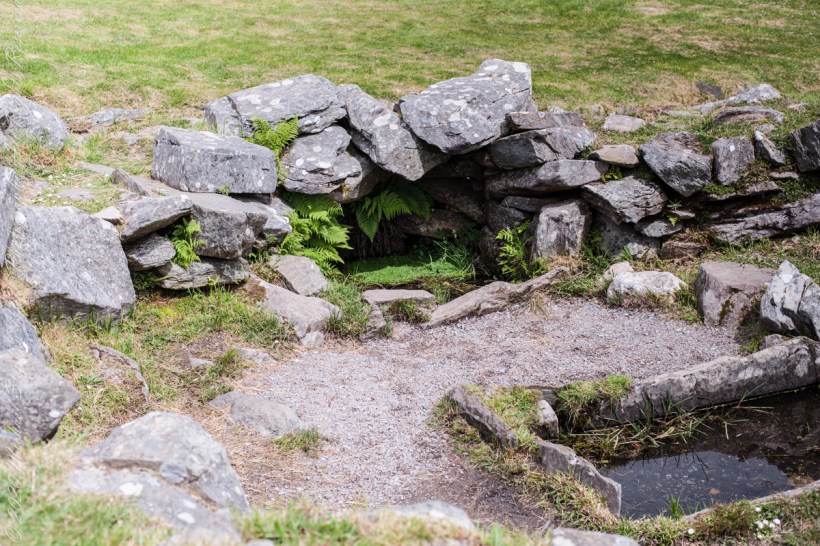
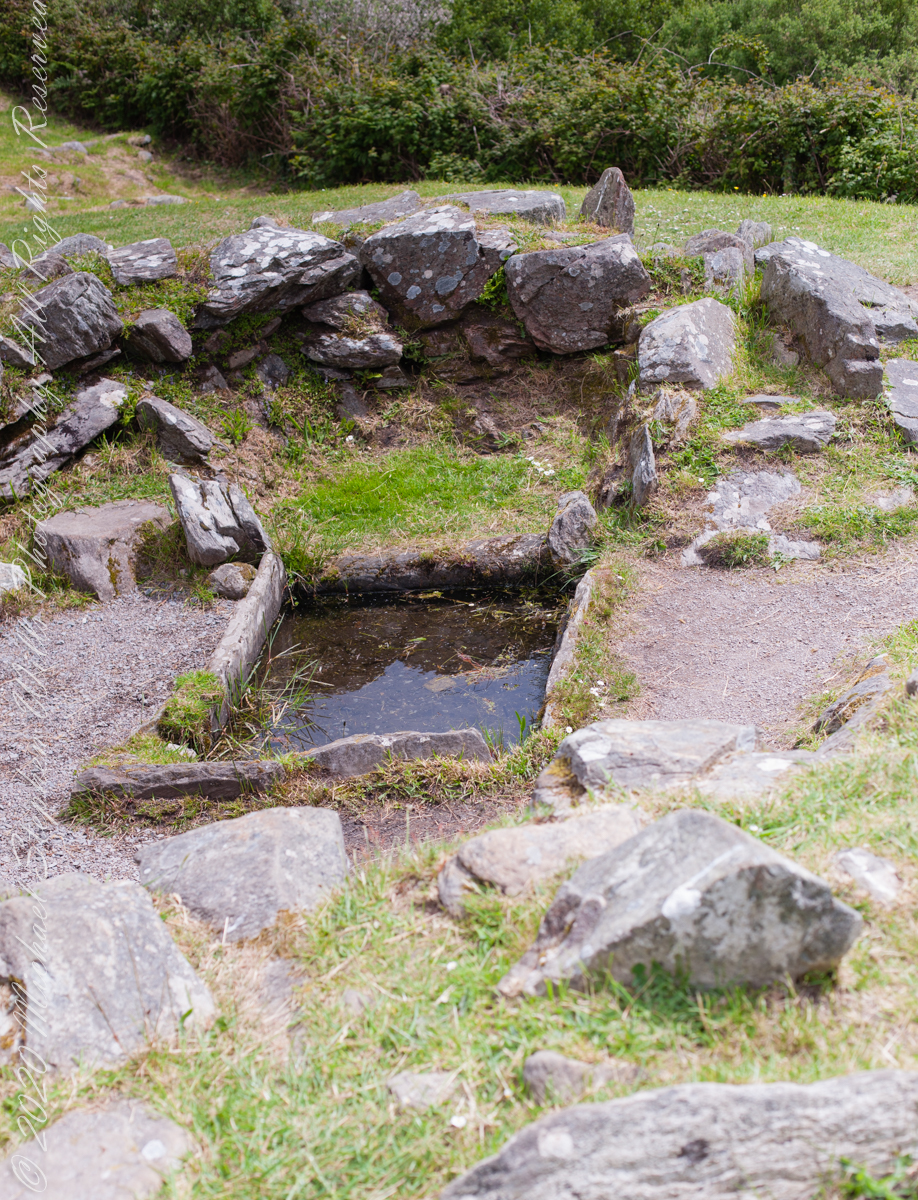
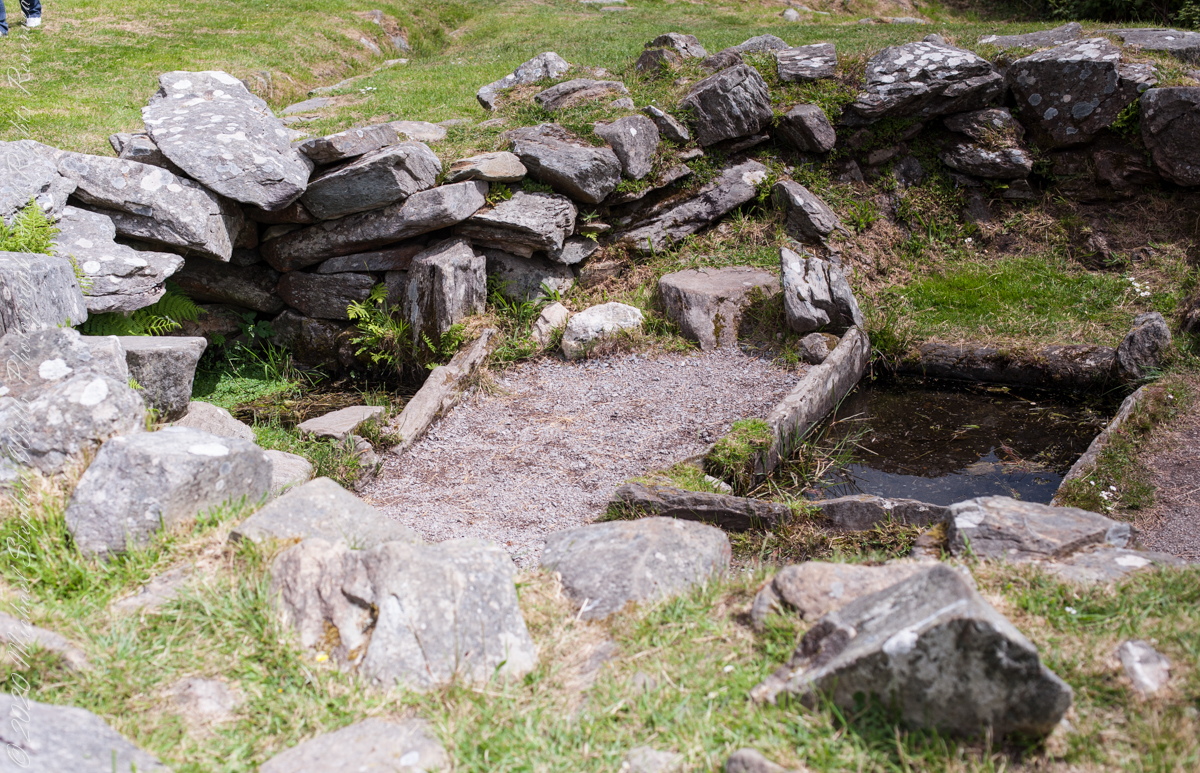
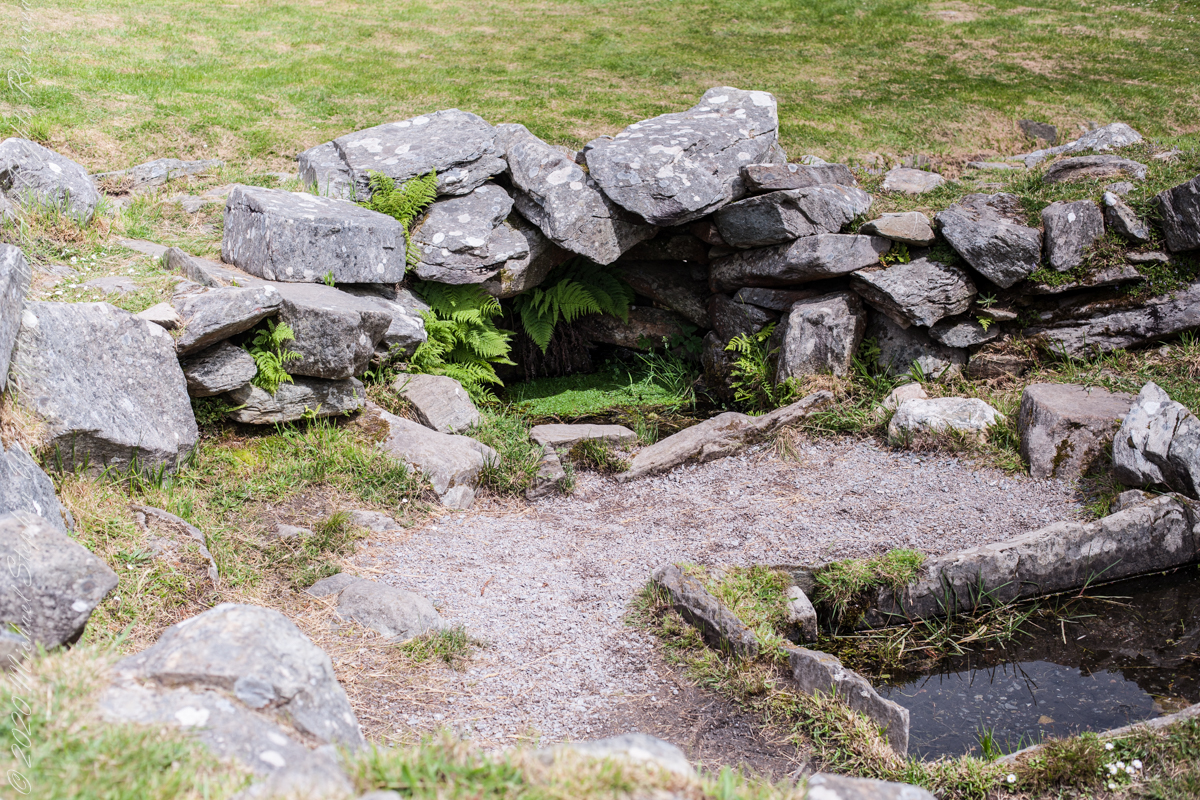
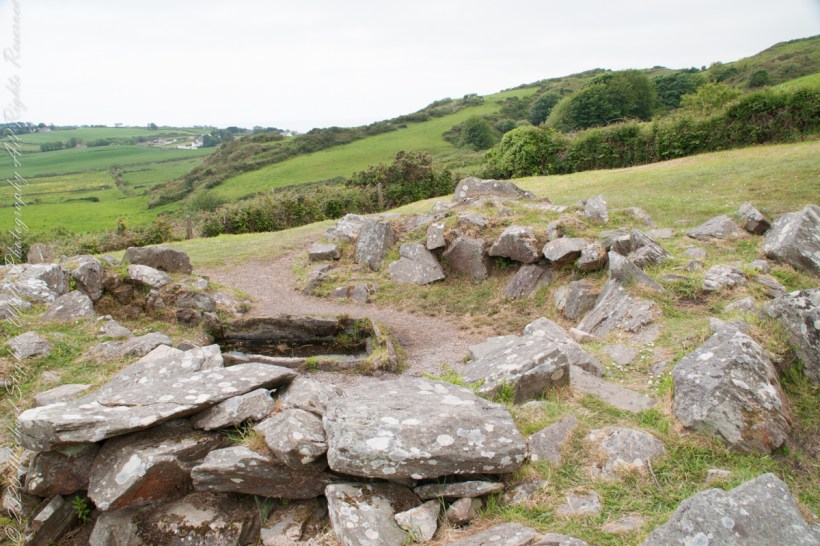
Drombeg has two huts adjoining the Fulacht Fiadh with a connecting path.

Click pic for a larger view, in a new tab. When using WordPress Reader, you need to open the post first.

Hut B incorporates a rock lined hearth that possibly served as an oven.

Click me for the first post in this series.

Enter your email to receive notification of future postings. I will not sell or share your email address.

Fulacht Fiadh: Ancient Secrets Revealed

Survey of elements

The previous post was an overview the Fulacht Fiadh associated with the Drombeg Stone Ring of County Cork, Republic of Ireland.

In this post, we explore the elements of these fascinating remnants from the late Bronze Age, over 3,000 years ago.

Click pic for a larger view, in a new tab. When using WordPress Reader, you need to open the post first.

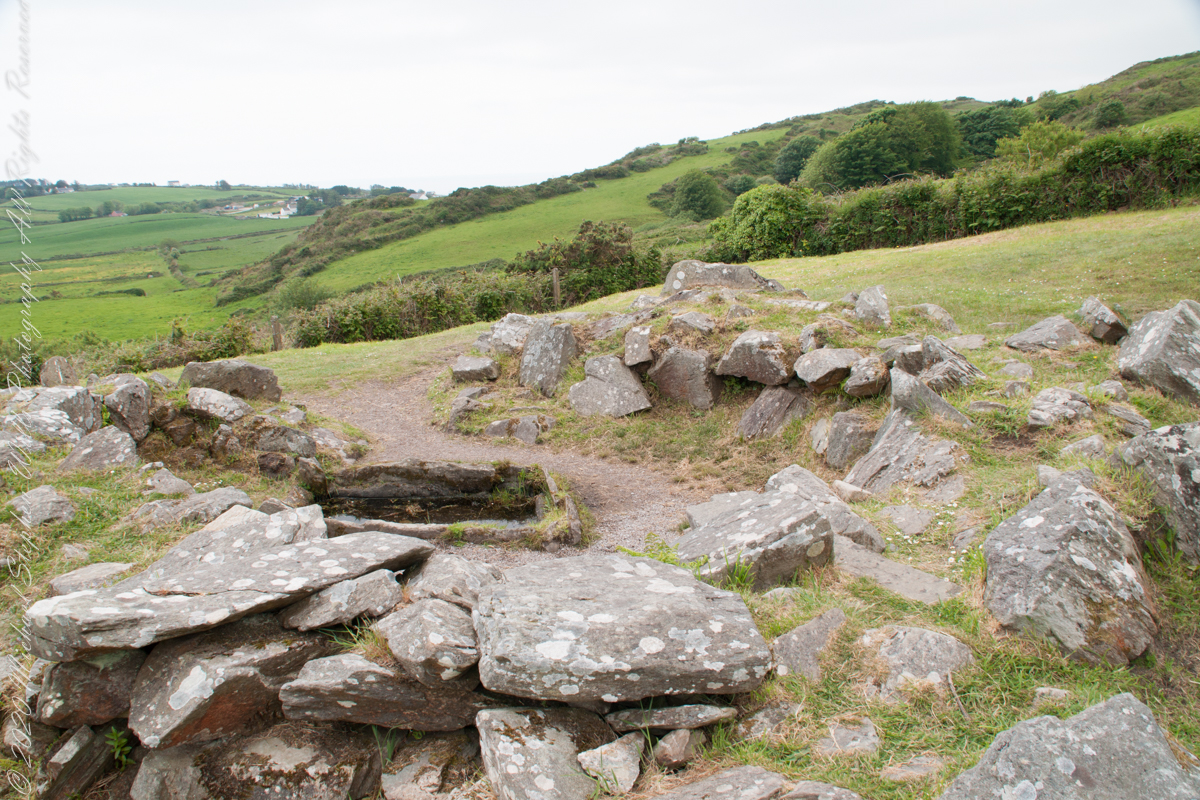
It is amazing the rock wall survived human need for the valuable wall stones. Portions were stolen, though for the most part we can see enough to understand.

Click Me for the next post in this series

Enter your email to receive notification of future postings. I will not sell or share your email address.

Drombeg Fulacht Fiadh: Insights into Bronze Age Cooking

Drombeg’s Fulacht Fiadh, a Bronze Age cooking site, used heated stones to boil water for cooking, dyeing, and brewing.

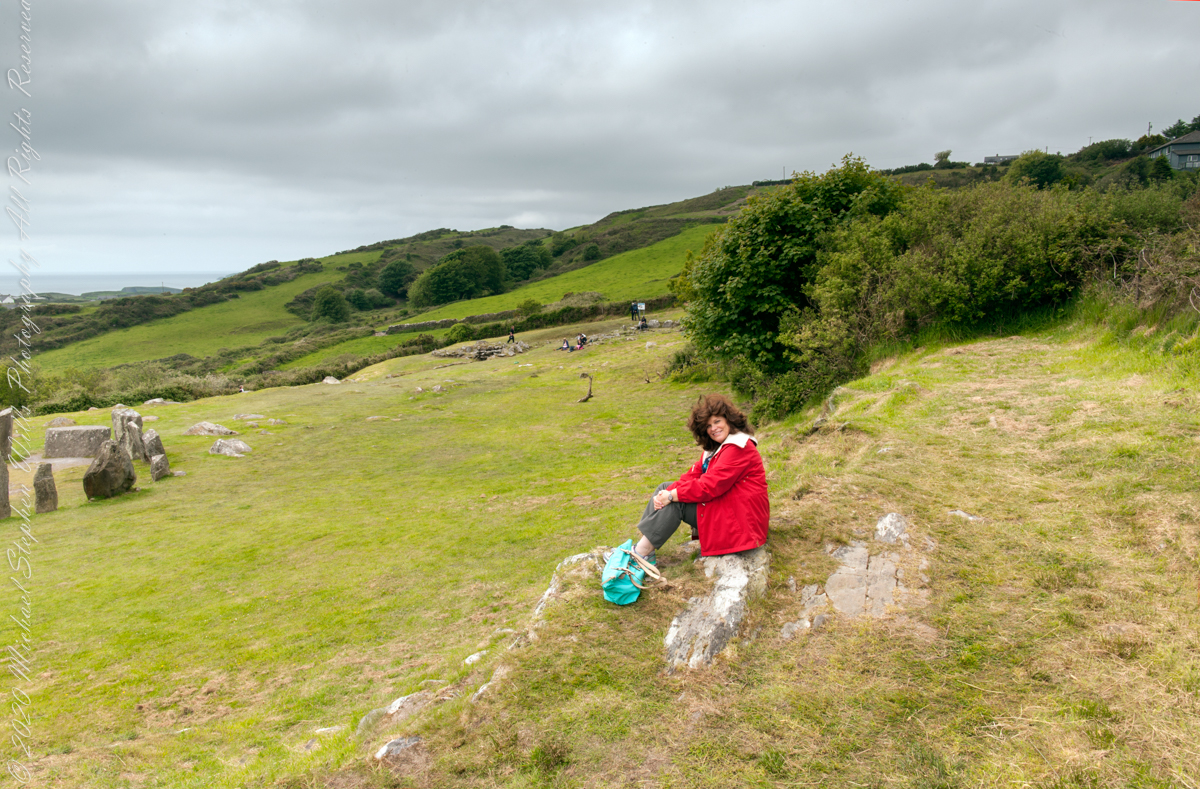
Notice the groupings of visitors in the middle distance of Pam’s photograph, gathered around remains of late Bronze age elements.

Click pic for a larger view, in a new tab. When using WordPress Reader, you need to open the post first.

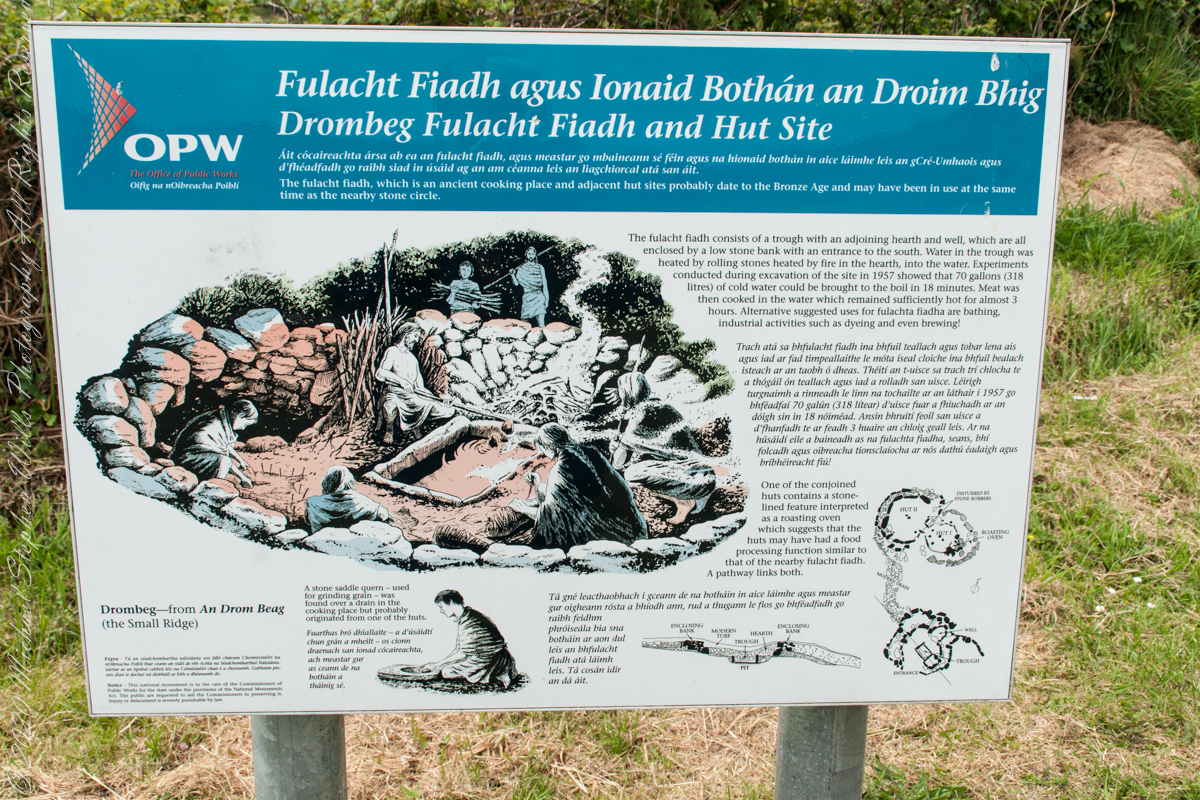
There is a sign to explain…

In modern Ireland the word fulacht means barbeque and the archeological sites with characteristics in common, such as a water source, health and pit, are named “Fulacht fiadh,” derived from Old Irish sources. In all cases the link is to some kind of preparation activity involving heat and moisture. Found throughout Ireland, Great Britan and the Isle of Man where the sites are called burnt mounds. The Drombeg Fulacht fiadh exemplifies all characterists. There is a horseshoe shaped rock walled/banked, now a remnant, enclosure, entrance to the south. In the middle is a pit, at Drombeg lined with rock, a spring on one side, a hearth on the other. A stone saddle quern, used for grinding grain, was nearby Adjacent huts, rock walls with post holes, do not suggest a settlement, but rather a temporary use.

Click Me for the next post in this series

Enter your email to receive notification of future postings. I will not sell or share your email address.

Cedar Water

“Tree of Life”

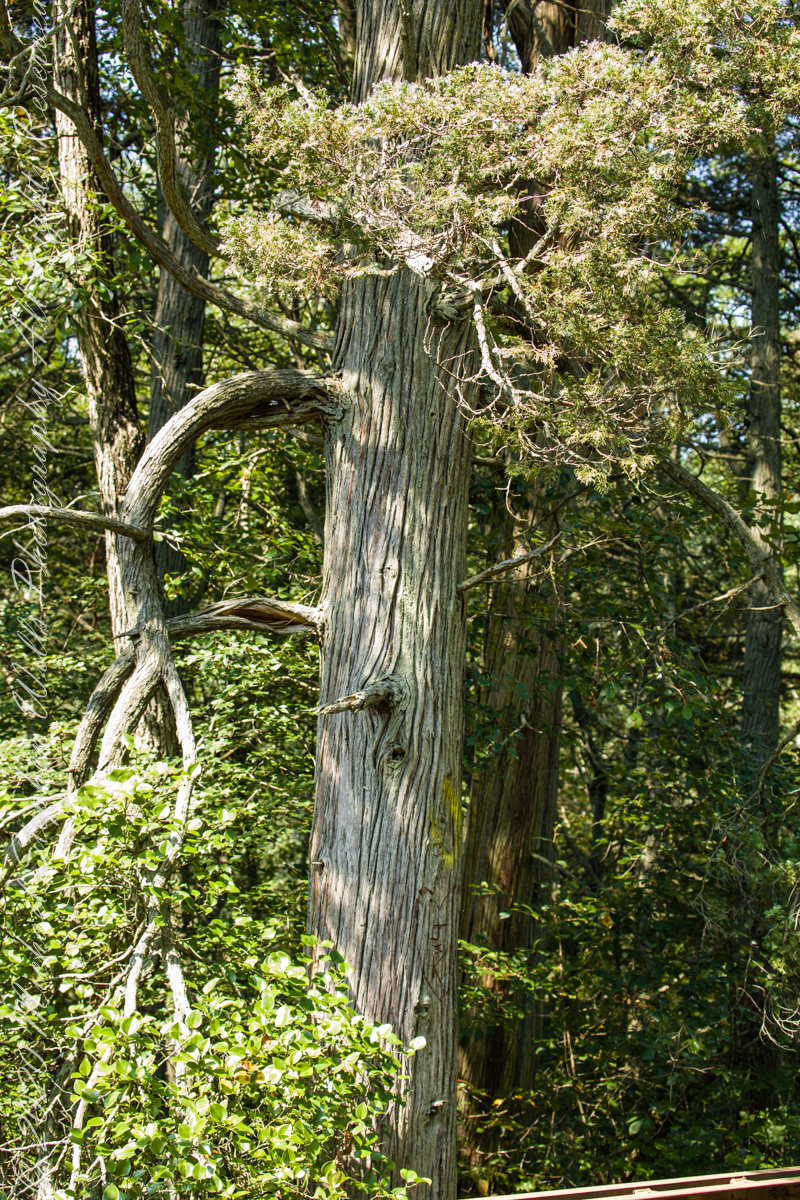
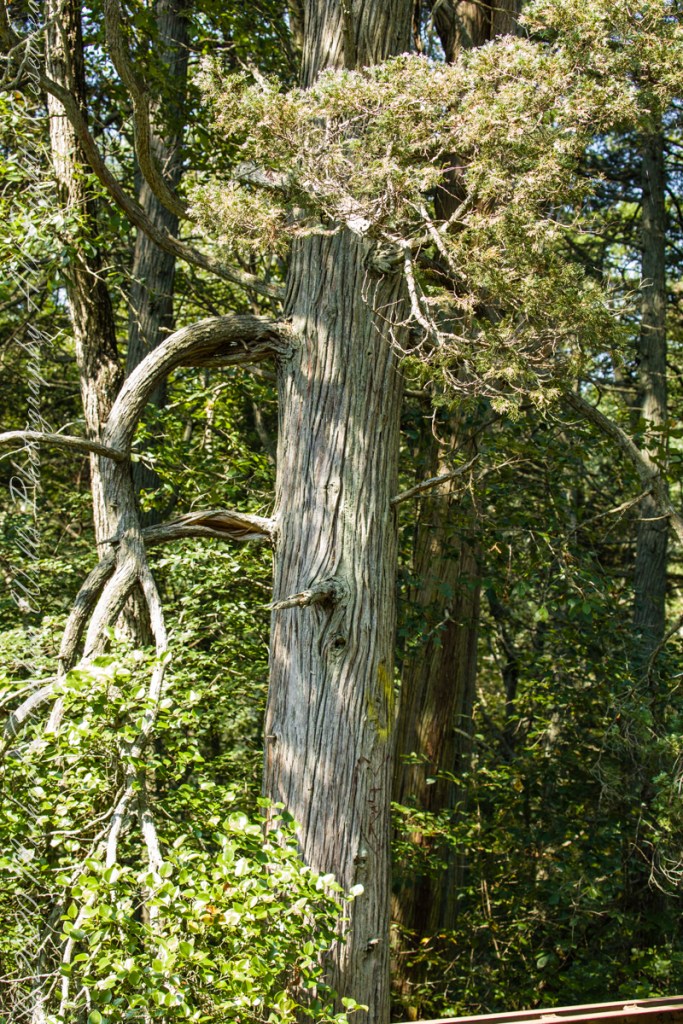
In my last Pinelands post, “cedar water” was featured. This post is a exploration of the “cedar” in “cedar water.”

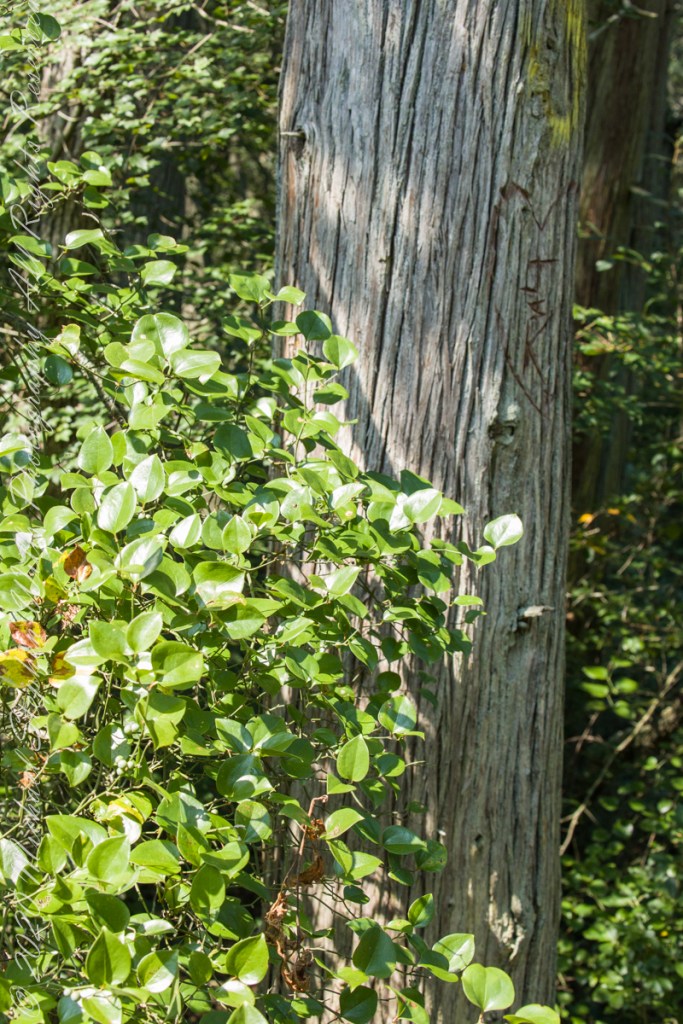
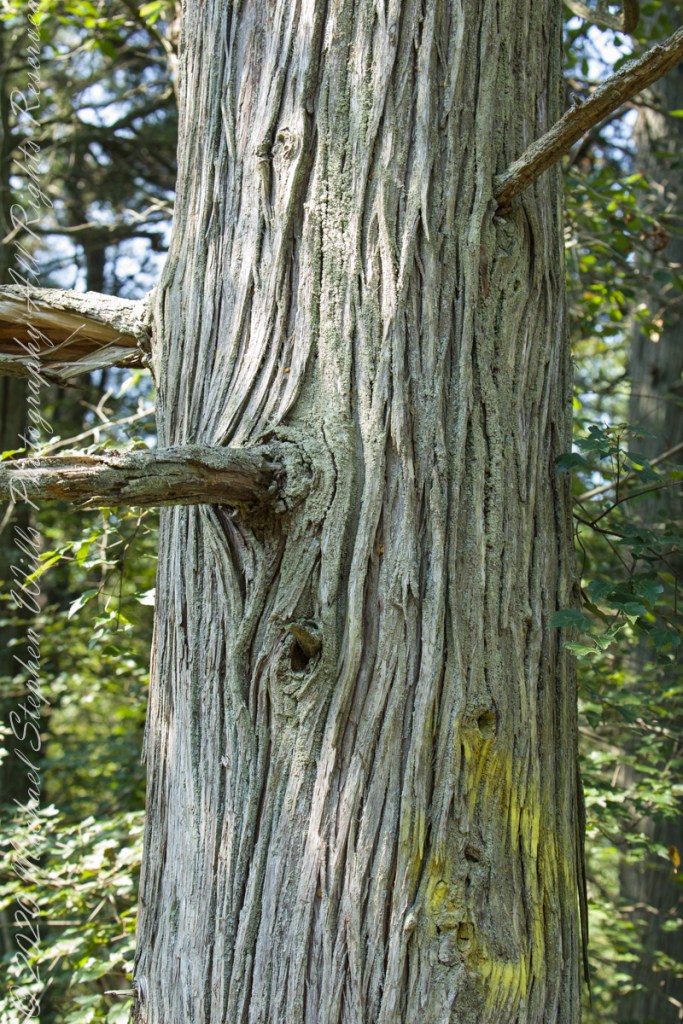
White Cedar, also known as Swamp Cedar, is a water loving tree seen here to the right of Quaker Brider, Wharton State Forest.

Click pic for larger view in a new browser tab. If you are in WordPress Reader, open the post to use this feature.

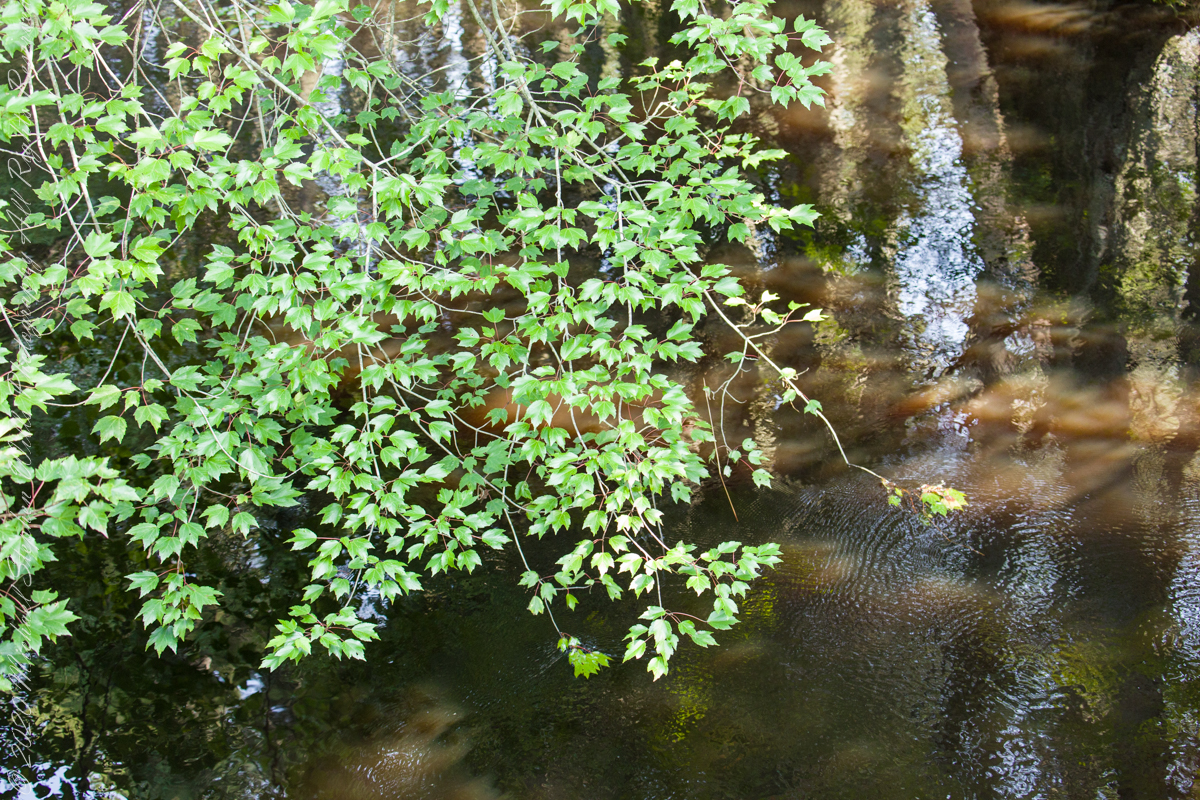
“Cedar water” is the dark, tea like, flow of Pinelands rivers colored by vegetable tannins.

White Cedar thrives along Pinelands waterways, lending color to the “cedar water.” 18th Century sea captains favored cedar water for long voyages, famours for staying fresh far longer than other waters. Also known as arborvite, “tree of life”, for the medicinal properties of the bark, well known throughout Native America.

Click me for another take (post) on this view.

Copyright 2021 Michael Stephen Wills All Rights Reserved

Libe Slope Autumn

A Magnificent Display

Libe Slope

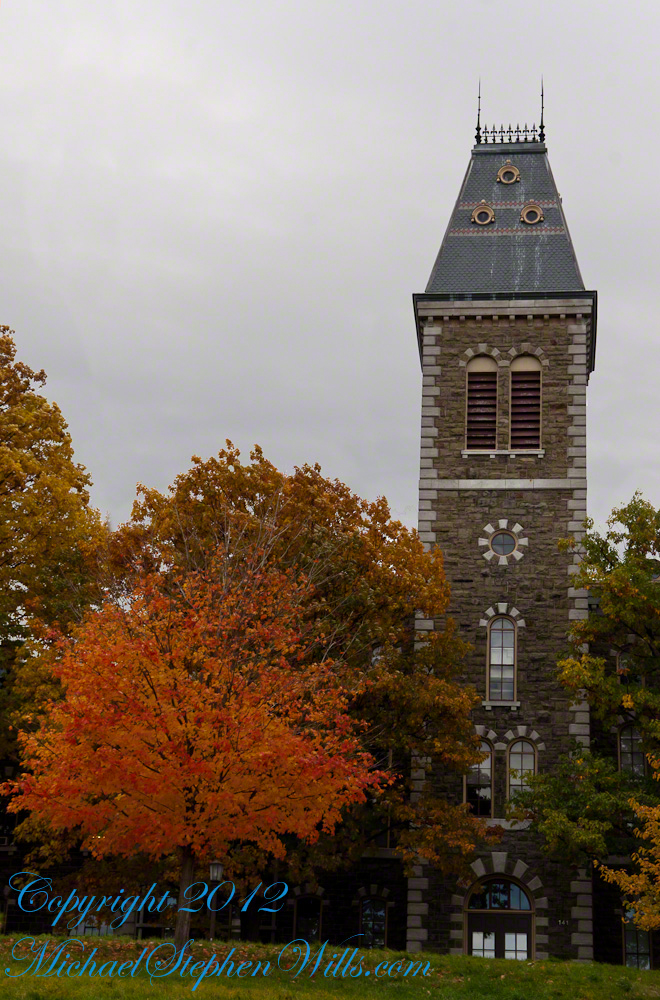
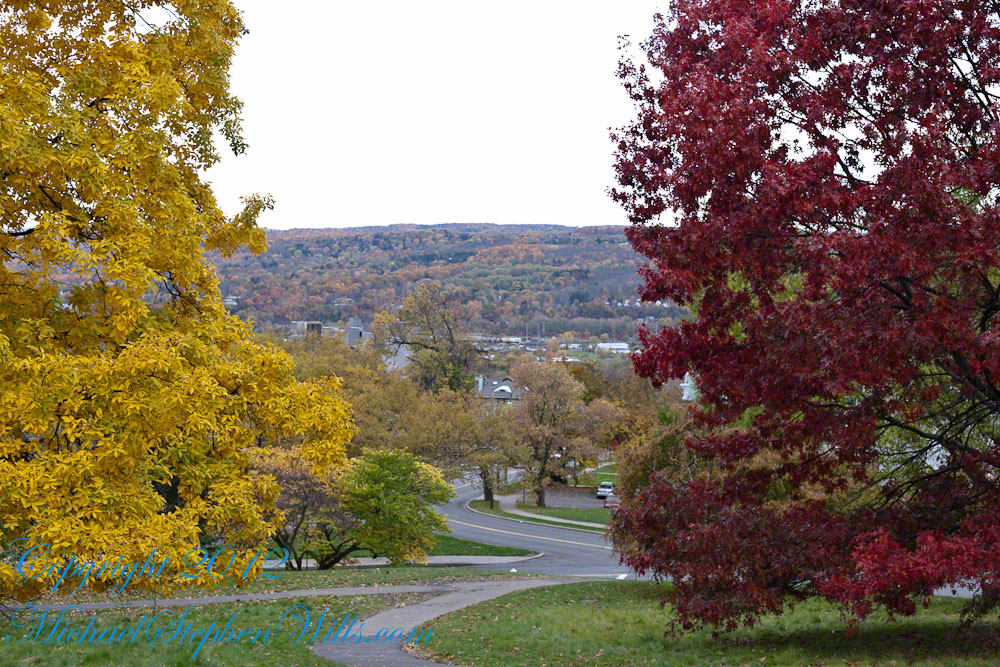
Libe Slope is between the West Campus and Quadrangle / Libraries.

Click to view my Finger Lakes Memory gallery
Cornell University is on a west-facing hill above Cayuga lake.

Besides the exercise of walking the 18 degree incline several times each day, Cornell students and alumni remember The Slope for autumn color.


Wonderful Flow of Limbs among Gold

Click to view my Finger Lakes Memory gallery

Hickory

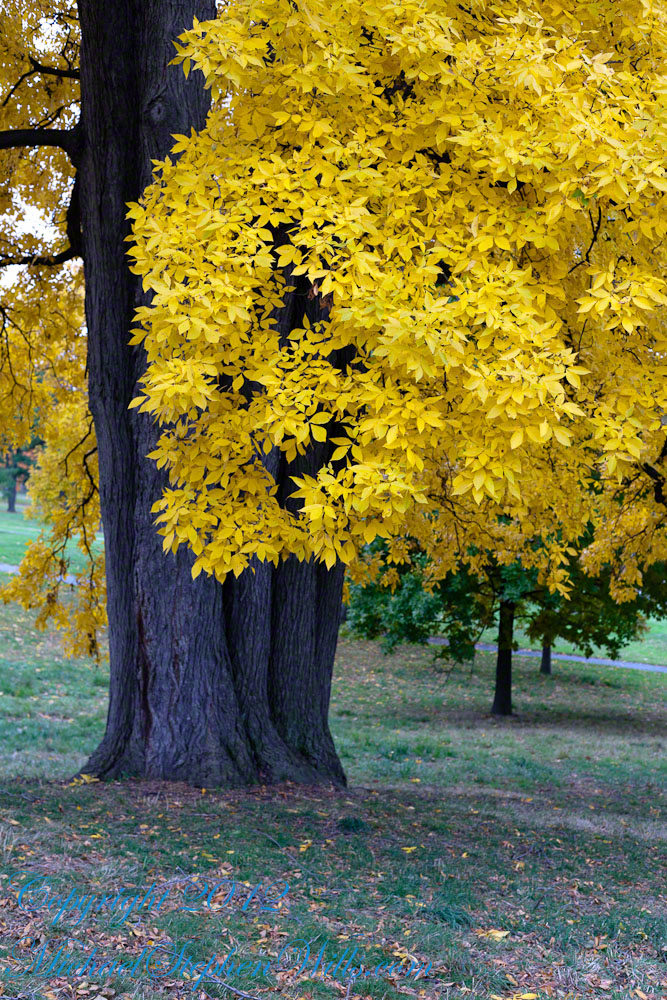
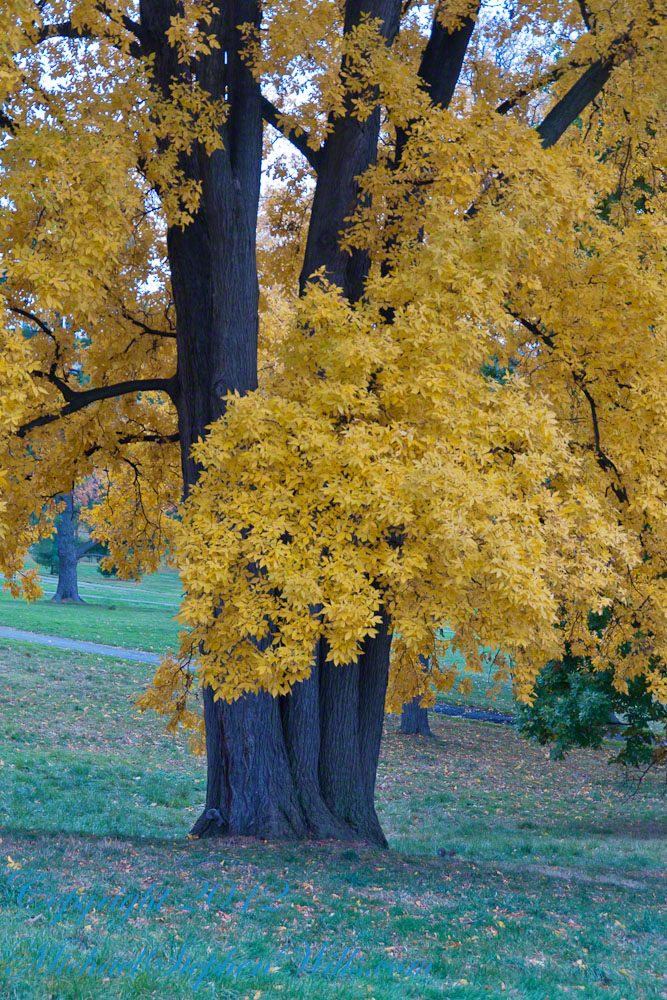
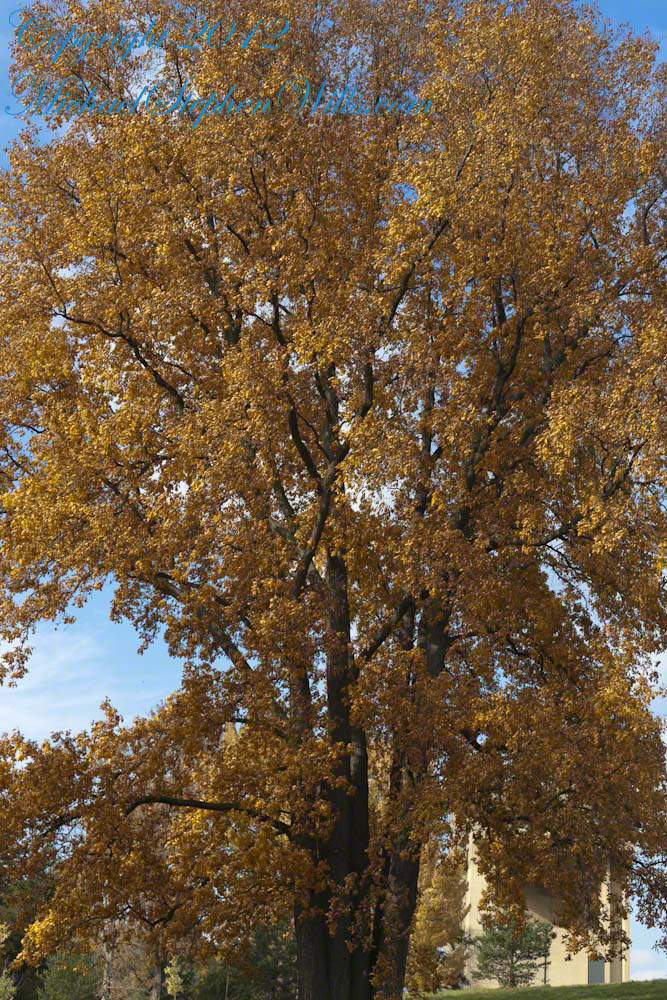
Seen from the north on a cloudy October day, this Pignut Hickory (Carya glabra) is the largest tree on the Cornell Campus, at 79 inches in diameter.

Click to view my Finger Lakes Memory gallery
Cornell University is on a west-facing hill above Cayuga lake.

Take another look at the previous image. Can you find the grey squirrel? This hickory grows south of the Johnson Museum and among the autumn glories, it is the largest and brightest yellow canopy on Libe Slope.

Contrast

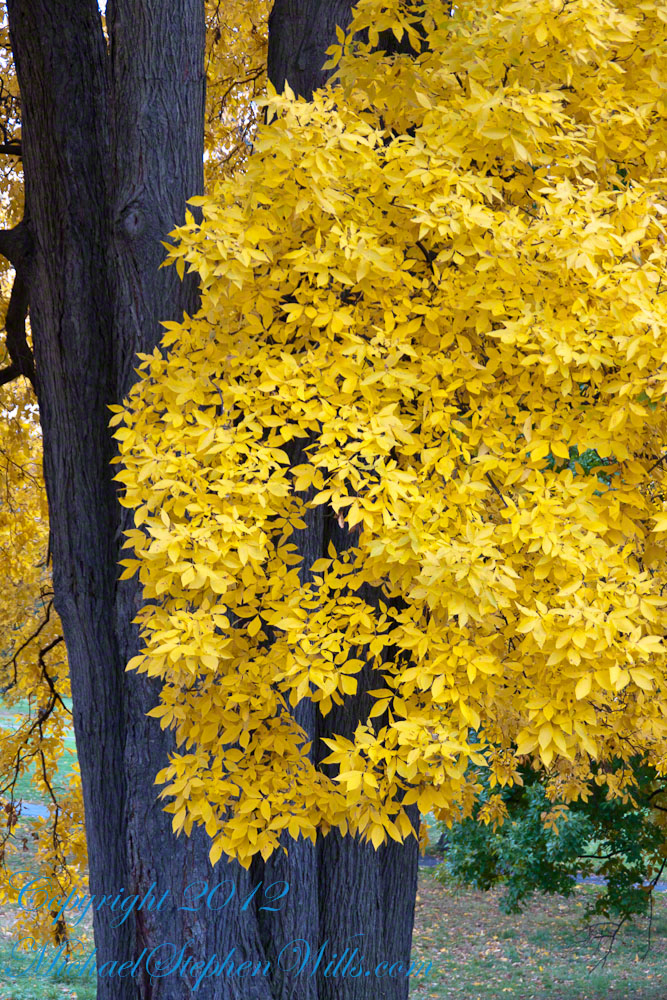
An overcast day is the best to capture this spectacle. October 20, 2012 provided both bright sun and dark, rolling autumn clouds. I waited on the north side, sheltered from the glare of the sky, for these perfect moments.

Click to view my Finger Lakes Memory gallery
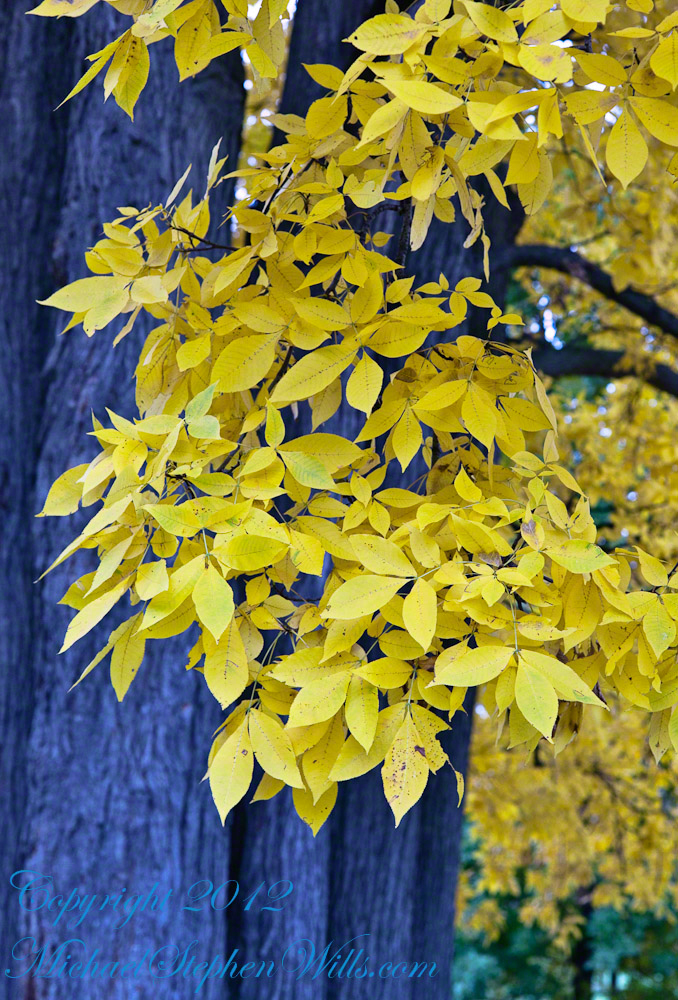
I remember this hickory for the contrast between the canopy and trunk, the way the clumps of yellow hang from dark boughs.

The pignut hickory is native to these Eastern United States. It is known to favor moist slopes and this specimen has thrived on The Slope. The ground beneath it is thick with nuts.

Click to view my Finger Lakes Memory gallery

One week later

Just one week later, late afternoon on a sunny Friday as hurricane Sandy approached the east coast the hickory has fewer, tawny golden leaves.

Copyright 2021 Michael Stephen Wills All Rights Reserved