Dry Juniper Descent

One-seed Juniper

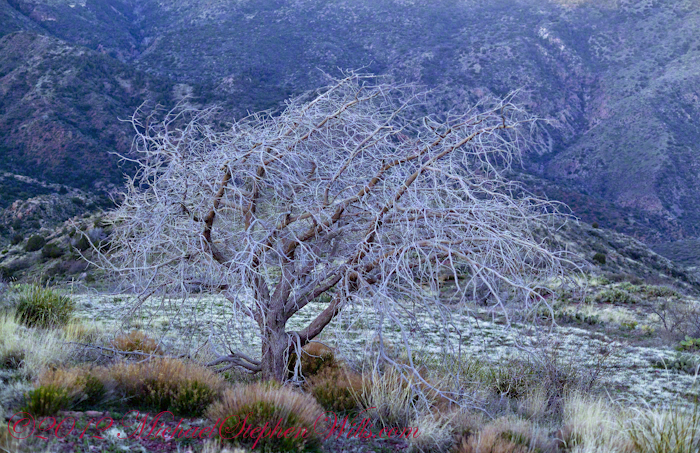
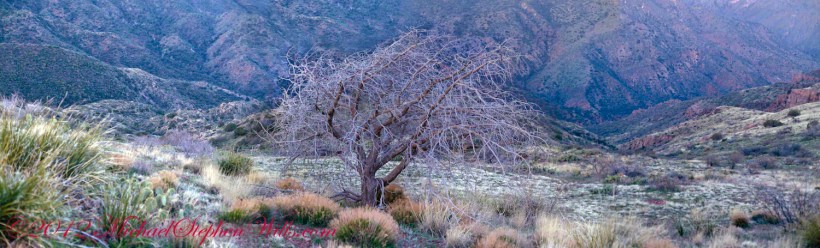
On my fourth morning, after I awoke to am immense silence, my first photography subject was the lone dry juniper you see below.

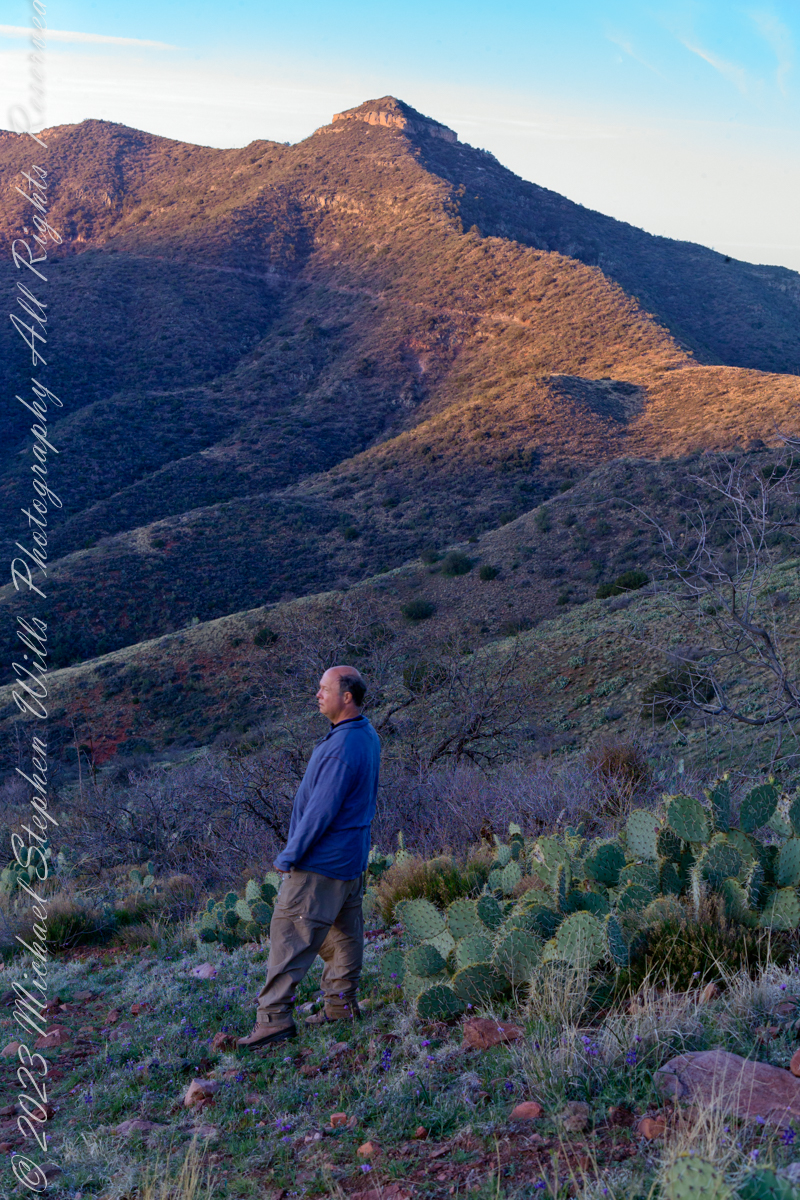
Then the dawn lit up the far mountains.  You can view a larger image these mountains at dawn in my previous blog, “Superstition Wilderness Dawn.”

A Lone Dry Juniper

This is a photograph of that juniper tree, dryer than most, being dead.  I take it to be a One-seed Juniper from the thick growth of branches and the strong rounded aspect of the crown.  I captured this photograph from a tripod mount using a Kodak DCS slr/c with a Canon EF 50mm f/1.4 USM lens.
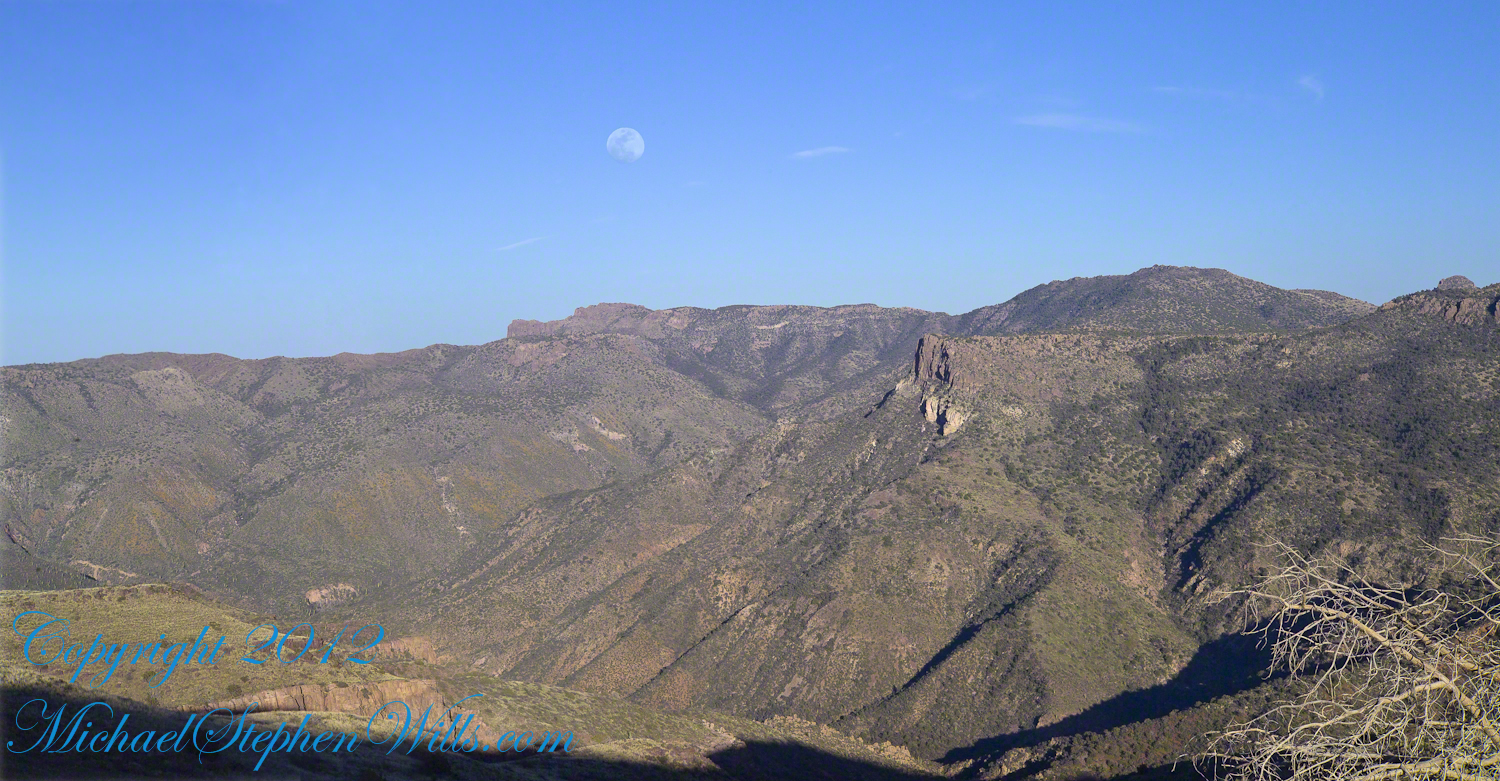
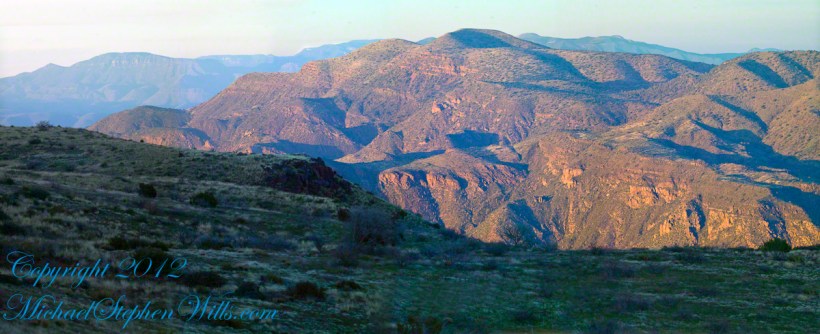
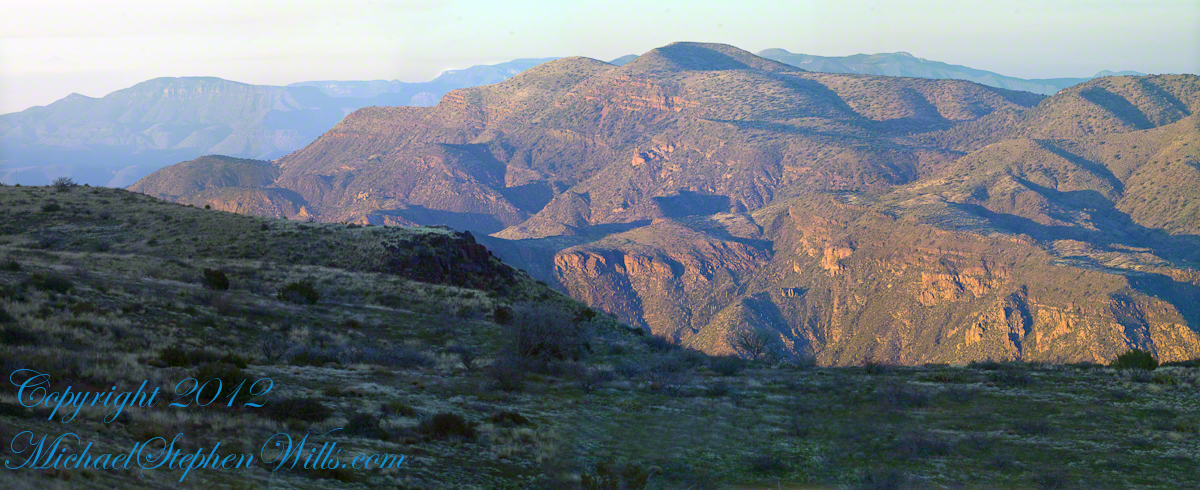
Looking into Reavis Creek Canyon from Lime Mountain

I used the tripod to bracket this shot on the left and right for the following panorama.
The Reavis Creek Canyon from Lime Mountain while still in shadow, morning

The Spirit of Elisha Reavis

From this vantage you can see my route into Reavis Creek Canyon and Reavis Falls taken on the first afternoon of the expedition.  That first morning I loaded up 65 pounds of food, supplies and photography equipment and headed out from the Reavis Trailhead on the Reavis Ranch Trail.  This was one of the trailed used by Elisha Reavis to ride a favorite burro and a string of 8 to 15 burros loaded with vegetables he sold to various communities throughout central Arizona.  See my blogs “A Ride to Reavis Ranch” and “Apple Orchard in the Wilderness“for views of the paradise (as of the early 21st century) where Elisha Reavis, lived and prospered in the latter part of the 19th century where he lived his 70’s.

This his mountain valley, using a perennial creek, Reavis cultivated and irrigated about fifteen acres of land by himself with chickens, turkeys, hogs, burros, two horses and several dogs.   The horses, teamed together, pulled a shear plow, disc and leveler.  On April 9, 1896 Reavis was preparing of another trip to Mesa, to buy seed potatoes, and was found by a friend a month later on what is now the Reavis Ranch trail, to the south and west of his valley, near what is now called Grave Canyon were friends buried him.

Past the Dry Juniper and Down

102 years later, I headed up the Reavis Ranch Trail, over the ridge of Lime Mountain and past this dry juniper in the same spirit as Elisha Reavis if for a different purpose.

Reference

An excellent article on Elisha Reavis by Tom Kollenborn, author of “Lost Dutchman Gold” and “Circlestone”.
Copyright 2023 Michael Stephen Wills All Rights Reserved

Superstition Wilderness Dawn

on the slopes of Lime Mountain

Pre-dawn on the fourth morning of my solo expedition to Reavis Falls, before the last posting “Among the Desert Wildflowers“, on the slopes of Lime Mountain, as the eastern sky became slightly less dark, I woke to an unusual sensation:  total silence.  The air was absolutely still, no insects trilled, the birds were still asleep.  Lying very still, the ringing of my ears announced the silence.

In that silence I set up for this panorama taken from a tripod-mounted Kodak DCS ProSLR/c mounted with a Canon EF 200mm f/2.8L II USM telephoto lens.  It is 5 image files combined.  The source file is about 300 MB.

That is Pinyon Mountain in the center distance.  The Arizona Trail traverses that terrain, though it is not visible from this distance (it is about 3 miles away).

Lime Mountain is truly a light green, as you can see from the foreground ledge.  From there, a cliff runs round where on a south-facing site there are cliff dwelling ruins.  The trail to Reavis Falls runs to the right, along a ridge broken by a narrow canyon with access to Cedar Basin, also at the foot of these cliffs.

Copyright 2023 Michael Stephen Wills All Rights Reserved

Among the desert wildflowers

Among the grasses, cacti and lichen-covered rocks were many small wildflowers

See Evening on Two Bar Mountain for another chapter of my four-day solo expedition to Reavis Falls in the remote eastern Superstition Wilderness.

Campsite at Morning

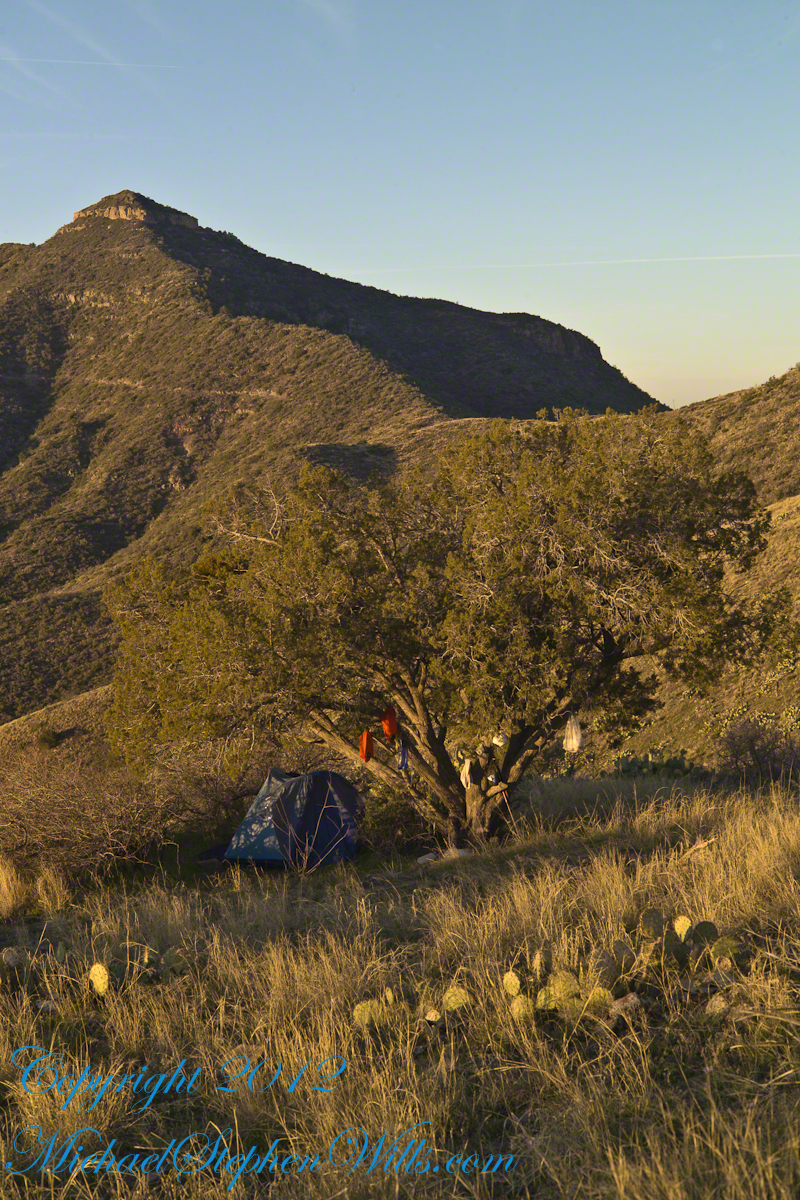
On the late-morning of day three I climbed out of the Reavis Creek valley to camp on the slopes of Lime Mountain.  There I watched the afternoon progress to evening, a full moon rise in a bright sky and other events featured in this blog.  All around my campsite under a lone juniper the mountain side was blooming.

Grasses, Cacti and Flowers

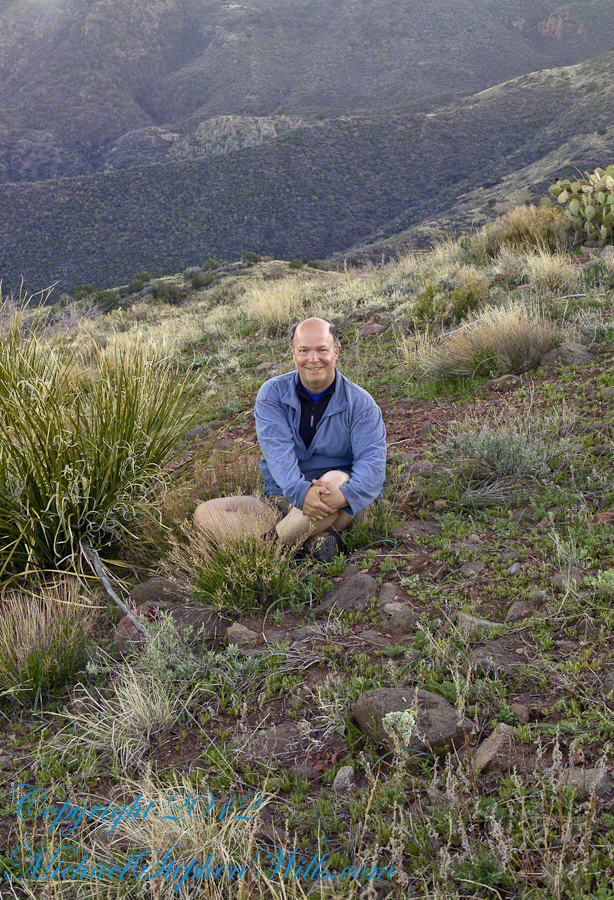
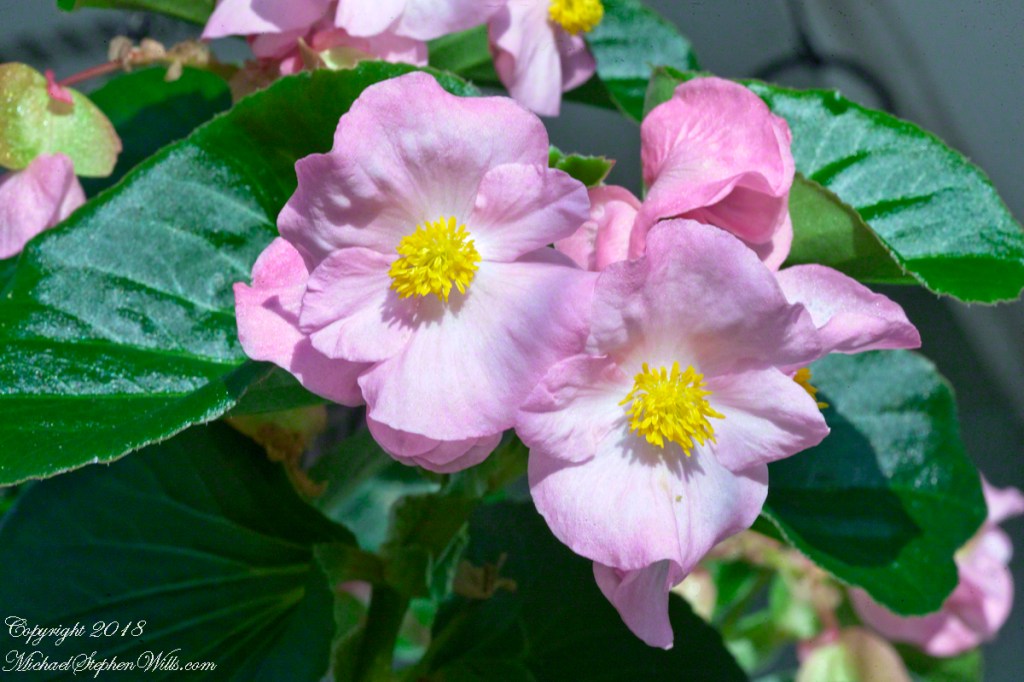
Among the grasses, cacti and lichen-covered rocks were many small wildflowers.  I was careful to avoid damaging them and otherwise enjoyed their beauty and plentiful blooms my entire stay.  I capture some of them in the early morning light and spent some time identifying them for you.

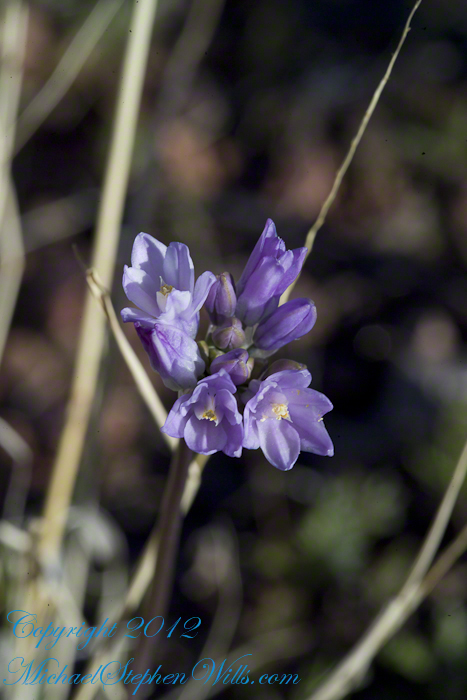
Desert Hyacinth is a perennial lilly (Liliaceae).

It grows from an onion-like bulb used for food by pioneers and Native Americans.  This lilly propagates through this bulb and, also, from seed that forms from these flowers.

The umbel-shaped flowers grow in clusters at the end of long, leafless stalks.  Each blossom is an inch across and has six segments that are like petals.

Also called Blue Dicks, bluedicks, Papago lily, purplehead, grassnuts, covena, coveria.

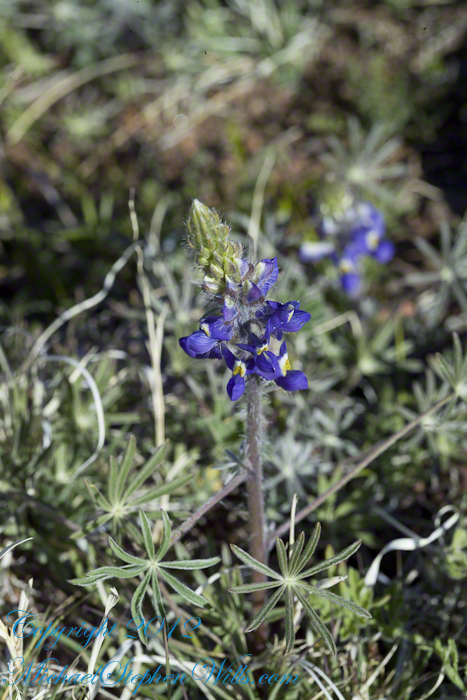
Lupine is a pea, a perennial herb and a favorite of bees. Like other lupines, it improves the soil.
Their root nodules, with the aid of certain bacteria, allow lupines and other legumes to absorb free nitrogen from the air.

A member of the Phlox family (Polemonium), this five (5) petal flower bloomed in small groups on erect stalks with sparse leaves. The stamen heads are notable for a bright blue color.

Copyright 2023 Michael Stephen Wills All Rights Reserved

Evening on Two Bar Mountain

Shadows rising on the canyon walls

Another blog from my four day solo expedition to Reavis Falls in the remote eastern Superstition Wilderness. Here we will descend briefly to the canyon of Reavis Creek, below the Reavis Falls.

My previous blog Two Bar Mountain View featured this same landscape. 

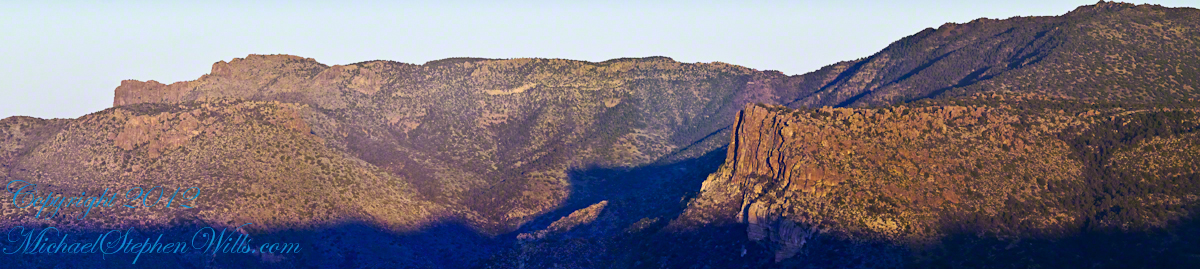
Shadows rising on the canyon walls are from Lime Mountain and Castle Dome.  In the far canyon, below Two Bar Mountain, is a shadow from the notable cliff and prominence to the right, that rises above Reavis Falls, fall below and out of sight in the canyon.

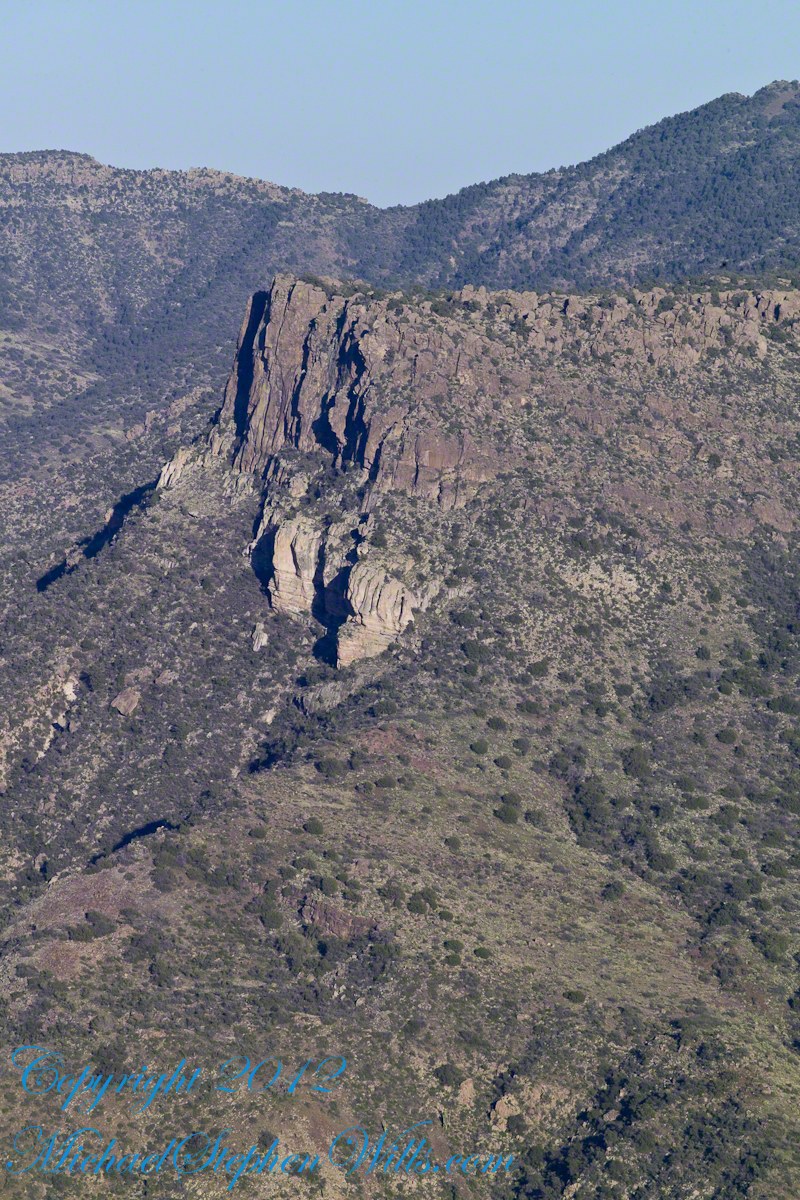
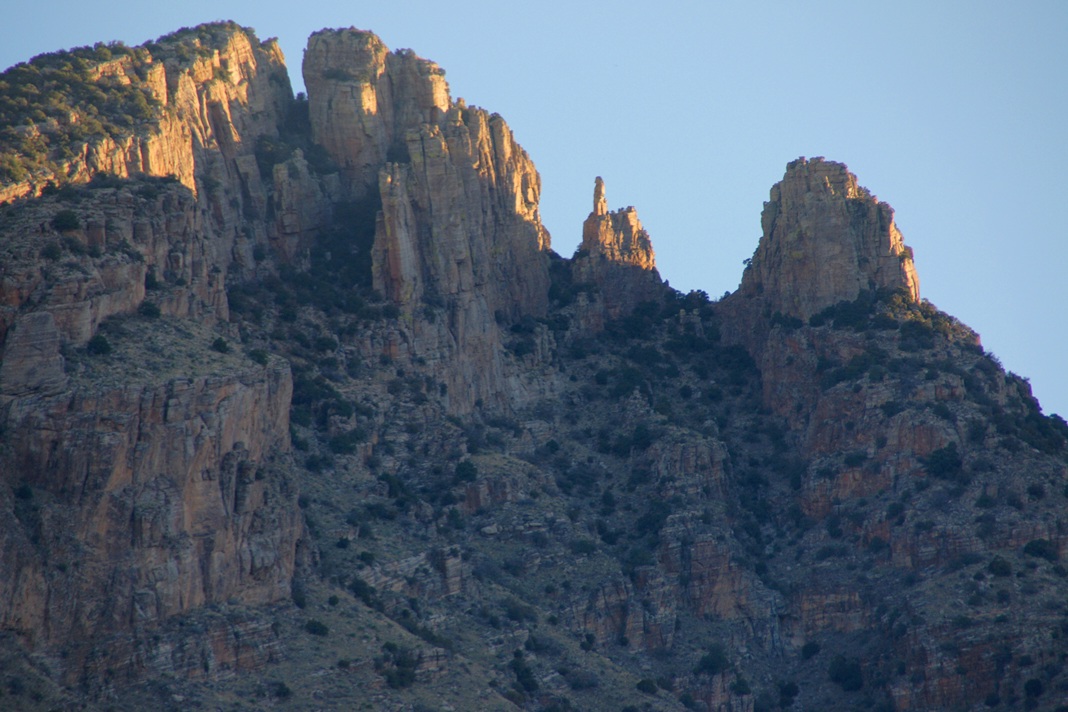
Here is that prominence from that same day, late afternoon when the sun is just starting to be low enough to throw the cliff into relief. This is a single shot with a canon 200 mm lens. This day I had climbed out of Reavis Creek, up to to this point on the slopes of Lime Mountain. Here I enjoyed an afternoon, evening, night and early morning of the following day.

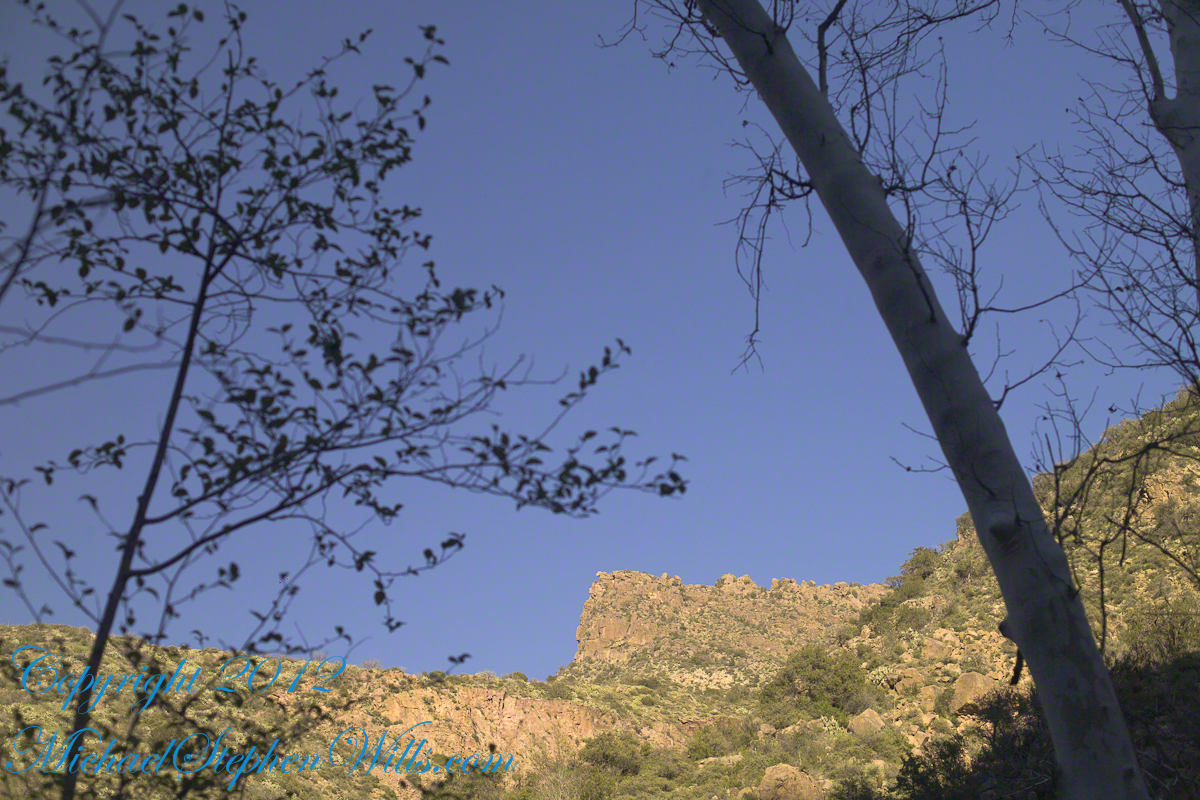
The second day of the solo expedition, I hiked into the canyon of Reavis Falls from a camp at the canyon mouth. Looking up from the creek this same cliff was prominant against the sky.

Copyright 2023 Michael Stephen Wills All Rights Reserved

Two Bar Mountain Views

Superstition Wilderness

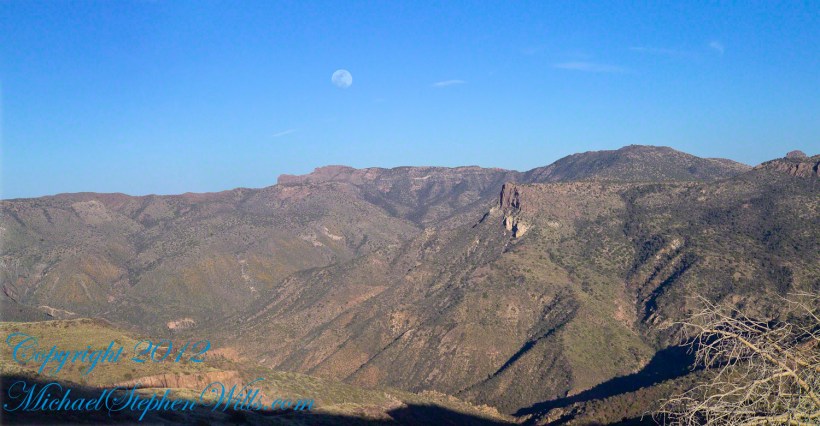
Two Bar Mountain is only part of this view taken the evening of Day Three, my solo expedition to Reavis Falls in the Superstition Wilderness of Arizona.

The view encompasses most of the four day expedition, being the climb into the lower Reavis Creek Canyon from which I camped.  I spent one entire day walking up the valley to the falls.

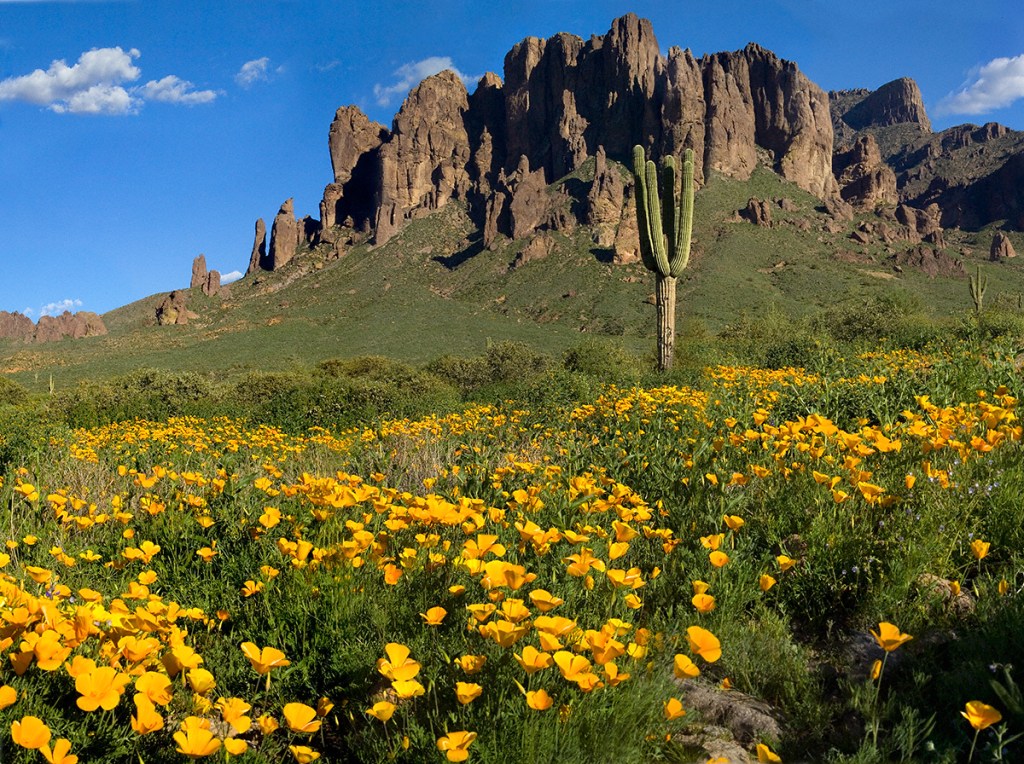
The patches of yellow on the far slopes to the left and into Reavis Valley are Mexican Poppy (Eschscholtzia californica) blooms.

To find lower Reavis Creek Canyon, look for the prominent cliff formation in the very center of the image.  Follow the end of the cliff down to a dark shadow.  The western canyon wall creates the heavy shadow.  As you move to the right, in the image, the shadow becomes wider because the canyon wall becomes higher.

The view also encompasses a 2005 solo expedition over Two Bar Mountain using the Tule and Two Bar Ridge trails into the Superstition Wilderness around Pine Creek.  See my blog “Racing the Sun” for an image Two Bar Mountain with the path of (most of) two days of that expedition.

An interesting feature of the full size image (lost in the small-scale reproduction of this blog) is the host of enormous saguaro cactuses marching up the sides of the canyon to the left, thinning out and ending on the western walls of the canyon (the slope directly beneath my viewpoint).  Our course, each cactus is perfectly still, casting a huge shadow, and seems very tiny.  The nearest is a mile away.  We are seeing in this thinning host the lower Sonoran in transition to the upper Sonoran life zone.

All of this in one view from Lime Mountain. Here is another, taken just as the sun set.

Copyright 2023 Michael Stephen Wills All Rights Reserved

Lime Mountain Morning

Superstition Wilderness of Arizona

This post features photographs from my solo expedition to Reavis Falls in a remote corner of the Superstition Wilderness of Arizona.

The morning of Day Four, my solo expedition to Reavis Falls in the Superstition Wilderness of Arizona. I camped on Lime Mountain, off the trail to Reavis Falls. That is Castle Dome behind me. The line sloping up the mountain is the Reavis Trail to Reavis Ranch.

My campsite.

Looking toward Pinyon Mountain and the Arizona Trail (not visible) that fine morning.

Copyright 2023 Michael Stephen Wills All Rights Reserved

Creeping up on 1200 Readers….

….and a photographic gallery.

As of April 5th 1181 is the count of subscribers to this blog, an interesting number. The individual numerals sum to a prime number, 11. I appreciate each and every “1” added together, you readers. Thank You.

Coincidentally, yesterday 1,200 of my blogs are published….Here is a selection of images from these posts.

Click Me for my Shutterstock Gallery

Copyright 2023 All Rights Reserved Michael Stephen Wills

Flowering Saguaros in Finger Rock Canyon

Some Fallen, Some Blessed

My visit to Finger Rock Canyon of the Santa Catalina Mountains filled two mornings.  On the first morning, the subject was the lower canyon as morning light filtered over the eastern ridge.

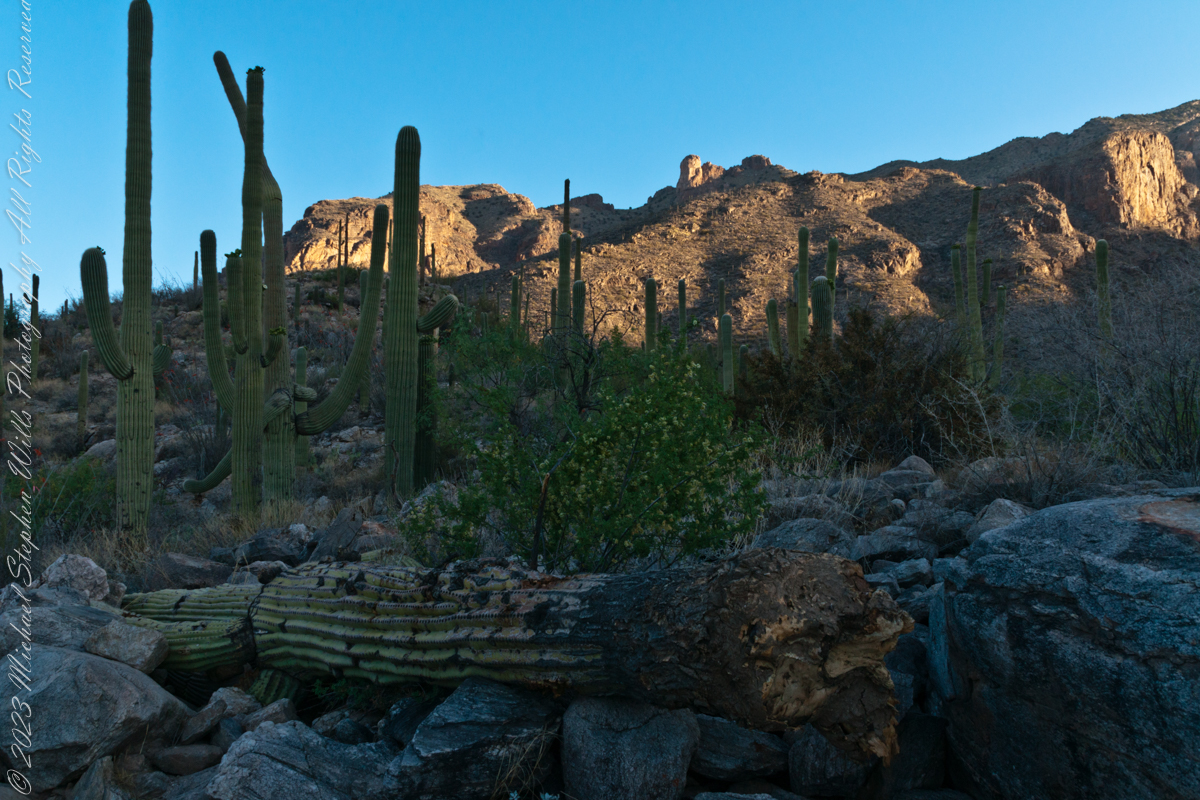
Early morning to the north / northwest looking over a 20-foot fallen Saguaro Cactus (Carnegiea gigantean), toward lower ridges of the Santa Catalina Mountains.  The saguaro is among a stand of healthy fellows, some with new growth and flowers on the tips of arms and main columns. This giant must have grown over rock through 60 years.  It was brought down when the roots weakened.  Specimens that are more reliably rooted can live to 200 years.

A clump of brittlebush shrub (Encelia farinosa) grows from the same rock.

Pima Canyon is the next over, behind that near ridge which provides similar shade.  Unlike Finger Rock Canyon, the Pima Canyon trail follows the western cliff and loses the shade much sooner.  During our three-week trip, my wife, Pam, and I visited Pima in our first week.

These photos were taken between 6:20 and 7:00 am.

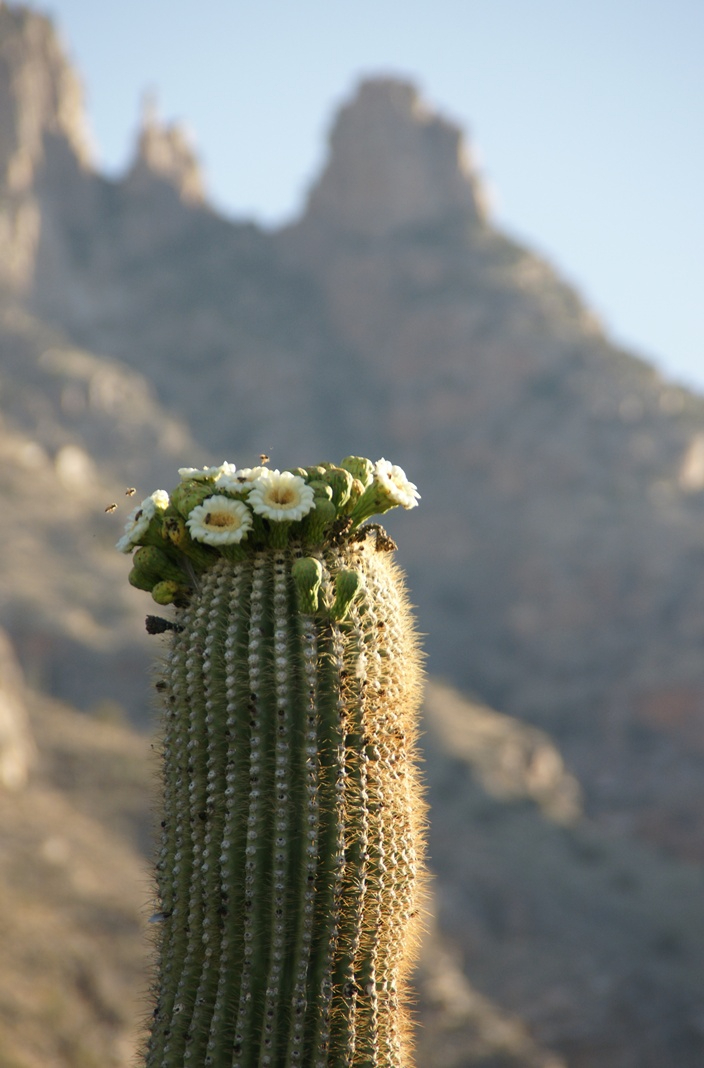
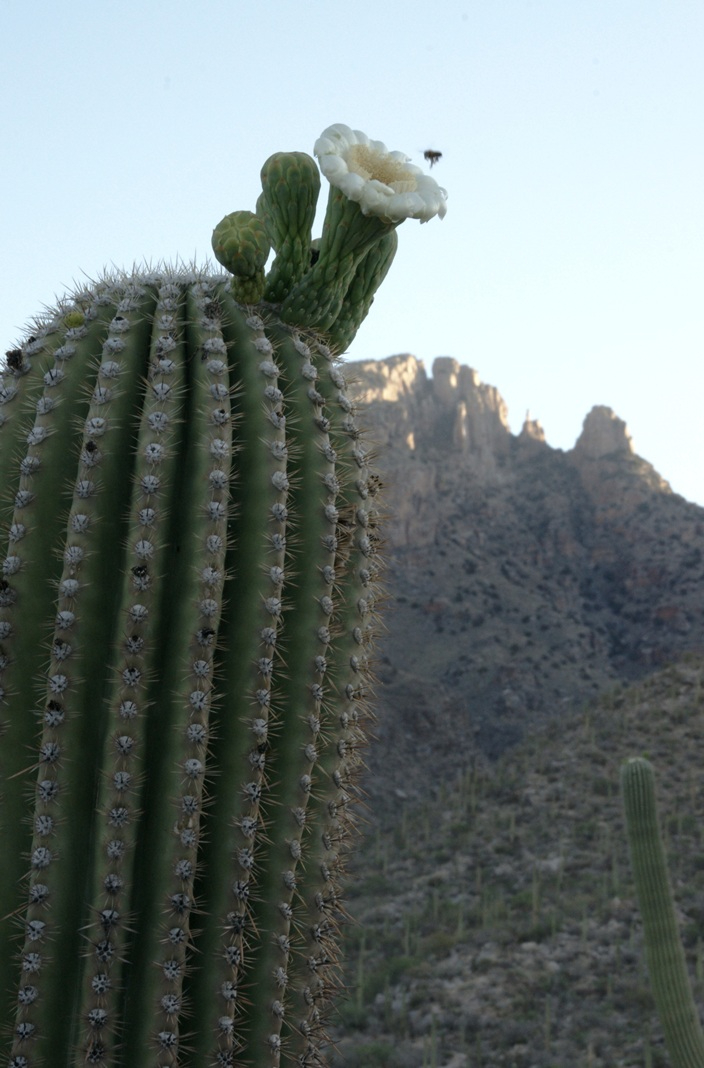
Along the trail I noticed a multitude of buds on the tip of selected saguaro arms.  In a previous blog, there’s a photo of this same saguaro in the shade.  The following series captures the one blossoming top just as the sun passes over the eastern, shadowing, ridge.

The same saguaro, two minutes later…….

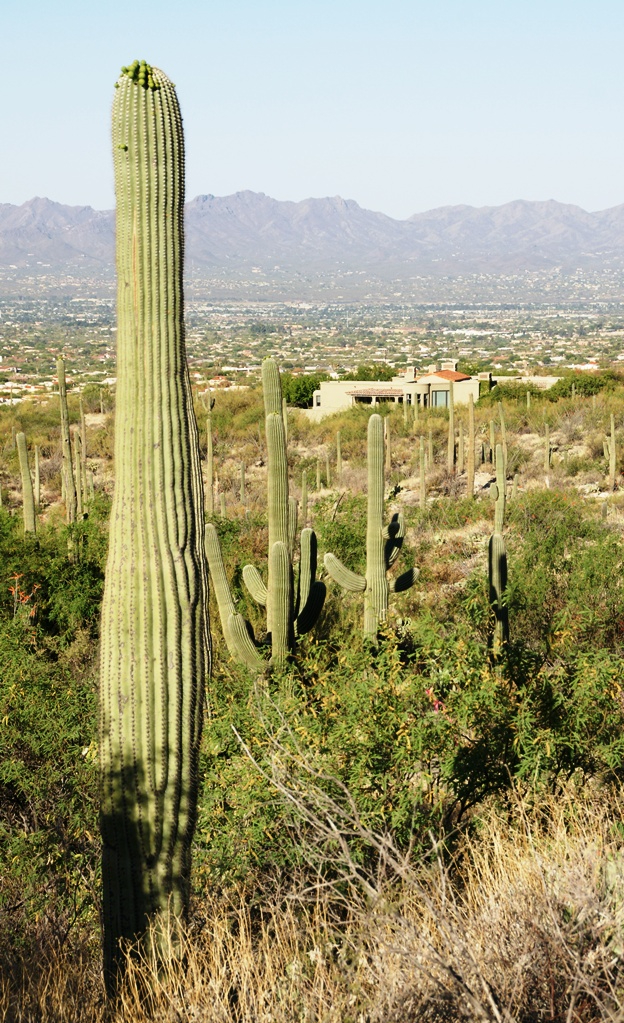
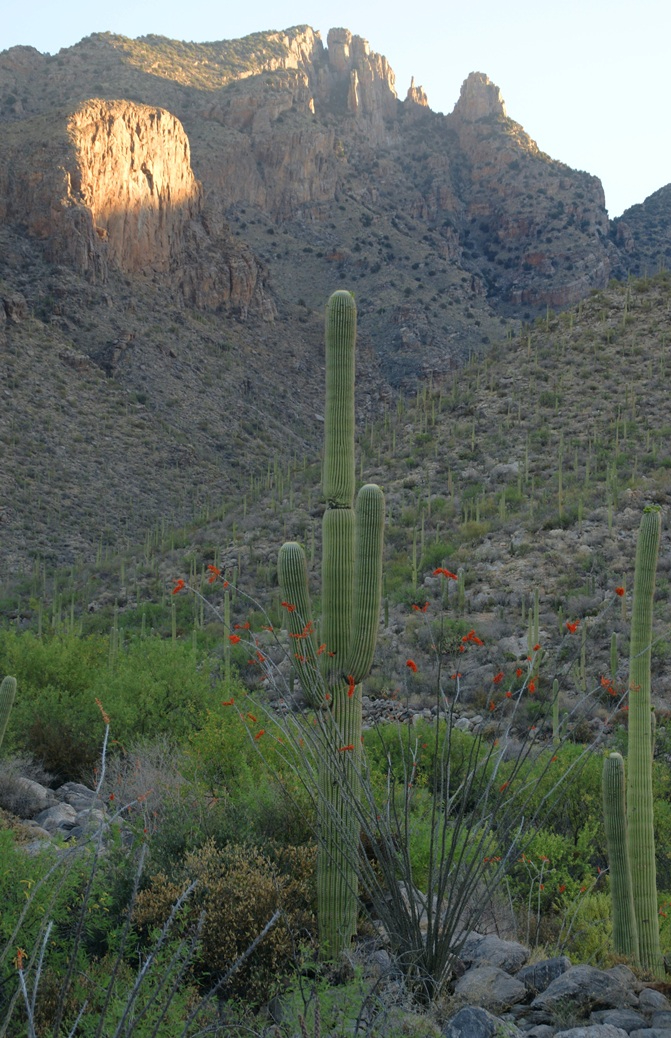
Here is a portion of the saguaro forest, around 7 am with the lower canyon filled with light.  There are a few foothill homes with west and southwest Tucson.  The Tucson Mountains are in the distance.

Copyright 2023 Michael Stephen Wills

Saguaro Flowers in Finger Rock Canyon

April Perfection

These photographs are a continuation of blogs from two days’ exploration of Finger Rock Canyon of the Santa Catalina Mountains, southern Arizona. Here we explore the nature of the Saguaro blossom.

Click Me for a gallery of Arizona Fine Art Photography

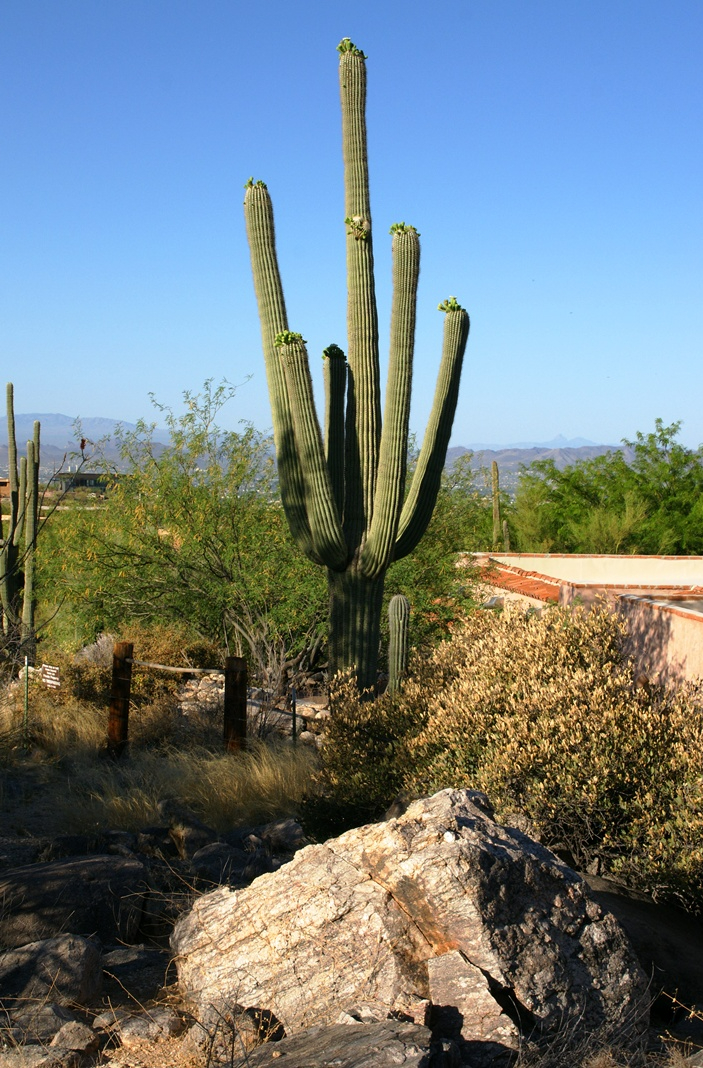
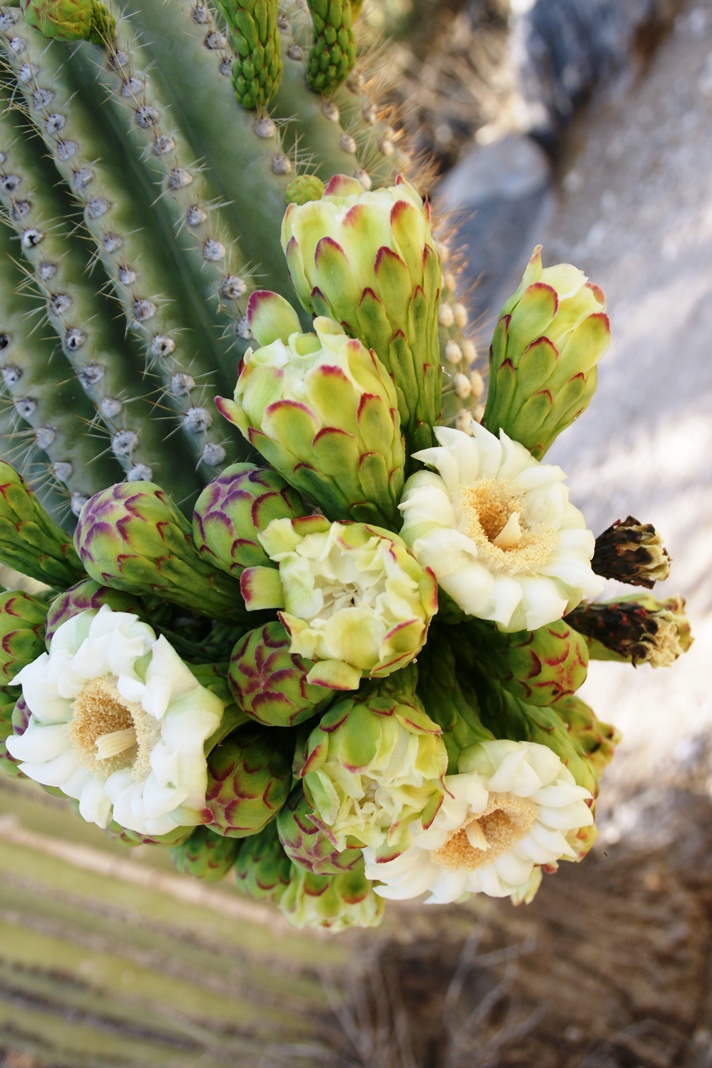
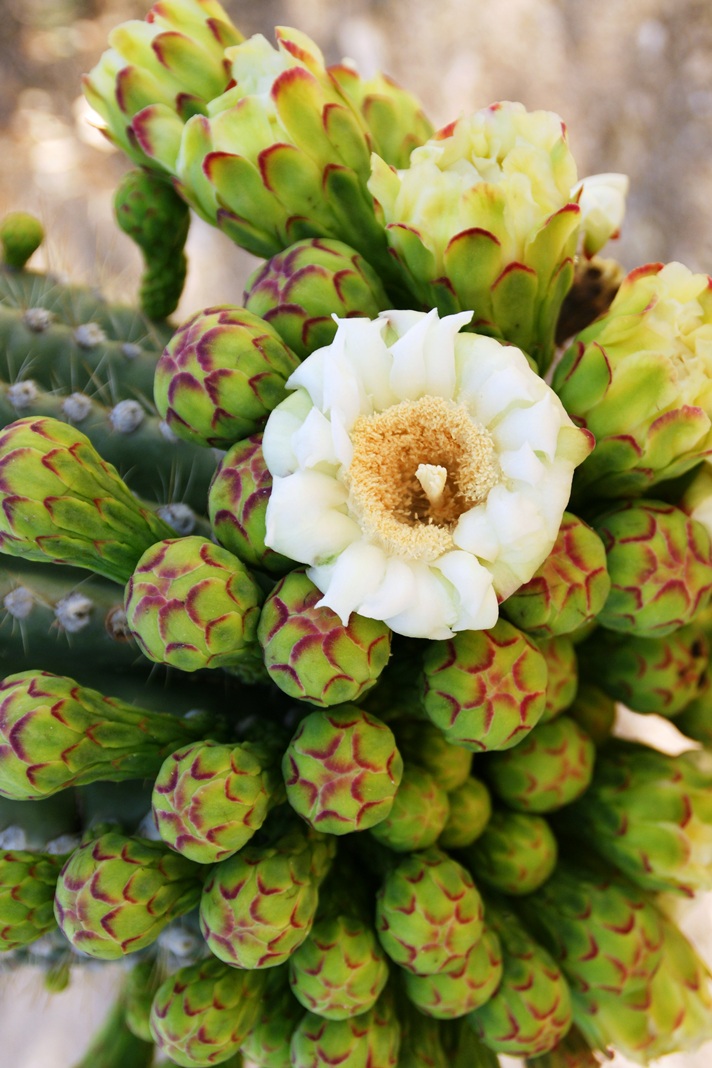
Saguaro flowers start as buds on the tip of the cactus body or arm. The specimen in the photograph below, growing in the yard of a foothills home on the border of federal land, is over 30 feet tall and, at the end of April 2011, buds are sprouting from every tip.  Look closely for opening buds and full saguaro blossoms.

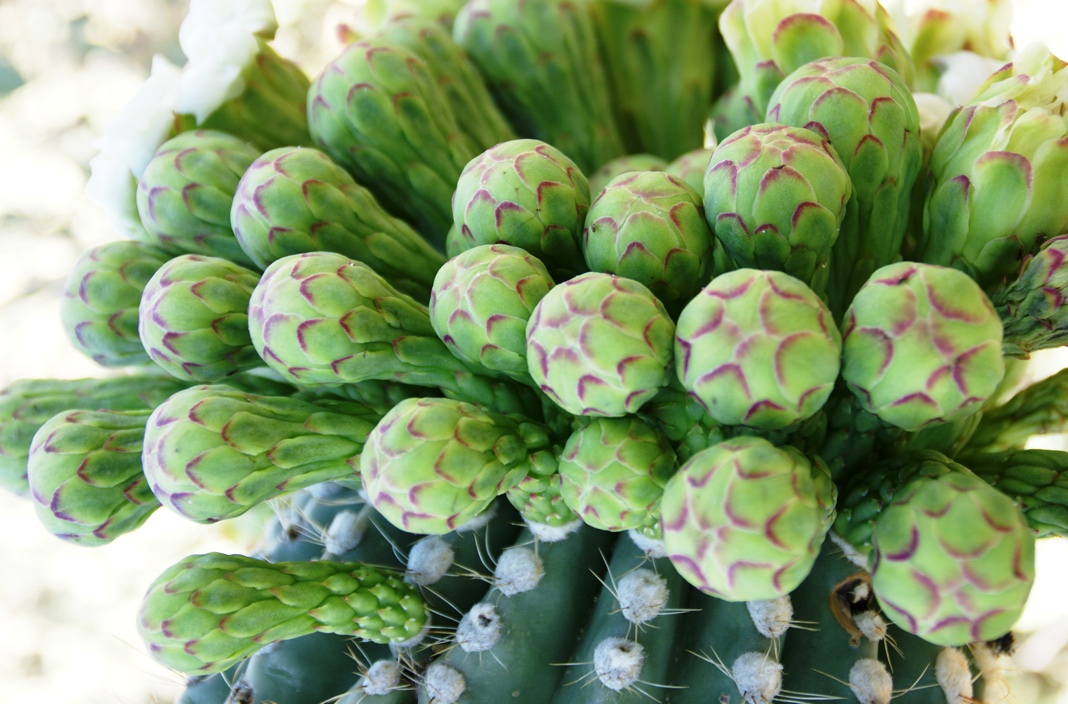
Flower buds grow only from some tips and around the center, along the sides, not from the point at the very end of the tip, from which the limb grows.

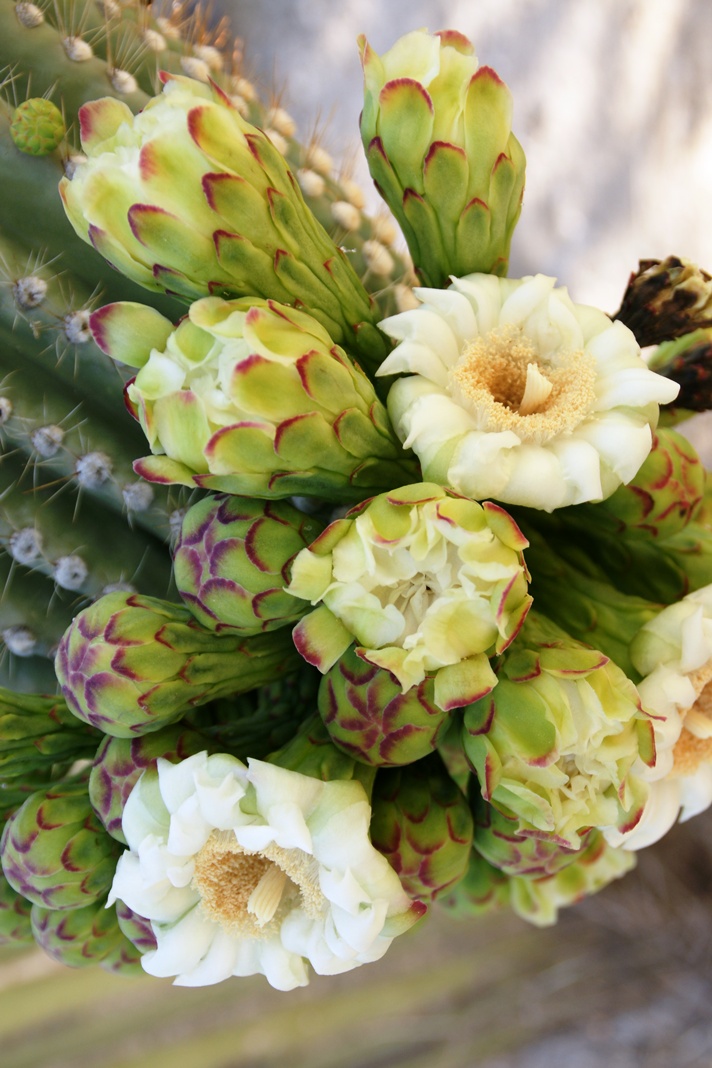
These buds first appeared mid-April and are here shown in the latter stages of maturity, prior to opening.  Sometimes, the base of an arm weakens and the arm lowers close to the ground while remaining healthy.  While descending the canyon I noticed this had happened to the arm of a particularly large specimen, an arm in full flower.  This and the following photographs are from that arm.

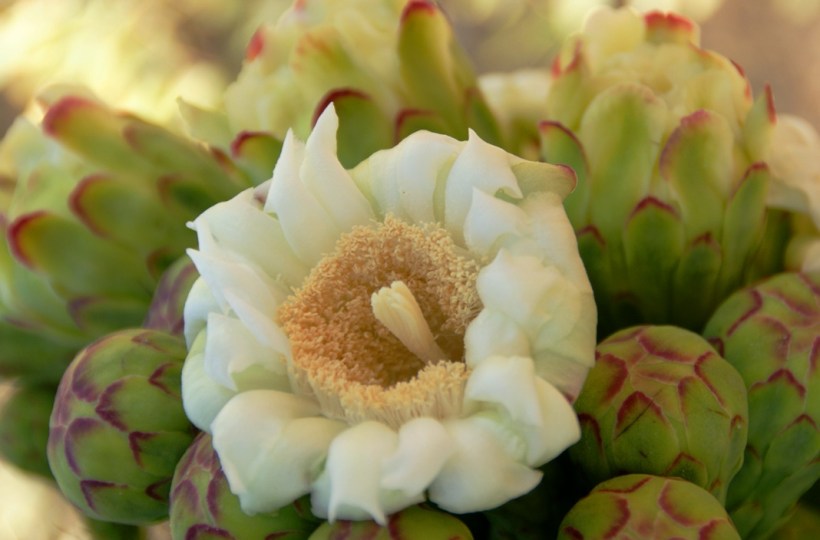
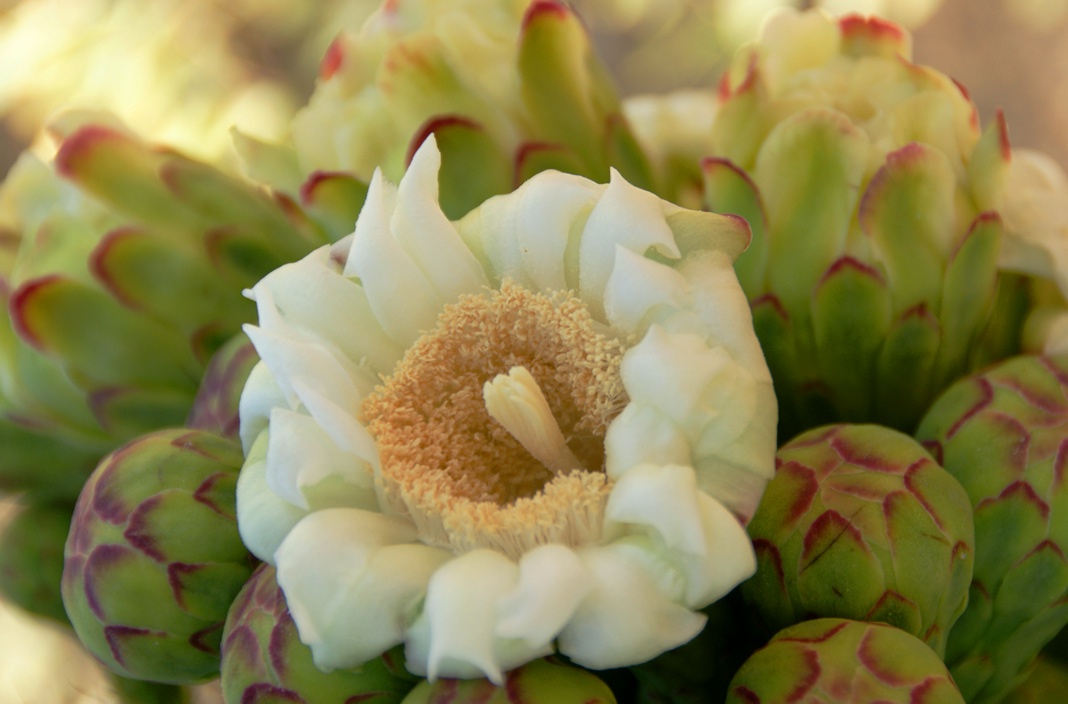
I have read that each flower opens in the cool of the night and lasts only until the following afternoon.  Here is a fully blossomed flower with a pair of opening buds.

And more, from a different view of the same arm.

A saguaro flower in full bloom, having opened the previous night. This flower will last a single day. It will wilt in the heat of a single afternoon and close. In this brief time, flying animals will pollinate it. You can see numerous honey bees on the flowers, in a previous blog, “Saguaro Flowers in Finger Rock Canyon.”

Copyright 2023 Michael Stephen Wills

Finger Rock Canyon Morning

April Perfection

The perfection of April in Tucson is nowhere better than mornings spent in Finger Rock Canyon of the Catalina Mountains.  Oriented on a north/south axis, the eastern cliffs shed a long shadow well past 9:30 am. For early risers such as me, this means no hat and cool hiking to the canyon head: the trail hugs the eastern cliffs.

These three shots were taken 5:30 – 6:00 am mountain time (Arizona does not follow daylight savings time except on the Navajo Reservation). 

Click me for an Arizona Gallery of Fine Art prints by Michael Stephen Wills

Copyright 2023 Michael Stephen Wills