San Xavier del Bac in the Sonoran desert embodies a fusion of indigenous and Spanish symbolism, showcasing devotion through art and imagery that evokes faith, beauty, and spiritual connection.
In the Sonoran Desert near Tucson, Arizona, San Xavier del Bac rises like a vision out of time. Within its adobe walls and domed ceilings lie layers of symbolism—an indigenous inheritance and Spanish colonial fervor merged into a singular living devotion. The photographs presented here, saturated with morning light, guide us through a meditative journey into this mission’s spiritual and aesthetic soul.
The crucifix dominates the first image—the depiction of Christ crucified, emaciated, bruised, crowned with thorns. His suffering is not abstract but visceral, carved in every wound and strained muscle. This figure of Christ, so brutally human, is draped in a tattered loincloth, a humble covering amid divine sacrifice. At his feet rests an offering: a blue artificial flower, incongruent in its brightness yet perfectly placed, a modern votive that expresses both reverence and continuity. It reminds us that humble devotion endures.
The fresco, with its cross flanked by stylized doves and roses, extends the Passion’s symbolism into sacred geometry. Doves—universal emblems of peace and the Holy Spirit—face one another in symmetrical grace, drawing the eye into the cross they flank. The single length of curling, intertwined golden ropes bind all elements in unity, perhaps reflecting divine infinity. The floral elements speak to rebirth and resurrection, a soft counterpoint to the harshness of the Crucifixion. Here, pain and peace coexist in a visual hymn.
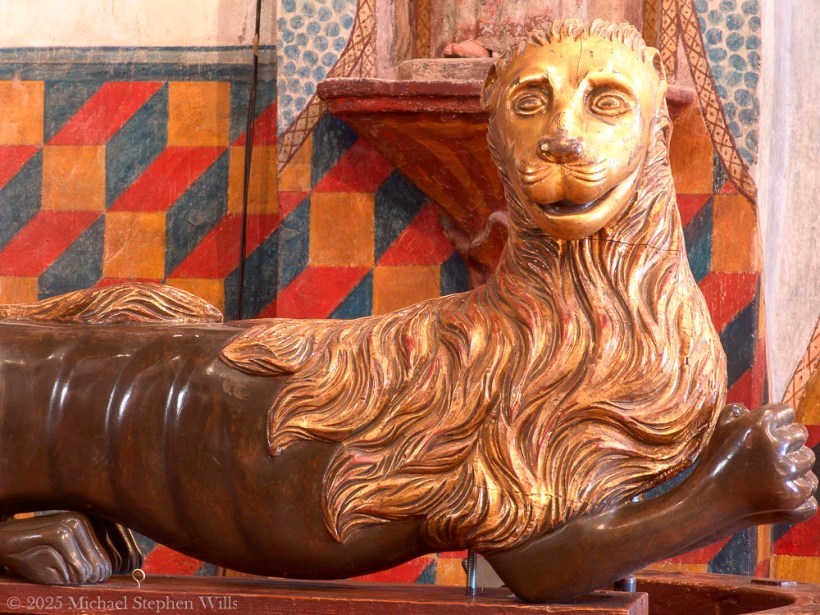
The lion sculpture, oddly cheerful in its golden face, seems at first a puzzle. Yet within Christian iconography, the lion often represents Saint Mark, the Evangelist, or the power and vigilance of God. This lion, rendered with stylized curls and a strong, reclining pose, guards the sanctuary. Its gilded mane mirrors the opulence of heaven, even in this humble desert mission. The lion’s curious gaze invites us to move past fear, toward the mysteries within.
We then meet a robed figure in red—another portrayal of Christ, this time during the Passion, perhaps as the Ecce Homo (“Behold the Man”). His upraised hands and expressive face embody pathos and divine forbearance. The red robe evokes both martyrdom and kingship. He does not plead; he offers. The backdrop is simple but speckled with blue floral motifs, creating a visual bridge to the Virgin’s image nearby.
The Virgin Mary appears in blue and white—colors of purity, serenity, and devotion. She stands among votive candles and gazes gently ahead, hands joined in prayer. Her dress flows around her, anchored by a rosary that loops downward like an anchor to the earth. Angels and cherubs flank her in painted stucco, echoing heaven’s embrace. This is not the triumphal Mary of high cathedrals but a deeply human one, a mother, accessible and protective. The candles flickering below affirm that faith is alive here, not simply preserved.
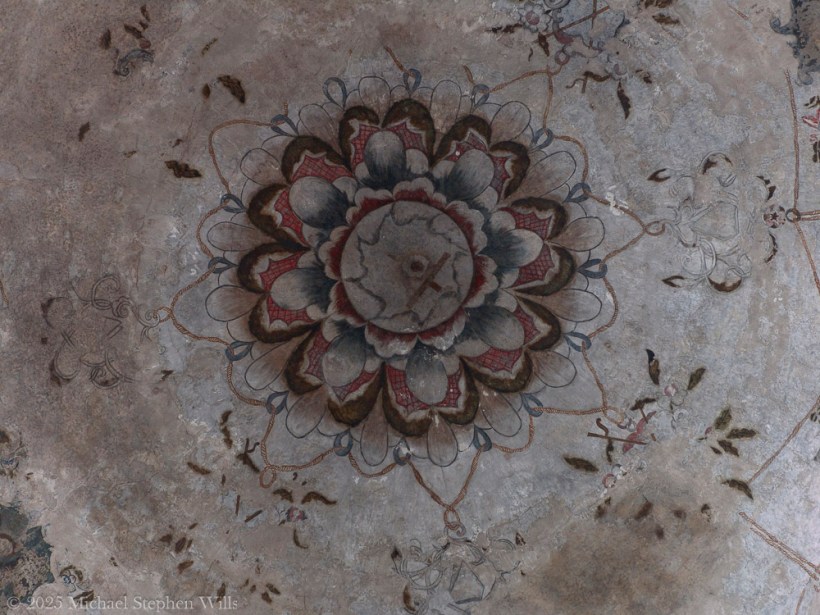
A ceiling medallion next draws us into a more abstract vision. A floral rosette centers on the cross and tools of Christ’s Passion—the nails, spear, and ladder arranged in contemplative symmetry. These instruments of torture are enclosed in beauty, as if the heavens themselves have sanctified the suffering. It is a paradox of faith, this transformation of pain into purpose, death into eternal life.
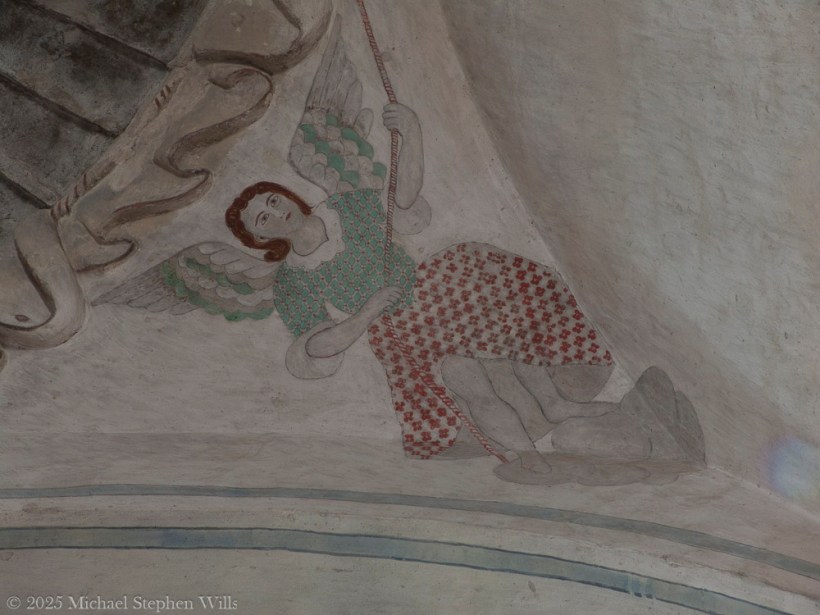
And in the arch’s corner, an angel descends—painted simply, yet with care. The figure pulls at a rope, perhaps to ring a bell or lift a curtain, a symbolic act of revelation or invitation. With wings green and soft, a skirt patterned in red flowers, suggesting femininity, grounding the divine in local textile tradition. The angel bridges the earthly with the divine, echoing the mission’s purpose: to guide and accompany.
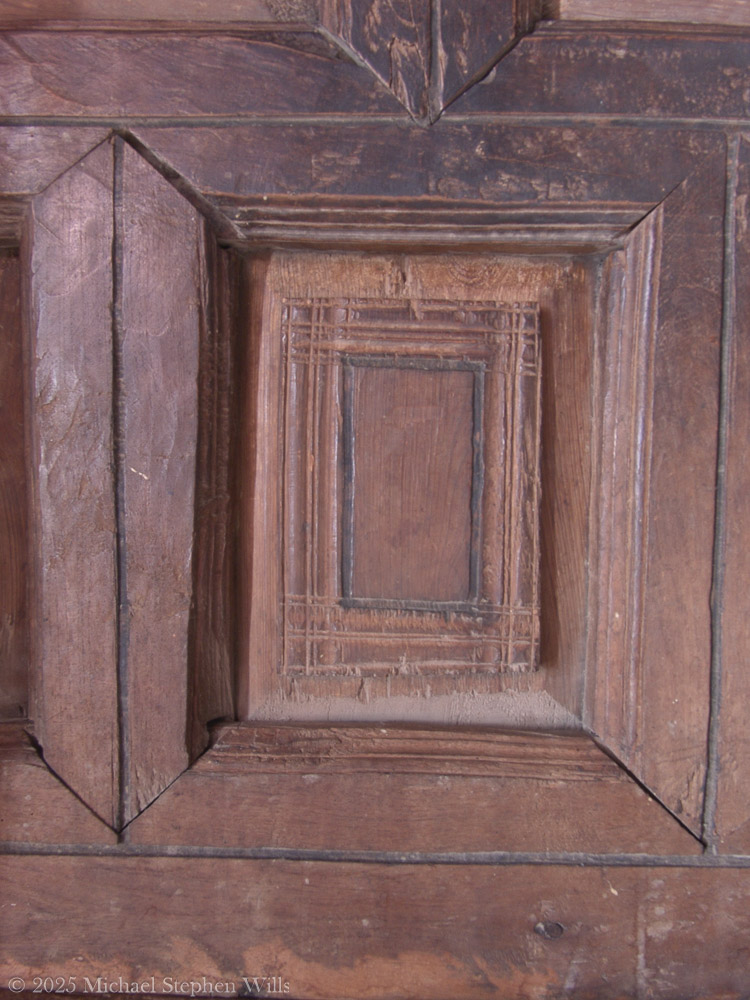
Finally, a carved wood panel—plain, aged, and sacred in its wear. The texture of centuries rests in its grain, the indentations of faithful hands passing by. This is the tactile memory of San Xavier: not only what is seen, but what has been touched, prayed over, believed.
Taken together, these images form a tapestry of devotion, colonial artistry, indigenous fusion, and enduring reverence. San Xavier del Bac is a place where symbols still speak, where color and form do more than please the eye—they lift the spirit. In this space, belief is remembered to be continually reborn.
Enter your email to receive notification of future postings. I will not sell or share your email address.
Copyright 2025 All Rights Reserved Michael Stephen Wills
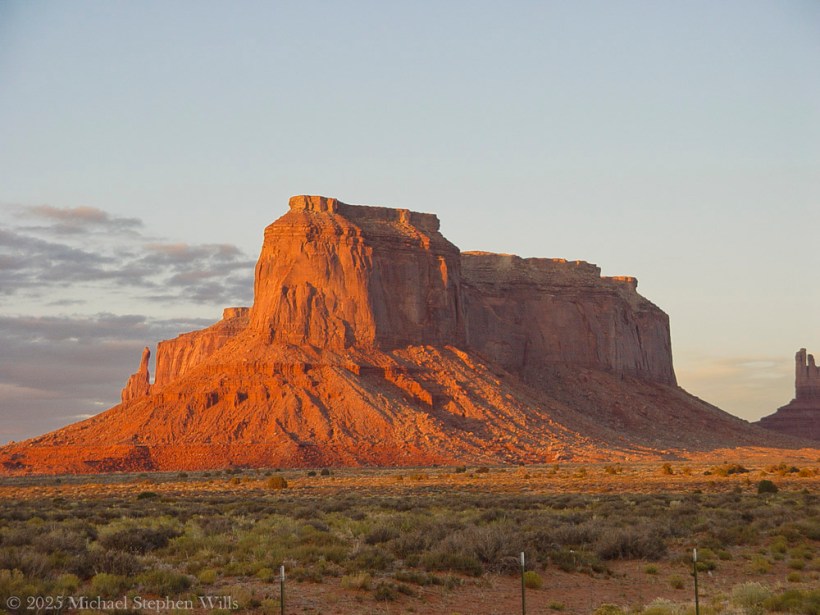
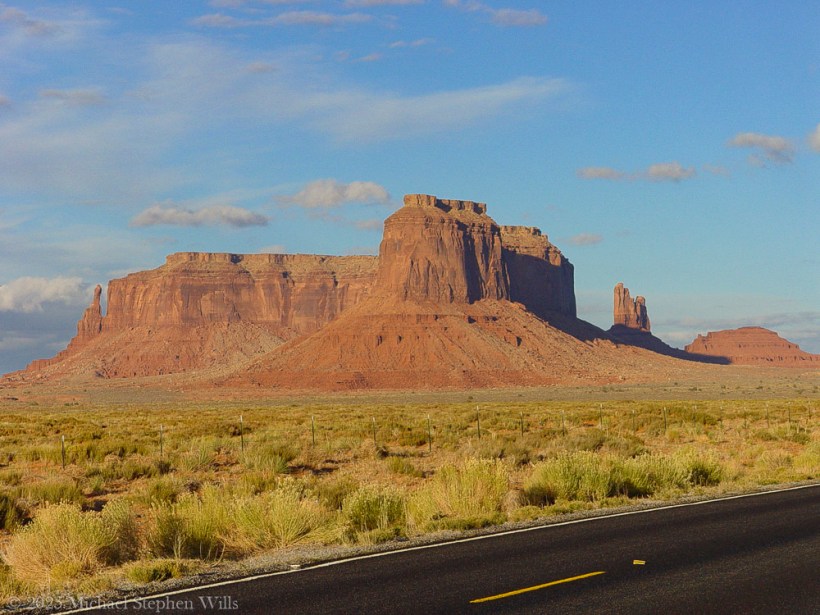
A father and son journey to Eagle Mesa, experiencing its beauty and silence, reflecting on its history and significance within Navajo culture as the day fades.
They came north out of Chinle with the day already leaning west and the sun fallen low into the drag of horizon dust and the road ran flat and empty past rust hills and mesquite country until, turning into the sun at Mexican Water, after a long hour, at last they pulled into Kayenta where the streets lay quiet under the heavy sun and the windows of the store fronts cast their amber light out across the sand drifting across sidewalks and the wind stirred only faintly and then was still.
They left their bags in the room and turned north again without speaking. The son drove. A man, his father, sat quiet beside him and the sun slid low through the windshield and the sky was pale and cloudless and wide beyond reckoning.
The land began to rise and the road bent and climbed and fell again and then it came into view. Not slowly. Not like a curtain rising. It was simply there.
A shape in the far desert.
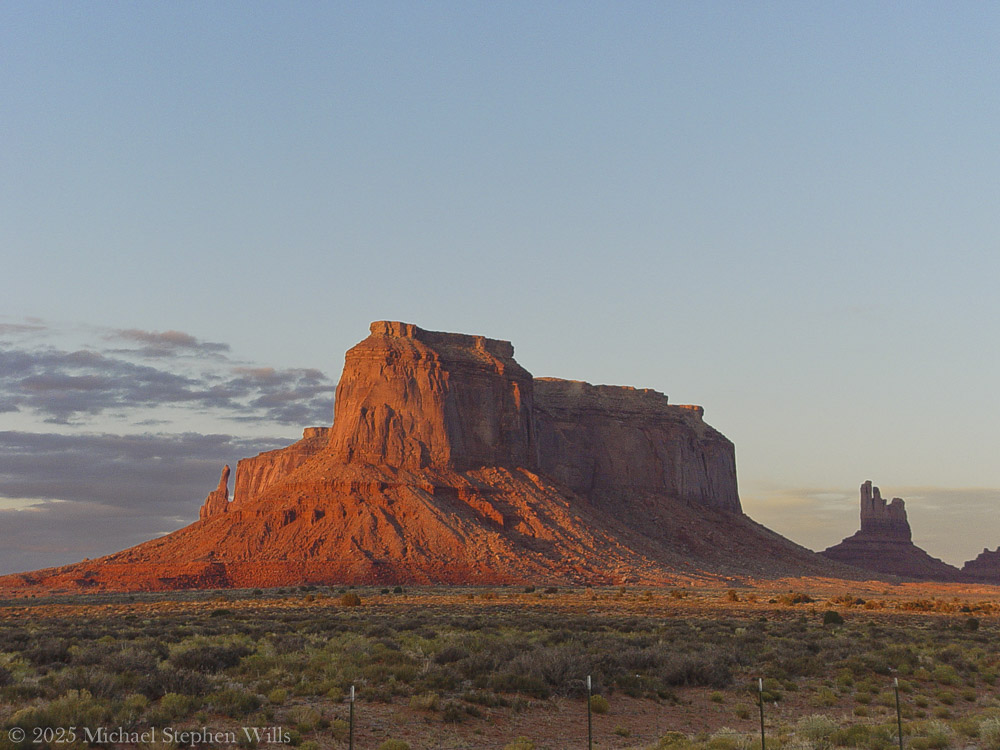
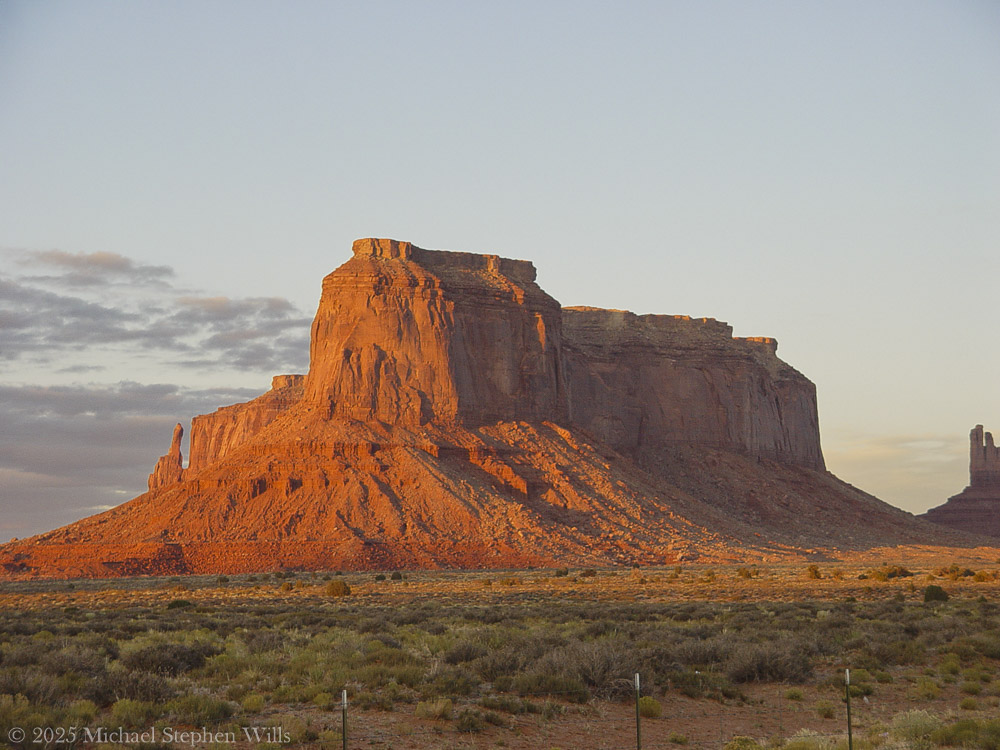
Like a ship that had grounded in a sea long vanished. A sheer mesa the color of blood and ochre and fire where the last of the day spilled westward and caught the rock face and made it burn.
He told the son to pull off. They stopped the car and got out and the sound of the engine fell away, the desert made no sound at all.
The man stood in the road and turned slowly. Eagle Mesa lay before him and the land stretched off in every direction and the fenceposts ran on into silence and the sky seemed to rest upon the buttes as if tired.
There were names for these places. Old names. Navajo names that spoke of eagles roosting and trees once there and water that came and went and did not come again. The mesa they called Wide Rock. The place where spirits go. He did not know the words but he knew the feeling.
On the way to Monument Valley Tribal Park as the sunset for this view on Sullivan Road (Route 163). Navajo County, Arizona. Eagle Mesa is situated 4.5 miles (7.2 km) northeast of Oljato–Monument Valley, Utah, on Navajo Nation land. It is an iconic landform of Monument Valley and can be seen from Highway 163.Precipitation runoff from this mesa’s slopes drains to Mitchell Butte Wash and Train Rock Wash which are both part of the San Juan River drainage basin. Topographic relief is significant as the summit rises 1,100 feet (335 meters) above surrounding terrain in 0.6 mile (1 km). The nearest higher neighbor is Brighams Tomb, 2.05 miles (3.30 km) to the east. This landform’s toponym has been officially adopted by the United States Board on Geographic Names. Navajo names for the mesa are “Wide Rock”, “Where the Eagles Roost”, “Water Basket Sits”, and “Trees Hanging from Surrounding Belt” because there were once numerous trees here. In Navajo mythology, Eagle Mesa is a place where spirits of the deceased may go. Eagle Rock Spire is a 300-ft tower on the northern tip of the mesa which requires class 5.9 climbing skill to reach the summit.Navajo names for this spire which resembles a perched eagle include “Eagle Alongside Mesa”, “Big Finger is Pointed”, and Tsé Łichii Dahazkani (Elevated Red Rock Sitting Up). The first ascent of the spire was made on April 23, 1970, by Fred Beckey and Eric Bjornstad.
Geology
Eagle Mesa is a mesa composed of three principal strata. The bottom layer is Organ Rock Shale, the next stratum is cliff-forming De Chelly Sandstone, and the upper layer is Moenkopi Formation capped by Shinarump Conglomerate. The rock ranges in age from Permian at the bottom to Late Triassic at the top. The buttes and mesas of Monument Valley are the result of the Organ Rock Shale being more easily eroded than the overlaying sandstone.
The son came and stood beside him and did not speak. The man lifted the camera and took a photograph and then another. The road behind them shimmered with the last heat of day. He took another picture his son, dressed in black, his arms at rest and the red mesa rising behind him and the shadows of their bodies cast long across the gravel and the shoulder of the road.
On the way to Monument Valley Tribal Park as the sunset for this view on Sullivan Road (Route 163). Behind Sean are the landforms Eagle Mesa and behind it Setting Hen, Bringham’s Tomb, to the right. Navajo County, Arizona
They took turns with the camera. The son caught him midstride and smiling lit by sunlight, the land stretching out all around. A man small in a world not made for men.
There was no sound but the click of the shutter and the dry whisper of wind among the sage.
On the way to Monument Valley Tribal Park as the sunset for this view on Sullivan Road (Route 163). Behind Mike are the landforms Eagle Mesa and behind it Setting Hen, Bringham’s Tomb to the right. Navajo County, Arizona
Later he would read that the rock was born of Organ Shale and De Chelly Sandstone and Moenkopi topped with Shinarump. He would know the spire they saw was first climbed by men named Beckey and Bjornstad and that it was called Tsé Łichii Dahazkani by those who’d named it before it ever had another name. He would know the mesa rose eleven hundred feet in less than a mile and that its runoff fed washes that fed rivers that fed nothing now.
But then he only stood and watched and knew it for what it was.
Not a monument to anything but time.
A stillness like prayer. A place that waits.
They lingered until the sun went and the sky turned iron blue and the shadows of the rock reached out across the valley floor and touched them where they stood. Then they climbed back in the car and drove south again and the road unwound behind them black and a single star above and the silence of the place held on inside them long after the valley was gone.
Enter your email to receive notification of future postings. I will not sell or share your email address.
Copyright 2025 All Rights Reserved Michael Stephen Wills
San Xavier del Bac, known as the “White Dove of the Desert,” embodies rich history and spirituality, blending Indigenous and Spanish influences, while remaining a vibrant community centerpiece today.
I remember how the rising sun washes the mission’s white adobe walls in soft gold. Mission San Xavier del Bac stands about 10 miles south of downtown Tucson, on the San Xavier Indian Reservation of the Tohono O’odham Nation.
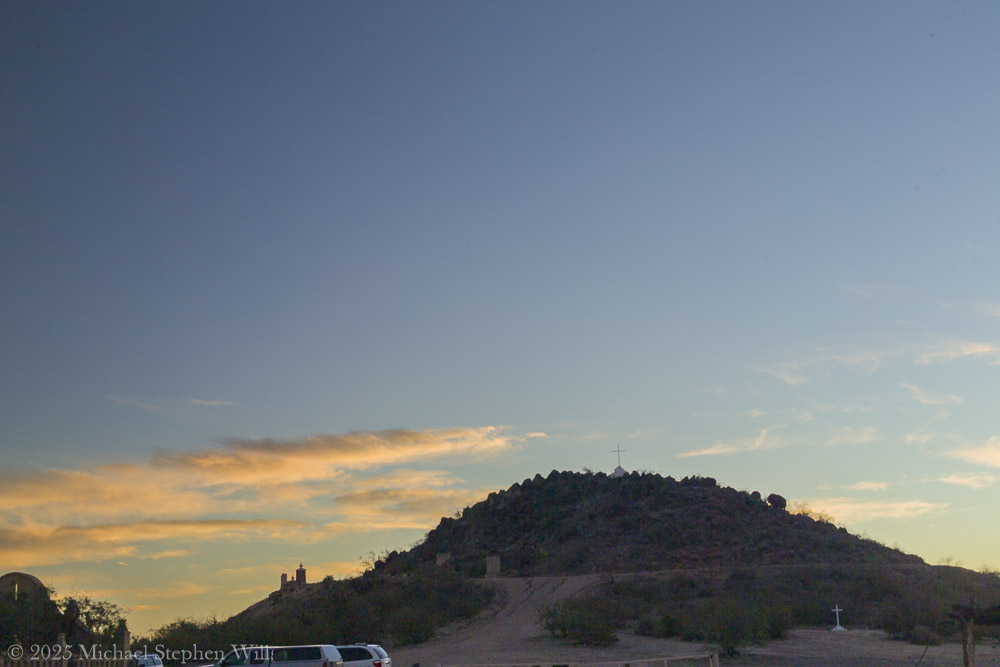
Before sunrise, I climb Grotto Hill, just east of the mission. A well-worn path and a few stone steps lead upward, passing stations of the cross and a humble grotto shrine nestled in the slope. As I ascend, the soft golden light gathers. Ocotillo stems and saguaros dot the hillside, their long shadows stretching over the desert floor. Reaching the top, I find a lone white cross planted firmly into the rocky soil. The cross is simple, yet it holds a quiet gravity – a silent witness to the prayers and hopes of those who have come here. I stand beside it to catch my breath. Below me spreads the mission complex, glowing white and rose in the gathering dawn. From this height, the scene is breathtaking: the desert expands in every direction, painted in brushstrokes of copper, violet, and gold. The distant Tucson mountains catch the first light. There is a profound peace up here. It’s easy to imagine Father Kino himself climbing a similar hill, surveying this “Water Place” and dreaming of a mission that would stand the test of time.
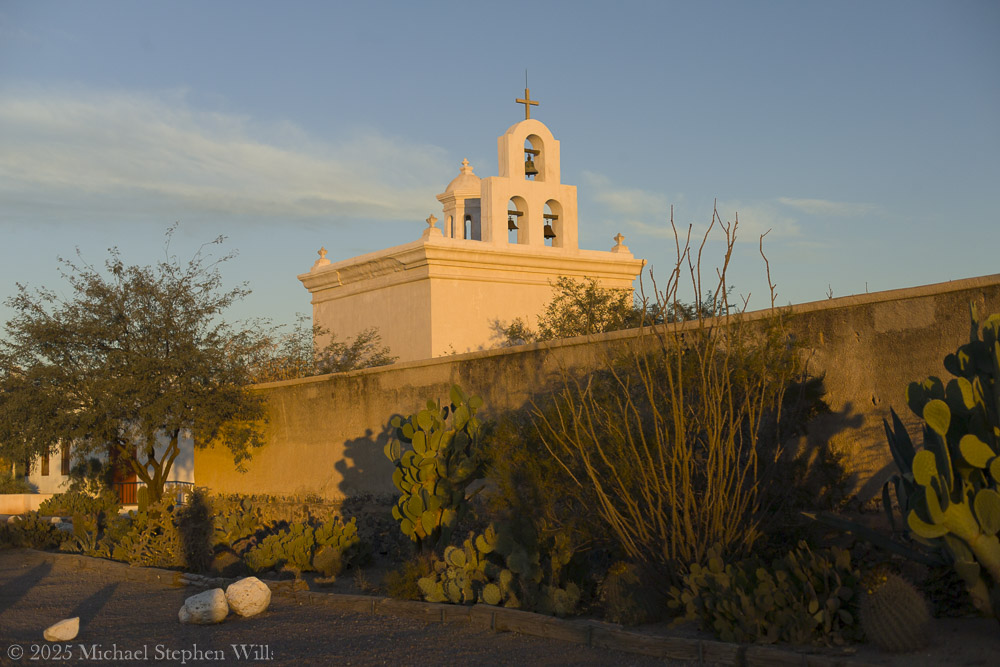
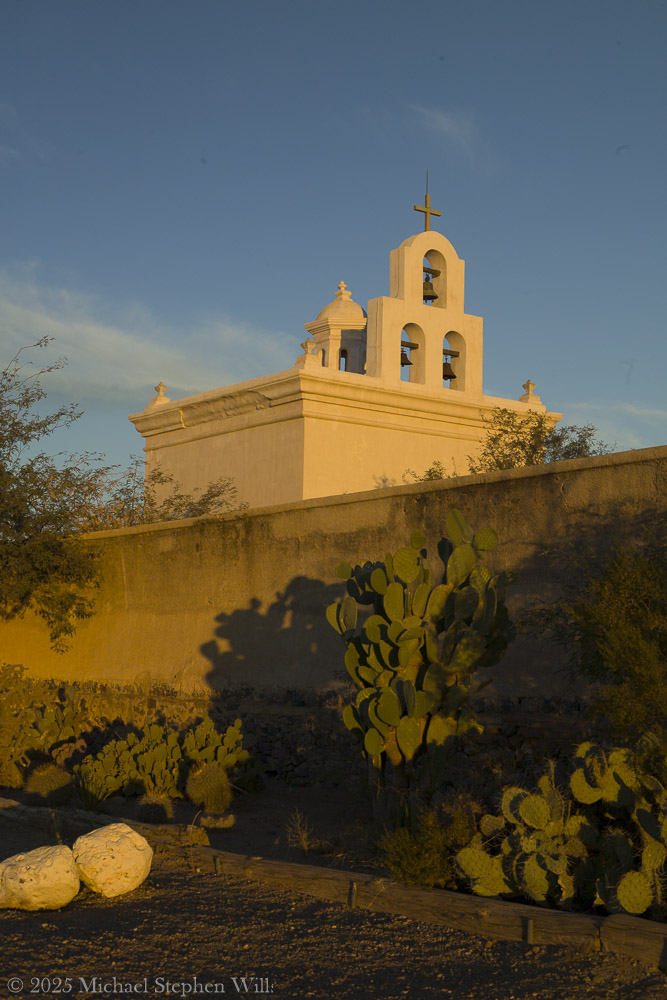
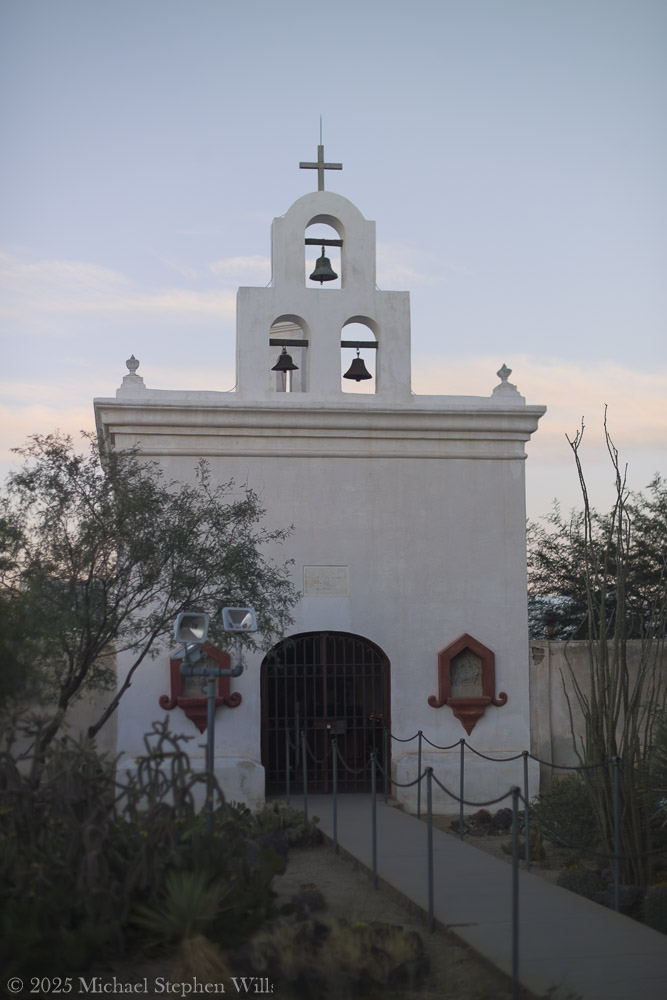
Often called the “White Dove of the Desert”the church gleams against the wide Sonoran sky, its twin bell towers and central dome radiant in the glow. In this moment, the 18th-century mission seems to hover between earth and heaven – a bright vision in the desert, tethered by history and faith.
I walk toward the old mission, feeling the crunch of desert sand beneath my feet and brushing past creosote bushes and prickly pear cacti. There is a hush here, broken only by a gentle breeze and the distant coo of a dove – as if nature itself respects the sanctity of this place. In my mind I rell that this mission was first founded in 1692 by the Jesuit missionary Father Eusebio Kino, who encountered the O’odham community living at this oasis they called Wa:k, meaning “Water Place”
The springs have long since gone dry, but the name lives on, a reminder that this now-arid land once nurtured life-giving water. The church before me isn’t the original Kino saw, but the one begun in 1783 under Spanish Franciscan friars who raised these walls with the help of O’odham artisans. I marvel that I am standing before a structure over two centuries old – the oldest European-built structure in Arizona– yet still alive with spirit.
Stepping into the courtyard, I tilt my head back to absorb the facade’s details. The ornate Baroque façade is a symphony of carved plaster and painted relief, an exuberant blend of Moorish, Spanish, and Indigenous influences. Faded yet still vivid, saints and angels watch from their niches on the church front. Every arch and cornice is edged in shadow and dawn light, revealing craftsmanship considered one of the finest examples of Mexican Baroque architecture in the United States
The front entrance is flanked by intricate scrolls and whimsical carvings – floral motifs, seashell patterns, and statuary wearing serene expressions. I gently run my fingers along the weathered wooden doors, feeling the grain that generations of hands have touched. Through a crack in the door, I catch a glimpse of the dim interior: candles flicker on the altar and the air carries a hint of melted wax and sweet incense. Thesanctuary seems to exude centuries of devotion. Even outside, I sense a whisper of ancient prayers in the silence.
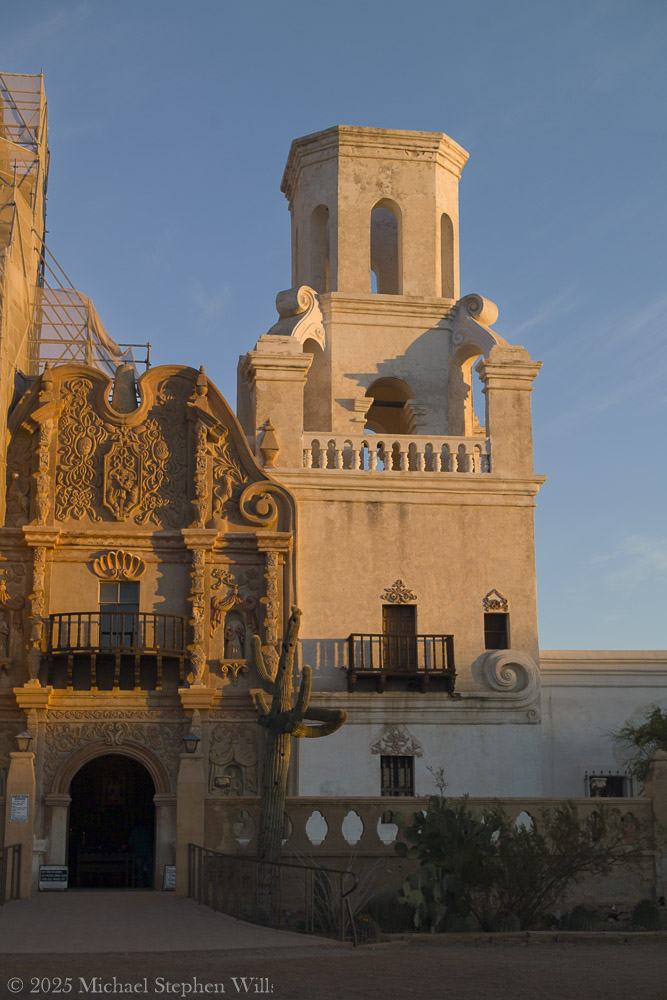
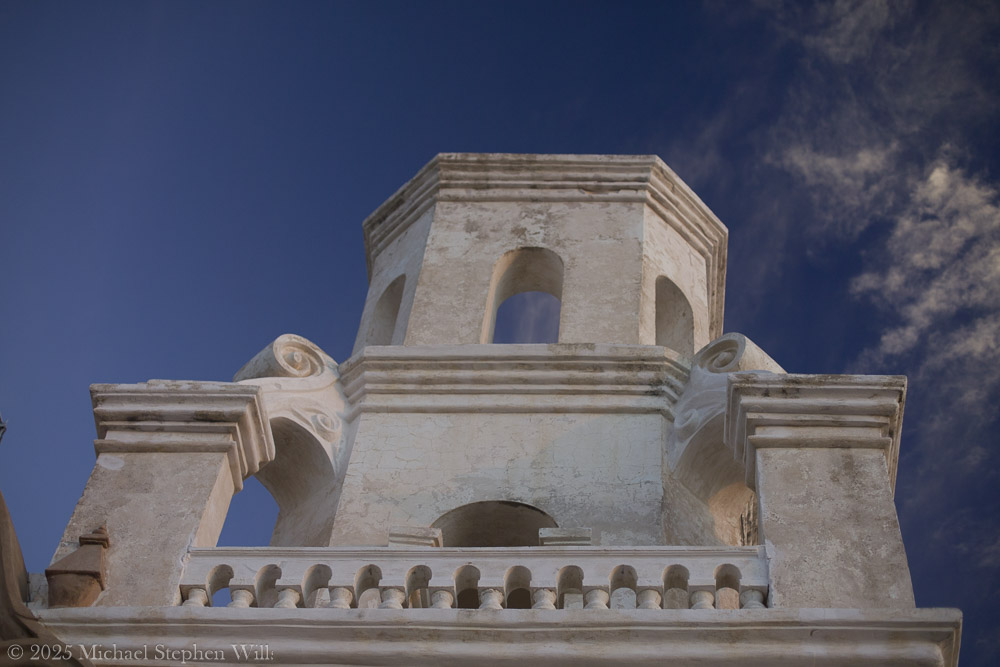
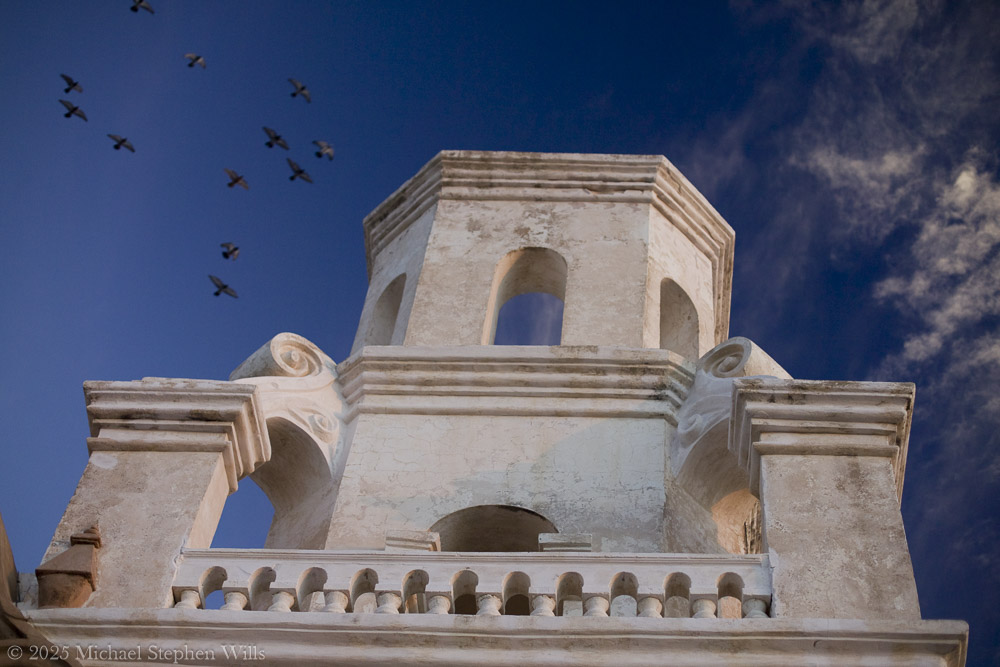
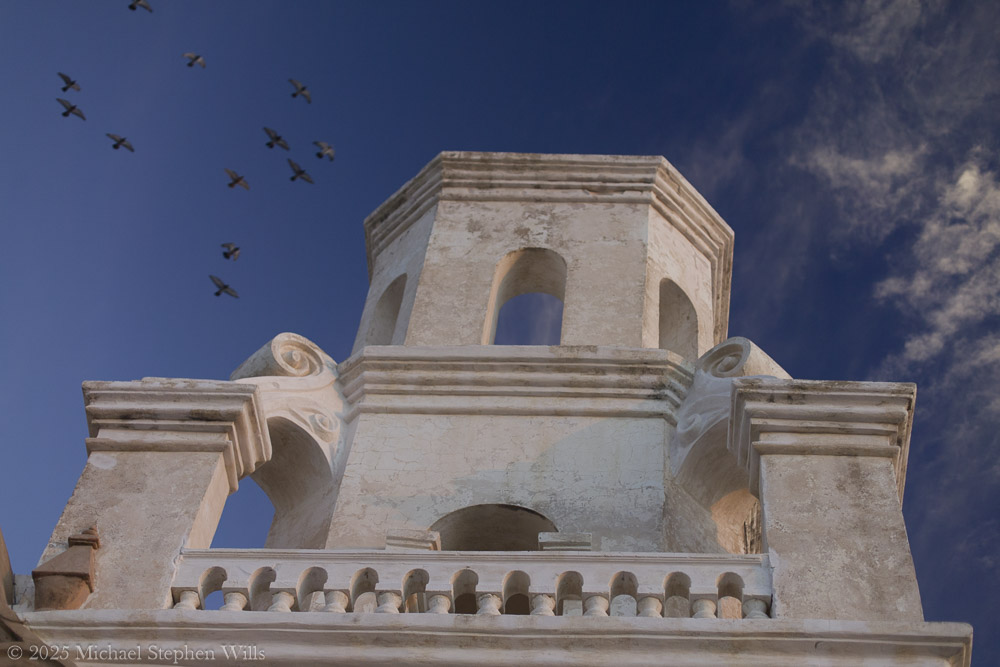
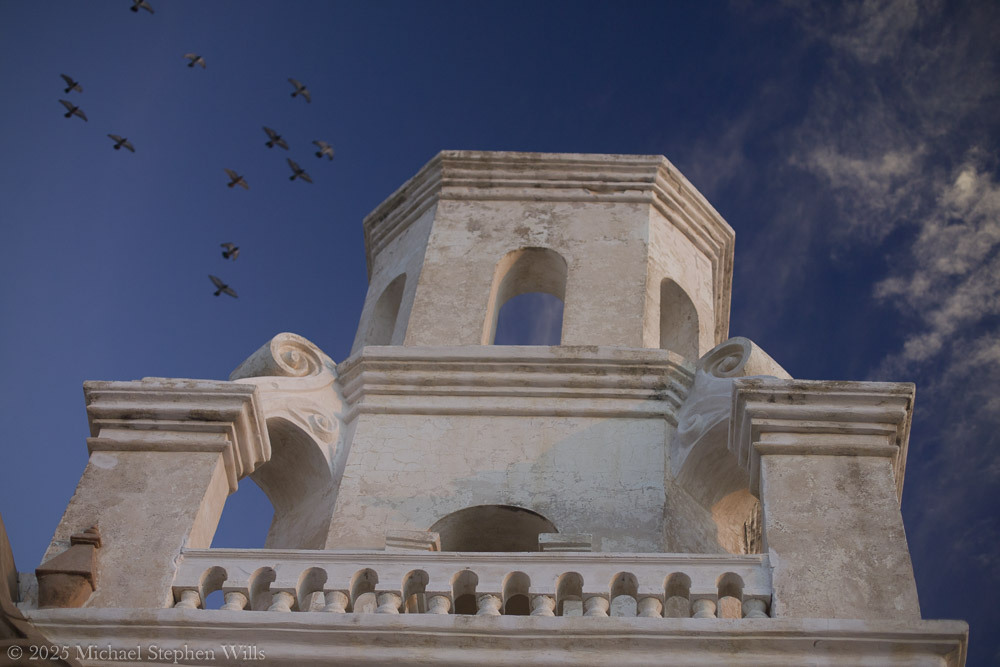
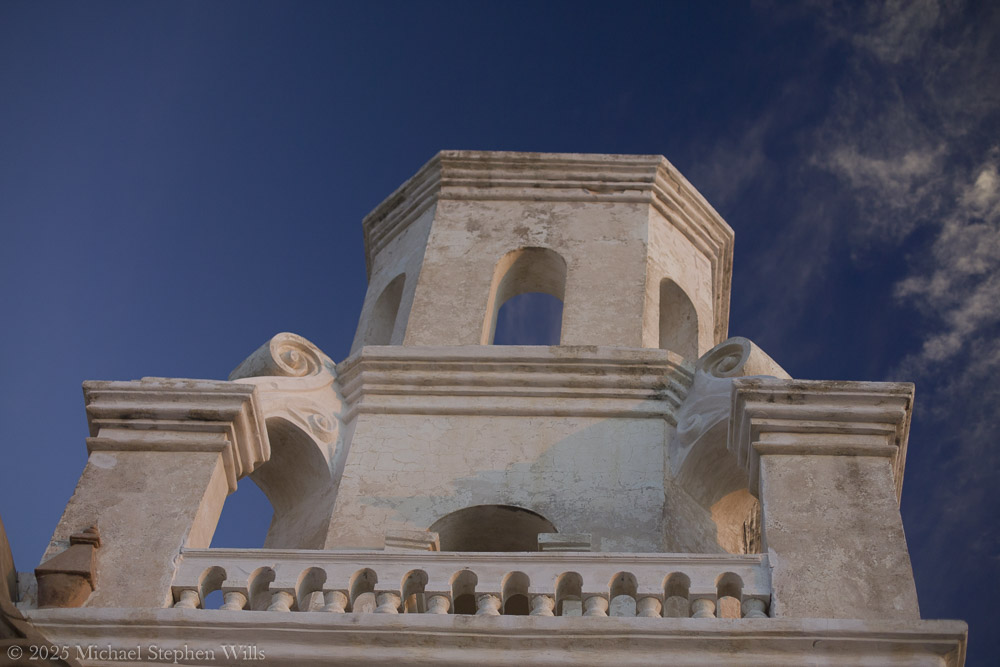
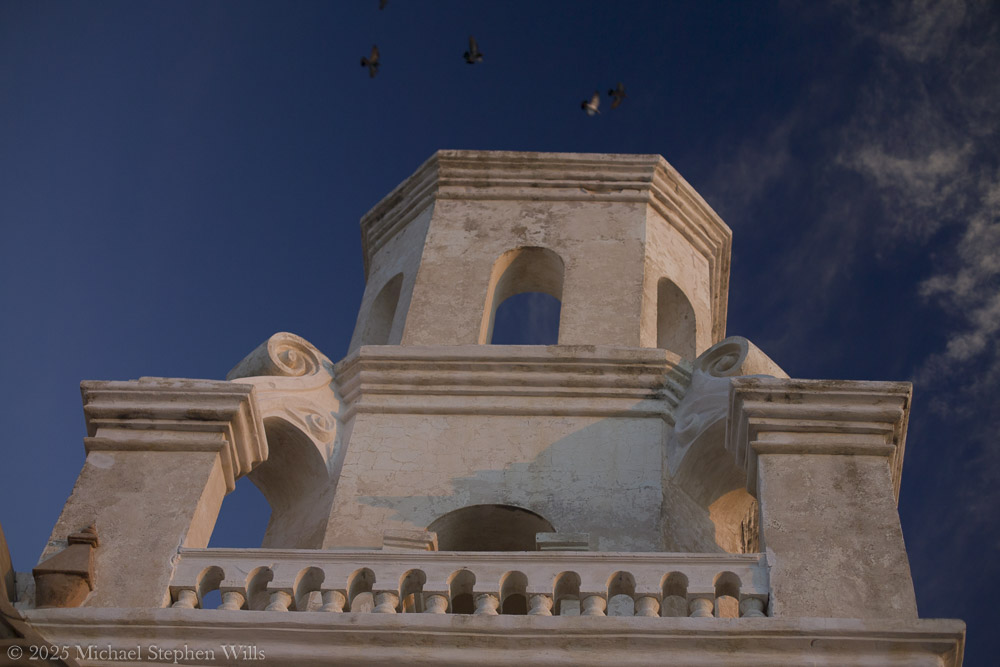
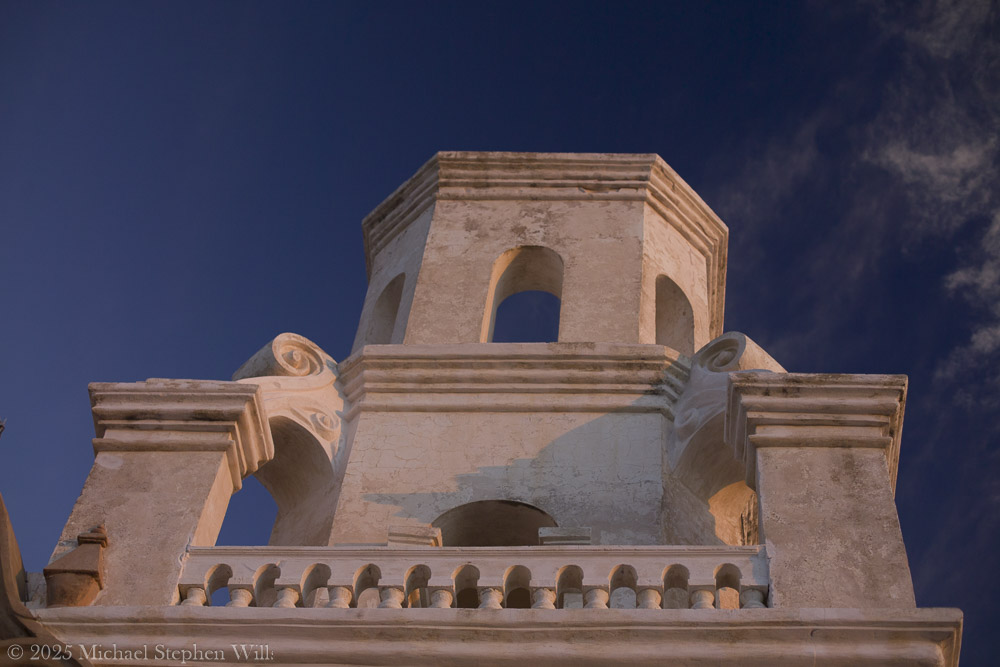
The Bell Tower in dawn light
As the day progresses, the world feels alive again. A pair of children laugh and chase each other across the dusty plaza, their voices echoing off the thick adobe walls. Nearby, the aroma of fresh frybread lingers – evidence of Tohono O’odham vendors who often set up stands by the church, selling frybread “popovers” and Indian tacos to visitors. This mingling of old and new, sacred and every day, makes the mission feel utterly genuine, the heart of a living community. I see an elderly O’odham woman in a shawl kneel at a side shrine, lips moving in quiet prayer, and I realize that for the Tohono O’odham, this mission is more than a historic landmark. It is a living spiritual home that continues to anchor their community. Indeed, the church is still an active parish that serves the local O’odham families, with regular Masses and gatherings held within its walls
The sense of continuity is palpable – the faith that built this place in the 18th century endures unwaveringly today.
Standing in front of San Xavier del Bac, I feel a personal connection that is hard to put into words. The centuries-old mission glows fresh in morning light. I close my eyes and sense the presence of all who have been here before – the O’odham villagers, the Spanish padres, the countless pilgrims and visitors. In the stillness, time blurs. Past and present mingle in the desert air. When I finally turn to leave, my heart is quiet, uplifted by the encounter. In this sacred and remote place, I have touched a living history and felt the embrace of a peace that transcends centuries. I carry that gentle peace with me into the day, grateful for the memories of light, silence, and the enduring soul of San Xavier del Bac.
Bibliography
Wikipedia. “Mission San Xavier del Bac.” (2025).
National Park Service. “San Xavier del Bac Mission.” (2021).
Patronato San Xavier. “History of the Mission – Timeline.” (2025).
Alpha-lipoic acid (ALA) is considered safe for oral use, even long-term, with mild side effects. It supports metabolism, improves insulin sensitivity, and aids weight management.
Overall, ALA’s metabolic effects can be summarized as: improved insulin action, enhanced mitochondrial energy metabolism, reduced oxidative stress, and slight promotion of fat utilization.
For seniors, it’s prudent to stay at the effective lower range (e.g. 300–600 mg/day) unless higher doses are medically supervised, given that doses above 600 mg may not confer extra benefit but could cause unnecessary GI side effects.
NOW Foods ALA offers the best cost-to-benefit ratio and is suitable for the majority of users (including the elderly), given its proven purity and high dosage. Doctor’s Best is a comparable alternative in the same tier. Jarrow provides a unique formulation that can improve tolerability (a key consideration for sensitive individuals like some seniors). Life Extension and Thorne cater to those prioritizing form specificity (R-ALA) and rigorous quality assurance, respectively. All these leading brands have positive consumer reputations and efficacious dosages – choosing between them may come down to personal priorities such as budget, any digestive sensitivity, and trust in certifications.
Effects of ALA on Metabolism
ALA plays multiple beneficial roles in metabolic health. It is both a mitochondrial cofactor and a powerful antioxidant, which allows it to influence energy production, glucose metabolism, and lipid oxidation.
Glucose Metabolism and Insulin Sensitivity
One of ALA’s most notable effects is improving insulin-dependent glucose utilization. ALA facilitates the transport of blood sugar into cells and combats insulin resistance. Clinical studies have shown that ALA supplementation enhances insulin sensitivity – for example, clamp trials in type 2 diabetics demonstrated significantly increased glucose disposal after a month of oral ALA therapy
pmc.ncbi.nlm.nih.gov. In prediabetic individuals, ALA reduced fasting insulin levels and HOMA-IR (an index of insulin resistance), even without changing body weight
pmc.ncbi.nlm.nih.gov. These improvements mean cells respond better to insulin, helping to lower blood sugar. In fact, ALA is used therapeutically in some insulin-resistant conditions (it’s prescribed in Germany for diabetic neuropathy in part due to this effect).
A recent dose–response meta-analysis of 16 trials (over 1,000 patients with type 2 diabetes) confirmed that oral ALA produces small but significant improvements in glycemic control
pmc.ncbi.nlm.nih.gov. Every 500 mg of ALA added per day led to reductions in HbA1c (average blood glucose), fasting plasma glucose, and markers of inflammation like C-reactive protein
pmc.ncbi.nlm.nih.gov. For example, around 600 mg/day of ALA lowered HbA1c by about 0.3 percentage points and modestly reduced fasting glucose – a notable benefit, though not a dramatic cure
pmc.ncbi.nlm.nih.gov. These changes, while statistically significant, were relatively modest in magnitude (often below the threshold of clinical significance
pmc.ncbi.nlm.nih.gov). This suggests ALA won’t replace diabetes medications, but can act as a helpful adjunct for improving metabolic markers. Notably, ALA also tends to lower triglycerides and inflammatory markers in metabolic syndrome patients
Mechanistically, ALA activates cellular energy sensors (AMPK) and transcription factors (PPAR-γ) that enhance insulin signaling and glucose uptake
mdpi.com. It can upregulate GLUT4 glucose transporters in muscle and reduce oxidative stress that impairs insulin action. Collectively, these actions translate to better insulin sensitivity and blood sugar utilization, which is why ALA has been tested in conditions like type 2 diabetes, metabolic syndrome, and even polycystic ovary syndrome.
Mitochondrial Function and Energy Production
ALA is often dubbed the “metabolic antioxidant” because of its critical role in mitochondria – the energy powerhouses of cells. Endogenously, ALA is a coenzyme for key mitochondrial enzyme complexes (e.g. pyruvate dehydrogenase and α-ketoglutarate dehydrogenase) that drive the Krebs cycle and ATP production
lifeextension.com. Supplementing with ALA can bolster these enzymatic functions. ALA is easily absorbed and crosses into mitochondria, where it assists in converting nutrients into energy and simultaneously neutralizes free radicals generated in the process
mdpi.com. This dual action supports healthier mitochondrial function, especially under oxidative or aging-related stress.
Research indicates ALA can improve mitochondrial performance and even promote new mitochondria formation. For instance, ALA has been shown to stimulate mitochondrial biogenesis in cells
pmc.ncbi.nlm.nih.gov. Its antioxidant capacity helps prevent damage to mitochondrial membranes and DNA, preserving efficiency of energy metabolism
pmc.ncbi.nlm.nih.gov. In animal studies of aging, ALA (alone or with other “mitochondrial nutrients” like acetyl-L-carnitine) reversed age-related declines in mitochondrial structure and function
accurateclinic.com. Notably, ALA-treated older rats showed improvements in memory that correlated with restored mitochondrial health and lower oxidative damage in brain cells
accurateclinic.com. By elevating intracellular glutathione and other antioxidants, ALA creates a more reducing (protective) environment in mitochondria
pmc.ncbi.nlm.nih.gov. This is particularly relevant for seniors, as mitochondrial decay is a hallmark of aging. The evidence suggests ALA may help mitigate age-associated mitochondrial dysfunction, potentially improving energy levels and organ function in older adults
It’s important to note that while much of the mitochondrial benefit is documented in lab and animal models, human trials also hint at improved fatigue and muscle performance in conditions of mitochondrial stress. At the cellular level, ALA’s ability to chelate redox-active metals and scavenge reactive oxygen species prevents the oxidative damage that slows down mitochondrial enzymes
pmc.ncbi.nlm.nih.gov. In summary, ALA serves as a critical cofactor and antioxidant “tune-up” for mitochondria, supporting efficient metabolism and potentially contributing to healthy aging of cells.
Weight Management and Fat Oxidation
ALA has garnered interest as a weight management supplement, due to its effects on energy expenditure and fuel utilization. Preclinical studies suggest ALA can reduce fat accumulation through multiple pathways. In animal models, ALA supplementation led to lower food intake and increased calorie burn – partly by acting on the hypothalamus to suppress appetite via AMPK (AMP-kinase) modulation
pmc.ncbi.nlm.nih.gov. Rodents given ALA show a decrease in body fat and weight, as ALA may enhance fat oxidation and mitochondrial activity in muscle and brown fat
pmc.ncbi.nlm.nih.gov. These anti-obesity signals raised hopes that ALA might aid human weight loss as well.
Human trials indicate ALA’s weight loss effects are modest. A comprehensive meta-analysis of randomized controlled trials found that, on average, subjects taking ALA lost about 1.2 kg more than those taking a placebo over the study period
pmc.ncbi.nlm.nih.gov. This translated to a small but statistically significant drop in BMI (~0.4 unit) compared to placebo
pmc.ncbi.nlm.nih.gov. In practical terms, ALA can modestly enhance weight loss when combined with caloric restriction or diet changes, but it is not a magic bullet. The meta-regression found no clear dose-response – higher doses didn’t necessarily produce more weight loss – but longer study duration was associated with slightly greater effects on BMI
pmc.ncbi.nlm.nih.gov. So, ALA may help “a little bit” with weight management, especially over longer periods and as part of a comprehensive diet/exercise plan.
Interestingly, some trials in overweight individuals have shown improvements in body composition. For example, in obese participants on a calorie-controlled diet, those who added ALA lost slightly more weight and fat mass than those on diet alone
pmc.ncbi.nlm.nih.gov. ALA’s activation of AMPK and PPAR signaling can encourage the body to use fat for fuel and improve metabolic rate. It also attenuates inflammation (lowering CRP) which is linked to obesity
pmc.ncbi.nlm.nih.gov. That said, the consensus is that ALA’s effect on weight is small – typically on the order of 1–2% of body weight – but it may enhance fat oxidation and help overcome metabolic hesitations during weight loss
pmc.ncbi.nlm.nih.gov. Because even modest weight reductions can improve health markers, this adjunct effect of ALA is seen as a positive side benefit to its main role in glycemic and antioxidant support.
pmc.ncbi.nlm.nih.gov. These biochemical effects underlie its use in diabetic neuropathy, its investigation in cognitive decline, and its popularity as an anti-aging supplement.
Safety Profile of ALA (General Population and Seniors)
Alpha-lipoic acid is considered to have a strong safety profile in oral supplement doses commonly used. A 2020 meta-analysis of 71 clinical trials (over 2,500 people on ALA) found no higher incidence of adverse events with ALA than with placebo
mdpi.com. In other words, taking ALA did not increase overall side-effect risk compared to not taking it. Reported side effects are usually mild, most often gastrointestinal (GI) upset (e.g. nausea, stomach discomfort) or occasionally skin reactions (like rash or itching)
mdpi.com. Even long-term use appears safe – for example, diabetic neuropathy patients taking 600–1,200 mg of ALA daily for 2 years had no serious adverse effects and rated tolerability as “good” or “very good”
For older adults (age 65–70+), studies indicate ALA is generally well-tolerated at standard doses. In a trial of seniors (≥65 years) escalating doses, 600 mg/day was well tolerated with no complaints
pmc.ncbi.nlm.nih.gov. At higher doses (800–1,200 mg) a few participants experienced flushing (skin warmth/redness) or GI discomfort
pmc.ncbi.nlm.nih.gov. Notably, at 1,200 mg three of 15 elderly subjects could not tolerate the dose due to GI upset or flushing, though those taking stomach protectants had no issues
pmc.ncbi.nlm.nih.gov. These findings suggest that older individuals can safely take ALA, but very high doses may cause minor intolerance in some; starting at a moderate dose (e.g. 300–600 mg) and taking it with food may improve comfort.
No specific organ toxicity has been documented from oral ALA. However, as a potent insulin-sensitizer, ALA can enhance glucose uptake, so diabetics on medication should monitor blood sugar to avoid hypoglycemia
lpi.oregonstate.edu. (This is a theoretical risk; in one study a 600 mg ALA dose did not cause hypoglycemia when taken with diabetes drugs
lpi.oregonstate.edu, but caution is still advised for those on insulin or sulfonylureas.) Extremely large accidental overdoses are unsafe – there are case reports of seizures and acidosis in adolescents who ingested gram-quantities far beyond recommended doses
lpi.oregonstate.edu – but such scenarios are very rare. Overall, ALA is viewed as safe for adults and seniors at typical supplemental doses, with an excellent tolerability record over up to several years
mdpi.com. For seniors, it’s prudent to stay at the effective lower range (e.g. 300–600 mg/day) unless higher doses are medically supervised, given that doses above 600 mg may not confer extra benefit but could cause unnecessary GI side effects.
Oral Supplementation and Natural Sources of ALA
This report focuses on oral ALA supplementation, as opposed to intravenous use. Orally, ALA is typically taken in capsule or tablet form, in doses ranging from 100 mg up to 600 mg per serving. Common regimens for general health or diabetic support are 300–600 mg per day (higher doses are split into two doses). Importantly, taking ALA with food can reduce its bioavailability – food competes with ALA for absorption
lpi.oregonstate.edu. Therefore, it’s often recommended to take ALA on an empty stomach (30 minutes before a meal or 2 hours after) for best absorption
lpi.oregonstate.edu. ALA is both water- and fat-soluble, so it doesn’t require dietary fat for absorption, but an empty stomach helps maximize how much gets into your bloodstream. Once absorbed, ALA is readily transported into cells throughout the body, including crossing the blood–brain barrier, which is why oral ALA can have systemic antioxidant effects.
In the oral supplement market, ALA comes in a few forms: most products use the standard racemic mixture (R,S-ALA), which includes both the natural R-enantiomer and its mirror-image S form. The R-form is the biologically active form produced in the body, and has slightly better absorption
lpi.oregonstate.edu. Some premium supplements provide pure R-ALA or a stabilized sodium-R-ALA, which may offer higher potency per dose. However, all the major clinical trials have used racemic ALA, and it has proven effective. Interestingly, the S-form in racemic ALA might even help stabilize the R-form, preventing it from polymerizing, thus the mix could be beneficial for shelf-stability
lpi.oregonstate.edu. In any case, both forms are eliminated from the body relatively quickly (ALA has a short half-life of only a few hours), which has led to development of sustained-release ALA tablets to prolong its action. Sustained-release formulations can lessen peak plasma levels (potentially reducing side effects like nausea) and maintain blood levels longer.
For those interested in dietary (food) sources of ALA, it’s important to note that ALA is present in foods only in very small quantities. ALA in food is found covalently bound to proteins (as lipoamide), particularly in mitochondrial enzymes. Rich sources include organ meats and some vegetables. For example, animal organs like kidney, heart, and liver have the highest ALA content – on the order of ~1–3 micrograms per gram dry weight
lpi.oregonstate.edu. Plant sources with notable (but still tiny) amounts include spinach and broccoli (also around 1 µg/g dry weight)
lpi.oregonstate.edu. To put this in perspective, even a large serving of spinach or liver provides only a few micrograms of ALA, whereas supplements provide milligrams – a difference of about 1,000-fold
lpi.oregonstate.edu. For instance, a 300 mg supplement dose is roughly equivalent to what you’d get from eating over 100 kg of spinach in terms of ALA content. Thus, while a healthy diet includes ALA-rich foods, you cannot attain therapeutic ALA levels from diet alone.
It’s also worth noting that ALA from food is bound (lipoyllysine) and must be freed during digestion to be absorbed, which occurs inefficiently. By contrast, supplement ALA is “free” and readily absorbed (though as mentioned, timing around meals matters). This is why supplements are used to exploit ALA’s pharmacological effects. In summary, natural sources of ALA include red meat (especially organ meats) and vegetables like spinach, broccoli, yams, carrots, beets, and potatoes
healthline.com, but the amounts in foods are nutritionally meaningful yet far below what’s used in research on metabolism and disease. Oral supplementation is the practical way to achieve the doses associated with improved insulin sensitivity or neuropathic symptom relief.
(Aside: Intravenous ALA is another delivery mode – used in some European protocols for neuropathy at 600 mg IV doses – but IV use is outside the scope of this report. The focus here is on oral ALA, which is more relevant for general supplementation.)
Comparison of Leading ALA Supplement Brands
When choosing an ALA supplement, factors to consider include the dosage and form of ALA, the purity and quality testing of the product, any added ingredients (e.g. biotin, which is sometimes included), third-party certifications, cost/value, and suitability for specific needs (such as easy swallowing or lower dose options for seniors). Below is a comparative overview of several reputable ALA supplement brands, with an emphasis on how NOW Foods (a popular brand) compares to others:
Brand & Product
Form & Dosage
Quality & Purity
Consumer Ratings
Price (Approx.)
Senior Suitability
NOW Foods – Alpha Lipoic Acid Extra Strength (NOW brand)
– Racemic ALA, 600 mg per veg capsule – Also available in 100 mg and 250 mg strengths
– cGMP certified manufacturing – In-house and 3rd-party lab tested for purity (110% of label claim found in assays)nowfoods.com – Non-GMO, vegetarian formula
~4.6★ (Amazon average) – Well-reviewed for potency and value
~$0.25 per 600 mg capsule (very affordable) (e.g. ~$18 for 60 caps)
Yes. High-potency 600 mg can benefit seniors (e.g. neuropathy patients); lower-dose options allow gradual dosing. Generally well-tolerated – start with 1 × 300 mg if concerned about sensitivity.
Doctor’s Best – Alpha Lipoic Acid 600
– Racemic ALA, 600 mg per veggie cap – Standard capsule format (no additives)
– cGMP, made with “Science-Based” approach – Non-GMO, gluten/soy free, vegan – Purity tested (no formal certification published)
~4.5★ – Positive user feedback for efficacy and quality
$0.25 per 600 mg capsule<br>($20–$25 for 90 caps)
Yes. Similar to NOW in dose and tolerability. Easy-to-swallow capsules. No special senior formulation, but widely used by older adults for glucose support and nerve health.
– Racemic ALA, 300 mg sustained-release tablet + ^biotin^ (explained below) – Sustained release reduces GI upset and prolongs action
– Reputable brand with strict quality control (cGMP) – Non-GMO; vegetarian – Includes biotin to prevent biotin depletion by high-dose ALA
~4.7★ – Users like the sustained-release (less stomach discomfort)
$0.45 per 300 mg tablet<br>($27 for 60 tablets)
Yes. Lower 300 mg dose and slow-release format are gentler on the stomach – a good choice if seniors experience acid reflux or nausea with 600 mg instant-release. Biotin included for safety.
Life Extension – Super R-Lipoic Acid 240
– R-ALA only, 240 mg stabilized R-lipoic per capsule (equivalent to ~480 mg racemic activity) – Vegetarian capsule
– High purity R-isomer (bio-enhanced form) – Produced under NSF GMP (Life Extension has rigorous in-house testing) – Non-GMO, no unnecessary fillers
~4.6★ – High satisfaction, though niche due to price; noted for effectiveness in blood sugar management
$0.50–$0.60 per 240 mg cap<br>($30–$36 for 60 caps)
Yes (with considerations). The R-ALA form gives strong effects at lower dose, which can be advantageous for sensitive seniors. Capsule size is moderate. Ensure other medications are reviewed, as R-ALA might potentiate insulin effects more strongly. Higher cost may be a drawback on fixed incomes.
Thorne Research – Alpha Lipoic Acid 300 (Thiocid-300)
– Racemic ALA, 300 mg per capsule – Also offered in 100 mg capsules for flexible dosing
– NSF Certified for Sport (third-party tested for potency & contaminants)info.nsf.org – Pharmaceutical-grade purity; free of gluten, soy, and major allergens – Trusted by healthcare practitioners (Thorne has rigorous quality audits)
~4.8★ (fewer reviews; premium brand trust) – Praised for quality, no additives
~$0.65 per 300 mg cap ($39 for 60 caps)
Yes. High quality and purity ideal for seniors concerned about contaminants. Lower-dose 100 mg option allows titration for those who want to “start low and go slow.” More expensive, but top-tier safety for long-term use.
^Notes:^ The inclusion of biotin in Jarrow’s ALA Sustain is to counteract a theoretical biotin deficiency when taking high-dose ALA. (ALA and biotin share similar transporters, and large doses of ALA could competitively inhibit biotin absorption
lpi.oregonstate.edu.) Most people likely get enough biotin from diet, but Jarrow adds 300 µg biotin per tablet as a safeguard.
From the above comparison, NOW Foods ALA stands out as an excellent value – it provides a high dosage per capsule, has verification of its content (in fact, NOW deliberately overfills by ~5% to ensure full potency through shelf life
nowfoods.com), and is very affordable per dose. NOW’s internal and external testing has revealed that some bargain brands sold online delivered as low as 50–70% of their label claim of ALA
nowfoods.com, whereas NOW consistently meets or exceeds its label dosage. This reliability, combined with widespread positive reviews, makes NOW a trusted choice for many consumers, including older adults who may be on multiple supplements and need confidence in label accuracy.
Comparatively, Doctor’s Best offers a similar price and formula to NOW – also a good value with clean ingredients. It’s likewise a solid choice, essentially interchangeable with NOW in terms of what a user gets (600 mg ALA, veg capsule, etc.). Those who prefer a sustained-release or lower dose may lean toward Jarrow Sustain (300 mg), especially if mild stomach upset has been an issue with other ALA supplements. Sustained-release can also be beneficial for maintaining steadier blood levels if one is taking ALA for glucose control throughout the day. The addition of biotin in Jarrow’s product is a thoughtful inclusion for high-dose users.
For individuals specifically seeking the most bioactive form, Life Extension’s Super R-Lipoic Acid provides the R-isomer which is the natural form the body uses. Users report it to be effective at a lower dose, and Life Extension is known for quality, but it does come at a higher cost per mg. Seniors who are very health-conscious and willing to invest may choose this for its potency – for instance, a senior with significant insulin resistance might try R-ALA to potentially get a stronger response with fewer capsules. It’s wise, however, to monitor blood sugar closely, as R-ALA might enhance insulin action more per milligram.
Finally, Thorne Research’s ALA is a premium supplement that prioritizes purity – the NSF certification means an independent body vetted its contents for accuracy and absence of contaminants. This can be particularly reassuring for older adults who are often more vulnerable to heavy metals or impurities. Thorne’s product is priciest, but you are paying for exceptional quality control. The availability of a 100 mg capsule from Thorne is useful for those who want to slowly ramp up dosage or who only need a small amount (for example, a senior adding ALA mainly for general antioxidant support rather than high-dose therapy).
References
Sarezky et al. (2016). Tolerability in the elderly population of high-dose alpha lipoic acid: a potential antioxidant therapy for the eye.Clinical Interventions in Aging, 11, 19-25. pmc.ncbi.nlm.nih.gov
Cicero et al. (2020). Safety Evaluation of α-Lipoic Acid Supplementation: A Systematic Review and Meta-Analysis of Randomized Controlled Studies.Antioxidants, 9(10):1011. mdpi.commdpi.com
Ziegler et al. (2016). Oral treatment with alpha-lipoic acid improves diabetic polyneuropathy.Experimental and Clinical Endocrinology & Diabetes, 124(5): 295-301. mdpi.com
Shilo et al. (2022). Oral Alpha-Lipoic Acid in Type 2 Diabetes: A Dose–Response Meta-Analysis.J of Clinical Endocrinology & Metabolism, 107(11): e4731-e4742. pmc.ncbi.nlm.nih.govpmc.ncbi.nlm.nih.gov
Liu et al. (2008). Mitochondrial nutrient α-lipoic acid alleviates age-associated mitochondrial and cognitive dysfunction.Neurochemical Research, 33(1): 194-203. accurateclinic.com
Salehi et al. (2019). Alpha-Lipoic Acid as a Dietary Supplement: Molecular Mechanisms and Therapeutic Potential.Biomolecules, 9(8): 356. pmc.ncbi.nlm.nih.gov
Yi & Ma (2019). Efficacy and safety of alpha-lipoic acid supplementation for diabetic neuropathy.Journal of International Medical Research, 47(11): 5338-5354.
Linus Pauling Institute, Oregon State University – Micronutrient Information Center: Lipoic Acid (Alpha-Lipoic Acid). Updated 2018.lpi.oregonstate.edulpi.oregonstate.edu
NOW Foods – Quality testing report (2020): NOW Reports Testing on Brands of Alpha Lipoic Acid.nowfoods.comnowfoods.com
Evans & Goldfine (2021). α-Lipoic Acid (ALA) as a Supplement for Weight Loss: Results of a Meta-Analysis.Obesity Reviews, 22(7): e13266. pmc.ncbi.nlm.nih.govpmc.ncbi.nlm.nih.gov
On a crisp October morning in 2017, I was on the cusp of retirement with leisure time to explored the Johnson Museum of Art at Cornell University, with my grandson Sam and his grandmother, Pam, my wife. We were attending a “Let’s Look Baby” event—a wonderful opportunity to introduce young children to art and the world around them. Sam was a toddler at the time, curious and full of energy, and I was eager to share this moment of discovery with him.
The day started on the museum’s upper level, where expansive windows offered breathtaking views of Ithaca, Cayuga Lake, and the surrounding hills. I lifted Sam so he could take it all in, his little hands gripping my arm as he gazed out at the vibrant autumn landscape while Pam captured the moment. The trees were in early stages of autumn—fiery reds, golden yellows, and rich browns—while Cayuga Lake shimmered in the distance, its deep blue surface reflecting the clear October sky. Sam pointed out toward the horizon; his eyes wide with curiosity. I told him about the lake, the hills, and the valley, trying to capture the beauty of it all in words simple enough for him to understand.
The architecture of the Johnson Museum itself framed the experience perfectly. Designed by I.M. Pei, the building’s clean, modern lines allowed the landscape to take center stage. Standing there with Sam, I felt a profound sense of gratitude—for the view, for the moment, and most of all, for the chance to share it with Sam.
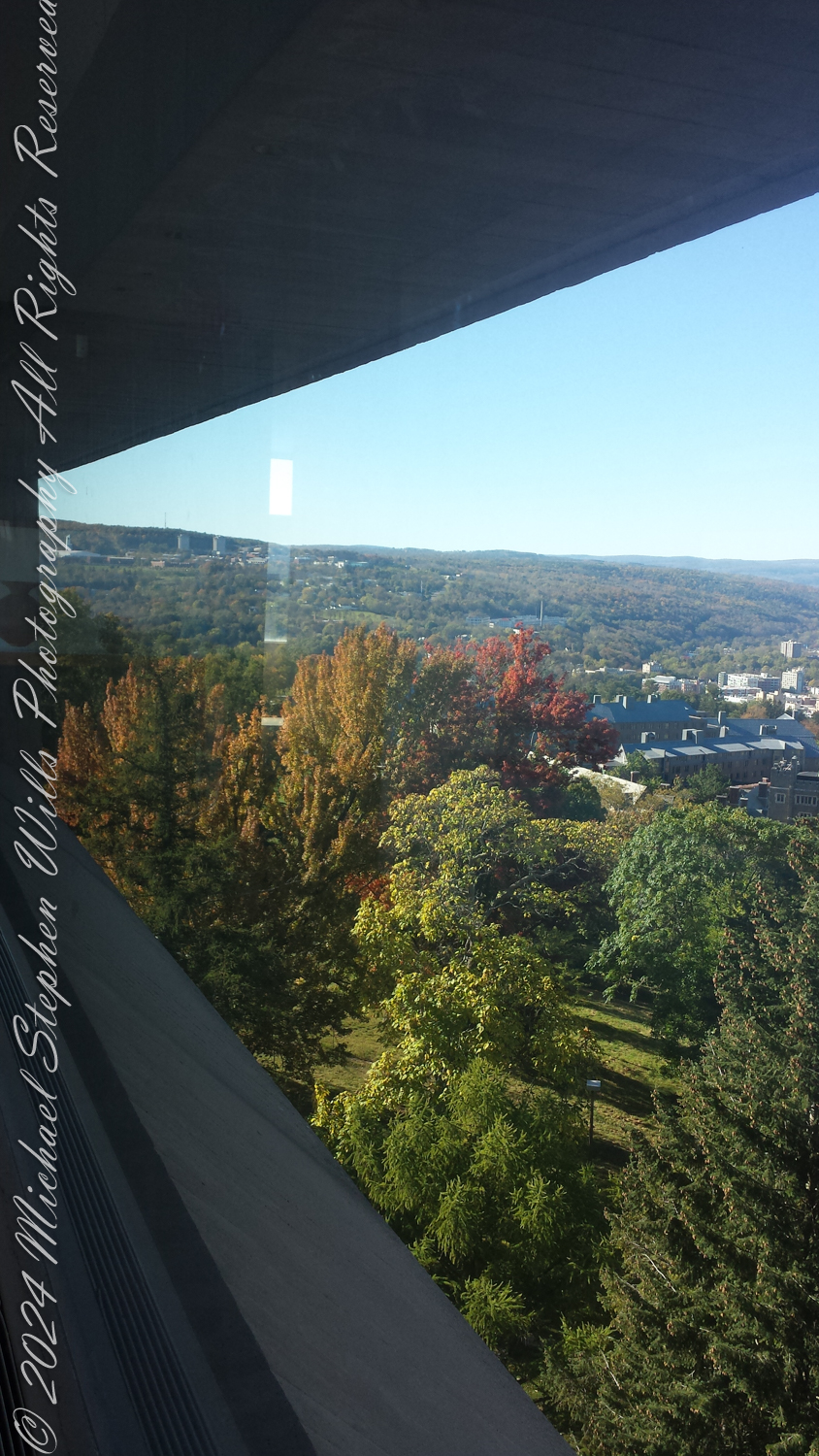
Looking southwest over Cornell University and Ithaca, down the Cayuga Lake Valley. West Hill is to the right. Tompkins County, Finger Lakes Region of New York State
As part of the event, we explored the museum’s galleries, moving from one exhibit to the next. The “Let’s Look Baby” program was designed with young children in mind, blending art appreciation with sensory exploration. While Sam was too young to fully grasp the meaning behind the pieces, he was fascinated by the vibrant colors and the textures of the displays. At one point, we stopped by a ceramic vase. Its elegant curves caught Sam’s attention, and I used the moment to talk to him about shapes and forms, pointing out how it was similar to the roundness of a pumpkin or the arc of a rainbow.
Looking South / Southwest over Cornell University and Ithaca, down the Cayuga Lake Valley. Ithaca College is to the left on South Hill. Tompkins County, Finger Lakes Region of New York State
Throughout the visit, I found myself narrating the world to Sam, drawing connections between what we saw in the museum and the beauty of the natural world outside. It reminded me how much there is to learn and how much joy there is in teaching, even if the lessons are as simple as noticing the colors of leaves or the shape of a cloud.
Looking southwest over Cornell University’s Lib Hill and Ithaca, down the Cayuga Lake Valley. West Hill is to the right. Tompkins County, Finger Lakes Region of New York State
We returned to the large windows overlooking Ithaca more than once. From there, I pointed out the landmarks of the city—downtown Ithaca with its steeples, the rolling hills, and the peaceful expanse of Cayuga Lake stretching toward the horizon. Sam listened quietly, his small fingers pointing to whatever caught his attention. I wondered what he was thinking, but I knew this experience, even if he wouldn’t remember it fully, was shaping his view of the world.
Looking to the North / Northwest over Cornell University and Cayuga Heights to Cayuga Lake. West Hill is to the far left. Along the southern lake shore is Stewart Park, the lighthouse, New York State Marina and Cass Park. Tompkins County, Finger Lakes Region of New York State
The day wasn’t just about what we saw—it was about the connection we shared. Holding Sam in my arms, I felt the simple, deep joy of being present in the moment. This was a chance to see the world through his eyes, to notice the details I might otherwise overlook, and to marvel at the way something as simple as a vase or a view could spark his curiosity.
Looking to the North / Northwest over Cornell University and Cayuga Heights to Cayuga Lake. West Hill is to the far left. Along the southern lake shore is Stewart Park, the lighthouse, New York State Marina and Cass Park. Tompkins County, Finger Lakes Region of New York State
As the October sun swept over the landscape, casting warm golden light, we left the museum. Sam was getting sleepy, his little head resting on my shoulder Pam and I shared a quiet contentment. That day at the Johnson Museum is a memory to treasure, a reminder of the beauty in both art and the natural world, and most importantly, the joy of sharing it with someone you love.
Enter your email to receive notification of future postings. I will not sell or share your email address.
Copyright 2025 All Rights Reserved Michael Stephen Wills
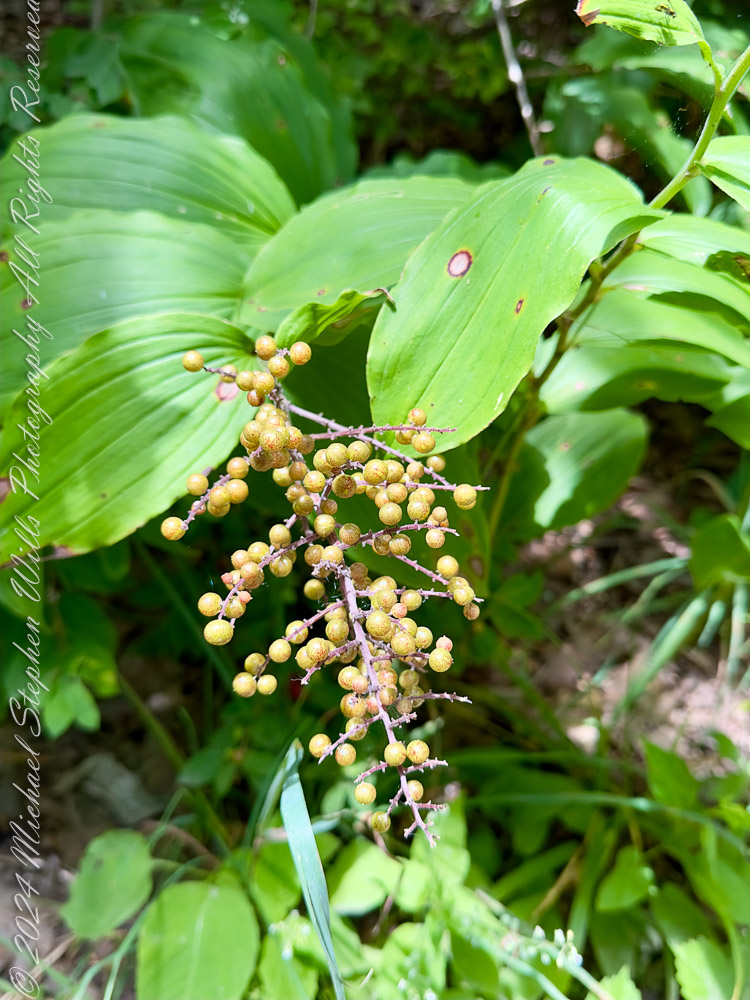
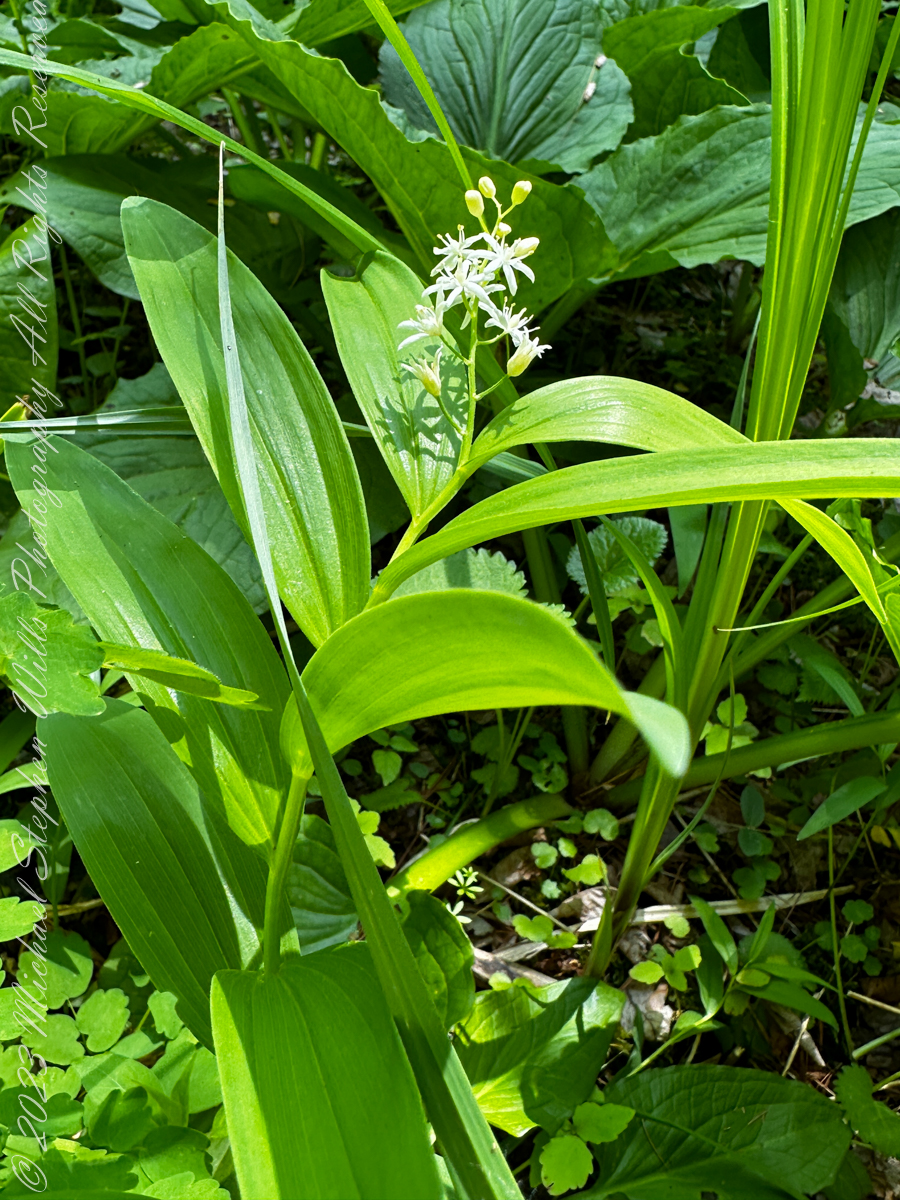
The trails of Taughannock Falls State Park always hold surprises, and on that July day, they did not disappoint. As I paused to take in the tranquility of the woods, my gaze fell upon a plant whose graceful arch and clusters of berries demanded attention. Its broad, lance-shaped leaves alternated along the stem, framing the stem’s terminal cluster of small green berries. Recognizing the plant as Maianthemum racemosum, commonly known as False Solomon’s Seal, I took a moment to admire its understated elegance.
False Solomon’s Seal, scientific name Maianthemum racemosum, is common in the Finger Lakes Region. I found this specimen during a walk with the grandchildren in a local fen among the post-glacial terrain of the Finger Lakes Region. Eames Memorial Natural Area, Cornell Botanic Gardens, Town of Dryden, Tompkins County, Finger Lakes Region, New York State
Characteristics of the Plant
False Solomon’s Seal is a perennial herbaceous plant belonging to the asparagus family (Asparagaceae). It can grow up to three feet tall, its arching stems giving it a unique and recognizable silhouette. The leaves are broad and lance-shaped, with prominent veins running their length, arranged alternately along the stem. At the tip of each stem is a cluster of tiny, spherical green berries, which later in the season ripen to a speckled reddish hue. The plant blooms in late spring to early summer, producing delicate, star-shaped white flowers before transitioning to its fruiting phase.
Found throughout much of North America, Maianthemum racemosum thrives in moist, shaded woodlands, making the lush forests of Taughannock Falls State Park an ideal home. Its ability to grow in the dappled light beneath the forest canopy highlights its adaptability to varying light conditions.
Etymology of the Name
The genus name, Maianthemum, comes from the Greek words “mai” (May) and “anthemon” (flower), reflecting the plant’s tendency to bloom in late spring or early summer. The species name, racemosum, refers to the plant’s inflorescence, which forms a raceme—a cluster of flowers or berries along a single stem. Its common name, False Solomon’s Seal, derives from its superficial resemblance to Solomon’s Seal (Polygonatum spp.), though the latter has bell-shaped flowers hanging beneath its stems, in contrast to the terminal clusters of Maianthemum racemosum.
History and Folklore
False Solomon’s Seal has long been valued for its medicinal and culinary uses by Indigenous peoples and early settlers. The young shoots were harvested and cooked as a vegetable, while the ripe berries were sometimes used in jellies or preserves, though their slightly bitter flavor limited their appeal. Medicinally, teas made from the roots and leaves were used to treat a variety of ailments, including digestive issues, coughs, and sore throats. The roots were also applied as poultices for cuts and bruises, reflecting the deep understanding of natural remedies held by those who lived in harmony with the land.
The plant’s name has sparked legends. While the “false” in its name denotes its distinction from Solomon’s Seal, some folklore suggests that the plant was used to counterfeit the medicinal properties of its namesake. Others believe that its graceful arch and persistent berries symbolize resilience and adaptability, qualities often attributed to those who lived in its native habitats.
Uses and Ecological Role
Although not widely cultivated, Maianthemum racemosum is a valuable plant in its native ecosystems. Its flowers provide nectar for pollinators such as bees and butterflies, while the berries are a food source for birds and small mammals. Its rhizomatous roots also play a role in stabilizing soil in forested environments, preventing erosion and supporting the health of the woodland floor.
For those contemplating harvesting these plants be advised that collection of plants from New York State Parks is prohibited to protect natural resources and maintain ecological balance. According to the New York State Office of Parks, Recreation and Historic Preservation (OPRHP) regulations, “No person shall… remove… any… plant life” within state parks without proper authorization. Therefore, collecting plants in state parks without explicit permission is not allowed. If you have a specific research or educational purpose, you may contact the park administration to inquire about obtaining the necessary permits. However, for casual visitors, it’s best to enjoy the flora from a distance. False Solomon Seal ecological contributions are significant. In addition to its pollinator support and soil stabilization, the plant’s presence is an indicator of a healthy woodland ecosystem.
A Moment of Reflection
As I rose from my crouched position, having taken in the details of Maianthemum racemosum, I felt a quiet gratitude for the opportunity to encounter such a plant. False Solomon’s Seal, with its graceful leaves and unassuming berries, serves as a reminder of the interconnectedness of life in the forest. Its role in the ecosystem, its history with humans, and its understated beauty all speak to the richness of the natural world.
Walking onward, I carried with me a sense of awe for the intricate web of life that thrives in the woods. The False Solomon’s Seal, standing quietly among the ferns and leaf litter, seemed to embody the resilience and balance of the forest—a gentle presence in a vibrant community.
Enter your email to receive notification of future postings. I will not sell or share your email address.
Copyright 2024 All Rights Reserved Michael Stephen Wills
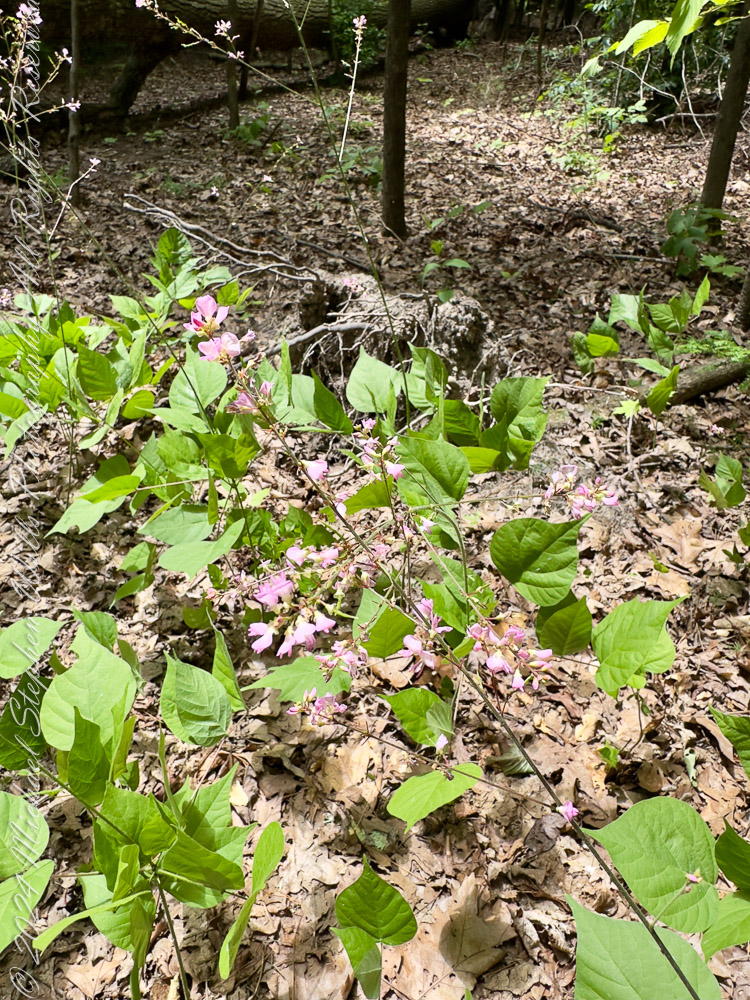
It was a high summer day as I enjoyed a customary hike around of Taughannock Falls State Park on the South and North Rim trails. Here sunlight filtered through the dense canopy, dappling the forest floor with shifting patches of light. Along the trail, my attention was drawn to a cluster of pink blossoms rising on slender, upright stems. Intrigued by their delicate beauty, I crouched down for a closer look. The plant rose above the forest floor, its trifoliate leaves broad and prominently veined, each leaflet slightly larger than I would have expected. These leaves seemed to anchor the plant to the shaded understory, while its flowers reached upward, as though eager to catch the fleeting rays of sun. I captured the plant in this photographs, later used it to identify Hylodesmum glutinosum, or Large-Flowered Tick Trefoil.
Characteristics of the Plant
The Large-Flowered Tick Trefoil is a striking member of the pea family (Fabaceae). Its pink, pea-like flowers are arranged in graceful racemes along the upper portions of its stems, their vibrant color contrasting beautifully with the green foliage around them. The leaves, broad and trifoliate, lend the plant its distinctive appearance. The name “tick trefoil” refers to the plant’s seed pods, which are flat and segmented, equipped with tiny hooks that cling stubbornly to passing animals or hikers, hitchhiking their way to new locations.
The plant is native to eastern North America, including the forests and trails of New York State. Its preference for rich, well-drained soils in partially shaded woodlands makes it a common sight in places like Taughannock Falls State Park. Blooming from mid to late summer, it provides an essential nectar source for bees and other pollinators, playing its part in the intricate web of the forest ecosystem.
Etymology of the Name
The genus name, Hylodesmum, was established only twenty-five years ago when the plant was reclassified from the genus Desmodium to a new genus within the tribe Desmodieae. The name reflects its forested habitat, with “hylo” derived from the Greek word for “wood” or “forest.” Previously described in 1802 as Hedysarum glutinosum and later placed in Desmodium, the species name glutinosum remains unchanged, meaning “sticky” in Latin. This aptly describes the plant’s seed pods, which adhere to anything that brushes past them. Together, these names encapsulate both the botanical structure and the unique dispersal strategy of this plant.
History and Folklore
Native Americans and early settlers were intimately familiar with tick trefoils. The plant’s seeds, notorious for clinging to clothing and fur, earned it a reputation as a nuisance, but its resilience and utility could not be overlooked. Indigenous peoples utilized various parts of the plant for medicinal purposes. The roots and leaves were brewed into teas to treat fevers and digestive ailments, while poultices made from the leaves were applied to wounds to promote healing. Such uses highlight the depth of knowledge early inhabitants had about their environment.
The plant’s sticky seed pods also became the subject of folklore. Children in rural communities would playfully call it “hitchhiker’s weed,” competing to see who could collect the most seeds on their clothing during outdoor adventures. These seeds, so adept at attaching themselves to passersby, were seen as symbols of persistence and adaptability, traits that many admired.
Uses and Ecological Role
While Hylodesmum glutinosum is not commonly cultivated, its ecological contributions are significant. As a member of the Fabaceae family, it has the ability to fix nitrogen in the soil through a symbiotic relationship with rhizobia bacteria in its root nodules. This makes it a valuable plant in maintaining soil fertility in its native ecosystems. Its flowers attract pollinators like bees and butterflies, ensuring that the forest remains vibrant and full of life.
In addition to its ecological importance, the plant’s seeds have a curious modern use: they’ve been studied for their ability to help detect movement in the environment. Researchers have examined the sticky pods’ structure as a natural model for creating adhesives and tracking devices, proving once again that even the smallest details in nature can inspire human ingenuity.
A Moment of Reflection
As I rose to my feet, brushing the leaf litter from my hands, I felt a renewed sense of wonder for the intricate lives of the plants surrounding me. The Large-Flowered Tick Trefoil, with its vivid pink flowers and ingenious seed pods, seemed to embody the essence of the forest: a harmonious blend of beauty, resilience, and interconnection.
Walking away, I carried with me not just the memory of its vibrant blooms, a deep respect for its role in the natural world. In the quiet of Taughannock’s wooded trails, Hylodesmum glutinosum had shared its story, a tale of persistence, adaptation, and the hidden wonders that flourish when we take the time to notice.
Enter your email to receive notification of future postings. I will not sell or share your email address.
Copyright 2024 All Rights Reserved Michael Stephen Wills
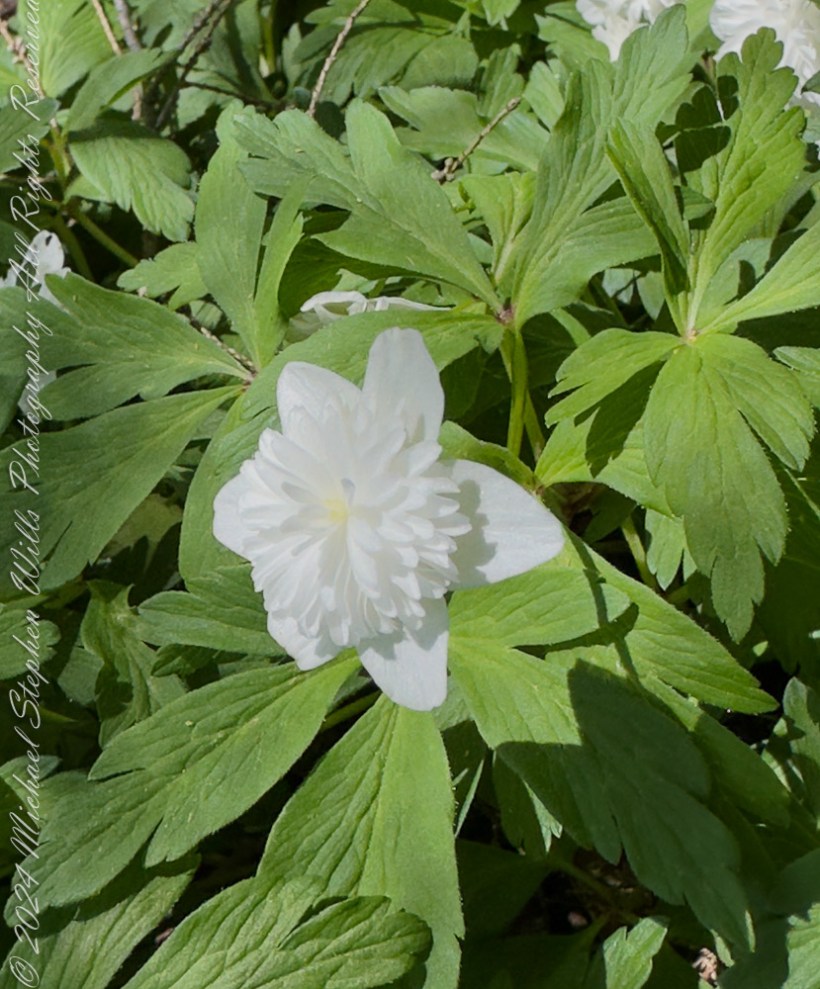
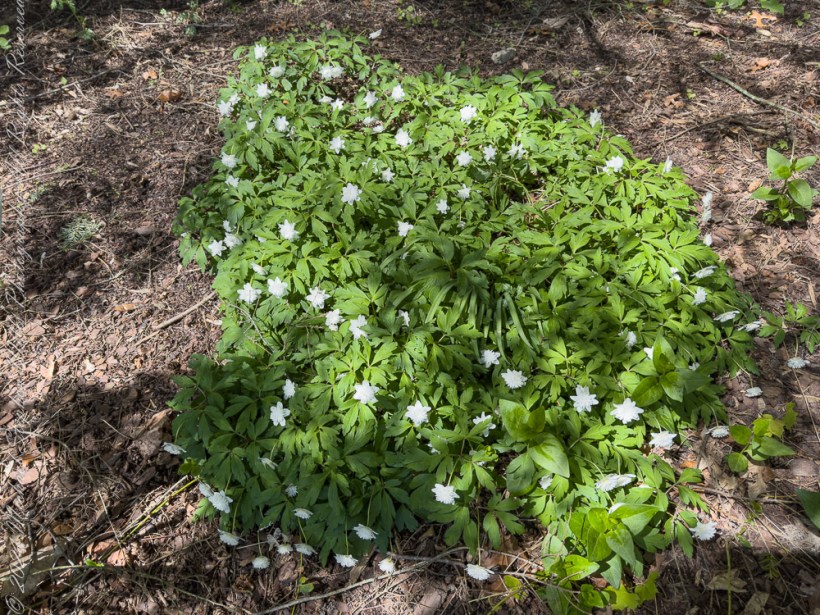
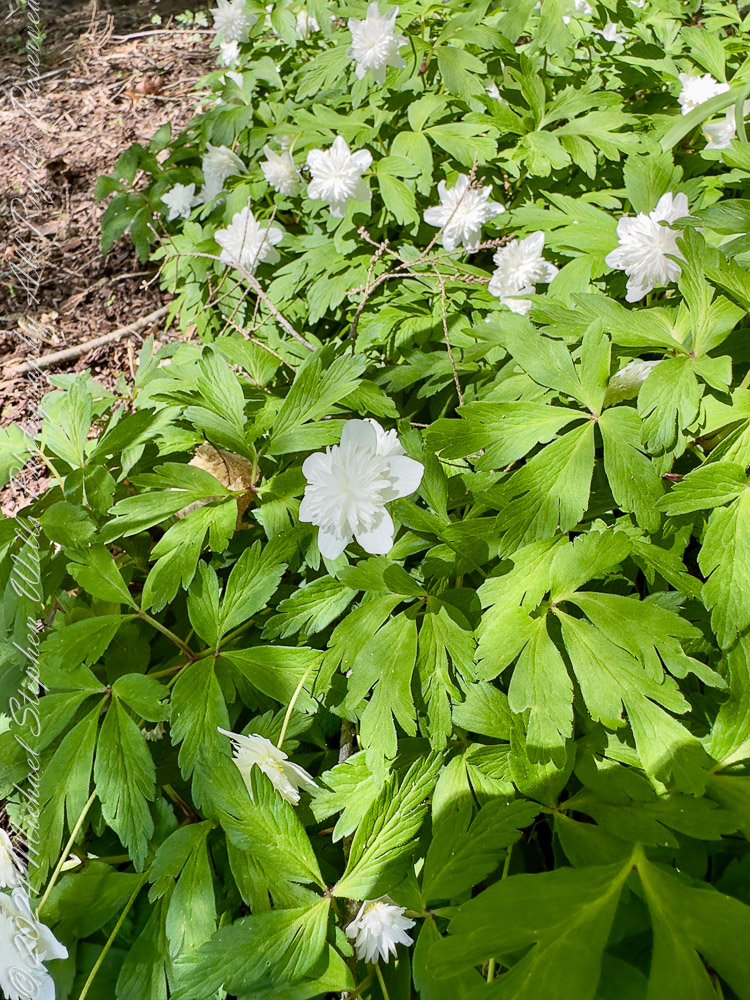
As I wander through our yard, my gaze is irresistibly drawn to a mesmerizing carpet of white blossoms, illuminated by the dappled sunlight filtering through the graceful boughs of our hemlocks. Each bloom, delicate and intricately ruffled, resembles a cluster of tiny, pure clouds resting gently atop a vibrant sea of green. These are Anemone nemorosa, affectionately known as wood anemone or windflower. This particular patch, adorned with a double-flowered variety, owes its presence to the thoughtful hands of our parents, who landscaped the property during the 1970s and 1980s. Their vision continues to bloom each spring, as the cascading petals exude an understated elegance that feels both luxurious and unpretentious—a living legacy woven into the fabric of this place we call home.
The wood anemone is a perennial plant, its rhizomatous growth weaving an intricate tapestry under the dappled sunlight of the forest floor. Each flower arises on its slender stem, surrounded by finely divided trifoliate leaves, their fresh green hue amplifying the purity of the blossoms. The flowers themselves, with their many layers of petal-like sepals, are a marvel of nature’s design, combining elegance and resilience.
The scientific name, Anemone nemorosa, carries echoes of ancient understanding. The genus name Anemone originates from the Greek word ánemos, meaning “wind.” According to classical mythology, these flowers were said to spring forth from the tears of the goddess Venus as she mourned the death of Adonis. The appellation of “windflower” ties to this myth, suggesting that the blooms open only at the bidding of the wind. The species name nemorosa comes from the Latin nemorosus, meaning “of a wooded grove,” aptly describing its preferred habitat.
There is a certain humility in the way the wood anemone thrives—spreading slowly but persistently through deciduous woodlands, forming colonies that greet the spring with their pristine blooms. While the double-flowered variety lacks the simplicity of the single-layered wild form, it retains all the grace that has inspired poets and naturalists alike. It is as if each bloom whispers its secrets to the passing breeze, stories of centuries gone by when druids and herbalists revered the plant as a symbol of protection and healing.
Culturally, the wood anemone has deep roots. In folklore, it was believed to bring luck to those who carried it, while others regarded it as a harbinger of illness if picked prematurely. The flowers were said to close tightly in response to rain, a trait lending them an air of sentience as they interact with their environment.
In medieval herbalism, the plant was thought to possess medicinal properties, though its potent compounds also rendered it toxic if mishandled. It was used cautiously to treat ailments such as rheumatism and respiratory issues. Modern understanding has largely relegated these medicinal uses to history, but the plant’s ability to captivate the senses remains undiminished.
Looking at this verdant patch before me, I am reminded of the transient beauty of spring. Anemone nemorosa emerges briefly, a fleeting celebration of life before retreating into its quiet dormancy beneath the soil. It thrives in the undisturbed spaces of the world, reminding us of the importance of preserving the ecosystems that allow such delicate wonders to flourish.
Today, as the soft May sunlight streams through the trees, illuminating each ruffled blossom, I am filled with gratitude for the enduring gift left by our parents, who lovingly planted these flowers decades ago. The wood anemone, whether viewed as a mythological symbol, a natural marvel, or a fleeting delight, offers a gentle reminder to cherish the beauty that surrounds us. Its ephemeral blooms, returning each spring, stand as a testament to nature’s quiet yet profound artistry—a living masterpiece and a poignant connection to the legacy of those who shaped this cherished landscape here in Ithaca, New York.
Enter your email to receive notification of future postings. I will not sell or share your email address.
Copyright 2024 All Rights Reserved Michael Stephen Wills
The Auburn St. Patrick’s Day Parade showcased vibrant traditions through bagpipers, dancers, and community spirit, celebrating Irish heritage and unity in a poignant, lively procession.
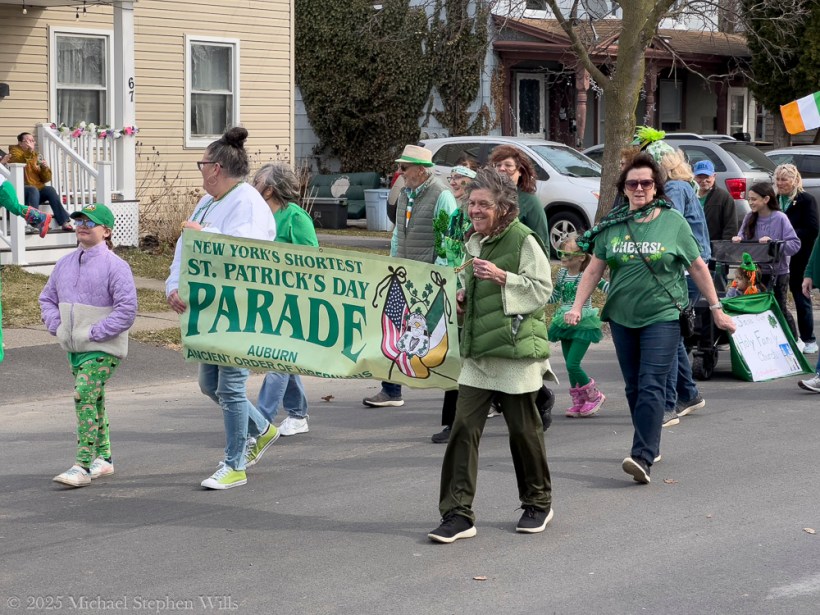
The streets of Auburn, New York, were alive with the spirit of St. Patrick’s Day. A crisp breeze carried the sound of bagpipes through the neighborhood, stirring both nostalgia and excitement. I stood on the curb, camera in hand, ready to capture the essence of what is proudly proclaimed as “New York’s Shortest St. Patrick’s Day Parade.”
Leading the procession was a lone bagpiper, his presence commanding attention. Clad in a traditional kilt, he marched with precision, his fingers skillfully pressing the chanter, producing the unmistakable droning melody. The contrast of his black uniform against the white socks and flashes of green was striking. His gaze was fixed forward, unwavering, as he walked past modest houses adorned with shamrocks and green decorations. A woman standing nearby lifted her phone to capture the moment, mirroring my own effort to preserve the memory.
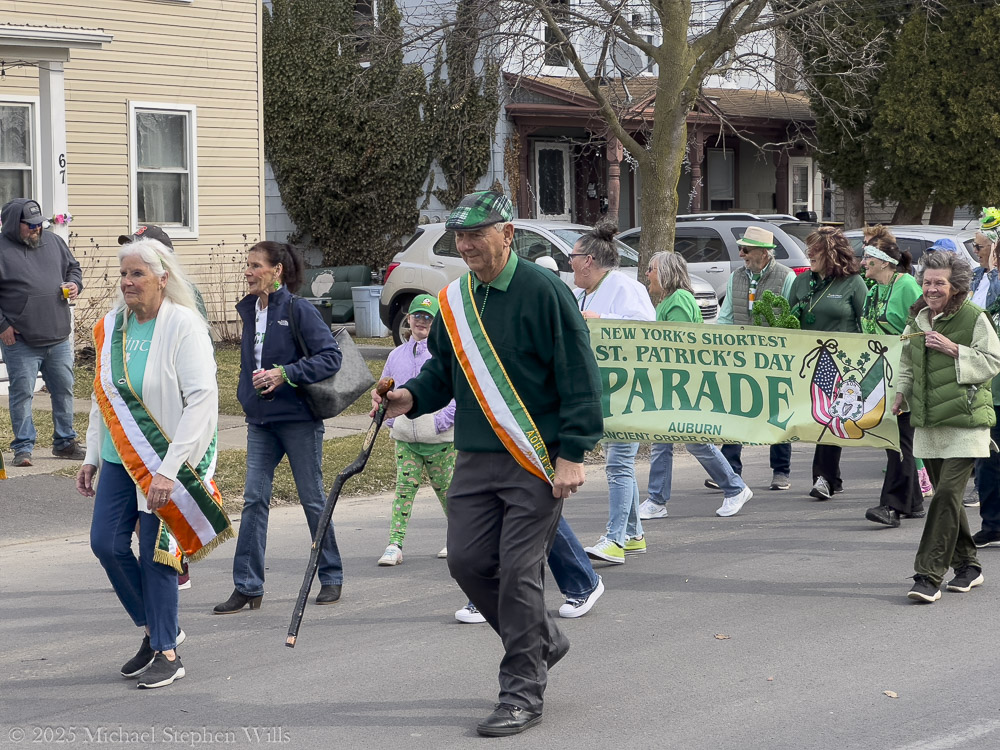
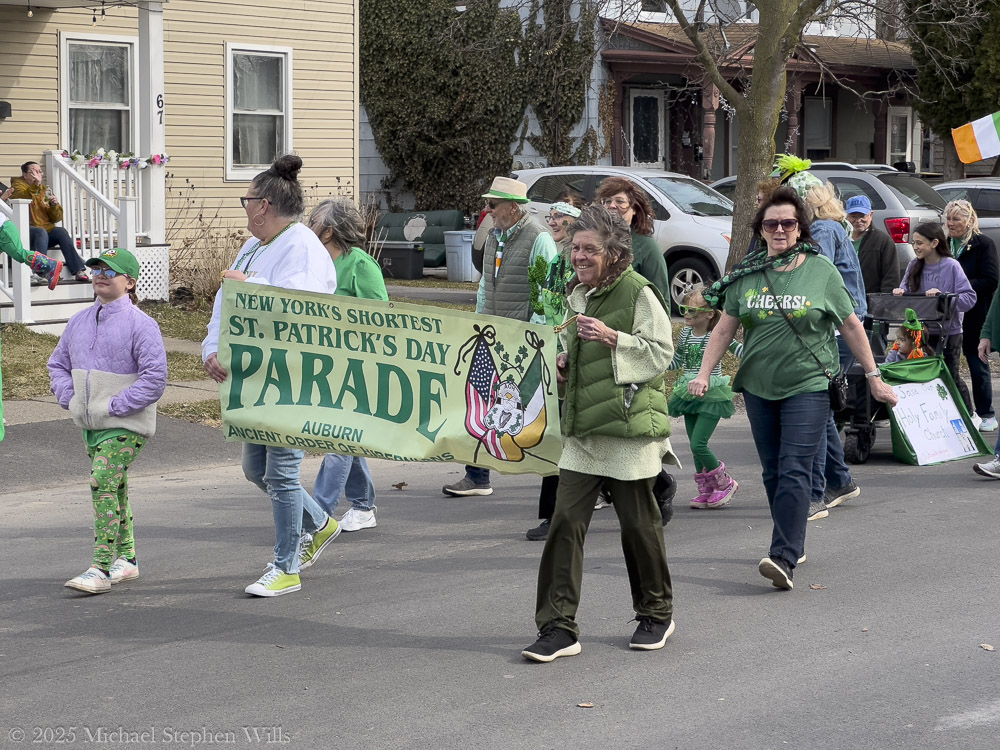
Just behind him, a group of proud marchers advanced, their sashes boldly displaying the colors of the Irish flag. Some leaned on walking sticks, a testament to age and tradition converging on this special day. They carried a banner that read: “New York’s Shortest St. Patrick’s Day Parade – Auburn – Ancient Order of Hibernians.” The crowd lining the sidewalks clapped and cheered as the parade, though brief, filled the street with a warmth that defied the cool March air.
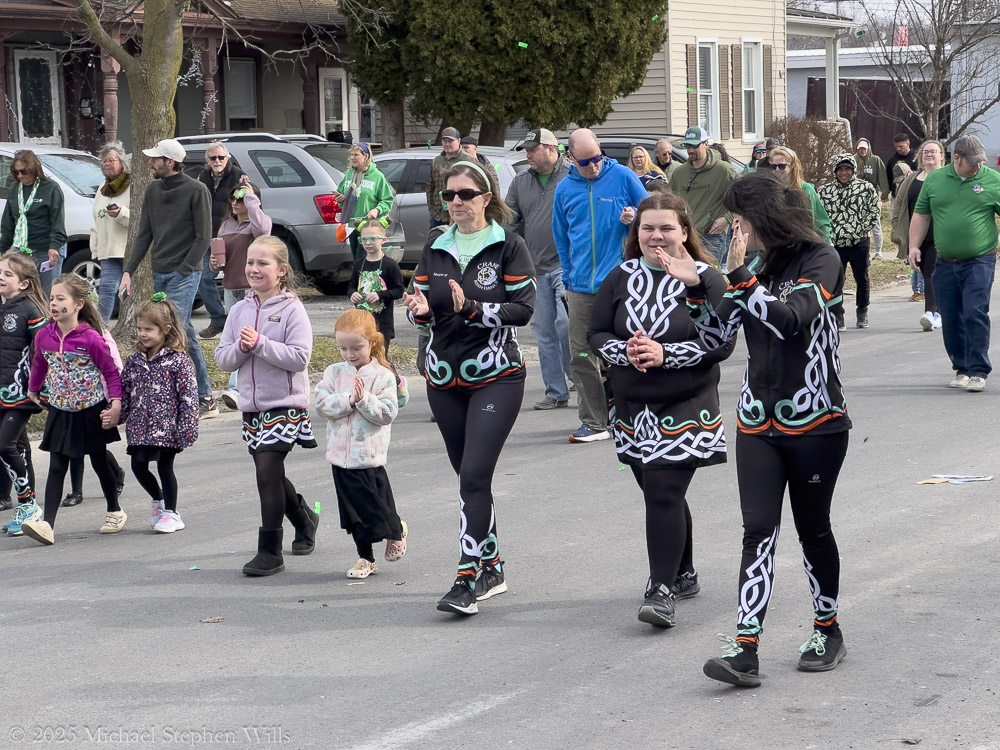
The energy of the parade was contagious. A group of Irish dancers followed, their synchronized steps punctuated by the rhythmic clap of their hard shoes on pavement. The young girls, dressed in intricately designed Celtic-inspired outfits, smiled through the motions, their faces reflecting both discipline and joy. Alongside them, women in matching athletic gear clapped along, encouraging the younger dancers while swaying to the lively music.
Green was everywhere—on scarves, hats, jackets, and even the leggings of a young girl who skipped along with excitement. Onlookers wore festive attire, their laughter and conversations blending into the celebratory atmosphere. Irish pride radiated from the participants and the community that gathered to watch, reinforcing the deep cultural roots that have anchored this parade in tradition.
For all its brevity, the Auburn St. Patrick’s Day Parade carried a weight of significance. It was not about grand floats or large crowds; it was about honoring heritage, embracing camaraderie, and keeping alive a tradition that linked the past with the present. As the final marchers passed and the echoes of the bagpipes faded, I took a final look through my camera lens. I had captured moments of pride, joy, and unity—a testament to the enduring legacy of the Irish spirit in this small but vibrant celebration.
For best experience view video in YouTube
Enter your email to receive notification of future postings. I will not sell or share your email address.
Copyright 2024 All Rights Reserved Michael Stephen Wills
Engines roar as planes await departure, soaring into vibrant sunsets. The sky transforms with colors, revealing a reflective world as night gradually takes over.
Bright was the sky as the engines awoke with a rumble of thunder, Rolling the tarmac in echoes of journeys yet destined for wonder. Cloudbanks assembled in towering billows of silver and shadow, Lifting their faces to heaven, where sunlight had painted them golden.
Far on the edge of the runway, the steel-winged vessels lay waiting, Southwest and Delta, their banners aloft in the warm evening fading. Emerald-liveried Aer Lingus, a voyager bound to the island, Glided in grace on the threshold of travel through luminous currents.
Wheels left the earth with a whisper, a moment of weightless suspension, Gravity yielding to flight as the city unrolled far beneath us. Golden horizons drew rivers of fire through infinite heavens, Burning the clouds into embers that drifted in luminous torrents.
Upward we soared, where the world lay in pools of cerulean mirror, Lakes interwoven like jewels, reflections of sunfire descending. Billows of vapor, like castles of foam on the rim of creation, Tumbled and rolled into canyons of mist in the twilight’s dominion.
Flame on the wings, where the heavens ignited in hues of vermilion, Rays from the sun, like a god’s final whisper, embracing the skyline. Shadows arose in their silence, dissolving the last glow of daytime, Stars in their vigil awakened as night claimed the realm of the heavens.
Enter your email to receive notification of future postings. I will not sell or share your email address.
Copyright 2024 All Rights Reserved Michael Stephen Wills

































 Michael Stephen Wills Photography