Islands Zealous and Sombrero

Where the Andes Stride Into the Pacific

Want More?  Visit my OnLine Gallery.

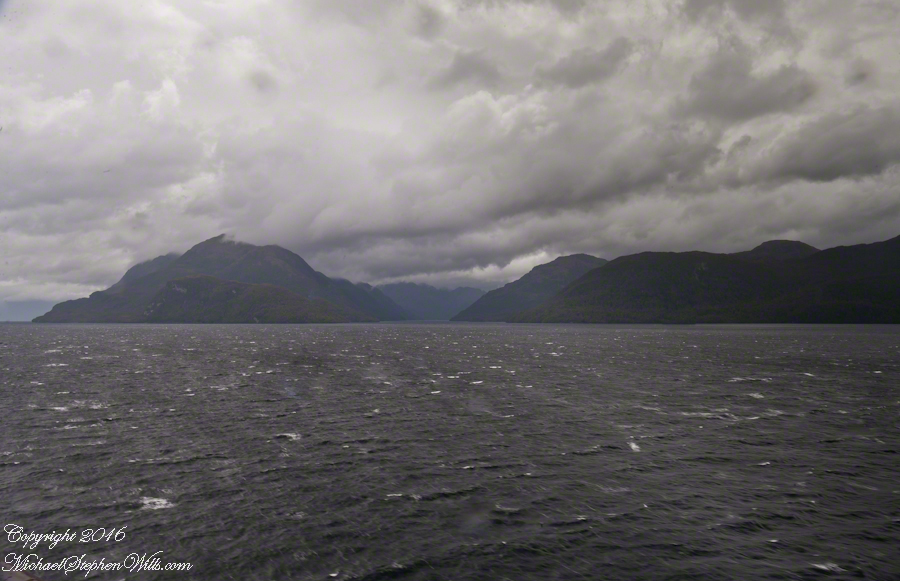
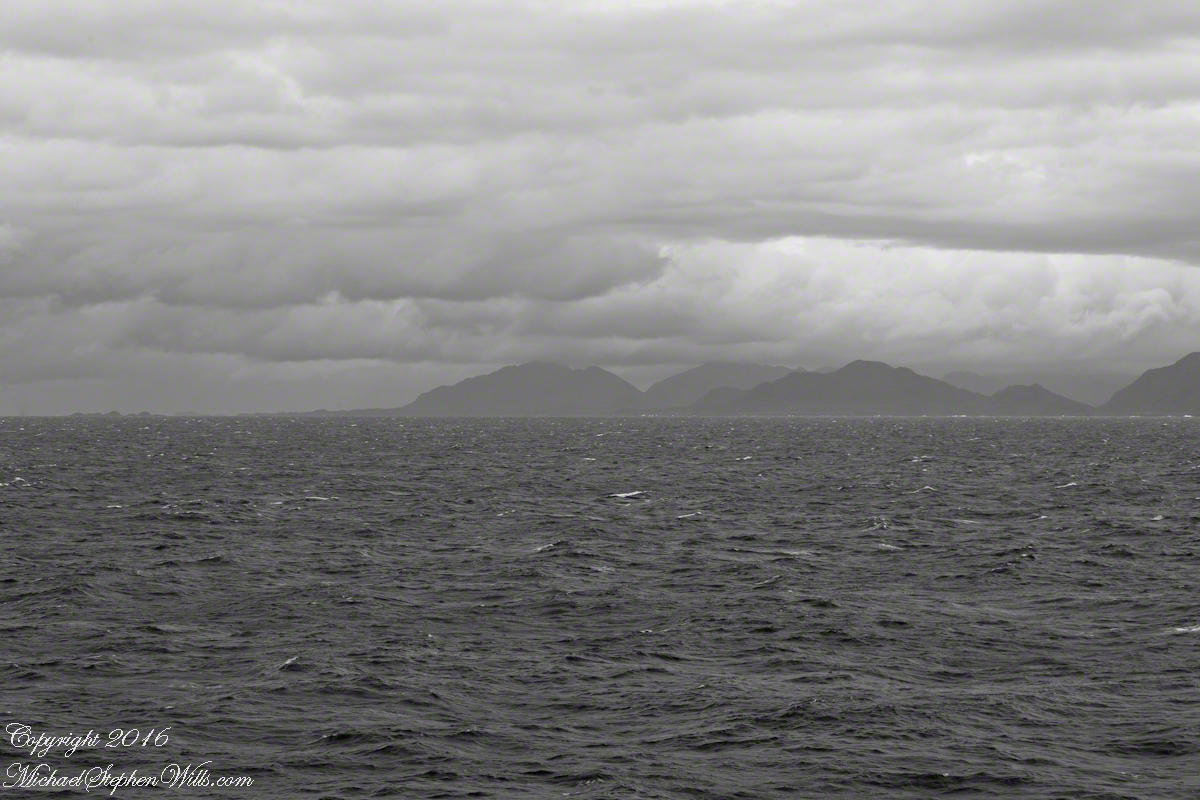
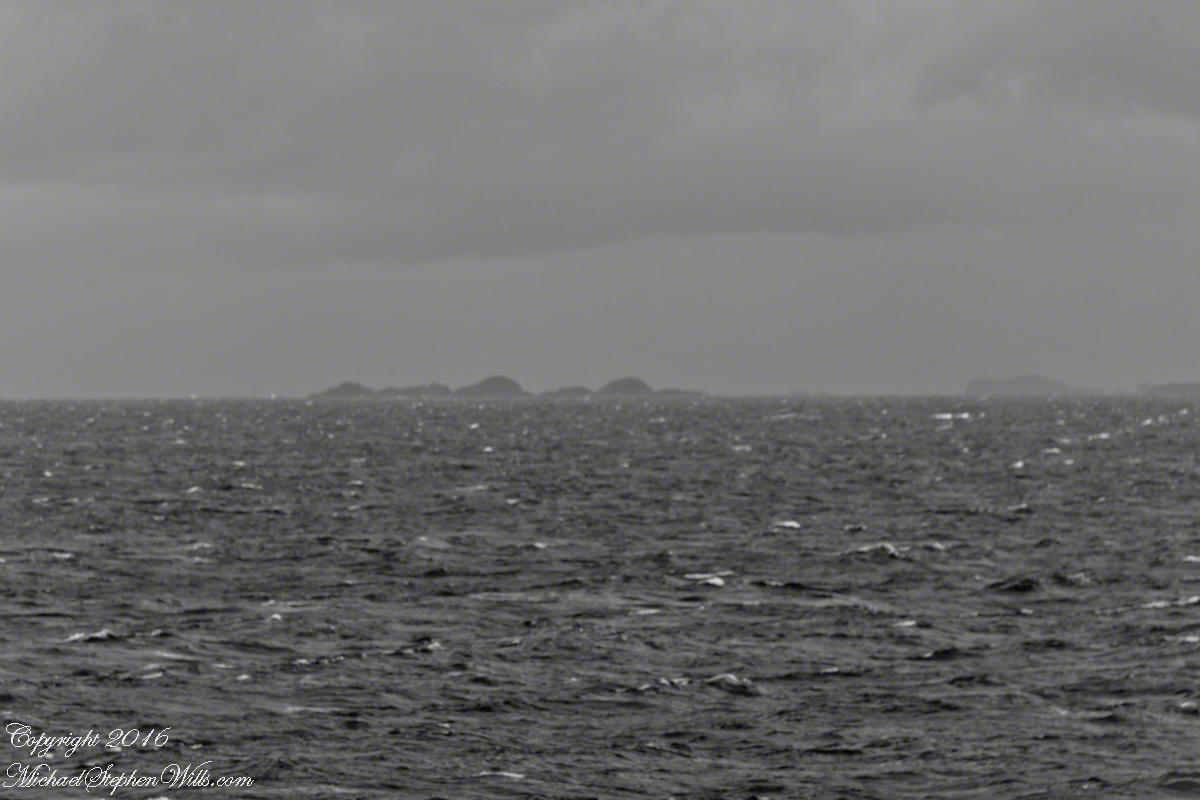
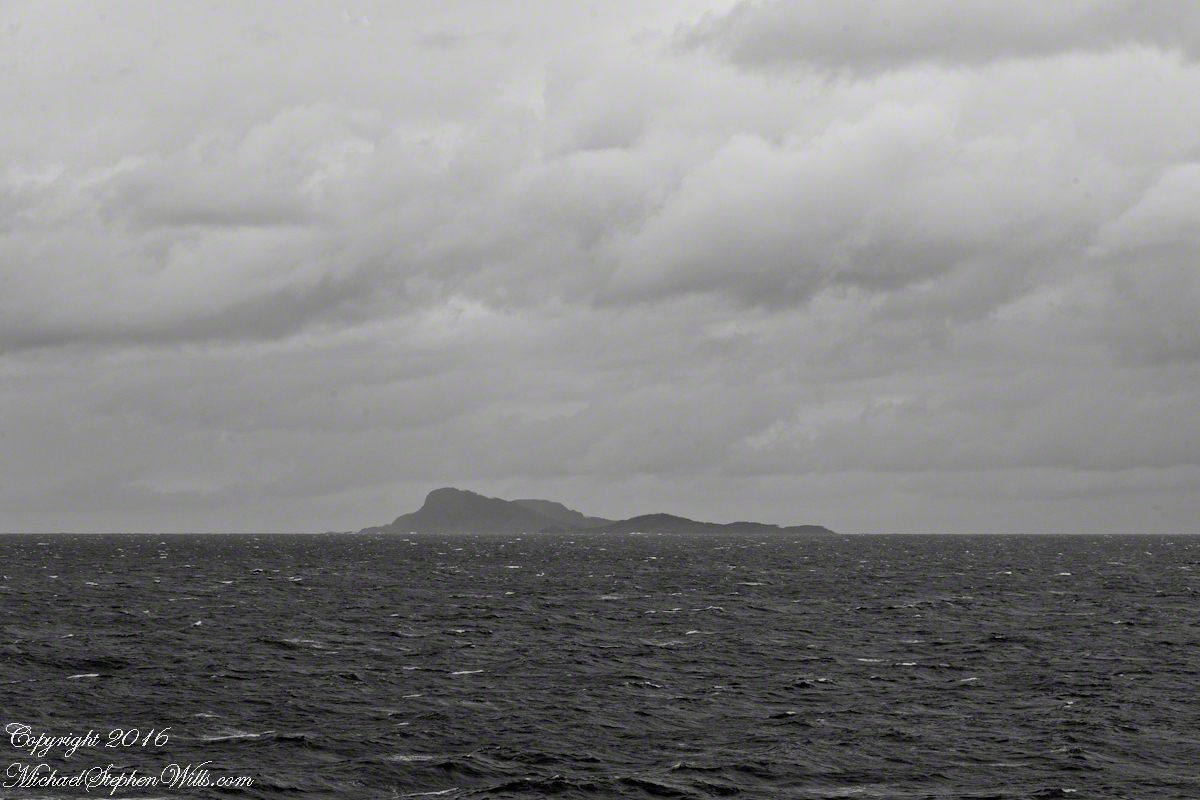
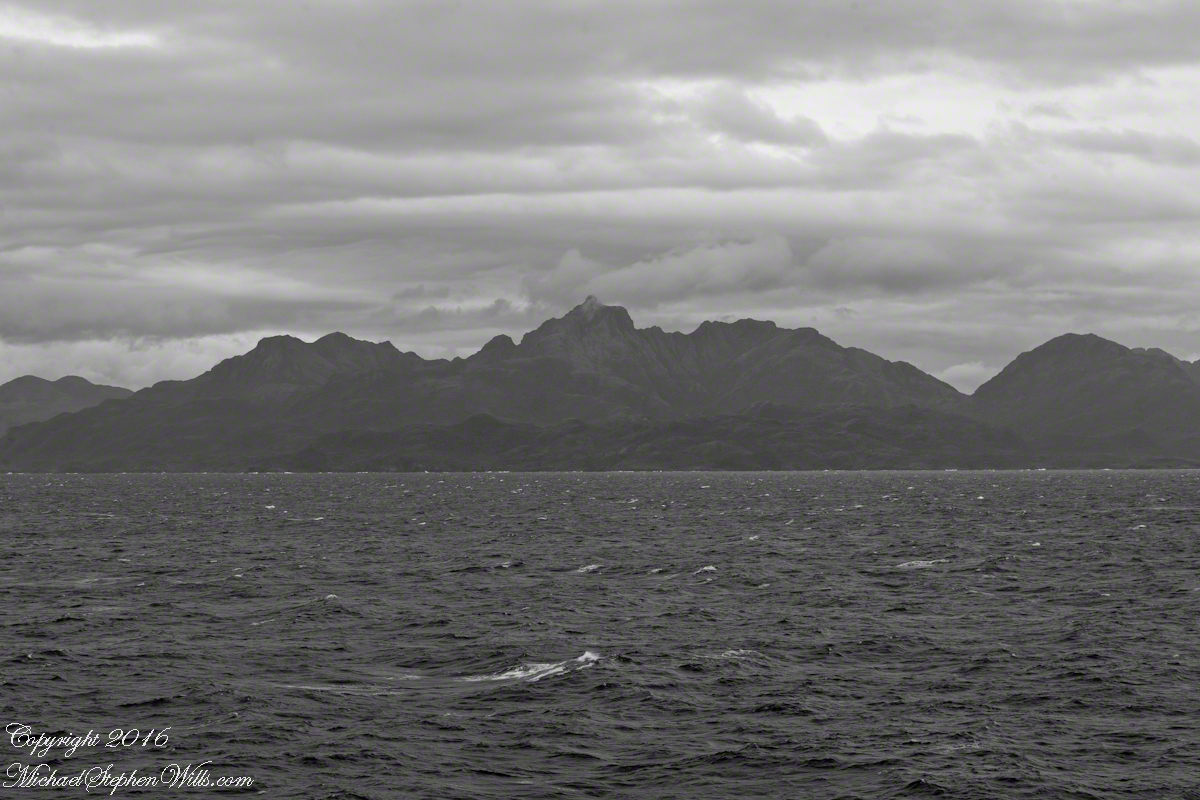
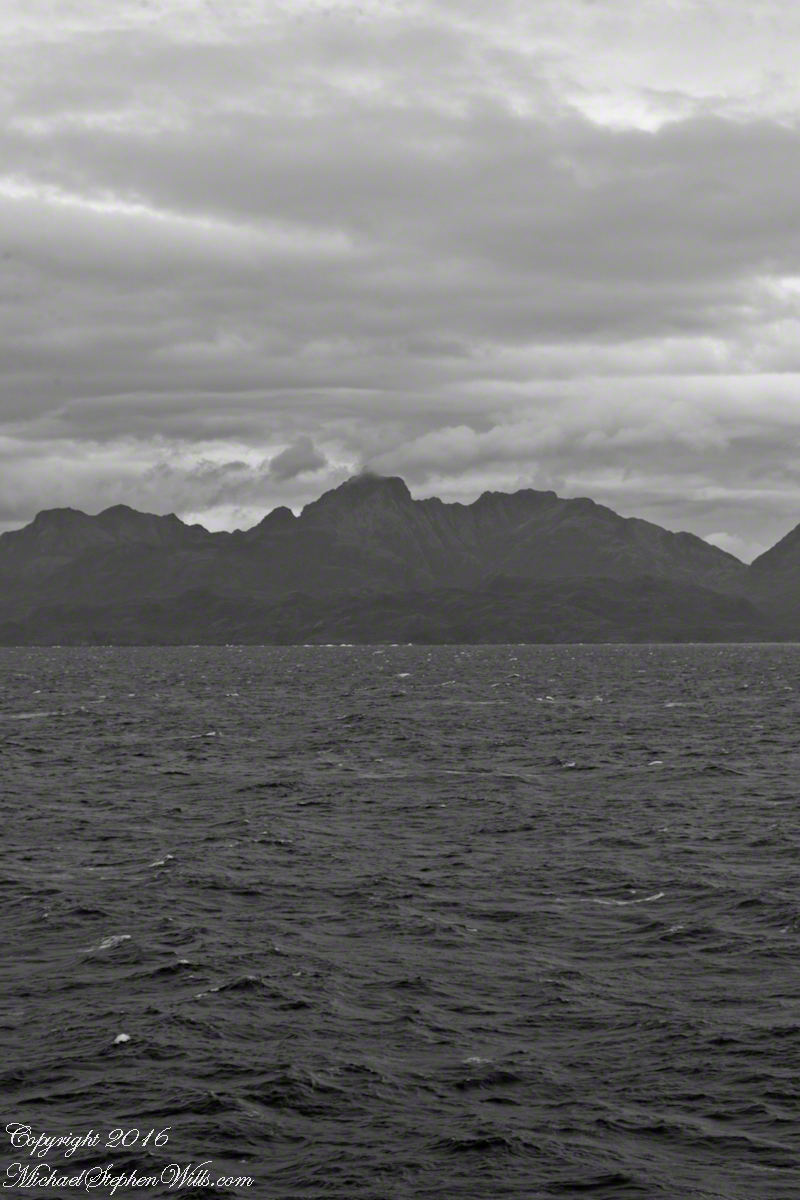
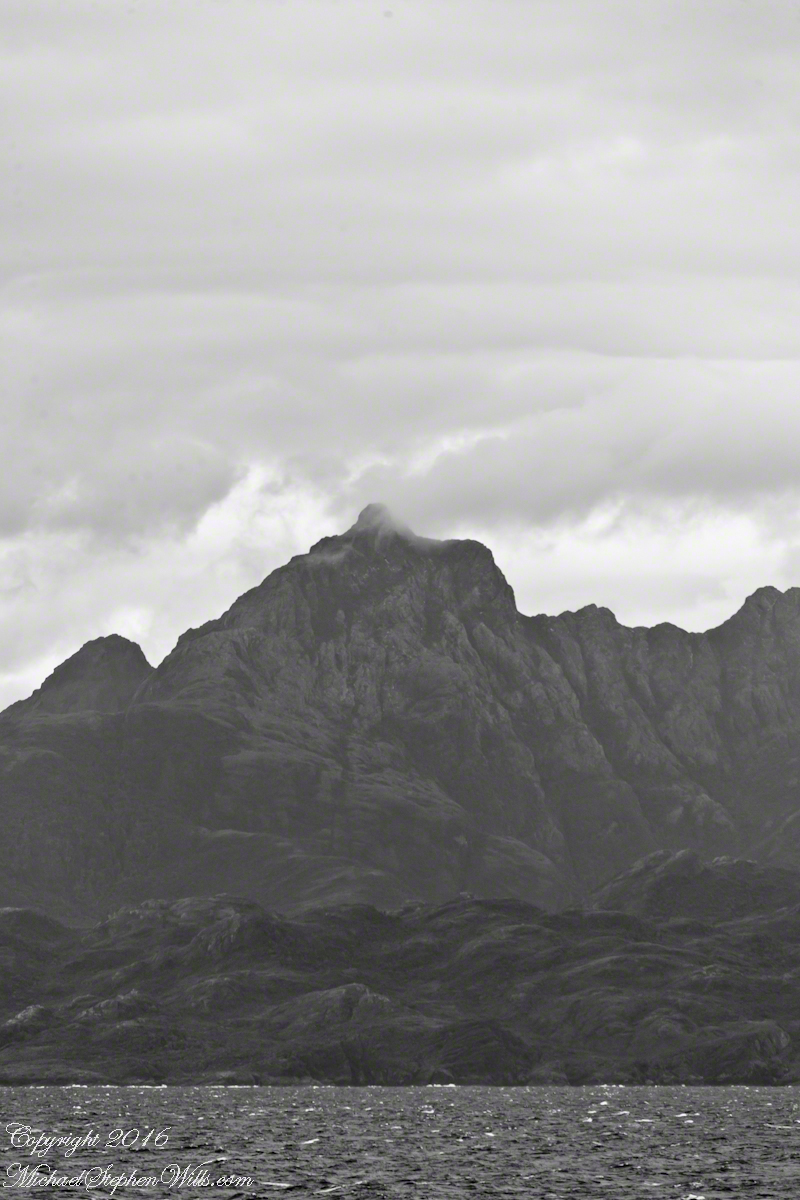
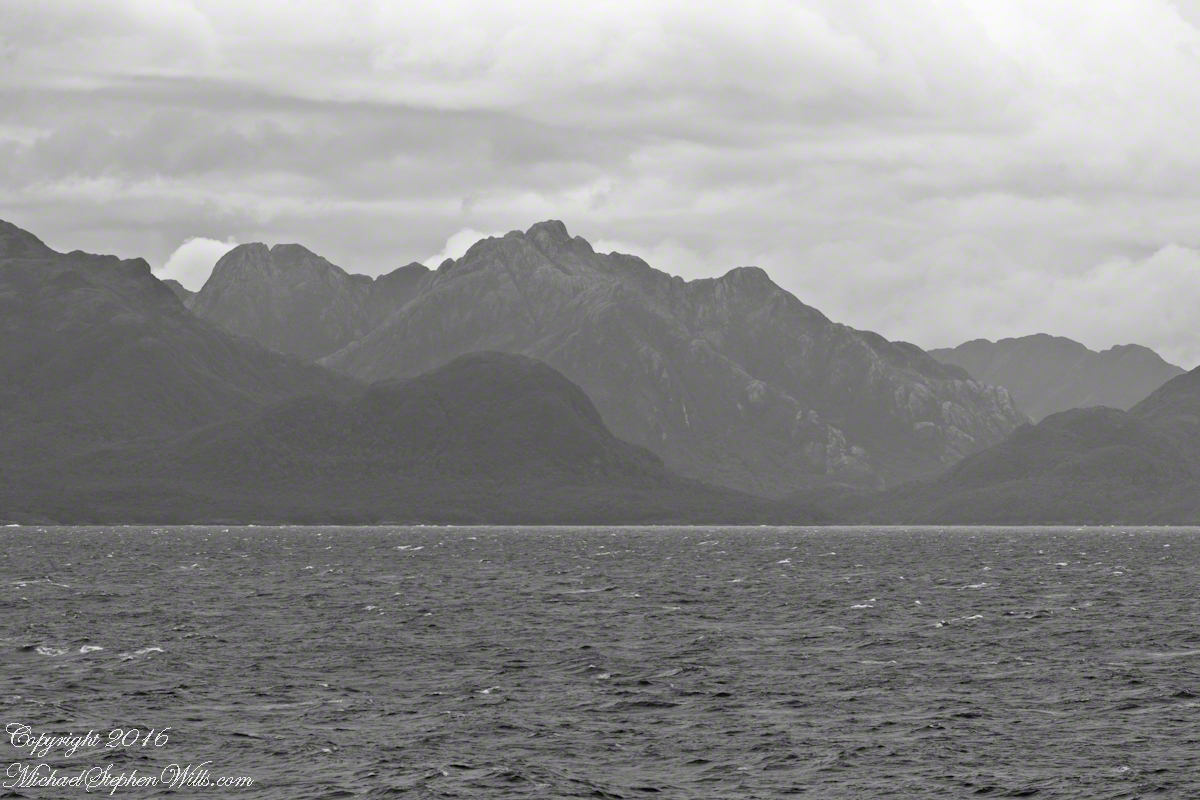
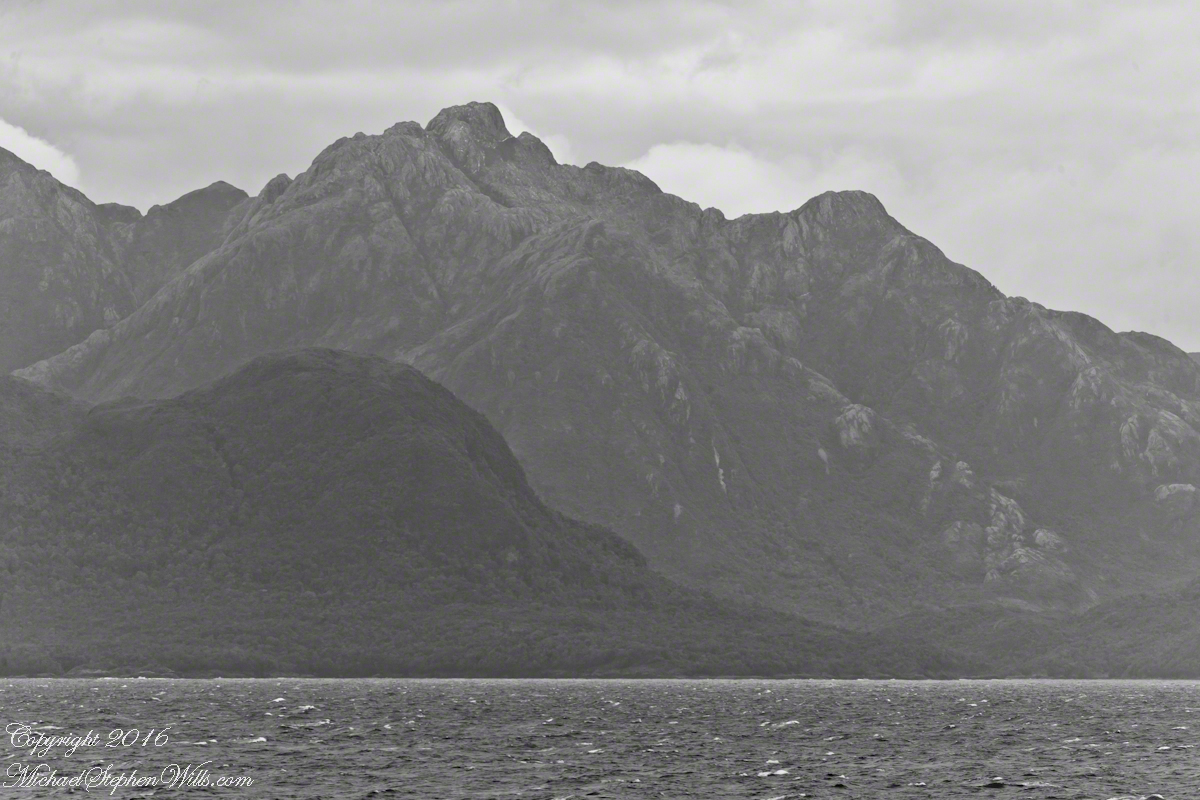
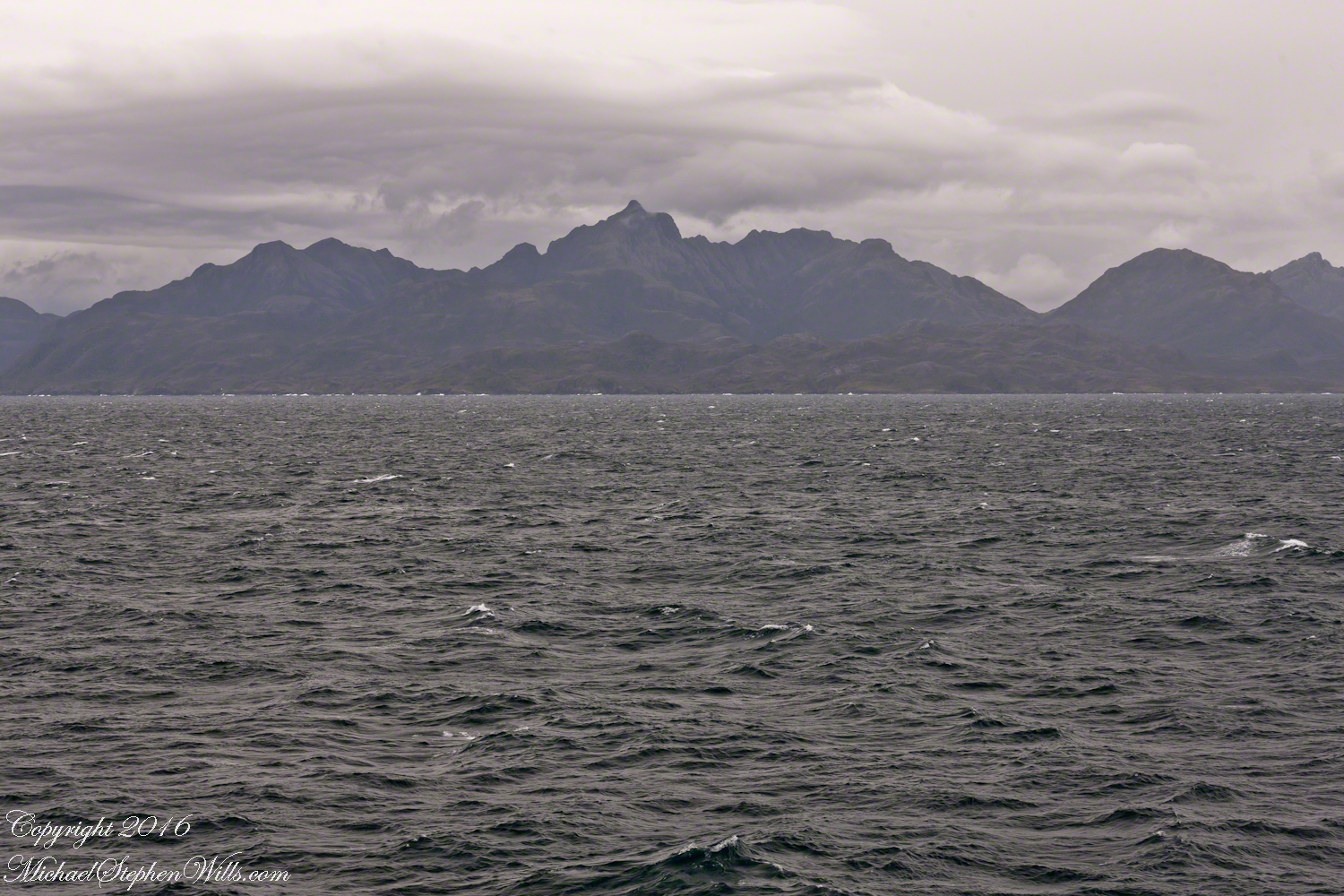
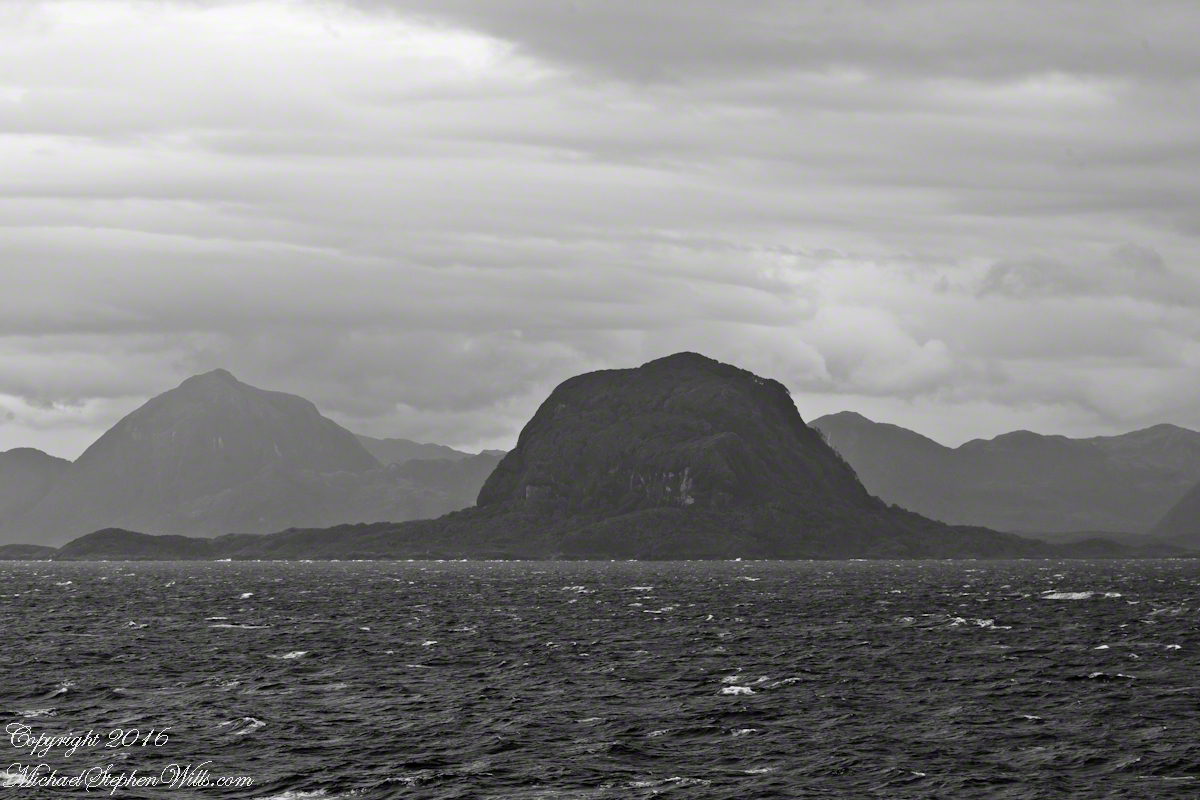
Islands Sombrero and Zealous
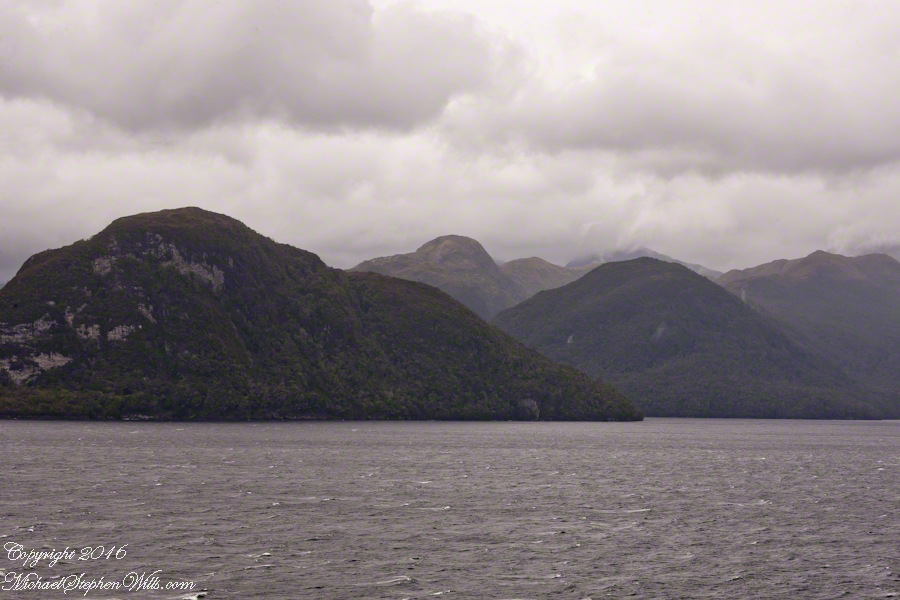
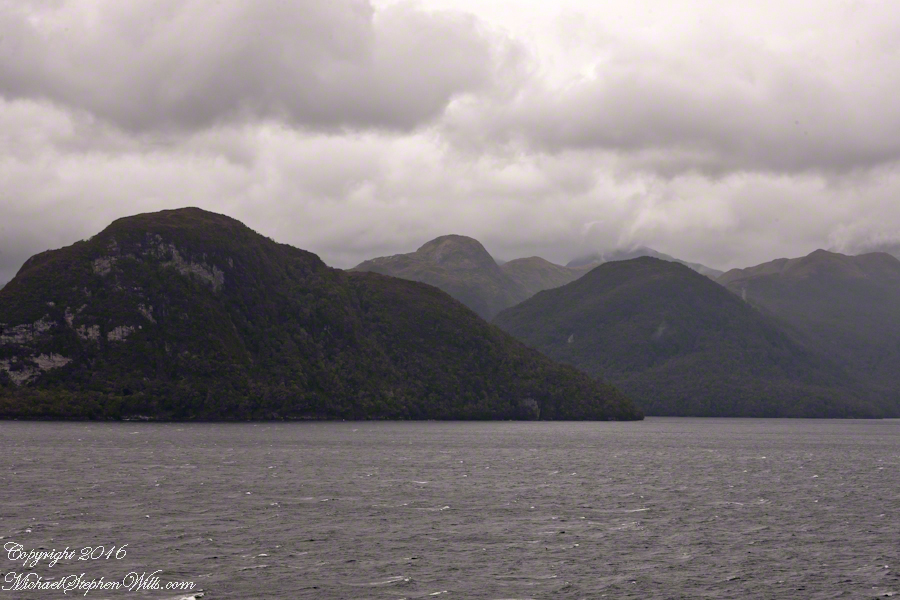
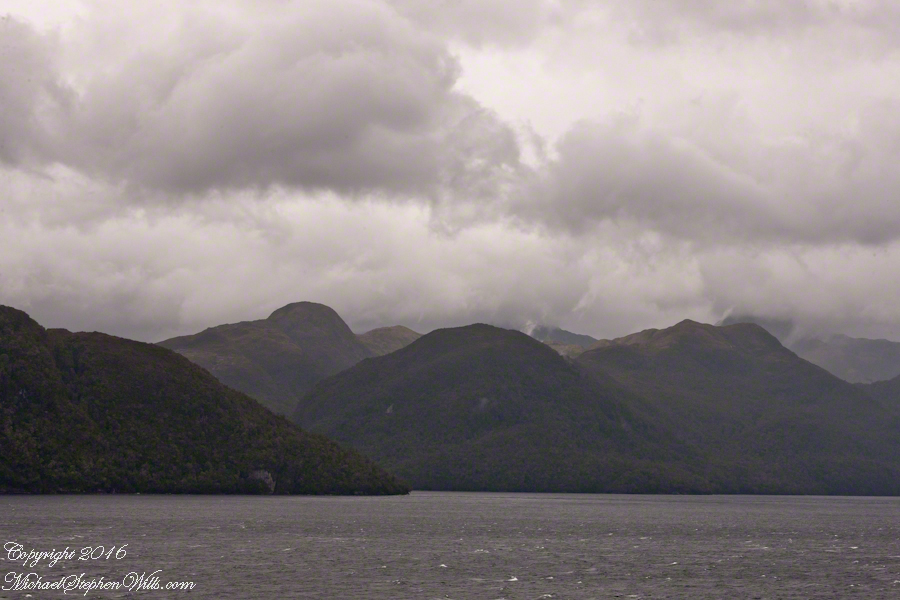
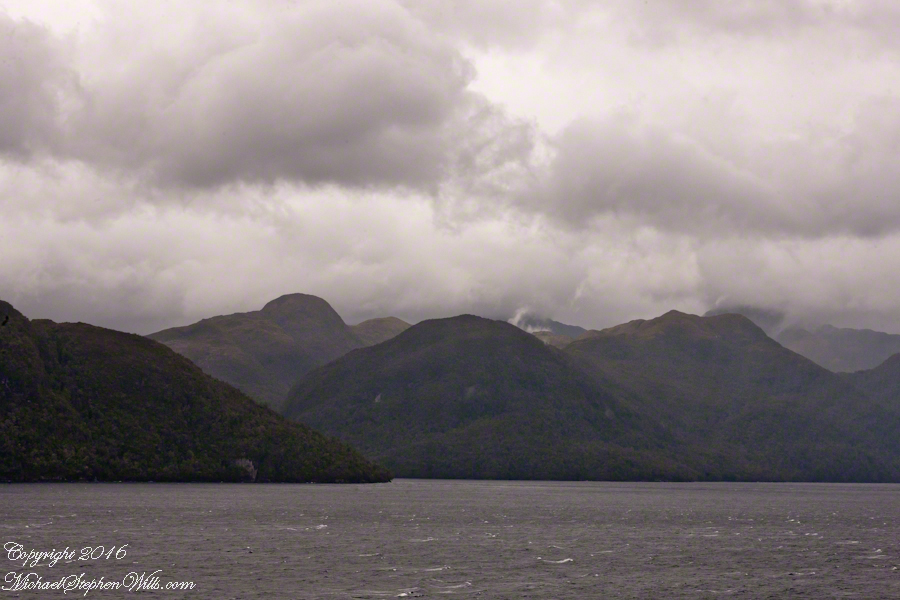
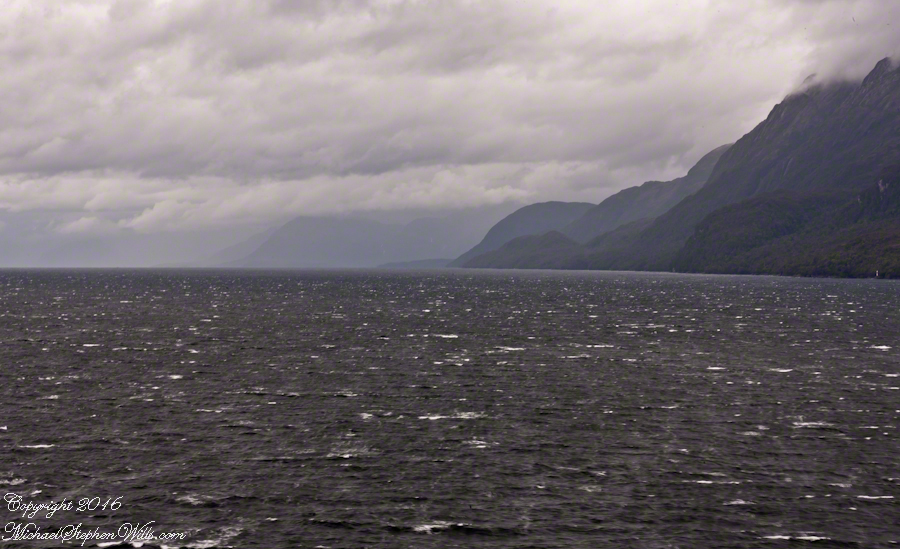
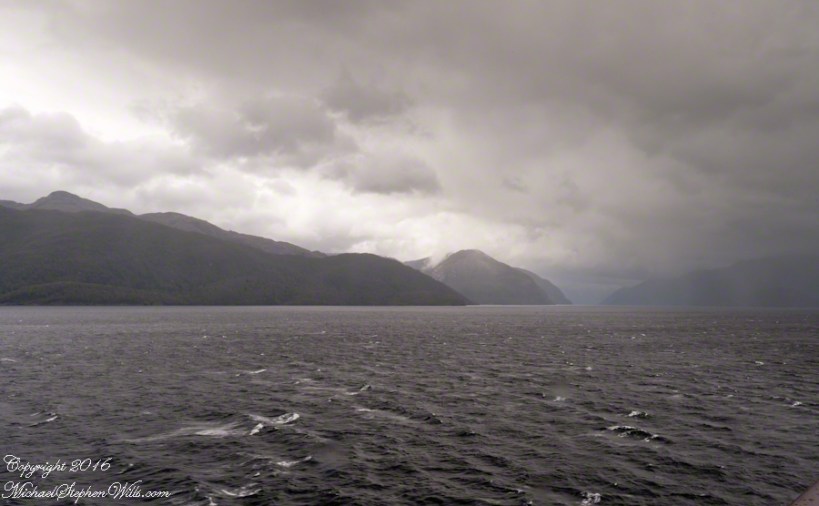
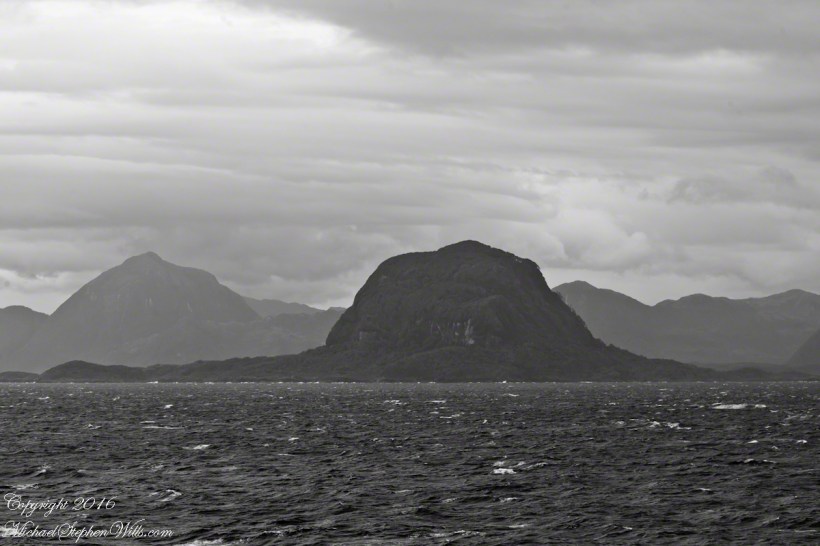
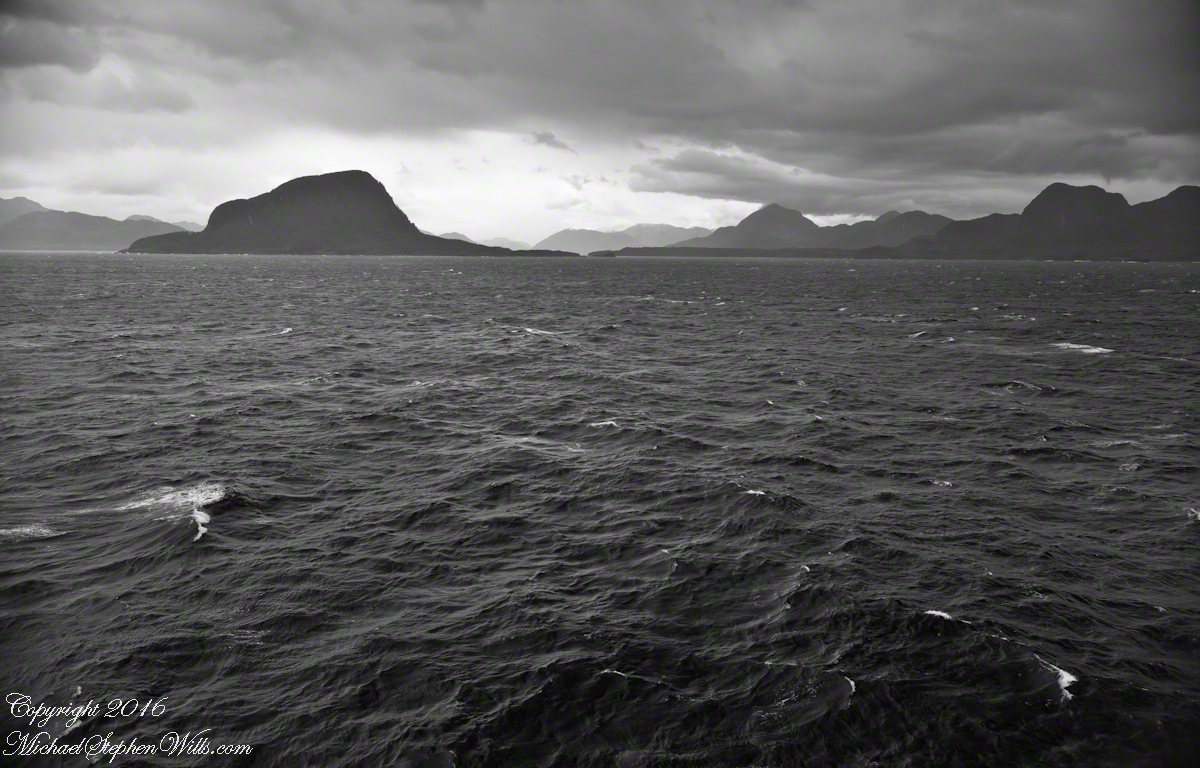
Islands Sombrero and Zealous In the distance are the crags of Porcia Island separated from Zealous Island, in the foreground, by Canal Cronjé (not visible). Sombrero Island is left, Zealous is the right.

The Gulf of Penas is a sunken bowl of the western side of the southern Andes.  Instead of canyons and valleys, fjords surrounded by craggy peaks are the rule.  Sailing ships, driven by storms of the western Pacific, found ways through the fjords all the way to the straits of Magellan.  This was our route as we entered the Messier Channel, a route discovered in the earliest years of colonial exploration.

Looking back the way we came…..

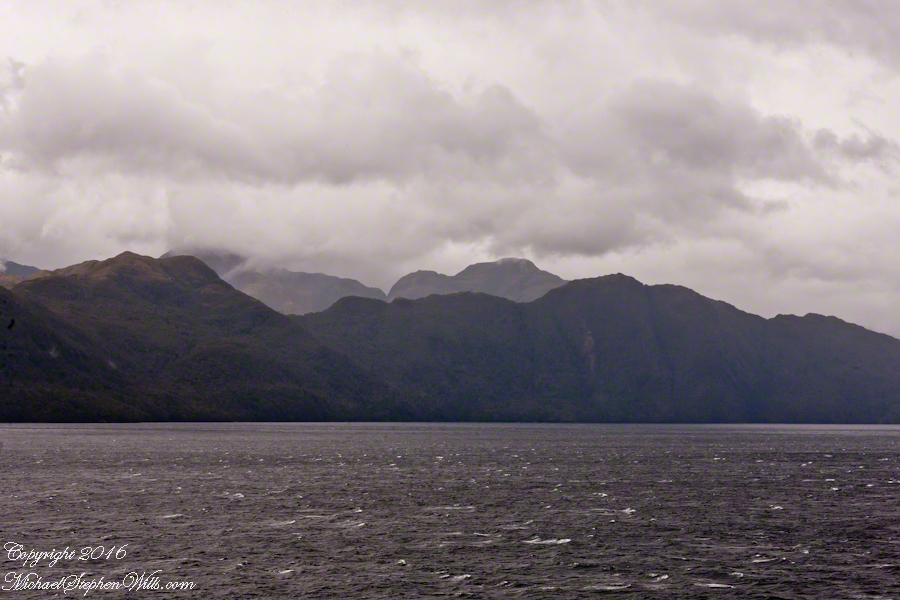
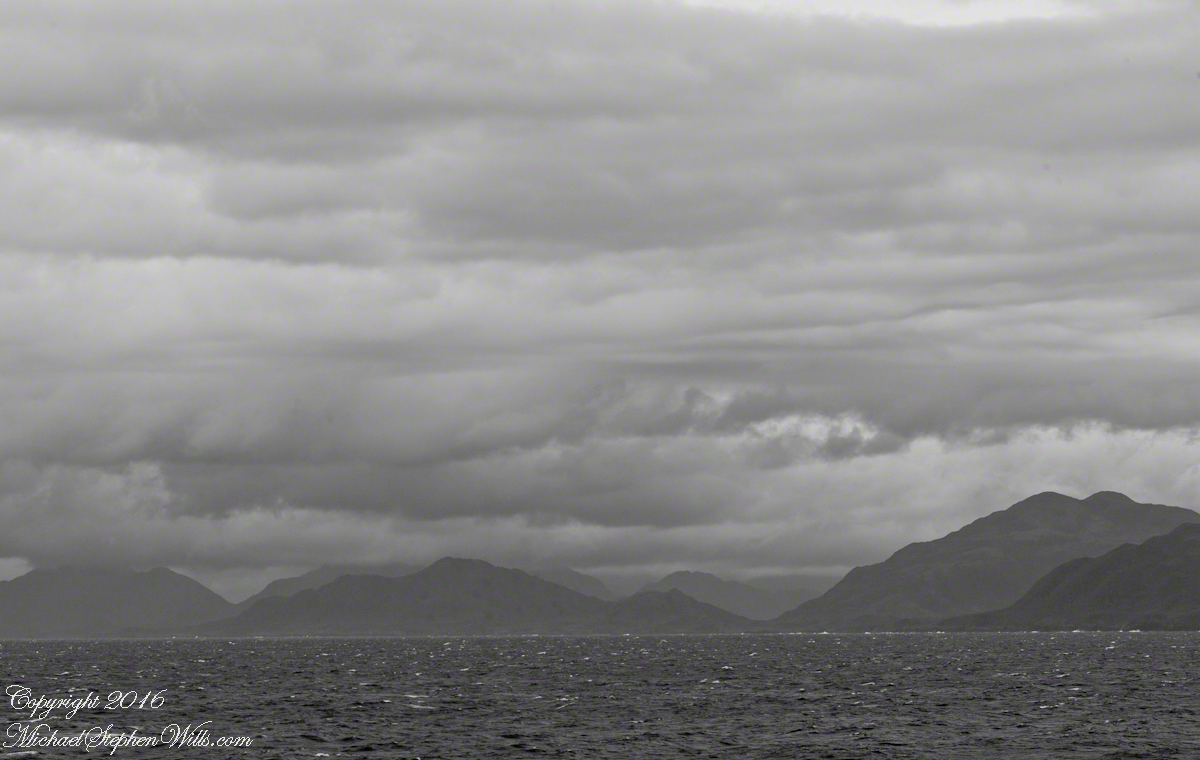
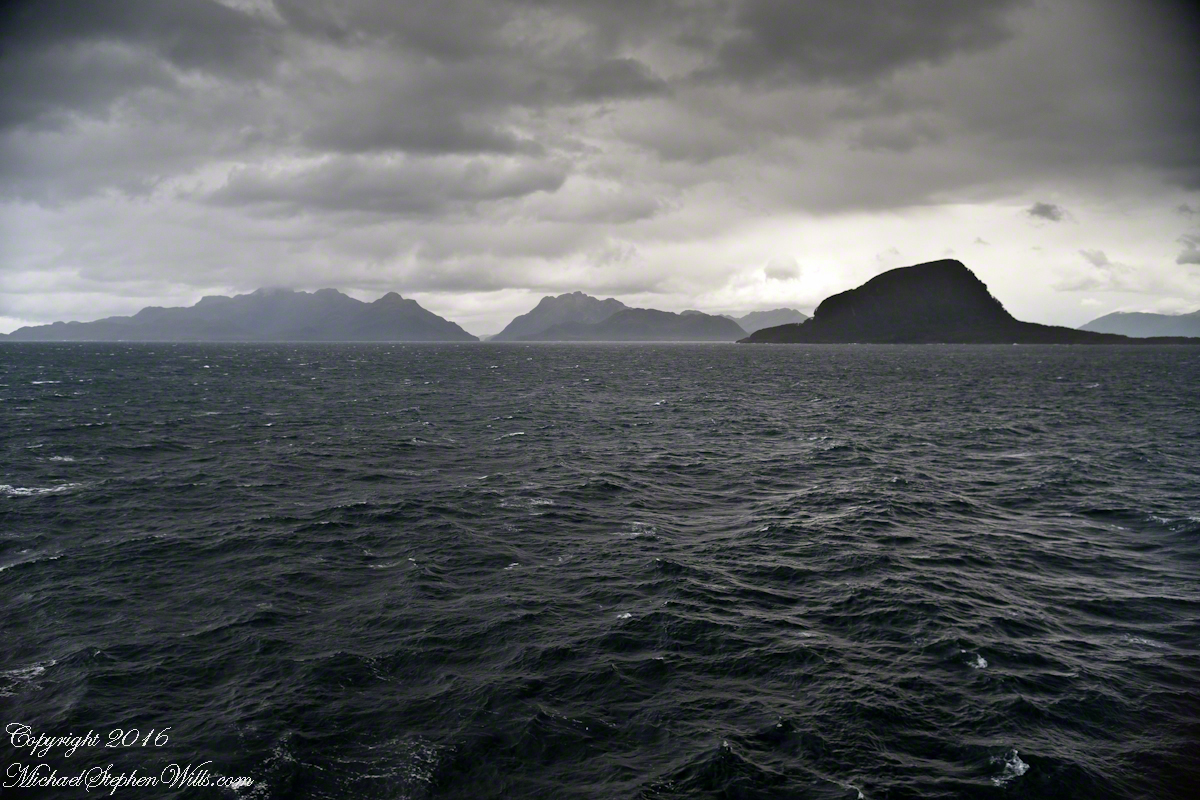
Peninsulas Larenas, Fresia, the Gulf of Penas
Peninsulas Larenas, Fresia, the Gulf of Penas The view is north-northeast from the entrance of the Messier Channel

At the mouth of the channel, Zealous and Sombrero are neighboring, and isolated hills.  Surrounded by water, they are also islands.  Zealous is just under 2,000 feet.  Sombrero, at 200 feet, is prominent only for its position and shape.

Here we are crowded by headlands, points, islands all rising steeply from the water.

Here I have views of these islands with craggy peninsulas in the distance.  The view is to the northeast and east.

Sombrero Island
Sombrero Island, 200 feet tall, rounded by glacial erosion.
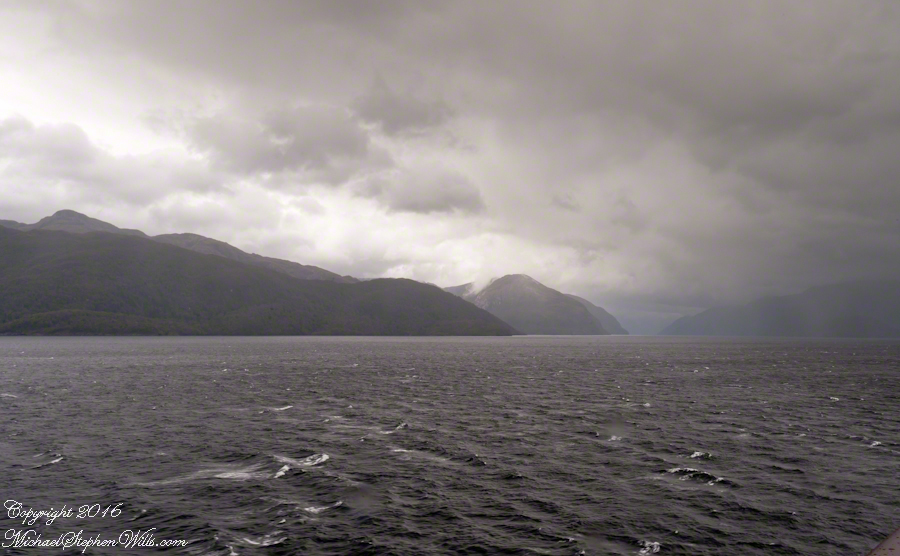
Sombrero Island, Peninsulas Larenas and Fresia
Sombrero Island, Peninsulas Larenas and Fresia The entrance to Fjord Eloise is in the distance where the two ridges separate. We are here sailing the Messier Channel.

Views of Larenas and Fresia Peninsulas

mountainous crags over the Pacific Ocean

In English the Gulf of Penas means “Gulf of Distress.”  Open to the storms of the western pacific ocean, ships seeking refuge sail this body of water to reach the shelter of the bays around the entrance of the Messier Channel.

Stargazing Chileans named the channel after Charles Messier (1730 – 1870), author of a catalog of 110 visually diffuse celestial objects such as the Great Cluster of Hercules, the Crab Nebula of Taurus, the Ring Nebula of Lyra.  As Messier catalog objects these are listed on star charts as M13,M1,M57.

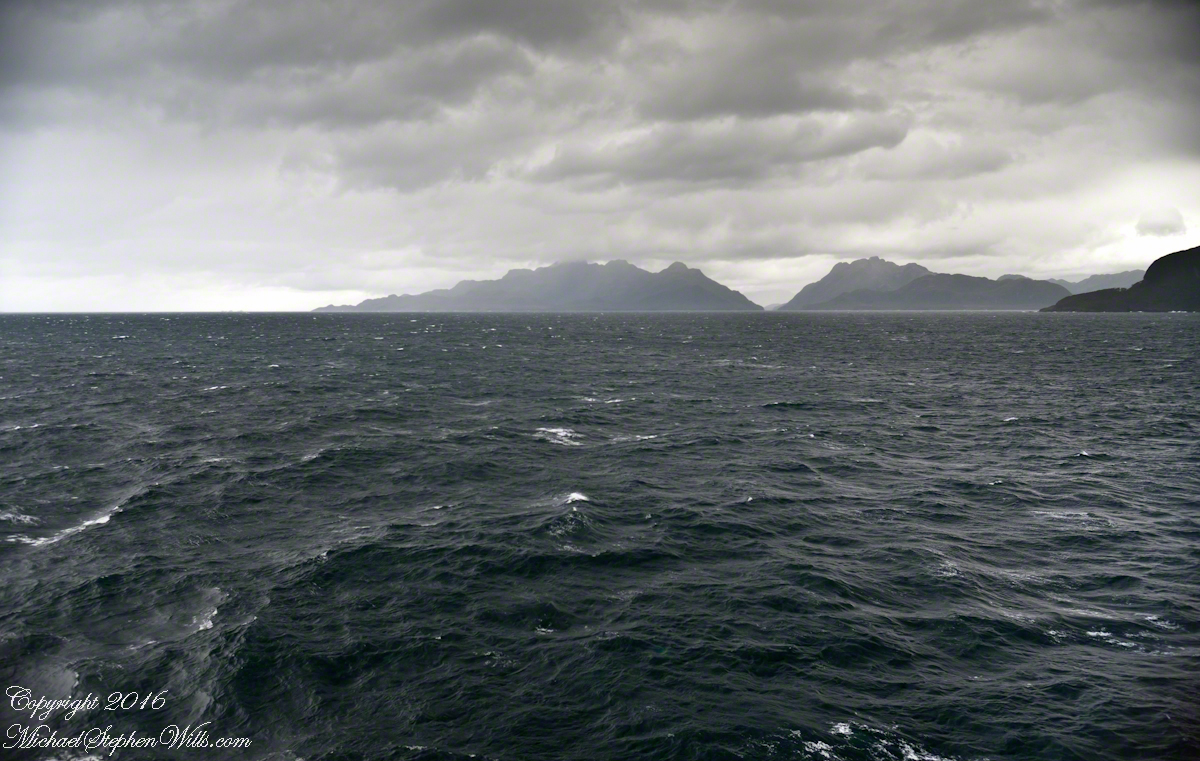
The Larenas and Fresia peninsulas of Aisen Province, Chile, on the southeastern shores of the gulf are seen here as we approach the Messier Channel.  The shore is dotted with islets and islands.  The Chilean pilot who came aboard at Puerto Chacobuco is earning his salary, keeping us safe.  To reach the channel we pass through Tarn Bay, generally north to south.  The southern margin of the bay is marked by Sombrero Island, the subject of my next blog.

Want more? Visit my on-line gallery.

Larenas Peninsula and Merino Islets
Close-up of the Merino Islets
Ayautau Isles
Ayautau Isles
Larenas Peninsula from Gulf of Penas
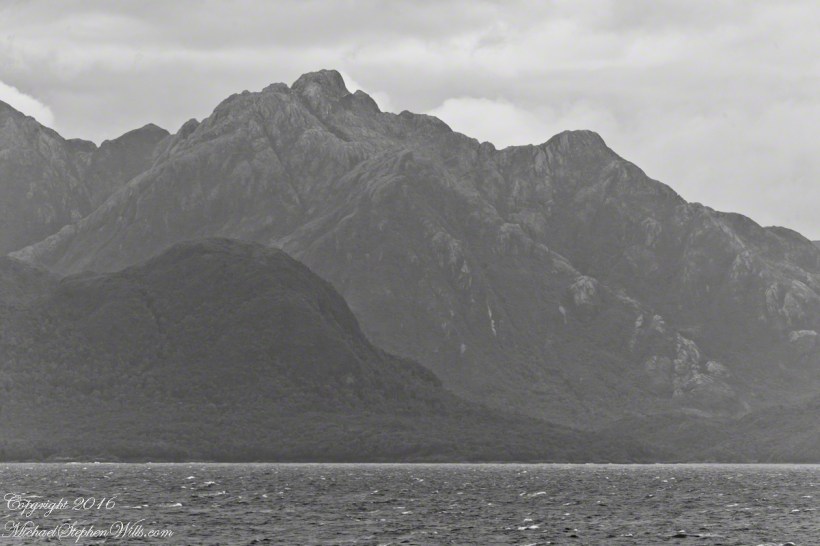
The Northern Patagonian Ice Fields lay to the east and north of these mountains of the Larenas Peninsula.
High Ridge of the Larenas Peninsula
Larenas Peninsula High Ridge
Larenas Peninsula High Ridge 2
Larenas Peninsula High Ridge Close 3
The craggy heights of the Larenas Peninsula
The craggy heights of the Larenas Peninsula are in the rear. On the right are Fresia Point (of the eponymous peninsula) and the entrance to Fjord Eloisa.
Larenas Peninsula High Ridge Closer 5

Entering Messier Channel from the Gulf of Penas

Sailing a deep fjord

Gulf of Penas
The Gulf of Penas is exposed to the storms of the western pacific. We are here moving from Aisen Region to the Magellan Region of Chile. Also known as Patagonia. This view is the Larenas Peninsula. The Northern Patagonian Ice Fields are on the other side of those mountains, the Southern Andes.

Get More from My Online Gallery

Taken with a Canon EOS 1Ds Mark3, the EF 70-300 f 4-5.6L IS USM lens, tripod mounted on a Manfrotto carbon fiber travel tripod.  UV filter  1/160 second at f 6.3 ISO 250.

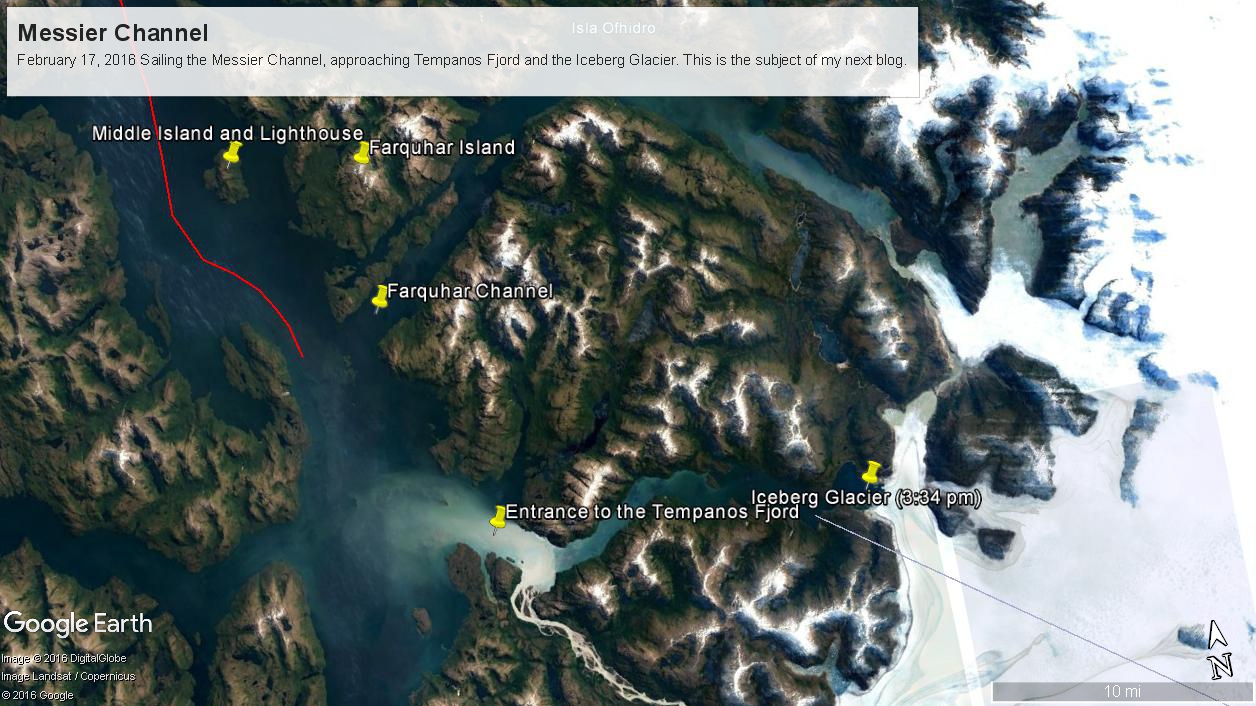
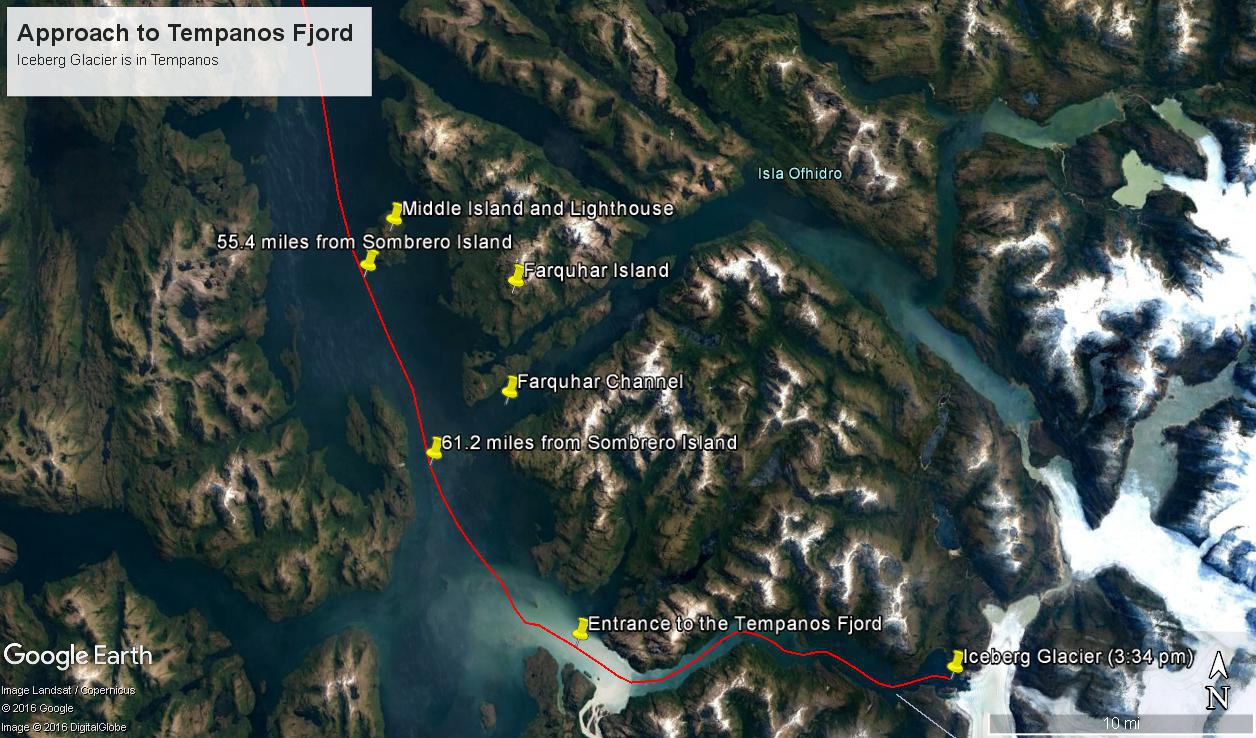
There is a steady wind of about 12 mph driving a few white caps.  A line of surf is seen breaking against the cliffs.  Shot midmorning from our stateroom terrace as the Regatta cruises south, February 17, 2016.  We are headed to an encounter with the Iceberg Glacier of the Southern Ice Fields of Patagonia.

Photography conditions were poor: shooting into the sun from an unstable platform gives poor contrast for the mountain crags.  The stabilization of the Canon lens was helpful and I balanced the need for a short exposure with the lowest ISO possible.  No time to experiment.

Copyright 2022 Michael Stephen Wills All Rights Reserved
Moll’s Gap on Getty

Happy New Year….starting it off right

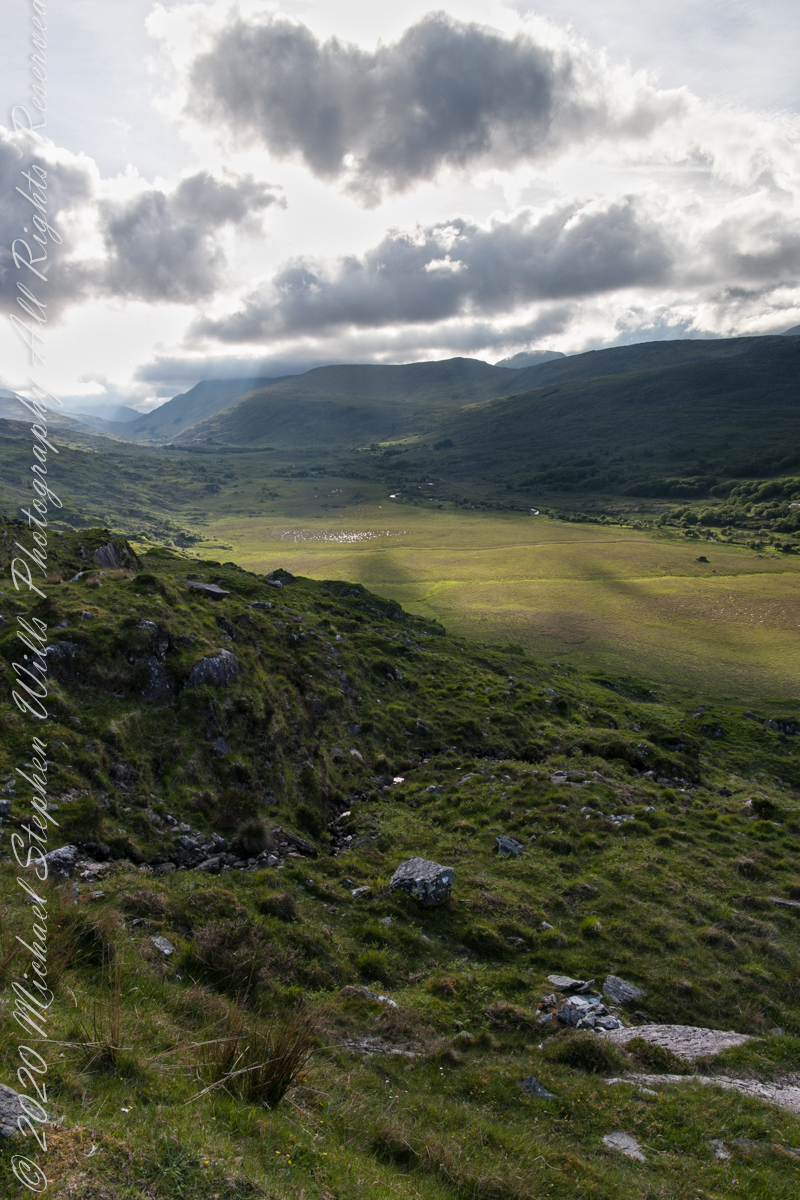
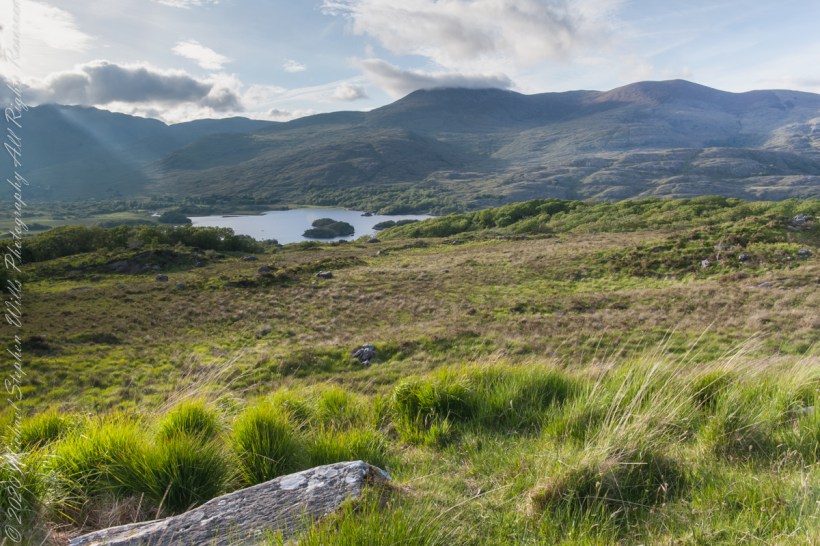
We are near Molls Gap on the Ring of Kerry. At our feet is Eric townland, there’s an eponymous Bog Nature Reserve down there. At our feet is Eric townland, there’s an eponymous Bog Nature Reserve down there.

Click me for the two (2) Molls Gap photographs accepted and published by Getty.

Click pic for larger view in a new browser tab. If you are in WordPress Reader, open the post to use this feature.

Copyright 2021 Michael Stephen Wills All Rights Reserved
Seven Ladies View Accepted by Getty

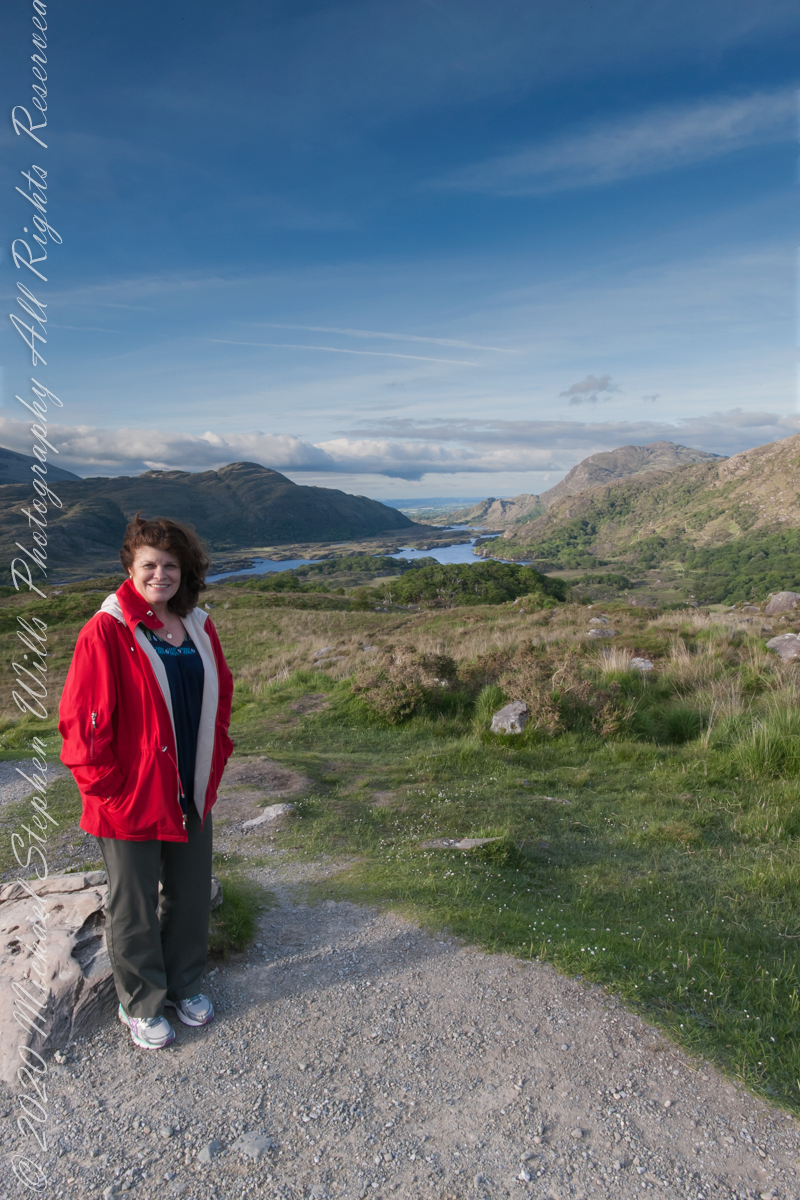
My wife, Pam, at Ladies View, on the Ring of Kerry

Here we are, on the road from Kenmare to Killarney, N71, part of the Ring of Kerry around the Iveragh Peninsula. The view was celebrated by Queen Victoria’s Ladies-in-Waiting during an 1861 tour of Ireland

Click me for the seven (7) Ladies View photographs accepted and published by Getty.

Click pic for larger view in a new browser tab. If you are in WordPress Reader, open the post to use this feature.

Copyright 2021 Michael Stephen Wills All Rights Reserved
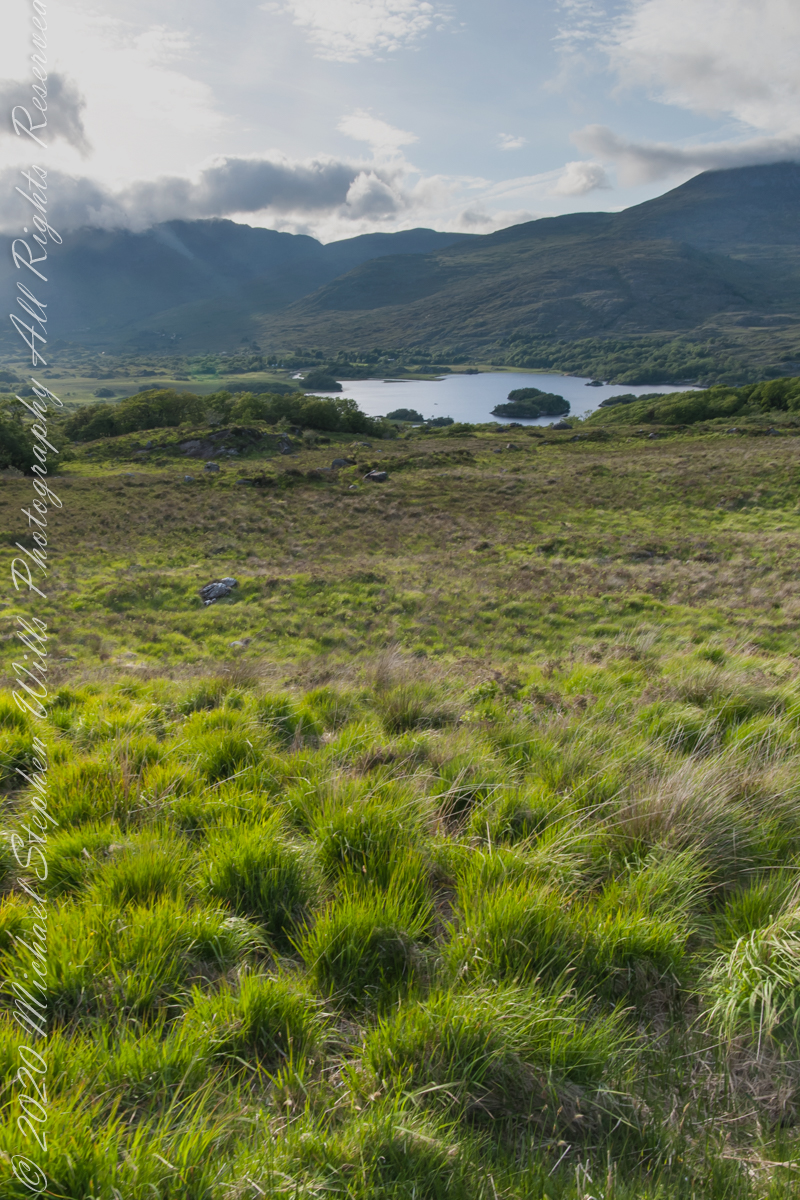
Ladies View 10

last version

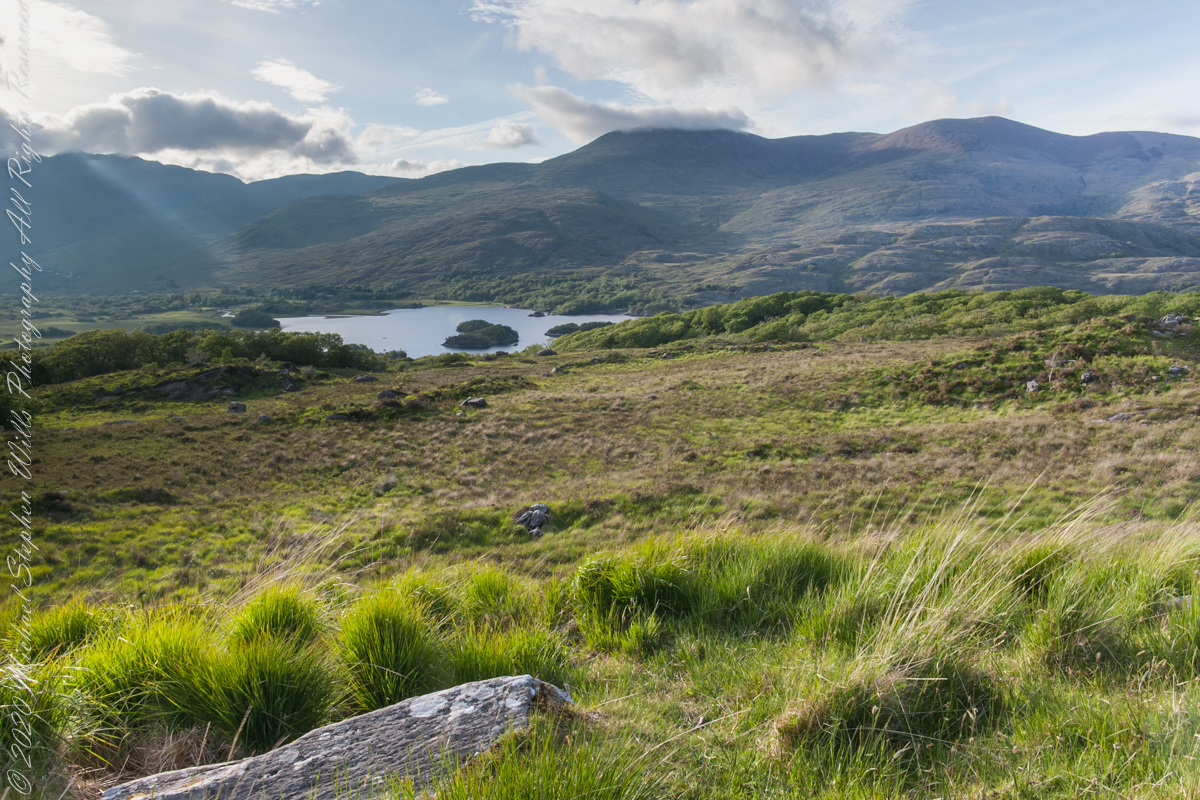
Here we are, on the road from Kenmare to Killarney, N71, part of the Ring of Kerry around the Iveragh Peninsula. The view was celebrated by Queen Victoria’s Ladies-in-Waiting during an 1861 tour of Ireland

Here the camera, link #9, is turned toward the sun, low in the evening sky, emerging from clouds with a bright sunbeam on Upper Killarney Lake. The previous view was portrait orientation. This is landscape orientation.

Click pic for larger view in a new browser tab. If you are in WordPress Reader, open the post to use this feature.

Copyright 2021 Michael Stephen Wills All Rights Reserved
First Water Trailhead

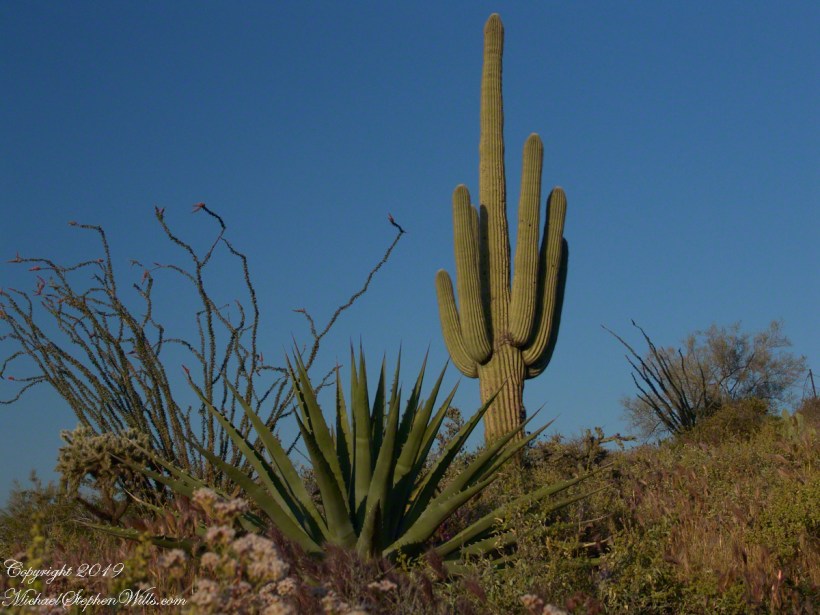
A desert garden with plans

First Water Trail Head

Notable Sonoran Desert Plants, all in the same frame. From the left, back row: staghorn cholla, ocotillo, saguaro. Front row: teddy bear cholla, yucca. I am not certain the greenery to the left of the yucca is brittle bush.

First Water trail head is the most used access point to the Superstition Wilderness, being the closest to Phoenix and its satellite cities and suburbs. For day hikers there are ample and interesting route choices as all foot trails of the west side terminate at First Water making for a variety of loops and incredible views. For horse people there are facilities to park huge trailers.

The ready access from Mesa, where my sister and husband had their home, was the primary reason I planned to finish my cross wilderness hike on the Dutchman Trail. Named for Jacob Waltz of the fabulous legend of the Lost Dutchman mine, the inspiration for The Searcher’s Superstition Wilderness expeditions and, ultimately, why he and I met and my change of plans.

On our ride over from Roosevelt he told of his difficulties building a home in Apache Junction, sleepless nights spent guarding building supplies from thieves. He looked forward to moving day.

This photographic record of five days in the wilderness would be much different without that meeting yet, there I was that afternoon with plenty of time for photography during the golden hours of late afternoon as I wandered the desert gardens until my sister arrived.

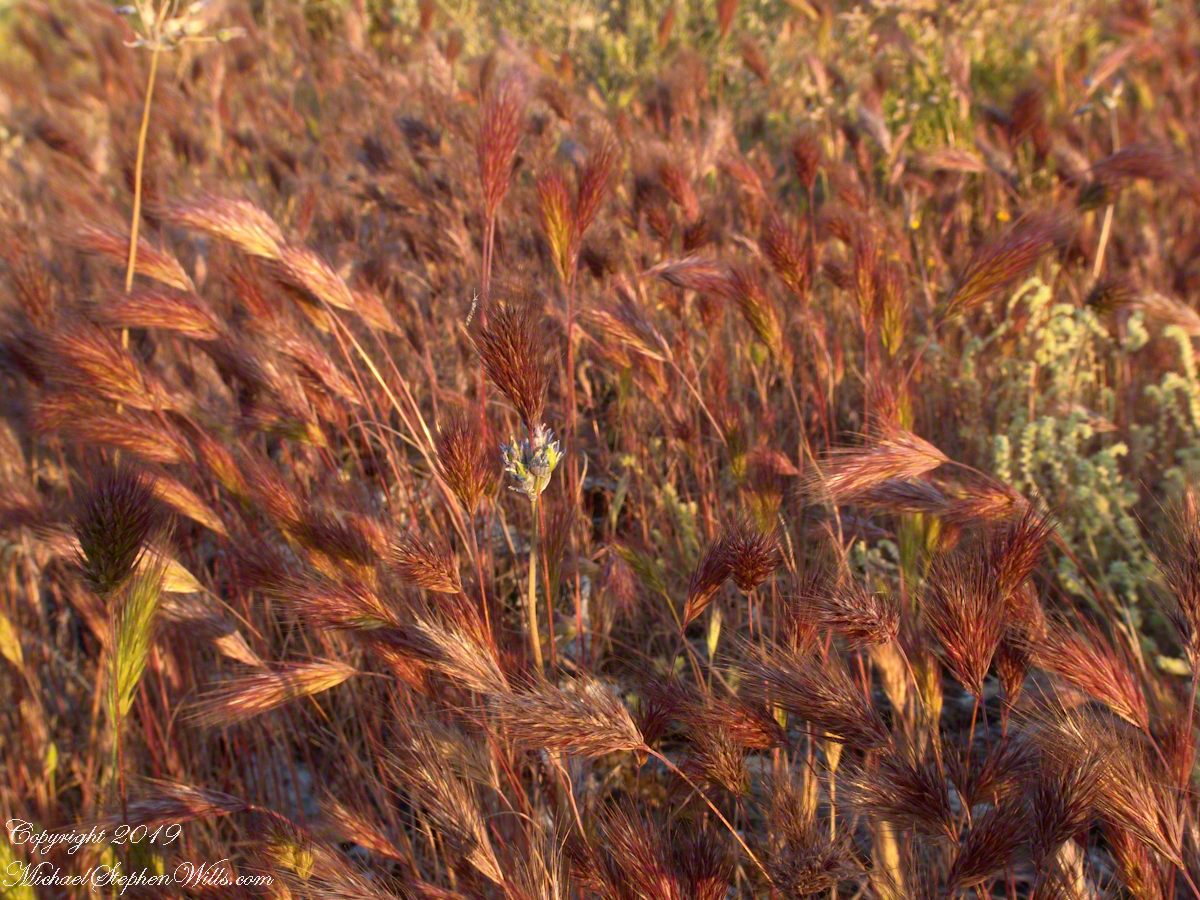
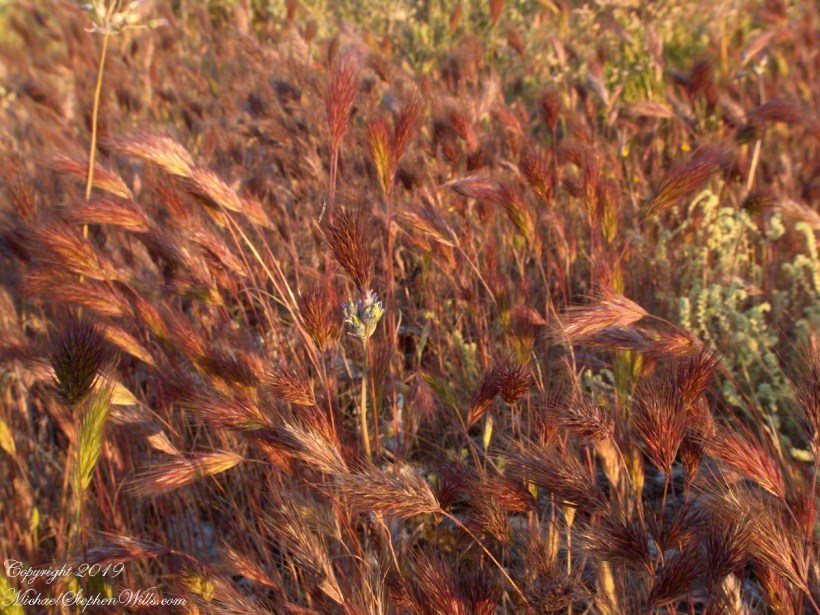
Wild Barley

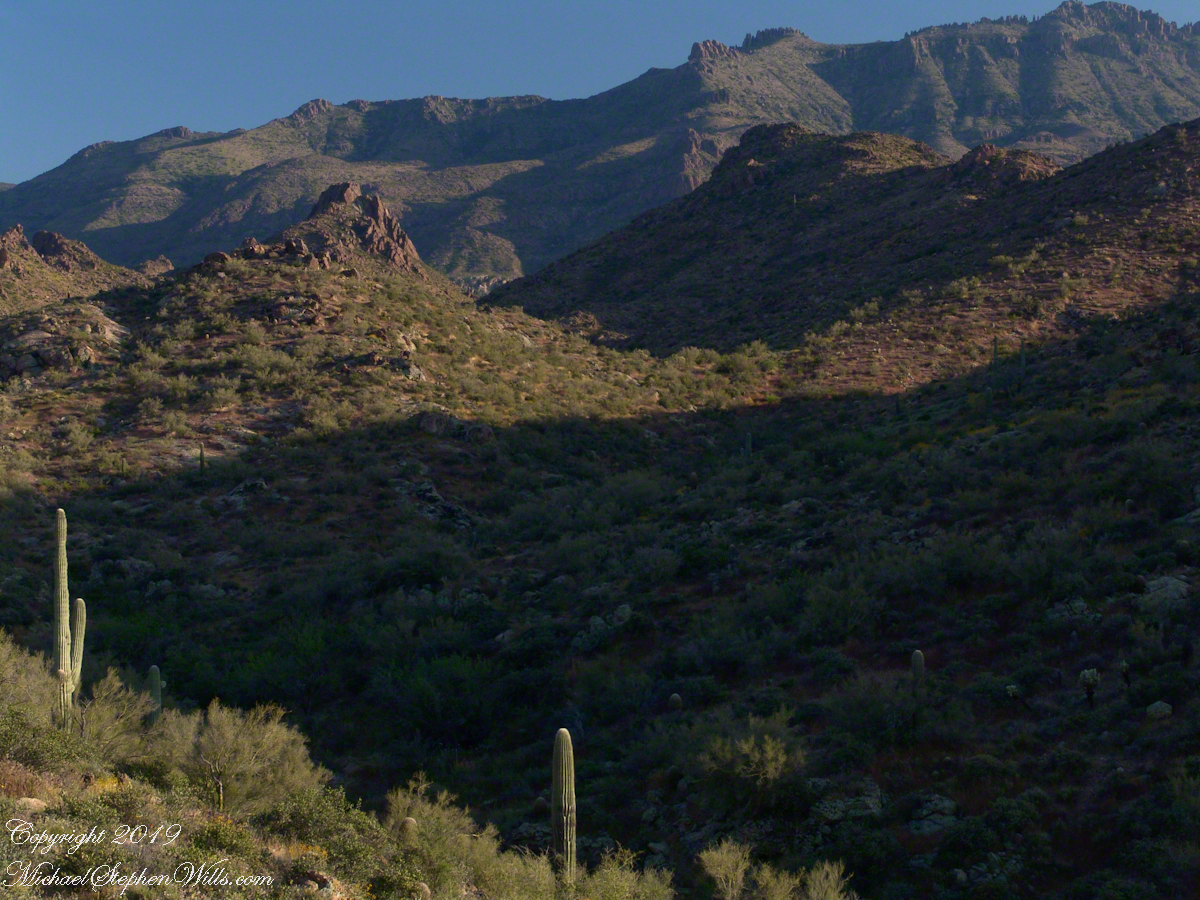
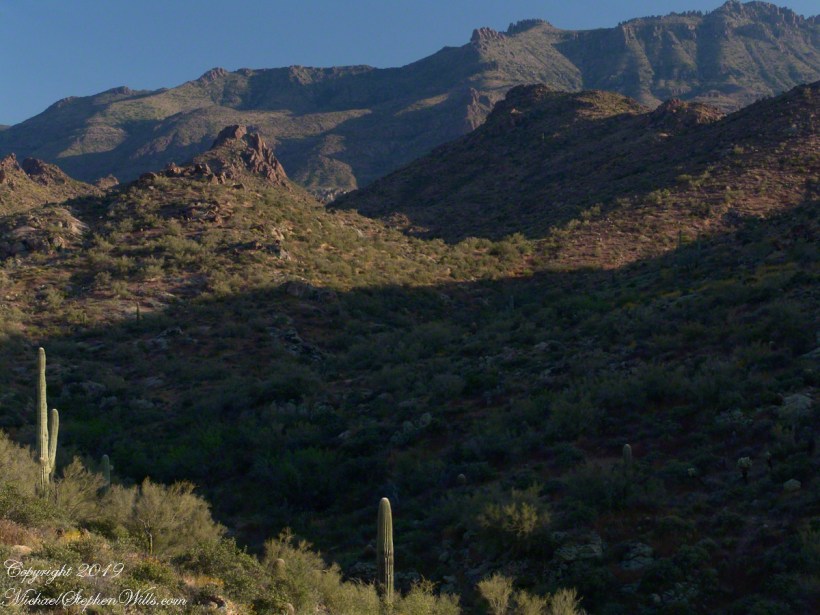
The long distant ridge beyond the rugged near hills is the backbone of the famed “Superstition Mountain.” On the far right are hoodoos, appearing as so many teeth on a jaw. Gorgeous saguaros in the foreground.

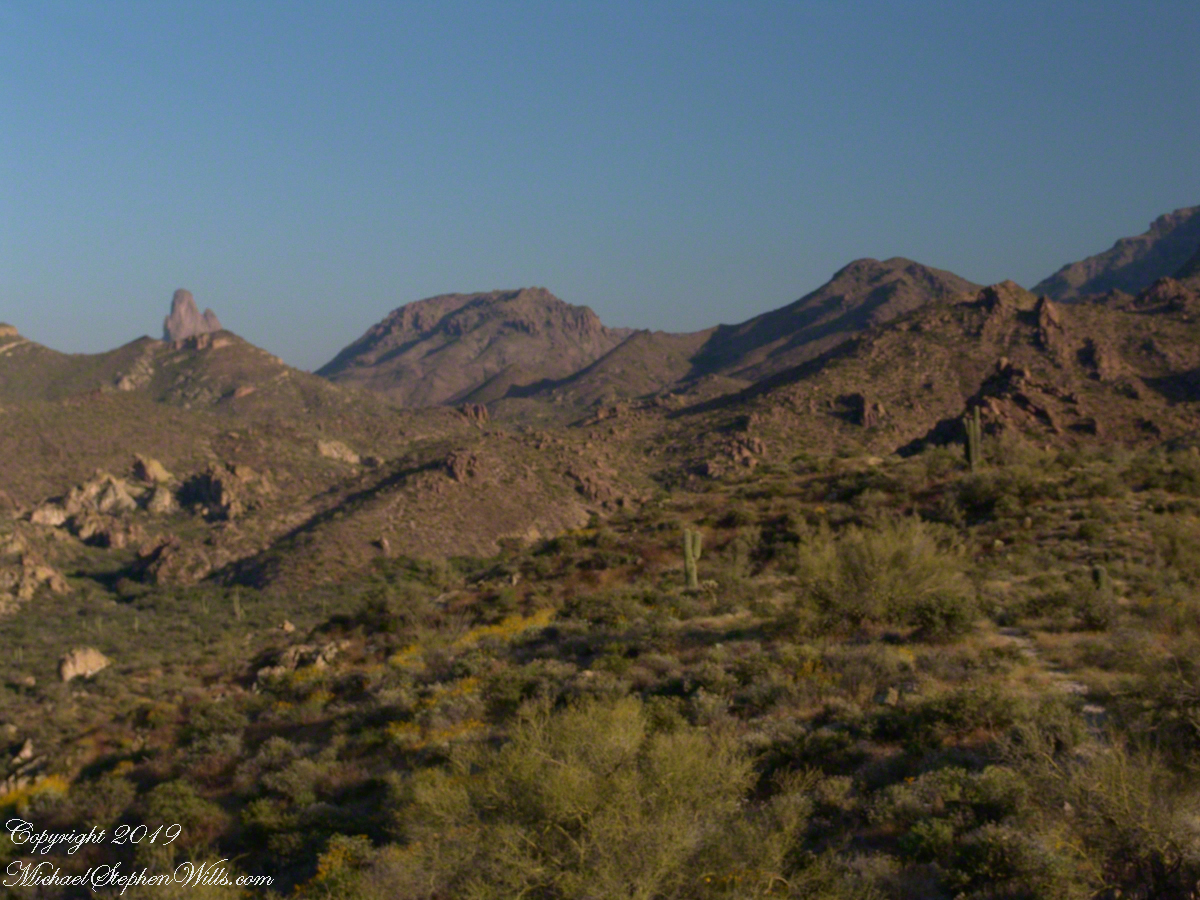
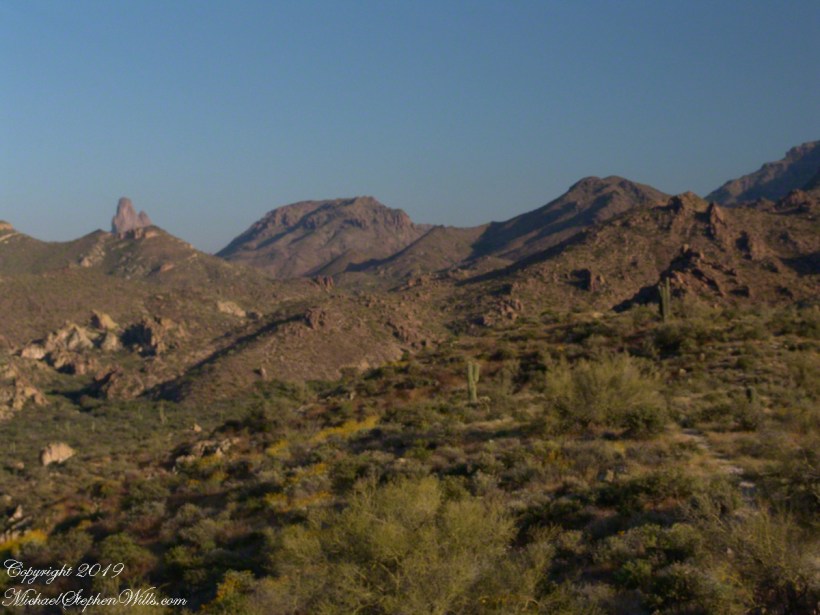
Weavers Needle is the distant peak, 5.5 dry miles away in this view to the west / southwest.

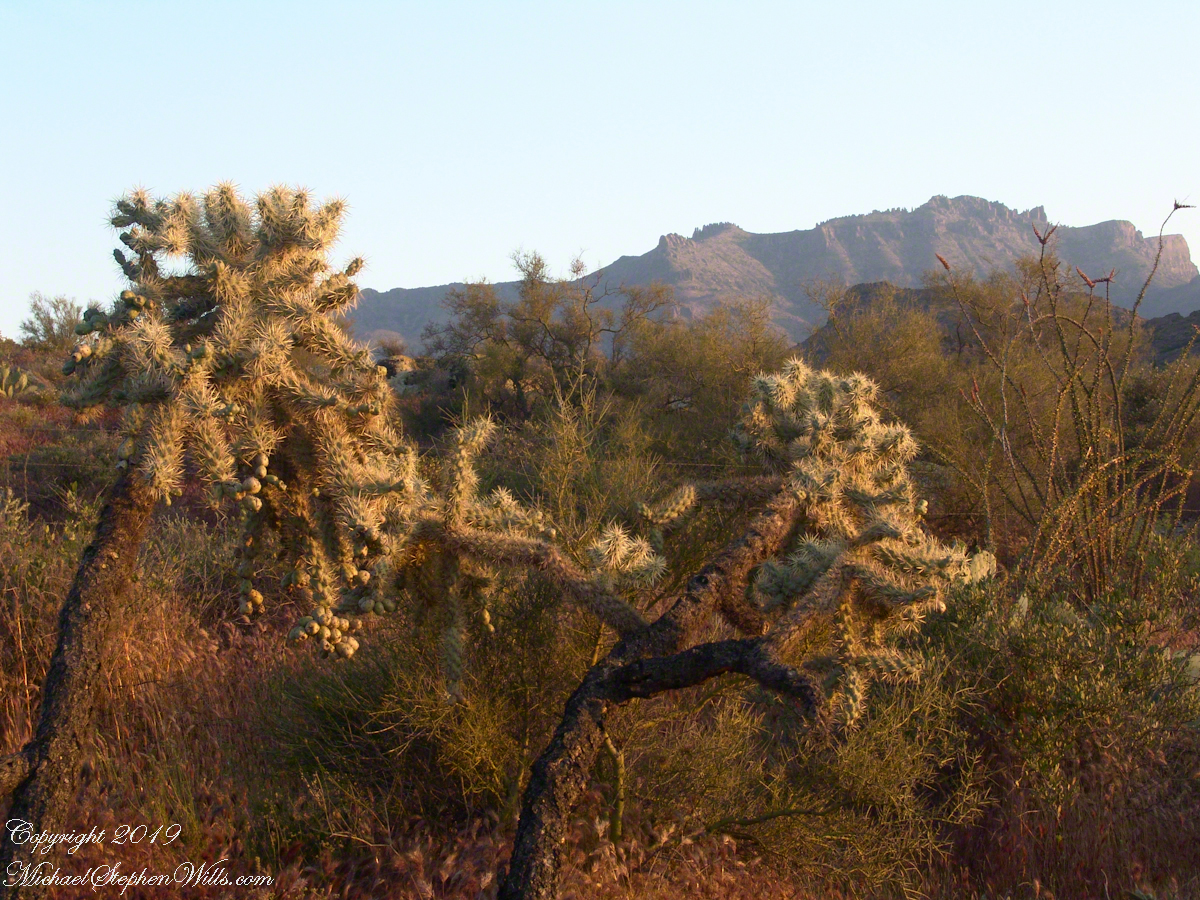
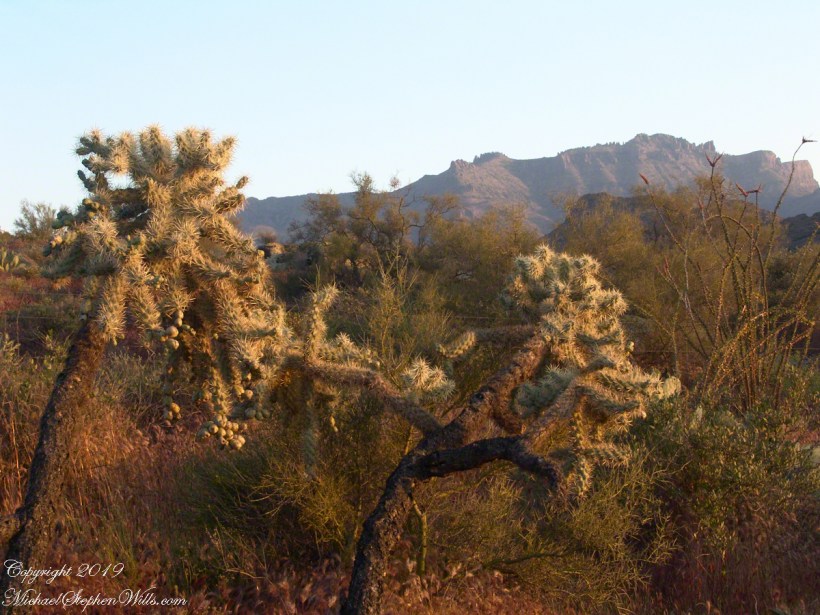
I’ve always been partial to how the dense spines of cactus catch the evening light. These staghorn chollas are in front of the same ridge of the Superstition Mountain. A famous formation, “The Flatiron” is visible on the far right.

The road to the trail head, Service Road 78, winds through 2.6 miles of hills. Here is another overview of Sonoran desert life.

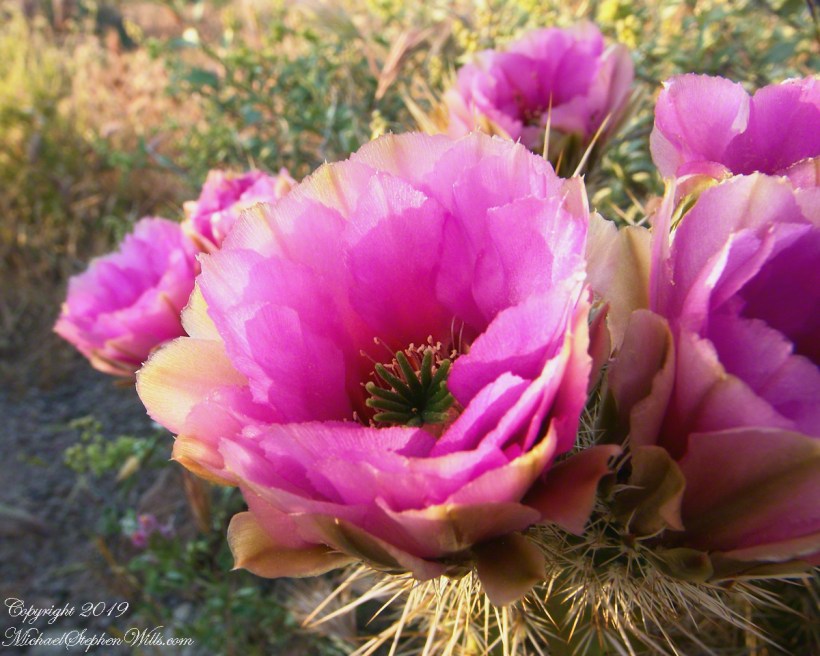
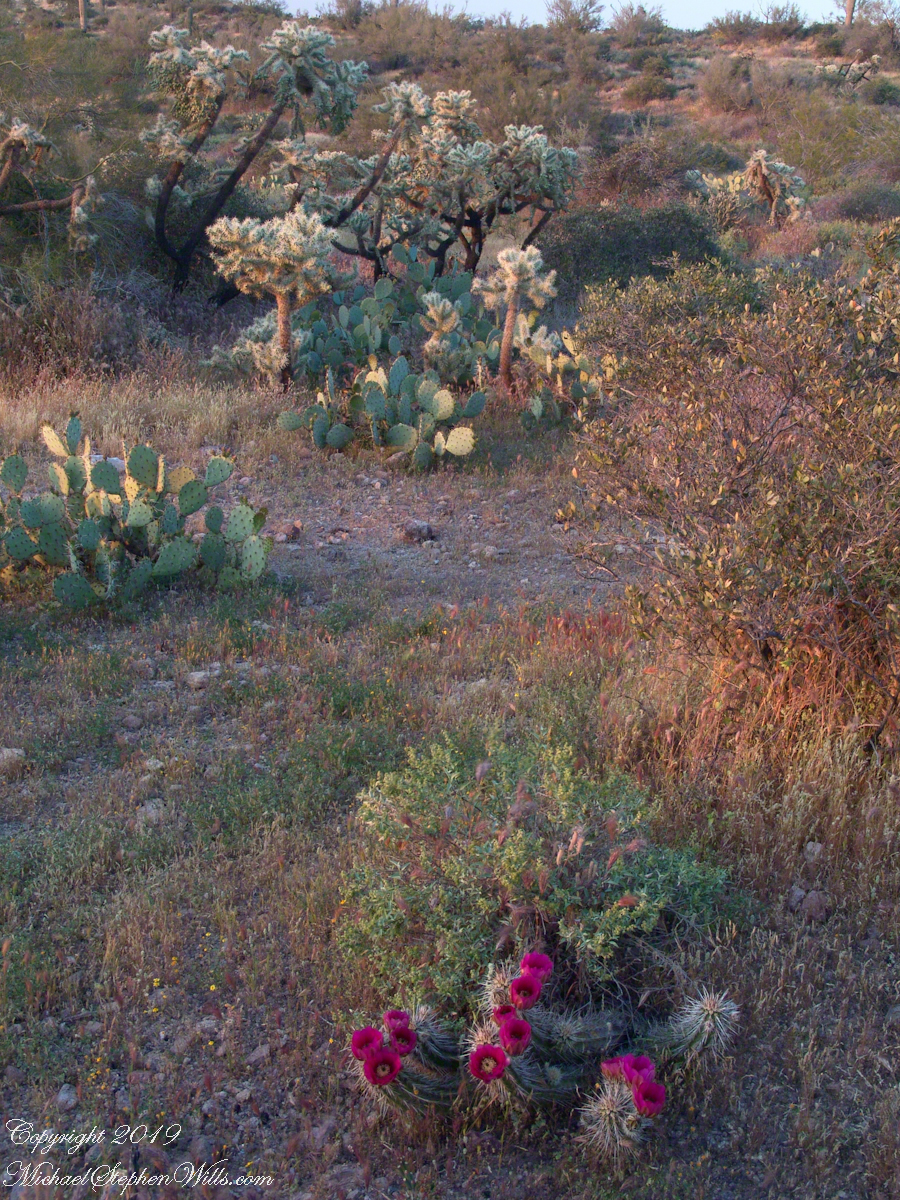
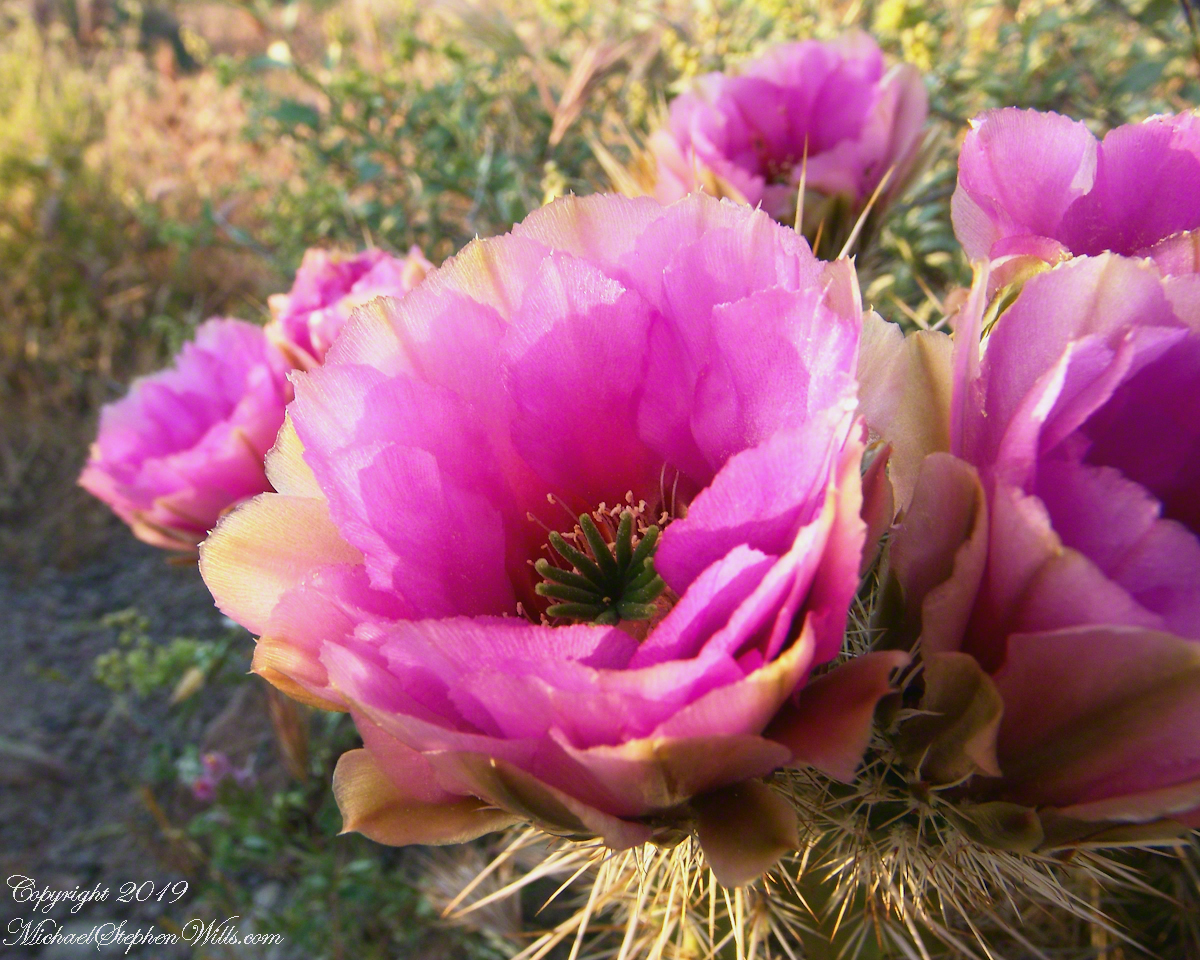
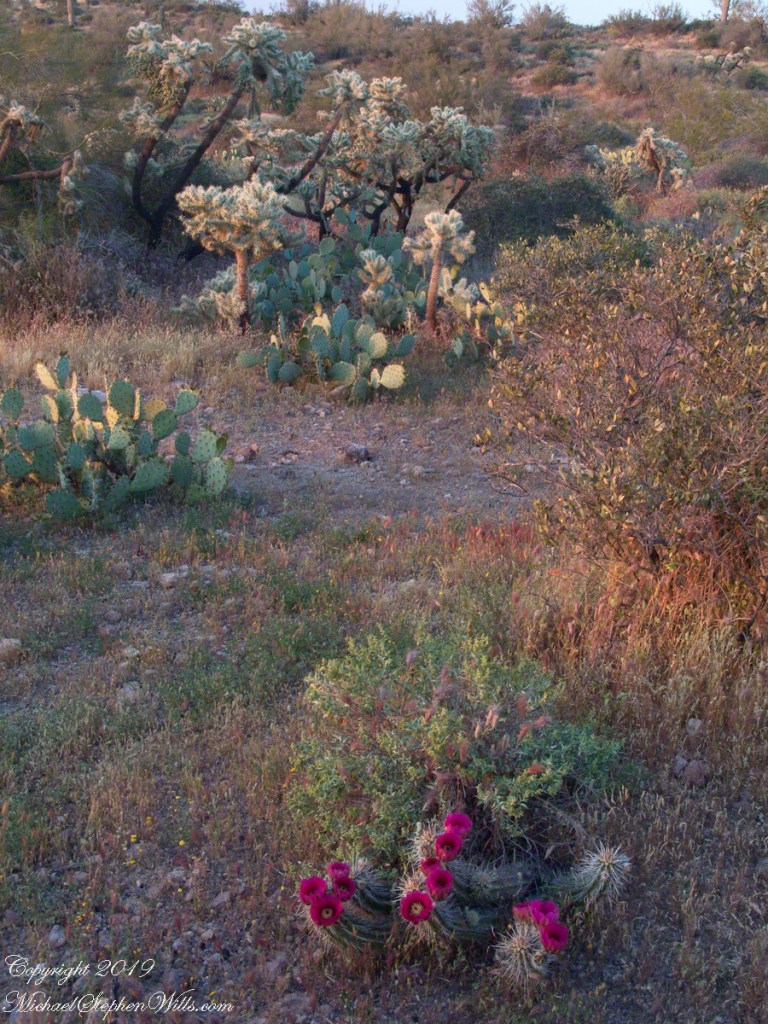
You might remember hedgehog cactus blossoms from my posting “A Dry Piece of Paradise”. The following are from the large hedgehog cactus in the foreground of the preceding photograph.

Future Plans

During the drive back with my sister, Diane, we talked of plans for returning to the Reavis Ranch together, as a backpack expedition. In coming days I met with The Searcher to explore possibilities for a horse expedition and, three years later, these plans came together for a trip kicked off from this same First Water trail head.

Hedgehog Cactus Blooms

Here is a gallery of the same photos. It is fun to flip back and forth with me disappearing from the scene.

Click me for the first post of this series.

Ladies View 9

Derrycunihy Townland, County Kerry, Republic of Ireland

Here we are, on the road from Kenmare to Killarney, N71, part of the Ring of Kerry around the Iveragh Peninsula. The view was celebrated by Queen Victoria’s Ladies-in-Waiting during an 1861 tour of Ireland

Here the camera is turned toward the evening low sun, behind clouds, with subtle light beams. That is Upper Killarney Lake, the Gap of Dunloe behind the far hills.

Click pic for larger view in a new browser tab. If you are in WordPress Reader, open the post to use this feature.

Copyright 2021 Michael Stephen Wills All Rights Reserved
End of the Beginning

Exploring Arizona in my Fifth Decade of Life

….continued from the chapter “A Rocky End to a Perfect Day.”

The Searcher arrived after breakfast. My camp was bundled up to join the rest of The Searchers equipment and supplies on Colorado’s panniers that replaced the saddle where I sat, and was dumped from, yesterday. This fifth morning of the adventure, I was to have the experience of a light pack for the 4.7 mile trail from Pine Creek to Campaign Creek, past the Reavis Mountain School of Self Reliance.
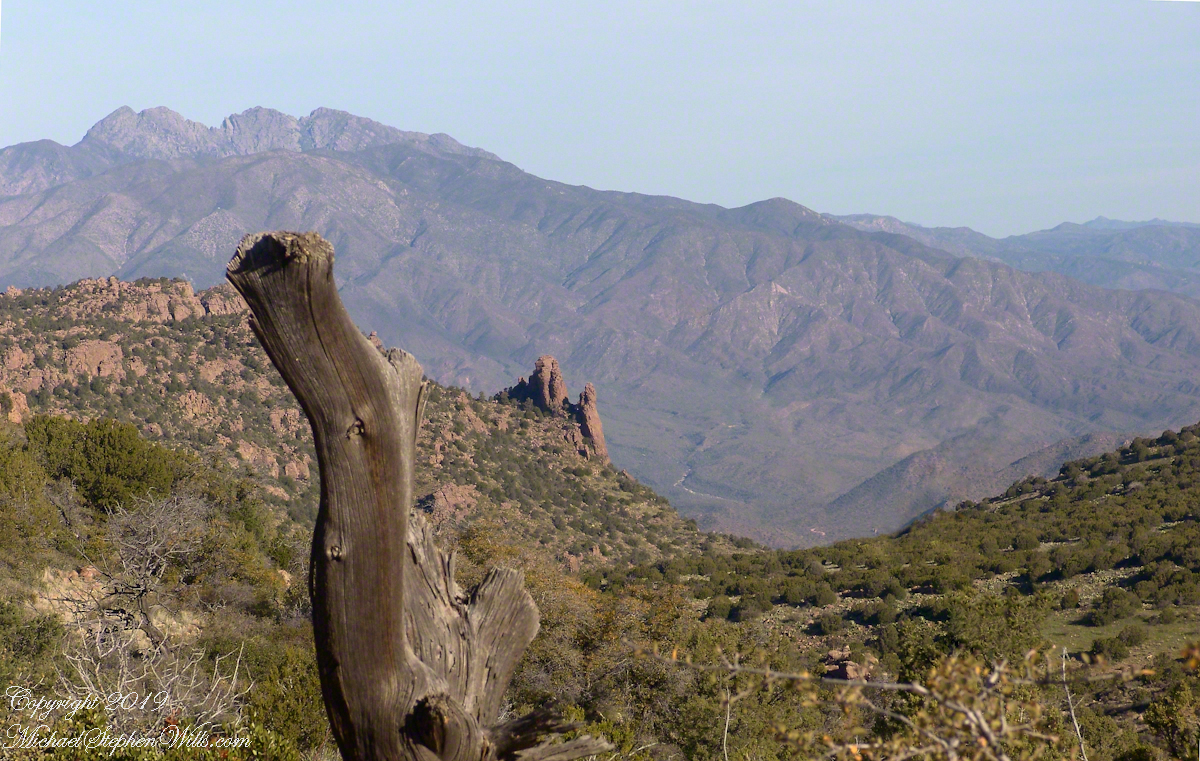
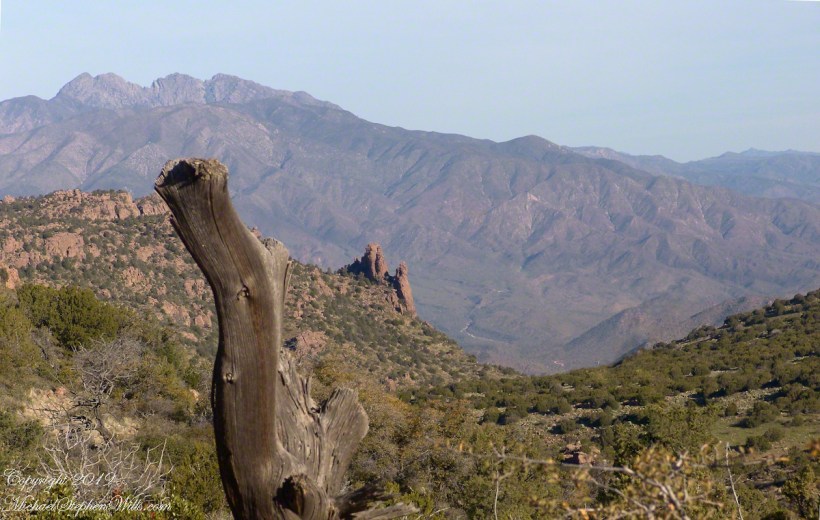
First, there was the climb to the edge of Pine Creek canyon where we, for the last time, enjoyed the view to the north of the Arizona Trail and, in the distance, the Four Peaks Wilderness.

North from Reavis Gap

At Reavis Gap we took a rest before the 1500 descent to Campaign Creek on a trail rated as so difficult backpackers go miles out of the way to access Reavis Ranch.

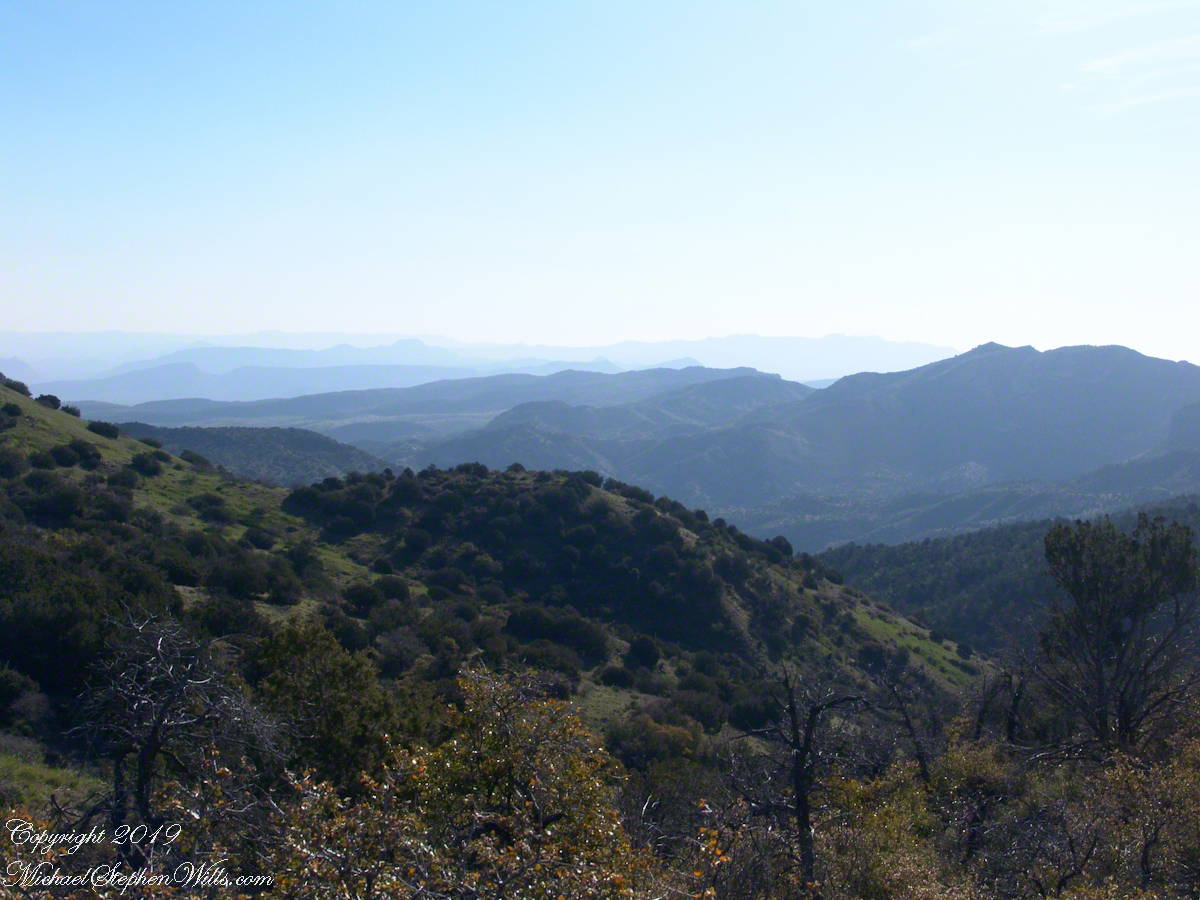
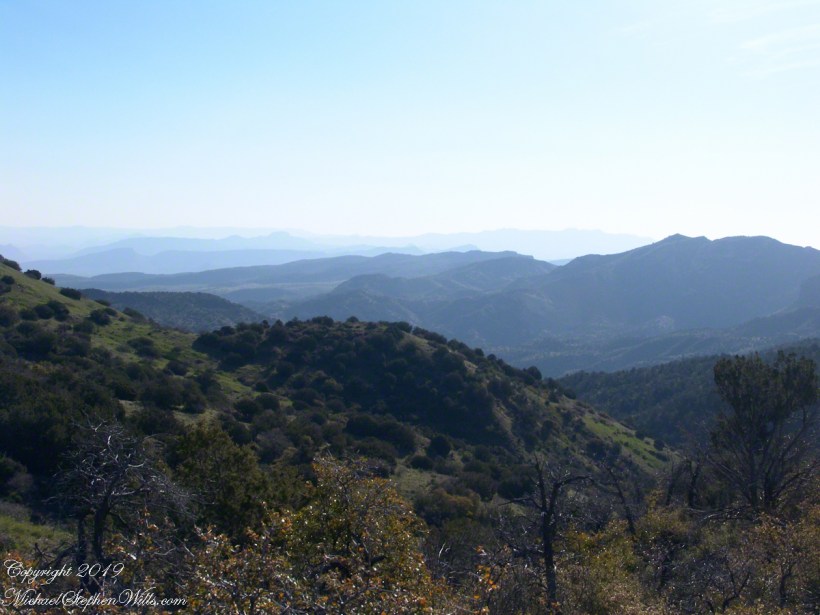
I split an energy bar and took a swig of water before setting up the tripod to capture the following view of our path. The ridge, hazy in the distance of 22 miles, is Apache Peaks, the near descending ridges an improbable green after a wet winter. In the previous photograph, “North from Reavis Gap” you can clearly see the transition from the desert to a grassland biome as the elevation increases.

Generations

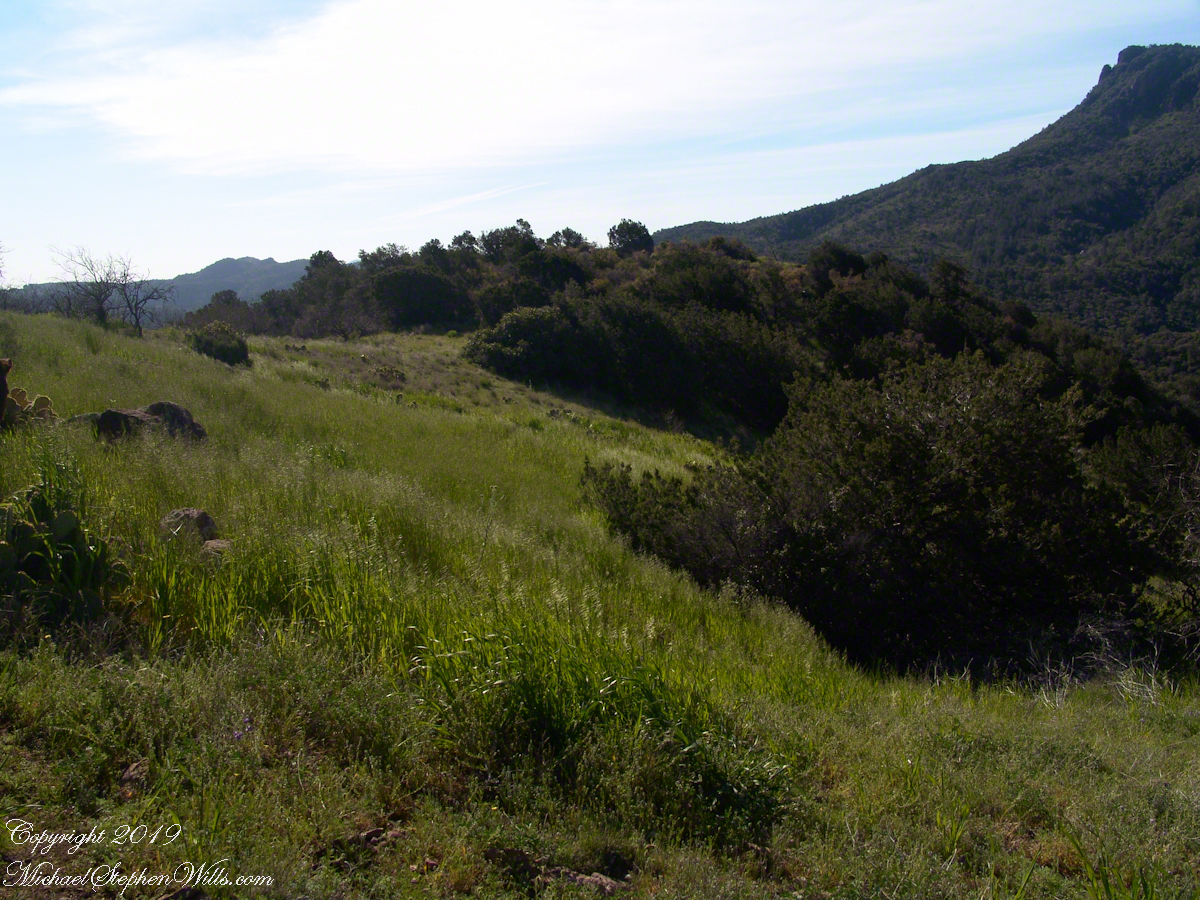
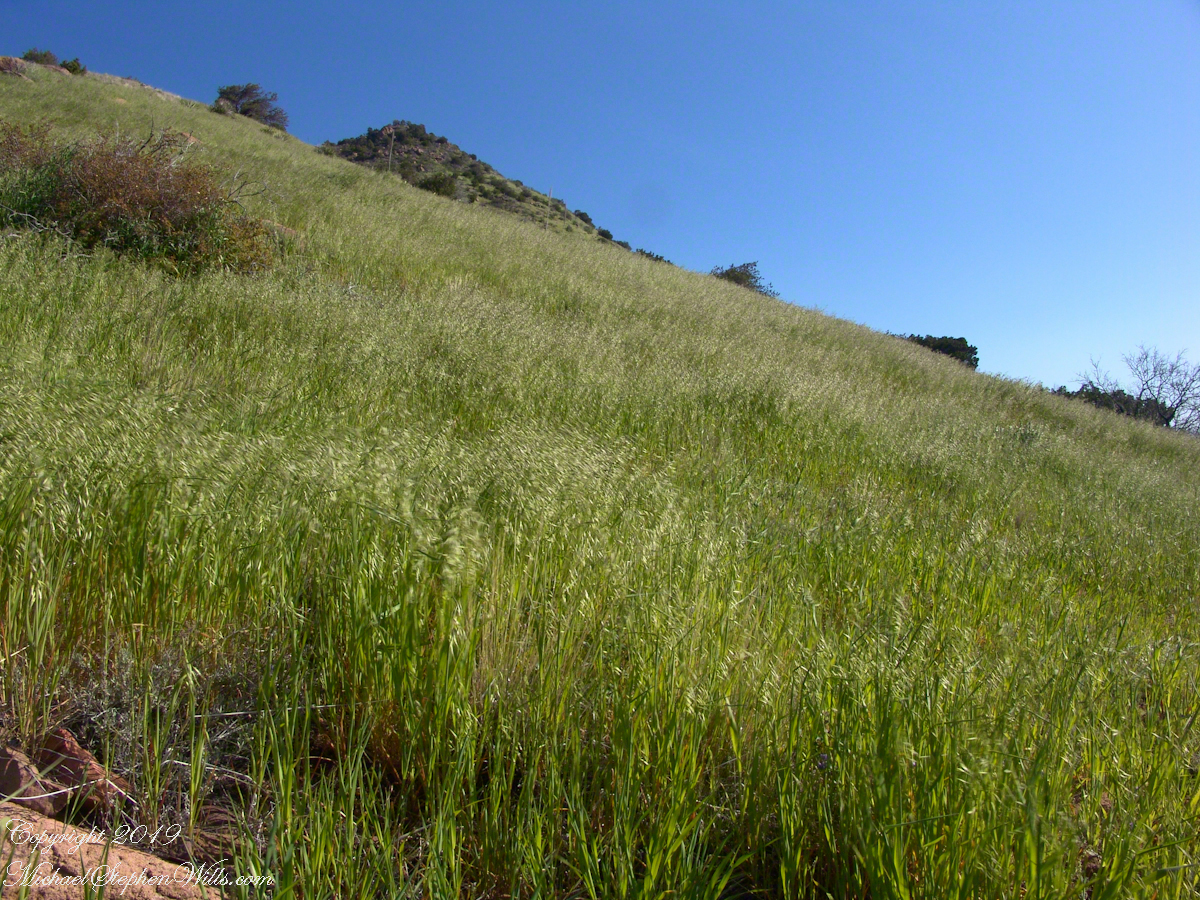
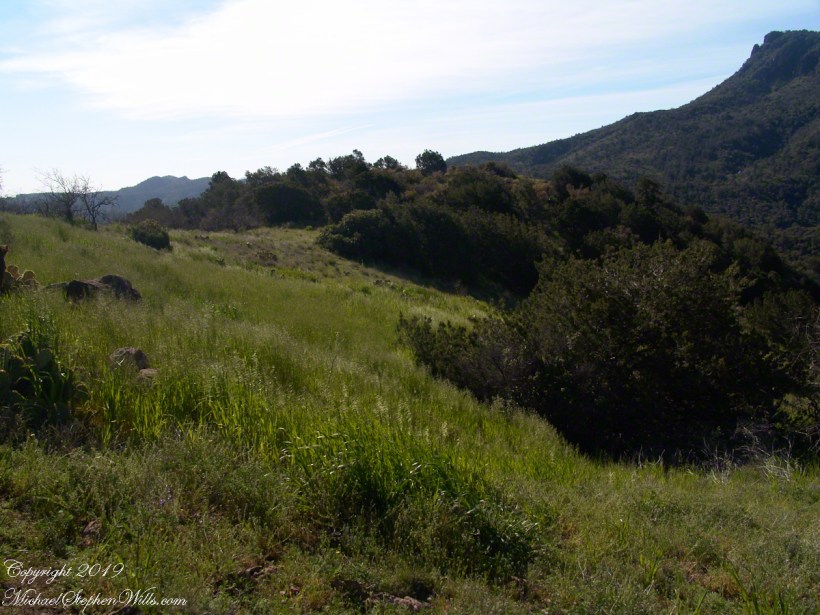
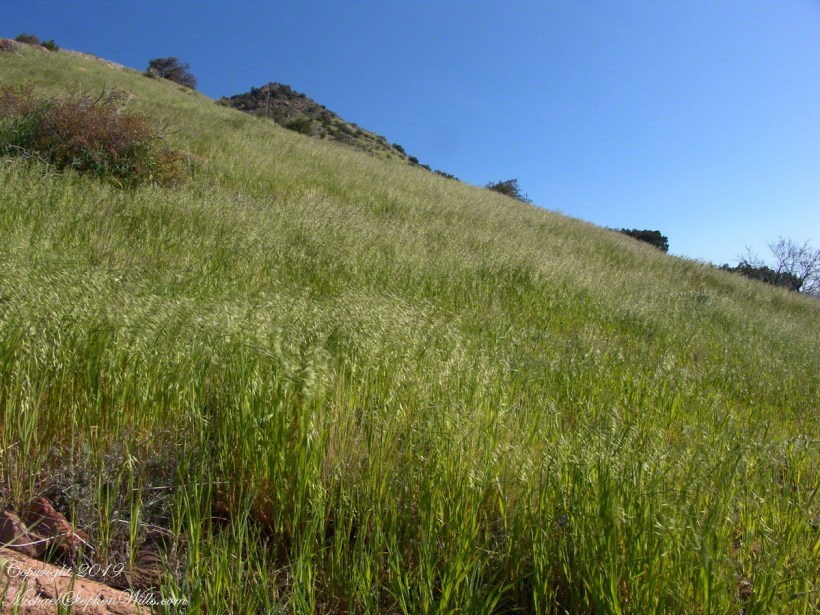
On this, the southern shoulder of Two Bar Mountain, we enjoyed desert grasslands almost the entire length, starting with this unlikely oat field. The higher, eastern Superstitions are the western and northern-most Sky Island of Southern Arizona: rising from the desert as isolated mountain systems, catchments for passing storms, with life zones progressing with altitude, the highest typical of Canada. As with oceanic islands, each is a haven for life with potential for evolution of unique species from the isolating effect of the surrounding desert.

These oats are domesticated grain spilled from a horse or donkey pack to thrive in the decades since, sprouting into this spread of light green after a wet winter, ripening, then turning gold with the summer, the grains falling to wait for the next opportunity. This green hue is my first impression of Reavis Gap, see my post “Two Meetings” for a video of the morning breezes rippling along the hillside.

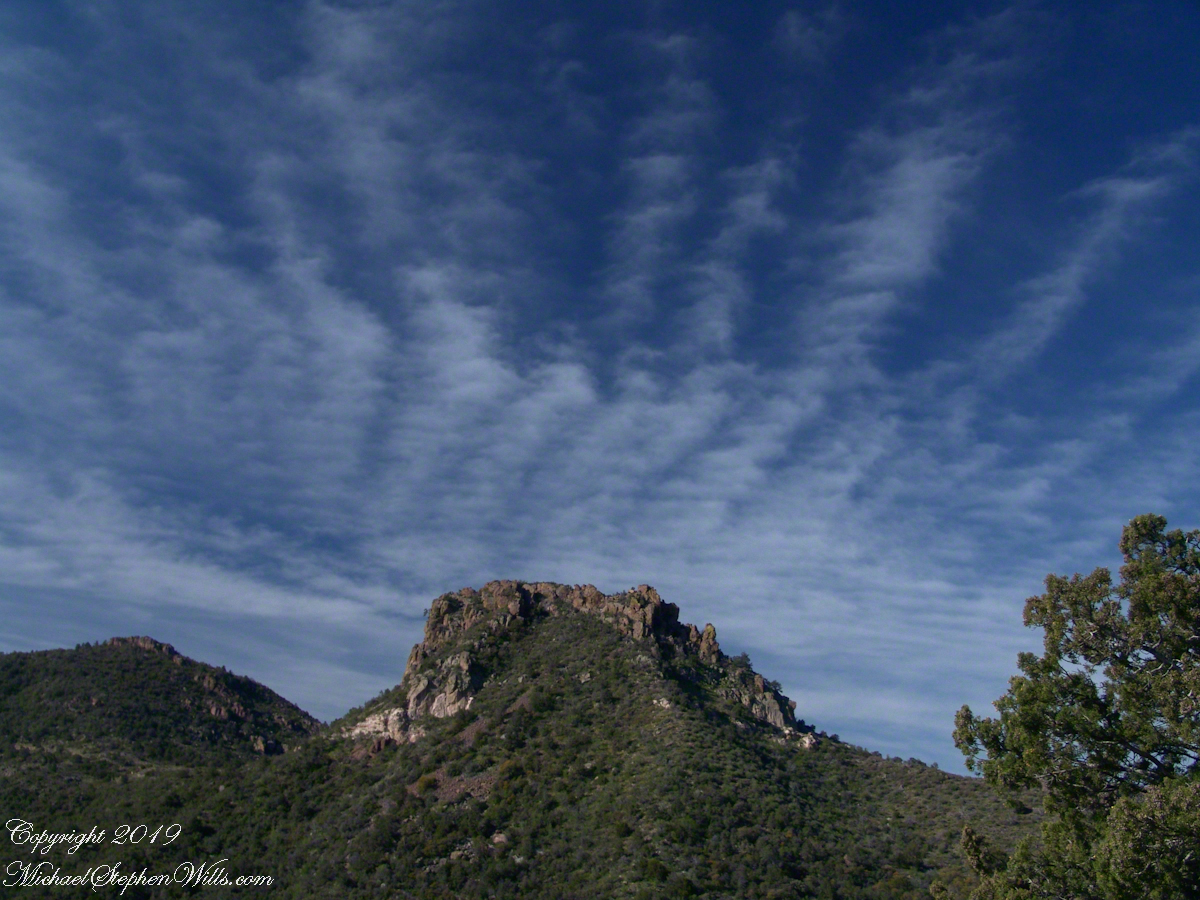
The camera sweeps 180 degrees for all the views from this spot, including prickly pear cactus among the grasses, a butte-like formation to the west, as in the following photograph.

Upper Horrell, the end of the beginning.

We passed the length of the Reavis Mountain School of Self Reliance, the Reavis Gap trail is 100 feet or so higher on the north side. The name “Upper Horrell” is attached to this location. Reavis Gap trail used to start at a ranch house, part of the “Upper Horrell Ranch.” Horrell is the family name of the former owners.

Upper Horrell is a fortunate location for the school, with the perennial Campaign Creek flowing parallel to their 13 acres on which is a large garden, many fruit trees, livestock and poultry. The school provides lodging and classes throughout the year.

The Searcher initiated his time in the Superstitions with wilderness survival classes and they allowed him to park is horse trailer and pickup outside the gates. We were loaded and out of there with a stop at Roosevelt, population 28, where we were the only customers for mesquite grilled hamburgers and french fries. We talked about the potential for future trips and I took him up on an offer to store my stuff until then. In the following years I did more Superstition Wilderness day trips, backpack expeditions, some with my sister Diane, and one horse expedition with The Searcher and a friend.

Here is a gallery of this post’s photographs, for you to flip through.
Click me for the first post of this series.