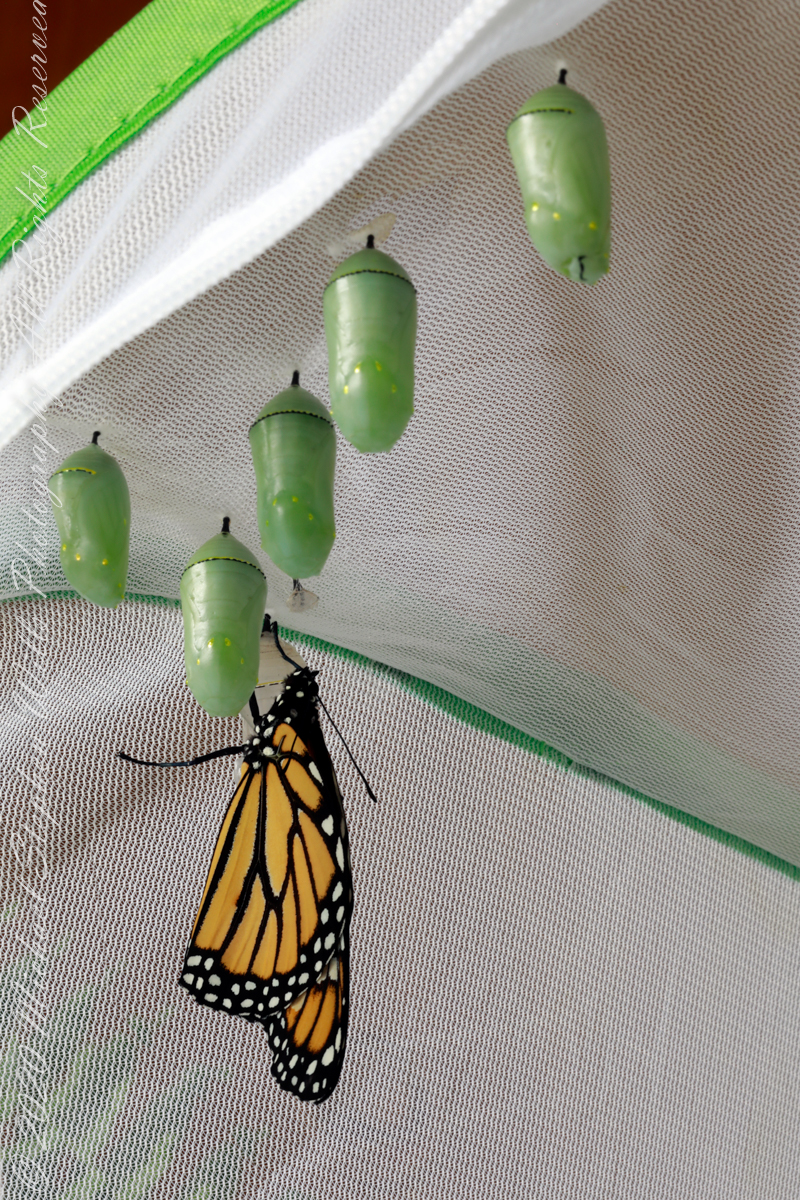
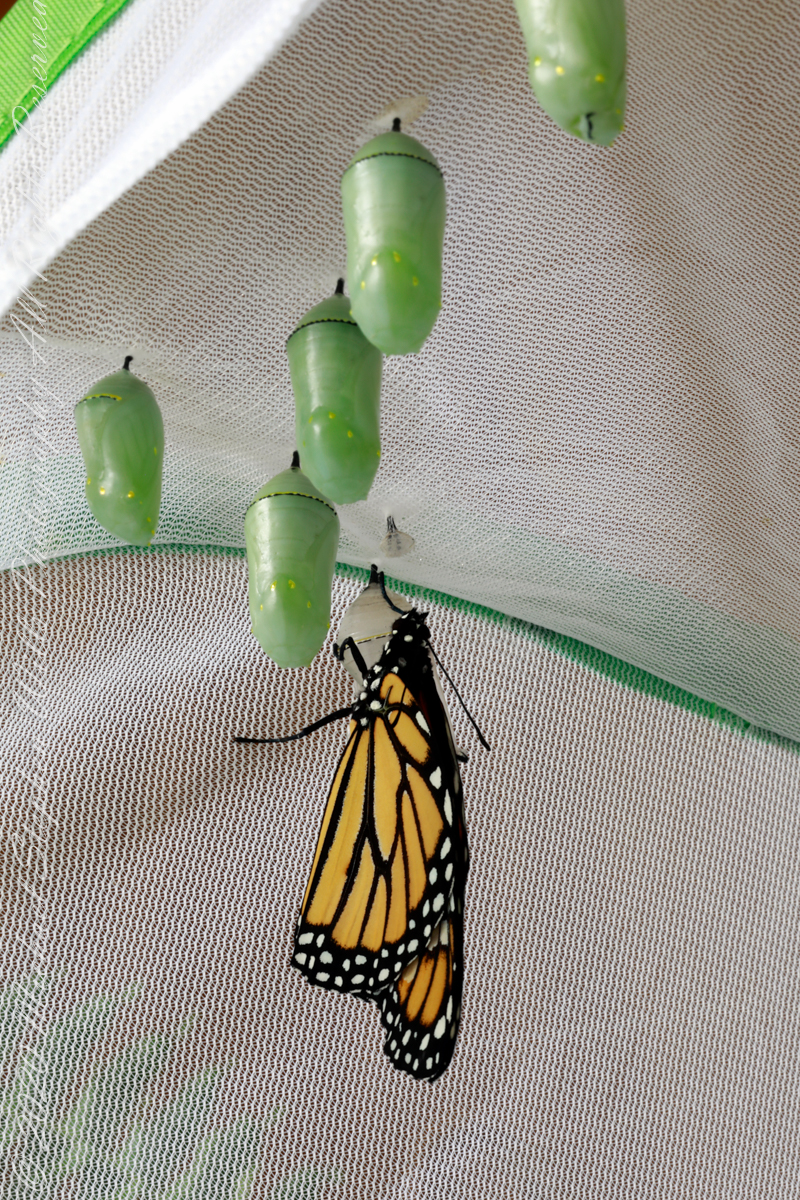
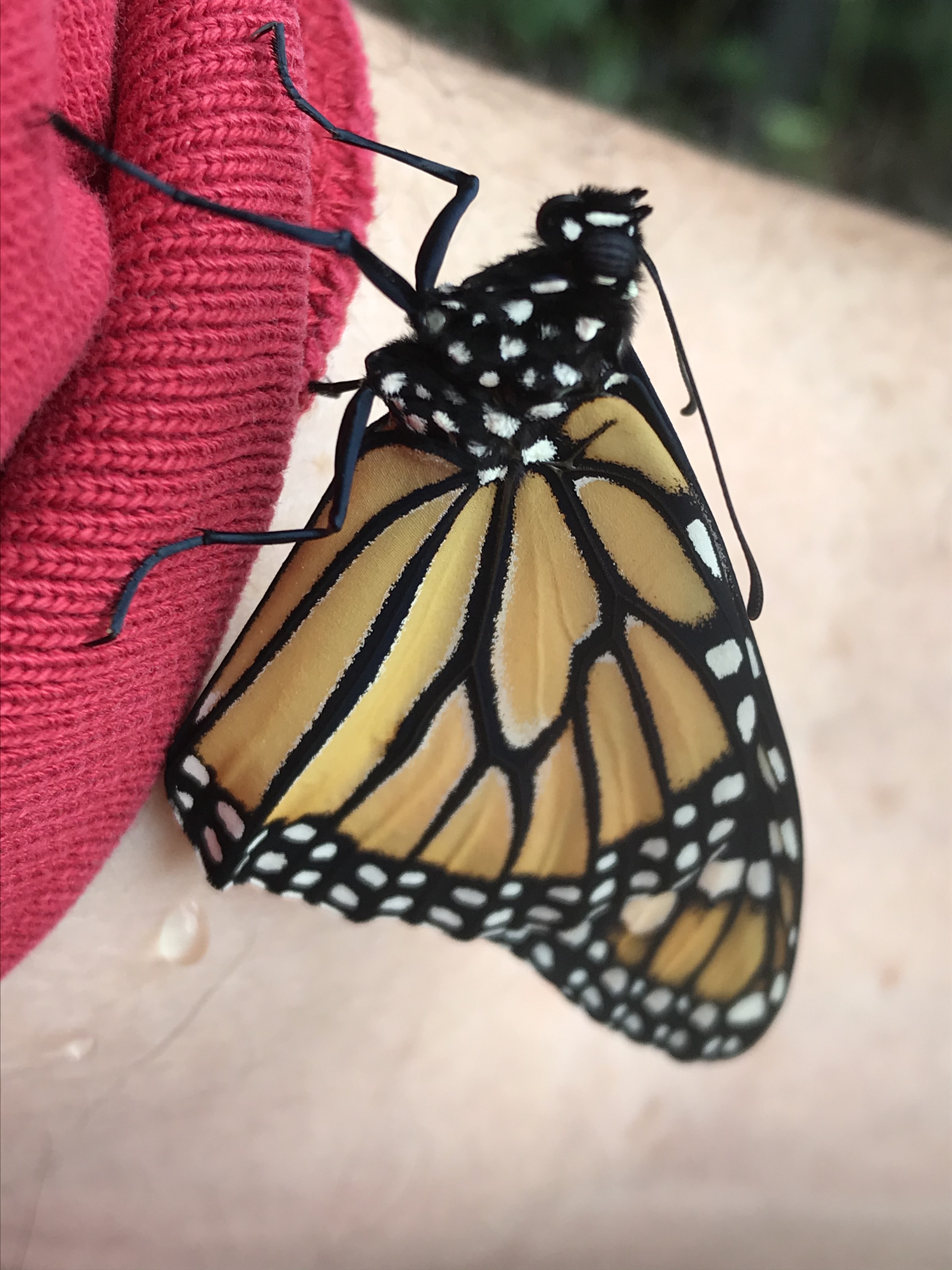
This Monarch butterfly emerged from the chrysalis a few moments ago. A minimum of two hours is required for the wings to harden before release to the wild.
Five wait off stage for their turn to fly.
Rainy weather forced us to leave her resting a full 24 hours.
Here are two videos of a Monarch release from 2020.
Copyright 2022 Michael Stephen Wills All Rights Reserved
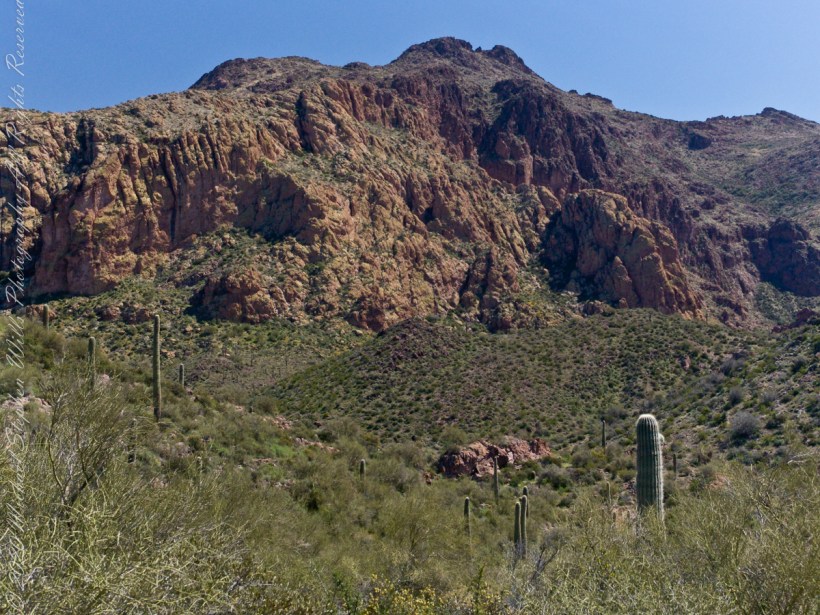
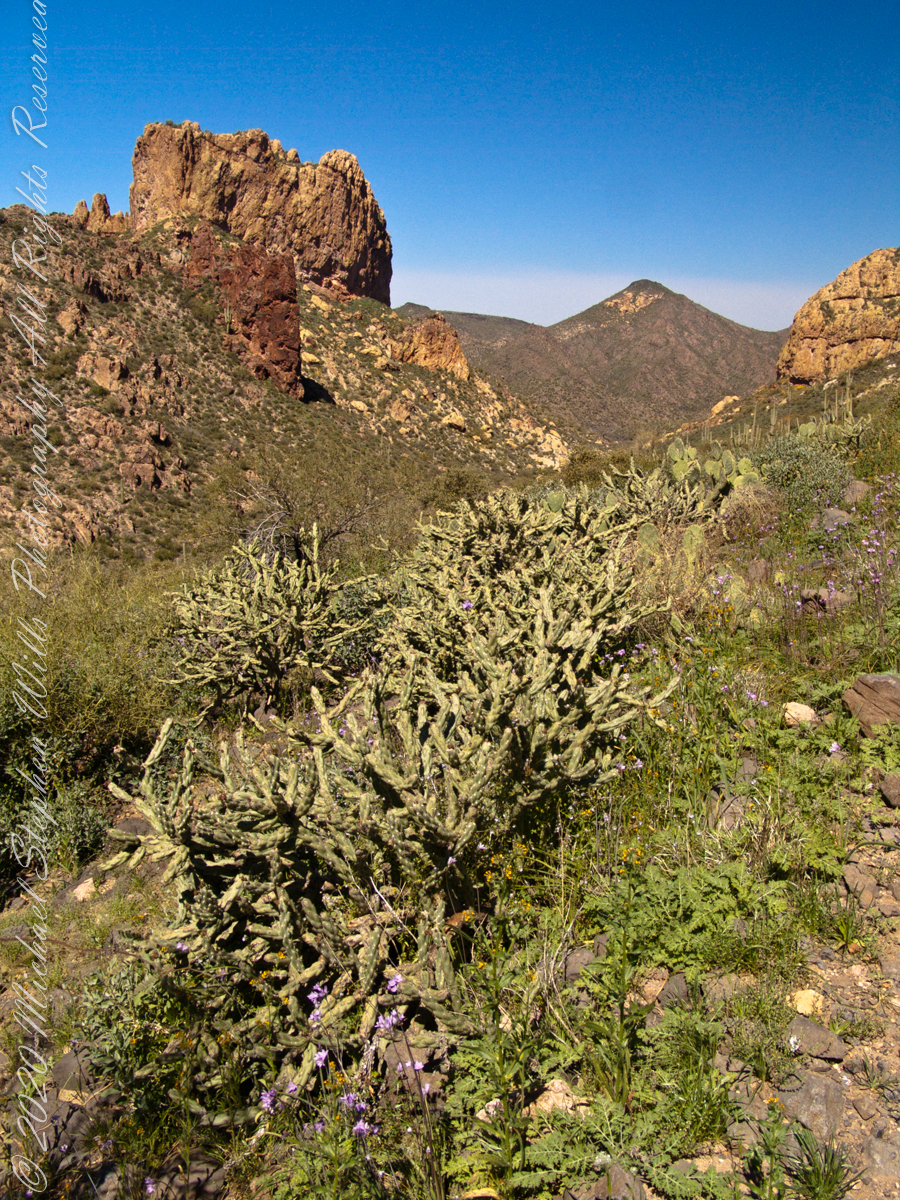
As we descended Upper Black Top Mesa Pass into Bluff Spring Mountain canyon we found, foreground, Palo Verde and brittle bush, and, midground, Saguaro. The presence of Palo Verde reveals water flows through this area intermittently though not enough to sustain a large tree. Palo Verde is in the pea family (Fabaceae), as evidenced by production of seeds in pods.
Calling it “Buff Mountain” some say the mountain is named for these buff-colored cliffs. Others, calling it “Bluff Spring Mountain” name it for the cliffs and the spring within a canyon on top.
Bluff Spring Mountain from the slopes of Black Top Mesa
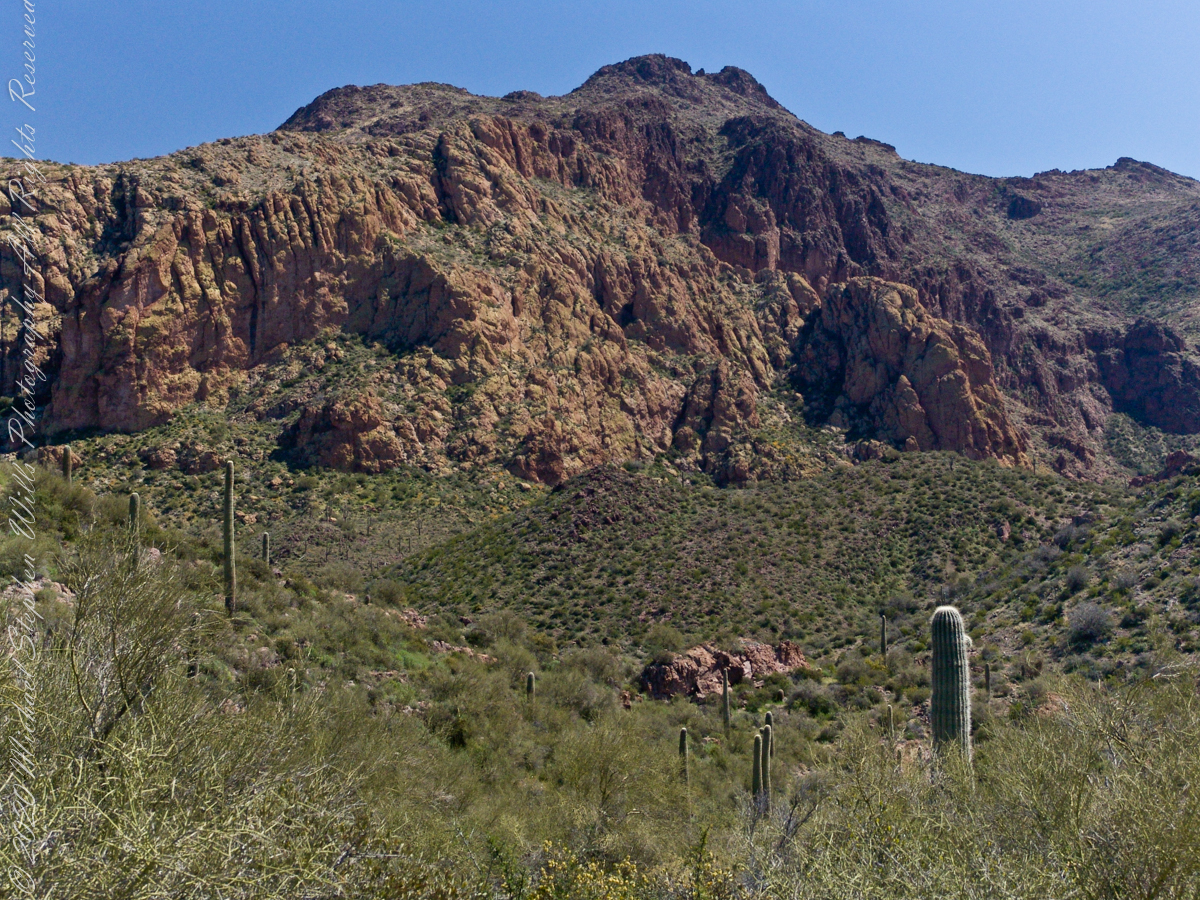
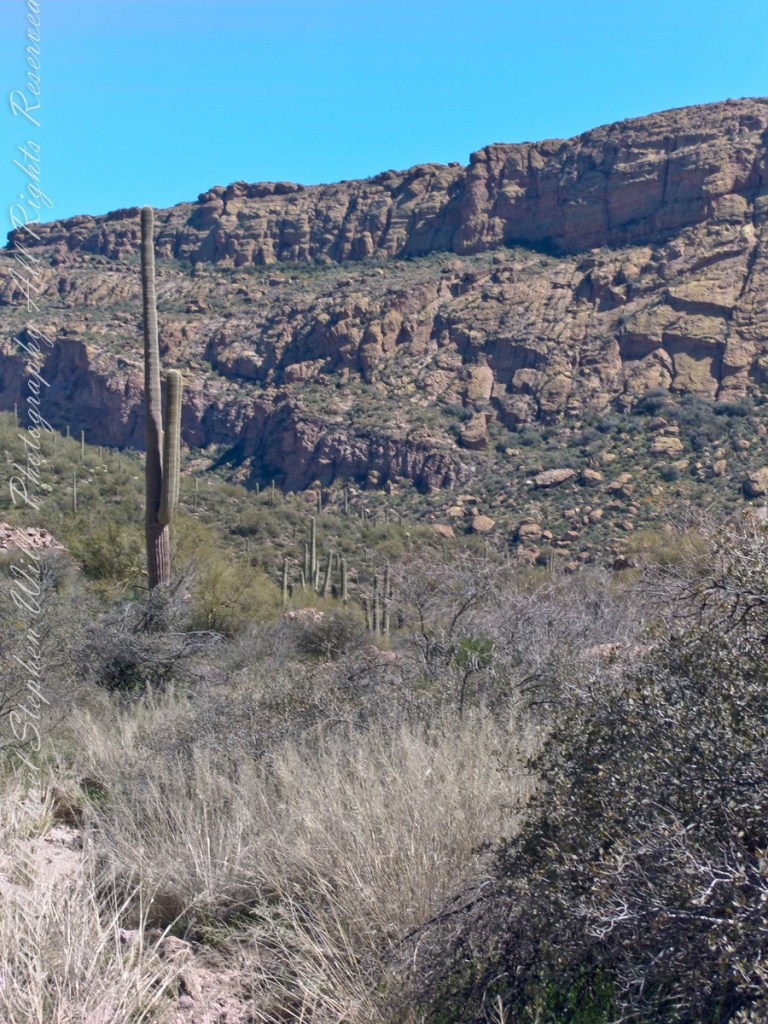
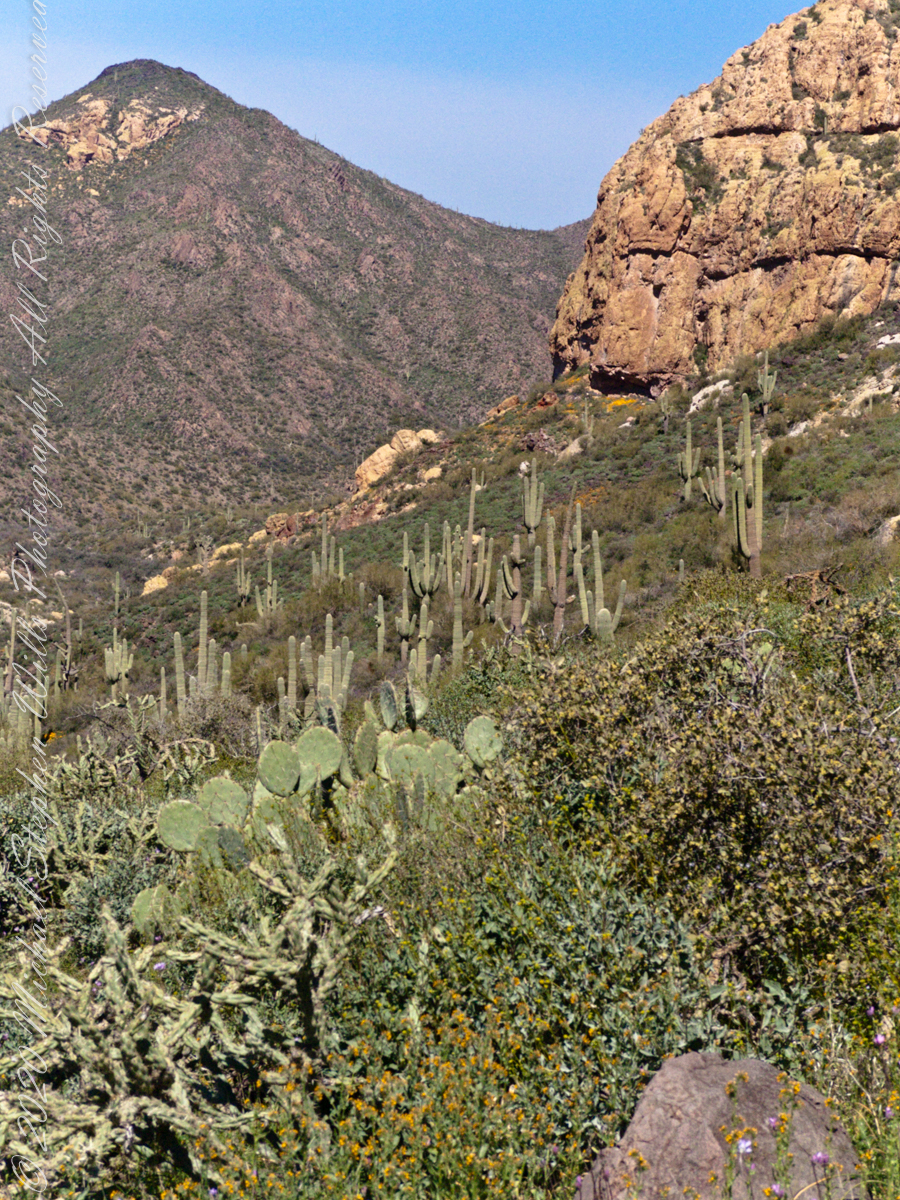
Closer to the junction with Terrapin Trail this Bluff Spring Mountain ridge rose above us. A fine specimen of mature Saguaro cactus is in midground.
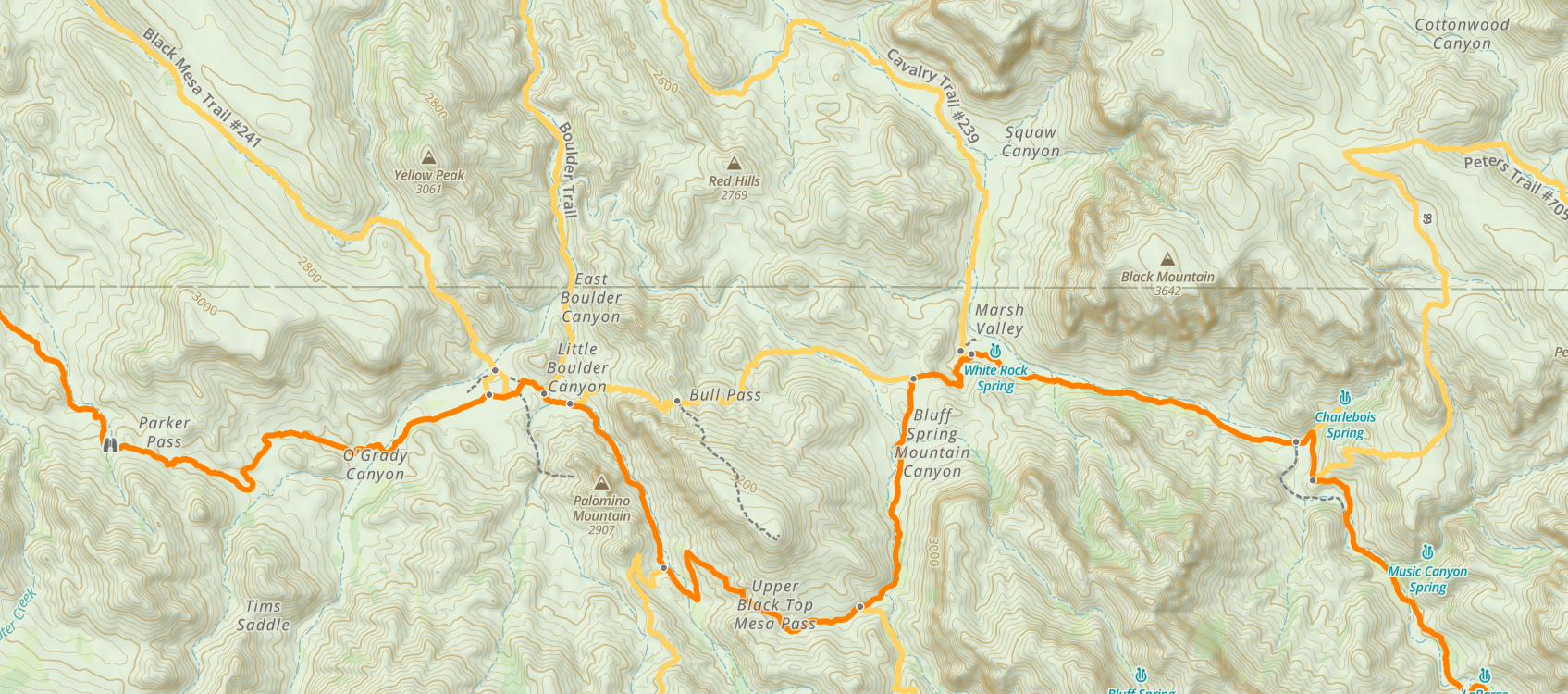
Our second day began in East Boulder Canyon, in the following map it is at the foot of the “Z” of the orange line, the Dutchman Trail, lower left center. The shape is the signature of a switchback needed to negotiate a steep slope up to Upper Black Top Mesa pass. This day will see us traverse Dutchman Trail to the intersection with Peter’s Trail (yellow), another steep climb up Peter’s Mesa.
A topographic map including Yellow Peak with Dutchman Trail in orange. Upper Black Top Mesa Pass lower center.
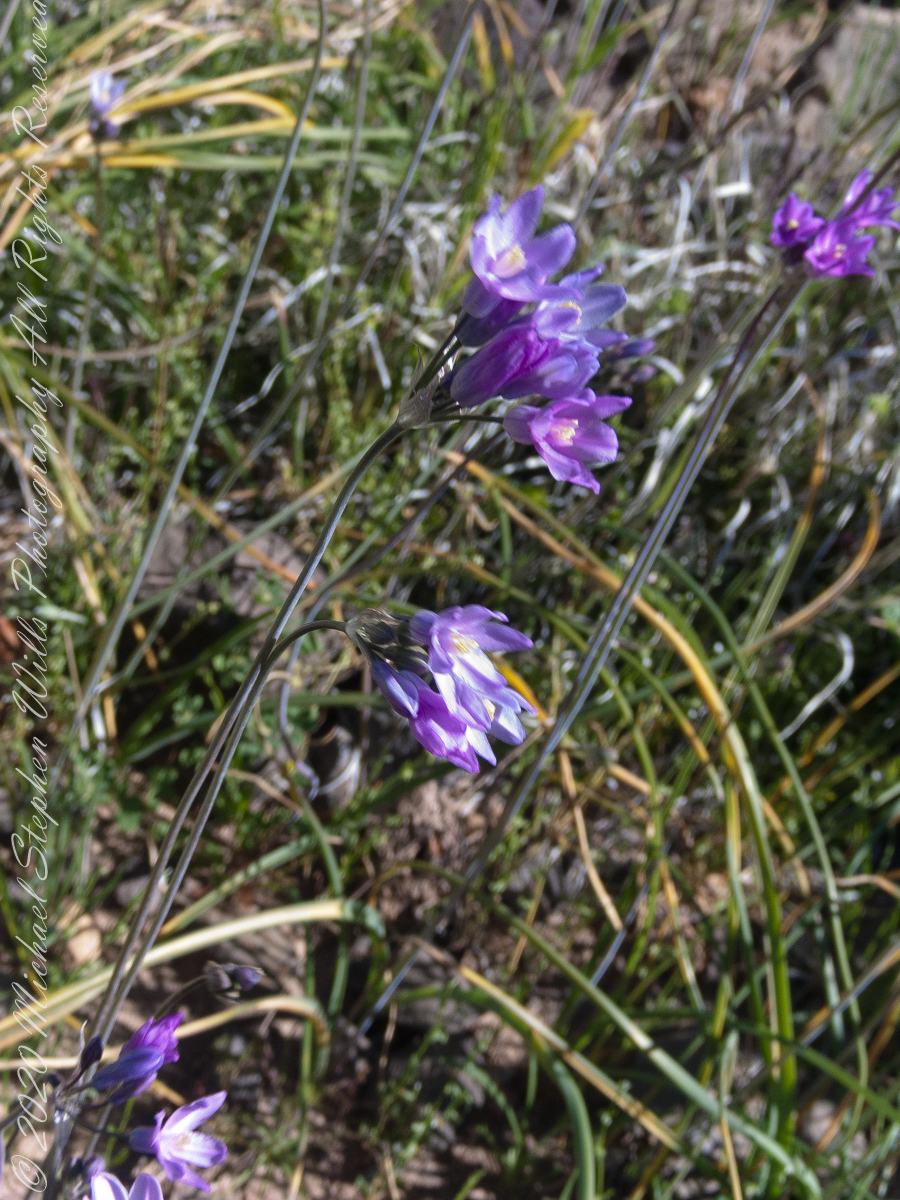
Today’s post features photographs of flourishing Sonoran Desert plants and landscape on the slopes of Black Top Mesa. Dipterostemon capitatus known by the common names blue dicks, purplehead and brodiaea is native to the Western United States (particularly Arizona, California, Oregon, Utah, New Mexico and northwest Mexico.
Dutchman Trail above East Boulder Canyon, Palamino Mountain left, Yellow Peak in distance. We are on the side of Black Top Mesa.
Here I used the “zoom” for a better view of distant Yellow Peak. In foreground is Brittlebush (Encelia farinosa) and Blue Dick. In the distance Saguaro Cactus. Below the cliff of Black Top Mesa, above East Boulder Canyon, is a patch of yellow, Mexican Poppy (Eschscholtzia californica).
Slope of Black Top Mesa above East Boulder Canyon with the distant Yellow Peak.
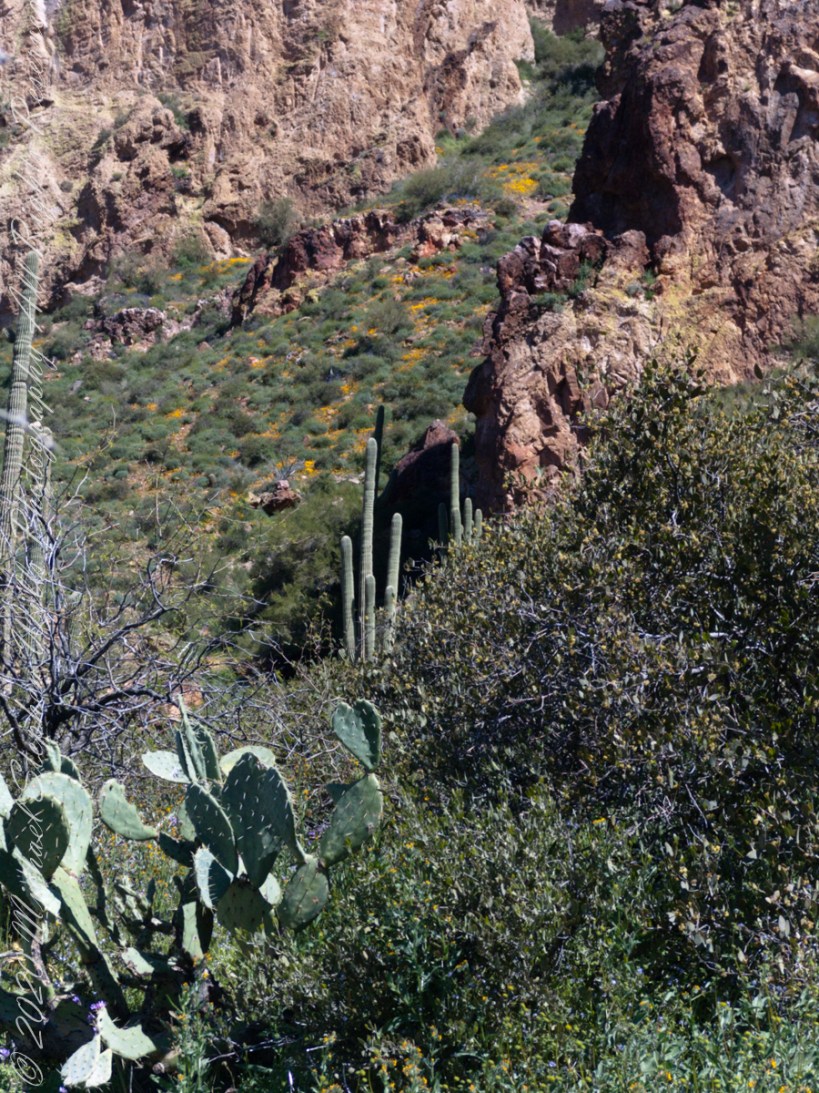
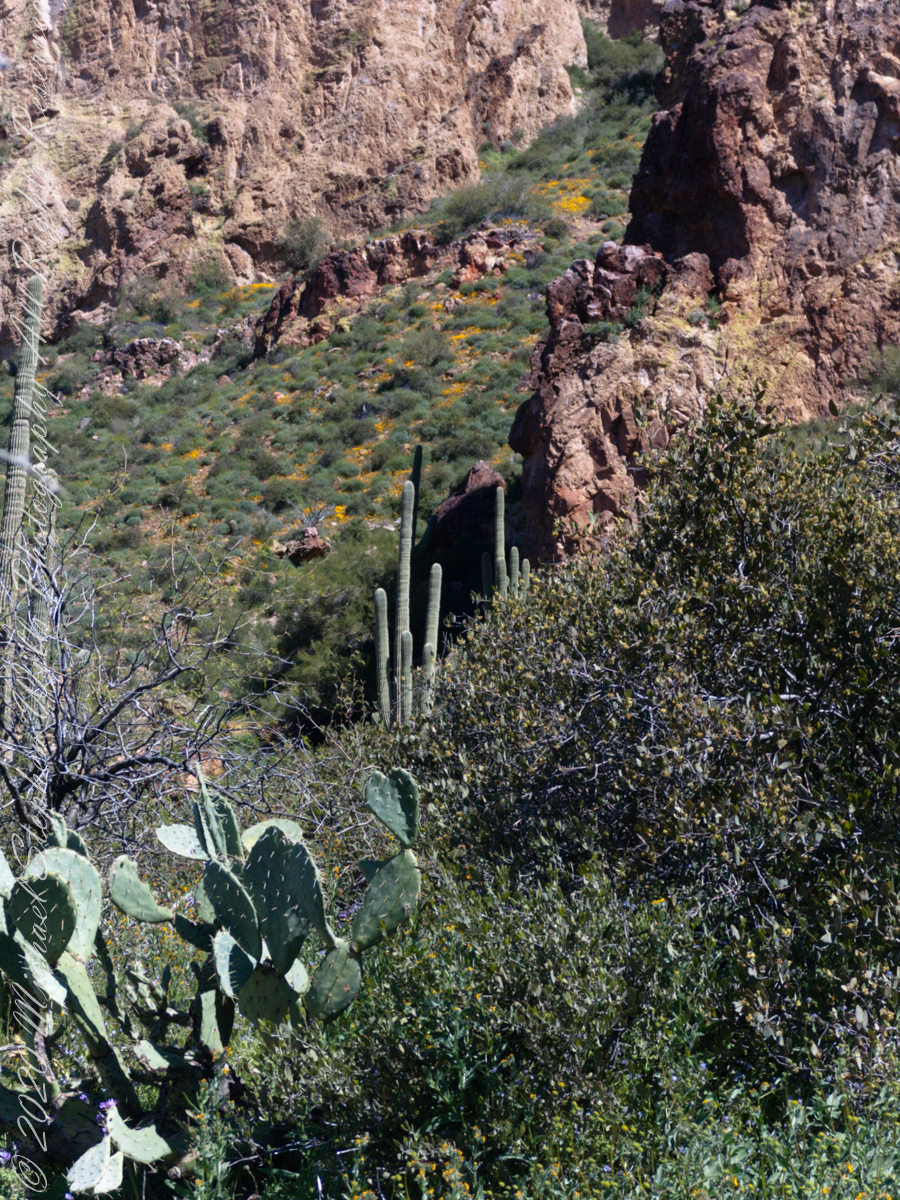
Here is camera, set to zoom, is swung toward the mesa cliffs. Prickly Pear and Brittlebush growing along the Upper Black Top Mesa Pass trail. I have not identified the shaggy shrub above the Brittlebush. In the distance Saguaro Cactus (Carnegiea gigantean) flourishes. Below the cliff are patches of “gold dust”, the Mexican Poppy.
PCliffs of Black Top Mesa
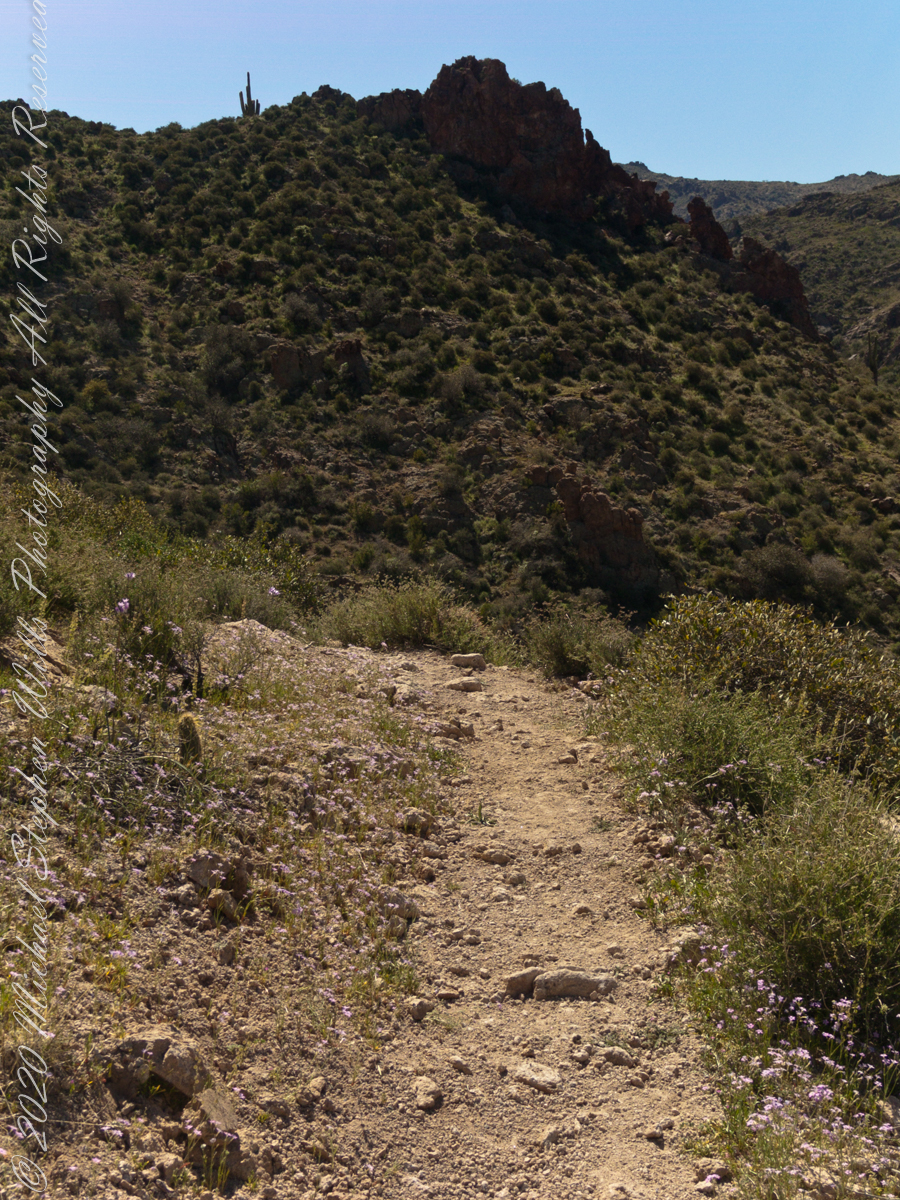
Heading southeast climbing out of East Boulder Canyon with a very young Saguaro Cactus (Carnegiea gigantean) just off trail on left, a large specimen silhouetted on ridge ahead. Windmill Pink (AKA Common Catchfly) (Silene gallica) foreground, lower left. Brittlebush (Encelia farinosa) on both sides.
Upper Black Top Mesa Pass
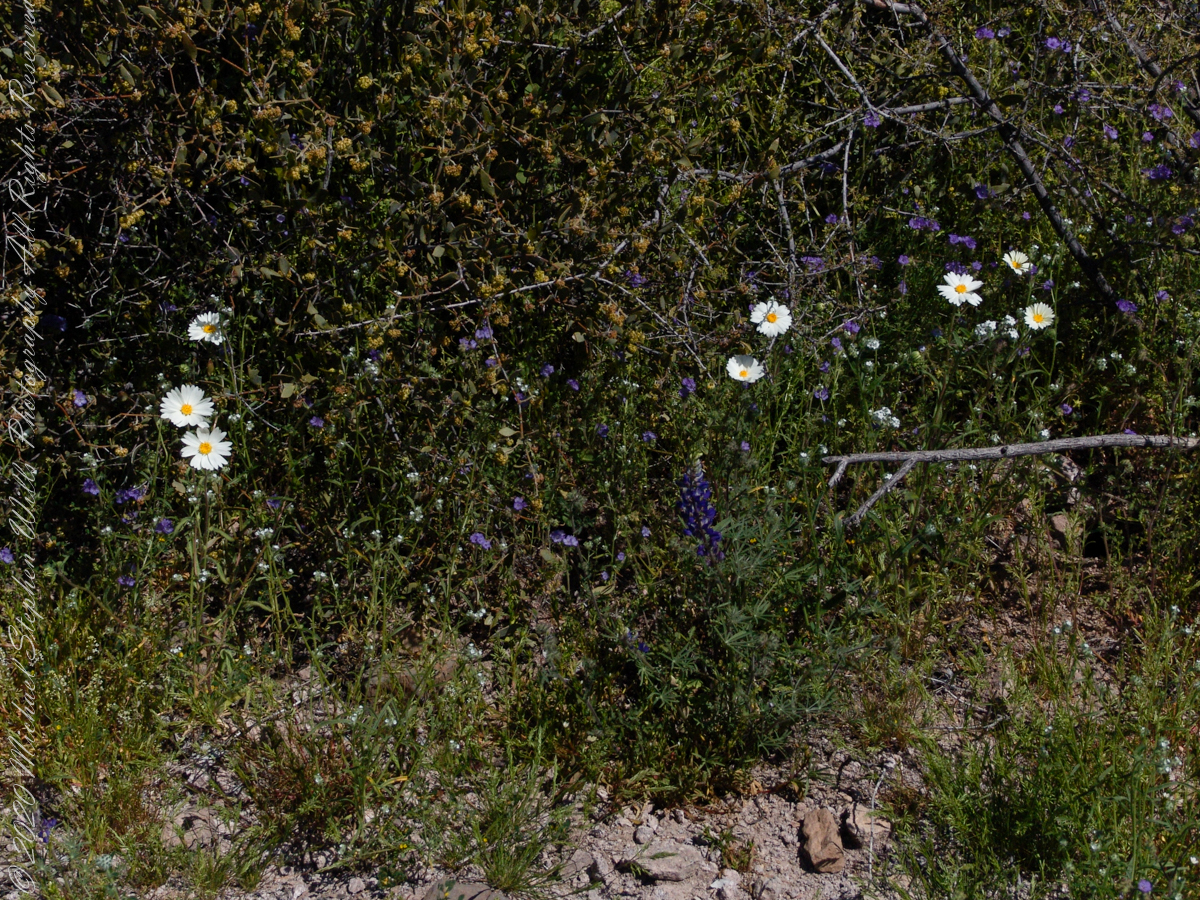
This post ends as it began, with wildflowers growing next to the trailon a March morning. Blue Dicks (AKA Purplehead) (Dipterostemon capitatus), Tidy Tips (Layia) — daisy like flower, Brittlebush flowers are yellow when not dried. The larger small white flowers are Desert Phlox (Phlox austromontana) — I have not identified the tiny white flowers sprinkled around.
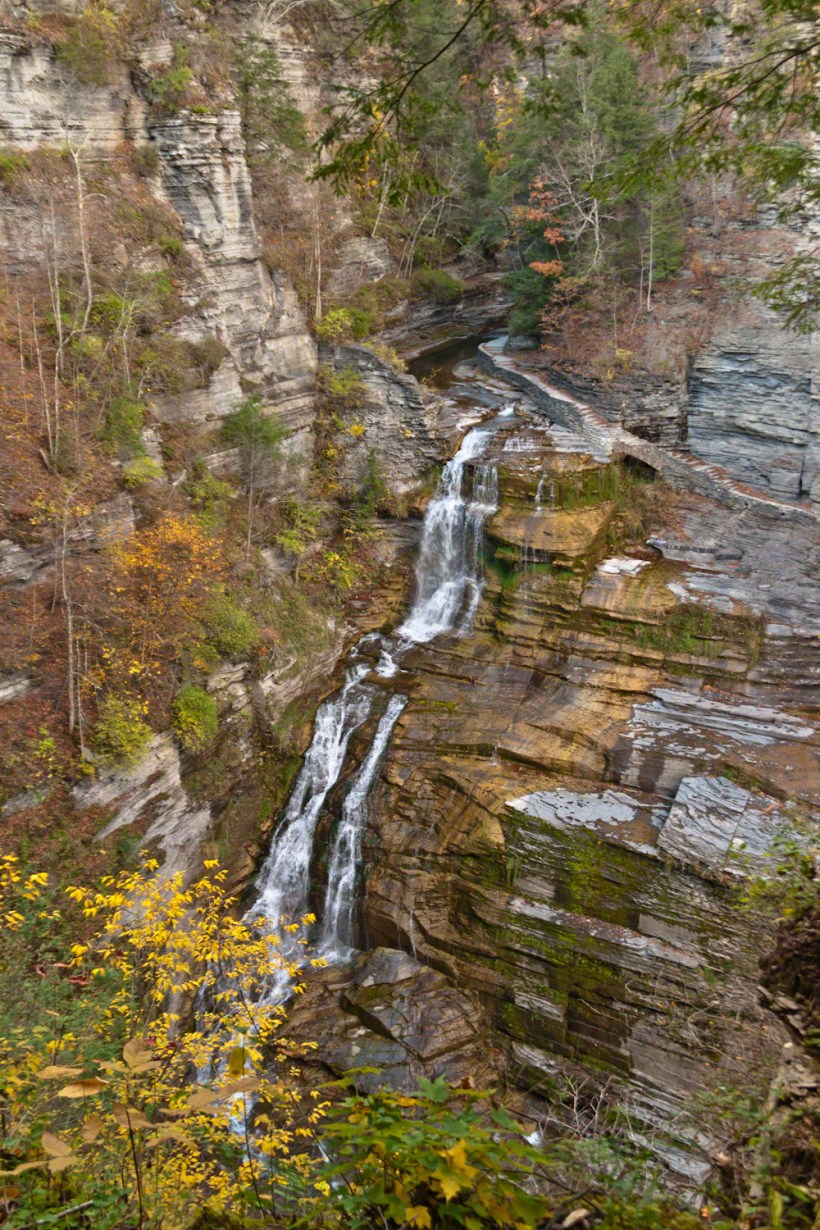
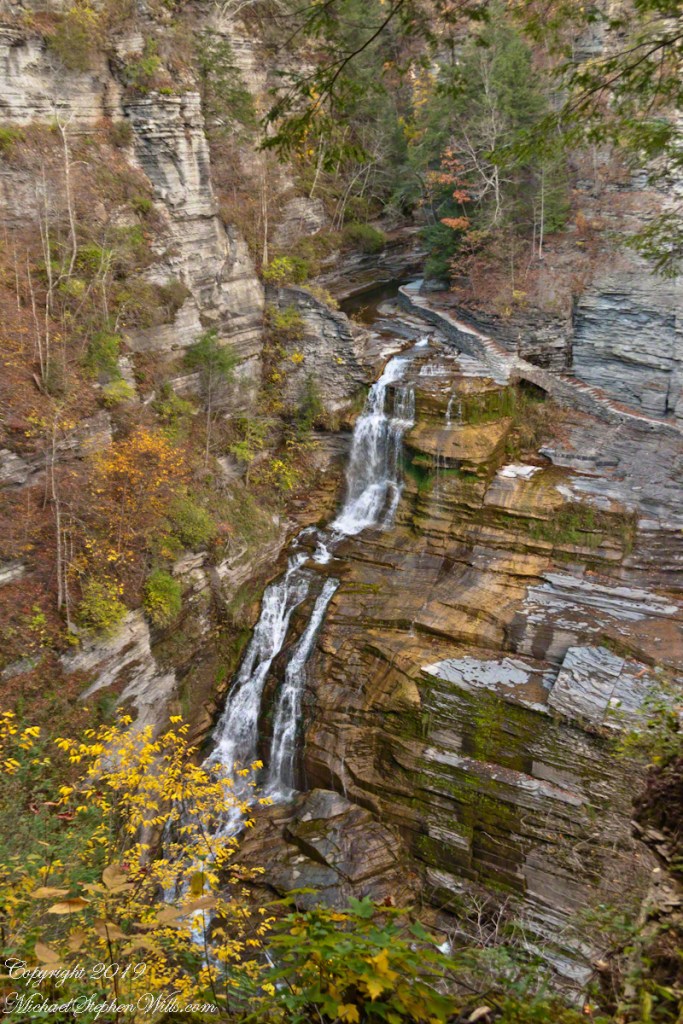
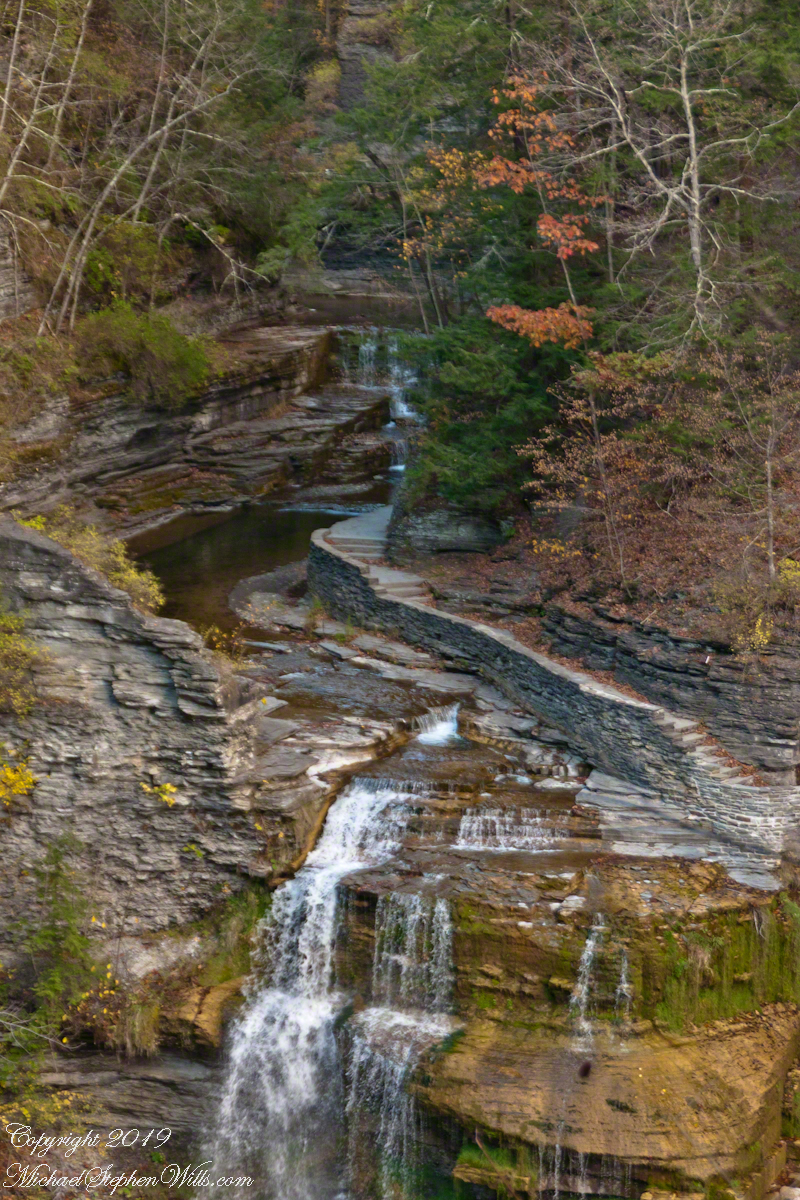
A full sweep of Lucifer Falls on an autumn evening, the sun hidden behind the gorge walls. Here the Gorge Trail emerges from the shelter of the gorge, emerging into a dizzying view.
Click photographs for a larger view
Lucifer Falls from Rim Trail Overlook
Click for a slideshow of this sequence of Lucifer Falls view from the overlook.
Lucifer Falls from Rim Trail OverlookLucifer Falls from Rim Trail Overlook
Copyright 2019 All Rights Reserved Michael Stephen Wills
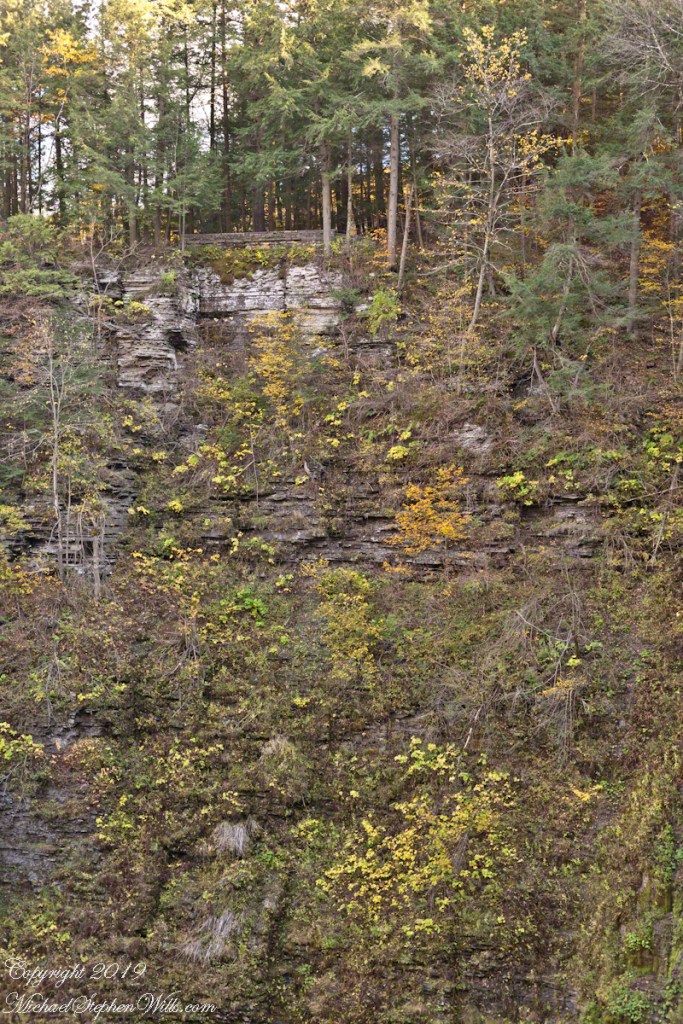
Standing on the trail alongside Lucifer Falls, crane your neck, up and up to the cliff top. Look closely to see the protective rock wall of the overlook.
Click photograph for a slideshow. To do this from WordPress Reader, you need to first click the title of this post to open the page on my site.
Lucifer Falls Overlook from the Gorge Trail
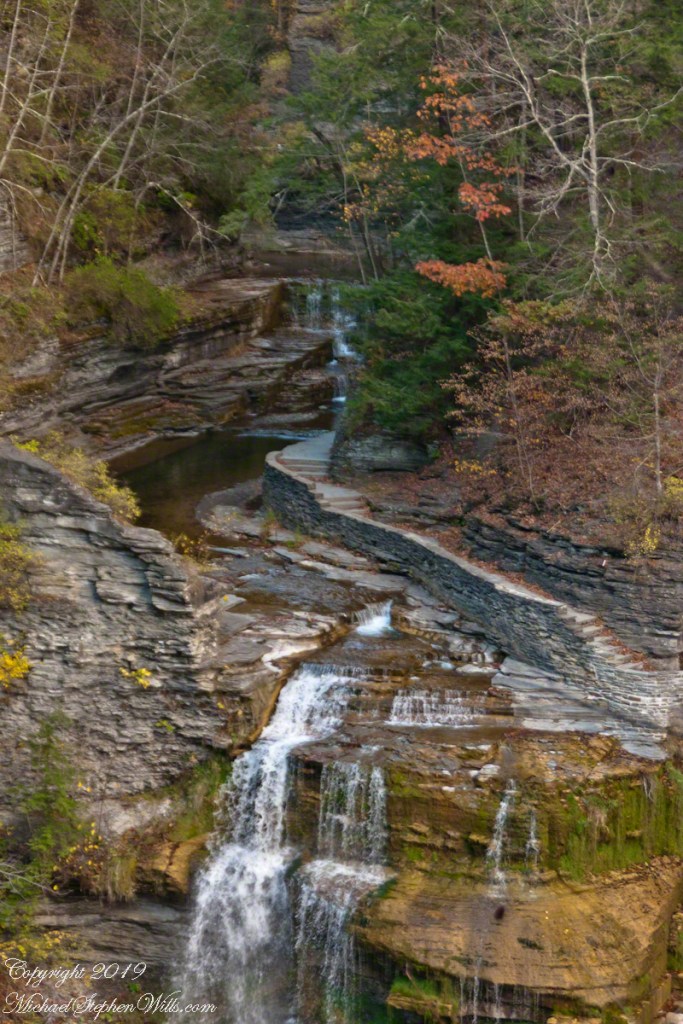
The Rim Trail includes this overlook of Lucifer Falls with, upstream, the Devil’s Kitchen waterfall, the path of the Gorge Trail in between.
Lucifer Falls from Rim Trail Overlook
The full sweep of Lucifer Falls on an autumn evening, the sun hidden behind the gorge walls. Here the Gorge Trail emerges from the shelter of the gorge, emerging into a dizzying view.
Lucifer Falls from Rim Trail Overlook
Brink of Lucifer Falls
Lucifer Falls Overlook from the Gorge Trail
Lucifer Falls from Rim Trail Overlook
Lucifer Falls from Rim Trail Overlook
Copyright 2022 All Rights Reserved Michael Stephen Wills
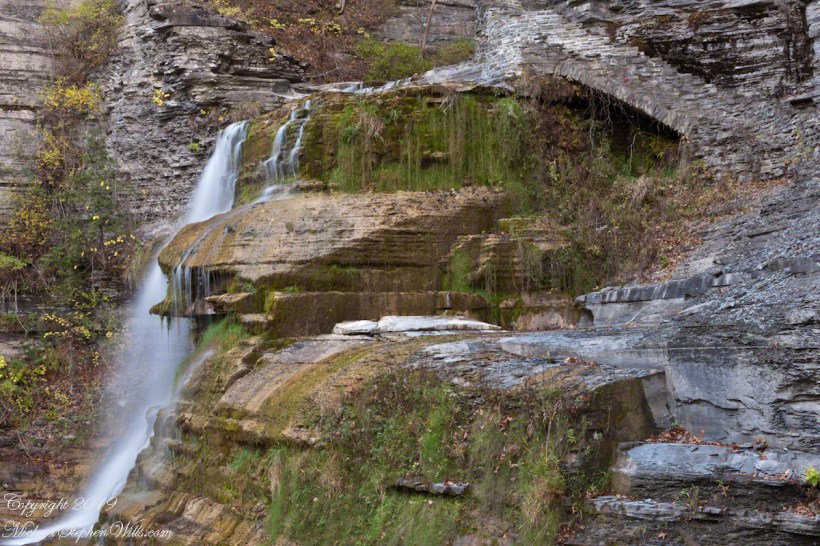
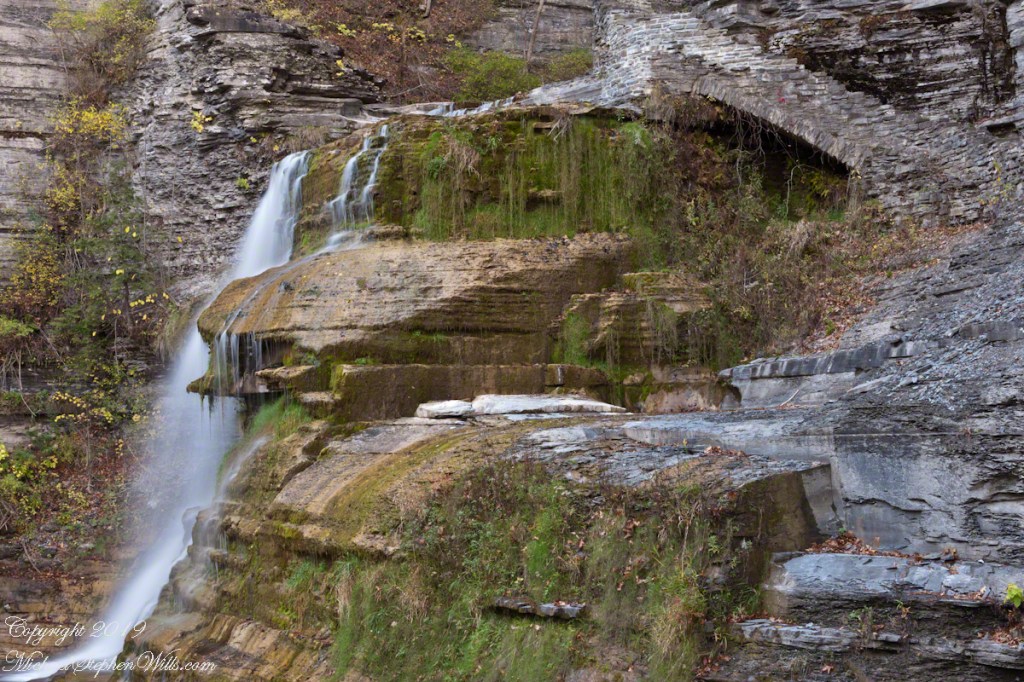
This trail, built into the slate/sandstone gorge wall, follows the descent of Lucifer Falls. Here we view the brink and the path alongside. Follow this trail to Devil’s Kitchen, up and around the corner.
Click photograph for a larger view
Brink of Lucifer Falls
Copyright 2022 All Rights Reserved Michael Stephen Wills
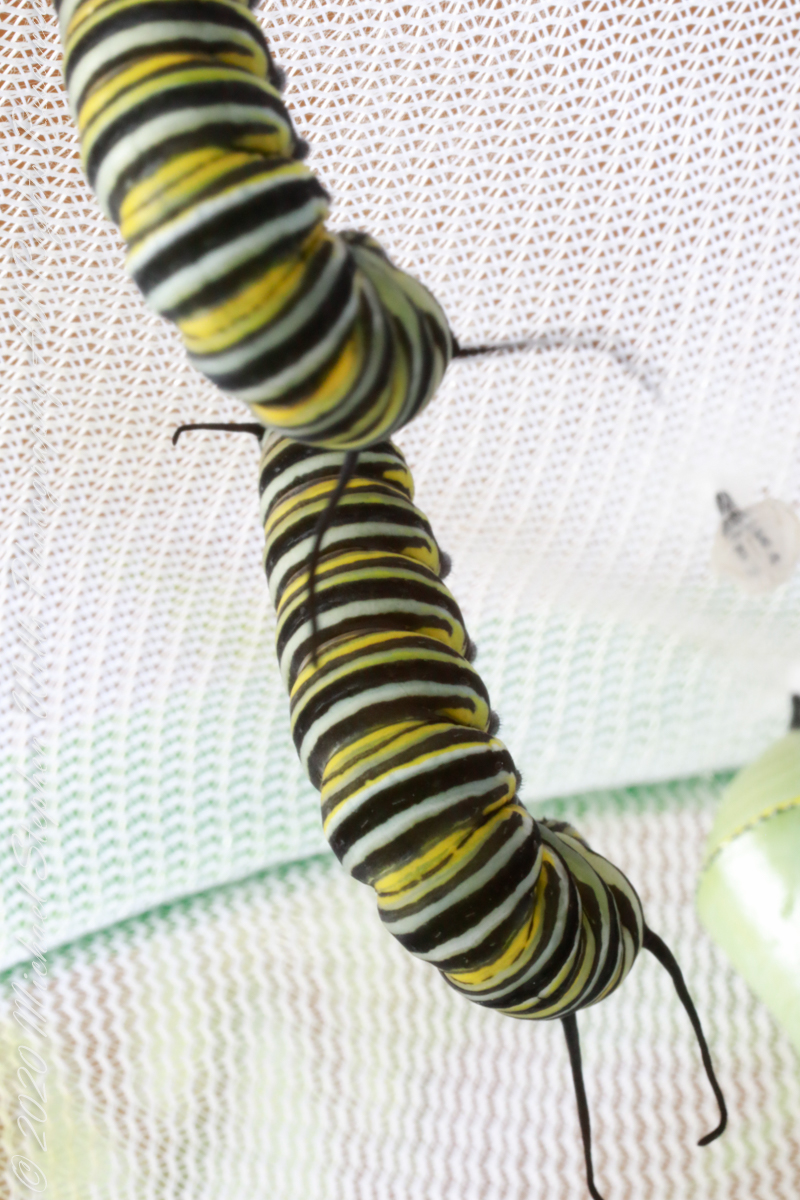
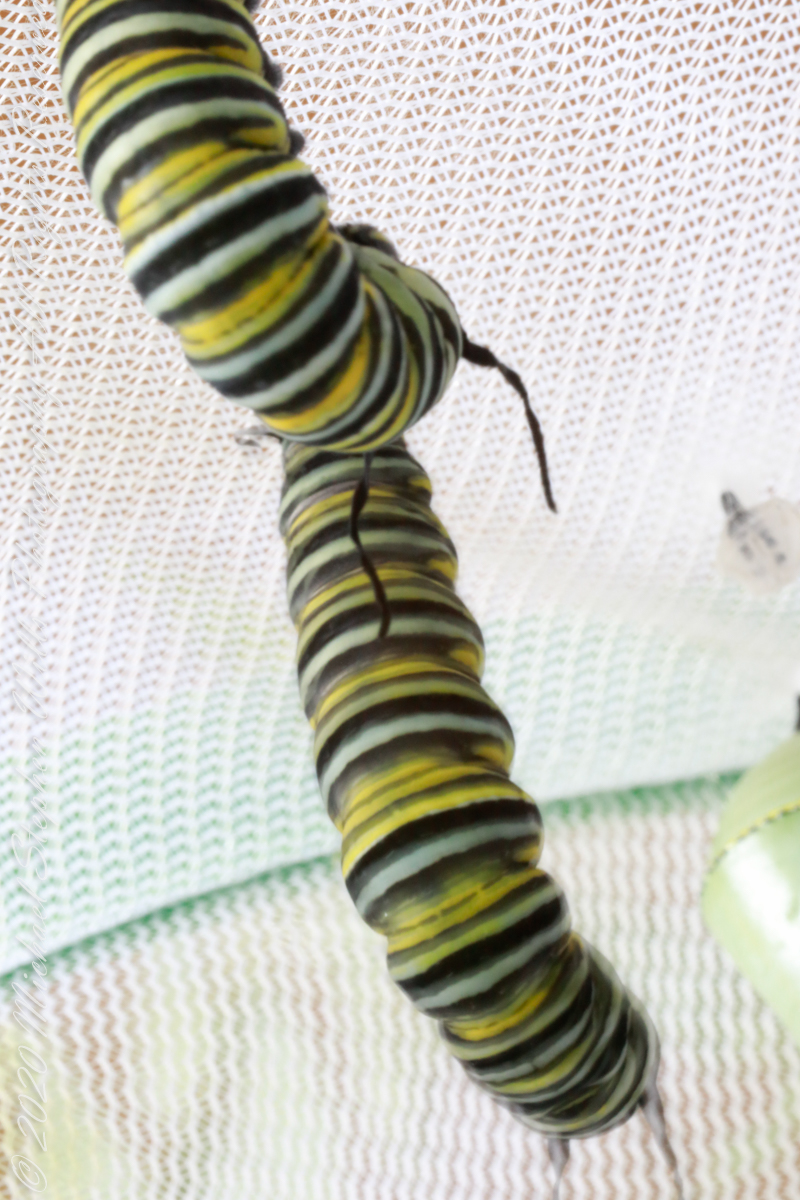
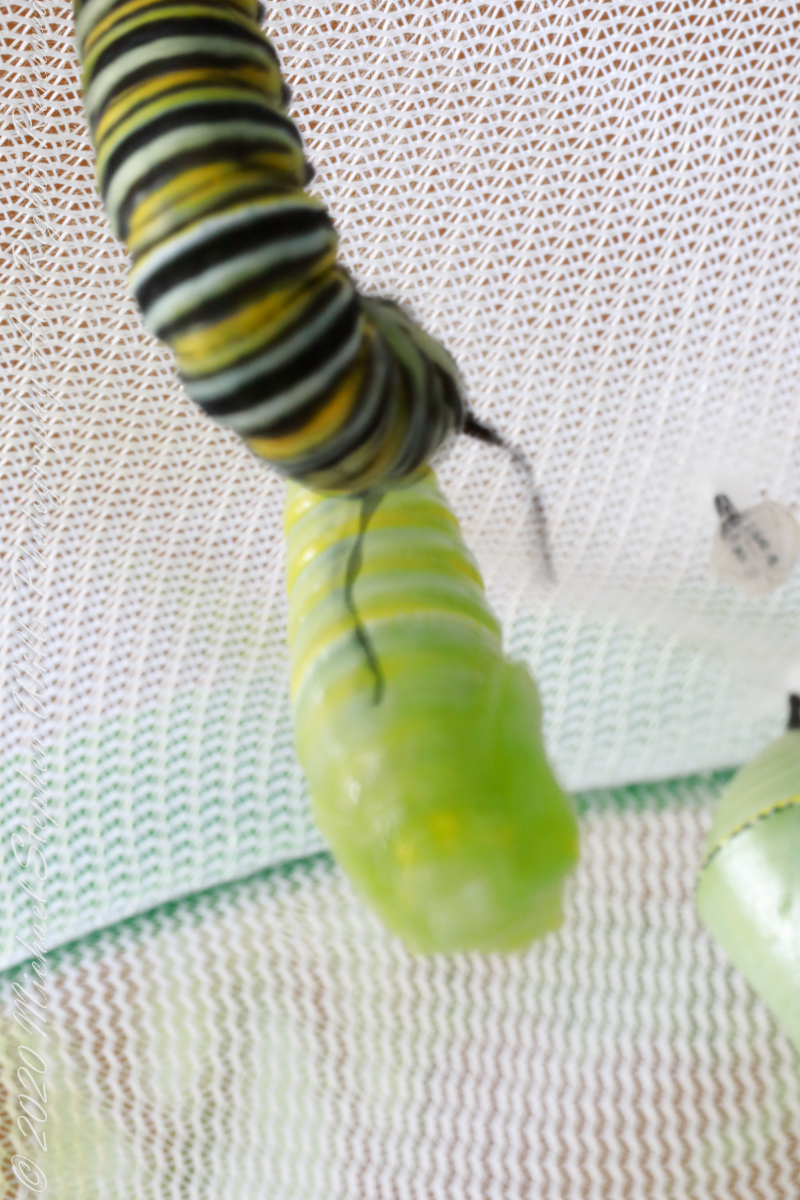
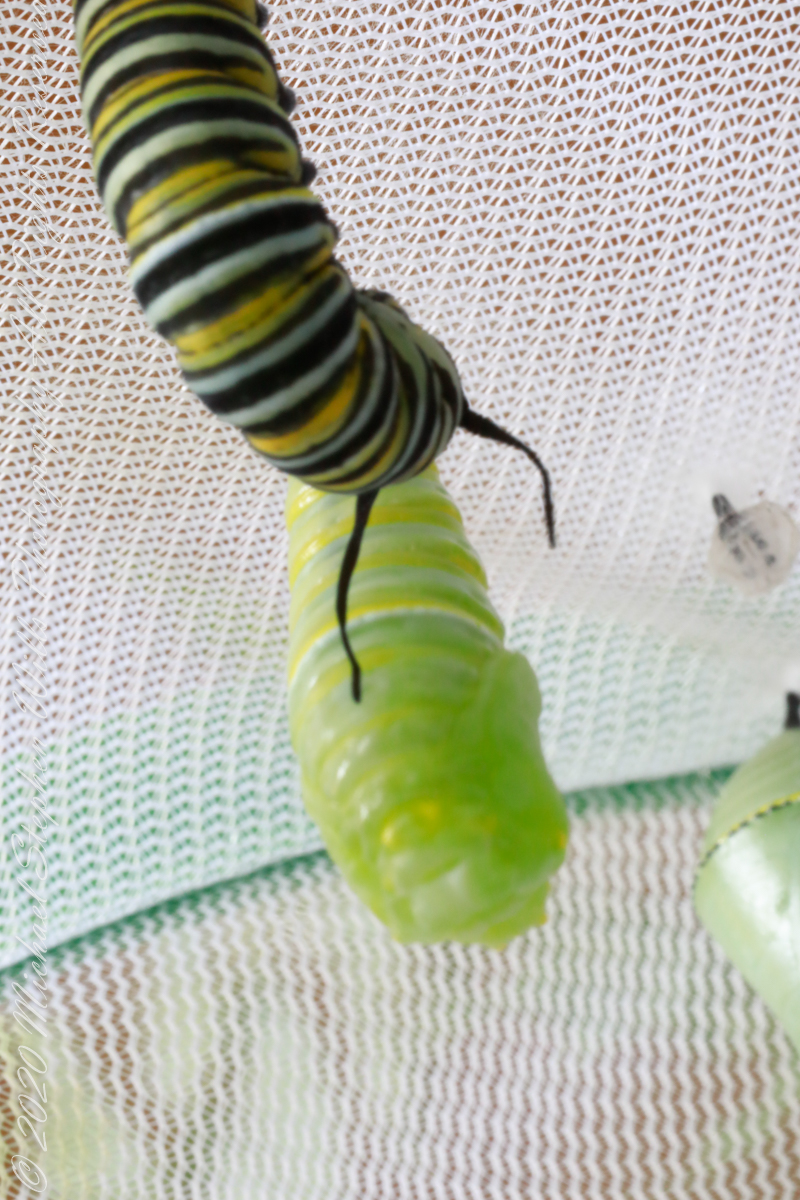
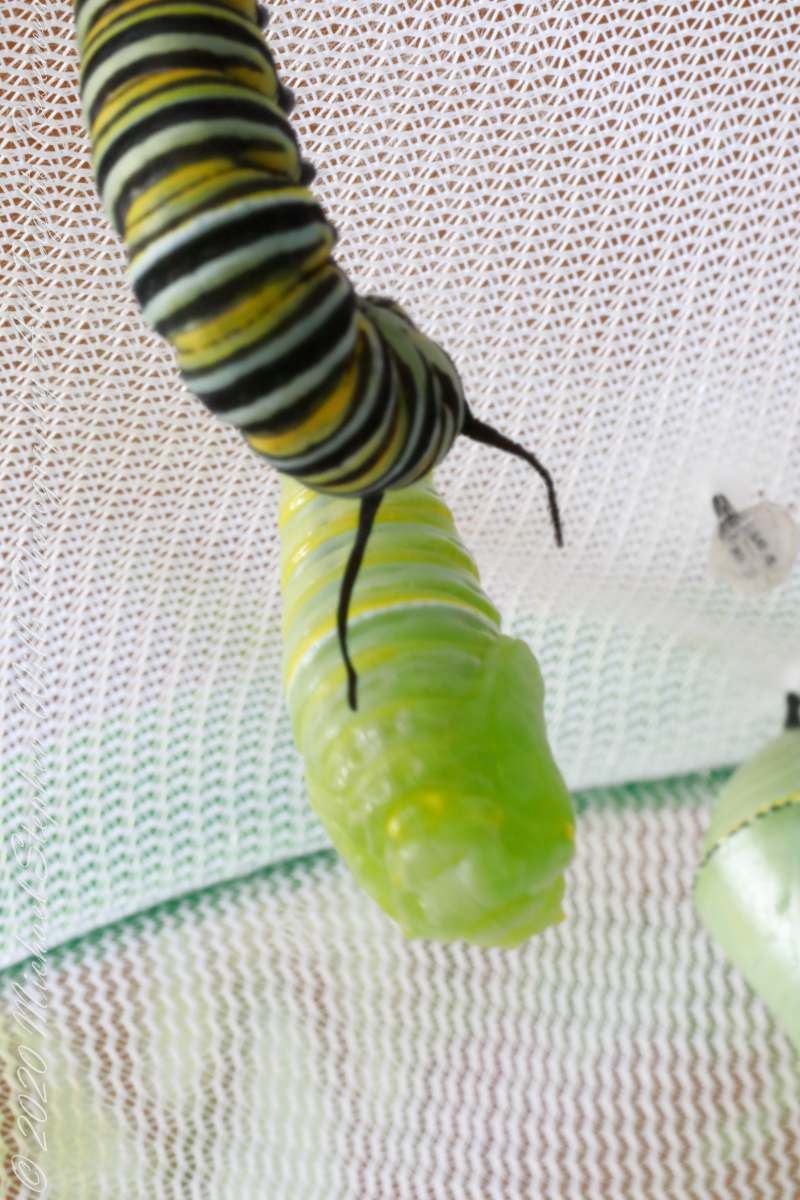
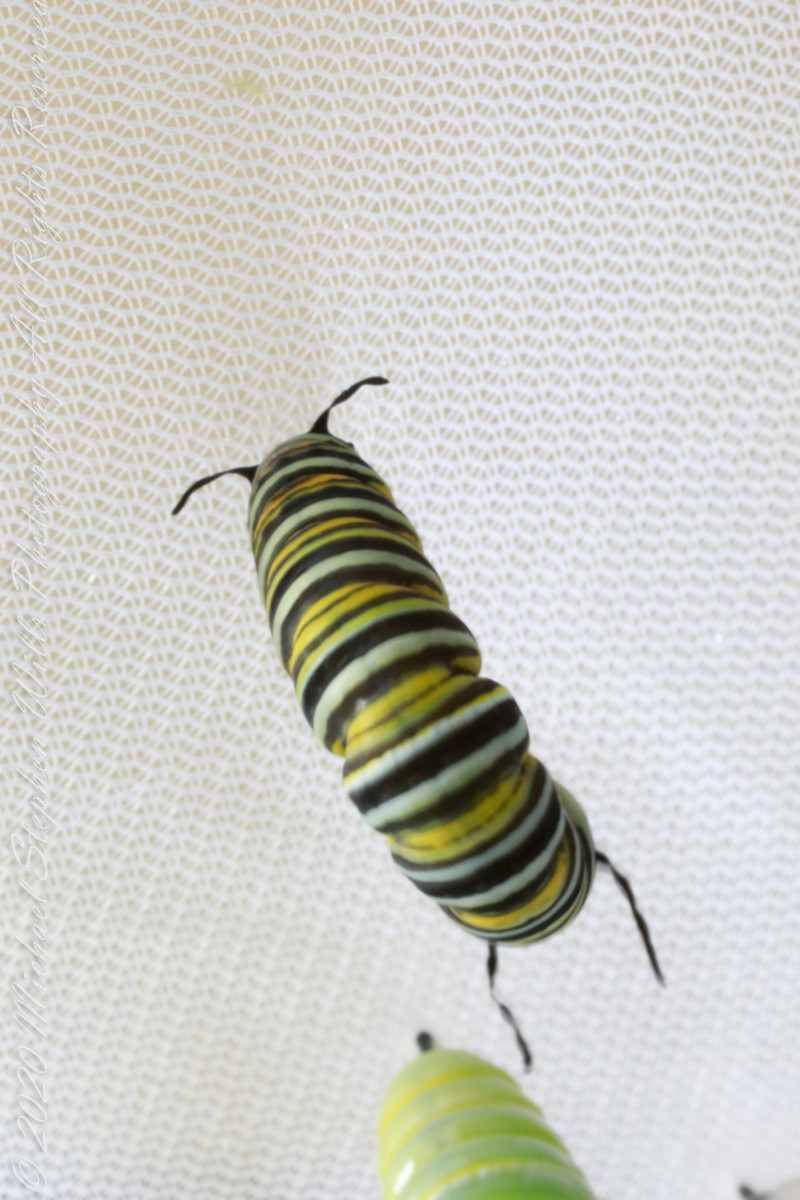
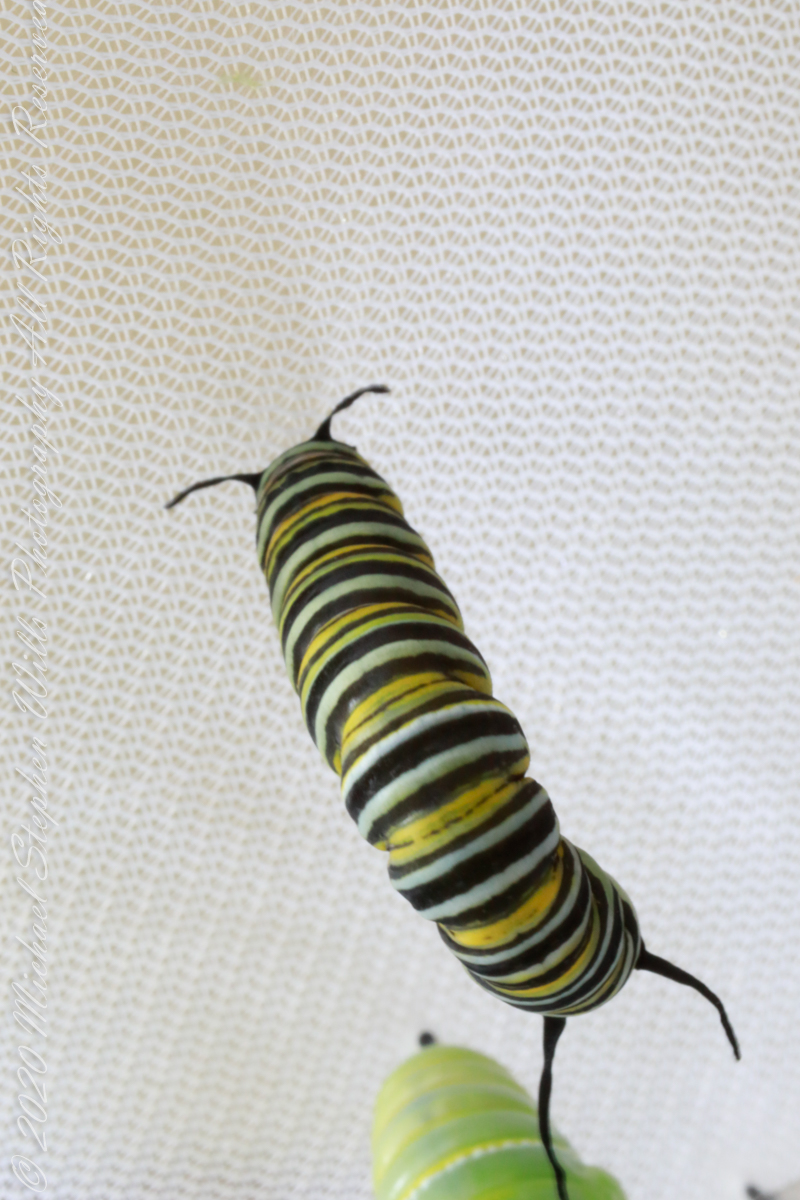
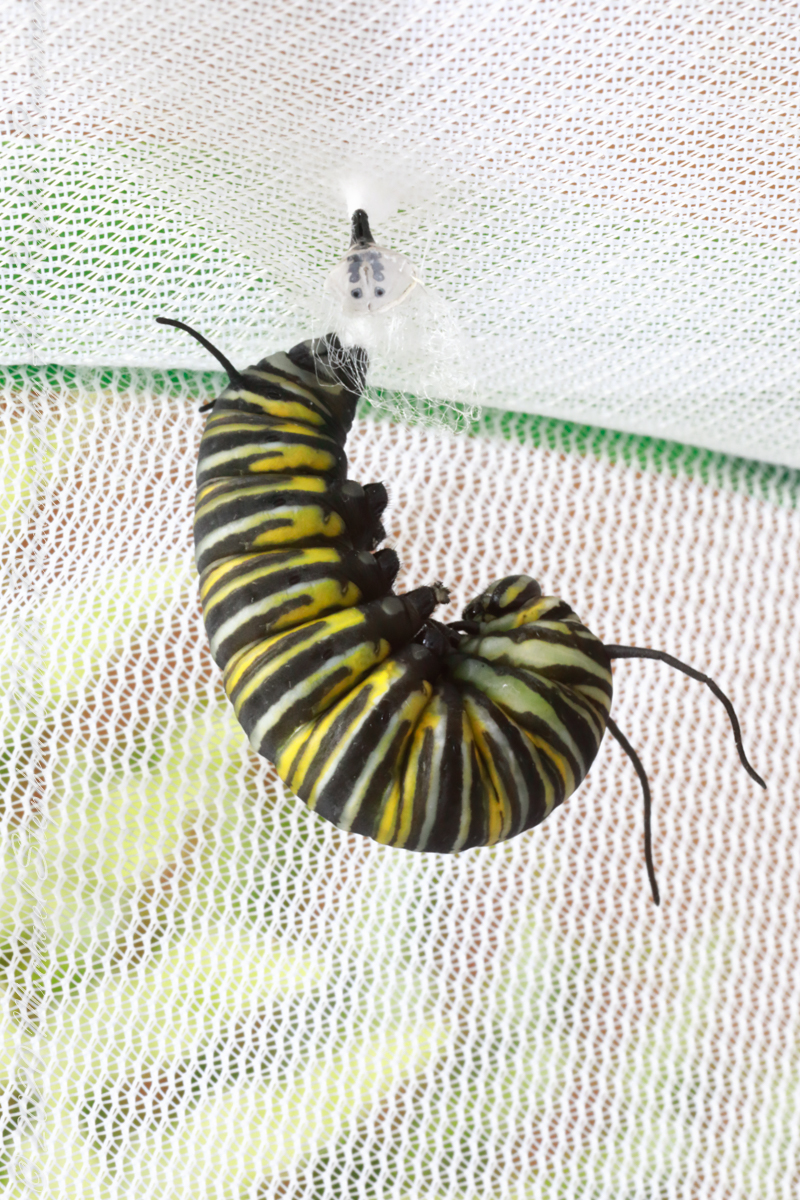
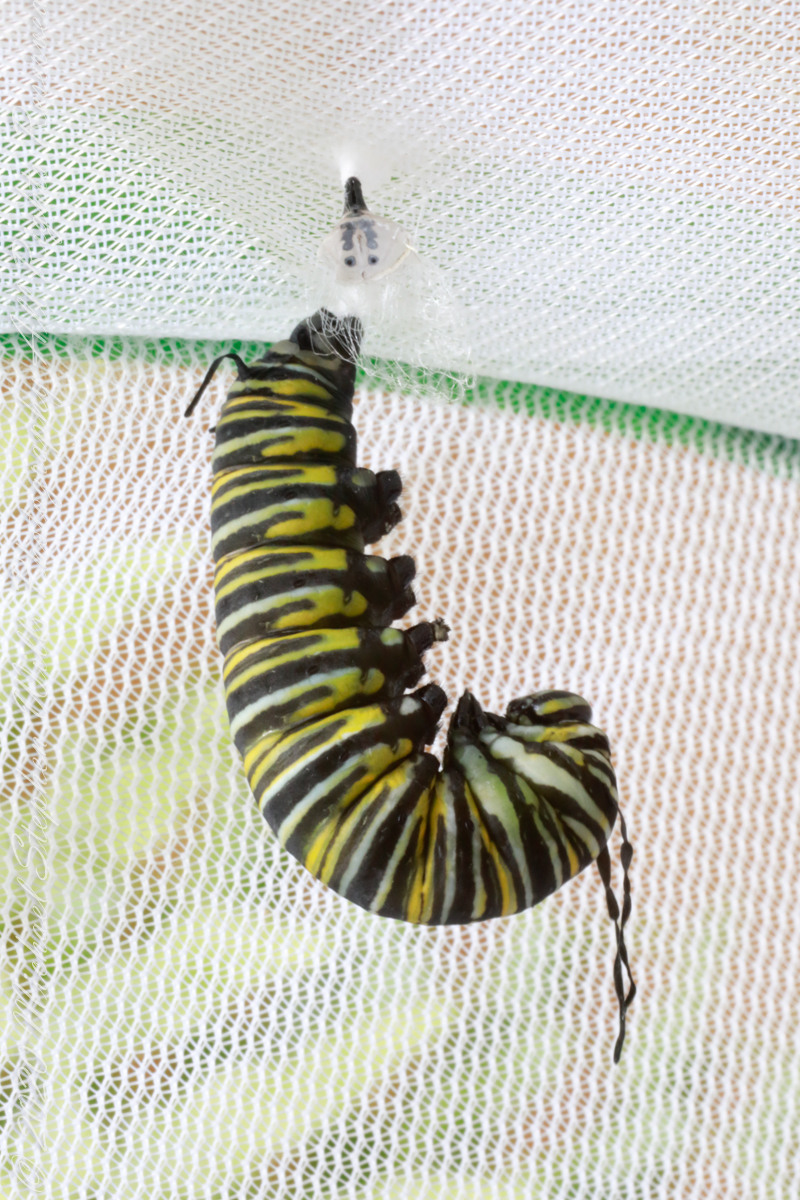
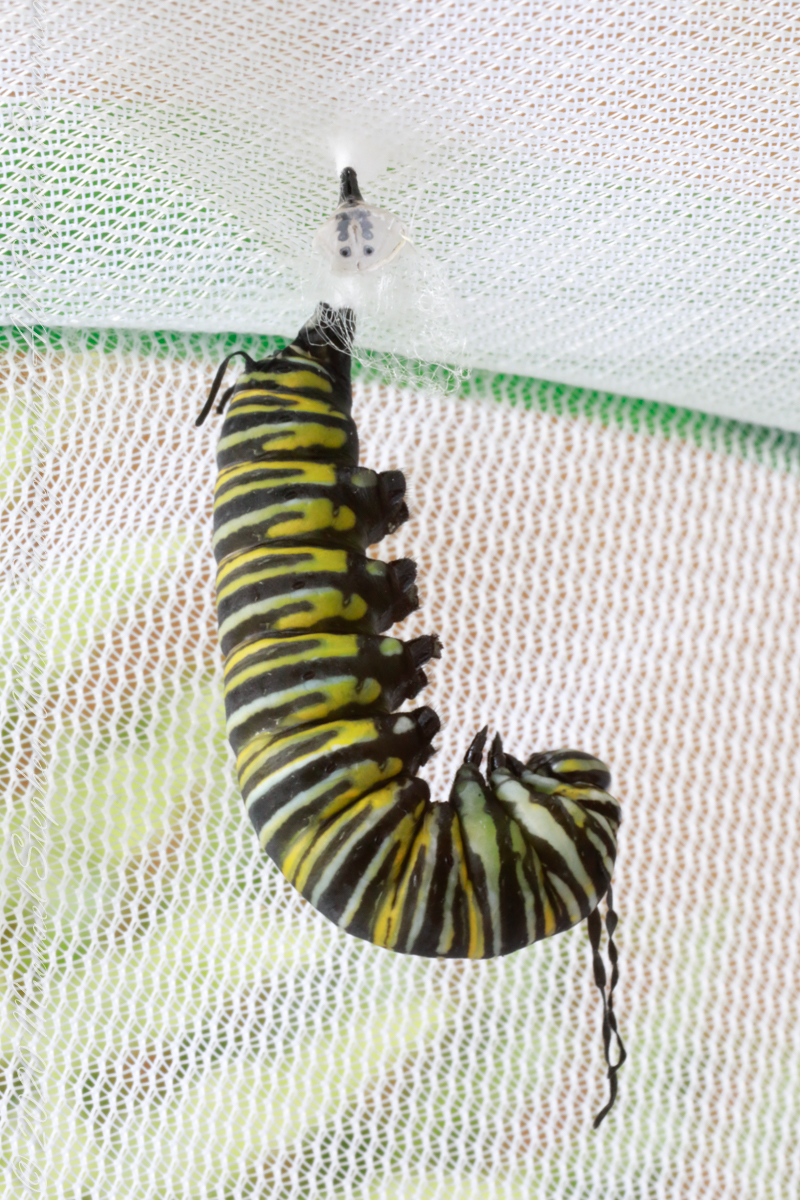
In my last series of “Monarch caterpillar transforming to chrysalis” time lapse photographs, the 30-minute time interval missed the moult. For this series, I set the Canon EOS 5D Mark IV to remote from a IPhone 7, tethering me to hanging around the house for an afternoon of waiting for the magic moment of “transformation” (more accurately called “the moult”), thinking through the nature of the moment.
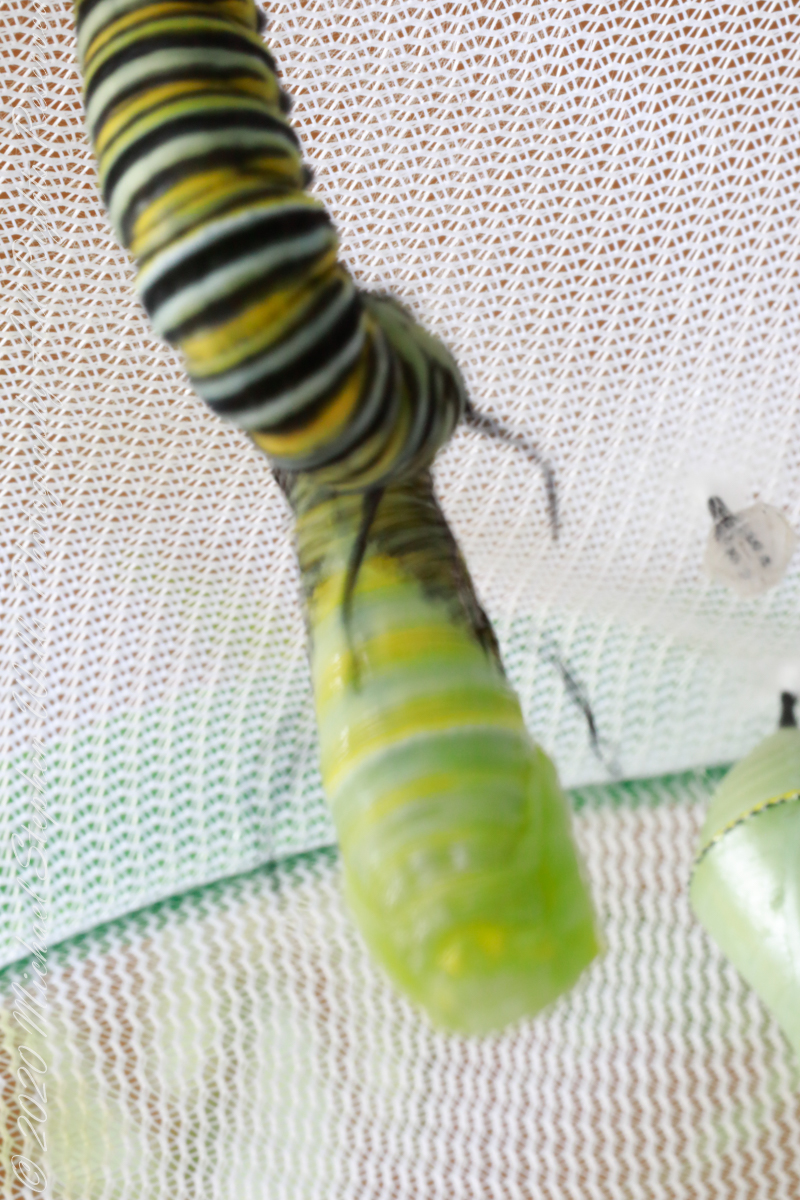
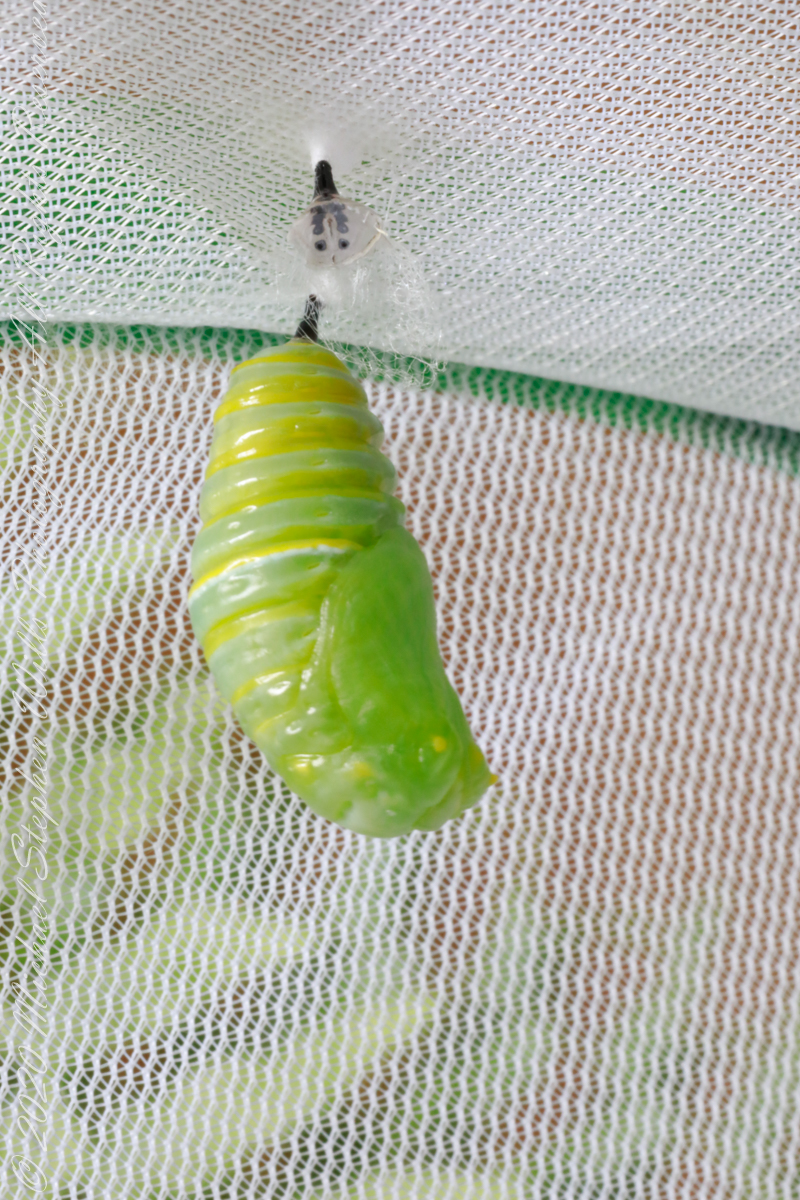
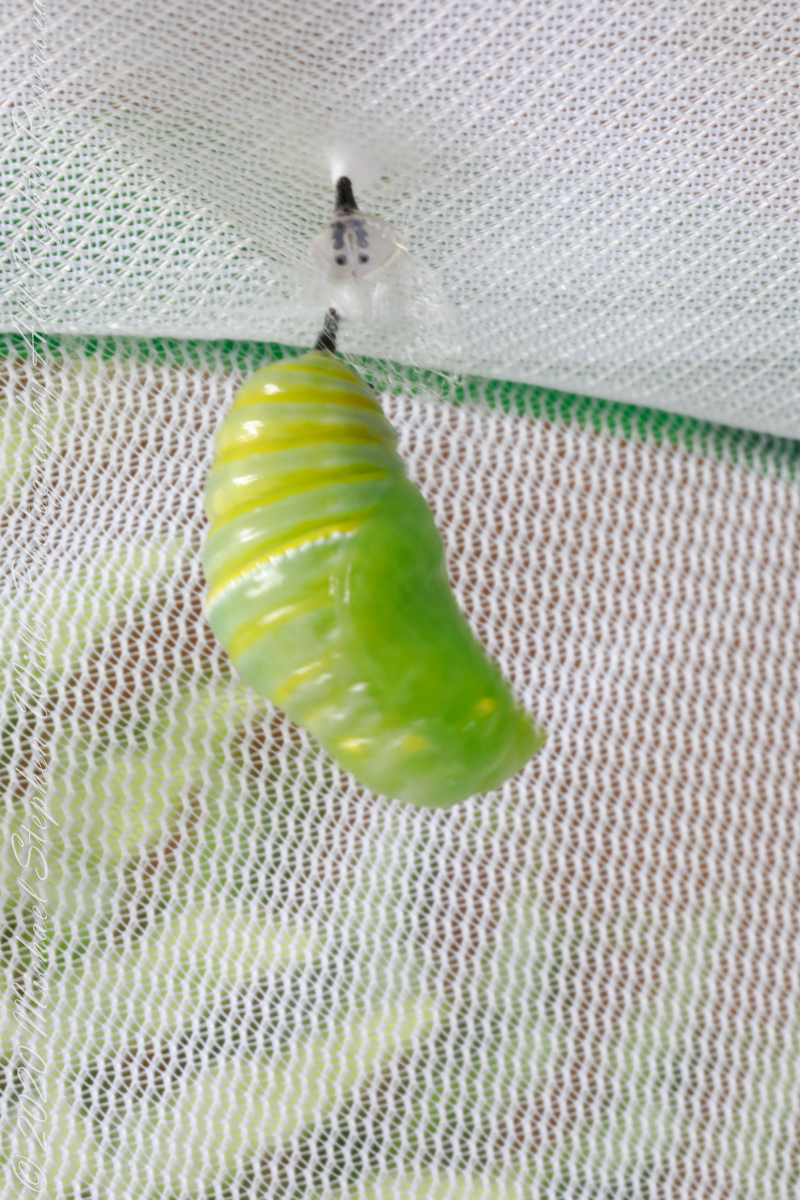
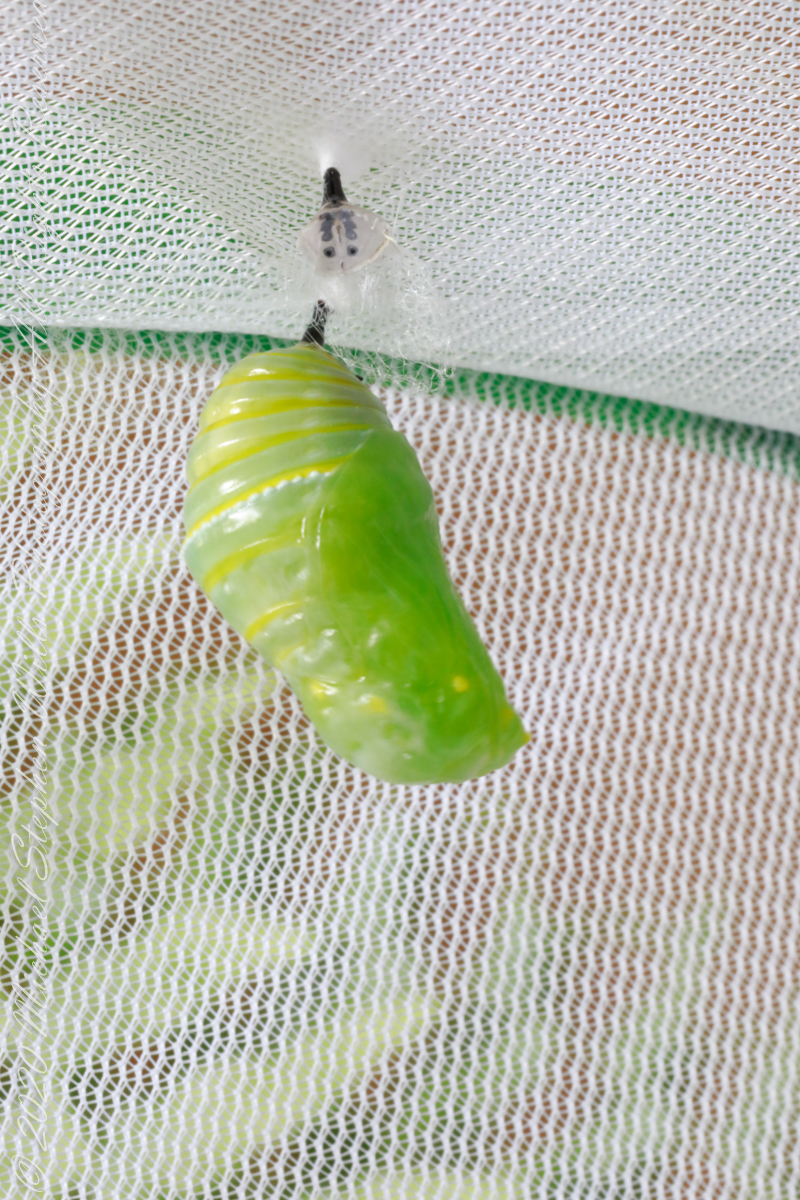
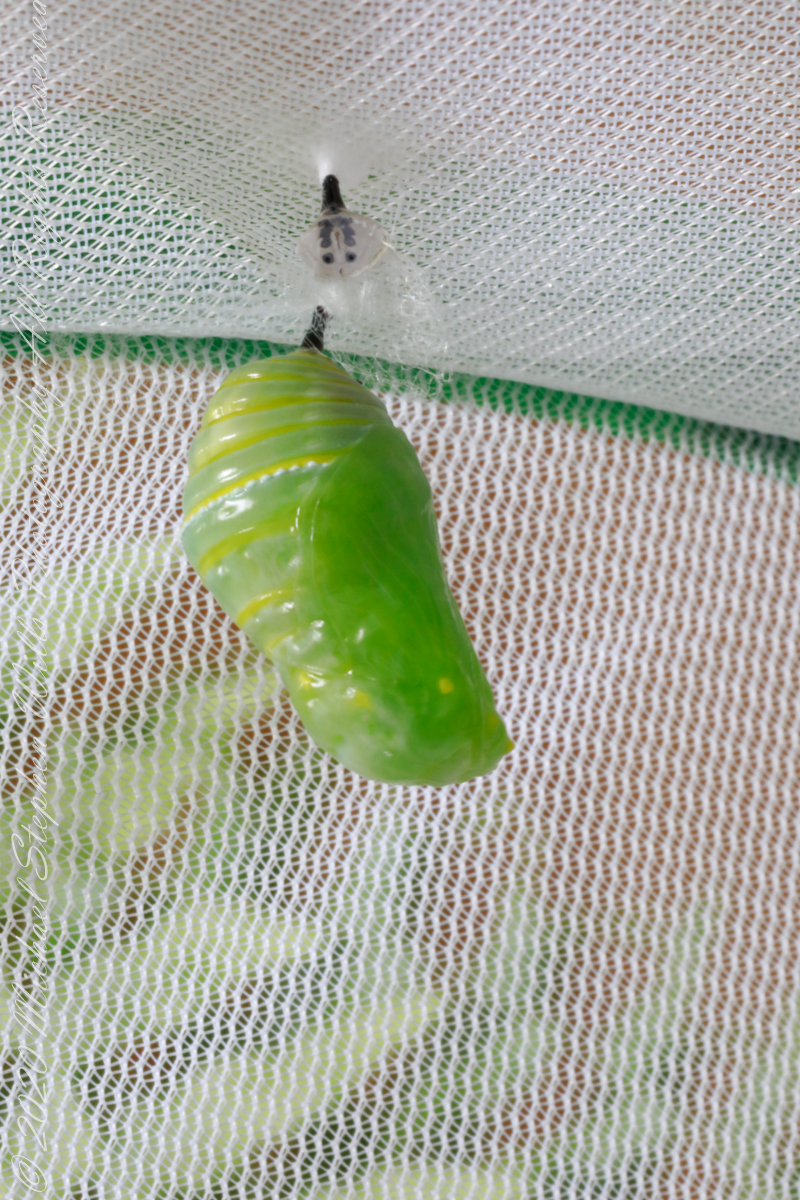
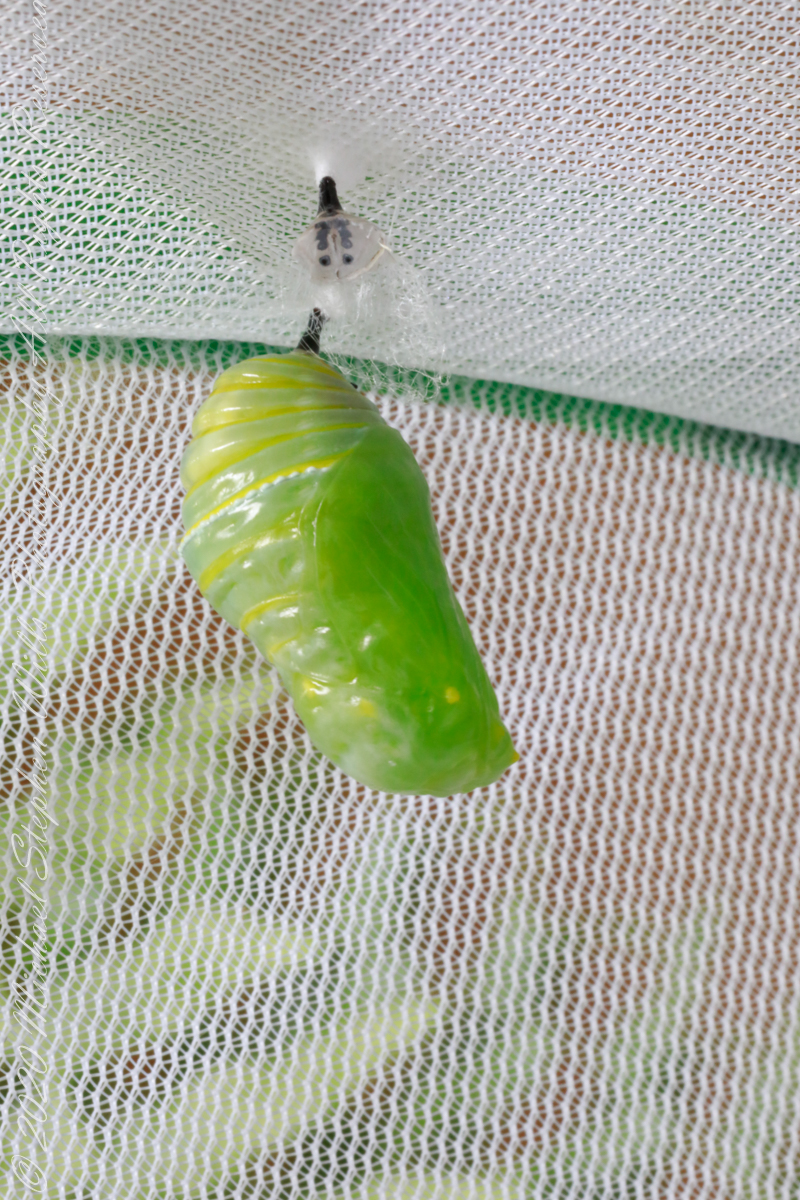
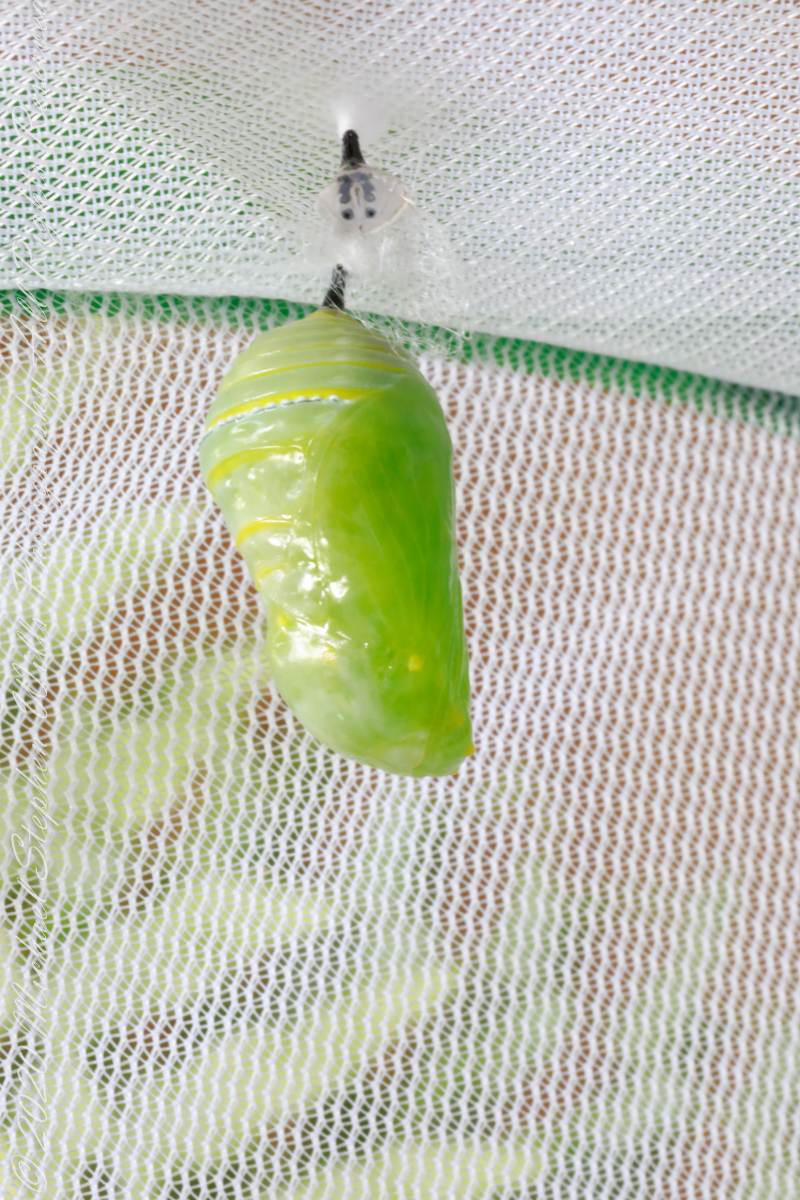
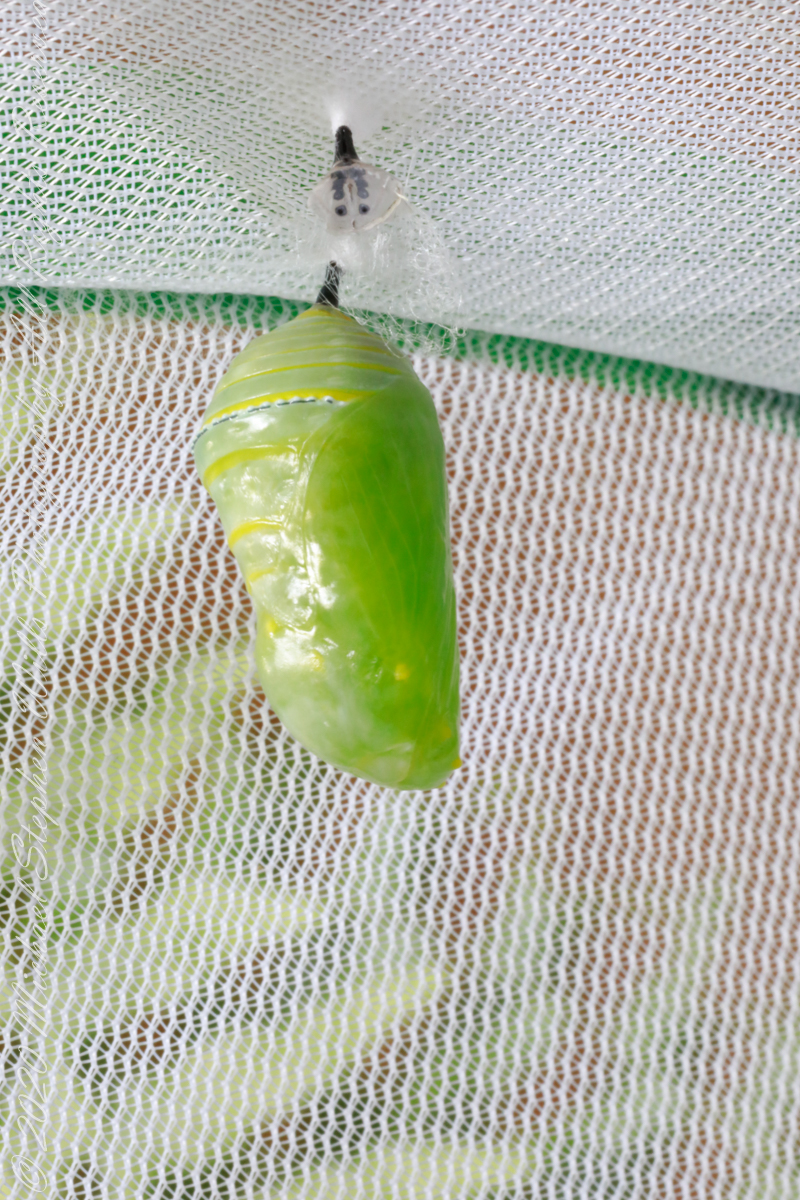
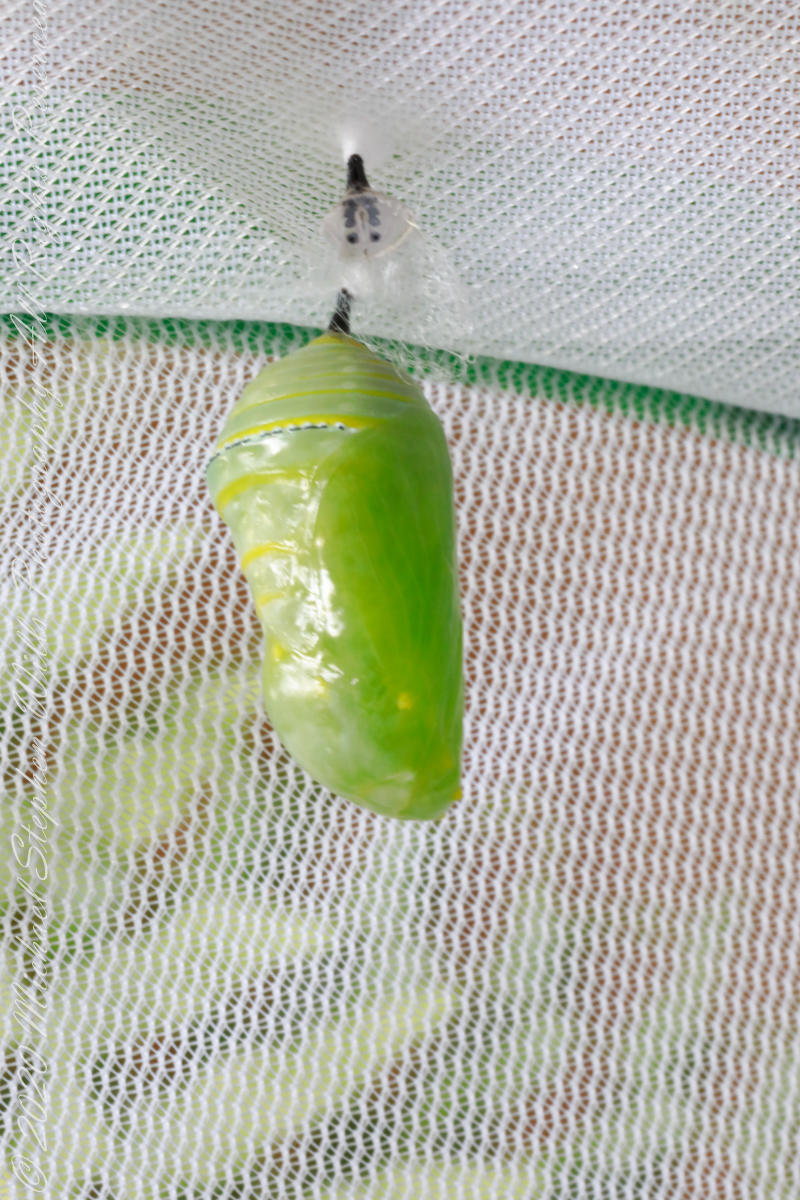
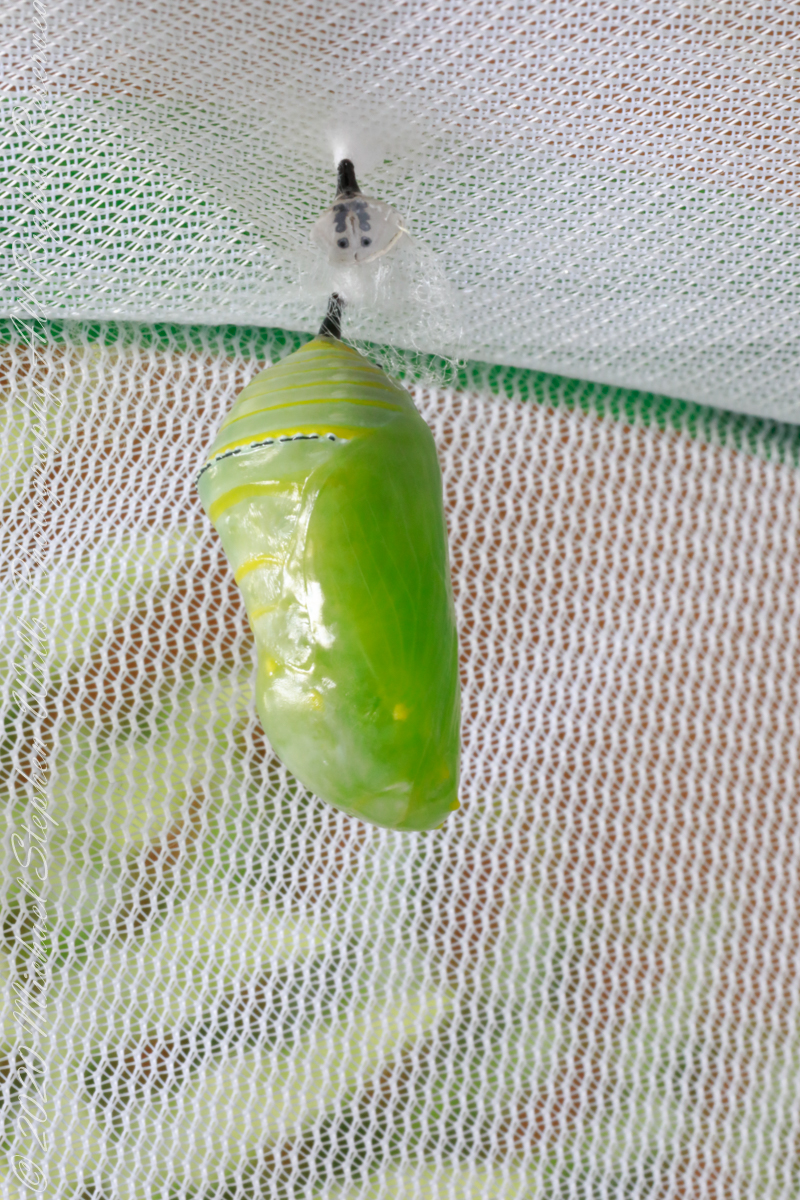
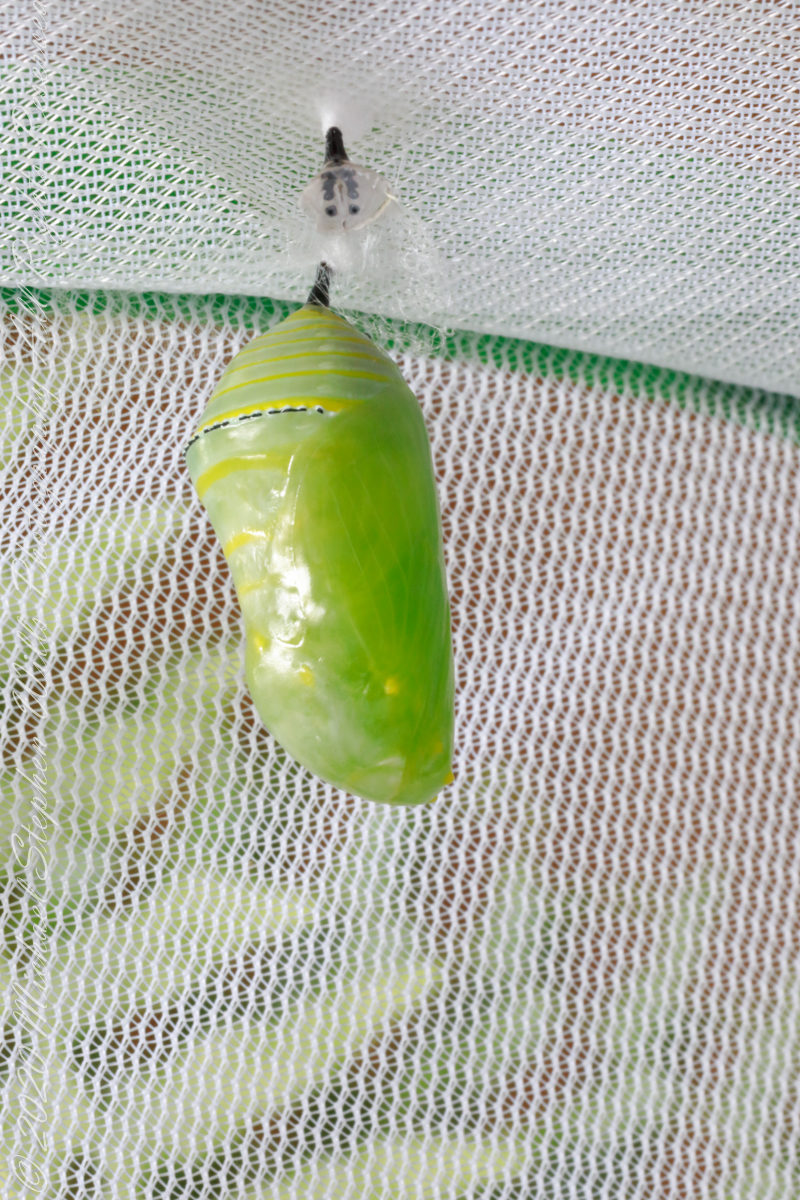
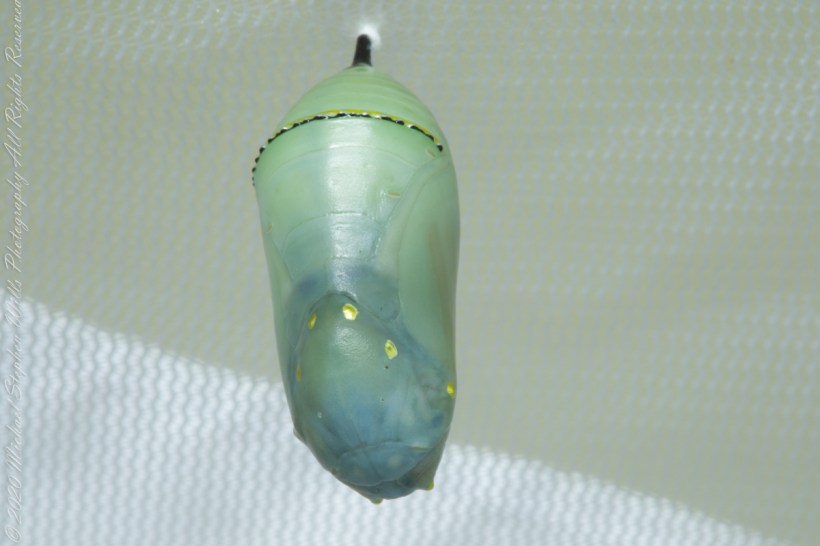
A monarch caterpillar accomplishes seven body transformations shielded from view. Six within its skin: the first five retaining a caterpillar body configuration, the sixth transforming to chrysalis. For all six, an enveloping skin conceals the change. The same holds true for the seventh transformation. The chrysalis remains opaque green with bright gold spots until turning transparent after the transfiguration to butterfly is complete.
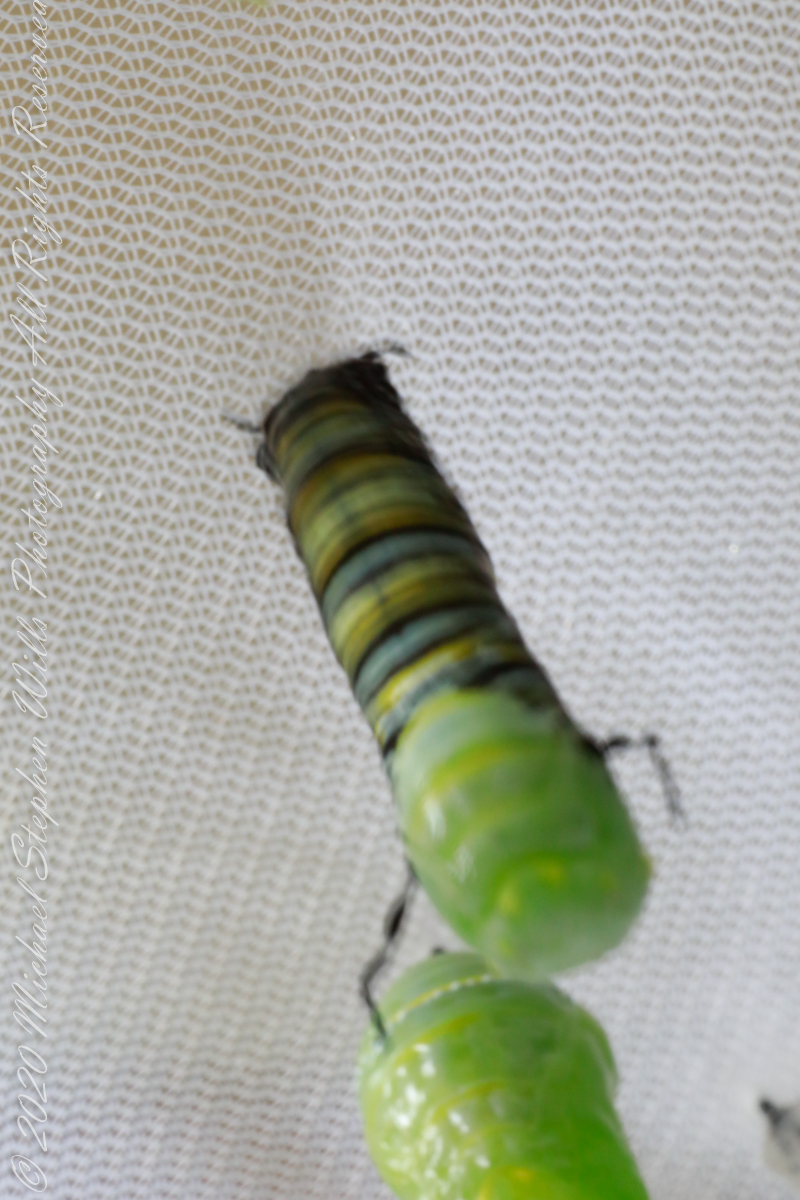
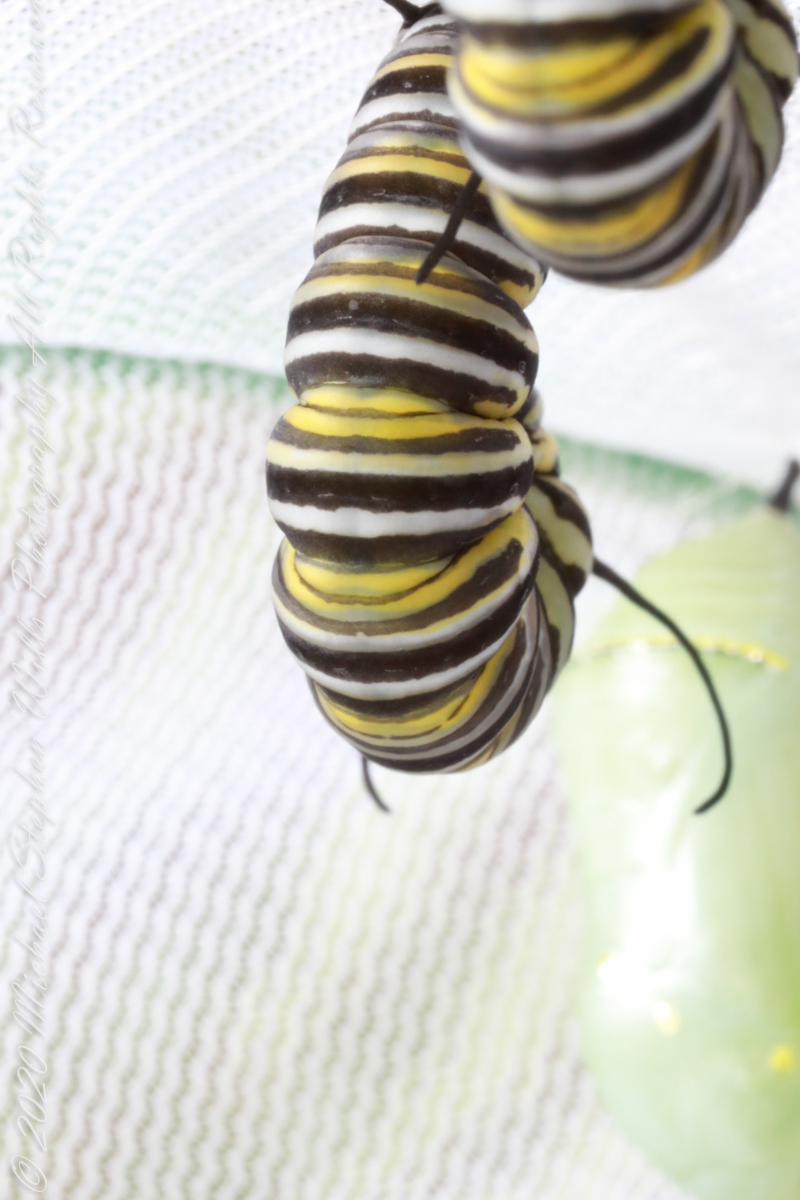
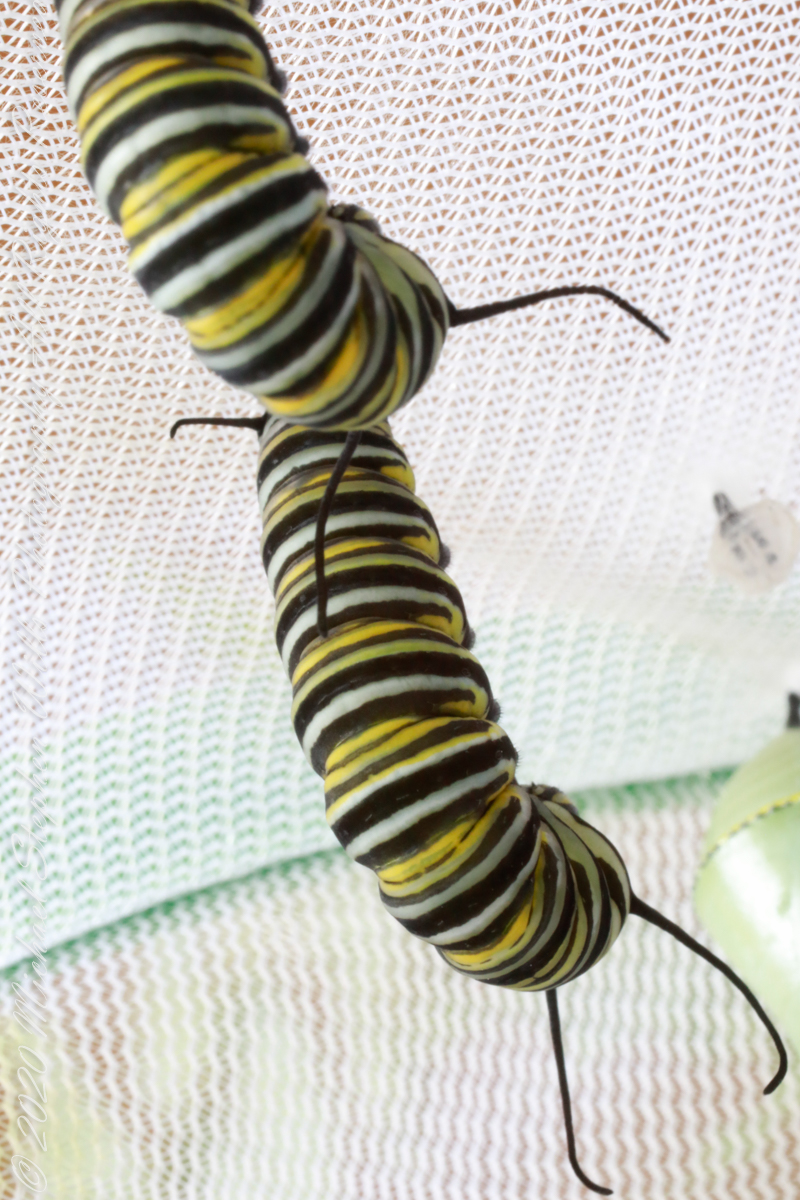
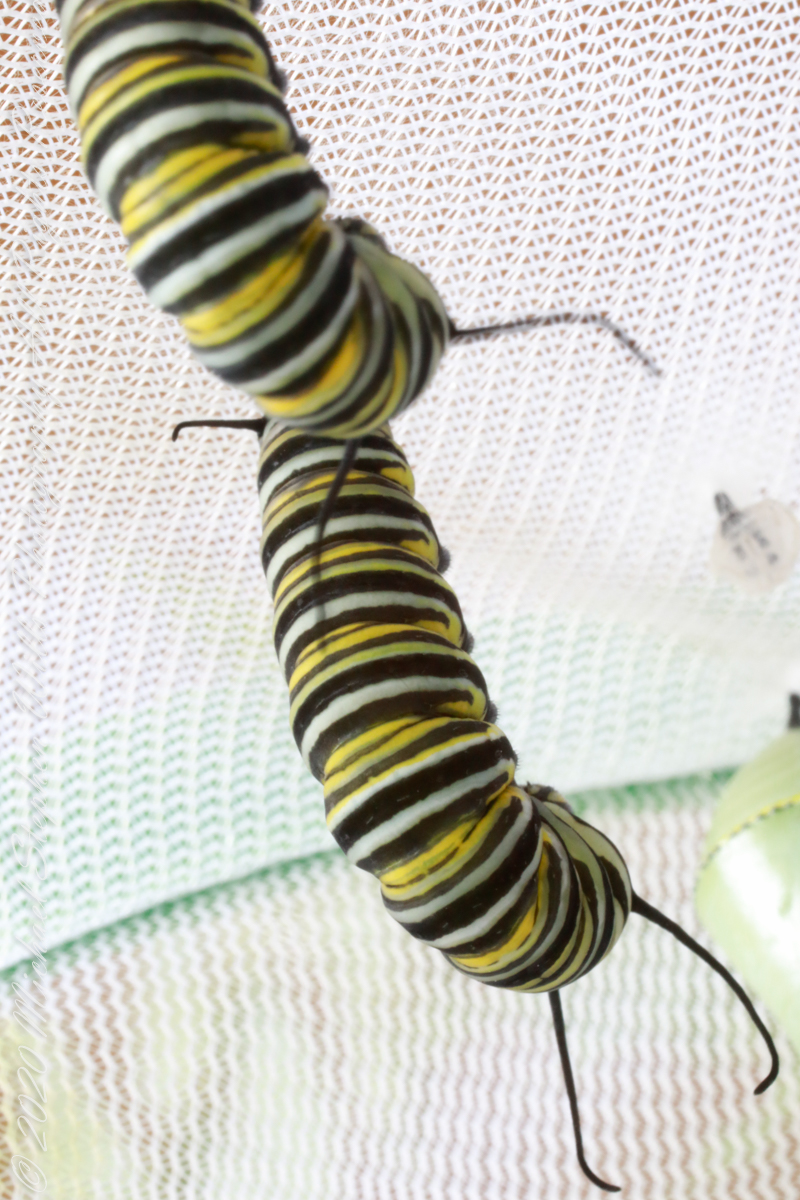
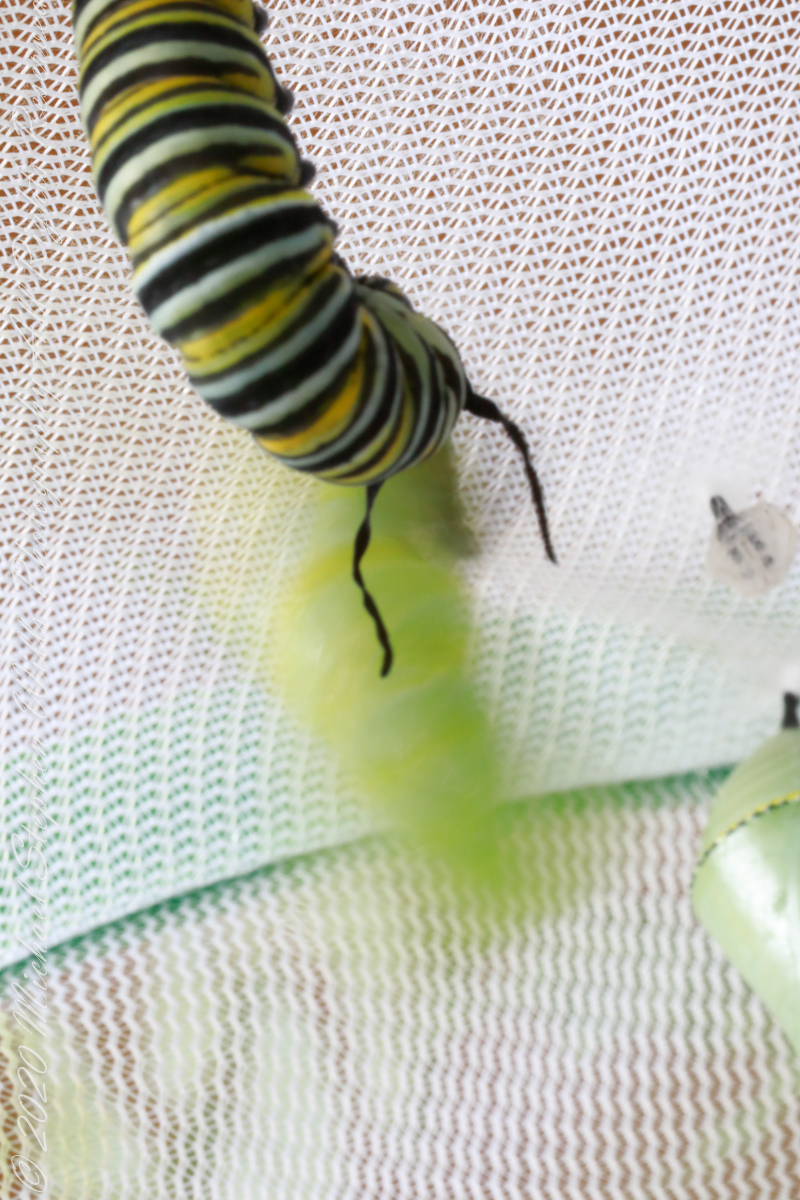
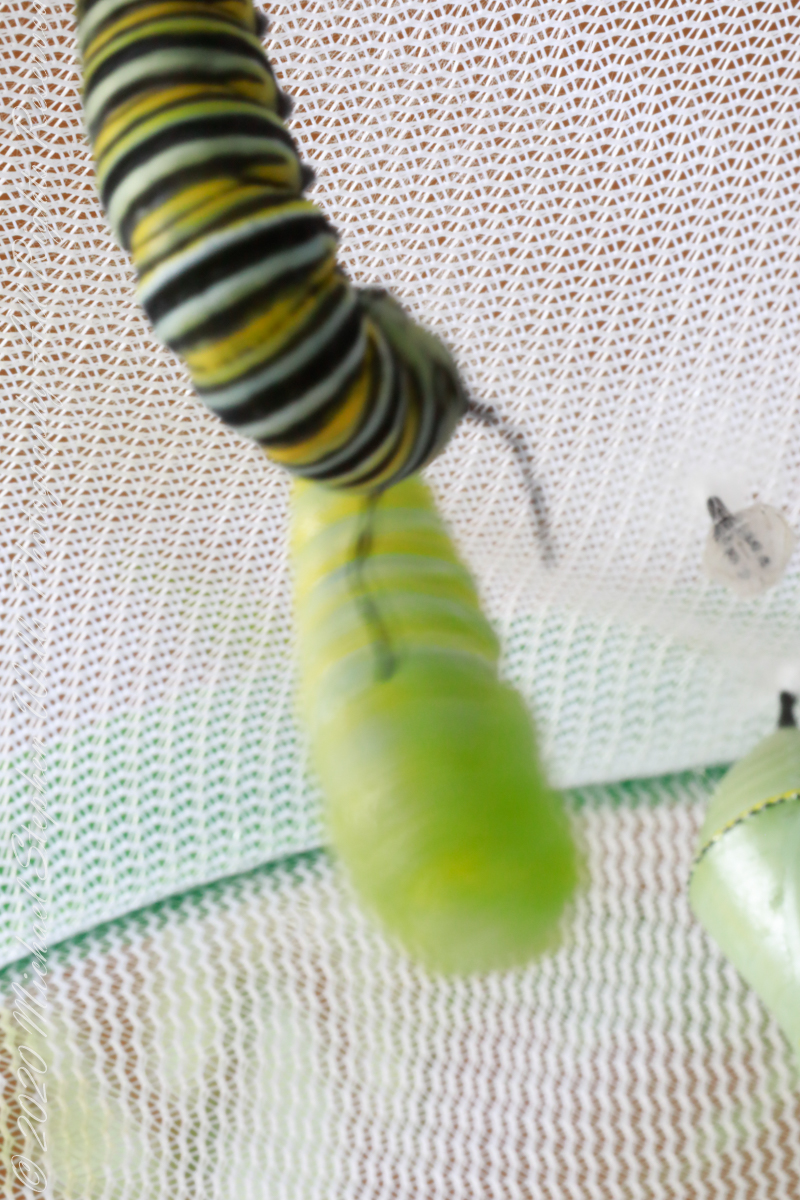
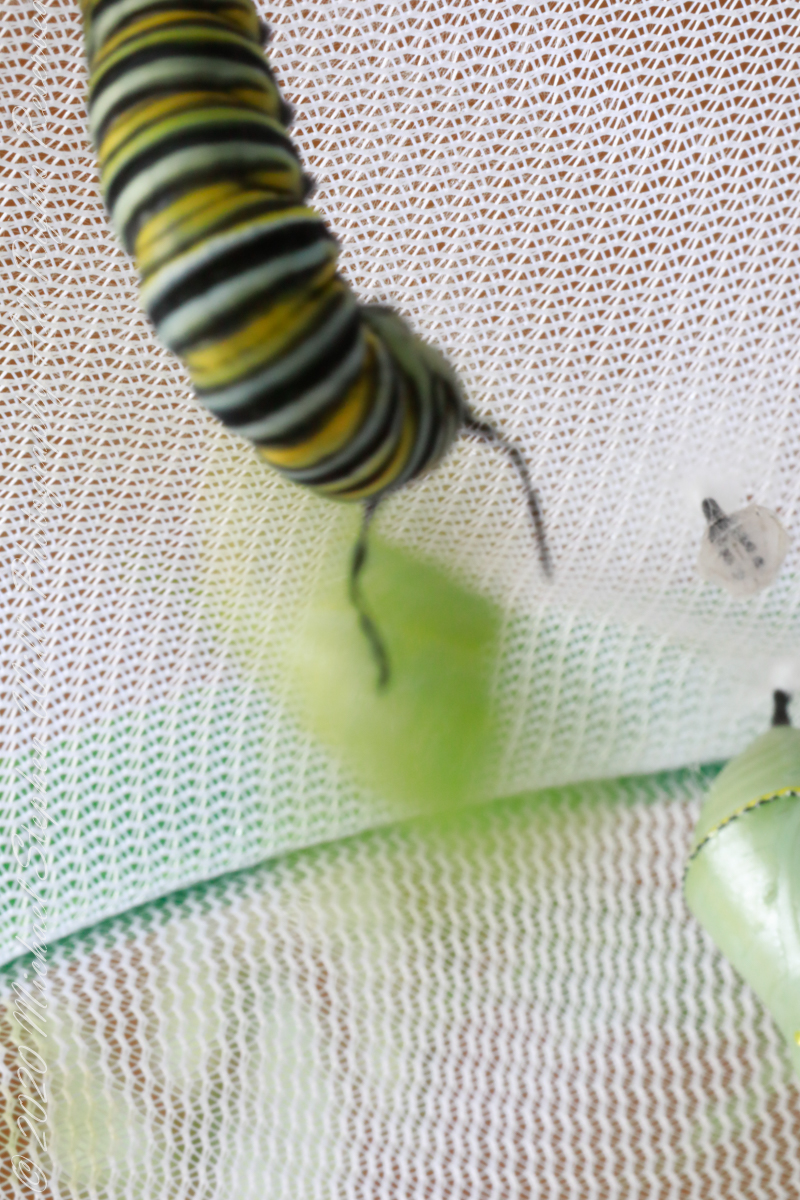
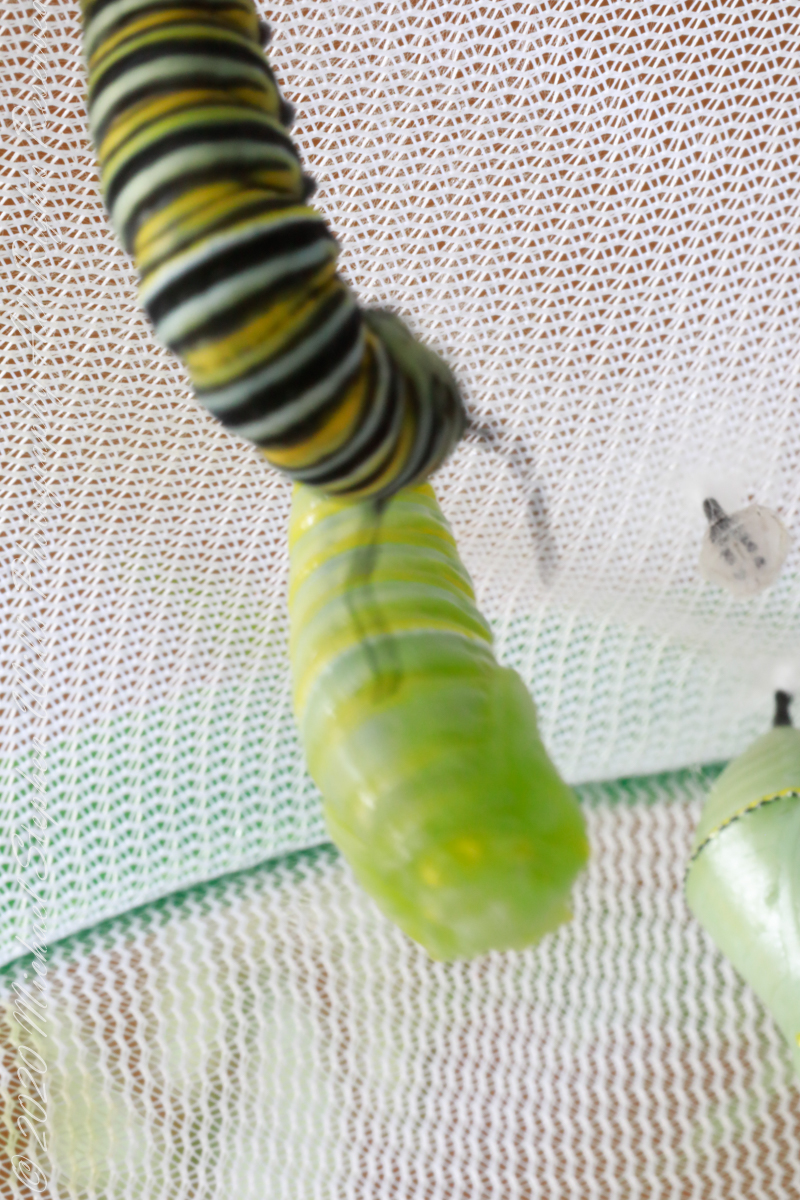
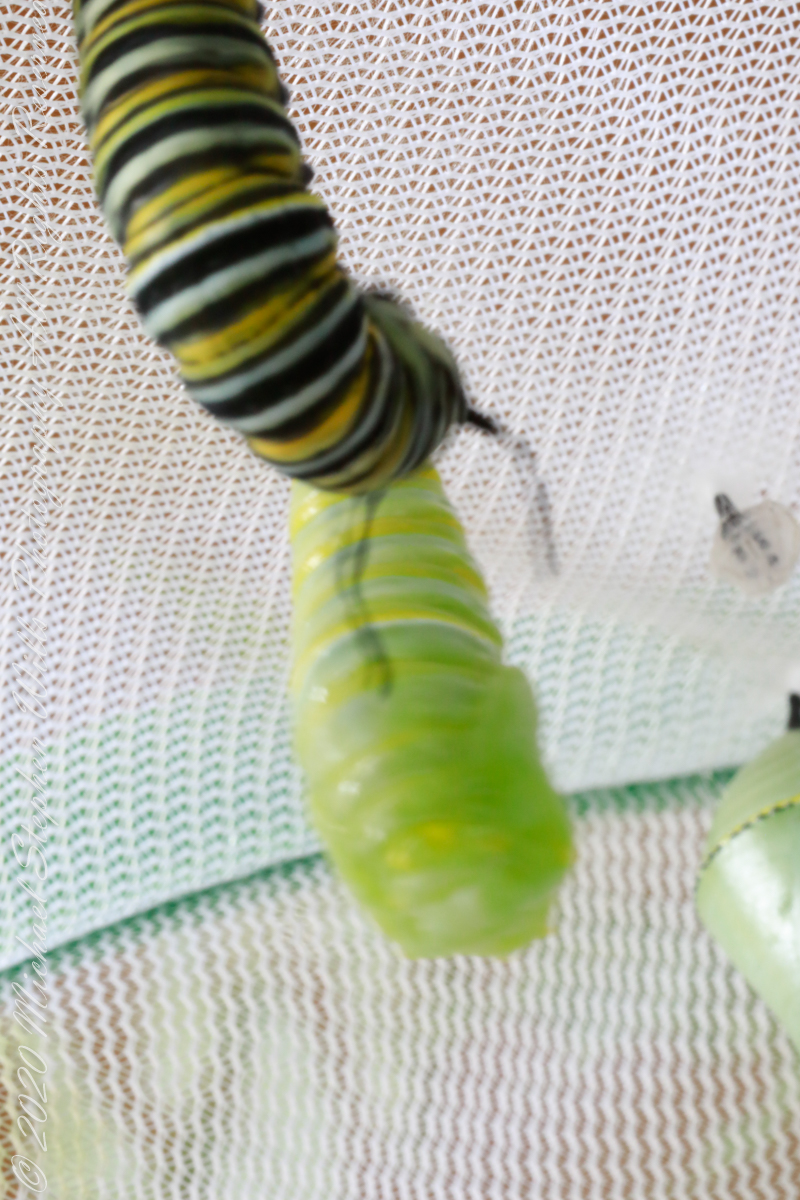
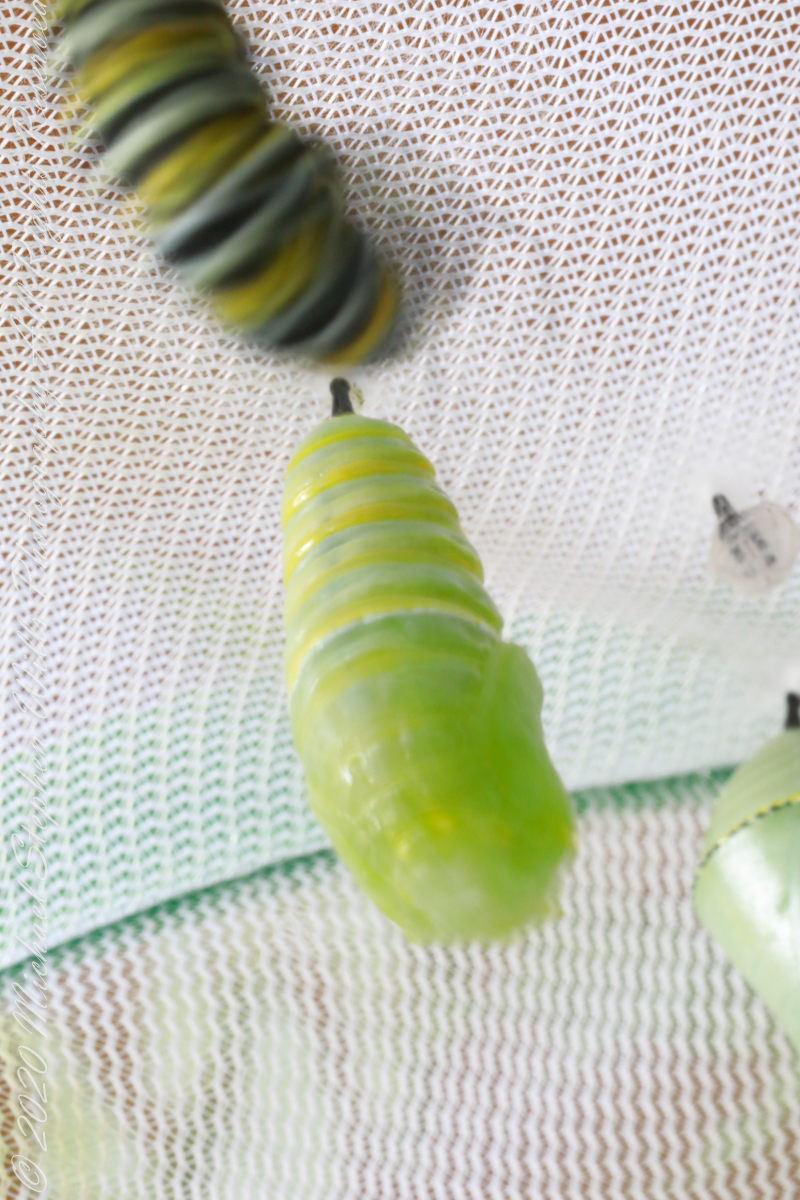
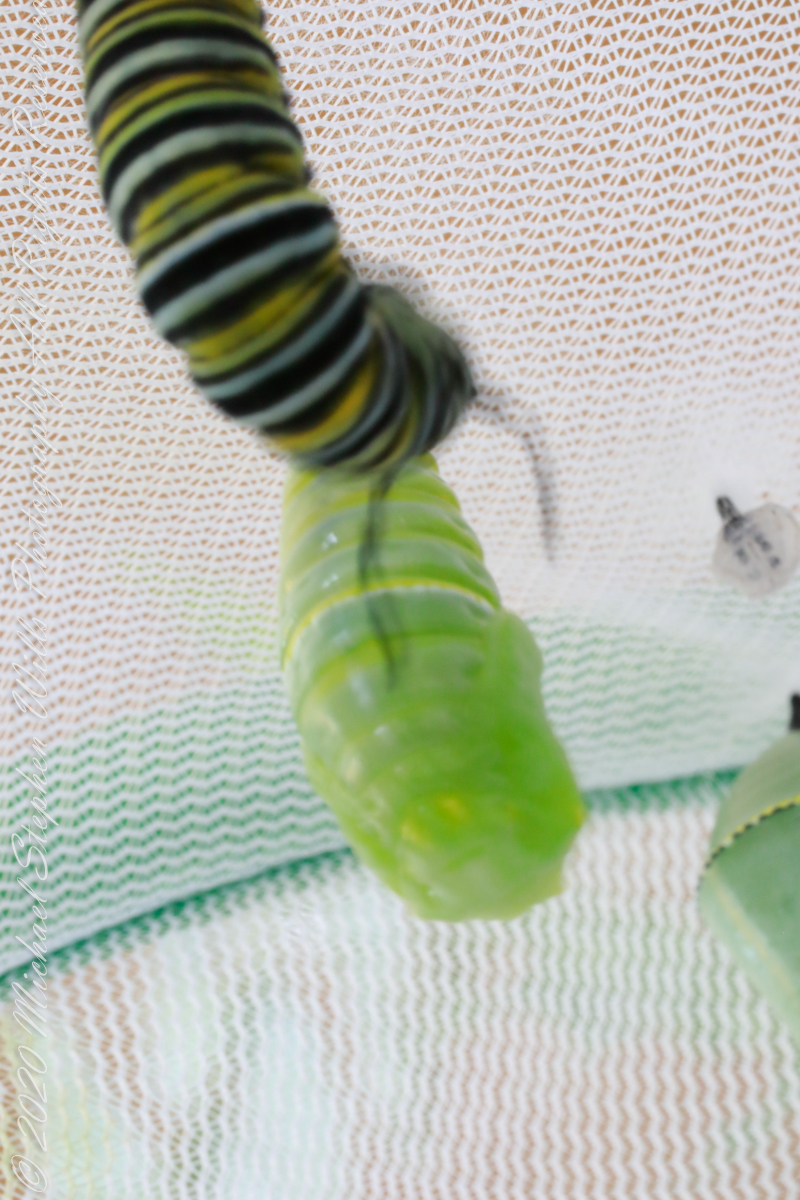
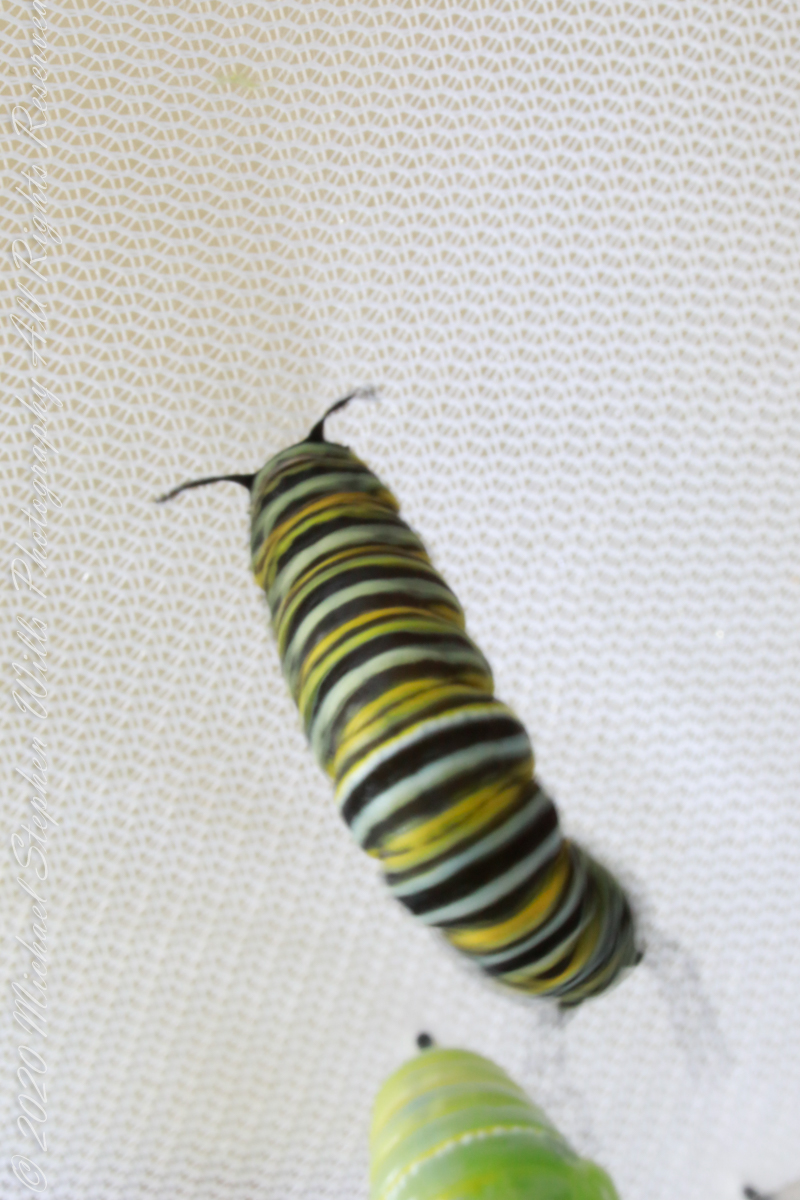
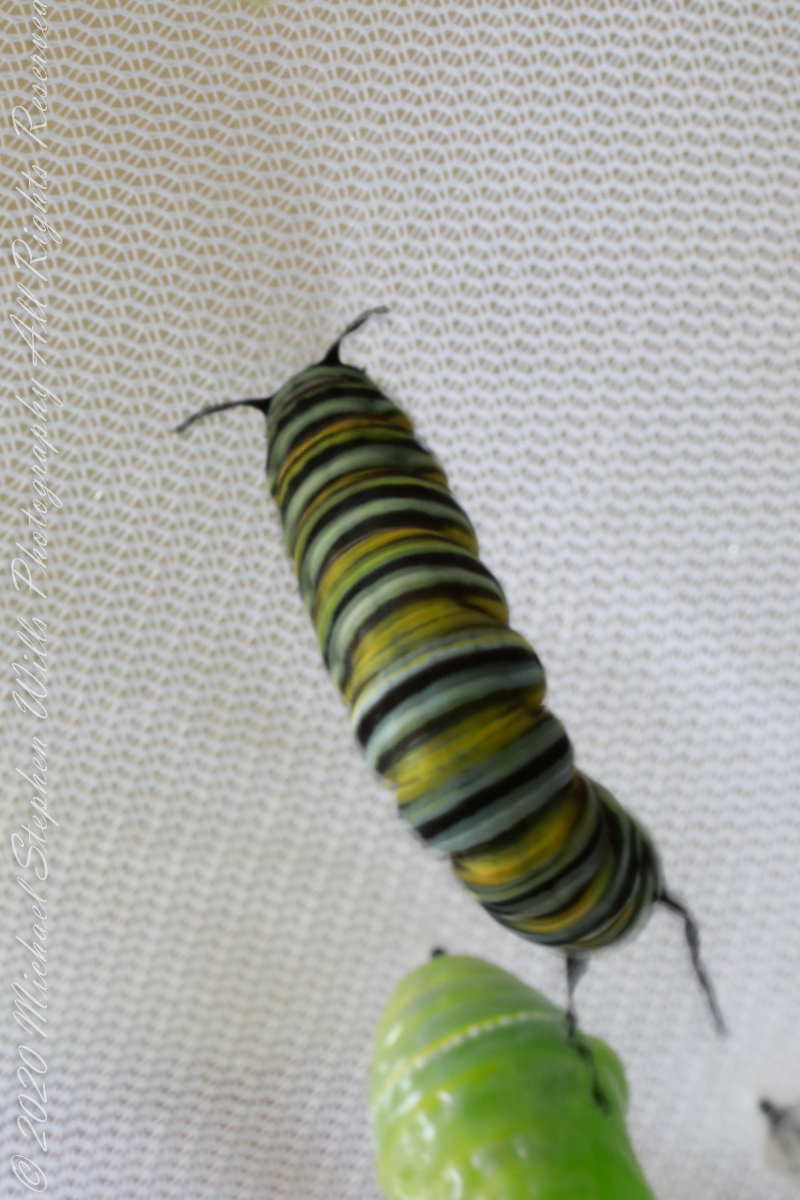
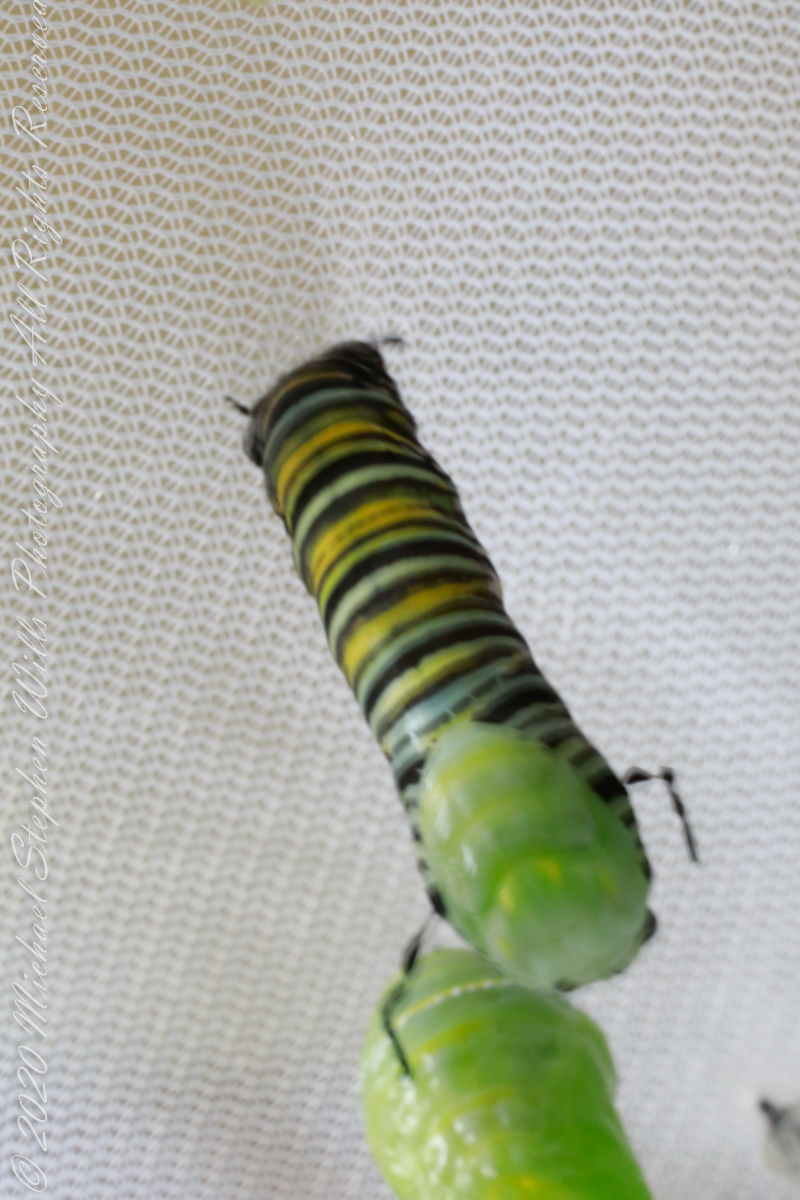
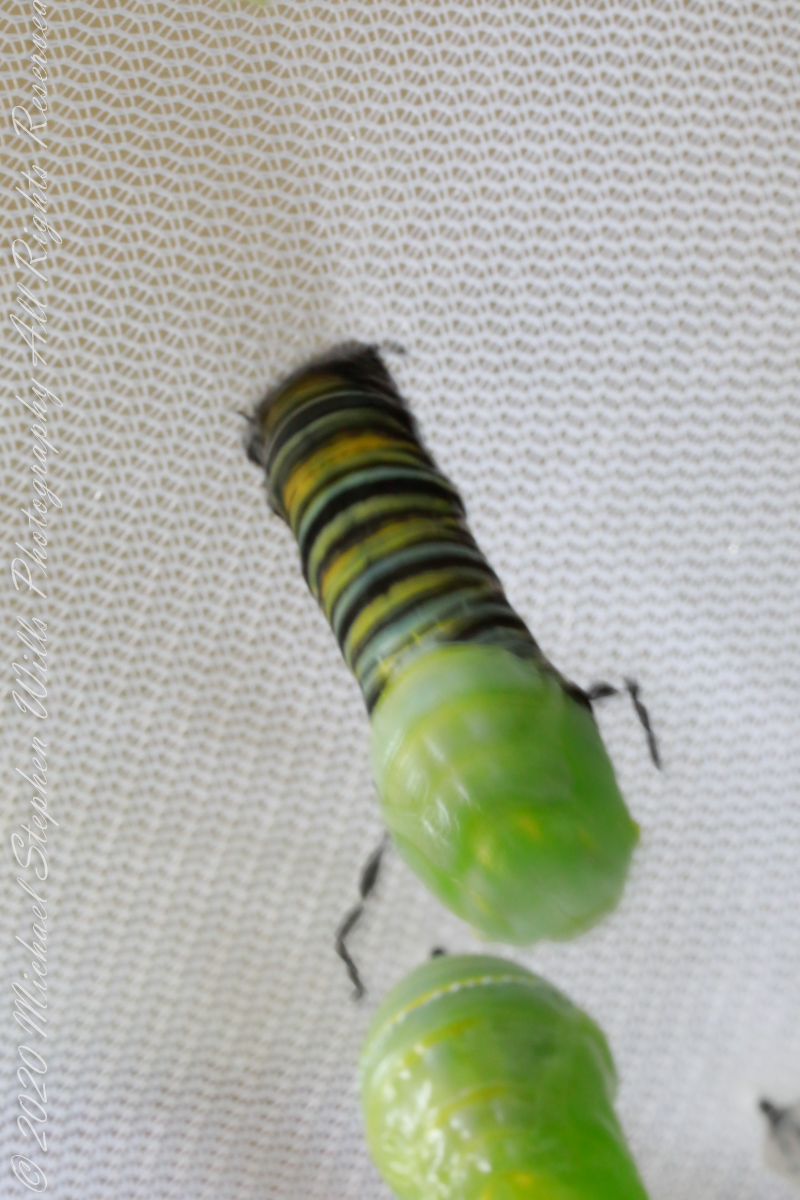
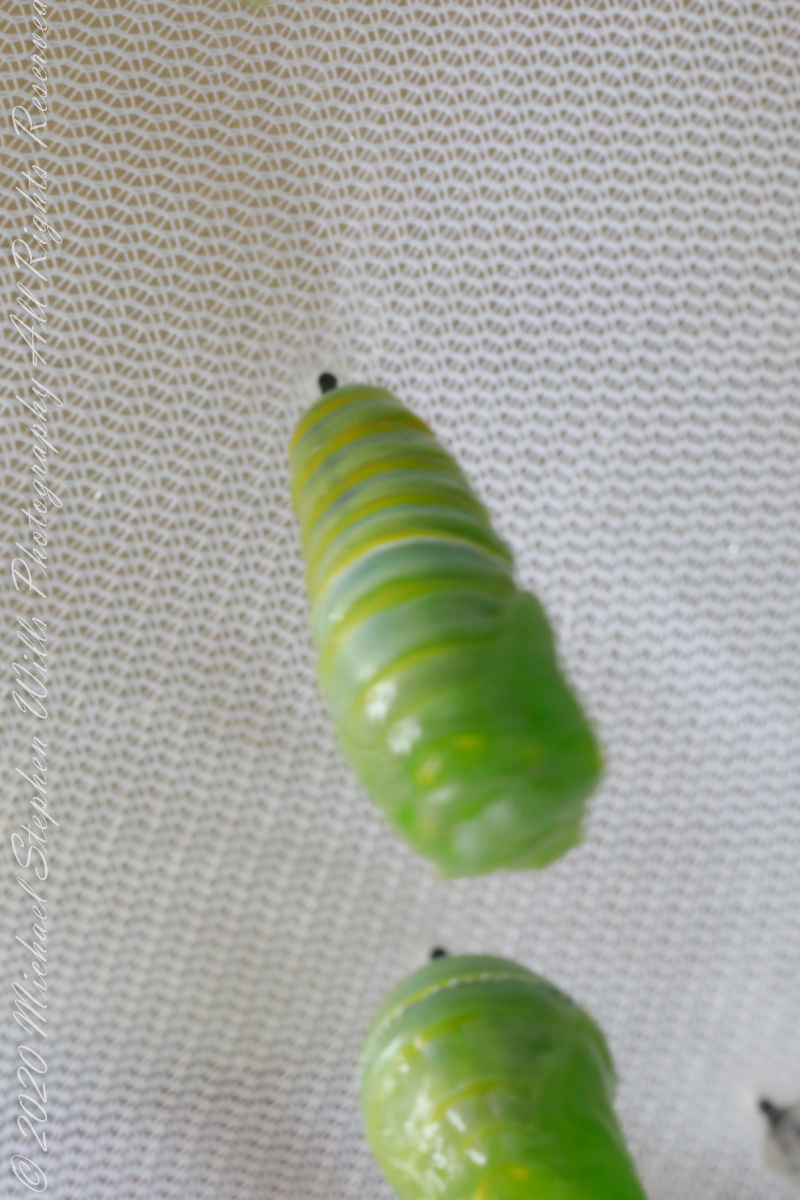
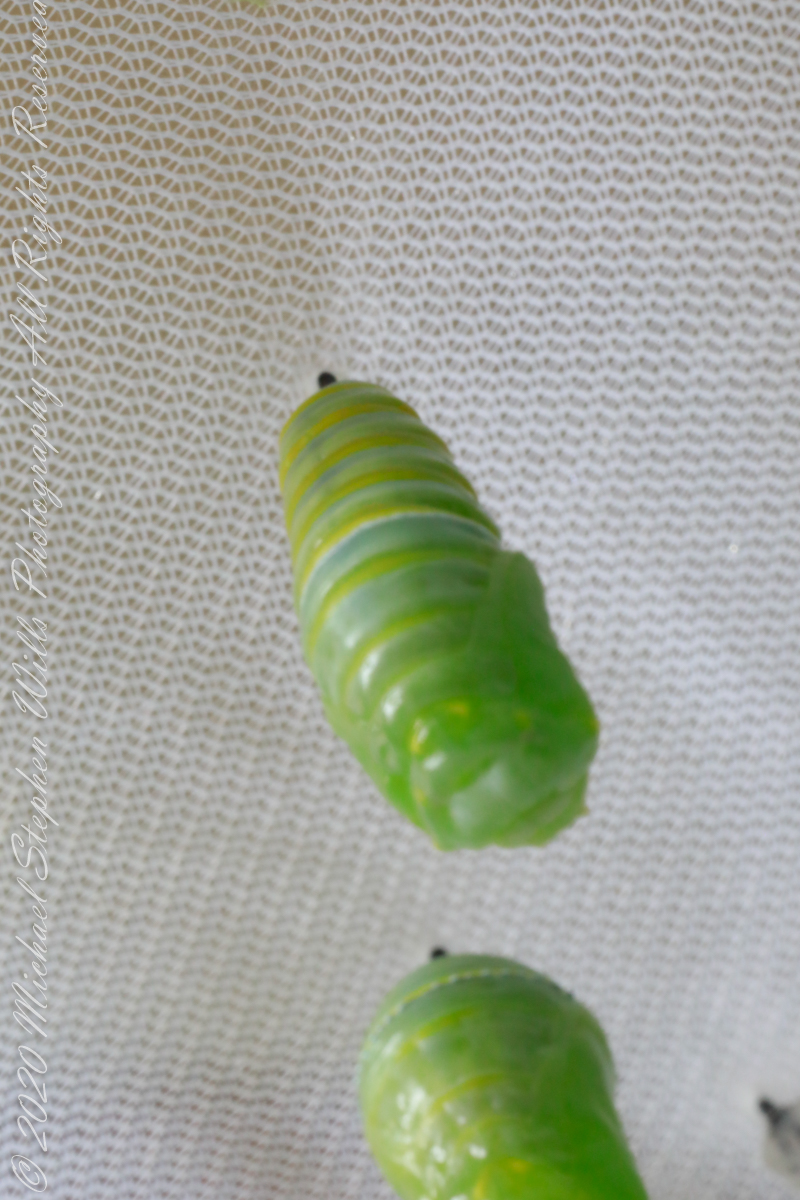
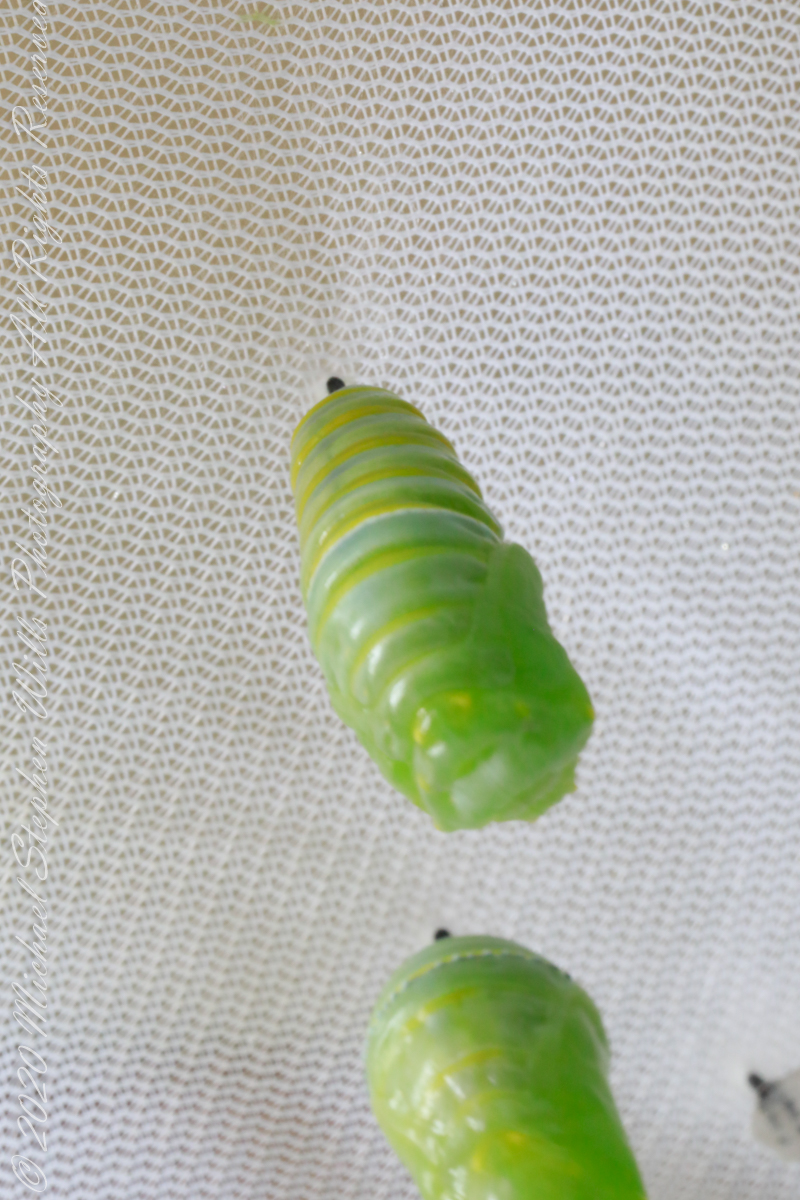
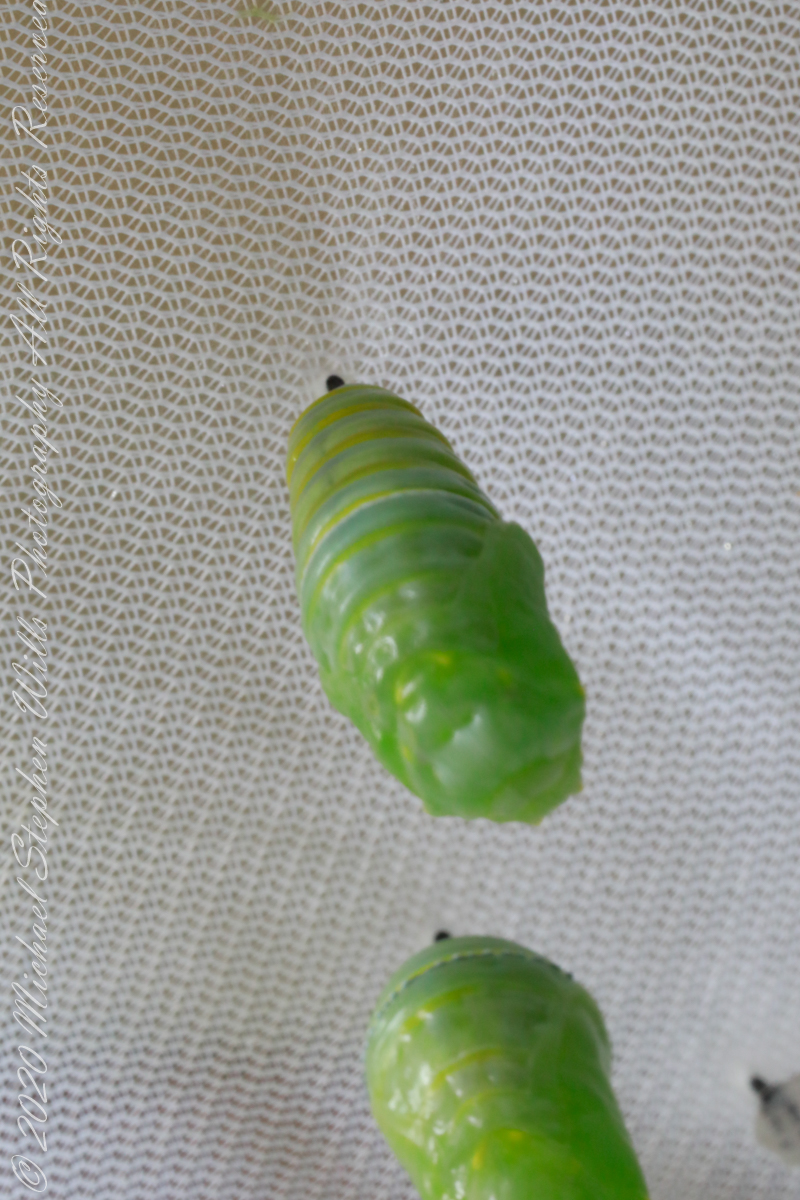
The sixth transformation happens when the fifth instar caterpillar, fully sated with milkweed, climbs to a perch, spins silk around a set of prolegs, affixing them from a horizontal surface from which to hang. For this set I captured the moult of two monarchs hanging side by side inside a mesh cage with an east facing window for light. Even though the day was sunny, with the f-stop set to the lens maximum (32) for the deepest field of view, ISO at 32,000 the energetic skin shedding movements of the chrysalis cause blurring.
For 10-12 hours of profound bodily configuration changes the hanging caterpillar hangs without movement. In the last image of this first set, the next caterpillar is blurred by initial moult movement.
My attempt to capture a video of the moult was frustrated by inadequate lighting, the result was too dark to use. I must solve this technical challenge as the motions of the chrysalis as difficult to believe without visual proof. That said, here is the second moult with the first completed moult in background.
An interesting fact is the caterpillar uses silk to attach the skin to a substrate for the first five moults to hold the skin back while it crawls out of the discarded skin. The first meal of the hatched caterpillar (first instar) is the egg, the shed skin is the first meal for instars 2 – 4. The shed skin of instar 5 drops from the chrysalis. This is why you should never remove a Monarch caterpillar from the leaf, as in doing so may hinder a moult in progress.
Copyright 2022 Michael Stephen Wills All Rights Reserved
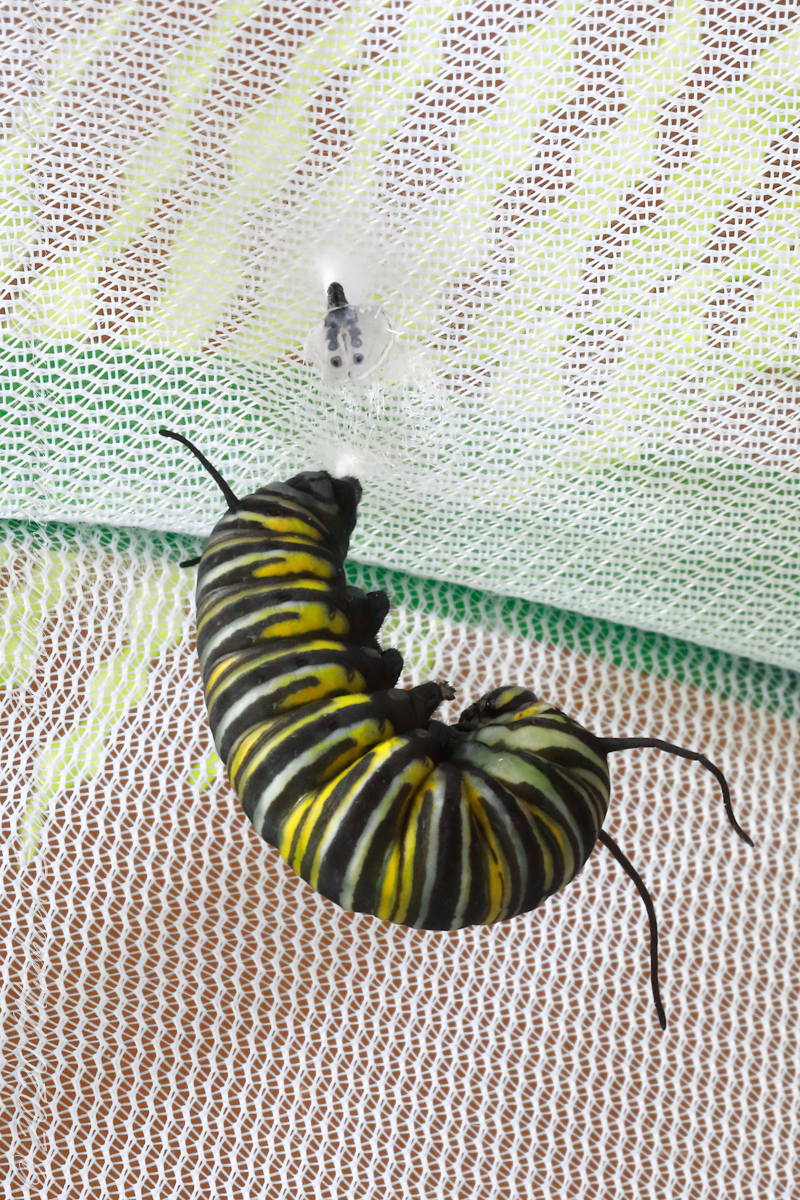
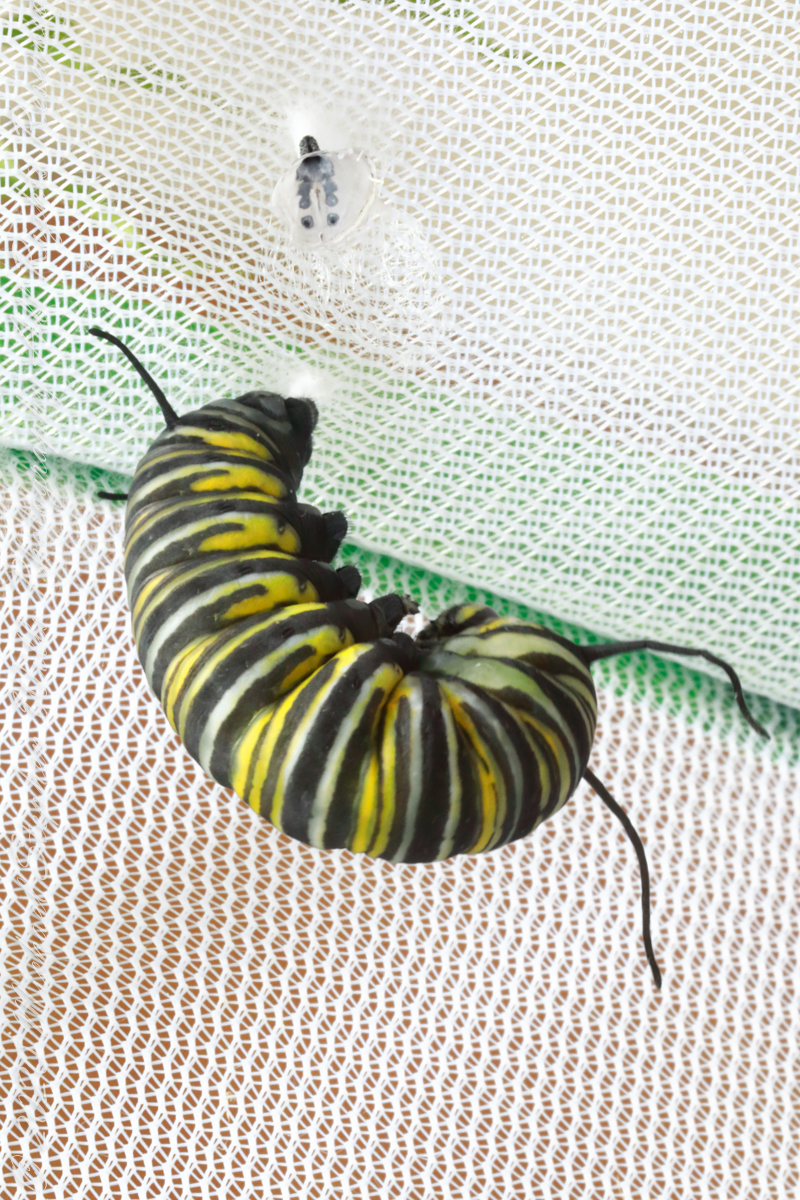
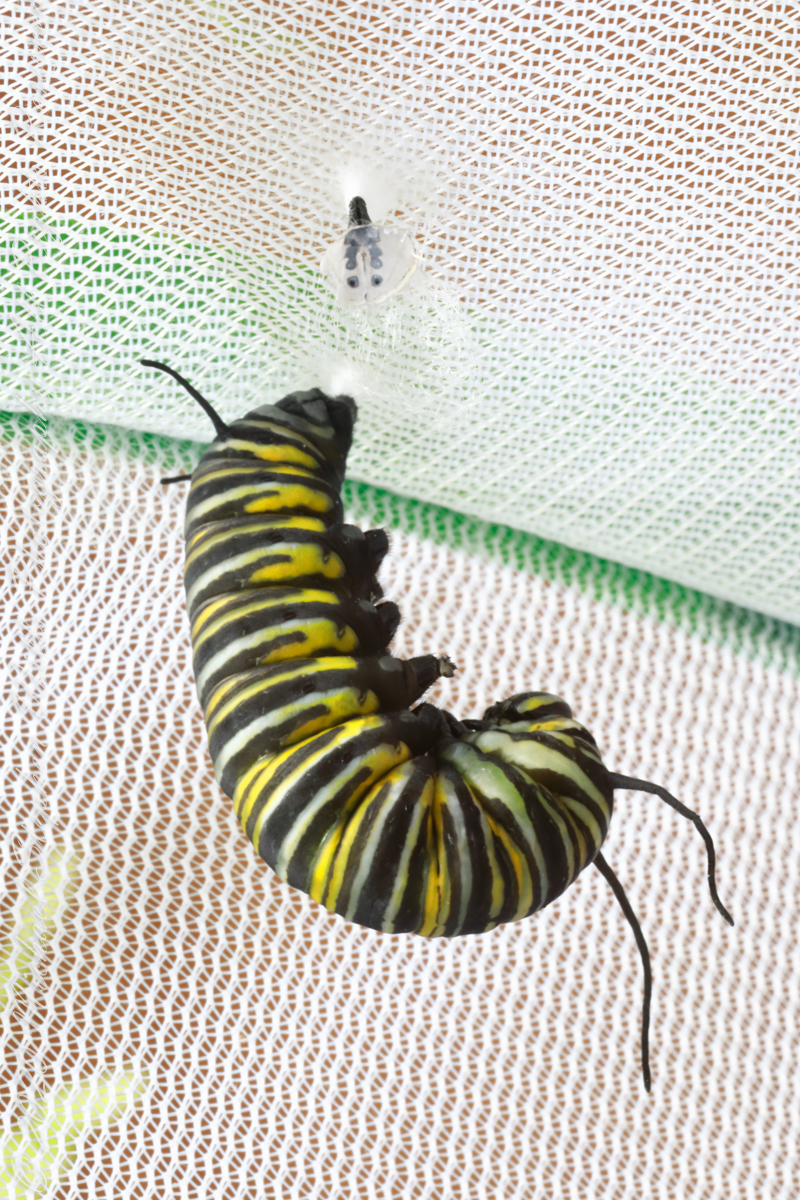
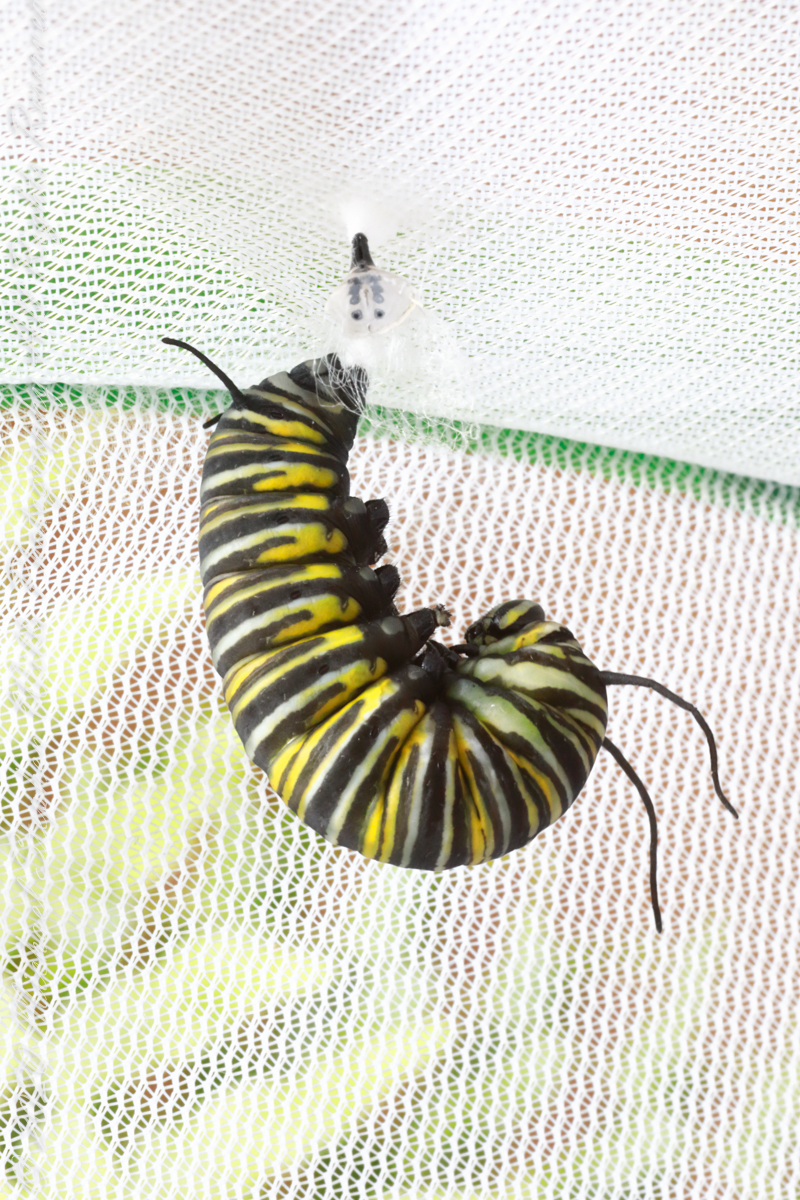
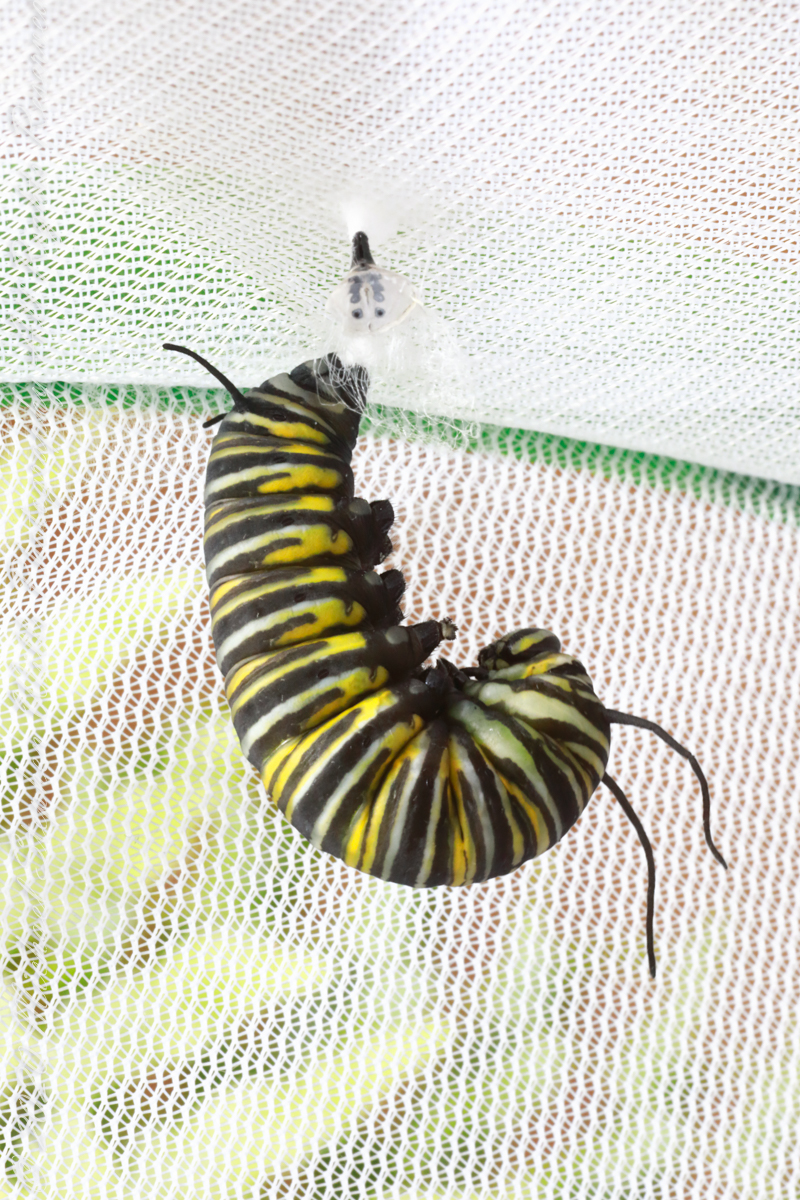
Here is a photographic Series of a Monarch caterpillar chrysalis transformation, a step in the life cycle of the Monarch butterfly. The caterpillar attaches to a silk pad from which it hangs. Underneath the skin, the caterpillar is transforming to the chrysalis. In these photographs the silk pad and chrysalis attachment from a previous transformation are in the foreground.
About 34 minutes transpired between the previous photograph of the caterpillar in “J” formation, attached and hanging upside down to the chrysalis. In this time the outer skin was shed, revealing the chrysalis.
Copyright 2022 Michael Stephen Wills All Rights Reserved
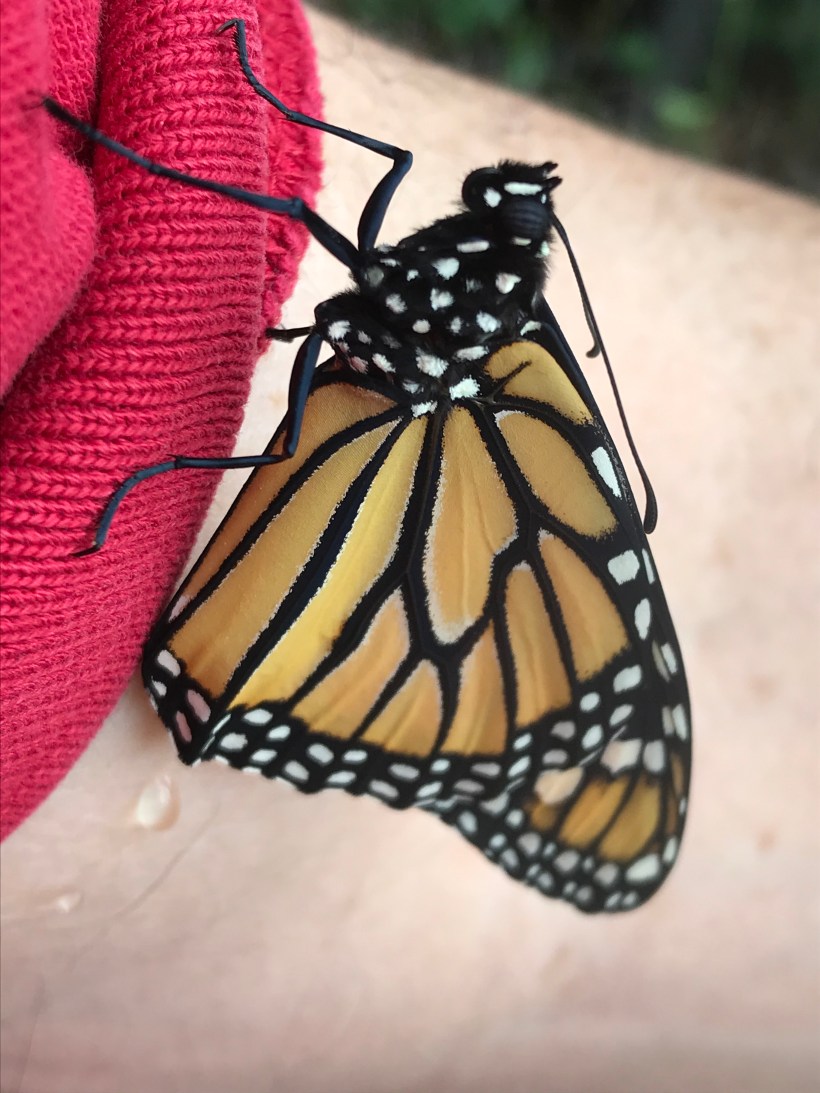
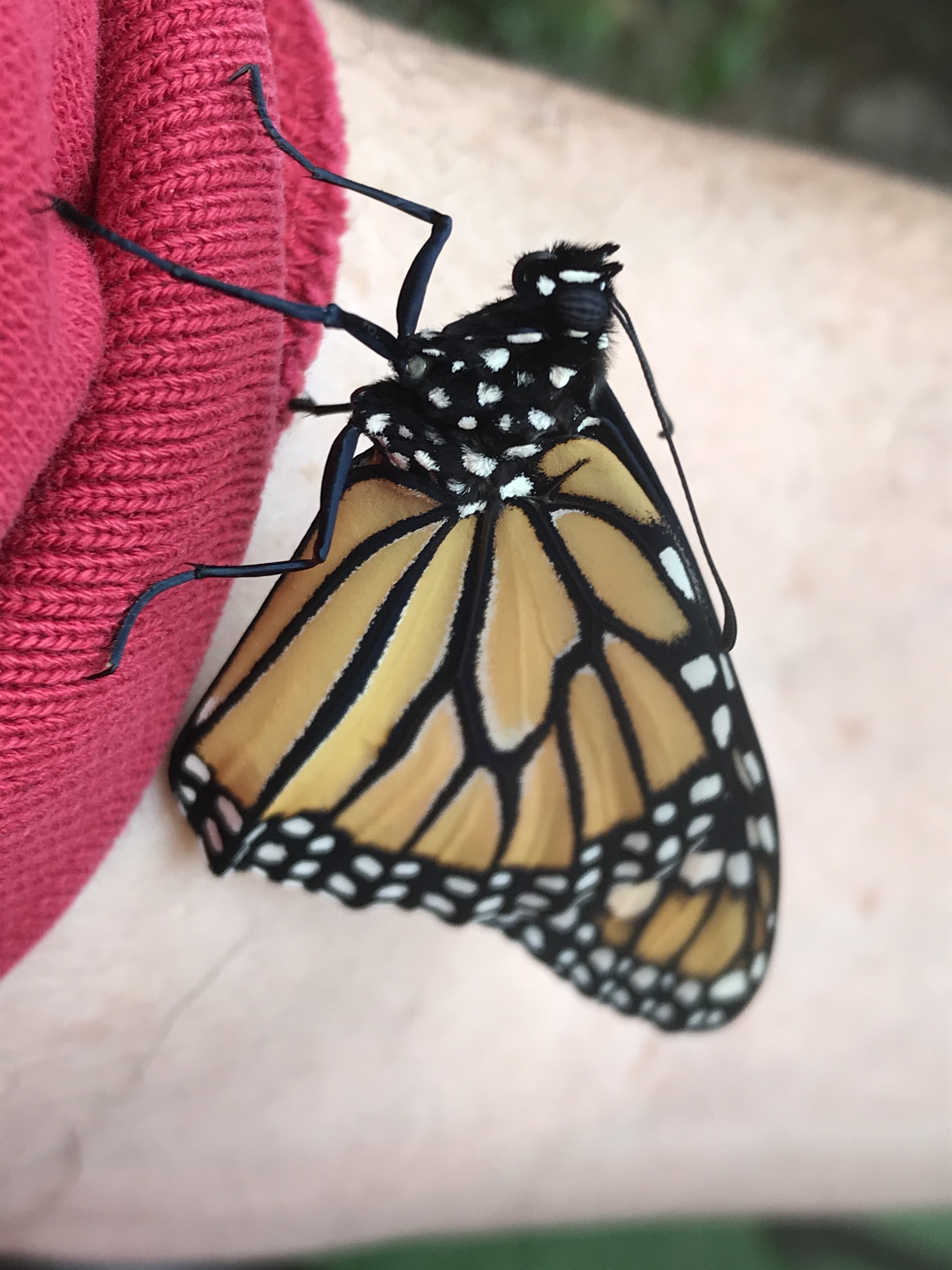
Misjudged by over an hour, I reached into the cage to allow the Monarch butterfly to crawl onto my hand for the first flight. Instead, it crawled up my arm and clung to my cotton shirt sleeve.
Click photograph for a larger view and use Ctrl-x to zoom in closer.
Clinging to my sleeve, this newly emerged Monarch wings dried. It is a process of excreting the fluids pumped into wings, crumpled from folding within the chrysalis, to expand them. The clear drips of water on my arm are this fluid.
Click photograph for a larger view and use Ctrl-x to zoom in closer.
Here is a video from this year, a Monarch emerging from the chrysalis, then expanding crumpled wings. Notice, this butterfly has a problem: once emerged the butterfly swings back and forth continually as it clings to the chrysalis. While interesting to us, the movement is caused from a missing front leg. Monarch butterflies have four legs, this butterfly is missing the right front leg, the imbalance causes the swinging movement. Freshly emerged, a large, distended with fluid abdomen is prominent between small, crumpled wings. With time, the abdomen pumps fluid, expanding the wings. Over several hours the fluid runs from the wings and is expelled from the abdomen, as seen in the above photograph.

 Michael Stephen Wills Photography