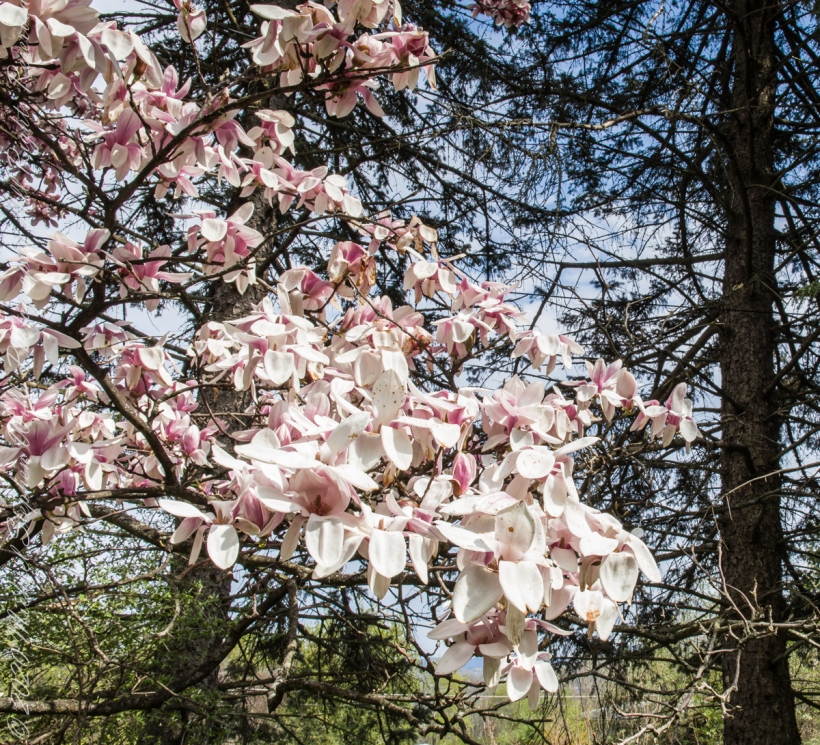
Dawson’s Magnolia?

A 2021 Blessing

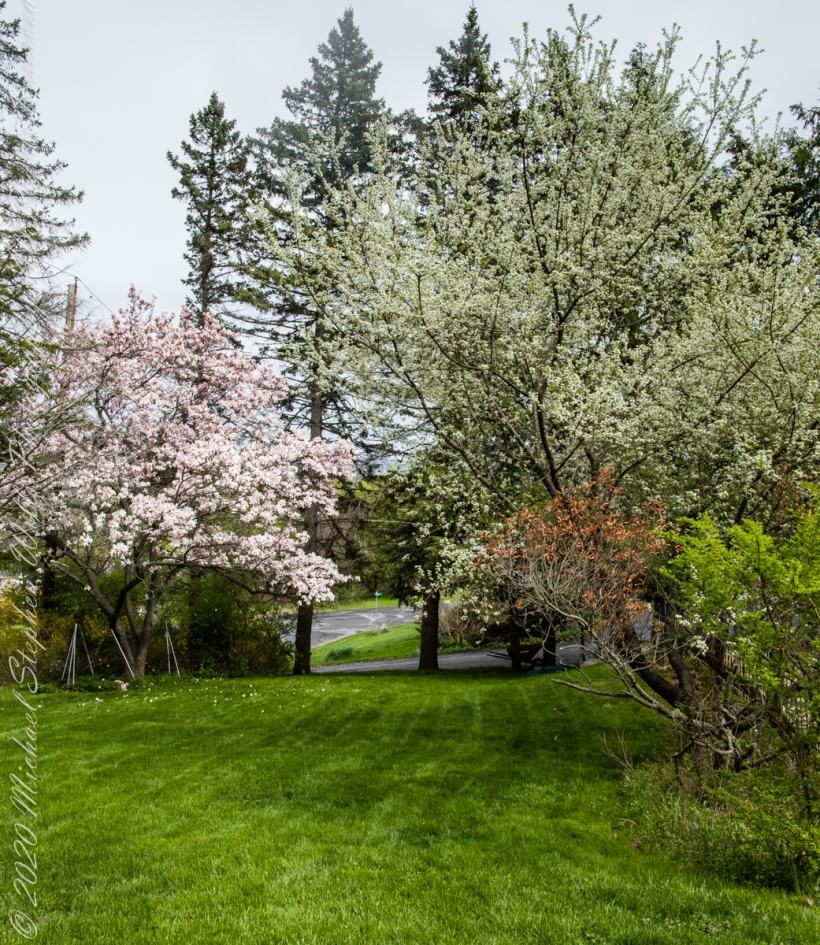
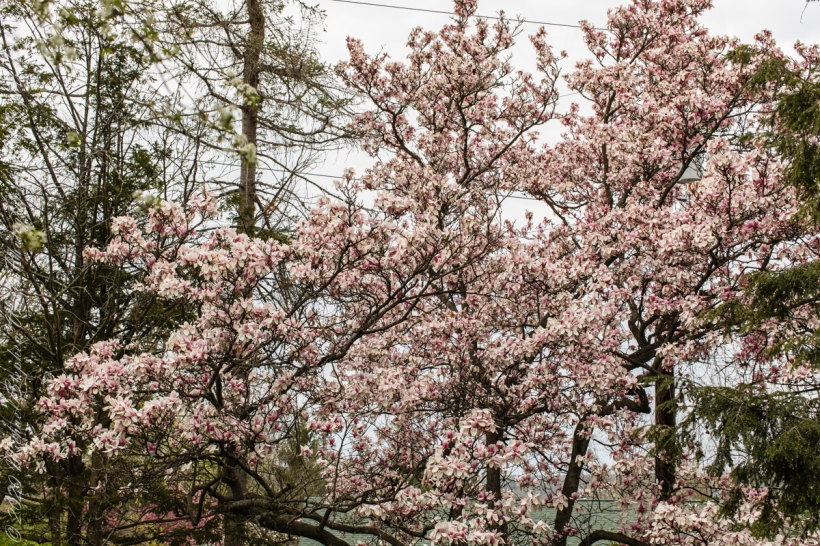
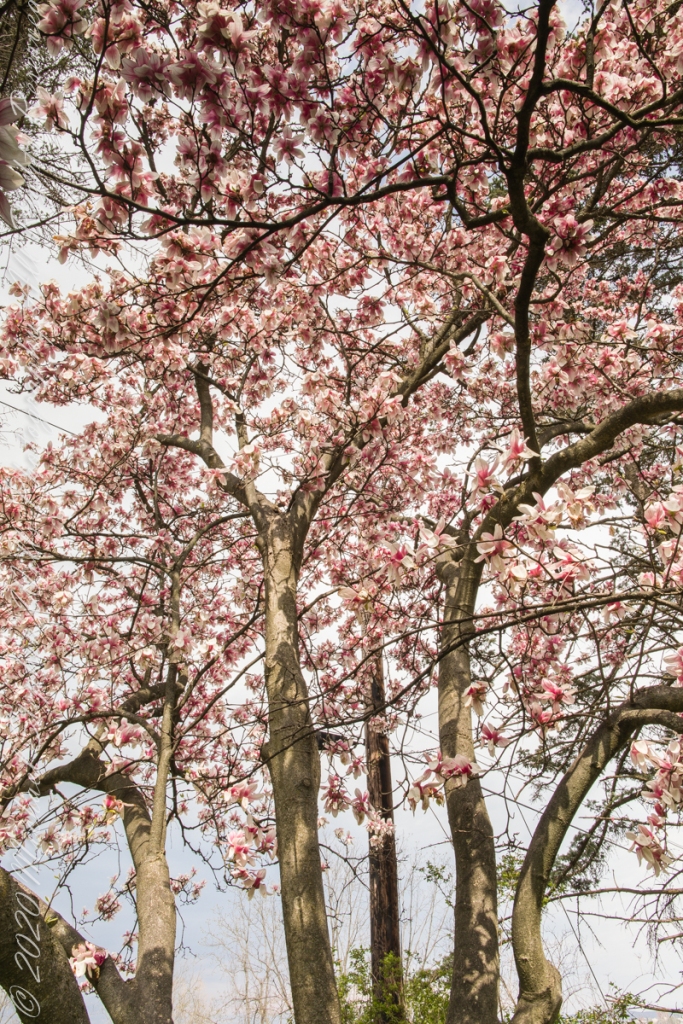
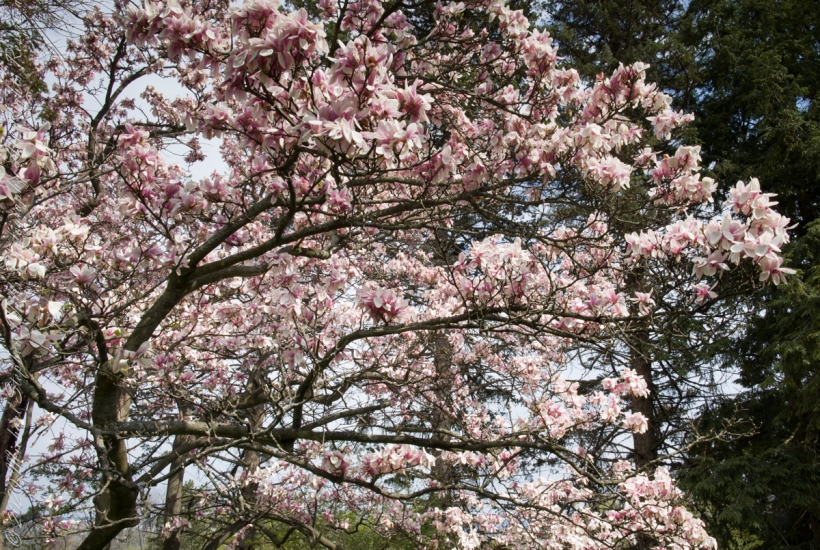
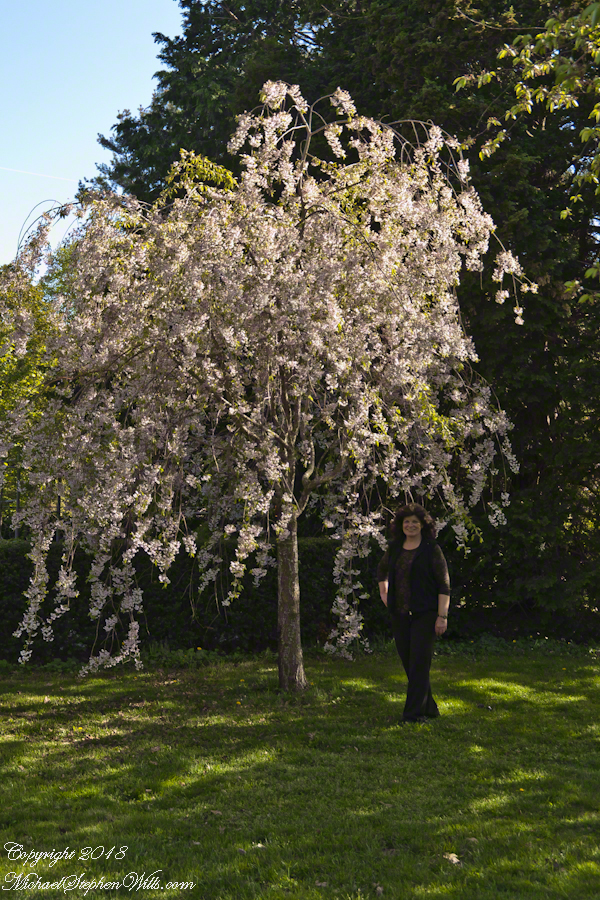
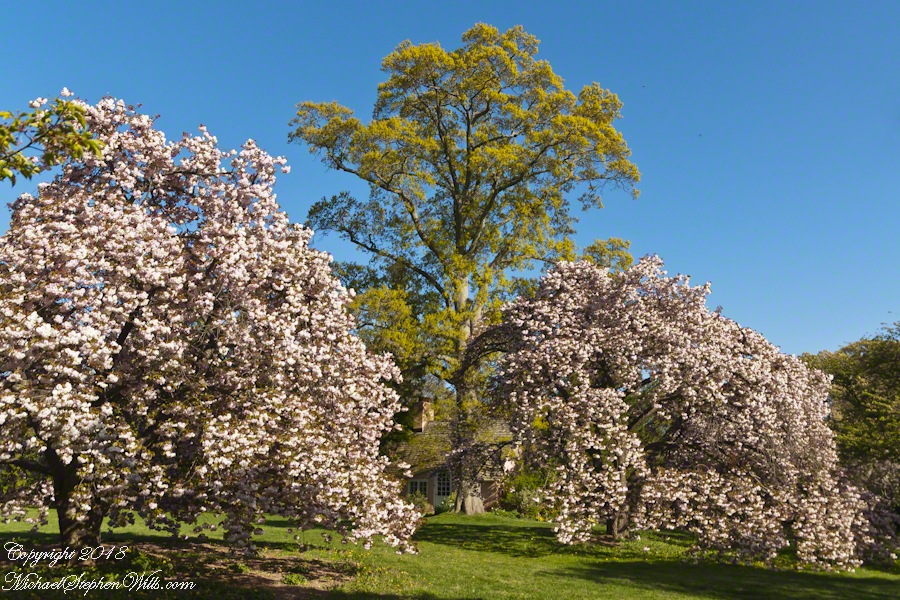
The Magnolia genus has been around for eons, come characteristics are protective from beetles as they existed before bees and relied upon beetles for fertilization. Our’s may be the species Magnolia dawsoniana (Dawson’s Magnolia), it shares many of the published characteristics: among them tolerance to our hardiness zone 5, flower color and shape, tree growth pattern.

This was an exceptional year for blooms. starting late April, lasting into May. The fence around trunks is for protection against bucks (male deer), from rubbing their horns in autumn.

For most of these 2021 photographs I used the lens Canon 24 mm f/1.4L II USM, the one captioned 50 mm I used Canon 50mm f/1.2L USM. The Canon EOS 5D Mark IV dslr with the Manfrotto Studio tripod with hydrostatic ball head for all.

The last great year was 2018……

For these 2018 photographs the Canon 24 mm and Canon EF 100mm f/2.8L “Macro” lenses with Canon’s EOS-1Ds Mark III dslr.

Copyright 2021 All Rights Reserved Michael Stephen Wills

On the Tain Way

A place of myth and wonder on foot and approachable

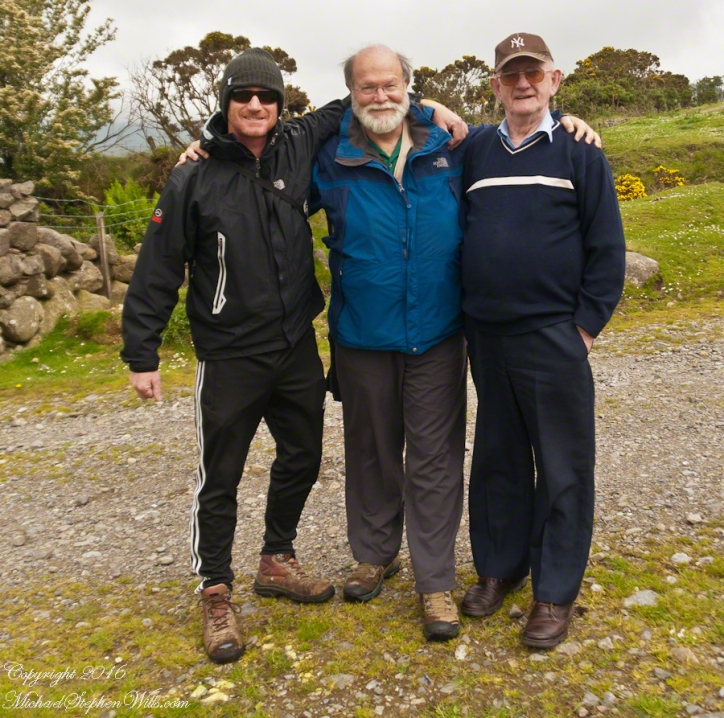
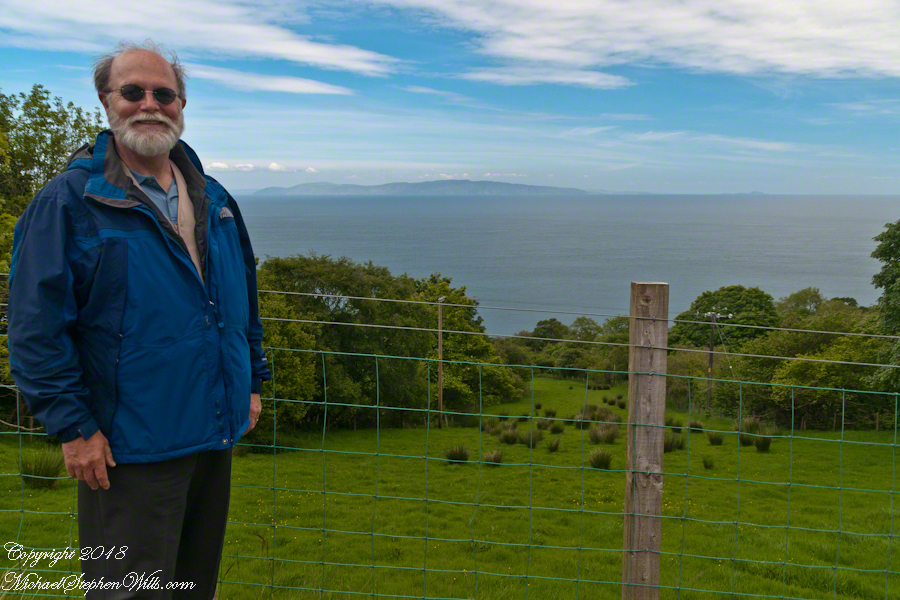
On Monday, June 9, 2014, cousin John Mills dropped his son, Sean Mills, myself and Pam Wills off at the foot of the western slopes of Slieve Foy on the Tain Way.  Sean, Pam and I walked the way over the mountain and into Carlingford in the footsteps of epic Irish heroes.

Our guide, Sean Mills, proposed the walk and it fell on our last full day in Ireland. Sean’s father and our host for this visit, John Mills, transported the group including my wife Pam to the starting point at the foot of Slieve Foy.

Click this link to visit my Online Gallery

On the Tain Way– CLICK ME!!!!

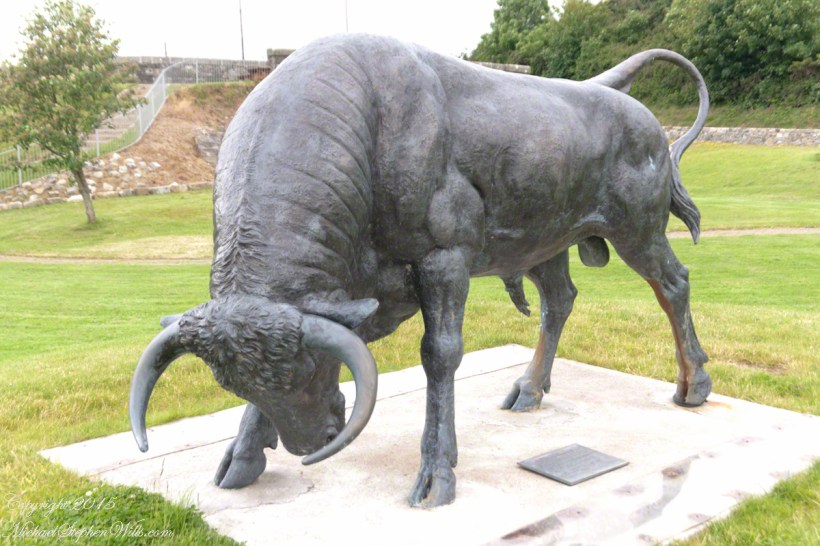
Yes, if there is any part of the Tain Way the the mythic Irish heroes trod it is this one over Slieve Foy mountain. The saga, in Irish “Táin Bó Cúailnge” and “The Cattle Raid of Cooley” in English, features this bull, “Donn Cuailnge” “The Brown Bull of Cooley”, here as a statue erected 2011 by the Grange and District Residents Association.

Walking the Tain Trail to Carlingford

Donn Cuailnge raged over the very slopes we walked this day. The myths themselves fill a volume and I am unable to do them justice here.

On the way, John stopped at the Old Aghameen School he attended in the late 1930’s early 1940’s 70 years before and we pass through the country soon to grace our views.

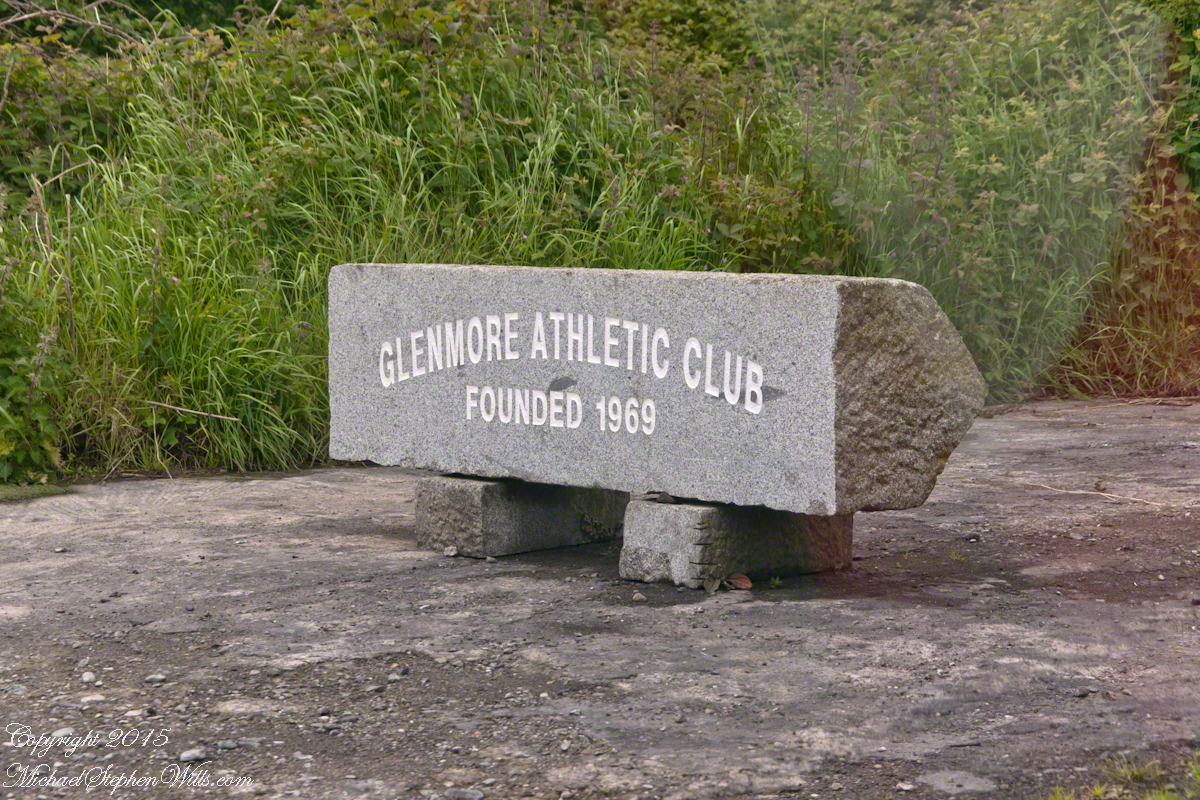
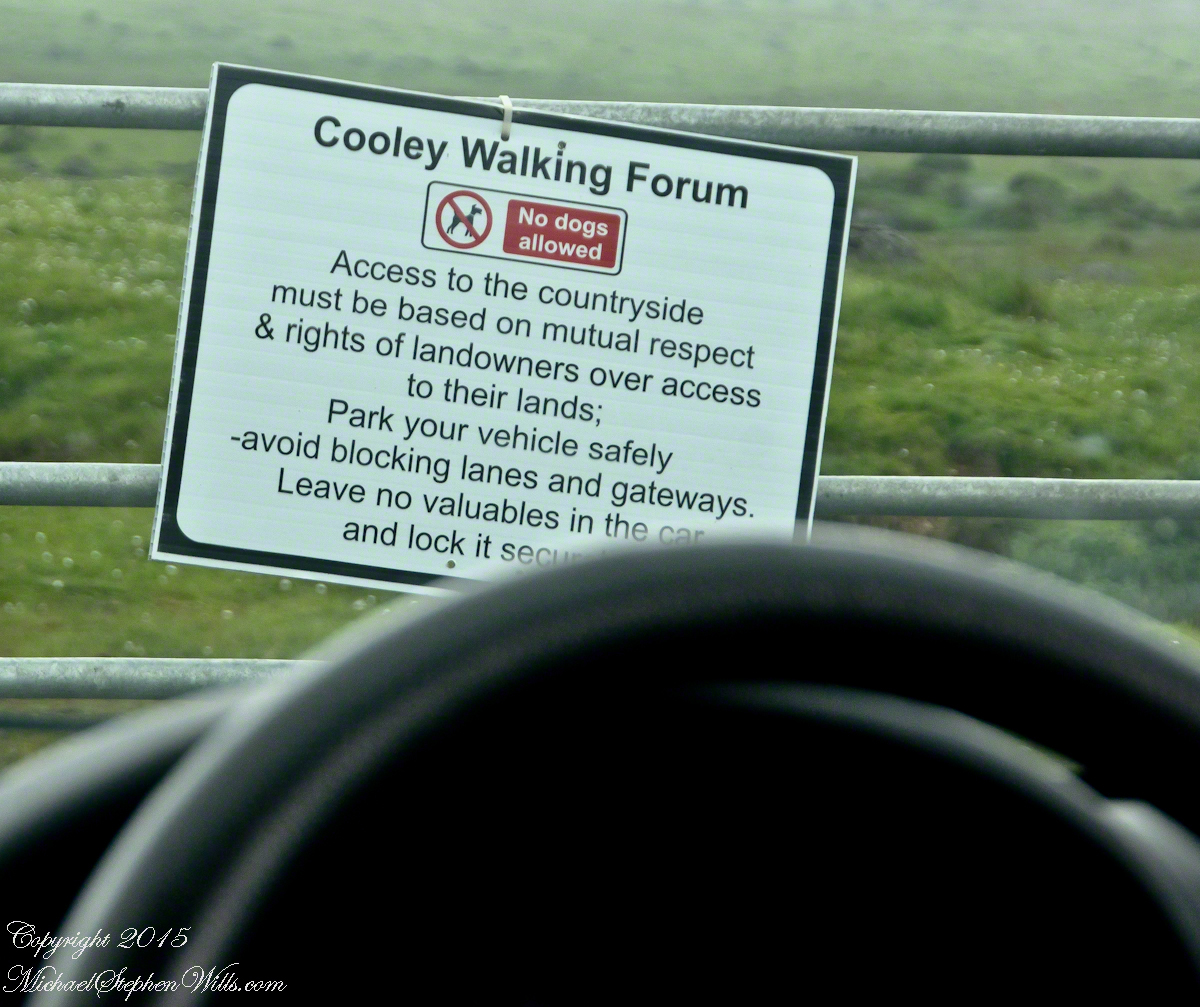
Many thanks to the Glenmore Athletic Club, the Cooley Walking Forum and land owners who provide access to the Tain Way.

We had our leave taking with John, who planned to stay near the phone for our call from Carlingford, if all went according to plan. That same year Pam had the first of two total knee replacements. This was our longest hike in Ireland and Pam was not likely to miss it, regardless of any pain. Pam is always ready to smile.

Walking the Tain Trail to Carlingford

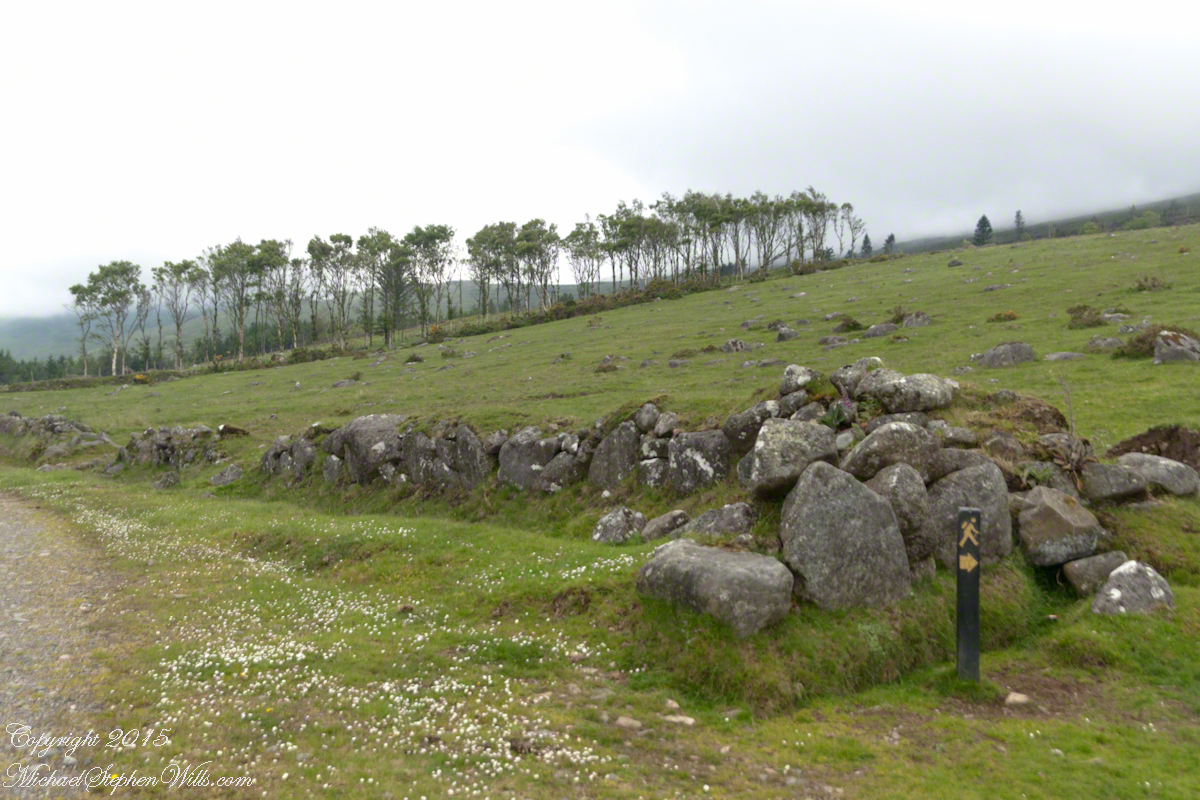
At start, the Tain Way is broad, green and welcoming.

Walking the Tain Trail to Carlingford

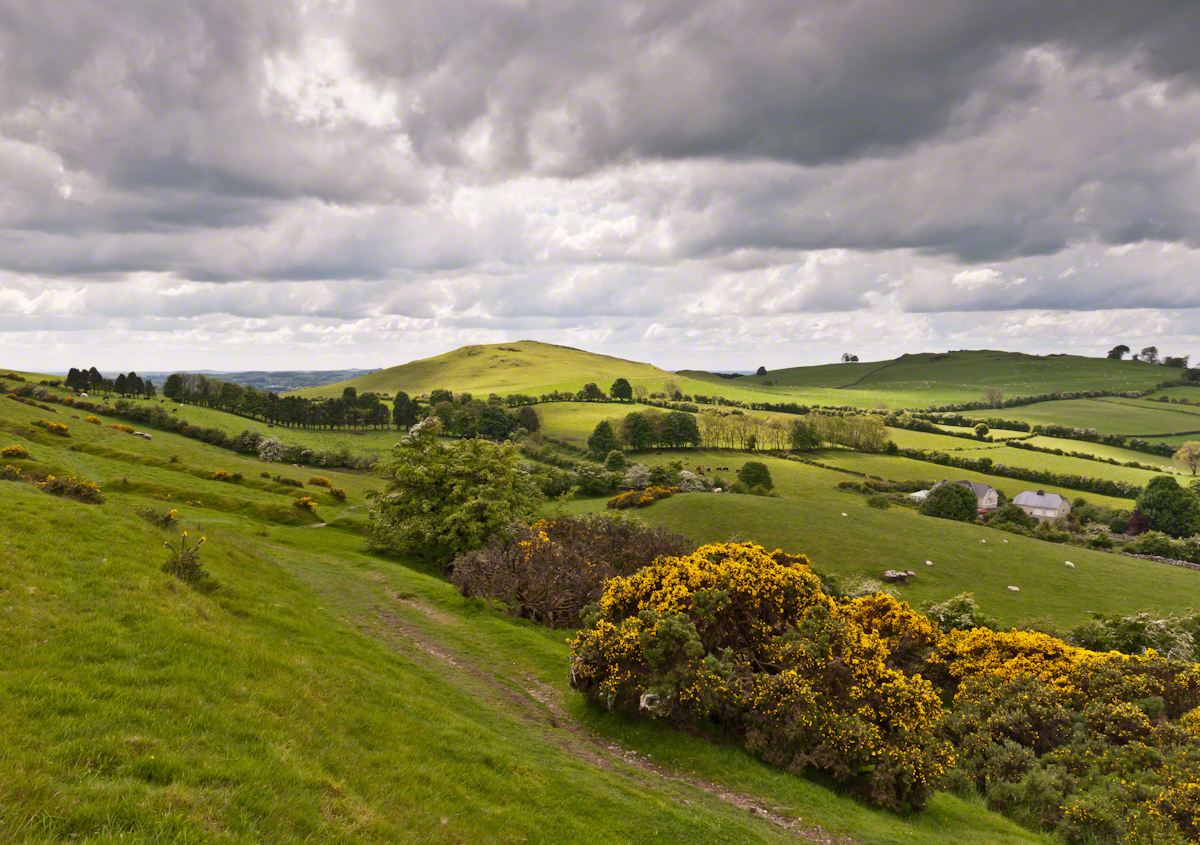
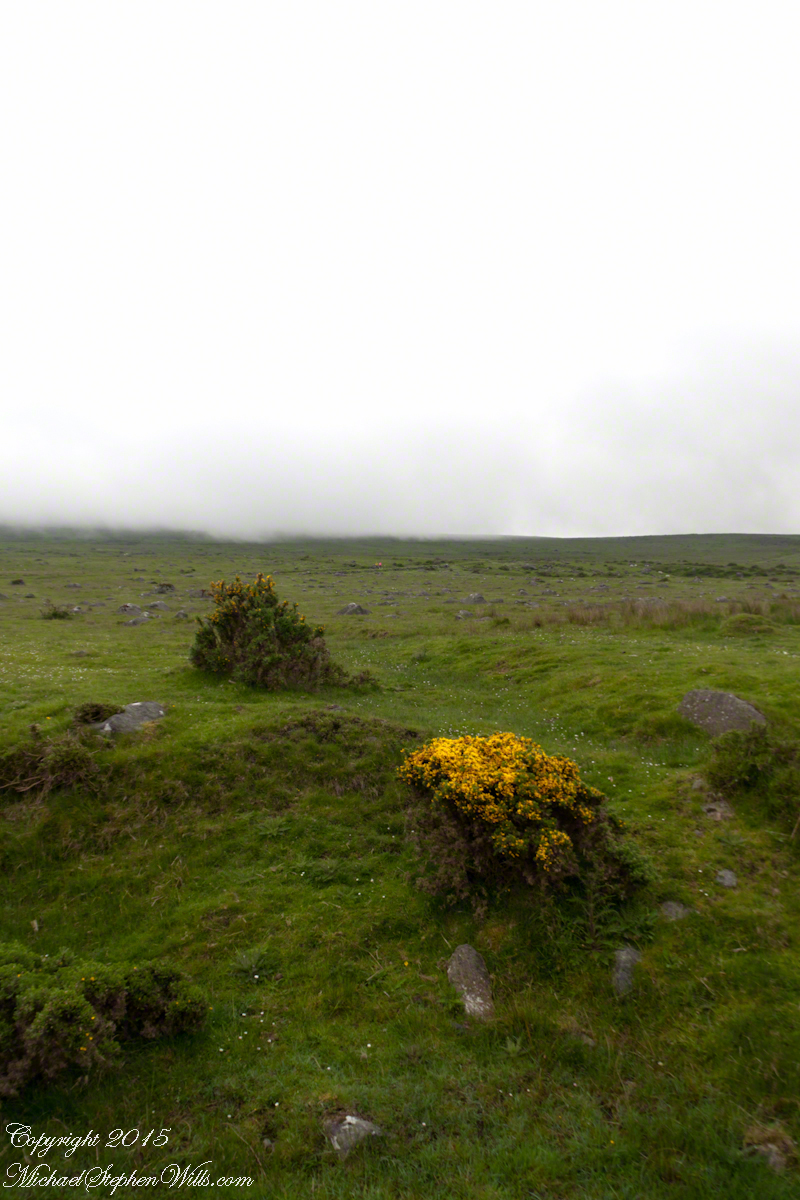
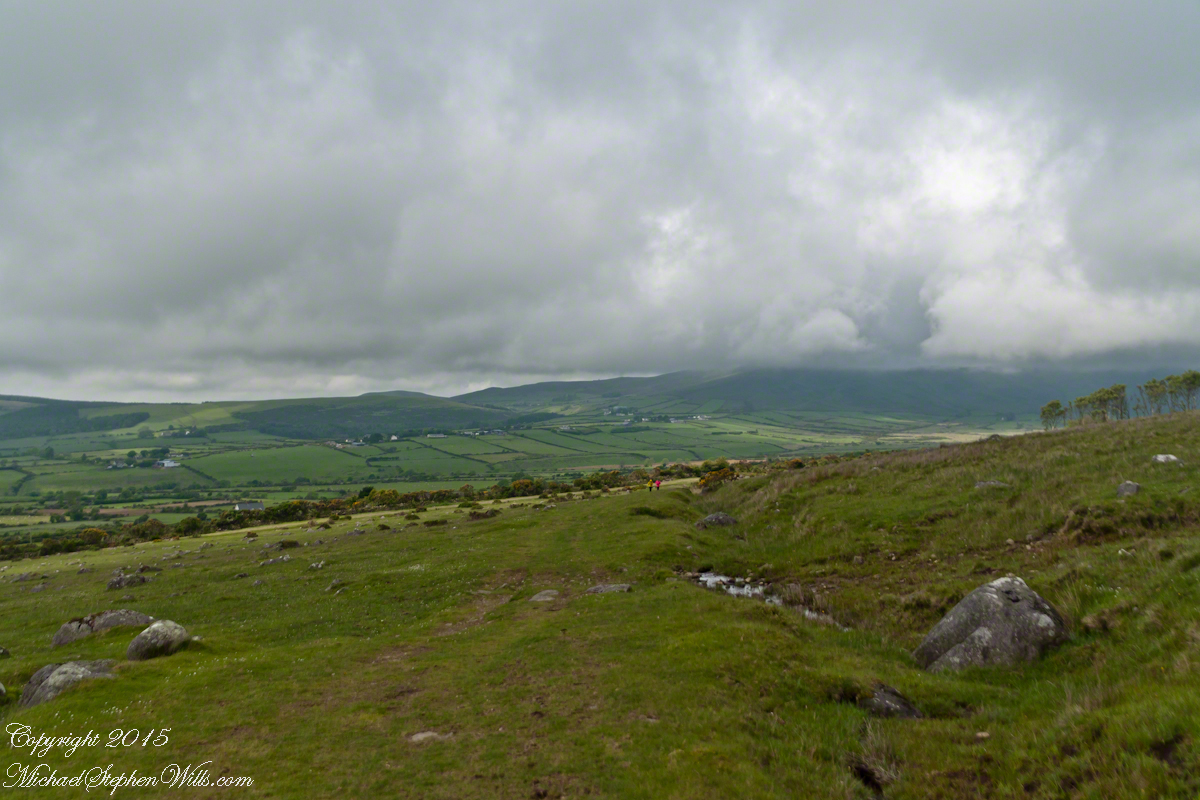
The western slopes of Slieve Foy hold views of a valley among the Cooley Mountains with Dundalk Bay of the Irish Sea to the south / southeast. It was not long before the view started to open and, then, opened and opened the entire walk to the top. We were graced with a lovely, cloudy, June day. Mist only, no rain. Plenty of wind, not strong.

Walking the Tain Trail to Carlingford

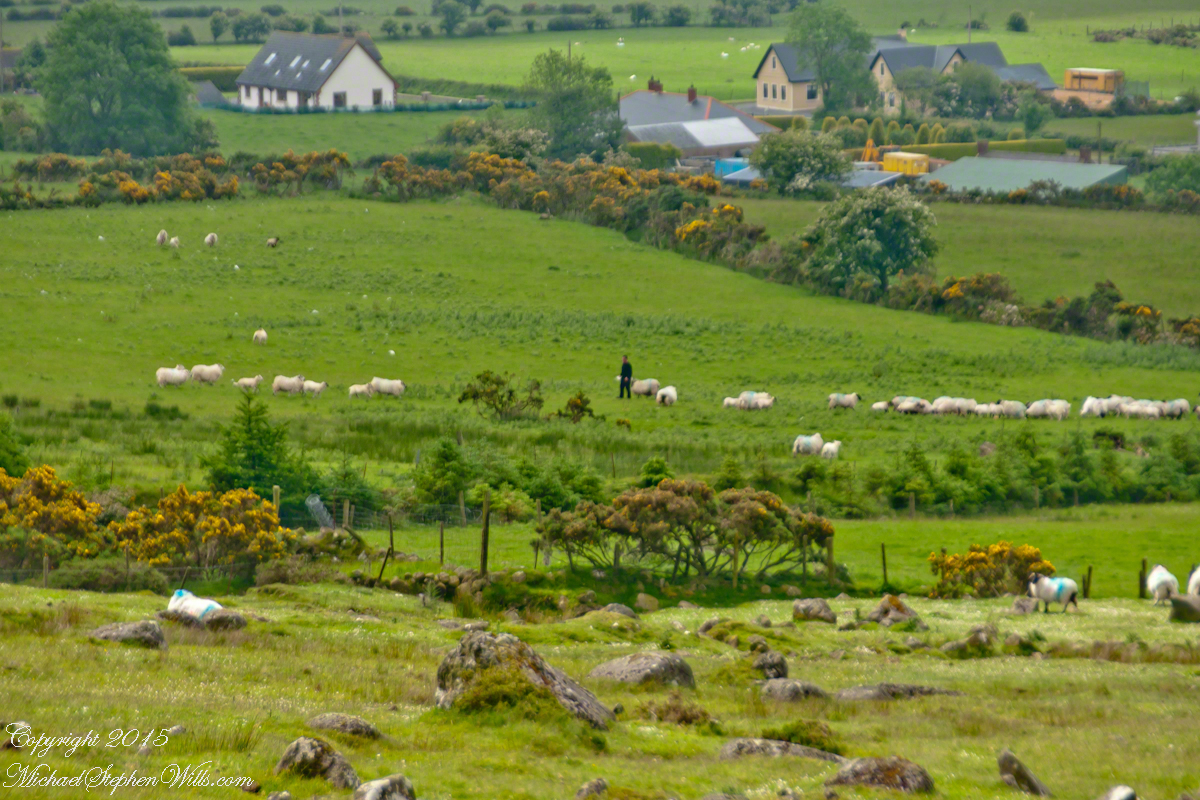
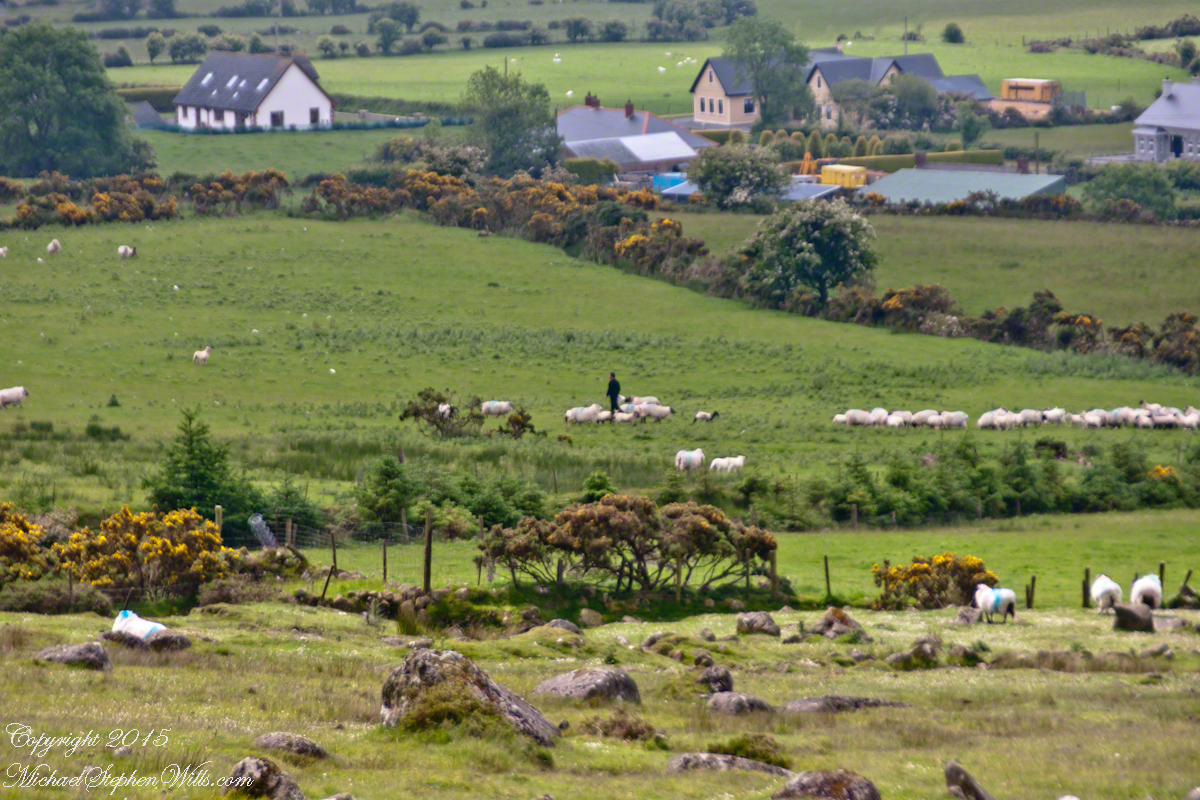
Farms are all about. Here a farmer attends to the flock. They know who he is.

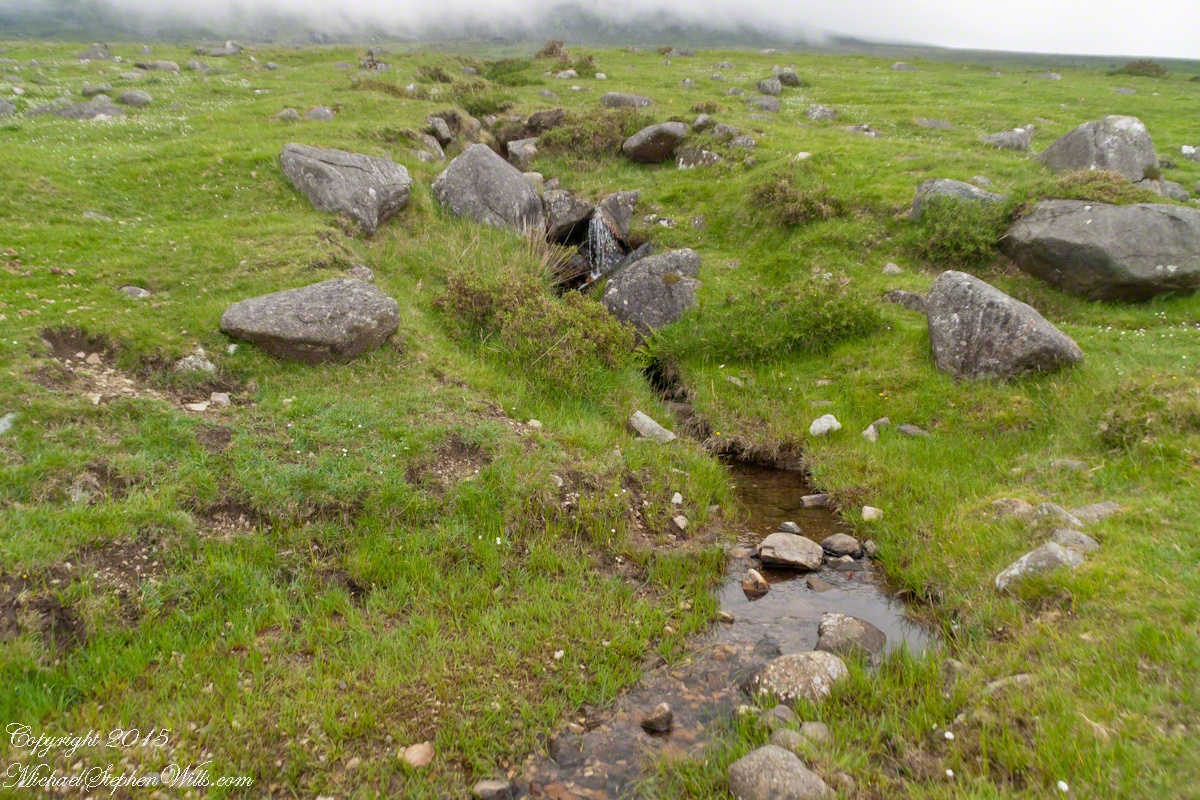
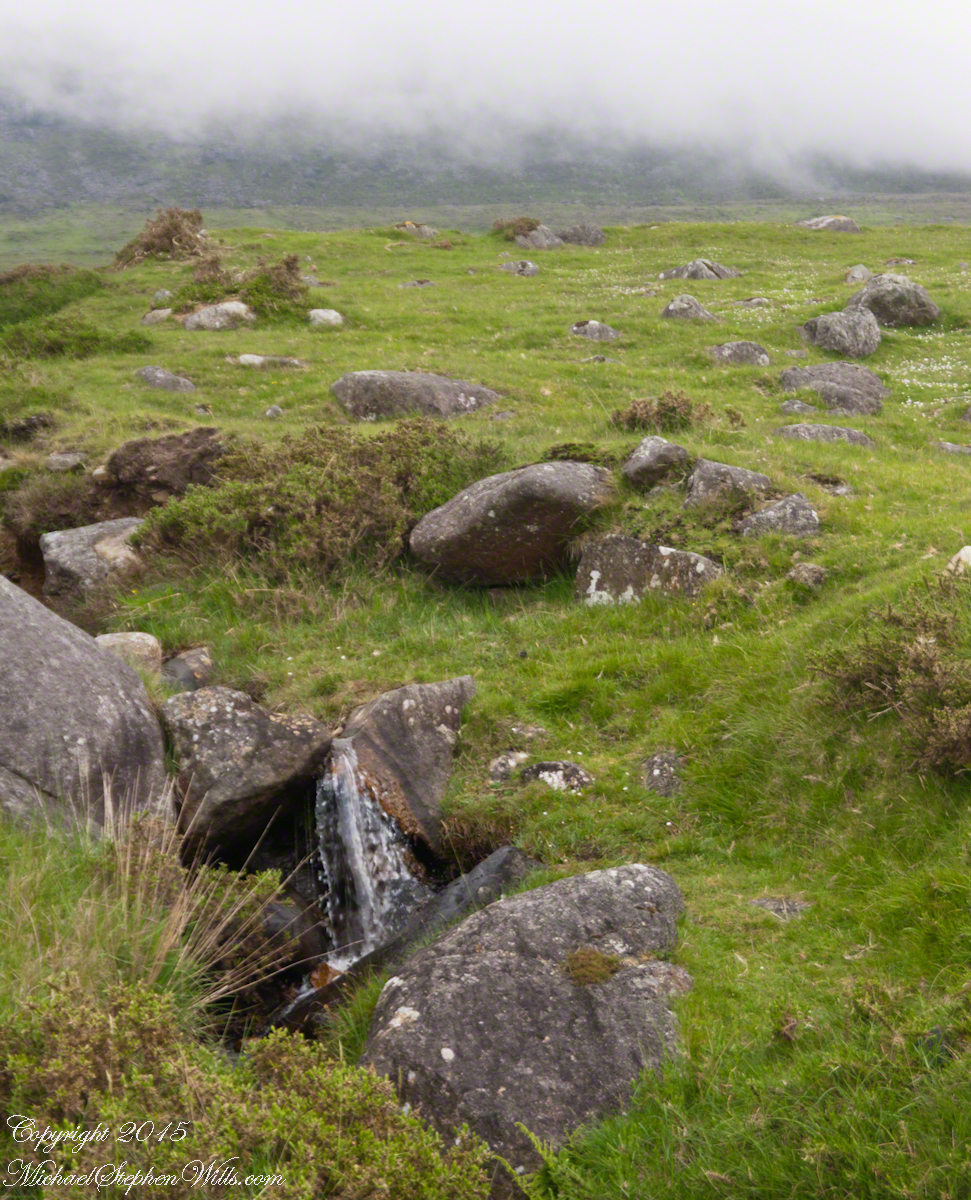
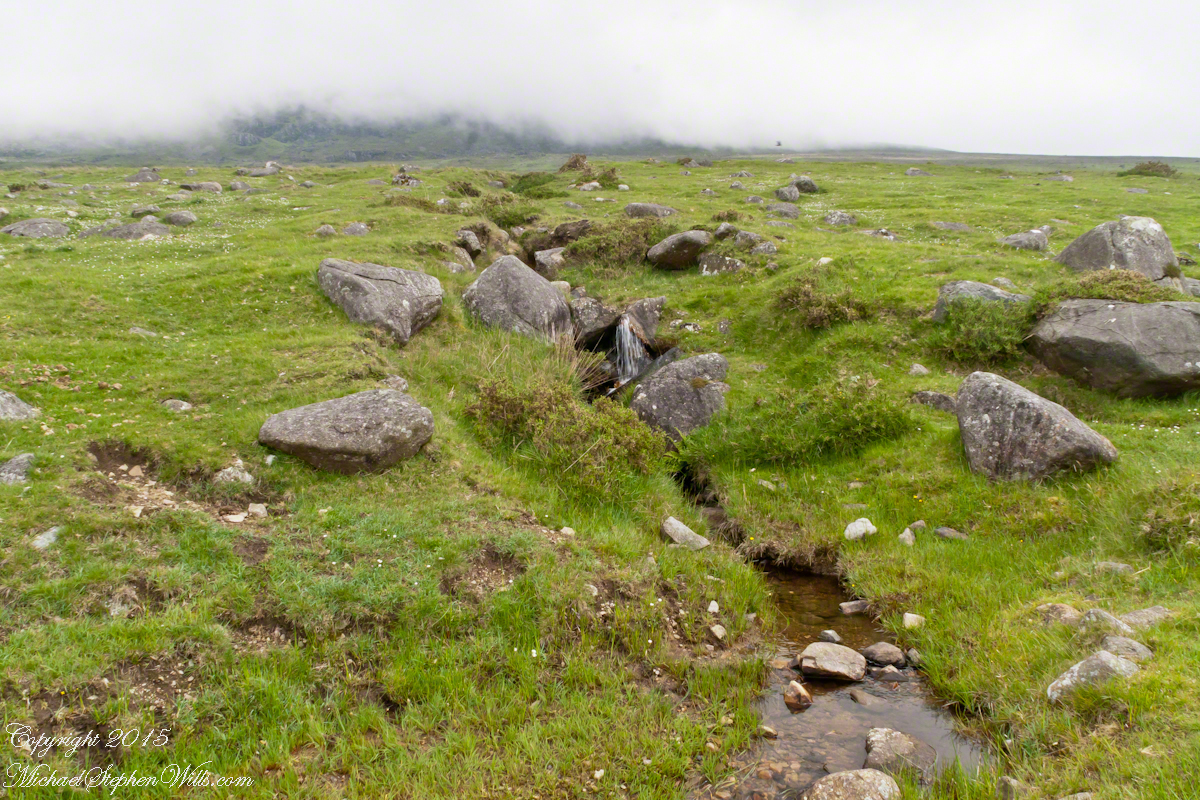
Walking the Tain Trail to Carlingford The lower slopes hold many small stream among granite stones. Walking the Tain Trail to Carlingford Walking the Tain Trail to Carlingford Walking the Tain Trail to Carlingford Walking the Tain Trail to Carlingford Walking the Tain Trail to Carlingford

I will continue with our walk on the Tain Way soon enough.

Click for the next chapter of our time on the Tain Way

Here’s a previous Ireland posting……

Copyright 2021 Michael Stephen Wills All Rights Reserved

Hag’s Chair or Mass Rock?

Ancient Tradition

Part of our day in County Meath, Ireland  
Click the photograph to open a new window/tab of my Online Gallery.
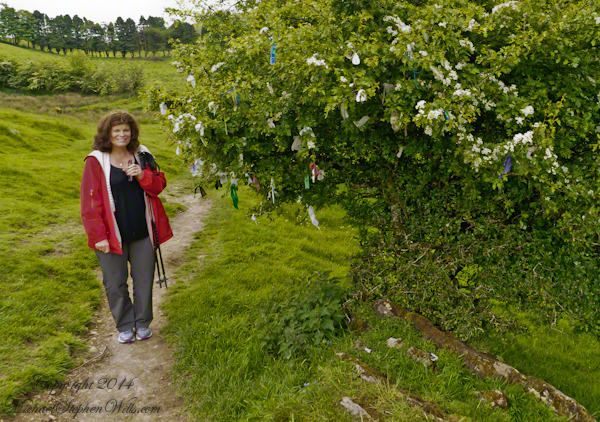
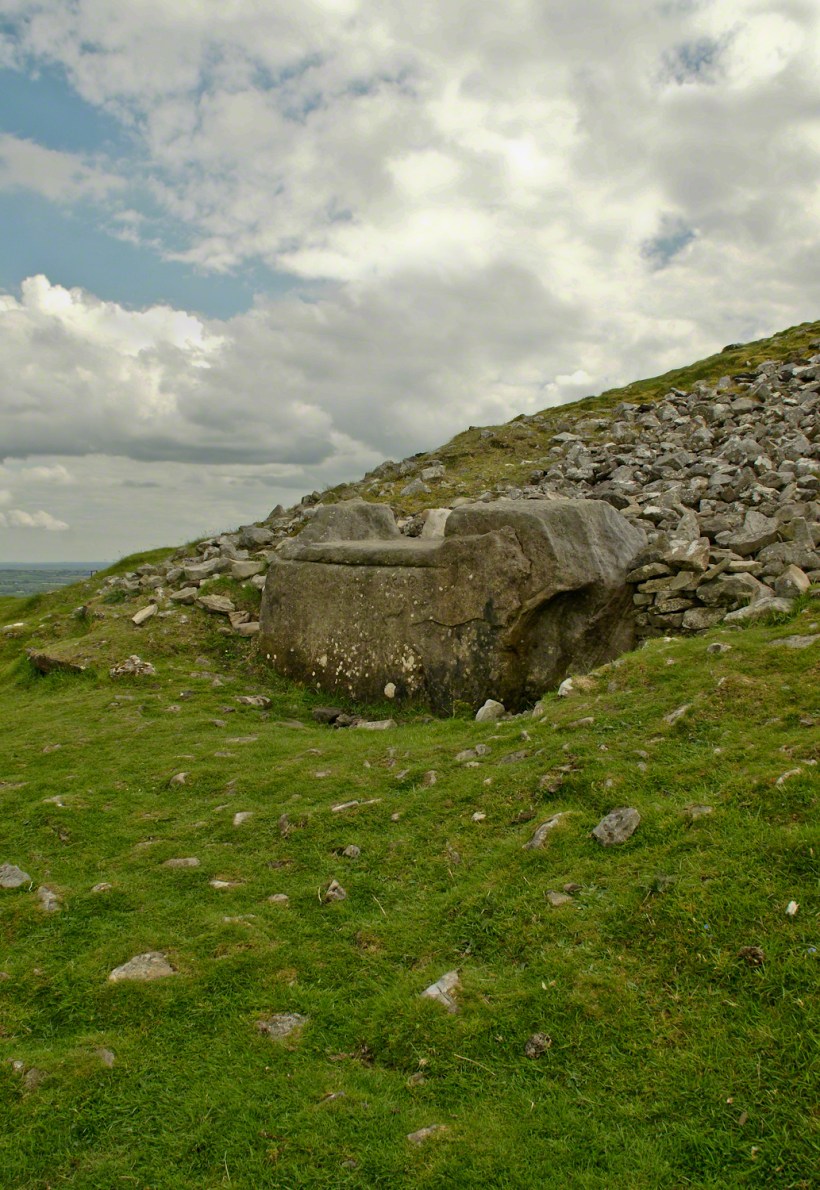
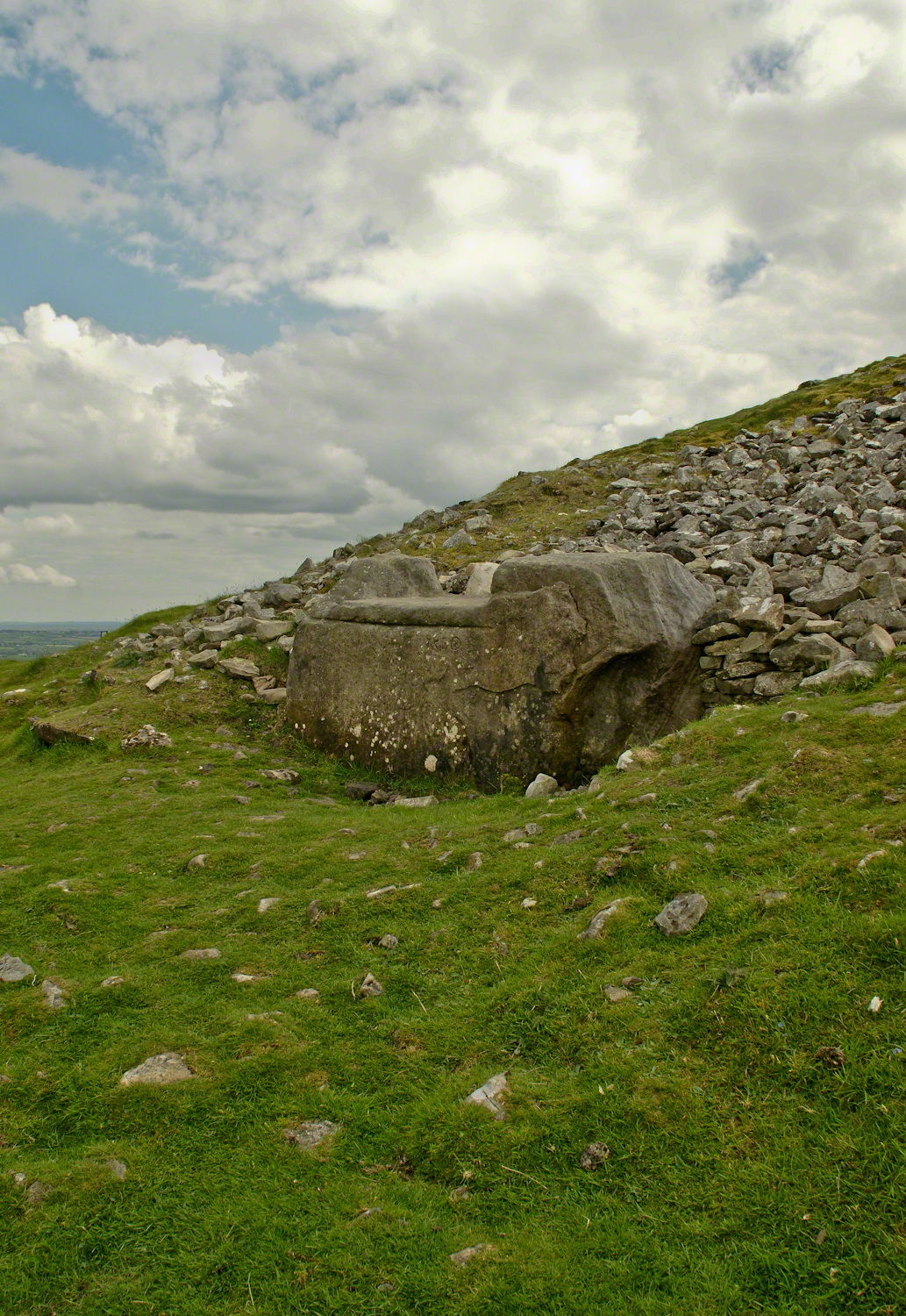
Known as the Hag’s Chair in some contexts, K29 or the Mass Rock, in others, set as a Cairn T, Loughcrew kerbstone thousands of years ago the carved symbols on front, rear and seat are very worn. There is no surviving record to inform us of the stone’s purpose. The upper side appears carved to enhance the form as chair.   Set to the north of Cairn T, not in front of the entrance as with Newgrange, even this is a mystery.  It is the third largest curbstone.

Hag's Chair– CLICK ME!!!!

The popular name refers to the hill itself, “The Hill of the Witch” (In Irish, Sliabh na Caillí).   In lore sites such as this are associated with The Others (“fairies”), living lives parallel to ours.

Tradition holds that, during times of the Penal Laws, Catholics gathers on for Mass using this curbstone as the altar.   By this it is known as the Mass Rock.

Click for another Ireland posting

Copyright 2021 Michael Stephen Wills All Rights Reserved

Farmland Southeast of Carlingford

Beauty of the Cooley Peninsula, County Louth, Ireland

I offer here a continuation of descriptions of a 2014 walk on the Tain Way, an appreciation of the lore and beauty of Ireland.

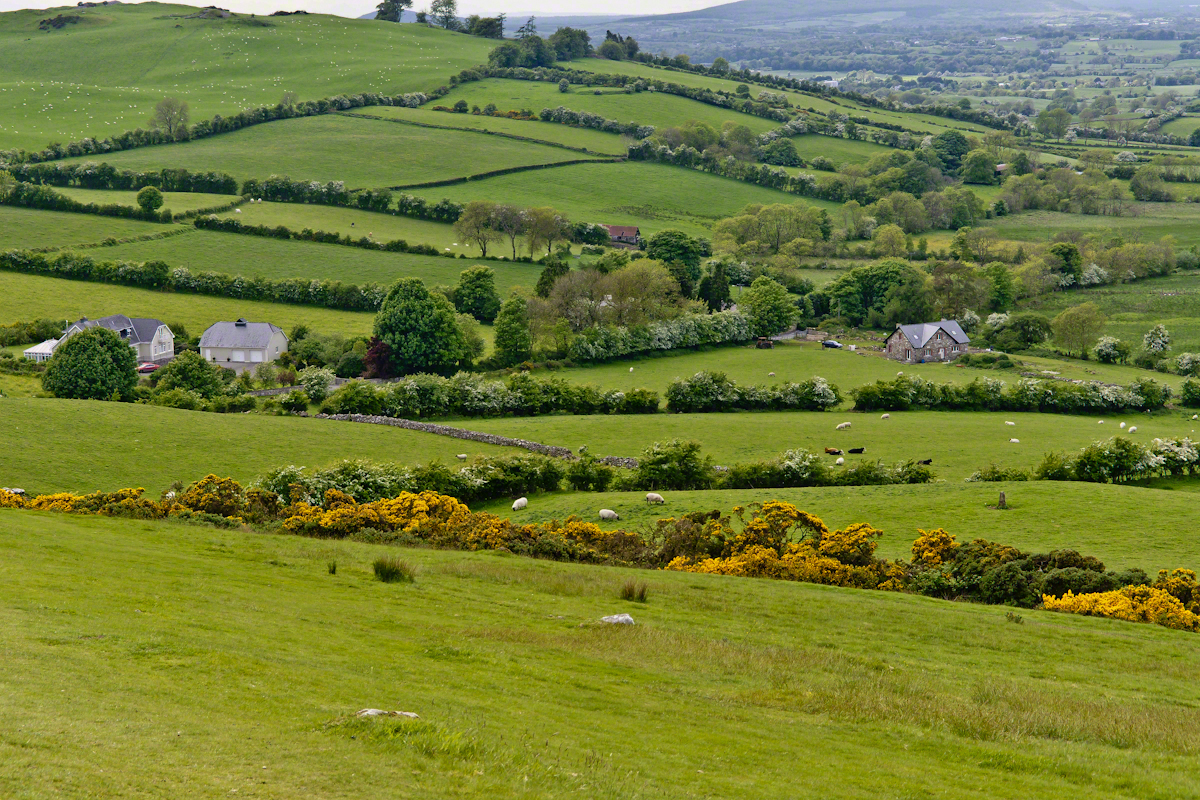
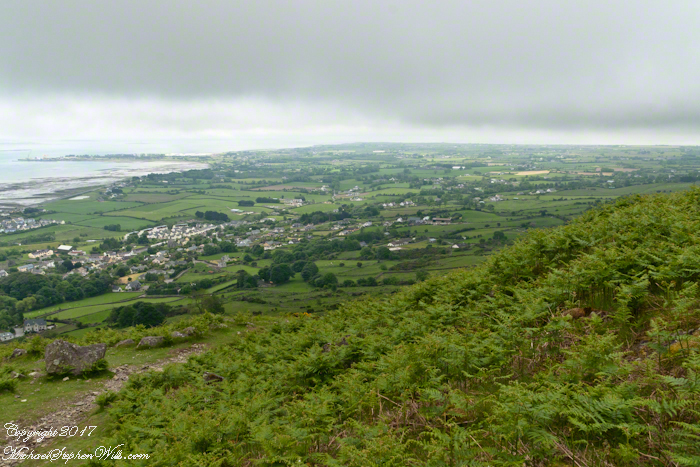
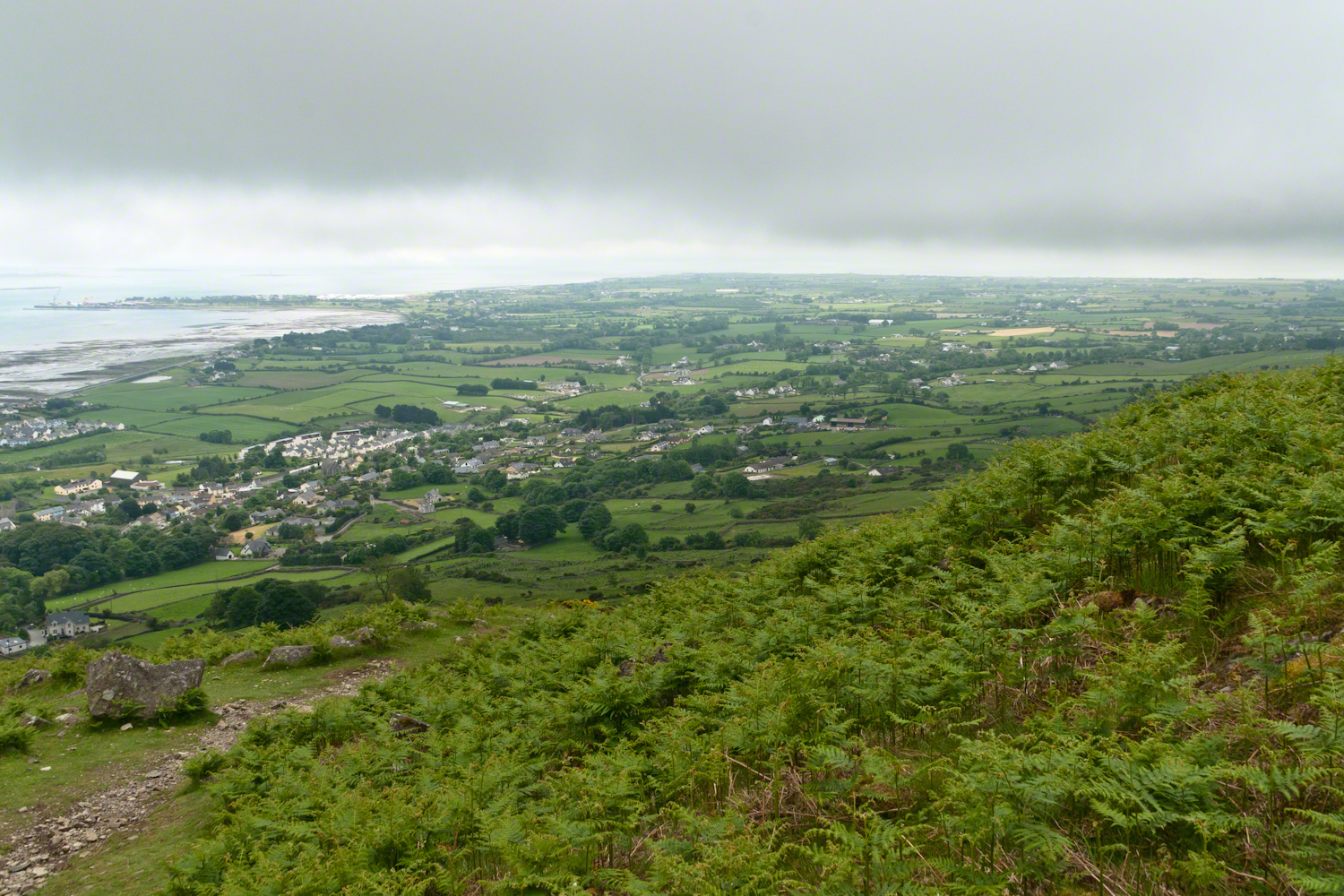
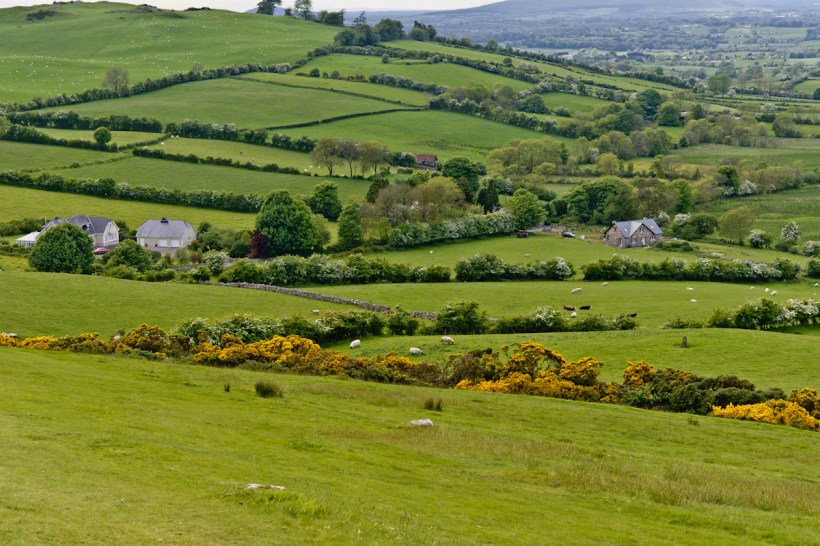
Descending the Tain Way from the ridge of Golyin Pass the sweep of Cooley Peninsula spread before us. Louth is the smallest of the Irish Republic counties, a peninsula which is mountainous where it is not farmland, one exception being Carlingford with the most people, population 1,405 in 2016.

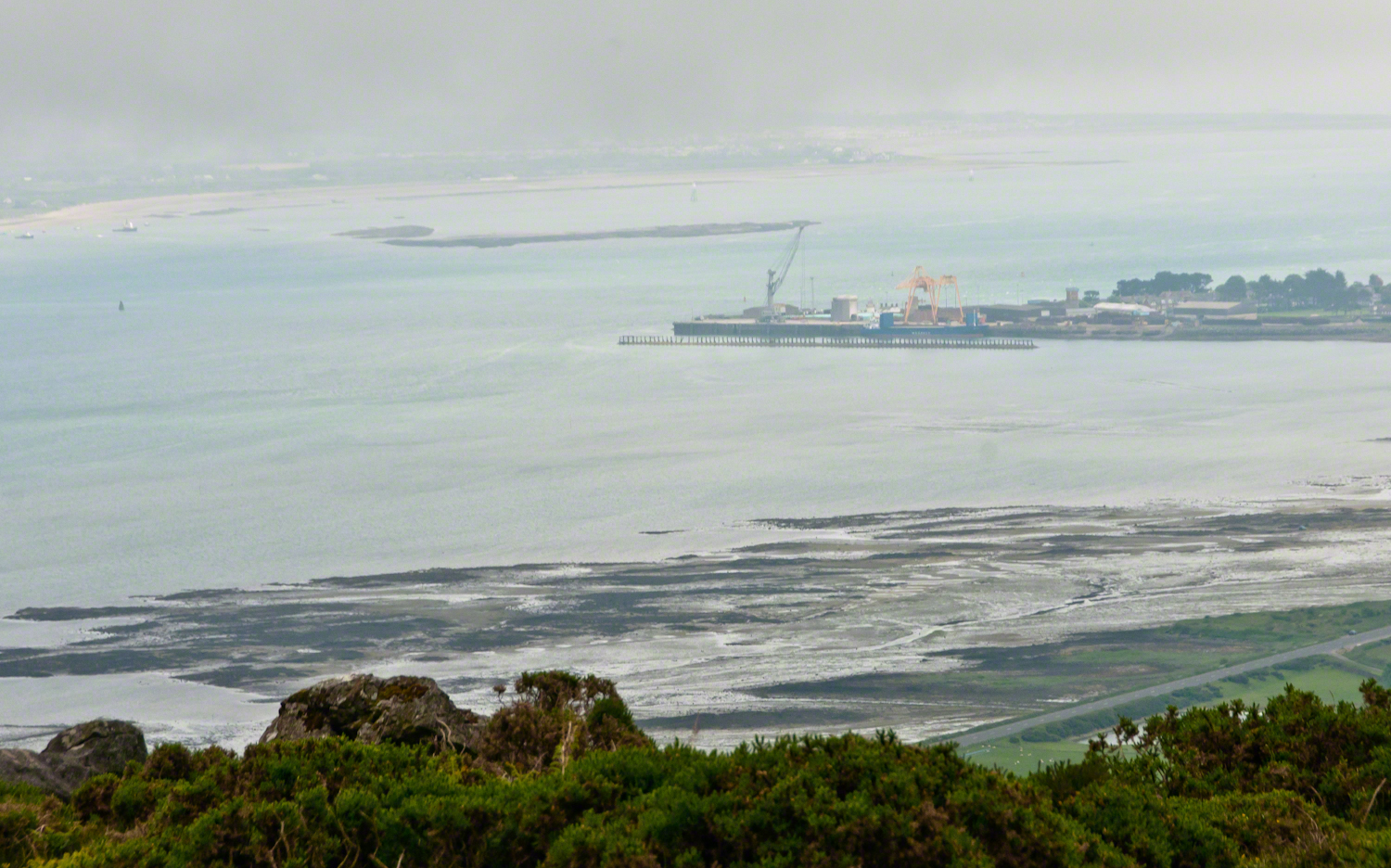
Residential Carlingford continues along the Greenore Road, farmland adjoins then continues southeast along the Cooley Peninsula margin, the Irish Sea beyond. Greenore Town and deep water port on upper left.  These photographs are views from the Tain Way on the slopes of Slieve Foye, the highest mountain of County Louth.

Greenore Town and Deepwater Port
Click this link for my Ireland gallery of Fine Art Photography.

Wander through the place names: Chapel Hill, Liberties of Carlingford, Moneymore, Leminageh, Crossalaney, Mullatee, Millgrange, Ramparts, Muchgrange, Ballyamony, Mullabane, Petestown, Ballagane, Willville, Whites Town.


There is a deepwater port on Carlingford Lough adjacent to and part of Greenore Town. The port employed Cousin John Mills years ago, supplementing his farm income. Across the lough is Greenecastle, Newry in Northern Ireland.

Greenore Town and Deepwater Port

The Irish Sea opens on the far side of Greenore with the Isle of Man about 52 miles east and a little north.

Visit the opening chapter of our time on the Tain Way

Click link for the next posting of this series, “Leprechaun Rock along the Tain Way”

Copyright 2021 Michael Stephen Wills All Rights Reserved

Overlapping Hepatica and Trillium Blooms

four of a kind

Click here for my Getty flower photography.

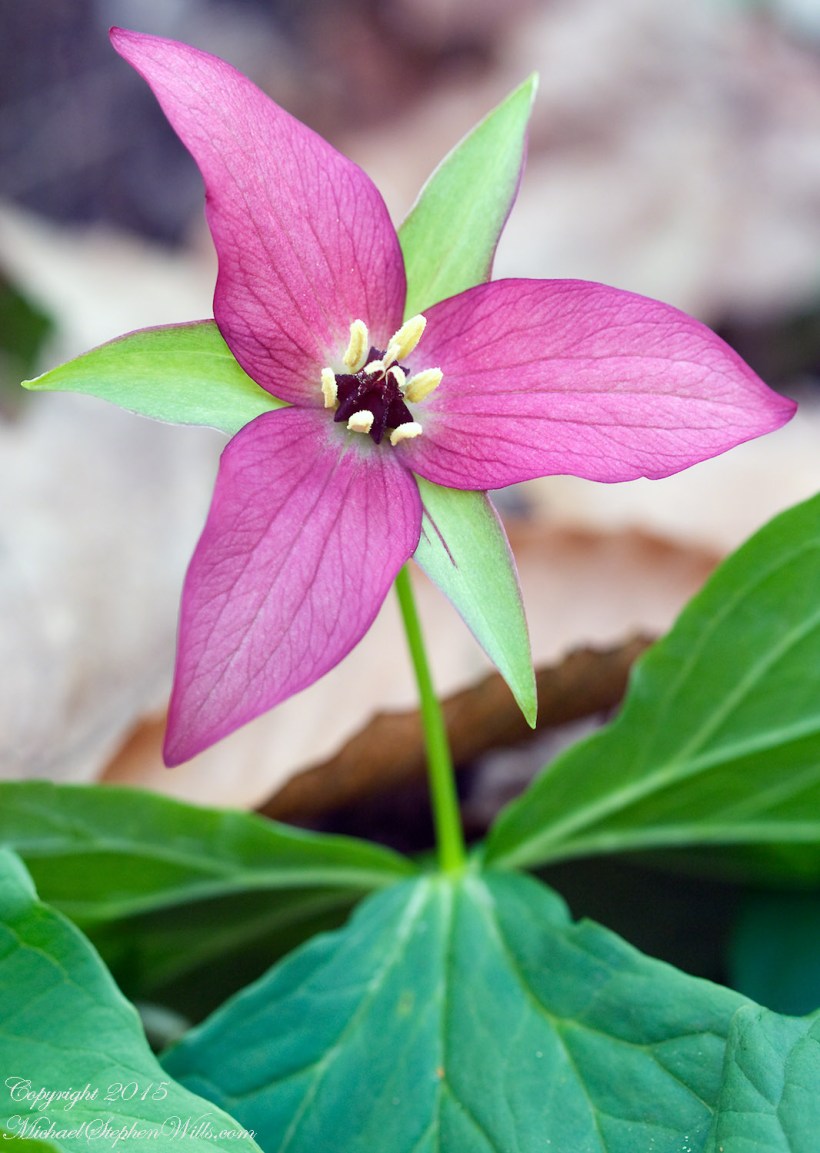
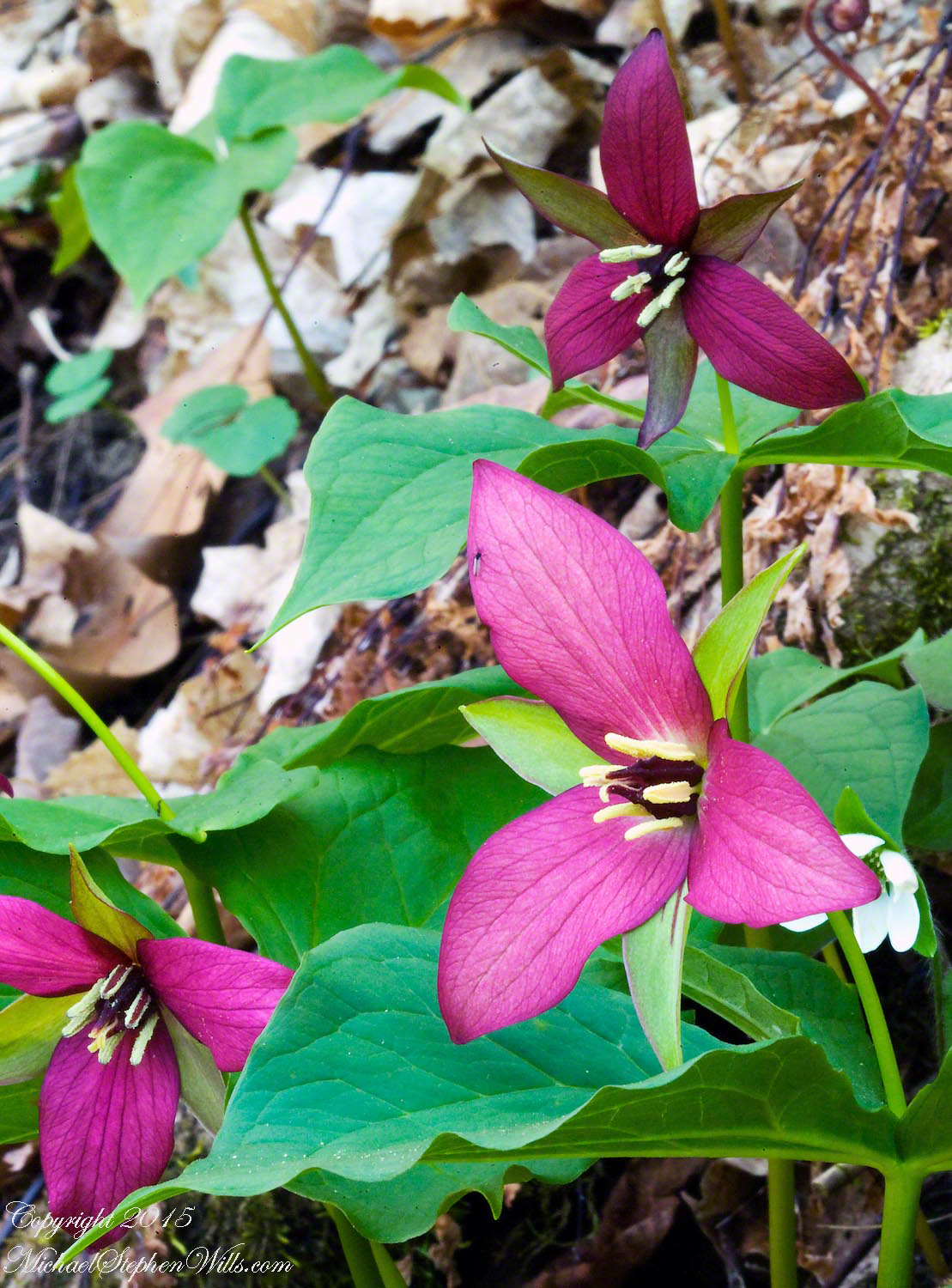
Four views of purple trillium, three of a grouping and one portrait. Taken in the same session of a rare set of perfect blooms growing wild.

Taken with a Canon 100 mm “macro” lens, a Kodak dslr body, a Manfrotto tripod and ample time and patience.

Enjoy!

Fillmore Glen Purple Trillium

The trillium plant grows from a body of rhizomes, a type of underground stem you can think of as a type of root. There are rhizomes when use to flavor food such as turmeric, though trillium is not one of these.

Fillmore Glen Purple Trillium

The single scape grows straight from the ground to form a whorl of three bracts mirrored by the three green (usually) sepals and, again, by the three flower petals for which it is named.

You can clearly see all of this in my photographs.

Fillmore Glen Purple Trillium

Fillmore Glen Purple Trillium

Copyright 2021 Michael Stephen Wills All Rights Reserved

Long Island Sakura (Cherry Blossoms)

Clouds of Blossoms

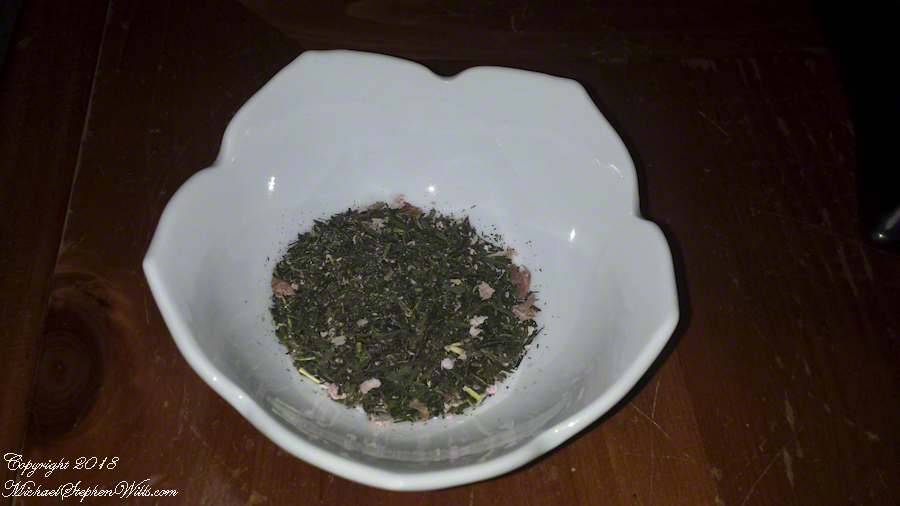
We have a selection of teas at home for brewing afternoons as a pick-me-up. Some brought back from travels, most from a local supermarket. This Japanese green tea brings to mind my childhood and our trips to Long Island to visit my Mom until she passed away June 2013.

As you can see from this photograph of the tea in a white lotus bowl, there are pieces of pink and white stuff mixed in. These are called by the Japanese “sakura”, cherry blossoms.

Click any photograph for my Getty portfolio.Japanese Sakura Sencha Green Tea – CLICK ME for my Getty Portfolio.

In Japan, since the 8th century, “Hanami” is the centuries-old practice of picnicking under a blooming sakura or ume tree. Here in the United States, the National Cherry Blossom Festival is celebrated commemorating the 1912 gift of Prunus serrulata Japanese cherry trees from Tokyo to the city of Washington.

Traditionally cherry blossoms remind the Japanese of clouds, the blooms come out en mass, the tree changes shape with the breeze.  Viewing sakura brings to mind thoughts of the transience of existence, the fragility and transience of the exquisite blooms leads one to appreciate the moment.  The following photograph of Pam was taken a month before my Mother’s sudden decline and passing in 2013.  We’d travel to Long Island several times a year to visit her, then take in familiar sights.

The tree over Pam is called a Shirofugen (Scientific name: Prunus serrulata, of the Rosaceae family) and is one species planted around National Tidal Basin, Washington D.C. Shirofugen blossoms are described “Flowers double, deep pink at first, fading to pale pink.”


Click any photograph for my Getty portfolio.Pam with a Shirofugen Flowering Cherry in bloom – CLICK ME for my Getty Portfolio.

Growing up, our family visited the Planting Fields, a state park, several times in the spring and summer. As an adult with a growing family in Glen Cove, right around the corner, the Planting Fields were a welcome outing and visited several time times a year. The following photograph, taken that same May 2013 day, was a favorite park scene.

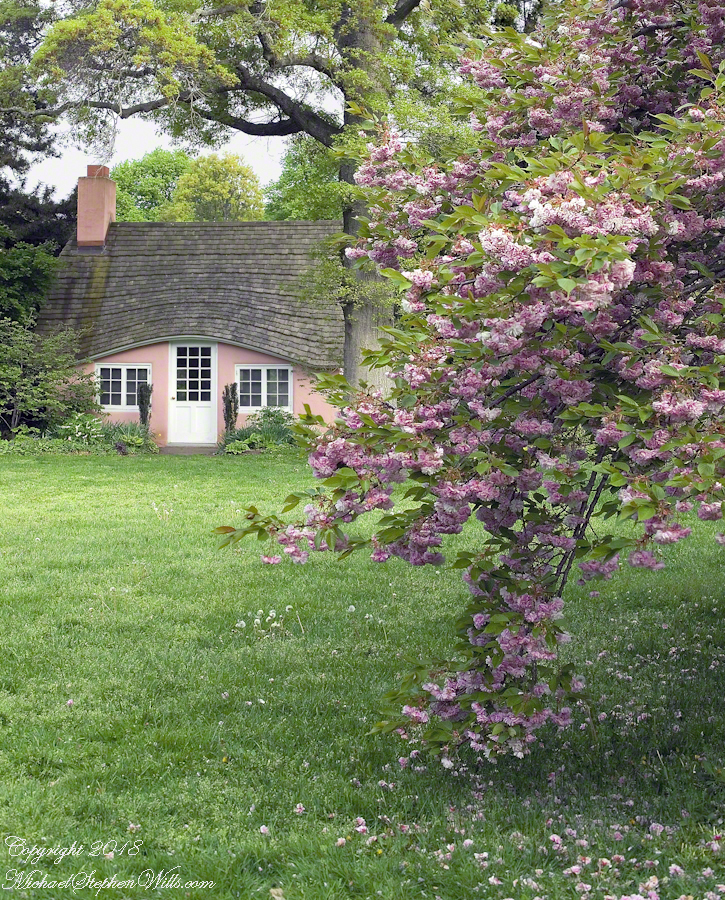
The two flowering cherry trees in the foreground are a type of Japanese sakura called Yoshino, one the most popular flowering cherries in temperate climates worldwide. All Yoshinos are clones from a single grafting and propagated throughout the world. The scientific name outlines the cross breeding of this variety, Prunus X Yeaoensis. Behind the cherries is an Oak tree, new leaves a bright green, and a pink child’s playhouse cottage.

A changing scene of the park is the now frequent visits by wedding parties and photographers, groups of Asian people, the bride and groom posing under the clouds of blossoms. By frequent I mean a steady stream, one after the other, when the blossoms are full.

Click any photograph for my Getty portfolio.Playhouse with Flowering Cherry and Oak trees – CLICK ME for my Getty Portfolio.

In 2007 I spent hours framing and capturing the following photograph on a Saturday, the day before Mother’s Day, during a visit to my Mother, who was widowed December, 1995. I used an inexpensive tripod, a Kodak DCS Pro slr/c camera body with the Canon 50mm f 1.4 USM lens, a UV filter and lots of time. There were no interruptions that day, at 5:30 pm I had the area to myself.

This child’s garden playhouse, framed by an ancient oak, pink Japanese cherry blossoms and gracious lawn was awarded a Photographic Society of American, Pictorial Print Division, Print of the Month award, published in the society magazine for that month.

My online gallery (see link below) “Memories, Dreams, Reflections”, has this print available for sale on high quality photographic stock with optional framing.

This week, I submitted the photograph for my Getty portfolio.  As of today, I have not received their decision.

Click any photograph for my Getty portfolio.Playhouse – CLICK ME for my Getty Portfolio.

Please browse my reasonably priced stock photography.  License a photograph, download and use it for your website or blog.  Click this link to browse all my Getty IStock Photography offerings.

Or click this link to purchase a print of “Playhouse” with optional custom framing from my Fine Art Gallery.

Loughan Bay Ruins, County Antrim

Deserted Cottages above the Irish Sea

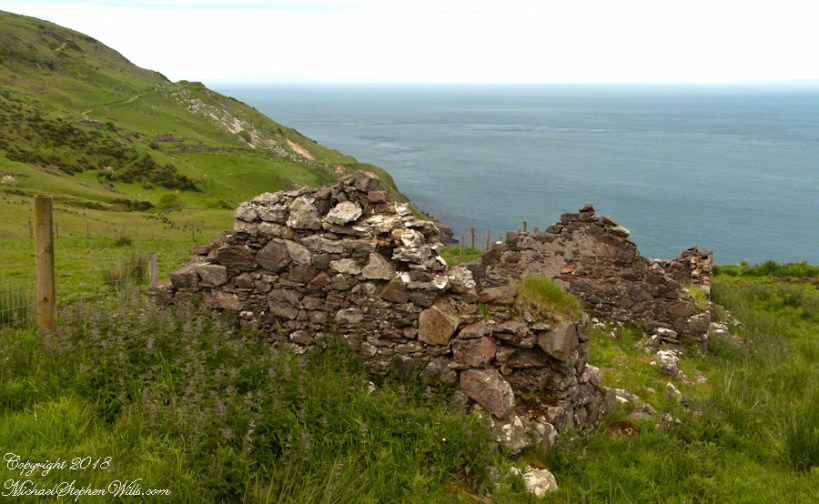
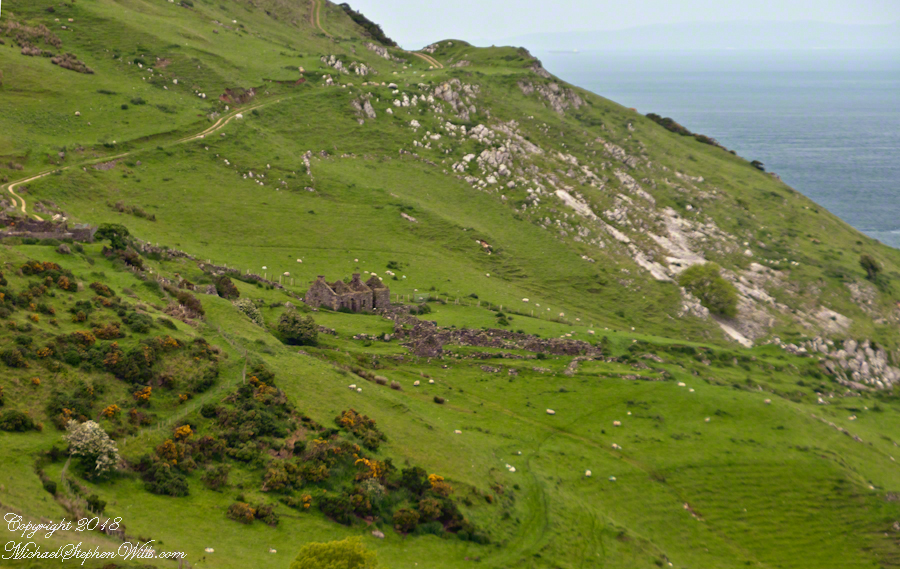
We pulled off the side of Torr Road for this fine view on the way to Torr Head to take in this view of the Irish Sea.  The steeply rising distant headland is the Mull of Kintyre. Loughan an Lochan, County Antrim, Northern Ireland.

Michael Wills – CLICK ME for my Getty Portfolio.

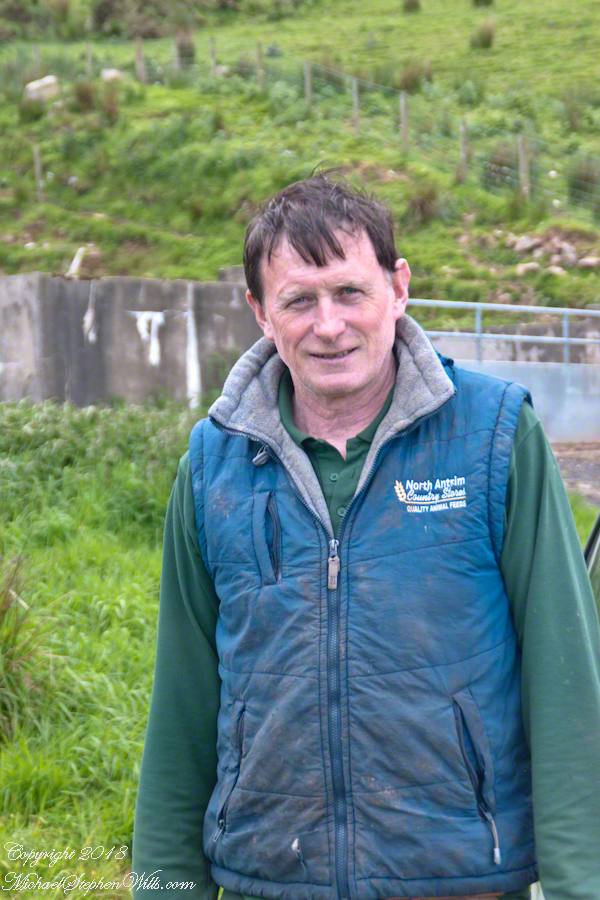
We parked on a turnout above the Loughan Cottages, near this farmer’s sheep pen.  He drove up in a huge tractor and conversed with Pam while I was below shooting the cottages. He made a good impression.

Loughan Bay Farmer – CLICK ME for my Getty Portfolio.

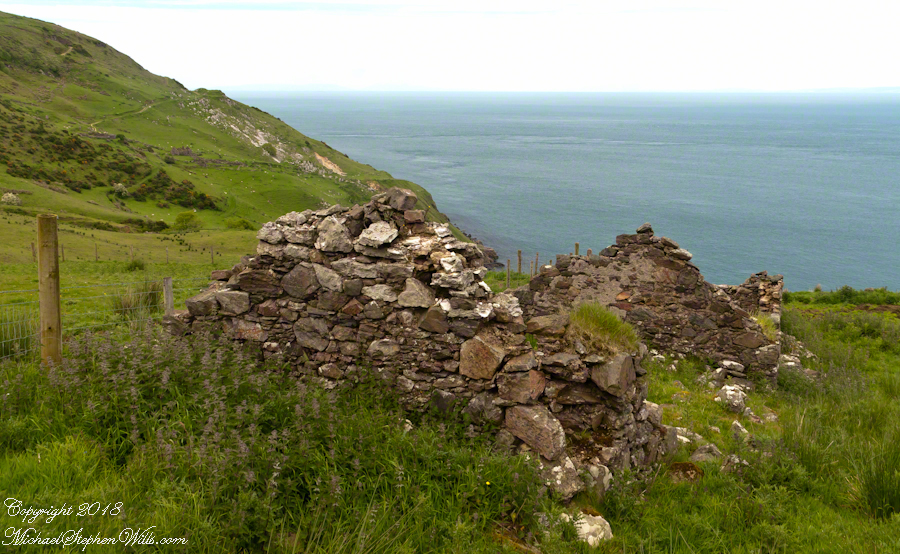
Roofless walls of a cottage more substantial than the other deserted ruins above Loughan Bay, with two fireplaces a walled porch with a view. A number of outbuilding foundations lay around. The integrity of the walls, chimneys and gables speaks to the quality of construction. A freighter in the North Channel of the Irish Sea is visible in the distance above the upper ridge. Beyond is the island of Islay, Scotland, about 30 miles distant. Loughan an Lochan, County Antrim, Northern Ireland.

I am happy to report a series of thirteen (13) photographs of these ruins were accepted for publication by Getty.  You can click any of the photographs in this posting for my Getty portfolio.

Loughan Cottages Ruins above Crockan Point – CLICK ME for my Getty Portfolio.

The land slopes steeply to a rocky beach.

Ruin Above Loughan Bay – CLICK ME for my Getty Portfolio.

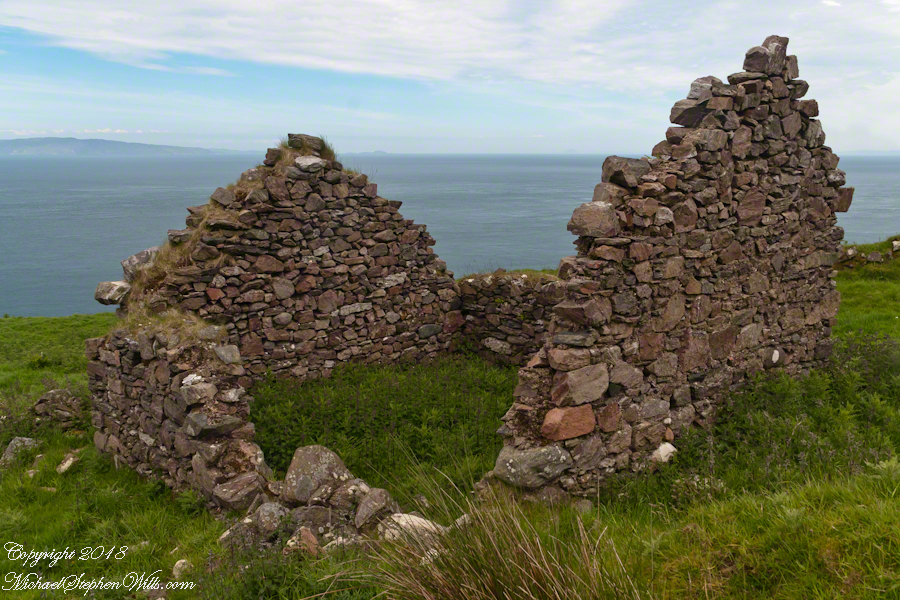
A thick growth of ferns, grass on the gable was once a home with a view of Scotland’s Mull of Kintyre 13 miles across the North Channel of the Irish Sea.  The Isle of Sanda just visible on the right of the far gable.  A landform named Alisa Crag is just visible in the distance, to the left of the nearest gable. 

Single Room Loughan Bay Cottage – CLICK ME for my Getty Portfolio.

Please browse my reasonably priced stock photography. License a photograph, download and use it for your website or blog. Click this link to browse all my Getty IStock Photography offerings.

Or click this link or any photograph or this link to select a print with custom framing from my “Ireland” Fine Art Gallery.

Interested in learning more about this site?  I have a series of postings on Loughan Bay.  Click for the first posting in this series.

Copyright 2021 Michael Stephen Wills, All Rights Reserved.

Blessing of the Bonnets

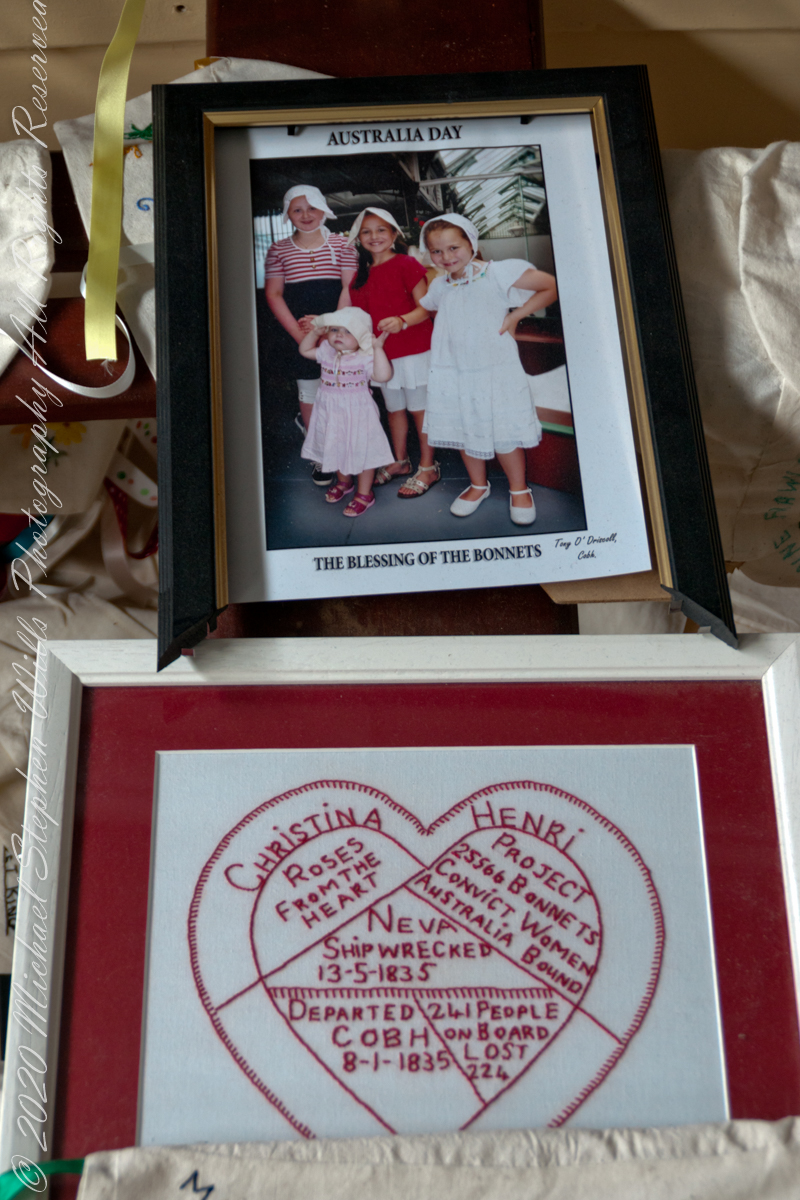
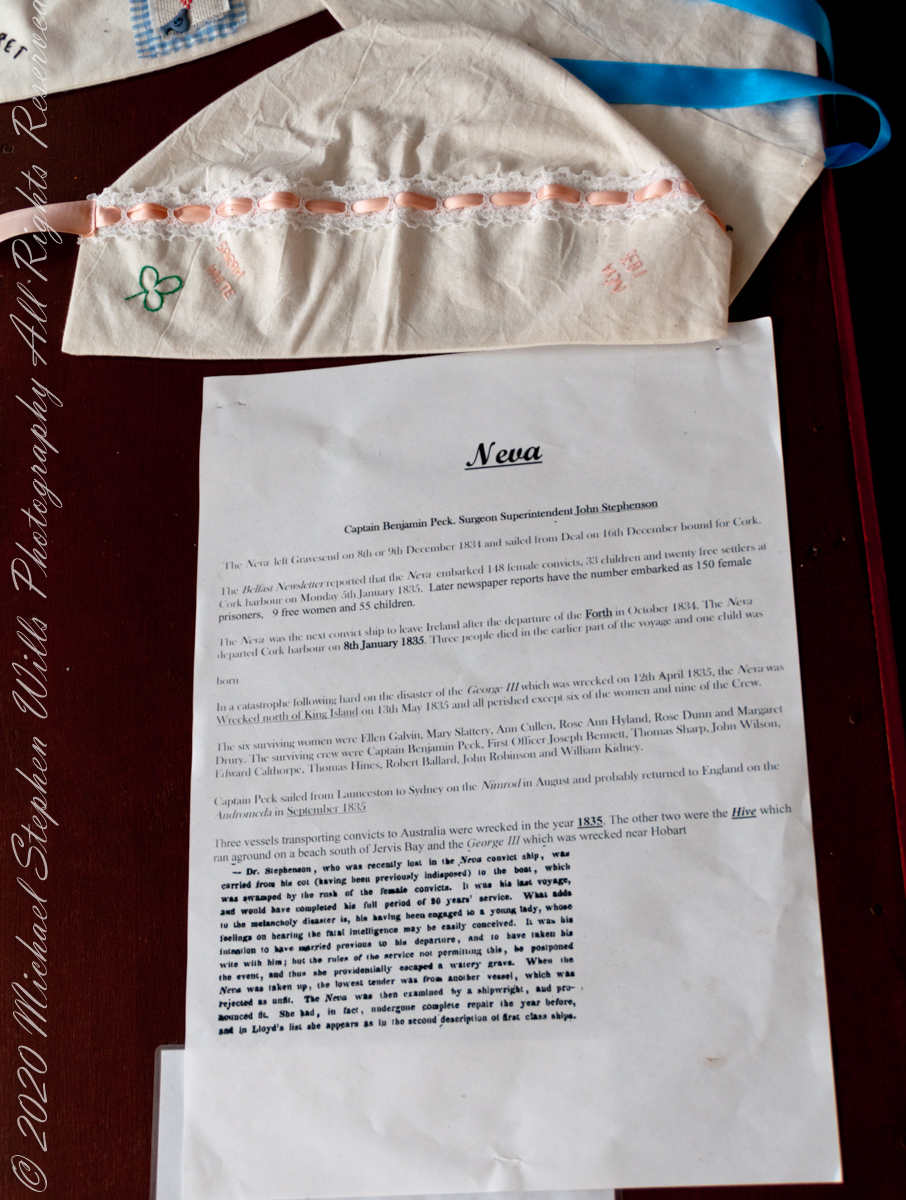
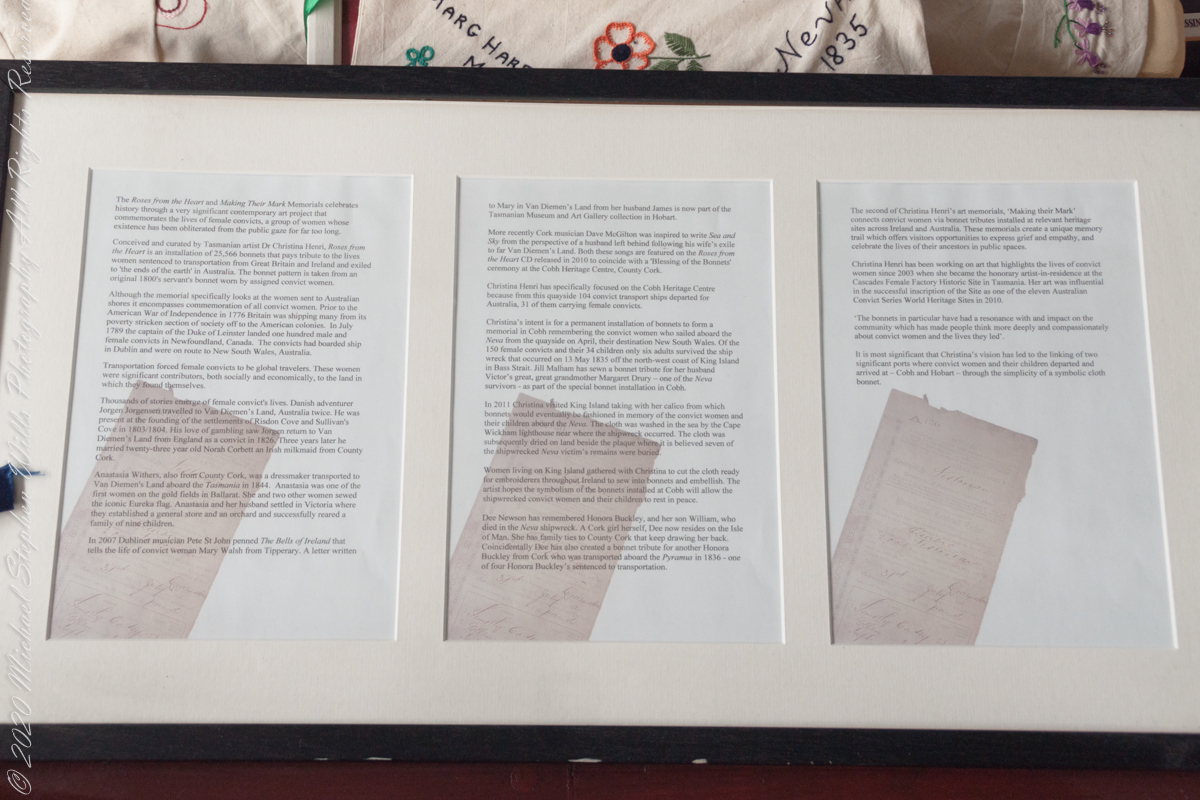
In 1835, the convict ship Neva, carrying 241 people, wrecked near Australia resulting in massive fatalities, excluding 15 survivors.

January 1, 1835 the “convict” ship “Neva” departed from Cobh harbor for Sydney, Australia. The 241 people on board included 150 female “convicts”, their 33 children, 9 “free” women (probably the wives of convicts) and their 22 children, 27 crew. During the passage three persons died, one child was born. About 5 a.m. on May 13, 1835 the Neva hit a reef northwest of King Island in Bass Strait and broke apart rapidly. Twenty two survivors drifted ashore on two rafts formed by the fore and aft decks of the wrecked ship. Seven women died of exposure the first night ashore. Fifteen, six women and nine crew, were later rescued. No children survived.

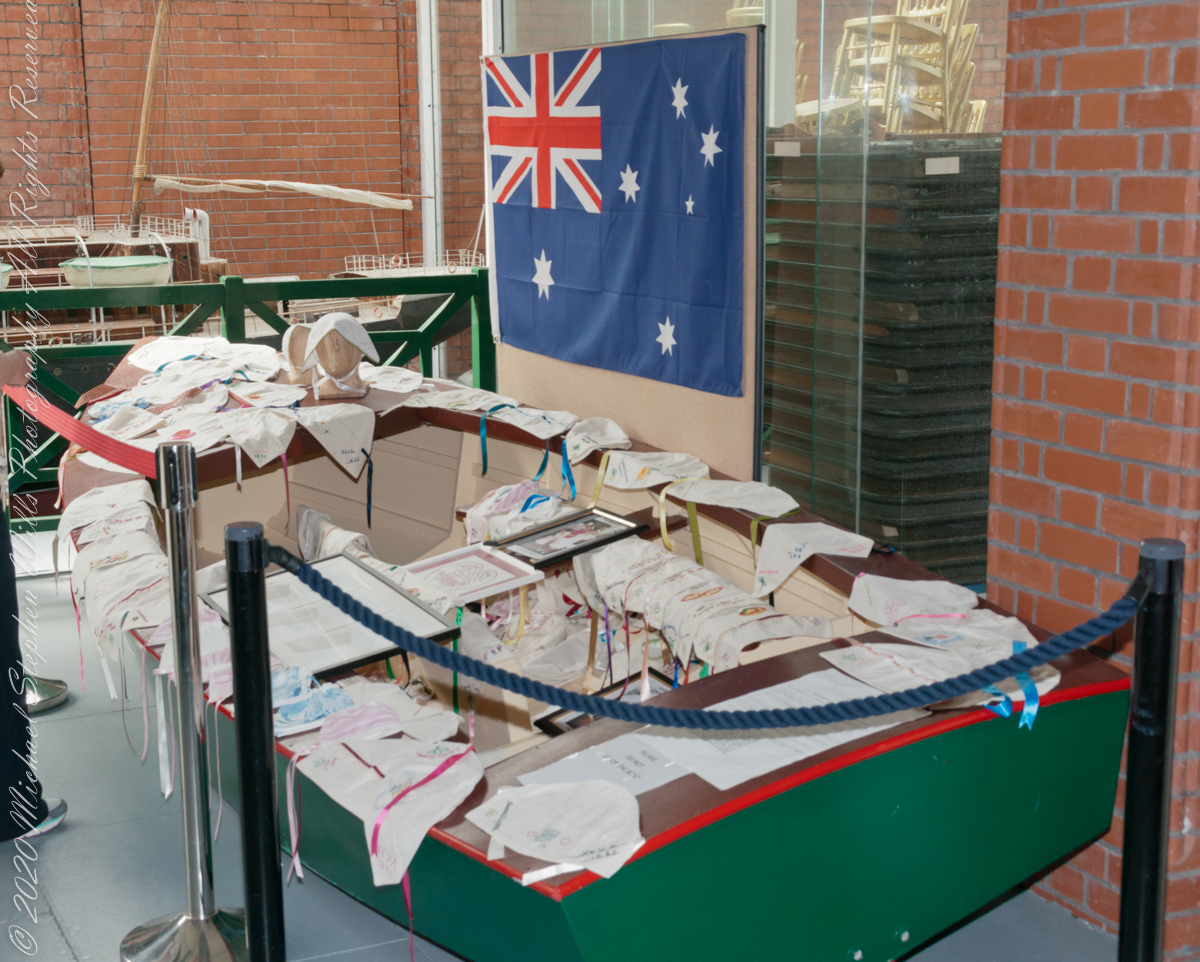
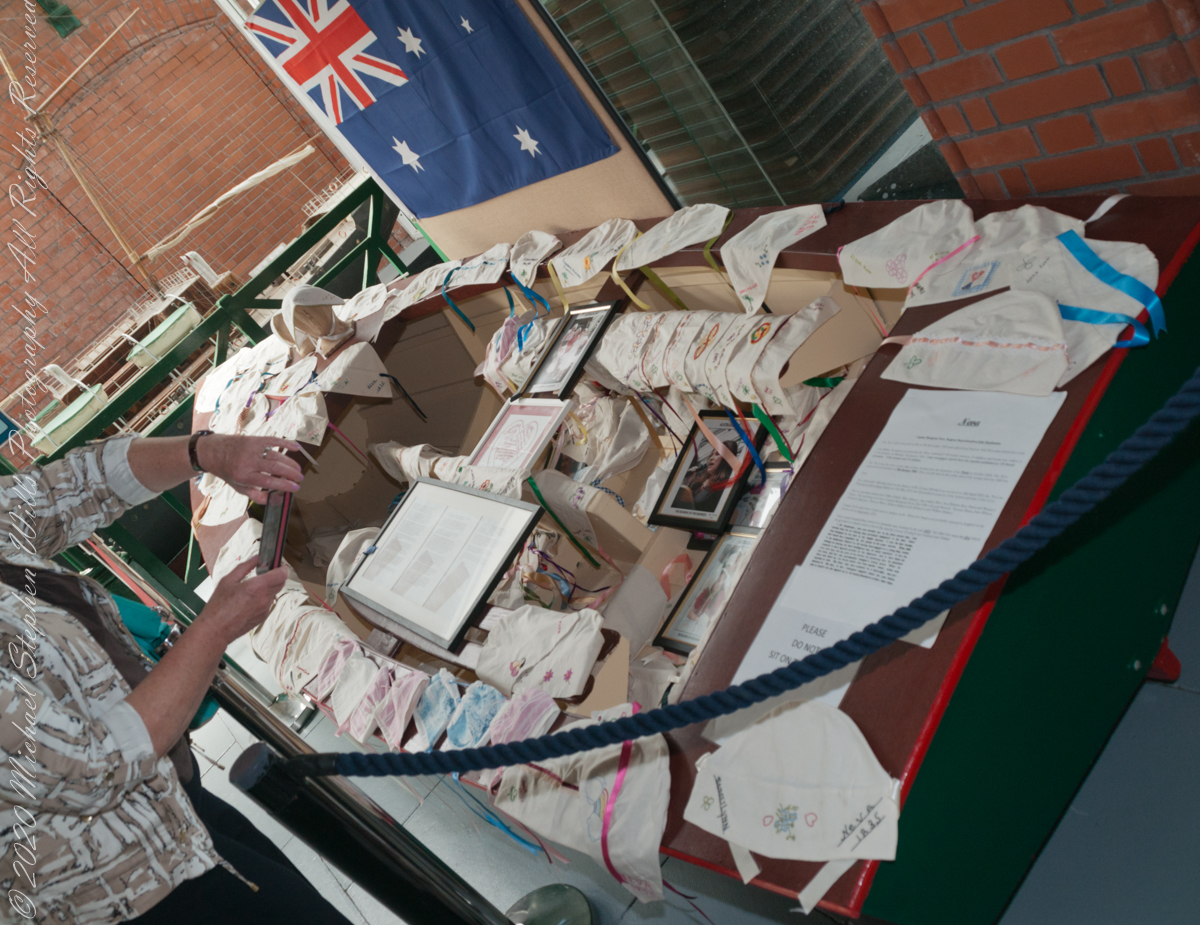
Between 1791 and 1853 approximately 26,500 Irish people were forcefully transported to New South Wales. The 25,566 bonnets crafted for this project represent lives of female “convicts”. The slide show are photographs of the exhibit, Cobh Heritage Center, County Cork, Republic of Ireland.

Copyright 2021 Michael Stephen Wills All Rights Reserved

Queenstown personal connection

Cobh Heritage Center

The Irish Free State was four months old when my then 35 year old Grandfather and Grandmother boarded the S.S. Montnairn out of Belfast. My mother, two months short of three years of age, accompanied them on this voyage to a new life as Canadian citizens. This slideshow is a mix of images from the Cobh Heritage center and my personal genealogy materials.

Copyright 2021 Michael Stephen Wills All Rights Reserved

Personable Wildflowers

With wishes for a Blessed Easter 2021

Late one April afternoon these backlit Hepatica on the gorge wall above the South Rim Trail of Treman Gorge posed for their portraits.

Click me for the first post of this series.
Click me for “Finger Lakes Memories”, a gallery of fine art photography.
Copyright 2019 All Rights Reserved Michael Stephen Wills