Autumn Reflections: The Majesty of Acer Rubrum

On a serene autumn afternoon by Beebe Lake, a solitary red maple stood out against the backdrop, showcasing its vibrant colors and resilience, symbolizing autumn’s fleeting beauty.

It was one of those serene autumn afternoons that linger in memory, the kind where the sky seems impossibly clear, the air crisp and gently scented with fallen leaves. I stood at the edge of Beebe Lake, my gaze first drawn to the textured concrete dam holding back the water, its weathered facade contrasting sharply with the soft reflections shimmering across the lake’s calm surface. Beyond, the wooded hillside rose gently, a tapestry woven with the warm hues of autumn—golds, greens, oranges, and reds mingling like brush strokes on a canvas.
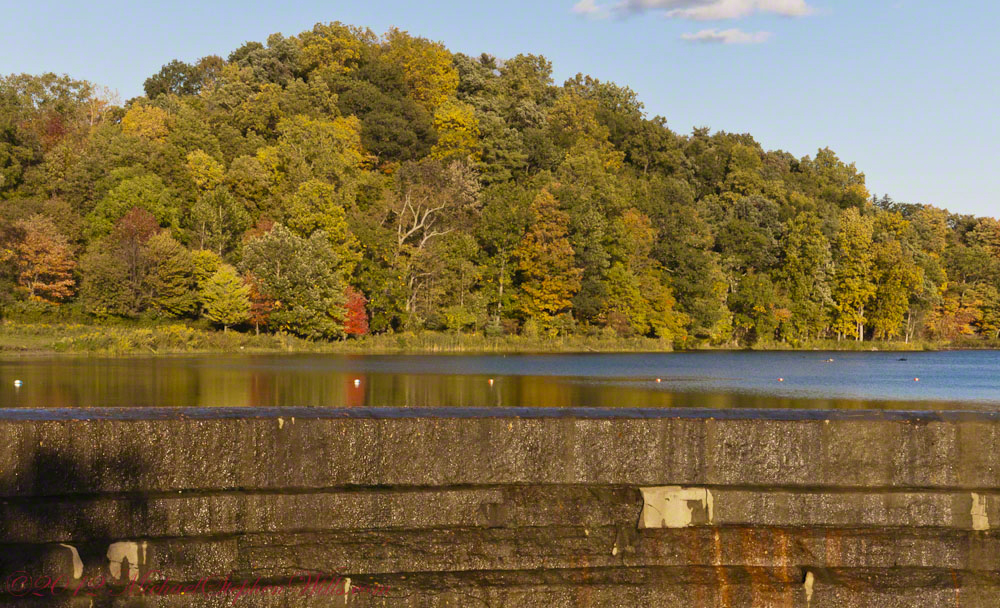

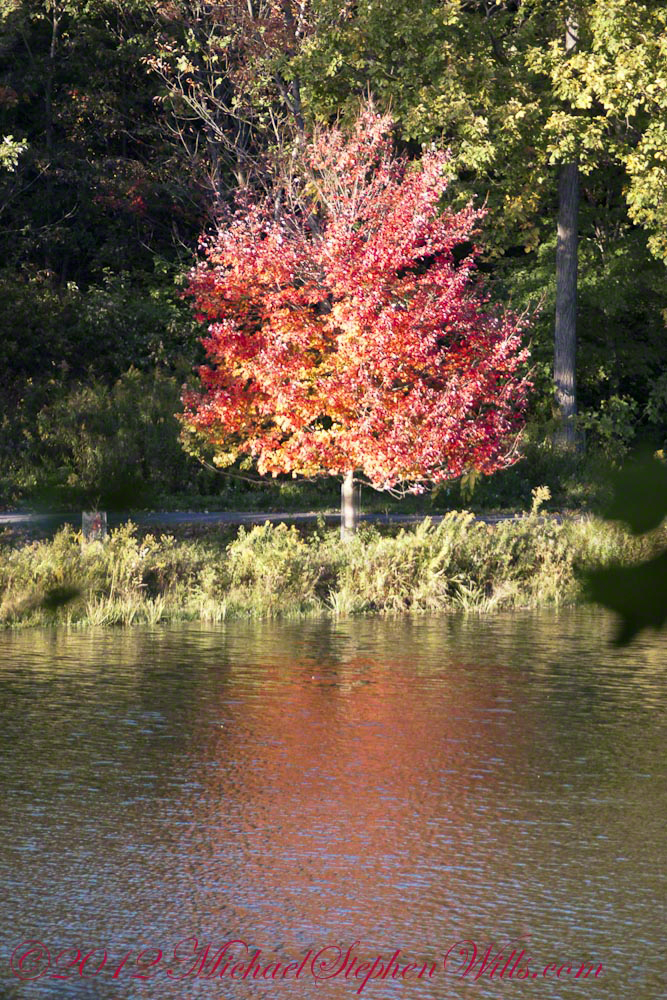
An October Glory, turning before all others

Yet amidst this collective beauty, one tree captured my attention, singular in its brilliance—a solitary red maple standing proudly on the lakeshore. Its leaves had turned a vivid crimson, blazing brightly as though defying the muted earth tones surrounding it. Even from a distance, framed and partially obscured by larger trees, its vibrant reflection cast a fiery echo on the water, rippling softly in the afternoon breeze.

The maple, Acer Rubrum, seemed perfectly at home here, thriving robustly at the water’s edge. I remembered reading how adaptable red maples are, able to flourish in conditions ranging from dry uplands to swampy shores. This spot, near the edge of the tranquil Beebe Lake, seemed to showcase its resilient character perfectly.

Up close, the maple’s glow was even more striking. Its leaves cascaded in fiery clusters, hues deepening from bright scarlet at the tips to a darker maroon closer to the branches. This dramatic gradient seemed symbolic of autumn itself—beautiful, fleeting, and subtly tinged with the melancholy reminder of winter’s approach.

The Red Maple (Acer Rubrum) to tolerant of diverse conditions, making it a perfect choice for this spot on the short of Beebe Lake.

A memory surfaced of early spring in the Finger Lakes region, a time when maples, including this red maple, generously share their sap. Though not traditionally tapped like its sweeter cousin, the sugar maple, this species’ sap can indeed be boiled down into syrup, a surprising sweetness hidden within its sturdy trunk. Standing in its shadow, imagining those early spring days, it seemed astonishing that the same tree could offer both the delicate sweetness of syrup and the fierce beauty now on display.

Curiously, the transformation of the tree appeared methodical yet whimsical—it changed colors from the top down, its upper branches already bare, exposing slender twigs pointing skyward. Like an artist carefully removing layers to reveal something deeper beneath, the maple unveiled its upper bare bones first, as though reminding observers of the quiet strength supporting its autumn splendor.
This Red Maple (Acer Rubrum) turns from the top down and has already bare for most top branches.

As I lingered, taking in this turning tree, joggers passed by along the path, their rhythmic footsteps a gentle percussion beneath the rustling leaves. Briefly, they glanced toward the vivid maple, perhaps drawn, like me, by its striking contrast to the surrounding foliage. It felt like we shared a secret admiration for this singular tree, recognizing in it a quiet assertion of individuality amidst conformity.

Eventually, I viewed the maple once more from afar, framed now by broader sweeps of branches and leaves, partially obscured but no less vivid. Through layers of leaves and dappled sunlight, it glowed like a distant flame, a beacon that seemed to encapsulate the entire mood of the season—warm yet cool, bright yet transient.
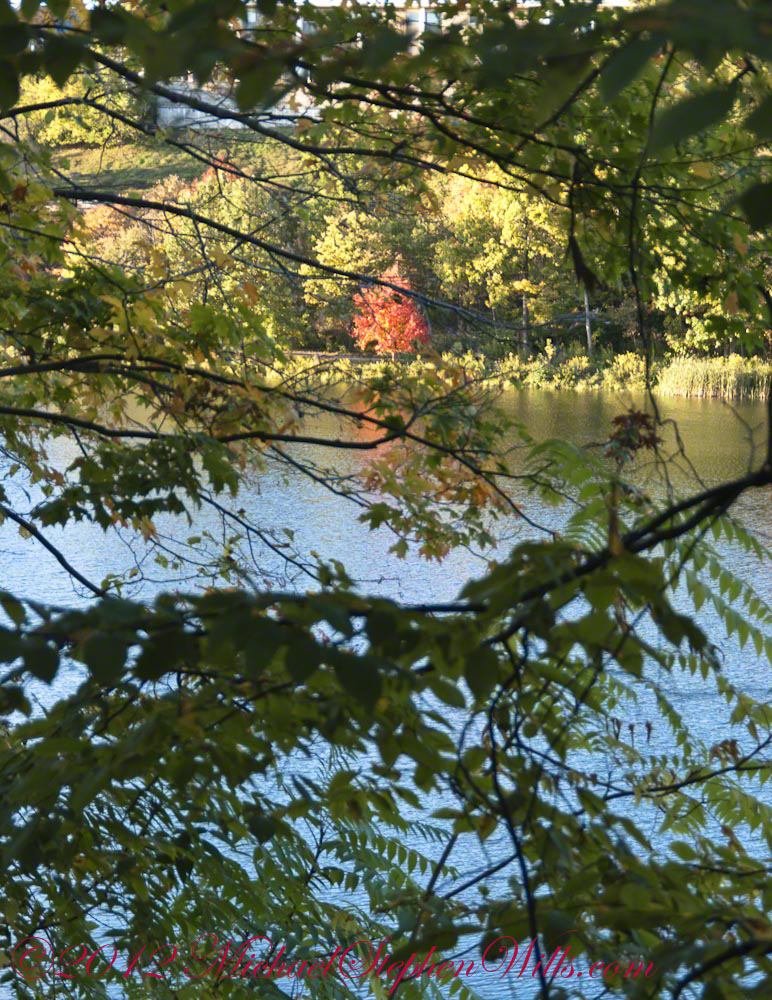
The Red Maple (Acer Rubrum) is the first to flower in spring and the first to turn in autumn.

Walking away, the image of that maple lingered, its reflection shimmering gently in the afternoon sun, a moment suspended between summer’s lush vitality and winter’s bare stillness. Beebe Lake had offered scenic beauty, a quiet meditation, a reflection mirrored not only on its tranquil surface but in the heart of an observer captivated by a single tree’s fleeting glory.
Enter your email to receive notification of future postings. I will not sell or share your email address.

The Autumn Tapestry of Cayuga Lake: A Journey on the Treman Park Lake Loop

Autumn’s Arrival Along Cayuga Lake

In Autumn 2024, the Treman Park Lake Loop of the Cayuga Waterfront Trail in Ithaca, New York, unfurled a vibrant display of seasonal transition. The natural landscape, adorned with fiery hues of reds, oranges, and yellows, reflected in the rippling waters of Cayuga Lake, creating a harmony of color and light. This is a scenic journey through stories of plant and animal life that call this place home—including the majestic Osprey (Pandion haliaetus) that nests along the shore.

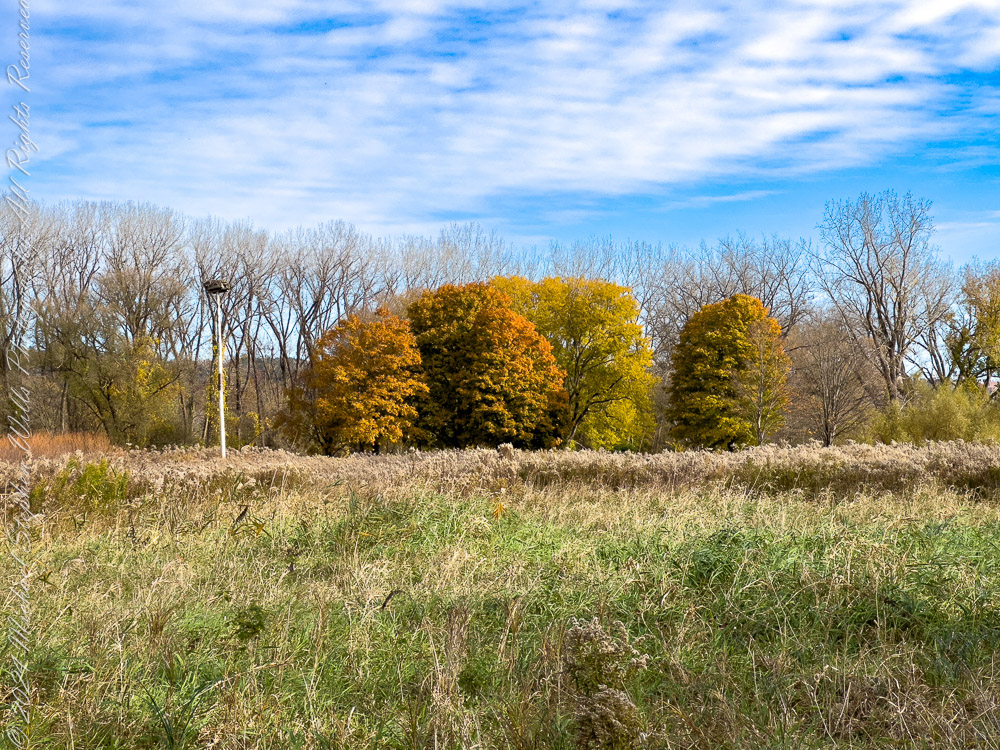
The Osprey’s Watchtower

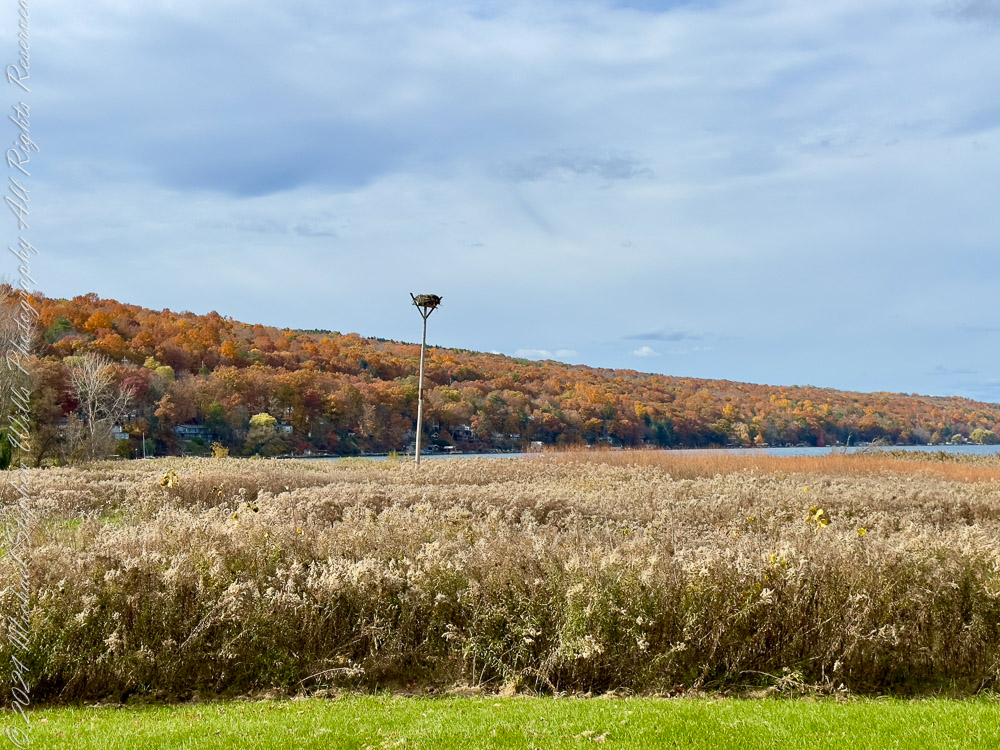
A sight to greet visitors is the solitary osprey nest perched high on a pole. Used by Osprey families during their breeding season, this nest stands as a testament to their remarkable recovery in the Finger Lakes region. Ospreys, once declining due to pesticide use, have rebounded significantly following conservation efforts.

With a wingspan of up to 6 feet, these raptors are expert fish hunters, often seen diving talons-first into the lake to snatch their prey. During autumn, as their young take flight, the nest remains an empty marker of the summer’s success—a reminder of the cyclical nature of life along the lake.

Did You Know? Ospreys are often referred to as “fish hawks” because fish make up 99% of their diet.

The Meadow and Its Golden Touch: Reedbeds and Goldenrod

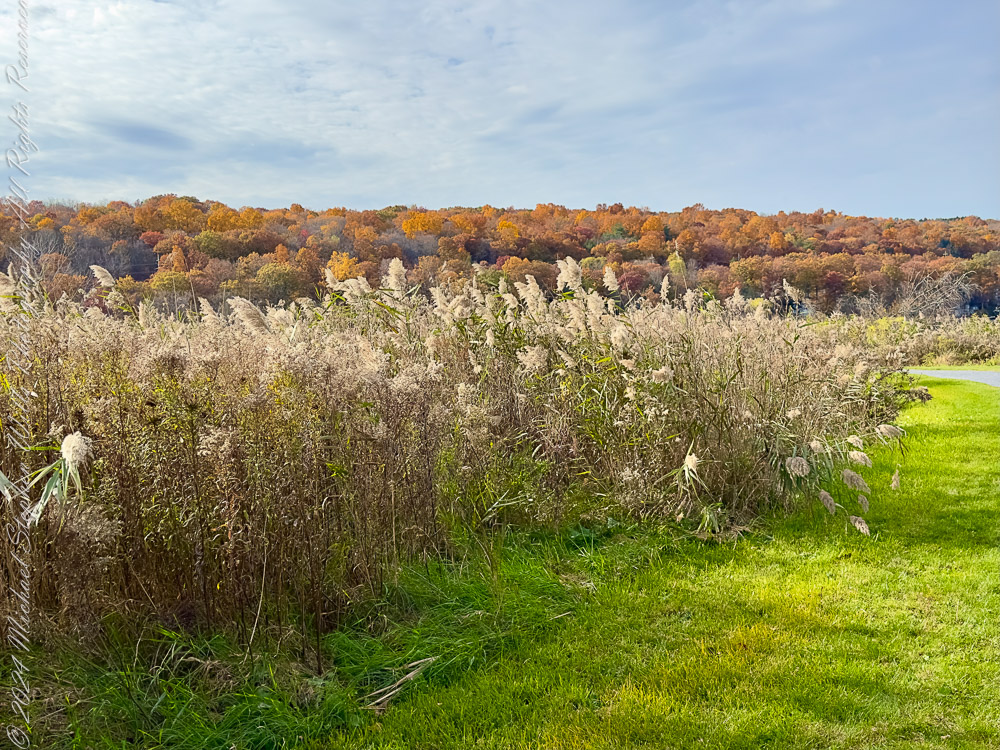
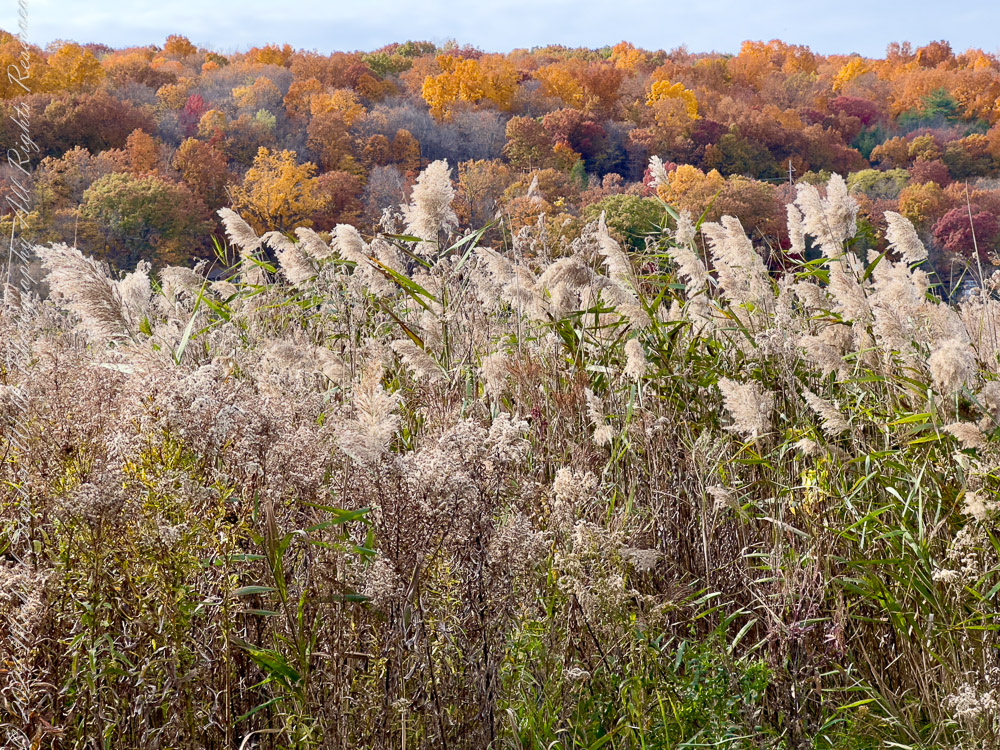
Surrounding the osprey pole, expansive meadows of grasses and reeds sway with the breeze. Among these are stands of Common Reed (Phragmites australis), a tall grass with feathery plumes that catch the sunlight. While Phragmites can sometimes be invasive, they provide crucial shelter and food for various species of birds and insects.

Intermixed with the reeds are patches of Goldenrod (Solidago spp.), whose bright yellow flowers are a signature of late summer and autumn in the Northeast. Goldenrods are critical for pollinators, offering nectar to bees, butterflies, and migrating insects like the Monarch butterfly (Danaus plexippus).

Ecological Note: Goldenrods are often mistakenly blamed for allergies; the real culprit is ragweed (Ambrosia artemisiifolia), which blooms at the same time but releases airborne pollen.

A Lake Alive with History and Beauty

The shimmering blue waters of Cayuga Lake form the centerpiece of this trail. The lake, stretching nearly 40 miles, is the longest of the Finger Lakes and steeped in geological and cultural history. Its name is derived from the Cayuga Nation, part of the Haudenosaunee Confederacy, who inhabited the region for centuries.

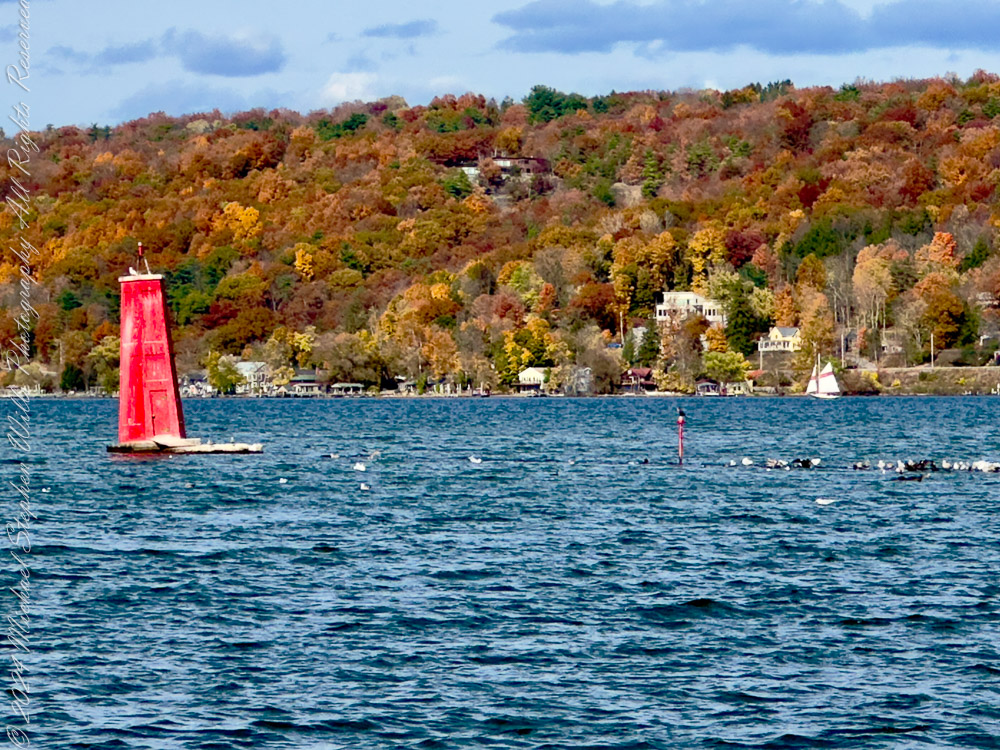
The striking red lighthouse in the water serves as a vivid counterpoint to the natural surroundings. Built to aid navigation, it now stands as a picturesque focal point for photographers and nature enthusiasts alike.

Cayuga Inlet Light Beacon

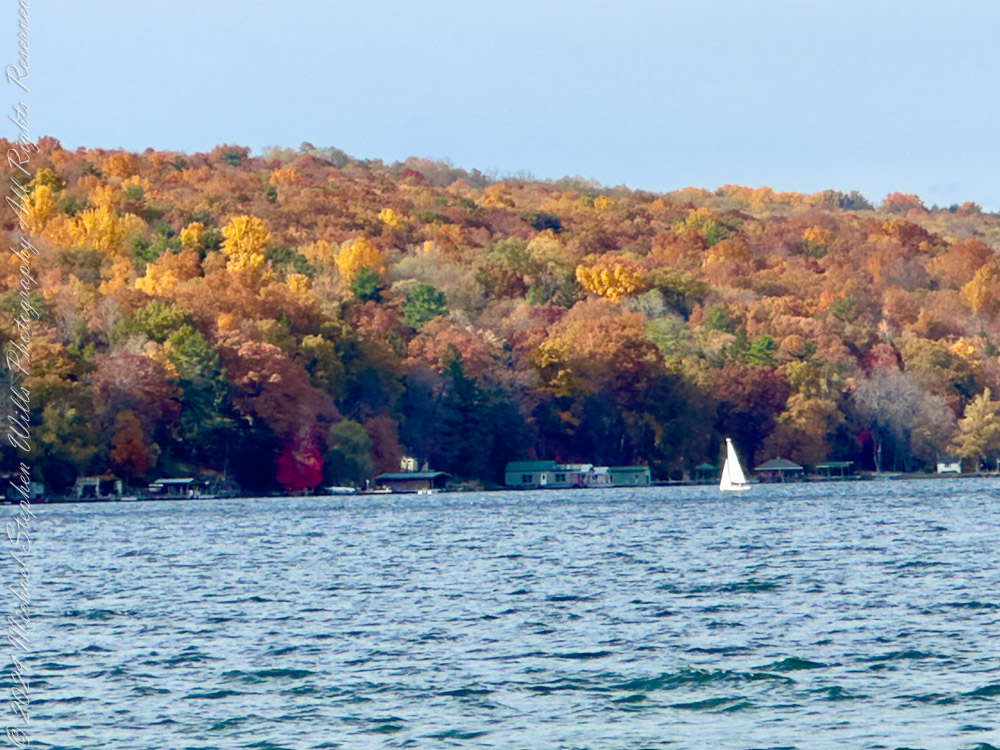
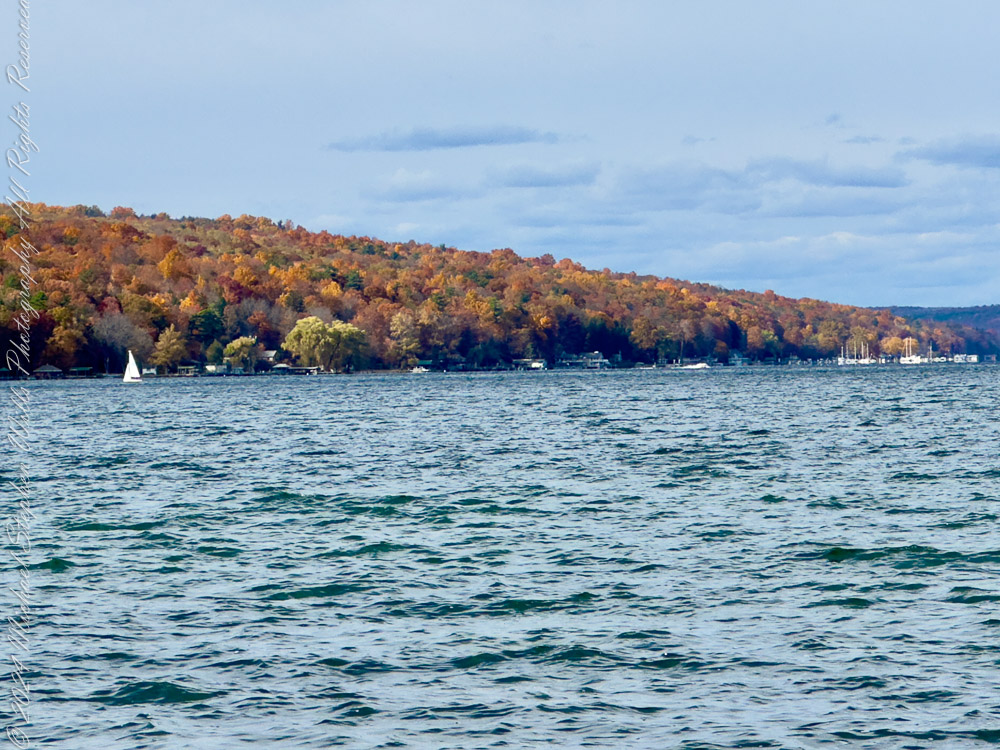
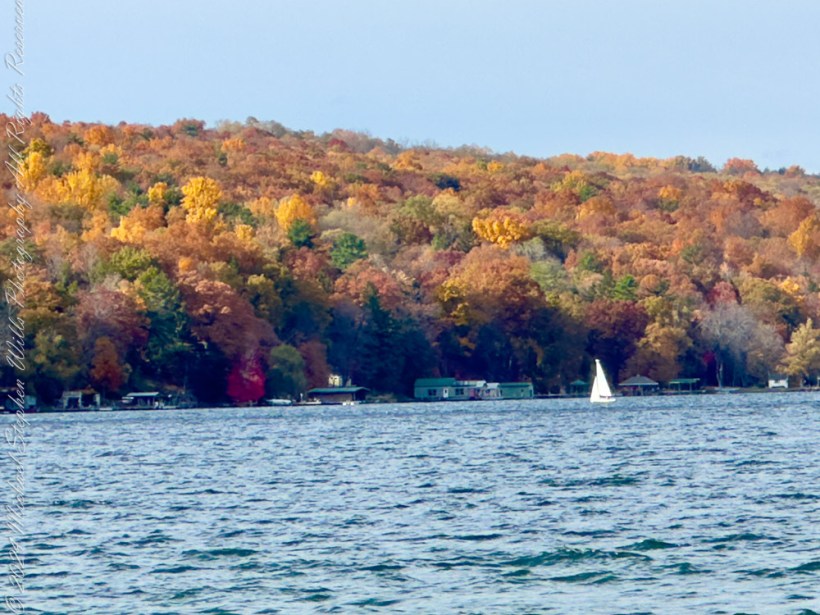
In the distance, a sailboat glides across the lake—a serene reminder of the recreational draw that Cayuga Lake holds year-round.

West shore with sailboat and lake houses

The Forest Fringe: A Kaleidoscope of Color

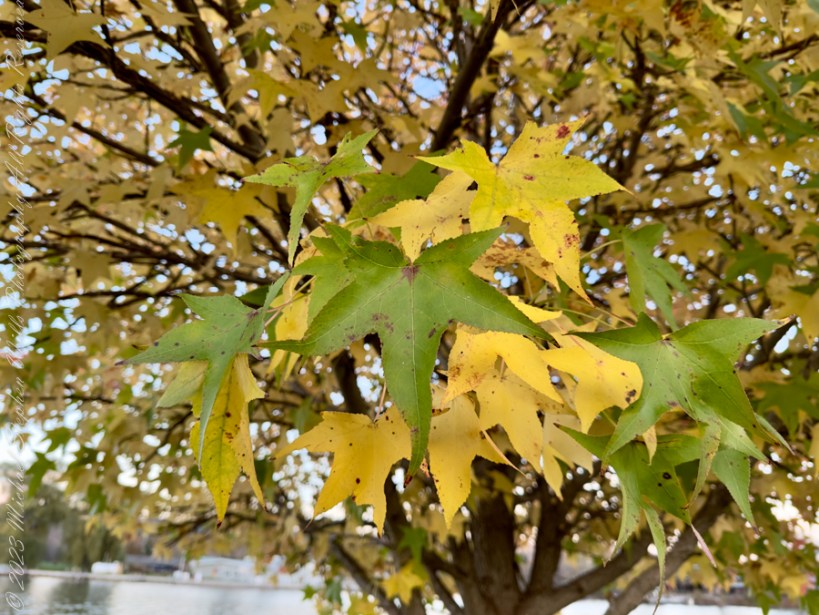
The forests that fringe the meadow and the lake present an explosion of autumn color. Trees such as Sugar Maple (Acer saccharum), Red Oak (Quercus rubra), and Black Cherry (Prunus serotina) dominate the canopy, their leaves transforming into brilliant oranges, scarlets, and deep burgundies. The Sugar Maple, in particular, is renowned for its vibrant golden-orange foliage, a hallmark of the northeastern fall.

The Ithaca Yacht Club lies south of Maplewood Point

Closer to the ground, the understory hums with the activity of migrating birds and foraging mammals. Squirrels can be seen gathering acorns, preparing for the winter months ahead, while chickadees flit among the branches, calling their cheerful “fee-bee” notes.

Historical Fact: The Finger Lakes were carved out by retreating glaciers over 10,000 years ago, leaving behind these deep, elongated lakes and fertile soil that supports rich biodiversity.

A Path Through Time and Nature

Walking the Treman Park Lake Loop is a sensory journey—the crispness of the autumn air, the rustling of reeds, and the rhythmic lapping of waves against the shore combine to evoke a timeless tranquility.

From the vibrant meadows to the osprey’s lofty perch and the quiet expanse of Cayuga Lake, this section of the Waterfront Trail encapsulates the beauty and diversity of the Finger Lakes ecosystem. Whether for quiet reflection or active exploration, it remains a treasured destination in every season.

Closing Thoughts

As autumn deepens, this landscape prepares for the dormancy of winter. Yet the stories it holds—from the osprey’s nest to the goldenrod’s bloom—remain alive, waiting to be rediscovered with each new season. The Treman Park Lake Loop is not just a trail; it is a canvas of life, change, and history painted by nature’s hand.

Reflection: To walk this trail is to connect with a land shaped by glaciers, nurtured by waters, and home to countless species that continue to thrive amid the ever-turning wheel of the seasons.

Enter your email to receive notification of future postings. I will not sell or share your email address.

Hands of Frogs and the Innocence of Babies

Autumn leaves whisper,
By the calm inlet they dance,
Maple’s red embrace,
History in every branch,
Nature’s heart in silent chant.

Continue reading “Hands of Frogs and the Innocence of Babies”

Thayer Preserve: Autumn Still Life 3

on display

Crisp maple leaves among hemlock roots on the bank of Lick Brook, Thayer Preserve. Nestled within the breathtaking expanse of Tompkins County in New York’s Finger Lakes Region, is a canvas where nature paints its most exquisite scenes. This preserve is a symphony of serene landscapes, a place where the tranquility of nature is preserved and cherished.

In this haven, the chorus of birdsong greets the day, echoing through the lush canopy of trees that stand as ancient guardians of the land. Oaks, maples, and hemlocks, some as old as time, stretch their boughs towards the sky, creating a verdant cathedral that shelters a diverse array of flora and fauna. The sunlight filters through these leafy domes, casting dappled shadows on the forest floor, a mosaic of light and life.

Click photograph for larger view. Use combination keys to enlarge/reduce: Ctrl+ (Control / Plus) and Ctrl- (Control / Minus)

The trails of Thayer Preserve meander through this natural paradise, inviting visitors to embark on a journey of discovery. Each path is a narrative, telling the story of the land, from the delicate wildflowers that peek shyly from the underbrush to the stately deer that roam with a quiet dignity.

The preserve is not just a place of beauty; it’s a testament to the delicate balance of ecosystems. Here, conservation efforts intertwine with recreation, ensuring that the splendor of the environment is preserved for future generations. It’s a sanctuary where the hustle of modern life fades, and one can reconnect with the earth’s gentle rhythms.

As the seasons change, Thayer Preserve transforms. Spring brings a burst of color, with wildflowers carpeting the ground. Summer deepens the greens of the forest, while autumn sets the woods ablaze with fiery hues. In winter, a serene blanket of snow envelopes the landscape, turning it into a quiet wonderland.

In the heart of the Finger Lakes Region, Thayer Preserve stands as a beacon of natural beauty and tranquility. It’s a place where the soul can find peace, the mind can wander freely, and the heart can revel in the simple joy of nature’s embrace. This preserve is not just a location on a map; it’s a journey, an experience, a love letter to the natural world.

Click Me to view my photographs on Getty.

Copyright 2023 Michael Stephen Wills All Rights Reserved http://www.MichaelStephenWills.com