On The Edge of Time Above Taughannock Gorge

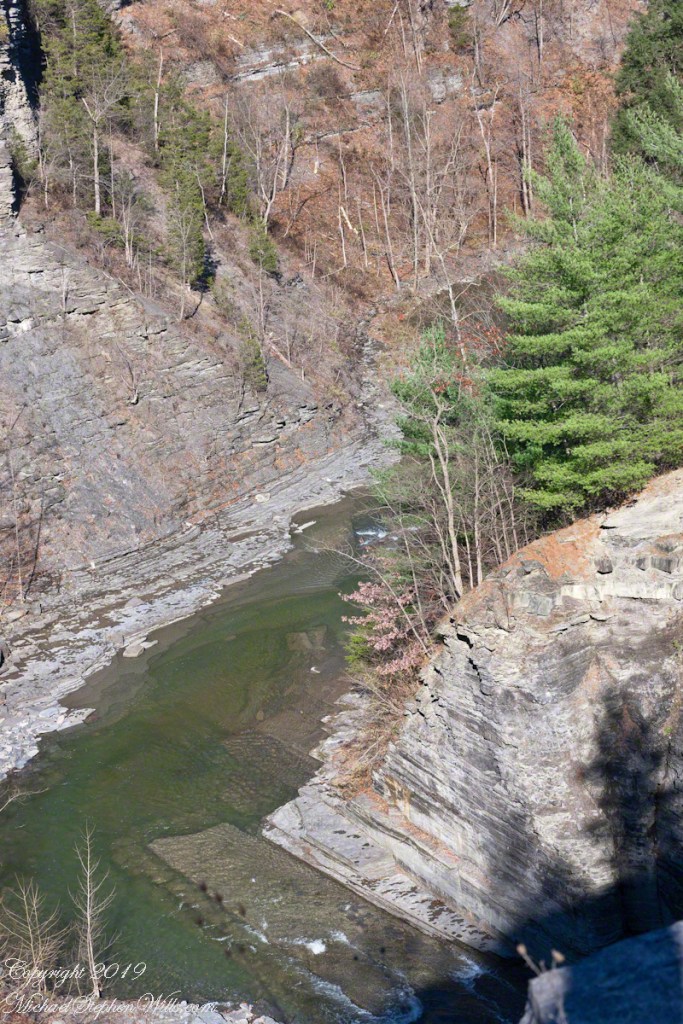
Perched above Taughannock Gorge, a moss-covered ledge and cascading falls reveal ancient stories—where Devonian seas once flowed and time’s layers whisper through stone and water.

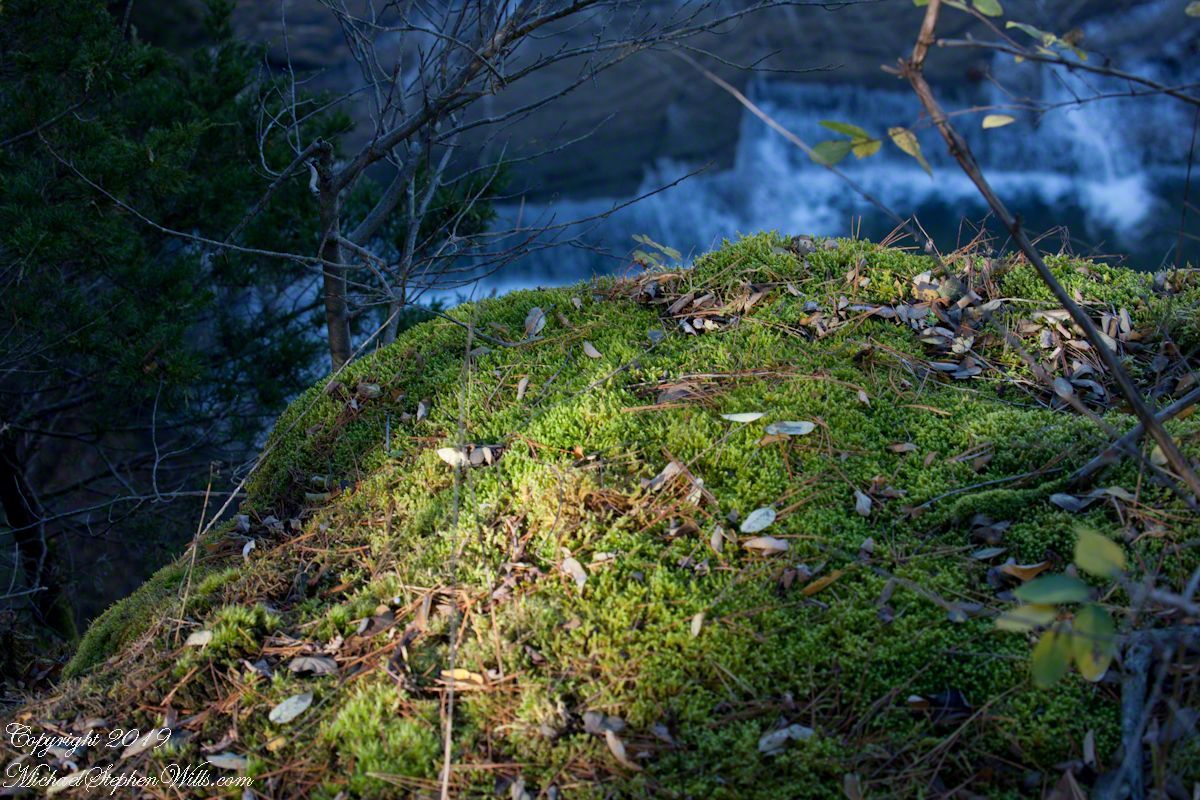
The morning sun had only just breached the rim of the gorge, sending long slants of golden light across the forest floor. Walking the South Rim Trail of Taughannock Falls State Park, I came upon a quiet, unassuming spot—just a few paces off the path—where the forest seemed to pause in reverence. What greeted me was a small marvel of persistence and time.

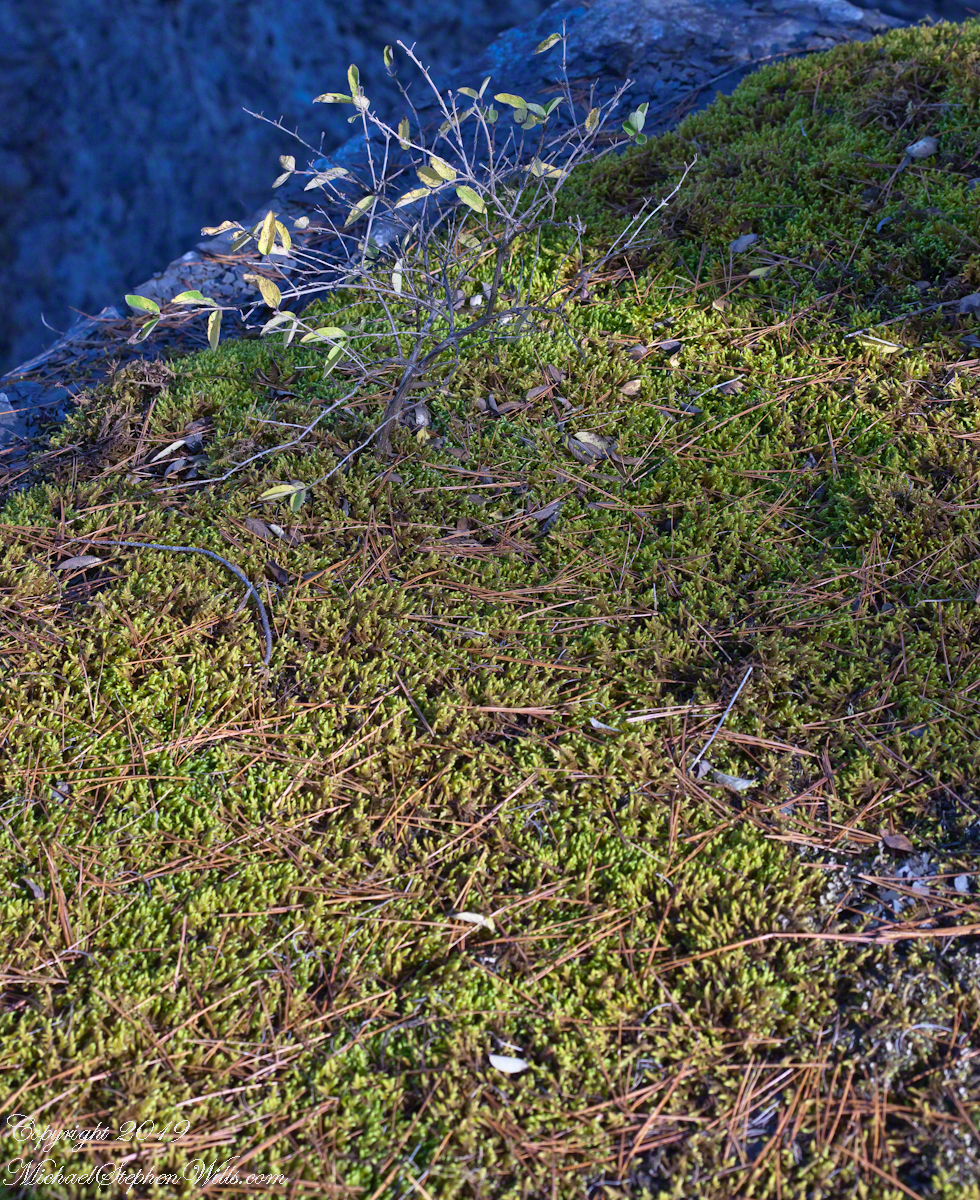
There, rooted precariously atop a slab of brittle shale, was a tenacious shrub rising from a bed of moss, its spindly frame etched in sharp contrast to the soft, green sprawl beneath it. The moss had taken hold on a shelf of rock cantilevered over the gorge like a green tongue of earth defying gravity. Cracks traced the shale’s surface like veins, silent records of the forces that shaped this place—heat, ice, pressure, time. Together, the moss and the bush formed an improbable community, surviving against odds, bound together by the thin soil cradled in stone.
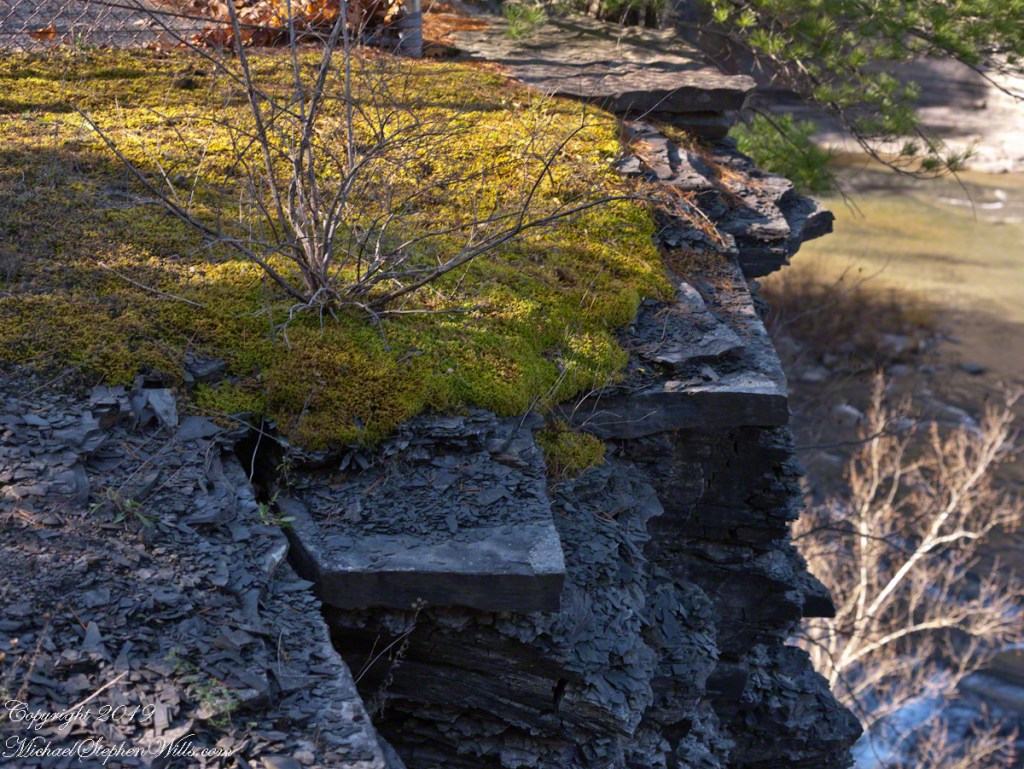
This ledge, suspended over the abyss, seemed less a part of the earth than a question it asked—how much life can cling to the edge before the edge itself gives way?

Beneath this living fragment, the gorge dropped away. Layers upon layers of shale revealed themselves, stacked like a collapsed library of time. Here, the Devonian Period lies exposed to wind and rain, and to those willing to pause and wonder. Each stratum holds the fossil whisper of ancient seas, where trilobites scuttled and coral reefs once stood. This gorge was not carved quickly. It was not born of a moment, but of many—countless raindrops, millennia of ice melt, the slow, sure work of water over stone.

From this natural balcony, I looked out and down to the gorge floor where the creek shaped the land with an artist’s patient hand. The falls, seen from above, no longer thundered—they danced. Spread like the folds of a fan, water curled over smooth stone in steps of white silk. From here, the cascade looked deliberate, choreographed—an elemental performance halfway between gravity and grace.
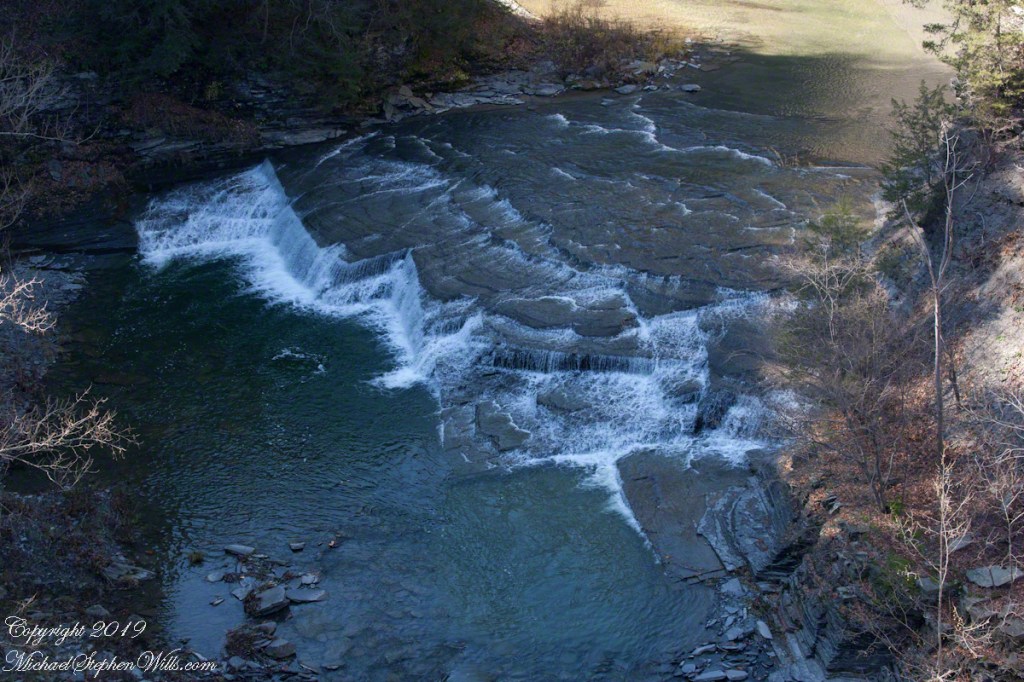
How many times had this water flowed, reshaped, receded? How often had it carved these grooves, smoothed those ridges, erased the footprints of what came before? Looking at the exposed rock, one could trace the signature of ancient glaciers, feel the memory of long-gone floods. It was humbling—this intersection of change and continuity.

Above it all, the trees stood still. Pine and oak, rooted well back from the edge, offered a kind of sentinel presence. Their shadows stretched long and angled, tracing the contours of both earth and memory. For a moment, I let go of all thought and simply listened—to the murmur of wind through leaves, the faint rush of water far below, and the silence that presses in when the land itself seems to be remembering.

This spot—so easily missed by a hurried hiker—offered a parable of resilience and impermanence. The moss did not grow with certainty, nor the shrub reach with confidence. They survived on the edge because they adapted. They made do with less. They took root where others could not. There was no security in that place, only presence. Only the now.

And isn’t that a lesson worth carrying?

We so often seek stability, firm ground, a clear path. Yet, some of the most beautiful things live just beyond comfort—on ledges, in cracks, in the margins of the known. To pause here was to acknowledge that life thrives not only in sheltered valleys but also at the edge of what seems possible.

As I stepped back onto the trail and continued along the South Rim, the image of that mossy outcrop stayed with me. I carried it in my thoughts like a talisman—proof that even on the brink, life finds a way. And that from above, the most chaotic falls can appear as ordered motion, as a flow toward something larger.

Later, when the sun climbed higher and the light lost its slant, I would look back on this moment not as a spectacular highlight but as something more intimate: a quiet encounter with nature’s subtle artistry, its layered truths, and its enduring invitation to look closely, feel deeply, and walk softly.

For here, above the gorge, at the edge of earth and time, even a whisper leaves a mark.

Enter your email to receive notification of future postings. I will not sell or share your email address.

Discovering Stillness in Nature’s Embrace

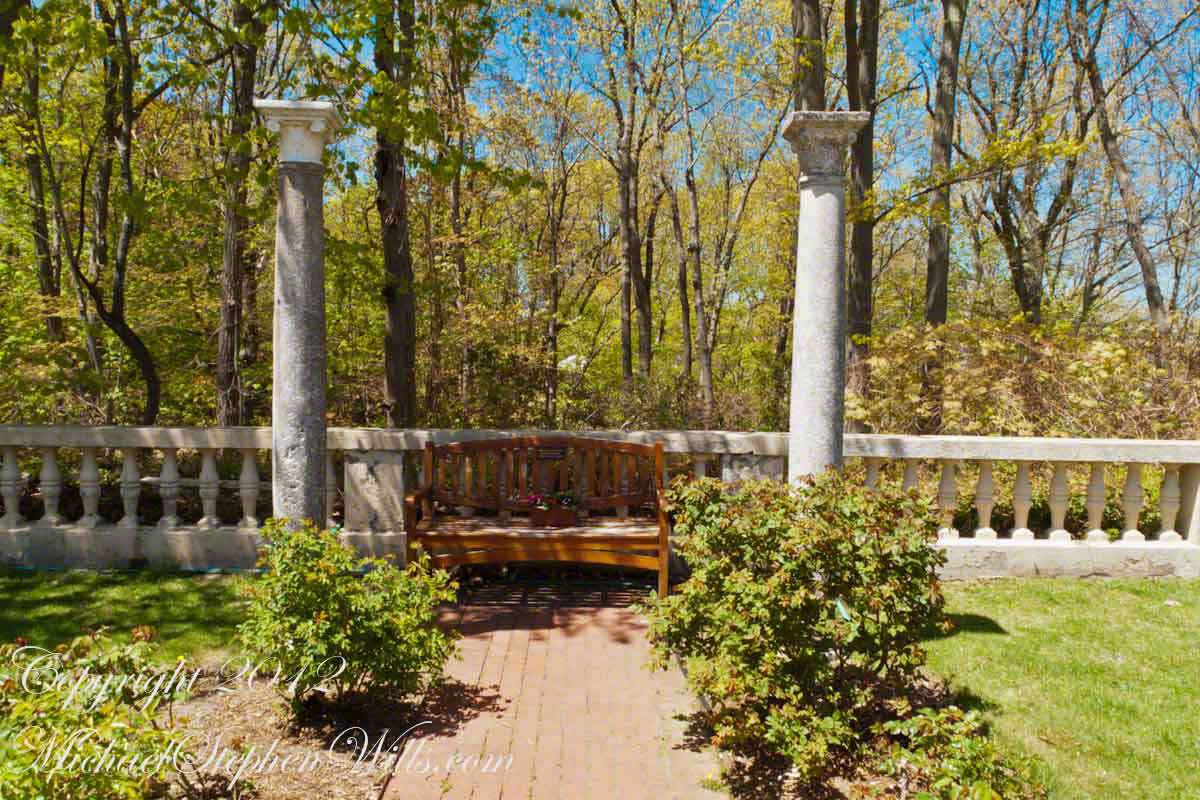
A bench beside a cedar, unchanged through time, stirred memory and gratitude—reminding me that some places wait quietly, holding space until we find them again.

A lingering memory hovers over this spot. The soft crunch of gravel beneath my boots, the filtered light through pine and oak, the scent of warm stone and moss—all of it felt at once familiar and distant, like a half-remembered tune that returns in full when you hear the first few notes. I hadn’t thought about the simple bench until I turned the bend this summer day on the South Rim Trail.

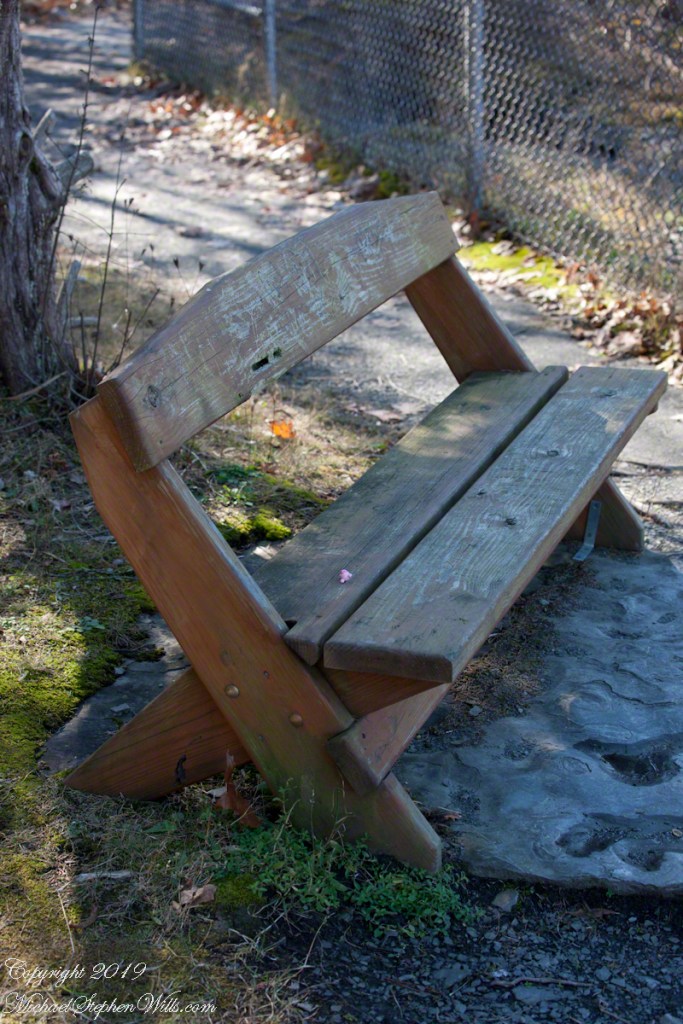
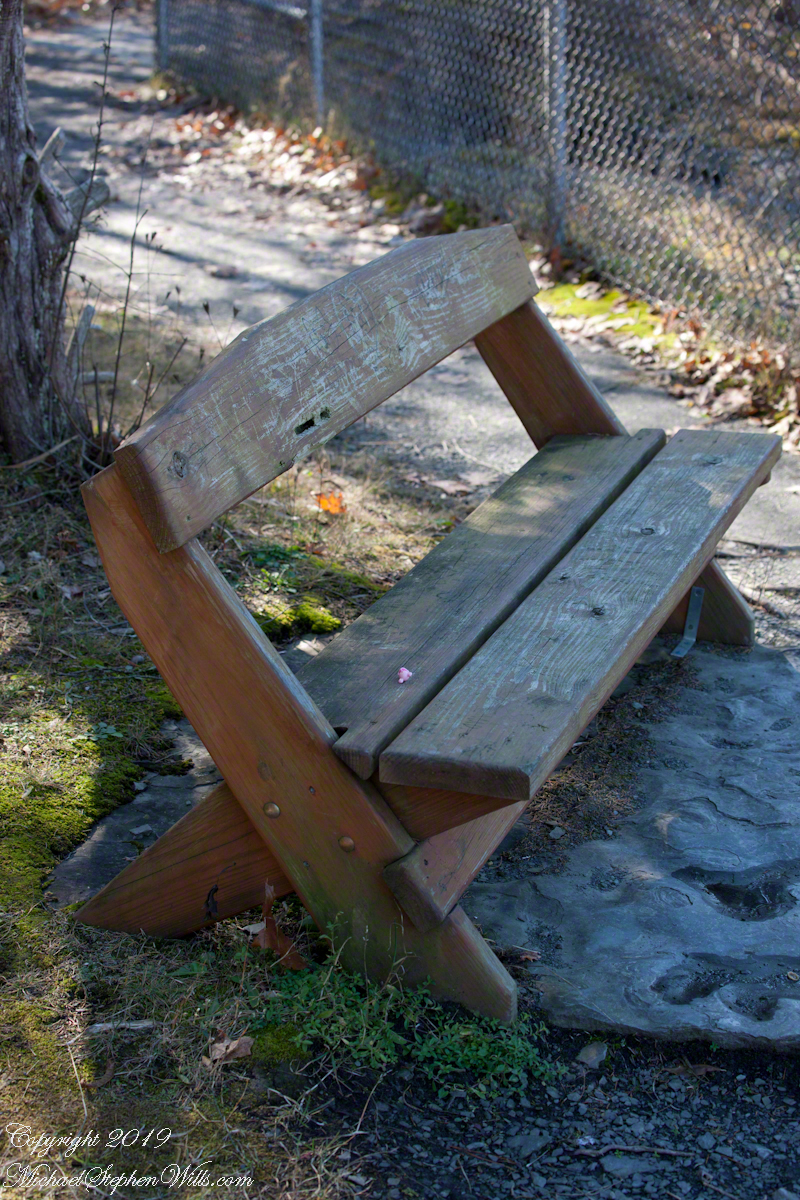
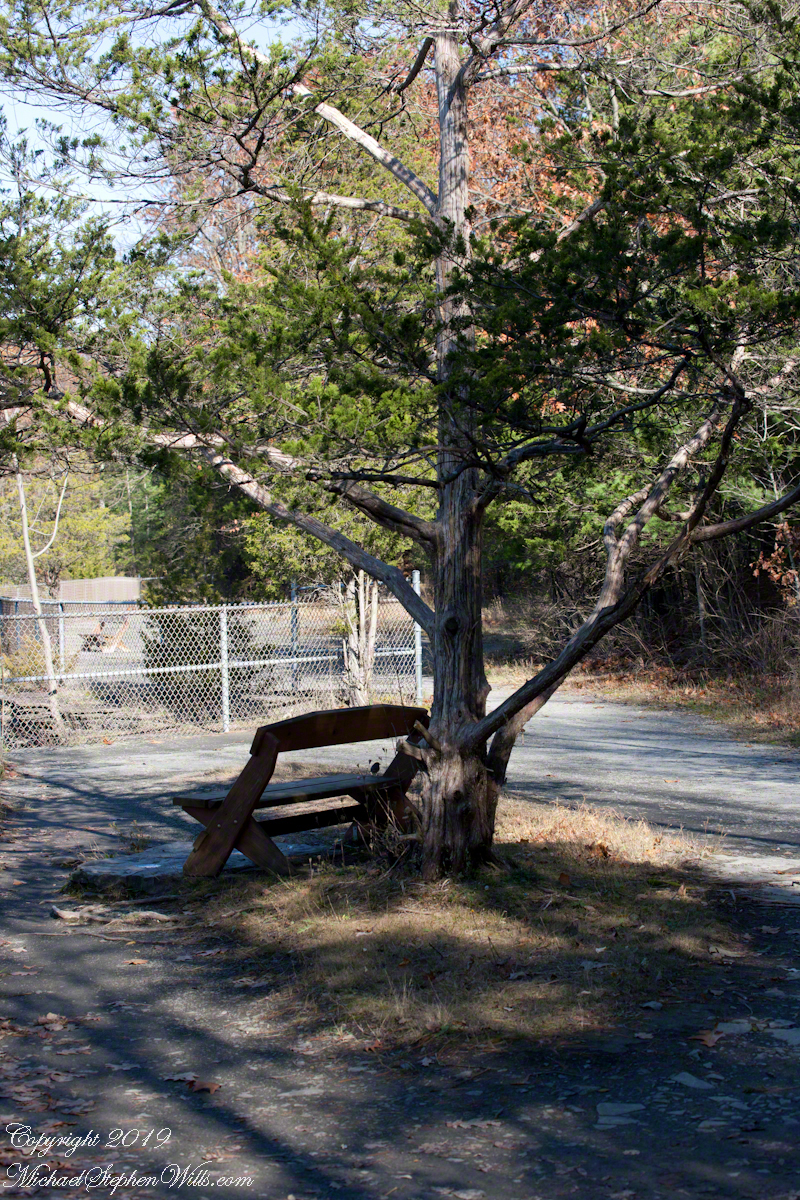
It was still there. The same humble bench nestled beside a cedar, its weathered frame now bearing the patina of years. The tree remained slightly bowed as if in silent conversation with the bench it had embraced.. The space between them, still and shaded, seemed to invite reflection without demanding it.

I sat down, letting the moment settle around me. In the gorge below, water moved quietly through sculpted shale, the same layered gray that once caught my attention through a camera lens long packed away. From this overlook, the view had scarcely changed: stone and water, green clinging to cliff, sky rolling in above it all. My photograph captures it now just as it might have then—perhaps from the same angle. The gorge unfolding in a graceful arc, with trees perched impossibly along the sheer face.

It struck me, not as a grand revelation but with quiet certainty, that very few places in life offer such stillness. So much shifts in the world—landscapes erode, trails are rerouted, lives move forward. Yet here I was again, sitting in the same spot, as though the intervening decades had folded in on themselves.

Back then, I had rested here out of curiosity, pausing to take in the view, enjoy a respite. Now, I sat with a deeper kind of stillness. The second photograph holds the space as I found it—quiet, dappled with shadow, edges softened by time. The fence beyond it remains, unchanged, a modest boundary between the trail and the deep gorge beyond.

I don’t remember what thoughts filled my mind that first time. But today, a kind of gentle gratitude rose instead. Gratitude for the bench, yes—but also for the path that led me here again, for the act of remembering, and for the rare gift of finding something familiar, something steady.

A final image frames just the bench, its surface worn smooth, its structure slightly leaning now. A single flower petal had fallen on the wood—a quiet grace note in the morning light. I stood and took that last photo as a way of holding the moment, though I knew no picture could fully capture what it meant to find something that had waited without fanfare.

As I turned and walked back along the rim, I felt lighter. Not because time had reversed or been conquered, but because it had been witnessed—and somehow, that was enough.

Enter your email to receive notification of future postings. I will not sell or share your email address.
Stone Bench Memorial

Old Testament

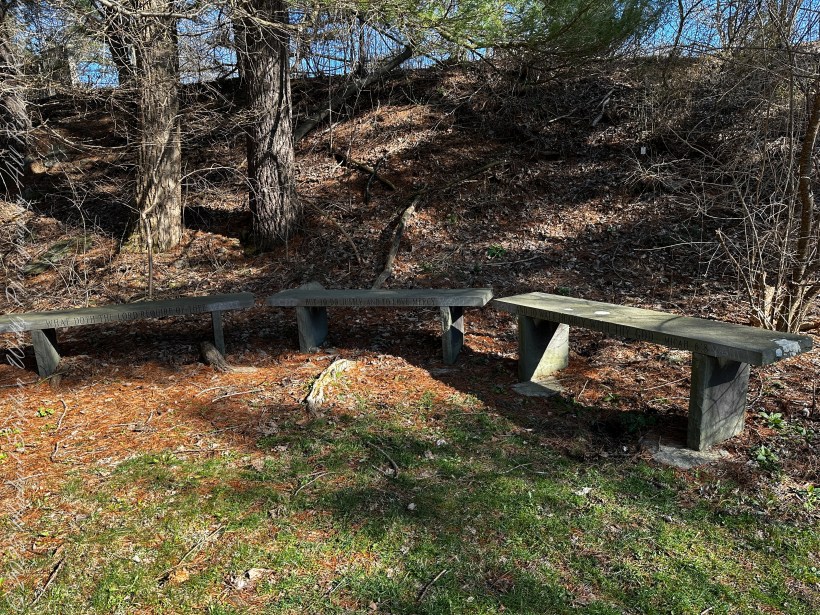
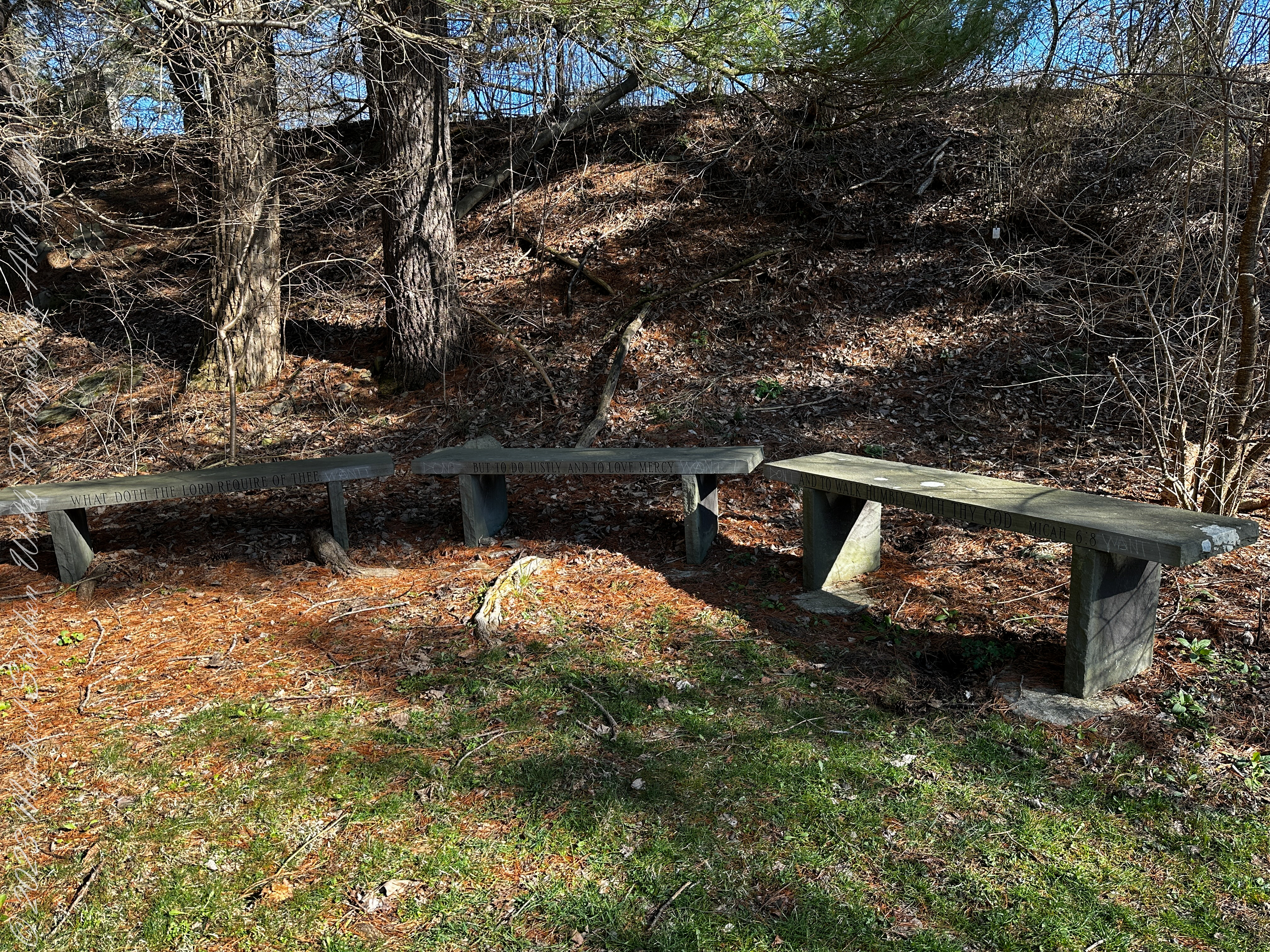
Pam and I ambled around the Arboretum for our Easter 2023 outing. We found a path new to us, with this memorial stone bench, a biblical quote engraved on the seats. Biblical Quote on bench: “What doth the lord require of thee / but to do justly and to love mercy / and to walk with thy god.” Micah 6:8
The Book of Micah is the sixth of the twelve minor prophets in the Hebrew Bible. Ostensibly, it records the sayings of Micah, whose name is Mikayahu (Hebrew: מִיכָיָ֫הוּ), meaning “Who is like Yahweh?”, an 8th-century BCE prophet from the village of Moresheth in Judah (Hebrew name from the opening verse: מיכה המרשתי). The book has three major divisions, chapters 1–2, 3–5 and 6–7, each introduced by the word “Hear,” with a pattern of alternating announcements of doom and expressions of hope within each division. Micah reproaches unjust leaders, defends the rights of the poor against the rich and powerful;[ while looking forward to a world at peace centered on Zion under the leadership of a new Davidic monarch. While the book is relatively short, it includes lament (1.8–16; 7.8–10), theophany (1.3–4), hymnic prayer of petition and confidence (7.14–20), and the “covenant lawsuit” (6.1–8), a distinct genre in which Yahweh (God) sues Israel for breach of contract of the Mosaic covenant.

Click Me for “Finger Lakes Memories” my online gallery.

All photography using the IPhone 14 ProMax triple camera, raw format, edited on the phone.

In the quote tract, (6:6–8), Micah speaks on behalf of the community asking what they should do in order to get back on God’s good side. Micah then responds by saying that God requires only “to do justice, and to love mercy, and to walk humbly with your God.” Thus declaring that the burnt offering of both animals and humans (which may have been practiced in Judah under Kings Ahaz and Manasseh) is not necessary for God.

Reference: “Micah” Wikipedia

Copyright 2023 Michael Stephen Wills All Rights Reserved

Bluestone Monuments

Gifts from the past

Pam and I ambled around the Arboretum for our Easter 2023 outing. A type of sandstone popular with Cornell monument builders, called “Lenroc” after a mansion build by Cornell’s founder, was used for these benches built into the hillside of the FR Newman Arboretum. The views are more interesting than the bench, the arch of stone in midground in one photo.

Click Me for “Finger Lakes Memories” my online gallery.

All photography using the IPhone 14 ProMax triple camera, raw format, edited on the phone.

The stone is mined locally from surrounding hills. Calling it “Lenroc” (Cornell spelled backward) is a misnomer as the stone is mined widely throughout the region.

Feldspathic Greywacke

“Bluestone from Pennsylvania and New York is a sandstone defined as feldspathic greywacke. The sand-sized grains from which bluestone is constituted were deposited in the Catskill Delta during the Middle to Upper Devonian Period of the Paleozoic Era, approximately 370 to 345 million years ago…..

Glacial Landscape on an early spring day, Easter 2023

Textures

…The Catskill Delta was created from runoff from the Acadian Mountains (“Ancestral Appalachians”). This delta ran in a narrow band from southwest to northeast and today provides the bluestone quarried from the Catskill Mountains and Northeastern Pennsylvania. The term “bluestone” is derived from a deep-blue-colored sandstone first found in Ulster County, New York.”

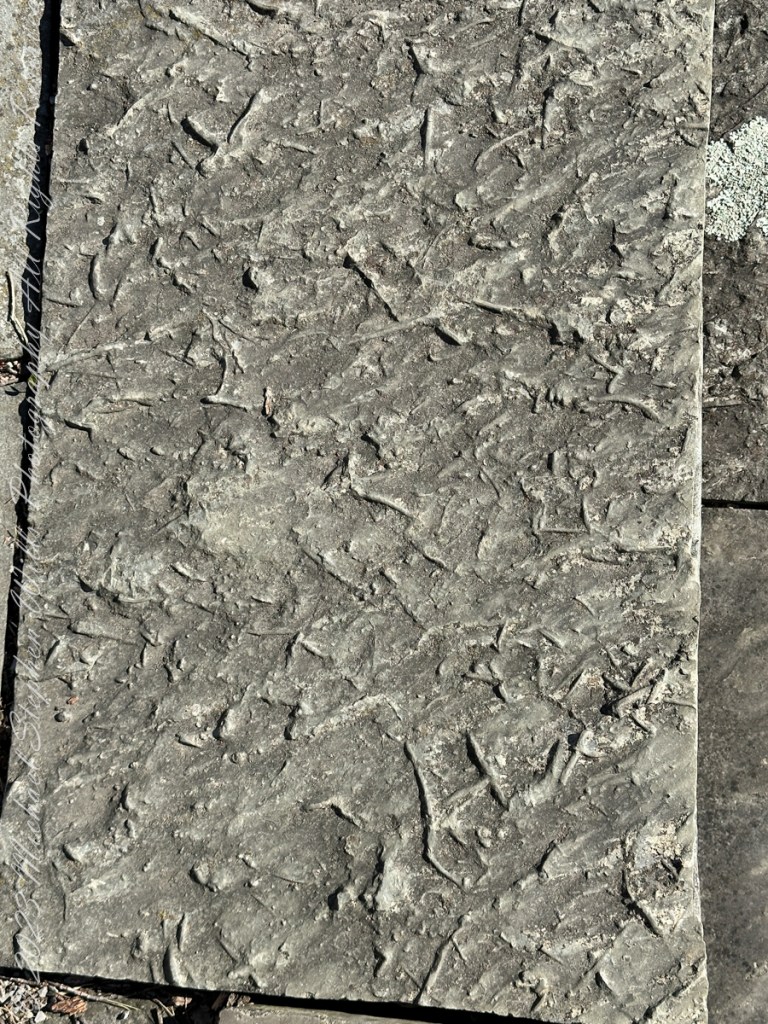
You can feel the origin of this bluestone from these macros of two pavers from a monument bench.

Reference: “Bluestone” Wikipedia.

Copyright 2023 Michael Stephen Wills All Rights Reserved

Dreams, Stories and Things from the Vanderbilt Museum

a spring day on the former gold coast of Long Island

The Dreams

For 32 years dreams about work visited occasionally, then when retirement approached and overtook me these became an almost nightly visitation.

Click this link for my OnLine Photography Galleries

Last week, a few months into retirement, the haunting stopped, replaced by adventures by and on the ocean.  

Click this link for my OnLine Photography Galleries

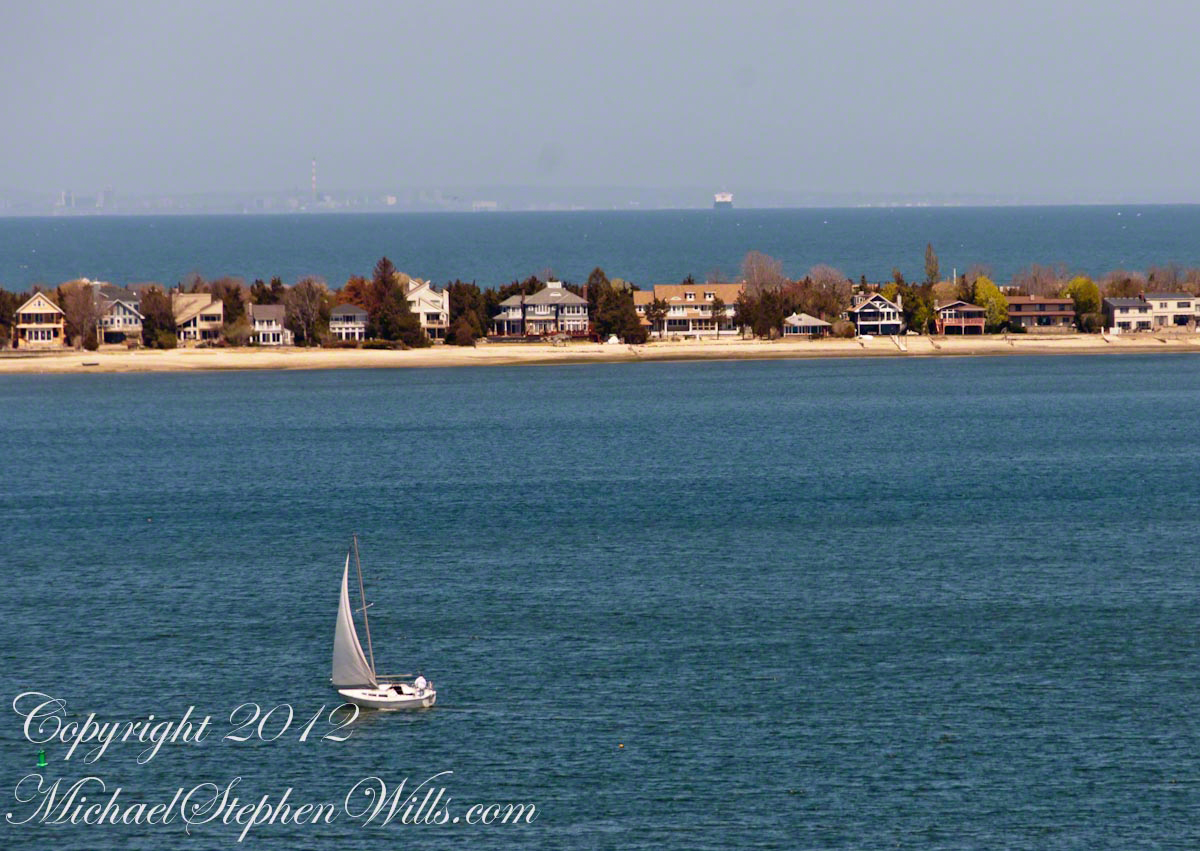
It brings to mind, a few years ago Pam and I took lessons at Cornell’s Merrill Family Sailing Center followed by several seasons of memberships.  We’d take out sailboats the size on the one enjoyed by the fellow above in Northport Harbor.

Click this link for my OnLine Photography Galleries

We’d spend entire days on the water, looking up at the people driving the hill up and down route 13.  “How lucky we are here and not there”, I’d say.

The Stories

Willy Vanderbilt named his Centerport estate “Eagle’s Nest” after his first yacht, “Eagle” that was anchored in Northport harbor along the estate shoreline.  In 1932 the German Krupp Germaniawerft company build a new yacht named Alva, after his mother.


Willy had a “thing” about the infant Baccus.  My first Vanderbilt Museum posting “A Taste of Gatsby: details from the Vanderbilt Museum”included the following depictions of the infant Baccus.  the name preferred by the Romans.

To the Greeks he was Dionysus.  Also known as the “twice born” from the myth of his being carried in his father Zeus’ thigh after Hera, the jealous wife, plotted the death of his mother, the mortal Semele.  

Click this link for my OnLine Photography Galleries

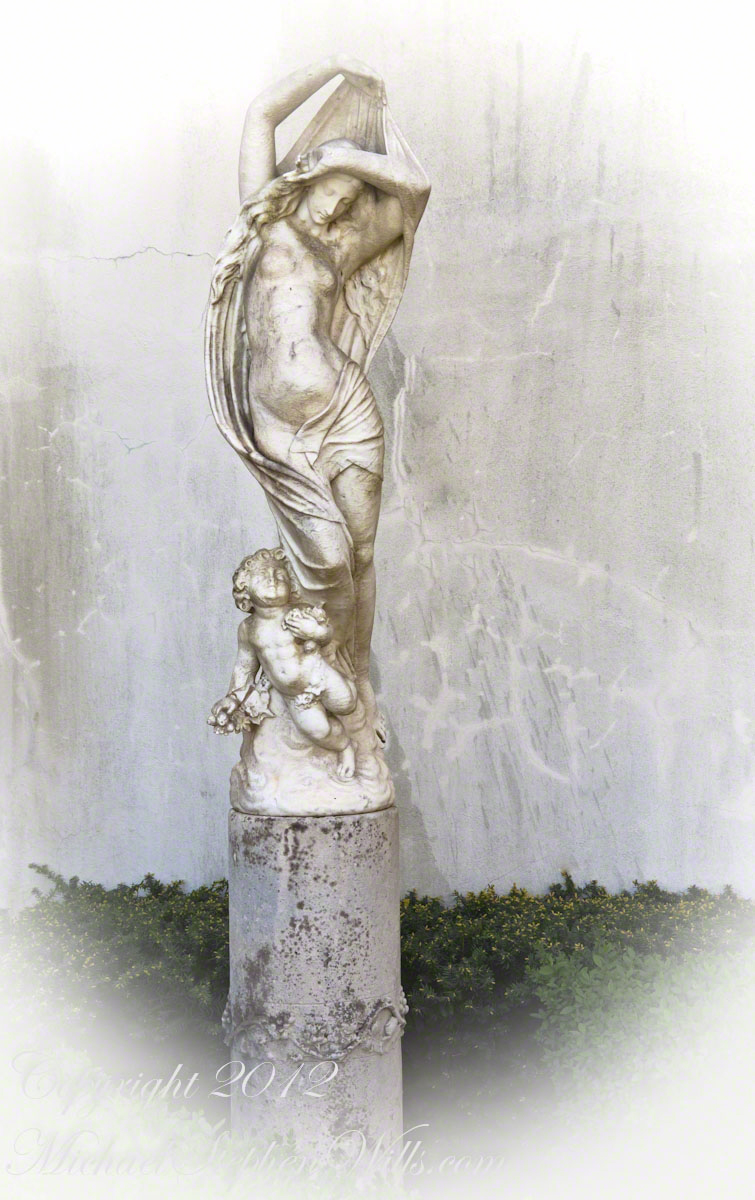
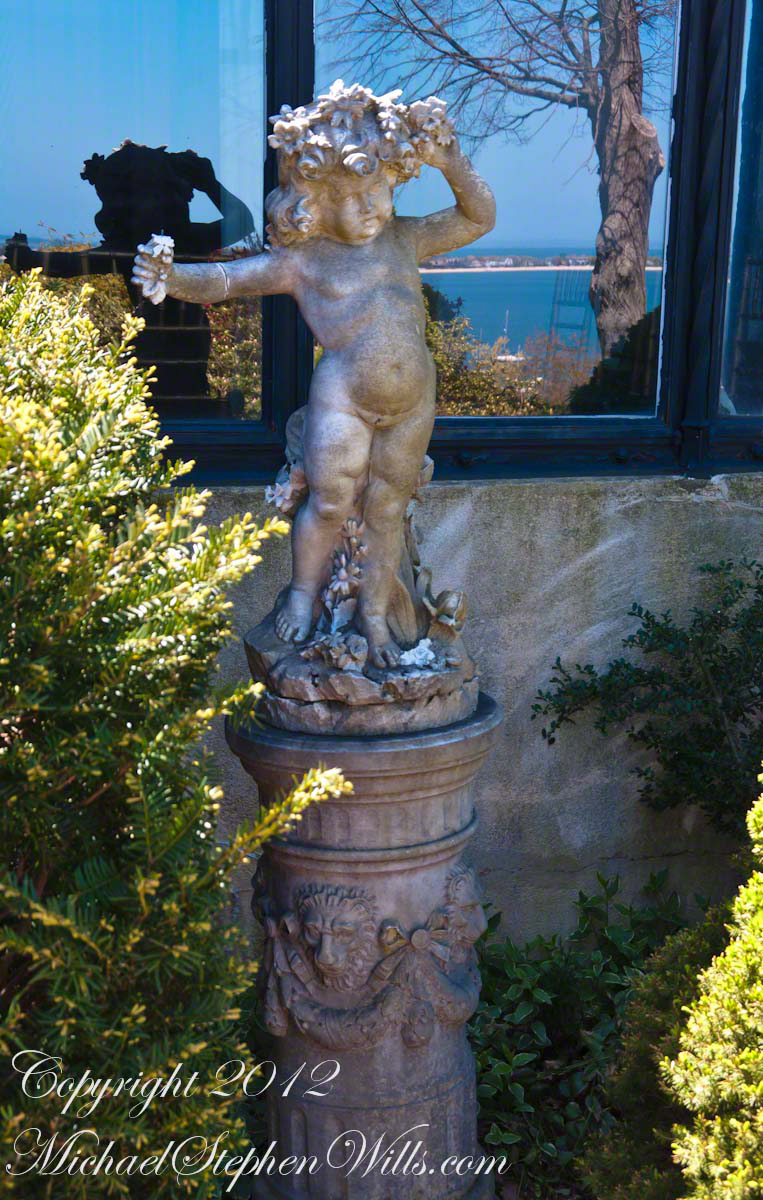
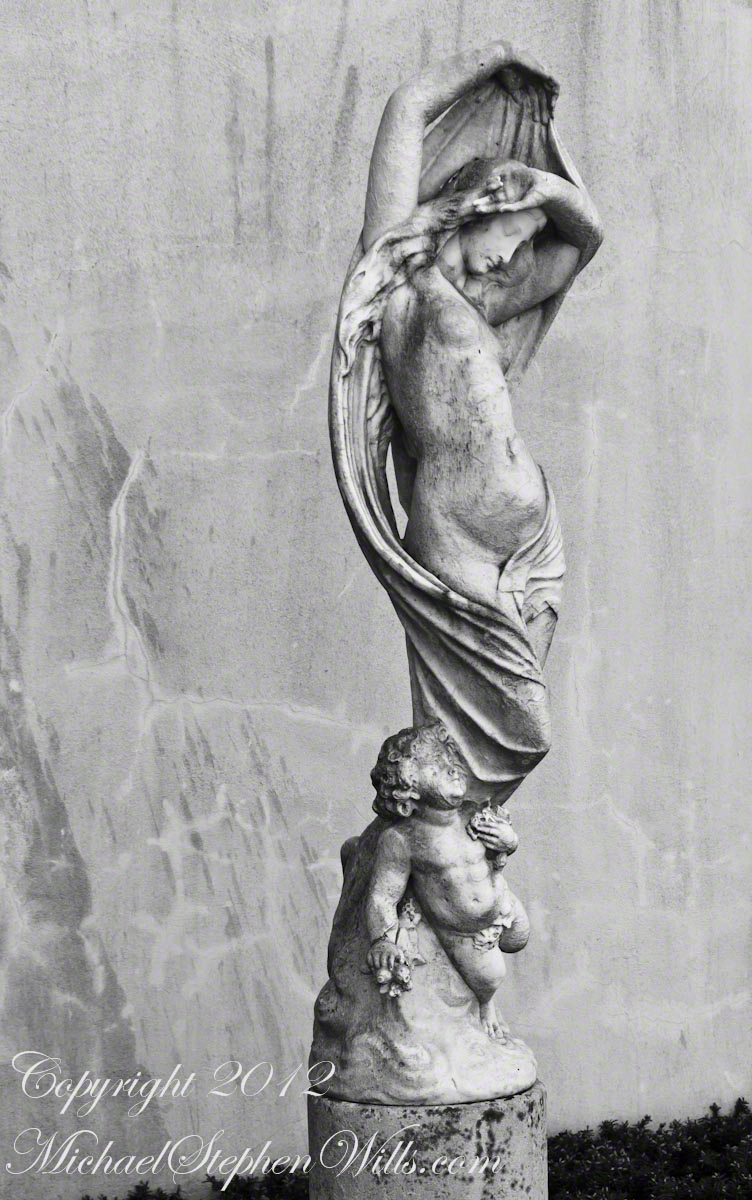
The infancy of Dionysus was perilous, with Hera plotting revenge Zeus found safe haven for the child at a place of earth called Mount Nysa, with beings named Rain Nymphs.  The fascination of Vanderbilt with the story continued with the acquisition and display of a statue of the infant Dionysus with a protective nymph.

The Things

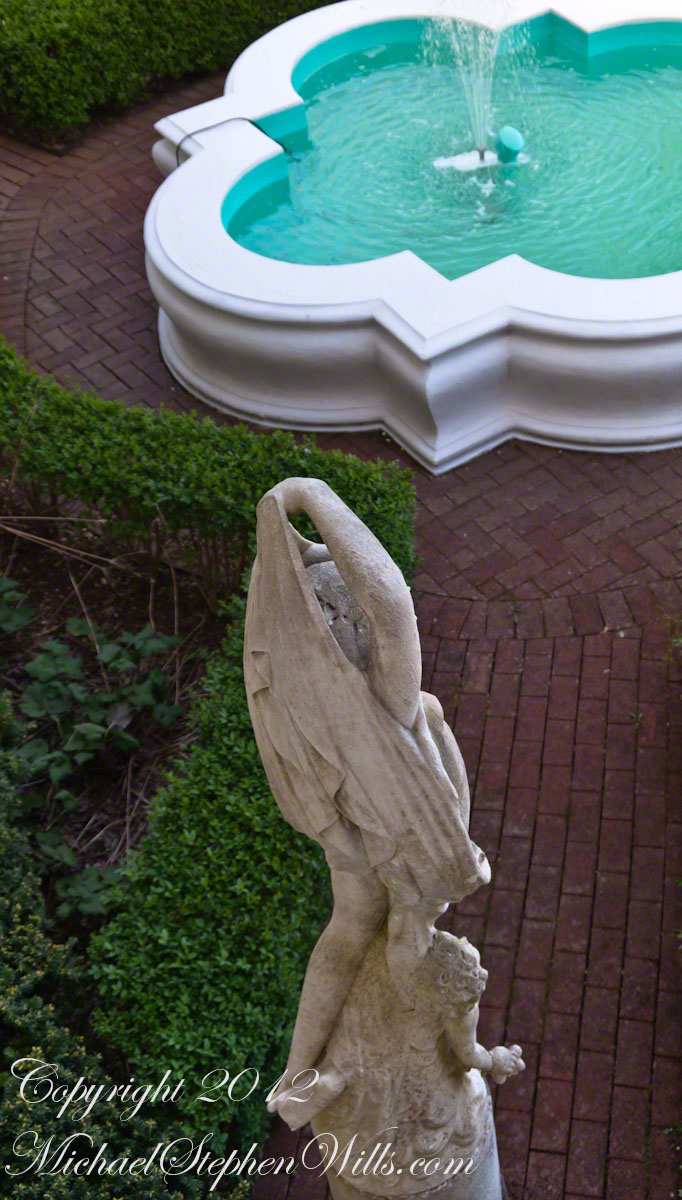
The statue and plinth are at the stairs into the garden.

Click this link for my OnLine Photography Galleries

Copyright 2021 All Rights Reserved Michael Stephen Wills

References
Wikipedia “Dionysus” and “Willy Vanderbilt”

More Details from the Vanderbilt Museum

a spring day on the former gold coast of Long Island

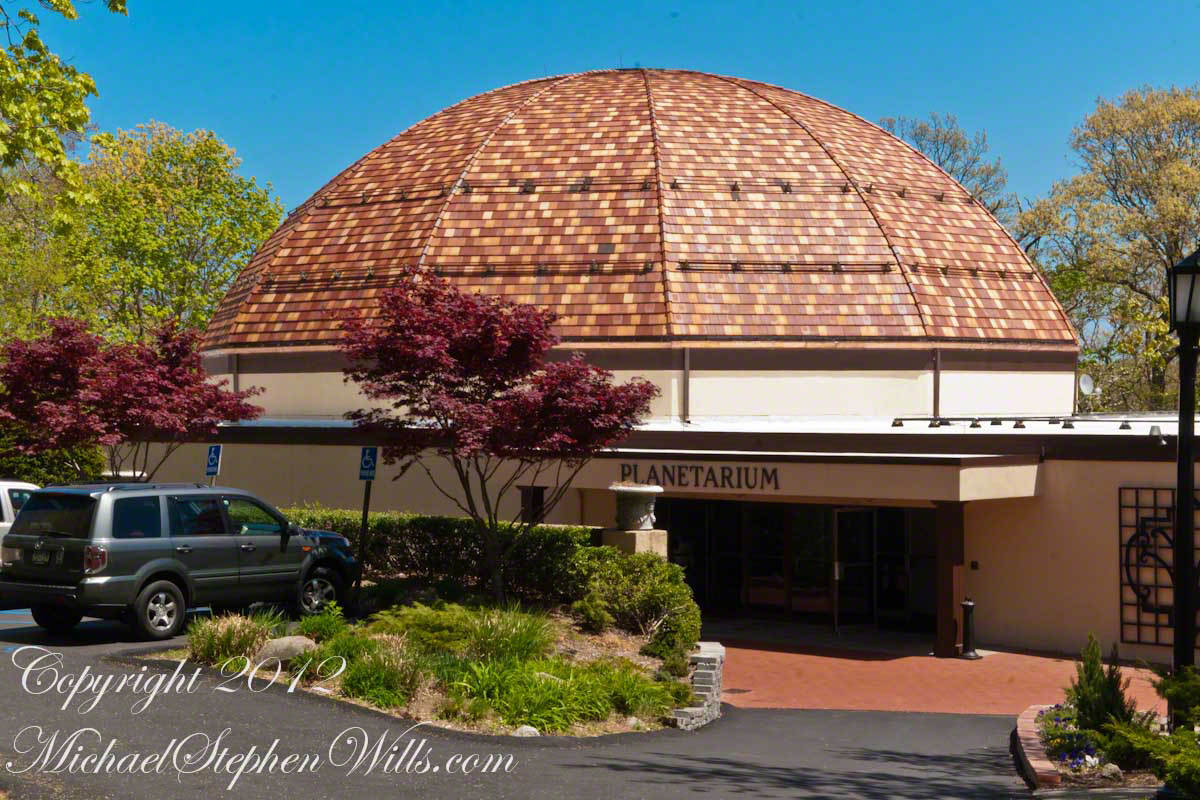
The Planetarium

Thirty five years after completing his Eagles Nest estate and twenty seven after his death, this planetarium became an addition to the museums left by William K. Vanderbilt II (“Willie K”).
Located next to the Rose Garden, where my last blog “A Taste of Gatsby – details from the Vanderbilt Museum” left off, this planetarium is on the site for the estate tennis courts. The Planetarium reopened March 2013 with a complete equipment upgrade.

Click this link for my OnLine Photography Galleries
Planetarium Dome
The star of the planetarium is a Konica Minolta GeminiStar III projector; a machine that will put this museum on the map for having one of the finer planetarium projectors in the United States.

There are several museums on the grounds, joined by graciously appointed walkways.
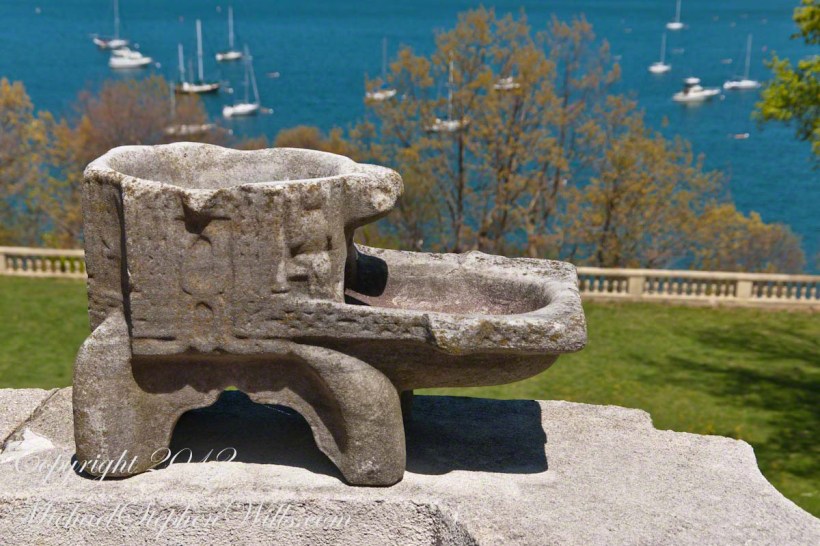
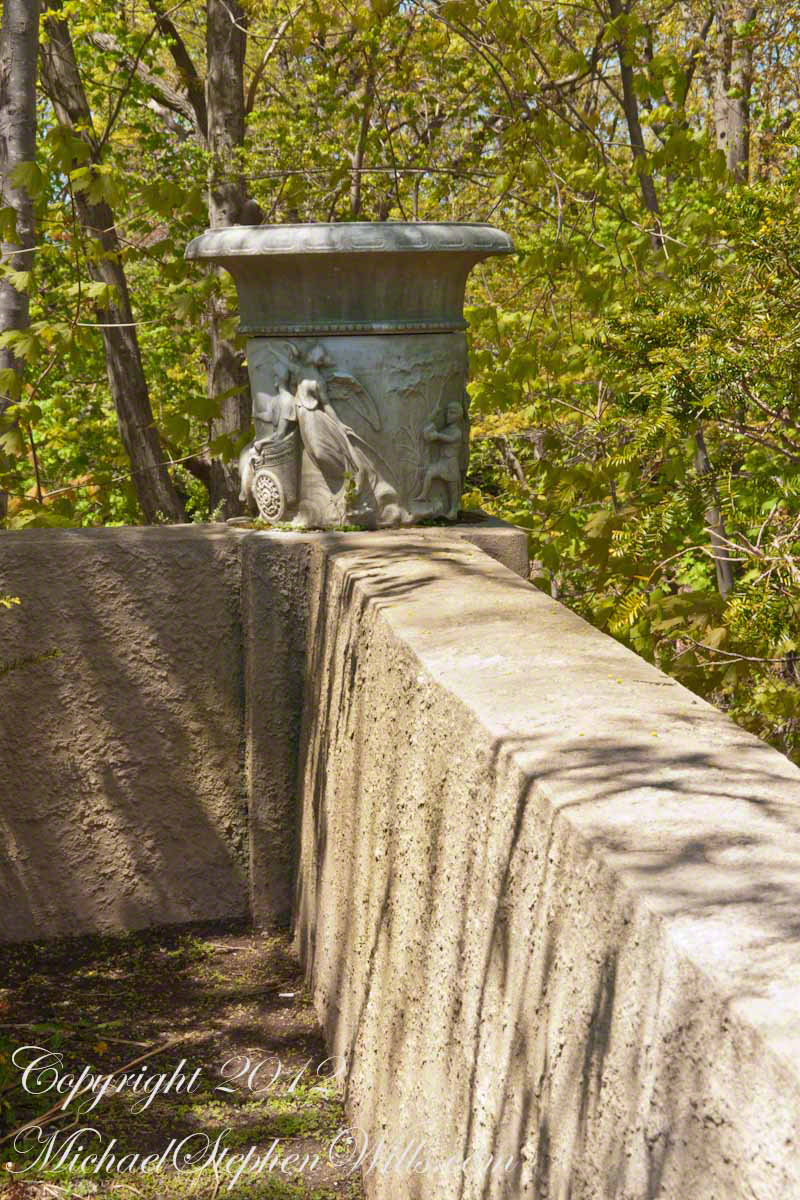
This is a corner urn along the walk to the mansion.

Wall Planter
This planter graces a wall corner along the path from the Planetarium to the Corinthian Colonnade

Courtyard Entrance

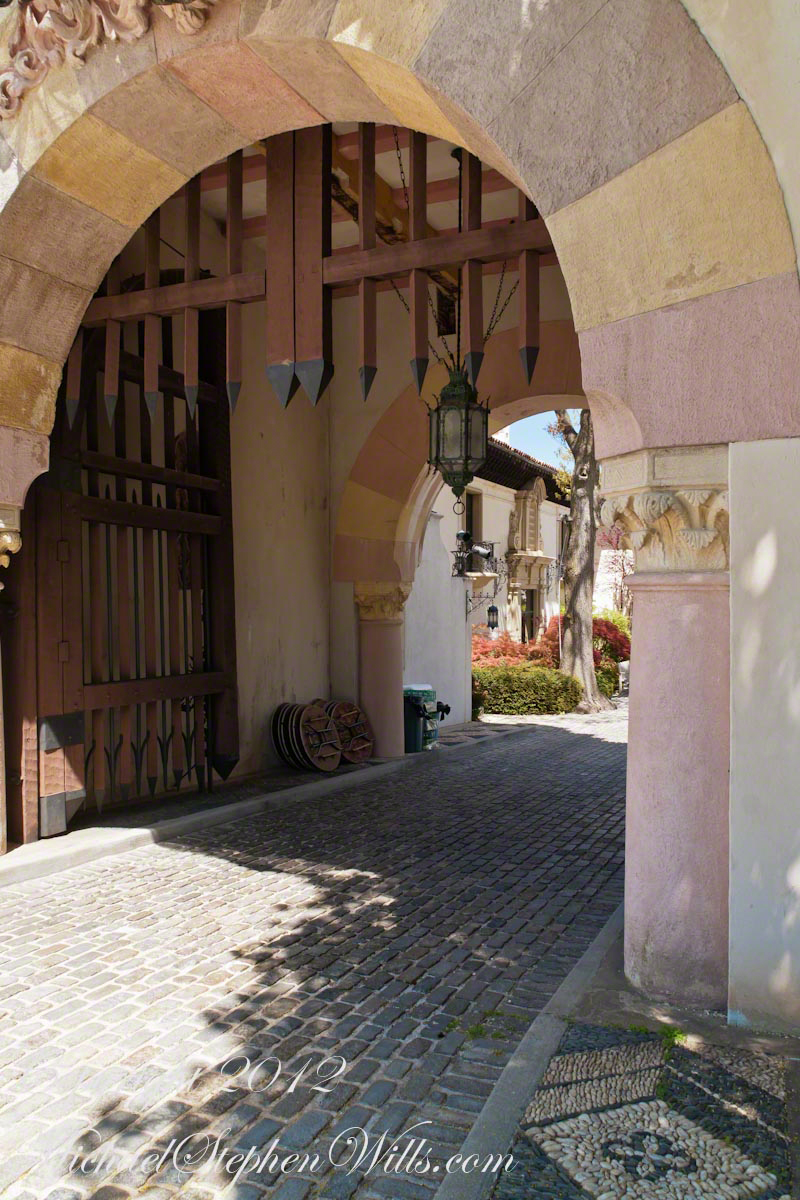
The Spanish Revival style mansion gathers around a central, cobblestone courtyard entered through this elaborate sandstone gate flanked by two carved sandstone urns, each at least six feet tall with pedestal.

Archway Courtyard Entrance
A gated arch serves as the mansion courtyard entrance.

The gated entrance is the base of a bell tower. Willie brought from Russia a church bell that is older than the Liberty bell. He used to have great fun ringing the bell on Sunday mornings to disturb the sleep of his partying son and friends. That stopped when the neighbors arrived as an angry, spontaneous group to complain.

Urn at Mansion Courtyard Arch
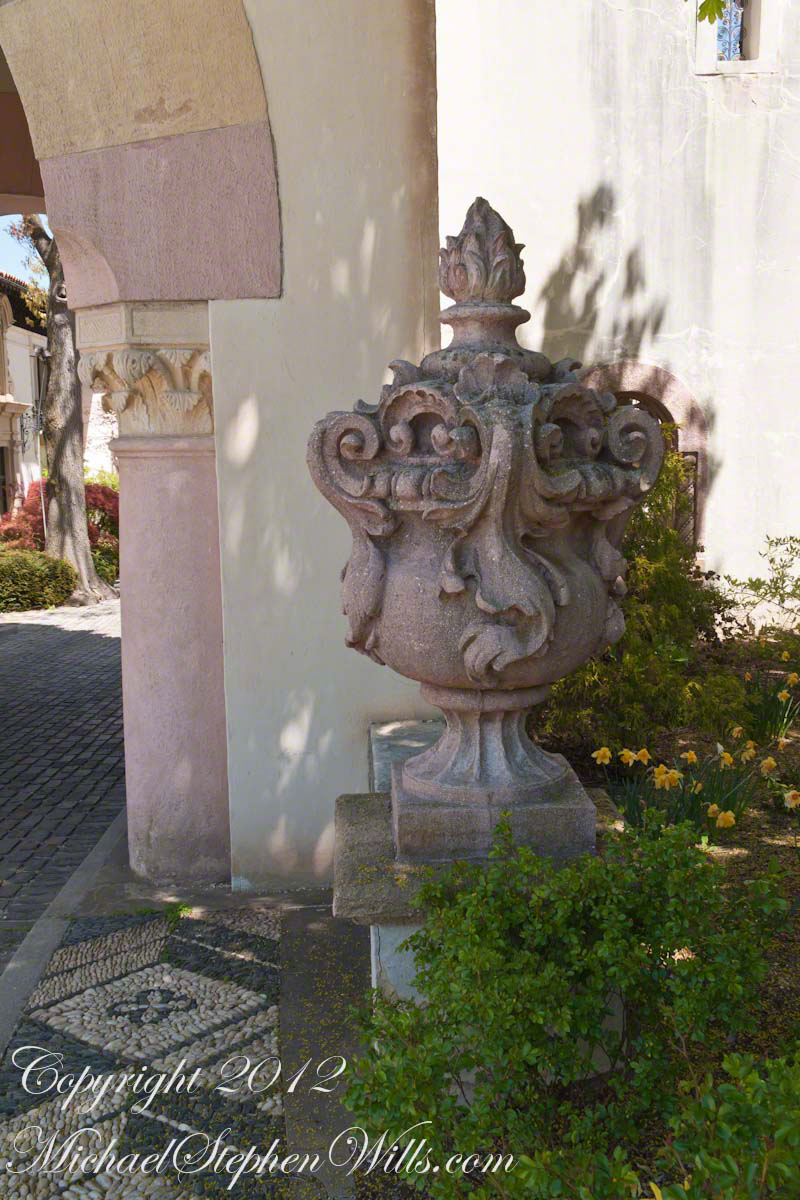
The mansion courtyard is entered through a gated archway. This cast urn graces the right side.

The cobblestone road leads up to the mansion, over a bridge and into the courtyard.
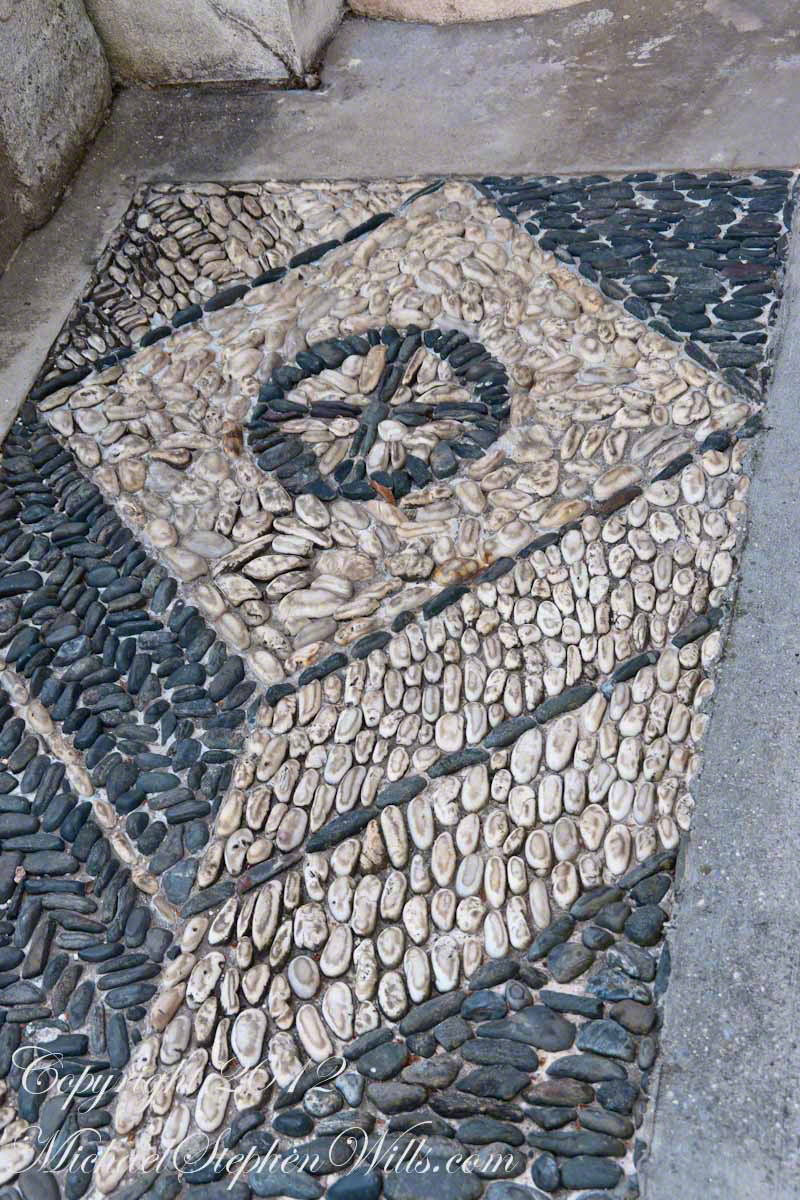
Here is a detail of the walk way, formed from glacially rounded pebbles very common on beaches of Long Island’s North Shore.

Pebble Designs in Walkway
A walkway decorated with black and white pebbles leads into the mansion courtyard. This is a portion just inside the arch.

A Ghost in the Garden

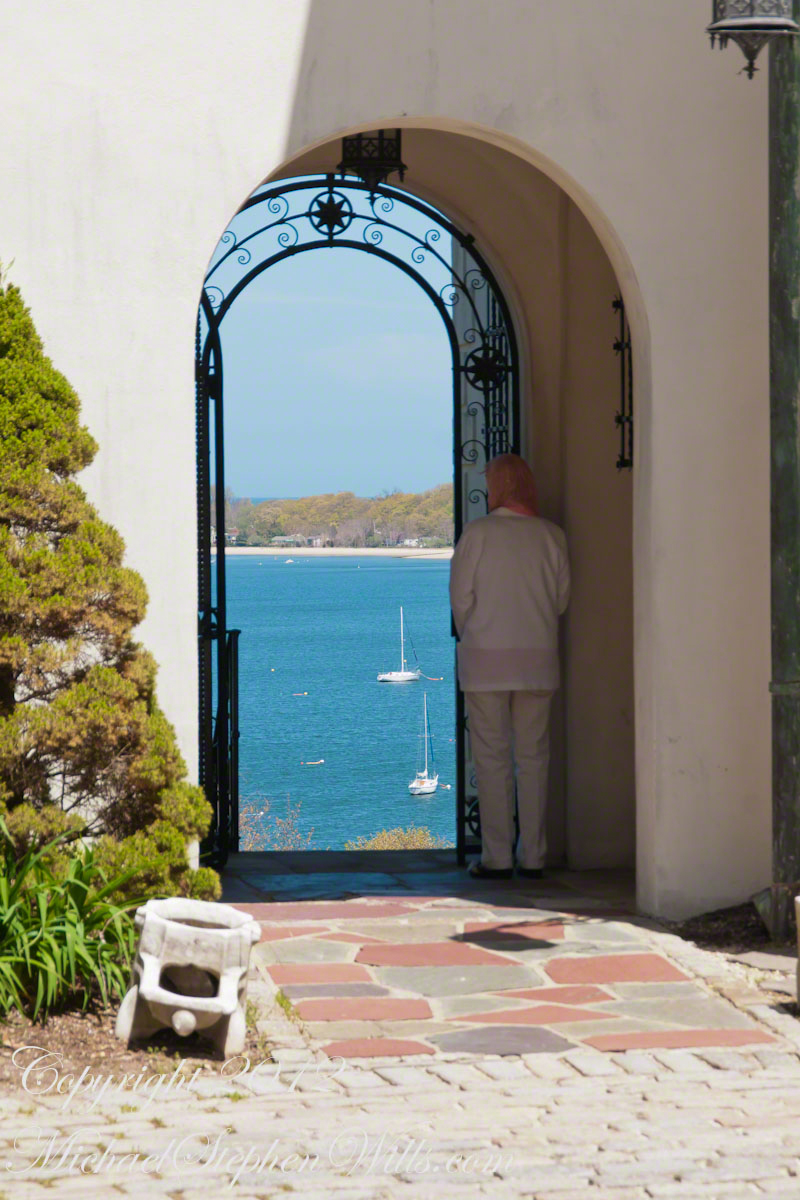
Across the courtyard from the bell tower is this arched entrance to the gardens along the east mansion walls. As we approached the figure to the right seemed to be a ghost, she was so still, enthralled by the view of Northport Harbor.

Archway from Courtyard
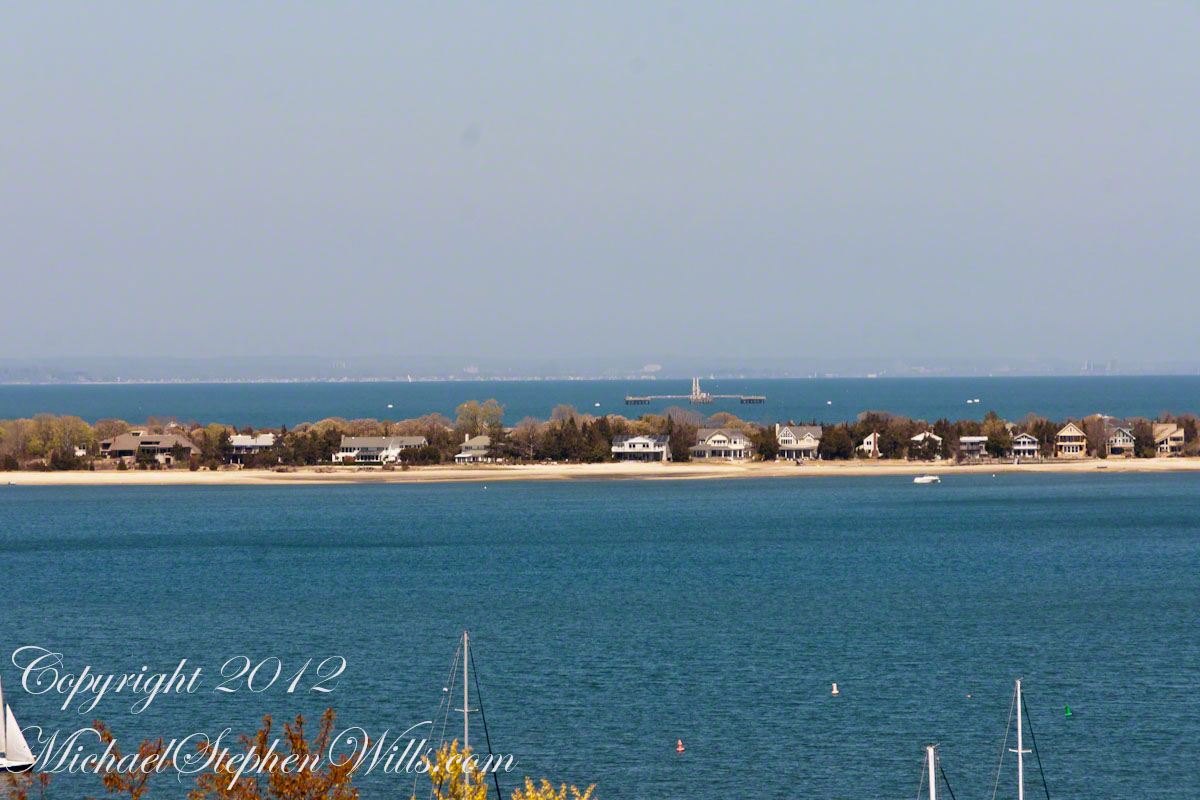
Archway with view toward Northport Bay and Asharoken

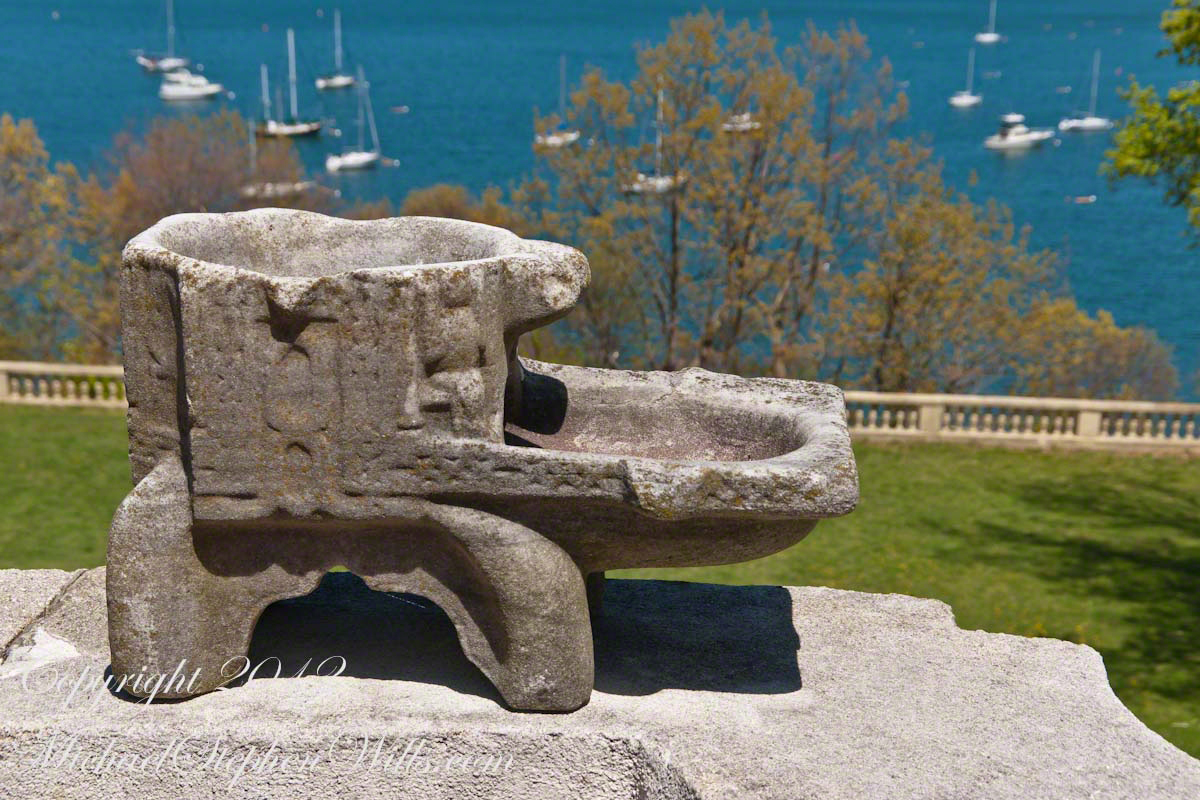
There were many cast stone planters in an Aztec motif such as that to the left of the archway and, in a detail shot, below.

Wall Urn and Northport Harbor
A cast wall urn from the Mansion Garden of the Vanderbilt Museum.

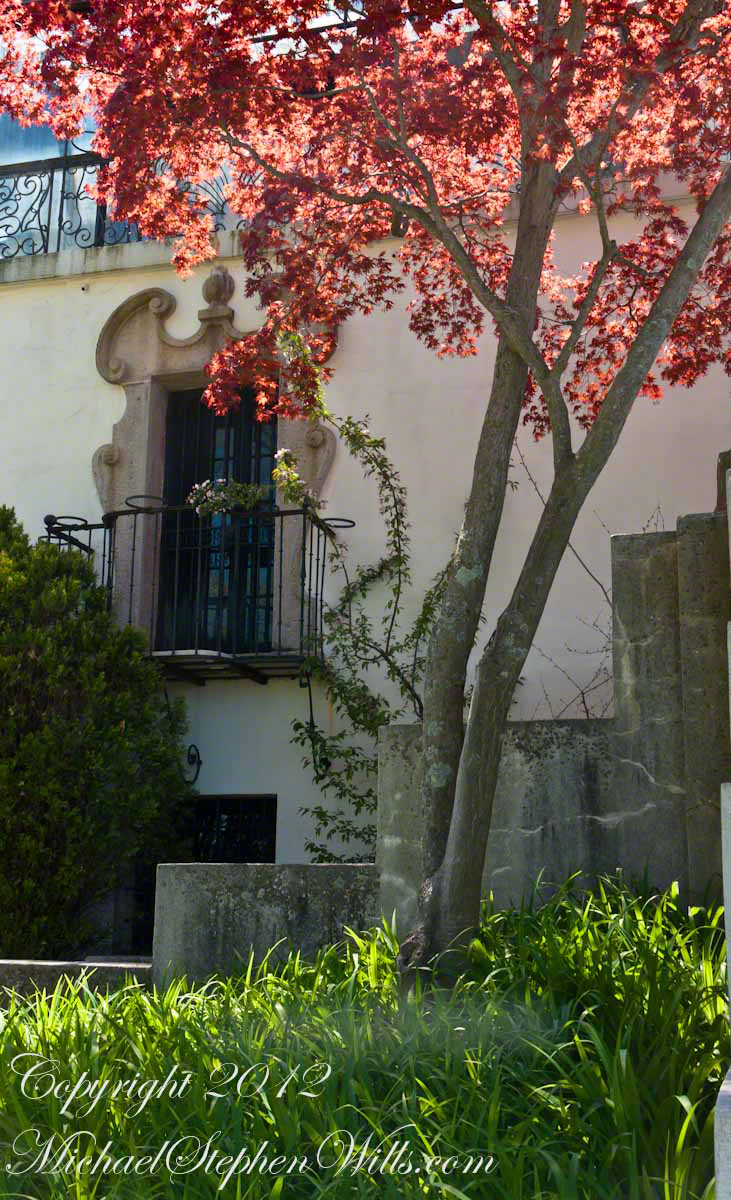
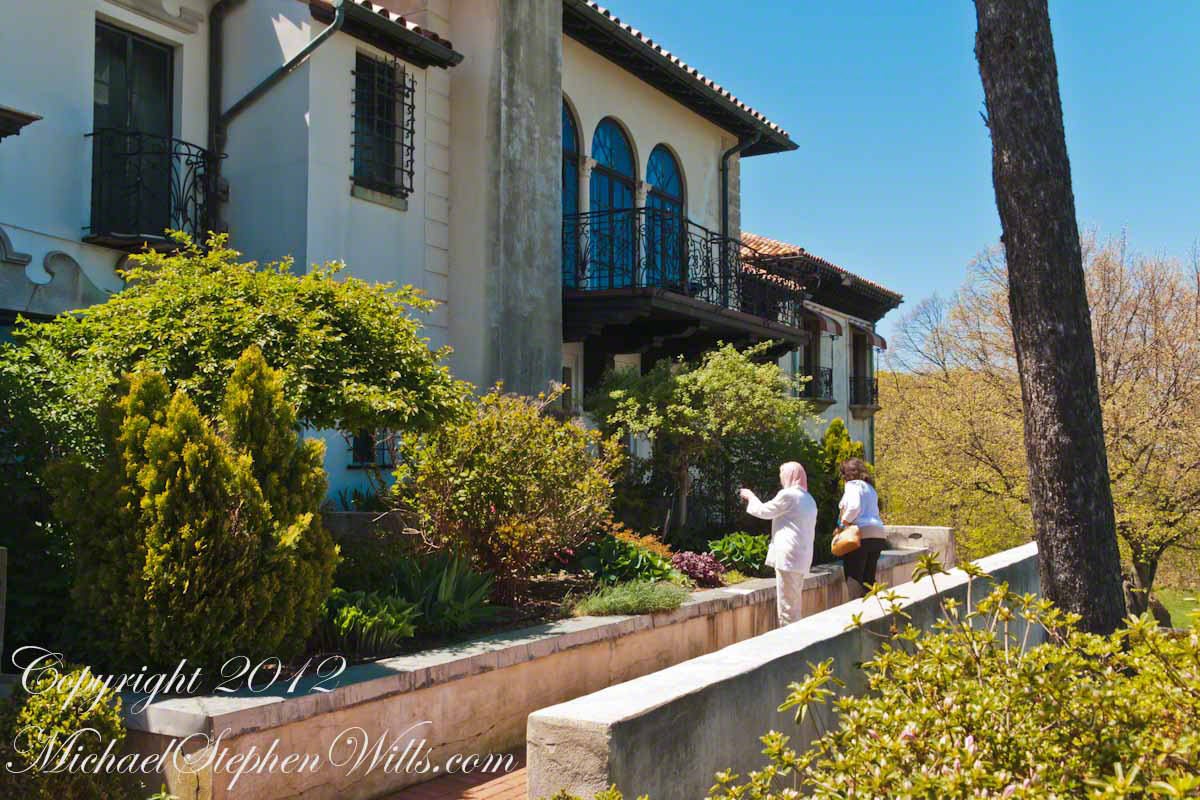
We continued through the archway into the gardens. With plenty of time before the Mansion tour (highly recommended) we wandered at length and had an interesting conversation with the figure of the archway, a retired lady from Smithtown (and not a ghost).

Pam in Mansion Garden
Pam struck up a conversation with another visitor who was very knowledgeable about the museum history and grounds.

Copyright 2022 Michael Stephen Wills All Rights Reserved

A Taste of Gatsby: details from the Vanderbilt Museum

a spring day on the former gold coast of Long Island

Fountain FigureA Taste of Gatsby

The first weekend of May 2013 my wife, Pam, and I attended a New York City Ballet performance on Saturday. Sunday we visited the Vanderbilt Museum of Centerport, Long Island.

This is the former “Eagles Nest” estate of William (“Willie”) Kissam Vanderbilt II.

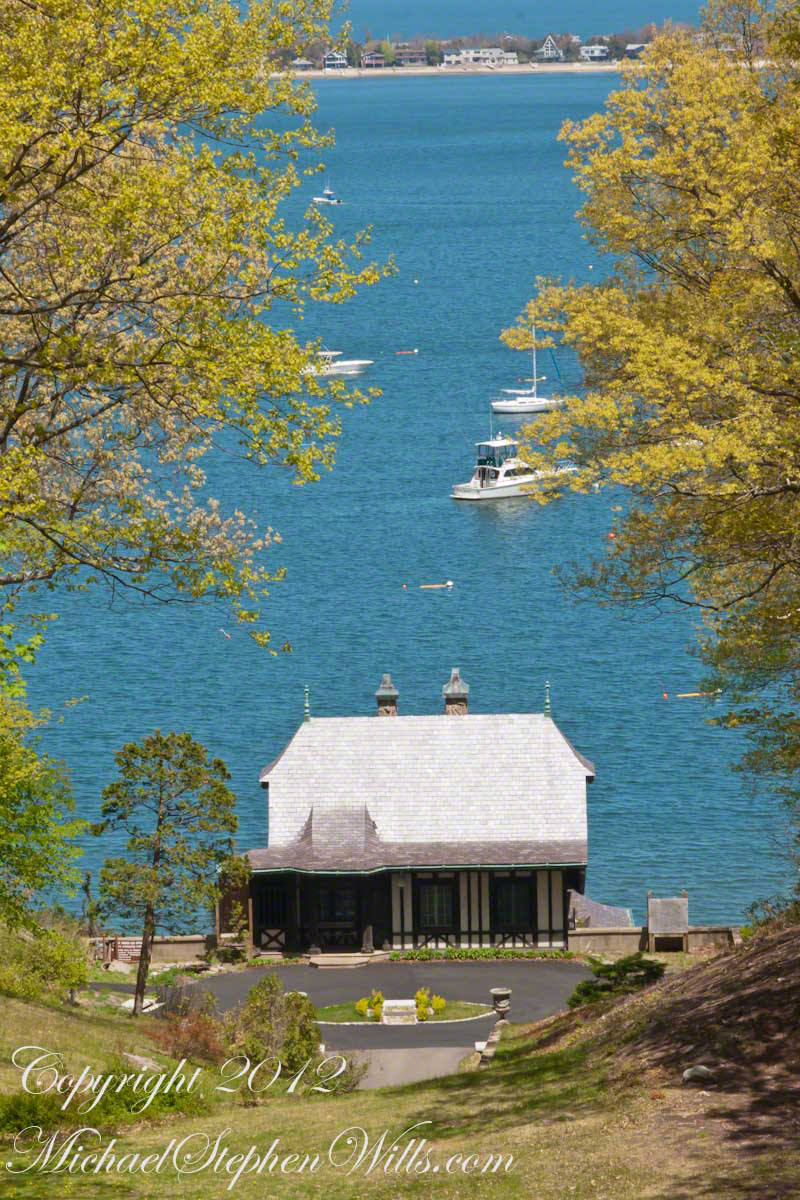
Museum visitors are first drawn to a grand Corinthian colonnade and view of this boathouse on Northport Harbor.

Click this link for my OnLine Photography Galleries
Boat House

Vanderbilt and Gatsby

Willie K chose Centerport in 1910 for an anchorage on the well protected Northport Harbor, deep enough to his yacht the size of a destroyer class ship named for his mother, Alva.
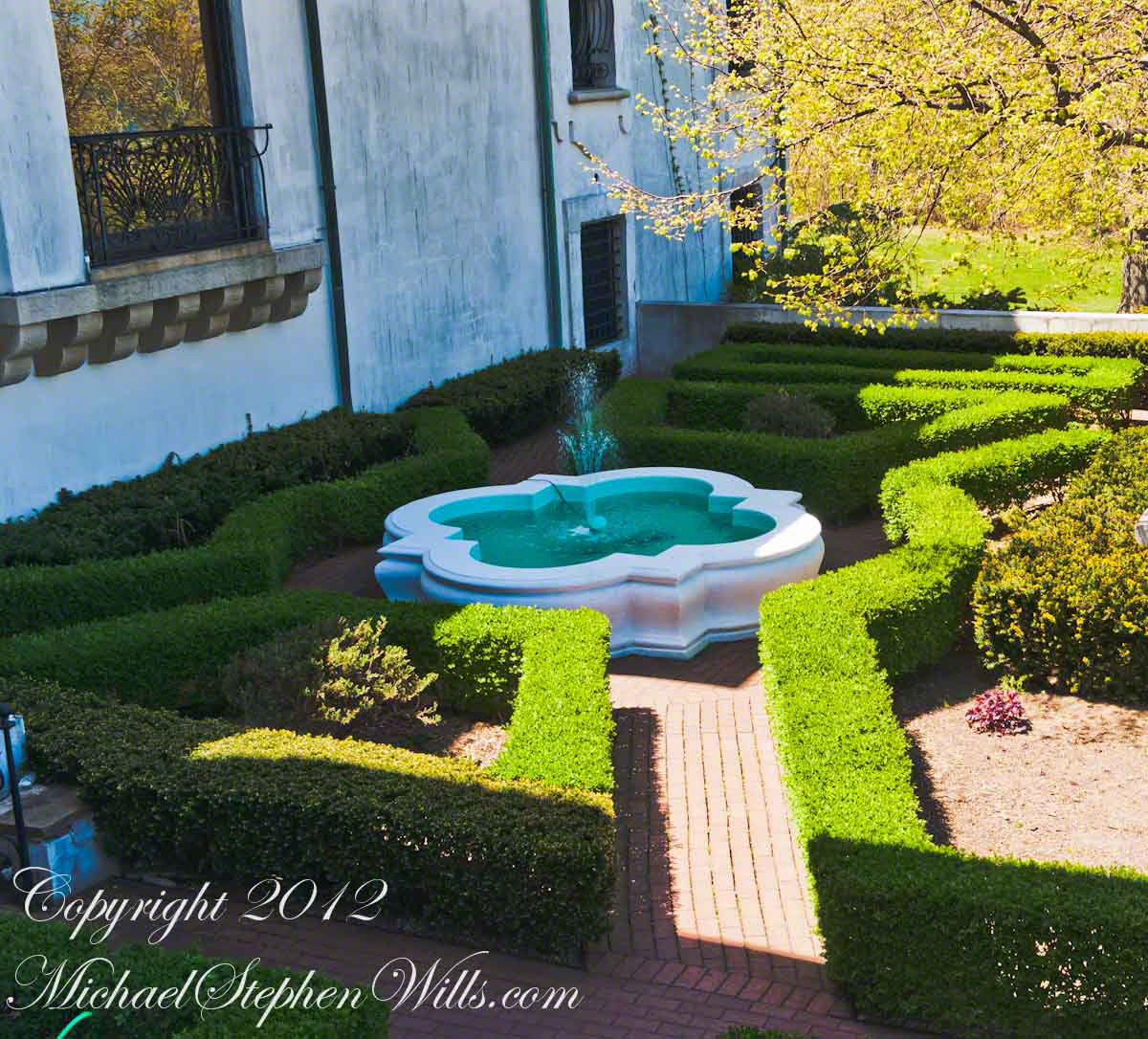
The estate grounds are high above the harbor, the mansion and gardens designed to enhance the view.

There are superficial parallels between Willie K’s life and “The Great Gatsby.” The first suburban commuter, Willie K was an auto enthusiast. A theme of F. Scott Fitzgerald’s novel “The Great Gatsby” is travel back and forth from New York City to the great estates on Long Island’s North Shore. In Gatsby, while the vehicles are grand, the travel is pointless or worse. In comparison, Willie K as a pioneering automobile racer, achieved a land speed record and founded a major race, “The Vanderbilt Cup.” Gatsby, above and beyond his fictional status, is a tenuous, transient figure. Vanderbilt established this estate, grounds and museums we still enjoy today.

Rose Garden

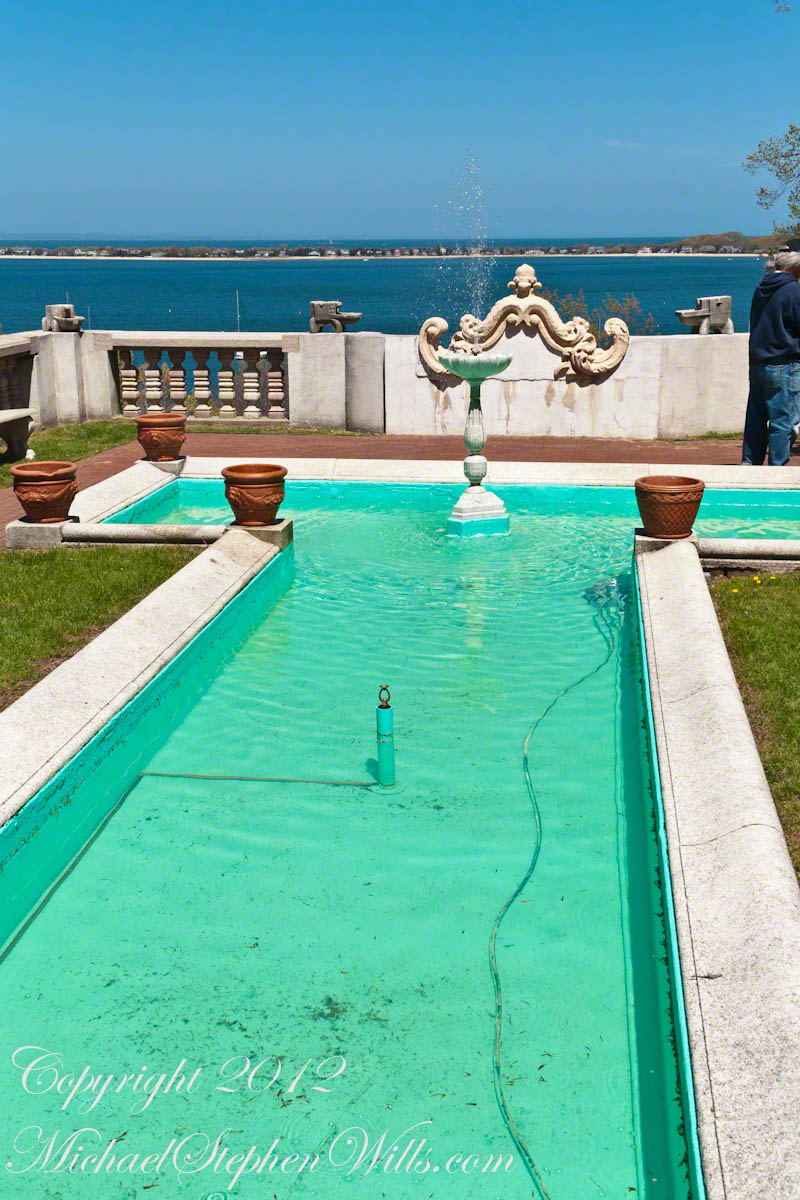
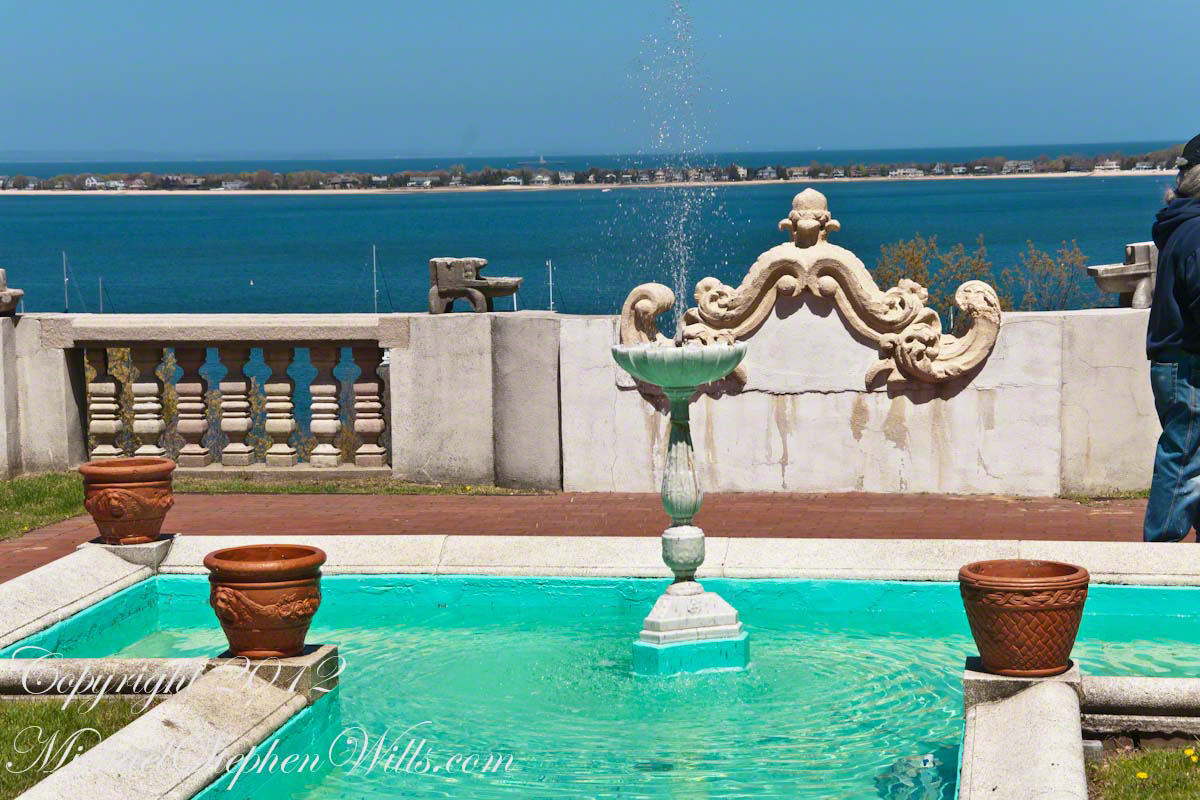
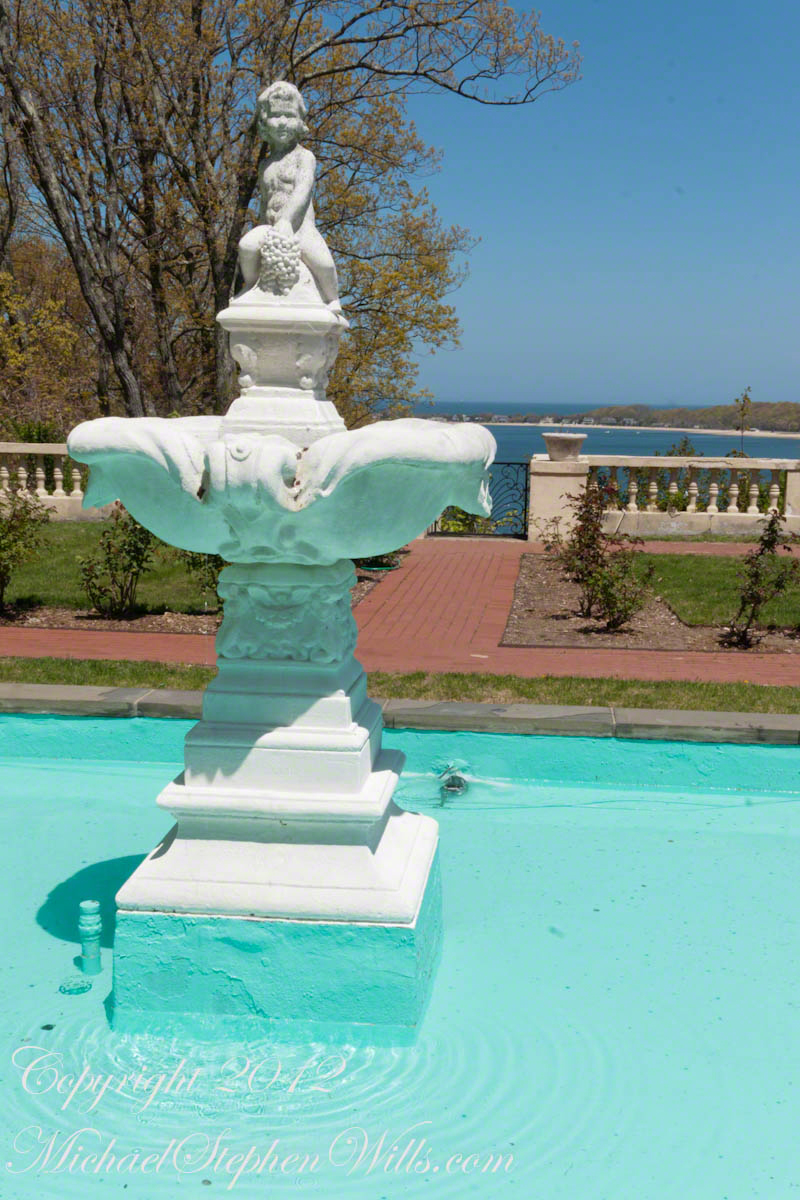
A short walk from the colonnade is a rose garden surrounding a pool and fountain. These Corinthian columns sized to a human scale flank a dedication bench on the northern side overlooking the boathouse through a hillside forest.

Click this link for my OnLine Photography Galleries
Rose Garden Bench

Spirit of the Mediterranean

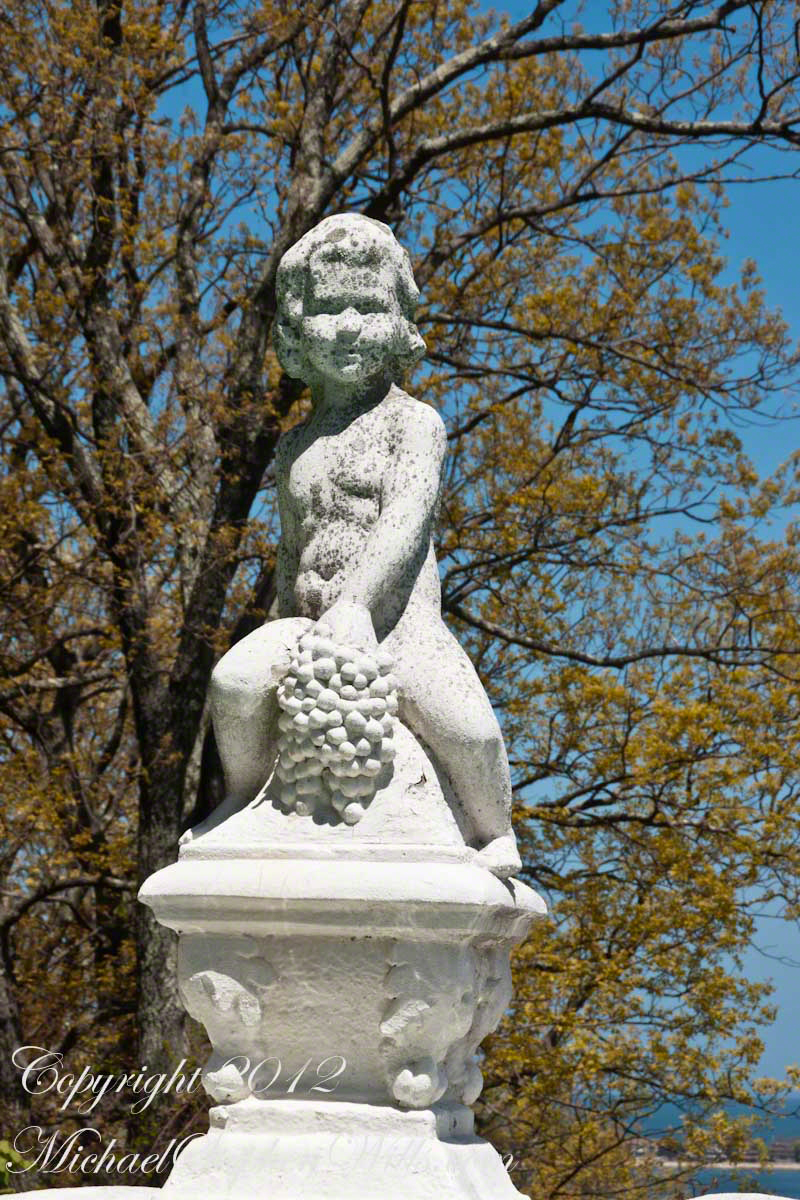
This figure of a flourishing infant is atop the rose garden fountain. Pam and I first noticed this character of the Eagles Nest estate here, with his abundant grape cluster, and came to know him as an expression of Willie’s outlook.

To the northeast / east is a dramatic view of Northport harbor and the Long Island Sound.

Click this link for my OnLine Photography Galleries
Rose Garden Fountain

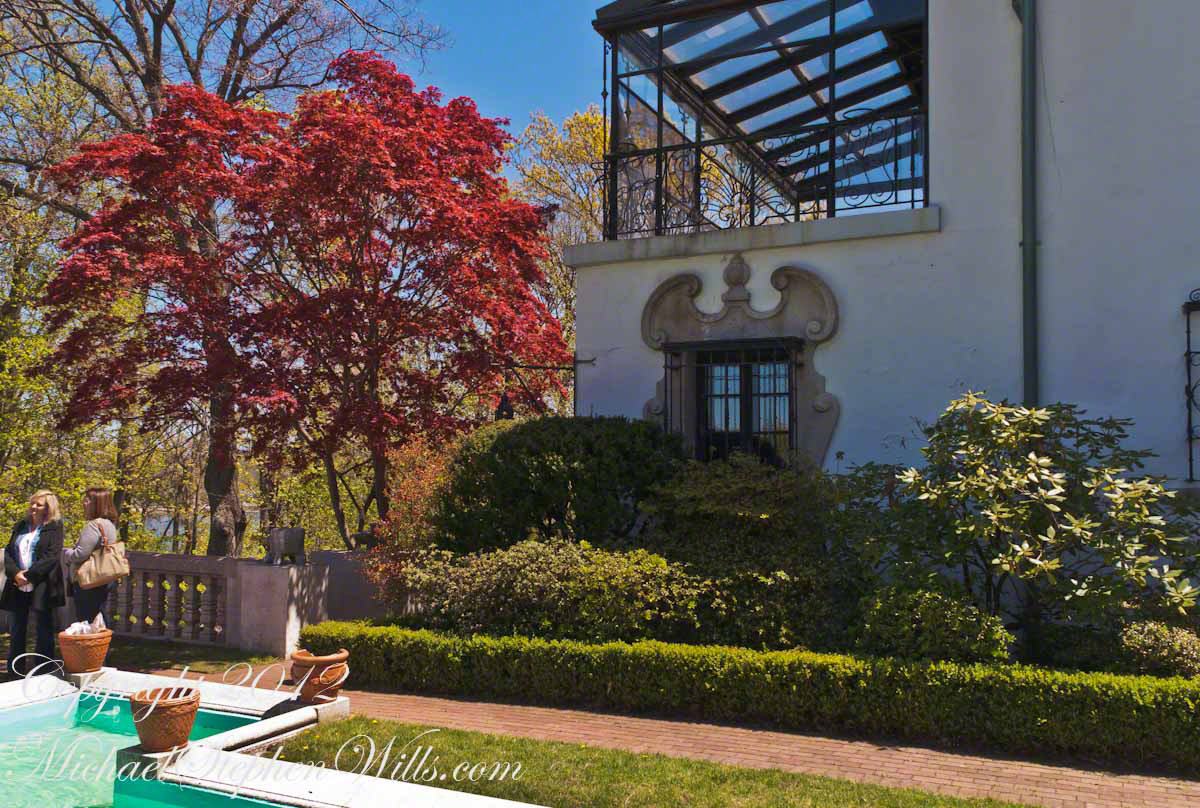
The mansion and surrounding grounds were imagined by Willie and implemented by the architects Warren, Wetmore and Pearce, over a twenty five year building campaign, from his feeling for the Mediterranean.

Click this link for my OnLine Photography Galleries
Museum Garden Statue

We were gifted with weather that evoked the full expression of the Mediterranean spirit.

Copyright 2022 All Rights Reserved Michael Stephen Wills

Views from the Bench I

No Pun Intended

Some sights from last post.

Moss on the edge of upper Taughannock Gorge cliff, with the falls in background far below.

Click photograph for a larger view. To do this from WordPress Reader, you need to first click the title of this post to open a new page.

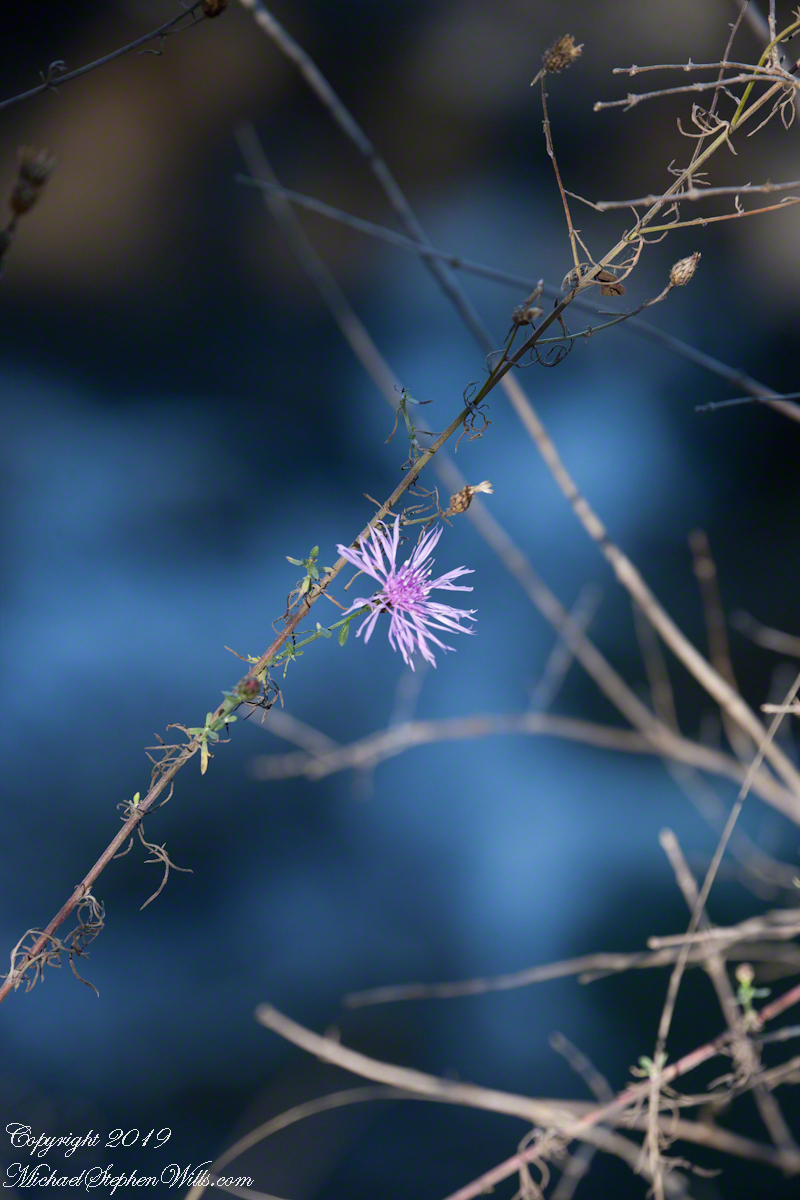
The last flower of autumn, a single bloom of Ironweed.

Copyright 2021 All Rights Reserved Michael Stephen Wills