Of Rocks and Seeps

Step into an early spring morning where sudden frosts adorn the Waterfall by the Old Mill with fleeting icicles, capturing nature’s delicate balance between freeze and thaw.

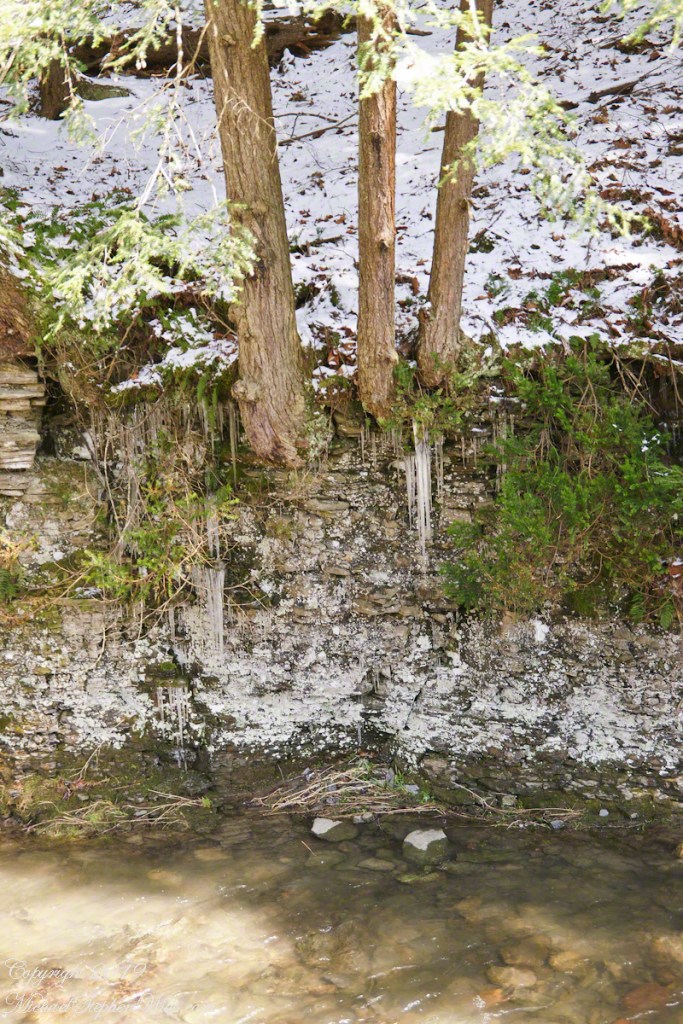
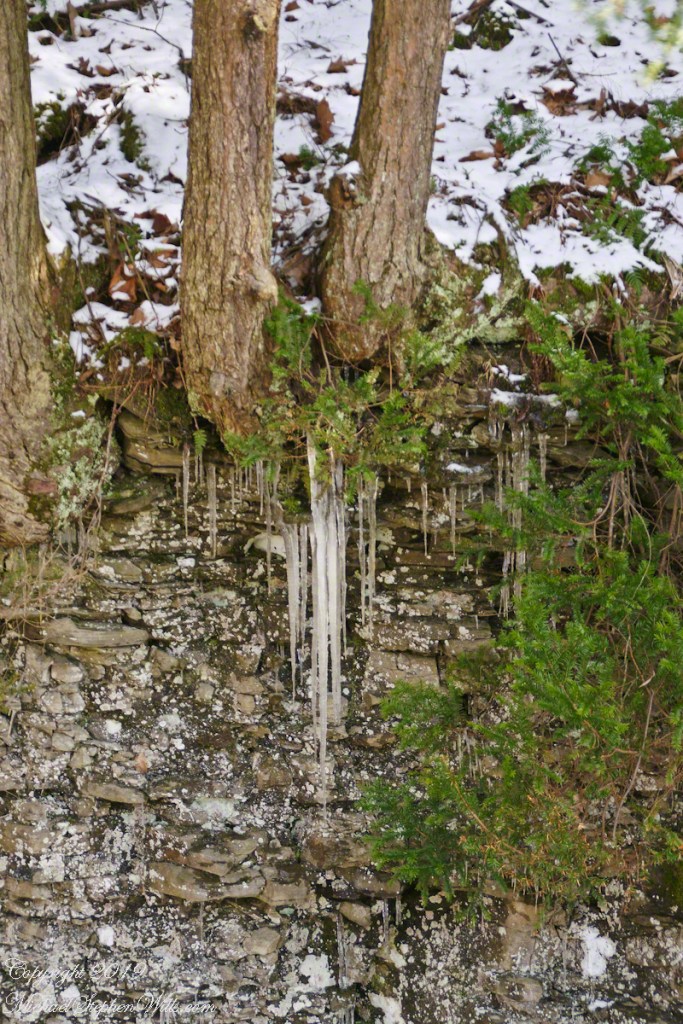
New icicles formed overnight from seeps through the sedimentary walls around the Waterfall by the Old Mill. On an early spring day, after a sudden frost, we walked the Rim Trail to capture the moment.

Here icicles formed during the quick April freeze hand above Fish Kill. Kill is an old Dutch word for creek.

Click photograph for a larger view. To do this from WordPress Reader, you need to first click the title of this post to open a new page.

Here a mix of frost and lichen mottle the rock layers.

These shots were hand held. I used a Sony Alpha 700 dslr with a variable “zoom” lens, great for framing compositions.

Robert H. Treman New York State Park.

Click for a slideshow of this Waterfall of the Old Mill sequence
Copyright 2024 All Rights Reserved Michael Stephen Wills

Three Views, Falls of the Old Mill

Join me on a frost-kissed journey along the Rim Trail, capturing the transient beauty of falls freed from winter’s grip, where nature’s power remains untamed and vividly alive.

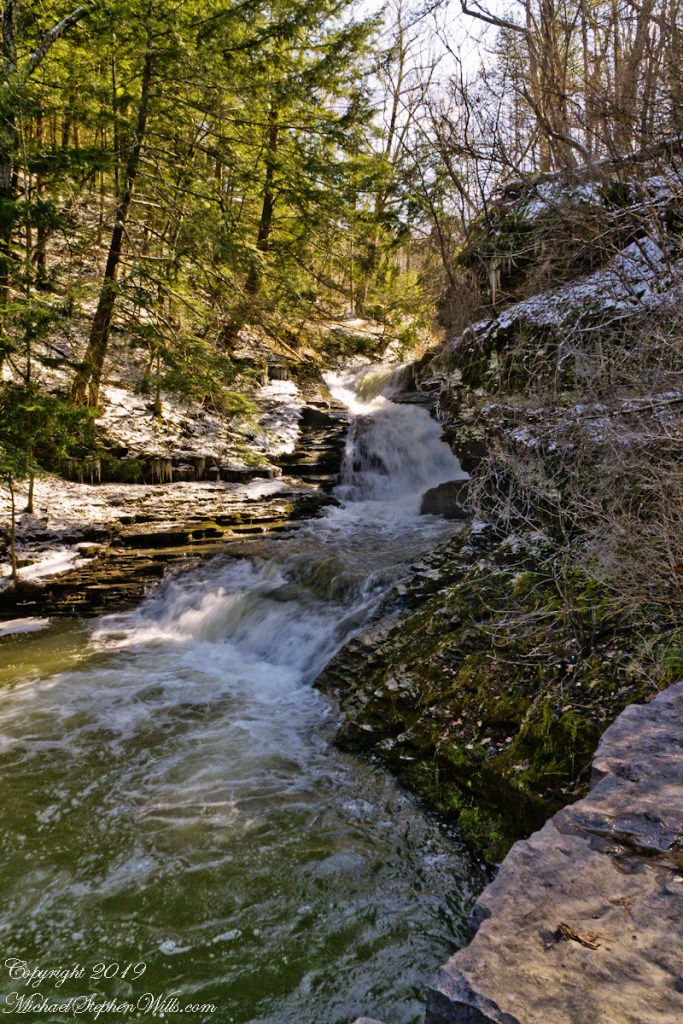
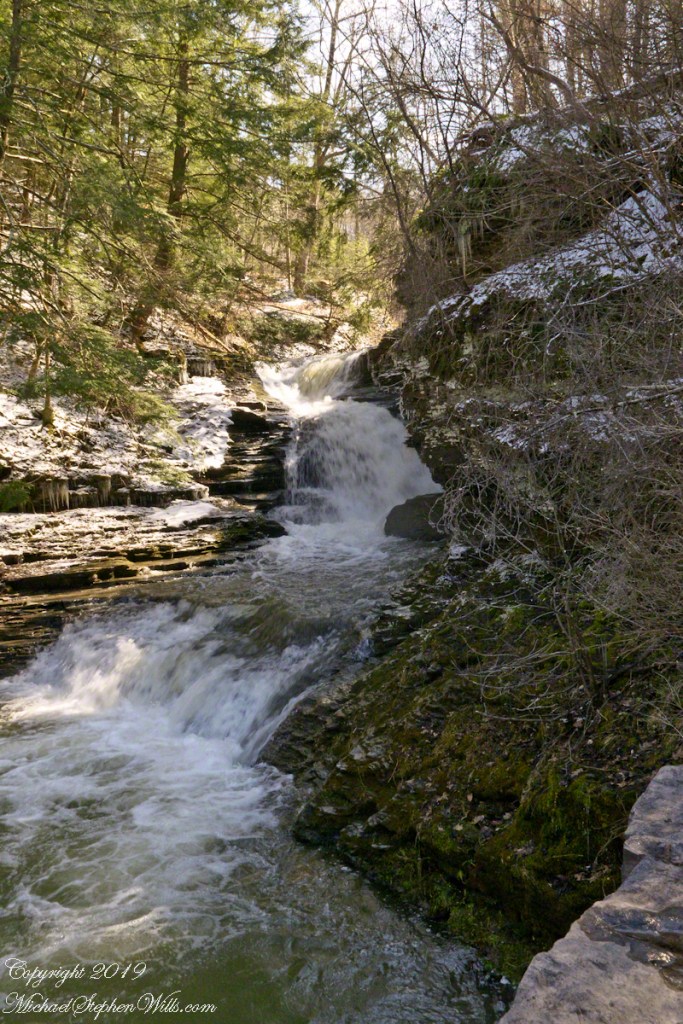
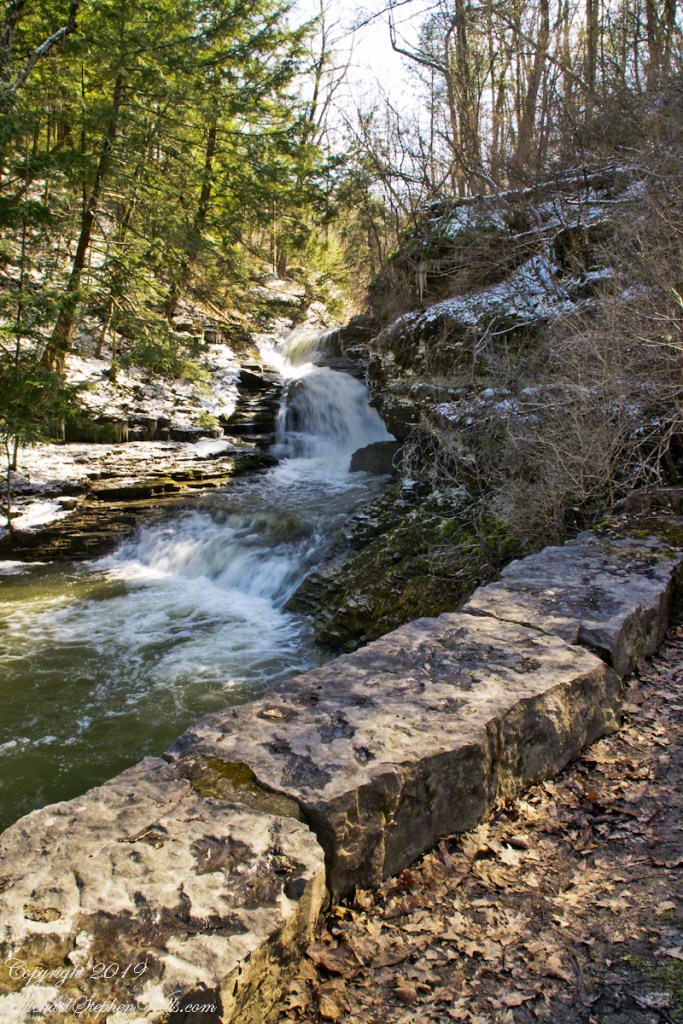
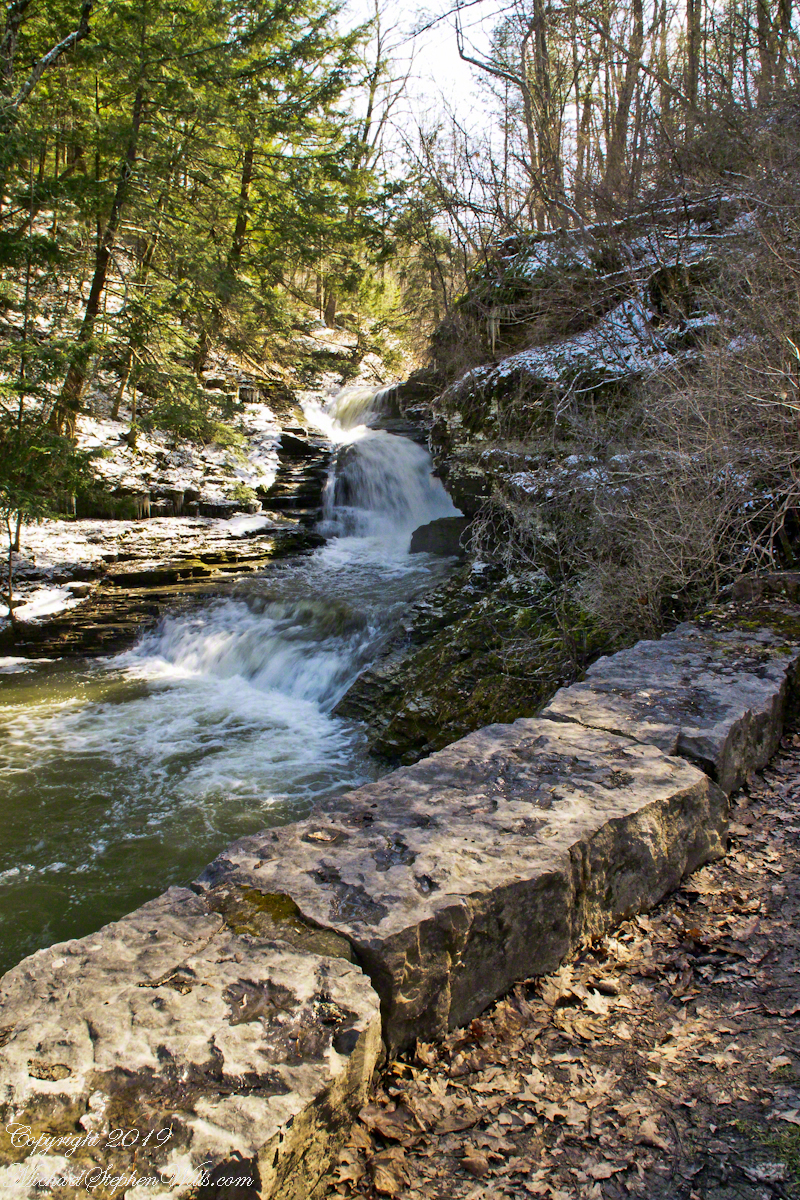
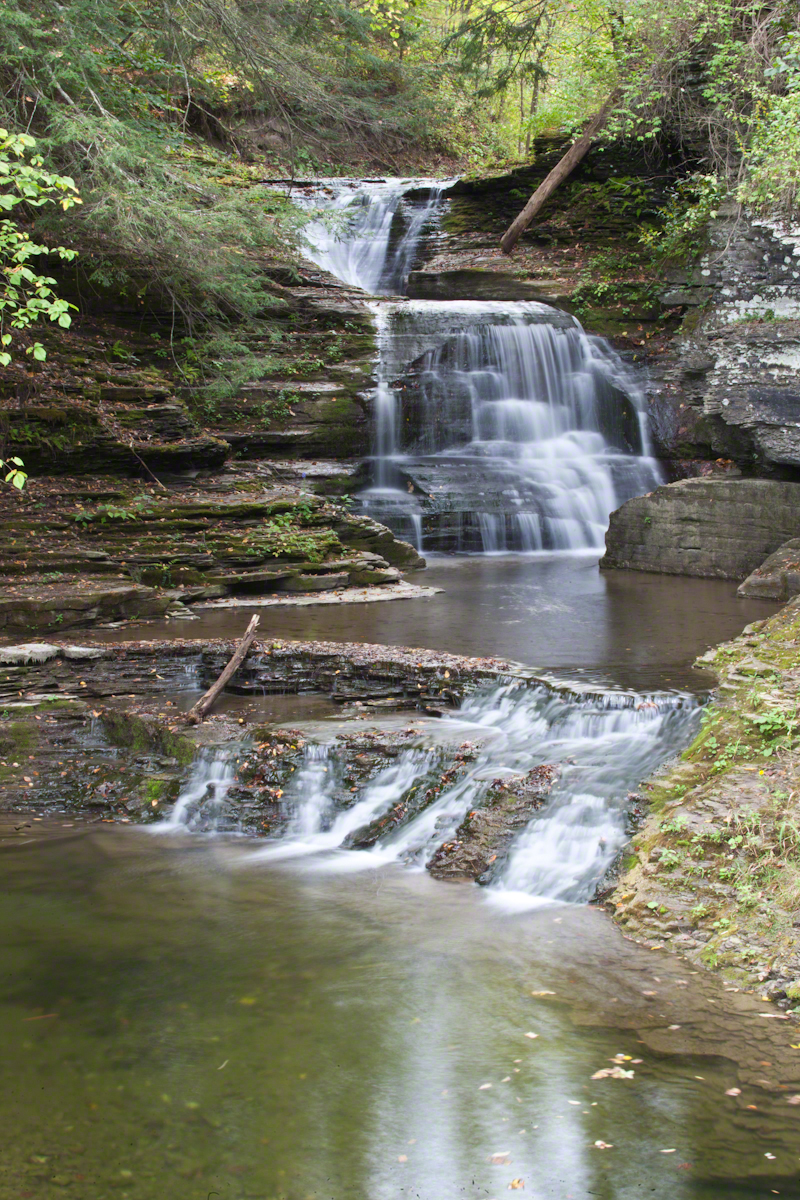
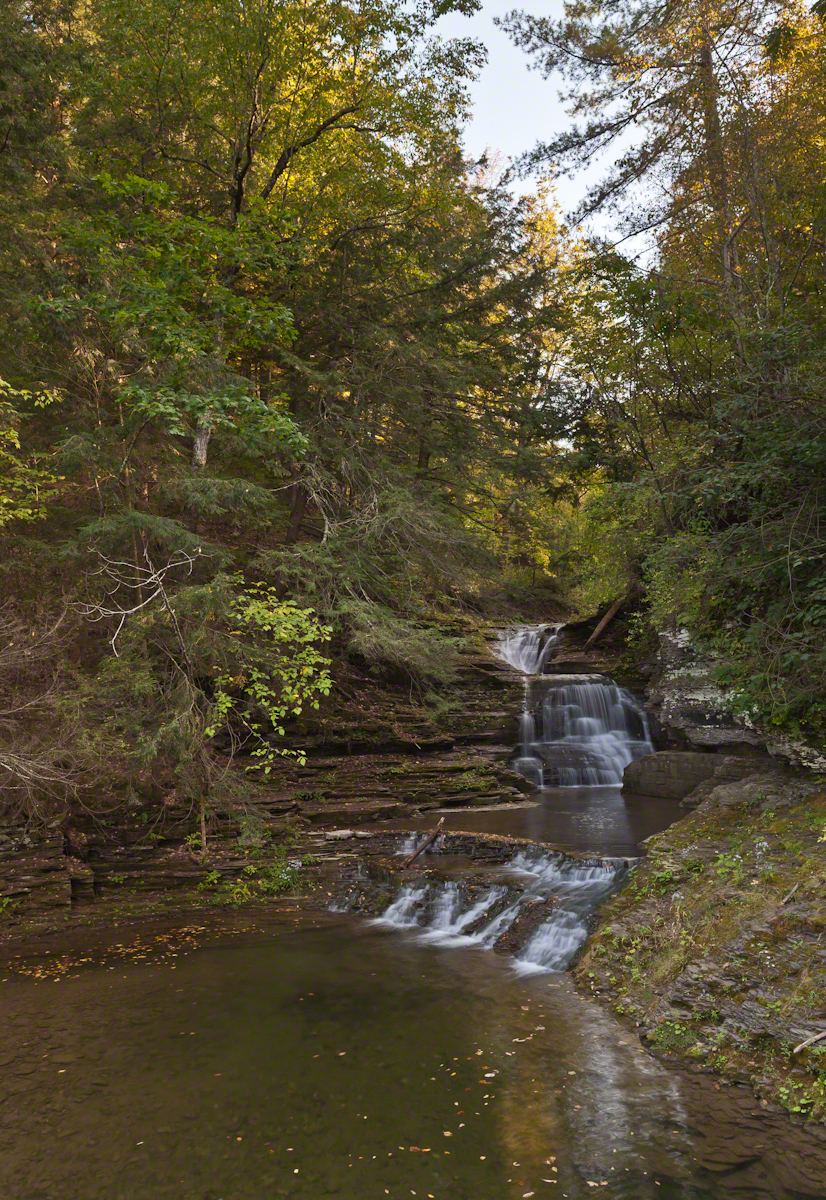
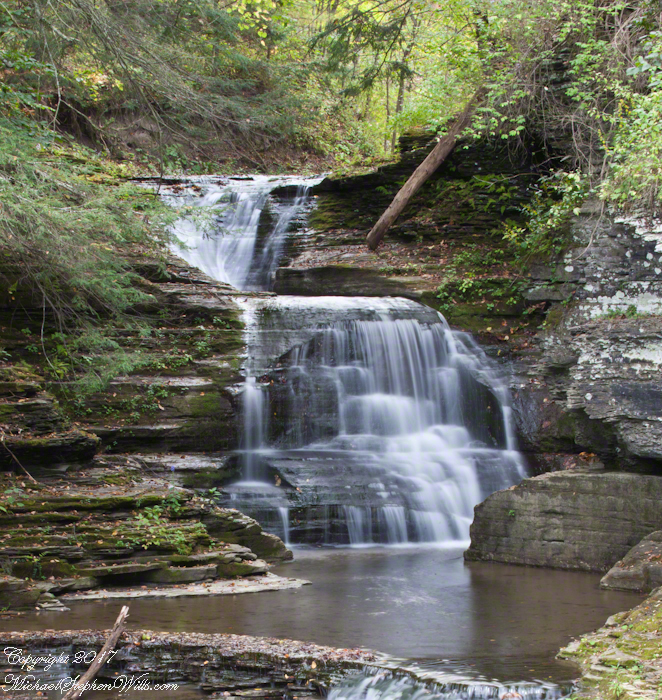
A day the falls run free of ice. On an early spring day, after a sudden frost, we walked the Rim Trail to capture the moment. Here are three captures of the same waterfall, the first visitors to the upper park encounter and the most visited and photographed right off the parking area.

Fish Kill was captured at this point to provide power to grind grain. Today neither nature nor man control the flow. Kill is the old Dutch word for creek.

Click photograph for a larger view. To do this from WordPress Reader, you need to first click the title of this post to open a new page.

I have never counted the waterfalls from this one to the grand sweep of lower falls. The falls are uncountable because no two people could agree on how small a fall to credit.

Of these three versions, i prefer this one for the foreground inclusion of the enormous limestone blocks set to protect visitors from the drop. This scene is challenging photographically, bifurcated as it is by the bright sun over the fall brink. I prefer to shoot these falls early morning, for this reason, before the sun illuminates the area at all. Long exposures required demand a rock solid tripod, as it is just off the parking lot I use my studio Manfrotto for the work. Here all shots were handheld.

I used a Sony Alpha 700 dslr with a variable “zoom” lens, great for framing compositions.

Robert H. Treman New York State Park.

Click for a slideshow of this sequence of the Waterfall of the Old Mill
Copyright 2024 All Rights Reserved Michael Stephen Wills

Reeds of Resilience: A Tale of Growth and Survival

Discover the hidden world of Phragmites australis, the common reed: a story of resilience, beauty, and ecological significance, told through the eyes of the wetlands.

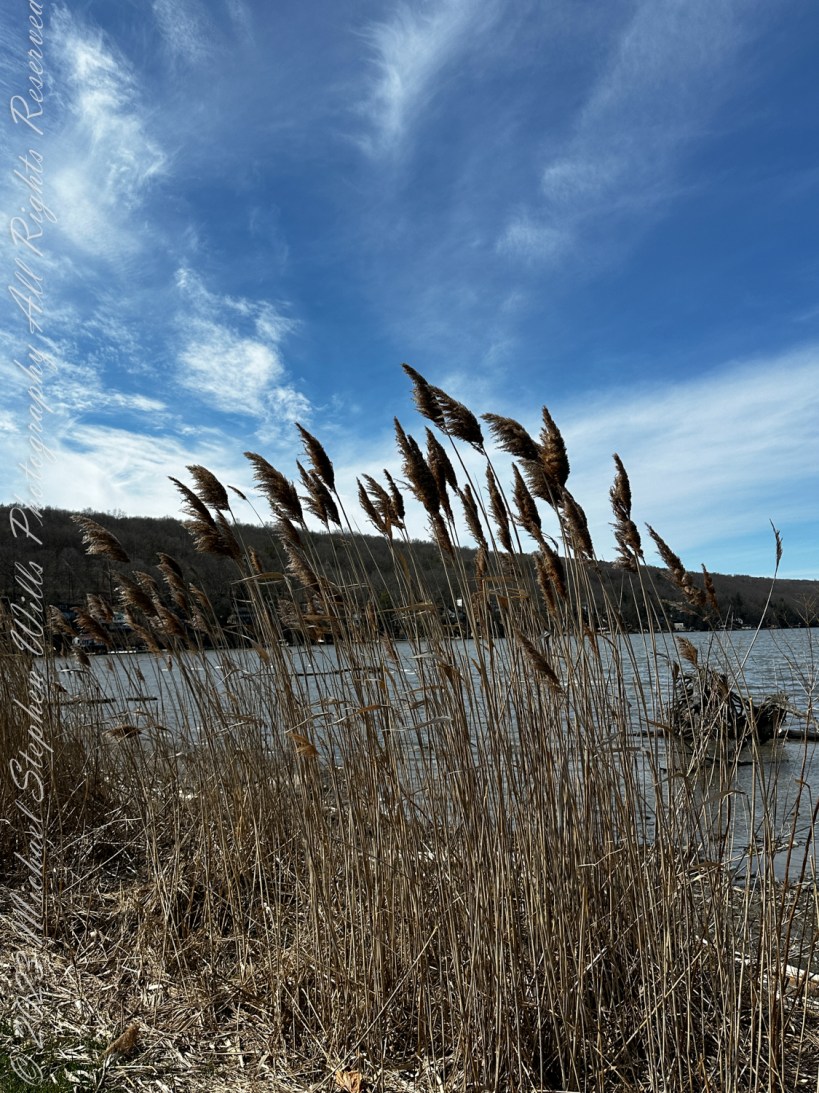
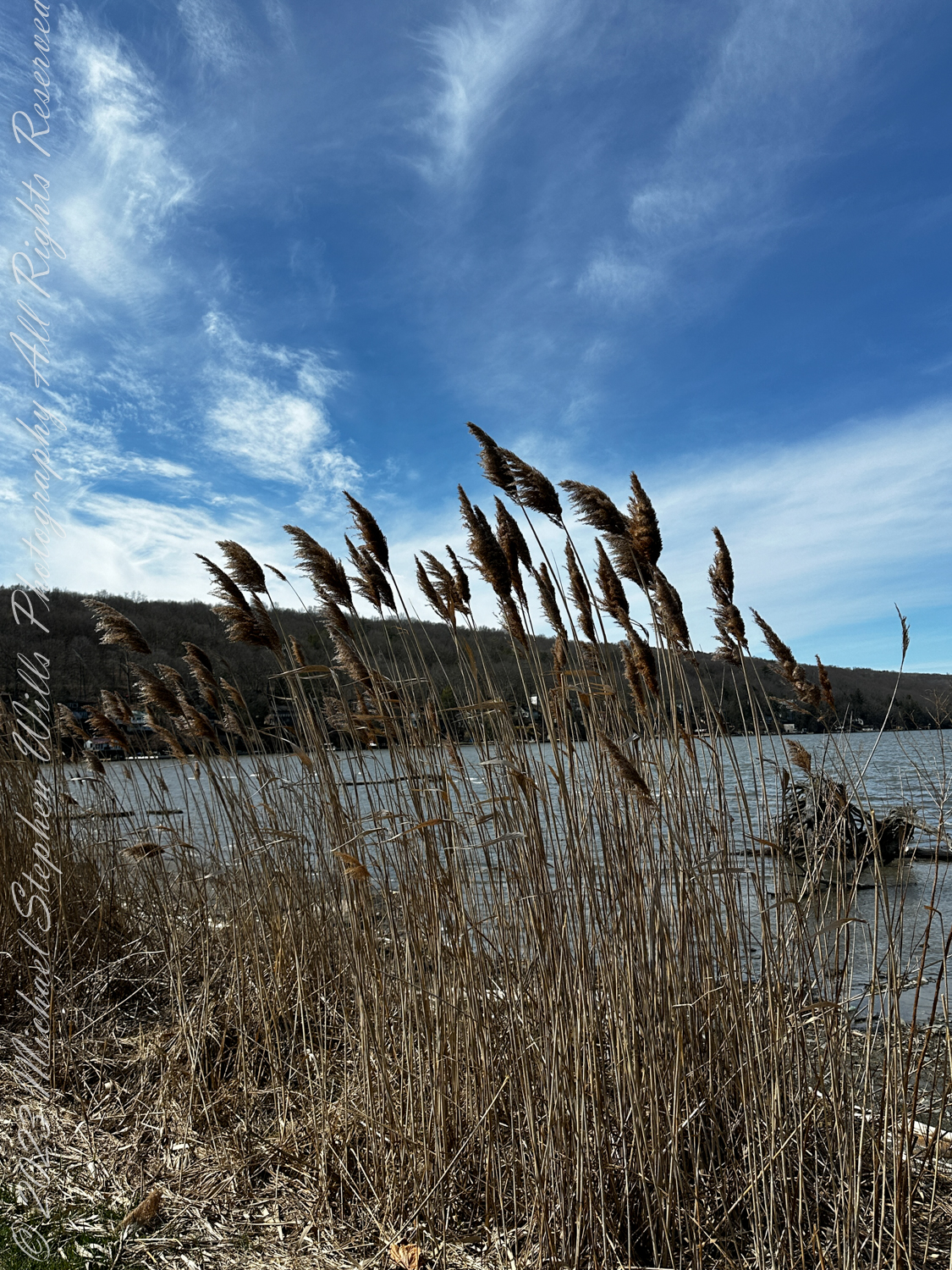
On the southern shore of Cayuga Lake, where waters mirror the ever-changing sky, I found this common reed, Phragmites australis, a plant of unassuming grace yet profound influence. This tale unfolds at the broad boarders of earth and water, a refuge and kingdom to countless beings.

Phragmites australis, a reed both simple and complex, begins its journey as a whisper in the mud. From the soft, fertile earth, it bursts forth into the world, a slender shoot reaching for the heavens. Its growth is steady and assured, fueled by the sun’s embrace and the water’s caress. In time, it stands tall, a sentinel in a sea of green, its feathery plumes, called panicles, wafted by the breeze.

This reed, you see, is a cornerstone of its ecosystem, a master architect, shaping its environment, crafting homes and havens for creatures great and small, in keeping with the genus name “Phragmites.” The Greek word “phragma” translates to “fence” or “hedge”, derived from the verb “phrassein”, meaning “to enclose.” Within that realm tiny creatures find refuge. From dragonflies and damselflies to grasshoppers and beetles are found by careful, patient observers. Insects play essential roles in pollination and nutrient cycling. Birds use the dense vegetation for shelter and foraging, you might find red-winged blackbirds, marsh wrens, and rails among the stems. Frogs, toads, and salamanders find refuge in reedy marshes. They lay their eggs in the waterlogged areas, and their tadpoles thrive amidst the reed stems. Phragmites australis is a giver of life, a source of sustenance and protection for many.

Yet, the tale of Phragmites is also one of struggle and resilience. In lands far from its native soil, it is often seen as an invader, a usurper of territories, spreading with a zeal that can overwhelm native flora and alter habitats. Its spread, unchecked, can lead to monocultures, diminishing biodiversity. But in its essence, Phragmites does not seek conquest but survival, thriving in spaces both gentle and harsh, adapting with an elegance that commands admiration.

As seasons turn, the reed undergoes a transformation, its green turning to gold, then to the brown of the earth from which it sprang. But even in decay, it nurtures life, its fallen stalks a shelter for the small and the silent, its seeds a promise of renewal. And when spring whispers anew, Phragmites rises once more, a cycle unbroken, a circle complete.

In the tale of Phragmites australis, we find a narrative of life itself—growth and decay, beauty and conflict, resilience and adaptation. This common reed, standing tall among the waters of the world, is a testament to the enduring power of nature, a reminder of the intricate tapestries of life that flourish in the quiet corners of our planet.

Click Me for another posting on the Common Reed.

Copyright 2024 Michael Stephen Wills All Rights Reserved

Sense of Scale

Come in and experience how humans are dwarfed by the eons

Continue reading “Sense of Scale”

Frond in Snow

Green Promise

Continue reading “Frond in Snow”

Autumn Evening Hike, turning home

through Devil’s Kitchen to Lucifer Falls

In this third part, we continue hiking Treman gorge, approaching Lucifer Falls, viewing another waterfall further downstream and returning to the trailhead.

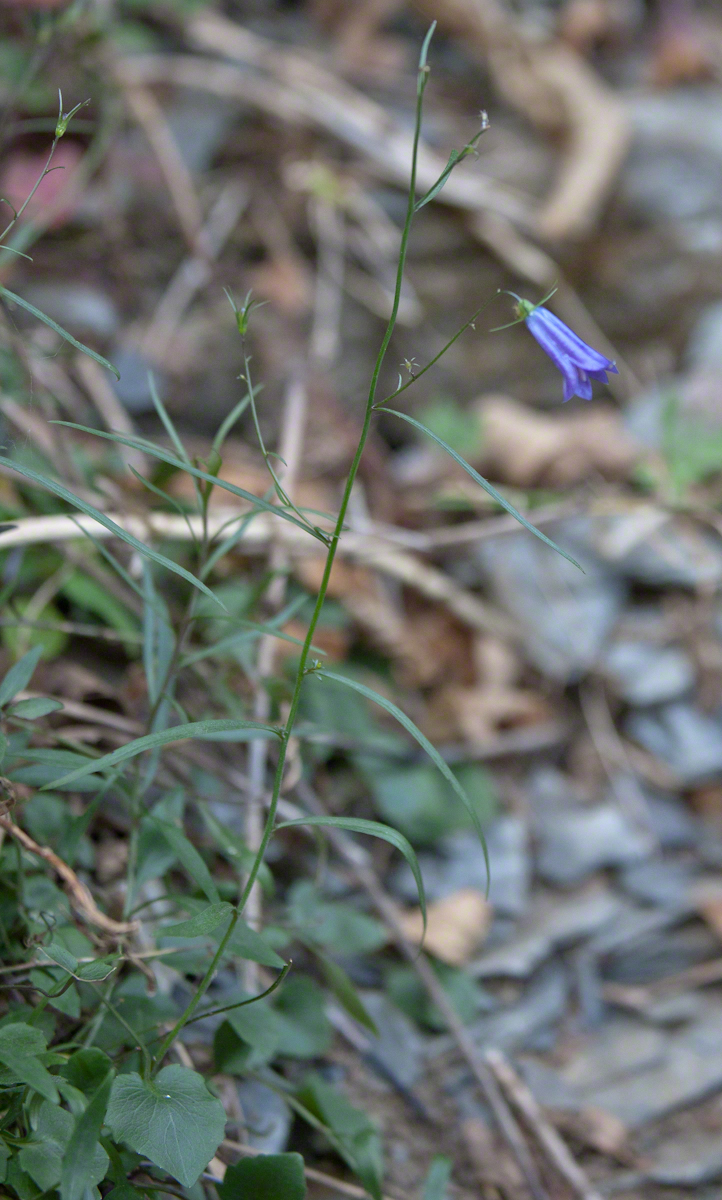
 Tiny Trumpet, unknown

I have never achieved a satisfactory capture of the waterfall in the Devil’s Kitchen, a place where the creek flow is diverted south by a projecting ridge. Less than 100 feet later the easterly direction is regained where the water plummets over Lucifer Falls.

The annual in fall of rock in Devil’s Kitchen uproots and crushes plants growing there. There is scant soil, the roots of this shiny purple trumpet bloom took hold in a microscopic crack. The plant is so thin, the flower so tiny it is lucky my gaze found it.

Click link for my fine art print “After the Rain: Showy Lady Slippers.”

After searching all my plant identification references, this plan is unknown to me.  Please help with identification. The bloom is 1/4 inch long.

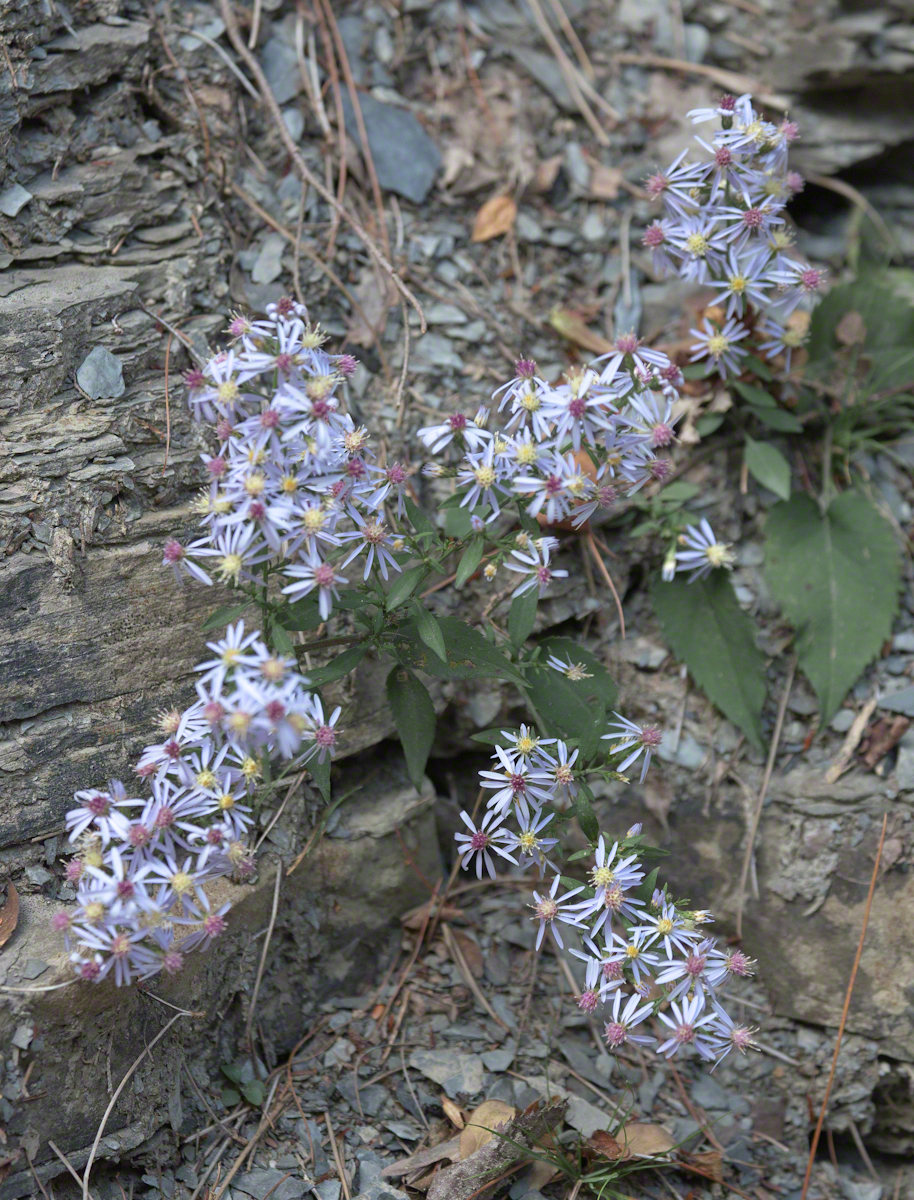
Not far away, these asters grow from a slightly wider crack.  Pam pointed them out to me. I was drawn by the striking color difference of the heads growing from a single stalk.

Click link for my fine art print “Purple Asters.”

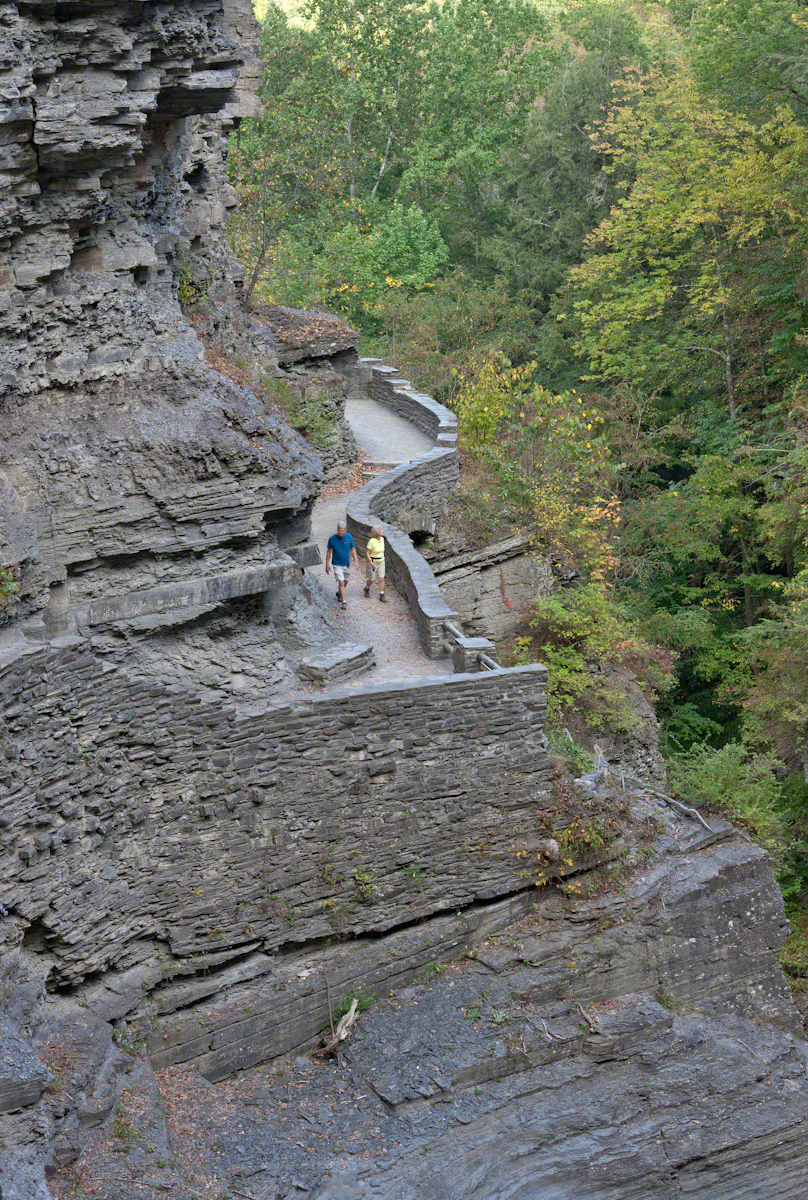
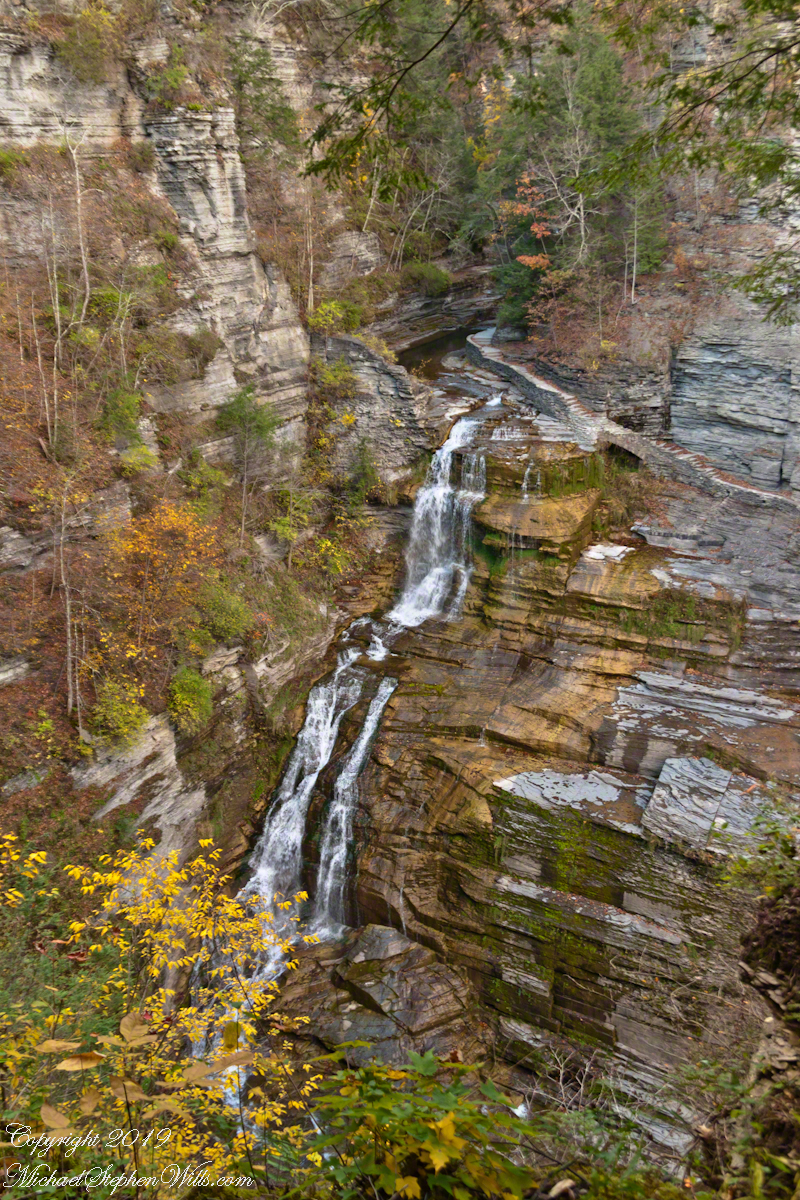
As trail winds around the ridge a stone wall rises on the right and for good reason.  The stream shortly reaches the brink of Lucifer Falls, 115 feet high.  Gorge walls fall away, the trail steepens.  Here is the view from the trail next to the brink.

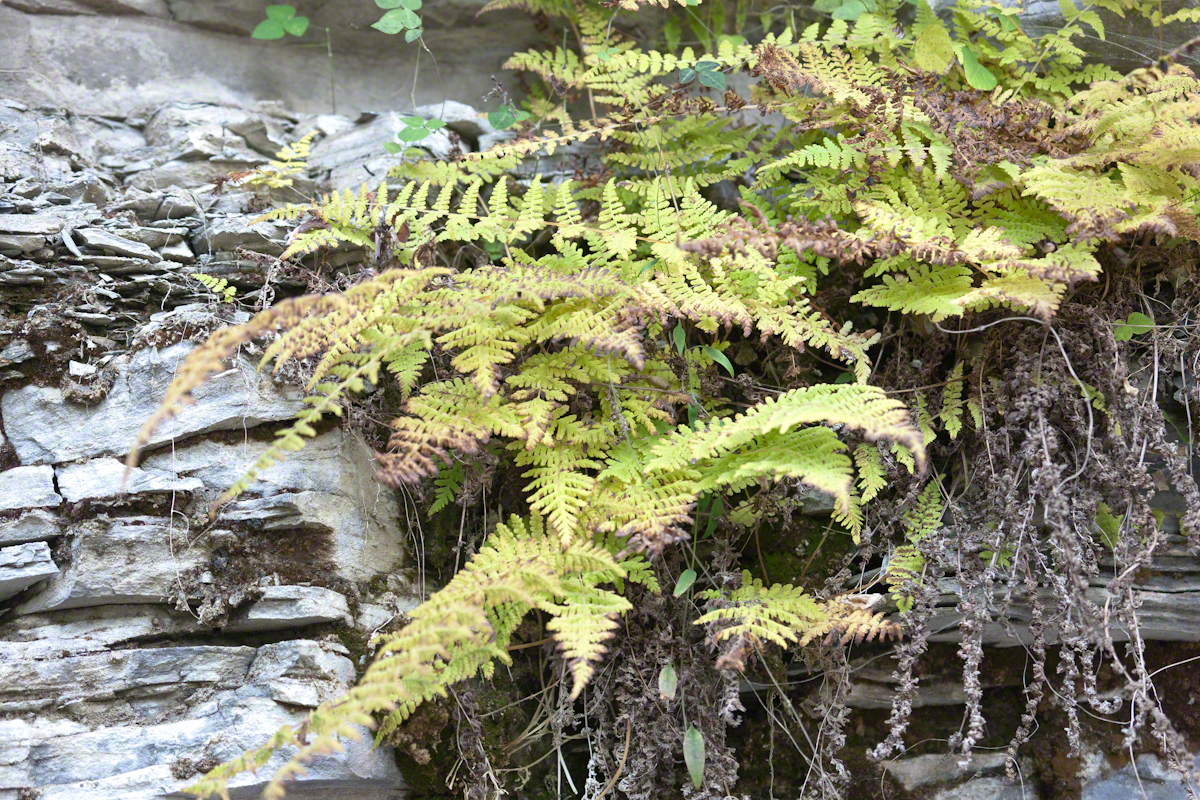
At hand, on the right, a growth of ferns has survived many seasons.  Flowering plants are, in geological time (across billions of years), a relatively recent development compared to these non-flowering ferns.  The first flowering plants appears 120 million years ago compared to the first ferns, 360 million years ago.  Oddly enough, the spread of flowering plants affected evolution of ferns, an increase of fern speciation in parallel to the rise of flower plants.

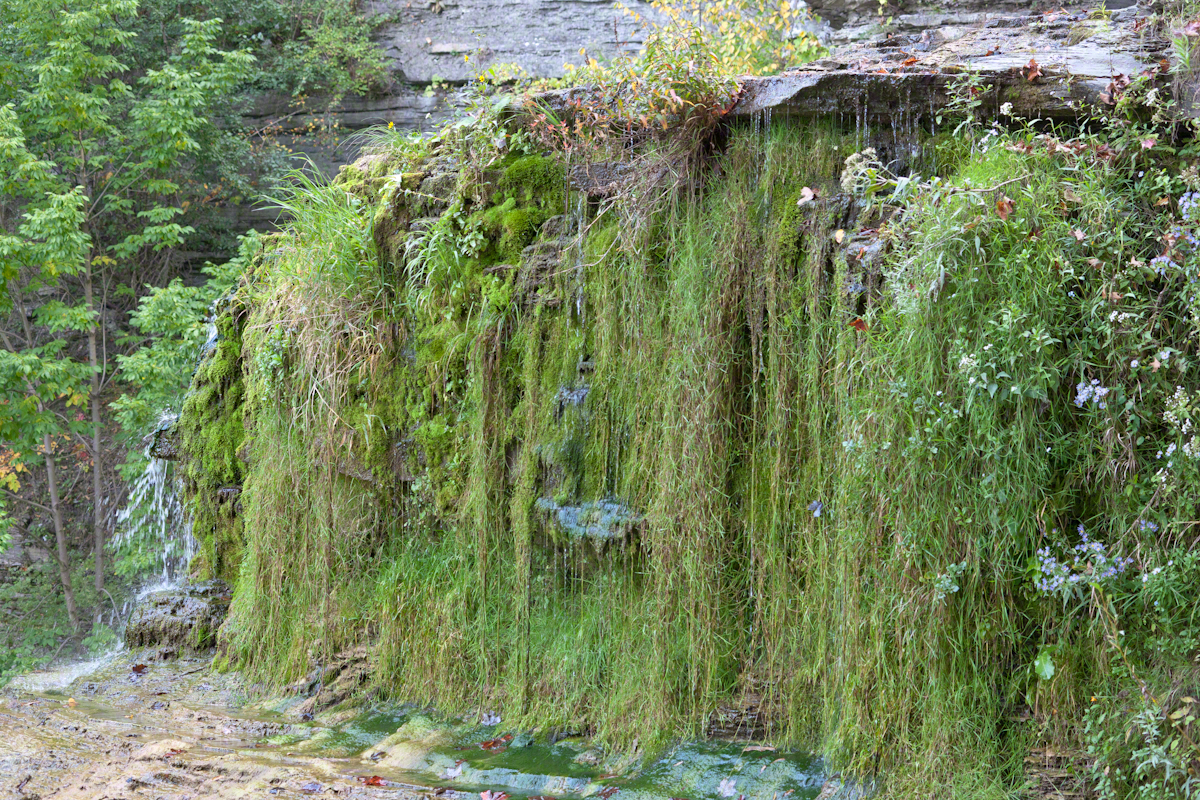
While descending the stairs next to the falls brink, look to the right to see this ecosystem, a result of water seeping from the sedimentary rock stratification.

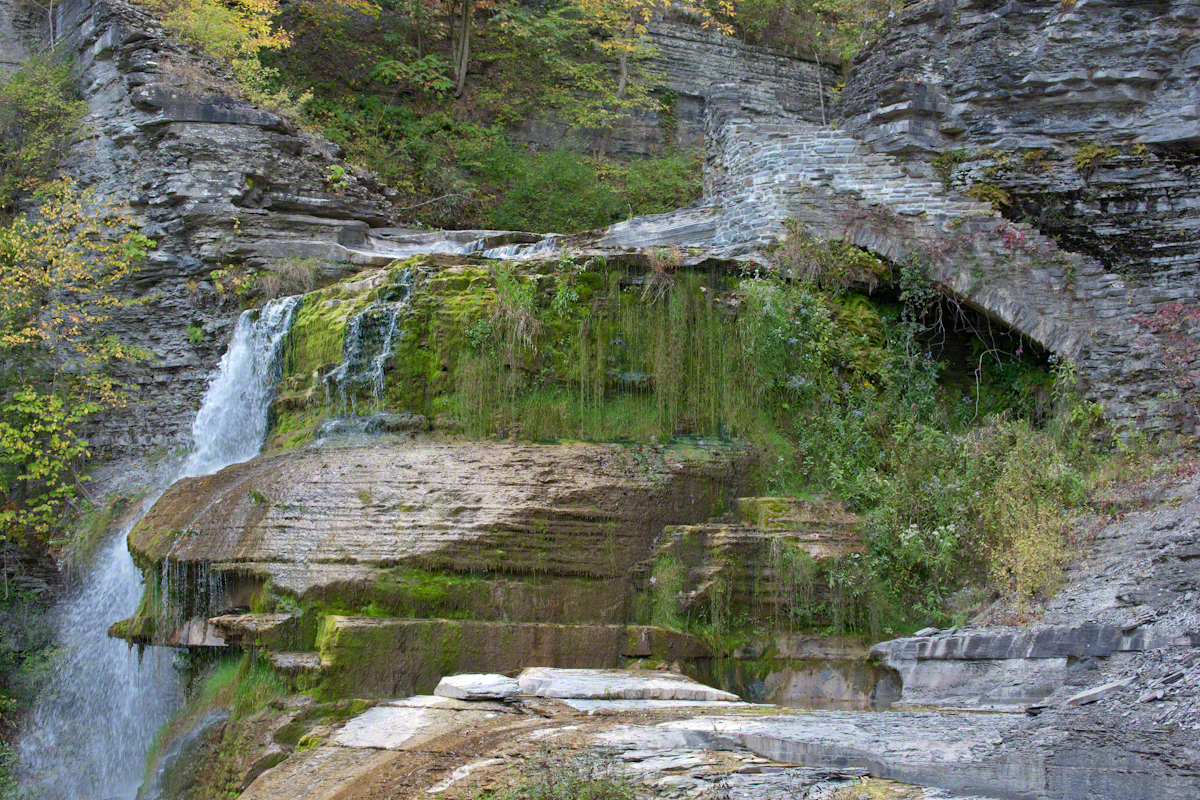
Here you can see how, at lower flow levels, the inactive sections of the fall lip become a garden.  In our climate, the entire brink is active for rare and brief intervals during spring thaws.  Note how, closer to the active brink, the grasses give way to mosses.  Where grasses grow the brink is almost never active.

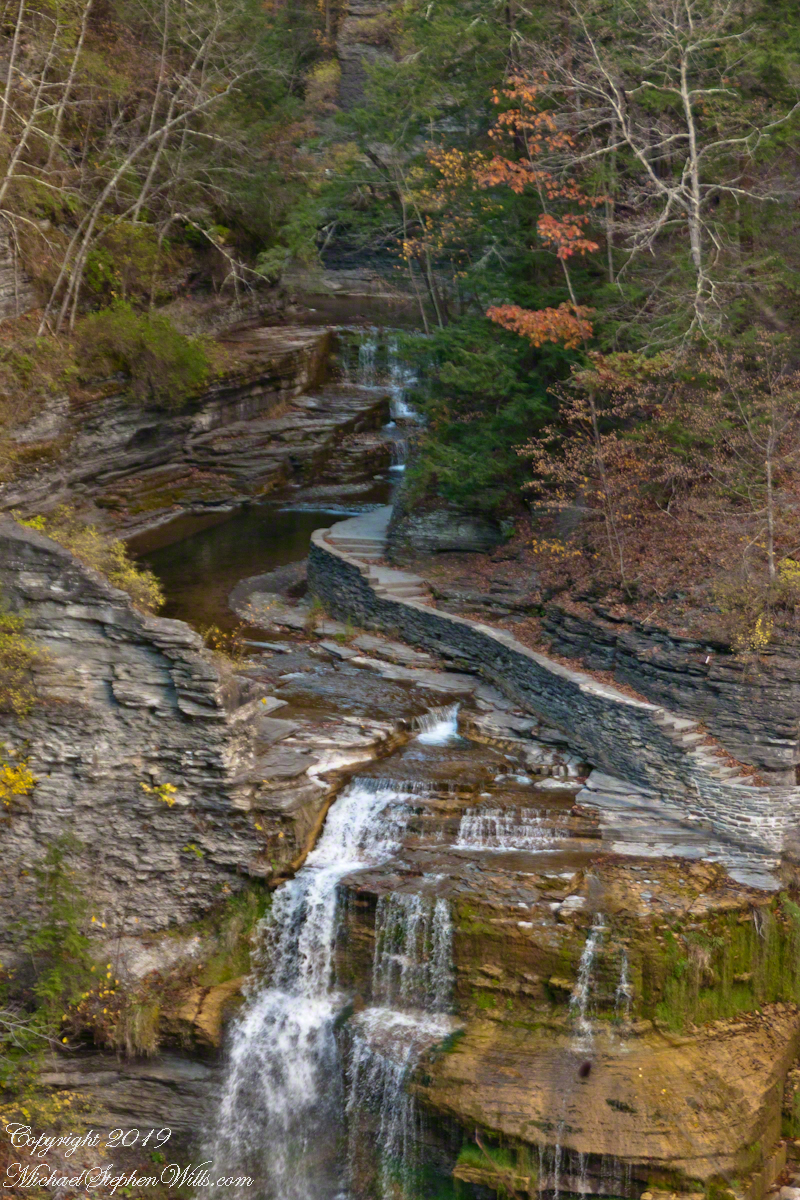
The trail wall is a lighter color than the cliff, this is how you can see, on the right, the steep trail descent.

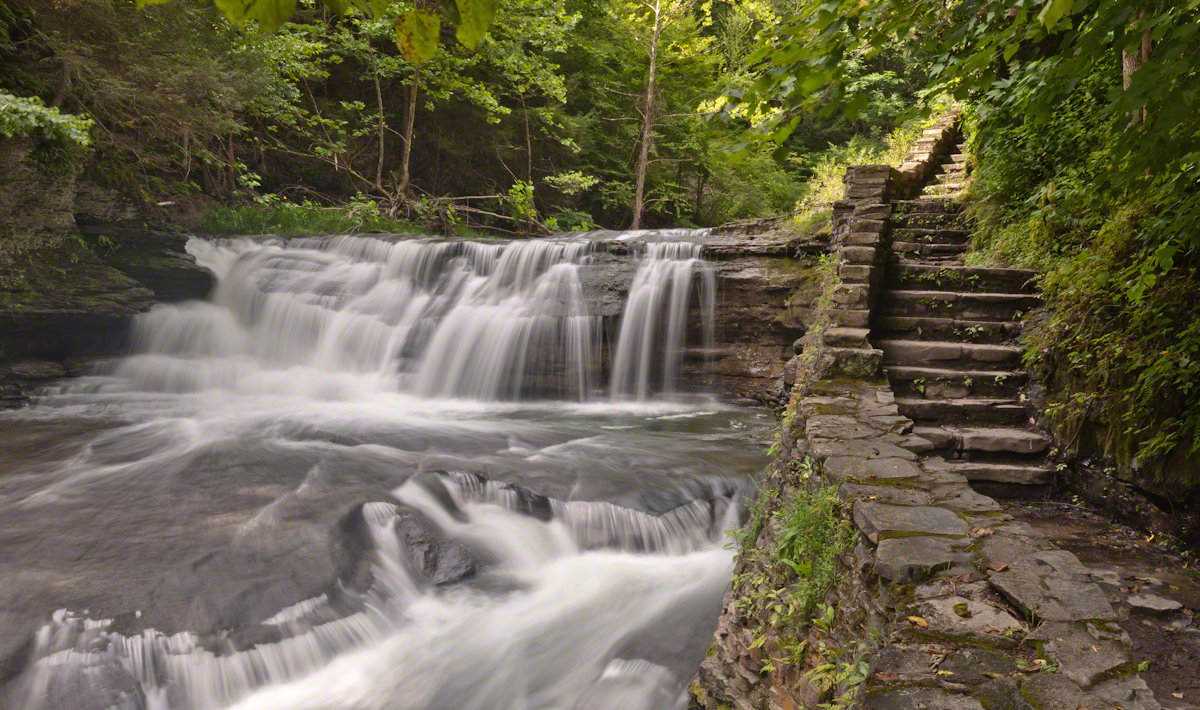
Pam and I turned around here.  This is some work I did August 2014 of a notable fall downstream from Lucifer.  I used the 24 mm Canon lens here, cropping the image.  My goal was to include the stair, for interest, with sunlight on the upper stairs; the water in shade.

Click link for my fine art print “Woodland Falls.”

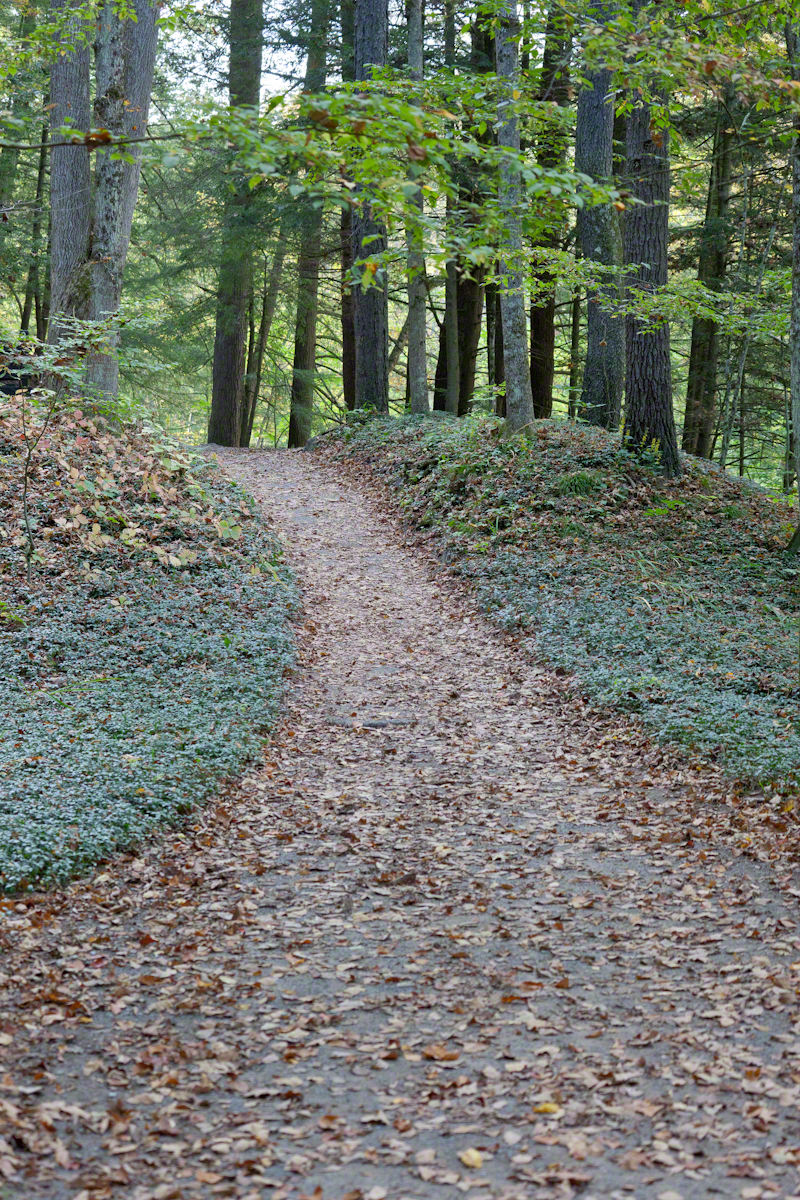
Myrtle borders the trail as it rises from the gorge entrance.

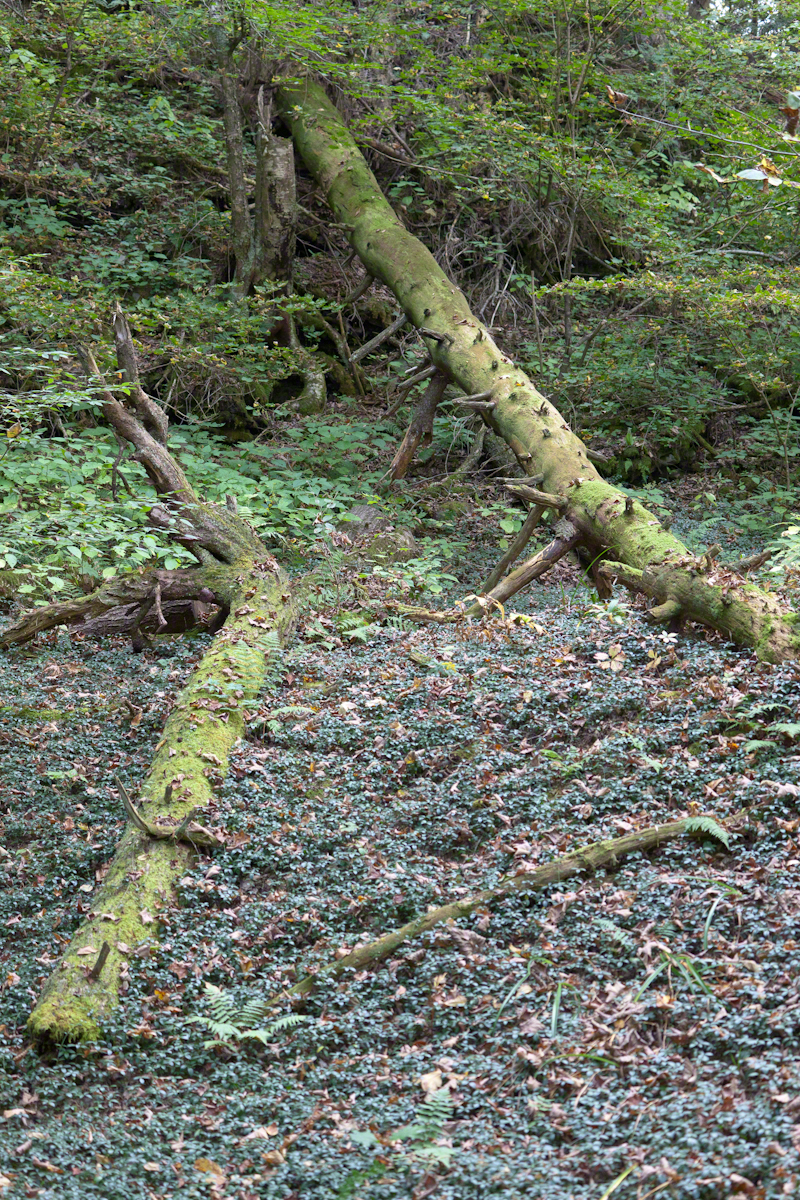
Tree trunks fallen from the gorge walls are left to decay, restoring the soil.  The trunks are covered by moss among a thick growth of myrtle and a few ferns.

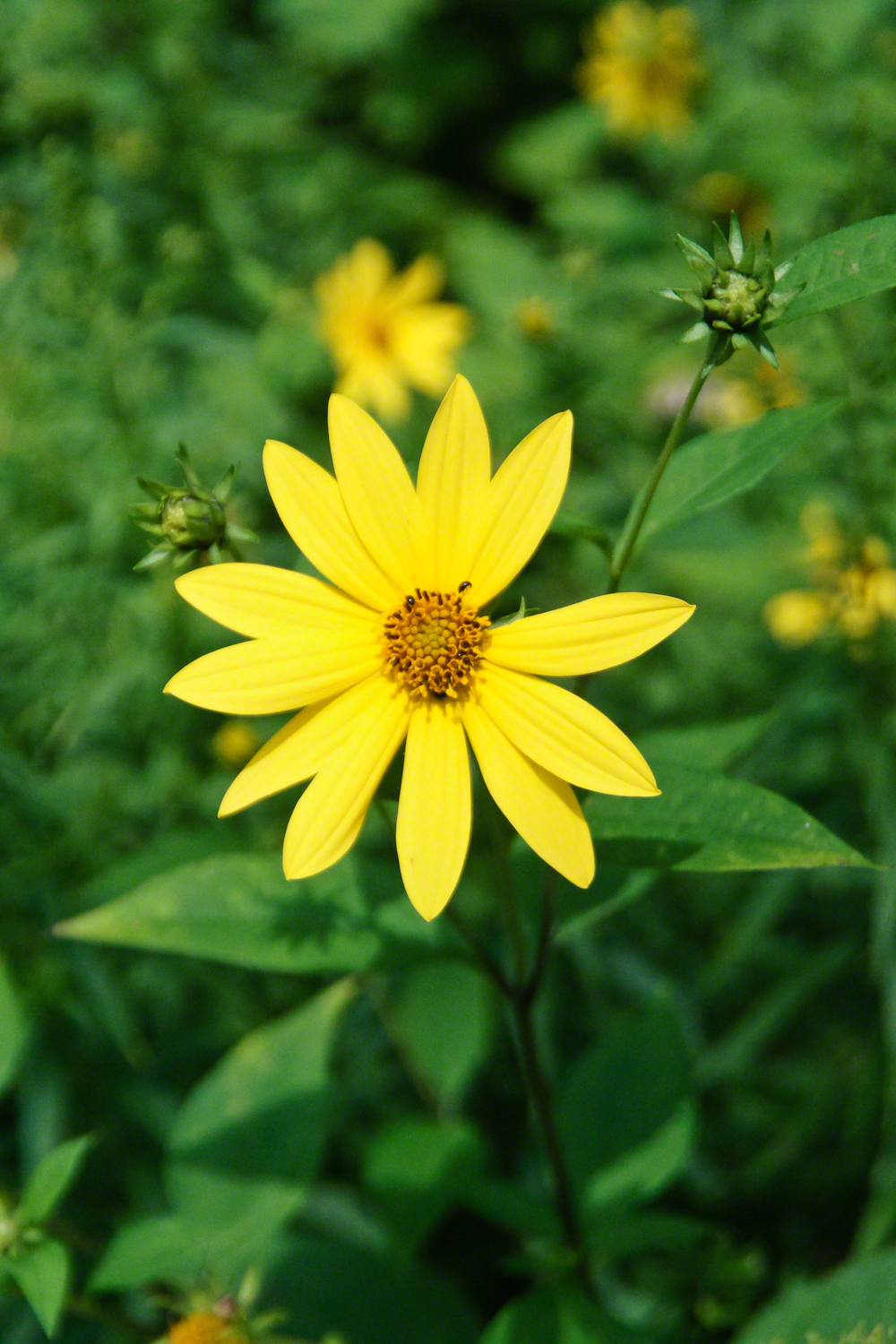
To finish, here is an image that may broaden your understanding of sunflowers. These smaller, ornamental sunflowers are, at first, difficult to place. Look carefully at the center, composed of many tiny flowers (florets). In crop sunflowers each of these becomes a seed. In this image, shiny beetles are feasting.

The End of this Evening Hike in Treman Gorge

Click me for more postings of Autumnal Beauty
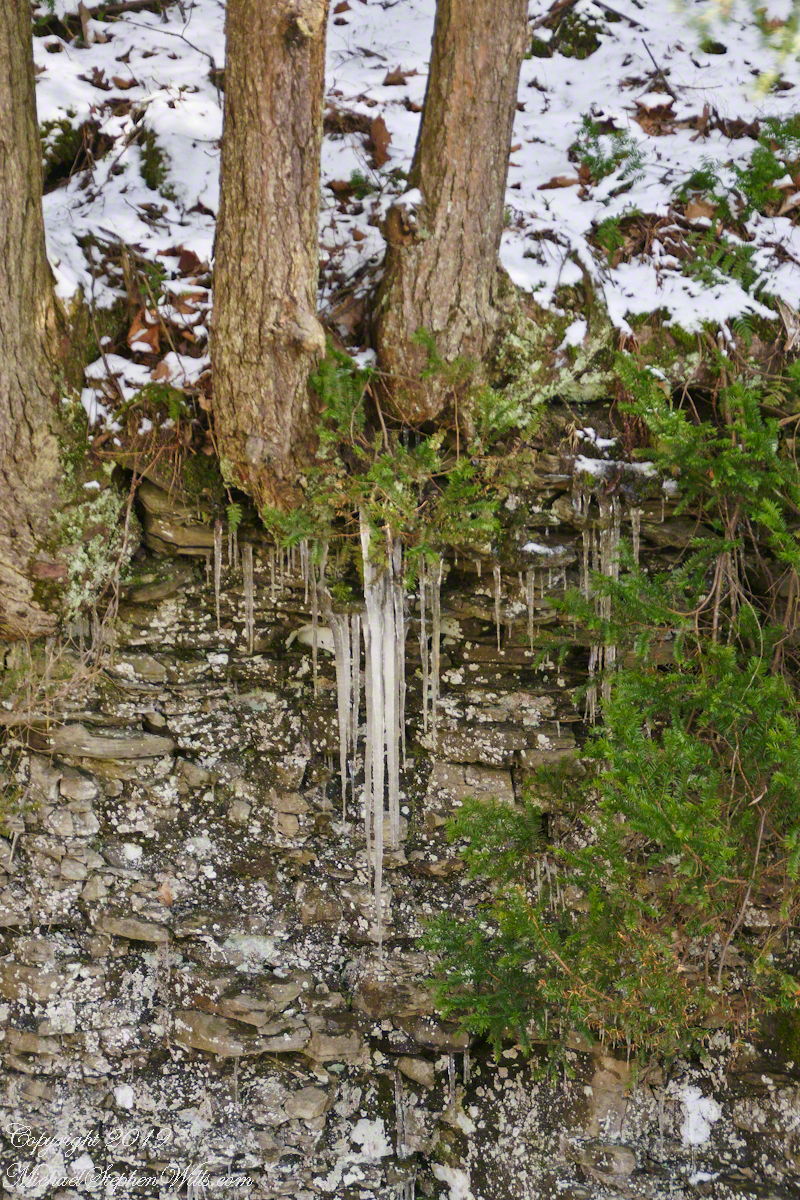
Click Me to view my photographs on Getty.

Copyright 2023 Michael Stephen Wills All Rights Reserved http://www.MichaelStephenWills.com

Autumn Evening Hike Part 2 of 3

Water runs through it

Portrait of Mill Falls

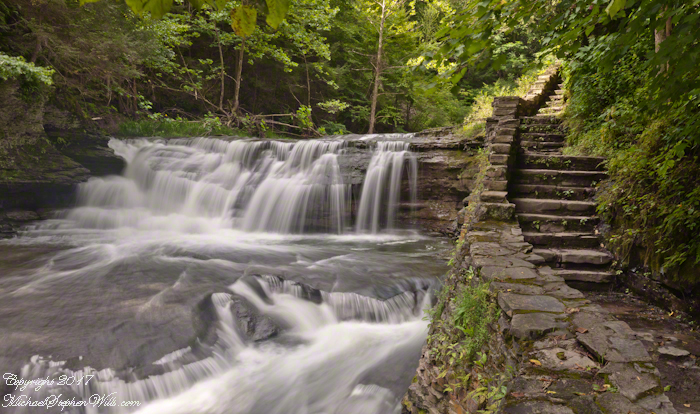
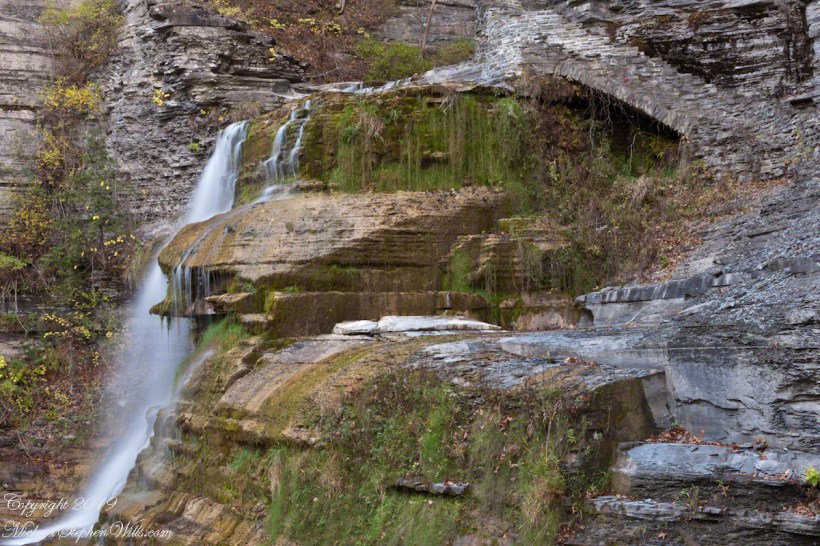
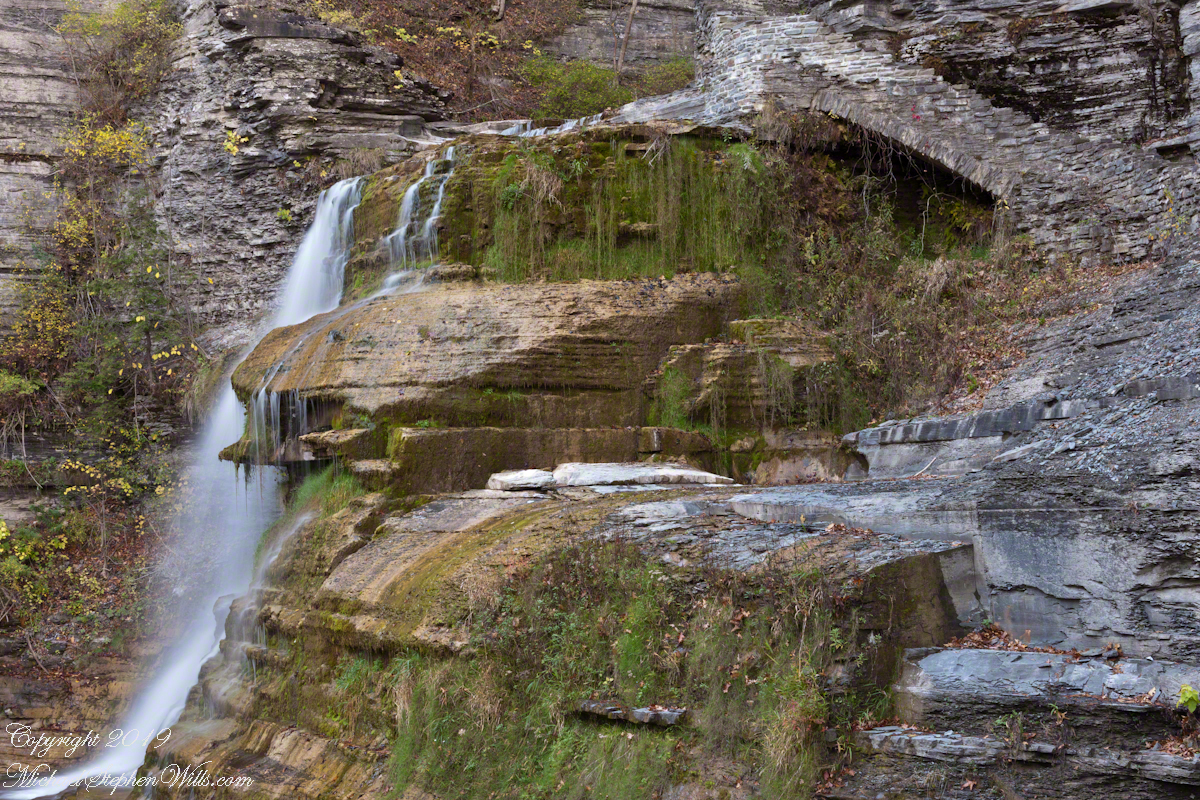
In part 2 of this series, we return to the starting point. Siting of a water mill requires immediate access to the potential energy of falling water, something called “head.” Upper Treman Park was once a prosperous hamlet with the mill as the kernel. Today, the head that drove the mill is a lovely cascade behind the substantial and intact mill building. Easy walking distance from parking, this is a well-known park feature.

Here are three versions of a portrait of Mill Falls using different lenses for varying effects. All were taken in the same season and approximate time of day, being early evening.

Click Me for “Mill Waterfall at low flow”, a fine art print from my gallery.

This is the uncropped image used in part 1 of this series. I found the secondary cascade a distraction. Exposure of the secondary is difficult to balance against the primary and more shaded primary.

Click link for “Mill Waterfall Primary Low Flow” fine art print.

Stone Span

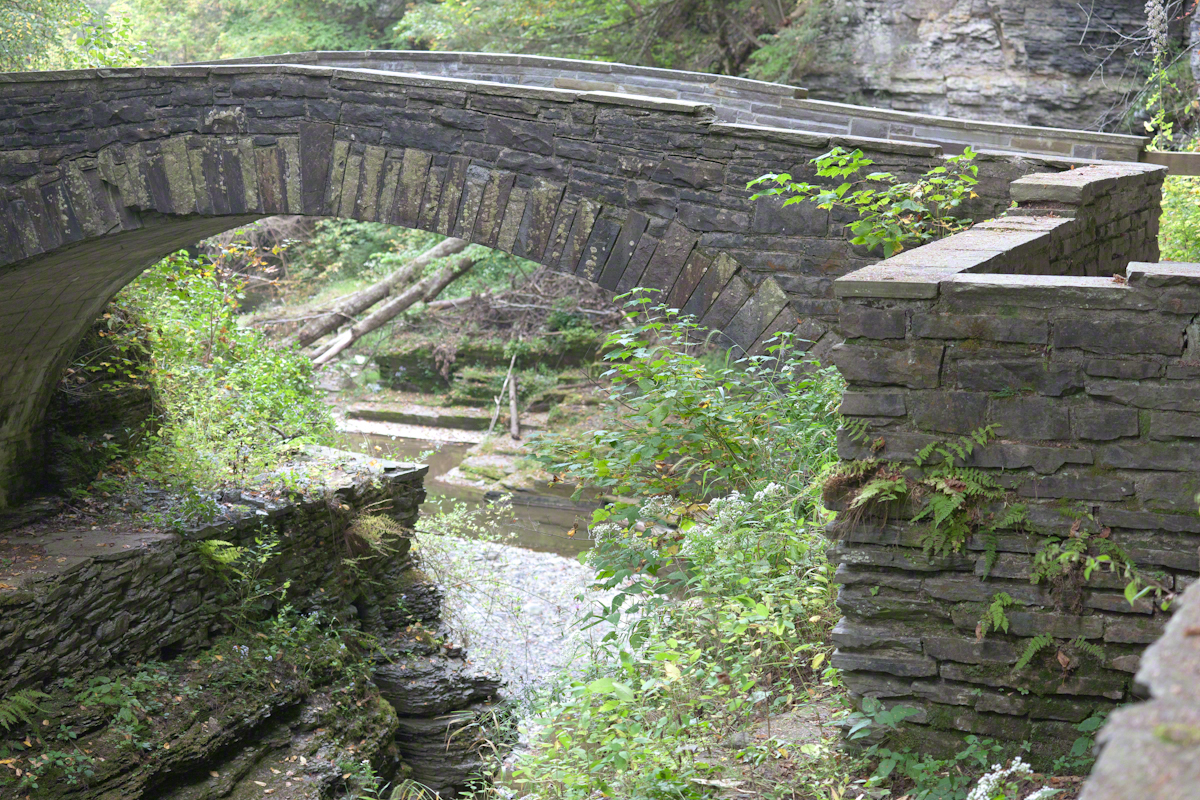
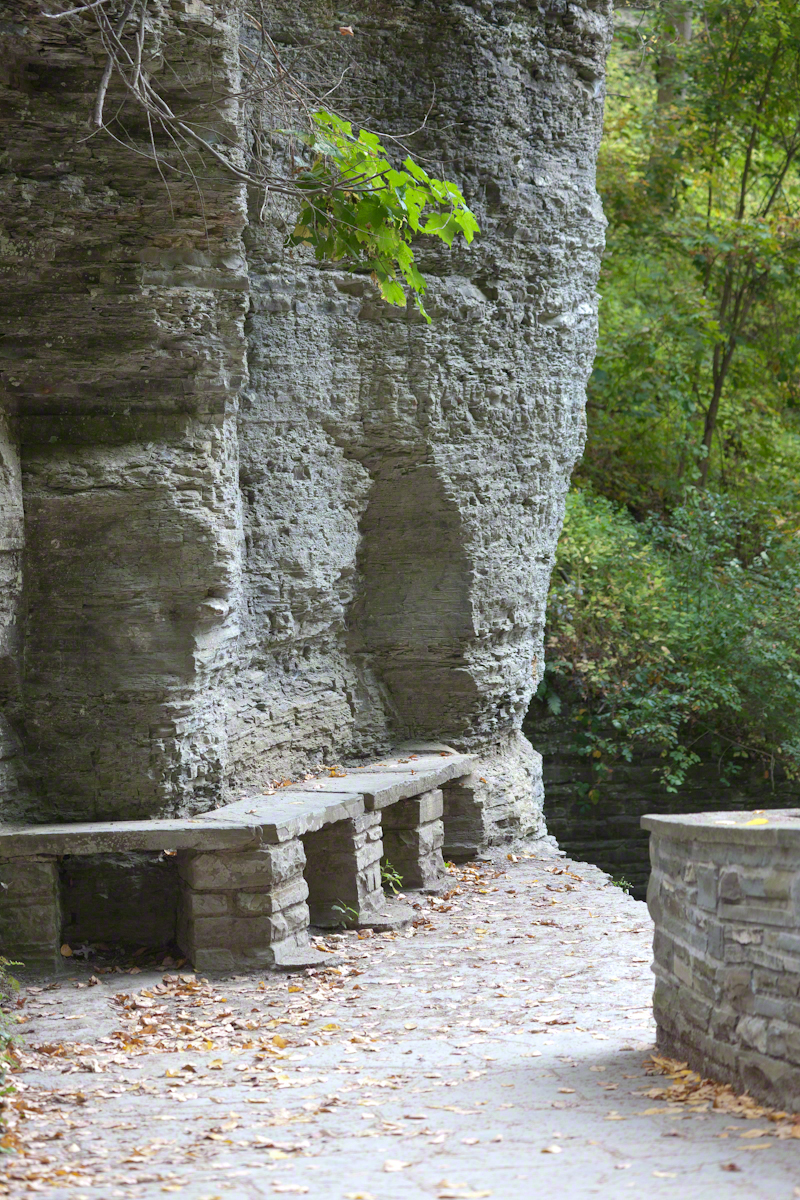
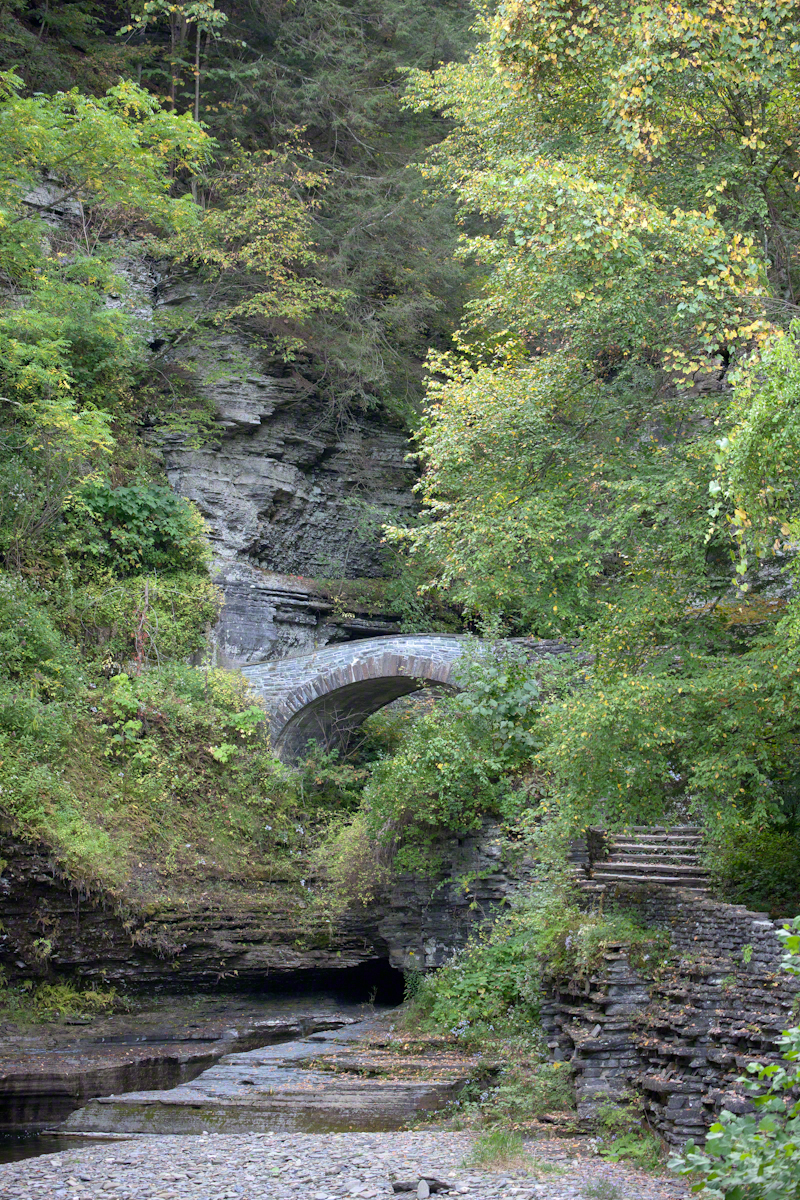
Let’s return to where part 1 left off, the stone bridge across the eastern side of the gorge entrance gallery.

This segmental arch is an illusion, the beautiful stone work is the facing of the concrete structure that carries to load of the stone, itself and visitors.

Want more? Click Me

My composition emphasizes the mass of rock wall above the bench and into which it is placed.  The limestone slabs are from a different source, they are not built from the material removed from the cliff.

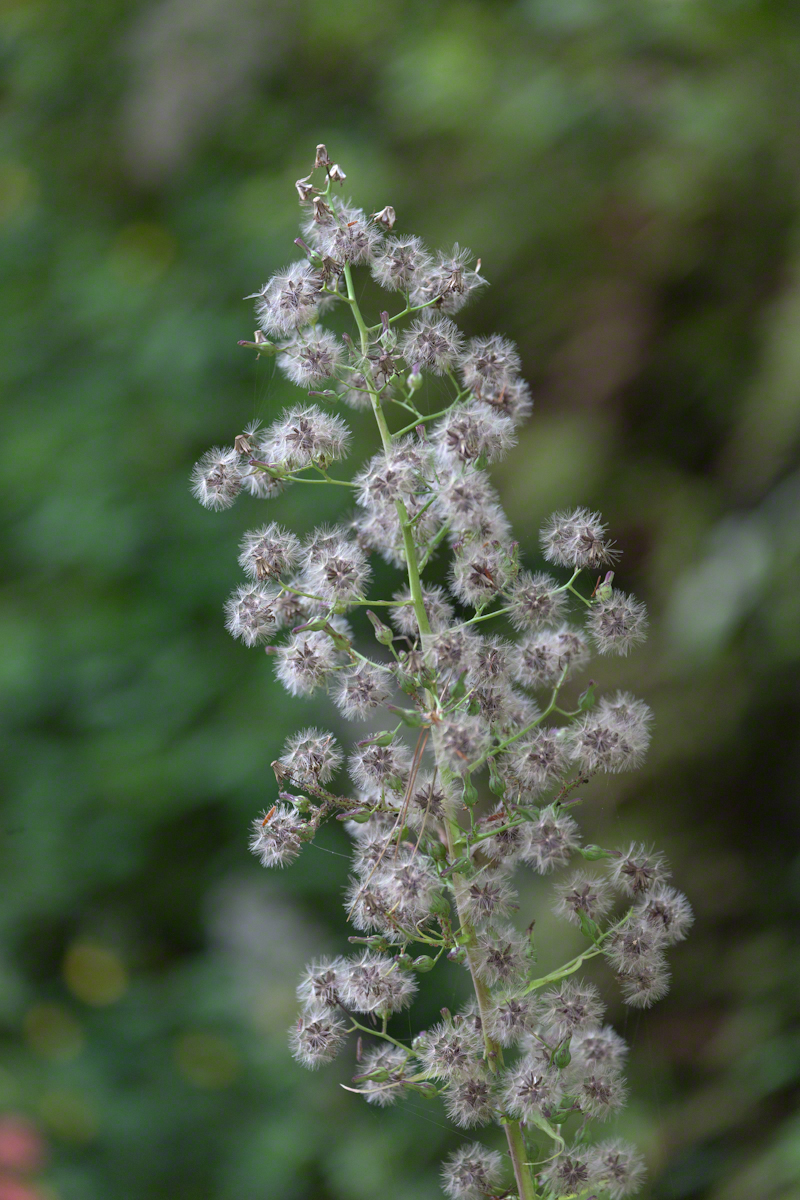
Seeds and Flowers

A dandelion on steroids.  If you can help with identification of this plant, please post a comment.

Click Me for “Ad Astra” a fine art print, in my gallery.

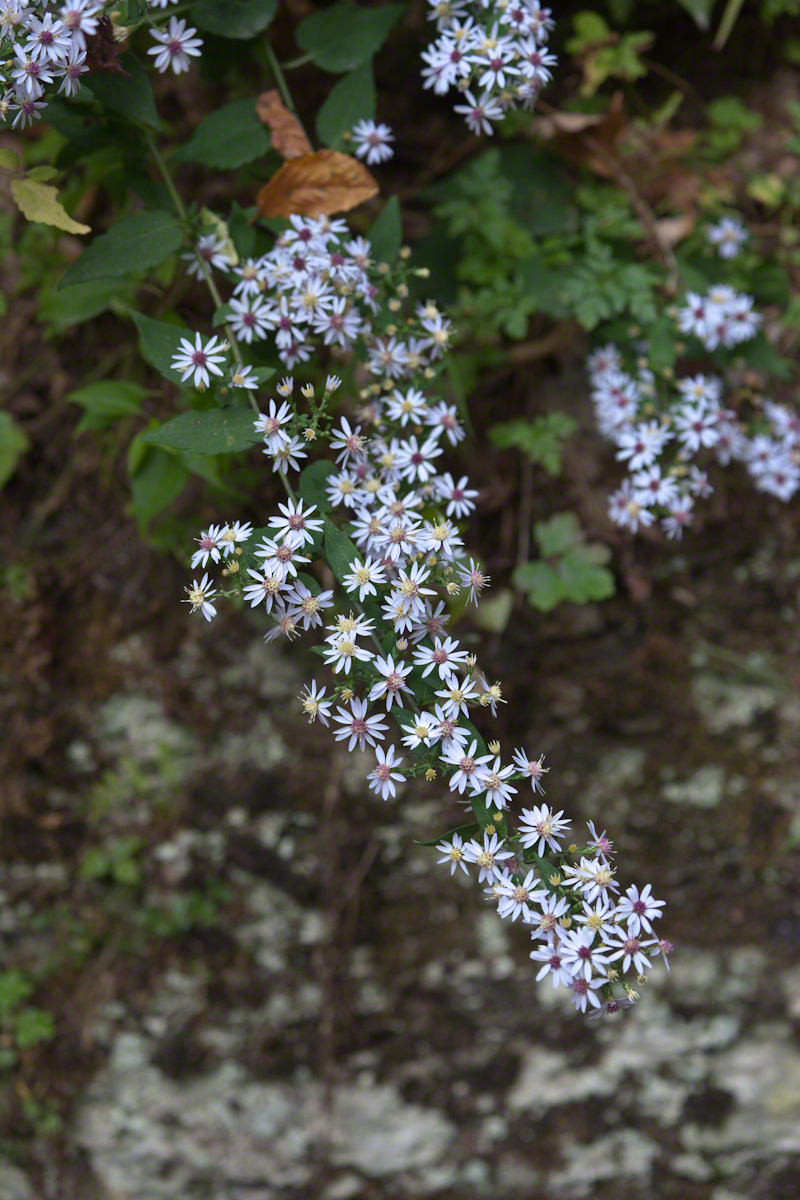
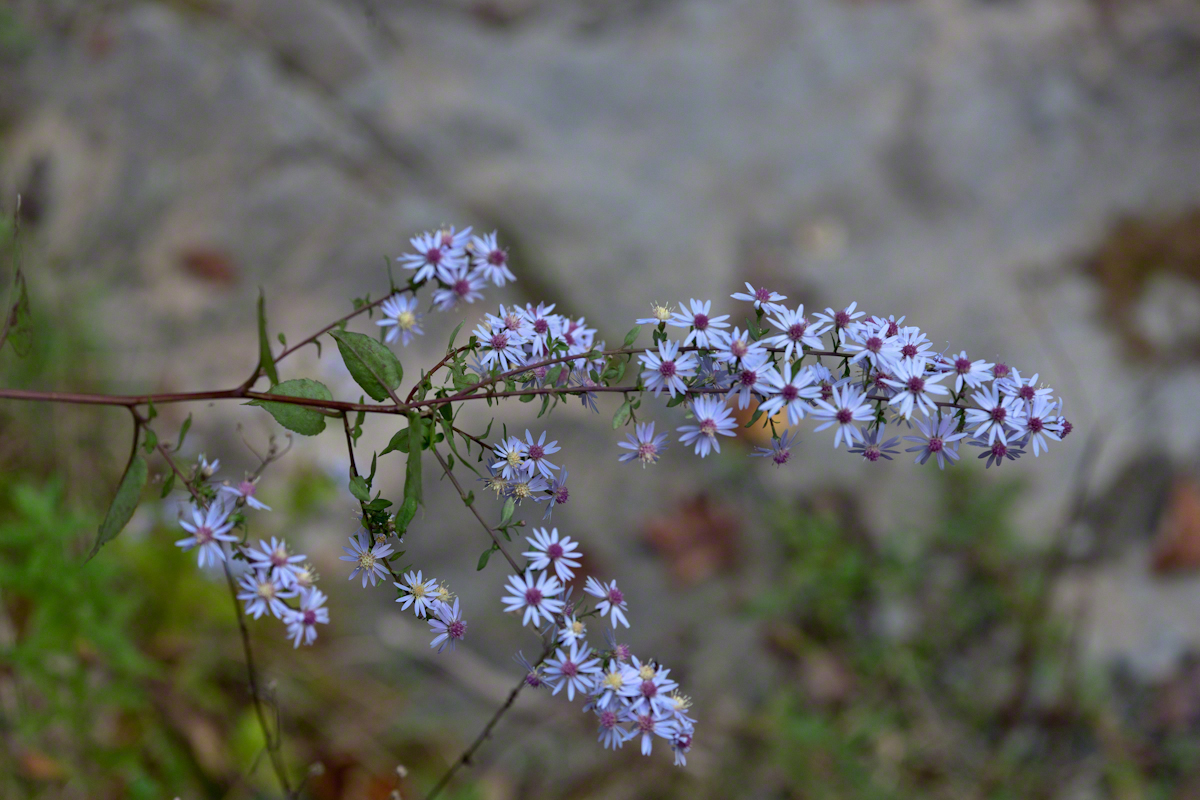
Click Me for “Purple Asters” a fine art print, in my gallery.

Look Back!!

Many first time visitors do not look back to appreciate these scene.  When we give advice, our recommendation is to return on the same gorge trail.  The different viewpoints make for a fresh experience.

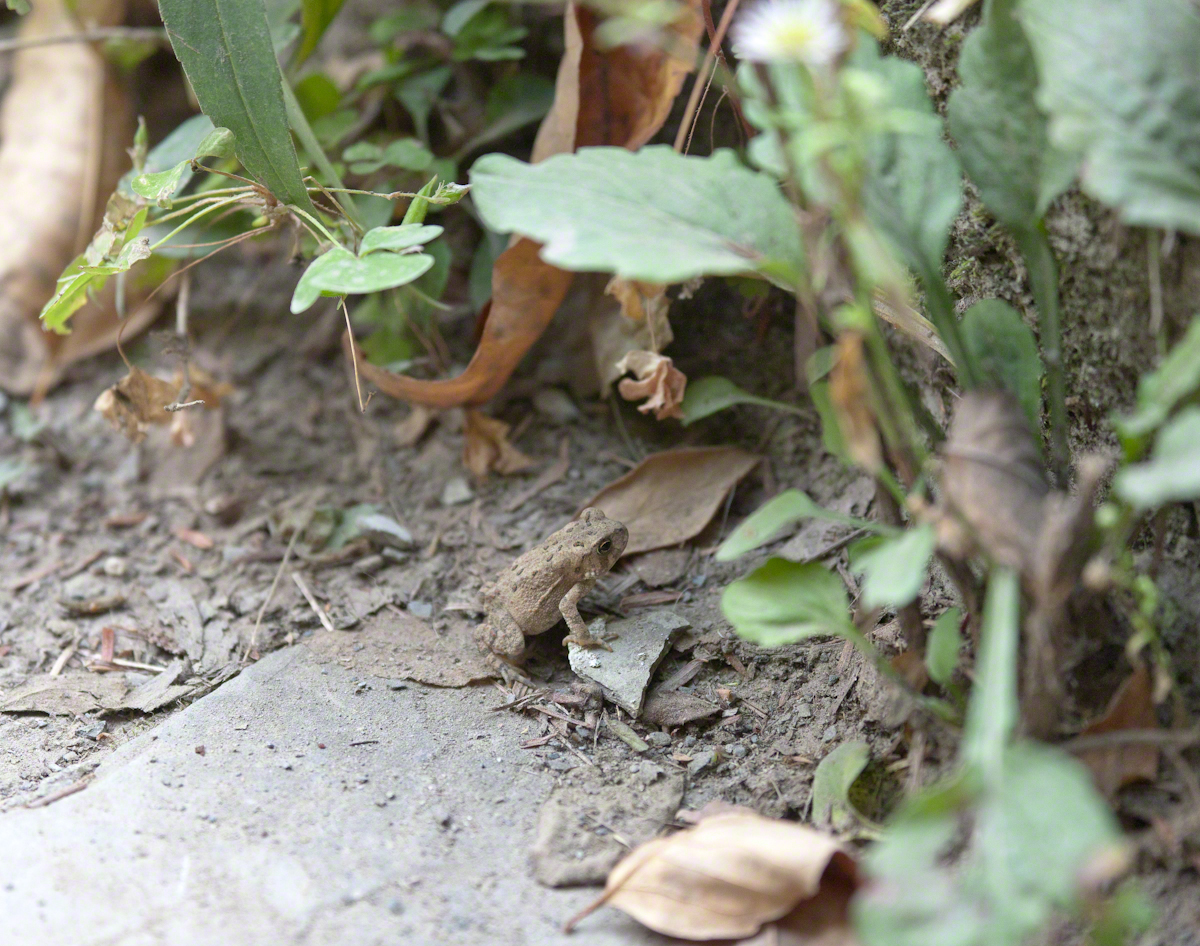
Mr. Toad

Want more? Click Me!!!

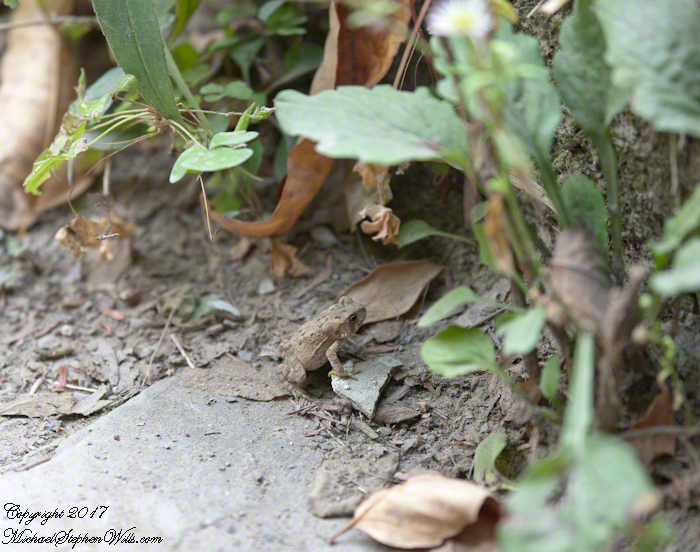
They are like people, sitting there.  Kenneth Graham’s genius, in writing “Wind in the Willows”, was to recognize the likable characteristics of the toad.  I find myself concerned about their survival, although they must survive.  Earlier in the season they are pea sized.  I resist an inclination to move them to what may be a more promising location, preferably with a stone house and chrome brilliant motor car.

Copyright 2023 Michael Stephen Wills All Rights Reserved http://www.MichaelStephenWills.com

Lucifer Falls on an Autumn Evening

The post explores the symbolism of Lucifer and the Tiger Lily, suggesting that beauty and pride can lead to downfall, reminiscent of Lucifer’s narrative.
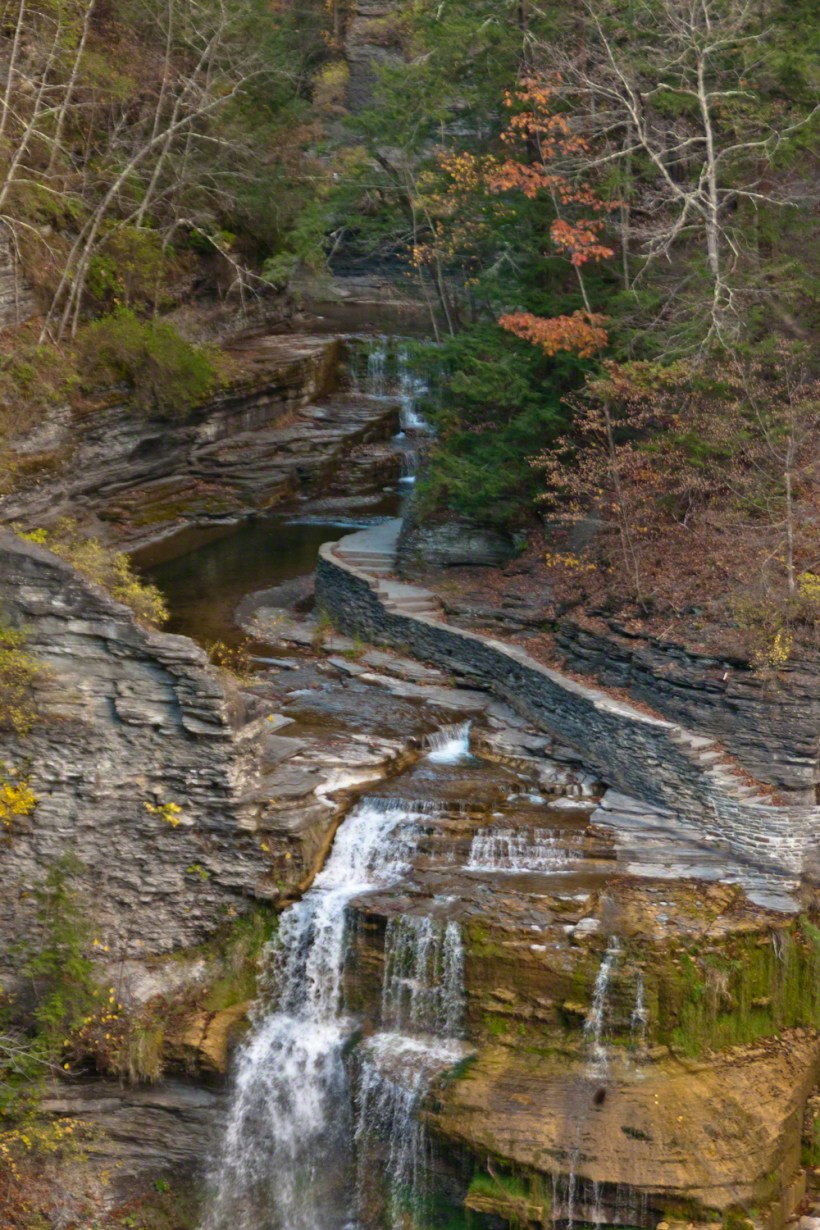
A reader’s comment to this blog, thank you “Urban Liaisons,” prompted me to explore the word, Lucifer. “Lucifer”, in Christian tradition, refers to the devil as it was in a time of glory before the fall from grace. The original, ancient meaning of Lucifer is the planet Venus as it rises just before the sun at dawn.  In this sense, the name refers to the bright beauty of the spot.  The effect is heightened at midday when the hiker passes from the relative gloom of Devils Kitchen to the full light and sweep of the waterfall chasm.
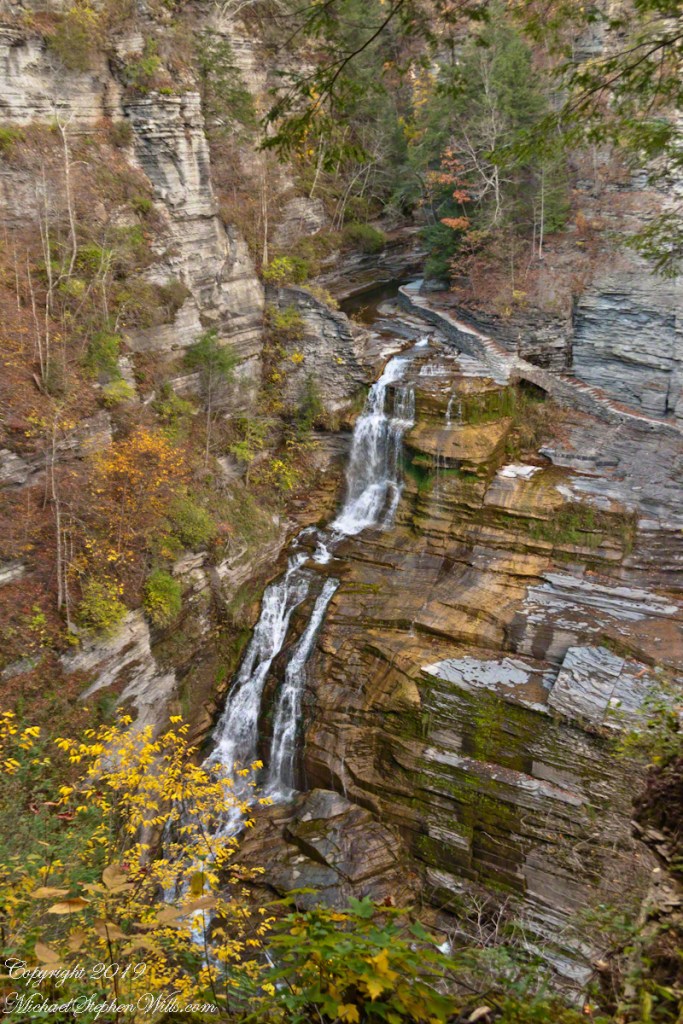
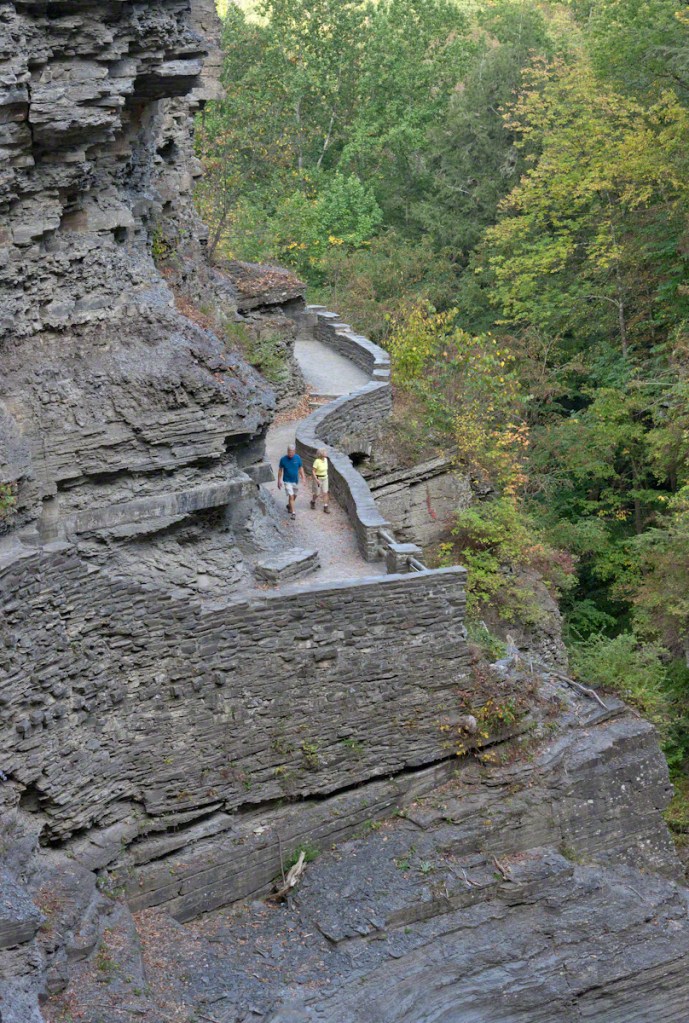
Standing next to the falls on the Gorge Trail, the stone wall of the Rim Trail Overlook is overpowered by the grandeur of the 300+ foot cliff. The falls photographs were taken from behind the wall.

Occasionally, we have experienced individuals climbing over the wall to stand on the other side. “Why?”

Summertime thick stands of tiger lilies flourish on the cliff face. Can you find the withered leaves?

I must delve into symbolic interpretations to explore the connection between Lucifer and the Tiger Lily. Lucifer, traditionally associated with rebellion and the fallen angel in Christian theology, symbolizes a break from divine order and beauty tainted by pride. On the other hand, the Tiger Lily is often seen as a symbol of wealth, pride, and prosperity in various cultures. The connection lies in the shared symbolism of pride and beauty. Just as Lucifer was a beautiful angel before his fall, the Tiger Lily is a strikingly beautiful flower, often associated with pride. This juxtaposition creates a metaphorical link, suggesting that beauty and pride, while alluring, can lead to downfall, mirroring Lucifer’s story.
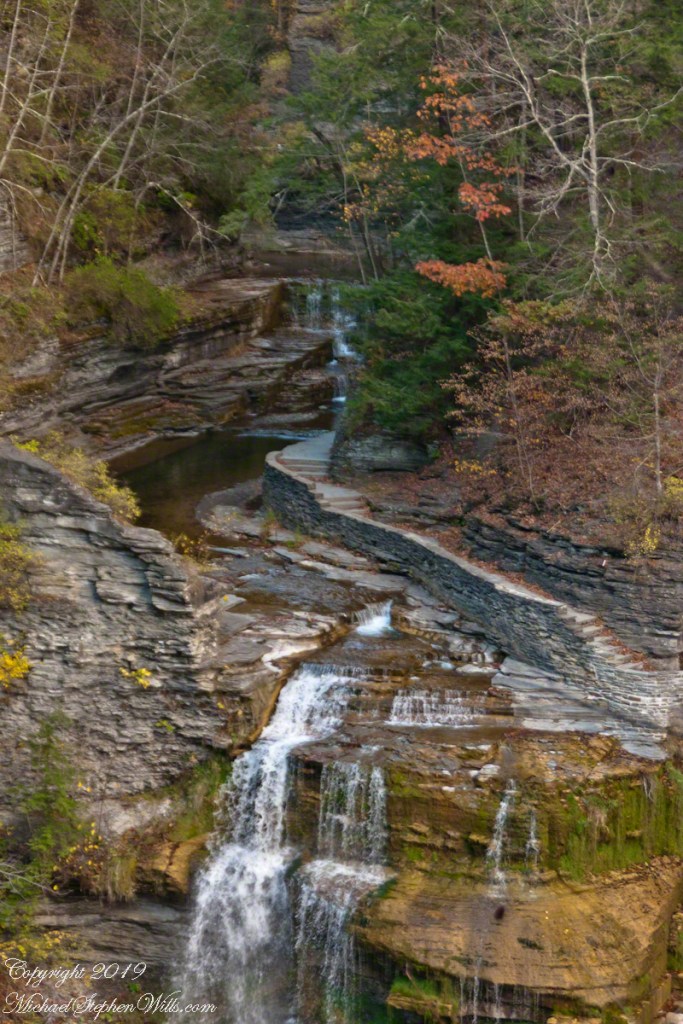
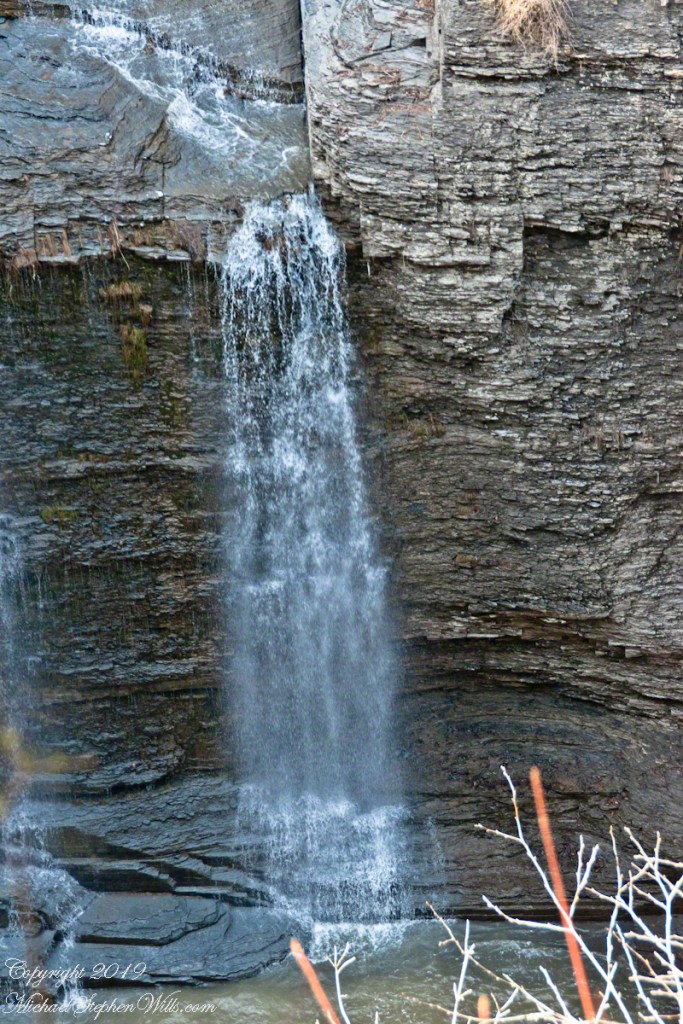
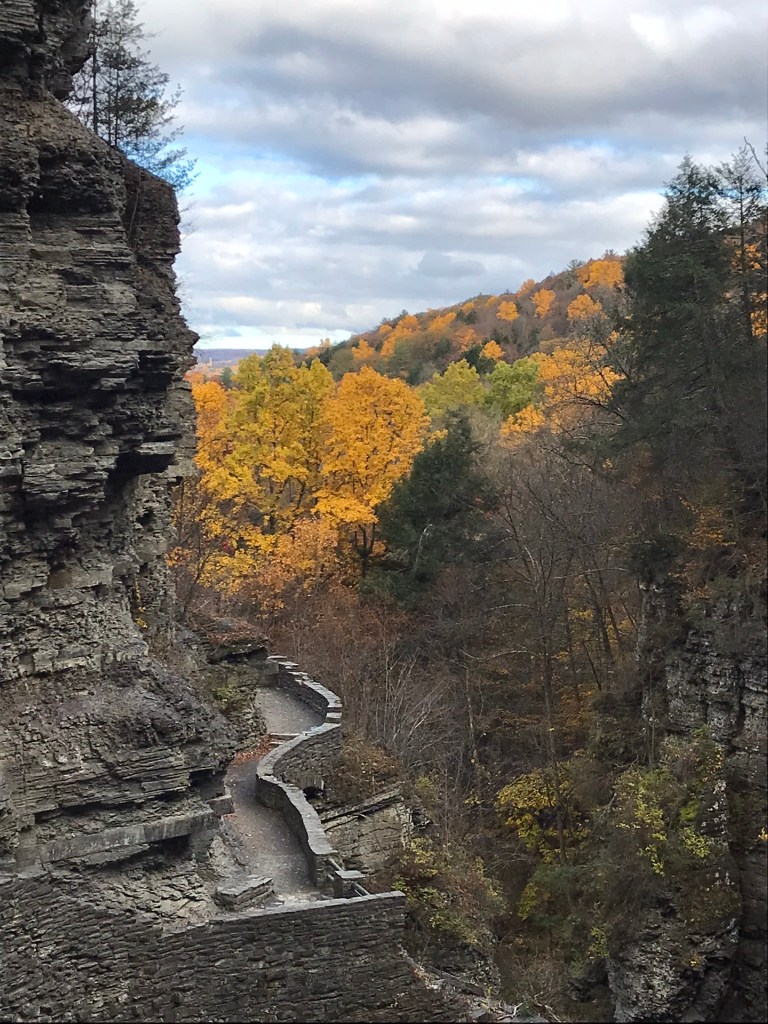
This session I finally “cracked” the puzzle of the Devil’s Kitchen Waterfall. I posted the results to the online gallery yesterday, for your enjoyment. Click the link to go there.

Click link for my fine art print “Devils Kitchen.”

Click Me to view my photographs on Getty.

Copyright 2023 Michael Stephen Wills All Rights Reserved http://www.MichaelStephenWills.com

Lucifer Falls Slide Show

Autumn at Treman Park

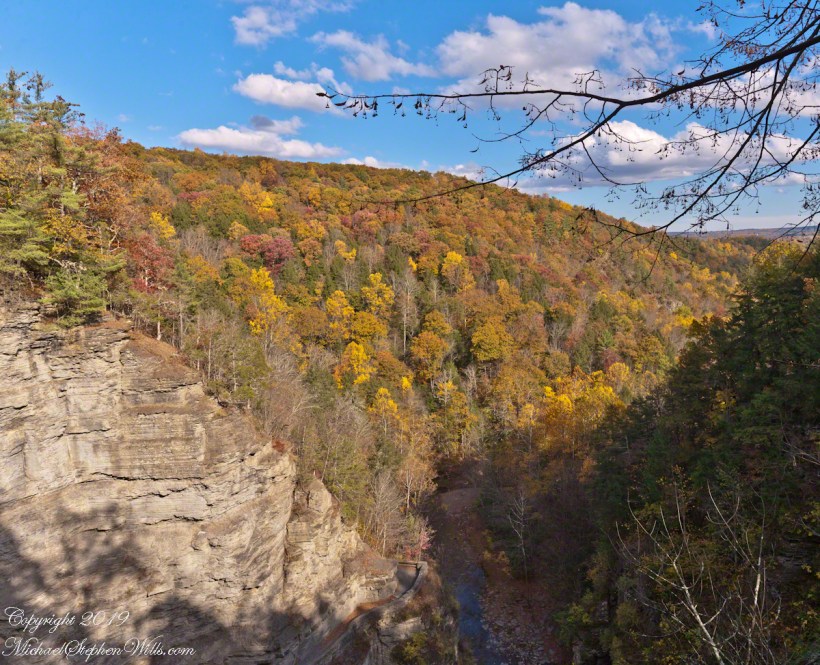
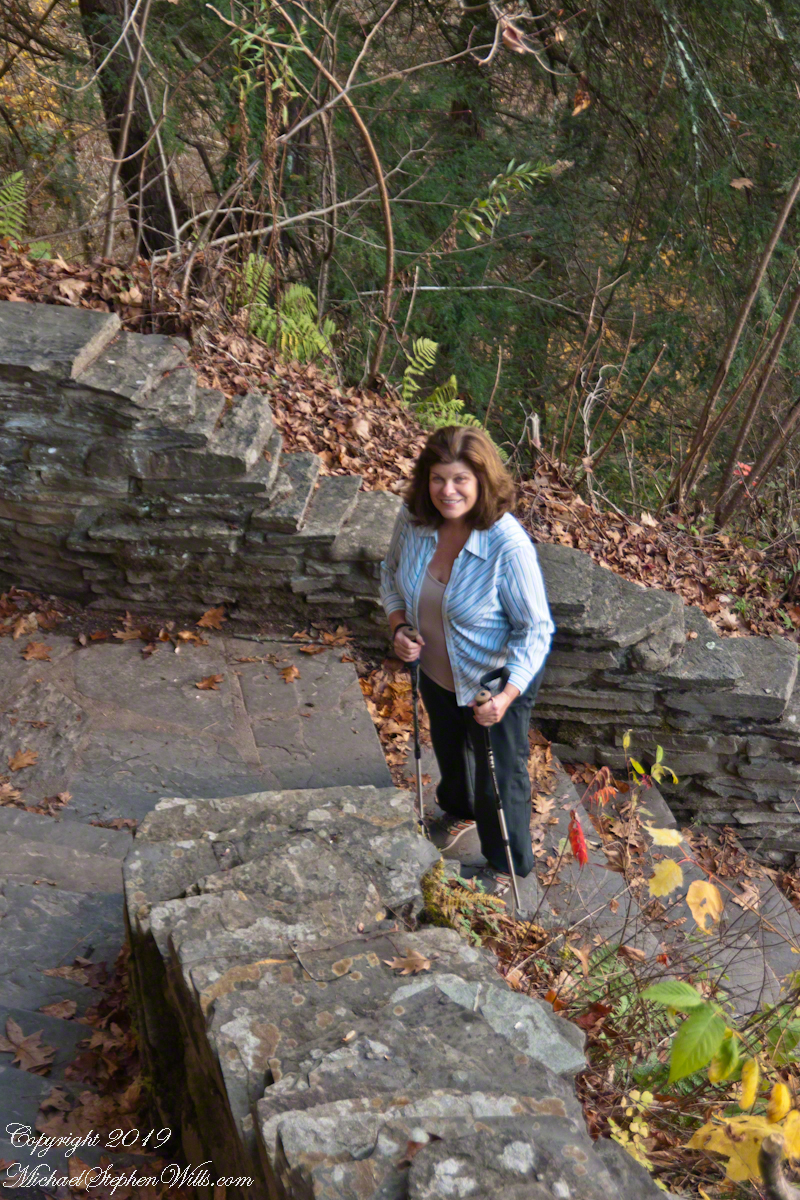
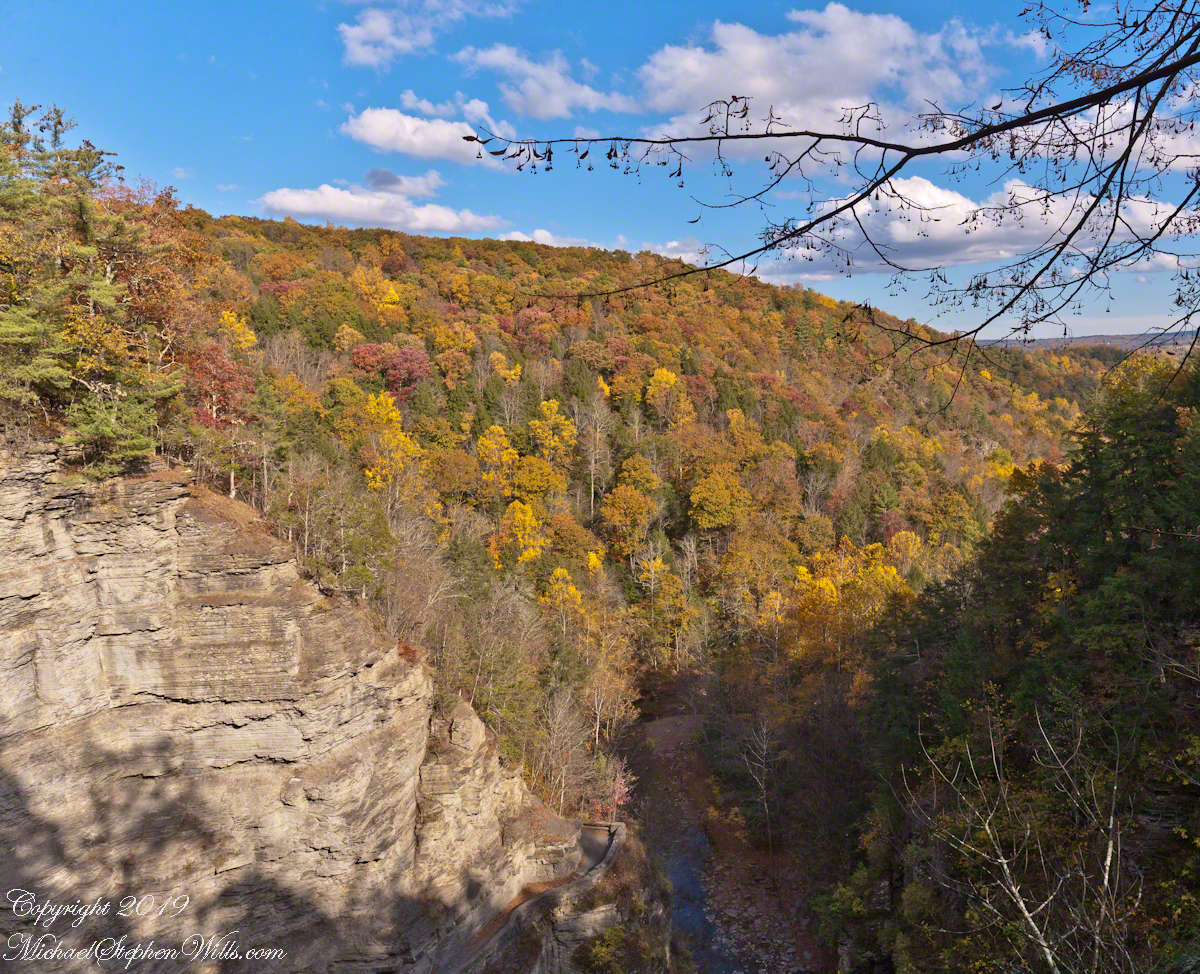
Pam and I visited Treman for our last visit of 2017. It was a bright, warm October afternoon. Here is a slide show of our experience, the details shared in recent postings. Enjoy!!

Click photograph for a larger view. To do this from WordPress Reader, you need to first click the title of this post to open a new page.

In November the gorge is closed for the winter due to dangerous conditions under the steep, crumbling walls. Robert H. Treman New York State Park.

Copyright 2019 All Rights Reserved Michael Stephen Wills

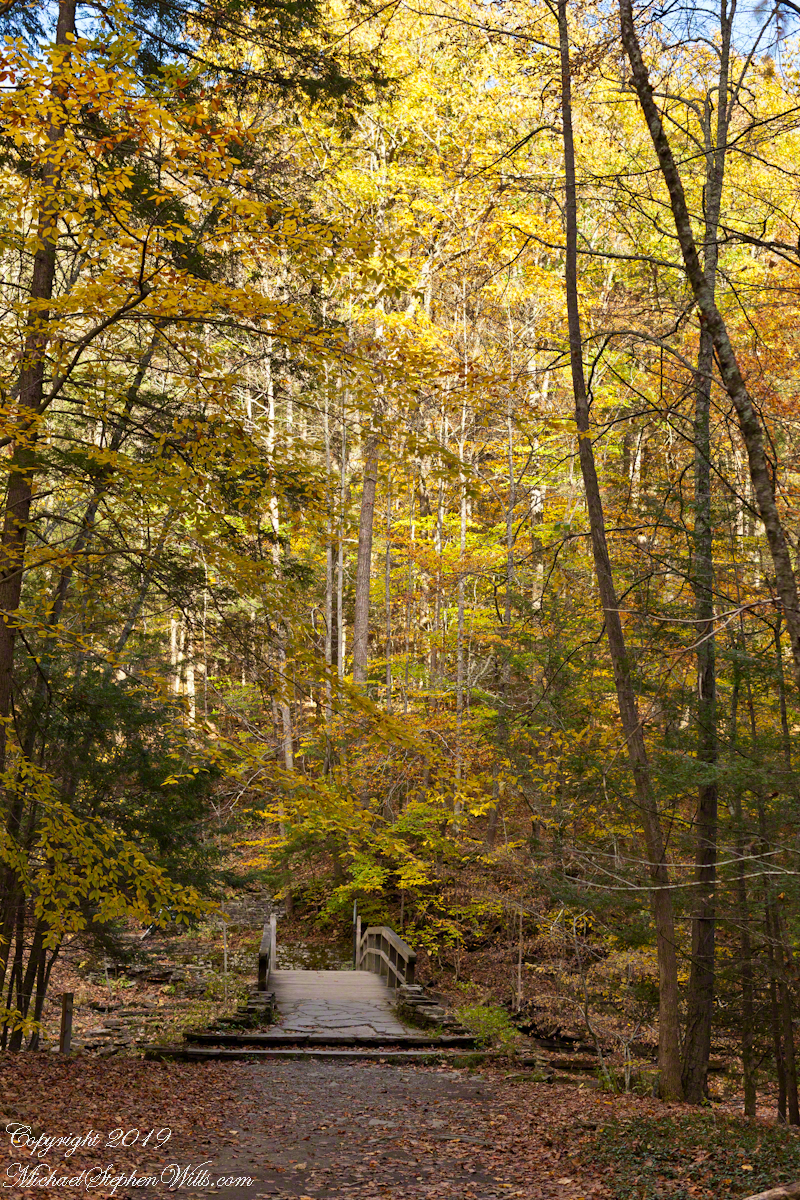
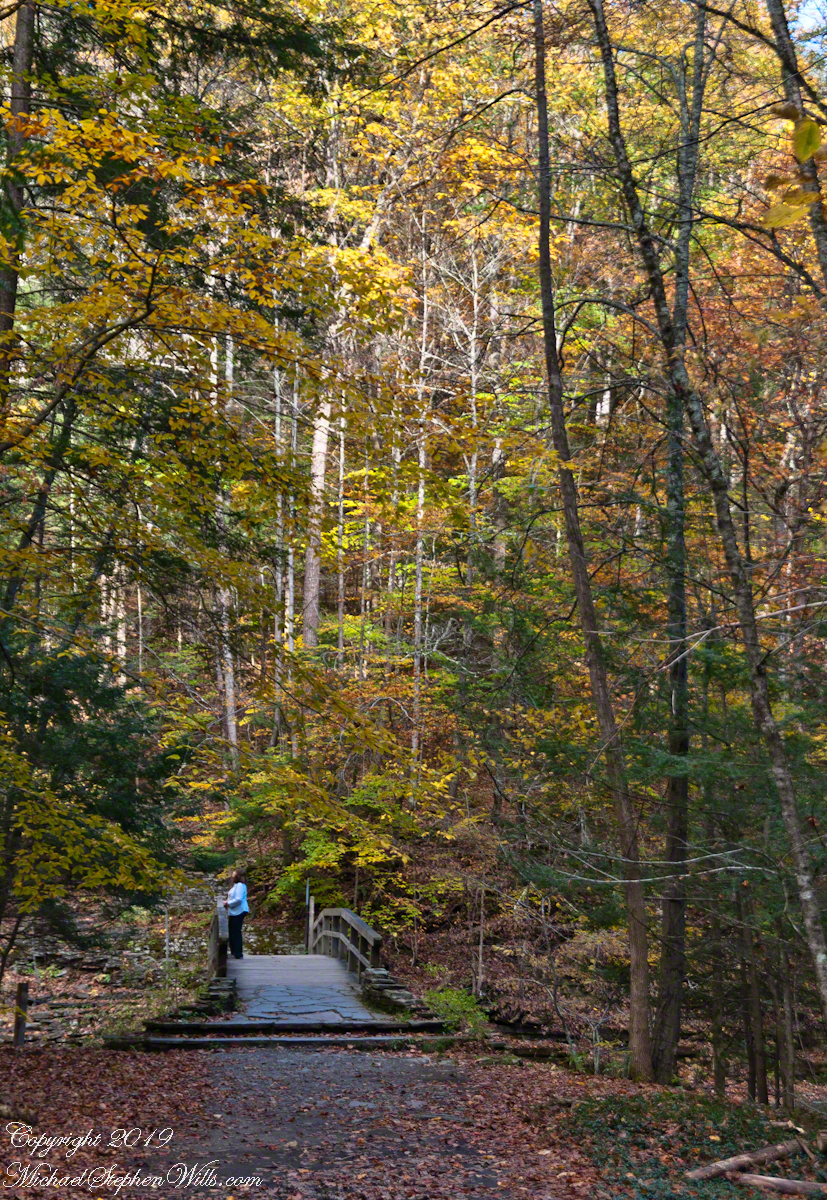
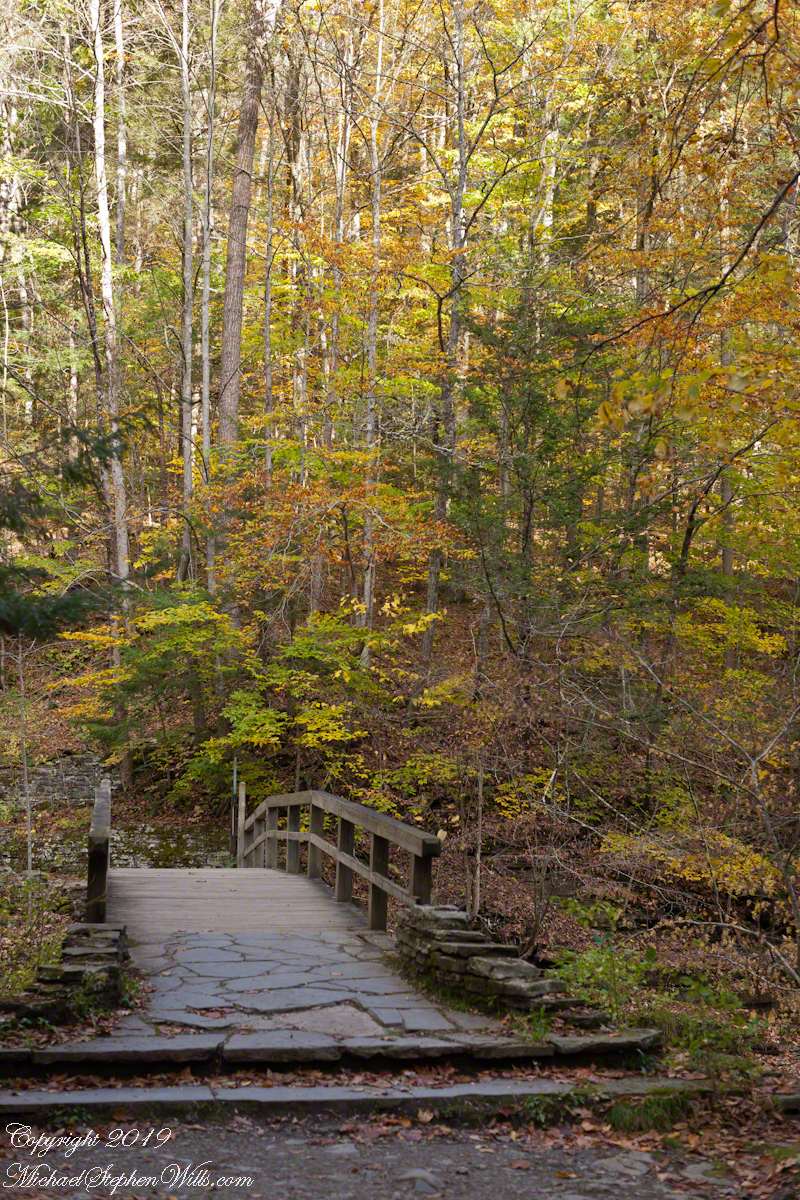
Treman Early Autumn Walk XIV

The post discusses the Hepatica acutiloba plant, highlighting its characteristics, growth, historical medicinal use, and its natural habitat in central eastern North America. It also includes an observation made in Robert H. Treman Park.

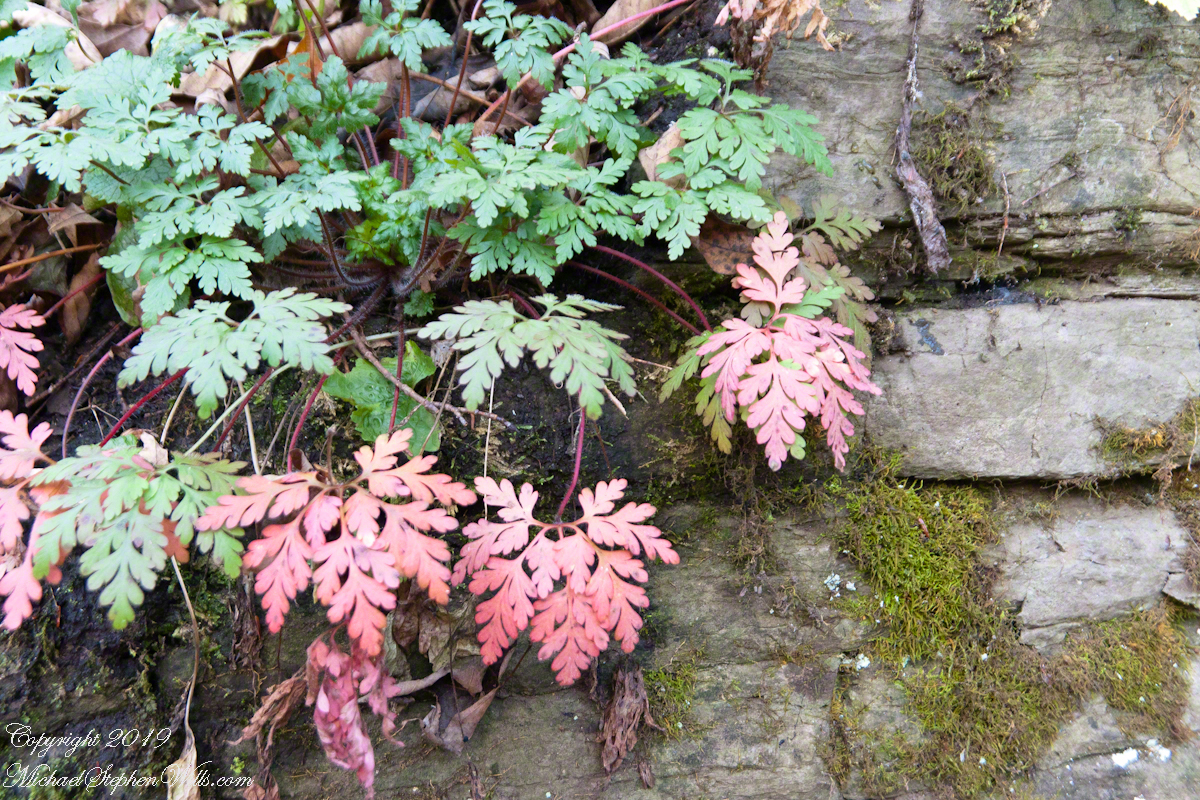
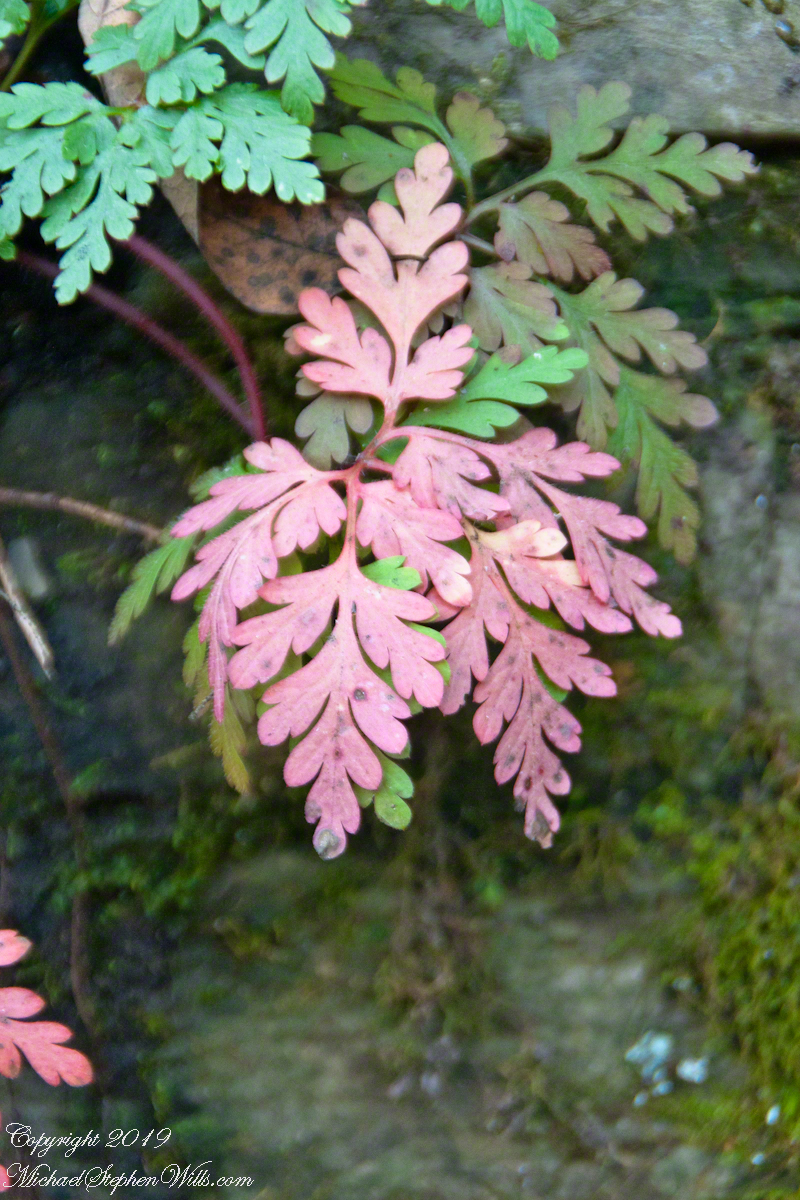
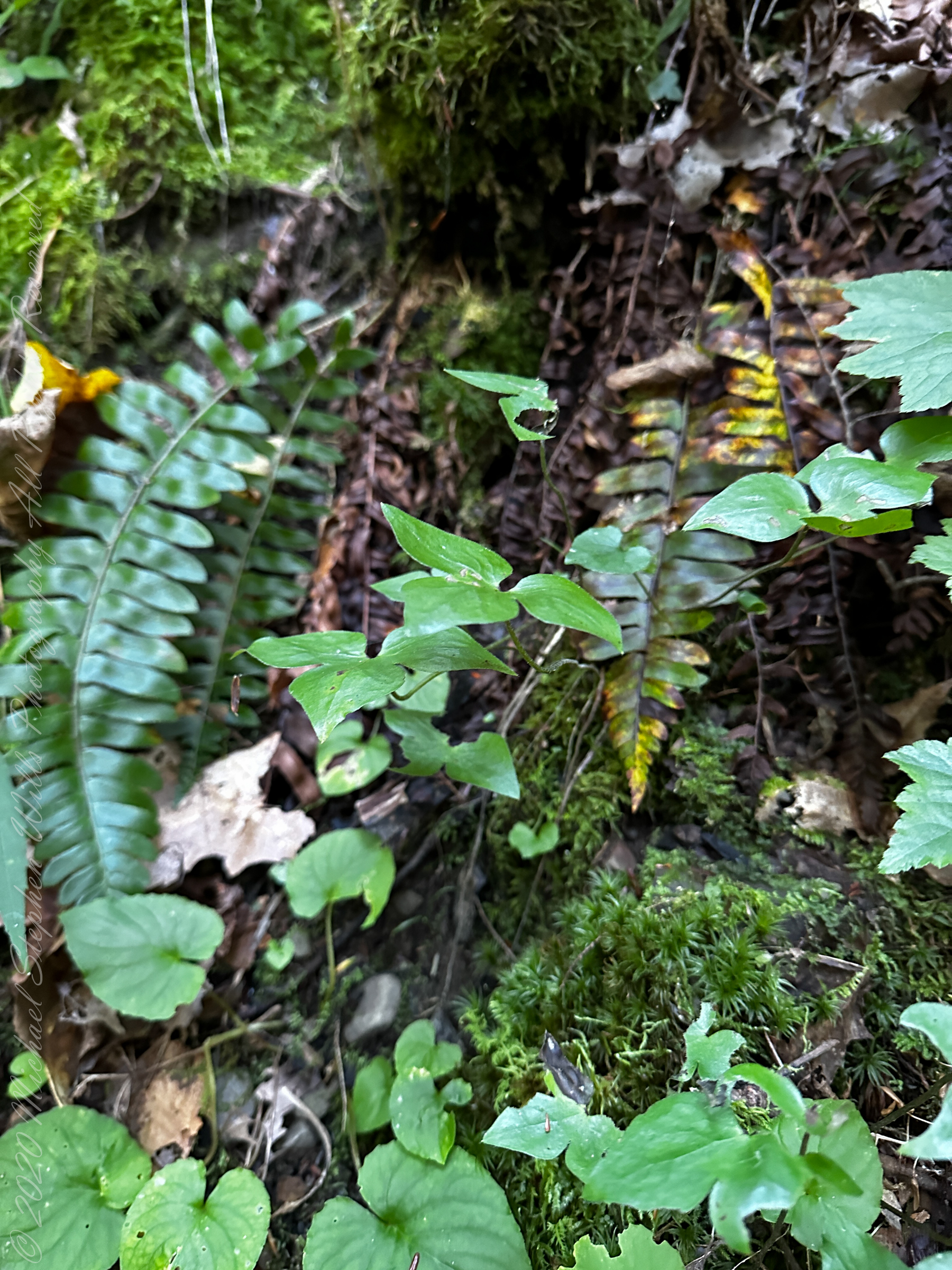
These characteristic leaves are Hepatica plants growing on the sun dappled southern rim of Robert H. Treman Park captured on a bright late September morning.

“Hepatica acutiloba, the sharp-lobed hepatica, is a herbaceous flowering plant in the buttercup family Ranunculaceae. It is sometimes considered part of the genus Anemone, as Anemone acutiloba, A. hepatica, or A. nobilis. Also generally known as Liverleaf and Liverwort.”


“The word hepatica derives from the Greek ἡπατικός hēpatikós, from ἧπαρ hêpar ‘liver’, because its three-lobed leaf was thought to resemble the human liver.”


“Each clump-forming plant grows 5 to 19 cm (2.0 to 7.5 in) tall, flowering in the early to mid spring. The flowers are greenish-white, white, purple or pinkish in color, with a rounded shape. After flowering the fruits are produced in small, rounded columned heads, on pedicels 1 to 4 mm long. When the fruits, called achenes, are ripe they are ovoid in shape, 3.5–4.7 mm long and 1.3–1.9 mm wide, slightly winged and tend to lack a beak.”

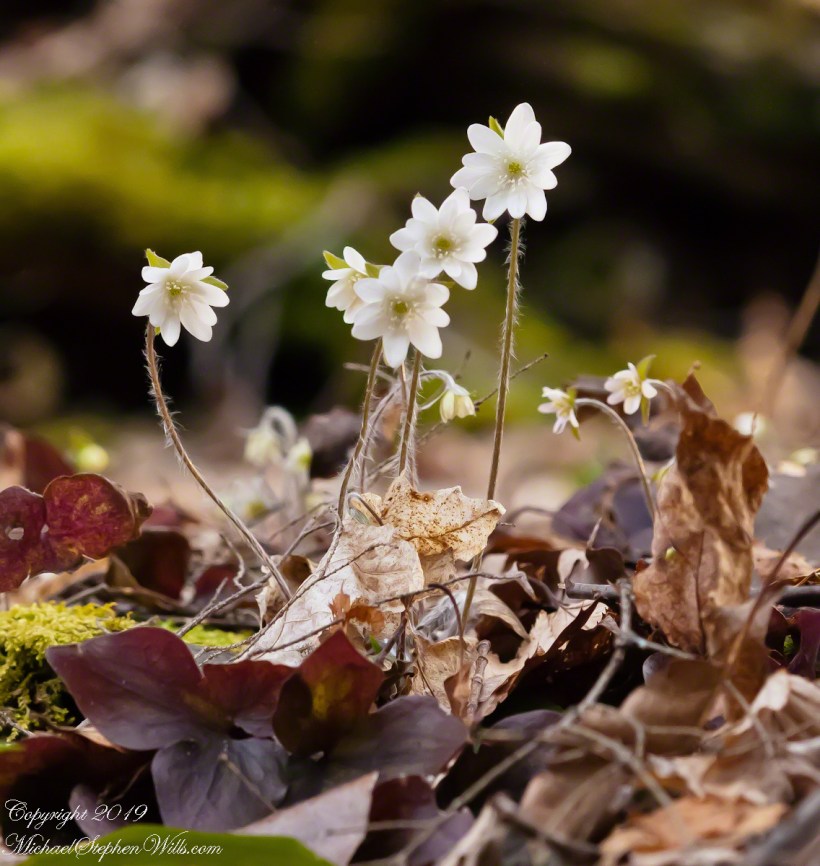
Hepatica Flowers in early spring on the Rim Trail

“Hepatica acutiloba is native to central eastern North America where it can be found growing in deciduous open woods, most often in calcareous soils. Butterflies, moths, bees, flies and beetles are known pollinators. The leaves are basal, leathery, and usually three-lobed, remaining over winter.”

“Hepatica was once used as a medicinal herb. Owing to the doctrine of signatures, the plant was once thought to be an effective treatment for liver disorders. Although poisonous in large doses, the leaves and flowers may be used as an astringent, as a demulcent for slow-healing injuries, and as a diuretic.”

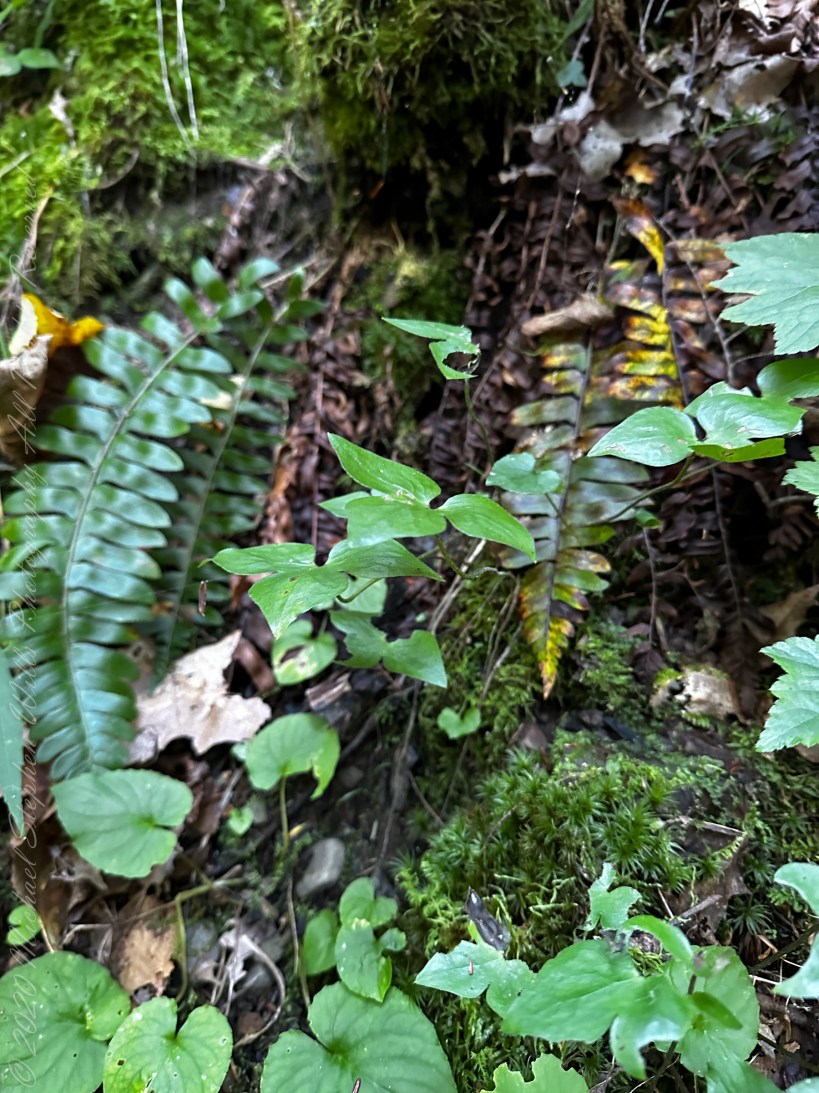
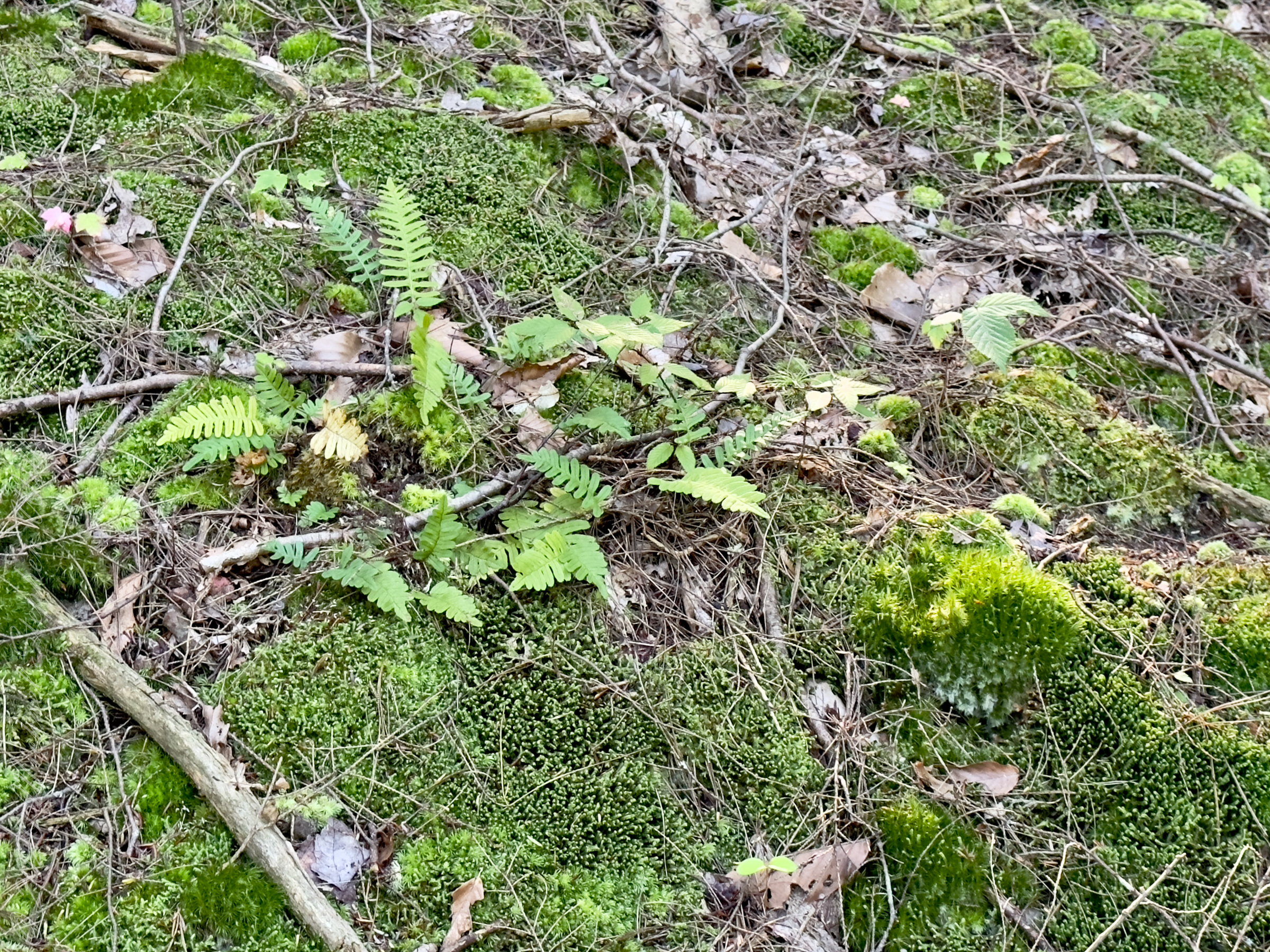
Ferns and Mosses growing beneath Red Pines

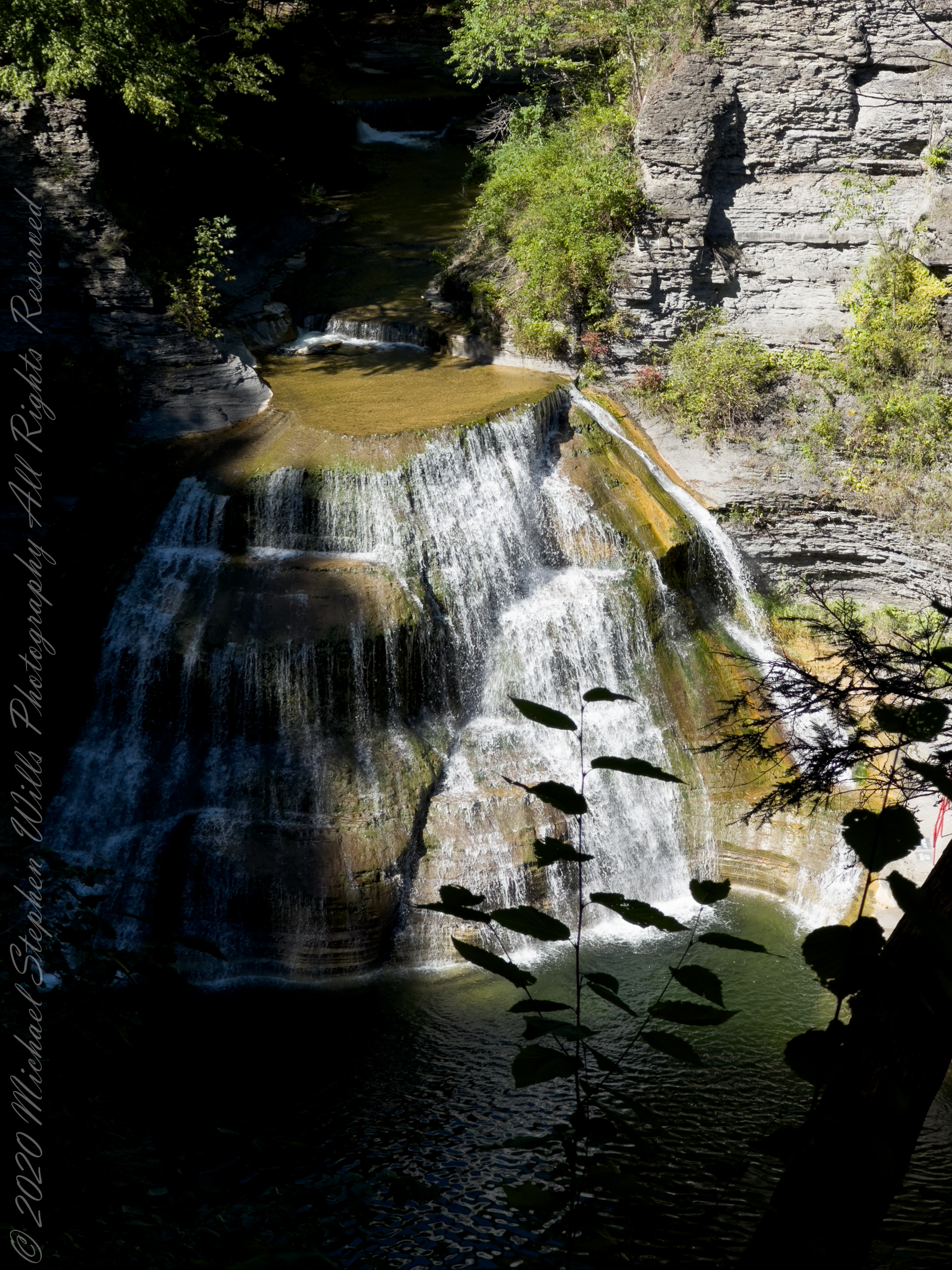
View of the lower falls and swimming hole from the Rim Trail

Click Me another post featuring Hepatica flowers

References
–text in italics and quotes is from Wikipedia, “Hepatica” and “Hepatica acutiloba.”
–“The Botanical Garden Vol II Perennials and Annuals,” Roger Phillips and Martyn Rix, Firefly Books, 2002.

Copyright 2023 All Rights Reserved Michael Stephen Wills