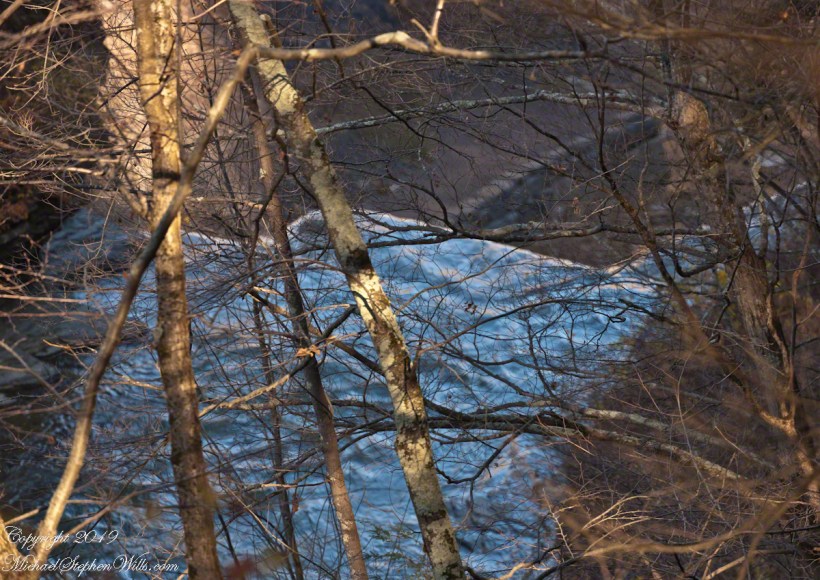
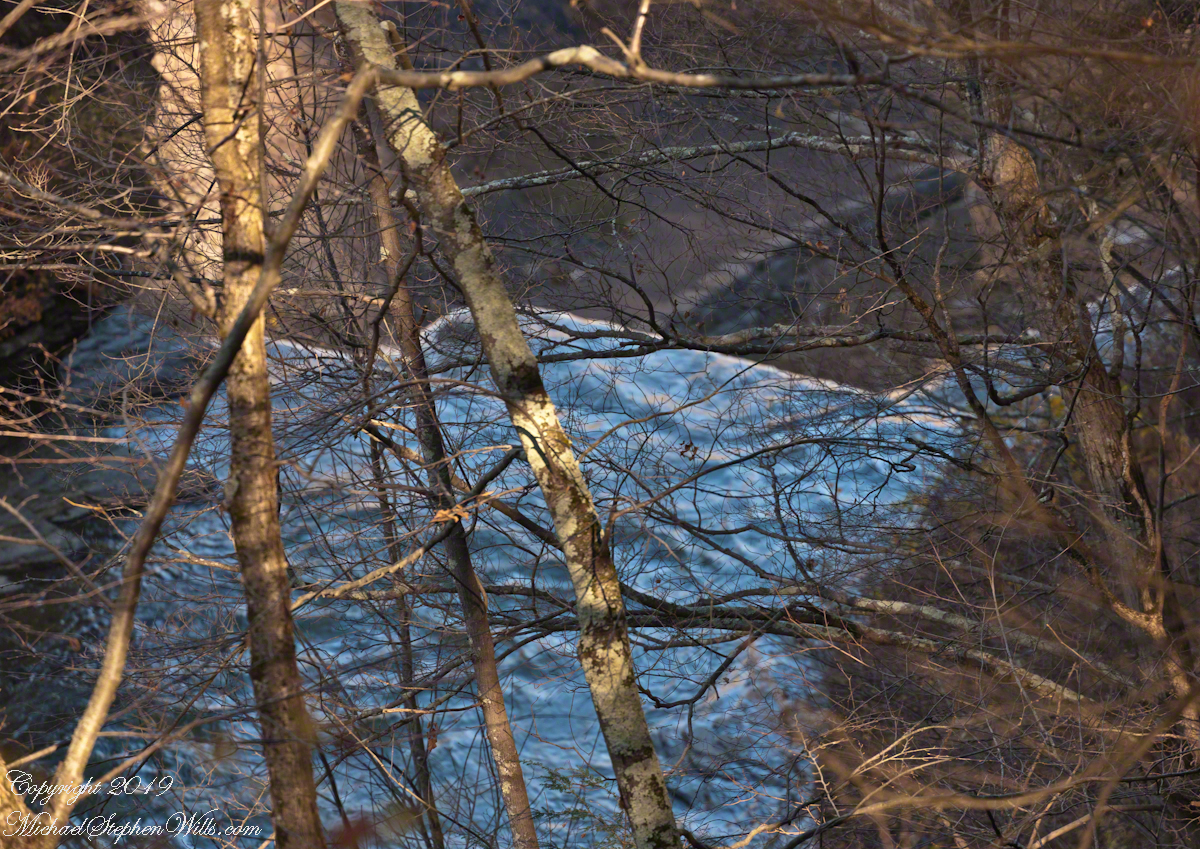
After leaf fall abrupt emptiness of Taughannock Falls is visible from the south rim. Beyond, you can just make out the enormous carved limestone slabs that protect visitors from the constant infall from the gorge walls allowing them to approach the falls.
Click photograph for a larger view. To do this from WordPress Reader, you need to first click the title of this post to open a new page.
The Brink
Copyright 2019 All Rights Reserved Michael Stephen Wills
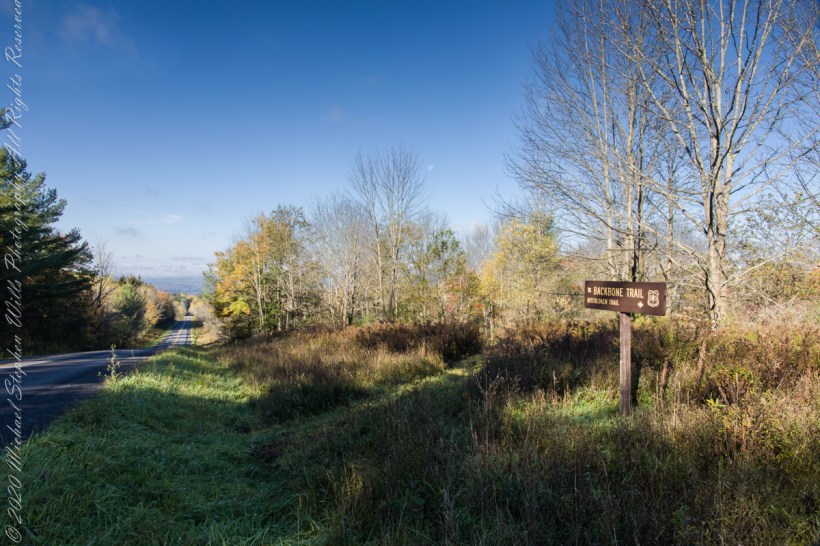
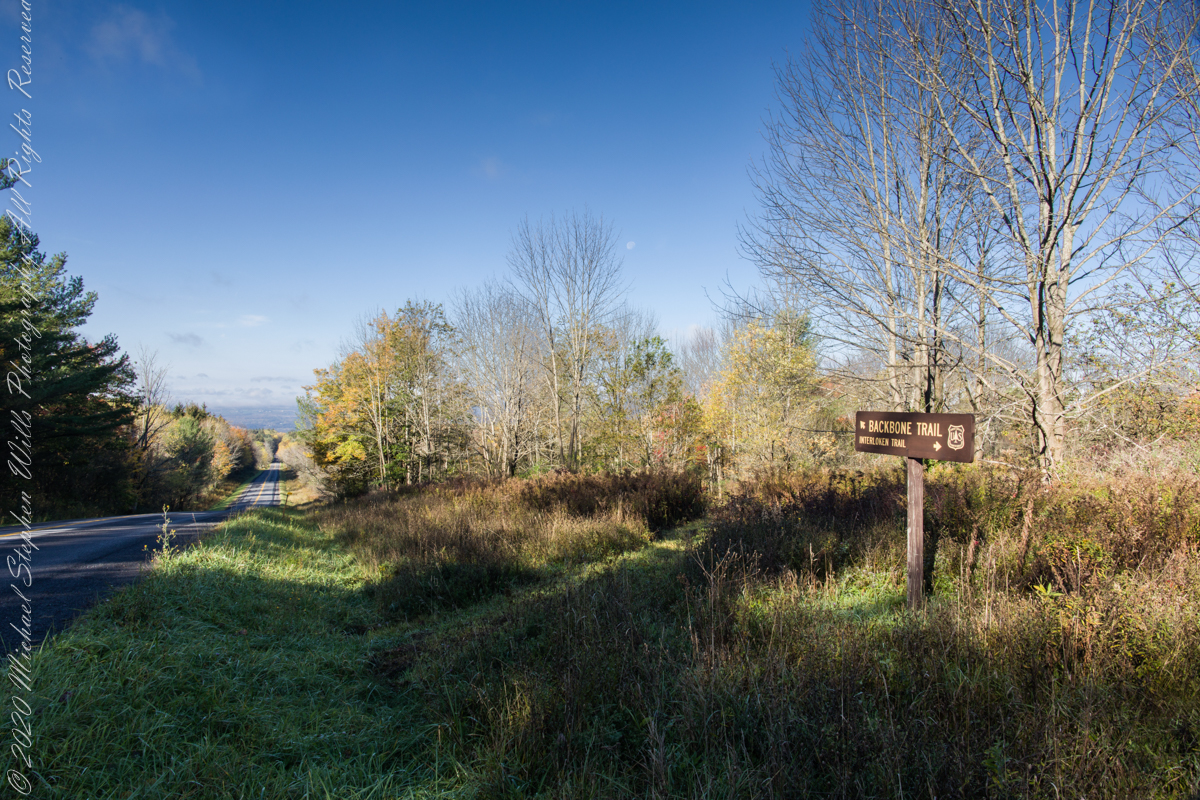
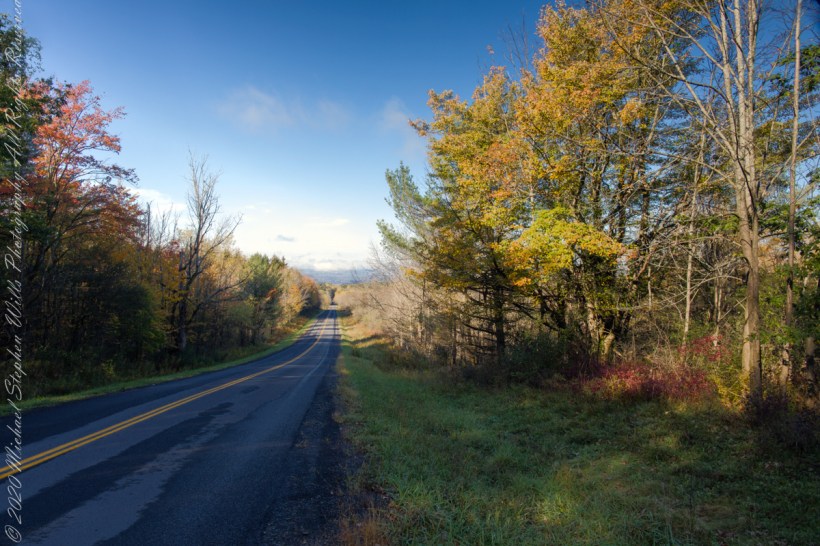
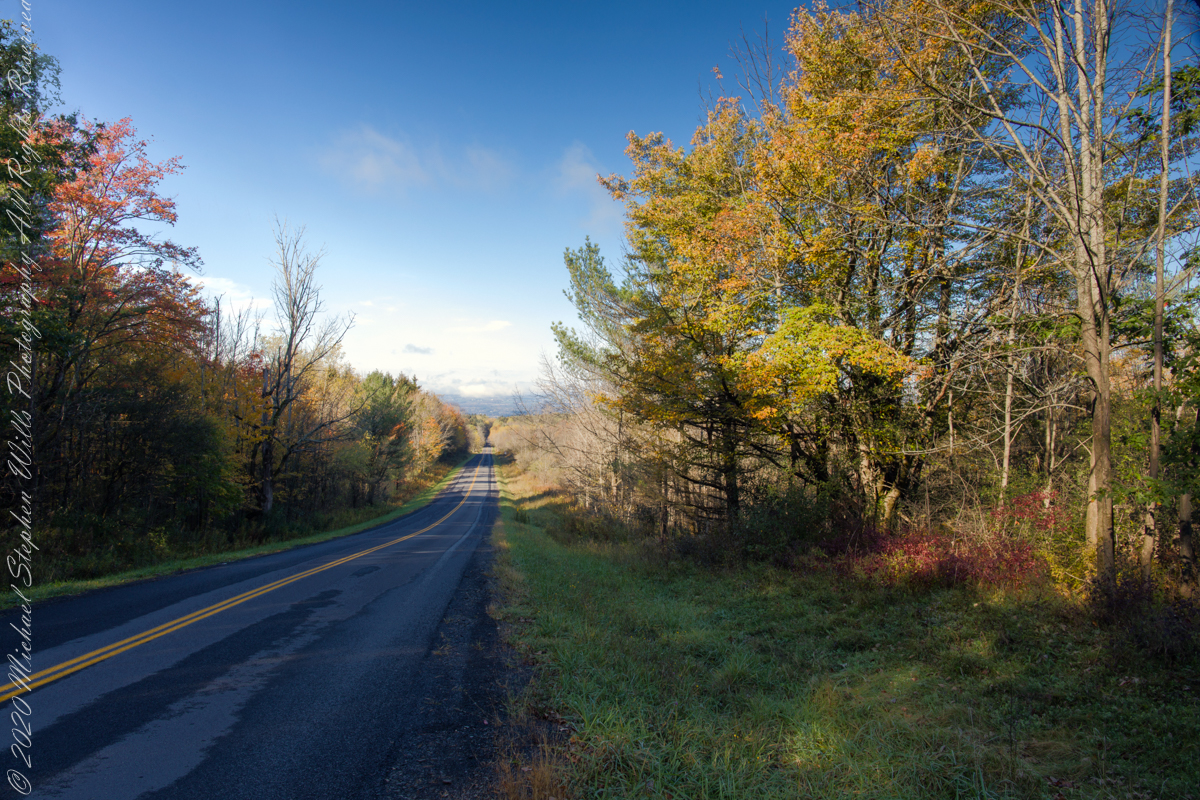
An open road, autumn morning, a hiking trail under a setting moon. Thirty miles of hiking trails thread these 16,212 acres. Some, like the Backbone trail, traverse farmland reverted to forest and meadow, popular for horseback riding.
Click photograph for a larger view. To do this from WordPress Reader, you need to first click the title of this post to open a new page.
The only National Forest in New York State, this land is visible as a ridge to the west of our home. Here we are on the west side, the ridge of Seneca Lake in the distance.
Click photograph for a larger view. To do this from WordPress Reader, you need to first click the title of this post to open a new page.
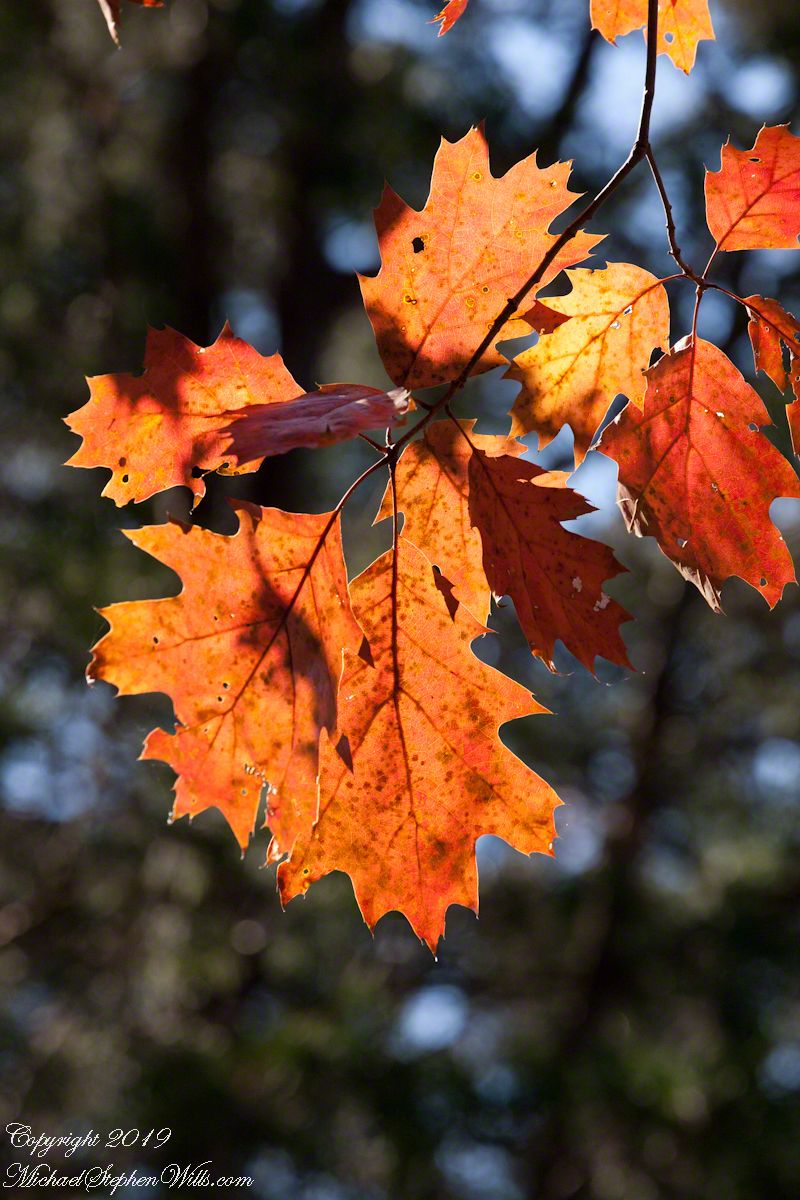
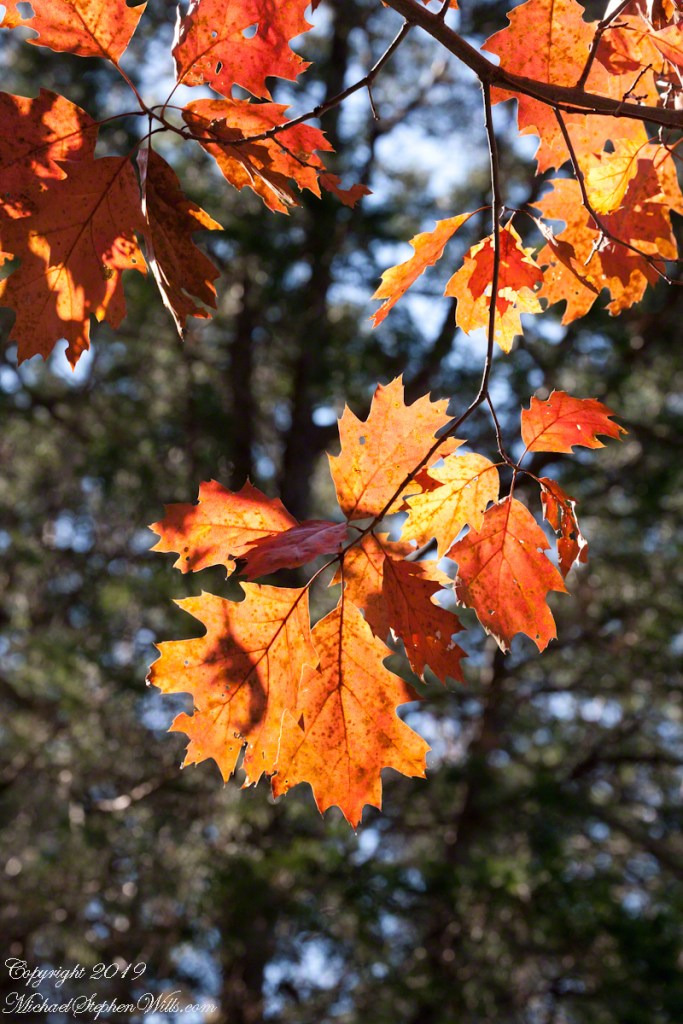
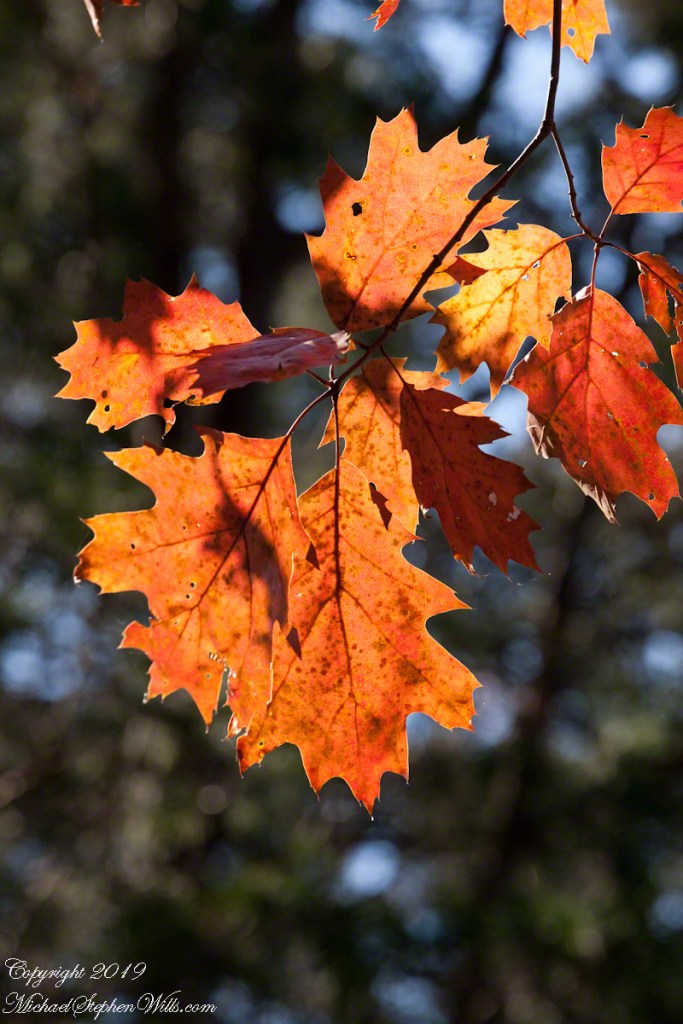
The oak holds tight to leaves, sometimes until spring when new growth pushes last year’s off. Here is a cluster on a bright November afternoon hanging above the South Rim trail of Taughannock Falls Park of the New York State Finger Lakes Region.
Backlit Autumn Oak Leaves
Autumn Oak Leaves, detail
Copyright 2021 All Rights Reserved Michael Stephen Wills
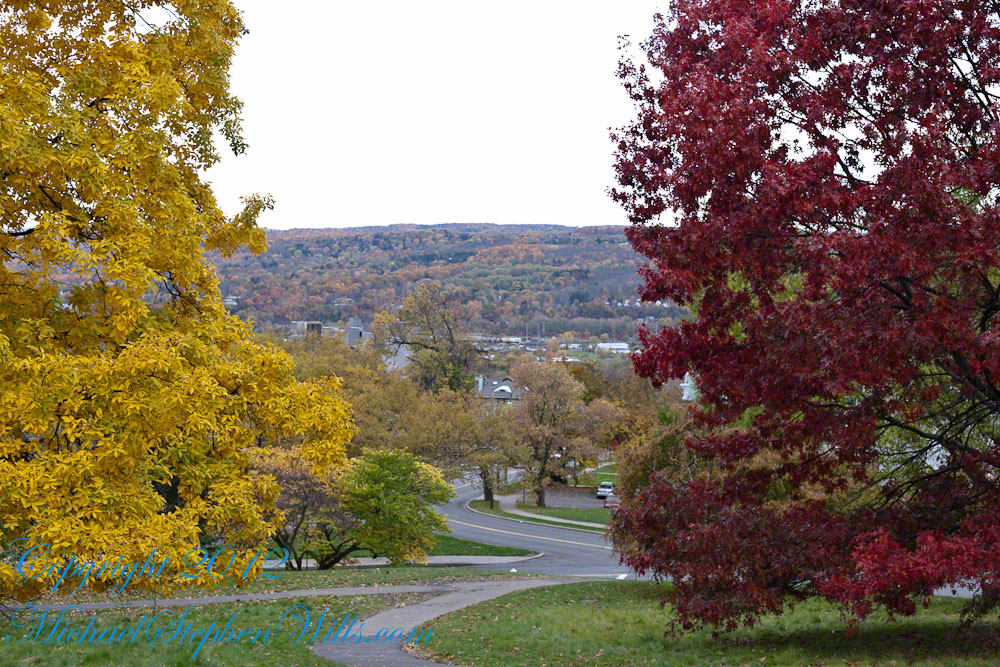
Libe Slope is between the West Campus and Quadrangle / Libraries.
Click to view my Finger Lakes Memory gallery
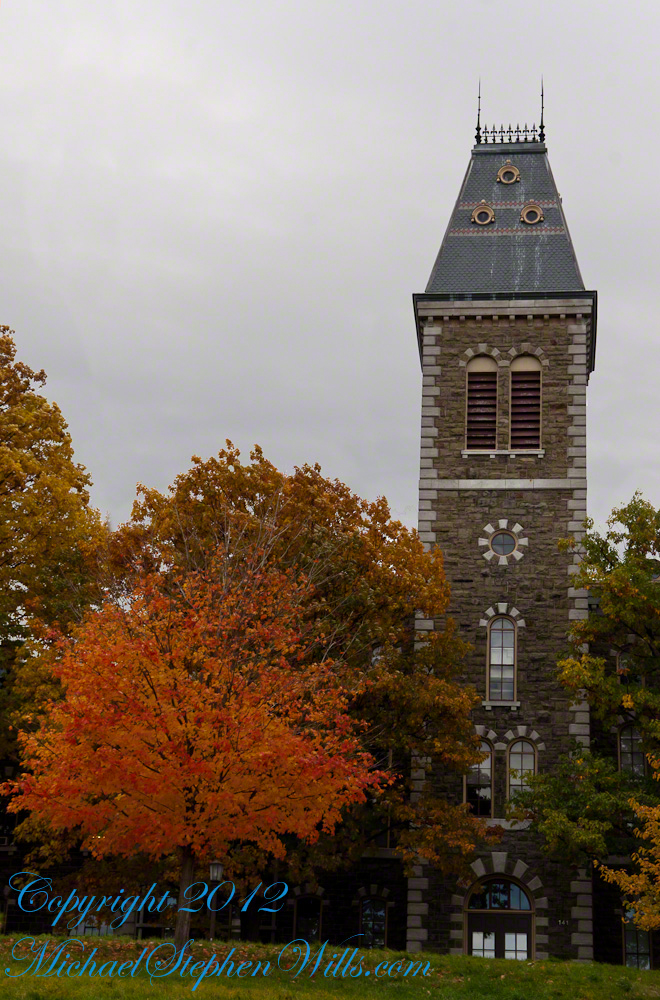
Cornell University is on a west-facing hill above Cayuga lake.
Besides the exercise of walking the 18 degree incline several times each day, Cornell students and alumni remember The Slope for autumn color.
Wonderful Flow of Limbs among Gold
Click to view my Finger Lakes Memory gallery
Hickory
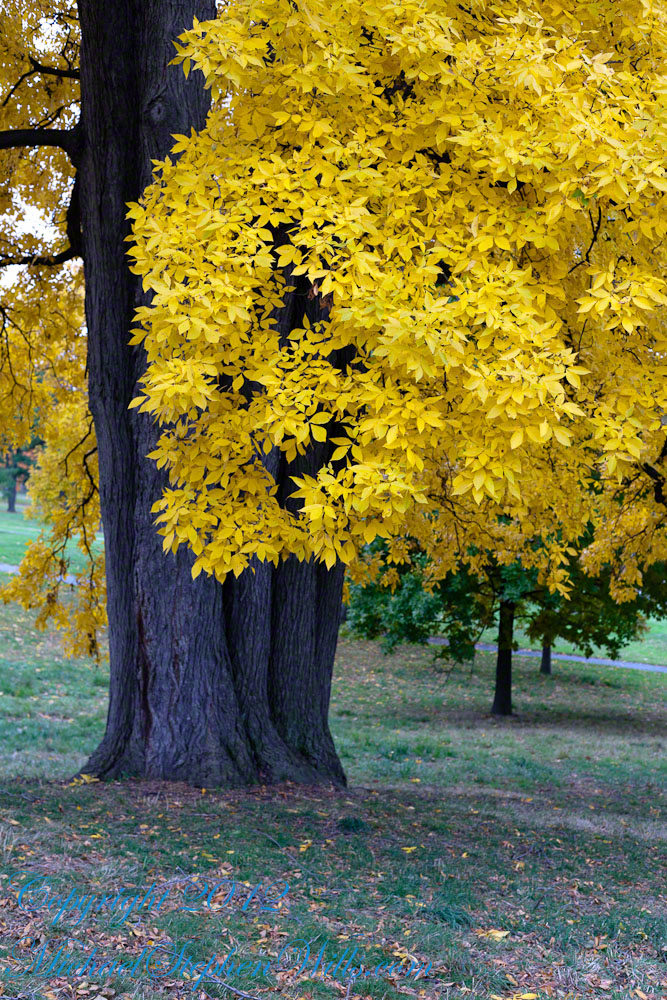
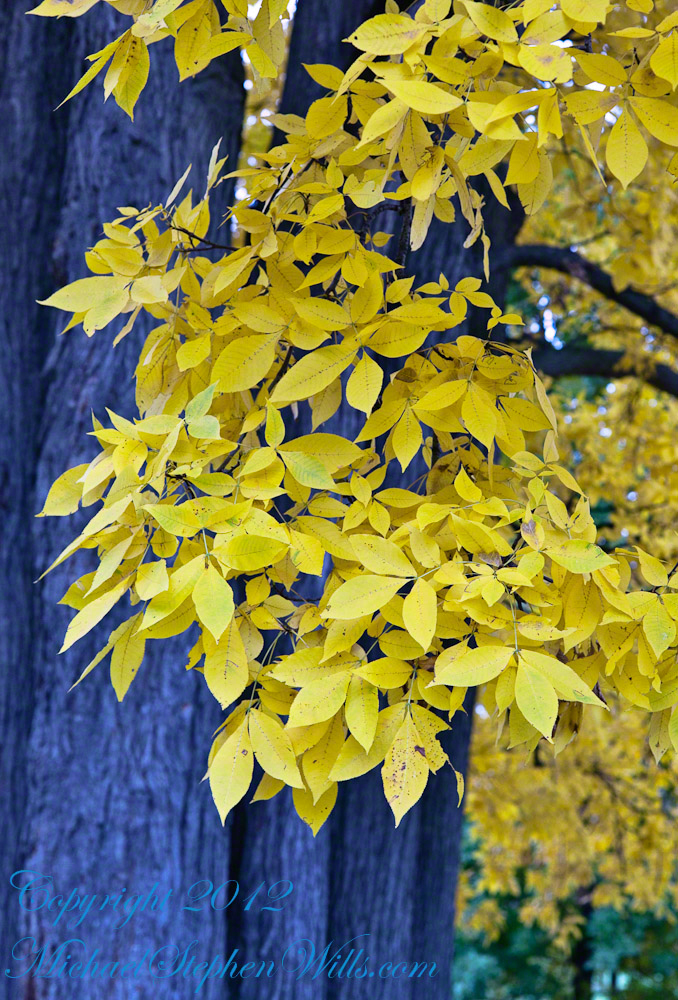
Seen from the north on a cloudy October day, this Pignut Hickory (Carya glabra) is the largest tree on the Cornell Campus, at 79 inches in diameter.
Click to view my Finger Lakes Memory gallery
Cornell University is on a west-facing hill above Cayuga lake.
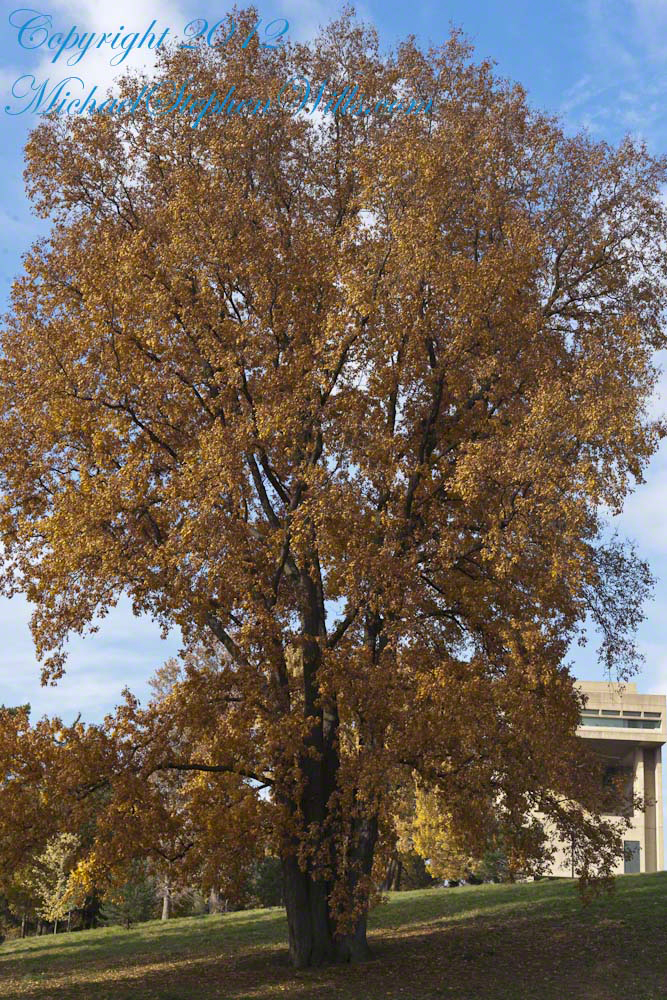
Take another look at the previous image. Can you find the grey squirrel? This hickory grows south of the Johnson Museum and among the autumn glories, it is the largest and brightest yellow canopy on Libe Slope.
Contrast
An overcast day is the best to capture this spectacle. October 20, 2012 provided both bright sun and dark, rolling autumn clouds. I waited on the north side, sheltered from the glare of the sky, for these perfect moments.
Click to view my Finger Lakes Memory gallery
I remember this hickory for the contrast between the canopy and trunk, the way the clumps of yellow hang from dark boughs.
The pignut hickory is native to these Eastern United States. It is known to favor moist slopes and this specimen has thrived on The Slope. The ground beneath it is thick with nuts.
Click to view my Finger Lakes Memory gallery
One week later
Just one week later, late afternoon on a sunny Friday as hurricane Sandy approached the east coast the hickory has fewer, tawny golden leaves.
Copyright 2021 Michael Stephen Wills All Rights Reserved
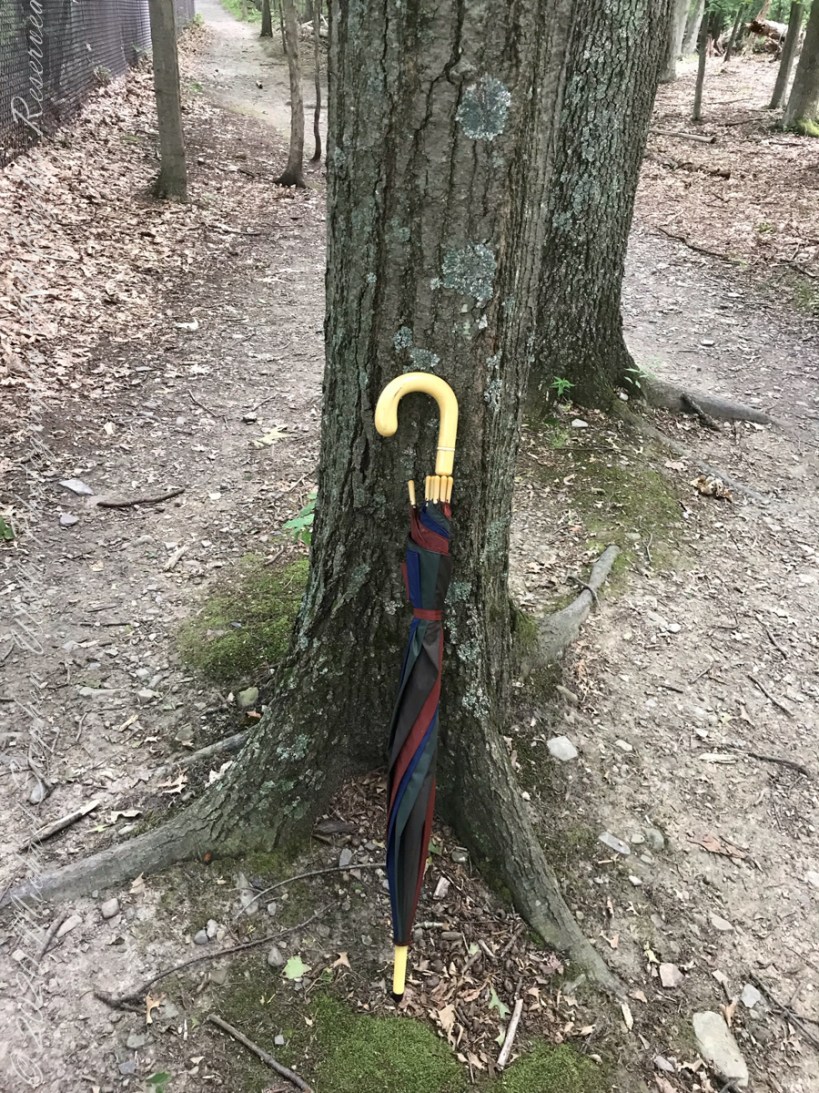
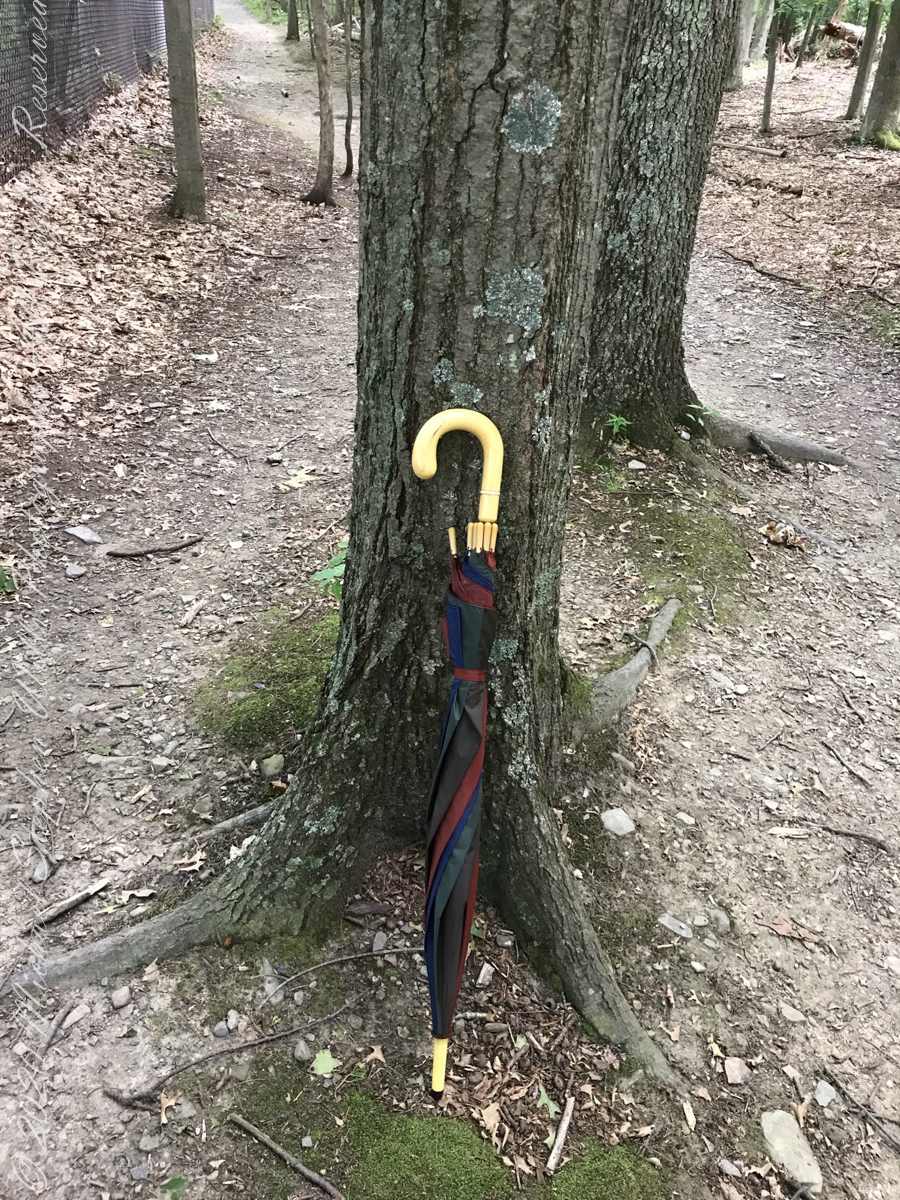
Constant winds from thunderstorm updrafts, I brought along an umbrella just in case.
Click photograph for slide show. To do this from WordPress Reader, you need to first click the title of this post to open a new page.
Maple Tree
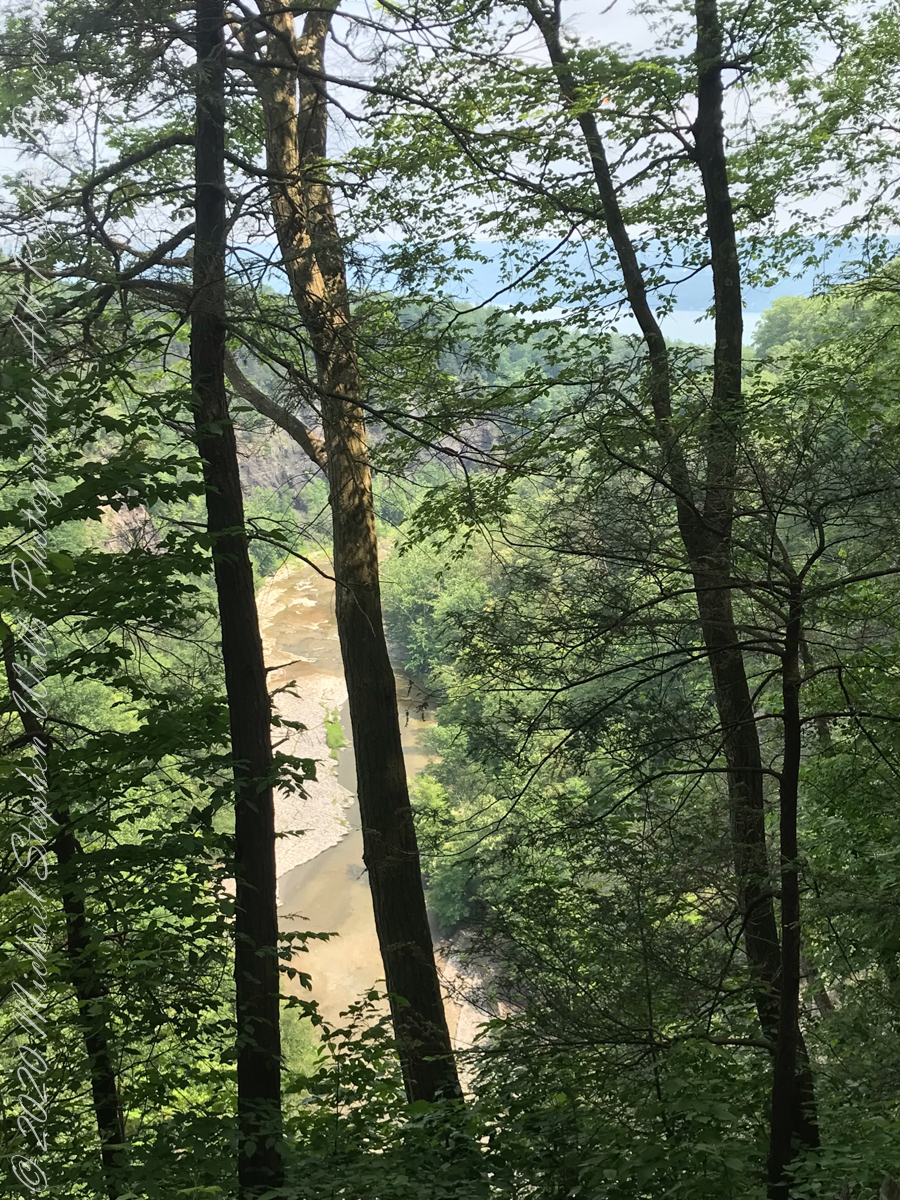
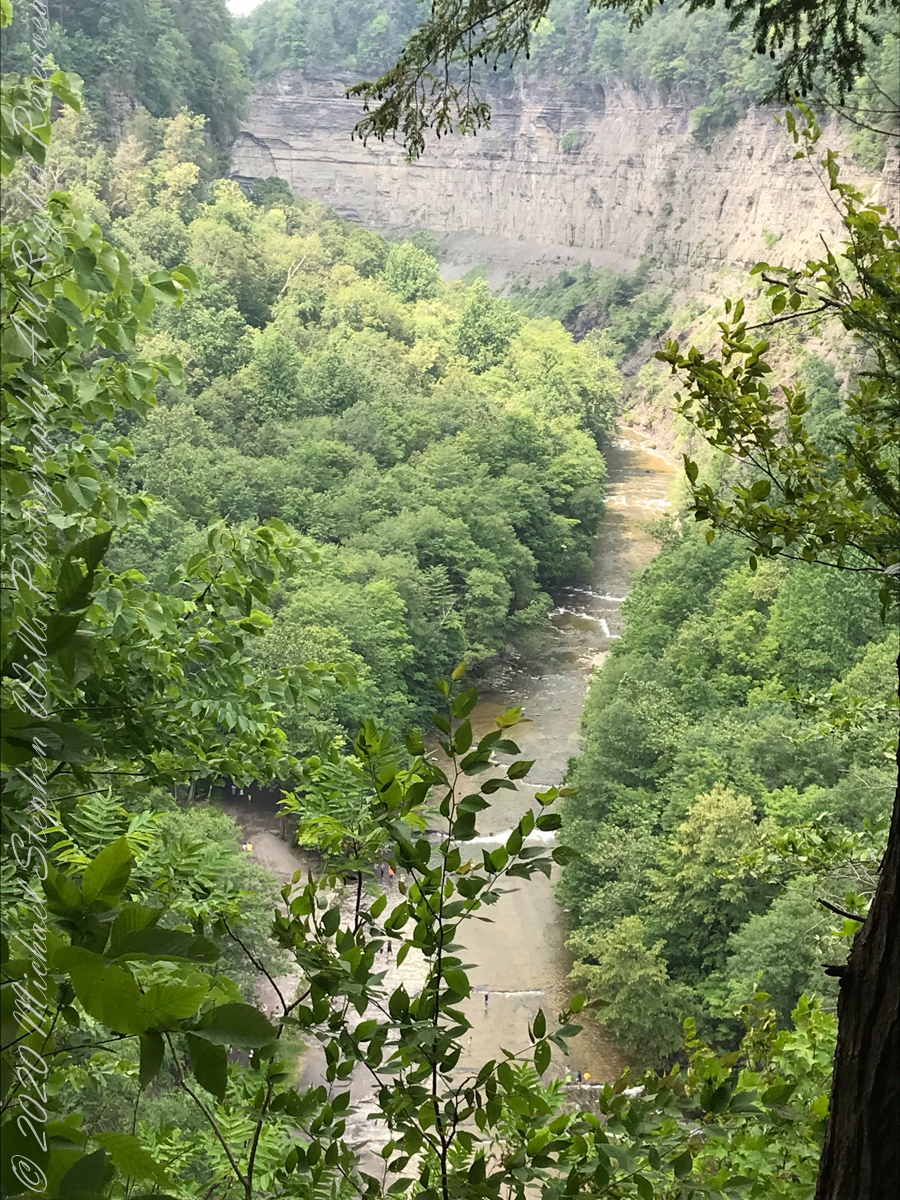
View from the South Rim Trail. The water flowing from Taughannock Falls to Cayuga Lake.
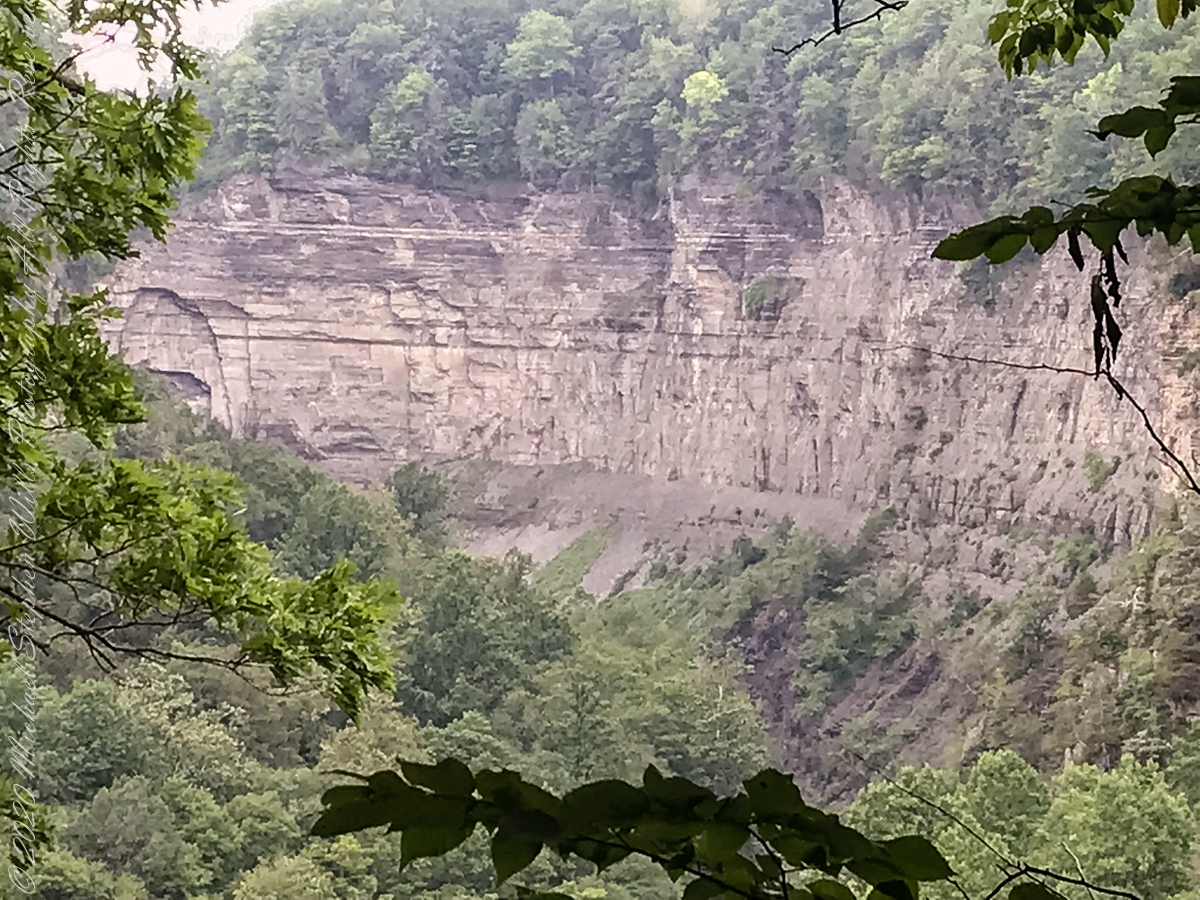
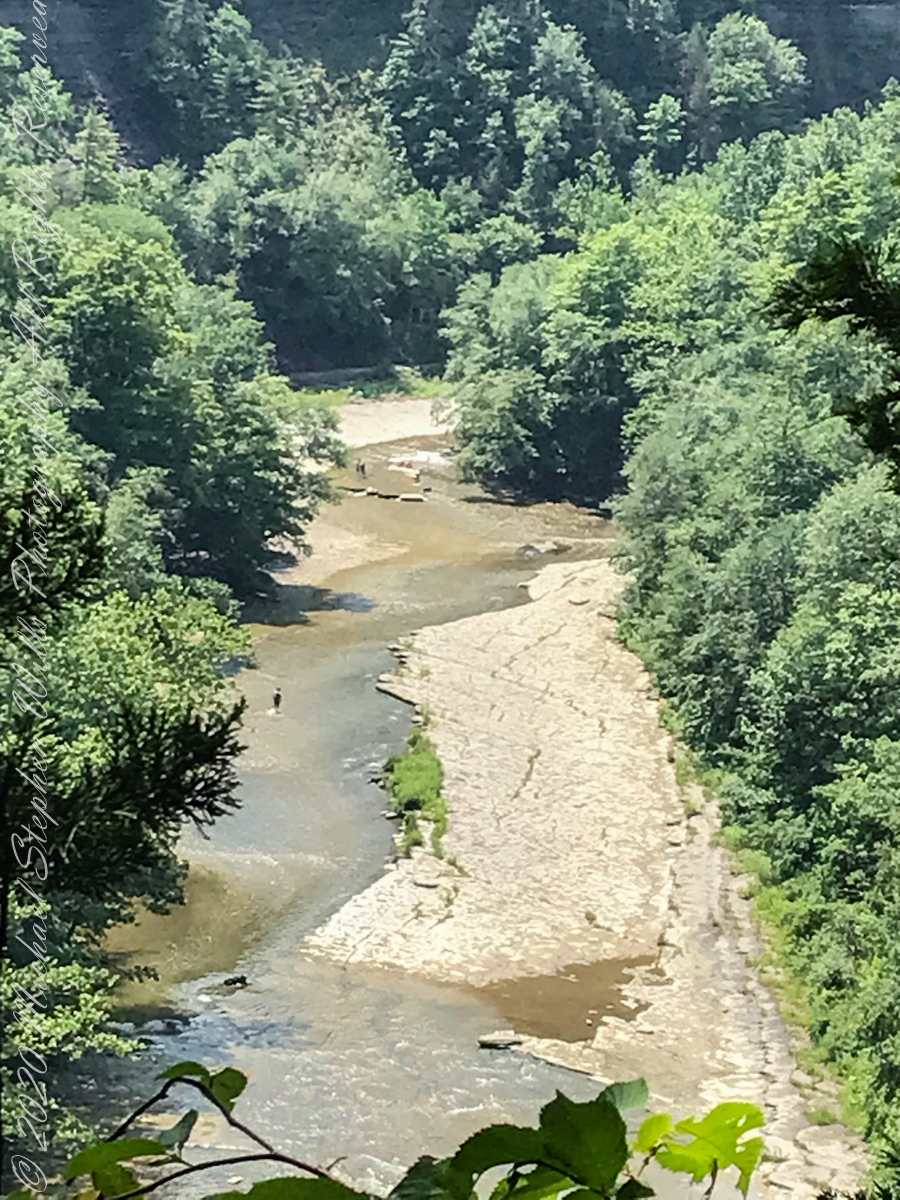
The steep, high gorge walls below the falls on a humid July morning.
gorge walls
My umbrella
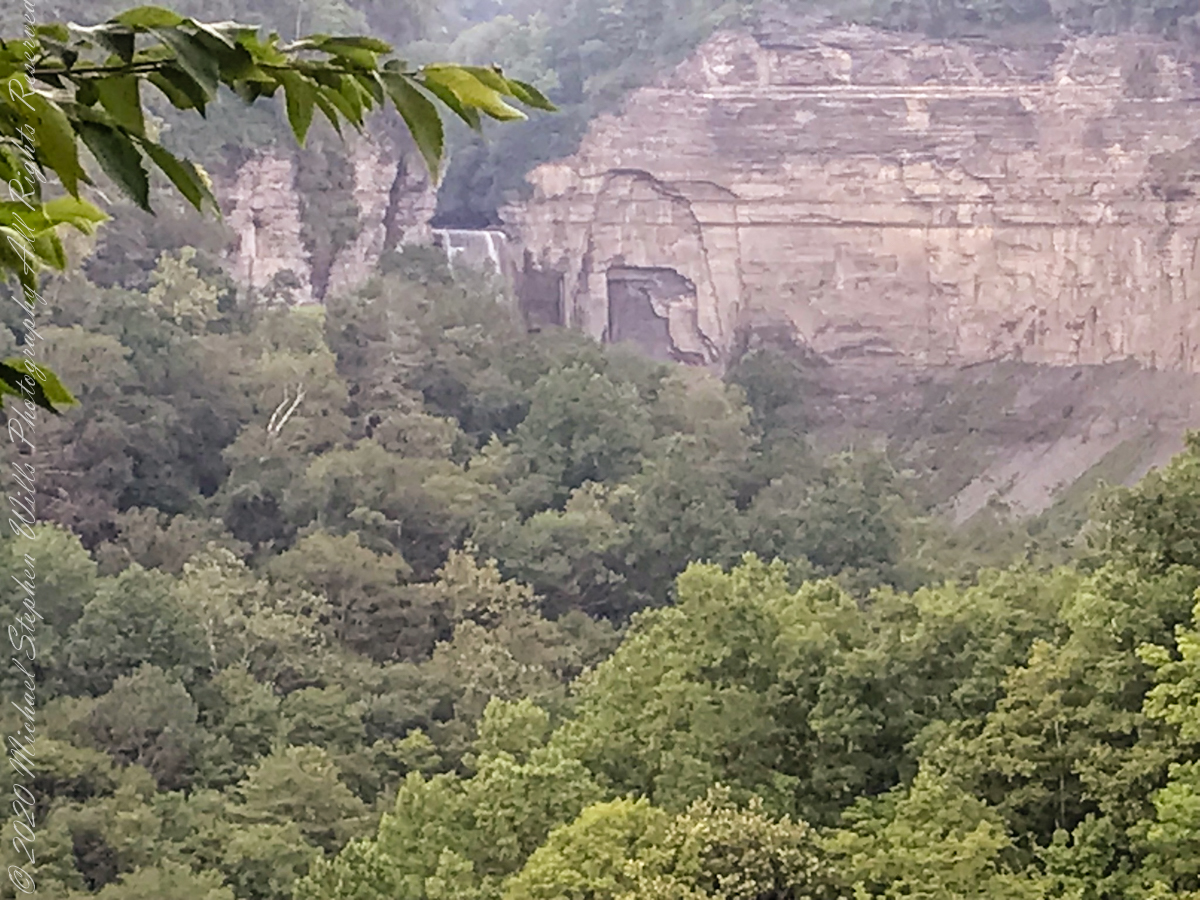
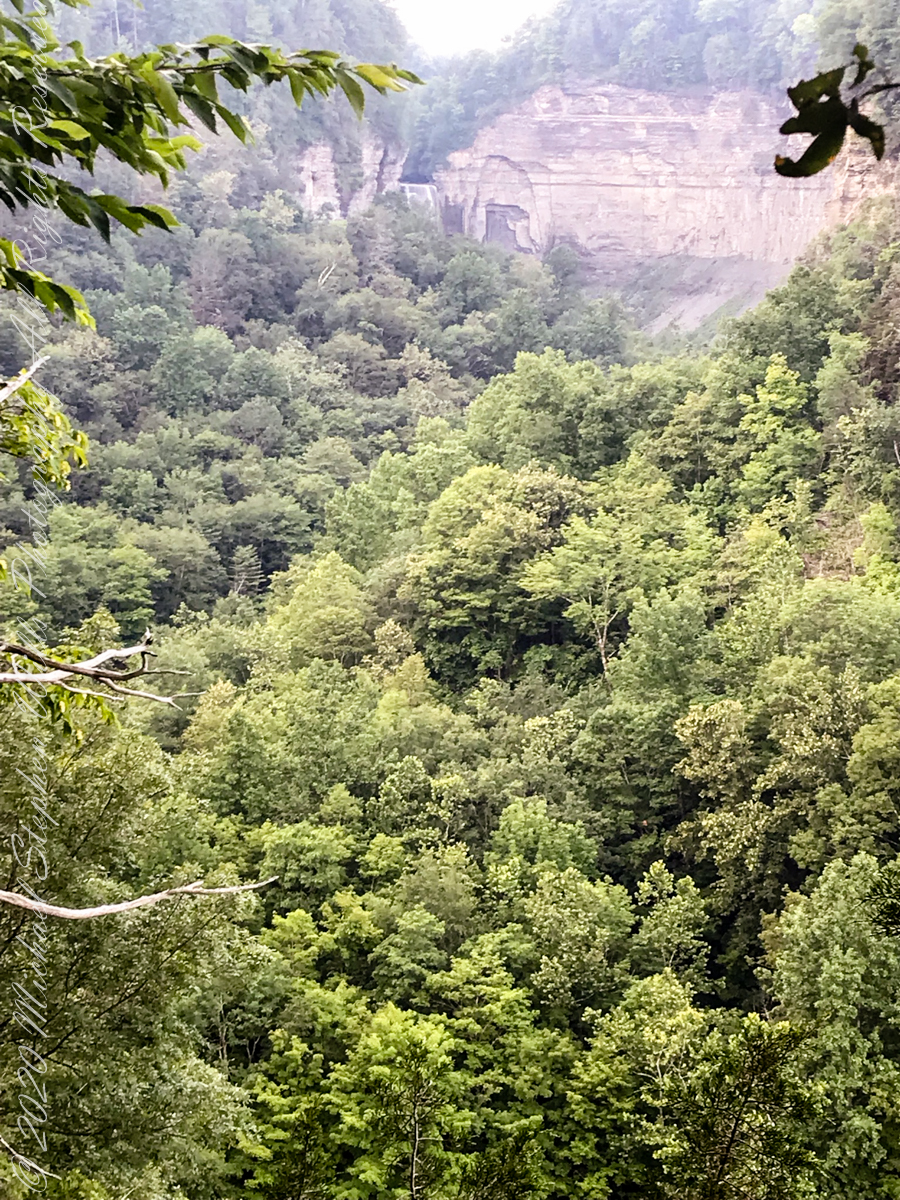
Taughannock falls in distance
Taughannock Falls in distance
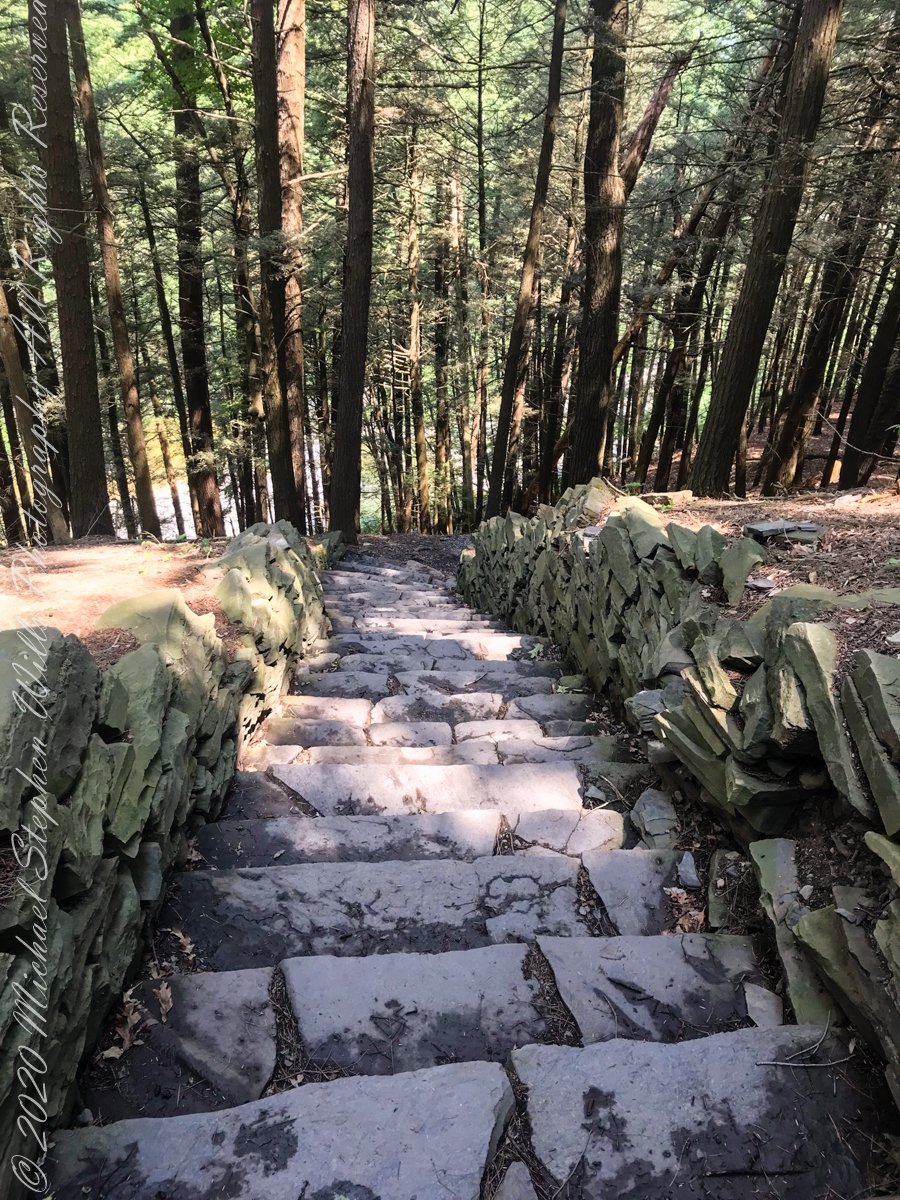
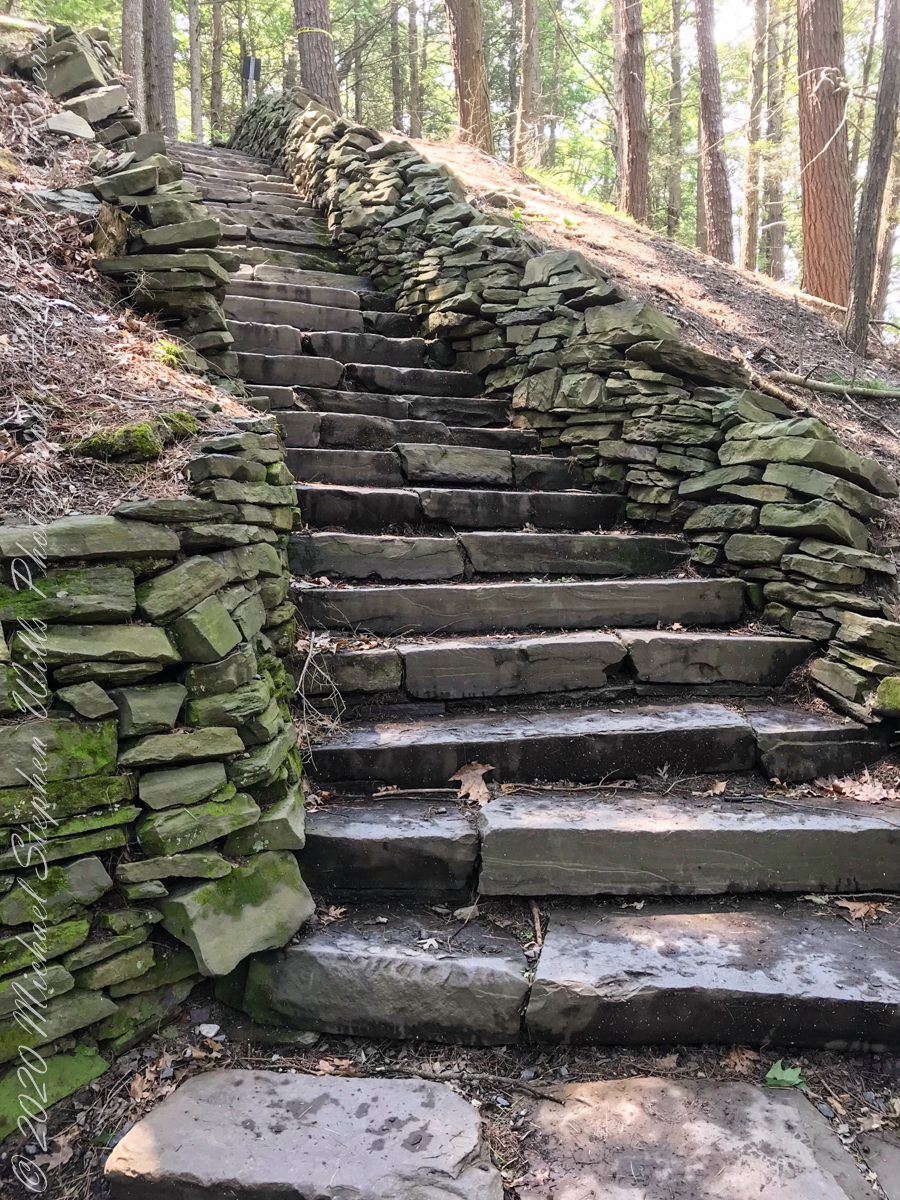
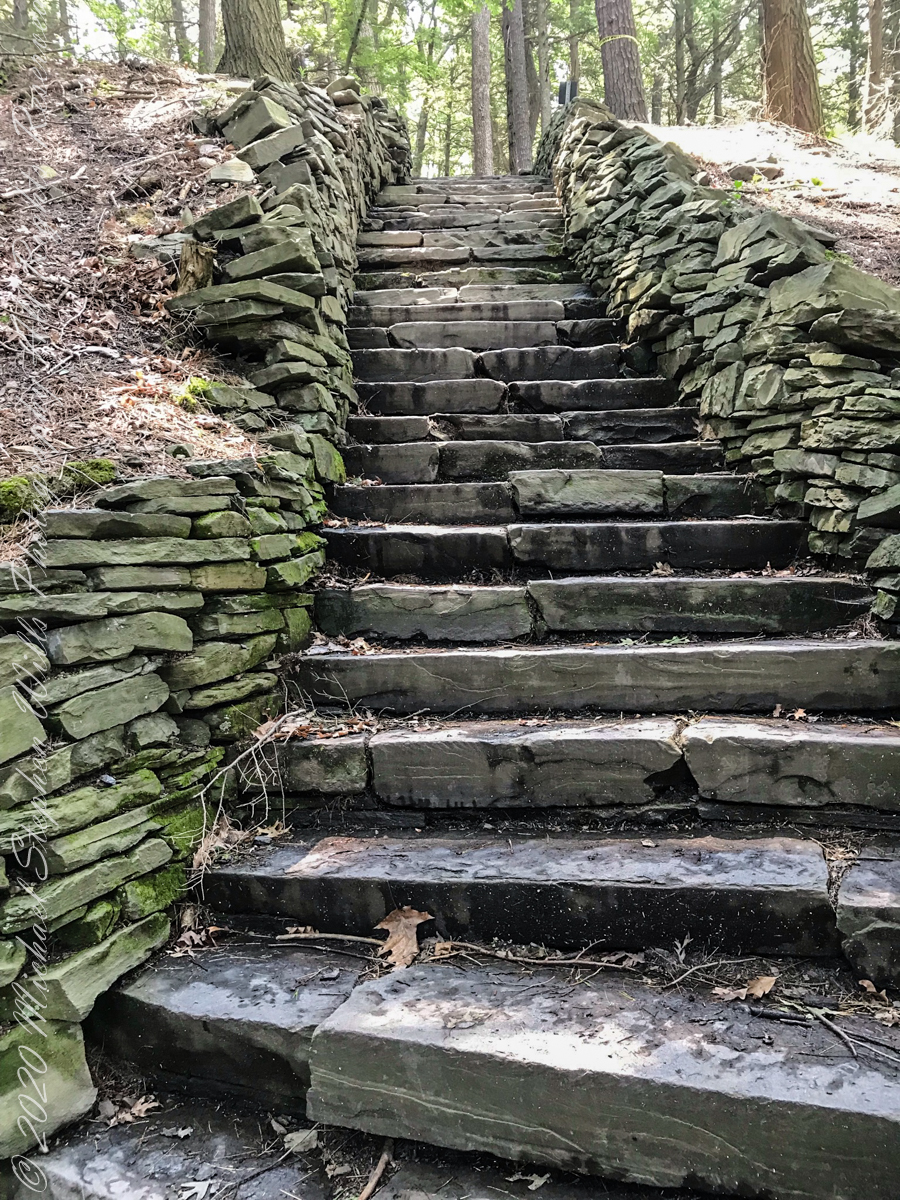
South Rim Stairs built by the Civilian Conservation Corps in the 1930’s
Pine Forest at foot of stairs
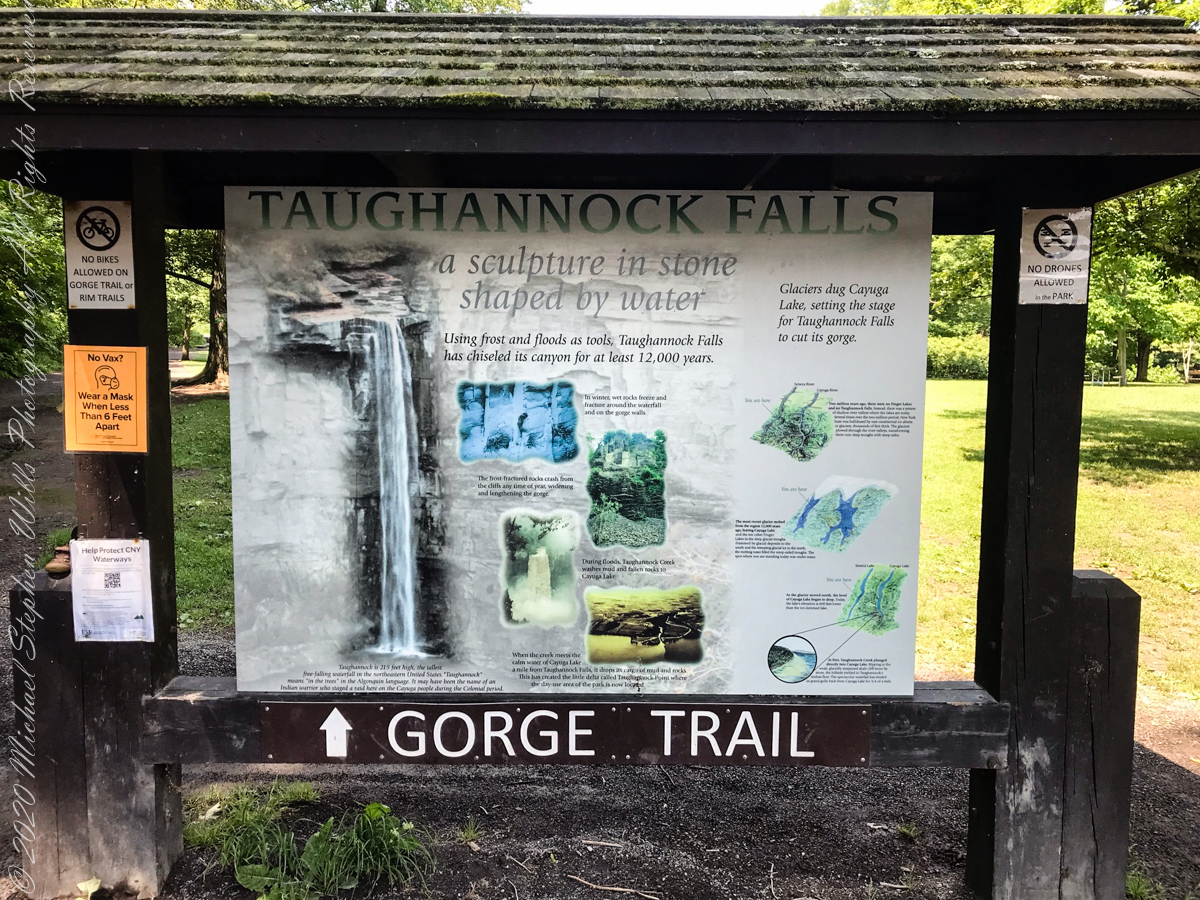
An interesting presentation at the Gorge entrance
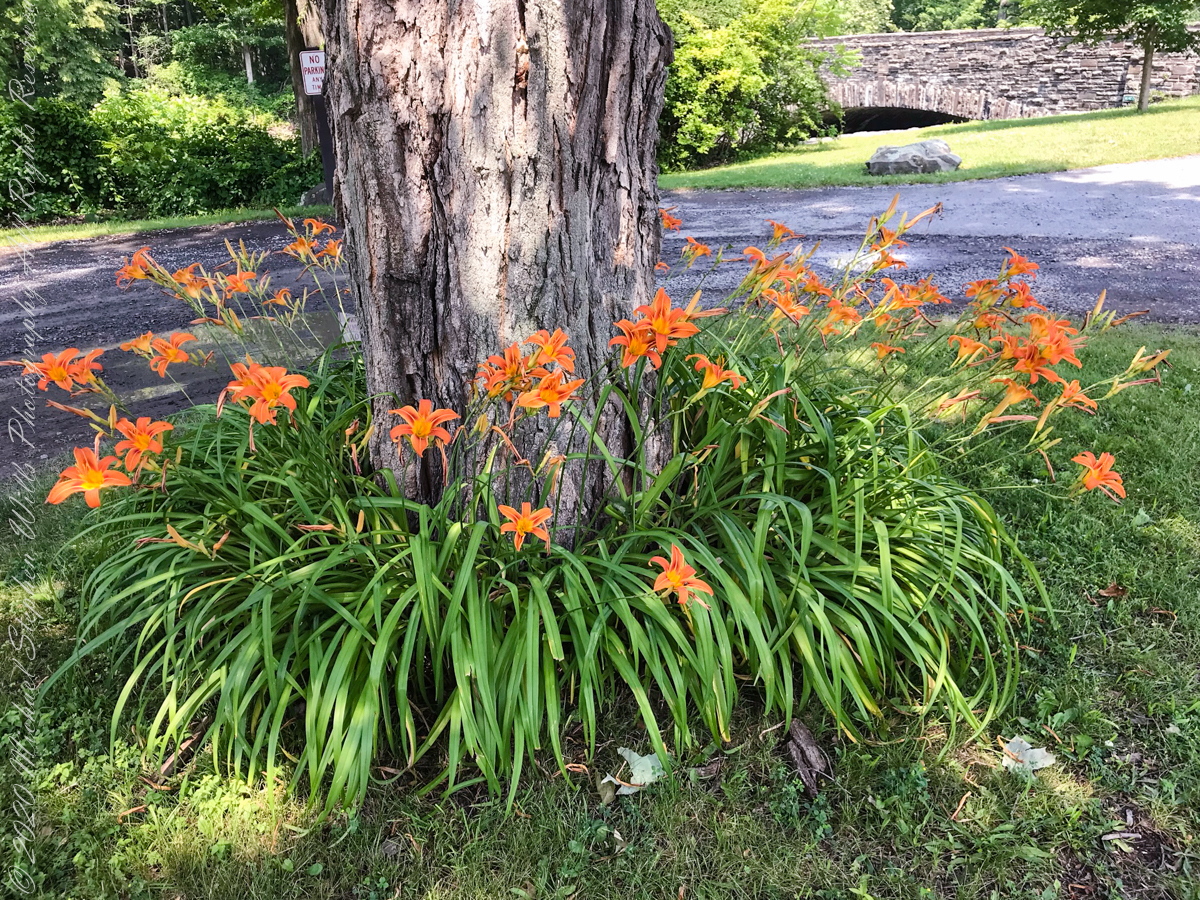
Tiger Lilies
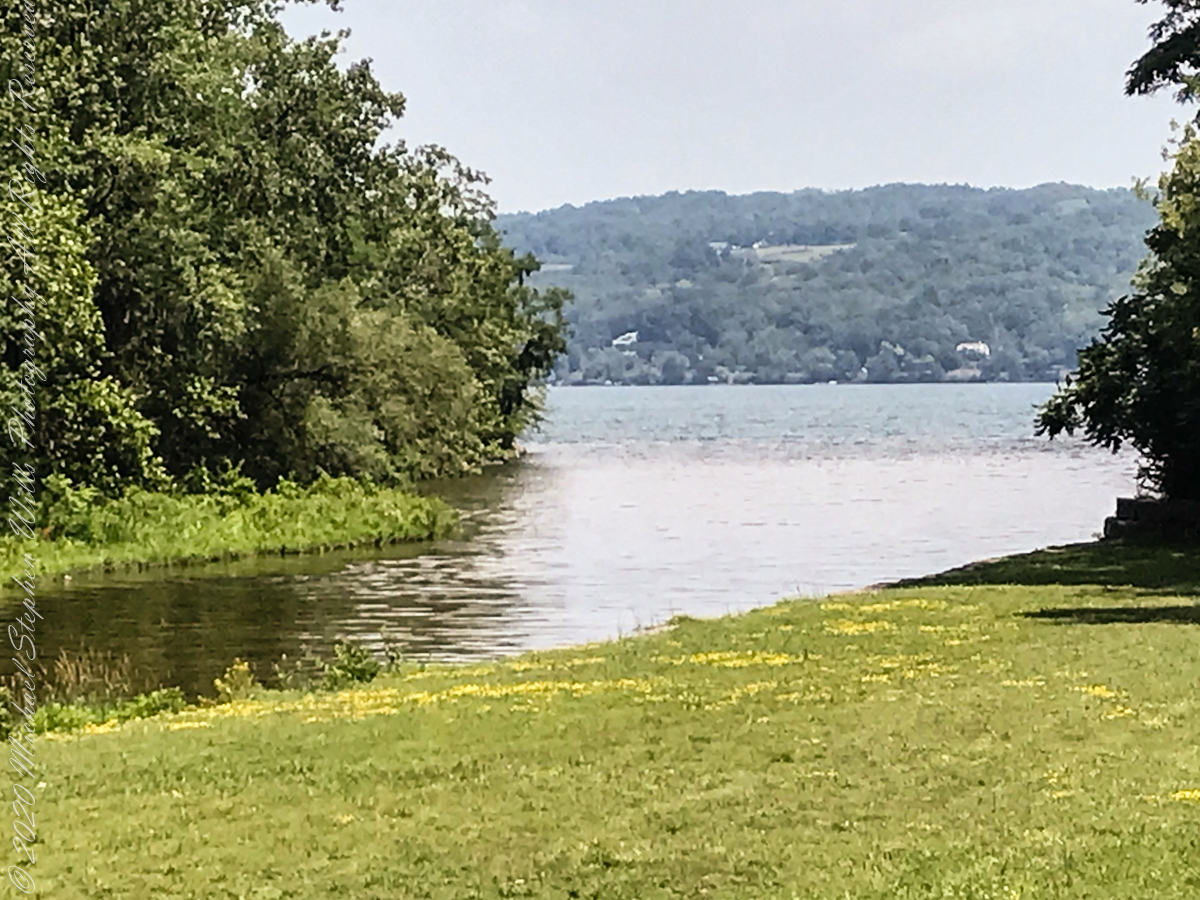
brown creek water meets Cayuga Lake (900 feet deep)
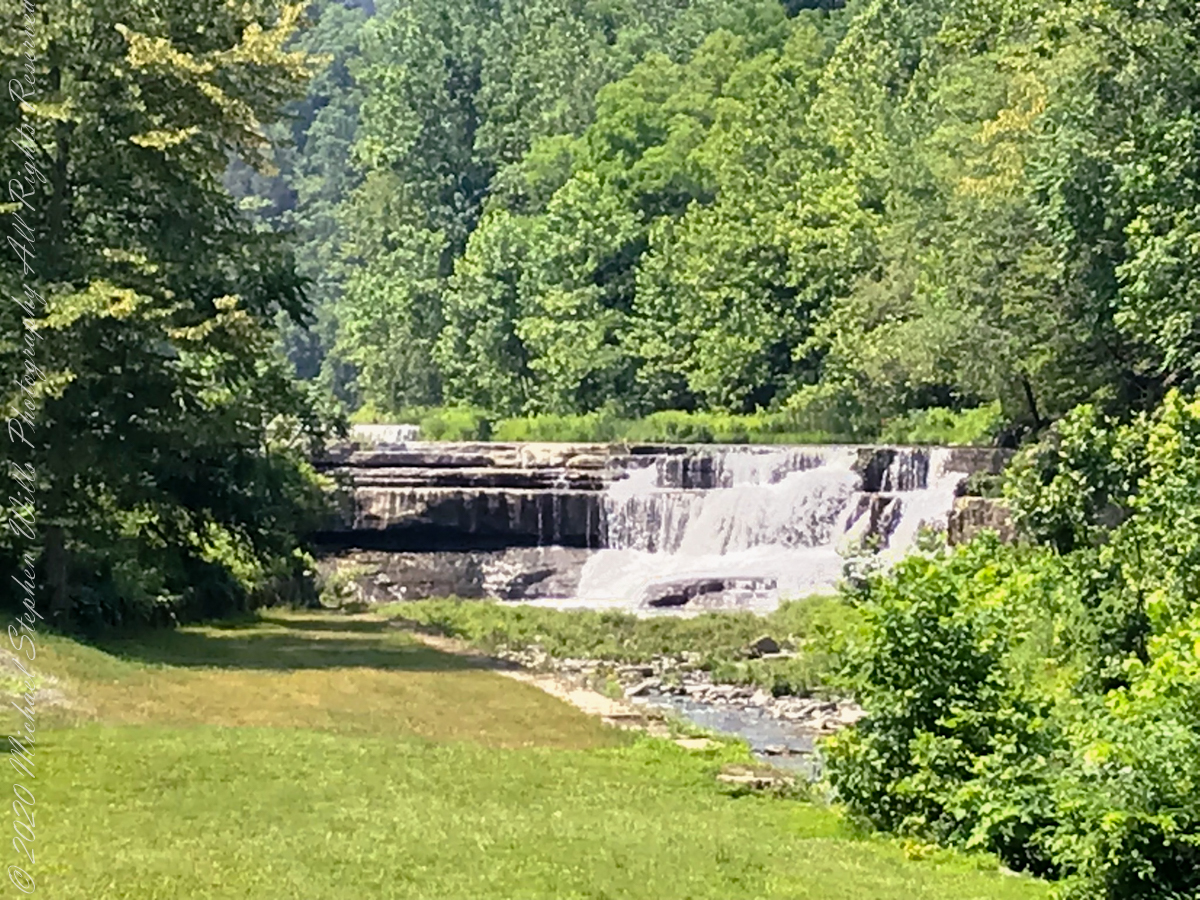
Last waterfall of Taughannock Gorge
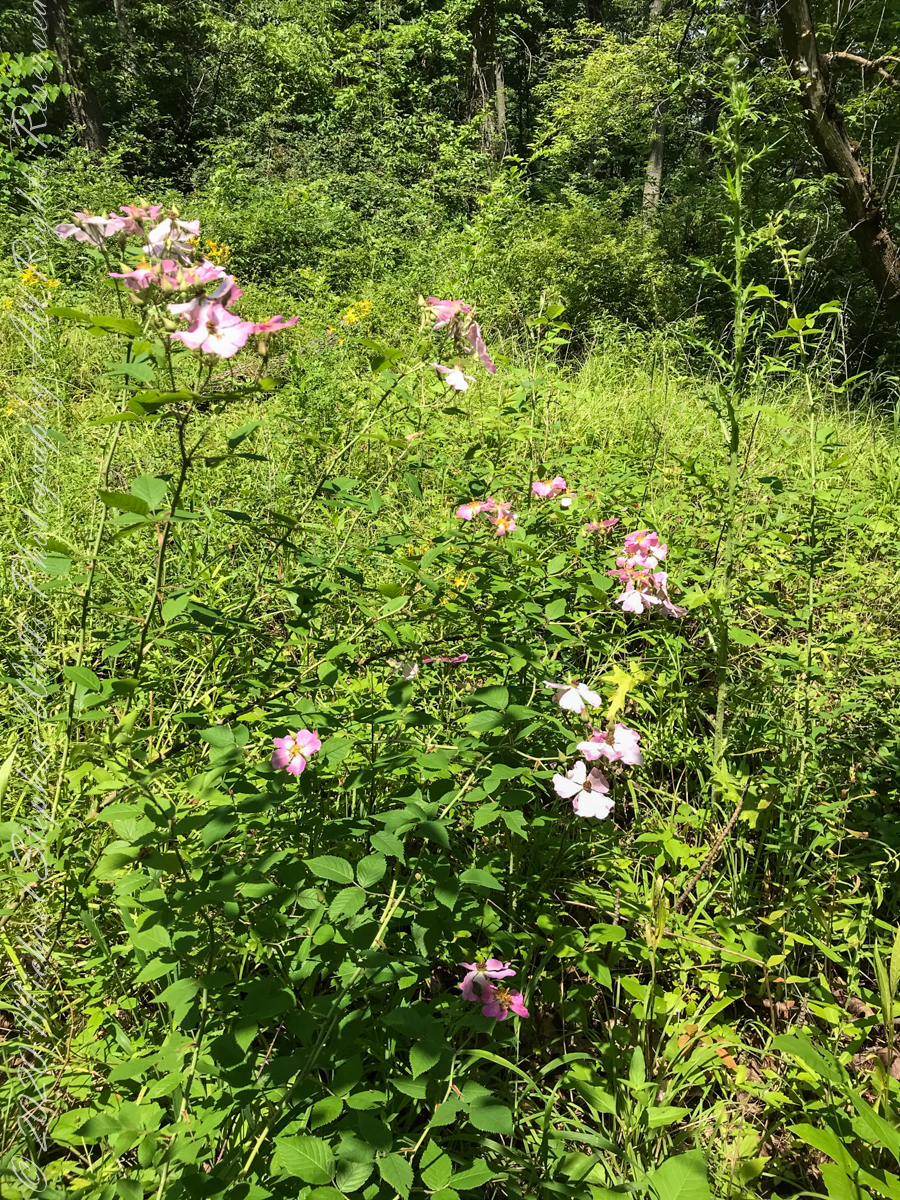
wild roses
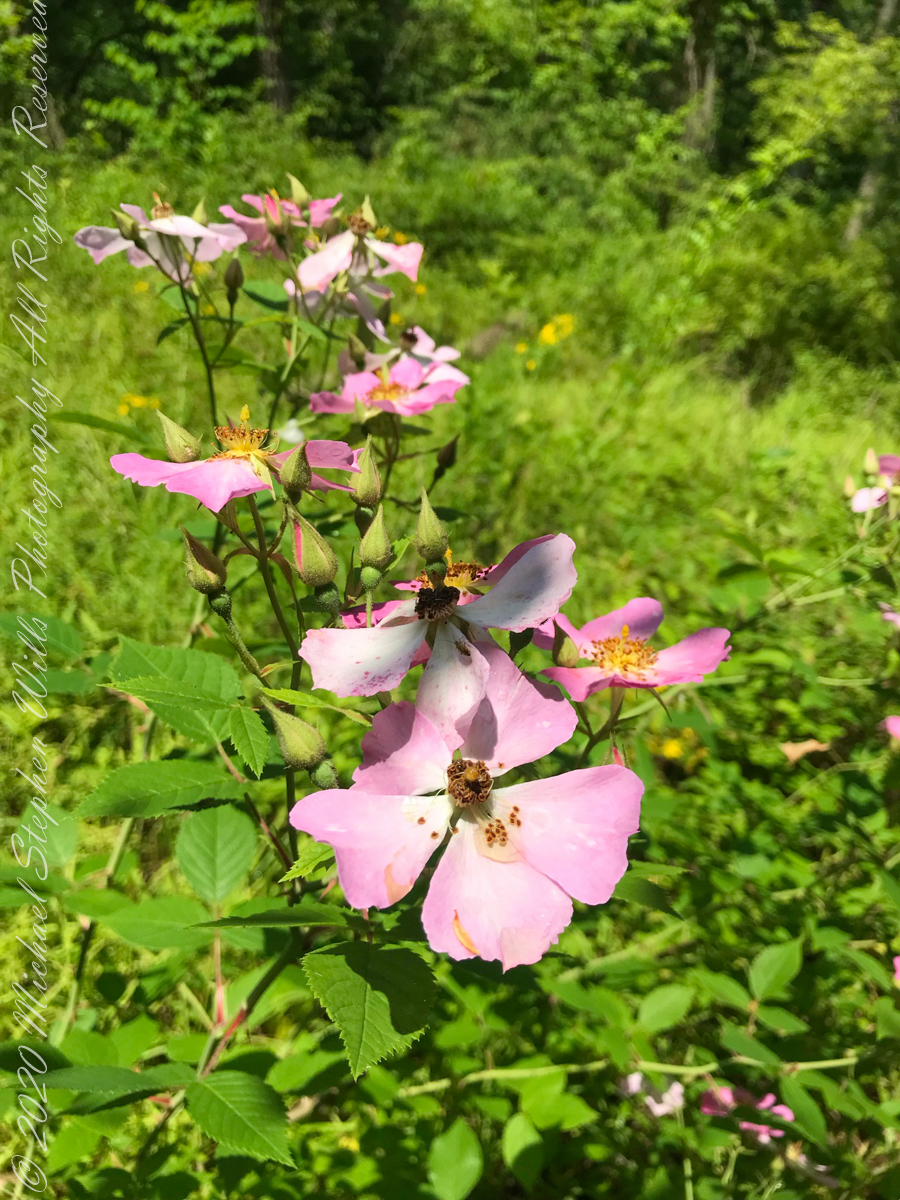
Wild rose blooms
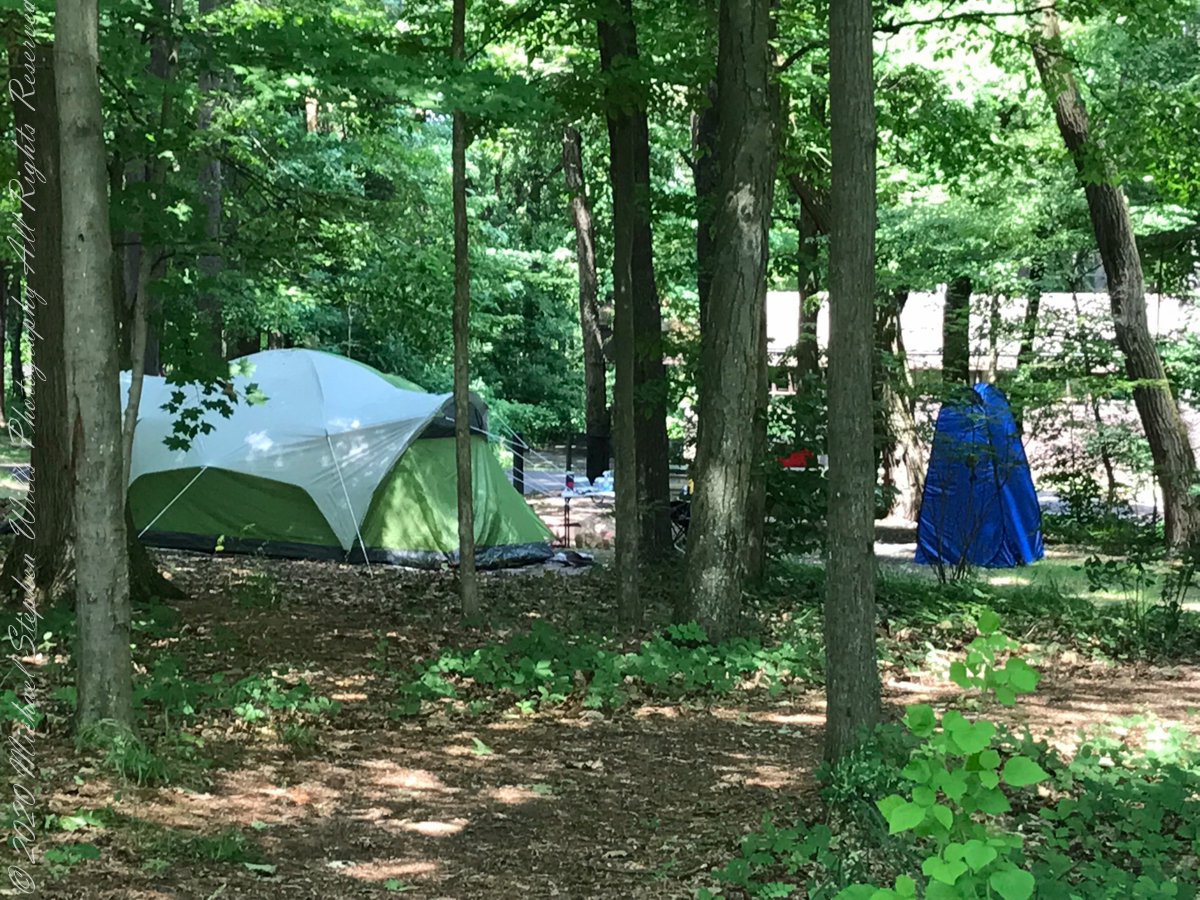
camping on North Rim
North Rim Gorge view
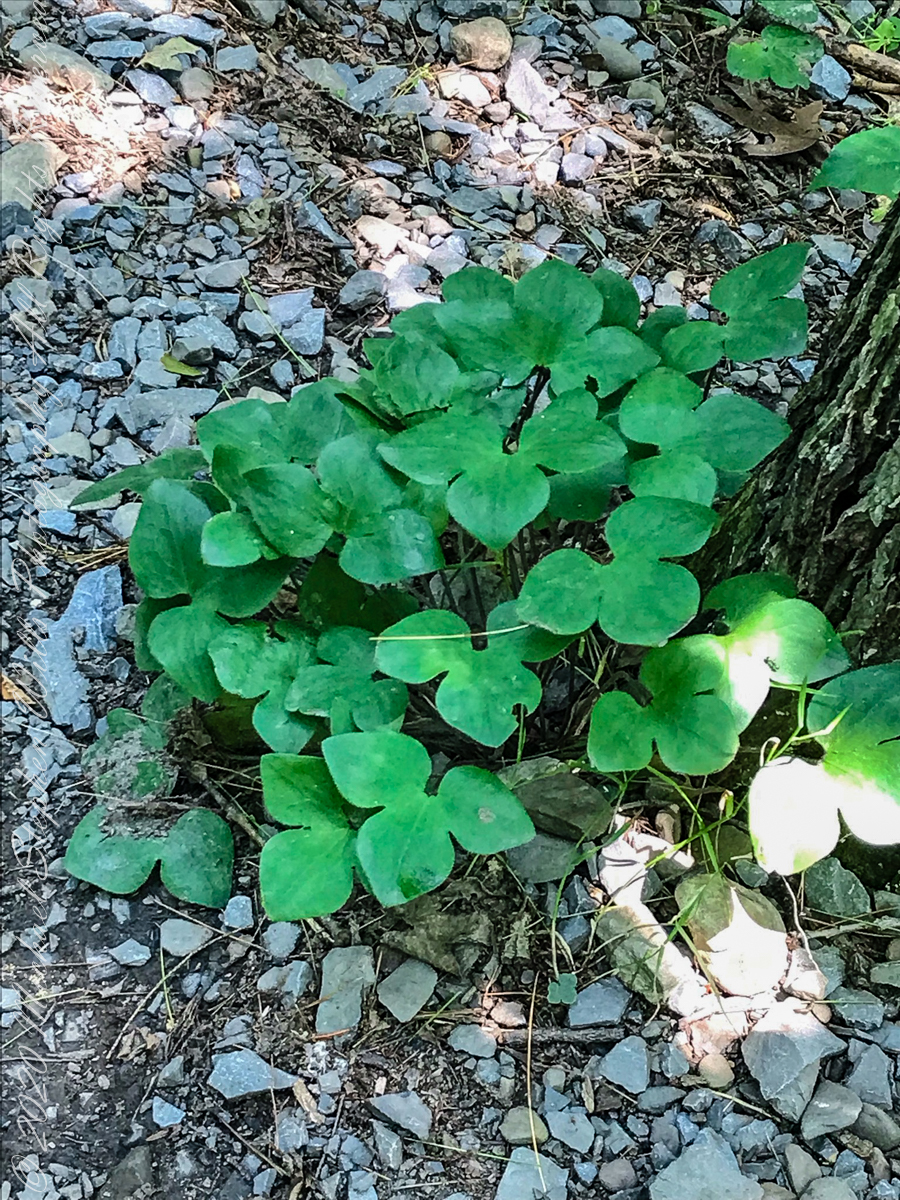
Lobe leaved Hepatica
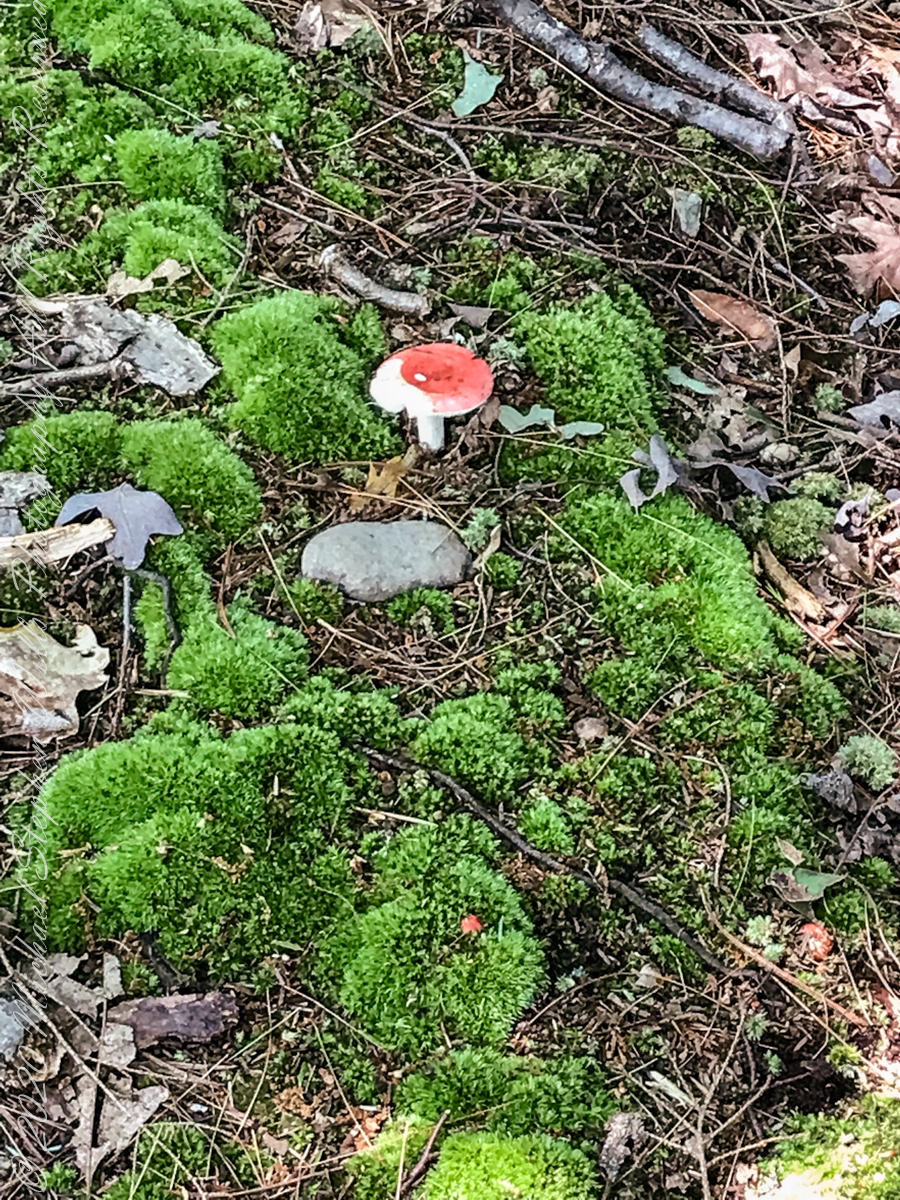
Mushroom and Moss on the “wetter” north rim
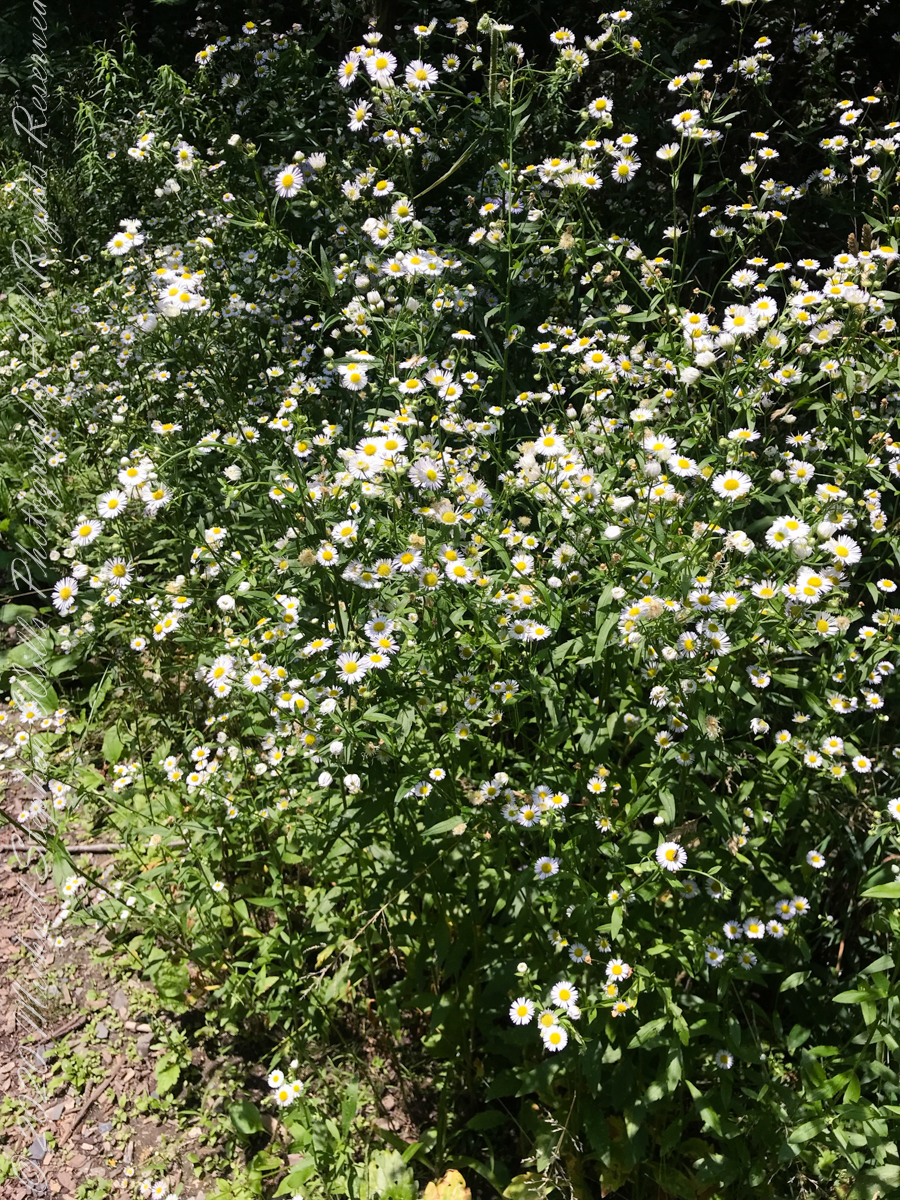
asters, an invasive species
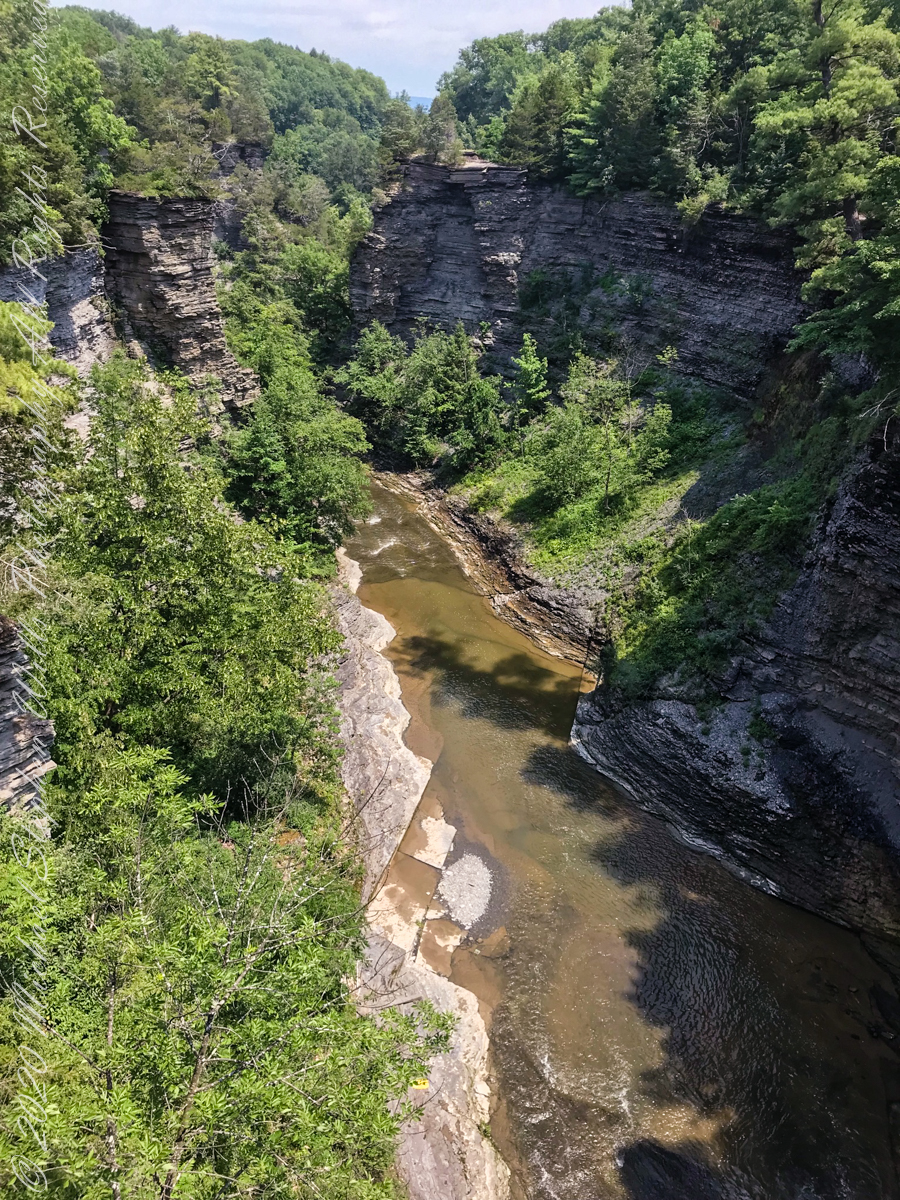
The dramatic and virtually inaccessible gorge above Taughannock Falls
Click the “Watch on YouTube” for a larger format view and more information about each video.
Taughannock Falls Gorge on a humid summer morning
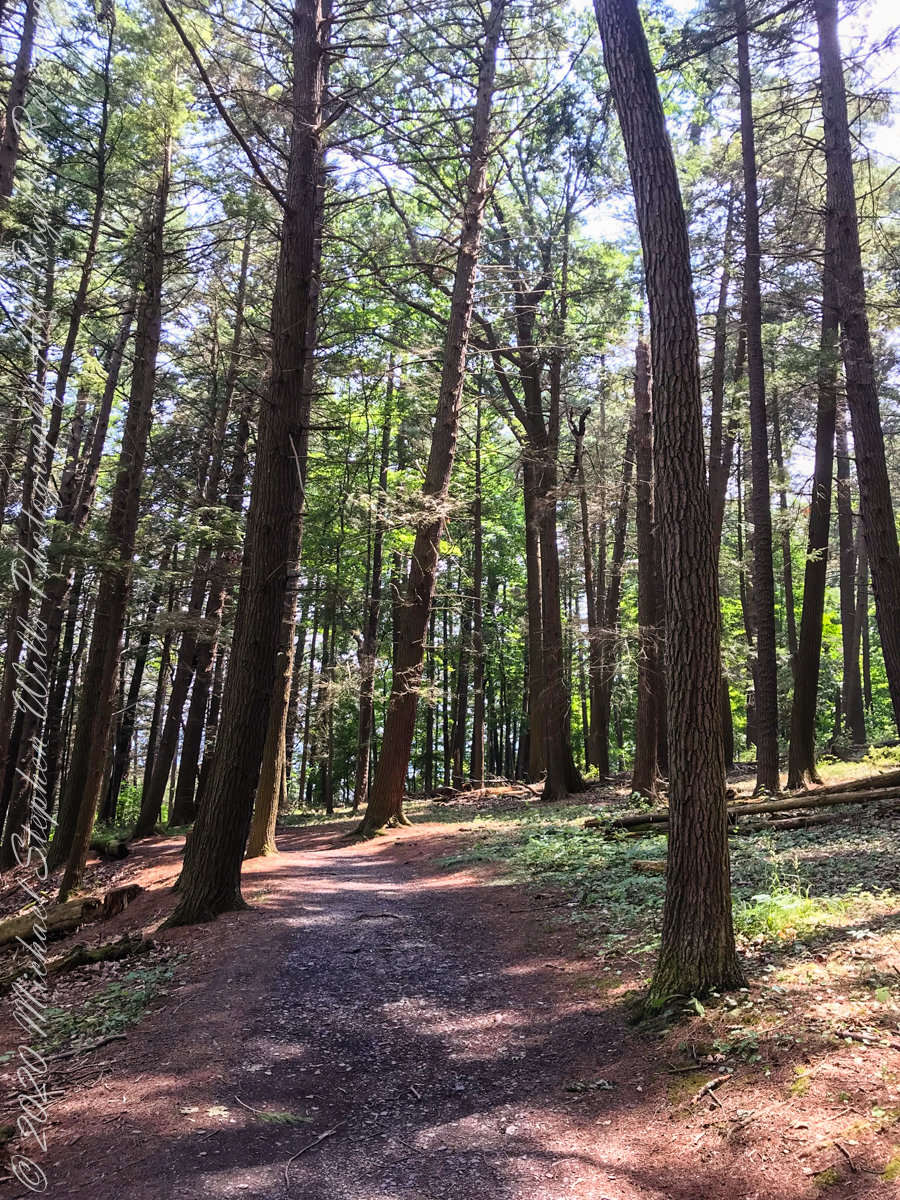
Hemlock Forest on South Rim Trail
Taughannock Falls Gorge from South Rim Trail
Taughannock Falls from South Rim trail
View of Taughannock Falls Gorge from the North Rim trail on a humid summer (July) morning. Turkey Vultures circle overhead…they are there most summer days.
View of the first waterfall of Taughannock Gorge from the railroad bridge linking the North and South Rim trails on a humid summer (July) morning. This large waterfall empties to the gorge above the 210+ foot Taughannock Falls.
Copyright 2021 All Rights Reserved Michael Stephen Wills
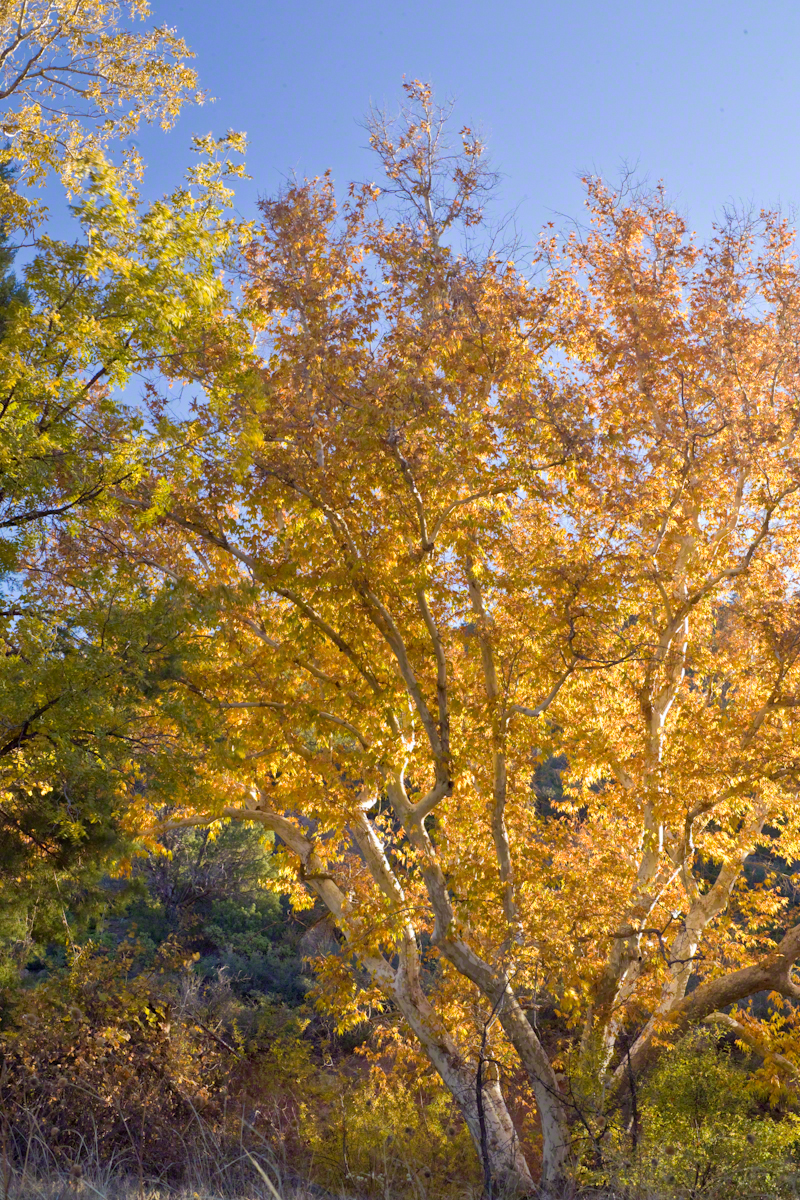
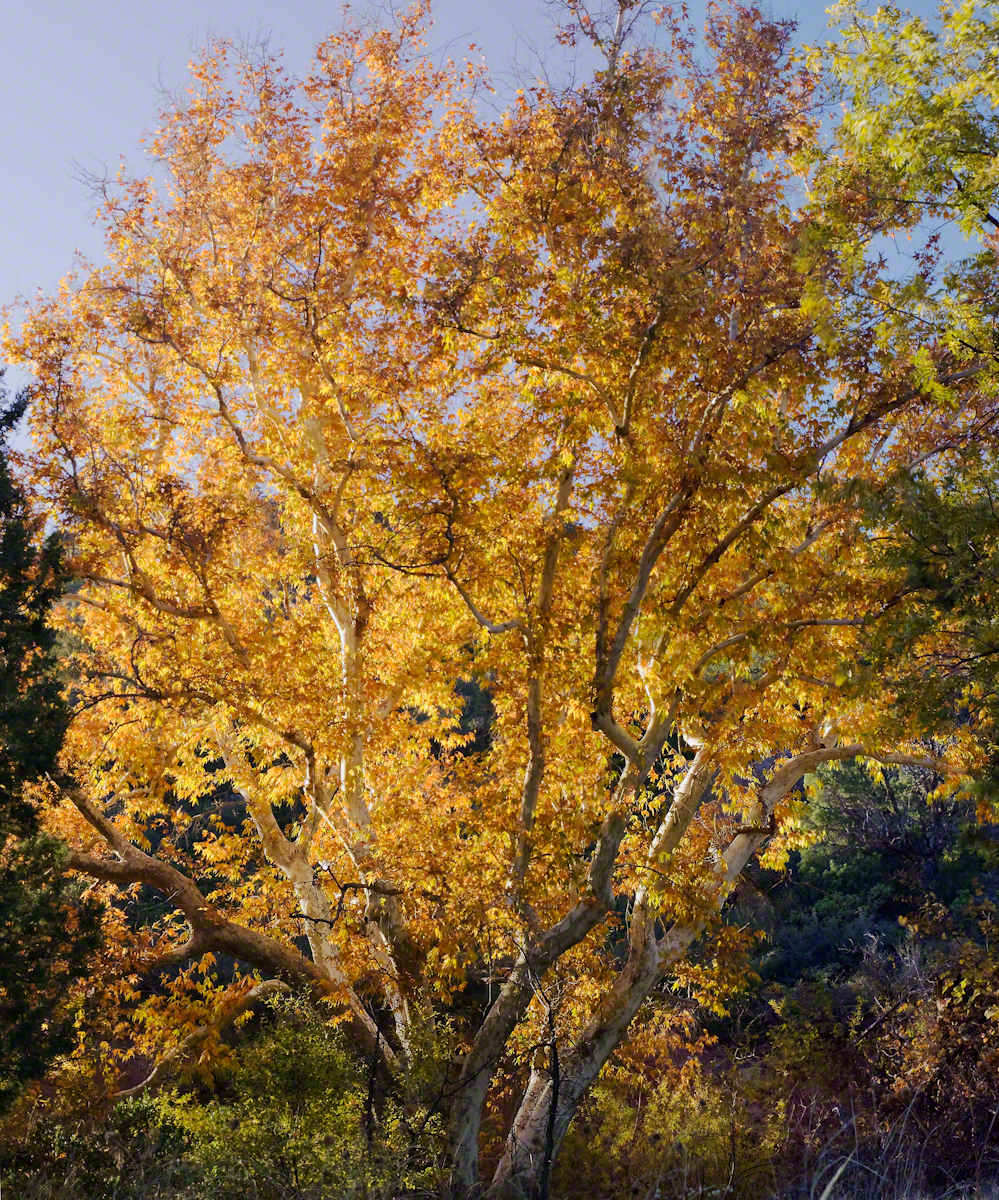
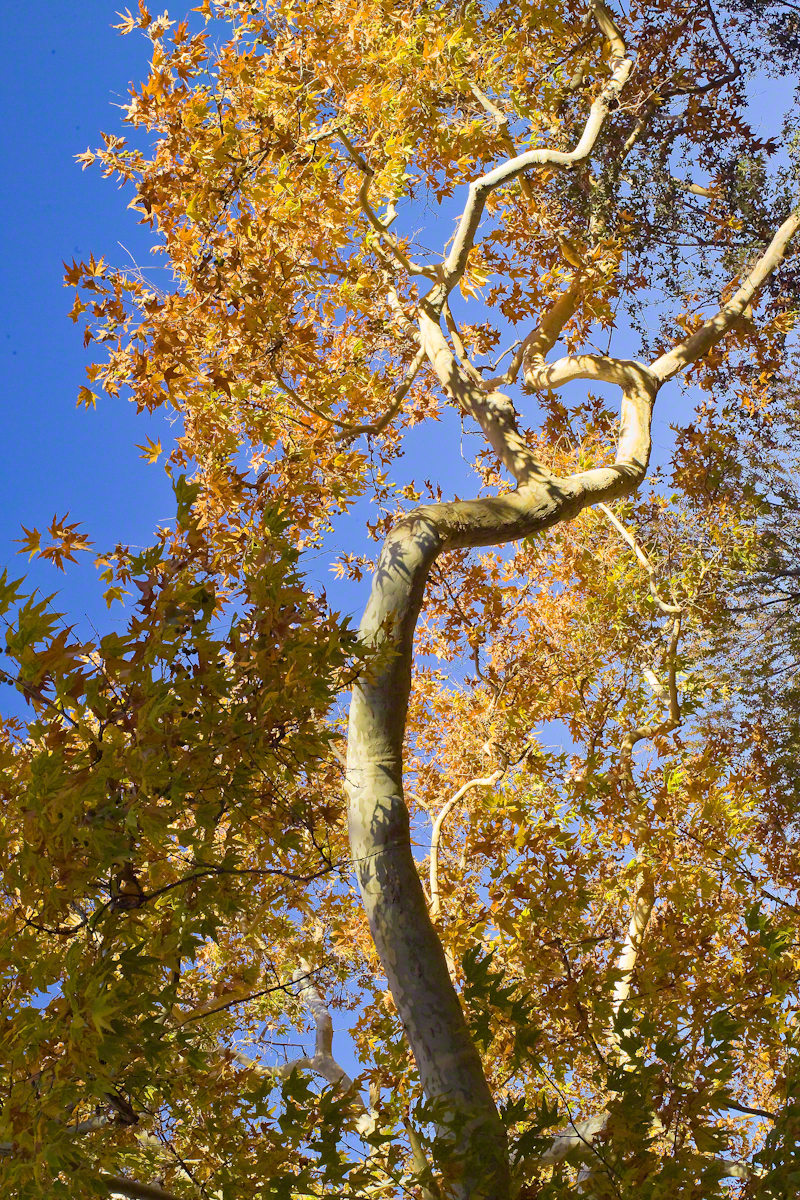
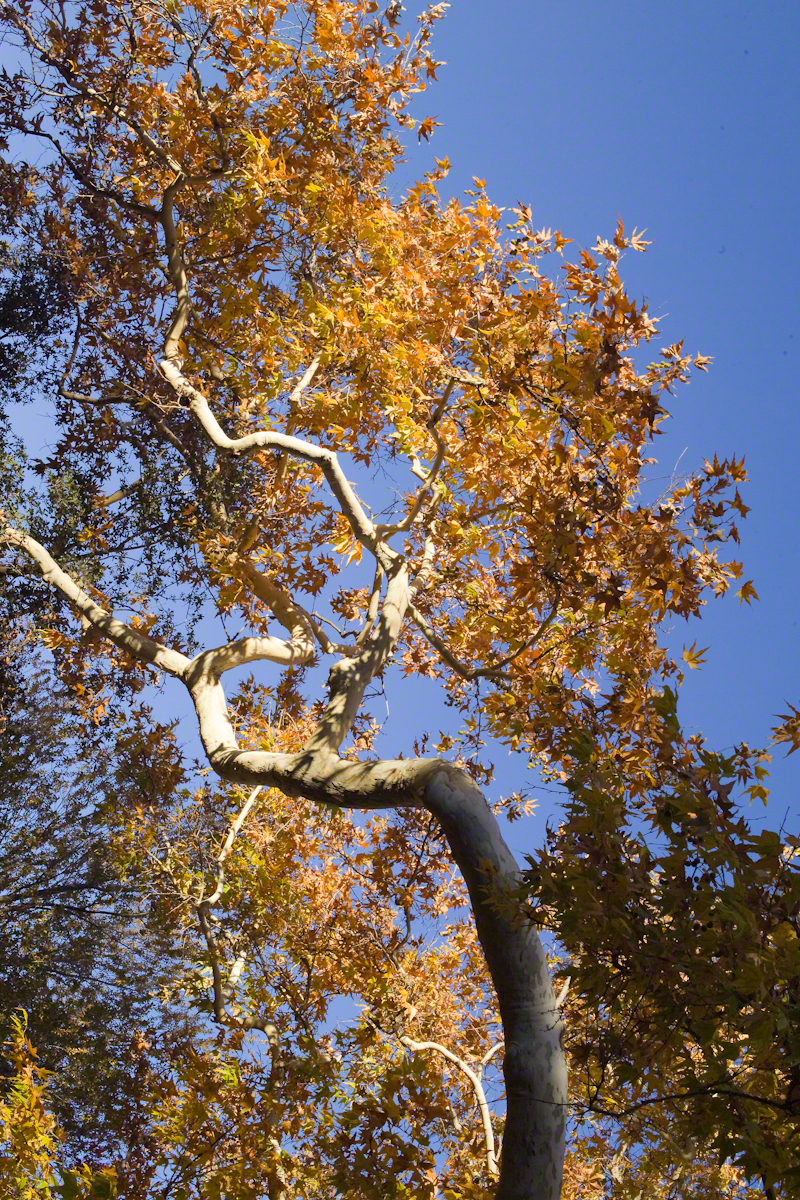
Compare these Arizona Sycamores with the struggling specimen from the last chapter, “A Peaceful Day at Pine Creek.” Many Sycamores such as this one flourish along Reavis Creek, a perennial stream of the eastern Superstition Wilderness. The drainage that feeds Pine Creek is far less acreage than that of Reavis Creek and, when the Pine Creek flow fades in the driest seasons, plants go into survival mode and halt growth and may even slough off limbs to conserve water.
These Sycamores grace a stream that seldom stops flowing, even in the driest of seasons. I had the good fortune to visit the Reavis valley of the Superstition Wilderness in November 2007, when these trees were at peak autumn foliage.
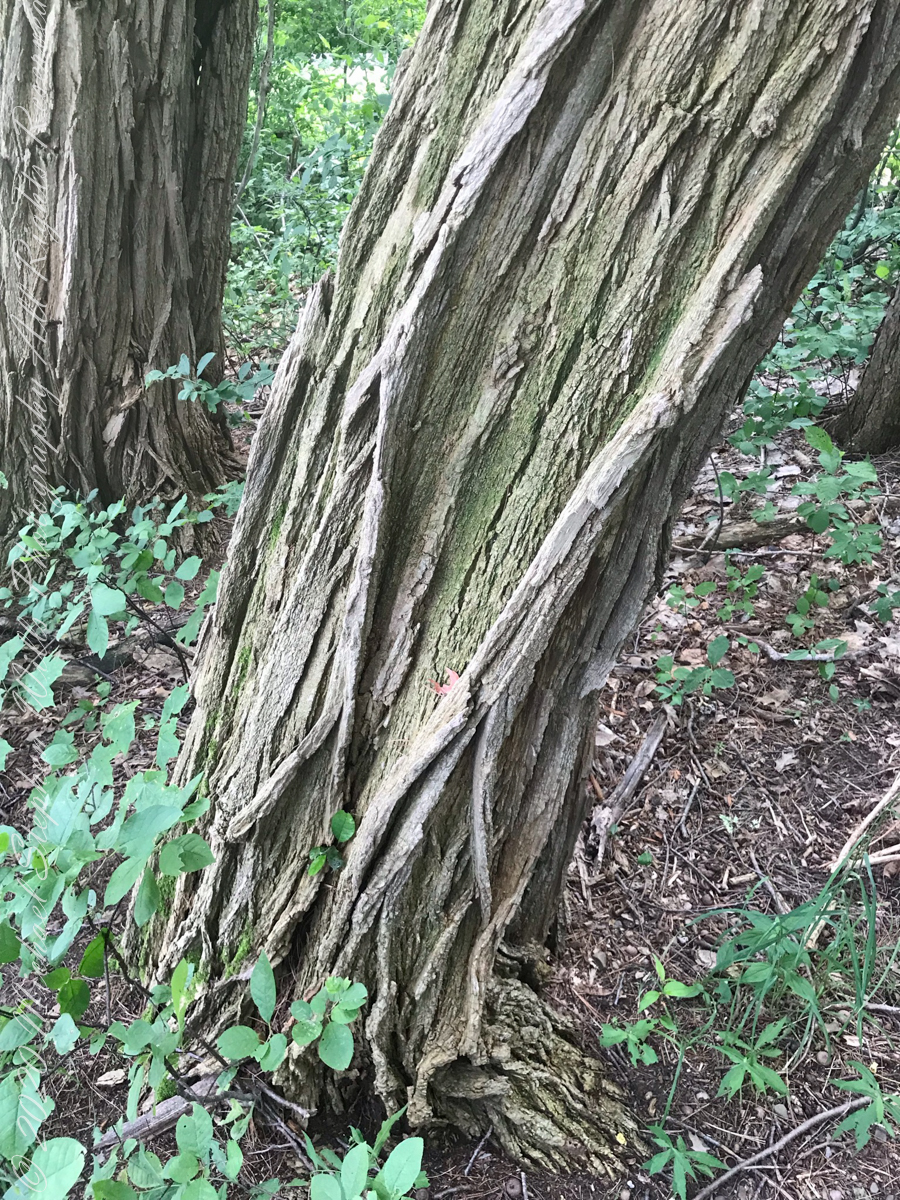
The tree requires a supply of water to thrive. This specimen demonstrates the species growth habit growing multiple trunks with a shape driven by water availability and the environmental context. The multiple trunks may be a desert survival mechanism. In dry periods a trunk or trunks are sloughed off to reduce moisture loss. This is why the Sycamore of “A Peaceful Day at Pine Creek” has a single trunk.”
To encounter a riparian space of the Arizona desert is a revelation, to progress from Sonoran desert spaces assailed by the breath of dry wind, to see the first signs of water in the distance as a welcome fluttering of leaves, to feel a welcome odor of water.
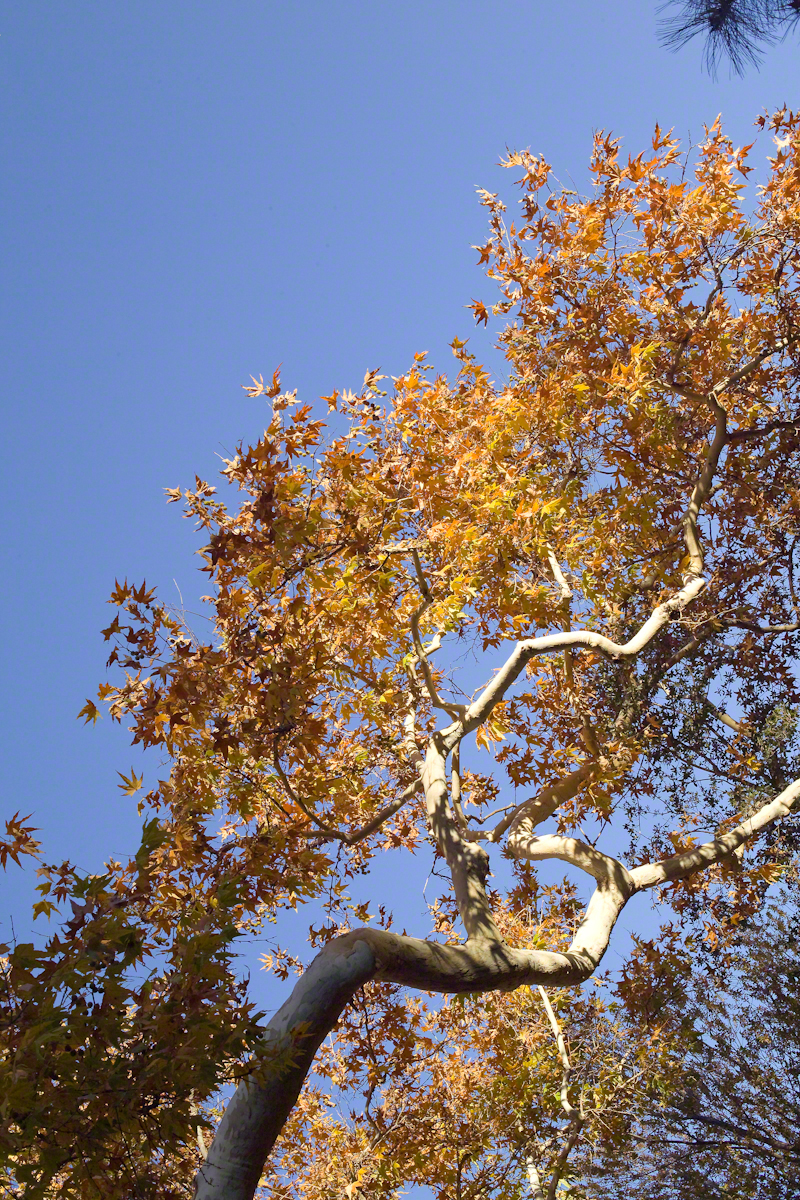
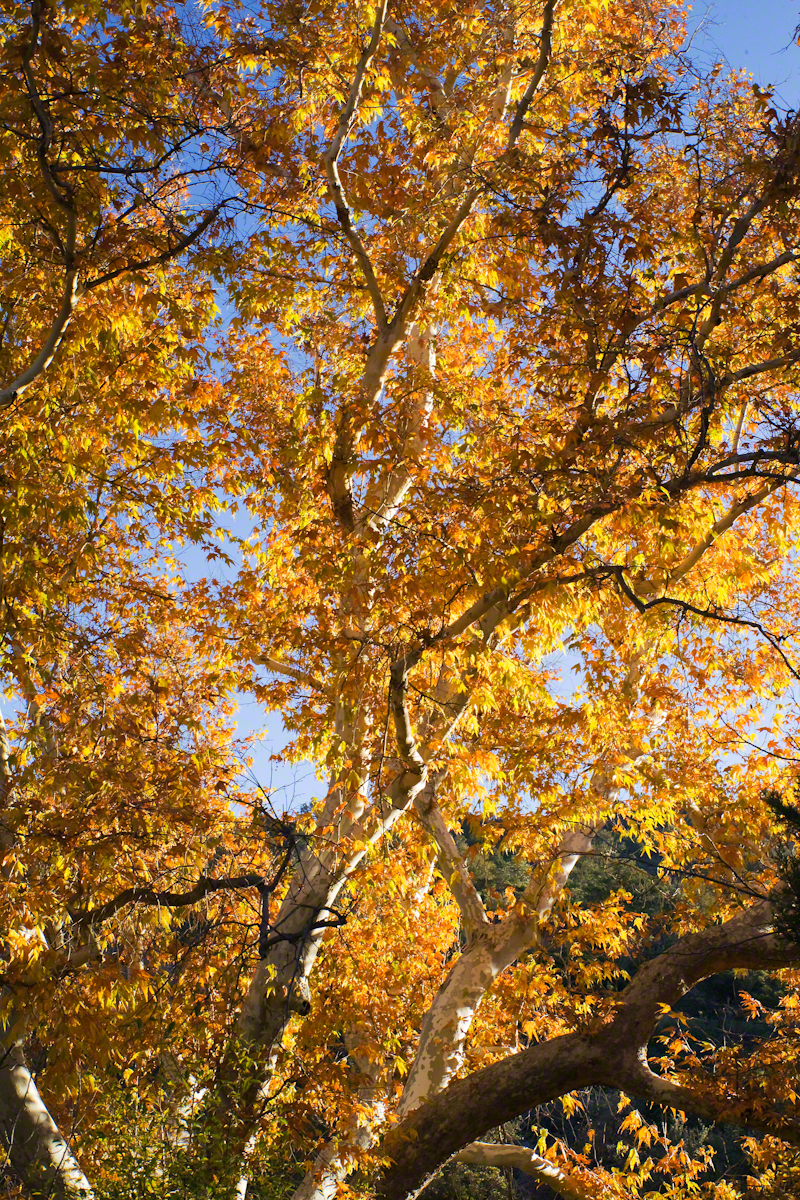
Yes, the first effect of a riparian space on the senses is the smell of water. Let’s finish this post with limbs of the Reavis Creek Arizona Sycamore reaching for the sky.
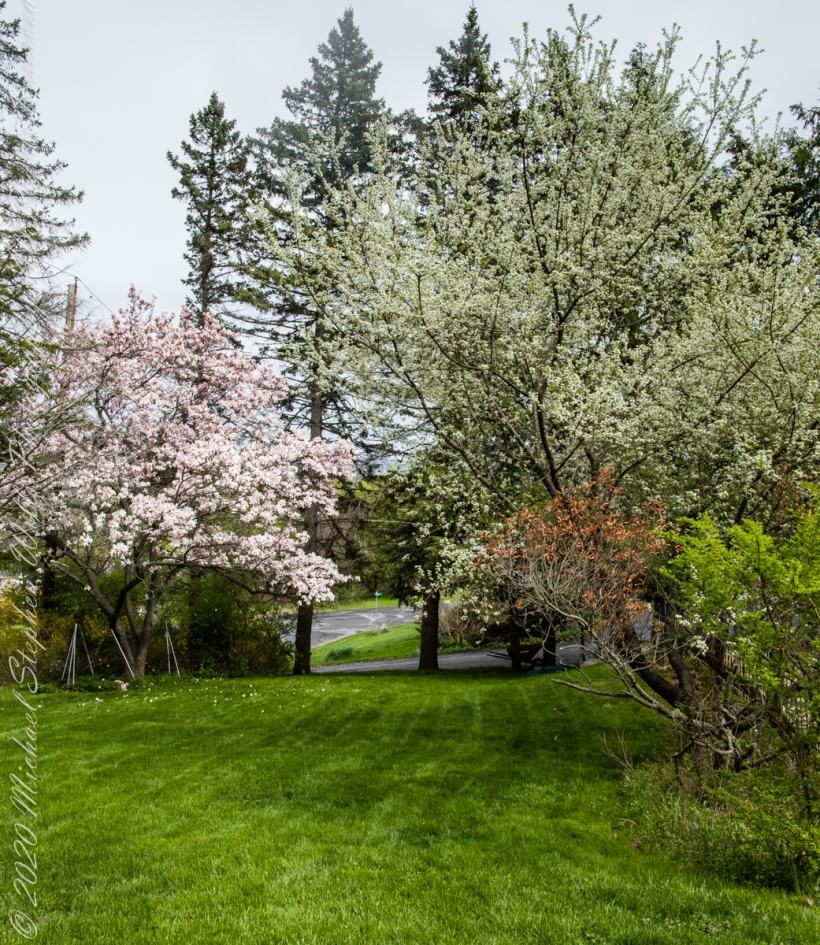
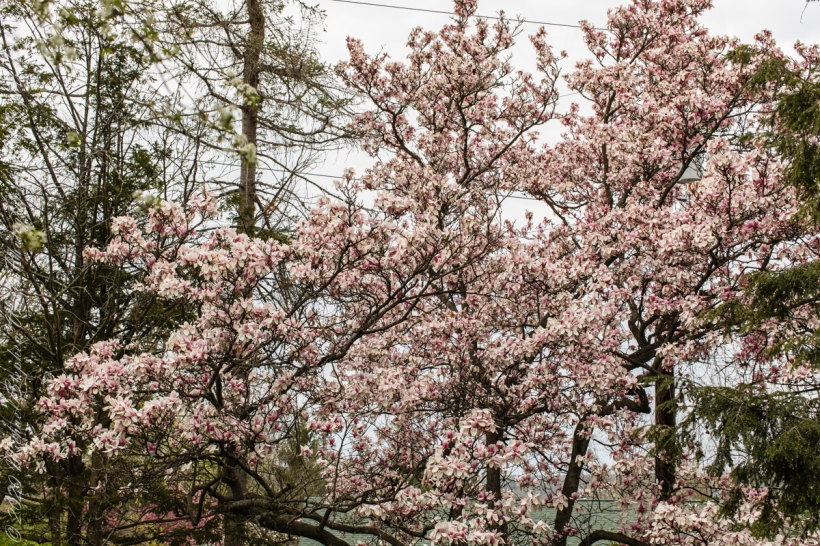
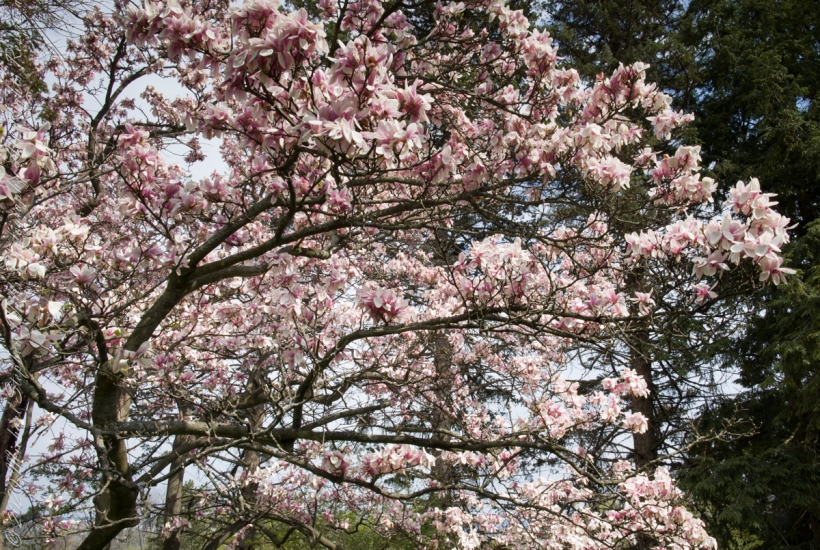
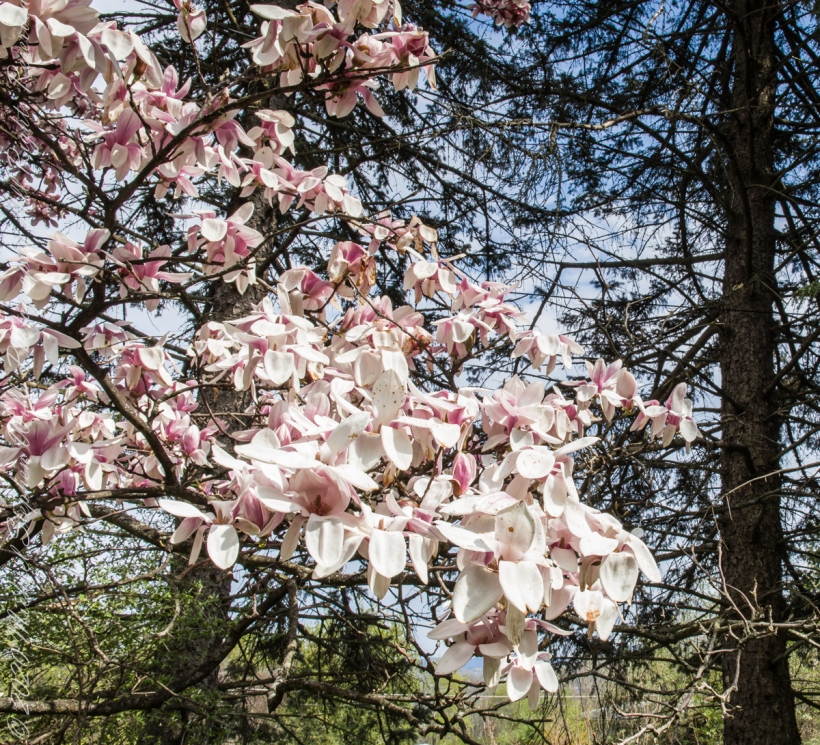
The Magnolia genus has been around for eons, come characteristics are protective from beetles as they existed before bees and relied upon beetles for fertilization. Our’s may be the species Magnolia dawsoniana (Dawson’s Magnolia), it shares many of the published characteristics: among them tolerance to our hardiness zone 5, flower color and shape, tree growth pattern.
This was an exceptional year for blooms. starting late April, lasting into May. The fence around trunks is for protection against bucks (male deer), from rubbing their horns in autumn.
Canon 50 mm f1.2
For most of these 2021 photographs I used the lens Canon 24 mm f/1.4L II USM, the one captioned 50 mm I used Canon 50mm f/1.2L USM. The Canon EOS 5D Mark IV dslr with the Manfrotto Studio tripod with hydrostatic ball head for all.
The last great year was 2018……
Canon 100 mm “macro” lens
For these 2018 photographs the Canon 24 mm and Canon EF 100mm f/2.8L “Macro” lenses with Canon’s EOS-1Ds Mark III dslr.
Copyright 2021 All Rights Reserved Michael Stephen Wills
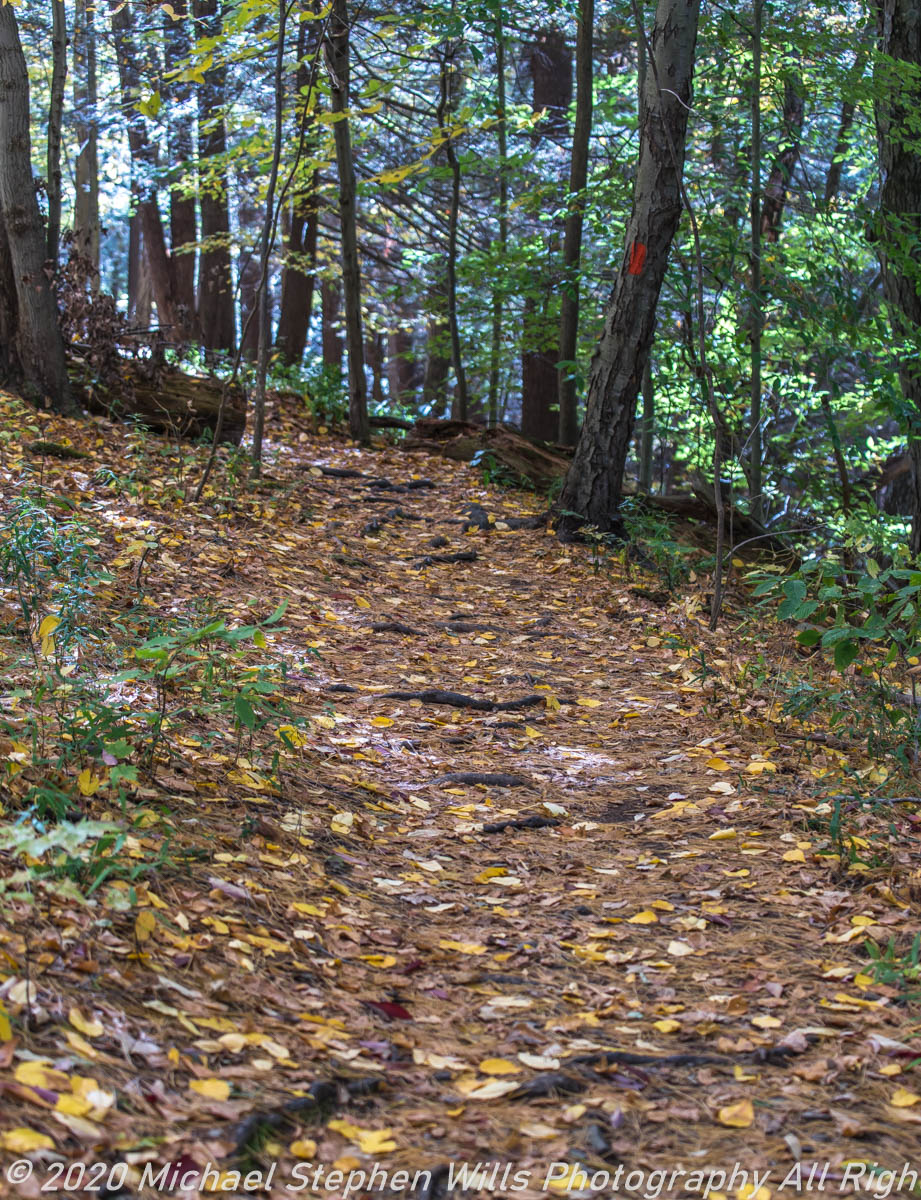
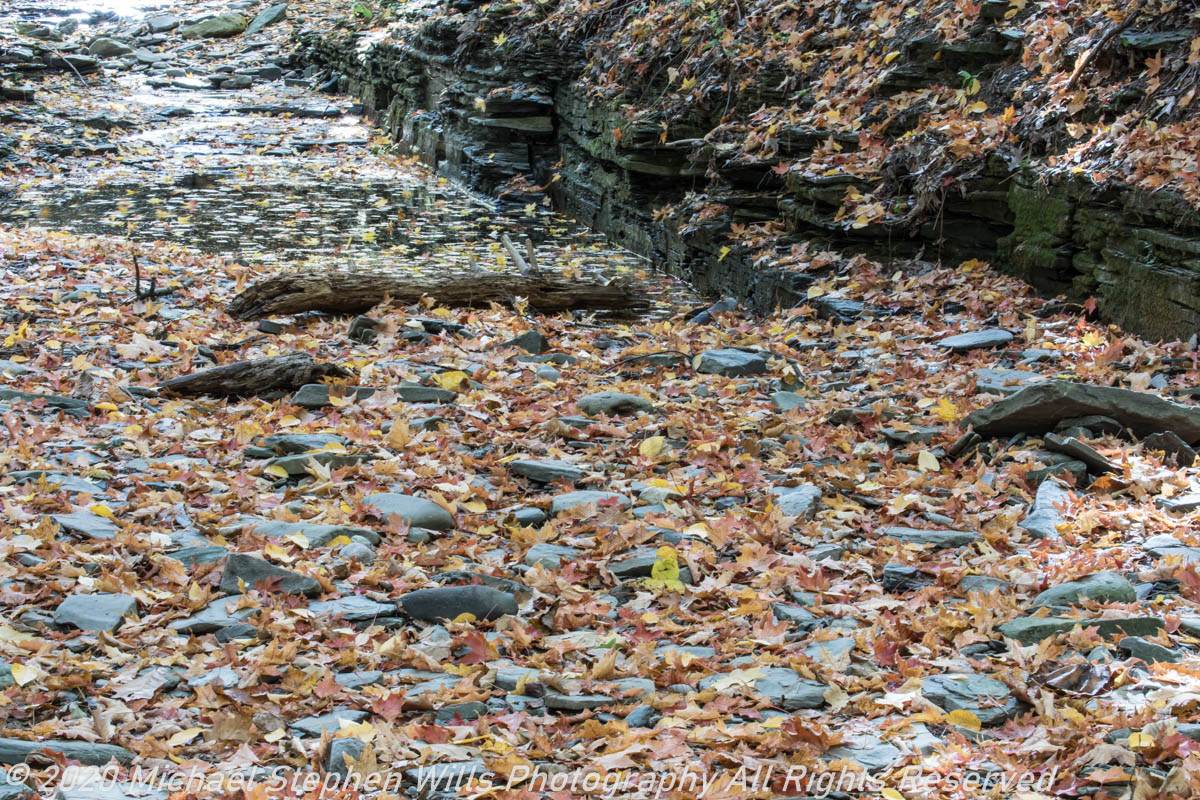
Sandbank Road climbs from the valley of Ithaca city to the rural peneplain on the way to Buttermilk Falls, we passed the sign for this preserve many times, today we explored this place, new to us. The trail descends to Lick Creek canyon.
Click photograph for larger view. Use combination keys to enlarge/reduce: Ctrl+ (Control / Plus) and Ctrl- (Control / Minus)
We stopped to enjoy the open space of a powerline clear cut where the trail intersects the creek bed. Here we turned, following the water.
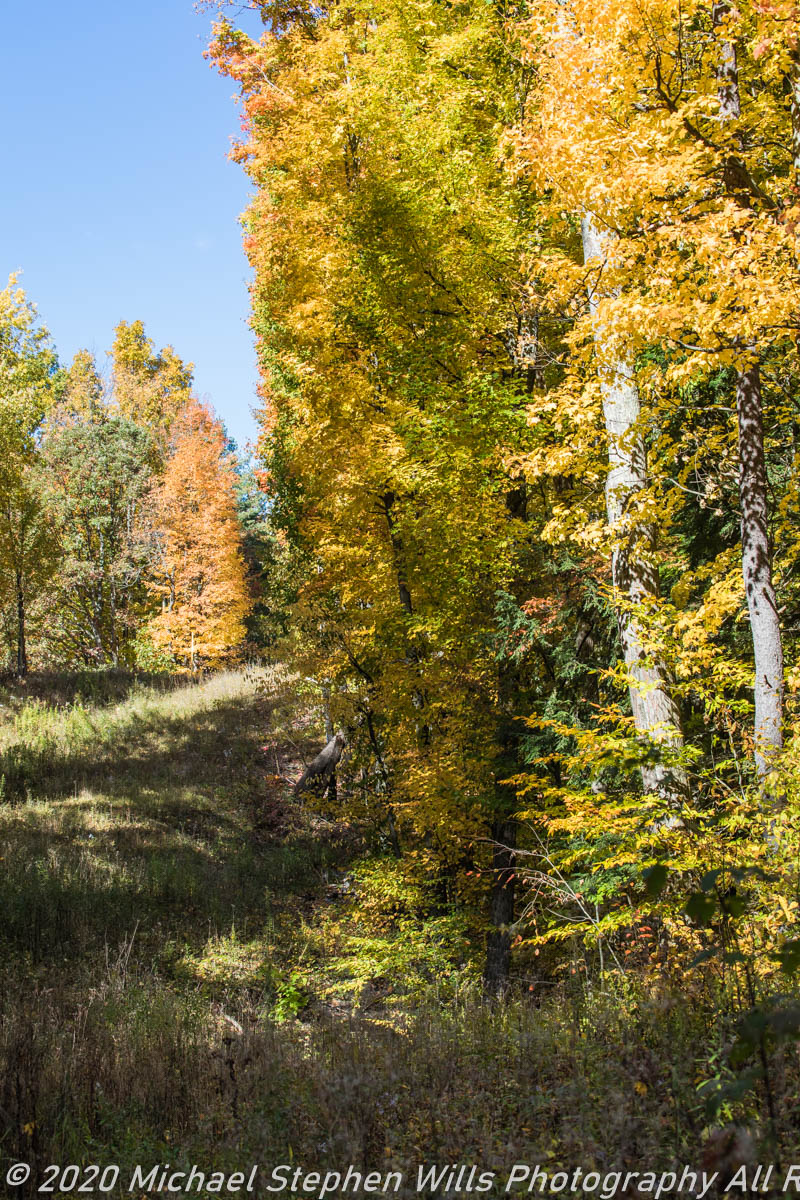
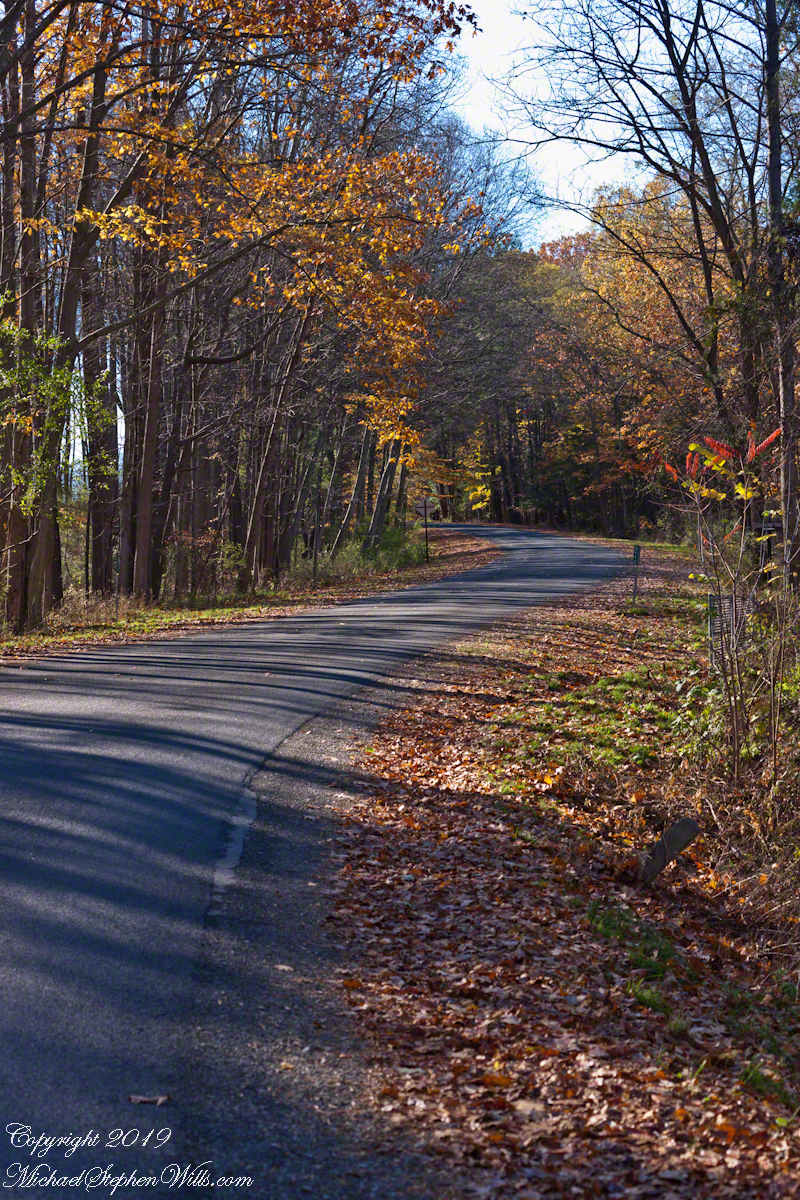
Early November on Gorge Road, Finger Lakes Region, New York State. At this month and latitude (42 north) there are long shadows throughout the day. The South Rim Trail of Taughannock Falls State Park briefly emerges from the wooded cliff to this portion of the road that parallels the gorge, descending to Cayuga Lake shores.
Click photograph for a larger view. To do this from WordPress Reader, you need to first click the title of this post to open a new page.
Gorge Road, early November
Three Views
Distant View with Hemlock
Oak and Hemlock
Gorge Road, early November
Copyright 2019 All Rights Reserved Michael Stephen Wills










 Michael Stephen Wills Photography